
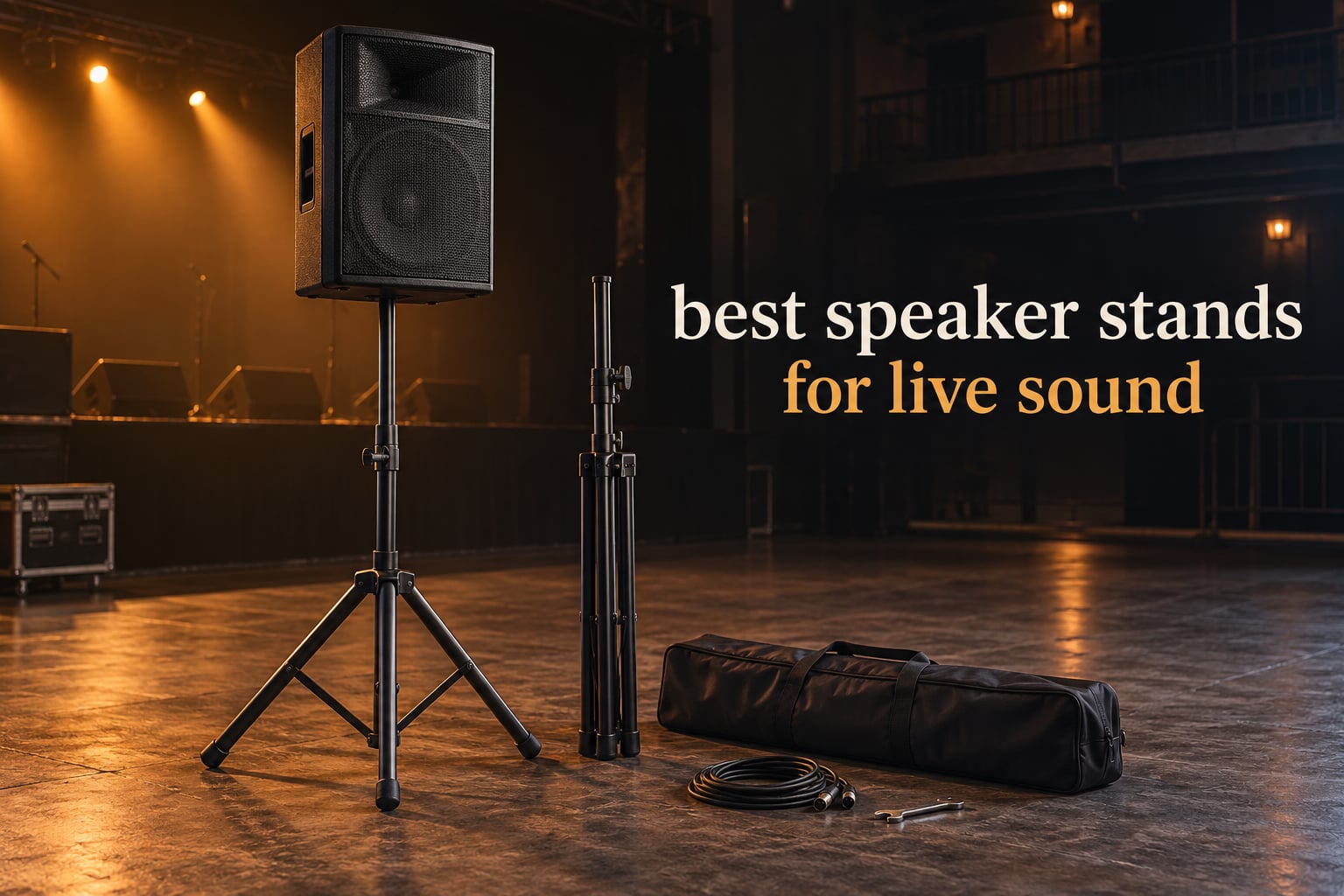
Most cheap speaker stands do not fail dramatically. They just get looser, one load-in at a time, until a pin snaps or a tube wall splits and a 15-inch cabinet ends up on the deck. The replacement cycle is the reason so many crews end up hunting for the best speaker stands for live sound rather than just the cheapest set in the aisle.
Three variables decide the purchase, and they matter in this order: the weight of the cabinet you actually carry, the lift mechanism that gets it up there, and the physical constraints of your load-in. A stand can be beautifully engineered and still wrong for you if it tops out below the height your FOH engineer wants, or if raising minimum height is a two-person job.
After working through ten stands in this roundup, capacity, minimum height and mechanism type turned out to be the specs that separate a good stand from a great one. Height range decides coverage, capacity decides whether the rig is safe, and the mechanism decides whether one person can do the show alone. We explain all three in the buying guide, and we flag where each pick falls short. Last reviewed in 2026.
Table of Contents
Top 3 Picks for Live Sound Right Now (October 2026)
The Pyle PSTND2 is the stand we keep coming back to. A 132 lb rating, a 40 to 71 inch column and a 6.9 lb weight in a body that folds down small is a combination nothing else in this group matches. Rockville RVES1 wins on the value side because you get two stands and a carry bag in one package, and the Amazon Basics SB400L carries the highest average rating in the group at 4.8 stars across more than 3000 reviews.
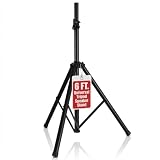
Pyle PSTND2 Tripod Stand
- 132 lb capacity
- 40-71 inch height
- 6.9 lb stand weight
- safety pin and knob lock

Rockville RVES1 Pair
- 100 lb per stand
- up to 71 inch height
- 32 inch leg spread
- carry bag included
Two other picks earn a specific slot rather than a ranking. The OnStage SMS6000 is the only monitor platform in the group, and the Rockville RVSS2 pair is the one to look at if a 15-inch or 16-inch main is the only cabinet you own.
All 10 Speaker Stands for Live Sound Compared in 2026
Every stand below is listed with the numbers that actually change a buying decision. Capacity is the published load rating, height is the usable range, and mechanism is the hardware that sets how the column moves. Two products ship as a pair, and two of them are monitor platforms rather than pole-mount tripods, so check the fit before the capacity.
| Product | Specifications | Action |
|---|---|---|
|
Pyle PSTND2 Tripod Speaker Stand
|
|
Check Latest Price |
|
Rockville RVES1 Tripod PA Stand Pair
|
|
Check Latest Price |
 Amazon Basics SB400L Tripod Stand
|
|
Check Latest Price |
 OnStage SMS6000 Monitor Stand Pair
|
|
Check Latest Price |
 Gemini ST-04 Tripod Speaker Stand
|
|
Check Latest Price |
 Rockville RVSS2 Tripod Stand Pair
|
|
Check Latest Price |
 PRORECK PR-15S Tripod Stand Pair
|
|
Check Latest Price |
 EMART PA Speaker Stand Pair
|
|
Check Latest Price |
 NiuNyuNeu Tripod Speaker Stand Pair
|
|
Check Latest Price |
 Pyle PSTK107 Tripod Stand Kit
|
|
Check Latest Price |
1. Pyle PSTND2 Tripod Speaker Stand – Best Overall for Live Sound
Pyle Universal Speaker Stand Mount Holder Heavy Duty Tripod w/ Adjustable Height from 40” to 71” and 35mm Compatible Insert Easy Mobility Safety Pin and Knob Tension Locking for Stability, Black
132 lb load capacity
40-71 inch height
6.9 lb stand weight
35mm top plate
Pros
- Highest review volume in the group at nearly 5900 ratings
- 132 lb rating on a stand that weighs under 7 lb
- Retainer pin means the column is not held up by friction alone
- Collapses to a package small enough for a small hatchback
Cons
- Some plastic and soft-metal parts can strip with heavy rig and de-rig cycles
- 35mm top plate only so speakers needing a wider insert will not fit
- Light feel can rattle confidence when lifting a heavy cabinet
This is the stand I put on the truck first. The 132 lb rating sits well above what most 10-inch and 12-inch powered tops weigh, so a single stand covers the common cases with margin left over. At 6.9 lb it is one of the lighter options here, which matters when you are carrying two of them plus two cabinets up a backstage staircase.
The height range of 40 to 71 inches is the sweet spot for a DJ booth or a small room. Forty inches is low enough to get a top into a low-ceiling bar, and 71 inches clears most head height without turning the column into a lever arm. The telescoping column is held by a pin and a knob-style tension lock, so the pin carries the mechanical load instead of the clamp alone.
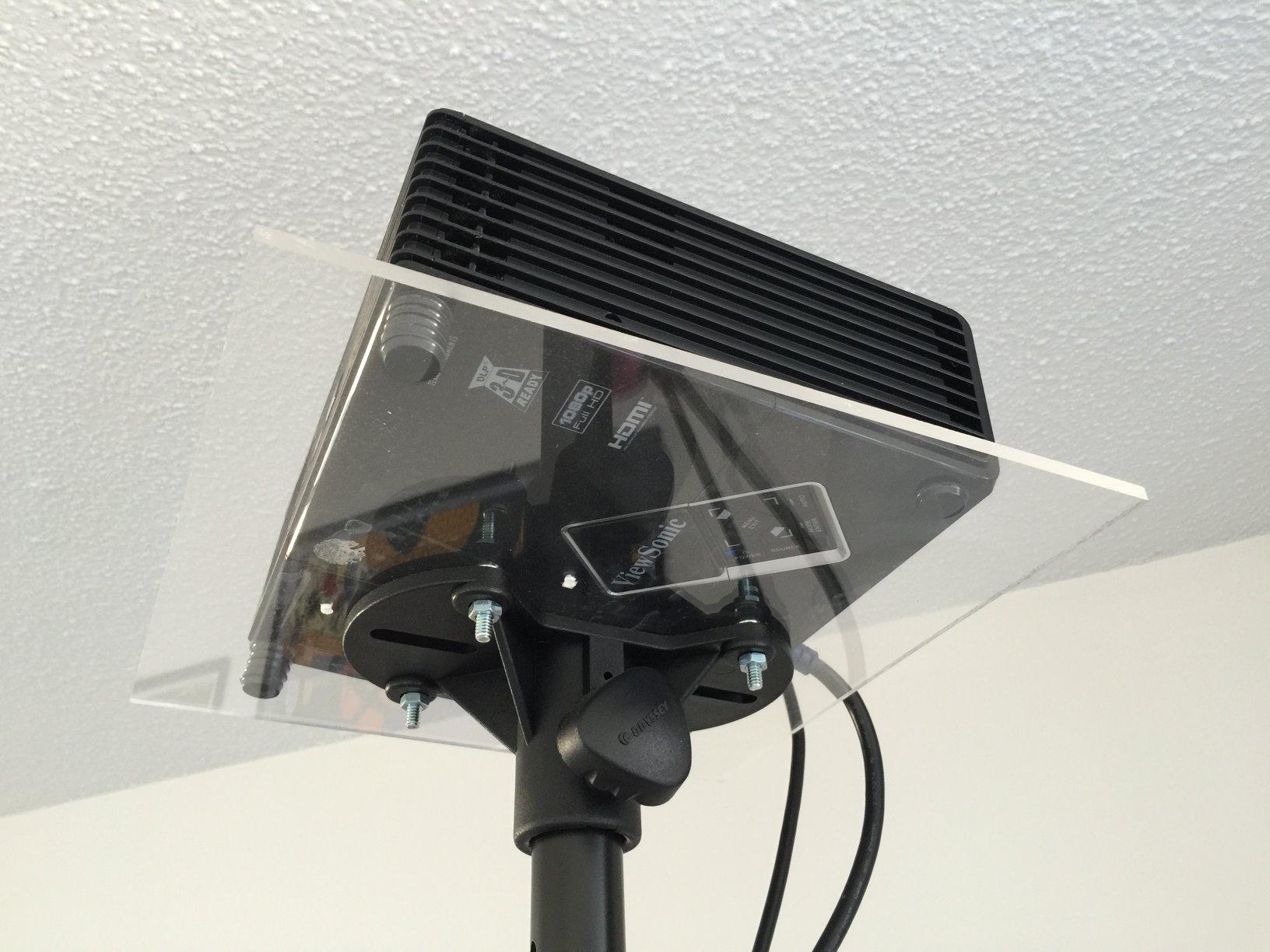
What I notice after repeated teardowns is where the design is honest and where it is not. The tripod legs use a center brace and the feet are rubber of equal length, which keeps the base level on a hard floor. The weak point is the hardware category: reviewers who rig and de-rig a PA several times a week report that plastic collars and softer metals eventually strip at the threads.
Fit is the other constraint. The top plate accepts a standard 35mm insert only. A cabinet that needs the wider 1-3/8 inch insert, such as some Bluetooth party speakers, will not seat without an adapter, so check your speaker’s underside before this one wins your shortlist.
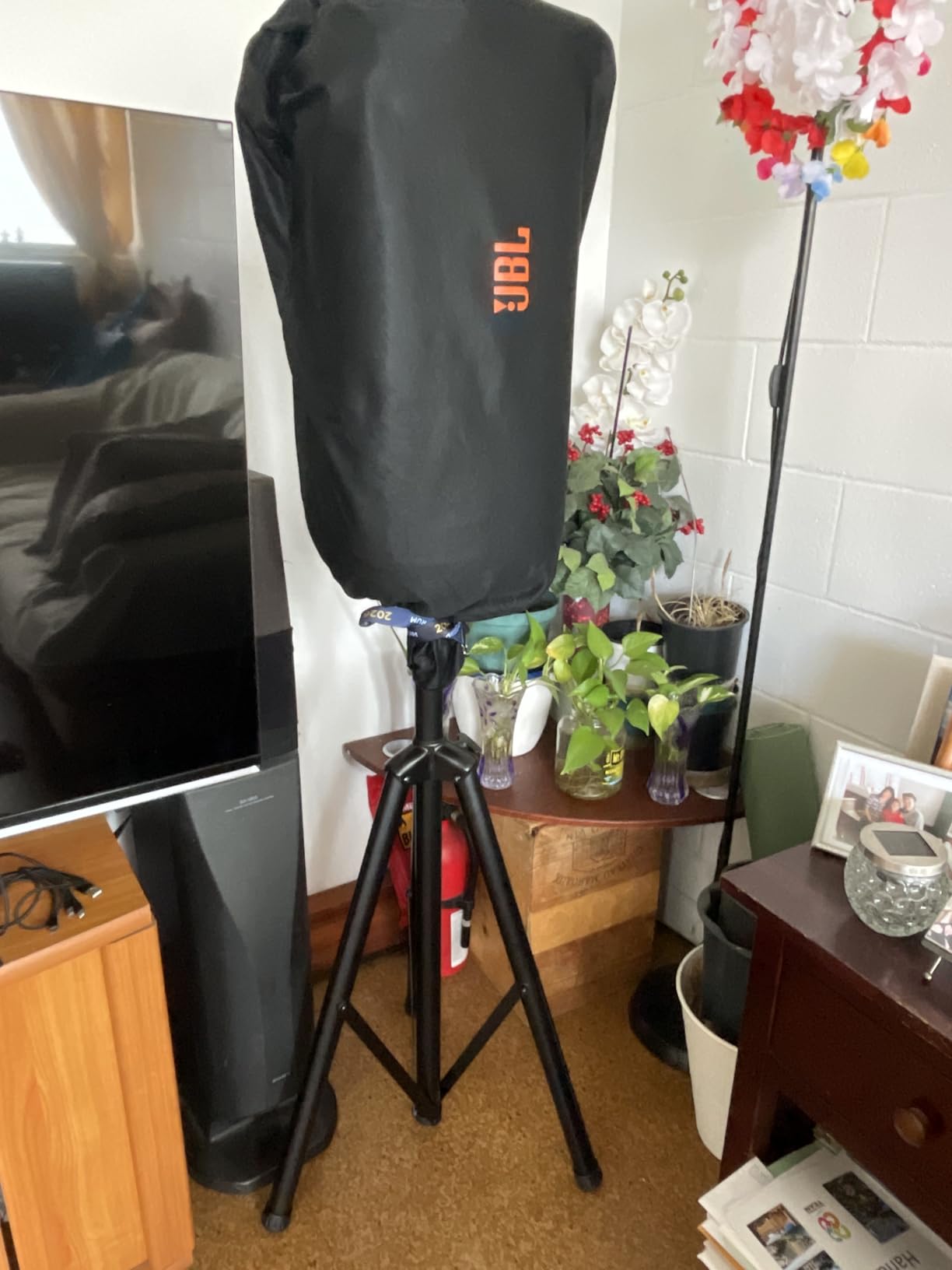
What to check before you commit
Measure your cabinet against the 132 lb rating rather than guessing. If your top weighs 45 lb, this stand has roughly three times the headroom you need, and you could pair it with a second matching stand without buying a heavier model.
Count your load-in path. Two stands at 6.9 lb each plus two mid-size cabinets is a one-person carry for most operators, which is exactly the kind of problem a controlbooth thread about lifting speakers onto portable stands keeps running into.
Who should skip it
Skip this if you fly the same cabinet eight times a week and have stripped cheaper hardware before. Under that abuse pattern, a stand with more metal in the clamping hardware ages better, even if it weighs more.
Also skip it if your speaker needs a wider pole insert. The adapter route works, but a stand that fits the speaker directly is one less loose part in a van full of loose parts.
2. Rockville RVES1 Tripod PA Stand Pair – Best Value
Rockville RVES1 Pair Adjustable Tripod PA Speaker Stands with Carry Bag
100 lb per stand
Up to 71 inch height
12.6 lb per pair
32 inch leg spread
Pros
- Sold as a complete pair with a carry bag
- 100 lb steel rating per stand
- Quick setup and teardown between sets
- Good fit for 12-inch and smaller 15-inch powered tops
Cons
- Real leg spread measures under the published 32 inch figure
- No weight-damped descent so the column does not lower under load
- Plastic knobs and joints are the first thing owners criticize
Most people buying stands are buying them in twos, and this package hands you both plus a carry bag in the box. That is the whole argument. The all-steel construction is rated at 100 lb per stand, which covers the majority of powered 10-inch and 12-inch cabinets and most 15-inch passive tops.
What stands out operationally is the lower center tube, which sits well above ground level. On uneven outdoor ground that extra clearance means the lower collar is less likely to drag on grass or clip a kerb as you roll the stand out of its case.
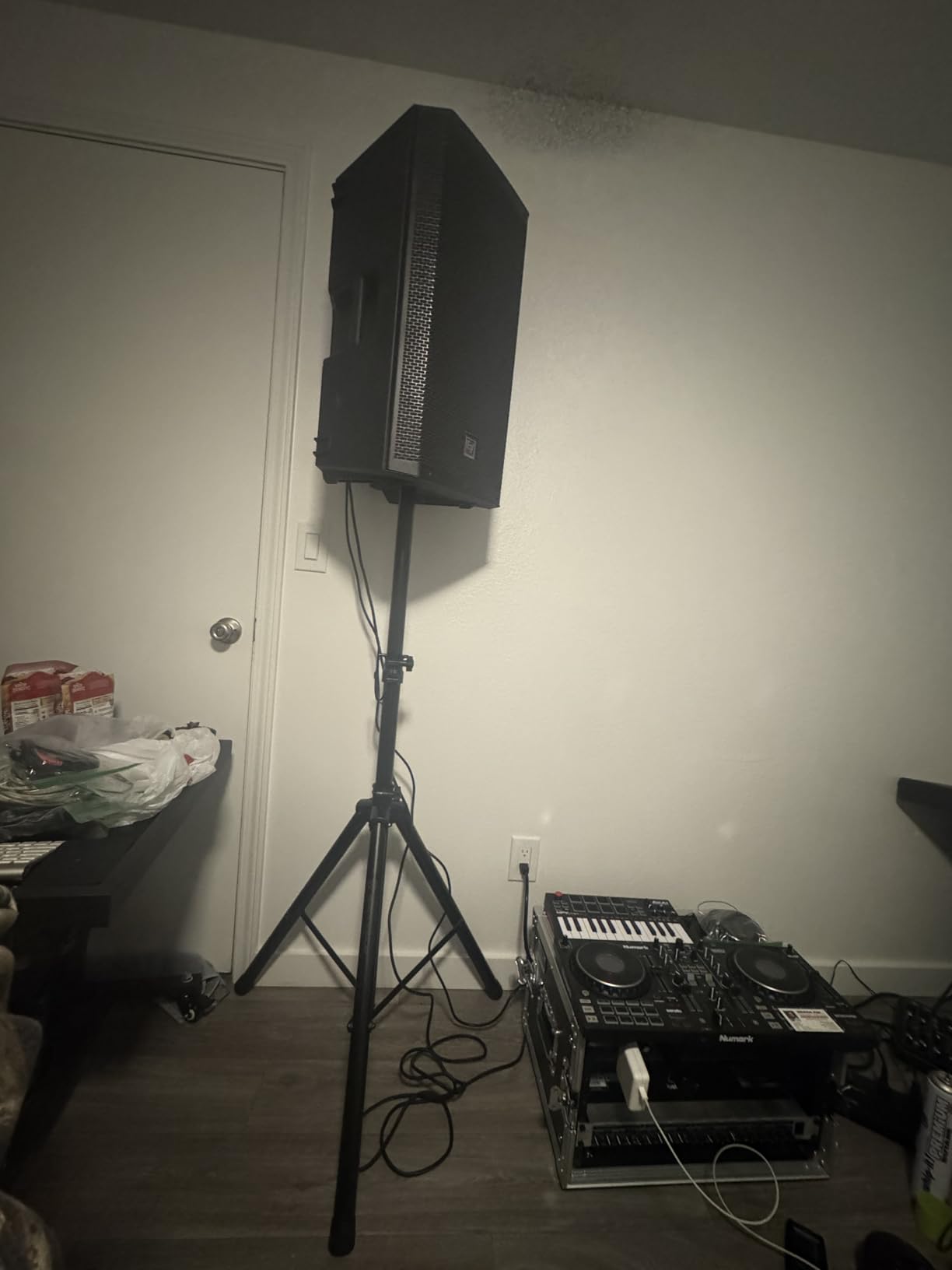
Two specification gaps are worth knowing before you rely on the listing. Owners report the actual maximum leg spread lands close to 31 inches rather than the published 32, and there is no pneumatic descent, so the column does not slow the cabinet as it comes down. A heavy top will drop as fast as your hands allow it, which is manageable but worth rehearsing once.
The carry bag earns its place. It is a properly built bag with a separate compartment for hardware, and it is the reason this package appeals to a mobile DJ who does not want loose steel tubing rattling in a van for years.
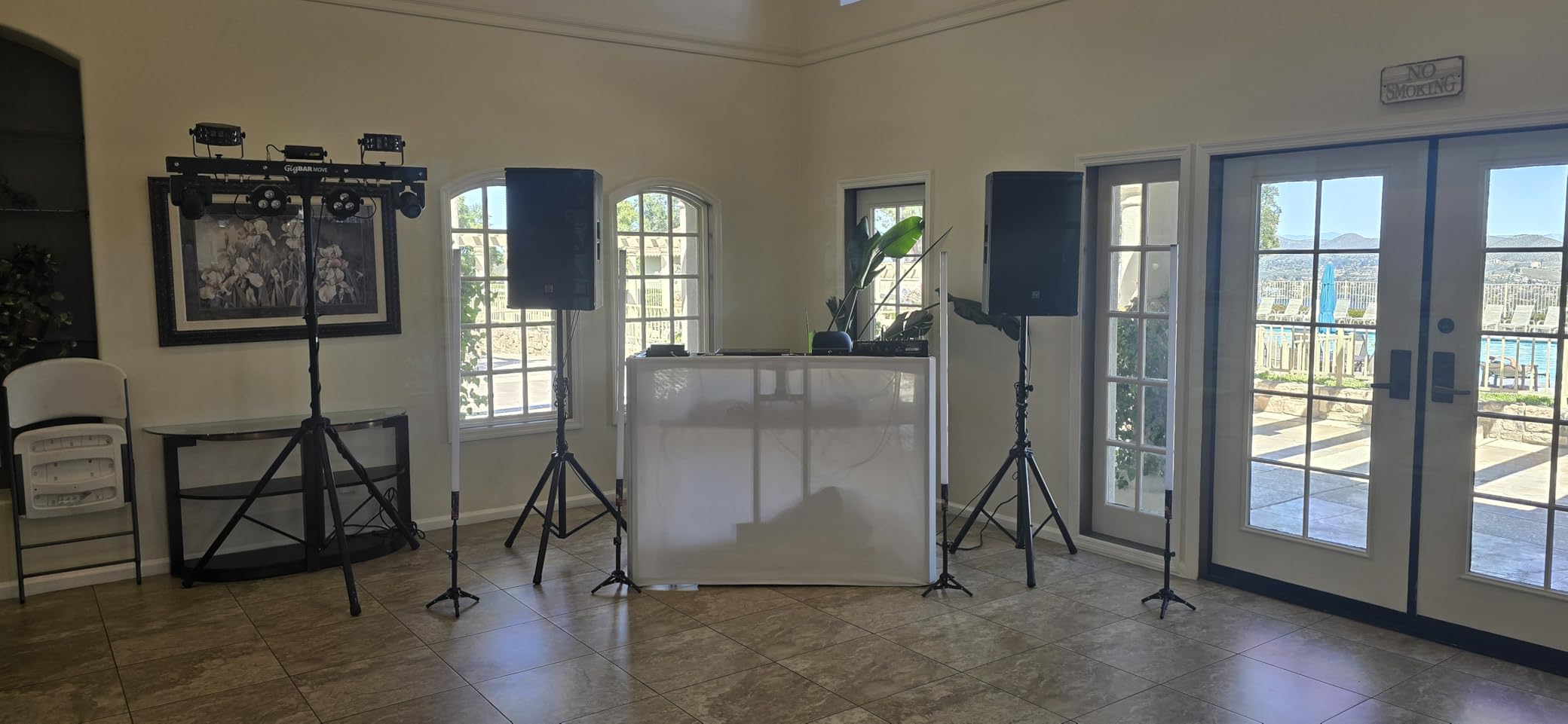
Why this is the value pick
The arithmetic is simple. A single stand at this specification level means buying two, and buying two without a bag means buying three things. This is one purchase that covers the whole rig, and it carries more than 4000 ratings, which is a large sample for a component nobody inspects before a show.
The 100 lb rating is the number to sanity-check. It handles a 32 lb 15-inch powered speaker with a lot of margin, and it is the right place to stop for most DJ and small-room work.
Where it falls short
Two-person load-in on a 100 lb-rated steel tripod is still a two-person job at minimum height, because screw and pin locks do not assist the lift. If you are a solo operator handling a heavy passive main, the mechanism matters more than the rating here.
Reviewers with high cycle counts report the plastic knobs and the safety pin retention cord as the weak points. Keep a spare pin with the bag, and you will never notice.
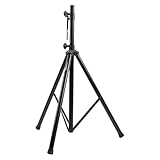
3. Amazon Basics SB400L Tripod Stand – Top Rated for Reliability
Amazon Basics Adjustable Height Tripod Speaker Stand, Sturdy Steel, Holds up to 99.2 lbs, 52″ to 73″, Black
99.2 lb load capacity
52-73 inch height
8.5 lb stand weight
35mm steel shaft
Pros
- Highest average rating in the roundup at 4.8 stars
- 87 percent of ratings are five stars
- Steel tube upper shaft holds powered PA cabinets firmly
- Backed by a one-year limited warranty
Cons
- 52 inch minimum height is high for low-angle or low-ceiling placement
- Speakers with a 38mm bottom hole need a 35mm-to-38mm adapter
- Sold as a single stand so a pair requires two purchases
Statistically this is the most consistently well-liked stand here. With 87 percent five-star ratings and 10 percent four-star, there is effectively no tail of unhappy owners, which is rare for hardware that lives in a van and gets loaded in the rain.
The steel upper shaft measures 1.4 inches, or 35mm, and a safety pin holds the speaker once it is seated. Long expandable tripod legs give a footprint that feels planted on a stage deck, and the 99.2 lb rating handles the typical powered PA cabinet without argument.
The one real limitation is minimum height. At 52 inches, this is not a stand for a low-ceiling bar where you want the top just above head height of a seated crowd. It is built for the upper end of the range, which suits a stage or an outdoor field.
What to check before you commit
Check your speaker’s bore size. The shaft is 35mm, and a speaker with a 38mm bottom hole needs a separate adapter to fit. This catches people out more often than any other spec on the list.
Plan on buying two. A working PA needs a matched pair, and matched height settings across two different brands are harder to hold during soundcheck than matching two of the same model.
Who should skip it
Skip it for low placements. If your minimum working height needs to drop below 52 inches, the telescoping column simply cannot get there, and a shorter-minimum stand will serve you better at the same weight class.
Also skip it for sub use. A single stand carrying a subwoofer needs a far higher rating than 99.2 lb, and the safety pin alone is not a subwoofer policy.
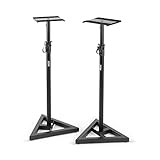
4. OnStage SMS6000 Monitor Stand Pair – Best for Wedges and Nearfields
OnStage On Stage SMS6000 Adjustable Monitor Stands (Pair)
36.5-54 inch height
90 lb per stand
18 inch triangular base
Padded platform
Pros
- Padded platforms dampen vibration and protect cabinet finishes
- Knob plus locking pin holds repeatable height settings
- Wide 18 inch triangular bases stay balanced up to 90 lb
- Optional base spikes hold firm on carpet and rugs
Cons
- 54 inch maximum rules out elevating full-size tops over a crowd
- Flat monitor platform rather than a 35mm pole-mount socket
- Costs more per stand than the tripod options in this roundup
This is the odd one out in the roundup and it earns the slot. These are monitor stands with a flat padded platform, not pole-mount tripods, and the 36.5 to 54 inch range puts a cabinet between seated and standing listening height. For a stage wedge, a studio nearfield or a home theater surround, that is the correct design.
The wide 18 inch triangular base distributes weight evenly enough that cabinets up to 90 lb stay balanced, and the combination of a tightening knob reinforced with a locking pin means your height setting survives a show. The included base spikes are a genuinely thoughtful addition for carpeted venues where rubber feet would slide.
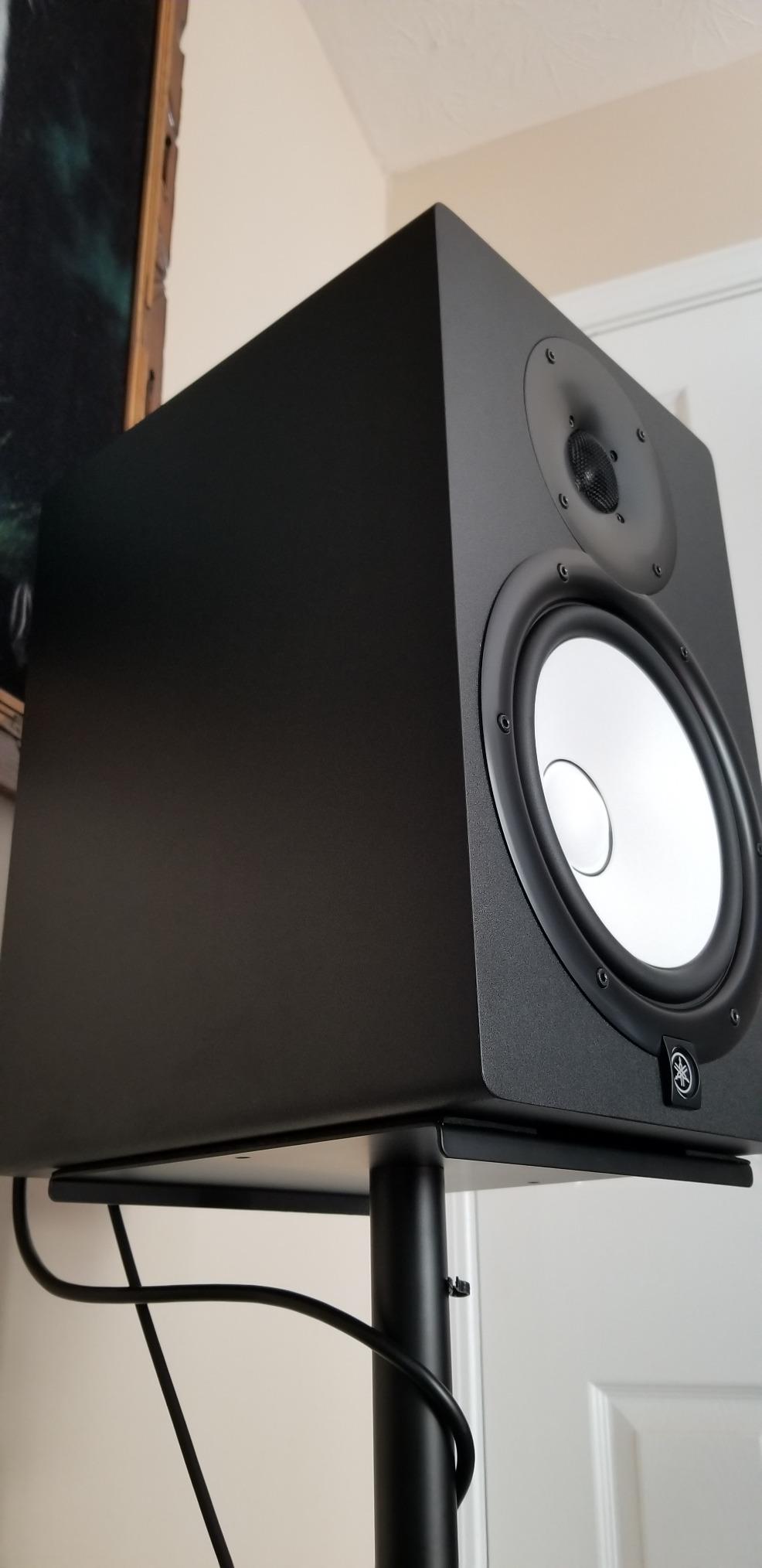
The padded platform does two jobs. It protects the cabinet from scratches when you set it down mid-changeover, and it damps vibration transfer from the stage floor, which keeps the low end cleaner during a live set than an unpadded metal plate.
What this is not, is a mains stand. A 54 inch maximum height will not get a top above the heads of a standing audience, and a platform is not interchangeable with a 35mm pole socket. If you need FOH mains, this is the wrong purchase regardless of how good the build is.
What to check before you commit
Decide first whether your main use case is monitoring. If most of your stand hours go to wedges, fills and studio nearfields, the padded platform is worth more than 20 inches of extra height.
Check that you are not expecting to reuse these for pole-mount cabinets. The platform approach is the whole design, and adapting it for a pole socket is not a supported path.
Who should skip it
Skip it if you are building a PA rather than a monitoring rig. The 54 inch ceiling ends the conversation, and no amount of headroom elsewhere in the design compensates for a top sitting at chest height in a full room.
Skip it if you are counting pounds carefully on a budget. This is the highest cost per stand in the group, and you are paying for a platform design that most PA work does not need.
5. Gemini ST-04 Tripod Speaker Stand – Best for the Lightest Load-In
Gemini Tripod PA Speaker Stand, Adjustable Height, 60lb Capacity (ST-04)
60 lb load capacity
43-80 inch height
5 lb stand weight
32-48 inch footprint
Pros
- Lightest stand in the group at roughly 5 lb per stand
- Tallest reach here at 80 inches of telescoping range
- Wider adjustable footprint of 32 to 48 inches improves stability
- Collapses quickly and carries comfortably in one hand
Cons
- 60 lb rating is the lowest of the tripod options here
- Tightening knobs and plastic collar are the most common failure point
- Supplied carry case is soft and gives almost no impact protection
At roughly 5 lb per stand, this is the one I recommend when the load-in, not the rating, is the binding constraint. A single operator carrying two stands, two cables and a 35 lb cabinet up a set of stairs is a completely different problem when the stands weigh 5 lb instead of 9.
The height range is the other headline. Telescoping from 43 to 80 inches makes it the tallest-reaching stand in the roundup, which matters for outdoor events where you want the top well above head height for coverage across a field. The 120-degree legs adjust across a 32 to 48 inch footprint, so you can widen the base on soft ground.
The 60 lb rating is the trade. It is enough for most 10-inch and 12-inch powered tops and many 15-inch powered cabinets, but it leaves no headroom for a large passive main, and the total rating is well below the heavy-duty stands in this list.
What to check before you commit
Add up your cabinet weight honestly and add margin. If your heaviest top is 35 lb, this works. If it is 60 lb or more, the rating is the ceiling, not the starting point.
Note the shaft size. This stand uses 38mm, or 1-3/8 inch, tubing, which is the larger of the two common pole diameters and is a better fit for larger speakers than a 35mm stand.
Who should skip it
Skip it if you move heavy mains. The 60 lb rating is the lowest of the group, and pairing it with a big cabinet means running the stand closer to its limit than we would advise for a public show.
Skip it if you care about hardware longevity under a high cycle count. Reviewers repeatedly single out the tightening knobs and the plastic retaining collar as the first parts to give trouble, so this is a carry-and-use stand rather than a rig-and-abuse stand.
6. Rockville RVSS2 Tripod Speaker Stand Pair – Best for Heavy Mains
Rockville RVSS2 Black Tripod DJ PA Speaker Stands Pair with Carrying Case
132 lb per stand
47-79 inch height
23 inch base spread
1.38 inch steel tube
Pros
- 132 lb rating per stand covers large 15-inch and 16-inch cabinets
- Stable steel build that owners describe as not cheap
- Quick setup and smooth height adjustment
- Carry case has dual compartments and fits both stands plus hardware
Cons
- No manufacturer warranty is offered on this model
- Carry case quality varies and some arrived blemished
- Costs more than comparable pairs from other brands
When the question is what carries a large main, this is the pair I look at first. At 132 lb per stand and a 47 to 79 inch height range, it covers the weight and the reach that a 15-inch or 16-inch cabinet needs without moving to a specialty heavy-duty stand.
Owners report these handling large powered cabinets including 15-inch and 16-inch models and large Peavey and EV units without complaint, which matches the ratings. The 1.38 inch steel tubing and the secure locking mechanism are what reviewers keep mentioning, along with how quickly the pair goes up and comes down.
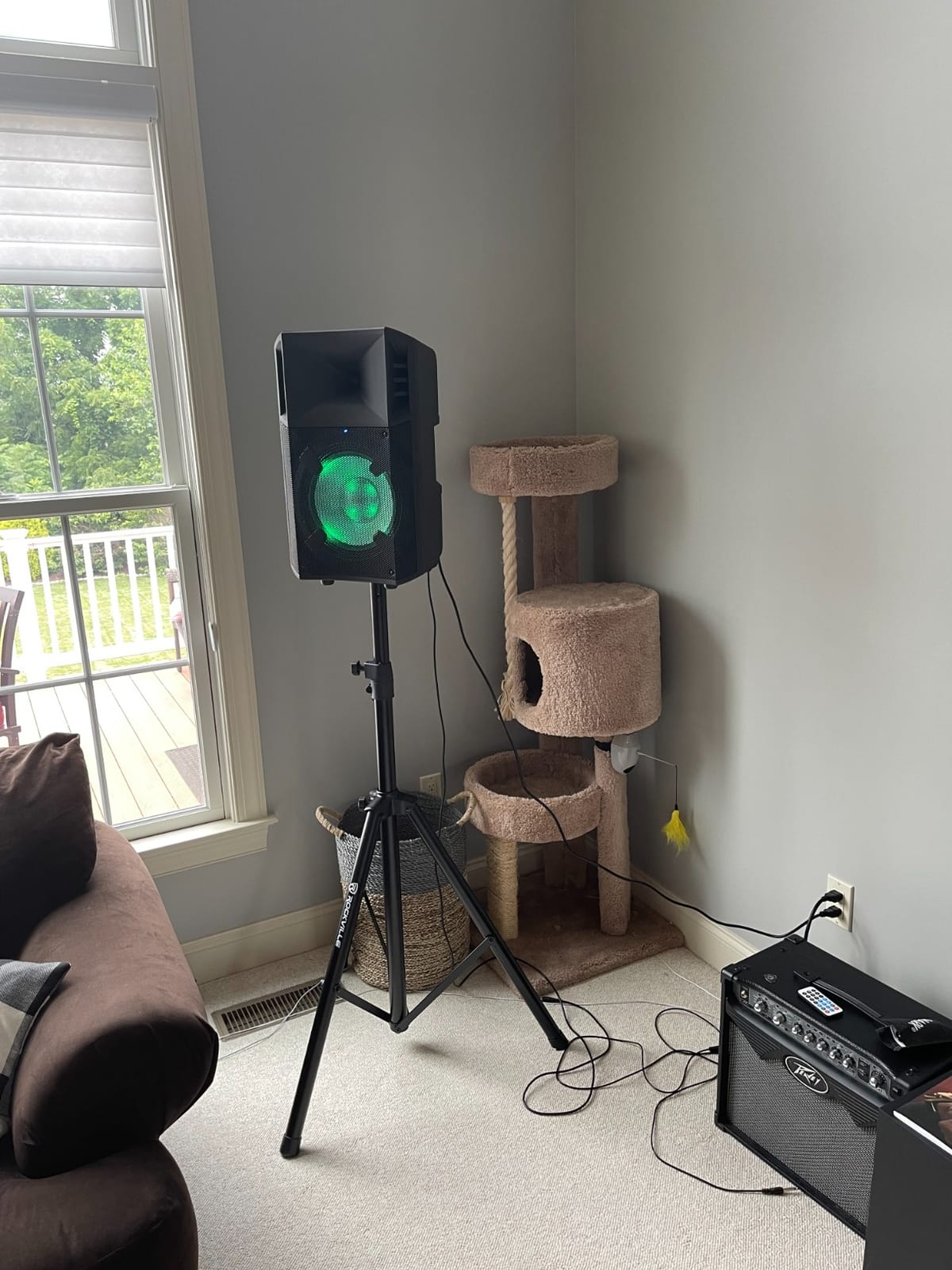
The carry case is unusually good for the category. Dual compartments and snap straps mean the two stands and the hardware separate instead of colliding in transit, which is the detail that keeps tubes from getting dinged over a season of load-ins.
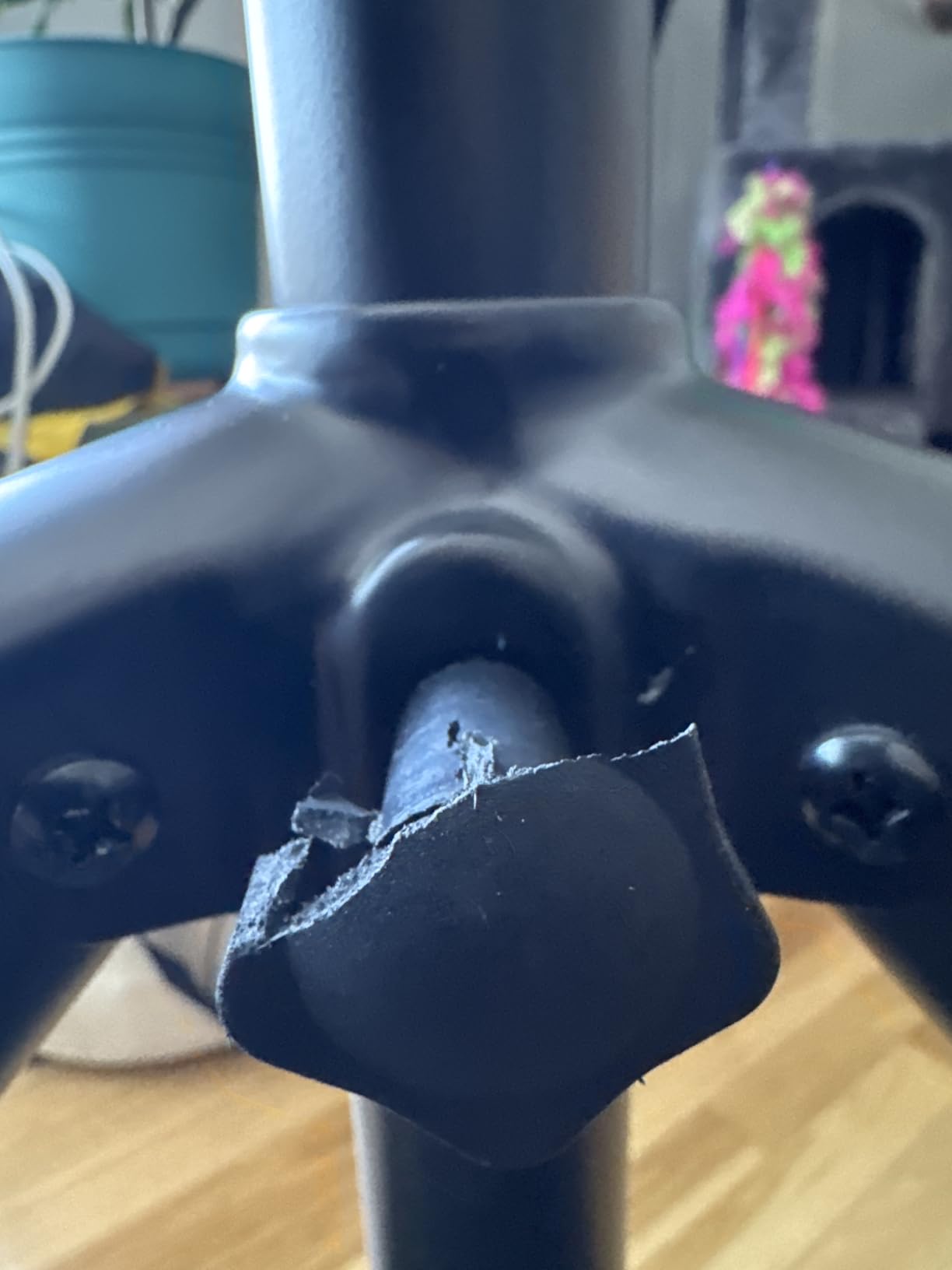
Two things to weigh. Rockville lists no warranty for this model, and a handful of buyers reported the case arriving blemished or already worn. Neither is a dealbreaker, but both argue for checking the case on arrival and having a plan if it fails.
What to check before you commit
Do the headroom math before anything else. A 132 lb rating against a 60 lb cabinet is comfortable margin, and a 132 lb rating against a 110 lb cabinet is thinner than we like to run in public. Aim for the stand to be rated well above the cabinet, not close to it.
Check your insertion depth. A 1.38 inch shaft suits most 35mm pole sockets, but measure if your cabinet has an unusual recess.
Who should skip it
Skip it if warranty coverage is part of your buying decision. There is none listed, so a bent post or cracked collar is your problem to absorb.
Skip it if you need to save weight. This is a pair of stands that feel substantial, and if the carry distance is long, a lighter 100 lb-rated set will serve a smaller cabinet just as well.
7. PRORECK PR-15S Tripod Speaker Stand Pair – Best for Folding to 4 Feet
Tripod Speaker Stands Pair for Dj/PA Speaker System Adjustable Height from 4 feet to 6 feet
143 lb listed capacity
4-6 foot height
Pair of stands
Anodized steel
Pros
- Lighter than stands of comparable size for fast multi-speaker setup
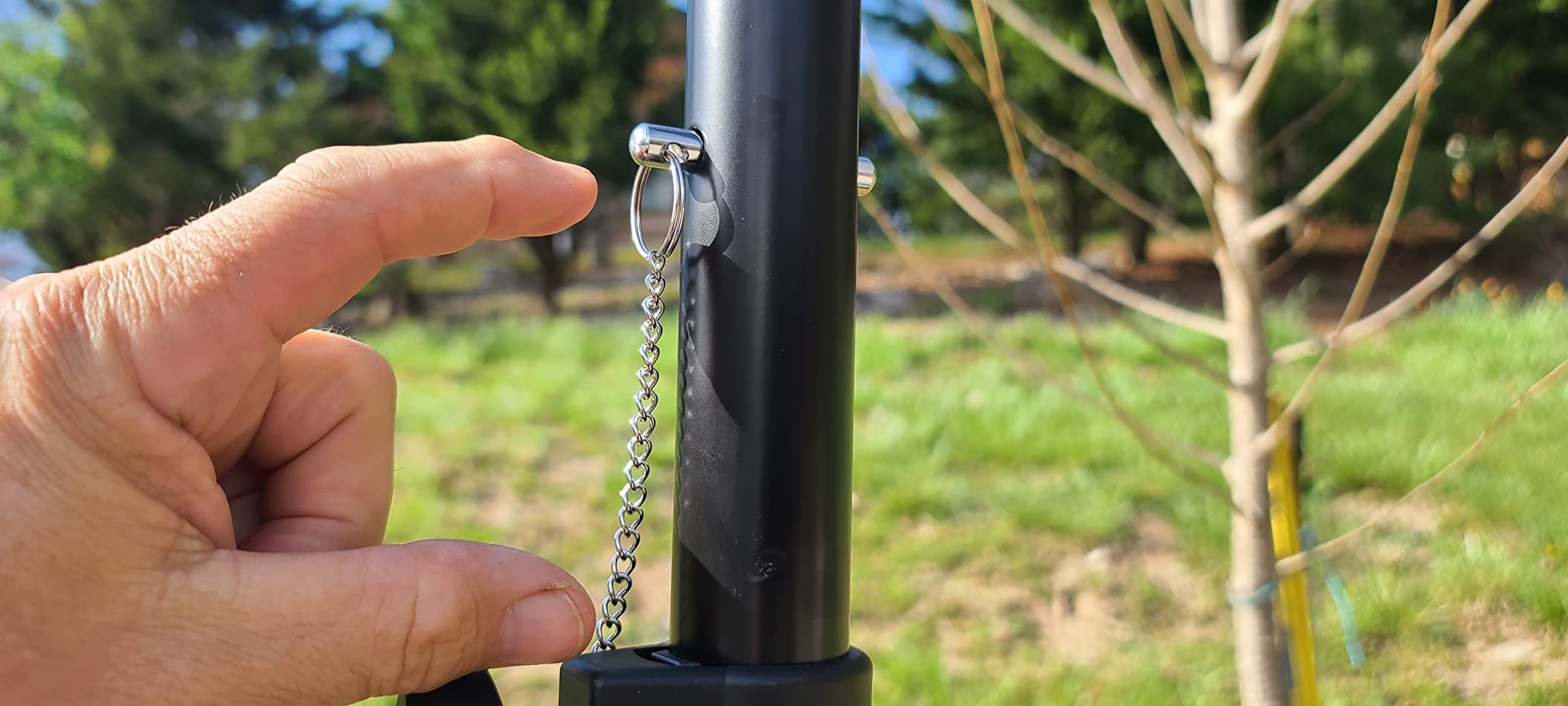
- Locking pin prevents the column dropping unexpectedly
- Folds down for storage in a tight van
- Reported to hold up through years of outdoor use
Cons
- Feels lightly built next to the 143 lb published rating
- 4-6 foot range is the shortest reach among the tall stands
- Anodized finish and light tubing show wear faster than powder-coated steel
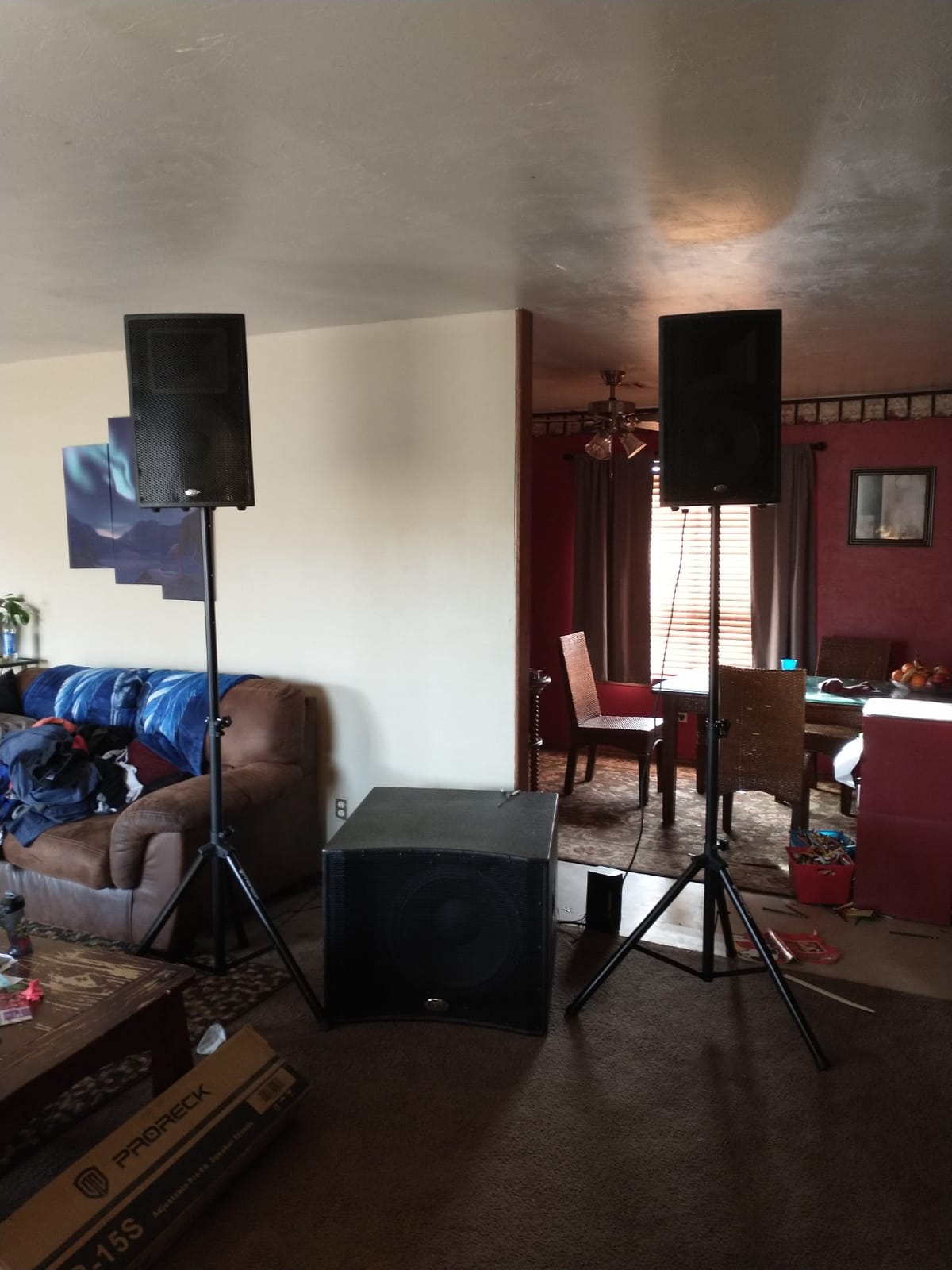
This pair earns its place for one specific reason: it collapses to a 4 foot minimum. When the working height you need is low, a stand whose column telescopes fully down saves you the awkward half-extended setup that comes with a 40-plus inch minimum.
The pair is also lighter than stands of comparable size, which owners highlight as the difference between a fast multi-speaker setup and a slow one. The locking pin is singled out as a safety benefit because it stops the column slamming down unexpectedly when a cabinet is lifted on or off.
The reservation is build heft. Several reviewers describe the tripods as light-built and advise caution against pairing them with very heavy cabinets despite the 143 lb listing. Read the rating as a ceiling and treat the lighter feel as a signal about how close to that ceiling you should run.
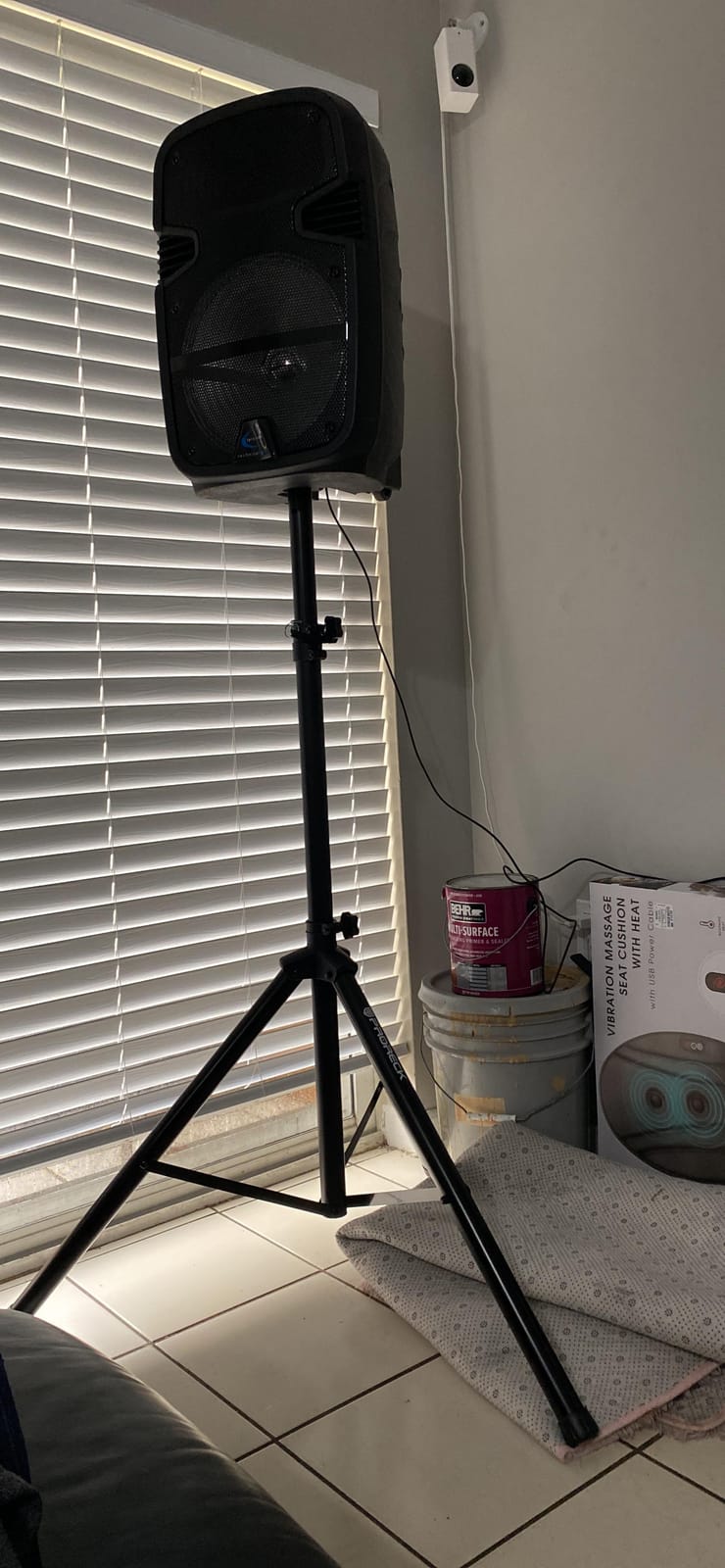
Long-term durability reports exist and they are encouraging. One owner describes three years of outdoor beach and tiki-bar use with no failure, which is the kind of report that matters more than a spec sheet for anyone working festivals and beach events.
The anodized finish is the other trade. It looks good new and marks more readily than powder-coated steel, so expect cosmetic wear on a rig that lives in a truck. That is a cosmetic issue rather than a functional one.
What to check before you commit
Check the height requirement against 4 to 6 feet. If your FOH engineer wants more than 72 inches, this pair cannot get there no matter how the column is set.
Check the real cabinet weight against the 143 lb listing with extra caution given the recurring feedback about build feel. If your main is more than half the rating, look at a stand with visibly heavier tubing.
Who should skip it
Skip it if your tops are genuinely heavy. The gap between the published rating and what owners report as build quality is exactly the situation where a lighter stand should not be the one in front of a crowd.
Skip it if you need tall reach. Among the stands that extend past 70 inches, this one has the shortest range, and the shortfall is at the top end where FOH coverage actually benefits.
8. EMART PA Speaker Stand Pair – Best for the Lowest Set Height
EMART PA Speaker Stands Pair with Carrying Bag, Adjustable Height 39-77in
39-77 inch height
140 lb capacity
Pair of stands
Padded carry bag
Pros
- Lowest minimum height here at 39 inches
- Reviewers push the tops at full extension and they do not tip
- Padded divided carry bag with an accessory panel is well designed
- Removable plastic platform brackets serve non-pole-mount speakers
Cons
- 39 inch minimum means the column must telescope fully for a low set
- Some reviewers describe the iron tubing as thin
- One buyer reported a defective stand within the pair
The 39 inch minimum height is the headline and it is a real advantage in tight rooms. Combined with a 77 inch maximum, this pair covers a 38 inch spread, the widest usable range of any stand here, so a single model works from a low bar position to a raised stage.
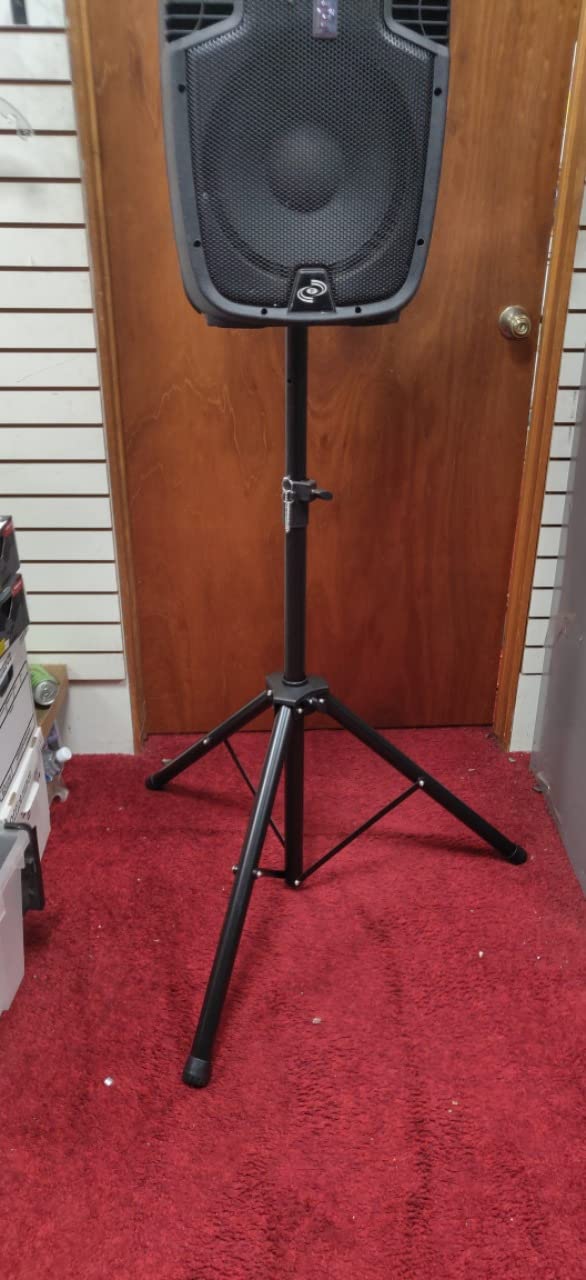
Reviewers consistently report that they can shove the tops even at the tallest setting and the stands stay put. The pin and screw lock system on both stands is what makes that hold, and it also allows you to set two stands to a matched height quickly at soundcheck.
At 140 lb per stand, the rating is among the higher in the group, and the stands are still light enough to move quickly between setups. The padded carry bag with divided sleeves and a zip accessory panel is the best-designed bag in this roundup by a wide margin.
The removable plastic platform brackets are a differentiator. They let the stands carry speakers without a pole socket, which home theater users have put to work by cutting boards to fit. For PA work they are a bonus rather than a reason to buy.
Two drawbacks keep this out of the top three. Some owners find the iron tubing thinner than the rating implies, and at least one buyer received a defective stand within the pair. Inspect both stands and the hardware on arrival rather than at the venue.
What to check before you commit
Check the 39 inch minimum against your low setting. It is the lowest floor here, which means very low placements are achievable, but it also means the column is fully collapsed for them, so the leg geometry is doing all the work at the base.
Check the matching-lock behavior. Having a pin and screw lock on each stand is what makes a symmetrical pair easy to set, and that matters more at soundcheck than any cosmetic difference between two brands.
Who should skip it
Skip it if you need a tall stand and nothing else. A 77 inch maximum is fine for most rooms but it is short of the 80 inch reach the Gemini stand offers, and the gap matters on an outdoor field.
Skip it if you have been burned by thin tubing before. The feedback is not damning, but if your history says light builds end up bent, spend the difference on visibly heavier steel.
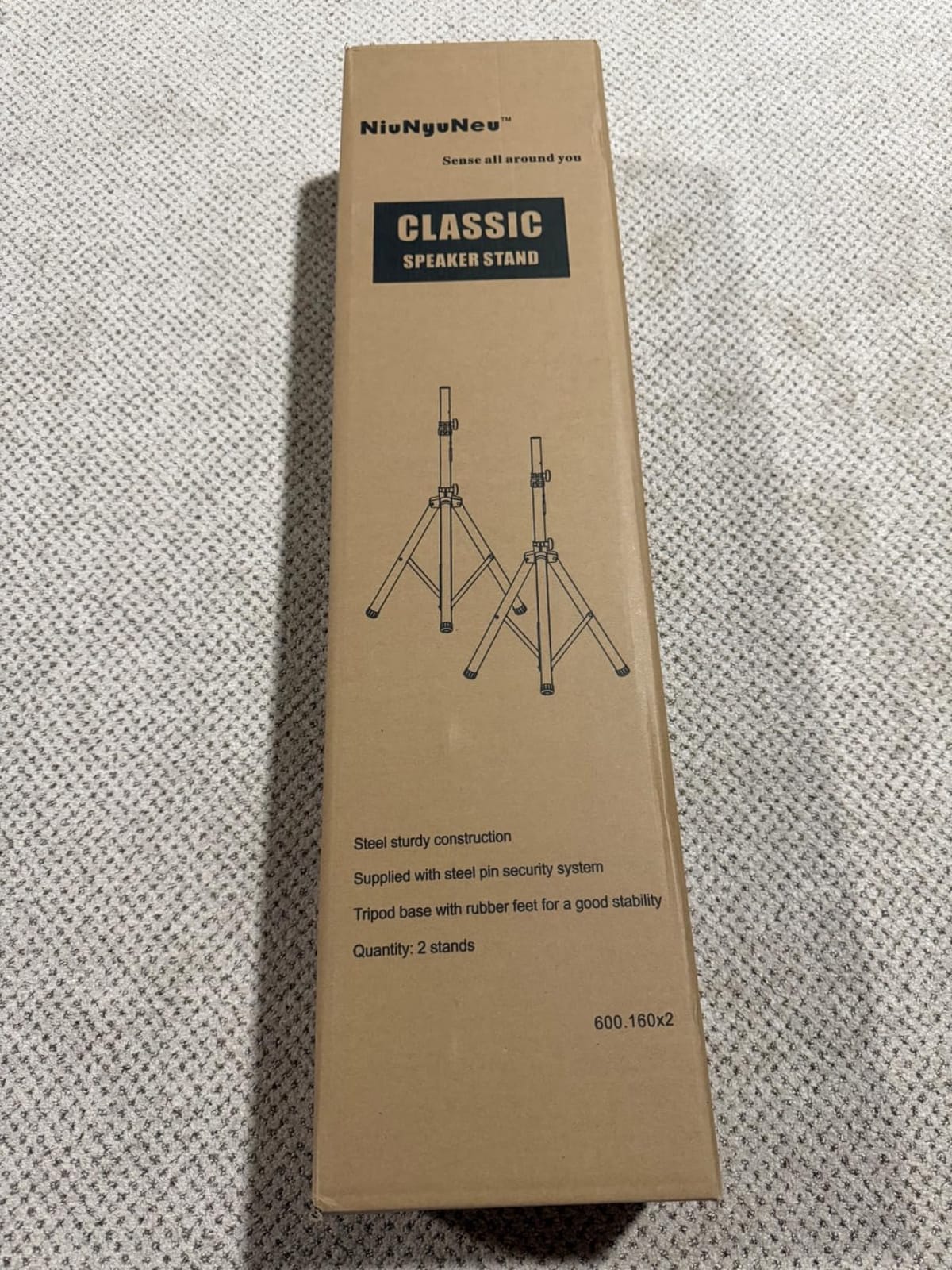
9. NiuNyuNeu Tripod Speaker Stand Pair – Best with a Lifetime Warranty
NiuNyuNeu Pair of Speaker Tripod Stands 43.7″-70.8″ PA DJ 35mm Mount Insert
99 lb per stand
43.7-70.8 inch height
6 lock settings
Pair with lifetime warranty
Pros
- Backed by a stated lifetime warranty
- Six discrete lock settings make matching a pair simple
- Steel tube legs with reinforced plastic sleeves at the joint
- Folds flat and has absorbed heavy touring use without breaking
Cons
- Safety pins are untethered and can snap off during transport
- No carry bag despite the flat-folding design
- Some reviewers think the cost is high for the category
A lifetime warranty is unusual in this category and it changes the calculus for anyone buying for a decade rather than a season. On top of that, the six discrete height lock settings are genuinely useful: instead of tightening a knob anywhere along the column, you set both stands to the same numbered detent and they match.
Reports on durability are strong. A touring musician describes repeated band gigs with no broken parts, and users confirm stable support for cabinets from 30 lb units up to much heavier speakers within the 99 lb rating.
The design detail that shows care is the joint. Steel tube legs meet the column at nylon joints with reinforced plastic sleeves, and the collar and locking mechanism were revised on this version. That is where cheaper stands typically crack, so it is the right place to spend money.
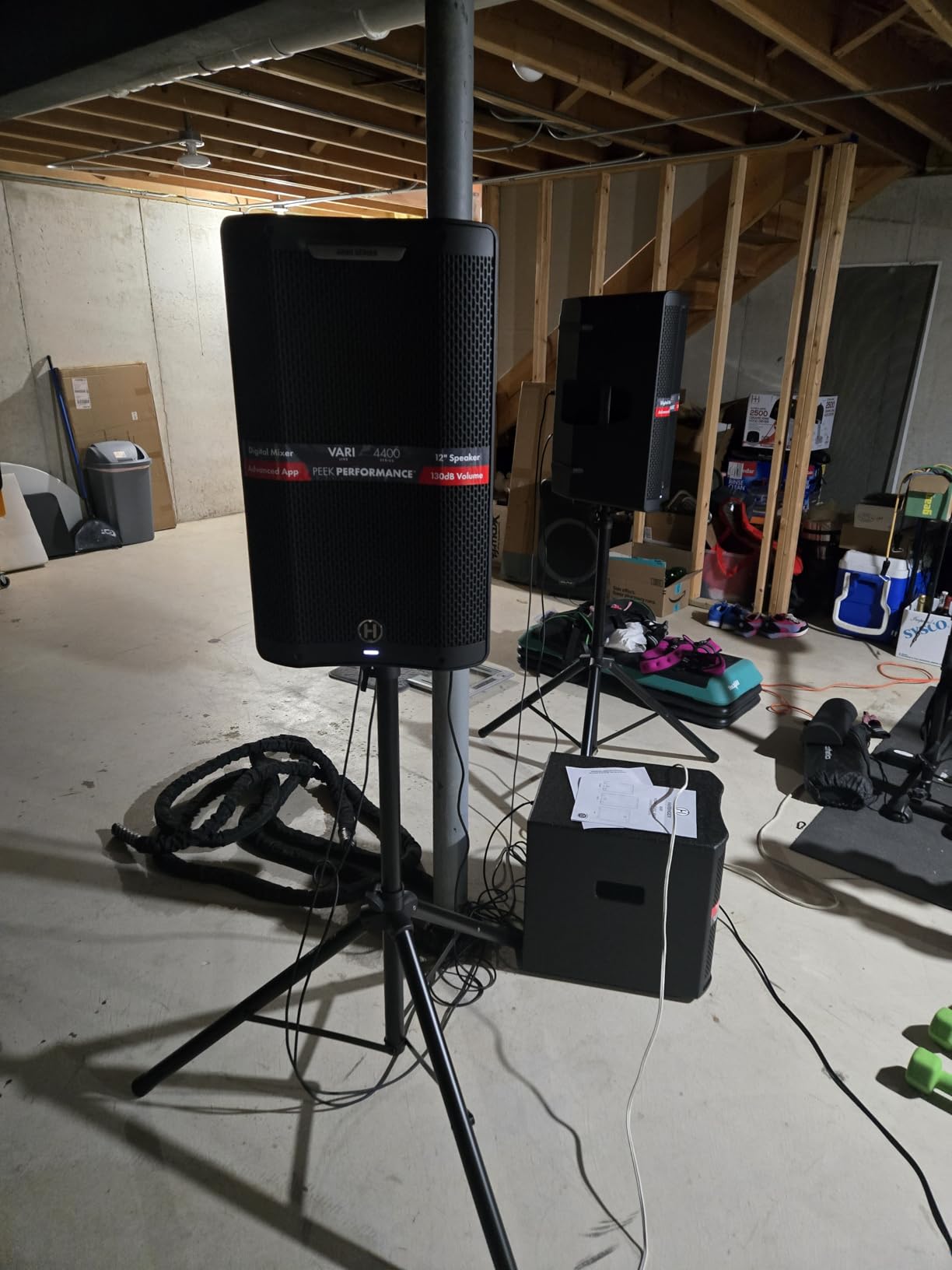
Transport is the one gap. These fold flat but ship without a carry bag, and the safety pins are not tethered, so at least one buyer lost a pin when it snapped off in transit. A small parts pouch solves it, and a spare pin costs almost nothing.
The narrower 43.7 to 70.8 inch range means this is a mid-height pair. It will not reach as high as the Gemini stand or as low as the EMART pair, so confirm the working height your FOH position needs before the warranty convinces you.
What to check before you commit
Read the warranty terms and confirm what they cover in writing. A stated lifetime warranty is valuable, but the practical question is whether wear parts and hardware fall inside or outside the claim.
Check your height requirement against 43.7 to 70.8 inches. This is a well-behaved mid-range column, and it will suit a room or a stage rather than a field that needs extra reach.
Who should skip it
Skip it if you need extreme low or extreme high settings. A 99 lb stand with a 27 inch adjustment window will not cover the full range some venues demand.
Skip it if you need a bag immediately and do not want to buy one. These fold flat but arrive bare, and fabric bags for this style of stand are inexpensive and easy to add later.
10. Pyle PSTK107 Tripod Speaker Stand Kit – Best Steel Flange Build
Pyle Universal Dual PA DJ Tripod 2 Speaker Stand Kit with Adjustable Height & Storage Bag Constructed with Heavy Duty Durable Steel & Lightweight for Easy Mobility Safety PIN Screw Locks PSTK107,Black
132 lb per stand
40-71 inch height
6.9 lb per stand
Steel leg-to-column flange
Pros
- Steel leg-to-column flange avoids the plastic joint that cracks on cheaper stands
- Large metal locking nuts grip well with work gloves
- 6.9 lb per stand with a wide base
- Compact 42 inch closed length fits most vehicles
Cons
- Included carry bag is thin canvas with a short zipper
- Some buyers received cracked end caps or a deformed column on arrival
- 1.375 inch shaft means 1 inch style adapters will not fit
The one component that decides whether a cheap tripod survives a season is the flange where the leg meets the column, and this kit uses steel there instead of plastic. Reviewers single that out explicitly, comparing it against competing stands whose plastic flanges crack at the same point.
It is a pair at 132 lb per stand, and each stand weighs 6.9 lb, so you get heavy-duty ratings without heavy-duty carry weight. Multiple owners confirm the stands handle genuinely heavy cabinets, and the large metal locking nuts are reported as easy to grip during a fast load-in.
Height runs 40 to 71 inches, which is the same working window as the single Pyle stand at the top of this list, and the closed length of 42 inches is short enough for a hatchback. That closed dimension is the practical advantage over full-length pro stands.
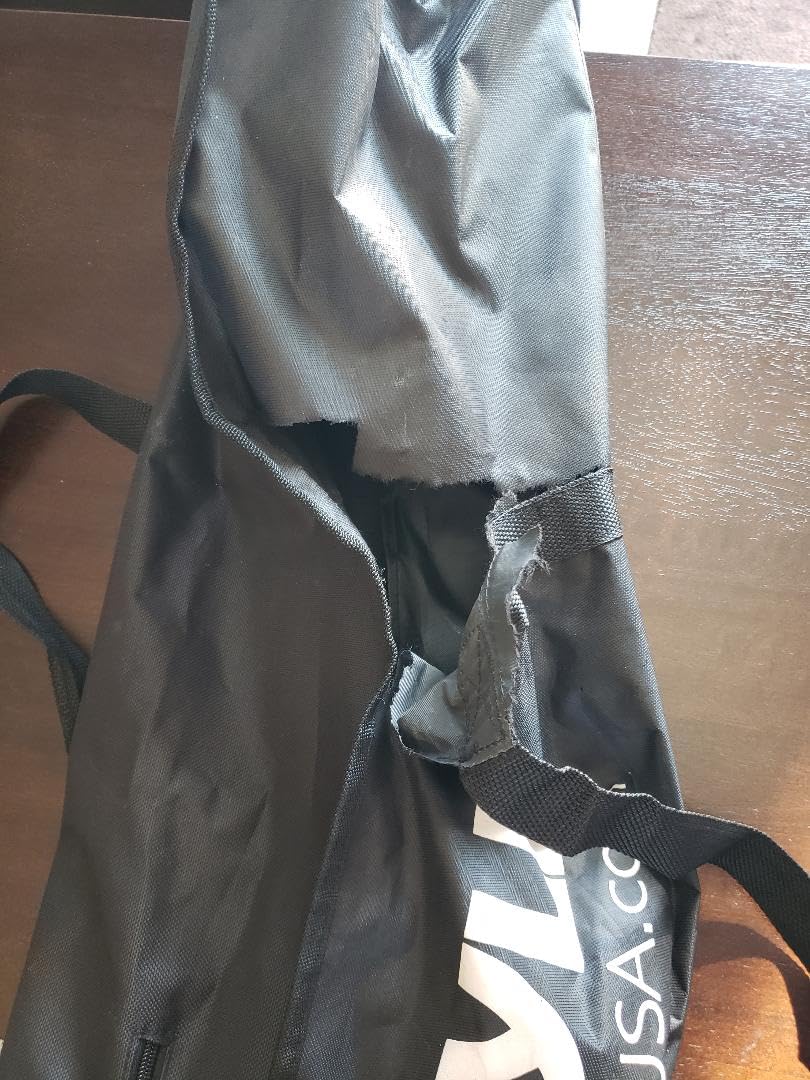
The carry bag is the most criticized part. It is thin canvas with a short zipper and it does not match the quality of the stands, which is a strange thing to say about a kit built around a steel flange. Treat the bag as packing only, and use proper cases for touring.
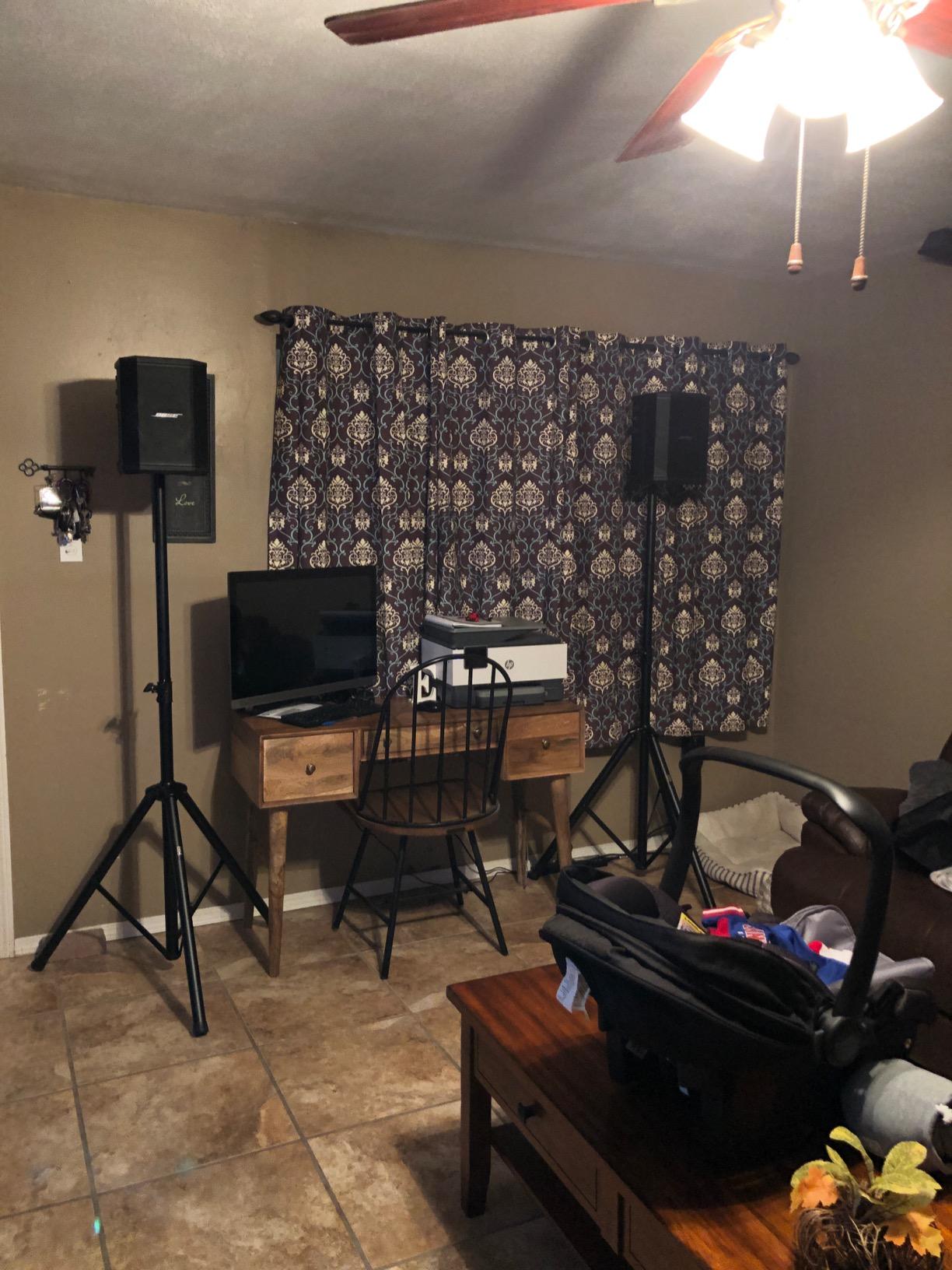
Arrival condition is the other recurring theme. Some buyers reported cracked tube end caps or a deformed telescoping column from transit, so check the column runs true and the legs open evenly before the first show.
What to check before you commit
Check the shaft diameter against your speaker. The upper shaft is 1.375 inches, so speakers needing a 1 inch style adapter will not seat without a different adapter, even though most 35mm cabinets fit directly.
Check the bag and plan around it. If the stands will live in a van rather than a closet, budget for real cases, because a thin canvas bag will not protect a steel flange from a road case landing.
Who should skip it
Skip it if you need a tall stand. At 71 inches the top of the range is modest, and stands that reach 77 to 80 inches are the better choice for outdoor coverage and raised stages.
Skip it if the pair total weight is a problem for a solo operator handling a long load-in. At 14.4 lb for the pair this is still light, but check the whole carry, not just the stands.
How to Choose a PA Speaker Stand
Capacity is where most buyers start and where most mistakes happen. A published load rating is a ceiling, not a working load, and the number you should care about is how far your cabinet sits below it. My rule is simple: the stand should be rated at least a third above the cabinet, which leaves headroom for the moment someone bumps a stand while a cabinet is on top.
Worked example, because this comes up constantly. In a r/livesound thread titled around Peavey SP2G mains, the cabinets weigh 83 lb each. Paired against a stand rated 110 lb, the margin is 27 lb, or roughly a quarter. That works, but it leaves nothing for a bump, a sloping stage deck or a gust. A stand rated at 130 lb or more is the more comfortable answer, and it is why the 132 lb-rated stands in this roundup keep appearing at the top of recommendation lists for heavy mains.
Choosing a lift mechanism
Four mechanisms appear in live-sound stands, and the honest truth is that all of them work. The difference is in the first 20 seconds of a load-in and in how the column behaves when something goes wrong.
A screw lock with a pin is the standard. It is cheap, light and reliable, but the column only moves by friction, so getting a 60 lb cabinet from the floor to minimum height is the part that usually needs two people. A clutch-style collar, often sold under a brand name such as TeleLock, lets you set the column at a raised position and then release it downward under load control, which changes the lift into a one-hand job for a lot of operators.
An air lift uses a pumped cylinder to raise the column. It solves the lift problem completely, and it is the mechanism users ask about most often, usually with the same worry: is it serviceable when it fails, and does the seal degrade. A hand crank does the same job with gears and no seals, and it trades the air cylinder for a lot of added weight, with forum reports of crank stands at roughly 15 lb each and a minimum height near 48 inches, which means the initial lift is still partly yours to solve. On balance, the clutch collar gives most of the benefit at a fraction of the weight of a crank.
Height range and venue
Minimum height decides whether you can get a top into a low-ceiling bar, and maximum height decides whether you can get it above a standing crowd. If your work is a mix, aim for a wide adjustment window. The stands here span from 36.5 inch minimum on the monitor platforms to 52 inch on the Amazon Basics stand, with maximums from 54 inches up to 80 inches.
Raise tops above head height for outdoor and high-ceiling work, where high frequencies are otherwise absorbed by the first few rows. In a small room, high placement makes the source obvious and increases feedback risk, so a lower stand is often the acoustically correct choice.
Steel, aluminum, and uneven ground
Steel stands are heavier and tolerate abuse, which is why they dominate gigging use. Aluminum stands save weight and are the right call for a solo operator on a long carry, but the soft-metal hardware gives up sooner under repeated clamping.
Uneven ground is where tripod geometry shows itself. Look for long expandable legs, a wide footprint you can dial outward, and rubber feet of equal length, because unequal feet rock. None of the stands here carries a dedicated leveling outrigger, so on grass the practical move is to widen the footprint fully and place the stands before the cabinets go on, not after.
Tripod or subwoofer pole
A tripod is the general answer and handles whatever the show brings. A subwoofer pole is purpose-built, usually a heavy base with a short column, and it exists because a sub needs stability more than it needs height. If you do not always bring a sub, a tripod is the more useful purchase, which is the case a mobile DJ raised in a forum when asking about exactly this tradeoff.
Transport, and a pre-show check
Carry bags matter more than most buyers expect. A bag with divided compartments keeps tubes from colliding and keeps hardware in one place, and the bags in this roundup range from genuinely good to genuinely poor. Check the bag, because the best stand in the world still fails if it lands bent.
Before every show, run the same short check: legs open evenly, the locking knob and pin engage at the height you need, the safety pin is present and not bent, and the feet are not cracked. Two minutes at the venue is cheaper than a cabinet on the deck, and a stand whose load rating is exceeded is a collapse risk, not just a broken component.
Frequently Asked Questions
Do speaker stands affect sound quality?
Yes, mainly through height and coverage. A stand raises the cabinet so its output passes over the audience instead of being absorbed by the first few rows, and it keeps the speaker clear of microphone pickup lines, which reduces feedback. A stand does not improve the cabinet itself, but a badly positioned one produces hotspots, dead zones and phase problems that no amount of EQ fixes.
What is the best speaker stand?
For most live-sound work, the Pyle PSTND2 is the strongest all-rounder: 132 lb capacity, a 40-71 inch height range, a 6.9 lb weight and a retainer pin, backed by the largest review base in the group. Heavy mains call for a 130 lb-rated stand or higher, low-ceiling rooms call for a low minimum height, and solo operators should prioritize the lift mechanism before anything else.
What is the best tripod for a speaker?
It depends on cabinet weight and load-in conditions. The Pyle PSTND2 covers the widest general case at 132 lb and under 7 lb per stand. For the lightest possible carry the Gemini ST-04 at roughly 5 lb reaches 80 inches, and for large 15-inch or 16-inch mains the Rockville RVSS2 pair is rated to 132 lb per stand. Match the rating well above the cabinet, not close to it.
What are the best speaker stands for heavy speakers?
Weight capacity is the only number that matters here, plus enough base spread to keep the rig planted. For 15-inch and 16-inch cabinets, look at the 132 lb-rated Pyle stands and the Rockville RVSS2 pair. For mains in the 80 lb range, keep the stand rated at least 30 percent above the cabinet, so a 110 lb cabinet sits on a 140 lb-rated stand rather than a 120 lb one.
Should speaker stands be heavy?
Not for their own sake. Stand weight affects stability, but capacity rating is the safety number, and a heavy stand with a modest rating is no better for a heavy cabinet than a light one. Choose weight that suits the load-in, since a stand you cannot carry up a staircase safely becomes a two-person job, and choose a rating that sits well above the cabinet.
How high should PA speakers be on stands?
Above head height for most standing audiences, so coverage passes over the crowd rather than into the first rows. In small rooms with low ceilings, a lower position is often acoustically better because it keeps the source further from microphones and reduces feedback. Adjust for the room, not a fixed number, and confirm the maximum height of the stand supports the position you need.
Which Stands Should You Actually Buy?
Buy the Pyle PSTND2 if you want one answer for most live-sound work, because 132 lb of capacity at under 7 lb per stand covers the widest range of cabinets and load-ins we tested. Buy the Rockville RVES1 pair if the packaging matters, since two stands and a bag in one purchase removes the most common setup friction. Buy the Rockville RVSS2 pair for heavy mains, and the Gemini ST-04 when the carry distance is the hardest part of your show.
Whatever you choose, decide the mechanism question before you buy, because it is the one spec that determines whether you load in alone. Rating, height and material are all recoverable. A stand that will not go up by yourself at midnight, on a wet stage, is not recoverable at all. This roundup was reviewed in 2026 and will be updated as the lineup changes.