
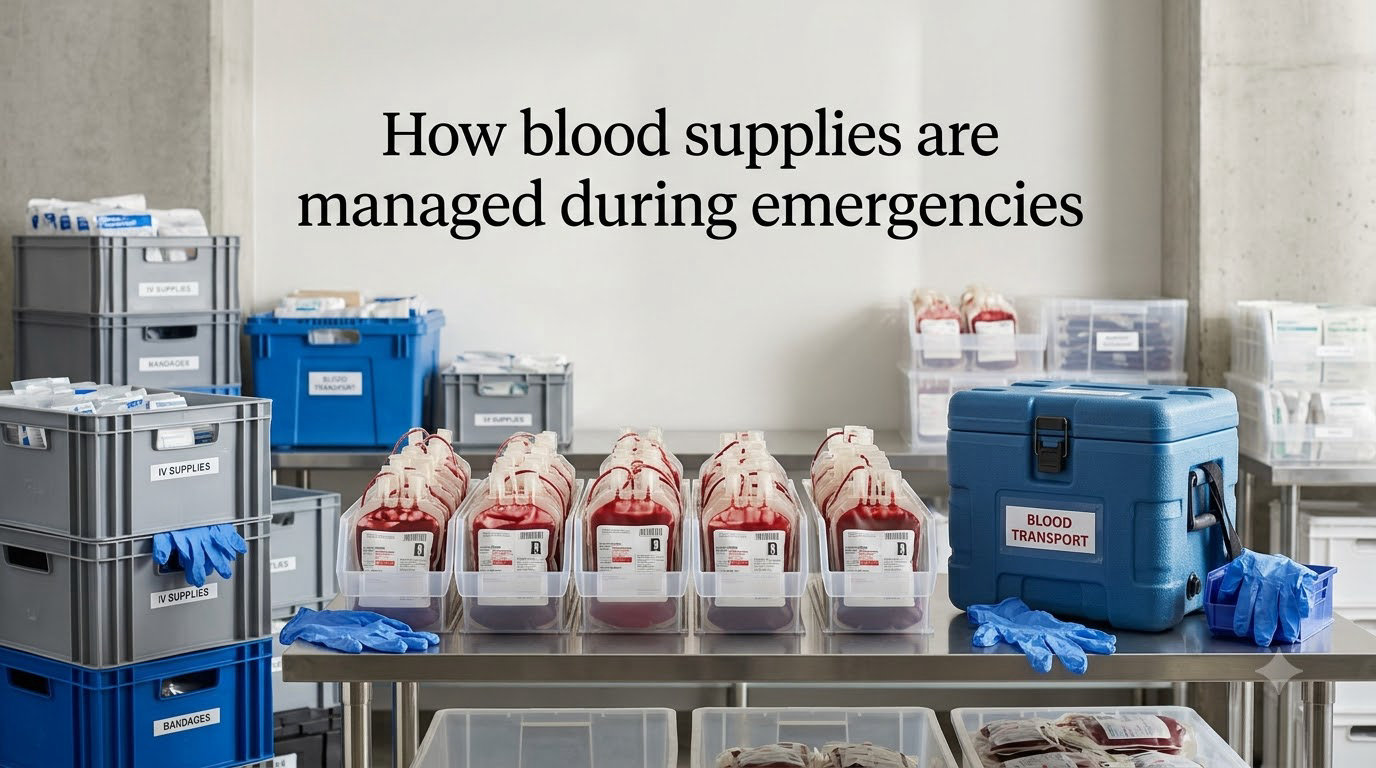
Blood supply management during emergencies is the coordinated system of maintaining adequate blood inventory, recruiting donors, and distributing blood products to hospitals when crises threaten normal supply chains. When disaster strikes—whether a hurricane, pandemic, or mass casualty event—hospitals need immediate access to blood products to save lives, yet a single trauma patient can use 50 or more units of blood.
Understanding how blood supplies are managed during emergencies helps patients, donors, and healthcare professionals appreciate why consistent donation matters and what happens behind the scenes when crisis hits.
Table of Contents
What Is Emergency Blood Supply Management?
Emergency blood supply management refers to the planned and reactive processes blood centers, hospitals, and public health agencies use to ensure adequate blood availability during crises. It encompasses everything from risk assessment before disasters to rapid distribution during emergencies.
Unlike routine blood management, emergency scenarios demand surge capacity—collecting, processing, and distributing far more blood products than normal. The World Health Organization emphasizes that preparedness, including business continuity planning, is essential for blood services to mitigate the impact of emergencies.
Types of Emergencies That Disrupt Blood Supply
Blood supply systems face different challenges depending on the type of emergency:
Natural Disasters
Hurricanes, earthquakes, floods, and tornadoes disrupt blood supply in multiple ways. Blood drive cancellations spike as communities evacuate or lose power. Transportation routes close, delaying deliveries. The Red Cross reported that severe weather cancels thousands of blood drives annually, creating immediate shortages.
Mass Casualty Events
Terror attacks, industrial accidents, and mass shootings create sudden, extreme demand. A single mass casualty event can deplete a regional blood supply within hours. Emergency protocols activate within minutes, calling in additional blood products from neighboring areas.
Pandemics and Infectious Disease Outbreaks
Pandemics reduce blood collections as donor turnout drops due to fear of infection or social distancing requirements. COVID-19 illustrated this sharply—blood drives at schools, workplaces, and community centers were canceled en masse, while hospitals simultaneously needed blood for critical patients.
Armed Conflicts
War zones create both supply disruptions and demand surges. Trauma injuries require massive transfusions, while infrastructure damage and security concerns limit blood collection and distribution capacity.
How Emergency Blood Management Works: A 4-Phase Approach
Emergency blood management follows a structured cycle recognized by public health agencies worldwide:
Phase 1: Preparedness (Before the Emergency)
Preparedness involves risk assessment and gap analysis to identify vulnerabilities in the blood supply chain. Blood centers develop business continuity plans, establish mutual aid agreements with neighboring regions, and maintain baseline inventory levels. Regular testing of communication systems ensures rapid activation when needed.
Phase 2: Response (During the Emergency)
Response activates emergency protocols immediately. Blood centers extend collection hours, launch mobile drives, and issue urgent donor appeals. Distribution prioritizes the most critical patients using triage-based allocation. Interagency coordination ensures blood flows to where it’s needed most.
Phase 3: Recovery (After the Emergency)
Recovery focuses on replenishing depleted inventory and evaluating response effectiveness. Donor recruitment campaigns intensify to rebuild supply. Hospitals restock emergency reserves. After-action reviews identify improvements for future events.
Phase 4: Mitigation (Ongoing Improvement)
Mitigation applies lessons learned to strengthen the system. This includes upgrading cold chain logistics, expanding donor databases, investing in technology for real-time inventory tracking, and conducting regular emergency drills.
The Blood Supply Chain During Emergencies
The blood supply chain moves blood from donor to patient through several critical steps:
Collection: Whole blood or apheresis donations are collected at fixed centers or mobile drives. During emergencies, centers may extend hours and activate backup sites.
Testing and Processing: All donated blood undergoes rigorous testing for blood type, infectious diseases, and compatibility. Blood is then separated into components—red blood cells, platelets, plasma, and cryoprecipitate—to maximize the number of patients each donation can help.
Storage and Distribution: Red blood cells can be stored for up to 42 days refrigerated. Platelets last only 5 days at room temperature. Plasma can be frozen for up to a year. During emergencies, distribution systems accelerate to move products to hospitals within hours of processing.
Hospital Transfusion: Hospitals maintain blood inventories and activate massive transfusion protocols when casualties surge. These protocols ensure rapid, coordinated blood delivery to trauma bays and operating rooms.
Blood Component Types and Their Emergency Uses
Understanding blood components helps explain why different emergencies create different supply pressures:
Red Blood Cells (RBCs): Carry oxygen to tissues. Essential for trauma, surgery, and anemia. O-negative RBCs are the universal donor type, used when blood type is unknown in emergencies.
Platelets: Help blood clot. Critical for cancer patients, surgical bleeding, and trauma. Platelets have the shortest shelf life—only 5 days—making consistent donation essential.
Plasma: The liquid portion of blood carrying proteins and clotting factors. Fresh frozen plasma treats burn patients, clotting disorders, and massive hemorrhage.
Cryoprecipitate: A concentrated source of clotting factors. Used for hemophilia, fibrinogen deficiency, and massive transfusion scenarios.
Why Blood Can’t Be Stockpiled Indefinitely
A common misconception is that blood banks should simply stockpile more blood. The reality is biological limitations make this impossible.
Red blood cells last approximately 42 days refrigerated. Platelets expire after just 5 days. Plasma can be frozen for longer periods but requires specialized freezers and thawing procedures. This means blood must be continuously collected and used—it’s a perishable resource with no long-term storage option.
During the Red Cross’s 2026 national emergency blood shortage, supply fell 25% below critical levels. This situation demonstrates why ongoing donation is essential—you cannot stockpile your way out of a blood shortage.
How Individuals Can Help During Blood Emergencies
You don’t need medical training to support blood supply during emergencies:
Donate regularly: Consistent donation throughout the year maintains baseline supply. Emergencies are unpredictable—blood donated today saves lives next month.
Schedule appointments in advance: Blood centers report that scheduled donations are more reliable than walk-ins. Use apps or online scheduling to commit to regular donations.
Spread awareness: Share blood drive information with friends, family, and coworkers. Community awareness drives donation turnout during critical shortages.
Organize workplace or community drives: Blood centers need host sites. Sponsoring a drive at your workplace, school, or community center provides convenient donation access.
Understand the need beyond disasters: While disasters grab headlines, hospitals need blood every single day for surgeries, cancer treatments, and trauma care. Regular donation prevents shortages before they become emergencies.
Frequently Asked Questions
What is the 4-hour rule for blood transfusions?
The 4-hour rule states that once blood products are removed from controlled refrigerated storage, they must be transfused within 4 hours or discarded. This prevents bacterial growth that can occur at room temperature, ensuring patient safety during transfusion.
What are the 3 P’s of blood transfusion?
The 3 P’s of blood transfusion are: Product (using the right blood component for the patient’s need), Patient (correctly identifying the recipient and verifying compatibility), and Procedure (following proper transfusion protocols including monitoring for reactions).
Is O+ blood used in emergencies?
O+ blood is commonly used in emergencies for patients with Rh-positive blood types. However, O-negative blood is the universal donor type used when a patient’s blood type is unknown or there’s no time for typing, as it can be given to almost anyone safely.
What are the three rarest blood types?
The three rarest blood types are AB-negative (found in about 1% of the population), B-negative (about 2%), and AB-positive (about 4%). These rare types are always in high demand because fewer donors are available to supply them.
Conclusion
How blood supplies are managed during emergencies is a complex but vital system that protects public health every day. From donor recruitment to hospital transfusion, each link in the chain depends on consistent participation and sound planning.