

Hard water does not announce itself. It shows up as white crust on the faucet aerator, a foggy film on shower glass, laundry that feels stiff after one wash, and a water heater that works harder every year to push water through scale. If you are shopping for a fix, the most important number in your head is probably not gallons per minute or warranty length. It is the ceiling you set before you start clicking through listings.
That is exactly what this list does. Every one of the ten systems below was selected and reviewed against a strict budget of 1,000 dollars for the equipment itself, so you can compare real whole-house treatment without a single surprise model sliding in above your limit. We worked through the major capacities, the different control valves, the salt-based versus salt-free debate, and the specs that actually determine whether a unit holds up after five years of daily use.
Here is the short version before the detail. The Aquasure Harmony Series 48,000-grain is the one we would put in our own home, because it pairs a genuinely capable digital metered head with a carbon pre-filter and a 12 gpm flow rating at a price that leaves room for installation. The AFWFilters Fleck 5600SXT 48,000-grain is the alternative if the valve brand matters more to you than the extras, since the Fleck platform is the most widely serviced control valve in the category. And for a private well with iron staining, the AFWFilters Iron Pro 2 handles hardness and iron in a single tank.
A quick note on how a softener works, because it drives every purchase decision that follows. Hard water passes through a bed of resin beads charged with sodium. Calcium and magnesium ions trade places with the sodium and stick to the resin, which is why your soap lathers better and your glasses stop spotting. Once the resin is loaded, a metered control valve triggers a regeneration cycle that flushes those captured minerals to a drain and recharges the beads. Everything else on your shortlist, from grain capacity to salt usage, is a detail of how efficiently that one process runs.
We also want to be honest about what a 1,000-dollar ceiling rules out before you get attached to a shopping list. Dual-tank systems, which keep soft water flowing through regeneration, sit well above this budget. That is a real limitation, and we explain the workaround later in the guide. What you can get inside the ceiling is a metered single-tank system with a serviceable valve, a decent resin bed, and a warranty that ranges from one year to ten depending on the brand.
Table of Contents
Top 3 Picks for the Best Water Softeners Under $1000 (September 2026)

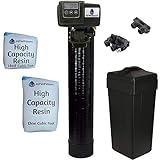
Aquasure Harmony Series 48,000-Grain
- 48000-grain capacity
- 12 gpm max flow
- Carbon and zinc pre-filter
- 5-year warranty
AFWFilters Fleck 5600SXT 48,000-Grain
- Fleck 5600SXT metered valve
- 10 x 54 inch Pentair tank
- Handles 2000 ppm TDS
- 5-year warranty

AFWFilters Iron Pro 2 64,000-Grain
- Softener and iron filter in one tank
- Iron up to 6 ppm
- Fleck 5600SXT valve
- 5-year warranty
All 10 Water Softeners Under 1,000 Dollars at a Glance (2026)
| Product | Specifications | Action |
|---|---|---|
|
Aquasure Harmony Series 48000-Grain
|
|
Check Latest Price |
|
AFWFilters Fleck 5600SXT 48000-Grain
|
|
Check Latest Price |
|
AFWFilters Iron Pro 2 64000-Grain
|
|
Check Latest Price |
 Kenmore 350 Whole House 32000-Grain
|
|
Check Latest Price |
 Tier1 48000-Grain Softener
|
|
Check Latest Price |
 DuraWater Fleck 5600SXT 64000-Grain
|
|
Check Latest Price |
 Aquasana SimplySoft 40000-Grain
|
|
Check Latest Price |
 iSpring WCSTB45KG 45000-Grain
|
|
Check Latest Price |
 PRO+AQUA 80000-Grain Heavy Duty
|
|
Check Latest Price |
|
DuraWater Fleck 5600SXT 32000-Grain
|
|
Check Latest Price |
1. Aquasure Harmony Series 48,000-Grain – Best Overall for Most Homes
Aquasure Harmony Series 48,000 Grains Whole House Water Softener w/High Efficiency Digital Metered Control Head (48,000 Grains)
48000 grain capacity, 12 gpm max flow, ion exchange with prefilter, 5-year warranty
Pros
- Cuts hardness dramatically per owner tests
- Straightforward DIY install in 2-3 hours
- Digital metered head tunes to actual feed hardness
- Low salt use at one bag per month
- Fiberglass-lined tank and durable bypass
Cons
- Programming is convoluted and manual-heavy
- Clock and totalizer reported as inaccurate
- Regeneration is audible outside the equipment room
I spent the most time on this unit because it has the deepest owner feedback base in the group, more than 3,000 ratings, and the feedback is unusually consistent. Owners report hardness readings dropping from roughly 85 ppm to about 1 ppm after the first flush, which is the kind of result you feel in the shower within a week. For a family of three or four on hard municipal water, that is the whole job done.
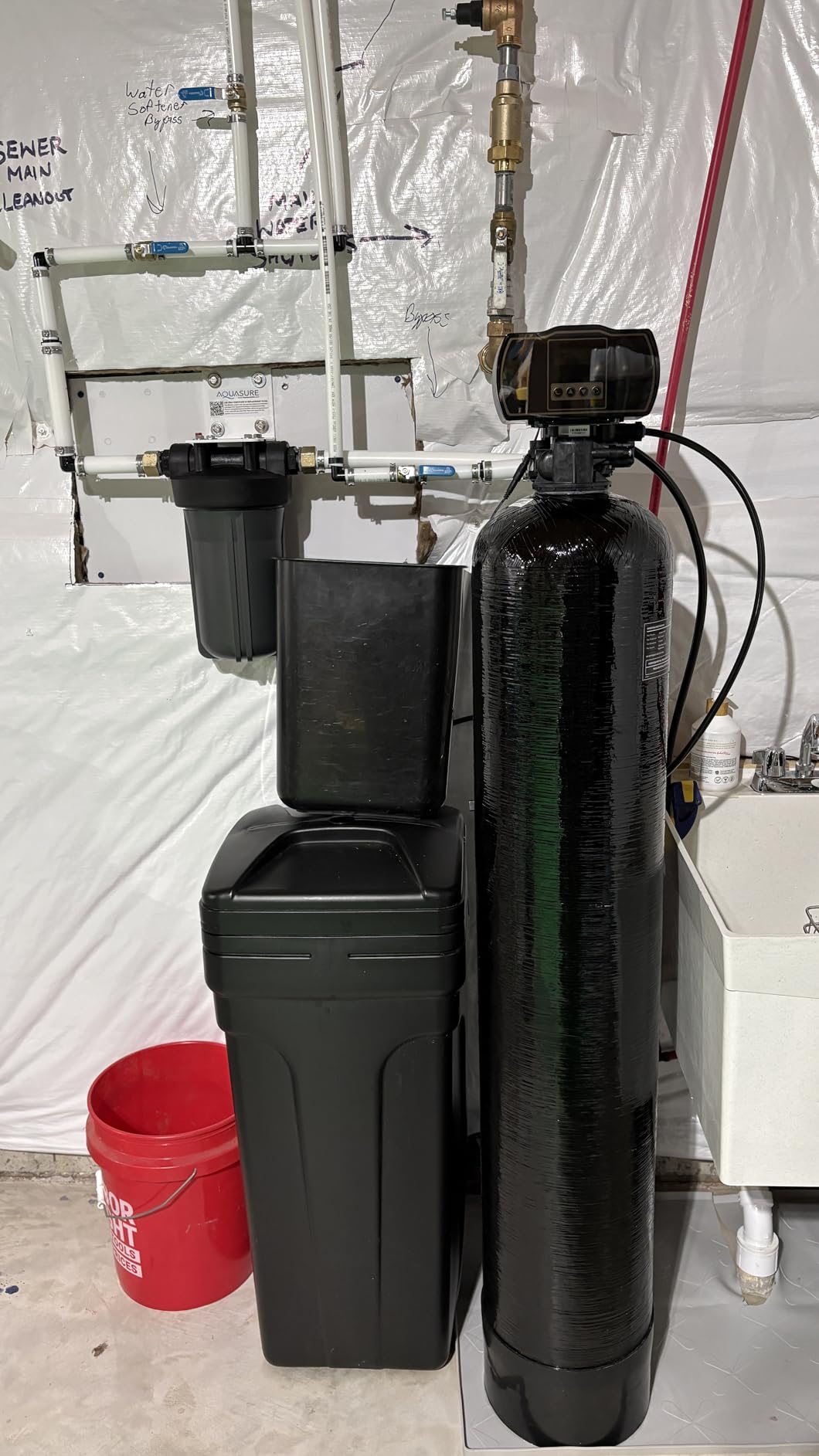
Installation is where this one quietly wins the category. Buyers with basic plumbing skills describe a 2-3 hour fit with no specialized tools, and the system arrives with a bypass valve, prefilled premium resin, and a triple-purpose sediment, carbon, and zinc pre-filter already mounted. That pre-filter is the detail most competitors charge extra for, and it handles chlorine, sediment, odors, and heavy metals before the water ever reaches the resin.
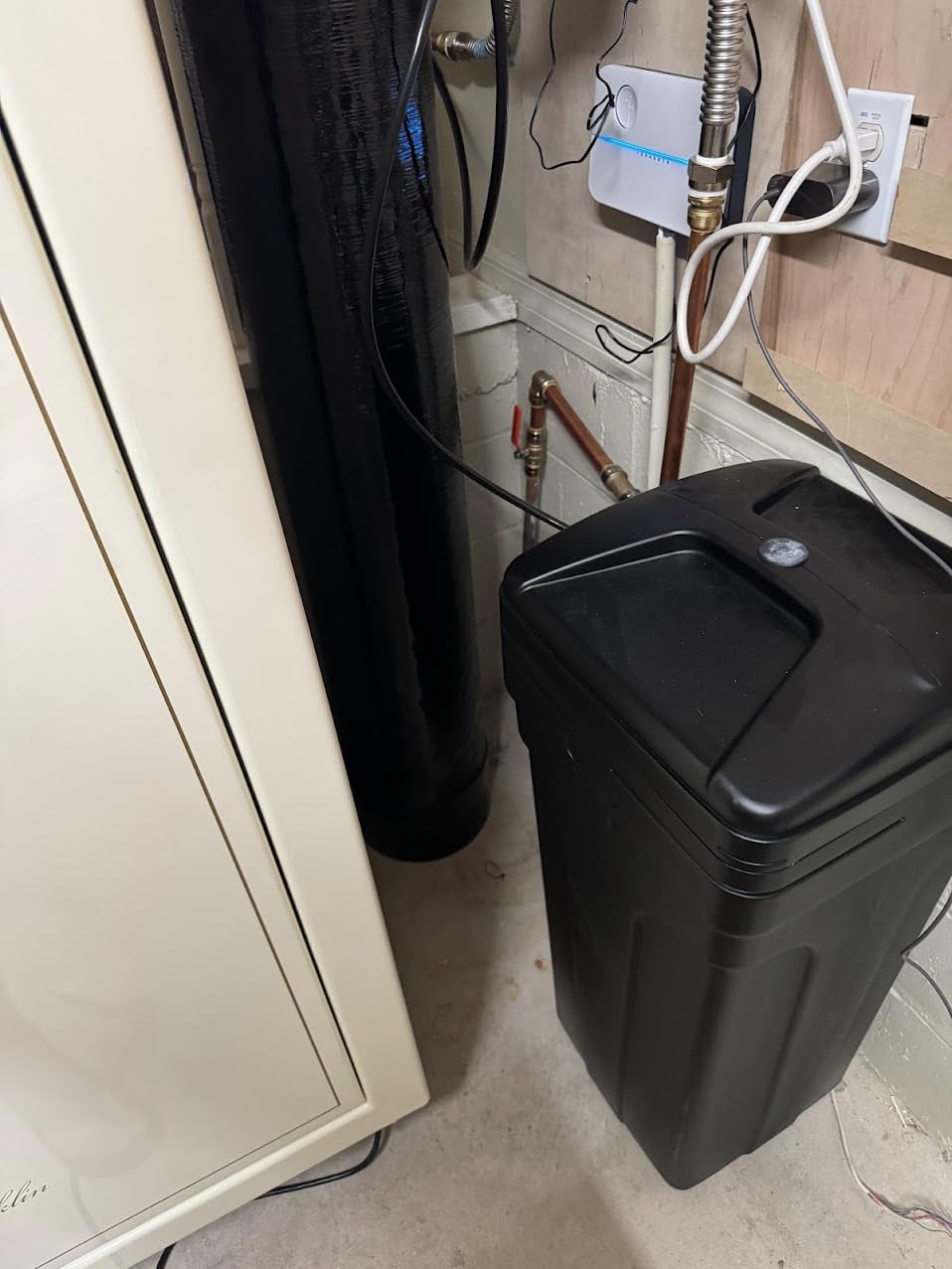
The digital metered control head is the strength and the weakness at the same time. It lets you dial the gallonage setpoint to match your real feed hardness rather than a factory guess, and it uses a modest amount of salt, roughly one 40 lb bag a month for a two-adult home. The complaints cluster around programming, which reviewers describe as convoluted enough to require frequent manual reference.
Two other negatives deserve a mention. Several owners report the clock and totalizer as inaccurate, with gallon counts sometimes lost after a power outage, and regeneration is loud enough to carry outside a utility room. One reviewer also found the meter setpoint failing to hold hardness back near the end of a cycle, which is exactly the scenario the head is supposed to prevent.
Who this softener suits best
This is the pick for a family of three or four who want a full-featured metered system without paying for a Fleck valve, and who value a carbon pre-filter as part of the package. It is also a good match for a DIY installer, since the install is described as straightforward and the tank, bypass, and pre-filter all arrive as one assembly.
At 120 pounds and 10 x 10 x 62 inches, the assembly is heavy and awkward for a single person, so plan for a second set of hands. The optional overflow tubing for the brine tank is not included, so pick up a small length of 1/2 inch line before you start.
Where it falls short
If you care most about long-term valve serviceability, a Fleck-equipped unit is the safer bet, and forums like r/WaterTreatment consistently point buyers toward that platform for parts reasons. Programming frustration is the other real risk, and it is worth budgeting an hour with the manual before your first regeneration.
Regeneration noise is worth noting if the equipment room is near living space. The good news is that metered demand-initiated operation means the unit regenerates when you have actually used water, not on a fixed clock, so the loud window is far less frequent than on time-clock models.
2. AFWFilters Fleck 5600SXT 48,000-Grain – Best Value on a Serviceable Valve
AFWFilters Built Fleck 48,000 Water Softener System with 5600sxt Digital metered Valve 1″ Yoke
48000 grain capacity, Fleck 5600SXT metered valve, 2000 ppm TDS, 5-year warranty
Pros
- Fleck 5600SXT valve is the most serviceable in the group
- Complete kit with bypass yoke and brine float
- Handles up to 2000 ppm TDS
- Made in the USA with setup support
Cons
- Install guidance leans on buyer research
- Some buyers need extra fittings for existing plumbing
The reason this system shows up at the top of so many forum threads is the control valve, not the tank. The Fleck 5600SXT is a digital, on-demand metered valve that measures actual water use and regenerates only when the resin bed needs it, and replacement parts for it are sold by dozens of water treatment suppliers years after any given listing disappears.
Out of everything we looked at, this one also holds the highest average rating among the high-volume picks, at 4.5 stars across 928 ratings. Owners cite dependable metered regeneration, straightforward setup, and real salt savings, and the package is complete: a 10 x 54 inch Pentair mineral tank, a 15 x 34 inch brine tank with a safety float, a 1 inch threaded yoke, and a bypass valve.
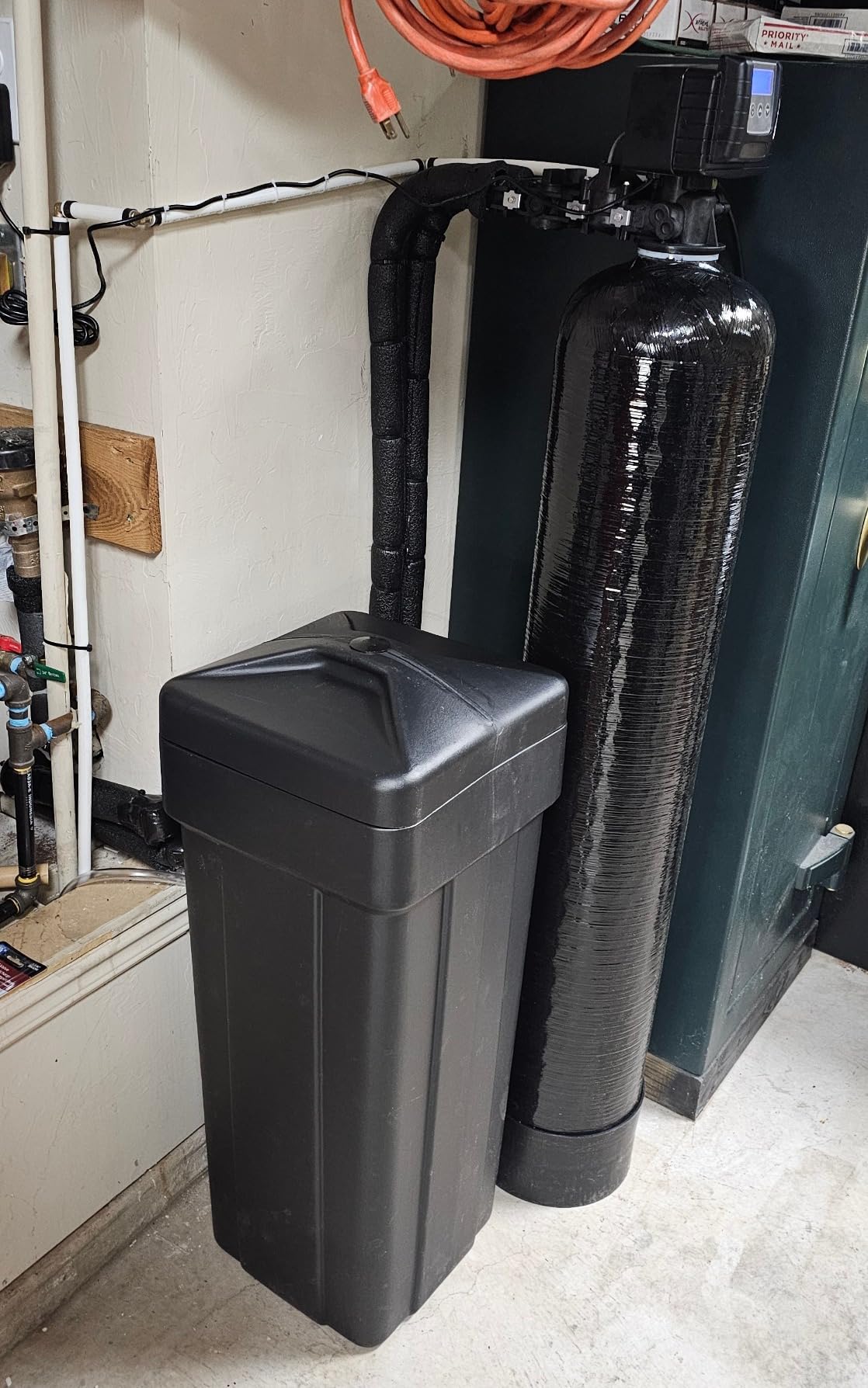
Capacity lands at 48,000 grains, which sizes comfortably to a family of four or five on moderately hard water, and the valve is rated for input up to 2000 ppm TDS, among the most tolerant ranges in this lineup. That headroom matters on well water or in areas with brackish supply, where a lower-ceiling valve would be a poor long-term bet.
The honest drawback is documentation. Owners generally report that setup and programming guidance is expected to come from your own research rather than from printed material in the box, and some buyers needed extra fittings because of how their existing plumbing was arranged. Budget a parts run and an hour of YouTube before you start.
Who this softener suits best
Choose this if you intend to keep the softener for a decade or more and want a valve you can repair yourself. The Fleck 5600SXT has the deepest parts ecosystem of any control head in the guide, and resale value on a home with a Fleck-equipped softener is easier to defend than almost anything else on this list.
It is also the right call for a well or a house on a private system, since the 2000 ppm TDS ceiling gives you real margin. For a family of four with a DIY bent, the combination of a complete kit and a well-documented valve is the safest purchase in the group.
Where it falls short
You give up the extras. There is no carbon or sediment pre-filter in this package, and the fiberglass tank is a standard unit rather than the commercial-grade cross-linked resin used by some competitors. If your water has heavy sediment or chlorine, plan on adding a filter ahead of the softener.
Programming is manual-dominant, so budget more setup time than with a guided app-based head. And while the Fleck valve is easy to service, the supplied instructions are thin, so follow a written guide alongside the manual rather than working from memory.
3. AFWFilters Iron Pro 2 64,000-Grain – Best for Well Water and Iron Staining
AFWFilters Iron Pro 2 Combination Water Softener Iron Filter Fleck 5600SXT Digital Metered Valve 64,000 Grain – High Flow for Whole House Use – Removes Hardness, Iron, Manganese, Sediment, Rust
64000 grain capacity, iron and manganese to 6 ppm, Fleck 5600SXT valve, 5-year warranty
Pros
- Softener and iron filter in one tank
- Handles iron and manganese to 6 ppm
- Fleck 5600SXT metered valve
- High flow for whole-house demand
Cons
- Instructions described as thin
- Preloaded tank is very heavy to move
- Advanced programming needs clock at 12:01
Well water homeowners are the strongest advocates for this unit by a wide margin, and the reason is simple: the mineral tank holds both resin and an iron-removal media, so a single valve and a single brine tank handle hardness, iron, and manganese together. Owners on high-iron wells report clearing red staining and a rotten-egg odor that previous, more expensive equipment could not touch.
Rated for iron up to 6 ppm and manganese up to 6 ppm, that is serious filtration capability rather than a token spec. The Fleck 5600SXT digital metered valve handles the regeneration, the high flow design suits whole-house demand, and the resin-preloaded tank arrives ready to fit. It has been in production since 2011, which means parts and familiarity are not in question.
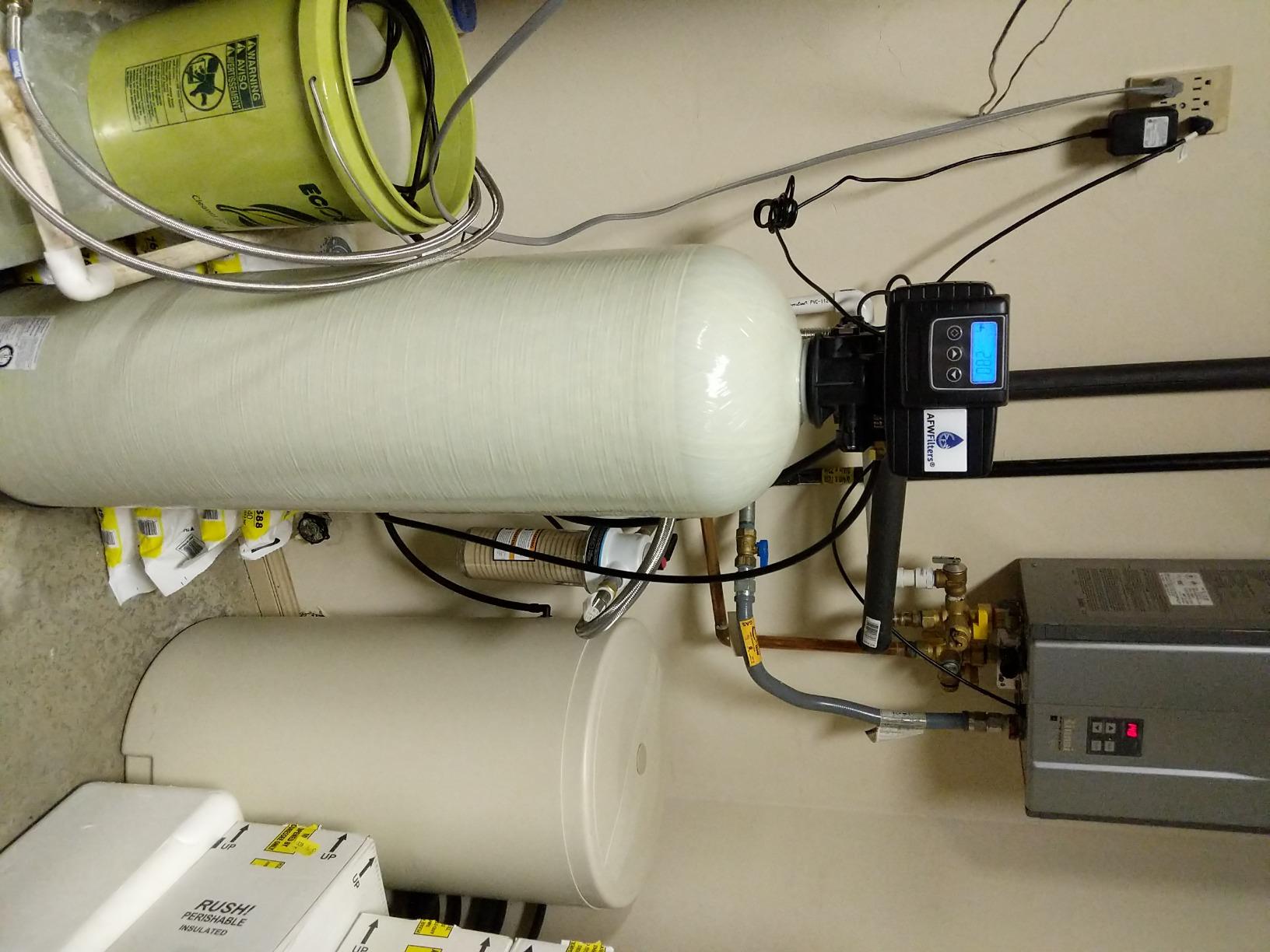
Value is the second argument. Owners consistently note that the combination system costs a fraction of what a professional water treatment company quoted them for equivalent iron treatment, and the 64,000-grain capacity means you are not trading hardness performance for filtration performance. At 119.2 pounds, the assembly is substantial but not out of range for two people and a dolly.
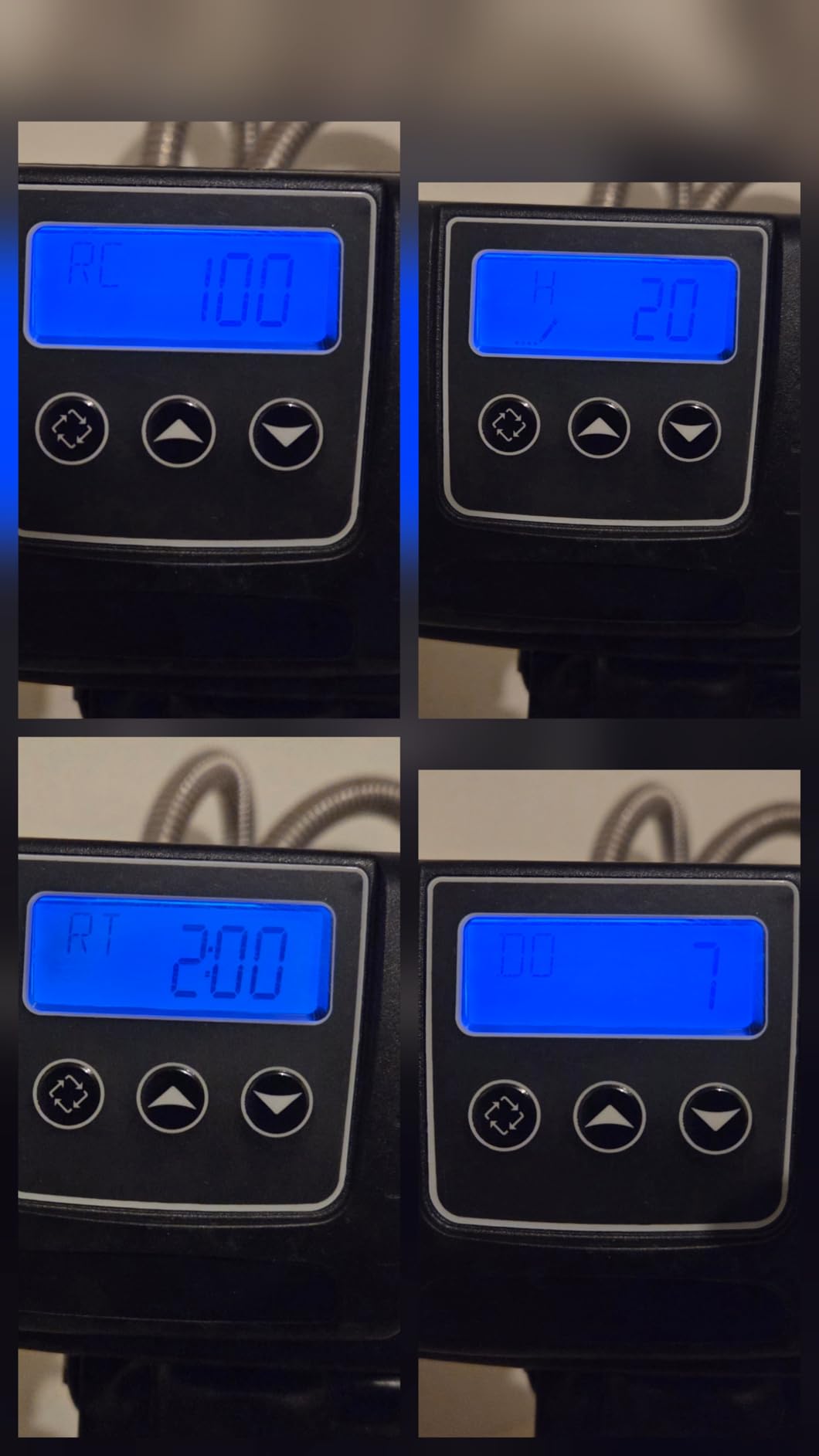
Documentation is where it loses points. Several owners had to search out clearer guides because the included instructions are thin, and the advanced programming mode is only reachable when the clock reads 12:01, which is a genuinely awkward design choice. One owner also saw minimal change in TDS readings after install, though well-water complaints of that kind usually point to a source problem rather than the tank.
Who this softener suits best
If you are on a well, or you have orange spotting in fixtures and a sulfur smell at the tap, this is the system to compare against everything else on the list. It does more per tank than any competing unit here, and pairing 64,000 grains with iron capacity is a combination you usually have to assemble from two separate pieces.
It is also right for a household on very hard supply, since the extra capacity gives the metered valve plenty of runway between regenerations. Just confirm your iron level with a test before buying, so you know the 6 ppm rating is meaningful for your application.
Where it falls short
City-water buyers who do not have an iron problem are paying for a filtration stage they will never use, and some say so directly in their reviews. If your water is already clear of iron and below 1 ppm, the standard 48,000-grain Fleck build is the more sensible buy.
Logistics are the other issue. At 119.2 pounds with a preloaded tank, you need a dolly or a second person, and the 14 x 7 x 21 inch listed dimensions reflect the filter housing rather than the full installed footprint. Plan the plumbing run before the tank arrives.
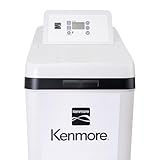
4. Kenmore 350 32,000-Grain – Best Compact Pick for Small Homes
Kenmore 350 Whole House Water Softener System, 32,000 Grain, 1-4 People
32000 grain capacity, 7.2 gpm max flow, all-in-one tank, 10-year tank warranty
Pros
- Very quiet metered regeneration
- Compact all-in-one tank and brine well
- Easy swap for an older unit
- Test strips read 0 gpg after install
Cons
- No printed manual
- control board failures reported
- Back fittings sit lower than prior generation
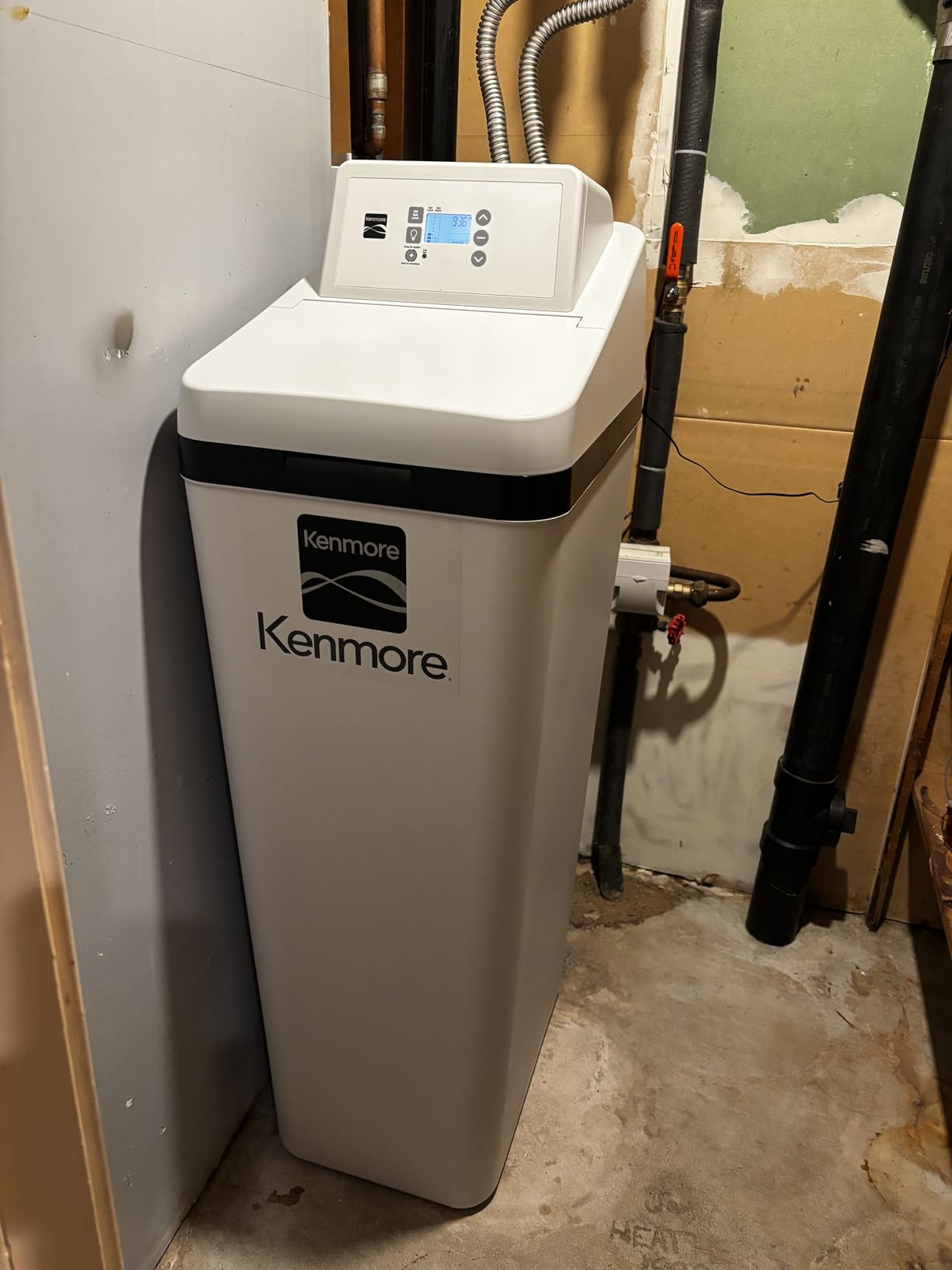
This is the pick when space is the constraint. The all-in-one design puts the brine well inside the same cabinet as the mineral tank rather than standing a second tank beside it, and at 20.5 x 15 x 48 inches it fits in closets and tight utility areas where a two-tank layout simply will not go.
Sized for one to four people and up to two bathrooms, the Kenmore 350 uses IntelliSoft metering that learns your household’s usage pattern and regenerates only when needed. Owners report near-silent operation, and the system draws roughly 30 gallons per cycle against the 60 to 80 typical of competitors. Test strips reading 0 gpg after the initial sanitize cycle come up repeatedly, as does easy installation when replacing an older unit.
A detail worth knowing before you buy: this is manufactured by Water Channel Partners for Whirlpool, the same manufacturer behind the high-end Whirlpool softeners sold at big-box stores. Buyers on r/WaterTreatment have made that connection for years, and it matters for parts availability, since the same supply chain carries components for the premium line.
The warranty is tiered rather than flat, with one year full, three years on the control board, and ten years on the tank, which puts the tank at a level few competitors match at this budget. A built-in tank light is a small courtesy that earns its keep in dim utility spaces.
Who this softener suits best
Pick this for a couple, a one-to-four person household, a condo, or an apartment where a two-tank footprint is impossible. The 0.83 cubic foot capacity and 7.2 gpm flow rate line up with two bathrooms, and the metered efficiency makes it a good low-salt choice for lighter use patterns.
It is also the quietest option in the guide, which matters if the equipment sits near living space or a bedroom wall. The digital display shows flow rate and salt level, so refilling is straightforward.
Where it falls short
Thirty-two thousand grains will not comfortably serve a family of five or six on very hard water, and the 7.2 gpm flow ceiling means it is not a good match for a house with multiple fixtures running at once. If you have three or more bathrooms, size up.
Two real risks: some buyers report electronics or motherboard failures within about a year, mostly in hot climates, and the rear plumbing fittings sit roughly 3/16 inch lower than on the previous Kenmore generation, which can complicate a direct swap. There is also no printed manual, so directions mean scanning a QR code.
5. Tier1 48,000-Grain – Best for High Flow Demand
Tier1 48,000 Grain Water Softener System for 4-5 Bathroom Homes
48000 grain capacity, 18 gpm max flow, ceramic disk valve, 10-year tank warranty
Pros
- 18 gpm flow suits large homes
- Ceramic disk valve needs no seals or rebuild kits
- Quiet operation
- Strong phone-based technical support
Cons
- More assembly than some buyers expected
- Not rated for outdoor installation
- Once installed it is not designed to be moved
The headline spec here is flow. At 18 gpm maximum, this is the highest published flow rate among the systems in this guide, and it comes with a 1 inch port size on the control head rather than the 3/4 inch valves common at this budget. If you have three or more bathrooms, a finished basement shower, and an outdoor spigot, this is the tank that will not starve.
The valve is the second story. The patented ceramic disk design has no seals and requires no rebuild kits, which removes the single most common repair on a conventional disc valve. Metered regeneration tracks real usage rather than a fixed clock, and owners describe the system as effectively silent, with a few reporting they bought the brand a second time.
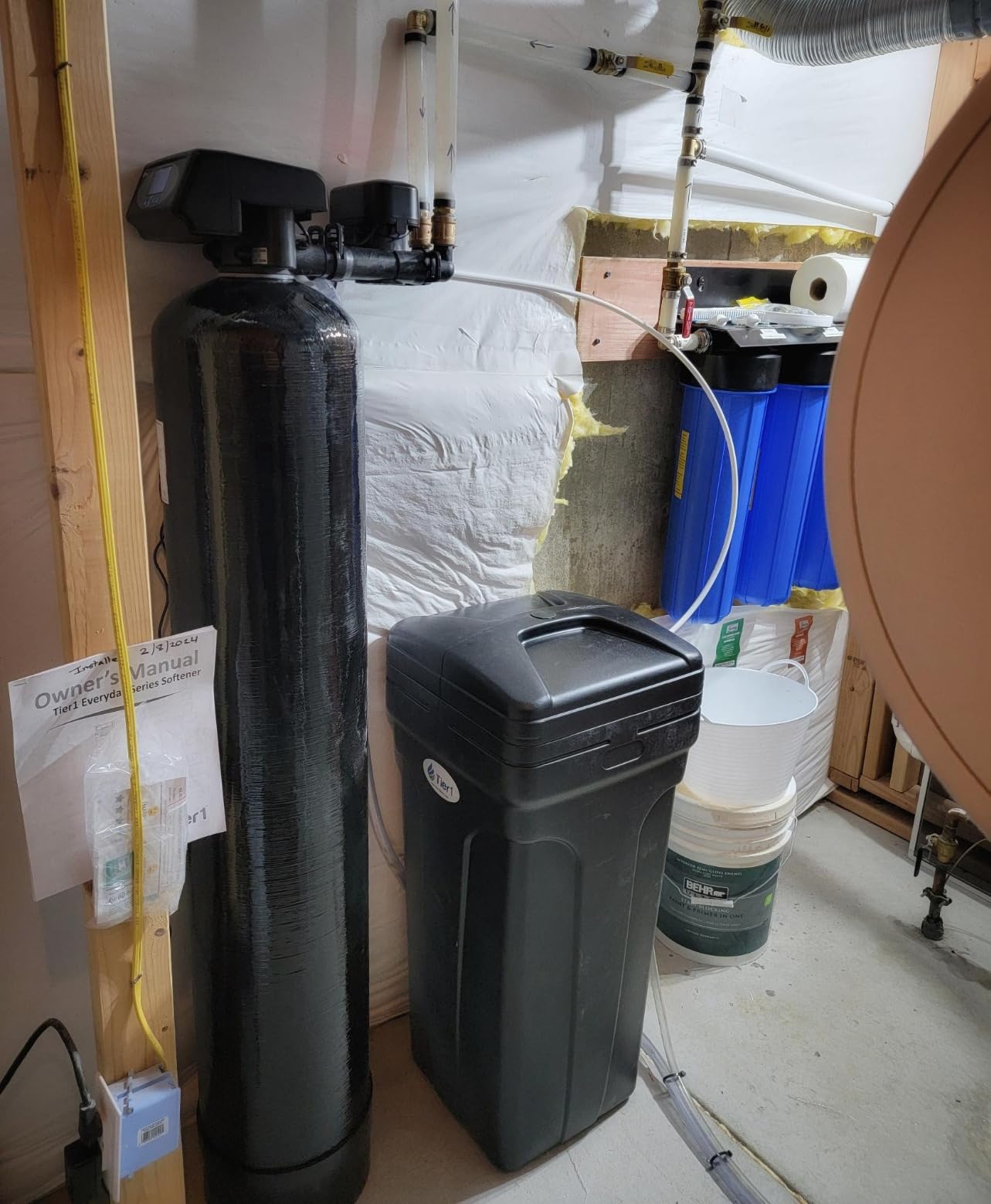
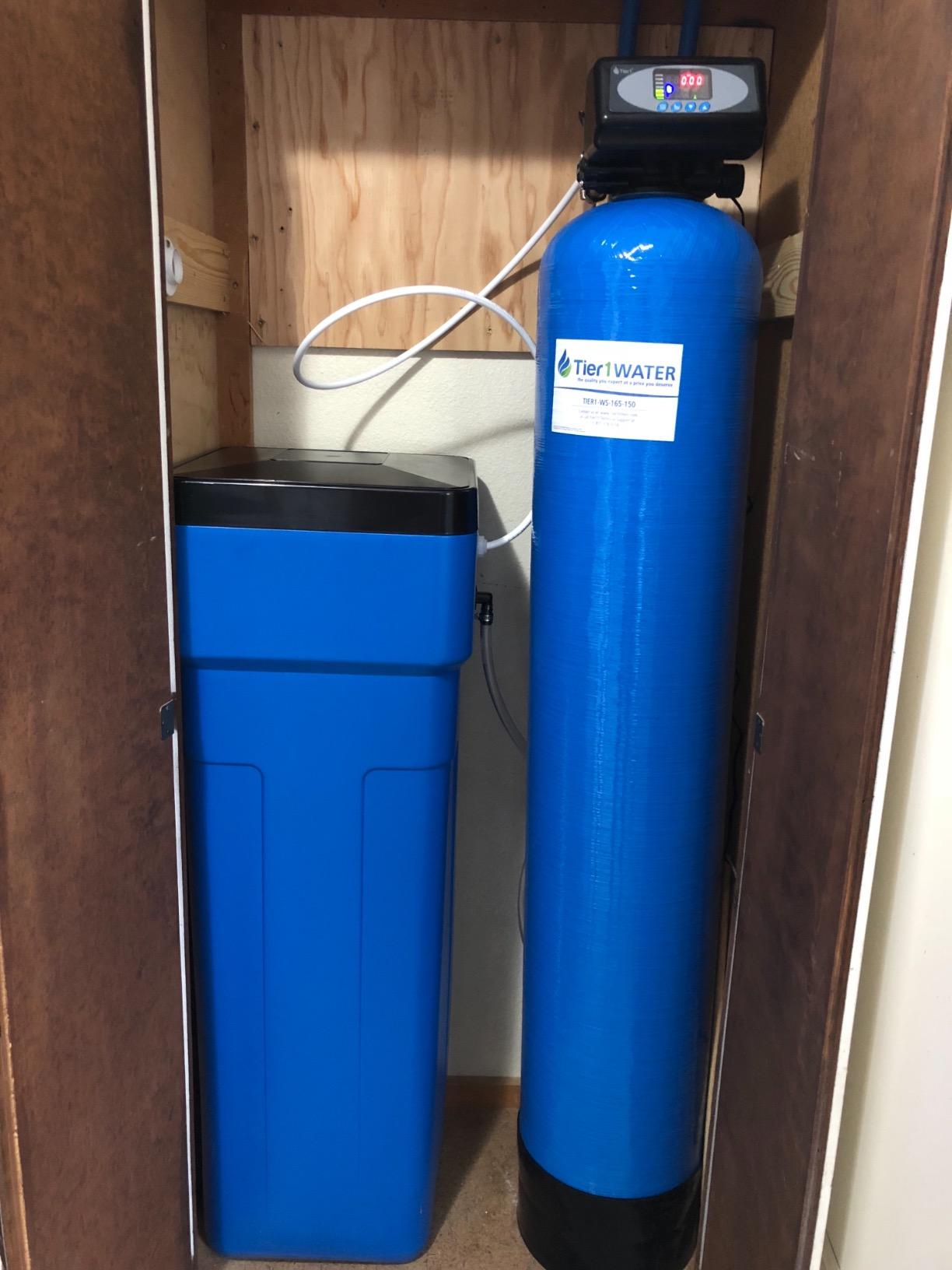
Capacity is 48,000 grains in a 1.5 cubic foot resin bed, and the tank is preloaded with NSF/ANSI 44 certified cation resin so there is no loading work on arrival. The warranty is among the better ones here, with ten years limited on the fiberglass resin and brine tanks, plus a year on the valve, bypass, fittings, and electronics.
Support is a genuine strength. Owners describe technicians troubleshooting by phone and shipping replacement parts, which partly offsets the fact that this is not a household-name brand. A sediment prefilter is included, and operating pressure is rated from 20 to 87 psi.
Who this softener suits best
This suits larger homes on hard water where peak demand matters more than a premium valve brand, and buyers who would rather not deal with seals and rebuild kits later. The 10-year tank warranty also makes it attractive if you expect to keep the system for a long time.
If you are comfortable with basic assembly and have a clear installation area, the missing rebuild kits and quiet operation make ownership unusually hands-off. Variants run from 24,000 to 64,000 grains if you need to size up or down.
Where it falls short
Installation took closer to three hours for a professional, so budget more time than the two-hour figures you will see elsewhere. The system is not rated for outdoor installation, which rules it out for RV and marine use, and once installed it is not designed to be moved because of the resin tank weight.
A few owners report a 30-day fixed regeneration schedule, which contradicts the metered design, and one reviewer received a filter that leaked from the day it went in. Neither is common, but check your unit on arrival.
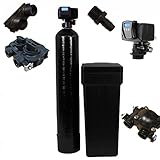
6. DuraWater Fleck 5600SXT 64,000-Grain – Best for Large Families on Hard Water
DuraWater Fleck 5600 SXT Metered 64,000 Grain Water Softener, 10% resin
64000 grain capacity, 10 percent cross-linked resin, Fleck 5600SXT valve, complete system
Pros
- 10 percent cross-linked resin suits chlorinated water
- Complete package with valve
- tanks
- resin and bypass
- Wide variant range from 24000 to 80000 grains
- Guides and videos support a 1-2 hour setup
Cons
- Larger 64000 configuration needs space and more salt
- Sits at the top of the price range for this category
Sixty-four thousand grains is the size most families buying hard water at 15 GPG or above should be looking at, and pairing that capacity with the Fleck 5600 SXT gives you a system with both the volume and the serviceable valve. Owners rate it 4.4 stars, and the 5-star share of reviews is unusually high compared with the rest of the field.
The resin is the differentiator. This tank loads with 2.0 cubic feet of 10 percent cross-linked commercial grade cation resin, which resists chlorine attack better than standard resin, and that matters if you are on municipal supply with a chlorine residual. The 12 x 48 inch mineral tank, 14 x 36 inch brine tank with a safety float, and 1 inch plastic bypass all arrive together.
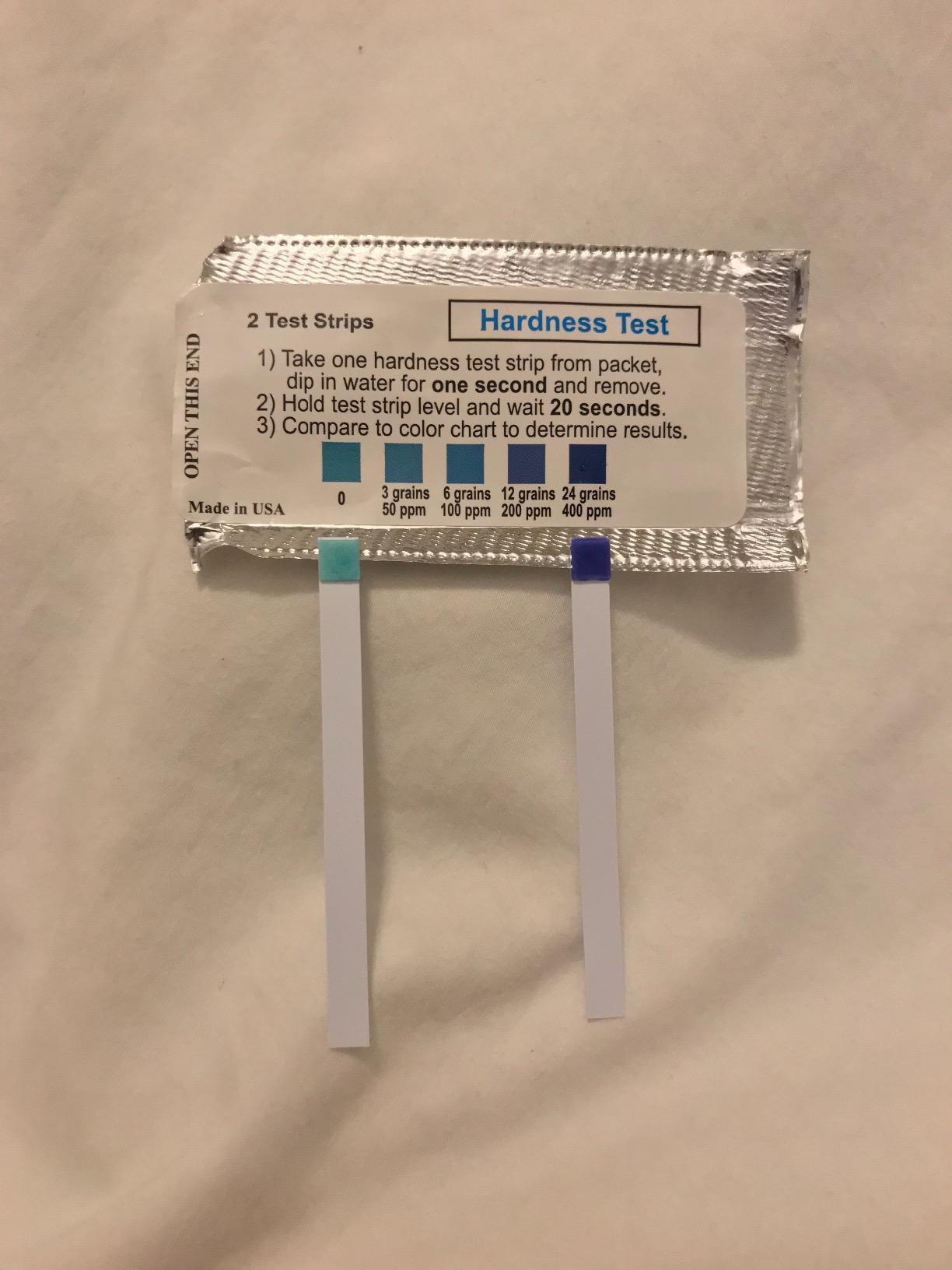
Capacity translates into fewer regenerations, which means less salt and less water per cycle than a smaller tank on the same supply. Because the valve is metered on demand, it will not cycle at all during a week when nobody is home, which is where the operating savings come from.
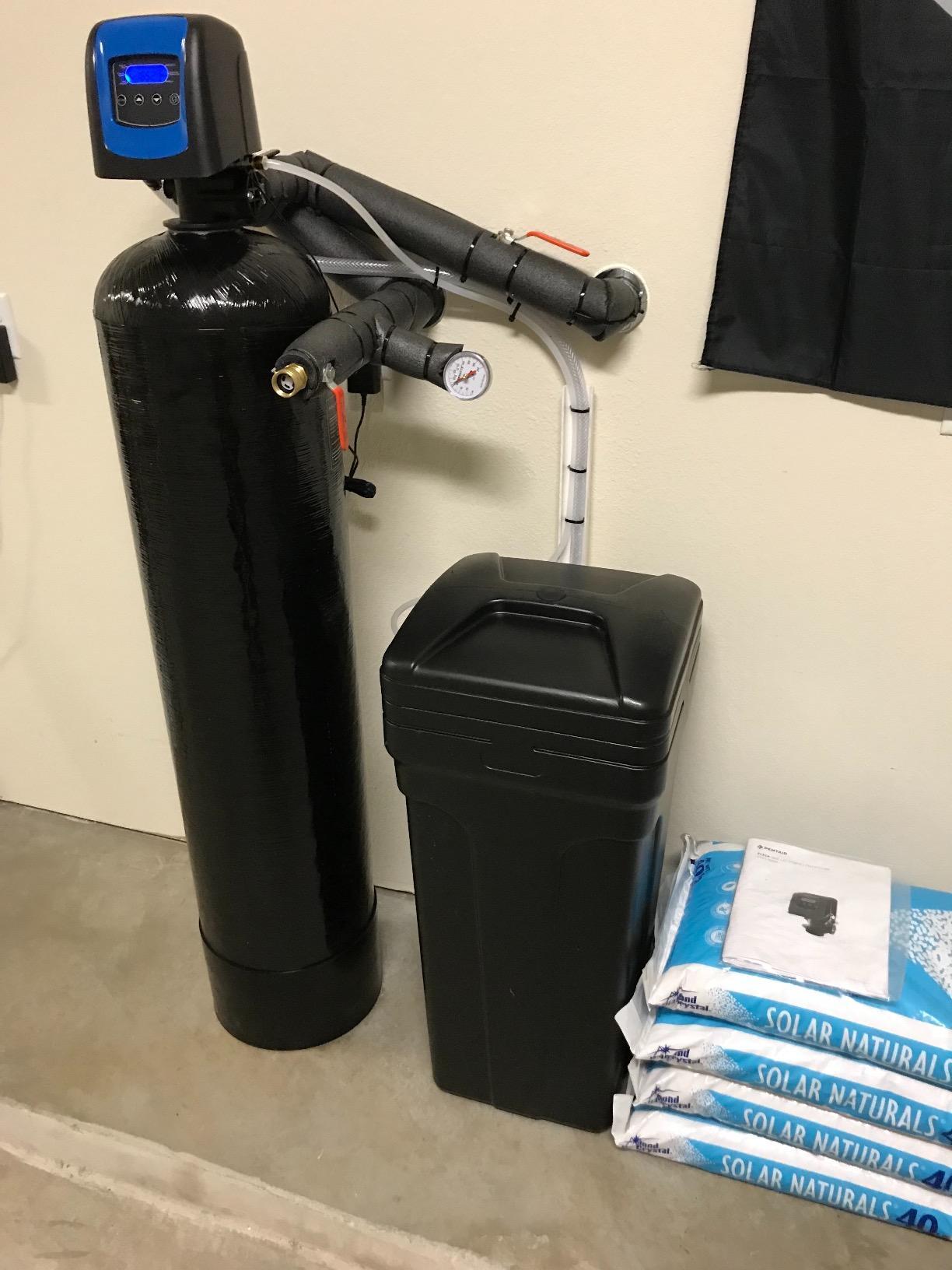
Written and video installation guides are included, and owners report a 1-2 hour DIY setup, which is faster than most of the systems in this guide. The variant range runs from 24,000 to 80,000 grains in black, blue, and almond, so the same platform covers smaller homes if you need to step down.
Who this softener suits best
Choose this for a family of five or six, or for any household on water above 15 GPG, where a 48,000-grain tank would regenerate so often that salt use climbs quickly. It is also a good match for anyone who has chlorinated municipal water and wants resin that will last.
If you are weighing capacity against future needs, this platform lets you stay on one valve family and change tanks later, which is simpler than migrating to a different brand when the household grows.
Where it falls short
Size and salt are the real costs. A 64,000-grain configuration needs more floor space, more salt per regeneration, and a taller brine tank than a 32,000 or 40,000-grain build. Make sure your drain and supply lines can handle the larger tank footprint.
It also sits at the top of the price range for this category, so it is the least forgiving choice if you have any budget left for professional installation. Be honest about your total budget before choosing it over the 48,000-grain Fleck build.
7. Aquasana SimplySoft 40,000-Grain – Best Certified Cabinet-Style Build
Aquasana SimplySoft Whole House Water Softener | 40K Grain | WH-SF40-BASE
40000 grain capacity, 15.5 gpm max flow, certified to NSF/ANSI 44, 5/10-year warranty
Pros
- Third-party certified hardness reduction
- Metered mode uses far less salt and water
- Enclosed cabinet keeps the footprint compact
- Works on city or well water
- 15.5 gpm flow rate
Cons
- Optional sediment pre-filter sold separately
- Cabinet is bulkier than a bare two-tank setup
- Smaller review base than Fleck-based picks
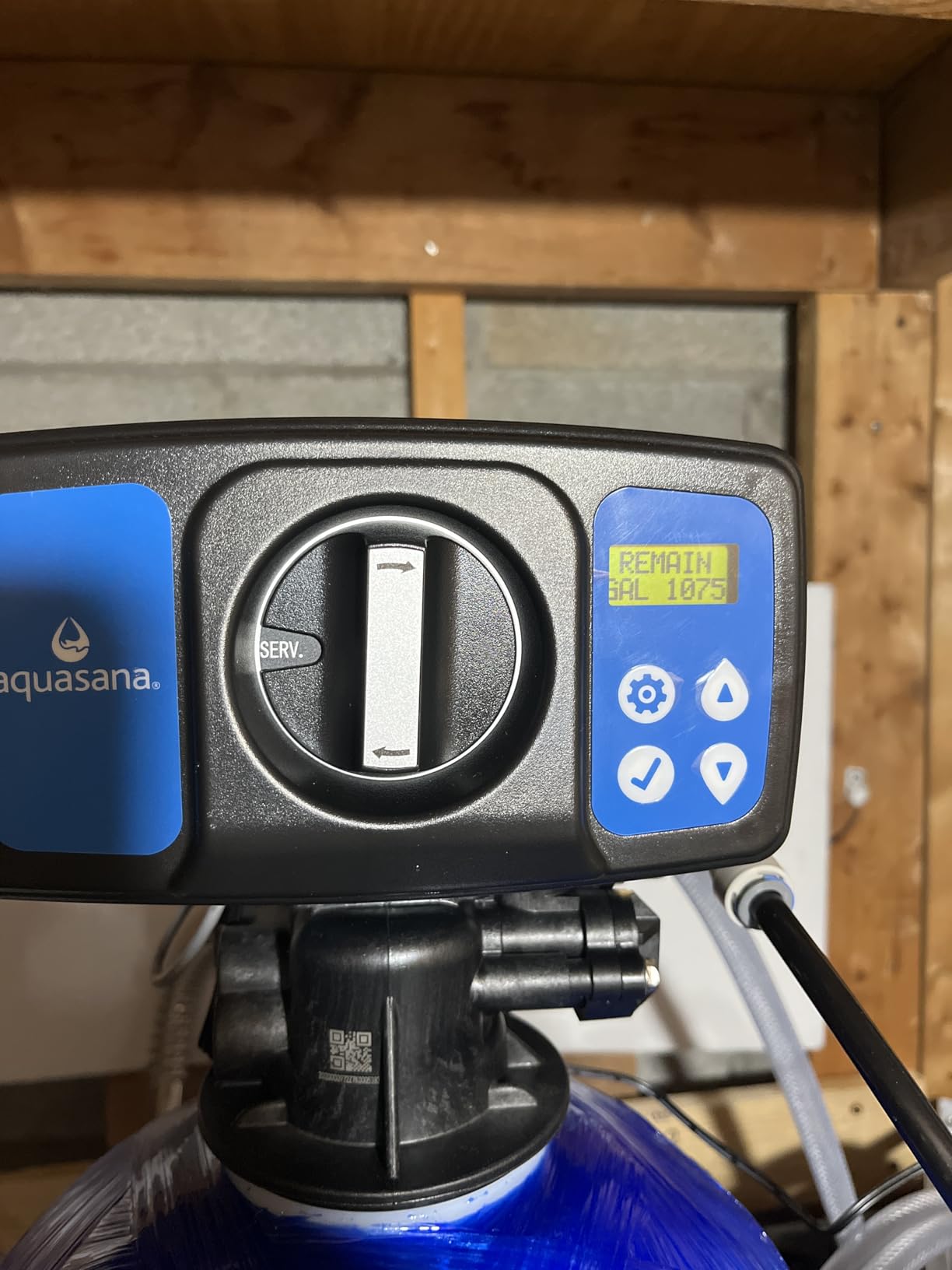
Certification is the argument for this one, and it is a real differentiator. Aquasana is IAPMO certified to NSF/ANSI Standard 44 for hardness reduction and to CSA B483.1, which means an outside lab has verified the performance rather than the manufacturer self-reporting it. In a category full of percentage claims printed on the box, that is worth paying for.
The metered mode is the other strong feature, using up to 50 percent less salt and 28 percent less water than a time-based softener. A user-friendly LCD shows the settings, and 40,000 grains sizes to a home of up to five people with four bathrooms at a 15.5 gpm maximum flow rate.
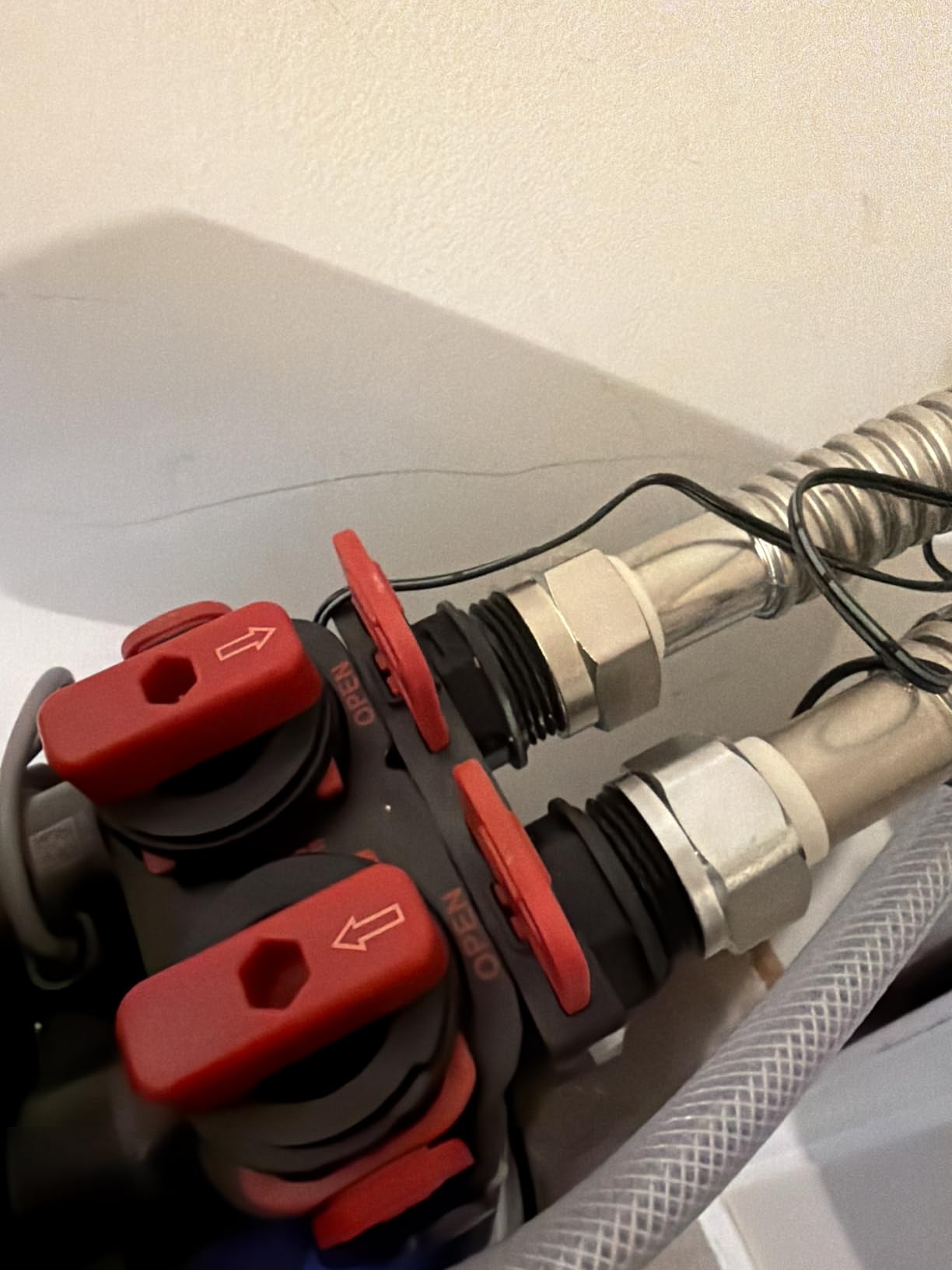
Styling is unusually considered for a utility room. The base tank and cabinet configuration keeps the brine tank enclosed inside a 30 x 16 x 43 inch cabinet, so the installation reads as one piece of equipment rather than two tanks and a pipe. It works on both city and well water through ion exchange.
The warranty is 5/10-year limited, which is stronger than most of the field, and there is a dedicated installation support line for buyers who need help. Rated for input up to 3568 ppm TDS, the highest ceiling listed in this guide.
Who this softener suits best
This suits anyone who wants documented, third-party verified softening, and households that care how the equipment looks in a finished or visible utility space. The enclosed cabinet and the compact footprint suit basements and closets better than a bare two-tank layout.
It is also a sensible pick for a family of up to five who want lower salt consumption than a time-clock system, and for anyone on well water who likes the higher TDS input ceiling.
Where it falls short
The recommended sediment pre-filter is not included and has to be bought separately, which adds both cost and a step. If your water has sediment, factor that into the total before you commit to this build.
The cabinet makes the unit bulkier than a bare two-tank setup, and the review base of 126 ratings is the thinnest among the well-reviewed systems here, so you have less long-term owner data to lean on. The listed item weight of 230 pounds is a packing figure, so confirm the handling before delivery day.
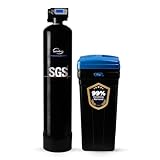
8. iSpring WCSTB45KG 45,000-Grain – Best Starter Value Pick
iSpring WCSTB45KG 45,000 Grains Whole House Water Softener with Brine Tank
45000 grain capacity, digital programmable valve, city or well water, 1-year warranty
Pros
- High capacity at the entry point of this lineup
- Third-party hardness reduction testing
- Digital display with real-time status
- Works on city and well water
- Automatic backwash extends resin life
Cons
- Warranty is only 1 year
- Newer listing with a smaller review base
- 300 ppm TDS ceiling is lower than some rivals
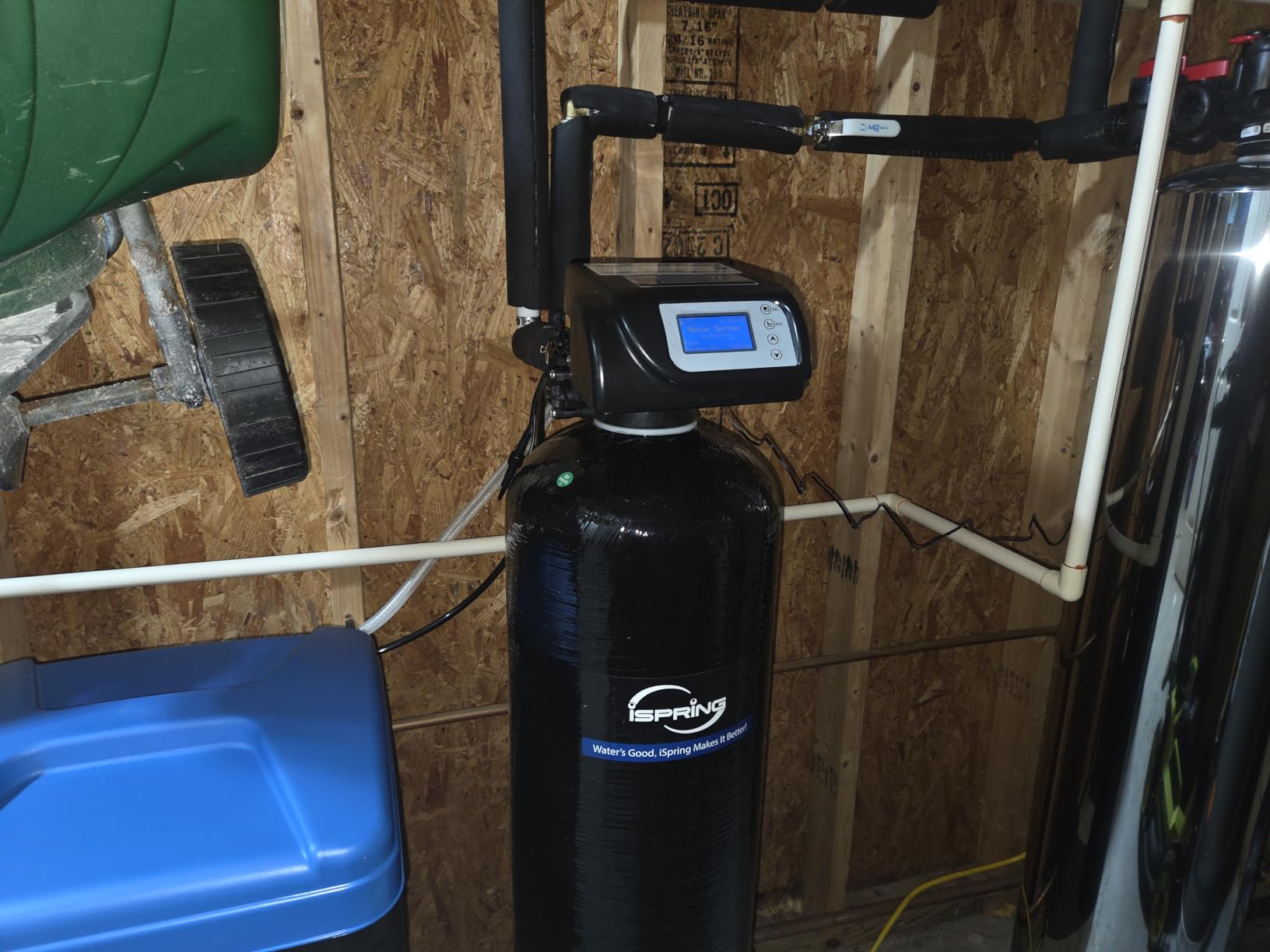
Forty-five thousand grains is a real capacity number from a brand most buyers have not considered, and that combination is the entire pitch here. iSpring is better known for reverse osmosis and filter housings, and this system applies that hardware experience to a conventional ion exchange tank with a programmable automatic control valve and a digital display for real-time monitoring.
Regeneration is calculated from measured water quality and usage rather than a timer, and automatic backwash and regeneration are built in to extend resin life. The valve lets you adjust the hardness setting on the display, which is a level of adjustment you normally only find on pricier heads.
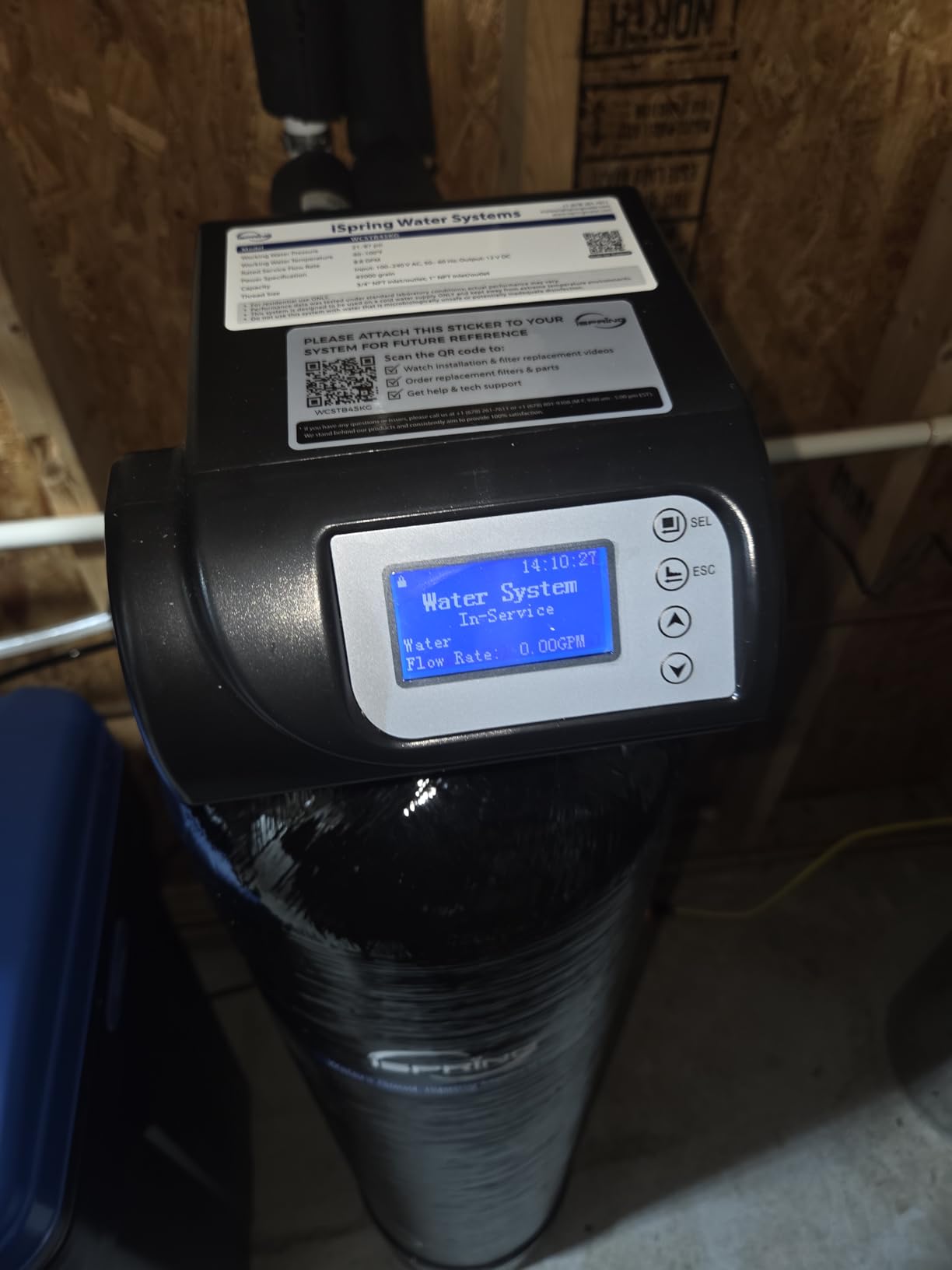
Third-party testing claims 99.71 percent hardness reduction by removing calcium and magnesium, and the tank is built from corrosion-resistant fiberglass. It works on both city and well water, and the manufacturer rates it as suitable for light commercial use as well, which is unusual at this tier.
Reviewers generally see this as strong value, with the capacity and the feature set being the two things they mention most. The 30-day money-back guarantee and lifetime technical support soften the risk of buying from a less established name in the category.
Who this softener suits best
This is the option for a first-time softener buyer who wants a full 45,000-grain capacity and a digital control head without stepping up to a premium valve brand. It suits a family of three or four and works on well or city supply.
Light commercial applications, like a small rental unit or a workshop, are within the stated design envelope, and the automatic backwash reduces the maintenance you have to schedule in.
Where it falls short
The warranty is the biggest gap, at one year against five or ten years from established brands. If the valve fails in year three, you are covering that yourself, and that risk is exactly what the longer warranties on other systems in this list are for.
Two further limits: maximum supported TDS is 300 ppm, which is lower than several rivals here, and the listing is newer with 98 ratings, so there is less long-term owner history. Test your TDS before buying if you are on a well.
9. PRO+AQUA 80,000-Grain Heavy Duty – Best for Large Homes with 1-Inch Ports
PRO+AQUA Heavy Duty Whole House Water Softener System – 80,000 Grain Capacity, Premium Long-Lasting Resin, 1″ Ports
80000 grain capacity, 1 inch ports, 6-8 people, digital control valve
Pros
- Largest capacity in the guide at 80000 grains
- 1 inch ports for higher flow
- Reduces 2 ppm clear-water iron
- Digital valve calculates salt and water needs
Cons
- 1-year warranty
- 3 years with registration
- Widest negative rating spread in the set
- Highest listing price in the group
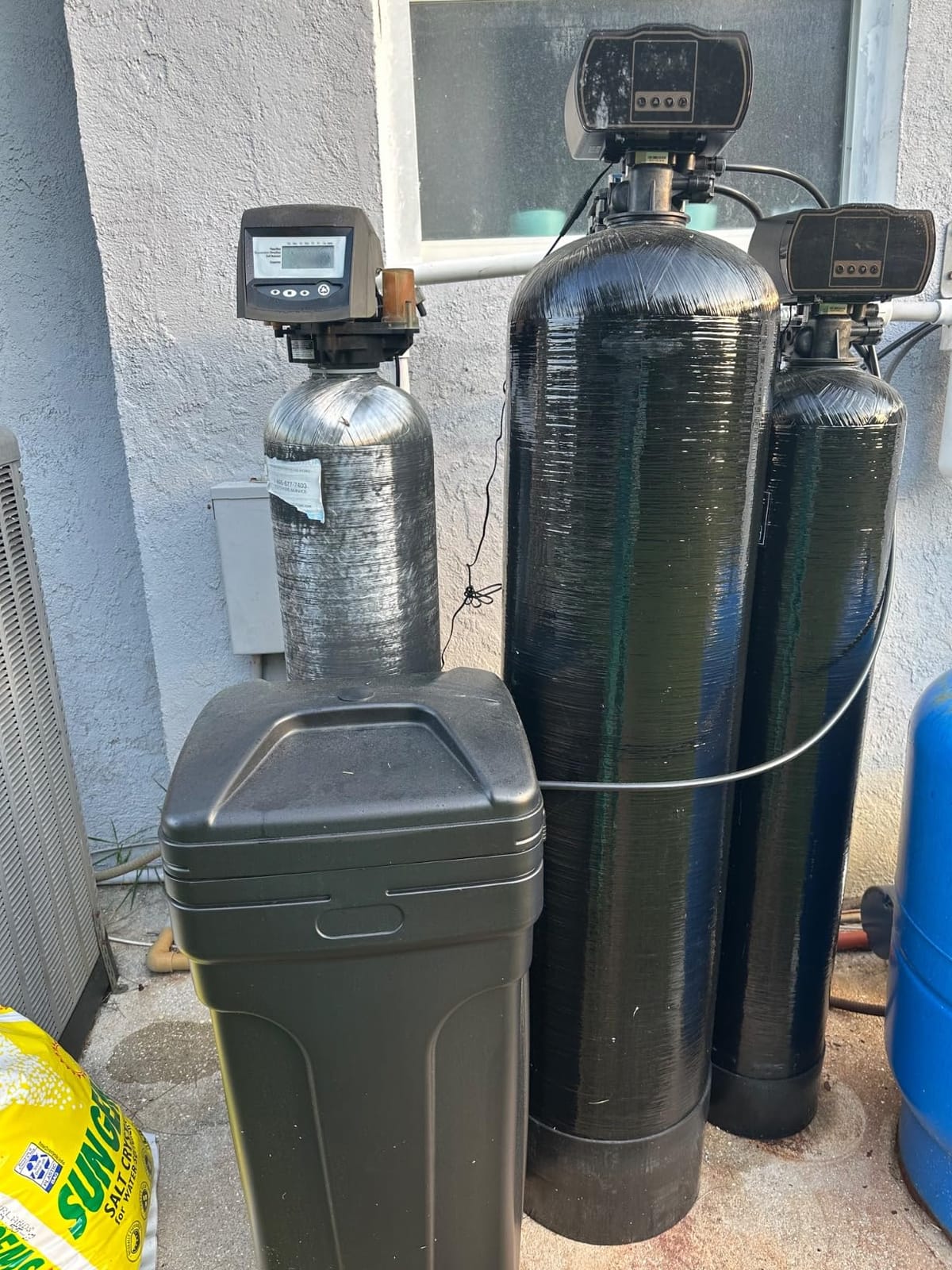
Eighty thousand grains is the largest capacity in this guide, and it is built for a household of six to eight people with up to six bathrooms. The pro-grade fiber reinforced polymer tank and premium 10 percent resin are sized to match, and the 1 inch ports on the control head support meaningfully higher flow than the 3/4 inch valves used by most competitors at this budget.
For a large home on very hard water, the extra capacity is the whole argument. A bigger bed regenerates less often, which means lower salt consumption per year and fewer interruptions, and the digital control valve calculates salt and water needs automatically rather than running on a guess.
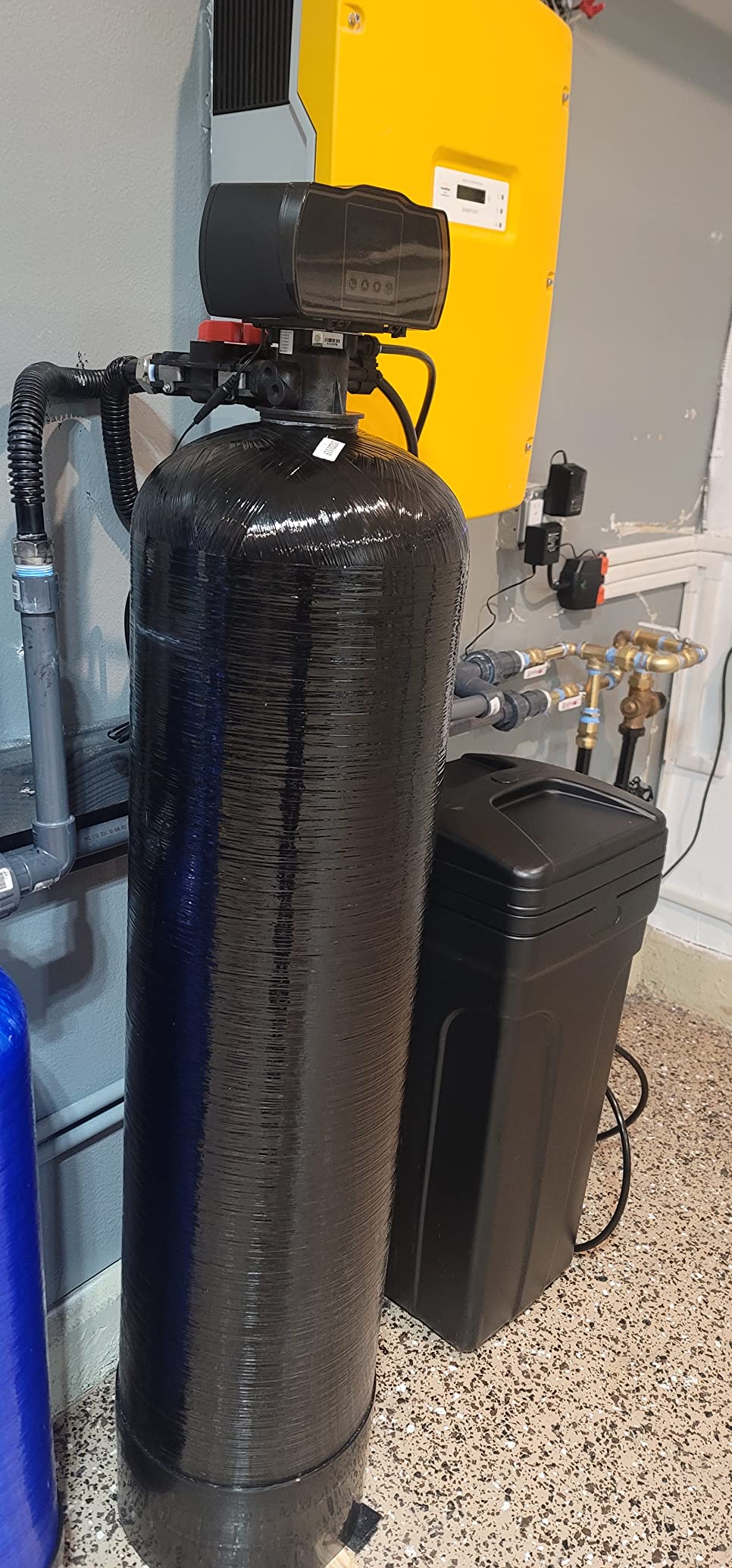
It also reduces up to 2 ppm of clear-water ferrous iron, which limits reddish-brown staining on fixtures and laundry. That is meaningful on a well and largely irrelevant on treated city supply, so it is a deciding factor only in one direction.
Reviewers generally confirm effective softening, and 30-day returns plus lifetime US-based support take some of the risk out of the decision. The physical footprint is 17 x 17 x 55 inches, so measure your planned location carefully before ordering.
Who this softener suits best
This is for the largest households on the list, and for anyone whose existing plumbing already has 1 inch service lines. Six to eight people with several bathrooms is the use case the 80,000-grain bed and the 1 inch ports were designed around.
If you are on a well with iron, the 2 ppm ferrous reduction is a welcome addition on top of softening. Just confirm your line size, because 1 inch ports on a 3/4 inch line create pressure you do not want.
Where it falls short
This is the one system in the guide that pushes past the 1,000 dollar equipment ceiling at the listing price, so you would need to find a specific deal to keep it inside the budget this article is built around. Check the current price before you commit.
Reliability feedback is also the most polarized here, with a one-star share that is the widest in the set even though there are almost no two-star reviews. The warranty runs one year standard and only three years with registration, which is thin for a tank this size, so expect to budget for a control head failure at some point.
10. DuraWater Fleck 5600SXT 32,000-Grain – Best 32,000-Grain Performer
DuraWater Fleck 5600 SXT Whole House Water Softener 32,000 Grains
32000 grain capacity, Fleck 5600SXT valve, preloaded 1.0 cu ft resin, 1000 ppm TDS
Pros
- Highest average rating in the guide at 4.7
- Easy to install and program
- Test strips drop from 20 gpg to about 1
- Upgraded paddle wheel meter
- US-based support
Cons
- Brine tank float defect reported by one buyer
- Some shipments missing hardware or not prefilled
- Continuously trickling drain line in a few reports
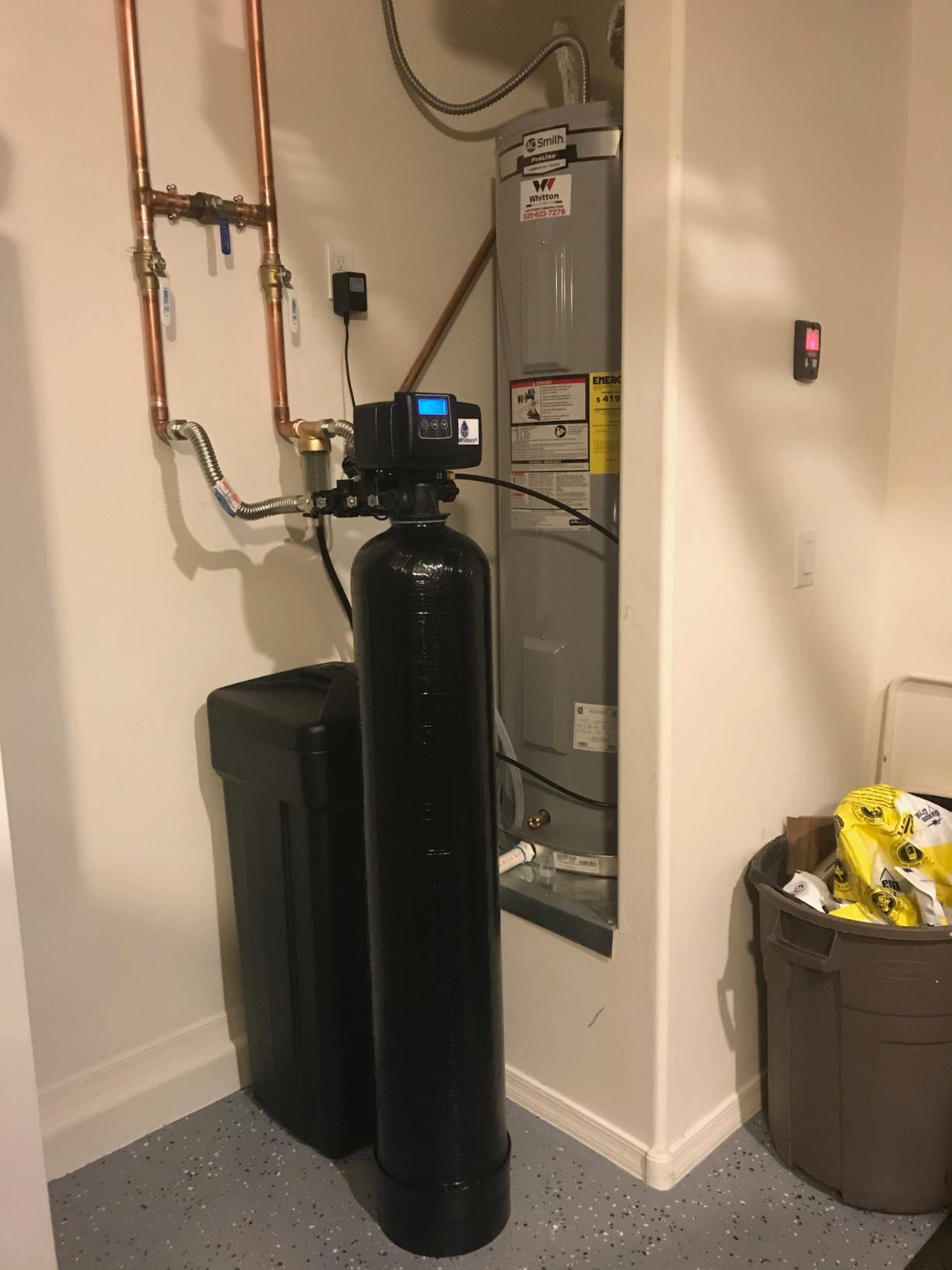
This is the highest-rated system in the guide, at 4.7 stars, with 85 percent of ratings at five stars. The consistency is notable, and the source of it is the Fleck 5600 SXT on-demand digital metered control valve paired with a 9 x 48 inch mineral tank preloaded with 1.0 cubic foot of high-capacity resin, so there is no resin loading work on the day it arrives.
Owners report hardness test strips falling from roughly 20 gpg to about 1 gpg after installation, which is close to a full removal, and the upgraded paddle wheel meter is cited as more durable than the original design, addressing a failure point that afflicted earlier generation meters.
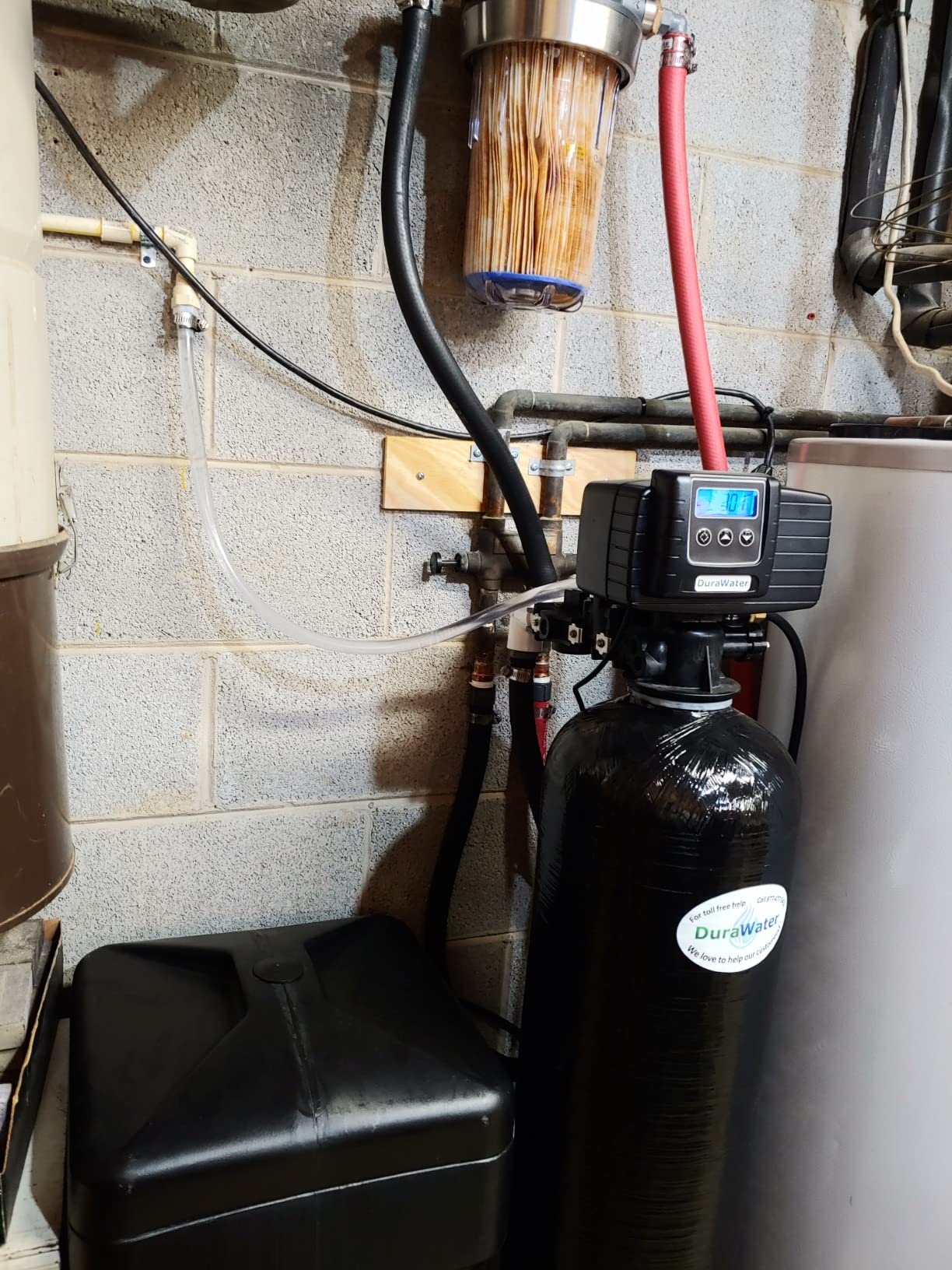
The rest of the package is complete too, with a 14 x 36 inch brine tank, a safety float, and a plastic bypass with a 1 inch yoke, plus handling for up to 1000 ppm TDS input. US-based support walks owners through programming and through diagnosing bypass position, which is a genuine help when a bypass is left mid-transition.
Criticism here is about fulfillment rather than performance. One owner reported a defective brine tank float with no support response, some shipments arrived with a missing drain nut or a tank that was not actually prefilled, and the digital manual supplied covered a slightly different version of the unit.
Who this softener suits best
This suits a couple, a small family, or anyone in a one-to-three bathroom home who wants the most reliable valve available and does not need 48,000 grains of capacity. On moderately hard water, 32,000 grains is genuinely sufficient.
If you are replacing an existing system, a Fleck unit with a 1 inch yoke and a bypass is the most straightforward path, and the resale argument for a serviceable valve holds here as much as anywhere else on the list.
Where it falls short
Thirty-two thousand grains will not keep up with a family of five on water above 12 GPG, so test your hardness before settling here. You will spend less, but you will regenerate more often, and the operating cost catches up over time.
Inspect the shipment carefully on arrival. The complaints about missing drain nuts, unfilled tanks, and a trickle from the drain line after the first regeneration are fulfillment issues rather than design flaws, but they cost an afternoon to fix and are worth catching immediately.
How to Size a Water Softener for Your Home
Most sizing mistakes come from treating grain capacity as a prestige number rather than a calculation. The standard formula is people in the household, multiplied by gallons used per person per day, multiplied by days of backup you want, multiplied by grains per gallon of hardness. If four people each use 50 gallons a day at 20 GPG hardness and you want a week of reserve, that works out to 4 x 50 x 7 x 20, or 28,000 grains minimum.
Add a 30 percent margin to that number and you land in the mid-30,000 range, which is why a 32,000-grain tank handles a family of four at 20 GPG while a 48,000-grain tank gives you breathing room. For a family of five or six at 20 GPG, or any household above 25 GPG, the same math pushes you to 48,000 or 64,000 grains.
One caution worth repeating, because it comes up constantly on r/WaterTreatment: do not oversize. A tank that is too large for the household regenerates so rarely that the brine stays in contact with the resin for weeks, which can shorten resin life and create taste issues. The bigger number is not automatically the better one.
Finally, measure the physical space before you commit. Overall height of 56 to 62 inches is typical, and you need clearance above the tank to remove the brine tank for refilling. A footprint that fits a 48,000-grain pair will not fit a 64,000-grain build, and the PRO+AQUA at 17 x 17 inches needs a considerably wider opening than the 10 inch models.
Salt-Based vs Salt-Free: Which One Fits Your Household
Every system in this guide uses ion exchange, which is the salt-based method, and that is not an accident. Ion exchange physically removes calcium and magnesium by swapping them for sodium, and it is the only approach that measurably reduces hardness at these capacities. A salt-free conditioner works differently, using Template Assisted Crystallization to restructure the minerals rather than removing them, and the trade-off is real.
A salt-free unit costs nothing to run and no one has to haul salt bags, which is a genuine advantage for a rental, an RV, or a household that objects to sodium in the water supply. The limitation is hardness range. Conditioners in that category underperform on very hard water, and buyers who switched from a salt-based unit to one on 20 GPG supply commonly report disappointment.
Inside a 1,000 dollar budget, our advice is straightforward. If you are on hard municipal water and want measurable softening, a metered salt-based system is the only category that delivers. If you are on a well with hardness under about 8 GPG and want low maintenance instead, a salt-free conditioner is reasonable, though you will not see the same scale reduction.
Running costs are modest for salt-based units. A family of four on a metered 48,000-grain system typically uses a few bags of salt a month, and because demand-initiated regeneration only fires when water is actually used, a household that goes away for a week uses no salt at all. Add a small electricity draw for the control head and that is the ongoing ownership picture.
Reliability: Fleck 5600SXT and the Parts Question
The single most useful question you can ask about any water softener is not about capacity, it is about the control valve. The valve is the only electronic component, the most expensive single part in the system, and the piece most likely to eventually fail. Fleck 5600SXT and Clack WS1 are the two platforms that dominate reliability discussions because both have deep parts ecosystems and repair documentation that outlive any given listing.
Four of the ten systems here use the Fleck 5600SXT, and that clustering is the strongest argument for the valve itself. Replacement paddle wheels, seals, and power transformers are available from dozens of suppliers, and the programming interface has been documented exhaustively, so a failed part is a repair rather than a replacement. Buyers weighing a Fleck build against an Aquasure build on r/WaterTreatment usually end up here.
Warranty length is a decent proxy for the manufacturer’s own confidence, and the spread in this guide is wide. The Tier1 48,000-grain and the Kenmore 350 both carry 10-year tank coverage, several Fleck and Aquasure builds carry five years, and the iSpring and PRO+AQUA units carry one year standard. The tank warranty matters most, since the mineral tank is the part least likely to fail.
Resin is the other long-term lever. Standard 8 percent cross-linked resin is fine on treated water and cheaper, while 10 percent commercial grade resin resists chlorine attack and lasts longer on municipal supply. Two systems here load the higher cross-link grade, and both come with a five-year or better warranty behind them.
What a 1,000-Dollar Ceiling Does Not Buy
The biggest thing missing from every list like this one is the dual-tank system, and no amount of clever shopping will change that. A dual-tank softener keeps one tank in service while the other regenerates, so your household never sees hard water during a cycle. Those systems start well above a 1,000 dollar budget and climb from there, which is why the models the major dealers headline tend to sit outside the constraint.
What you give up with a single tank is roughly two hours of hard water every few days, plus a slightly audible regeneration cycle. For most households that is a fair trade, because the alternative is spending the entire budget on a smaller system and having nothing left over for installation.
Installation is the number that most surprise shoppers. Professional fitting of a 1,000 dollar class softener typically runs in the range of a few hundred dollars depending on your plumbing, and that has to be added to the equipment cost or your real budget is well past the ceiling. A DIY install with basic plumbing skills is what most owners in this list chose, and it is why the Aquasure and Fleck builds consistently receive praise for straightforward fitting.
We would also plan for a small parts and consumables budget on top of the unit. Fittings, a drain nut, a bypass yoke, and possibly overflow tubing are the usual omissions, and salt is a recurring monthly cost. If you can hold the equipment under the ceiling and leave a few hundred dollars of headroom, you end up in a much better place than stretching the ceiling to cover everything at once.
Frequently Asked Questions
What is the most reliable brand of water softener?
Reliability tracks the control valve more than the brand on the tank. The Fleck 5600SXT, fitted to four of the systems in this guide, and the Clack WS1 are the two platforms with the deepest parts availability and the most repair documentation. Buy on the valve, and check the tank warranty, which is where manufacturers are most confident.
What is the best affordable water softener?
The Aquasure Harmony Series 48,000-grain is the best affordable pick in this guide. It combines a programmable digital metered control head, a 12 gpm flow rating, an included carbon and zinc pre-filter, and a 5-year warranty, and it suits a family of three or four on hard municipal water.
How many people can use a 48,000 grain water softener?
A 48,000-grain softener comfortably serves a household of four to six people on moderately hard water, roughly 7 to 15 GPG. On water at 20 GPG or above, treat it as a four-person system. Multiply household size by daily gallons by days of backup by GPG, then add a 30 percent margin before choosing capacity.
What is the recommended grain capacity for a water softener?
The standard calculation is people in the household, times gallons used per person per day, times days of backup, times grains per gallon of hardness. For four people at 50 gallons each, seven days of reserve, and 20 GPG water, that gives 28,000 grains minimum. Add roughly 30 percent and a 32,000 to 40,000-grain tank is the right target.
Is a higher grain capacity always better in a water softener?
No. An oversized tank regenerates too rarely, and brine sitting against resin for weeks can shorten resin life and cause taste problems. Size to your household and your measured hardness with a 30 percent margin rather than buying the largest number that fits the budget. More capacity is only useful if you genuinely have the water use to match it.
How do I know if I need a water softener?
Look for white crust on faucets and shower heads, soap scum that does not rinse away, spotted dishes after a wash, dry skin, and laundry that feels stiff. If your water tests above 7 GPG, softening protects your water heater, dish washer, and plumbing from scale. A simple hardness test strip or titration kit gives you a number to size against.
Can I install a water softener myself?
Most owners of the systems in this guide did. You need a cold water line connection, a bypass valve, a drain line to a suitable outlet, and a way to carry roughly 80 to 120 pounds. Budget two to three hours for a first install, and read the manual before starting since programming mistakes are the most common regret.
Final Verdict on the Best Water Softeners Under 1,000
After working through all ten, the Aquasure Harmony Series 48,000-grain remains our pick as the best water softener under 1,000 dollars for most homes. It is the only system in the group that combines a 48,000-grain bed, a 12 gpm flow rating, a genuinely programmable metered head, an included carbon pre-filter, and a 5-year warranty without pushing past the ceiling, and its owner feedback base is the deepest we found.
If the valve is what matters to you, buy the AFWFilters Fleck 5600SXT 48,000-grain instead and accept a plainer package. If you are on a well with iron, the Iron Pro 2 does both jobs in one tank, and if you have the smallest possible footprint, the Kenmore 350 runs quietly and carries a 10-year tank warranty.
Whatever you choose, measure your hardness before you buy, size to the formula rather than to the biggest number you can find, and leave room in your budget for installation. That last point is the one most people skip, and it is the difference between a system that fits your budget and one that quietly does not.