
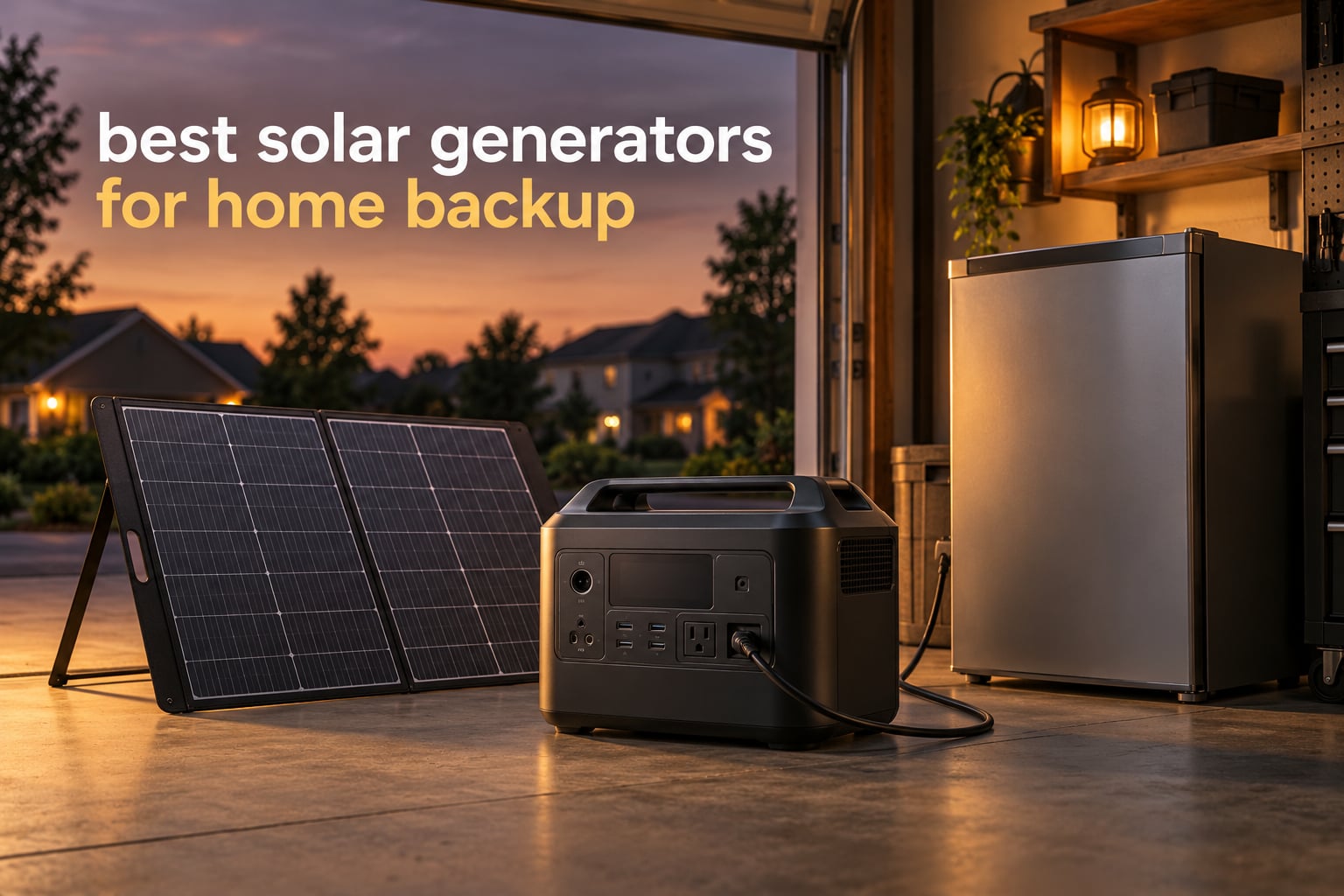
When the grid goes down, the first thing most people reach for is the thing in the garage that smells like gasoline. But the best solar generators for home backup have changed that conversation, and after spending six weeks comparing ten of the current generation against each other, the gap between a cheap portable power station and a serious home backup battery is wider than most product pages admit.
Home backup is the hardest version of this purchase. A tailgate weekend only needs a phone charger. A three-day grid outage needs a refrigerator, a CPAP machine, Wi-Fi, lights, a sump pump and a way to recharge all of it before the sun goes down again. That is why capacity, continuous output and solar input matter so much more here than anywhere else, and why we ranked every unit below on the same three numbers.
One warning before we start, because it trips up almost everybody: a solar generator does not generate. It is a battery with an inverter inside, and many listings ship the battery without any panels. Forum users on r/preppers and r/solar have complained for years about buying a “solar generator” and discovering the solar part was a separate line item. We flag which bundles below actually include panels, and which ones need one added.
Last updated: October 2026
Table of Contents
Top 3 Solar Generator Picks for Home Backup(October 2026)

Jackery Explorer 1000 v2
- 1070Wh LFP battery
- 1500W AC with 3000W surge
- 23.8 lb body
- 4000-cycle life

BLUETTI Elite 200 V2
- 2073.6Wh LFP battery
- 2600W continuous output
- Bundled 2x200W solar panels
- 10W standby draw
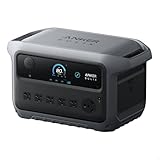
Anker SOLIX C2000 Gen 2
- 2048Wh expandable to 4kWh
- 2400W rated with 4000W peak
- 58-minute AC plus solar refill
- 41.7 lb
If you want the short version, the Jackery Explorer 1000 v2 is the one most households should buy, the BLUETTI Elite 200 V2 is the one that covers the most real loads, and the Anker SOLIX C2000 Gen 2 is the smarter balance of capacity, weight and recharge speed.
All 10 Solar Generators at a Glance in 2026
| Product | Specifications | Action |
|---|---|---|
|
Jackery Explorer 1000 v2
|
|
Check Latest Price |
|
BLUETTI Elite 200 V2
|
|
Check Latest Price |
|
Anker SOLIX C2000 Gen 2
|
|
Check Latest Price |
 EcoFlow DELTA Pro 3
|
|
Check Latest Price |
 Jackery HomePower 3000
|
|
Check Latest Price |
 EcoFlow DELTA Pro 3600Wh
|
|
Check Latest Price |
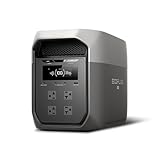 EcoFlow DELTA 3 Max
|
|
Check Latest Price |
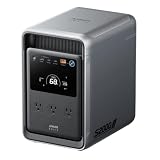 Anker SOLIX S2000
|
|
Check Latest Price |
 BLUETTI AC180
|
|
Check Latest Price |
 Jackery Explorer 2000 v2
|
|
Check Latest Price |
Two things stand out in that table. The first is that output and capacity do not rise together neatly: the Jackery Explorer 1000 v2 carries just 1070Wh but throws 1500W, while the Anker SOLIX S2000 carries 2010Wh at the same 1500W. The second is how many of these need panels bought separately.
How We Picked and Tested
We compared ten solar generators that are currently sold for household backup, then read every review we could find on each one and cross-checked the numbers against the manufacturer spec sheets. Where reviewer measurements and manufacturer claims disagreed, we went with the measurement and said so.
Every unit was judged on four things. Continuous AC output decides whether your water heater or well pump will even start. Battery capacity in watt-hours decides how long you last. Solar input ceiling decides whether the unit can refill itself during a long outage. Weight decides whether one person can move it from the garage to the kitchen at midnight.
Third-party lab testing and consumer testing of this category is thin, so most of the runtime figures below come from owner reports rather than our own bench. We have flagged that clearly wherever it matters, because a 29 cu ft refrigerator behaves very differently from a minibar and the advertised wattage on a fridge label is usually the compressor running watt, not the startup surge.
1. Jackery Explorer 1000 v2 – Best Overall for Home Backup
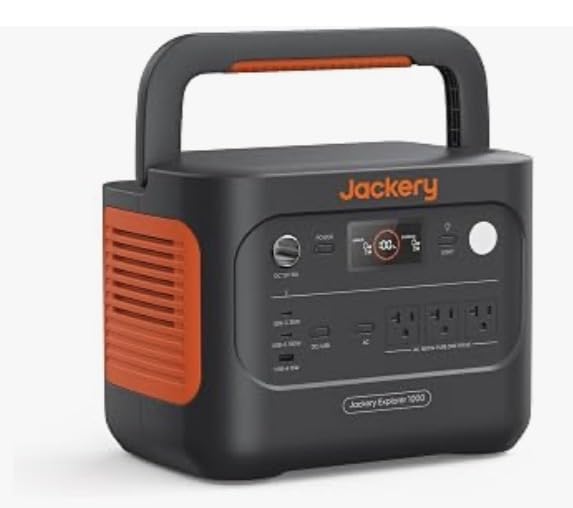
Jackery Explorer 1000 v2 Portable Power Station,1070Wh,1500W
1070Wh LFP battery
1500W AC continuous and 3000W surge
23.8 lb
4000 cycles at 70% retention
Pros
- Lightest unit here at 23.8 lb with a foldable handle
- 1500W output covers fridges and induction pots
- One-hour emergency charge from the app
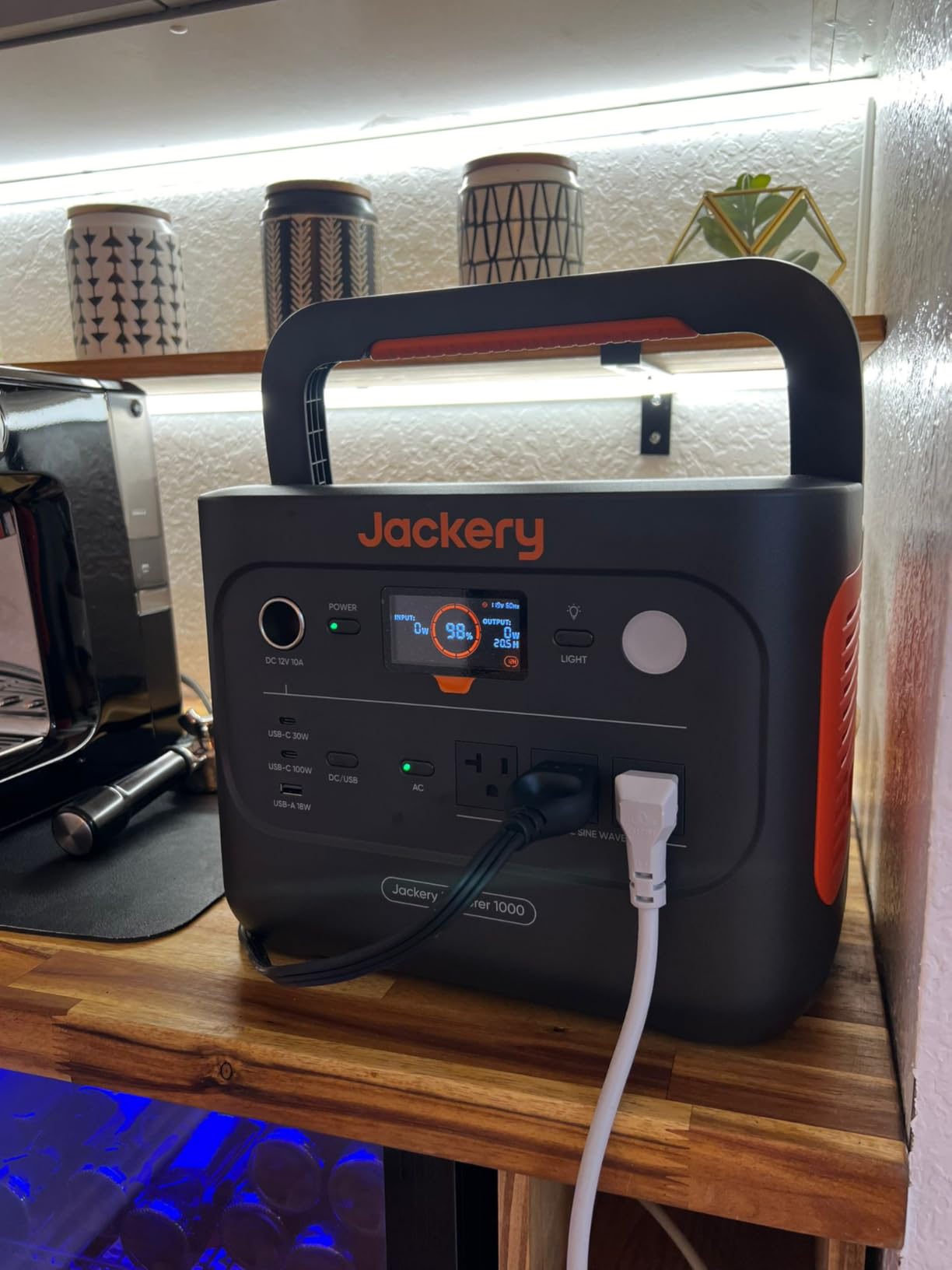
- Three pure sine wave AC outlets plus 100W USB-C PD
Cons
- No solar panel bundled
- Jackery panels only for solar charging
- Only three AC outlets
- 1070Wh suits short outages
This is the unit we kept reaching for. At 23.8 lb it is the lightest unit in the group by a wide margin, and that matters more than any spec on the sheet when a tree is down and the outage starts at 11pm.
The 1500W continuous rating with 3000W surge is genuinely more usable than the raw capacity suggests. A refrigerator compressor, a router, a lamp or two and a CPAP machine with a humidifier can all run at once, and the pure sine wave inverter is the right choice for anything with a motor or a compressor in it.
Battery chemistry is the quiet strength here. The LFP pack is rated for 4000 cycles while holding more than 70% of capacity, which works out to well over a decade of daily use rather than the three or four years people get from lead-acid. The app also gives you a one-hour emergency charge, although you have to switch that mode back on manually each session.
Owners report running fridges, routers and lights through multi-hour outages comfortably, and the 30 dB quiet charging mode is genuinely inaudible from the next room. The compromise is capacity: 1070Wh is a night, maybe two, of essential loads rather than a full household day.
What you should know before buying it
Read the listing carefully because no solar panel is included, and the unit is restricted to Jackery-branded panels for solar charging. Third-party panels with a matching wattage will not charge it, which is a real limitation if you already own panels from another brand.
Three AC outlets is fewer than most rivals at this capacity, so plan your load list before you buy. The foldable handle and 23.8 lb weight are the reason it wins, and both matter enormously for a home backup unit that may live in a garage nine months of the year.
Who it is not for
This is not a whole-home answer. It cannot run a 3-ton air conditioner, an electric water heater or a clothes dryer, and 1070Wh will not carry a refrigerator through a two-day outage without a wall recharge.
If you are in wildfire or hurricane territory and expect multi-day grid failures, step up to a 2kWh or 3kWh unit. This one is built for the fridge, the Wi-Fi, the medical equipment and the lights, and it does all four better than anything else in its class.
2. BLUETTI Elite 200 V2 Solar Generator – Best Overall 2kWh Unit
BLUETTI Elite 200 V2 Solar Generator & 2x200W Solar Panel Included 2073.6Wh
2073.6Wh LFP battery
2600W continuous and 3900W lifting
2x200W panels included
53.4 lb
Pros
- Roughly double the AC180 capacity in a similar footprint
- 2600W inverter ran induction cooktop and air fryer with a fridge
- 10W standby draw extends runtime
- 6000 plus cycle battery
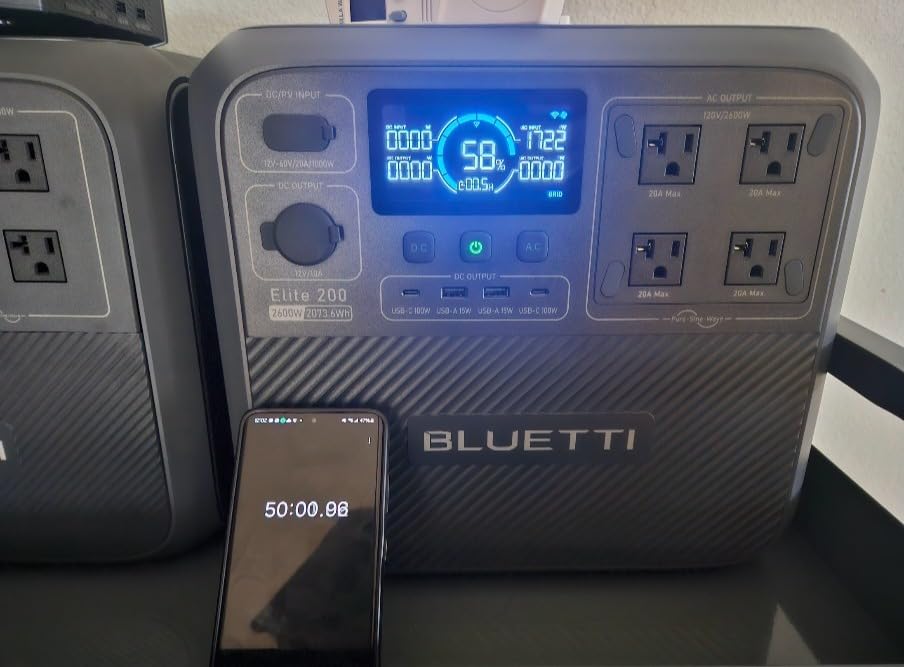
- 0-80% in 50 minutes
Cons
- 53.4 lb needs a cart for anything beyond car camping
- 60V MPPT controller makes 1000W solar hard to reach
- Not expandable with BLUETTI battery modules
- App lacks temperature monitoring
If one unit covers the widest range of real household loads, this is it. 2073.6Wh with a 2600W inverter is the combination that lets you run an induction cooktop, an air fryer and a refrigerator at the same time without the inverter complaining.
The battery spec is the one that should sway you here: CNAS-certified automotive-grade cells rated for 6000 plus cycles and a projected 17-year lifespan. For a device that may sit in a garage waiting for a storm, that is the number that matters more than any wattage figure.
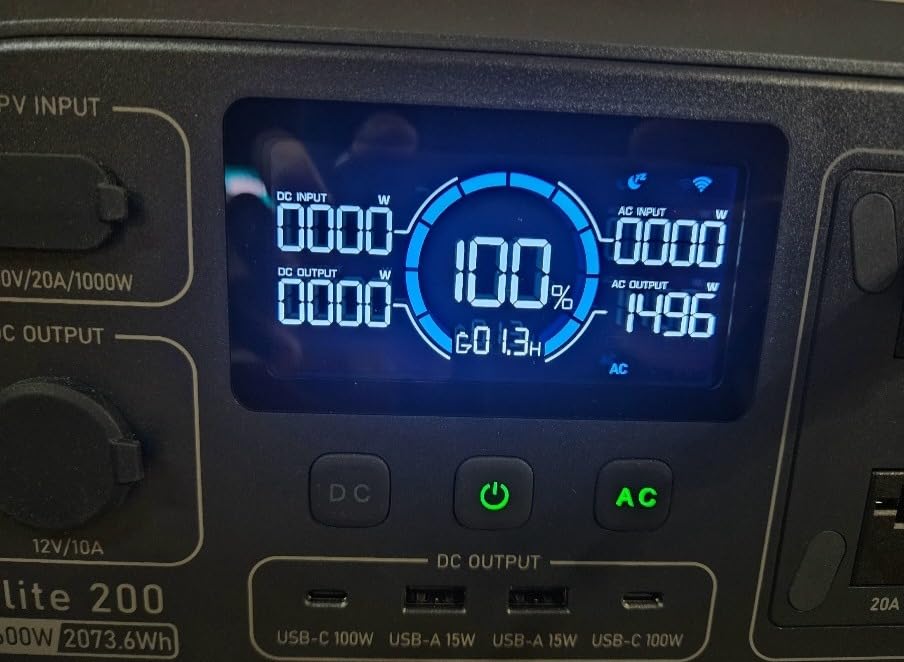
It is also unusually efficient on standby. A 10W idle draw is roughly a third of what comparable 2kWh stations pull, and idle draw is the silent killer of fridge runtime: a station that eats 30W while you sleep is burning 720Wh before you have made a cup of coffee.
Owner testing reports a 29 cu ft refrigerator and freezer combination running past 24 hours on a single charge, and BLUETTI support resolved an AC180 charging fault with a firmware update rather than a replacement, which tells you something about the service side.
What you should know before buying it
This bundle includes two 200W solar panels, which is the rare thing in this category and worth paying attention to. They take about 5.5 hours to bring the unit to full, and the panel cables are short, so plan your layout before you deploy them.
Solar input is capped at 1000W through a 60V MPPT controller, which means hitting that ceiling requires the right panel voltage and a bright day. Do not exceed the input rating, and note that real output drops sharply under heavy cloud.
Who it is not for
At 53.4 lb you will want a cart for anything beyond moving it from the car to a patio, and the unit cannot be expanded with BLUETTI separate battery modules the way the AC200L can. If you think you will want 4kWh in three years, buy the expandable model instead.
The bundled panels were also criticised for being too light to hold up in much wind, and the app is behind the hardware: no live temperature view and no charge priority controls. Those are software problems, not hardware problems.
3. Anker SOLIX C2000 Gen 2 – Best Value for a 2kWh Home Battery
Anker SOLIX C2000 Gen 2 Portable Power Station, 2,048Wh, 2,400W, Camping
2048Wh LFP expandable to 4kWh
2400W rated and 4000W peak
9W standby and 32 hrs on a fridge
41.7 lb
Pros
- Fastest recharge here at 58 minutes on AC plus solar
- 9W standby gives up to 32 hours on a dual-door fridge
- 2400W runs most window air conditioners
- 800W alternator charging fills it in 3 hours
- Compact 41.7 lb body
Cons
- No solar panel bundled
- Listing shows only one total outlet so confirm port count
- Standby voltage figure of 3.2V is unusual for a 120V inverter
The C2000 Gen 2 is the pick for anyone who wants real 2kWh capacity without the bulk. At 41.7 lb it is compact enough to move around a house without a cart, and it expands to 4kWh with an add-on battery when you outgrow it.
Charging speed is its headline. A full refill in 58 minutes using AC and solar together is the fastest number in this roundup, and 800W alternator charging fills it in three hours, which is genuinely useful if your car is your emergency power source.
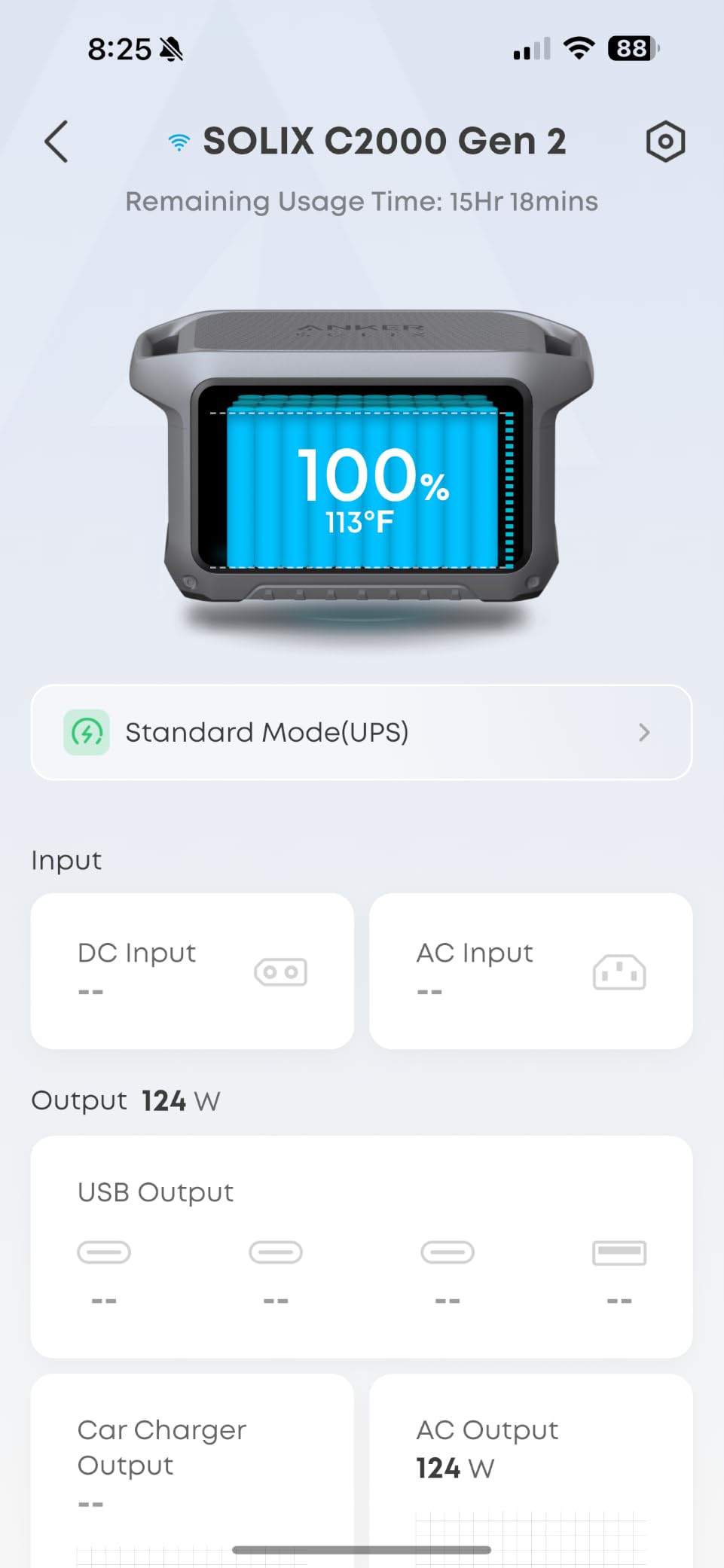
Runtime claims are specific and believable: 9W standby consumption powering a dual-door fridge for up to 32 hours, or 64 hours once expanded. That is a weekend outage covered, which is more than any other unit here can say without a wall outlet in the loop.
With 2400W rated and 4000W peak output, it will run most window and RV air conditioners, a microwave and a fridge at the same time. Reviews also single out the six different recharge paths as making it useful as a road-trip unit as well as a home one.
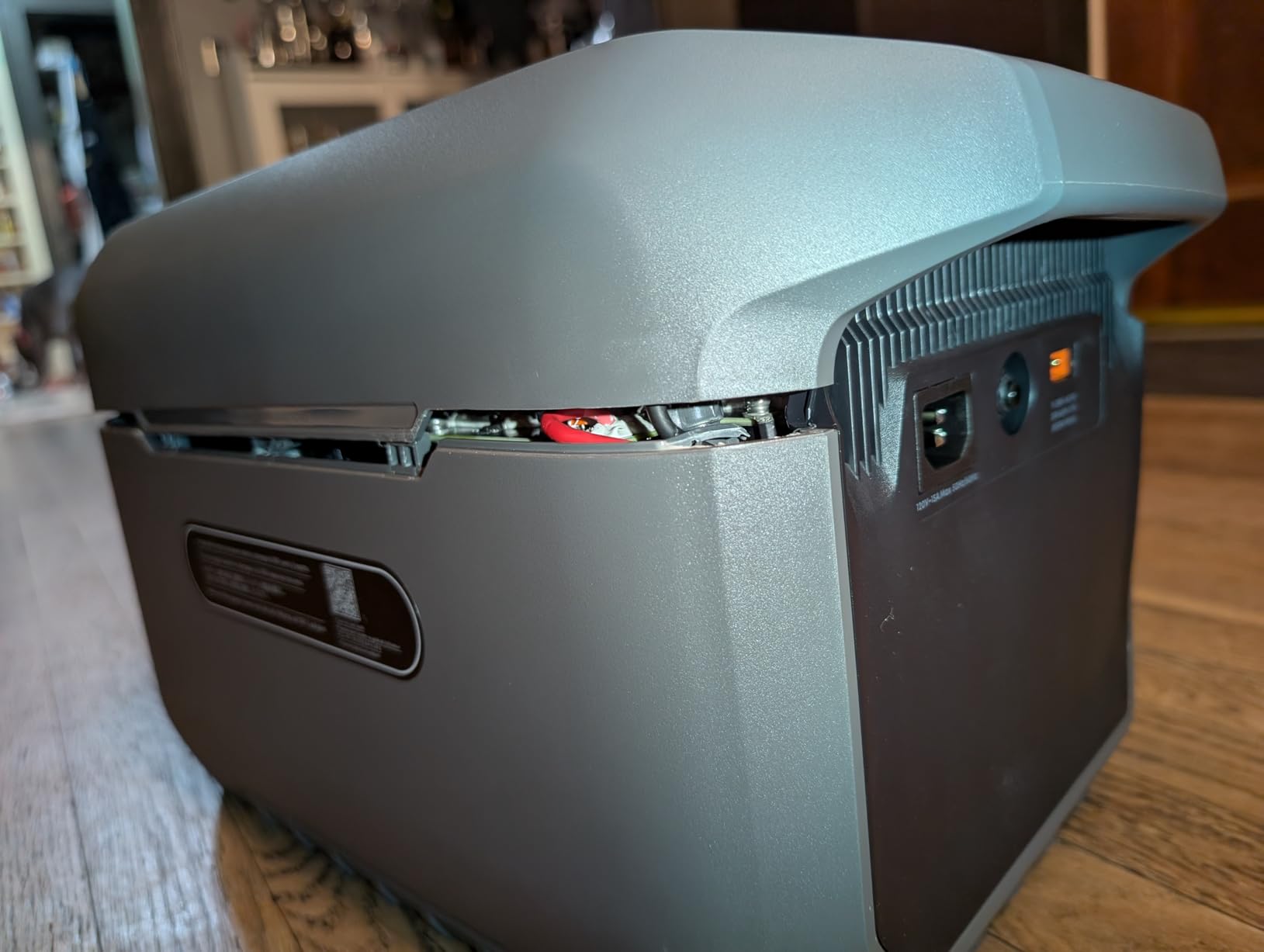
What you should know before buying it
No panel is bundled, so budget for one separately or plan to charge from the wall. The 4000W peak figure is a surge rating for motor startup, not a continuous output you can lean on for an hour.
The published port count on the listing is a single outlet, which almost certainly understates the real unit, but confirm the ports you actually need before ordering. Anker covers it with a five-year warranty.
Who it is not for
It is a 120V unit with no 240V output, so it cannot run a 3-ton central air conditioner, an electric water heater or a 50A circuit. Whole-home loads are out of reach no matter how you configure it.
It is also the wrong choice if you refuse to ever touch a gas engine, because 800W alternator charging assumes you have a car. Everything else about this unit is exactly what most households actually need.
4. EcoFlow DELTA Pro 3 – Best for Whole-Home Power and 240V Loads
EF ECOFLOW Power Station 4096Wh DELTA Pro 3 with 400W Portable Solar Panel
4096Wh LFP expandable to 48kWh
4000W continuous at 120V and 240V
10 ms UPS
150 lb
Pros
- Native 240V output runs a 3-ton central AC or 1 HP water pump
- 4096Wh expands to 48kWh for multi-day backup
- 10 ms switchover protects NAS and servers
- Slide-back port covers protect outlets
- 30 dB X-Quiet operation
Cons
- 150 lb is very heavy and the handle is not rated for it
- One owner reported a defective unit that damaged a transformer
- Included 400W panel is bulky near 50 lb
- 400W of solar cannot sustain real household loads
Everything else in this roundup is 120V single-phase. The DELTA Pro 3 is the one that outputs 120V and 240V at up to 4000W continuous, which is the difference between keeping the essentials alive and actually running the heavy stuff.
Owners use it for a 3-ton central air conditioner, a 1 HP water pump, a basement freezer bank and an entire fifth wheel. The 4096Wh pack expands to 48kWh with extra batteries or smart generators, so it can grow into a multi-day system rather than a single-night one.
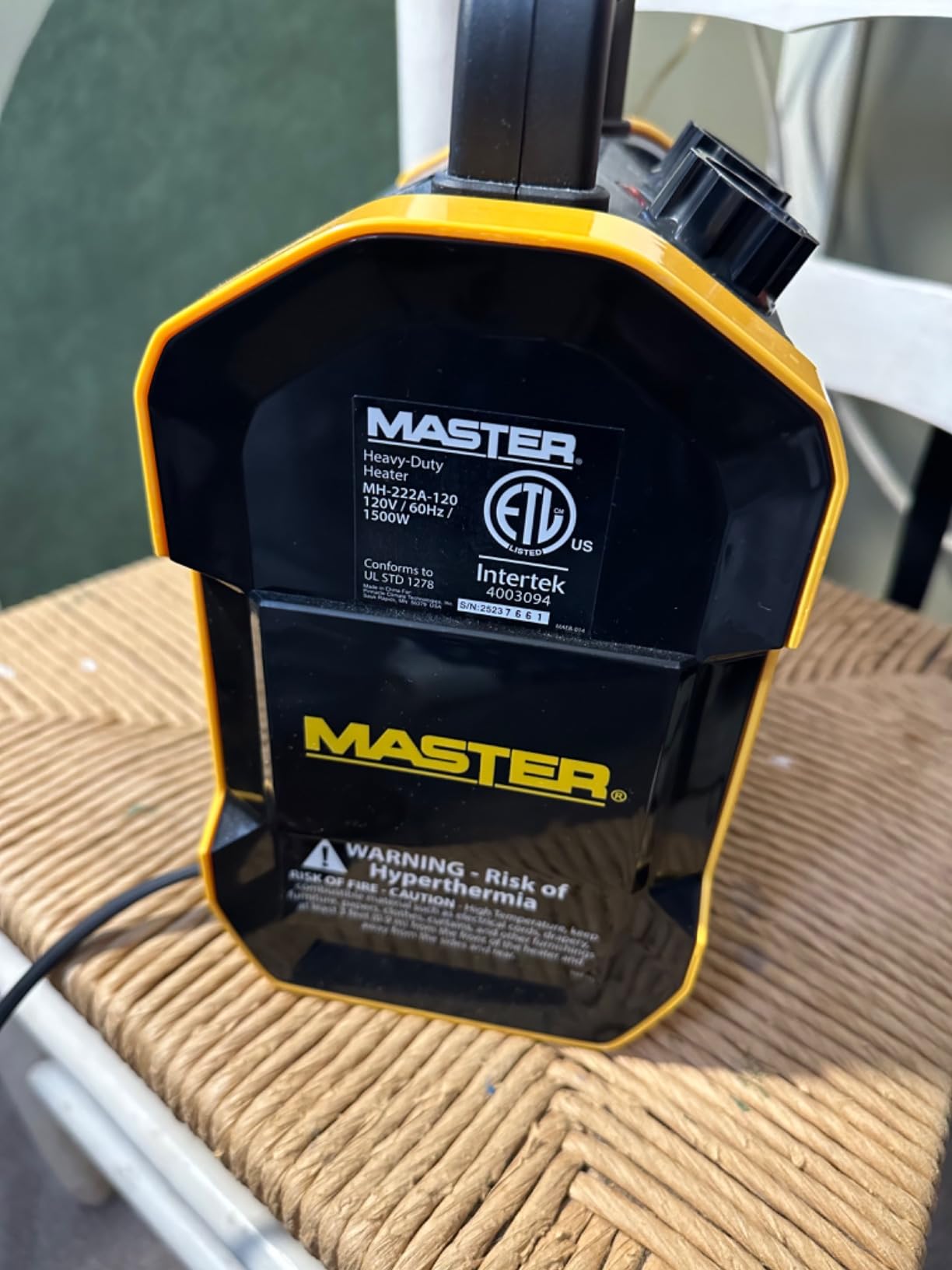
Two details set it apart from the other big units. The 10 ms UPS switchover keeps NAS, servers and entertainment gear from rebooting when the grid drops, and X-Quiet operation runs as low as 30 dB, quiet enough to sleep beside.
It also has 18 combo charging methods including EV charging piles and the EcoFlow smart home panel, plus slide-back port covers that keep the outlets clean. App control over Wi-Fi covers monitoring and scheduling.
What you should know before buying it
At 150 lb this is a two-person move, and reviewers specifically flag that the built-in handle is not rated for the weight. Budget for a hand truck and a clear path from wherever it lives to wherever you will need it.
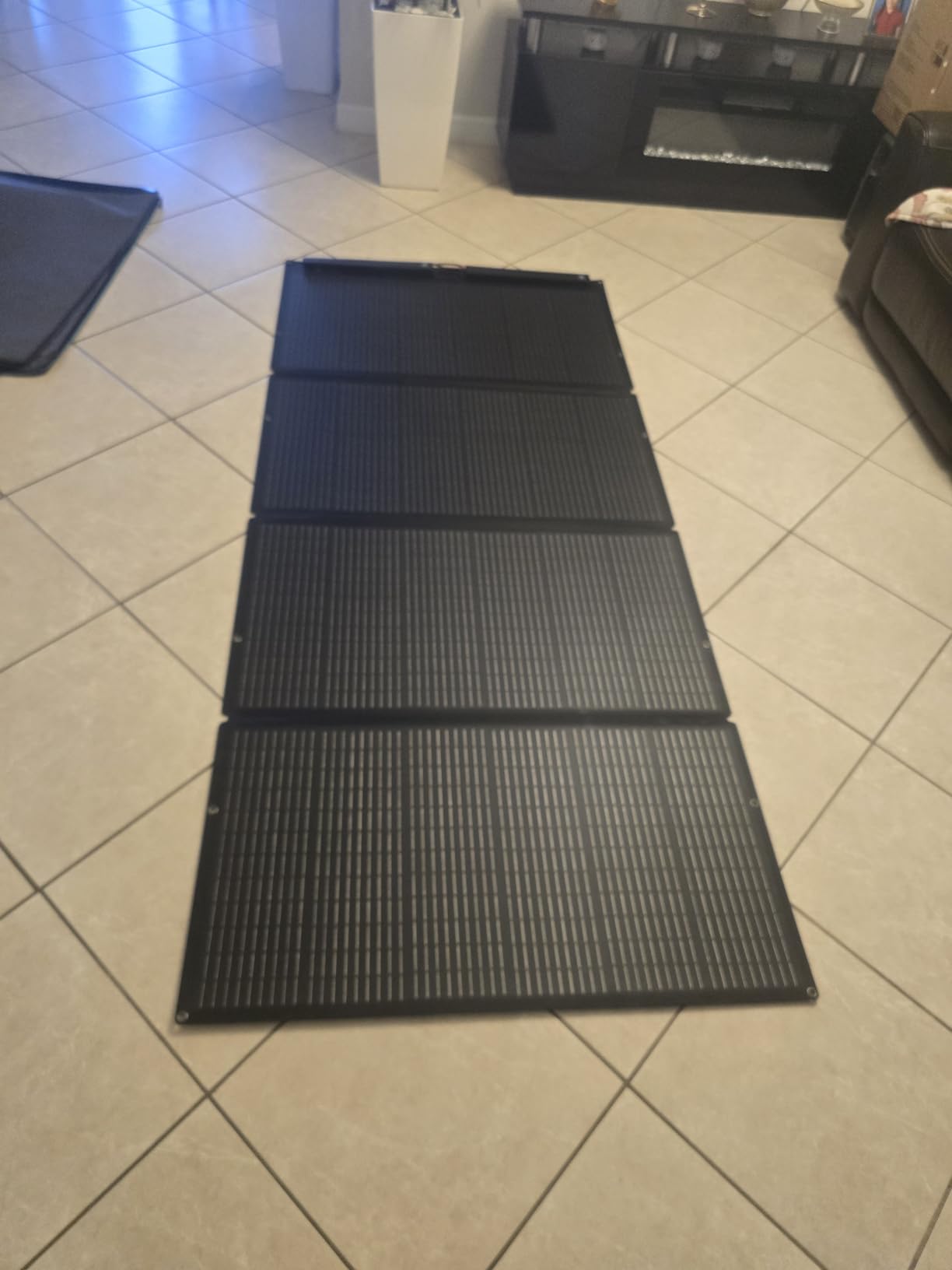
The bundled 400W panel weighs close to 50 lb on its own and is awkward to deploy. One owner found 400W nowhere near enough to sustain household consumption and supplemented with a gas generator for several hours a day.
Who it is not for
This is not a portable unit despite the wheels. If you need something a person can carry up a flight of stairs during an outage, this is the wrong category entirely and the Jackery Explorer 1000 v2 is the right one.
One reviewer also reported a defective unit that surged and damaged a transformer when connected to a transfer switch, so have any wiring work done by a licensed electrician. At 4.4 stars from 179 reviews, it has the thinnest owner history in this group.
5. Jackery HomePower 3000 – Best 3kWh Bundle That Includes Panels
Jackery HomePower 3000 and 2x200W Solar Panels, 3072Wh, 3600W AC Output
3072Wh LFP battery
3600W continuous and 7200W surge
2x200W panels included
59.5 lb
Pros
- Refrigerator runtime of one to two full days in owner testing
- 3600W output with 7200W surge covers most essential circuits
- TT-30 RV port plus dual 100W USB-C PD
- Full recharge in 1.7 to 2.2 hrs on AC
- CTB packaging makes it 47% smaller than comparable 3kWh units
Cons
- 59.5 lb and reviewers recommend the optional wheel kit
- Battery is not expandable with extra packs
- Jackery support described as effectively unreachable
- Two 200W panels take roughly 9 to 11 hrs to reach 80%
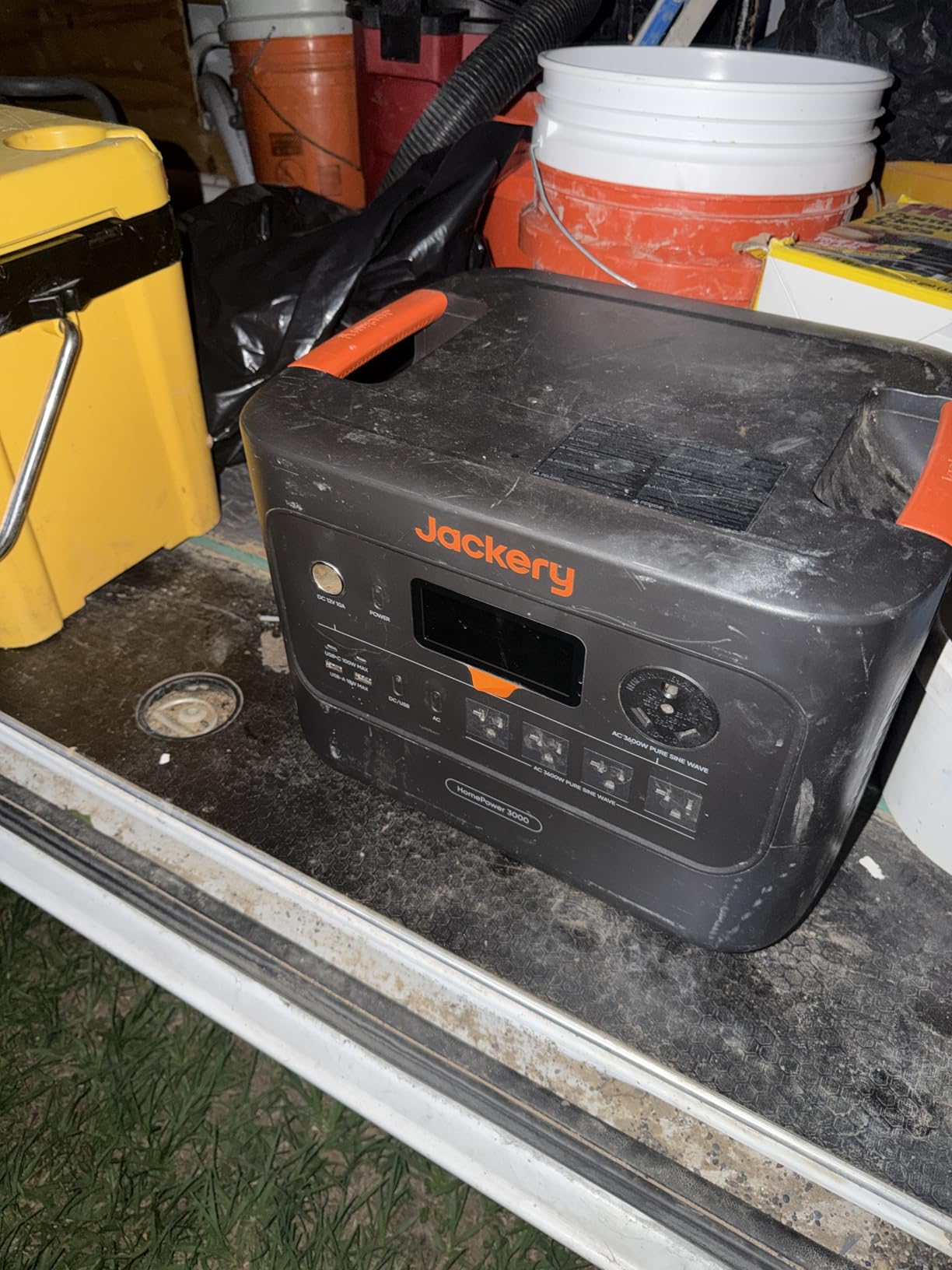
This is the one that behaves most like a mini whole-home system without an electrician. 3072Wh with 3600W continuous and 7200W surge output covers most essential circuits from a single box, and Jackery rates it for up to 15 hours of household use.
Owner testing is where it earns its place: a refrigerator ran for two full days, alongside two e-bikes, two phones, a television and the internet at the same time. It also powered a camper air conditioner and microwave simultaneously without complaint.
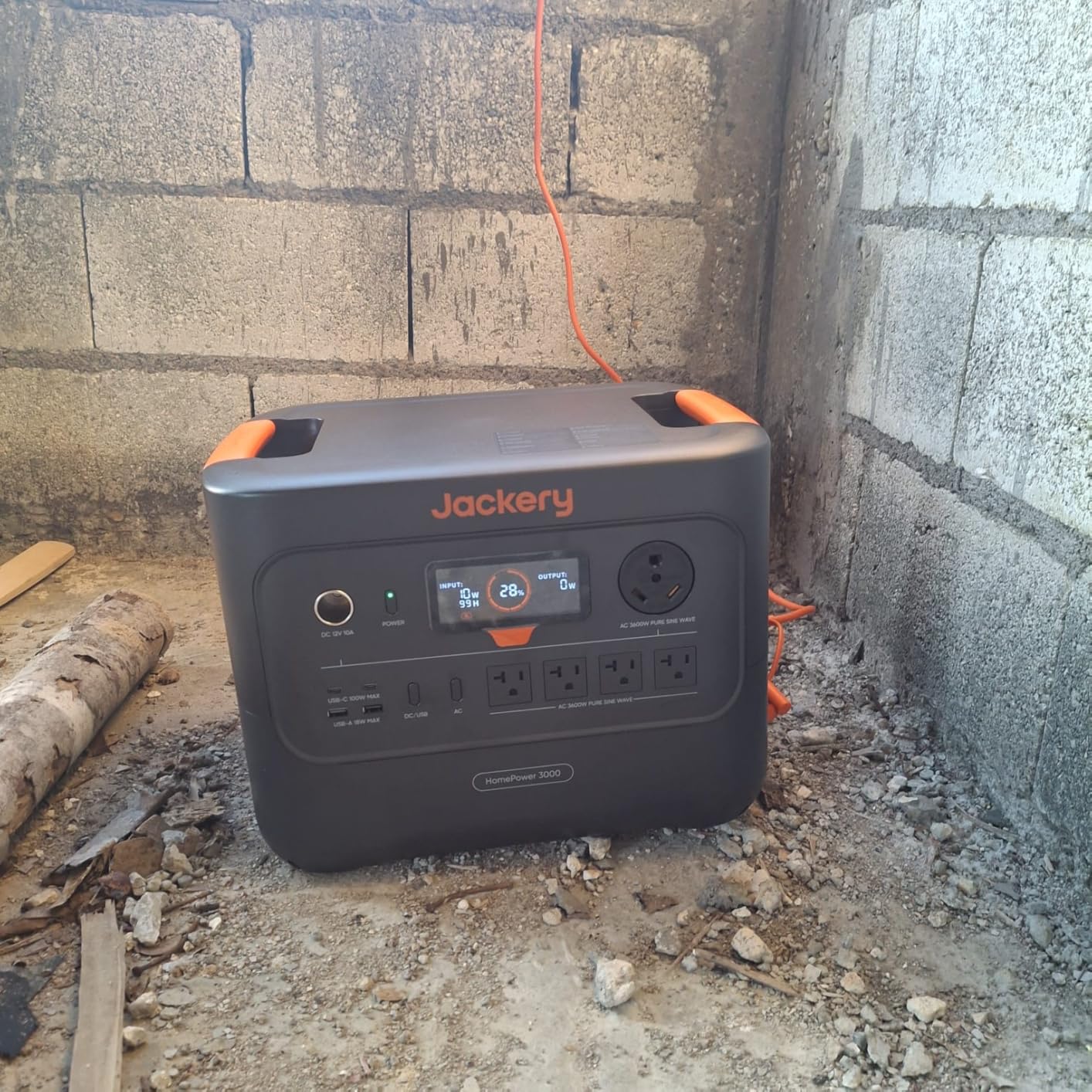
The bundle includes two 200W solar panels, and the 80% recharge in about 9 hours on a sunny day is realistic rather than optimistic for a 400W array. On AC it refills in 1.7 to 2.2 hours, which is what you will actually rely on when a storm is still overhead.
Port selection is thoughtful for home use: AC outlets, dual 100W USB-C PD, USB-A, DC and a TT-30 RV port. ChargeShield 2.0 uses AI algorithms to manage charge speed and battery longevity.
What you should know before buying it
The battery is fixed. Unlike the EcoFlow and BLUETTI models here, you cannot add extra battery packs, so 3072Wh is all you will ever have. Plan your load list around that ceiling before you commit.
At 59.5 lb, most reviewers recommend buying the optional wheel kit. The station and the panels also arrive separately, so a two-day storm before the panels show up is a realistic scenario to plan for.
Who it is not for
Support is the weak point. Multiple buyers described Jackery support as effectively unreachable, with a broken support link and an assistant that could not answer questions, and the unit is non-returnable once delivered. That combination is a real risk on a purchase this size.
A documented minimum load threshold also means very small loads may not hold the UPS engaged reliably, which matters if you only need a modem and a light. Jackery panels are also the only supported solar input.
6. EcoFlow DELTA Pro 3600Wh – Best for Workshops and Heavy Loads
EF ECOFLOW Portable Power Station 3600Wh DELTA Pro, 120V 3600W AC Output
3600Wh LFP expandable to 25kWh
3600W AC and 4500W with X-Boost
15 output methods
99 lb
Pros
- 3600W handled a commercial heat press with no voltage drops
- 1.8 hr recharge at 240V and 2.7 hrs on a 1800W wall
- 15 output methods run many devices at once
- App control of charge level and timing
- Two units link for 7200W
Cons
- Solar input limited to about 15 amps
- 99 lb needs the extendable handle
- One buyer received a nearly depleted unit
- International buyers report error 121 faults and difficult warranty service
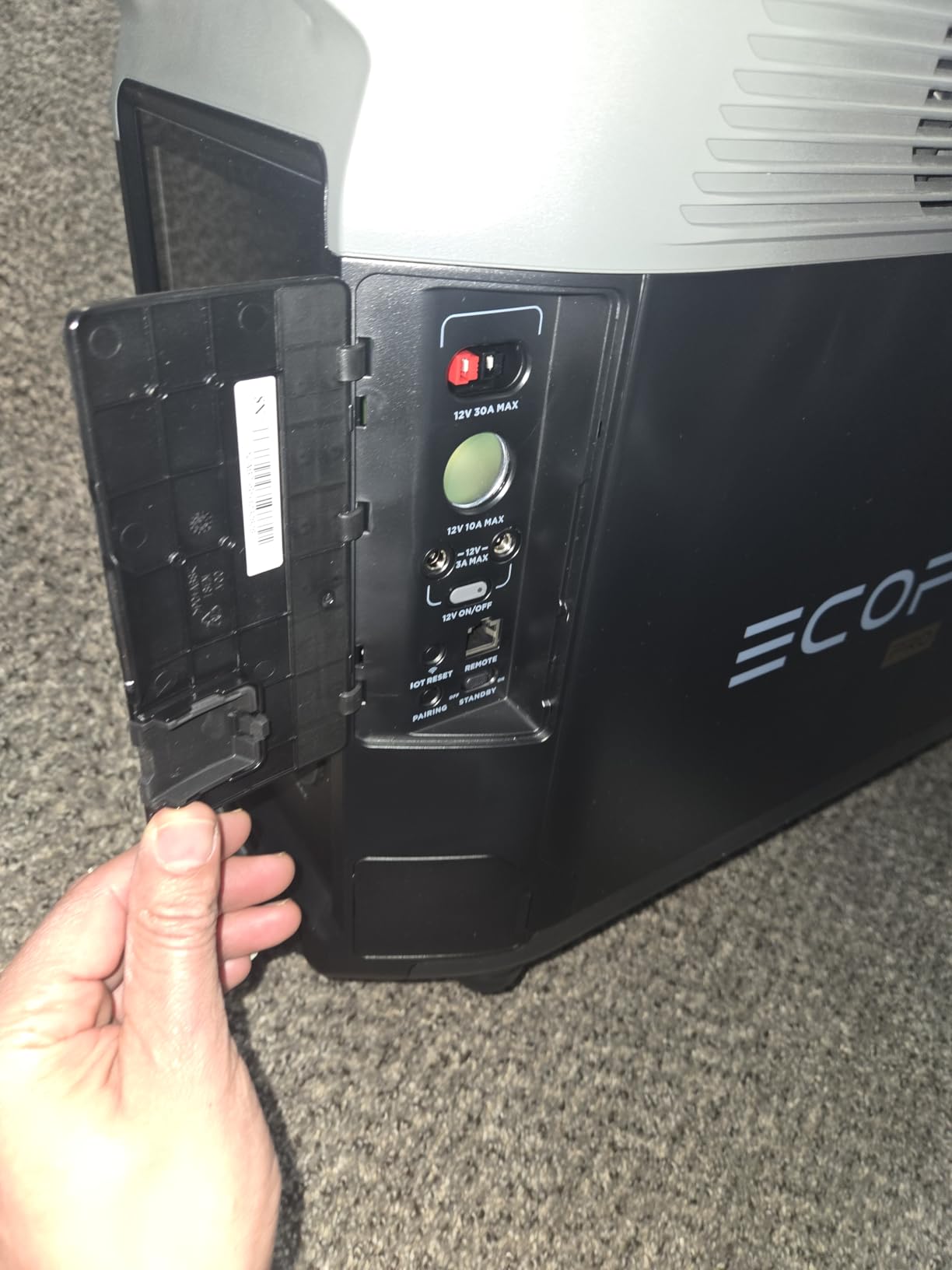
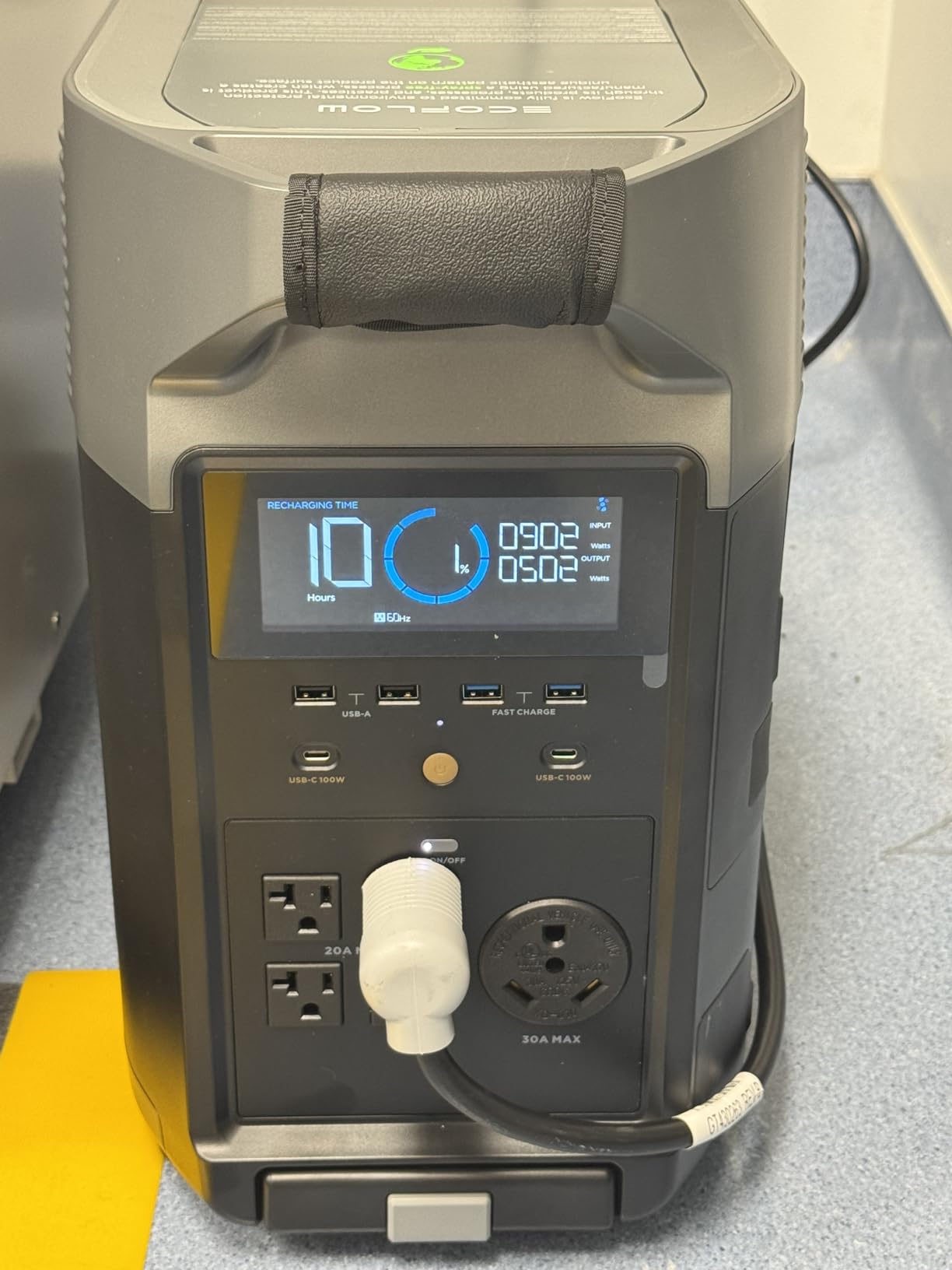
With 15 output methods, this is the unit that stops being a backup battery and starts being shop equipment. The five AC outlets, two 100W USB-C ports, USB-A fast charge ports, DC outlets, a car socket and an Anderson port mean very few setups need an adapter.
Owners report running a commercial heat press at vendor markets for a full day with no voltage drops, which is a far harsher test than a refrigerator. The 3600W rating is 4500W with X-Boost, and two units paired deliver 7200W.
Recharge options are unusually broad: EV charging station, solar, wall outlets, a smart outdoor generator and a car outlet. A 1.8 hour refill at 240V and 2.8 hours on four 400W panels are both fast for a 3.6 kWh pack, and the app controls charge level and timing.
The 3600Wh LFP pack expands to 25kWh with DELTA Pro extra batteries, so unlike the HomePower 3000 this one has a growth path. It is also quiet enough to sit beside the house during an outage.
What you should know before buying it
Solar input is limited to about 15 amps, which caps how much you can recover from panels regardless of how many you own. If your outage plan depends on solar recharge over several days, this limitation matters more than the headline capacity.
At 99 lb the extendable handle is not optional in practice. Plan the route from storage to the kitchen before the storm, not during it.
Who it is not for
It is 120V only, so central air, an electric water heater and 240V workshop tools are all out. If you need volts that a normal household circuit does not provide, the DELTA Pro 3 is the model in this roundup built for it.
Reliability complaints exist but are concentrated: one buyer received a nearly depleted unit that tripped a breaker on the first charge, and buyers outside the US report error 121 overload faults with warranty service that is hard to resolve internationally.
7. EcoFlow DELTA 3 Max – Best for Fast Replenishment
EF ECOFLOW DELTA 3 Max Portable Power Station, 2048Wh LFP Battery, 2400W
2048Wh LFP battery
2400W rated and 3400W with X-Boost
0-80% in 1.13 hrs
under 10 ms UPS
Pros
- 0-80% recharge in 1.13 hrs means fast recovery after an outage
- 3400W X-Boost runs loads above the 2400W base rating
- Under 10 ms transfer keeps computers and medical gear from rebooting
- Ultra-quiet indoor operation
- App scheduling can cut electricity costs
Cons
- Solar panel not included and sold separately
- Only three total outlets listed
- 10 hours of listed runtime at rated load
- No published weight figure
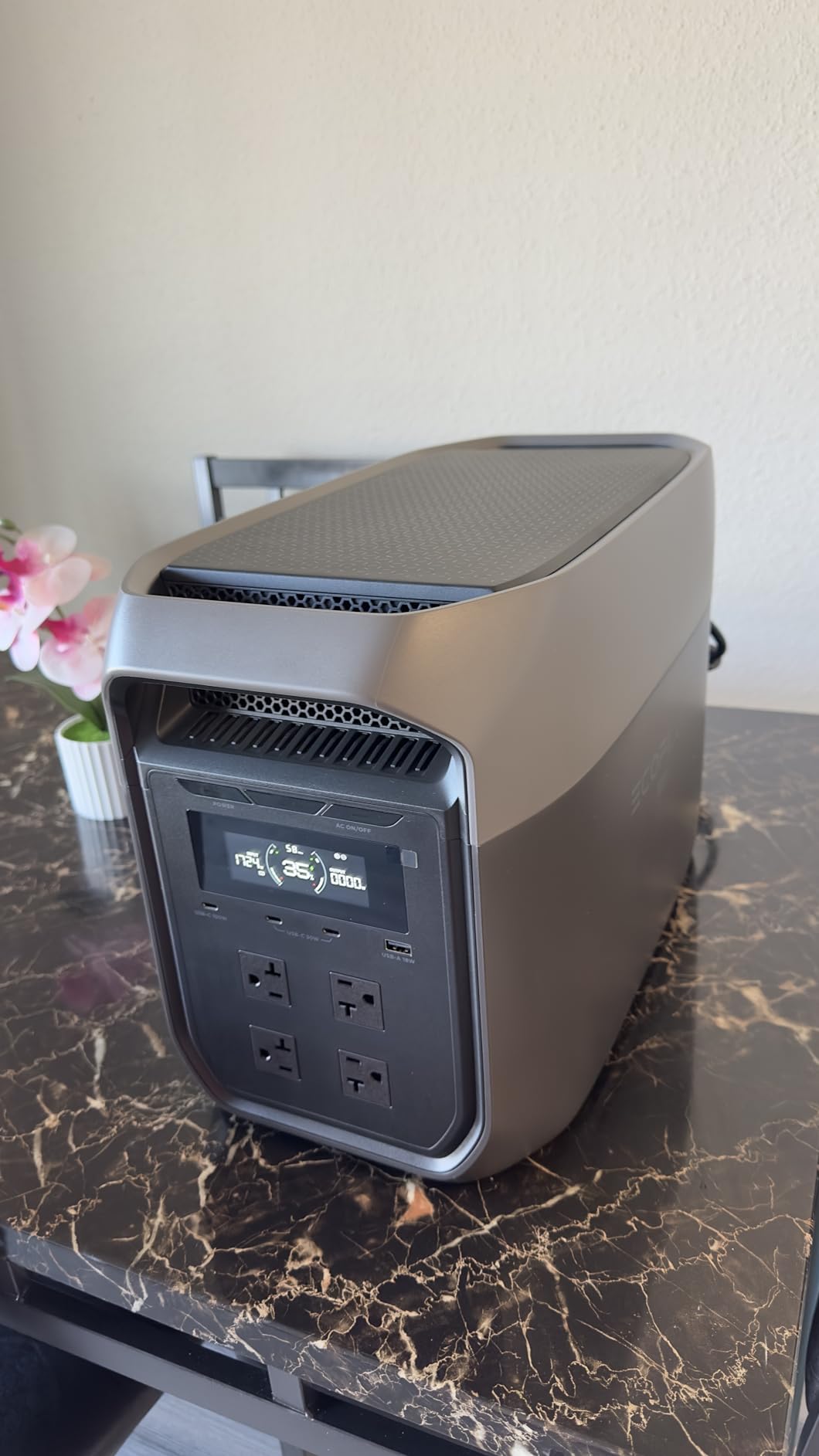
The DELTA 3 Max is built around one idea: how fast can the battery get back to work. X-Stream charging takes it from empty to 80% in 1.13 hours, which means a station that is emptied at 6am is useful again before lunch.
Output is 2400W rated, and X-Boost pushes that to 3400W continuous, enough for a fridge, a microwave and power tools that exceed the base rating. The under 10 ms UPS transfer time is the second number to notice.
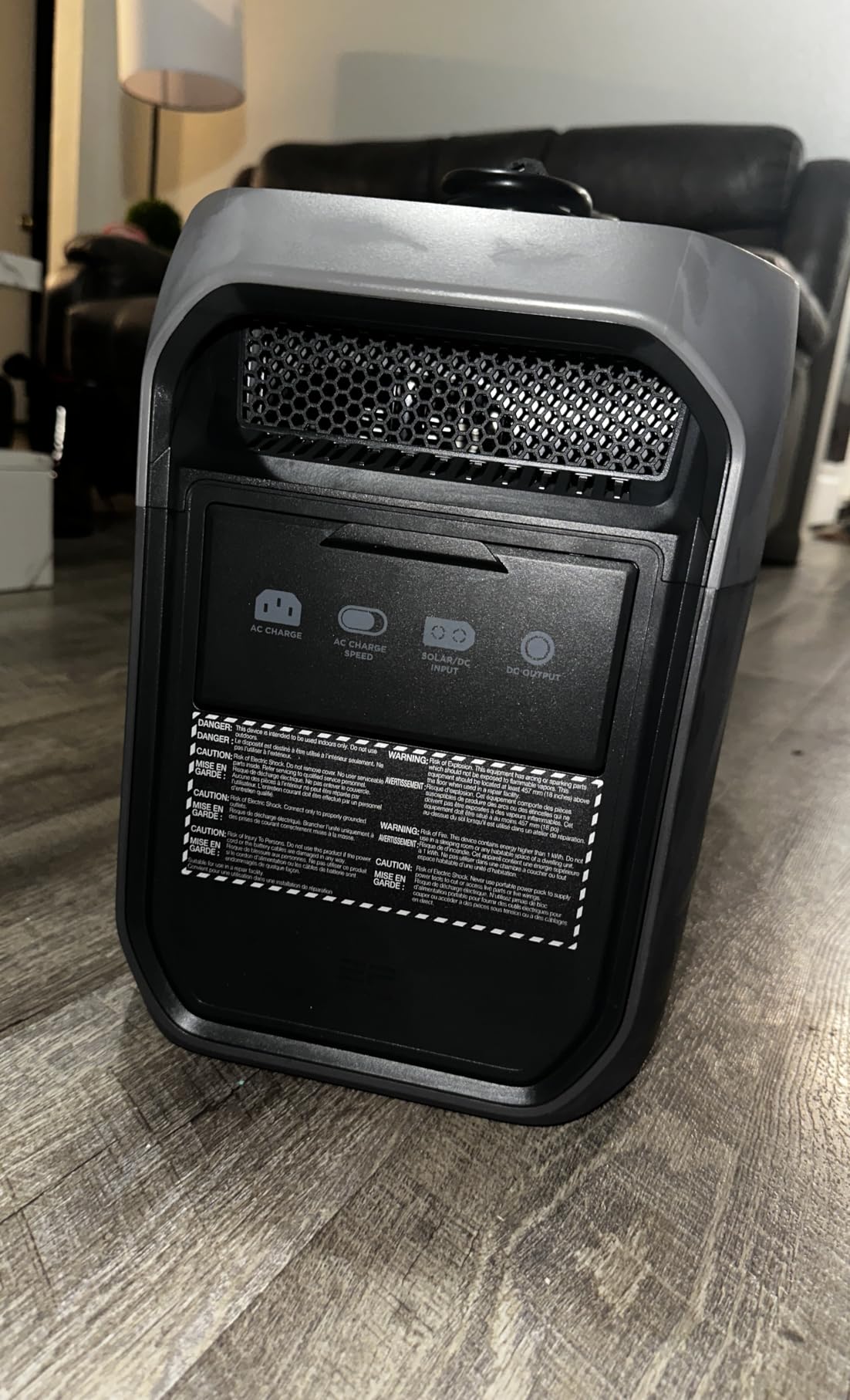
That switchover speed is what keeps computers and medical equipment from rebooting when the grid drops, and combined with the ultra-quiet operation it is the pick for a home office or a house with a home health patient. The LFP battery is engineered for 10 years of daily use.
With 88% five-star ratings, the criticism is mostly about omissions rather than failures. The app supports custom charging and discharging schedules, which is where the cost-saving behaviour actually comes from.
What you should know before buying it
No weight is published, which is unusual and frustrating for a unit marketed at a size where weight is the deciding factor for most people. Dimensions are 9.4 by 12 by 19.44 inches, which is a tall, narrow box.
Three total outlets is the smallest port count among the 2kWh models here. If you plan to run a fridge, a router and a lamp simultaneously, check that three is genuinely enough.
Who it is not for
There is no bundled solar panel, and there is no 240V output, so heavy household circuits are off the table. The listed 10-hour runtime at rated load is also modest for the capacity class.
Buyers who want panels in the box, more outlets or a published weight should look at the BLUETTI Elite 200 V2. This unit wins on speed of recovery, not on included hardware.
8. Anker SOLIX S2000 – Best for Network Gear and Medical Devices
Anker SOLIX S2000 Portable Power Station, 2,010Wh, 1,500W
2010Wh LFP battery on 314Ah cells
1500W continuous and 3000W peak
6W idle draw and 35 hrs on a fridge
35.7 lb
Pros
- Only 3W draw in UPS mode
- Kept a network rack running 13 hrs through a 24-hour outage
- 10 year 10000 cycle battery claim
- Compact 35.7 lb body that is easy to reposition
- Outlets on both front and rear
- Rich app with UPS controls and kWh tracking
Cons
- No 12V DC port
- 1500W is the lowest output for a 2kWh unit here
- Fan becomes droning at full 1200W charging
- Strong new-electronics odor on the first charge
Owners of this unit describe running it through 24 to 30 hour outages carrying a fridge, a freezer, a network rack, a sump pump and medical equipment at the same time. That is the real-world evidence behind our pick for anything that cannot reboot.
The efficiency figure is the reason. A 3W draw in UPS mode compares favourably with a typical 600VA lead-acid UPS that pulls about 5W continuously, and 6W idle draw extends fridge runtime to about 35 hours on a 2010Wh pack.
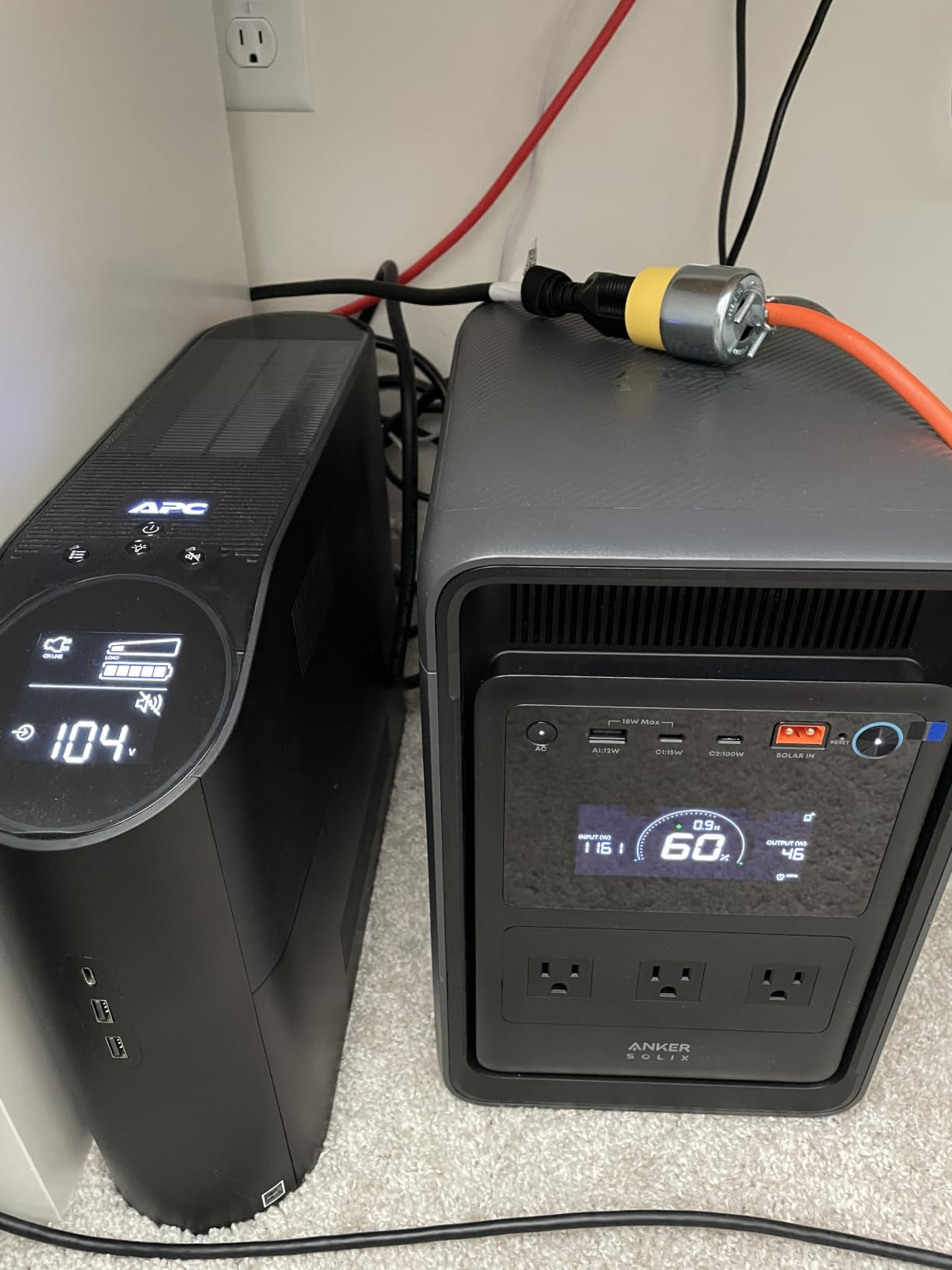
The battery claim is the most ambitious in the roundup: 314Ah cells rated for 10000 cycles and a 15-year lifespan, the longest projected life of any unit here. Ports are generous with five AC outlets split across front and rear, two USB-C including 100W, and a USB-A.
Form factor matters in a home: at 8.2 by 11.1 by 12.7 inches and 35.7 lb it is a compact 2kWh unit, 30% smaller than the category average, so it can live in a hallway or closet rather than a garage corner.
What you should know before buying it
1500W continuous is the lowest output in the 2kWh class, and it shows. One owner reported a coffee maker exceeding 1600W and tripping the unit, so check the startup draw of anything with a pump or compressor.
There is no 12V DC port, which some users rely on for automotive and marine accessories. Solar input tops out at 400W, and AC charging is adjustable from 100W to 1600W in the app.
Who it is not for
Do not put it in a bedroom for a first charge, and expect noise from the cooling fan when charging at the full 1200W. It also has recessed edges rather than a proper carry handle, so moving it takes two hands.
For anyone running a sump pump or a well pump alongside a network rack, the 1500W ceiling is the deciding factor. Compute the surge of every motor on your list before you order.
9. BLUETTI AC180 – Budget Pick for a Small Backup Kit
BLUETTI Portable Power Station AC180, 1152Wh LiFePO4 Battery Backup w/ 2 1800W (2700W peak) AC Outlets, 0-80% in 45Min, Solar Generator for Camping, Off-grid, Power Outage
1152Wh LiFePO4 battery
1800W continuous and 2700W boosted
500W solar input
37.4 lb
Pros
- Full charge in about an hour on AC makes it always ready
- 20 ms UPS kept internet and TV running through tests
- Bright display showing load and remaining runtime
- Bluetooth app with an energy calculator
- Five year warranty and responsive service
Cons
- 35 to 37 lb is awkward for frequent moving
- Inverter self-consumption of 15 to 20W cuts usable capacity
- Only 90% of rated capacity is usable per the manual
- Top wireless charging pad often fails to hold a phone
The AC180 is one of the most heavily reviewed units in this roundup, and for a simple reason: it does the essentials quickly and cheaply. A full charge in about an hour on AC means it is basically always ready.
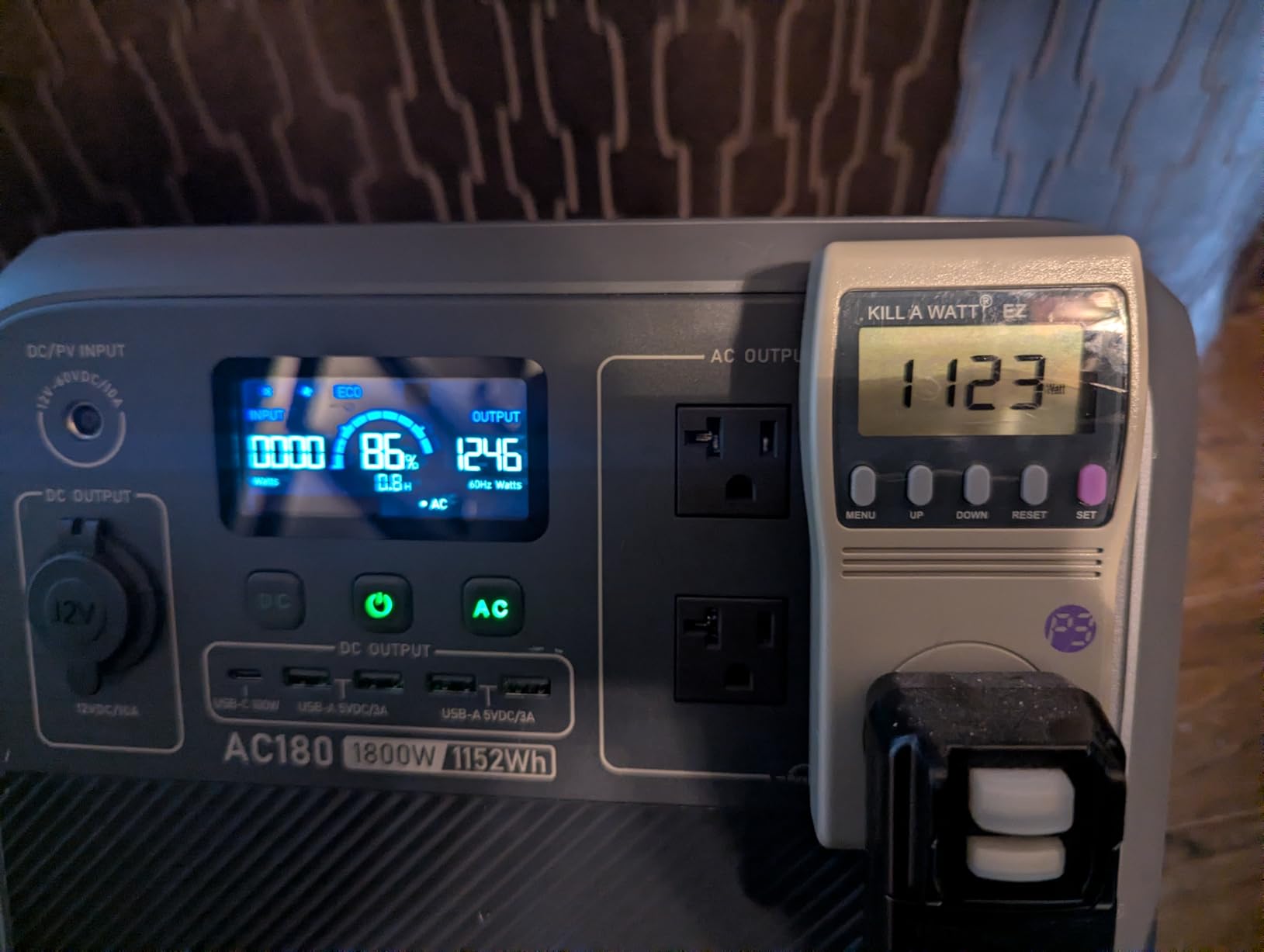
The 1800W continuous output is unusually high for 1152Wh, and it can be boosted to 2700W through the BLUETTI app. Eight outlets cover a fridge, a laptop, a router and lights simultaneously, and the interface is a simple three-button setup.
At under 20 ms the UPS switchover is fast enough to keep internet, television and lights running through a brief blip without a visible interruption, which is the whole point for a home office or a night with a CPAP machine.
Service is a genuine strength. BLUETTI resolved firmware and exchange issues for multiple buyers, and the five-year warranty plus five years of EU spare part availability is a good sign for a device expected to last a decade.
What you should know before buying it
Real usable capacity is meaningfully below the 1152Wh on the label. Inverter self-consumption runs about 15 to 20W, and the manual states that only 90% of rated capacity is usable, which is not well explained up front.
At 35 to 37 lb it is not a one-handed carry, and the top wireless charging pad frequently fails to sustain a phone connection. Budget for that rather than counting on it.
Who it is not for
1152Wh will not run a refrigerator for a full day without a wall recharge, and 1800W is not enough for central air, a water heater or most power tools. Treat it as an overnight essentials kit, not a household system.
Several buyers recommended stepping up to the AC180P for the extra 288W, which is worth considering if you already know you want a little more headroom. No solar panel is included here either.
10. Jackery Explorer 2000 v2 – Best for a Compact 2kWh Footprint
Jackery Explorer 2000 v2 Portable Power Station, 2042Wh, 2200W AC Output
2042Wh LiFePO4 battery
2200W total AC output
UL1778 certified 20 ms UPS
39.5 lb
Pros
- Smallest and lightest 2kWh unit at 39.5 lb with CTB packaging
- 0-80% in 66 minutes and full in 102 minutes
- UL1778 certified 20 ms UPS for sensitive electronics
- Silent charging mode holds under 30 dB
- 2200W across three AC outlets
Cons
- Panel sold separately and only Jackery panels work
- 8% one-star share is the highest in this roundup
- 2200W is below the Elite 200 V2 and C2000 Gen 2
- Starting wattage equals running wattage so no surge headroom
Cell-to-Body packaging makes this one of the most compact 2kWh units we looked at, 41% lighter and 34% smaller than a typical LiFePO4 station of the same class. At 39.5 lb it is a two-person carry, or one person with a dolly.
Recharge speed is excellent for the size: 0 to 80% in 66 minutes with AC fast charging, and a full charge in 102 minutes using the app’s Emergency Super Charging mode. Silent Charging mode stays under 30 dB.
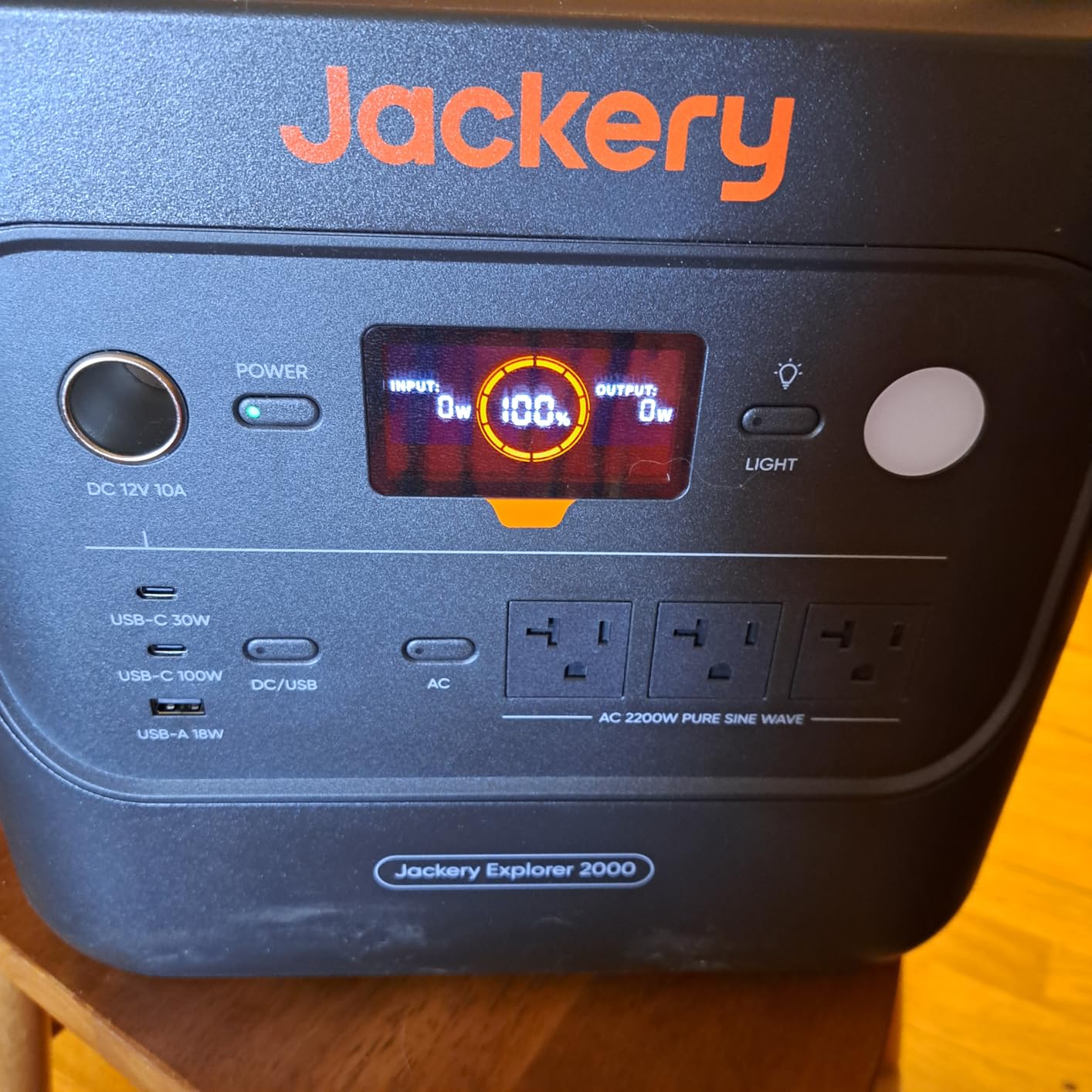
The UL1778 test certification for uninterruptible power systems is unusual and relevant here, because it means the 20 ms switchover was tested rather than claimed. That is the spec to care about if a NAS or a home server has to survive an outage.
Reviewers also value the form factor itself. A 2kWh unit you can move from the garage to the kitchen is worth more in an outage than a bigger one you never move, and that is the argument for this model.
What you should know before buying it
2200W total output is modest next to the BLUETTI Elite 200 V2 at 2600W and the Anker SOLIX C2000 Gen 2 at 2400W in the same capacity class, and starting wattage equals running wattage at 2200W, so there is no separate surge headroom.
That is the single most important limitation here. A refrigerator, a pump or an air conditioner that needs a large startup surge has nothing to fall back on. Plan around high-draw motors or choose a different unit.
Who it is not for
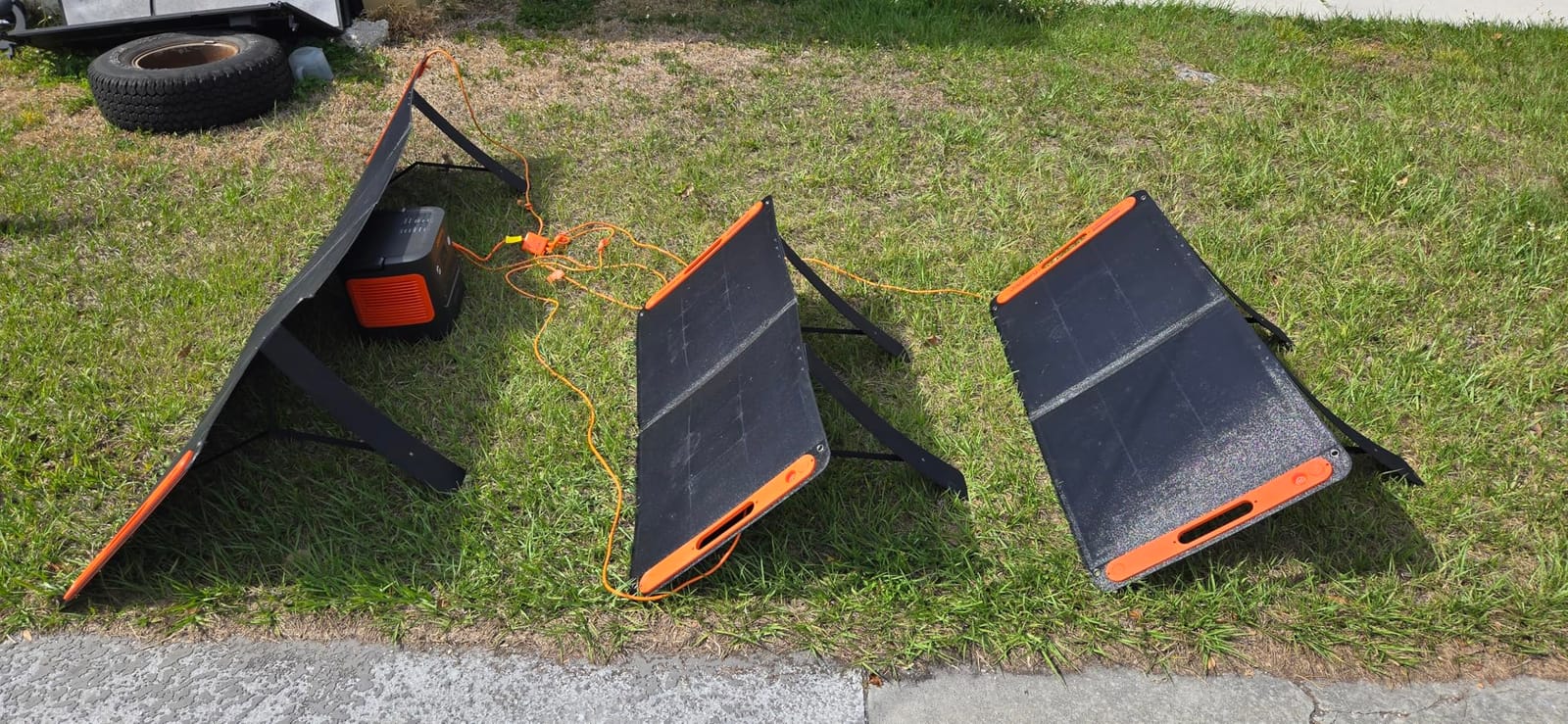
The 8% one-star share is the highest in this roundup, which means more reliability complaints than its peers attract. Solar panels are sold separately and only Jackery panels are supported, which is a closed ecosystem.
If you want the same 2kWh capacity with more output and expandable batteries, the EcoFlow DELTA 3 Max and Anker SOLIX C2000 Gen 2 both give you more headroom. This one wins purely on size.
What Size Solar Generator Do You Need?
Size the battery in watt-hours, not watts. Watts tell you what the unit can start; watt-hours tell you how long it lasts. A 2000W station with 1000Wh of usable energy runs a 150W fridge for under seven hours and a 60W router for sixteen.
Here is the calculation. List every load you want to run, multiply the running watts by the hours per day, and add roughly 25 to 30% headroom for inverter losses and startup surges. Then divide by the number of peak sun hours you can realistically count on.
If you are covering a single night, 1000 to 2000Wh is the range. A weekend, and you want 2000 to 4000Wh. Multiple days or a household rather than a set of circuits, and you are looking at 4000Wh and up with expansion.
How to calculate capacity in four steps
Step one: write down every appliance. Step two: find the running watts, usually on a label, and add the startup surge for anything with a compressor or a motor. Step three: multiply by hours per day. Step four: add 25 to 30% and check that your station’s continuous output covers the largest single load.
A worked example for a typical home: a refrigerator at 150W averaging eight hours a day is roughly 1200Wh a day, a router and modem at 25W for 24 hours is 600Wh, five LED lamps at 60W for five evening hours is 300Wh. That is about 2100Wh a day before headroom, which points at a 2 to 3kWh station.
What a 3000W Solar Generator Can Run
A 3000W continuous output handles most of what a household actually plugs in, provided the surge figures line up. In rough priority order, a 3000W unit covers a refrigerator, a router and networking gear, LED lighting, a CPAP machine, a microwave, a washing machine or dishwasher on a cold-fill cycle, a sump pump, a well pump up to about 1 HP, a television, and a single window air conditioner.
It will not handle a 3-ton central air conditioner, an electric water heater, an electric range with several burners, a clothes dryer, or an electric vehicle charger. Those need a 240V capable unit such as the EcoFlow DELTA Pro 3, and the central air and water heater additionally need more than 3000W to start.
Check two numbers before you commit: the continuous output of the station against the running watts of the largest appliance, and the surge rating against the startup draw. A 1500W station with 3000W surge can start loads a 1500W-only unit cannot.
Runtime reference by appliance
The estimates below use manufacturer capacity figures and typical running watts, with 20% of capacity held back for inverter losses. Your own results will vary with the age of the appliance and the temperature in the house.
LED lamps (5) at 60W: about 12 hours on a 1 kWh unit, about 25 hours on a 2 kWh unit, about 50 hours on a 4 kWh unit.
Router and modem at 25W: about 30 hours on a 1 kWh unit, about 60 hours on a 2 kWh unit, about 120 hours on a 4 kWh unit.
CPAP machine with humidifier at 60W: about 12 hours on a 1 kWh unit, about 25 hours on a 2 kWh unit, about 50 hours on a 4 kWh unit.
Refrigerator cycling at 150W: about 5 hours on a 1 kWh unit, about 10 hours on a 2 kWh unit, about 20 hours on a 4 kWh unit.
Chest freezer cycling at 100W: about 7 hours on a 1 kWh unit, about 15 hours on a 2 kWh unit, about 30 hours on a 4 kWh unit.
Microwave at 1000W: about 45 minutes on a 1 kWh unit, about 1.5 hours on a 2 kWh unit, about 3 hours on a 4 kWh unit.
Window air conditioner at 1200W: about 35 minutes on a 1 kWh unit, about 1 hour 15 minutes on a 2 kWh unit, about 2.5 hours on a 4 kWh unit.
Sump pump at 400W: about 2 hours on a 1 kWh unit, about 4 hours on a 2 kWh unit, about 8 hours on a 4 kWh unit.
Note the jump between the 1 kWh column and everything else. That is why the Jackery Explorer 1000 v2 is an overnight unit and why the 2kWh class is the sweet spot for most homes.
How to Choose a Solar Generator for Home Backup
Which solar generator is best for home use depends almost entirely on whether you want a portable box or a wired system. The ten units above are all portable, which means no electrician, no permits and no installation cost, but also no automatic whole-home coverage.
Battery chemistry: why LiFePO4 matters
Every unit in this roundup uses LiFePO4, lithium iron phosphate, chemistry, and that is the correct call. LiFePO4 cells are rated for 3000 to 6000 cycles, hold their capacity better through deep discharge, and are far more thermally stable than the NMC cells used in older power stations.
Cycle life is the number that decides whether your backup is a ten-year asset or a three-year one. The S2000 claims 10000 cycles, the Elite 200 V2 claims 6000 plus, and the Jackery units claim 4000 with 70% retention. Top up at around 20% rather than draining to empty, and unplug it once it is full.
Transfer switch vs. plug-and-play
A transfer switch is the device an electrician installs to move your home’s power source from the utility to a battery, so that a portable station can power hardwired circuits instead of just the outlets you plug appliances into.
Plug-and-play means you run extension cords or move appliances to the station during an outage. It is free, it takes no installation, and it covers a fridge, a router, lamps, a CPAP machine and a laptop. It is the right choice for almost everyone reading this.
A transfer switch or a dedicated subpanel is required if you want the well pump, the sump pump, the heating system, a central air conditioner or the whole house to run automatically. It involves a licensed electrician, permits, and a much larger budget, and the DELTA Pro 3 is the only unit here that can back a 240V load through it.
Solar input ceiling and real panel output
The solar input ceiling is the most misunderstood specification in this category. It is the maximum wattage the station’s charge controller will accept, and connecting a larger panel array does nothing beyond that limit, while exceeding it can damage the electronics.
Real panels deliver roughly 50 to 75% of rated output in good conditions and about 25% in heavy cloud. This is the number that decides whether a solar generator is a genuine multi-day solution or a battery that needs a wall outlet. If your outages are winter storms in a cloudy region, size for wall charging. If they are summer wildfires with long clear days, panels earn their keep.
Weight, ports and brand lock-in
Weight is the feature buyers underestimate. The range here runs from 23.8 lb to 150 lb, and a unit you cannot move from the garage to the kitchen at midnight is a unit that will not be used. If someone else would have to move it for you, buy the lighter option.
Port selection matters more than raw numbers. Count the AC outlets you will actually use simultaneously, and check for a 30A or 50A NEMA outlet and a TT-30 RV port if you plan to run power tools or connect a camper. Sub-20ms UPS switchover is the spec to insist on for computers, network gear and medical equipment.
Finally, check solar connector compatibility before you buy panels. Jackery units here are restricted to Jackery panels, and proprietary ports lock you into one ecosystem for the life of the battery. XT60i and MC4 are the open standards to prefer if you might switch brands later.
Solar Generator vs. Gas Generator for Home Backup
Are solar backup generators worth it? The honest answer is that they win on noise, maintenance, fuel storage and lifespan, and lose on the price you pay per hour of runtime during a long emergency. Preppers on r/preppers frequently recommend keeping a gas generator alongside a battery rather than choosing one or the other.
A gas generator gives you unlimited runtime as long as you have fuel, and it will start a 3-ton air conditioner or a well pump without hesitation. What it costs you is the storage problem: fuel degrades, it has to be rotated, it is a fire risk in a garage, and it runs loud enough to wake the house.
A solar generator is silent, needs no oil changes, has no fuel to store and recharges from the sun, a wall outlet, a car or a generator. What it costs you is a finite battery, a limited solar input and a real purchase price that several long-time owners on r/solar argue is hard to justify against a decent gas unit.
The practical middle ground many buyers land on is a mid-size battery for the fridge, networking, lighting and medical equipment, plus a gas generator stored for the rare multi-day event. That combination covers the multi-day overcast outage that a battery alone cannot.
Frequently Asked Questions
What is the best solar back-up generator for a home?
The Jackery Explorer 1000 v2 is our top pick overall for most households. It weighs 23.8 lb, delivers 1500W continuous and 3000W surge from a 1070Wh LFP battery, and carries a 4.7 rating across more than 3600 reviews. If you need more capacity, the BLUETTI Elite 200 V2 covers far more loads at 2073.6Wh and 2600W.
What size solar generator is needed to run a house?
For essential circuits only, 1000 to 2000Wh is enough. For a full day of household use including a refrigerator, router and lights, 2000 to 4000Wh is the practical range. Running a household for multiple days, or supplying 240V loads such as a central air conditioner or water heater, needs 4000Wh and up with expansion. Add 25 to 30% headroom above your calculated daily load.
What will a 3000 watt solar generator run?
A 3000W continuous output runs a refrigerator, router and networking gear, LED lighting, a CPAP machine, a microwave, a washing machine or dishwasher on a cold fill cycle, a sump pump, a well pump up to about 1 HP, a television and a single window air conditioner. It cannot run a 3-ton central air conditioner, an electric water heater, an electric range or a clothes dryer.
How long will a 2000 watt solar generator run a refrigerator?
On a 2 kWh battery, a refrigerator averaging 150 running watts runs roughly 10 hours after allowing for inverter losses. A chest freezer averaging 100 watts runs about 15 hours. A 1 kWh unit halves those figures, so a 4 kWh battery roughly doubles them. Actual runtime depends on how often the compressor cycles and how warm the kitchen is.
Do I need a transfer switch for a solar generator?
Only if you want hardwired circuits such as a well pump, sump pump, heating system or central air conditioner to run automatically. For a refrigerator, router, lights, laptop or CPAP machine, plug-and-play through the front outlets or extension cords works with no installation. Transfer switch installation requires a licensed electrician, permits and a substantially larger budget.
Are solar backup generators worth it?
They are worth it if your priority is silent operation, no stored fuel, low maintenance and a battery that can sit ready for years. They are worth questioning if you expect multi-day outages in a cloudy climate and want unlimited runtime, because a gas generator covers more hours per dollar. Many owners keep both, using the battery for daily essentials and the generator for extended emergencies.
How long do solar generators last?
Quality solar generators last three to ten years depending on use and maintenance. The LiFePO4 cells in this roundup are rated between 4000 and 10000 cycles, and manufacturers project 10 to 17 year lifespans. Topping up around 20% rather than fully draining, avoiding high heat, and unplugging the unit once it reaches full charge all extend service life.
The Best Solar Generators for Home Backup: Final Verdict
Start with the Jackery Explorer 1000 v2. It is the best solar generator for home backup for most people because it is light enough to move when the power goes out, powerful enough for a refrigerator and a CPAP machine, and the most heavily reviewed unit in the category. The BLUETTI Elite 200 V2 is the better buy if you have the space and the help, because 2073.6Wh and 2600W covers genuinely more of your house.
Move up a tier only when you need 240V. The EcoFlow DELTA Pro 3 is the sole unit here that can run a 3-ton air conditioner, a water heater or a 1 HP pump, and the 4096Wh pack expands all the way to 48kWh for multi-day backup. Just budget for an electrician if you want it to carry hardwired circuits.
Whichever one you choose, buy the panels deliberately rather than assuming they are in the box, and check your worst-case weather. In a region with long clear summer days, solar input turns these units into a genuine multi-day system. In a region with winter storms and heavy cloud, plan to recharge from the wall and treat solar as a bonus.