
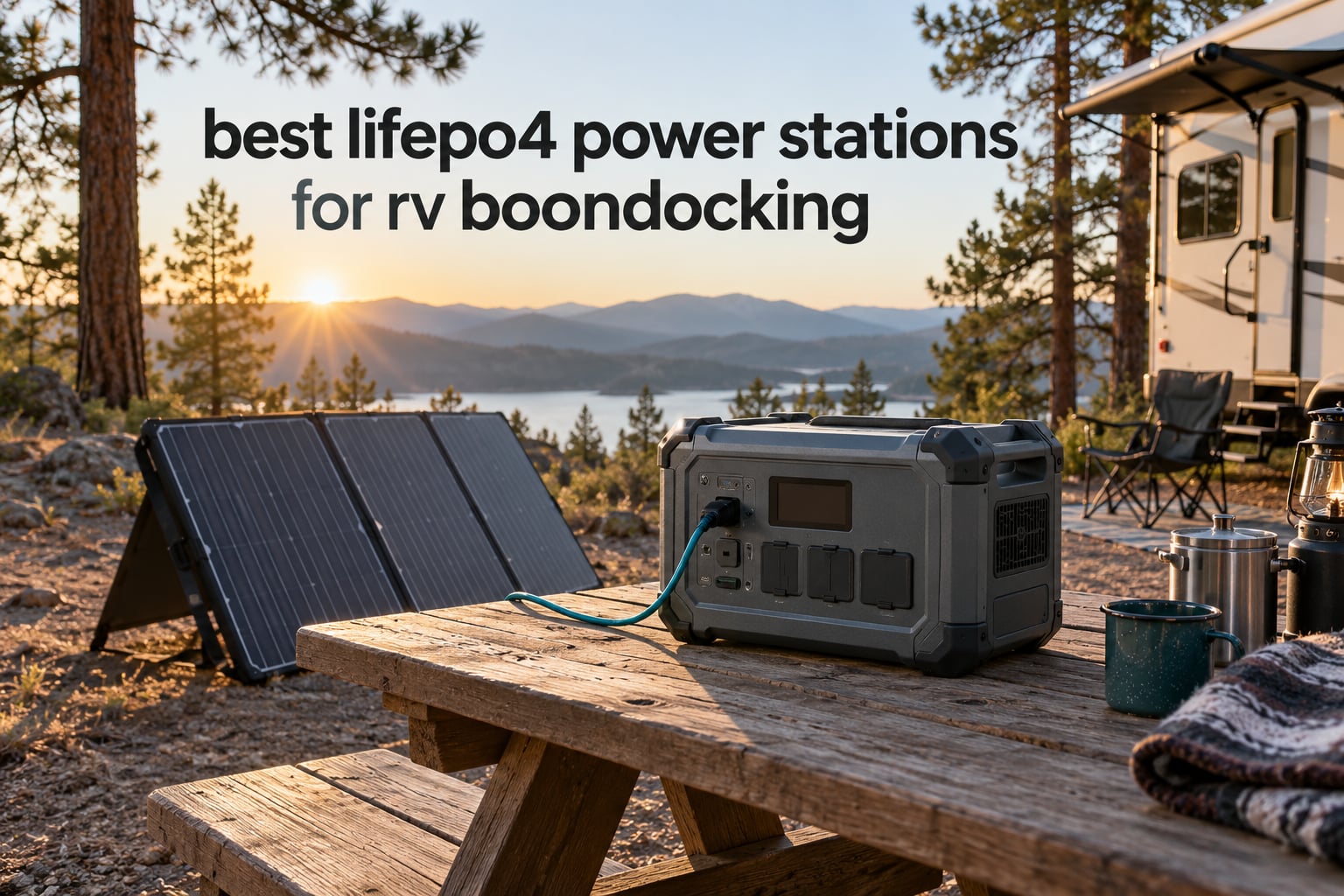
The best LiFePO4 power station for RV boondocking is the BLUETTI AC200PL: 2304Wh of storage, 2400W continuous output, a built-in 30A TT-30 RV outlet, 1200W solar input and expansion all the way to 8448Wh. If your rig needs lighter carry weight, the Jackery Explorer 2000 v2 at 39.5 lb moves between vehicles without a second person. Full-time RVers who never want to hunt for a hookup usually end up in the EF ECOFLOW DELTA Pro instead.
That is the short answer. The longer truth is that the right unit depends almost entirely on two numbers nobody thinks about until they are stuck in a wash with no shade: how many watt-hours your rig actually burns in a day, and how many of those watt-hours you can put back in tomorrow.
We put ten LiFePO4 stations through the same lens for this 2026 guide. Every spec comes from the manufacturer’s published data, every claim about real RV use is tied to a load you can measure with a clamp meter, and the same four questions get asked of each one: can it run the fridge, can it run the CPAP, can solar refill it fast enough, and will you regret the weight after the fourth camp move.
One note before we start. In the r/RVLiving threads and the iRV2 boards, the same argument gets made over and over by people who have actually done this: a portable station is a stopgap for a lot of rigs, and somewhere past roughly 50Ah a day you are better served by an installed 300Ah+ LiFePO4 house bank. We size that threshold properly later in the guide, because skipping it is how people end up with an expensive box that empties itself by breakfast on day three.
Table of Contents
Top 3 LiFePO4 Power Stations for RV Boondocking (October 2026)
These three cover the majority of RVer situations: one that plugs straight into your trailer, one that squeezes the most out of every watt, and one that hits a low cost per usable watt-hour without giving up the essentials.

BLUETTI AC200PL
- 2304Wh LiFePO4
- 2400W continuous
- 30A TT-30 RV outlet
- 1200W solar input
- expands to 8448Wh
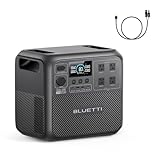
BLUETTI Elite 200 V2
- 2073.6Wh
- 2600W continuous
- 6000+ cycle battery
- only 10W standby draw
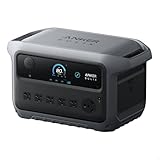
Anker SOLIX C2000 Gen 2
- 2048Wh
- 2400W rated and 4000W peak
- 9W standby
- 58 minute full recharge
The AC200PL takes the top spot because it is the only unit here that does the thing RVers actually want: it has a 30A TT-30 outlet on the face, so your existing shore power cord plugs into the station instead of a campground pedestal. Add 1200W of solar input and expansion to 8448Wh and it stops being a weekend accessory and starts being the house bank you can take with you.
The Elite 200 V2 is the efficiency winner. Its 10W standby draw is the lowest on the list alongside Anker’s 9W, and with a 6000+ cycle automotive-grade pack it should still be strong after a decade of daily use. The catch is that it cannot be expanded, and its MPPT solar ceiling is 60V.
Anker’s C2000 Gen 2 is the value pick. At 2048Wh it delivers 2400W rated and 4000W peak, reaches a full charge in 58 minutes, and Anker claims a dual-door fridge runs up to 32 hours on it. Fewer AC outlets than rivals is the trade.
All 10 Power Stations Compared Side by Side in 2026
Every station below is LiFePO4 chemistry, which rules out the lighter NMC packs still listed on Amazon. Sort by capacity if your rig is large, by weight if you move camps often, and by output watts if you plan to run anything with a compressor or a resistive element in it.
| Product | Specifications | Action |
|---|---|---|
|
BLUETTI AC200PL
|
|
Check Latest Price |
|
BLUETTI Elite 200 V2
|
|
Check Latest Price |
|
Anker SOLIX C2000 Gen 2
|
|
Check Latest Price |
 Jackery Explorer 2000 v2
|
|
Check Latest Price |
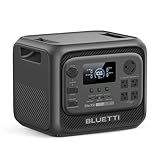 BLUETTI Elite 300
|
|
Check Latest Price |
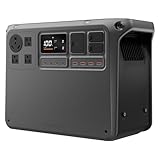 DJI Power 2000
|
|
Check Latest Price |
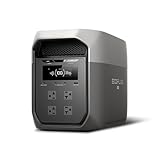 ECOFLOW DELTA 3 Max
|
|
Check Latest Price |
 Jackery HomePower 3000
|
|
Check Latest Price |
 ECOFLOW DELTA Pro
|
|
Check Latest Price |
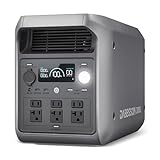 DABBSSON 2000L
|
|
Check Latest Price |
Two patterns jump out. Everything in the 2kWh middle of the list clusters tightly on capacity, so the deciding factors become standby draw, solar ceiling and outlet count rather than raw watt-hours. Everything at 3kWh and above adds a 30A RV port or a big surge figure, which is what large rigs need to live on their own outlets.
1. BLUETTI AC200PL – Best Overall
BLUETTI AC200PL Portable Power Station 2304Wh 2400W LiFePO4 Solar Generator
2304Wh LiFePO4
2400W continuous, 3600W lifting
30A TT-30 RV port
1200W solar input
72 lb
3000+ cycles
Pros
- 30A TT-30 RV port plus 48V house battery charging
- 0-80 percent AC recharge in 60 minutes
- 1200W solar input fills it in a single good day
- expands from 2304Wh to 8448Wh
- 12 outlets including 100W USB-C PD
Cons
- 72 lb needs two hands to load into a truck bed
- high price relative to smaller 2kWh units
This is the unit I keep coming back to when someone asks for one station that can run a trailer. The 30A TT-30 outlet means your standard 30A shore power cord plugs straight into the front panel, and the AC outlets cover everything else. You stop thinking about which appliance is on which circuit.
Weighing in at 2304Wh, a couple running a 45W compressor fridge, a 60W CPAP with heated humidifier and LED lights lands around 700 to 900Wh a day. Divide that by 0.85 for inverter losses and you need roughly 1000Wh of usable storage, which this unit clears with room for a coffee maker, a laptop and a phone or two.
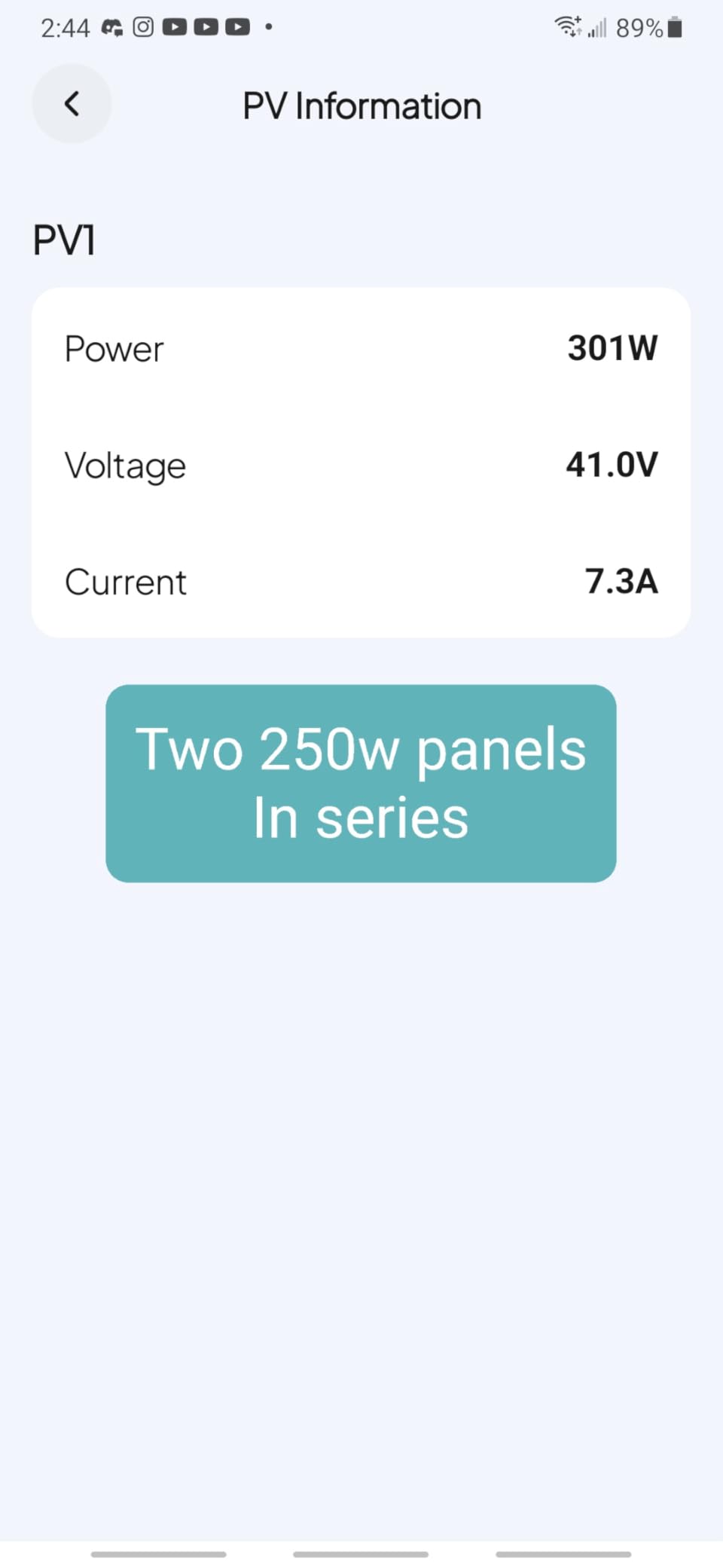
The 1200W solar ceiling is the quiet advantage. Most 2kWh competitors cap out at 400W to 800W of input, which in real conditions means waiting a day and a half to refill. BLUETTI quotes a full charge in 1.9 to 3.8 hours from solar depending on array size, and the MPPT controller captures the extra 20 to 30 percent that a PWM controller would throw away.
Charge speed matters more than people expect. 2400W of AC input takes it from 0 to 80 percent in 60 minutes, so a single campground hour of shore power resets a weekend. The 48V/8A DC port is a separate matter: it is there to charge RV house batteries, not to run 12V loads directly.
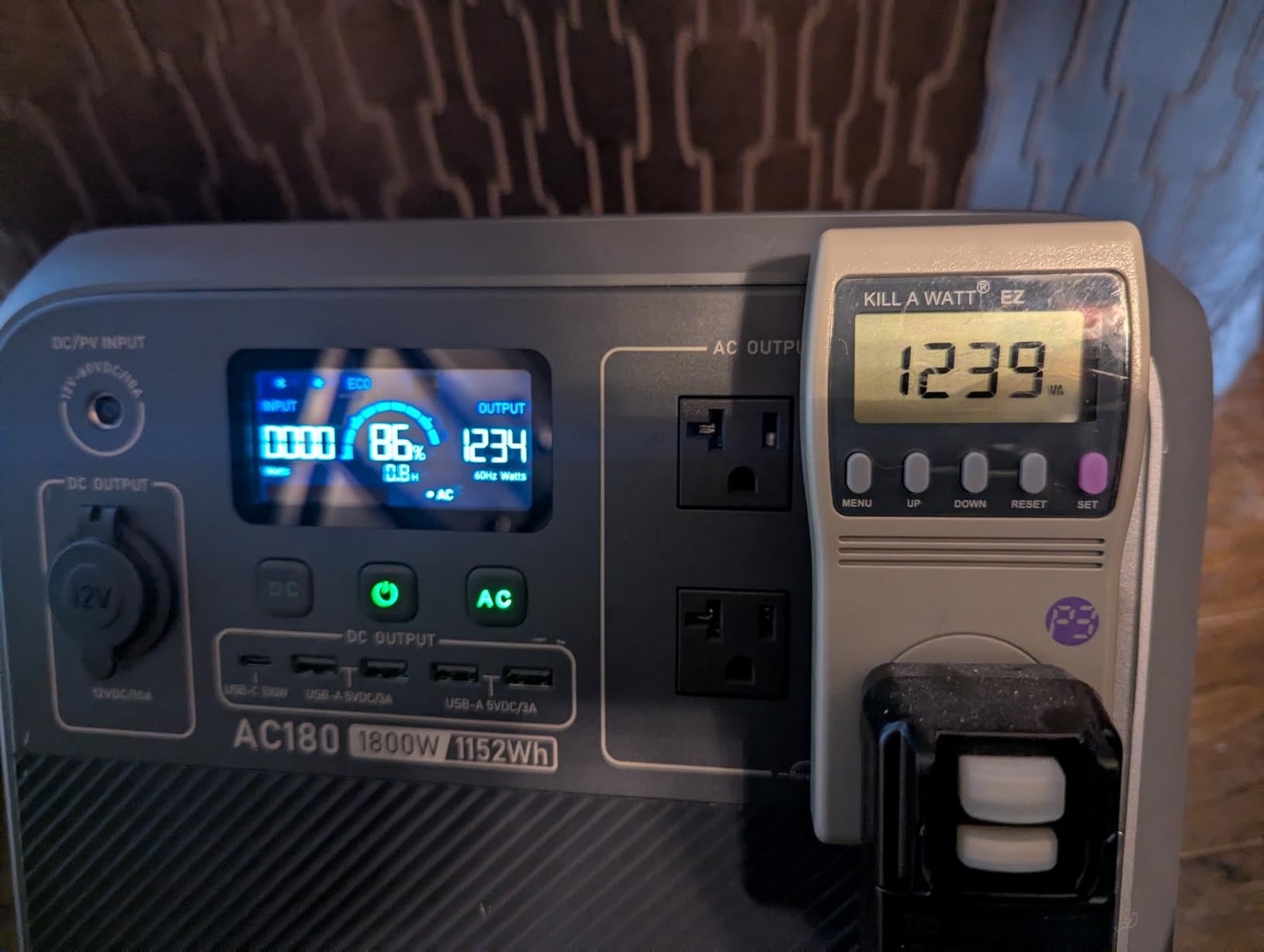
How the 30A port changes an RV setup
With a TT-30 on the front, the station becomes a drop-in shore power substitute. Plug your existing 30A cord into the station, plug the station into the trailer, and every outlet in the trailer behaves normally.
That is the single feature no other unit in the 2kWh class offers, and it matters most for fifth wheels and travel trailers where the outlets are already wired to a distribution panel. Expansion batteries take the total to 8448Wh, so a growing family can add a module per season rather than replace the box.
Where the 72 lb spec bites
Seventy-two pounds is a two-person lift in most cases, and it is the reason this is not our pick for a popup or a van with a low floor. The 3600W lifting figure also needs a caveat: power lifting is a software trick that trades runtime for headroom on resistive loads, not extra real capacity.
Owners rate it 4.6 out of 5 across 2622 reviews, with 82 percent at five stars, and the most common complaint in the reviews is weight. If you camp from a fixed site or bring a second person to help unload, that is a fair trade. If you move every three days, look at the Jackery Explorer 2000 v2 further down.
2. BLUETTI Elite 200 V2 – Most Versatile
BLUETTI Elite 200 V2 Portable Power Station 2073.6Wh 2600W Solar Generator
2073.6Wh LiFePO4
2600W continuous, 3900W lifting
10W standby draw
6000+ cycles
53.4 lb
60V MPPT limit
Pros
- Only 10W standby consumption extends overnight runtime
- 6000+ cycle automotive-grade LiFePO4 cells
- 53.4 lb is light for a 2kWh unit
- 92 percent inverter efficiency
- 0-80 percent in 50 minutes on dual charging
Cons
- Cannot be expanded with BLUETTI battery modules
- Solar MPPT limited to a 60V input ceiling
- No 30A 12V output
- only four AC outlets
Everything about this unit is built around not wasting the charge you already have. A 10W standby draw means 240Wh a day goes to the inverter sitting idle, which is the difference between waking up comfortable and reaching for the car battery jumper on a four-day trip.
It also has the highest cycle rating in the group at 6000+ cycles to rated capacity, described by BLUETTI as a 17-year lifespan. At one full cycle a day, you are still well inside that number long after most competitors have crossed the 3000-cycle mark and started losing meaningful capacity.
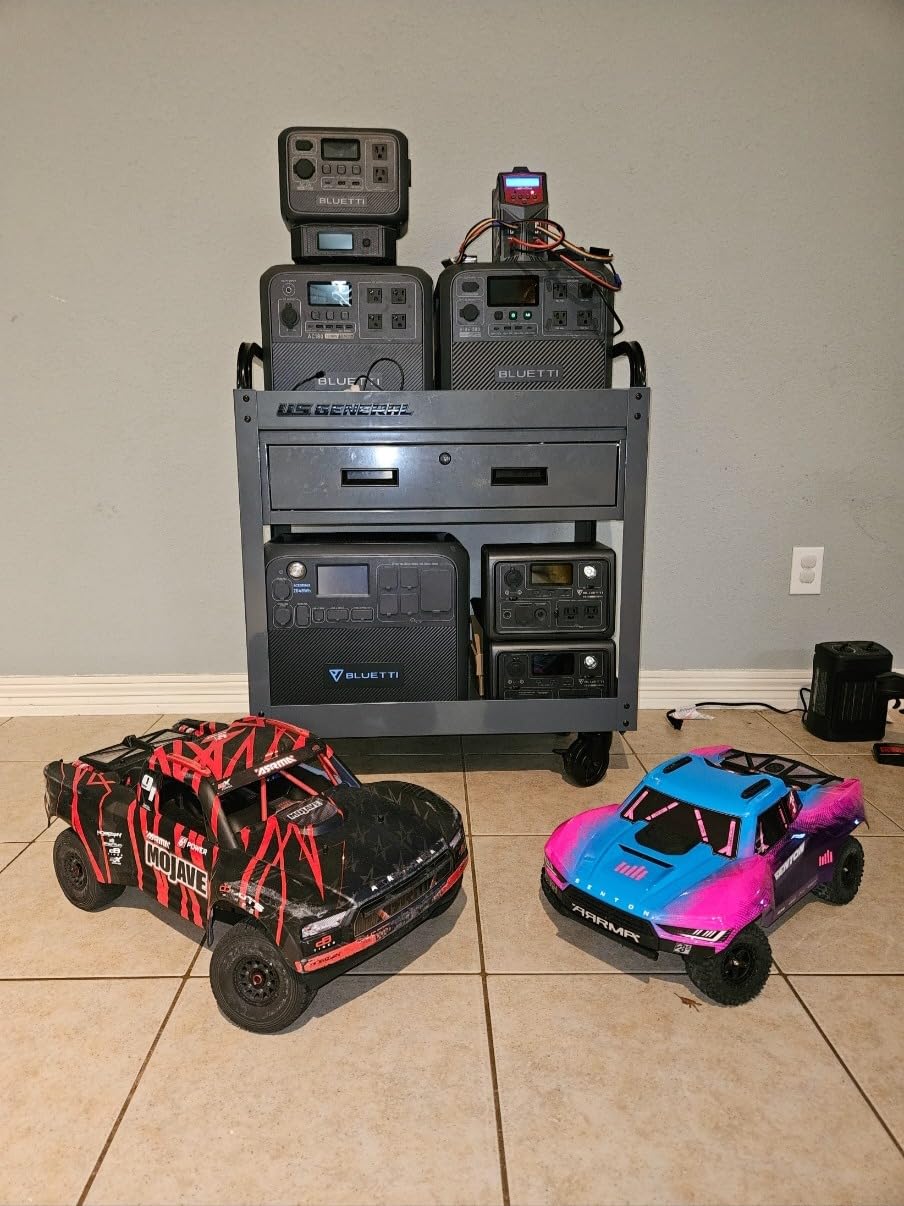
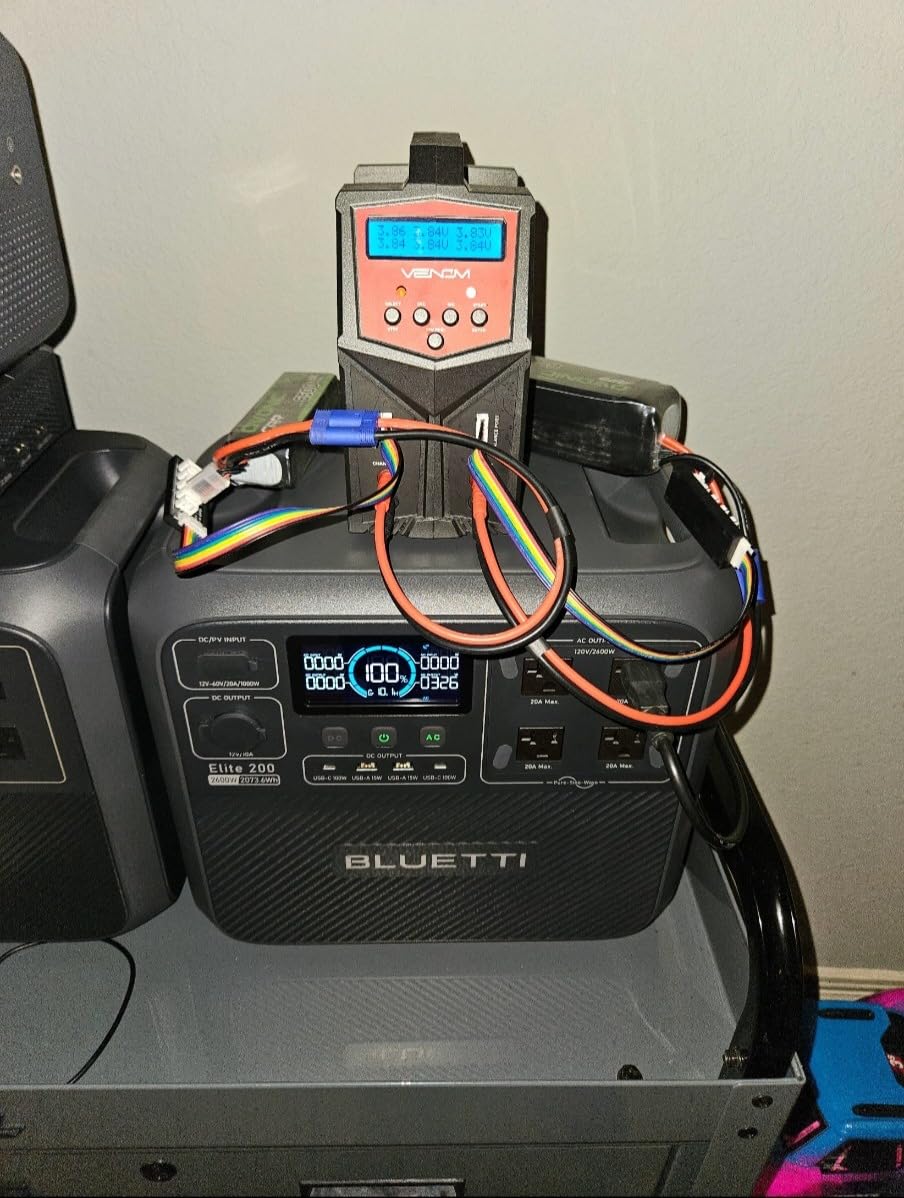
The 2600W continuous output is the highest of the 2kWh-class options here, and 3900W of lifting covers a microwave, a vacuum and an induction burner without drama. There is no 30A RV outlet, so plan on running individual appliances or plugging into a 30A to 15A adapter arrangement rather than the whole trailer.
At 53.4 lb and 13.78 by 9.84 by 12.74 inches it is compact, and dual AC plus DC charging gets it to 80 percent in 50 minutes. The app handles monitoring and firmware over Bluetooth or Wi-Fi, which is where you confirm the charge limit before you drive over rough washboard roads.
Why standby draw matters more than most buyers expect
Ten watts sounds trivial until you multiply it. That is 240Wh a day, and on a 2073.6Wh pack it is roughly 12 percent of the station gone while it sits doing nothing.
Switch the inverter off through the app between uses and that drain drops to a fraction of a watt. It is the cheapest efficiency win available to any boondocker, and it costs one tap every time you park.
The two limitations that rule some rigs out
No expansion modules means 2073.6Wh is all you get, forever. If your family’s load grows next year, this is the wrong chassis to start with, and the 60V MPPT ceiling also limits how many panels you can wire in series.
With 4.7 stars from 925 reviews and 85 percent of those at five stars, the recurring criticisms are the missing expansion, the 60V solar limit and no 30A DC output. If you need the trailer to run as a single system, the AC200PL or the Elite 300 is the better buy.
3. Anker SOLIX C2000 Gen 2 – Best Value
Anker SOLIX C2000 Gen 2 Portable Power Station, 2,048Wh, 2,400W, Camping
2048Wh LiFePO4
2400W rated, 4000W peak
9W standby draw
expands to 4kWh
41.7 lb
58 minute full charge
Pros
- 9W standby draw gives long fridge runtime
- 4000W peak output can start RV air conditioners
- 58 minute full recharge on AC and solar together
- 800W alternator charging fills it in 3 hours
- 41.7 lb and 25 percent lighter than similar units
Cons
- Fewer AC outlets than most 2kWh competitors
The 9W standby draw is the lowest number on this list, and combined with the 2048Wh capacity it explains Anker’s claim that a dual-door fridge runs up to 32 hours, extending to 64 hours with the expansion battery attached. That is the single most useful claim on the spec sheet for weekend campers.
The 4000W peak figure matters more than the 2400W rated output. Compressor-based appliances like a rooftop RV air conditioner or a chest freezer surge hard at startup, and peak headroom is what keeps the inverter from tripping when the compressor kicks in.
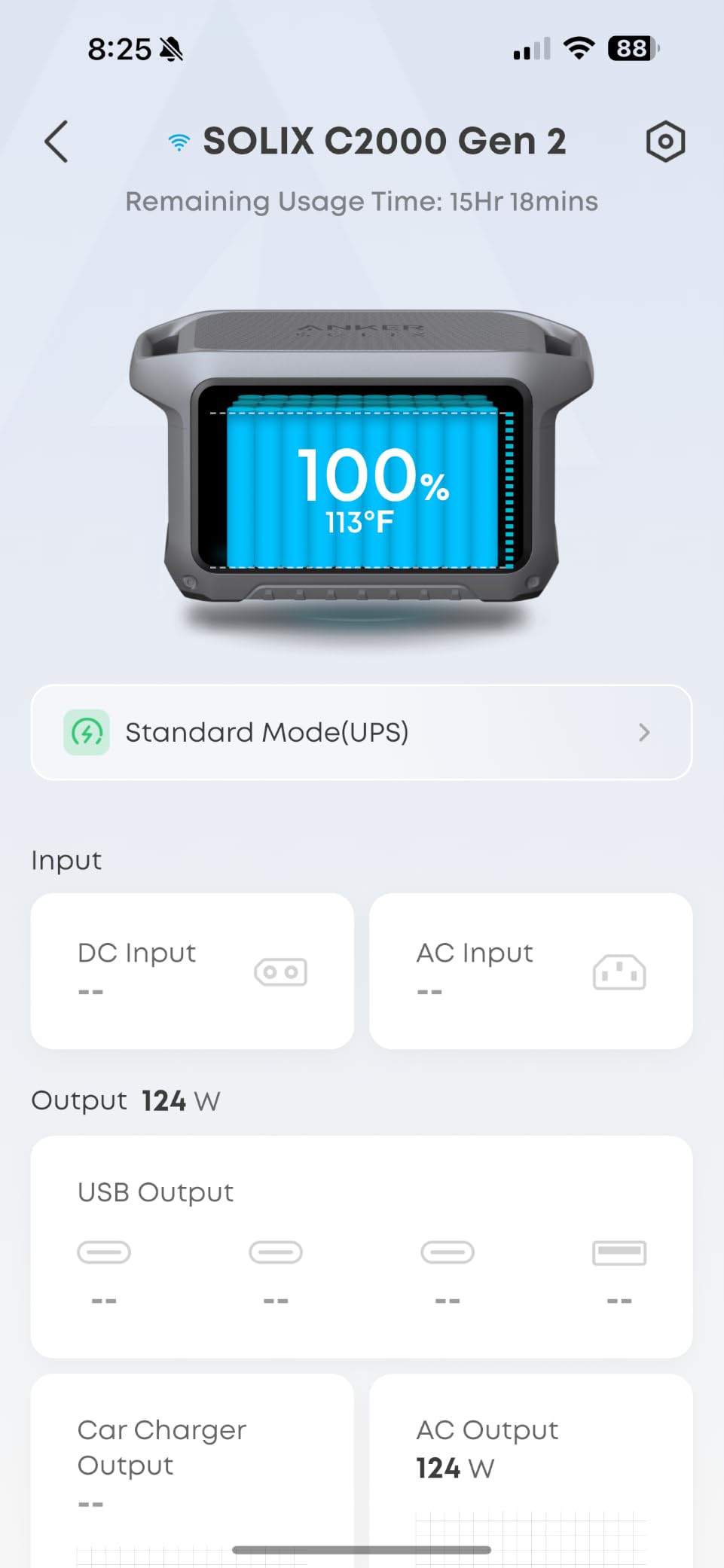
Recharge speed is where Anker pulls ahead of the field. A full charge in 58 minutes using AC and solar together means a half hour of driving plus a short stop can put most of the capacity back, which suits itineraries that move every morning.
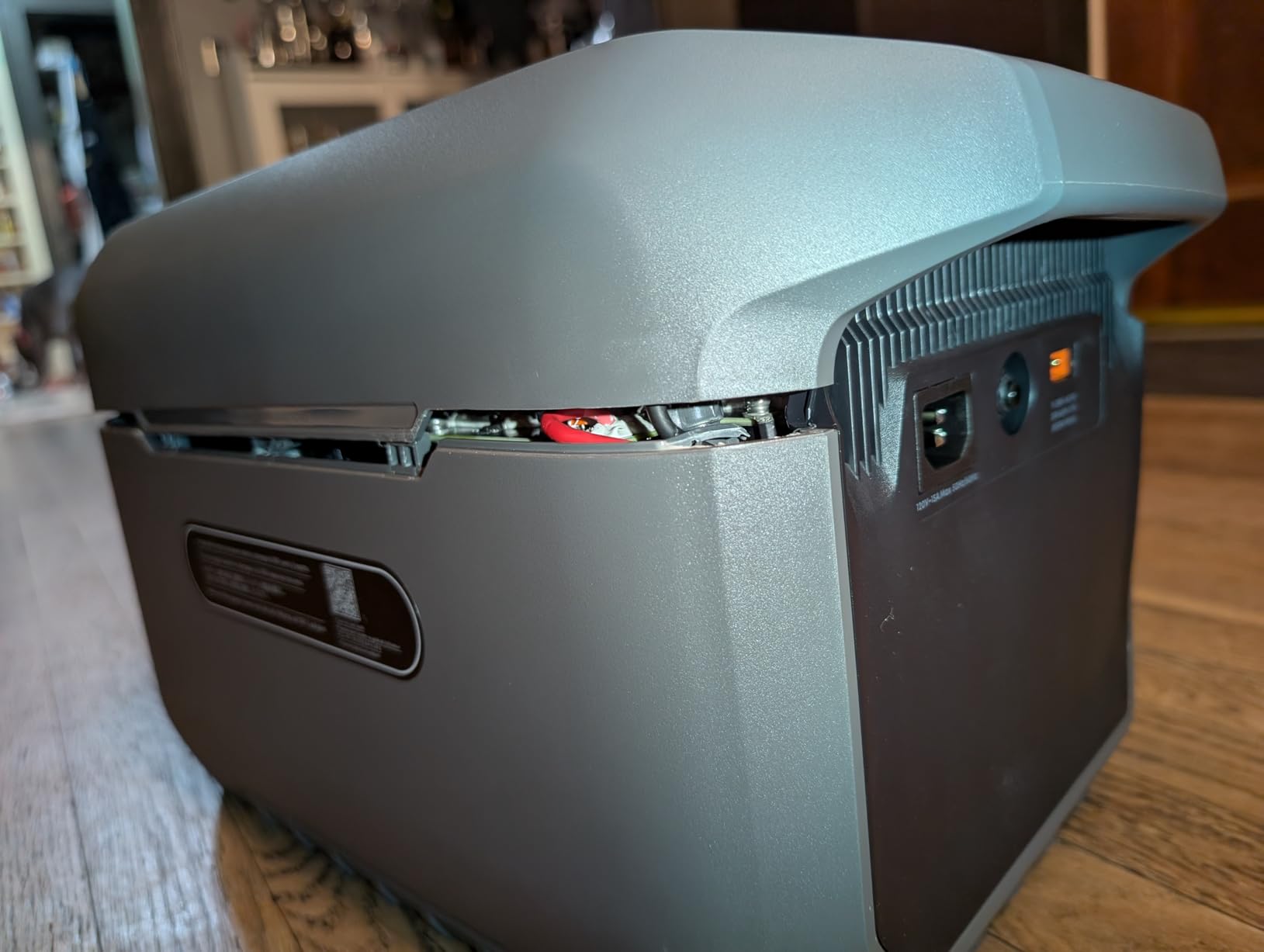
There is also 800W alternator charging that refills the station in about three hours while you drive, a genuine alternative for a route that is longer than your solar window. At 41.7 lb and 18.1 by 9.8 by 10.1 inches it is one of the easier 2kWh units to lift into a truck bed solo.
What you give up for the low standby draw
Outlet count. Anker lists a smaller number of AC outlets than Jackery, BLUETTI or DABBSSON, and when a family is charging four things at once that shortage shows up in the evening.
You can add a second 2048Wh battery to reach 4kWh total, but the solar and AC limits stay the same. The 5-year warranty is a plus for anyone wary of newer power station brands.
Is 2048Wh enough for a week?
For a couple or a small family running a fridge, CPAP, lights and phone charging, yes, provided solar keeps up. Six hundred to 900Wh a day needs roughly 800 to 1100Wh of usable capacity, so a 2048Wh pack gives you two full days without any sun at all.
It scores 4.7 from 670 reviews with 87 percent at five stars, and reviewers specifically single out the low standby consumption, the 58-minute charge and the ability to run RV air conditioning off the 4000W peak output. Those are the three reasons it takes the value slot.
4. Jackery Explorer 2000 v2 – Best for Lightweight Travel
Jackery Explorer 2000 v2 Portable Power Station, 2042Wh, 2200W AC Output
2042Wh LiFePO4
2200W AC output
39.5 lb
0-80 percent in 66 minutes
20ms UPS
under 30dB charging
Pros
- Lightest 2kWh design here at 39.5 lb using cell-to-body construction
- 0-80 percent AC recharge in 66 minutes
- Silent charging mode under 30dB
- 20ms UL1778 certified UPS
- USB-C PD 100W port
Cons
- Only three AC outlets limits simultaneous high-draw devices
- No TT-30 RV outlet for direct RV hookup
- 2200W continuous output trails the premium units
At 39.5 lb this is the one-person lift in the 2kWh class, and it is 41 percent lighter and 34 percent smaller than a typical LiFePO4 station of the same size. Jackery gets there with cell-to-body construction that bonds cells directly into the chassis instead of holding them in a separate module.
For anyone moving camp every three or four days, weight is not a spec, it is the whole decision. Hauling 40 pounds up a wet trailhead ramp or over a soft campsite shoulder wears on you fast, and this unit simply removes that friction.
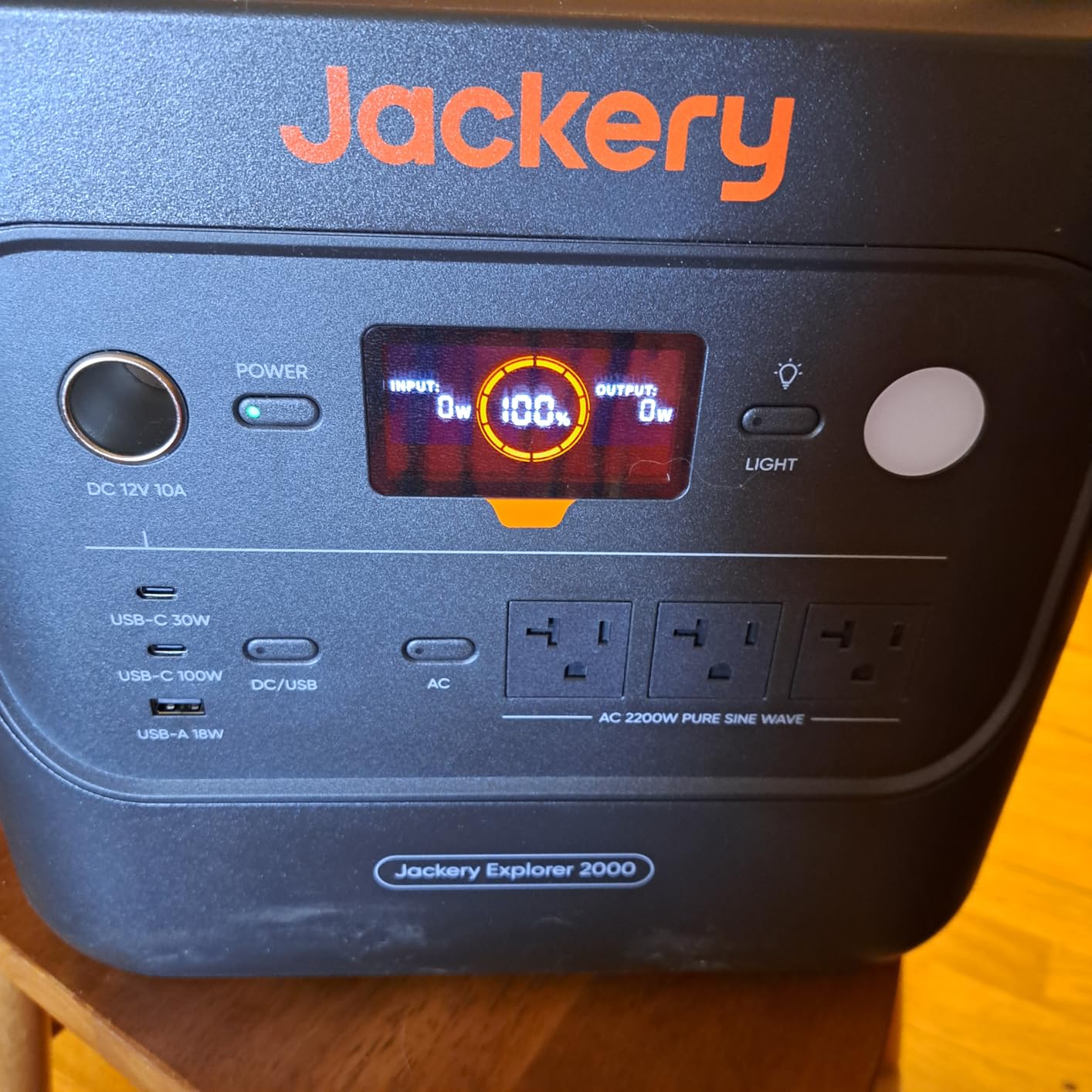
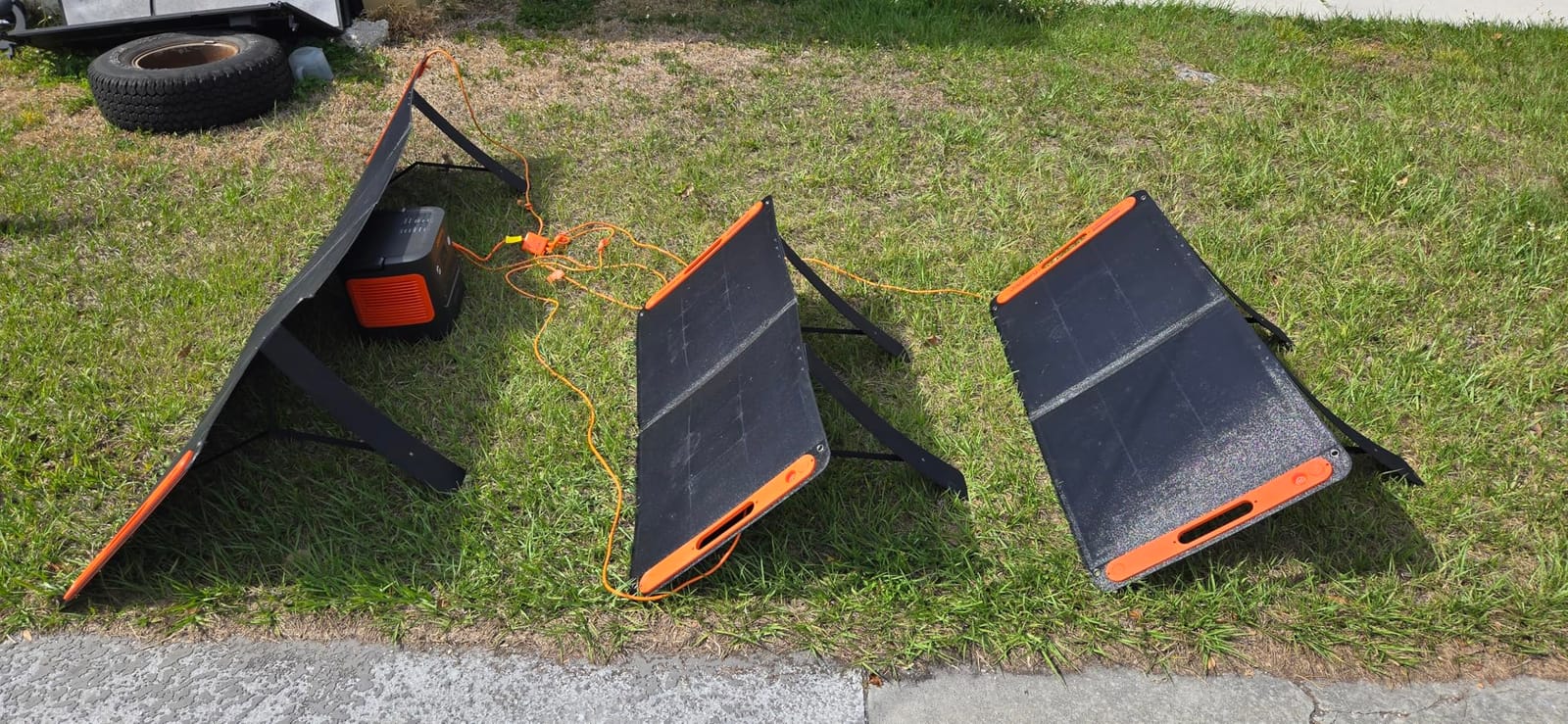
It still performs respectably. 2042Wh with 2200W of continuous AC output, a 66-minute run to 80 percent on AC fast charge and a full charge in 102 minutes through the app’s super charging mode. Solar charging takes as few as 6 hours with 400W panels.
The silent charging mode runs under 30dB, which matters at dispersed sites where quiet hours start early. The 20ms UPS is UL1778 test certified, enough to keep a CPAP or a router alive through a brief switchover.
Where the light weight comes from
LiFePO4 chemistry is already heavier than the old NMC packs, so shaving 20 pounds off a 2kWh unit required structural work. The cell-to-body approach trades some repairability for density, which is a fair trade for a portable box.
The 13.2 by 10.4 by 11.5 inch footprint also fits behind a seat or in a slide-out storage compartment where a 72-pound unit will not.
Where the light weight runs out
Three AC outlets is the limit on the list for simultaneous high-draw use, and there is no TT-30 port, so you cannot plug the whole trailer in as one circuit. 2200W continuous is also the lowest output of the 2kWh group, which matters if you plan to run a microwave and a coffee maker together.
It holds a 4.4 rating from 869 reviews with 79 percent at five stars, and the praise centers on portability and fast charging. If your rig is a van, a pickup with a bed, or a trailer you unload often, this is the pick that keeps you moving.
5. BLUETTI Elite 300 – Best Compact 3kWh
BLUETTI Elite 300 Portable Power Station for RV & Home Backup 3014.4Wh
3014.4Wh LiFePO4
2400W continuous, 4800W surge
TT-30 RV outlet plus 12V/30A
10ms UPS
58 lb
6000+ cycles
Pros
- Compact 3kWh capacity in a small footprint
- TT-30 outlet and 12V/30A output run RV fridges water pumps and diesel heaters
- Works as a drop-in shore power replacement
- 78 minute 0-80 percent AC recharge
- 6000+ cycle battery
Cons
- No battery expansion options
- solar input limited to a 60V ceiling
- 58 lb is heavy for a portable unit
- Cannot run RV air conditioning beyond a few hours
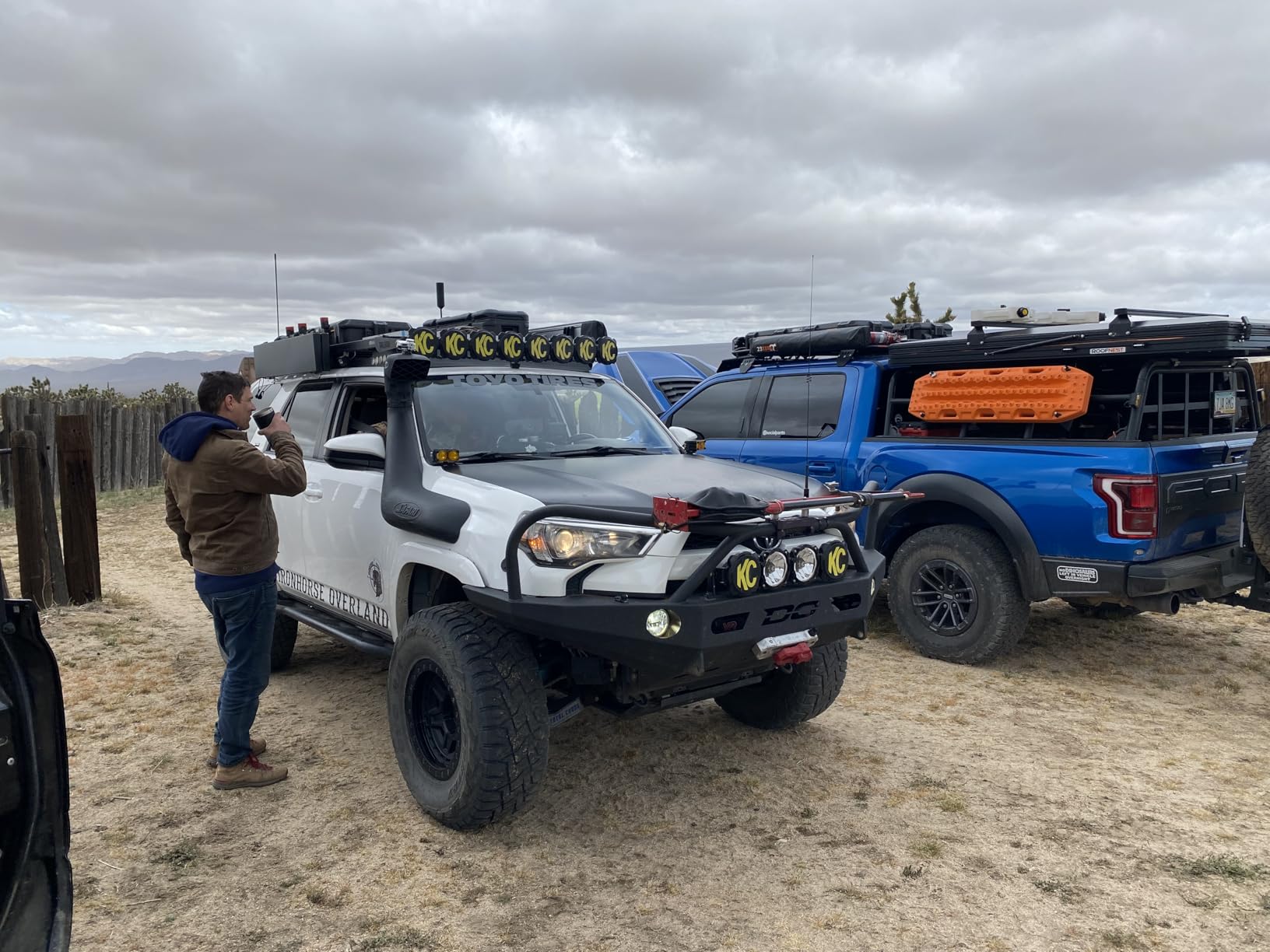
Frost & Sullivan certified this as the world’s smallest 3kWh portable power station, and the 14.4 by 12 by 11.7 inch footprint backs that up. You get 3014.4Wh of storage with 2400W continuous output and 4800W of surge in a box that still fits in a cargo bay.
Three full days off-grid is realistic here where a 2kWh unit gives you two. A couple at 800Wh a day can sit through two overcast mornings before the station asks for sun, and a family running a microwave and a 45W fridge stretches much further.
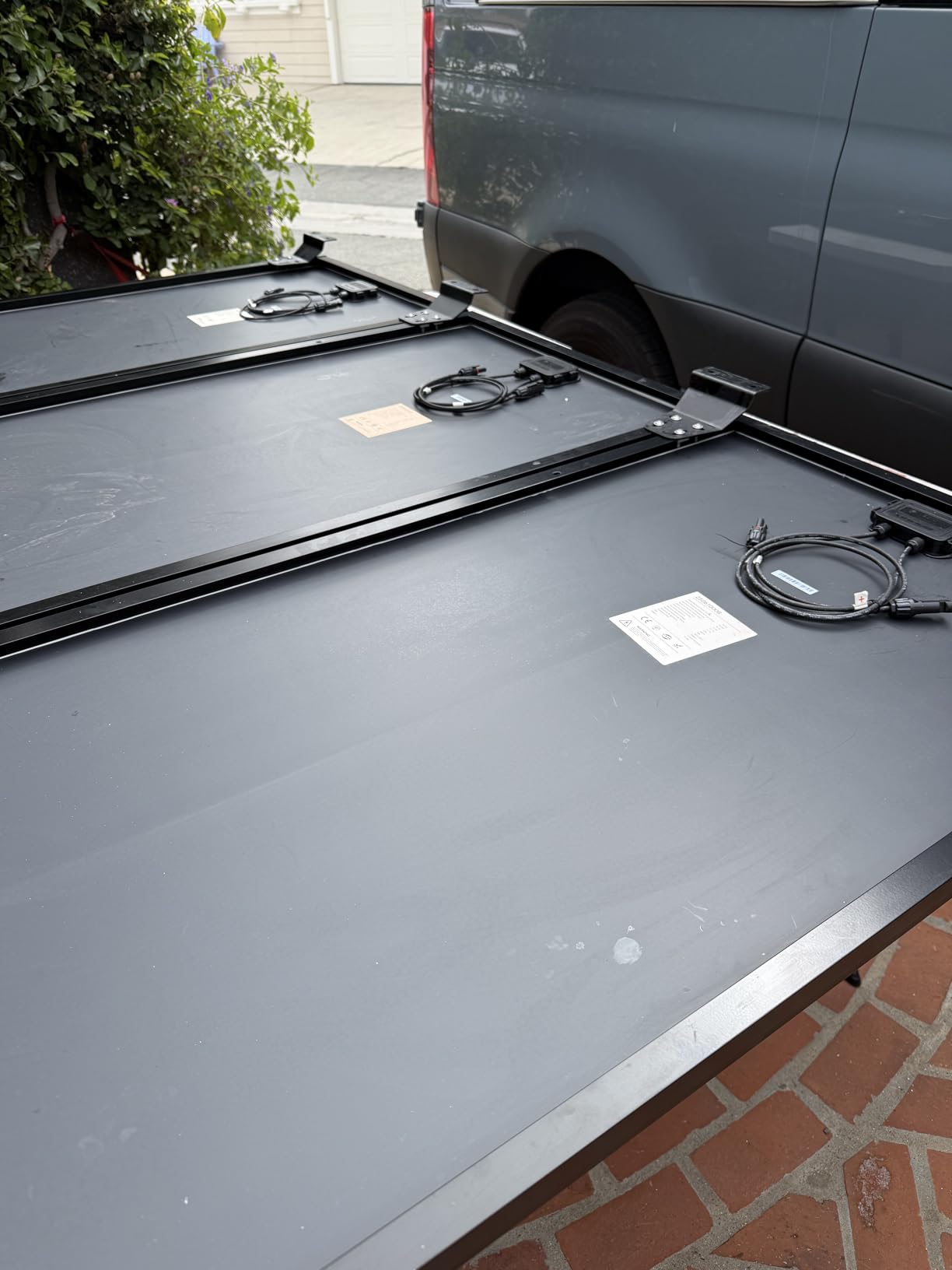
The 12V/30A high-current DC output is a sleeper feature for RV owners. It runs water pumps, an RV fridge on 12V and diesel heaters directly without an inverter in the path, which is more efficient than converting to AC and back.
At 10ms the UPS transfer is fast enough for computers, routers and sensitive medical gear. The 0 to 80 percent AC recharge takes as fast as 78 minutes, and the front panel controls mirror what the app does, so you are not forced to unlock a phone to check charge state.
Using it as a shore power replacement
The TT-30 outlet makes this a genuine drop-in for a 30A trailer. Plug the trailer into the station, run the distribution panel normally, and the outlets inside behave exactly as they do on hookup.
That means the 12V/30A output and the AC outlets work together, so a fridge can run on DC efficiency while the coffee maker runs on AC at the same time.
Where it stops being enough
There is no expansion path, so 3014.4Wh is the ceiling. The 60V solar input limit restricts how many panels you can wire in series, which matters for a full-timer building a large permanent array.
Reviewers are direct about the air conditioning limit: owners report it cannot run RV air conditioning for more than a few hours, so plan on propane for the hottest afternoons. It holds 4.7 from 118 reviews with 82 percent at five stars, and the caveats owners raise are the missing expandability, the 60V solar ceiling and the 58 lb weight.
6. DJI Power 2000 – Best for Crew Charging
DJI Power 2000 Portable Power Station, 2048Wh LFP Battery
2048Wh LFP battery
3000W continuous output
15 ports including dual SDC
30 dB operating
10ms UPS
expandable to 22.5kWh
Pros
- 3000W output runs nearly all household and RV appliances
- Very quiet at 30 dB
- 55 minute 0-80 percent recharge
- 15 ports with dual full SDC for crew charging
- 10ms UPS for sensitive electronics
Cons
- MPPT solar and car charging need separate adapter modules
- Listed warranty is shorter than some competitors
- Fewer USB-A style ports than some rivals
The port count is the headline here. Fifteen ports including dual full SDC ports means four people can charge phones, cameras, laptops and a drone battery at the same time without anyone negotiating for a single USB-C. For family and crew rigs that is a bigger daily win than another 500Wh of capacity.
3000W of continuous output is the joint highest on this list. That covers a microwave, a vacuum, an induction cooktop and a portable air conditioner in the same session, which puts DJI in the same performance tier as units costing considerably more.
Quiet operation at 30 dB is a real design choice for RV use. At that level the fans are not competing with sleep inside the trailer, which is a genuine concern at dispersed sites where quiet hours are enforced.
Expansion goes to 22.5kWh with add-on batteries, so this chassis can grow into a full-time setup. The 10ms UPS switchover keeps a CPAP or a desktop alive through an interruption without a reboot.
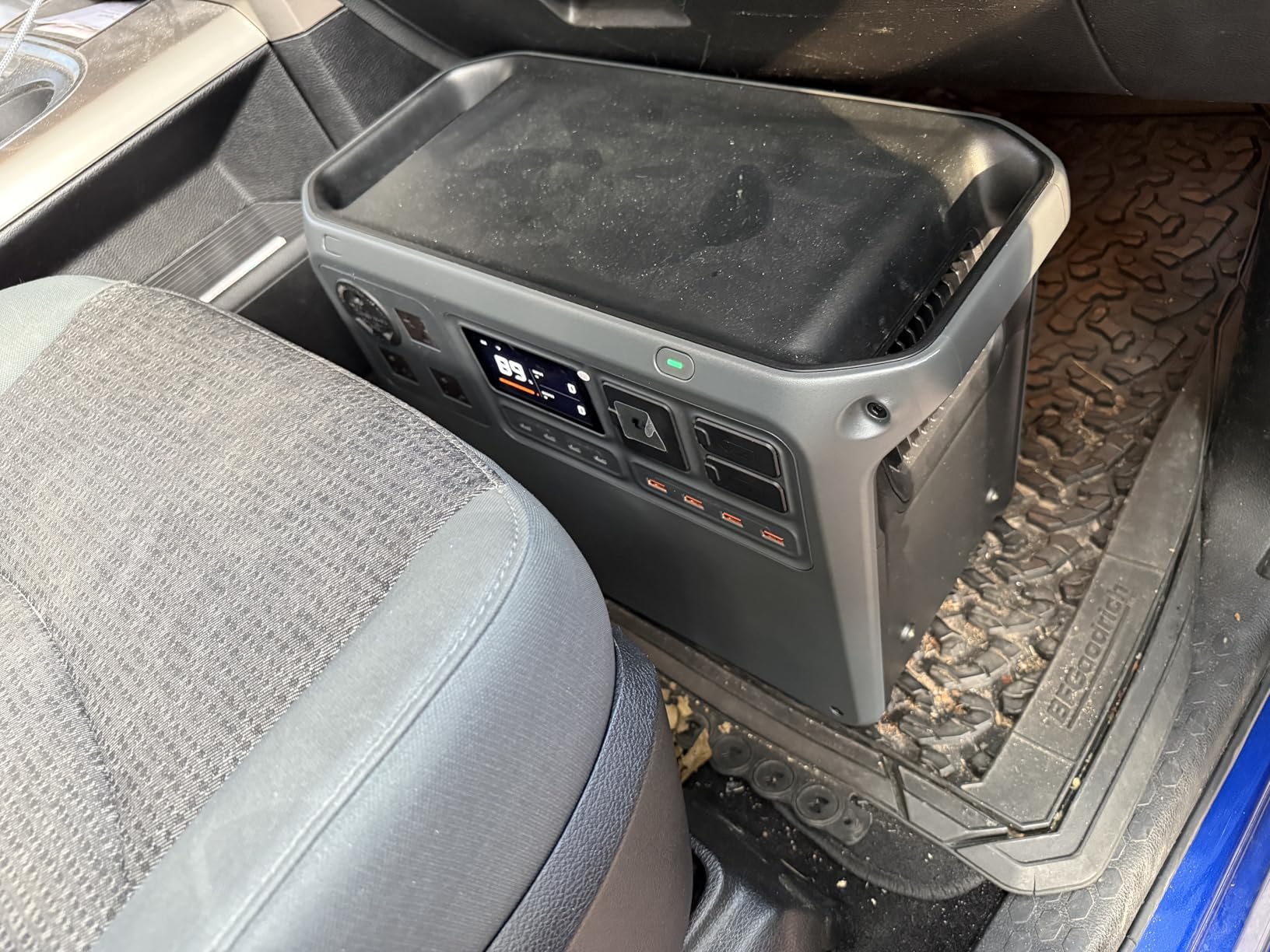
What the adapters actually mean
MPPT solar and car charging require separate adapter modules. That is an extra purchase and an extra connection to remember, so factor it into your solar budget before you commit to this unit.
The 55-minute 0 to 80 percent recharge is otherwise excellent, and the smart BMS with a flame-retardant housing is a reasonable safety story for a box you leave in a hot vehicle.
Who should skip it
Warranty ambiguity is the issue. The listing shows a 1-year manufacturer warranty while the bullet copy references 5 years, and that inconsistency is worth raising with support before you buy.
It rates 4.4 from 788 reviews with 78 percent at five stars, and buyers point to quiet operation and the 3000W output as the strengths. The adapter requirement is the recurring complaint. If your rig is a full-time setup with heavy simultaneous charging, the port count justifies it; if you are a couple with two laptops, look at a cheaper 2kWh unit.
7. EF ECOFLOW DELTA 3 Max – Fastest Recharge
EF ECOFLOW DELTA 3 Max Portable Power Station, 2048Wh LFP Battery, 2400W
2048Wh LFP battery
2400W rated, 3400W X-Boost
0-80 percent in 1.13 hours
under 10ms UPS
5 year service
Pros
- Fastest recharge here at 0-80 percent in 1.13 hours
- 3400W X-Boost covers nearly all appliances
- Under 10ms UPS keeps computers and medical devices running
- Ultra-quiet operation
- App scheduling and energy monitoring
Cons
- Fewer listed output ports than other 2kWh units
- Premium pricing for its capacity class
- Weight not listed in the published spec block
Nothing else in this list refills as fast. Zero to 80 percent in 1.13 hours on AC means a lunch stop at a campground with a 30A pedestal resets nearly the whole station, and a couple of cloudy days barely dent the plan.
That speed changes how you boondock. Instead of parking in the sun for hours waiting on solar, you top up opportunistically at a truck stop, a friend driveway or a campground bathhouse circuit, and let the panels do the rest.
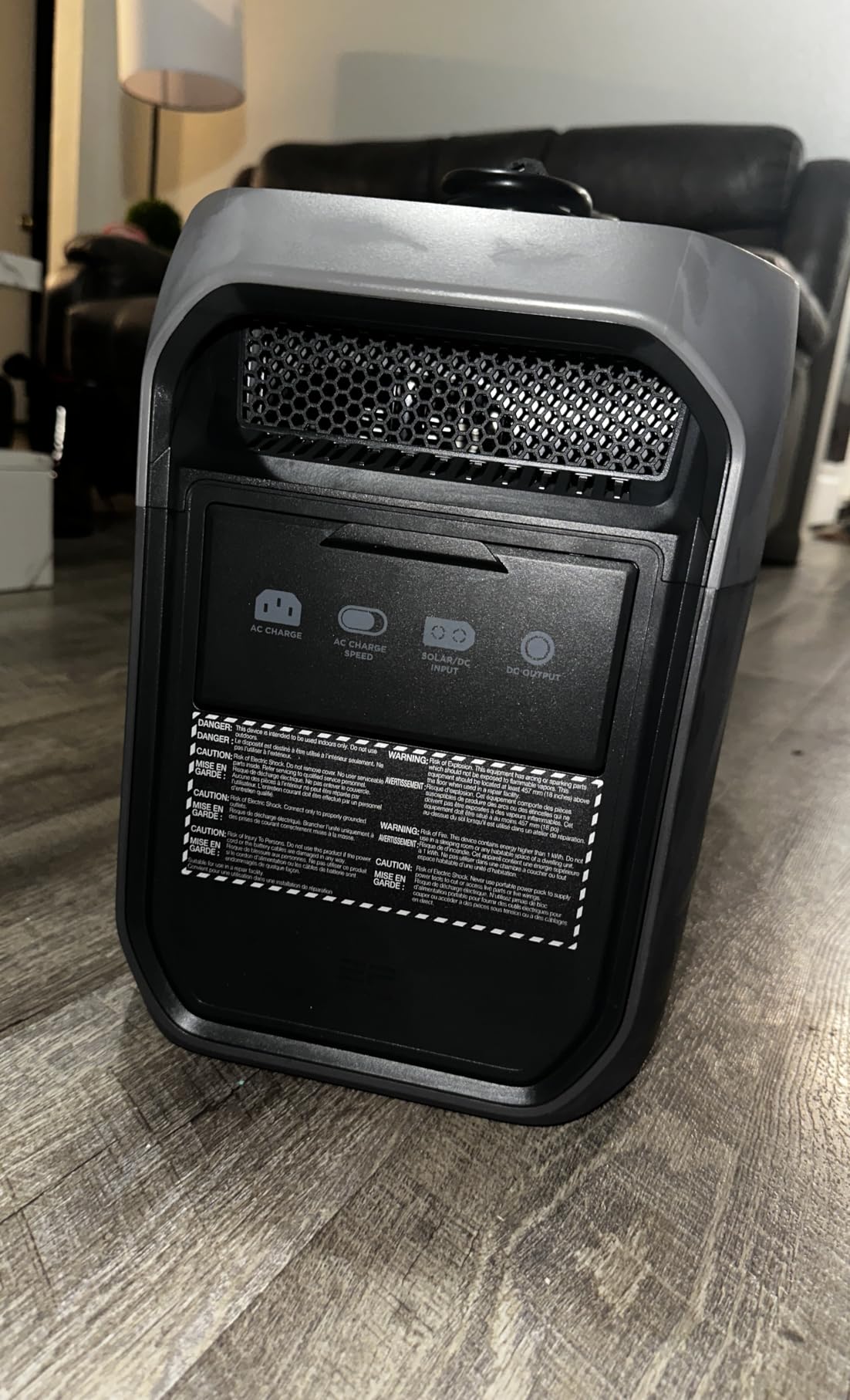
The X-Boost mode lifts continuous output to 3400W, enough to run a resistive kettle, a microwave and a fridge compressor at the same time. LiFePO4 chemistry is rated for 10 years of daily use, and EcoFlow backs it with 5-year service coverage.
UPS transfer is under 10ms, which is the tightest number here alongside DJI, so a CPAP machine or a medical device sees no meaningful interruption.
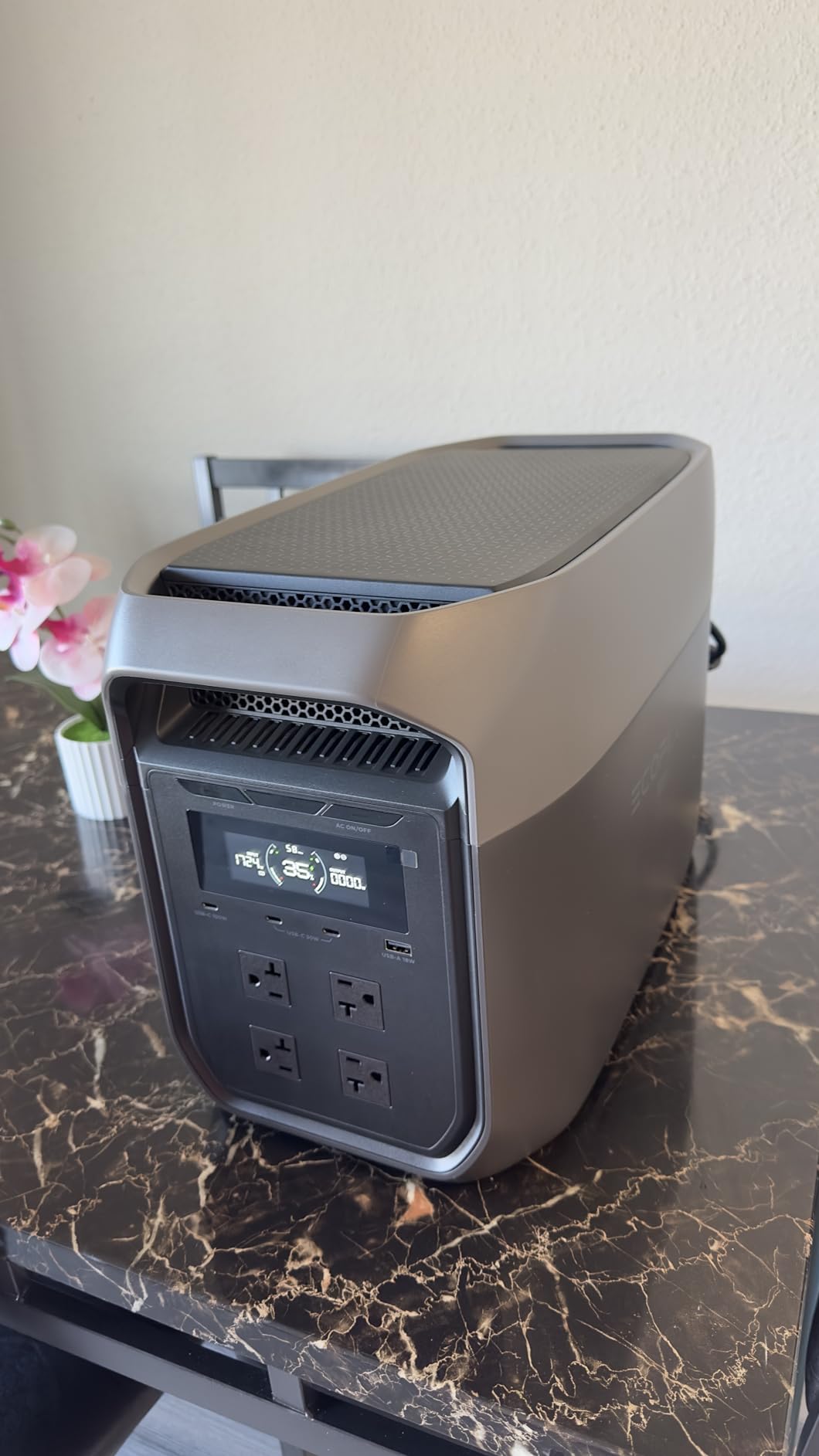
Why recharge speed is a boondocking feature
Solar is a daytime-only resource that disappears under cloud, tree cover and dust. A station that can take 80 percent of its charge in a single wall outlet session gives you a reliable evening top-up when the sun has already done what it could.
The app adds scheduling and energy monitoring, so you can set charge windows to match your drive times or cheap off-peak electricity rather than watching a display.
What you trade for it
Only three total power outlets are listed, which is the fewest of the 2kWh group alongside Jackery. If your household runs several AC devices at once, this becomes the limiting factor fast.
It holds 4.7 from 583 reviews with 88 percent at five stars, and owners highlight the rapid charging, high X-Boost output and quiet running. Two cautions before you buy: the manufacturer does not publish a weight figure in the spec block, and the price sits above other units in the same capacity class.
8. Jackery HomePower 3000 – Best for Rooftop RV Air Conditioning
Jackery HomePower 3000 Portable Power Station, 3072Wh, 3600W AC Output
3072Wh LFP battery
3600W continuous, 7200W surge
TT-30 RV port
UL certified 20ms UPS
59.5 lb
Pros
- Highest continuous output here at 3600W with 7200W surge
- Built-in TT-30 RV port for plug-and-play power
- Full recharge in 1.7 hours with hybrid charging
- Lightest in the 3kWh class at 59.5 lb
- UL-certified UPS with 20ms switching
Cons
- Battery rated to 70 percent capacity after 4000 cycles
- Highest one-star share in this group at 10 percent of reviews
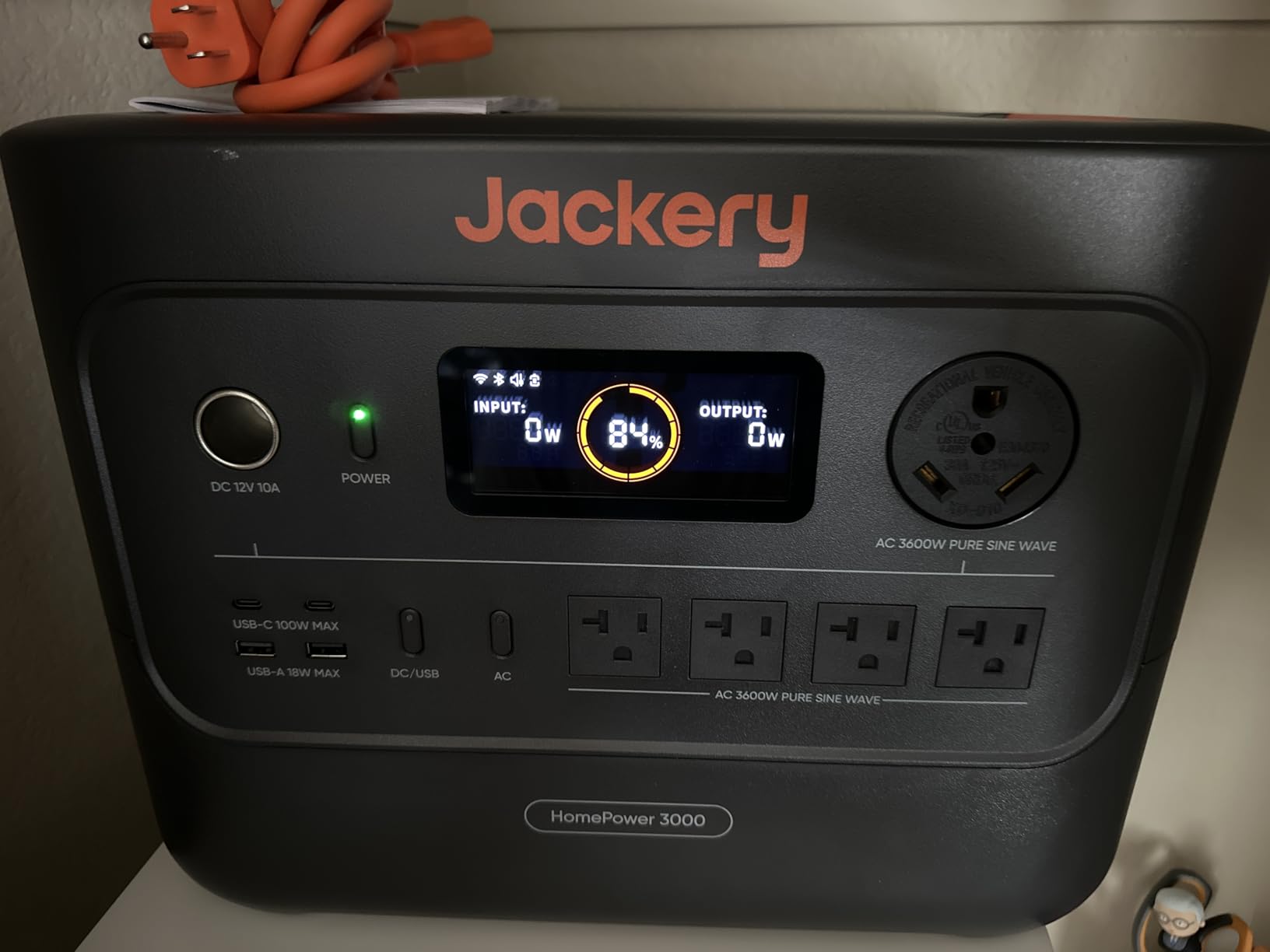
Everything about this unit is scaled for heat. 3600W continuous output with 7200W of surge handles a 1200W rooftop air conditioner plus a fridge and lighting without the inverter browning out, which is the failure mode smaller 2kWh stations hit on the first hot afternoon of the trip.
3072Wh of capacity with a built-in TT-30 port means a fifth wheel can plug in once and run its own outlets, air conditioner included. At 59.5 lb it is the lightest 3kWh option here despite handling the most load.
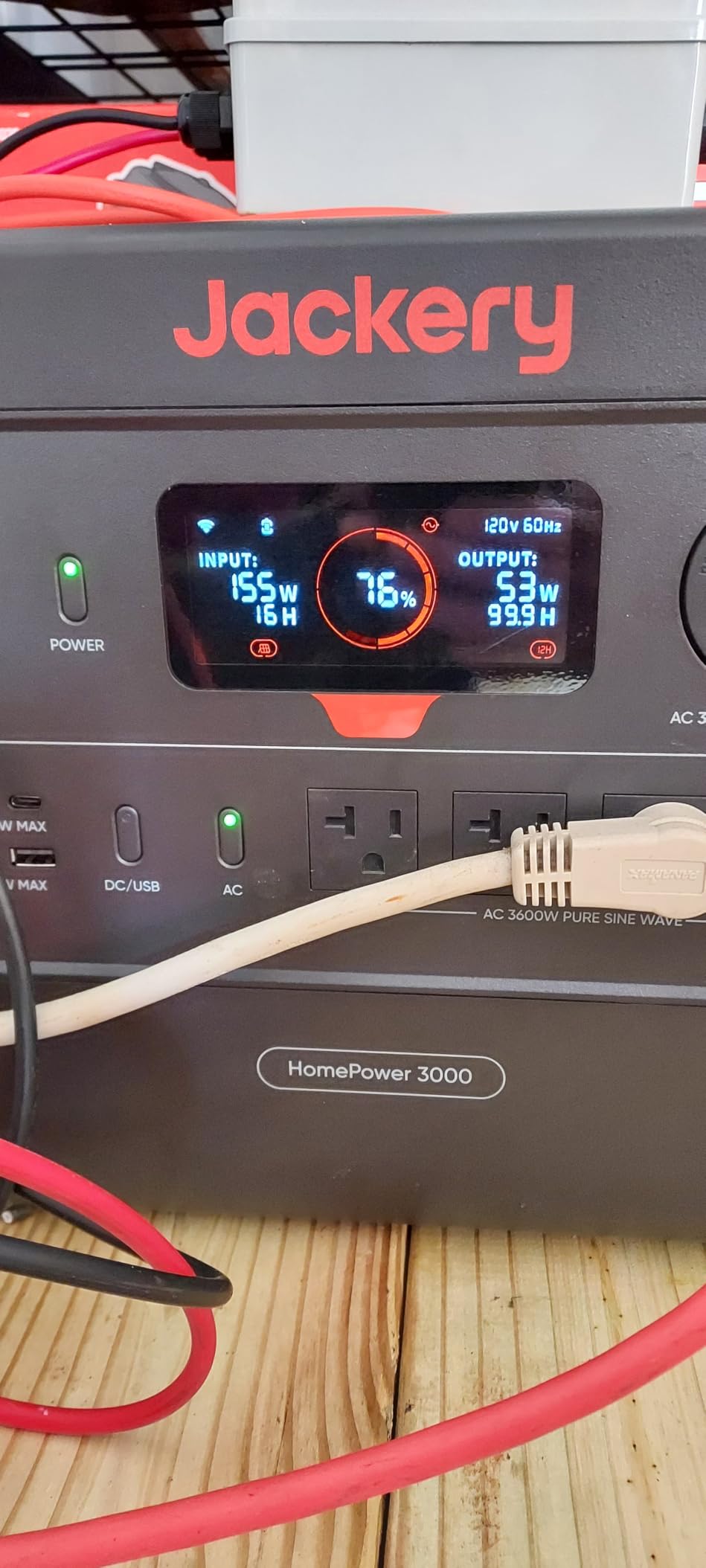
Recharge is fast by any measure. A full charge in 1.7 hours using hybrid AC and DC together, or 2.2 hours on AC alone, and two SolarSaga 200W panels reach 80 percent in 9 hours, which is a realistic afternoon for a weekend panel set.
10 total ports including dual 100W USB-C PD, and the UL-certified UPS with 20ms switching is marketed for medical refrigerators and security cameras as much as laptops.
How long the air conditioner actually runs
A rooftop unit drawing around 1200W pulls roughly 1.4kWh an hour from the battery once inverter losses are counted. Against 3072Wh of storage that is a little over two hours from a full charge, more if the thermostat cycles it off regularly.
Two hours is enough to sleep through the night in the desert, which is exactly when people want it. It is not enough to run air conditioning all afternoon, and no power station in this list is.
What to check before relying on it
The battery is rated to retain 70 percent capacity after 4000 cycles, which is a lower retention target than some rivals in this list publish. Plan for that in year eight rather than year ten.
There is also a 10 percent one-star share, the highest here, with a smaller group reporting early unit failures. Jackery provides a 5-year manufacturer warranty, and the 4.4 rating from 236 reviews with 80 percent at five stars reflects that split. If you cannot tolerate any failure risk on a full-time rig, the DELTA Pro or the AC200PL carry larger review counts and deeper support.
9. EF ECOFLOW DELTA Pro – Best for Full-Time RVing
EF ECOFLOW Portable Power Station 3600Wh DELTA Pro, 120V 3600W AC Output
3600Wh LFP capacity
3600W AC, 4500W with X-Boost
15 output ports
expands to 25kWh
99 lb
Pros
- Largest capacity here at 3600Wh with 3600W output
- Full recharge in 1.8 hours on a 240V circuit
- 15 ports including five AC outlets and two 100W USB-C
- Expands to 25kWh with batteries or Smart Generators
- Five charging methods including EV station and car outlet
Cons
- Solar input current capped near 15A limiting array size
- 99 lb requires a hand truck to move
- Highest cost in this product set
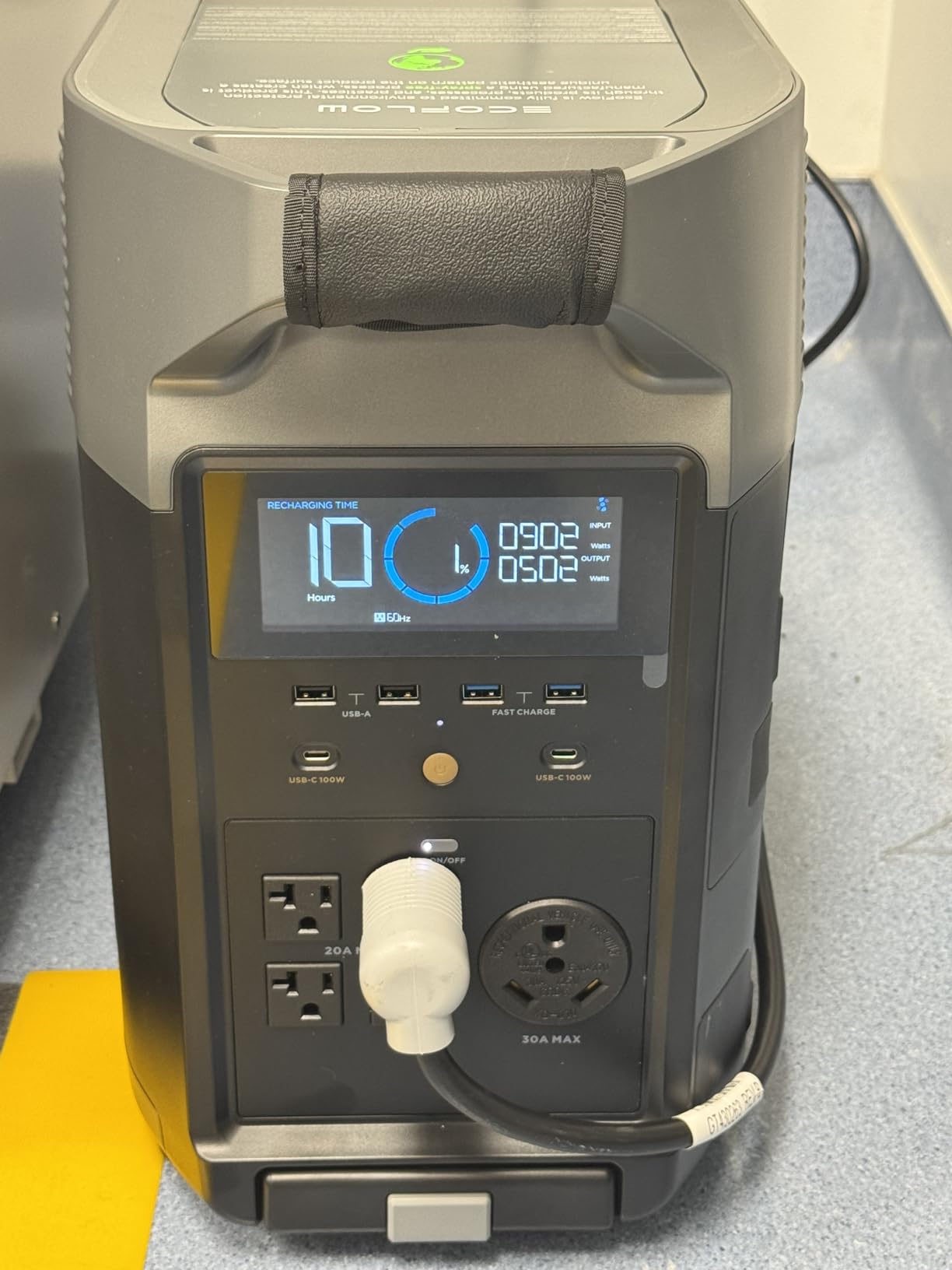
This is the unit for someone who boondocks for a living rather than for fun. 3600Wh of storage at 3600W of continuous output, expandable to 25kWh, means a full-time household can approach what a 500Ah house battery bank would deliver, and it can grow into that over years rather than all at once.
Five charging methods including an EV station, a smart generator, solar, wall and car outlet give a full-timer more ways to recover than anyone else on this list. The smart generator pairing is a bridge for owners who still want a gas unit for the worst weather.
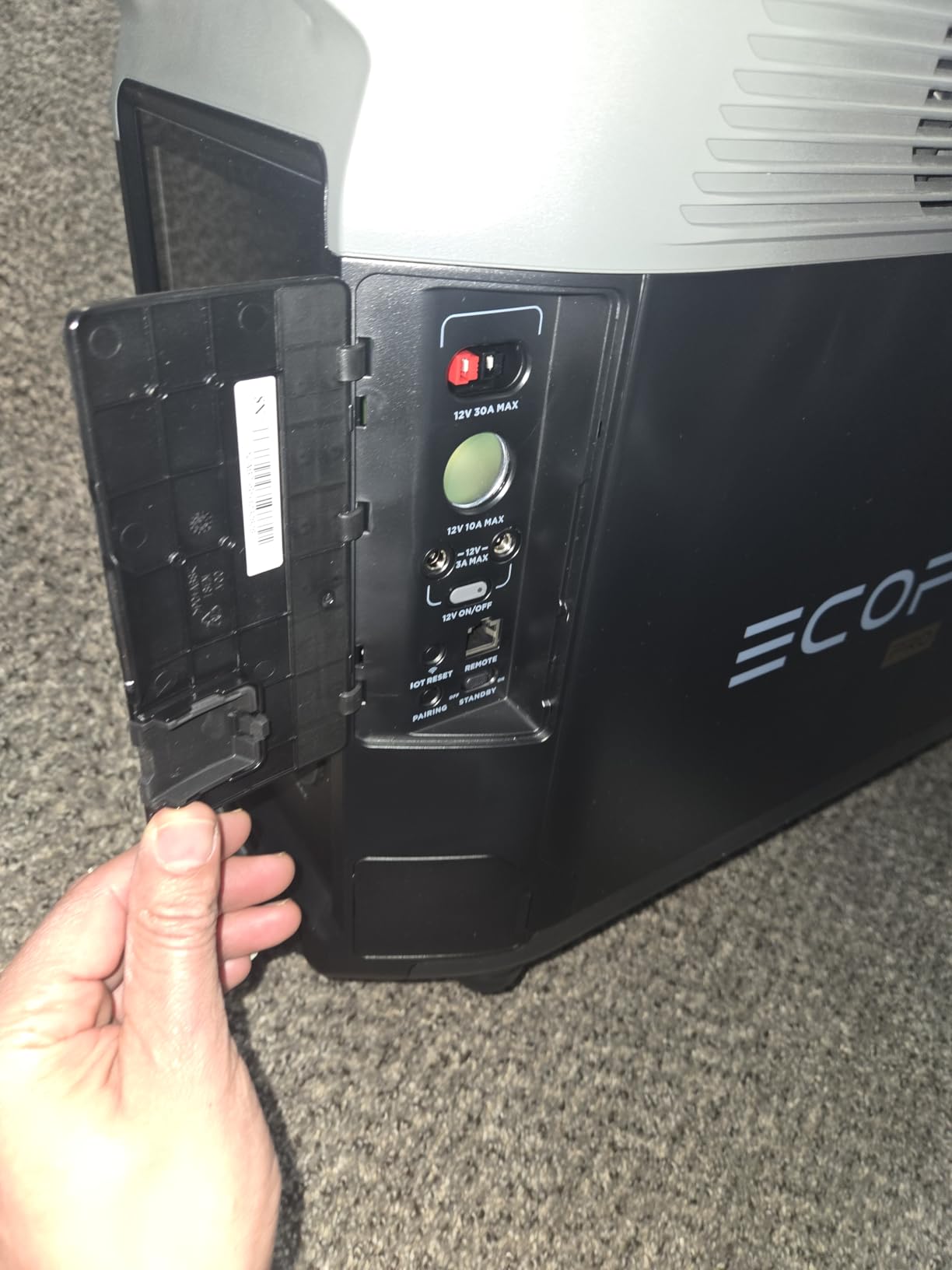
Solar recharges in 2.8 hours with four 400W panels at up to 23 percent conversion efficiency, and full LFP recharge on a 240V circuit takes 1.8 hours. Fifteen ports cover a household load without anyone hunting for a free outlet.
X-Boost lifts output to 4500W, and pairing two units gives 7200W, which is genuinely residential territory for a fifth wheel with a full appliance load.
Where the 99 lb weight belongs
Ninety-nine pounds is not a portable weight. This is a two-person lift, realistically a hand truck or a ramp, and the 25 by 11.2 by 16.4 inch body is not going into a van.
Think of it as a piece of site infrastructure you position once and move occasionally, not gear you carry to a distant walk-up site.
The solar input cap that trips people up
Solar input is limited to roughly 15A, which caps how much array you can attach and how fast you can refill in one day. Owners also flag the weight and the price as the two recurring drawbacks.
With a 4.6 rating from 652 reviews and 84 percent at five stars, the DELTA Pro is described as a heavy-duty unit that handles sustained loads smoothly. If your daily budget runs past 1200Wh, this is where the maths finally works in favour of a power station over a weekend-sized box.
10. DABBSSON 2000L – Budget Pick
DABBSSON Portable Power Station 2000L, 2048Wh Semi-Solid LiFePO4 Battery, 2200W AC Output 6, 3300W Power Boost, 1 Hr Fast Charge, Solar Generator for Home Backup, Camping & RVs (Solar Panel Optional)
2048Wh semi-solid LiFePO4
2200W continuous, 3300W boost
six AC outlets
41 lb
800W MPPT solar
4000+ cycles
Pros
- Strong price to performance ratio in the 2kWh class
- Only 41 lb in a compact modern chassis
- Semi-solid LiFePO4 cells rated 4000+ cycles
- Six AC outlets for running several appliances
- 1 hour full AC recharge
Cons
- Fan can be noticeably loud even at low or zero load
- App Wi-Fi pairing can be difficult to establish
- Charge limit settings in the app may not persist
- Limited USB-C port count
The 2000L is the one to watch when the budget matters more than the badge. At 41 lb with 2048Wh of semi-solid LiFePO4 storage, 2200W of continuous output and six AC outlets, the spec sheet reads like a unit costing considerably more.
Semi-solid cells are rated at 4000+ deep cycles to 80 percent capacity, which puts the chemistry claim in the same territory as far more expensive packs. The UL94-V0 flame-retardant housing is a nice touch for something living in an RV.
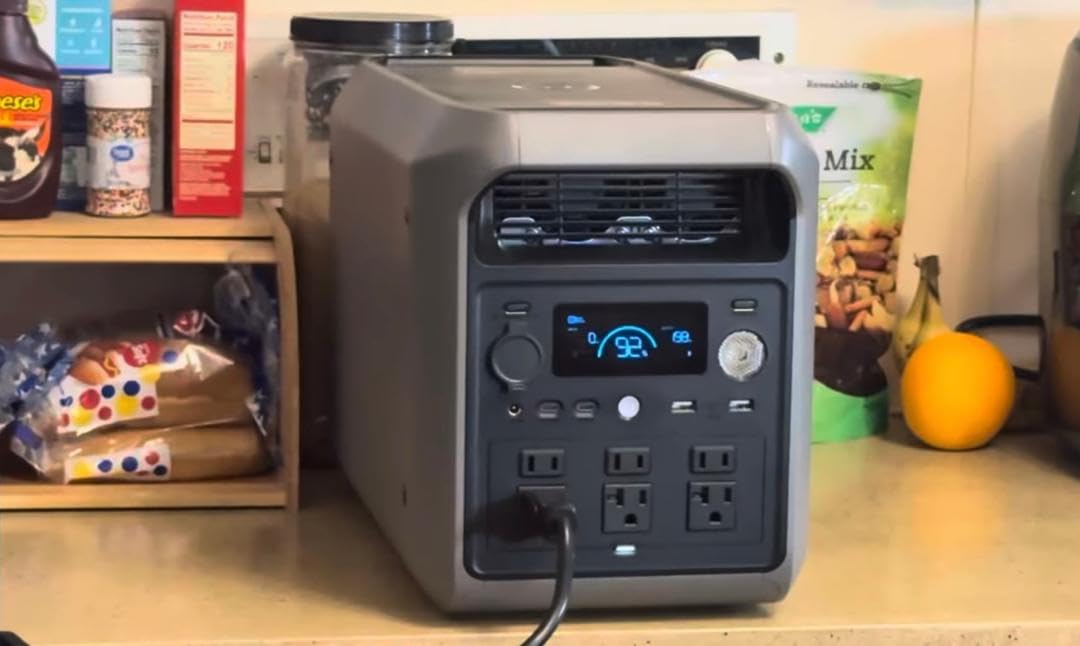
A full AC recharge in about an hour is genuinely quick, and 800W of MPPT solar input with 12V car charging plus hybrid dual-input gives you three ways to refill. The EPS switchover under 15ms keeps computers, network storage and routers running through a brief drop.
The on-screen display showing live wattage and estimated remaining runtime is more useful than it sounds, especially at 6 AM when you want to know whether the fridge will last until the sun hits the panels.
Where the noise and app issues show up
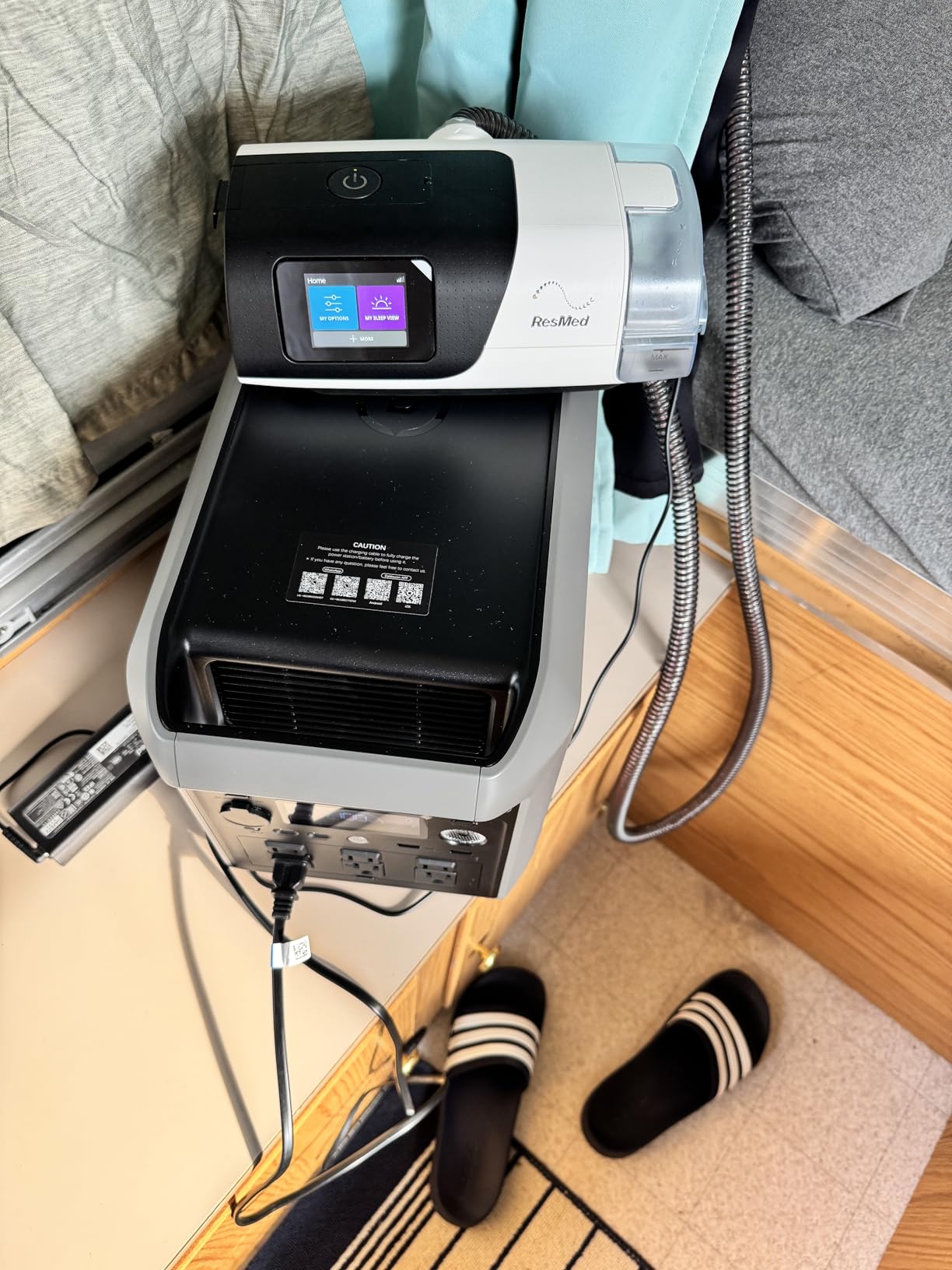
Owners report the fan can be noticeably loud even at low or zero load, and Wi-Fi pairing in the app can be frustrating to establish. Charge limit settings may not persist or apply as expected, so verify them after each firmware update.
Those are real drawbacks at a quiet dispersed site, where generator noise is the exact thing most buyers are trying to escape.
Is a lesser-known brand worth the risk
It comes with a 5-year warranty made up of 3 years standard plus 2 years extended, which is longer than several established competitors offer. The 800W MPPT ceiling is lower than the BLUETTI units, and the USB-C port count is limited, so buyers with several modern devices should count ports first.
It holds 4.5 from 250 reviews with 79 percent at five stars, and the smaller review pool is the thing to weigh. A newer brand with 250 reviews carries more support risk than a name with 2600, so check that the warranty terms are honoured and keep your purchase documentation.
How to Size a Power Station for Your RV Load
Size your station by dividing your daily watt-hour budget by 0.85, because roughly 15 percent of stored energy is lost converting DC to AC. Work out the daily load first, then pick a capacity that covers two days of that budget so one cloudy morning does not end your trip.
Here is a realistic daily budget for common rigs. The fridge figure assumes a 12V compressor model drawing about 45W, the CPAP figure assumes a heated humidifier, and Starlink Mini draws 25 to 40W when active.
Couple, 12V fridge, CPAP, LED lights, phone charging: roughly 300 to 400Wh a day. The fridge cycles, so it does not run continuously. A 1000Wh class unit covers this with room to spare.
Couple with Starlink Mini, fridge, CPAP, lights, laptops: 500 to 700Wh a day. Add the 25 to 40W Starlink draw across 8 hours of use and you are at roughly 200 to 300Wh for the terminal alone.
Family of four, fridge, microwave use, no air conditioning: 900 to 1200Wh a day. A microwave running 1200W for 10 minutes is 200Wh, and doing that twice adds 400Wh on top of everything else.
Full-time household including rooftop air conditioning: 1800Wh a day and up. This is the profile where a power station stops being sufficient and an installed bank makes more sense.
Converting to amp-hours at a 12.8V nominal pack gives you the number RVers talk about. 800Wh a day is about 62Ah a day, which is why the community consensus keeps landing on 300Ah of house battery capacity for anyone living off-grid. A 300Ah lithium bank at 12.8V holds about 3840Wh nominal and roughly 3260Wh usable after inverter losses.
As a rule, 300Ah of house battery is roughly four 100Ah lithium batteries. That is the setup full-timers build, and it is the point at which a portable station stops being the economical answer.
Power Station vs Installed LiFePO4 House Battery Bank
Choose a power station when you move camps often, cannot modify your RV, or only need under roughly 50Ah a day. Choose an installed 300Ah+ LiFePO4 bank when you stay put for weeks, want to run 12V loads at DC efficiency, or need more than about 1000Wh of daily capacity.
This is the question that comes up most in RV forums, and it deserves a straight answer rather than a product pitch. A portable station is a sealed, portable, warranty-covered appliance you can remove and resell. An installed bank is permanent wiring, a battery monitor, a converter upgrade and a fusing plan.
The efficiency argument favours the installed bank. Sending power from a power station into your house battery through its inverter costs you roughly 15 percent of the energy, and you then pay the house inverter’s losses on top. If your goal is to top up house batteries, a dedicated DC-to-DC charger connected to the alternator or the station’s 12V output avoids the double conversion entirely.
Two of the units here address this directly. The BLUETTI AC200PL has a 48V/8A DC port built for charging RV house batteries, and the BLUETTI Elite 300 has 12V/30A high-current DC output. If your plan involves running the trailer’s own panel, use the DC path rather than feeding shore power back into it.
Where the power station wins is flexibility. You can carry it to a trailhead, move it to the passenger seat for a day trip, or take the whole system with you when you sell the trailer. For a full-timer who never moves, that flexibility has no value.
A common mistake is trying to do both badly. A 2kWh station inverting into a 100Ah house bank to run a fifth wheel is the exact setup owners describe as not really powering the trailer. If you have big loads, the capacity belongs on the DC side of the system, not in a portable box.
Solar Panel Sizing for Off-Grid Boondocking
Bring 1.5 to 2 times your daily watt-hour budget in panel watts, then discount that by another 20 to 30 percent because real-world yield rarely exceeds 70 to 80 percent of rated output. A 600Wh daily budget means 900 to 1200W of panels in full sun, which usually means two to three 400W units.
By trip length, the guidance is straightforward. A weekend trip needs 200 to 400W. One to two weeks needs 400 to 600W. Full-time off-grid living needs 600W or more, ideally split across two MPPT inputs so one shaded panel does not drag down the whole string.
Check the solar input voltage ceiling before you buy panels. The BLUETTI Elite 300 and the BLUETTI Elite 200 V2 both cap MPPT input at 60V, which limits how many panels you can wire in series. Two 100V panels in series will exceed that limit on some units, while a 100V-capable design like the AC200PL’s 1200W input gives you more wiring flexibility.
Series versus parallel is the most common silent failure. Series increases voltage and reduces the current on the wire, which is what you want for long runs to a distant panel. Parallel keeps voltage low and increases current, which needs thicker cable. Wiring two 400W panels in series into a 60V ceiling unit may simply stop charging, with no error code to explain why.
Shade is the other killer. A single cell shaded on one panel can cut that panel’s output dramatically, and if you have one MPPT input, it drags the entire array. Splitting across two inputs with panels in parallel on each is the fix.
Finally, set a charge limit of around 80 percent if you are storing the battery in a hot vehicle, and expect less solar in winter. Panel output drops with temperature and day length shortens, so a January trip needs a larger array than a July one to deliver the same watt-hours.
How to Use a 30A RV Port with a Power Station
A 30A RV port lets the station act as your shore power source, so your existing 30A cord plugs into the station and the station plugs into the trailer, with every outlet inside behaving normally.
Three of the ten units here have a TT-30 outlet: the BLUETTI AC200PL, the BLUETTI Elite 300 and the Jackery HomePower 3000. That is the feature that separates them from the rest, and it is the reason a fifth wheel owner can ignore the other seven.
There are two ways to connect a station to a trailer. Plugging into the shore power inlet is the simple option, since the whole trailer runs off AC and everything is convenient but slightly lossy. For running 12V loads, a DC connection to the house battery is more efficient and avoids inverter losses on the round trip.
If you feed the house battery through the station’s inverter to charge it, you lose roughly 15 percent of the energy involved. A dedicated DC-to-DC charger between the alternator and the house battery avoids that entirely, and most of the stations here support 12V car charging for exactly this reason.
Watch the current limit as well. The EF ECOFLOW DELTA Pro caps solar input current around 15A, and combining a large solar array with high charge current can trip protection on some units. Check the published input current, not just the wattage.
LiFePO4 vs NMC and Cold-Weather Boondocking
LiFePO4 delivers 3000 to 6000 charge cycles against roughly 500 to 1000 for NMC, tolerates far more heat without thermal runaway risk, and holds charge better in storage. The trade-offs are weight, upfront cost, and one real blocker: you should not charge a LiFePO4 pack below freezing.
Cycle life is the number that matters over years. At one full cycle a day, a 3000-cycle pack is finished in about eight years and a 6000-cycle pack runs past sixteen. For a full-timer charging daily, that difference decides which unit belongs in the trailer.
Two of the units here rate at 6000+ cycles, the BLUETTI Elite 200 V2 and the BLUETTI Elite 300. The DABBSSON 2000L claims 4000+ deep cycles with semi-solid cells, and the Jackery HomePower 3000 is rated to 70 percent retention after 4000 cycles.
For winter boondocking, treat cold charge as a hard constraint. Below freezing, lithium iron phosphate cells will not accept charge, and forcing it in damages the cells. Either bring the station inside the heated RV overnight, keep it on a shore power or alternator top-up during the day, or accept that solar collection stops until temperatures rise.
Heat is the easier direction. LiFePO4 is far more thermally stable than NMC, so leaving a station in a hot truck over summer is a lesser concern than leaving an NMC pack there. The key detail is a smart battery management system, which every LiFePO4 unit in this roundup has.
Cutting Phantom Loads on a Power Station
Switch the inverter off when you are not using AC outlets, since idle draw of 9W to 10W on a 2000Wh station costs roughly 240Wh a day and is the easiest waste to eliminate.
Beyond that, five habits do most of the work. Convert to LED lighting, which typically cuts lighting load by 70 percent or more. Run a propane fridge if your rig has one, since a 12V compressor fridge costs 400 to 700Wh a day while a propane fridge costs no battery power at all.
Schedule Starlink and heavy downloads for daylight hours, since a 25 to 40W terminal left running overnight burns more than a full CPAP night. Turn the inverter off rather than leaving the station in standby, which is the difference between 9W and effectively zero. And charge laptops, cameras and phones in one batch rather than leaving a converter plugged into a live socket all day.
Those five changes typically take a couple’s daily budget from 800Wh to roughly 500Wh, which means a 1000Wh station suddenly covers a weekend or a 2000Wh station covers a week. In every owner thread we have read about this gear, self-consumption is the number one complaint nobody researches before buying.
Frequently Asked Questions
What is the best LiFePO4 power station for RV boondocking?
The BLUETTI AC200PL is the best overall option for RV boondocking, with 2304Wh of storage, 2400W of continuous output, a built-in 30A TT-30 RV outlet, 1200W of solar input and expansion to 8448Wh. Lightweight rigs are better served by the Jackery Explorer 2000 v2 at 39.5 lb, and full-time RVers who want the largest capacity here should look at the EF ECOFLOW DELTA Pro with 3600Wh expandable to 25kWh.
Can a portable power station run an RV air conditioner?
Only briefly. A rooftop RV air conditioner drawing around 1200W consumes roughly 1.4kWh per hour once inverter losses are counted, so a 3014Wh station such as the BLUETTI Elite 300 runs it for a little over two hours from a full charge. The Anker SOLIX C2000 Gen 2 with 4000W peak output and the Jackery HomePower 3000 with 3600W continuous and 7200W surge can start and run one, but none replaces a generator for full-day cooling in high heat.
How long will a 1000Wh power station last while boondocking?
A 1000Wh station gives roughly 850Wh of usable capacity after the 15 percent inverter loss. Against a couple’s typical 300 to 400Wh daily load of a 45W compressor fridge, a 60W CPAP and LED lights, that is two to three days without any solar input. A family running a microwave, more devices and a 900 to 1200Wh daily budget would exhaust it in a single night.
How many solar panels do I need to charge a power station for boondocking?
Bring 1.5 to 2 times your daily watt-hour budget in panel watts, then discount for real-world yield of 70 to 80 percent. A 600Wh daily budget needs roughly 900 to 1200W of panels, usually two or three 400W units. Check the MPPT voltage ceiling first, since the BLUETTI Elite 300 and Elite 200 V2 both cap solar input at 60V and restrict how many panels you can wire in series.
Are portable power stations noisy enough to bother neighbours?
Mostly no, with one exception. The DJI Power 2000 runs as low as 30 dB and the Jackery Explorer 2000 v2 has a silent charging mode under 30dB, both quieter than a generator. Owners of the DABBSSON 2000L report the fan can be noticeably loud even at low or zero load, so that is the unit to test before buying.
Should I buy a power station or install 300Ah LiFePO4 house batteries?
Under roughly 50Ah a day, about 640Wh, a portable station is the simpler and more flexible choice. Above that, an installed 300Ah+ LiFePO4 house battery bank wins on capacity and efficiency, since 300Ah at 12.8V holds about 3840Wh nominal. Sending power through a station’s inverter to charge house batteries wastes roughly 15 percent, so a dedicated DC-to-DC charger is the efficient alternative.
Final Verdict
The BLUETTI AC200PL is the best LiFePO4 power station for RV boondocking in 2026 because it is the only unit here that combines a 30A TT-30 outlet, 1200W of solar input and expansion to 8448Wh in one box. Add its 4.6 rating from 2622 reviews and the weight becomes the only real argument against it.
Route by rig. Weekend trailer owners who move every few days should take the Jackery Explorer 2000 v2 at 39.5 lb. Couples running a fridge and a CPAP want the Anker SOLIX C2000 Gen 2 for its 9W standby draw and 58-minute recharge. Families with several people charging at once get the most from the DJI Power 2000 with 15 ports. Fifth wheels and 30A trailers belong with the BLUETTI Elite 300 or the Jackery HomePower 3000 if you plan to run air conditioning. Full-timers who never move should look at the EF ECOFLOW DELTA Pro and its 25kWh expansion path. Budget buyers get the most hardware per watt-hour from the DABBSSON 2000L, accepting the fan noise and smaller support base.
And if your daily budget runs past roughly 50Ah, stop shopping and start planning an installed 300Ah+ LiFePO4 house bank. The right battery for RV boondocking is the one you can refill, and no panel or cable fixes a system that is undersized from the start.