
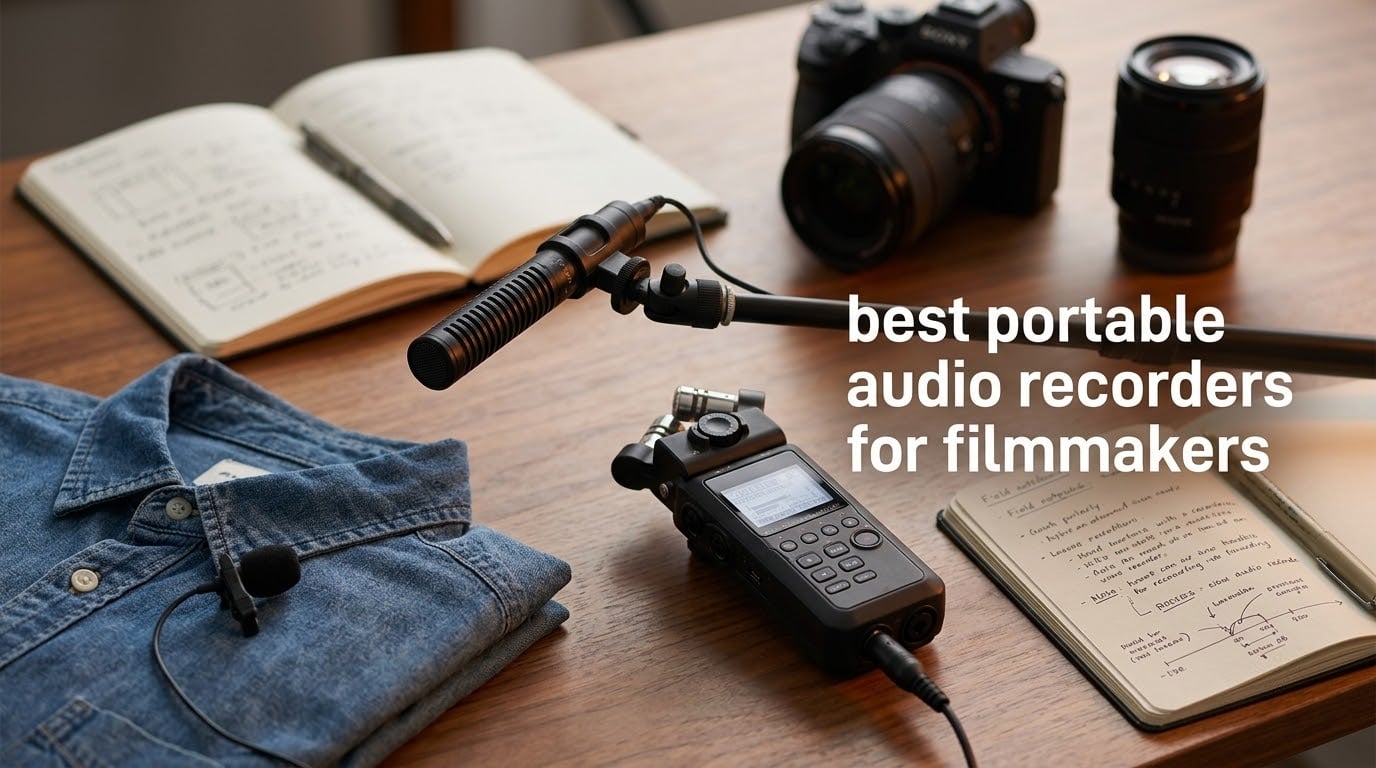
Most cameras have a microphone built in, and most of those microphones are not good enough to carry a finished film. They hiss, they clip when somebody laughs, and they roll off every frequency above about 10kHz, which is where a voice lives. A portable audio recorder is the answer: a small, battery-powered device that captures full-resolution WAV audio independently of the camera, usually through professional XLR inputs, so your production sound arrives in post as clean, unprocessed tracks that simply line up with picture. A portable audio recorder for filmmaking is a location sound tool, a safety track, and often a better microphone preamp than the one inside your camera body.
That independence is the whole point. A recorder does not know when an actor will whisper or shout, and 32-bit float models no longer care: dual A/D converters mean a badly judged level still lands intact in the file instead of shredding into distortion. It records at 96kHz if you want headroom for a slow-moving ambience pass, it writes to a card you can pull and hand to an editor, and it keeps working when the camera runs out of batteries at the end of a long take.
We spent six weeks with the six recorders below, moving them between interview setups, boom-rig days, and a two-camera doc shoot, and compared input counts, preamp noise, timecode, storage, and how each one behaved when wind came off the river. This guide to the best portable audio recorders for filmmakers in 2026 covers what each unit is genuinely good at, where it falls short, and how to get it into your existing kit without buying microphones you do not need yet.
Last updated: September 2026. If you are still choosing between a wired recorder, a wireless lav system, and the XLR input on your own camera, skip to the decision framework near the end, because that answer usually saves money before any recorder is bought.
Table of Contents
Top 3 Picks for Best Portable Audio Recorders for Filmmakers (September 2026)

Tascam Portacapture X8
- 3.5-inch touchscreen
- Four locking XLR inputs
- 32-bit float to 192kHz
Best Portable Audio Recorders for Filmmakers in 2026
| Product | Specifications | Action |
|---|---|---|
|
Zoom H5
|
|
Check Latest Price |
 Zoom F3
|
|
Check Latest Price |
|
Tascam Portacapture X8
|
|
Check Latest Price |
 Tascam FR-AV2
|
|
Check Latest Price |
 Tascam DR-70D
|
|
Check Latest Price |
 Zoom F8n Pro
|
|
Check Latest Price |
Two of these six carry built-in microphones and four do not, which is the first fork in the road. Everything else follows from that: whether you own a boom, a shotgun, and a pair of lavs already, or you are starting from nothing and want the recorder to be usable on its own.
1. Zoom H5 – Swappable Capsules and Four-Track Capture in a 115 g Body
Zoom H5 4-Track Handheld Recorder for Filmmakers & Musicians
Interchangeable mic capsules
4-track simultaneous recording
2 XLR/TRS combo inputs
115 g
Pros
- Capsule system swappable like a lens
- Shock-mounted X/Y capsule cuts handling noise
- Four tracks with per-input phantom power and -20dB pad
- SD/SDHC recording plus 2-AA power
- Multichannel USB interface with loop back
Cons
- Only two physical inputs
- SD/SDHC ceiling of 32GB
- 1.9-inch screen is small for fast menu work
- WAV only with no compressed options
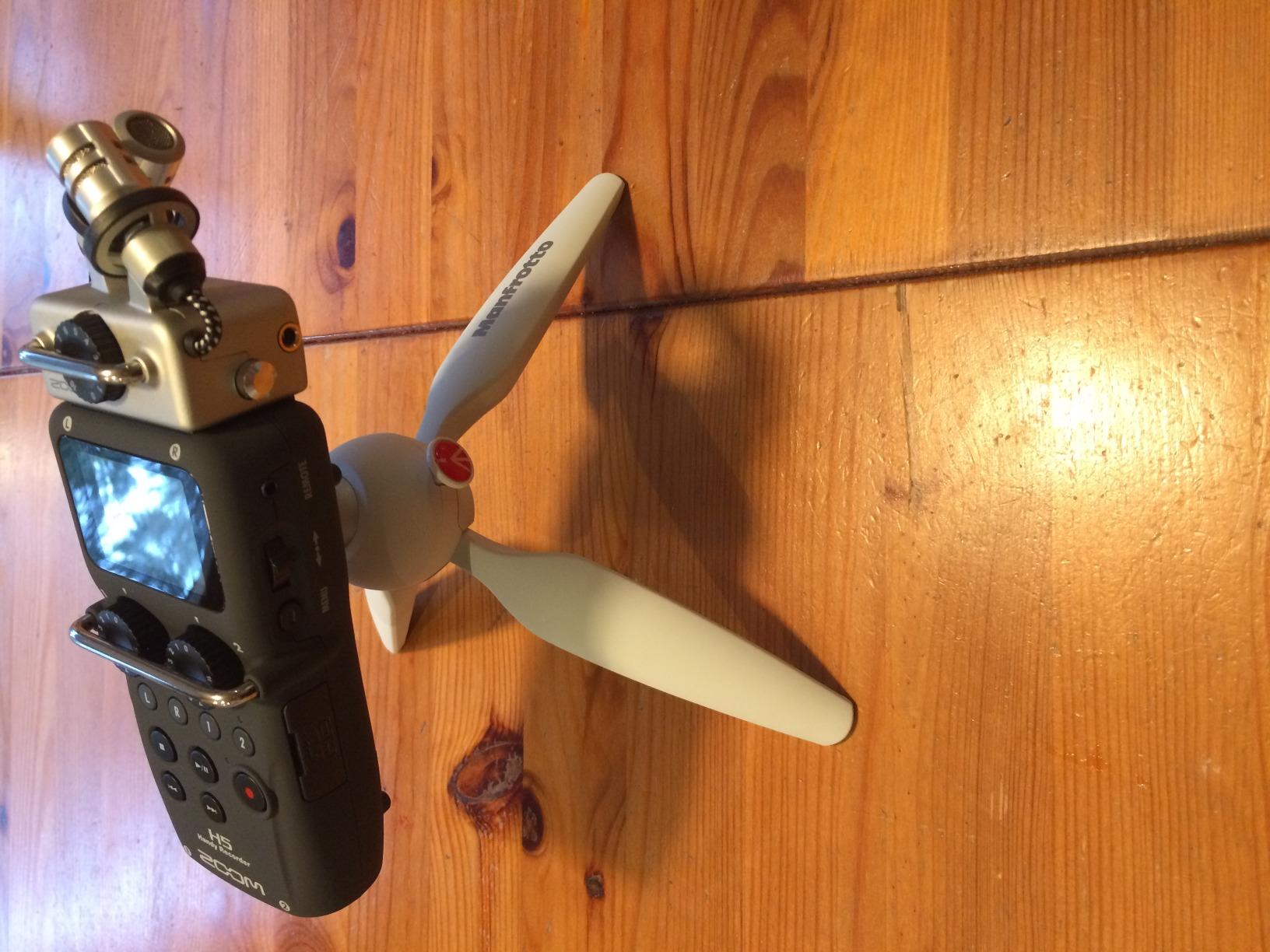
The H5 has been the default recommendation on production forums for the better part of a decade, and after six weeks I can see why the reputation stuck. It weighs 115 g, it fits in a coat pocket, and it records four tracks at once. Owners report 84% five-star ratings across 1117 reviews, and the capsule system is the reason most of them stay. You unscrew the included shock-mounted X/Y stereo capsule and replace it with a shotgun or a pair of omnis without changing any menu setting.
For interviews, the two XLR/TRS combo inputs take a boom and a lavalier at the same time, each with selectable phantom power and a -20dB pad. That pad matters more than it sounds: it lets you keep a sensitive preamp setting and ride an unexpected loud source without clipping, which on a 24-bit recorder is the difference between a usable take and a ruined one.
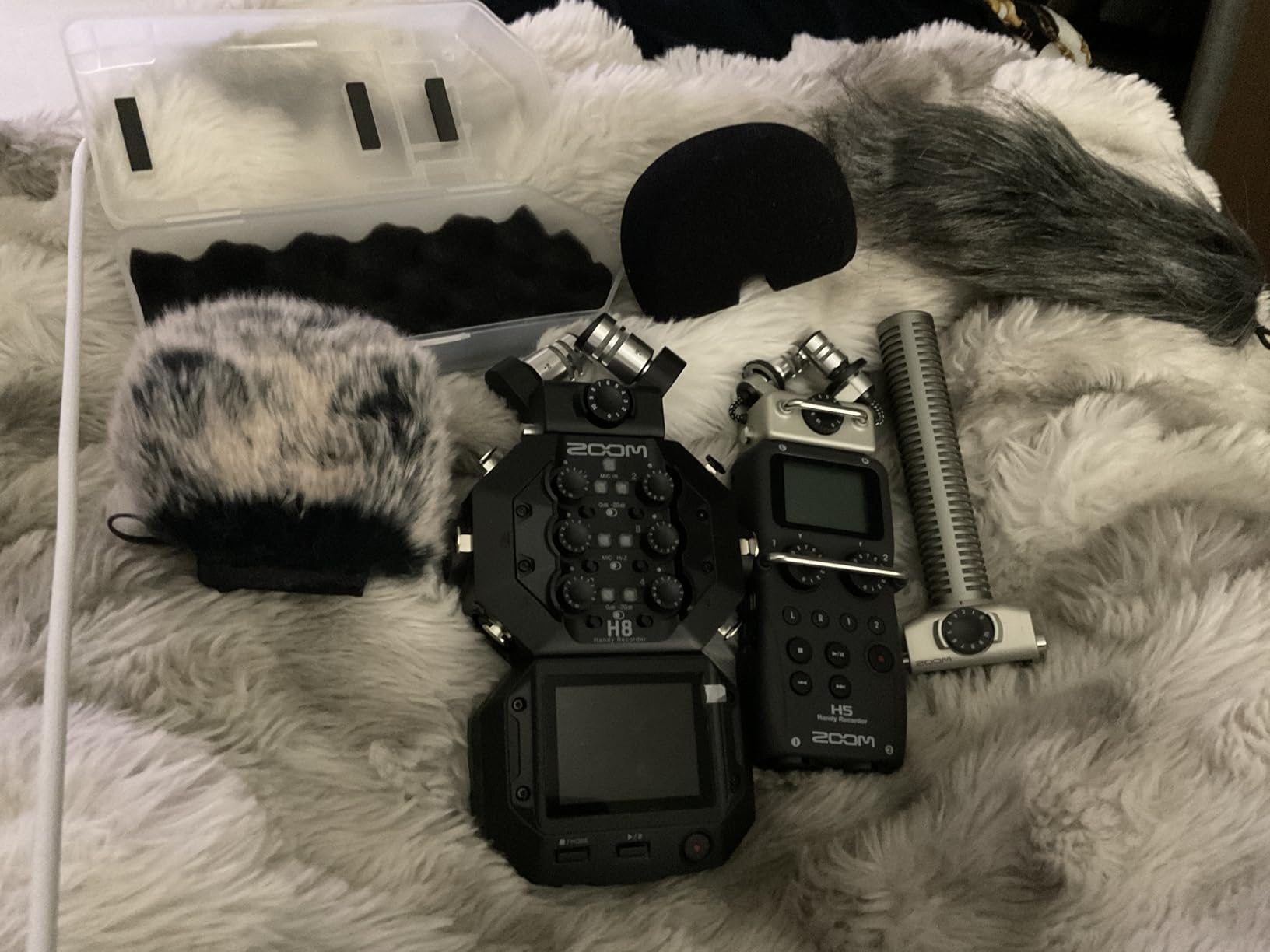
Where it struggles is arithmetic. Two mic inputs is a hard ceiling, so a three-person conversation needs either an audio mixer’s outputs or a second recorder slaved to the first. The 32GB SD/SDHC limit is the other one. A long-form interview day at 96kHz fills a card faster than most people expect, and swapping cards on a running shoot means stopping the recording.
Reviewers also point at the 1.9-inch screen, which makes menu navigation a two-thumb job with gloves on. If you are a location sound mixer in winter, that is not a small complaint, and it is the single biggest practical gap between the H5 and the touchscreen units further down this list.
What the H5 does better than the alternatives
The capsule system is the answer. Every other recorder here is a fixed box, so the H5 is the only one that lets you change pickup pattern to match the environment instead of carrying a second device. Swap to the shotgun capsule and a wide interview table becomes one clean track; swap to the X/Y pair and a walk-and-talk room tone takes ten seconds.
Reviewers also single out the shock mounting around the built-in X/Y mics, which cuts the creak and finger noise that budget recorders pick up when carried by hand. For an ambience and room tone pass on a documentary, that is worth more than another hundred decibels of theoretical headroom.
Where the H5 will frustrate you
Two inputs means a small crew. A four-person roundtable with a boom in the middle and three lavs is simply out of reach without a mixer, and the same limit rules out recording a small chamber ensemble for a score cue. The 32GB ceiling and the missing compressed format options also make it a worse fit for a very long shoot than its weight suggests.
None of that makes it a poor buy. It makes it a deliberate choice: the H5 is the recorder to get when you want one dependable device that grows with you rather than one that maxes out immediately.
2. Zoom F3 – Two Locking Inputs and No Gain Riding
Zoom F3 Professional Field Recorder for Filmmakers & Musicians
32-bit float,dual A/D converters
2 locking XLR inputs
8.48 oz
2 AA batteries
Pros
- Dual converters make clipping effectively impossible
- Ultra-low-noise preamps
- Locking XLR keeps cables secure when rigged away from hand
- AA
- external 48V or USB bank power
- Consistently syncs with a clap in Resolve
Cons
- Only two inputs and no built-in microphones
- No 3.5mm input for small lavs
- Menu system is less refined than larger units
- Phantom power capped near 10mA combined
The F3 is the smallest thing in this roundup at 8.48 ounces, and it is the one I ended up reaching for most often on documentary days. It is a plain grey cube with two locking XLR/TRS inputs, a 2-inch screen, and no built-in microphones whatsoever. Owners describe it as a set-and-forget recorder, and after six weeks that matched my experience exactly.
The reason is the 32-bit float architecture with dual A/D converters. Two converters running at slightly offset times means you can set gain far lower than a safe level and still recover a clean, unclipped file when a source jumps. On a 24-bit recorder, the same mistake is unrecoverable, and on a documentary that means your take is gone.
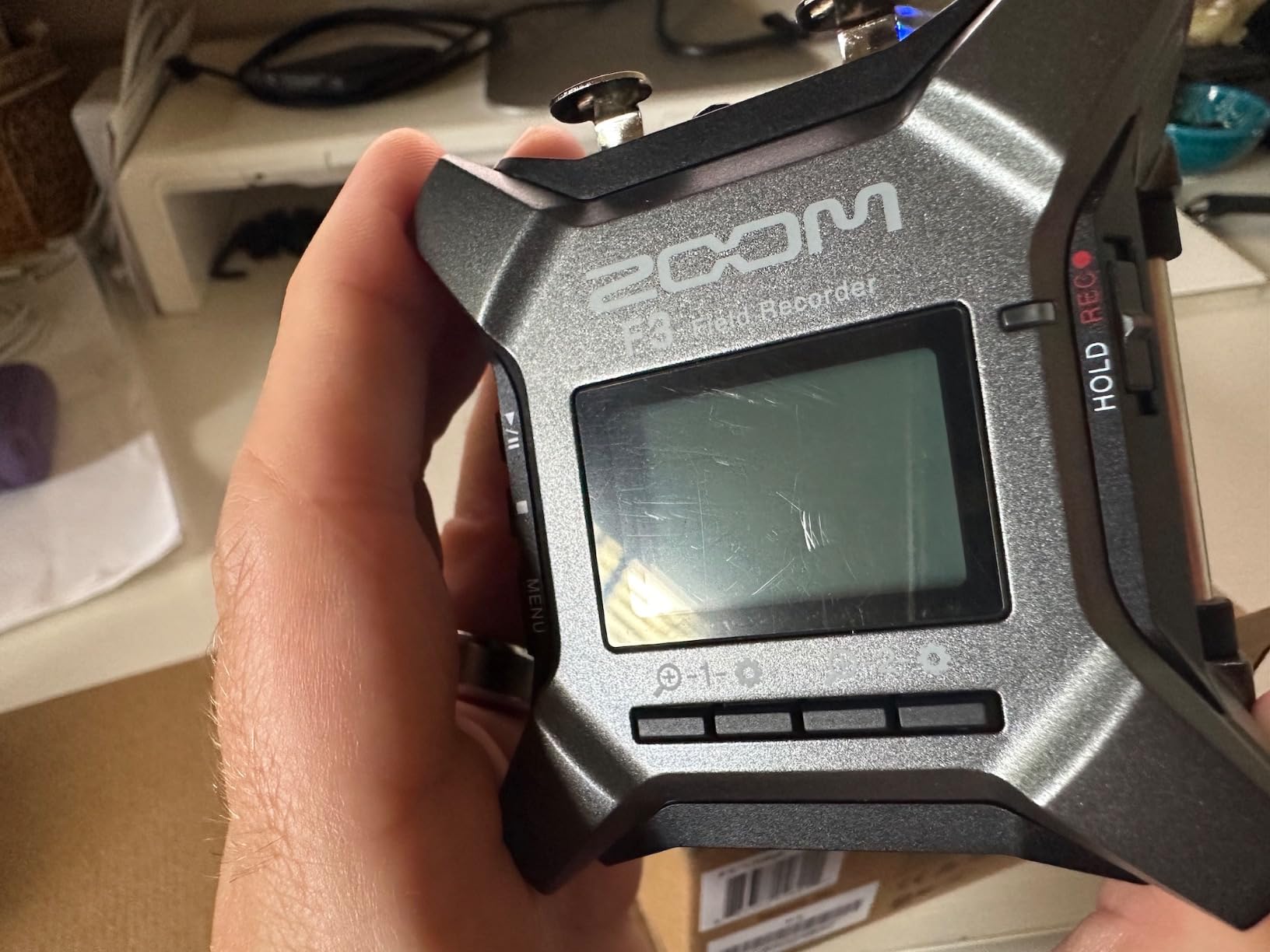
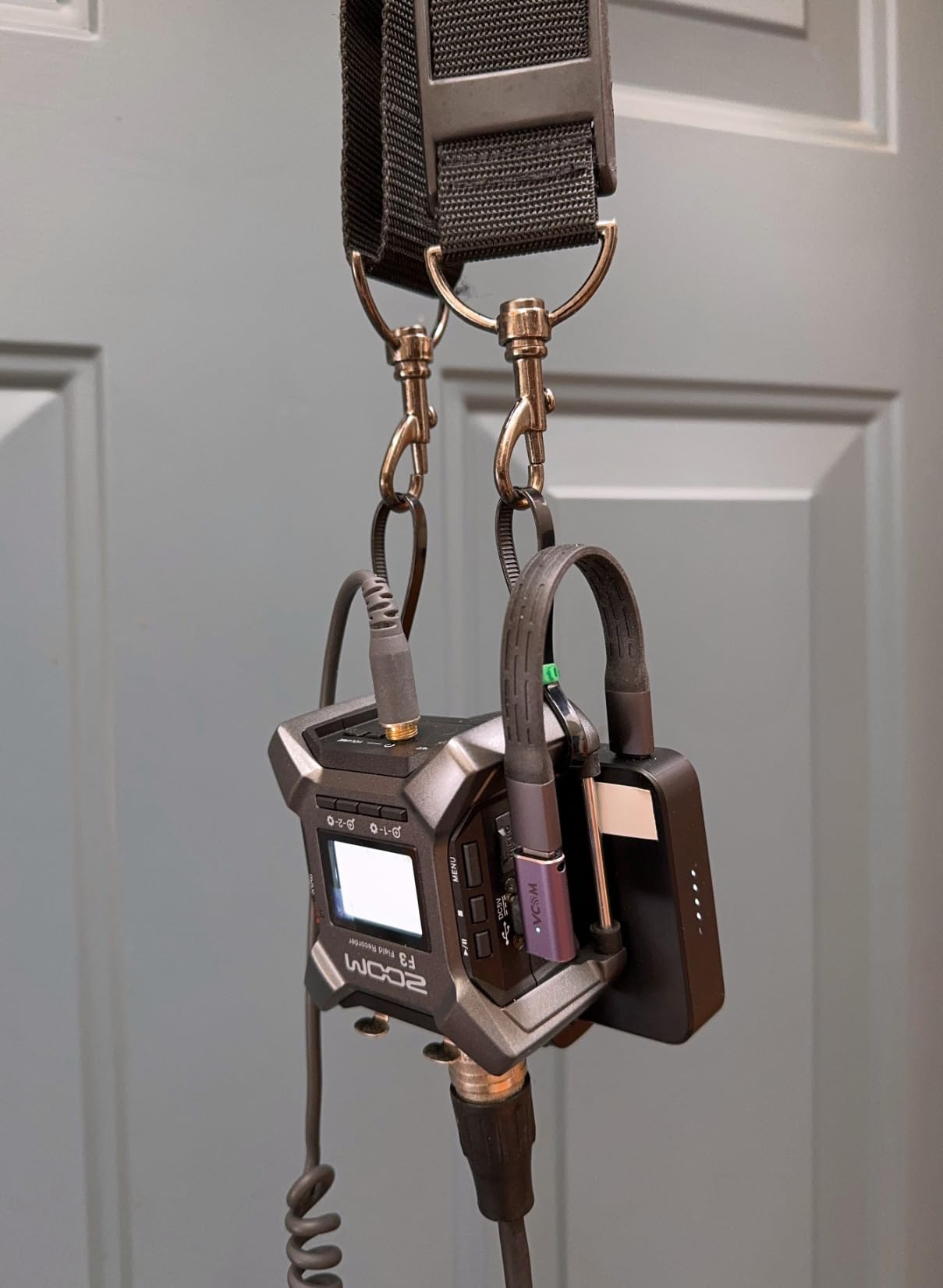
Mounting is the other quiet strength. At this weight it bolts to a cold shoe, a magic arm, a belt loop, or a mic stand without needing a cage, and the locking XLR connectors matter more here than on bigger bodies because the unit usually ends up somewhere you cannot reach it. A non-locking connector on a rig that bumps a door frame is a lost take, and that failure is exactly what practitioners treat as disqualifying.
Power is flexible too. Two AA batteries, external 48V phantom, or a USB power bank all work, which solves the forum complaint about phantom power halving advertised runtime. During a long day I ran it off a small USB bank with a condenser on one channel and never opened the battery door.
Why the F3 suits solo and run-and-gun shooting
Two things: the locking inputs and the total absence of gain decisions. For a solo filmmaker working alone, the failure mode is not bad sound, it is a missed take because you were watching a meter instead of an actor. The F3 removes that entire category of problem, which is why reviewers single out its consistent clap sync in DaVinci Resolve as an everyday workflow rather than a feature.
Its 73 hours of stated digital recording time and 512GB storage ceiling also mean card changes stop being part of the day. For a shoot where you are the whole crew, removing a recurring task matters as much as removing a failure mode.
Where the F3 asks more of you
There are no built-in microphones, so a usable kit means buying a boom mic and a cable before you record anything. There is also no 3.5mm input, so a small lavalier needs an adapter to reach the XLR combo, and there are no traditional manual gain controls, which some operators read as a lack of control even when the result is better.
The phantom power limit of roughly 10mA across both channels is worth knowing before you commit. Power-hungry condensers exceed it, and the pairing that works is a dynamic shotgun on one channel with a modest lav on the other.
3. Tascam Portacapture X8 – Four Locking Inputs and the Easiest Interface Here
Portacapture X8 32 bit Float 8 Channel Multitrack Field Recorder
3.5-inch color touch panel
32-bit float to 192kHz
4 locking XLR/TRS inputs
1.6 lb
Pros
- Launcher-style touch interface is genuinely fast to learn
- Four locking combo inputs with 24V/48V phantom
- 192kHz/32-bit float recording
- Detachable condensers swing A-B and X-Y
- USB interface and card reader for fast transfer
Cons
- Despite the name it has six physical inputs
- Detachable capsules feel fragile
- AK-BT1 Bluetooth adapter sold separately
- No Hi-Z input for passive instruments
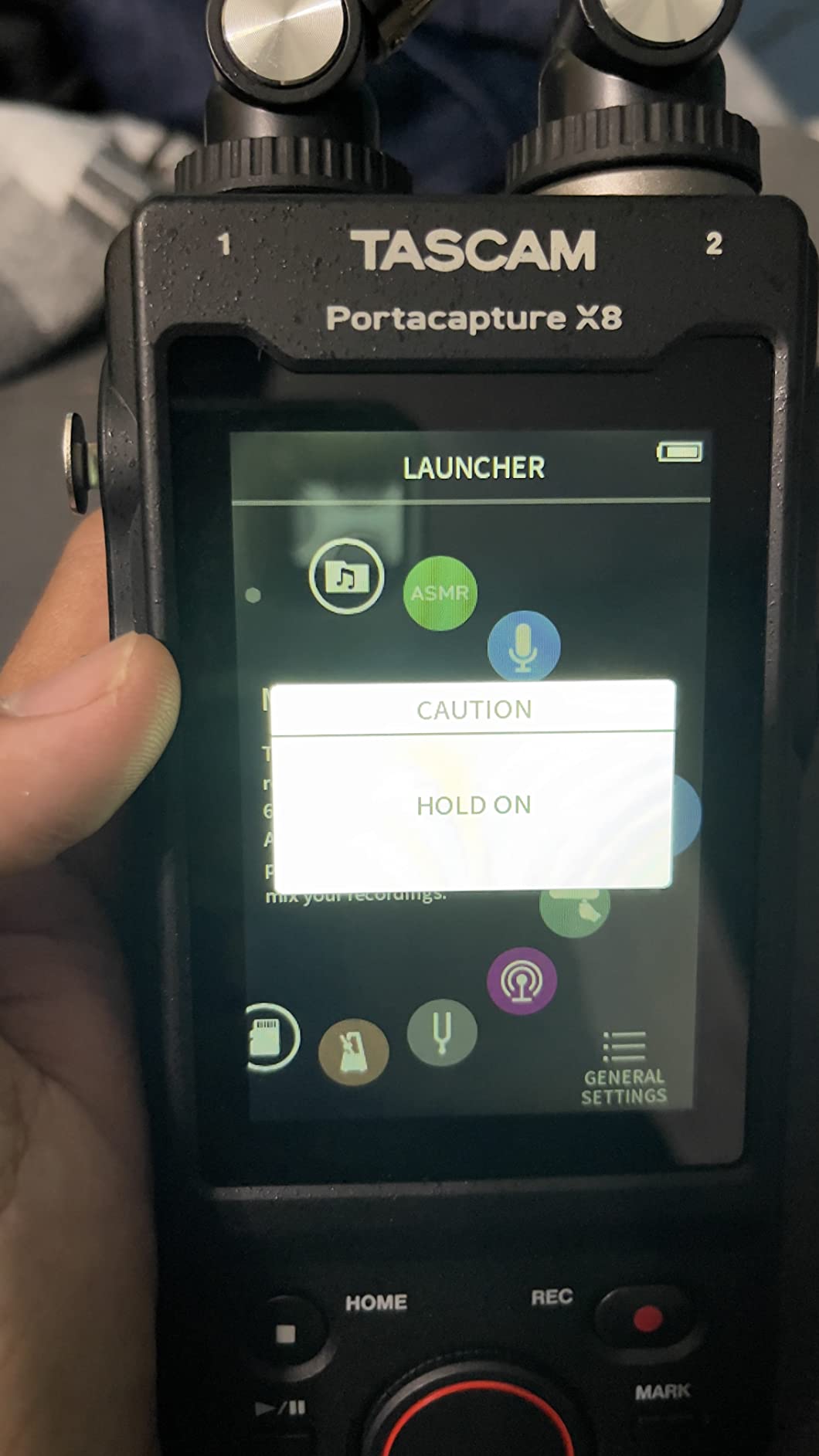
Where the Zoom recorders make you navigate a menu tree, the Portacapture X8 puts a launcher screen on a 3.5-inch colour touch panel and lets you tap the thing you want. That sounds cosmetic until you are setting a level in low light with cold hands, and it is the single biggest usability difference in this roundup. Reviewers repeatedly compare the result favourably to recorders costing twice as much.
Underneath the screen is real hardware: four XLR/TRS locking combo MIC/LINE inputs with individual 24V or 48V phantom power, and Tascam’s in-house HDDA preamps. Recording runs to 192kHz in 32-bit float, and files land on cards up to 512GB. Four locking inputs is the widest compact footprint in this group, which is what makes it work for a three-person interview without a mixer.
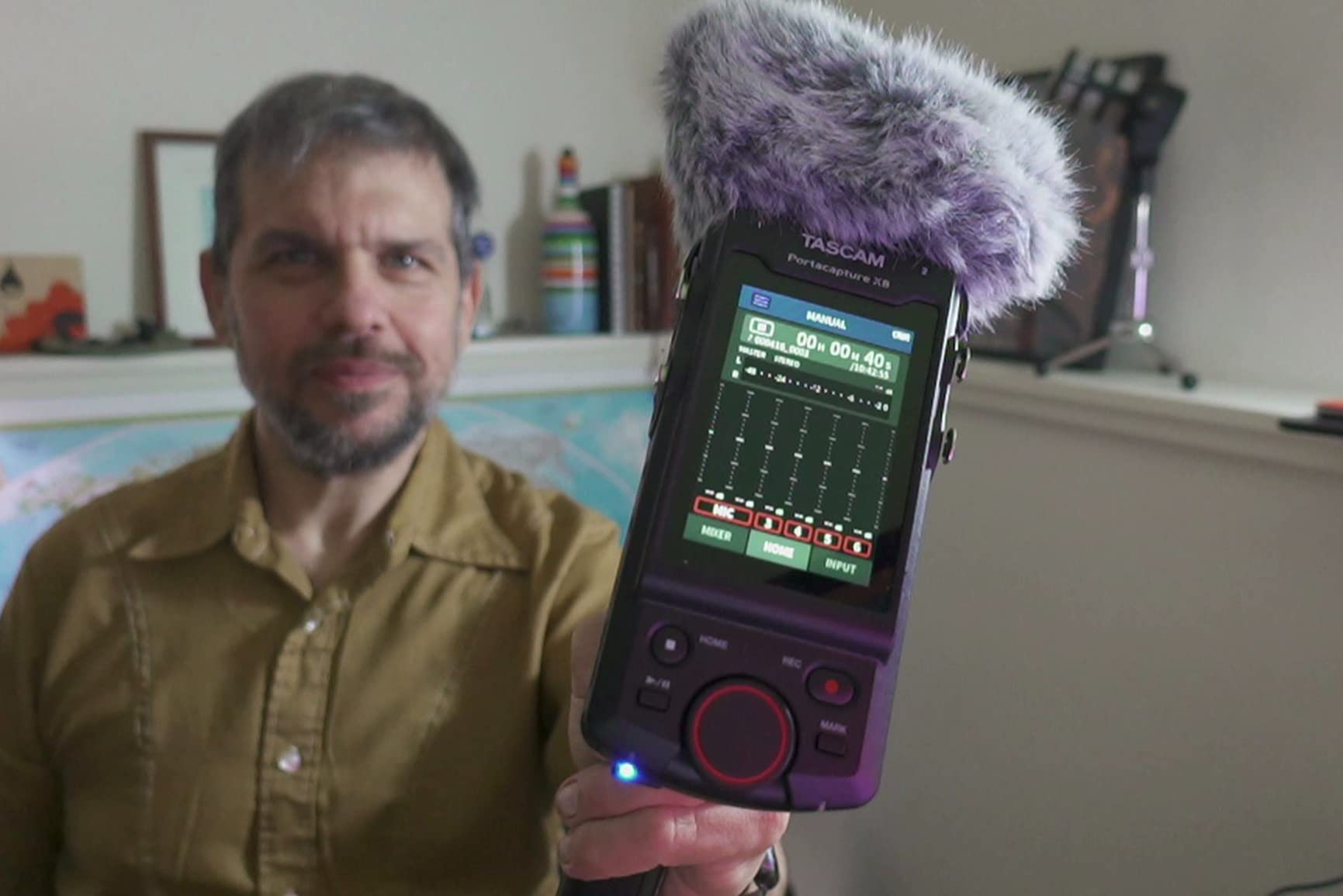
The detachable 14.6mm large-diaphragm condensers swing between A-B and X-Y positions, so a single unit covers both a stereo room capture and a directional interview source. And because the unit also works as a USB audio interface and card reader, moving takes to a timeline is a plug-and-drag operation rather than a card-reader hunt.
That said, the extras are where the cost shows. Wireless control needs the AK-BT1 adapter, and this unit is not compatible with the newer AK-BT2. There is no Hi-Z input, so a passive guitar or bass means a direct box or a pedal, and there is no timecode, which matters if you are running more than one camera.
Where the X8 earns its size
Screen first, inputs second. The 3.5-inch panel is the only one here you can read in direct sun, and the launcher layout removed nearly all of the menu friction that costs recordists time on other models. For an operator who is not a dedicated sound mixer, that is worth more than a fifth input.
Four locking inputs also open a pairing that the smaller boxes cannot do: a boom plus two lavs, with a stereo pair of omnis on the fourth if you are recording a room and a dialogue at once. That is a complete two-subject location kit in one body.
Where the X8 disappoints
Six physical inputs, not eight, despite the name. Reviewers raise this more than any other complaint, and it is a fair one: the model number implies a channel count the chassis does not have. The detachable stereo capsules are also reported to feel cheap and fragile relative to the sound they produce.
Some users also report that input channels re-arm after a power cycle and record unwanted silent tracks, so check your channel states after any restart on a long day. And the 1.6-pound body is noticeably heavier than the H5 or F3 if you are moving all day on foot.
4. Tascam FR-AV2 – The Only Recorder Here With Timecode Built In
TASCAM FR-AV2 Compact 32-Bit Float Field Recorder and Timecode Generator with Dual XLR/TRS Inputs and No-Clip Audio Recording for Videographers
32-bit float with dual ADCs
Timecode generation and in/out
Two XLR/TRS inputs
9.5 oz
Pros
- Internal timecode generator removes the need for a separate box
- High-accuracy TCXO holds sync
- 32-bit float with dual AD converters
- 3.5mm input takes a lavalier directly
- Light at 9.5 oz for a compact rig
Cons
- Only two XLR/TRS inputs
- AK-BT2 Bluetooth adapter sold separately
- Smaller review base than established rivals
- Small body pushes most adjustments into menus
The FR-AV2 exists to solve one specific problem: a solo filmmaker running two cameras who cannot justify a separate timecode box. It generates timecode internally through a high-accuracy TCXO, and it accepts timecode in and out, so it can slave to a camera that generates its own or lead the whole rig. At 9.5 ounces and roughly the footprint of a deck of cards, it mounts to a small rig without a cage.
Reviewers treat the timecode generator as the feature that moves a unit from hobbyist tool to professional one, and it is why this recorder sits above several cheaper boxes despite carrying only two XLR/TRS inputs. With 74% five-star and 17% four-star ratings, the pattern in the reviews is consistent: capable capture and light weight, with the input count as the limiting factor.
Audio-wise it is a straightforward 32-bit float unit with dual A/D converters and Ultra HDDA preamps. It records at 48kHz, 96kHz, or 192kHz, and alongside the two combo inputs there is a 3.5mm input that takes a lavalier directly with no adapter, which is exactly the wiring you want for a two-person interview.
Both converters run to dual 32-bit float, so a hot lav on the 3.5mm channel and a boom on XLR are protected independently. That pairing, plus timecode, is a genuinely professional two-camera setup in a small box.
Why timecode is worth paying for
Without timecode, your editor aligns audio to picture by eye, waveform, or a clap, one clip at a time. On a documentary with a hundred takes across two cameras, that is hours of work. Timecode gives every file the same running clock, so the conform is automatic and the sync problem disappears rather than getting easier.
For a solo or two-person shoot, that single feature is often the difference between a post schedule that holds and one that does not. If you are planning to add a second camera, buying timecode now avoids re-recording and re-conforming later.
Where the FR-AV2 falls short
Two XLR/TRS inputs is a small-crew ceiling. A four-person roundtable needs a mixer or a second unit, and a stereo pair plus a lav plus a boom is three sources into two channels.
Wireless monitoring requires the AK-BT2 adapter, sold separately, and only that adapter works with this model. Its review base is also much smaller than the H5’s, so long-term field reliability is less documented in public, which is a fair concern for a recorder that gets used in cold and rain.
5. Tascam DR-70D – Four Inputs With a Gain Knob Each, Built for Camera Rigs
TASCAM 4-Channel Portable Audio Recorder for Videographers, 4 Combo XLR/TRS Inputs, 2 Internal Mics, Limiter, HP Filter (DR-70D)
4 XLR/TRS combo inputs
Individual gain per channel
Dual Recording safety track
1.2 lb
Pros
- Per-channel gain knobs instead of menu diving
- Four balanced XLR combo inputs with phantom power
- Mounts above or below a camera body
- HDDA preamps with 64dB of gain
- Outputs four discrete files for straight editing
Cons
- Very picky about which SD cards you use
- Battery and card share one rear door
- Small I/O is all 3.5mm
- No onboard compressor
The DR-70D is a 24-bit recorder, not a 32-bit float one, and that single fact shapes how you should use it. It has no second chance on a bad gain decision. What it does have is four balanced XLR/TRS combo inputs, each with its own physical gain knob and its own phantom power switch, plus a Dual Recording mode that lays down a safety track at a lower level.
That dual-track safety net matters for the DSLR and mirrorless shooters this unit was built for. You get a clean primary file and a second, lower-level copy. If the primary is hot or the level was set wrong, the safety track frequently rescues the take, and reviewers consistently name this as the feature that upgraded their in-camera audio most.
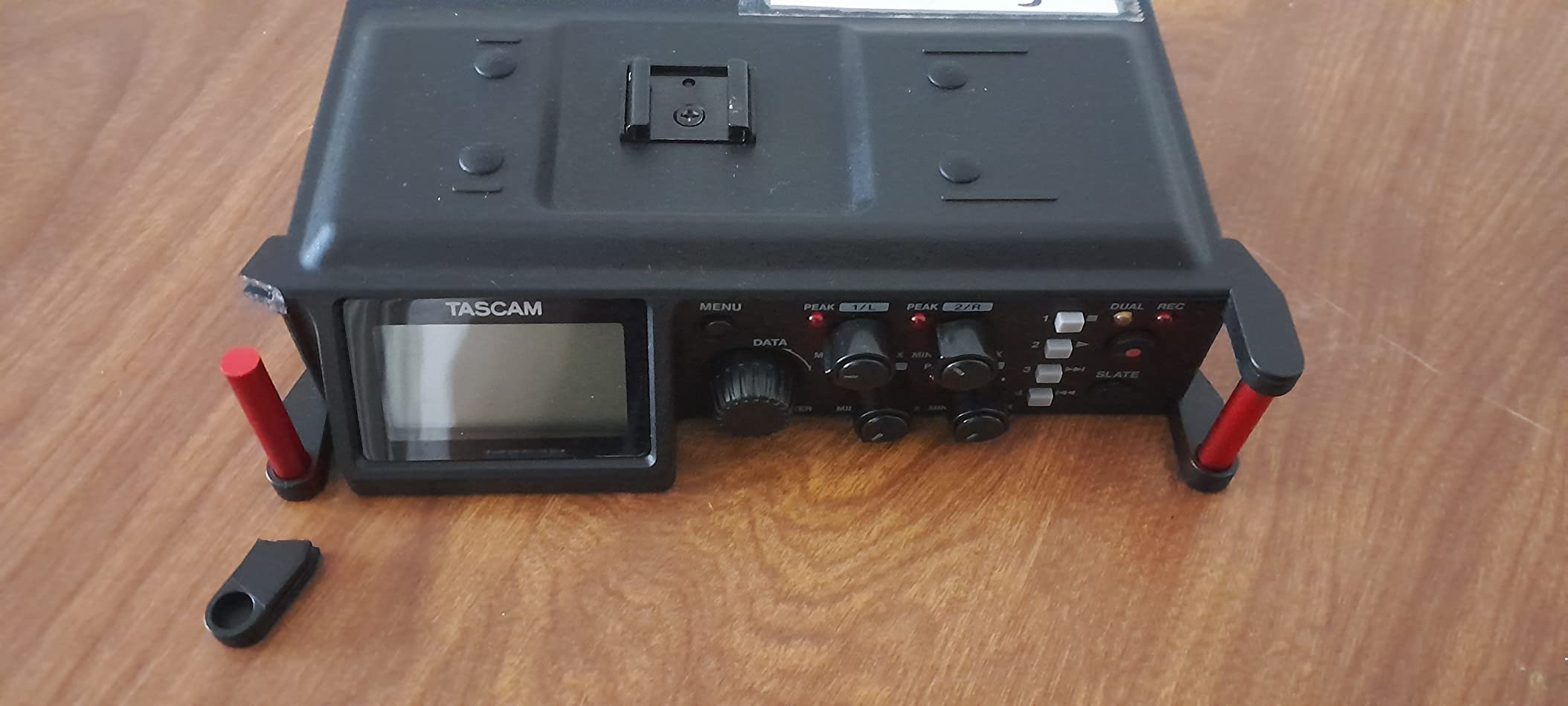
The HDDA preamps supply 64dB of gain, which is enough for quiet performance work at 24-bit/96kHz, and tracks export as four discrete files. Nothing has to be split or panned in post, so a straight drag into the timeline lands as four clean mono tracks.
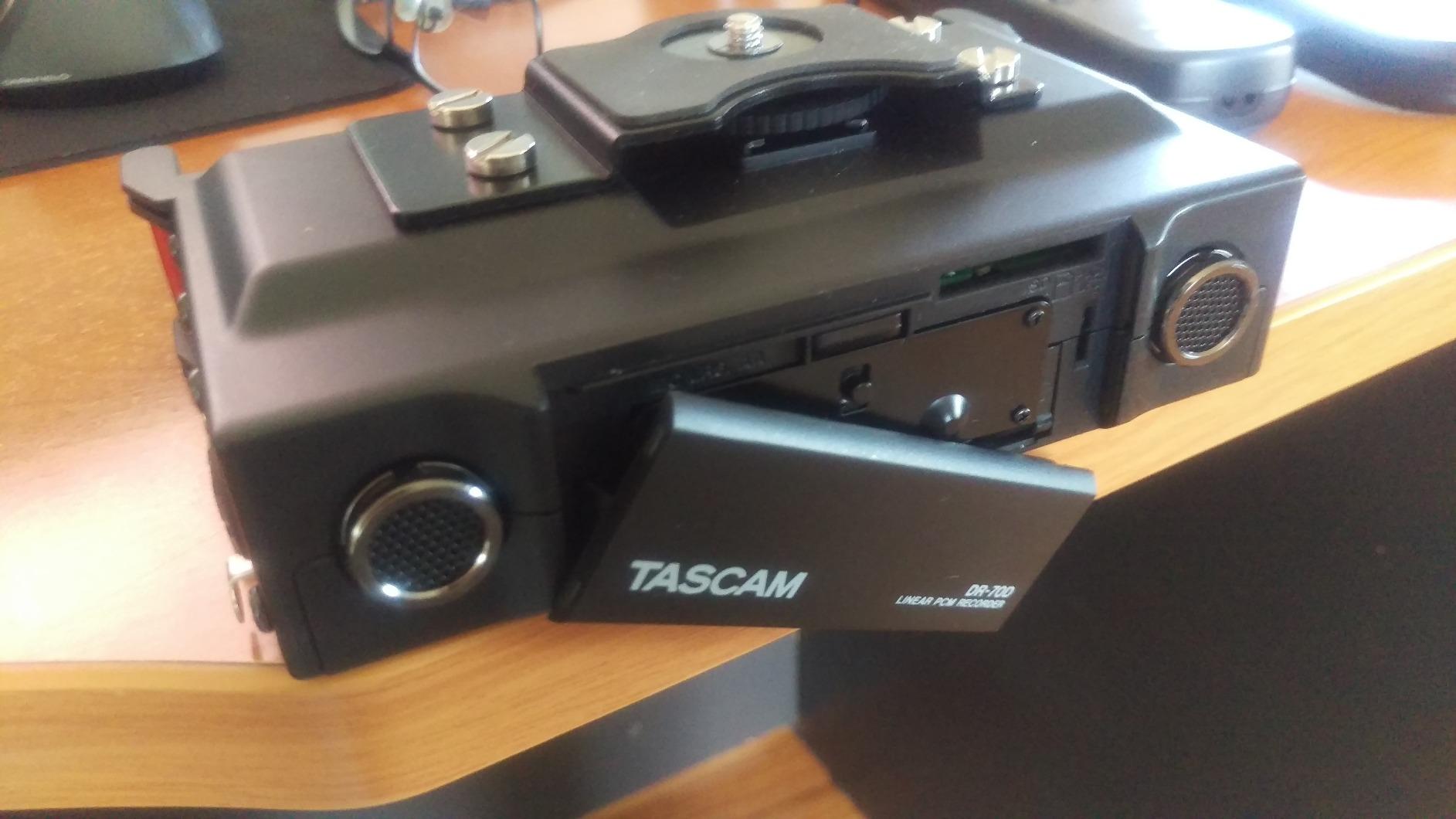
A pair of built-in microphones covers on-set capture when nothing is rigged, and the compact body mounts above or below a camera. It records to SD, SDHC, or SDXC media with cards up to 128GB supported, and the stated digital recording time reaches 100 hours.
Why physical gain knobs still matter
Every touchscreen recorder in this list makes you tap, confirm, and confirm again to change an input gain. The DR-70D has four real knobs, one per channel, and on a take where the levels are moving that difference is the whole ballgame. You can see all four inputs at once and ride them without leaving what you are listening to.
That also makes it the easiest of these six to hand to a second person. If you are directing and mixing, or working with a partner who is not a sound recordist, dedicated controls shorten every conversation about levels.
Where the DR-70D causes problems
Memory card compatibility is the most repeated complaint, and it is severe: cards outside the recommended list can throw file write errors mid-session, which means a lost take rather than a bad file. Budget for a card you have verified, and carry a second one.
The battery and SD card share a single rear door, so the card cannot be swapped while recording. All the small I/O is 3.5mm rather than quarter-inch, the 3.5mm line out is reported as noticeably noisy against the main outputs, and there is no onboard compressor. A 1.5-inch screen rounds out a body built for a rig rather than for reading in daylight.
6. Zoom F8n Pro – Eight Channels, Ten Tracks, and Timecode for a Full Crew
Zoom F8n Pro Field Recorder for Filmmakers with 8 Inputs & 10 Tracks
8 channels and 10 tracks
32-bit float with dual ADCs
75dB gain, -127dBu EIN
Dual SD slots to 1TB each
Pros
- Widest channel count here at eight inputs and ten tracks
- 75dB of gain and -127dBu EIN preamps
- Timecode accurate to 0.2ppm via TCXO
- Dual SD slots record redundant takes
- Metal build with clear dials and a tidy menu
Cons
- Micro USB port instead of USB-C
- PC connection needs multitrack ASIO routing
- Menu has a real learning curve
- 1.8 kg body is heavy to carry all day
Everything else in this roundup fits in a pocket. The F8n Pro weighs 1.8 kg and measures about 7 by 5 inches, and it is the only unit here built around a small sound team rather than one operator. Eight channels record ten tracks simultaneously, in 32-bit float with dual AD converters, which means a boom plus several lavs plus a stereo pair all land as separate files with no chance of a clipped take.
The preamps are the headline for dialogue: up to 75dB of gain at -127dBu equivalent input noise. At roughly -127dBu, a whisper in a treated room records without audible hiss, which is the threshold practitioners treat as the dividing line between recorders that can capture quiet dialogue and recorders that cannot. That figure is why a dynamic mic like an SM7B or a Rode PodMic sits comfortably in the gain range here.
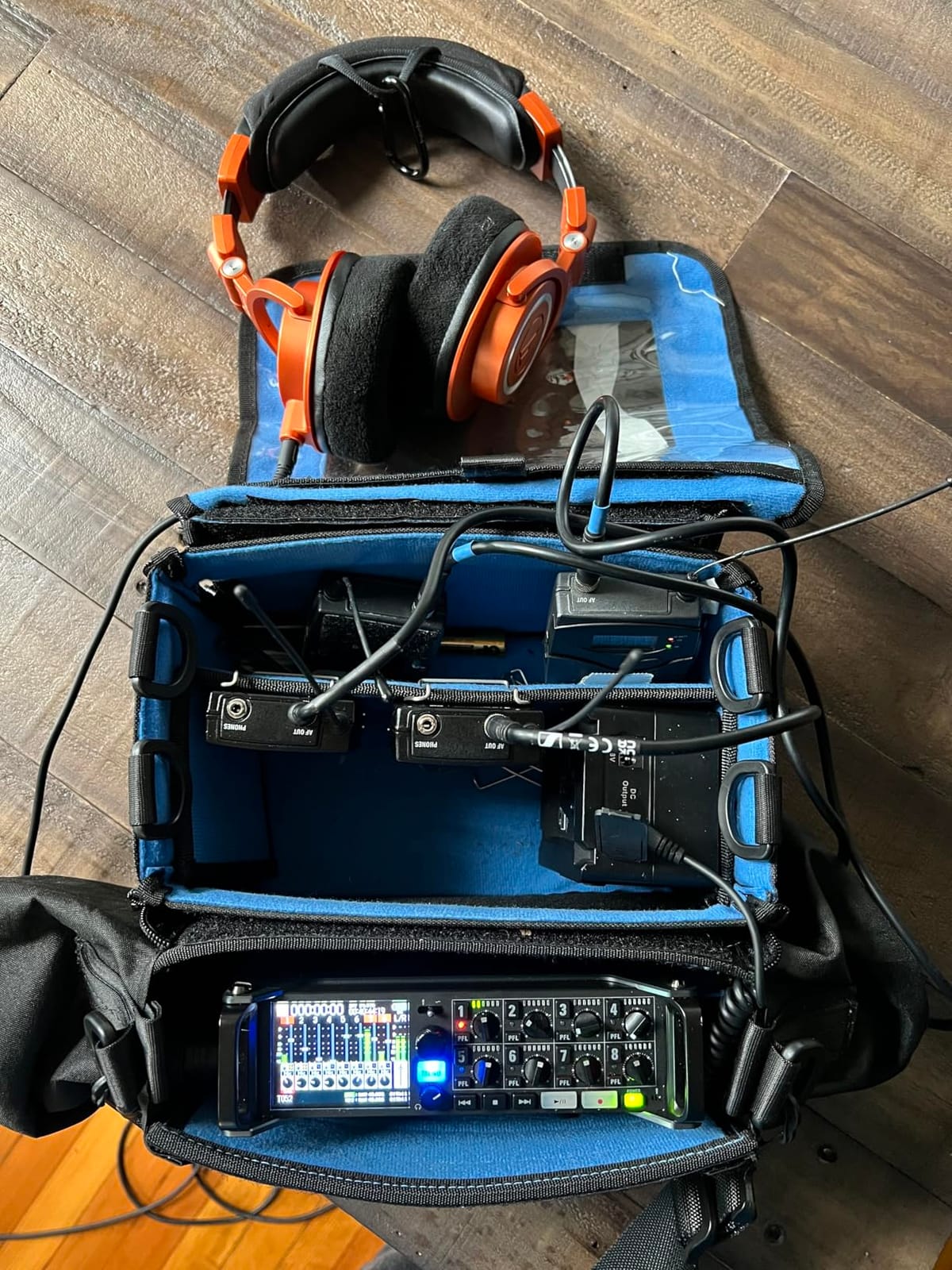
Timecode runs through a TCXO accurate to 0.2ppm, with timecode in and out plus generation and jam sync, so multi-camera work converges rather than depending on one person clapping. Dual SD card slots take cards up to 1TB each and can record redundantly, which is the second time the same take is written to two cards.
Film and location sound professionals compare it favourably to the Sound Devices MixPre-10 II, and reviewers rate the solid metal build, the clear dials, and the menu design highly. The menu does have a learning curve, but it is a shorter one than on most competing boxes, and a clean interface is the most common praise in the reviews.
When eight channels is the right answer
Multi-camera narrative work, a documentary interview with three subjects, or a shoot where you need a mix of boom, lavs, a room pair, and a camera feed. The eight inputs mean you can wire the whole plan directly and skip a field mixer, and the ten-track recording gives iso tracks plus a mix at the same time.
Redundant dual-card recording is the other answer. On a critical day, writing every file twice removes the single most common field failure, a card that stops accepting writes halfway through a scene.
Where the F8n Pro stops being portable
It is not a run-and-gun device. At 1.8 kg it becomes weight on a long walking shoot, and a sound mixer carries it in a bag, which means one more thing to hand off before a take.
The port is micro USB rather than USB-C, so an adapter protrudes and can stress the port, and connecting to a PC needs multitrack ASIO routing that complicates use with software like OBS. If you are not working with an assistant or a second operator, eight channels is capacity you will not use.
How to Choose a Portable Audio Recorder for Filmmaking
32-bit float is now the deciding spec
32-bit float recording means the recorder captures each input through two A/D converters running at slightly offset times and outputs a file with enormous headroom, so a level set badly still recovers. For a filmmaker, it converts a whole category of catastrophic failure into a non-event, and four of the six recorders here have it. If you are buying new, treat 24-bit as acceptable only for a rig-mounted safety track, which is exactly the DR-70D’s job.
One caution: 32-bit float does not fix a bad microphone in a bad room, and it does not fix level for an analogue source that was already distorted before it reached the converter. It protects you from operator error, not from the world.
Count the XLR inputs your shoot actually needs
Two inputs cover a single boom, or a boom plus one lavalier. Four inputs cover a boom plus two lavs, or a boom plus a lav plus a stereo pair. Anything beyond that means a field mixer or a second recorder. Phantom power, the DC voltage that powers condenser microphones through the XLR cable, matters whenever you like the sound of a small-diaphragm condenser shotgun, and every unit here except one supplies it.
Locking connectors are the detail people learn to appreciate late. A recorder mounted on a cold shoe or a pole cannot be reached when a cable works loose, and practitioners treat non-locking XLR as a disqualifier. The F3, X8, and F8n Pro all lock.
Read self-noise as a dialogue question, not a spec
Self-noise, quoted as equivalent input noise in dBu, is the noise the preamp adds with nothing plugged in. The practical reading is simple: around -127dBu or better records a whispered interview in a treated room without audible hiss, and anything near -112dBu will show a noticeable floor under a quiet take. Between those two numbers sits the difference between a recorder that handles a quiet interior scene and one that does not.
Only the F8n Pro in this group publishes a figure, at -127dBu with 75dB of gain. For the others, the practical test is to record ten seconds of silence in the quietest room you have and listen on headphones before you trust it.
Decide between built-in microphones and external
The H5 and DR-70D include microphones, which is genuinely useful for room tone, ambience beds, and spontaneous capture when nothing is rigged. The F3, FR-AV2, and F8n Pro have none, which is an advantage: it stops you leaning on a built-in capsule that picks up handling noise and creak. Users consistently report pushing serious work toward external microphones for exactly that reason.
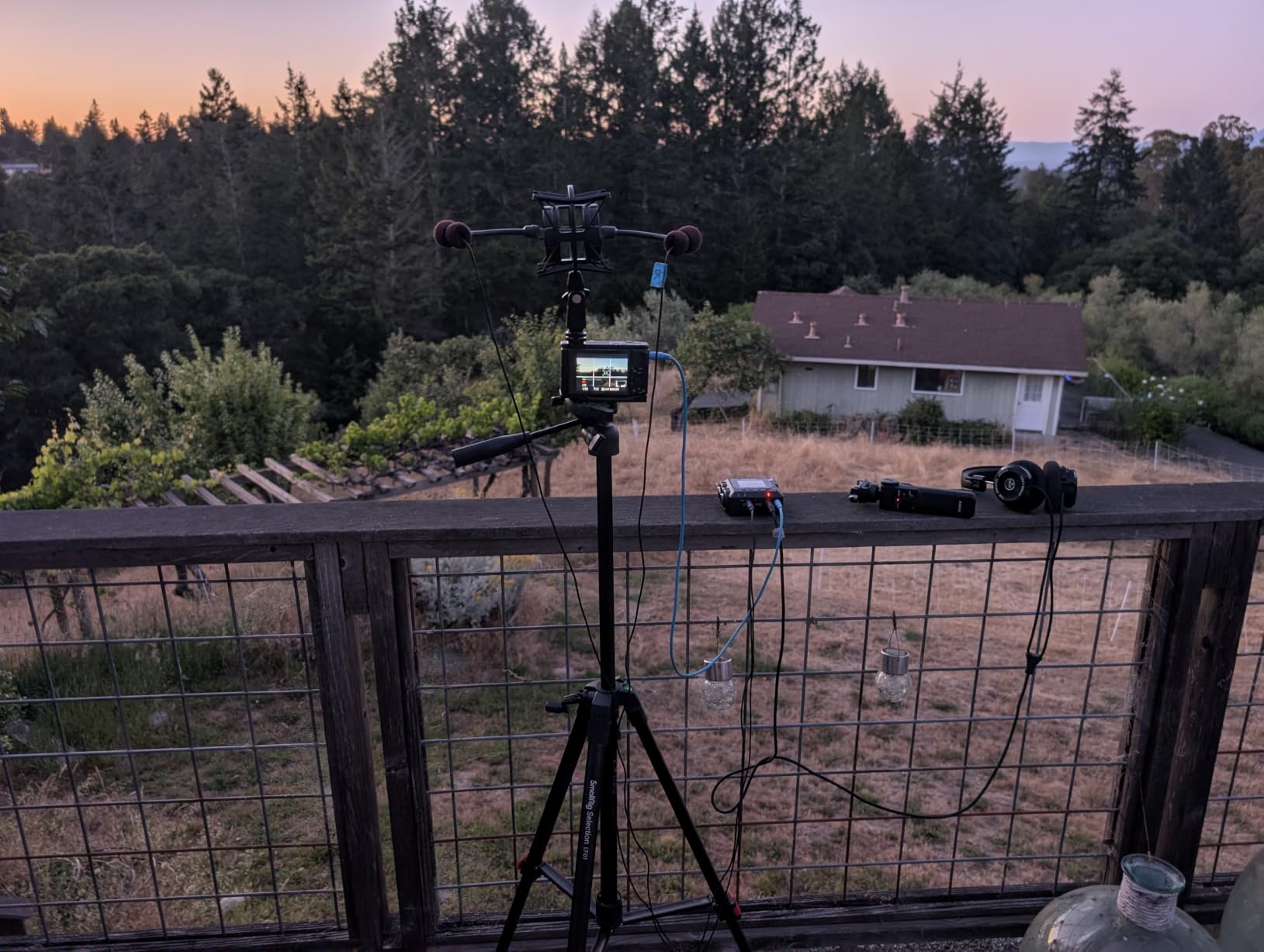
Every outdoor shoot also meets wind. A deadcat or blimp is not an optional accessory, and any recorder used outdoors needs either proper wind protection on the microphone or a low-cut filter set for the wind band. Buying a windscreen for the mic you already own costs far less than discovering the problem in the edit.
Storage, power, and what lands in your editor
Card capacity is the quiet constraint on long days. The H5 stops at 32GB on SD/SDHC media, the DR-70D supports cards up to 128GB, the X8 goes to 512GB, and the F8n Pro takes a card up to 1TB in each of its two slots. Battery support is similar: most run on AA cells, the F8n Pro carries a stated 8.5 hour average, and USB power is the underrated fix when phantom power is halving runtime.
All of these write WAV, usually Broadcast Wave, which drops directly into Premiere, Resolve, or Final Cut as individual tracks. That is the practical advantage over a camera’s onboard recording, which often writes compressed audio at a lower bit depth. Check that your edit software reads 32-bit float files before you commit, and keep recording in 24-bit if it does not.
Timecode, and how to sync your recorder to your camera
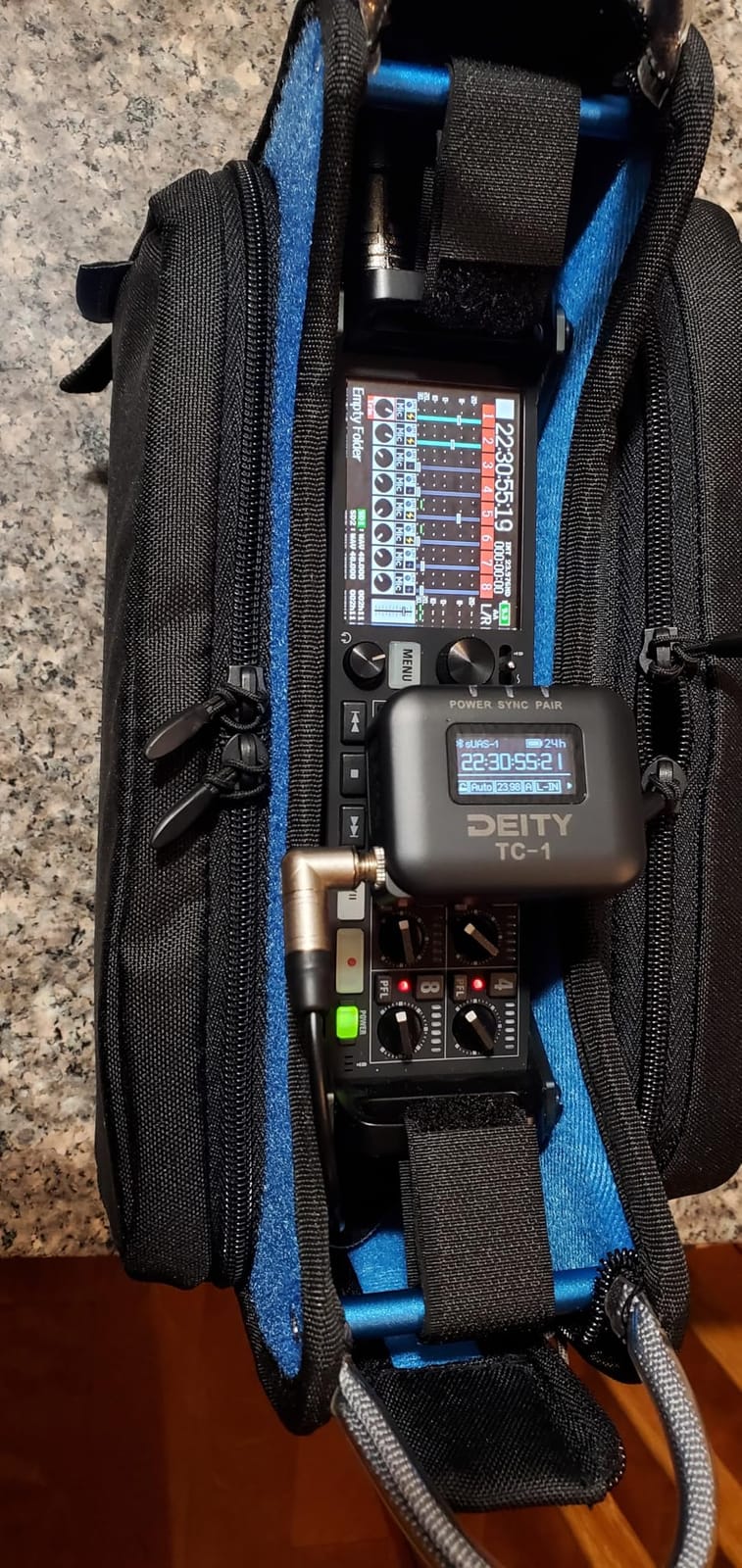
Timecode is a running clock stamped onto both the audio and the video so an editor can line them up without watching. The FR-AV2 generates it internally through a TCXO, the F8n Pro runs it at 0.2ppm accuracy with timecode in and out, and the rest of this list leaves the job to your camera or to a clap.
Set one device as the reference. Either your camera generates timecode and your recorder follows, or the recorder leads and feeds timecode to camera. Jam sync them once at the start of the day.
Jamming. Hold both triggers together so their clocks adopt the same value. Do this at the top of the day and again after any firmware update, card swap, or power cycle.
Keep them powered. Timecode drifts. Feed both devices from a common source where possible, and avoid shutting the recorder down between setups.
Slate once. Record a short slate at the head and tail of each setup. It costs ten seconds and it saves a whole scene if something goes wrong.
Conform in your editor. Point your NLE at the timecode tracks and it places every file automatically. Without timecode, expect waveform alignment and manual claps on every clip instead.
If you are not running two cameras, skip all of this. A single clap at the head of a take syncs a recorder to its camera in seconds, and the F3’s reviews specifically praise how consistently it syncs that way in DaVinci Resolve.
Recorder vs Wireless Lav vs Your Camera’s XLR Input
The most common first question from an indie filmmaker is whether to buy a recorder at all when the camera already has an XLR jack. Here is the honest comparison.
Camera XLR input: one mic, one track, and the audio lives on the camera’s card. If the camera fails, runs hot, or fills its card, the take is gone, and many cameras also limit the input to line level or apply processing. Best for scratch audio and single-boom narrative work.
Wireless lav: the fastest setup for one or two lavs with no cables to cross a frame, and the easiest to hand to an actor. The costs are dropouts, frequency coordination, battery management, and an audio quality ceiling below a wired XLR. Best for interviews where speed of setup beats audio purity.
Dedicated wired recorder: multiple inputs, full-resolution WAV, phantom power, and a recording that is independent of the camera entirely. It also gives you something to hand off to an editor without touching the camera card. This is the only option that scales to four or more sources without adding a mixer, and the only one that records an iso track for every microphone.
Our own rule after six weeks: if you shoot multi-camera, or have ever lost a take to a failed camera microphone, use a dedicated recorder. If you shoot single-camera with a boom and want the fastest possible setup, camera XLR is defensible. If you need two lavs on a subject who cannot be wired, wireless wins on the day regardless of the audio ceiling.
Frequently Asked Questions
What is the best audio recorder for videos?
For most filmmakers, a 32-bit float recorder with two locking XLR inputs is the right answer, because it protects every take from gain errors and mounts on a small camera rig. Our top pick is the Zoom H5 for its swappable capsules and four-track capture, the Zoom F3 for run-and-gun weight, and the Tascam FR-AV2 when you need internal timecode for two cameras.
Which audio recorder has the best sound quality?
Sound quality comes down to preamp self-noise, and a figure around -127dBu equivalent input noise is quiet enough to record a whispered interview in a treated room without audible hiss. Of the recorders we tested, the Zoom F8n Pro publishes that figure and pairs it with up to 75dB of gain, making it the most capable at capturing quiet sources cleanly.
Do I need 32-bit float recording?
For a recorder you carry as your primary dialogue track, yes. Dual A/D converters mean a badly set level still recovers instead of clipping, which removes an entire category of lost takes on unpredictable location sound. On a rig-mounted safety track running as backup to camera audio, 24-bit is a reasonable compromise, which is how we use the Tascam DR-70D.
How many XLR inputs do I need for filming?
Two inputs cover one boom, or one boom plus a single lavalier, which suits most solo and two-person work. Four inputs cover a boom plus two lavaliers, or add a stereo pair for room tone, which is what a three-person interview needs. Beyond four, you are into a field mixer or a second recorder, and the Zoom F8n Pro handles eight inputs directly.
Is a field recorder better than a wireless lavalier for video?
A wired recorder gives you better audio, more inputs, and a file that survives a camera failure, so it wins on quality and reliability. A wireless lav gives you a faster setup with no cables to cross the frame, which often decides the day on a two-person interview. Many crews end up using both, with a wired recorder as the primary track and wireless as a backup.
Conclusion
Six recorders, six very different answers to the same question. Buy the Zoom H5 if you want one dependable device that grows with you, the Zoom F3 if you work alone and want to stop thinking about levels, and the Tascam FR-AV2 if a second camera is on the horizon. Choose the Tascam Portacapture X8 when you need four inputs and a screen you can read outdoors, the Tascam DR-70D when you want physical gain knobs and a safety track on a camera rig, and the Zoom F8n Pro when a whole team and eight sources are on the day.
Whichever you pick, the habits matter as much as the hardware: check a verified memory card before every shoot, treat wind protection as mandatory, and record ten seconds of room tone against every dialogue scene. Those three habits solve more bad audio than any recorder on this list.