
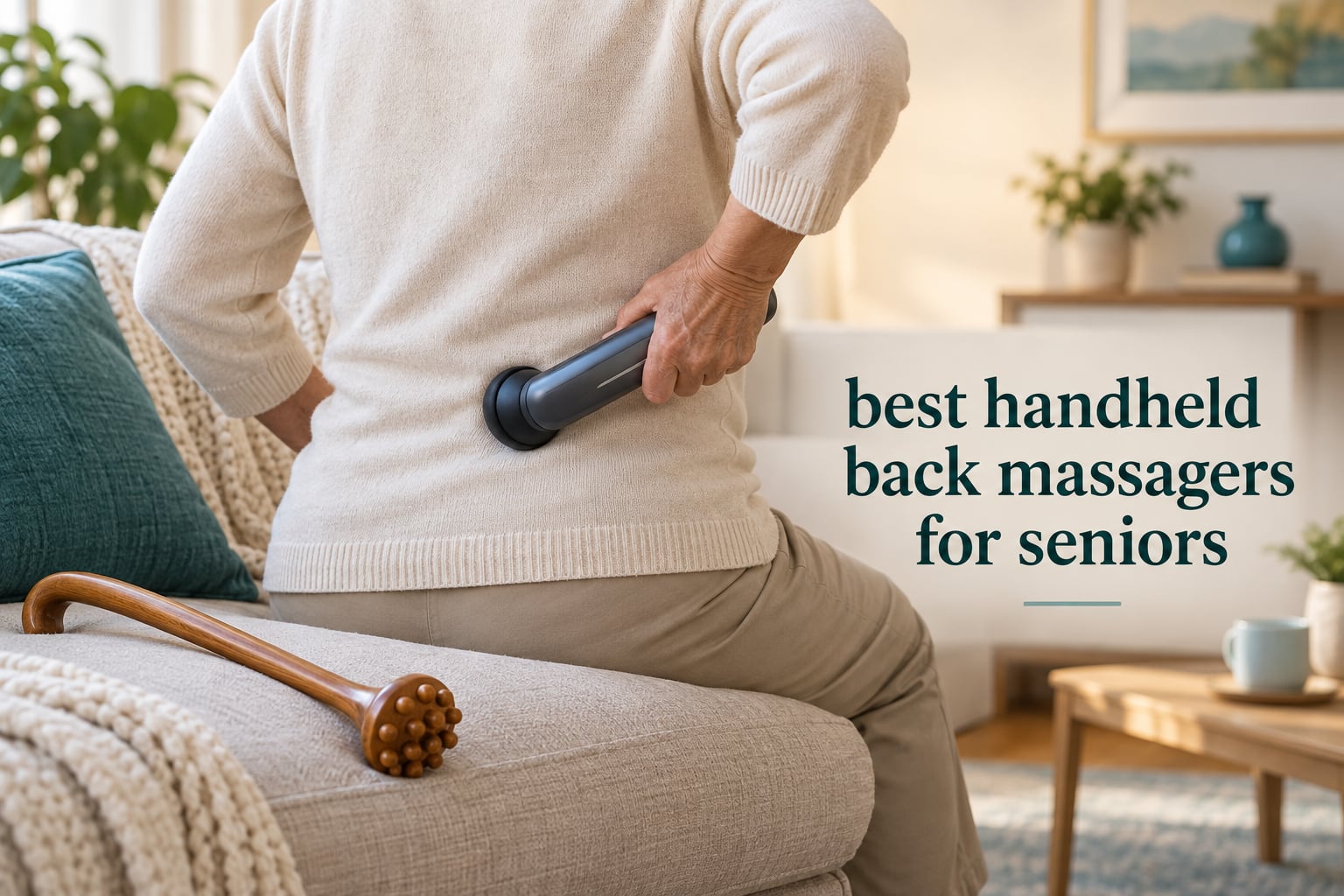
The best handheld back massager for seniors is the RENPHO Reach Curve Massage Gun with Extension Handle. It weighs 1.24 lbs, its handle telescopes from 10 to 18.5 inches so the lower back is reachable without twisting, and it has a stall force of about 22 lbs, which means it presses into a tight muscle instead of stopping dead. Those three facts matter far more to an older adult than raw pulses per minute.
Most massager roundups are written for people in their thirties who want to recover from the gym. This one is not. We ranked the 10 devices below on the things that decide whether an older adult can actually pick the thing up, hold it against their own back, and use it without hurting themselves: unit weight, one-handed reach, how gentle the lowest setting genuinely is, how simple the controls are, and whether it shuts itself off.
That framing changed the list. The two heaviest massagers here finished at the bottom, not because they are bad, but because a 2.3 lb unit with a slippery handle is a poor match for arthritic fingers. Meanwhile the four highest-ranked products include two simple manual canes that need no charging at all.
We earn a commission if you buy through the links on this page, and it does not change the ranking. Every rating and review count below is taken from the current listing, and every con is one that reviewers actually reported. Where we could not verify something, we say so rather than guessing.
Table of Contents
Top 3 Handheld Back Massagers for Seniors (September 2026)

RENPHO Reach Curve Massager
- Extends 10 to 18.5 inches
- Only 1.24 lbs
- 4 speeds 1000-3000 RPM
- 10-minute auto-off

Body Back Buddy Classic
- 1.25 lbs
- Manual trigger point pressure
- 2 hooks and 11 knob shapes
- No charging needed
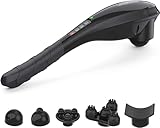
RENPHO Cordless Massager
- Only 1.76 lbs
- 5 speeds and 5 modes
- 5 interchangeable heads
- 140 minutes per charge
If you only read one section, read that. The Reach Curve solves reach, the Body Back Buddy solves grip and total cost of ownership, and the RENPHO Cordless is the value pick for anyone who wants a motor without a premium.
All 10 Picks at a Glance (2026)
| Product | Specifications | Action |
|---|---|---|
|
RENPHO Reach Curve Massage Gun with Extension Handle
|
|
Check Latest Price |
|
Body Back Buddy Classic Back Massager and Neck Massager
|
|
Check Latest Price |
|
RENPHO Cordless Handheld Massager
|
|
Check Latest Price |
 TRIGGERPOINT Performance Therapy AcuCurve Massage Cane
|
|
Check Latest Price |
 LiBa Back Massager Trigger Point Cane
|
|
Check Latest Price |
 Snailax Cordless Handheld Back Massager with Heat
|
|
Check Latest Price |
 Melonsun Palm Massage Tool
|
|
Check Latest Price |
 HANGSUN Handheld Neck Back Massager MG400
|
|
Check Latest Price |
 Backnobber II Massager Cane
|
|
Check Latest Price |
 MEGAWISE Handheld Percussion Massager
|
|
Check Latest Price |
Read the weights first. Seven of these ten weigh 2 lbs or less, and the three heaviest share the same problem: they are hard to hold one-handed against your own back for more than a few minutes.
Safety First: When Not to Use a Handheld Massager
This section comes before the product list on purpose. A massager is a mechanical device pressed against skin, and the population most likely to buy one is also the population most likely to be on medication or have a condition that makes firm pressure a bad idea.
This is general information, not medical advice. If any of the following applies to you, talk to your doctor before using any massager:
You have a pacemaker or another implanted electrical device.
You take blood thinners or anticoagulants such as warfarin, apixaban or rivaroxaban.
You have osteoporosis, or bones weakened by long-term steroid use.
You have a history of blood clots, deep vein thrombosis or a circulation disorder.
You have carotid artery disease or other vascular disease.
You have diabetes that is not well controlled, which often comes with reduced sensation.
You have had surgery recently, or have healing incisions, sutures or scar tissue in the area.
You have thin, fragile or bruised skin.
You have nerve damage or loss of feeling in the area you intend to treat.
Even when none of those apply, follow four rules. Never press directly over a bone, a joint or the spine itself. Percussion belongs on the muscle to either side of the spine, not on it. Never use a massager on the front or sides of the neck. And cap your session at 10 to 15 minutes per area and 30 minutes total, starting shorter than you think you need.
Most of the electric models here include an automatic shut-off between 10 and 20 minutes. That is a safety feature, not an inconvenience. Use it rather than working around it.
1. RENPHO Reach Curve Massage Gun with Extension Handle – Best Overall for Seniors
RENPHO Reach Curve Massage Gun with Extension Handle, 4-in-1 Massager
1.24 lbs
Handle extends 10 to 18.5 inches
4 speeds 1000-3000 RPM
10mm amplitude
10-minute auto-off
Pros
- Only 1.24 lbs so the long handle does not tire the hand
- Extending handle solves lower back and foot reach
- 22 lb stall force presses into muscle instead of stalling
- 5 detachable heads and a compact form for the arms
- Storage bag and detachable design for travel
Cons
- Touch power button is finicky and can switch off against clothing
- Handle release button can detach the head mid-use
- 10-minute auto-off cannot be disabled
The reach problem is the single biggest reason a senior buys a massager and then stops using it. You cannot comfortably reach the middle of your own lower back with a short stubby handle, so the device goes in a drawer. This one is built around that exact problem, and the 4-in-1 detachable design lets you configure it three ways: extension handle for the lower back, telescopic handle for the neck and shoulders, and compact form for arms and legs.
What surprised me most was the weight. A telescoping handle usually means a heavier unit, and this one is 1.24 lbs, which is lighter than most full-size cordless massagers. Reviewers who had previously tried gooseneck-style back massagers specifically credit the stall force of about 22 lbs as the reason they stayed, because the head does not bog down when you press it into a tight band of muscle.
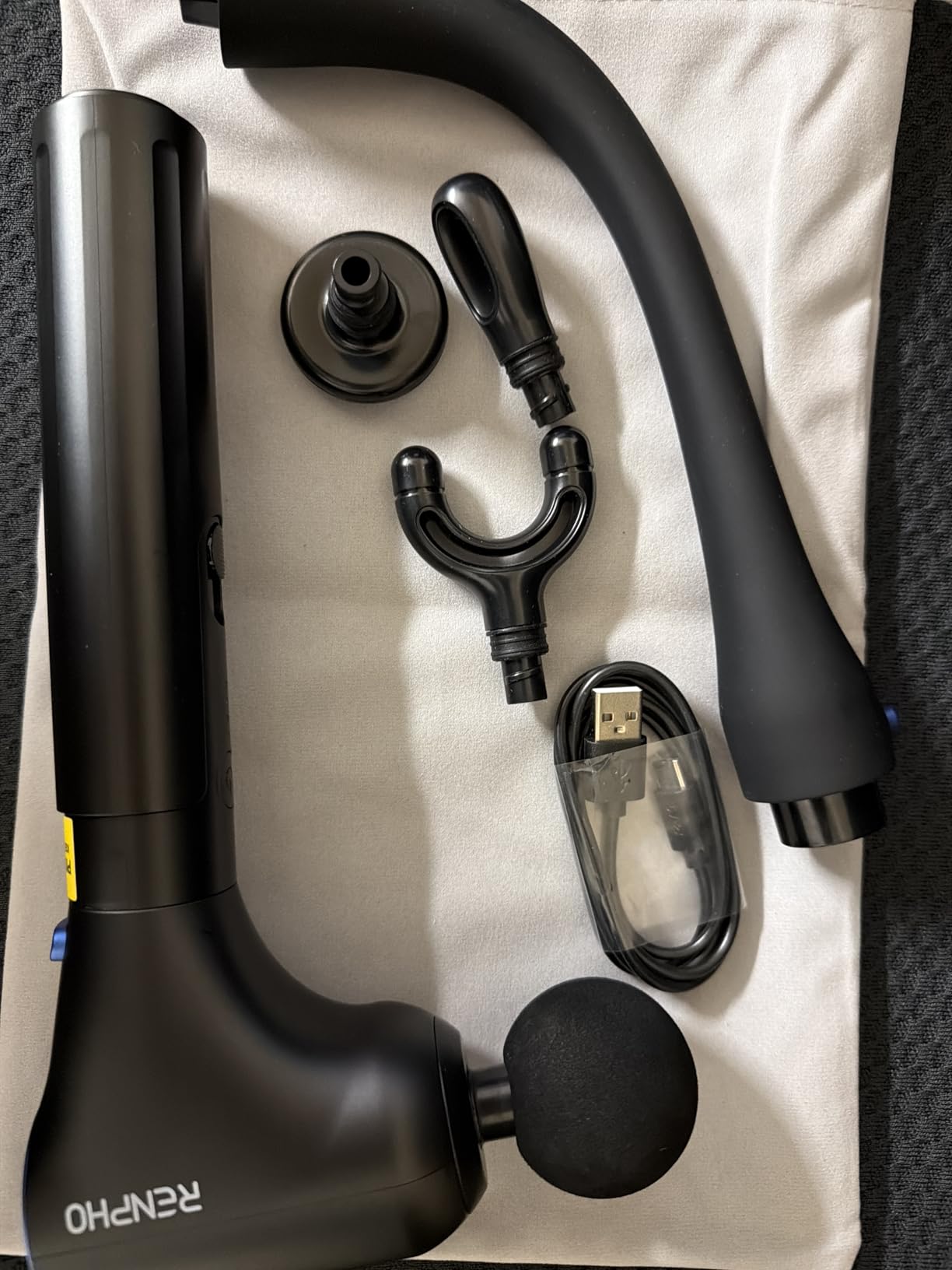
One charge is reported to cover roughly a week of daily use, and charging efficiency is 30 percent better than earlier versions of the same motor. That matters more than it sounds: the person who recharges it is often the adult child who bought it, so a device that needs charging twice a week tends to go unused.
There are two controls to know, and both are touch-sensitive. The power button needs a sustained press to turn on but can switch the unit off from a light brush against a sleeve. The handle release button sits where your hand naturally rests, which is how the head can come loose mid-session. Neither is dangerous in the way a loose battery is, but both are exactly the kind of small friction that wears a user out over months.
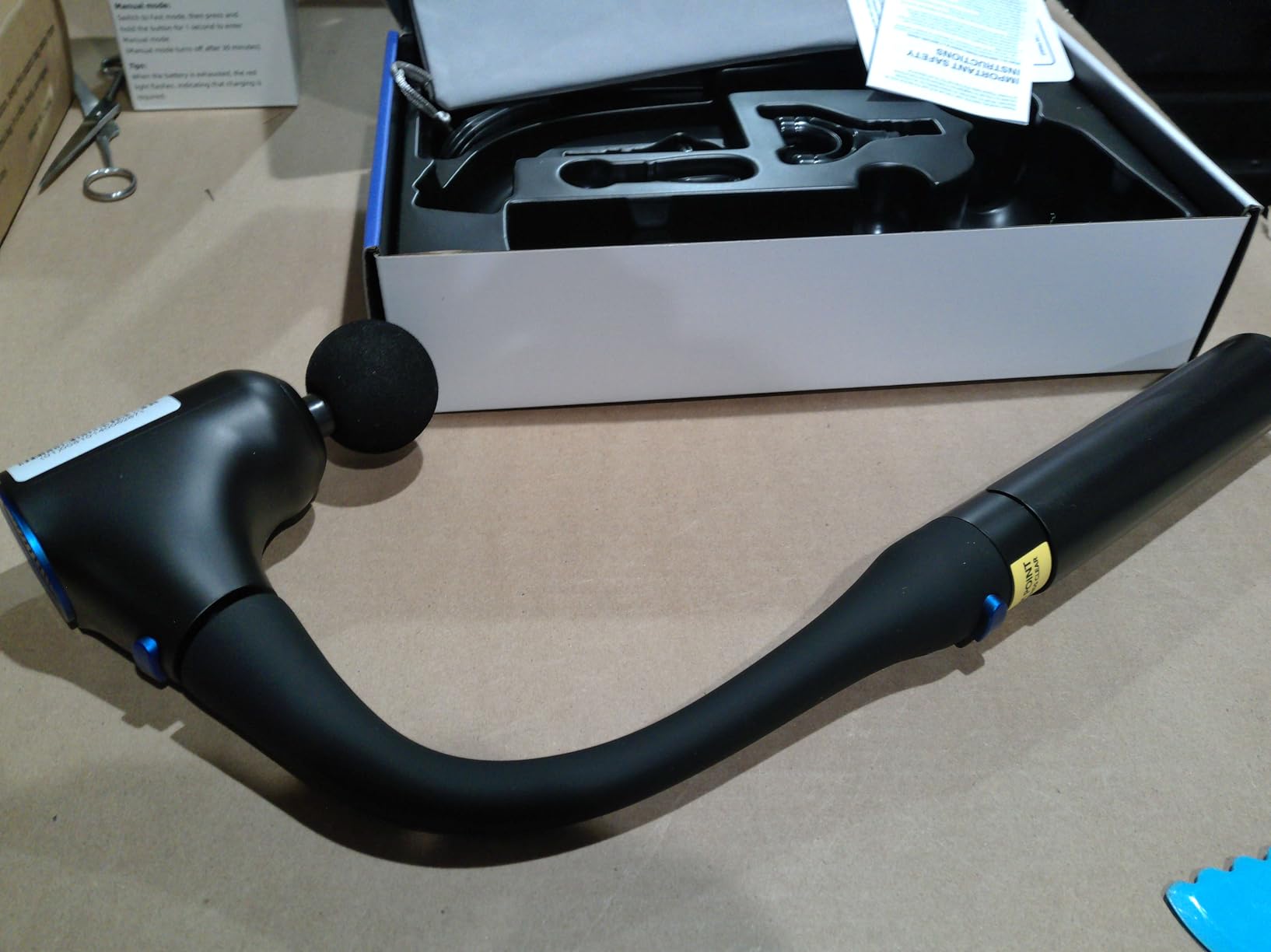
Reach That Actually Solves the Lower Back
The handle extends from 10 to 18.5 inches, which covers the full lumbar region and reaches down to the feet. At full extension the unit does feel heavier and some users report hand numbness, so the practical approach is to extend only as far as the target area requires.
There is also a mode that increases RPM as you press harder, which gives a graduated feel rather than a single fixed thump. Four speed levels from 1000 to 3000 RPM cover the range from gentle warmth to a genuine deep-tissue pulse, and the lowest setting is low enough to start on.
Who Should Buy It and Who Should Pass
Buy it if the lower back is the problem area and your hands are steady enough to hold a 1.24 lb tube. It is the strongest all-round pick here for a reason, and owners cite it for sciatica, hip and lower-back use.
Pass if you cannot feel your fingers clearly, since a touch control with a dead-feeling hand is a repeated trip to the power button. If deep pressure is not something you want at all, the softer vibration options further down this list are a better fit.
2. Body Back Buddy Classic Back Massager – Manual Pick With the Longest Track Record
Body Back Buddy Classic Back Massager & Neck Massager for Pain Relief Black
1.25 lbs
Manual two-piece trigger point cane
2 hooks and 11 knobs
4 non-slip grips
Pros
- 18k-plus reviews give it a proven track record
- You control intensity precisely with your own hand
- No battery no charger and no motor to fail
- Covers back neck shoulders legs and feet
Cons
- Manual pressure tires arms and shoulders quickly
- Two-piece joint is less rigid than a single molded cane
- Not water resistant so no shower use
With 18k-plus reviews at 4.6 stars, no other manual tool here comes close in volume, and the only product here where reviewers repeatedly mention their elderly parents using it without difficulty. A verified buyer review puts it plainly: both my elderly parents and young daughter can use it with ease.
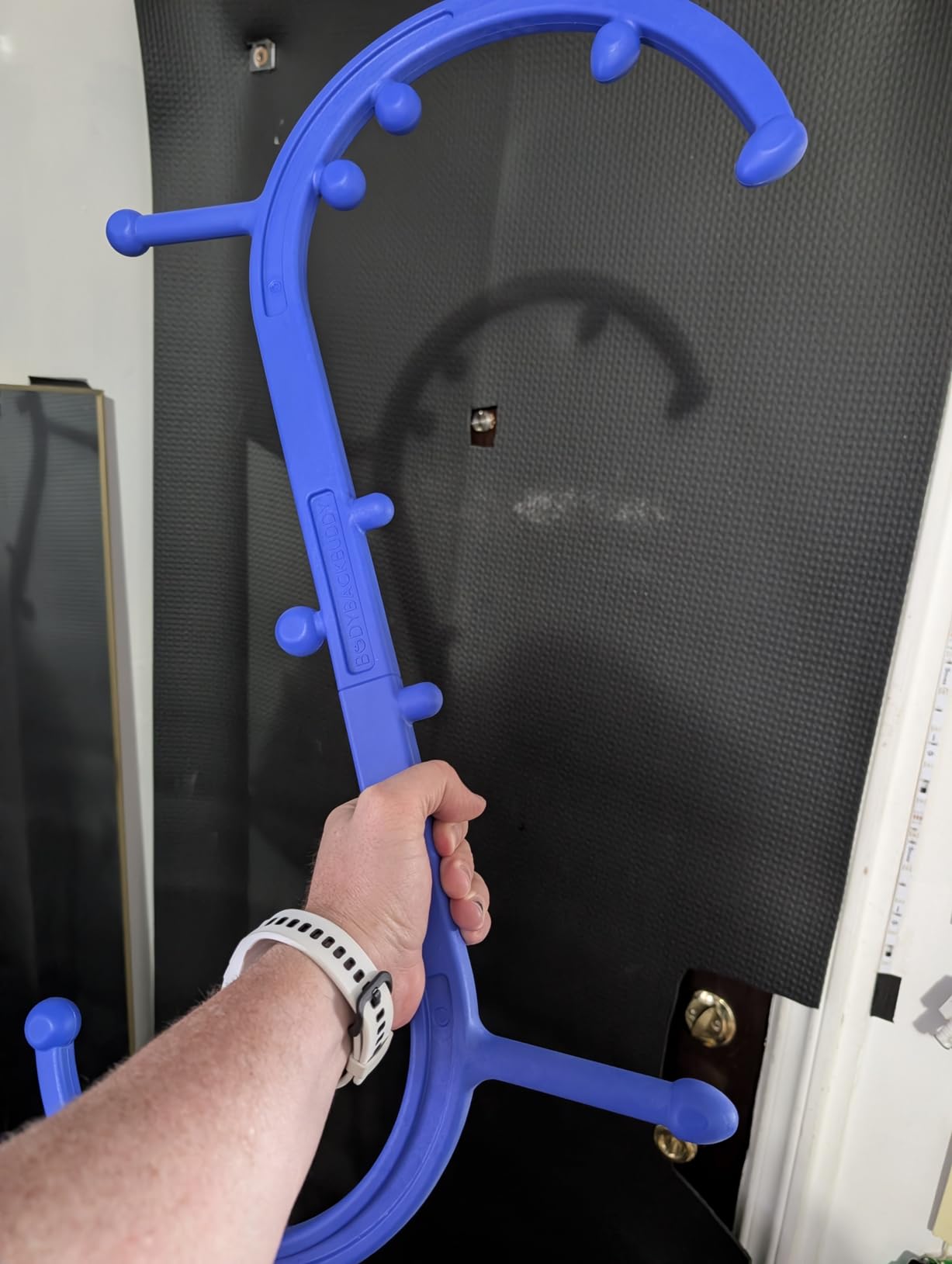
The design is two cane sections that snap together in the middle, with two hooks and 11 interchangeable knobs in three shapes: acorn, round and nub. The hooks reach the mid-back where a flat head cannot, and the different knob shapes let you change contact area as the muscle changes. Sustained pressure on a trigger point is the whole mechanism, and it is genuinely under your control in a way no electric setting matches.
There is a professional endorsement pattern here worth noting. Multiple reviewers say a physical therapist recommended the tool to them, and in this category that is the single most common credibility signal users report. Several also bought it as a gift after a parent had rotator cuff or back surgery.
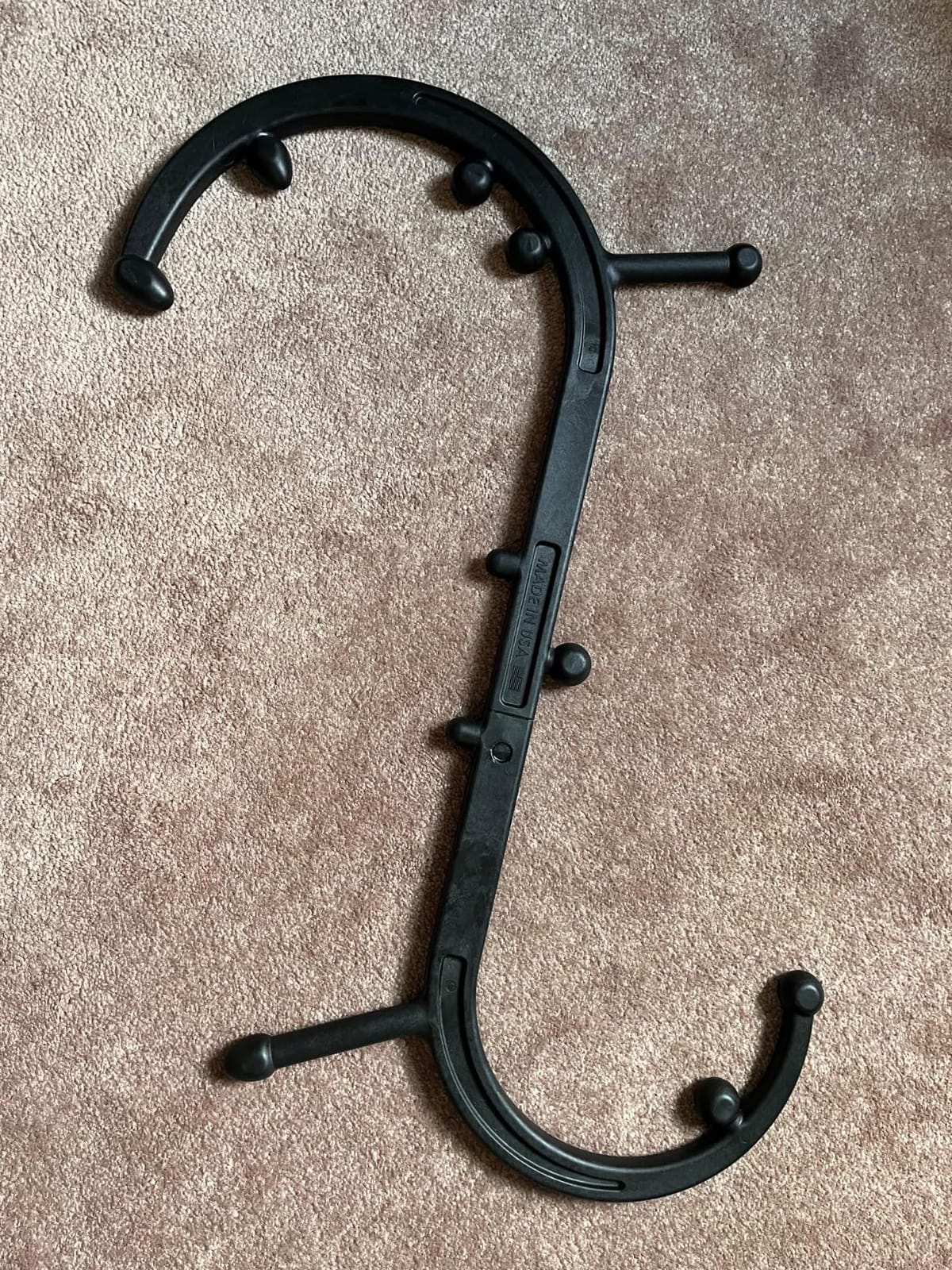
Construction is the other argument. The two-piece snap-together design is lab tested at up to 30 percent stronger than competing therapy canes, and it is made in Tennessee. The trade-off is that the mid-joint is a hinge, so it is not as rigid as a single molded cane when you try to lever hard against it. In practice that means steady, sustained pressure works and aggressive levering does not.
It is also not water resistant, so it stays out of the shower. That is the one practical gap against the LiBa cane below, which is shower-safe.
How It Behaves in the Hand
At 1.25 lbs it is light, and the four non-slip grips are placed along the shaft so you can change hand position when your shoulder tires. The knobs are the contact point, so the useful technique is to rest the cane against the muscle and press your bodyweight down through it rather than swinging at the knot.
That distinction matters for older adults. Swinging generates impact, not pressure, and it is the kind of motion that strains a shoulder. Resting and leaning is a static hold, and it is far easier on an arthritic shoulder joint.
Who Should Buy It and Who Should Pass
Buy it if you want total control over pressure, if you would rather own one thing than manage a battery, or if the person using it has limited hand strength but a workable shoulder. Nothing about it can fail electrically.
Pass if you have restricted shoulder mobility, since every application of force still comes from the arm. And pass if you want a motor doing the work, because nothing here moves on its own. For hands that cannot grip a handle at all, look at the hands-free alternatives near the end of this guide.
3. RENPHO Cordless Handheld Massager – Best Value Electric Pick
RENPHO Cordless Handheld Massager, 5 Adjustable Speeds and Massage Modes
1.76 lbs
5 speeds and 5 modes
Up to 3600 RPM
5 interchangeable heads
20-minute shutoff
Pros
- Largest review base in this roundup at 63k-plus reviews
- Only 1.76 lbs with an extended non-slip handle
- Five soft and firm heads let you tune the feel
- 140 minutes of runtime covers many sessions per charge
Cons
- Cannot run while plugged in to charge
- 20-minute auto shutoff interrupts longer sessions
- Top speeds can feel too intense on sensitive areas
With 63k-plus reviews, this is the most reviewed electric handheld on the list, and for a good reason: it does the basics well, weighs 1.76 lbs, and has no obvious weak point. If you want a motor and you do not want to spend time researching extension handles, this is the safe default.
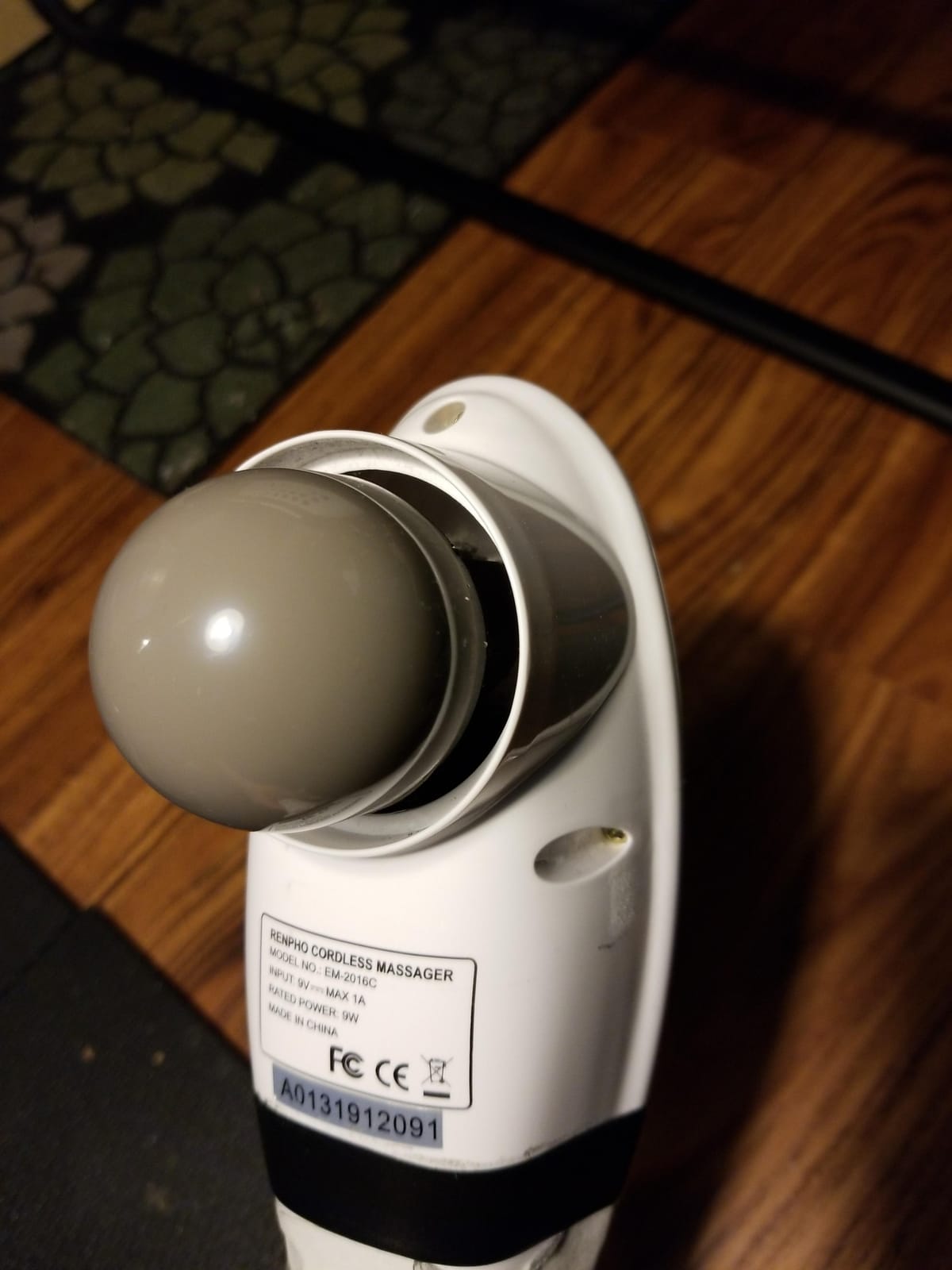
The specification that matters most for seniors is the combination of 5 intensity levels and 5 massage modes, backed by a motor reaching up to 3600 RPM. That is enough range to start genuinely gentle and work up only as needed, and the five interchangeable heads include both soft and firm versions so the sensation can be changed without changing the speed.
The extended non-slip handle is angled to reach shoulders and lower back. The catch, and reviewers do mention it, is that it is less useful for the very center of the lower back. If that specific spot is the target, the telescoping design of the number one pick is a better tool.
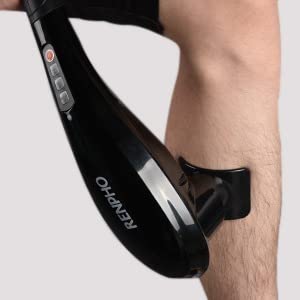
Two design decisions annoy people. The unit cannot be operated while it is charging, so a dead battery means no massage until it is plugged back in. And the 20-minute automatic shut-off interrupts a longer session, requiring a manual restart. Both are safety features, but on a 20-minute timer with a rechargeable battery they add up.
Against that, 140 minutes of runtime per charge is generous. That is several full back sessions, and it means the device is unlikely to be found dead the first time someone reaches for it.
Weight and Balance Over a Long Session
At 1.76 lbs this sits in the middle of the list, noticeably lighter than the 2.3 and 2.6 lb units further down and heavier than the 1.24 lb Reach Curve. In practice the difference shows up after about ten minutes, when a heavier unit starts to pull on the wrist and the user shortens the session.
The non-slip handle texture matters as much as the number. A smooth barrel-style grip is the first thing to fail with a damp or aged hand, and this one is textured along its length.
Who Should Buy It and Who Should Pass
Buy it if you want cordless convenience, a wide range of settings and a device with a very large body of user testing behind it. It is a reasonable first handheld for most households.
Pass if you are on anticoagulants or have osteoporosis, because the top end of the speed range goes harder than a vibration-only device would. Also pass if you want a deep-tissue roll or a long-reach tool for the lower back specifically.
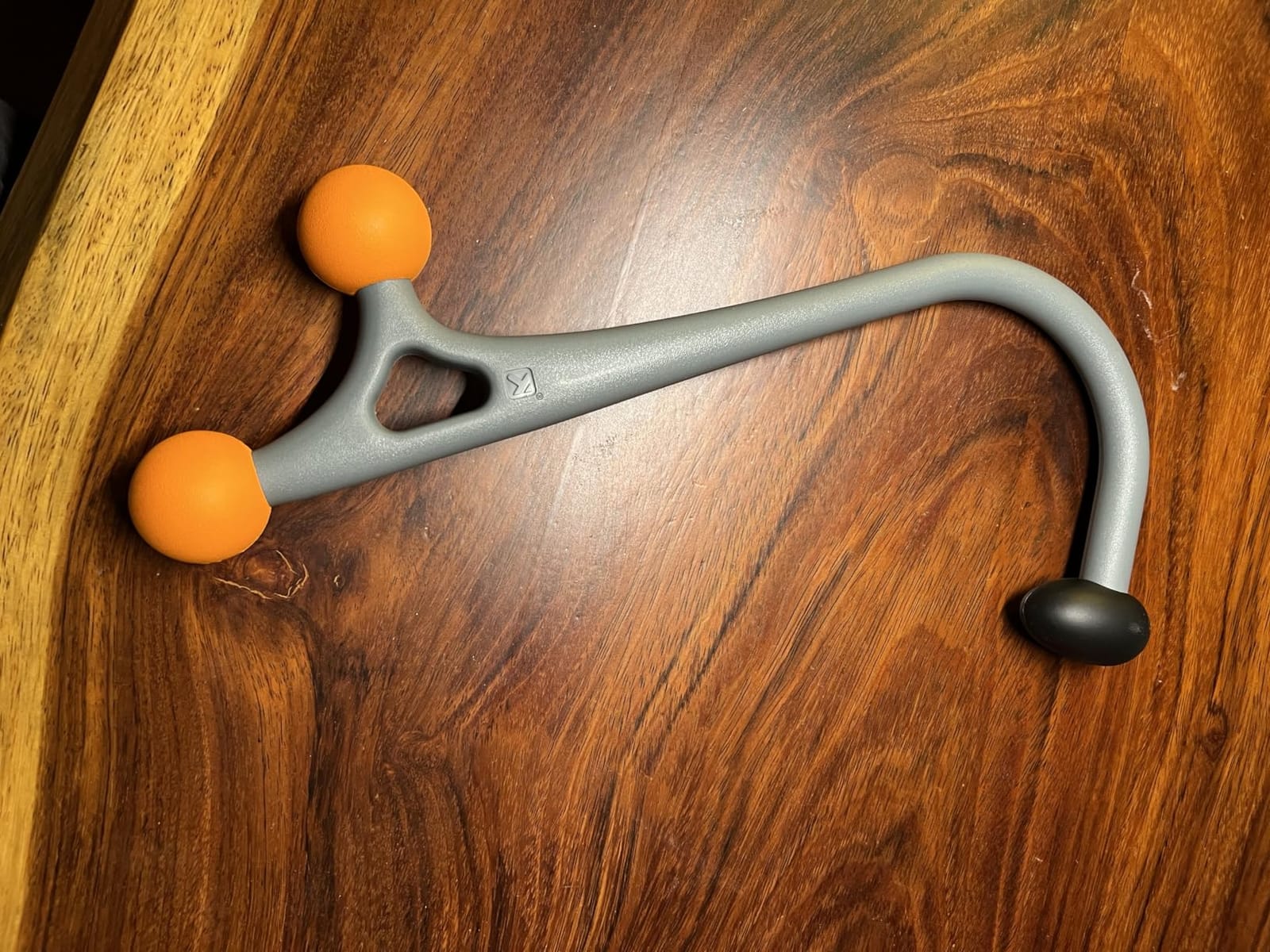
4. TRIGGERPOINT Performance Therapy AcuCurve Massage Cane – Best for Weak Grip
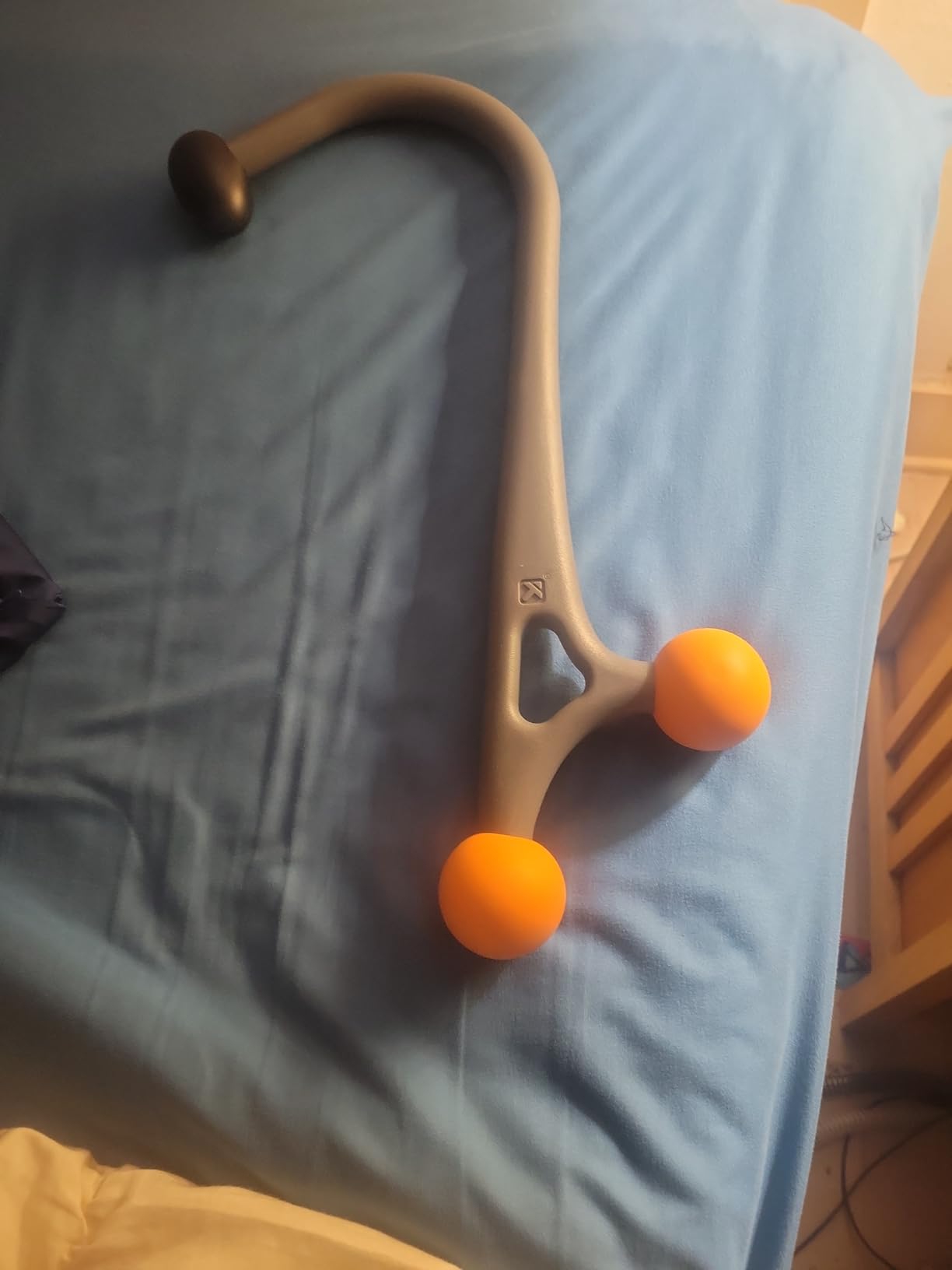
TRIGGERPOINT PERFORMANCE THERAPY AcuCurve Massage Cane for Neck, Back and Shoulders, Gray/Orange
9.6 ounces
Firm drop tip for pinpoint pressure
Double massage ball for muscles around the spine
Manual, no power needed
Pros
- Lightest full-size cane in the roundup at 9.6 ounces
- Always ready with no battery or charger
- Extra firm tip gives precise deep-tissue pressure
- Double massage ball works the tight muscles beside the spine
- Brand explicitly positions it for seniors
Cons
- Pressure is entirely user-supplied so weak shoulders struggle
- Rolling technique takes practice to angle correctly
- Not water resistant
- Narrow contact area suits small knots more than broad muscle
At 9.6 ounces, this is the lightest full-size cane in the roundup, and for a senior with genuinely reduced grip strength that is the entire argument. Holding half a pound in one hand while pressing with the other is a fundamentally different task from holding 2.3 lbs.
The shape is a curved cane with an extra firm drop tip at the end and a double massage ball design. The tip concentrates pressure into a small area for pinpointing a stubborn knot, while the double ball spreads contact over the tight muscles that run alongside the spine. The AcuLoop grip is designed to keep the cane from slipping in a sweaty or oiled hand.
Nothing about it needs maintaining. No charging, no battery, no adapter, no motor to wear out. For a household where the person who would fix a broken charger is not the person using the device, that is a real advantage.
The honest limitation is that all of this power comes from the user. There is no motor adding force, so a shoulder with restricted range of motion will struggle. Reviewers describe the rolling technique as one that needs practice to find the right contact point and angle, and the narrow contact area means it suits a small, specific knot better than a broad area of tightness.
It is also not water resistant, so it stays out of the bathroom. If shower use matters to you, the LiBa cane two picks down is shower-safe and nearly as light.
Precision Pressure Without a Motor
The value here is control. Because you are the force source, you can hold exactly as much pressure as feels right and back off instantly. That is a genuine advantage over an electric unit whose lowest setting may still be too much, and it is why this type of tool is frequently recommended by physical therapists for exactly the people least able to tolerate a hard pulse.
The learning curve is real but short. Start by resting the cane against the muscle and leaning, the same technique that works with the Body Back Buddy, and increase the angle gradually rather than pressing straight down hard.
Who Should Buy It and Who Should Pass
Buy it if grip strength is the main worry, if you want something that is ready the instant it is picked up, or if you are buying for a parent with limited hand strength who can still use their shoulder.
Pass if you cannot press with the arm at all, because every application of force comes from you. Do not also choose it expecting it to treat a wide band of upper-back tension, since the contact area is deliberately narrow.
5. LiBa Back Massager Trigger Point Cane – Best Manual Reach
LiBa Back Massager Trigger Point Cane, Deep Tissue Back Neck Massager Black
1.34 lbs
Wide arc reaches between the shoulder blades
Hard plastic, matte finish
Shower-safe and hypoallergenic
Two-piece travel design
Pros
- Wide top arc specifically reaches between the shoulder blades
- Reviewers with arthritis report they can still hold it
- Under 2 lbs stays accurate without arm fatigue
- No sharp edges or rough surfaces
- Shower-safe and BPA PBDE TBBPA-free
Cons
- Hard plastic creates friction on bare skin during rubbing
- Two-piece joint is the weak point for a small number of owners
- Matte finish loses grip with oily or sweaty hands
- S-shape connection offers less flexibility than the detachable variant
At 4.7 stars from 3k-plus reviews with 79 percent five-star ratings, this is the one manual cane reviewers most often describe as usable with arthritis in the hands. The 4.6-star Body Back Buddy has more reviews, but the LiBa is the one people specifically say they can still grip.
The defining feature is the wide arc at the top of the cane, which is shaped to reach the space between the shoulder blades. That is the hardest area to self-massage, and reviewers with larger body sizes single it out as the reason they bought this rather than a straight cane. Neck nubs at the base, a small curve for the foot, a large curve for the shoulder and mid-back cover the rest.
It is also shower-safe, which none of the other manual canes here are, and it is made from BPA, PBDE and TBBPA-free hypoallergenic plastic. For someone who likes to work a knot out under warm water before bed, that is a genuine practical advantage over the other manual canes on this list.
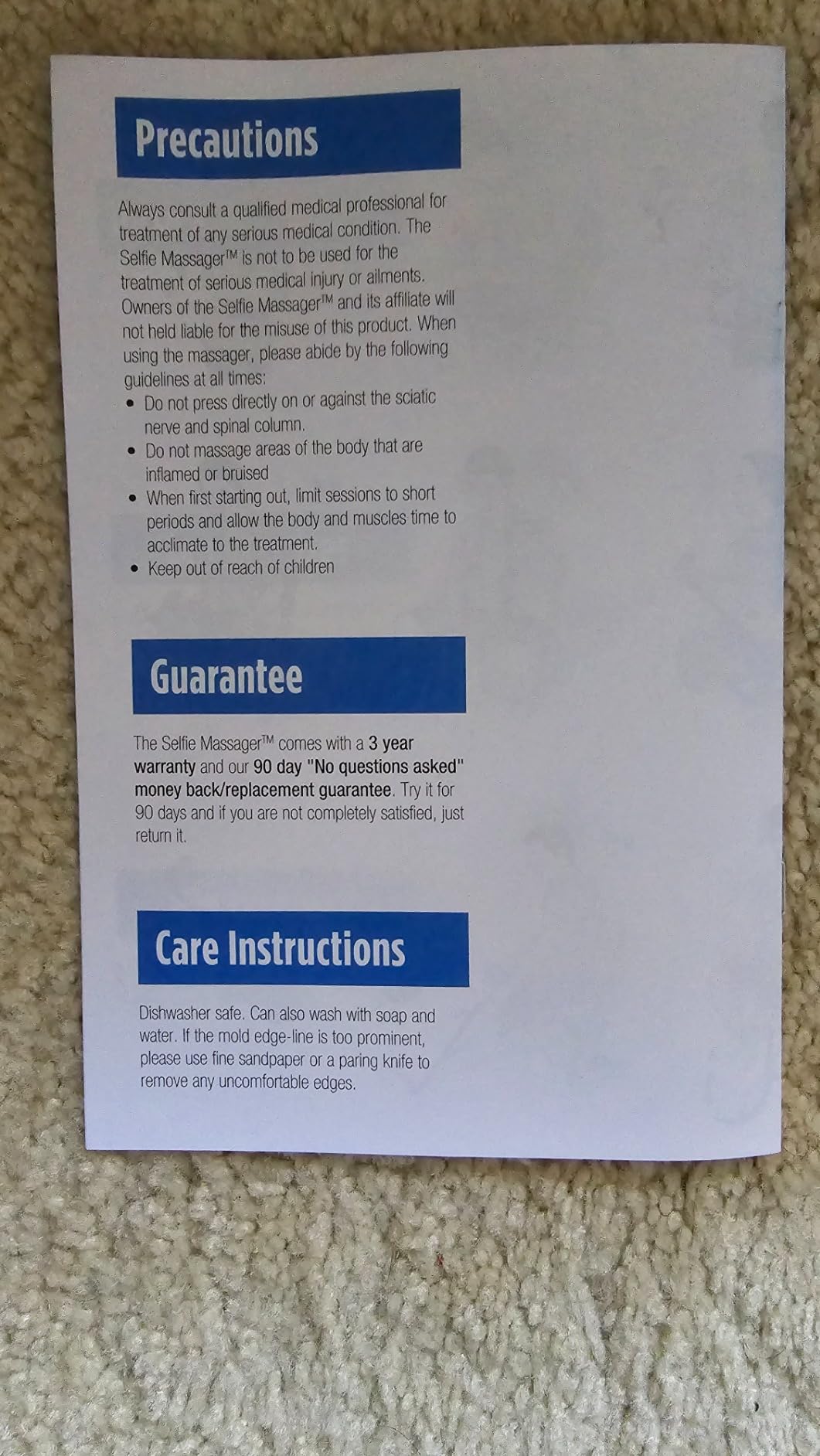
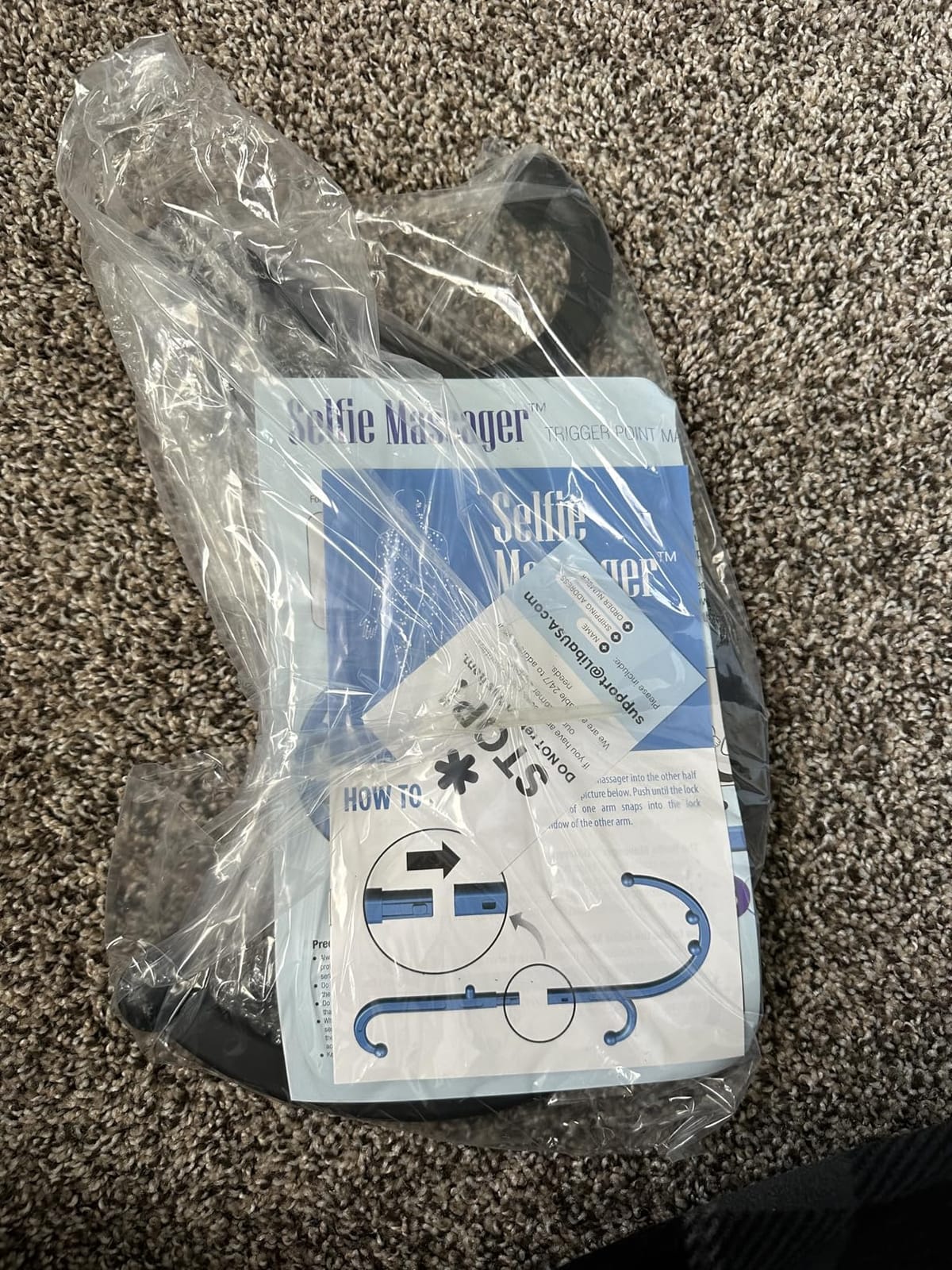
It comes with an illustrated sheet showing grip positions for different trigger points, which is more help than it sounds. A manual tool has no settings to discover, but it does have angles to learn, and the sheet shortens that process.
Two things to watch. The hard plastic nodes create friction on bare skin during rubbing motions, so a shirt or a thin towel between the tool and the skin makes a real difference. And the snap-together midpoint is the point of failure for a minority of owners who report it breaking under heavy load. Press steadily rather than levering.
Between the Shoulder Blades
This is the reach story worth dwelling on, because it is the reason the manual category is still worth buying in 2026. The area between the shoulder blades sits behind the shoulder joint, at the limit of what an arm can reach and press into at the same time. A cane with a wide arc gets around that limit in a way a compact electric head does not.
Reviewers also raise a body-shape point that few guides mention: knob spacing is not universal. One reviewer of a competing cane complained the neck knobs were too far apart for a long neck. Check the geometry against your own frame before buying any manual tool.
Who Should Buy It and Who Should Pass
Buy it if upper-back tension between the shoulder blades is your main complaint, if arthritic hands make heavy tools difficult, or if you want something you can use in the shower.
Pass if you have reduced sensation in your hands, because a tool that feels too hot or too rough is a tool you will keep using. Wear a layer, or choose the softer electric options further down.
6. Snailax Cordless Handheld Back Massager with Heat – Best With Heat
Snailax Cordless Handheld Back Massager with Heat, Percussion, Rechargeable
2.6 lbs
Dual percussion heads to 3200 PPM
Optional heat function
80 minutes per charge
15-minute auto timer
2-year guarantee
Pros
- Heat function relaxes tight muscle before you massage it
- Dual heads are reported more effective than single-head units
- Simple button layout described as easy for older users
- 3 modes with 3 speeds give gentle to deep range
- 2-year guarantee and 30 days free return
Cons
- Heat only works with all massage heads removed
- At 2.6 lbs it is the heaviest unit here
- 15-minute timer cuts off mid-session
- Loose power adapter connection can stop the device working
Heat is the feature that changes how a massager feels, and this is the pick for it. Warmth applied to a tight band of muscle makes the tissue more pliable before you press into it, which is why a heated session often feels more productive than a cold one at the same intensity.
The dual percussion heads run at up to 3200 pulses per minute across three sets of interchangeable heads, with three modes and three variable speeds inside each. Snailax explicitly markets the device as easy for the elderly to operate, and reviewers do describe the button layout as straightforward.
Two year guarantee and 30 days free return is a stronger commitment than most of this category offers, and it matters when the person who would initiate a return is not the person using the device.
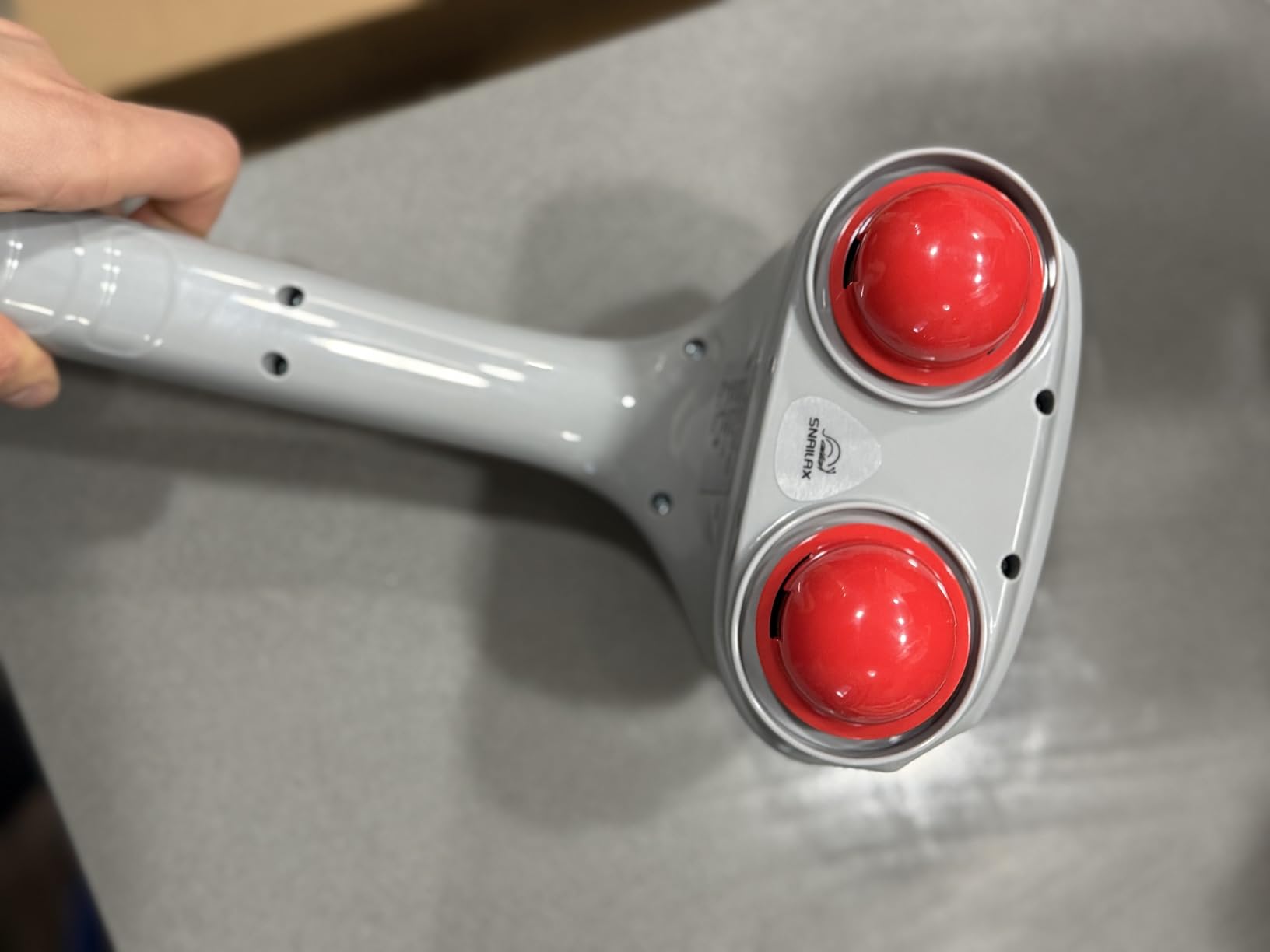
There is one design decision to know before you buy. The heat function requires the heat nodes to be exposed, so every massage head has to be removed first. That is a real friction point at the end of a session when you are tired, and it means heat and a specific attachment cannot be combined.
At 2.6 lbs this is the heaviest unit in the roundup, and reviewers report the hand tiring over a long session. It is also worth being precise about what the sensation is: several buyers describe the percussion as closer to vibration than to deep kneading, and some were disappointed by that.
What the Heat Function Changes
For stiffness rather than a single sharp knot, heat is often the more useful feature. A cold muscle resists the head and the sensation stays superficial. Warming it first lets the same pressure reach further without increasing intensity, which matters for anyone who cannot tolerate a hard setting.
There is a safety note that applies here more than elsewhere on the page. Reduced sensation, whether from diabetes or a nerve condition, makes it hard to judge how hot a heated surface actually is. Test it on your forearm first and keep sessions short.
Who Should Buy It and Who Should Pass
Buy it if your discomfort reads as general stiffness, especially in the morning or after sitting for a long time, and if heat is a feature you know you will actually use.
Pass if you have reduced sensation in your skin, or if 2.6 lbs is more than your hand comfortably holds for fifteen minutes. For the second reason, the 1.76 lb cordless unit three picks up is the more sensible electric option.
7. Melonsun Palm Massage Tool – Best for Arthritis in the Hands
Melonsun Palm Massage Tool – Handheld Four-Point Deep Tissue Massager for Trigger Point, Neck Back Shoulder Pain Relief, Self Massage Between Shoulder Blades, No Therapist Needed
6.38 ounces
Four-point palm grip
Two knob sizes
100% manual, no batteries
Fits a bag or drawer
Pros
- Fits naturally in the hand instead of being gripped
- Reaches between the shoulder blades unaided
- Two knob sizes for pinpoint and broader work
- Lightest option here at 6.38 ounces
- Always ready with no charging
Cons
- Acrylic is brittle and can crack if dropped or pressed hard
- Several owners report a knob or leg cracking off within weeks
- Needs more hand and wrist pressure than a cane
- Small contact area suits localized knots only
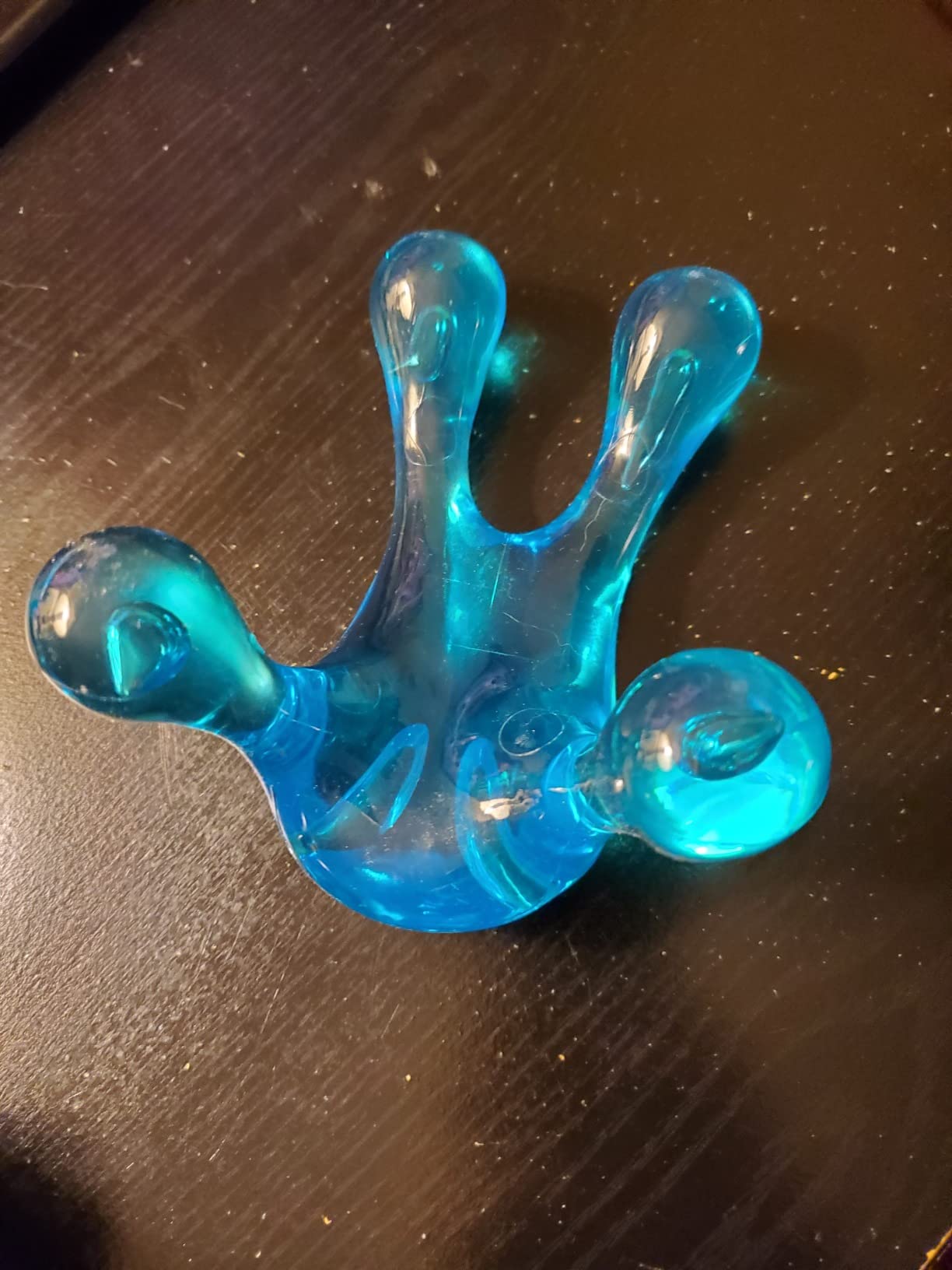
Every other product on this list is held. This one is held differently, and that is precisely why it appears at all. The four-point design sits in the open palm with the fingers wrapped loosely around the body and the knobs projecting between them, so pressure comes from the heel of the hand rather than from squeezing.
For someone whose grip is the first thing to fail, that is a real distinction. There is no pinching, no levering through a thin handle, and no wrist extension. The reviewer feedback on the LiBa also notes that users with arthritis can still hold it, and this tool goes one step further by removing the handle entirely.
It can also be set flat on the floor and stood on, using body weight for the pressure, which some users find more effective than arm pressure alone. It weighs 6.38 ounces, so it lives in a handbag, a desk drawer or a locker and is always to hand.
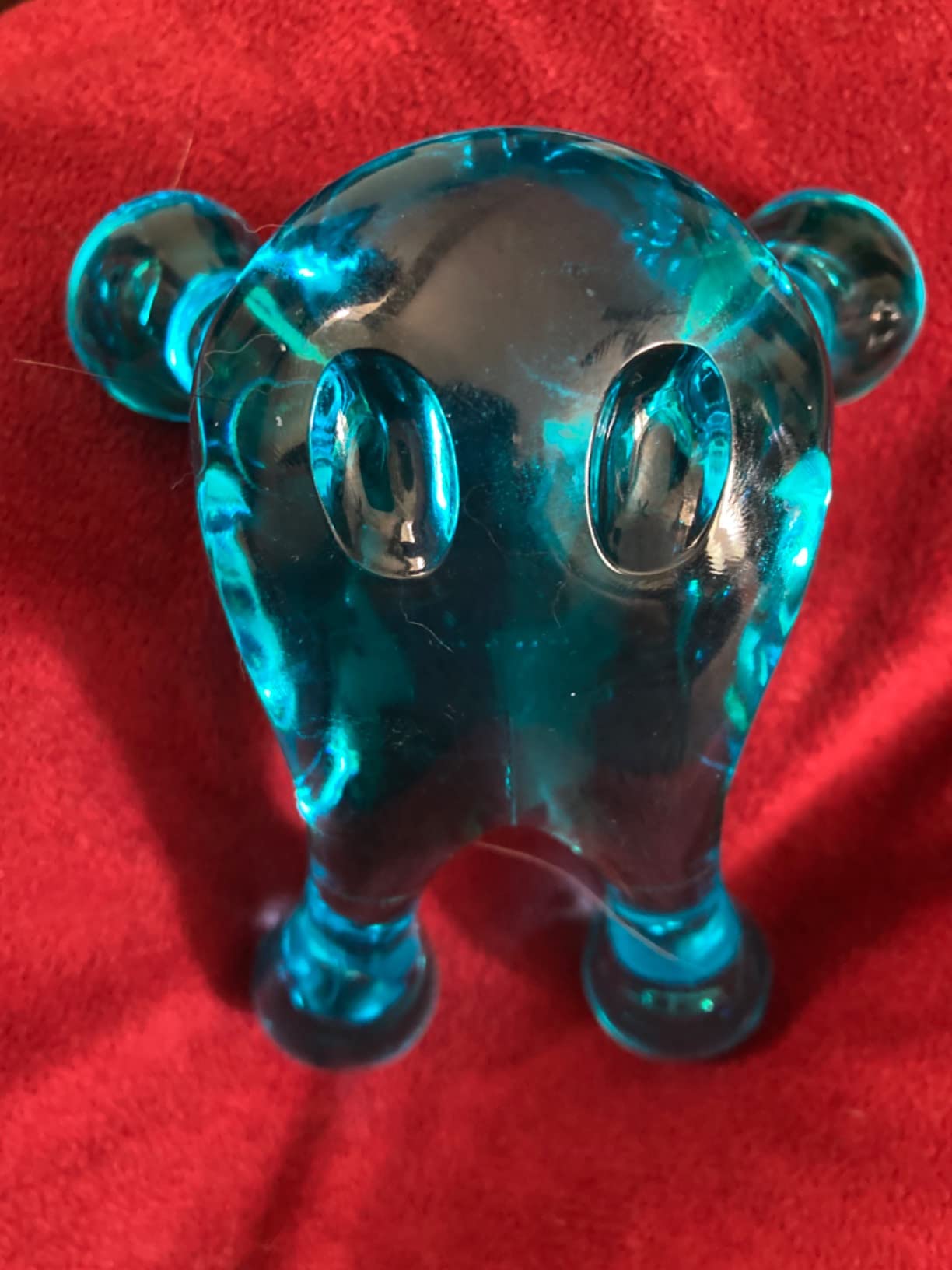
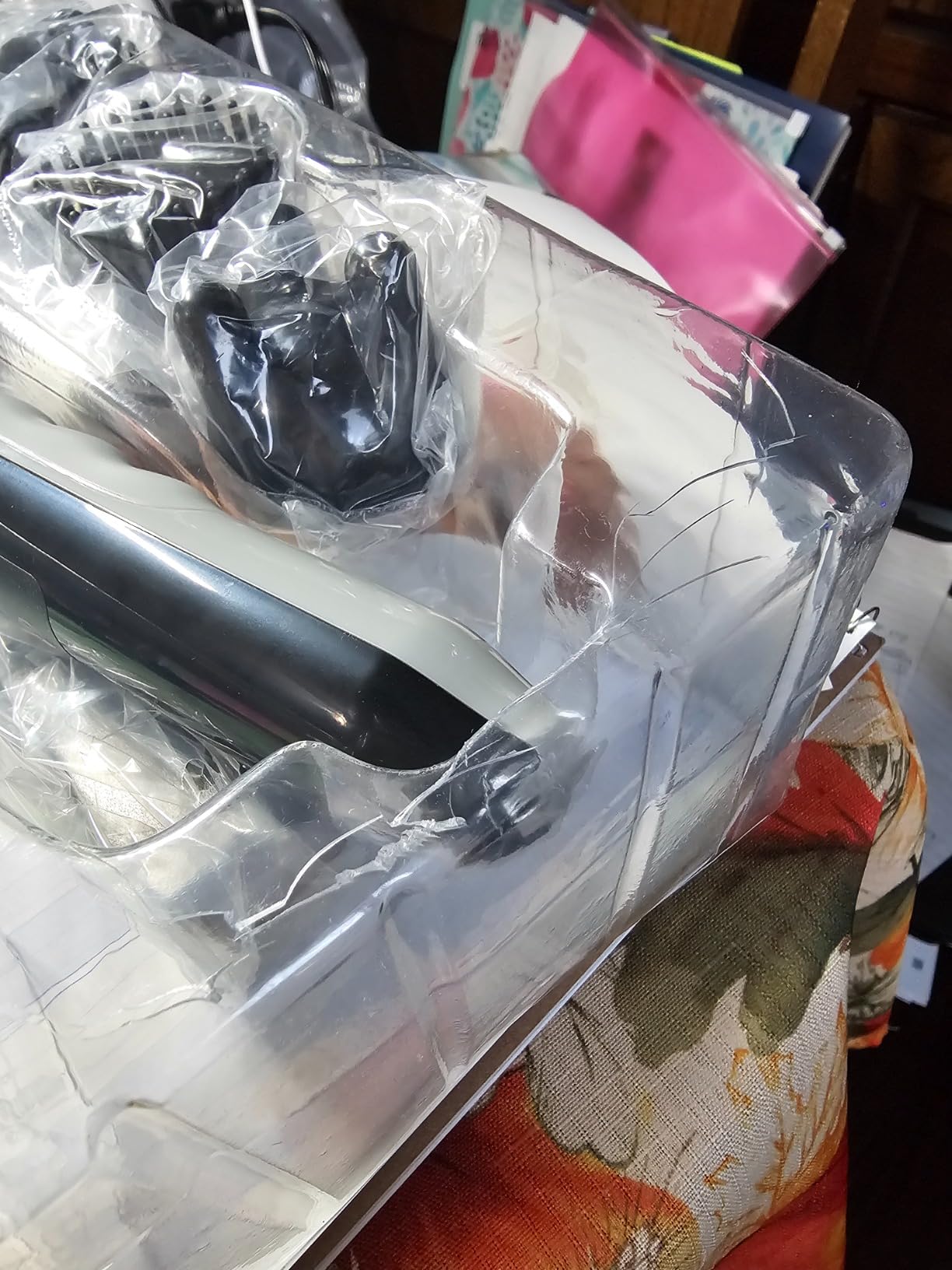
Durability is the honest problem here, and it is not minor. Multiple owners independently report a knob or leg cracking off after weeks or months of ordinary use, and the acrylic will break if dropped on a hard floor. Buyers often replace it, but a snapping tool mid-session is a poor experience for anyone with limited strength.
The small contact area also means it works on a tight, localized knot rather than a broad area of tightness, and it needs more hand pressure than a cane, which can still fatigue the wrist.
A Grip That Avoids Finger and Wrist Strain
Arthritis in the hands changes the mechanics of every tool on this page, not just this one. A handle that is comfortable for a 40-year-old hand can require a grip an arthritic hand cannot sustain, and a massager used with pain produces a session that gets abandoned rather than repeated.
This is the one design that works with reduced grip rather than against it. The two knob sizes let you switch between focused pinpoint work on a single knot and broader coverage, and the grip can be repositioned depending on the target area.
Who Should Buy It and Who Should Pass
Buy it if gripping a handle is the specific thing you have stopped being able to do, or if you want a tool small enough to carry everywhere. Treat the durability reports as a reason to buy from a seller with an easy return, not as a reason to skip the category.
Pass if you need to cover a wide area of the back, because the contact area is small. And pass if you tend to drop things, since the acrylic is brittle.
8. HANGSUN Handheld Neck Back Massager MG400 – Best Corded Percussion
HANGSUN Handheld Neck Back Massager for Pain Relief Deep Tissue, Double Head Full Body Percussion Massage MG400 for Shoulder, Leg, Foot, Muscles
2.3 lbs
3500 pulses per minute
Dual head percussion
3 interchangeable nodes
98-inch power cord
Pros
- Corded design removes all battery anxiety
- 98-inch cord reaches a sofa or bed while plugged in
- Dual heads are spaced to work beside the spine
- Slide speed control allows smooth intensity changes
- Strengthened cord collar reduces wire fatigue
Cons
- Top pulse intensity is only moderate
- Speed slide can be bumped accidentally in use
- Somewhat top heavy so controls get pressed inadvertently
- Attachment nodes tend to loosen and come off
Every cordless option on this list shares one failure mode: the battery is dead when you want it. Several reviewers describe the corded design as the deciding factor for them, and it is the most common reason people stay with a plugged-in massager.
The dual-head arrangement is engineered rather than decorative. The heads are spaced to work both sides of the spine without striking bone, which addresses the most common safety complaint about percussion massagers, that they get pressed onto the spine itself.
At 3500 pulses per minute with a slide speed control, intensity can be varied smoothly during a session rather than in steps. That slide control is a genuine advantage, but it is also the product’s most reported flaw, because it can be bumped when the unit is used with two hands and it makes the device slightly top heavy so the controls get pressed unintentionally.
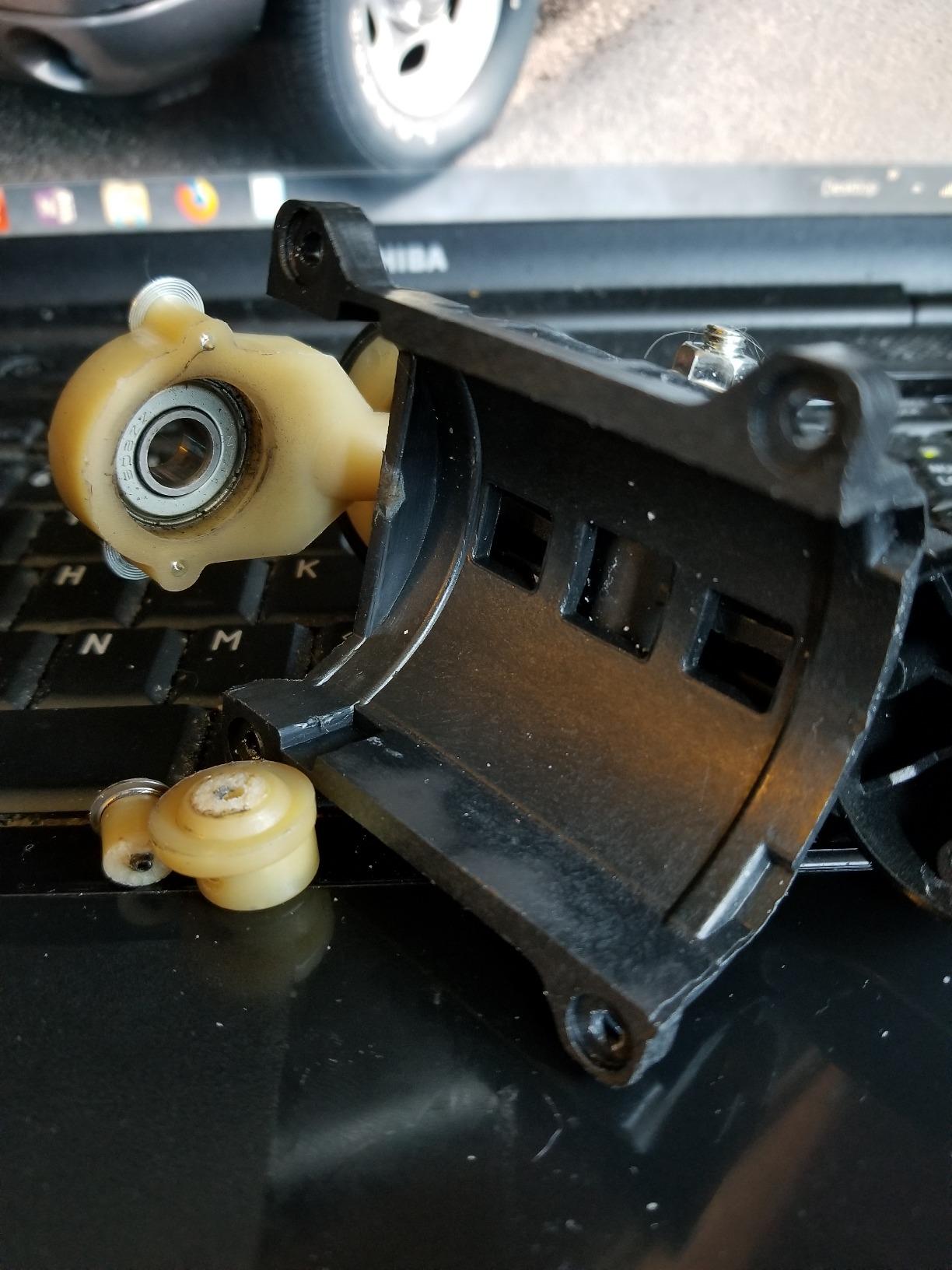
Two more cautions from reviews. The interchangeable nodes tend to loosen or come off with use unless glued, which is a recurring complaint across budget multi-head sets and is the failure mode most likely to interrupt a session. And several users upgrading from older devices report the top pulse setting feels only medium, wanting roughly 50 percent more power.
Weight is 2.3 lbs, so this is not a pick for reduced grip strength. It is a pick for someone who wants consistent power and does not mind staying near an outlet.
The Case for Staying Plugged In
The 98-inch cord is longer than most, and it is the feature that decides this product. It is long enough to reach a sofa or a bed while the unit stays plugged into a wall, which means the person using it does not have to stay in one chair in one room to get a session.
For a senior whose movement is limited, that is not a small convenience. Being able to lie down and use a massager without arranging a cord across a room changes how often the device actually gets used.
Who Should Buy It and Who Should Pass
Buy it if battery anxiety is the reason previous massagers ended up unused, or if you mainly want to work on the muscles beside the spine while seated. The manufacturer has also honoured warranty replacements quickly for owners of older units, which is worth something in this category.
Pass if joint aches are the goal, because pulsing heads are not suited to knees or hands and can be painful on bony surfaces. Also pass if your hand cannot comfortably manage 2.3 lbs.
9. Backnobber II Massager Cane – Best Built Manual Cane
The Pressure Positive Co. Backnobber II Massager Cane, Charcoal Black
1 lb
Fiberglass reinforced nylon
Hook design for leverage
Breaks down into two pieces
Made in USA
Pros
- Fiberglass reinforced nylon is exceptionally strong and rarely breaks
- Hook design provides real leverage for self-applied pressure
- Breaks into two pieces for travel and storage
- Uncluttered design unlike crowded knockoff canes
- Includes a 15-page technique manual
Cons
- Too much pressure can eventually crack the tool
- Takes practice to find the right angles
- Needs upper body strength
- Costs more than generic canes for a molded tool
At 4.7 stars from nearly 3000 reviews with 81 percent five-star ratings, it is the one with the highest five-star share we found, and the durability story is the reason. The body is fiberglass reinforced nylon rather than plain plastic, and owners report that it bends slightly under heavy pressure rather than snapping, which is the failure that ends most plastic canes.
The design is simpler than the multi-knob competitors: a hook at one end and a smooth surface along the shaft. The hook is what matters, because it wraps around the edge of a muscle group and gives you somewhere to push from, converting a hard press into something closer to a lever.
It breaks into two pieces at the middle clips, which owners who travel or store it in a small apartment specifically praise. It is made in the USA and comes with a 15-page instruction manual showing correct technique, which is more useful than it sounds given the learning curve.
Two caveats are consistent. Applying too much force can eventually crack the tool, so technique genuinely matters here, and it takes practice to find the right angle and contact point for each knot. Owners also note it costs more than generic massager canes for what is essentially a molded tool, which is a fair criticism of the category rather than this product.
Manual pressure still requires upper body strength, and the hook design rewards a shoulder that can push. That is the boundary of this product and of every manual cane here.
Leverage and Durability
The hook is the reason this tool feels different from a straight cane. Because the knobbed end catches the underside of a muscle group, pressing downward produces a targeted squeeze on the tissue above it rather than a general compression of everything in the way. It is the mechanism a physical therapist is describing when they tell a client to hook and pull rather than press.
There is also a long-use history behind it. Owners describe years of use for back pain, myofascial pain syndrome and chronic tension, and several bought it for a parent after a rotator cuff or back surgery when a motorized option was not going to be tolerated.
Who Should Buy It and Who Should Pass
Buy it if you want one manual tool that will still work in five years, if you prefer a simple uncluttered design, or if you want something that breaks down for travel. For a senior who will keep a device for a long time, build quality is a legitimate reason to spend more.
Pass if you cannot push with your arm, or if you want a device that works without physical effort from you. Neither is a defect, they are just the limits of the manual approach.
10. MEGAWISE Handheld Percussion Massager – Best for Strong Grip Hands
MEGAWISE Handheld Percussion Massager for Back, 3600 RPM, 5 speeds, 7 Heads
2.3 lbs
3600 RPM corded motor
5 speed levels and 5 modes
7 interchangeable heads
15-minute auto shutoff
Pros
- Corded 25W design gives consistent power with no charging
- Heavier motor feel gives deeper penetration than light massagers
- 7 heads and 5 modes give wide treatment options
- Extended curved handle reaches middle and lower back
- Body does not feel cheap or flimsy
Cons
- Heavy and unbalanced with a light handle and heavy head
- Handle described as slippery for smaller hands
- Most attachment heads are hard low quality plastic
- Advertised 3600 RPM feels overstated to some reviewers
We put this one last on purpose. It is a capable machine and the reviews show a sharply divided user base, with the people who rate it highly wanting power and the people who rate it poorly being the ones with limited grip. For a general roundup that would be a mid-table product. For a list ranked for seniors, grip is the deciding factor.
The specification case is real though. A 25W corded motor at 3600 RPM across 5 speed levels and 5 modes delivers noticeably deeper penetration than lightweight vibrating massagers, and some users with fibromyalgia and chronic back pain report it applies enough pressure on its own weight to reduce reliance on medication. There are seven interchangeable heads and a long curved handle that reaches the middle and lower back unassisted.
Reviewers also describe the body as well constructed and not cheap, which is unusual for a device at this level. The 15-minute automatic shutoff is a sensible safety default.
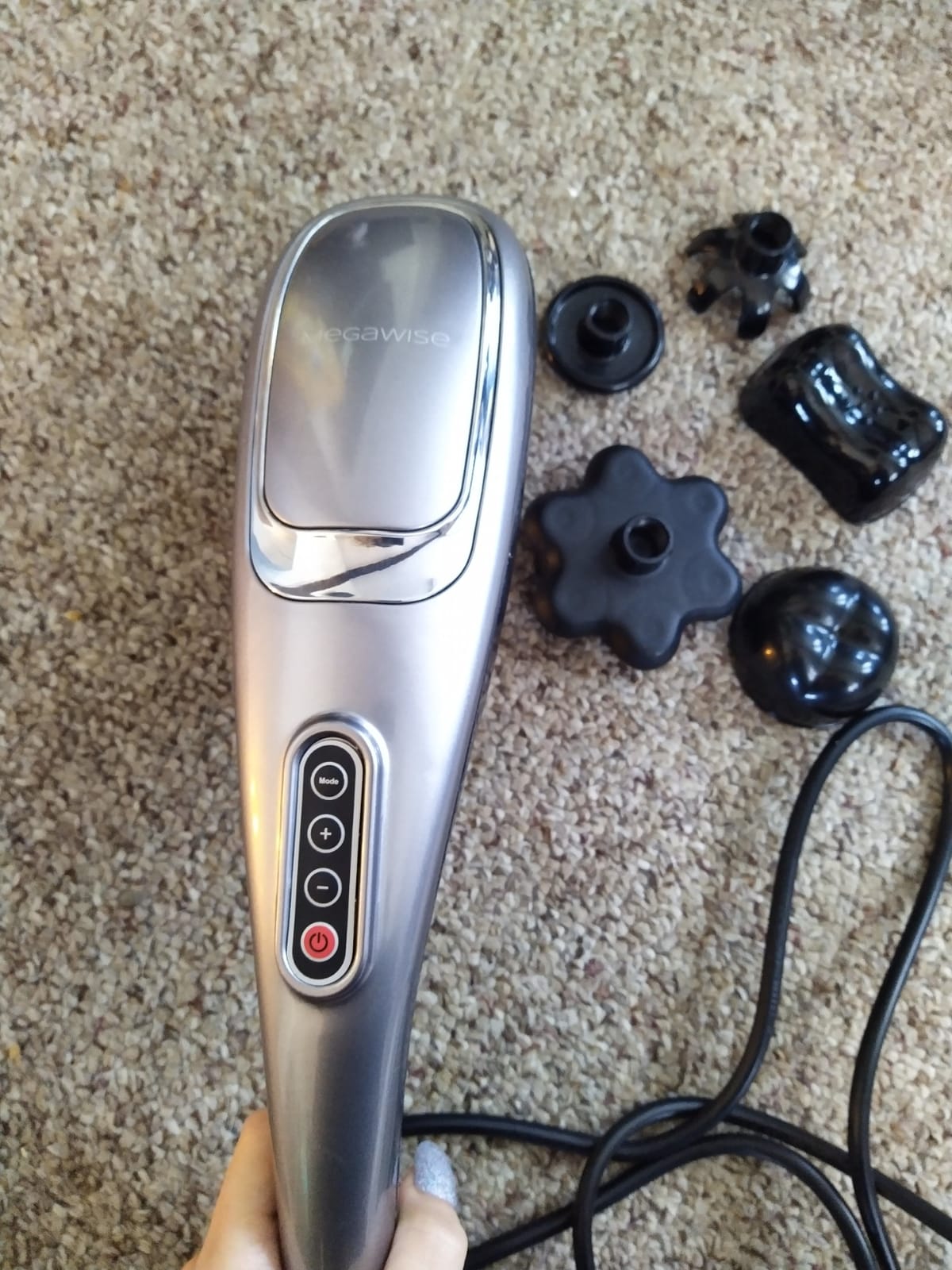
The problems are concentrated in the hand. At 2.3 lbs it is described as heavy and unbalanced, with a light handle and heavy head, and some users with limited hand strength or dexterity find it impossible to grip independently. The handle is also reported as slippery, particularly for smaller hands, and several people wish it were longer.
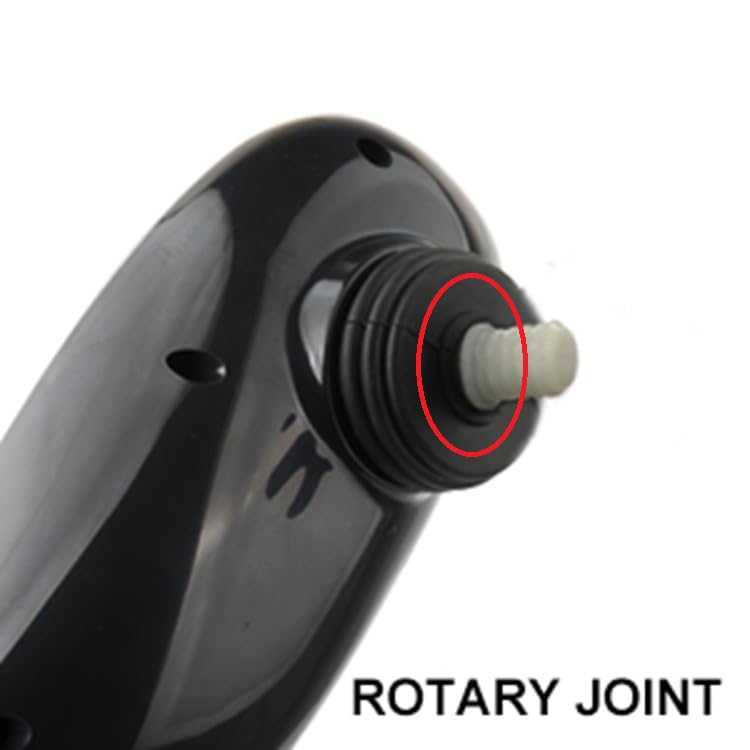
Quality is uneven across the accessories too. The seven included heads are mostly hard plastic that reviewers consider low quality, and some describe the advertised 3600 RPM as overstated next to dedicated percussion devices. A minority report the cord failing at the handle connection within a year.
Where the Extra Power Shows
There is a real use case for this device. Someone with good grip who wants a firm, self-applying deep massage on thick muscle, and who prefers to stay plugged in, gets more from this than from anything else at a comparable level. The extended curved handle means the middle and lower back is reachable without assistance.
What it does not do is adjust down gracefully. Harder percussion with a heavier head means less fine control at the low end, which is the opposite of what a sensitive or fragile area needs.
Who Should Buy It and Who Should Pass
Buy it if you have full hand and wrist strength, you want the deepest sustained pressure available at this level, and you are content to stay near an outlet. The corded design means it never stops mid-session.
Pass if you have any hand weakness, arthritis or reduced dexterity. In that case the 1.24 lb Reach Curve or the 1.76 lb cordless RENPHO will serve you better, and the review split on this product is driven almost entirely by that one factor.
How to Choose a Handheld Back Massager for Seniors
Weight and grip come before power
Grip strength declines with age, and a massager is one of the few household devices you must hold under load against your own body for ten to fifteen minutes at a time. That is why weight leads our ranking rather than pulses per minute.
The useful breakpoints are simple. Under 1.5 lbs is comfortable for most hands. Between 1.5 and 2 lbs is workable for a good number. Above 2 lbs, expect hand fatigue, particularly in someone with arthritis or a prior hand injury.
One verified review on the Body Back Buddy makes the point better than we can: I can’t always use my hands to massage out pain. That is the real use case, and it is often a hand problem rather than a back problem.
Reach decides whether you will use it
The lower back is the hardest area to reach unaided, which is exactly why an extending handle matters more than raw power. A telescoping handle that runs from 10 to 18.5 inches covers the full lumbar region unaided, and a wide-arc manual cane is the manual equivalent for the area between the shoulder blades.
Note body-shape fit while you are at it. Knob spacing on a manual tool is not universal, and one reviewer of a competing cane found the neck knobs too far apart for a long neck. If reach is your problem, measure before you commit.
Gentle low-end settings, not just a top speed
A 3600 RPM figure tells you nothing about the first setting. What matters is whether the lowest level is genuinely gentle, because that is the level a sensitive or osteoporotic area can tolerate.
Five or more speed levels is the useful number, and a mode that varies intensity as you press gives a graduated feel rather than a single fixed pulse. On manual tools the equivalent is simply that you control the force, which is the strongest version of the same idea.
Manual or electric: the honest trade-off
Manual tools cannot fail electrically, need no charging and give you precise control, but every bit of pressure comes from your arm. Electric tools do the work and are easier on a tired shoulder, but add a battery, a charger and a failure mode.
For someone with weak hands but a sound shoulder, electric is usually the better answer. For someone with shoulder mobility limits but decent hand strength, a manual cane can be the more realistic option. For someone with both, the palm-grip tool is worth a look.
Heat, attachments and the rules that protect thin skin
Heat makes tight tissue more pliable before you press into it, which is genuinely useful for stiffness. It also carries a caution: with reduced sensation, it is hard to judge how hot a heated surface is, so test it on your forearm first.
On heads, the rule for arthritic joints and thin skin is simple. Use a soft or rubber-coated head, not hard plastic or metal, and apply it to the muscle around a joint rather than to the joint itself. A hard bullet head over a bony prominence is how people bruise themselves for no benefit.
Battery, noise and who actually recharges it
A rechargeable unit that needs charging twice a week will be found dead by the person who reaches for it. Look for long runtime: 140 minutes per charge covers several sessions, and one charge covering about a week of daily use is better still.
Also ask who recharges it. In most households the answer is the adult child who bought it, not the person using it, and that is a fair reason to choose a corded model with no battery at all. On noise, users in shared bedrooms report that louder units are a real problem at night, and there is no published decibel figure on any of these listings to check against.
When a Handheld Massager Is the Wrong Choice
Some of the conditions that send people looking for a handheld massager are hand problems, and a device that must be gripped will not fix them. If you have carpal tunnel, advanced hand arthritis or a hand that has recently been operated on, a tool you have to hold is the wrong category.
For those cases, hands-free options work better: a chair-mounted back massager, a belt that sits between the chair and the back, a cushion massager you sit back into, or a wearable wrap. These need no grip, no reach and no charging, and a session can last as long as you like because you are not holding anything.
There is a fourth option that works well for people with limited reach but usable hands: caregiver-assisted use. An adult child or spouse applying a cordless unit to a parent’s back for ten minutes a few times a week solves the reach problem entirely, and it is why buying for a parent is often a two-person decision rather than a one-person one.
Ask honestly whether the intended user can pick it up, hold it for ten minutes and put it down again. If the answer is no, the best handheld back massager for that person is not a handheld one.
Frequently Asked Questions
What is the best massage gun for older people?
There is no single best massage gun for older people, because the answer depends on grip. With reduced hand strength, choose a unit under 1.5 lbs so it does not tire the hand, such as the RENPHO Reach Curve at 1.24 lbs with a handle that extends to 18.5 inches for reach. With good grip but deep muscular knots, a higher-pulse cordless model works better. Always start on the lowest speed and check the safety list below first.
What type of massager is best for elderly people?
It depends on the condition rather than the age. Vibration is the lowest intensity and is the safest starting point for sensitive or fragile skin. Percussion is deeper and better for tight muscle but is unsuitable over joints, bones or the spine, and is a poor choice with osteoporosis. Kneading suits the lower back, rolling is broad and gentle, and a manual cane gives the most control of all. The right question is which modality matches the tissue, not which is newest.
Are vibrating massagers good for arthritis?
Yes, with caveats. Vibration is the lowest-intensity modality and generally the safest starting point for arthritic joints, but three rules matter. Use a soft or rubber-coated head rather than hard plastic or metal, apply it to the muscle around the joint rather than to the joint itself, and keep sessions to 10 to 15 minutes per area. Anyone on anticoagulants or with severe joint disease should ask a clinician first.
Is there a back massager that actually works?
Yes, with conditions. Expect relief from muscular tension, stiffness and knots, not from structural or joint problems, and expect a cumulative effect across repeated sessions rather than a single dramatic result. Massage works by increasing local circulation and reducing the tension that produces most back discomfort, so it complements medical treatment rather than replacing it. Persistent or radiating pain should still be assessed by a doctor.
How long should you use a back massager?
Ten to 15 minutes per area, and no more than 30 minutes in a single session, is the widely used guidance. Start shorter than you think you need and never stay in one spot, because the point is to move the head slowly across the muscle. Most electric models here include an automatic shut-off between 10 and 20 minutes, and you should use that timer rather than working around it.
Are massage guns safe for seniors?
Conditionally yes. Do not use a massage gun if you have a pacemaker or other implanted electrical device, take blood thinners or anticoagulants, have osteoporosis, a history of blood clots, carotid or vascular disease, uncontrolled diabetes, recent surgery, thin or bruised skin, or nerve damage. Also never use one directly over a bone, a joint, the spine, or the front or sides of the neck. If any of those apply, ask your doctor first.
Our Verdict for 2026
The best handheld back massager for seniors in 2026 is the RENPHO Reach Curve, because it solves the two problems that end most massager use: weight at 1.24 lbs and reach via a handle that extends to 18.5 inches. If you want no motor and no charging, the Body Back Buddy is the most proven tool in the roundup with 18k-plus reviews behind it, and the TRIGGERPOINT AcuCurve at 9.6 ounces is the lightest option for genuinely weak hands.
Our ranking is built on grip, reach, gentleness and safety, not on power. That is why two capable percussion massagers sit near the bottom of this list. If you have hand weakness, weight is the first filter, not the last.
Before any of them, read the safety section. If you have a pacemaker, take blood thinners, have osteoporosis or a clotting history, ask your doctor first. Nothing here is medical advice, and a massager is a comfort tool for muscular tension, not a treatment for a condition.