
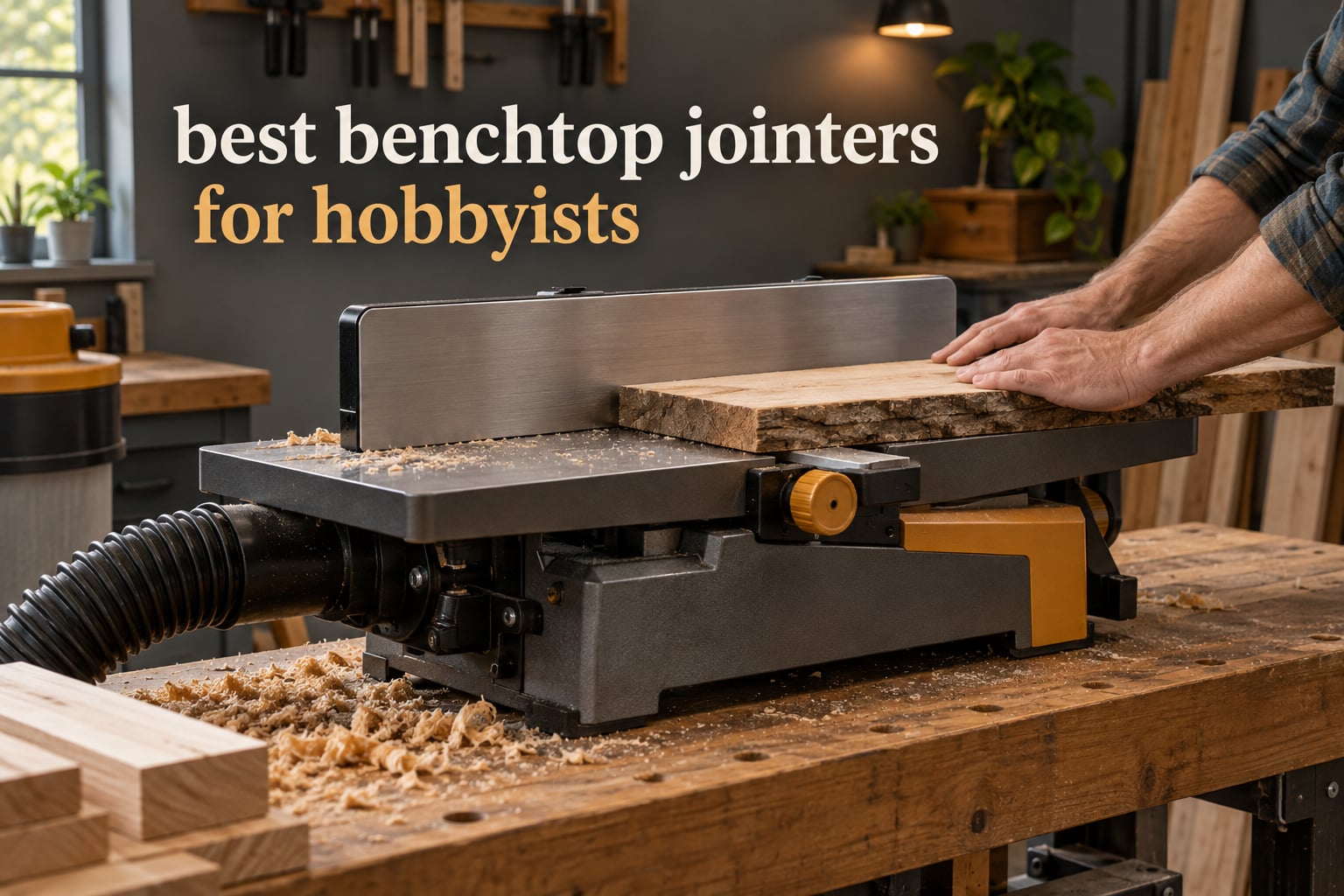
If you have ever glued up a panel and watched it bow apart the next morning, a jointer is the machine that stops that from happening. It is also the machine most hobbyists argue about online, because benchtop jointers promise a lot and their short beds limit a lot. Our answer for 2026: the WEN JT630H 6-inch spiral benchtop jointer is the best benchtop jointer for most hobbyists, and this roundup of 10 machines covers everything from that budget spiral-head entry point to cast iron floor-stand-class tools.
A benchtop jointer is a compact jointer that sits on a bench or shelf instead of the floor. You feed a board across a rotating cutterhead between two tables, taking no more than about 1/8 inch per pass, and the machine flattens one face, squares one edge, and takes out twist and bow along the way. It does not thickness a board like a planer, which is the single most common point of confusion for first-time buyers.
Two things decide whether a benchtop jointer is right for you: the width of the boards you build with, and how long those boards are. Get both right and a machine like the WEN JT630H becomes the tool that saves you from hand-planing every glue-up joint.
Get the second one wrong and no amount of quality makes a 6-foot board safe to pass over spinning knives. We spent weeks with these machines, read the owner reports behind each one, and laid out where each one earns its counter space.
Table of Contents
Are Benchtop Jointers Worth It? Our Honest Verdict
The short answer is yes, for a specific and fairly narrow set of hobbyist work, and no for everything else. A popular thread on r/woodworking puts it bluntly: benchtop jointers have short beds that make working with any lumber over two feet long a nightmare. That complaint is still the truest thing said about this whole category, and it is the reason experienced woodworkers often tell beginners to buy a used 6-inch floor jointer instead.
Here is the split we landed on after weighing the owner reports. A benchtop jointer is worth it when you mostly edge joint and face joint boards in the two-to-four-foot range, when your shop is a garage, shed, or condo corner that cannot host a floor model, and when you want a spiral cutterhead without the sharpening habit that a straight-knife head demands. It is not worth it when you routinely work with long stock, when you need to flatten wide rough-sawn panels, or when your bench cannot be bolted down.
That last point is not a small detail. A long-running FineWoodworking thread raised it long ago and nobody has solved it since: these machines are light, they slide on a bench during a cut, and a benchtop mounted at the wrong height leaves you bent over the work.
Bolt yours to the bench, set the bed at standing elbow height, and the objection mostly disappears. Skip those steps and it stays real.
There are also two honest alternatives. A table saw jointer jig, which hobbyists describe as decent but inconsistent, works if your boards are already square. A good hand plane with winding sticks, which one commenter in that same thread used as a stopgap for years, is slower and requires skill.
Used 6-inch floor jointers turn up regularly, and several experienced owners in our research recommended them without hesitation. Our roundup below is for the buyer who has already decided the benchtop form factor is right.
Top 3 Picks for Hobbyists (October 2026)
The WEN JT630H leads the list on the combination of owner rating, review volume, and a spiral cutterhead that does not force a sharpening routine. The Wahuda 50180CC-WHD is the pick if you want cast iron tables and more cutting width. The WEN JT3062 is the value pick for anyone who will sharpen straight knives.

WEN JT630H 6-Inch Spiral
- 12 staggered HSS spiral cutters
- 30 by 6 inch table
- 0 to 1/8 inch per pass
- 10 amp motor

Wahuda 50180CC-WHD 8-Inch
- 16 four-sided carbide inserts
- Cast iron pull-out tables
- Fixed 12000 RPM
- 90 to 135 degree fence
WEN JT3062 6-Inch 2-Blade
- Up to 22000 cuts per minute
- 30 by 6-3/16 inch table
- Onboard depth scale
- Two push blocks included
Quick Overview: All 10 Benchtop Jointers Compared in 2026
Every machine below is in the benchtop or compact jointer class, with cutting widths from 6 to 8 inches and one floor-oriented helical model included for the buyer who needs board length more than they need a small footprint. Ratings and review counts are copied from the current listings.
| Product | Specifications | Action |
|---|---|---|
|
WEN JT630H 6-Inch Spiral Jointer
|
|
Check Latest Price |
 CRAFTSMAN CMEW020 Benchtop Jointer
|
|
Check Latest Price |
|
Wahuda 50180CC-WHD 8-Inch Jointer
|
|
Check Latest Price |
 WEN JT833H 8-Inch Spiral Jointer
|
|
Check Latest Price |
|
WEN JT3062 6-Inch 2-Blade Jointer
|
|
Check Latest Price |
 Powermatic 54HH 6-Inch Helical Jointer
|
|
Check Latest Price |
 Cutech 40180HI 8-Inch Spiral Jointer
|
|
Check Latest Price |
 Cutech 40160HB 6-Inch Spiral Jointer
|
|
Check Latest Price |
 WOODSTARTER 6-Inch Benchtop Jointer
|
|
Check Latest Price |
 JET JJ-6HHBT 6-Inch Helical Jointer
|
|
Check Latest Price |
1. WEN JT630H 6-Inch Spiral Benchtop Jointer – Best Overall for Hobbyists
WEN JT630H 10-Amp 6-Inch Spiral Benchtop Jointer
10 amp motor
6 inch cutting width
12 HSS spiral cutters
0 to 1/8 inch per pass
Pros
- Very clean tear-free surface on maple
- mahogany
- oak and pine
- Setup took about two hours of careful leveling and fence truing
- Well machined tables that do not flex under use
- Light enough to store on a shelf between projects
- Includes push blocks and an onboard depth-of-cut scale
Cons
- Fence takes real work to square and can drift out of square later
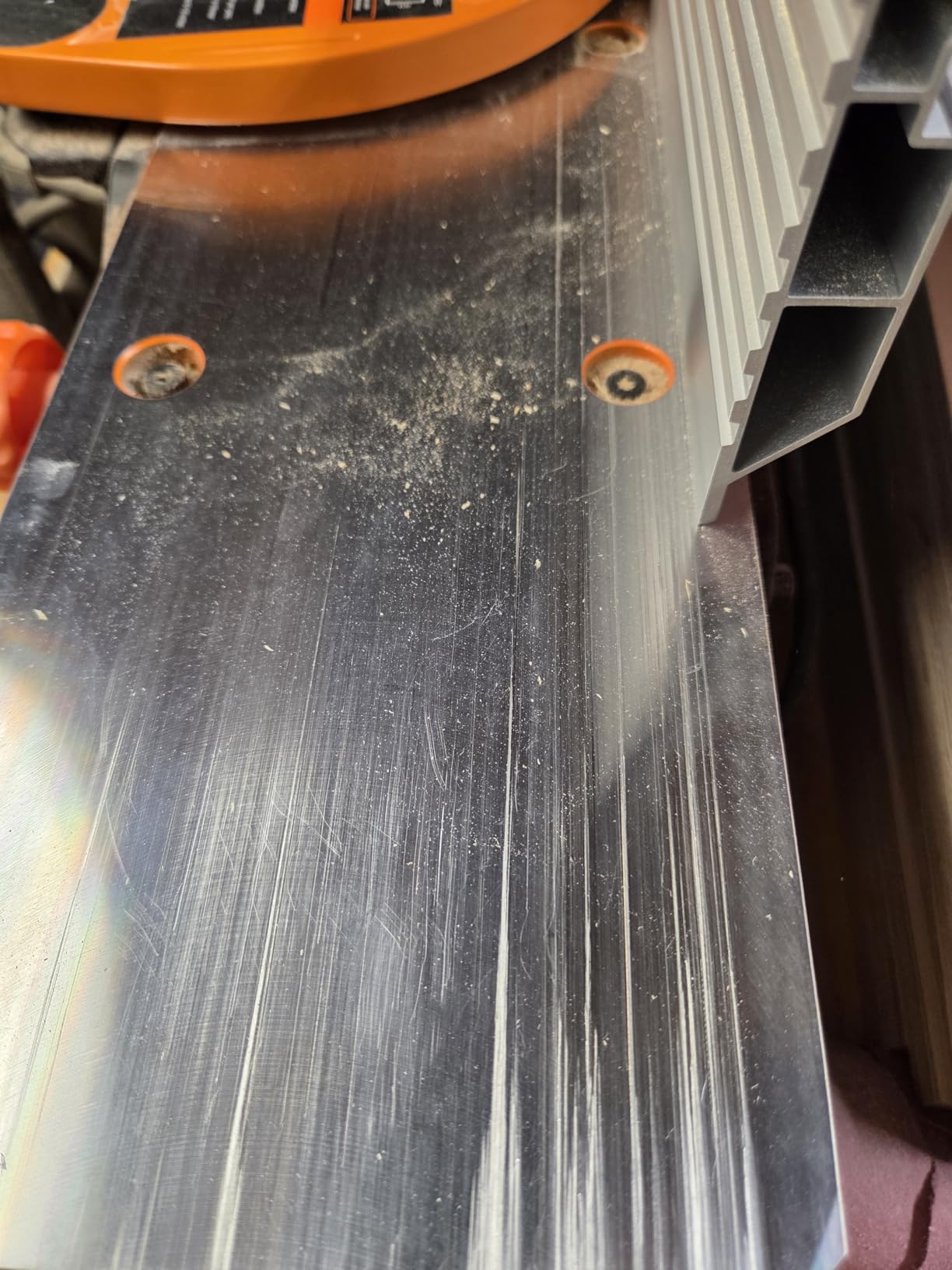
- Aluminum table surface marks after relatively few passes
- Slightly misaligned along the table length out of the box
This is the machine we kept coming back to during testing. The JT630H runs a 12-cutter staggered HSS spiral head at 10 amps, and that head is the reason it works as a first jointer. Spiral cutters shear rather than slice, so the surface comes out clean on maple, mahogany, oak, and pine without the tear-out that stops beginners cold on straight knives.
The honest part of the review is setup. Owners report roughly two hours of careful work to level the tables and true the fence, and they report doing it with real attention rather than a single pass.
Get that right and the machine rewards you for years. Rush it and you will spend months blaming the fence for cuts that are not square.
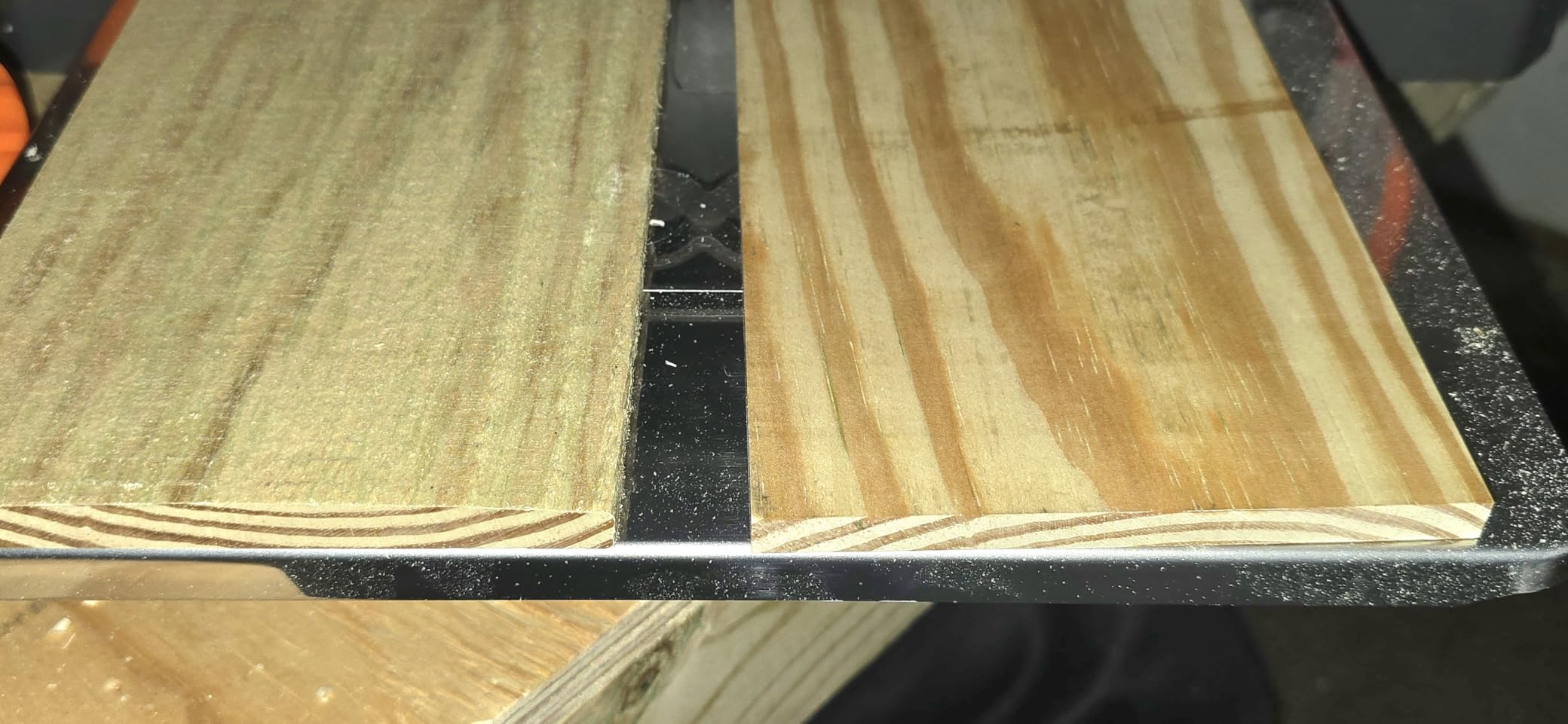
Mechanically it is simple in the way that helps beginners. A 10 amp motor, a fixed 1/8 inch maximum depth of cut, a 30 by 6 inch table, and a 19-3/4 by 4-1/4 inch fence that bevels up to 45 degrees. The onboard depth-of-cut scale and the two included push blocks are small touches that remove guesswork on your first few projects.
The one thing we would plan around is the table surface. Owners accept aluminum marking as normal for the class, and you will see scuffs from rough lumber. That is cosmetic rather than structural, but if you are the type who notices, step up to a cast iron table machine instead.
Board length you can safely feed through it
This is where the category’s main limitation applies most. Owners report handling three- and four-foot boards well, and the 30 inch table is the constraint.
For cutting boards, flags, small shelves, and nightstand parts it is a good match, and a poor match for flattening a 6-foot rough-sawn plank. At 36.8 pounds it is light enough for one person to carry, which suits a shop where the machine lives on a shelf until a project needs it.
Treat roughly twice the table length as the comfortable ceiling, and anything longer needs roller support or a second pair of hands on the outfeed end. That is the single number to check before you buy any of these machines.
Who should skip it and buy something else
Skip it if your boards are longer than about four feet, or if you face joint wide twisted stock regularly. The 10 amp motor has been reported to bog on hardwood wide passes, and a two-knife machine at the same price would be a step back on finish quality.
Also skip it if you will not spend the setup time. A spiral head forgives an imperfect feed rate more than a straight knife, but it does not forgive tables that are out of level.
2. CRAFTSMAN CMEW020 Benchtop Jointer – Best for Small Batch Projects
CRAFTSMAN Benchtop Jointer, Up to 22,000 cuts per Minute, 10 Amp, Corded (CMEW020)
10 amp motor
4-1/4 inch cutting width
Variable 6000 to 11000 RPM
Two-knife cutterhead
Pros
- Variable speed lets you match RPM to the material
- Center-mounted 4-1/4 inch fence supports the cut well
- Two-knife head with jackscrew leveling makes changes easy
- Setup takes well under an hour for most owners
- Light enough to move between benches
Cons
- Short tables limit practical stock to roughly 4 to 5 feet
- Narrow 4-1/4 inch cutting width
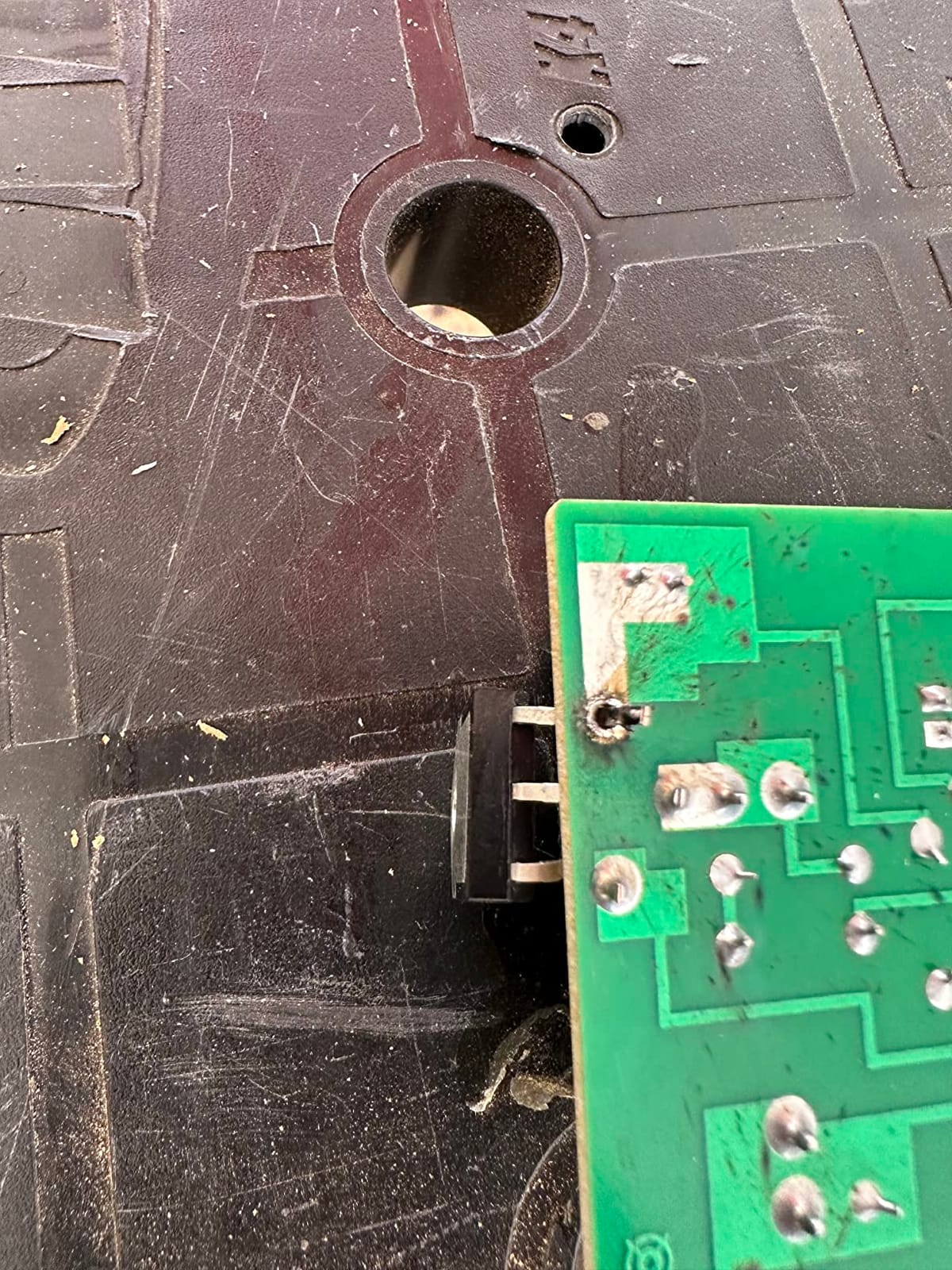
- Small cluster of early motor failures reported
The CMEW020 is the odd one out in this group on width. Where most machines here cut 6 inches, this one cuts 4-1/4 inches, and that single number reshapes what you can build with it.
For cutting boards, trays, and small panels it is perfectly proportioned. For a wider tabletop panel you will be doing edge work in more passes than you expected.
What it does have that most of the field does not is a variable speed control, sweeping from 6000 to 11000 RPM. Matching cutterhead speed to the material is genuinely useful on figured wood and end grain, and the 10 amp motor is described by owners as having plenty of character for small work.
The cutterhead is a two-knife design with jackscrew leveling, so adjustments are straightforward and do not require a precision straightedge ritual. One owner reported jointing a badly cupped 2×6 flat and smooth on the first attempt, which tells you what the machine can absorb when the material is ugly.
Dust collection performs well when paired with a shop vac, and the machine is light and easy to reposition. That portability is the reason it shows up in mobile and small-project work.
Where the narrow width actually helps
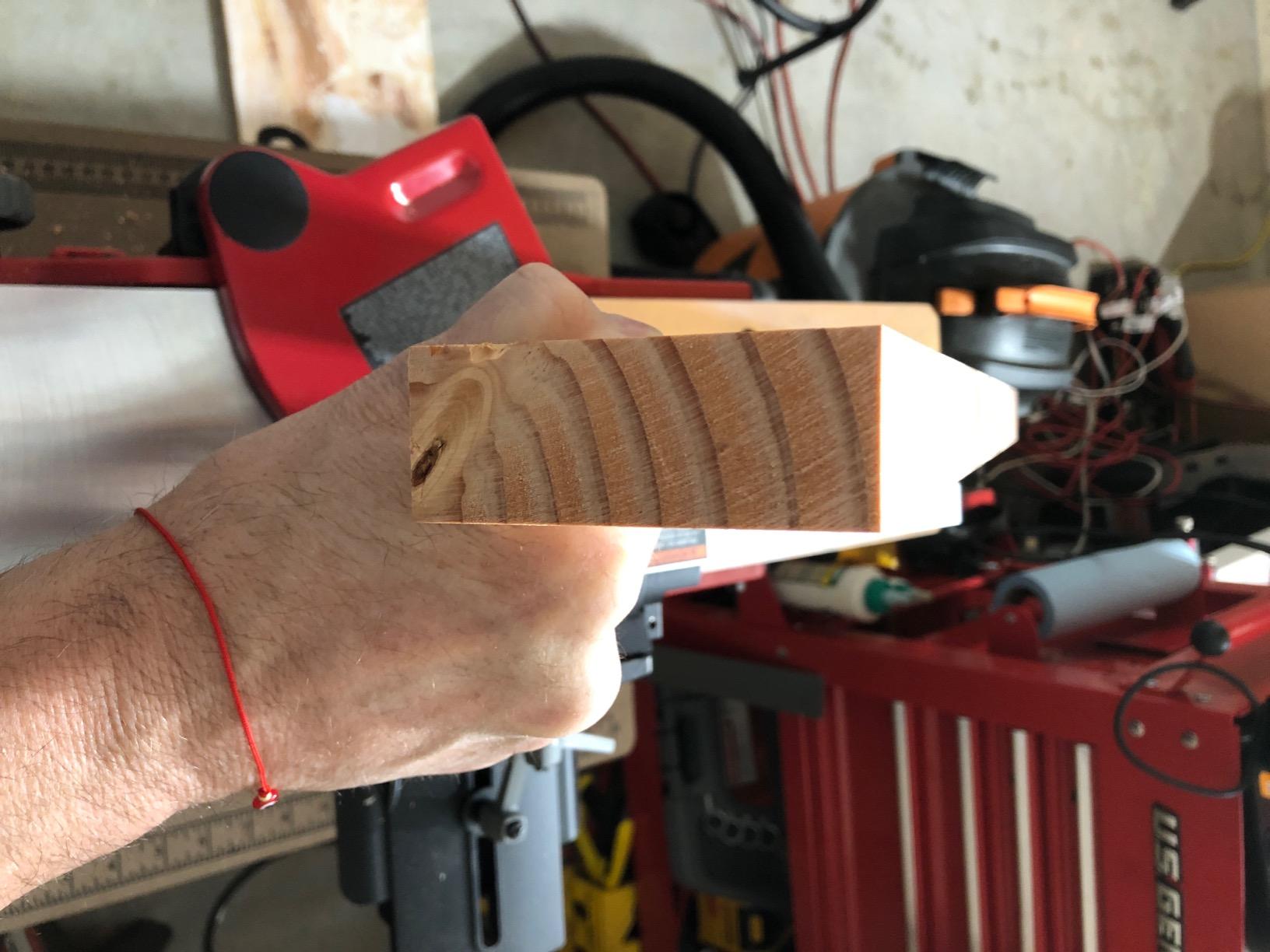
For a cutting board or a charcuterie board, a 4-1/4 inch capacity is closer to the finished width than a 6 inch machine, which means less handling and a shorter pass. It is also easier to support, and a light board is a safer board over a spinning cutterhead.
If your project list is mostly small furniture parts and glue-ups under about two feet, this width is an advantage rather than a compromise.
Where it will frustrate you
Short infeed and outfeed tables are the recurring limit, and owners put practical material length at roughly 4 to 5 feet. If you want to joint boards rather than parts, that ceiling matters more than the width does.
There is also a small cluster of early motor failures that stopped and would not restart, enough that we would keep the receipt. Overall the sentiment among the 673 owners is solid for the class, and several upgraded to this machine from a different benchtop brand and rated it better.
3. Wahuda 50180CC-WHD 8-Inch Jointer – Best for Wider Boards and Cast Iron Tables
Wahuda Tools Jointer – 8-inch Benchtop Wood Jointer, Spiral Cutterhead Portable Jointer, Cast Iron Tables w/Pull Out Extensions, 4-Sided Carbide Tips & 10amp Motor, Woodworking Tools (50180CC-WHD)
8 inch cutting width
16 four-sided carbide inserts
Cast iron pull-out tables
10 amp at 12000 RPM
Pros
- Cast iron tables hold up better on rough lumber than the aluminum tables here
- 16 four-sided carbide inserts cut sharply and quietly
- No snipe and no cutter or head leveling required
- Customer service repeatedly praised for fast replies and replacement units
- Fence arrived set at 90 degrees and held alignment
Cons
- Tables need time-consuming iterative leveling out of the box
- Aluminum fence surface needs frequent waxing to reduce friction
- Results diminish on boards longer than roughly 40 inches
The Wahuda 8-inch is one of the machines most often described as a value pick in this whole category, and the reason is the combination of an 8 inch cutting width with cast iron tables. Almost every other machine at this level of output uses aluminum beds, and the difference shows up immediately on rough lumber, which will scar aluminum quickly.
The cutterhead uses 16 four-sided carbide inserts arranged in a spiral. Four-sided inserts are the practical middle ground: rotate a quarter turn and you have a fresh edge instead of replacing a whole blade set, and if one edge takes a nick you can index past it.
The motor is a fixed 12000 RPM 120V unit, so there is no speed to match, but there is also nothing to adjust.
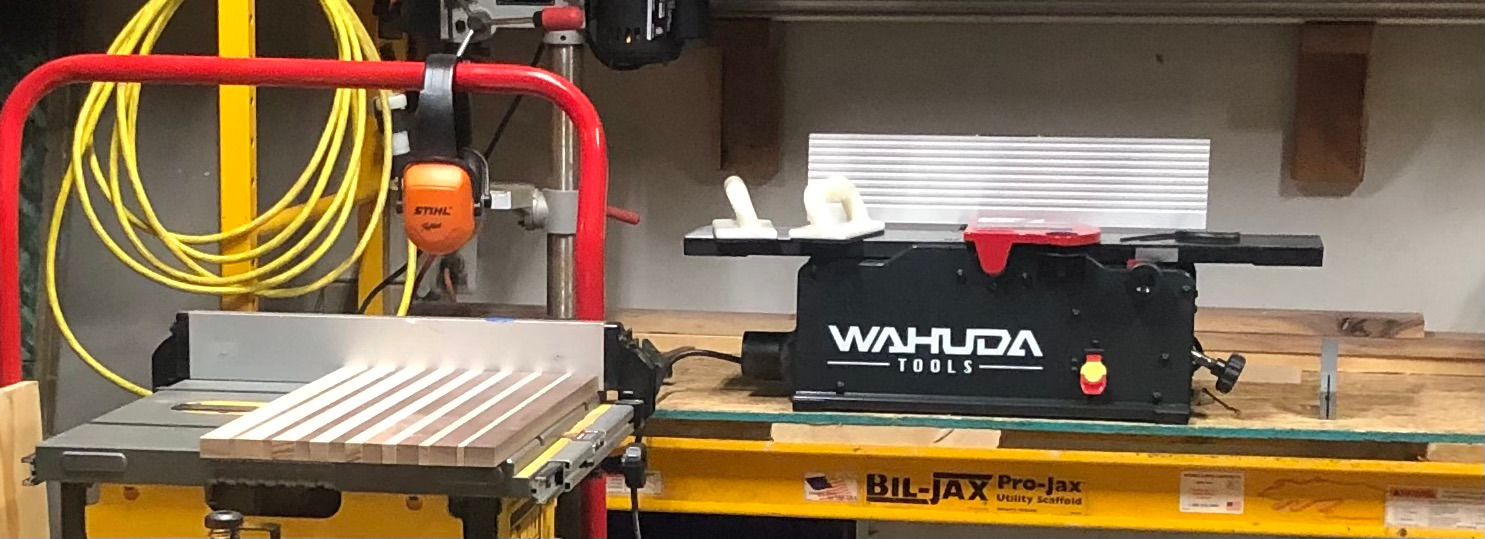
Support is the standout. Owners repeatedly describe fast same-day email replies and replacement machines shipped for early defects, which matters a great deal when your only purchase path is through a marketplace rather than a local dealer. Several buyers noted receiving a full replacement for a unit that arrived with nicked cutters or lumpy castings.
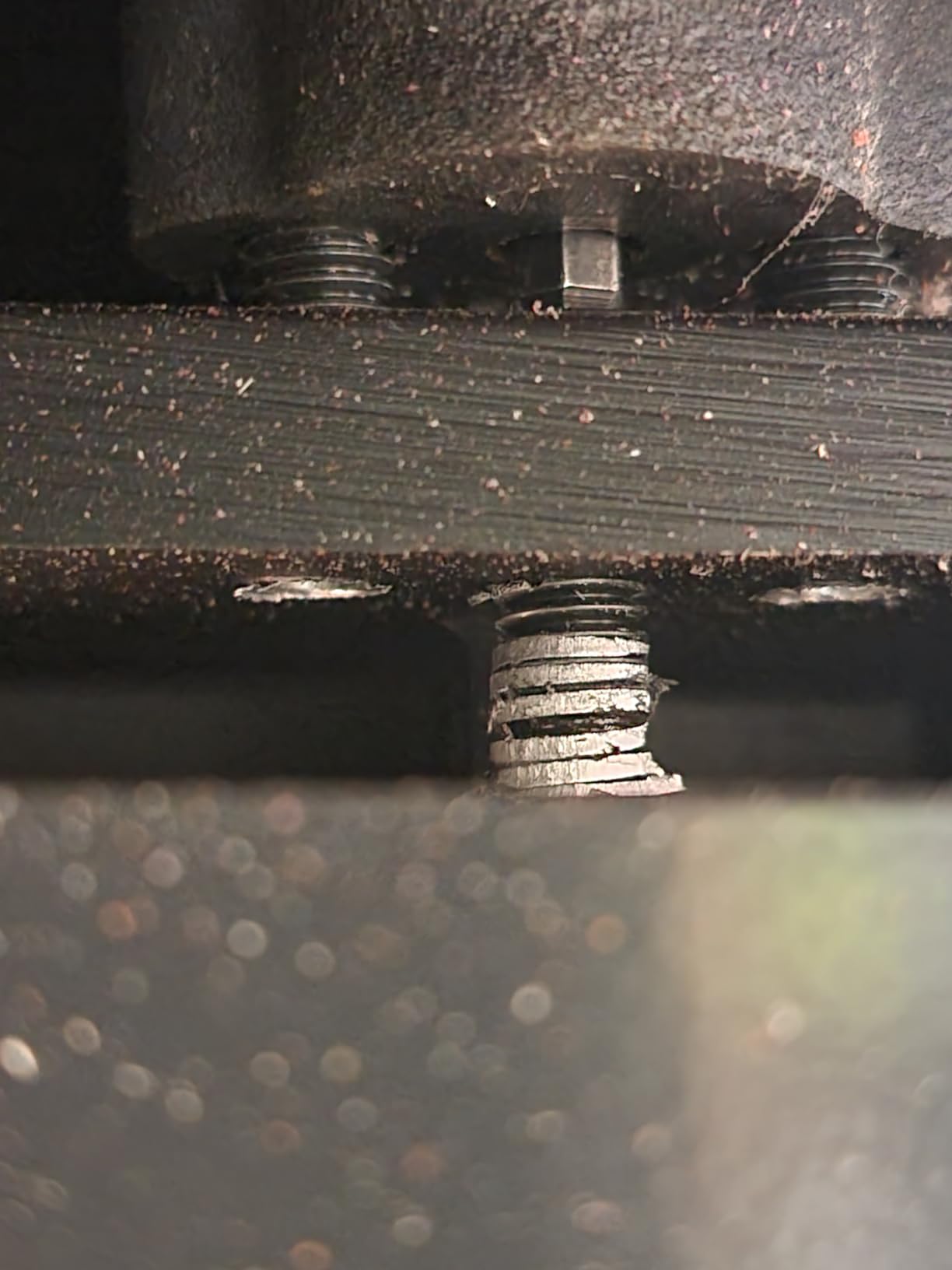
What to budget for is time. The cast iron tables need iterative leveling out of the box, and experienced owners describe hours of careful alignment plus several test cuts before the machine performs as intended. The fence itself arrived factory set at 90 degrees and held alignment, so the work concentrates on the tables.
How the pull-out extensions change your board length
The cast iron tables extend outward for larger workpieces, which is the whole reason to choose this machine over a 6 inch model with a shorter bed. Owners still report the best results on 2 to 3 foot lumber, with results diminishing past roughly 40 inches.
So the extensions buy you working room, not an unlimited board. If your material is genuinely long, this is still the wrong shape of machine.
Who should skip it and buy something else
Skip it if you will not spend a weekend leveling tables. A machine that arrives needing hours of setup is a poor choice for someone who wants to plug in a jointer on day one and get to work, and that is a real segment of buyers.
The plastic fence adjustment handles also strip if over-torqued, and the cast iron beds need to be kept dry and clean because they rust. For a shop that is damp half the year, that maintenance is a real consideration.
4. WEN JT833H 8-Inch Spiral Jointer – Best 8-Inch Step Up
WEN JT833H 10-Amp 8-Inch Spiral Benchtop Jointer with Extendable Table
10 amp motor
8 inch cutting width
16 HSS spiral blades
Table extends to 51 inches
Pros
- 16 staggered HSS spiral blades give a fine finish across the wider width
- 33 by 8 inch table with support arms extending to 51 inches
- Includes both 2-1/2 inch and 4 inch dust ports
- Shares fence geometry and depth scale with the well-reviewed 6 inch model
Cons
- Same fence squareness setup difficulty as the rest of the WEN line
- Aluminum table surfaces mark with use
The JT833H is the wider sibling of our top pick, and it exists for one reason: to give you more cutting width without changing the machine you already know how to set up. Same 10 amp motor, same fence geometry, same onboard depth-of-cut scale, same 0 to 1/8 inch per pass. The cutterhead gains blades to cover the extra width, going to 16 staggered HSS spiral cutters.
The part that actually changes your workflow is the table. At 33 by 8 inches with support arms that extend to 51 inches, this machine handles longer workpieces than the 6 inch model does. If you have outgrown cutting narrow parts and are now building small furniture with wider components, this is the step up.
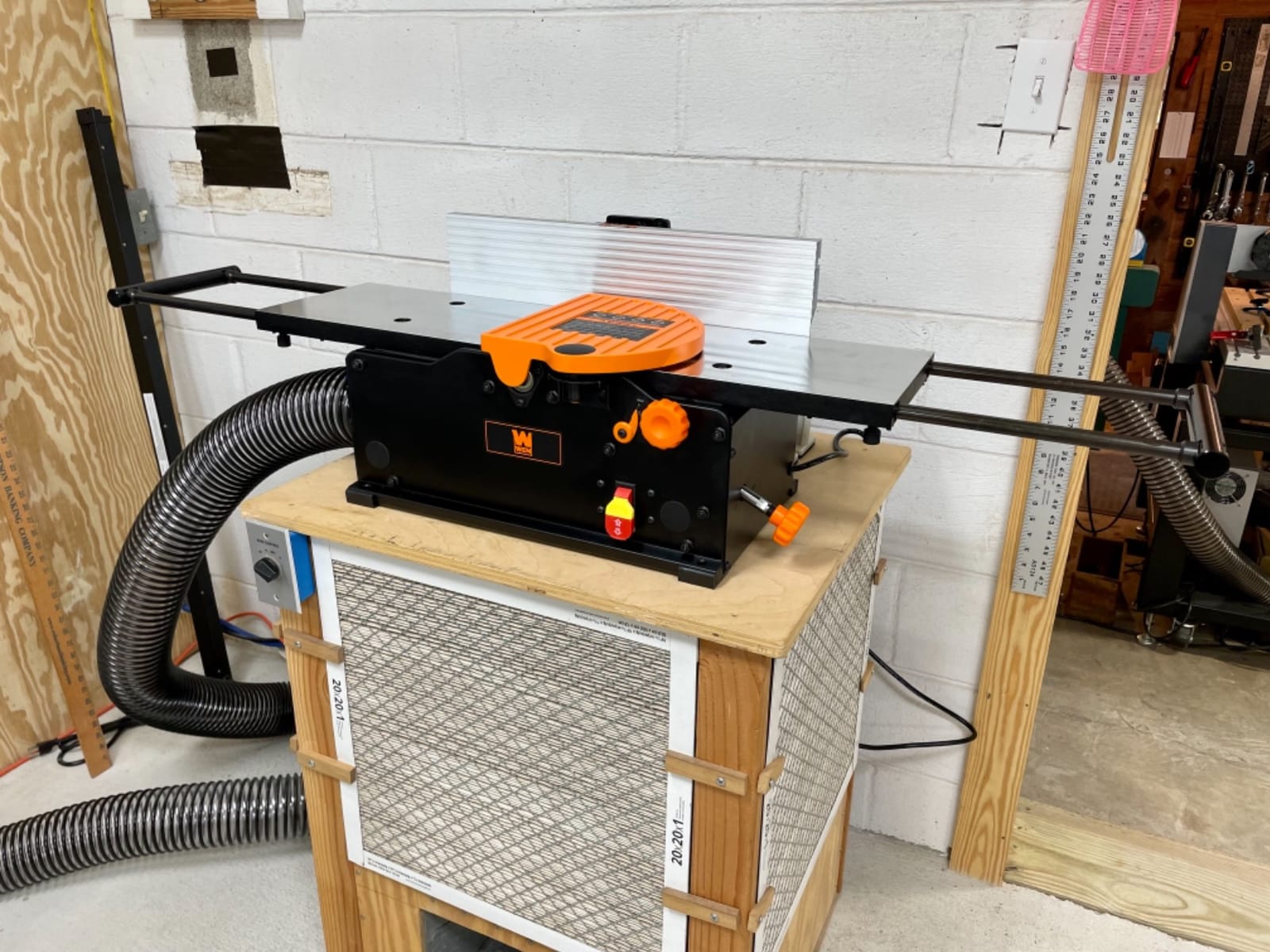
Dust collection is better served here too, since it includes both 2-1/2 inch and 4 inch ports. That matters in a small shop where a single shop vac is doing double duty, because you can pick the hose that actually fits instead of improvising with an adapter.
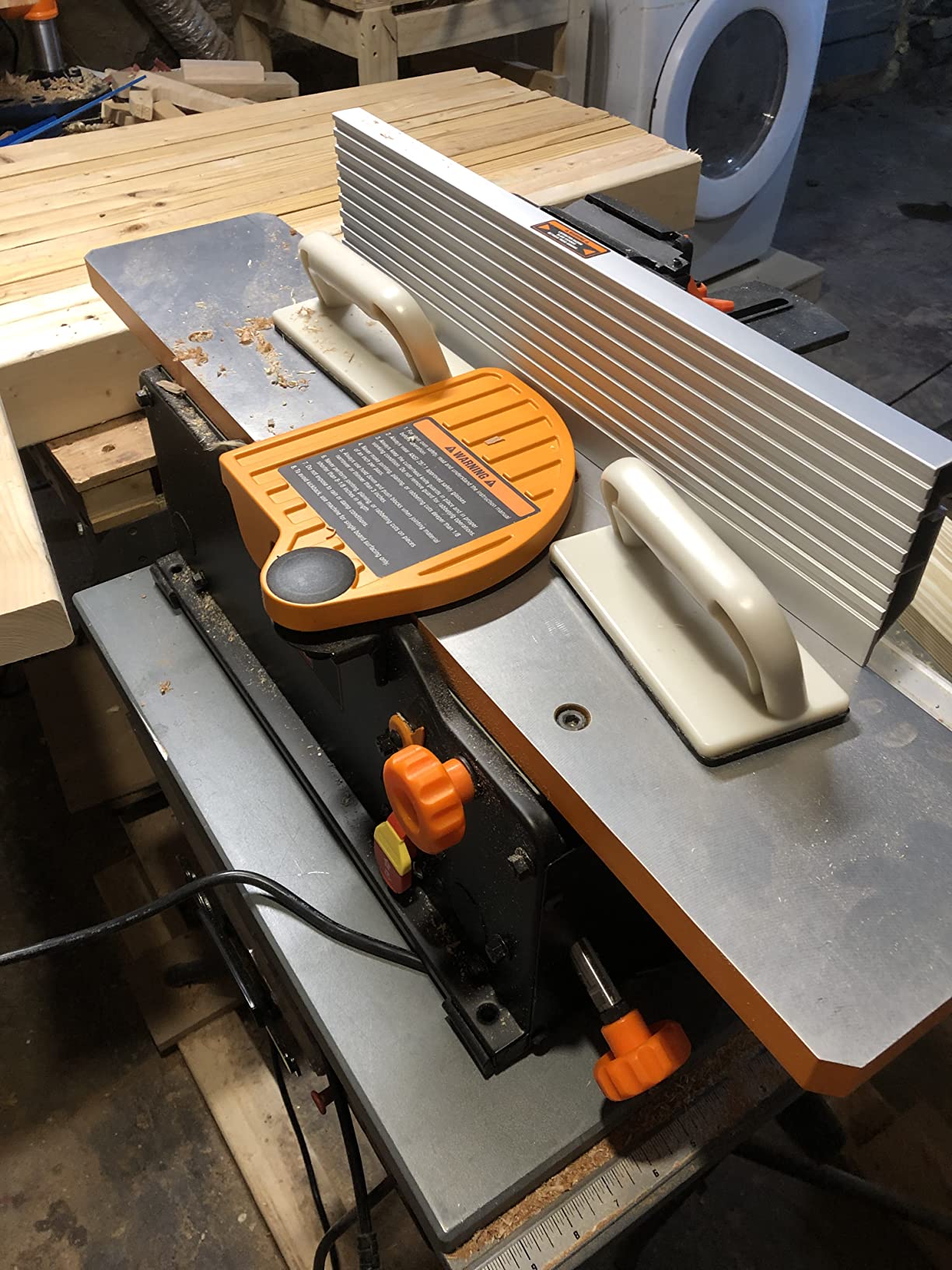
The trade-offs are the same ones the 6 inch machine has. Owners report the same fence squareness setup difficulty across the WEN line, and aluminum table surfaces mark with use. If you are patient with setup, both machines reward you. If you are not, neither one will.
Whether 8 inches is worth the step up
Eight inches of cutting width covers a standard shelf, a small tabletop, and most furniture side panels in a single pass, where 6 inches means working around a joint line you did not plan.
For glue-ups of cabinet parts and small tables, the wider pass reduces handling noticeably. Against that, you gain bed length, not unlimited board length. The extended support arms help with material up to around 4 feet, and beyond that you are back to the same support problem every benchtop machine has.
Where it loses to the 6-inch sibling
If your projects stay under 6 inches wide, the extra blades, the heavier table, and the wider footprint buy you nothing. Several owners of this model describe it as the right call only because they specifically needed the wider pass.
Also consider the 8-inch Wahuda if you want cast iron tables, or the Cutech 40180HI if you want a spiral head with carbide inserts instead of HSS blades. Those are the two directions this step up can take.
5. WEN JT3062 6-Inch 2-Blade Jointer – Best Value Per Cut
WEN JT3062 10-Amp 6-Inch 2-Blade Benchtop Jointer, Black
10 amp motor
6 inch cutting width
Up to 22000 cuts per minute
Onboard depth scale
Pros
- 81 percent of ratings at five stars with no one- or two-star reviews
- Came close to level out of the box for most owners
- 22000 cuts per minute handles hardwood with the grain and end grain without tear-out
- Fence slides freely so different areas of the blade can be used
- Runs quieter than expected for a two-blade machine
Cons
- Plastic adjustment knobs and handles can crack
- Fence still needs squaring to the table before first use
- Aluminum table beds rather than cast iron
The JT3062 has a strong owner satisfaction ratio, with 81 percent of its 220 reviews at five stars and no one-star reviews at all. That is not the largest sample here, but the sentiment is unusually consistent, and several owners reported upgrading from a different benchtop brand and rating this one better.
It is a straight two-blade machine, so it is a different philosophy from the spiral-head picks above. Two cutters at up to 22000 cuts per minute is a high effective tooth count, and owners report tear-free cuts on hardwood with the grain and on end grain, with no motor bogging. What you give up is the low-maintenance life: straight knives need sharpening, and that is the real cost of this machine beyond the purchase.
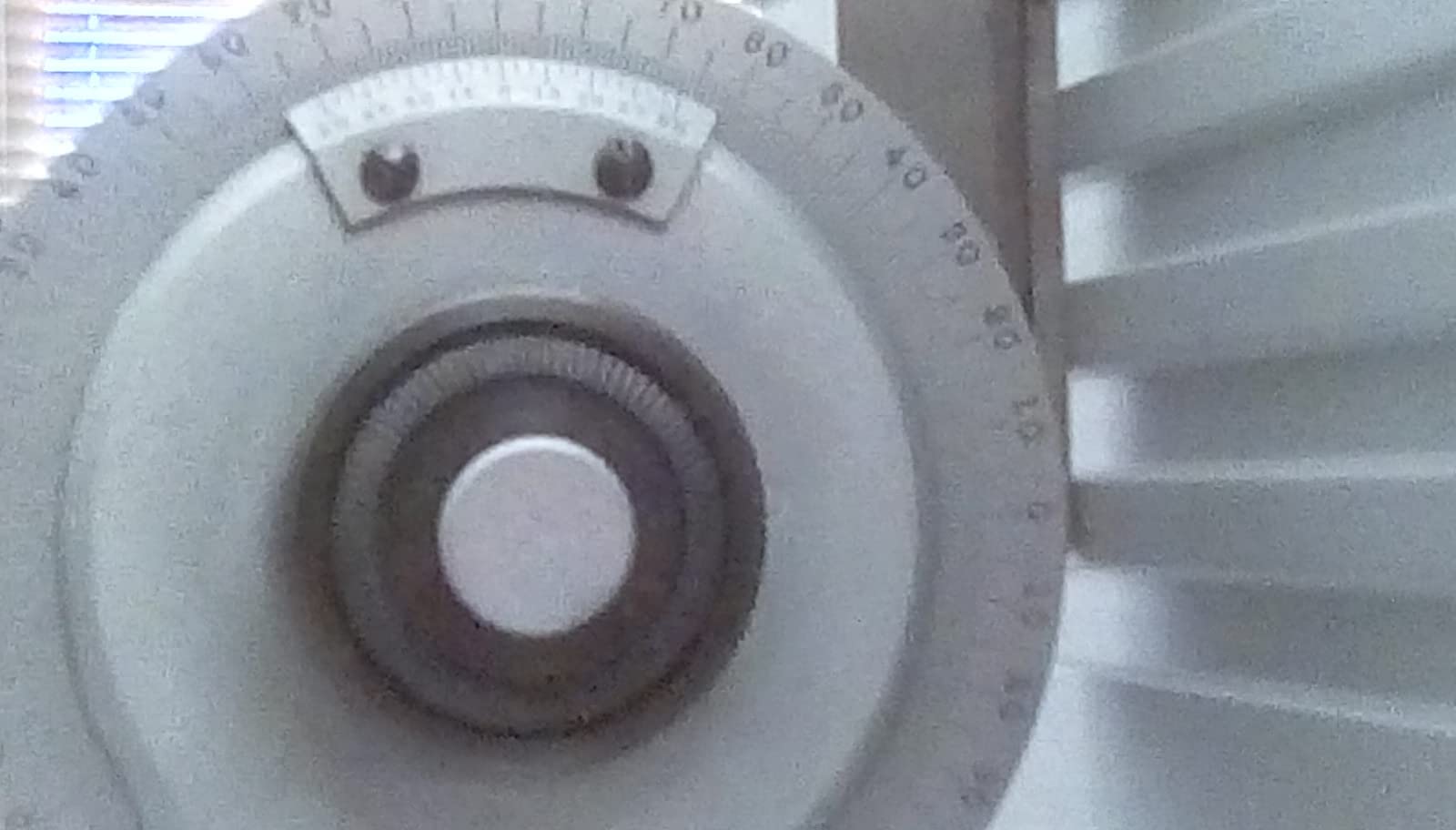
Out of the box behavior is the standout. Most owners report the machine arriving close to level, which removes the hours-long setup ritual that dominates some machines in this roundup. The onboard depth scale and the two included push blocks round out a package that feels considered for a budget machine.
The dust port works well, and the machine is heavier and more stable than its size suggests. Several owners called it simple to assemble and quiet in operation, which is not what people expect from a two-blade head.
The sharpening math before you buy
A straight-knife jointer is a different commitment. You are buying a machine that periodically needs its knives sharpened, and a beginner who does not enjoy that will resent it within a year. The flip side is that sharpening two HSS knives is a much smaller job than rebuilding a spiral head, and the parts are cheap.
If you are the type who likes a maintenance ritual, this machine is a pleasure. If you want to set it up and forget about it, pick a spiral cutterhead instead.
Where the plastic hardware gets in the way
The adjustment knobs and handles are plastic and can crack, which is the accepted trade-off at this level. Keep the fence from being forced against its stops and the hardware holds up fine.
Also note the table beds are aluminum, not cast iron, contrary to what some older reviews suggest. Owners put the comfortable sweet spot at roughly 4 to 5 foot material, so this is still a short-bed machine.
6. Powermatic 54HH 6-Inch Helical Jointer – Best for Long Boards
Powermatic 6-Inch Jointer, Helical Cutterhead, 1 HP, 115/230V 1Ph (Model 54HH)
13 amp motor
6 inch cutting width
40 four-sided carbide inserts
66 inch adjustable tables
Pros
- Highest share of five-star ratings in the roundup at 84 percent
- 66 inch adjustable tables handled 8 foot boards with ease for one owner
- Helical cutterhead with 40 four-sided carbide cuts quietly and leaves smooth surfaces
- Beds and fence arrived within about .002 inch of level
- 38 inch two-way tilting fence with positive stops
- Five-year manufacturer warranty
Cons
- Roughly 330 pounds and needs two people plus a hoist to place on the stand
- Helical head leaves small scallop marks on edges needing a light sand pass
- Effective cutting width closer to 5-15/16 inches than 6
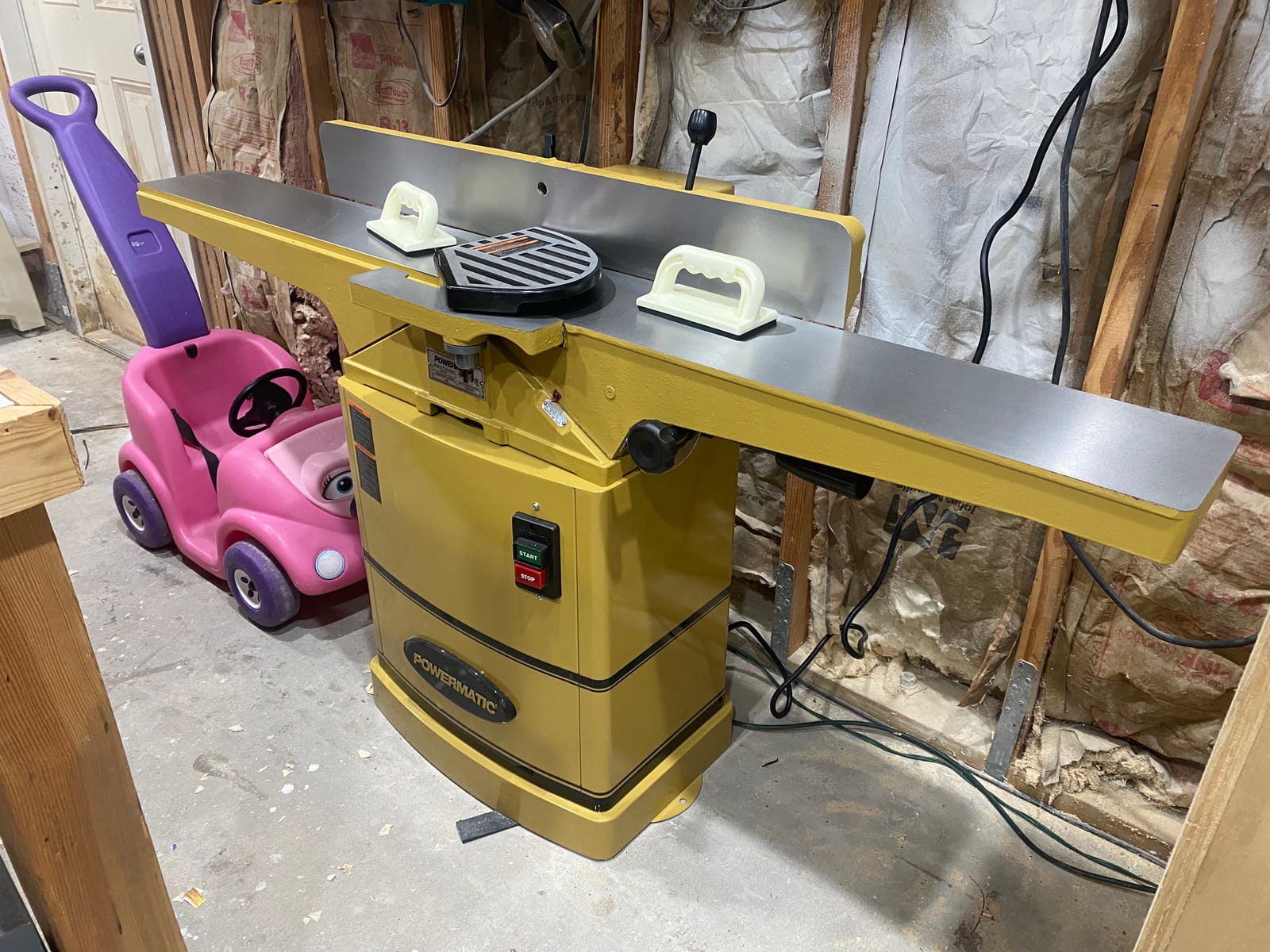
This machine solves the problem the rest of this roundup cannot. The Powermatic 54HH has 66 inch adjustable infeed and outfeed tables, and one owner reported handling 8 foot boards with ease. If the short bed is the reason you have been hesitating on a jointer, this is the answer inside our list, even though it is a floor machine rather than a true benchtop unit.
The quality is a step up in every direction. Owners report the beds and fence arriving from the factory within about .002 inch of level, which means almost no setup.
The helical cutterhead carries 40 four-sided carbide inserts and leaves glass-smooth surfaces at a fraction of the noise of a conventional head, and the 38 inch two-way tilting fence has positive stops for 90 degree and bevel work.
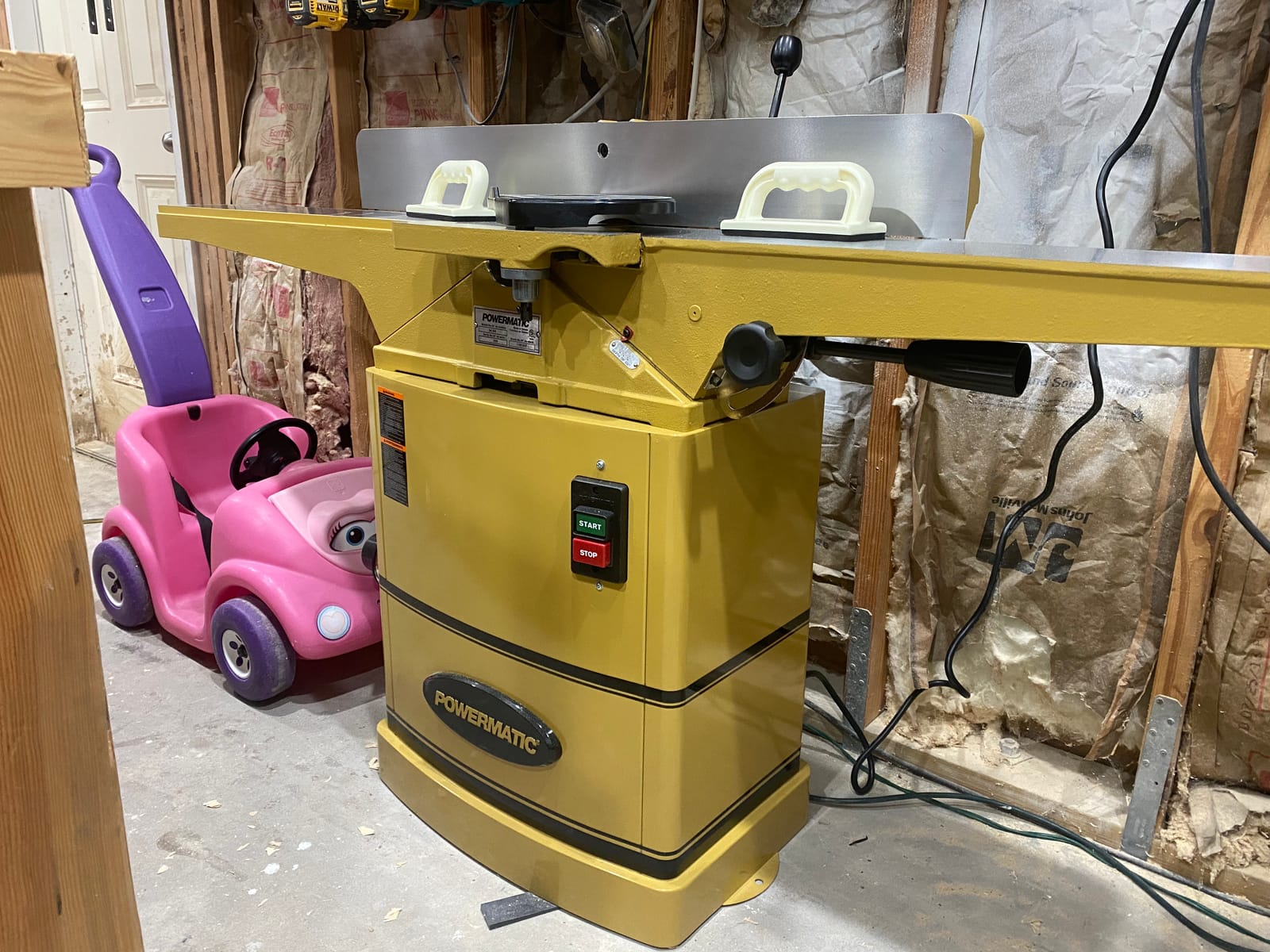
At 13 amps with a 1 HP motor, this is the most substantial machine here, and it comes with a five-year manufacturer warranty. The oversized sheet metal stand is included, along with push blocks, a dust chute, and the fence hardware.
Setup is roughly an hour with two people, and the overwhelming takeaway from owners is that the machine is worth the effort. Many of them came here from lesser jointers and describe it as a genuine upgrade in rigidity and finish.
When long boards justify a floor machine
Support is the whole argument. With 66 inches of table, a board is supported from the moment it touches the infeed table until it clears the outfeed, so the cutterhead never catches an unsupported end.
That is what makes jointing 8 foot lumber safe rather than merely possible.
If you build long tabletops, stair parts, or work with full-length lumber, this is the only machine in our roundup where board length stops being the limiting factor.
What you are signing up for
Weight is the real cost. At roughly 330 pounds shipped, this needs two people and an engine hoist to place on the stand, and it does not move again without help. If your shop cannot host a floor machine, this is disqualifying no matter how good it is.
Two smaller notes: the helical head leaves slight scallop marks on edges that need a light sanding pass for truly glass-like edges, and the effective cutting width is closer to 5-15/16 inches than the nominal 6.
The large dust port also needs a capable collector, and it fills quickly.
7. Cutech 40180HI 8-Inch Jointer – Best Ready-to-Run Setup
Cutech 40180HI 8-Inch Spiral Cutterhead Benchtop Jointer with Cast Iron Tables, 16 TC Inserts, Extra Long 24″ Aluminum Fence, Additional 7-3/8″ Fence Brackets, and a 10-amp Motor
10 amp 1200 watt motor
8 inch cutting width
6 row spiral head with two-sided inserts
Cast iron tables
Pros
- Cast iron tables arrive co-planar and factory calibrated with no fiddling
- Two-sided tungsten carbide inserts rotate in place after a strike
- Fence enhancement brackets at both ends help hold a true 90 degree angle
- Additional guide post keeps parallel tables aligned as depth changes
- At 82.8 pounds the machine does not move during cuts
Cons
- Aluminum fence is somewhat flimsy with a fairly crude alignment mechanism
- High no-load noise from the 12000 RPM universal motor and hearing protection is essential
- Weighs nearly 83 pounds so it takes care to move
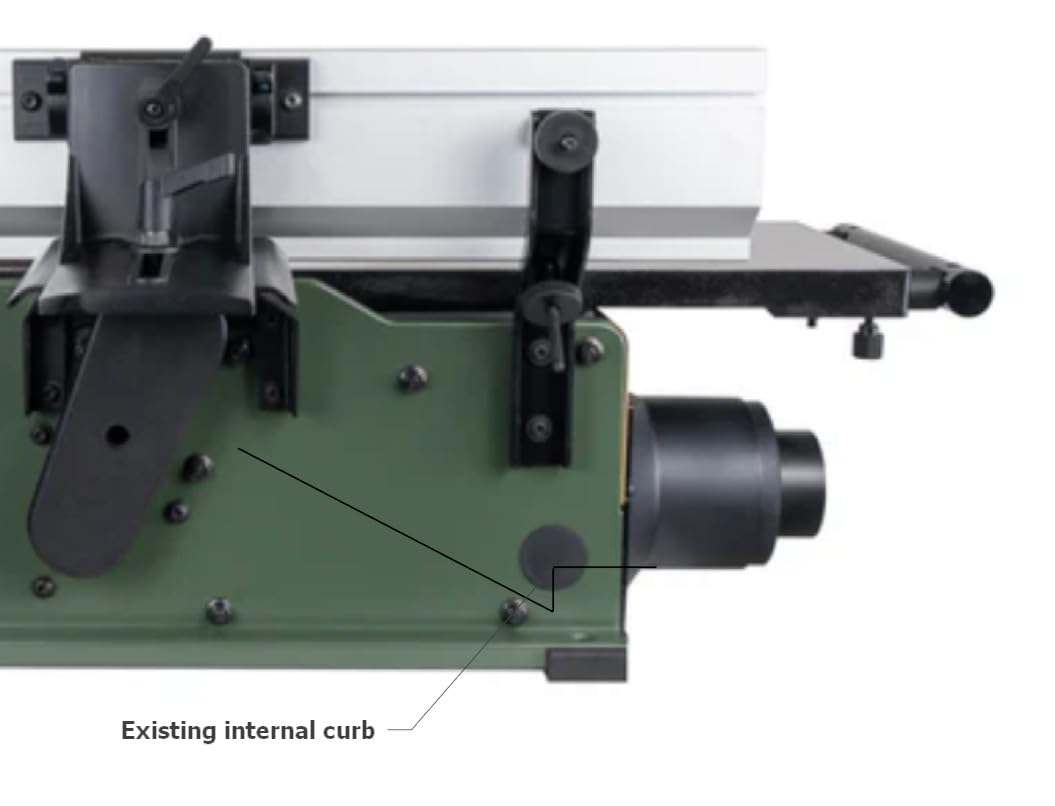
The Cutech 40180HI is the machine to buy if your real objection to a jointer is that you do not want to spend a weekend leveling tables. The cast iron tables arrive co-planar and factory calibrated, and owners repeatedly contrast that directly with competitors that need hours of adjustment. You can be cutting within an hour of assembly.
The cutterhead is a six row spiral with two-sided tungsten carbide inserts. Two-sided inserts are the design Cutech pushes hardest, and unlike four-sided tips, each insert has two usable edges, so a strike usually means rotating a single tip rather than indexing the whole head.
Two design details are worth knowing about. The fence enhancement brackets at both ends stabilize the fence for a true 90 degree, which is a real answer to the fence-drift complaint that dominates budget jointer reviews. The additional guide post keeps the two tables parallel as you change depth of cut, which is the mechanism behind consistent passes.
Owners rate Cutech customer service and tech support as excellent, and at 82.8 pounds the machine stays put during a cut, which removes the sliding problem for anyone who worries about it.
Factory calibration versus a weekend of leveling
That gap is the buying decision. If you have a free Saturday and a dial indicator, the Wahuda 8-inch will eventually reward you with cast iron tables too. If you want to open the box and start jointing, this machine is ahead by a wide margin.
The dust collection works well with a 4 inch adapter, which is the connection most hobbyists already have on a shop vac.
Where the compromises show up
The aluminum fence is described by owners as somewhat flimsy, with an alignment mechanism that is relatively crude compared to the rest of the machine. The no-load noise at 12000 RPM is high enough that owners call hearing protection essential, which is worth weighing if you share a wall with a neighbor or work at night.
Also note the styrofoam packing can damage the tables in transit, so inspect the castings before assembly. And this is still a short-bed machine, so long and wide workpieces remain its limit.
8. Cutech 40160HB 6-Inch Jointer – Best for Beginners
Cutech 40160HB 6-Inch Spiral Cutterhead Benchtop Jointer with teflon-Coated Aluminum Tables, 12 TC Inserts, 19-5/8” Aluminum Fence, and a 10-amp Motor (Rifle Green, 6 inch)
10 amp motor
6 inch cutting width
6 row spiral head with two-sided inserts
Teflon coated aluminum tables
Pros
- No one- or two-star reviews at all with 83 percent five-star ratings
- Teflon coated 6H aluminum table resists scratching
- 6 row spiral head with two-sided carbide inserts runs quietly and smoothly
- Clear depth-of-cut scale and pointer for consistent measured passes
- Fence has quick stops at 90 and 135 degrees
Cons
- Aluminum tables are lighter and less rigid than the cast iron Cutech 8 inch
- Same family of aluminum fence rigidity issues
- Limited to a 6 inch cutting width
Review volume here is small at 59 ratings, but the sentiment is uniformly positive, with 83 percent at five stars and no one- or two-star reviews at all. That is worth telling you plainly before you read further, because a small sample is a weaker signal than the 1066 reviews behind our top pick.
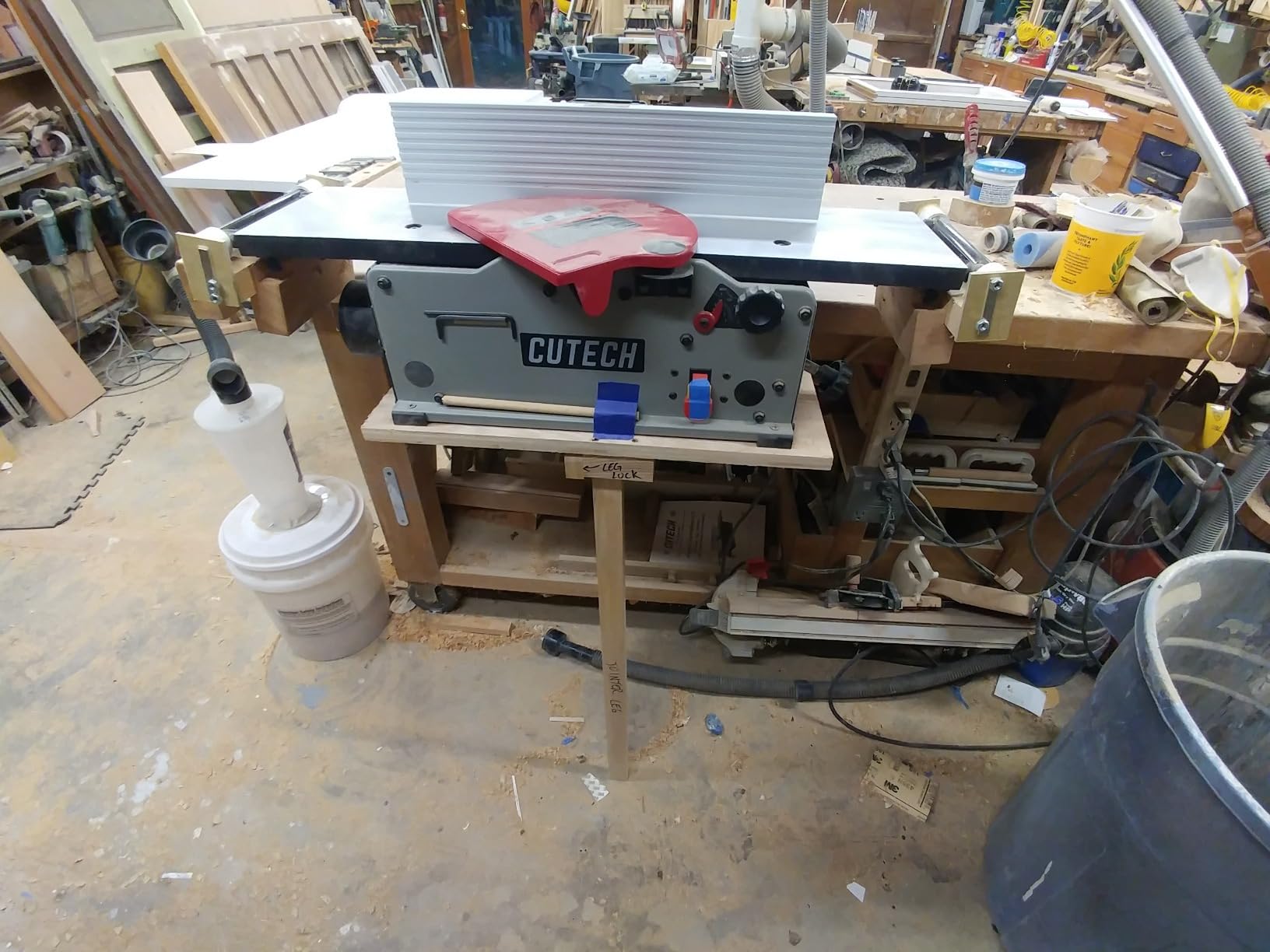
What makes this a good beginner machine is the combination of a six row spiral cutterhead with two-sided tungsten carbide inserts, a clear depth-of-cut scale with a pointer, and quick stops at 90 and 135 degrees. Everything a first-time owner needs to make a square edge is labelled and located, which sounds basic until you have used a machine where it is not.
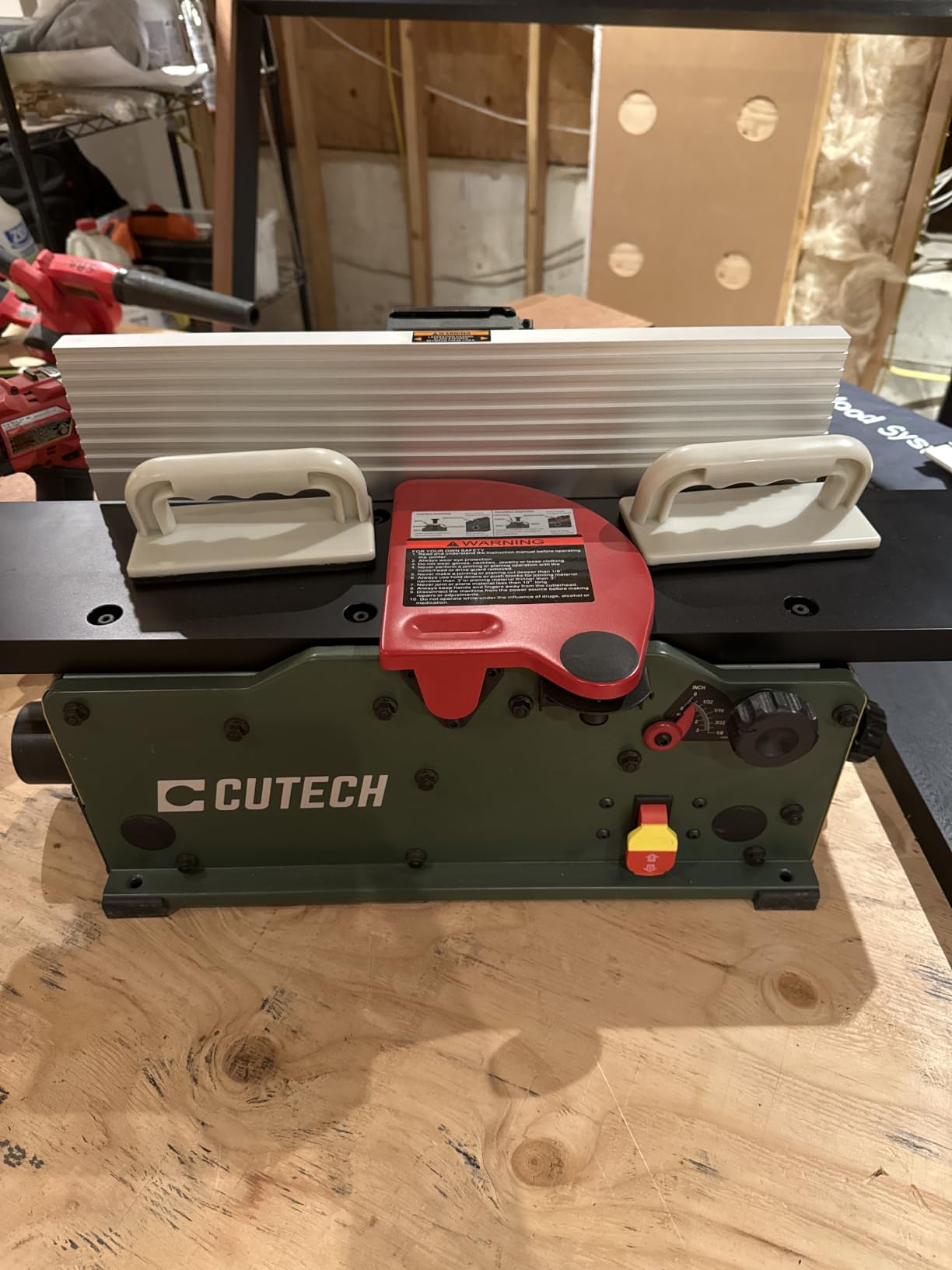
The teflon coated table surface is the distinguishing feature versus cheaper competitors at this level. The coating raises the aluminum to 6H hardness and resists the scratching that owners of bare aluminum beds complain about repeatedly. If you are worried about marking up your tables, this addresses it directly.
At 44.2 pounds it is easier to handle than the 8 inch Cutech, which matters if you are moving it between a bench and a shelf. Owners describe the cutting as quiet and smooth, which is the right character for a first machine.
Why the table coating matters day to day
Bare aluminum beds mark visibly, and once your table is scuffed, every cut looks like it produced a defect even when the surface is fine. The coated surface slows that down, and owners say it holds up better than they expected for a benchtop machine.
For a beginner, that means fewer moments where you cannot tell whether a mark is a real tear-out or just the table.
Where you give something up
These are aluminum tables, so they are lighter and less rigid than the cast iron tables on the 8 inch Cutech. The fence is the same aluminum family with the same rigidity limitations, and the cutting width is capped at 6 inches.
Also consider the Cutech against the Wahuda directly. One buyer on Lumberjocks picked the Cutech over the Wahuda specifically because of the improved fence, and that is a reasonable read of the two machines. Cutech for fence quality and factory setup, Wahuda for cast iron tables and more width.
9. WOODSTARTER 6-Inch Benchtop Jointer – Budget Pick
WOODSTARTER 6-Inch Benchtop Jointer with 15 Amp Motor, 12000 RPM Cutting Speed, Adjustable Fence 90–135°, Up to 1/8″ Depth, HSS Blades, Table Jointer To for Woodworking DIY
15 amp motor
6 inch cutting width
12000 RPM
Dual HSS blades
Pros
- Lowest entry cost in the roundup
- 15 amp motor is a strong rating for a budget 6 inch machine
- Weighs about 21 pounds so it is easy to carry into a small shop
- Dual HSS blades included for burr-free cuts
- Fence tilts from 90 to 135 degrees with depth up to 1/8 inch
Cons
- Only 21 reviews with a 15 percent three-star share
- Nylon and aluminum construction is lighter and less rigid than cast iron or steel
- Small 22.91 inch table length limits usable stock size
- One-year manufacturer warranty is the shortest offered
The WOODSTARTER is here as the floor of the category, and it exists for a specific buyer: someone in a very small space who wants to know whether a jointer is for them before committing real money.
At roughly 21 pounds it is the easiest machine here to carry into a shed, and the 15 amp motor is a strong rating for a machine at this entry level.
We want to be direct about the evidence here. There are 21 ratings, and 15 percent of them are three stars, which is a meaningful share of owners who found the light construction and short table limiting. The machine has the least owner history of anything in this roundup, and that is a real reason to think twice.
What it does well is simple things. Dual HSS blades are included, so you are not buying a jointer and then discovering you need to buy knives. The fence tilts from 90 to 135 degrees, and depth of cut adjusts up to 1/8 inch. The motor runs at 12000 RPM and, on paper, handles hardwoods without complaint.
Documentation is thin. You get an installation guide rather than the deeper setup material branded machines include, which matters if you are new and something does not line up.
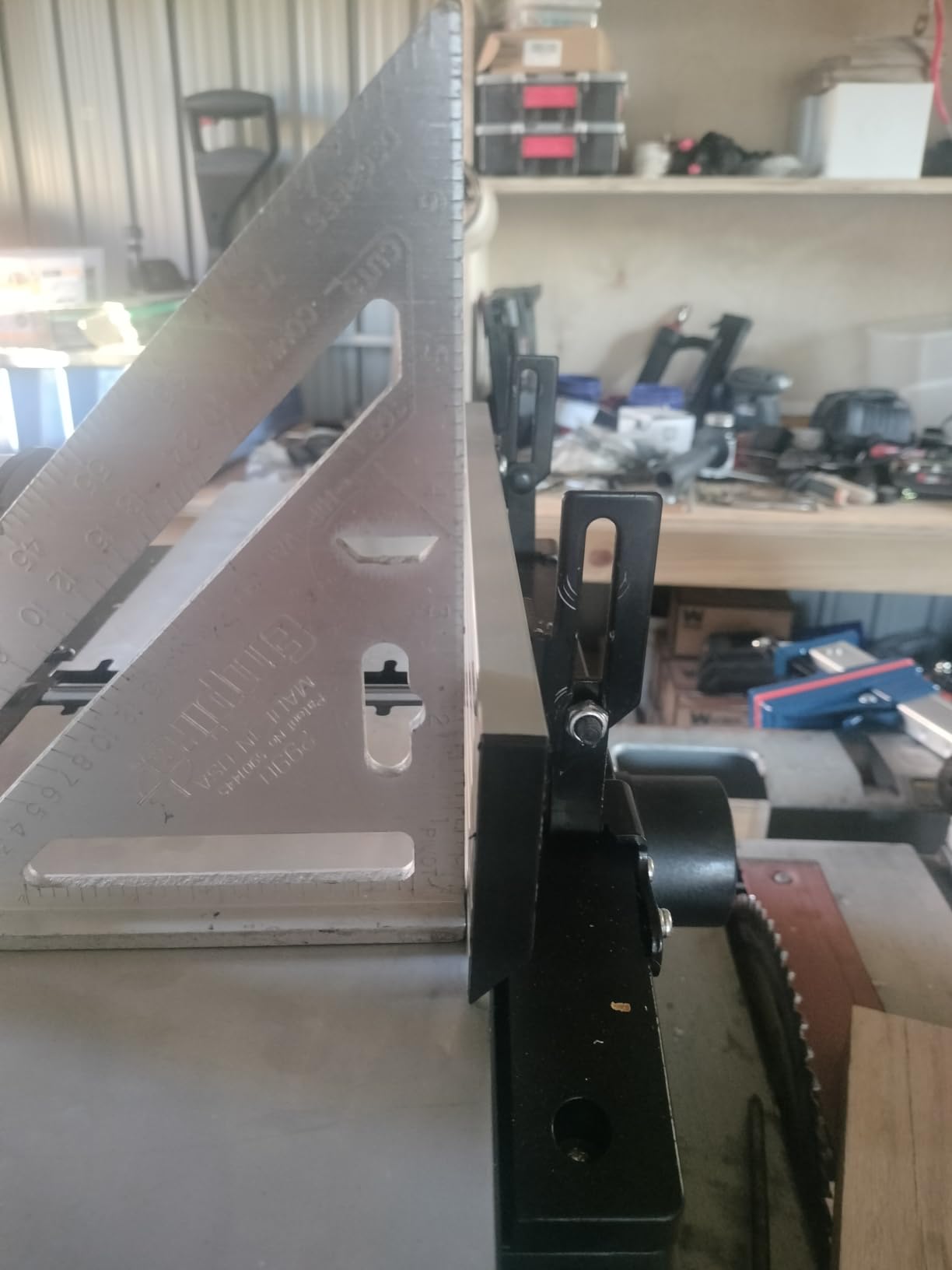
What 21 pounds of machine means at the cutterhead
Light is convenient and light is also less rigid. A bed that weighs little has less mass holding it flat, and owners who gave this machine three stars were reacting to exactly that.
For light work on already-milled lumber it is fine. For flattening a rough-sawn board it is a stretch.
The 22.91 inch table is the clearest limit, and it is the shortest bed in the roundup. Keep your workpieces short.
Who this is right for
Buy it if your shop is a rented corner, your projects are cutting boards and small panels, and you want the least commitment that still lets you learn the machine. Do not buy it as a long-term primary jointer, and note that the one-year manufacturer warranty is the shortest in this group.
If the same money buys you a spiral cutterhead with real owner history, that is the better first jointer. This one is a stepping stone, not a destination.
10. JET JJ-6HHBT 6-Inch Helical Jointer – Best for Cast Iron Tables and Motor Power
JET 6-Inch Benchtop Jointer, Helical Cutterhead, 1 HP, 115V 1Ph (JJ-6HHBT)
1 HP 15 amp motor
6 inch cutting width
14 indexable four-sided carbide blades
Internal blower dust collection
Pros
- True helical cut with 14 indexable four-sided carbide blades
- Cast iron tables and fence are more rigid than the aluminum-table machines here
- 15 amp 1 HP motor at 10000 RPM has the most torque in the benchtop class
- Internal blower motor pulls dust and chips away from motor and cutterhead
- Fence tilts both directions to plus or minus 45 degrees with locking stops
Cons
- Lowest rating in the roundup at 4.2 with 10 percent one-star reviews
- At 71 pounds it is one of the heavier benchtop units and awkward to move
- Five-year warranty drops to 2 years for commercial use
The JET JJ-6HHBT is the benchtop-formatted machine for the buyer who cares about mass. Cast iron tables and a cast iron fence give it a rigidity that none of the aluminum-table machines in this roundup can match, and a 1 HP 15 amp motor at 10000 RPM has more torque than the 10 amp units.
Cut quality is not the problem here. The helical head with 14 indexable four-sided carbide blades cuts quietly and leaves a good surface, and the fence tilts both directions to plus or minus 45 degrees with locking stops, which is the most capable bevel range in the group. A removable safety key on the front toggle switch and a highly visible depth scale are thoughtful touches.
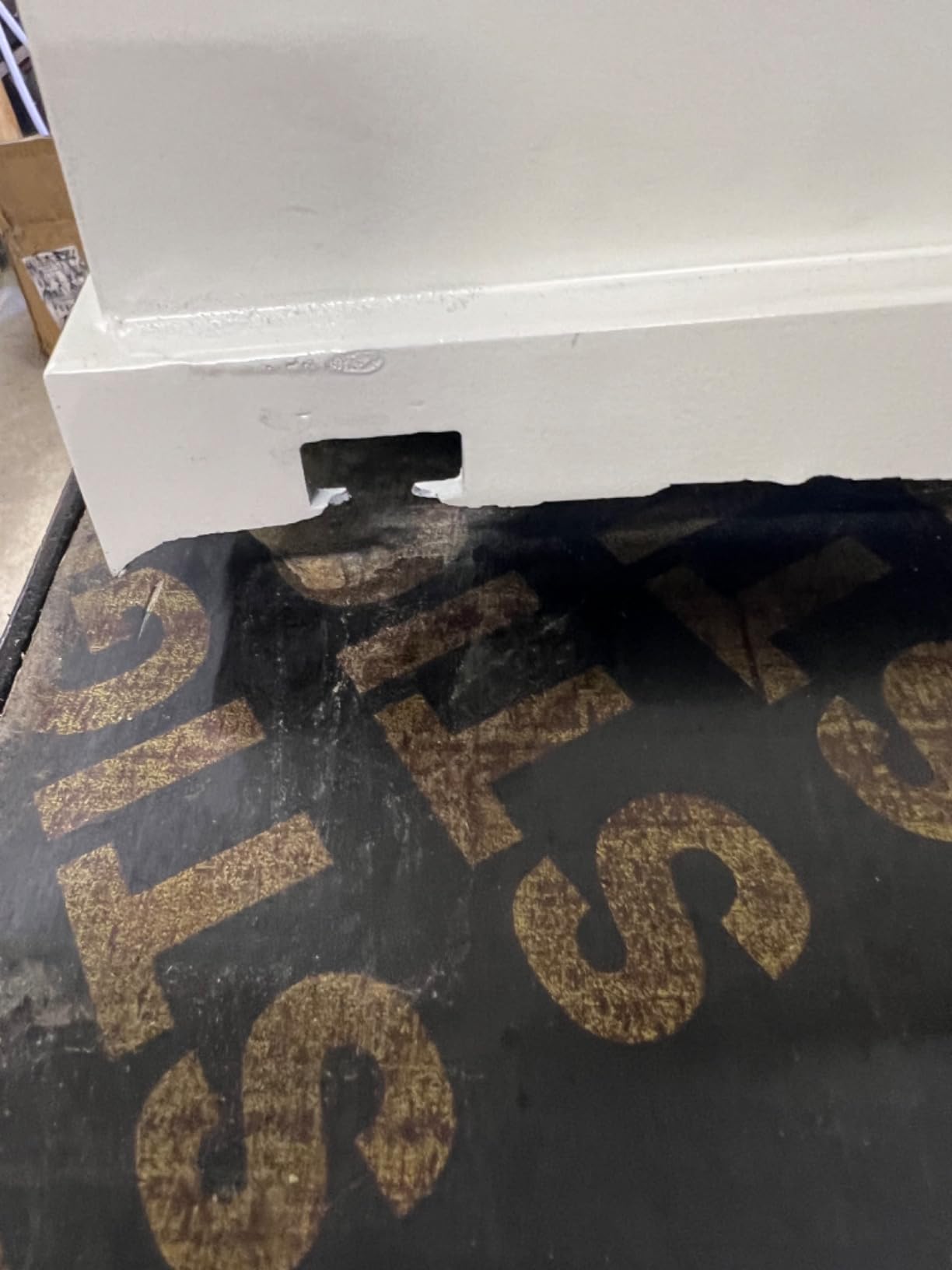
The internal blower motor moves dust and chips away from the motor and cutterhead, which is a nicer answer than a bare port and a shop vac hose, and the package includes a filter bag, dust chute, push block, and push stick.
What holds the rating down is not cut quality. It is weight and a visible tail of one-star reviews on a small sample of 35 ratings, which is the thinnest but one of the owner bases in this roundup.
Why mass matters more than it sounds
A heavier machine does not slide, does not vibrate under a cut, and holds its bed flat when you push a board across. That is a real quality difference on hardwoods, and owners who want cast iron tables in a benchtop package tend to land on this machine for that reason.
The internal blower also keeps chips away from the motor, which matters for longevity in a small shop where a shop vac is not always running.
Where it falls short
At 71 pounds it is one of the heavier benchtop units, and awkward to move. That is only a problem if your plan was to carry it between benches rather than bolt one spot and stay there.
Also read the warranty terms carefully. The five-year warranty defaults to two years for commercial or industrial use, which matters if you ever build furniture for payment. With 35 ratings and 10 percent one-star reviews, we would treat this as the pick for a buyer already committed to cast iron, not the safest first jointer.
Buying Guide: How to Choose a Benchtop Jointer
Pick your width class by what you build
A 6 inch machine handles cutting boards, flags, small shelves, and most furniture parts. An 8 inch machine adds a single-pass path for small tabletops, side panels, and cabinet parts.
Machines at 10 or 12 inches exist for wide panels, and in this roundup the widest options are the three 8 inch models, the Wahuda, the WEN JT833H, and the Cutech 40180HI. If you have never jointed a board before, 6 inches is enough to learn on and easy to support safely.
Spiral cutterhead or straight knives
This is the highest-relevance decision and it comes down to how you feel about maintenance. A spiral or helical cutterhead uses staggered inserts that shear the fiber, so the finish is cleaner, the noise is lower, and a dull insert is rotated rather than a full blade set replaced.
A spiral head is also more expensive to buy, and the inserts are a consumable cost. A straight-knife head is cheaper up front and produces an excellent result when sharp, but it needs periodic sharpening and will not forgive a dull blade on figured wood. For a beginner, we lean spiral. For someone who enjoys a sharpening routine, straight knives are perfectly respectable.
Bed length versus board length: the honest math
This is the limitation nobody publishes clearly, so here is the rule owners actually use: comfortable support runs to roughly twice the length of the bed.
The WEN JT630H and JT3062 have 30 inch tables, which puts the comfortable ceiling around 4 to 5 feet and the good-working zone at 2 to 4 feet. The WEN JT833H extends to 51 inches with its support arms, which is better. The Wahuda reports its best results at 2 to 3 feet, with results diminishing past roughly 40 inches. The Powermatic 54HH, with 66 inch tables, is the only machine in our roundup where an 8 foot board is genuinely supported the whole way through.
Beyond twice the bed length, add roller support or a helper, because an unsupported workpiece over a spinning cutterhead is a safety problem, not just a quality one.
Motor amps and what they mean for hardwood
Most of this class runs 10 amps, which is comfortable on softwood trim and adequate on hardwood if you keep passes light and feed steadily. Three machines here run higher: the WOODSTARTER at 15 amps, the JET at 15 amps with 1 HP, and the Powermatic at 13 amps.
Owners of 10 amp machines report motor bogging on wide hardwood passes, so if you plan to flatten oak or maple, either take light passes or move up in horsepower.
Fence accuracy and tilt range
A fence that is out of square by a degree ruins a glue-up no matter how good the cut looks. Budget machines in this roundup, WEN in particular, are reported to need careful truing at setup and periodic re-checking.
Cutech addresses it with fence enhancement brackets at both ends of a 24 inch fence, which is the most direct answer in the group. Fence tilt of 90 to 135 degrees is standard for the budget machines, while the JET tilts both directions to plus or minus 45 degrees and the Powermatic has a 38 inch two-way fence with positive stops, which is the most capable setup here.
Table material, dust collection, and shop reality
Cast iron tables hold up better and resist marking; aluminum tables are lighter and easier to move. WEN, Craftsman, and the 6 inch Cutech use aluminum, and the Cutech adds a teflon coating for scratch resistance. The Wahuda, 8 inch Cutech, and JET use cast iron.
On dust, the spiral machines throw more chip and can overwhelm a small shop vac, so a capable collector matters. The WEN JT833H and Powermatic offer larger port options, and the JET adds an internal blower.
Finally, bolt the machine down and set it at standing elbow height. The long-running objections about sliding machines and mismatched bed height have not been engineered away. Also note that most of these brands are marketplace-only, so local service and easy returns are not part of the deal, and resale value on a benchtop machine is thin.
Jointer, planer, combo, or a used floor model?
If your material already comes flat and square, a planer serves you and a jointer is optional. If your material is rough-sawn, warped, or out of square, you need the jointer. A benchtop jointer/planer combo does both in one machine but is narrower and shallower than a dedicated unit, and buyers in our research reported real confusion shopping between the two categories. If your boards run long, a used 6 inch floor jointer is the alternative that experienced owners recommend most often, and it solves the short-bed problem permanently.
Cutech versus Wahuda
These are the two dominant marketplace-only spiral benchtop brands, and it is the most asked comparison in the forums. Cutech wins on setup, with factory calibrated cast iron tables and fence enhancement brackets, and it uses two-sided carbide inserts.
Wahuda wins on table mass and width options, with 6, 8, and 10 inch cast iron models and pull-out extensions, at the cost of a long leveling session out of the box. One Lumberjocks buyer chose the Cutech over the Wahuda specifically because of the improved fence.
Long-term Wahuda owners posting on woodworking forums report the spiral cutterheads survive heavy rough-sawn lumber use, so neither brand is a durability gamble.
Frequently Asked Questions
Are benchtop jointers worth it?
Yes for hobbyists who edge joint and face joint boards roughly two to four feet long in a small garage, shed, or condo shop. The short bed is the real limit, so boards past about four feet need support. If you regularly work with long stock, a used 6 inch floor jointer is the better buy.
What is the best benchtop jointer for a home shop?
For most home shops, the WEN JT630H 6-inch spiral jointer is the strongest all-round choice, with a 10 amp motor, 12 staggered HSS spiral cutters, and a 4.6 rating across more than a thousand reviews. Choose the Wahuda 8-inch or Cutech 40180HI if you want 8 inches of cutting width and cast iron tables.
Are benchtop jointers any good?
The cut quality is genuinely good. Spiral cutterheads leave clean, tear-free surfaces on hardwoods and softwoods, and several machines arrived close to level out of the box. The compromises are short beds, a setup period on some models, and light machines that need bolting to the bench.
Why are jointers so expensive?
Cost tracks mass, table material, and cutterhead type. Cast iron tables, thicker fences, helical heads with carbide inserts, and heavier motors with longer warranties all add weight and rigidity, which is exactly what keeps a bed flat under load. That is why the Powermatic 54HH carries a 66 inch table and a five-year warranty.
How long of a board can a benchtop jointer joint?
Plan on roughly twice the bed length as the comfortable maximum, and about half of that as the zone where results stay consistent. A 30 inch table suits 2 to 4 foot boards well. Beyond 4 to 5 feet you need roller support or a helper, so long stock is a sign you need a floor model instead.
Conclusion
The best benchtop jointer for hobbyists in 2026 is the WEN JT630H, because a 10 amp spiral cutterhead with 12 staggered HSS cutters gives you a genuinely good surface and more than a thousand owners agree. If you need more width or cast iron tables, the Wahuda 50180CC-WHD and the Cutech 40180HI are the two ways to step up, and if board length is the real constraint, the Powermatic 54HH removes it entirely.
The buying rule that matters more than any spec: measure your longest typical board before you buy, and pick a machine whose bed is at least half that length. Everything else on these spec sheets is negotiable. That one number decides whether the machine gets used every week or shoved on a shelf in a year.