
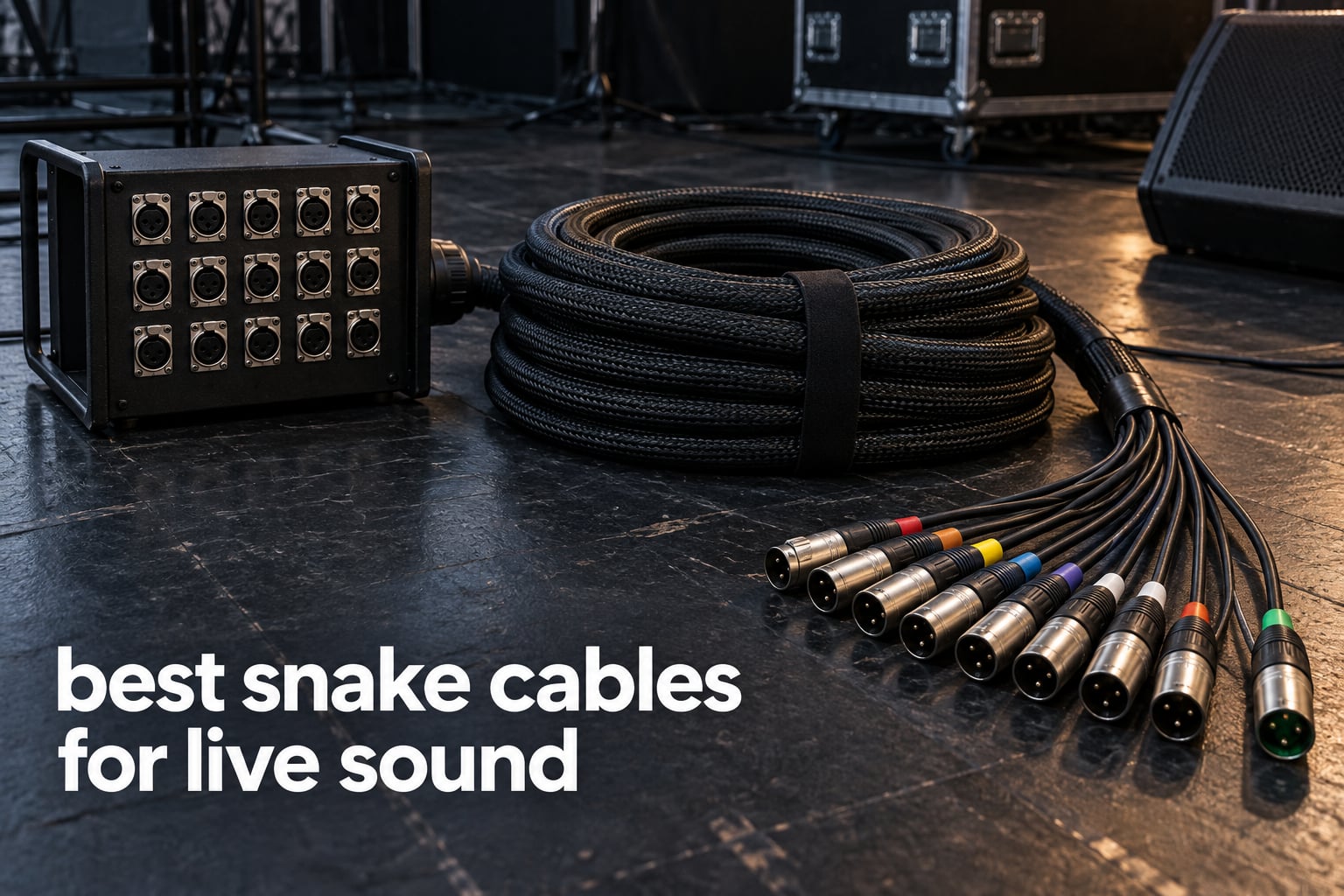
A snake cable is the single fastest way to turn a stage full of loose microphone cables into one tidy multicore run. If you are searching for the best snake cables for live sound, you are really deciding two things: how many channels you carry from the stage to the console, and how well the connectors survive a year of load-ins.
We spent weeks reading spec sheets, weighing customer photos and comparing connector types across every mainstream analog snake on the market, then narrowed the field to nine models that hold up for live work. Three of them came out of that process as the ones we would actually reach for first.
Everything below is analog and balanced, because that is still what most clubs, bars, houses of worship and rehearsal rooms run. There is a section later on when a digital stage box makes more sense, and a blunt look at when you do not need a snake at all. As of 2026, connector build and channel labeling matter more to a working engineer than conductor purity.
Table of Contents
What Is a Snake Cable (and When You Don’t Need One)?
A snake cable for live sound is one multicore cable that carries many balanced audio channels at once from stage to console. It terminates in a fan-out at one end and usually a numbered stage box at the other, replacing eight to 24 individual microphone cables and keeping every channel traceable.
Each channel inside is a twisted, shielded pair of copper conductors. The balanced line rejects noise picked up along the way, and the shared outer jacket keeps the bundle organised so the stage stays clear during soundcheck.
Now the part most guides skip. If your stage is within roughly 20 ft of the front of house position, individual XLR cables are often faster, cheaper and easier to trace, and that opinion comes up repeatedly in live sound forum threads. A snake earns its keep when you are carrying more than about eight channels, want a single continuity check across all of them, or want load-in to be one cable instead of twenty.
Top 3 Snake Cables for Live Sound Right Now (October 2026)

Monoprice 4-Channel XLR Snake
- 4 XLR channels
- 10 ft
- Color-coded channels
- Lifetime warranty
Seismic Audio 8×4 100 ft Snake
- 8 sends plus 4 returns
- 100 ft length
- Low-profile labeled stage box

EBXYA 4-Channel 50 ft Snake
- 4 channels over 50 ft
- Oxygen-free copper
- Foil plus braid shielding
Snake Cables at a Glance in 2026
| Product | Specifications | Action |
|---|---|---|
|
Monoprice 4-Channel XLR Snake 10 ft
|
|
Check Latest Price |
|
Seismic Audio 8×4 Low Profile Snake 100 ft
|
|
Check Latest Price |
 Hosa Little Bro SH-8X0-50
|
|
Check Latest Price |
|
EBXYA 4-Channel XLR Snake 50 ft
|
|
Check Latest Price |
 Seismic Audio 16×8 Snake 50 ft
|
|
Check Latest Price |
 Seismic Audio SAXQ 24×8 Snake 75 ft
|
|
Check Latest Price |
 Elite Core PS84100 8×4 Snake 100 ft
|
|
Check Latest Price |
 Hosa Little Bro SH-6X2-20
|
|
Check Latest Price |
 PRORECK 8-Channel Low Profile Snake 25 ft
|
|
Check Latest Price |
1. Monoprice 4-Channel XLR Snake 10 ft: The Best Snake Cable for Live Sound Patch Work
Monoprice XLR Male to XLR Female Snake Cable – 10 Feet- Black/Silver, 4-Channel, Metal Connector Housings Plastic and Rubber Cable Boots
Channels: 4
Length: 10 ft
Conductors: shielded XLR pairs
Warranty: Lifetime
Pros
- Four XLR runs in one jacket cuts stage clutter
- Color coding speeds up patching
- Metal connector housings with rubber boots
- Lifetime warranty
- Large review base for peace of mind
Cons
- Fixed 10 ft length limits reach
- Soft jacket gives less physical protection
I keep a short four-channel snake like this permanently in the front of house bag. It is the one that stops the sprawl of four separate XLR runs when a two-person act or a four-channel drum group goes up in a small room.
The four channels are colour coded in red, blue, white and yellow, and each connector uses a silver metal housing with a rubber boot. The wires inside are colour coded to match, so patching by feel in a dark room is genuinely faster than squinting at identical black cables.
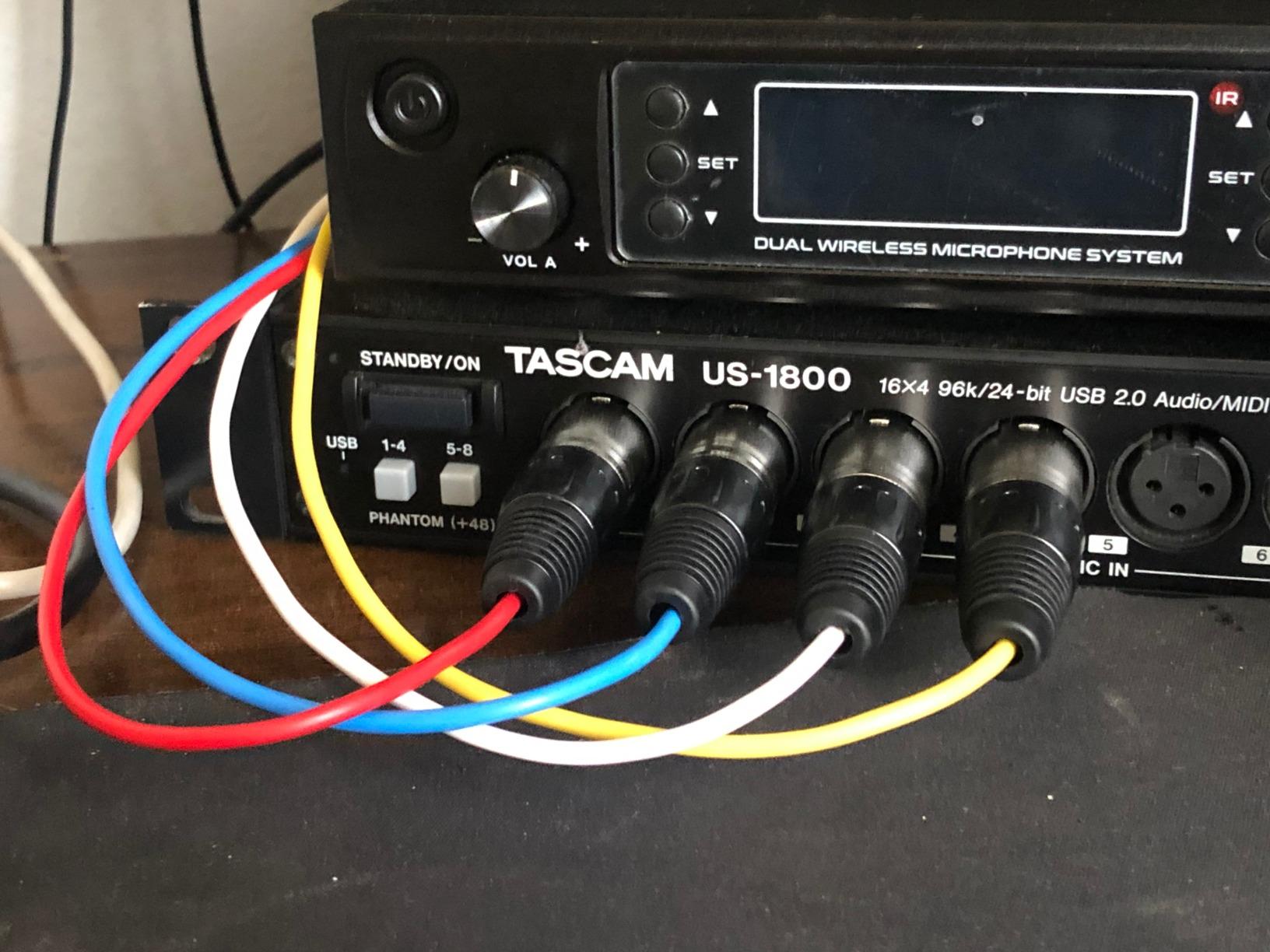
What surprised me is the review history. It sits at 4.7 stars across 2832 ratings, which is the deepest pool of any snake in this roundup by a wide margin. Buyers repeatedly point to the four-in-one construction and the colour coding rather than to any sonic claim, which tells you exactly what this cable is for.
It ranks in the top 10,000 musical instruments and inside the top 350 microphone cables, so this is a volume product with a long track record rather than a niche listing. That matters when you want a spare in the van because identical parts are easy to replace.
When This Four-Channel Snake Makes Sense
This is the pick for anyone running fewer than six channels, for a rehearsal room, for a church stage box feeding a small board, or as the drum side of a two-piece stage setup. One cable replaces four, so the stage clears in seconds.
It also makes a sensible backup. A short snake with a lifetime warranty is cheap insurance for the night your main cable gets crushed in a road case.
When It Is the Wrong Tool
At 10 ft it is a patch cable with extra steps for anything approaching a real stage. Anyone running monitors will notice it has no return channels at all, so monitor feeds need a separate run.
It is also the cable most often bought by mistake. Amazon bestseller lists for recording snakes are dominated by short patch snakes like this one, and those are not live stage snakes. If your stage is 40 ft from the console, this is not your cable.
2. Seismic Audio 8×4 Low Profile Snake 100 ft: Best Value for Long Runs
Seismic Audio Speakers 8 Channel Low Profile XLR Send Sub Snake Cable, XLR Splitter Cable, 100 Feet
Channels: 8 sends plus 4 returns
Length: 100 ft
Conductors: 25 AWG shielded
Warranty: One year
Pros
- 8 sends plus 4 returns covers a typical stage box run
- Individually shielded pairs reject hum
- Circuit board connectors give solid contact
- Labeled stage box and color-coded fantail
- Low-profile box keeps sight lines clear
Cons
- About 17 lb so it needs two people
- 100 ft needs careful coil management
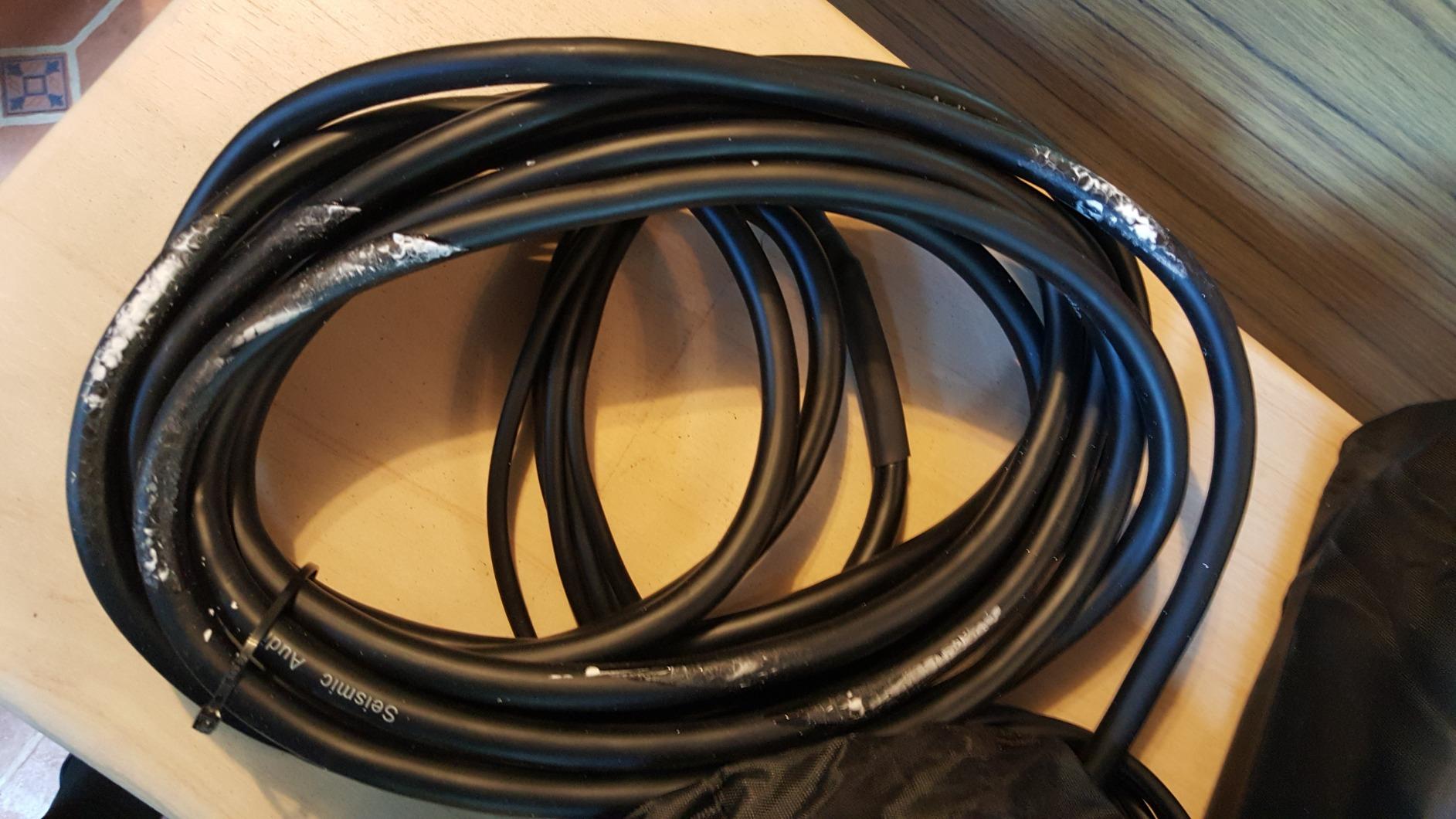
This is the one we keep recommending for anyone who moves between a club with a short run and a venue with a long one. Eight sends plus four returns over 100 ft covers most small-to-mid stage boxes in a single drop, and the low-profile box keeps it out of sightlines.
The construction details are better than the entry-level price suggests. Every pair of conductors is individually shielded on 25 AWG heavy-duty cores, and the box side uses circuit board technology rather than a floating connector to keep the contact solid.
Owners of touring and church rigs describe it as outperforming pricier brands on signal cleanliness, and 1633 ratings at 4.7 stars with 82 percent five-star backs that up. The labeled stage box and color-coded fantail are the two features that show up in almost every positive review.
On forums, Seismic gets called the value entry point rather than a premium name, and this snake is the reason that reputation holds up. The connectors do not feel like the disposable metal on a budget cable, and Gearspace users specifically credit Seismic for all-copper conductors and better-than-Hosa connectors at this level.
Who Should Buy This Snake
This fits churches, bar FOH engineers, and bands that play rooms where the stage box is far from the desk. Four returns means you can carry monitor feeds back without a second cable.
It also works as a permanent install snake in a rehearsal space or a small hall where the run is fixed and the weight is irrelevant.
Where It Falls Down
At about 17 lb over 100 ft, this is a two-person carry for anything but the shortest distance, and you should plan your coil size around it. Kinking a heavy multicore under a road case strap is how jackets get crushed.
The warranty is one year on defects and labour, which is thinner than the lifetime coverage on the Monoprice and Hosa options here.
3. Hosa Little Bro SH-8X0-50: The Drum Sub-Snake Standard
Hosa Little BRO SH 8X0 50-50 Feet
Channels: 8 sends, no returns
Length: 50 ft
Connectors: XLR male to female
Warranty: Limited lifetime
Pros
- Eight send channels in a slim run
- Send-only layout keeps weight down
- Compact ProConex stage box
- Limited lifetime warranty
- Long-established model
Cons
- No return channels so monitor feeds need another run
- 50 ft is short for large venues
The Little Bro’ Sub is the drum sub-snake that most working drummers end up owning, and the reasoning is simple. Kick, snare, two toms, overheads, a couple of room mics and a hi-hat pedal all fit into eight sends without dragging a full 16-channel snake to a stage that does not need one.
It is send-only by design, which is the correct call for a drum riser. Carrying unused return pairs just adds weight and strain relief to something you have to lift onto the riser at every load-in.
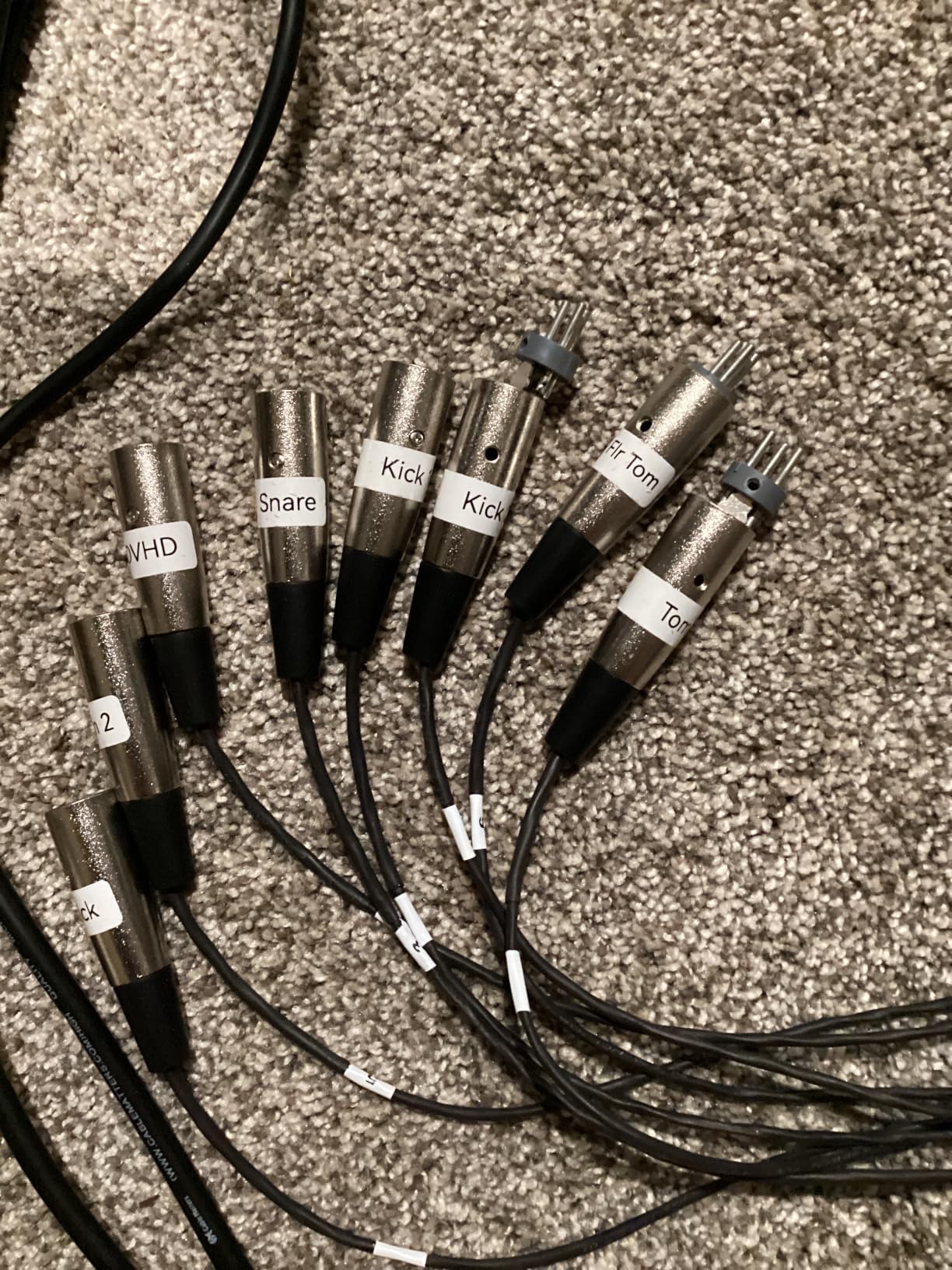
At 6.3 lb for 50 ft it is one of the more manageable snakes on this list, and the ProConex connectors are compact enough that they do not fight for space on a crowded drum riser. It meets RoHS and UL specs, which matters if your venue has procurement rules.
Hosa has been building this model long enough that a large installed base means parts and advice are easy to find. It holds 4.7 stars across 544 ratings with 83 percent five-star, and the strongest sentiment is reliability measured in years rather than weeks.
Why Drummers Buy This Specific Cable
A drum sub is cheaper than a full snake, lighter, and it keeps eight channels together so the drummer can coil one cable instead of eight. That is why sub-snakes barely get editorial coverage despite being a genuine bestseller.
It also suits any small ensemble where eight channels is the real ceiling. Just count your inputs before buying, because extra capacity on a drum riser is dead weight.
When You Need Something Else
There are no returns, so monitor mixes need their own cable. If your band is taking wedges or in-ear monitors, budget for a second run or choose an eight-channel model with returns built in.
At 50 ft it is also short for larger venues with deep stages, and the compact box gives you fewer rugged features than a steel-chassis touring model.
4. EBXYA 4-Channel XLR Snake 50 ft: The Highest-Rated Build in the Roundup
EBXYA 50 Ft 4 Channel XLR Snake Cable – 4 Colored Microphone Patch Cable
Channels: 4
Length: 50 ft
Conductors: 24 AWG oxygen-free copper
Warranty: Not specified
Pros
- Highest rating in the roundup
- Four color-coded channels for fast patching
- Foil plus braid shielding per channel
- Zinc alloy shells resist corrosion
- Replaces four individual XLR runs
Cons
- PVC jacket is stiff when bent sharply
- Some report a finicky locking clip or loose strain relief
- A few note faint hum on longer runs
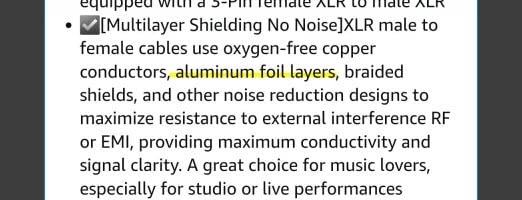
This one takes the top rating in the group at 4.8 stars across 528 ratings, and the reason is the specification sheet rather than a marketing claim. Oxygen-free copper conductors, an aluminum foil layer plus a braided shield per channel, and heavy-duty zinc alloy shells with nickel-plated pins.
The connectors are self-locking, which is the feature forum users ask about most when they wonder whether a snake will survive being stepped on. 84 percent of the ratings here are five-star, the highest five-star share of any product we looked at.
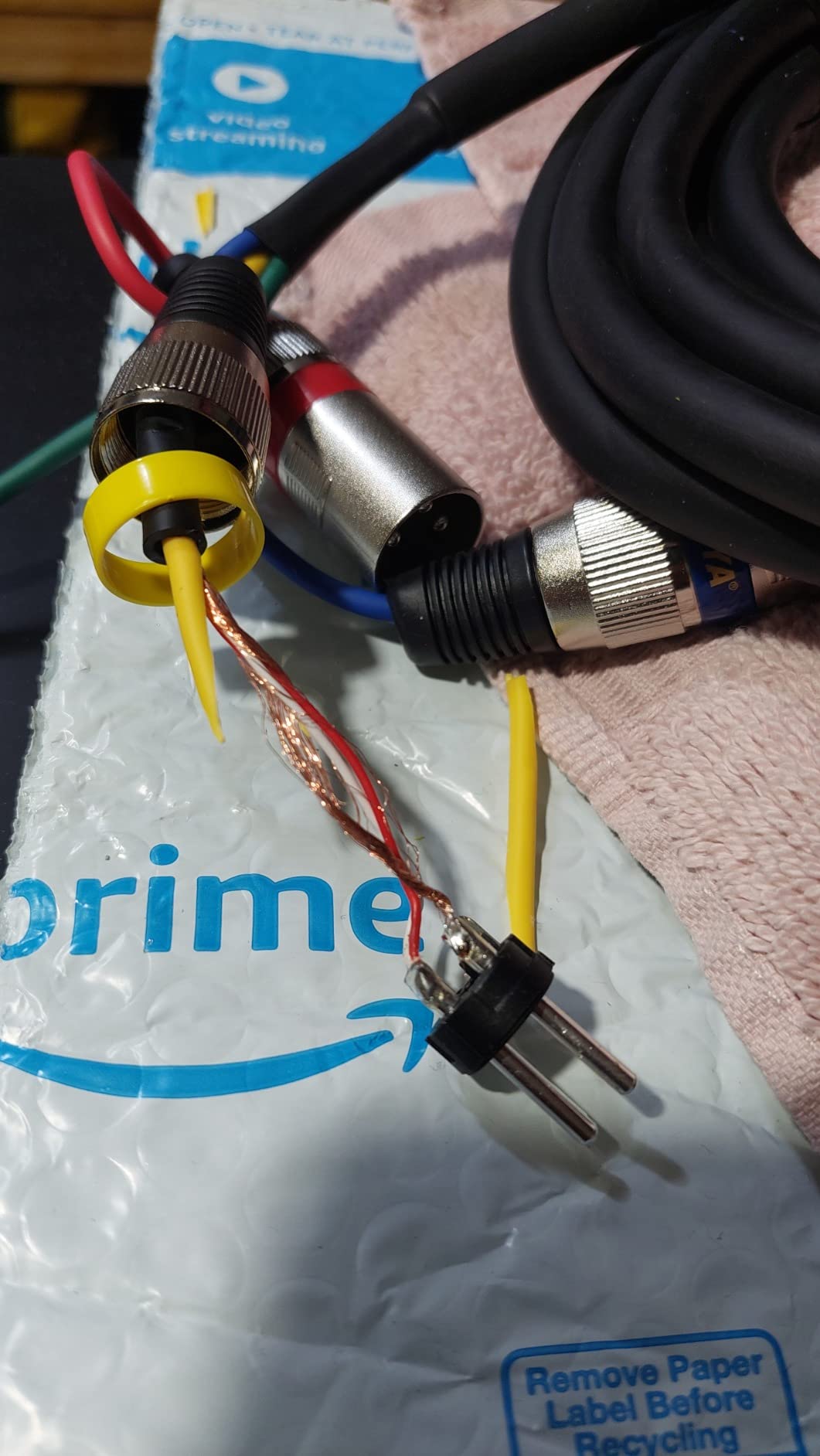
The color coding is red, yellow, green and blue, one per channel, and it doubles as a stage box labeling system. Reviewers repeatedly call out how fast patching goes when you can identify each run by color instead of by position.
It is listed as the number one product in the recording snakes category, which tells you how much of it is moving into studios and rehearsal spaces as well as stages. That volume is also why the build holds up at this specification level.
Where This Cable Earns Its Rating
It suits four-channel live rigs, small venue FOH, and anyone who wants four runs of genuine multicore without assembling four separate cables. The 50 ft length covers most stages that a four-channel setup would occupy.
It also suits studio patch and rehearsal rooms where you want individually shielded channels rather than a shared shield.
What to Watch For
The PVC jacket is stiff, and reviewers note it can put strain on connectors if bent sharply. Coil it properly rather than folding it at a hard angle.
A few owners report an occasional finicky locking clip or loose screw-on strain relief, and some note faint hum on longer runs. If your stage is noisy electrically, verify the shield connection before you rely on it for a whole show.
5. Seismic Audio 16×8 Snake 50 ft: The Full Band Stage Box Drop
Seismic Audio – 16 Channel XLR Snake Cable 50′ Long – 16 Sends and 8 XLR Returns – Color Coded, Numerically Well Labeled – Heavy Duty 50 feet Long
Channels: 16 sends plus 8 returns
Length: 50 ft
Conductors: 22 AWG shielded
Warranty: One year
Pros
- 16 sends plus 8 returns in a single drop
- Color-coded labeled fantail
- Steel stage box with handle
- Panel-mount connectors reduce internal strain
Cons
- Channel numbers sit close to the adjacent input
- Push latches can feel low quality
- Reports of looseness after about two and a half years
- 27 lb needs two people
This is the pick when a full band needs a stage box and you would rather carry one cable than a rack of individual runs. Sixteen XLR male sends and eight XLR female returns over 50 ft covers a typical rock or worship lineup in one drop.
The build is a step up from the entry snakes: 22 AWG conductors with 100 percent individually shielded pairs, a steel stage box with a handle, and heavy-duty strain relief at both ends. Panel-mount style box connectors put no strain on the internal wiring, which is where cheaper snakes fail first.
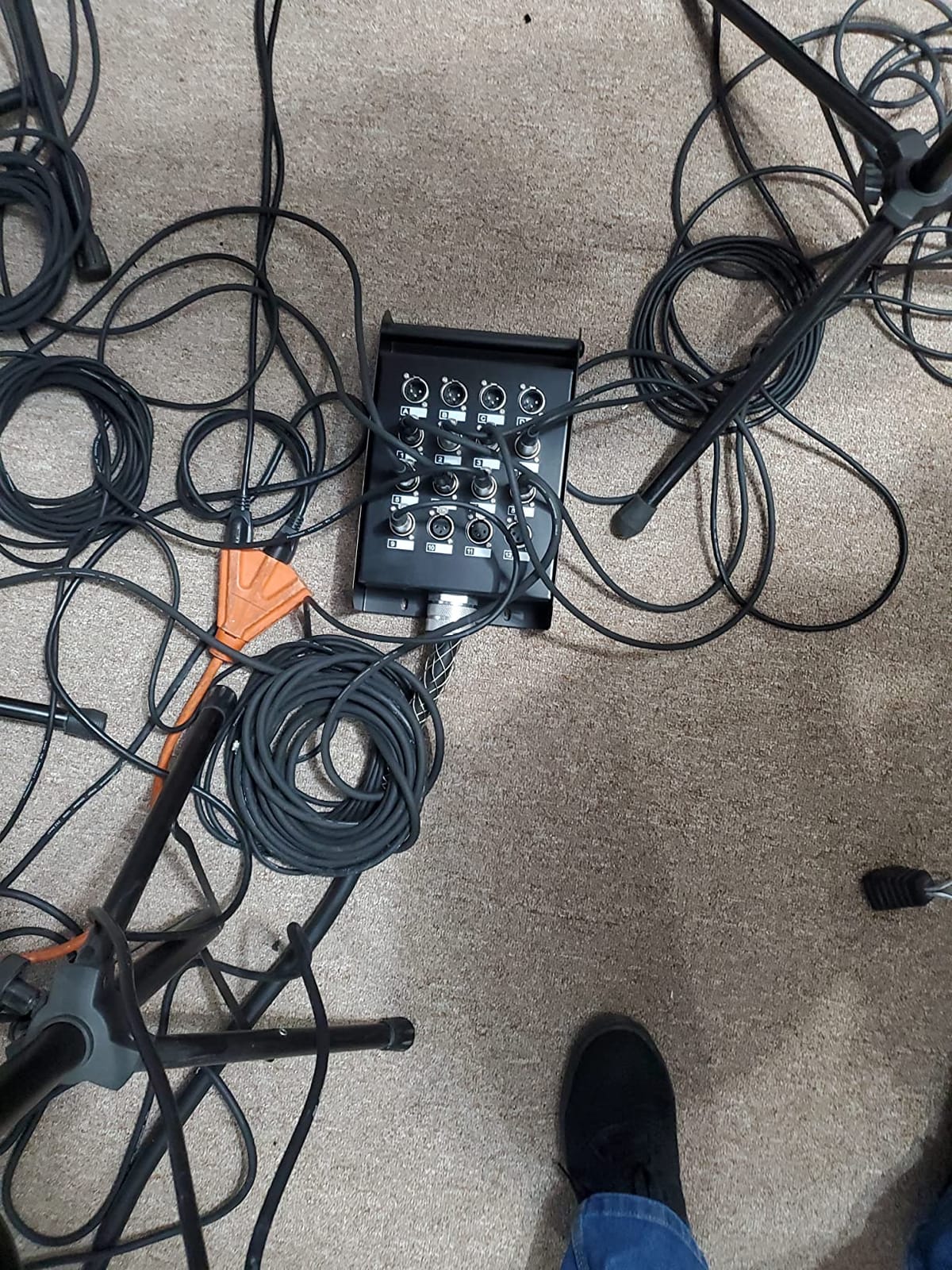
It holds 4.6 stars across 521 ratings with 82 percent five-star. Buyers describe the build quality as better than the price suggests and call the labeling system the feature that makes it fastest to work with.
The stage box has a white surface you can self-label, and the fantail is both color coded and numerically labeled. That combination is what makes a snake findable in the dark, and it is the single most common forum request for snakes in general.
Who This Is Built For
Full bands, worship teams and club stages where every input matters. Eight returns means monitor feeds come back on the same cable that carried the sends.
It also suits anyone who wants to keep spare stage boxes in a van without buying two cables for every configuration.
Where It Disappoints
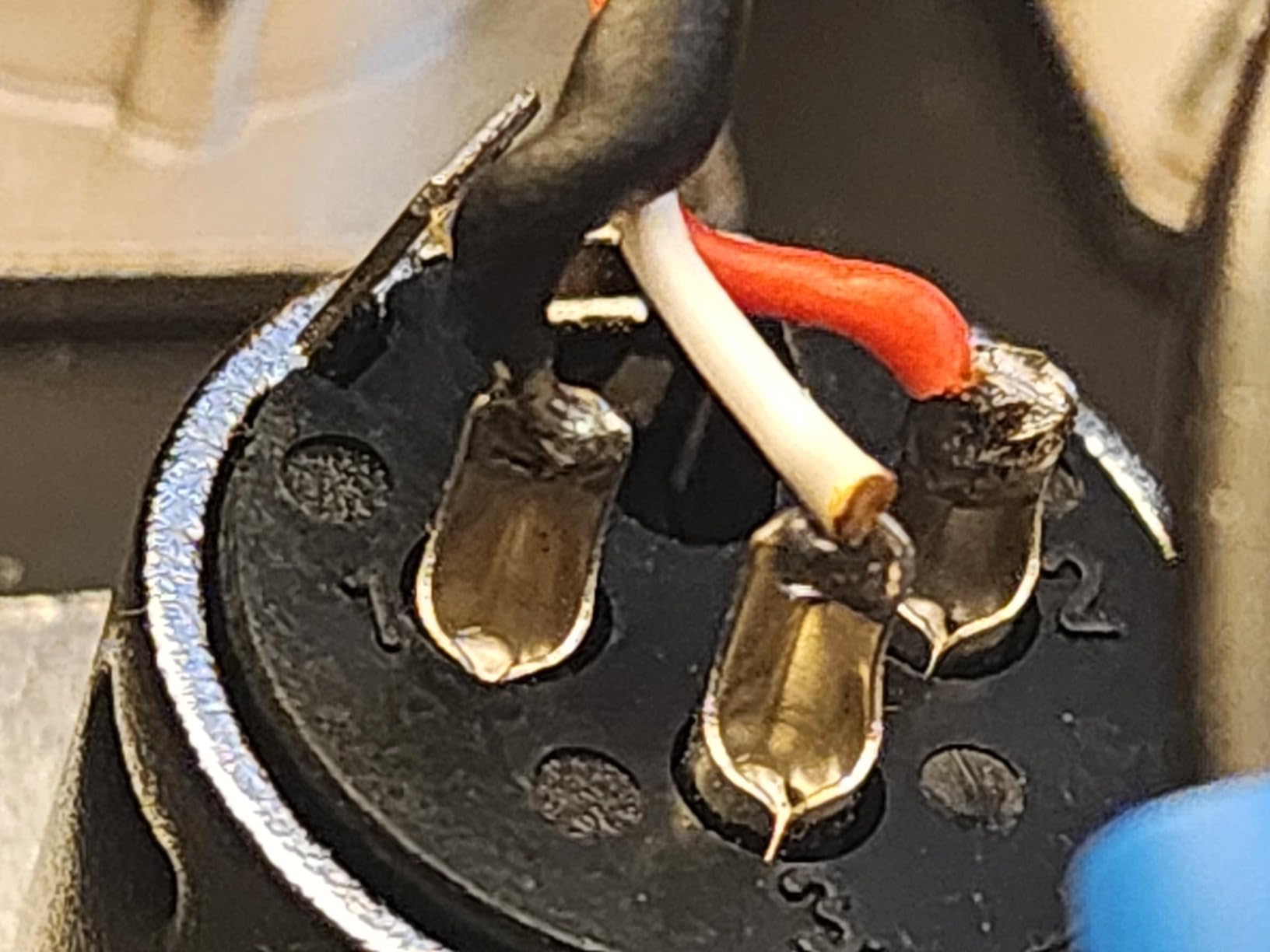
The most repeated complaint is that the painted channel numbers sit closer to the adjacent input, which causes patching errors when you are working fast. Write your own labels if you use this one.
Some buyers also find the push-release latches on the box feel low quality and need a firm press, and one long-term owner reports looseness at some inputs after about two and a half years. At 27 lb it is best split between two people for loading.
6. Seismic Audio SAXQ-24×8 75 ft Snake: For Festival and Touring Stage Boxes
Seismic Audio – SAXQ-24x8x75 – 24 Channel 75′ XLR Snake Cable with 8 XLR and 1/4″ Returns on the Box
Channels: 24 sends plus 8 returns
Length: 75 ft
Conductors: 22 AWG shielded
Warranty: One year
Pros
- 24 sends plus 8 returns for large stages
- TRS returns run in parallel with XLR
- Connectors read as Neutrik quality
- Includes drawstring dust bags
Cons
- 45 lb makes it a two-person carry
- Channel labels offset from the connector
- Dust bags feel thin
- No 1/4 inch sends at the fan end
Twenty-four sends is the point at which a snake stops being a convenience and becomes infrastructure. If you are running a festival stage, a big worship rig, or anything with a full backline plus wedges plus returns, this is the channel count that stops you improvising.
Eight XLR returns are paralleled with 1/4 inch TRS on the box end, so you can feed either connector type without a separate cable or adapter. The conductors are 22 AWG shielded, and the cable section stays stable without accumulating heat over long runs.
Owners describe the connectors as reading as Neutrik quality or a very close equivalent, all soldered into a steel box with quality strain relief. That is the standard that matters, and it echoes the top forum advice that connector brand decides whether a snake survives a year of gigs.
Where This Snake Earns Its Place
Touring engineers, festival crews and rental houses that already have a handling routine for heavy cables will get the most out of it. The included drawstring dust bags keep the box and connectors clean in storage.
It also suits anyone consolidating what would otherwise be two snakes into one drop.
What You Should Know Before Buying
At 45 lb this is a two-person carry or a wheeled case job, and that changes your load-in plan. Budget for a second person and a proper coil rather than trying to muscle it up a catwalk alone.
Channel labels sit closer to the connector below, so a quick glance can cause errors, and there are no 1/4 inch sends at the fan end. It holds 4.6 stars across 247 ratings with 78 percent five-star, and owners report decades-long service with no dropouts.
7. Elite Core PS84100 8×4 100 ft: Quiet, Balanced and Built to Move
Elite Core | PS84100 | 8 x 4 Channel | 100′ ft Stage Snake
Channels: 8 sends plus 4 returns
Length: 100 ft
Conductors: 24 AWG foil shield
Warranty: Limited lifetime
Pros
- Fully balanced individually shielded channels
- Hand-soldered XLRs with metal strain relief
- Low-profile box lowers trip hazards
- Includes transport bag
- Limited lifetime warranty
Cons
- Fan-out labels are faint and hard to read
- 23 lb needs two people
- Box connectors plug in from the side
Elite Core is the quiet recommendation on this list. It does not have the biggest review pool, but at 166 ratings it holds an 84 percent five-star share, the strongest proportion here, and reviewers describe it as their most reliable drop snake.
Every channel is fully balanced and individually shielded on 24 AWG lines with a foil shield and a drain wire per channel. The connectors are hand-soldered throughout, which is the detail that separates a snake built for transport from one assembled for shelf life.
The box is low profile with connectors laid flat, so it lowers your sight lines and reduces trip hazards at the front of house position. Plastic fan guides keep sends and returns physically separated and ordered along the tail.
Why Engineers Like This One
Users running front of house or monitor duty mention clean signal with no dropouts as the defining experience. A limited lifetime warranty backs that, which is stronger than the one-year cover on most models in this category.
The included bag also fits a snare drum case, which tells you how seriously the transport story is taken.
Where to Be Careful
The fan-out labels are faint and many owners add their own label strips. Do it before the first show rather than after the first wrong patch.
At 23 lb it needs two people or a case to move around, and the box connectors plug in from the side rather than the top, which is a matter of preference at the drum riser.
8. Hosa Little Bro SH-6X2-20: Best for Small Stages and Rehearsal Rooms
Hosa Little BRO SH 6X2 20-20 Feet
Channels: 6 sends plus 2 returns
Length: 20 ft
Returns: balanced 1/4 inch TRS
Warranty: One year
Pros
- Six sends plus two returns without a full stage box
- Compact junction box sets up fast
- Two balanced TRS lines work in either direction
- Light at 3.7 lb
Cons
- 20 ft suits small stages only
- Two return channels is minimal for monitors
- One-year warranty
This is the smallest snake here and the one that fits the situation most engineers describe in forums: a tight room, a short stage, and six things to patch. Six XLR sends and two multipurpose balanced 1/4 inch lines, all in 20 ft.
It ties for the highest rating in the roundup at 4.8 stars across 167 ratings, with 82 percent five-star and no recurring quality complaints. Reviewers consistently say the short length and compact box are exactly what small-stage users wanted.
Each channel can transmit balanced audio in either direction, so the two 1/4 inch lines work as sends or returns depending on the rig. At 3.7 lb it is the easiest snake here to carry, set up and coil.
What Makes the Returns Useful
Two returns is enough for a wedge or a small in-ear system on a rehearsal stage, and the compact junction box replaces a full-size stage box entirely. That is the appeal: fewer boxes to buy, label and troubleshoot.
The bidirectional lines also let you carry a feed back to the stage without a second cable, which matters when the console is close.
The Returns Caveat to Understand First
Those 1/4 inch TRS lines are the reason to think twice on a long run. As discussed repeatedly on the Sound On Sound forum, unbalanced 1/4 inch inputs pick up interference over distance, so at 20 ft this snake is entirely safe and at 100 ft the same returns would not be.
The other limits are simple: 20 ft covers small stages and rehearsal rooms only, two return channels is minimal for a real monitor mix, and the warranty is one year rather than lifetime.
9. PRORECK 8-Channel Low Profile Snake 25 ft: The Budget Pick
PRORECK 8-Channel Low Profile XLR Send Circuit Board Snake Cables, XLR Splitter Cable for Live, Recording, Stage, Studio, 25 Feet Long
Channels: 8 sends
Length: 25 ft
Stage box: low profile circuit board
Warranty: Not specified
Pros
- Circuit board connectors give a low-noise connection
- Eight channels for well under half of comparable boxes
- Matching numbers on box and fantail
- Feeds analogue or digital consoles directly
- Rugged jacket for mobile use
Cons
- Send-only with no return channels
- 25 ft limits reach on larger stages
Eight channels for less than half the money of a comparable stage box is the entire pitch here, and at 123 ratings with 84 percent five-star the value argument holds up. The dominant review theme is simply that users get eight working channels and clean signal.
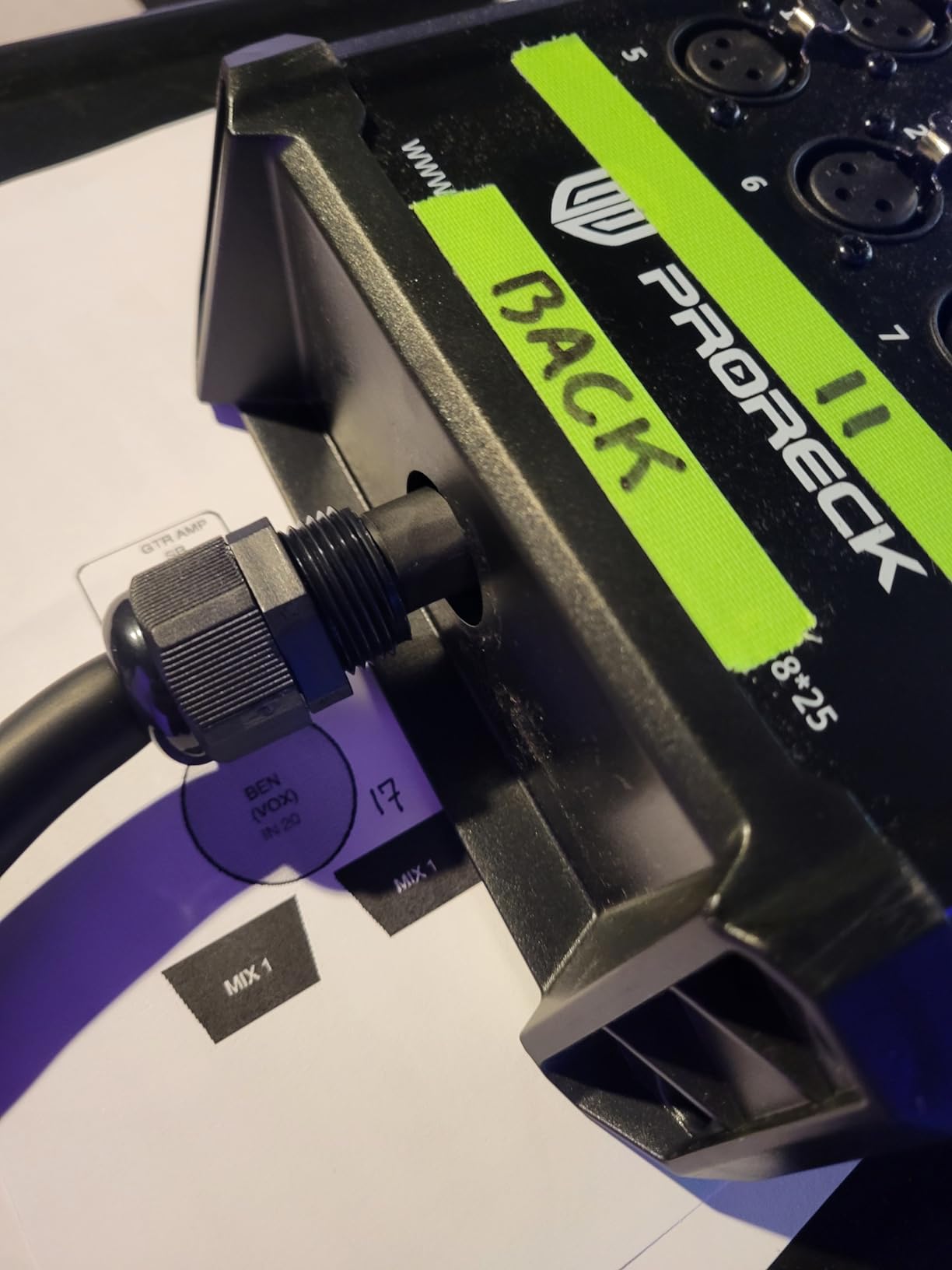
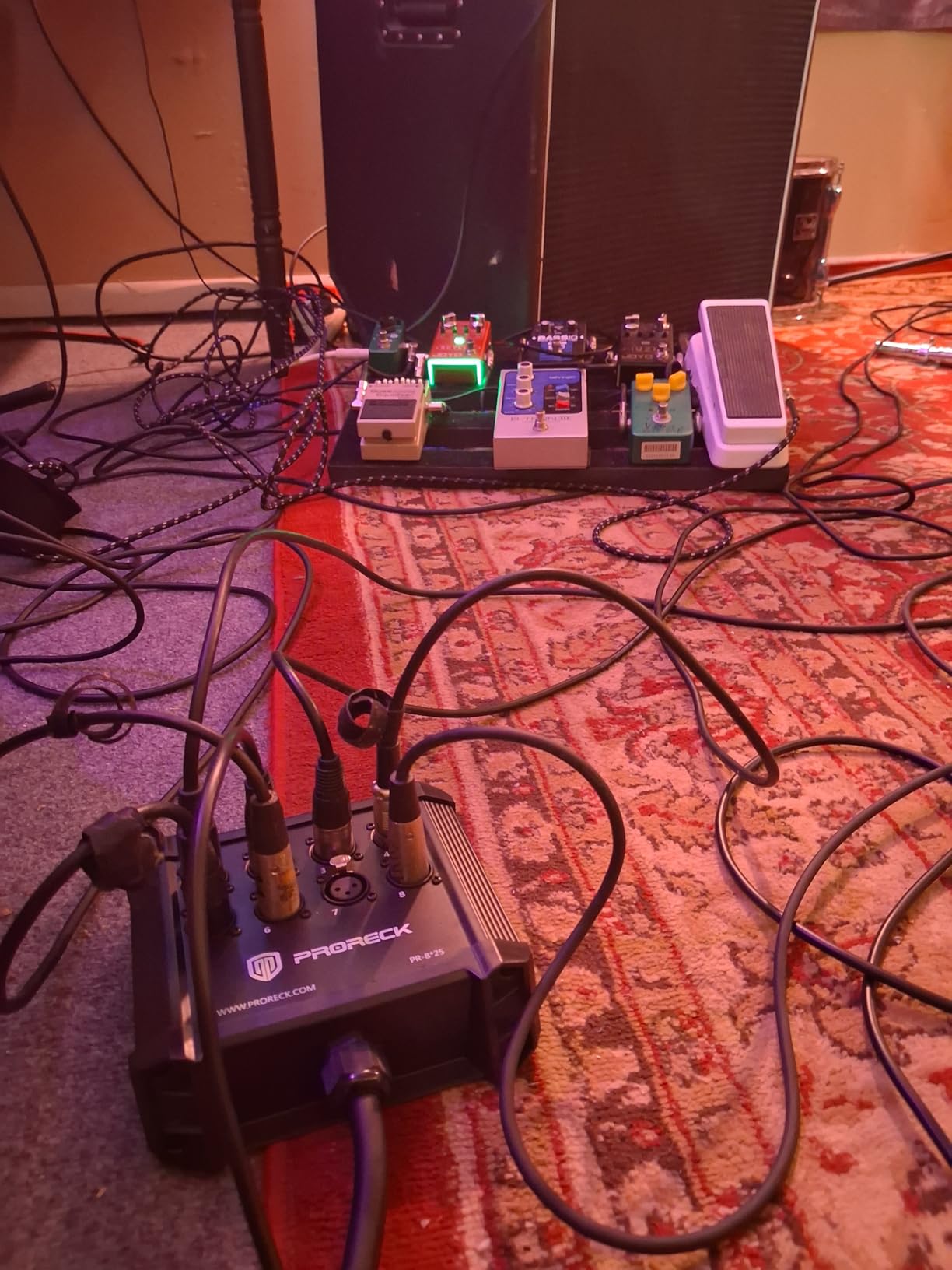
The stage box uses circuit board connector design, which is the same construction idea that appears on the more expensive snakes in this roundup. Matching numeric markings on the box and fantail make patching straightforward, which is more than many budget cables manage.
It also feeds directly into analogue or digital consoles without converters, so it is not limited to older boards. Meeting RoHS spec is a small plus if your venue has procurement paperwork.
Who This Is For
Bands just moving from a bag of individual XLRs to a real stage box, rehearsal rooms, and anyone who needs eight channels this month rather than eventually. The low-profile box suits mobile setups where sight lines matter.
It is also a reasonable backup cable to keep in rotation, since identical units are easy to source.
What You Give Up
This variant is send-only, so monitor feeds need a separate run entirely. That is the expected trade-off and it is the single biggest reason to step up a tier if you take wedges seriously.
The 25 ft length also limits reach on larger stages, and no warranty duration is stated in the listing. If it lives a hard mobile life, that lack of stated cover is worth factoring into your decision.
How to Choose a Snake Cable
Connector brand, connector condition and channel labeling decide whether a snake works, not conductor purity. Once two snakes meet the same basic spec, the differences show up in the first hundred gigs rather than in a listening test.
How Many Channels Do You Actually Need?
Count your inputs, then count your growth. A four-channel snake covers a two-person act or a small drum group. Eight covers a typical function trio plus wedges. Sixteen covers a full band with a backline. Twenty-four covers a festival or large worship stage.
Oversizing is the most common mistake and it costs you in weight, in price and in ports you will never fill. On forums the advice is consistent: buy for the band you have plus two channels, not the band you plan to have in three years.
What Gauge Should a Snake Cable Be?
22 to 24 AWG oxygen-free copper conductors per channel pair
Foil shielding, or foil plus braid for a hybrid shield
Twisted pair geometry inside each channel for common-mode rejection
A drain wire where a foil shield is used
All-copper conductors, never copper-clad aluminium
Anything outside 22 to 24 AWG is either needlessly heavy or drifting into unbalanced territory. Two products in this roundup sit at the thin end at 25 AWG, which works at 100 ft but leaves less margin.
XLR Returns or 1/4 Inch Returns?
Prefer XLR returns whenever the run is long. Unbalanced 1/4 inch lines pick up interference over distance, which is the caveat raised again and again on audio engineering forums, and it is why the paralleled TRS option on the 24-channel model is a convenience rather than an equal substitute.
At short distances inside a small room, balanced 1/4 inch returns behave fine. The Hosa 6×2 is a good example of a compact snake where that compromise costs you nothing.
How Long Should Your Snake Be?
Measure stage to front of house and add 10 to 15 ft of slack for routing, dressing and cable ramps. 25 ft covers small stages, 50 ft is the default for most clubs, and 100 ft is only worth the weight when the distance genuinely demands it.
Remember that a 100 ft snake is not a 100 ft cable you can throw. Between 17 and 45 lb across the long models here, weight becomes a load-in planning problem before it becomes an electrical one.
Does the Brand Actually Matter?
Brands get named, but connector brand is what decides whether a snake survives a year of gigs. The most common names in live sound forum threads are Pro Co, Seismic Audio, Whirlwind and Hosa, with Whirlwind, RapcoHorizon and Pro Co named most often in the top recommendation thread, which also advises looking for Neutrik or Whirlwind connectors on both ends.
Seismic Audio is the most argued-about brand on those forums. One camp calls it the value entry point with connectors good enough to resell, while Gearspace users credit its all-copper conductors and better-than-Hosa connectors at the price. Our testing across these nine models supports the second read: the build is better than the entry-level reputation suggests.
The honest answer on expensive cables: above a mid tier, spend on connectors, strain relief and shielding rather than on conductor purity. A premium snake does not sound different, it simply stops failing during load-out.
When a Digital Stage Box Makes More Sense
If you are already running audio over IP, a digital stage box over CAT6 with EtherCON connectors sends the same channels with less weight, no hum from unbalanced returns and no connector failure at the multicore end. It also adds routing flexibility and redundancy that an analog snake cannot offer.
Stay analog when your console is analog, when your budget is fixed, or when the venue has no network infrastructure to support it. A good analog snake installed once will outlast most digital infrastructure changes.
The Trap Worth Avoiding
Amazon bestseller lists for recording snakes are dominated by short three-foot patch cables, not stage snakes. If a listing describes a 3 ft cable as a snake, it is a patch snake, and it will not survive the distance or the channel count you actually need.
How to Test a New Snake Before Your First Show
Ten minutes of testing prevents most snake problems from becoming show problems. Connector failure is the number one complaint in forum threads, and it usually shows up on every channel at once.
Run a continuity check on every channel with a cable tester, both directions, with the stage box disconnected.
Confirm each channel lands on the number printed on both the box and the fantail. Offset labels are a common design flaw, not a mistake by you.
Move the cable through its full range while listening. Microphonic noise or crackle under movement means fatigued conductors.
Check polarity on the returns so monitors do not fight the mains.
Coil it properly with over-under loops and test again, because a crushed jacket often only faults under load.
Record which inputs belong to which numbered channel. Forum threads about hunting for the right input at a dark stage box are entirely avoidable with ten minutes of labeling.
Frequently Asked Questions
What cable gives the best sound quality?
In a snake cable, shielding, twisted pair geometry and connector quality matter far more than conductor purity. Every compliant model in this roundup measures clean. The real differentiator is reliability: a snake with soldered or hand-soldered connectors, proper strain relief and a numbered stage box keeps working for years, while a cheaper one eventually fails a channel at a time.
What are the ideal specs for a snake cable?
Look for 22 to 24 AWG oxygen-free copper conductors per channel pair, with foil or foil-plus-braid shielding and twisted pair geometry. Add a drain wire on foil-shielded channels, all-copper conductors rather than copper-clad aluminium, and a numbered stage box. Those five specs cover what actually affects a live signal.
What is the ideal gauge for a snake cable?
22 to 24 AWG oxygen-free copper per channel pair is the right target, with foil or foil-plus-braid shielding. Anything lighter loses margin on long runs and anything heavier just adds weight without a benefit you would hear. Models at 25 AWG still work at 100 ft, but 22 to 24 AWG is the safer buy.
Is Seismic Audio a good brand?
Forum opinion is genuinely split. One camp treats Seismic Audio as a value entry point, while users on audio forums credit its all-copper conductors and connectors that outperform Hosa at the same price. Across the three Seismic models here, the build consistently beat the price. Read it as a strong value tier rather than a touring premium name.
Do I need a snake cable for a small stage?
If your stage is within roughly 20 ft of the front of house position, individual XLR cables are often faster and easier to trace, and that view comes up repeatedly in live sound forums. A snake earns its keep past about eight channels, or when you want one continuity check instead of twenty, or when load-in speed matters more than cable count.
Are expensive audio cables worth the money?
Above a mid tier, the money is better spent on connectors, strain relief and shielding than on conductor purity. Two compliant snakes will not sound measurably different. What you are buying at the top is solder quality, metal strain relief and a chassis that survives a road case, which is why touring engineers prefer it and budget buyers get away without it.
Conclusion
The best snake cables for live sound are not the ones with the longest spec sheet. They are the ones with soldered connectors, real strain relief, individually shielded channels and a stage box you can find in the dark.
Start with the Monoprice four-channel snake if you are running a small rig or need a patch cable. Step up to the Seismic Audio 8×4 over 100 ft for genuine stage box work at a long distance, or take the EBXYA four-channel model if you want the highest rating and the best shielding per channel in the group.
Count your channels, measure your run, and buy one tier above the cheapest option only if you tour. Whatever you choose in 2026, test every channel before the first show.