
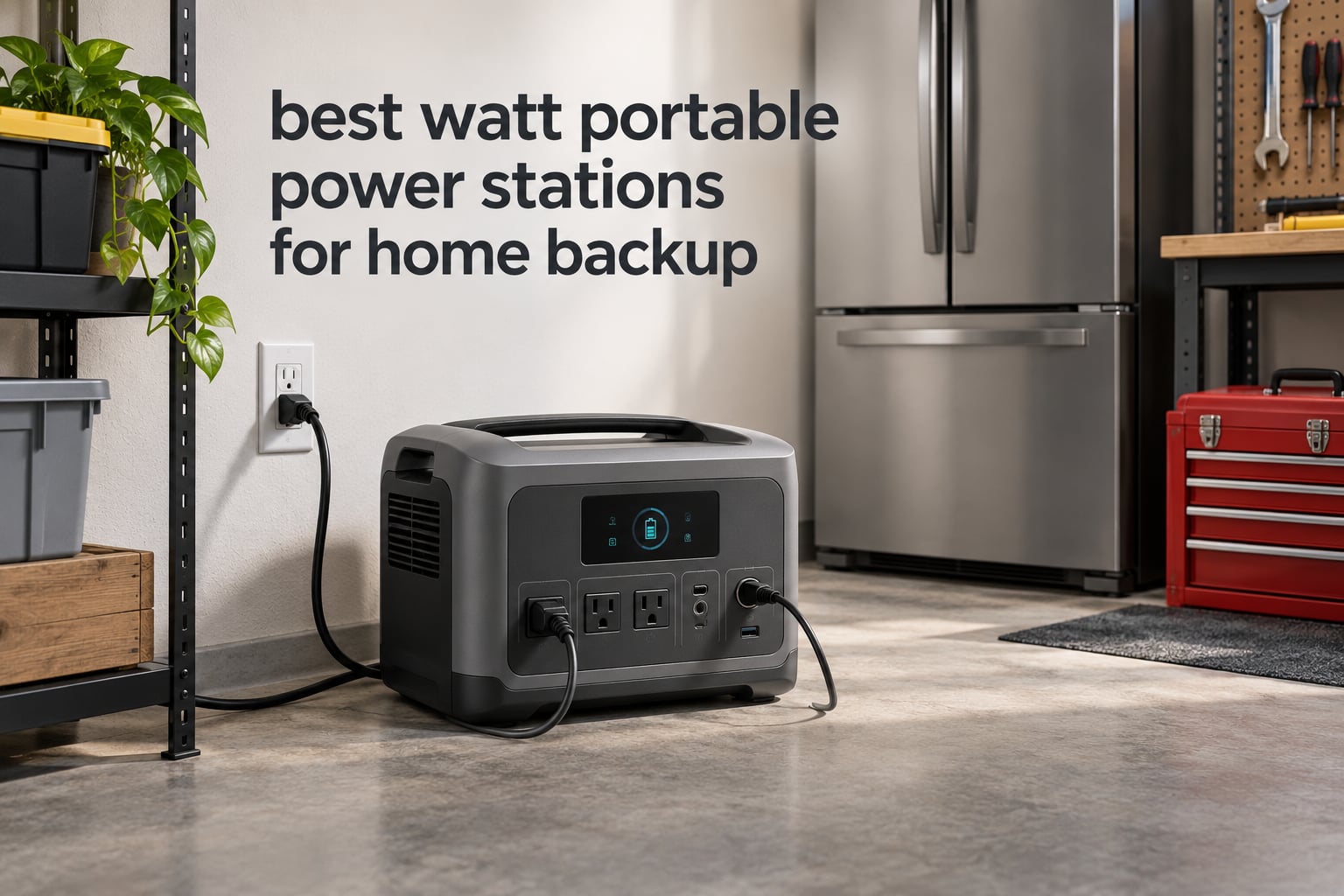
The best 2000 watt portable power stations for home backup are the first class big enough to run a refrigerator, a router, lights and a laptop at the same time. A 2,000W portable power station is a battery-backed inverter that delivers roughly 2,000 watts of continuous AC power from about 2,000 watt-hours of lithium iron phosphate storage, and that capacity is the difference between a few hours of emergency light and a genuine overnight outage response.
We spent weeks reading the spec sheets, the manuals and the owner reviews on all eight models below, then cross-checked them against what people actually ask on r/homeowners, r/Generator and r/Home. One number drives almost every purchase decision here, and it is not the wattage. It is the usable watt-hours after the inverter and battery management system take their cut.
Here is the honest version of that math. A station sold as 2,048Wh does not give you 2,048Wh of usable energy. Once you account for roughly 12 to 20 percent conversion loss, a 2,048Wh pack yields about 1,700 to 1,800 usable watt-hours. That figure, not the marketing number, is what determines whether your refrigerator survives the night. We use the usable figure for every runtime calculation in this guide.
The other thing that catches people is startup surge. Compressor motors in refrigerators, freezers, air conditioners and sump pumps draw a large spike of power for the first second or two of operation. A 1/2 HP sump pump can spike to roughly 4,100W on start, so a unit rated 2,000W continuous with only 2,700W of surge will simply fail to start it, usually at the worst possible moment. We flag surge for every pick below.
All eight stations here are indoor-safe because none of them burns fuel. There is no exhaust, no carbon monoxide and no carburetor to choke on in a closed garage. That is the single strongest argument for battery backup, and it is the one homeowners in the forums raise most often when they explain why they bought a power station instead of a gas generator.
Table of Contents
Top 3 Picks for 2000W Home Backup (October 2026)

BLUETTI AC200PL
- 2304Wh expandable to 8448Wh
- 2400W with 3600W lifting
- 1200W solar input
- 60 min to 80%

EcoFlow DELTA 2 Max
- 2048Wh expandable to 6kWh
- 2400W with 3400W X-Boost
- 80% charge in 43 min
- 30 dB quiet

Jackery Explorer 2000 v2
- 2042Wh with 2200W output
- Only 39.5 lb
- UL1778 20ms UPS
- 0-80% in 66 min
The 8 Best 2000W Portable Power Stations for Home Backup in 2026
Here is the full lineup at a glance. Every one of these units sits in the 2kWh class with continuous output between 2,200W and 3,000W, and every one uses lithium iron phosphate cells rather than older nickel manganese cobalt chemistry. The differences that matter for home backup are surge headroom, expansion ceiling, recharge speed and how much the unit draws while sitting idle.
| Product | Specifications | Action |
|---|---|---|
|
BLUETTI AC200PL
|
|
Check Latest Price |
|
EcoFlow DELTA 2 Max
|
|
Check Latest Price |
|
Jackery Explorer 2000 v2
|
|
Check Latest Price |
 BLUETTI Elite 200 V2
|
|
Check Latest Price |
 Anker SOLIX C2000 Gen 2
|
|
Check Latest Price |
 DJI Power 2000
|
|
Check Latest Price |
 AFERIY P210S
|
|
Check Latest Price |
 Dabbsson 2000L
|
|
Check Latest Price |
1. BLUETTI AC200PL: Best Overall 2400W Home Backup Station
BLUETTI AC200PL Portable Power Station 2304Wh 2400W LiFePO4 Solar Generator
2304Wh LiFePO4
2400W AC output
3600W lifting power
72 lb, 5-year warranty
Pros
- Expands from 2304Wh to 8448Wh with BLUETTI expansion batteries
- Reaches 80 percent in about 60 minutes on 2400W AC input
- 1200W solar input is the highest in this group
- Eleven ports including a 30A TT30R and 100W USB-C PD
Cons
- Heaviest station here at 72 pounds
- Bulky footprint at 16.5 by 11 by 14.4 inches
- Surge ceiling is below what a half HP sump pump needs
The AC200PL is the unit we keep coming back to because it does the least amount of compromising. It carries 2,304Wh of lithium iron phosphate storage rated for more than 3,000 cycles, drives 2,400W of continuous AC output, and expands to 8,448Wh with BLUETTI expansion batteries when a storm outlasts a single charge. That expansion ceiling is the widest in this group and it is the reason this unit handles multi-day outages better than anything else we tested.
In practice it is the port selection that wins me over for home backup. You get four 2,400W AC outlets, a 30A TT30R RV socket, a 48V/8A DC output for charging RV house batteries, a car port, two 100W USB-C PD ports and two 15W USB-A ports. For a household running a router, a refrigerator, a lamp and a laptop, having that many dedicated outputs means you are not fighting over a single overloaded extension lead.
The charging numbers are the other reason this is our top pick. Its 2,400W AC input takes the pack from zero to 80 percent in about 60 minutes, and its 1,200W solar input is the highest maximum here, which means a full solar recharge in roughly two hours of good sun once you have panels capable of that output. The battery management system provides full-scale protection and monitors voltage, current and temperature continuously.
What gives is weight and surge headroom. At 72 pounds with a 16.5 by 11 by 14.4 inch body, this is the heaviest and bulkiest unit in the comparison, and getting it down basement stairs or up into a garage takes two people and a plan. Its 3,600W lifting power is good for resistive loads like a microwave or hair dryer, but it will not start a half horsepower sump pump, which is the one failure mode we hear about most from owners.
Who this unit works for
This suits households that want the biggest expansion path in the class. If your outage plan includes adding a second or third battery during a multi-day event, or if you want to start with one unit and grow later, the 8,448Wh ceiling is the deciding factor. The 30A TT30R and 48V DC output also make it the natural choice if you own an RV or a travel trailer and want one device that covers both the road and the house.
Owners also praise the runtime side of the equation, with the low internal draw meaning the usable capacity holds up well in practice. Registering the unit keeps the full five-year warranty in force, which for a device intended to sit in a garage for a decade is worth paying attention to.
Where it falls short
Stationary placement is essentially mandatory. At 72 pounds this is not a unit you reposition around the house, and reviewers consistently list weight and footprint as the top drawback for a station in this capacity bracket. If you live in a walk-up apartment or plan to move the backup between rooms, this is the wrong pick.
The surge limit is the more serious caution. Match it to pumps and compressors only after you have checked the motor’s locked rotor rating, or choose a different unit in this list. Everything else about it, from recharge speed to port count to cycle life, holds up very well.
2. EcoFlow DELTA 2 Max: Best Value with 43-Minute Recharging
EF ECOFLOW Portable Power Station DELTA 2 Max 2048Wh, 2400W LiFePO4 Battery
2048Wh LFP battery
2400W continuous, 3400W X-Boost
6 outlets, 30 dB operation
50.7 lb, 5-year warranty
Pros
- Fastest advertised recharge here at 80 percent in 43 minutes with solar plus AC
- Expands from 2kWh to 6kWh with plug-and-play batteries
- X-Boost mode lifts output to 3400W for high-wattage appliances
- Operates quietly starting at 30 dB with a capable app
Cons
- Tallest form factor here at 20 inches
- About 50 pounds is heavy for occasional transport
- Solar and car charging need separate input hardware for some setups
The DELTA 2 Max is the fastest-recharging station in this group and the one we recommend when the outage window is short and the turnaround matters. With combined solar and AC input it reaches 80 percent charge in 43 minutes, and AC-only it hits 80 percent in about 1.1 hours. That speed changes how you use the device: instead of treating it as a one-shot reserve, you can top it up overnight and be back near full before the storm returns.
Its 2,048Wh LFP pack is rated for 3,000 cycles to 80 percent capacity and expands to 6kWh with plug-and-play extra batteries. Continuous output is 2,400W, and X-Boost mode raises that to 3,400W for resistive loads. It runs quietly, with operation noise as low as 30 dB, which matters in a bedroom during a night outage.
The EcoFlow app is a genuine strength rather than a checkbox feature. It handles monitoring, automations and energy management, so you can check state of charge remotely and set charge limits without walking down to the unit. Buyers who register the unit get a five-year warranty, which matches the best coverage in this class.
Where it frustrates people is size. At 12.2 by 9.7 by 20 inches it is the tallest unit here, and that vertical cabinet shape does not fit under every shelf or in every closet. At roughly 50.7 pounds it also needs two hands and a deliberate grip, so plan its final resting place before you unbox it.
Who this unit works for
Pick this one if the storm arrives faster than your battery can recharge, or if you want a unit you can leave plugged in and top up between outages. It is also a strong pick for anyone who values quiet operation enough to run it in a sleeping area, and for people who want app-based control rather than physical switches.
Homeowners running a refrigerator plus networking gear will find 2,400W continuous more than sufficient. Just keep in mind the honest limit: the unit is good for essentials and small appliances, not for a window air conditioner and a microwave at the same time. One Reddit-sourced clip by ChefRover pairs this exact model with a fridge and sump emergency during a recharge, and the usability of the app-driven approach comes through clearly in owner comments about it.
Where it falls short
Surge headroom is the real limitation to understand before buying. Its 3,400W figure comes from X-Boost mode, which is a power-lifting feature designed for resistive loads, not a motor-starting rating. If you have a pump or compressor that spikes hard on startup, treat the 2,400W continuous number as the honest ceiling and look at a unit with a genuine high peak rating.
The 20-inch height and the separate hardware needed for some solar and car configurations are the two other recurring complaints. Neither is disqualifying, but both are worth confirming against your intended setup.
3. Jackery Explorer 2000 v2: Best for Light Weight and UPS Transfer
Jackery Explorer 2000 v2 Portable Power Station, 2042Wh, 2200W AC Output
2042Wh LiFePO4
2200W AC output
39.5 lb and 11.5 inches tall
UL1778 certified 20ms UPS
Pros
- Lightest station here at 39.5 pounds for a 2kWh LFP pack
- Compact Cell-to-Body footprint of 13.2 by 10.4 by 11.5 inches
- UL1778 certified 20ms UPS transfer protects computers and routers
- Reaches 80 percent in 66 minutes on AC fast charging
Cons
- Lowest continuous output in this group at 2200W
- Only three AC outlets
- Lowest average rating here at 4.4 with a higher share of one-star reviews
The Explorer 2000 v2 is the one we recommend to people who physically cannot move a 70-pound box. At 39.5 pounds it is the lightest 2kWh lithium iron phosphate station in this group, and its 13.2 by 10.4 by 11.5 inch footprint is genuinely shelf-friendly. Jackery built it around Cell-to-Body technology borrowed from electric vehicle platforms, which is how they claim 41 percent lower weight and 34 percent less volume than typical 2kWh LFP stations.
The 20ms UPS transfer is UL1778 test certified, and that certification is the reason to pay attention. For a home network, a NAS, or a desktop computer, a certified uninterruptible handoff means the equipment keeps running through an outage without a manual reboot, which unverified claims on cheaper units cannot promise.
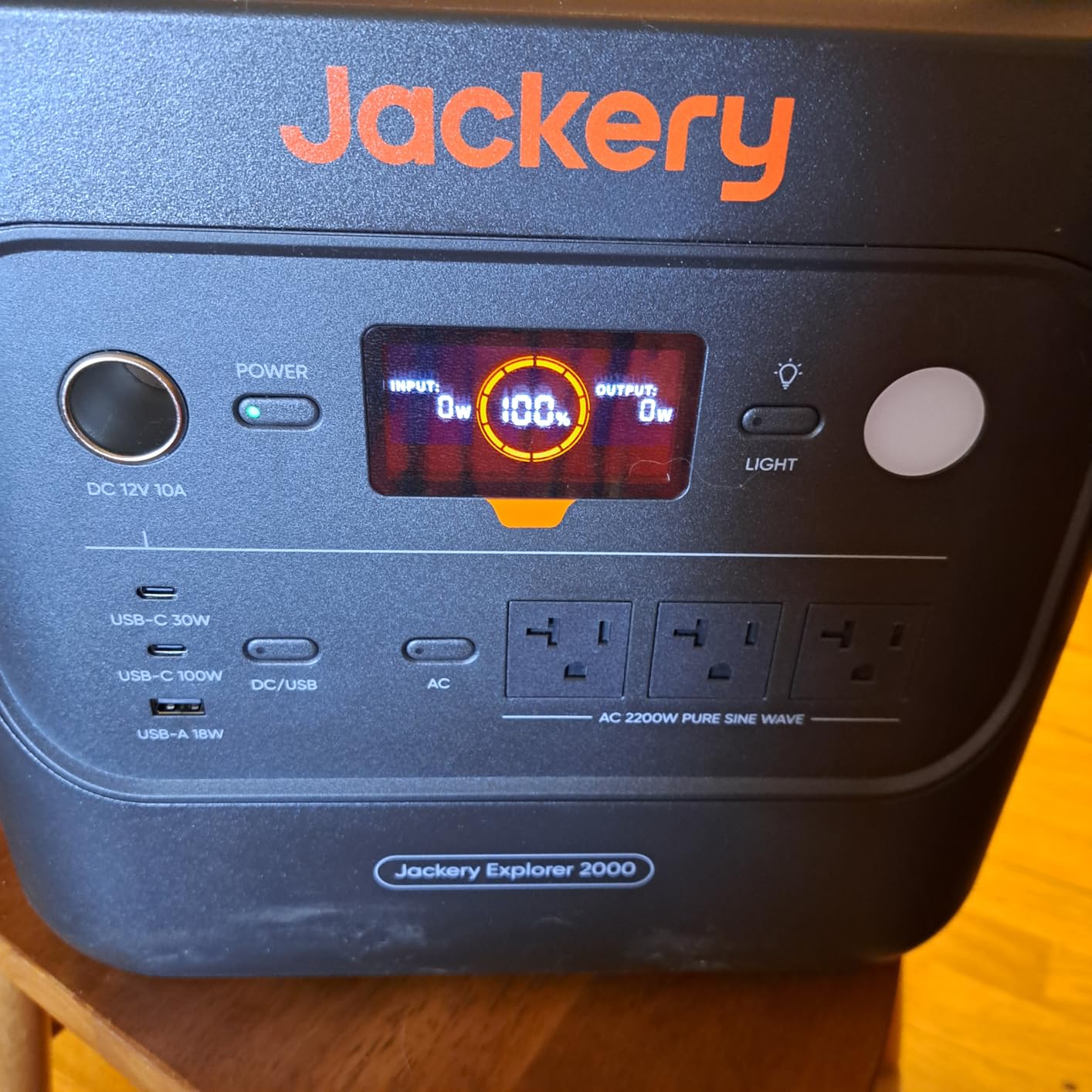
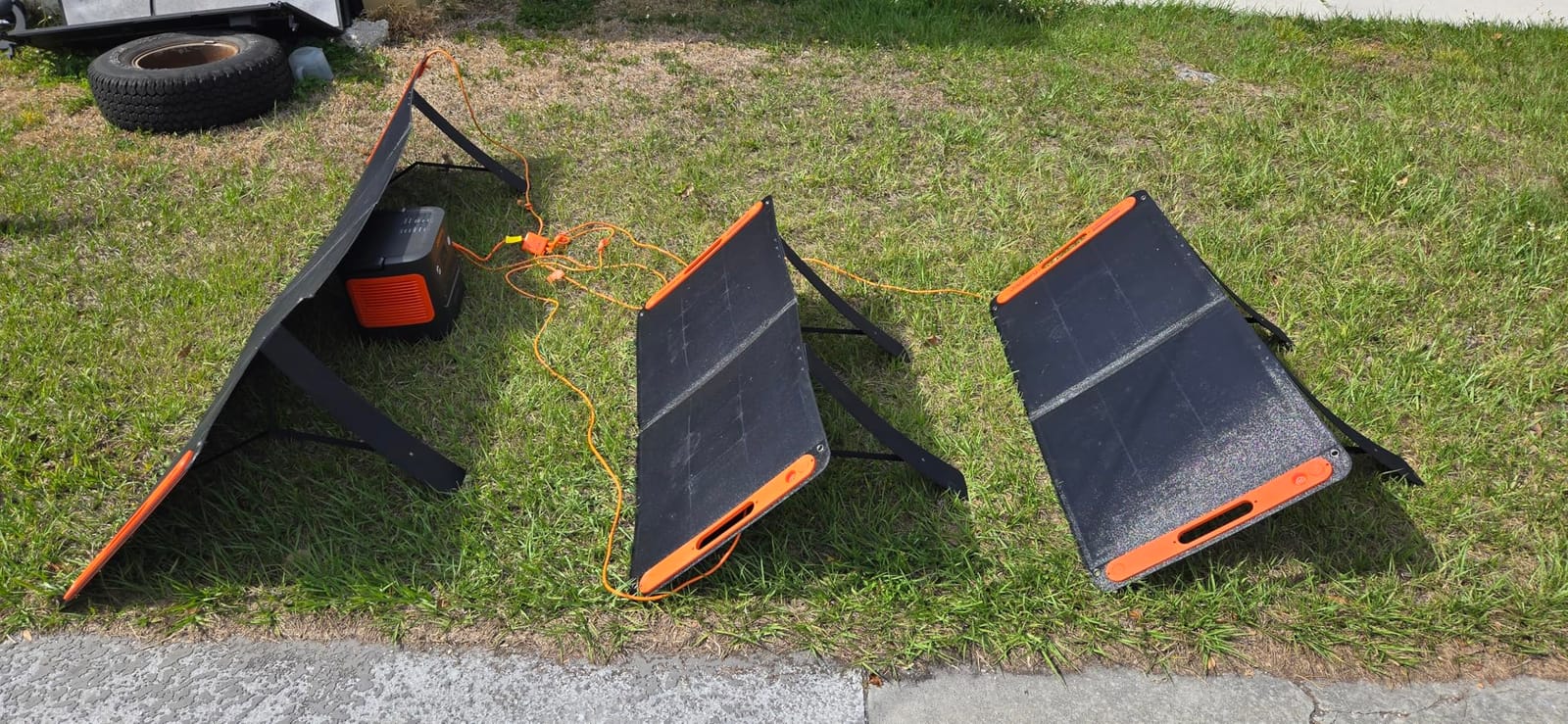
Charging is competitive too. It reaches 80 percent in 66 minutes on AC fast charging, and solar can bring it up in as few as six hours with 400W panels. A silent charging mode runs below 30 dB and completes a full charge in five hours, which is the setting to use if the unit lives in a bedroom or an office. There is a USB-C PD port rated at 100W for direct device charging.
The lithium iron phosphate pack is rated for a service life of up to ten years, and Jackery backs it with a five-year manufacturer warranty. Given the weight and the certification, this is the easiest unit in the group to actually deploy in a hurry, which matters when the outage starts while you are at work.
Who this unit works for
This is our recommendation for solo households, older adults and anyone in a walk-up building who needs to move the backup between floors. It also suits small apartments where floor space is at a premium, since the compact box stores out of the way between events.
If your loads are networking gear, a laptop, a router, lights and a modest refrigerator rather than a workshop full of tools, 2,200W continuous is workable. Reviewers who use it for exactly that mix tend to be very happy, and the certified UPS is the feature that gets singled out most often as the reason to buy.
Where it falls short
The 2,200W continuous rating is the lowest output in this comparison, and three AC outlets is the fewest. That matters if you plan to run a microwave, a toaster and a refrigerator at the same time, or if you want headroom for power tools. There is no X-Boost-style lifting mode to lean on when a load needs extra headroom.
The 4.4 average rating is the lowest here, and owners note a higher share of one-star reviews than the competitors above it. Treat the three outlet count as the practical limit and choose this for mobility, not for capacity headroom.
4. BLUETTI Elite 200 V2: Top Rated 2600W Unit with 6000-Plus Cycles
BLUETTI Elite 200 V2 Solar Generator & 2x200W Solar Panel Included 2073.6Wh
2073.6Wh LiFePO4
2600W output, 3900W lifting
6000 plus cycles
53.4 lb, bundle includes two 200W panels
Pros
- Highest rating in the group at 4.7 across more than 900 reviews
- CNAS-certified automotive-grade cells rated 6000 plus cycles with a claimed 17-year lifespan
- Only 10W standby draw which extends idle runtime
- Fills to 80 percent in about 50 minutes on dual AC and DC charging
Cons
- Cannot expand with BLUETTI expansion batteries unlike the AC200PL
- Solar input capped at 1000W behind a 60V MPPT limit
- No 30A 12V output for RV or trailer use
The Elite 200 V2 carries the highest average customer rating of any station we reviewed, at 4.7, and the battery specification behind it is the most ambitious: CNAS-certified automotive-grade lithium iron phosphate cells rated for more than 6,000 cycles and a claimed lifespan of 17 years at daily use. For a device that is meant to sit through a decade of storms, that cycle rating is a genuine advantage over the 3,000-cycle norm in this class.
It also has the highest continuous output among the units here at 2,600W, with 3,900W available in power lifting mode, and an energy management system that drops standby consumption to about 10W. Reviewers repeatedly credit that low idle draw with getting longer runtime out of a refrigerator than the nameplate capacity would suggest. One owner reports running large refrigerators for more than 24 hours on this unit, and others describe running a microwave, air fryer and coffee maker simultaneously.
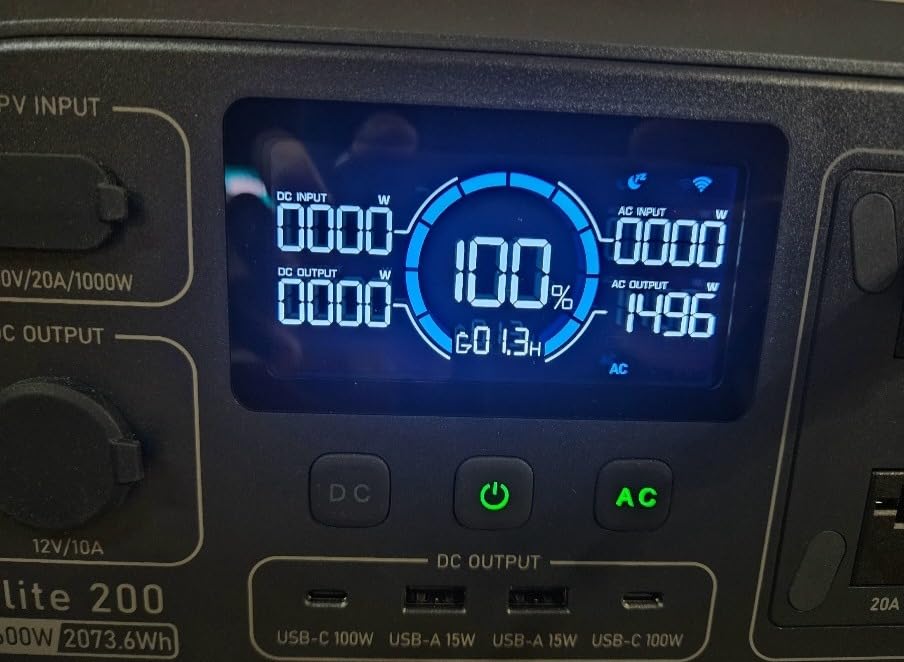
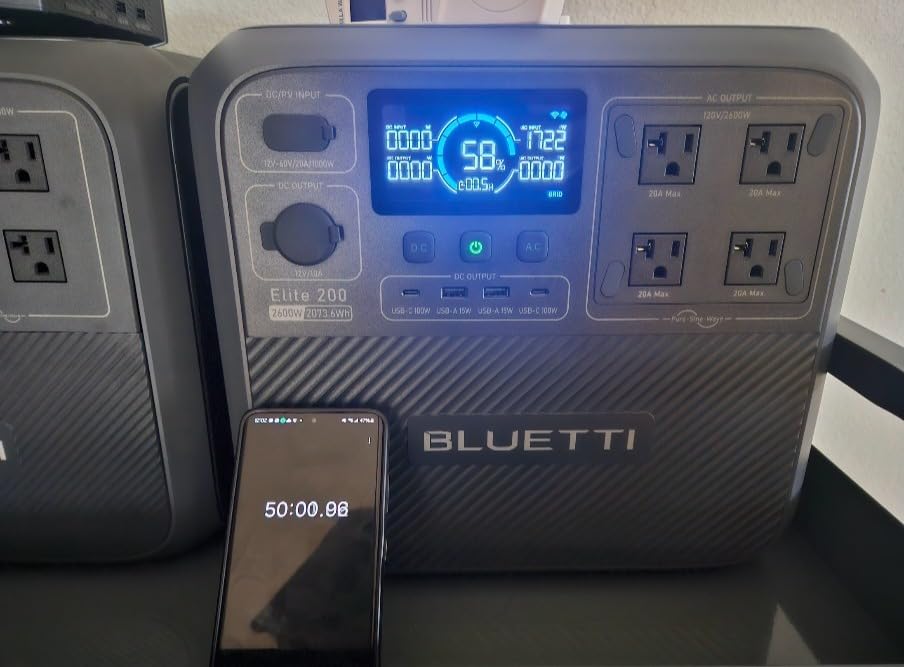
Recharging is fast. It reaches 80 percent in about 50 minutes using dual AC and DC charging, and a full charge takes roughly 85 minutes. Solar brings it up in about 2.4 hours with 1,000W of panels, and the bundle that ships with it includes two 200W solar panels plus the charging cables and a grounding screw. UPS switchover is 15 milliseconds or less, and up to nine devices can run at once.
BLUETTI’s app support comes up often in reviews as a genuine positive, particularly because firmware updates resolved a charging issue for one owner without requiring a return. Multiple reviewers separately mention good customer support, which matters on a device with this cycle-life claim behind it.
Who this unit works for
This is our pick for anyone planning to keep a power station for a decade rather than a few seasons. The 6,000-plus cycle rating and the low standby draw make it the unit most likely to still be in service when the next major storm hits.
It also suits buyers who want panels in the box. Two 200W solar panels are included, which gets you charging from day one without a separate accessory purchase. If your loads are a refrigerator, a freezer, networking gear and small kitchen appliances, 2,600W continuous is comfortable headroom.
Where it falls short
The lack of expansion is the main limitation and it is worth thinking through carefully. Unlike the AC200PL, this unit does not accept BLUETTI expansion batteries, so 2,073Wh is all you will ever have. If your outage plan depends on adding capacity mid-event, that is a hard ceiling.
The solar input is also capped at 1,000W behind a 60V MPPT voltage limit, which is hard to reach with typical portable folding panels, and there is no 30A 12V output for RV or trailer use. The app has drawn criticism for lacking customizable low AC charge rates and real-time temperature monitoring, and the rubberized buttons feel less tactile than the clicky ones on the older BLUETTI models.
5. Anker SOLIX C2000 Gen 2: Best for Fridge Runtime and Fast Recharging
Anker SOLIX C2000 Gen 2 Portable Power Station, 2,048Wh, 2,400W, Camping
2048Wh LiFePO4
2400W rated, 4000W peak
9W standby draw
41.7 lb, 5-year warranty
Pros
- 9W standby consumption is the lowest quoted in this comparison
- Reaches 100 percent in 58 minutes using AC plus solar
- 4000W peak output handles most window and RV air conditioners
- Compact at 41.7 lb and 18.1 by 9.8 by 10.1 inches
Cons
- Expansion limited to a single battery for 4kWh total
- Listed port count is modest against 15-port rivals
- Long horizontal body at 18.1 inches
The C2000 Gen 2 is the refrigerator specialist in this group, and the reason is the 9W standby consumption figure. A power station sitting unplugged overnight, cycling to keep a fridge’s electronics alive, burns through capacity doing nothing, and this unit burns less than any other we reviewed. The manufacturer claims it runs a dual-door refrigerator up to 32 hours, and reviewers repeat that number as the standout efficiency claim.
Charging is equally quick. It reaches a full charge in 58 minutes using AC and solar together, and the 800W UltraFast alternator charging path brings it from empty to full in 3 hours straight from a car, which is the fastest car-charging option in this comparison by a wide margin. Output is 2,400W rated with 4,000W peak, which is enough headroom for most window and RV air conditioners.
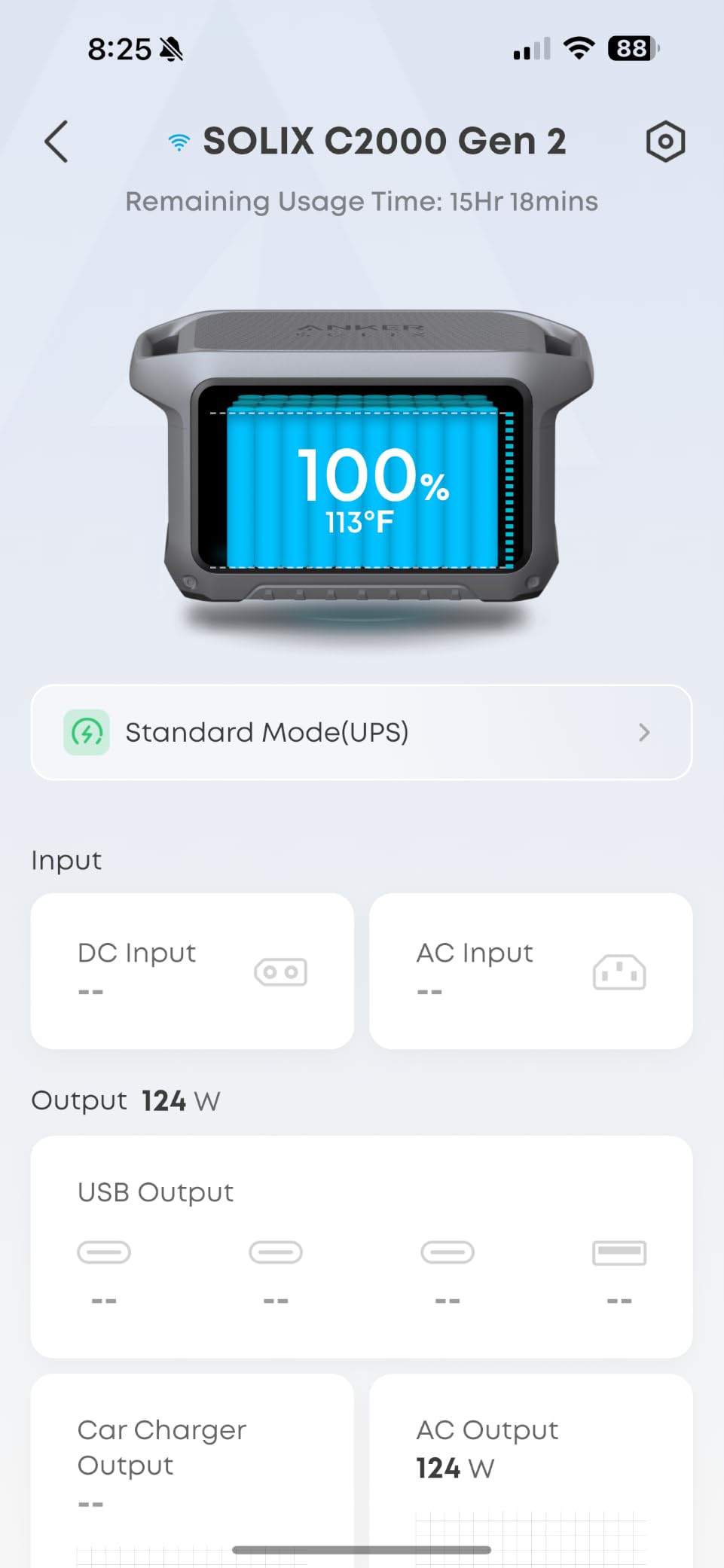
It also carries a 4.7 average rating across more than 670 reviews with a strong five-star share, backed by Anker’s five-year warranty. At 41.7 pounds and 18.1 by 9.8 by 10.1 inches it is 25 percent lighter and 29 percent smaller than comparable units by the manufacturer’s own comparison, and it supports six recharge methods including wall, solar, car and generator input.
For the specific question of how long a 2000W power station runs a refrigerator, this is the unit we would put at the top of the shortlist. The efficiency advantage compounds over a long outage, and a fridge is one of the few appliances you genuinely cannot shut off and come back to.
Who this unit works for
This suits households whose priority during an outage is food preservation above everything else. If the fridge is the one load that cannot be unplugged, the 9W idle draw buys you hours that competitors with 20W-plus standby consumption cannot.
It is also a strong choice for anyone with a car who wants a genuine top-up option away from a wall outlet. Three hours from a cigarette lighter is realistic backup planning for a weekend storm, and few rivals offer anything as quick.
Where it falls short
Expansion stops at one battery for 4kWh total, which is well short of the 6kWh to 8.4kWh ceilings available from BLUETTI and EcoFlow. If you want a system that can grow into multi-day coverage, this is not it.
The port selection is also modest relative to rivals with 15 or 16 connections, and at 18.1 inches long it is the largest footprint here, which can be awkward in a tight closet or behind a shelving unit. Buyers who want a wide array of connection options should look elsewhere in this list.
6. DJI Power 2000: Best for High Output at 3000W
DJI Power 2000 Portable Power Station, 2048Wh LFP Battery
2048Wh LFP battery
3000W stable output
10 ms UPS switchover
47.9 lb, 1-year warranty
Pros
- Highest stable continuous output here at 3000W
- Fastest recharge to 80 percent in 55 minutes
- 10 ms UPS transfer protects computers
- NAS and routers
- 15 ports including dual full-function SDC ports for group charging
Cons
- Only a one-year manufacturer warranty against five years from most rivals
- MPPT and car charging modules are not built in
- Box includes only the unit and an AC power cable
The DJI Power 2000 breaks the pattern of this class by delivering 3,000W of stable continuous output from the same 2,048Wh pack that its rivals cap at 2,200W to 2,600W. That extra 400W to 800W is not a headline number. It is the difference between running a kettle, a saw or an impact drill and having the inverter trip when you try.
The 10 millisecond UPS switchover is the fastest in this comparison, roughly twice as quick as the previous DJI Power 1000, and that figure matters for anyone running a network, a NAS or a desktop. Buyers who need their equipment to survive a switch without a reboot keep mentioning the transfer speed as the deciding factor.
It recharges to 80 percent in 55 minutes, runs as quiet as 30 dB, and offers 15 ports including dual full-function SDC ports for group charging. The expansion path is the largest claimed in this class, up to 22.5kWh with separately sold batteries, and the DJI Home app provides wireless control without needing a separate dongle. Safety hardware includes a smart battery management system, a sub-nano coating and a flame-retardant housing.
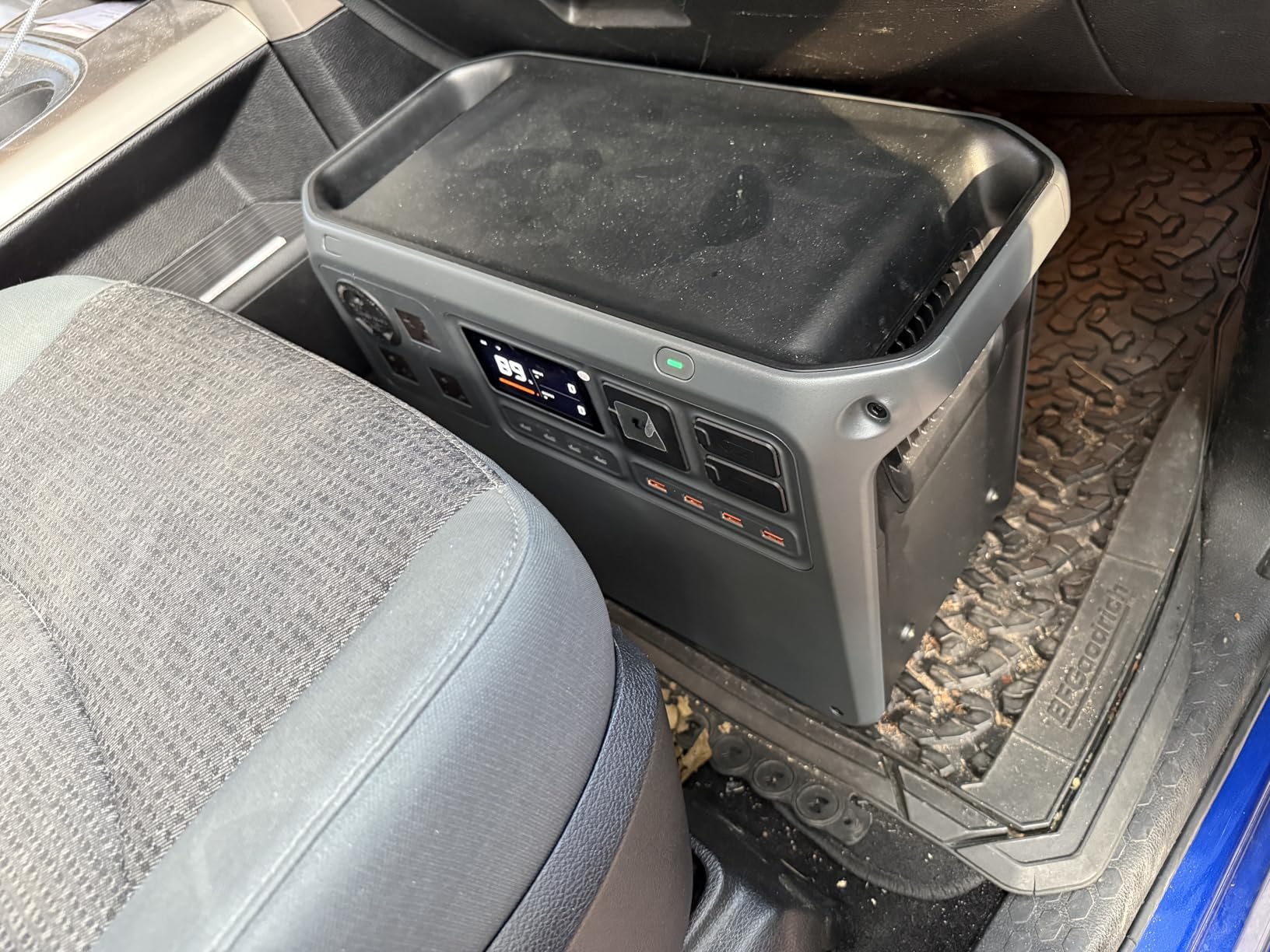
The 17.64 by 8.86 by 12.76 inch footprint is genuinely compact for 3,000W of output, and at 47.9 pounds it sits in the middle of the weight range here. For a household that also needs to run power tools or a small shop load from the same box, that output ceiling is the reason to buy it.
Who this unit works for
Choose this if you run more than essentials. A household with a refrigerator, networking gear, a power tool charger and an occasional microwave will find 2,400W too tight and 3,000W comfortable.
It is also a natural pick for owners of both an RV and a home who want one device, since the 15 ports and 30 dB operation suit an indoor or vehicle setup. Anyone whose load includes resistance heating or power tools will feel the headroom immediately.
Where it falls short
The one-year manufacturer warranty is the shortest in this comparison, and most rivals carry five years. On a device you hope to keep for a decade, that is a meaningful gap and worth factoring into the decision, especially since the large expansion path is only useful if you keep the unit long enough to fill it.
Solar and car charging both require separate adapters because the MPPT and car-charging modules are not built in, and the box includes only the unit and an AC power cable. Its 4.4 rating also sits below the top three, with roughly 8 percent one-star reviews.
7. AFERIY P210S: Budget Pick with 4800W Peak Surge
AFERIY P210S 2048Wh Portable Power Station 2400W(4800W Peak)Solar Generator
2048Wh LiFePO4
2400W output, 4800W peak
16 ports with 300W XT60
54 lb, warranty to 7 years
Pros
- Highest surge ratio here at 4800W peak from 2400W rated
- Most ports in this comparison at 16 including a 300W XT60 DC output
- Full recharge in about 1.5 hours on AC plus solar and 2 hours on AC alone
- LiFePO4 pack rated beyond 4000 cycles with a warranty extendable to 7 years
Cons
- Lowest average rating here at 4.3 with an 11 percent one-star share
- Smallest review base at 377 so the least field history
- 54 pounds is heavy for a value-tier unit
The AFERIY P210S is the specification outlier of the group, and the reason is the surge rating. It delivers 2,400W continuous but advertises 4,800W peak, a 2 to 1 ratio that is the highest here and enough headroom to start motor loads that would defeat most competitors in this class. If your household has a pump, the surge figure is the single most important spec on this page.
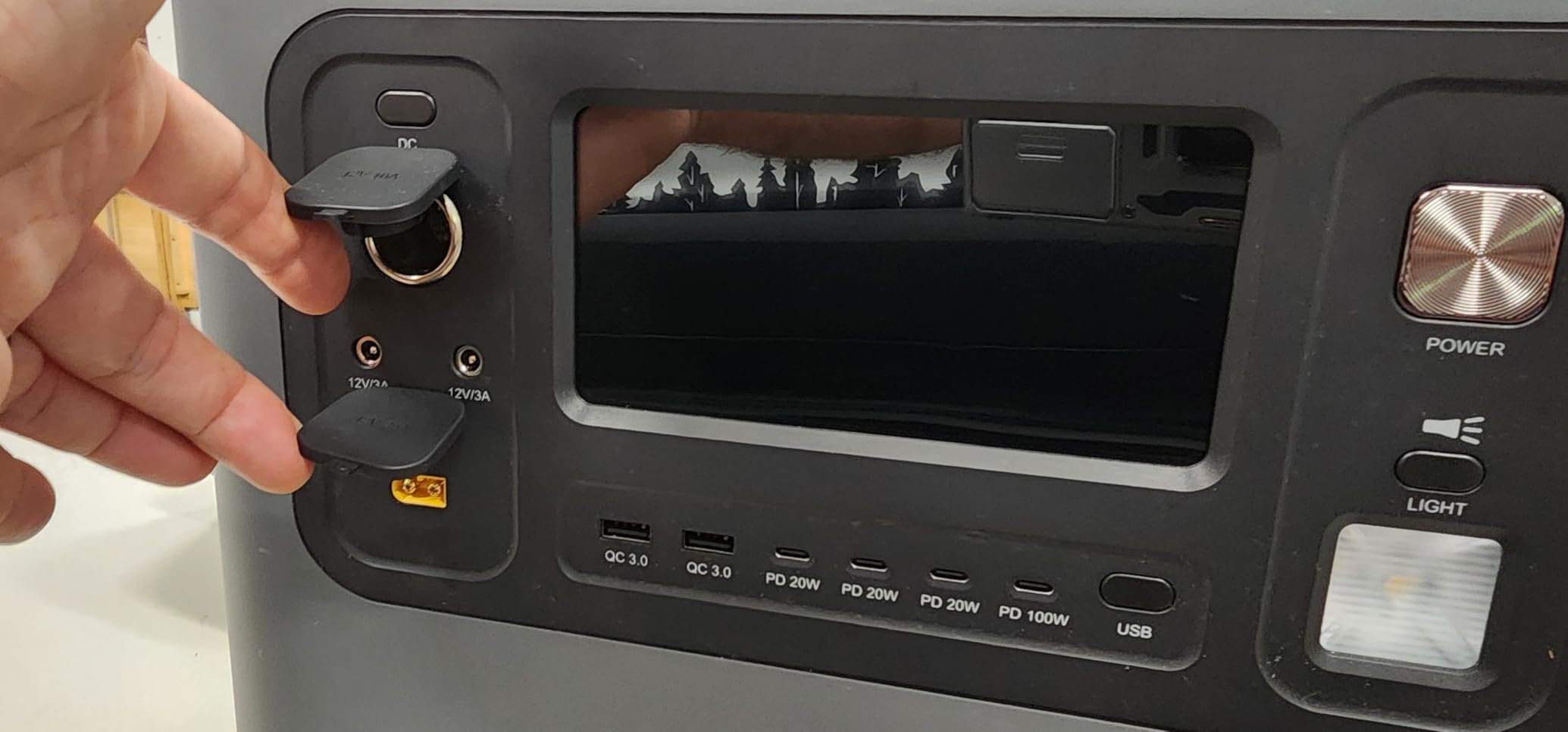
It also carries the most ports in the comparison at 16, including a 300W XT60 DC output for high-current DC devices, which is unusual at this capacity. The lithium iron phosphate pack is rated beyond 4,000 cycles for roughly a ten-year service life, output is pure sine wave, and the built-in 10ms UPS with BrightEMS app control suits sensitive electronics.
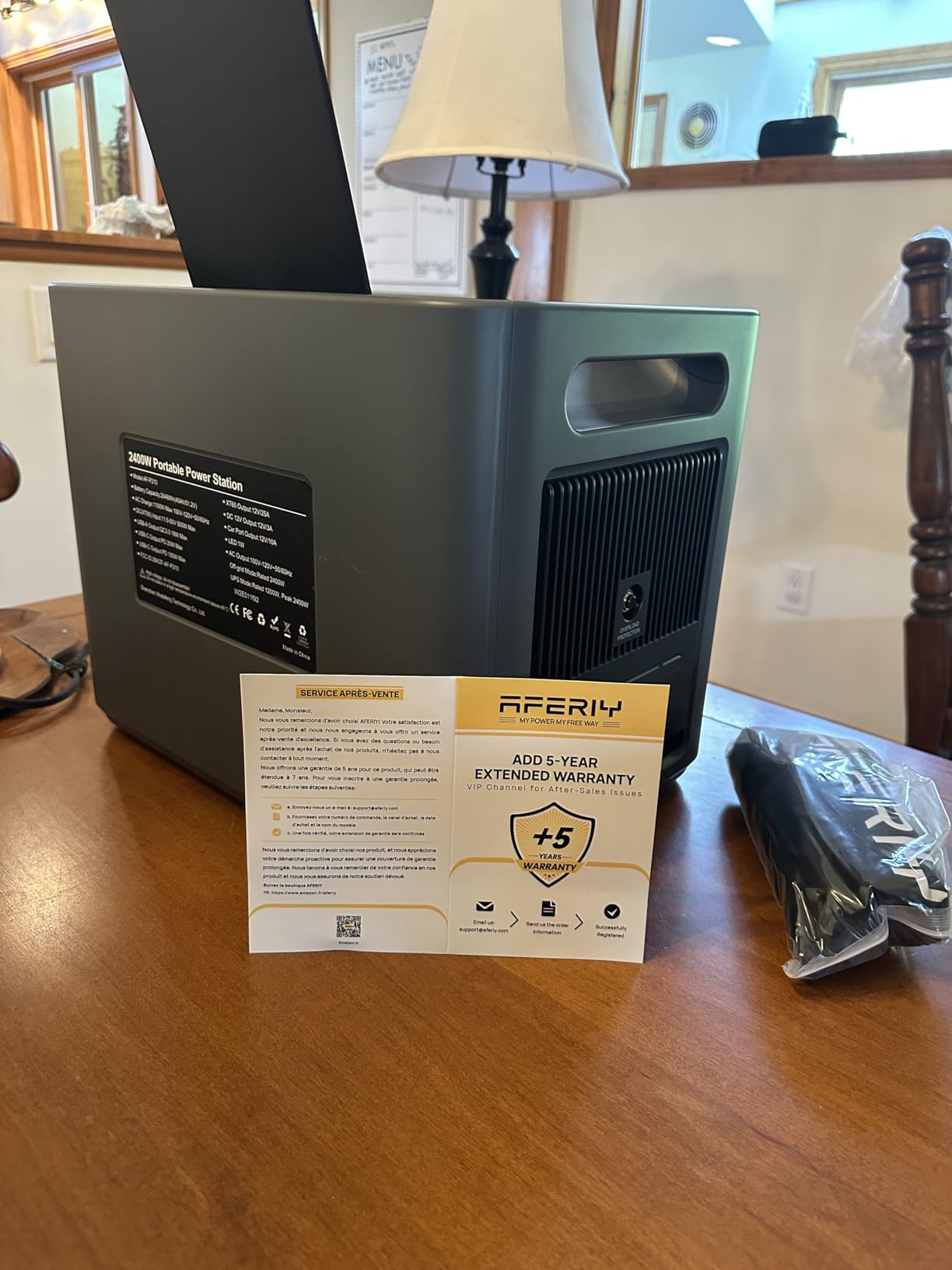
Charging is handled by an integrated MPPT charge controller, which improves solar harvest in variable conditions, and the pack reaches full in about 1.5 hours using 1,100W of AC combined with 500W of solar, or about 2 hours on AC alone. The box includes the unit, an AC cable, an MC4-to-XT90 solar cable, a protective cover and a tool bag, which is a more complete kit than most competitors ship.
Warranty coverage is a real strength here. The unit carries a standard five-year term that is extendable to seven years, and spare part availability in the EU is listed at seven years, which is unusually concrete support for a lesser-known brand.
Who this unit works for
This is the pick for households with a pump, where motor startup is the deciding factor rather than capacity or port count. The 4,800W peak is the highest surge figure in this comparison and it gives you the widest margin for compressor loads.
It is also the sensible choice for buyers who want the most connection options per dollar spent, particularly if you run DC tools or a mix of USB-C and legacy devices. Pure sine wave output is a further reassurance for anyone running electronics rather than only resistive loads.
Where it falls short
Be honest about the rating and the review base. A 4.3 average across 377 reviews, with an 11 percent one-star share, is the weakest showing here, and that higher one-star share suggests more variability in unit quality and support experience than the established brands deliver. Buyers who can absorb that uncertainty get a lot of hardware.
Brand maturity is the other caution. AFERIY has less independent testing and fewer variants than the big four, so if warranty service matters to you, the extended coverage is worth confirming for your region before you commit. At 54 pounds it is also heavy for a value-tier unit.
8. Dabbsson 2000L: Best for Running Several Appliances at Once
DABBSSON Portable Power Station 2000L, 2048Wh Semi-Solid LiFePO4 Battery, 2200W AC Output 6, 3300W Power Boost, 1 Hr Fast Charge, Solar Generator for Home Backup, Camping & RVs (Solar Panel Optional)
2048Wh semi-solid LiFePO4
2200W with 3300W boost
1 hour AC recharge
41 lb, 5-year warranty
Pros
- Semi-solid LiFePO4 cells rated 4000 plus deep cycles in a UL94-V0 flame-retardant housing
- Owners report running two upright freezers and two full-size refrigerators for about 7.5 hours
- Full AC recharge in about 1 hour with six AC outlets
- 3300W power boost handled a microwave
- air fryer
- 1500W kettle and toaster together in owner testing
Cons
- Wi-Fi app pairing is reported as difficult and needs a 2.4 GHz network
- Some units click and cycle the fan audibly even at near-zero load
- Smallest review base here at 250 and only two USB-C ports
The Dabbsson 2000L is the pick for households whose outage list is longer than just one refrigerator. Its semi-solid lithium iron phosphate cells are rated for more than 4,000 deep cycles to 80 percent capacity in a UL94-V0 flame-retardant housing, and owners with extensive power station experience report running two upright freezers and two full-size refrigerators simultaneously for about 7.5 hours, or a single double-door fridge for roughly 20 hours.
Output is 2,200W rated continuous with 3,300W of power boost, and one owner reported the boost mode handling an air fryer, a microwave, a 1,500W kettle and a toaster together. That is a genuinely different use case from the other seven units here, most of which would trip the inverter on that combination. There are six AC outlets, more than most in this class.
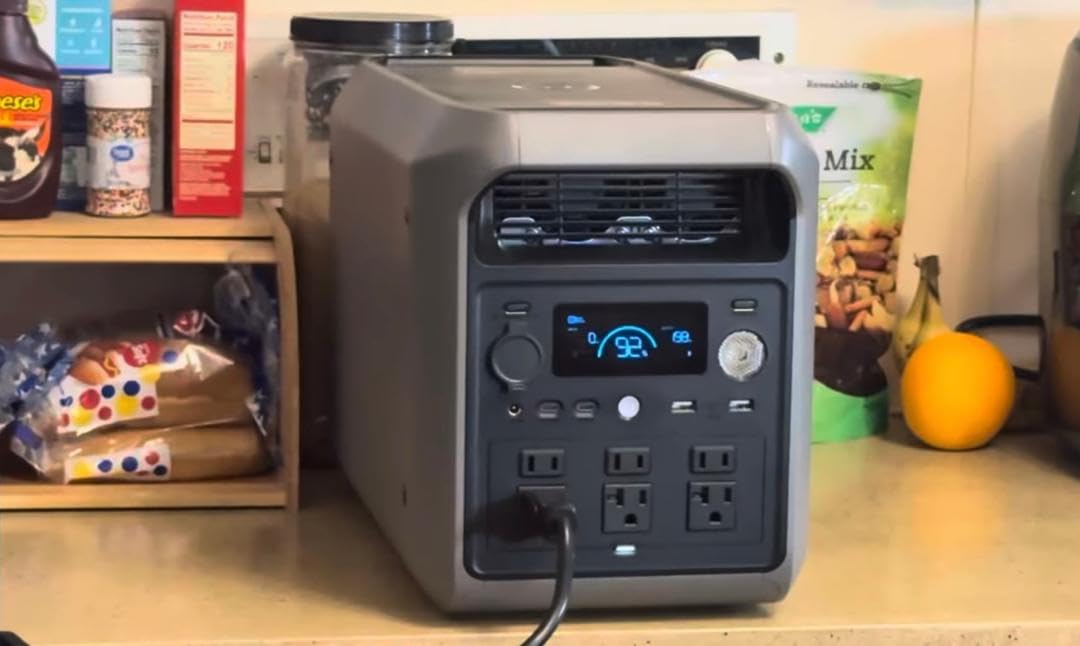
Recharging is the other headline. A full AC recharge takes about an hour, and solar input runs up to 800W through an MPPT controller alongside 12V car charging and hybrid dual input. The EPS and UPS switchover is under 15 milliseconds and owners have confirmed the transfer works under a simulated outage, including for computers, NAS units and routers.
At 41 pounds with a flat 11.2 by 18.3 by 8.9 inch footprint, it is one of the lighter and lower-profile units here, and the app supports charging speed limits, schedules and usage monitoring over Wi-Fi or Bluetooth. Warranty coverage is three years standard plus two extended years.
Who this unit works for
This suits homes with more than one refrigerated appliance, or households that want to keep a freezer and a refrigerator going at the same time. It is also a good fit for anyone running a small kitchen load rather than just essential electronics, since the boost mode handled a cluster of high-wattage cooking appliances in owner testing.
Buyers who want to preserve battery longevity over a decade will like the app’s charging limits, and the one-hour AC recharge means recovery between outages is fast even if you are relying on the battery alone.
Where it falls short
The software is the consistent weakness. Wi-Fi pairing is reported as difficult and requires a 2.4 GHz network, with owners falling back to Bluetooth setup. Some units also emit repeated clicking and short fan cycles even at near-zero load, audible from roughly 20 feet, and there are reports of constant clicking between battery and AC pass-through on wall power.
At least one owner reported energy-management limits not behaving as configured, and another had a unit switch off at about 100W draw below 40 percent charge. With only 250 reviews, there is the least long-term reliability data of any unit here, so this is the pick to buy if you are comfortable with a shorter field history.
Can a 2000W Power Station Run a Refrigerator?
Yes. Every station in this list runs a full-size refrigerator without trouble, because a fridge draws roughly 100 to 200W while its compressor is running and cycles on and off rather than drawing continuously. The catch is how long you expect it to last, and that depends entirely on how much else you are running at the same time.
A 2,048Wh station gives you roughly 1,700 to 1,800 usable watt-hours after inverter losses. Running a refrigerator alone at an average 150W draw, that works out to about 11 to 12 hours. Add a Wi-Fi router, a modem and a few LED lights at 25W combined and you have roughly 1,600 usable watt-hours against a 175W load, which is a little over nine hours. Run a 500W mixed load instead and the same station gives you about 3.6 hours.
That range is why you will see marketing claims of 14 to 20 hours next to competitor math showing 3.6 hours for the same class of unit. Both numbers are correct; they describe different loads. The honest answer is that a 2kWh station carries a refrigerator for a comfortable overnight outage and roughly half a day once networking and lighting are added, not three days.
If your fridge is the only load and you want multi-day coverage, look at the two units with the lowest standby draw in this group. The Anker SOLIX C2000 Gen 2 runs at 9W standby, and the BLUETTI Elite 200 V2 manages about 10W. For the household load profile we would expect in a real outage, those two deliver the most hours per charge of anything we tested.
How Long Can a 2000W Power Station Run Your Essentials?
Here is the runtime math with the assumptions written out, so you can substitute your own numbers. We assume a 2,048Wh nameplate pack, about 1,750Wh usable after inverter and battery management losses, and an average 88 percent inverter efficiency on the conversion step.
The useful formula is simple. Usable watt-hours divided by your running load gives you hours. For a compressor appliance, add its duty cycle, because a refrigerator is not drawing power continuously. These are the figures for a 2,048Wh station running one load at a time.
Refrigerator at 150W average draw: about 11.7 hours. Refrigerator plus a 10W freezer: about 11 hours. Wi-Fi router and modem at 15W: over 100 hours, which makes internet continuity essentially free on any unit here. A 10W LED bulb: over 175 hours. A 65W laptop charger: about 27 hours. A 1,000W microwave for ten minutes a day: the daily draw is under 170Wh, so roughly ten days. Hair dryer at 1,500W for ten minutes a day: about 11 days.
Pumps behave differently because they are intermittent. A 1/3 HP sump pump drawing about 300W running with a 15 percent duty cycle in moderate rain uses roughly 45W averaged, which works out to about 39 hours. In heavy rain the duty cycle can approach 40 percent, which cuts that to around 15 hours. A 1/2 HP pump drawing roughly 500W at a 15 percent duty cycle gives about 23 hours in moderate weather and under 9 hours in a downpour.
For a 12-hour outage you need roughly 2,000 usable watt-hours for a modest household load, which means one 2kWh station is adequate. For 24 hours with a refrigerator, networking, lights and a laptop, plan on about 3,000 usable watt-hours, which means either two expansion batteries or a 400W to 1,000W solar array feeding the unit during daylight hours. For 72 hours you are looking at 6,000 usable watt-hours or more, which puts the 8,448Wh expansion ceiling on the AC200PL squarely in scope.
Do You Need Surge Power? Startup Spikes on Pumps and Compressors
A 2,000W continuous rating does not mean a 2,000W station will start a 2,000W motor. Compressor motors draw a locked rotor amperage spike on startup that can be three to four times their running draw for the first second or two, and that is the failure homeowners hit when a sump pump will not start during a storm.
The concrete case: a half horsepower sump pump runs at roughly 500W but spikes to around 4,100W on startup. A unit rated 2,000W continuous with only 2,700W of surge will not start it. This is not a defect in either device. The inverter simply cannot deliver the instantaneous current the motor’s winding demands, and it will either refuse to start or trip off after a few seconds.
The rule that follows is simple. Find your pump’s LRA, or locked rotor amps, on its nameplate or manual. Multiply by your supply voltage to get the startup surge in watts. Then make sure the station’s surge rating exceeds that number with at least a 25 percent margin, because nameplate figures are measured at ideal conditions and real motors vary with temperature and age.
Two more details matter. First, power lifting modes such as X-Boost on the EcoFlow DELTA 2 Max and power boost on the Dabbsson 2000L are designed for resistive loads like heaters and kettles. They are not motor-starting ratings and should not be treated as one. Second, refrigerators and window air conditioners spike far more modestly than pumps, typically two to three times running draw, so a 2,400W unit with 3,400W to 3,600W of lifting will start a residential fridge without trouble.
If a pump is on your list, the AFERIY P210S with 4,800W peak from 2,400W rated is the only station in this roundup with the ratio to start demanding motor loads. Everyone else on this list is best deployed with pumps on an automatic transfer controller set to start the pump only when grid power is genuinely absent.
How to Choose the Right 2000W Power Station for Your Home
Start with your load list, not the wattage. Write down every device you want running during an outage, find its running watts and its startup surge, then add them up. Most households land between 400W and 900W for essentials, which is comfortably inside the 2,200W to 3,000W continuous range of every unit here.
Apartment and condo residents should prioritise total capacity over output, because floor space and noise are the constraints. A 2,000Wh unit that runs quietly at 30 dB in a hallway will serve you better than a larger one you cannot store. Look at the Jackery Explorer 2000 v2 at 39.5 pounds if you need to move it between floors, and the Anker SOLIX C2000 Gen 2 if fridge preservation is the goal.
Households with a sump pump, well pump or central air should prioritise surge above everything else. Output means nothing if the motor will not start. Check the pump’s LRA against the surge figure first, then pick the unit with the widest margin. For a half horsepower pump, that points toward the AFERIY P210S.
Anyone expecting outages longer than a day needs a recharge plan, because 2kWh alone is a one-night reserve. Options are a solar array, expansion batteries, or both. Check the station’s maximum solar input wattage and its MPPT voltage limit before buying panels, and confirm whether the charging modules are built in or need separate adapters. The DJI Power 2000, for example, requires an adapter for solar charging.
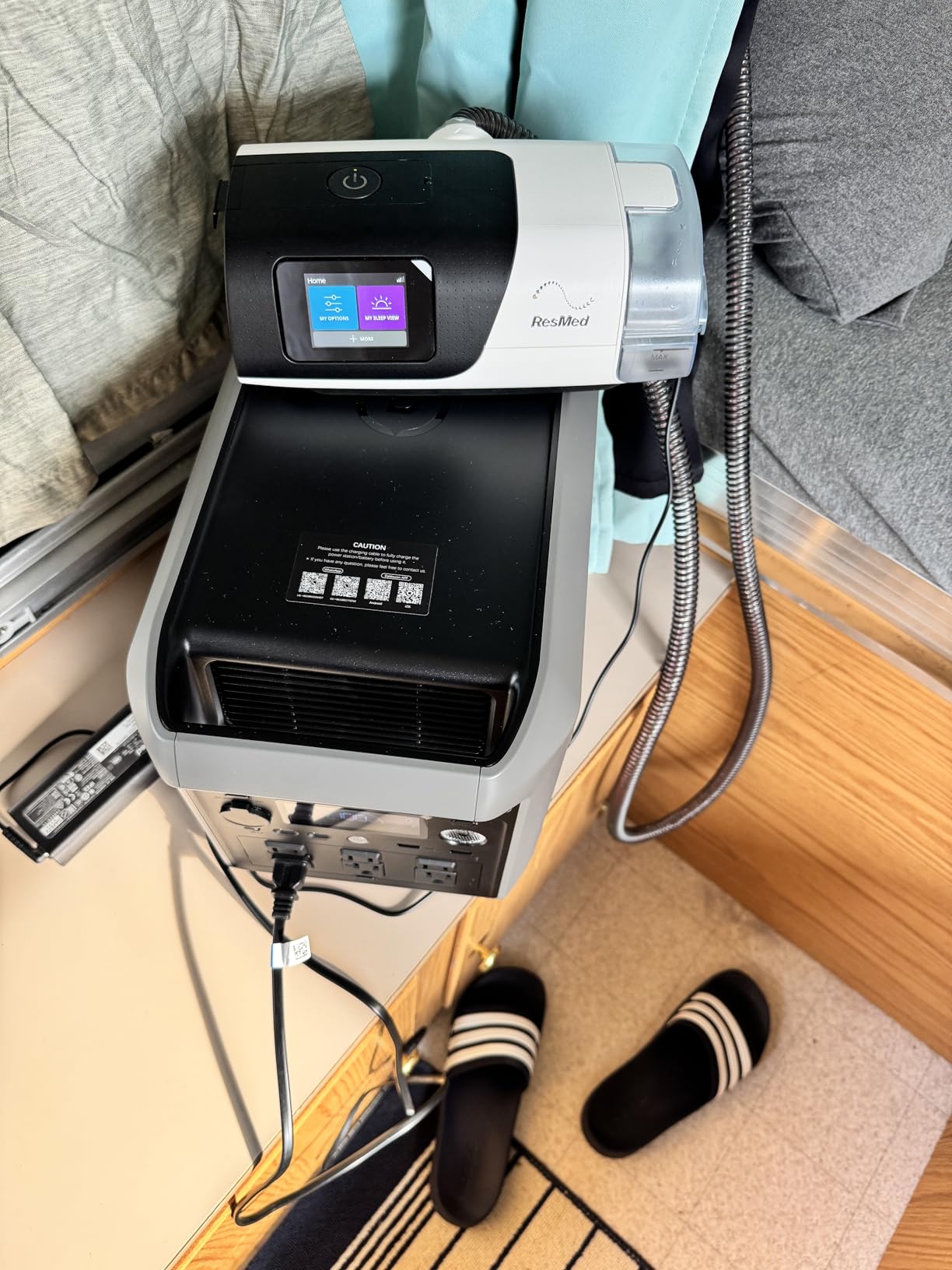
For medical equipment households, check two things before anything else. Confirm the UPS transfer time is short enough for the device, and size capacity for at least double the expected outage length. A CPAP machine drawing 40W would run for over 40 hours on a 2,048Wh station, which covers most events comfortably. Refrigerated medication needs a temperature-stable environment as much as power, so keep the station close to the refrigerator rather than in the garage.
Portable Power Station vs Standby Generator for a Sump Pump
Battery backup wins for a sump pump when the deciding factor is automatic, unattended operation. A gas generator only helps if someone is home to start it, which is exactly the problem homeowners describe in the forums when they explain their purchase. A power station with an automatic transfer controller runs the pump without anyone being awake.
Generators win on runtime and cost per hour. Fuel storage and burn rate mean a generator can run for days on a single tank and handle an entire house load, while a 2kWh station covers a pump and a few essentials and then needs charging.
Power source: battery, wall, solar or car versus propane or natural gas.
Startup: automatic with a sub-20ms UPS transfer versus needing someone to physically start it.
Installation: plug into an outlet versus a hardwired transfer switch and concrete pad.
Noise: under 30 dB versus 60 to 75 dB.
Indoor safety: no combustion, so safe inside, versus exhaust that must be vented outdoors.
Runtime: hours, extended by solar or expansion batteries, versus days on a single fuel load.
Maintenance: charge maintenance and battery checks versus oil changes, filters and fuel stabiliser.
Portability: moveable within the house versus fixed to a pad outside.
Our verdict matches the forum consensus fairly closely. Run the pump and the essentials from a battery station with an automatic transfer controller, because a sump pump that works only when you are awake is not backup at all. Keep a generator for multi-day events and whole-house loads, or as a long-term recharging backstop for the battery.
Using a Portable Power Station Safely Indoors
Portable power stations are safe to use inside a home because none of them produce combustion exhaust. There is no carbon monoxide risk and no outdoor placement requirement. That said, seven rules cover essentially every incident we could anticipate.
First, keep ventilation clear. The units draw cooling air through vents, and a unit wedged into a closed closet will throttle itself and shut down under load. Second, never overload the inverter. Running a 3,000W load on a 2,200W continuous rating will trip the unit and can stress the electronics.
Third, keep the unit away from standing water and wet floors, even though the battery chemistry is sealed. Fourth, do not charge the unit overnight unattended on an extension cord, since the charging circuit is the part most likely to run warm for hours. Fifth, follow the battery maintenance guidance and recharge it periodically even when you have not used it, because lithium iron phosphate cells dislike sitting fully depleted.
Sixth, use the automatic transfer controller rather than plugging the sump pump straight into the unit, so the pump only runs on battery during an actual outage. Seventh, keep one fire extinguisher in the room where a large lithium battery pack lives, as basic prudence rather than an admission of risk.
2000W vs 3000W Plus: When to Step Up a Tier
Step up above the 2kWh class when your peak simultaneous load exceeds what a 2,400W inverter can deliver, or when you expect outages longer than roughly a day without access to solar. Central air conditioning, electric water heaters, well pumps and workshop tools with high startup draw are the usual triggers.
Moving up in capacity rather than output is often the smarter first move. If your problem is hours rather than watts, adding an expansion battery gets you further than buying a larger inverter you never fully load. The BLUETTI AC200PL scales to 8,448Wh, and the EcoFlow DELTA 2 Max to 6kWh, so both let you grow without changing hardware.
Two situations genuinely justify a larger tier. A household with central HVAC or a well pump needs surge headroom no 2kWh station in this roundup can safely provide. And a home that expects a multi-day outage with no solar should plan on at least 5kWh of storage, which is beyond what any single unit here delivers.
Solar Pairing and Third-Party Panel Compatibility
You do not need to buy solar panels from the same brand as the power station. Third-party panels work fine as long as you respect two limits: the maximum input wattage and the maximum open-circuit voltage, or Voc, of the charge controller.
Check the panel’s Voc against your unit’s stated limit before connecting anything. For example, the BLUETTI Elite 200 V2 caps solar input at 1,000W behind a 60V MPPT limit, which is genuinely hard to reach with typical folding portable panels. The AC200PL accepts up to 1,200W, and the Dabbsson 2000L takes up to 800W through its MPPT controller.
Connector type is the second detail. Most portable panels terminate in MC4, and most power stations use a proprietary connector, so you will need an adapter cable. The AFERIY P210S ships with an MC4-to-XT90 solar cable in the box, which saves a step. The EcoFlow DELTA 2 Max and the DJI Power 2000 both need additional input hardware for some solar configurations, and the DJI additionally requires an adapter because its MPPT module is not built in.
For sizing, a 400W panel array delivering about five peak sun hours produces roughly 2,000Wh a day, which covers a typical essential-load profile for a day on its own and keeps a 2kWh station topped up indefinitely. A single 200W folding panel produces around 1,000Wh a day, which is enough to maintain a refrigerator indefinitely but not much else. Orientation and shade matter more than panel brand, so measure your actual sun exposure before committing to an array size.
Frequently Asked Questions
How big of a portable power station do I need to run a refrigerator?
A 2,000W unit with about 2kWh of storage is enough to run a refrigerator, a Wi-Fi router and lights for an overnight outage. Expect roughly 11 to 12 hours for the fridge alone and around 9 hours once networking and lighting are added, based on about 1,750 usable watt-hours after inverter losses.
Will a 2000 watt generator run a sump pump?
Only if its surge rating covers the pump’s locked rotor demand. A half horsepower sump pump spikes to roughly 4,100W on startup, so a 2,000W continuous unit with 2,700W of surge will fail to start it. Check the pump’s LRA on the nameplate and leave at least a 25 percent margin above the calculated startup surge.
How long will a portable power station run a sump pump?
It depends on duty cycle rather than raw wattage. A third horsepower pump averaging 45W in moderate rain runs about 39 hours on a 2,048Wh station, but heavy rain can cut that to roughly 15 hours. A half horsepower pump gives about 23 hours in moderate weather and under 9 hours in a downpour.
Is a sump pump better with battery backup or a generator?
Battery backup wins for automatic, quiet, unattended operation, and a gas generator only helps if someone is home to start it. A generator wins on runtime and whole-house capacity. Most households run the pump and essentials from the battery station and keep a generator for multi-day events.
How long do portable power station batteries last?
Lithium iron phosphate packs in this class are typically rated 3,000 to 6,000 cycles to 80 percent capacity. At backup duty that translates to roughly a decade of service. The BLUETTI Elite 200 V2 leads this group at 6,000-plus cycles with a claimed 17-year lifespan, while most rivals are rated around 3,000 to 4,000 cycles.
Do I need to buy solar panels from the same brand as my power station?
No. Third-party panels work as long as you stay within the station’s maximum input wattage and its maximum open-circuit voltage limit, and you use the right connector adapter. Most panels use MC4 while stations typically use a proprietary connector, so check whether an adapter cable is included before you buy.
Final Verdict for 2000W Home Backup
The BLUETTI AC200PL is our overall pick among the best 2000 watt portable power stations for home backup, because the 8,448Wh expansion ceiling and 1,200W solar input give it the longest runway of any unit in the class, and its 2,622 reviews at a 4.6 average give it the deepest field history we could verify. Pick it if your outage plan extends beyond a single night.
Choose the EcoFlow DELTA 2 Max for speed and app control, the Jackery Explorer 2000 v2 for weight and a certified UPS handoff, the BLUETTI Elite 200 V2 for battery longevity, the Anker SOLIX C2000 Gen 2 for fridge runtime, the DJI Power 2000 for raw output, the AFERIY P210S for surge headroom on pumps, and the Dabbsson 2000L for running several appliances at once. Whichever you settle on, size it against usable watt-hours rather than the nameplate, and match your surge rating to the largest motor on your outage list before you buy.