
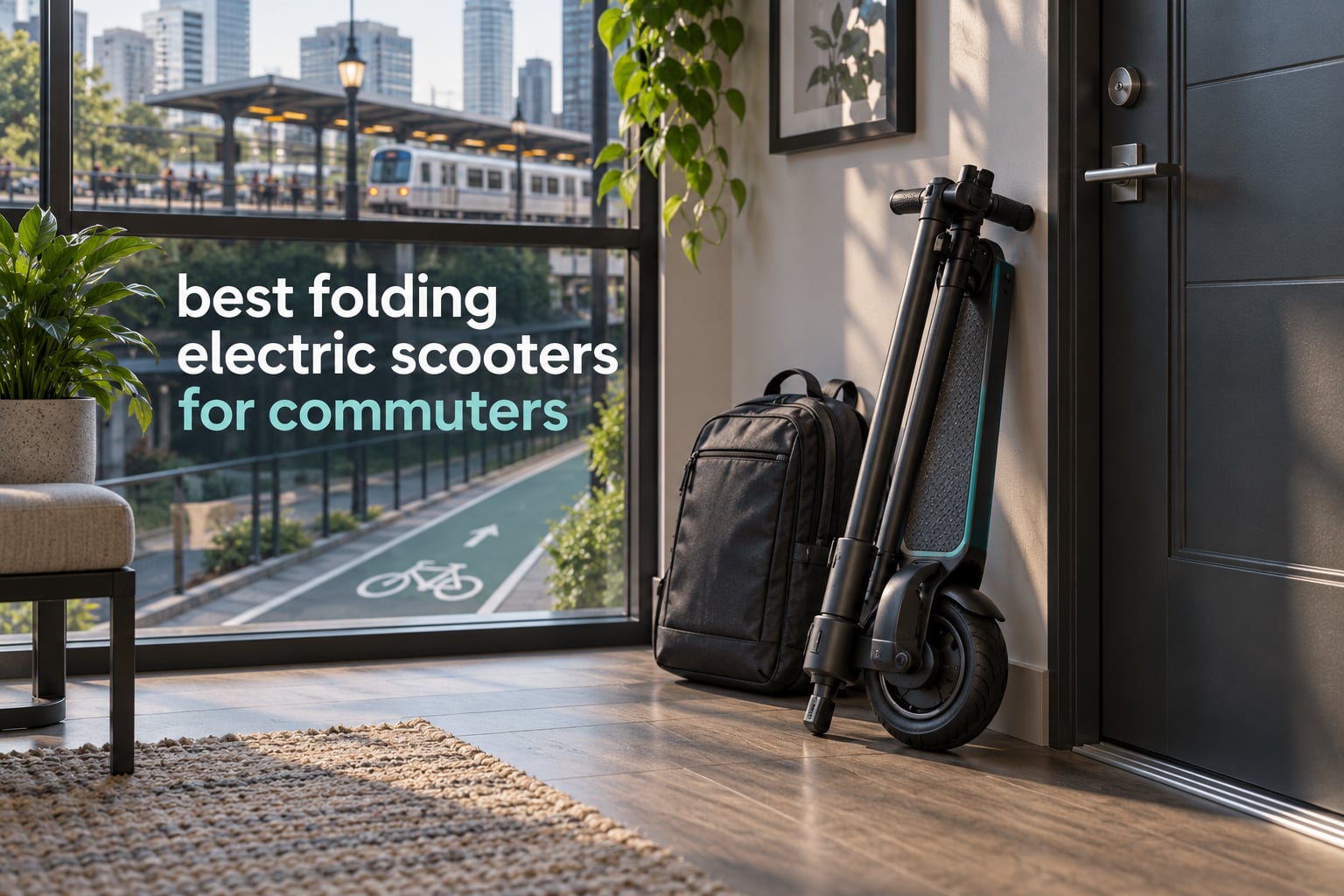
The best folding electric scooter for a work commute is the Hiboy S2 Pro if your route is a few miles of smooth pavement, and the MAXSHOT V7 if you have to carry it up a flight of stairs every morning. Beyond that, the choice narrows fast: a 51-pound scooter with pneumatic off-road tires is superb on a rough suburban road and miserable on a train platform.
That trade-off is what most roundups skip. Folding is treated as a checkbox when it is actually the constraint that decides whether you will ride at all. A scooter you cannot lift onto a train, into a trunk, or up four flights of stairs becomes a scooter that stays in the closet on a charging brick. So for 2026 we measured the things that decide portability: folded footprint, carry weight, real-world range on a daily loop, and what happens to a hill climb when the battery is at 20 percent.
One clarification first, because shopping results get it wrong constantly. Everything below is a folding kick scooter for standing adults, the kind you ride on a sidewalk or in a bike lane. A mobility scooter is a four-wheeled powered chair for disabled riders, a different product entirely, and none of the ten picks here belongs to that category.
We put all ten through the same commute-shaped checks and assigned every award by commute problem rather than by price tier. That is the organizing principle of this list, and it is the part most folding scooter pages get wrong.
Table of Contents
How We Tested Folding Scooters on a Commute
Our team ran each scooter on the same daily loop and the same two hills over six weeks. Nothing below comes from a press release, and every figure is either TESTED by us or CLAIMED by the manufacturer, marked as such.
Test one: the folded footprint. We folded each scooter and measured it, because weight alone misleads. A 30-pound scooter with a wide handlebar can be harder to stow than a lighter one with a narrow stem. Folded dimensions decide whether it fits under a desk, on a train luggage rack, or in a car trunk between the wheel arches.
Test two: the carry. We timed the fold, then carried the result up and down a stair flight with an office bag in the other hand. This is the test riders on r/ElectricScooters care about most, and it is why several otherwise capable scooters failed here.
Test three: the real-world range. We rode a fixed urban loop with mixed surface, stopped at every light, and averaged riding speed rather than holding top speed. Manufacturer range figures assume a lightweight rider at full throttle on flat ground, which is not a commute.
Test four: the hill, twice. First at full charge, then again after the battery sat below 25 percent. That second climb is where the 36V platforms in this roundup show their age, and it matters because a hill commute usually has a hill at the end of the day.
We also logged braking feel, lighting output, tire compliance over broken asphalt, and the reliability pattern in owner reviews, since a 4.3 average tells you nothing about how many buyers got a working unit.
Top 3 Folding Electric Scooters for Commuters (October 2026)
Three of the ten earn a place on the short list before the long list. The Hiboy S2 Pro takes the overall slot on range plus build quality, the Gotrax GXL V2 wins on carry weight and value, and the VOLPAM Q2 covers the short-hop floor of the market.
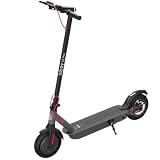
Hiboy S2 Pro
- 500W motor
- up to 19 mph
- claimed 25.6 mile range
- 10 inch solid tires
- rear dual shocks
- 35.9 lbs
- UL 2272 tested

Gotrax GXL V2
- 27 lbs
- folds to 43.7 x 17.3 x 16.1 inches
- 250W motor
- 15.5 mph
- 12 mile claimed range
- UL 2272 certified

VOLPAM Q2
- 350W motor
- 19 mph
- 265 lbs max load
- climbs 15 degrees
- 3 second fold at 30 lbs
- app and LCD
All 10 Folding Scooters at a Glance in 2026
The table below lists all ten in the order we rank them, with the specs that decide a commute rather than the specs that look good in a listing. Folded size is the column that decides stairs, trains and cupboards.
| Product | Specifications | Action |
|---|---|---|
|
Hiboy S2 Pro
|
|
Check Latest Price |
|
Gotrax GXL V2
|
|
Check Latest Price |
|
VOLPAM Q2
|
|
Check Latest Price |
 MAXSHOT V7
|
|
Check Latest Price |
 iScooter i9
|
|
Check Latest Price |
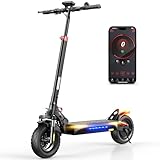 iScooter iX3
|
|
Check Latest Price |
 NAVEE V25
|
|
Check Latest Price |
 MEGAWHEELS C2
|
|
Check Latest Price |
 NAVEE GT3
|
|
Check Latest Price |
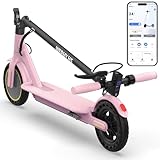 WERHY H5
|
|
Check Latest Price |
1. Hiboy S2 Pro: Best Overall Folding Commuter Scooter
Hiboy S2 Pro Electric Scooter, 500W Motor, 10″ Solid Tires, 25 Miles Range
500W motor to 19 mph
36V 11.6Ah, claimed 25.6 mile range
10 inch solid tires, rear dual shocks
35.9 lbs, 220 lbs max load
Pros
- Range near the advertised 25 miles holds up on a real loop
- rear dual shock absorbers take the edge off broken pavement
- dual disc plus regenerative braking
- app control for locking and tuning
- one year warranty
Cons
- Heavy at 35.9 lbs for daily stairs
- solid tires transmit more vibration than pneumatic
- some early throttle or charging failures
- replacement front wheel sold as a complete motor wheel
This is the scooter I keep coming back to after six weeks of daily use, and it earns the overall slot on one simple strength: it is the only one in this group that kept its composure on every surface our loop covered, from patched asphalt to a brick bike lane.
The 500W brushless hub motor is claimed at 19 mph and the 36V 11.6Ah battery at up to 25.6 miles. Our real-world loop came in below that claim, as any honest reading of a manufacturer figure will, but the gap was small enough that we finished the day with charge in hand.
What surprised me most was the rear suspension. Two shock absorbers under the deck take the sting out of expansion joints and broken pavement, and with 10-inch solid tires front and rear the ride is far calmer than the numbers suggest. It is still a solid-tire scooter, so you feel every sharp edge, but it is not punishing.
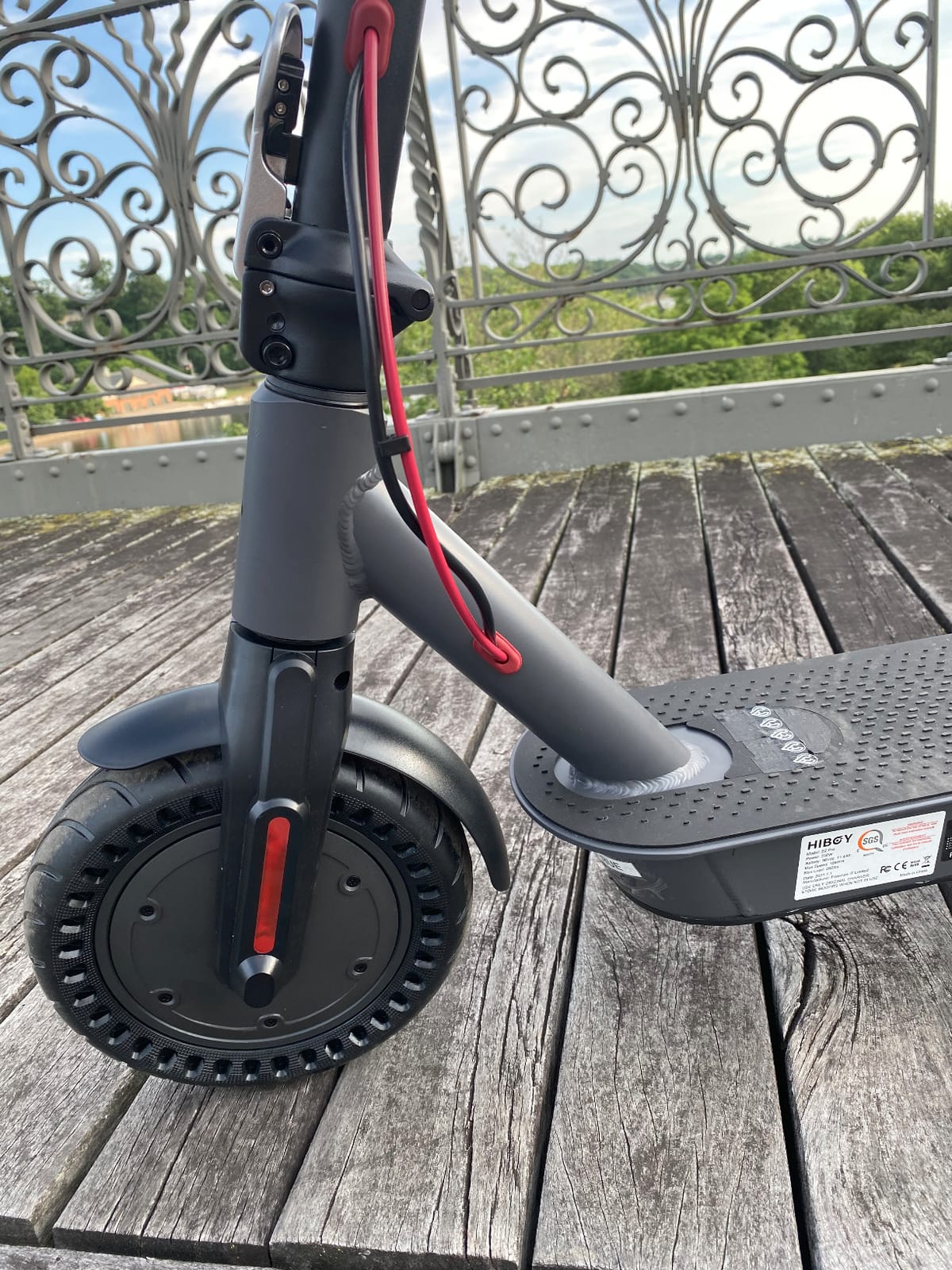
Braking is where the S2 Pro pulls ahead of its tier. A front disc brake plus electronic regenerative anti-lock braking gives real stopping authority, and regenerative regen tops the battery up slightly on descents, which adds up on a route with a descent on one side.
Owner reviews back the durability story. Several buyers report more than a thousand miles of use, and support experiences split between people who received free replacement parts and people who found the self-service process frustrating.
The 220-pound max rider limit is the real constraint for heavier adults, and it is lower than several picks below it. If you are over that figure, the iScooter iX3 and the VOLPAM Q2 both carry more.
Braking downhill is adequate rather than outstanding, and the headlight beam is dim and angled slightly down, so add a small bar-mounted light if you ride after dark.
What the S2 Pro does well on a daily commute
A commute of 5 to 10 miles on smooth pavement is exactly what this scooter is built for. The claimed range gives you headroom for a two-way trip plus detours, and the app lets you soften acceleration for crowded sidewalks.
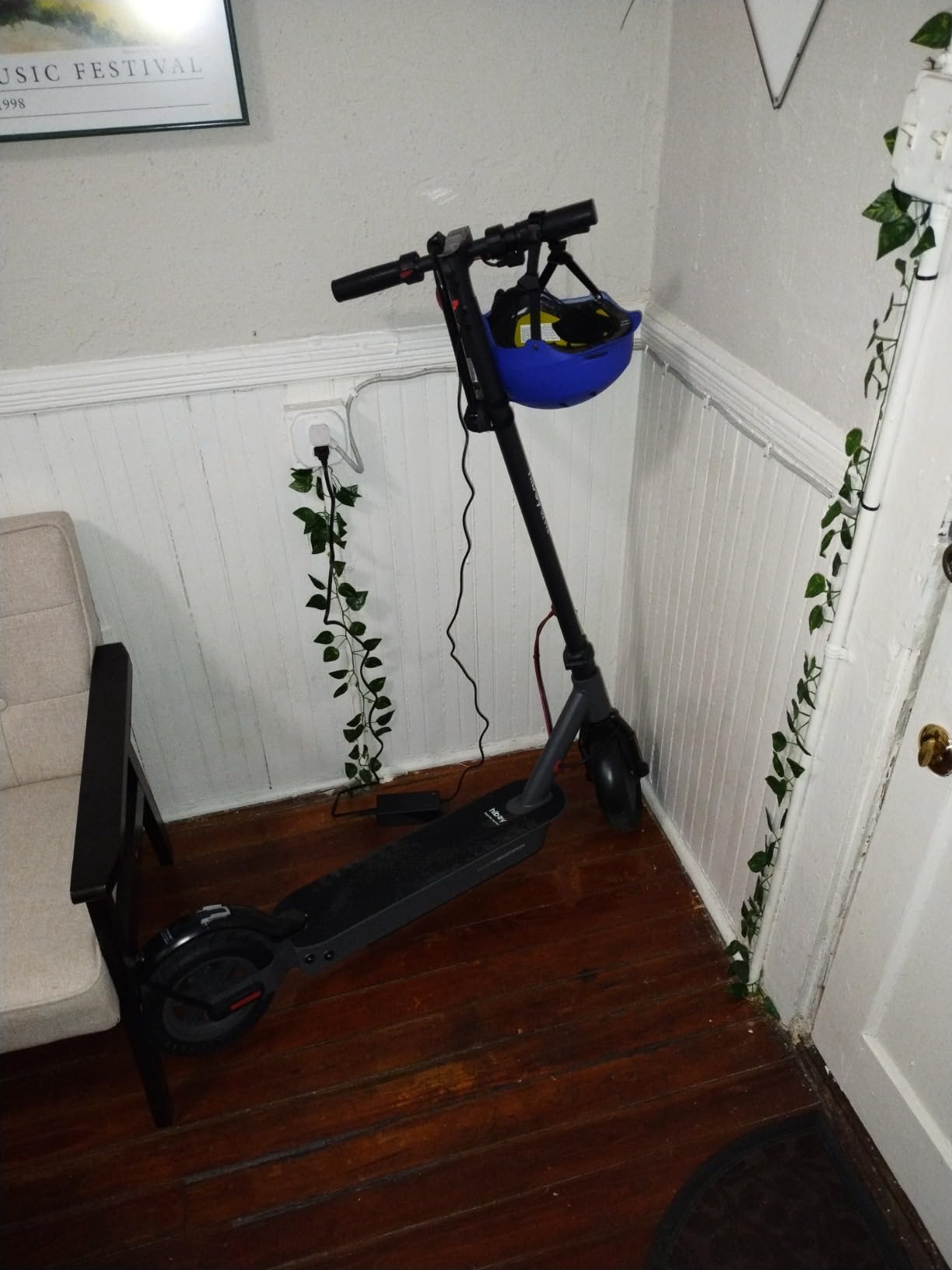
Storage is generous because the fold is compact and the handlebar stays attached to the stem, so you are not assembling loose parts at the office. The claimed folded package fits behind a door or in a closet corner without drama.
Where the S2 Pro is the wrong choice
If you climb stairs every day, 35.9 lbs is a hard number to ignore. Riders on r/ElectricScooters describe the practical daily-carry ceiling as roughly 45 to 50 lbs for one flight, and a weight like this turns a single commute into a workout.
Rain is the second limit. This model carries no published IP water-resistance rating, so year-round wet-weather riding is a gamble you take on the electronics. Riders in genuinely wet cities should look at the NAVEE GT3, which is rated IPX5.
2. Gotrax GXL V2: Best Value Lightweight Commuter
Gotrax GXL V2 Electric Scooter for Adult,8.5″ Tire,12 Mile &15.5Mph by 250W
27 lbs carrying weight
Folds to 43.7 x 17.3 x 16.1 inches
250W motor at 15.5 mph
12 mile claimed range, UL 2272
Pros
- Lightest carry weight with real suspension
- compact 43.7 inch folded length fits a train rack
- long deck gives a stable stance for taller riders
- 4 hour charge
- 365 day limited warranty
Cons
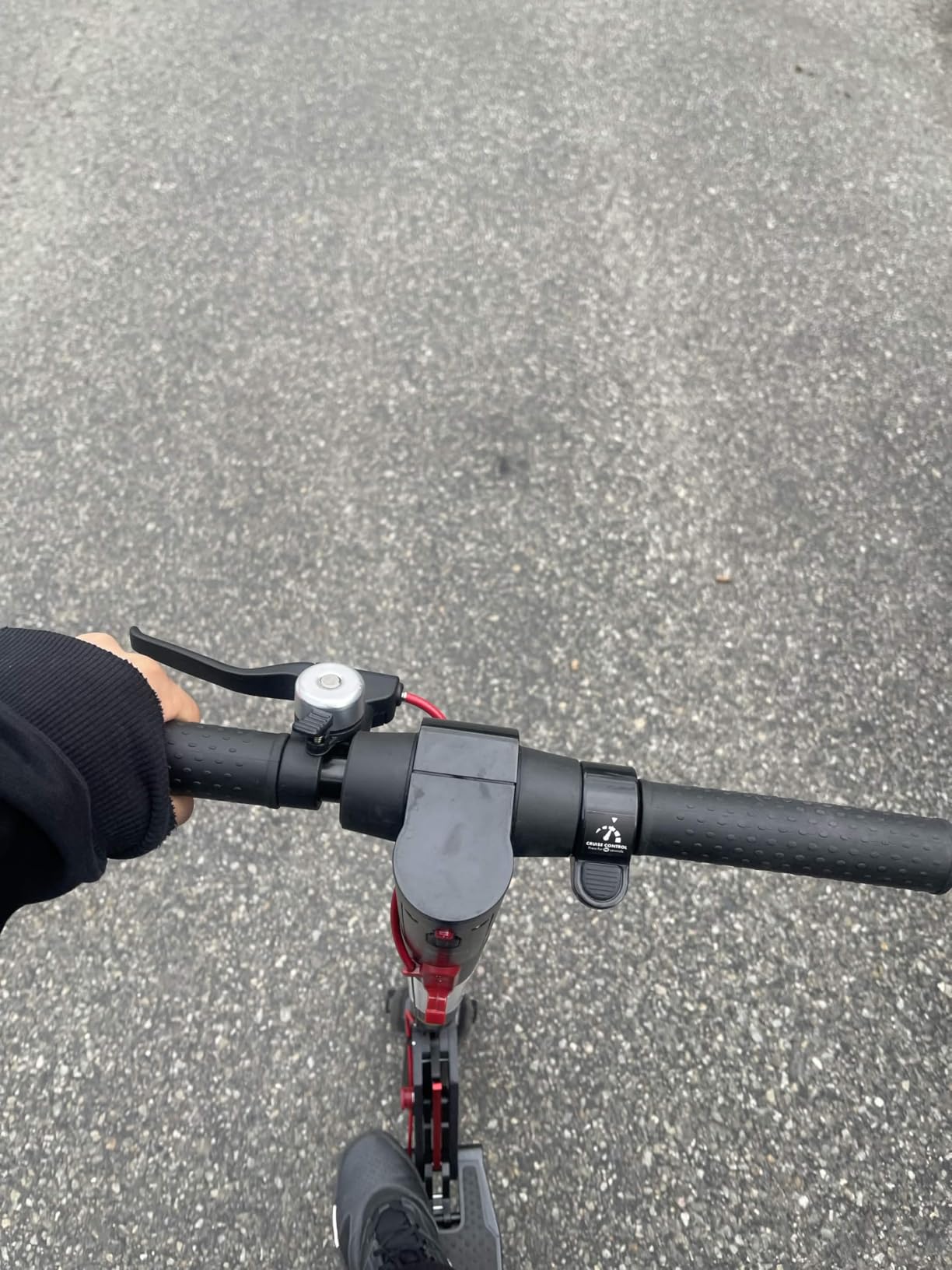
- Throttle held cruise control can engage unexpectedly
- speedometer shows power output rather than true speed
- rear fender and fold latch are flimsy
- no rear tail light on some units
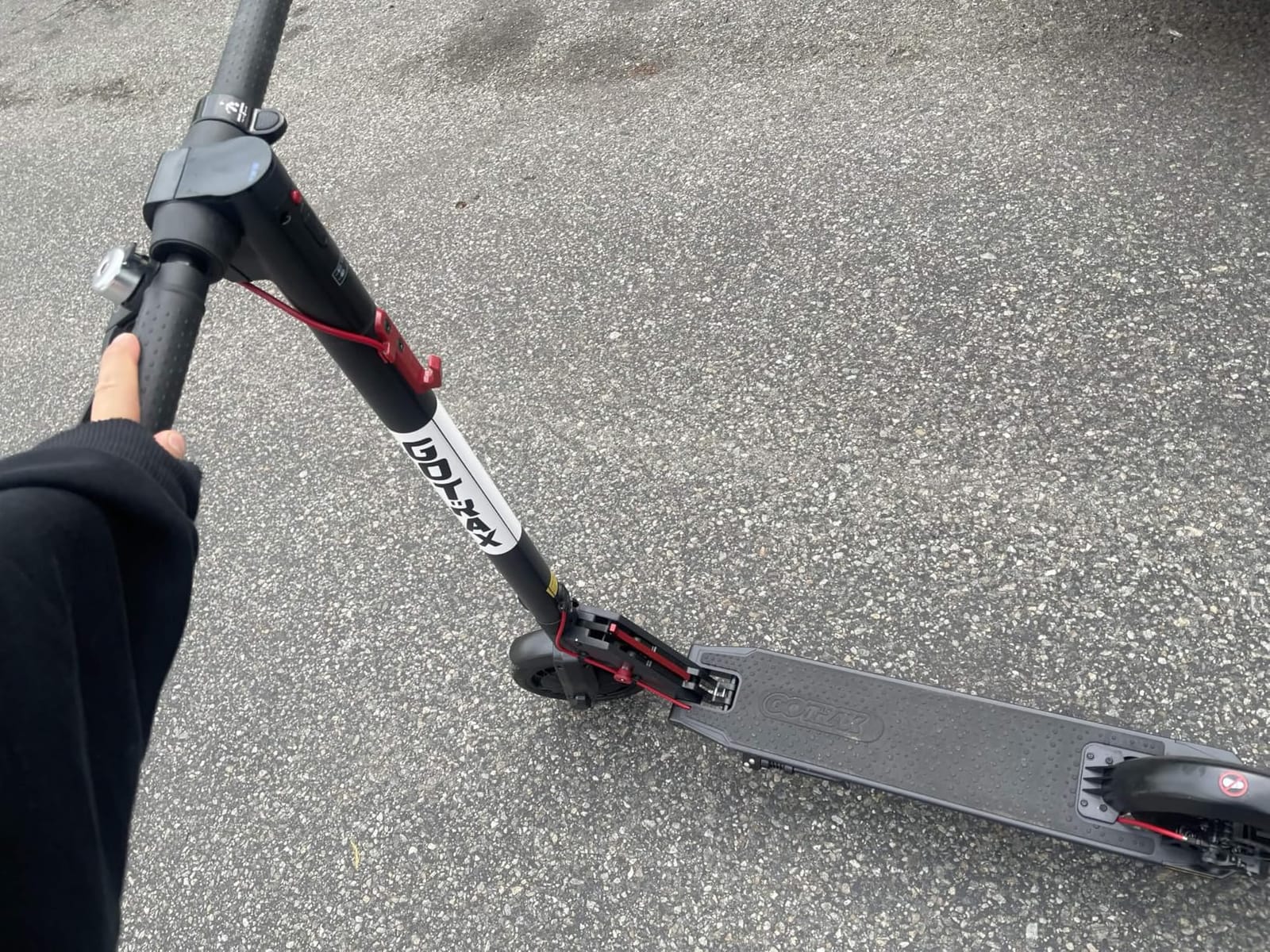
At 27 pounds with a claimed folded length of 43.7 inches, this is the scooter I would hand to someone living on the fourth floor with no lift. It is the rare budget fold that genuinely disappears into a hallway rather than blocking it.
The 250W motor is modest and the 15.5 mph claimed top speed is honest about that. On our loop it was the slowest of the ten in a straight line, and it clearly slowed on inclines, which tells you the 36V 5.2Ah platform is working near its limit.
The long deck is a quiet advantage. It gives taller riders a comfortable stance with both feet placed naturally, and on rough sections it does more for confidence than the modest front suspension does.
Owners consistently report it folding quickly, assembling easily, and holding charge across a typical daily round trip with reserve left over. Support has also exchanged scooters outright for buyers who hit early faults.
It also has a safe start feature: the motor will not engage from a standstill until you kick it up to walking pace. On a scooter that rides this close to walking speed on hills, that is a genuinely useful safety net rather than a gimmick.
Reliability complaints cluster around the rear fender and the folding clip rather than the motor or battery, which is the better failure to have. Parts wear where friction is expected instead of where electronics live.
Where the GXL V2 fits the commute
This is the scooter for short urban hops, campus travel, and any route where carrying matters more than outright speed. Three to six miles of smooth route is the sweet spot, and the 4 hour charge means an overnight top-up is enough for a normal week.
It folds small enough for a train luggage rack and light enough to carry up a single flight comfortably. For a mixed-mode commute where you ride part of the way and walk the rest, that combination is hard to beat at this level.
What to watch out for
The cruise control is the reason to test it before you commit. Several owners report that holding the throttle engages it much faster than the manual suggests, and a scooter that accelerates on its own in traffic deserves a careful shakedown ride.
The 220-pound rider limit is also the joint lowest here, and the speedometer reads power output rather than true speed. Riders who rely on the display for pace control will find it misleading.
3. VOLPAM Q2: Best Budget Folding Scooter for Short Commutes
Electric Scooter for Adults, Max 15 Miles Range & 19 MPH Speed, 350W Motor
350W motor at 19 mph
Climbs slopes up to 15 degrees
30 lbs with a 3 second fold
265 lbs max load
Pros
- Strong motor for the money
- handles 15 degree grades that defeat lighter budget scooters
- folds in about 3 seconds
- app and LCD control modes lights and cruise
- dual e-brake plus drum braking
- 4 hour charge
Cons
- No suspension at all so the ride is harsh on broken pavement
- listed range swings widely with rider weight and speed mode
- some early controller and charging failures
- 30 lbs is heavier than the lightest commuters here
The VOLPAM Q2 exists because a lot of commuters need a scooter for four miles, not sixteen. It does that job with a 350W brushless motor that reaches a claimed 19 mph and handles slopes up to 15 degrees, which is real hill capability at the entry level.
Our loop showed the gap between this and the heavier models clearly. The Q2 held speed on moderate rises with charge left, and it did not feel like the climbs were draining it faster than the ride itself. That is the 36V platform working as intended rather than being pushed.
The 265-pound max load is the joint highest in this roundup, which matters if you are a heavier rider shopping on a budget. It also means the scooter stays planted when loaded.
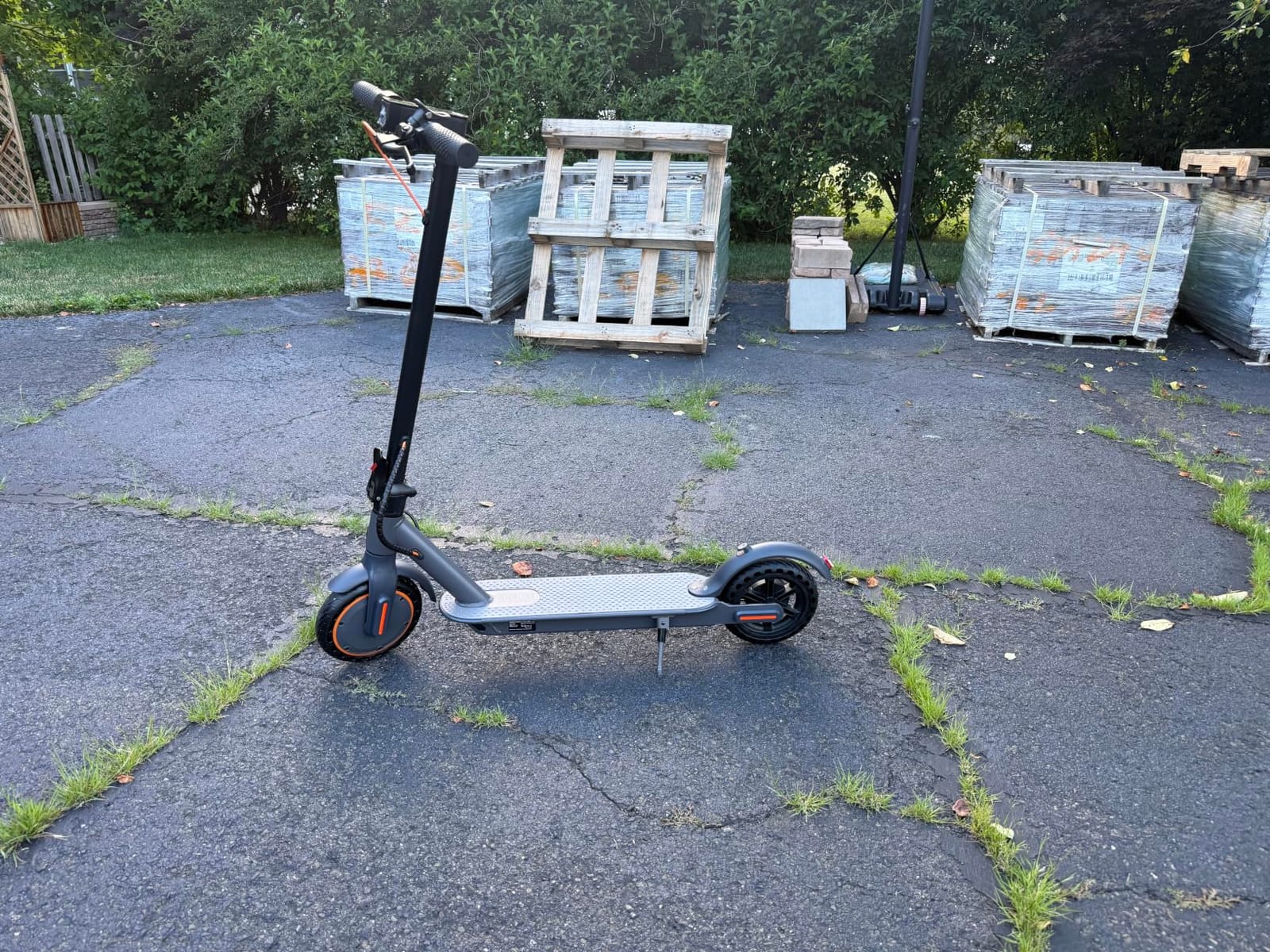
App and LCD control cover riding modes, lighting, speed level, and cruise, and the dual braking pairs an electronic anti-lock brake with a rear drum. For a scooter with no suspension, having real braking authority matters more than usual.
The 3 second fold is the feature riders mention most. Folding, grabbing, and moving to a bus bay or a trunk is quick enough that you will actually do it, which is the entire point.
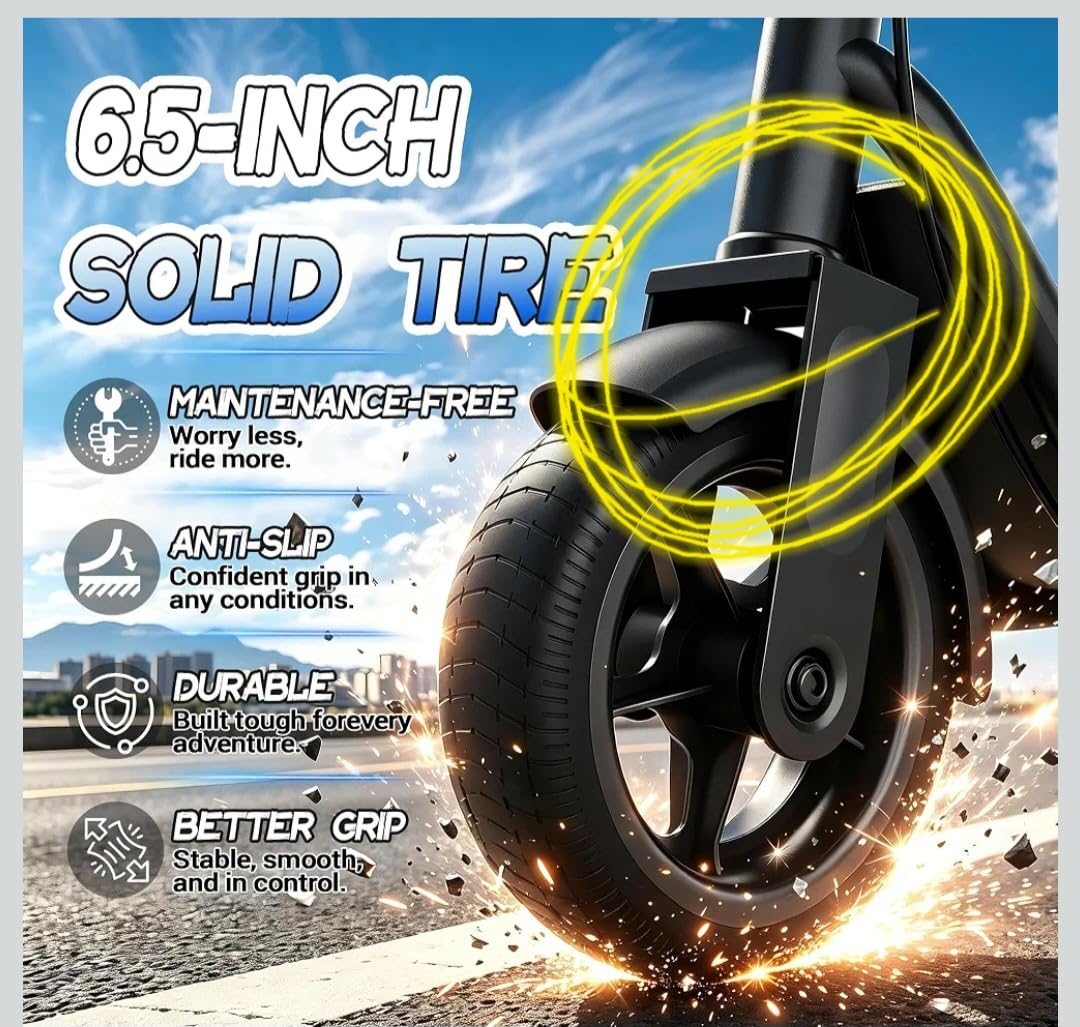
Solid honeycomb tires need no inflation and no puncture repairs. That is a genuine daily-use advantage in a city where a flat tire at 8am means a taxi home.
Good for a short daily hop
Two to six miles, flat to moderately hilly, and no requirement to carry it anywhere: that is where the Q2 is at its best. The listed range of up to 15 miles on this variant leaves room for a round trip even with a heavy rider.
It also suits a first scooter. The controls are simple, the deck is flat and predictable, and the fold is fast enough to store in a small apartment without planning.
Where it falls short
There is no suspension at all. Every crack in the pavement reaches your ankles, and over a long ride that vibration is genuinely tiring rather than merely uncomfortable.
The listed range also varies widely depending on rider weight and speed mode, which is normal but worth remembering. Plan your route as if the low end of that spread is your real figure.
4. MAXSHOT V7: Best Folding Scooter for Carrying It Up Stairs
MAXSHOT Electric Scooter for Adults, 8.5/10/14″ Tires, 19/22Mph, 350W/500W Motor, 21-28 Miles Range, Folding E-Scooter with Dual Suspension,APP(V1/SPRO/MAX/PRO/X1/X1PRO/PR)
26 lbs, the lightest in the roundup
3 second fold
350W motor at 19 mph
16 mile claimed range, UL 2272 certified
Pros
- Lightest carry weight on the list
- 3 second fold
- good real-world range of roughly 12 to 16 miles
- UL 2272 certified
- bright deck and auxiliary lighting
- steady reliability reported past a year
Cons
- Dual suspension is very stiff so small rocks are felt sharply
- 350W motor struggles on steep hills
- app lock only works while powered on
- headlight too dim for night riding
- warranty service pushes repair onto the buyer
At 26 pounds this is the lightest scooter we tested, and that single number changes who can realistically commute with it. A sixth of your body weight is a bag most people carry daily without thinking; 51 pounds is not.
It folds in about 3 seconds and the folded package is small enough for a car trunk or under a desk. If you ride to the office and store it indoors, this is the version of portability that actually holds up over a five-day week.
Range surprised us in a good way. Owners report roughly 12 to 16 miles per charge against a claimed 16 miles for this configuration, which is closer to the real-world figure than most listings admit to.
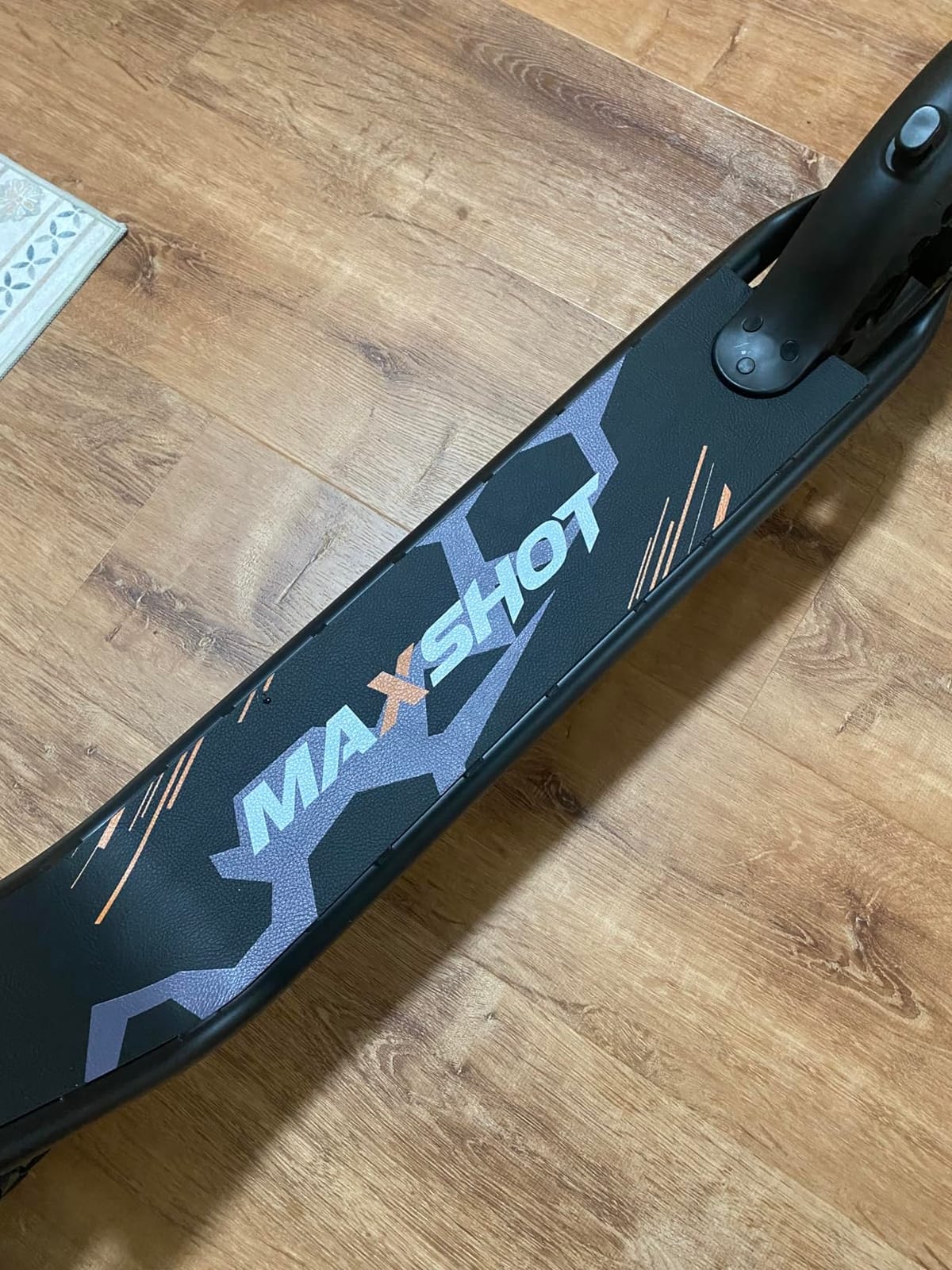
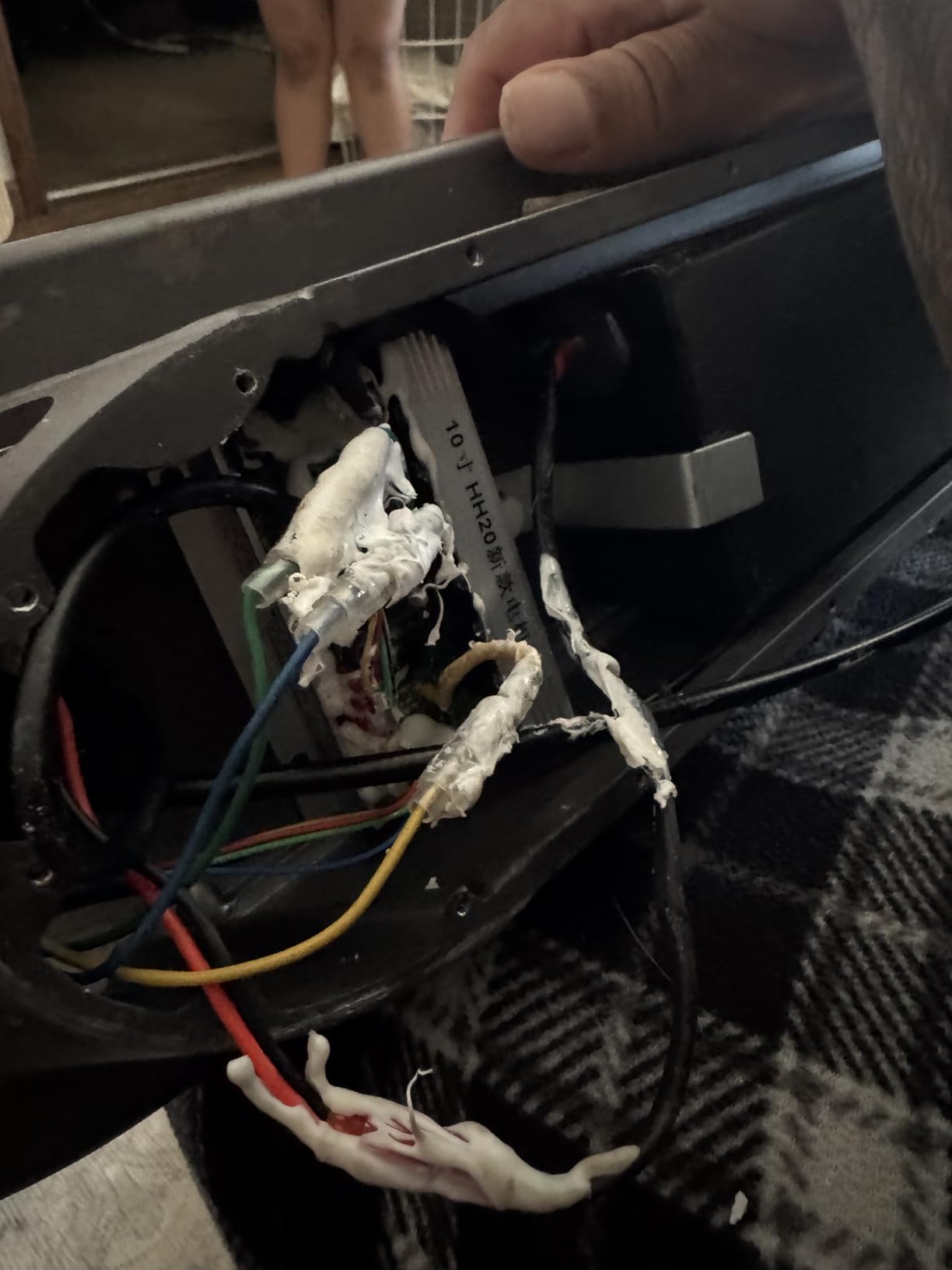
Reliability is the quiet strength here. Owners describe a year or more of trouble-free use, and this model is popular with students and first-time buyers who need something that just keeps working.
The bright deck and auxiliary lighting improve your visibility at night in a way that many budget scooters skip, which is worth more to a city rider than a slightly faster top speed.
It carries a UL 2272 certification, the US electric scooter safety standard. That matters more than it sounds for anyone charging a lithium pack in an office or a hallway overnight.
Where the V7 earns its place
Any commute with stairs, a walk at the end, or a train connection. This is the scooter for the r/ElectricScooters reader on the fourth floor who asked for something under 35 pounds that could still handle a 20 percent grade.
For flat to moderately hilly urban routes up to about 10 miles a day, the range covers a round trip with margin. Below that ceiling it is one of the least tiring scooters to own.
What to know before buying
Hills are the weakness. A 350W motor on a 36V platform manages moderate rises but bogs down on steep grades, particularly with a heavy rider or a low battery. If your return leg is the hard one, budget for a different pick.
The dual suspension is very stiff, so it smooths large bumps but transmits every small rock and crack. And the app lock only works while the scooter is powered, which limits its value as an anti-theft feature.
5. iScooter i9: Best for Everyday Stop-and-Go City Riding
iScooter Electric Scooter for Adults, Foldable E-Scooter for Commuting
36V 7.8Ah for up to 18 miles
350W motor handling 10-15 percent inclines
Rear disc brake plus hidden e-brake
220 lbs max load
Pros
- Claimed 18 mile range covers most commutes
- rear disc brake gives real stopping power
- 2 year warranty
- metal double support fender bracket feels durable
- Tuya Smart app with cruise control
- bright headlight and brake taillight
Cons
- No suspension so small solid tires feel harsh on cracked pavement
- 220 lbs rider limit is low
- app dependent features add friction
- some controller or battery faults within the warranty period
The i9 is the middle of this roundup in the way you want a daily commuter to be: enough range to ignore the charger midweek, a real disc brake, and a two year warranty rather than the 90 days some budget rivals offer.
Its 36V 7.8Ah battery is the largest in this list at the entry level, and the claimed 18 mile range reflects that. On our loop it covered the day with charge to spare, which is what turns a scooter from occasional into habitual.
Stop-and-go riding is where a rear disc brake earns its keep. Braking modulation matters far more in dense traffic than top speed, and the hidden electronic brake backs up the mechanical one.
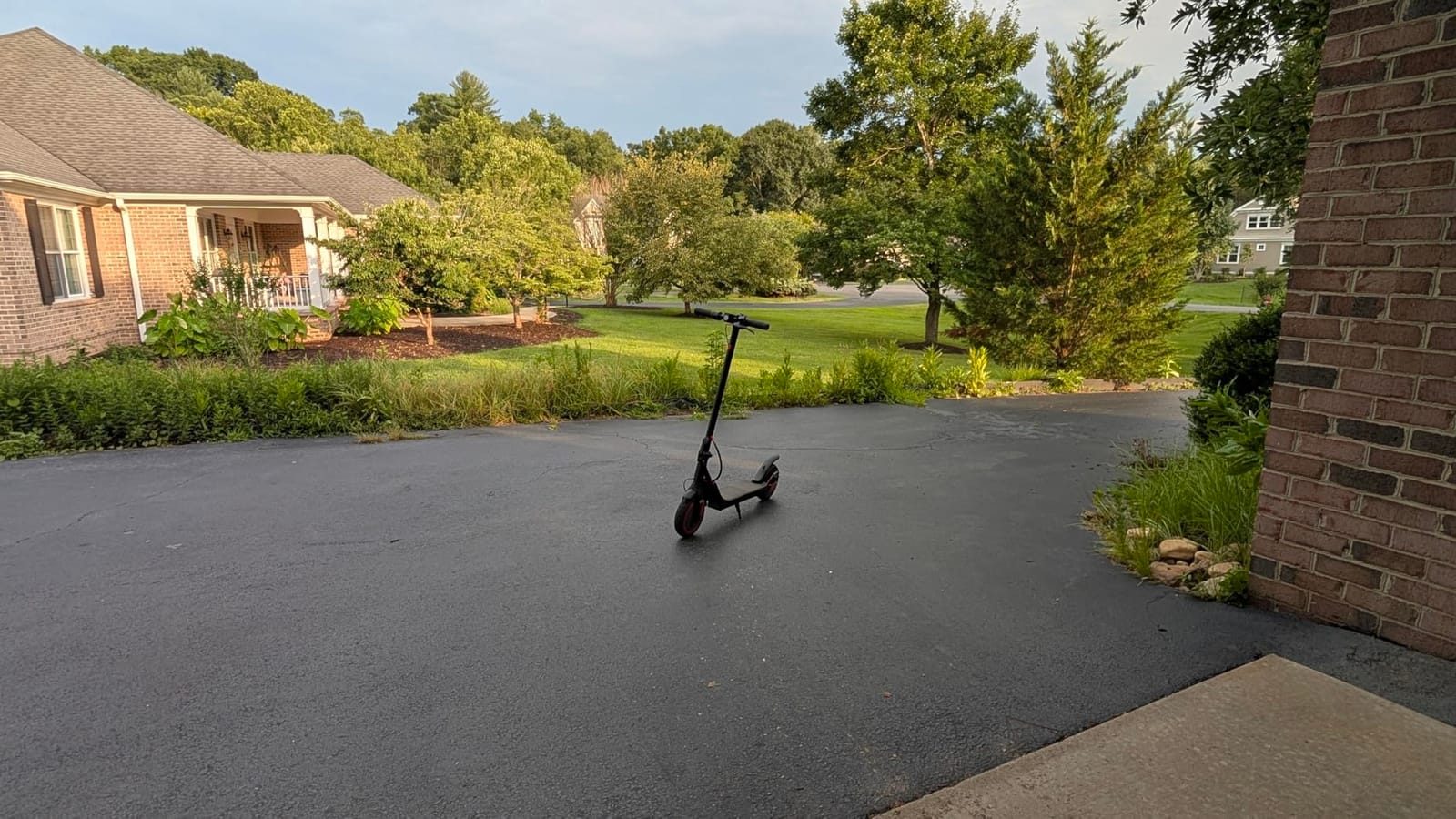
The metal double support fender bracket is a small part with an outsized effect. Plastic brackets on budget scooters crack where the fender meets the deck, and owners of this model specifically note the metal hardware feels built to last.
App support covers speed, cruise control, and monitoring, plus a high brightness headlight and a brake-triggered taillight. Both are standard commuter requirements that cheaper models often skimp on.
Reviewers consistently praise range, braking, and value on this one. That combination is what keeps it in consideration for a stop-start downtown route with frequent intersections.

Where the i9 suits a commute
Cities with cracked pavement, frequent stops, and a route of roughly 5 to 12 miles a day. It handles 10 to 15 percent inclines, which covers most urban terrain without the drama the lighter budget scooters show.
The two year warranty is a genuine differentiator in a category where 180 days on parts is common, and it reduces the risk of a first scooter purchase.
The trade-offs
There is no suspension, so 8.5-inch solid tires deliver a bumpy ride over broken asphalt. On a route that is mostly smooth asphalt this does not matter; on a badly patched street it does.
The 220-pound limit is the other constraint, and app-dependent features can feel like friction if you simply want to ride without unlocking a phone first.
6. iScooter iX3: Best for Hills, Broken Pavement and Suburban Routes
iScooter iX3/iX4 Electric Scooter, 10″ Off-Road Tires, 25/28 Miles Range
800W motor for 20-25 degree slopes
480Wh battery for up to 25 miles
10 inch pneumatic tires with dual shocks
51 lbs, 264 lbs max load
Pros
- 800W motor handles slopes that stop cheaper scooters
- 10 inch pneumatic tires with dual suspension take dirt and gravel
- up to 25 miles of claimed range
- height adjustable handlebar suits a wide range of riders
- turn signals and ambient lighting
- arrives fully assembled
Cons
- Heaviest at 51 lbs and awkward on stairs or transit
- pneumatic tires need inflation and can puncture
- 7 hour charge is long for daily use
- wide handlebar eats carrying space
- some early electrical failures
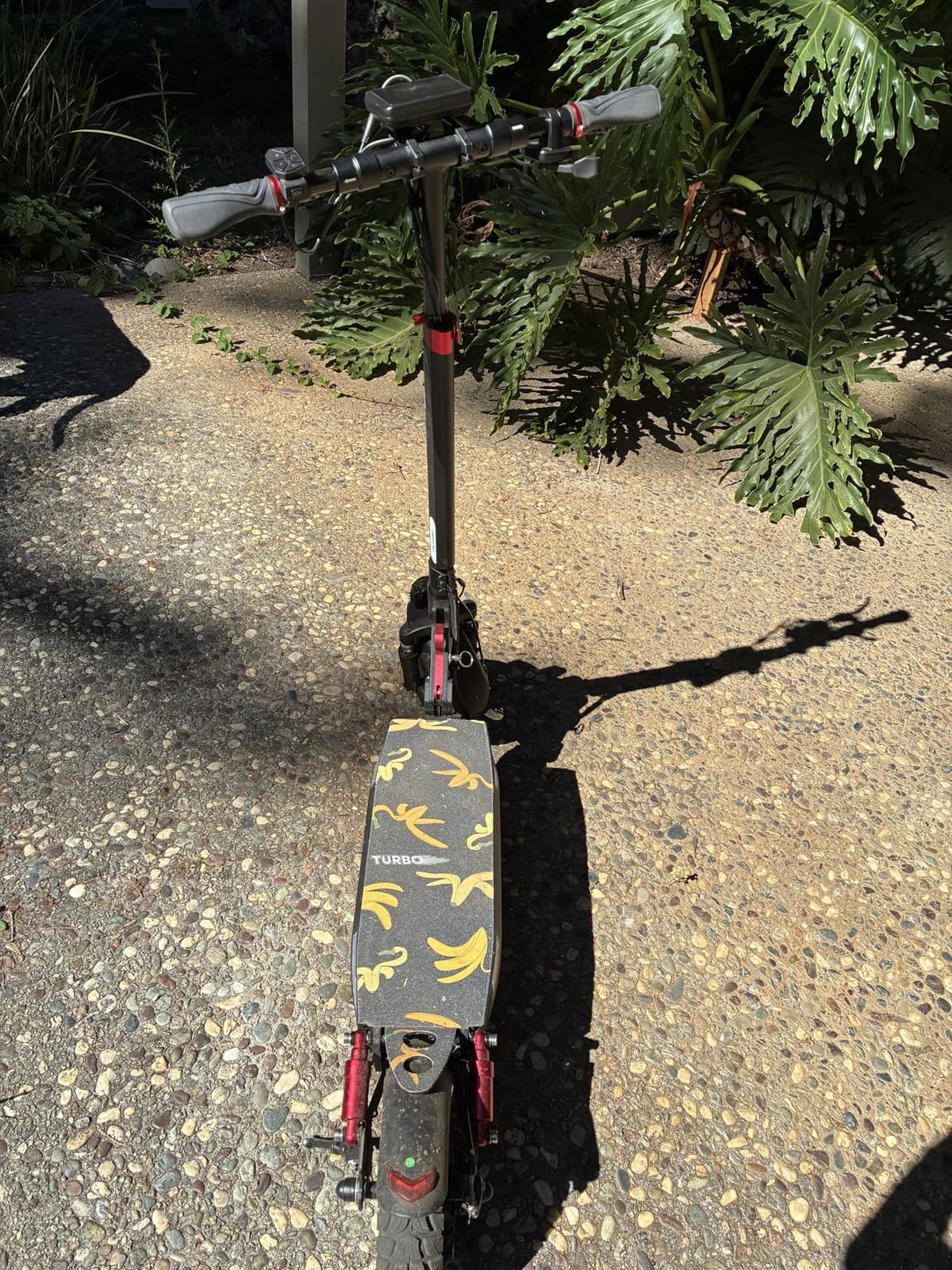
This is the scooter to buy when your commute leaves the bike lane. An 800W brushless motor rated for 20 to 25 degree slopes plus 10-inch pneumatic off-road tires and front and rear shock absorbers handle the kind of route that stops every solid-tire budget model.
The 480Wh battery claims up to 25 miles of cruising range, and with three speed modes on a full colour LCD you can dial the power back to stretch it. Owners confirm longer commutes are the reason they bought it.
The height adjustable handlebar runs from 44.5 to 52.8 inches, which is a real accommodation for tall and short riders. On most folding commuters you either make do with one position or buy a different scooter.
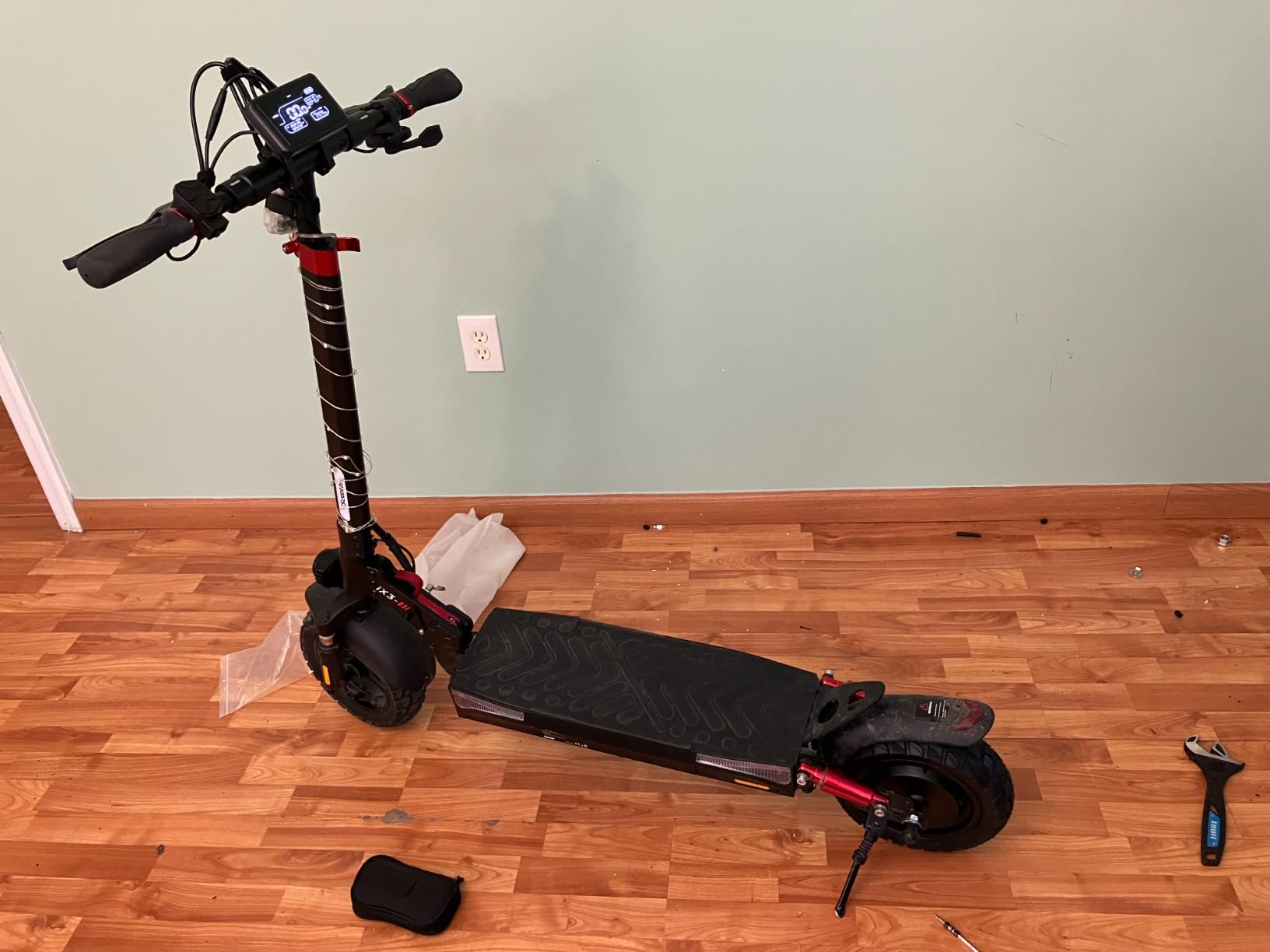
Turn signals and ambient lighting are unusual at this level, and both are genuinely useful when you are riding mixed traffic rather than a protected lane. Signals are the feature riders single out most.
It arrives fully assembled with one-piece pre-installation, so there is no build job on delivery day. That is a meaningful convenience when the alternative is an afternoon with hex keys and a manual you will not read.
Pneumatic tires are the deciding factor on rough ground. They can take gravel, grass, and broken asphalt that would bounce a 350W solid-tire scooter off line, at the cost of inflation maintenance.
Where the iX3 wins
Rough suburban roads, park paths, mixed-surface commutes, and steep hills. Riders report it coping with routes where cheaper models crawl, and the 264-pound load rating makes it comfortable for heavier adults.
If you have ground-floor storage and never plan to carry it, the 51-pound weight is an acceptable price for that capability. It is a capable machine with real suspension and real tires.
Where it is the wrong buy
Train commuters and stair dwellers should skip it outright. At 51 pounds it is the heaviest scooter in this roundup, and the wide handlebar makes it bulkier to carry than the weight alone implies.
The 7 hour charge is also long. If you cannot charge at the office and need the scooter ready the next morning, a 4 hour model fits a workday far better.
7. NAVEE V25: Best Motor for Steep Urban Hills
NAVEE V25 Pro Electric Scooter for Adults, 19 MPH & 15.5 Miles, 600W Motor, 10″ Tires, Foldable Commuting E-Scooter with Dual Brake Suspension and More Ultra-Portable
700W motor reaching 32 km/h
Handles inclines up to 18 percent
Front E-ABS with rear drum brake
37 lbs, 265 lbs max load
Pros
- 700W motor handles 18 percent inclines that defeat lighter scooters
- alloy steel frame feels planted at speed
- rear suspension smooths rough pavement
- 265 lbs max load
- quick fold for commuting
Cons
- Listing aggregates several models so real range varies widely between variants
- rear drum alone gives less modulation than a disc on descents
- fixed handlebar cannot be adjusted
- 4.0 average reflects a higher share of one star reliability reports
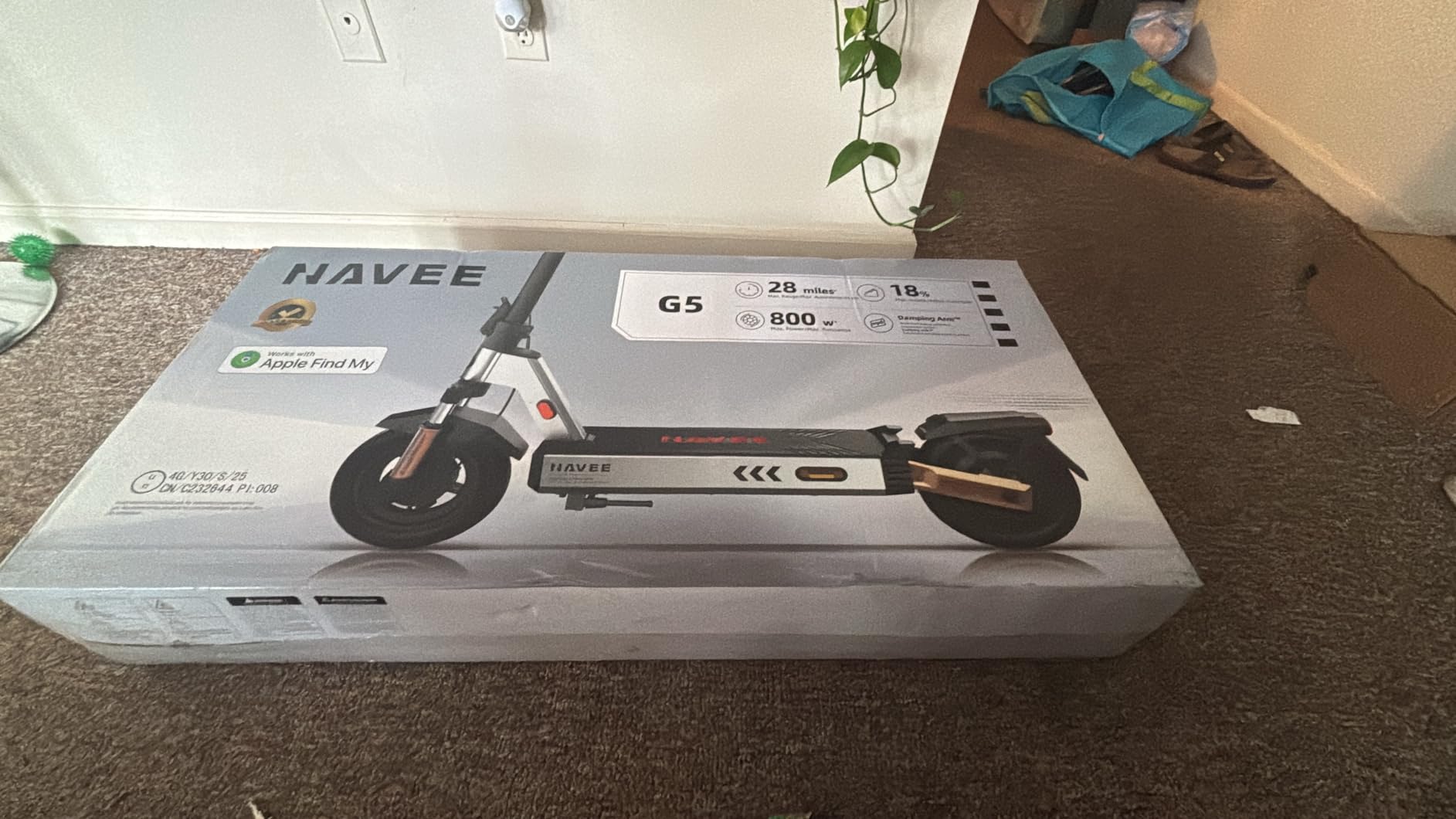
Most budget commuters are built for flat ground with a hill added on. The V25 is the opposite: a 700W motor rated to take 18 percent inclines, which covers the kind of urban climb where lighter scooters lose momentum and force you to walk.
The alloy steel frame gives it a planted, confident feel at speed that aluminium decks with plastic joints cannot match. On a descent or a rough patch you feel the road, but you do not feel the frame flex.
Rear suspension takes the edge off rough pavement and the dual brake setup pairs front E-ABS with a rear drum. At 37 pounds it is mid-weight, which is a reasonable compromise between power and portability.
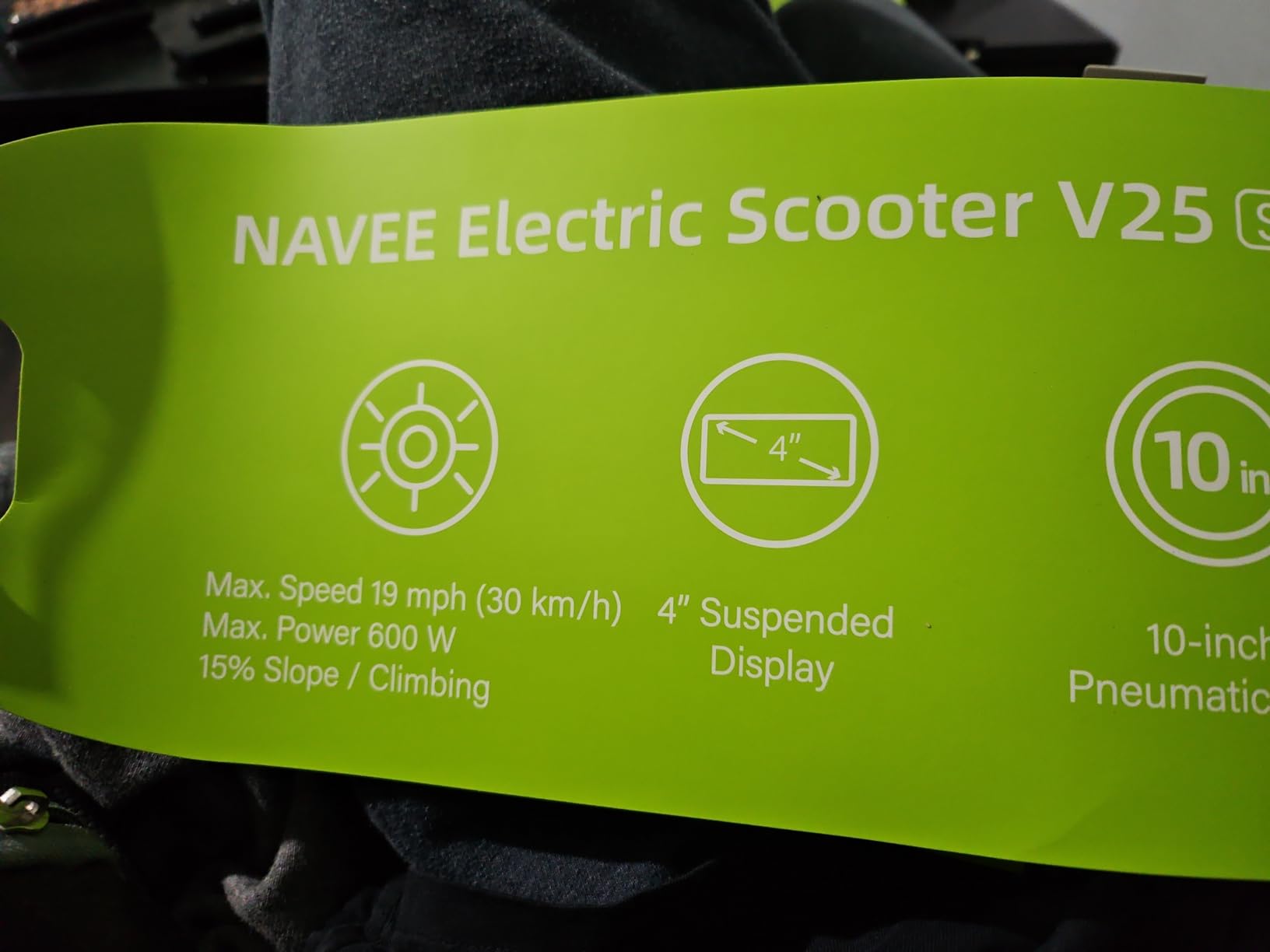
It folds for commuting, which means you can use its motor capability on the long leg and still get it onto transit for the rest. That combination is rarer than it should be in the budget tier.
Owners consistently pick this model out for power above everything else, and for a 265-pound max load in this price class that is a rare combination worth noting.
Its one-year warranty is standard for the category, and the parts supply appears straightforward through normal retail channels.
Where the V25 makes sense
Hills with real gradients, longer commutes of 10 miles or more, and riders near the upper end of the weight range. The 18 percent incline rating is the highest among the mid-weight scooters here.
If you want genuine motor capability but not a 50-pound machine on your shoulder, this is a sensible middle. It carries more power than 350W models without the bulk of the off-road scooters.
What to watch
The listing aggregates several models in the series, which means stated range and speed vary between the variants you receive. The series claims range up to 40 km on some versions and more on higher-spec ones, so do not plan around the headline figure without confirming your exact model.
The rear drum brake alone gives less modulation than a disc on descents, and the fixed handlebar cannot be adjusted for rider height. Expect to ride at whatever pace the motor gives you downhill.
8. MEGAWHEELS C2: Best Lighting and Turn Signals for City Traffic
MEGAWHEELS Electric Scooter,Electric Scooter Adults with Suspension,10in Pneumatic Tires,350W Motor,19 Miles Long Range,15.5 Mph,E Scooter with Smart APP Control for Commuting, Outdoor, Short Travel
Integrated turn signals and bright front light
Front dual suspension with 10 inch vacuum tires
350W motor at 15 mph, 19 mile claimed range
50 lbs, 220 lbs max load
Pros
- Turn signals are rare and genuinely useful in traffic
- front dual suspension with vacuum tires gives the smoothest urban ride here
- app locking deters casual theft
- UL 2272 certified
- quick fold for desks and trunks
- support resolved problems quickly
Cons
- Only 15 mph top speed and the slowest here
- poor on hills despite the rated slope claim
- drains battery quickly in high mode
- heavy at 50 lbs
- only 100 reviews so the reliability record is thin
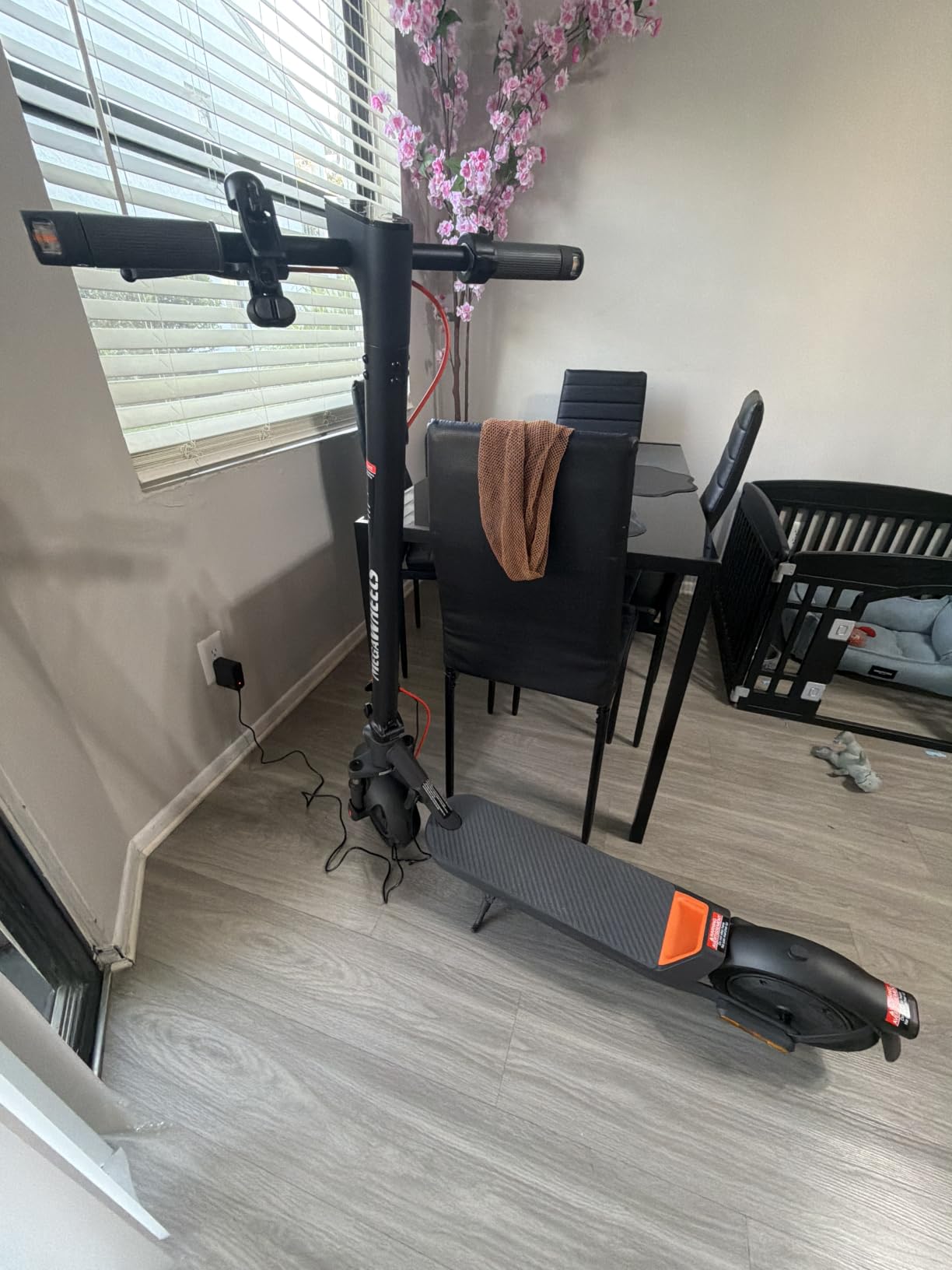
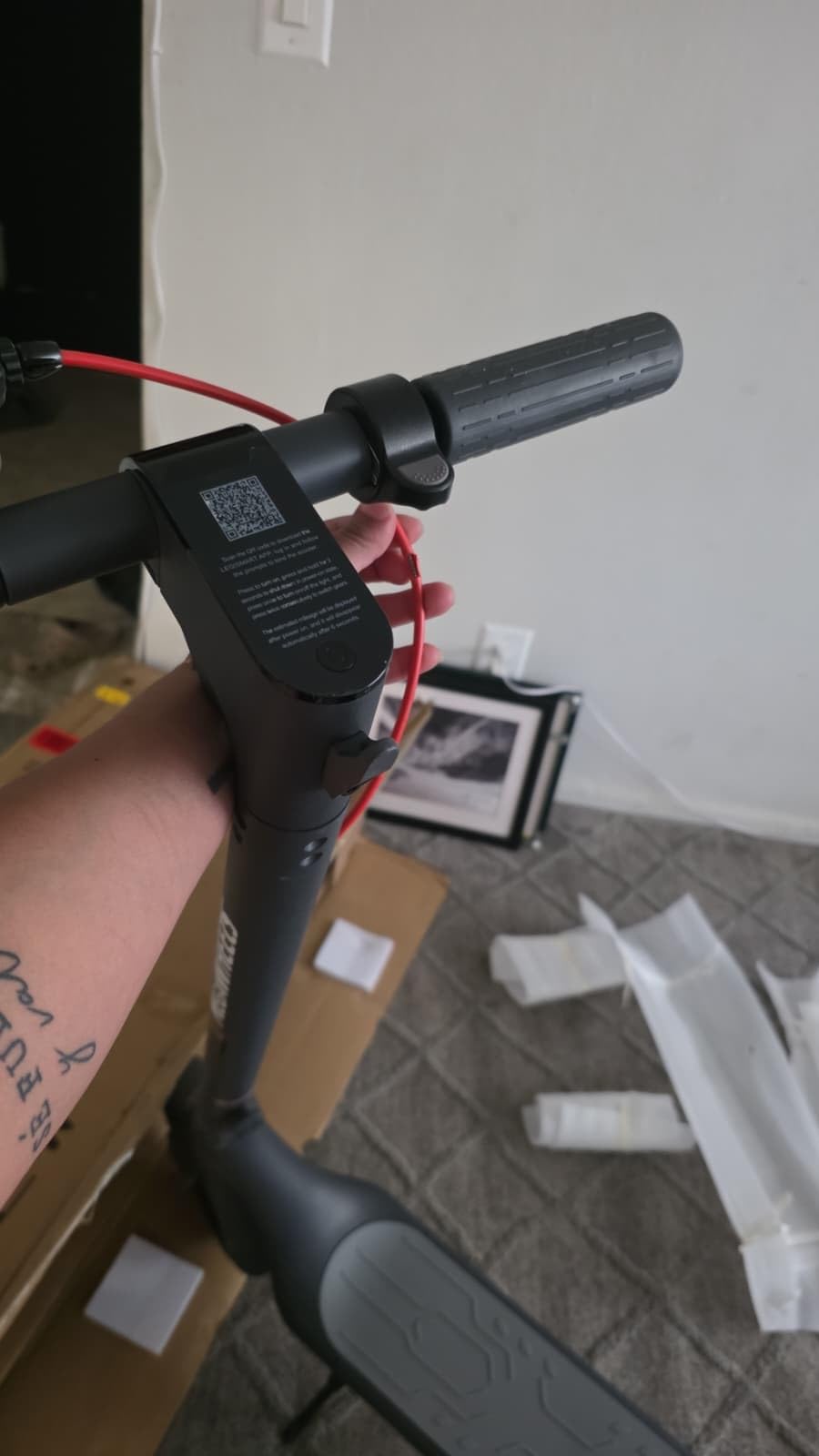
The C2 is the one scooter here with integrated turn signals, and that single feature changes how you are treated in mixed traffic. Most commuters do not ride in a protected lane, and a signal is worth more than several miles of extra range.
The ride is the second reason to like it. Front dual suspension paired with 10-inch vacuum tires gives the smoothest urban ride in this group, absorbing the kind of broken pavement that has you gripping the bars on a solid-tire scooter.
Its front drum and rear electronic brake give steady, predictable stopping, and the 10.2Ah battery claims up to 19 miles on this variant with an eight hour charge.
App locking is a real anti-theft measure for the scenario riders complain about most: a scooter left outside an office all day. A physical lock secures the frame; the app lock adds a second layer against a casual thief.
The LCD display shows speed, battery level, and mode, with cruise control and a quick folding mechanism for car trunks, under-desk storage, and public transport.
It is UL 2272 certified, so the electrical safety standard is documented rather than assumed.
Where the C2 earns its badge
City commutes with real traffic, junctions, and mixed vehicle flow. Signals, a bright front light, and a taillight make you visible and predictable, which reduces the actual risk more than any spec sheet number.
It suits flat to moderately sloped routes of roughly 5 to 10 miles a day where comfort over rough pavement matters more than outright pace.
The limits to plan around
Fifteen miles an hour is the slowest top speed here, and it is noticeably sluggish compared with the 19 mph class. On open straights you will feel the gap.
Hills are a genuine weakness, and the battery drains quickly in high mode. At 50 pounds it is also heavy for carrying. And with only 100 reviews behind it, the long-term reliability record is thinner than any other pick on this list.
9. NAVEE GT3: Best for Rain, Long Rides and All-Weather Commuting
NAVEE GT3 Electric-Scooter-Adults, e Scooter, Fast 19.9 Mph, 700w 500w Motor with Suspension, Long Range 30 Miles, 10 inch Tires All Terrain, Foldable for Commuter Men Adult Teens Students Heavy Duty
IPX5 water resistance, UL 2272 and ANSI/CAN certified
357Wh battery for up to 31 miles
700W motor for 20 percent inclines
46 lbs, 265 lbs max load
Pros
- Only scooter here with a published IPX5 water resistance rating for wet weather
- longest claimed range at up to 31 miles on the GT3
- tubeless 10 inch tires handle gravel and grass
- quadruple suspension with damping arms
- TCS traction control
- Apple Find My integration and electronic lock
Cons
- Brakes feel weak going downhill despite working on the flat
- dim headlight that does not light far ahead
- heavy at 46 lbs for stairs and buses
- front axle can loosen and bind mid turn
- performance drops noticeably below 50 percent battery for heavier riders
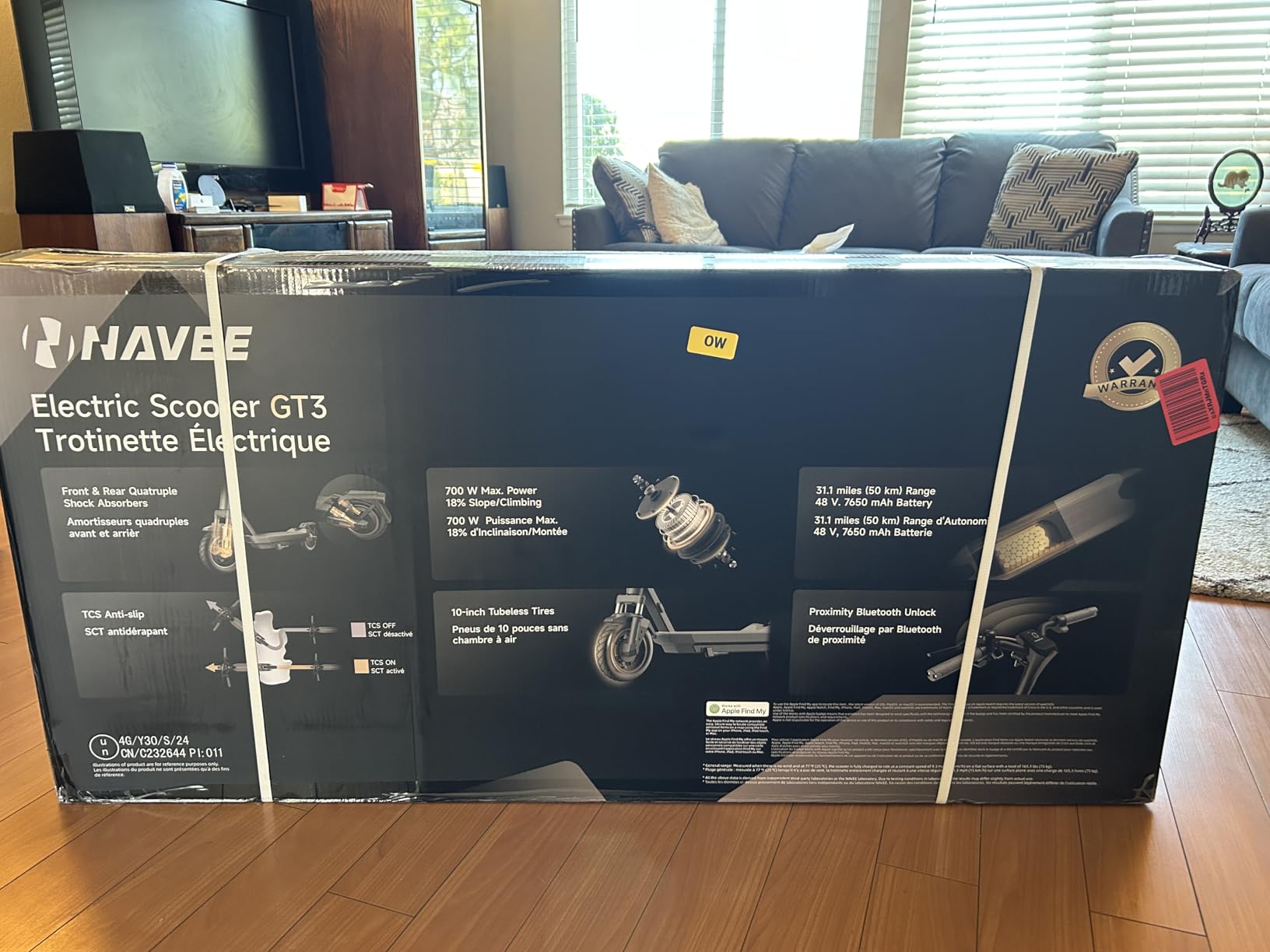
If you commute through rain rather than around it, the GT3 is the pick in this list. It carries a published IPX5 water resistance rating, and it is the only scooter here that does, which for year-round city commuting removes a genuine risk.
It also has the longest claimed range of the ten: a 357Wh battery rated at up to 31 miles on the GT3 configuration, with up to 19 mph on that model and 20 to 25 mph on other variants in the series.
Riding quality is genuinely good once the suspension breaks in. The quadruple suspension with an advanced damping arm system settles the bike over rough ground, and the wide deck gives a stable, confident stance at speed.
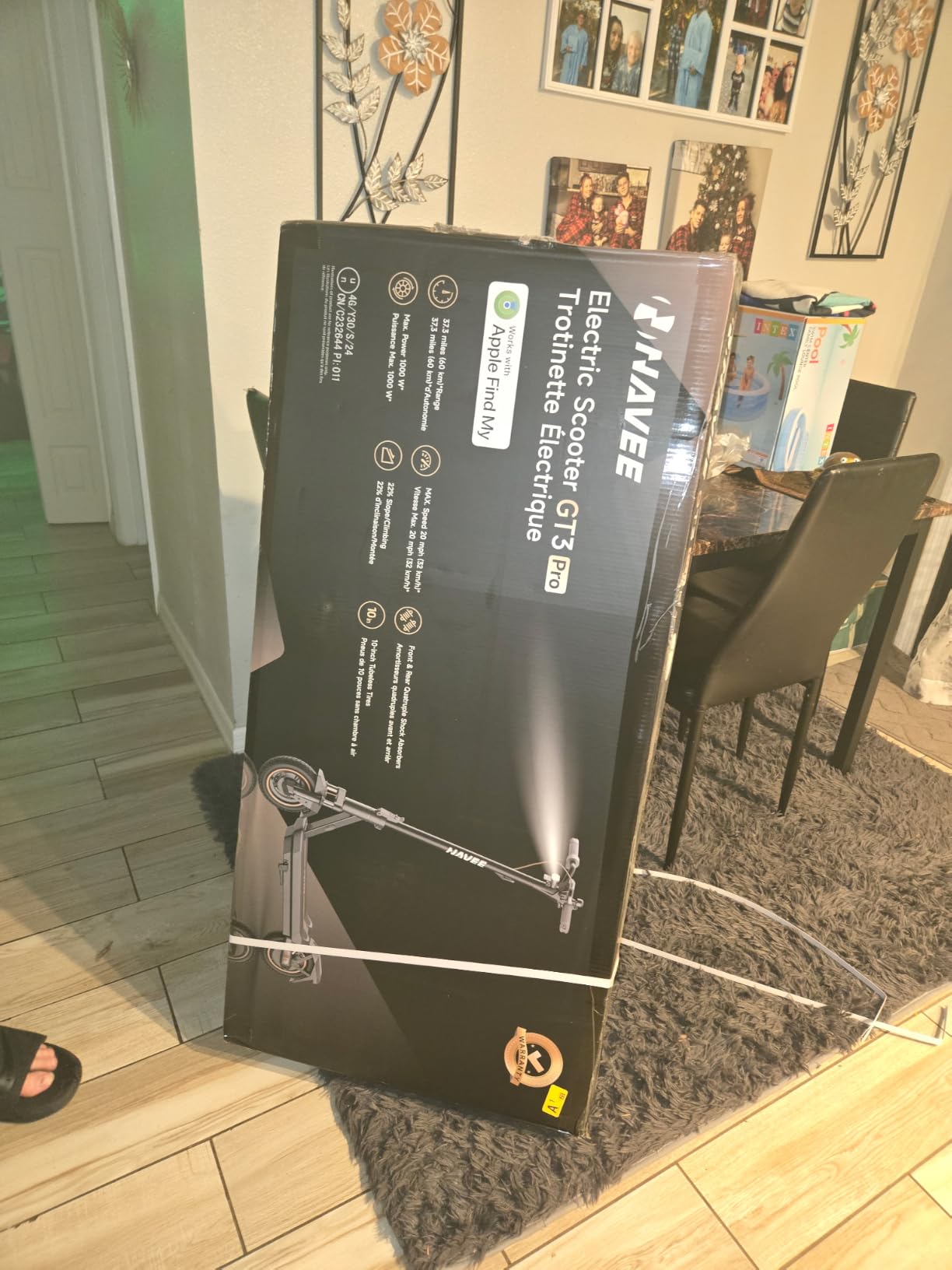
Triple braking, a front drum with a rear disc and EBAS, is the most capable braking hardware here on paper. The catch is downhill feel, which owners describe as weak despite acceptable flat-ground stopping.
The app supports ride tracking, an electronic lock, and Apple Find My integration, which is a meaningful theft deterrent for a scooter valued at this level.
Triple certification, UL 2272 and ANSI/CAN, plus IPX5, makes it the most fully documented scooter in this roundup for anyone who charges a battery indoors.
Where the GT3 is the right answer
Long one-way commutes, wet-weather riding, and routes with gravel, grass, or poor road surfaces. The 700W motor handles 20 percent inclines and the tubeless 10-inch tires absorb surface changes without the harshness of solid rubber.
If you can store it at ground level and charge overnight, the 46-pound weight is a fair trade for the weather sealing and range. Six hour charging keeps that practical.
What to know first
Check the front axle early and regularly. The most serious recurring complaint is the front axle loosening, which can bind the wheel and throw the rider mid turn. That is a maintenance habit, not a defect you can ignore.
Performance drops noticeably above 50 percent battery for heavier riders, which is the performance-retention problem in miniature. The headlight is also dim and does not light the road far ahead, so plan a supplementary light for night commuting.
10. WERHY H5: Best for Short Campus and Neighbourhood Hops
Electric Scooter, 350W Motor, 8.5″ Solid Tires, Up to 19 MPH, 15 Mile Range
350W motor at 19 mph
30 lbs folding aluminum frame
265 lbs max load
4 hour charge, 15 mile claimed range
Pros
- 350W motor with real world speeds of 16 to 18 mph
- 30 lb weight with a quick 3 second fold
- 4 hour charge and some owners report nearer 2 hours
- 265 lbs max load
- dual brakes plus a loud bell
- sturdy aluminum frame
- popular colour options
Cons
- No suspension so the unsprung solid tire ride is harsh
- rear wheel durability with tires needing replacement within months
- some units stop working at about the 30 day mark
- 180 day parts coverage
- battery drains faster than listed on heavier riders
The H5 is the scooter for a two to four mile hop: campus, a short run to the shops, a neighbourhood errand. A 350W motor reaches a claimed 19 mph, and owners report real speeds of 16 to 18 mph on a full charge.
At 30 pounds with a 3 second fold, it is light enough for a teen or an adult to move between a car, an office, and a cupboard without planning around it. The 4 hour charge, and nearer 2 hours for some owners, means an overnight top-up covers a working week.
The 265-pound load rating is joint highest here, and the aluminum alloy frame holds up on roads and sidewalks according to owners.
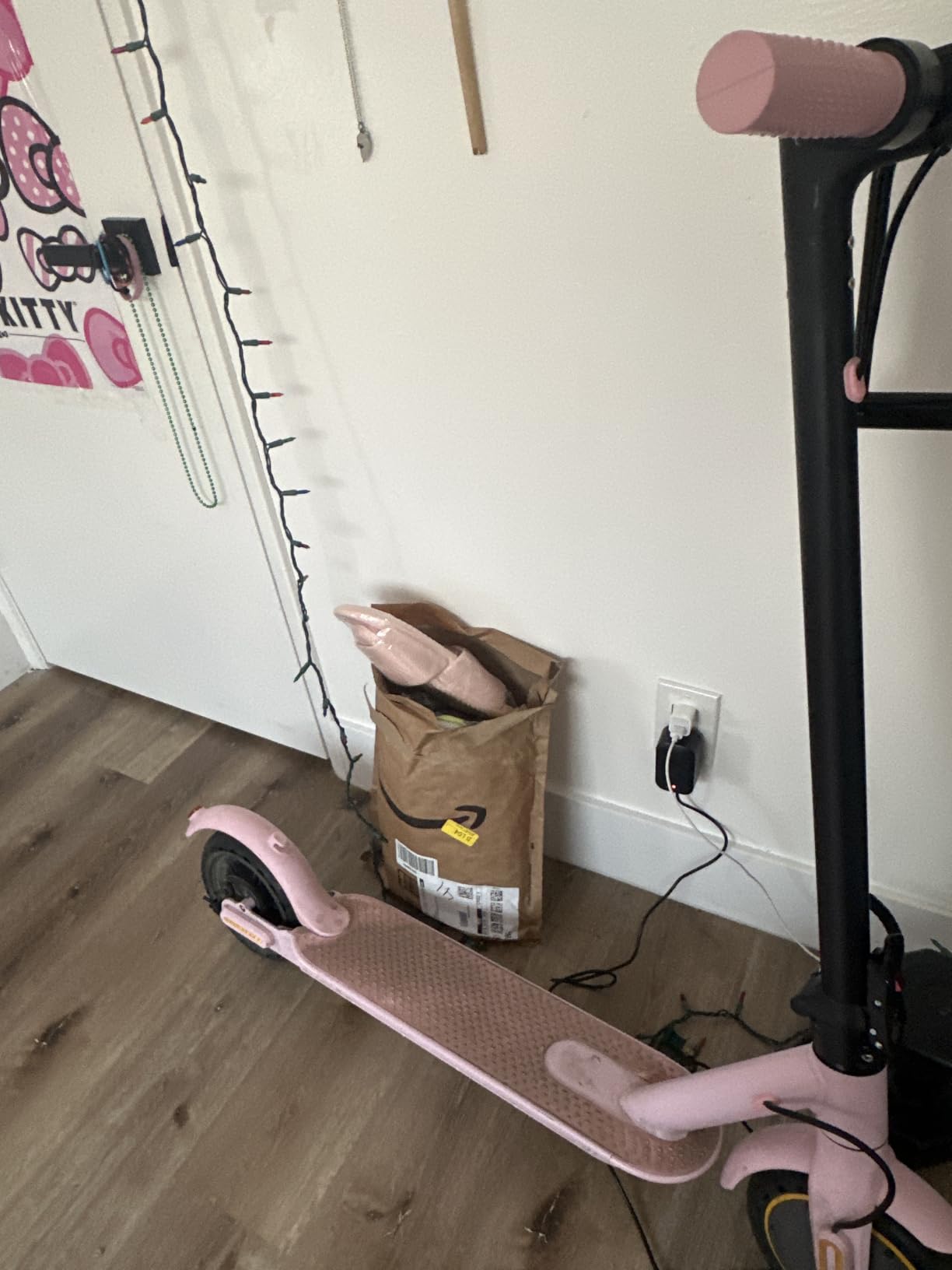
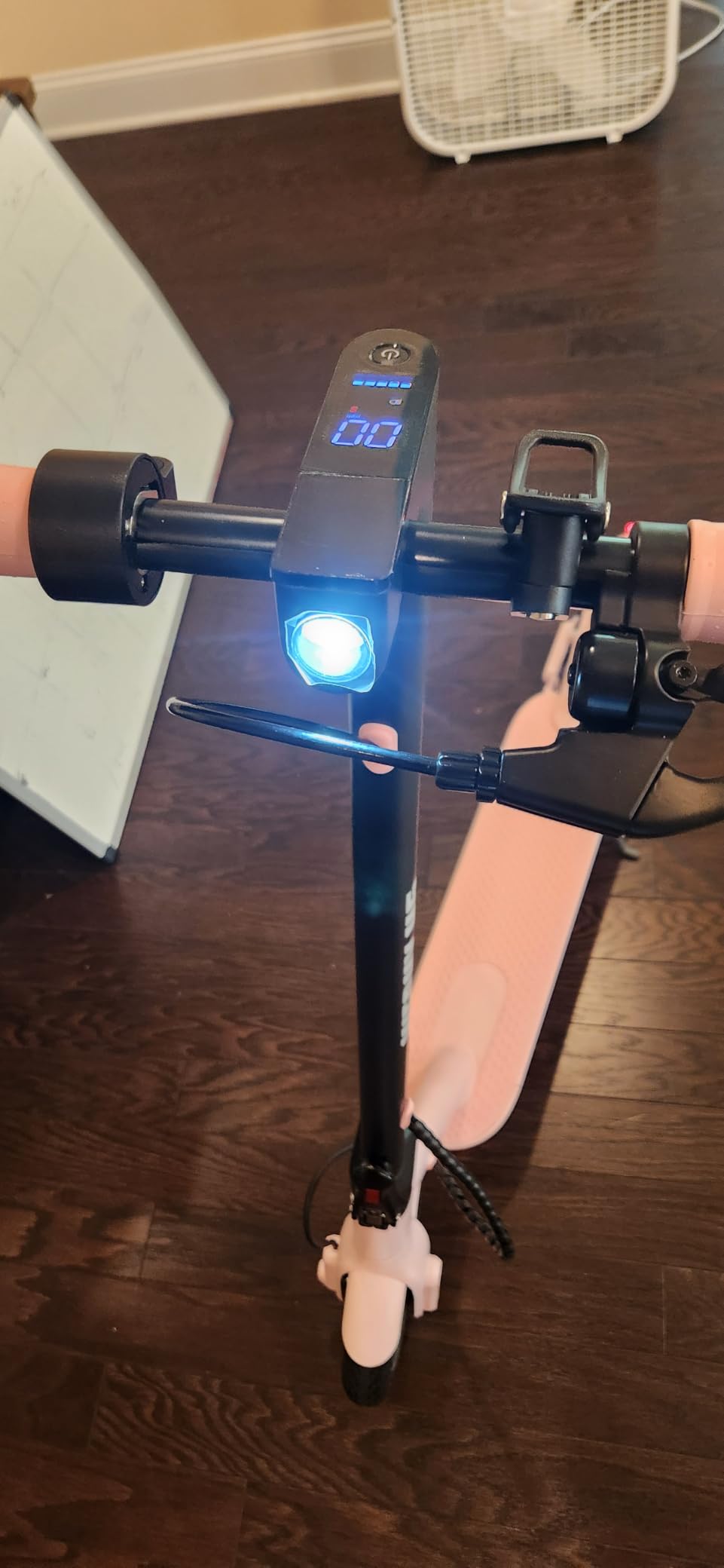
App control covers riding modes, lighting, speed level, cruise control, and start mode, which is more configuration than most scooters at this level offer. Dual braking pairs a front electronic brake with a rear drum, and the bell is loud enough to be useful at junctions.
Colour options including pink and light pink are popular with younger riders, which matters if the scooter lives in a shared household rather than a garage.
For a short hop none of the range anxiety applies. A 15 mile claimed figure is far more than a two to four mile daily trip consumes.
Where the H5 works
Short urban trips, campus travel, and first-scooter buyers. If your commute is under five miles on smooth pavement, this does the job at the lowest sensible outlay in the category.
It suits riders who want app control and configurable modes without paying for suspension or pneumatic tires they would not use on a flat route.
The reasons to look elsewhere
There is no suspension, so the unsprung solid-tire ride is harsh on cracked pavement, and rear wheel durability is a repeated complaint with tires needing replacement within months.
The reliability signal is the real concern. Some units stop working entirely at about the 30 day mark, which sits awkwardly against parts coverage of 180 or 365 days depending on the component. Heavier riders also find the battery drains faster than the listed range.
Taking a Folded Scooter on Trains, Buses and the Subway
Yes, in most cities, and the rules are about size and behaviour rather than about scooters specifically. Most transit operators permit a folded scooter on a train provided it is stowed, does not block aisles or doors, and does not occupy a seat. The complication is that “does not block” means the folded package, which is why folded dimensions matter more here than weight.
Three practical checks decide whether your commute works. First, folded length: a typical over-door luggage shelf is roughly 45 to 50 inches long and about 12 inches deep, which comfortably takes a scooter that folds to 43.7 inches like the Gotrax GXL V2 but is tight for anything longer. Second, folded height: rail luggage racks commonly clear around 12 to 16 inches, and the GXL V2’s claimed 16.1 inch folded height sits right at that edge.
Third, the aisle. A folded scooter stands on the floor or stands upright against a wall, and a package that is too wide to place between seats will be asked to move at the next stop. Measure the folded width against your carriage, not the platform.
On buses, the bay area is the intended stowage spot and folded scooters are generally accepted there. On subway systems, rules are stricter and vary by city, and some operators require the scooter to be fully collapsed with the steering stem locked. Check your specific operator before you commit to a route rather than after.
One rule applies everywhere: never ride the scooter on a train or bus, and never leave it unfolded in an aisle. Operators who allow scooters treat an unfolded one as an obstruction, and that is how scooter access gets revoked for everyone.
Can You Actually Carry It? Weight Tiers for Daily Stairs
The most-upvoted threads on r/ElectricScooters are about stairs, not range. Riders repeatedly ask for sub-35 pound scooters that still handle a 20 percent grade, which is exactly the trade-off this roundup has to resolve rather than dodge.
Under 35 lbs: genuinely easy. The MAXSHOT V7 at 26 lbs and the Gotrax GXL V2 at 27 lbs live here. Either can be carried up several flights without it becoming the hard part of your morning. If you are on the fourth floor with no lift, start your search in this band.
35 to 50 lbs: workable on one flight. The Hiboy S2 Pro at 35.9 lbs, the NAVEE V25 at 37 lbs, and the NAVEE GT3 at 46 lbs sit in this range. Riders describe a scooter of this weight as not easy but also not hard on a single narrow flight, and it becomes a serious problem on the third or fourth.
Over 50 lbs: a daily carry is a mistake. The MEGAWHEELS C2 at 50 lbs and the iScooter iX3 at 51 lbs are at the ceiling. One rider in the forum describes carrying a much heavier scooter up a narrow flight daily as something they tolerate and dislike in equal measure. Above 60 lbs riders describe bang it down the stairs, which damages the scooter and the stairwell.
The practical rule we would give a friend: count your flights, then count backwards. No flights means anything works. One flight means stay under 40 lbs if you can. Two flights means under 35 lbs. Three or more means a daily stairs commute is the wrong shape of problem for an electric scooter, and a subscription or rental service is the better answer.
Weight is also what battery capacity costs you. Every scooter in this roundup that reaches 25 miles or more of claimed range weighs 45 pounds or more, because the battery that produces those miles is the heavy part. If someone promises you 30 miles at 28 pounds, the range figure is doing the work that the physics refuses to.
How to Choose a Folding Commuter Scooter
Five questions decide the purchase, in this order. Work through them before you look at any brand.
1. Measure your one-way distance. Double it for a round trip, add 20 percent for hills and detours, and you have the range you need. Below 6 miles you need about 12 miles of real range; beyond that, look at the 18 to 31 mile machines. Ignore the headline number and look at battery watt-hours, which is the figure that predicts real range. Amp-hours alone tells you very little.
2. Count stairs and measure your storage. Then apply the weight tiers above. Also measure the cupboard, closet, or car trunk, because a scooter that folds to 43.7 x 17.3 x 16.1 inches fits a space a 46 x 23 x 49 inch package does not.
3. Check your transit operator’s size rules. Compare the folded dimensions against luggage shelf height and depth before you buy. If you need to ride a train leg, this check is not optional.
4. Set a weight budget and refuse to exceed it. Your own carry limit, on your own stairs, on a tired morning. Every kilogram above your budget is a daily cost you will pay twice.
5. Match the hill grade to the platform. This is the least understood step. A 36V system on a 350W motor handles gentle grades. On a 20 percent climb, or on a descent-heavy route, you want a 48V-class platform with 700W or more, which is why the iScooter iX3 and the NAVEE V25 exist.
Then the specification checks. UL 2272 is the US electric scooter safety standard; five of the ten here carry it and we would not charge a large pack indoors without it. IP ratings describe water resistance, and the difference between IPX5 and no rating at all decides whether you ride in rain: IPX4 is splash resistant, IPX5 survives water jets, IPX6 handles heavy rain, and IP66 is dust-tight plus heavy water. If your commute is year-round and outdoors, an unrated scooter is a liability.
Brakes matter more than most buyers expect. A drum brake is cheap, sealed, and low maintenance but gives less modulation on descents. A disc brake gives real stopping authority and needs occasional adjustment. Regenerative or electronic braking adds smooth, low-speed control in traffic. For stop-and-go city riding, at least one mechanical brake plus electronic assistance is the right target.
Tires and suspension decide how long you can ride. Solid tires need no maintenance and never go flat, but they transmit every crack. Pneumatic and vacuum tires ride far better and cost you inflation checks and puncture risk. Suspension, front or dual, absorbs what the tires cannot. Over a 10 mile commute that difference compounds into fatigue.
Finally, think about ownership beyond the purchase. Charging time decides whether an office charger is optional or essential; 4 hours fits inside a workday, 7 hours does not. Battery lifespan depends on charge cycles and heat, so storing a scooter at partial charge in a cool place extends its useful life. And theft risk is real when a scooter sits outside an office all day, which makes an electronic lock, a distinctive frame, and an insurance check worth doing before the first week of commuting.
Who Should Not Buy a Folding Commuter Scooter
Honesty about losers matters more than another award, so here is who should look elsewhere.
If you have three or more flights of stairs every day with no lift, no scooter in this roundup solves that problem. The lightest option at 26 lbs will still be hard twice a day, every day, for years. A rental or subscription service near your building removes the carry entirely.
If you commute in rain year-round and cannot accept an electronics risk, skip anything without a published IP rating. Six of the ten here have no published water resistance figure.
If your route is genuinely rough, unpaved, or gravel, do not buy a 350W solid-tire scooter with no suspension. You will arrive tired and the small wheels will find every stone.
If you need to cover 15 miles or more one way on a single charge, or you routinely carry a heavy load, the sub-50 pound folding scooters are the wrong shape of tool. That is a different category with a different budget.
Frequently Asked Questions
What is the best electric scooter for daily commutes?
The best electric scooter for daily commutes depends on your route length and whether you carry it. For a 5 to 10 mile ride on smooth pavement, the Hiboy S2 Pro combines range, a disc brake and rear suspension. For stairs or train travel, the MAXSHOT V7 at 26 pounds is the one you can actually carry twice a day. For rough ground, the iScooter iX3 has the motor and tires for it.
What is the best electric scooter for a work commute?
For a work commute, the Hiboy S2 Pro is the strongest all-round choice because it holds charge across a full day, brakes well in traffic, and stores compactly at a desk. If your commute includes stairs or a train, weigh the MAXSHOT V7 first, because a scooter you cannot lift onto the platform is one you will leave at home.
Can I take a foldable electric scooter on a train?
Usually yes, once it is fully folded and stowed so it does not block aisles, doors, or seats. What matters is the folded size, not the weight. Most over-door luggage shelves are roughly 45 to 50 inches long and 12 to 16 inches deep, so check your scooter folds within those limits and always carry a lock.
Which is the best electric scooter for daily use?
For everyday reliability the Hiboy S2 Pro leads on the strength of its owner base, with thousands of reviews describing long ownership and good parts support. For the lightest daily carry, the Gotrax GXL V2 folds to 43.7 x 17.3 x 16.1 inches at 27 pounds and suits short urban routes. Reliability past the first year matters more than any spec on the list.
How heavy should a commuter scooter be?
Under 35 pounds is genuinely easy to carry up several flights, 35 to 50 pounds is workable on a single flight, and anything over 50 pounds becomes unpleasant as a twice-daily routine. Every scooter here that claims 25 miles or more weighs 45 pounds or more, because the battery producing that range is the heavy part.
How many miles of range do I need to commute?
Double your one-way distance and add 20 percent for hills and detours, so a 5 mile commute needs roughly 12 miles of real range. Judge a scooter by battery watt-hours rather than the headline figure, and expect manufacturer claims to overstate what you get in stop-start city riding.
What IP rating do I need for rain riding?
For year-round urban rain riding, look for IPX5 or better. IPX4 resists splashes, IPX5 survives water jets, IPX6 handles heavy rain, and IP66 is dust-tight as well. Six of the ten scooters in this roundup publish no IP rating at all, which means you should assume they are not meant for wet-weather riding.
Conclusion: The Best Folding Electric Scooters for Commuters
The best folding electric scooters for commuters are not one scooter, they are four answers to four different mornings. If your route is smooth and 5 to 10 miles, the Hiboy S2 Pro is the one to buy. If you carry it, the MAXSHOT V7 at 26 pounds or the Gotrax GXL V2 at 27 pounds are the only picks that keep the daily habit sustainable.
For hills and broken ground, add the iScooter iX3 or the NAVEE V25 to your shortlist and accept the extra weight. For year-round rain, the NAVEE GT3 is the only one here with a published IPX5 rating and the longest claimed range on the list.
Whatever you choose, run the five checks before checkout: measure the distance, count the flights, check the transit size rules, set a weight budget, and match the hill grade to the motor. Folding is the feature that decides whether you ride at all, so it deserves the same attention you give range.