
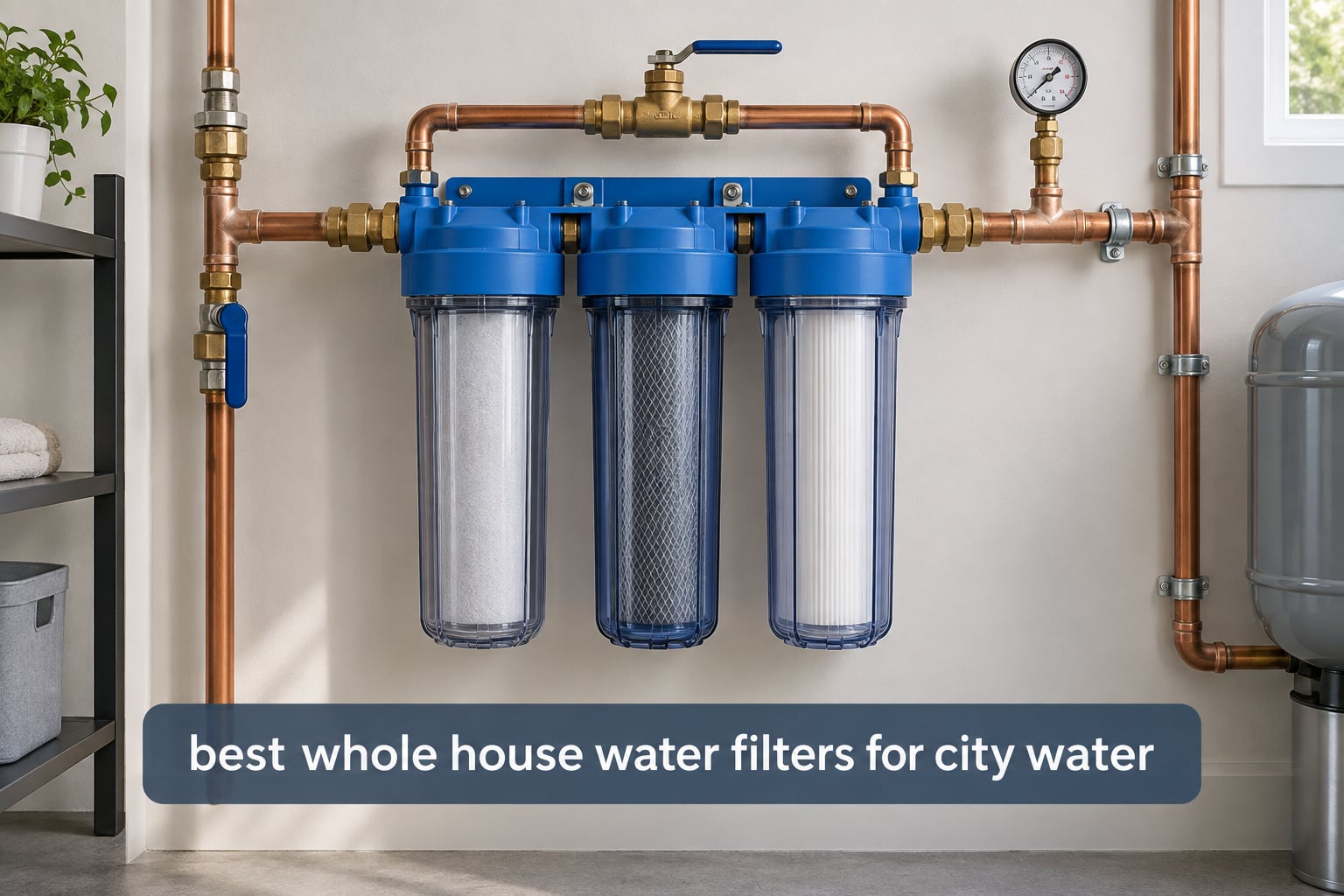
A whole house water filter is a point-of-entry system installed where your main line enters the home, so every tap, shower and appliance gets treated at once. On municipal supply its main job is stripping out the residual chlorine or chloramine that causes taste, odor and dry skin. The best whole house water filters for city water handle that residual without choking your flow rate or asking you to open a cabinet every month.
After comparing ten of the most-reviewed point-of-entry systems on media type, rated flow, published capacity, certification and warranty terms, the iSpring WGB21B is our best overall pick for city water. It pairs a 5-micron sediment stage with a CTO carbon block, moves up to 15 GPM on 1-inch ports, and holds a 4.6 rating across more than 4,000 owner reviews. If your utility uses chloramine rather than free chlorine, the iSpring WCB32CKS is the better media match.
So do you need one at all? The honest answer is yes, but only for specific reasons. City water is already disinfected and tested, so a whole house filter is not about basic safety. It is about the things a utility cannot remove downstream of the plant: the disinfectant residual in the pipe, rust and sediment that mobilize after heavy rain, and in some utilities PFAS, lead and VOCs. Households bothered by chlorine smell in the shower, laundry color that fades faster than it should, and water heaters scaling up are the ones who notice a difference within a week.
Here is how we judged the ten systems below. We weighted rated flow against realistic household demand, published media life and gallon capacity, the contaminants each configuration actually targets, whether the certification is third-party and standard-specific, and the warranty behind the tank. We also read the negative reviews closely, because on plumbing gear the complaints are usually about fittings and mounting rather than filtration, and those failures cost far more time than a cartridge swap.
Table of Contents
Top 3 Whole House Water Filters for City Water (September 2026)
Three systems stood out once flow, media and certification were weighed together. Each one targets a different household, so the right pick depends more on your plumbing and your utility than on brand loyalty.
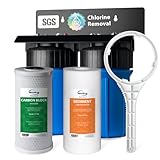
iSpring WGB21B 2-Stage System
- 5-micron sediment plus CTO carbon block
- 15 GPM on 1 inch ports
- 50000 gallon capacity

iSpring WGB32B 3-Stage 20 Inch
- Commercial 20 inch housings
- 100000 gallon capacity
- 15 GPM flow

Express Water WH300SCKP…
- KDF and polyphosphate media
- 17 GPM with three gauges
- Heavy metal and scale coverage
The WGB21B wins on the balance most city households actually need: real 1-inch flow, sediment protection in front of the carbon, and a media life long enough that you are not living at the hardware store. The WGB32B is the same idea in a commercial 20-inch format that holds far more media per cartridge, and it carries the highest average rating in this group. The Express Water unit is the one to buy when chlorine is your only concern but you also want heavy metal and scale coverage with the highest documented flow rating of the three.
All 10 Whole House Water Filters Compared for City Water in 2026
Every system below sits in the same category, so the useful comparison is not brand against brand. It is rated flow against household size, media against the contaminant you are actually fighting, and published capacity against how often you want to be changing cartridges. Peak flow, media type and certification are the three numbers worth reading twice.
| Product | Specifications | Action |
|---|---|---|
|
iSpring WGB21B 2-Stage Whole House Filtration
|
|
Check Latest Price |
|
Express Water WH300SCKP 3-Stage System
|
|
Check Latest Price |
|
iSpring WGB32B Commercial Grade 3-Stage
|
|
Check Latest Price |
 A. O. Smith AO-WH-Filter 600K Gallon
|
|
Check Latest Price |
 Waterdrop WHF21-PG 2-Stage 5 Micron
|
|
Check Latest Price |
 Reverse Osmosis Revolution WHF-34F5 3-Stage
|
|
Check Latest Price |
 iSpring WCB32CKS Heavy Metals 3-Stage
|
|
Check Latest Price |
 SimPure DB20P-3 20 Inch 3-Stage
|
|
Check Latest Price |
 3M Aqua-Pure AP904 100000 Gallon
|
|
Check Latest Price |
 Max Water WH-SC2 3-Stage for City Water
|
|
Check Latest Price |
Two patterns jump out. First, the only two systems rated at or above 17 GPM are the Express Water and the 3M Aqua-Pure, and both are the ones you want in a house with three or more bathrooms. Second, none of these cartridges reduce dissolved solids, which is the single most common misunderstanding in this category and is covered in full below.
1. iSpring WGB21B – Best Overall Whole House Filter for City Water
iSpring WGB21B 2-Stage Whole House Water Filtration System, 50000 Gallons
5 micron sediment plus CTO carbon block
15 GPM on 1 inch ports
50000 gallon capacity
1 year cartridge life
Pros
- Strong chlorine taste and odor reduction on municipal supply
- Thick walled housings that feel durable
- Pre assembled bracket makes DIY install straightforward
- Free replacement parts from US support
Cons
- Threaded fittings can weep if not heavily sealed
- Some owners report slower flow after long service
- Heavy when full and needs two wrenches to service
This is the unit I keep coming back to for people who want one decision made for them. A 5-micron polypropylene sediment cartridge sits in front of a CTO carbon block rated to cut chlorine, taste and odor along with common VOCs like pesticides and solvents. The published capacity is 50,000 gallons, which the manufacturer frames as roughly a year for a family of four on municipal water.
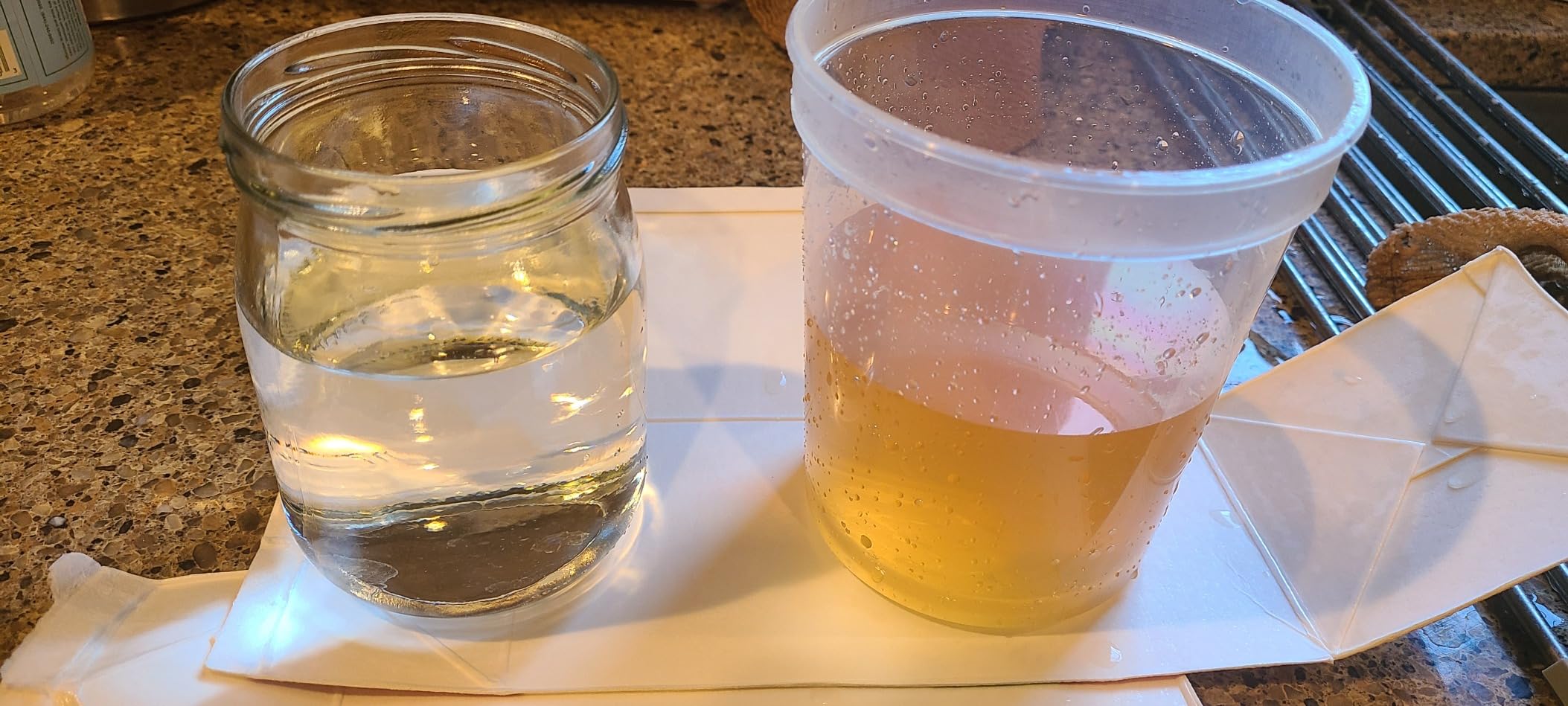
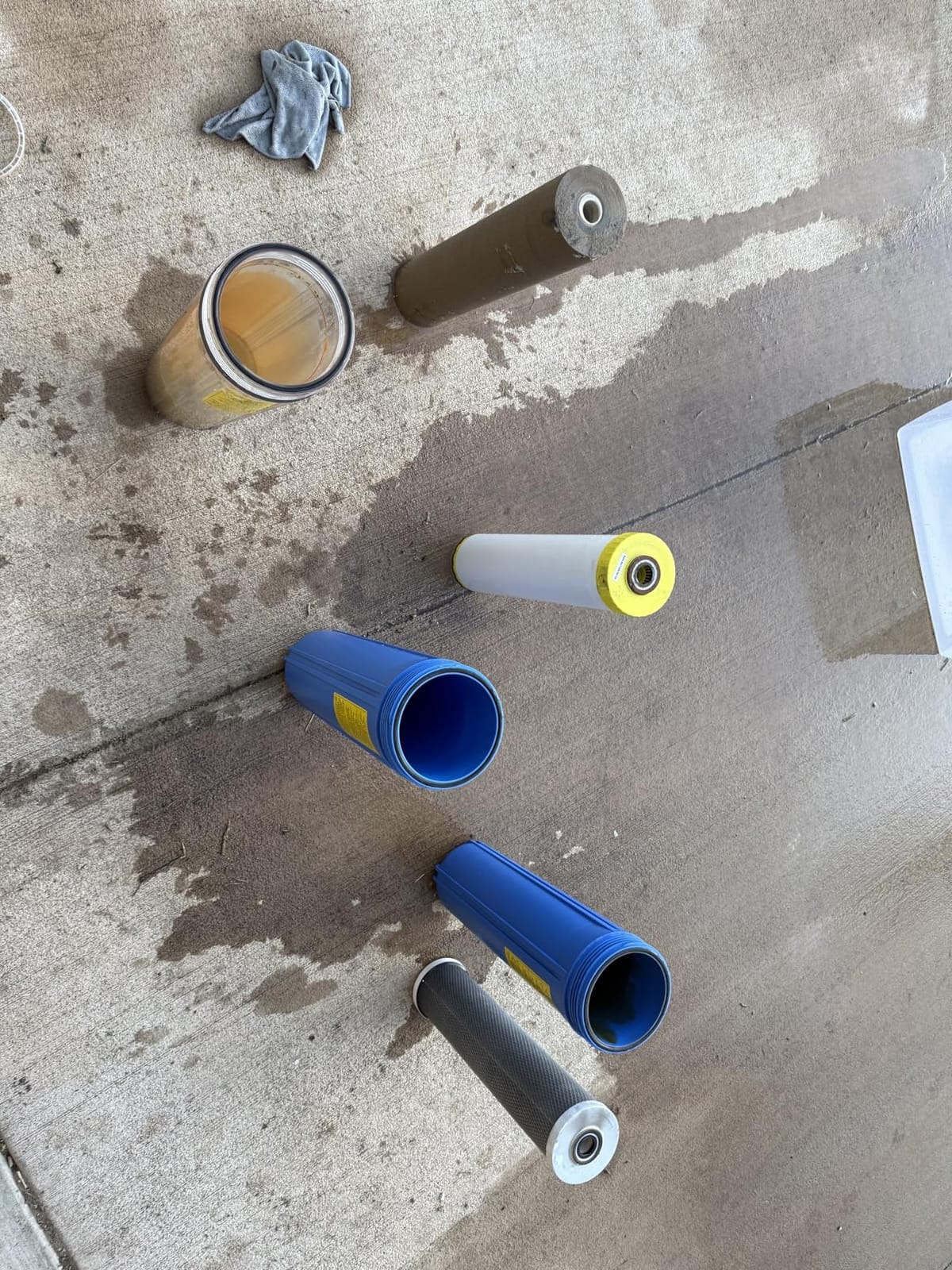
What convinced me was not the spec sheet, it was the review pattern. Owners on city water describe visibly cleaner water and a much quieter shower within weeks, and the sediment cartridge comes out visibly dirty after a few months, which is the proof that something is actually being removed. One r/WaterTreatment user put it plainly after pairing iSpring hardware with a spin-down and a softener: “I just installed ispring large spin down filter, three stage filter systems, and their 45k grain softener. I’m happy with it.”
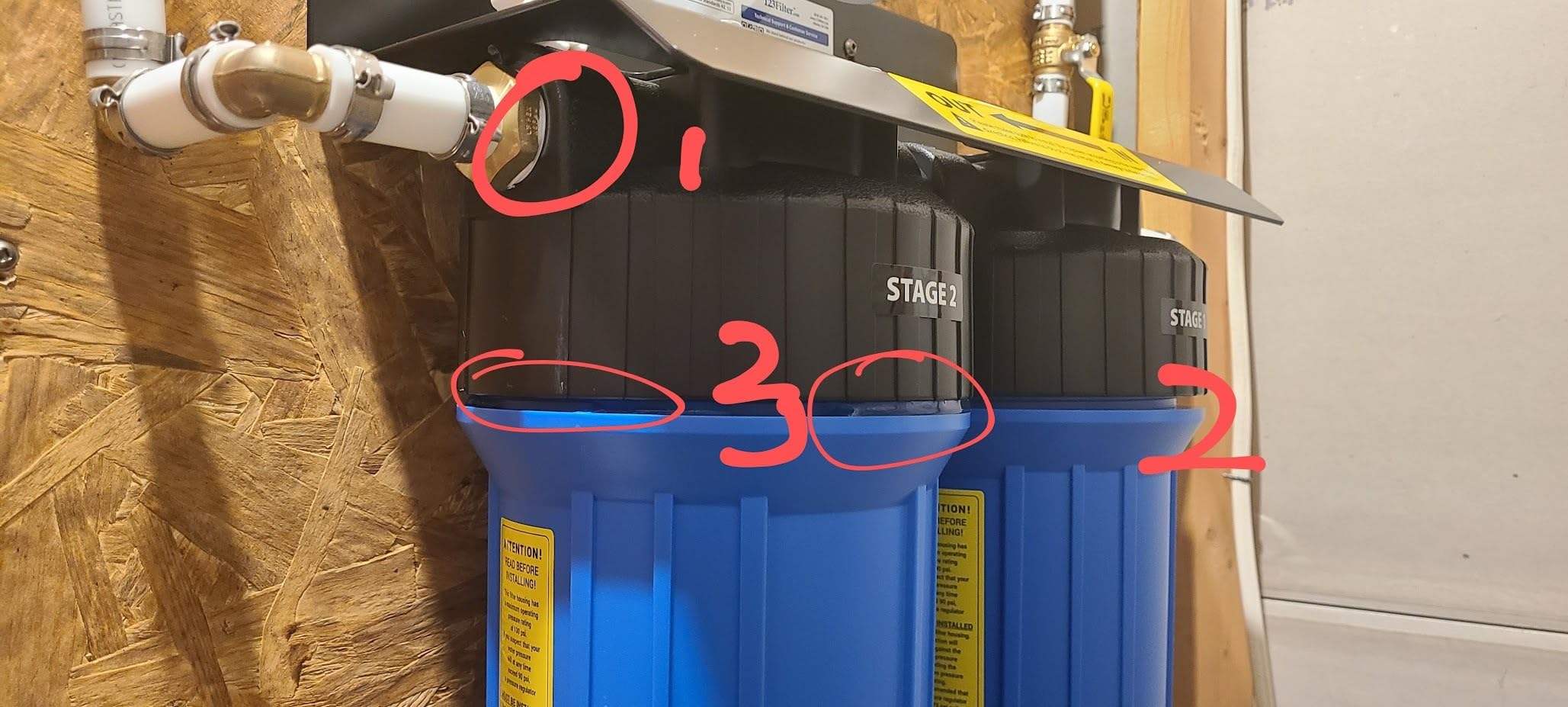
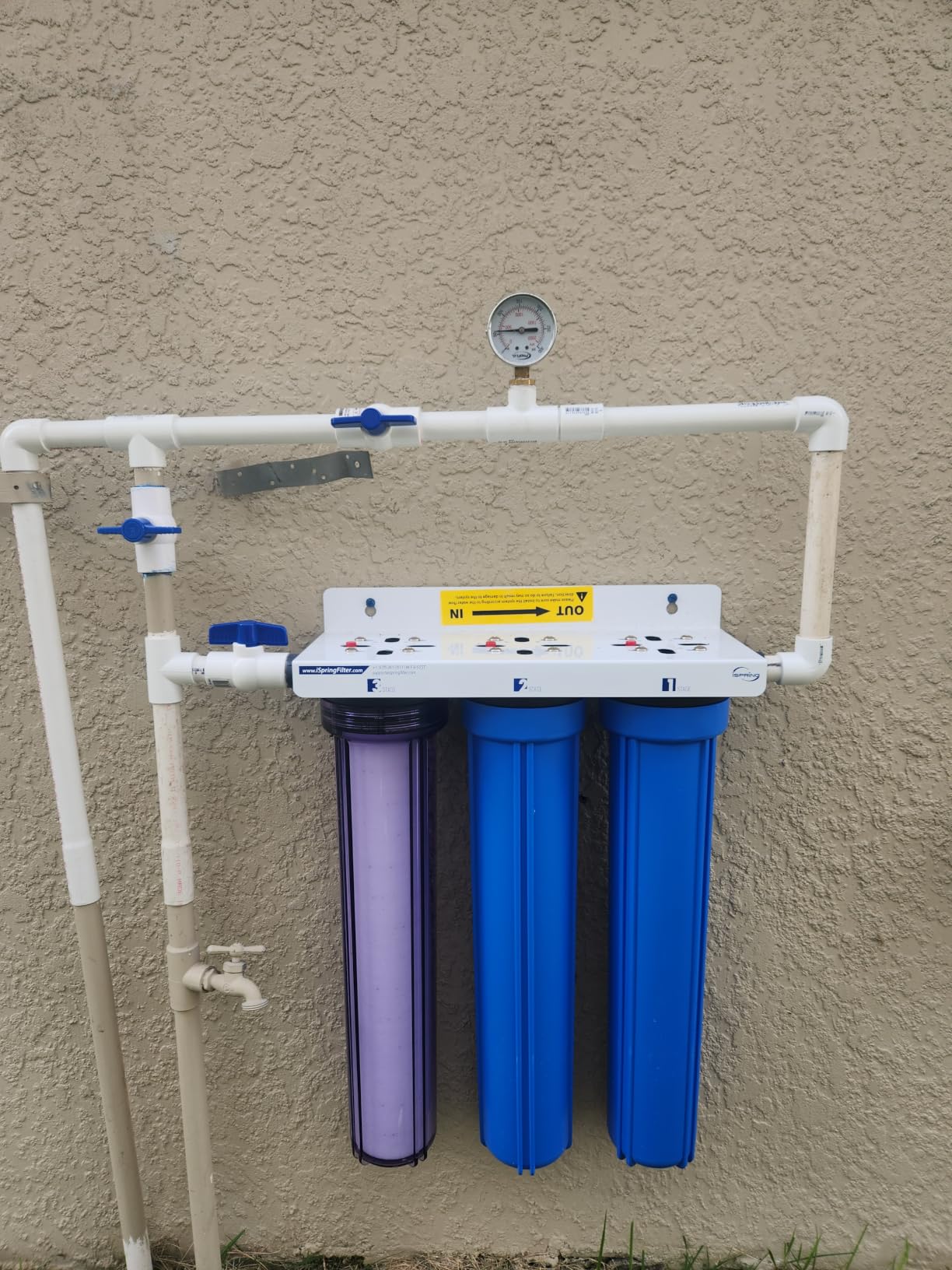
The engineering choice that matters here is 1-inch inlet and outlet ports. Plenty of budget systems ship 3/4-inch ports, and that single detail is the usual reason a homeowner ends up with a pressure drop complaint eight months in. The WGB21B also skips a drain line, a power connection and any backwash cycle, so there is nothing to plumb beyond the two connections and a bypass.
Size is the other thing to measure before you buy. The bracket runs about 26 by 19 by 11 inches and the unit weighs just over 25 pounds empty, which makes it the easiest of the manifolds here to find a home for, and the 40 degree Fahrenheit lower operating limit matters more in the north than most buyers expect. Rated flow holds for as long as the sediment stage is not loaded, which is the entire argument for putting a pre-filter ahead of it.
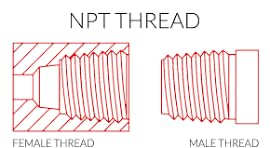
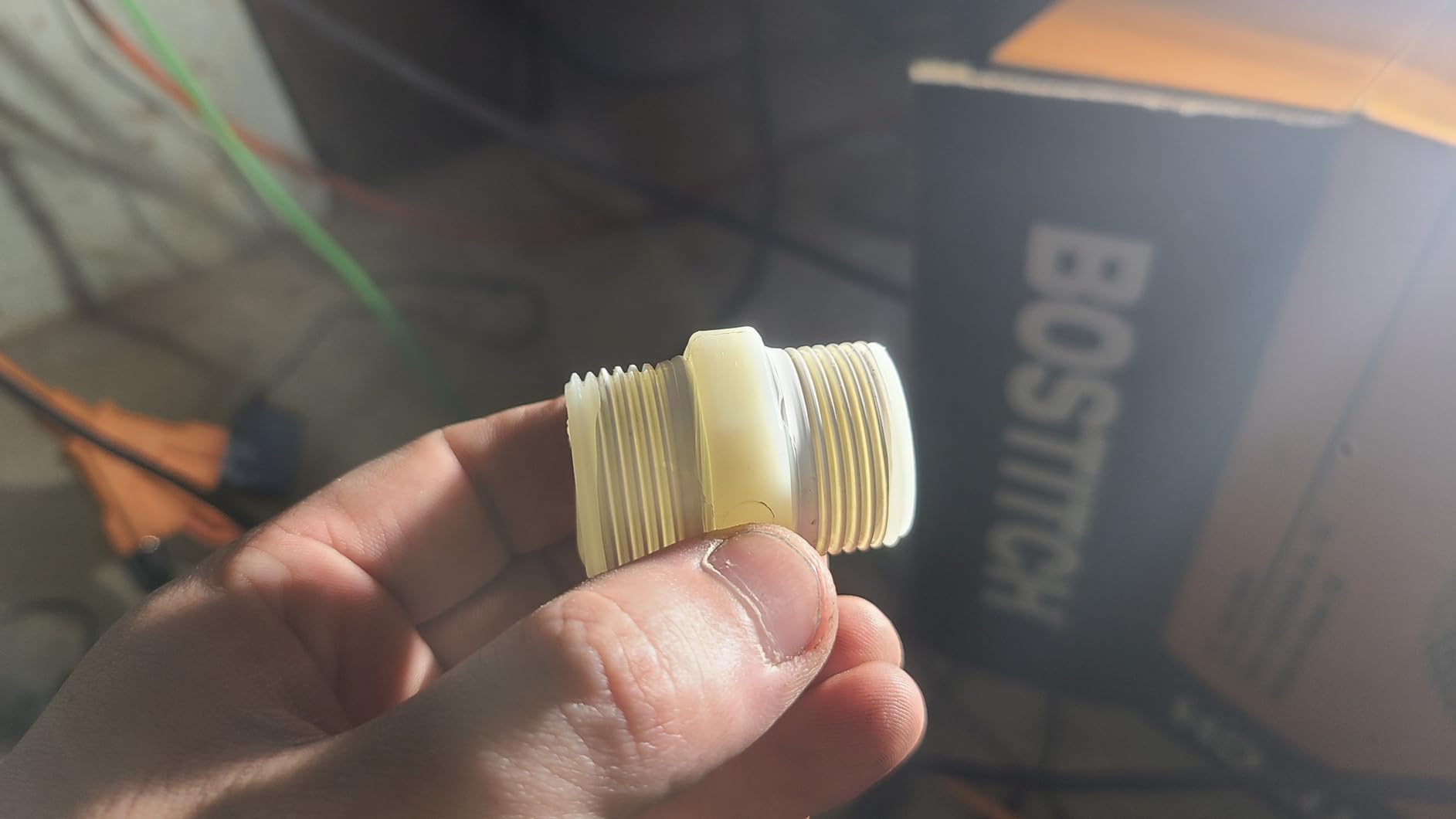
There is one construction quirk worth planning around. The threaded NPT fittings are the dominant complaint in the reviews, and owners who had trouble almost universally traced it to insufficient thread sealing rather than to filtration. Budget time for proper Teflon wrapping or pipe dope on both connections, and note that the housings are heavy when full, so a cartridge change wants two wrenches and a bucket under the housing.
Who this filter suits on city water
This suits a two or three bathroom home on a free chlorine utility that wants chlorine taste and odor gone without a softener, a drain, or an electrician. It also works as a polishing stage ahead of an under-sink reverse osmosis, because it keeps the membrane feed cleaner and cuts the chlorine that would otherwise damage it.
If your primary complaint is dry, bleached hair and skin after showering, the carbon block addresses the residual that evaporates into bathroom air. Add a spin-down pre-filter ahead of it if your neighborhood sees brown water after heavy rain, because a loaded sediment stage in front of the carbon is what protects your cartridge life.
Where it falls short
It is not the right pick for a chloramine utility. Standard CTO block is built around free chlorine chemistry and degrades much faster against combined chlorine, so you would be replacing carbon on a schedule the manufacturer never intended.
It is also not the answer to lead, PFAS or arsenic reduction. Nothing in this configuration is certified to standard 53 for those contaminants, and the system does not reduce dissolved solids at all. Owners expecting mineral removal should look at point-of-use reverse osmosis for drinking water instead.
2. Express Water WH300SCKP – Premium High-Flow 3-Stage Pick for City Water
Express Water Whole House Water Filter System, Ultimate Protection, 3-Stage
Carbon, KDF and polyphosphate media
17 GPM at 45-80 psi
100000 gallon capacity
3 gauges plus pressure release
Pros
- Broadest contaminant coverage in this group
- Stainless steel bracket and free standing frame
- Three gauges make monitoring easy
- 0.25 gallons per second on 1 inch connections
Cons
- 63 lb frame needs real floor space
- Highest cost among the systems reviewed
- Does not reduce dissolved solids
This three-stage system is the one I recommend when chlorine is only part of the problem. The media stack combines activated carbon, KDF copper-zinc and laboratory packed polyphosphate, which means chlorine plus heavy metals plus scale in a single pass rather than three separate housings. Documented flow is 0.25 gallons per second at 45 to 80 psi, roughly 15 GPM in practical terms, and the manufacturer rates the cartridge set at 100,000 gallons.
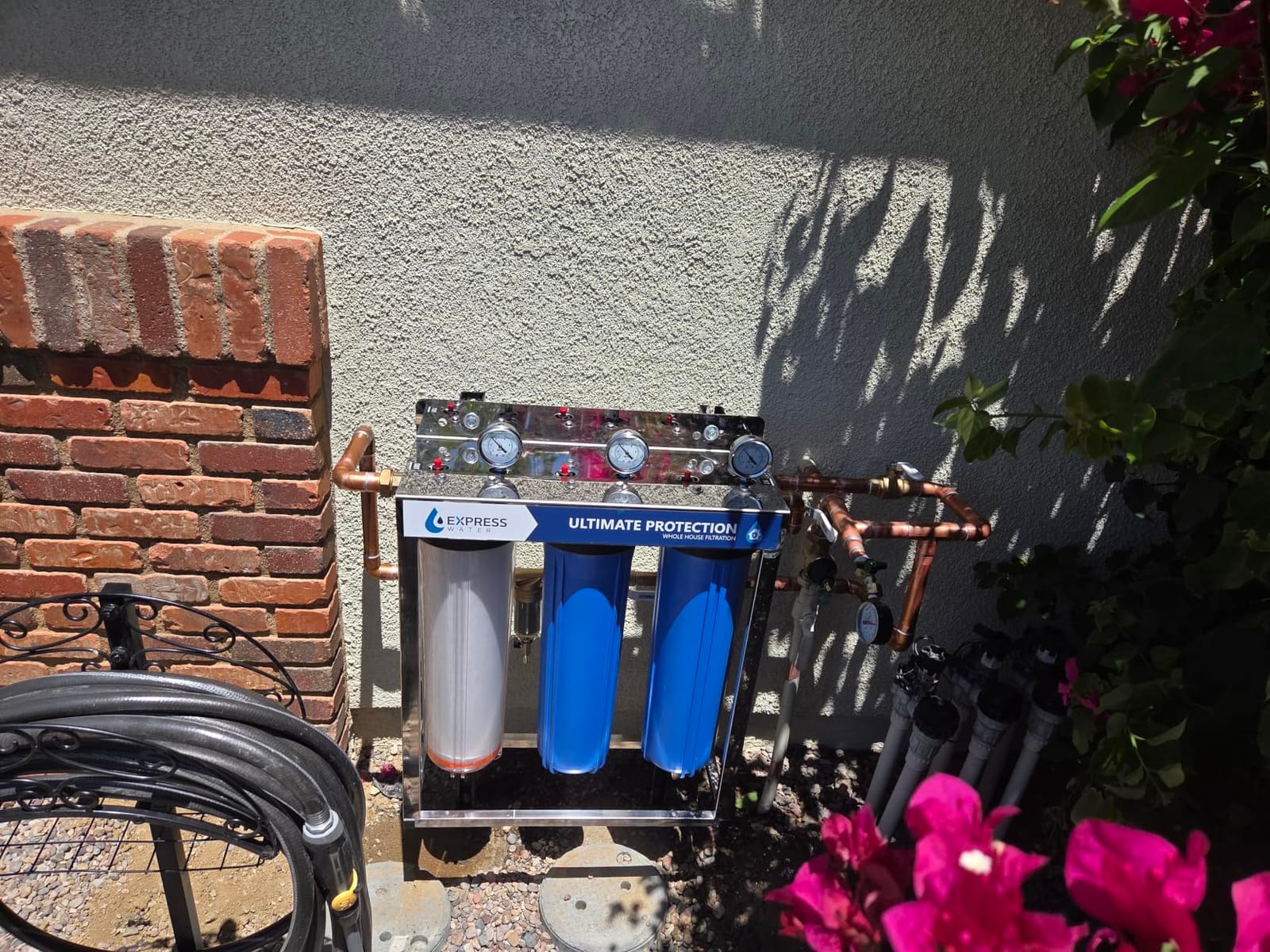
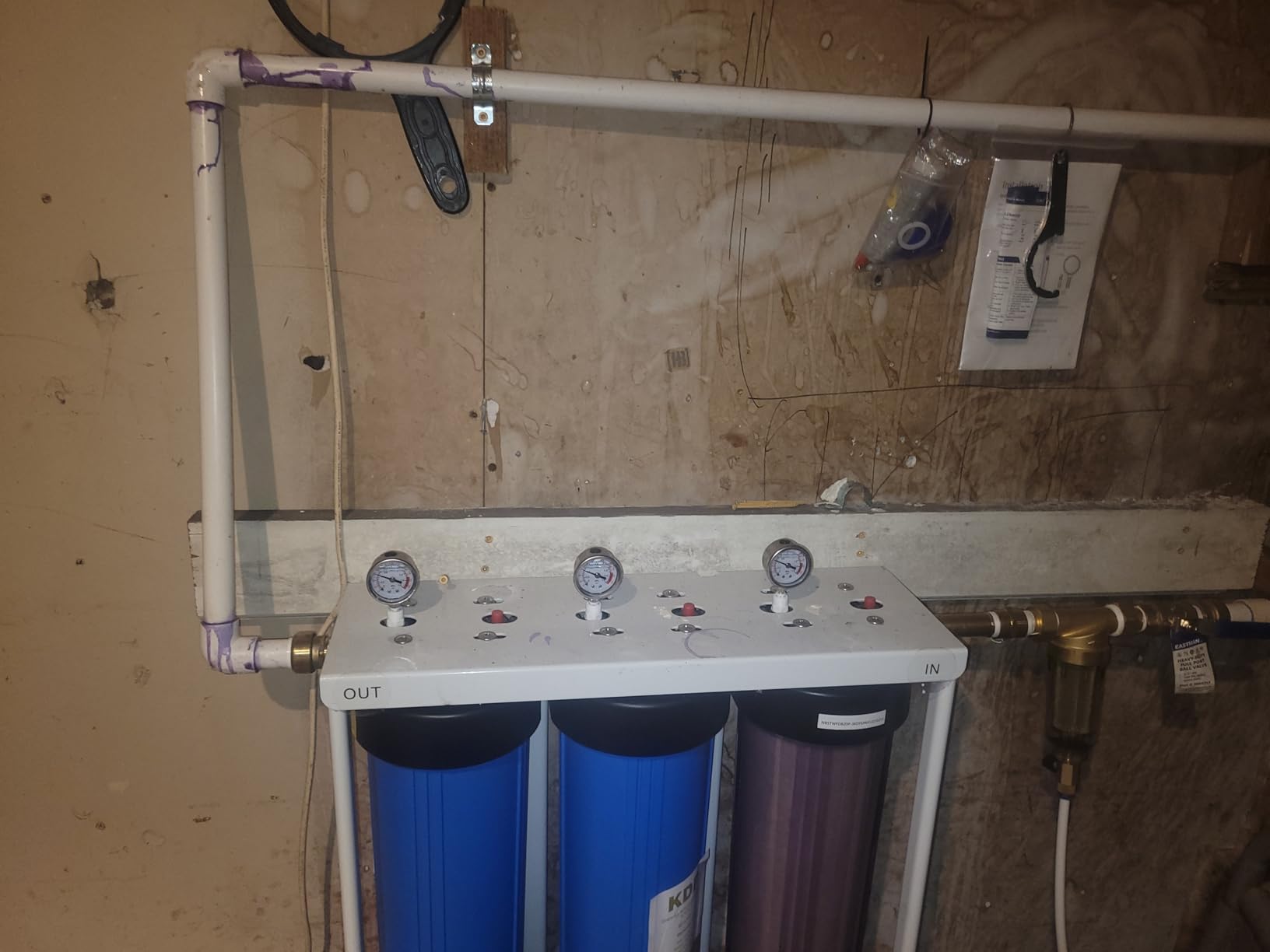
Scale is the quiet win here. Polyphosphate stops scale from forming in the water heater and dishwasher lines, which is the kind of damage that never shows up on a water quality report but shows up as a fifteen year water heater. Buyers describe the stainless steel bracket and free standing frame as feeling more permanent than the plastic manifolds on cheaper manifolds, and the three pressure gauges turn cartridge changes from guesswork into a scheduled job.
Two practical notes. The frame is 63 pounds and measures roughly 29 by 8.5 by 30 inches, so it needs genuine floor space in the mechanical room rather than a wall gap. And each stage can be isolated with its own pressure release button, which is genuinely useful: you can change the sediment cartridge without draining the whole manifold.
Those three gauges are the feature I would not trade away. Each one sits at the head of a stage, so when flow drops you can read pressure side by side and know whether the sediment cartridge or the carbon bed is loaded, instead of guessing and replacing parts that were never spent. On a system that passes a quarter gallon a second, that diagnostic matters, because the alternative is a slow morning and a trip to the hardware store.
Owners rate it as a well built, higher-end whole house system with the most complete contaminant coverage of the group, and the review pool of 2,700 owners is one of the largest here. The cost is that it sits at the top of the price band for cartridge systems, and it still does not reduce dissolved solids.
Who this filter suits on city water
This is the pick for a household that wants one box to handle chlorine, scale and heavy metals, especially in a home with a water heater, a dishwasher and a washing machine that are all showing wear. The KDF stage is a better fit than a plain carbon block if lead or metals are a documented concern in your area.
It is also a sensible companion to a softener in hard-water territory, since the polyphosphate handles incoming scale while the softener handles hardness. Just size the softener to the flow this system actually passes, or you will starve it during peak morning use.
Where it falls short
It will not lower total dissolved solids, so it is not a substitute for reverse osmosis if that is on your list. The manufacturer states that limitation directly, and it is worth believing.
It also runs at a 20 to 80 psi operating range, which is narrower than several competitors. Homes with low shutoff pressure, or with older galvanized lines that spike pressure, will feel that ceiling. The footprint is the other practical limit, and it does not fit a tight utility room wall.
3. iSpring WGB32B – Premium 20 Inch Commercial Grade Pick
iSpring WGB32B Commercial-Grade Whole House Water Filter System
Three 20 inch commercial housings
15 GPM on 1 inch NPT
100000 gallon capacity
5 micron first stage
Pros
- Highest average rating in this group
- 20 inch format holds far more media
- Each stage boxed and labelled separately
- Free replacement parts from support
Cons
- Manifold adapters are a recurring leak point
- Pressure release buttons may not bleed enough
- 45 lb manifold needs stud mounting
- Two wrenches needed for changes
The difference between this and the WGB21B is format, and format is capacity. Every housing here is a 20 inch by 4.5 inch commercial standard cartridge, which means roughly four times the media volume of the 10-inch housings used in most budget systems. The result is a 100,000 gallon published capacity with a 15 GPM rating on 1-inch NPT connections, and the longest service intervals in the cartridge category.
It carries the highest average rating of any system we reviewed, at 4.7, and the reviews support the spec sheet. Long-term owners with eight or more years of service describe the system as still performing, and they consistently credit the 20-inch format on high-sediment municipal water where a 10-inch cartridge would be exhausted in months. The first stage reaches 5 microns; stages two and three are third-party tested coconut shell carbon block.
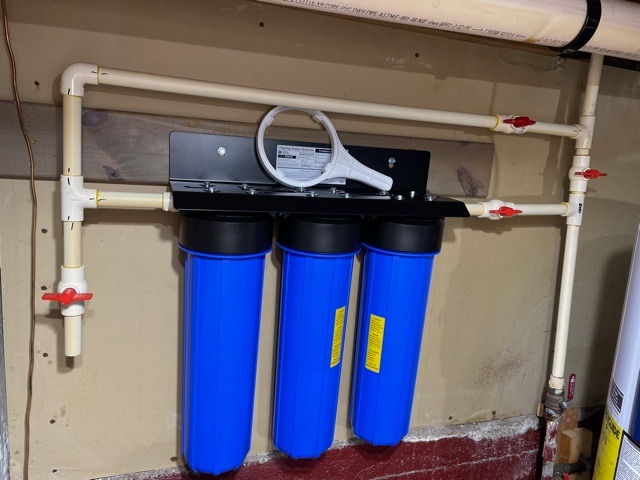
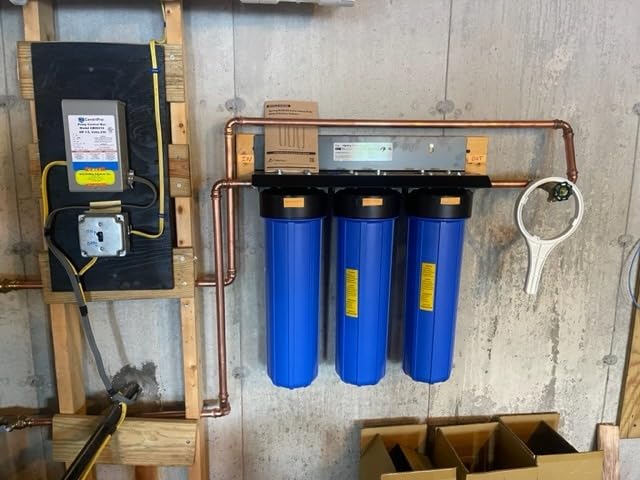
Installation is where the effort goes. The free standing manifold is 45 pounds, so it needs solid framing rather than drywall anchors, and the threaded manifold adapters are a repeat theme in the negative reviews, with some owners having to re-cut pipe after the first attempt. Stage order is easy to get right because each cartridge is boxed and labelled individually, which is more than can be said for a lot of three-stage manifolds.
The footprint is narrower than it looks on paper, at about 24.5 by 8 by 28 inches, because the three housings sit in a line rather than in a frame. That narrow profile is what makes it installable against a basement wall where a freestanding three-tank system would not go, and the 40 degree Fahrenheit lower rating matches the rest of the cartridge category rather than beating it.
One more real-world detail: on some manifold revisions the pressure release buttons do not bleed enough pressure to free the housings, which means keeping a spigot or the house shutoff close by for filter changes. Support experiences are described as exceptionally accommodating, with replacement manifolds, canisters and even complete systems covered at no charge.
Who this filter suits on city water
This suits a home on a chlorinated municipal supply that fights sediment, especially older neighborhoods where rust and scale mobilize after rain. The extra media volume means fewer change-outs, which matters if you are not keen on quarterly cartridge swaps.
It is also a good match for households that have already outgrown a 10-inch system and are tired of replacing carbon twice a year. The extra capacity per cartridge costs more upfront and less over a five year horizon.
Where it falls short
It is still free-chlorine media. There is no KDF or catalytic carbon stage in this configuration, so on a chloramine utility you would be running out of useful carbon long before the 100,000 gallon figure is reached.
The mounting demands are real too. A 45 pound manifold on drywall anchors will eventually fail, and the two-wrench cartridge change in a confined utility room is a two-person job in many installs.
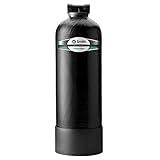
4. A. O. Smith AO-WH-Filter – Best for Set-and-Forget Chlorine Removal
A. O. Smith Whole House Water Filter System | 600K Gal | AO-WH-Filter
Activated carbon tank,600000 gallon capacity
6 year cartridge life
7 GPM on 3/4 inch ports
NFS/ANSI 42 certified
Pros
- Longest service interval in the group by years
- No drain backwash or water waste
- Recognized brand with 6 year warranty
- Chlorine taste and odor reduction rated at 96.9 percent
Cons
- Does not address sediment sulfur or iron
- 7 GPM is the lowest flow here
- 3/4 inch connections limit larger homes
- Pre-filter is recommended ahead of it
This tank is the maintenance answer. Instead of a cartridge, it uses a granular activated carbon bed rated for 6 years or 600,000 gallons, with no drain line, no backflush cycle and no water waste. On a city water household that only wants chlorine taste and odor gone, that is an almost absurdly low ongoing cost per gallon.
It comes from a brand that already builds water heaters, and the certification is specific rather than vague. The unit carries NSF/ANSI 42 certification for chlorine taste and odor reduction, and the warranty runs 6 years with 6-year spare part availability behind it. Reviews describe set-and-forget whole-house chlorine removal as the entire reason people buy it.
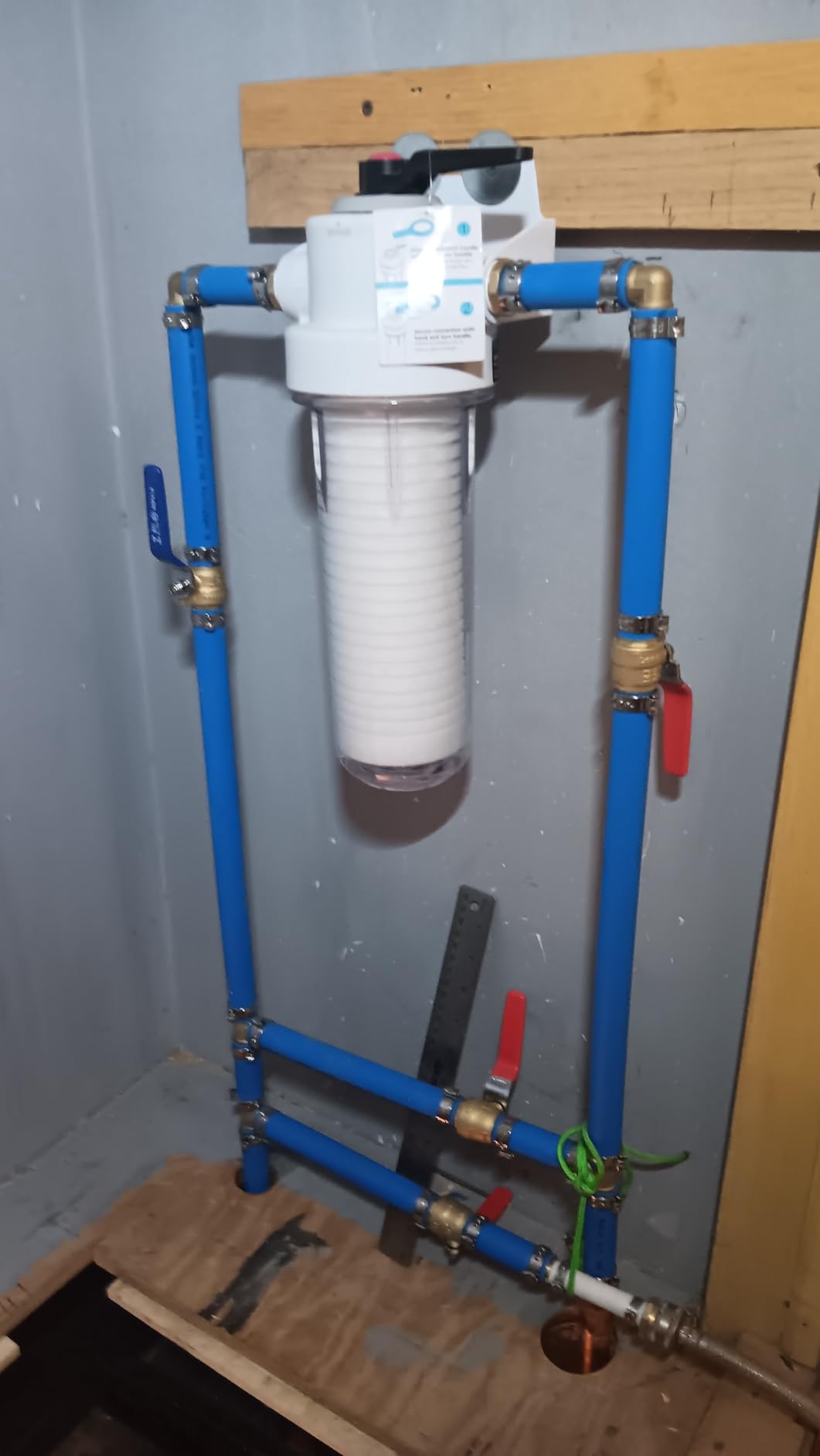
The shape of the answer matters as much as the media. This is a vertical carbon tank plumbed inline ahead of your fixtures rather than a manifold of three housings, at roughly 30 by 9.5 by 9.5 inches, so it needs floor space under a shelf or a wall bracket instead of clearance above each cartridge. That single design choice is why there is no wrench, no canister and no cartridge to stage in a wet utility room.
Here is the trade. This is a carbon tank, not a filtration train. It does not reduce sediment, sulfur or iron, and it does not reduce dissolved solids. A. O. Smith says so plainly, and a separate pre-filter ahead of it is recommended. Flow is 7 GPM on 3/4-inch connections, the lowest in this group, which is fine for a two-bathroom home and tight for anything larger.
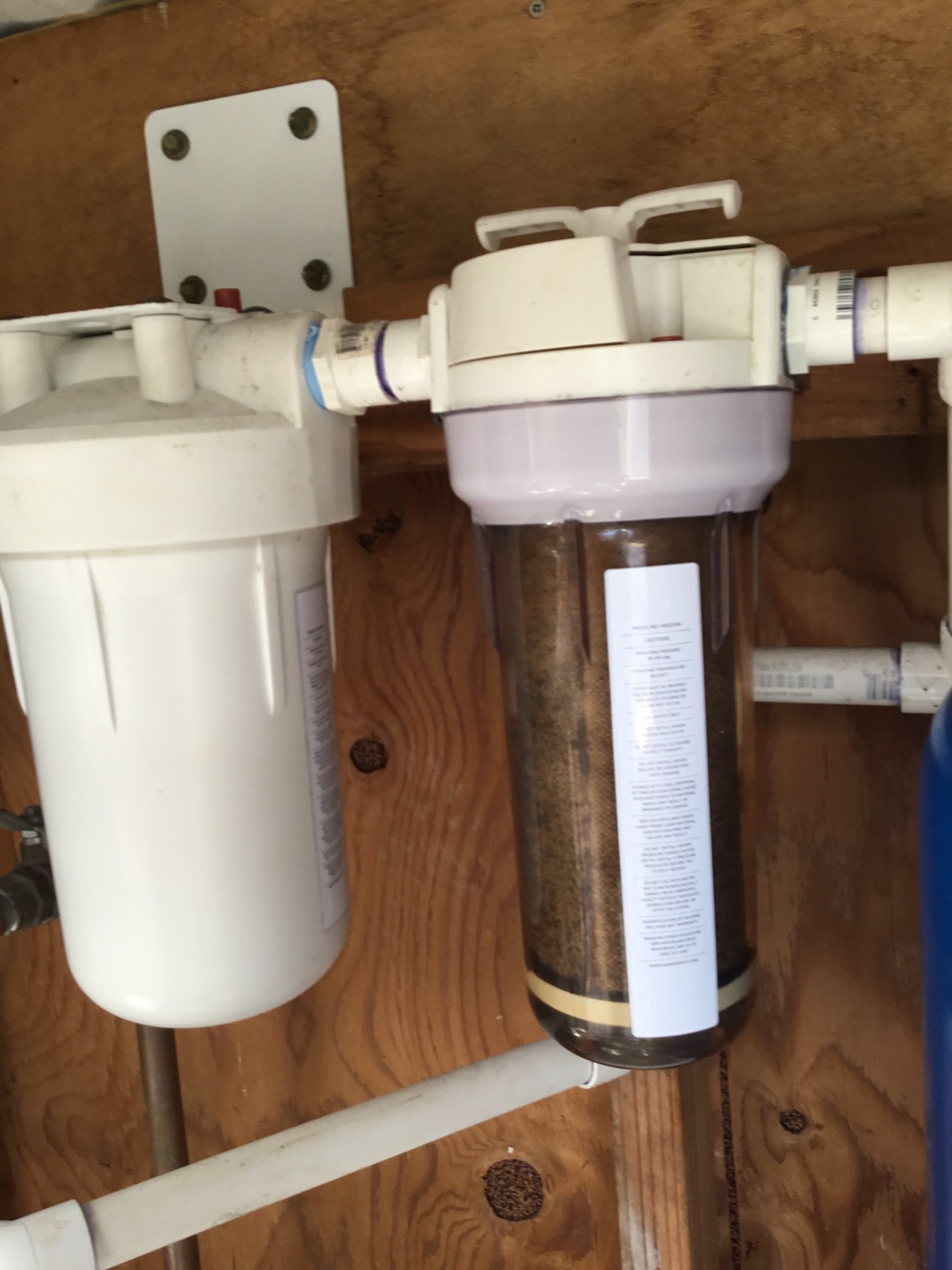
That two-tank setup is the arrangement most owners converge on: spin-down sediment pre-filter first, carbon tank second, both on 3/4-inch or 1-inch lines, with a bypass on each. It costs more in wall space and more in install work, and it is the closest thing to a low-maintenance answer for city water.
Who this filter suits on city water
This suits anyone who is tired of changing filters. If chlorine smell is your only complaint and you live in a two-bathroom home on free chlorine, six years between services is the deciding factor for most of the 1,900 owners here.
It is also the right call for a rental or a property you do not want to keep returning to. There is no cartridge to stage, no salt, and the water waste that a softener produces every cycle is simply absent.
Where it falls short
It does not protect against sediment, and on a supply that produces brown water after rain, putting a carbon tank first means the grit reaches the media. Pair it with a pre-filter and do not skip that step.
At 7 GPM and 3/4-inch connections, it will visibly restrict a house with three or more simultaneous fixtures. And on a chloramine utility, standard granular carbon is not the media you want, because combined chlorine destroys it faster than free chlorine does.
5. Waterdrop WHF21-PG – Most Versatile for City Water
Waterdrop WHF21-PG 2-Stage Whole House Water Filter System, 5 Micron
5 micron PP cartridge plus coconut GAC
15 GPM on 1 inch ports
50000 gallon capacity
Compact housing
Pros
- Lowest cost of the two stage systems here
- Food grade housings water hammer tested
- Teflon tape and wrench included
- Compact footprint for tight spaces
Cons
- PP cartridge changes every 3-6 months
- 10 inch cartridges hold less media than 20 inch
- Service life assumes municipal water
- Does not target iron or heavy metals deeply
This is the value entry point, and it does not feel like a toy. A 5-micron polypropylene sediment cartridge feeds a coconut shell granular activated carbon stage, giving five-stage filtration performance across a 50,000 gallon capacity on 1-inch connections rated to 15 GPM. The housings were tested from 25 to 90 psi and passed more than 100,000 water hammer cycles.
What that means for city water is that it covers the common list: particles above 5 microns, chlorine, lead, benzene, mercury, sand, rust, odd tastes and odors. For a household that just wants the chlorine gone and the tap water to stop tasting like a swimming pool, that is a legitimate specification sheet for a very modest outlay.
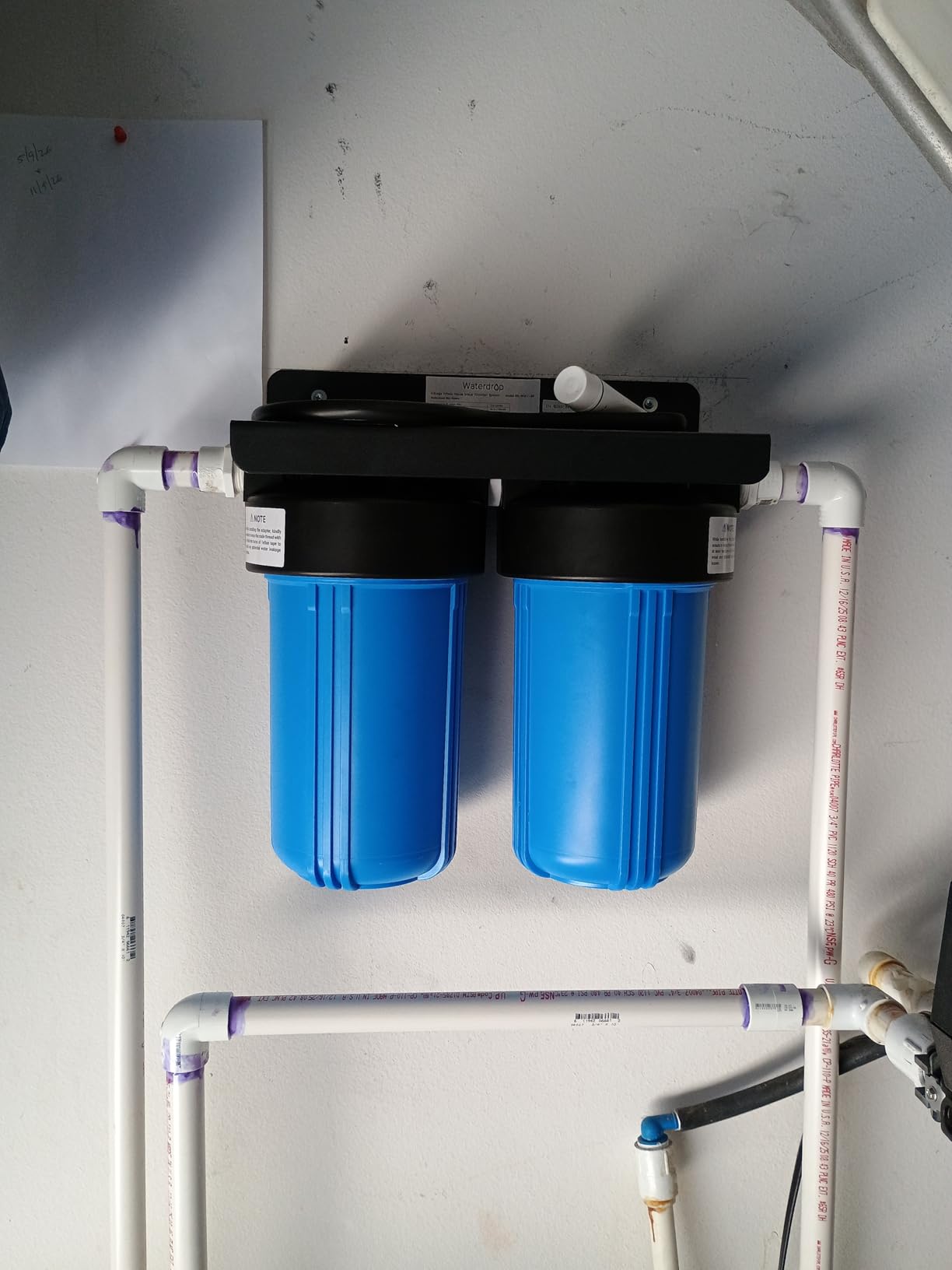
The physical scale is the other reason it works in small spaces. At roughly 14.4 by 7.5 by 15.5 inches it is one of the two smallest units in this roundup, and both housings take standard 10-inch by 4.5-inch cartridges that any plumbing supplier carries. Nothing about the install is proprietary, which means a cartridge change on a Sunday afternoon is a supply run rather than an online order.
The compromise is cartridge economics. The manufacturer states the GAC stage should be changed every six months and the polypropylene stage every three to six, which is the least comfortable recurring number in this roundup. With 1,578 reviews averaging 4.4, buyers consistently treat it as a budget sediment and chlorine solution that installs in an afternoon, and the criticism is almost always about change frequency rather than results.
One technical caveat to respect: the manufacturer says best service life is achieved on municipal water. Heavier sediment loads shorten it, so if your street sees brown water after rain, budget a spare PP cartridge or put a spin-down ahead of this unit.
Who this filter suits on city water
This suits first-time buyers, renters, and anyone in a one or two bathroom home who wants chlorine and sediment handled without touching plumbing beyond a weekend afternoon. The compact footprint matters in a small mechanical closet where a 20-inch manifold will not fit.
It is also a good second-stage complement to a tank-style carbon unit, or a simple front end for an under-sink reverse osmosis that needs protected feed water.
Where it falls short
The cartridge cost per year is the honest weak point. Two changes a year on 10-inch housings adds up faster than one change every two or three years on a 20-inch format, and that gap is the entire economic argument for stepping up a tier.
It also does not address iron or heavy metals at the level that a KDF and GAC system does, and it is not the media you want against chloramine. Standard granular carbon loses effectiveness against combined chlorine long before the gallon rating is used up.
6. Reverse Osmosis Revolution WHF-34F5 – Best First-Year Cartridge Value
Whole House 3-Stage Water Filtration System, 3/4″ port with 2 valves and extra 1 year filter supply (2 sets, 6 pcs)
Sediment, GAC and CTO three stages
3/4 inch ports with two valves
Six spare cartridges included
10000 gallon capacity
Pros
- Roughly a year of spare cartridges in the box
- Cut off valves included
- Clear housings show filter loading
- Owners report three to five year durability
Cons
- Housings can bind during changes
- 10000 gallon capacity is modest
- 3/4 inch ports limit flow
- Adapters sometimes not included
This three-stage manifold is sold with two extra sets of cartridges in the box, which effectively pre-pays the first year of filter cost. That single packaging decision does more for the total cost of ownership than any spec on this list, and it is why we rated it so highly against much larger systems.
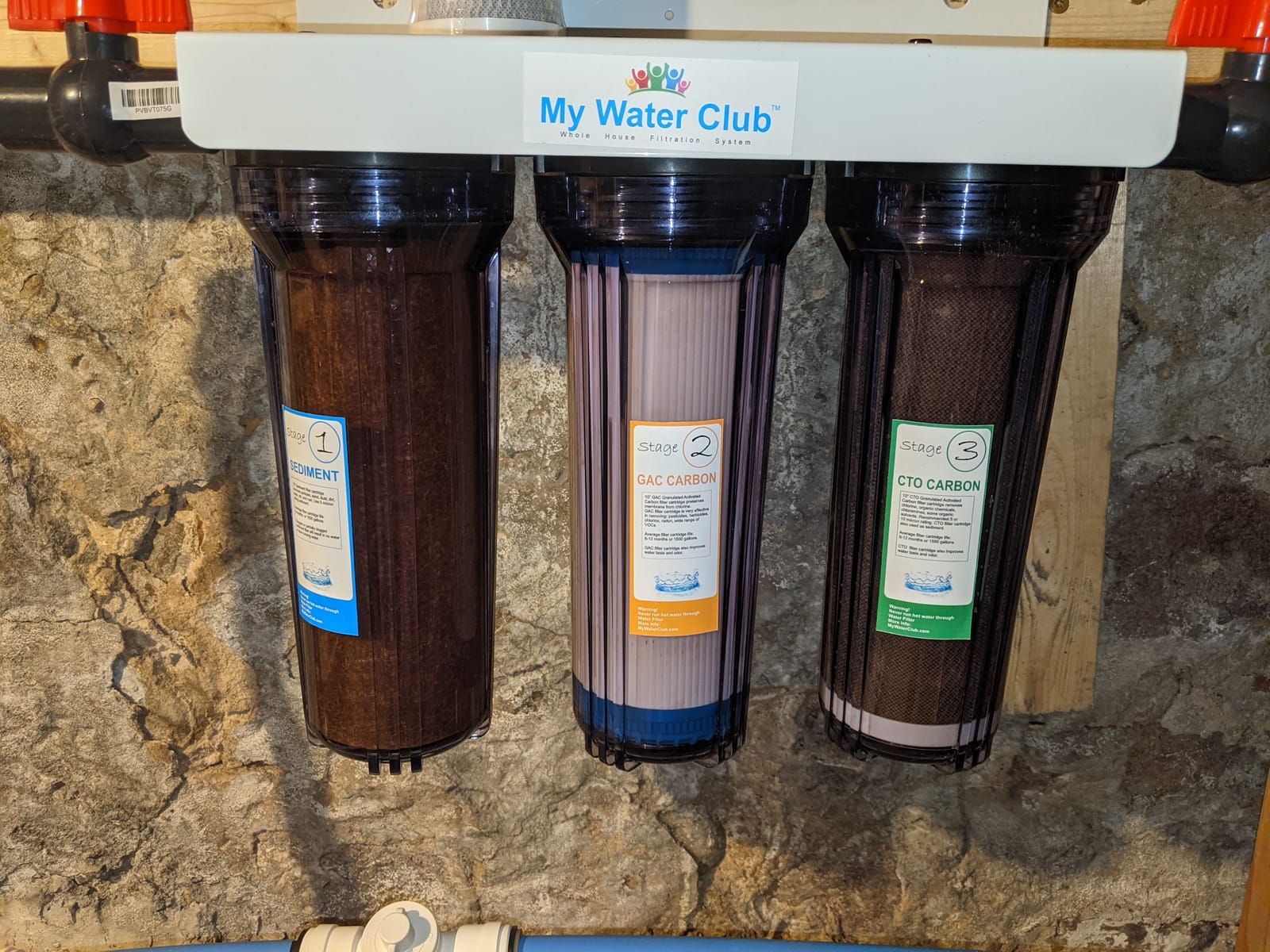
The filtration itself is genuine three-stage, not carbon with a marketing label. Stage one is a 5-micron sediment cartridge that catches dust, silt, sand, rust and scale and extends the life of what follows. Stage two is a 10-inch granular activated carbon bed for chlorine, radon and VOCs. Stage three is a 10-inch CTO carbon block for residual chlorine, pesticides, insecticides and industrial solvents.
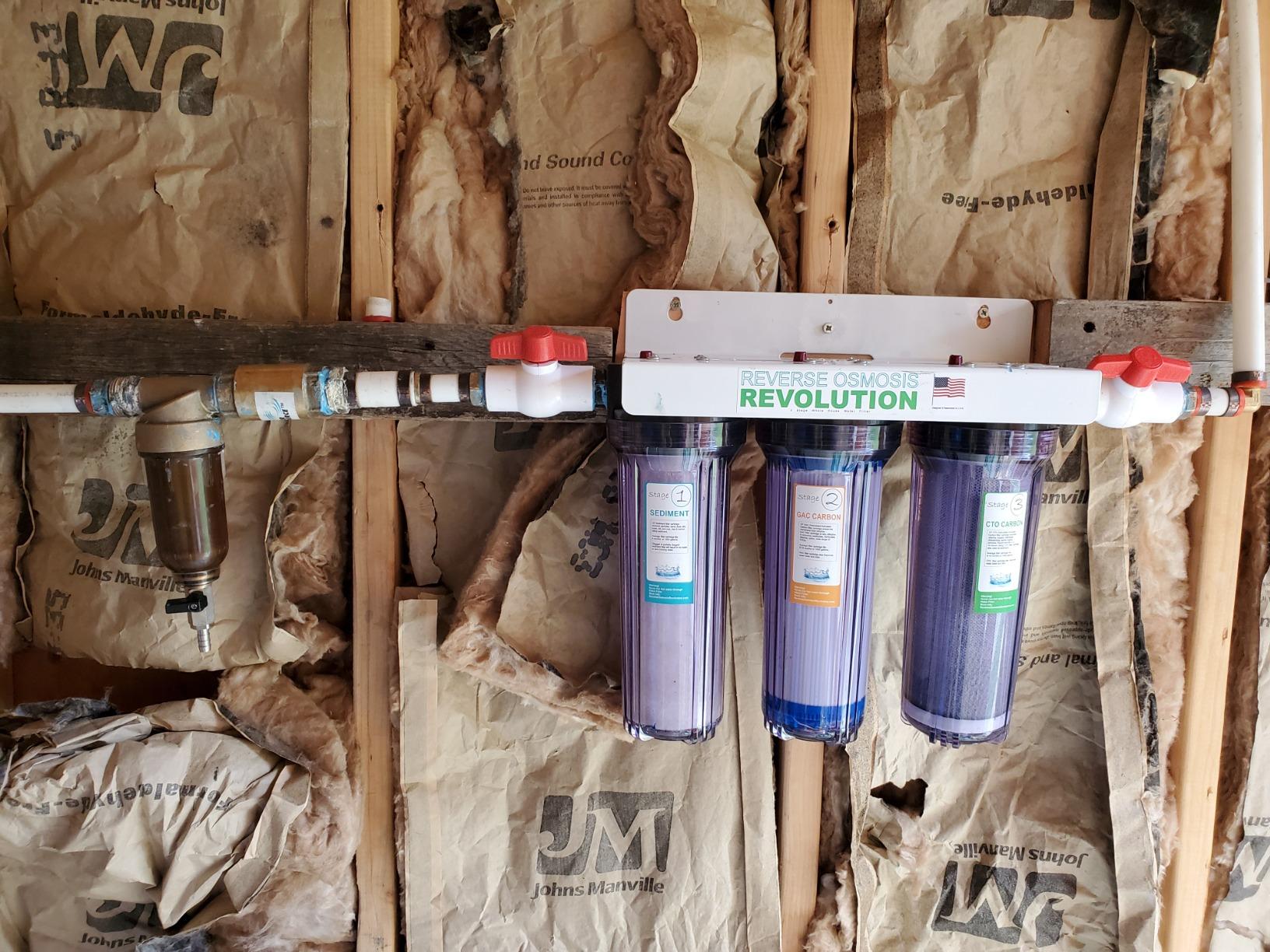
At about 15 pounds and 20 by 6 by 16 inches, this is the lightest manifold in the group, and the housings connect with quick-connect fittings rather than threaded adapters. That is why the install is forgiving in a confined space, and it is also why the change interval is the hard part: quick-connect housings grip hard once a filter is fully loaded and the O-ring has had a year to set.
Owners with three to five years of service report the system still running strongly and describe the replacement cartridges as affordable, and the transparent housings let you judge filter loading without taking anything apart. Two shut-off ball valves are included, which many competing manifolds in this price band leave out, and that is a real convenience when you are working in a tight install.
The mechanical complaint is worth taking seriously. Some owners report the housings being very hard to unscrew, particularly where clearance is tight, and one needed a strap wrench and cracked a housing in the process. If your install has less than a few inches above each housing, factor in the risk of a damaged canister.
Who this filter suits on city water
This suits a household that wants real three-stage filtration and strong first-year value, especially anyone who does not want to reorder cartridges immediately after installing. The included spares are genuinely useful for a rental or a short-term rental where you will not be around to monitor the schedule.
It is also a good fit for a single-bathroom or small home on free chlorine, where 10,000 gallons between changes is not going to be the limiting factor. The valve-equipped ports make it forgiving to plumb in a confined space.
Where it falls short
At 3/4-inch ports and 10,000 gallon capacity, this is the smallest capacity in the group. On a family of four using municipal water, that is a short interval, and the spares in the box will not stretch it.
First-time installers sometimes need adapters that are not in the box, and the warranty is one year on hardware with one month on filters. Neither is a dealbreaker, but both are thinner than the coverage behind the premium picks here.
7. iSpring WCB32CKS – Best for Chloramine and Heavy Metal Reduction
iSpring Heavy Metals Whole House Water Filter System w/Clear Housing
GAC plus KDF stage for lead and chloramine
12 GPM on 3/4 inch ports
30000 gallon capacity
Clear first stage housing
Pros
- Only system here combining GAC and KDF media
- Transparent housing shows sediment loading
- CTO polish stage leaves water tasting clean
- Free replacement head units from support
Cons
- Leaking at the female threaded connections
- Reports of housing or head unit cracking
- 30000 gallon capacity is low
- 3/4 inch ports cap flow at 12 GPM
This is the media match for a chloramine utility, and it is the reason this configuration exists. A composite second stage of granular activated carbon and KDF targets chlorine, chloramine, PFAS, lead, radon and hydrogen sulfide in one cartridge, which is a contaminant list no other system in this roundup can claim.
Owners running a chloramine-heavy municipality report a fast drop in chlorine taste after installation, and the third-stage CTO polish stage is why the finished water tastes clean rather than just clear. The first-stage housing is transparent, so you can see sediment loading and time the change without opening the system, and the whole unit is smaller and lighter than the 20-inch iSpring manifolds.
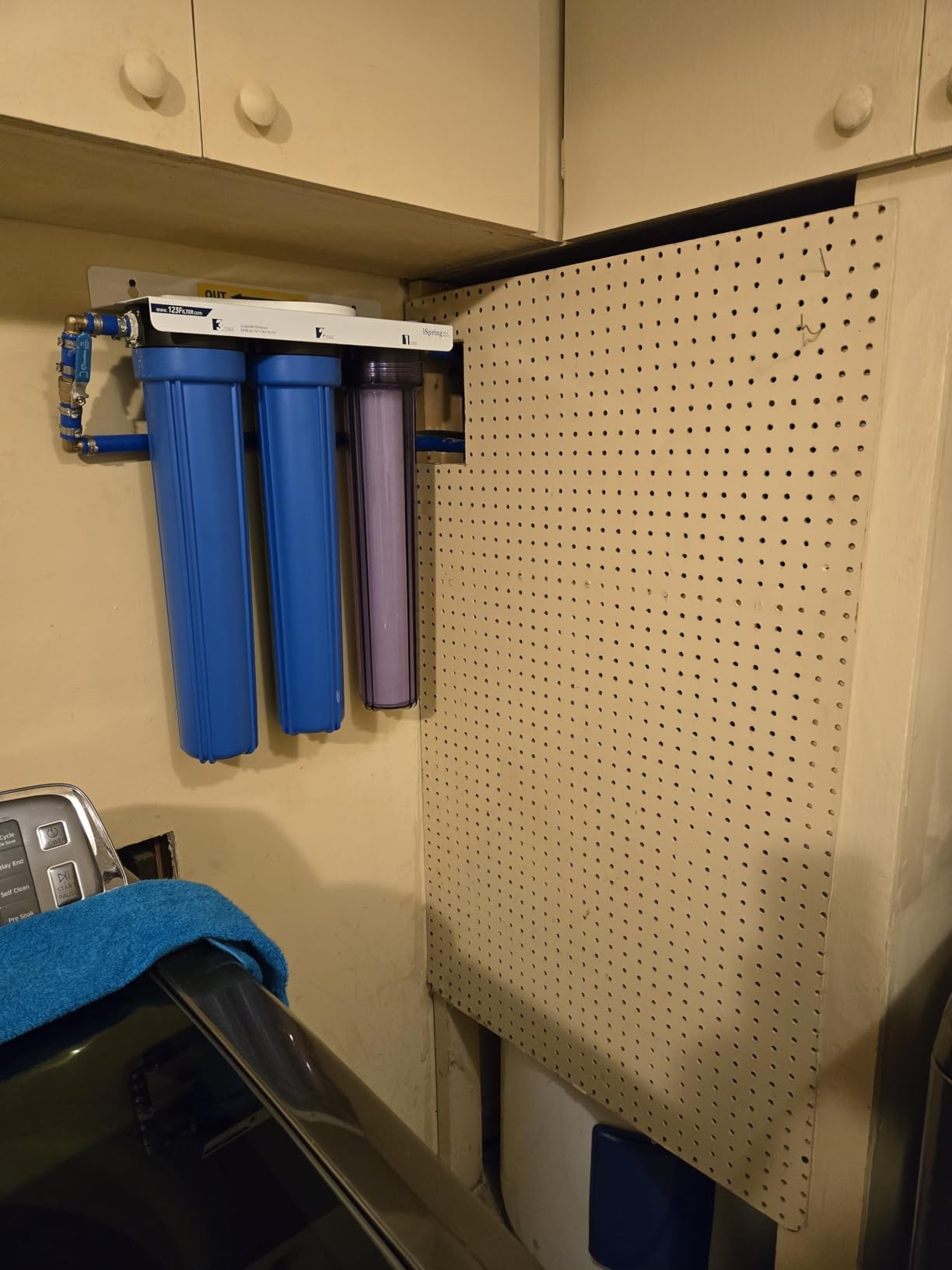
The layout explains the footprint. Three inline housings on a compact bracket of about 18 by 7 by 25 inches at 21.5 pounds need less room than the 20-inch manifolds above, and the transparent first stage is not a cosmetic extra. On a chloramine supply where the carbon is working harder, watching how quickly the sediment stage loads tells you whether the six month interval on paper is realistic in your house.
Now the honest part, because it is a cluster of 1-star reports that buyers should know about. Leaking at the female threaded housing connections is the most sustained complaint, sometimes across all six threads on the first fill, and several owners report the housing or head unit cracking outright, with one unit returned after an O-ring ejected and flooded a laundry room. Most of these resolved with heavy Teflon and pipe dope, or a free replacement head from support, but plan for the possibility.
Capacity is 30,000 gallons with a 6-month filter life cycle, the second-lowest here, and the 3/4-inch ports cap maximum flow at 12 GPM. Instructions also leave out a full parts list, so have fittings on hand before you start.
Who this filter suits on city water
This suits anyone who has confirmed their utility uses chloramine, or whose Consumer Confidence Report lists elevated lead, PFAS or radon. KDF and GAC together are the media combination that survives a combined chlorine residual, and owners on those supplies report it works where plain CTO did not.
It is also the most compact three-stage heavy metal option in the group, which makes it practical in a small mechanical area where a 20-inch manifold will not go. The visible first stage makes cartridge timing much easier to get right.
Where it falls short
The connection reliability is the real drawback. This is the one system here where owners report cracked housings and flooded rooms, and that is a risk to your home rather than an inconvenience. Ask support for a replacement head before you install rather than after.
At 12 GPM on 3/4-inch ports, it is not sized for a house running three or four fixtures at once, and 30,000 gallons is a short interval on a family of four. It also does not reduce dissolved solids.
8. SimPure DB20P-3 – Best 20 Inch Capacity Per Gallon
SimPure Whole House Water Filter System 3-Stage 20″ *4.5″ Pre-Filtration
20 inch 3-stage with KDF pre-filtration
150000 gallon capacity
15 GPM
2x2 O-rings with brass fittings
Pros
- Highest published capacity in the group
- Brass fittings and double O-rings seal well
- Two clear housings show cartridge wear
- Standard 20 inch cartridges are widely stocked
Cons
- 48 lb and a tall footprint to plan for
- Each cartridge must be unwrapped before use
- Filter life varies with pressure and temperature
The SimPure is the only system here that puts KDF pre-filtration into a 20-inch format alongside sediment, GAC and CTO stages. That combination is what produces the highest published capacity in the group, at up to 150,000 gallons, and it does it on 1-inch NPT brass connections rated to 15 GPM.
What owners consistently single out is sealing. The housings use 2×2 O-ring profiles with brass fittings, and reviewers describe them as noticeably leak-proof next to systems with plain plastic threads. That matters more than it sounds, because the recurring failure mode across this entire category is a weeping housing connection, and this is the one design that appears to have engineered around it.
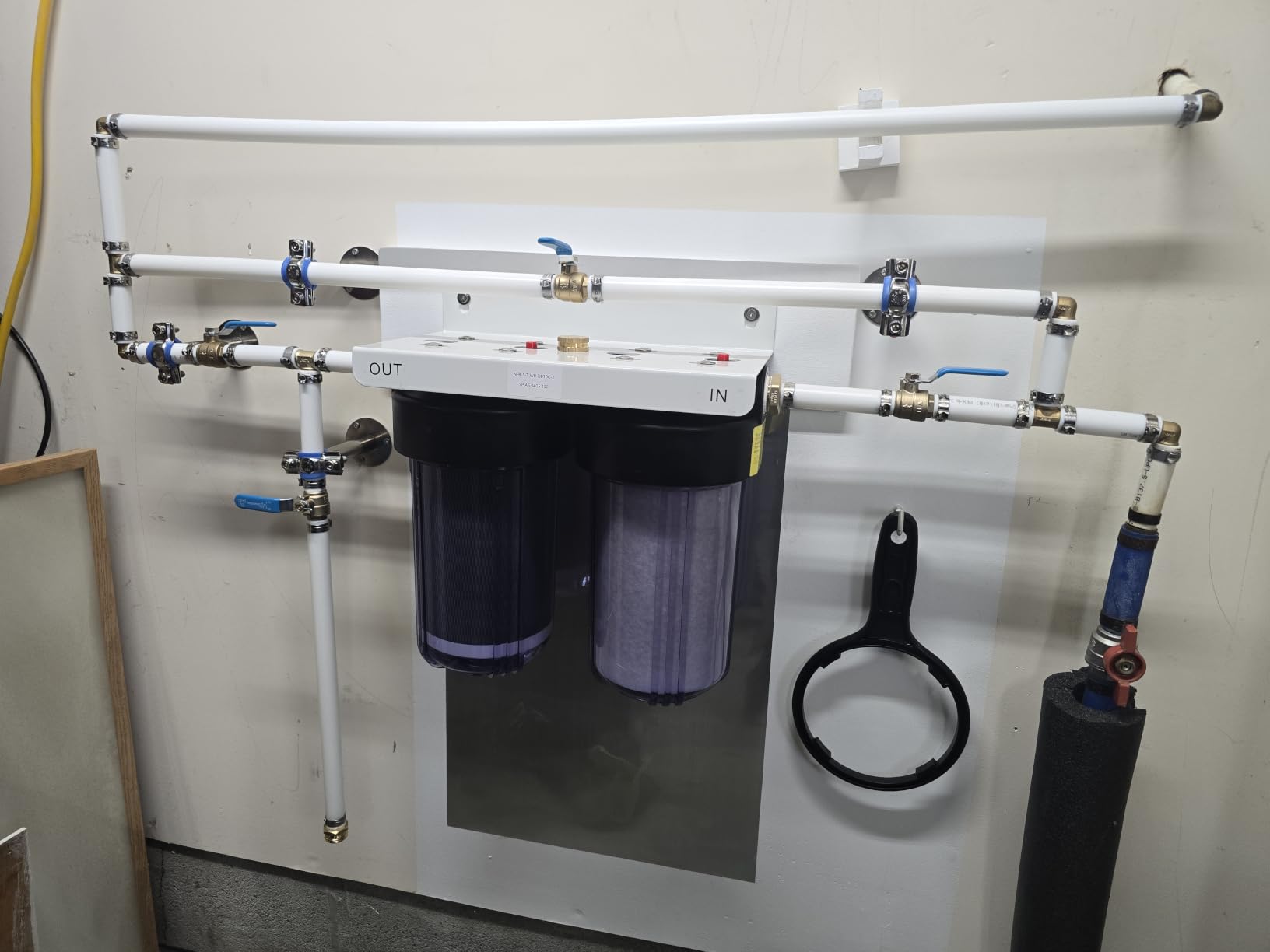
Two of the three housings are clear and one is opaque, which is deliberate. The sediment and the GAC stages are the two that tell you when a change is due, and the CTO polish stage is the one you never need to watch. All three take the same 20-inch by 4.5-inch cartridge, so a single spare covers the whole system and the change schedule is measured in months rather than gallons.
It also uses standard 20-inch by 4.5-inch cartridges, so replacements are available almost anywhere rather than being proprietary to one brand, and two of the housings are clear so you can monitor wear without disassembling anything. Stage life is published as 3 to 6 months for the carbon stage and 6 to 12 months for sediment and GAC, which is longer than several competitors in the same format.
The cautions are physical. At 48 pounds and roughly 23 by 8 by 26 inches, this needs real install clearance and solid mounting, which is the exact concern r/WaterTreatment buyers raise about multi-tank premium systems taking over a tight utility room. Every cartridge is individually wrapped and must be unwrapped before use, an easy step to miss that costs you the first stage of filtration.
Who this filter suits on city water
This suits a household that wants the capacity of a 20-inch system, the leak resistance of brass hardware, and contaminant coverage that includes metals, all in one box. It is a good match for a family of four who does not want to be swapping carbon three times a year.
Because it runs standard cartridges and widely available media, it is also a comfortable choice if you already own 20-inch housings elsewhere on the property or plan to add a tank later. The two clear housings make the change schedule obvious.
Where it falls short
Size and weight are the honest limits. In a small mechanical closet this is the system that will not fit, and mounting a 48 pound assembly needs framing rather than drywall anchors.
Filter life varies more widely than the 150,000 gallon headline suggests, and the manufacturer advises staying within 25 to 90 psi and 41 to 100 degrees. Outside that band you will see shorter runs than the published figure. It also does not reduce dissolved solids.
9. 3M Aqua-Pure AP904 – Best for Certified High Flow
3M Aqua-Pure AP900 Series Whole House Water Filtration System AP904
Activated carbon block with pleat media
20 GPM on 1 inch ports
100000 gallon capacity
NFS Standard 42 and 372 certified
Pros
- Sanitary Quick Change needs no wrench
- 304 stainless steel head resists corrosion
- 20 GPM is the highest rated flow here
- Independent NSF 42 and 372 certification
Cons
- Single cartridge does less than three stage systems
- Up to one year cartridge life
- 25 inch housing needs vertical clearance
- Brand sits at the top of the range
When you want a number you can verify rather than a number a brand printed, this is the system. The AP904 is certified to NSF Standard 42 and Standard 372, which is independent third-party testing for contaminant reduction and for lead reduction specifically. That is a meaningfully different claim from a percentage on a marketing page.
It is also the fastest to service. The Sanitary Quick Change design swaps the cartridge by hand with no filter wrench and no contact with the media, on a 304 stainless steel head that will not crack the way a plastic manifold can. Flow is rated up to 20 GPM on 1-inch connections, the highest in this group, and capacity is 100,000 gallons.
Size is the surprise here. At about 4.5 inches square by 25 inches tall and just over 10 pounds, it is the smallest and lightest unit in the roundup, and the stainless head means it can mount directly on the cold line next to your main shutoff without framing or a wall bracket. In a crawlspace or a tight utility closet, that footprint is the whole argument.
Alongside the carbon block and pleat media, it reduces sediment, chlorine taste and odor, and inhibits lime scale, which extends water heater and appliance life. It works on both chlorinated municipal and non-chlorinated systems, which makes it a reasonable choice if you are not certain what your utility runs.
The limit is that it is a single cartridge, not a filtration train. It does less than a three-stage system on heavy metals and on total sediment volume, and cartridge life of up to a year is short next to the six-year tank. The 25-inch housing also needs clear vertical space next to your main shutoff, which is a planning item people miss.
Who this filter suits on city water
This suits a home with three or more bathrooms where you need headroom on flow, and any buyer who wants certified performance they can check in a database rather than a percentage on a listing page. The stainless head and no-wrench changeover are the everyday quality-of-life wins.
It is also the sensible default if you have not yet confirmed what disinfectant your utility uses, since it handles chlorinated and non-chlorinated supply alike. For a two-bathroom home on free chlorine with no metals concern, it may simply be more system than you need.
Where it falls short
One pleated element cannot do the work of three stages. If your Consumer Confidence Report shows lead, PFAS or VOC concerns, or if you fight heavy sediment, you need a multi-stage configuration rather than a certified single cartridge.
Cartridge life of up to a year is the shortest interval among the certified options here, so your annual running cost is higher than the tank-based picks. And the brand carries a price premium relative to the rest of the category.
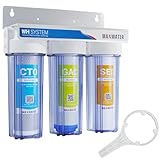
10. Max Water WH-SC2 – Best for Small Homes and Tight Spaces
Max Water Whole House Water Filter System 3 Stage 10″ x 2.5″ for City Water
5 micron sediment, GAC and CTO stages
10 GPM on 3/4 inch ports
10000 gallon capacity
Clear housings with pressure gauges
Pros
- Inexpensive three stage point of entry system
- Clear housings for visual inspection
- Stainless steel bracket included
- Dual carbon stages suit city water
Cons
- Reports of O-rings ejecting and flooding
- Plastic housings described as cheap
- Smallest capacity in the group
- No plumbing components included
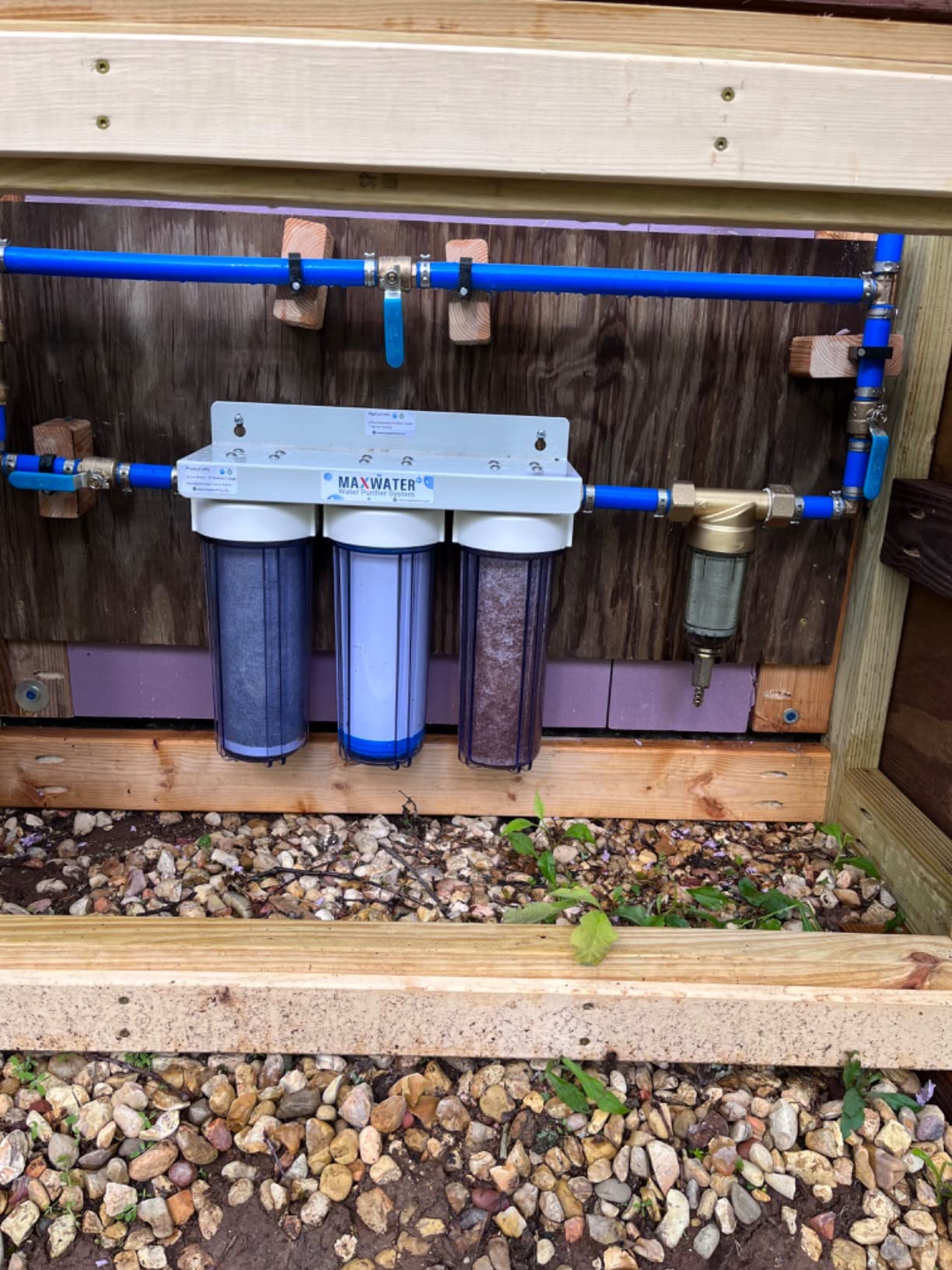
This is a straightforward three-stage point-of-entry system: a 5-micron polypropylene sediment filter, then granular activated carbon, then a 5-micron CTO carbon block. The dual carbon stages handle exactly the chlorine taste, odor and cloudiness that city water produces, and the clear see-through housings let you check loading without disassembling anything.
It comes with a heavy-duty stainless steel bracket and an opening wrench, and the flow rating of 1 to 10 GPM is honest for a two-bathroom home. Buyers treat it as a budget three-stage unit that does what it claims, and the clear housings are a repeat positive across reviews.
The dimensions are modest, roughly 14.25 by 5.25 by 14.25 inches at 11 pounds, and the flow rating is written as a range of 1 to 10 GPM rather than a single figure, which is a more honest way to describe a system that different households will push differently. The clear housings let you swap the sediment stage before flow drops, which is the single best habit on this list.
What holds it back is build quality and support. A small number of very negative reviews describe the housing O-rings ejecting and flooding the room, and manufacturer support being unresponsive when those units failed. Other owners describe the plastic housings as cheap, and some leak reports trace back to the flat rubber gasket being left out during a change. That is a cheap mistake with expensive consequences, so replace the gasket every time.
Capacity is 10,000 gallons, the smallest here, and the shut-off ball valve and a garden hose adapter are both sold separately, so plan on buying fittings before you start.
Who this filter suits on city water
This suits a small home, a cottage, a rental or an RV connection on free chlorine municipal supply, where the priority is taste and odor and the space is genuinely tight. Three stages for that money is a better spec sheet than a single carbon unit in the same bracket.
The clear housings are genuinely useful in a small install, because you can see the sediment stage loading and swap it before flow drops rather than after. It is also a reasonable second unit for a side shed or a rental property you maintain yourself.
Where it falls short
The O-ring failure reports are the reason this sits at the bottom of the list. A 1-year manufacturer warranty is the shortest here, and vendor support is the least responsive of any brand in this roundup. In a home where a flood means real damage, that combination is worth weighing against a slightly higher tier.
At 3/4-inch ports, 10 GPM and 10,000 gallons, it is also the smallest system on the list. Two or more simultaneous fixtures will show it, and no plumbing components come in the box at all.
What Whole House Filters Do Not Remove From City Water
Point-of-entry carbon systems are good at one narrow job, and marketing language tends to blur that badly. Here is the honest boundary of what every system in this roundup does, and what none of them do.
Bacteria, viruses and parasites. No carbon block or sediment cartridge in this category is a disinfection device. If your concern is microbiological, that is a UV sterilizer or reverse osmosis, installed as a separate stage, and a carbon filter will not substitute for either.
Dissolved solids, hardness and TDS. None of these ten systems reduces total dissolved solids. Several manufacturers state this outright in their own listings. If you want minerals removed, that is reverse osmosis, and most owners pair an under-sink RO for drinking with a whole house filter for everything else.
Arsenic, on most units. Lead and PFAS reduction on a non-certified system is a marketing claim, not a verified result. Only the products whose listings name a specific NSF standard claim health contaminant reduction, and even then, check the certification in the database rather than on the box.
Nitrates, sulfates and most VOCs not covered by carbon block. Activated carbon is genuinely effective on many VOCs, but the coverage depends entirely on which media is in the cartridge. A CTO block rated for chlorine is not a VOC removal device, and the difference matters if your Consumer Confidence Report shows specific compounds.
This is the expectation mismatch that drives most of the disappointment in owner forums. As one r/WaterTreatment user put it: “I feel like I’ve been reading Reddit, Amazon, and Home Depot reviews for hours and every time I think I find something promising, I find someone debunking it.” The fix is simple. Check the certification standard and your utility report before you buy, and you will never be the person who bought the wrong filter.
How to Size a Whole House Water Filter and Read Your Water Report
Two questions decide what you should buy, and both are answerable in an afternoon with a phone and a PDF. Do them before you shop, not after, because they change which of these ten systems is right.
First, find out which disinfectant your utility uses. Check your water bill, because most municipal utilities now print the disinfectant and the residual level on the annual statement. Then call customer service and ask directly which disinfectant is in the distribution system, and what the typical residual concentration is in ppm. Finally, download the Consumer Confidence Report, which every public water system is required to publish annually, and search it for monochloramine, combined chlorine and residual.
Free chlorine means standard activated carbon or CTO block works as advertised. Chloramine, listed as monochloramine or combined chlorine, means you need catalytic carbon or a KDF and GAC composite, and a standard block will exhaust far faster than its published life suggests.
Second, size for peak flow, not average flow. A shower head runs about 2 GPM, a kitchen faucet about 1.5, a washing machine 3 to 4 during fill, and a garden hose far more. One bathroom with two fixtures at once is roughly 4 GPM. Two bathrooms with a laundry running is closer to 8. Three bathrooms with two showers and a washer is around 12 to 15.
Add roughly 20 percent headroom and size the system above that number, and match the rest of your plumbing. If your main line is 3/4-inch, a unit rated for 20 GPM will still be limited to roughly 10 GPM, no matter what the label says. If your main is 1-inch, you can actually use a high-flow unit.
Two more checks before you buy. Measure the clearance where the system will go, including vertical space above each housing for cartridge removal, and confirm you have a main shutoff and a place to put isolation valves. A system you cannot service is a system you will put off, and then you have spent money on nothing.
Buying Guide: Choosing a Whole House Filter for City Water in 2026
Every recommendation above comes down to four decisions, and only four. Work through them in order and the right system picks itself.
Match the media to the disinfectant. This is the decision that matters most and the one most marketing obscures. Activated carbon and CTO block are free-chlorine tools. Catalytic carbon and KDF composites are chloramine tools. If you skip this step, the cheapest system on the list will quietly become the most expensive one to run.
Size to simultaneous fixtures, then add headroom. Rated flow is a ceiling, and it only means something if your pipe diameter can feed it. A 3/4-inch main caps you around 10 GPM no matter what the cartridge promises. Under-sizing shows up as a pressure drop when the shower and the washer run together, and that is the most common complaint in this category.
Check certification standards, not percentages. NSF/ANSI 42 is aesthetic, meaning taste, odor and sediment. NSF/ANSI 53 is health-based, meaning specific contaminants including lead and PFAS. NSF/ANSI 58 is reverse osmosis. A manufacturer claiming 97 percent chlorine reduction is making a sensory claim, not a health certification, and the two get confused constantly. If a claim matters, look the model up in the NSF database and confirm the specific contaminant and the specific standard.
Budget for the total, not the tank. Add up the media, pre-filters and any annual service for five years. A 600,000 gallon carbon tank looks expensive and is the cheapest to run. A 10,000 gallon cartridge system looks cheap and is the most expensive per gallon you can buy. One r/WaterTreatment user asked the question that captures this: “Their offerings for bundled equipment for municipal whole house setups look pretty cookie cutter.” Buying a generic bundle because the parts list looks impressive is the most common expensive mistake in this category.
Two things nobody warns you about. Forum consensus among enthusiasts is that a component build, a catalytic carbon tank paired with a control valve and a dedicated lead filter, produces better hardware for less money than any bundle, at the cost of your own install time. And if you are ever renovating, install during construction while the plumbing is exposed. One r/WaterTreatment user in Southern California, where both chlorine and chloramine are in use, noted that timing advantage directly, and it is a real one.
Finally, ask whether a professional install is worth it. One forum user asked the question that prices it: “our plumber quoted us well over a thousand dollars to install this kind of thing. Does that sound right?” A point-of-entry system with a pre-filter and a bypass is straightforward plumbing, and a competent DIY installer can do it in a day. Hire a plumber if you are dealing with a lead service line, a corroded galvanized section, or a code question, and get a written scope before anyone starts.
Frequently Asked Questions
Do you need a whole house water filter on city water?
Usually yes, but for specific reasons rather than safety. Municipal water is already disinfected and tested, so a filter is not about basic safety. It is about the residual chlorine or chloramine in the distribution pipes, sediment and rust that mobilize after rain, and in some utilities lead, PFAS or VOCs. It helps most if you notice chlorine taste or smell, fading laundry colors, dry skin after showering, or scale on your water heater and appliances.
Which water filter is best for municipal water?
The iSpring WGB21B is our best overall pick for municipal supply, because it combines a 5-micron sediment stage with a CTO carbon block on 1-inch connections rated to 15 GPM and 50,000 gallons of capacity. If your utility uses chloramine rather than free chlorine, choose a catalytic carbon or KDF and GAC configuration such as the iSpring WCB32CKS, because standard carbon block is not built for combined chlorine.
How do I know if my city water uses chlorine or chloramines?
Check three things in order. Your water bill or annual statement often names the disinfectant and residual level. Call your utility customer service line and ask which disinfectant is in the distribution system and what the typical residual is in ppm. Then download the Consumer Confidence Report, which every public water system publishes annually, and search it for monochloramine, combined chlorine and residual. Free chlorine means standard carbon. Chloramine means you need catalytic carbon or KDF.
What flow rate whole house water filter do I need?
Size to simultaneous fixtures, not average use. One bathroom running two fixtures is about 4 GPM, two bathrooms with a laundry is close to 8 GPM, and three bathrooms with two showers and a washer is around 12 to 15 GPM. Add roughly 20 percent headroom and size above that. Remember that a 3/4-inch main line caps any system at about 10 GPM regardless of the label, so match the unit to your pipe diameter.
What are the disadvantages of a whole house water filter?
The main disadvantages are footprint, ongoing media cost and false expectations. Multi-tank systems need real wall space in the mechanical room. Cartridge systems need changes every three to twelve months, and a low capacity unit can cost more per gallon over five years than a high capacity tank. And most units do not remove bacteria, viruses, dissolved solids, hardness or arsenic, so buyers expecting a softener or a reverse osmosis result are let down.
What are common problems with whole house water filters?
The most common problems are declining flow over time, weeping connections and undersizing. Flow drops when a sediment cartridge loads, so put a spin-down pre-filter ahead of carbon systems. Leaks almost always come from threaded housing connections sealed with too little Teflon or pipe dope, and from O-rings left out during a change. Pressure loss when several fixtures run at once means the system is undersized for the household.
Our Final Verdict for City Water Filtration in 2026
For most households on municipal supply, the iSpring WGB21B is the right first buy: real 1-inch flow, sediment protection ahead of the carbon, a year of capacity and the largest review base in this roundup. If you want more media per cartridge and a longer interval between changes, the iSpring WGB32B in the 20-inch commercial format is the step up. If your utility uses chloramine, the media match changes and the iSpring WCB32CKS is the correct starting point. And if chlorine is the only concern and you want to stop thinking about it, the A. O. Smith carbon tank is the lowest running cost in the group.
Check your Consumer Confidence Report first, size to your simultaneous fixtures second, and only then choose media. That order avoids every expensive mistake we saw in the reviews, and it puts you on the right side of the best whole house water filters for city water for the long haul.