

The best whole house fans for hot attics are the ones rated well above what your square footage strictly needs, because a super-hot attic has to be able to breathe. We compared ten ceiling-mounted whole house fans on airflow, vent demand, noise, wattage and controls, and the pattern was consistent: airflow and required attic venting rise together.
One thing needs clearing up first. A whole house fan does not cool your attic. It pulls warm air out of your living space and pushes it into the attic, then relies on soffit, ridge and gable vents to carry that air out of the building. When the attic is the actual problem, a separate attic exhaust fan with matching intake vents is what handles it.
We also used the same sizing rule throughout: multiply your conditioned square footage by 2 to 3 to get the CFM you need. Every fan below lists the net free vent area it demands, so you can check your attic before you buy.
Table of Contents
Do Whole House Fans Cool the Attic?
No. A ducted whole house fan exhausts air from your living space into the attic rather than cooling the attic itself, so attic temperatures can climb while it runs.
It cools the living space by air exchange. Outdoor air enters through open windows, stale indoor air is pulled up through a ceiling grille, and heat leaves through the attic vents.
It can add heat to the attic. The fan moves indoor heat into that space, which is why vent area matters so much.
Cooling the attic itself needs a dedicated unit. A separate attic exhaust fan plus matching intake vents is the correct product for that job.
That distinction is the one most buyer guides skip, and it is why people end up with a powerful fan and an attic that is still the hottest room in the house.
Top 3 Whole House Fan Picks for Hot Attics (October 2026)

QA-Deluxe 5500
- Rated up to 5500 CFM
- 5072 CFM airflow
- 51 dB
- Two-speed remote with timer
- R-5 insulated damper

QuietCool CL-4700 RF
- 4415 CFM high and 3402 CFM low
- 37.2 dB rated noise
- R5 damper doors
- Wireless RF switch with timer

QuietCool ES-7000 RF
- 6878 CFM high and 4304 CFM low
- 727 watts high and 164 watts low
- Needs 9.18 sq ft of venting
- 10-year warranty
Best Whole House Fans for Hot Attics in 2026: At a Glance
Every model here is ceiling-mounted. Airflow is the high-speed rating unless a second figure is listed, and vent area is the net free area the manufacturer specifies.
| Product | Specifications | Action |
|---|---|---|
|
QA-Deluxe 5500
|
|
Check Latest Price |
|
QuietCool CL-4700 RF
|
|
Check Latest Price |
 QuietCool ES-4700 RF
|
|
Check Latest Price |
|
QuietCool ES-7000 RF
|
|
Check Latest Price |
 Centric Air 3.4
|
|
Check Latest Price |
 Tamarack HV1000
|
|
Check Latest Price |
 AC Infinity CLOUDWAY T12
|
|
Check Latest Price |
 Centric Air 2.7
|
|
Check Latest Price |
 Solatube EPS Plus
|
|
Check Latest Price |
 Master Flow GAF 24 Inch
|
|
Check Latest Price |
1. QA-Deluxe 5500: Best Overall Whole House Fan for a Hot Attic
QA-Deluxe 5500 Energy Efficient Whole House Fan 2 Speed Temp/Timer Control
5072 CFM airflow
51 dB
Brushless motor
630 watts
R-5 insulated damper
Pros
- Rated up to 5500 CFM for homes up to 3400 sq ft
- Quiet on low speed with a two-speed wireless remote
- R-5 insulated damper seals the attic when the unit is off
- Fits 16-24 inch on-center joists with no framing
- Assembled in the USA with a 10-year motor warranty
Cons
- Noisier than expected on high speed
- Documentation is thin on connecting ductwork to the damper box
- Foam damper doors can rattle in windy conditions
- Auto thermostat menu is awkward to program
This is the pick we kept coming back to. It has the largest review base in the group at 117 reviews and a 4.5 average, and the airflow figure is not a marketing stretch.
The spec sheet lists 5072 CFM against a 5500 CFM rating, sized for homes up to 3400 sq ft. That headroom is exactly what a hot attic needs.
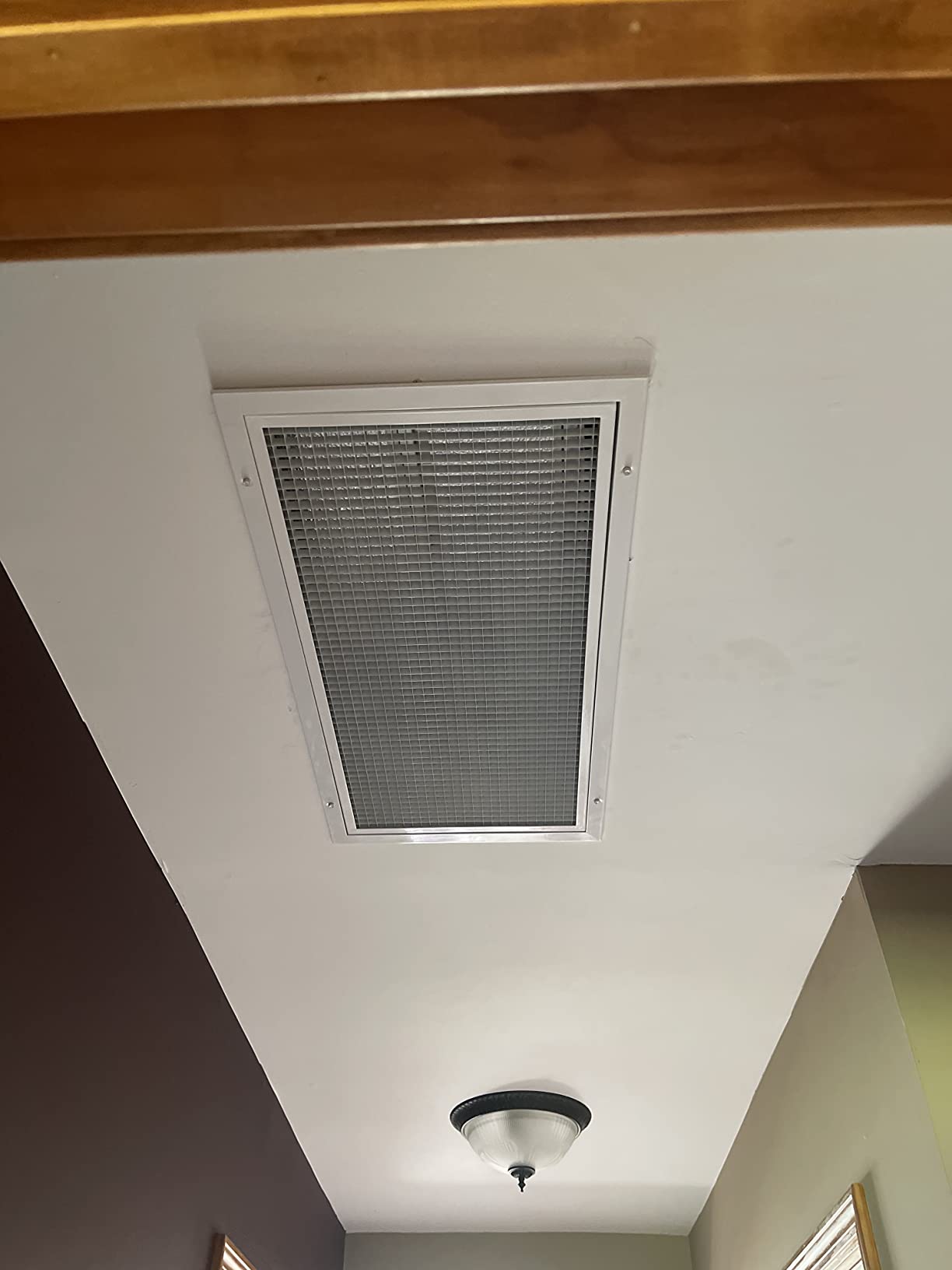
Rather than running a smaller fan flat out, you run this one on the low speed where it is reported to be quiet and still move serious air.
The R-5 insulated damper keeps attic heat out of the house whenever the fan is off, which matters when the attic is sitting well above indoor temperature. Fitting is between 16 and 24 inch on-center joists without cutting framing, and owners report roughly a three hour solo install.
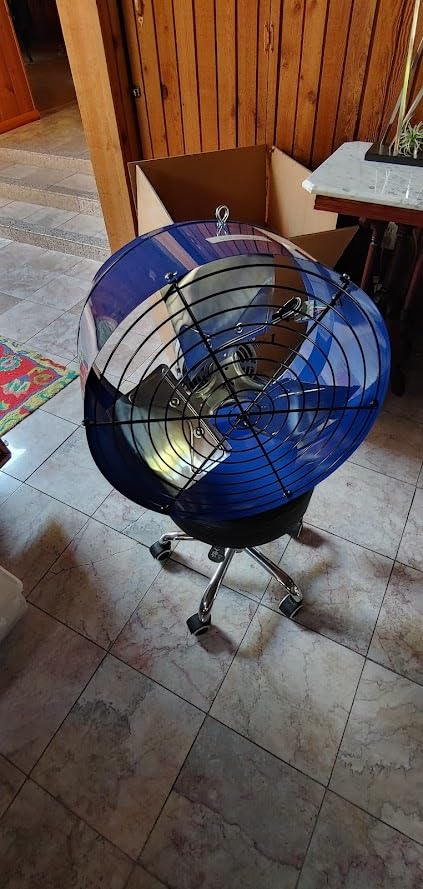
What convinced us it fits a hot attic
The airflow-to-noise trade is the whole story. At 51 dB you will not forget the fan is running, but the two-speed setup lets you settle into the low setting for a night flush and run it for hours.
The sealed damper also matters in a hot climate, where an open shutter would pull furnace-warm air back down into the rooms.
Where owners report friction
High speed is louder than buyers expect, and the documentation is thin on hooking ductwork to the damper box, which is where first-time installers get stuck.
The foam damper doors can rattle after shutdown on a windy day, and the thermostat mode is described as awkward to program and not always reliable at holding a set point.
2. QuietCool CL-4700 RF: Top Rated Two-Speed Whole House Fan
Quietcool QC CL-4700 RF Classic Advanced Whole House Fan with Wireless Control – Up to 4415 CFM – Two Speed – Covers up to 2,208 SQFT – 10 Year Warranty – Removable Grille
4415 CFM high
3402 CFM low
37.2 dB
551 watts high
415 watts low
Pros
- Rated 37.2 dB for a ducted design
- 4415 CFM high and 3402 CFM low for homes up to 2210 sq ft
- Air-tight R5 damper box seals far better than older louvered fans
- Wireless RF switch avoids running wires down walls
- One to two hour install with no joist cutting
Cons
- No printed installation instructions in the box
- High setting is somewhat loud
- Wireless controls take some practice
- One owner found it short on its own for a 2400 sq ft home
The CL-4700 RF carries a 4.8 average across 28 reviews, and its 37.2 dB rating is the quietest published figure in this group. That matters when the ceiling grille sits over a bedroom.
It moves 4415 CFM on high and 3402 CFM on low from a 551 watt motor that drops to 415 watts on the lower setting, rated for homes up to 2210 sq ft.
How it handles a hot attic day
Owners on DIY and investing forums describe QuietCool units as easy to fit, quiet and effective, and specifically praise running them slow. That matches how this one is meant to be used here: low speed, long run, R5 doors closed when it stops.
The 12-hour countdown timer on the glass wall switch is what makes it practical. Set it at dusk, open the windows, and let it run until the house is cool without babysitting a pull chain.
One requirement to check first: it needs 5.89 sq ft of net free attic venting. An attic that cannot exhaust at the fan’s rated speed is the most common reason owners call a new unit defective.
What to know before you order
The paperwork that arrives is marketing material, with installation instructions available online only.
High speed is audibly louder than 37.2 dB suggests, and one owner running near the top of the range found it needed a partner unit for a 2400 sq ft home.
3. QuietCool ES-4700 RF: Best Low-Watt Night Run
Quietcool QC ES-4700 RF Energy Saver Advanced Whole House Fan with Wireless Control – Up to 4195 CFM – As low as 75 watts – Two Speed – Covers up to 2,098 SQFT – 10 Year Warranty – Removable Grille
4195 CFM high
2304 CFM low
415 watts high
75 watts low
ECM motor
Pros
- ECM motor drops to 75 watts on low speed
- Quiet at normal running speeds with no grille or duct rattle
- Remote pairs on the first attempt and the wall switch looks finished
- Grille and ducting quality beat cheaper big-box units
- Solid airflow for 1500-2000 sq ft homes
Cons
- One owner reported only about a one degree temperature drop
- Gravity louvers can stay open if mounted vertically
- Supplied drywall screws will not pierce sheet metal
- No app or smart management features
The ES-4700 RF is the pick if your electric bill is the reason you are reading this. Its ECM motor runs at 415 watts on high and falls to 75 watts on low, the lowest low-speed draw in this lineup.
Airflow is 4195 CFM on high and 2304 CFM on low, rated for homes up to 2098 sq ft, and it needs 5.6 sq ft of net free attic venting.
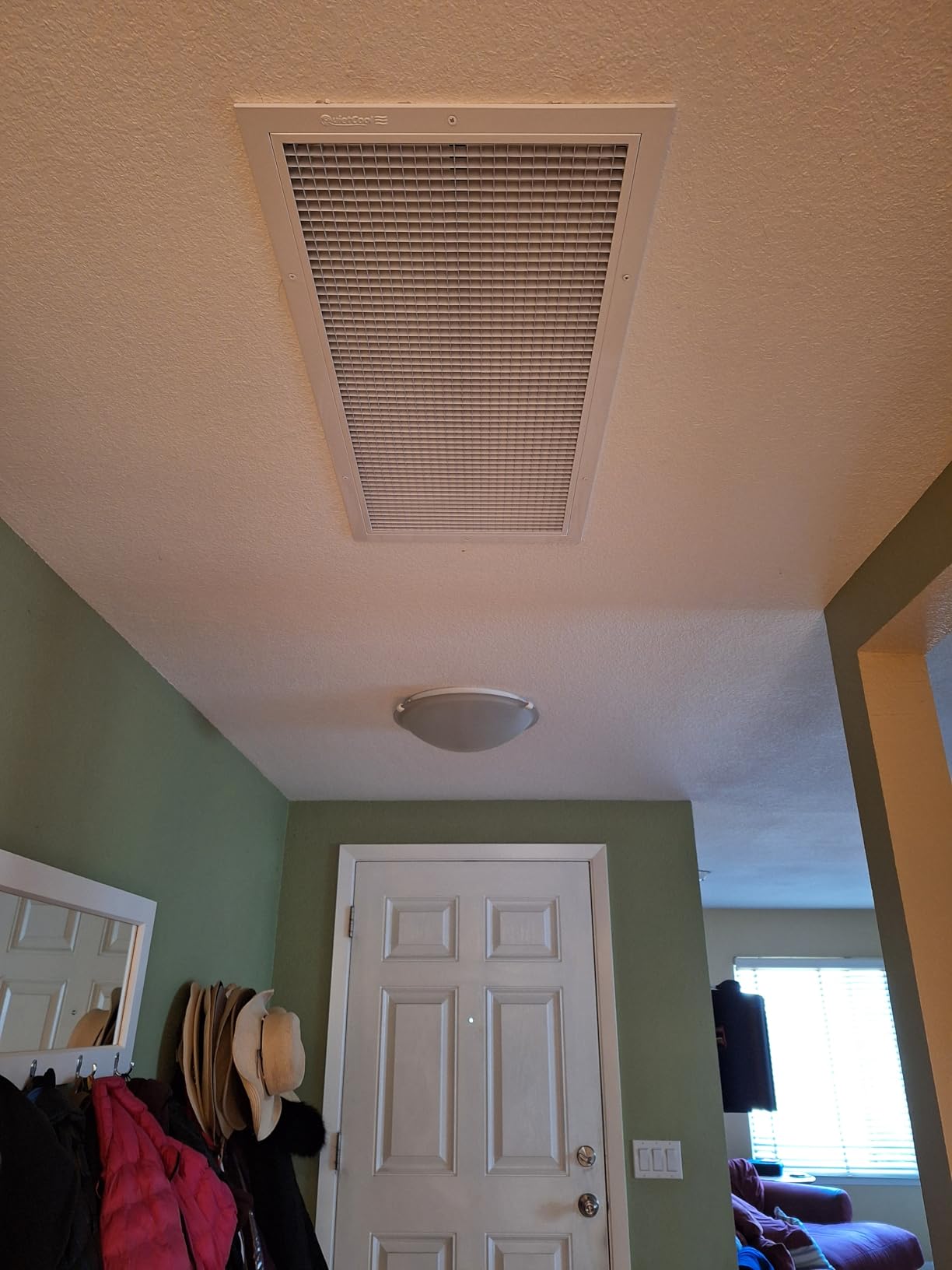
Owners like the remote, the build quality of the grille and ducting, and the way the ECM motor stays smooth without the rattle common in cheaper direct-mount units. The damper box has R5 doors that insulate the home from the attic when idle, which is the right choice when the attic is the hot part of the building.
Why the wattage matters at night
A night flush is an eight to twelve hour job. At 75 watts on low, this unit costs a fraction of what those same hours would cost on a PSC motor that never drops below full draw.
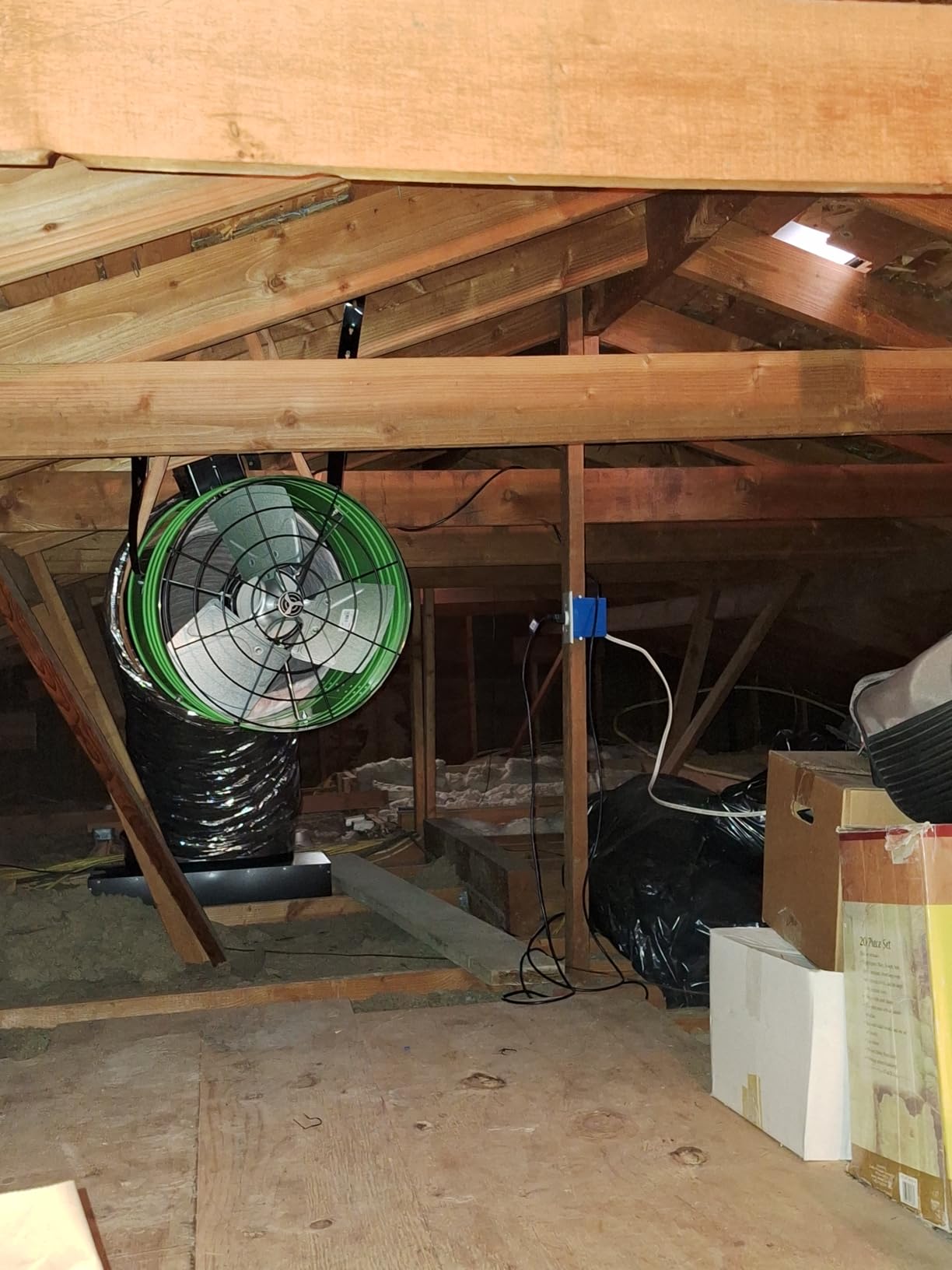
The motor head hangs from the attic rafters over a 14 by 30 inch ceiling cut-out, so noise arrives in the room below as steady hum rather than overhead rattle.
Reported drawbacks
One owner felt the temperature drop was modest, about a degree, compared with an older direct-drive fan. Performance on low is a judgment call, and this is one to test before you commit.
The supplied drywall screws are too blunt to puncture sheet metal, the included strapping is thin for a real attic install, and gravity louvers can stay open if the unit is mounted vertically rather than flat.
4. QuietCool ES-7000 RF: Maximum Airflow for a Super-Hot Attic
Quietcool QC ES-7000 RF Energy Saver Advanced Whole House Fan with Wireless Control – Up to 6878 CFM – As low as 164 watts – Two Speed – Covers up to 3,439 SQFT – 10 Year Warranty
6878 CFM high
4304 CFM low
727 watts high
164 watts low
Needs 9.18 sq ft venting
Pros
- Highest airflow figure in the group at 6878 CFM
- Covers homes up to 3440 sq ft
- Suspended motor head makes attic mounting straightforward
- Wireless control avoids fishing wires through walls
- Contractors report repeat purchases and client recommendations
Cons
- One buyer reported a blade failure within a few months with unresolved support
- One buyer received a damaged unit described as new
- Large enough that two people are effectively required in the attic
If your attic is genuinely extreme, airflow is the lever and this is the biggest one available here. The ES-7000 RF moves 6878 CFM on high and 4304 CFM on low, rated for homes up to 3440 sq ft.
The ECM motor draws 727 watts on high and falls to 164 watts on low, so you still have an efficient night-flush setting despite the size.
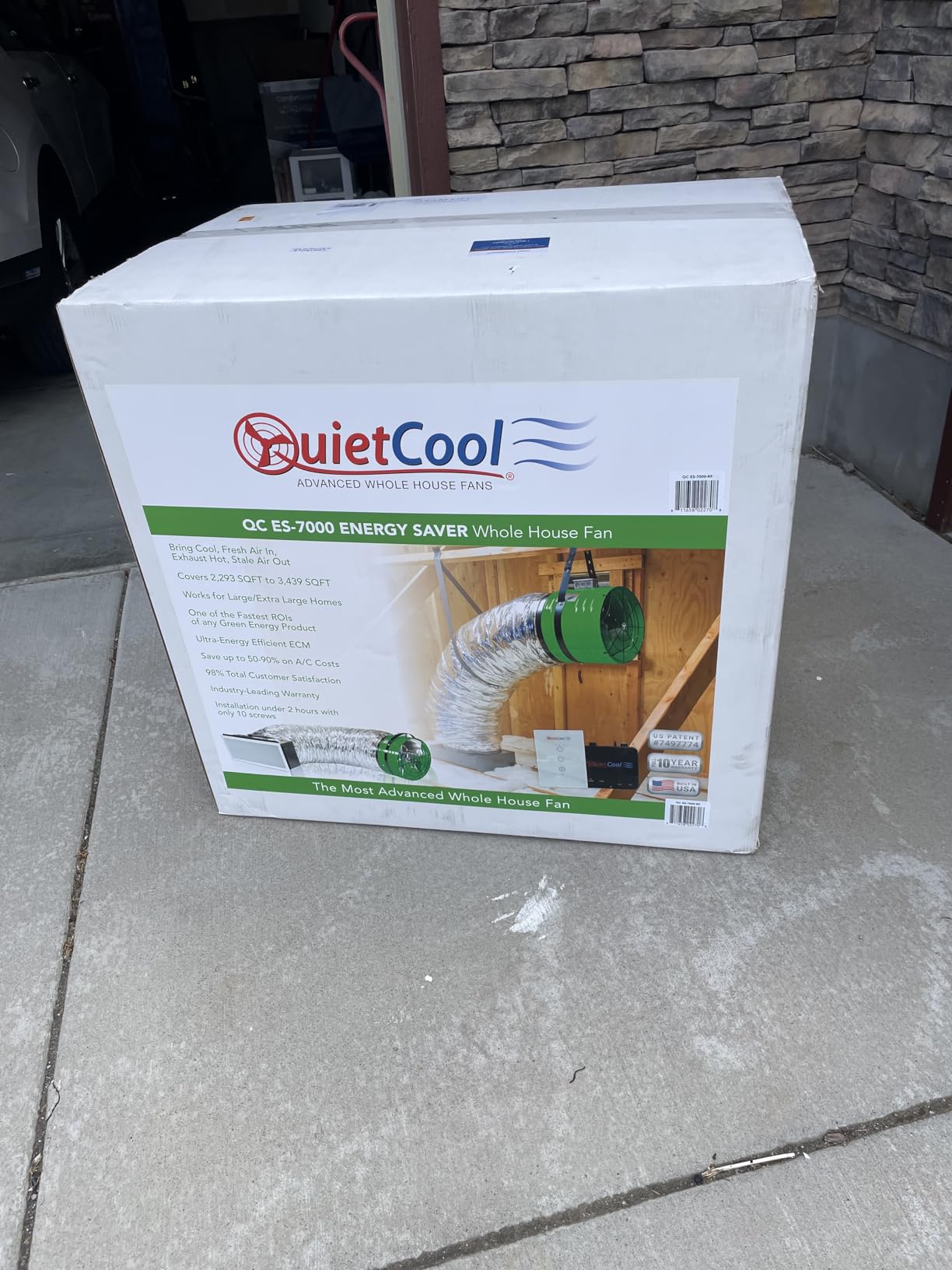
Installers like the rigid suspension design, which makes attic placement more forgiving than hanging a heavy housing on straps, and the wireless kit keeps you from cutting into finished walls for control wiring.
Reviews describe strong airflow, low noise for the volume, clean installs and several repeat purchases. The critical negatives are quality-control and support issues rather than performance complaints.
What you need before this one goes in
It requires 9.18 sq ft of net free attic venting, the largest demand of any pick here. An attic that cannot move that much air will leave this fan running louder and hotter than its rating suggests.
Plan the night-flush schedule around the 12-hour countdown timer on the wireless switch, and use the included window locks so intake stays predictable.
Where the reviews go negative
One buyer reported a fan blade shearing off within a few months and unresolved support follow-up on the replacement part. Another received a returned unit described as new.
At 41 by 28 by 40 inches, treat attic placement as a two-person job rather than a solo install.
5. Centric Air 3.4: Best Long Warranty Coverage
Centric Air 3.4 Whole House Fan, R-5 Insulated Damper, 2 Speed
3242 CFM HVI-916
382 watts
Five-blade wing-tip motor
40000 hour motor life
Pros
- German-engineered five-blade wing-tip motor rated for 40000 hours
- 15-year motor warranty is the longest in this group
- Claims 30 percent more power and one third less energy than standard fans
- R-5 insulated gravity-fed backdraft damper needs no power
- Remote with LED display shows speed and timer at a glance
Cons
- Only a handful of reviews exist for this model
- Heavier 65 pound unit to lift into the attic
- Rated airflow is lower than most picks in the group
- Listed noise figure looks like a measurement artefact
The Centric Air 3.4 is the pick if warranty length is your main concern. Its motor is rated for 40,000 hours of operation under a 15-year warranty, and that length is cited repeatedly in owner forums as a genuine confidence driver.
It moves 3242 CFM on the HVI-916 test method at 382 watts, sized for two-story homes up to 3400 sq ft or single-story up to 2500 sq ft. It needs about 4.0 sq ft of net free attic venting, the lowest demand among the high-airflow options.
How it fits a hot attic
The R-5 insulated gravity-fed backdraft damper needs no power to seal, so it keeps hot attic air out of the house even during a power cut. That is a real advantage in a super-hot attic.
Acoustical ductwork is included to shave noise further, and at 65 pounds with a 28 by 14 by 14 inch housing you should plan a two-person lift into the attic opening.
What to weigh first
There are only seven reviews, so the quietness and efficiency claims rest on a thin base compared with the picks above. Nothing negative recurs, but the sample is small.
The listed 3 dB noise figure is almost certainly a measurement artefact rather than a room-level reading, so use the category benchmarks for in-room expectations instead.
6. Tamarack HV1000: Best Ductless Install
Tamarack Technologies HV1000 R38 Ductless Whole House Fan with Insulated Doors
1000 CFM ductless
250 watts
45 dB
R38 insulated doors
Lifetime warranty
Pros
- Ductless design opens into living space so no ceiling duct work is needed
- R38 insulated doors self-open and self-seal against heat loss
- Owners report 10-12 degree temperature drops on cool evenings
- Much quieter than older direct-mount whole house fans
- Made in the USA with a lifetime manufacturer warranty
Cons
- Ceiling grille does not blend visually and owners often repaint it
- About a one minute delay with audible clicking as the doors open
- One owner found 1000 CFM insufficient for a 2200 sq ft house
- Truss roof systems need care so the self-sealing doors are not obstructed
The HV1000 is the simplest install in the group and the only one with a lifetime manufacturer warranty. It mounts directly in the attic opening on 16 or 24 inch on-center joists, horizontally or vertically, with no duct run to the grille.
It moves 1000 CFM at 250 watts across two speeds at 45 dB. That output suits a small home, an apartment or a single level under about 1000 sq ft, and it is UL listed and made in the USA.
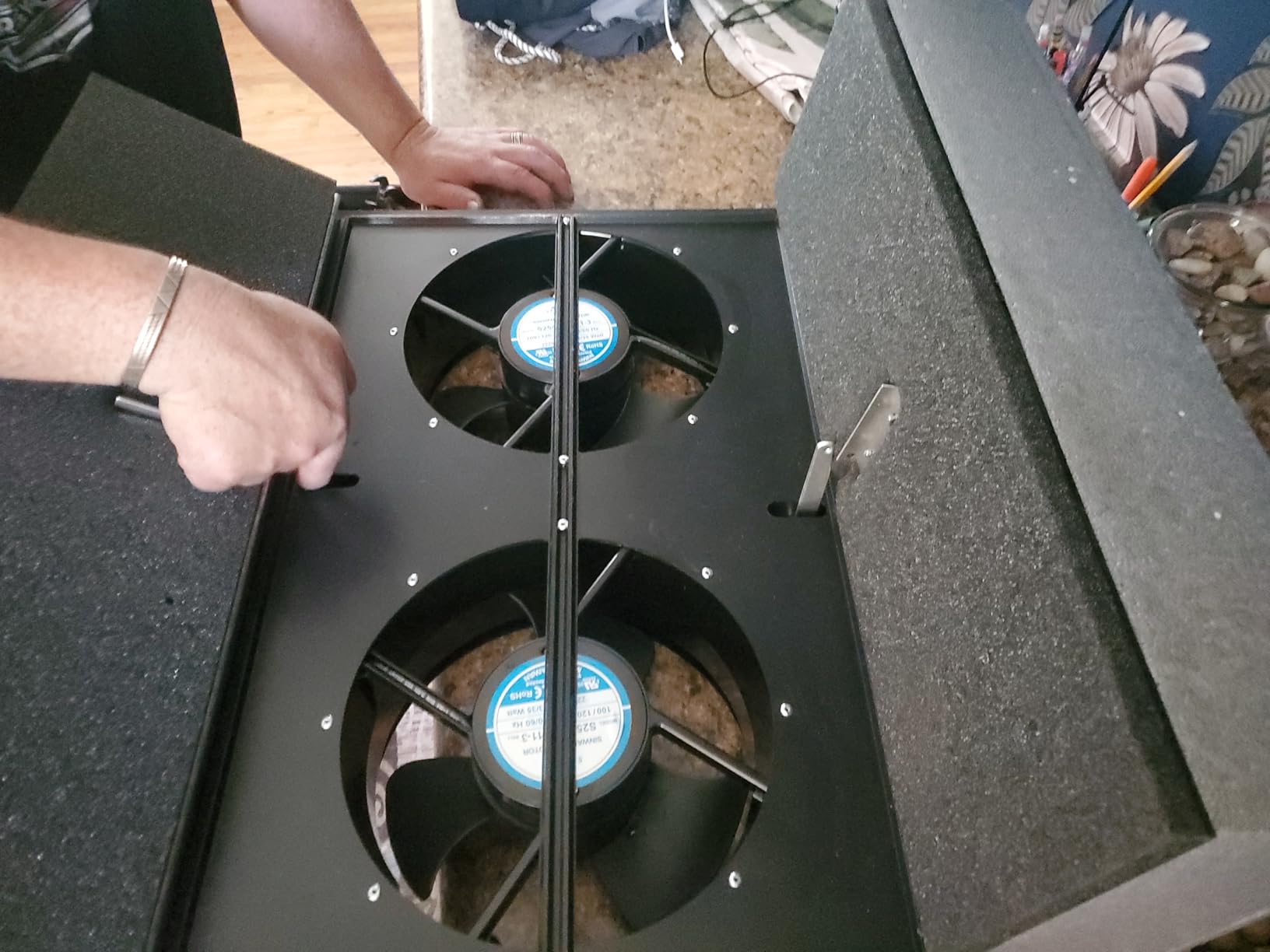
The R38 insulated doors open automatically when the fan runs and seal shut when it stops, blocking heat loss back through the attic in cold months. That sealing is what separates this design from an older louvered shutter, and owners report 10-12 degree drops on cool evenings.
Where the ductless design pays off
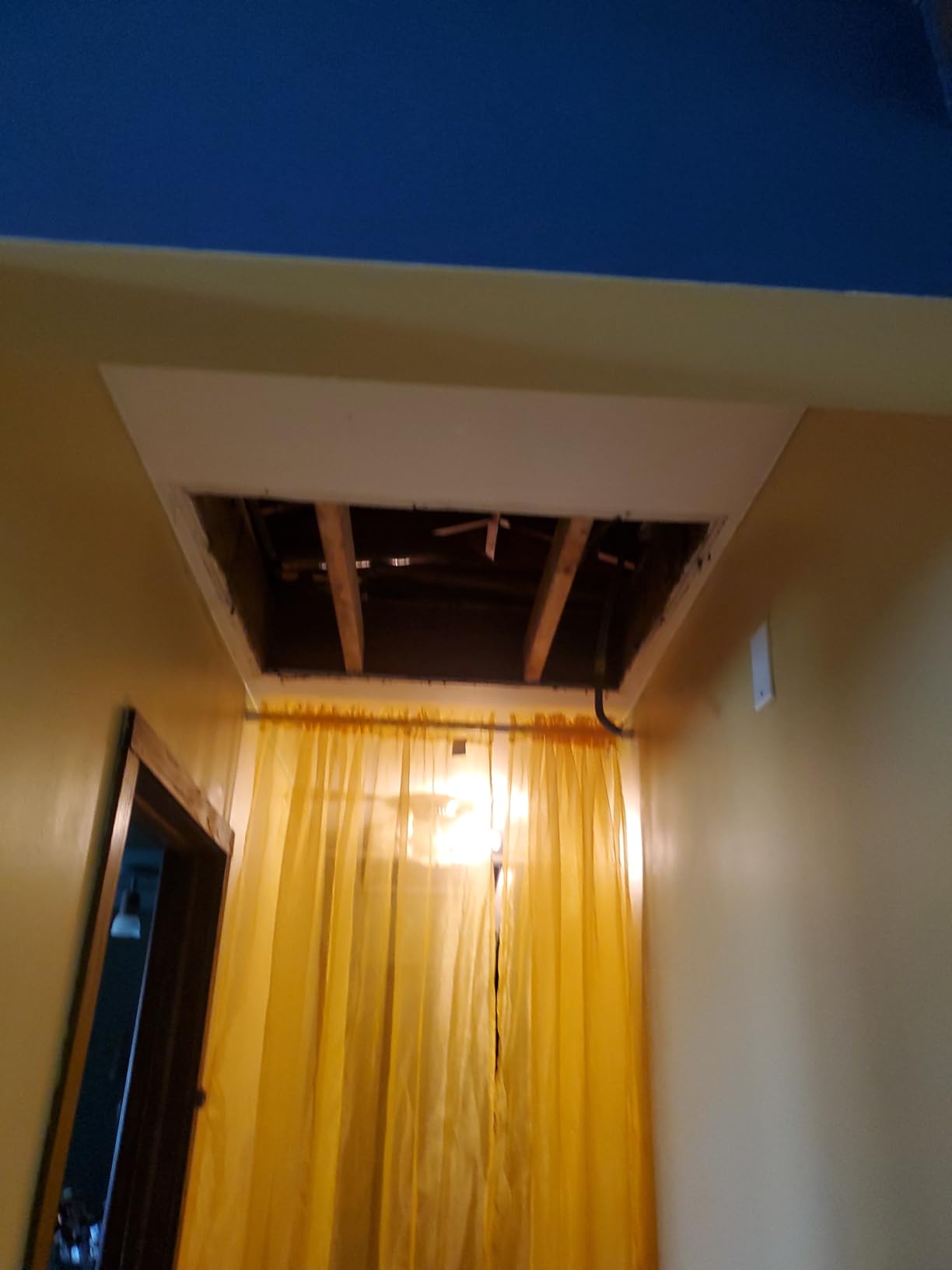
No ceiling duct means no attic duct length to line, no joist cutting and a much shorter job. For a small home or an attic access panel location, that is the difference between an afternoon and a weekend.
The same doors that seal in winter also mean less unconditioned air leakage year round, which helps when the attic is the hot space.
Limits worth knowing
One owner found 1000 CFM insufficient for a 2200 sq ft house despite extensive venting, so size carefully if your home sits at the upper end of small.
The grille does not blend well with a finished ceiling and many owners paint or relocate it, and there is about a one minute delay with audible clicking as the back flaps open.
7. AC Infinity CLOUDWAY T12: Best Smart Controls
AC Infinity CLOUDWAY T12, Whole House Fan with WiFI Temperature Controller
1250 CFM listed
62 dBA
250 watts
11 power levels
WiFi app control
Pros
- Only pick here with real WiFi app control and scheduling
- Temperature humidity and VPD programming in the app
- Eleven power levels instead of a simple two-speed toggle
- EC motor is quiet and inexpensive to run
- ABS housing built for high-humidity environments
Cons
- Grille does not fit standard 16 inch joist spacing
- Included duct length and controller wire are short
- Noticeably louder than competing fans on higher speeds
- Controller is a wired button unit not a wall switch
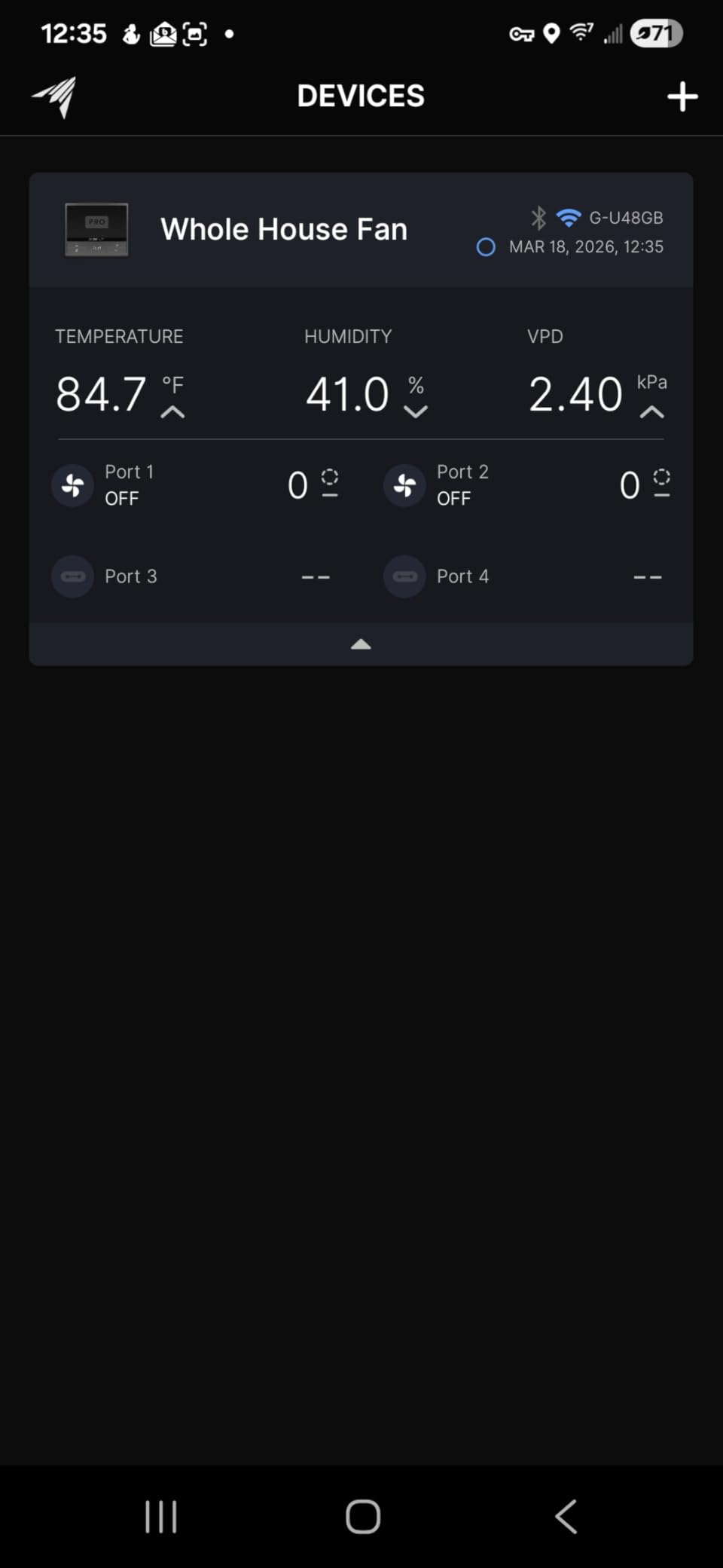
The CLOUDWAY T12 is the only fan here with genuine app-based control. The WiFi app handles temperature, humidity and VPD programming along with timers, cycles, scheduling and a minimum speed setting, which is the level of automation the rest of this category lacks.
The PWM-controlled EC brushless motor offers 11 power levels rather than a high and low toggle, and owners report pairing two of them for roughly 3200 CFM of combined output.
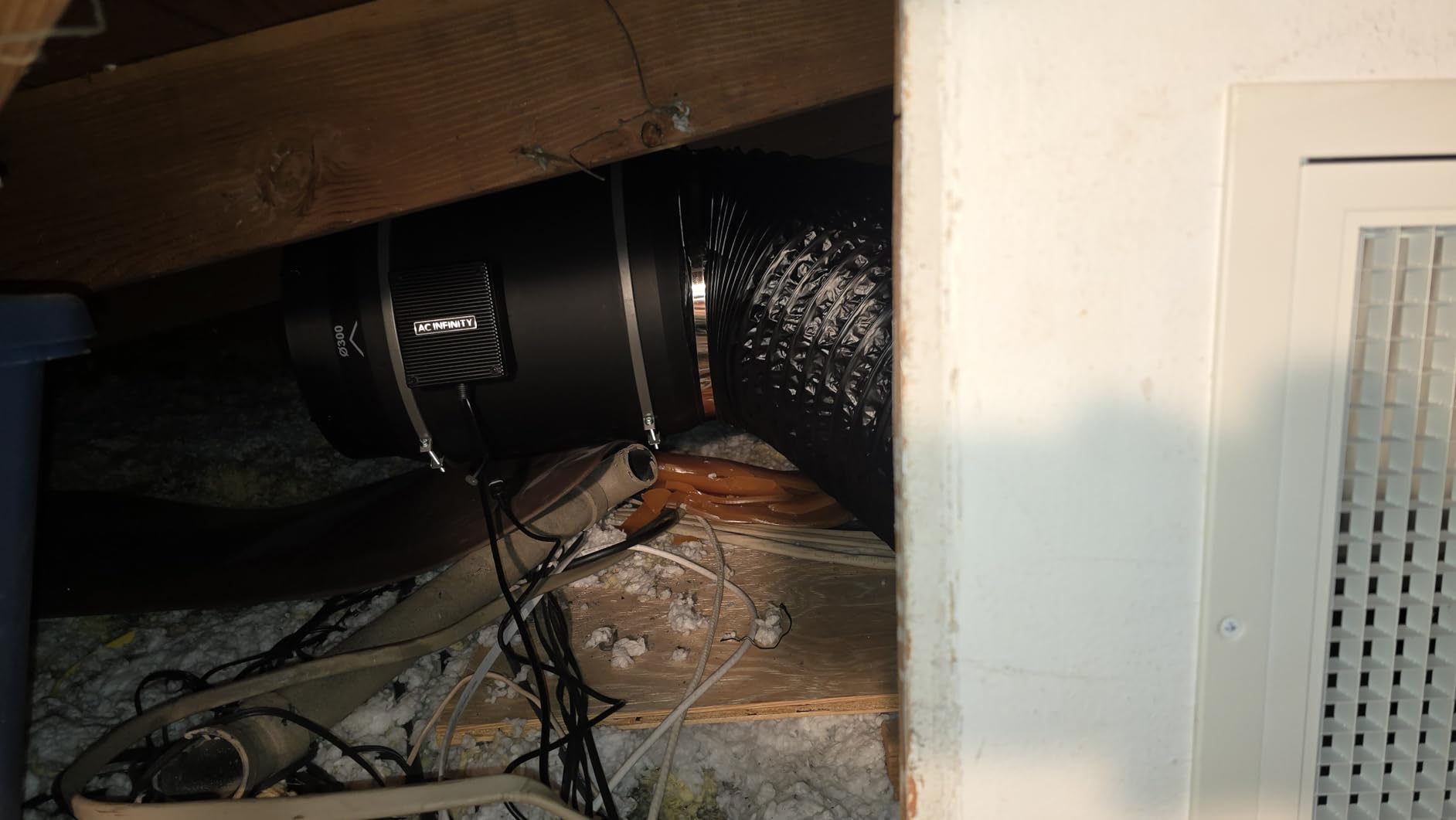
Airflow is listed at 1250 CFM through a 12 inch duct at 62 dBA, at 250 watts. The housing is ABS rated for high-humidity environments and the motor runs on dual ball bearings.
How it performs in a hot attic
Fine-grained speed control is genuinely useful here. Instead of high or low, you can hold a low draw for hours and push harder only at the evening peak, which is the right pattern when the attic is the limiting factor.
Because the app reports temperature and humidity, you can watch the house actually cool rather than guessing at a timer.
Where it falls short
At 62 dBA this is the loudest rated figure in the group, and owners single out higher speed settings in particular. The grille also does not fit standard 16 inch joist spacing, so you may need to build a wood boot or modify the housing.
The included duct length and controller wire are short, and the app sometimes reports failure to set a speed even when the command succeeds.
8. Centric Air 2.7: Quietest Design for Rooms Below
Centric Air 2.7 Ultra Quiet & Energy Saving Whole House Fan, 2 Speed
2709 CFM HVI-916
288 watts
Five-blade wing-tip motor
40000 hour rating
Pros
- German-made acoustically designed five-blade wing-tip motor
- 288 watts with 30 percent more power than industry-standard fans
- Acoustical ductwork included for further noise reduction
- Heavy-duty brackets support the damper off the ceiling
- Motor rated 40000 hours with a 15-year warranty
Cons
- Only eight reviews exist for this model
- 2709 CFM suits a home of about 1200-1400 sq ft
- No noise figure is published for the unit itself
- The 2.7 size covers a smaller home than the models above
The Centric Air 2.7 carries the highest average rating in the group at 4.9, though that comes from only eight reviews. Its design intent is acoustic: a German-made, acoustically designed and precision-balanced five-blade wing-tip motor, plus included acoustical ductwork.
It delivers 2709 CFM on the HVI-916 method at 288 watts and needs about 3.25 sq ft of attic ventilation, the lowest requirement of the ducted picks here.
The motor is rated for 40,000 hours under a 15-year warranty, and the manufacturer claims 30 percent more power and one third less energy than industry-standard fans.
Heavy-duty brackets hold the damper off the ceiling, which reduces structure-borne vibration travelling into the room below.
Why it suits a bedroom ceiling
Everything here targets noise: the blade profile, the motor balance, the duct lining and the mounting hardware. If the grille sits over a sleeping space, those four things matter more than the headline CFM figure.
At 288 watts it is also the lowest draw among the ducted picks, so a long night flush stays inexpensive.
What the small review base means
Eight reviews, all strongly positive with no recurring complaint, is not enough to call this the quietest fan available. Treat it as well-designed with a promising signal rather than a proven category winner.
At 2709 CFM it is sized for roughly a 1200 to 1400 sq ft home, so larger houses should look at the 3.4 or a QuietCool instead.
9. Solatube EPS Plus: Best Complete DIY Kit
Solatube Whole House Fan EPS Plus 2502 CFM Quiet Cooling Fan 2200 Sq Ft
2502 CFM for up to 2200 sq ft
Seven variable speeds
R6 damper doors
15-year motor warranty
Pros
- Complete DIY kit includes motor fan damper mounting hardware remote grille fasteners and ducting
- Patented HushMount 2 system is designed to cut noise and vibration
- Precision-cut jet blade design tuned for airflow with minimal vibration
- Seven variable speeds give finer control than two-speed units
- R6 insulated damper doors limit infiltration when idle
Cons
- Only two reviews exist so buyer feedback is thin
- No published decibel figure to compare against competitors
- 66.8 pound unit is a two-person attic lift
- Jet blade and HushMount claims rest on manufacturer testing
The Solatube EPS Plus is the pick if you want one box to open and one afternoon to work. The kit includes the motor, fan, damper, mounting system, remote, grille, fasteners and ducting, so there is no second hardware run.
It is rated at 2502 CFM for homes up to 2200 sq ft, with seven variable speeds and R6 insulated draft damper doors.
Noise is the design centre here. The patented HushMount 2 mounting system and the precision-cut jet blade are both aimed at reducing noise and vibration, which is the right priority when the attic above you is already the hottest part of the house.
Seven variable speeds is unusual in a category where two-speed is the norm, and it gives much better control over a long night flush. Warranty coverage is solid: 15 years limited on the motor, 10 years on mechanical parts and 5 years on electrical components.
What the spec sheet supports
The variable speed range, R6 damper sealing and the all-in-one kit are the parts of this fan that owners can verify without waiting for a test.
At 66.8 pounds it is not a solo attic lift, so budget a second person.
Where the evidence is thin
There are only two reviews on record, both five stars and both brief, so there is no owner history to draw real conclusions from yet.
No decibel figure is published, so you cannot compare it acoustically against the 37.2 dB or 45 dB units in this group.
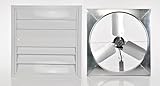
10. Master Flow GAF 24 Inch: Best Budget Whole House Fan
Master Flow GAF 24″ Whole House Fan, 2920 max CFM, PSC Motor – WHFS24M
2920 CFM
24 inch
Quarter horsepower PSC motor
Two-speed pull chain
36 pounds
Pros
- Up to 2920 CFM for homes up to 2000 sq ft
- Direct-drive quarter horsepower PSC motor with a low-vibration design
- Installs without cutting joists with clear first-timer instructions
- Automatic ceiling shutter seals the attic when the fan is off
- One owner reports a second identical unit running past 30 years
Cons
- Louvers are noisy while running and the uninsulated shutter leaks in winter
- One owner reported blades catching and bending the shroud
- Pull-chain control is basic next to remote or app units
- Needs only 562 sq in of attic exhaust ventilation
The Master Flow GAF 24 inch is the entry point, and the airflow figure is not a toy. It moves up to 2920 CFM for homes up to 2000 sq ft from a quarter horsepower direct-drive PSC motor, and it installs without cutting joists.
Vent requirements are modest too, at a minimum of 562 sq in of attic exhaust ventilation, so it fits attics that could not support the bigger ducted picks.
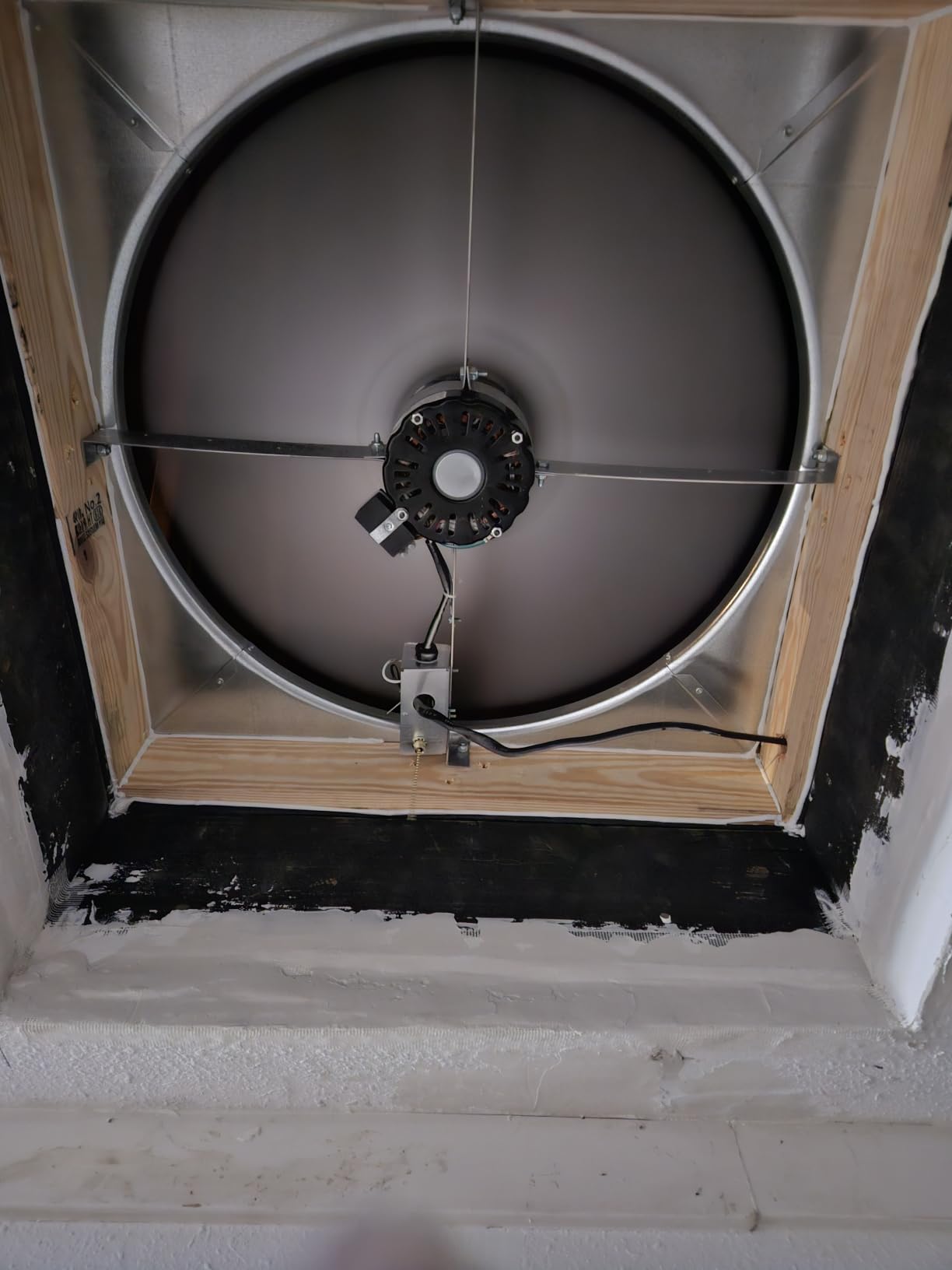
The automatic white ceiling shutter seals the attic when the fan is off, and the direct-drive motor runs smoothly with a reduced vibration design. One owner reports a second identical unit still going after 30 years.
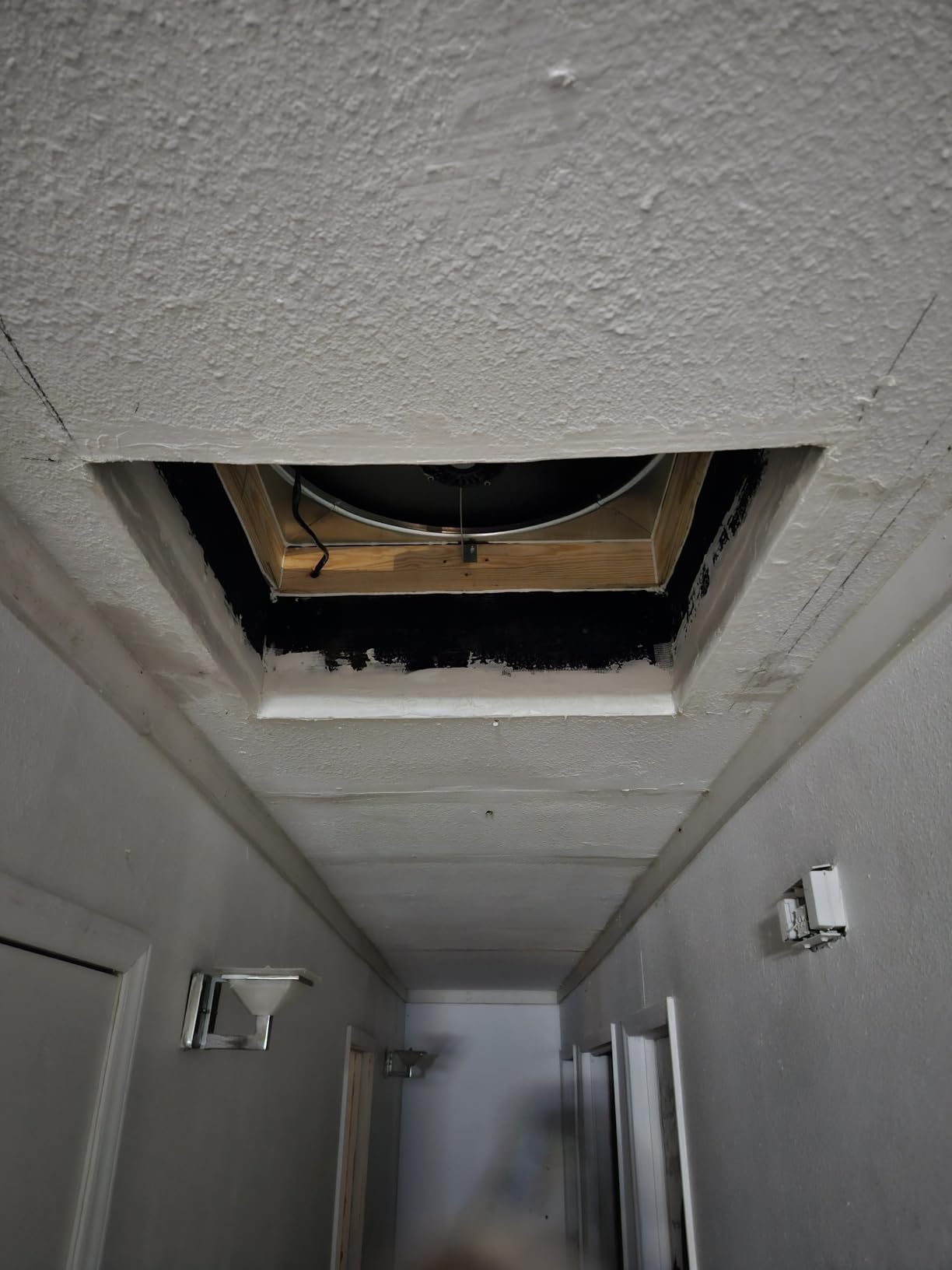
Where it fits a hot attic
Because the vent demand is low, this is the easiest unit to match to an older attic with limited soffit and ridge venting. You can run it hard without starving it of exhaust.
It is also the simplest install in the group for a first-timer, with no duct run to plan and no joist work.
The compromises you accept
The uninsulated louvered shutter is noisy while running and leaks hot air in winter, which is the trade for the low price. Pull-chain two-speed control is basic next to the remote and app units above.
One owner reported blades catching and bending the shroud, leaving a single usable speed, so inspect the blades if you hear a change in pitch.
How to Size a Whole House Fan for a Hot Attic
Start with the rule the whole category runs on: multiply your conditioned square footage by 2 to 3 to get required CFM. The low end suits mild climates, the high end suits hot ones like the attics this guide targets.
1,000 sq ft: about 2,000 to 3,000 CFM
1,500 sq ft: about 3,000 to 4,500 CFM
2,000 sq ft: about 4,000 to 6,000 CFM
2,500 sq ft: about 5,000 to 7,500 CFM
3,000 sq ft and up: about 6,000 to 9,000 CFM
Next comes net free area, the open vent area that lets air leave the attic. The working rule is roughly 1 sq ft of venting per 750 CFM, and each manufacturer publishes the exact figure for their unit.
QA-Deluxe 5500: sized for homes up to 3400 sq ft
QuietCool CL-4700 RF: needs 5.89 sq ft of net free venting
QuietCool ES-4700 RF: needs 5.6 sq ft
QuietCool ES-7000 RF: needs 9.18 sq ft
Centric Air 3.4: needs about 4.0 sq ft
Centric Air 2.7: needs about 3.25 sq ft
Master Flow GAF 24 inch: needs a minimum of 562 sq in
If your attic cannot meet the requirement, add soffit and ridge venting before you buy a bigger fan, because the alternative is a permanently underperforming unit. For owners replacing an existing fan, check whether your ceiling opening is joist-in or joist-out, since that dictates whether the new unit fits without cutting framing.
Why Your Whole House Fan Sounds Louder Than Rated
Noise is the number one complaint in owner forums, and the cause is usually not the fan. This is the order we would diagnose it in.
Insufficient attic net free area. The most common cause by a wide margin, and the most repeated piece of advice in the threads: match the vent area to the fan before blaming the unit.
Worn or stretched drive belt. A slipping belt changes pitch under load and reads as a rumble rather than a hum.
Direct-drive motor resonance. A motor can find a resonant rpm and project it straight into the joists.
Unbalanced or bent blade. Wobble shows up as a periodic thump that changes with speed.
Rattling shutter or a loose duct connection. Common on uninsulated louvered shutters, and usually the cheapest thing to fix.
On tone rather than decibels: owners tolerate steady broadband noise far better than variable rattle or rumble. A fan that sounds like steady brown noise at the grille is working normally.
When Not to Run a Whole House Fan
There are real conditions where a whole house fan is the wrong tool, and they are worth checking before you wire in a timer.
Smoke and wildfire days. Moving outdoor air into the house during poor air quality makes conditions worse, not better.
High humidity. In humid climates the incoming air can raise indoor moisture rather than cooling anything.
Combustion appliances in the exhaust path. A negative-pressure house can pull combustion gases back down a flue, which is a code and safety issue.
Poor vent area. Running a fan your attic cannot support drives it louder and hotter and shortens motor life.
Cool nights that never come. The strategy works by exchanging air, so it does nothing when outdoor air is not cooler than indoor air.
Timer and variable speed control are treated as essential rather than optional in owner groups, because a fan that runs all night on high is the fastest way to regret the purchase.
Frequently Asked Questions
Do whole house fans cool the attic?
No. A whole house fan exhausts air from your living space into the attic instead of cooling the attic itself, so attic temperatures can rise while it runs. Cooling an attic requires a separate attic exhaust fan with matching intake vents.
What is the best fan for cooling my attic?
Cooling an attic needs two things: the highest-CFM unit your net free vent area can support, and a dedicated attic exhaust fan with matching intake vents. A ducted whole house fan only moves living-space heat into the attic, not out of it.
How much CFM do I need for a whole house fan?
Multiply your conditioned square footage by 2 to 3. Under 1,000 sq ft needs about 2,000 CFM, 1,500 sq ft about 3,000 CFM, 2,000 sq ft about 4,000 CFM, 2,500 sq ft about 5,000 CFM, and over 3,000 sq ft needs 6,000 to 7,000 CFM or more.
Why is my whole house fan so noisy?
The most common cause is insufficient attic net free area, which forces the fan to run faster and louder than rated. Other causes include a worn drive belt, direct-drive motor resonance, an unbalanced blade, a rattling shutter and a loose duct connection. Check the venting first.
Should you be able to hear an attic fan?
A little, yes, but it should read as steady low hum or brown noise rather than rattle or rumble. Ducted units rated near 37 to 45 dB are barely audible in the room below, while a standard direct-mount ceiling unit overhead is clearly audible.
What are the downsides of using a whole house fan?
Whole house fans only work when outdoor air is cooler than indoor air, they require open windows, they get louder on high speed, they add heat to the attic rather than removing it, they need adequate attic venting or they run loud and underperform, they are ineffective in humid or smoky conditions, and installation may need a permit or an electrician.
The Verdict for Hot Attics in 2026
The QA-Deluxe 5500 is our pick for most people facing a hot attic. It pairs 5072 CFM of real airflow with a 51 dB two-speed setup, an R-5 insulated damper that keeps attic heat out of the house, and the largest review base of any fan in this group at 117 reviews.
Run the QuietCool CL-4700 RF if quiet matters most, the ES-7000 RF if your attic needs maximum airflow and your venting can support 9.18 sq ft of net free area, and the Tamarack HV1000 if the simplest possible install matters more than raw CFM.
Before any of them goes in, measure your attic vent area and compare it against the manufacturer’s requirement, then apply the 2 to 3 CFM per square foot rule to your floor plan. That single check prevents most of the disappointment owners report, and getting the best whole house fans for hot attics right starts with matching the machine to the space rather than the other way around.