
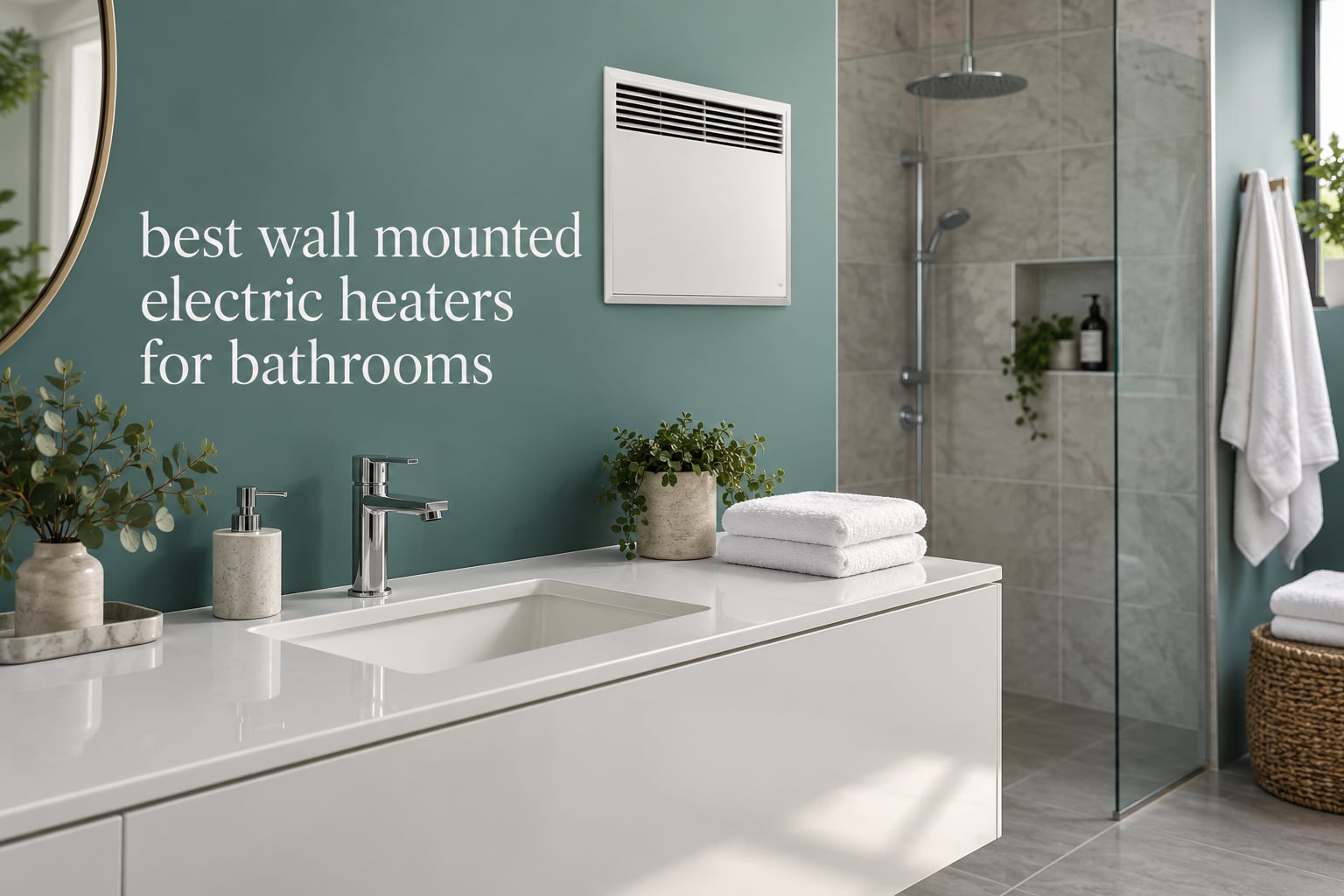
A bathroom-rated wall-mounted electric heater is a permanently or semi-permanently installed heating unit that warms the room from the wall instead of the floor, and for bathroom use it must carry a wet-location rating such as IP24 or come with an ALCI/GFCI-protected plug. That single safety requirement rules out most portable space heaters. Below I compare ten wall units for moisture tolerance, heat output, install type and controls.
Most people arrive at this search from the same place: the room feels fine until February, the exhaust fan pulls all that warmth out in twenty minutes, and the only fix has been dragging a portable heater from bedroom to bathroom each morning. A wall unit solves that friction permanently because it stays where you put it and runs on a thermostat instead of a timer you have to remember.
Our team spent weeks reading spec sheets, install manuals and owner reviews across hardwired recessed heaters and plug-in wall-mounted panels, then mapped each one to the bathroom size it actually suits. The big split in this category is simple: recessed in-wall models deliver more heat and run cooler to the touch, while plug-in panels install in ten minutes and give you app control. Both are legitimate answers, just to different problems.
One note before we get into the picks. Several of these products are sold as indoor heaters with no moisture rating at all, and the packaging says so plainly. On r/AskElectricians, buyers describe discovering that wording only after the box was opened. We have flagged it for every unit below, because a heater marked not for moist environments belongs in a bedroom, not a bathroom.
Table of Contents
Top 3 Bathroom Wall Heater Picks (October 2026)
Cadet Com-Pak 1500W
- 1500W / 5120 BTU at 120V
- Recessed in-wall mount
- Built-in 40-85F thermostat
- UL listed with high-temp cutoff

JNDRO Wall Heater
- 1500W radiant
- ECO mode and 24-hour timer
- Three oscillation angles
- Child lock with LED display

GiveBest Smart Wall Heater
- 1500W / 5200 BTU for 200 sq ft
- WiFi app with remote and touch panel
- ECO thermostat modulation
- ETL listed with tip-over protection
Those three cover the range. The Cadet Com-Pak is the one we would put in a bathroom wall without hesitation, because it is built as an in-wall fixture rather than a box screwed to drywall. The JNDRO carries a 4.5 average rating across hundreds of reviews, and the GiveBest has the widest body of owner feedback of anything we looked at, which makes its weaknesses well documented rather than theoretical.
All 10 Bathroom Wall Heaters Compared in 2026
| Product | Specifications | Action |
|---|---|---|
|
Cadet Com-Pak 1500W 120V
|
|
Check Latest Price |
 Broan-NuTone Model 174
|
|
Check Latest Price |
|
Cadet Com-Pak 240V 2000W
|
|
Check Latest Price |
 DREO Smart Wall Heater
|
|
Check Latest Price |
 Amaze Ultraslim 250W Panel
|
|
Check Latest Price |
 Cadet Register Multi-Watt
|
|
Check Latest Price |
|
JNDRO Wall-Mounted Heater
|
|
Check Latest Price |
|
GiveBest Smart Wall Heater
|
|
Check Latest Price |
 Brightown 1500W Smart Wall Heater
|
|
Check Latest Price |
 EconoHome 400W Panel
|
|
Check Latest Price |
The table is sorted roughly by install type rather than by price. Recessed hardwired models come first because they are the only category that sits flush in the wall and runs at lower surface temperatures. Plug-in panels follow, sorted by how much heat they push and how much control they give you.
1. Cadet Com-Pak 1500W Review: Best Overall In-Wall Heater For A Bathroom
Cadet Com-Pak Electric Wall Heater 1500W 120V Thermostat for Bathroom
1500W / 5120 BTU
120V at 12.5A
200 sq ft coverage
Built-in 40-85F thermostat
Pros
- Complete kit with wall can grille and thermostat
- Recesses flush into the wall
- Mounts horizontally vertically or in a ceiling
- UL listed with high-temperature cutoff
- Holds set temperature in small bathrooms
Cons
- Strong odor for the first day or two
- 12.5A draw can trip a shared 15A circuit
- Thermostat knob has no visible on/off marking
- Some early fan or element failures
This is the heater we keep coming back to for a real bathroom, and the reason is the box contents. You get the fan-forced heater assembly, a galvanized steel wall can, the front grille and a single-pole thermostat rated from 40 to 85 degrees, all in one package, so there is no hunting down a matching can or thermostat later.
At 1500 watts and 5120 BTU it covers a room up to roughly 200 square feet, which is the size of a standard hall bathroom or a small primary suite. It draws 12.5 amps on 120 volts, which is the number to pay attention to if your bathroom circuit also feeds a hair dryer or a heated towel rail.
The mounting flexibility is underrated. The same model fits horizontally, vertically, and in a ceiling at 1500 watts, so if your bathroom has an odd layout you are not boxed into one orientation. Installers like it for that reason, and it is a UL listed design with a built-in high-temperature cutoff that kills the element if airflow is blocked or normal operating temperatures are exceeded.
Two things temper the enthusiasm. Owners report a strong odor for the first day or two of operation, which is the coil and the powder coating burning off and clears with use. A minority also report early component failure, typically fan seizure or an element fault inside two years, so it is worth keeping the model number for warranty work.
Where It Fits A Bathroom Layout Best
Recessing into a stud bay puts the heater low and flush, which matters in a narrow room where a box on the surface projects 4.5 inches into head space. Mount it on the wall opposite the shower door if you can, so the forced air crosses the width of the room rather than heating the wall it is bolted to.
Because the grille sits nearly flush, a toddler or a wet dog brushing past contacts the unit rather than a hot projecting box. That is the single biggest safety gain over plug-in panels, and it is why we rank this model above every alternative in the roundup despite the higher install involvement.
What To Watch Before You Buy It
Confirm you have a 12.5 amp-capable circuit before the box ships. If the nearest outlet is on a shared 15 amp circuit with a hair dryer, plan for an electrician to run a dedicated line rather than hoping the breaker holds.
Also decide on orientation before the drywall goes back on, because rotating the can after the fact means cutting it out again. And if your bathroom has no existing fan, pair the heat with a properly ducted exhaust fan, otherwise you are paying to warm air that condenses on the ceiling and feeds the paint.
2. Broan-NuTone Model 174 Review: Downflow Grille With A Front Thermostat
Broan-NuTone Wall Heater, White Grille Heater with Built-In Adjustable Thermostat, 750/1500W, 120/240V AC
750/1500W selectable
120V with 12.5A draw
100-150 sq ft coverage
Front-mounted thermostat
Pros
- Downflow louvers push warmth toward the floor
- One-piece baked enamel steel housing
- Permanently lubricated motor runs quietly
- Manual reset thermal overload
- Highest review base of the recessed group
Cons
- Professional installation recommended
- Better as supplemental heat than primary heat
- Mechanical thermostat is less precise than digital
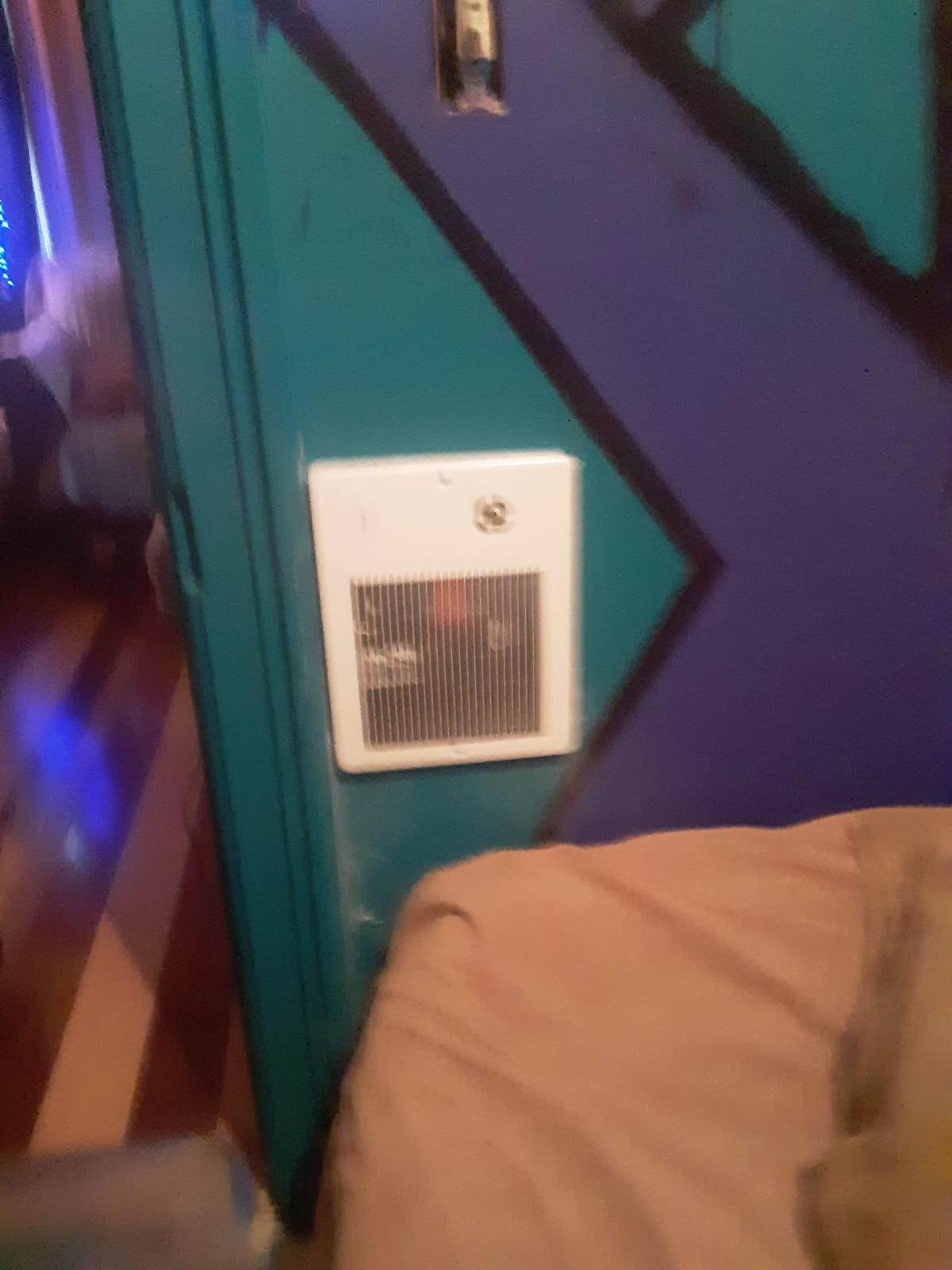
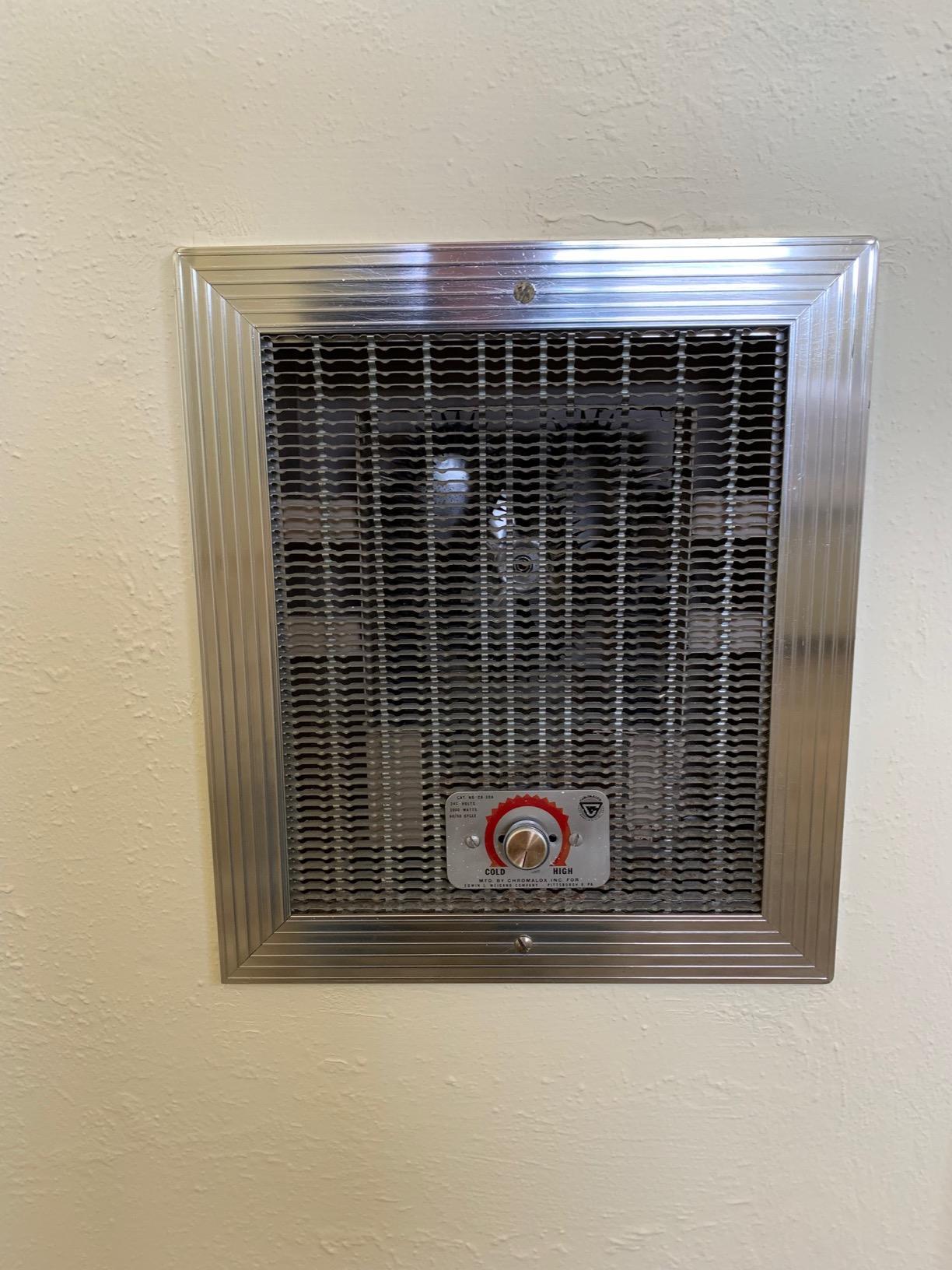
This is the oldest design in the group and it has been sold, unchanged in spirit, for decades, which is either a compliment to the engineering or a warning about the noise floor. It is a convection cabinet heater with a louvered white grille and a thermostat you reach from the front without pulling the unit out.
What makes it interesting for a bathroom is the downflow louvers. Instead of blasting horizontally across the room, the grille aims the air down and outward, which is the right behavior in a tiled room where you want warmth at floor level around bare feet rather than a hot zone at head height.
The build is straightforward old-school hardware: a one-piece baked enamel steel housing, a high-efficiency blower wheel, a permanently lubricated motor and a nickel-chrome element, all UL listed with a manual reset thermal overload protector. That motor is why owners describe it as quiet, and why a large number of them have been running for years without attention.
Coverage is listed at 100 to 150 square feet, which puts it below the Cadet Com-Pak. Think of it as a bathroom that has central heat elsewhere and needs a boost, rather than the sole heat source in a cold north-facing room.
The obvious drawback is the mechanical thermostat. It cycles with a wide dead band and no display, so you set it by feel and then leave it alone. If you want degree-by-degree control you will be disappointed. Installation is also not a weekend-DIY job for most people, since the wiring goes into a recessed can and the wall needs patching.
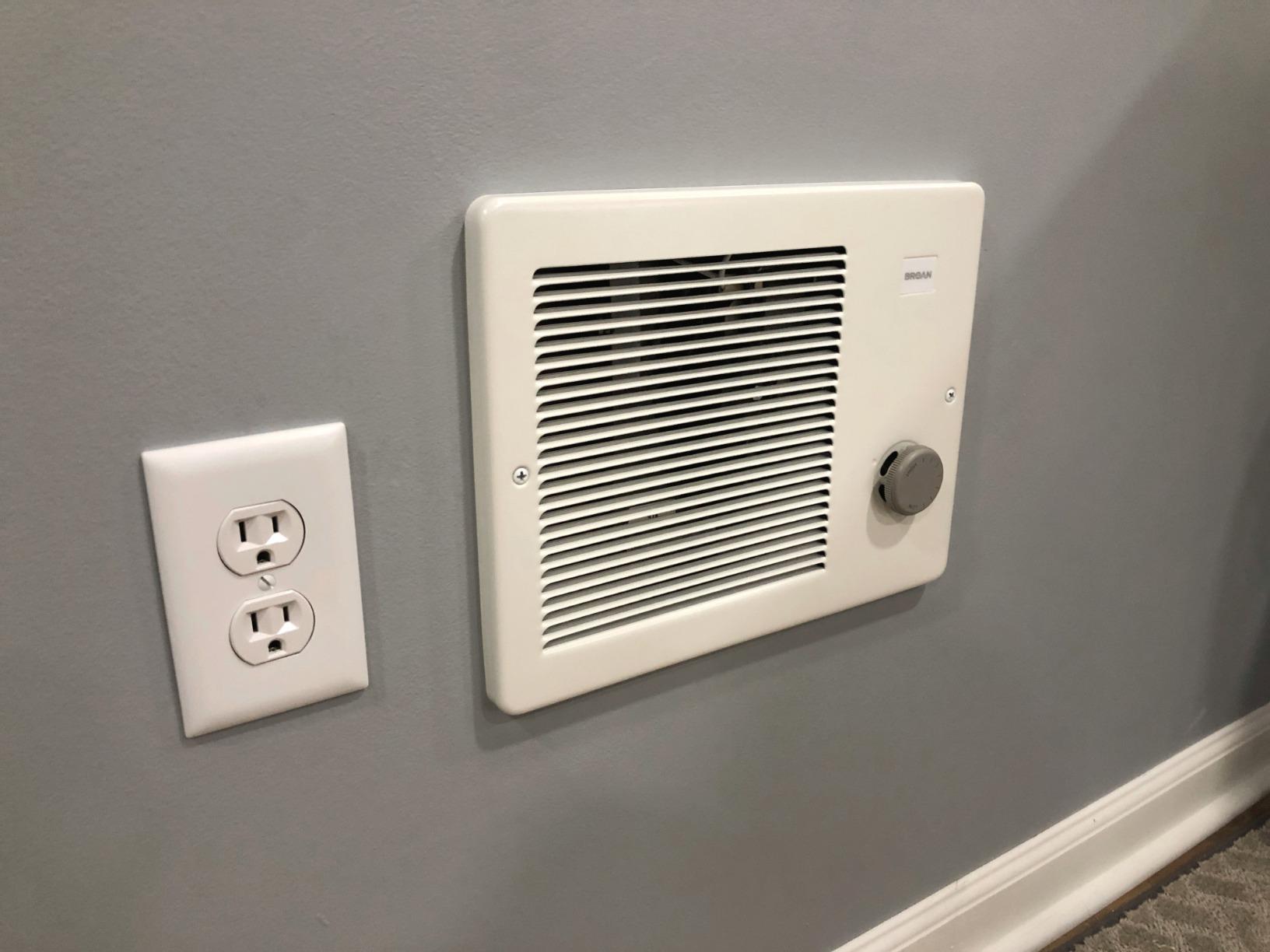
One practical note on placement. Because the unit runs cool at the grille and hot at the element, installers generally aim the louvers away from the shower wall and toward open floor area. That keeps the moisture-laden zone on the far side of the room from the cabinet.
Where It Fits A Bathroom Layout Best
Short on wall space but with floor you want warm, the downflow pattern is exactly right. It works particularly well in narrow powder rooms where a shower is absent and the goal is simply taking the chill off tile in the morning.
It also suits older homes that already have a cavity in the right place. If a previous owner installed one of these, a replacement drops into the same cut dimensions, which is a common reason this model still outsells newer designs in renovation work.
What To Watch Before You Buy It
Set your expectation on capacity. This is a supplement heater, so if your bathroom is the coldest room in the house and you want it at 72 degrees before a shower in January, size up.
Second, get the wall cavity depth right before ordering. The housing dimensions listed for this model are shallower than some competing cabinets, which is helpful in older plaster walls that will not take a deeper cut.
3. Cadet Com-Pak 240V 2000W Review: Best Hardwired Option For Larger Rooms
Cadet Com-Pak Electric Wall Heater Complete Unit With Thermostat (Model: CSC202TW, Part: 67507), 6825/5120 BTU, 240/208 Volt, 2000/1500 Watt, White
2000W / 6825 BTU
240V AC at 8.33A
200 sq ft coverage
Cut-out 8 x 10.25 inch
Pros
- Highest heat output among recessed models here
- Complete kit including can grille and thermostat
- Quiet fan spreads warmth evenly
- Automatic thermal safety shutoff and UL listing
- Lower amperage than a 120V 1500W load
Cons
- Requires a 240V circuit which limits placement
- Ceiling mounting only on lower wattage variants
- Only a one year limited warranty
If your bathroom is on the larger end or poorly insulated, this is the version of the Com-Pak to look at. It runs at 2000 watts for 6825 BTU on 240 volts, and the interesting part is the amperage: 8.33 amps on a 240 volt circuit is a far gentler electrical load than a 12.5 amp 120 volt unit pulling the same heat.
That matters in older houses. If your panel has no spare 20 amp 240 volt breaker position, this model may be easier to accommodate than a 1500 watt 120 volt plug-in heater sharing a bathroom receptacle with a hair dryer.
The kit is complete: wall can, heater, grille and adjustable thermostat in one order. The fan spreads warmth evenly and runs quietly, and the automatic shutoff disables the element if normal operating temperatures are exceeded. A one year limited warranty covers the assembly.
Consumption is the real constraint. A 240 volt circuit means a new breaker, new wire and usually a panel check, so this is an electrician job rather than a homeowner afternoon. It also rules out the plug-in fallback entirely if the install does not work out.
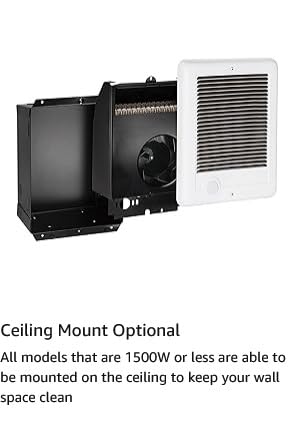
Note the cut-out dimensions of 8 inches wide by 10.25 inches high with 4 inches of depth, and the wall can itself at 7.875 by 11.5 by 4 inches. Measure the bay between studs before ordering, because a can that does not fit means a return.
Where It Fits A Bathroom Layout Best
Primary suites with a separate tub or shower benefit most, since the volume of air is larger and the 200 square foot coverage figure leaves margin. It also works well as the heat source for an adjacent walk-in closet or dressing area served by the same circuit.
If your bathroom has a ceiling cavity already opened for lighting or a fan, mounting it overhead at 1500 watts is permitted on this family of models. Above 1500 watts, ceiling mounting is off the table, which is a detail installers check against local code.
What To Watch Before You Buy It
Have your electrician confirm panel capacity and a nearby disconnect requirement before you commit. Some jurisdictions require a wall switch that controls only the heater, which means routing a cable you may not have planned for.
Second, confirm which variant you are ordering. This product family covers 2000/1500 watt, 3000/2250 watt and 4000/3000 watt versions, and the higher ones change both the cut-out and the circuit requirement.
4. DREO Smart Wall Heater Review: Best For Voice Control And Wet Locations
DREO Smart Electric Wall Heater for Indoor Use, Bathroom, Works with Alexa
1500W at 120V
IP24 and ALCI plug
200 sq ft coverage
28dB at 1500W
Pros
- IP24 rating and ALCI plug suit bathroom zones
- Touch panel remote app and Alexa voice control
- 30-degree manual louver aims airflow
- 41-95F range with ECO mode
- Quiet 28dB running noise
Cons
- 70.8 inch cord requires a nearby receptacle
- Not a recessed unit so it projects from the wall
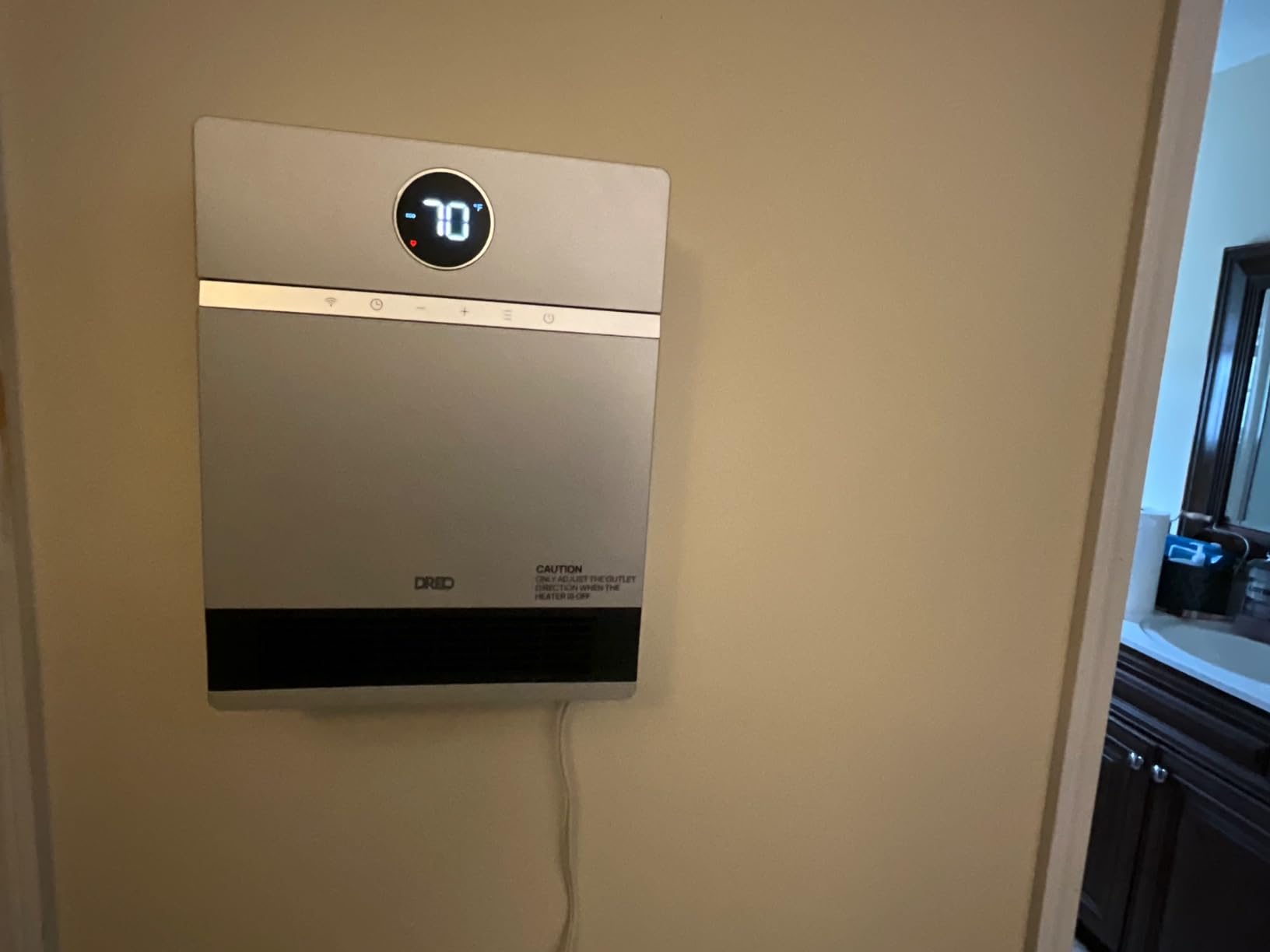
This is the only product in the roundup whose spec sheet explicitly names an IP24 waterproof rating alongside an ALCI plug, and that combination is what makes it a defensible bathroom pick rather than an indoor heater with good manners.
IP24 means protected against solid objects over 12 mm and spraying water from any direction, which is the standard rating electrical codes in wet locations expect. The ALCI plug adds a ground fault sensor that trips the connection if current leaks through moisture. On r/AskElectricians, homeowners describe hunting specifically for this pairing after reading that a cheaper unit was labelled not for moist environments.
Control is where it beats the recessed models. A touch panel, a remote, the DREO app and Alexa voice control all reach the same settings, and the temperature adjusts degree by degree from 41 to 95 degrees in ECO mode with 2 degree fluctuation. Upgrades on r/Oldhouses repeatedly ask about Wi-Fi control for a bathroom heater, and this answers that directly.
The PTC heating element is paired with a 30 degree manual louver so you can aim airflow toward the shower wall or away from it, and the fan moves air at 11.5 feet per second at a stated 28 decibels, which is quiet enough for an early morning.
The compromise is the cord. A 70.8 inch power cord means you must have a receptacle near the mount point, and forum complaints about wall heaters almost always trace back to exactly this: a short cord or no cord management forces the heater above the toilet where the heat lands on empty wall.
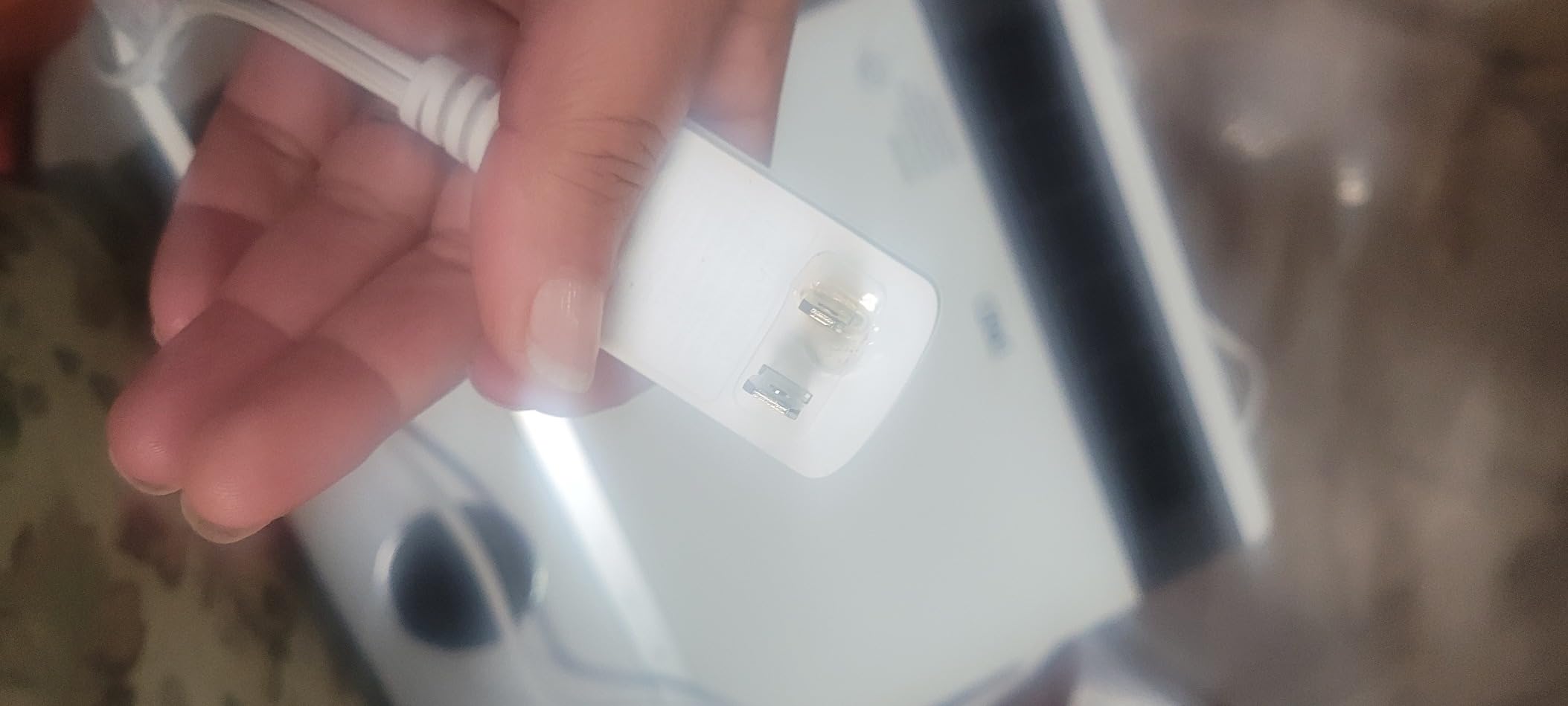
An ALCI plug variant is listed among the color and configuration options, so verify you are ordering the ALCI version rather than the standard plug if your bathroom requires it.
Where It Fits A Bathroom Layout Best
It suits renters and owner-occupied homes where opening the wall is not realistic, and the drilling template included in the box makes mounting a four-screw job on a stud or a suitable anchor point.
The 16 inch wide face projects about 4.5 inches from the wall, so plan mounting height carefully. Mount it so the bottom of the unit clears the splash zone around a tub or sink while the louver still throws air across the room.
What To Watch Before You Buy It
Check the outlet location before you commit, and add an electrician visit to the budget if the nearest receptacle is on the wrong circuit. Plug-in wall heaters draw full current through that single cord, so sharing with a hair dryer or outlet strip is asking for trips.
Second, confirm the IP24 marking on the unit you actually receive rather than trusting the listing photo. It is a differentiator that some resellers quietly swap out.
5. Amaze Ultraslim 250W Panel Review: Best For Thin Walls And Silent Heating
Amaze Ultraslim Electric Wall Heater – 250W Wall Mounted Electric Heater, Mini Convection Panel Heater, Wall Mount Kit, Up to 80 sq ft, 18″x24″ Paintable, Bedroom & Bathroom Heater
250W / 853 BTU at 120V
Only 1 inch deep
80 sq ft coverage
2.08A draw
Pros
- One inch depth suits shallow walls
- Fanless so there is no noise or dust recirculation
- Triple insulated non-conducting surface
- Paintable face blends into decor
- Low 2.08A draw with ETL certification
Cons
- 250W is supplemental heat only
- Covers rooms up to 80 sq ft
- Plug-in thermostat sold separately
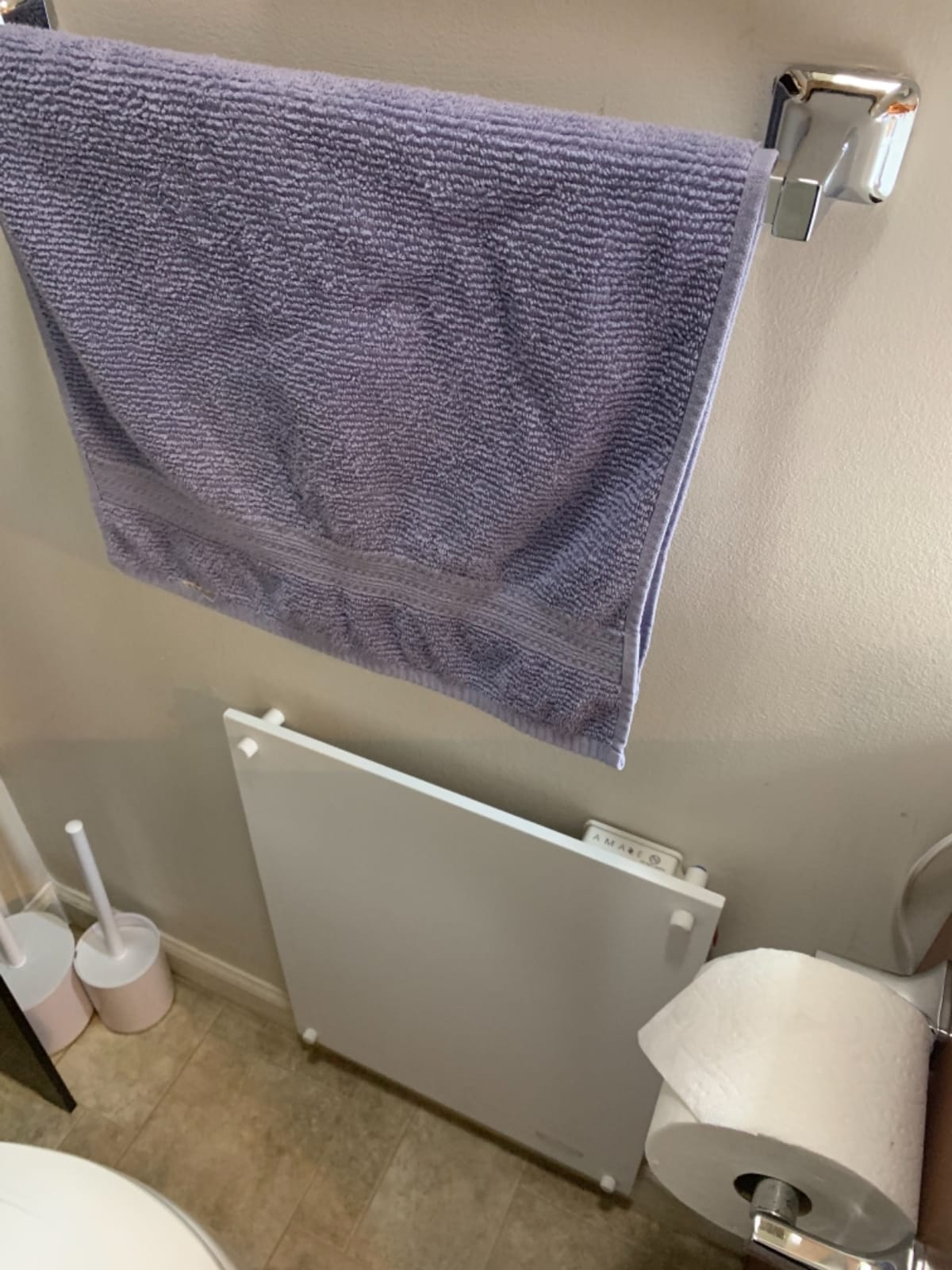
Every other product here projects three and a half inches or more from the wall. This one is a single inch deep, an 18 by 24 inch panel that mounts nearly flat, which is the whole reason to pick it when wall depth is the binding constraint.
There is no fan. Heat moves by natural convection off the panel face, so it runs completely silently and does not stir dust into the air. Owners with asthma and allergies mention that explicitly. It draws 2.08 amps, low enough that it will not fight anything else on the circuit.
Construction is a triple-insulated panel with reinforced fiberglass mats and non-conducting materials that stay safe to the touch, certified to UL 2021 standards by Intertek. The face is paintable, so it blends into a tiled or painted wall instead of advertising itself, and a three year warranty is among the longer terms in this category.
The math is the catch. At 250 watts and 853 BTU per hour, this is rated for rooms up to 80 square feet, which covers a powder room but not a normal hall bathroom. Think of it as taking the chill off a small space rather than heating one.
Also note the thermostat is sold separately. You will need a plug-in thermostat, and that adds both cost and another control box on the wall.

It is compatible with standard plug-in thermostats, which means you can choose a digital model and get degree control on a heater that is otherwise entirely mechanical.
Where It Fits A Bathroom Layout Best
Thin interior walls, tiny powder rooms and half baths where nobody showers. A panel that sits flush does not catch a shoulder as you squeeze past, and the paintable face works in finished rooms where a grille would look out of place.
It is also a sensible secondary heat source for a bathroom that already has a primary system, where you only want extra warmth in the winter months without running a portable unit across the house.
What To Watch Before You Buy It
Do the square footage math before ordering. 250 watts is well under half the output of the 1500 watt models here, so a full bathroom will feel underpowered and the panel may never reach the temperature you set.
Budget for the thermostat separately and confirm your box height. Mount it higher than a baseboard would sit but low enough that convection reaches the occupied zone.
6. Cadet Register Multi-Watt Review: Best Discreet Grille With Selectable Output
Cadet Register Electric Wall Heater Multi-Watt 1500W 120V, White – Bathroom
500 / 1000 / 1500W selectable
120V at 12.5A
200 sq ft coverage
8.8 pounds
Pros
- Selectable output matches heat to circuit capacity
- Register-style grille disappears into the wall
- Large squirrel-cage blower moves air quietly
- One-screw install with bendable legs
- Complete US-built kit with safety shutoff
Cons
- Thermostat purchased separately
- Wall mount only with no ceiling approval
Where other cabinets show you a metal heater box, this one shows you a register grille that looks like a supply vent. If your bathroom already has duct-style vents in the wall, that visual consistency is the main argument for it.
The functional feature is the multi-watt selector. This model runs at 500, 1000 or 1500 watts, so you can dial the heat to match a marginal circuit rather than committing to full output and hoping the breaker holds. At 1500 watts it delivers up to 5118 BTU across areas up to 200 square feet.
Airflow comes from a large squirrel-cage blower, which moves more air with a large fan running slowly. That produces lower grille surface temperatures than a small high-speed fan, which matters if a child is in the room and quieter running in general.
Installation is a single screw once the legs are bent into the recessed can, and the pre-formed bendable legs are designed to fit between standard studs. The kit is complete and built in the US, including the wall can, heater assembly, register grille and a manual-reset high-temperature safety shutoff.
Two limitations. The thermostat is not included; you either buy a separate wall thermostat or wire one into the wall. And this one is wall mount only, with no ceiling approval, so the orientation choice that the Com-Pak offers is closed off.
Where It Fits A Bathroom Layout Best
Bathrooms finished in a period style, or any space where a plain white box would look like an appliance instead of a vent. The register pattern reads as part of the room rather than an addition to it.
The selectable wattage is genuinely useful in older homes. If your bathroom circuit is only comfortably carrying a lower draw, 500 or 1000 watts keeps you safe without pulling a new line.
What To Watch Before You Buy It
Add the thermostat to your cost and plan before ordering. This is the most common surprise in the reviews, because the product reads as complete until you realize the control is missing.
Confirm your wall cavity depth as well. The bendable legs help with stud spacing, but they do not solve a cavity that is too shallow for the can.
7. JNDRO Wall-Mounted Heater Review: Top Rated For Small And Mid-Size Bathrooms
JNDRO Wall-Mounted Space Heater with Thermostat and Remote Control
1500W radiant element
120V power
200 sq ft coverage
41-95F with 24-hour timer
Pros
- Highest average rating with a large review base
- ECO mode adjusts output to ambient temperature
- Three oscillation angles at 60 90 and 120 degrees
- Remote with LED display and 24-hour timer
- Child lock for households with young children
Cons
- Runs continuously in large or freezing spaces
- Can rattle if back screws are not tight
- Remote needs two AAA batteries not included
This unit carries one of the highest average ratings in the group on a review base large enough to make that rating meaningful, and it does so with a radiant element and forced air rather than a bare convection coil. It is the pick we would trust in a mid-size bathroom where output and control both matter.
Output is 1500 watts rated for 200 square feet, and ECO mode adjusts draw to ambient temperature rather than cycling a fixed wattage on and off. Reviewers frequently call it the best value in the group, running quietly for months while holding set temperature accurately in small to medium rooms.
Controls are unusually good for this price band: a remote, a clear LED display, a 24-hour timer and three oscillation angles at 60, 90 and 120 degrees. The oscillation matters more in a bathroom than in an office, because it spreads warmth across a narrow tiled room instead of fixing a single cone of heat.
A child lock covers the panel, and the mounting is described as a ten-minute install with four screws and a paper template. A 12-month replacement policy backs it up.
The limitation is capacity, and reviewers are honest about it. In large or poorly insulated spaces below freezing, it runs continuously without ever reaching the set point, which wastes electricity and warms nothing. Treat it as a heater for a well-insulated room rather than a rescue for a drafty one.
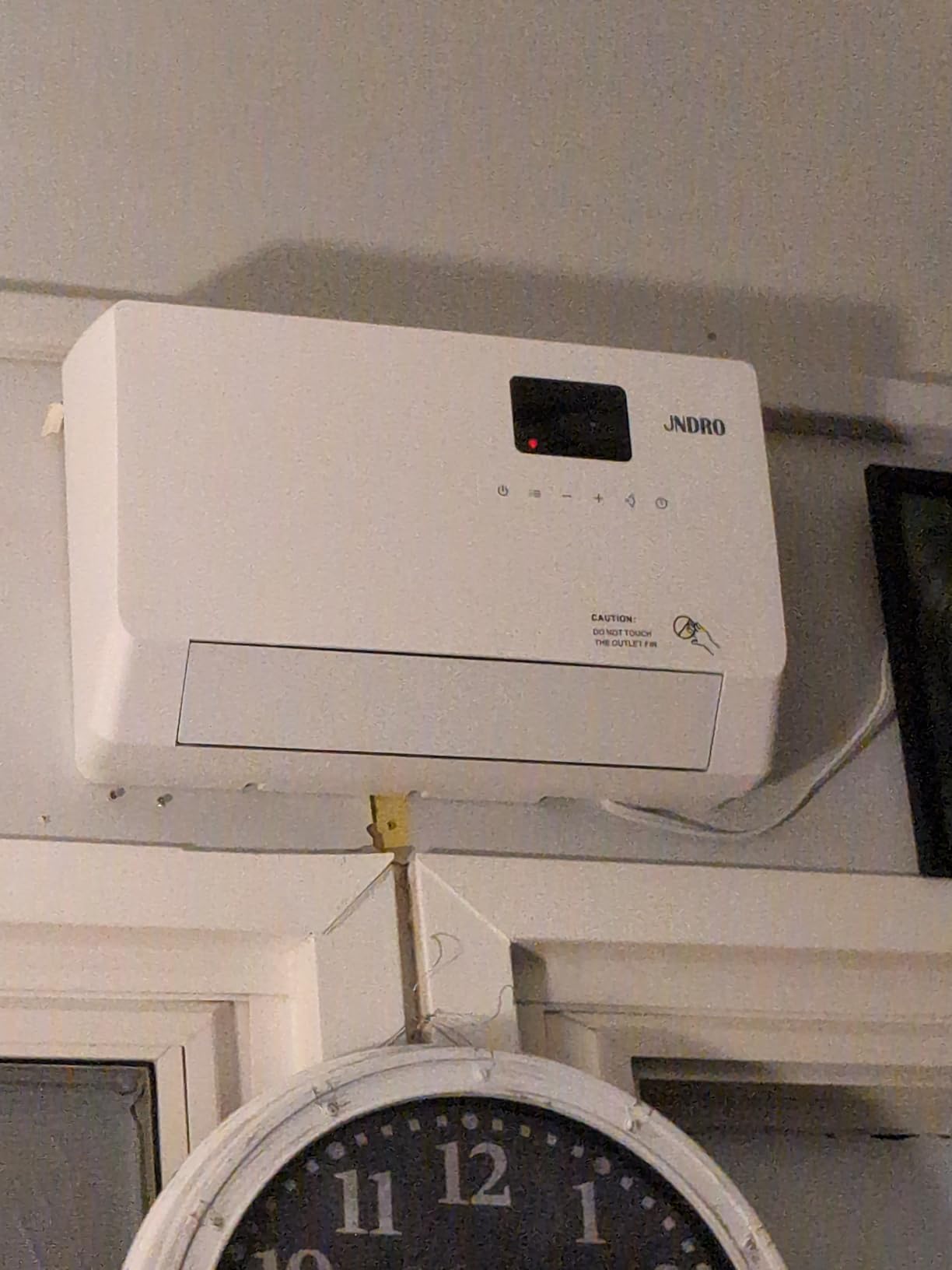
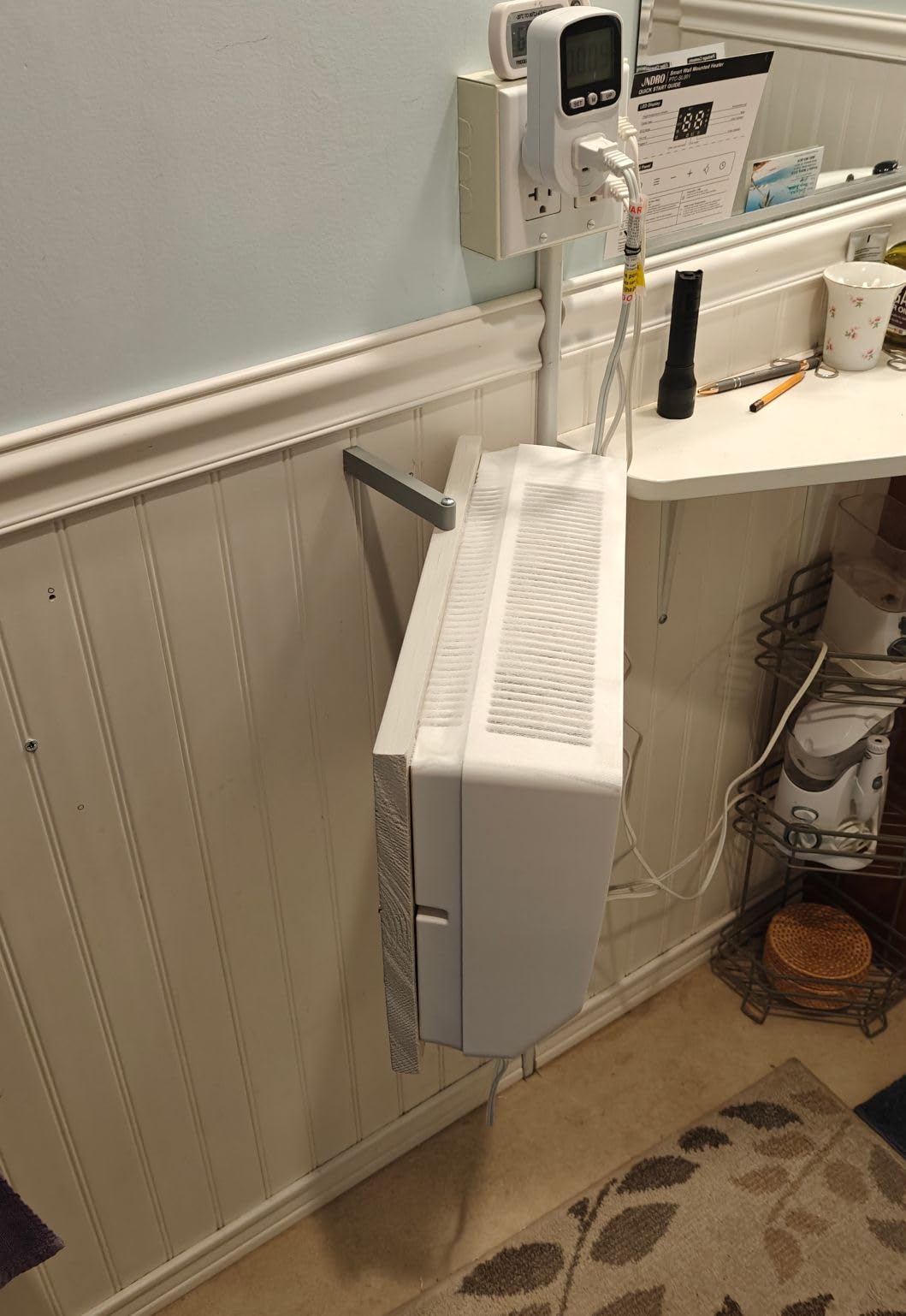
Two smaller annoyances: units can rattle slightly if the back screws are not tightened flush against the wall, and the remote takes two AAA batteries that are not in the box.
Where It Fits A Bathroom Layout Best
Guest bathrooms and hall baths in reasonably insulated homes, especially where you want warmth from two people in the room rather than one fixed direction. The oscillation makes a narrow room with a single occupant feel evenly heated.
The child lock is worth more here than in most rooms, because the unit is mounted at adult height on a wall that small children reach when the floor is wet.
What To Watch Before You Buy It
Check the cord reach and plan the mount point around the nearest GFCI-protected receptacle. A plug-in wall heater draws full current through that cord, so treat the outlet as a fixture, not an afterthought.
And if your bathroom is uninsulated or sits on an exterior wall in a cold climate, size up to a recessed model rather than expecting this one to carry the load alone.
8. GiveBest Smart Wall Heater Review: Best Value Pick With The Largest Review Base
GiveBest Smart Wall Heater, 1500W Space Heaters for Indoor Use, Large Room
1500W / 5200 BTU at 120V
Up to 200 sq ft coverage
40-99F adjustable thermostat
PTC element
Pros
- Three control paths
- including a WiFi app and a remote
- with an LED touch panel showing real-time room temperature.ECO mode modulates wattage to save energy
- ETL listed with tip-over and overheat protection
- V-0 flame-retardant materials
- Large wall footprint with drilling guide included
Cons
- Not for rooms larger than 200 sq ft or open spaces
- No wet-location rating stated
When we wanted to know how a category behaves over years rather than months, this is the model we looked at first, because its review count is the largest in the roundup by a wide margin. That depth of feedback is itself a reason to trust the pattern of praise and the pattern of complaints.
Mechanically it is a familiar design: a 1500 watt PTC element at 120 volts delivering 5200 BTU, rated for well-insulated spaces up to 200 square feet. The form factor is a wall-mounted panel about 16 inches wide with a drilling guide for positioning.
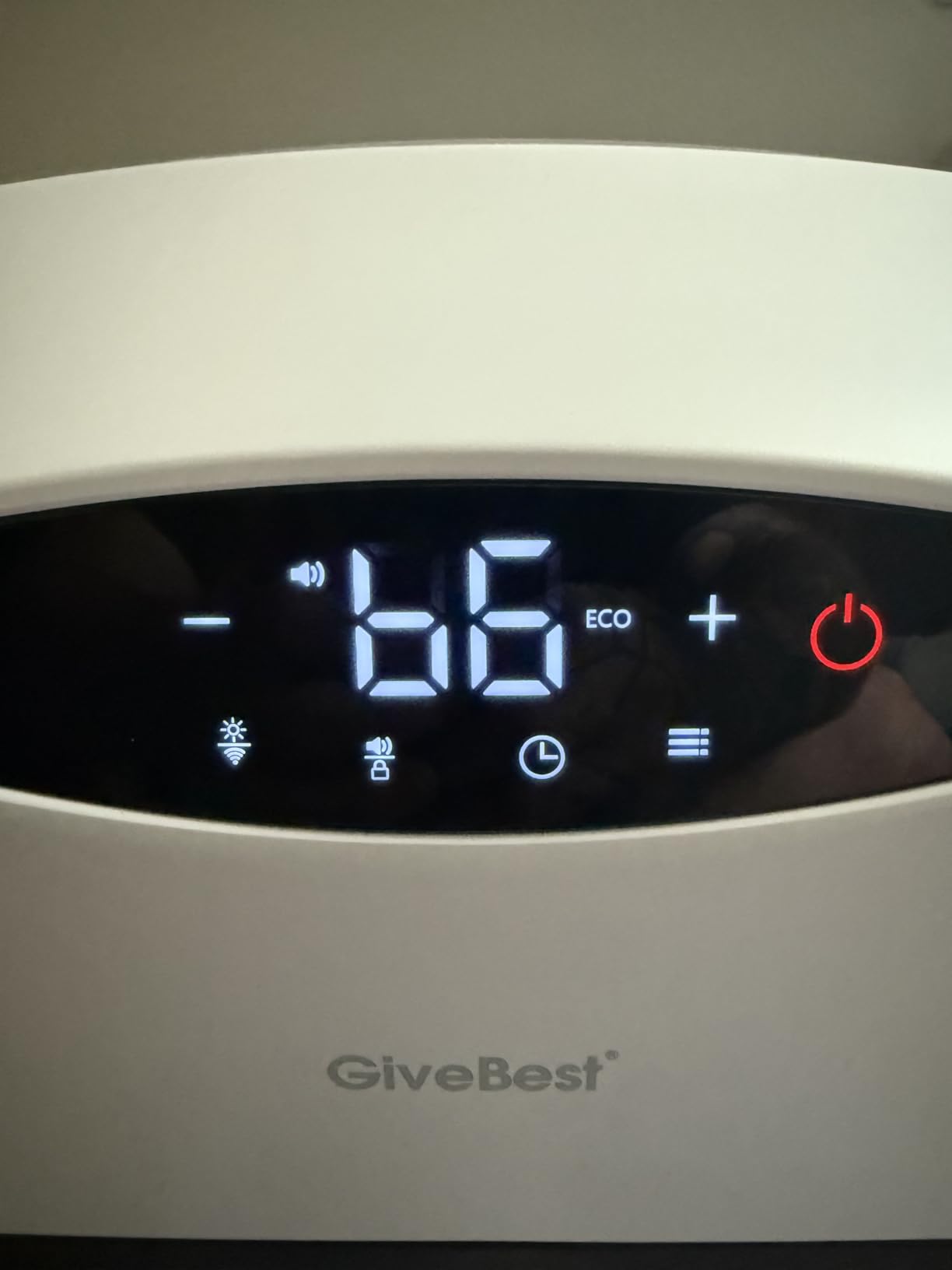
Control runs three ways: a WiFi app, a remote and an LED touch panel showing real-time room temperature. ECO mode uses a precision thermostat to modulate wattage rather than snapping on and off, which is the difference between a heater that idles efficiently and one that hammers the circuit.
Safety is ETL listed with tip-over and overheat protection and V-0 flame-retardant materials. Owners describe the wall mount as freeing real floor space in tight rooms, which is the reason most people in this category buy one in the first place.
Two honest caveats. It is not a heater for a large room or an open plan space, and the spec sheet does not state a wet-location or IP rating. Treat it as a general indoor wall heater that works well in a dry bathroom rather than one designed for a shower zone.
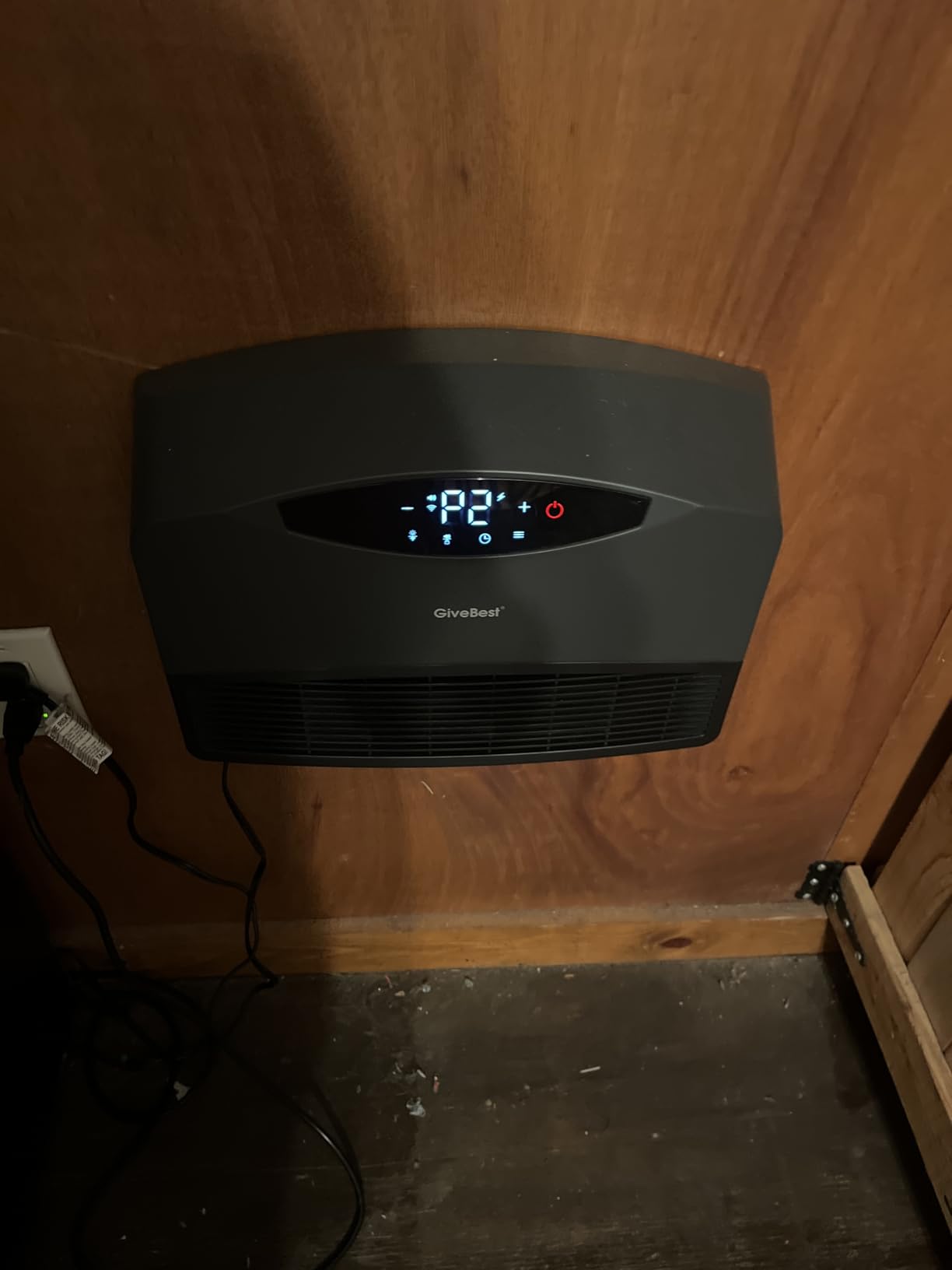
The LED panel reading room temperature in real time is more useful than it sounds. It lets you start the heater from bed and check the climb without walking into a cold room.
Where It Fits A Bathroom Layout Best
Hall bathrooms and guest baths in homes where you want scheduled heating. Pair it with your phone or a voice assistant so the room is warm before anyone gets up rather than after.
It also works in a laundry room or home office on the same wall circuit, so a single purchase covers more than one damp or drafty space.
What To Watch Before You Buy It
Confirm the outlet is GFCI protected and on a circuit that is not shared with a hair dryer. This heater pulls 12.5 amps, which is most of a 15 amp circuit on its own.
Second, set expectations on the ECO mode and app scheduling together. If you schedule long heating blocks, you are running full wattage for the entire block rather than modulating.
9. Brightown 1500W Smart Wall Heater Review: Best For App Automations
Brightown 1500W Smart Wall Heater for Indoor Use, Remote Control/APP, Wifi
1500W PTC ceramic at 120V
200 sq ft coverage
40-99F at 1F accuracy
Five modes
Pros
- Works with Alexa and Tuya Smart Life automations
- Five modes including ECO and fan only
- Temperature set 40-99F with up to 1F accuracy
- Fast two-second rise to set temperature
- V-0 materials with ETL overheat protection
Cons
- Display switches off in ECO mode
- P1 P2 P3 modes heat continuously
- Housing too narrow to span two studs
- Should not share a circuit with other appliances
Where most smart heaters stop at an app, this one is built to be embedded in a home automation setup. It works with Tuya and Smart Life, so sensor-based triggers, schedules and scene control are the normal way to operate it rather than an extra feature.
Output is 1500 watts of PTC ceramic across five modes: ECO, three fixed power levels at 600, 1000 and 1500 watts, and fan only. Temperature sets from 40 to 99 degrees with up to 1 degree accuracy, which is the tightest specification among the smart units here.
The mode list is where you need to read carefully. ECO reduces output once the set temperature is reached, but the P1, P2 and P3 modes heat continuously regardless of ambient temperature. That is useful for pre-heating before a shower and wasteful if you leave it on P3 for an hour.
It also carries a child lock, a digital display, a memory function and a one year warranty, with overheat and tip-over protection ETL listed on V-0 flame-retardant materials. Owners highlight reliable WiFi connection and quiet, unobtrusive wall mounting.
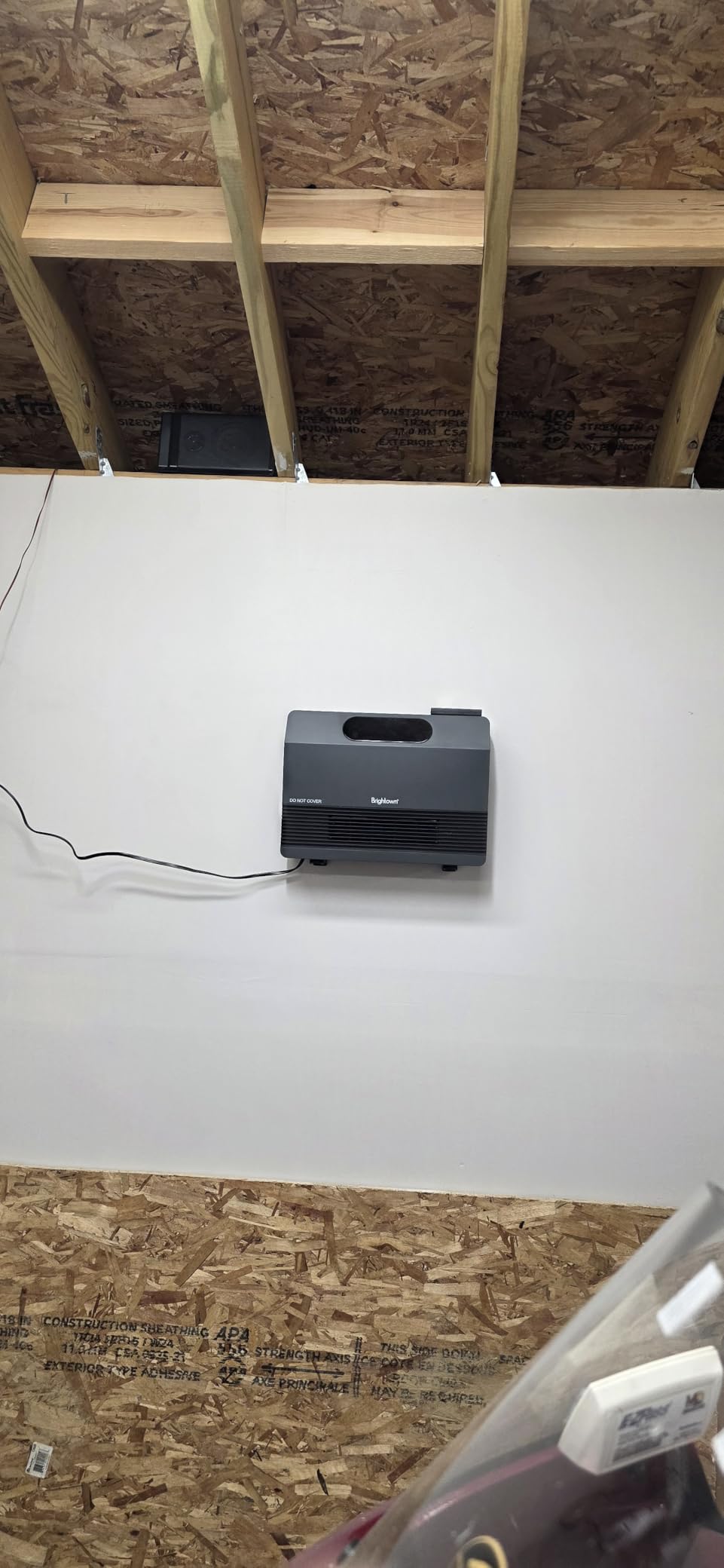
The installation note is worth repeating: the housing is too narrow to span two studs, so it needs proper anchors or a backing board rather than a single drywall screw. And the manual is explicit that it should not share a circuit with other high-power appliances.
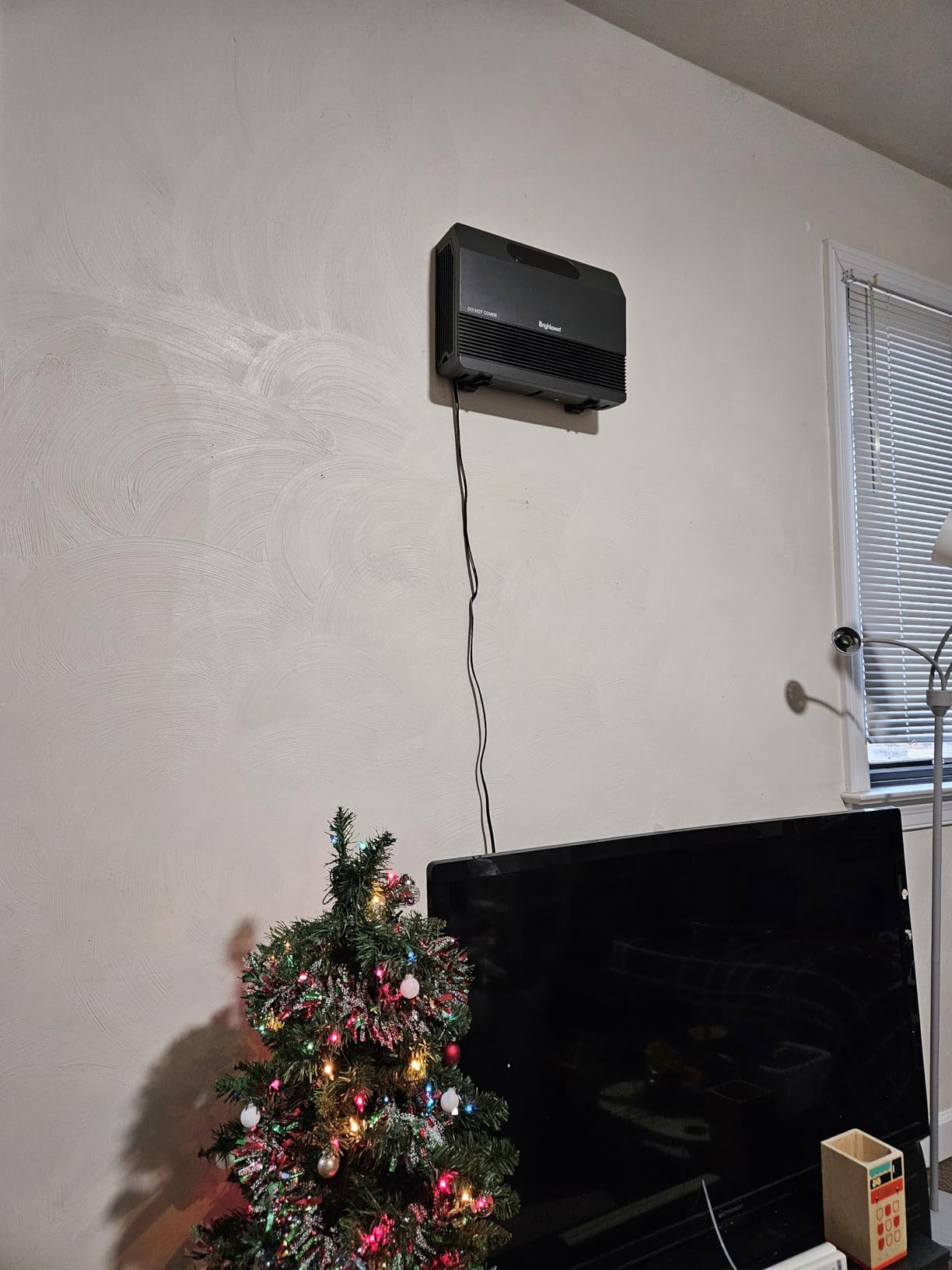
An ALCI plug version is listed among the configuration options for this model, which is the version you want in a bathroom. Check the option you select before checkout.
Where It Fits A Bathroom Layout Best
Homeowners who already run automations and want the bathroom to warm itself on a motion or time trigger. It suits a main floor bathroom that people pass through on the way to work.
The fan-only mode has genuine value in summer for moving air without adding heat, which is something the purely heating models here do not offer.
What To Watch Before You Buy It
Plan mounting hardware before drilling. Between-stud placement needs anchors rated for the weight, and the manufacturer does not claim the housing spans two studs.
Second, decide whether you will actually use ECO mode. If you will mostly run fixed power levels, you are paying for an accurate thermostat you are not using.
10. EconoHome 400W Panel Review: Best With An Included Thermostat
EconoHome Wall Heater Panel with Thermostat – Electric Wall Mounted Heater for Indoor Use – 400Watt Convection Heater – Perfect for Rooms Up to 120 Sq Ft – 120V – Updated Model
400W at 120V and 3.33A
Up to 120 sq ft coverage
41-86F range
Plug-in thermostat included
Pros
- Uses 0.6 KW/HR far below a conventional space heater
- Fanless so it is quiet and does not dry the air
- Thermostat included in the box
- Triple insulated calcium silicate resists cracking
- Can be hardwired and includes overheat protection
Cons
- 400W output limited to 120 sq ft
- Exterior casing feels warm to the touch
- Highest one-star share among the units here
This is the energy-consumption outlier in the group. It consumes 0.6 KW/HR, less than a third of what a conventional 1500 watt space heater pulls, which is the main reason owners in the reviews frame it as a sensible long-running secondary heat source.
The panel is fanless convection with a heat reflector sheet behind it, so there is no motor noise and no air drying. That quiet, dust-free behaviour is the detail allergy and asthma households single out most often.
Unlike several competitors here, the box includes a plug-in thermostat, plus mounting hardware and a manual. The panel is 23.5 by 23.5 inches and about 2 inches deep, with a paintable finish and triple insulated, triple reinforced calcium silicate construction designed to resist cracking.
It is certified to cETL, UL 2021 and RoHS, includes overheat protection, and can be hardwired if you decide you want a permanent install later. A three year manufacturer warranty is among the longer terms in this category.
The tradeoffs are honest ones. At 400 watts it covers rooms up to 120 square feet, so a full-size hall bathroom outgrows it. The exterior casing feels warm, which is normal for a convection panel but means it is not meant for unsupervised contact. It also carries the highest one-star share among the units here, at 14 percent of reviews.
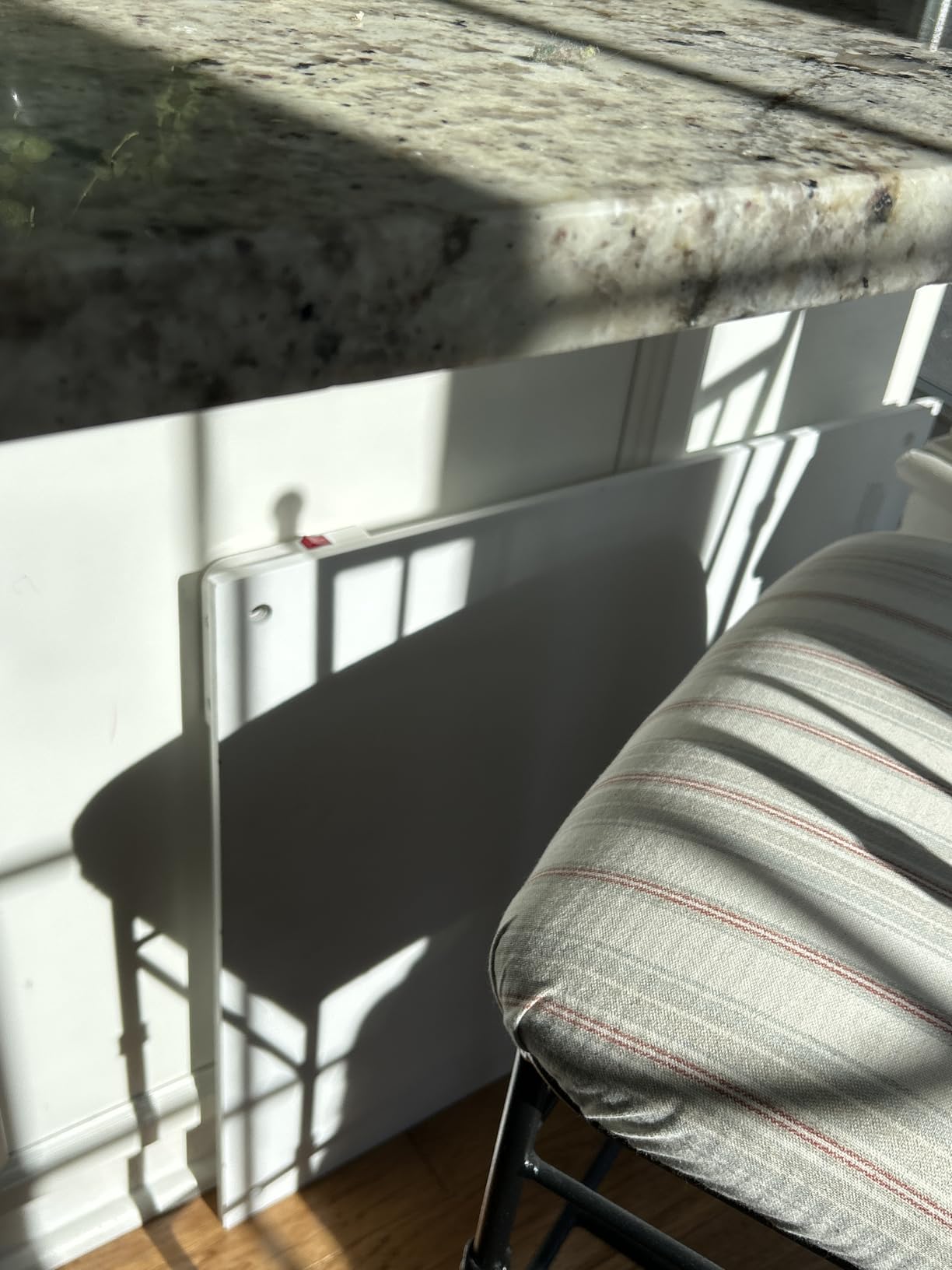
Temperature range is 41 to 86 degrees, narrower than the smart units. If you want to heat a bathroom to 90 degrees before a cold morning shower, this panel is not the tool.
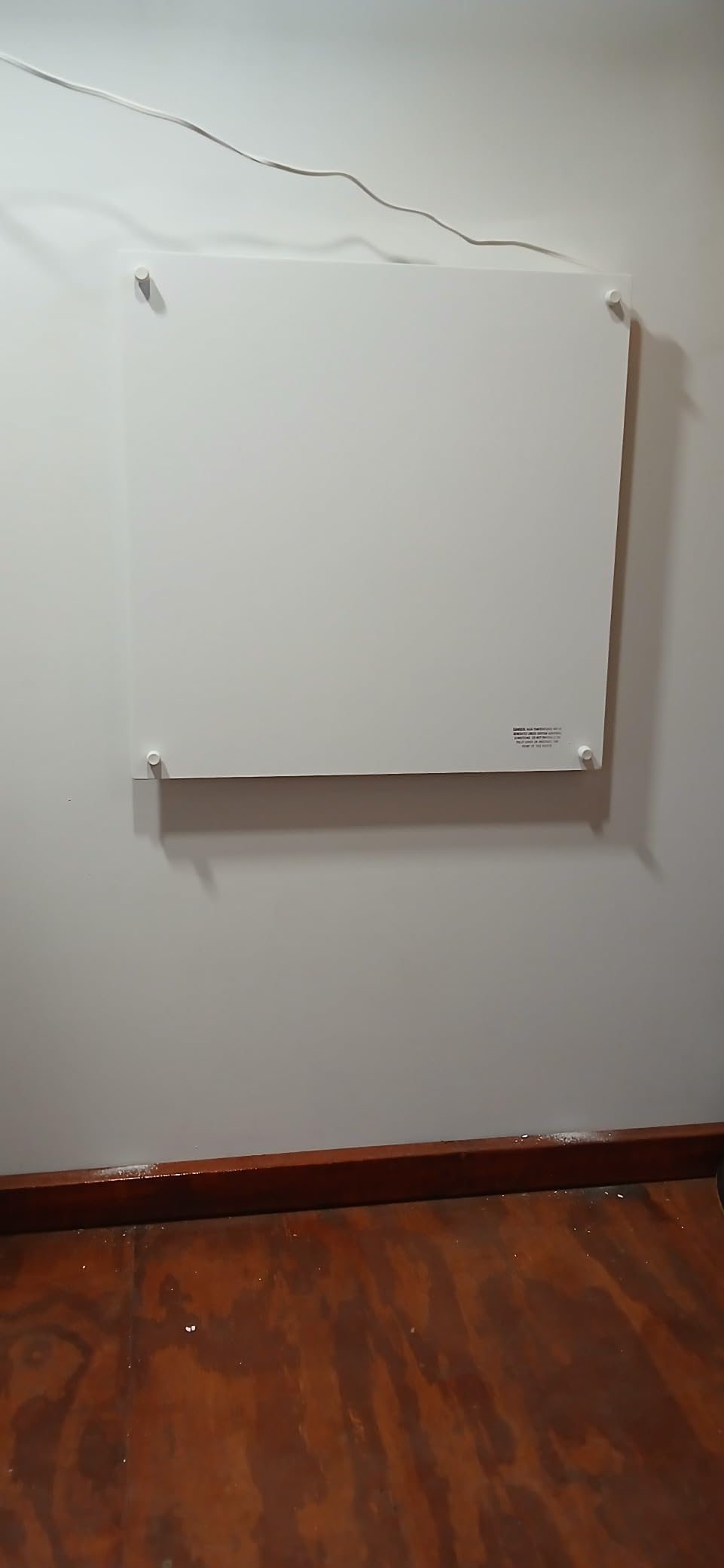
Where It Fits A Bathroom Layout Best
Small rooms, half baths and powder rooms, or any space where you want steady background warmth at low cost rather than fast recovery from a cold start.
The 2 inch depth suits thin walls better than most metal cabinets while giving up less than the Amaze panel, and the paintable face works in finished rooms.
What To Watch Before You Buy It
Do the wattage math against your room. If you want a primary heat source, 400 watts will not deliver it, and stretching the range beyond 120 square feet is how units end up running continuously without reaching set temperature.
Second, place it clear of direct contact. Mount it where nobody leans against it, and keep it away from the shower wall and from towel storage.
Bathroom Wall Heater Safety: ALCI, GFCI And IP Ratings Explained
Can you have a wall-mounted heater in a bathroom? Yes, provided it is rated for a wet location and wired correctly. An unrated indoor space heater in a humid room is the scenario that makes most people nervous, and it is the one the packaging explicitly warns against.
There are three separate things to check, and buyers routinely confuse them. The IP rating measures water exposure, the ALCI plug measures leakage protection on the cord end, and the outlet’s GFCI function measures leakage protection in the wall. Each covers a different failure mode.
IP24 versus IPX4. IP24 means protection against solid objects larger than 12 mm and water sprayed from any direction. IPX4 means protection against splashing from any direction without a solids rating. Both are appropriate for a bathroom wall that is not in the direct spray path. A rating of IPX4 or better is what you want if the unit sits near a tub, since splashing reaches farther than people expect when a shower curtain fails.
ALCI plug. An ALCI plug includes a ground fault sensor that trips if current leaks, which is the leak path that moisture creates. It is the portable-equipment version of GFCI protection and it is required for plug-in heaters in wet locations. If you see no ALCI marking on the cord, treat the unit as indoor-dry only.
GFCI outlet. Hardwired units bypass the cord entirely and still need a GFCI protected receptacle or breaker on the circuit. Most bathrooms installed after 1980 already have one, and you can test with the buttons on the outlet itself. If yours does not, that is an electrician job before any heater goes in.
The other code issue is a dedicated circuit. A 1500 watt 120 volt heater pulls 12.5 amps, which is most of a 15 amp circuit. Sharing it with a hair dryer, outlet strip or heated towel rail means one of them trips the breaker. Ask an electrician to confirm capacity, and treat the 240 volt models in this roundup as requiring a new two-pole breaker.
Finally, clearances. Manufacturers specify minimum distances from the unit to side walls, a bathtub edge, above-counter surfaces and the edge of a shower opening. Those distances come from the temperature limits of the housing and grille, not guesswork, and ignoring them voids the certification.
How To Choose A Wall Mounted Electric Heater For A Bathroom
Which type of heater is best for a bathroom? For most rooms, a fan-forced in-wall cabinet heater at 1500 watts or more, rated for wet locations, installed on a dedicated circuit. For a small room on a tight budget, a fanless convection panel at 250 to 600 watts is often enough and costs a fraction of the electricity to run.
Start with size, because everything else follows from it. Under about 50 square feet, a powder room or half bath, target 400 to 600 watts and keep the thermostat low. Between 50 and 100 square feet, aim for 1500 watts. Between 100 and 150 square feet, stay at 1500 watts and position the outlet or cavity for good air movement rather than adding cost.
Above 150 square feet, a primary suite with a separate tub, a single 1500 watt unit at 120 volts will struggle. Move to a 240 volt model at 2000 watts or larger, or plan on a second unit and a properly zoned control.
Next, decide between hardwired and plug-in. A hardwired recessed unit costs more upfront and needs an electrician, but it runs cooler, projects nothing into the room and is the only category that suits a wet-adjacent location. A plug-in panel installs in about ten minutes, can move with you and is the right call for rentals, guest rooms and any home you do not own permanently.
Forum discussion on r/Oldhouses and r/homeowners tends to land on the same rule: if you own the house and the bathroom is the coldest room, hardwire it. If you rent or the outlet is already in the right place, plug it in. Homeowners also report that unexpected install cost and wall repair are the biggest source of regret on hardwired choices.
Then check controls. A mechanical thermostat cycles wide and drifts. A digital thermostat with degree-by-degree setting, and better an app or voice control, is what people ask for once they have used one. Requests for smart control appear constantly in bathroom heater threads, so treat it as a purchase driver rather than a luxury.
Finally, weigh ventilation. A wall heater does not remove moisture, and running one without an exhausted fan is a fast way to condense water on the ceiling. If your bathroom has no fan, adding one is often a better return than a more powerful heater.
Frequently Asked Questions
What is the best electric heater for a bathroom?
For a typical hall bathroom, the best choice is a wet-location rated, fan-forced wall heater at 1500 watts installed on a dedicated circuit, either a recessed 120V cabinet or a 1500W panel with an IP24 rating and an ALCI plug. Small rooms under 50 square feet can use a lower-output fanless panel at 400 to 600 watts.
Can you have a wall mounted heater in a bathroom?
Yes, as long as the unit is rated for a wet location and the circuit is correctly protected. Look for an IP24 or IPX4 water rating on the spec sheet, an ALCI plug on plug-in models, and GFCI protection on the receptacle or breaker serving any hardwired model.
Are wall-mounted electric heaters safe in a bathroom?
They are safe when properly rated and installed. Key requirements are a wet-location rating, ALCI plug or GFCI-protected circuit, a dedicated circuit rather than a shared one, an overheat safety cutoff, and manufacturer clearances from the tub edge, shower opening and adjacent walls. Ordinary unrated portable space heaters are not suitable for a humid room.
Do bathroom heaters need a dedicated circuit?
Most do. A 1500 watt heater at 120 volts draws 12.5 amps, which uses most of a 15 amp circuit on its own. Sharing that circuit with a hair dryer, outlet strip or heated towel rail causes breaker trips. A 240 volt hardwired model is also a dedicated two-pole circuit and should be checked with your electrician before ordering.
How do I know which size wall heater my bathroom needs?
Match the rated coverage to the floor area. Panels at 250W suit rooms up to about 80 square feet, 400W units up to about 120 square feet, and 1500W fan-forced units up to about 200 square feet. Above 150 square feet, or in a poorly insulated room, move to a 240V 2000W hardwired model rather than stretching a smaller unit.
Final Verdict: The Best Wall Mounted Electric Heaters For Bathrooms In 2026
For most bathrooms, the best wall mounted electric heater for bathrooms in 2026 is the Cadet Com-Pak 1500 watt 120 volt model, because it is the only option here that is built as a permanent in-wall fixture with a thermostat in the box and a safety cutoff you do not have to add separately.
If you cannot open the wall, take the DREO, which pairs an IP24 rating with an ALCI plug and real app and voice control. If you want the quietest possible solution for a small room, the EconoHome or Amaze panel runs fanless at a fraction of the running cost.
Before any of them go in, confirm the wet-location rating, the outlet type and the circuit capacity. In our view that check matters more than the wattage number on the box.