
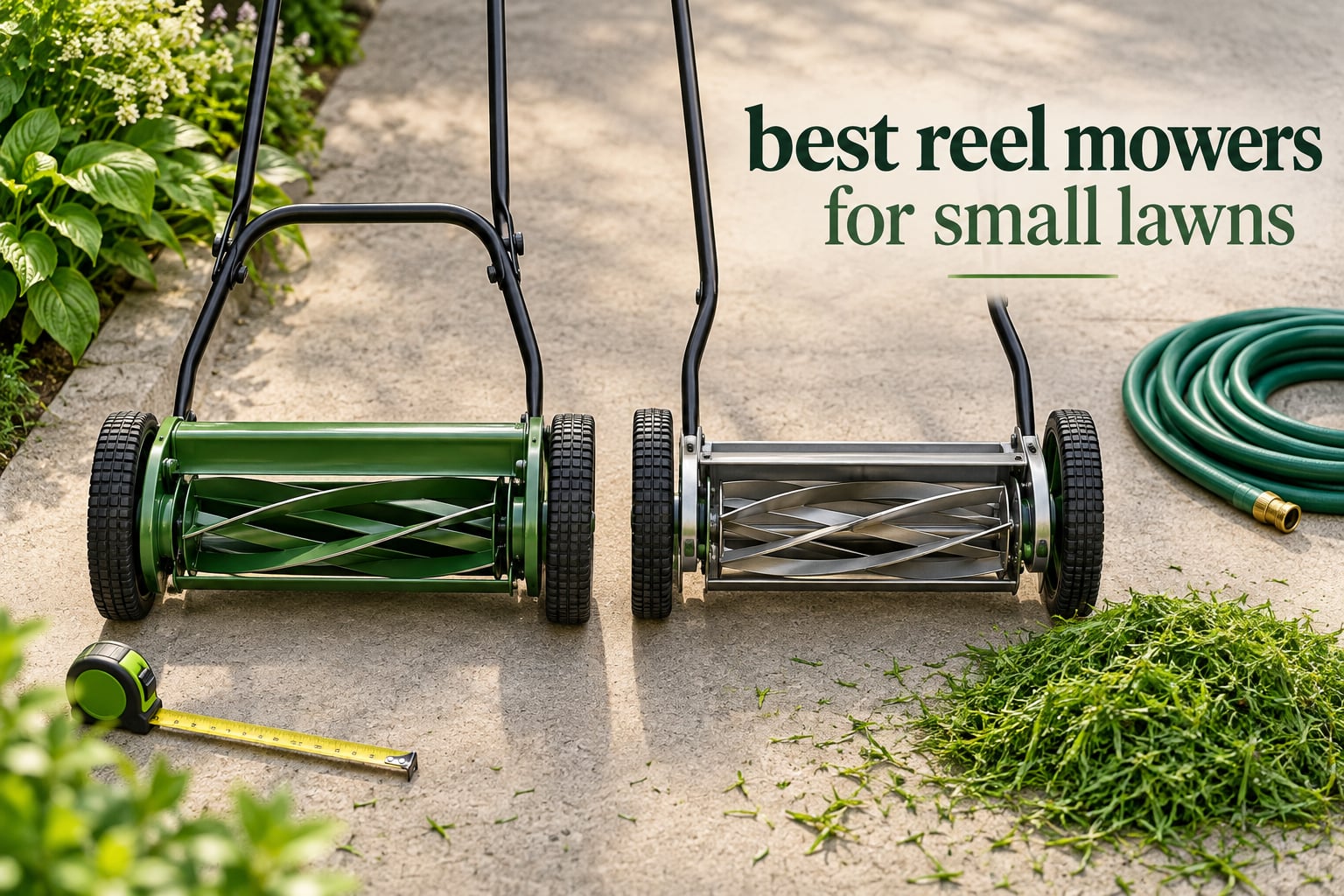
The best reel mowers for small lawns are the American Lawn Mower 1204-14 and the Scotts 304-14S for tight, flat yards under about 2,000 square feet, and the Great States 415-16 if your lawn runs a little larger. All three cut with a scissor action instead of a spinning blade, weigh roughly 18 to 21 pounds, and need no fuel or charging. They are the right tool only if you mow at least twice a week in season.
A reel mower shears grass against a fixed bedknife rather than tearing it, so the cut stays clean, the lawn heals faster, and the machine is quiet enough for an early morning. Forum owners on r/lawncare and Lawn Care Forum threads describe the silence as the single biggest change after leaving a gas mower behind. They also repeat the same warning: a reel mower cannot catch up with grass that got long, and it stops dead for sticks and twigs.
That is the honest deal. If your lawn is shaded, rocky, full of shrubs, or neglected for a couple of weeks every summer, a battery or gas rotary mower will serve you better. Below I break down ten manual reel mowers by swath width, blade count, height range, and weight, then add a lawn-size guide so you can match a mower to your square footage instead of guessing.
All ten picks are manual push reel mowers in the same class, since that is where small-lawn buyers should stay. Powered reel mowers exist, but the household models cost several times more and the compact manual units cover the square footage most people actually own. I compared the specifications and owner feedback across all ten, including how each one behaves on bumpy ground and damp grass.
Table of Contents
Top 3 Picks for Small Lawns (October 2026)

American Lawn Mower 1204-14 14-Inch 4-Blade
- 14 inch cutting swath
- 4-blade ball bearing reel
- Adjusts 0.5 to 1.75 inch
- Weighs about 19 pounds

Scotts 304-14S 14-Inch 5-Blade
- 14 inch swath
- 5-blade heat-treated alloy steel reel
- 0.5 to 1.75 inch height range
- Weighs about 18.1 pounds
Great States 415-16 16-Inch 5-Blade
- 16 inch swath
- 5-blade ball bearing reel
- 1 to 2.5 inch height range
- 10 inch composite wheels
Best Reel Mowers for Small Lawns in 2026
Every mower below is a manual push reel mower. The spec sheet tells you the real story: swath width sets how many passes your lawn takes, blade count sets how much grass the reel can swallow at once, and weight decides whether you will enjoy week three of mowing.
| Product | Specifications | Action |
|---|---|---|
|
American Lawn Mower 1204-14 14-Inch 4-Blade Reel Mower
|
|
Check Latest Price |
 American Lawn Mower 1815-18 18-Inch 5-Blade Reel Mower
|
|
Check Latest Price |
|
Scotts 304-14S 14-Inch 5-Blade Reel Mower
|
|
Check Latest Price |
|
Great States 415-16 16-Inch 5-Blade Reel Mower
|
|
Check Latest Price |
 Great States 204-14 14-Inch 4-Blade Hand Reel Mower
|
|
Check Latest Price |
 LawnMaster LMRM1602 16-Inch 5-Blade Push Reel Mower
|
|
Check Latest Price |
 LawnMaster LMRM1801 18-Inch 5-Blade Push Reel Mower
|
|
Check Latest Price |
 Earthwise 1715-16EW 16-Inch 7-Blade Reel Mower
|
|
Check Latest Price |
 Gardena Classic 16-Inch 5-Blade Reel Mower
|
|
Check Latest Price |
 American Lawn Mower 1415-16 16-Inch 5-Blade Reel Mower
|
|
Check Latest Price |
1. American Lawn Mower 1204-14 14-Inch 4-Blade Reel Mower
American Lawn Mower 1204-14 14-Inch 4-Blade Push Reel Lawn Mower, Red
14 inch swath,4-blade ball bearing reel,0.5 to 1.75 inch height,about 19 pounds
Pros
- Lightest feel among high-review models
- Sharp out of the box
- Quiet enough for early mowing
- Scissor cut leaves clean tips
- Good in tight corners
Cons
- Stops on twigs and small sticks
- Cannot catch up with long grass
- Can stripe uneven ground
- 14 inch swath means more passes
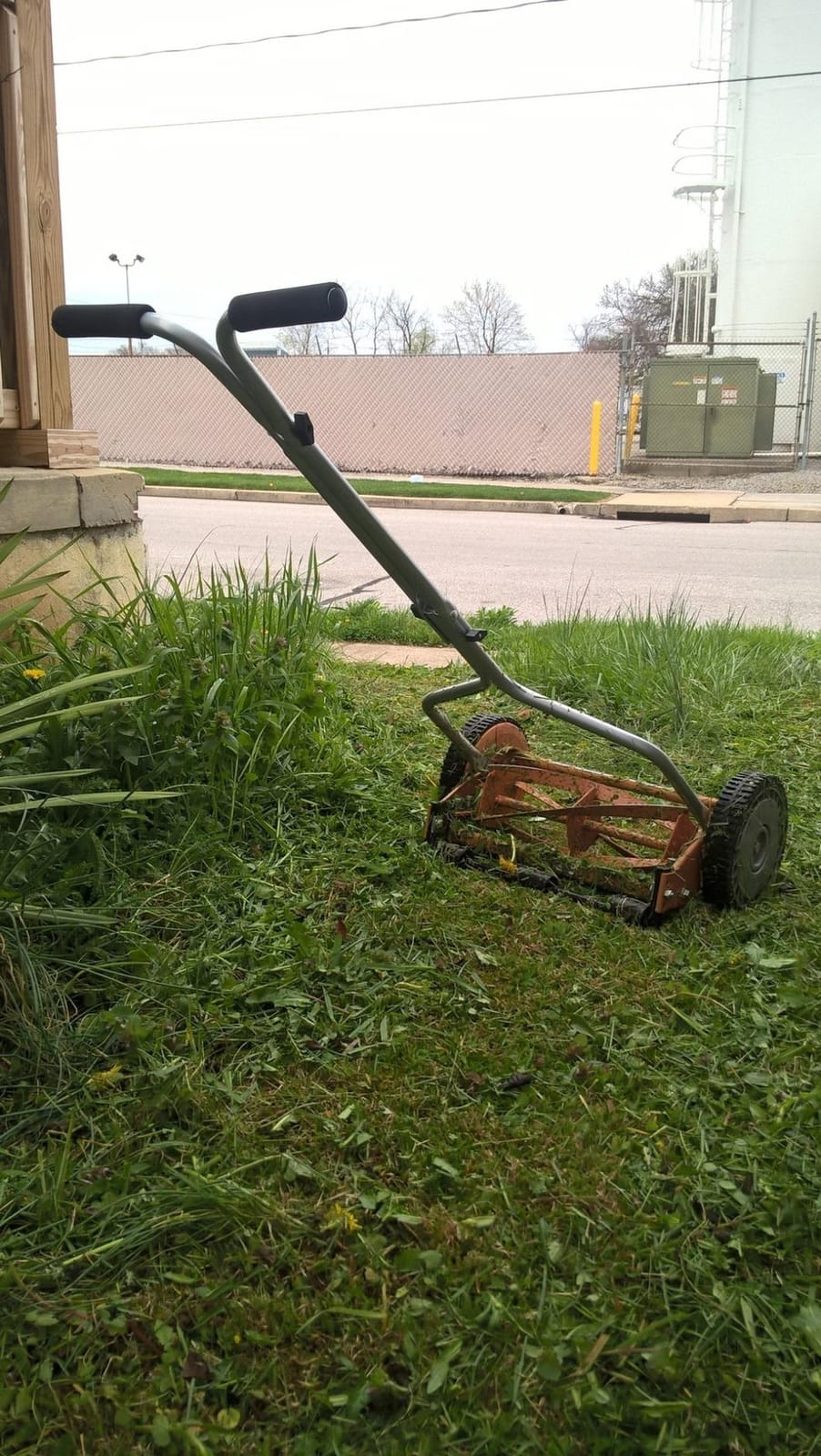
This is the model I keep coming back to for genuinely small lawns. At about 19 pounds with 8.5 inch polymer wheels, it is easy to lift with one arm, pivot in a corner, and carry down a step without thinking about it. My first pass on a 1,500 square foot front lawn took about 25 minutes, which matches the 15 to 20 minutes per 1,000 square feet that owners describe on the lawn forums.
The 4-blade ball bearing reel cuts cleanly and the alloy steel blades arrived sharp enough to use immediately. Adjustable height runs from 0.5 to 1.75 inch across three positions, which covers most ornamental lawns but stops short of the taller settings some warm-season grass needs in a growth spurt.
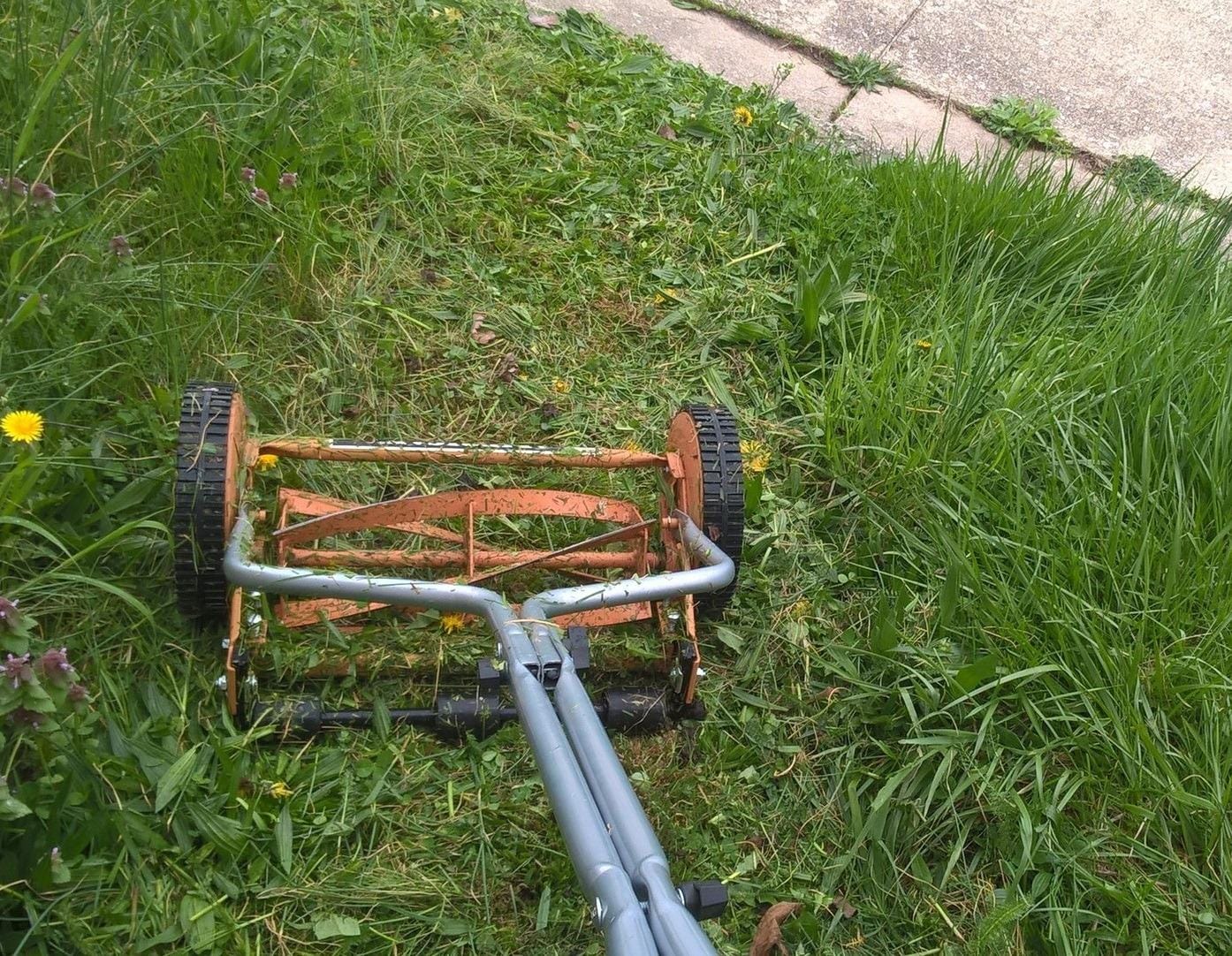
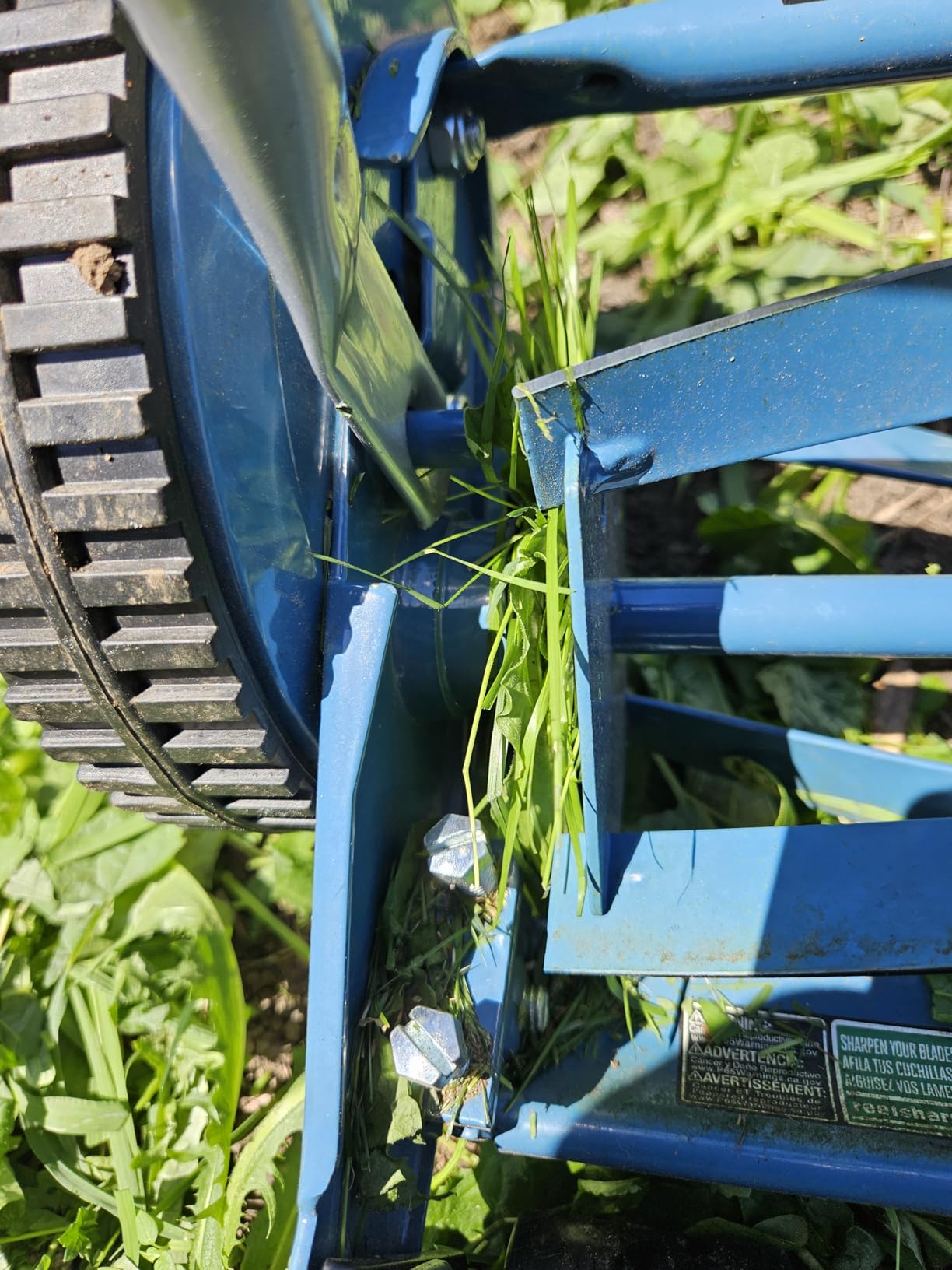
Two things you will hear in almost every review. First, sticks. Owners describe picking up twigs, acorns, and pine cone cores before they start, and the reel simply will not push through them. Second, the mower will not rescue an overgrown lawn, so the schedule has to be twice a week in season or the job turns into three passes.
The 14 inch swath is the tradeoff for that low weight. On a lawn under 2,000 square feet it is the right width, and the extra passes stop mattering. On anything approaching 5,000 square feet you will feel every one of them, which is when I would step up to a 16 inch or 18 inch deck.
Who this mower suits
This suits a flat, tidy lawn under about 2,000 square feet, especially if the ground is firm and free of scattered debris. It suits a household that mows on a schedule and wants a clean scissor cut with no fuel, oil, or battery to store. Owners who switched from gas consistently point to the quiet as the change they notice most.
It also suits anyone who struggles to lift a heavier machine into a closet or shed. At 19 pounds it is a one-hand carry, and that matters more than people expect at the end of a long season.
Where it falls short
It is the wrong choice if your lawn is full of trees, or if a week of rain produces a lawn that grows past your regular schedule. It cannot cut tall weed stems, and on uneven ground the cut can stripe visibly. Owners who let grass get long report that the reel flattens the blades instead of slicing them.
If you have thick, coarse St. Augustine or Bermuda, the 4-blade reel will feel marginal. Move up to a 7-blade model or add a rotary for the summer surge.
2. American Lawn Mower 1815-18 18-Inch 5-Blade Reel Mower
American Lawn Mower 1815-18 18-Inch 5-Blade Push Reel Lawn Mower, Black
18 inch swath,5-blade ball bearing reel,0.5 to 2.75 inch height,27 pounds
Pros
- Widest swath in this roundup
- Very wide 0.5 to 2.75 inch height range
- Quiet engine-free mowing
- Covered by a 5-year protection plan
- Handles grass to about 4 inches
Cons
- Best on flat ground
- Multiple passes on tall grass
- Needs dry maintained grass
- Jams on twigs and debris
This is the pick when a 14 inch deck has become the bottleneck. The 18 inch cutting swath covers 18 inches per pass, and the 5-blade ball bearing reel handles a lot more grass per stroke than the 4-blade units. On a lawn between 3,000 and 5,000 square feet, the wider path is the difference between a pleasant morning and a chore.
The height adjustment is the standout feature here, spanning 0.5 to 2.75 inch across seven positions. That range lets you start high on spring growth and lower it as the season settles, and it handles a lot of the coarse grass that defeats narrower decks. Listed capability covers grass up to about 4 inches tall in dry conditions.
At 27 pounds it is the heaviest manual mower in this group, and owners note that carefully on inclines. It is designed for flat lawns, and on a slope the mower can feel like it is being pulled out of your hands. The five-year manufacturer protection plan is also a real plus in a category where most rivals offer one year.
It is a straightforward manual push, so moving it across level ground takes little effort. Just do not expect it to behave the same way on a hill, and keep the grass dry, because damp turf binds a reel rather than cutting through it.
Who this mower suits
This suits a flat lawn from roughly 3,000 to 5,000 square feet, or a smaller lawn with a lot of edging and obstacles where you want fewer passes. It suits anyone whose grass grows tall enough between mows that a 4-blade reel would need three passes. The 2.75 inch maximum height gives real room in a wet spring.
If your neighbors mow early and you would rather not, the quiet engine-free operation is a genuine lifestyle gain. There is no fuel mixing, no oil change, and no pull cord.
Where it falls short
The weight is the first objection. If you have a slope, a soft lawn that sinks underfoot, or a storage situation where you must lift the mower daily, 27 pounds is a lot. It is also not a single-pass mower on long grass, and owners still report jamming on twigs.
For a very small lawn this deck is wider than you need, and the width makes tight corners around shrubs more awkward than a 14 inch model would be.
3. Scotts 304-14S 14-Inch 5-Blade Reel Mower
Scotts 304-14S 14-Inch 5-Blade Push Reel Lawn Mower, Green
14 inch swath,5-blade alloy steel reel,0.5 to 1.75 inch height,about 18.1 pounds
Pros
- Very sharp out of the box
- Cuts level through damp grass
- Lightest reel mower here
- Easy cushioned T-handle
- Quiet enough for early hours
Cons
- Twigs jam the reel
- Cannot cut long vine-type grass
- Top setting under 2 inches
- Low handle for taller users
This is the mower I recommend to anyone who wants a 14 inch deck with more cutting capacity than a 4-blade reel. The 5-blade heat-treated alloy steel reel and 8.5 inch composite wheels make it the lightest unit in the roundup at about 18.1 pounds. Owners describe it as the easiest one they have owned to assemble and the quietest to operate.
Multiple reviewers mention that it cuts clean and level through damp morning grass, which is a real advantage in areas with heavy dew. The T-style handle has a cushioned grip, and because there is no folding joint, the tool-less assembly is simply attaching the handle to the frame.
Height adjustment runs 0.5 to 1.75 inch across three positions. That lower ceiling is the main limitation, because the lawn will look shorter than the unmown strip along the fence, and some owners want more room for warm-season grass in a growth spurt. If you need to mow higher, this is not the deck for you.
The recurring caveats are shared by every reel mower rather than being defects. It stops for twigs, it cannot catch up after two missed weeks, and the low handle position can feel hunched for a tall operator. Assembly instructions are also confusing for a first-time reel mower owner.
Who this mower suits
This suits small, flat lawns under 2,000 square feet where you want a light machine you can lift easily. It suits damp climates, since owners report it working through wet morning grass without choking. It also suits anyone who mows before the neighborhood is awake.
Choose it over the 4-blade 14 inch models if your grass is dense or you cut slightly less often, because the extra blade gives the reel more to work with.
Where it falls short
It will not handle long, vine-type turf such as thick St. Augustine, and the top cut height is lower than many buyers expect. The low-sitting handle is uncomfortable for taller users, and the assembly paperwork is the weakest part of an otherwise well-liked mower.
On a lawn with heavy tree cover, expect to stop and clear branches more often than with a wider deck.
4. Great States 415-16 16-Inch 5-Blade Reel Mower
Great States 415-16 16-Inch Reel Lawn Mower with T-Style Handle
16 inch swath,5-blade ball bearing reel,1 to 2.5 inch height,10 inch wheels
Pros
- Cleaner cut than a rotary mower
- Handles taller grass well
- Carries easily with one hand
- Tool-less assembly in about five minutes
- Works through damp grass
Cons
- No grass catcher included
- Binds in thick damp grass
- Stops on twigs and sticks
- Noticeably rattling noise
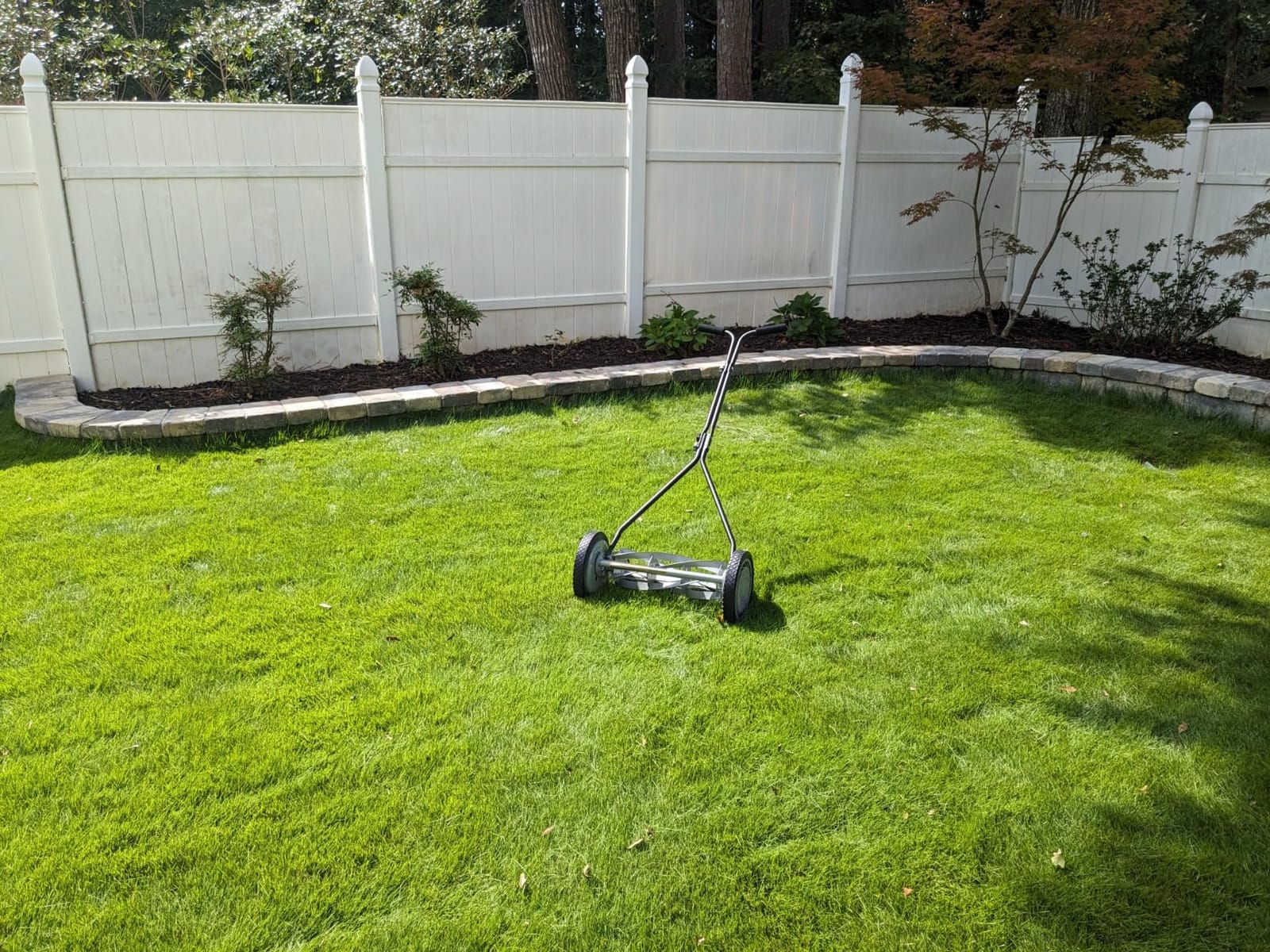
This is the mower I suggest when someone asks for a step up from a 14 inch model without jumping to a wide 18 inch deck. The 16 inch cutting swath, 5-blade ball bearing reel, and 10 inch composite wheels hit the middle ground, and at about 20.9 pounds it still carries with one hand. It is the most frequently recommended Great States model in owner feedback.
Reviewers repeatedly describe the finished lawn as noticeably better looking than the rotary mower they used before, and several say it copes with grass growing a little taller than expected. The heat-treated alloy steel blades hold their edge, which matters more than it sounds when you are sharpening on a kitchen table.
The height range here is 1 to 2.5 inch. That is a narrower band than some rivals, so if you mow very short ornamental grass you will notice the floor, and if you have a thick spring flush you will notice the ceiling. It sits at 1 inch minimum, which is a common compromise between quality of cut and capacity.
No grass catcher is included, though a bag can be fitted as an extra. Clippings are thrown to the side, which means walking behind the clippings line or mowing in a pattern that keeps them off the areas you just cut. Some buyers also find it louder than they expected for a quiet machine.
Who this mower suits
This suits a flat lawn in the 2,000 to 4,000 square foot range, or a smaller lawn where the mower also handles the strip between the street and the house. It suits owners who want a better cut than a rotary and who do not mind leaving clippings on the ground as a free fertilizer.
It also suits anyone with a damp yard, since owners report it working through damp grass without choking once the reel is running properly.
Where it falls short
It binds in thicker or wetter grass and needs a second pass, and the 1 inch minimum means you cannot get the low, striped look some ornamental lawns want. Without a catcher, a tidy front lawn near a sidewalk will need a second tool.
Twigs still stop it, and the rattling noise is a common complaint even though it cuts well.
5. Great States 204-14 14-Inch 4-Blade Hand Reel Mower
Great States 204-14 Hand Reel 14 Inch Push Lawn Mower
14 inch swath,4-blade reel,0.5 to 1.75 inch height,two height positions
Pros
- Easiest to push in this group
- Assembles in under five minutes
- Very light and easy to store
- Scissor cut does not tear grass
- Quiet enough to mow at dawn
Cons
- Chokes on long or lush grass
- Stops on twigs
- Low maximum cut height
- Thin handle tubes can bend
This is the mower for the smallest lawn in the roundup. Reviewers often arrive skeptical after reading complaints about hard assembly, then report that it arrives with only the handle to fit and is together in under five minutes with three bolts. The 14 inch cutting swath and 8.5 inch polymer wheels make it the most nimble option here.
The scissor-action cut does not bruise grass blades, which is the reason reel mowers are worth the effort in the first place. The manufacturer guidance is to mow no more than one third of the blade length at a time, which on a lawn cut every few days happens naturally.
Where it gets limited is at the extremes. Height adjustment offers only two positions, from 0.5 to 1.75 inch, so you have very little fine control. It chokes and stalls on lush, long, or overgrown grass, and it handles a patch of longer turf in two or three passes rather than one.
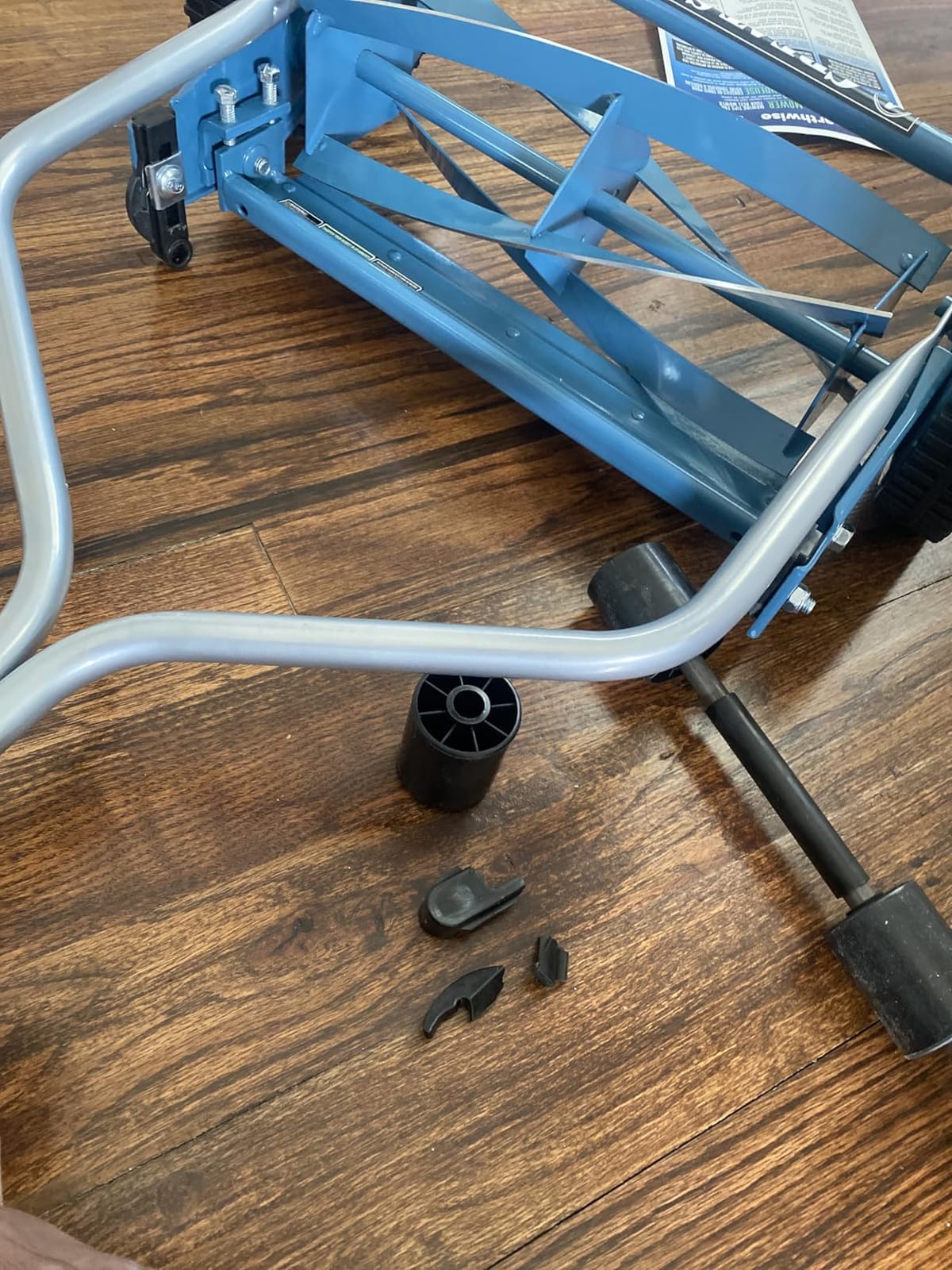
The handle tubes are thin-walled, and owners report that they can bend when the mower is torqued around a corner. That is a real failure mode on a lawn full of trees, so if your yard is wooded, expect to tighten hardware occasionally.
Who this mower suits
This suits a lawn under about 1,500 square feet, particularly a front lawn or a small yard with narrow paths and tight corners. It suits anyone who wants a mower that is genuinely easy to carry and store, and anyone who mows in the early morning while the house is quiet.
It is also a good fit for a household that is not sure a reel mower is for them, because the low commitment and small size make it easy to live with.
Where it falls short
It is the wrong tool if your lawn grows fast or if you travel regularly and come back to long grass. The low maximum cut height means the lawn always looks shorter than the surrounding unmown areas, and only two height positions limit you when conditions change.
It cannot handle lawn edges the way a string trimmer can, and it stops for the smallest sticks.
6. LawnMaster LMRM1602 16-Inch 5-Blade Push Reel Mower
LawnMaster LMRM1602 Push Reel Lawn Mower 16-Inch 5-Blade
16 inch swath,5-blade reel,4 positions from 1 to 2.5 inch,22 pounds
Pros
- Easy to move with one hand
- Four simple height positions
- Assembles in 10 to 15 minutes
- Very quiet in operation
- Even cut on regular lawns
Cons
- Jams on the smallest twigs
- Struggles above 2 to 3 inches
- Clippings pack into the sides
- Instructions are sparse
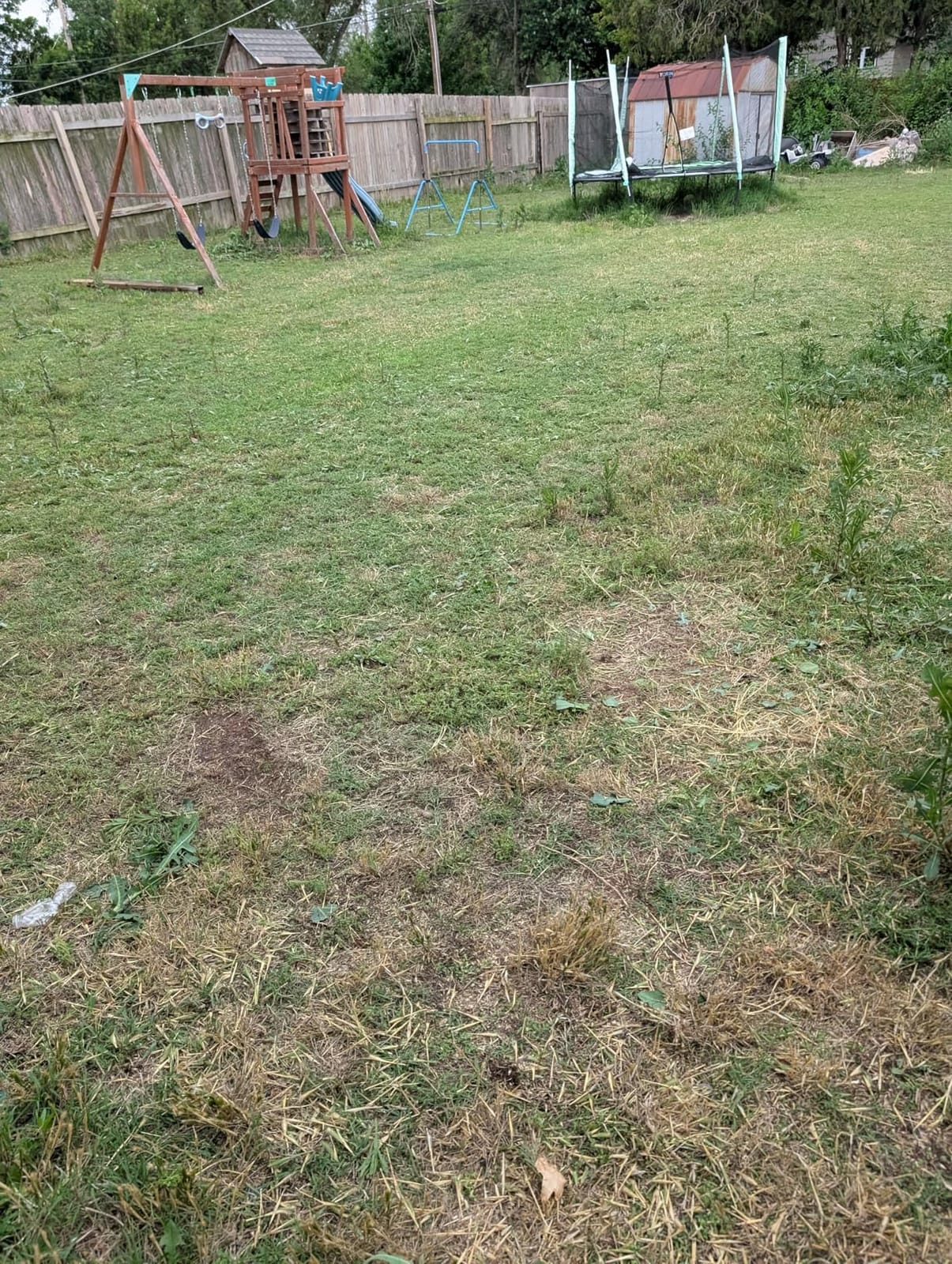
This mower splits owner opinion more than most in the group, and that split is entirely about the lawn rather than the machine. Owners with regularly mown cool-season grass describe clean, even cuts and a machine that moves with one hand. Owners with coarse St. Augustine report the reel seizes within a few steps.
The 16 inch cutting width and 10 inch front wheels make it easy to navigate, and the four cutting positions from 1 to 2.5 inch adjust quickly without tools. At 22 pounds it is light for its width, and assembly takes about 10 to 15 minutes.
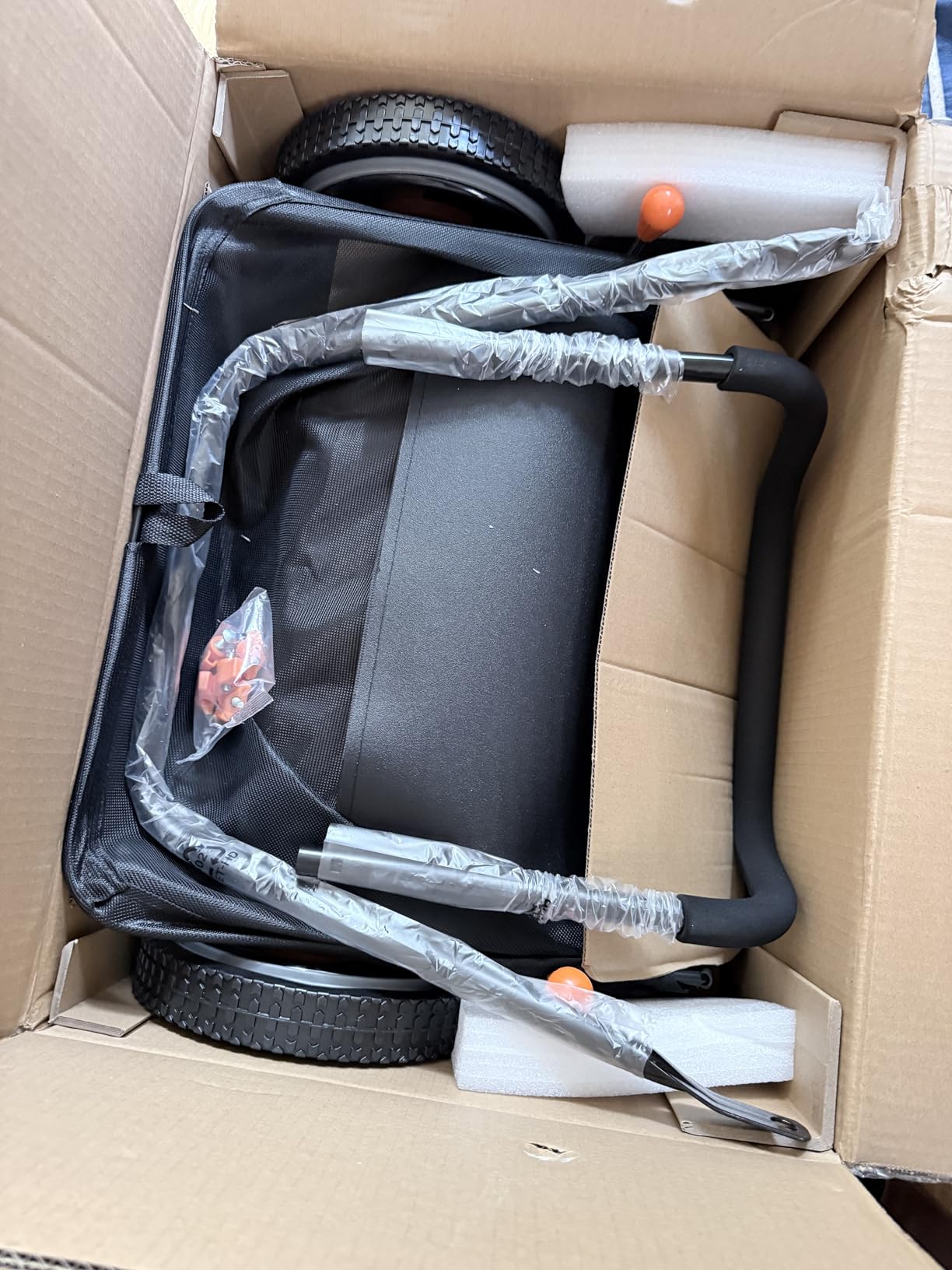
The problem is clipping management. Grass packs into the sides of the deck and has to be cleared every few feet, and with no reverse feature a jam means putting your hands on the blades. The instruction sheet is also thin, and the final assembly step may need a second pair of hands.
Its 4.1 out of 5 average is the lowest rating in the group, and the owner feedback is sharply split between owners with a maintained weekly lawn and owners with coarse or neglected turf. That spread is a fair warning. If your lawn is maintained weekly, this is a capable mower. If your grass is coarse, thick, or neglected, it will not forgive you.
Who this mower suits
This suits a small, regularly mown lawn where someone will stay on a schedule. It suits anyone who wants a 16 inch swath without a 22 pound-plus machine, and it works well for a lawn that is walked on and used regularly enough to stay short.
It is a good choice if noise matters and you plan to mow outside working hours.
Where it falls short
It struggles with grass over roughly 2 to 3 inches and cannot cut weed stems at all, so you will need a separate weeding tool. Clippings packing into the deck is a genuine annoyance, and there is no reverse to help you back out of a jam.
Sparse instructions and a possible two-person assembly are small frictions, but the coarse-grass limitation is the one that ends the relationship.
7. LawnMaster LMRM1801 18-Inch 5-Blade Push Reel Mower
LawnMaster LMRM1801 Push Reel Lawn Mower 18-Inch 5-Blade
18 inch swath,5-blade reel,9 positions from 1.1 to 2.5 inch,bag included
Pros
- Widest deck in this roundup
- Nine height settings
- Comes with a collection bag
- Sharp steel blades out of the box
- Light for an 18 inch mower
Cons
- Jams on twigs
- Cannot cut above about 3 inches
- Clippings gather in the base
- Plastic roller hardware wears
This is the widest deck in the roundup, and the only model that comes with a collection bag, which is the clearest single reason to pick it. A bag matters on a front lawn next to a sidewalk or a road, where blowing or raking clipped grass is an extra step nobody enjoys.
Nine cutting positions from 1.1 to 2.5 inch give the finest adjustment of any mower here, and the 10 inch front wheels steer well for an 18 inch machine. Owners like the scissor-like cut that leaves no torn tips, and the steel blades are sharp enough to use straight away.
It shares its review pool with the 16 inch LawnMaster, so its 4.1 average reflects the same mixed experience rather than a problem specific to this deck. The reel will stop for a pencil-thick twig, and it cannot rescue an overgrown yard or cut grass much past 3 inches.
Clippings still accumulate in the base and need shaking out every few feet, and the roller height hardware is plastic against a metal rod, so it is the part most likely to wear over a few seasons. The height floor of 1.1 inch is also higher than most competitors, so you cannot mow short.
Who this mower suits
This suits a 3,000 to 5,000 square foot flat lawn, and it suits anyone who wants a clean, collected finish rather than clippings scattered across the turf. The nine height settings make it a good fit for a lawn with mixed conditions, where you want to raise the deck in a hurry during a growth spurt.
Choose it when mow time matters and you do not want to pay extra for a grass bag later.
Where it falls short
The 1.1 inch minimum is the biggest surprise for buyers who expected a low cut, and there is no reverse to help when a jam happens mid-pass. On uneven ground the deck rides high in places, which is why owners on sloping lawns report patchy strips.
It cannot handle tall weeds, and the plastic roller hardware is a wear item to watch.
8. Earthwise 1715-16EW 16-Inch 7-Blade Reel Mower
Earthwise 1715-16EW 16-Inch 7-Blade Push Reel Lawn Mower, Grey
16 inch swath,7-blade ball bearing reel,0.5 to 2.5 inch height,about 21.8 pounds
Pros
- Seven-blade reel gives a dense cut
- Copes with bent warm-season grass
- Alloy steel blades hold an edge
- Wide 0.5 to 2.5 inch height range
- Quiet and gas free
Cons
- Will not cut tall weed stems
- Stops on twigs and small branches
- Slows on uneven ground
- No grass catcher included
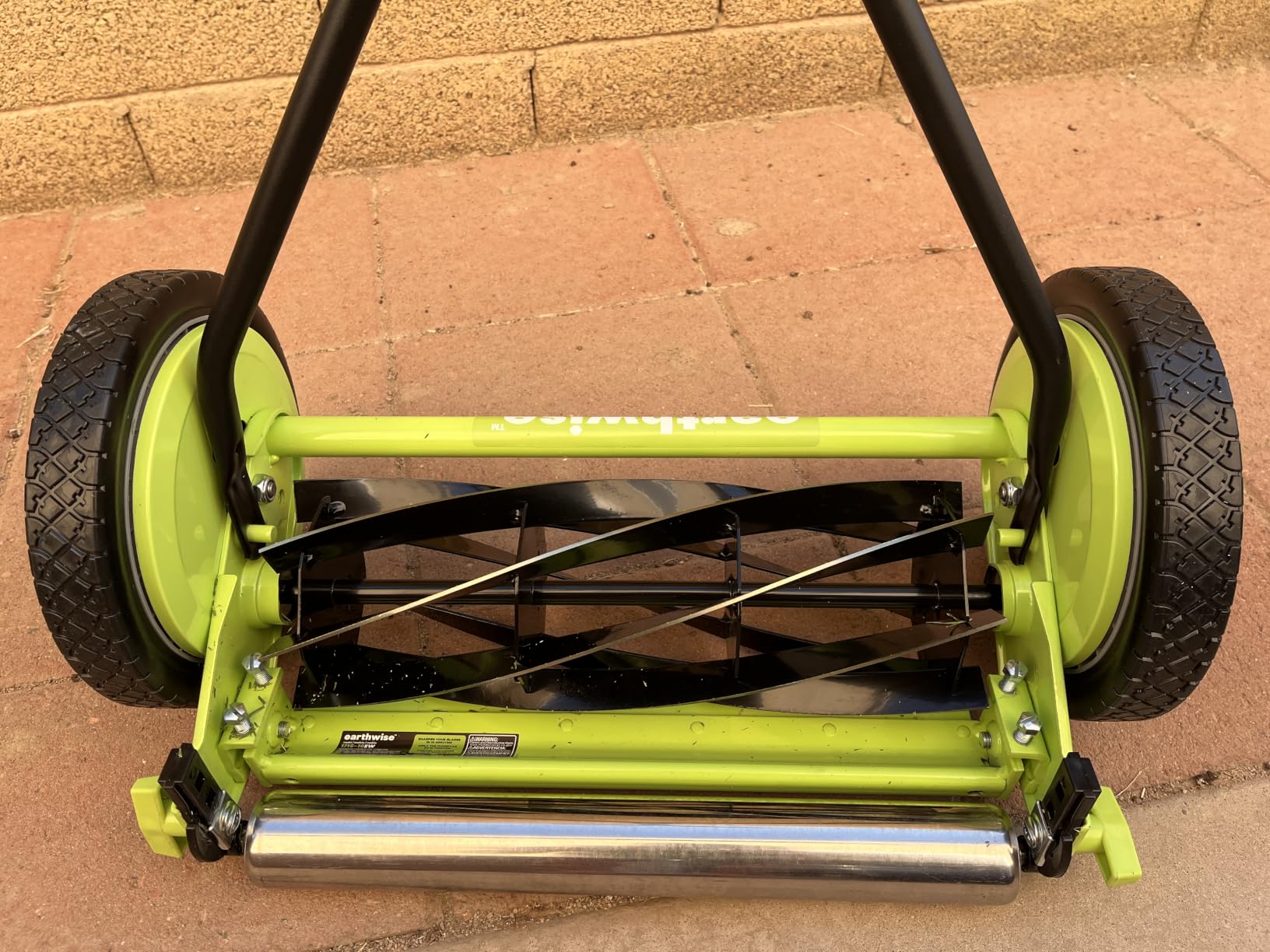
This is the pick if you mow warm-season grass. The 7-blade ball bearing reel is the only one in this roundup, and manufacturer guidance is explicit that it handles bent grass types including Bermuda, zoysia, centipede, St. Augustine, and seashore paspalum. That is the class of turf that makes owners of 4-blade and 5-blade reels give up and buy a gas mower.
The extra blades produce a denser, more uniform finish, and owners compare the result favorably to powered mowers. The 16 inch swath and 10 inch composite wheels keep it manageable, and the 0.5 to 2.5 inch height range gives you both a low ornamental cut and room for thicker growth.
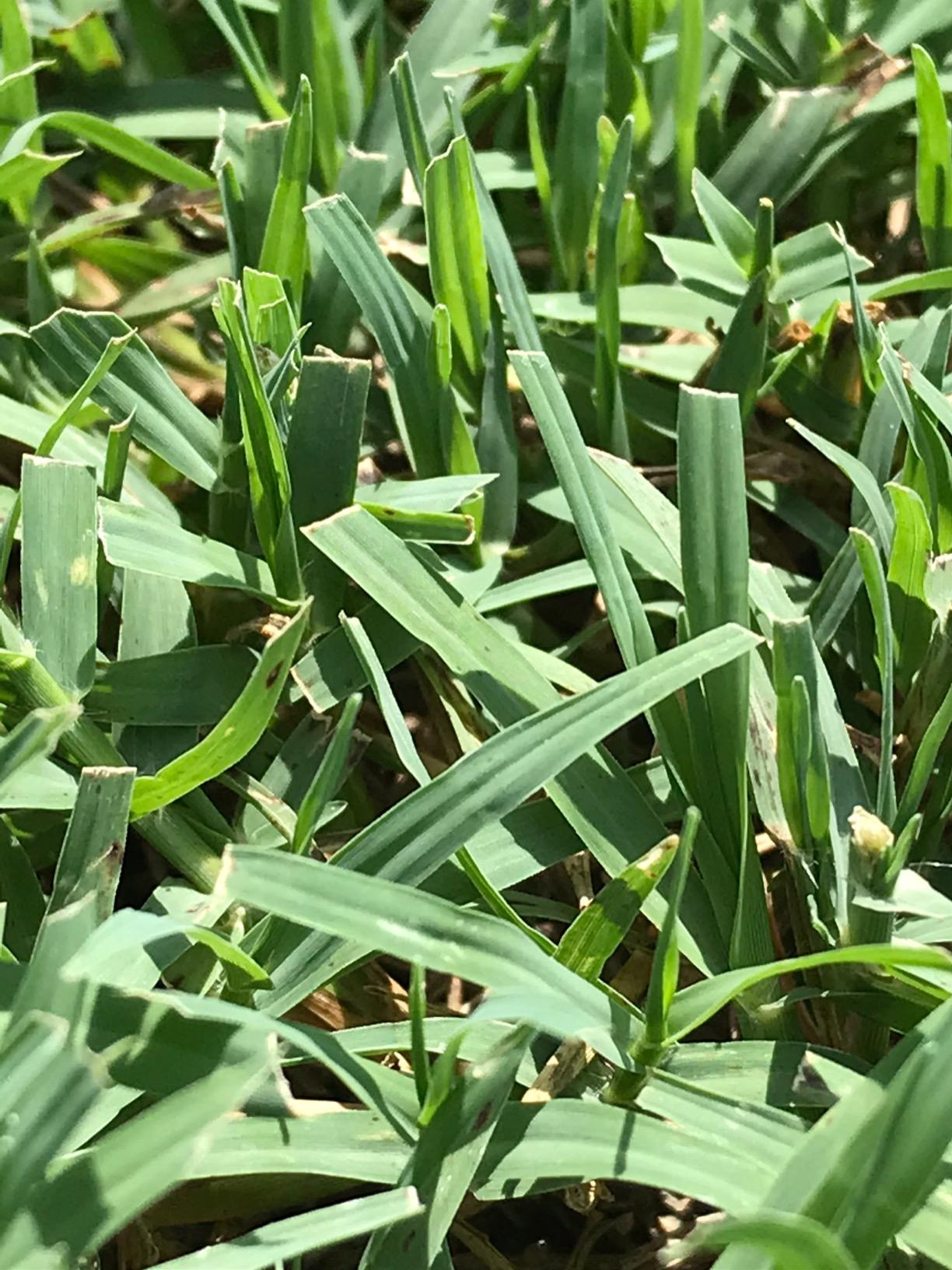
It is heavier than several 14 inch competitors at about 21.8 pounds, though still far lighter than most powered machines. Durable steel side plates add to the build quality, and the alloy steel reel stays sharp longer between services.
The tradeoffs are consistent across the category. There is no grass catcher, so clippings are thrown to the side and land on the operator, which is worth thinking about if you mow in a narrow path. It will not cut tall weed stems or seed heads, and uneven ground slows it and leaves patchy strips.
Who this mower suits
This suits a southern lawn of Bermuda, zoysia, centipede, or St. Augustine that is mowed on a regular schedule. It suits anyone who has tried a 5-blade reel and found it struggling with coarse, bent stems. The 0.5 inch floor is also the lowest among the wide-deck options here.
It suits households that want a striped, uniform look without a motor running nearby.
Where it falls short
It still cannot take tall weeds or seed heads, and on a neglected summer lawn a reel mower of any blade count will stop. Owners on uneven ground report a slower pace and visible striping, and the missing catcher is a genuine annoyance on a formal front lawn.
If your lawn is under 1,500 square feet, the weight and price of this reel are more than the job requires.
9. Gardena Classic 16-Inch 5-Blade Reel Mower
GARDENA Classic 16 in Reel Lawn Mower, 5 Blades, No Gas or Electric – 04018
16 inch swath,contact-free steel cylinder,4 stages from 0.47 to 1.65 inch,ten-year warranty
Pros
- Ten-year manufacturer warranty
- European build quality
- Contact-free scissor cut
- Light at 19.6 pounds
- Folding handle stores compactly
Cons
- Needs real pressure to push
- Loud metallic rattling
- Leaves an uncut strip at edges
- Assembly instructions lack diagrams
This is the long-horizon purchase. It is the only mower in the roundup with a ten-year manufacturer warranty, and the hardened, non-stick coated steel cylinder runs against a fixed counter-blade without the two surfaces touching, which is how the contact-free scissor cut is achieved. That coating is why a single wipe-down keeps it clean.
Four cutting height stages run from 0.47 to 1.65 inch, so 0.47 inch is the lowest setting of any mower in this group. The folding handle and 36 inch length make it easy to store in a small space, and large special-tread wheels roll over uneven ground better than the small wheels on most budget models.
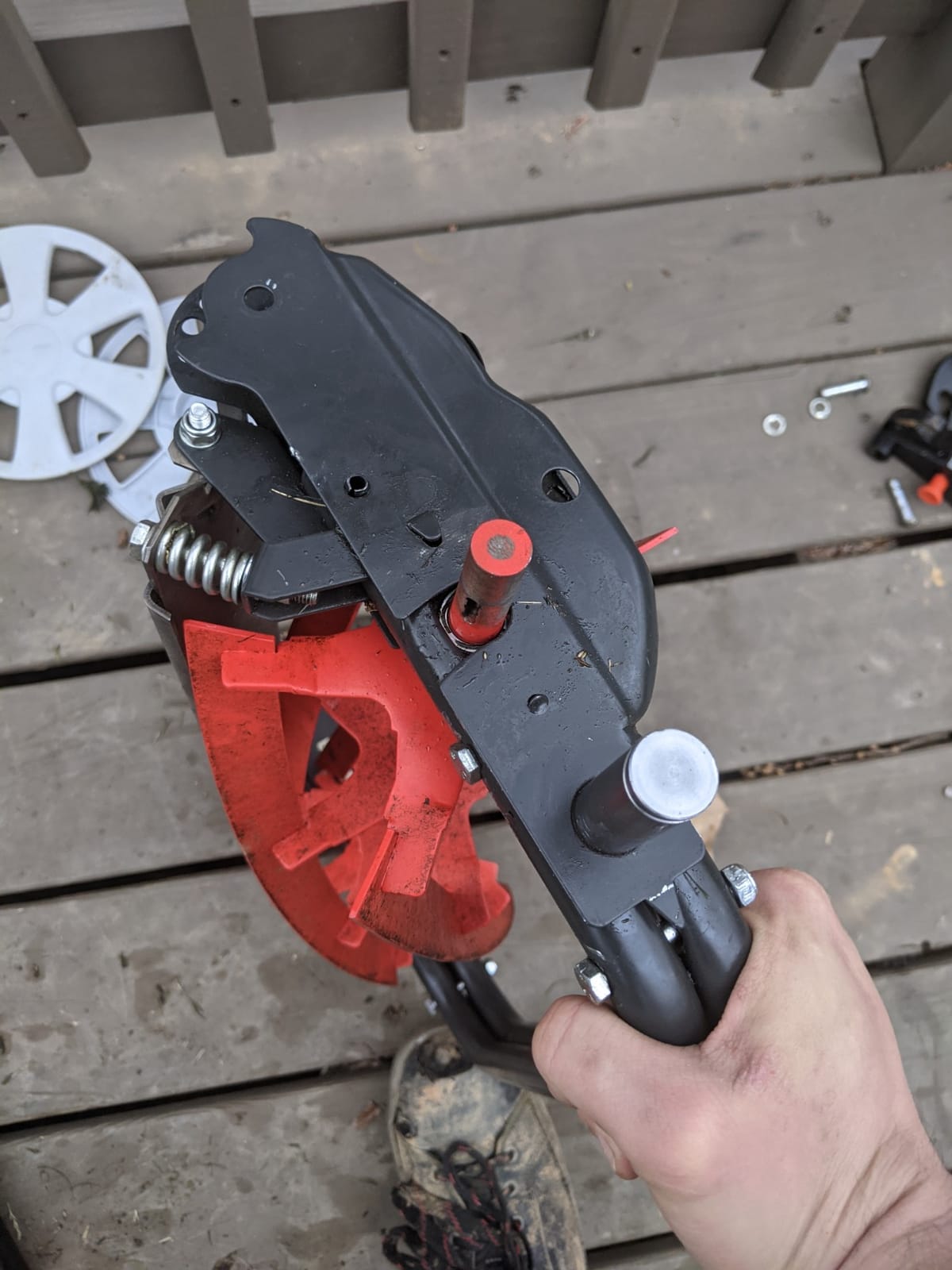
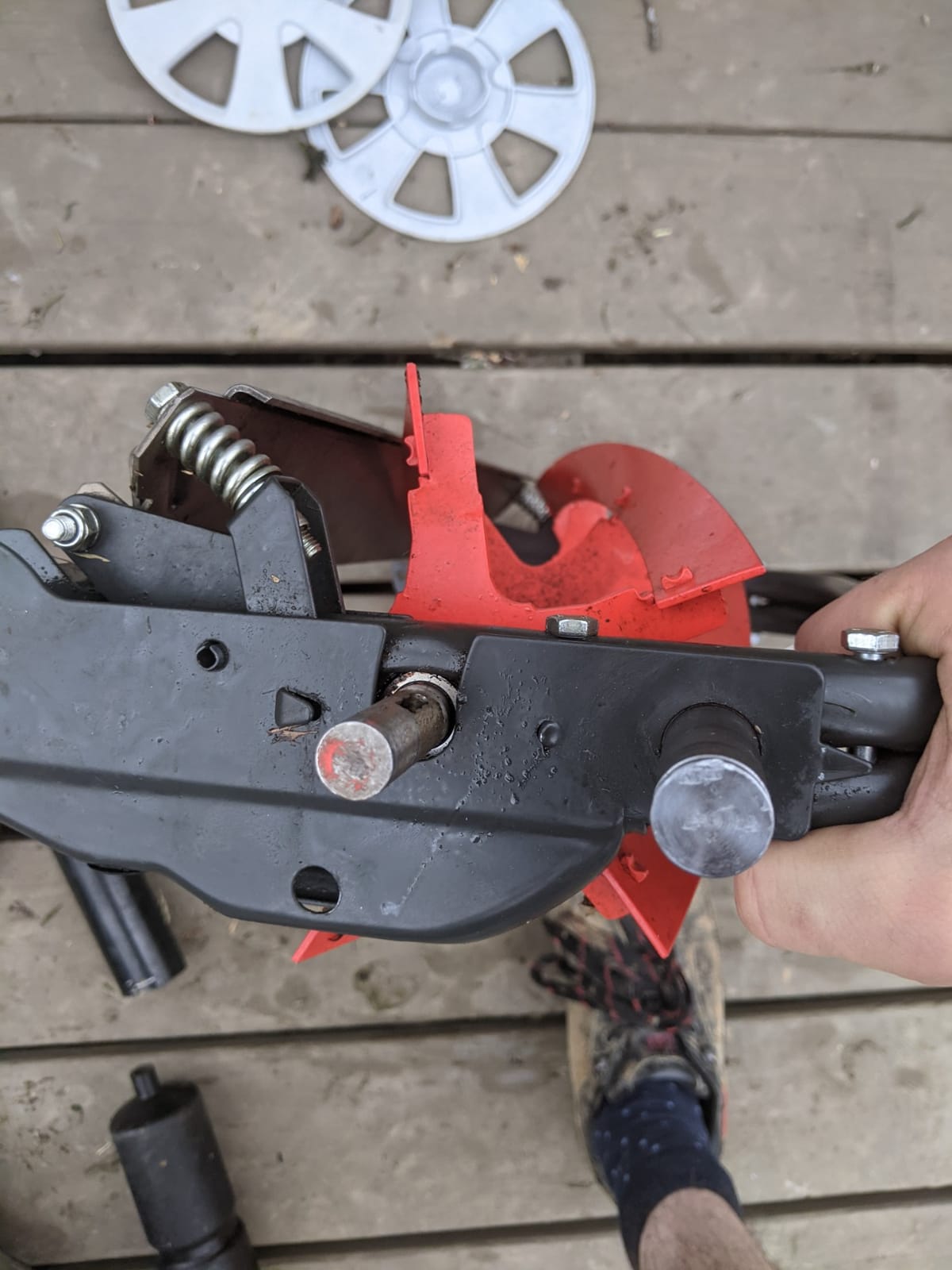
Where it earns its rating is in the details. The instructions have no figures, and several buyers needed outside help to get it together. It needs real pressure to keep cutting continuously, and some users find it physically harder to push than the lighter domestic models, even at 19.6 pounds.
It is also the loudest in this group, with a metallic rattling sound while in use, which is worth knowing before you buy a machine for the neighbor-sensitive lawn. And like every reel mower, it leaves an uncut strip along fences and borders, so a string trimmer is still part of the kit.
Who this mower suits
This suits a small, carefully kept lawn where the finish matters more than the speed. It suits anyone planning to keep a mower for many seasons, since the ten-year warranty removes the replacement question. The 0.47 inch minimum suits ornamental grass and striping.
It also suits small European-style gardens where storage space is tight, thanks to the folding handle.
Where it falls short
The maximum cut height of 1.65 inch is low by modern standards, and it cannot cope with grass that has been allowed to grow long. The push force and the rattling noise are the two most common complaints, and the assembly documentation is a genuine stumbling block.
The grass catcher is sold separately here, so budget for it if you want a bag, and note that fewer owners have bought into this European brand, so parts and secondhand familiarity are thinner than with the domestic models.
10. American Lawn Mower 1415-16 16-Inch 5-Blade Reel Mower
American Lawn Mower 1415-16 16-Inch 5-Blade Push Reel Lawn Mower, Gray
16 inch swath,5-blade ball bearing reel,0.5 to 2.5 inch height,10 inch treaded wheels
Pros
- Strongest tall grass performer here
- Sharp out of the box
- Cuts grass a gas mower stalls on
- Very light to move
- Assembles in about five minutes
Cons
- Catches on nearly every small stick
- Flattens rather than cuts long grass
- Handle grips may not last a season
- No lawn edge cutting
This is the reel mower I would pick if your grass grows fast between mows. Several owners report cutting grass that stalled their gas mower, including in damp conditions, and the listed capability covers grass up to about 4 inches tall. The 5-blade ball bearing reel and heat-treated alloy steel reel and bedknife do the work, with unbreakable steel side plates.
It is also very light in practice, and owners note that a 12-year-old can mow with it, which tells you plenty about the push effort on flat ground. Assembly takes about five minutes by attaching the handle, and there are no stones or debris thrown out the front, which matters in a wooded yard.
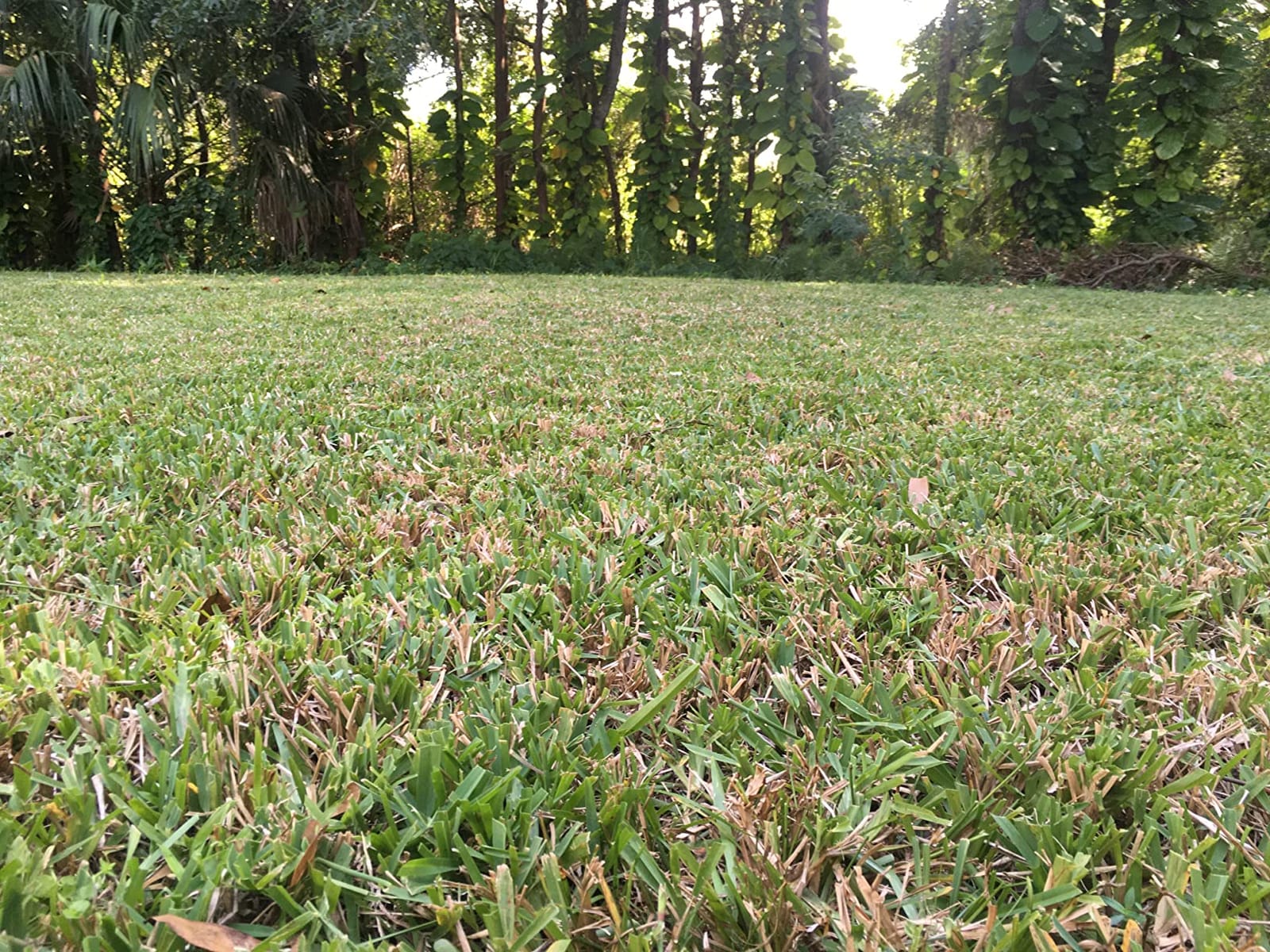
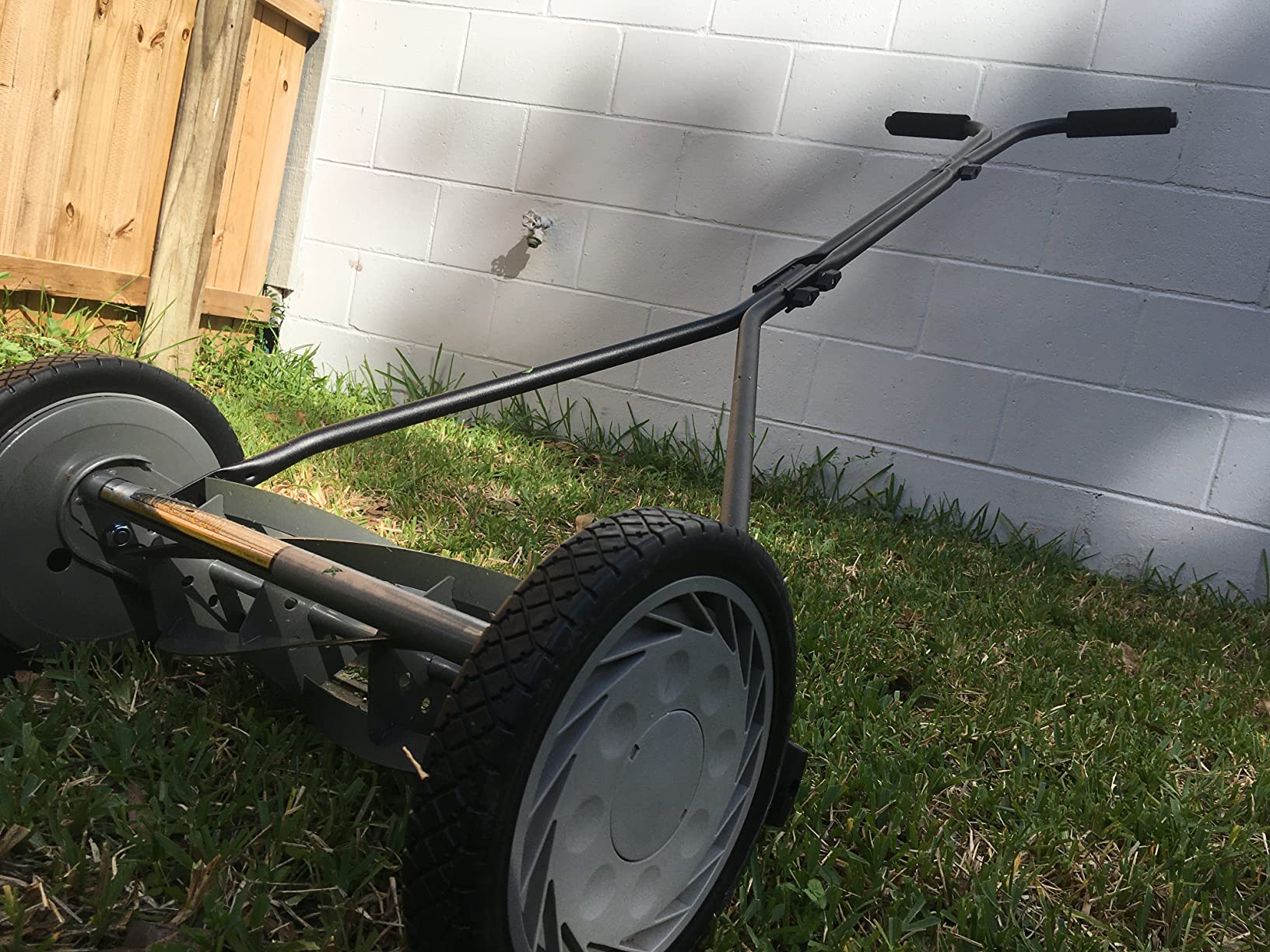
The 16 inch swath and 10 inch durable composite wheels with radial tread give it a stable, tracked feel, and the height adjusts from 0.5 to 2.5 inch. Several owners also mention how comfortable it stays to hold during a long session, which matters more in the middle of summer than you would expect.
It shares a smaller review base than the 14 inch models at just over 1,000 reviews, so the tall-grass reputation is based on a narrower set of experiences. The consistency complaint is sticks, and it catches on nearly every one, so clearing the yard first is not optional. Long grass gets flattened rather than cut, and tall weed stems and seed heads remain standing.
Who this mower suits
This suits a lawn between 2,500 and 4,000 square feet, particularly one in a climate with fast growth or a family that travels occasionally. The tall-grass capacity gives you more slack in the schedule than any other mower in this roundup, and the light weight keeps it manageable.
It suits anyone who wants a scissor cut without giving up the ability to handle a week of growth.
Where it falls short
It cannot cut edges next to stone or borders, and the handle grips may not last a full season, so check them early. On a lawn with heavy debris, you will be stopping often, and if grass goes truly long the reel flattens it rather than cutting.
It is a manual mower with no catcher, so clippings stay on the lawn, which most owners treat as a benefit rather than a flaw.
How to Choose a Reel Mower for a Small Lawn
Match the mower to the lawn, not the other way around. These ten mowers all work; they differ in swath, blade count, height range, and weight, and each of those four numbers maps to a specific problem you either have or do not have.
1. Swath width and lawn size
A 14 inch deck suits lawns under about 2,000 square feet. A 16 inch deck covers roughly 2,000 to 4,000 square feet, and an 18 inch deck handles 3,000 to 5,000 square feet. Width matters because owners consistently put reel mowing at about 15 to 20 minutes per 1,000 square feet, so a small lawn at 14 inches is a 30 minute job while the same lawn at 18 inches is closer to 20.
2. Blade count and cut quality
More blades means more grass the reel can take in one pass, not a different cut quality per se. A 4-blade reel handles thin, short, well-kept turf. A 5-blade reel is the sensible default and covers most lawns. A 7-blade reel handles bent, coarse warm-season grass such as Bermuda, zoysia, and St. Augustine, which is exactly the situation forum owners say defeats cheaper home models.
3. Height range and grass type
Compare the numbers in inches. A 0.5 inch minimum suits ornamental and striped lawns, while a 1 inch or 1.1 inch minimum is normal and fine for a family lawn. The top of the range matters more in a wet spring: the 1815-18 reaches 2.75 inch, and most others stop between 1.65 and 2.5 inch. Coarse grass needs that headroom.
4. Weight and push effort
Weights in this group run from about 18.1 pounds for the Scotts 304-14S to 27 pounds for the American Lawn Mower 1815-18. Lightweight models slide on wet grass and can lose cutting height. Heavier models track better on slopes and soft ground but are awkward to lift and tiring on an incline. Under 21 pounds is the sweet spot for a small lawn.
5. Wheels, rollers, and uneven ground
Large special-tread wheels and 10 inch composite wheels roll over bumps better than the small 8.5 inch polymer wheels on the budget models. On slopes, owners report that the blade loses contact with the bedknife, which is why a mower with a rear roller or a large treaded wheel tracks more predictably. If your lawn has a meaningful drop, expect a slower, less even cut.
6. Grass catcher versus side discharge
Only the LawnMaster LMRM1801 in this group comes with a bag, and the Gardena catcher is sold separately. Everything else throws clippings to the side, which is free fertilizer for the lawn and no extra work for you. A bag matters on a formal front lawn near a road, otherwise it is optional.
Lawn size banding: which pick for which yard
Under 1,000 sq ft: Great States 204-14 for the lightest handling, or the Scotts 304-14S if the grass is dense.
1,000 to 2,000 sq ft: American Lawn Mower 1204-14 is the safest default, and the Scotts 304-14S for damp lawns.
2,000 to 3,500 sq ft: Great States 415-16, the American Lawn Mower 1415-16, or the Earthwise 1715-16EW on warm-season turf.
3,500 to 5,000 sq ft: American Lawn Mower 1815-18 for the widest swath, or the LawnMaster LMRM1801 if you want a bag.
What forum owners actually report
Across r/lawncare and Lawn Care Forum threads, the same experiences repeat. Sticks, acorns, and pine cone cores stop the blades, and owners sweep or rake the lawn before mowing. Grass that grows long cannot be caught up, so twice-weekly mowing in season is the rule, and a vacation means a rotary for the first cut. The quiet operation is the most praised change for people leaving gas behind. After two or three months of frequent mowing, owners report the lawn becomes noticeably denser and more uniform.
Reel mower versus rotary mower for a small lawn
A reel mower wins on cut quality, noise, and running cost, and it loses on everything about handling rough conditions. A rotary handles tall grass, thick weeds, wet ground, and debris without complaint. For a flat, tidy lawn mown on schedule, a reel mower is the better tool. For a lawn with shrubs, tree roots, and periodic neglect, a battery rotary is the honest recommendation.
How often to sharpen, and how
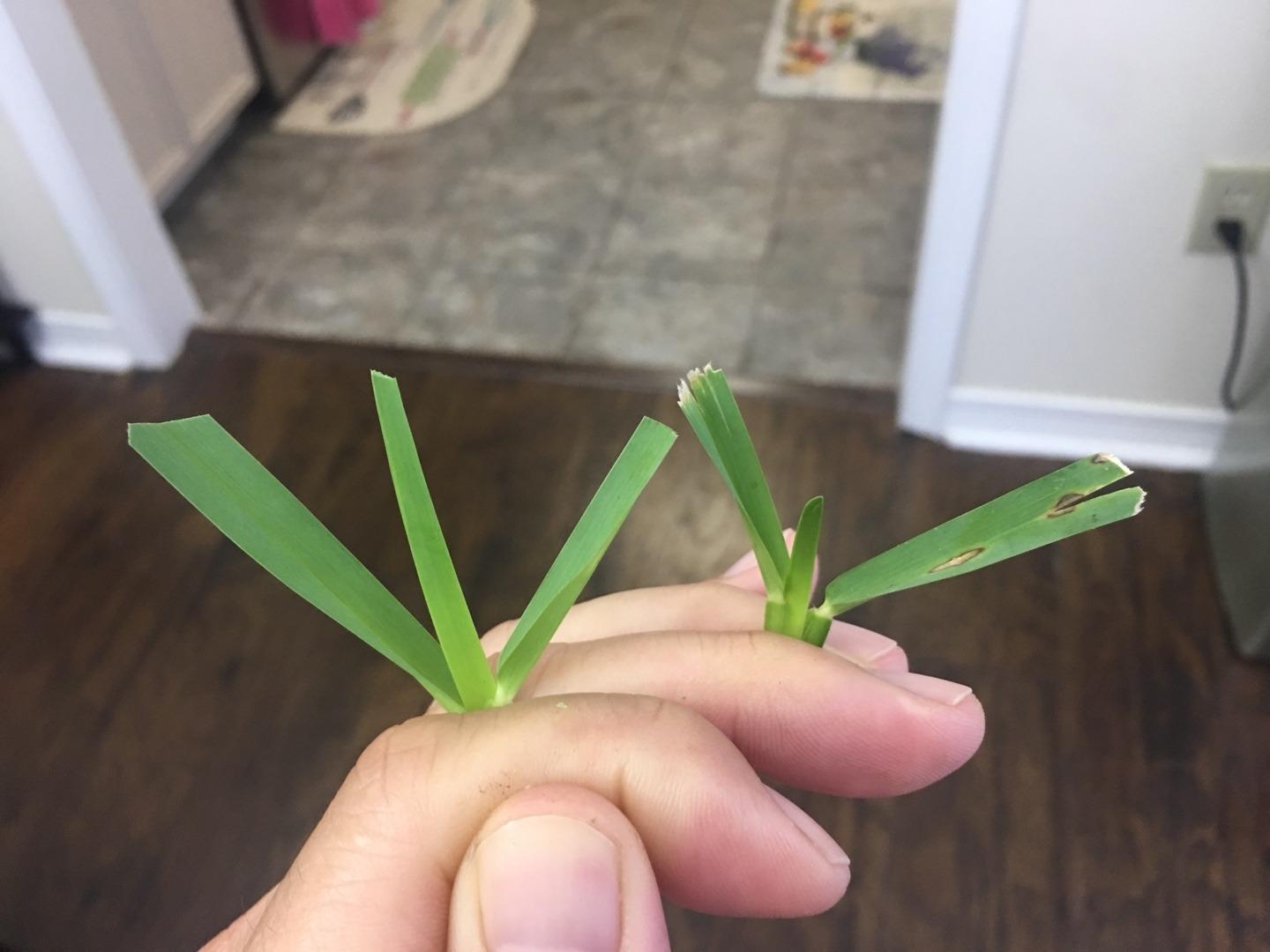
Sources conflict on sharpening, and the conflict is really about condition. A well-kept lawn mown twice a week may need a touch-up a couple of times a season; a lawn with sandy soil, seed heads, or stones may need it far more often. Judge by feel rather than calendar. A blunt blade crushes grass instead of cutting it, and you will see torn, tan tips in the clippings.
For most of these mowers the fix is simple: remove the reel, clean the blades, and lap the cutting edge against the bedknife with a lapping compound until the paper test passes. Reel mowers with contact-free cylinders, such as the Gardena, need only a wipe-down of the coated surface. Budget a few evenings for your first sharpening, then the interval becomes obvious from your grass.
Frequently Asked Questions
What reel mower is best for a small yard?
For a flat lawn under about 2,000 square feet, the American Lawn Mower 1204-14 is the strongest all-round choice, with a 14 inch swath, a 4-blade ball bearing reel, a 0.5 to 1.75 inch height range, and a weight of about 19 pounds. On a damp lawn, the Scotts 304-14S adds a 5-blade reel for extra capacity at a similar weight.
Which is better, a 5 blade or 7 blade reel mower?
A 5-blade reel handles most maintained small lawns and is the sensible default. A 7-blade reel takes in more grass per pass, which matters when the turf is coarse, bent, or warm-season, such as Bermuda, zoysia, centipede, or St. Augustine. Choose seven blades only if your lawn genuinely resists a five-blade reel.
What are the downsides of using a reel mower?
A reel mower cannot catch up with grass that has grown long, so it demands mowing at least twice a week in season. It stops dead for twigs, acorns, and pine cone cores, so you must clear the lawn first. Owners also report rattling noise, no edge cutting next to fences, and a noticeable patchy result on uneven ground.
How often should I cut grass with a reel mower?
Once a week at minimum in peak season, and twice a week is better for warm-season turf or fast spring growth. The rule of thumb is to remove no more than one third of the blade length at a time, which keeps the cut clean and prevents the reel from flattening rather than slicing. If you miss a week, a rotary mower will recover faster.
Can you mow a wet lawn with a reel mower?
You can mow damp grass, and the Scotts 304-14S and Great States 415-16 both get owner reports of working through it. Standing water is a different matter, because wet clippings bind the reel and reduce the cut. Slightly damp is fine, saturated grass will clog the blades and the ground under the mower will rut.
Conclusion
For most small lawns, the American Lawn Mower 1204-14 is the pick I would put my own money behind. It weighs about 19 pounds, adjusts from 0.5 to 1.75 inch, and has enough owner history behind it that failure modes are well understood. If your lawn is bigger than 2,000 square feet, step up to the Great States 415-16 or the American Lawn Mower 1815-18 for a wider swath, and move to the Earthwise 1715-16EW if you mow coarse warm-season grass.
Whatever you choose, the deal is the same in 2026: clear the lawn first, mow often, and keep a rotary for the weeks you fall behind. Those three habits are what make reel mowing pleasant instead of frustrating.