
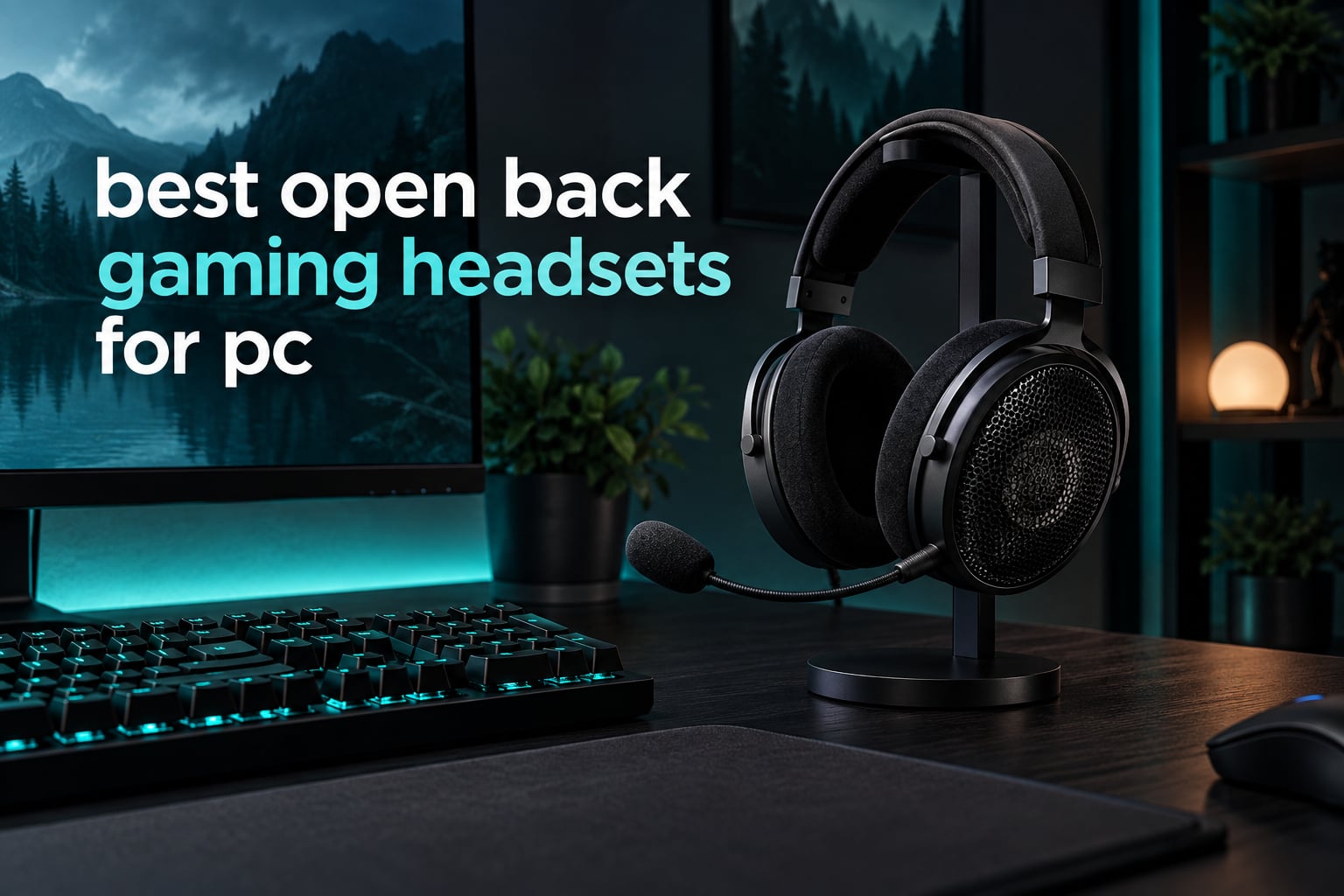
Quick answer: the best open back gaming headsets for PC in 2026 are the EPOS H6Pro Open Acoustic if you want one headset that does everything, the beyerdynamic TYGR 300 R if you already own a separate microphone, and the Audio-Technica ATH-GDL3BK if competitive shooters are your main game. All three give you the wide soundstage that open-back designs are known for, and all three are wired, which keeps latency at zero.
Open-back ear cups are acoustically unsealed. Air and sound move freely through the grille behind each driver, so the cup behaves more like a small speaker than a sealed can. That is where the wide soundstage, the natural imaging and the low fatigue come from, and it is also why you hear every keyboard click and everyone hears your game audio.
We spent the last few weeks going through ten open back gaming headsets for PC, mixing flagship models with budget picks, and weighing each one on soundstage width, positional clarity, microphone honesty, weight and long-session comfort. The lineup below runs from a lightweight wired set with a magnetic boom mic to a planar magnetic headphone with a balanced cable.
Table of Contents
Top 3 Picks for the Best Open Back Gaming Headsets for PC (October 2026)

EPOS H6Pro Open Acoustic
- Open acoustic design
- Detachable magnetic boom mic
- 309 g
- 28 ohm wired

All 10 Open Back Gaming Headsets at a Glance in 2026
| Product | Specifications | Action |
|---|---|---|
|
EPOS H6Pro Open Acoustic
|
|
Check Latest Price |
 beyerdynamic TYGR 300 R
|
|
Check Latest Price |
 PHILIPS SHP9600MB
|
|
Check Latest Price |
|
Audio-Technica ATH-GDL3BK
|
|
Check Latest Price |
 ASUS ROG Kithara
|
|
Check Latest Price |
 Sony INZONE H6 Air
|
|
Check Latest Price |
 FIFINE H18V Lite
|
|
Check Latest Price |
 FIFINE H19BP
|
|
Check Latest Price |
 beyerdynamic MMX 330 Pro
|
|
Check Latest Price |
 Corsair Virtuoso PRO
|
|
Check Latest Price |
Two more names come up constantly on audio forums: the Sennheiser HD 560S and the beyerdynamic DT 990 Pro. Neither ships with a gaming microphone, and both were left out here only because our ten slots went to headsets that work as a complete package. If you already run a separate USB microphone, those open-back headphones are worth a look.
Is Open-Back Right for You? What You Gain and What You Lose
Open-back wins on the thing most players say they care about: hearing where things are. The unsealed cup gives you a wide, three-dimensional soundstage, so a footstep behind a wall and a reload across the map read as separate, placed events rather than a wash of noise.
You also get less fatigue. The grille keeps air moving, so your ears stay cooler through a six-hour session, and there is no pressure buildup that makes voices sound pumped after two hours.
What you give up is everything the seal was doing. There is no passive isolation, so a mechanical keyboard, a tower cooler and a busy household all come straight in. There is no privacy either, because game audio bleeds outward at the volumes competitive players actually run.
Here is who should skip open-back entirely. If you share a flat or dorm room and someone else is trying to sleep, an open-back headset will wake them. If you are on voice chat while someone is in the room, the audio going out is the audio your teammates hear. If you play tournament shooters in a loud venue, background noise will bury the positional cues that make open-back worth choosing in the first place.
Comments on r/Gaming_Headsets make the same point from the comfort side. Users who got headaches from sealed cups during long sessions often move to open-back models purely for breathability, then learn to live with the leakage. That trade is worth making in a private room and rarely worth making in a shared one.
1. EPOS H6Pro Open Acoustic – Best Overall Open Back Gaming Headset for PC
EPOS H6Pro Open Acoustic Gaming with Mic – Immersive Sound, Lightweight Comfort, and Durable Design – Works with Xbox, PS4/PS5 & PC/Windows – Green
28 ohm dynamic drivers
309 g
3.5 mm wired
20 Hz - 20,000 Hz
Detachable magnetic boom
Pros
- Open acoustic design gives a natural in-game soundstage
- Detachable magnetic boom arm for a clean desk setup
- 309 g stays light through long sessions
- Wired 3.5 mm works across PC and console
- You hear your own voice without mic monitoring
Cons
- Open design leaks sound in and out
- Wired only with no wireless option
- No active noise control on the open cups
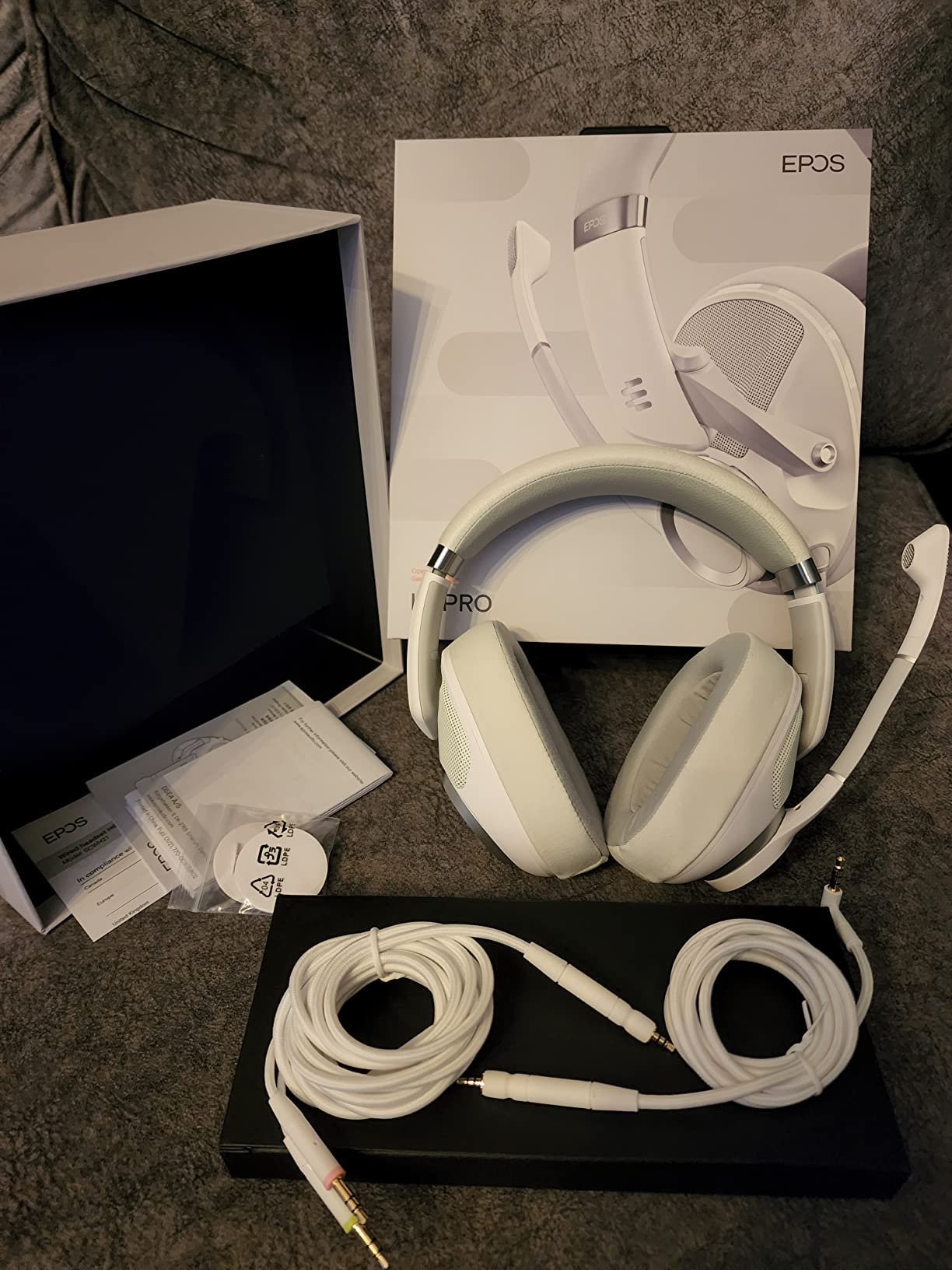
The EPOS H6Pro Open Acoustic is the easiest way into this category, and the reason is that it removes almost every decision. You get an open acoustic design, a detachable magnetic boom mic, and a single 3.5 mm cable that works on PC, PS5, Xbox and Switch without an adapter.
Out of the ten sets we examined, this one has the largest body of user feedback at a 4.3 average across 1184 reviews, which tells you the design is not fragile. The open cups produce a more realistic in-game picture than sealed gaming sets, and the tuning is described by owners as accurate rather than hyped, with no exaggerated bass to muddy explosions.
One detail nobody expects to care about is that you can hear your own voice clearly without turning on mic monitoring. Because the cups are open, your own speech leaks back in, and EPOS tuned around that instead of fighting it. On a sealed headset that same effect usually needs a monitoring toggle.
The specs are unremarkable in a good way. You get dynamic drivers across a 20 Hz to 20,000 Hz range at 28 ohm impedance, which is one of the easier loads a PC headphone output can drive. The magnetic boom arm detaches cleanly, so when you move to a separate microphone for streaming the headset just looks like plain open-back headphones.
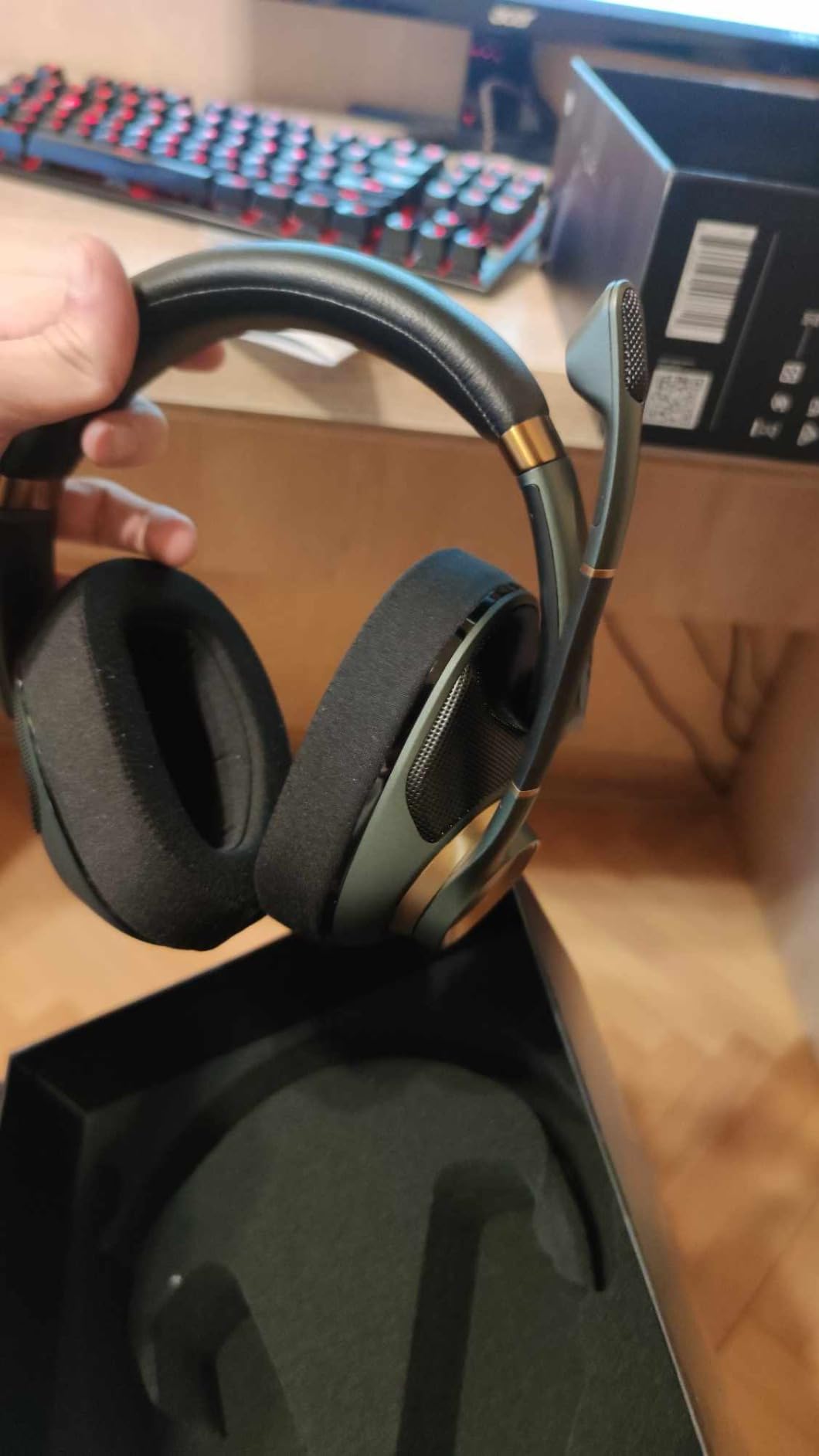
The EPOS H6Pro is the right pick if you want one headset for gaming and voice chat
Buyers single out the detachable magnetic boom as the standout feature, because the magnetic fit means no awkward unscrewing mid-session. Team communication stays clean on Discord and in calls, and the slim arm does not intrude on your view the way some boom designs do.
It is also the safest open-back choice for a first timer. The open design leaks sound in both directions, so it is unsuitable for noisy or shared rooms, but in a private space the tradeoff is easy to live with. The 309 g weight sits in the middle of this lineup, which is light enough for long sessions without feeling flimsy.
The EPOS H6Pro falls short on wireless and isolation, nothing else
There is no active noise control and no wireless option, because both are awkward on an open acoustic design. Anyone who wants to move between a desktop and a laptop without replugging will need a different approach, such as a USB adapter.
Boom mic quality is good for team chat but is not broadcast-grade. If your plan is to stream and be judged on your voice, spend the extra effort on a standalone USB or XLR microphone instead, and keep the EPOS boom as a backup for quick matches.
2. beyerdynamic TYGR 300 R – Best Value Open Back Gaming Headset with No Microphone
beyerdynamic TYGR 300 R Open-Back Wired Gaming Headphones, No Mic, Black
32 ohm dynamic drivers
10.2 oz
3.5 mm plus 6.35 mm adapter
Velour pads
5 Hz - 35,000 Hz
Pros
- Wide soundstage with clear imaging for directional cues
- Light clamping force with velour pads for long sessions
- Works as well for music as for games
- Flat tuning needs no EQ correction
Cons
- No microphone included
- Short fixed cable benefits from an extension
- Light on deep sub-bass versus closed-back sets
- Open design leaks in both directions
The TYGR 300 R is a circumaural open-back headphone that reviewers rate at 4.4 across 651 reviews, the highest average in this group. The soundstage is wide and natural, and the imaging is precise enough that owners specifically call out picking out footsteps in shooters.
What makes it a headset-shaped recommendation is the comfort. At 10.2 ounces with velour pads, it is one of the lightest full-size open-back options here, and the low clamping force means it stays on your head for hours without the pressure headache that sealed pads can cause.
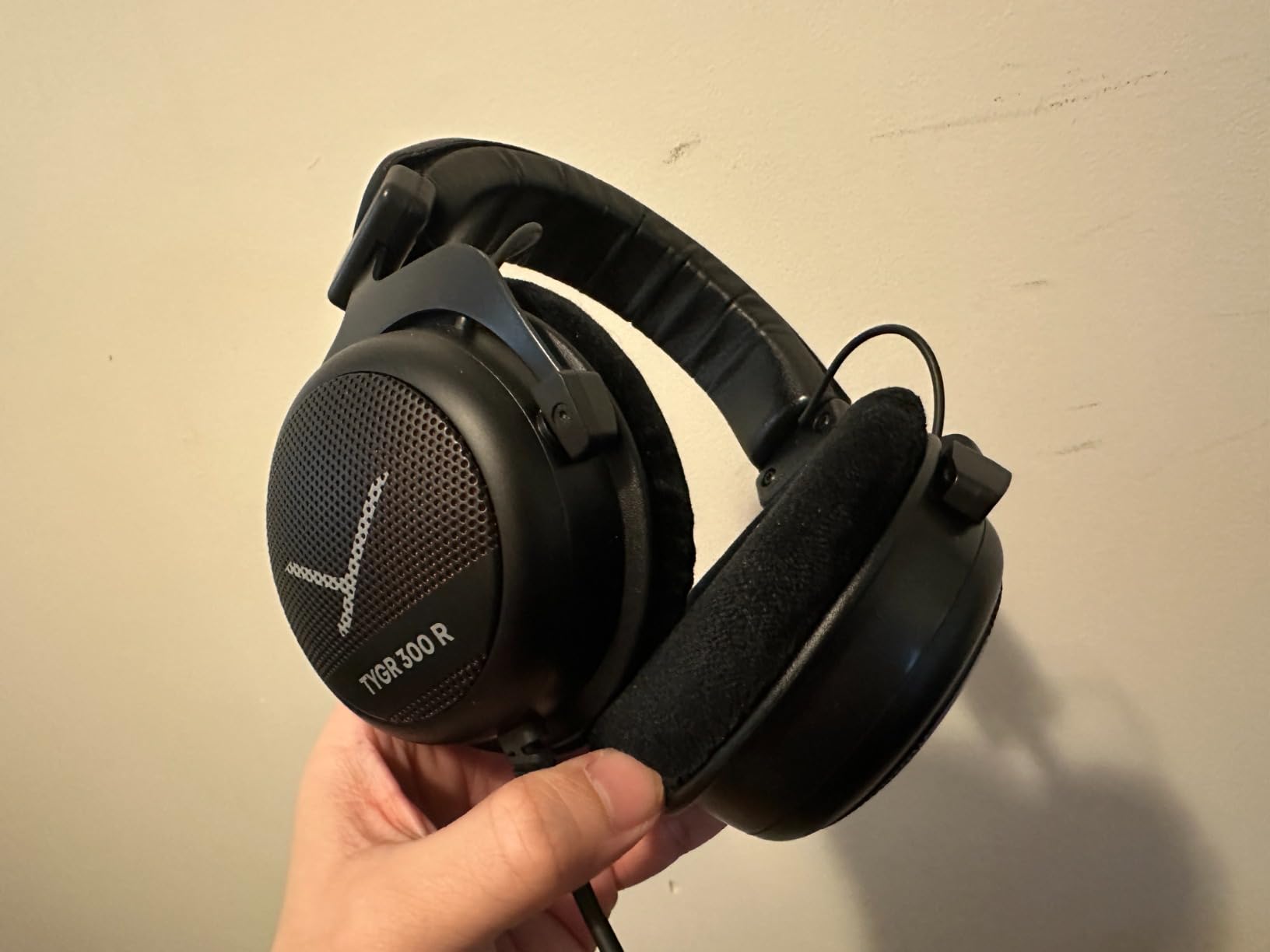
It ships without any microphone at all, which is either a deal-breaker or the entire point depending on your setup. If you already run a USB or XLR mic on a boom arm, this is the cleanest pairing in the lineup. The 3.5 mm jack plus included 6.35 mm threaded adapter also makes it a natural studio headphone for music production.
The cable is short and fixed, and that is the most common practical complaint. A simple extension cable solves it, and one detail worth knowing is that owners report the best results once it is paired with a small DAC or amp, while direct motherboard or controller output still works well thanks to 32 ohm impedance and 96 db sensitivity.
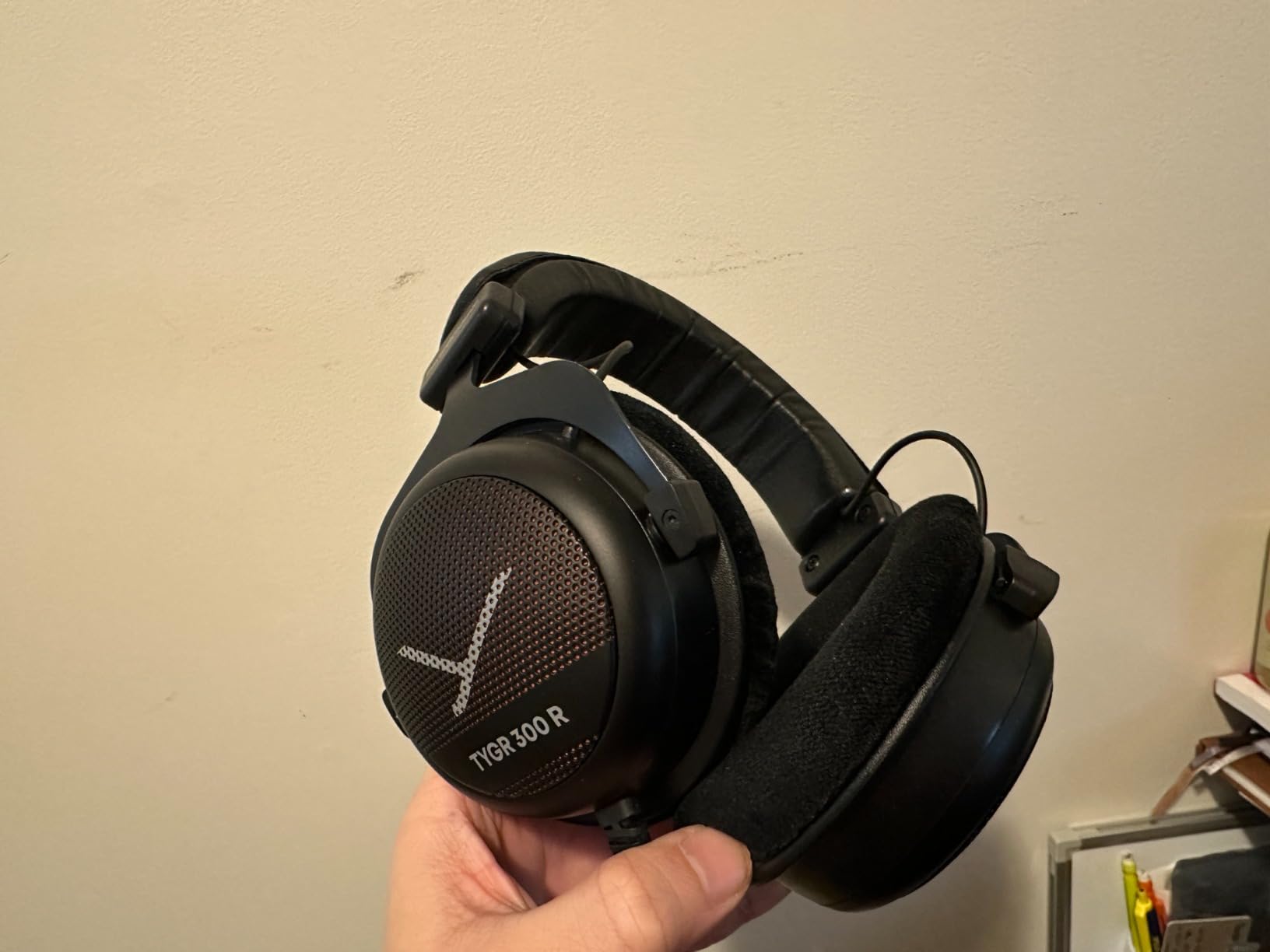
The TYGR 300 R suits players who already own a separate microphone
Tuning is flat and non-fatiguing, which owners consistently praise as needing no EQ tweaks. For single-player and open-world games, that neutrality means cinematic scores and dialogue sit where the mix put them, and the same tuning carries over to music listening between sessions.
The 5 Hz to 35 kHz frequency range is wider than most gaming headsets advertise, and the focus on high-wearing comfort is what separates it from a typical studio open-back. For a player who games four hours a night, breathability matters as much as sound.
The TYGR 300 R has two real limits: no mic and light bass
If you need push-to-talk chat, this is not the product for you. The community pattern described on Overclockers UK forum is open-back headphones plus a compact DAC or amp plus a modmic, and this is the headphone half of that build rather than a complete one.
Bass is light compared with closed-back gaming headsets, so explosion-heavy shooters feel less heavy than you might expect. The open design also leaks sound in both directions, which is the category-wide tradeoff rather than a fault unique to this model.
3. PHILIPS SHP9600MB – Best Dual-Purpose Open Back Headset for Gaming and Music
PHILIPS Over The Ear Studio Headphones for Recording Open Back Gaming Headset with Microphone Studio Monitor Headphones for PC DJ Music Piano Guitar with Detachable Mic and Audio Jack SHP9600MB
50mm open-back dynamic drivers
32 ohm
1.5 lb
6 Hz - 35 kHz
Detachable boom mic
Pros
- 50mm drivers give crisp bass and balanced mids
- Detachable boom mic turns a studio headphone into a headset
- Two cables plus a 3.5mm to 6.3mm adapter in the box
- Numbered headband sizes make fit easy to set
Cons
- 1.5 lb is heavy for a gaming headset
- Mic is a bolt-on add-on rather than an integrated boom
- Open-back design leaks sound in and out
The SHP9600MB takes Philips’ long-running open-back studio monitor headphone and adds a detachable boom mic, so it works as a gaming headset and a mixing headphone from the same purchase. It carries a 4.1 average across 428 reviews.
The 50mm dynamic drivers are tuned from 6 Hz to 35 kHz and Philips describes the open-back airflow as the reason sound stays clear without echoes. In practice the reviews describe crisp bass and a balanced midrange, which is exactly what you want for both a game mix and a critical listen.
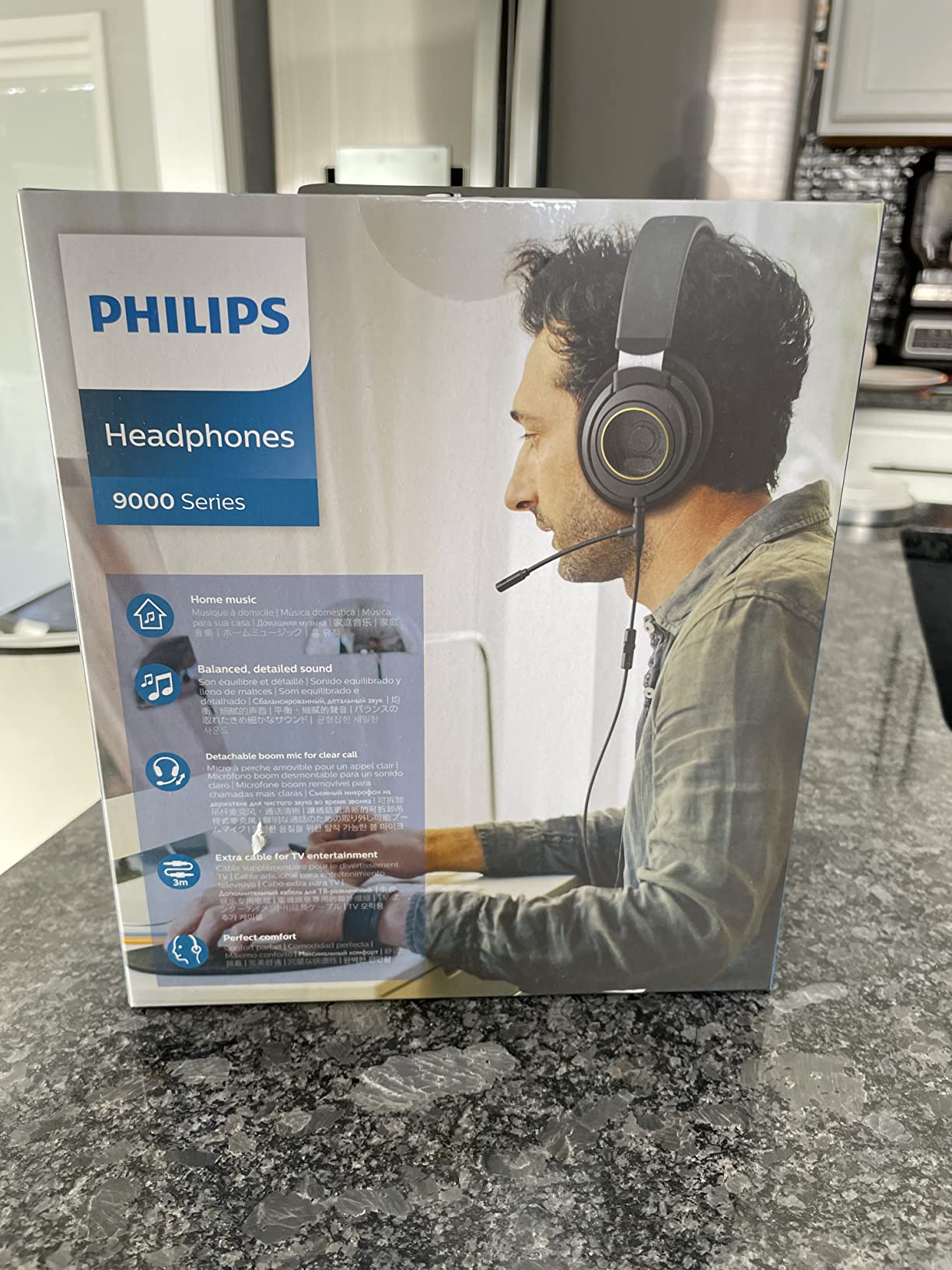
Cabling is unusually generous. You get roughly 5 feet of cable with the mic attached, a 9.8 foot cable without it, and a 3.5 mm to 6.3 mm adapter, so the same box covers a desk setup and a studio monitor input.
Fit is handled through a numbered adjustable headband rather than a loose slider, and the earcups use breathable cushions instead of sealed leatherette. The design is described as a comfort fit shape for long listening sessions, which maps well to long gaming nights.
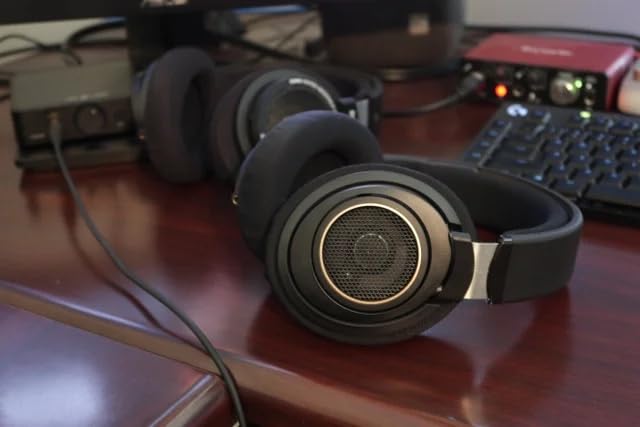
The SHP9600MB is the pick for players who also use their headset for music production
Because the mic detaches, you can leave it off for listening and pop it on for a session with teammates. That single decision makes it more versatile than the fixed-boom sets, and the included long cable means you are not perched next to your PC.
It is listed for home, movies and gaming use, and the balanced midrange makes it a good second headphone for music between sessions. If you already know the SHP9600 line, this is the version that makes sense at a desk.
The SHP9600MB is heavy, and the mic is a bolt-on rather than a native headset boom
At 1.5 pounds it is the heaviest open-back set in this lineup, and that weight adds up over a full evening. Buyers mention it as the most common reservation alongside the inevitable open-back sound leakage.
The mic bolts onto the left cup rather than being integrated into a gaming boom arm, so it will not sit as close to your mouth and will pick up more room sound. For team chat in a reasonably quiet room it is fine. For streaming, plan on a real microphone.
4. Audio-Technica ATH-GDL3BK – Best Open Back Gaming Headset for Competitive FPS
Audio-Technica ATH-GDL3BK Open-Back Gaming Headset, Black
45mm dynamic drivers
45 ohm
Under 220 g
Earcup volume and mute
Two detachable cables
Pros
- Expansive open field makes approaching opponents easy to localize
- Under 220 g for long hours of play
- Detachable directional boom mic for team comms
- Volume dial and mute switch built into the earcup
- Both 1.2 m stereo and 3.0 m PC cables included
Cons
- 45 ohm impedance wants a decent PC output or a small amp
- Heavier build and stiffer headband than ultralight rivals
- Open design leaks sound in and out
The ATH-GDL3BK is a purpose-built open-back gaming headset rather than a studio headphone with a mic added. Audio-Technica states the goal plainly: localizing sounds within an expansive sound field, which is the exact skill competitive shooters test.
It holds a 4.0 average across 348 reviews, and the reviews put the emphasis on build clarity and the mic rather than on tuning. Audio-Technica calls the 45 mm drivers high-resolution with fine detail, and describes the metal earcup construction as both light and rigid.
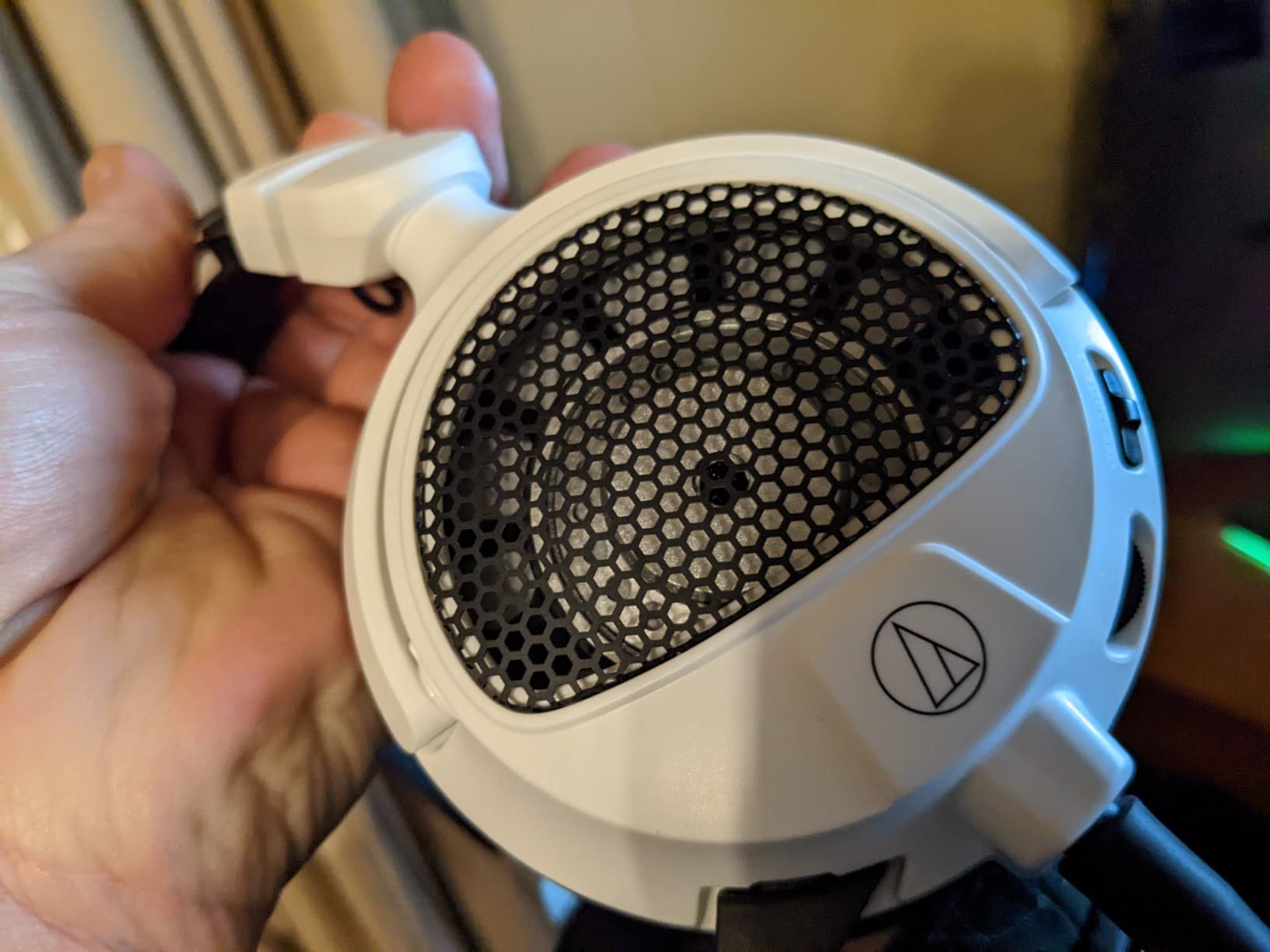
Two detachable cables ship in the box. The 1.2 m gold-plated 3.5 mm stereo cable works with controllers and laptops, and the 3.0 m PC cable with a separate mic and headphone output is what you want on a desktop. Volume and mute are on the earcup rather than on a cable box, which means you never have to find the cable mid-firefight.
One technical note matters here. At 45 ohm impedance, this is the pick in the lineup most likely to sound quiet on a bare motherboard headphone output. A small USB DAC or amp solves it in one step, and the manual lists compatibility with any wired device using a 3.5 mm TRRS headset connector or separate mic and headphone outputs.
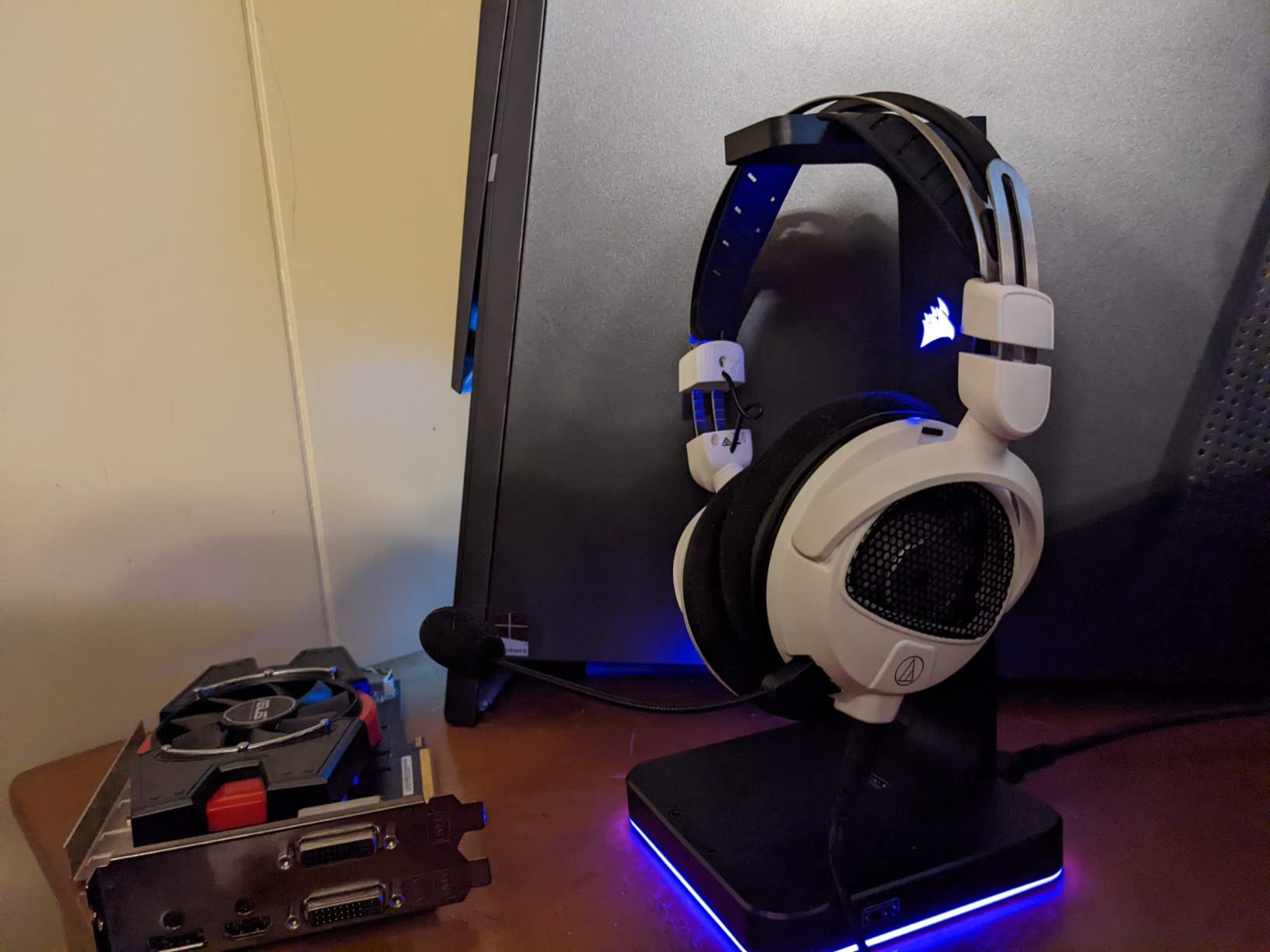
The ATH-GDL3BK is the right choice for tournament shooters and ranked ladder play
The detachable boom mic has a highly directional pickup, which in practice means your teammates hear your callouts more than they hear your fan. That matters in a squad shooter where a quiet callout is the difference between a trade and a won round.
It is also comfortable for long hours because of the sub-220 g weight, and Audio-Technica backs it with a two year limited end user warranty. Black and White variants are available, which is unusual in a category that usually ships in one colourway.
The ATH-GDL3BK wants a small amp, and the headband is not featherweight
If your PC has no separate headphone output and you are running off a bare jack, expect to turn the volume up further than you would on a 28 or 32 ohm set. That is the impedance tax, and it is the single most common question open-back owners ask on forums.
The build is described as heavier and the headband stiffer than ultralight rivals, so if you are highly sensitive to clamping pressure the lighter Sony option may suit you better. The open design also leaks sound in and out, which is a poor match for a noisy room.
5. ASUS ROG Kithara – Best Open Back Gaming Headset with Planar Magnetic Drivers
ASUS ROG Kithara Gaming/Audiophile Open-Back Wired Headphones with Mic – ROG-Tuned HIFIMAN Planar Magnetic Drivers, Adjustable Headband, Extra Ear Pads, Compatible with DACs, Amps, PC, Console, Mobile
ROG-tuned HIFIMAN planar magnetic drivers
11.2 oz
4.4mm balanced plus 3.5mm
USB-C adapter included
Pros
- Planar magnetic drivers with very low distortion
- Two earcup cushion sets included
- Balanced 4.4mm plus 3.5mm
- 6.3mm and USB-C leads
- Eight-level headband fits very large heads
Cons
- On-cable mic has no noise filtering
- Wants an external DAC or amp for volume
- Low clamping force lets it shift when you move
- Very open acoustically with heavy sound bleed
The ROG Kithara is the only planar magnetic entry in this roundup, and that changes the character of the sound rather than just the detail level. Planar drivers move a thin film across the whole driver surface, which is why they are known for low distortion and clean separation between bass, mids and treble.
ASUS tuned these HIFIMAN planar drivers for ROG, with a stated 20 Hz to 20 kHz response. It holds a 4.2 average across 145 reviews, and owners describe the clarity as outperforming closed-back gaming sets, particularly when paired with a DAC or amp.
Connectivity is the standout on paper. You get a 4.4 mm balanced plug alongside 3.5 mm, 6.3 mm single-ended plugs and a USB-C adapter, plus two 1.8 m 3.5 mm cables, one for headphone only and one for mic use. It is listed as compatible with PC, Mac, PS4, PS5, Switch, iPad, iOS and Android, with Xbox through 3.5 mm.
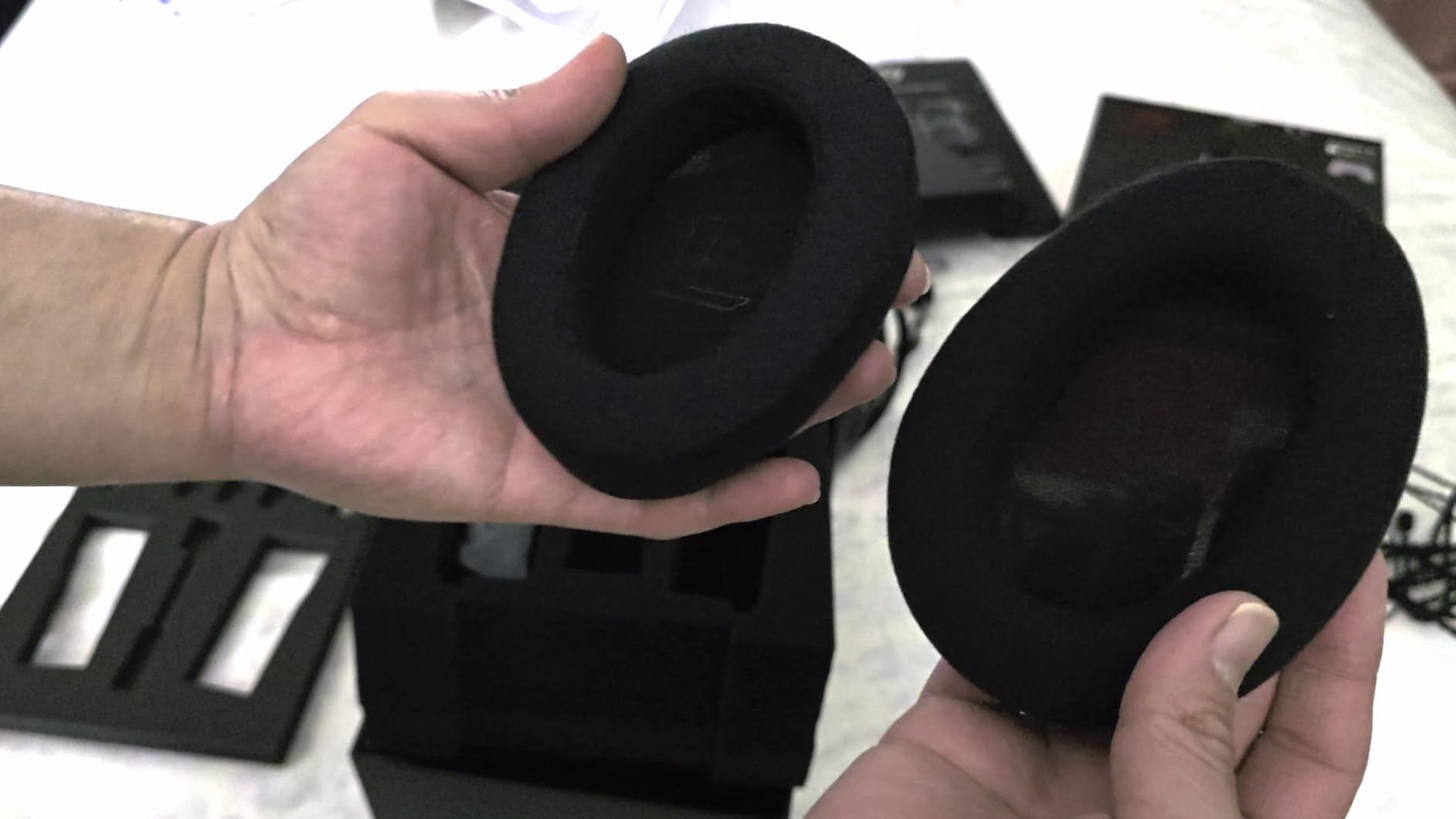
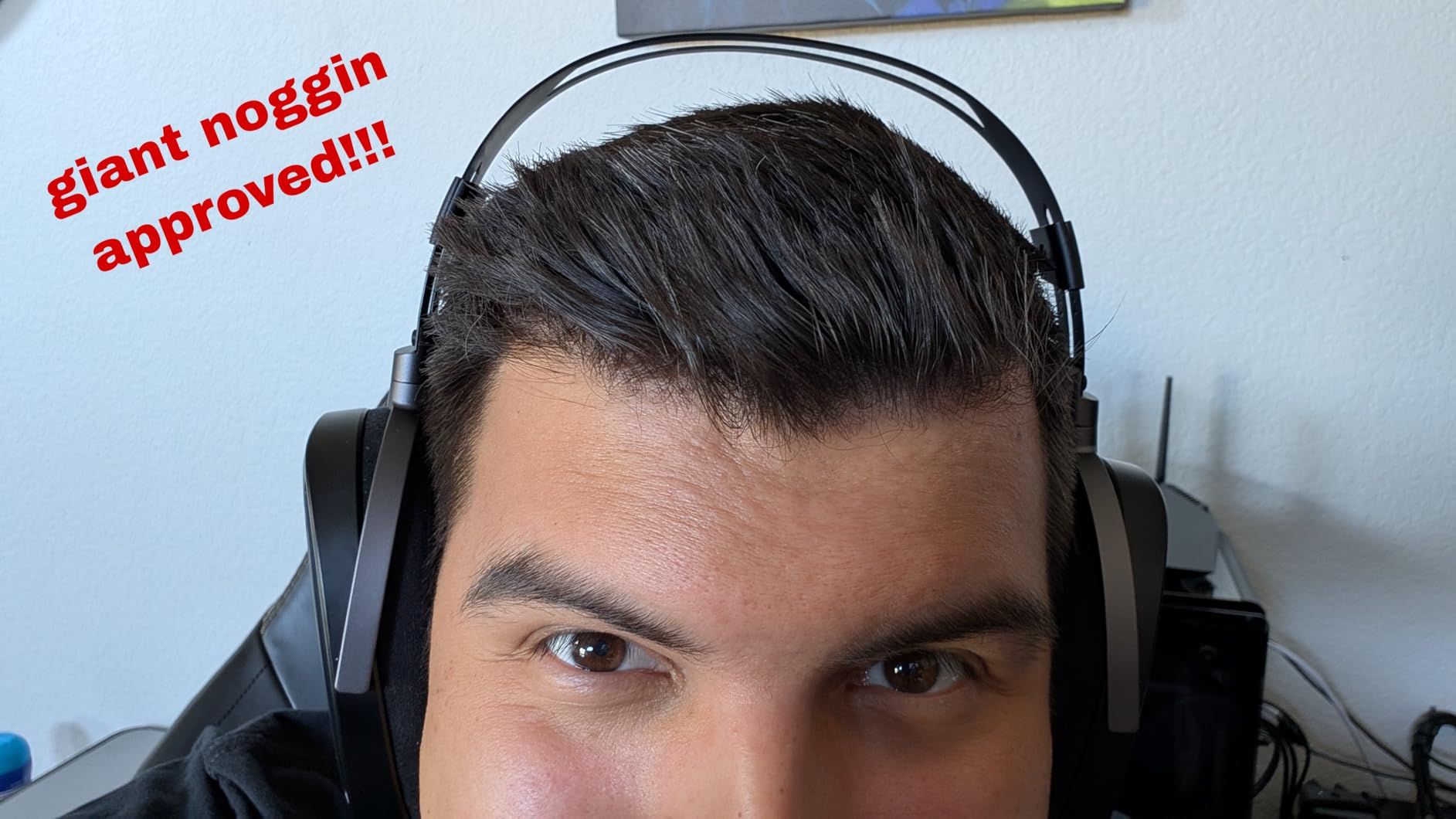
Comfort is customised rather than assumed. Two earcup cushion sets are included, one ROG hybrid fabric and one leatherette, so you can change the feel and the amount of airflow depending on whether you wear glasses. The headband adjusts across eight levels on a metal frame, which owners single out for fitting unusually large heads.
The ROG Kithara is the pick for single-player immersion and critical listening
Wide, open soundstage with clear separation across bass, mids and treble is exactly what you want for open-world games where a film’s score, gunfire and dialogue all compete. Planar drivers also stay composed at low listening volumes, which suits late-night sessions.
It is also the most platform-flexible set here. If you move between a desktop, a laptop and a console, the box of cables means you are not hunting for the right dongle, and ASUS lists 10-year EU spare part availability for a model that may age with you.
The ROG Kithara is acoustically very open, and the mic is the weak point
Owners are blunt about the microphone. It is a full-band MEMS boom on the cable with a 20 Hz to 20 kHz response and a high signal-to-noise ratio, but it has no noise filtering, so it picks up room and background sound and changes character as the cable moves. The mic cable itself is lower quality than the main cable, and there are several cables to manage.
Two other complaints come up. The clamping force is low enough that the headset can slide when you move your head, and the earcup padding is thin compared with rivals. Planar drivers also want more power than a typical PC jack delivers, so budget for a DAC or amp.
6. Sony INZONE H6 Air – Best Lightweight Open Back Gaming Headset for Long Sessions
Sony INZONE H6 Air Wired Open-Back Gaming Headset with Mic, Black
40mm HD drivers
28 ohm
199 g
USB-C audio box
Detachable cardioid mic
Pros
- 199 g aluminum build is comfortable for hours
- Drivers adapted from the MDR-MV1 monitor headphone
- Bundled USB-C box adds 360 Spatial Sound for Gaming
- Detachable cardioid mic keeps voice focused
Cons
- Bundled audio box is only 16-bit/48 kHz
- Earcups can feel small for larger ears
- Wired only with limited EQ control
The INZONE H6 Air weighs approximately 199 g, which makes it the lightest open-back headset in this group. That matters more than it sounds like a spec: on a full-size circumaural design, every gram of clamping force is something your neck does not have to hold up.
The 40 mm HD driver units are adapted from Sony’s MDR-MV1 open-back monitor headphones, and Sony developed a custom RPG and adventure equalizer with PlayStation Sound Engineers. The result sits at a 4.2 average across 64 reviews, with owners frequently comparing its positional clarity favourably against closed-back flagships.
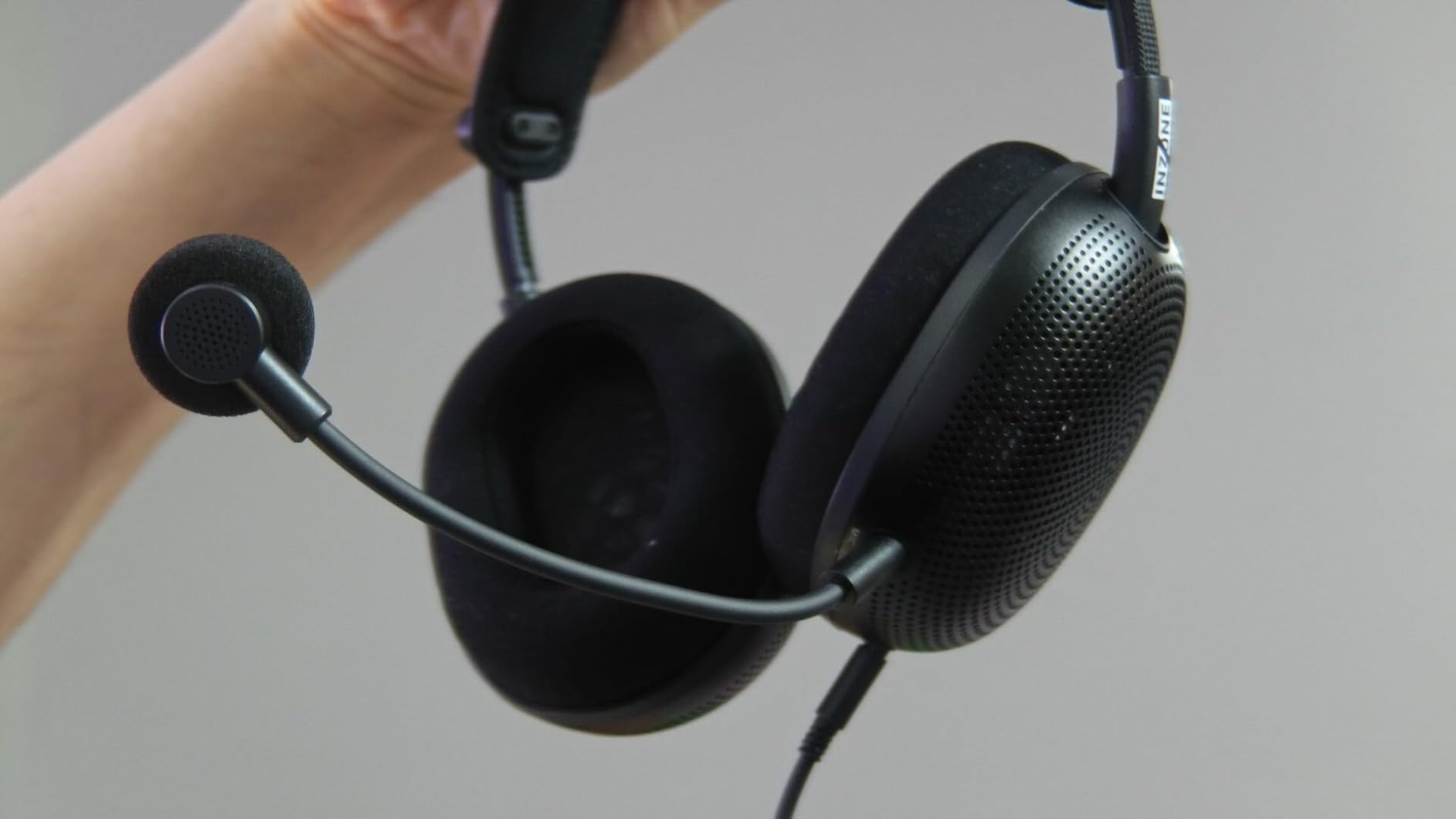
It is the only entry in this roundup that includes a USB-C audio box, and that box enables 360 Spatial Sound for Gaming. You also get a detachable cardioid boom mic with a windscreen plus built-in volume and mute buttons on the earcup, so the cable stays simple.
Impedance is 28 ohm with 99 db sensitivity, which is a friendly load for PC onboard audio. The aluminium construction with a balanced headband keeps the weight down, and reviewers call out glasses compatibility as a specific benefit of the light frame.
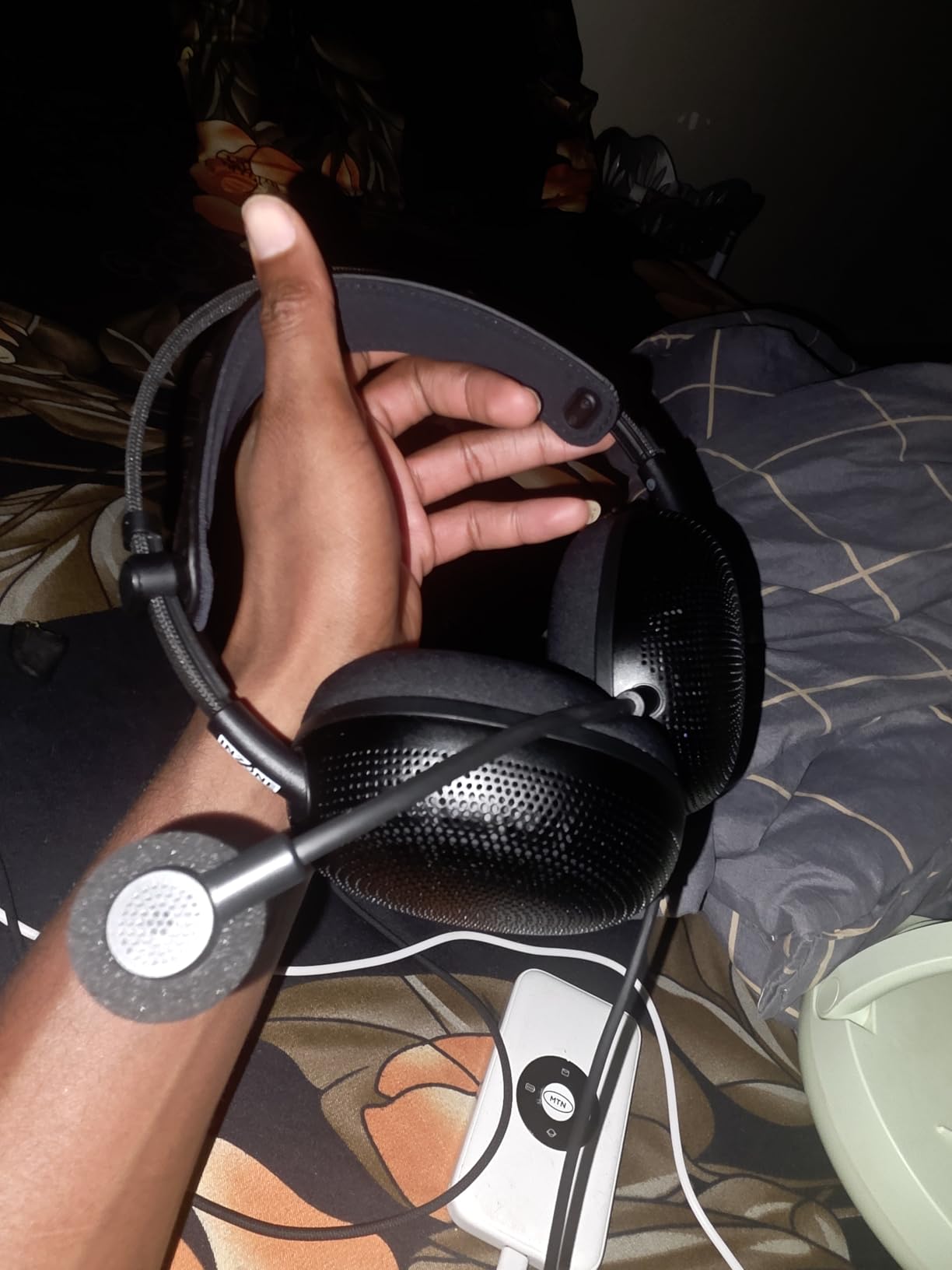
The INZONE H6 Air is the right choice for marathon players and glasses wearers
Because the frame is light and the padding is not pressing hard, this is the pick for anyone who wears glasses and has spent time with headsets pressing temple arms into the hinge of their frames. The 199 g figure is verified as the lowest in this lineup, and the aluminium body does not flex.
The MDR-MV1 lineage is the real story. That monitor headphone is known for deep bass with clear mids and detailed highs, and adapting those drivers to a gaming chassis is a genuine step up rather than a downgrade for music between sessions.
The INZONE H6 Air has a modest dongle, small cups for some ears, and no wireless
The bundled USB-C audio box runs at 16-bit/48 kHz, which is below what many players expect from a flagship companion accessory. It is fine for 360 Spatial Sound for Gaming, but if you care about hi-res playback you will feed it from something better.
Owners with larger ears report that the earcups can feel too small, so test the fit if you have broad ears. The EQ control is also limited, particularly on PS5, and the headset is wired only with no wireless option in this category.
7. FIFINE H18V Lite – Best Budget Open Back Gaming Headset for PC
FIFINE H18V Lite Wired Open Back Gaming Headset, for PC, Xbox, PS4/5
53mm dynamic drivers
32 ohm
108 db sensitivity
3.5 mm plus USB-A
In-line control box
Pros
- Lowest entry point to open-back sound in this lineup
- 53mm drivers with USB-powered 7.1 virtual surround
- In-line box handles volume
- mic mute and surround
- Works with PC
- PS4/PS5
- Xbox controllers and phones
Cons
- Open mesh design leaks sound in both directions
- Virtual surround depends on the USB path
- Heavier build than other headsets at this level
The H18V Lite is the cheapest way into a genuine open-back soundstage, and it does something most budget gaming headsets do not, which is stop sealing the cups. The 53 mm dynamic drivers run from a mesh fabric open-back earcup, so you get genuine airflow and a wider stage than a sealed plastic set at the same money.
It holds a 4.2 average across 61 reviews, with 68 percent of ratings at five stars. That is a small but strongly positive sample, and the reviews treat it as an affordable first open-back headset rather than a flagship substitute.
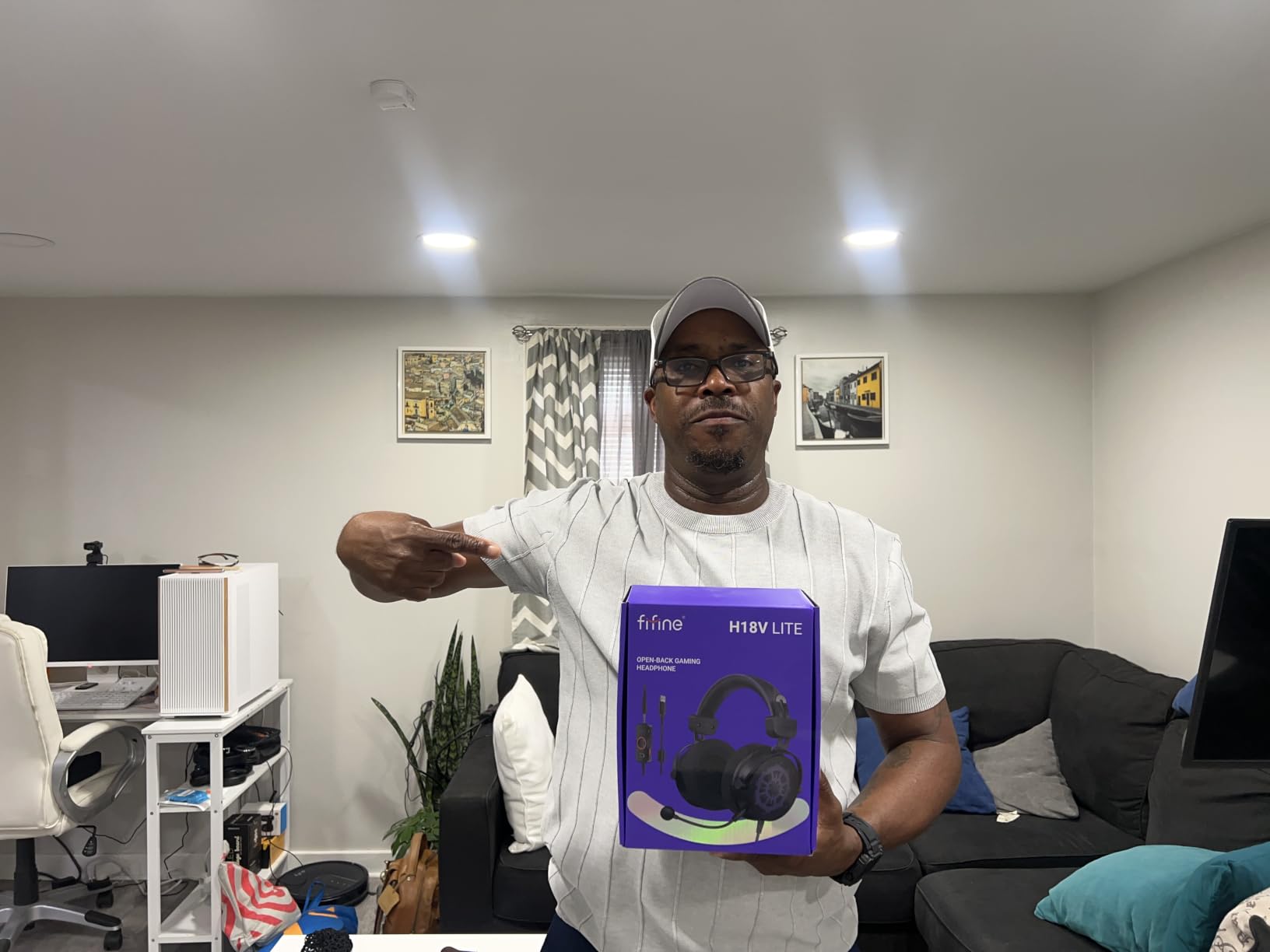
The feature that sets it apart at this tier is the in-line control box. It carries volume, mic mute and a 7.1 surround toggle, and the USB-powered virtual surround runs off the USB-A connection rather than the 3.5 mm path. Buyers like having all three controls within reach during a match.
Connectivity is unusually flexible for a budget set. The 3.5 mm jack covers Xbox and PlayStation controllers and mobile, while USB-A covers PC and PS4/PS5, and the listed compatible devices include cellphones, desktops, consoles and laptops.
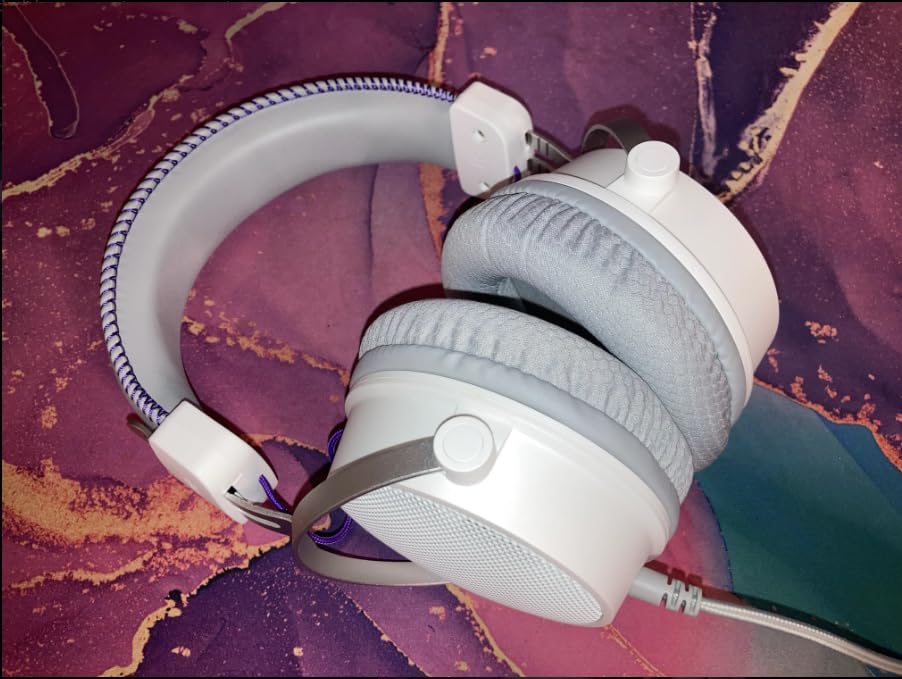
The H18V Lite is the pick if you want open-back sound without a large spend
At 32 ohm impedance and 108 db sensitivity, it is one of the easiest sets here to drive from a laptop or a controller, and the spec sheet is honest about what you get. Crisp highs, rich mids and controlled bass is a fair description for the tuning.
The breathable open-back earcups are the real value. Reviewers point to reduced heat and pressure over marathon sessions, which is exactly the comfort argument that sends people away from sealed budget headsets in the first place.
The H18V Lite leaks heavily and its surround is virtual rather than real
The open mesh design leaks sound in both directions, more so than a fabric-covered open-back at a higher tier, so it is a poor choice for a shared room. That is the same tradeoff every open-back carries, and here it is amplified by the mesh construction.
Virtual surround is a processing effect delivered over USB, not true multi-channel audio, and it depends on the control box rather than on the headset hardware. The build is also heavier than other headsets at this level, which is a fair criticism of the metal and mesh construction.
8. FIFINE H19BP – Best Open Back Gaming Headset for Customization and RGB
FIFINE Wired USB Gaming Headset with Open Back Design, Breathable Mesh Fabric, 7.1 Surround Sound, Vibrant RGB, in-line Control Box, Over-Ear Headphone with Mic for PC, PS5/PS4, Laptop, Mac – H19BP
53mm dynamic drivers
32 ohm
USB-A only
7.55 ft braided cable
Detachable mic
Pros
- Open soundstage wider than closed-back budget sets
- 11 RGB lighting modes with an off setting
- In-line box handles volume
- EQ
- mic mute and RGB
- Plug-and-play on Windows and Mac
Cons
- USB-only so no Xbox or PlayStation controllers
- 0.7 kg is heavy for a plastic build
- Surround and EQ depend on control box software
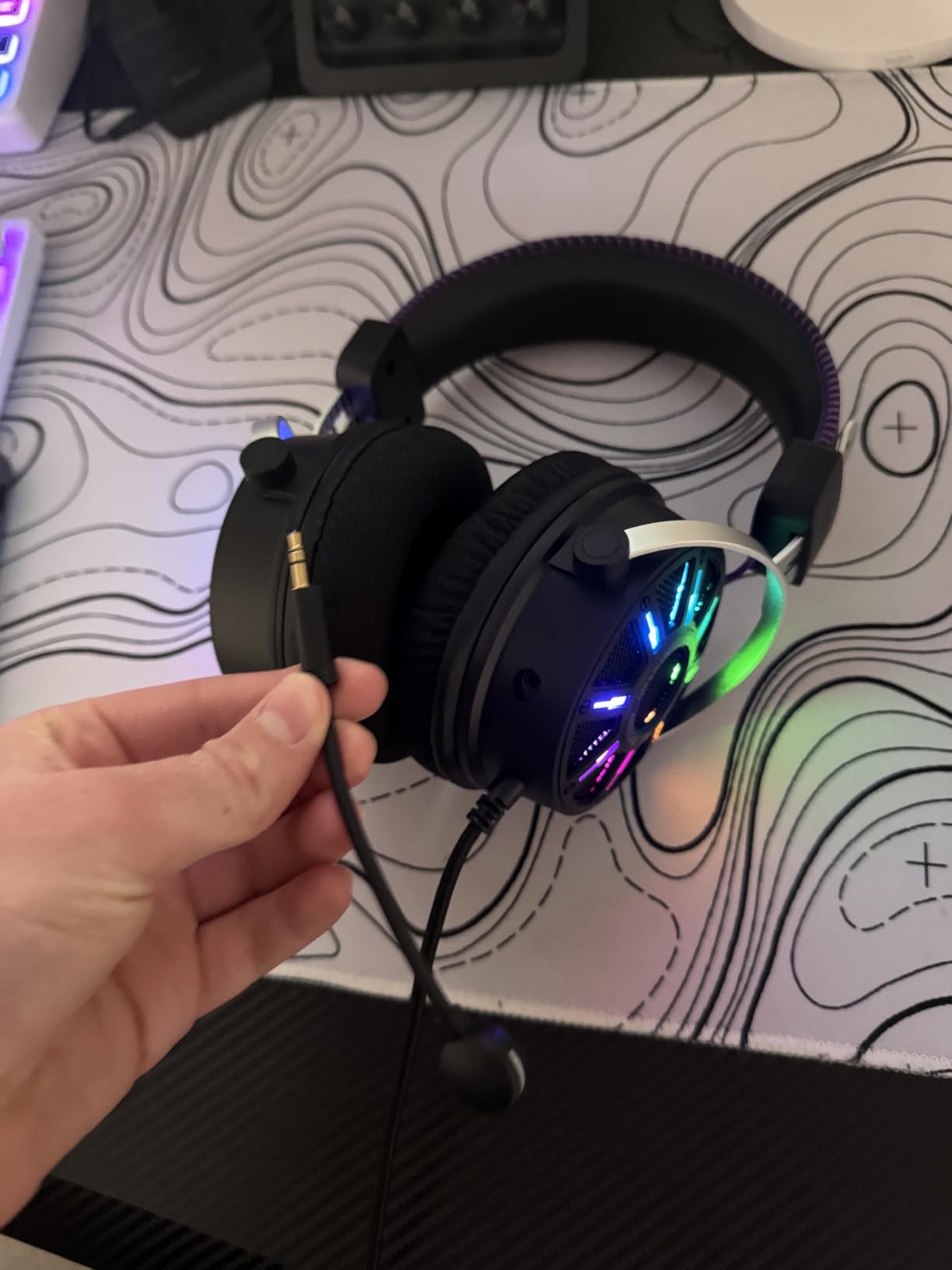
The H19BP is the USB-only sibling of the H18V Lite, and it trades console flexibility for features. You get 53 mm dynamic drivers, USB 7.1 virtual surround, a detachable mic and 11 RGB lighting modes with an off setting, all on a 7.55 ft braided USB-A cable.
It holds a 4.1 average across 97 reviews, with 58 percent five stars. Buyers single out the soundstage relative to the price and the number of customization options, and treat it as a plug-and-play upgrade from a sealed budget set.
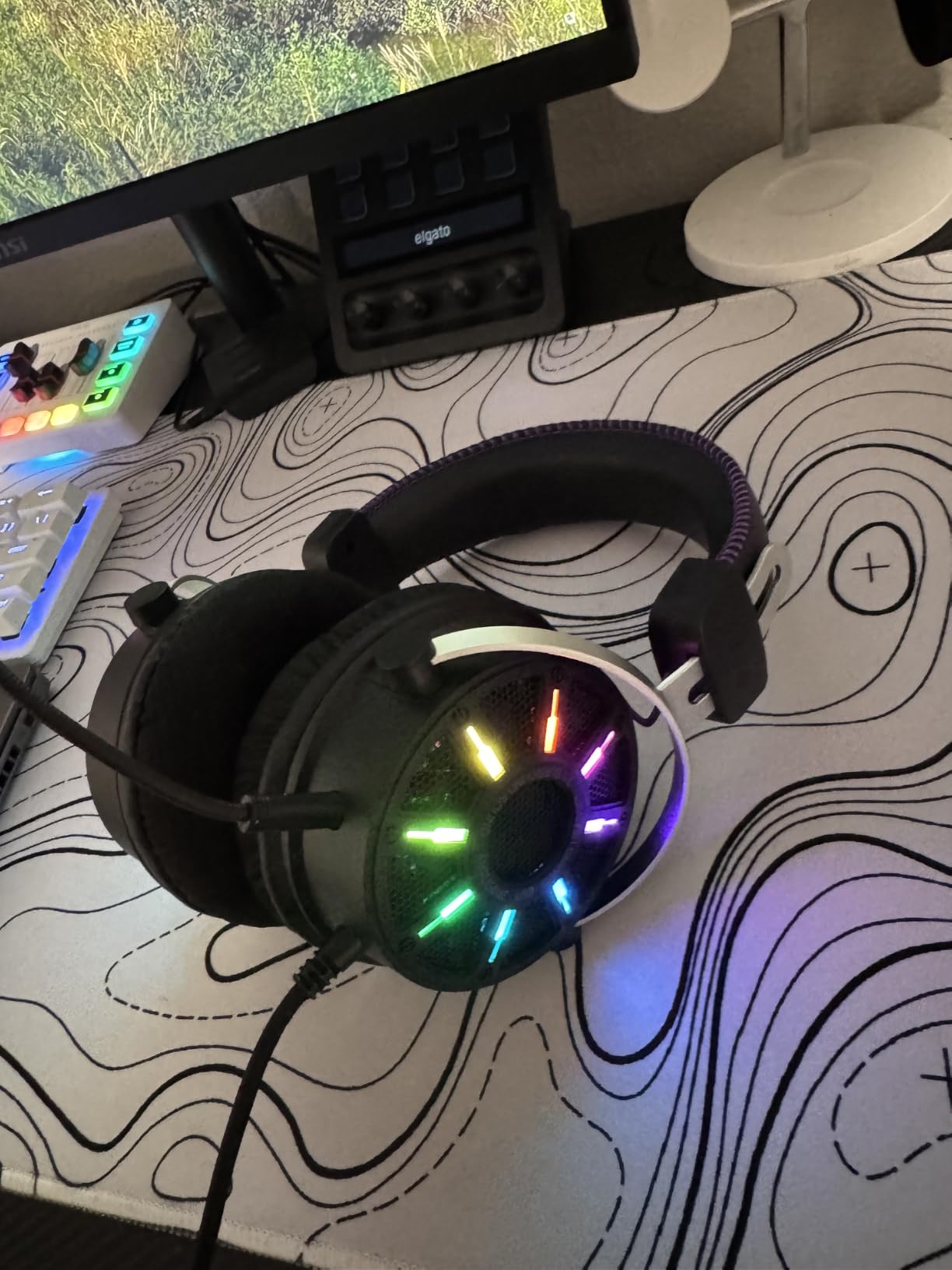
The in-line USB control box is the centre of the experience. It handles volume, EQ modes, mic mute and an RGB toggle, so you are not alt-tabbing to a companion app mid-session. It is plug-and-play on Windows and Mac with no driver step.
The detachable mic is worth noting too. On a wired USB headset, a detachable mic is a meaningful upgrade over a fixed arm, because you can use the headset as plain open-back headphones for music and movies without a boom hanging off the cup.
The H19BP is the right pick for a PC-only desk setup with a lit setup
If your gaming happens entirely on a desktop or laptop, the USB-only interface costs you nothing. In exchange you get more control than any other entry in this list, from EQ profiles to lighting that can be turned off entirely when you want a clean look.
The frequency response is a standard 20 Hz to 20,000 Hz and sensitivity is 108 db at 32 ohm, so it drives easily from a desktop. Buyers who were previously on closed-back budget sets report a noticeably wider, more natural soundstage as the first thing they noticed.
The H19BP cannot be used with Xbox or PlayStation controllers, and it is heavy
The USB-only design rules out Xbox and PlayStation controllers entirely, which is the clearest limitation in this roundup. If there is any chance of console play, the H18V Lite is the sibling to choose because it also offers 3.5 mm.
At 0.7 kg it is the second-heaviest set here, and reviews note the surround and EQ behaviour depends on the control box software rather than on hardware tuning. The open-back mesh also leaks sound in both directions, as the whole category does.
9. beyerdynamic MMX 330 Pro – Best Open Back Gaming Headset for Streaming and Voice
beyerdynamic MMX 330 Pro Wired Open-Back Gaming Headset, Condenser Mic
STELLAR.45 45mm drivers
48 ohm
11.2 oz
Condenser mic
5 Hz - 40,000 Hz
Pros
- Condenser capsule is among the best headset mics here
- Open staging reads direction
- distance and height of cues
- Velour pads stay comfortable over multi-hour sessions
- Detachable cable works with PC
- PlayStation and Switch
Cons
- Inline control box feels cheap and sits awkwardly
- No indicator light to show when the mic is muted
- Headband clamps tightly and suits larger heads
- Bass is light versus closed-back gaming headsets
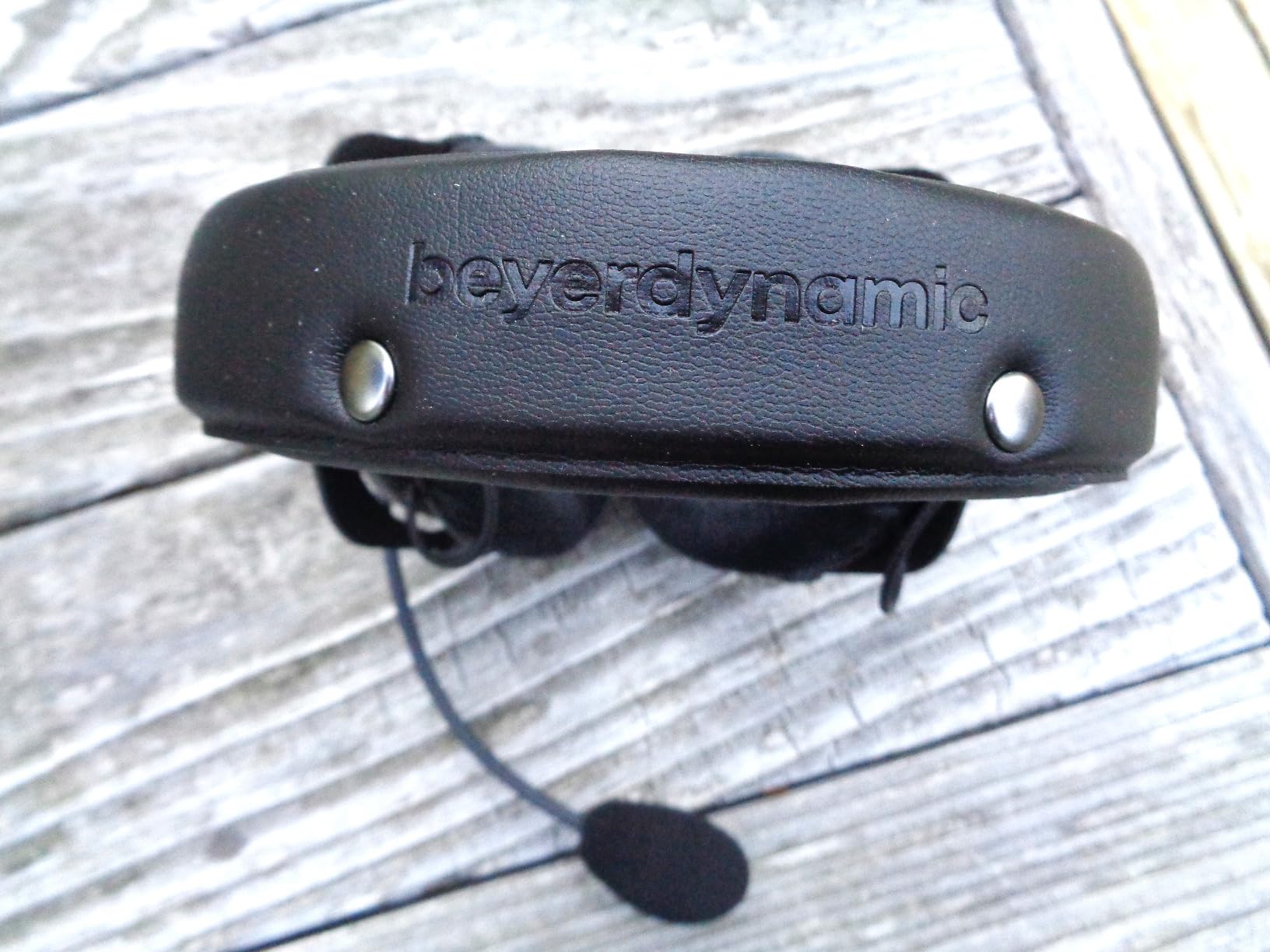
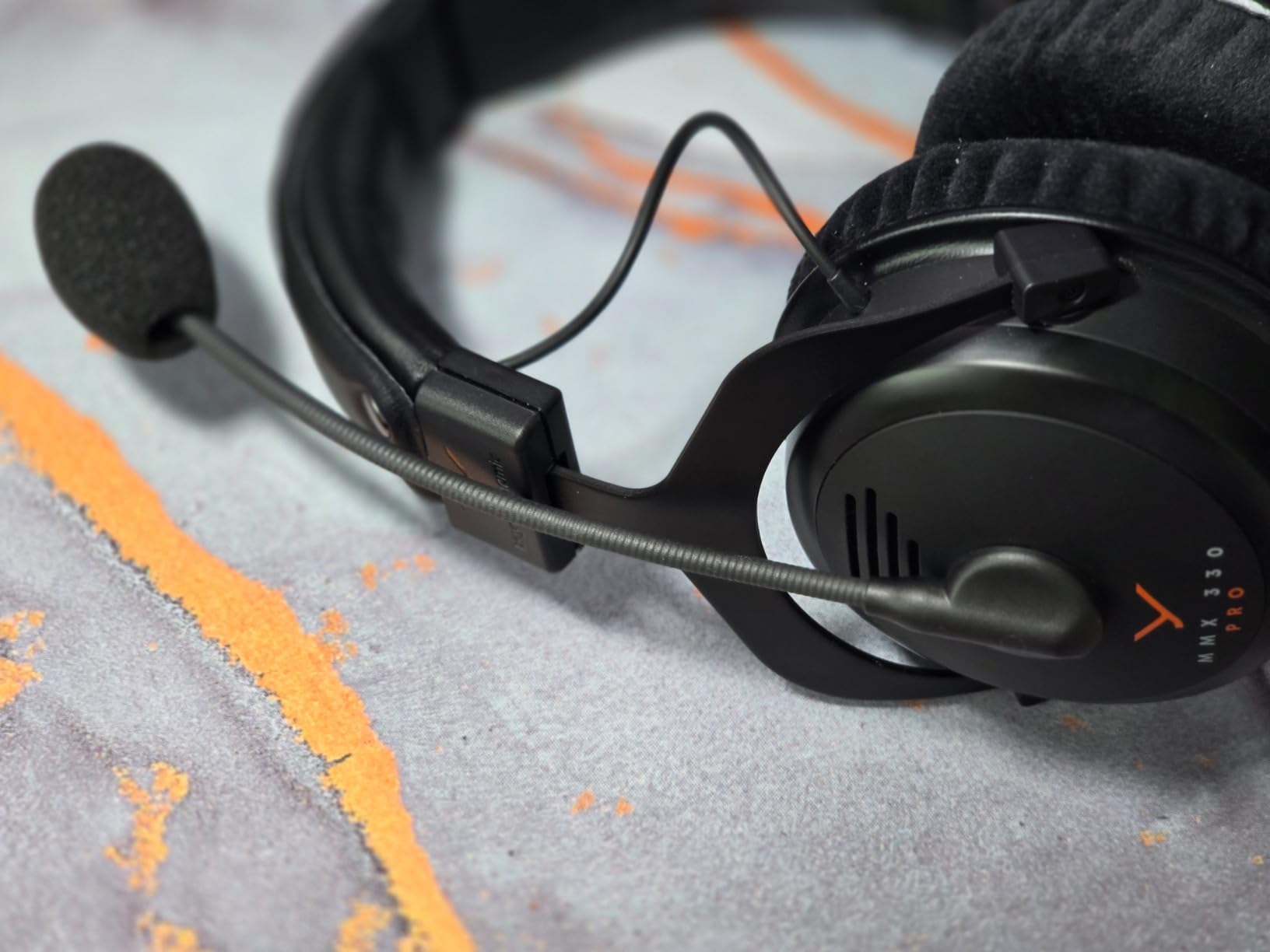
The MMX 330 Pro is the only headset here with a condenser microphone capsule, and owners describe it as the best headset microphone they have used. It is the reason this model shows up in streaming recommendations despite carrying the lowest rating in our group at 3.9 across 375 reviews.
On the audio side, the STELLAR.45 45 mm driver is described by beyerdynamic as esports-grade, tuned to stay detailed at both low and high volumes. The open staging gives precise positional audio, and reviewers specifically report being able to read the distance and height of in-game cues, which is a stronger claim than most imaging descriptions make.
One practical warning is worth repeating because it costs buyers real money. A number of one-star microphone complaints turn out to be the inline mute switch shipping in the muted position, which the manual does not mention. Before returning the headset, check the cable control.
Build quality is a genuine strength. Owners highlight metal parts and replaceable components, velour earpads, a padded headband, and a coiled cable with a velcro strap. It is handmade in Germany and needs no software, working over 3.5 mm with a splitter across PC, PlayStation, Switch and laptops.
The MMX 330 Pro is the right choice if your voice is part of the product
The condenser capsule sounds natural on Discord and calls, which is why it doubles as a work headset for hybrid setups. The mic is detachable along with the cable, so you can use the headphones alone and keep the microphone on a separate arm if you upgrade later.
Velour pads and an 11.2 ounce weight keep it comfortable over multi-hour sessions, and the 5 Hz to 40,000 Hz range covers both a wide game mix and music listening without a EQ detour. There is a two year manufacturer warranty for peace of mind.
The MMX 330 Pro is bulky, has no mute indicator, and clamps hard at first
The inline control box with volume and mute feels cheap for a headset at this level and is awkwardly placed, and there is no indicator light to confirm when the mic is muted. That combination is a genuine usability problem for streaming, where a hot mic is an obvious mistake.
The headband clamps tightly out of the box and suits larger heads better than small ones, and bass is light next to closed-back gaming headsets. It is bulky, does not fold flat, and no carrying case is included. A scattering of owners also report channel imbalance, creaking cups or a mic that arrived non-functional.
10. Corsair Virtuoso PRO – Best Open Back Gaming Headset for Creator Setups
Corsair Virtuoso PRO Wired Open Back Gaming Headset – Detachable Uni-Directional Microphone – 50mm Graphene Drivers – 20Hz-40 kHz Frequency Response – Carbon
50mm graphene drivers
32 ohm
11.84 oz
Detachable uni-directional mic
20 Hz - 40 kHz
Pros
- Spacious soundstage with punchy accurate bass from 50mm graphene drivers
- Detachable uni-directional mic with clean capture
- Two cables and a rigid travel case in the box
- Works with Elgato Wave Link and NVIDIA Broadcast
Cons
- Durability complaints on earcup covers
- headband and hinges
- Braided cables rub audibly into the mix and the mic
- Heavier than most open-back headsets
- 2.9 average reflects repeated build failures
We are including the Virtuoso PRO with a clear warning because the sound is genuinely good and the build is genuinely not. It carries the lowest average rating in this roundup at 2.9 across 323 reviews, with 29 percent one-star and 19 percent two-star ratings, and almost all of that damage is physical rather than acoustic.
The positives are real. The airy open-back chassis produces what reviewers describe as a phenomenal, expansive soundstage with punchy accurate bass, and the 50 mm graphene drivers give clear, balanced, detailed audio. The detachable uni-directional mic is frequently called broadcast quality for the money.
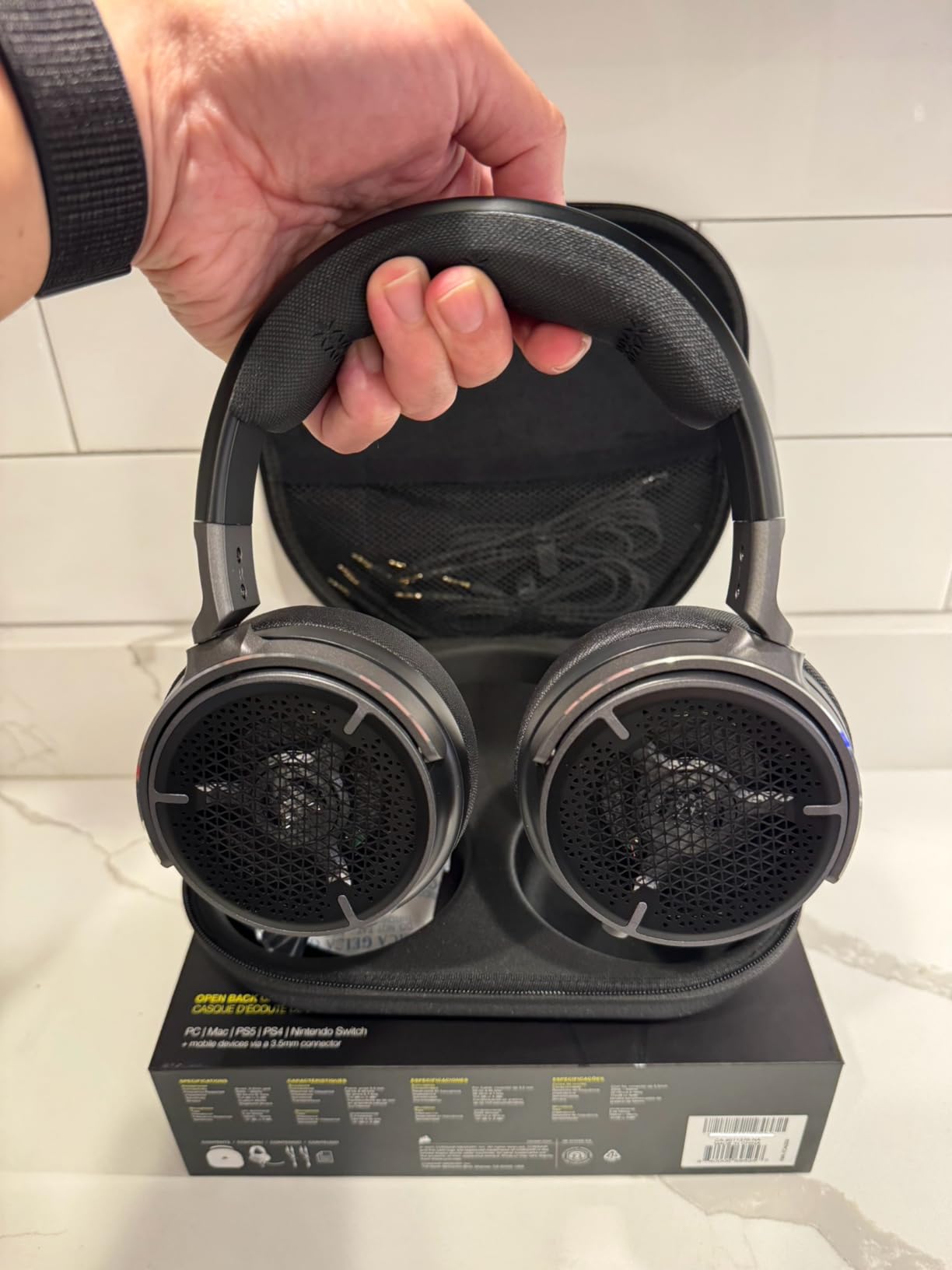
For creators, the software story is the differentiator. It is listed as working with Elgato Wave Link, Wave XLR and Stream Deck+, and supports VST plugins and NVIDIA Broadcast through Wave Link, which turns the headset into a controllable input in a streaming pipeline rather than an analogue appendage.
The box is also well equipped. You get one cable with a mic and one without, plus a rigid travel case, and comfort is well regarded over long sessions with soft cups and solid clamping force that reviewers specifically say works with glasses and a hat.
The Virtuoso PRO makes sense for creators who need control over the input chain
At 32 ohm impedance and 116 db sensitivity, it is efficient to drive, and the 20 Hz to 40 kHz response covers the audible range with headroom. The detachable mic means you can use the headphones for music and movies without a boom attached.
If you are already invested in the Elgato ecosystem, that integration is a genuine advantage that no other open-back set in this list offers. The travel case also makes it the easiest option here to move between a desk and a LAN event.
The Virtuoso PRO has widespread durability complaints that we cannot wave through
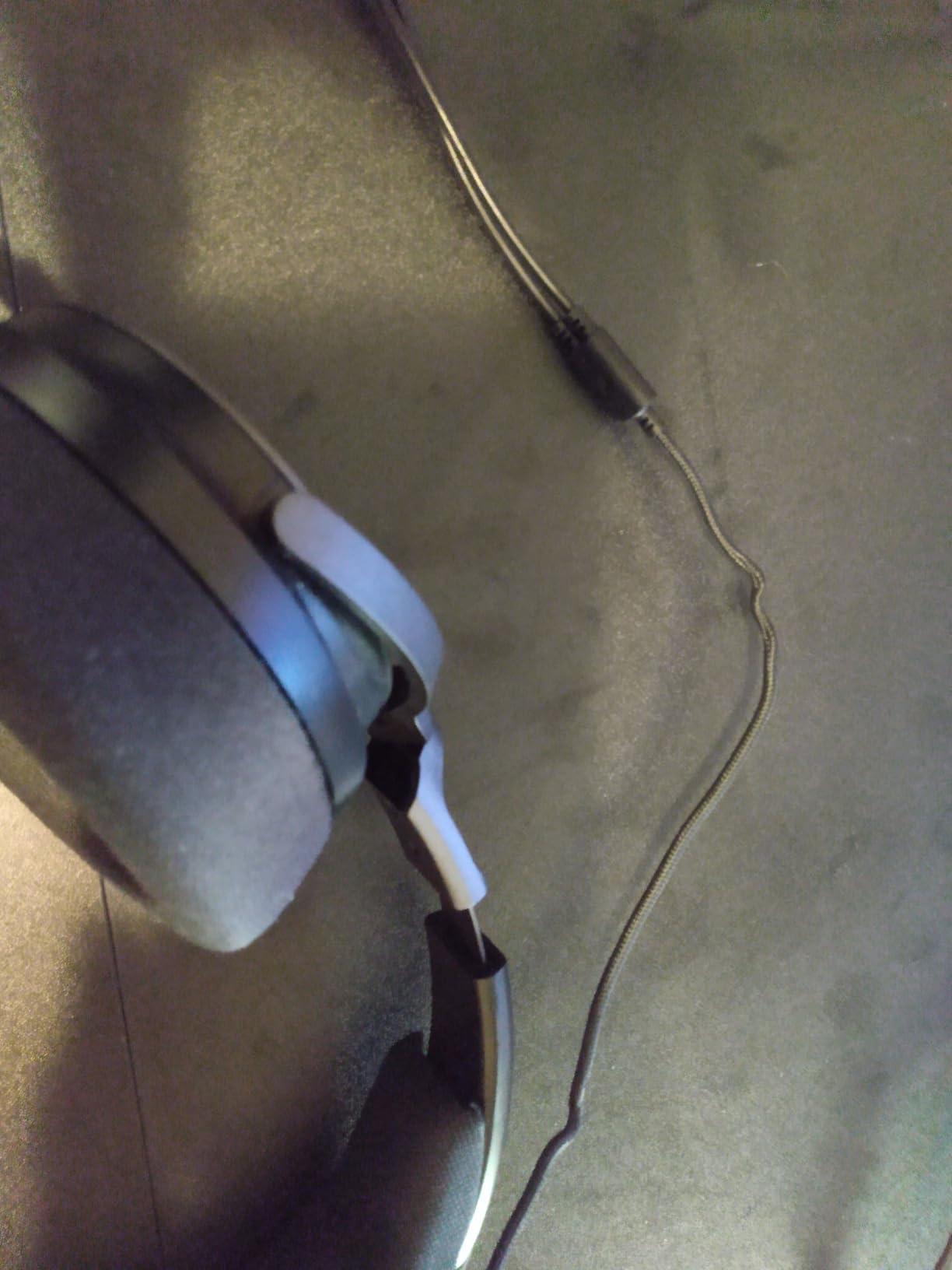
Multiple buyers report earcup covers peeling off the frame, headbands cracking, hinges and yokes loosening or falling out, and mic jacks going intermittent within months. The open-back fabric covers in particular are said to delaminate from the earcup frame over time, which is not a user-error issue.
The braided cables also rub audibly and pass that cable noise into both the headphones and the microphone, the cable mute toggle is hard to reach, and the 11.84 ounce weight is on the heavy side. Sound leakage in both directions is significant by design. Buy it for the sound and the software, but understand you may be replacing it inside a year.
How We Picked and Tested These Headsets
We assembled this list around the gap the research turned up. Gaming roundups cover open-back as a single footnote, and open-back headphone roundups cover music, so nothing owned a gaming-first open-back list. Every product here ships as a headset or is explicitly sold into the gaming category.
Our weighting was soundstage and positional clarity first, because that is what open-back is bought for. Microphone honesty came second, and we weighted comfort and weight third, since open designs are usually chosen to solve a fatigue problem. Build quality was the final filter, and it is what pushed the Corsair down the list rather than up it.
Technical claims in this article come from manufacturer specifications, and owner feedback comes from verified purchase reviews, including the long-running discussions on r/headphones and r/Gaming_Headsets about comfort, impedance and modmic setups. We flag the impedance figure for every pick because it is the most commonly misunderstood spec in this category.
Last updated for 2026. If you are still deciding between open-back and something else, the buying guide below covers the tradeoffs in full.
Buying Guide: Drivers, Impedance, Microphones and Ear Pads
Four decisions account for almost every open-back purchase: which driver type you want, whether your PC can drive the impedance, what you will use the microphone for, and which ear pad material you can wear for hours.
Dynamic versus planar magnetic drivers. Eight of the ten sets here use dynamic drivers, which is the cheaper and more common technology and needs less power. The ASUS ROG Kithara is the planar option, and planar drivers are known for lower distortion and cleaner separation between bass, mids and treble, at the cost of needing more power and usually more money. For a single-player or music-first setup, planar is the more interesting listen.
Impedance and whether you need a DAC or amp. Impedance is measured in ohms and roughly describes how much current the driver needs to move. Under 32 ohm, like the EPOS H6Pro at 28 ohm and the Sony INZONE H6 Air at 28 ohm, plays loudly from almost anything including a laptop jack. The 45 ohm Audio-Technica and 48 ohm MMX 330 Pro are moderate. Above 80 ohm, which covers audiophile open-backs like the DT 990 and Sennheiser HD 800 S, a bare PC motherboard output will sound quiet and you will want a small DAC or amp. This is the most common source of forum confusion in this category, and a compact USB DAC is the cheapest fix available.
Microphone type and the upgrade path. Three options exist here. A fixed or detachable boom mic on the headset is fine for team chat in a quiet room. A modmic, which is a slim stick-on mic with a mute button that plugs into a 3.5 mm socket, is the community favourite on Tom’s Hardware forum for pairing with a lightweight open-back headphone. A standalone USB or XLR microphone on a boom arm is the right answer for streaming. The MMX 330 Pro has the strongest native capsule, the Audio-Technica has a highly directional detachable boom, the EPOS boom detaches magnetically, and the ROG Kithara on-cable MEMS mic is the one to replace.
Ear pads, glasses and clamping force. Velour and fabric pads breathe better and stay cooler, which suits long sessions and glasses wearers, but they can feel less sealed and pick up more room sound. Leatherette seals more and blocks a little more noise, and it also gets warm. The ROG Kithara is the only set in this list that ships two pad sets, and the TYGR 300 R and MMX 330 Pro both use velour. If you wear glasses, prioritise weight and pad softness over isolation, because the frames will be the pressure point.
Wired versus wireless. Every open-back headset in this roundup is wired, and that is a feature in a competitive context, since a 3.5 mm or USB cable has effectively zero added latency. Wireless open-back options exist, but they are priced well above these sets and lose the argument on both cost and latency. Check the interface before you buy: the FIFINE H19BP is USB-only, the Sony INZONE H6 Air uses a USB-C audio box, and everything else is 3.5 mm.
Room acoustics. The last consideration is the room itself. Open-back fails in an untreated space because there is nothing to prevent reflections mixing with the direct sound, and it fails socially because your game audio is audible outside. If you are in a shared apartment, a closed-back headset is the better buy even though it will not sound as open.
Frequently Asked Questions
Are open-back headsets better for gaming?
Open-back headsets are better for gaming when soundstage and positional accuracy matter most, which is usually single-player, open-world and immersive games. The unsealed cups give you a wide, natural soundstage that helps you place footsteps, gunfire and engines in space. They are worse for gaming in a noisy or shared room, because there is no isolation and your audio bleeds out to the people around you.
What are the disadvantages of open-back headsets?
The disadvantages of open-back headsets are sound leakage in both directions and almost no passive isolation. You will hear your keyboard, your fans and your household, and people in the room will hear your game audio and your voice. There is also no active noise control, the bass is usually lighter than on closed-back gaming headsets, and the high-end open-backs often need a DAC or amp to reach a satisfying volume on a PC.
What is so good about open-back headphones?
The main benefit of open-back headphones is a wide, three-dimensional soundstage with precise imaging, so sounds have real depth and direction instead of sitting inside your head. Airflow through the cups also keeps your ears cooler and reduces pressure buildup, which lowers fatigue across long sessions. Many owners also find the tuning more neutral and less fatiguing than boosted closed-back gaming headsets.
Do open-back gaming headsets come with microphones?
It depends on the model. Some open-back gaming headsets, such as the EPOS H6Pro Open Acoustic, the Audio-Technica ATH-GDL3BK and the beyerdynamic MMX 330 Pro, include a detachable boom microphone. Others, including the beyerdynamic TYGR 300 R, ship with no mic at all and are meant to be paired with a separate USB, XLR or modmic. Check the specification list before you buy if voice chat matters to you.
Do I need a DAC or amp for open-back headphones?
You only need a DAC or amp if the impedance is high. Sets at 28 to 32 ohm, such as the EPOS H6Pro and the Sony INZONE H6 Air, play loudly from a laptop jack or motherboard output with no help. The 45 ohm Audio-Technica and 48 ohm MMX 330 Pro benefit from a small USB DAC. The 80 ohm and 300 ohm audiophile open-backs really do need one, or they will sound quiet.
Is open-back better than closed-back for FPS games?
For single-player and immersive games, open-back usually wins on spatial detail and listening comfort. For competitive shooters, the answer depends on your room: in a quiet private space the wider soundstage helps you locate opponents, but in a noisy venue the lack of isolation means crowd noise masks the positional cues that open-back is supposed to deliver. Many players keep both and switch by situation.
Final Verdict: Which Open Back Gaming Headset Should You Buy in 2026?
If you buy one open back gaming headset for PC, make it the EPOS H6Pro Open Acoustic. It pairs a wide natural soundstage with a detachable magnetic boom mic, weighs 309 g, and works from a single 3.5 mm cable across PC and console, with the largest volume of user feedback in this roundup behind it.
Buy the beyerdynamic TYGR 300 R instead if you already own a microphone and want the lightest, most neutral-sounding option. Buy the Audio-Technica ATH-GDL3BK for competitive shooters where you want in-earcup controls and a directional mic. Add a compact USB DAC to any of them above 40 ohm, and keep a closed-back set in the house if you ever share a room.