
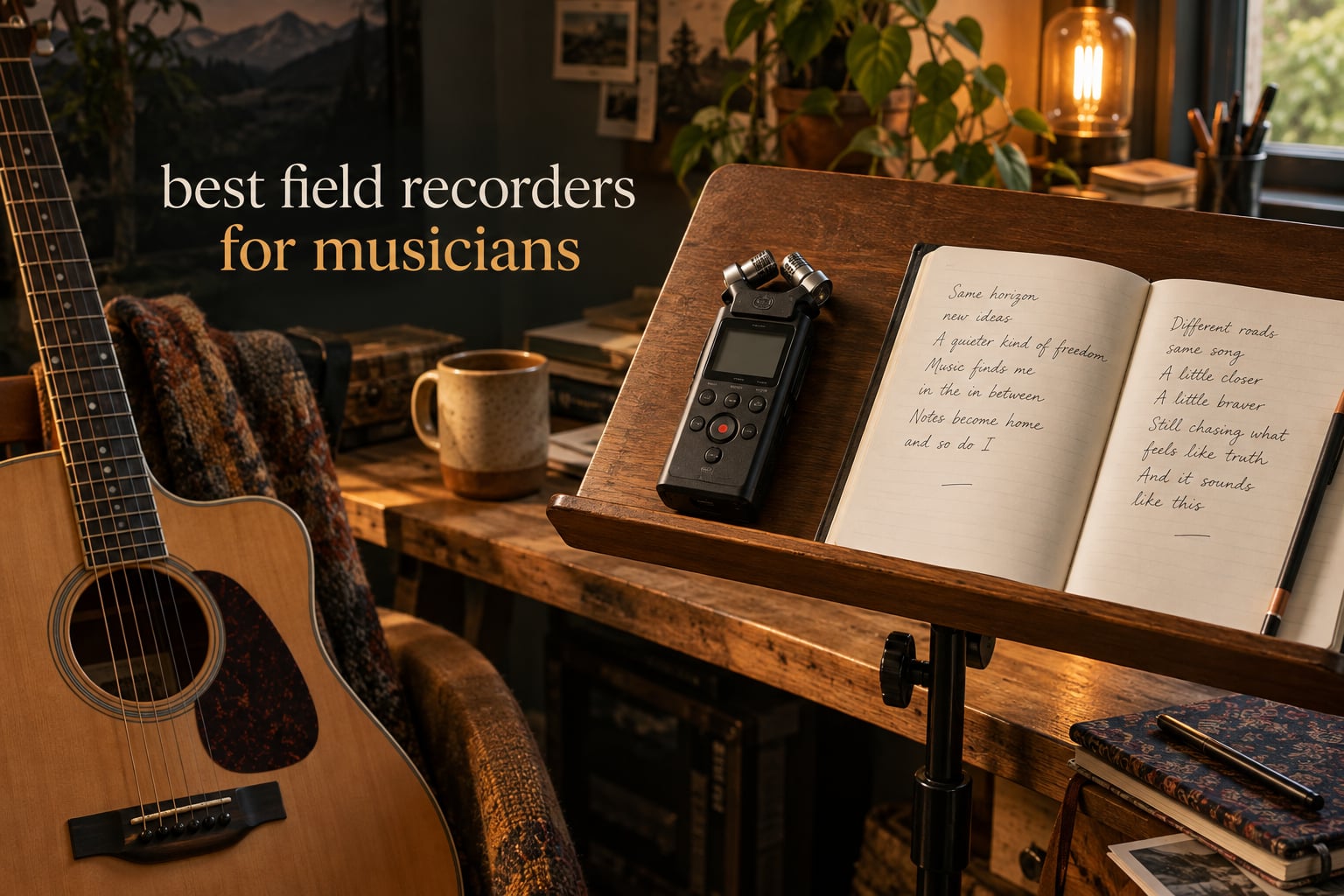
The short answer: the best field recorders for musicians are the Zoom H5 for everything a songwriter needs in one box, the Zoom H1 Essential for pocket-sized idea capture, and the Tascam DR-70D when you need four real XLR inputs for a band. Each one records 96kHz/24-bit WAV you can drop straight into a DAW, and each one runs on ordinary batteries.
I have spent more time with recorders than I care to admit, and the thing that separates a good musician’s unit from a wasted purchase is rarely the spec sheet. It is whether you can get the take you played. A quiet preamp matters, but so does not fighting a menu in a dark room while someone is counting you in, and so does the confidence that a loud chorus will not destroy the file.
That is why 32-bit float has quietly become the deciding feature for music use. On a fixed-format recorder, a badly set gain either clips the take or leaves so much noise that you cannot use the recording. On a float recorder, the capture stage holds an enormous range before the file is written, so a rough gain setting does not ruin the performance. You fix the level later in your DAW, when the take is already safe.
This roundup is organised the way musicians actually shop: by what you are recording. Song ideas on a walk, an acoustic guitar, a full band rehearsal, a piano in a live room, ambience for a sample library, a safety copy of a venue board feed. Six recorders cover those jobs, and I have listed the one that suits each rather than pretending a single box wins.
Everything below reflects published specifications and the patterns in owner reviews for these six models, read against the way working musicians and audio people talk about them in communities like r/fieldrecording. Where a claim comes from a named community thread, I say so. Where it comes from the aggregate of reviews, I say that instead.
Table of Contents
Top 3 Picks for Musicians (October 2026)
Zoom H5
- 4-track simultaneous recording
- Two XLR/TRS combo inputs with phantom power
- Interchangeable mic capsule system
- Weighs 115 g

Zoom H1 Essential
- 32-bit float with no gain adjustment
- 92 g pocket body
- X/Y stereo condenser mics
- USB-C microphone mode

Zoom H4 Essential
- 4-track 32-bit float capture
- Two XLR/TRS inputs plus onboard stereo mics
- SD backup while streaming over USB-C
- Spoken menu guidance
Every Pick at a Glance in 2026
The table below is the fastest way to narrow the field. All six recorders write standard WAV files, all six run on batteries you can buy anywhere, and all six are small enough to live in a bag. The real differences are input count, whether they capture 32-bit float, how much they weigh, and whether they can take external microphones.
| Product | Specifications | Action |
|---|---|---|
|
Zoom H5
|
|
Check Latest Price |
|
Zoom H1 Essential
|
|
Check Latest Price |
|
Zoom H4 Essential
|
|
Check Latest Price |
 Tascam DR-70D
|
|
Check Latest Price |
 Tascam DR-05XP
|
|
Check Latest Price |
 Tascam DR-10X
|
|
Check Latest Price |
Three of these write 32-bit float files, which means the gain setting barely matters. Two write 24-bit at a fixed level, which means the gain setting matters a great deal. One is not a general recorder at all but a recorder that bolts onto a microphone.
1. Zoom H5 – Best Overall Field Recorder for Musicians
Zoom H5 4-Track Handheld Recorder for Filmmakers & Musicians
4-track simultaneous recording
2 XLR/TRS combo inputs with phantom power
Interchangeable capsule system
115 g
Pros
- Interchangeable capsule system swaps mic arrays like a lens
- Four-track recording in a compact body
- Two combo inputs with phantom power and -20dB pad
- Shock-mounted X/Y capsule cuts handling noise
- Doubles as a USB audio interface with loopback
Cons
- SD/SDHC recording capped at 32GB
- Runs on AA batteries rather than internal power
- Older architecture than the current Essential range
The H5 is the one I hand to a musician who will not read a manual. It records four tracks at once, it has two proper combo inputs with phantom power, and the whole thing weighs about the same as a paperback. Owners rate it 4.7 across more than a thousand reviews, with 84 percent of those at five stars, and the praise concentrates on exactly the things a songwriter touches.
The capsule system is the part people do not expect to care about. The detachable X/Y capsule sits on shock mountings, and you can swap it for a different Zoom capsule the way you change a lens. For a musician, that means swapping the onboard array for something more directional when you move from a room to a noisy space, without buying a second recorder.
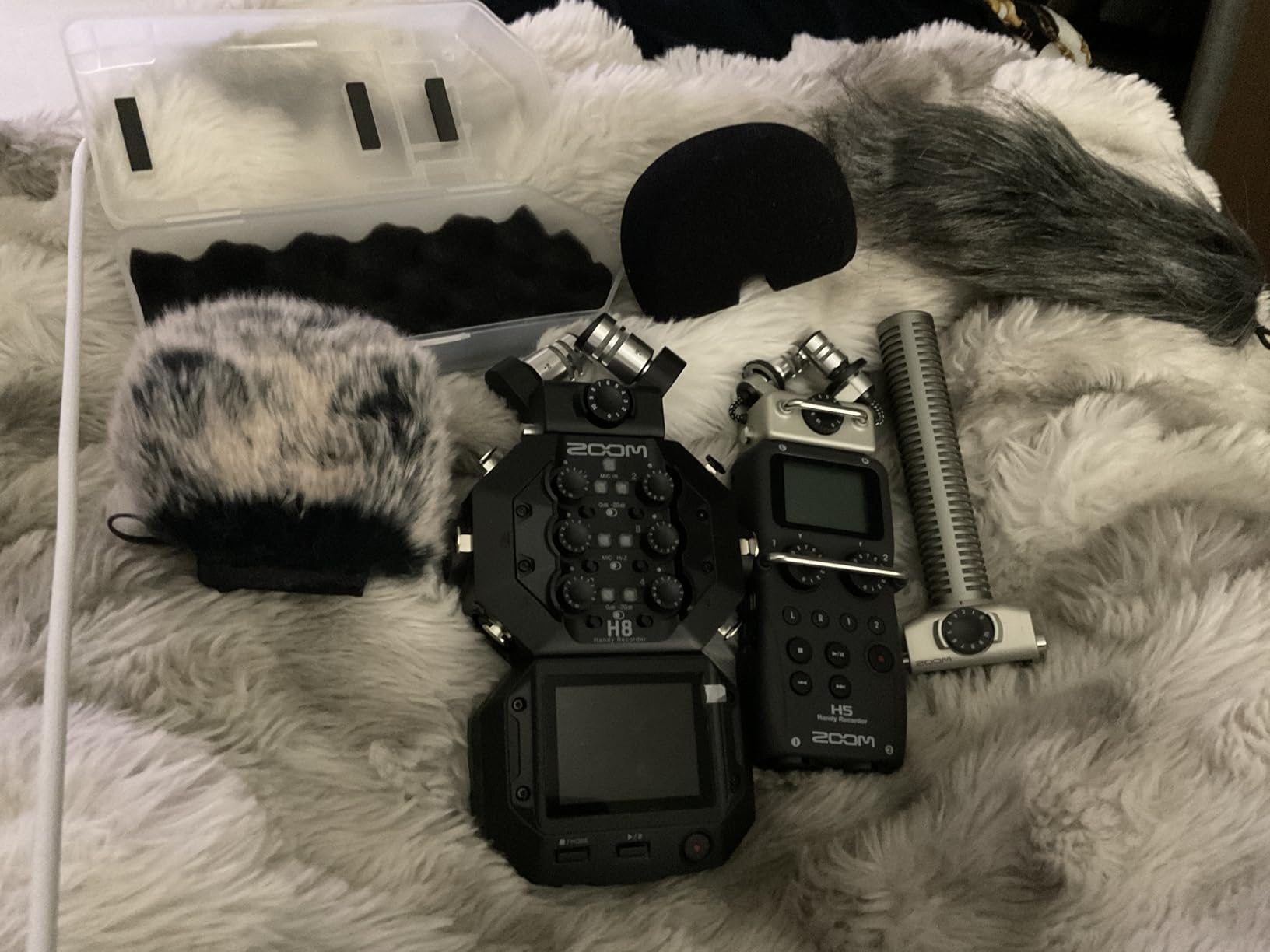
The four-track capability is what turns this from an idea machine into a rehearsal machine. Two inputs plus the stereo capsule gives you isolated tracks for a duo or a small group: guitar on one, vocal on another, room on the stereo pair. Each channel gets its own fader and its own level readout, so you are not guessing after the fact.
The combo inputs are genuinely useful for music. Each carries selectable phantom power and a -20dB pad, so you can run a condenser mic into one and a passive ribbon or a direct instrument feed into the other without an external box. Records go to SD or SDHC, and the unit acts as a multichannel or stereo USB interface for PC, Mac and iPad with a loopback function if you want to monitor software.
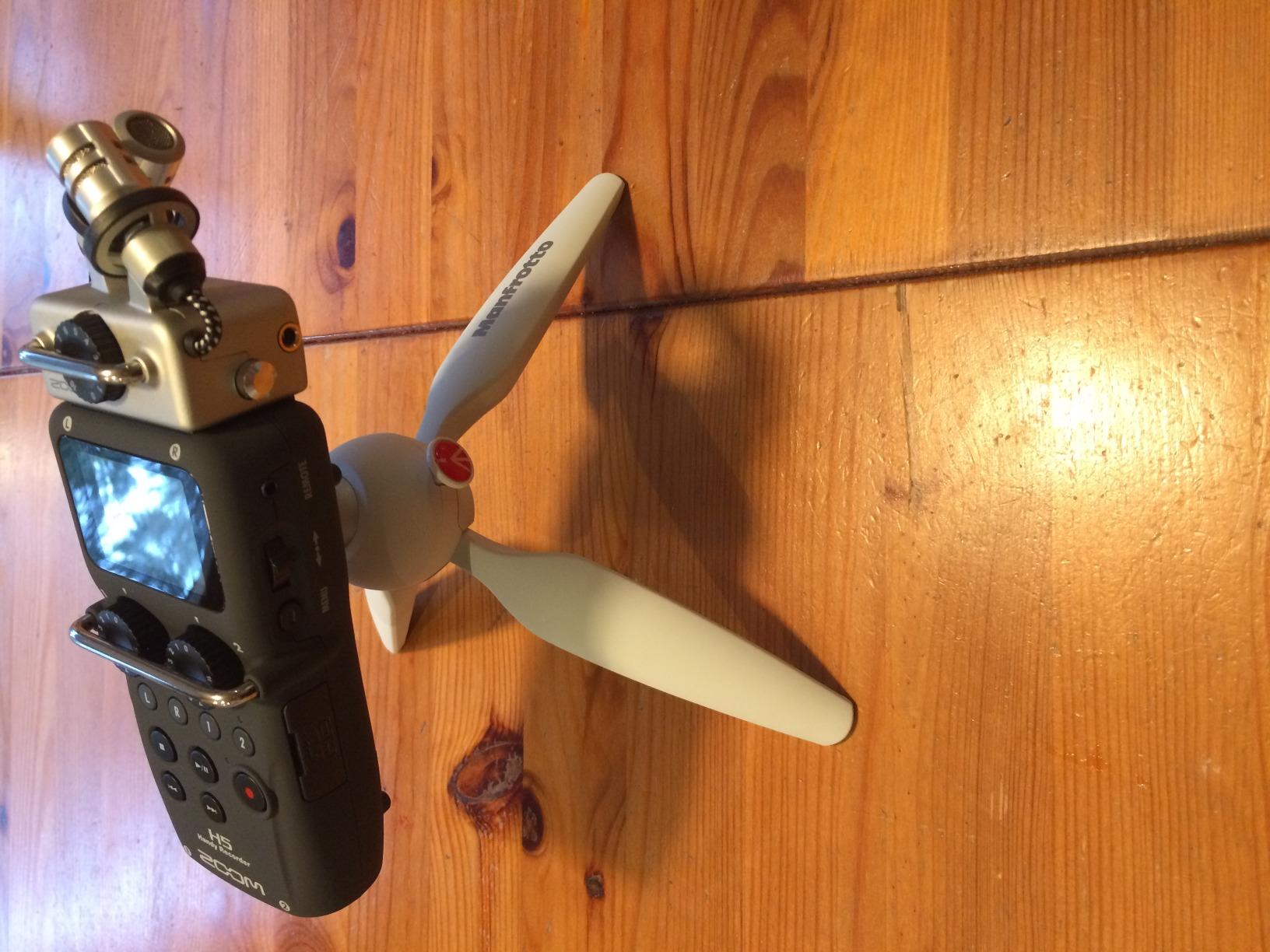
What a musician gains from the H5 day to day
Four tracks means you can record a rehearsal and come home with separated parts instead of one stereo file you cannot edit. That is the difference between capturing a performance and producing from it.
At 115 g it disappears in a jacket pocket or a gig bag. You will actually bring it to the rehearsal, which is the only real reason to own a portable recorder.
The shock-mounted capsule means walking with it is survivable. Handling noise is the thing that ruins most location recordings, and this design treats it as a problem rather than an afterthought.
Where the H5 falls short
Media capacity is capped at 32GB, which is the H5’s clearest limit. Long sessions at 96kHz will fill a card faster than you expect.
It runs on two AA batteries rather than the higher-capacity internal power in the current Essential units. That is not a defect, but it is one more thing to carry.
It is an older architecture than the newest Zoom bodies. The H5 remains a strong instrument, but float recording is not part of its native format, so gain discipline still matters to you.
2. Zoom H1 Essential – Best Pocket Recorder for Songwriting
Zoom H1 Essential Recorder for Musicians, Podcasters & Content Creators
32-bit float with no gain adjustment
92 g
X/Y stereo condensers
USB-C mic mode
Pros
- 32-bit float removes clipping and gain riding
- Exceptionally small at 92 g
- Handles loud instruments and rehearsals without clipping
- USB-C microphone mode for streaming and calls
- Records up to 96kHz/32-bit
Cons
- No XLR or TRS inputs at all
- Batteries and microSD not included
- USB port cannot charge and carry data at once
- USB mode still drains the batteries
- Speaker distorts on full-spectrum sources
The H1 Essential is the recorder I see most often clipped to a pocket during a writing session, and it is the most reviewed unit in this group with 1,427 reviews. Its rating of 4.0 tells you the truth about it: the hardware is excellent and the compromises are real.
The headline is 32-bit float with no gain adjustment. You set a level, hit record, and a loud guitar or a full rehearsal will not clip the file. For a songwriter capturing a chorus that surprises you, that is the feature that matters most.
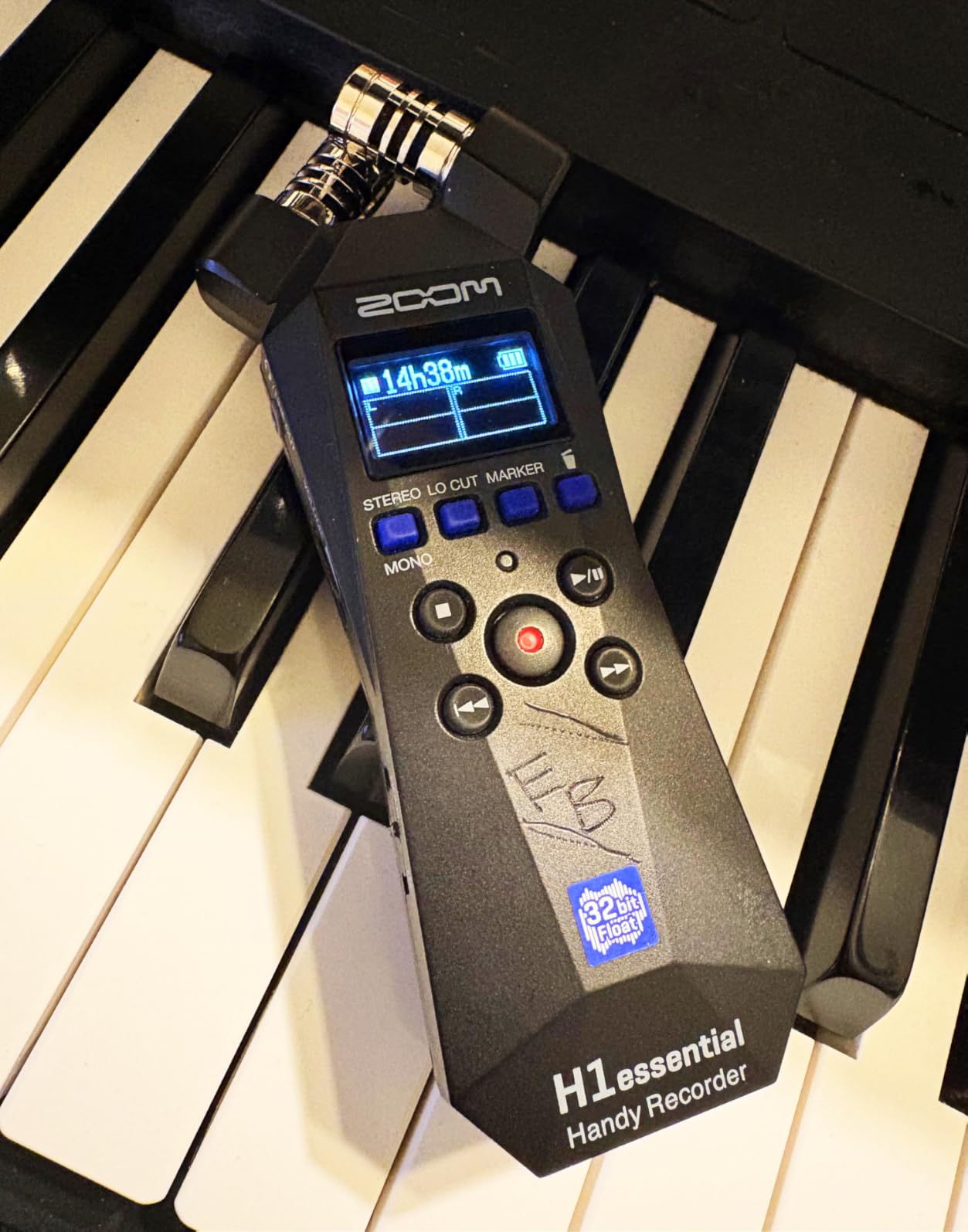
Where it earns its place is size. At 92 g it is one of the smallest recorders here, and the X/Y stereo condenser array captures a wide, natural image of a room without any setup. Recording ambience, a song idea, a voice memo or a whole rehearsal fits in one hand, which is why it stays on people rather than in a bag.
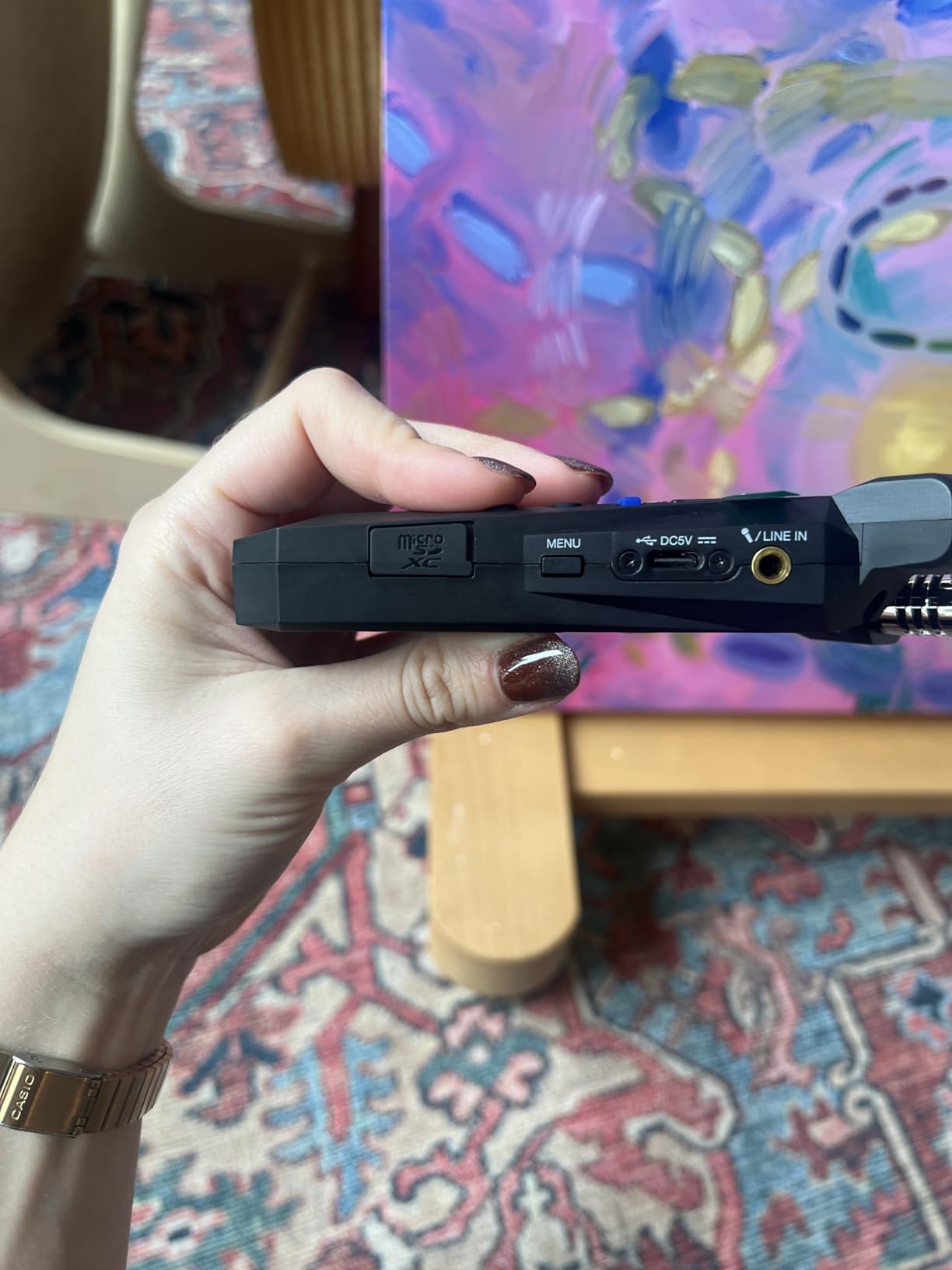
The USB-C side is more capable than the tiny body suggests. It works as a USB microphone for calls and streaming, records up to 96kHz/32-bit, and the spoken menu guidance is a genuine help if you are new to recorders or navigating in low light.
When a musician will love it
If your recording life is ideas, demos and rehearsals captured in a room or on a walk, this is the tool. Nothing else here is easier to keep with you at all times.
32-bit float makes the worst mistake in home recording nearly impossible. Set the level badly and you fix it later; the take survives.
The built-in speaker lets you check a song idea back in the same session, which shortens the loop between writing a riff and hearing how it sits.
Where the H1 Essential falls short
There are no external inputs. Not XLR, not TRS. You cannot add a microphone, a DI box or a direct instrument feed, which rules it out the moment you want better sound from an instrument.
Batteries and a microSD card are not included. Budget for both before the first session, because it will not record without them.
The USB port cannot charge and carry data at the same time, and USB mode still drains the installed batteries. That is an unusual and irritating design decision to live with daily.
One more practical note from owners in r/fieldrecording: this body picks up movement noise readily, which works against recording ambience while walking. Mount it or hold it still, and that limitation largely disappears.
3. Zoom H4 Essential – Best 4-Track for Rehearsals and Demos
Zoom H4 Essential Handheld Recorder for Musicians, Podcasters & Filmmakers
4-track 32-bit float
2 XLR/TRS inputs plus onboard mics
USB-C with SD backup
Spoken menu guidance
Pros
- 4-track float capture removes the fear of distorted takes
- Two XLR/TRS inputs for mics
- instruments or a board feed
- Writes an SD backup while streaming over USB-C
- Spoken menu guidance aids navigation
- Ranks first in Digital Multitrack Recorders
Cons
- Heavier than the pocket units at 243 g
- Only two physical inputs for a full band
- Manufacturer dimensions look implausible as listed
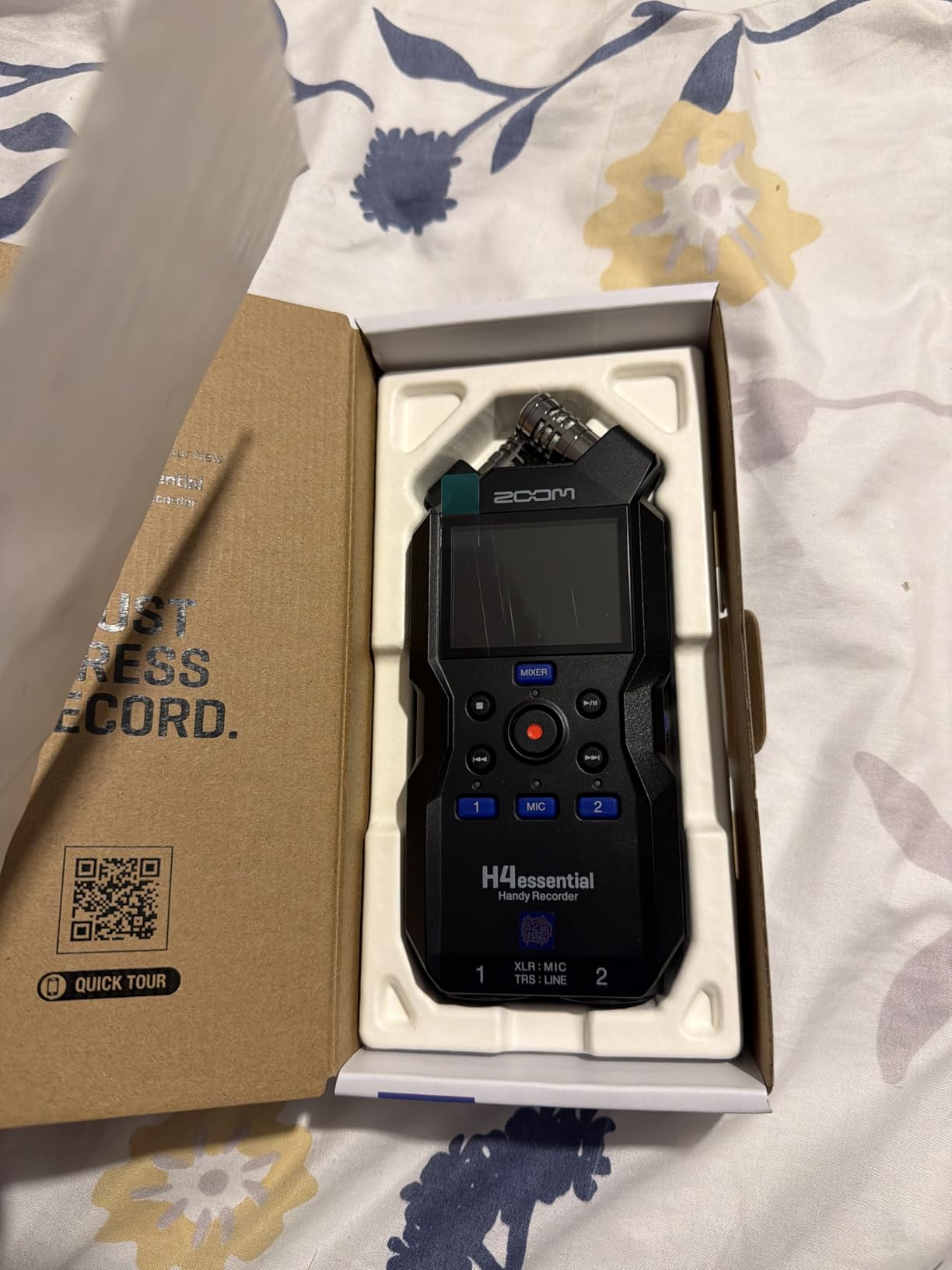
The H4 Essential is the middle point of this roundup and, for a lot of musicians, the right one. It gives you four tracks of 32-bit float capture plus two XLR/TRS inputs, which is the first combination on this list where you can genuinely record a duo properly and still add a room pair on top.
Owners rate it 4.4 across 666 reviews with 75 percent at five stars. The recurring praise is about fear: because the recorder captures float, nobody is listening anxiously to the meters hoping the loud part does not ruin the take.
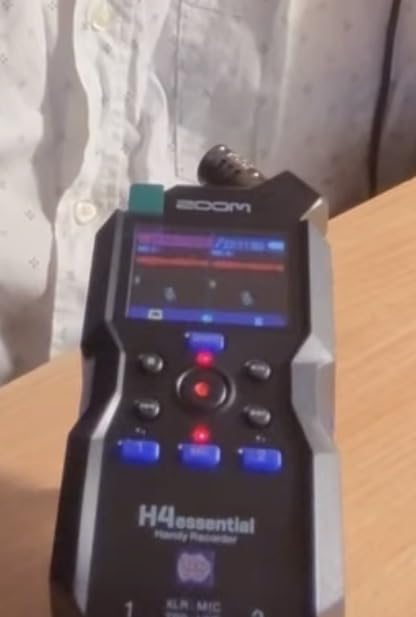
The two combo inputs are the reason to step up from the pocket units. You can mic an acoustic guitar with a small diaphragm condenser on one channel, run a vocal on another, and still record with the built-in stereo pair. Or you can take a feed straight off a mixer or soundboard, which is how bands usually want their rehearsal captured anyway.
The USB-C workflow is unusually good for a musician. Connect to a phone, tablet or computer and record or stream directly, while the unit writes a separate backup to SD card. That duplication matters more than it sounds: it means the rehearsal exists in two places the moment you plug in.
Spoken menu guidance is unusual at this size and quietly useful. Navigating a multitrack recorder by icon while someone counts you in is not a good use of anybody’s attention.
Who should buy the H4 Essential
Songwriters who record a second guitar and a harmony vocal, then want real separate tracks to edit later. That is this recorder’s exact job.
Anyone rehearsing in a room with a soundboard who wants a clean stereo feed plus a couple of isolated channels.
You get float capture, XLR inputs and a 4.5-inch-class screen in one body, which is a lot of capability for the mid tier.
Where the H4 Essential falls short
At 243 g it is more than twice the weight of the pocket units. It is still portable, but it is a bag item rather than a pocket item.
Two physical inputs cannot track a full band on their own. Beyond a duo or trio you need a mixer feeding the recorder, which is exactly what many rehearsal rooms provide.
The published dimensions for this model look implausible as listed, so check the physical size yourself before committing to a bag or a mounting solution.
One community pattern worth knowing: in r/fieldrecording threads about always-carryable recorders, wider bodies get passed over for footprint reasons. If your habit is recording on walks rather than in rehearsal rooms, this is the wrong shape for you.
4. Tascam DR-70D – Best for Recording a Band
TASCAM 4-Channel Portable Audio Recorder for Videographers, 4 Combo XLR/TRS Inputs, 2 Internal Mics, Limiter, HP Filter (DR-70D)
4 balanced XLR inputs with 0/24/48V phantom
HDDA preamps with 64dB gain
Dual Recording safety track
Up to 24-bit/96kHz
Pros
- Four genuine XLR inputs with individual gain controls
- Combo sockets accept a board feed without adaptors
- 64dB preamp gain praised as clean for the class
- Dual Recording protects loud performances
- Exports four discrete files straight into an editor
- Camera or tripod mounting
Cons
- No 32-bit float and no MP3 option
- Fussy about memory cards with reported write errors
- Battery and card door is awkward and resets the clock
- 3.5mm line out reported as noisy
Four real XLR inputs with a gain knob on each one changes what a rehearsal can be. The DR-70D is the only recorder here with enough physical inputs to mic a small group properly without borrowing a mixer, and for musicians that is not a luxury specification. It is the whole point.
The HDDA preamps provide 64dB of gain with individual control per input, and working engineers describe them as unusually clean for a unit at this level. Phantom power is switchable at 0, 24 or 48 volts, so ribbon microphones, dynamic mics and condensers can all live on the same box.
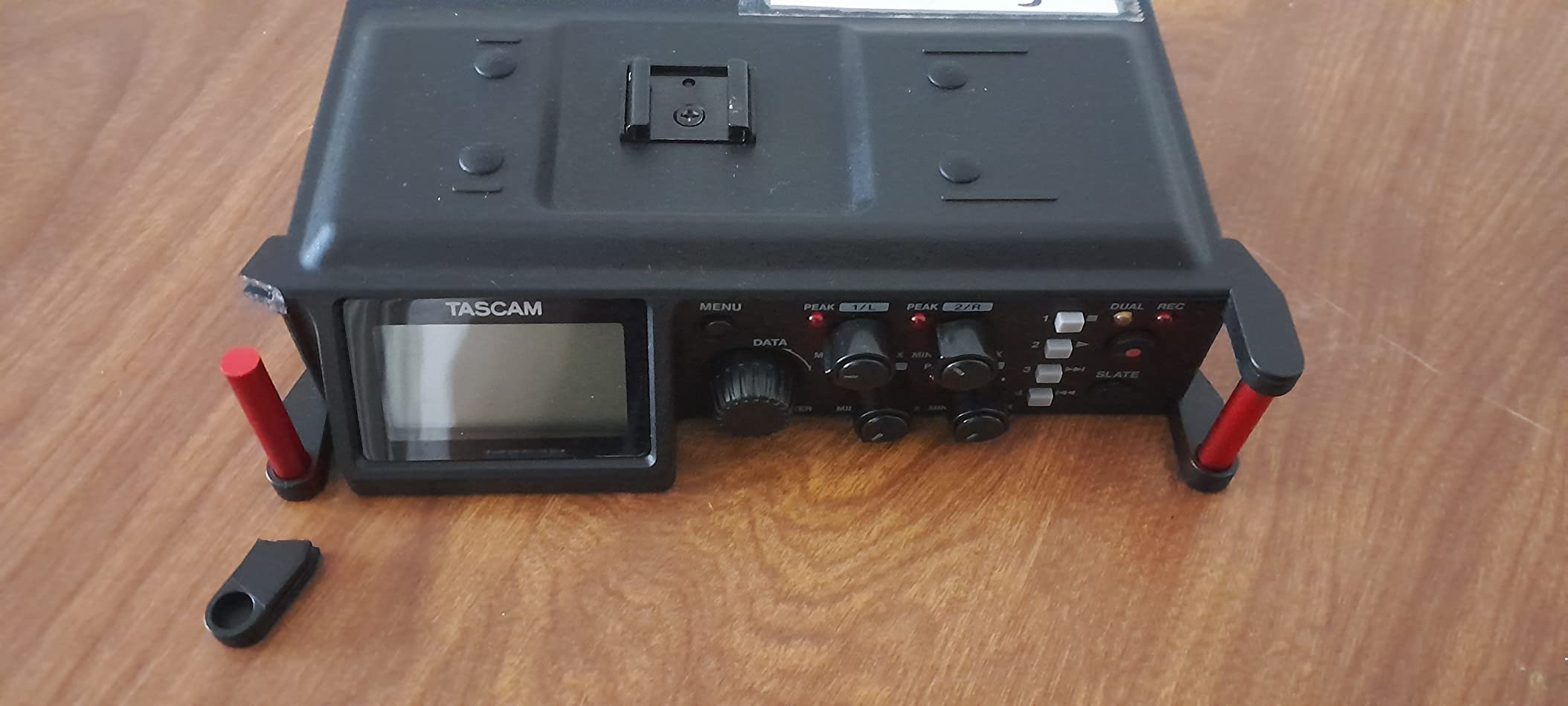
Each channel gets its own gain control and its own metering, and the Dual Recording mode writes a second safety copy at a lower level. Musicians who perform in one take care about that feature more than any spec: a safety track means the take survives even if the level was wrong.
Tracks are captured to SD, SDHC or SDXC media with cards up to 128GB supported, at up to 24-bit/96kHz. On transfer you get four discrete audio files rather than one stereo blob, so they drop into an editor already separated and already labelled.
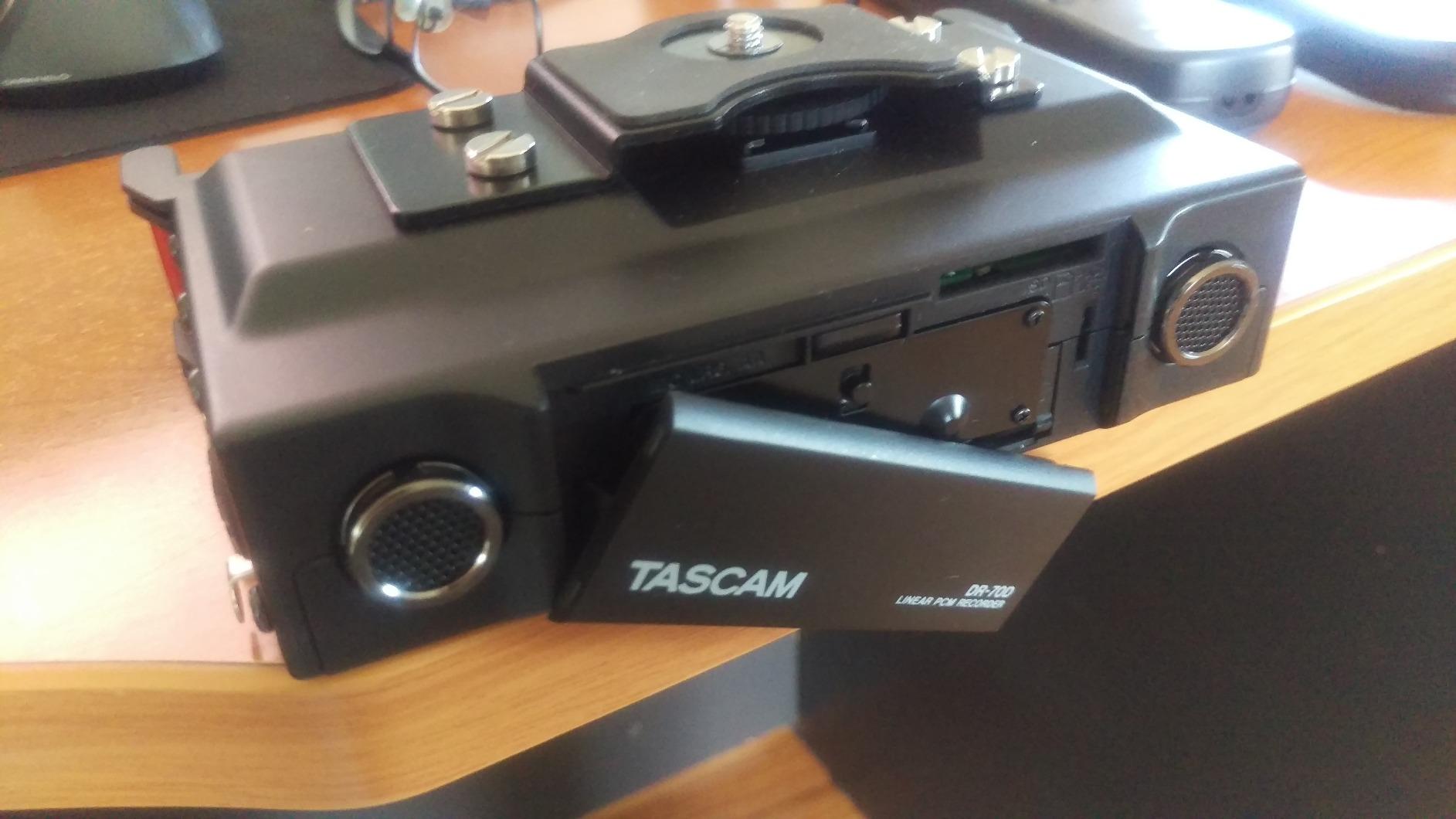
The chassis mounts above or below a camera on a tripod thread, which is how many players will use it: pointing the small stereo pair at the stage while the XLRs take individual sources.
Why bands like this recorder
Four inputs with individual gain is the difference between a stereo memory recording and a session you can actually mix. Owners regularly describe using it for a guitar and vocal duo.
Combo XLR/TRS sockets mean a venue soundboard plugs straight in with no adapter box, so the board feed and the mic tracks can be captured together.
Four separate files on export means no splitting or panning guesswork when you get home.
Where the DR-70D falls short
It records WAV and BWF only. There is no MP3 option and no 32-bit float, so your gain setting still has to be right. That is the price of the four inputs.
It is fussy about memory cards. Off-list SD cards have produced file write errors mid-recording for some owners, so buy a card from a list you trust and format it in the unit.
The battery and card door is awkward, and the date and time reset when you change batteries, which will mislabel files if you do not notice.
The 3.5mm line out is reported as noticeably noisy, and some units have a loose top dial that rattles in a bag.
5. Tascam DR-05XP – Best Budget Recorder with 32-Bit Float
TASCAM DR-05XP 32-Bit Float Portable Handheld Field Recorder and USB-C Audio Interface — Digital Stereo Recording of Music, Sound, Voice, Audio for Video and Podcasting
32-bit float, 24-bit and 16-bit modes
96kHz, 48kHz and 44.1kHz
Omnidirectional condensers to 125dB SPL
2-in/2-out USB-C
Pros
- 32-bit float removes clipping risk on live acoustic takes
- Condensers handle sources to 125dB SPL
- Doubles as a 2-in/2-out USB-C interface
- Up to 17.5 hours on two AA batteries
- Records WAV and MP3 at three sample rates
- Light at 4.48 oz
Cons
- No XLR or TRS inputs
- SD card and batteries not included
- Stereo only with no multitrack capability
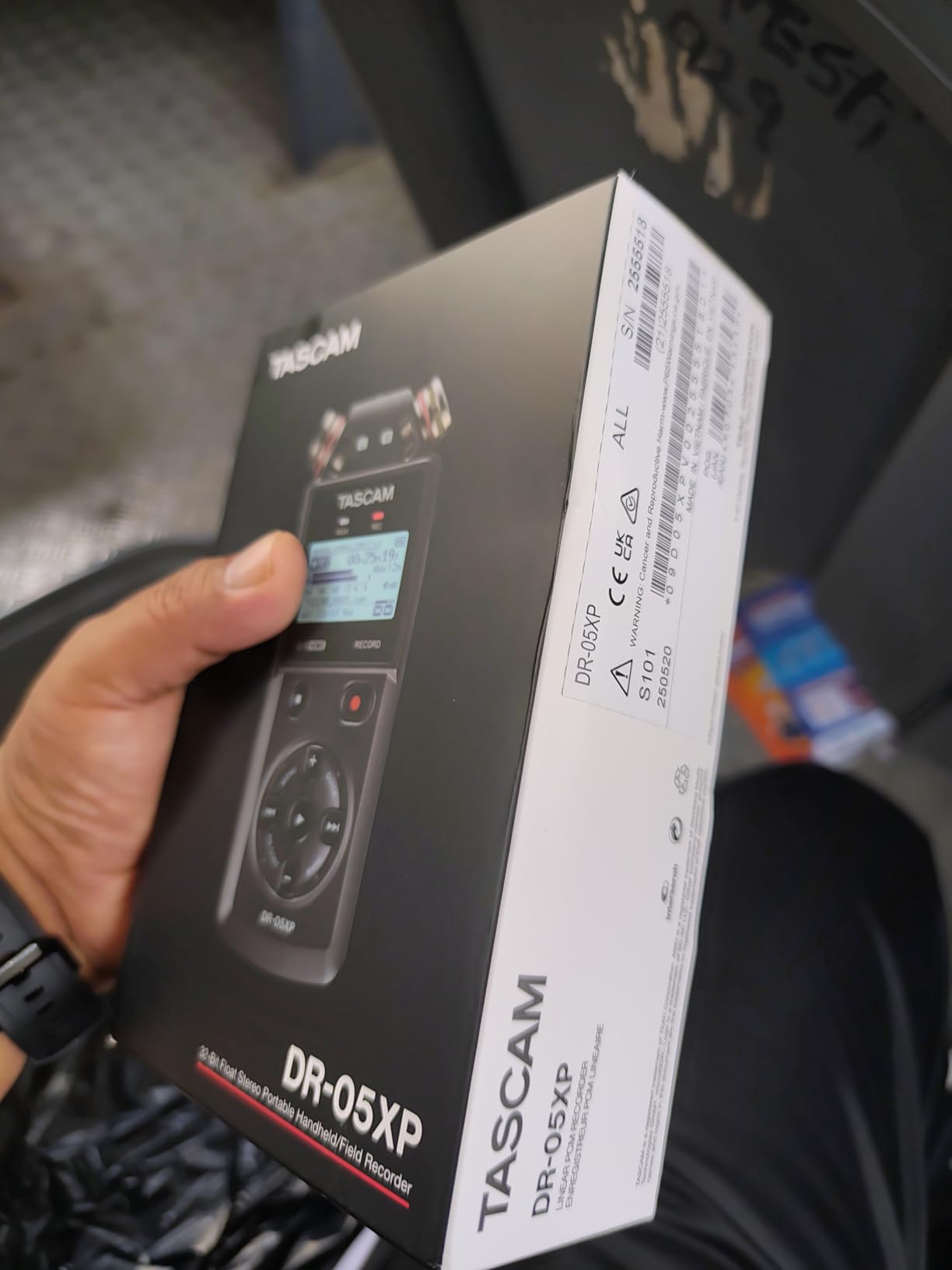
The DR-05XP is the shortest route into 32-bit float recording, and for a musician starting out that is the feature to buy first. Everything else about it is deliberately plain: a stereo pair of omnidirectional condensers, a small body, and no external inputs whatsoever.
Owners rate it 4.2 across 295 reviews, with 69 percent at five stars. Buyers single out the float workflow, the built-in USB-C interface and the battery life, which is listed at up to 17.5 hours on two AA alkaline cells. That figure is for a long rehearsal or a session day without a charger.
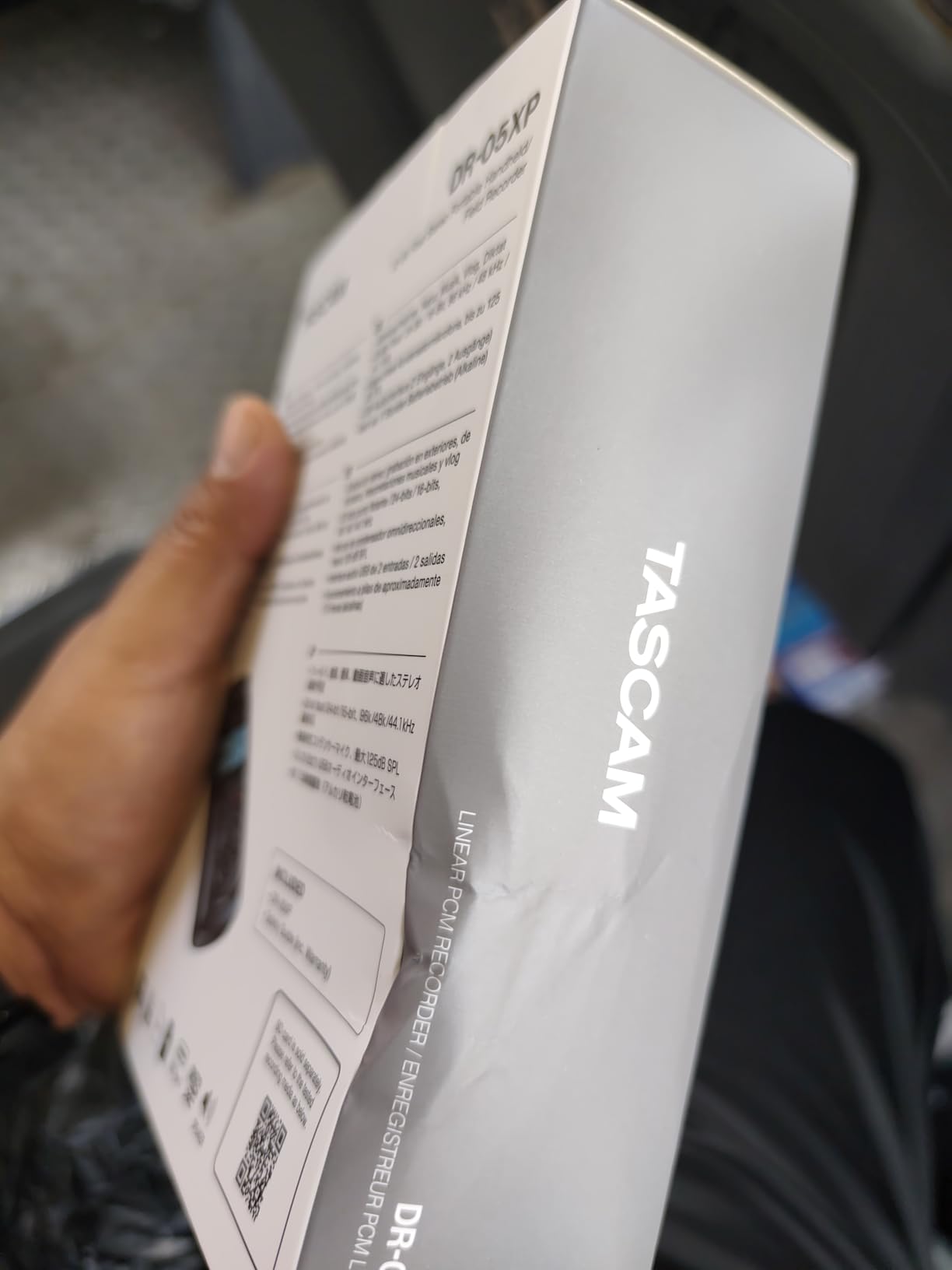
The condensers are rated to 125dB SPL, which is the number that matters for a guitarist. It means loud sources and percussive playing will not overload the capsules, and combined with float capture you have a very wide margin before anything goes wrong.
Recording modes cover 32-bit float, 24-bit and 16-bit, at 96kHz, 48kHz and 44.1kHz, with MP3 capture as an option for the moments when you only want a sketch rather than a full file. The 2-in/2-out USB-C interface means it doubles as a basic desktop interface for a laptop recording session.
At 4.48 ounces and just over five inches long, it is among the lightest recorders here. It disappears into a shirt pocket, which is how most song ideas actually happen.
Who this recorder suits
Songwriters who want float recording without spending much. That is a small and specific group, and this is the recorder that serves it.
Anyone who records long rehearsal days and does not want a charger in the bag. Two AA batteries and up to 17.5 hours covers the working day.
Musicians who sketch in MP3 during a session and capture the finished take in WAV at 96kHz. The flexibility is genuinely useful.
Where the DR-05XP falls short
No XLR or TRS inputs. You cannot record an external microphone, a DI box or a direct instrument feed, so the onboard array is all you get.
SD card and batteries are not included. Add those to your first purchase.
Stereo only, with no multitrack capability. If a song needs isolated parts, this recorder cannot provide them and you would be re-recording elsewhere.
6. Tascam DR-10X – Best for Hardwired XLR Safety Recordings
TASCAM XLR Micro Audio Portable Digital Recorder for XLR Microphones, Voice Recorder, Interview and News Gathering, Black (DR-10X)
Captive XLR connector for mic or board feed
Mono 24-bit/48kHz WAV plus MP3
Dual Recording at -6dB or -12dB
Sliding record switch
Pros
- Hardwired XLR capture with no wireless interference
- Tiny at 2.56 oz and hides under the microphone
- Dual Recording writes a lower-level safety file
- Automatic gain works for run-and-gun work
- Clips onto a mixer output as a redundant recording
- Auto file-close on battery death protects data
Cons
- Mono only with no stereo capture
- No phantom power so condensers need their own supply
- Cannot record while on external USB power
- microSD capped at 32GB
- Older 24-bit architecture with no float
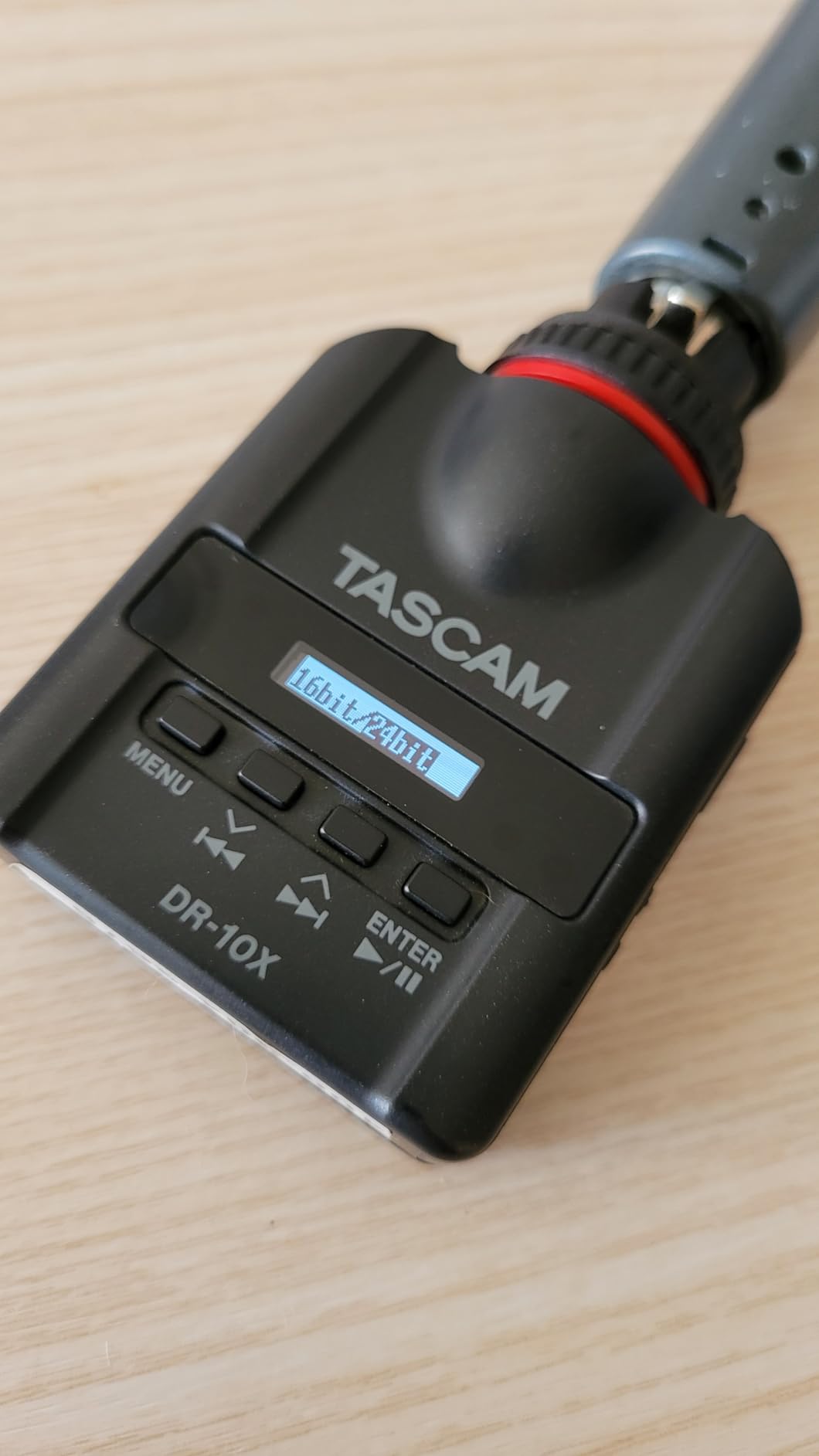
The DR-10X is not a general-purpose recorder, and treating it as one is how people end up disappointed. It is a body that bolts onto the base of a standard XLR microphone and turns that mic into a standalone recorder, and in that narrow job it is excellent.
The hardwired connection is the argument. Wireless transmitters introduce radio interference risk and a battery in every mic; this is a physical cable from capsule to preamp to file. Owners rate it 4.3 across 190 reviews with 83 percent at four stars or better.
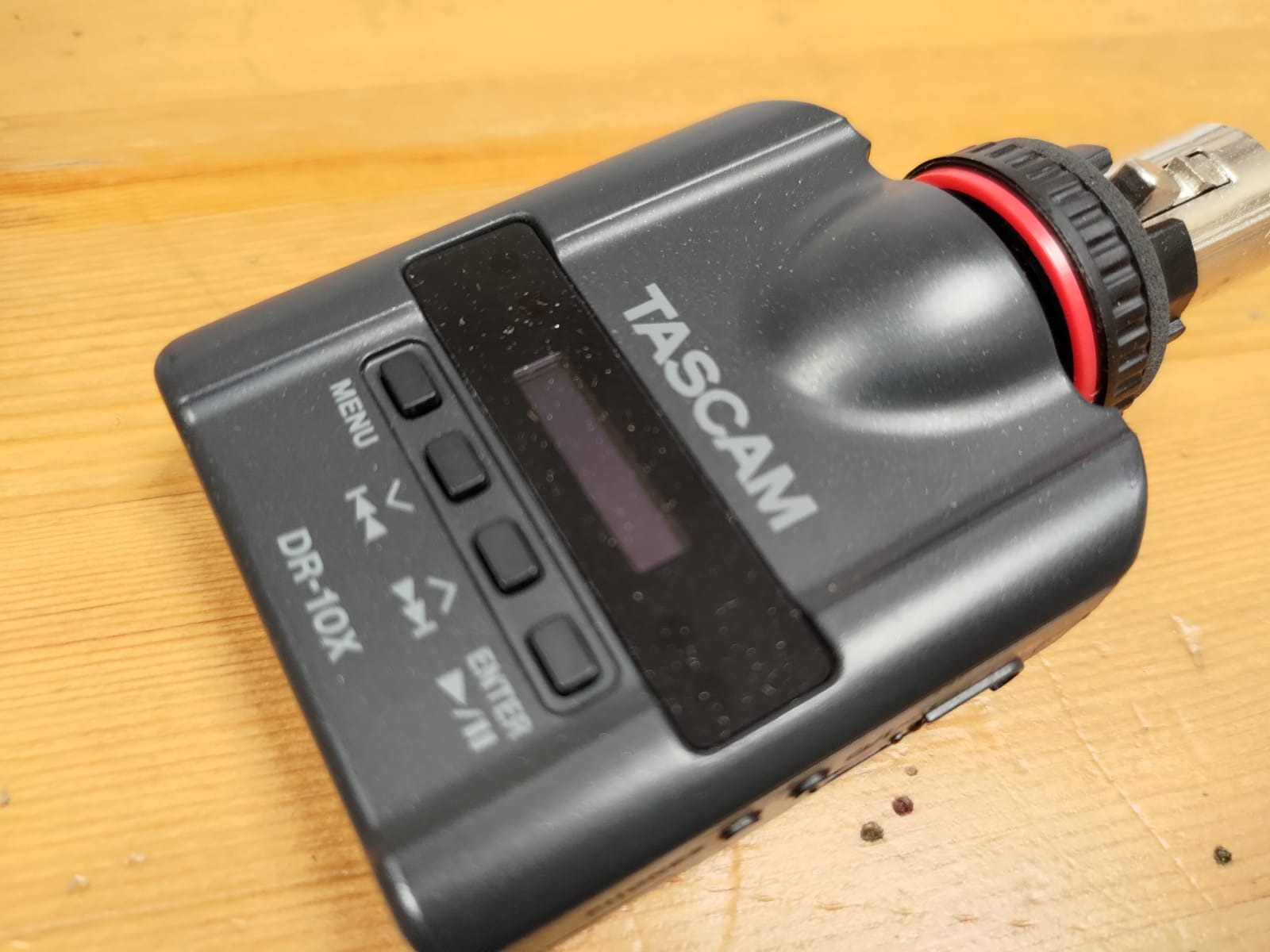
The second job is redundancy. Attach it to a mixer output and it makes an independent recording of the board feed, which means if the main recorder fails or the venue desk dies mid-set, you still have a copy. For anyone recording a live performance once, that insurance is worth more than another feature.
Dual Recording writes a backup copy at -6dB or -12dB beneath the main take, and the automatic file-close on battery death protects what has already been captured. The sliding record switch removes the accidental-press problem that claims takes on recorders with buttons.
At 2.56 ounces it is among the smallest recorders in this roundup. It disappears under the microphone on a stand or in a hand, and it runs long enough for multi-day recording to microSD media.
Where musicians genuinely need this
Recording a one-take performance off the venue board with a guaranteed backup. That is the DR-10X’s whole purpose and it does it well.
Anyone who already owns good XLR microphones and wants them to work away from a full rig. The microphones are the expensive part, and this puts them to work.
Hardwired capture suits anyone who has been burned by radio interference on a paid gig.
Where the DR-10X falls short
Mono only. There is no stereo capture, so it cannot record a room or an ambience pair.
No phantom power. Condenser microphones need their own battery supply, which limits which mics you can attach.
It cannot record while connected to external USB power, so long sessions are constrained by the cell.
microSD is capped at 32GB, and the 24-bit architecture has no float option.
Plastics and the supplied locking collar feel light, and a small number of reviews report units arriving faulty or freezing at power-up. Check it works before you rely on it for a gig.
How to Choose a Field Recorder for Music
Most buying guides start with the gear. This one starts with the recording, because the same recorder is excellent for one instrument and pointless for another. Work through these five questions in order and the choice makes itself.
1. What are you actually recording?
A song idea in a room, a full acoustic guitar, a duo rehearsal, a band, or raw material for a sample library are five different problems. Ideas and ambience need only built-in microphones and a small body. Acoustic guitar benefits from any of the stereo pairs here, with placement doing more work than the recorder. A duo or trio needs XLR inputs and at least four tracks. A band needs four physical inputs, which narrows the field to one recorder in this roundup.
For sampling work, the priorities are different again. You want long unattended recording, fast file handling and clean low-level capture, because most of the interesting sounds are quiet. The DR-05XP’s long battery life and the H5’s interchangeable capsules both serve that well.
2. 32-bit float or fixed 24-bit?
This single choice changes how you work more than any other. A 32-bit float recorder captures at an enormously wide range before the file is written, so a badly set level does not clip and a quiet take does not need a lot of gain. In practice you set an approximate level, hit record, and recover the correct balance in your DAW afterwards. For a musician who cannot afford to lose a take, that removes the single most common way recordings are ruined.
Fixed 24-bit still sounds excellent when the level is right, and the DR-70D’s 64dB of gain gives it plenty of range. But you have to watch the meters, and that attention comes out of the performance. Three of the recorders here write float files; two do not.
3. How many inputs do you need?
Count the sources, not the ambitions. One instrument and a room is zero inputs. A guitarist and a singer is two inputs plus the stereo pair, so three channels. A four-piece band needs a mixer, and your recorder needs to accept a board feed, which means checking for combo XLR/TRS sockets rather than bare XLR.
Only the DR-70D gives you four physical inputs with individual gain controls. The Zoom H5 and H4 Essential give you two each, which covers a duo comfortably and a trio with a board feed.
4. Where will you actually record?
A rehearsal room is dry and controlled, and almost any of these will capture it well. Outdoors, wind and traffic dominate the sound, and that changes the priority to mounting and grip rather than specifications. Anyone in r/fieldrecording chasing a pocket unit for walking ambience lands on the same shortlist, and the same complaint appears there too: movement noise.
The fix is mechanical. A shock mount or a soft grip isolates body movement from the capsule, and holding still beats walking every time. The H5’s shock-mounted capsule is the best built-in answer among these.
5. How will the files reach your DAW?
Everything here writes WAV, and most write BWF-compatible files your DAW will read without prompting. The differences are practical. The H1 Essential and DR-05XP both work as USB-C audio interfaces for direct computer recording. The H4 Essential can write an SD backup while streaming over USB-C, which is useful insurance during a long session.
One trap to know about: on the H1 Essential, the USB port cannot carry data and charge the unit at the same time, and USB mode still drains the batteries. Plan for spare cells rather than assuming a cable solves both problems.
Sample rate and bit depth, briefly
44.1kHz covers CD and streaming. 48kHz is video standard and the sensible default for most music work. 96kHz gives you oversampling headroom for acoustic sources and resampling flexibility, and several recorders here capture at it. 192kHz exists mainly for resampling benefit and is not needed for release audio.
At 24-bit, the gap between consecutive levels is small enough that 32-bit fixed gains you nothing for a musical result. Float recording earns its place through recoverability, not resolution.
Self-noise, and why it is hard to compare
The noise floor decides whether a quiet recording is usable. Manufacturers quote it three different ways: equivalent input noise in dBu, signal-to-noise ratio in dB, and self-noise in dBA. Higher is better in the first two, lower is better in the third. Without the measurement method, the numbers are not comparable between brands, which is why we have not invented a league table here.
What owner reports do converge on is direction of travel. The DR-70D’s HDDA preamps are repeatedly described as clean for the class, and at 64dB of gain there is room to work with quiet sources. At the other end, the very small bodies in this roundup leave less room for a quiet preamp, and reviews of budget units mention hiss on quiet room recordings. Buy the quietest unit you can afford if your material is acoustic and your rooms are small.
Tascam vs Zoom: Which Brand Should You Buy?
Both brands appear twice here, and the difference is consistent enough to describe. Zoom builds the small float recorders. Tascam builds the input-rich fixed-format recorders and the specialist plug-on unit. There is real overlap in the middle, but the tendencies are clear.
Zoom pushes float capture down into small bodies and packs features into the menus. The H5, H1 Essential and H4 Essential between them give you a pocket unit, a four-track and a two-input four-track, all writing 32-bit float. The trade-off is menu depth, which beginners regularly name as a reason to hesitate, and the H4 Essential’s weight is real at 243 g.
Tascam concentrates on physical control. The DR-70D gives every input its own gain knob, offers phantom power in three voltages, and includes a Dual Recording safety mode that musicians rate highly. The DR-05XP goes the other way with long battery life and a straightforward stereo body. The DR-10X is a specialist tool with no ambition to be anything else.
On build quality, owners and community reports tend to describe Tascam bodies as feeling more substantial, which matches the DR-70D’s metal-and-plastic chassis. Zoom’s compact units are lighter and more pocketable, and one long-term owner of an earlier Zoom H-series body reported units surviving years outdoors with only minor battery-compartment corrosion, which is a fair argument for the brand’s durability in weather.
The practical decision: choose Zoom if float recording and portability lead your list. Choose Tascam if you need real inputs with physical gain control, or a long battery, or a recorder that bolts onto a microphone you already own.
Field Recorder or Audio Interface: Which One for Your Music?
This question comes up constantly in musician communities and almost nobody answers it directly. The honest answer is that they solve different problems and a lot of people need both eventually.
A field recorder runs on batteries, has built-in microphones, works with no computer present, and survives being carried to a rehearsal, a field or a train. Files land on removable media. Nothing depends on software being open.
An audio interface needs a laptop, draws power from it, delivers better latency for tracking, and connects straight into a DAW with no file transfer step. It also cannot be carried anywhere without a computer, and it will not record a song idea that arrives while you are walking home.
For writing and capturing, a field recorder wins outright. For overdubs and mixing, the interface wins. Many musicians start with a small float recorder, capture ideas for a year, and add an interface when they want to edit and track properly.
Two recorders here blur the line: the H1 Essential and the DR-05XP both work as USB-C microphones or interfaces, which gives you a single device that does both jobs at a basic level.
Recording Techniques That Decide Whether a Take Is Usable
No recorder fixes bad placement. These four steps do more for a musical recording than any upgrade in this roundup.
1. Position before you gain
For acoustic guitar, put the recorder roughly 30 to 40 centimetres from the 12th fret, where the neck meets the body, rather than against the sound hole. The sound hole gives you boom and a hollow, less balanced tone. If you move closer for a thinner, more intimate sound, move the mic, not the volume.
For vocals, hold the recorder at chest height about a forearm length away. Closer than that adds proximity effect and a low thump with every word.
2. Set the level once, then stop watching
On a float recorder, set a rough level that will not fill the meter on your loudest passage, hit record, and leave it. Watching meters during a take divides attention. On a fixed-format recorder the same discipline matters more, so rehearse the loudest part first and set the gain from that.
3. Kill handling noise mechanically
Movement noise is the most common flaw in location recordings, and it is nearly always a mounting problem rather than a recorder problem. A shock mount, a soft grip, or a hang strap that does not touch the body of the unit all help. When you must walk, hold the recorder still for the duration of the take and accept a slower pace. Do not shuffle.
4. Record the room, not just the source
Ten seconds of silence at the start of a take, said aloud, gives you a noise profile you can subtract later. Musicians who print their ambience into a track will thank themselves. It also gives you the room tone you need to make edits invisible later.
5. Protect one-take performances
If a performance only happens once, use a recorder with a safety track. The DR-70D and the DR-10X both write a second copy at a lower level, which recovers a take that would otherwise have clipped. This matters far more to musicians than to location sound recorders, and it is the feature most often overlooked in a buying decision.
Glossary: Field Recorder Terms Musicians Need
32-bit float. A capture format that stores values across an enormous dynamic range before the file is written, so a badly set input level does not clip. Recoverable by design.
Sample rate. How many times per second the audio is measured, expressed in kHz. 44.1kHz is CD standard, 48kHz is video standard, 96kHz gives oversampling headroom for acoustic sources.
Bit depth. How many bits describe each sample, which determines the size of the gap between recorded levels. 24-bit is standard for delivery.
Self-noise, EIN and SNR. Three ways of stating how quiet a recorder is. EIN in dBu and SNR in dB are better when higher; self-noise in dBA is better when lower. Without knowing which method a brand used, the numbers cannot be compared across products.
Dynamic range. The span between the quietest and loudest signal a system can handle. Wider is better, and float capture widens it enormously.
Headroom. The gap between your signal level and the point where it clips. More headroom means less worry about the loud passage.
Phantom power. The 48 volt supply condenser microphones need. The DR-70D offers switchable 0, 24 and 48 volts; recorders without phantom power cannot run condensers at all.
XLR/TRS combo input. A socket that accepts both a balanced XLR microphone cable and a 6.3mm TRS line or instrument cable, which lets you patch in a mixer without an adapter.
XY stereo array. Two capsules crossed at 90 degrees, giving a wide, natural stereo image that records well to mono. Most pocket recorders here use it.
AB configuration. Two capsules pointed in parallel, giving a wider but more distant image with more depth cues. Used by the DR-70D’s built-in pair.
BWF and iXML. Broadcast Wave and metadata standards that let your DAW recognise takes, timecode and track names automatically. WAV and BWF files from these recorders import cleanly without them.
Dual Recording. A safety mode that writes a second copy at a lower level, typically -6dB or -12dB, so a distorted take still has a usable backup.
Frequently Asked Questions
What is the best field recorder for musicians?
The Zoom H5 is the best all-round choice for musicians because it records four tracks at once, has two XLR/TRS combo inputs with switchable phantom power, and weighs 115 g. Use the Zoom H1 Essential for pocket-sized idea capture and the Tascam DR-70D when you need four real XLR inputs to mic a band.
What is the best field recorder for recording acoustic guitar?
Any of the stereo-recording models here will capture acoustic guitar well, and placement matters more than the recorder. Put the stereo pair near the 12th fret about 30 to 40 centimetres away rather than over the sound hole. The Zoom H5 adds external inputs if you want to use a dedicated condenser microphone instead.
Do I need 32-bit float for music recording?
You do not need it, but it removes the most common way recordings are ruined. Float capture stores values across an enormous range before the file is written, so a badly set gain does not clip a loud chorus. You set the level approximately and recover the correct balance in your DAW afterwards. Fixed 24-bit sounds excellent when the level is right.
Is a field recorder better than an audio interface for musicians?
A field recorder wins for capturing song ideas, rehearsals and anything away from a desk, because it runs on batteries and needs no computer. An audio interface wins for overdubs and mixing, because it delivers lower latency and connects straight into your DAW. If you only want one box right now, start with a recorder for capturing and add an interface when you want to edit and track.
Which is better, Zoom or Tascam, for field recording?
Zoom builds the compact 32-bit float recorders, with the H5, H1 Essential and H4 Essential covering pocket, four-track and two-input four-track use. Tascam favours physical control and input count, as on the DR-70D with four XLR inputs and individual gain knobs. Choose Zoom for float capture and portability, and Tascam for real inputs with hardware gain control.
How many inputs do I need to record a band?
Count the sources rather than the ambitions. A duo needs two inputs plus the stereo pair. A trio needs a mixer feeding the recorder through a combo XLR/TRS socket. A four-piece band needs four physical inputs with individual gain controls, which on this list means the Tascam DR-70D. Below a duo, the built-in stereo microphones are all you need.
Conclusion: The Field Recorders Musicians Should Buy in 2026
The Zoom H5 remains the best field recorder for musicians in 2026 because it is the only body here that combines four tracks, two combo inputs with phantom power, an interchangeable capsule system and a weight you will actually carry. If you record anything beyond a solo idea, it is the one to buy first.
Buy the Zoom H1 Essential if your recording life is writing, and keep it on you. Buy the Zoom H4 Essential when you start wanting isolated tracks from a duo or a trio. Buy the Tascam DR-70D when a band is involved and you refuse to rely on a single stereo pair. Buy the DR-05XP for the cheapest route into 32-bit float, and the DR-10X as a hardwired backup for the microphone you already own.
Whichever you choose, write down the level you set and stop touching it. The recorder’s job is to survive the take so you can worry about the music afterwards.