
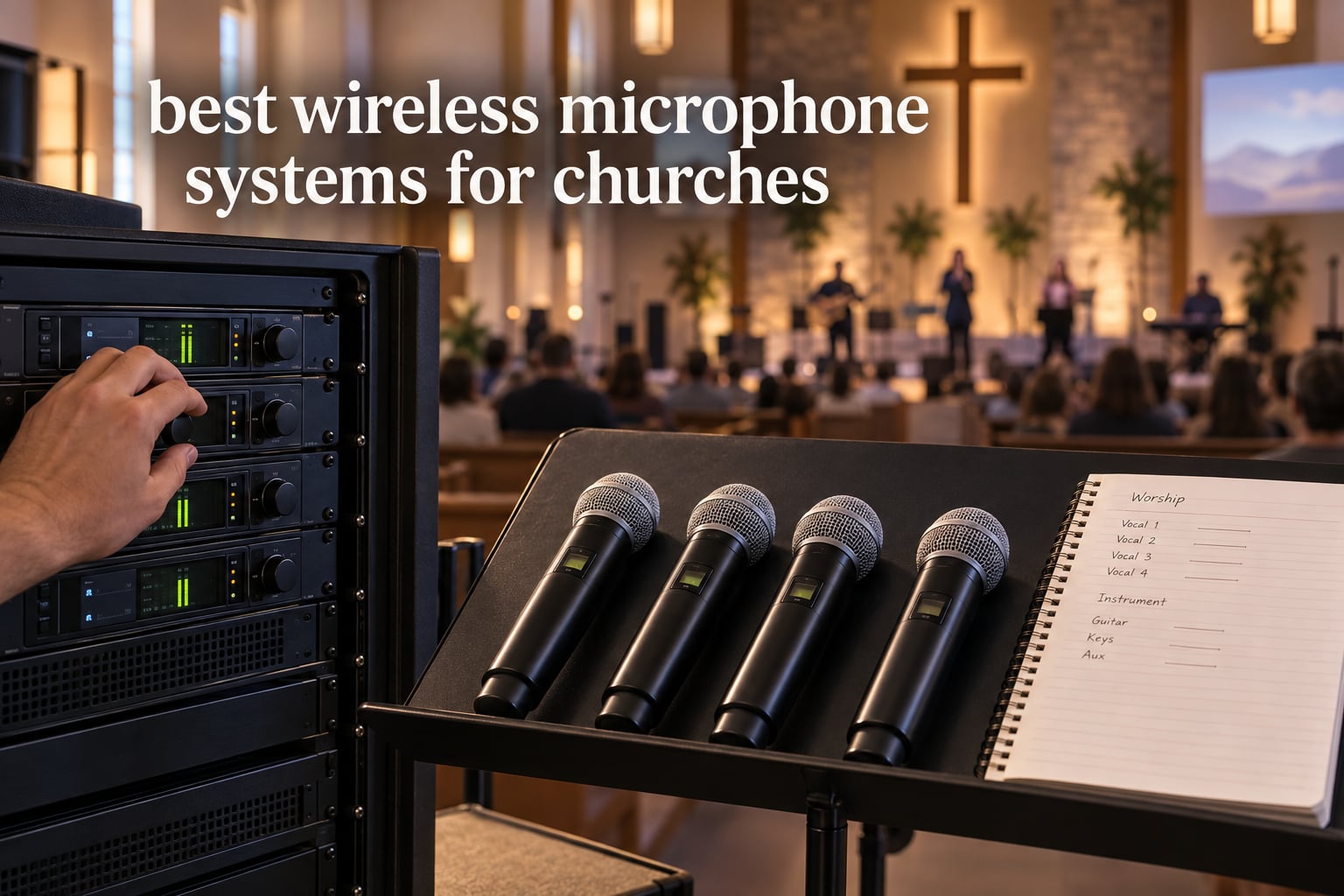
A wireless microphone system for a church is a complete package: a receiver that sits near the mixer, one or more transmitters, and the capsule at the end of it. The transmitter is either a handheld body, a belt bodypack, or a plug-on pack for an instrument, and the receiver converts the radio signal back to audio that your mixer can treat like any other channel.
For most congregations, three answers cover the whole market. The Phenyx Pro PTU-5000-4H is the best overall system for a small or mid-size church, because four fixed channels and four XLR outputs cover a full worship team in one box. The innopow WM-500 is the best value option when budget matters and you want auto scan. The Shure BLX14/CVL is the best wireless microphone system for a pastor who preaches hands-free, because the cardioid lavalier capsule gives you more gain before feedback than an omni headset.
Everything on this list is a complete system rather than a bare transmitter, and every entry below carries specs and reviewer feedback from real owners. We are not recommending anything we cannot explain in plain language, because the person running your sound desk is usually a volunteer with no RF training.
One point of consensus runs through every church sound forum we read: reputable brands last, and cheap wireless gear causes the dropouts and interference people complain about. On r/livesound, one user put it plainly: “Shure, Sennheiser, Audio-Technica 3000 series, pricey but they last, and they’re reliable in both sound quality and signal.” That is the starting point for this roundup, and the reason we skip some of the very cheapest listings entirely.
Before you read on, three questions narrow this list down fast: how many people sit in the room, how many channels do you need right now, and does your pastor want a handheld, a lavalier, or a headset. Everything else is detail.
Table of Contents
Top 3 Wireless Microphone Systems for Churches (October 2026)

Phenyx Pro PTU-5000-4H
- 4 fixed UHF channels
- 4 XLR outputs plus mixed output
- All-metal construction
- 8 AA batteries included

innopow WM-500
- 4 channels with auto scan
- 14-17 hour battery life
- Two XLR plus mixed output
- Metal cardioid handhelds

TONOR TW362
- Handhelds
- headsets and lavaliers in one box
- Automatic pairing
- 200 ft operating range
- Bodypack mute button
The Phenyx Pro PTU-5000-4H takes the top slot because it solves the actual problem most congregations have, which is needing four working channels without needing a technician. Four handhelds, four XLR outputs and a memory switch that recalls your last settings mean a volunteer can set it up in a few minutes on a Sunday morning.
The innopow WM-500 runs just behind it and adds something the Phenyx lacks: auto scan across four UHF bands, so you are not guessing at a fixed frequency in a room where a television station is reusing nearby spectrum.
The TONOR TW362 earns the budget slot because it is the only system in this roundup that puts handheld, headset and lavalier microphones in a single box. That makes it a practical first purchase for a church where a pastor and a worship leader both need to move.
All Ten Church Wireless Systems at a Glance in 2026
| Product | Specifications | Action |
|---|---|---|
|
Phenyx Pro PTU-5000-4H
|
|
Check Latest Price |
 Shure BLX24/PG58
|
|
Check Latest Price |
 Shure BLX14/CVL
|
|
Check Latest Price |
 Phenyx Pro PTU-6000-8H
|
|
Check Latest Price |
|
innopow WM-500
|
|
Check Latest Price |
 Sennheiser XSW 1-825
|
|
Check Latest Price |
 PRORECK MX66
|
|
Check Latest Price |
|
TONOR TW362
|
|
Check Latest Price |
 HOTEC K25
|
|
Check Latest Price |
 GTDaudio G-787H
|
|
Check Latest Price |
Two columns deserve attention before anything else. The channel count tells you how many people can speak or sing at once, and the range figure tells you whether a speaker can walk to the back of the sanctuary during an altar call. A system that drops out at 80 feet is not a worship system, it is a rehearsal room tool.
1. Phenyx Pro PTU-5000-4H: Best Overall Wireless System for a Small Church
Phenyx Pro 4-Ch UHF Fixed Frequency Wireless Microphone System PTU-5000-4H
4 fixed UHF channels
541.9-568.65 MHz
Up to 260 ft
8 AA batteries, up to 8 hours
Pros
- Clear full vocal sound reviewers compare to Shure and Samson
- All-metal receiver and mics survive heavy use
- Per-mic volume control plus four XLR outputs
- Memory switch recalls last settings
- Range tested beyond 100 ft without loss
Cons
- Fixed frequencies cannot be changed or expanded
- Mics need to be held close to the mouth
- Batteries not included for the microphones
This is the system we recommend to a church of roughly 60 to 250 seats that needs a pastor handheld, a worship leader, and two backups. Four channels covers a normal service with room for a guest speaker, and the four XLR outputs mean each person gets their own mixer fader instead of fighting over a mixed input.
Reviewers consistently describe the vocal sound as clear and full, with several comparing it favourably to Shure and Samson systems. Range is the other repeated praise point, with owners reporting clean signal well past 100 feet and one testing near 25 meters. For a sanctuary where the pulpit is at the front and the altar is at the back, that distance is the whole ball game.
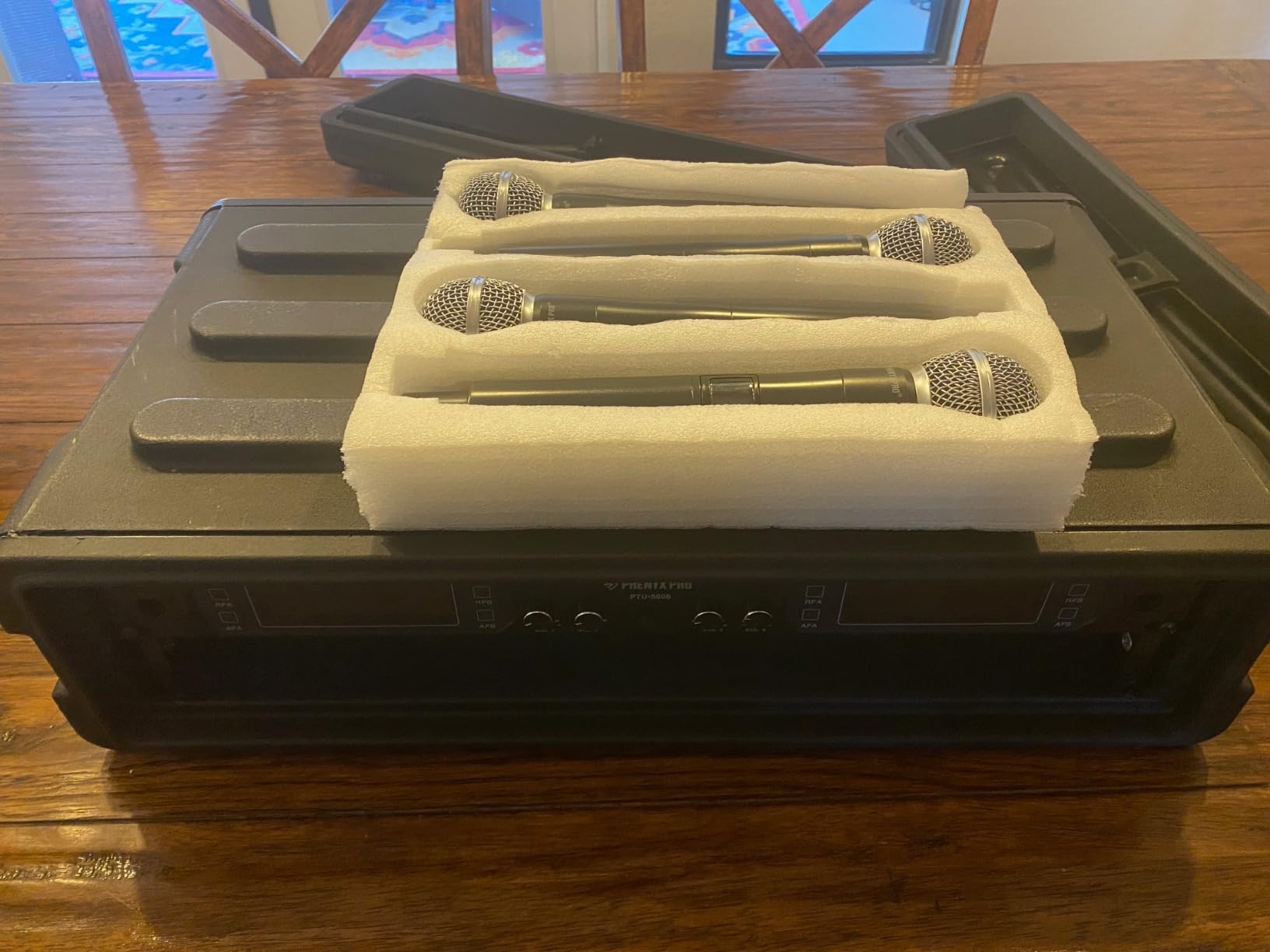
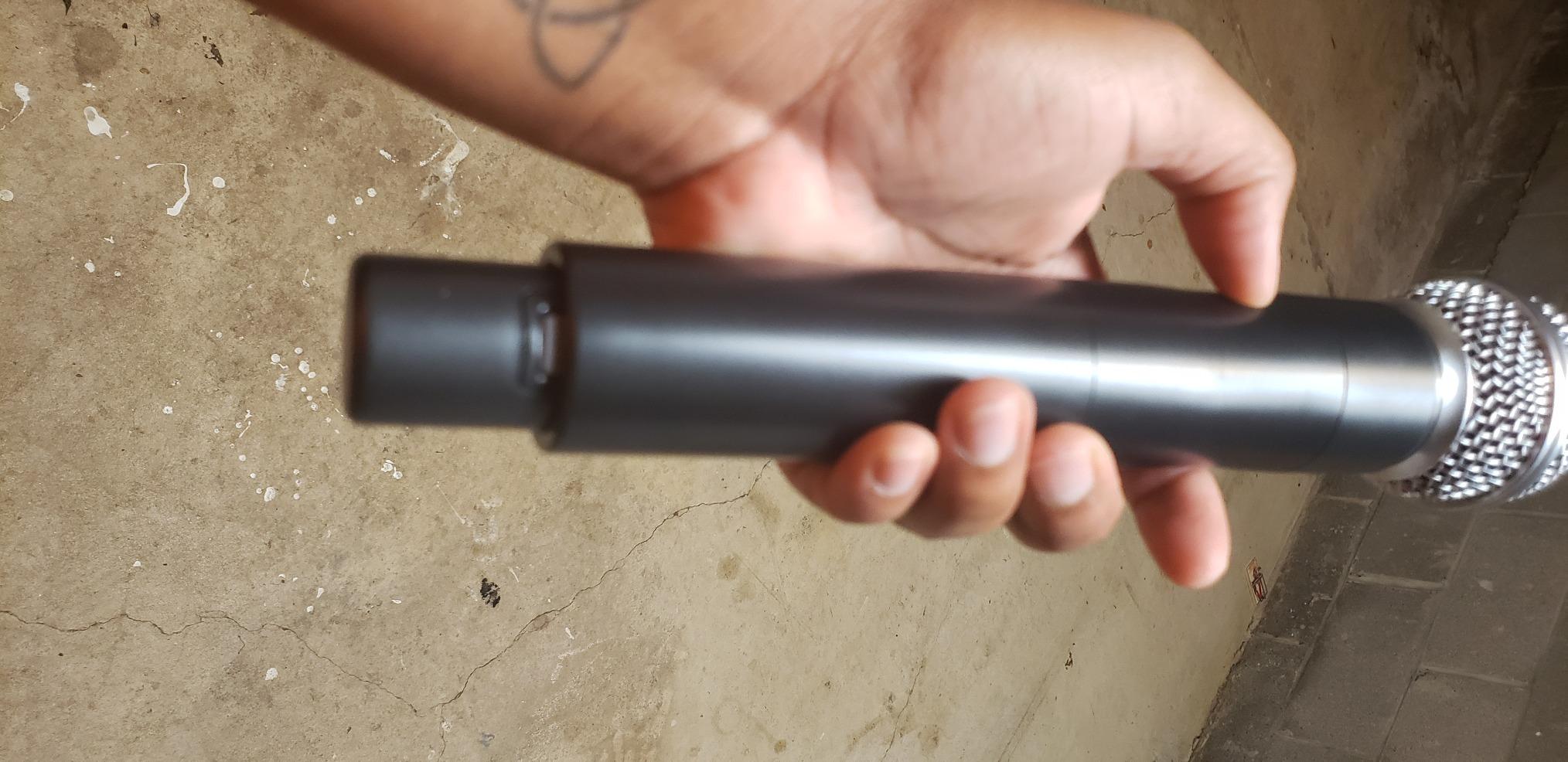
The technical details are honest for this class. It runs on four fixed frequencies at 541.9, 546.3, 561.6 and 568.65 MHz, with an 8 AA battery pack rated for up to 8 hours of operation. Signal to noise is listed at 105 dB, the receiver is metal, and the polar pattern is a unidirectional cardioid, which is what you want for gain before feedback in a room with hard walls.
Two real limitations shape who should buy it. The frequencies are fixed, so you cannot add a fifth channel later from this family or move off a crowded part of the band, and the capsules are not sensitive, so a quiet speaker has to hold the mic within a few inches of their mouth. If either of those bothers you, the innopow WM-500 gives you auto scan and the Phenyx PTU-6000 gives you eight channels.
What to check before you commit
Confirm that 541.9 to 568.65 MHz is not occupied where you are. A spectrum scan, even a phone app, tells you in five minutes whether a local broadcast transmitter is sitting close to those four slots, and finding out before delivery is far easier than finding out during a service.
Also count mixer inputs. Four XLR outputs plus a mixed output means five connections, and an eight-channel board with monitors and effects sends may not have five spare channels. Plan for that before the box arrives, not after.
Where it falls short
Fixed frequencies also stop you coordinating this system with anything else that competes for spectrum. If a neighbouring church on the same street runs the same four frequencies, or if your video team adds a wireless camera mic nearby, you have no room to move. In a dense town that is a real constraint rather than a technicality.
The second limit is sensitivity. Reviewers note the mics must be held close, which is fine for preaching and poor for a quiet alto in the second row of the choir. A bodypack system such as the Shure BLX14/CVL handles whisperers much better.
2. Shure BLX24/PG58: Best Single-Channel Wireless for a Starting Church
Shure BLX24/PG58 Wireless Vocal Microphone System – H9 Band
Single-channel UHF H9 band
512-542 MHz
Up to 14 hours on two AA
About 300 ft range
Pros
- Excellent vocal clarity with no feedback in church use
- Rugged metal build reviewers call near indestructible
- Many users get 12+ hours per set of AAs
- QuickScan makes channel selection automatic
- XLR output fits most mixers
Cons
- No battery percentage indicator
- Some handling noise off the stand
- Single channel only
This is the one to buy when a church has one wired handheld and wants to cut the cable, nothing more. The BLX24/PG58 ships as a complete single-channel system with a BLX4 receiver, a BLX2 handheld transmitter and a PG58 cardioid capsule, and it will drop into almost any mixer through the XLR output.
Reviewers describe the build as near indestructible and the vocal clarity as clean with no feedback in live church use. Several church musicians chose it specifically as a more affordable alternative to a high-end wireless platform, and many report getting 12 hours or more from a pair of AA batteries even though the spec sheet says 14 hours maximum.
Why one channel is not always enough
The honest catch is arithmetic. One system means one speaker, and most services need a pastor plus a worship leader plus a guest. Reviewers also flag the absence of a battery percentage indicator, so the only warning is a red light when the batteries are already dead, which is a bad moment to discover it.
Shure’s QuickScan does find an open frequency automatically, and the H9 band supports up to 12 compatible systems, so you can buy a second BLX unit later and run both. Just budget for separate receivers unless you are willing to add rack hardware.
How the PG58 capsule behaves in a sanctuary
The PG58 is a cardioid dynamic capsule tuned for live vocals, which means it rejects some of the room behind the speaker and gives you usable gain before feedback. That is the whole reason it has survived as a worship standard for decades, and it is a safer choice for a reverberant room than a more sensitive capsule.
It is a speaking and singing capsule, not a quiet-room instrument mic. If your service includes acoustic instruments played softly, you would need a separate instrument pack, and this box will not cover that role.
3. Shure BLX14/CVL: Best Lavalier System for a Pastor Who Preaches Hands-Free
Shure BLX14/CVL Wireless Lavalier Microphone System – H10 Band
Single-channel UHF H10 band
542-572 MHz
Up to 14 hours on two AA
Cardioid CVL lavalier
Pros
- Clean voice pickup with no interference
- Discreet lavalier format suits moving speakers
- Cardioid pattern reduces room noise
- Some users report 20 hours of continuous use
- Quick receiver to transmitter frequency matching
Cons
- No mute button on the bodypack
- Very small and fragile-feeling on/off switch
- Pickup drops when the speaker turns their head
- H10 bodypacks and H9 receivers are not cross-compatible
This is the system we would put on a pastor who walks out of the pulpit, kneels at the altar, and turns to address the congregation from the floor. A lavalier keeps both hands free and disappears on camera, and the CVL capsule is cardioid, which matters more than most buyers realise.
Most of the advice we found on church tech forums leans the same way on capsule choice. One r/livesoundgear reply recommends skipping lavalier and headset capsules for worship leaders entirely because “they’re mostly omni and are going to feed back earlier.” The CVL is the counter-example: its cardioid pattern is the reason it holds up in a room with a band on stage.
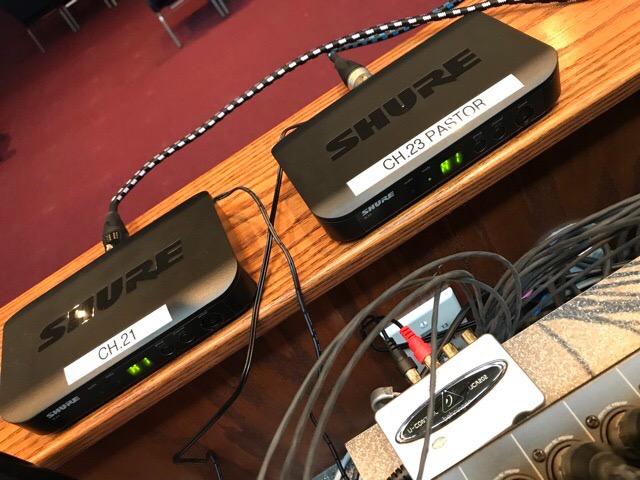
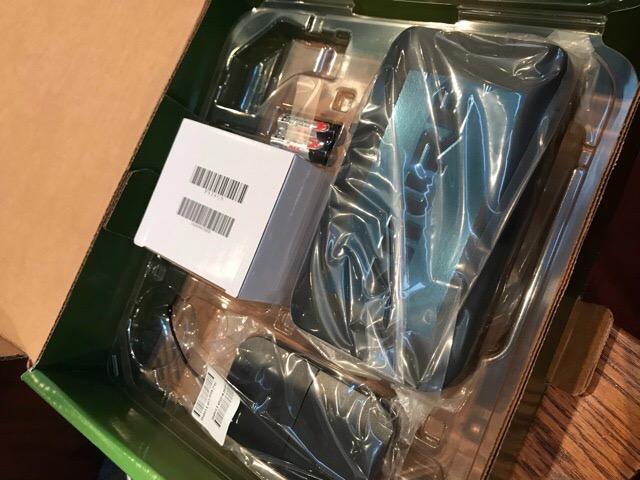
Reviewers report excellent sound quality and unusually long battery life for sermons and presentations, with some users clocking 20 hours of continuous use on two AA batteries. The stainless steel bodypack and included clip, windscreen and power supply make this a genuinely complete package rather than a bodypack you have to buy a capsule for separately.
Run the system through your RF plan before buying. The BLX14/CVL is the H10 band, 542 to 572 MHz, and H10 bodypacks will not work with an H9 receiver, which is a trap that catches churches buying a second channel months later. The band also sits close to the Sennheiser XSW 1-825 A range, so if you ever plan to run both, coordinate the two rather than assuming they are compatible.
Placement details that decide whether it works
The cardioid pattern means pickup falls off when the speaker turns their head away from the capsule, which reviewers mention as the main directional weakness. Clip it high on the chest, near the collarbone, and ask the pastor to speak forward rather than down. That single habit fixes more feedback problems than any gain change.
Rubberbands on clothing and rustling fabric are the other classic complaint with lavaliers. Test the placement with the actual robe or jacket the pastor wears, and if rustle is persistent, a headset removes the friction entirely.
What you give up for hands-free use
There is no mute button on the BLX1 bodypack, so the only way to silence it during a handoff is to switch it off, and reviewers describe that switch as very small and fragile-feeling. On a shared bodypack that gets handled between services, that is a real durability concern.
You also give up the visual presence of a handheld. For a service streamed to video, some congregations prefer a lavalier for the sermon and a handheld for singing, which means buying both formats rather than choosing one.
4. Phenyx Pro PTU-6000-8H: Best Growth System for a Mid-Size Sanctuary
Phenyx Pro 8-Channel UHF Auto Scan Wireless Microphone System,PTU-6000-8H
8 UHF channels, 8x40 frequencies
520.15-602.25 MHz
290-328 ft range
Up to 16 hours on AA
Pros
- Clear present tone reviewers compare to e585 or PG58 capsules
- Auto scan and IR sync make eight-mic setup fast
- Solid metal construction on mics and receiver
- Customer service ships replacements quickly
- Zero dropouts reported over long use
Cons
- Mixed output runs low so mics need turning up
- Using all eight XLRs consumes every mixer channel
- Occasional reports of a receiver not picking up signals
- Handling noise when mics are off the stand
This is the pick for a church that has outgrown a four-channel box and does not want to buy one. Eight channels, selectable frequencies across 520.15 to 602.25 MHz, and support for up to 16 transmitters running at once give you room to add a keyboardist, a cellist and a guest speaker without another purchase.
The auto scan feature finds the cleanest frequency and holds it with a lock function, then IR synchronization pairs the receiver to the microphones in seconds. Reviewers treat this as an entry-level professional rig and describe the sound as comparable to an e585 or PG58 capsule, with solid metal construction on both the handhelds and the receiver.
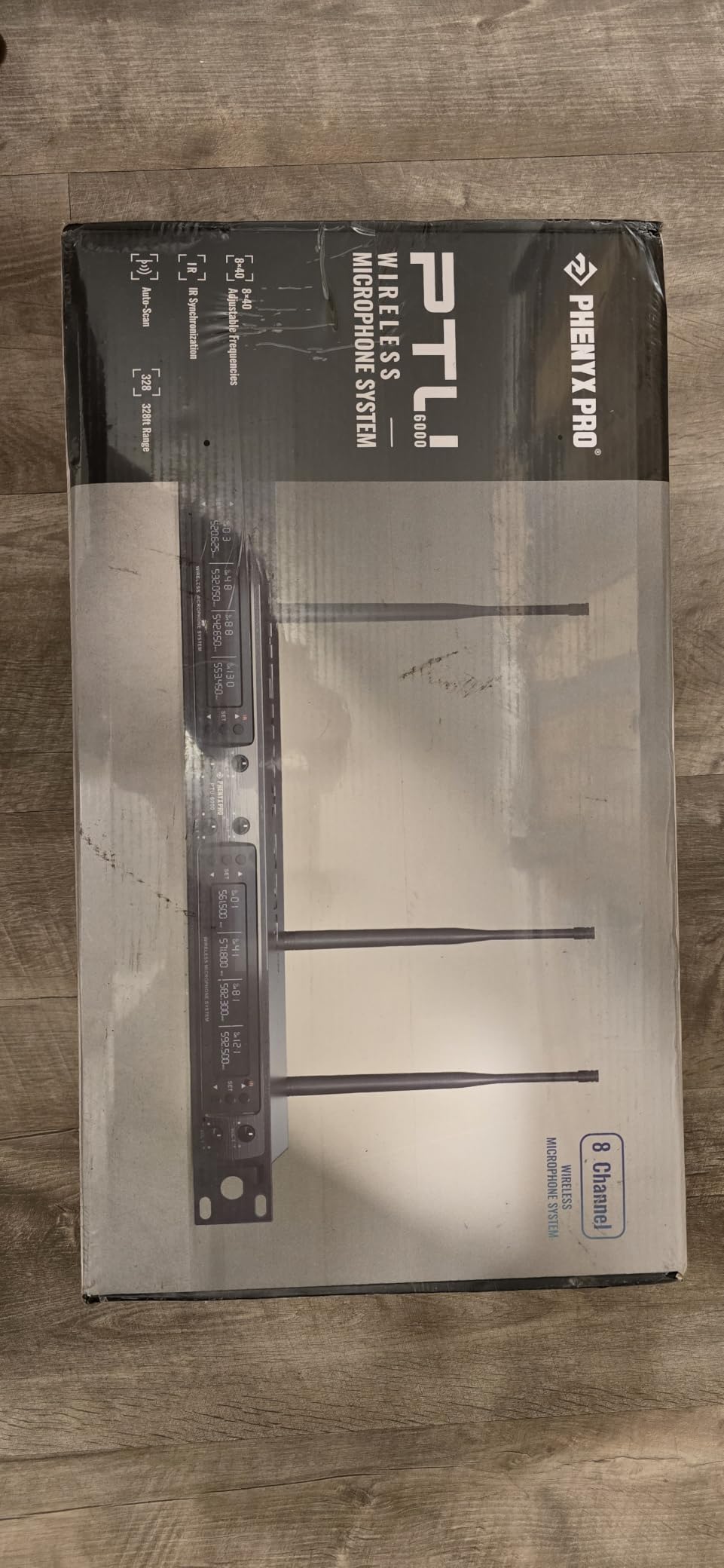
The tuned EQ has a Harman-style response curve, and the replaceable mic head design extends the product life, which matters when a church expects a system to serve for a decade. Sixteen AA batteries are included and rated for up to 16 hours of operation, comfortably covering a long service and the setup time before it.
Watch the output gain. Reviewers note the mixed quarter-inch output runs low, so the mics have to be turned up high against a full band mix, and that using all eight individual XLR outputs consumes every channel on the mixer. On a small board you will be trading features for patch bay space, so count inputs first.
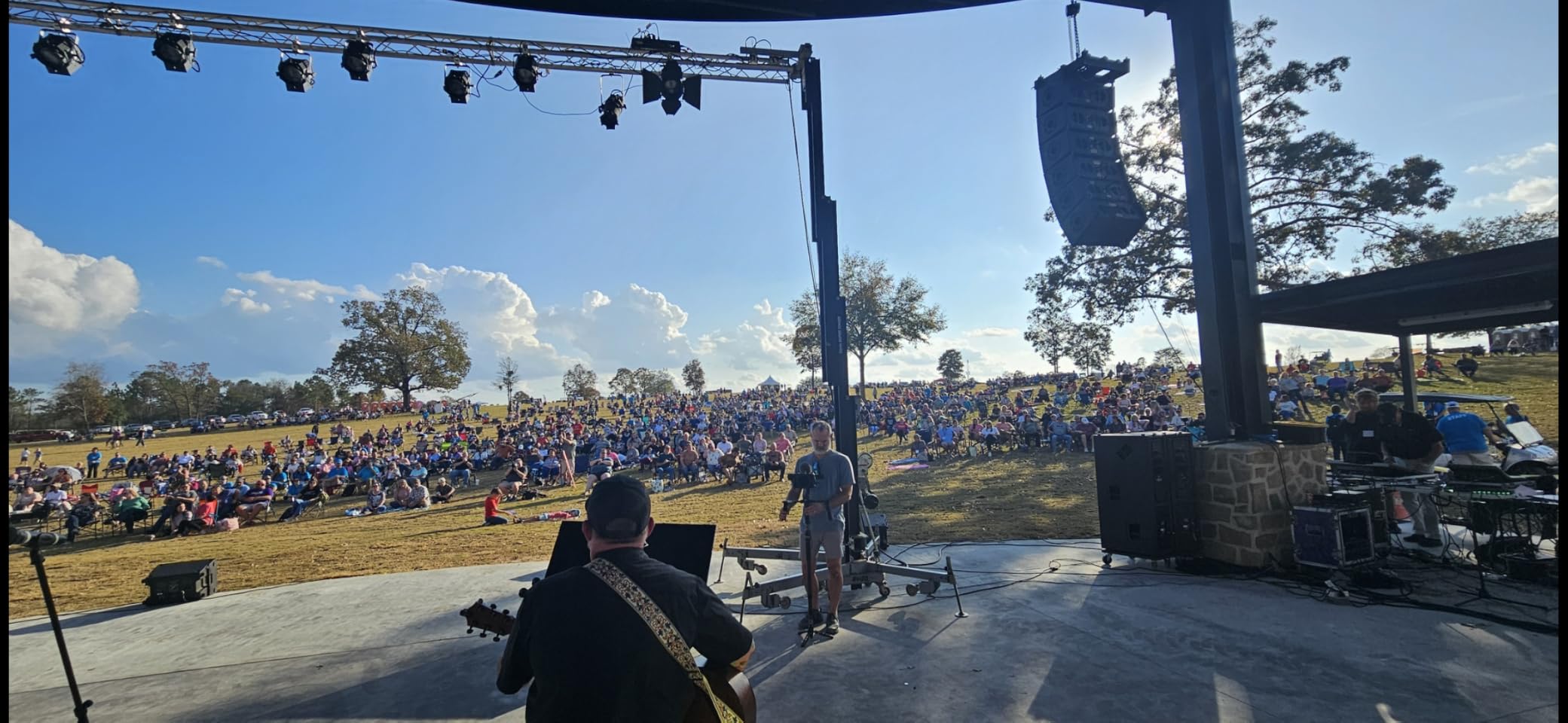
What eight channels actually costs you
Mixer real estate is the hidden price. Eight XLR channels leaves nothing for stage monitors, effects sends or a stereo playback channel, and most mid-size churches discover this when the new system arrives and the board cannot take the patch.
Customer support is a genuine strength here. Multiple reviewers describe replacements shipping quickly after failures, and one professional user reports running this alongside Sennheiser wireless without interference, which is unusual for a fixed-band system this dense.
Where it falls short for a sanctuary
A few reviewers report a receiver that stopped picking up mic signals after limited use, and handling noise is noticeable when a mic is carried rather than on a stand. For a pastor who moves during a sermon, that noise gets amplified with every step, so this system suits handheld singers better than roaming speakers.
The warranty is a 12-month manufacturer assurance rather than the multi-year cover the Shure and Sennheiser systems carry. For a church replacing gear every ten years, that difference is part of the real cost of ownership.
5. innopow WM-500: Best Value Four-Channel System with Auto Scan
innopow 4 Channel Wireless Microphones System, Quad UHF Cordless Mic Set,4 * 40 Groups Metal Handheld Dynamic, Auto Scan, Long Range 200-300Ft,16 Hours Use for Church,Singing Bands (WM500)
4 channels across four UHF bands
538.3-599.5 MHz
14-17 hours per handheld
180-240 ft working range
Pros
- Loud clear vocal reproduction for the money
- Metal handheld and receiver construction
- Auto scan speeds up frequency selection
- 14-17 hour battery life
- Two XLR outputs plus a mixed output
Cons
- Documented range is 180-240 ft
- below the headline claim
- Benefits from a separate power amplifier
- AA batteries needed for each handheld
With 1718 reviews averaging 4.4 stars, this is the most proven entry-level system in the roundup, and it beats several dearer products on one practical feature: each of the four channels has its own block of selectable frequencies rather than one fixed slot.
Channel A covers 538.3 to 550.0 MHz, B runs 554.8 to 566.4, C runs 571.3 to 583.0 and D runs 587.8 to 599.5, so you have roughly 46 MHz of tuning spread across the set. That is what lets the auto scan find clean space in a room where a fixed four-channel system would be stuck.
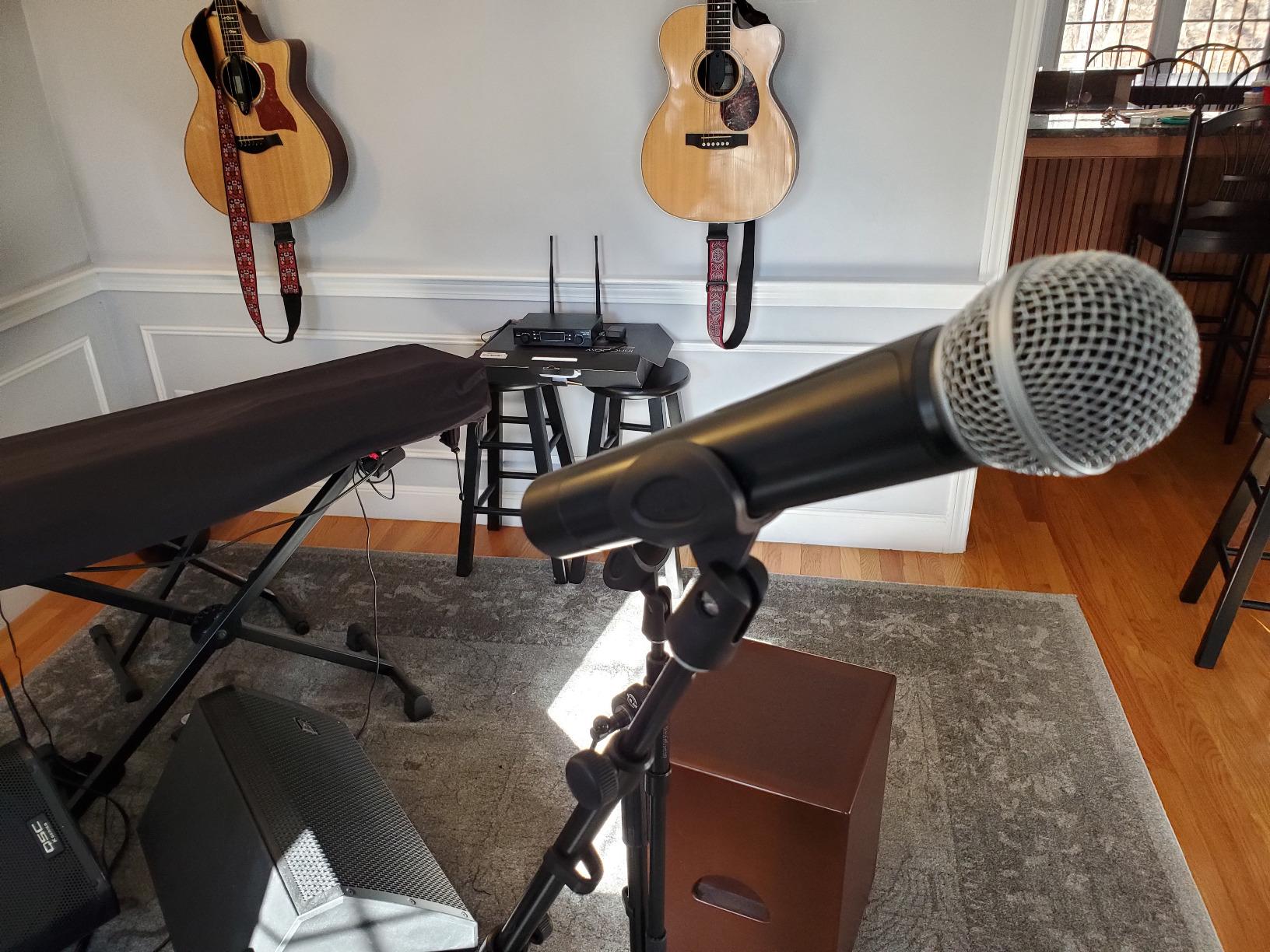
Reviewers consistently cite clear, loud vocals, durable metal construction, effective auto scan and strong battery life as the core strengths. Two XLR individual outputs plus a quarter-inch mixed output give you flexibility on the mixer, and the unidirectional cardioid handhelds are the right pattern for a room with a band.
The range figure deserves attention because it is honest rather than flattering. The documented working range is 180 to 240 feet line-of-sight, which is below the 200 to 300 feet the marketing claims. In a sanctuary where the furthest point is 60 feet away, that gap does not matter, but it will matter at a large outdoor service.
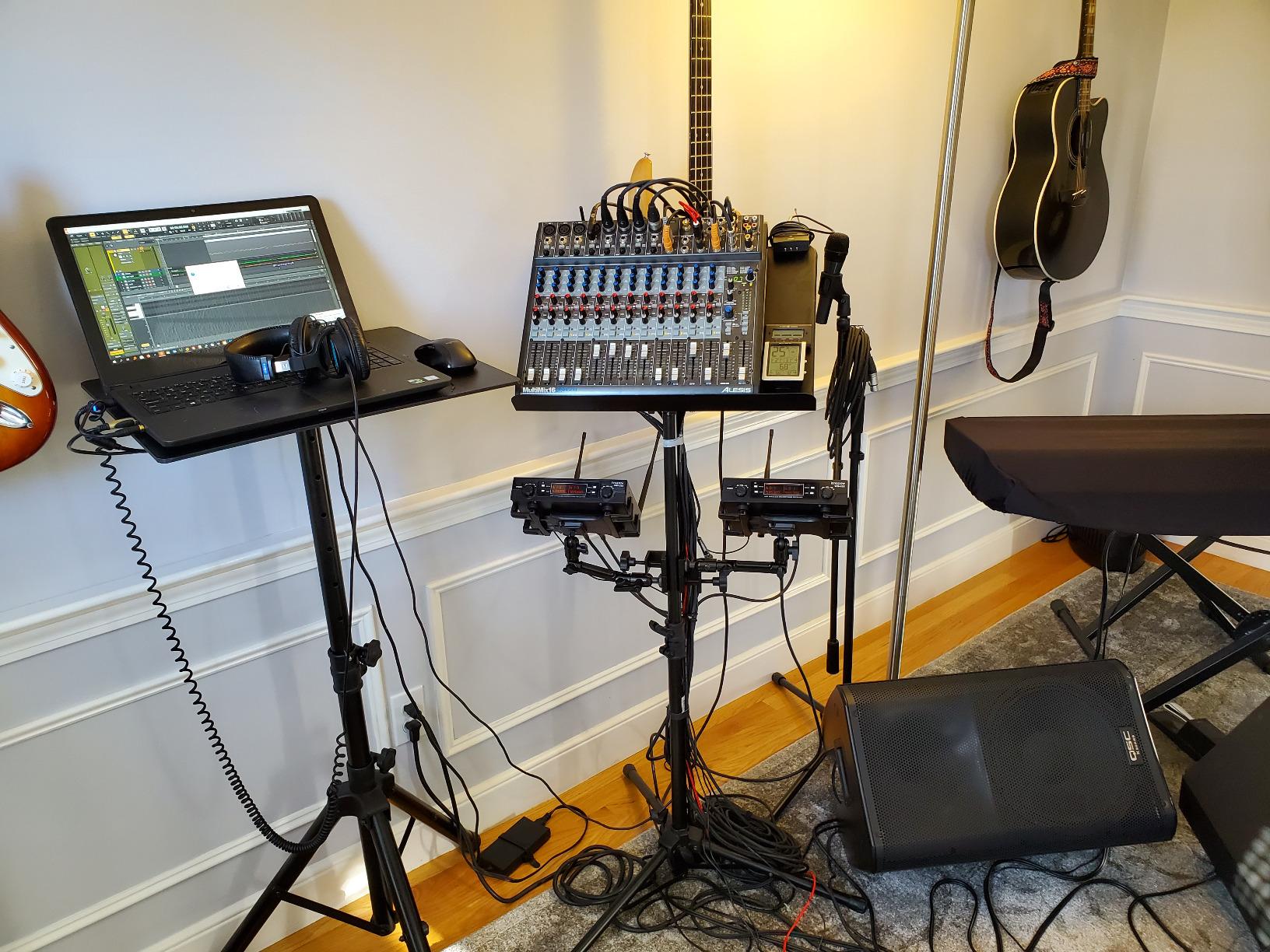
Why auto scan matters more than channel count
A four-channel system you can retune beats an eight-channel system you cannot. Church techs consistently name failed frequency coordination as a leading cause of dropouts, and a system that finds a clean frequency on its own removes the most common Sunday morning failure without needing a laptop or coordination software.
It also means you are not locked to a single crowded part of the spectrum. If the church next door or the local television transmitter is sitting where your system lives, you move rather than abandon the purchase.
Where the money is saved
Two compromises show up in reviews. The system recommends a separate power amplifier for best effect, which tells you the onboard output is modest and the real work happens in your existing PA. And each handheld needs its own AA batteries, which adds up across four mics over a year of weekly services.
It is also worth asking whether you need an external amplifier at all. In most sanctuaries the mixer feeds a powered PA, and the amplifier recommendation matters mainly for karaoke-style all-in-one setups, which is not the church use case.
6. Sennheiser XSW 1-825: Best Single Handheld for Vocal Clarity
Sennheiser Pro Audio XSW 1-825-A Vocal Wireless Microphone, A Range 548-572 MHz, Black, medium
UHF A range 548-572 MHz
Up to 10 operating channels
340 g handheld
Antenna-switching diversity
Pros
- e825 capsule gives clear professional live vocal sound
- Automatic frequency management and sync simplify setup
- Diversity reception improves reliability in crowded RF
- Lightweight 340 g handheld suits long services
- Up to 10 simultaneous channels
Cons
- Single-channel handheld with no bodypack option in this configuration
- Entry-level feature set next to the ew series
This is the pick when a single singer or speaker has to sound genuinely excellent and the budget allows for a German capsule. The e825 Evolution capsule is the reason to choose it, because owners describe the live vocal character as clear and professional in a way that entry-level dynamics rarely match.
Reliability comes from antenna-switching diversity with integrated antennas, which means the receiver compares two signal paths and uses the stronger one. Automatic frequency management and synchronization handle setup, and the A range of 548 to 572 MHz gives you selectable UHF frequencies across a wide bandwidth rather than a single fixed frequency.
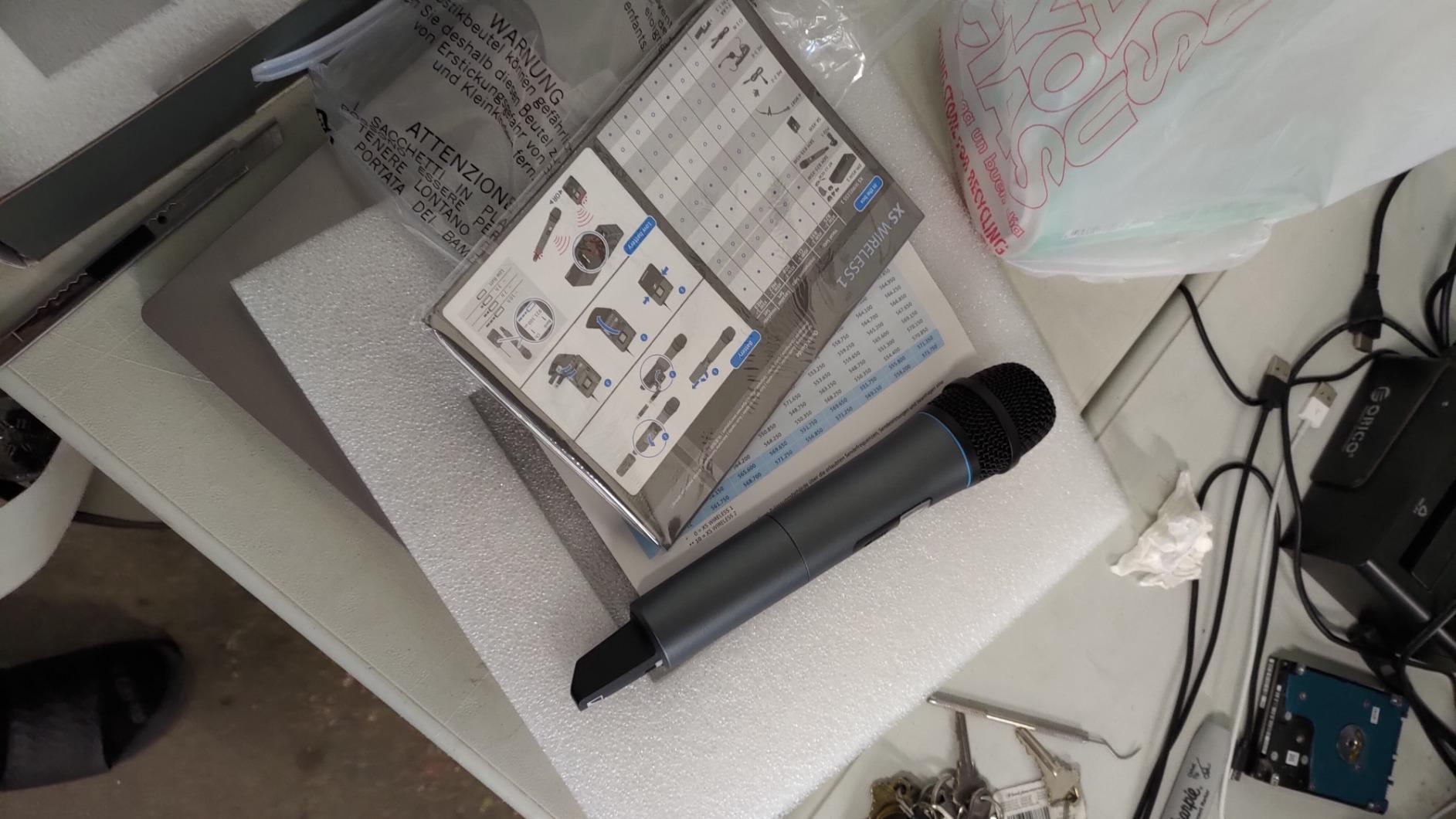
Two numbers stand out. The unit supports up to 10 simultaneous operating channels, which is unusual for a single handheld and matters for multi-room or multi-service setups. And at 340 g the handheld is light enough for a speaker to hold for a long engagement without the wrist fatigue that heavier bodies cause.
The band choice is the thing to check first. This is the A range at 548 to 572 MHz, which sits directly beside the Shure BLX14/CVL H10 band at 542 to 572 MHz, and that overlap is exactly what creates intermodulation problems when both are pushed hard in one room. If you run both, coordinate them.
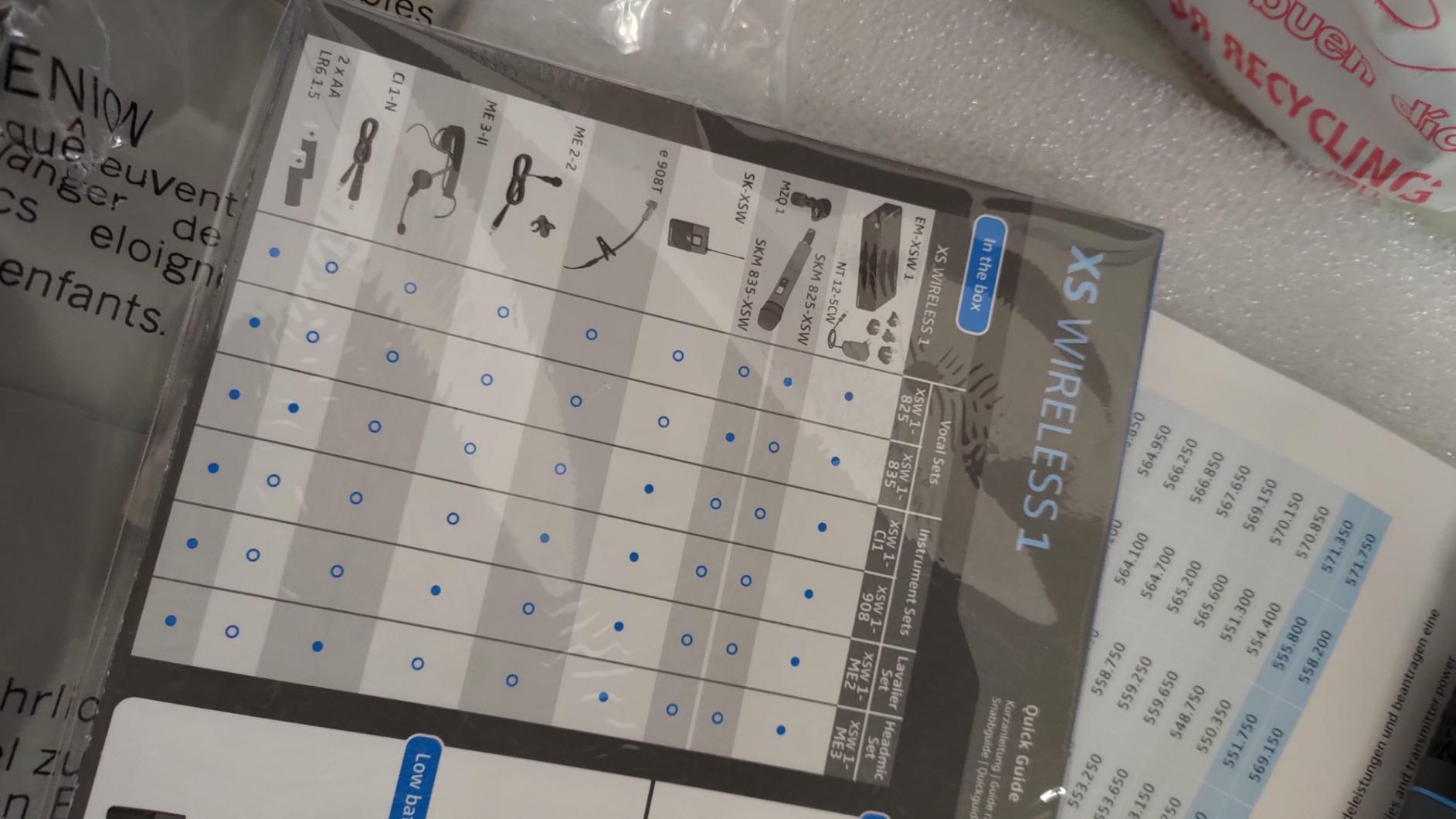
What the capsule choice really buys
Capsule selection is the first decision, not the second. One r/livesoundgear thread on better-sounding vocal microphones recommends the Sennheiser e845, the Shure Beta58 and the Audio-Technica 4100 as a step up, and the reasoning applies here: a better capsule lets the vocal cut through the mix without reaching for EQ that the rest of the band will not tolerate.
That is the argument for spending more on the capsule rather than on the radio. A cheap capsule on a good radio sounds like a cheap capsule, and churches that regret an upgrade most often regret that ordering, not the brand.
Where this configuration stops
Owners note the main limitation plainly: this is a single-channel handheld set with no bodypack option in this configuration, and the feature set is basic next to Sennheiser’s ew series. If your pastor needs to roam, this box will not cover it and you would buy a separate bodypack system.
The warranty is listed as two years, which is a genuine advantage over the 12-month cover on some of the entry-level systems here, and it is one of the reasons church buyers gravitate to this brand for a permanent install.
7. PRORECK MX66: Best Six-Channel System for Full Choir Coverage
PRORECK MX66 6-Channel UHF Wireless Microphone System with 6 Hand-held Microphones Karaoke Machine for Party/Wedding/Church/Conference/Speech
6 UHF channels
600.5-662.8 MHz fixed
200 ft range
Six XLR plus mixed output
Pros
- Six wireless handhelds in one affordable box
- Clear loud sound from cardioid capsules
- Per-mic volume controls with AF and RF indicators
- Eight EQ modes tune the system to your room
- One-year parts and labor warranty
Cons
- Two sets cannot operate in the same room
- Batteries not included and each mic needs 2 AA
- Crowded part of the UHF spectrum
Six handhelds is an unusual number in church wireless, and it is exactly what a small choir, a drama group or a large praise team actually needs. Nobody sings on a headset, and handing a lavalier to six people means six bodypacks and six more things to charge.
Reviewers treat this as an inexpensive way to put six wireless handhelds into a small sanctuary, a fellowship hall or a multipurpose room, praising the loud clear output, the per-microphone volume control and the EQ presets. The receiver LCD carries AF and RF signal indicators, which lets a volunteer see when a mic is weak before the audience does.
Six microphones, one fixed frequency each
Be clear about what the six-channel count means here. The frequencies are fixed at 600.5, 607.5, 615.5, 653.1, 658.3 and 662.8 MHz, and the specification states that two sets cannot be used together. That single fact rules this system out for any church that expects to expand, or for a multi-campus setup sharing a venue.
The band also sits in a crowded part of the spectrum, which is the point reviewers raise as a downside. Nothing is wrong with the system in an isolated building, but interference risk rises when broadcast signals are nearby.
Where the EQ modes help and hurt
Eight EQ modes covering Jazz, Pop, Country, Rock and more are genuinely useful for a church that rotates between spoken word and a band set, because switching a service from a spoken sermon to a worship band is a single button press rather than a rebuild of the EQ.
They also work against a technically inclined operator. A church with a capable volunteer who wants to shape the channel on the mixer has to override the receiver preset, and on a system that runs six mics into six mixer channels, most churches end up doing just that anyway.
One practical note: batteries are not supplied, and each handheld takes two AA cells. Six mics times two batteries times fifty services a year is a running cost worth putting in the budget before the purchase rather than after.
8. TONOR TW362: Most Versatile With Handheld, Headset and Lavalier in One Box
TONOR Wireless Microphone System, Handheld Mic Set with Headset/Lapel Mics
2 handhelds, 2 bodypacks, 2 headsets and 2 lavaliers
200 ft range
10 channels per unit
Auto pairing on power-up
Pros
- Covers handheld
- headset and lavalier positions in one box
- Clear loud vocals from a cardioid dynamic capsule
- Automatic pairing makes setup near instant
- Bodypack mute button suits shared-use setups
- Works with mixers
- amplifiers and powered speakers
Cons
- AA batteries not included for the mics and bodypacks
- Mixed metal and plastic build feels less premium
- Only two units are active at a time despite four transmitters
This is the box we recommend when a church has never owned a wireless system and needs to cover a pastor, a worship leader and two spare positions without a big purchase. Two handhelds, two bodypacks, two headsets and two lavaliers arrive in one package, and the bodypack MUTE button is the detail that wins over most rivals at this level.
Setup is close to instant because the receiver pairs with the transmitters automatically on power-up. There are 10 channels per microphone and bodypack and support for up to 40 simultaneous sets, and the 200 foot operating range covers essentially any sanctuary a congregation this size would occupy.
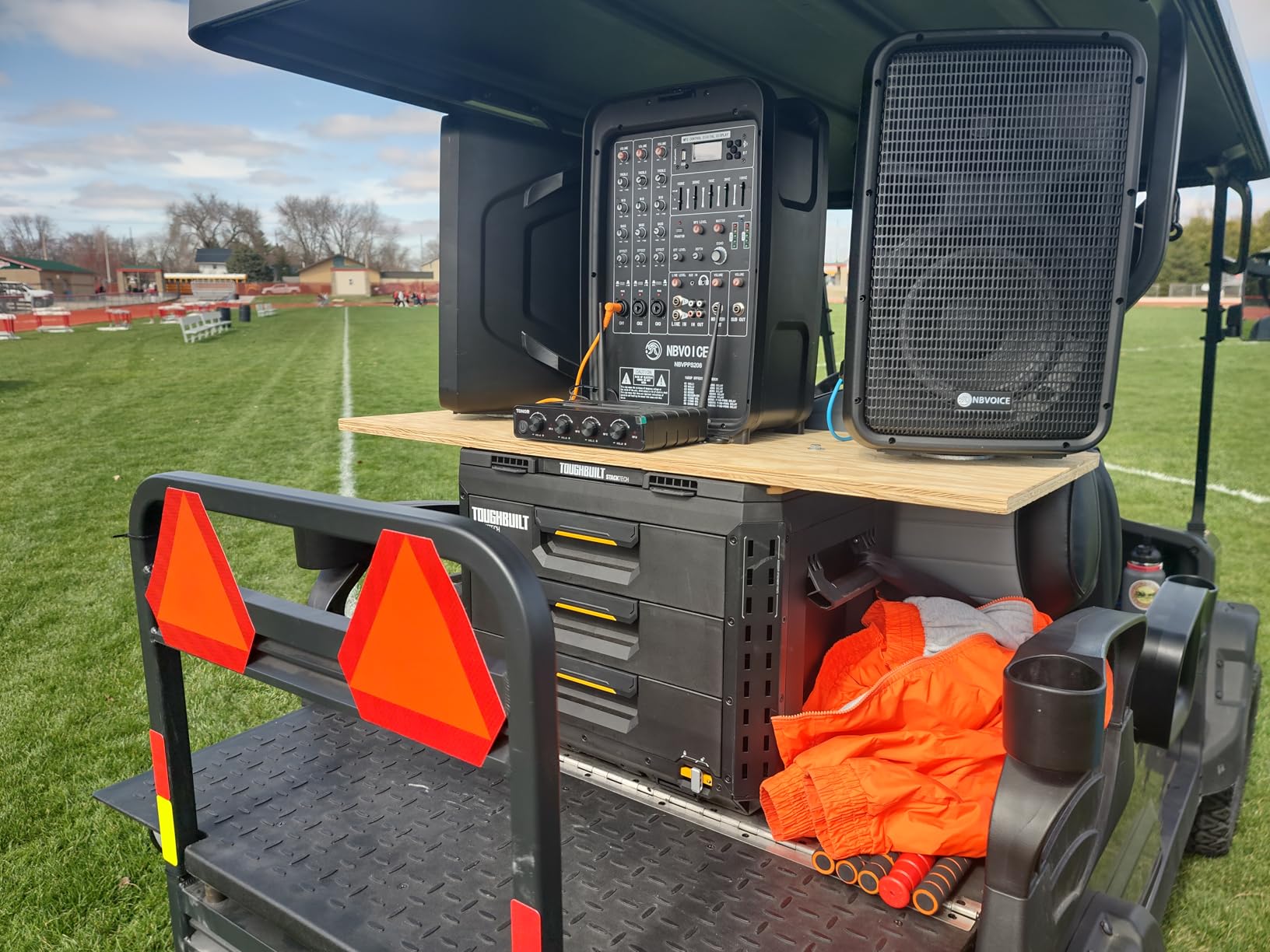
Across 1237 reviews at a 4.4 star average, the recurring praise is for value and format variety rather than for any single specification. Reviewers highlight getting handheld, headset and lavalier formats in one box, quick auto-pairing, and a bodypack mute function. The cardioid dynamic capsule is described as giving clear, loud reproduction with reduced howling.
Understand what the two-active limit means. The package contains four transmitters, but only two are active at a time, so a three-person speaking service plus a worship leader means you will be swapping a bodypack mid-service or running a wired mic for the third position. Plan the rotation before Sunday, not during it.
When a mixed-format box beats a matched one
The strongest case for this system is a church where roles are still changing. A pastor who starts with a lavalier and later wants a headset, plus a worship leader who needs a handheld, would otherwise buy three separate systems. One box covers all three formats and the bodypacks can be handed between whoever is speaking that week.
The bodypack mute button matters more than it looks. Without one, the only way to silence a mic between speakers is to switch it off, and that small switch is the most fragile part of an entry-level bodypack.
Where the compromise shows
Build quality is the first compromise. The enclosure is listed as metal and plastic, and reviewers describe it as feeling less premium than all-metal systems, which is a reasonable expectation at this level but worth holding in mind for a microphone that gets thrown in a bag every week.
AA batteries are not included for the handhelds or the bodypacks, and the two-active-unit limit caps the system at a small church or a fellowship hall. For anything larger, the extra channels cost you more than the systems on this list that include them in the box.
9. HOTEC K25: Best Lav Plus Headset Pair for Pulpit and Roaming
HOTEC UHF Wireless Microphone System with Dual Lapel/Lavalier and Headset Microphones Over PA, Mixer, Speaker, Karaoke Machine for Church, Training, Classroom, Interview (H-K25)
64 selectable UHF frequencies
902-928 MHz
Rechargeable bodypacks
240 ft line-of-sight range
Pros
- Two lavaliers and two headsets cover pulpit and roaming positions
- Clear voice transmission with low feedback
- 64 selectable frequencies reduce appliance interference
- Rechargeable bodypacks avoid disposable battery cost
- Plug-and-play with independent A and B volume
Cons
- Lighter build than metal bodypack systems
- Frequency change is manual via the receiver button
- Range tops out around 240 ft
This is the pick for a pulpit where the pastor alternates between a lavalier at the lectern and a headset when walking. Two lavaliers and two headsets with bodypacks are included, so both habits are covered, and the unidirectional capsules pick up voice from a range of angles.
Reviewers looking for an inexpensive dual-lapel-plus-headset package for a small church, classroom or training session find the sound clear and the setup quick. The bodypacks use built-in rechargeable lithium-ion batteries with wireless charging, which removes the single most annoying recurring cost in a church that runs bodypacks all year.
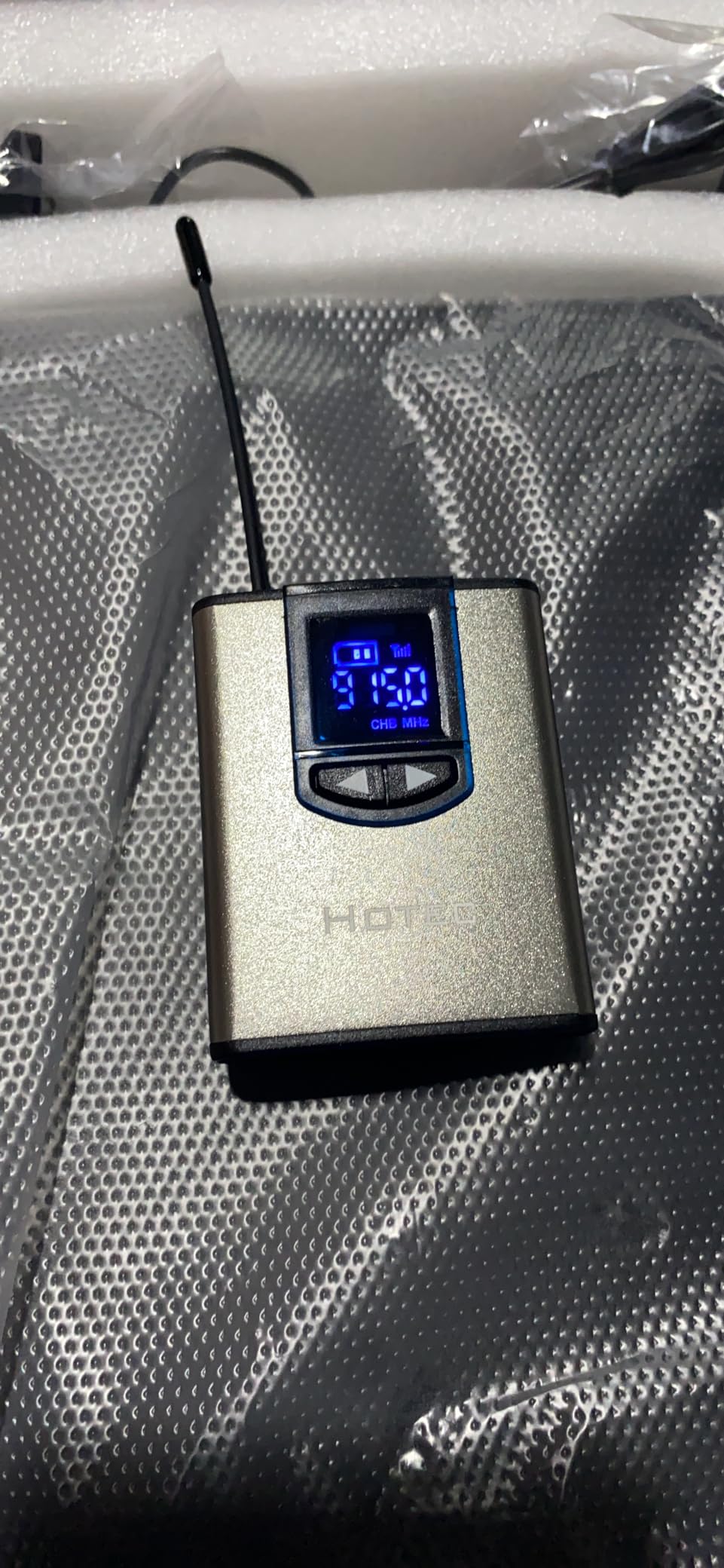
The receiver provides two XLR individual outputs plus a quarter-inch mixed output, and channel A and channel B have independent volume controls. That arrangement suits a small sanctuary where the pastor goes to a different mixer channel from the worship leader, and it works with the mic input on a PA, mixer, speaker, amplifier or karaoke machine.
Two details deserve a second look. The 902 to 928 MHz band is unusual for church wireless, and it is a licence-free part of the spectrum, which means the system is not competing with broadcast television in the way a 600 MHz system can. And 64 selectable frequencies, 32 per transmitter, give you room to move if something else is transmitting nearby.
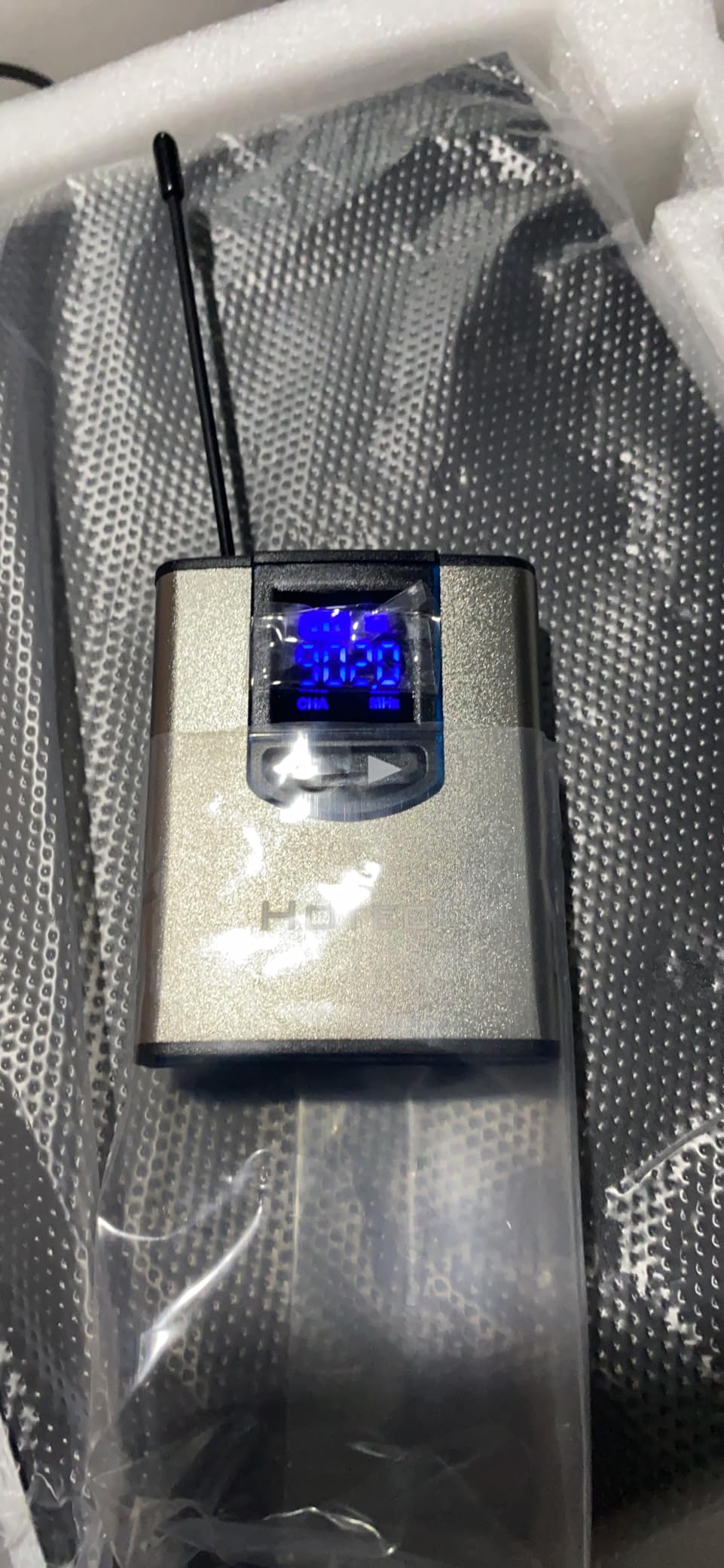
Rechargeable bodypacks change the Sunday routine
Disposable batteries in a church bodypack is a genuine operational problem, because the person running sound is the person who notices the light, and nobody wants to be the one who said so mid-service. Rechargeable packs with a charging cradle mean the bodypacks go on the charger on Saturday and are ready on Sunday morning.
There is a trade-off worth naming. Rechargeable cells lose capacity over years of church use, and a pack that no longer holds a charge is a mid-service failure in a different disguise, so budget for replacement packs rather than assuming they last forever.
Where the range ceiling bites
Operating range is up to 240 feet line-of-sight, which is shorter than the 300-plus feet of the Shure BLX systems. For a room where the furthest point is under 100 feet, that is irrelevant. For a large sanctuary with a long altar-call walk, or an outdoor service at the edge of a parking lot, it is the limit that decides against this one.
Frequency changes are manual via the receiver button rather than automatic, and the build is lighter than metal bodypack systems. Neither is disqualifying, but both add friction for a volunteer operator who is new to the equipment.
10. GTDaudio G-787H: Most Compact for Maximum Frequency Choice and Diversity
GTDaudio 4×800 Channels UHF Diversity Wireless Cordless Microphone System
800 frequencies per channel
550-590 MHz UHF
Four-antenna true diversity
Up to 450 ft range
Pros
- Sound quality reviewers compare to wired Shure mics
- True diversity with four antennas means no dead spots
- Four separate LCD displays show per-mic status
- 800 frequencies per channel suits crowded RF
- Works alongside Sennheiser systems per one professional user
- Frequency lock stops guests un-syncing a mic
Cons
- Plastic handheld bodies despite a metal receiver
- Recessed volume buttons need a small screwdriver
- Manual describes a mic-gain switch the hardware lacks
- Poorly written manual with only -10 dB and 0 dB gain options
This is the most capable radio in the roundup. Four channels with 800 selectable frequencies each means 3200 tuning options in total, and true diversity operation across four antennas is a genuine step up from the two-antenna systems most of the others use.
Professional users and KJ hosts consistently rate it as strong value, praising the true diversity, the four per-microphone LCD displays, the wide frequency selection and a clean tone they compare to wired Shure microphones. One professional user reports it works alongside Sennheiser wireless systems without interference, which is a useful data point for churches inheriting a mixed-brand rig.
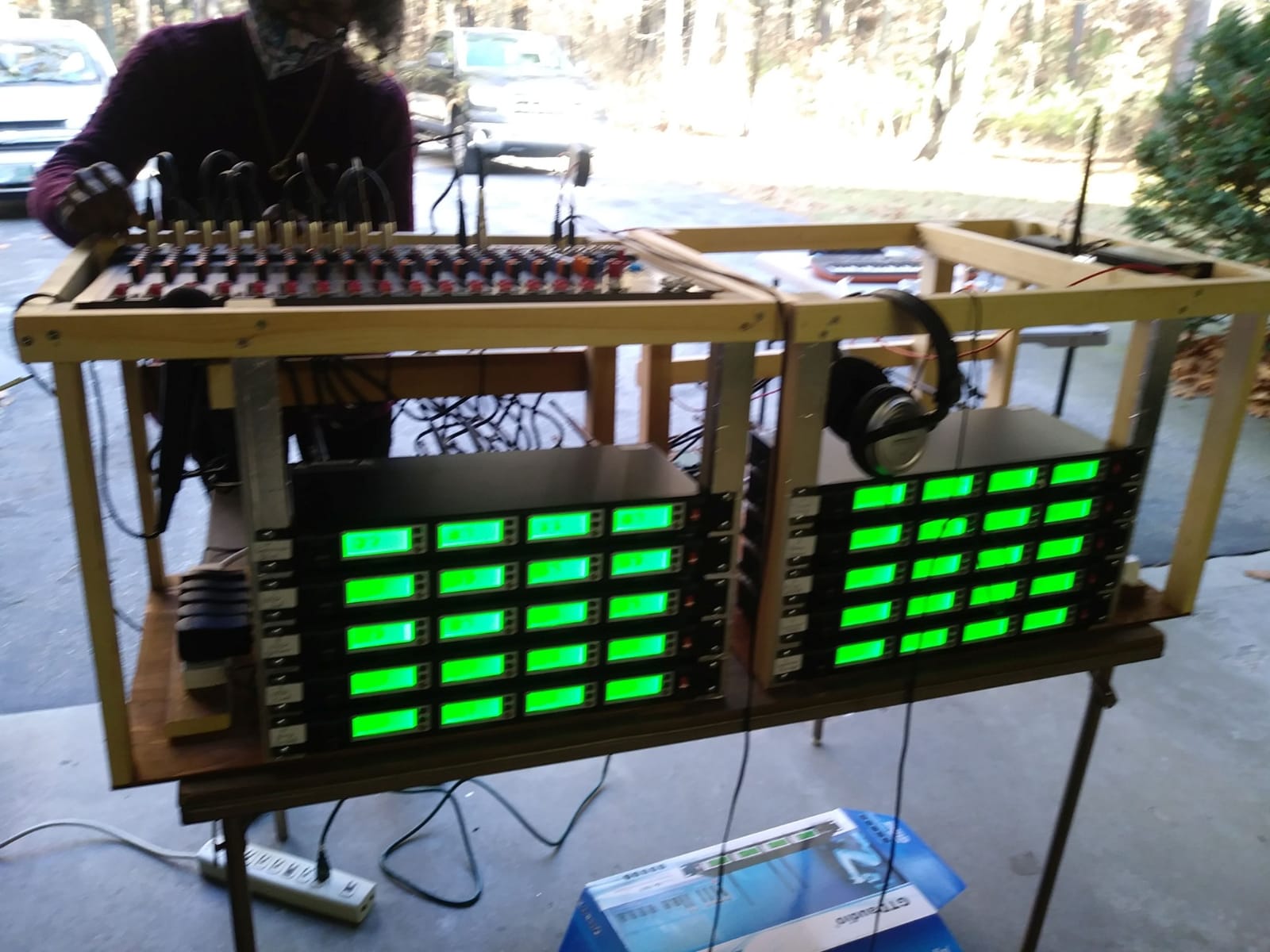
The range is listed at up to 450 feet, or 150 metres, the longest in this roundup by a wide margin, and a Tone Lock squelch circuit keeps the audio clean when other RF energy is present. Automatic frequency scanning finds the least-interference channel and automatic transmitter setup handles pairing, so a volunteer does not need coordination software to get a clean start.
There is also a practical church-specific feature worth calling out. Holding both buttons locks the frequency, which prevents a guest or a curious volunteer from re-syncing a microphone and breaking the service. On a system that is shared among several people, that single behaviour removes a whole category of Sunday morning problems.
Why four antennas matter in a sanctuary
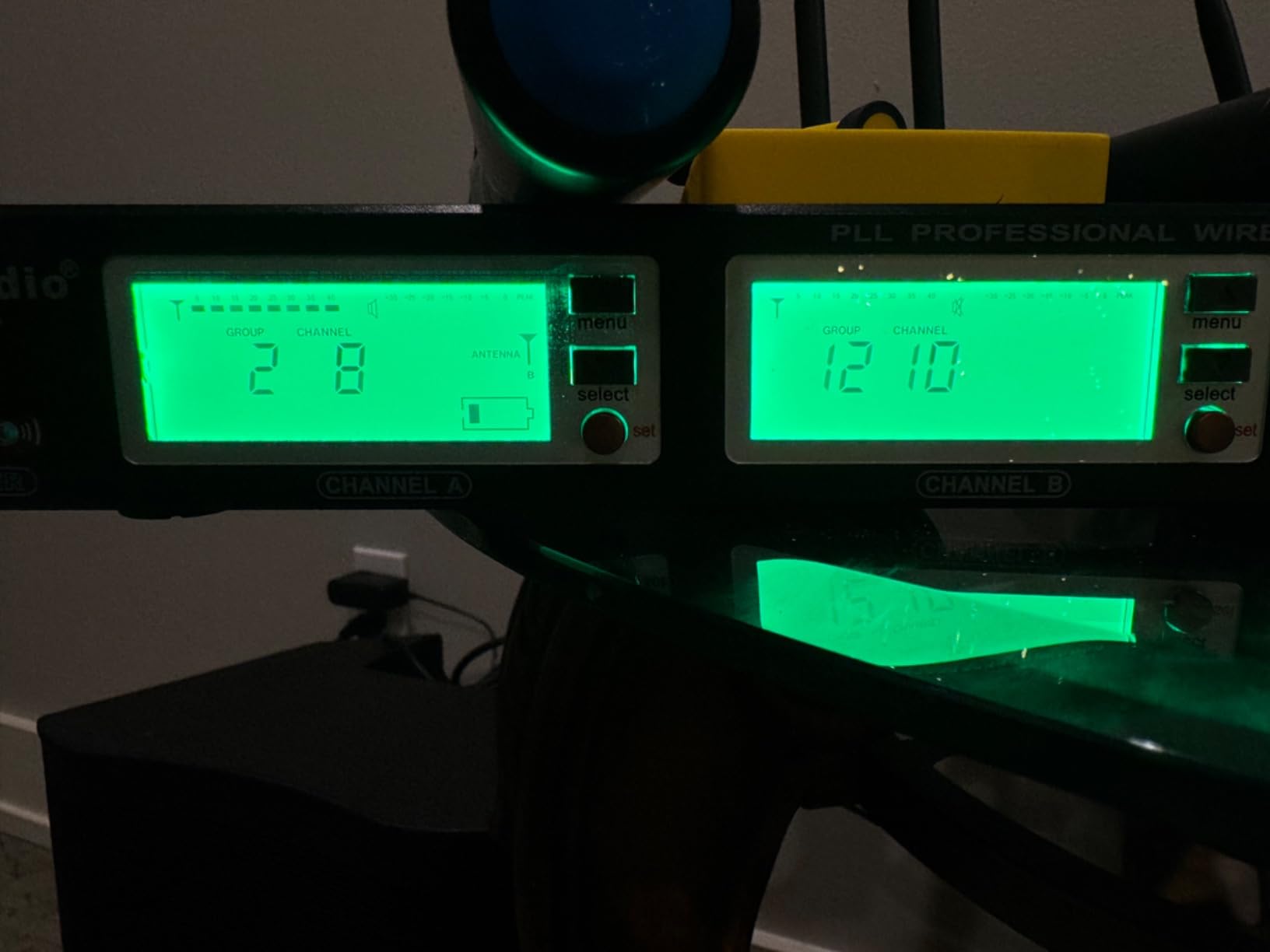
True diversity with four antennas is the reason this system reports no dropouts and no dead spots. Two antennas cover the two signal paths most entry-level systems use, and four gives the receiver more opportunity to find a usable path, which matters most in a room with metal roof structure, glass, or a lot of people absorbing the signal.
The four separate LCD displays, one per microphone, let the operator see detailed status for each channel independently. On a four-channel system that is the difference between diagnosing a problem in ten seconds and swapping microphones at random during a service.
Where the hardware falls behind the radio
The gap between the receiver and the handhelds is real. The receiver is metal, but the handheld bodies are plastic and reviewers describe them as feeling cheap, and the recessed volume buttons need a small screwdriver, which is not a tool you want at a volunteer sound desk.
The manual is a genuine issue: reviewers report that it describes a handheld gain-adjustment switch the current design does not have, and that gain options are limited to minus 10 dB and 0 dB. A few users also report signal dropouts when singers push the mics very hard, so this is a strong radio with less refined capsule and control hardware.
How Many Wireless Mic Channels Does Your Church Need?
Count the people who speak or sing at the same time, not the number of people in the room. A 150-seat church with one pastor, one worship leader, a cellist and a pianist needs four channels, and a 900-seat church with a worship team, three drama actors and a rotating guest panel might need sixteen.
The planning rule that works is one channel per simultaneous voice, plus one channel per instrument that needs its own mix, plus in-ear monitor sends, plus 50 percent spare. The spare is not optimism, it is the guest speaker who arrived this morning and the musician who joined the band in September.
Two rules of thumb from church tech forums are worth repeating. First, buying a four-channel system and immediately maxing it out is the single most common planning mistake people report, and it is why the eight-channel options here exist. Second, adding a cheap system from a different brand as a stopgap causes intermodulation problems that look like random dropouts and are very hard to trace.
You can mix brands in one church rig, but only if you coordinate frequencies. Mixing without coordination is not mixing, it is two systems each assuming the spectrum is empty.
Handheld, Lavalier or Headset: Which Mic Type Fits Which Role?
A handheld is the safest default for worship vocals because a cardioid dynamic capsule gives you the most gain before feedback in a room with a band. It is also the format singers already know how to hold, which matters when your vocalist roster changes every few months.
A lavalier is the right call for a pastor who preaches hands-free and is being streamed to video, provided the capsule is directional. Omnidirectional lavaliers and headsets pick up more of the room and feedback earlier, which is why the cardioid pattern on the Shure BLX14/CVL is such an important detail rather than a marketing line.
A headset removes clothing rustle and handling noise entirely, which is why one r/worshipleaders poster recommended the Countryman H6 for a pastor despite the cost, noting that it is durable and takes abuse. The trade-off is visibility on camera and the fact that headsets need a volunteer who can fit them properly.
Instrument wireless is the category most small churches overlook. A worship leader who plays acoustic guitar on a headset is running a microphone and an instrument into the same channel, and the standard advice on church audio forums is to put the vocal on a headset and the guitar on a separate instrument pack rather than trying to solve both with one capsule.
How Do You Avoid Wireless Mic Interference in a Church?
Run a spectrum scan before you buy, not after. Note which UHF frequencies are already occupied by broadcast television, radio and other wireless systems in your area, and pick a system whose band sits clear of them.
Check what is already on your campus. Neighbouring church buildings, a school sharing the property, or a theatre down the road may already have systems running, and knowing their bands stops you planning on a frequency that is occupied next door rather than in your room.
Place antennas in line of sight, not in a metal rack. A receiver antenna inside a steel equipment cabinet loses more signal than any amount of brand quality can recover, and a remote antenna on a short stand behind the booth fixes most dropouts people blame on the microphone.
Use the highest quality capsule you can justify for the pastor. A cheap capsule on a good radio sounds cheap, and the reverse is not true, so put the money in the capsule rather than the radio body.
Plan the battery routine. Systems that run on two AA cells need a charging discipline, and systems with rechargeable bodypacks need a Saturday charging habit, and both are cheaper than a microphone dying halfway through the sermon.
Write the frequencies down. A note in the equipment binder listing every system, band and channel prevents the most common support call, which is somebody resetting a working system and having to re-coordinate it before the service.
What a Church Wireless System Really Costs Over Its Life?
The box is the smallest part of the bill. Budget for spare batteries, a rack or shelf for the receiver, spare microphones for the two people who drop theirs most often, and a second bodypack for the pastor who will not hand it back.
Then add the costs nobody mentions. Antenna distribution for a multi-channel install, a coordination laptop if you run a large system, and the time a volunteer spends scanning and recording frequencies every time the equipment moves. That labour is real and it does not appear on any invoice.
Used and refurbished gear from reputable dealers is a legitimate path for a tight budget, and church members regularly report buying used systems that served a church for a decade. The risk is a system whose frequencies no longer fit your band plan, so check the band before you commit to anything secondhand.
There is also a case for not upgrading yet. If your current system is twelve years old, functions, and has a matched set of microphones, replacing it with a cheaper system rarely improves anything. Buying fewer channels of better quality, and adding a second channel later, beats replacing everything with the same tier you already own.
Frequently Asked Questions
What are some good wireless microphones for church use?
The strongest all-round choice is the Phenyx Pro PTU-5000-4H, a four-channel UHF system with four XLR outputs that a volunteer can set up quickly. For vocal quality on a single channel, the Sennheiser XSW 1-825 uses a better capsule. For a pastor who moves, the Shure BLX14/CVL with a cardioid lavalier gives the most gain before feedback.
What type of microphone is best for church?
A cardioid handheld is the safest default because it gives the most gain before feedback in a room with a band, and singers already know how to use it. A directional lavalier suits a pastor who preaches hands-free and is streamed to video. A headset removes clothing rustle entirely. The wrong choice is an omnidirectional lav or headset in a room with a loud band.
How many wireless mic channels does a church need?
Count simultaneous voices, not seats. Under 200 seats usually needs 2 to 6 channels, a 200 to 800 seat church needs 6 to 16, and larger or multi-campus churches need 16 to 32 or more. Add in-ear monitor sends and keep 50 percent spare for guest speakers and musicians who join mid-year.
Which is better, Shure or Sennheiser microphone?
Both hold up in church work, and the choice comes down to workflow rather than sound. Shure is easier for a volunteer: QuickScan finds a channel automatically and there are up to 12 compatible systems per band. Sennheiser offers a wider feature ladder from entry to professional, so it is easier to grow into without changing brands.
What are the best wireless microphones for preachers?
A lavalier system is the standard preacher’s choice, and the Shure BLX14/CVL is our pick because its cardioid capsule is directional and holds up with a band on stage. The HOTEC K25 covers a congregation that wants a headset as well, with two lavaliers and two headsets included and rechargeable bodypacks.
What is the best wireless lapel microphone system for church?
The Shure BLX14/CVL is the best fit for most congregations because the cardioid CVL capsule gives more gain before feedback than an omnidirectional lav, it runs about 14 hours on two AA batteries, and it reaches roughly 300 feet. The main drawbacks are the lack of a mute button and a small bodypack on/off switch.
What are the disadvantages of using a lavalier mic?
A cardioid lavalier loses pickup when the speaker turns their head away, so placement high on the chest and a habit of speaking forward matter more than any gain change. Lavs also pick up clothing rustle and handling noise, they disappear on camera if you want a visible presenter, and entry-level bodypacks often have fragile switches.
How do I avoid wireless mic interference in my church?
Scan the spectrum before buying and note which UHF frequencies local broadcast and other wireless systems already use. Place receiver antennas in line of sight rather than inside a metal rack, use remote antennas if the booth is enclosed, and keep a written list of every system’s band and channel so a working setup does not get reset before a service.
Which Church Wireless Microphone System Should You Buy?
For a church under 200 seats, the Phenyx Pro PTU-5000-4H is the pick: four channels, four XLR outputs and a memory switch cover a full worship team without a technician. If your pastor needs hands-free, pair it with the Shure BLX14/CVL and you have both formats covered.
For a 200 to 800 seat sanctuary, move to the Phenyx Pro PTU-6000-8H and check your mixer channel count first, because eight XLR outputs consume eight inputs. Where budget is the deciding factor, the innopow WM-500 gives auto scan on four channels, which is the single feature that prevents most Sunday interference.
For 800 seats or a multi-campus setup, the radio is rarely the limiting factor, so look at the GTDaudio G-787H for its 800 frequencies per channel and four-antenna diversity, and plan antenna distribution and coordination time as part of the project.
Whichever you choose, buy fewer channels of better quality than the maximum you can afford, scan the spectrum before the box arrives, and write your frequencies down. Those three habits prevent more dropped sermons than any brand decision on this list.