
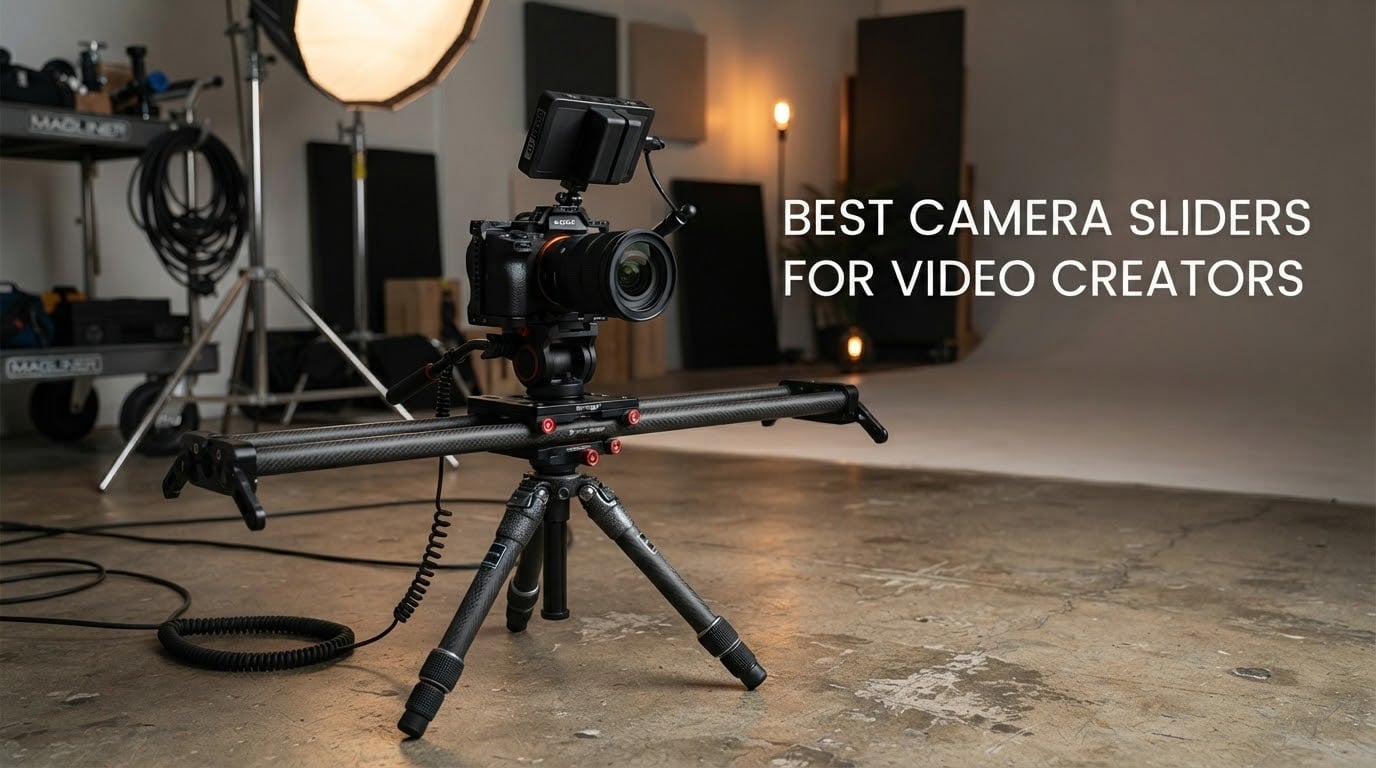
A camera slider is the cheapest way to make a locked-off tripod shot look like it cost money. A few hundred dollars of rail and bearings gives you parallax, reveals and repeatable time-lapse moves that a gimbal simply cannot fake.
We have been shooting on sliders for years, mostly for interviews, product work and the kind of B-roll that carries a YouTube edit together. This roundup covers the best camera sliders for video creators in 2026, from a 220g tabletop dolly to a 12 foot professional track. Every pick below is judged on the same things: how smooth the move actually is, how long it takes to deploy, and what the owners complain about after six months.
One warning before we start. Turn in-body image stabilization off before you put a camera on a slider. Stabilization built for handheld shake fights the deliberate movement of a dolly and produces the warped, jelly-like edges that ruin a shot. Every slider in this list works fine; your camera menu is usually the problem.
Table of Contents
Top 3 Camera Sliders for Video Creators (September 2026)

NEEWER DL100 Motorized Dolly
- Wireless remote with 3 speeds
- 180 degree adjustable wheels
- Built-in 1800mAh battery up to 6 hours

Zecti 16 inch Carbon Fiber
- Double carbon fiber rail
- 600g body
- Removable legs and bubble level

The NEEWER DL100 takes the top slot because it is the one most of us actually leave in the bag rather than sell on. It is small, it charges over USB, and the wireless remote means nobody has to touch the rig mid-take.
The Zecti rail is the opposite approach: manual, carbon fiber, and light enough to forget it is in the pack. If you shoot interviews and want a hand-pushed feel, that is the one.
The GVM 48 inch is the one to buy when repeatability matters more than size. Program the move once in the app, and every take after that lands in the same place.
All 12 Camera Sliders Compared in 2026
| Product | Specifications | Action |
|---|---|---|
|
NEEWER DL100 Motorized Dolly
|
|
Check Latest Price |
|
Zecti 16 inch Carbon Fiber Slider
|
|
Check Latest Price |
 NEEWER SD001 Tabletop Dolly
|
|
Check Latest Price |
 VidPro SK-22 Skater Dolly
|
|
Check Latest Price |
|
GVM 48 inch Motorized Slider
|
|
Check Latest Price |
 GVM 27 inch Motorized Slider
|
|
Check Latest Price |
 StudioFX 40 inch Ball Bearing Slider
|
|
Check Latest Price |
 GVM 31 inch Motorized Slider
|
|
Check Latest Price |
 NEEWER ER1-80 Motorized Slider
|
|
Check Latest Price |
 Fotodiox SlideCam 800-32
|
|
Check Latest Price |
 Glide Gear DEV 4 Track Dolly
|
|
Check Latest Price |
 PROAIM 12ft Aluminum Dolly Track
|
|
Check Latest Price |
A note on the table above. A few of these are not rails at all. The NEEWER SD001 and the VidPro SK-22 are wheeled dollies that run on the floor, and the PROAIM track has no moving carriage in the box. All three still solve the same problem, just with a different mechanism.
1. NEEWER DL100 Motorized Dolly: The One That Stays in the Bag
NEEWER 3 Wheels Wireless Video Camera Dolly, 3 Speed Motorized Slider
6.6 lb payload
1.1 lb body weight
3 speeds up to 3.0 cm/s
1800mAh battery up to 6 hours
Pros
- Light enough to live in a normal camera bag
- Wireless remote means no touching mid-take
- Convertible 1/4 inch to 3/8 inch screw
- Works with phones and action cameras
Cons
- Motor noise can reach on-camera audio
- Motor lacks power for inclines
- Cannot be powered on by remote and forgets its last speed
The truth about the DL100 is that it is a B-roll tool, not a precision tracking rig, and it is very good at being a B-roll tool.
Our rule with this one is simple: if the shot is a push across a product, a slow arc around a coffee cup, or a drift along a desk edge, it delivers. The three speed settings top out at 3.0 cm per second, which is a gentle crawl, and the 180 degree adjustable wheels let you dial a straight line, a curve or a bowl-head pitch move.
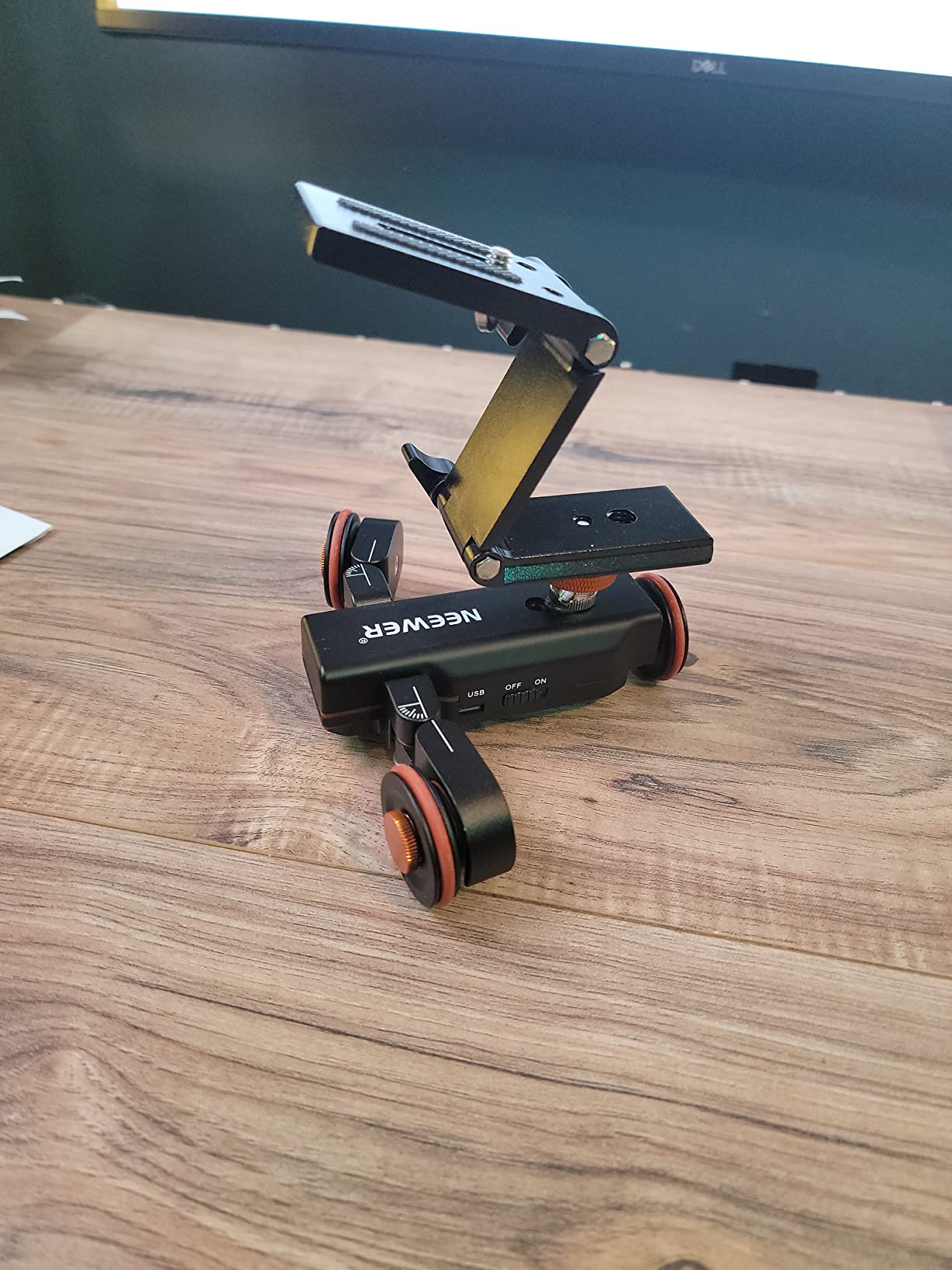
Two details make it work on set. The remote reaches about 6 meters, so you can start a move from behind the camera instead of jogging to the dolly. And the convertible mounting screw handles a mirrorless body, an action camera or a phone holder without buying another plate.
The 1800mAh battery runs up to six hours of service, which comfortably covers a full shoot day on time-lapse duty. It charges over USB with the cable in the box, so there is no proprietary charger to lose.
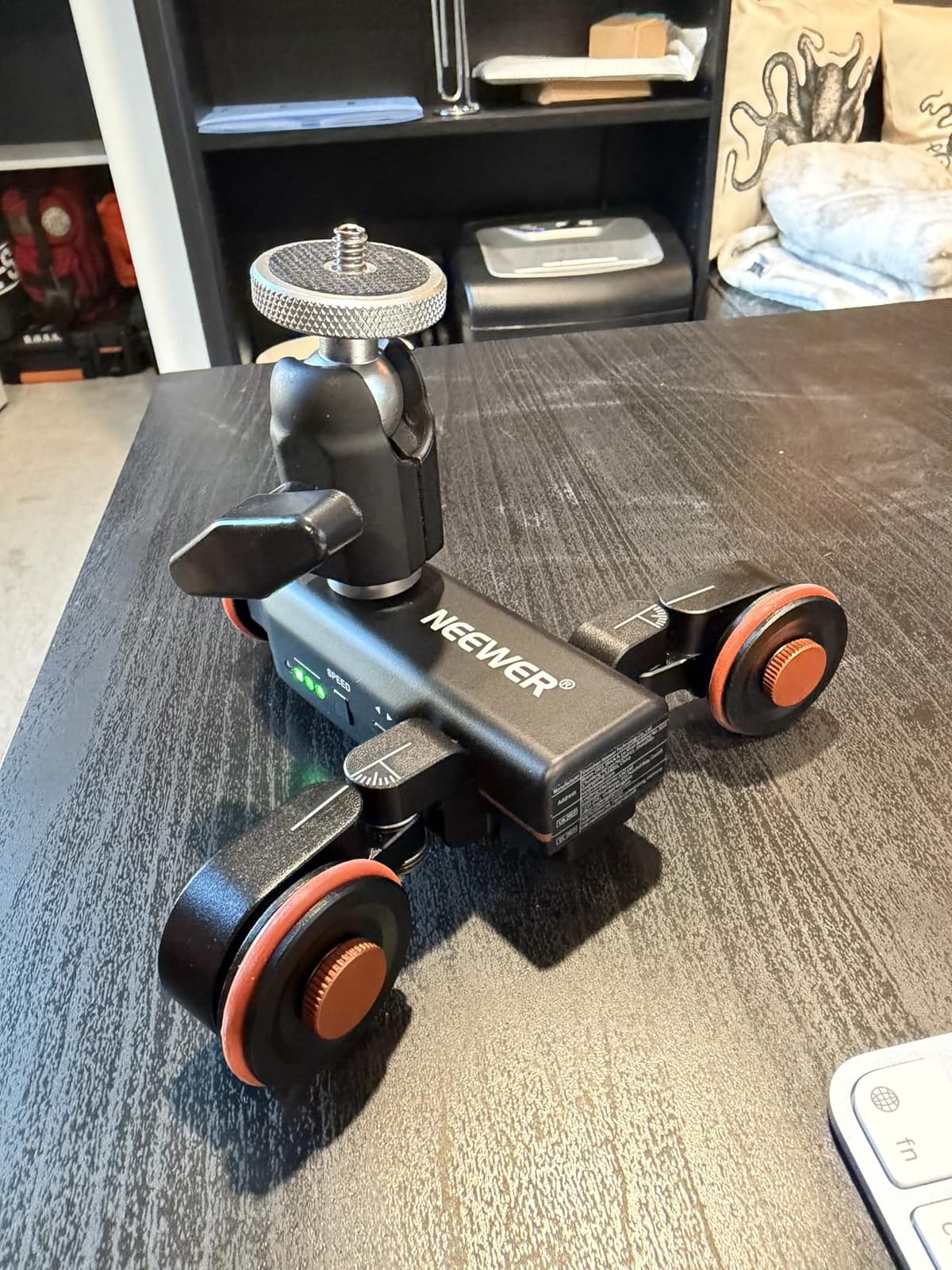
What it is genuinely good for
Tabletop and product work is where this dolly earns its place. The small footprint means it fits between a mug and a keyboard, and the controlled speed means a shot can loop cleanly for time-lapse.
It is also the slider to take on a trip. At 1.1 pounds it never slows you down, and the folded dimensions of 5.31 by 5.31 inches mean it fits in a side pocket rather than a checked bag.
Where it will disappoint you
Motor noise is the first thing owners mention. If you are recording dialogue nearby, wind the take differently or mute the internal microphone.
The motor also runs out of authority the moment the surface tilts, and it cannot be switched on or off remotely, so you will still walk over to power it up. Reviewers also note the wheel angle adjustment takes trial and error rather than precision.
2. Zecti 16 inch Carbon Fiber Slider: Best Value Manual Rail
Zecti Camera Slider 16″/40 cm Adjustable Carbon Fiber Camera Dolly Track
16 inch travel
600g body
4.4 lb payload
Carrying bag included
Pros
- Genuinely lightweight carbon fiber build
- Double rail system keeps the carriage steady
- Removable legs and bubble level for fine tuning
- Multiple mounting threads on both ends and underneath
Cons
- Short 16 inch travel limits you to close work
- No quick release plate included
- Some copies have roller play or a sticking point
- No ball head in the box
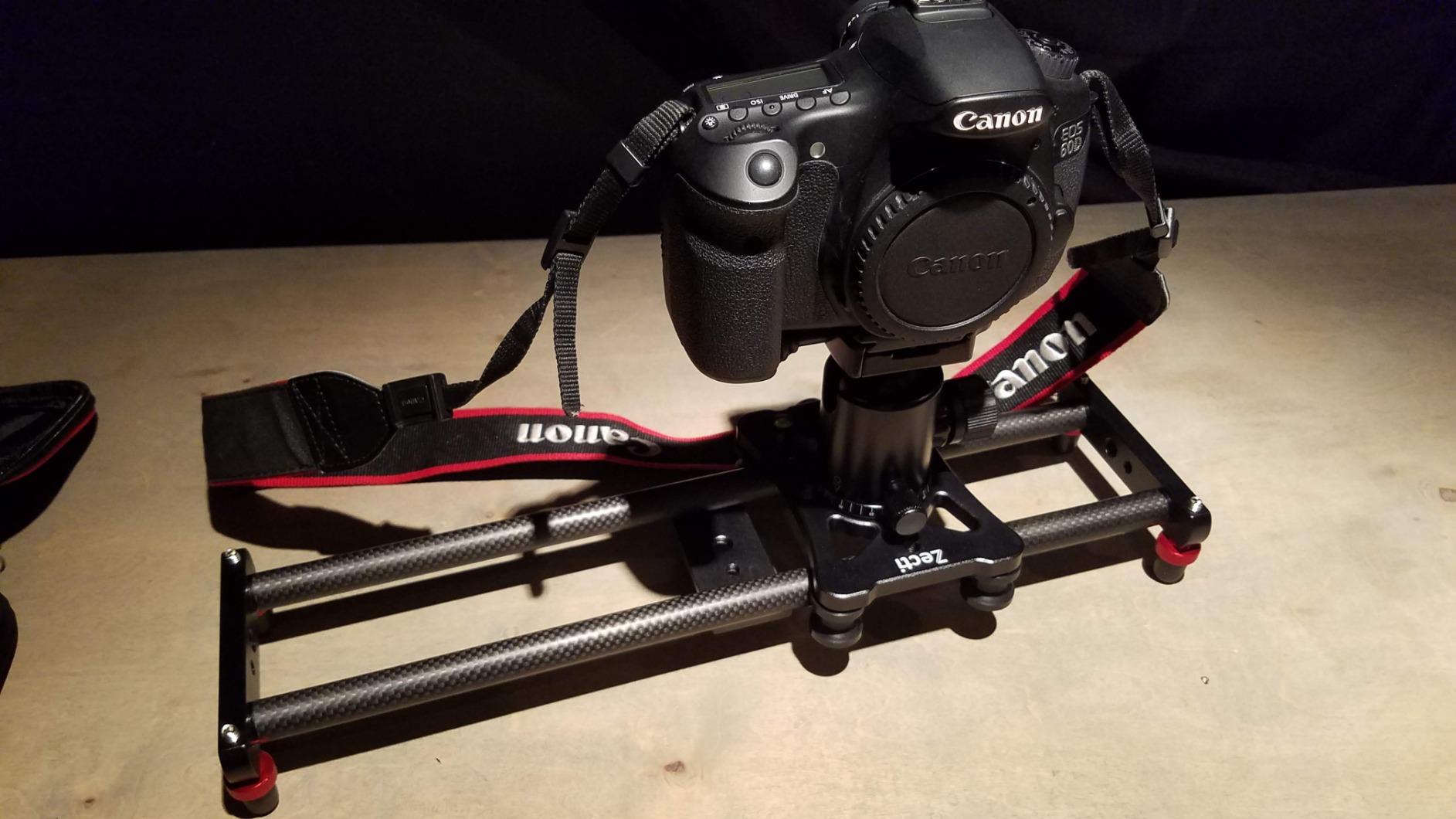
This is the rail we recommend to anyone who has never owned a slider. It is a double interior carbon fiber rail system on a CNC aluminum frame, it weighs 600 grams, and it slides quietly enough for interview-adjacent work.
Sixteen inches of travel sounds short until you realize how much of a product shot happens inside that span. Reviewers describe it as ideal for travel vlog work, tabletop shots and anything with a fluid video head on top.
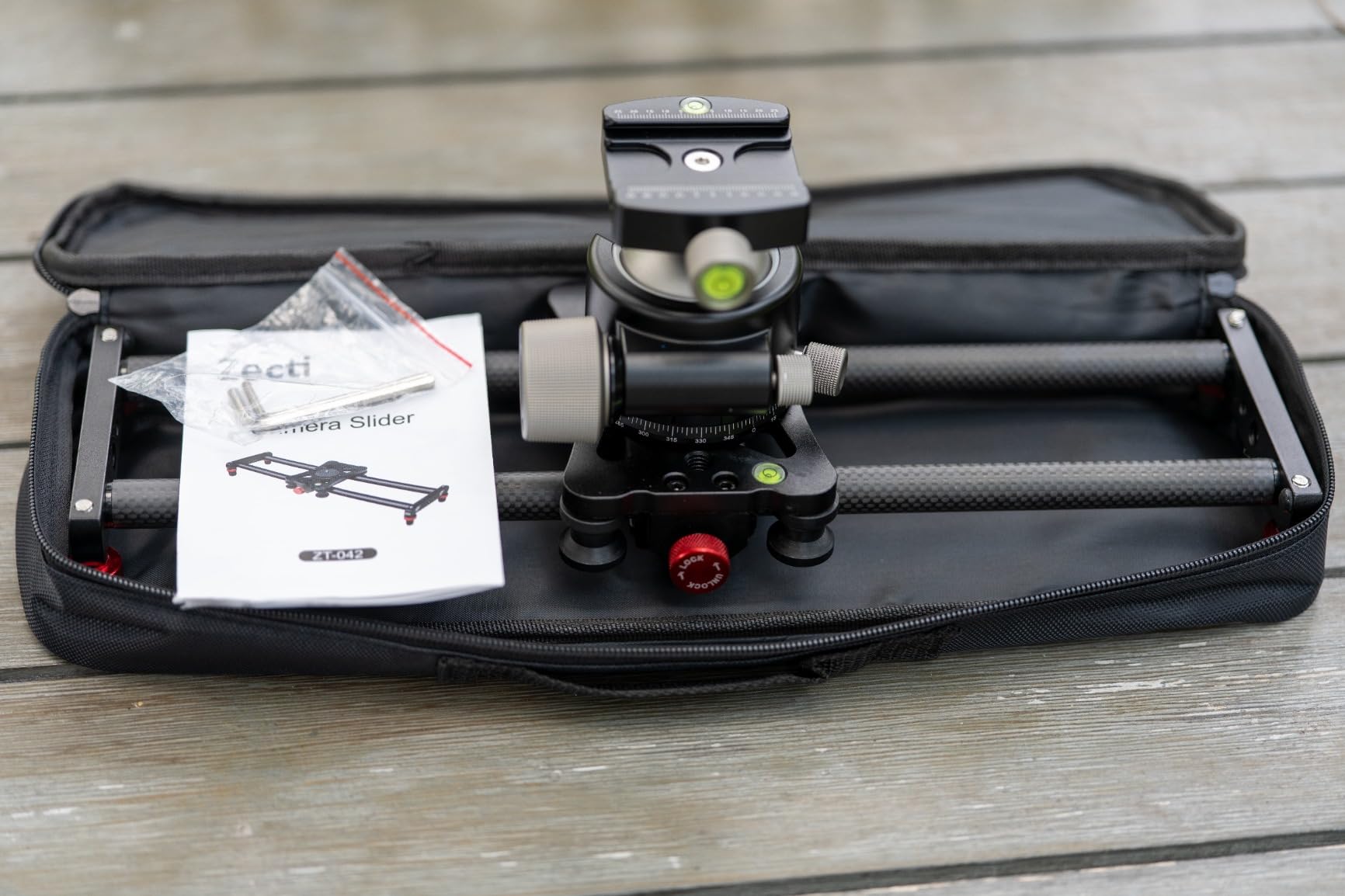
Mounting options are better than the price suggests. There are 1/4 inch and 3/8 inch screw holes on both ends, the middle and the underside, so you can run it flat on the ground, on its legs, on a tripod, or on edge for a vertical slide.
The adjustable removable legs with non-skid rubber feet and a bubble level are the details that separate this from cheaper rails. Levelling a slider on uneven ground is the difference between a usable move and a shot you delete.
Who should buy it
Travel shooters and solo creators will get the most out of it. At 600 grams it is smaller than a water bottle, and the scratch-resistant carrying bag means it does not need its own hard case.
It is also a strong first purchase because a manual rail teaches you how to push a camera evenly. That skill transfers to every motorized slider you will ever own.
Who should skip it
If your work needs wide lateral moves across a room, 16 inches will feel like a toy. Buy the longer rail instead of planning shots around a short track.
There is no quick release plate, so you are twisting the camera or the whole slider each time you swap bodies. And a handful of owners report roller play or a sticking point at one end on individual copies.
3. NEEWER SD001: Best Budget Pick for Product and B-Roll
NEEWER Camera Slider Dolly with Ball Head & Phone Clamp, 4 Wheeled, SD001
220g body
3.9 by 3.3 by 0.8 inch
Manual operation
360 degree ball head
Pros
- Fits in a B-roll bag and nothing else
- Solid aluminum alloy build
- Adjustable wheels plus a 360 degree ball head
- Phone clamp with cold shoe for mics and lights
Cons
- Needs a completely flat clean surface
- Manual only so smoothness depends on your hands
- Not suitable for telephoto lenses
- Some copies arrive with rough wheels
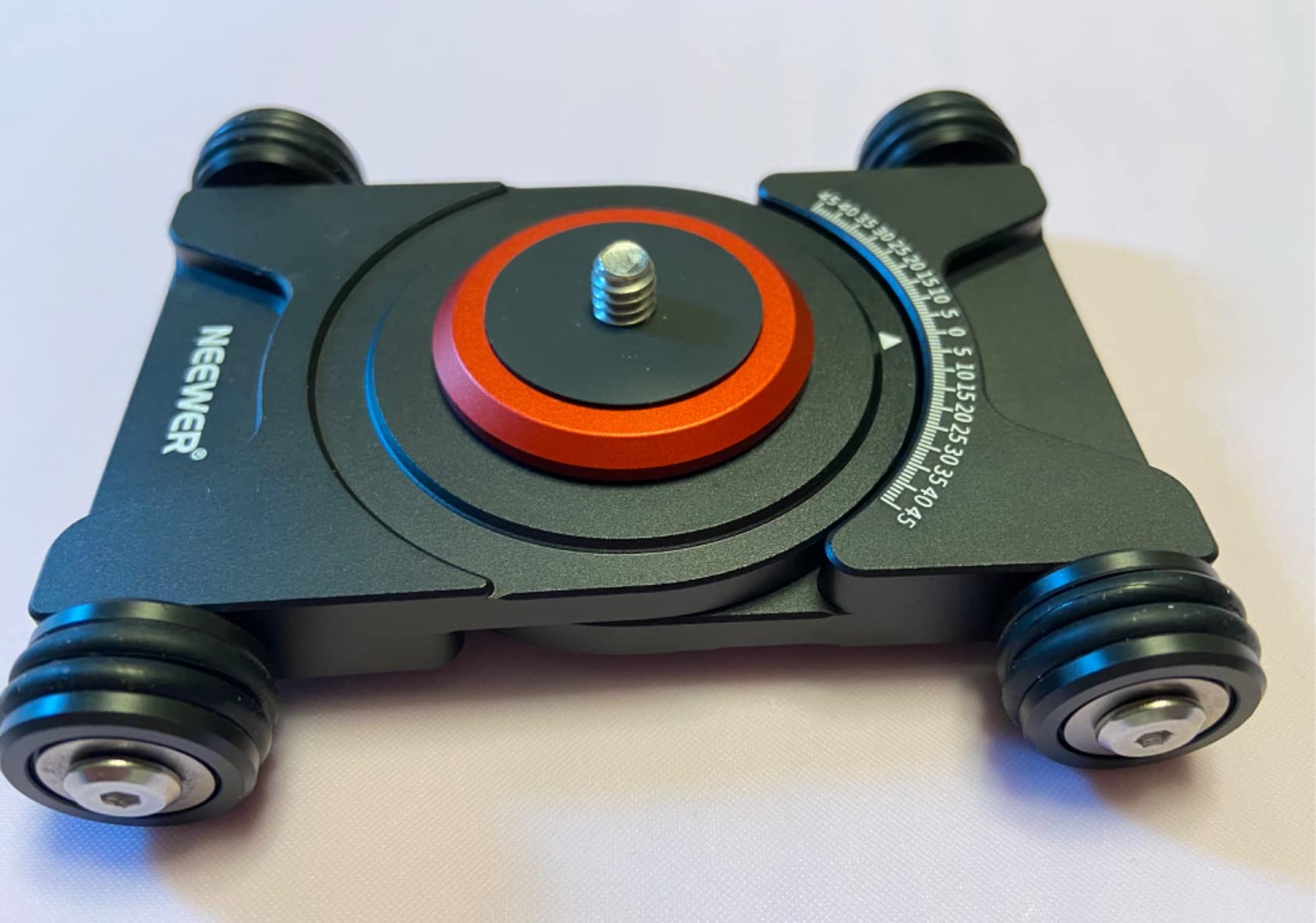
This is not a rail, and calling it one does it a disservice. It is a tiny articulating floor dolly that adds real camera movement to product videos for very little money, and it ranks near the top of the camera slider category for a reason.
What you get is a 220 gram black aluminum body with wheels that adjust to negative or positive 45 degrees. That single feature turns a straight slide into a curve, an arc or a full orbit, which is where tabletop B-roll gets its life.
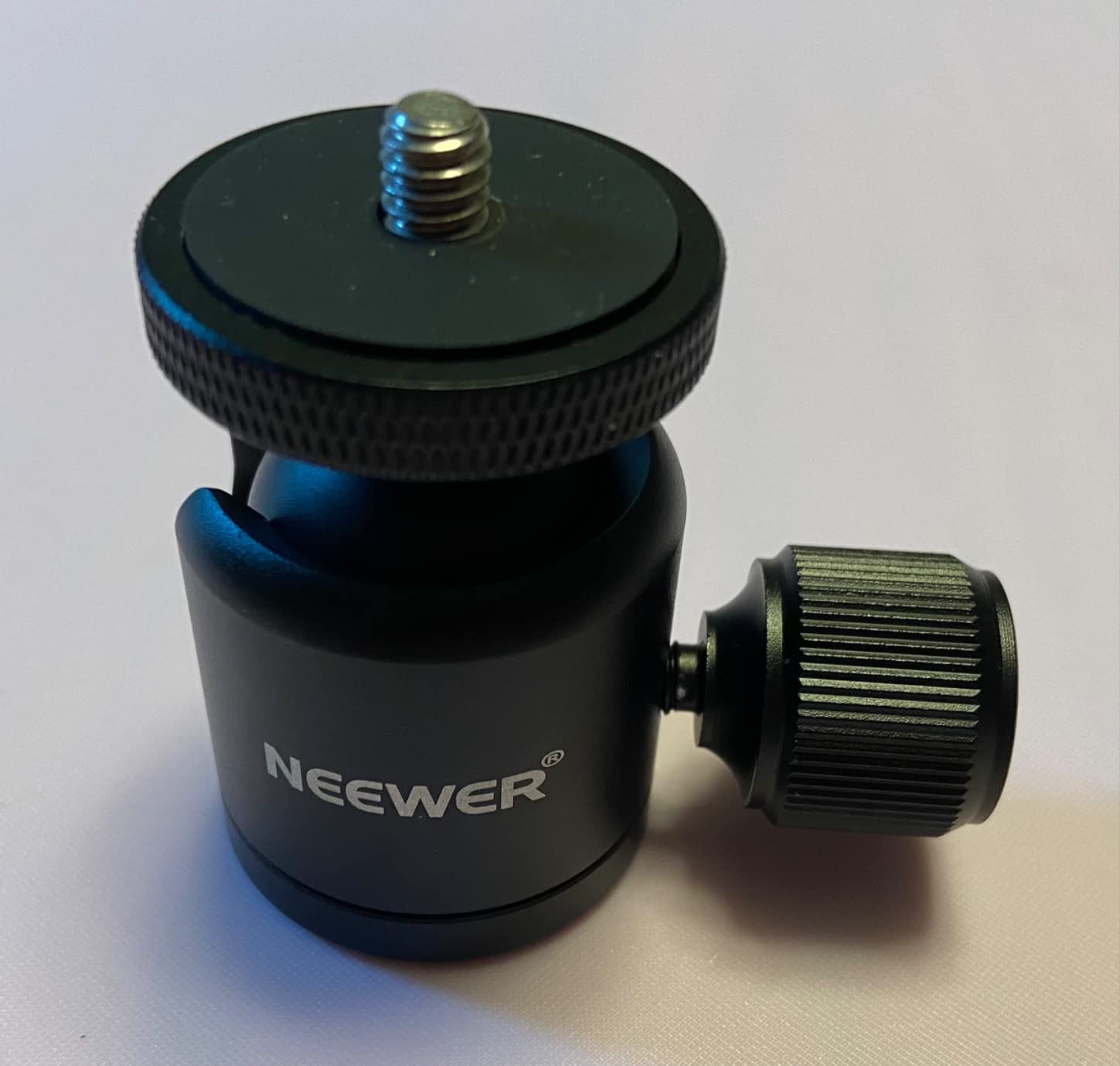
The 360 degree rotating, 90 degree tilting ball head on a 1/4 inch screw is the other half of the value. You can drop a phone, a mirrorless body or a small camcorder on it and reframe without unmounting anything.
The rotatable phone clamp has a cold shoe on top, so a microphone or a small LED can ride along. Owners consistently single out both the wheel articulation and the ball head as the creative highlights.
Who it suits
If you shoot food, products, unboxing or social cutaways on a desk, this does the job of a much longer rail in a fraction of the space. It pairs well with the Zecti rail when you need both a tabletop and a floor option.
It is also the easiest introduction to camera movement for someone who already owns a decent tripod and has never pushed a dolly.
Where it stops working
Surface, always. Carpet, gravel, and textured vinyl will stop the wheels dead, and you cannot cheat it. Run it on smooth flooring, glass or a clean hard surface.
There is no motor, so a shaky hand shows up directly in the shot. The wheels are also not built for telephoto lenses or heavier camera bodies, and a small number of owners received copies with wheels that did not roll smoothly.
4. VidPro SK-22: Best for Heavy DSLR Rigs on a Budget
Vidpro SK-22 Professional Skater Dolly – Rolling Slider for DLSR Cameras & Camcorders Ideal for Low-Level Shooting & Panning 25 Lbs Capacity Smooth Rubber Wheels 7 Mounting Points & Extendable Handle
25 lb payload
CNC aluminum chassis
Stainless steel ball bearings
2 lb body weight
Pros
- Handles heavier bodies and longer lenses
- Stainless steel ball bearing wheels roll for years
- Extendable handle and magic arm included
- Angle markers make curves repeatable
Cons
- Smoothness depends entirely on operator technique
- No quick release plate for fast camera changes
- Manual operation only
The SK-22 is a traditional skater dolly, and it is the oldest idea in this list. Four rubber wheels on stainless steel ball bearings, a CNC machined aluminum chassis, and a 25 pound capacity that shrugs off a full-frame DSLR with a battery grip and a 24-70 lens.
Seven 1/4-20 mounting points in the base plate are more than you will find on most rails in this price bracket. Extension arms, ball joints and cameras all bolt straight on, which is how you get a camera down to floor level for a low tracking shot.
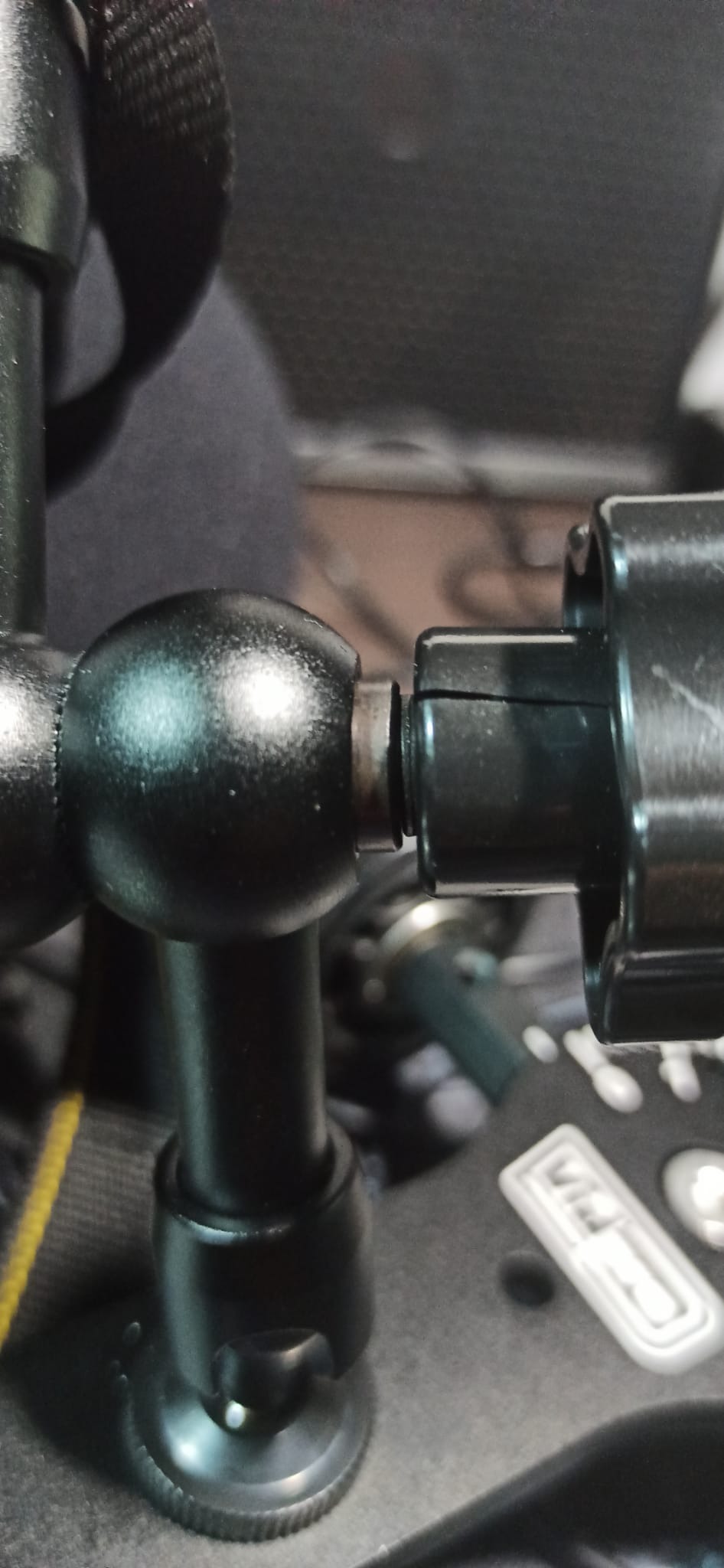
The included 27 inch extendable handle and articulated magic arm mean you can push from a seated or standing position without bending over the camera. That matters more than it sounds after a six hour shoot.
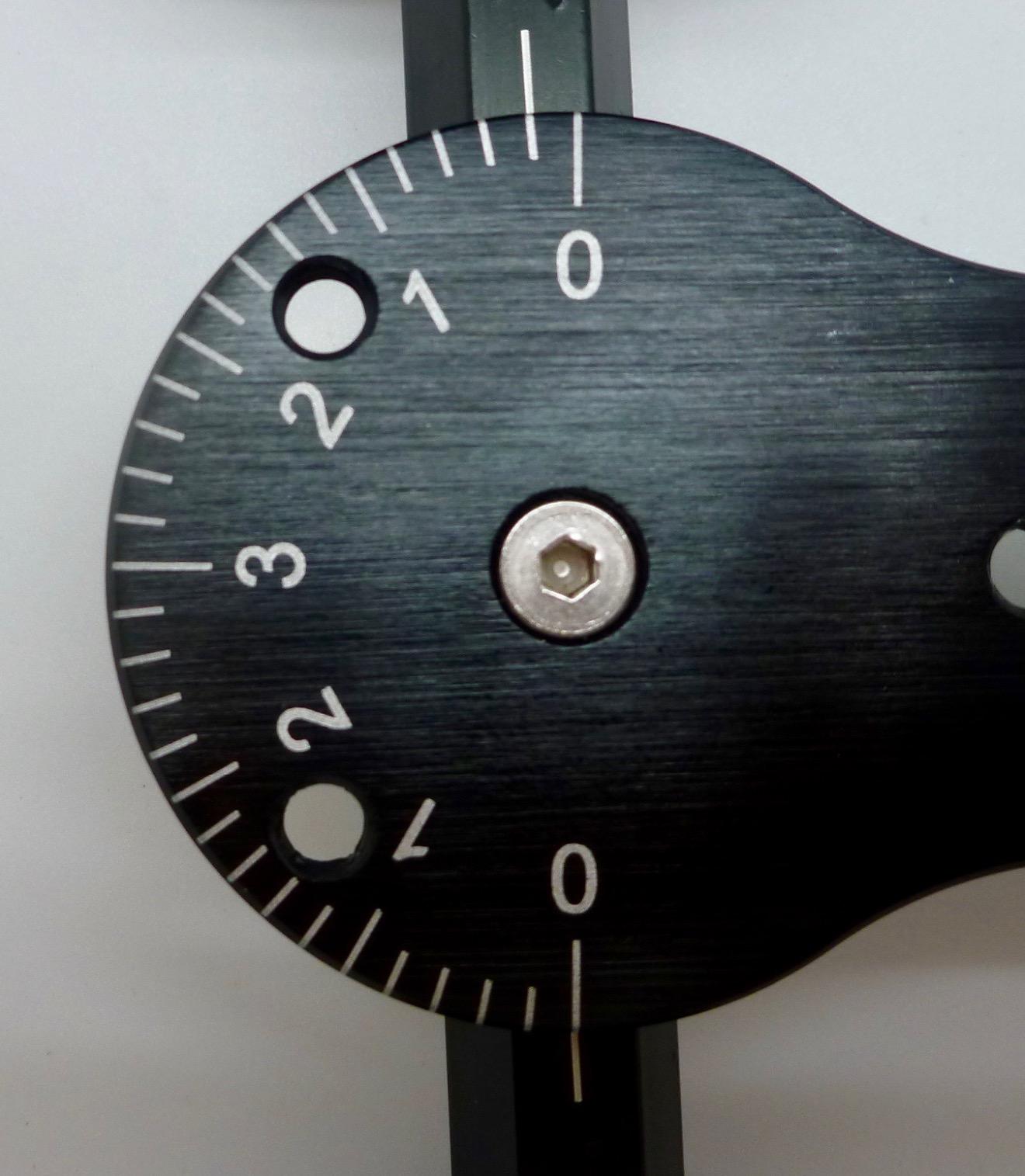
Axle adjustment with angle position markers lets you set a straight line, a broad curve or a full 360 degree circle and then repeat it. Reviewers like that the markers make the second take match the first.
Why it is worth owning
Ball bearings and machined aluminum are the two things that decide how a dolly ages. Cheap plastic bushings develop play within months, and a wobbly dolly shows up as a shudder in every frame.
This one carries heavier rigs than anything else in the list at this level, which makes it the natural choice for anyone shooting a DSLR with a zoom and a matte box.
Where the limits are
Skater dollies demand a clean floor. The whole smoothness of the move comes from the rolling resistance of the surface and your foot speed, so carpet and gravel are out.
There is no quick release plate, so swapping camera bodies is slow, and there is no motor, so you cannot program a repeatable move. If you need identical results on every take, look at the motorized options further down.
5. GVM 48 inch Motorized Slider: The Programmable Workhorse
GVM 48″/120cm Motorized Camera Slider, APP Professional Carbon Fiber Dolly Rail Camera Slider, Motorized Time Lapse and Video Shot Follow Focus Shot and 120 Degree Panoramic Shooting
48 inch travel
20 lb payload
4 kg body
Six shooting modes
Pros
- Motor is quiet enough for dialogue work
- Lightweight carbon fiber for its length
- Ramping start and stop instead of hard stops
- App sets speed interval and loop count
- Carry bag included
Cons
- Rubber drive belt can resonate into visible jitter
- Start and end points need reprogramming after power up
- Tracking mode drifts past about 6 feet
- Needs two stands or support arms
The GVM 120 is the motorized slider we keep coming back to. Six-in-one means tracking, panoramic, time-lapse, video capture, free start and end point setting, and auto loop, all controlled from an iOS or Android app instead of a clunky wired box.
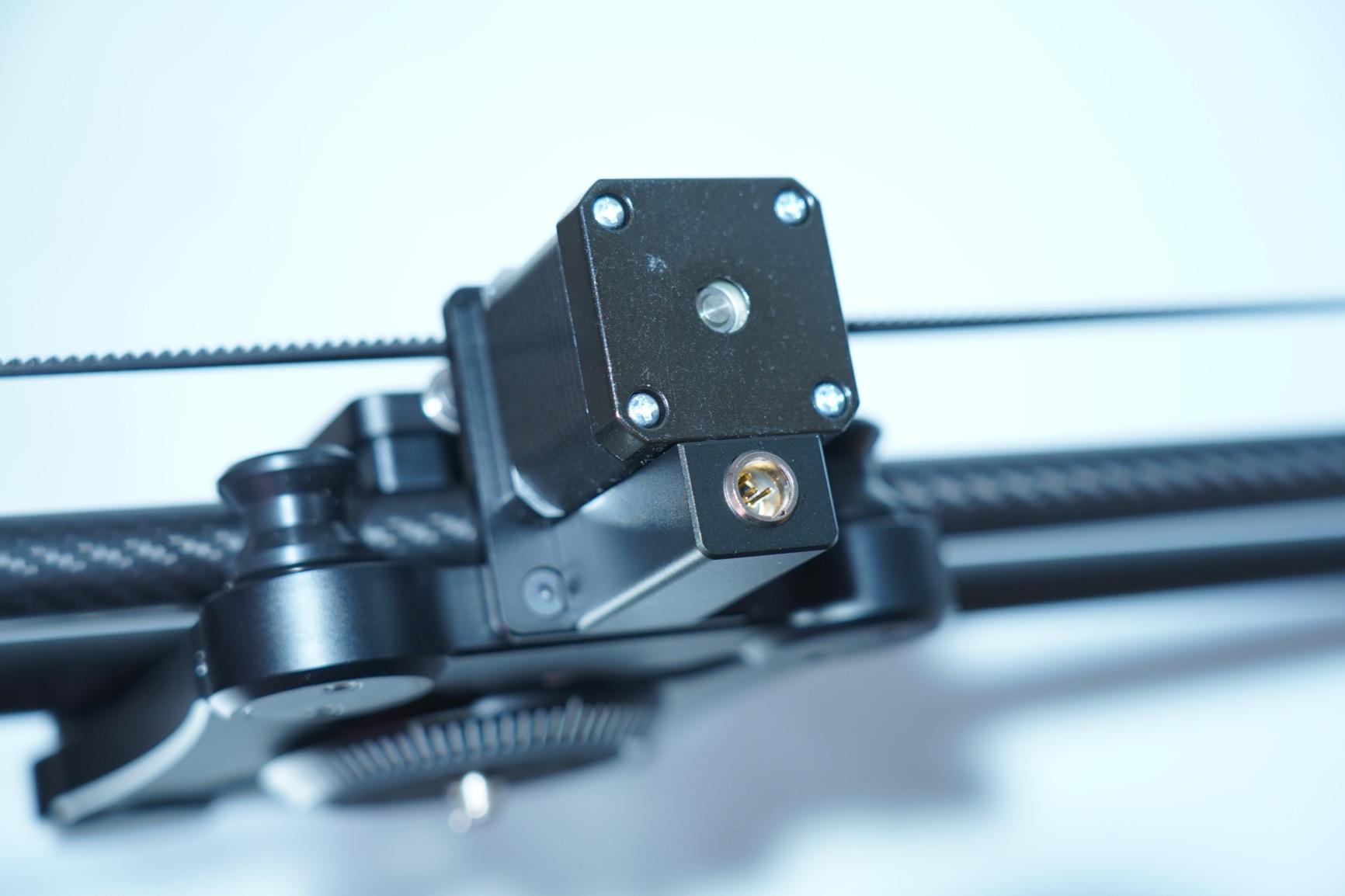
The motor is the quiet selling point. Owners describe it as effectively silent for interview and dialogue work, and the ramping start and stop produce a move that eases in rather than snapping into motion.
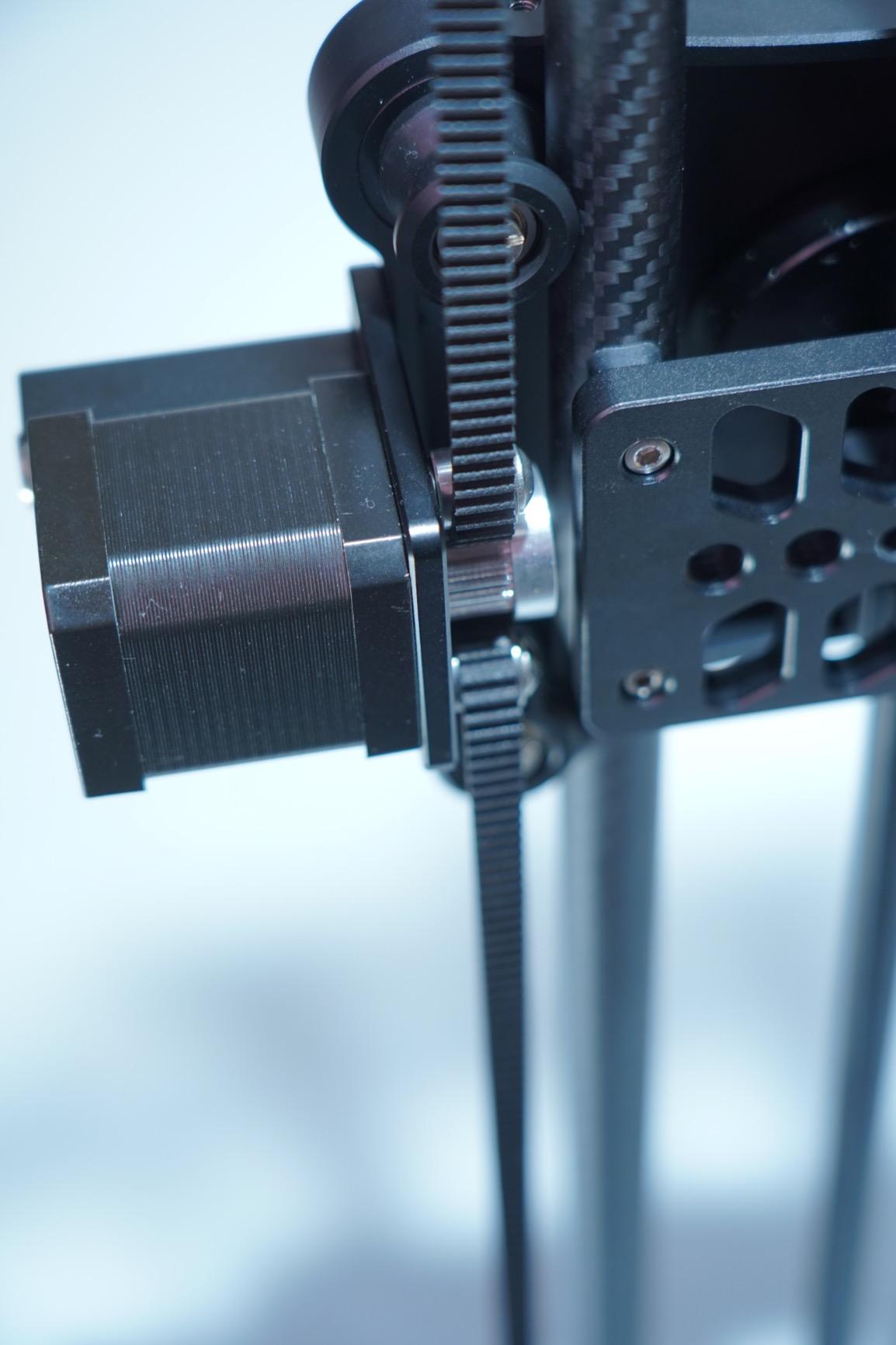
Carbon fiber keeps a 48 inch rail at 4 kilograms, and adjustable legs on both sides mean you can level it anywhere you lay it. There are also six shutter release cables and an extension cable in the box, which covers most camera brands out of the box.
Programmability is where this earns its keep. Slip speed from 1 to 100 percent, intervals from 0.1 to 999.9 seconds, stop time in the same range, and photo counts up to 1000 let you set up a day of sunset timelapse and let it run.
Where it beats the manual options
Repeatability is the whole point. Program a move once and every take lands in the same place, which matters enormously for before and after shots, product sequences and any multi-part edit.
Long time-lapses are where a hand-crank simply cannot compete. Three hours of consistent movement is something only a motor will do reliably.
What to watch out for
The rubber drive belt can resonate and introduce visible jitter, particularly with heavier rigs or long lenses. If your footage shakes mid-move, this is the first thing to check.
Start and end points have to be re-programmed every time you power it on, and mechanical tracking mode drifts beyond roughly six feet. It also needs two light stands or support arms to sit level, and the frame is light enough to wobble if you raise it with a DSLR on top.
6. GVM 27 inch Motorized Slider: Compact Motorized Shooting
GVM Camera Slider, 27” Aluminum Alloy Motorized Slider with Time-Lapse, Video Shooting and Round Trip Shooting, Track Dolly Rail for Most DSLR Cameras for Interview Photography
27 inch travel
2.36 kg body
Up to 2.5 kg payload
Time-lapse video and round-trip modes
Pros
- Aluminum alloy movement feels stable and smooth
- Three shooting modes in one unit
- Non-slip feet and a bubble level for balancing
- Works on the ground or a tripod with a ball head
Cons
- Payload ceiling of about 2.5 kg limits heavy bodies
- Wired controller and stands are not always bundled
- Controls take practice before a set
At 27 inches this one is small enough to be the motorized option that actually travels. It folds to just over 26 inches long and weighs 2.36 kilograms, so it fits in a standard tripod bag rather than needing a case of its own.
It handles time-lapse, video capture and auto round-trip shooting, which covers most of what a creator needs from a motor. The round-trip mode is useful on its own, since a move that runs there and back can be looped in an edit without cutting.
Multiple 1/4 inch and 3/8 inch screw holes on both sides and the middle let you mount it flat, on a tripod directly, or on a ball head. Owners also report it holds a DSLR at a 45 degree tilt and can climb a 70 degree slope on a tripod without the camera sliding off.
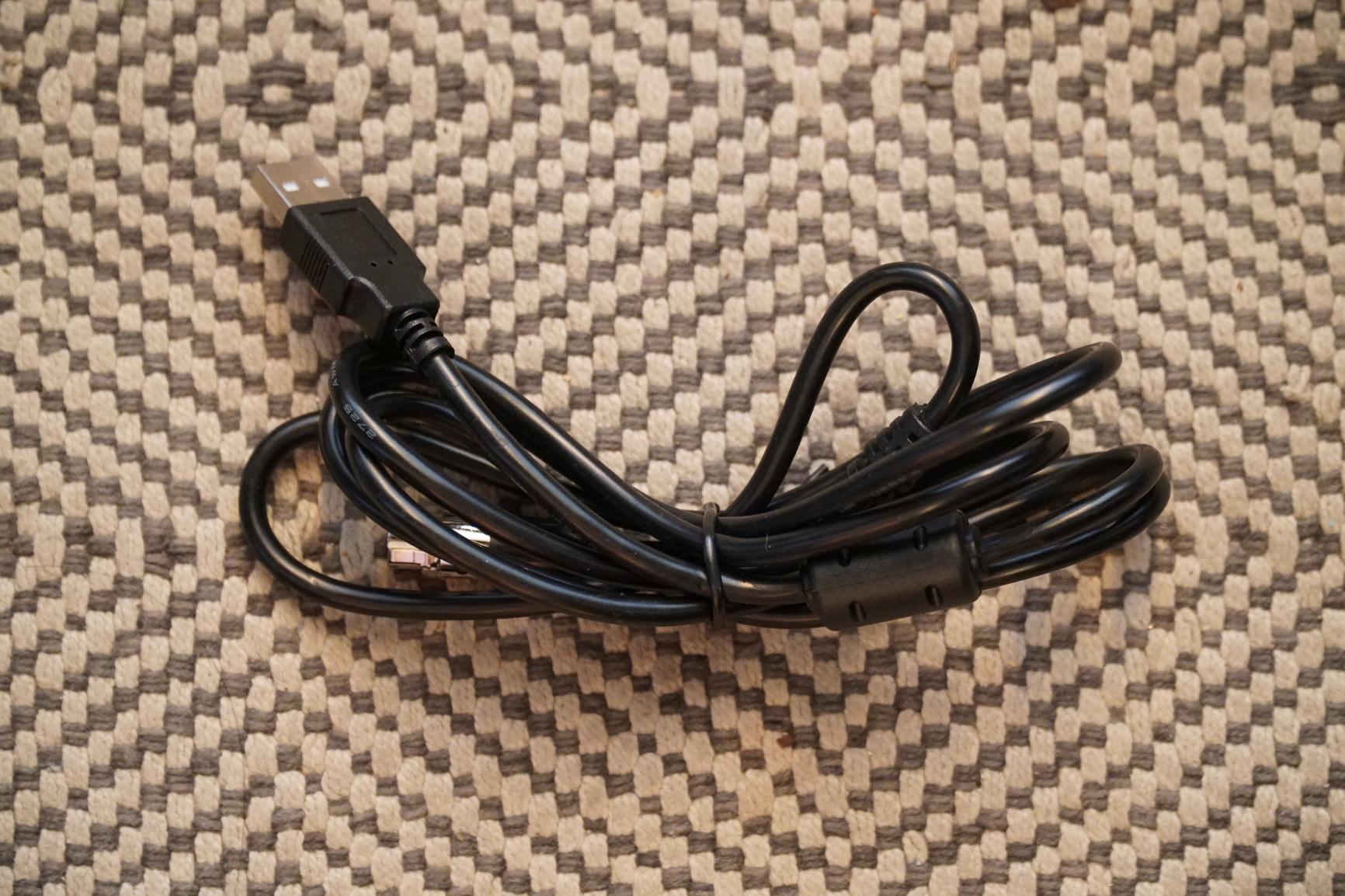
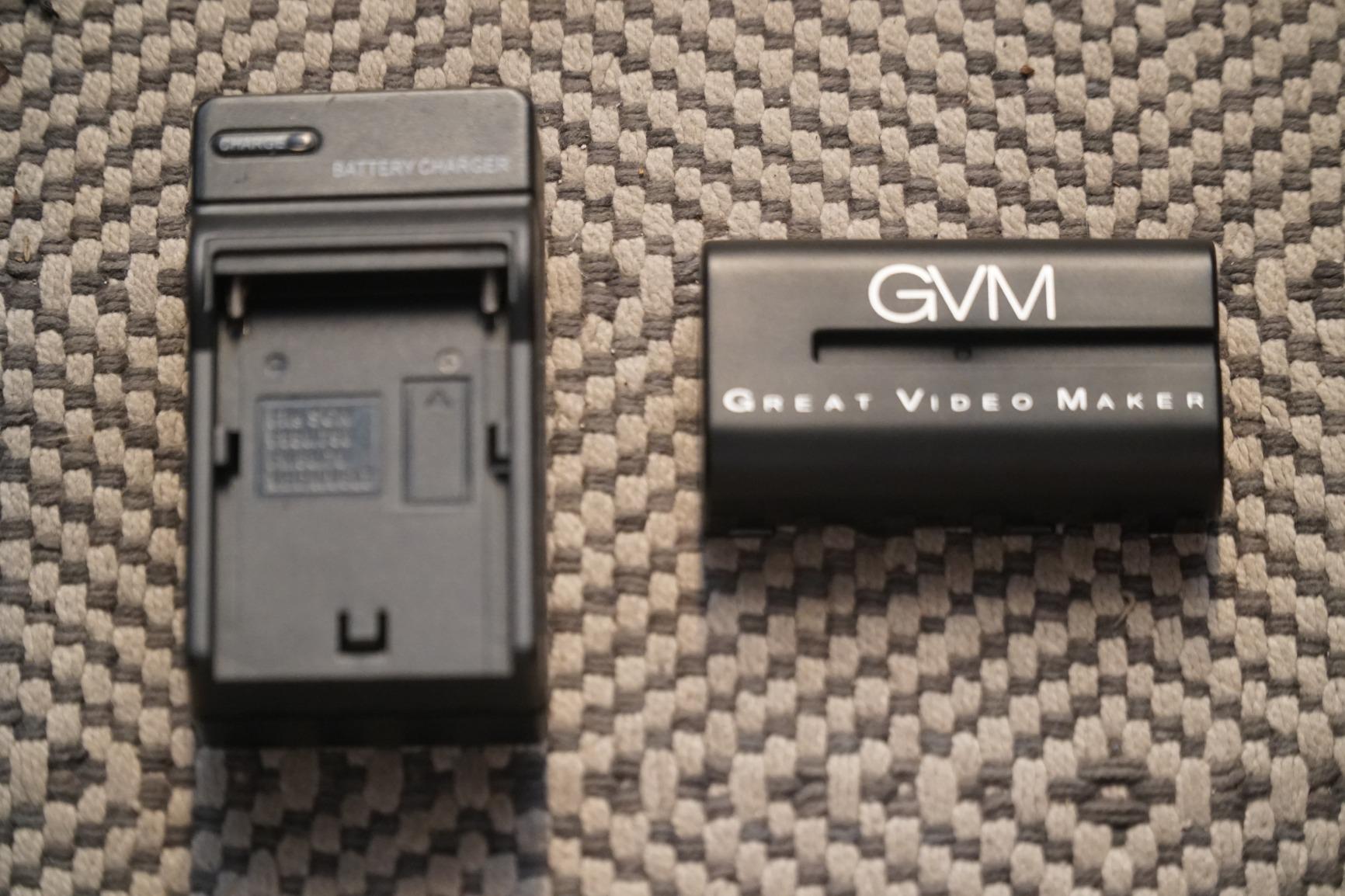
Adjustable non-slip feet with a bubble level make levelling fast, and the box includes a carrying bag, wire controller, cable and a power bank adapter.
Why you would pick the smaller motorized rail
Motors, not size, are what you are paying for here. If you want programmed time-lapse but work in small rooms, 27 inches of travel is often all the frame you have anyway.
It is also a sensible first motorized purchase for creators who shoot on location, because the packed length is manageable on public transport and in a car boot.
The ceiling you should know about
The weight rating tops out around 2.5 kilograms, so a cinema body with a full rig on top is out. Check your total rig weight before you commit.
The wired controller and any stands or ball head may not be included depending on the package, and the mode controls take a few tries before they stop slowing you down.
7. StudioFX 40 inch Slider: Long Manual Travel on a Budget
StudioFX 40″ Ball Bearing Pro DSLR Camera Slider Dolly Track Video Stabilizer
40 inch travel
15 lb max load
All-metal construction
Adjustable feet with bubble level
Pros
- Long travel at a fraction of pro rail cost
- Handles full-frame rigs with a grip and zoom
- Multiple 1/4-20 and 3/8 inch tripod mounts
- Quick to disassemble and carries in a case
Cons
- New sliders often have sticky spots that need a wear-in
- Camera plate can wobble and create jitter
- Feet grip poorly on smooth surfaces
- Case is too small for a head or tripod
Forty inches of travel is the number that makes this interesting. For a manual rail, length translates almost directly into shot variety, and 40 inches covers lateral moves, follow shots and low slides that a 16 inch rail cannot.
Reviews describe it as great value and genuinely sturdy, with owners reporting results comparable to far more expensive rails once a short wear-in period and a decent fluid head are in play.
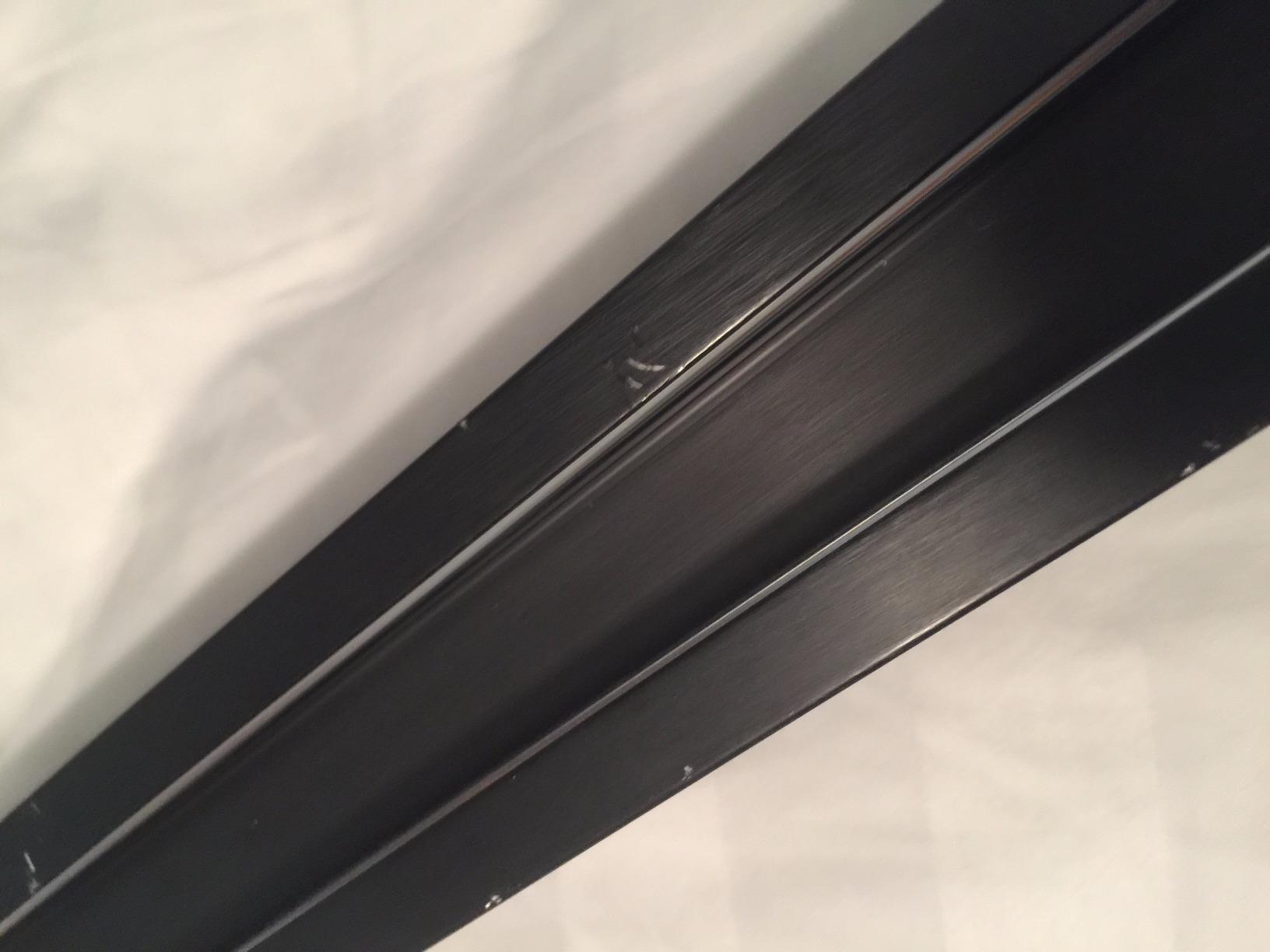
It accepts 15 pounds, which covers a Nikon or Canon body with a battery grip and a mid-range zoom without complaint. Multiple 1/4-20 and 3/8 inch mounts on the sled and both ends allow horizontal and vertical slides.
A bubble level on the sliding plate and adjustable feet handle alignment, and 3/8 inch and 1/4 inch mounting screws plus a carrying case are in the box.
Who it suits
Interview and documentary shooters on a budget get the most from it. A 40 inch push-in on a talking head is a genuine cinematic move that a tripod cannot deliver.
It also makes sense for anyone who wants to practise hand-pushed technique before moving to a motor.
What to expect on arrival
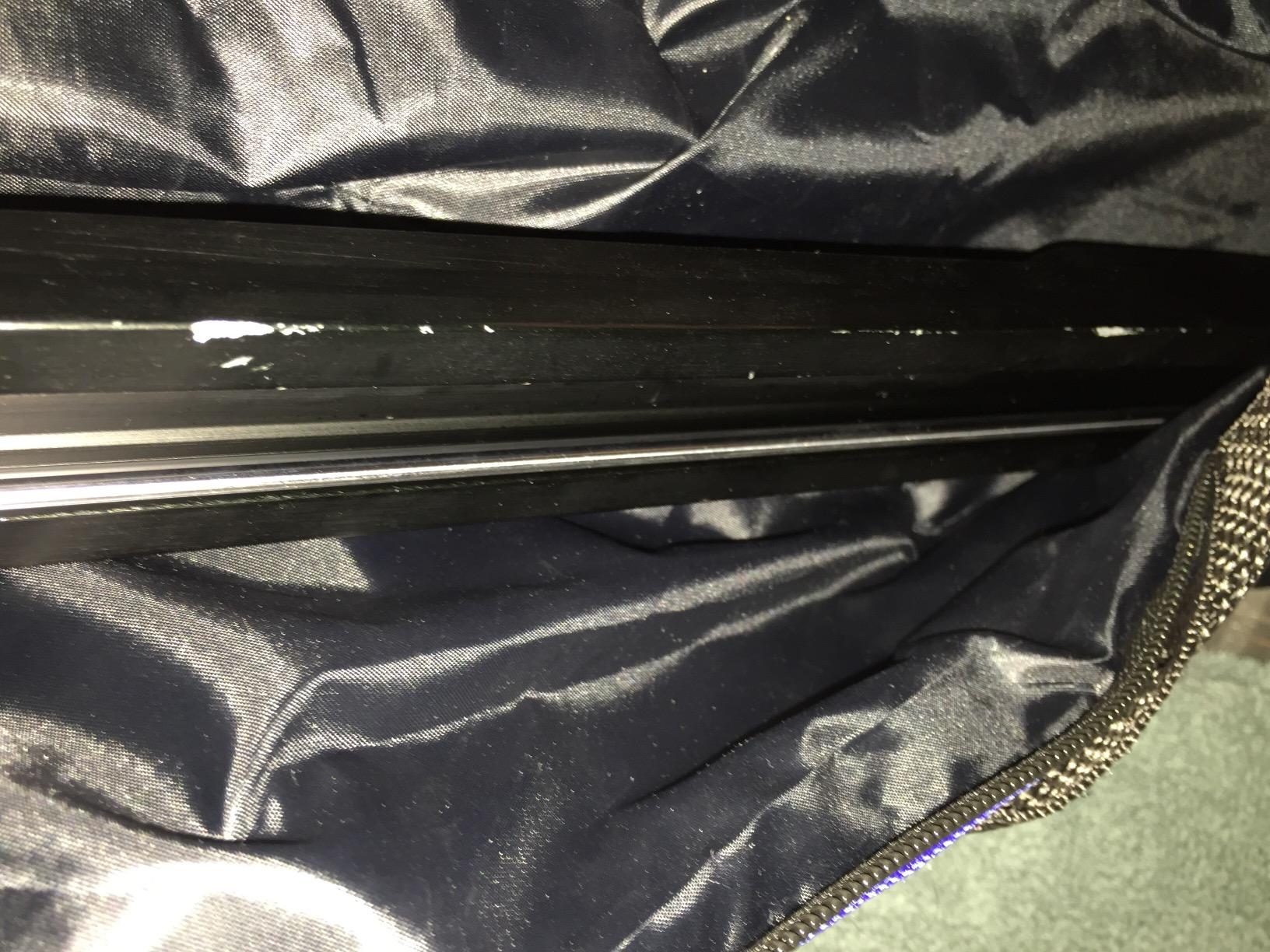
Most complaints are about the first ten minutes. New sliders often have sticky spots along the travel that need a wear-in or a bearing adjustment, and the camera plate can wobble, which shows up as jitter.
The rubber tension knob and hard plastic feet grip poorly on smooth surfaces, so the slider can creep during a long move, and the supplied case is too small to hold a tripod or fluid head along with the rail.
8. GVM 31 inch Motorized: The Most Complete Kit in the Box
GVM Motorized Camera Slider, 31″ Carbon Fiber Dolly Rail Camera Slider with Time-Lapse Photography, Tracking Shooting and 120 Degree Panoramic Shooting for Most Cameras, with Remote Controller
31 inch carbon fiber rail
20 lb payload
Silent stepper motor
NP battery included
Pros
- Silent stepper motor suits interview work
- Sturdy yet light carbon fiber rail
- Time-lapse menu supports up to 1000 photos
- Ball head battery charger and six shutter cables included
- Four roller bearings reduce shake
Cons
- Remote navigation is clunky and needs practice
- Start and end points reset on every power up
- Time-lapse settings are poorly explained
- Frame wobbles on stands with a heavy camera
The appeal of this one is the box contents. Motorized slider, remote control, data cable, NP battery, charger, ball head, hex key, extension cable and six shutter release cables. There is nothing to add before your first take.
The silent stepper motor is the other reason to like it. Horizontal, tracking and 120 degree panoramic modes are selected by adjusting the rod position, and separate video and time-lapse menus handle auto round-trip and up to 1000 photos with accurate step distance.
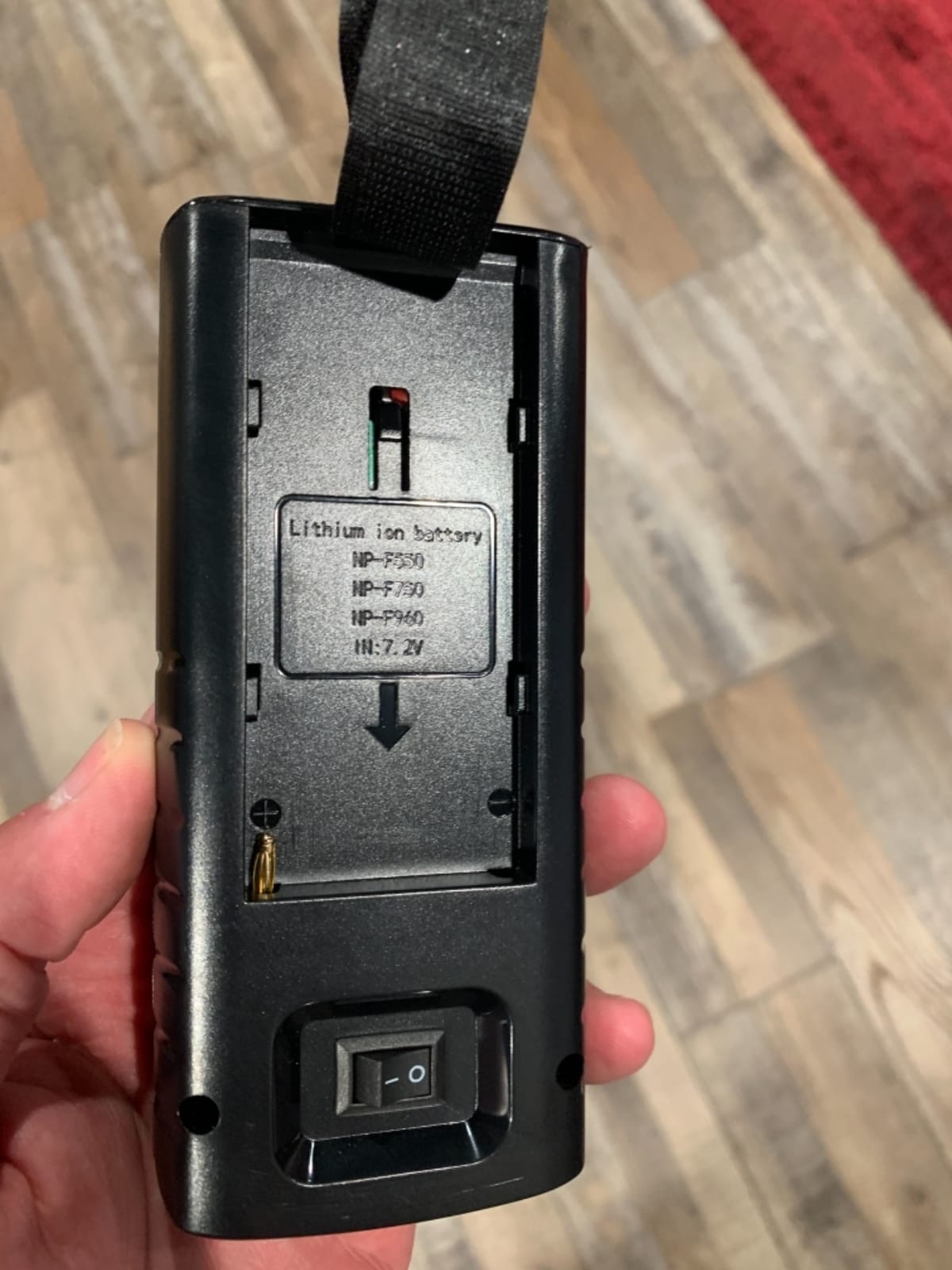
Carbon fiber keeps the 31 inch rail light, and four roller bearings add balance and cut down on shake, which is the single biggest factor in how a move feels on camera.
Multiple 1/4 inch and 3/8 inch screw ports mean the slider works on most tripods at vertical, horizontal or 45 degree angles.
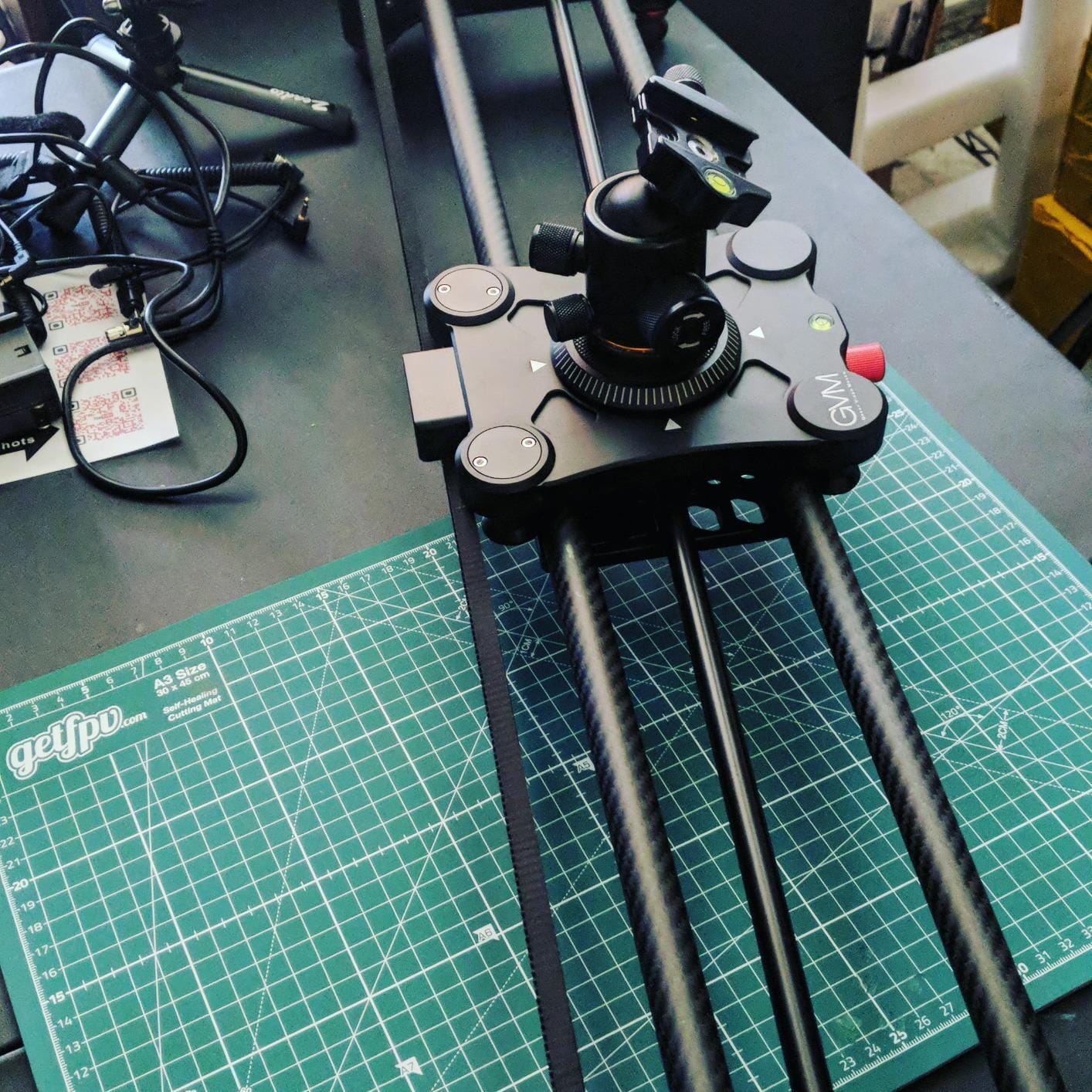
Why the included accessories matter
A ball head and a charged battery in the box is worth real money in a hurry. Nothing kills a five minute deployment test faster than unpacking a slider and discovering the head is still in the car.
For a creator shooting alone, the remote plus the six shutter release cables means you never have to touch the rig during a take.
What the reviews flag
The remote is clunky and takes practice in the field. Start and end points need setting every time the unit powers on, and the time-lapse interval and exposure controls are not well explained.
At 31 inches the frame can wobble when raised on light stands with a heavy camera, so slider support arms are advisable for elevated work.
9. NEEWER ER1-80: Best for Repeatable Moves and Time-Lapse
NEEWER 31.5″/80cm Motorized Camera Slider with App Control, ER1
31.5 inch travel
11 lb horizontal payload
Silent stepper motor
4400mAh NP-F750 included
Pros
- Very quiet motor with no audible whine
- Frame-accurate repeatability across takes
- App sets A and B points speed interval and exposure
- Light rigid carbon fiber build
- Well cut foam carry case
Cons
- No battery charger included
- 2.4G physical remote not in the box
- App point setting is confusing with no reset option
- Longer 120cm version is bulky to transport
The ER1-80 has the highest rating in this group, and owners explain why in consistent terms. The motor is quiet enough that the in-camera microphone picks up no whine during panning shots, and the move repeats frame for frame between takes.
That repeatability is the real feature. For before and after sequences, product rotations and time-lapse transitions, a move that lands in the same place every time saves hours of manual trimming in the edit.
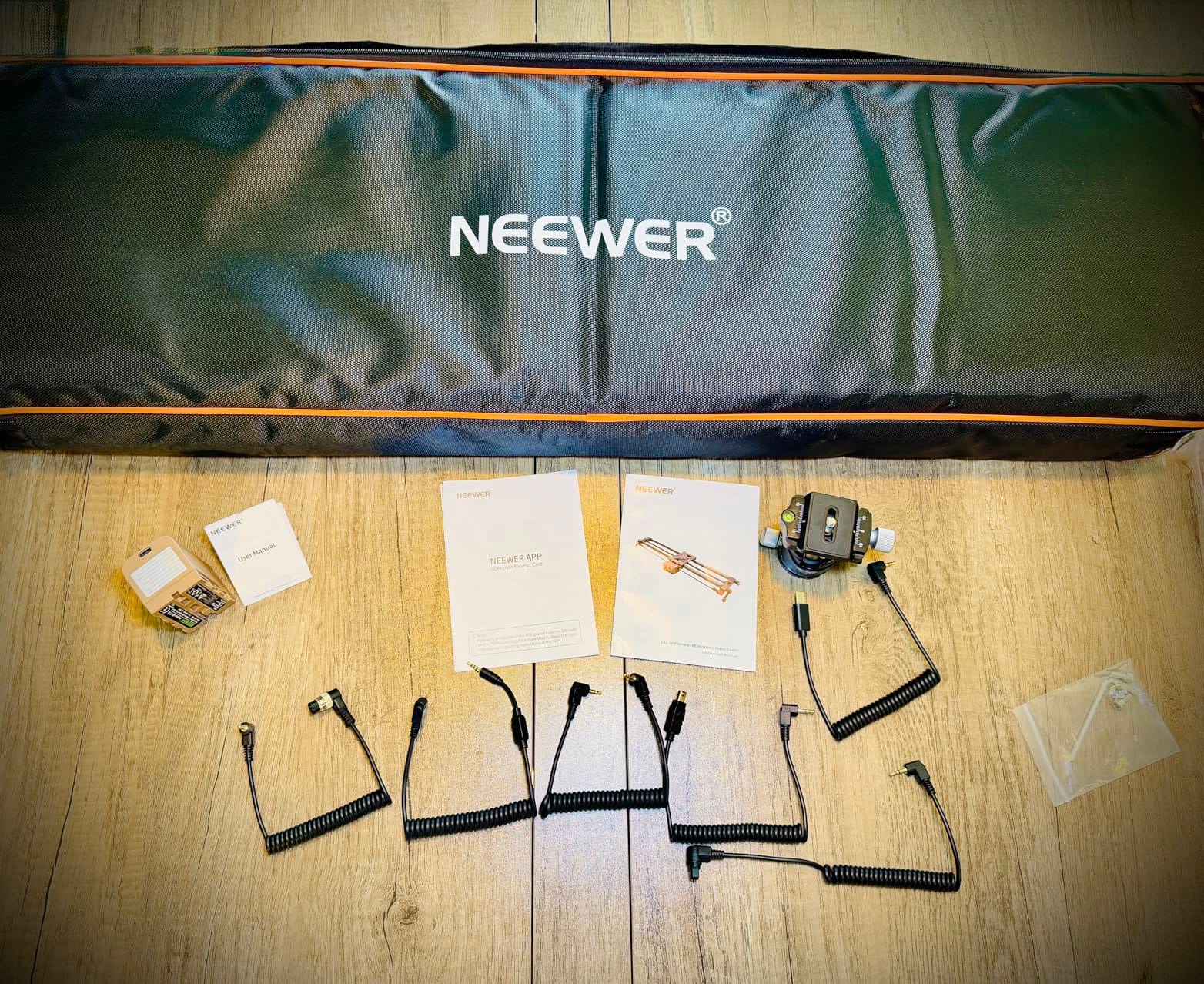
App control sets A and B points, speed, interval and exposure, so you never have to touch the slider to start it. Touching a motorized rail mid-move is the fastest way to add a bump to your take.
It also runs from the included 4400mAh NP-F750 battery or a 5V 2A Type-C portable charger. Multiple shooting angles cover opposite-side tracking, 120 degree panoramas, centered horizontal and 45 degree tilt, and the payload holds 11 pounds flat and 5.5 pounds at a tilt.
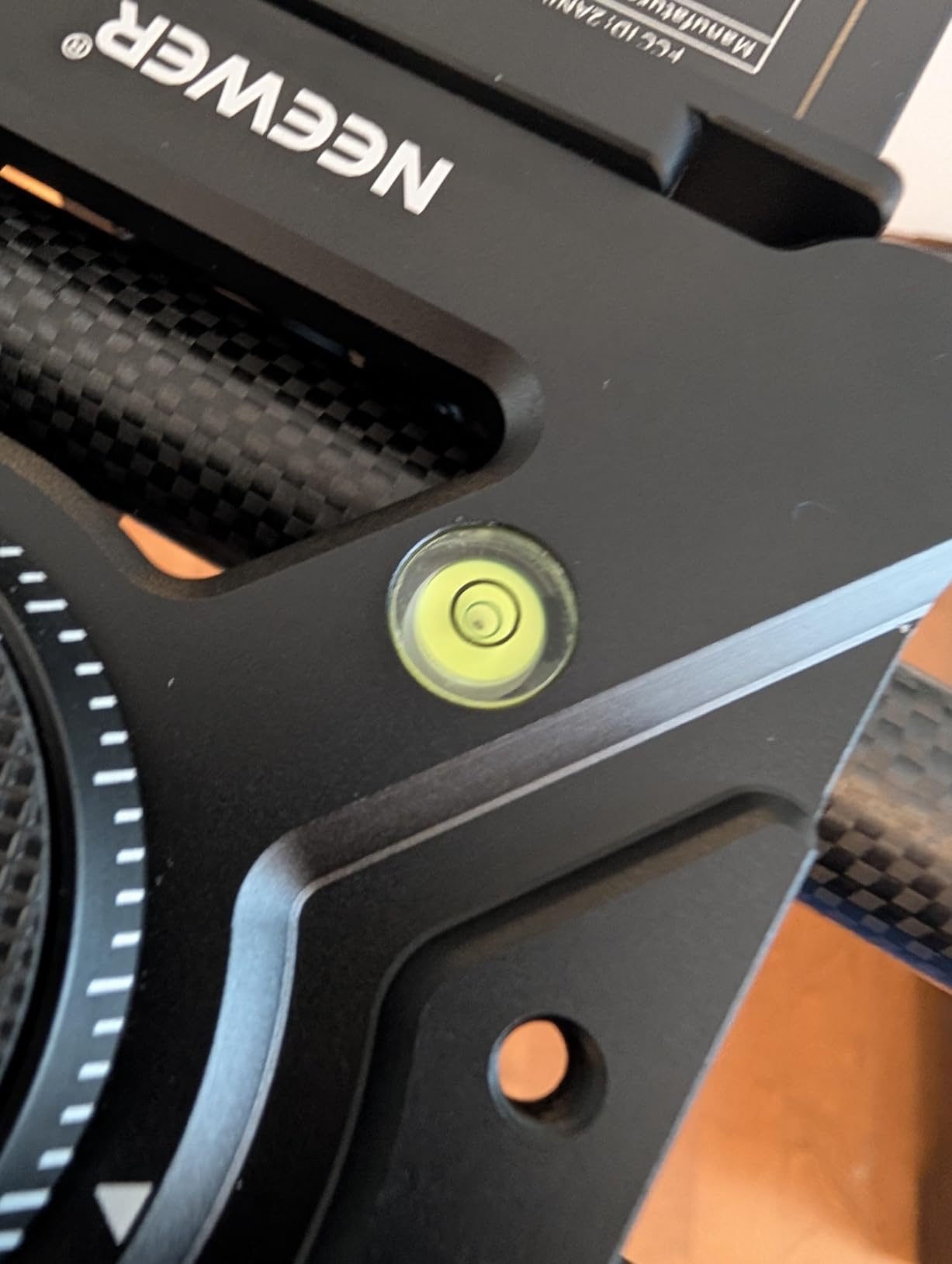
Who it is built for
Solo creators shooting a product series will notice the difference first. One programmed move, identical framing on every take, no re-levelling or re-aiming between shots.
Carbon fiber keeps a long rail light and rigid, and the four roller bearings plus adjustable feet make it quick to set up and tear down.
The gaps in the package
No charger is included, so budget for an NP-F750 charger or a USB-C power bank, and the 2.4G physical remote is an optional extra rather than a bundled item.
The app point setting takes a few attempts to understand and the programmed A and B setting has no reset option. Minor shake can also show up in macro setups, and the 120cm version is close to four feet long, which is a transport problem and needs two tripods or clamp arms to support.
10. Fotodiox SlideCam 800-32: A Solid 32 inch Rail for Low Angles
Fotodiox Pro SlideCam 800-32″ Video Slider Stabilizer, DSLR Camera Track Slider, Linear Stabilization Rail System with Ball-Bearing Slide Mechanism, Adjustable Legs and Carrying Case
32 inch ball bearing slide
Double layer anodized platform
5 lb body weight
24 month warranty
Pros
- Smooth ball bearing carriage with a bubble level
- Anodized double layer platform feels solid
- Removable legs with rubber feet work without a tripod
- Multiple 1/4-20 and 3/8 inch mounts
- Assembles in seconds and includes a case
Cons
- Lowest average rating in this group
- Ball bearings can need drag adjustment out of the box
- No tripod head or support hardware included
- Manual operation only
The SlideCam 800-32 is a well made 32 inch rail with a genuinely useful feature set: a bubble level built into the sliding plate, removable adjustable legs with non-skid rubber feet, and mounting holes on both ends and the middle.
Because it works flat on the ground, on its legs, on a tripod, or on its side for a vertical slide, it covers the low-angle work that a tabletop dolly cannot reach.
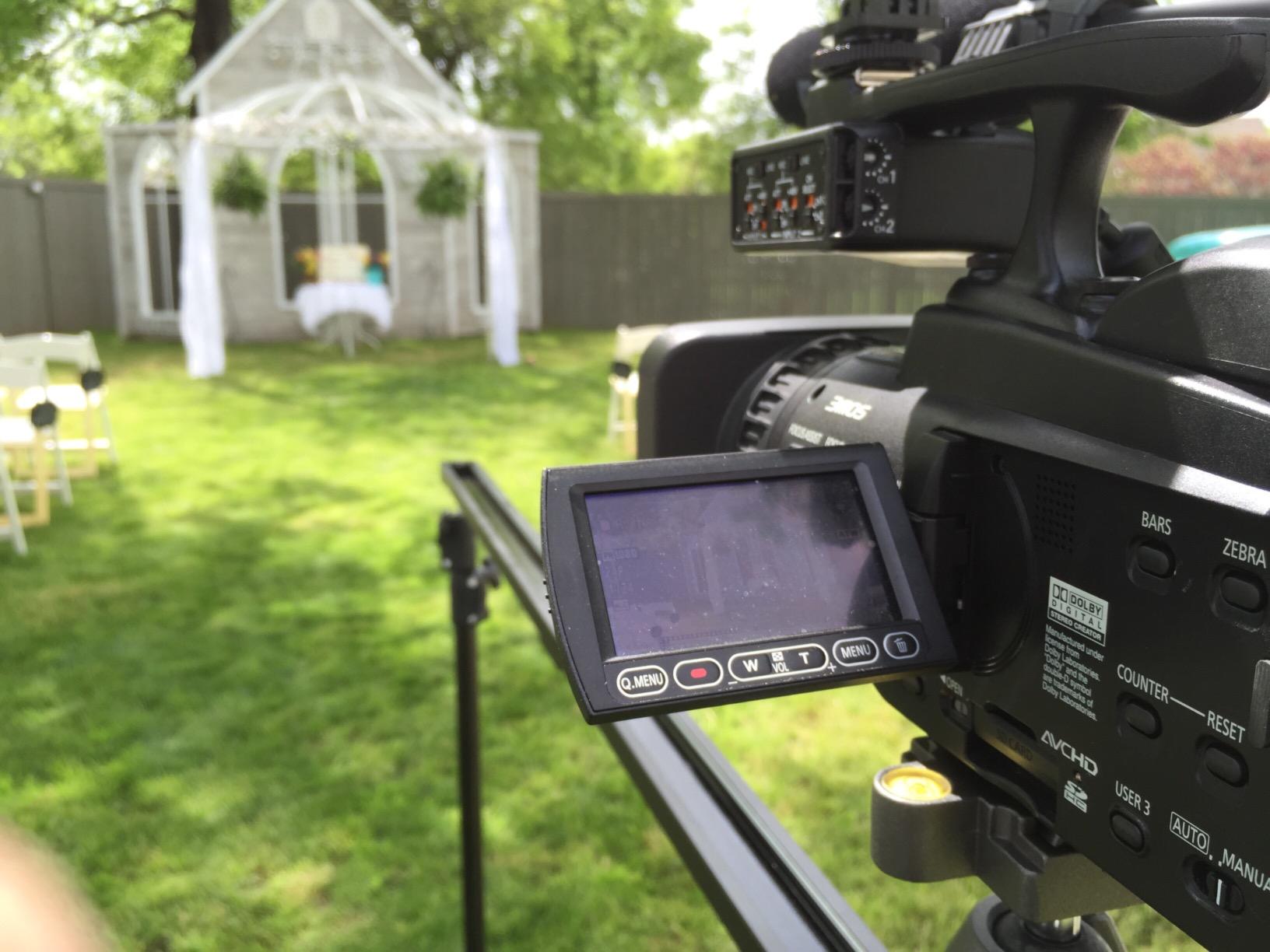
The double layer anodized aluminum sliding platform is the part that makes it feel more substantial than its rating suggests. It assembles in seconds and folds to a compact package with a carrying case included.
At 5 pounds it is heavier than the carbon fiber competition in this group, which is a fair trade for the aluminium build and the 24 month manufacturer warranty.
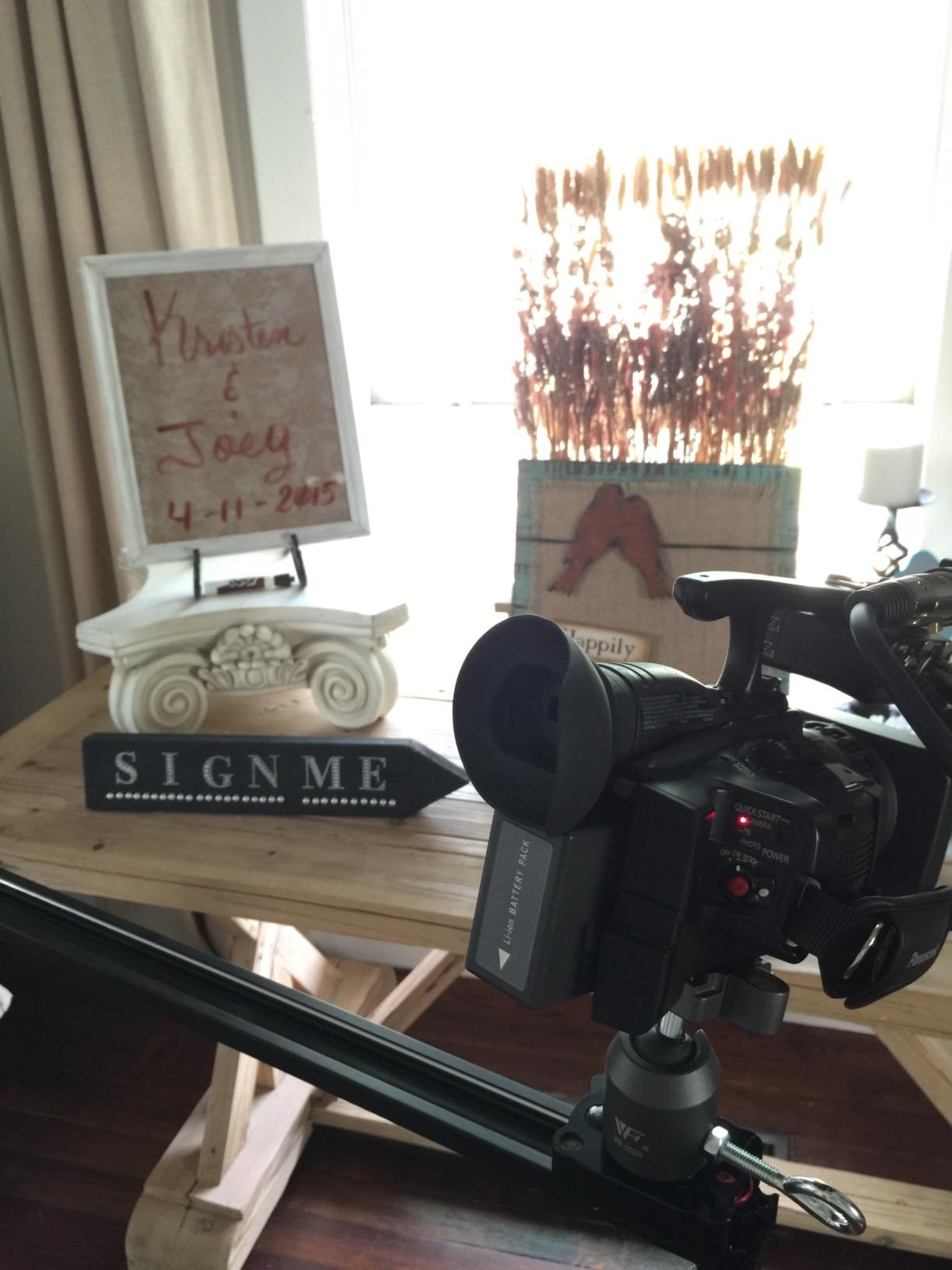
What it does well
Mounting versatility is the headline. Holes at both ends and the middle mean you can place the camera wherever the shot needs it, which is how you get true low-level sliding shots without a second piece of kit.
Owners also appreciate that it needs no separate support to sit on a flat surface, which speeds up tabletop and product work.
Why the rating sits where it does
Some owners report a sticky or inconsistent feel along the travel, and the ball bearings can need adjusting before the first shot. Budget ten minutes for that rather than finding it on the timeline.
It also ships as a bare rail with no head, tripod or motor, so the smoothness of a shot is entirely down to your technique, and you will need a fluid head to get the most from it.
11. Glide Gear DEV 4: A Dana Dolly Style Track on a Smaller Budget
Glide Gear DEV 4 Dolly – Modular Track Slider – 3X 23 Rails, Frictionless Base Plate, 50lb Payload, Portable with Carry Bag
4 ft total travel
50 lb payload
3 x 23 inch 6061 aluminum rails
12 lb body weight
Pros
- Smooth controlled movement comparable to costlier Dana style dollies
- 50 lb payload carries rigged prosumer bodies
- Lightweight rails make load-in fast
- Front wheels rotate to act as a brake
- Sled lifts off for transport
Cons
- No C-stand or baby pin adapter included
- Supplied 3/8 inch bolt is barely long enough for a head
- Bump at the rail joint can show in footage
- Wheel bearings spin inconsistently and plastic wheels are noisy
The DEV 4 is the most polarizing pick here, and the reason is clear. It is a modular three-rail track dolly with 50 pounds of payload and four feet of travel, and many owners treat it as a genuine budget alternative to a Dana Dolly.
Where it wins is smoothness under load. Reviewers describe movement as controlled and glass-like, and the 50 pound rating comfortably handles a rigged prosumer body or a fully rigged 6K camera.
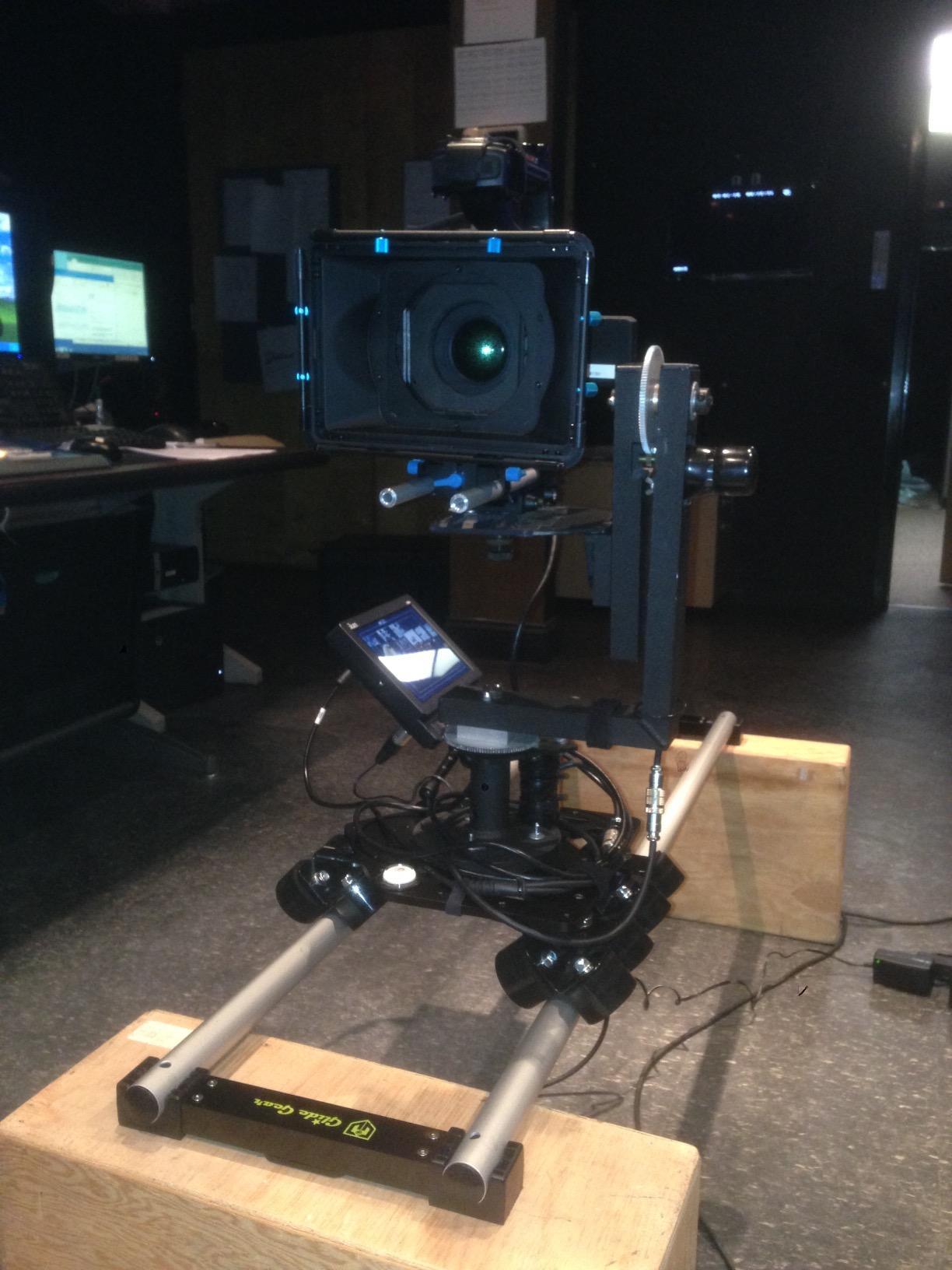
The rails are 6061 aircraft-grade aluminum, which keeps the whole thing light enough for a fast load-in. The sled has 28 mounting holes tapped for 1/4-20 and 3/8-16, and it lifts off the rails quickly for transport.
The front wheels rotate 90 degrees to act as a brake, and they can be left off entirely so the dolly rides in a camera backpack. A protective carry bag is included.
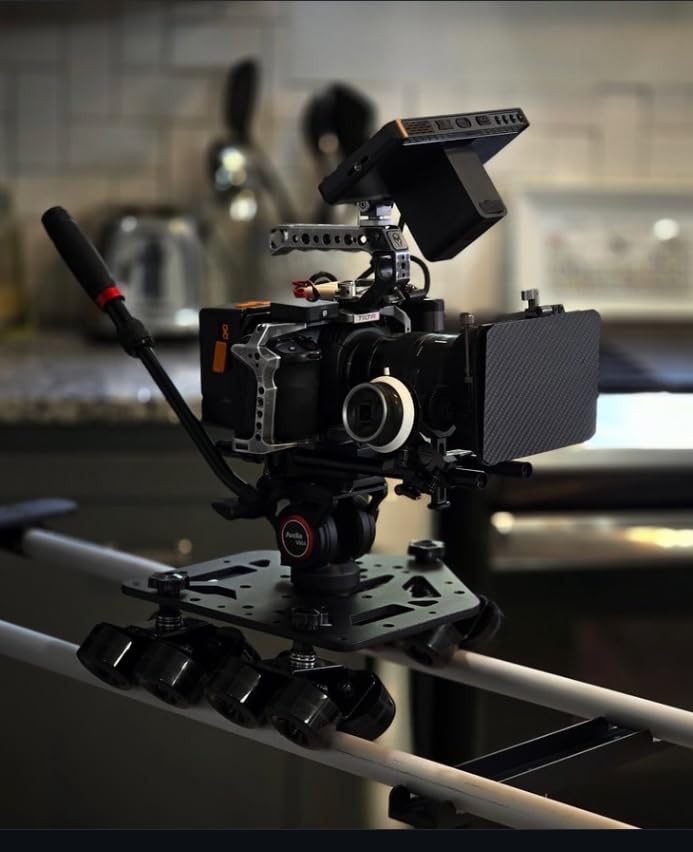
Who should look at it
Anyone shooting narrative or commercial work on a budget who wants Dana style dollies in the move. Four feet of travel in a modular system is a lot of usable screen time for a small rig.
The heavy, stable frame also resists wobble when mounted on stands, which is where cheaper lightweight builds tend to fail.
Where it frustrates owners
There is no C-stand or baby pin adapter in the box, and the supplied 3/8 inch bolt for attaching a video head is barely long enough. The bump where the rail sections screw together can show in footage.
Wheel bearings spin at inconsistent speeds, the wheel locks have flex, and the plastic wheels are noticeably noisy. The included case is also too small for the assembled dolly. A small number of owners abandoned it after repeated problems on paid work, so treat it as a project piece rather than a client tool.
12. PROAIM 12ft Track: Built for Crews and Commercial Days
PROAIM 12ft Straight Aluminum Camera Dolly Track, 32mm Rails, 400kg/882lb
12 ft track
882 lb total capacity
32mm hollow aluminum rails
4 x 4 ft sections
Pros
- Very quiet smooth movement under heavy loads
- Strong enough for commercial and studio work
- Assembles quickly from four foot sections
- Wedges stoppers extra connectors and a case included
Cons
- Track only with no dolly tripod or stand included
- Occasional drag needs adjusting
- Connectors from a separately bought set may not line up
- Instructions did not match the pre-assembled hardware
The PROAIM 12ft is the only true track on this list. Twelve feet of 32mm hollow aluminum rail, assembled from four four-foot sections with 27.5 inch centre-to-centre spacing between the two rails, rated to 882 pounds.
That rating is the point. It is built to carry camera dollies, jib cranes and standard dolly setups, and owners report VFX teams using it for studio motion capture. One reviewer describes moving a rigged URSA over a Glide Gear dolly like butter.
The kit is generous for track of this type. Six connectors, twenty wedges split between ten for lifting and ten for levelling on rocky ground, two track stoppers and a rugged carrying bag are all included, and 90+ countries have used PROAIM equipment on productions.
Laying twelve feet of track with a wheel-on dolly is a genuinely different shot from a rail move, and the length allows a full walk-through without cutting.
Who it is for
Commercial and narrative crews who already own a dolly or a Dana style head. The 882 pound capacity and the industrial grade feet handle the weight of a cinema package plus an operator leaning on the handles.
It is also a strong rental-versus-buy answer. A grip house will rent a track like this by the day, and a setup like this is often cheaper to rent per project.
Before you buy, know this
This is track only. There is no dolly, tripod or stand in the box, so the total cost of the system is higher than the track figure suggests.
A small number of owners found drag in places that needed adjusting, and connectors bought separately at a different time can fail to line up with the track gauge. Some also received nylon middle pieces pre-assembled into the end pieces against the instructions, which is a five minute fix if you know to expect it.
Manual vs Motorized: Which One Do You Actually Need?
Start with the question you are actually asking. If your work is interviews, handheld narrative, or anything where you reposition constantly, a manual rail or dolly is faster and less frustrating. Motors add setup time, batteries and firmware.
If your work is time-lapse, product series, or repeatable before and after sequences, the motor pays for itself immediately. No hand-crank holds consistent movement for three hours, and that is the whole use case.
A good middle path is a short manual rail now and a motor later. Several creators in our circle run a tabletop dolly and a 16 inch rail as a permanent kit, then add a motorized model when a client pays for a product shoot.
Things that decide it fast
Ask three questions. How long is the longest move you plan to shoot? How heavy is your rig including accessories? And do you need the same framing on take twelve as you did on take one?
Long and heavy points to a supported rail. Long, light and one-take points to manual. Anything repeatable points to a motor, whatever the other answers say.
Payload, Travel Length and Mounting: Sizing a Slider Properly
Payload is the spec people check once. Add up the body, the lens, the battery, the matte box, the monitor, the cables and the head, then leave 20 to 30 percent headroom. A slider at its limit sags at the ends of the travel and develops a wobble you will see in the corners of the frame.
Tilted payload is usually lower than flat payload. The NEEWER ER1-80 is a good example, rated at 11 pounds flat and 5.5 pounds at a 45 degree tilt. A long lens out front moves that centre of gravity forward, which is when counterweights earn their place.
Travel length matters less than the number suggests, because speed compensates. A 16 inch rail pushed slowly can look like a 40 inch rail pushed quickly, but it cannot travel as far across a room, and parallax changes over distance. A long lens needs real distance to separate foreground and background.
Mounting decisions that matter more than brand
Check for 1/4-20 and 3/8 inch holes on both ends, the middle and the underside. The underside is what lets you run a vertical or inverted move, which is a trick for jib-like shots on a budget.
Adjustable legs with a bubble level will save you more time than any motor feature. A level rail is the difference between a smooth glide and a shot that shakes when the carriage hits the joint.
Slider vs Gimbal: Which One Earns Its Place in Your Bag?
These two tools answer different questions. A gimbal stabilises a camera that is moving through space with the operator, which suits walking, handheld follow and run-and-gun. A slider moves a camera along a fixed path relative to a locked frame, which suits reveals, parallax and product work.
So do YouTubers use gimbals? Most do, for talking-head and walk-and-talk footage, and a gimbal cannot produce a smooth reveal. If your channel depends on movement in a static composition, a slider earns its place alongside a gimbal rather than instead of one.
Where each one wins
Choose the gimbal for interviews on location, follow shots, stairs, narrow interiors and anything handheld. Choose the slider for a product reveal, a parallax push across a table, a sunset time-lapse, and any shot where the camera must repeat exactly.
Do you need a motorized slider for content creation? Only if you shoot time-lapse or need identical moves. A manual rail covers the majority of creator work, and the price difference buys you a much better head and support arms instead.
The Costs People Forget: Tripod, Head, Batteries and Bag
A slider is the visible purchase and frequently not the largest one. A fluid head runs into serious money on its own, and it is the component that decides whether the move looks smooth. Cheap sliders paired with cheap heads produce the wobble owners complain about.
Then there is support. Several motorized sliders in this list need two light stands, clamp arms or slider support arms to sit level, particularly when raised with a camera on top. Budget for those before you blame the slider.
Batteries are the quiet one. If your motorized slider uses replaceable NP packs, add a second set and a charger if the box does not include one. A dead battery at the programmed start point ends the setup, and the move will not be waiting for you later.
Finally, the case. Several sliders ship with a case that cannot also hold the head, and cheap rails arrive in thin packaging that leads to bent or scuffed units. Protective transport is not an accessory here, it is part of the cost.
A Five-Minute Deployment Test and a Pre-Shoot Checklist
The single best predictor of whether a slider lives in your kit or your closet is how fast you can get it moving. Give yourself five minutes from opening the bag to a rolling shot. If you need fifteen, it will not come on solo jobs.
Weigh the whole package, not the rail. A 4 kilogram slider plus a 3 kilogram head plus two stands is a two-person carry, and run-and-gun utility disappears at that point.
Before every motorized take
Turn off in-body image stabilization. Charge or swap the battery. Pair the app and set the A and B points while the carriage is still. Run one full test move before the take. Attach the shutter release cable if you are shooting time-lapse.
Level the rail, then balance the camera on the sled with the lens cap on, and only then start the motor. A move that drifts during the first three seconds is almost always a balance problem rather than a motor problem.
Finally, keep the surface honest. Carpet, gravel and textured outdoor ground will defeat a wheeled dolly no matter what the product page claims. If the location is rough, plan a handheld shot instead.
Frequently Asked Questions
What is the best professional camera slider?
The best professional camera slider for most creators is a motorized carbon fiber rail with app control, a silent motor and a rated payload with 20 to 30 percent headroom over your rig. In our testing the NEEWER ER1-80 offered the quietest motor and the most repeatable moves, while the GVM 48 inch wins on six shooting modes and included accessories. For crews that already own a dolly head, the PROAIM 12ft track is the professional-grade step up.
What size camera slider should I buy first?
A 16 to 32 inch rail is the right first buy for most video creators. It covers tabletop work, product shots, interview push-ins and low-angle slides, and it fits in a normal tripod bag. Buy longer only if you need wide lateral moves across a room or you shoot with a telephoto lens that needs distance to separate foreground from background.
Do I need a motorized slider for content creation?
Only if you shoot time-lapse or need identical framing on every take. A manual rail covers interviews, product reveals and parallax pushes, and it is quicker to deploy because there is no app pairing or battery. Motorized models earn their price through repeatability on multi-part sequences and through long time-lapses no hand-crank can sustain.
Why does my slider footage look warped or jittery?
The most common cause is in-body image stabilization left switched on, which fights the deliberate movement of a dolly and produces rubbery edges. Turn stabilization off and re-shoot. Other causes include a camera that is not balanced on the sled, a rail that is not level, a cheap head flexing under load, and on some motorized models a drive belt that resonates into visible shake under heavy rigs.
Can I use a camera slider with a smartphone or a DJI Pocket?
Yes, as long as you use a proper cage or clamp rather than a spring-loaded phone clip. The NEEWER SD001 and the NEEWER DL100 both take a phone through a clamp with a cold shoe, and the GVM and Zecti rails accept phones through their standard 1/4 inch and 3/8 inch threads. Spring clips can drop a phone mid-slide, so a cage is the cheapest insurance you can buy.
Which Camera Slider Should You Buy in 2026?
Our pick for the best camera sliders for video creators in 2026 is the NEEWER DL100, because it deploys fastest, weighs almost nothing and stays in the bag between jobs. The Zecti 16 inch is the better manual rail, the GVM 48 inch is the better programmable motorized option, and the PROAIM track is what a crew moves up to once the work pays for it.
Whatever you choose, turn off stabilization, level the rail, balance the camera and run one test move before the take. Those four habits fix more bad slider footage than any model on this list.
Check the current details for each pick and choose the one that fits the shots you actually shoot in 2026.