
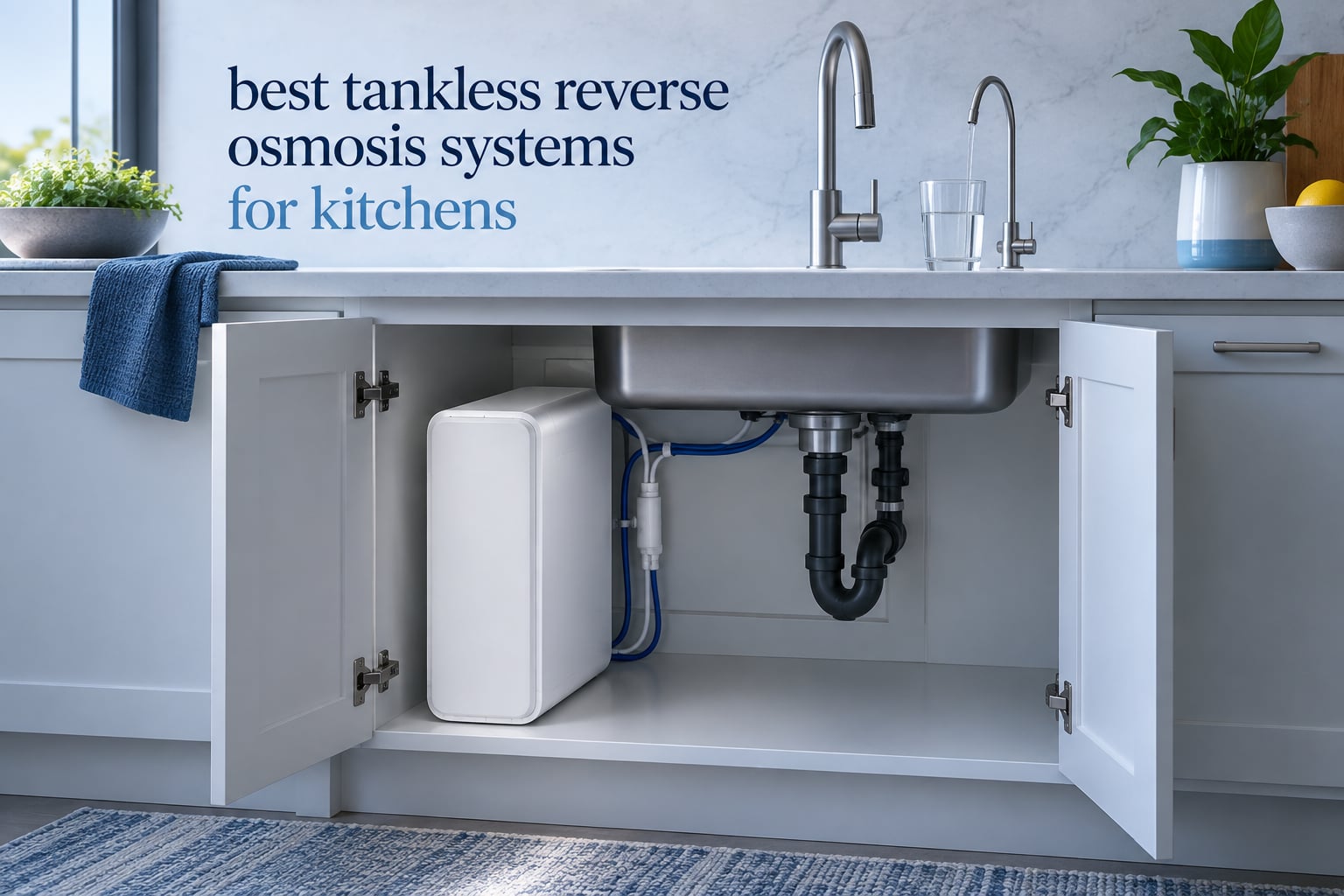
Short answer: the Waterdrop G3P600 is the best tankless reverse osmosis system for most kitchens because it carries NSF/ANSI 58 and 372 certification, a 600 GPD rating, a 2:1 pure-to-drain ratio and more than 4k+ owner reviews behind it. The Frizzlife PD600-TAM3 is the pick if you want alkaline remineralized water, and the iSpring RO5004F is the pick if you want a UV stage and a built-in leak-stop valve.
We spent weeks reading owner reviews, spec sheets and installation reports on 10 of the best tankless reverse osmosis systems for kitchens. This is a spec-plus-review roundup, not lab bench testing. Every number below comes from the manufacturer’s own published specification or from what owners report in their reviews, and we say which is which.
Our top picks at a glance:
Best overall: Waterdrop G3P600 – 600 GPD, 2:1 drain ratio, NSF/ANSI 42, 53, 58 and 372, smart faucet with TDS display
Best for alkaline water: Frizzlife PD600-TAM3 – 600 GPD with a pH+ mineral stage and a 2:1 drain ratio
Top rated: iSpring RO5004F – 500 GPD, 2:1 drain ratio, built-in UV stage and leak-stop valve, rated 4.7 stars
Best without an outlet: GLACIER FRESH GFU03 – 800 GPD, zero electricity, zero pump noise, 3:1 drain ratio
Best for narrow cabinets: ANGEL X2 – a 4.72 inch wide body at 700 GPD
Best for the lowest filter bill: VIOMI V6 – 600 GPD with an RO filter rated up to 48 months
One caveat up front. Tankless does not mean maintenance free, and it does not mean the water arrives at full faucet pressure. It means no storage tank, on-demand production, and a reclaimed cabinet. The rest of this guide explains the trade-offs in plain language.
Table of Contents
Top 3 Tankless Reverse Osmosis Systems for Kitchens (September 2026)

Waterdrop G3P600
- 600 GPD tankless 8-stage RO
- 2:1 pure-to-drain ratio
- Smart faucet with TDS display

Frizzlife PD600-TAM3
- 600 GPD with alkaline pH+ stage
- 2:1 pure-to-drain ratio
- NSF/ANSI 58-53-42 and 372

iSpring RO5004F
- 500 GPD with a UV stage
- 2:1 pure-to-drain ratio
- Built-in leak-stop valve and filter monitor
All 10 Tankless RO Systems Compared in 2026
| Product | Specifications | Action |
|---|---|---|
|
Waterdrop G3P600
|
|
Check Latest Price |
|
Frizzlife PD600-TAM3
|
|
Check Latest Price |
|
iSpring RO5004F
|
|
Check Latest Price |
 GLACIER FRESH GFU03
|
|
Check Latest Price |
 SimPure T1-400ALK
|
|
Check Latest Price |
 VIOMI V6
|
|
Check Latest Price |
 Philips AUT9360
|
|
Check Latest Price |
 Electrolux Eco 600
|
|
Check Latest Price |
 ANGEL X2
|
|
Check Latest Price |
 Brio AQUUS TROE800COL
|
|
Check Latest Price |
1. Waterdrop G3P600 – the best tankless reverse osmosis system overall
Waterdrop G3P600 Tankless Reverse Osmosis Water Filter System, 600 GPD
600 GPD
0.42 gpm max flow
2:1 pure to drain
NSF/ANSI 42, 53, 58 and 372
Pros
- Four separate NSF certifications covering taste
- cysts
- TDS and lead-free materials
- Saves about 70% of under-sink cabinet space
- Tool-free filter swaps in roughly 3 seconds
- Faucet shows live TDS and filter life
- Rated 4.5 stars across more than 4000 reviews
Cons
- Audible pump hum and short self-cleaning cycles
- Replacement cartridges cost more than most rivals
- Flow is slower than a standard kitchen faucet
- Built-in TDS meter can drift from an independent meter
This is the unit we keep coming back to because the certification list is long and the review base is deeper than anything else here. Waterdrop lists NSF/ANSI 42, 53, 58 and 372 on the same eight-stage body, and SGS tested the claimed contaminant reduction independently. Rated output is 600 gallons per day at up to 0.42 gpm, and the drain ratio is 2:1, meaning one cup of waste for every two cups of purified water.
The 2:1 ratio is the honest number here, not the marketing number. A conventional tanked under-sink RO typically wastes three or four gallons per gallon produced. Owners filling a kettle or a large pot still wait, because flow to the faucet is capped by how fast water passes through the membrane, not by the tankless pump. That is a physics limit, not a defect, and it is a frequent reason buyers feel shortchanged after an upgrade.
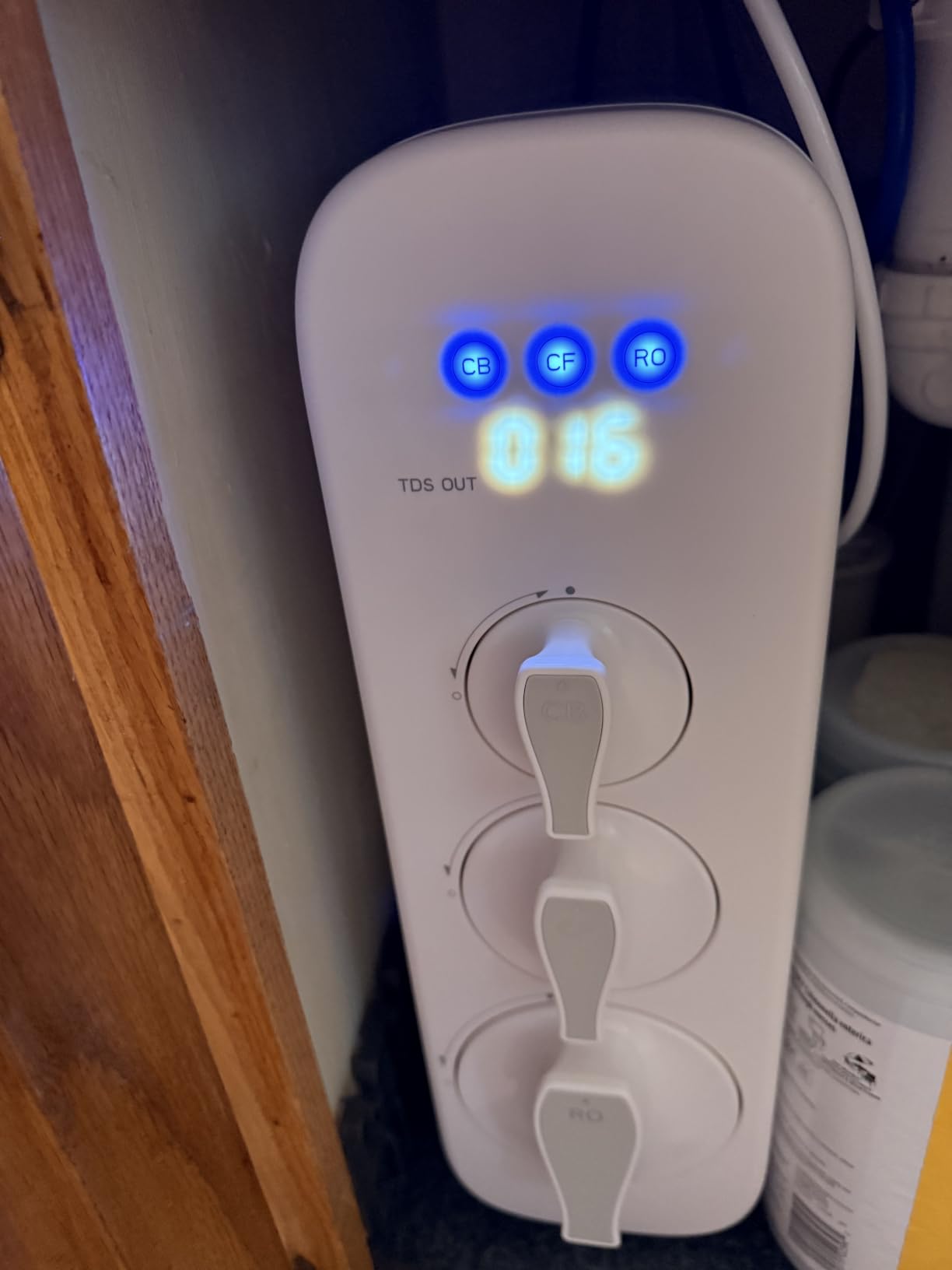
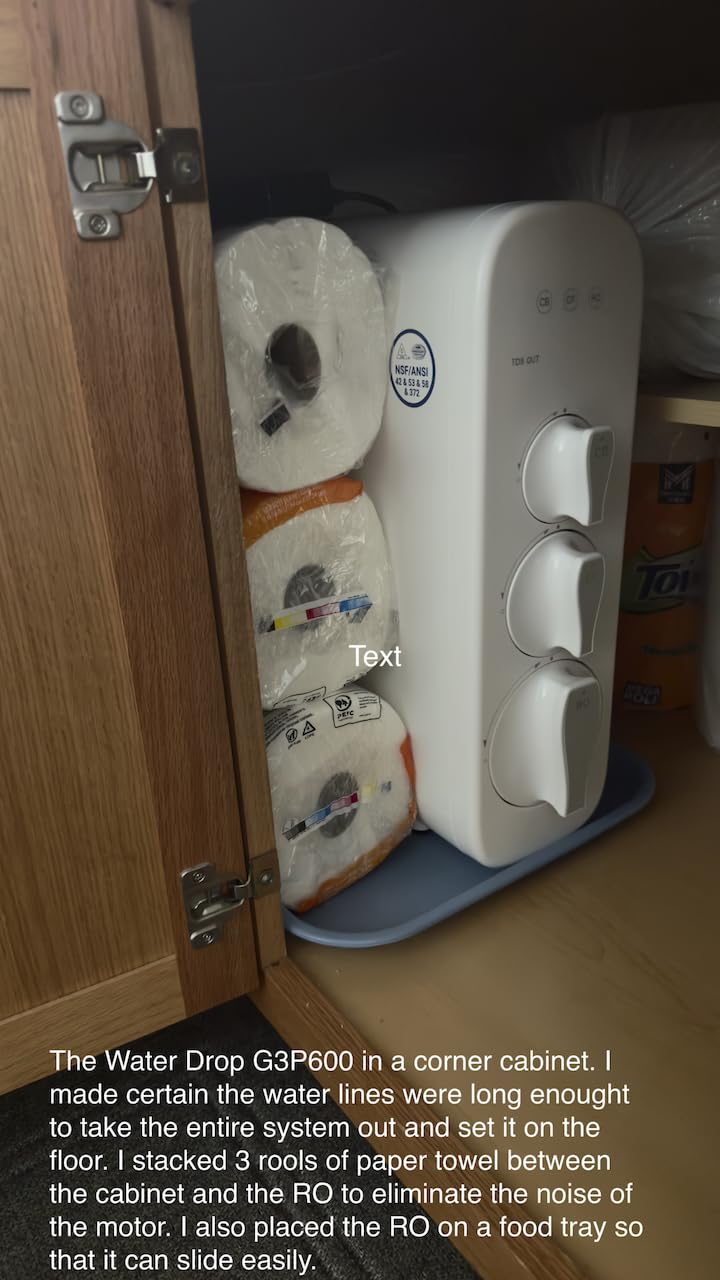
The smart faucet is the feature owners mention most. It displays live TDS and filter replacement status, and filter changes are tool-free and take about three seconds without moving the unit. The body measures 18.12 by 5.67 by 17.72 inches and weighs 31 pounds, so measure your cabinet before you order. Owners who installed it alongside a garbage disposal report needing care with tube seating to avoid leaks.
One warning worth repeating from the review data. A Fakespot check has rated the Waterdrop G3’s reviews a C, which does not prove anything is wrong with the water, but it does mean star averages on the biggest brand deserve a second look. We rate this unit on the breadth of its published certifications rather than the star count alone.
What you should know before buying the G3P600
It needs an electrical outlet under the sink, and owners regularly report discovering that outlet is missing only after the box arrives. It is also the unit whose replacement cartridges sit among the pricier options in this group, which matters most if you drink a lot of water and go through cartridges faster.
Who it suits and who it does not
It suits households of three to five that want continuous purified water for drinking and cooking and have a real outlet to plug into. It does not suit a one or two person apartment, where the capacity is paid for twice and a tanked unit would be simpler.
2. Frizzlife PD600-TAM3 – best tankless RO for alkaline water
Frizzlife Reverse Osmosis Water Filter – Alkaline Mineral pH+, NSF/ANSI 58&53&42&372 Standard, 600GPD Tankless RO Reverse Osmosis System, Under Sink, 2:1 Pure to Drain, Reduce FPAS/PFOA, PD600-TAM3
600 GPD
0.41 gpm max flow
2:1 pure to drain
pH above 7.5 after mineralization
Pros
- Third-stage alkaline filter raises pH above 7.5 and restores stripped minerals
- Reviewers report 90% or greater measured TDS reduction
- Compact body fits where tanked systems cannot
- Customer service shipped free parts to a four-year-old unit
- 2:1 drain ratio with 450% water saving claimed
Cons
- Pump hum and vibration whenever the faucet opens
- Supplied brushed nickel faucet feels wobbly at the spout
- Will not install horizontally under deep toe kicks
- Support is email-only with slow responses
The Frizzlife is the one to buy if flat, slightly acidic RO water is the thing that turns you off. Its third stage is a mineral filter that pushes pH above 7.5 and puts calcium and magnesium back into the water after the membrane strips them out. Owners consistently describe the taste as the least acidic of the group.
On paper it matches the Waterdrop almost spec for spec: 600 GPD, 0.41 gpm maximum flow, a 2:1 drain ratio, and certification to NSF/ANSI 58, 53, 42 and 372. It fills a 330 ml cup in about ten seconds. The body is smaller at 14.7 by 5.3 by 15.5 inches, which helps in tighter cabinets.
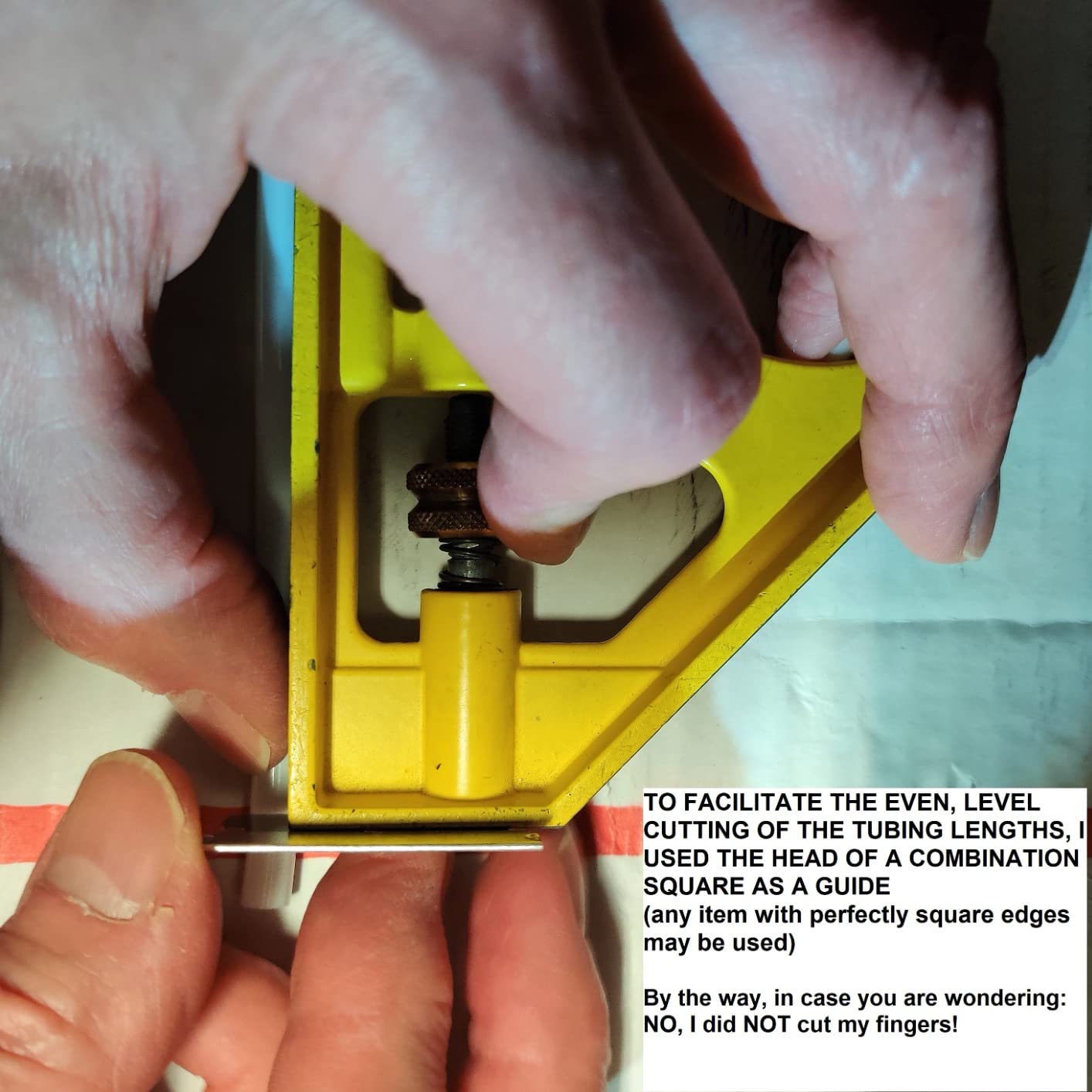
What stands out in the reviews is after-sales support. Multiple owners mention free replacement parts sent for units several years old, which is unusual in this category. What comes up repeatedly as a negative is mechanical rather than filtration related: the supplied brushed nickel faucet feels flimsy, and the unit cannot be mounted horizontally, which rules it out under deep toe kicks.
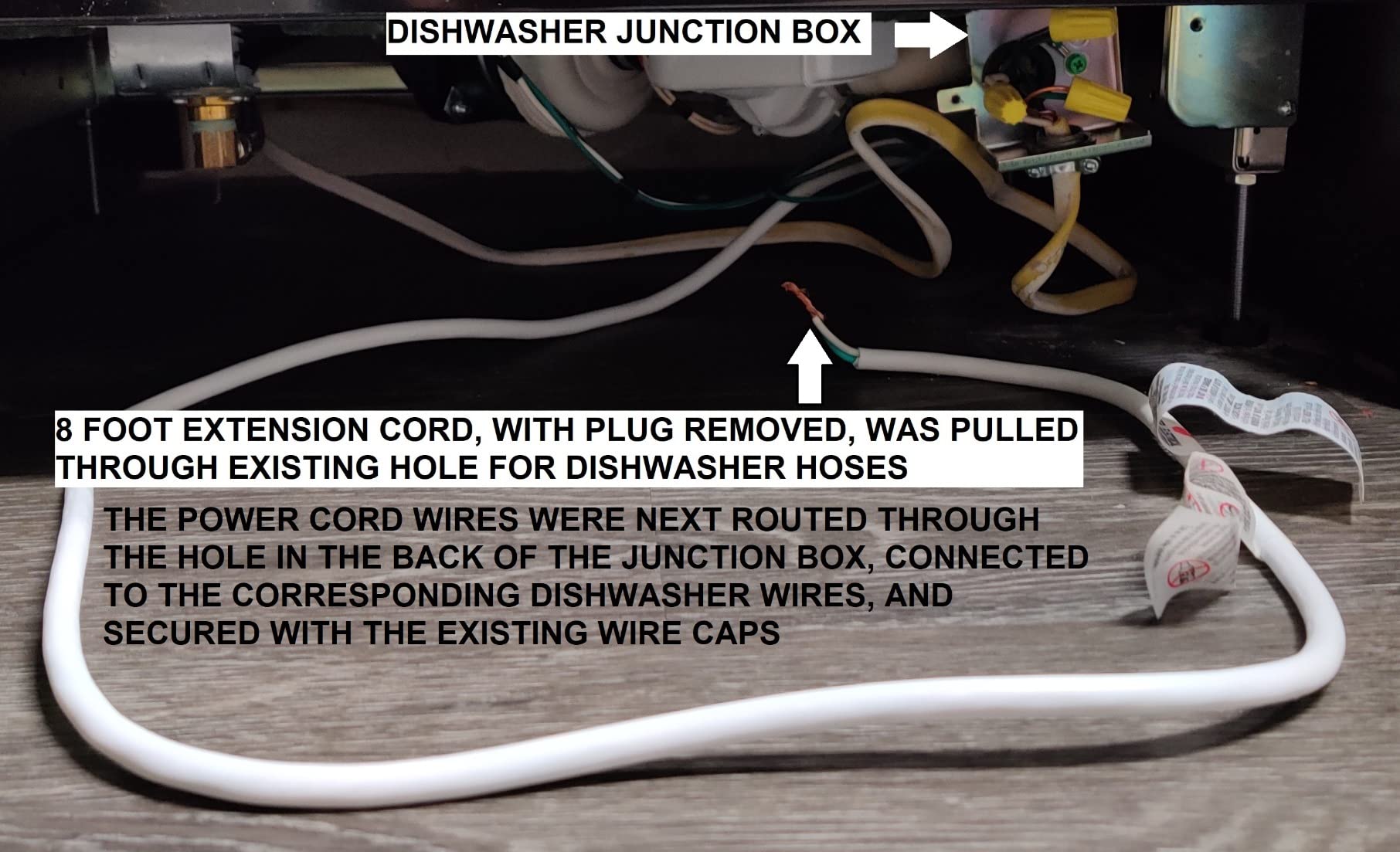
A small installation detail worth knowing: the supplied tee-fitting flat washer can leak if it gets nicked during install, and the manual does not flag this. Check the washer face before you tighten anything.
What you should know before buying the PD600-TAM3
If you track TDS as your quality metric, an alkaline stage works against you. The mineral filter adds dissolved solids back on purpose, so your meter reading will be higher than on a plain carbon post-filter system. That is a design choice, not a quality signal.
Who it suits and who it does not
It suits anyone who found RO water too sour, and households that want a compact body without giving up certification. It does not suit a vertical-only cabinet under a deep sink where horizontal mounting is the only option, or buyers who need same-day phone support.
3. iSpring RO5004F – the top rated system with a UV stage
iSpring RO5004F Reverse Osmosis Water Filter with UV, SGS Tested PFAS and TDS Reduction, 500 GPD RO System Under Sink, 2:1 Pure to Drain, Tankless RO Water Filtration System, Filter Life Monitor
500 GPD
0.35 gpm max flow
2:1 pure to drain
UV lamp rated 8000 hours
Pros
- Highest average rating in the group at 4.7 stars with 83% five-star reviews
- UV stage is not offered by most comparable units
- SGS tested for PFAS and TDS reduction
- Built-in pump handles low household water pressure quietly
- Leak-stop valve shuts the system down automatically
Cons
- Newer model with a smaller review base
- Replacement cost depends on choosing 1-year or 2-year filter packs
- Metal casing adds weight compared with plastic rivals
The iSpring rates highest in this roundup, at 4.7 stars with 83% of reviews at five stars. What separates it from the pack is a genuine UV stage after the RO membrane, with a lamp rated for up to 8,000 working hours and a status indicator on the unit. No other system in this group carries one at this capacity.
The filtration chain runs six layers: a PP sediment filter, an anti-scale stage, a carbon block, a 0.0001 micron RO membrane, a taste-polishing carbon stage, then the UV. Rated output is 500 GPD at up to 0.35 gpm, and iSpring supports input water up to 2000 ppm TDS, the highest ceiling listed here. The drain ratio is 2:1.
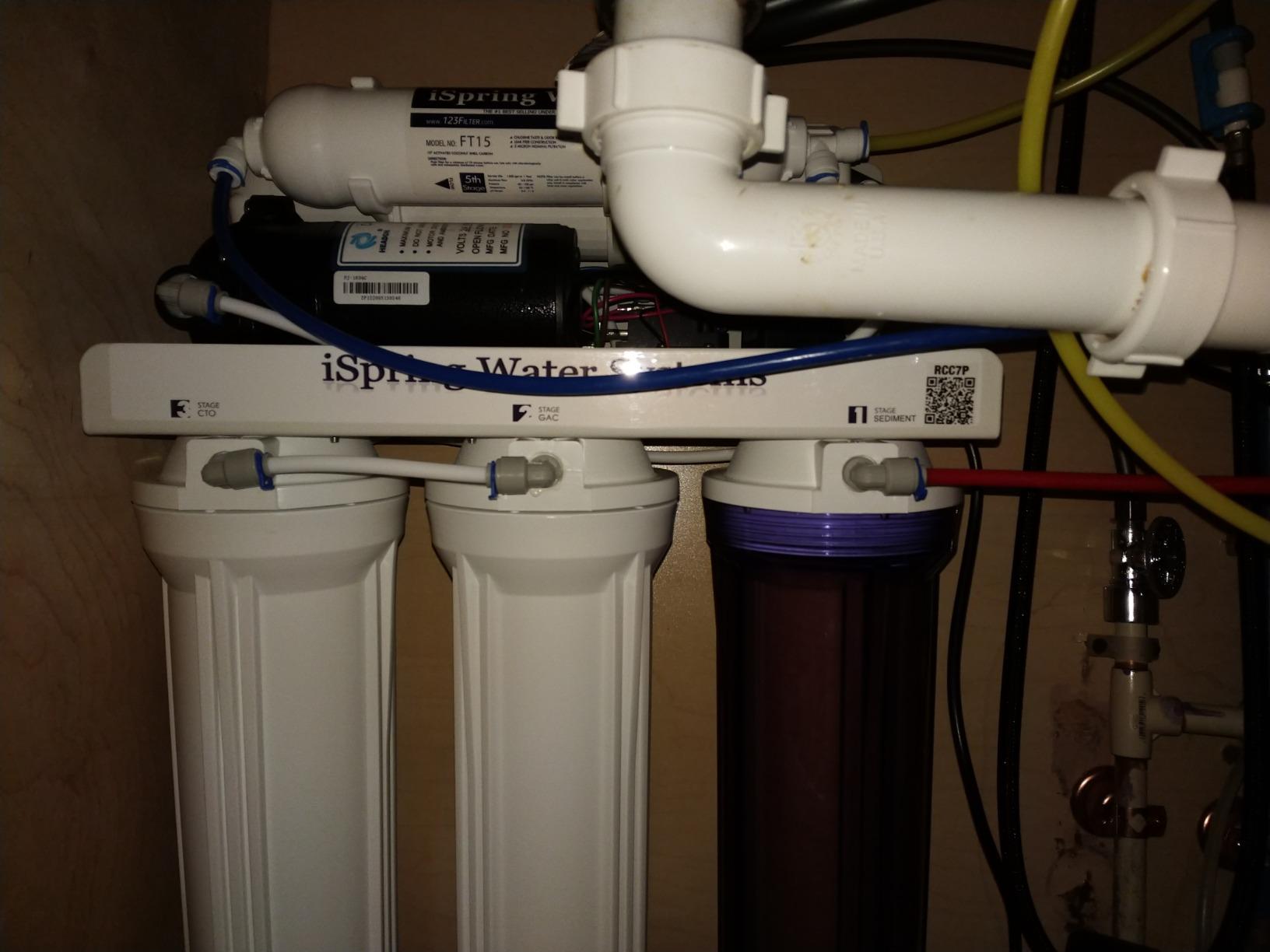
Two details make this the most installable unit of the group. The built-in pump is there for homes with low incoming pressure, and it runs without becoming loud, which matters in a kitchen next to a dining space. The integrated leak-stop valve shuts the system down if a leak appears, so an open cabinet and a soaked floor is a failure mode this design removes.
Filter changes are a twist-to-unlock action with an integrated life indicator and a self-cleaning cycle, so you are not guessing. The trade-off is money at replacement time: pack options come in 1-year and 2-year versions, and the longer pack costs more upfront.
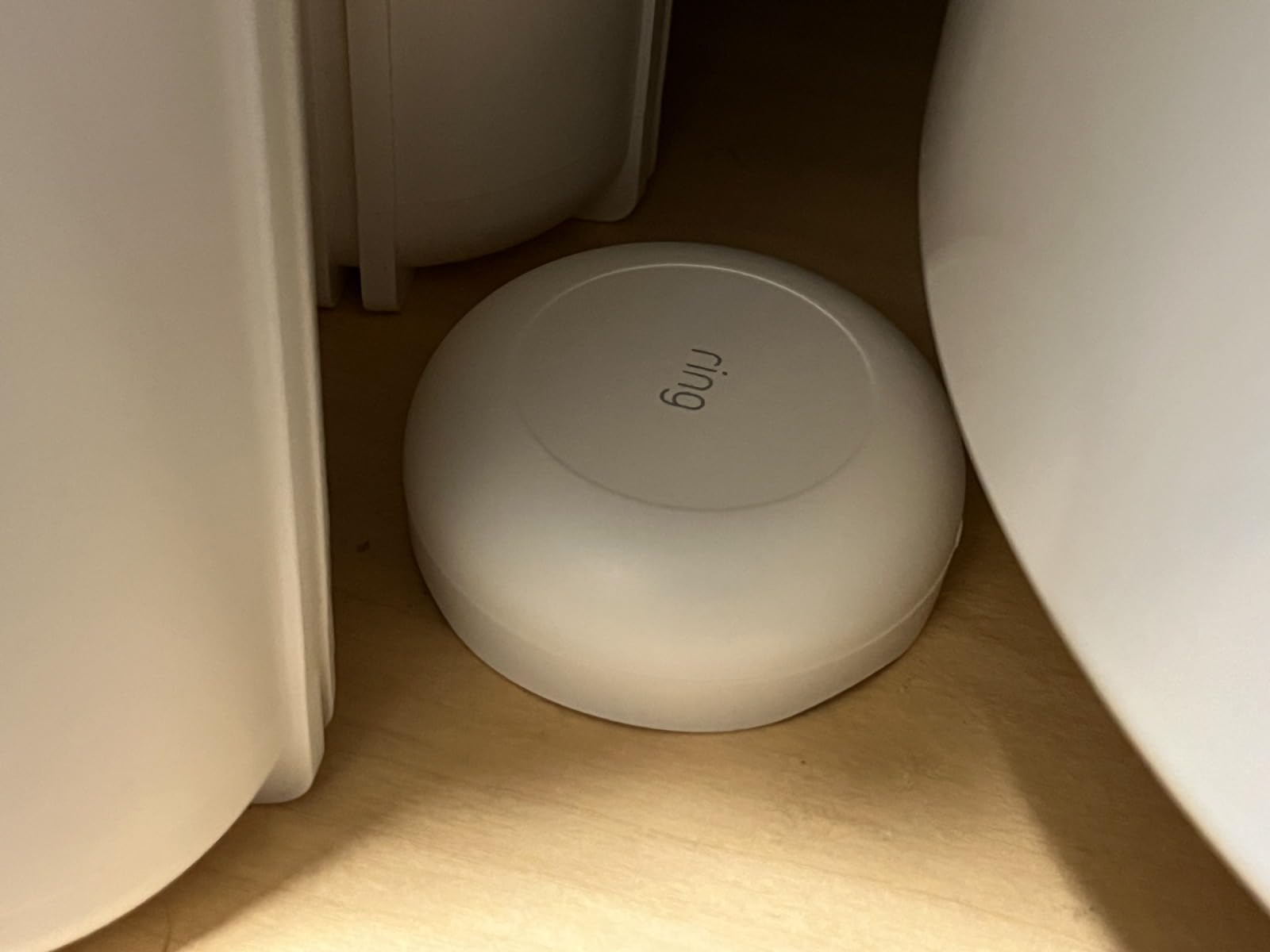
What you should know before buying the RO5004F
The 4.7 rating comes from a smaller base of 953 reviews than the two units above it, and the model is newer, so there is less long-term membrane data behind it. The metal body at 15.2 by 6.1 by 16.6 inches is heavier than plastic-bodied rivals at the same capacity.
Who it suits and who it does not
It suits households on harder or higher-TDS water, and anyone with low line pressure who would otherwise need a booster pump. It does not suit buyers shopping mainly on the lowest replacement filter bill, or households that want the highest possible flow speed at the faucet.
4. GLACIER FRESH GFU03 – the best tankless RO that needs no electricity
GLACIER FRESH GFU03 Reverse Osmosis Water Filter System 800 GPD, TankInside
800 GPD
0.6 gpm max flow
3:1 pure to drain
No electric drive
Pros
- Runs entirely on water pressure
- so no outlet and zero operating noise
- 800 GPD with the highest rated flow in the group at 0.6 gpm
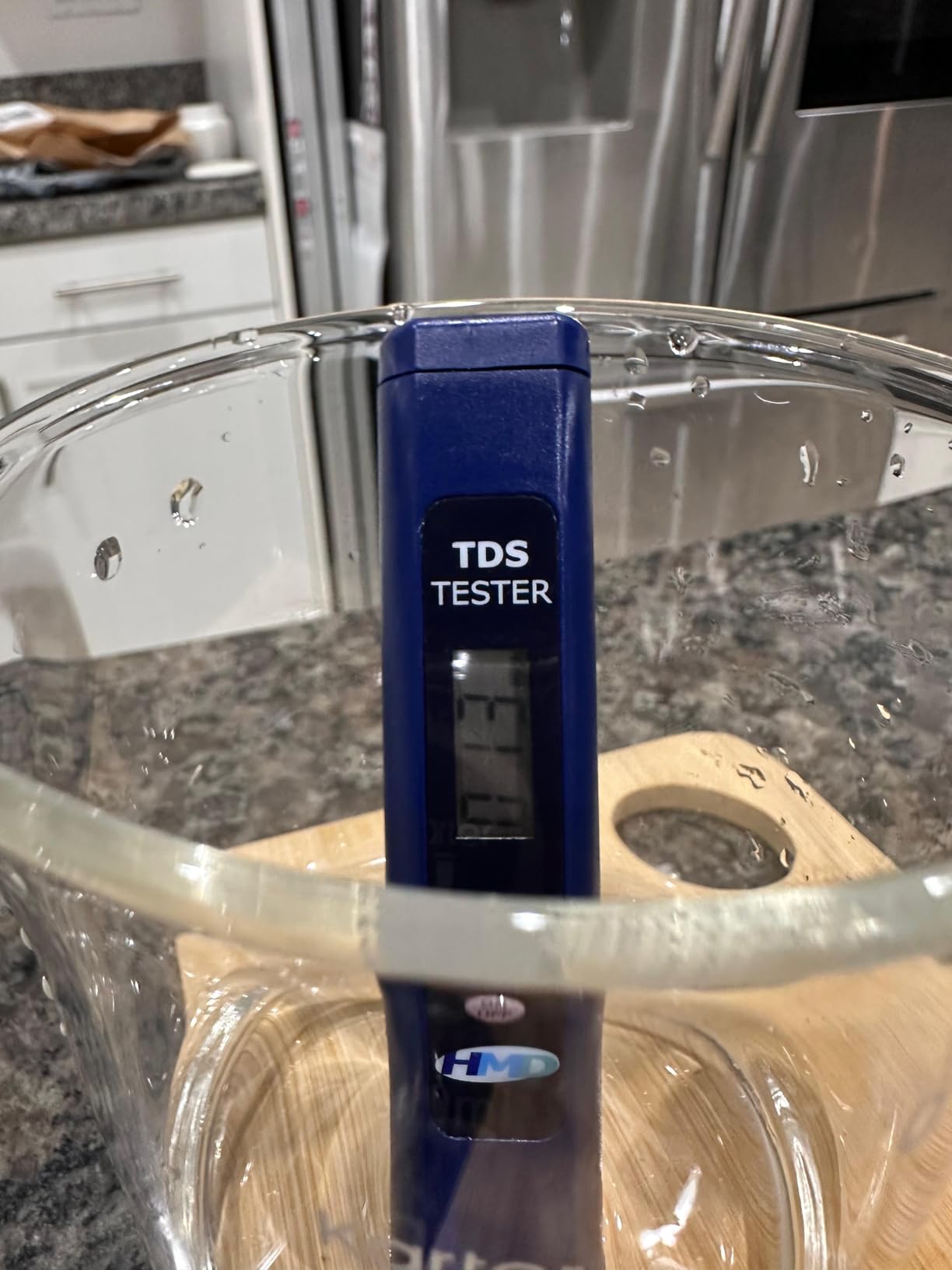
- Owners report TDS drops from 365 ppm to 16 ppm and 149 ppm to 6 ppm
- Inlet pressure gauge on the body
- Filter pulls out in about 3 seconds without shutting off the valve
Cons
- Flow slows noticeably after roughly the first quart
- Needs at least 40 PSI inlet pressure to hit rated output
- Supplied hole saw bit is hard to use on stainless
- Adapters may not match non-US plumbing threads
This is the outlier in the group and the answer for anyone whose kitchen has no outlet. The GFU03 is water-powered: it uses incoming line pressure to drive filtration, so there is no pump, no cord, and nothing to hum. Rated output is 800 GPD at up to 0.6 gpm, the highest flow figure listed here, with a 3:1 pure-to-drain ratio.
Filtration is five stages to NSF/ANSI 58, 372 and 401 standards, built around a 0.0001 micron membrane. Owners cite real before-and-after meter readings: 365 ppm down to 16 ppm in one home, 149 ppm down to 6 ppm in another. There is an inlet pressure gauge on the body itself, which is genuinely useful for diagnosing a slow system.
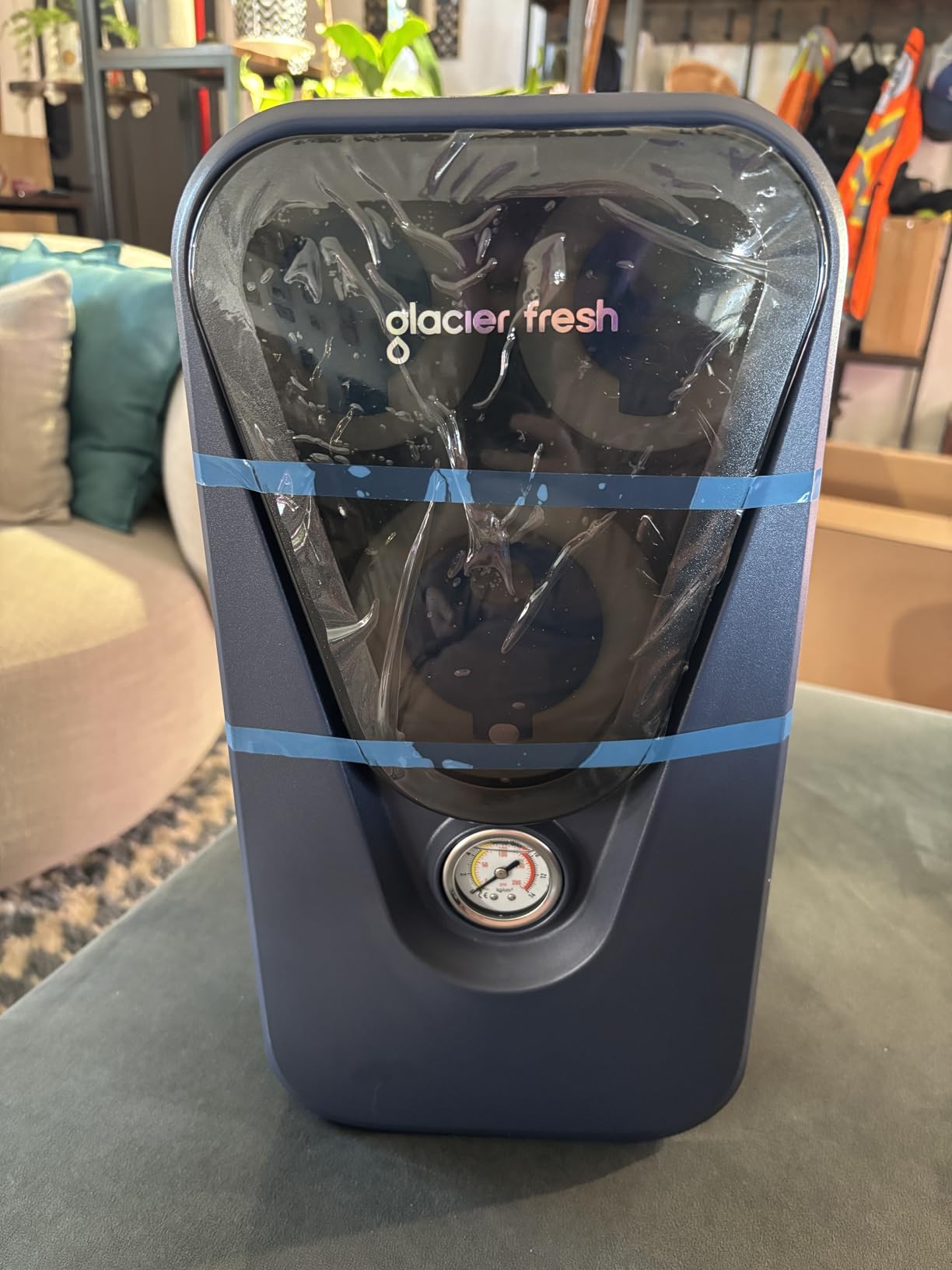
Where it loses is volume. The water-powered design starts fast and then slows after roughly the first quart, so a large pitcher or a pasta pot takes real patience. Rated performance also assumes at least 40 PSI at the inlet, and older homes on low pressure will miss the 800 GPD figure.
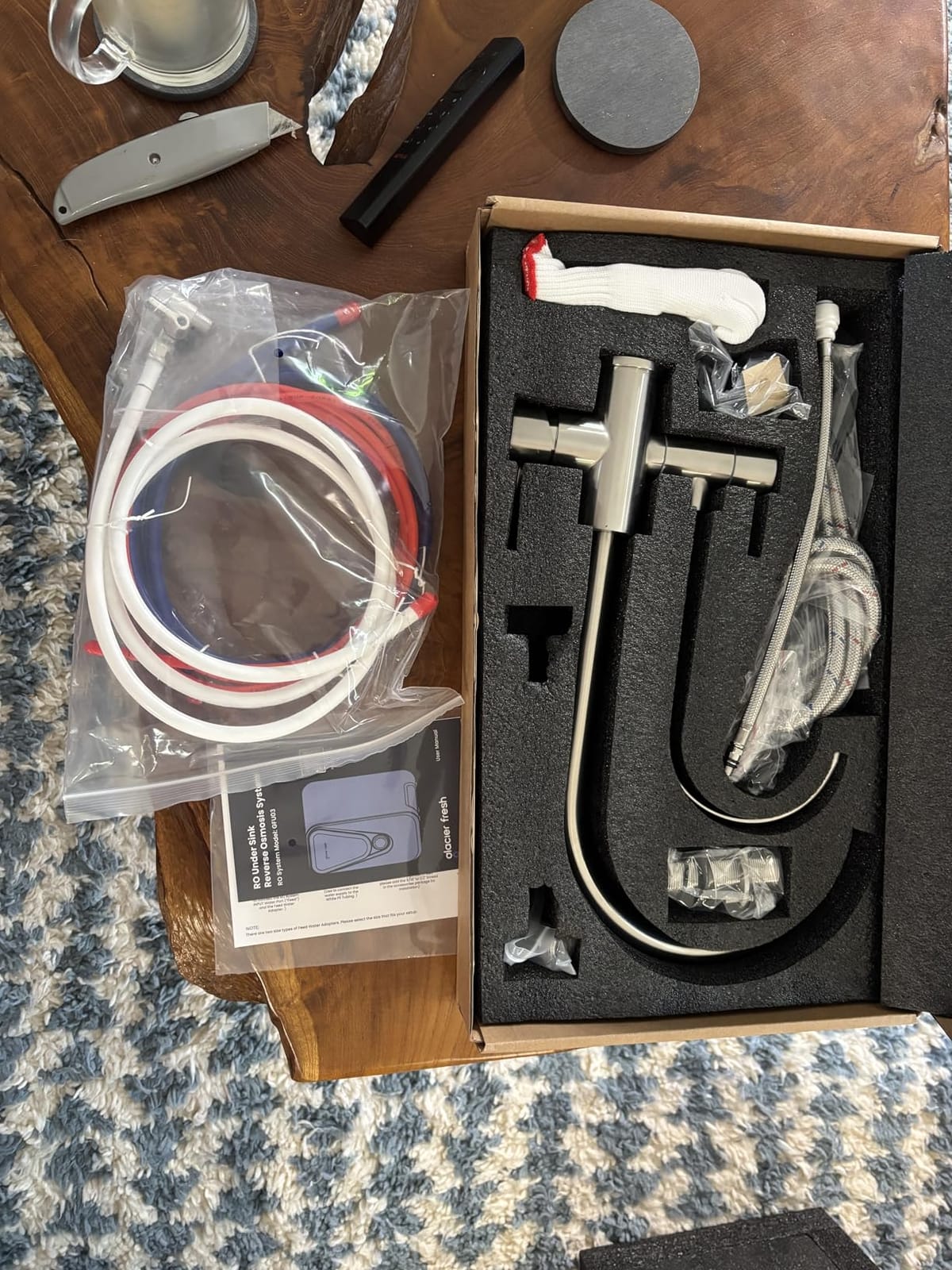
Two practical install notes. You need a half-inch to one-inch hole in the countertop for the faucet, and the supplied diamond hole saw bit lacks a centre bit, which makes it awkward on stainless steel. If your plumbing is not US standard, the supplied adapters may not thread correctly.
What you should know before buying the GFU03
The 3:1 drain ratio is worse than the 2:1 units above but better than a conventional tanked system. The instructions are thinner than most competitor manuals, so budget more time for setup or plan on calling a plumber for the countertop hole.
Who it suits and who it does not
It suits renters, older homes with no under-sink outlet, and anyone who cannot tolerate pump noise in a kitchen. It does not suit households that fill large containers regularly or live where incoming pressure sits below 40 PSI.
5. SimPure T1-400ALK – best for switching between alkaline and near-zero TDS
SimPure T1-400ALK Tankless Alkaline Reverse Osmosis Water Filter 400 GPD
400 GPD
0.4 gpm max flow
1.5:1 pure to drain
Booster pump and UV stage
Pros
- Final filter swaps between alkaline mineralization and a T33 carbon post-filter
- Strong TDS reduction reported stable by multi-year owners
- Booster pump delivers flow above what a standard RO reaches
- Quiet enough to sit in a kitchen next to a family
Cons
- Valve gasket and nuts do not always seal on certain shut-off valves
- Drain tube needs modification to fit the supplied saddle assembly
- Needs a one to two minute flush after long idle periods
- Faucet spout can be short on thick countertops
The SimPure is the only system here where the last stage is a swappable choice. It ships with an alkaline filter that restores calcium, magnesium and potassium, and you can replace it with a T33 carbon post-filter when you want water closer to zero ppm for taste reasons. That flexibility is why it earns a place on this list despite a lower average rating.
It is tested by SGS against the NSF/ANSI 58 standard, claims over 99.99% reduction across more than 1,000 contaminants including PFAS, lead, arsenic, fluoride and nitrates, and adds a UV stage that switches on automatically based on flow pressure. Output is 400 GPD at up to 0.4 gpm with a 1.5:1 drain ratio, the lowest waste ratio of the ten units here.
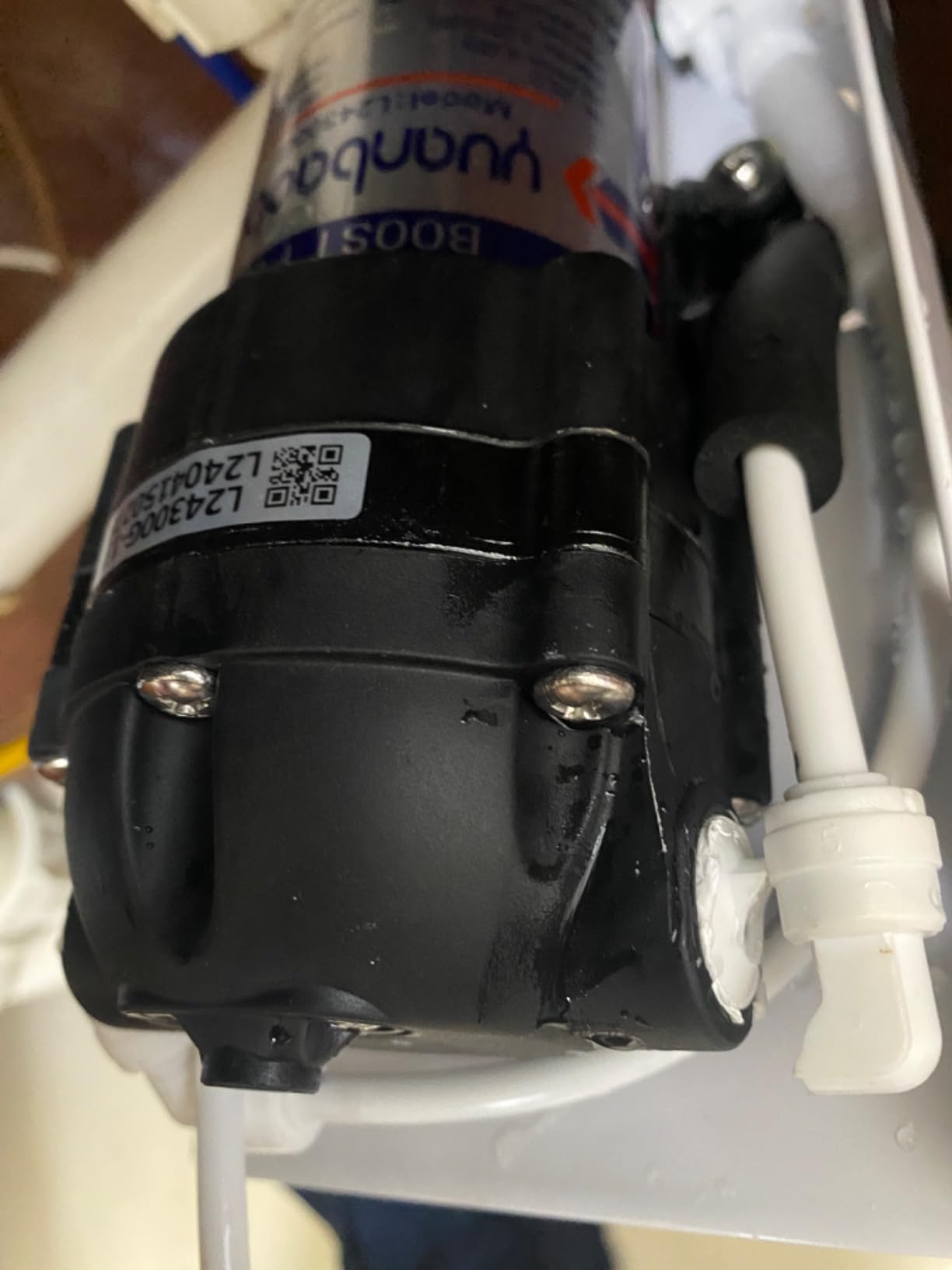
The low 4.2 rating reflects install friction more than filtration performance. Owners report the included water valve gasket and nuts not sealing on some shut-off valves, and the discharge tube not fitting through the supplied drain saddle without modification. Both are five-minute fixes if you have the right parts, and both cost you an afternoon if you do not.
Because a tankless system holds water in the tubing rather than a tank, owners are told to flush for one to two minutes after a long idle period. That is normal, but it is the most common source of confusion when the first glass of the morning tastes off.
What you should know before buying the T1-400ALK
Input water is rated up to 500 ppm TDS, a lower ceiling than several units here, so check your supply first. The filter-life indicator gives limited information, and a minority of owners report intermittent control box failures that required a replacement after the warranty period.
Who it suits and who it does not
It suits a drinker who wants to taste-test two different last stages on the same membrane, and households on moderately hard municipal water. It does not suit well water, very hard water, or anyone who wants a system that just works without touching fittings.
6. VIOMI V6 – best for the lowest five-year filter cost
VIOMI V6 600GPD Under Sink Tankless Reverse Osmosis Water Filtration System
600 GPD
3:1 pure to drain
RO filter rated 48 months
9-stage filtration
Pros
- RO filter rated up to 48 months
- a long service interval for this class
- Very low running cost compared with cartridge-heavy rivals
- Body saves up to 65% of under-sink space
- Smart faucet light turns orange when a filter change is due
- Owners coming off a tanked system report never running dry again
Cons
- Works only with the included faucet
- so no fridge or ice maker feed
- PCB carbon filter reported failing before its 24-month claim
- Some owners see slower than rated flow
- A faulty cold-water T-bracket arrived in one box
The VIOMI is the cost-of-ownership answer. Its RO filter is rated at up to 48 months, which is longer than most units in this roundup, and that single spec changes the five-year maths more than the purchase price does. Output is 600 GPD across nine stages built around a 0.0001 micron membrane, with a 3:1 drain ratio.
Certification is NSF/ANSI 42, 53 and 372. On contaminant claims the manufacturer lists TDS reduction up to 94.75%, PFOS above 99.88% and PFOA above 99.6%. The body measures 16.3 by 5 by 12.8 inches, one of the shorter bodies here, which is why it saves up to 65% of the cabinet.
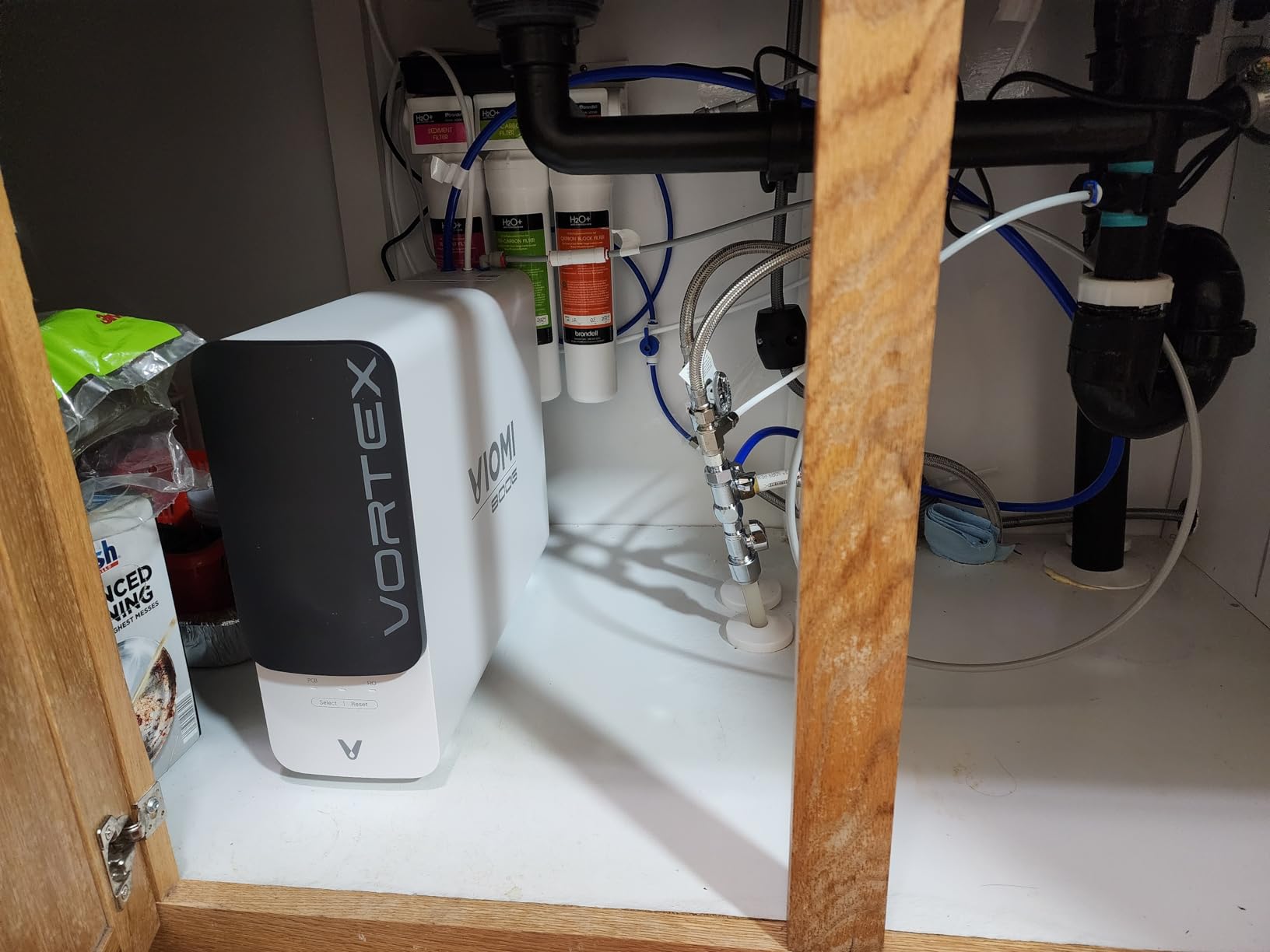
The limitation buyers hit most is connection. The system works only with the faucet supplied, so you cannot feed a refrigerator ice maker or a refrigerator water line from it without adding a tank. Owners upgrading from a tanked setup report the opposite complaint too: they stopped running out of water entirely.
Two smaller notes. Some owners report the PCB carbon filter failing well before its stated 24 months, and the recommended initial flush is 20 minutes rather than the 12 stated. Both are worth budgeting time and a spare filter for.
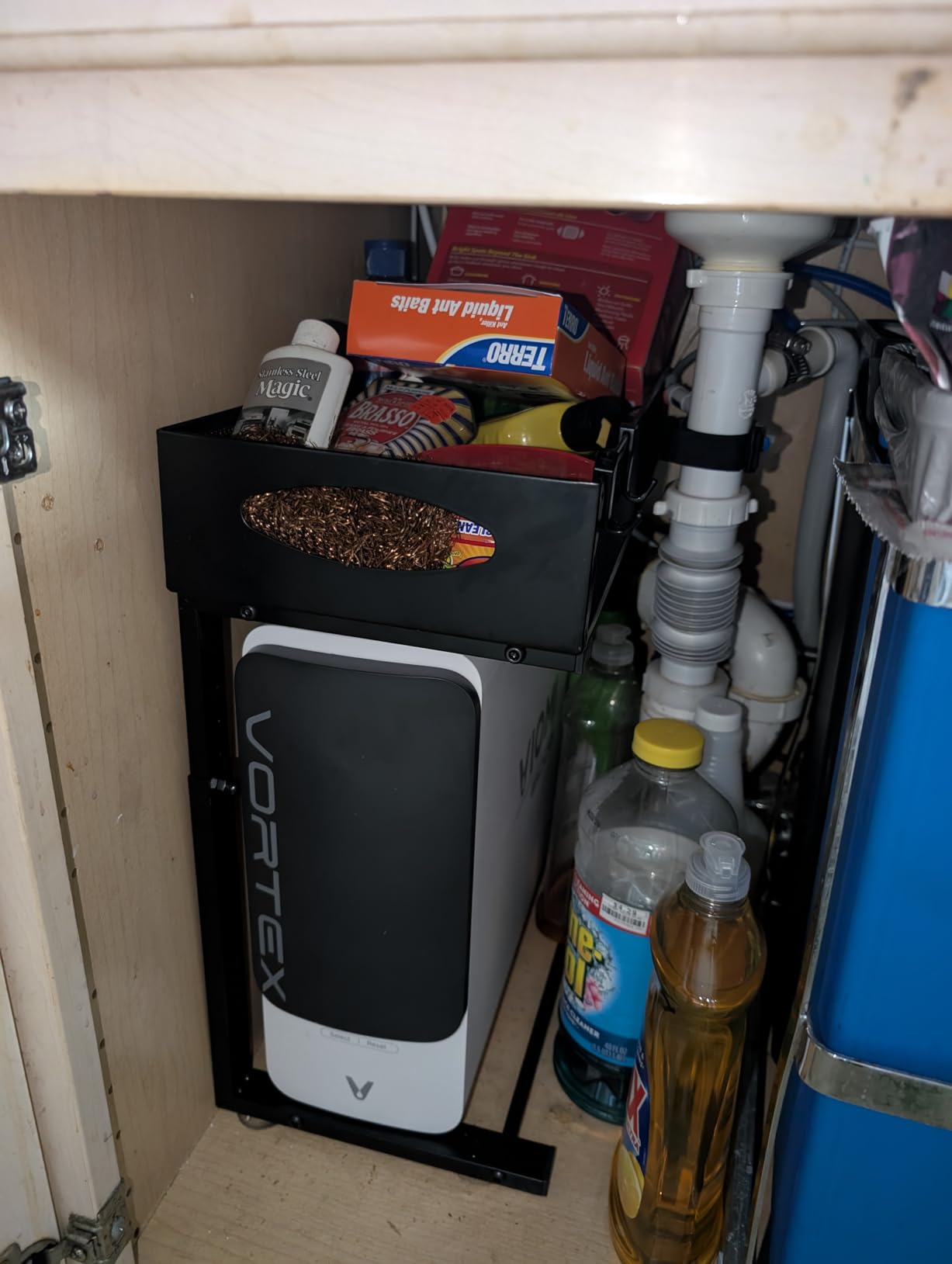
What you should know before buying the V6
Input water is rated up to 800 ppm TDS. The faucet light signalling filter change is simple and works, but it is the only status feedback you get, with no app and no numeric readouts.
Who it suits and who it does not
It suits households that want to set filters and forget them for years, and kitchens with a low cabinet ceiling. It does not suit anyone planning to connect an ice maker or a filtered refrigerator line straight to the system.
7. Philips AUT9360 – a quiet system with a biomimetic membrane
Philips Tankless Reverse Osmosis System, 600 GPD, Self-Cleaning RO System
600 GPD
0.41 gpm max flow
2.3:1 pure to drain
Auto-Cycle self-flushing
Pros
- Aquaporin Inside membrane developed with NASA and ESA
- Measured results of 385 to 400 ppm input dropping to 5 to 6 ppm output
- Only unit here publishing a running cost of about 0.05 per gallon
- Auto-Cycle flushing reduces first-cup TDS creep
- Mounts vertically or horizontally
- rare for a tankless unit
Cons
- Supplied T-valve is half-inch while most US plumbing uses 3/8 inch
- Instructions skip the dust plug removal step
- Drain saddle needs an uncommon 6.5 mm drill bit
- Some owners see high TDS after overnight non-use
The Philips differentiates on the membrane itself. It uses an Aquaporin Inside biomimetic membrane built with aquaporin proteins, developed in collaboration with NASA and ESA, and owners report some of the lowest measured output readings in this group: input water at 385 to 400 ppm coming out at 5 to 6 ppm.
Rated output is 600 GPD at 0.41 gpm with a 2.3:1 drain ratio. The Auto-Cycle system flushes the water path during standby and after use, which is designed to cut both scale buildup and the first-cup TDS creep that affects other tankless units. It mounts vertically or horizontally, which almost no other tankless body on this list allows.
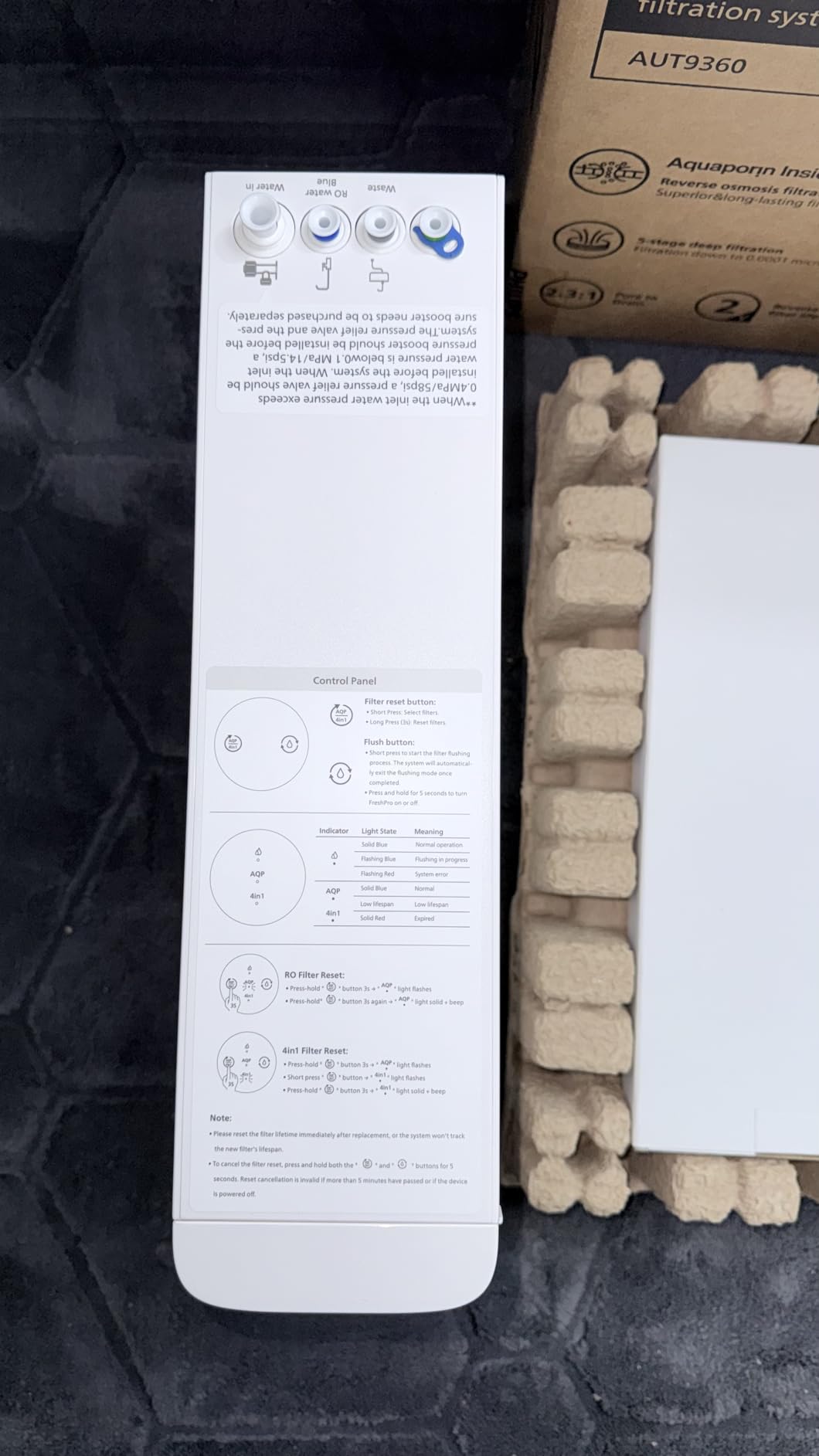
Filter economics are the quiet win. The manufacturer puts running cost at roughly 0.05 per gallon, with a 4-in-1 cartridge rated up to 12 months and the RO element up to 24 months. For a household drinking several glasses a day, that is a low ongoing figure.
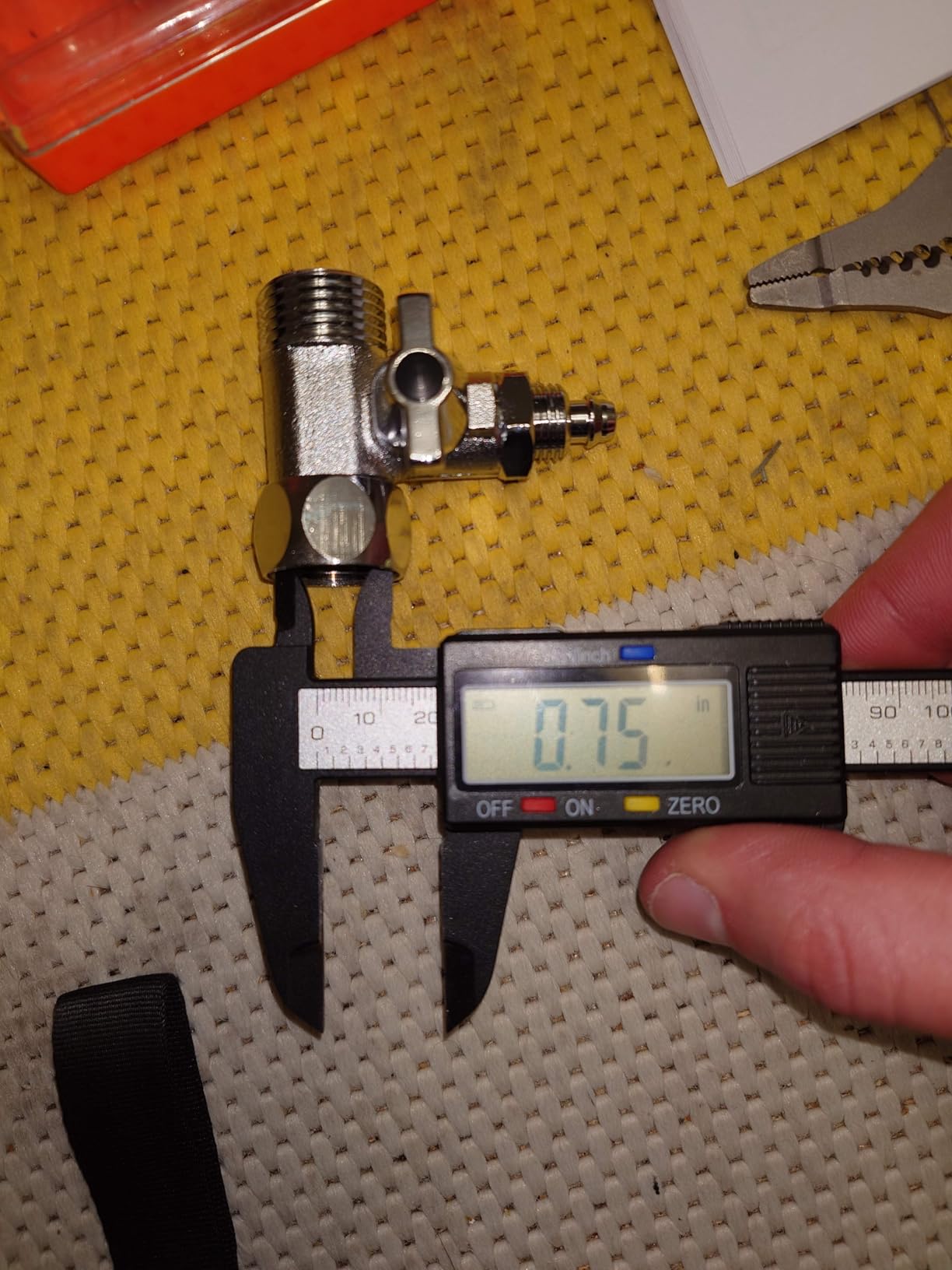
The install friction is real though. The supplied T-valve is half-inch while most US under-sink plumbing is 3/8 inch, so several owners had to buy a 3/8 inch adapter before they could finish. The instructions also skip the dust plug removal step, and the drain saddle requires a 6.5 mm bit that few households own.
What you should know before buying the AUT9360
This is the newest and least proven unit here with 36 ratings, so long-term membrane performance data is thin. It is certified to NSF/ANSI 372 and listed to UL 979 and CSA, but it is not NSF/ANSI 58 certified, and buyers who specifically want 58 treat that as a downgrade.
Who it suits and who it does not
It suits noise-sensitive kitchens and households tracking filter cost per gallon closely. It does not suit buyers who want an NSF/ANSI 58 performance listing, or anyone unwilling to source a 3/8 inch adapter and a 6.5 mm drill bit before starting.
8. Electrolux Eco 600GPD – cleanest install with the fewest fittings
Electrolux Tankless Reverse Osmosis System,Eco 600GPD, 9-Stage Water Filter
600 GPD
0.42 gpm max flow
3:1 pure to drain
100 mL in about 3 seconds
Pros
- Integrated water path uses up to 90% fewer connectors
- Steady flow that owners report does not drop off when filling a kettle or pan
- Owners report zero leakage after installation
- Automatic flushing with smart faucet filter reminders
- Stainless steel faucet and a tidy under-sink layout
Cons
- One owner could not confirm replacement cartridge supply
- A few owners describe audible motor noise
- Only around 55 reviews limits long-term data
- Some installers needed a new under-sink outlet
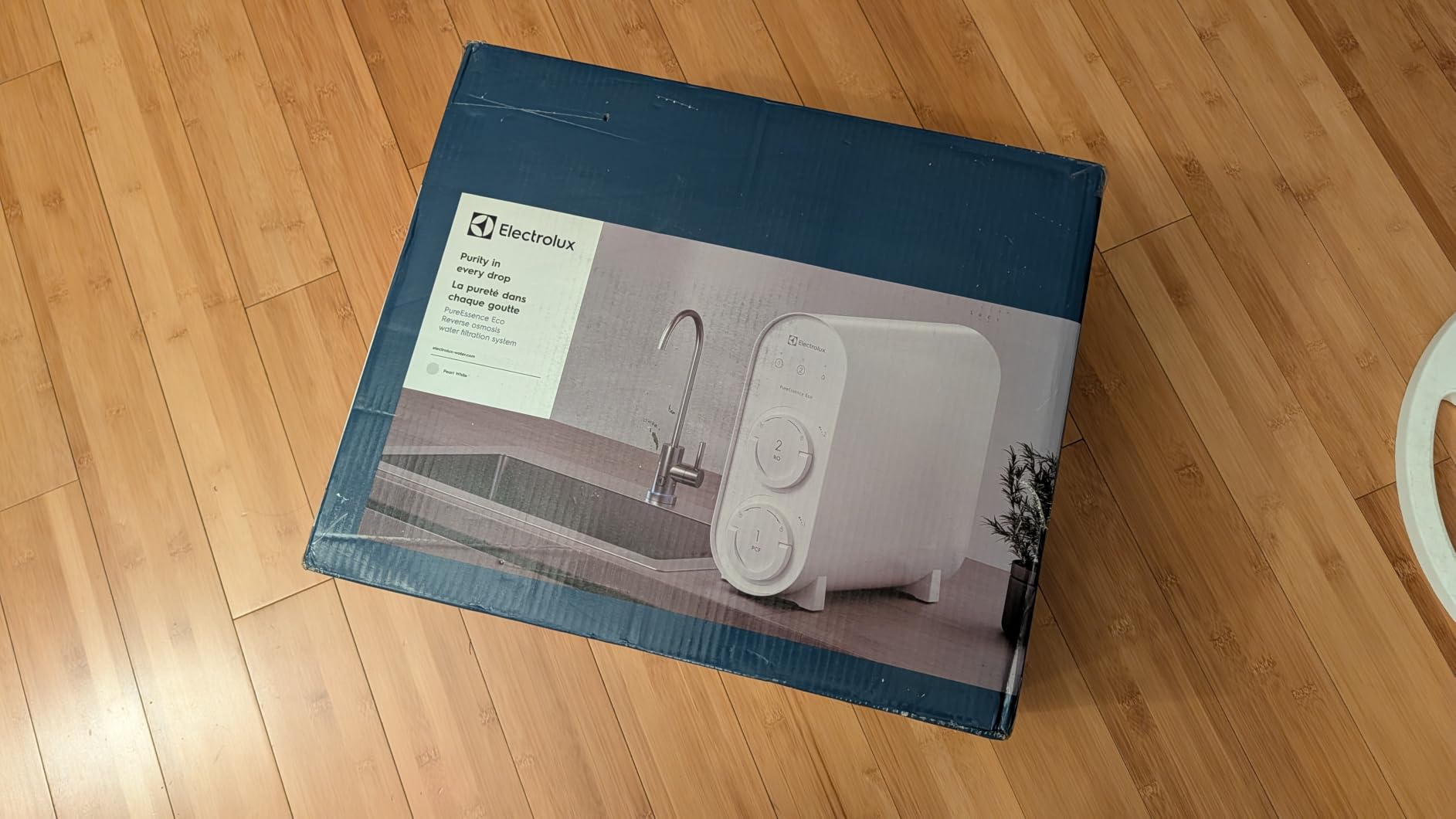
The Electrolux is designed around a single point. Its integrated water path cuts the number of connectors by up to 90%, and connectors are where under-sink installs leak. Owners replacing a leaking one-gallon tank report zero leakage afterwards and a much tidier cabinet as a secondary benefit.
Flow is the other talking point. It delivers 600 GPD and puts out 100 ml in about three seconds, with owners specifically reporting that flow does not fall off when filling a kettle or pan, the complaint that dominates reviews of slower units. Filtration is nine stages around a 0.0001 micron membrane at a 3:1 drain ratio.
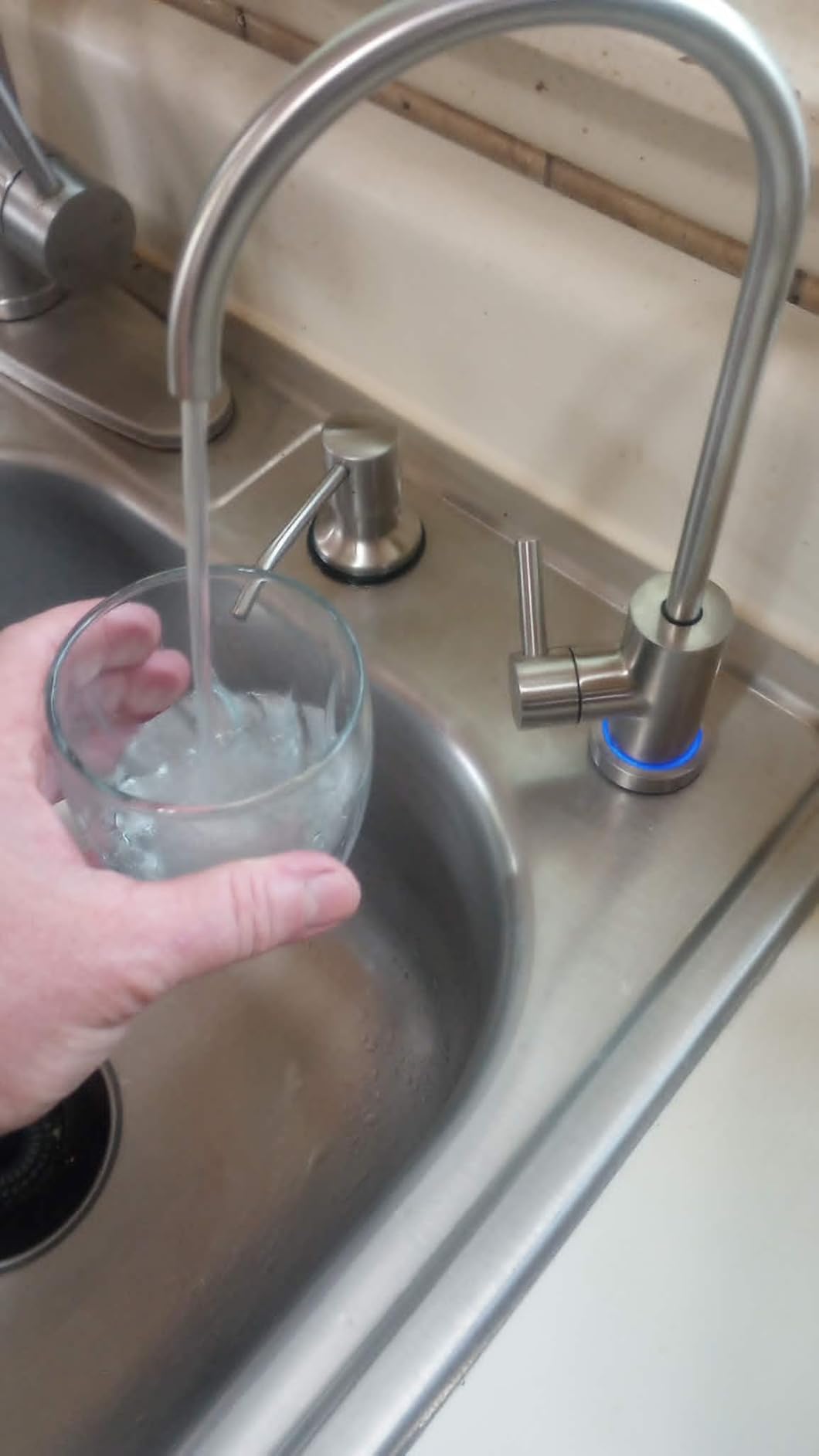
The RO filter is rated up to two years and the carbon stage up to one, with automatic flushing handling the rest of the maintenance. The body is 15.6 by 5.2 by 13.3 inches, so it fits under most cabinets without a deep cavity.
The risk here is supply continuity, not performance. One reviewer reported that replacement cartridges were unavailable shortly after purchase and support could not confirm a supply date. With only 55 ratings, there is also very little long-term reliability history to draw on.
What you should know before buying the Electrolux Eco
Confirm cartridge availability with the seller before you commit. The 3:1 drain ratio also means more water goes down the drain than on the 2:1 units above, which matters most if you are on a metered supply or a septic field.
Who it suits and who it does not
It suits anyone who has been disappointed by a leaky tanked system and wants the fewest possible joints. It does not suit risk-averse buyers who want a deep review history, or households that want the lowest water waste.
9. ANGEL X2 – the slim body for cramped cabinets
ANGEL X2 Tankless Reverse Osmosis System, 700 GPD, Under Sink RO Filter
700 GPD
0.5 gpm max flow
2.5:1 pure to drain
4.72 inch wide body
Pros
- Slim 4.72 inch body
- narrower than most tankless units
- Quick stated fill rate of about 5 seconds for a 6 oz glass
- Low TDS measured at 6 ppm in one independent test
- Two-second tool-free filter changes
- Low noise
- comparable to a blood pressure cuff pump
Cons
- Supplied T-adapter does not fit standard US 3/8 inch shutoff valves
- Buyers report needing a separate 3/8 inch angle stop T
- Measured drain ratio falls short of the advertised 2.5:1 once flushing is counted
- Undocumented automatic flush cycle
- Standard faucet limits on thick countertops
The ANGEL X2 solves a specific problem: a cabinet too narrow for anything else here. At 4.72 inches wide it is one of the slimmest bodies on this list, and the manufacturer claims it saves up to 78% of under-sink space. If your cabinet is shared with a disposal, a recycling bin and a cookware tray, that width is the whole decision.
Output is 700 GPD at 0.5 gpm, and a 6 oz glass fills in about five seconds, the quickest stated cup fill in the roundup. Filtration is seven stages around a 0.0001 micron membrane, CSA tested to NSF/ANSI 58, 42 and 372. One independent test measured output at 6 ppm TDS.
Two claims need qualifying. The stated 2.5:1 pure-to-drain ratio drops measurably below that once the post-use automatic flush is counted, and that flush is not documented in the manual. On a septic system that extra high-pressure flush after every use is a real consideration.
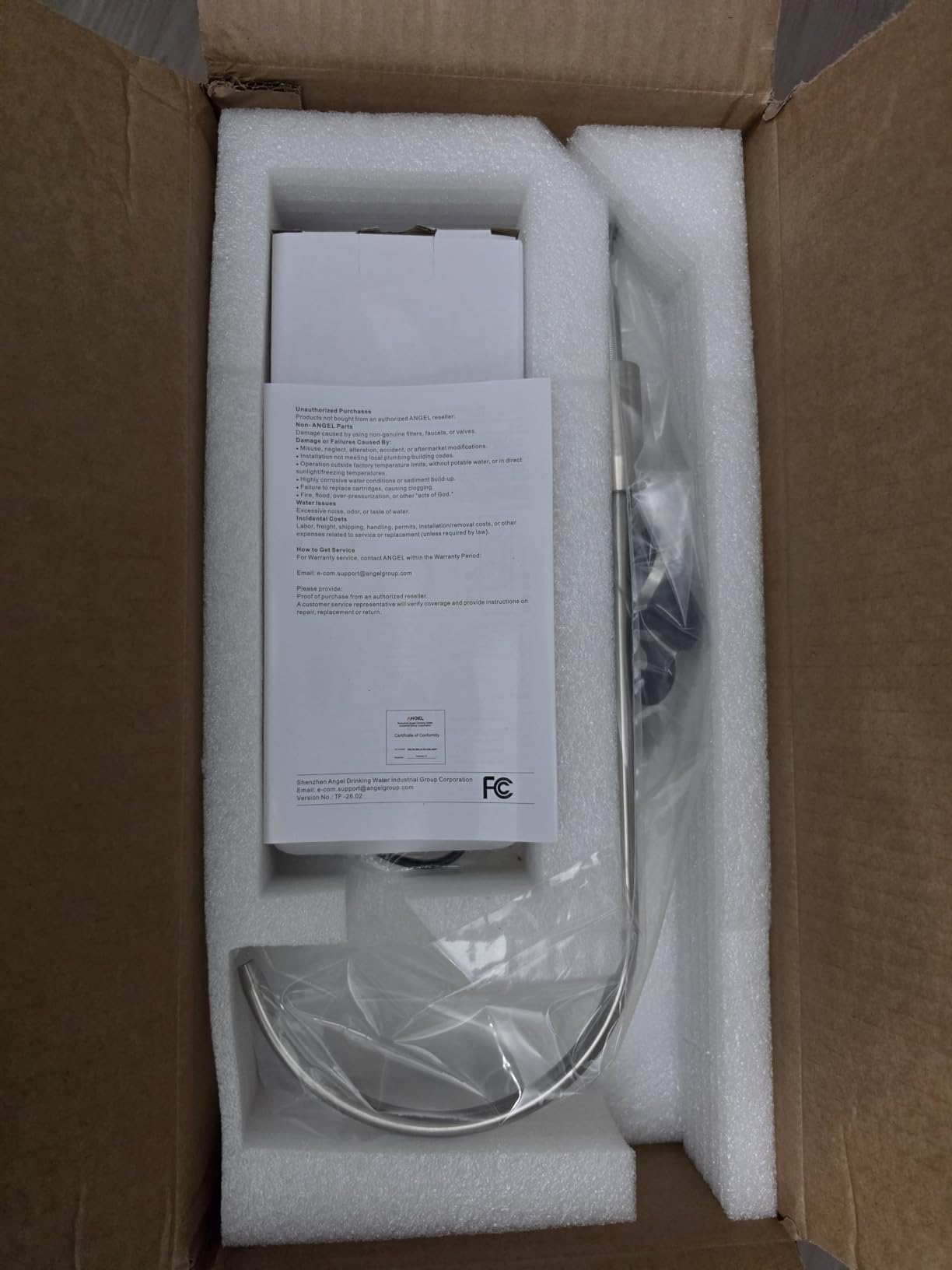
The install problem is the supplied water supply T-adapter, which is not compatible with standard US 3/8 inch compression shut-off valves. Owners have to buy a 3/8 inch angle stop T separately, which delays the install. Faucet thread length is roughly 1.25 inches, so it will not suit a thick countertop.
What you should know before buying the X2
Only 59 ratings, so treat the performance numbers as promising rather than proven. Feed pressure range is 14.5 to 87 psi, which is wide, but the top of that range is well above typical household pressure.
Who it suits and who it does not
It suits small kitchens, condos and narrow cabinets where a wider unit simply will not go in. It does not suit anyone unwilling to make a second hardware run before installing, or households on a septic system sensitive to extra flush volume.
10. Brio AQUUS TROE800COL – the only faucet with a zero-waste produce mode
Brio AQUUS TROE800COL Reverse Osmosis Water Filtration System, 4-Stage Tankless RO Water Filter System for Under Sink, 800 GPD, 2:1 Pure to Drain, Reduces TDS, Smart Faucet, USA Support, Black/Silver
800 GPD
0.42 gpm max flow
2:1 pure to drain
Dual-lever smart faucet
Pros
- Only unit here with a dual-lever faucet that dispenses waste-free filtered water for produce
- Smart faucet reports both TDS and remaining filter life
- Quarter-turn front-access filter changes without moving the unit
- NSF/ANSI 42 pre-filter and NSF/ANSI 58 membrane
- Black and silver finish rather than typical white plastic
Cons
- Lowest average rating of the ten units at 4.0 stars with 14% one-star reviews
- Deepest body here at 18.2 inches
- Weak demand signal compared with the rest of the shortlist
The Brio is included for one feature no other system here has. Its dual-lever faucet lets you dispense PCB-filtered water for washing produce and watering plants, and that mode generates zero wastewater. For a household that washes a lot of fruit and vegetables, that is a genuine, daily saving on both water and drain load.
Output is 800 GPD with a 1 cup dispense in under eight seconds, and a 2:1 drain ratio. Filtration is four stages: a PCB pre-carbon with non-woven PP and coconut carbon fibre stages certified to NSF/ANSI 42, then a 0.0001 micron membrane certified to NSF/ANSI 58.
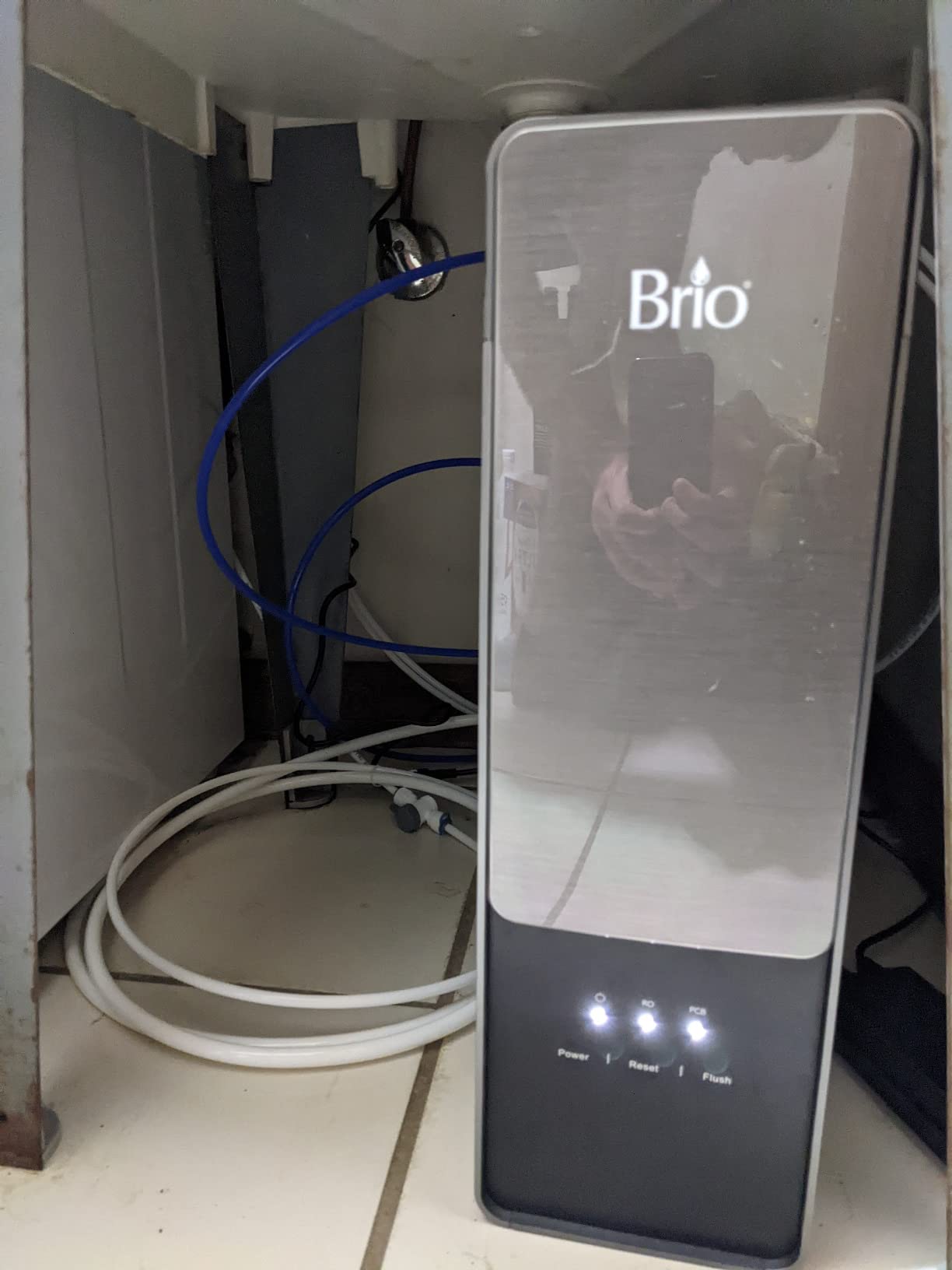
The smart faucet shows both TDS and remaining filter life as a percentage, which is more informative than a simple colour change. Filter changes are a front-access quarter turn, so you never have to pull the unit out from under a full cabinet.
It also scores 4.0 stars with 14% one-star reviews, and it is the deepest body here at 18.2 inches. Depth is the real problem: in a shallow cabinet this unit will not fit where several others would. Measure depth as carefully as width.
What you should know before buying the Brio
The PCB filter is replaced every 6 to 12 months and the RO filter every 12 to 24 months, so the running cost is a two-cartridge line item. Input water is rated up to 500 ppm TDS, which is low for some well supplies.
Who it suits and who it does not
It suits households that wash produce daily and want a faucet that shows real filter data. It does not suit shallow cabinets, buyers who care about a large review base, or anyone with input water above 500 ppm.
How to Choose a Tankless Reverse Osmosis System for a Kitchen
Certification is the first filter. NSF/ANSI 58 is the performance standard for RO systems and the one buyers on water treatment forums specifically ask for. NSF/ANSI/CAN 372 is a different thing entirely: it certifies that the wetted materials are lead-free, not that the system reduces contaminants. A unit can carry 372 and not 58, which is exactly the case with the Philips in this roundup, and buyers who filter on 58 treat that as second tier. Check both listings yourself in the NSF listings database rather than trusting a product page.
Sizing is where most people overspend. Rated GPD is a daily capacity figure under ideal conditions, not a flow rate at your faucet. A household of three to five drinking and cooking with a tankless RO sits comfortably in the 500 to 800 GPD band. A household of one or two can be served by a 400 GPD unit and will notice little difference day to day.
The water waste question matters more than most buyers expect. The pure-to-drain ratio tells you how many gallons go down the drain for every gallon you drink. A conventional tanked RO often runs at 3:1 or 4:1. Of the ten systems here, ratios range from 1.5:1 on the SimPure to 3:1 on the GLACIER FRESH, Electrolux and VIOMI. If you are on a metered supply or a septic field, favour the lower number.
Taste is where RO users get disappointed. The membrane strips minerals along with contaminants, which is why the water tastes flat and slightly acidic. Alkaline remineralization stages such as the one on the Frizzlife and the SimPure add calcium and magnesium back and push pH above 7.5, which many people prefer. The cost is that your TDS meter reads higher, so an alkaline unit and a TDS-tracker are somewhat at odds.
Kitchen installation is where the surprises live. Nine of the ten systems here need an electrical outlet under the sink, and the GLACIER FRESH is the only exception because it runs on water pressure. If you do not have an outlet, you will need an electrician, and more than one buyer across this group discovered that after delivery. The other install variables are cabinet height and depth, the countertop hole size for the faucet, and where your drain line can be tapped.
Noise is the most common complaint on water treatment forums and the least discussed in published roundups. Pump hum is normal for any electric RO system, and the level varies by unit: the Philips and the ANGEL are described as quiet in owner reports, while the Waterdrop and Frizzlife are described as noticeably humming. Importantly, forum users repeatedly report that noise complaints were resolved by checking feed pressure and filter condition rather than by replacing the unit. A blocked or exhausted filter makes a pump work harder and louder. If yours gets loud, check those two things first.
There are also honest reasons to skip a tankless RO entirely. A one or two person household pays for capacity it never uses. A renter without an outlet should look at a countertop unit instead. And on well water or hard water, no RO membrane should be asked to do a pre-filter’s job: if you have untreated well supply with iron or sediment, you need sediment and iron pre-treatment first, or you will burn through pre-filters and the membrane will foul long before its rated life.
Frequently Asked Questions
Who makes the best tankless reverse osmosis system?
For most kitchens the Waterdrop G3P600 leads on the combination of published certifications and owner history, with NSF/ANSI 42, 53, 58 and 372, 600 GPD output and a 2:1 drain ratio. The Frizzlife PD600-TAM3 is the alternative if you want alkaline remineralized water, and the iSpring RO5004F if you want a UV stage and an integrated leak-stop valve.
Are tankless reverse osmosis systems any good?
Yes, with one caveat. Tankless systems match or exceed tanked units on filtration, free up most of the cabinet, and produce water on demand instead of storing it. The caveat is flow at the faucet, which is capped by membrane flux rate, so filling a large pitcher still takes time. Households that expected tankless water to feel like regular tap pressure are usually the ones who feel disappointed.
Is tankless reverse osmosis worth it?
It is worth it for households of three or more that have an under-sink electrical outlet, want continuous purified water, and would otherwise lose cabinet space to a tank. It is not worth it for one or two people, for renters without an outlet, or for anyone who expects full-pressure flow at the tap. In those cases a tanked under-sink RO or a countertop unit serves better.
What is a major downside of reverse osmosis water?
The most cited downside is taste. RO strips dissolved minerals along with contaminants, leaving water that tastes flat and mildly acidic, which is why many people add an alkaline remineralization filter. Other drawbacks are that it produces waste water at a ratio of 1.5:1 to 3:1 or worse, requires an outlet for pump-driven units, and needs regular filter changes to stay effective.
Do tankless reverse osmosis systems need electricity?
Most do. Nine of the ten systems in this roundup use an electric pump to push water through the membrane at pressure, so they need an under-sink outlet. The exception is the GLACIER FRESH GFU03, which is driven by incoming water pressure alone and therefore needs no power and produces zero operating noise, at the cost of needing at least 40 PSI at the inlet.
Which Tankless RO System Should You Buy?
The best tankless reverse osmosis systems for kitchens in 2026 come down to three realistic answers. Buy the Waterdrop G3P600 for the strongest all-round combination of NSF certifications, 600 GPD capacity and a 2:1 drain ratio. Buy the Frizzlife PD600-TAM3 if flat water is the deal-breaker and you want a mineral stage. Buy the iSpring RO5004F if a UV stage and an automatic leak shutoff matter more to you than a long review history.
Then check three things before you order: that you have an under-sink outlet, that your cabinet is deeper and taller than the unit’s published body dimensions, and that your supplied fittings match your shut-off valve. Every unit in this roundup was reviewed on published specification and owner feedback, so treat the numbers as the starting point and verify the certification listing yourself before installing.