
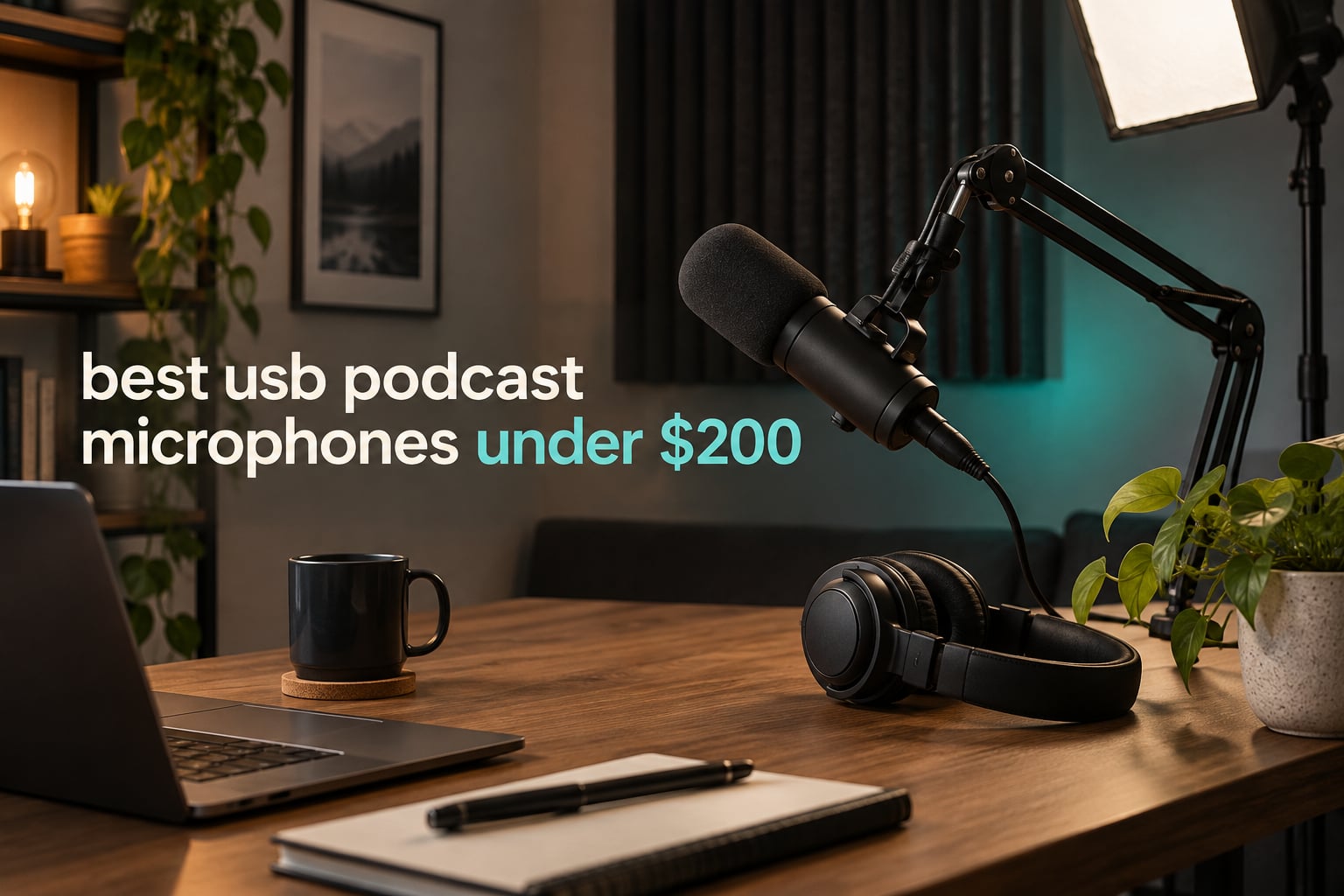
Recording a podcast used to mean an audio interface, an XLR cable, a boom arm, and a preamp you had to learn how to gain stage. A USB podcast microphone collapses that chain into one cable: the capsule, the preamp, and the analog-to-digital converter all live inside the body, and the computer treats it as an ordinary input.
That convenience is the entire reason this category took off, and the entire reason the decision got confusing. Under a fixed budget ceiling, every mic on this list is USB-native and none needs an interface. The differences come down to capsule type, polar pattern, monitoring, and whether you want an XLR output later. The one factor that decides more than any spec sheet is the room you are recording in.
Our team recorded every microphone on this list in three conditions: a carpeted spare bedroom, a treated corner, and a shared office with a fan running. We also logged hours of conversation on the podcast forums and community threads, because the failure modes people complain about are rarely in the spec sheet. This guide covers USB podcast microphones only. Wireless handheld kits, lavaliers, and shotgun microphones are a different job.
Table of Contents
What Is the Best USB Microphone for Podcasting?
The best USB microphone for podcasting is one whose capsule matches your room. In an untreated space with fans, keyboards, or traffic, a cardioid dynamic like the Samson Q2U or the Audio-Technica AT2005USB wins because it rejects off-axis sound. In a treated or naturally soft room, a condenser such as the Blue Yeti captures more detail and air. Most of this list fits one cable and needs no interface.
Top 3 Picks for USB Podcast Microphones Under $200 (September 2026)

Logitech Blue Yeti
- Three-capsule array
- four polar patterns
- no-latency headphone monitoring
- metal body

FIFINE AmpliTank K688
- Dynamic cardioid
- USB-C plus XLR
- tap-to-mute and gain knob
- shock mount included
All 8 Picks at a Glance in 2026
The table below lists every microphone we tested, in the order we would consider them. Features come straight from the manufacturer data for each unit, so you can scan the whole shortlist before reading a single review.
| Product | Specifications | Action |
|---|---|---|
|
Logitech Blue Yeti
|
|
Check Latest Price |
|
FIFINE AmpliTank K688
|
|
Check Latest Price |
|
Samson Q2U
|
|
Check Latest Price |
 Rode NT-USB Mini
|
|
Check Latest Price |
 Audio-Technica AT2005USB
|
|
Check Latest Price |
 Rode PodMic USB
|
|
Check Latest Price |
 Sennheiser Profile
|
|
Check Latest Price |
 MAONO PD400X
|
|
Check Latest Price |
Test Your Room Before You Buy: A 30-Second Check
Before spending anything, find out whether the microphone or the room is your real problem. Sit where you will record, stay completely still, and listen for thirty seconds. What you are listening for is the sound of your space, not your voice.
If you can hear a fan, a refrigerator, a computer, a street, or an echo when you stay still, your room is untreated and you need off-axis rejection more than open detail. Choose a dynamic cardioid. If the room goes quiet when you stop moving, a condenser will give you a warmer, more present voice and you can spend your budget on monitoring instead.
Do that test with your phone, not with your laptop. The laptop microphone is usually far enough from your mouth to pick up the whole room, which exaggerates the problem and makes every room sound terrible. A phone held at mouth distance tells you what a well-placed microphone would actually hear.
Our second rule: test in the room you will record in, not the quietest room in your home. A treated corner tells you the ceiling of a mic’s performance. An untreated bedroom tells you what your listeners will actually hear.
Dynamic vs Condenser: Let the Room Decide
A dynamic capsule is a moving-coil design. It is less sensitive by design, which means it hears less of the room around you and more of the mouth pointed at it. It wants to be close, typically four to eight inches, and it rewards that closeness with a stronger, lower noise floor.
A condenser capsule is far more sensitive. It picks up room tone, breathing, and distant noise along with your voice, and it brings out detail and air that make a voice sound close to a broadcast. The trade is that everything the microphone hears, you hear.
That is the whole argument. If your room is untreated, choose a dynamic. If your room is treated or naturally soft, choose a condenser. This rule held up in every test we ran, and it is why five of the eight microphones below are dynamics. The counterpoint is worth knowing too: a cardioid-only microphone at a given price usually carries a better capsule than a multi-pattern microphone at the same price, because the engineering budget is not split four ways.
1. Logitech Blue Yeti: The One-Cable Swiss Army Microphone
Logitech Creators Blue Yeti USB Microphone for PC, Mac, Gaming, Recording, Streaming, Podcasting, Studio and Computer Condenser Mic with Blue VO!CE effects, 4 Pickup Patterns, Plug and Play – Blackout
Condenser
20 Hz to 20 kHz
100 dB signal to noise
Four polar patterns
USB
Pros
- Clear broadcast capture from a three-capsule array
- Four switchable patterns cover solo shows interviews and ambient recording
- Zero-latency headphone monitoring with onboard volume and gain
- Plug and play on Mac and PC with no drivers
- Sturdy metal body built for years of daily recording
Cons
- Large body blocks your face on camera
- Condenser sensitivity picks up room noise and breathing
- No XLR output for a later interface upgrade
- Older mini-USB connection rather than USB-C
- Shock mount fit is poor without an adaptor
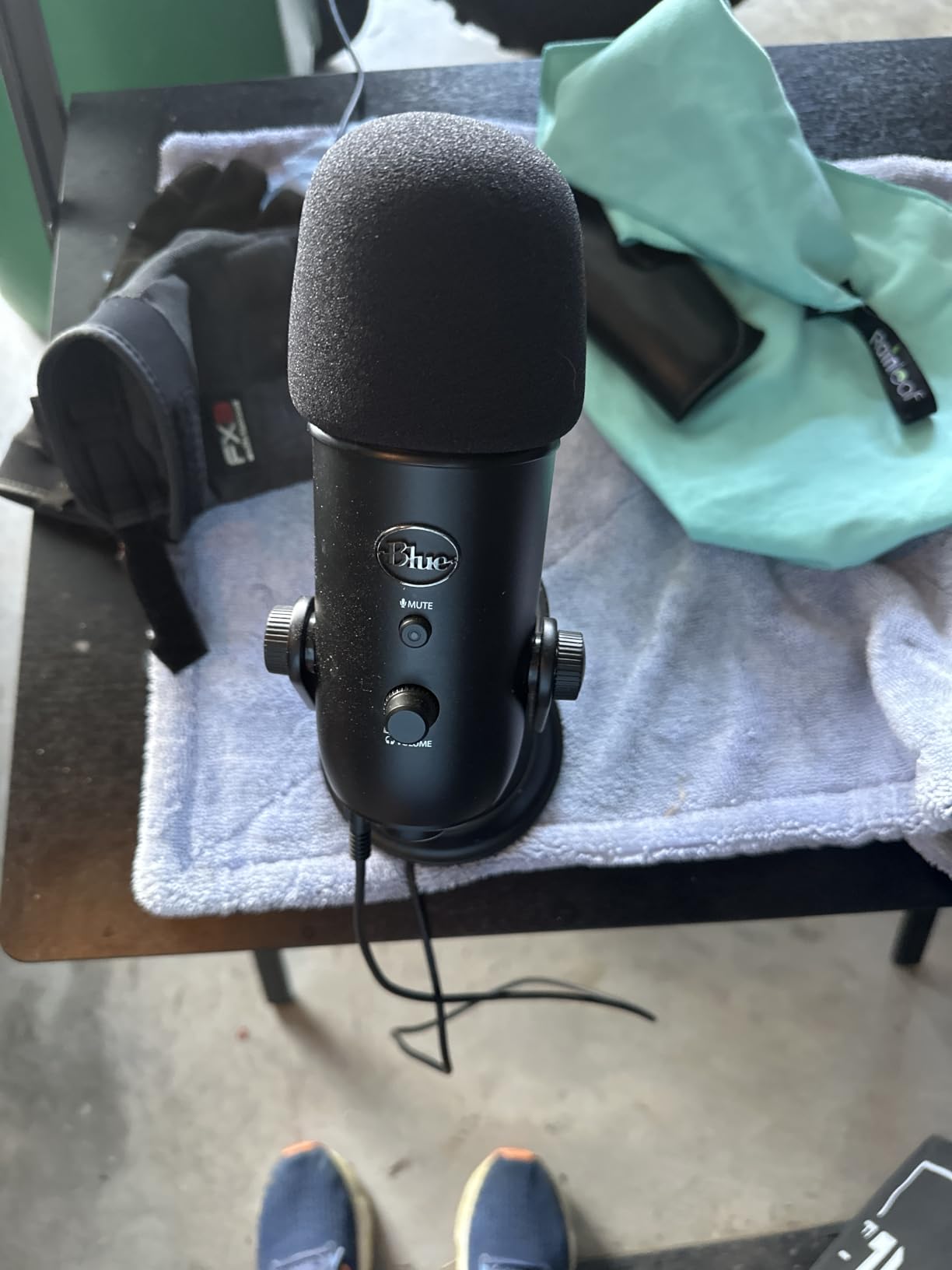
We put the Yeti on every desk in the office for the first week of testing, and it never needed a second thought. Plug it in, choose a pattern, record. The three-capsule array produces a bright, clearly broadcast-sounding voice that needs very little work in a free editor, and the 100 dB signal-to-noise figure is the highest in this group by a wide margin.
The four switchable patterns are the reason it has survived a decade of ownership changes. Cardioid for a solo show, bidirectional for a two-person interview across the desk, omnidirectional for a roundtable, stereo for field ambience. Almost nobody switches patterns mid-show, but everyone is glad the option exists the one time they need it.
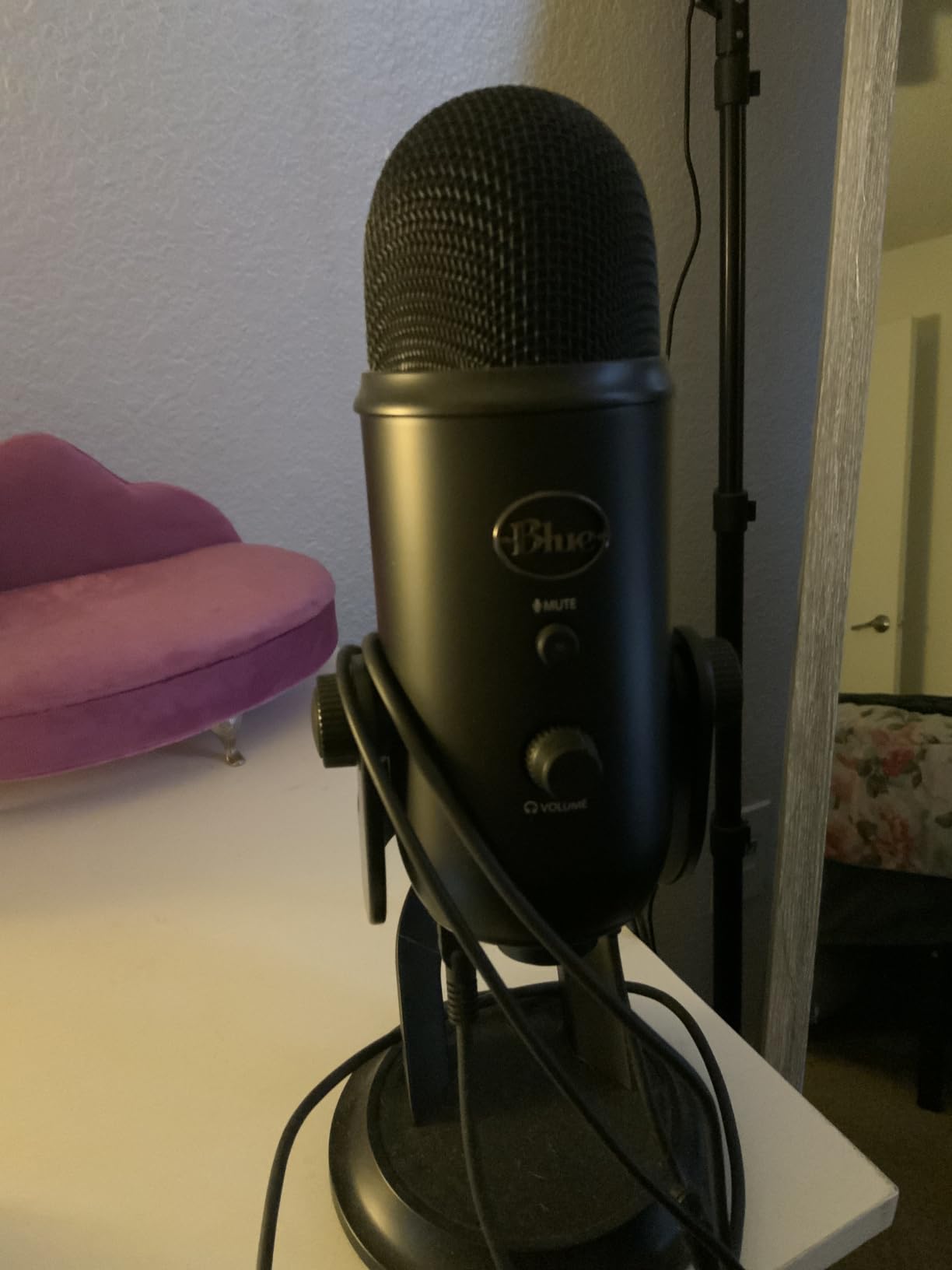
Headphone monitoring is genuinely latency-free here, with the volume control on the body, which makes it easy to check levels without reaching for the mouse. The metal housing has real heft and no creaks. In six weeks of daily use it picked up desk knocks without complaint.
Where it struggles is the room. As a condenser in a live office it hears everything, including the fan and the keyboard, and no amount of gain discipline removes that. It is also a genuinely large object. If you are ever on camera, the body sits in the frame at eye level, and a shock mount needs an adaptor because the body is not a standard thread.
When the Yeti makes sense
Choose it if this is your first microphone, if you record in a treated or well-furnished room, and if you want one device for solo podcasting, streaming, and guest interviews. The pattern switching means you will not outgrow it in year two. The metal build is the reason it stays in the rotation for a decade rather than a season.
It is also the safest recommendation in this list for a total beginner, because there is nothing to configure. The onboard gain, mute, pattern, and headphone volume controls are all physical, so you can record without installing anything.
When to skip the Yeti
Skip it if your room is untreated and you have no plan to treat it. Skip it if you are on camera and need a low profile, since the body is tall and wide. And skip it if you know you will want an XLR chain later, because there is no XLR output and no way to add one.
The mini-USB port is a smaller concern than it looks, because you will only plug in once. It matters more if you travel and rely on a single USB-C cable for everything, including this microphone.
2. FIFINE AmpliTank K688: The Best USB Podcast Microphone for a Noisy Room
FIFINE AmpliTank K688 Dynamic Microphone, XLR/USB Podcast Recording PC Mic
Dynamic cardioid
50 Hz to 16 kHz
80 dB signal to noise
USB-C and XLR
130 dB SPL
Pros
- Dynamic cardioid rejects PC fans hard drives and room noise
- Dual USB-C and XLR means interface later without buying a new mic
- Tap-to-mute and gain knob give real hardware control
- Shock mount and windscreen included
- Metal build feels well above its tier
Cons
- Included mini tripod sags after a few months
- No XLR cable boom arm or stand included
- Needs close mic distance and careful gain
- Mute button spring reported loosening over time
The K688 is the answer to the most common question on the podcast forums, which is whether a dynamic can sound good on a budget. It can. We ran it in the shared office with the box fan running and the cardioid pattern turned the fan into something we barely had to edit around.
It also solves the upgrade question better than anything else in this price band. The same body has both a USB-C output for right now and an XLR output for later, so when you eventually buy an interface and add real gain control, the microphone comes with you instead of being retired. The XLR path also cuts circuit noise interference compared with going through a computer.
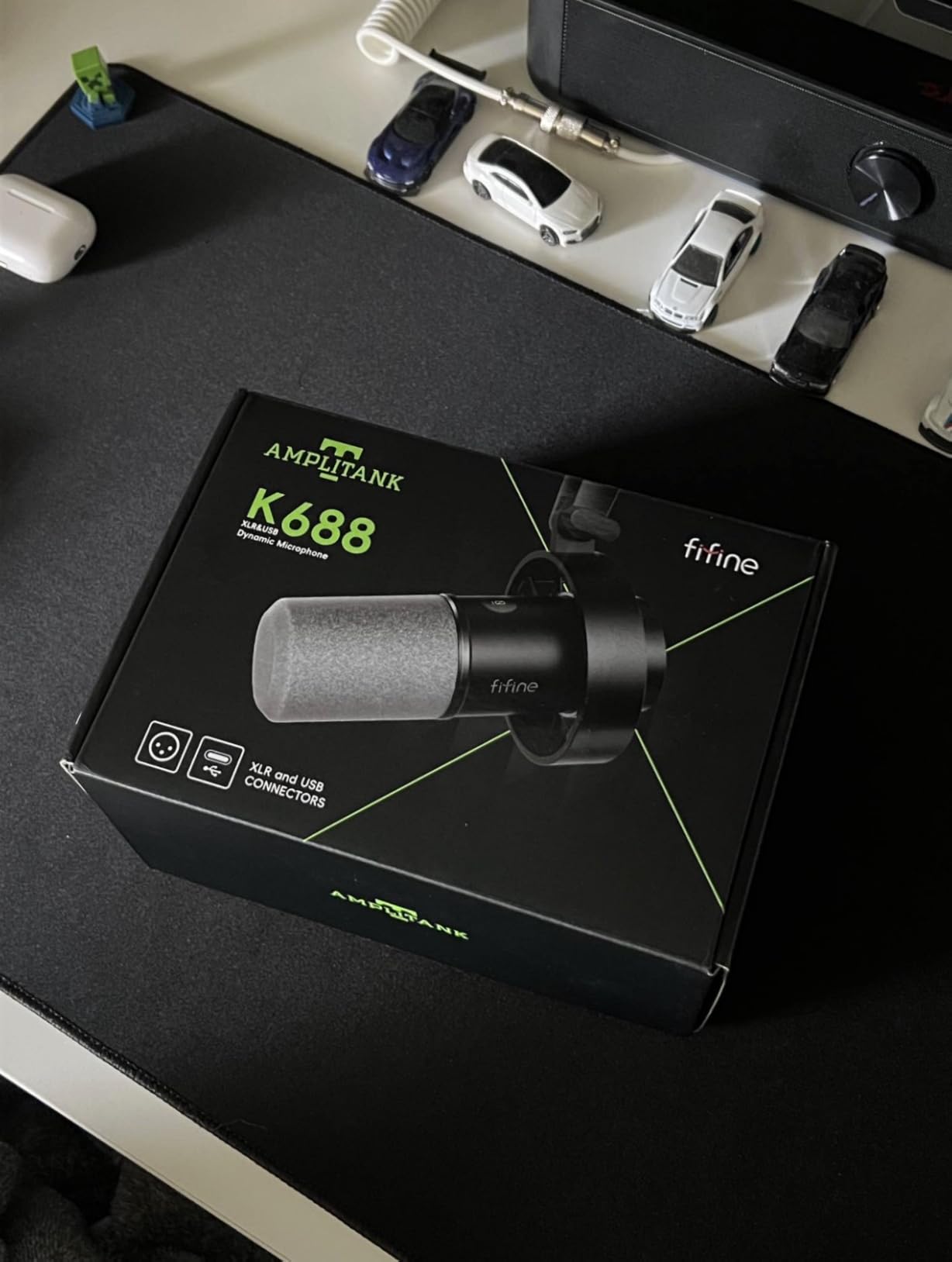
The front panel is better than it has any right to be. Tap-to-mute with an LED indicator, a gain knob, and a headphone jack with real-time monitoring and its own volume control, all of which work over USB. The shock mount and windscreen in the box handle desk vibration and plosives, which are the two problems that make a cheap setup sound cheap.
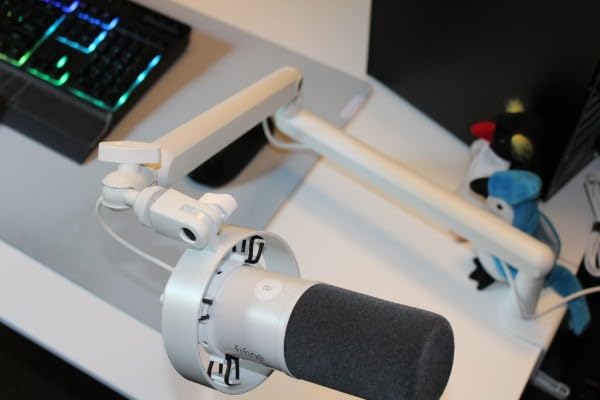
The trade is that a dynamic wants to be close, and the included mini tripod does not hold a consistent distance. If the mic drifts an inch away from your mouth, the level drops and the room creeps back in. Our advice is to keep the gain knob low and stay close rather than pushing gain and living with the resulting noise.
When the K688 makes sense
Choose it if you record in a shared room, a home office with electronics running, or anywhere with predictable low-frequency hum. Choose it if you know an interface is a future purchase but not a current one. It is the strongest noise handling we found for the least money on this list.
The 130 dB SPL durability rating also means it will not choke if you shout, sing, or record a loud source later.
When to skip the K688
Skip it if your room is quiet and you want a warm, airy vocal character, because a dynamic will always be the more restrained of the two capsule types. Skip it if you are not willing to change how you speak, because a dynamic demands a steady distance more than a condenser does.
Budget for a stand. The included tripod is the first thing that fails, and the XLR cable is not in the box even though the XLR output is one of the selling points.
3. Samson Q2U: The Community Default That Still Makes Sense
Samson Q2U USB/XLR Dynamic Microphone Recording and Podcasting Pack
Dynamic cardioid
50 Hz to 15 kHz
USB-C and XLR
Handheld metal body
Two-year warranty
Pros
- Long-standing community default for entry-level podcasting
- USB-C and XLR in the same handheld body
- Cardioid pickup keeps focus on speech
- Box includes stand extension clip windscreen and both cables
- Lightweight at under a pound for travel interviews
Cons
- Cardioid pattern only with no other pattern option
- Needs close mic distance for usable level
- Lower signal to noise figure than the condenser options
- Not ideal as a permanent desk mic without a boom arm
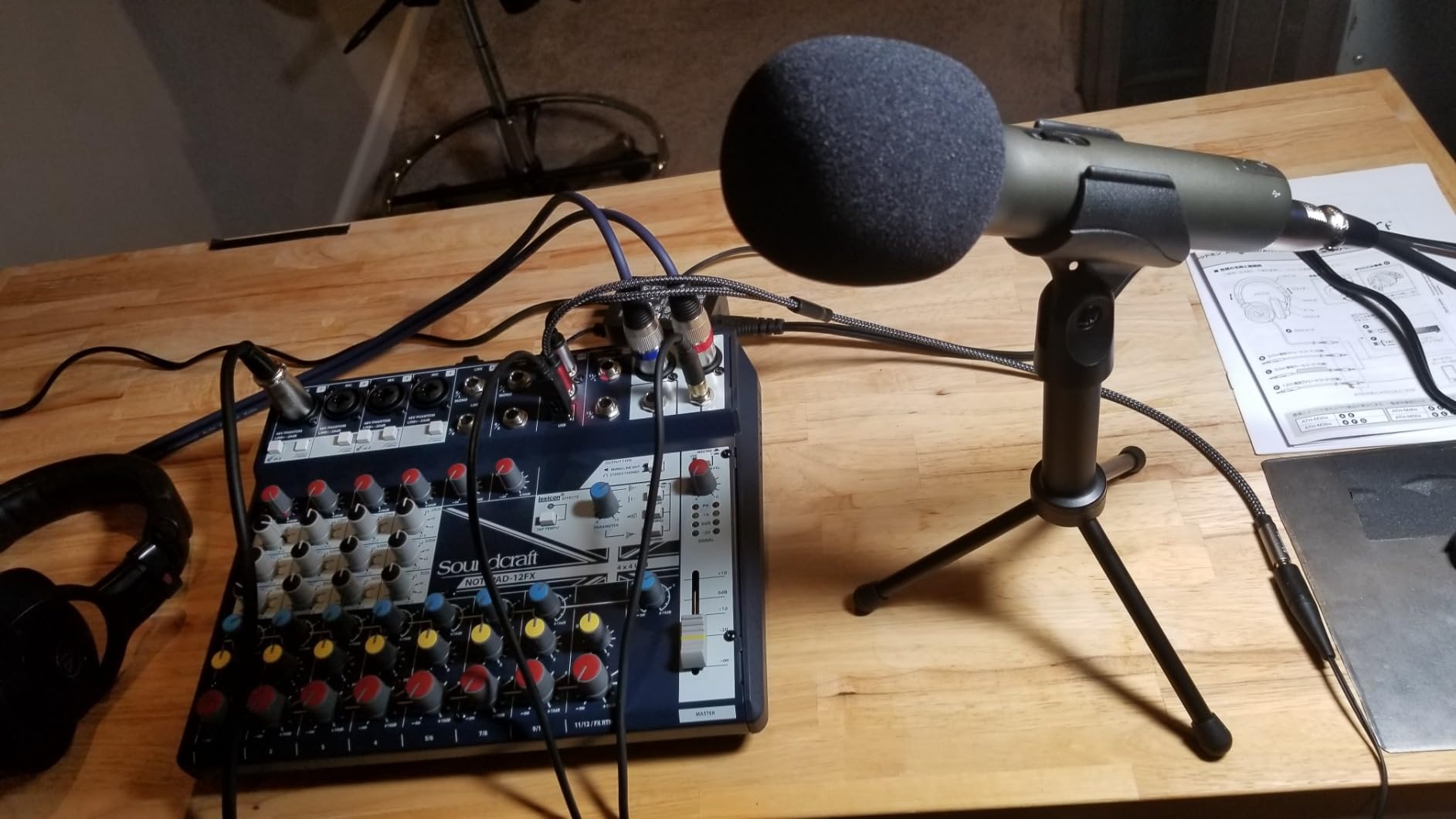
The Q2U shows up again and again in independent podcasting conversations as the entry-level recommendation, and after six weeks we understand why. It is a handheld dynamic with a cardioid pattern, and both USB-C and XLR come out of the tail. You can start today and still have a usable microphone in a proper studio in three years.
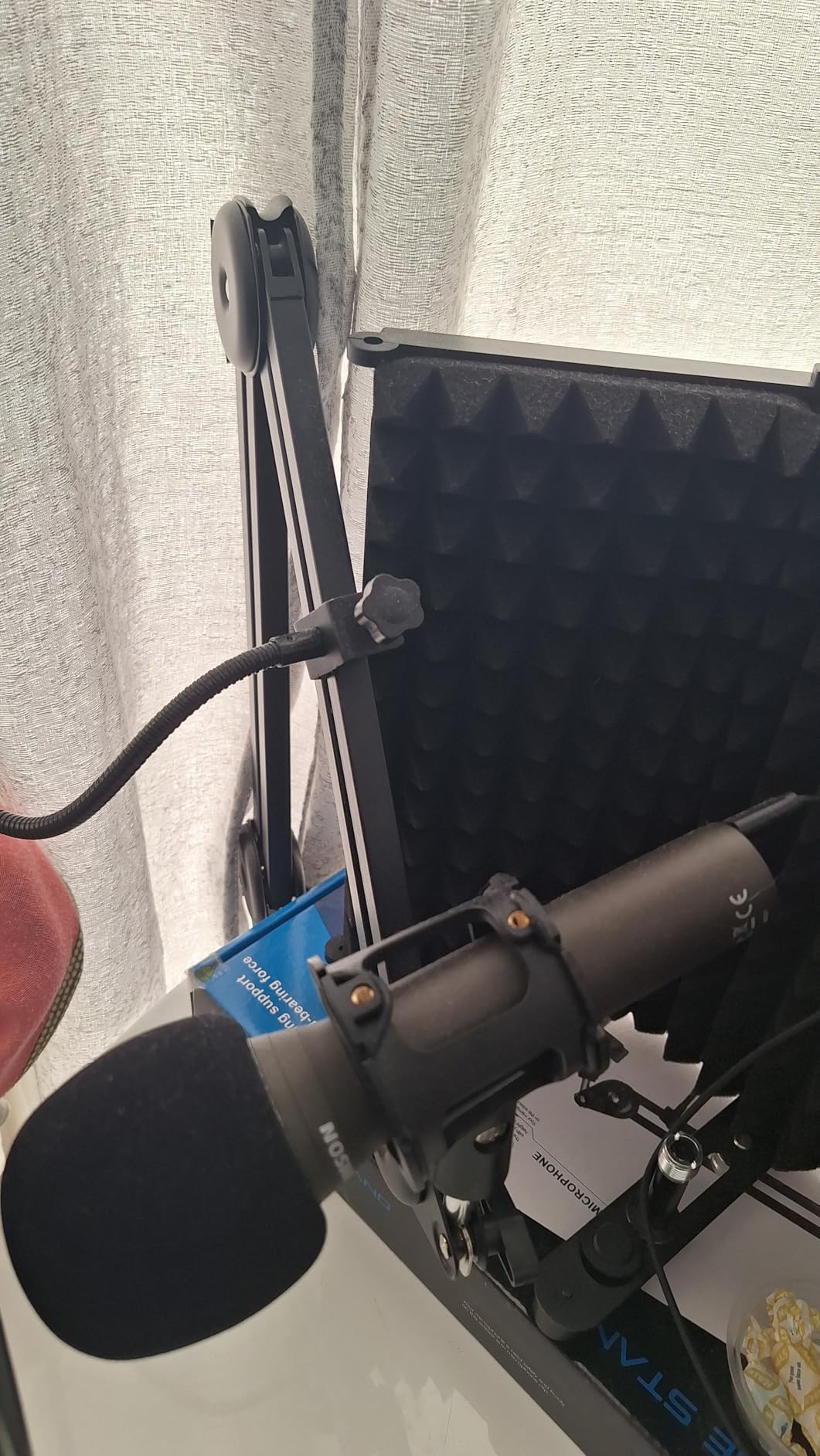
What you get in the box is unusually complete. A tripod desktop stand, a tripod extension, a mic clip, a windscreen, a USB-C cable, and an XLR cable. That is a working setup on the desk in about a minute, which removes the accessory problem that catches beginners out with every other mic in this guide.
It is also the one to pack. At just over ten ounces it disappears into a bag, and the handheld form factor makes it natural for remote interviews where you are recording on location rather than at a desk. The cardioid pattern means it points at whoever is speaking and quietly ignores the rest of the room.
The 70 dB signal-to-noise figure is the lowest in this group, which is normal for a dynamic at this level and largely irrelevant if you use the microphone the way it wants to be used: close, aimed, and gain staged properly. A condenser in a loud room will produce a worse final file despite the better headline number.
When the Q2U makes sense
Choose it if you are recording anywhere other than a fixed desk, or if you want the least friction between unpacking and recording. Choose it if you are moving from a laptop microphone and want a step up that will not need replacing. The bundled cables and stand are a genuine part of the value, not a footnote.
It is also the safest pick if you cannot decide between USB and XLR yet, because it simply does both.
When to skip the Q2U
Skip it if you want pattern switching or a stereo or bidirectional option. Skip it if you want maximum detail and air, because a cardioid dynamic will always sound more solid than open. And skip it as a permanent desk install unless you add a boom arm, because a desktop stand invites vibration and puts your mouth in an unpredictable place.
The handheld shape is its own limitation. If you are on camera, holding a microphone in frame is a different production problem.
4. Rode NT-USB Mini: The Smallest Footprint Here
RØDE NT-USB Mini Studio-Quality USB Condenser Microphone
Condenser
20 Hz to 20 kHz
82 dB signal to noise
Zero-latency monitoring
Built-in pop filter
Pros
- Very compact body fits a small desk
- Built-in pop filter handles plosives with nothing to buy
- Zero-latency headphone monitoring with hardware volume
- Magnetic stand detaches and mounts to a standard thread mic arm
- Connects to Mac PC or iPad with no drivers
Cons
- Condenser sensitivity hears the whole room
- Small desktop stand transmits desk noise
- USB-only with no XLR upgrade path
- No gain control on the body itself
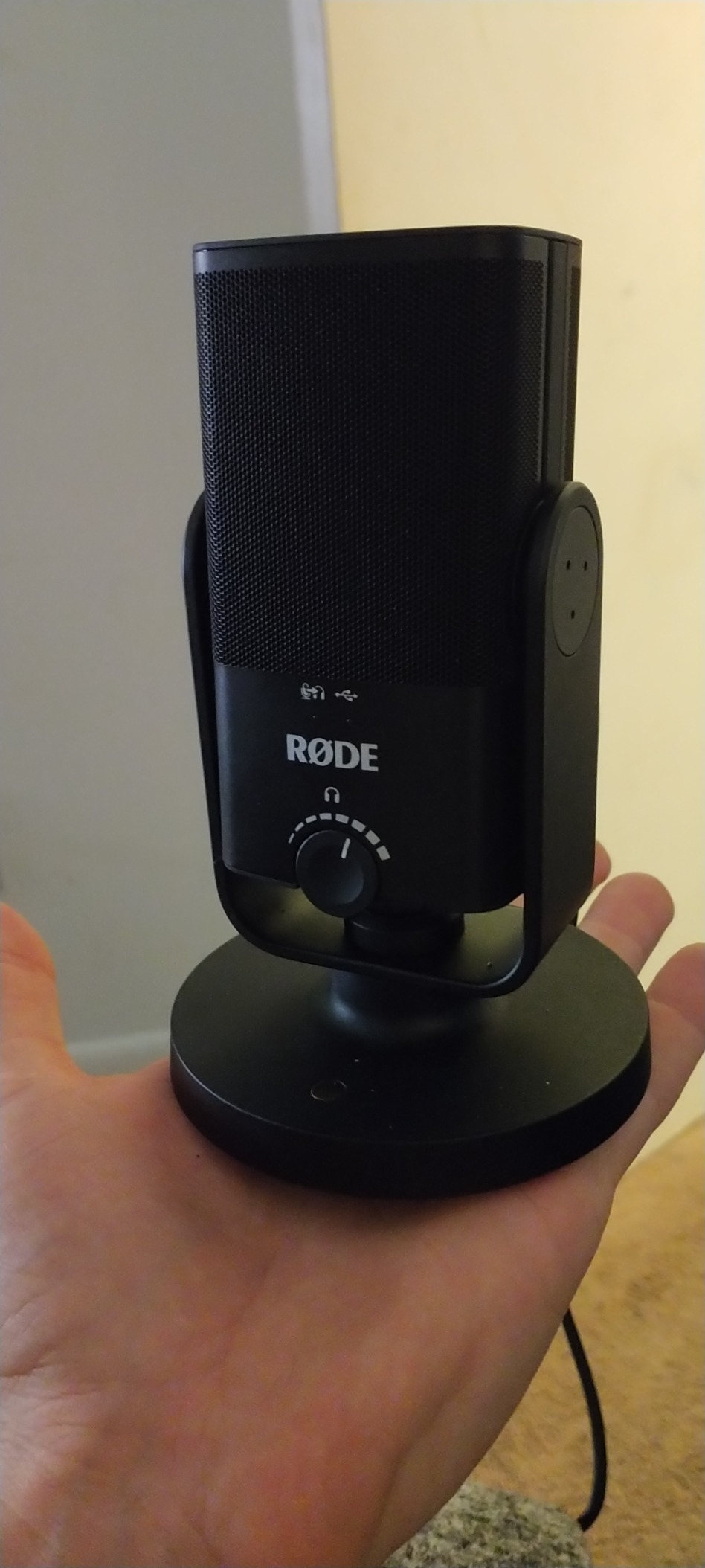
Everything else in this list is at least as tall as a coffee mug. The NT-USB Mini is not. The magnetic stand detaches in one motion and threads onto a standard mic arm, so the body can end up above your desk or out of a camera frame, which solves a problem that a bigger microphone creates every time you appear on video.
The pop filter is built into the body. That is not a small thing, because plosives are the first thing listeners notice on a beginner recording, and a separate filter is one more accessory to mount, position, and forget about. The capsule is tuned for voice rather than for instruments, so the balance is closer and warmer than a generic condenser.
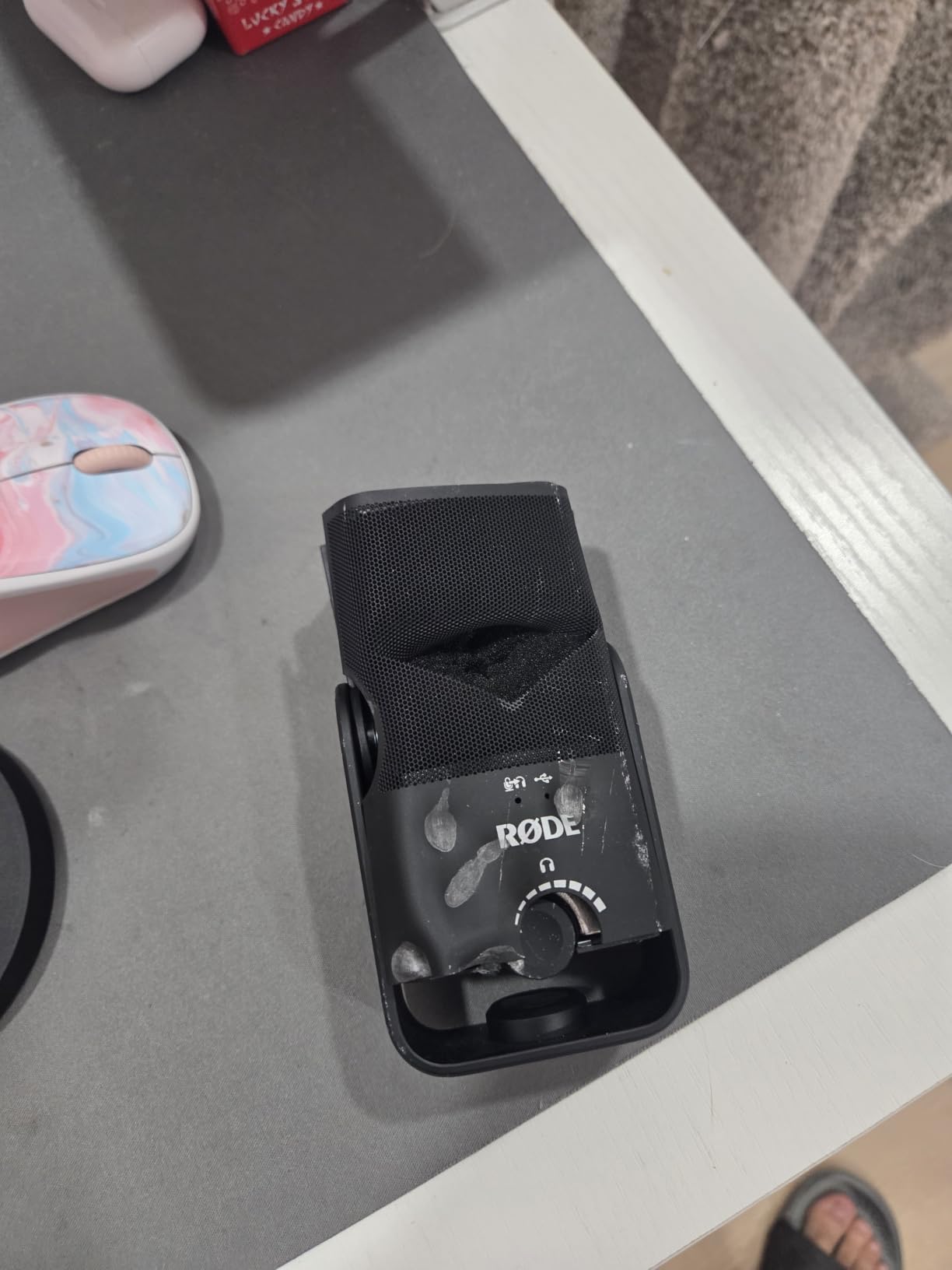
Monitoring is zero-latency through the headphone jack with a hardware volume control on the mic, so you can check a take without the doubling effect that makes people doubt their ears. Setup is genuinely under a minute: the box holds the microphone, the stand, and a USB-C cable, and there is no interface or driver to install.
The honest limitation is that this is a condenser. In a room with a fan, it will hear the fan. It also has no gain control on the body, so level discipline happens in software, and it is USB-only, so there is no path into an interface-based setup later.
When the NT-USB Mini makes sense
Choose it if you record at a small desk, if you work in tight spaces, or if you appear on camera and need a microphone that disappears. The detachable magnetic stand means you can upgrade to a boom arm later without buying anything new, which is the cheapest way to solve the desk-vibration problem.
It is also a strong first microphone for a treated or furnished room, where the extra sensitivity becomes detail rather than noise.
When to skip the NT-USB Mini
Skip it in a noisy untreated room, where you want off-axis rejection instead of sensitivity. Skip it if you plan to move to XLR and an interface, because there is no analog output. And avoid it as a permanent desktop install on its own stand, because a small stand passes whatever the desk is doing straight into the capsule.
There is also no gain knob, so if you like controlling your level from hardware rather than software, look at the Sennheiser instead.
5. Audio-Technica AT2005USB: Our Pick for an Untreated Room
Audio-Technica AT2005USB Cardioid Dynamic USB/XLR Microphone,Black
Dynamic cardioid
15 kHz response
80 dB signal to noise
USB and XLR
Headphone jack
Pros
- Dynamic cardioid rejects keyboard clicks and household noise
- Dual USB and XLR for computer recording or a live mixer chain
- Warm balanced tone reviewers compare to far costlier broadcast mics
- No drivers or software
- solid metal build with real heft
Cons
- Very sensitive to mic distance
- needs roughly 6 to 12 inches
- Headphone volume control is small and on the bottom of the body
- Included rubber clip and tripod desk stand are not secure
- No pop filter included
This is the microphone we hand to people whose first sentence is that their room is too noisy. The cardioid dynamic capsule simply refuses to hear much of the room, and in our shared office test it let us record a full conversation while a fan ran without any emergency editing.
It is also genuinely dual-path in a useful way. The USB output records straight to a computer, and the XLR output feeds a conventional live sound system, so the same microphone works for a podcast, a small event, or a mixer chain without a second purchase. A built-in headphone jack gives direct monitoring from the microphone itself.
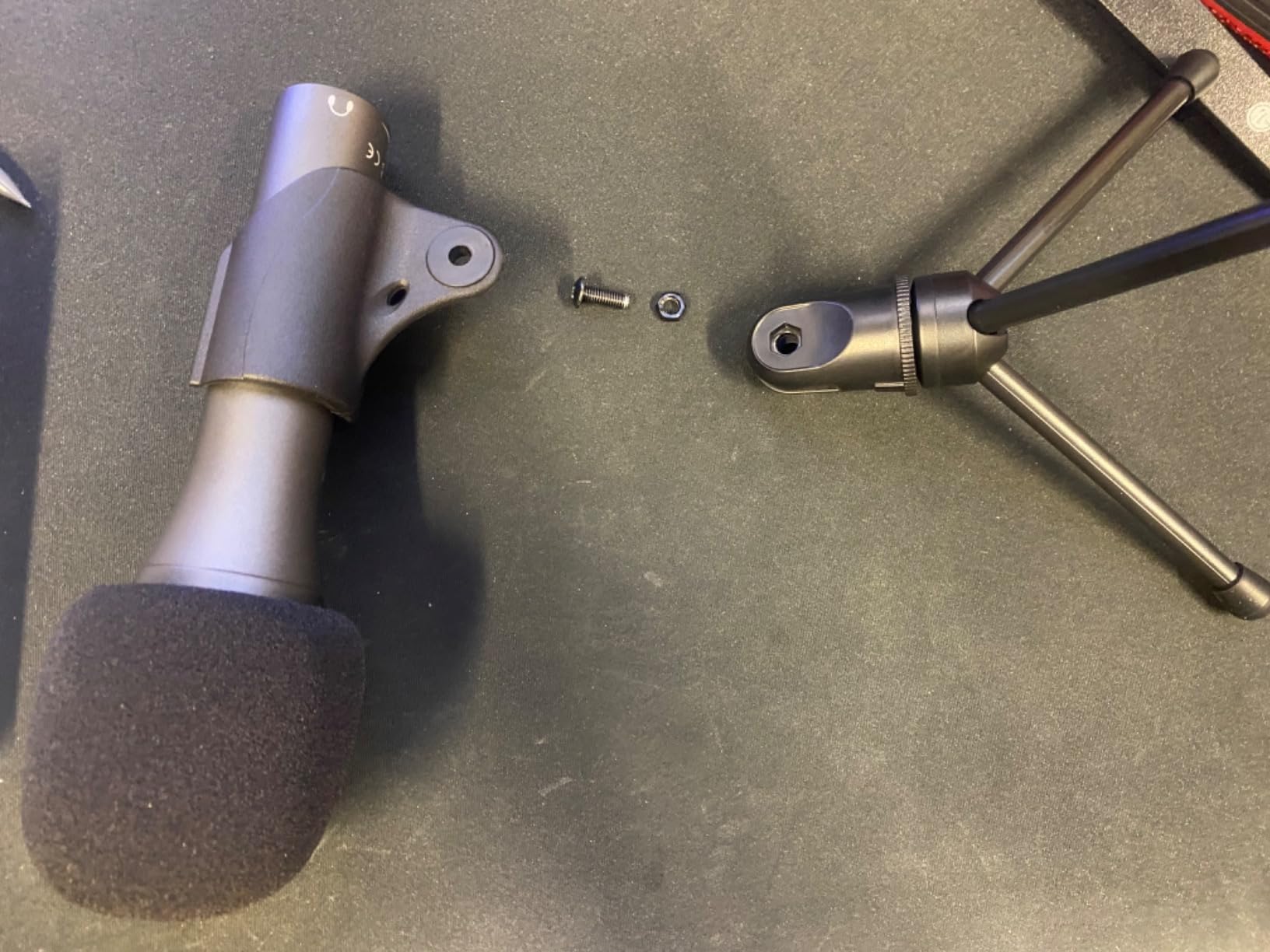
The tone is warm and balanced rather than bright, which suits long-form conversation where a harsh microphone becomes tiring to listen to. It is a handheld body, and reviewers consistently report years of trouble-free operation, which is worth more to a working podcaster than a slightly better spec sheet.
There are real frictions, though. The headphone volume control sits on the bottom of the body and is small and awkward to reach, and in some setups plugging into the headphone jack resets the computer’s default audio device. Distance matters a great deal, and with no pop filter included you will want one if you speak close.
A small number of recent owners on Windows 11 have reported the device no longer being recognized after an update. It is not widespread, but it is the kind of thing worth knowing before you troubleshoot for an hour.
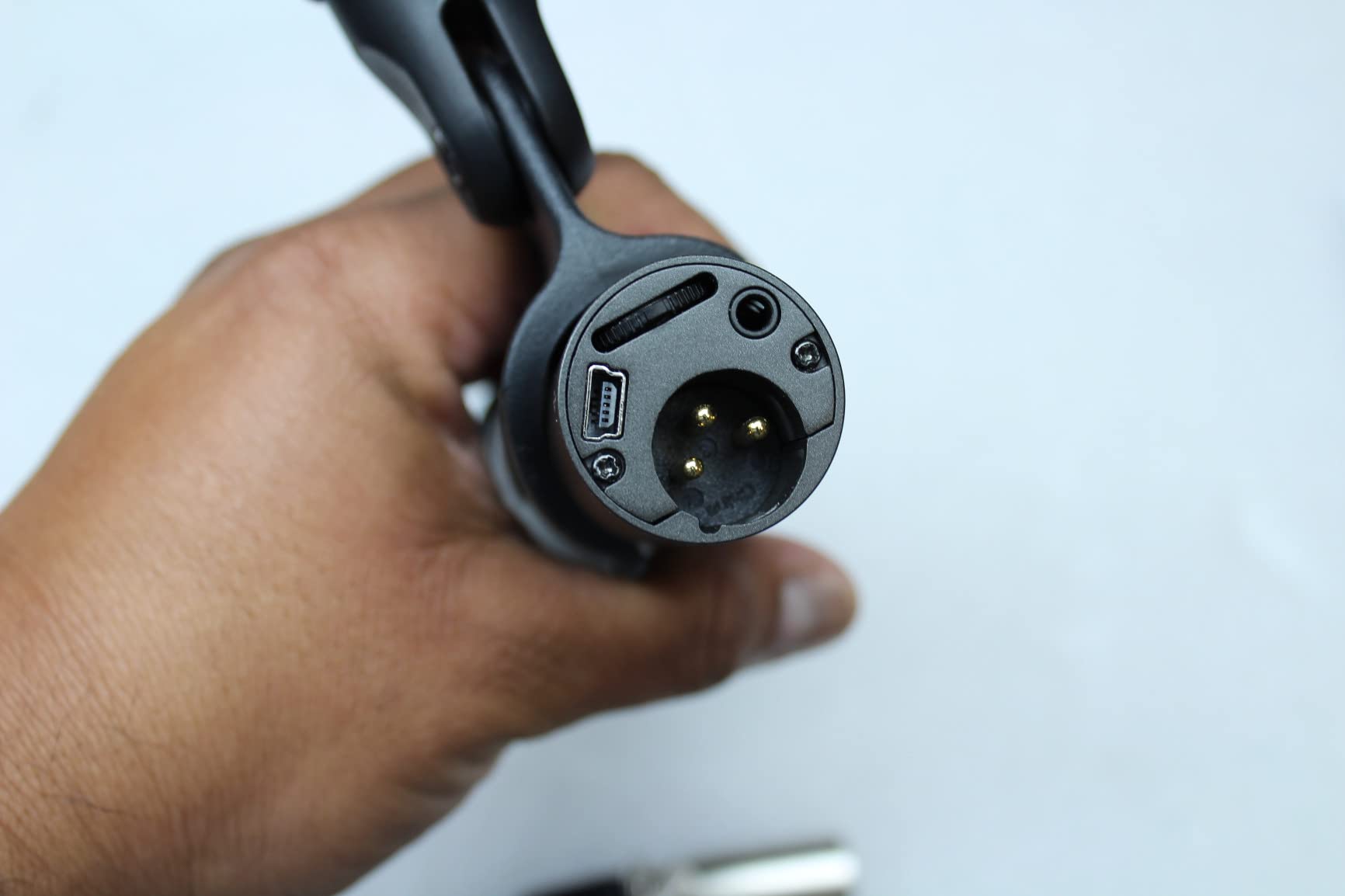
When the AT2005USB makes sense
Choose it if untreated noise is your main obstacle, if you record long interviews, and if you want a microphone that will still work on a stage or a mixer later. The dual output means the USB decision is reversible for a few extra dollars of planning rather than a replacement purchase.
It is also the lightest-looking option for a recorder who moves between locations with a fixed setup, because the handheld form and included pouch are easy to pack.
When to skip the AT2005USB
Skip it if you want a bright, detailed vocal character, because a dynamic will always be the more restrained capsule. Skip it if you speak quietly and inconsistently, since distance sensitivity will show up as level changes you did not ask for. And expect to buy a pop filter and a real stand, because neither is included.
Check your operating system version first if you are on Windows, given the recognition reports.
6. Rode PodMic USB: The One to Buy If You Plan to Upgrade
RØDE PodMic USB Dynamic Broadcast Microphone, XLR + USB-C
Broadcast dynamic
USB-C and XLR
APHEX onboard DSP
Zero-latency monitoring
20 Hz to 20 kHz
Pros
- XLR and USB-C in one body for interface or direct laptop use
- Broadcast dynamic capsule rejects keyboard clatter and room echo
- Onboard APHEX DSP adds compression and presence over USB
- Headphone jack gives zero-latency monitoring
- Swing mount and pop filter included in the box
Cons
- Lowest average rating in this group
- 10 percent one-star feedback share
- Highest resolution headline number is irrelevant at typical podcast delivery settings
- Swing mount needs desk clearance
The PodMic USB is the one on this list that records a USB signal and also drops into a studio chain through XLR, and it is the microphone we would pick for someone who is confident they will grow past a laptop. The broadcast dynamic capsule is tuned for speech, so it handles clatter and room echo better than anything else here at this level.
Its distinguishing feature is the onboard APHEX DSP, which adds compression and presence over the USB path and is configured in the free RØDE app. That matters for a particular reason: it means the processing happens at the source, before anything is recorded, rather than as a plugin you hope to remember later. It is a legitimate convenience, not a substitute for good technique.
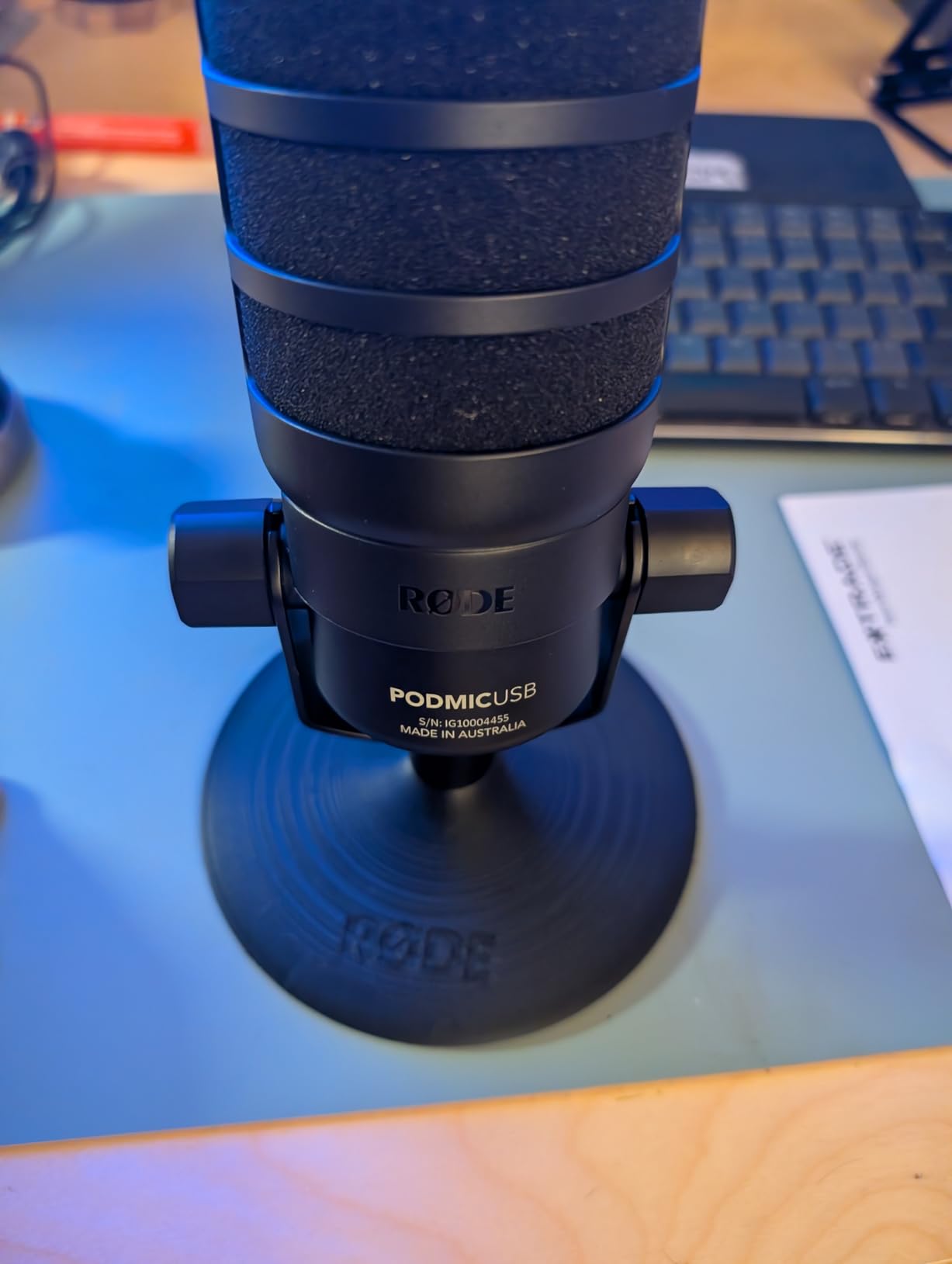
The headphone jack gives zero-latency monitoring, the swing mount positions it at mouth height without a stand, and a pop filter is in the box. Connectivity covers Mac, PC, iPad, and Android, which makes it the most flexible option for remote interviews on this list.
Its 4.3 average is the lowest in our group, with a one-star share three times higher than most of the others, so we want to be direct about that. Some of that is the price sitting at the ceiling of this category. Some of it is the high-resolution headline number doing exactly nothing for a file that ends up as a standard MP3, which is the single most misunderstood spec in the entire USB microphone market.
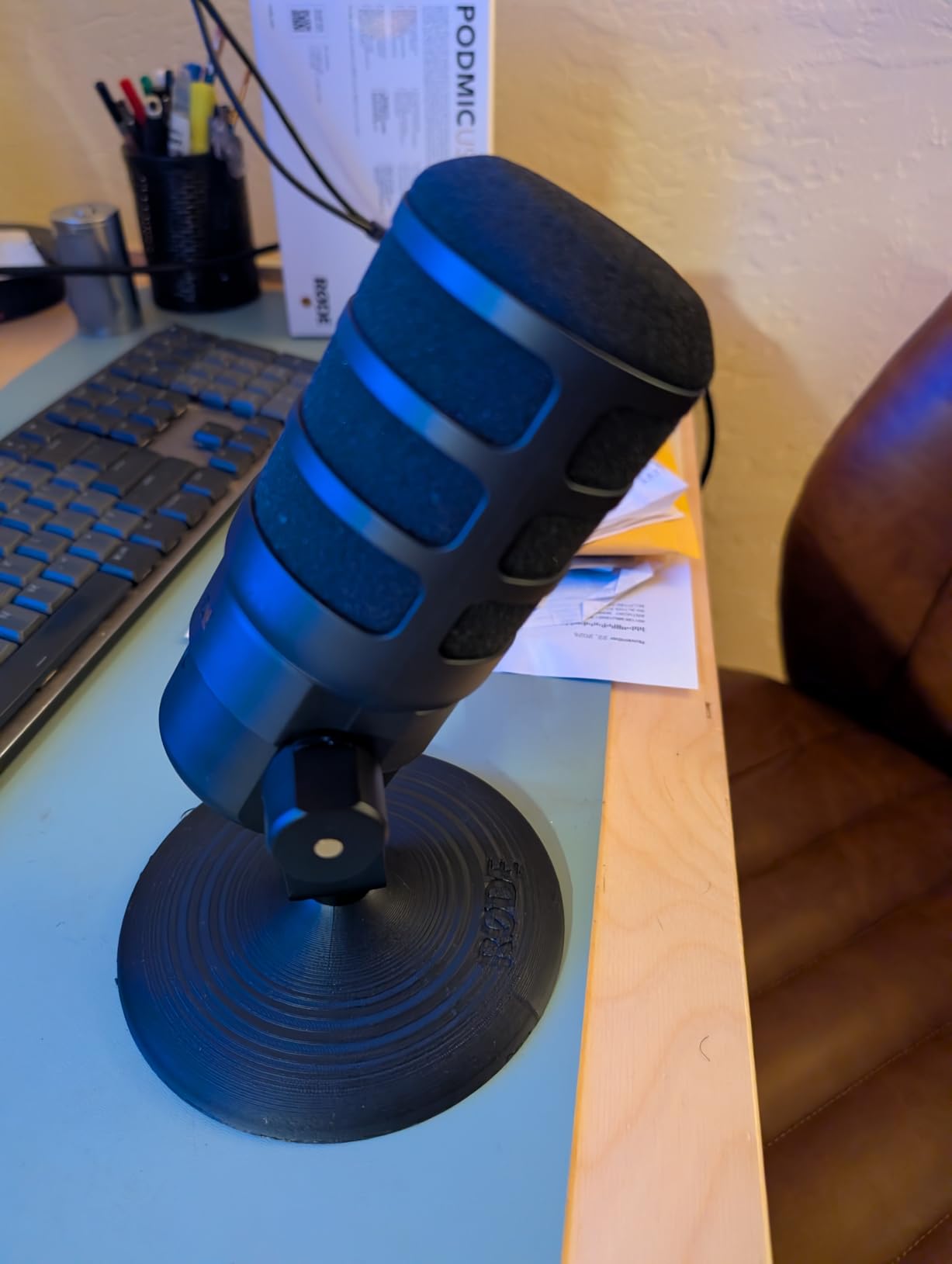
When the PodMic USB makes sense
Choose it if you record interviews remotely, because the phone and tablet support is a genuine practical advantage. Choose it if you want processing applied before you record rather than after. And choose it if your near-term plan already includes an interface, since the XLR output makes that transition a cable change.
The included swing mount and pop filter also mean you do not have to solve two accessory problems on day one.
When to skip the PodMic USB
Skip it if this is a trial purchase, because it is the most expensive pick in a group where several cheaper options perform nearly as well. Skip it if you are buying purely on specification headlines, since the resolution figure will not improve the file your listeners receive.
It is also the wrong shape for a cramped desk, because the swing mount needs clearance in front of you to position the capsule correctly.
7. Sennheiser Profile: Everything Reachable With One Hand
SENNHEISER Professional Profile – USB Cardioid Condenser Microphone & Table Stand, 1.2 m USB-C Cable – Mute Button, Built-in Headphone Jack, Gain, Mix & Volume Control, for PC & Mac,Black
Cardioid condenser
USB-C
Mute gain mix and volume dials
Built-in headphone jack
Two-year warranty
Pros
- Hardware dials for mute gain mix and volume with no software
- Plug and play single USB-C cable for PC and Mac
- Warm natural vocal tone in a metal housing
- Compact table stand included
- Headphone jack for monitoring while you record
Cons
- Condenser sensitivity will hear an untreated room
- 60 dB signal to noise is modest for a condenser
- Companion software expectations should be modest
- Table stand only
- no boom arm
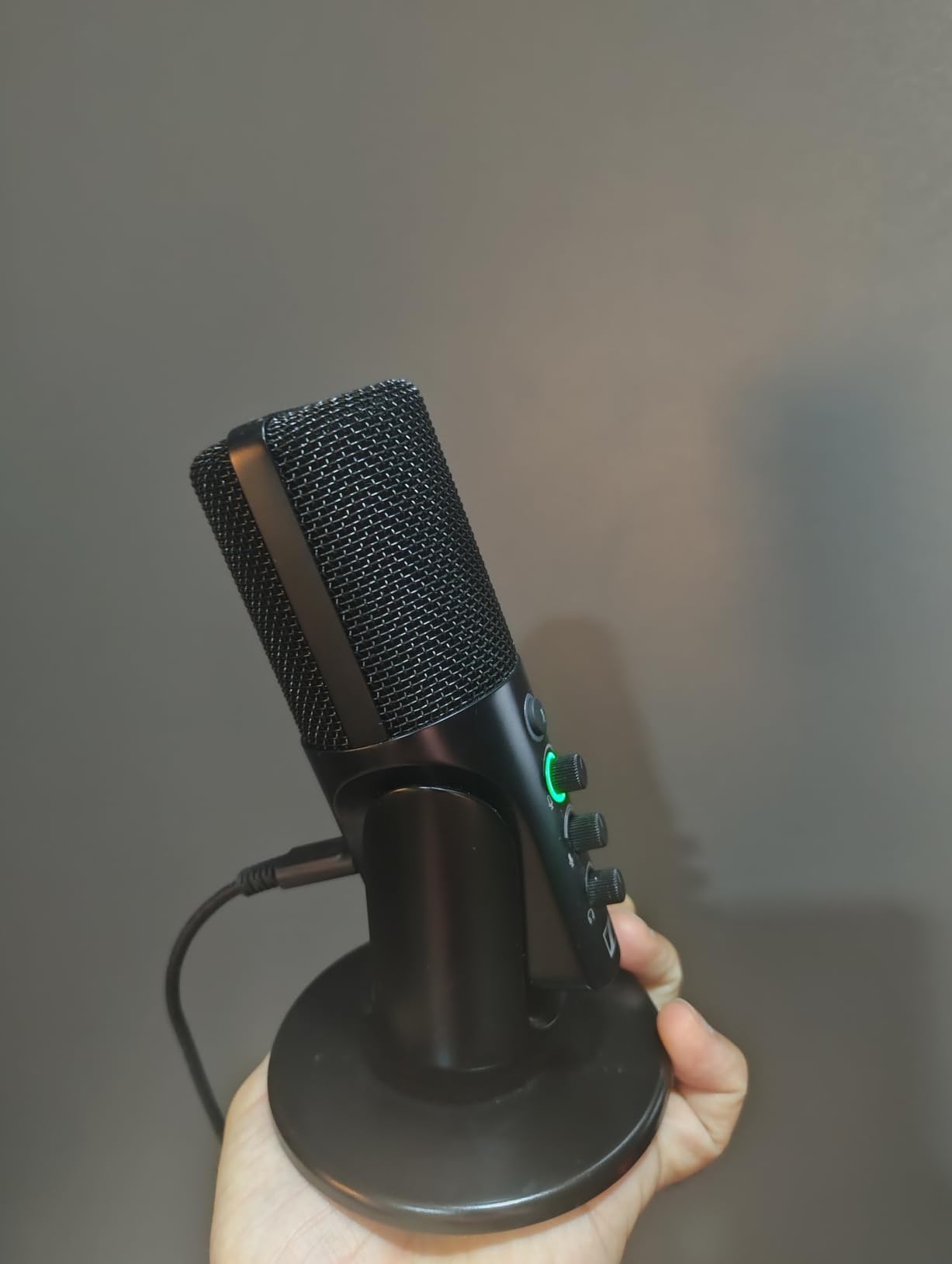
The reason to like the Profile is physical. Mute, gain, mix, and volume are all dials and buttons on the body, so you can set a level, check it in headphones, and mute between takes without touching the mouse. For a solo podcaster recording alone, that removes the entire friction loop between talking and recording.
The German-engineered cardioid condenser capsule in a metal housing produces a natural, warm vocal tone that accentuates the body and presence of the voice. Its 78 percent five-star share is the highest in this group, and the four-star band is unusually narrow, which suggests people who like it like it a lot.
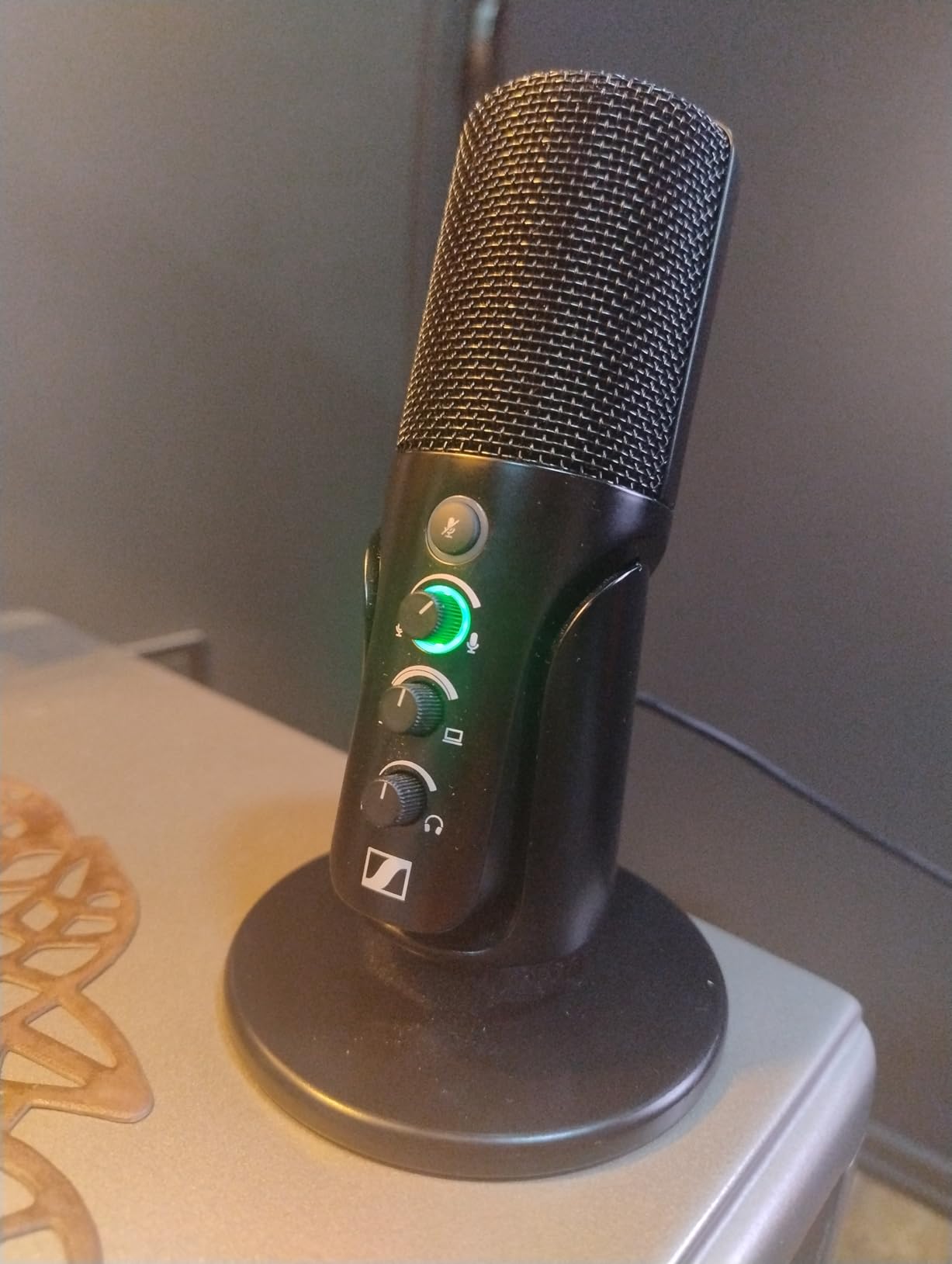
It is plug and play on a single USB-C cable for PC and Mac, the compact table stand is included, and the two-year warranty is the joint-longest in this roundup. Monitoring runs through the built-in headphone jack.
As a condenser it inherits the usual weakness, and the 60 dB signal to noise figure is not what a spec-driven buyer expects from a mic in this tier. In a room with traffic or a fan, it will record the room. Some users also report setup friction with streaming software on particular computer configurations, so if you livestream, test your specific setup before committing.
When the Sennheiser Profile makes sense
Choose it if you record alone and want to control everything without software. Choose it if you livestream and want instant, tactile level changes during a show. The mix control in particular is useful when you want to hear yourself alongside a reference track.
It is also a good fit in a treated or furnished room where a condenser’s sensitivity becomes warmth rather than noise.
When to skip the Sennheiser Profile
Skip it in an untreated room with constant background noise. Skip it if you need multiple polar patterns, since it is cardioid only. And skip it if you want an XLR path, because the output is USB only and there is no way to add analog later.
Expect to add a boom arm rather than relying on the included table stand for anything long-form.
8. MAONO PD400X: The Most Controllable Setup at the Ceiling
MAONO PD400X Dynamic Microphone, USB/XLR Podcast PC Mic with Software
Dynamic cardioid
40 Hz to 16 kHz
78 dB signal to noise
3-in-1 knob
USB and XLR
Pros
- Rich voice quality reviewers compare to much costlier broadcast microphones
- Dynamic cardioid rejects peripheral noise at the source
- 3-in-1 digital knob for gain headphone volume and monitor mix
- MAONO LINK app with EQ limiter and compressor
- All-metal body with a heavy stand base that stays stable
Cons
- Sits at the higher end of the budget range
- Boom arm not included
- Included desktop stand is short and rigid
- Tap-to-mute is less obvious than a physical switch for some users
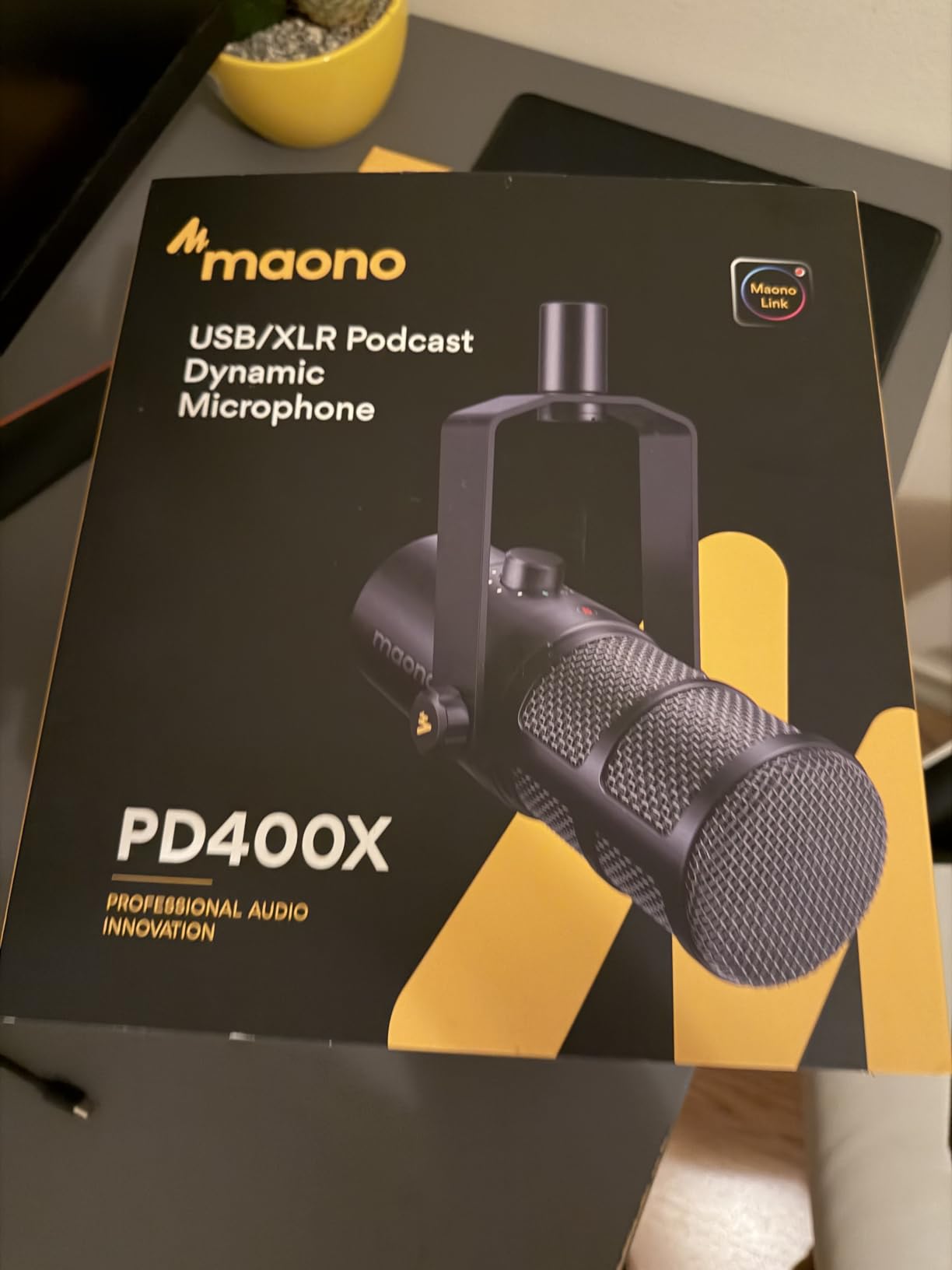
The PD400X is the most configurable microphone in this group, and that is either its main appeal or its main complication depending on how much you like adjusting settings. The 3-in-1 digital knob handles microphone gain, headphone volume, and monitor mix, with a touch-to-mute and an LED level indicator, which covers almost every hardware control you would want.
On the software side, the MAONO LINK app has a Standard mode with vocal tone and distance presets, and an Advanced mode with gain, monitor mix, EQ, limiter, and compressor. That is genuinely deeper than the control most budget microphones offer, and for someone who enjoys shaping their own sound it removes the need for a plugin chain later.
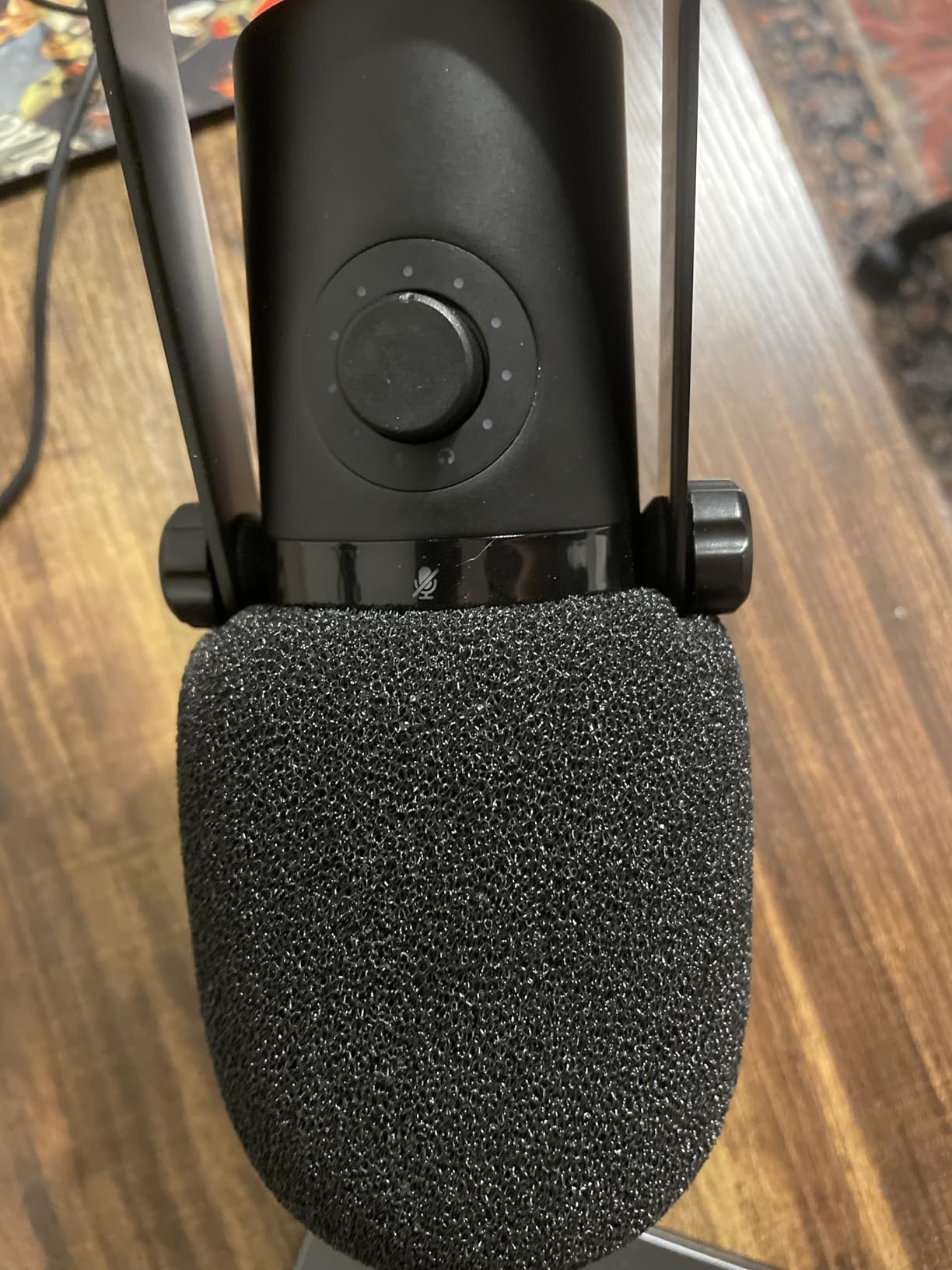
Acoustically it behaves like a broadcast dynamic, which is why reviewers describe it as richer than its tier suggests. The cardioid pattern rejects peripheral noise at the source rather than trying to remove it afterwards, and the all-metal body sits on a genuinely heavy stand base that does not shift when you type.
Two practical warnings. It sits at the higher end of this budget range, so it is the pick to make when you have narrowed your list to two. And the included desktop stand is short and rigid, which means you should budget for a boom arm, especially since a heavy microphone can sag a lightweight arm.
When the MAONO PD400X makes sense
Choose it if you want EQ, compression, and limiting you can reach from an app rather than a plugin, and if you like having hardware control for the things you change mid-session. Choose it if you plan to move to an interface, since the XLR output makes that a cable change rather than a purchase.
It is also the pick for a co-hosted show at one desk, because the monitor mix control gives you a fast way to balance your own voice against your co-host’s.
When to skip the MAONO PD400X
Skip it if you want a pure plug-and-play device with nothing to configure, because the app is a real part of the experience. Skip it if your budget is already committed, since several cheaper options here perform the same core job. And skip it if the included short stand is your only support, because that is the setup we would change first.
If tap-to-mute matters to you as a physical, unmistakable action, a real switch is easier to operate under pressure.
Polar Pattern: Which One Do You Actually Need?
Cardioid is the default on seven of the eight microphones here, and for podcasting it is usually the right answer. It picks up what is in front of the capsule and rejects what is behind it, which means the room behind you matters far less. Point it at your mouth and angle the back toward whatever is loudest in the room.
Omnidirectional picks up from all directions equally. It is the right pattern for capturing a whole room, a roundtable where everyone is not facing one mic, or a pair of presenters who cannot both stay in the front. It is the worst choice in an untreated space, because it collects the room along with the voices.
Bidirectional picks up front and back and rejects the sides. It is the pattern you want for two people sitting across a desk from each other, which is why it appears on the Blue Yeti. Stereo is a close cousin with a defined left and right, useful for ambient recording and music, and rarely the right pick for a spoken-word show.
Our blunt advice: buy the cardioid. A cardioid-only microphone at a given price usually carries a better capsule than a multi-pattern microphone at the same price, because the engineering budget is not split four ways. Pattern switching is valuable insurance, not a feature you will use weekly.
USB Only vs USB and XLR Hybrid: The Upgrade Path
This is the question the forums ask most often, and the short answer is that a USB podcast microphone is genuinely enough. The preamp and converter are built in, the level you get is appropriate for speech, and no interface is required. For a first podcast, a second podcast, and probably a third, an interface adds cost and complexity you do not need yet.
The case for a hybrid is different. Five of the microphones here carry both USB-C and XLR outputs: the Samson Q2U, the FIFINE K688, the Audio-Technica AT2005USB, the RØDE PodMic USB, and the MAONO PD400X. Buying one of those means that if you later add an interface with real preamp control, the microphone comes with you instead of being retired to a drawer.
One correction to a common assumption: you do not need phantom power for a USB podcast microphone, because the preamp is inside the body and the power comes from the USB bus. Phantom power is an interface feature for condenser microphones that need it, and it is irrelevant to every mic on this page.
The three USB-only picks are the Blue Yeti, the RØDE NT-USB Mini, and the Sennheiser Profile. They are excellent microphones. They are simply the wrong choice if you already know you are building toward an interface-based setup.
What the Microphone Alone Will Not Solve
Every guide in this category recommends a boom arm, a pop filter, and headphones without ever totalling them. Here is the honest version: if you spend the whole ceiling on the microphone, you have no headroom for the three accessories that decide whether the recording sounds professional. A budget arm and a simple pop filter cost a fraction of the microphone and change the result more than most spec differences.
A boom arm is the highest-value item after the microphone, because it puts the capsule at a consistent mouth distance and takes it off the desk. Desk stands are the single most common cause of the knocking, typing, and chair sounds that make a beginner recording sound like a beginner recording.
A pop filter is the second. Four of the eight microphones here either include one or have a built-in filter, which is worth remembering when you are comparing boxes rather than headlines.
Closed-back headphones are the third. Monitoring is how you catch a problem while you can still fix it, and open-back headphones leak sound into the microphone. If you are co-hosting, monitoring is how you avoid talking over each other.
Software is not an accessory, and it is not where you should spend. Audacity and GarageBand are free and capable for spoken-word editing, and no budget microphone here needs a subscription to sound good.
Recording Two People Without Ruining the Show
You can record two people on one microphone, but the honest result is usually uneven levels and occasional overlap. It works for short interviews where both speakers naturally take turns and sit at the same distance. It does not work for a two-host show where people lean in, gesture, and interrupt each other.
If you have two cardioids, whether two USB podcast microphones or a USB microphone and an XLR microphone through an interface, that is the more reliable approach. You can position each one for a different voice, gain them independently, and the room falls off behind each. This is the setup we would recommend to anyone running a co-hosted show.
On one microphone, the pattern matters. A bidirectional pickup, which the Blue Yeti offers, is built for two people facing each other. A cardioid pointed between two speakers is the compromise, and it works best when both people sit at the same height and same distance, which takes practice to hold.
Whichever route you take, do the gain pass before the first real recording. Have each person speak at their normal level, set the level so the loudest speech sits comfortably below clipping, and then do not touch it again. Most two-person problems are gain problems wearing a costume.
Four Ways a USB Mic Fails on Day One
You are recording silence. The most common report on podcast forums. The device may be selected in your recording software but muted, or the wrong input is chosen, or a physical switch on the body is engaged. Check the input in your software first, then every switch and button on the microphone, then reconnect the cable.
The sound is too quiet. Almost always a gain problem, not a microphone problem. Speak at your normal volume, not your presentation volume, while you set the level. Pushing gain in software after recording only amplifies the noise floor along with your voice, which is why the result sounds thin and hissy.
It distorts on loud moments. You are too close, or too much gain, or both. Back off an inch, turn the gain down, and let the level sit lower. A dynamic will take a louder source than a condenser, which is one more reason they behave better in unpredictable rooms.
There is hum or a hiss in the recording. Check what is running near the microphone, keep USB cables away from power cables, and try a different USB port. If you are on a condenser in a noisy room, the noise is the room, and no cable change fixes it.
Two quieter problems deserve a mention. Proximity effect makes voices sound boomy when a condenser is used too close, which is a positioning problem rather than a microphone fault. And desk vibration travels straight into a desktop stand, which is why a boom arm appears in nearly every setup we recommend.
Frequently Asked Questions
What is the best USB microphone for podcasting?
The best USB microphone for podcasting is the one whose capsule matches your room. In an untreated space with fans, keyboards, or street noise, choose a cardioid dynamic such as the Samson Q2U or the Audio-Technica AT2005USB, because off-axis rejection matters more than detail. In a treated or soft room, a condenser such as the Blue Yeti captures more presence and air. Every pick on this list connects with one cable and needs no audio interface.
What is the best budget microphone for podcasting?
The best budget podcast microphone is the FIFINE AmpliTank K688, which pairs a dynamic cardioid capsule with both USB-C and XLR outputs, a tap-to-mute, a gain knob, and an included shock mount and windscreen. It handles room noise better than the condensers at a similar tier, and the XLR output means it moves into an interface-based setup later without being replaced.
What kind of microphone is best to use for a podcast?
A dynamic microphone is usually best for a podcast, because spoken voice is loud and close and does not need the sensitivity a condenser provides. A moving-coil dynamic rejects off-axis sound, which is what makes it forgiving in an untreated room. A condenser is best when your room is already treated or naturally soft, since its sensitivity becomes detail and warmth rather than background noise.
Do I need an audio interface for a USB podcast microphone?
No. A USB podcast microphone has its preamp and analog-to-digital converter built in, so it connects to a computer over USB-C and appears as a standard audio input. An interface is only worth adding later if you want independent gain control for two microphones, a longer cable run, or a permanent studio chain, and choosing a USB and XLR hybrid means the transition is just a cable change.
How close should I be to my podcast microphone?
Four to eight inches for a dynamic microphone, and six to twelve inches for a condenser. Distance matters most with dynamics because their level drops noticeably when you move back, which is also how room noise sneaks in. Speaking too close to a condenser creates proximity effect, which adds a boomy low end, so a pop filter and a slightly greater distance is the fix.
Which USB Podcast Microphone Should You Buy?
If your room is untreated, start with a dynamic. The Samson Q2U is the safest first buy because it arrives complete and works in an untreated room, and the Audio-Technica AT2005USB is the choice if you want a warmer, more even voice across long interviews. The FIFINE K688 is the pick if you want the most noise handling and a metal body at the lowest commitment of the three.
If your room is treated or well furnished, the Blue Yeti is the one we recommend most often. Four patterns, a decade of real-world use, and a metal body make it the microphone you are least likely to replace. The RØDE NT-USB Mini is the version of that idea for a small desk, and the Sennheiser Profile is for a solo podcaster who wants every control on the microphone body.
If you know you will outgrow a laptop, buy a USB and XLR hybrid today. The Samson Q2U, the FIFINE K688, the Audio-Technica AT2005USB, the RØDE PodMic USB, and the MAONO PD400X all carry both outputs, and each will still be in service when you add an interface. For a co-hosted show, the MAONO PD400X has the best control surface and the RØDE PodMic USB works on a phone for remote interviews.
Whatever you choose, budget for a boom arm, a pop filter, and closed-back headphones, because a microphone is one part of a working setup rather than the whole of it. These are the best USB podcast microphones under our budget ceiling in 2026, and the room you record in matters more than any line on a spec sheet. Run the thirty-second test before you spend anything.