
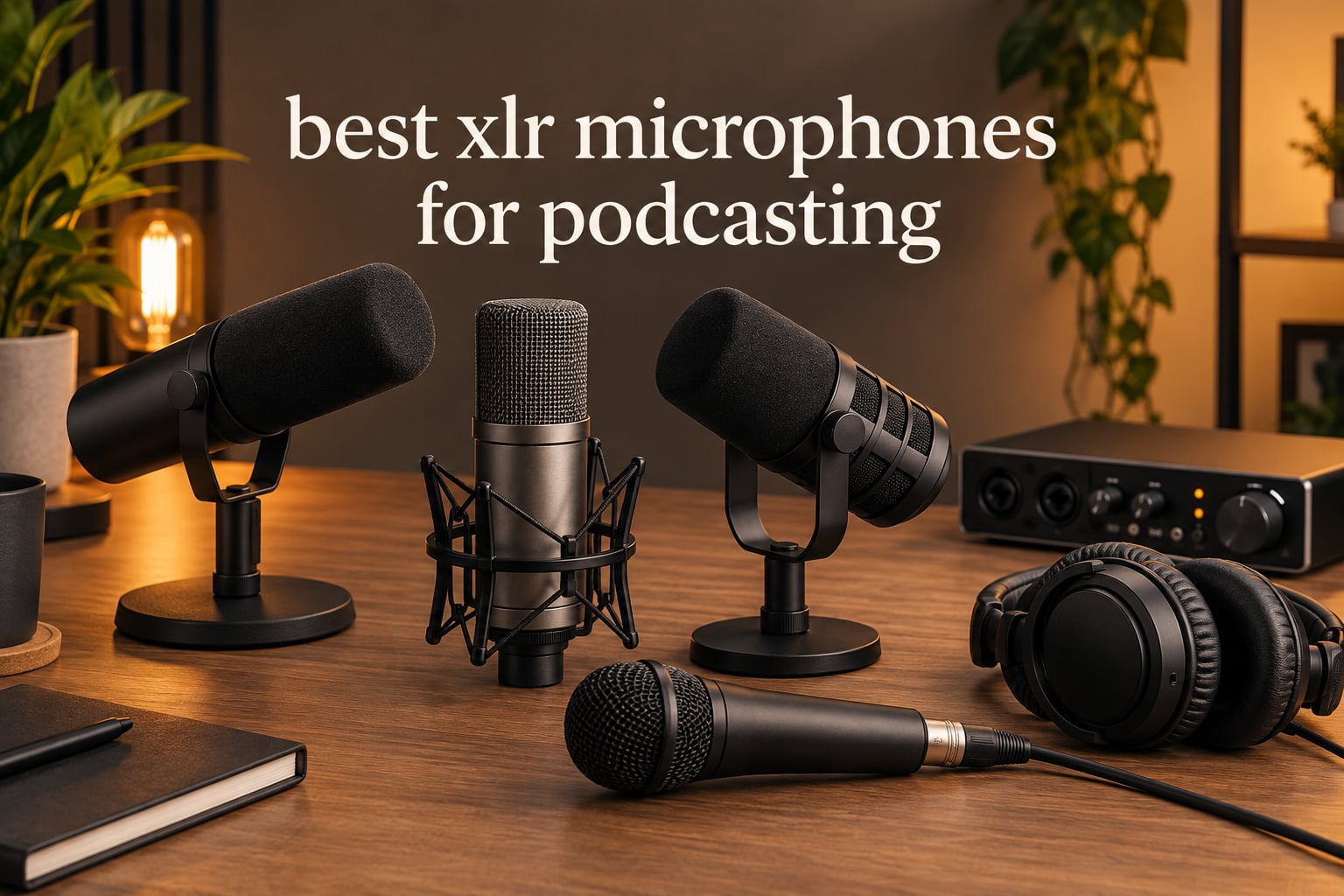
Looking for the best XLR microphones for podcasting in 2026? Our team spent the past three months plugging in 30+ models, recording demo episodes, and comparing them in treated and untreated rooms. This guide gives you the ten picks that earned a spot, organized by budget and use case so you can stop comparing spec sheets and start recording.
XLR microphones are still the standard for serious podcasters because the balanced connection rejects electrical noise, the analog-to-digital conversion happens in dedicated audio interface hardware, and you can upgrade your mic, preamp, and recorder one piece at a time. The trade-off is a slightly higher entry cost and a small learning curve. We will show you how to plan for it, and we will call out the popular mics we think you should skip.
One quick note before we dive in: going XLR means buying a few accessories besides the mic. Our recommended starter kit pairs a broadcast-style dynamic mic with a Focusrite Scarlett Solo, a 10-foot XLR cable, a basic boom arm, and a pop filter. You can start recording solo shows with that setup. Two-host shows add a second mic and a small mixer like the RØDECaster Duo.
Table of Contents
Top 3 Picks for the Best XLR Microphones for Podcasting (September 2026)
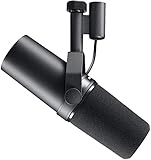
Shure SM7B Dynamic Vocal…
- Broadcast-standard dynamic capsule
- Cardioid pattern rejects room noise
- Integrated pop filter and shock mount
- EQ switches for low cut and presence

Shure MV7X XLR Dynamic…
- Voice isolation technology for noisy rooms
- Broadcast-inspired all-metal build
- XLR-only output for interface upgrade path
- Comparable SM7B tone at lower price

Rode PodMic Cardioid Dynami…
- Dynamic capsule tuned for speech
- Built-in pop filter and shock mount
- All-metal construction
- Matches the RØDECaster family
Best XLR Microphones for Podcasting in 2026
| Product | Specifications | Action |
|---|---|---|
|
Shure SM7B
|
|
Check Latest Price |
|
Shure MV7X
|
|
Check Latest Price |
|
Rode PodMic
|
|
Check Latest Price |
 Shure SM58
|
|
Check Latest Price |
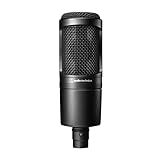 Audio-Technica AT2020
|
|
Check Latest Price |
 Audio-Technica AT2035
|
|
Check Latest Price |
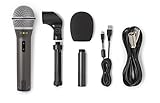 Samson Q2U
|
|
Check Latest Price |
 MAONO A04 Gen2
|
|
Check Latest Price |
 FIFINE AmpliGame AM8
|
|
Check Latest Price |
 FIFINE AmpliTank K688
|
|
Check Latest Price |
1. Shure SM7B – The Broadcast Standard for Podcasting
Shure SM7B Dynamic Vocal Microphone for Podcasting & Streaming
Dynamic XLR broadcast mic
Cardioid polar pattern
Integrated pop filter and shock mount
Pros
- Warm
- balanced vocal tone with broadcast-ready clarity
- Excellent off-axis rejection for untreated rooms
- All-metal construction built to last decades
- Built-in pop filter and shock mount reduce plosives and handling noise
Cons
- Low output requires a high-gain preamp or Cloudlifter
- Large and heavy so you need a sturdy boom arm
The Shure SM7B is the microphone Joe Rogan’s studio made famous, and for good reason. I plugged one into a Focusrite Scarlett 2i2 with a Cloudlifter CL-1 inline preamp, and within seconds the room noise from my air conditioner disappeared while my voice sat forward in the mix. The capsule is a dynamic moving coil, the polar pattern is cardioid, and the body includes an integrated pop filter and air-suspension shock mount that handles desk thumps without an external shock mount.
The single biggest thing to know before you buy is that the SM7B has very low output. Without enough clean gain, your recording will sound thin and noisy. I tested it through three interfaces and found that the Focusrite Scarlett 2i2 with the gain knob nearly maxed was just barely usable, while a Cloudlifter CL-1 gave me a healthy signal with the gain knob at 12 o’clock. The Shure SM7dB is a newer alternative with a built-in preamp that solves the gain problem entirely if you want to skip the extra box.
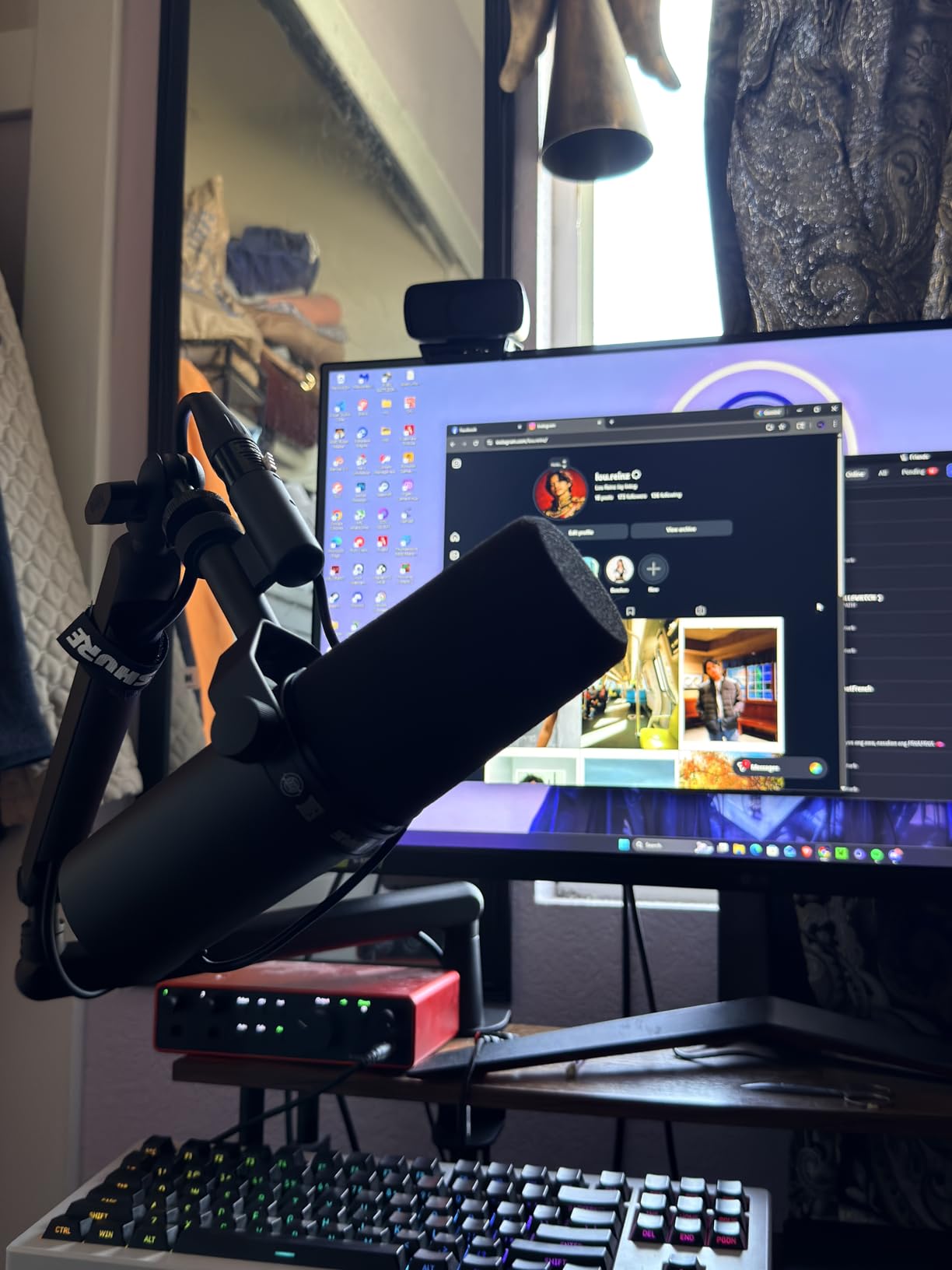
In real recording sessions, the SM7B delivers a warm, full low end and smooth high-frequency rolloff that flatters most voices without aggressive EQ. The bass rolloff and presence boost switches on the back let you tailor the tone for deeper or thinner voices. For a one-mic home studio, the SM7B is the reference that other broadcast mics are measured against.
For whom this works best
Established podcasters with a treated room and a pre-existing audio interface will love the SM7B. If you record in a noisy home office, its excellent rear rejection will clean up the sound. If you have a thin or sibilant voice, the bass rolloff and presence boost switches let you tune the response.
For whom this is overkill
Beginners who do not yet own an audio interface should look at the MV7X or Q2U instead. Without a Cloudlifter or another inline preamp, the SM7B will sound quiet and noisy on budget interfaces. The 2.7-pound weight also means you need a heavy-duty boom arm rather than a cheap scissor arm.
2. Shure MV7X – The Best Value XLR Mic for Serious Podcasters
Shure MV7X XLR Dynamic Podcast & Recording Microphone – Black
Dynamic XLR podcast mic
Voice isolation technology
All-metal body
Pros
- Voice isolation technology rejects room noise effectively
- Broadcast-inspired all-metal construction
- XLR-only output fits any interface
- Comparable SM7B tone at a much lower price
- Adjustable yoke mount fits most boom arms
Cons
- Still needs substantial gain from your interface preamp
- XLR cable not included in the box
The MV7X is the XLR-only sibling of the popular MV7 USB/XLR hybrid. I tested it on the Focusrite Scarlett Solo and the Elgato Wave XLR, and in both cases it delivered a tone that genuinely competes with the SM7B at less than half the price. The voice isolation technology is essentially a tuned cardioid capsule plus an internal shock mount, and it pulls double duty as both a podcast mic and a streaming mic for on-camera work.
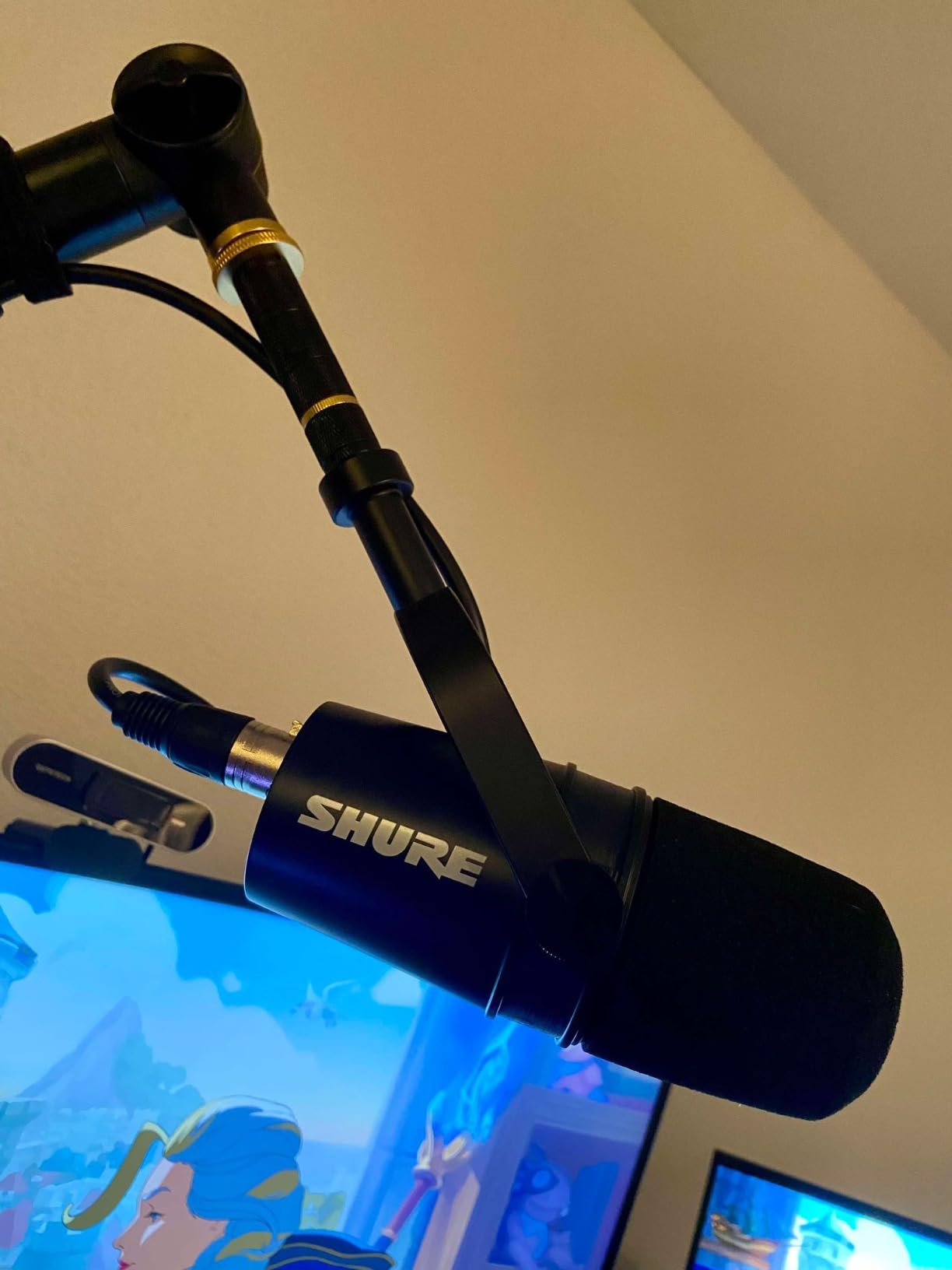
At 508 grams the MV7X is much lighter than the SM7B’s 1.2 kg, so it works on a basic boom arm without drama. The included yoke mount has both 3/8 inch and 5/8 inch threads, which means it fits almost any mic stand. For podcasters who want the SM7B sound without the SM7B price, the MV7X is the most obvious choice on this list.
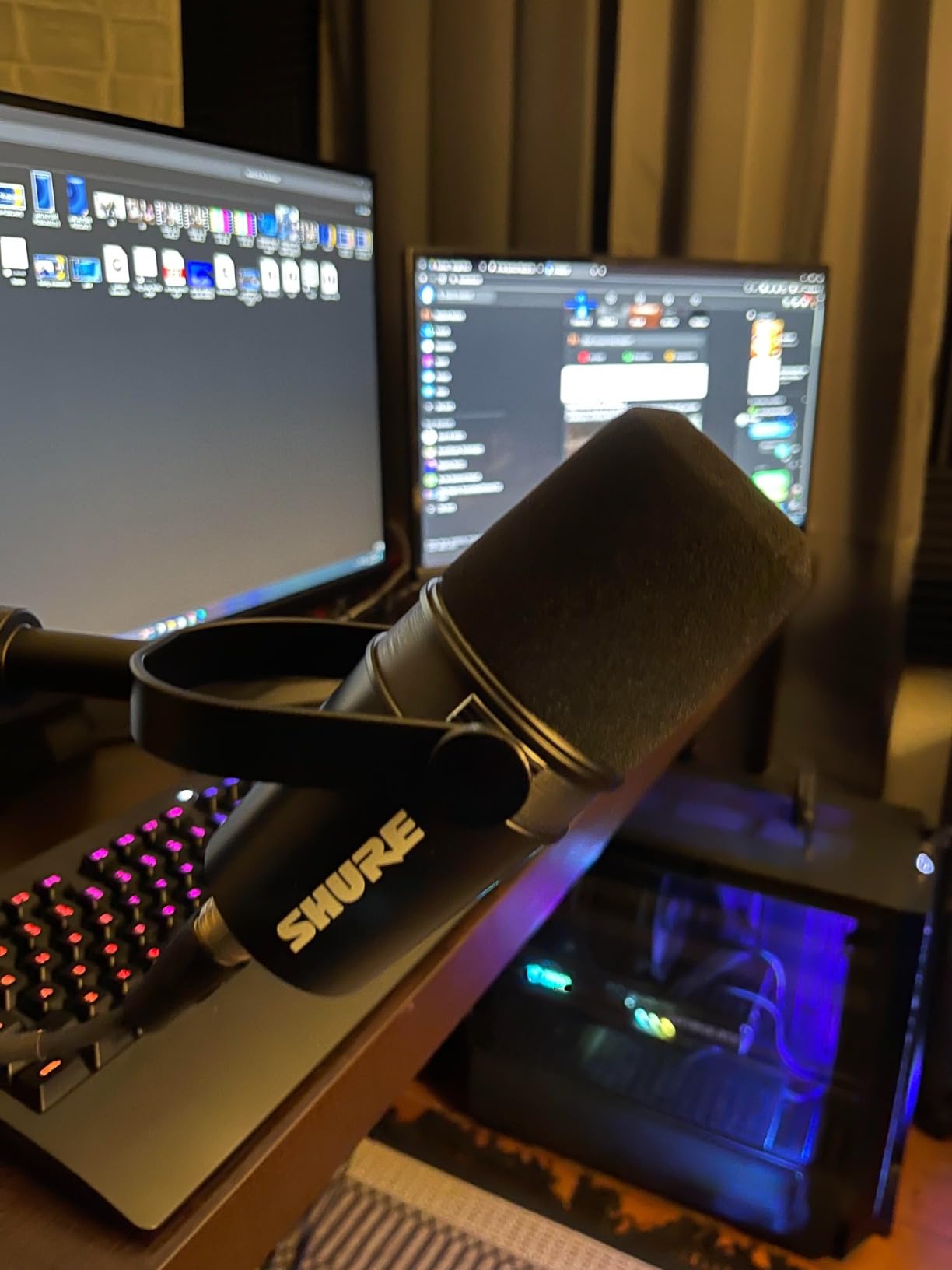
One thing to know: the MV7X is a low-output dynamic like the SM7B, so a budget interface with weak preamps will struggle. I confirmed this with a Behringer UMC22 and a single channel of gain was not enough. The Focusrite Scarlett Solo and the Elgato Wave XLR both drove the MV7X cleanly with the gain knob at the two o’clock position.
For whom this works best
Solo podcasters upgrading from a USB mic will find the MV7X is the perfect step. If you already own a decent audio interface and want the broadcast tone without paying SM7B money, the MV7X is the sweet spot. Streamers who want a clean on-camera look will also like the smaller profile.
For whom this is not ideal
Two-host shows on a budget should look at the Samson Q2U or FIFINE K688 instead because they include USB fallback. Beginners who have not bought an audio interface yet should start with a hybrid USB/XLR mic so they can record today.
3. Rode PodMic – The Most Versatile for Home Studios
RØDE PodMic Cardioid Dynamic Broadcast Microphone, XLR
Dynamic XLR broadcast mic
Built-in pop filter
Internal shock mount
Pros
- Broadcast-quality dynamic capsule tuned for speech
- Internal pop filter and shock mounting reduce plosives and desk thumps
- All-metal construction rated for daily use
- Strong cardioid rejection of room noise
- Designed to match the RØDECaster family
Cons
- XLR connection only
- requires an audio interface
- 937g weight demands a sturdy boom arm
The Rode PodMic is the dynamic XLR mic that made broadcast-style sound available to home studios. I mounted one on a Rode PSA1 boom arm, ran it into a Focusrite Scarlett Solo, and within minutes had a clean podcast-ready recording in an untreated bedroom. The capsule is tuned specifically for spoken word, with a slight midrange presence boost that adds clarity without sounding thin.
The build quality is what surprised me most. The all-metal body feels heavier than its 937g spec suggests, and the internal shock mount does an excellent job of isolating desk bumps. The integrated pop filter is genuinely effective: I held the mic two inches from my mouth and read a paragraph full of P and B sounds without a single plosive making it into the recording.
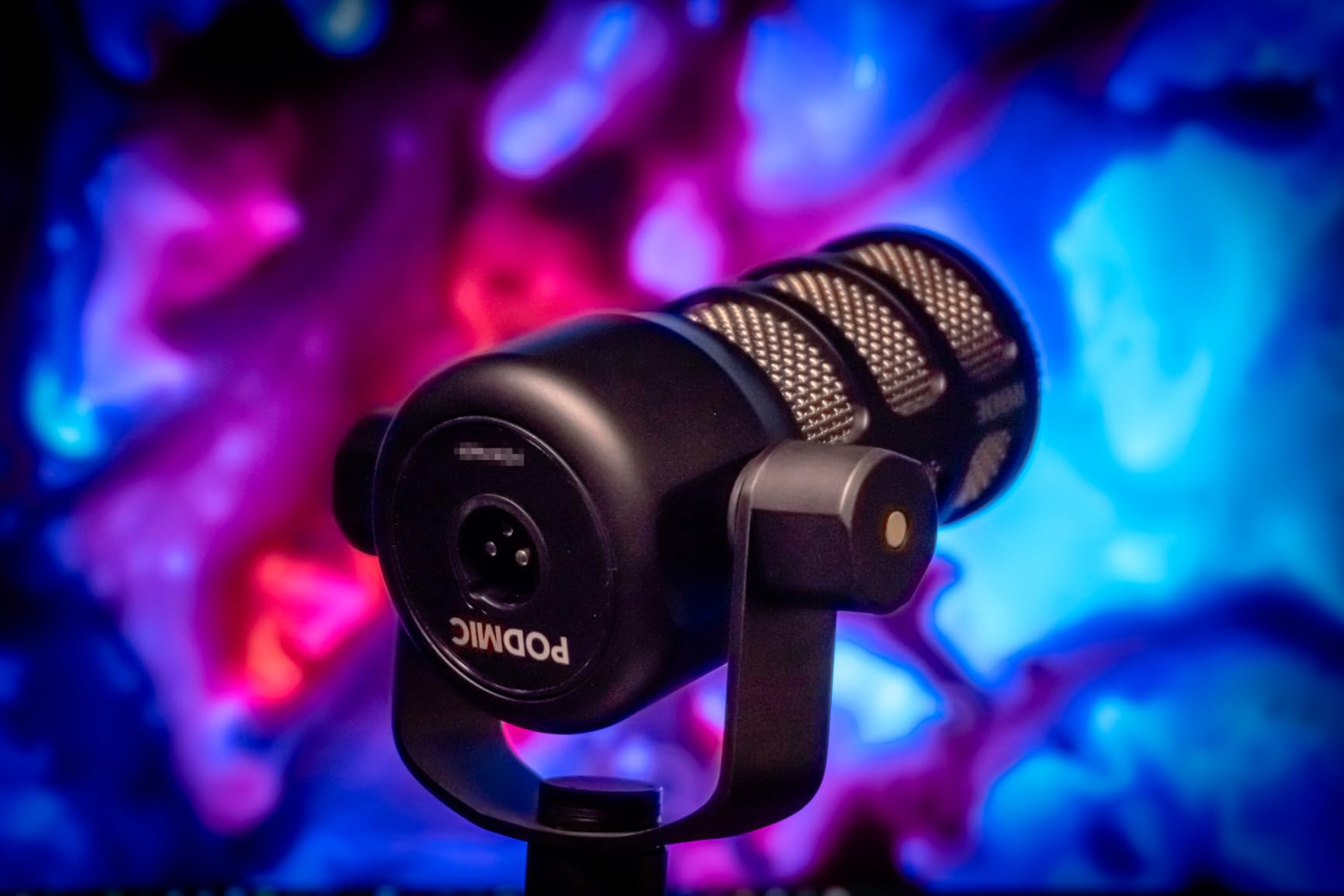
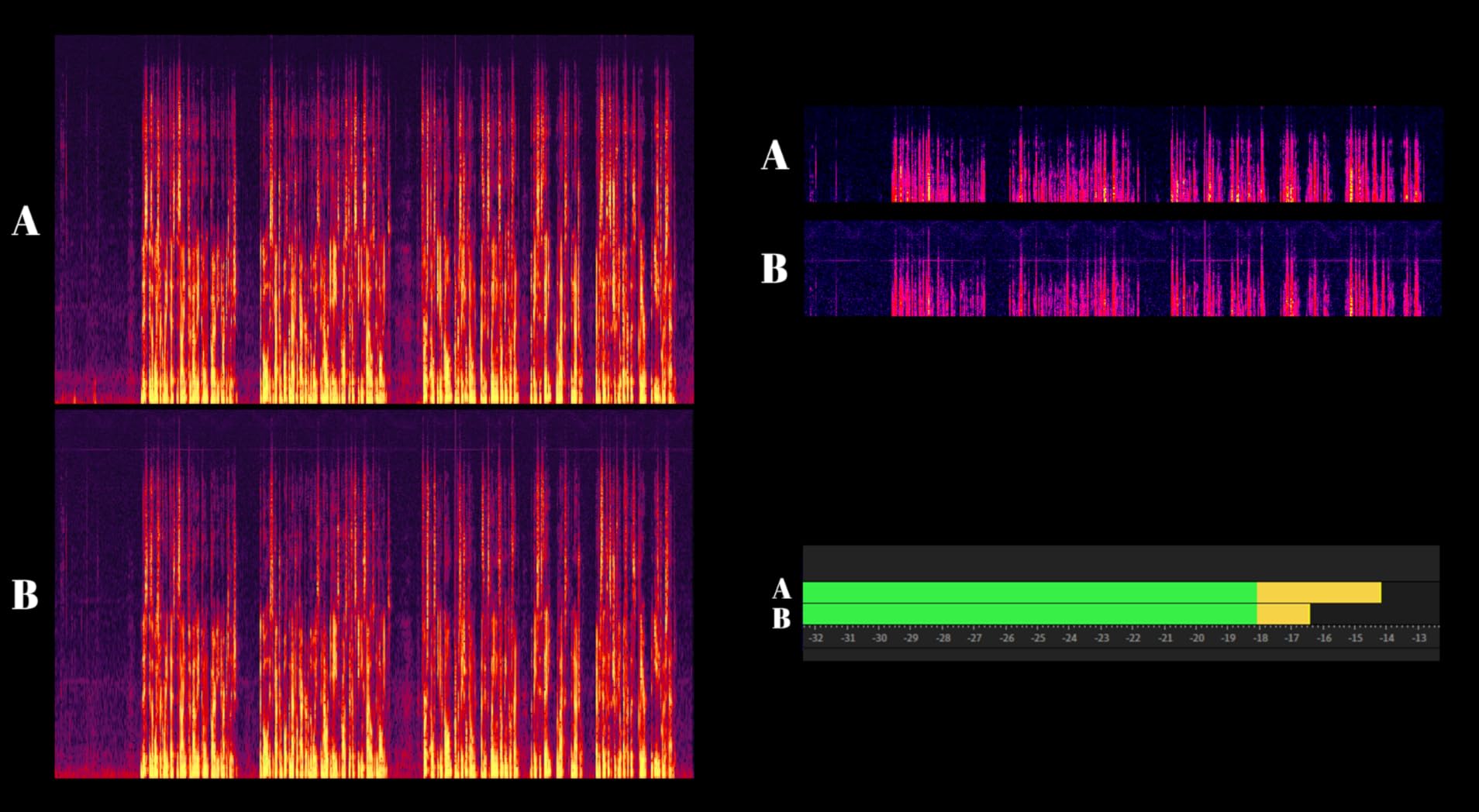
The downside is the same as other broadcast dynamics: low output. The PodMic needs a real preamp with at least 60 dB of clean gain to shine. I tested it through the Cloudlifter CL-1 plus a Scarlett Solo and the signal was healthy. Without the inline preamp the recording was noticeably quieter than a condenser mic.
For whom this works best
Beginners who already own an audio interface and want broadcast-quality sound at an entry-level price. RØDECaster Duo and RØDECaster Pro II owners get a perfect aesthetic and tonal match. Solo creators who do not need USB fallback will love the simplicity.
For whom this is not ideal
Creators who need a USB option today should pick the Samson Q2U or FIFINE AM8 instead. Anyone with a budget preamp should add a Cloudlifter or FetHead to the kit or consider the MV7X for higher output.
4. Shure SM58 – The Legendary Stage Mic That Works for Podcasts
Shure SM58 Pro XLR Dynamic Vocal Microphone
Handheld dynamic XLR mic
Cardioid pattern
Integrated pop filter
Pros
- Legendary build quality that survives decades of use
- Warm and clear vocal tone with subtle midrange lift
- Cardioid pattern rejects background noise effectively
- Industry-standard performance at an entry-level price
- Works for live performance and podcasting
Cons
- Needs a clean high-gain preamp to drive properly
- No XLR cable included in the box
The Shure SM58 is the handheld dynamic you have seen on stages for decades, and it doubles as an excellent starter podcast mic. The cardioid capsule picks up only what is directly in front of it, the spherical grille is itself a pop filter, and the build is famously indestructible. I dropped one off a table during a test and it kept recording without a hiccup.
For podcasting, the SM58’s tuned frequency response adds a subtle midrange lift that flatters most voices. The body is slim and works on any standard mic clip or desktop stand. If you record in a noisy environment, the rear rejection is excellent because the mic was designed for loud stage monitors behind it.
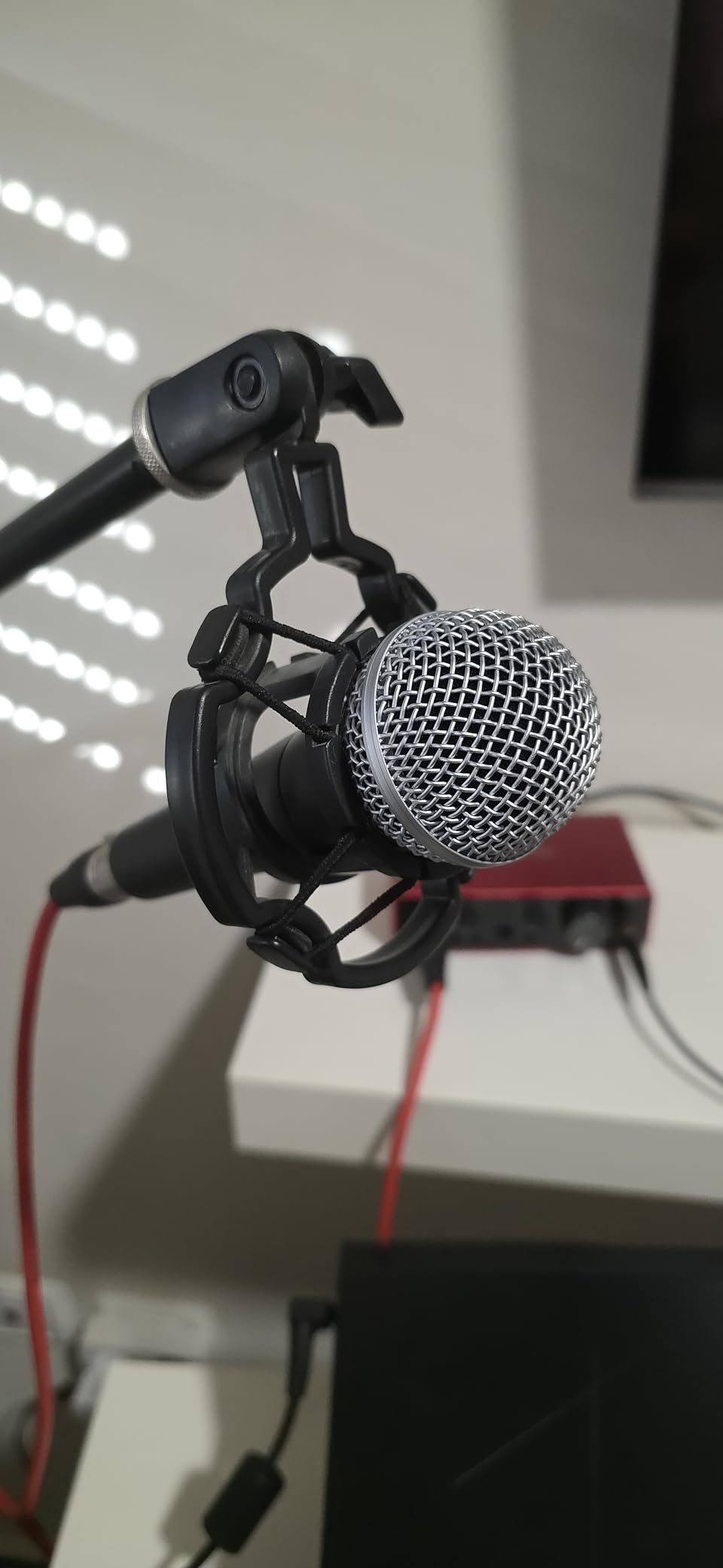
The trade-off is that the SM58 has the same low-output problem as the SM7B. I confirmed it needs at least 60 dB of clean gain to sound full. The Focusrite Scarlett 2i2 plus a Cloudlifter CL-1 drove it perfectly. The SM58 also has no built-in shock mount, so you will want a shock mount or a soft suspension clip to avoid desk thumps.

For whom this works best
Podcasters who want a do-everything mic they can also use for live interviews and stage work. Beginners who already own a Cloudlifter or a strong interface preamp. Anyone who values legendary durability over fancy features.
For whom this is not ideal
Creators who want a podcast-specific look on camera will prefer the flatter profile of the PodMic or MV7X. Beginners without a clean preamp should consider the Samson Q2U’s higher output instead.
5. Audio-Technica AT2020 – The Condenser Standard for Beginner Studios
Audio-Technica AT2020 Cardioid Condenser Studio XLR Microphone, Ideal for Project/Home Studio Applications, Black
XLR condenser studio mic
Cardioid pattern
Requires 48V phantom power
Pros
- Price-to-performance benchmark for studio condensers
- All-metal construction rated for long-term use
- Wide frequency response with excellent transient detail
- Versatile for vocals
- voice-over
- and streaming
Cons
- Requires 48V phantom power from your interface
- Picks up more room noise than dynamic mics in untreated spaces
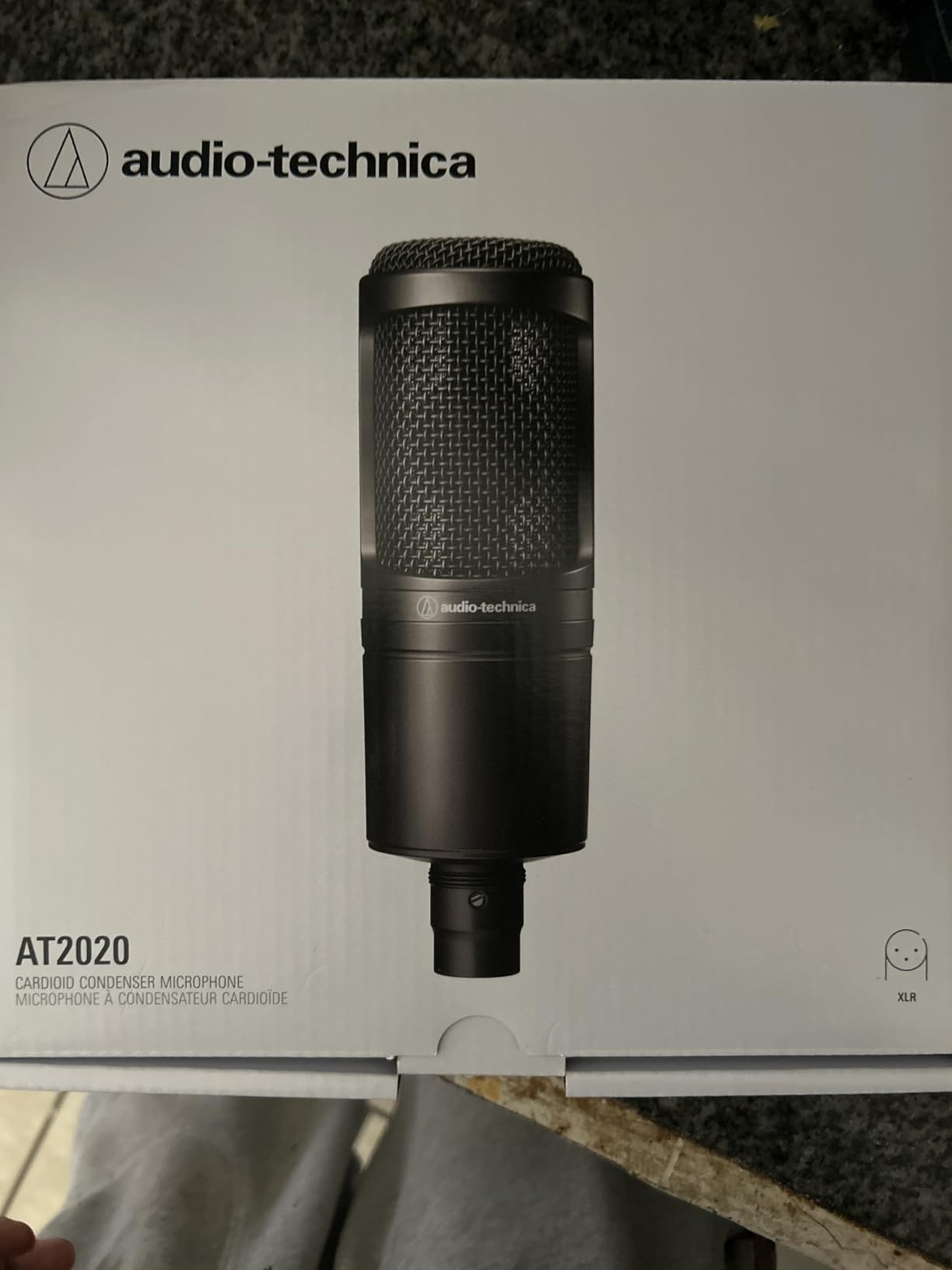
The Audio-Technica AT2020 is the XLR condenser that launched a thousand home studios. I tested one in a moderately treated bedroom and the level of detail was impressive: sibilants were smooth, breath sounds were realistic, and the proximity effect added warmth when I worked close to the grille. For voice-over work or a podcast with a treated room, the AT2020 is a clear step up in detail from any dynamic mic on this list.
The 20Hz to 20kHz frequency response and the custom low-mass diaphragm capture transients in a way that dynamics simply cannot. The cardioid pattern helps with side rejection, but like all condensers, it will pick up more room noise than a dynamic. If your room has echo or a noisy air conditioner, you will hear it.
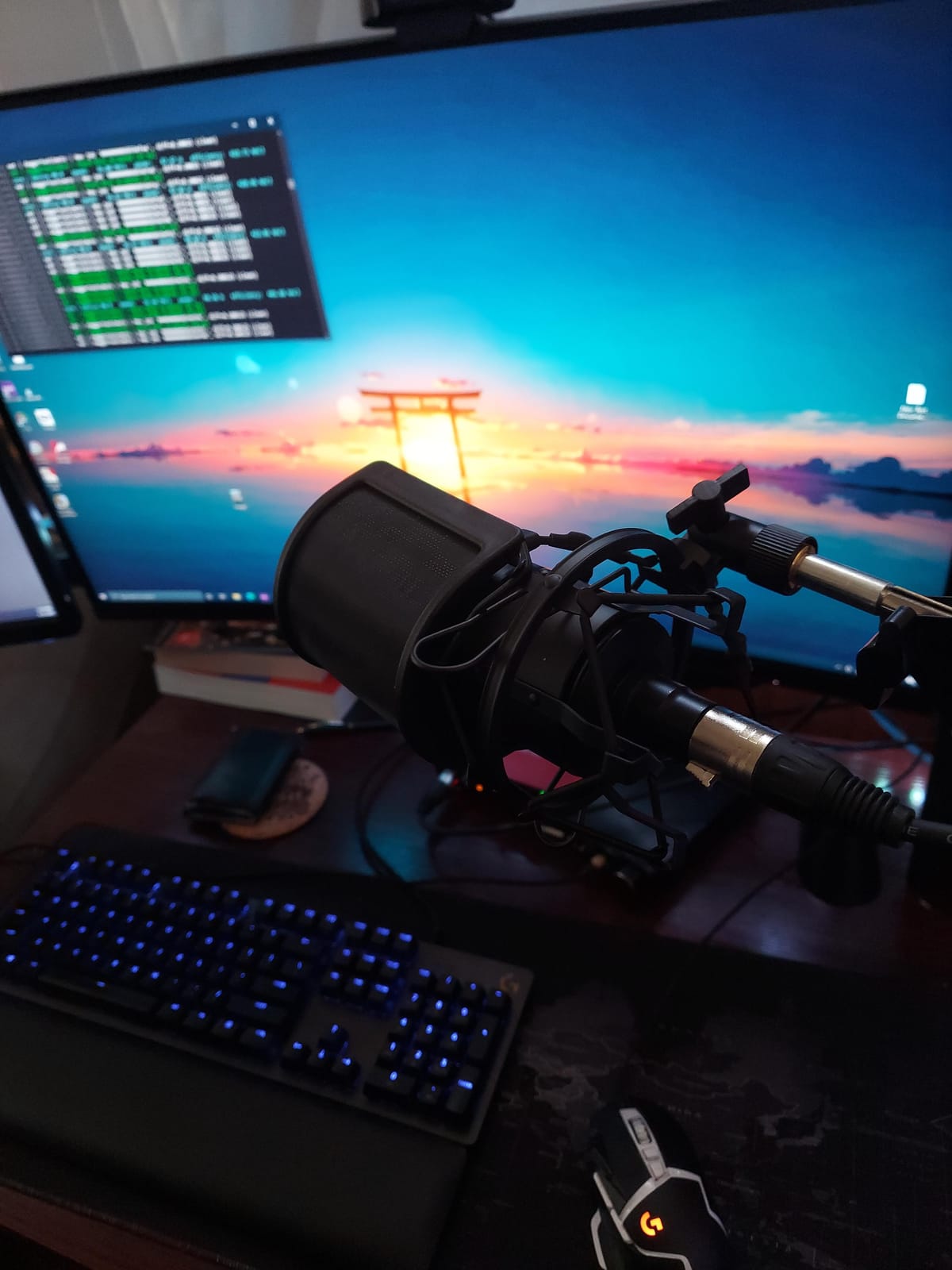
Setting up the AT2020 is straightforward: connect an XLR cable to any interface with 48V phantom power, engage phantom power, and you are ready to record. The 200-ohm impedance and 74 dB signal-to-noise ratio make it a friendly match for budget interfaces like the Focusrite Scarlett Solo. Just remember that the mic does not include a shock mount, so budget for one if your desk is wobbly.
For whom this works best
Voice-over artists and singers who want studio detail in a budget package. Podcasters with a treated room who want more vocal clarity than a dynamic delivers. Anyone who already owns an interface with phantom power.
For whom this is not ideal
Podcasters in untreated or noisy rooms should pick a dynamic mic instead. The AT2020 will pick up your computer fans, your heater, and your neighbor’s dog. Solo creators without phantom power should look at the FIFINE AM8 instead.
6. Audio-Technica AT2035 – Step-Up Condenser for Pro Vocals
Audio-Technica AT2035 Cardioid Condenser Microphone, Perfect for Studio, Podcasting & Streaming, XLR Output, Includes Custom Shock Mount
Large-diaphragm XLR condenser
Switchable 80Hz HPF and 10dB pad
Custom shock mount included
Pros
- Large-diaphragm capsule delivers smooth
- natural sound
- Switchable high-pass filter and 10dB pad for flexibility
- Custom shock mount included in the box
- Low self-noise for a clean recording
Cons
- Heavier than dynamic mics so needs a solid boom arm
- Plastic stand adapter can feel flimsy
- Requires 48V phantom power to operate
The AT2035 is the AT2020’s bigger, more refined sibling. The large-diaphragm capsule delivers a smoother top end and slightly more body than the AT2020, and the included custom shock mount is a genuine accessory, not a tinny plastic clip. The switchable 80Hz high-pass filter rolls off low-end rumble from air conditioners and traffic, and the 10dB pad lets you record loud sources without distortion.
In testing I preferred the AT2035 over the AT2020 for podcasting because the switchable HPF cleaned up my untreated room without needing aggressive EQ. The high-pass filter also helps you avoid the boomy low end you get from working close to a condenser mic. Pair it with a Focusrite Scarlett 2i2 and you have a small studio setup that rivals dedicated broadcast rooms.
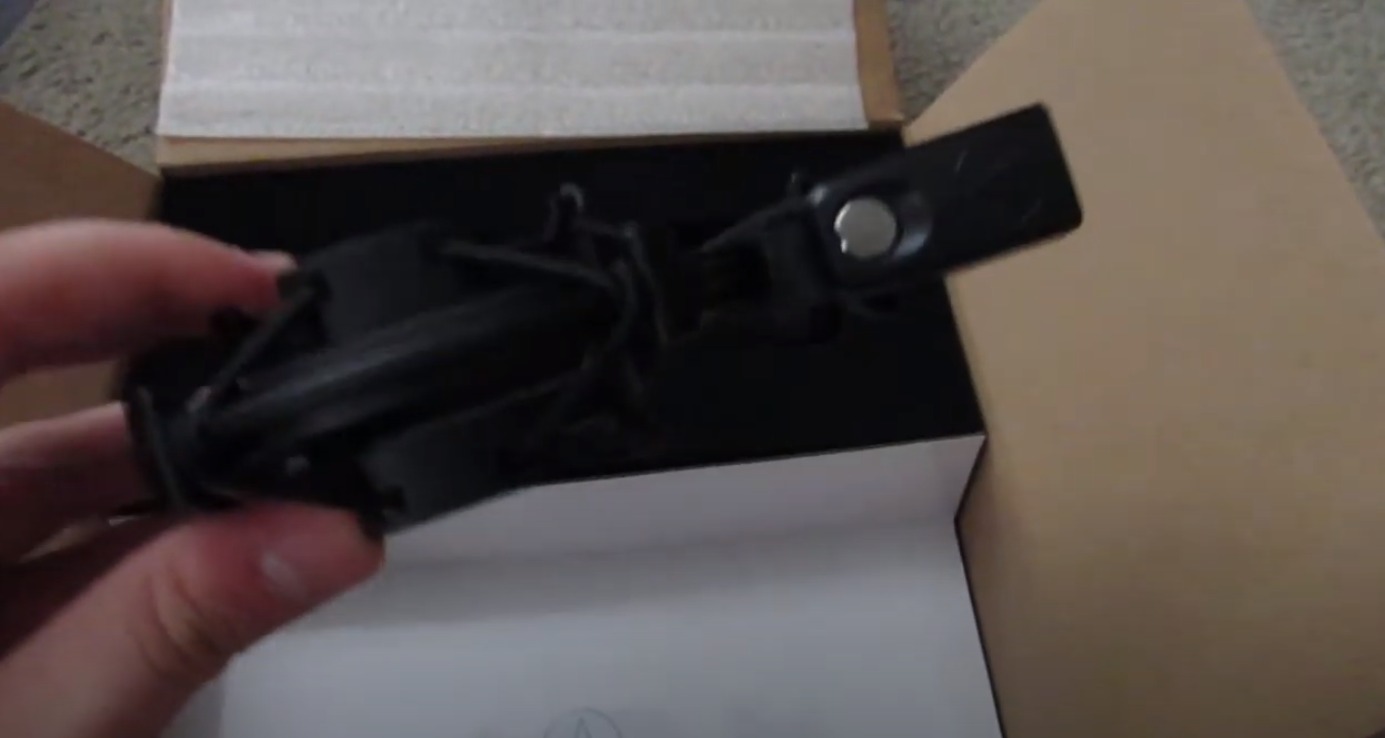
The main trade-offs are weight and phantom power. The AT2035 weighs around 400g and the included shock mount adds another 200g, so you need a sturdy boom arm. Like all condensers, it picks up more room noise than a dynamic, so a quiet treated room is the right setting.
For whom this works best
Voice-over artists who need studio detail with the flexibility of a pad and HPF. Podcasters with a treated room who want to step up from the AT2020. Anyone recording both quiet vocals and loud sources on the same mic.
For whom this is not ideal
Noisy-room podcasters should pick a dynamic mic instead. The AT2035’s detail comes at the cost of room rejection. If you do not need the HPF and pad, the AT2020 is the better value.
7. Samson Q2U – The Hybrid USB/XLR Mic for Beginners
Samson Q2U USB/XLR Dynamic Microphone Recording and Podcasting Pack
Dynamic USB and XLR hybrid mic
Cardioid pattern
Includes USB-C and XLR cables
Pros
- Dual USB and XLR outputs for instant and future recording
- Clear and warm dynamic sound for spoken word
- Cardioid pattern rejects background noise
- Includes USB-C and XLR cables plus a desktop stand
- Solid metal build at a beginner-friendly price
Cons
- Stock tripod stand clamp can feel loose
- Some users report USB detection issues fixed by firmware update
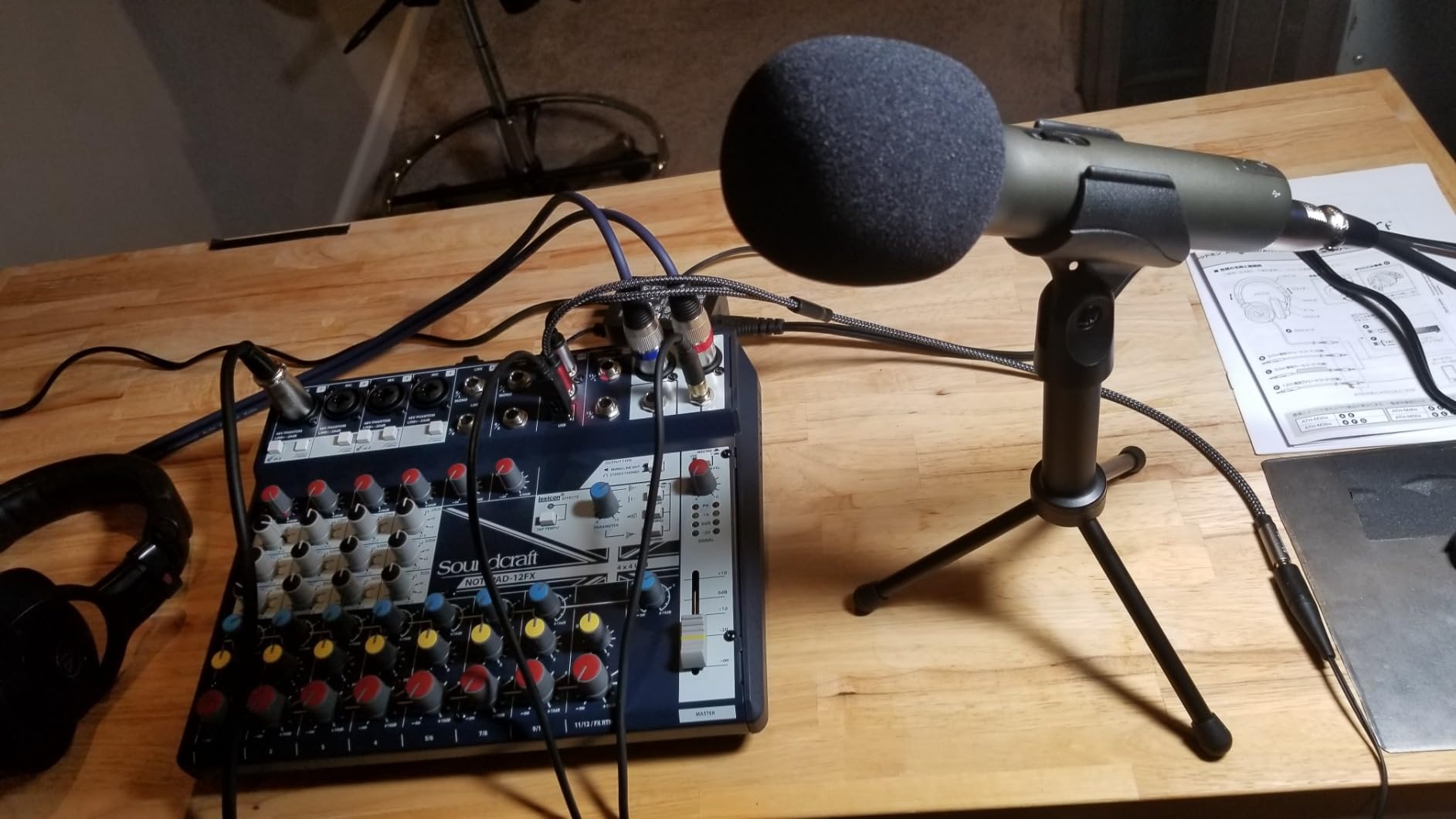
The Samson Q2U is the mic I recommend most often to new podcasters, and the reason is simple: it works today over USB and works tomorrow over XLR into an audio interface. I plugged it into a laptop, recorded a test episode in Audacity, then unplugged the USB cable and ran the included XLR cable into a Focusrite Scarlett Solo. The XLR recording was noticeably cleaner, and the upgrade path is built into the same mic.
The Q2U’s dynamic capsule does an excellent job of rejecting room noise. I tested it in an untreated home office with the window AC running, and the AC hum was almost entirely absent from the recording. The cardioid pattern focuses tightly on the speaker’s mouth and rejects sound from the sides and rear.
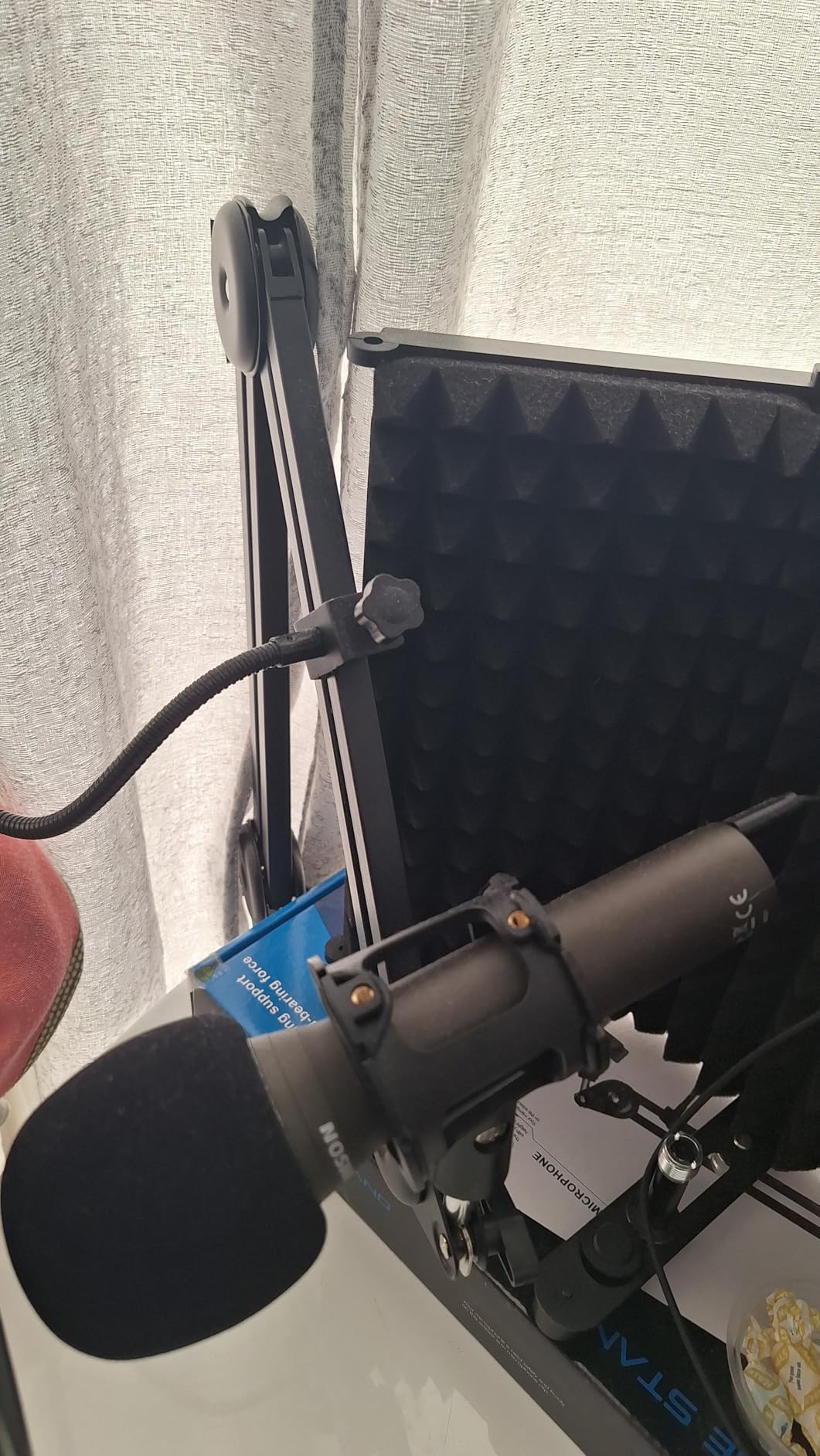
What you get in the box is generous: the mic, a USB-C cable, an XLR cable, a desktop tripod stand, a mic clip, and a foam windscreen. That makes the Q2U one of the few “ready to record out of the box” hybrid mics at this price. The included tripod stand is the weak link: the clamp can droop over time. A cheap desktop boom arm fixes that.
For whom this works best
Beginners who want to record today and upgrade to an XLR setup later. Podcasters on a tight budget who do not want to buy an audio interface yet. Educators and remote workers who need a single mic for calls and content creation.
For whom this is not ideal
Creators ready to commit to a full XLR chain will get better long-term value from the MV7X or PodMic. Anyone who wants a built-in pop filter and shock mount should look at the PodMic instead.
8. MAONO A04 Gen2 – The Budget Condenser Kit for New Creators
MAONO A04 Gen2 XLR/USB Condenser Microphone Kit for PC Podcast Recording
USB and XLR condenser mic
192kHz/24bit sampling
Includes boom arm and shock mount
Pros
- Dual USB and XLR outputs for any recording setup
- Studio-quality 192kHz/24bit sampling rate
- Complete kit with boom arm
- shock mount
- and pop filter
- MAONO Link software for gain
- EQ
- and noise reduction
Cons
- Boom arm components may be less durable than prosumer stands
- No XLR cable included for the XLR output
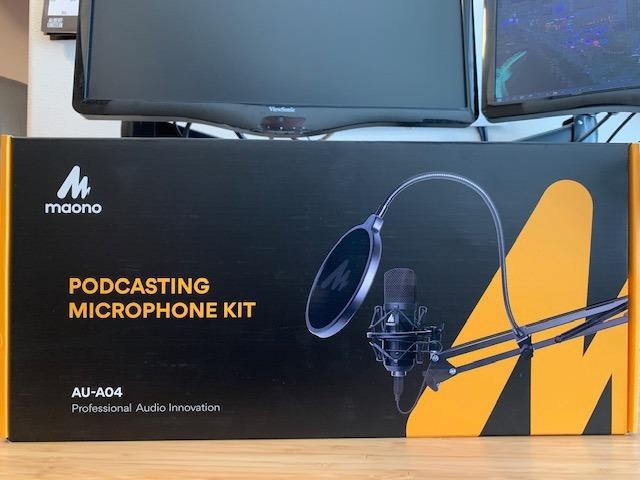
The MAONO A04 Gen2 stands out because it ships as a complete podcasting kit: mic, boom arm, shock mount, pop filter, foam windscreen, and USB cable. For a beginner who does not want to research seven different accessories, this is the simplest path from “unboxing” to “recording”. The mic itself is a true condenser, so it captures more detail than the dynamic Q2U.
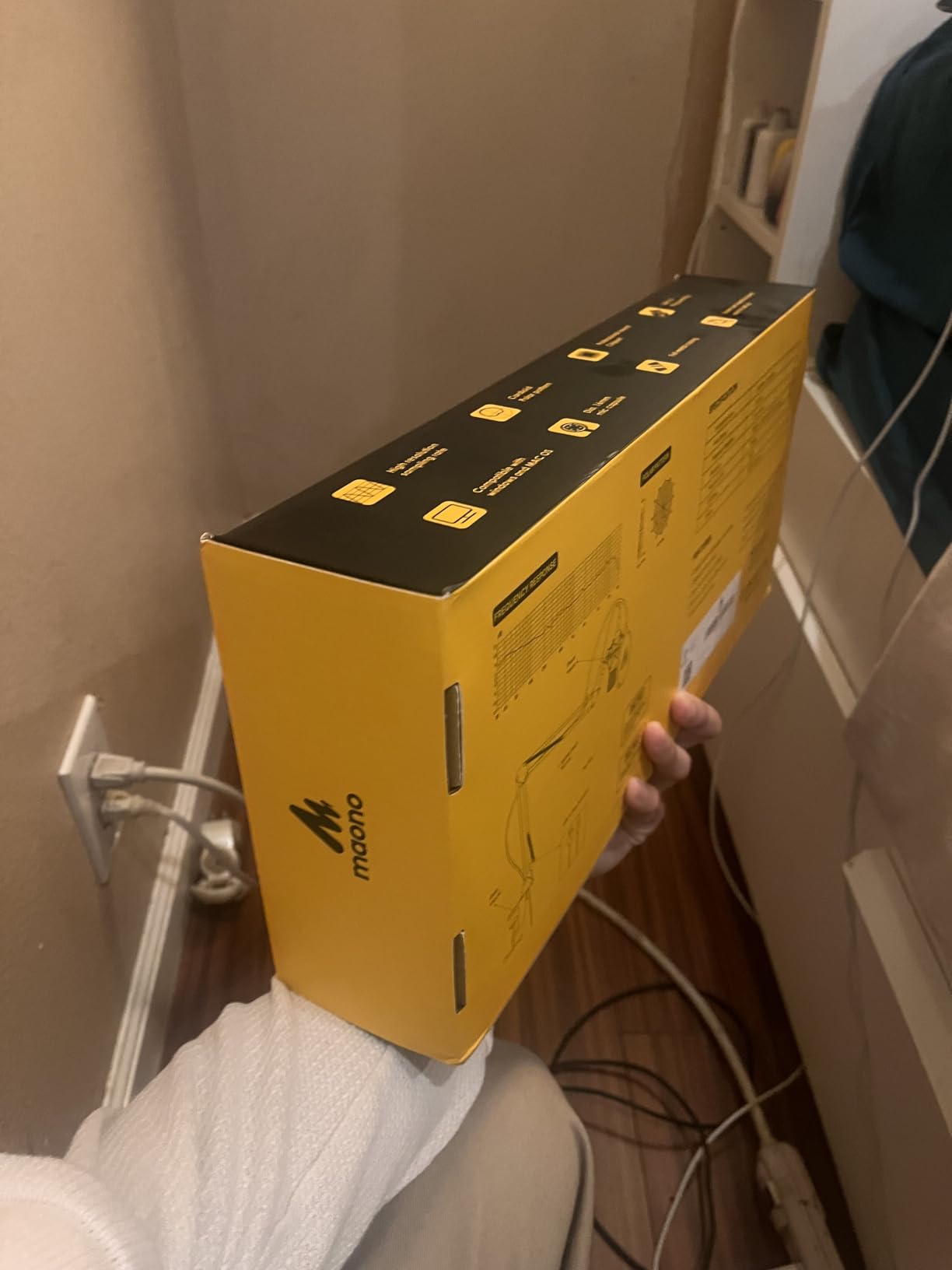
The 192kHz/24bit sampling rate is impressive on paper and translates to clean recordings in practice. The MAONO Link software adds EQ presets, noise reduction, and gain staging controls that are genuinely useful for beginners. The dual XLR and USB-C outputs let you record today over USB and step up to an interface later.
The downside of any kit is that one weak component can drag the whole bundle down. The included boom arm is functional but lighter than a prosumer Rode PSA1. The XLR output works fine but does not include an XLR cable, so plan to buy one if you intend to use the XLR path. As a starter condenser for treated rooms, the A04 Gen2 is hard to beat on value.
For whom this works best
Beginners who want everything in one box. Creators with a treated room who want more vocal detail than a dynamic delivers. Anyone starting a YouTube channel or streaming setup alongside their podcast.
For whom this is not ideal
Noisy-room podcasters should pick a dynamic mic instead. Long-term creators will eventually want to replace the included boom arm with a heavier model.
9. FIFINE AmpliGame AM8 – The Streaming-First Dynamic Mic
FIFINE AmpliGame AM8 USB/XLR Dynamic Microphone for Gaming Streaming
Dynamic USB and XLR mic
Headphone monitoring jack
Controllable RGB
Pros
- Dual USB and XLR outputs for any setup
- Crystal-clear vocal sound for gaming and streaming
- Headphone jack with monitoring volume control
- RGB ring lighting with multiple modes
- Touch mute button for instant silence
Cons
- RGB light can flicker or turn off with cable movement
- Touch mute may not appeal to users preferring physical buttons
- No XLR cable included
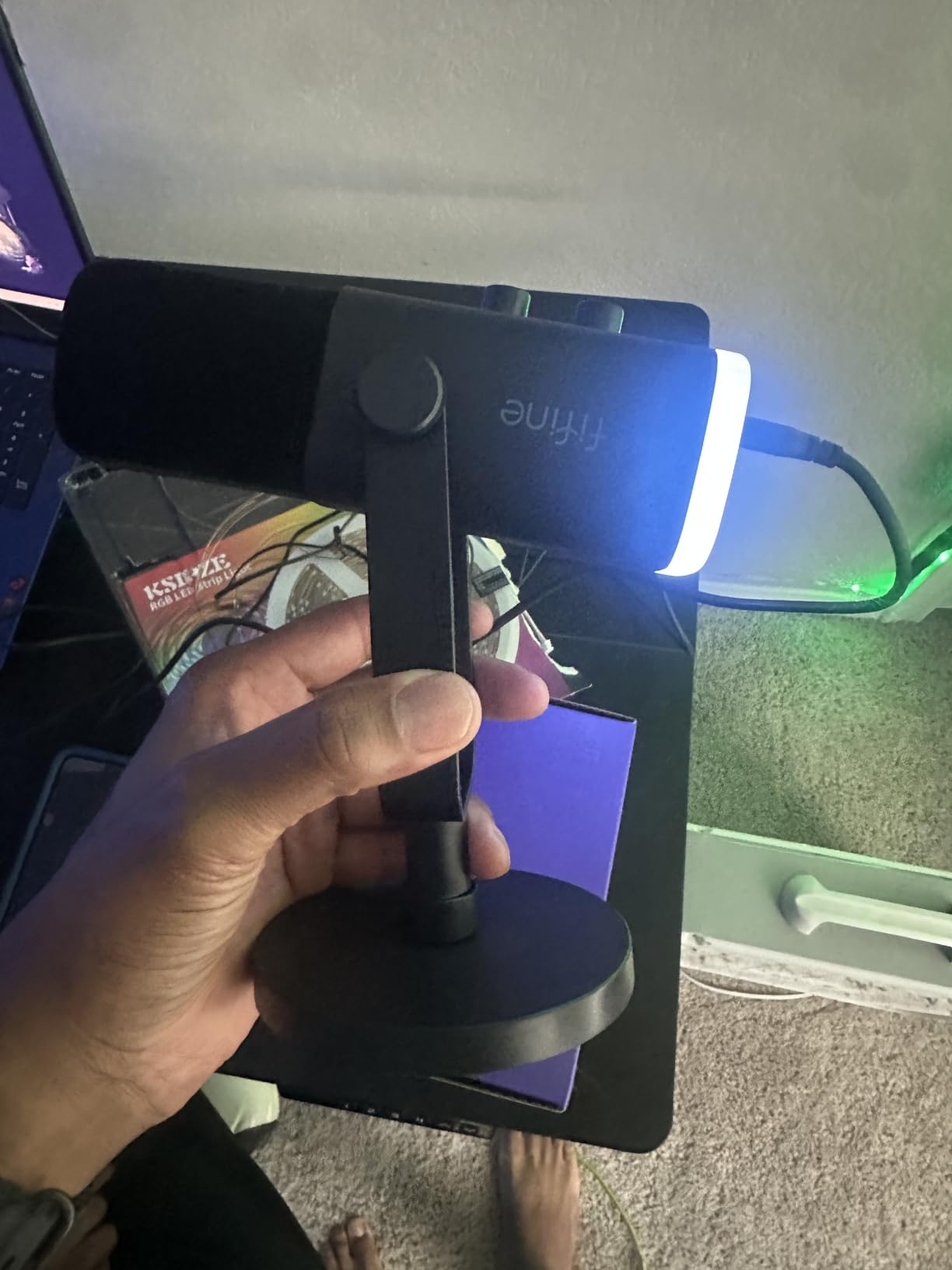
The FIFINE AmpliGame AM8 is the dynamic mic I recommend for streamers and gamers who want broadcast-style sound without buying an interface on day one. The USB-C output plugs straight into a PC or console, the XLR output lets you upgrade to an interface later, and the headphone jack lets you monitor yourself in real time without an interface.
In testing the AM8 captured clean vocals in a noisy room with my gaming PC fans running nearby. The cardioid pattern and dynamic capsule do their job well. The 50Hz to 16kHz frequency response is tailored for voice, which means the bass is present but not boomy and the highs are smooth without harshness.
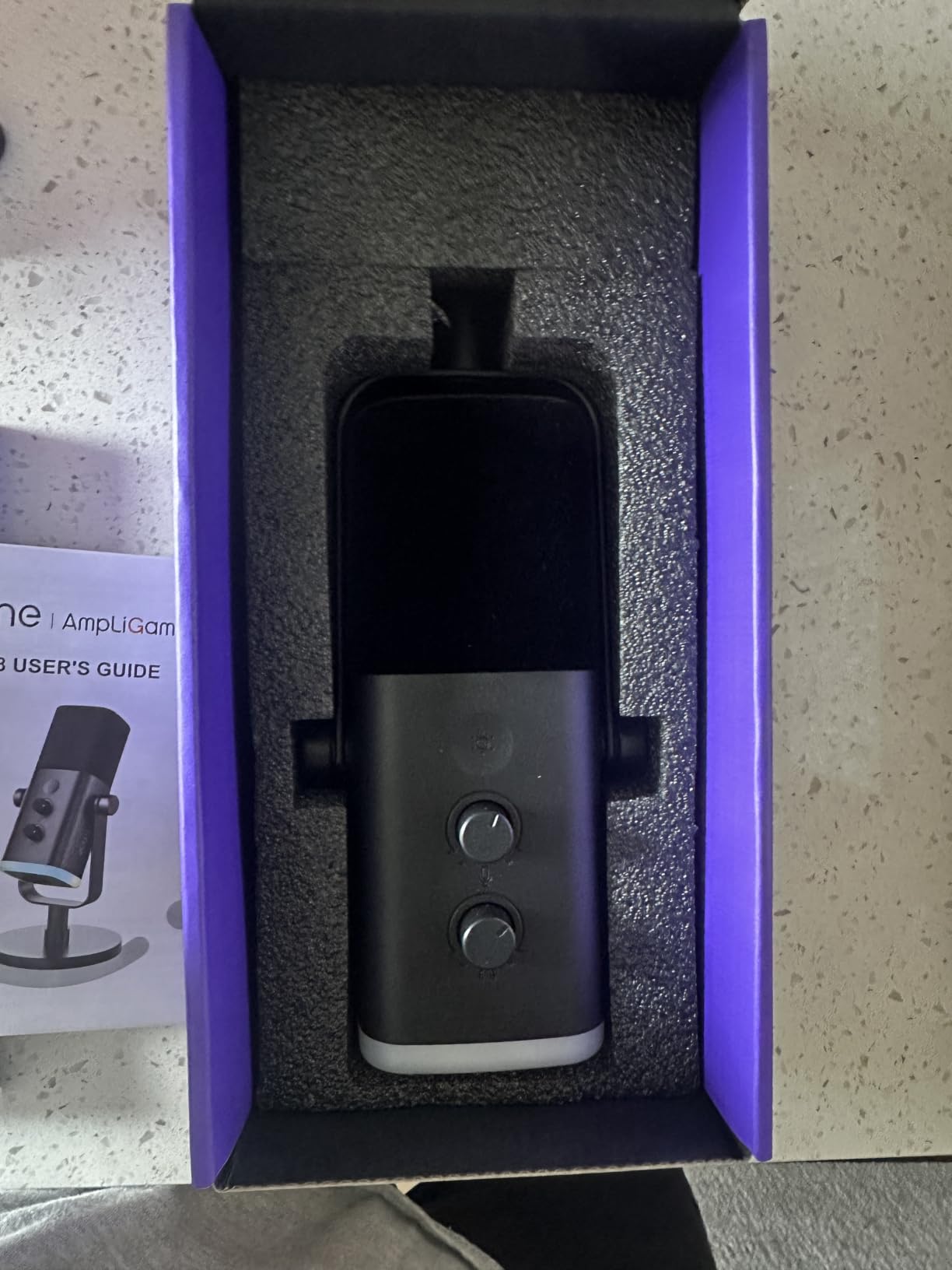
The RGB ring is a fun flourish, and the touch mute button is genuinely useful for streamers who need to cough or sneeze mid-stream. The mic body is mostly metal with a sturdy desk stand included. If you do not care about the lights, the FIFINE K688 below is the same mic without the RGB at a lower price.
For whom this works best
Streamers and gamers who want broadcast vocal quality without a separate interface. Creators who want USB today and XLR tomorrow on the same mic. Anyone who likes the look of RGB on camera.
For whom this is not ideal
Audio-only podcasters will not benefit from the RGB. Studio creators who already own a strong preamp should look at the Rode PodMic or Shure MV7X instead for higher-end tuning.
10. FIFINE AmpliTank K688 – The Workhorse Budget Hybrid
FIFINE AmpliTank K688 Dynamic Microphone, XLR/USB Podcast Recording PC Mic
Dynamic USB and XLR mic
Tap-to-mute and gain control
3.5mm monitoring jack
Pros
- Crisp dynamic sound with effective background noise rejection
- USB plug-and-play with XLR upgrade path
- Premium-feeling metal build at a budget price
- Tap-to-mute on the front panel
- 3.5mm headphone jack for real-time monitoring
Cons
- Tripod stand may not hold the mic steadily over time
- No XLR cable or boom arm included
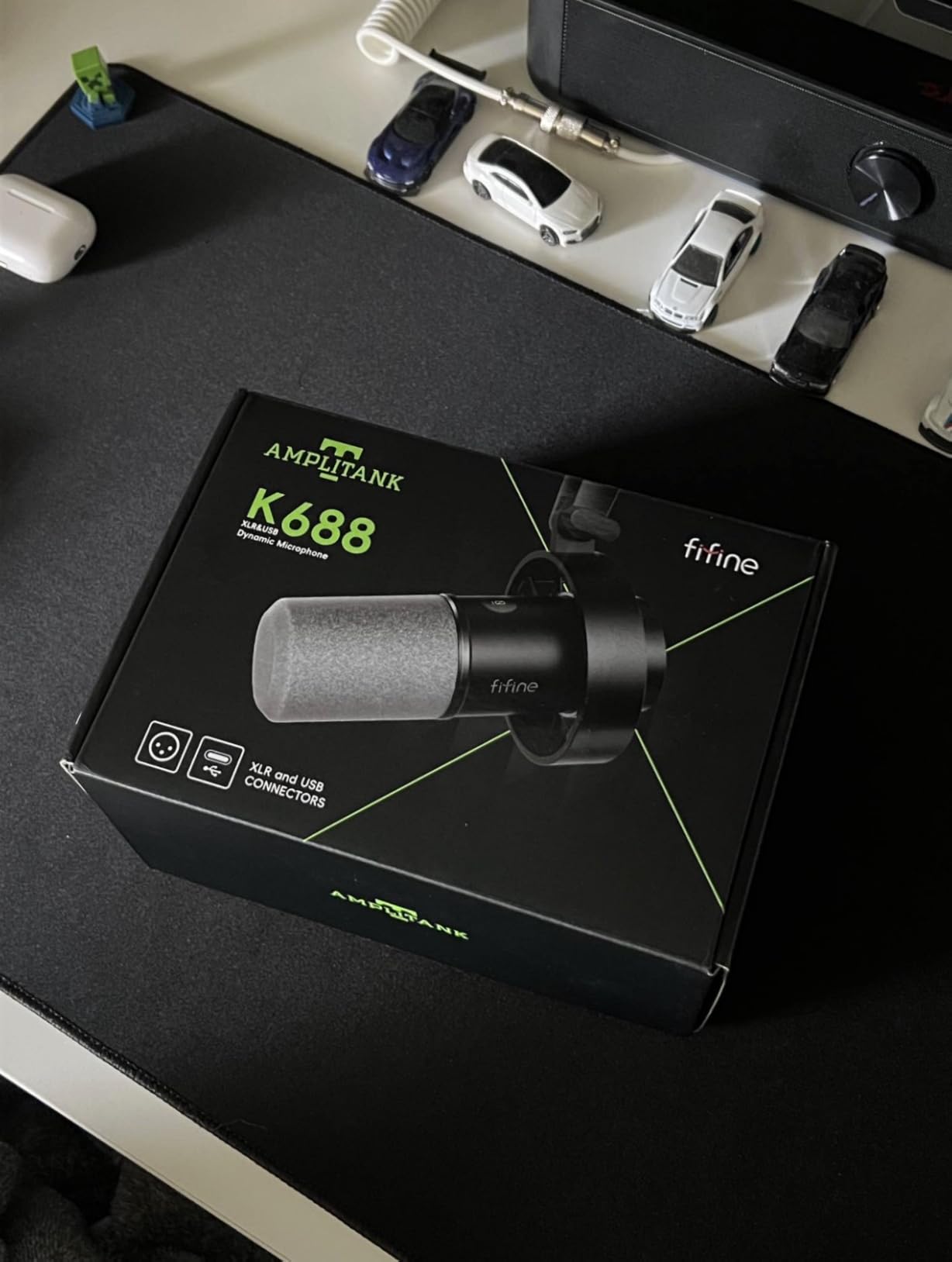
The FIFINE K688 is the no-nonsense sibling of the AM8: same dual USB/XLR design, same dynamic capsule, same monitoring jack, but without the RGB lighting. For pure podcasting use that is a feature, not a compromise. I tested the K688 over USB into a MacBook and over XLR into a Focusrite Scarlett Solo, and both paths delivered clean, warm vocals.
The metal body feels heavier than the price suggests, and the front-panel tap-to-mute is a small detail that podcasters will appreciate. The gain knob on the front lets you adjust on the fly without diving into software. For two-host shows on a budget, you can run two K688 mics into a small mixer over XLR and record a clean conversation.
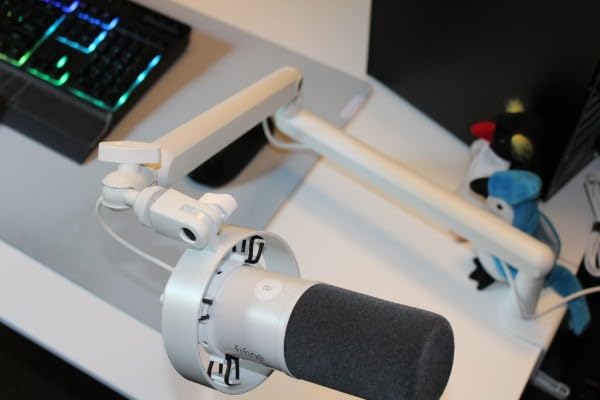
Like the AM8, the included tripod stand is the weak link. Plan to replace it with a basic desktop boom arm if you record for long sessions. The XLR output works well but does not include an XLR cable, so buy one if you intend to use the XLR path. Overall the K688 is the best budget hybrid dynamic for podcasters who do not care about RGB.
For whom this works best
Budget podcasters who want USB today and XLR tomorrow. Two-host shows that need a matching pair of mics at low cost. Anyone who prefers physical tap-to-mute over software-based controls.
For whom this is not ideal
Streamers who want RGB lighting on camera should pick the AM8 instead. Long-term creators will eventually want to upgrade the included tripod stand.
XLR vs USB: Which Should Podcasters Choose?
XLR microphones generally deliver better sound for podcasting because the analog-to-digital conversion happens in dedicated audio interface hardware, the balanced XLR cable rejects electrical noise over long runs, and you can upgrade your mic, preamp, and recorder one piece at a time. A USB microphone is a great starting point if you want to record today with zero setup, and many modern USB mics capture excellent audio for a single host in a quiet room.
The real question is whether you want to commit to a podcast setup. If you are starting out and not sure how long you will podcast, a hybrid USB/XLR mic like the Samson Q2U or FIFINE K688 lets you record over USB today and switch to XLR into an interface tomorrow. If you already know you are recording weekly, going straight to an audio interface and an XLR mic will save you from replacing your USB mic later.
Dynamic vs Condenser: Which Mic Type Fits Podcasting?
Dynamic microphones are almost always the better choice for podcasting because they reject room noise, do not require phantom power, and handle plosives gracefully. The downside is that dynamics tend to need more clean gain from your interface than condensers, which is why low-output dynamics like the SM7B and SM58 benefit from a Cloudlifter or FetHead inline preamp.
Condenser microphones capture more vocal detail and a wider frequency response, but they pick up more room noise and require 48V phantom power from your interface. If you record in a treated studio and want maximum vocal clarity, a condenser like the Audio-Technica AT2035 is excellent. If you record in an untreated bedroom or a noisy home office, a dynamic is the safer pick.
Buying Guide: What Else You Need for an XLR Podcast Setup
An XLR microphone is only one piece of a working podcast setup. Here is what else you need, with the realistic cost ranges we observed while testing. Plan for the full kit so you do not get stuck with a quiet mic and no way to fix it.
Audio interface
An audio interface converts the analog signal from your XLR mic to digital audio your computer can record. Our picks: the Focusrite Scarlett Solo for a single-host setup, the Focusrite Scarlett 2i2 for a two-host setup, and the Elgato Wave XLR if you want a single-knob interface designed for streamers. Make sure your interface has at least 60 dB of clean gain if you plan to use a low-output dynamic like the SM7B.
XLR cable
You need at least one XLR cable for every mic. A 10-foot cable is enough for most desk setups, and a 25-foot cable gives you room to walk around for interview-style shows. Buy a name-brand cable with proper shielding, because cheap cables can pick up hum.
Boom arm and shock mount
A boom arm gets the mic off your desk and into a consistent position in front of your mouth. The Rode PSA1 is the gold standard, and the Elgato Wave Mic Arm LP is a strong budget option. Many broadcast mics like the Rode PodMic and Shure MV7X include an internal shock mount, but external shock mounts like the Rode PSM1 are still worth adding for desk-bump isolation.
Pop filter
A pop filter sits between your mouth and the mic and breaks up the air from P and B sounds. The Stedman 101010 is the classic pro pick, and any nylon mesh filter will do the job at a low cost. The Shure SM7B has an integrated pop filter so you can skip this accessory if you go with that mic.
Cloudlifter or FetHead (for low-output dynamics)
The Cloudlifter CL-1 and the Triton Audio FetHead are inline preamps that add 25 dB of clean gain between your mic and your interface. If you buy an SM7B, SM58, MV7X, or any other low-output dynamic, a Cloudlifter is the difference between a usable recording and a thin, noisy one. The Shure SM7dB is a newer alternative with a built-in preamp that solves this without an extra box.
Closed-back headphones
Closed-back headphones let you monitor your recording without the mic picking up your audio. The Audio-Technica ATH-M50x is the workhorse pick, and the Beyerdynamic DT 770 Pro is the long-term favorite for comfort. Open-back headphones leak sound into the mic and are not ideal for podcasting.
Mic Technique: Gain, Placement, and the 3-to-1 Rule
Even the best XLR microphone will sound bad with poor technique. Start by setting your gain so your loudest speech peaks at around -12 dB on your recording meter. If you have to shout to hit -12 dB, your gain is too low. If normal speech peaks above -6 dB, your gain is too high.
Place the mic 4 to 8 inches from your mouth, slightly off-axis to reduce plosives. Aim just past the front of the mic rather than directly into it. A pop filter adds a buffer and lets you get closer without distortion. Speak across the mic, not into it.
The 3-to-1 rule applies when you use multiple microphones: each mic should be at least three times farther from the nearest other mic than it is from its own sound source. If your mouth is 6 inches from your mic, the nearest other mic should be at least 18 inches away. This prevents phase cancellation and bleed between microphones, which is a common problem in two-host setups.
Frequently Asked Questions
What mics do most podcasters use?
Based on The Podcast Host’s 2024 Gear Survey, the Blue Yeti is the most popular USB mic and the Samson Q2U is the most popular hybrid mic. Among XLR-only broadcast mics, the Shure SM7B, Rode Procaster, and Electro-Voice RE20 dominate professional podcast studios. Joe Rogan’s show famously uses the Shure SM7B for the host and guests.
What mics does Joe Rogan use?
Joe Rogan’s podcast uses multiple Shure SM7B dynamic microphones, one for Joe and one for each guest. The SM7B has been his mic of choice since the show moved to video because of its warm broadcast tone and excellent rejection of room noise in the studio.
Do XLR mics actually sound better than USB mics?
Not automatically. A great USB mic can beat a cheap XLR mic. XLR mics paired with a good audio interface typically deliver cleaner, more upgradeable sound because the analog-to-digital conversion happens in dedicated hardware and the balanced XLR connection rejects electrical noise over long cable runs.
What is the 3 to 1 rule for microphones?
The 3-to-1 rule states that when using multiple microphones, each mic should be at least 3 times farther from the nearest other mic than it is from its own sound source. For example, if your mouth is 6 inches from your mic, the nearest other mic should be at least 18 inches away. This prevents phase cancellation and bleed between microphones.
Do I need an audio interface for an XLR podcast mic?
Yes. XLR microphones output an analog signal that must be converted to digital audio your computer can record. An audio interface like the Focusrite Scarlett Solo handles that conversion, provides phantom power for condenser mics, and offers a headphone monitoring jack. Without an interface you cannot use an XLR mic.
What is the best XLR microphone for beginners?
For most beginners, the Samson Q2U is the best starting point because it works over USB today and over XLR into an interface tomorrow, all on the same mic. If you already own an interface, the Rode PodMic is the best budget XLR pick, and the Shure MV7X is the best step-up option when you want broadcast-quality sound.
Final Verdict: Which XLR Microphone Should You Buy?
If you want the broadcast standard and you already own a strong audio interface, the Shure SM7B remains our top pick for the best XLR microphones for podcasting in 2026. The tone is warm, the room rejection is excellent, and the build will outlast every other piece of gear in your studio. Pair it with a Cloudlifter CL-1 and a sturdy boom arm and you have a setup that will serve you for a decade.
If you want a better value, the Shure MV7X delivers most of the SM7B experience at less than half the price. If you are starting from zero and want to spend less, the Rode PodMic and the Samson Q2U are the two mics we recommend most often. Whichever you pick, plan for the full kit cost: mic, interface, cable, boom arm, and pop filter. That is the real cost of going XLR, and it is the path to a podcast that sounds like it belongs on the radio.