

Most backpackers bring a guitar because playing is the point, not the gear. The problem is that a full-size acoustic weighs 7 to 10 pounds and swallows more than half the volume of a 40 to 60 litre pack, which is the difference between a comfortable trip and a miserable one. The best travel guitars for backpacking solve that by cutting total length, body depth and weight while keeping a neck you can still play.
We spent weeks comparing twelve of the smallest serious instruments available, from headless Traveler Guitar models to carbon fibre composites that shrug off rain and altitude. What follows is the best travel guitars for backpacking roundup built around the only numbers that matter on a trail: packed weight, packed length, scale length and how each instrument behaves when the temperature drops overnight.
A few honest warnings before the list. Small bodies make real acoustic volume sacrifices, and no travel guitar replaces a dreadnought for campfire playing. What they do replace is the need to leave your instrument at home. If your trip is three days and you are a beginner, a nylon ukulele is a smaller step. If you already play and want to keep playing, every guitar below is genuinely playable.
Table of Contents
Is It Realistic to Carry a Guitar on a Backpack?
Yes, as long as you pick for weight and length rather than for looks. A travel guitar between 3 and 4.5 pounds, under 30 inches long and 2 to 3 inches thick, disappears into the side of a 45 litre pack without eating your sleeping bag space.
The two things that make it work are a headless or collapsible design, which removes the snag risk of a neck hanging out of the pack, and a body that tolerates humidity swings. Everything else is preference: full-scale length for familiar finger spacing, or short scale for a lighter pack and easier chords.
Budget roughly 5 to 8 percent of your total carried load for the guitar, gig bag, a spare string set and a cloth. On a 30 pound base weight that is about 2 pounds, which is where most of the instruments on this list land.
Top 3 Backpacking Guitar Picks (October 2026)
If you want a short answer, these three cover the widest range of hikers. The Martin is the one most people should buy, the Enya is the toughest for wet climates, and the Taylor is the one you keep forever.
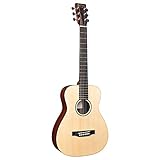
Martin LX1E Little Martin
- Solid Sitka spruce top
- Mahogany HPL back and sides
- 23 inch scale
- Gig bag with backpack straps
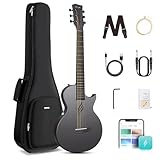
Enya NOVA GO SP1
- All carbon fiber composite body
- 23.12 inch scale
- Built-in speaker and effects
- 4 pounds with gig bag

Taylor BT2 Baby Mahogany
- Mahogany top with layered sapele
- 22.75 inch scale
- Ebony fingerboard and bridge
- Limited lifetime warranty
The 12 Best Travel Guitars for Backpacking in 2026
This table lists every instrument in the roundup with the specs we used to rank them. Every entry was measured against the same four questions: how heavy is it packed, how long is it, how stable is it when conditions change, and can you play it without an amplifier.
| Product | Specifications | Action |
|---|---|---|
|
Martin LX1E Little Martin
|
|
Check Latest Price |
|
Enya NOVA GO SP1 Carbon Fiber
|
|
Check Latest Price |
|
Taylor BT2 Baby Mahogany
|
|
Check Latest Price |
 Traveler Guitar Ultra-Light Acoustic
|
|
Check Latest Price |
 Traveler Guitar Ultra-Light Electric
|
|
Check Latest Price |
 Yamaha JR1 FG Junior 3/4
|
|
Check Latest Price |
 Yamaha APXT2 3/4-Size Acoustic-Electric
|
|
Check Latest Price |
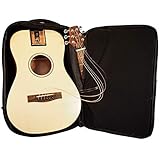 Journey Instruments PJ410N Collapsible
|
|
Check Latest Price |
 Traveler Guitar Escape Mark III
|
|
Check Latest Price |
 LAVA ME AIR Carbon Fiber
|
|
Check Latest Price |
 Donner HUSH I PRO
|
|
Check Latest Price |
 Donner RISING-G1 Carbon Top Kit
|
|
Check Latest Price |
How We Picked These Backpacking Guitars
We ranked every instrument on packed weight first, because it is the only spec a hiker cannot negotiate with. Then came total packed length, because a 36 inch instrument will not lie flat against a pack panel the way a 28 inch one does.
Third was climate behaviour. We wanted solid spruce tops and HPL or carbon bodies, since a solid mahogany back and sides can cup and buzz after a week of 90 percent humidity. Fourth was tuning stability, where headless in-body tuners and locking machines beat anything with a conventional headstock.
We also weighed evidence of long-term ownership. Instruments with hundreds or thousands of reviews and owners describing multi-season use told us more about failure points than any spec sheet. Every instrument here has published specifications we could verify, and every rating and review figure quoted below comes from those listings.
1. Martin LX1E Little Martin – Best Overall for Backpacking
Martin LX1E Little Martin Solid Sitka Spruce/Mahogany HPL Acoustic/Electric w/Gig Bag
Solid Sitka spruce top
Mahogany pattern HPL back and sides
23 inch scale
Fishman Isys T electronics
Pros
- Full resonant tone from a very small body
- Solid top that opens up with play
- HPL back and sides tolerate humidity swings
- Gig bag with backpack straps included
- Slim neck suits small hands
Cons
- Some arrive with high action that needs setup
- Isys T onboard tuner runs slightly sharp
- Only one year of warranty on this build
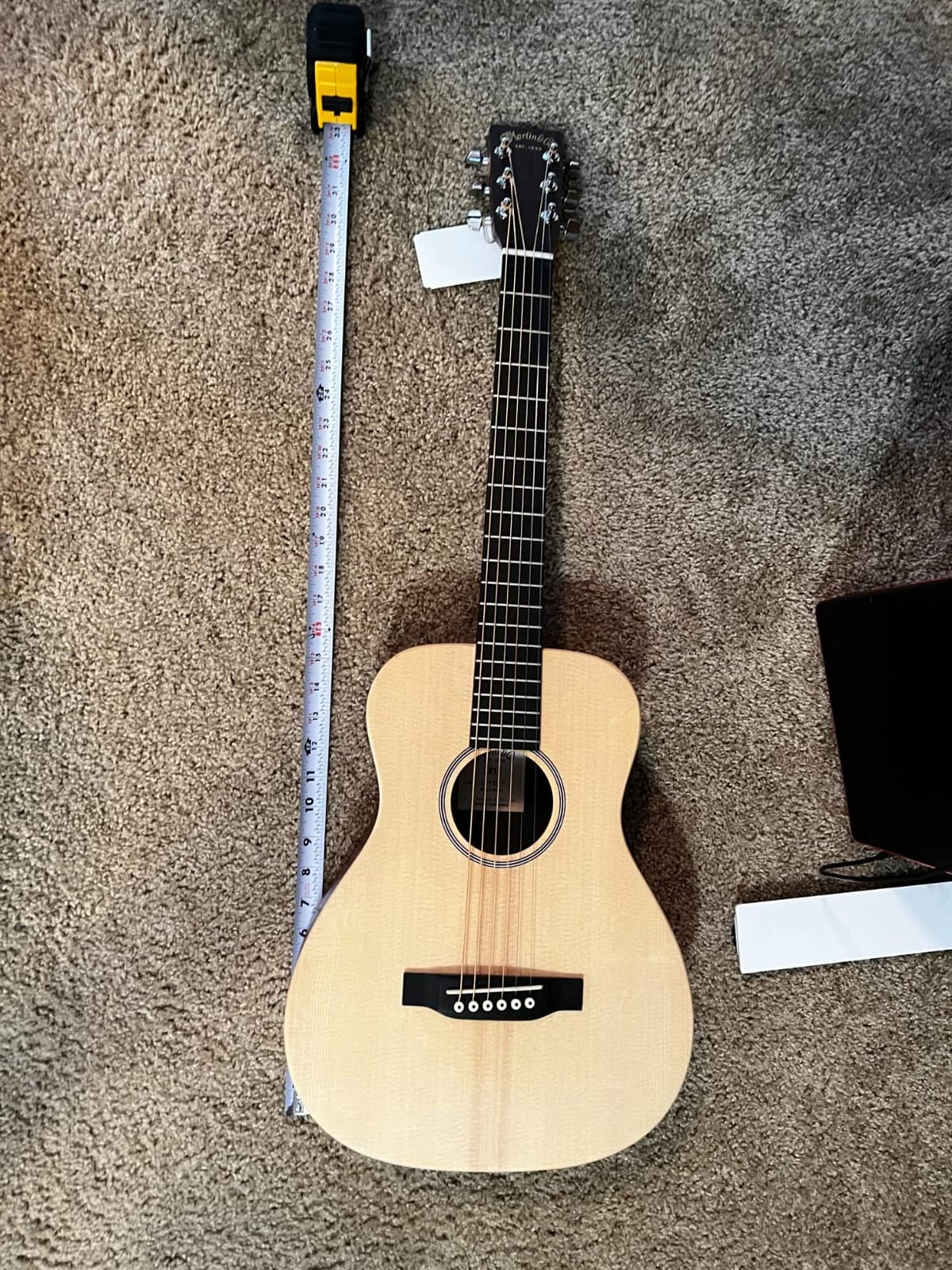
The Little Martin is the instrument I would hand to a hiker who wants one guitar to cover every trip from a weekend loop to two months abroad. Nearly 240 reviews on this listing describe a consistent instrument rather than an exciting one, and the pattern repeats: it sounds considerably larger than it is, and it survives being stashed in a parked car through summer and a tent through winter. It is also the most review-rich listing in this roundup, which matters more than raw count when you are weighing long-term reliability.
Weight is the number to check before you commit, and Martin does not publish a bare instrument weight on this listing. The listed figure is a packaged weight, so ask the seller for the instrument alone, and plan on a gig bag and a spare string set on top of whatever they give you. The 23 inch scale and slim neck sit in the sweet spot, wide enough for chord shapes that feel adult, narrow enough for smaller hands and players with stiff fingers.
The real reason I put it first is the material mix. A solid Sitka spruce top gives the top end of the sound range that no laminate on this list matches, and the mahogany pattern HPL back and sides are weatherproof in a way solid wood is not. When condensation forms on the inside of a tent wall in the morning, that construction simply does not care.
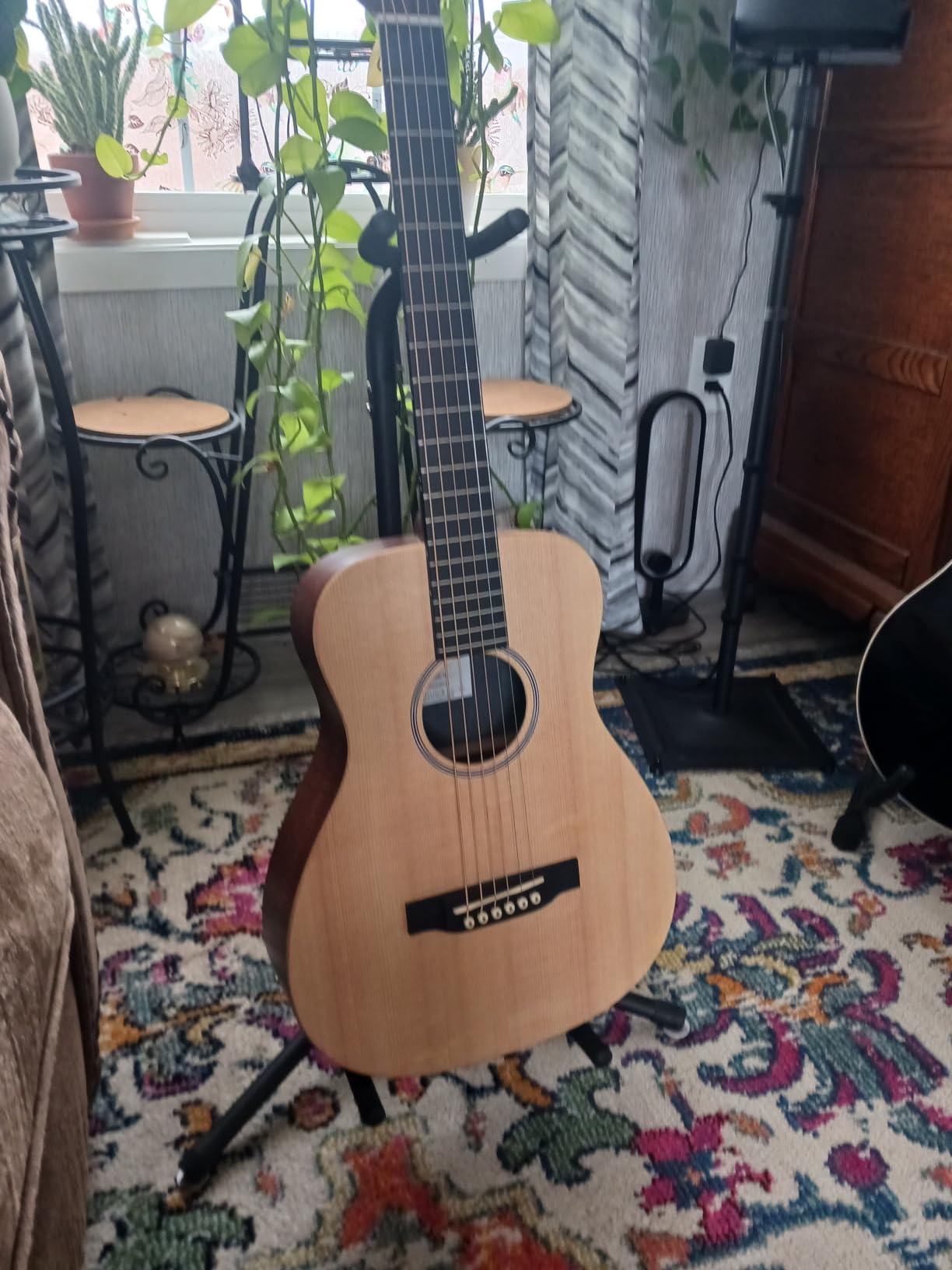
Two cautions before you commit. Some guitars in this batch arrive with high action and a low cut nut on the high E that causes buzz, which is a five minute fix if you carry a truss rod wrench and are comfortable doing it yourself. And the Fishman Isys T tuner is reported as reading slightly sharp, so treat it as a starting point rather than a reference.
Electronics are a genuine plus on a trail because it lets you charge a phone, run a backup track through the aux input and record ideas without carrying a separate microphone. This listing’s build carries a one year warranty rather than Martin’s lifetime warranty, which is worth knowing if you are used to the brand’s reputation.
Will the Martin LX1E survive a wet backpacking trip
Better than any solid wood small guitar here. The HPL back and sides do not open seams or cup the way mahogany does, and owner reports describe the guitar holding together through desert heat and cold deployments. The solid top is the part to watch, so keep the gig bag dry and let the instrument acclimate before you open the case in the morning.
Who should not buy the Martin LX1E
Players who want to busk loudly. The Little Martin body projects enough for a hostel room and a quiet campfire and not much more. If you are heading to open jams or playing with a full band, look at the Yamaha APXT2 with a piezo, or bring an amp.
2. Enya NOVA GO SP1 Carbon Fiber – Best for Climate Stability
Enya NOVA GO SP1 Carbon Fiber 35-Inch Smart Acoustic-Electric Travel Guitar
Carbon fiber composite body, back and neck
23.12 inch scale
1.63 inch nut width
4 pounds, 35.83 inches long
Pros
- Body unaffected by heat
- cold and humidity
- One-piece molded bridge cannot detach
- Built-in speaker and effects
- USB recording straight to a phone
- Truss rod and zero fret included
Cons
- Narrow nut suits small hands more than large ones
- Onboard electronics need charging and firmware updates
- Limited resale value versus a wood guitar
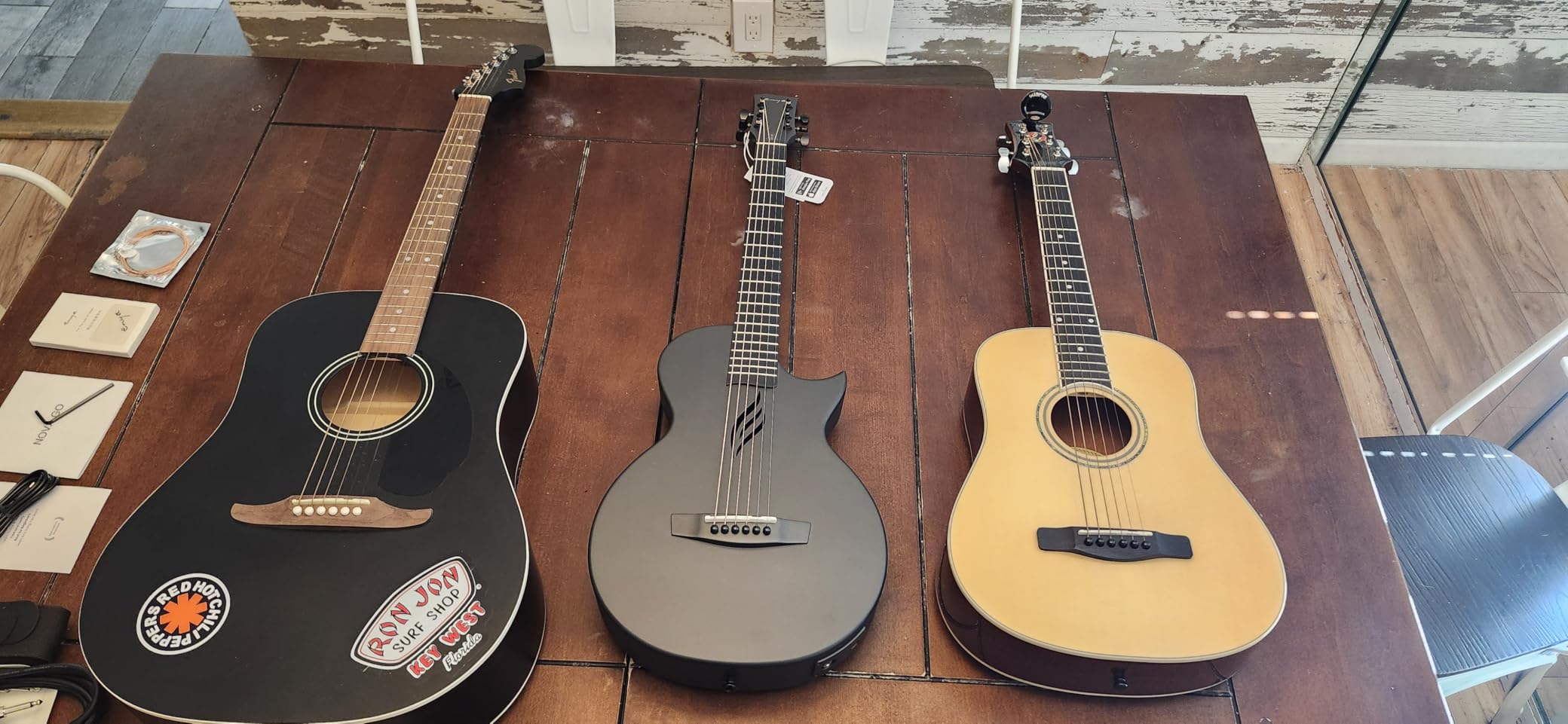
The NOVA GO SP1 is the guitar I would trust in a wet season. Every major component, body, back, neck and fingerboard, is carbon fiber composite, which means temperature and humidity changes barely register on it. Owners describe it as impervious to the conditions that make a wood guitar buzz, and owners on r/AcousticGuitar specifically picked this model for a canoe trip.
At 4 pounds and 35.83 inches long it is not the smallest thing on this list, and the 1.63 inch nut width is narrow. Players coming from a full size acoustic will notice that immediately, especially on barre chords. The truss rod and zero fret give you adjustment, which helps, but they do not change the geometry.
What you get in exchange is an instrument with a built-in speaker, onboard reverb, delay and fusion effects, and USB On-The-Go recording into a phone or computer. On a camp with no power and no amp, that is a genuine advantage: the guitar is the amplifier, the audio interface and the recorder in one object that weighs four pounds.
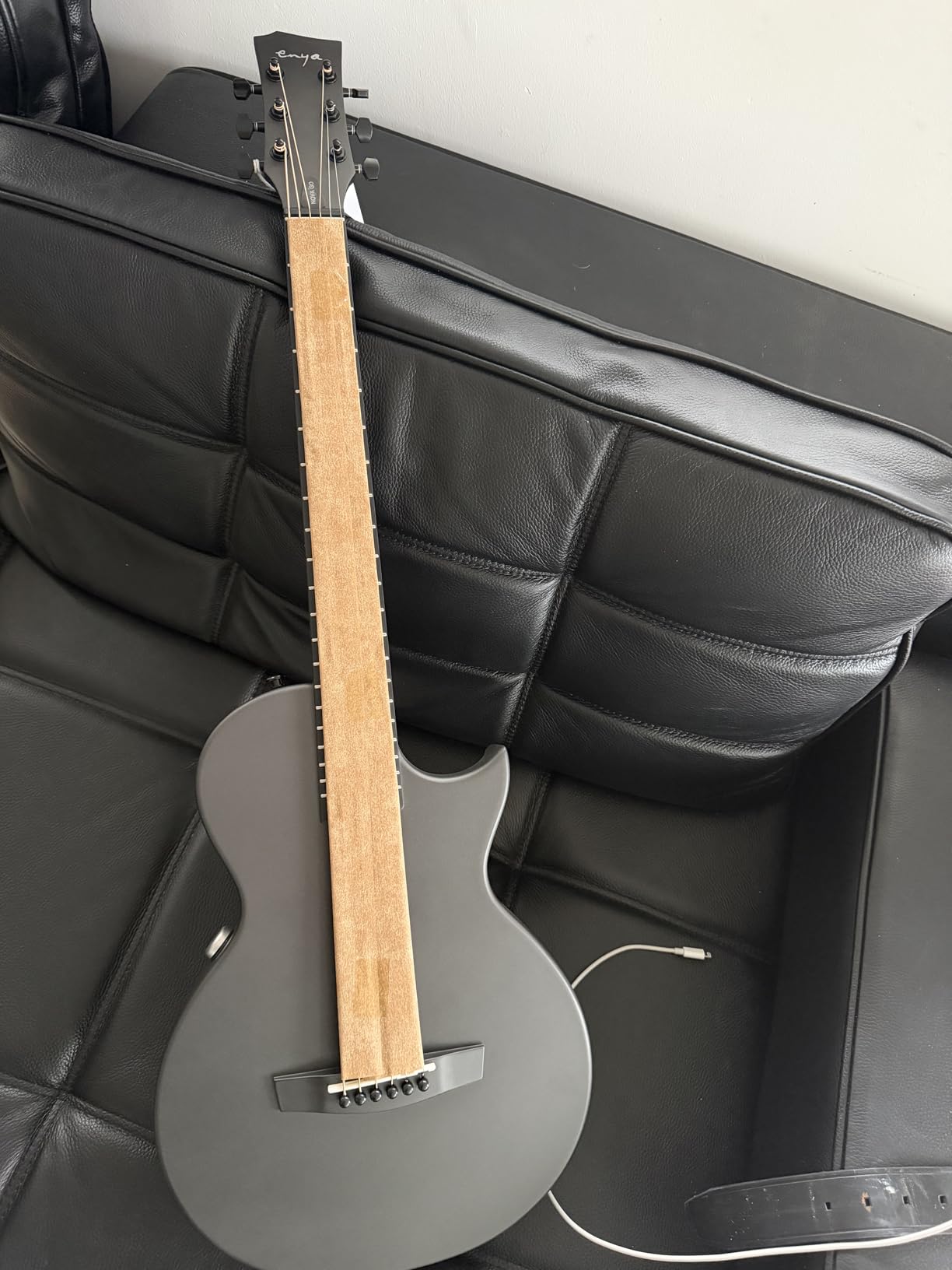
The bridge is molded integral to the top, so it cannot work loose or lift, which removes the most common trail failure on a travel guitar. String changes need the included hex wrench and take under a minute. The EXP16 strings that come in the case are phosphor bronze, so expect a balanced acoustic tone underneath the electronics rather than the harshness alloy steel can produce.
Two honest caveats. The electronics add a charging routine, and firmware updates can change how the guitar behaves, which is unsettling when you are relying on it in a place with no signal. Owners also flag the narrow nut as cramped for large hands, so if you have big hands, play one before buying.
Does the NOVA GO SP1 need an amplifier on the trail
No. The built-in speaker gives you a usable volume for a tent or a small campsite without any power beyond the internal battery. For anything larger you can output to a phone, a small battery amp or a pair of headphones, but the design assumes you are playing for a handful of people within earshot.
Where the NOVA GO SP1 falls short
It is a composite molded instrument, and resale value is the trade-off. Used wood acoustics hold value because the construction is traditional. If you plan to buy one, learn on it for a season and then decide whether the electronics justify replacing it with a wood instrument later.
3. Taylor BT2 Baby Mahogany – Best Build Quality and Warranty
Taylor BT2 – Mahogany Top
Mahogany top
Layered sapele back and sides
22.75 inch scale
Ebony fingerboard and bridge
Pros
- Limited lifetime warranty on parts and labor
- Genuine tone and finish quality at this size
- Warm focused sound with strong midrange
- Ebony fingerboard and bridge
- About 4.4 lb compact body
Cons
- Conventional headstock can snag on straps
- Small body gives modest campfire volume
- 22.75 inch scale is tight for large hands
- This listing shows no onboard pickup
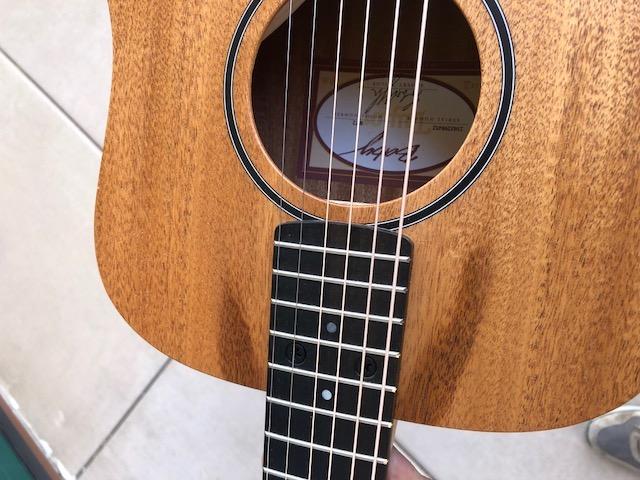
The Baby Mahogany is the one I would keep after the trip ends. Taylor’s limited lifetime warranty on parts and labor is the strongest coverage on this list by a wide margin, and the ebony fingerboard and West African Crelicam ebony bridge are the only true ebony surfaces among the twelve instruments here. Everything else uses Richlite, walnut or high pressure laminate.
Sonically it is the warmest option on the list. A mahogany top with layered sapele back and sides gives a focused midrange-heavy voice with less sparkle than spruce, which is exactly what you want in a damp forest camp where high frequencies disappear first. Reviewers consistently describe it as sounding like a much larger guitar.
The 22.75 inch scale is the smart middle ground. It is longer than a youth 3/4 size and shorter than a standard acoustic, so chord shapes are recognisable but the string tension is lighter, which is kinder to fresh strings after a week of playing.
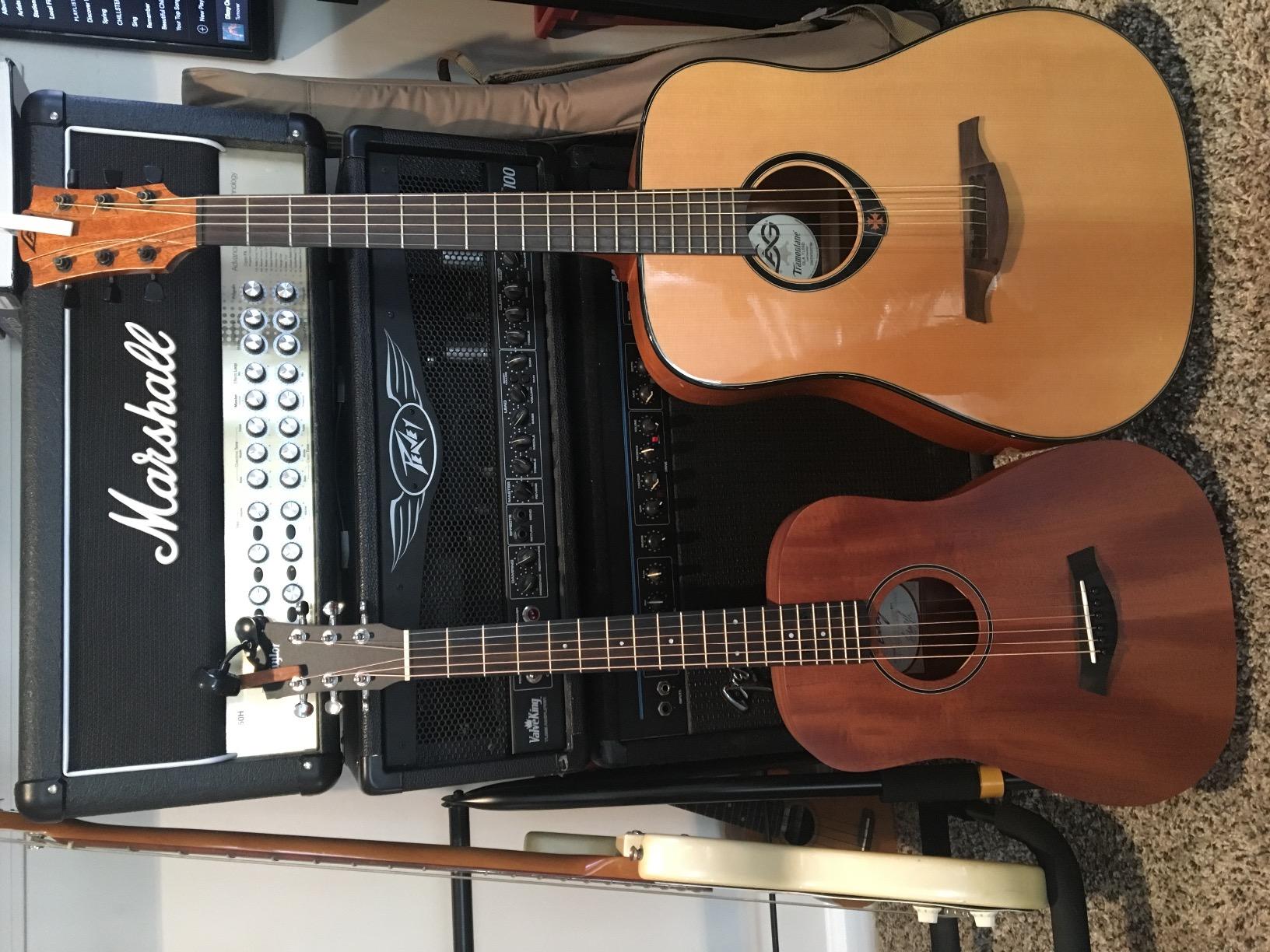
Two practical notes. The headstock is conventional, so it needs a strap or a bag pocket that keeps it from catching on a pack strap, which is a minor but real annoyance on rough trails. And this listing’s model number indicates an acoustic-electric designation while the block shows no onboard pickup system, so confirm the variant before you plan to plug in.
Phosphor bronze strings, stainless steel hardware and a fixed bridge make this a low maintenance instrument. There is nothing on it that a backpacker can break in normal use short of dropping it, which is the main reason it wins on build quality.
Is the Taylor BT2 loud enough for a campfire
Enough for a handful of people in a quiet spot, and not much more. A small body means less low end, so fingerpicked ballads carry better than strummed country. If your camps are busy and loud, the sound you produce matters less than you think, which is an argument for the silent practice instruments further down this list.
Who should pick a different Taylor
If you are moving between large hands and a short neck, or you need amplification without buying a separate pickup, this is not the pick. Players who want one instrument for busking and practice should look at an acoustic-electric with a piezo and onboard tuner instead.
4. Traveler Guitar Ultra-Light Acoustic – Best Value Headless Pack Guitar
Traveler Guitar Ultra-Light Acoustic Acoustic-Electric Guitar, Antique Brown
Mahogany body with maple neck-through build
24.75 inch scale, 22 frets
2 lb 14 oz, 28 inches long
In-body tuning system
Pros
- Lightest serious acoustic here at 2 lb 14 oz
- Headless body cannot snag on a pack strap
- Full 24.75 inch scale keeps normal fret spacing
- Detachable foam lap rest
- Limited lifetime warranty
Cons
- Mahogany body sounds thinner than a full-size acoustic
- Small body limits low end volume
- Lap rest needed for stability when standing
- 28 inch length still needs diagonal packing
This is the strongest packing solution on the list. At 2 lb 14 oz and 28 inches long it is the only instrument here that slides into the side of a small pack without rearranging everything else. The full 24.75 inch scale with 22 frets means your chord shapes and bends transfer from a full size guitar with almost no relearning.
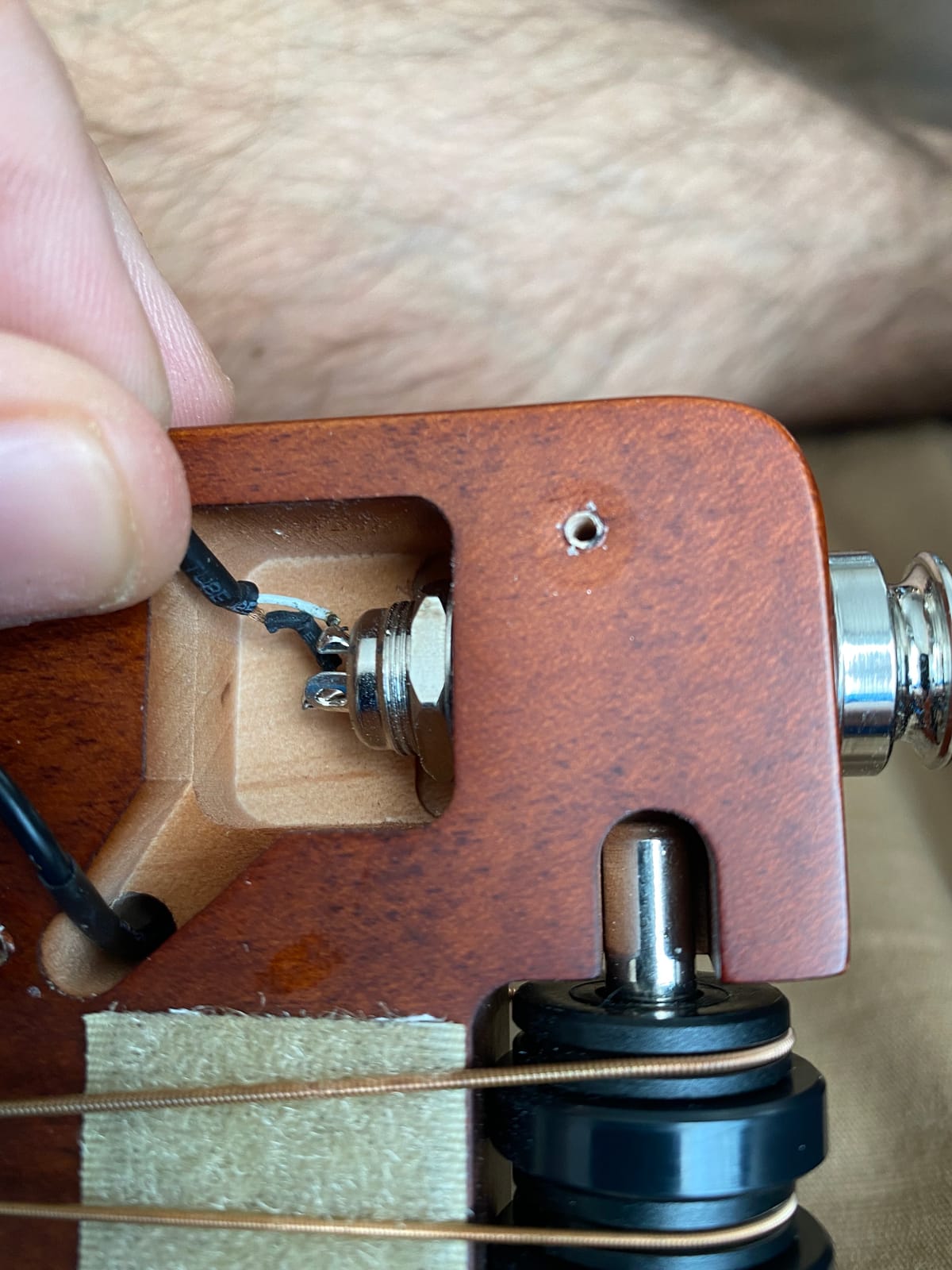
The headless design is the reason it packs so well. Tuning machines are relocated into the body, so there is no neck sticking out, no snag risk on a strap and nothing to break off. For a hiker this matters more than tone. Players report the mahogany body as thin and less projecting than a full-size acoustic, which is the honest cost of a 28 inch instrument.
The detachable foam lap rest is included and clips on for seated playing, and the gig bag is shaped for carry-on bags. The piezo pickup with a standard quarter inch jack means you can run it into a small battery amp or a headphone amplifier for silent practice.
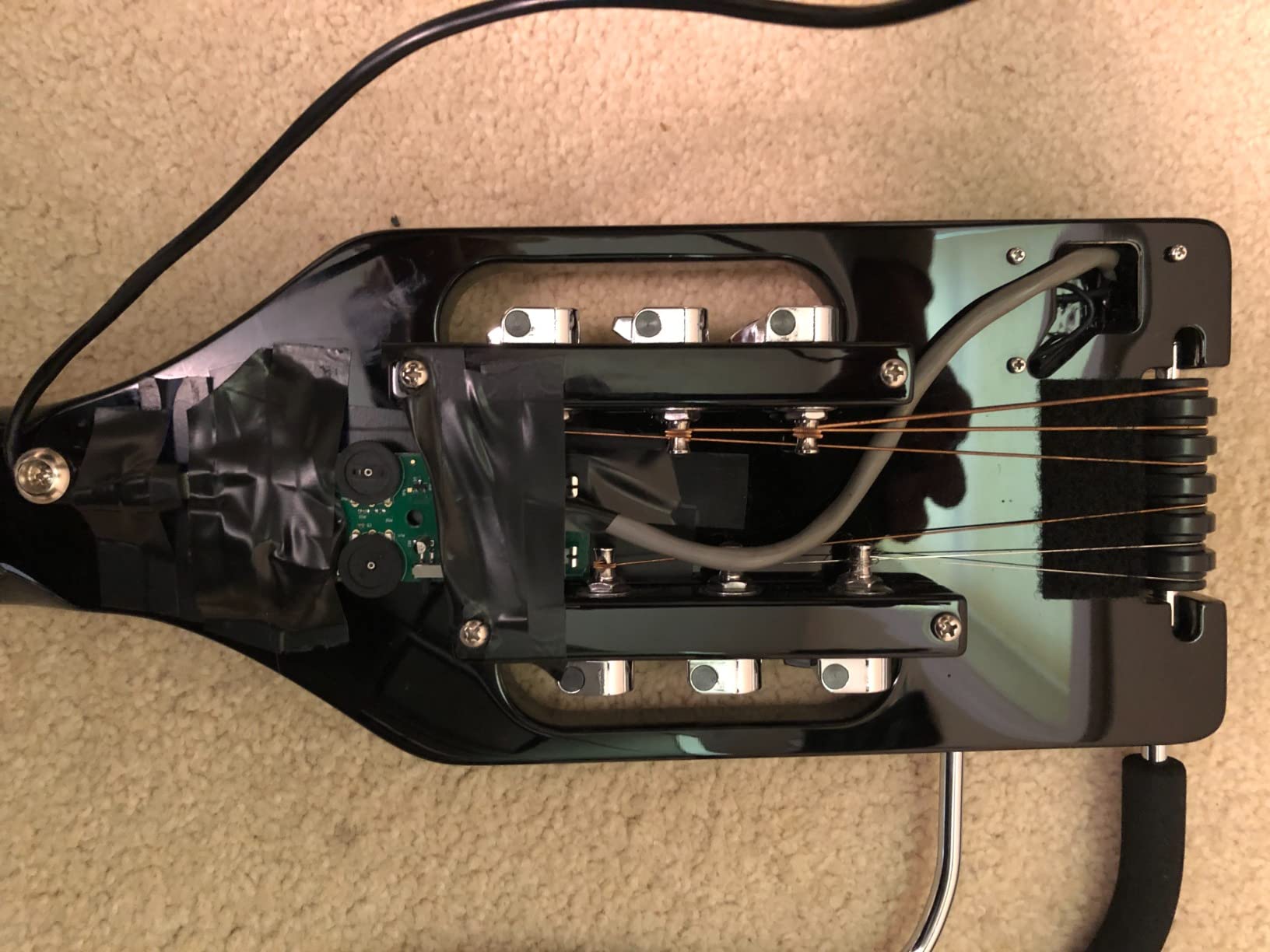
Build is a neck-through design in eastern American hard maple with a walnut fingerboard, and it carries a limited lifetime warranty. That combination of weight and warranty coverage is unusual at this level and is why it is my pick for anyone whose trips involve frequent pack rebuilds or bus and train travel.
Fit is the one thing to test. The 24.75 inch scale is short for players with large hands, and reviewers repeatedly mention cramping. If you have wide hands and a lot of barre chords, the Martin LX1E or the Yamaha APXT2 will serve you better.
Does the Ultra-Light Acoustic hold tuning in the cold
Better than a conventional headstock design, because the in-body machines move with the body as one piece and there is no string path over a long neck joint to twist. It is not a locking tuner system, so expect some drift after a night at altitude, then a quick correction once the instrument warms up.
Where the low end goes
A 28 inch body simply cannot move as much air. Owners comparing it with a full-size acoustic report a thinner, more midrange voice with less bass response. For solo practice, songwriting and small groups this is not a problem. For a circle around a fire, bring a small amplifier.
5. Traveler Guitar Ultra-Light Electric – Best Full-Scale Electric for Trails
Traveler Guitar Ultra-Light Electric Guitar Matte Black | Portable Electric with Removable Lap Rest | Full 24 3/4″ Scale Headless Guitar | Custom Gig Bag Included
Headless solid body electric
24.75 inch scale with 22 frets
3 lb 2 oz, 28 inches long
Dual-rail humbucker, quarter inch jack
Pros
- Feels like a standard electric at full scale
- Headless body is backpack safe
- Only 3 lb 2 oz
- Low noise dual-rail humbucker
- Gig bag and removable lap rest included
Cons
- Needs an amp or headphone amp to be heard
- Single pickup limits tonal range
- Fixed bridge reduces sustain
- Compact body can feel cramped for large hands
If you play electric and want to keep playing electric on the trail, this is the honest answer. It weighs 3 lb 2 oz, measures 28 inches and has a full 24.75 inch scale, so lead playing, bends and chord shapes feel like a normal electric. The headless layout with in-body tuning removes the only part of a guitar that never packs well.
The dual-rail humbucker produces a clean, low noise signal, which matters more than tone variety when you are playing through a tiny battery amplifier in a hostel room or a headphone amp late at night. A single pickup is a limitation, but it is a limitation you can live with when the alternative is carrying a full-size electric.
The removable lap rest and custom gig bag are included, and the gig bag is sized for overhead bins or a pack panel. Maple body and neck with a walnut fingerboard, neck-through construction, and a limited lifetime warranty round out a well made instrument.
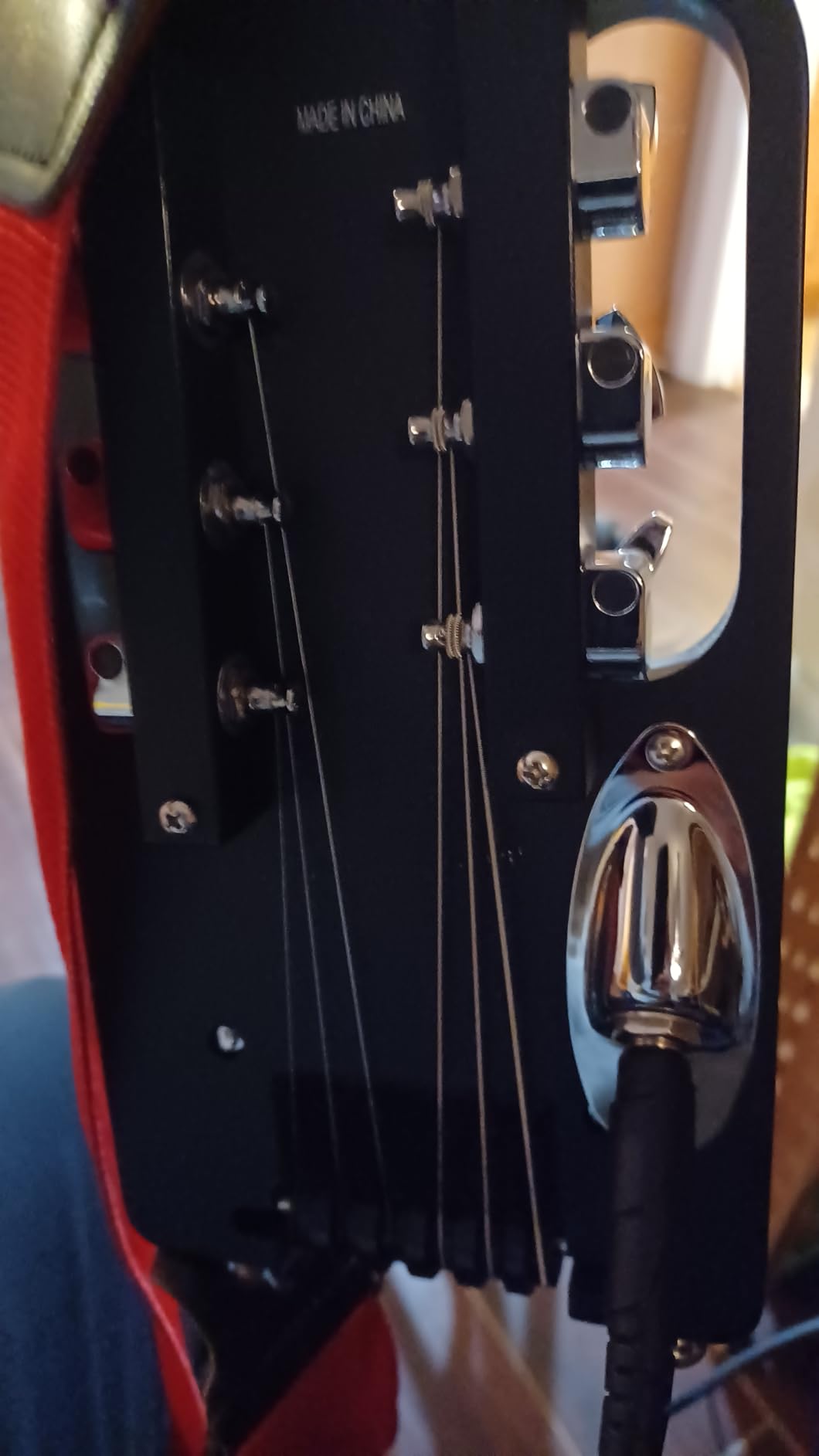
There is no onboard amplification, so plan on a 3 watt battery amp, a headphone amp or a tablet. Total weight with a small amp and gig bag still lands in the same range as an acoustic setup, which is the comparison that actually matters when you are packing.
Nickel strings and a fixed bridge keep the setup simple. Reviewers note the compact body and short overall length can feel cramped for players with large hands, so test before you commit to a season-long trip with it.
Can you play an electric guitar with no power at camp
Not loudly. Unlike an acoustic, a solid body electric produces almost no usable volume unplugged. Everything about this instrument depends on carrying a small amp or at minimum a pair of headphones, so add roughly another pound to your load. Plan for that before choosing it over an acoustic.
Who it suits and who it does not
It suits players who already own an amplifier and want a second, packable instrument for travelling. It does not suit a beginner with no amp, or anyone hoping to play acoustically around a campfire, because a headless solid body has no acoustic output to fall back on.
6. Yamaha JR1 FG Junior 3/4 – Most Proven Starter
Yamaha JR1 FG Junior 3/4 Size Acoustic Guitar, Natural
3/4 size FG body
Spruce top
Mahogany and engineered wood back
21.25 inch scale, rosewood fingerboard
Pros
- Largest review base of any guitar here
- Spruce top with a bright authentic FG tone
- Nato neck and rosewood fingerboard feel solid
- Gig bag included
- Ambidextrous for left or right hand players
Cons
- 21.25 inch scale is cramped for adult hands
- Engineered wood body sounds thin and has less sustain
- No onboard pickup or electronics
- One year manufacturer warranty
With more than 1k reviews, the Yamaha JR1 is the most proven instrument in this roundup by a wide margin, and that matters more for a trail guitar than any spec. Thousands of owners have carried it to school, on road trips and on camps, so the failure modes are well known and mostly trivial. It is the least glamorous choice here and the one I would hand to a beginner.
The 21.25 inch scale is the shortest on this list, and that is the whole design. Fret spacing is tight, string tension is low and the body is genuinely small, which makes it easy to play for smaller hands and younger players. Adults with large hands describe it as cramped, and that is a fair description.
You still get a solid spruce top, which is unusual in a guitar at this size and level. That is where the bright, projecting FG-series tone comes from. The back and sides are mahogany over engineered wood, the neck is Nato, the fingerboard is rosewood and the bridge uses urea saddle material for reliable intonation.
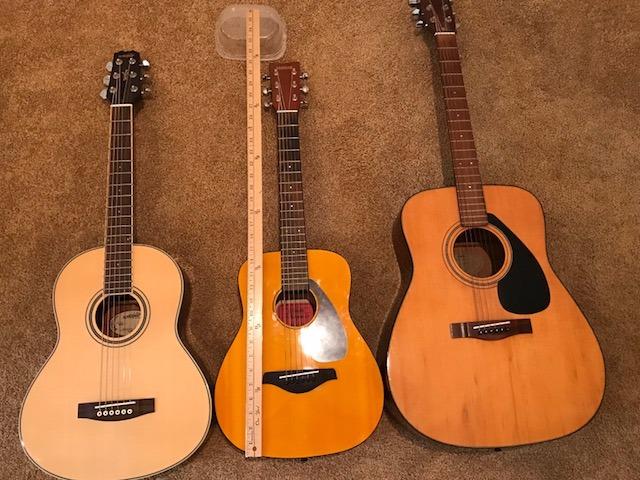
It comes with a gig bag, and the ambidextrous build means left-handed players are not pushed toward a separate model. At 4.9 pounds and 33.25 inches long it is bulkier than the headless options, so it wants a pack with a long side compartment rather than a small top lid.
There is no pickup or onboard electronics, so amplification requires an external microphone or pickup. Alloy steel strings give a lighter, thinner voice than phosphor bronze, and the one year manufacturer warranty is the shortest coverage in this group.
Is a 3/4 size guitar actually easier to backpack with
Yes, and this is the model that proves it for people who doubt small guitars are worth playing. A 33 inch body with a 3.5 inch profile takes far less pack volume than a full-size dreadnought, and at just under 5 pounds it is comparable to a mid-size daypack load. The tradeoff is fret spacing, not volume.
Who will be disappointed by the JR1
Players with large hands, and anyone who wants volume. The small body has little bass response, so it is a practice and songwriting instrument first. If you plan to lead a group around a campfire, pick a larger body with a spruce top and accept the extra pound.
7. Yamaha APXT2 3/4-Size – Best Full-Scale Reach in a Small Body
Yamaha APXT2 3/4-Size Acoustic-Electric Guitar – Black
3/4 size body with a 25.6 inch scale
Spruce top with rosewood fingerboard and bridge
System 68 piezo pickup
Adjustable bridge
Pros
- Only small-body option here with a true full-scale length
- System 68 piezo plays through a small amp or PA
- Adjustable bridge helps intonation over time
- Solid spruce top and rosewood bridge
- Over 800 reviews of long-term ownership
Cons
- Conventional headstock can snag on a strap
- 5.3 lb and 36 inches long is bulky in a pack
- Laminate meranti back will not develop like solid wood
- Alloy steel strings sound thin
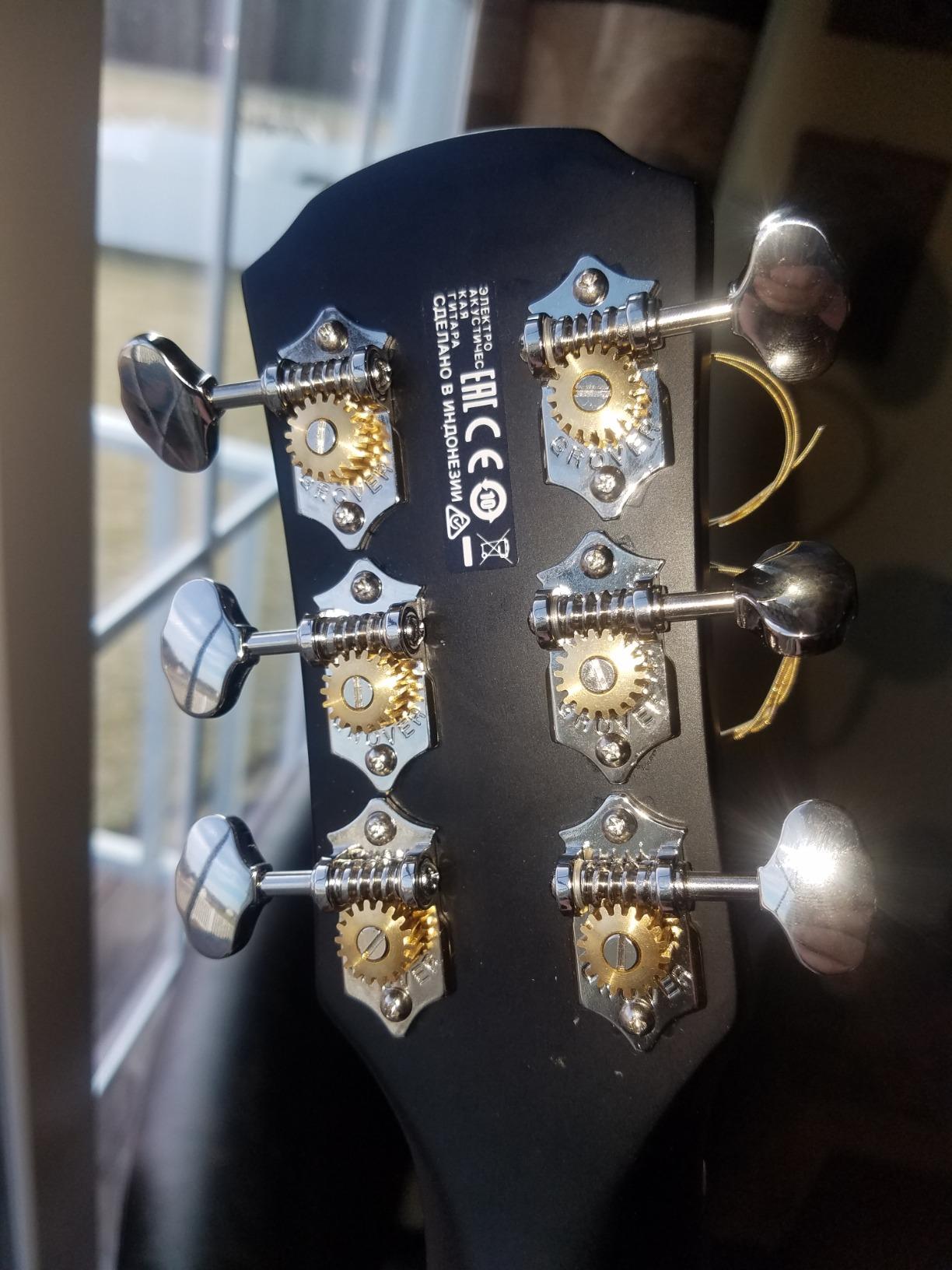
The APXT2 solves the complaint every other 3/4 guitar has. It is a small body with a 25.6 inch scale, longer than a standard full-size acoustic, so your fret spacing and stretch are unchanged. Players moving from a dreadnought describe the transition as close to nothing, and the bright spruce top gives it a familiar voice.
The System 68 piezo pickup is the practical winner here. Plug it into a small amplifier or a PA and you can play for other people without carrying anything else, which is exactly the scenario where a backpacking guitarist needs help. The adjustable bridge is a small but real advantage, since intonation drifts as a guitar is played and moved.
This is the honest compromise in the roundup: at 5.3 pounds and 36 inches long it is one of the bulkiest instruments we listed, and it has a conventional headstock that needs managing on a strap. Nothing collapses or detaches.
Meranti laminate back and sides will never develop the depth of solid wood, and owners say so plainly. That is fine for a travel instrument. Alloy steel strings add brightness at the cost of warmth, so a phosphor bronze set is a cheap upgrade if you find it harsh.
The gig bag is included and the build carries a one year manufacturer warranty. With more than 800 reviews and a strong position in its category, the failure reports are ordinary: strap wear, not structural problems.
Does a 25.6 inch scale in a small body cause any problems
Only one, and it is inside the instrument. A long scale over a short body means higher string tension for the same gauge, which feels crisp under the fingers but puts more load on the neck and tuning machines than a true short-scale instrument. In practice it is stable and it feels normal to adult hands.
When to choose something else
Choose a collapsible or headless model if pack volume is the binding constraint, because 36 inches of solid body in a 45 litre pack pushes everything else around. The APXT2 earns its size with playability and amplification, not with portability.
8. Journey Instruments PJ410N Collapsible Acoustic – Best Collapsible Option
Journey Instruments Solid Sitka Acoustic Collapsible Travel Guitar PJ410N
Solid Sitka spruce top
Layered African mahogany back and sides
23 inch scale, 1 11/16 inch nut
3.7 lb, 33.58 inches long
Pros
- Collapsible neck assembles in about 20 seconds
- Solid spruce top gives a fuller sound than most collapsibles
- Includes a TSA compliant padded backpack case
- Carbon reinforced neck with dual-action truss rod
- Stainless neck hardware guaranteed for life
Cons
- This configuration comes without an onboard pickup
- Repeated neck assembly needs practice and hardware checks
- 23 inch scale is tight for large hands
- Smaller Puddle Jumper body means less low end
The PJ410N is the answer when you want a real acoustic neck and a genuinely small packed volume. The patented collapsible system detaches the neck so the body breaks down and reassembles in about 20 seconds, which means you can pack it flat inside a daypack or slide the whole backpack into a bus luggage bay. Most days you would assemble it once and play for hours.
The reason reviewers rate it highly is the solid Sitka spruce top with layered African mahogany back and sides. Most collapsible instruments sound thin because they use laminate tops. This one does not, and owners describe warmth, clarity and projection that beat several fixed-neck guitars twice the size.
At 3.7 pounds it is heavier than the headless Traveler models but it is also longer in the body, and the collapse more than makes up the difference in the pack. The 23 inch scale with a 1 11/16 inch nut width gives a comfortable, easy feel.
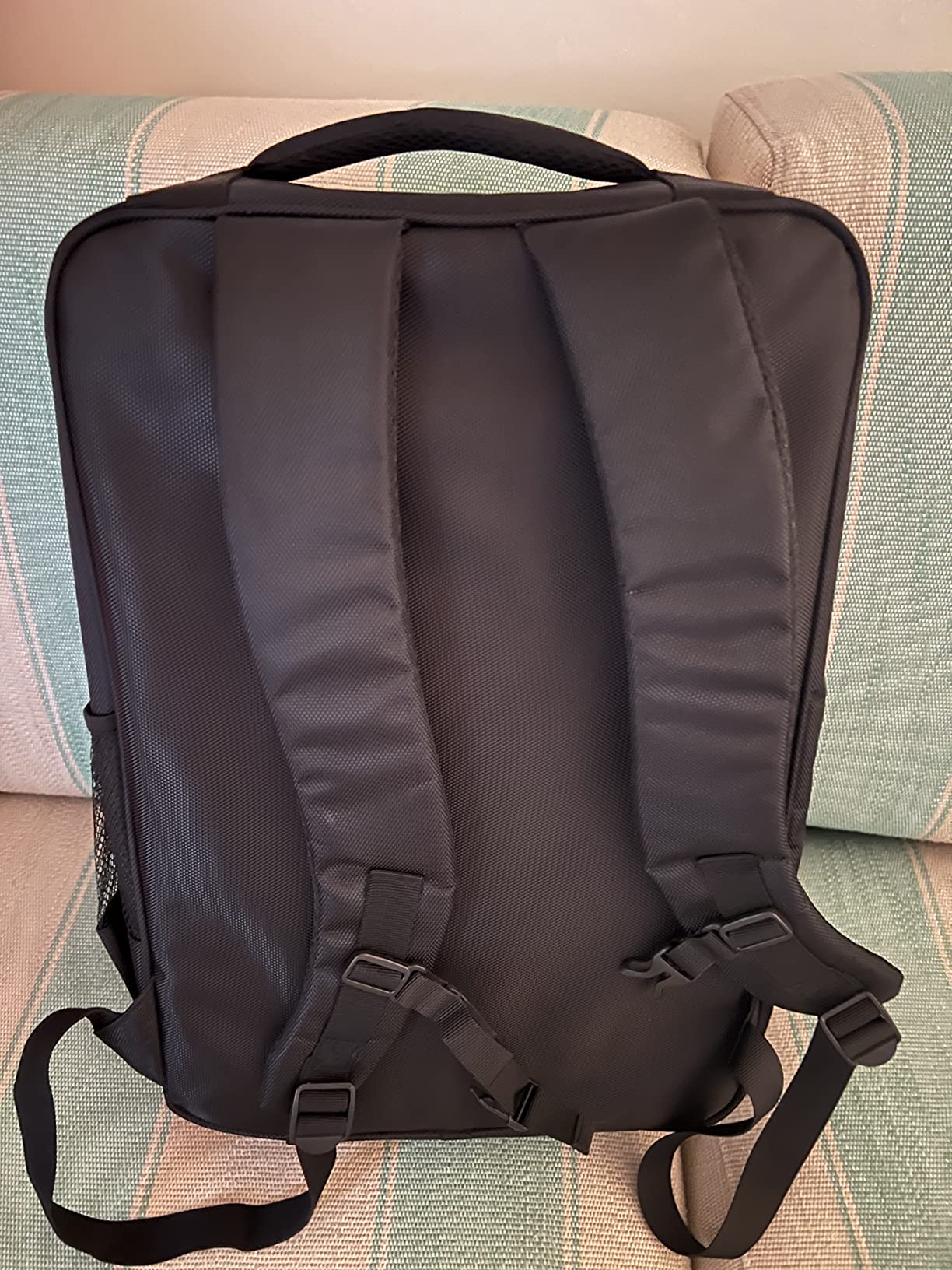
The included case is a TSA compliant ballistic nylon backpack with padded compartments for the guitar, a laptop and accessories, so you do not need a separate bag. The carbon reinforced neck, dual-action truss rod and stainless steel locking hardware are the details that make this one hold up over seasons of assembly and removal.
Two honest notes. This Puddle Jumper configuration comes without an onboard pickup, so amplification needs an add-on. And the hardware needs checking every few trips, because a joint that loosens mid-camp leaves you holding two pieces.

How fiddly is the collapsible neck in cold or wet conditions
More fiddly than a fixed neck, and that is the honest answer. Wet hands and grit on the joint make assembly slower, so wipe the fitting with a cloth before you disassemble it and carry a small hex key. Players who pack it down weekly report no problems at all; the complaints come from occasional users.
Why the solid top matters more than the collapse
Because the collapse is a packing feature while the top is the reason you brought a guitar. A collapsible laminate sounds thin and thin gets worse when damp. A solid spruce top over a layered body keeps its voice in changing weather, which is where most cheap travel instruments let you down.
9. Traveler Guitar Escape Mark III – Best Warm Headless Tone
Traveler Guitar Escape Mark III Mahogany Acoustic Guitar | Portable Acoustic with Built-in Headphone Amp | Full 25.5″ Scale Headless Guitar | Custom Gig Bag Included
Mahogany body with black walnut fingerboard
Full 25.5 inch scale with 22 frets
Shadow NanoFlex under-saddle pickup
Onboard headphone amp, tuner and EQ
Pros
- Full standard scale in a 29.5 inch headless body
- Highest average rating among the twelve
- Onboard amp
- tuner
- EQ and aux input for silent practice
- Warm mahogany voice with real low end
- Limited lifetime warranty
Cons
- Small owner base of 79 reviews
- 29.5 inch body takes more pack space
- Heaviest of the three Traveler models
- No battery-free amplification for larger groups
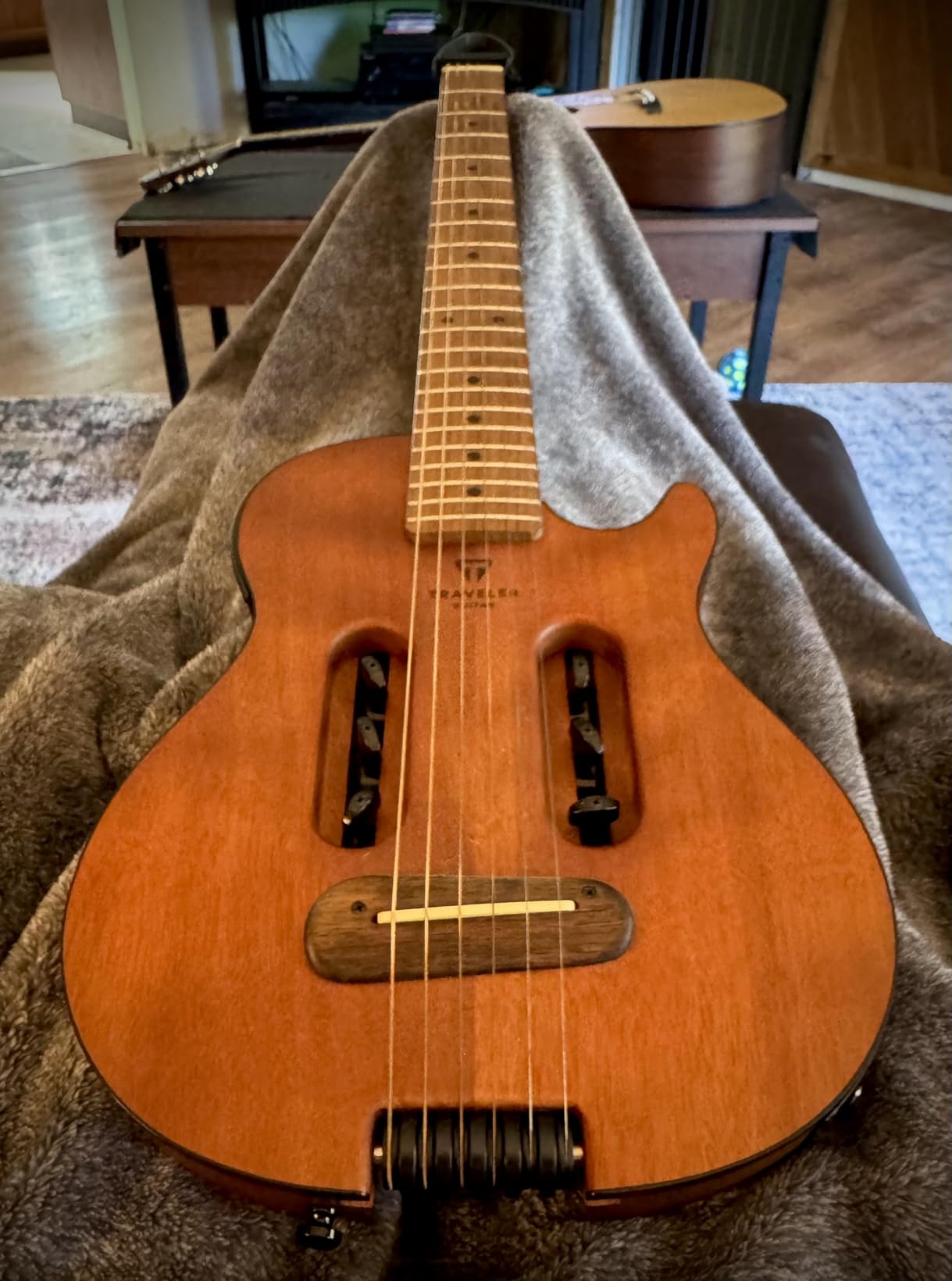
The Escape Mark III is the closest thing on this list to a full-size acoustic that you can carry. It has the full 25.5 inch scale with 22 frets, so nothing about the neck feels reduced, and reviewers describe the playing feel as nearly identical to a standard guitar. For a player who cannot adapt to a short neck, that is the deciding feature.
The mahogany body gives it a warm, woody acoustic voice with more genuine low end than most instruments here, and the black walnut fingerboard improves note stability as humidity changes. That combination is what earns it the highest average rating in the roundup.
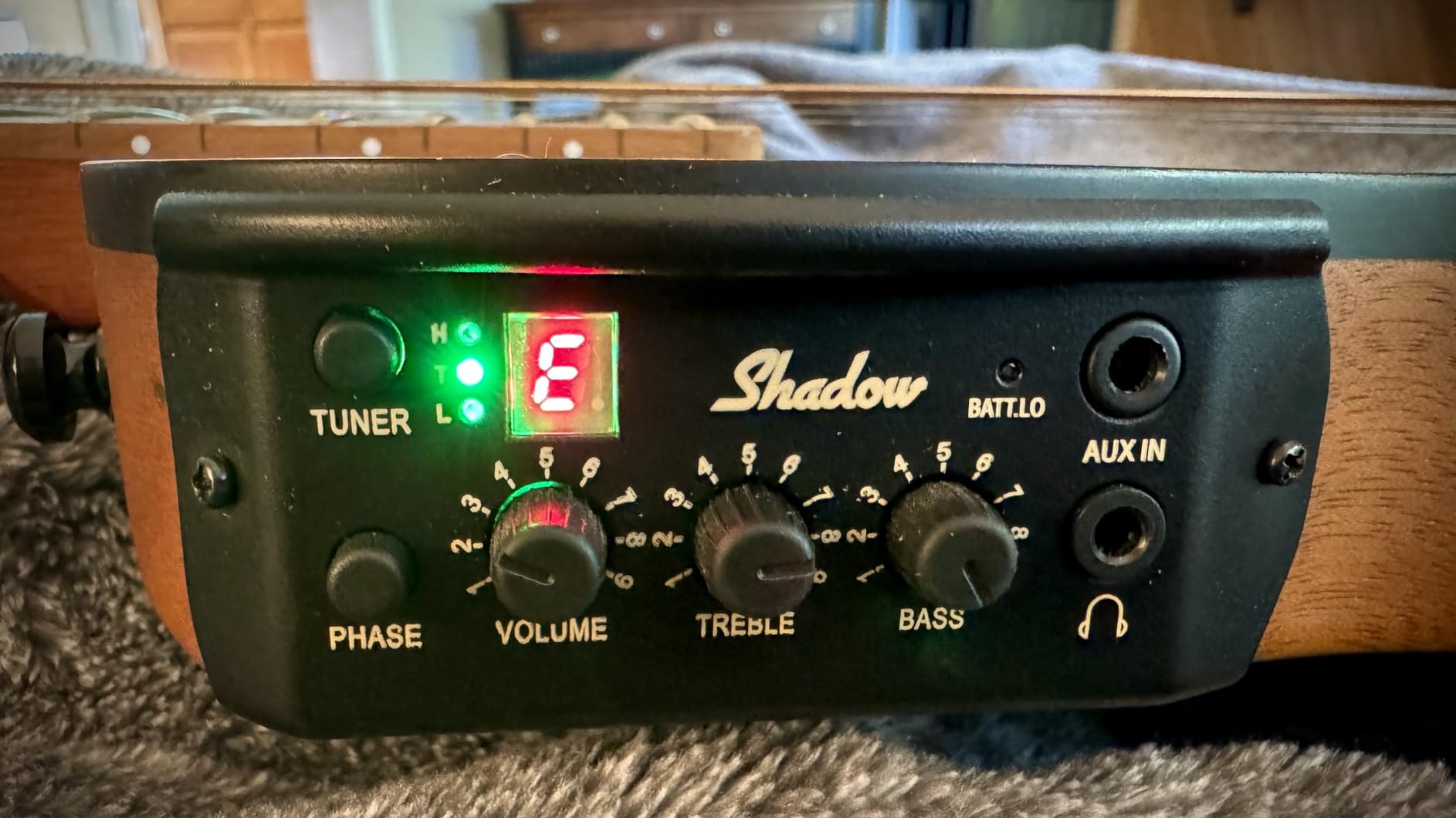
The onboard electronics are unusually complete: a Shadow NanoFlex under-saddle pickup, a headphone amplifier, a built-in tuner, a two band EQ and an aux input for playing along with backing tracks. On a rest day in a hostel or a cold evening in a tent, that is a full practice rig inside one object.
The cost is size and weight. At 4 lb 3 oz and 29.5 inches long, this is the heaviest and longest of the headless Traveler models, so it needs more of your pack than the Ultra-Light. It also has a small owner base at 79 reviews, which means less long-term data than the models around it.
Like every headless instrument, there is no neck to snag. A custom gig bag with storage pockets and padded shoulder straps is included, and the warranty is limited lifetime, which is one of the strongest on this list.
Is 4.3 pounds too much guitar to carry
On a 40 to 45 litre pack, no. It is about 1.5 pounds more than the lightest option here, which on a 30 pound base weight moves you from comfortable to noticeable. On a 25 litre daypack with no overnight gear, yes, pick the Ultra-Light instead.
Who should skip the full scale
Players who want the lightest possible instrument, and anyone who favours very light string tension over familiar spacing. A 25.5 inch scale with standard gauge strings is heavier under the fingers than a 23 inch scale with light strings, and that difference is obvious after a long day of walking.
10. LAVA ME AIR Carbon Fiber – Flattest Pack Profile
LAVA ME AIR Portable Carbon Fiber Electric-Acoustic Guitar. Travel Guitar for Beginners with Onboard Effects and Magnetic Pickup. Silver
Carbon fiber unibody at roughly half acoustic thickness
4.3 lb
HPL fretboard
Magnetic combination pickup
Pros
- About half the body depth of a traditional acoustic
- Carbon unibody tolerates heat
- cold and humidity
- Built-in truss rod for adjustable action
- Magnetic pickup with low feedback for high gain
- Honeycomb internal structure adds stiffness without weight
Cons
- Lowest average rating here at 4.2 with a wider spread of opinions
- Onboard effects need battery power
- Brighter tone is not for players wanting a warm woody sound
- Finishing quality is inconsistent between units
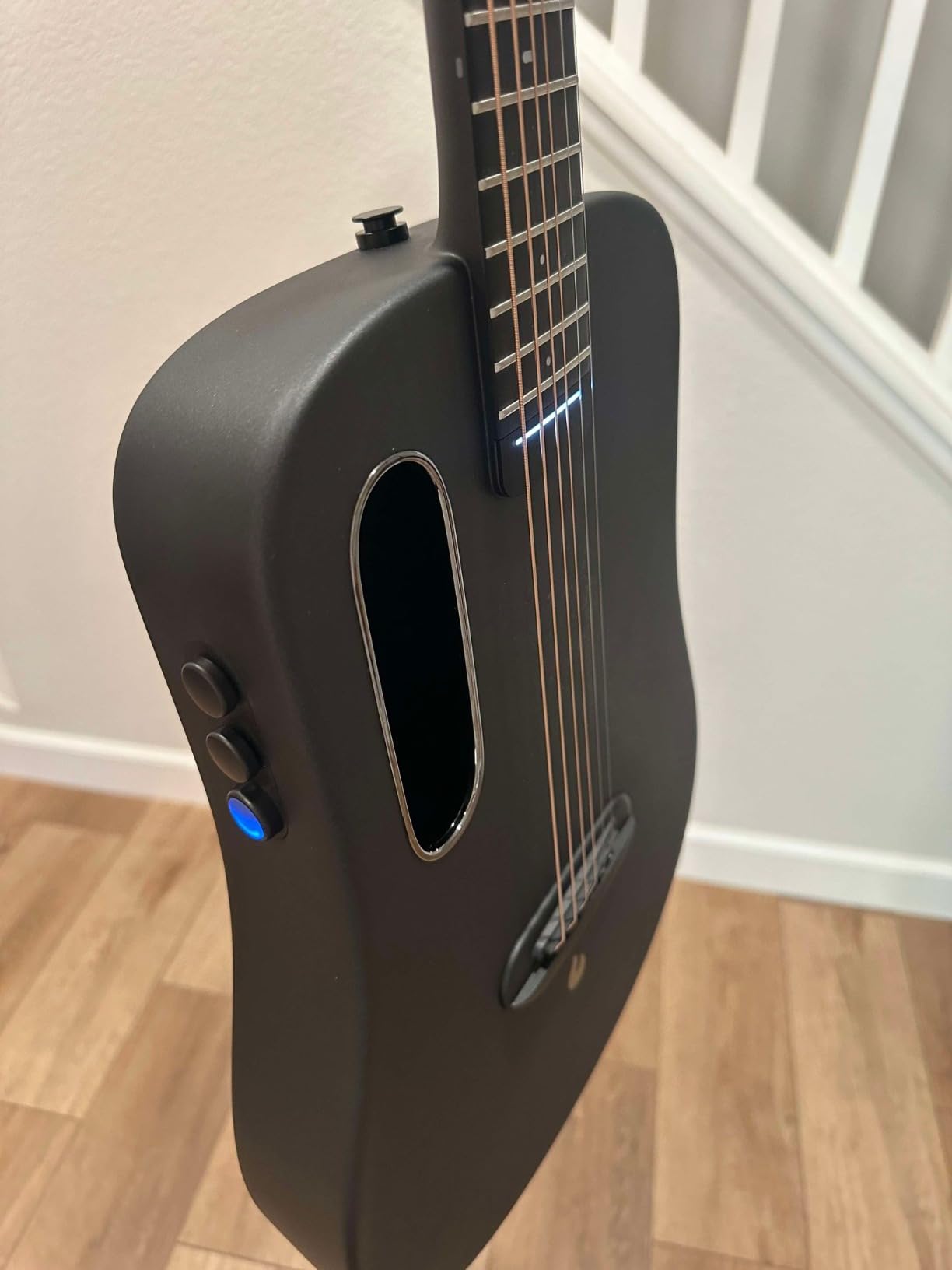
The LAVA ME AIR is the flattest instrument in this roundup and the most interesting shape of pack maths you can make. At roughly half the thickness of a traditional acoustic at 3.54 inches deep, it slides behind a sleeping bag in a way a 4 to 5 inch deep body simply cannot. Depth is the dimension most people forget when they check whether a guitar fits.
Construction is a patented carbon fiber unibody with a built-in truss rod, which means it does not care about humidity the way wood does, and the internal honeycomb structure trades weight for vertical stiffness so the top still moves air. The custom magnetic pickup gives a clear sound with low feedback, which is unusual for an acoustic and useful around a camp with a small amplifier.
Onboard delay, reverb and drive effects with adjustable digital knobs work unplugged, so the guitar can be its own amp. There is a fair amount of electronics here, and that is part of why it is the most polarising instrument we listed.
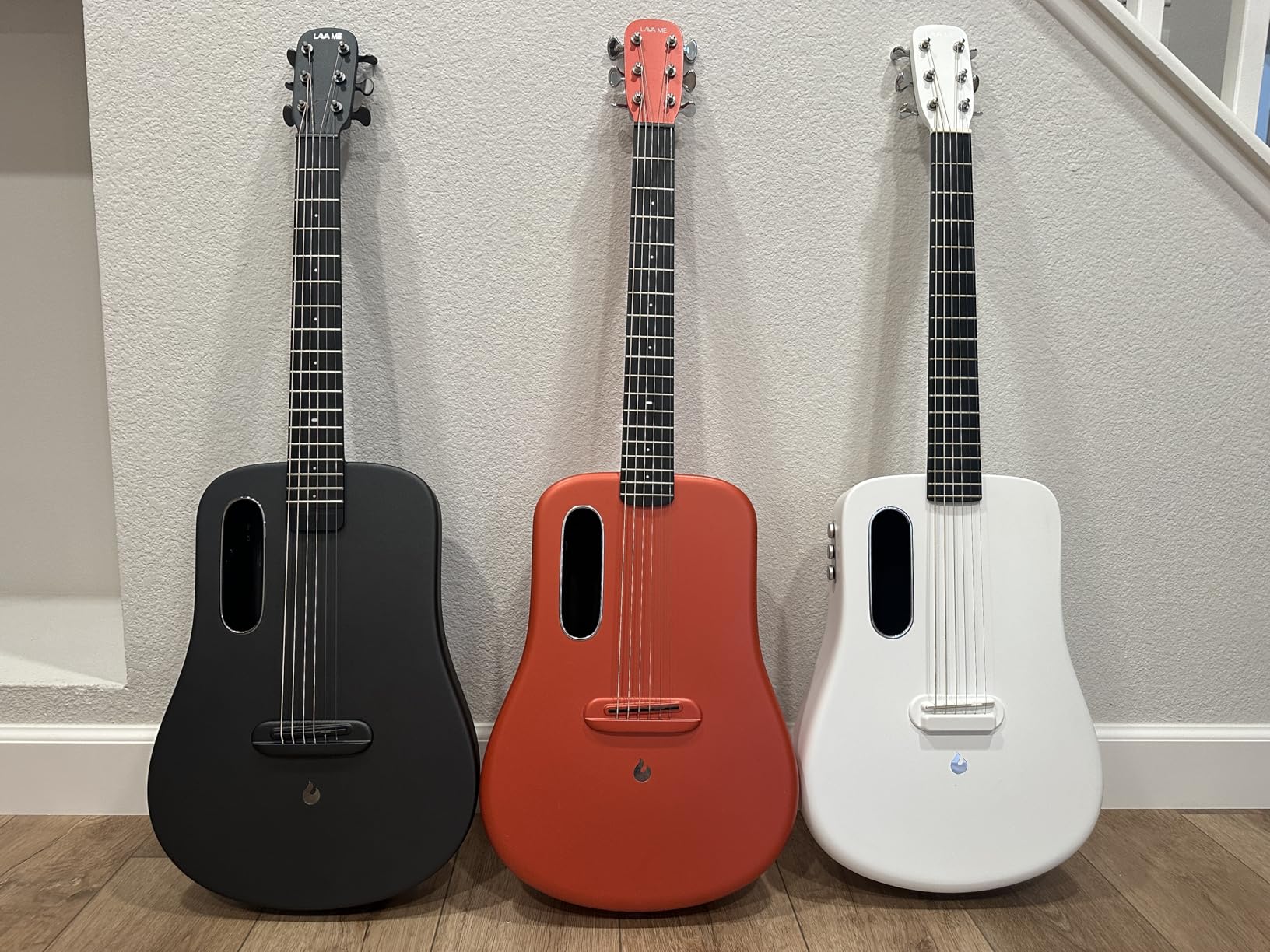
The honest drawback is consistency. Its 4.2 average is the lowest of the twelve, with a wider spread of opinions than any other model here. Enthusiastic owners love the thin, light body and the ability to layer on effects without an amp, while critical reviews point at build consistency, hardware reliability and an unfinished feel in the fittings.
The HPL fretboard also undercuts the carbon body story. It feels fine under the fingers but it is not an upgrade path. If you want to re-fret or refinish one day, this is the wrong instrument.
Does body depth actually change what fits in a pack
More than most people expect. A 45 litre pack has a front panel area that can absorb a flat 3 inch deep instrument comfortably. Once you are at 5 inches deep, the guitar starts competing with the sleeping bag for the same cubic inches, and that is when load shifting causes discomfort on long days.
Who should skip a flat carbon composite guitar
Players who want to grow into a better instrument. A composite unibody has no traditional neck joint to reset, no solid top to refinish and no upgrade path. If your plan is to play this for a decade and improve it along the way, a wood guitar with a standard neck is a better home.
11. Donner HUSH I PRO – Best for Silent Practice in a Tent
Donner HUSH I PRO Acoustic Electric Travel Guitar (Sunburst)
Headless body at 2.2 kg with quick-disconnect bracket
Resonance-free chamber design
18 onboard effects and 8 body tones
H1 preamp with 5 band EQ
Pros
- Low decibel strumming for tents and hostel rooms
- 18 effects plus 8 body simulations and 20 IR slots
- Headphone output and wireless backing tracks
- 8 hour battery with USB-C fast charging
- Gig bag
- strap
- headphones and cables included
Cons
- Chamber design sharply reduces acoustic volume and projection
- Battery powered electronics cannot be played acoustically uncharged
- Mahogany body with alloy steel strings sounds thin
- Only a 12 month warranty
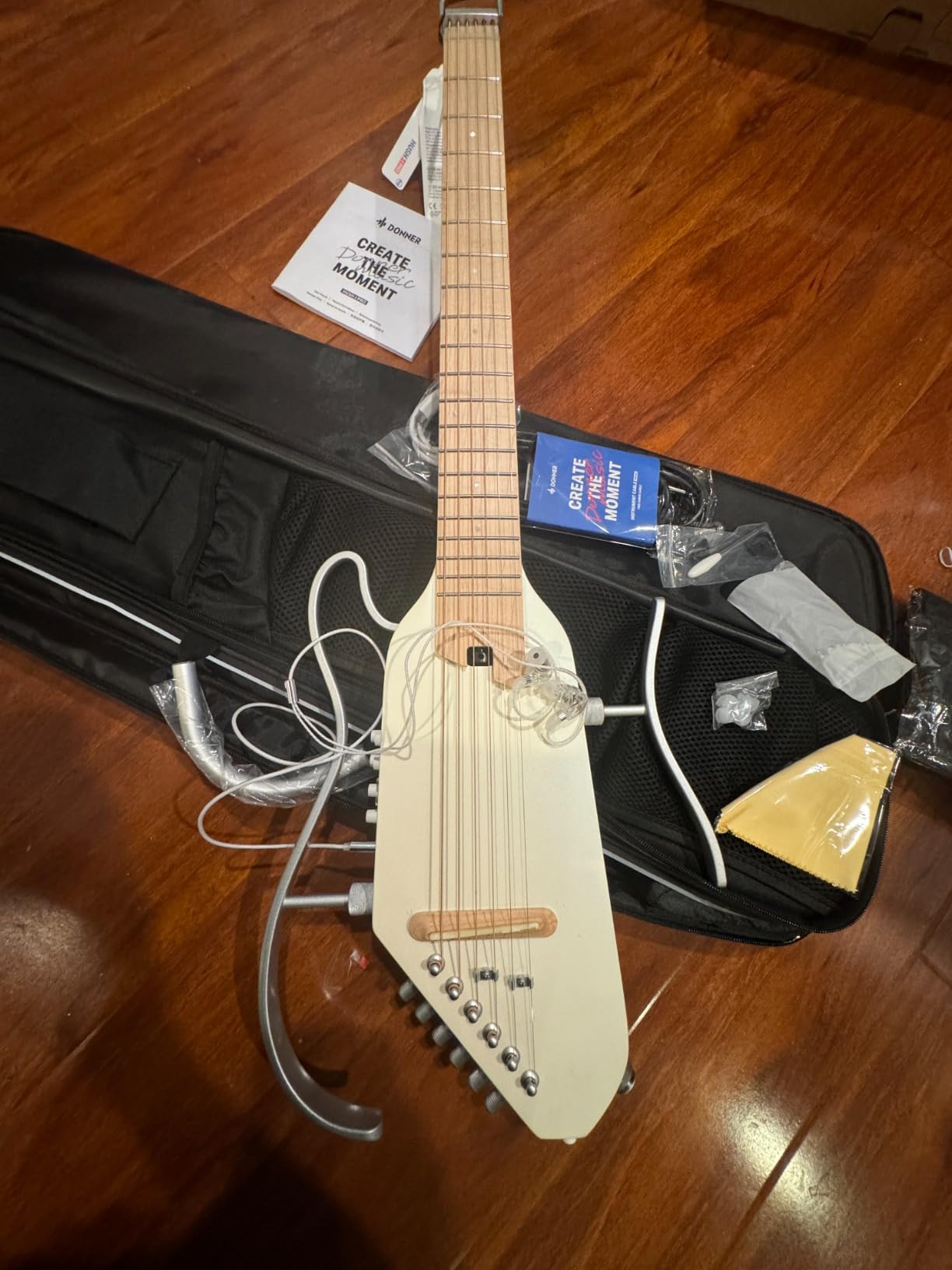
The HUSH I PRO solves a problem nobody else on this list addresses: other people. A resonance-free chamber design means strumming stays at a low decibel level, so you can play inside a tent or a shared hostel room without becoming the reason everyone else is unhappy. Owners describe it as the guitar they practise with at the end of a long day.
For that use case the electronics are genuinely impressive. Eighteen onboard effects, eight guitar body tone simulations and 20 IR slots cover a lot of ground, and the H1 preamp adds Air Boost, Tone Boost and a five band EQ. Headphone output and wireless backing track support mean you can play along with tracks with no amp at all.
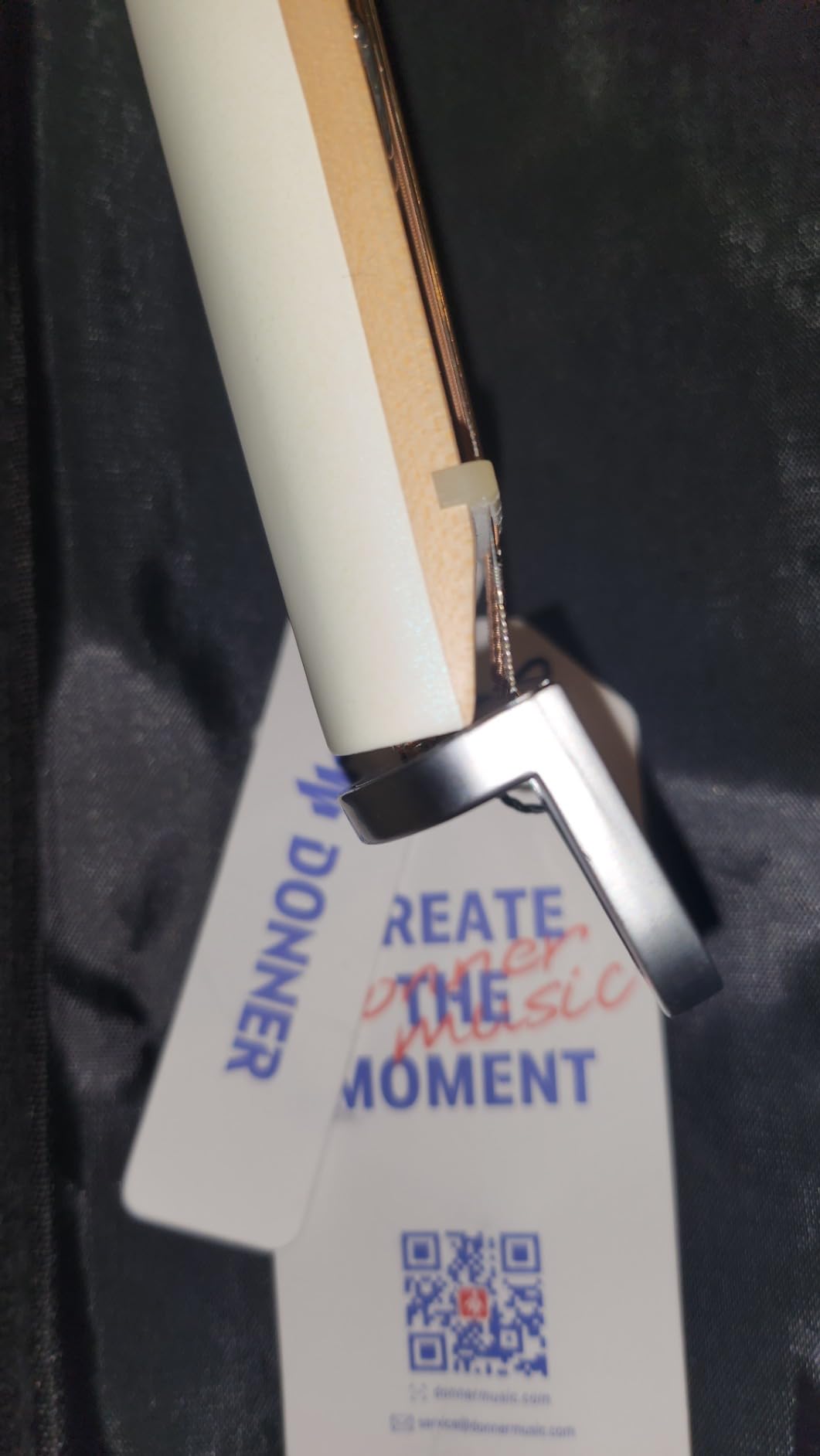
The body weighs 2.2 kg, which is about 4.9 pounds, and a quick-disconnect zinc alloy bracket lets it come apart fast. Battery life is listed at 8 hours with USB-C fast charging, and the kit includes a gig bag, strap, earphones, charging cable, an eighth inch cable and a truss rod wrench.
Here is the catch, and it is a big one. The same chamber design that makes it quiet removes most of its acoustic volume and projection. This is not the guitar you unroll at a campfire. It is also battery-dependent, so an uncharged unit is close to silent unamplified, which on a remote trip matters.
The mahogany body with alloy steel strings produces a lighter tone than a conventional steel string acoustic. If you plan to plug into a small battery amp for actual volume rather than headphones, that puts it back in the same weight class as a full-size acoustic with electronics attached.
Can a silent guitar still be used at a campsite
Only with an amplifier. Unamplified, the chamber design leaves very little acoustic output. Owners who wanted a quiet practice guitar are delighted, and owners who wanted a portable campfire instrument found the same feature disappointing. Decide which of those two trips you are taking before you buy.
Is the effects library worth the battery dependency
If you practise with headphones, yes, and it is the strongest argument for the model. If you mostly want to play acoustically for friends, no, because the chamber that powers those effects also removes the volume. Charge it fully before every day out and the dependency stops being a problem.
12. Donner RISING-G1 Carbon Top Kit – Best Complete Starter Kit
Donner Acoustic Guitar Kits for Beginners & Intermediate Learners – 38″ Travel Guitar with Carbon Fiber Top, Wooden Back & Sides, Case, Strap, Steel-Strings, RISING-G1 (Gloss, Brown)
3K carbon fiber fabric top over mahogany
Mahogany back, sides and neck
3.5 lb body
Anti-oxidation rounded frets with HPL fingerboard
Pros
- Complete kit with case
- strap
- strings and picks
- Carbon fiber top stays stable in heat and cold
- Mahogany back and sides add warmth all carbon lacks
- Light 3.5 lb body suits camping
- Round anti-oxidation frets resist rust
Cons
- 38 inch footprint is larger than dedicated travel guitars
- Listing scale length figure reflects body length not scale
- HPL fingerboard cannot be upgraded
- Only a 12 month warranty
The RISING-G1 is the reason a first travel guitar no longer has to mean a risky purchase. It arrives as a complete kit with a case, strap, strings and picks, so nothing else is needed before it goes in the pack. If you are buying for someone who has never played, that completeness matters more than any spec on this list.
The top is 3K pure carbon fiber fabric layered for stability, which is what keeps the instrument steady through temperature swings, and the mahogany back, sides and neck add the warmth that an all carbon build would not have. Anti-oxidation rounded frets and a high-density HPL fingerboard feel smooth and resist rust in wet conditions.
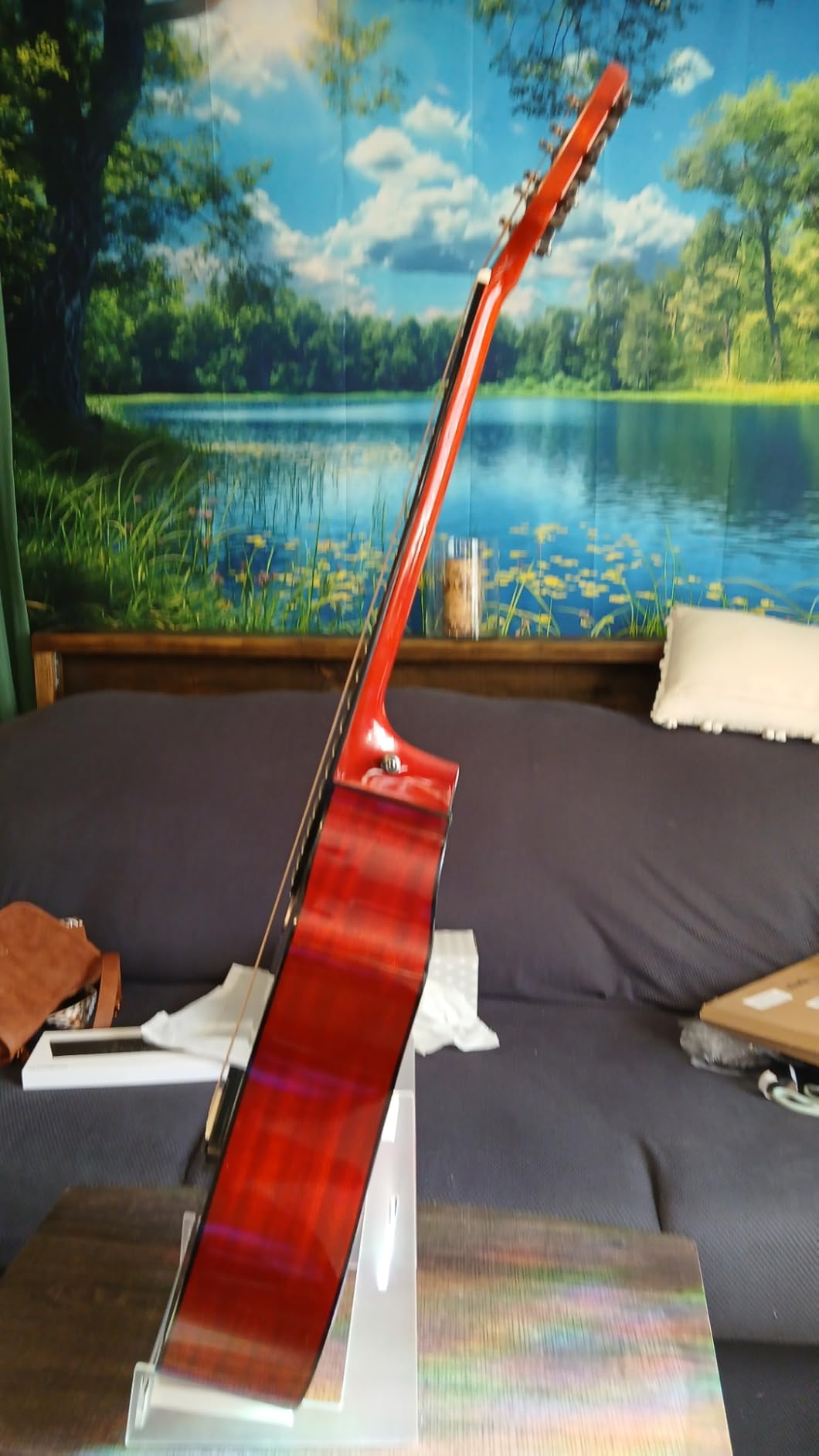
At 3.5 pounds it is one of the lighter bodies here. The catch is length: at 38 inches this is the longest footprint in the roundup, so it wants a pack with a long side compartment rather than a top lid.
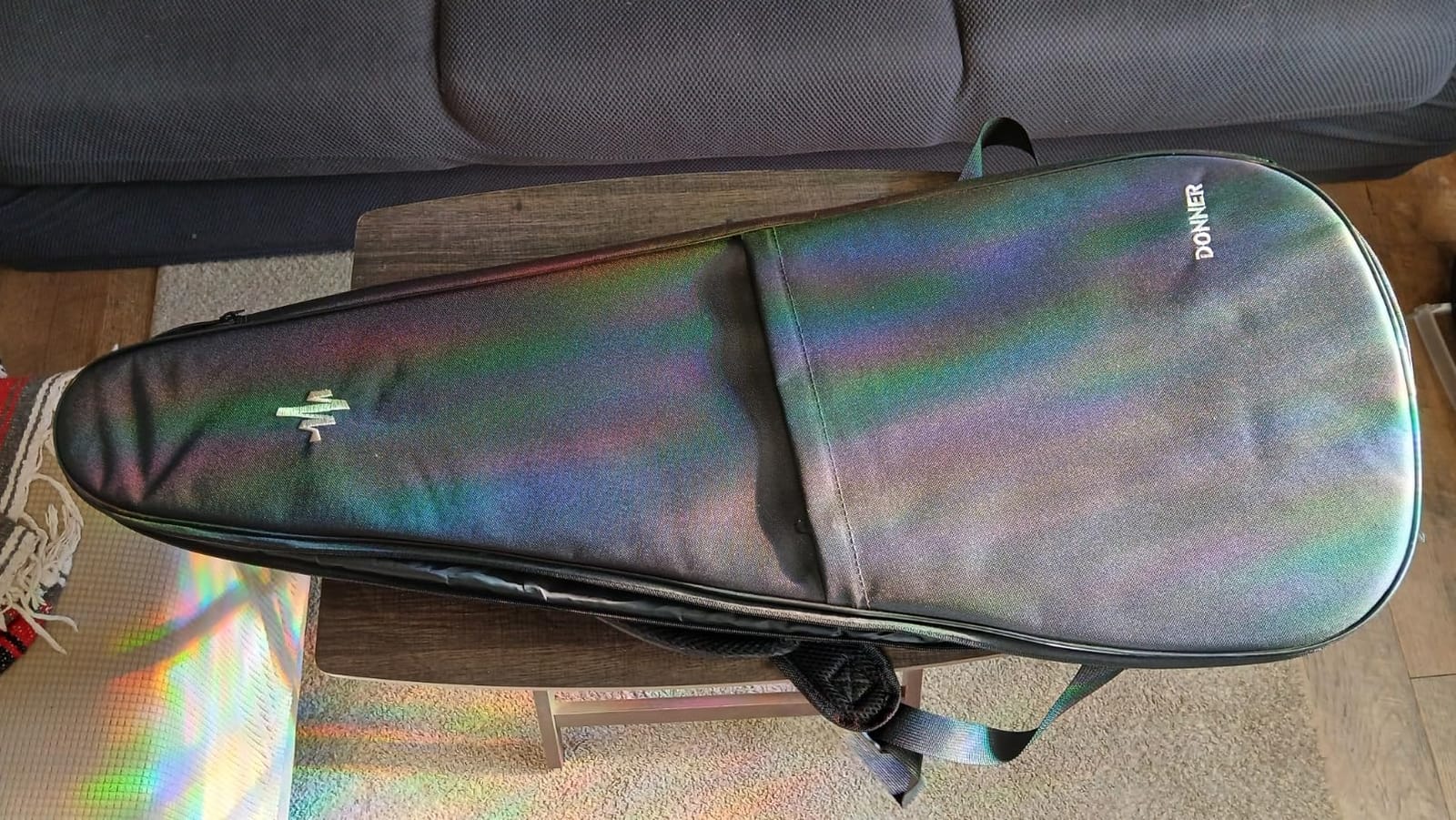
One specification needs a caveat. The listing gives the scale length as 38 inches, which appears to reflect overall body length rather than true scale length, so do not use that figure when judging fret spacing. Play it or confirm the real scale with the seller before committing to a long trip.
The HPL fingerboard is the other limitation. It will not be upgraded or refinished, and some players find it less responsive than rosewood or ebony. Warranty coverage is 12 months, the shortest here, which is an acceptable trade for a first instrument rather than a trip-only instrument.
Is a 38 inch body too long for backpacking
It is the longest instrument here, and on a 45 litre pack it dictates your packing layout rather than fitting into leftover space. If your trip is multi-day with a full shelter and sleeping bag, a 28 to 30 inch headless or collapsible model frees up considerably more room. For weekend trips it is a non-issue.
Who should buy the complete kit instead of a bare guitar
First time buyers, and anyone who wants a spare instrument at home so a second guitar can live permanently in the pack. Forum regulars consistently point out that hikers with a home guitar buy riskier, cheaper units for the trail. This is a reasonable middle ground.
What Actually Fits in Your Pack: Weight and Volume Math
No roundup in this search space publishes packed weight for these instruments, and it is the number that decides the question. Below is what each guitar weighs as listed, plus the pack space its footprint demands.
The Traveler Ultra-Light Acoustic at 2 lb 14 oz is the lightest serious option, followed by the Traveler Ultra-Light Electric at 3 lb 2 oz and the Donner RISING-G1 at 3.5 pounds. The Enya NOVA GO SP1 is listed at 4 pounds, the Escape Mark III at 4 lb 3 oz, the Taylor BT2 at about 4.4 pounds and the LAVA ME AIR at 4.3 pounds. The Donner HUSH I PRO and the Yamaha JR1 both land near 4.9 pounds, and the Yamaha APXT2 at 5.3 pounds is the heaviest instrument in the group.
On volume, the ordering flips. The Traveler models are 28 inches long and 2 inches thick, which is the profile that disappears into a pack. The collapsible Journey PJ410N at 33.58 inches breaks down flat. The Donner RISING-G1 at 38 inches and the Yamaha APXT2 at 36.22 inches are the two that compete for real space.
Cost per gram is the number ultralight hikers actually optimise, and it is worth checking against your own base weight. A 4 pound guitar with a case and spare strings adds roughly 5 pounds. On a 30 pound base weight that pushes you to 35, which many hikers already consider the boundary of comfortable multi-day travel.
Our advice is to reserve a fixed slot in the pack for the guitar before you leave and choose the instrument that fits it. Choosing the guitar first and then working out where it goes is how people end up carrying a heavy instrument in a bad position that hurts their shoulders over five days.
How to Choose a Backpacking Guitar
Start with scale length, because it decides whether you can actually play the instrument you buy. A full size acoustic is 25.5 inches. The compact instruments here run from 21.25 inches on the Yamaha JR1 to 25.6 inches on the Yamaha APXT2. Shorter scales mean wider frets, lighter string tension and easier chords; longer scales keep your muscle memory intact.
If you already play and want to avoid relearning anything, stay at 24.75 inches or longer. That rules out the JR1 and points you toward the headless Traveler models, the Escape Mark III or the APXT2. If you are a beginner or have small hands, go the other way and enjoy the easy fret spacing.
Next, think about body depth rather than width. Depth is what eats pack volume, and the range here runs from about 2 inches on the Traveler guitars to 4.53 inches on the Yamaha APXT2. The LAVA ME AIR at 3.54 inches is the compromise that fits the most packs.
Material decides durability more than tone in a wet climate. Solid spruce tops give the best acoustic voice, and paired with HPL or carbon fibre backs and sides they hold up in humidity. Solid wood backs and sides move with moisture, which is where the buzzing and seam failures reported on cheaper instruments come from.
Headstock design is the pack-safety decision. Headless instruments move the tuning machines into the body so nothing catches on a strap. Collapsible instruments detach the neck entirely. Conventional headstocks need a bag pocket or a strap cover, and they are the most common reason a guitar gets damaged in transit.
Electronics are a question of access to power. A preamp with an onboard tuner and headphone output turns the instrument into a self-contained practice rig, but it also adds weight, a charging routine and firmware that may change under you. A pure acoustic always works.
String gauge changes the feel of a short scale more than most buyers expect. Light gauge strings on a 21 to 23 inch scale feel slack and sometimes slinky. Moving up a gauge restores a normal feel and costs you some volume, which is usually the right trade for a trip instrument.
Finally, check the case, not just the guitar. A padded gig bag with backpack straps, like the one that comes with the Martin LX1E or the TSA compliant pack with the Journey PJ410N, changes how you carry the instrument on a long day. Add a dry bag for wet climates and a spare string set, and stop thinking about it.
Rain, Humidity and Temperature Swings: What Actually Happens
Humidity is the real enemy on a backpacking trip, and rain is only how it gets in. Solid wood backs and sides expand across the grain as moisture rises, which leads to lifted seams, a top that buzzes at certain frets and action that changes while you are playing. High pressure laminate and carbon fibre composites do not do this.
That is the strongest argument in this roundup for the Martin LX1E, the LAVA ME AIR and the Enya NOVA GO SP1. The Martin pairs a solid spruce top with HPL back and sides, which gives you the top-end response of solid wood without the dimensional movement. Owners describe the same instrument surviving desert heat and cold over seas.
Temperature affects tuning faster than humidity affects tone. Strings stretch as they warm and contract as they cool, so moving from a warm valley into a cold camp at altitude will pull tuning sharp in every direction. Headless in-body tuners hold better than conventional machines, and locking tuners hold best, which is another reason forum users gravitate to carbon fibre instruments for high routes.
Practical protection is unglamorous. Keep the guitar in its padded bag inside a dry bag, take it out only to play, and let it acclimate inside the closed bag for a few minutes after opening before you tune it. Never leave a travel guitar on a car seat or a pack top in direct sun for hours.
What actually breaks is rarely the guitar. Broken strings, dead batteries and loose tuners account for most trail failures, and all three are fixable with a spare string set, a charged battery and a hex key that weighs almost nothing.
What to Do When Your Guitar Goes Out of Tune on the Trail
First, let it settle. A guitar taken straight from a warm tent into cold morning air will read sharp for a quarter hour. Tune it, put it away for fifteen minutes and check again before you assume something is wrong.
Second, stretch the strings by hand. Push the strings up and down against the fretboard below the soundhole for a minute per string. Fresh strings move once, then they settle, and most of the drift on a short-scale guitar is string settling rather than a hardware fault.
Third, check the nut and bridge points first. When a guitar will not hold tuning, restring from one end at a time rather than all at once, and make sure the string is seated in the nut slot properly. A string that is sitting on top of the nut slot drifts no matter how much you tune it.
Fourth, carry a spare set in a hard case or a tin, not loose in the bag. Loose strings in a pack bag abrade and blunt, and a blunt string will not tune. Elixir coated strings, which the Journey PJ410N ships with, hold pitch longer through moisture but cost more.
Fifth, if a carbon or composite guitar drifts faster than expected in dry air, treat it as a surface issue rather than a broken one. Wipe the body dry, let it reach room temperature and re-tune. If it still will not hold, the truss rod or the tuning machine posts need attention, which is a job for a workshop.
Who Should Skip a Travel Guitar Entirely
If your trip is a weekend and you can drive home, a guitar does not belong in your pack. A full-size instrument in a gig bag beats every option here for sound, and you can play it in a car park at the trailhead.
If you are a strict ultralight hiker carrying under 20 pounds including the guitar, be honest with yourself. A 4 pound instrument plus a bag plus a spare set of strings will take you over a limit you set deliberately, and a broken budget is worse than no music.
If your camping is in places where you would not want a broken instrument, skip the expensive one. The risk calculus in forum discussion is consistent: hikers with a guitar at home can afford a cheaper trail instrument, because the worst case is losing a modest amount of money rather than a serious one.
If you need to busk for money, think twice. A small body projects far less than a full-size acoustic, and most street performances that earn depend on volume. An acoustic-electric with a piezo and a small battery amp handles that scenario better than any pure acoustic here.
If you are a beginner and cannot yet change chords cleanly, the scale length question is premature. Learn on the guitar you already have, or on a 3/4 size, and come back to this list once you know what neck suits your hands.
Glossary of Backpacking Guitar Terms
Scale length is the distance from the nut to the bridge, measured in inches. A full-size acoustic is 25.5 inches. Shorter scales mean wider fret spacing and lower string tension, which is easier on the fingers.
HPL stands for high pressure laminate, a thin wood veneer bonded under heat and pressure. It does not move much with humidity, which makes it the standard back and sides material for travel guitars.
Laminate means a layered wood construction rather than a single solid piece. It is stable and cheap, and it will not develop depth of tone the way solid wood does over years of playing.
Detachable neck is a neck that unscrews from the body so the instrument can be split into two flat pieces. It makes packing simple and means one less long fragile section to protect.
Headless guitar has no headstock. The tuning machines are built into the body, which removes the part of a guitar that catches on straps and takes up pack length.
Preamp is the small electronics package with volume and tone controls. Many include a tuner, and newer models add a headphone output so you can practise without an amplifier.
Locking tuners clamp the string at the post instead of winding it on a post, which stops it slipping and improves stability through temperature and humidity changes.
Nut width is the width of the strip of bone at the top of the neck, measured in inches. Narrower nuts suit smaller hands and players who cannot stretch.
Tonewood is the species of wood used for the top, back and sides. Spruce is bright and focused, mahogany is warm and midrange-forward, and sapele sits between the two.
Frequently Asked Questions
What are the best guitars for backpacking?
The strongest all-round backpacking guitar is one that weighs under 4.5 pounds, is under 30 inches long and either headless or collapsible, so nothing catches on a pack strap. Headless designs win for pack safety and full-scale feel, collapsible instruments win for volume, and carbon fibre or HPL bodies win for wet climates. Solid spruce tops give the best sound but need laminate or composite backs and sides to survive humidity.
Is it okay to bring a guitar when backpacking?
Yes, provided you choose for weight and length rather than looks. A 3 to 4.5 pound instrument under 30 inches long and 2 to 3 inches thick disappears into a 40 to 60 litre pack. Reserve roughly 5 to 8 percent of your total carried load for the guitar, its gig bag and a spare string set before you commit.
What is the best foldable guitar for travel?
A folding guitar keeps a full scale length while collapsing into a flat case, which preserves normal fret spacing. The alternative used by most backpackers is a collapsible design with a detachable neck, which splits into two flat pieces and reassembles in about 20 seconds while keeping a solid top. Most hikers end up preferring the detachable neck because a solid spruce top sounds better than most folding frames.
What is a good travel-friendly guitar?
A good travel-friendly guitar has five traits: a short or headless body under 30 inches long, no protruding headstock, laminate or composite back and sides, a gig bag with backpack straps or a padded case, and electronics only if you have power access. Scale length between 23 and 25 inches keeps chord shapes familiar while cutting string tension.
What is a travel guitar?
A travel guitar is a small instrument built to fit a daypack or carry-on. It reaches portability through a shorter scale length of roughly 21 to 24 inches, a smaller and shallower body, a detachable or folding neck, or a headless body with the tuning machines moved inside. Full-scale folding and headless models keep normal scale lengths so finger spacing feels unchanged.
Are travel guitars harder to play?
They can be, and the reason is fret spacing. A short scale narrows the frets, which changes chord shapes and can feel cramped for players used to a full-size neck. Staying at 24.75 inches or longer keeps muscle memory intact, while 21 to 23 inch instruments are easier on small hands and light string tension.
Can you use normal strings on a travel guitar?
Yes, but short scale lengths feel slack on light gauge. Moving up one gauge restores a normal feel and adds tension, at the cost of some volume. Coated strings such as Elixir hold pitch longer through moisture, which matters on multi-day trips in changeable weather.
Do travel guitars go out of tune in the cold and humidity?
They do, mostly because strings contract as they cool and expand as they warm. Headless in-body tuners and locking tuners hold noticeably better than conventional headstock machines. Laminated and composite bodies also resist the humidity-driven movement that makes solid wood backs buzz and seams lift.
The Verdict: Which Backpacking Guitar Should You Carry
For most hikers, the Martin LX1E is the best travel guitar for backpacking because it balances the things that matter: a solid spruce top for real tone, HPL back and sides that ignore humidity, a 23 inch scale that suits most hands, and a gig bag with backpack straps already included. It is the instrument we would hand to someone who wants one guitar for a decade of trips.
If pack weight is your binding constraint, the Traveler Guitar Ultra-Light Acoustic at 2 lb 14 oz and 28 inches long is hard to argue with, and the headless Ultra-Light Electric covers players who will carry a small amplifier. For wet seasons and high routes, the Enya NOVA GO SP1’s all carbon construction is the most forgiving instrument in the roundup.
Two final rules. Buy for length and weight before anything else, because those are the specs you cannot change later. And test the neck in person if you can, since fret spacing is the one thing no spec sheet on a screen will tell you honestly.