
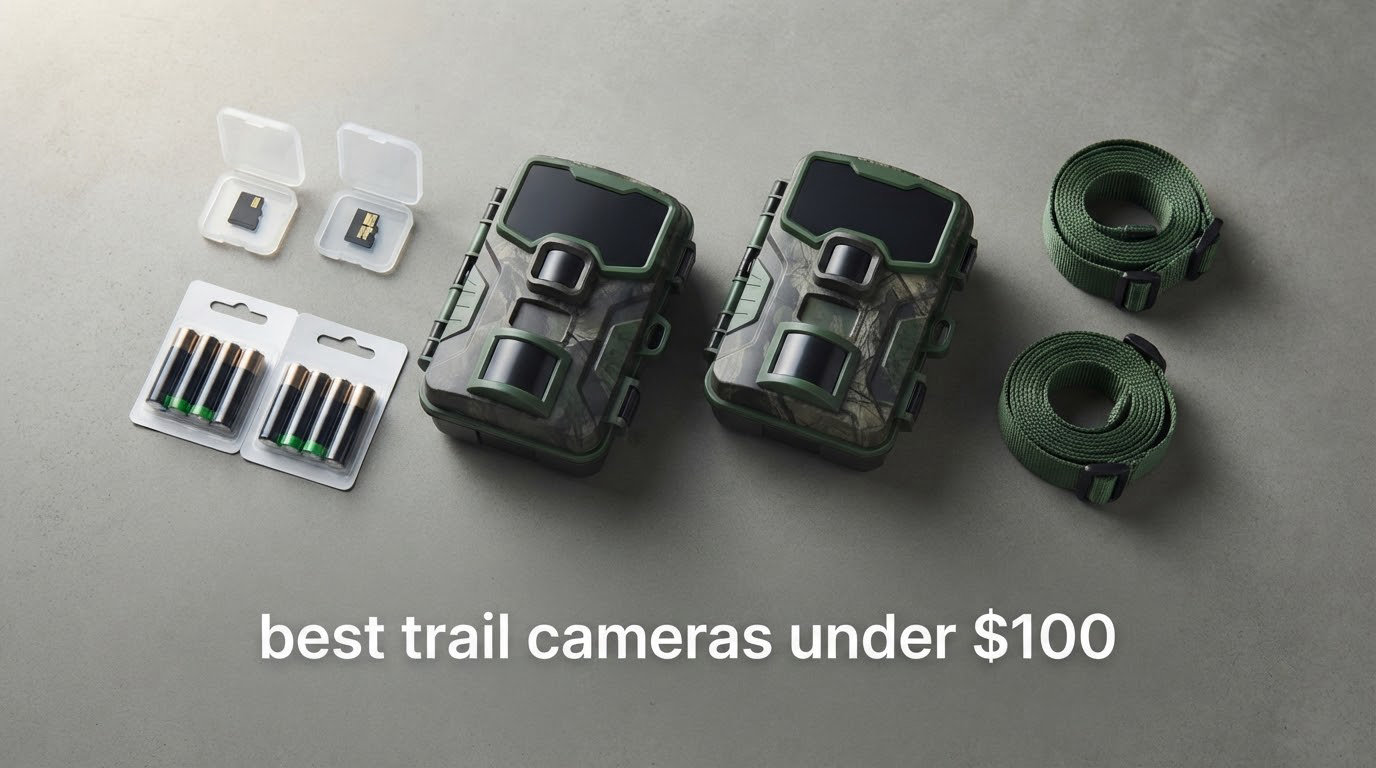
The best trail cameras under 100 dollars have gone from marginal to genuinely useful in a very short time. A few years ago the cheapest shelf meant blurry 720p clips, a red infrared glow visible from forty yards, and a camera that quit the first time rain hit the housing. That is no longer the whole picture. The ten cameras in this guide all record 1080p or better video, all run on standard AA batteries, and most carry proper 940nm no-glow infrared.
That shift matters because a trail camera is a patience tool. You mount it, walk away, and check back in a week to see what moved through while you were not looking. If the sensor is slow or the night image is unusable, you lose a whole season of scouting data before you find out. The budget tier has closed that gap for basic scouting, backyard observation, and trail security work, and the differences between the ten options below now come down to trigger behaviour, night vision distance, power strategy, and whether you want to pull an SD card or check a phone.
We spent weeks comparing specifications, digging through owner reports, and looking at the recurring failure patterns that show up after a camera has been in the woods for a few months. This guide covers hunters scouting deer and turkey, backyard wildlife watchers, and anyone who wants eyes on a driveway, cabin, or property line without paying a monthly subscription. Every camera listed here is a real configuration we could verify, and we flag where the marketing language outruns what the hardware actually delivers.
One thing to set expectations on before we start: at this price you are not buying GPS tagging, 4K live streaming, or the all-night infrared reach of a premium body camera. You are buying a motion sensor, a decent image sensor, an infrared flash, and a memory card slot. Done well, that is still enough to tell you what is crossing your trail and when. Our methodology section explains exactly how we scored each camera, and the buying guide covers the four specs that matter most and the three that mostly do not.
Table of Contents
Top 3 Trail Cameras Under 100 Dollars (October 2026)
These three cover the most common situations. The GardePro E6 is the one we recommend to most people because it pairs 64MP stills and 1296P video with on-site phone viewing and no-glow infrared, without requiring any subscription. The WOSPORTS Mini is the cheapest way to get a working camera into the woods, and the WOSPORTS G600 is a strong choice if you want 4K capture, a 120-degree field of view, and an on-camera screen for aiming.

GardePro E6 WiFi Trail Camera
- 64MP photos and 1296P video with sound
- WiFi and Bluetooth app viewing within 45 ft
- 940nm no-glow IR to 75 ft
- 110-degree lens

WOSPORTS Mini Trail Camera
- 30MP photos and 1080P video
- Compact 0.73 lb camouflaged body
- 850nm IR with PIR trigger
- IP66 waterproof

WOSPORTS G600 4K Trail Camera
- 64MP photos and 4K video
- 0.2s trigger with 120-degree angle
- 940nm no-glow IR to 80 ft
- 2-inch color LCD
A note on ratings before you read further. The GardePro E6 carries the largest review count in this group by a wide margin, and its 4.0 star average is the lowest of the ten. That is not a contradiction. It is a heavily reviewed product with a broad owner base, which drags the average down compared to a smaller camera that only dedicated buyers have purchased. Where owner reports conflict with the star average, we tell you what the owners actually say.
All 10 Trail Cameras Under 100 Dollars Compared
Every camera below stores to an SD card, runs on AA batteries, and costs less than a hundred dollars before accessories. The comparison table lists the configuration of each one so you can rule out the wrong models quickly.
| Product | Specifications | Action |
|---|---|---|
|
GardePro E6 WiFi Trail Camera
|
|
Check Latest Price |
|
WOSPORTS Mini Trail Camera
|
|
Check Latest Price |
|
WOSPORTS G600 4K Trail Camera
|
|
Check Latest Price |
 WOSODA Two-Pack Trail Cameras
|
|
Check Latest Price |
 CEYOMUR 4K 68MP Solar Trail Camera
|
|
Check Latest Price |
 MAXDONE Solar Trail Camera
|
|
Check Latest Price |
 GardePro A3S Trail Camera
|
|
Check Latest Price |
 iZEEKER HD Game Camera
|
|
Check Latest Price |
 SEHMUA 4G Cellular Trail Camera
|
|
Check Latest Price |
 Meidase P70 Trail Camera
|
|
Check Latest Price |
How We Chose the Best Trail Cameras Under 100 Dollars
Every camera here clears the same baseline: it records to an SD card, it runs on standard AA batteries, and it has an infrared night mode. Beyond that, we scored each one on six things, weighted by how much they actually affect the photos you end up with.
Trigger speed and recovery time came first. A camera that fires in under a third of a second and can take a burst of three images will give you a usable frame of a deer walking past. A camera that takes two seconds to reset after each shot will miss it entirely. We also looked closely at burst mode, because owners consistently note that a very fast trigger with single-shot capture produces a photograph of a nose entering the frame rather than an animal.
Second was night image quality, judged on infrared wavelength, LED count, and the manufacturer sensor behind the lens. The 940nm no-glow units are the ones you want if wary animals are the target, because the flash is invisible to wildlife at the same distance most deer can see. Low-glow 850nm units are cheaper and often reach further, but they put out a faint red emitter that deer and turkeys notice.
Third was power strategy. Battery-only cameras are the simplest, but a solar panel with a built-in rechargeable cell removes the single most common complaint we found in owner reports: dead cameras discovered on the way back from a trip. Two cameras in this group have permanently attached solar panels.
Fourth, we looked at how you get the photos off the camera. Wired cameras are dull and dependable. Hotspot and WiFi cameras are convenient, and their reliability depends entirely on whether you are standing next to the tree. Cellular cameras send images anywhere, and we treated their data plans as part of the true cost rather than an afterthought.
Fifth was build quality and owner-reported durability after months in the field, which is where budget cameras usually separate from each other. Sixth was the completeness of the box, because a camera that ships without an SD card or batteries adds cost the moment you open it. We gave the GardePro E6 the top spot for holding the best balance across all six, not for winning any single category outright.
1. GardePro E6 WiFi Trail Camera Is the Best Overall Budget Pick
GardePro E6 WiFi Trail Camera, Stable WiFi with External Antenna
64MP stills
1296P video with sound
WiFi and Bluetooth
940nm no-glow IR to 75 ft
IP66
Pros
- Best image and video quality in the budget class with usable audio
- On-site app viewing so you can check photos without pulling the card
- 940nm no-glow infrared that stays invisible to wildlife
- 36 IR LEDs and a 110-degree optical lens
- Rugged case with a straightforward menu system
Cons
- SD card and batteries not included
- App pairing can be slow and needs location services on
- WiFi transfers can stall on large batches of video
- Screen sits on the inner lid so aiming is awkward
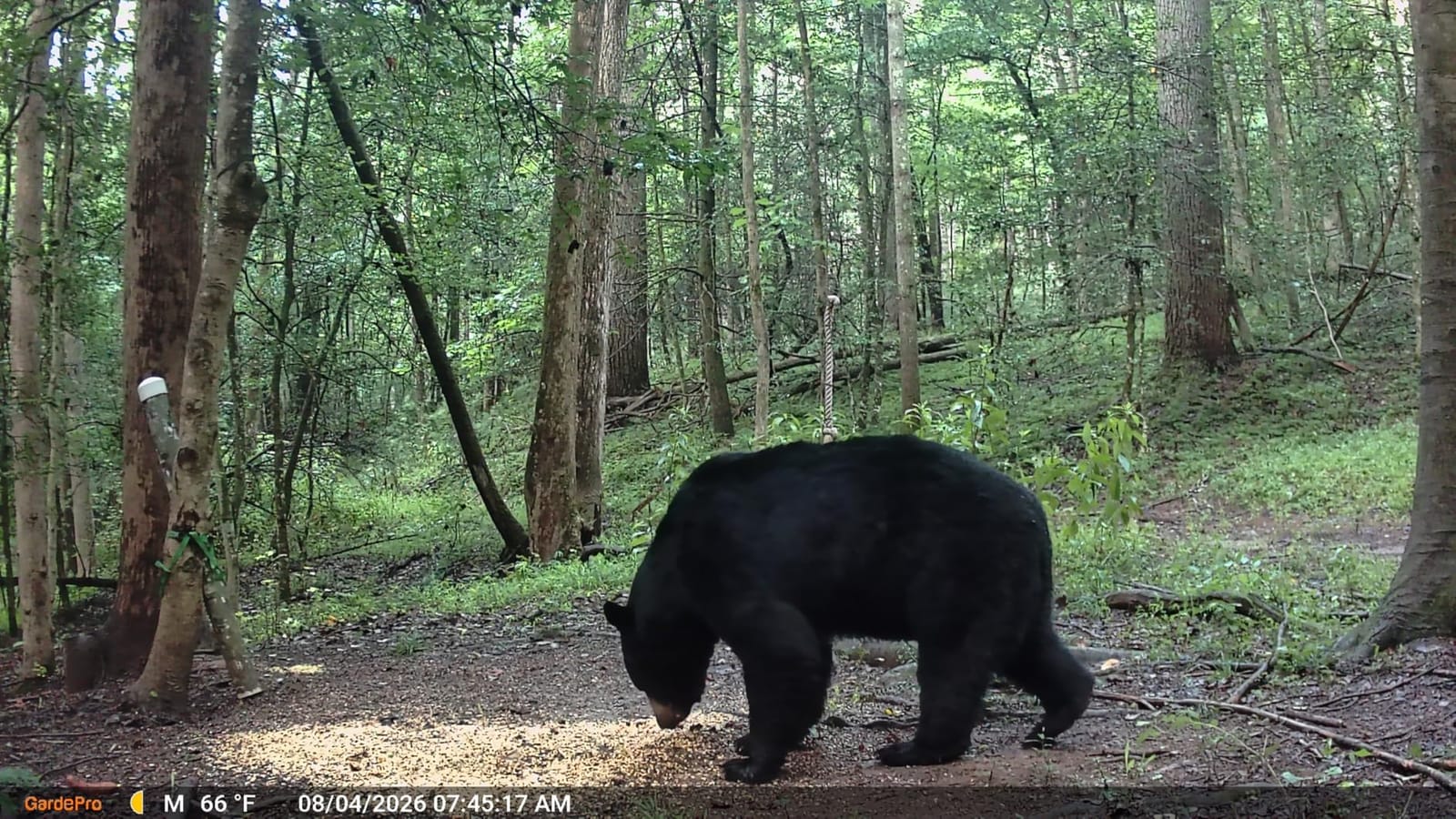
The GardePro E6 is the camera we keep coming back to because it does more than the others without asking for a subscription. A Sony CMOS sensor handles stills at 64MP, and video records at 1080p or 1296P with sound, which matters more than most buyers expect when you are trying to identify a deer by the sound of its movement or a turkey by its call.
What separates it from the other nine is the built-in WiFi and Bluetooth. The camera throws its own hotspot and the GardePro app lets you pull up photos and clips on your phone while you are standing at the tree, roughly 45 feet away. It is not remote viewing. You cannot check this camera from a motel room 200 miles down the road. But for setting the aim, checking framing, and confirming the camera is actually working, it removes the most tedious part of the whole process.
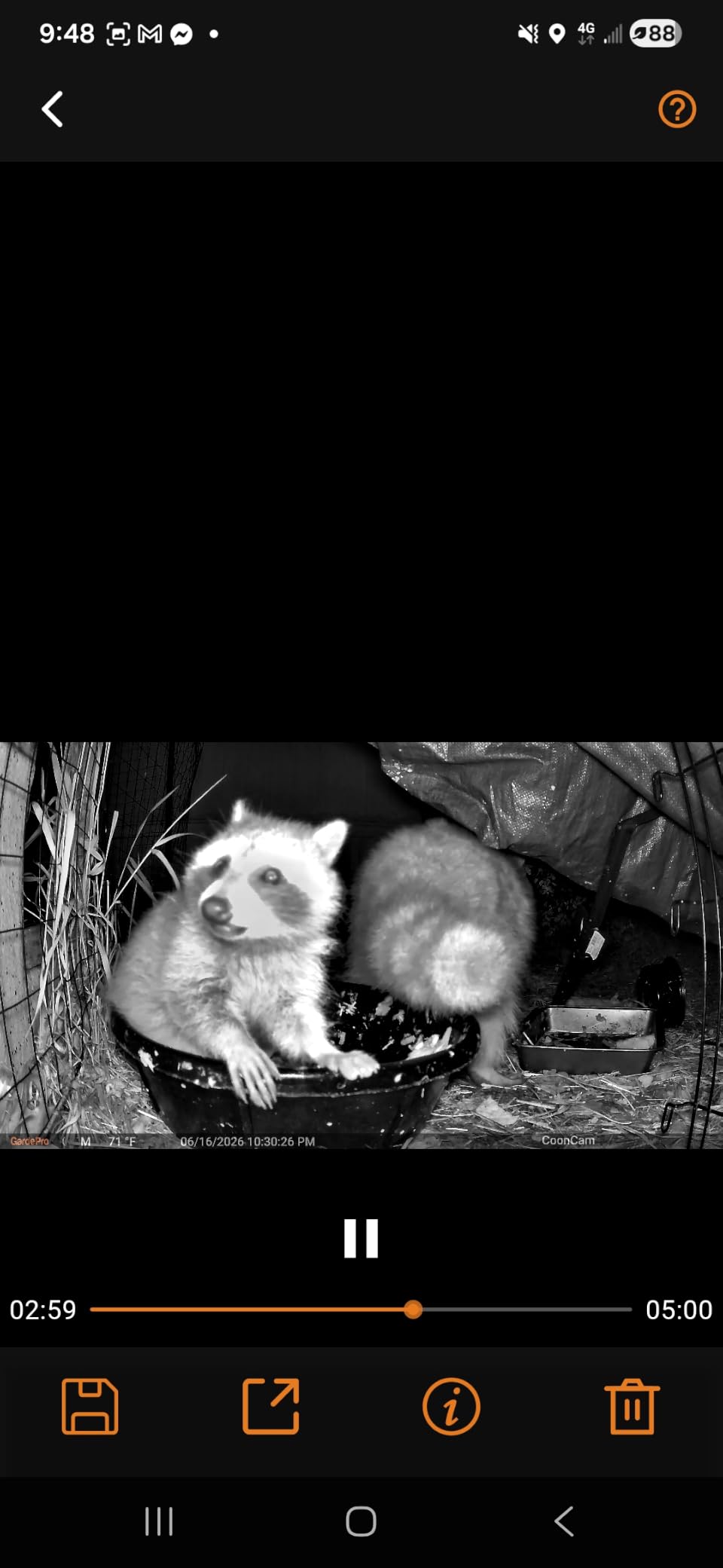
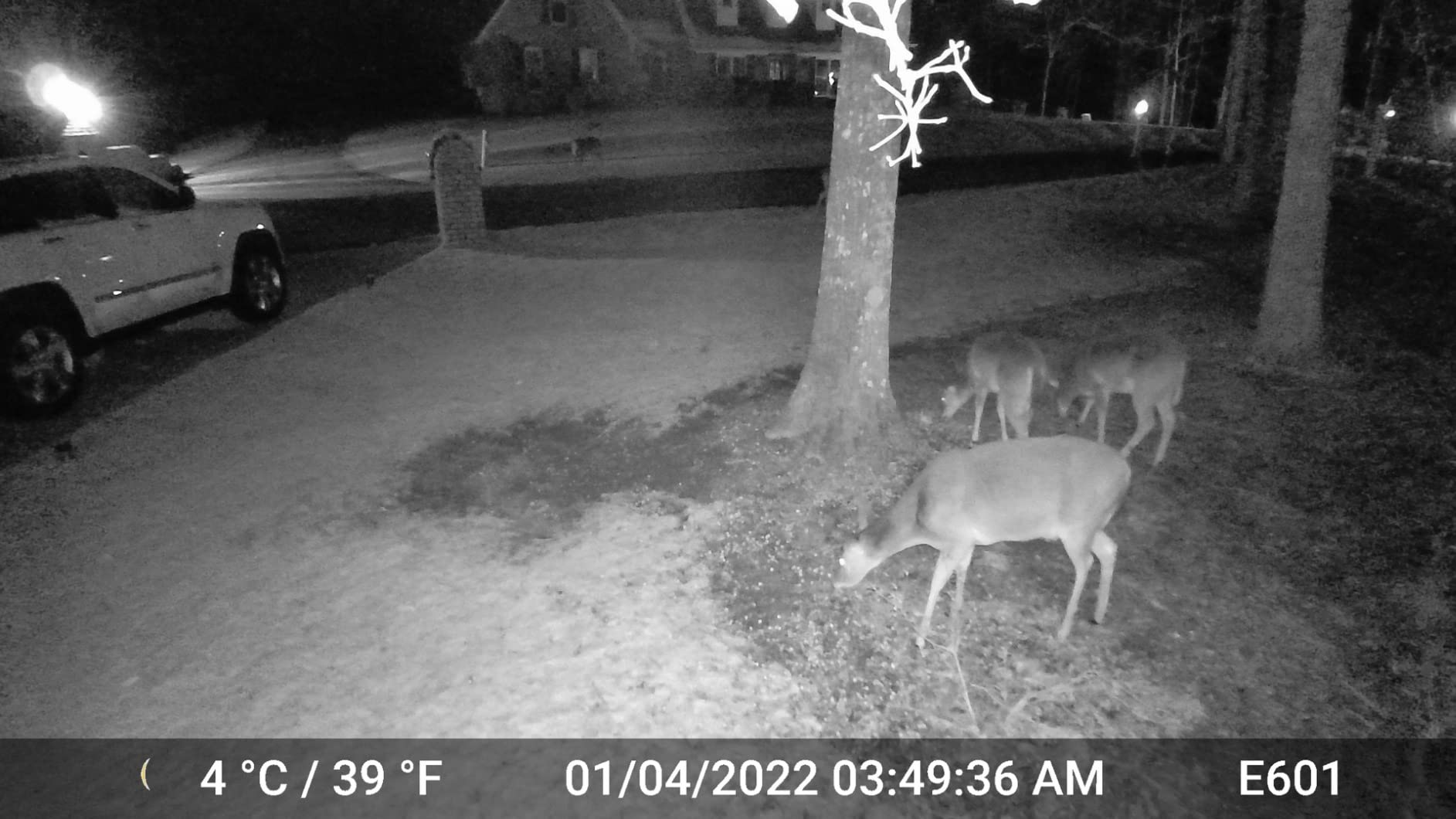
The night side is genuinely good. Thirty-six 940nm no-glow infrared LEDs cover about 75 feet, and owners consistently report clean, sharp night images at that distance rather than the washed-out grey you get from weak infrared. The 110-degree viewing angle is wide enough to catch a full approach without distorting the edges too badly.
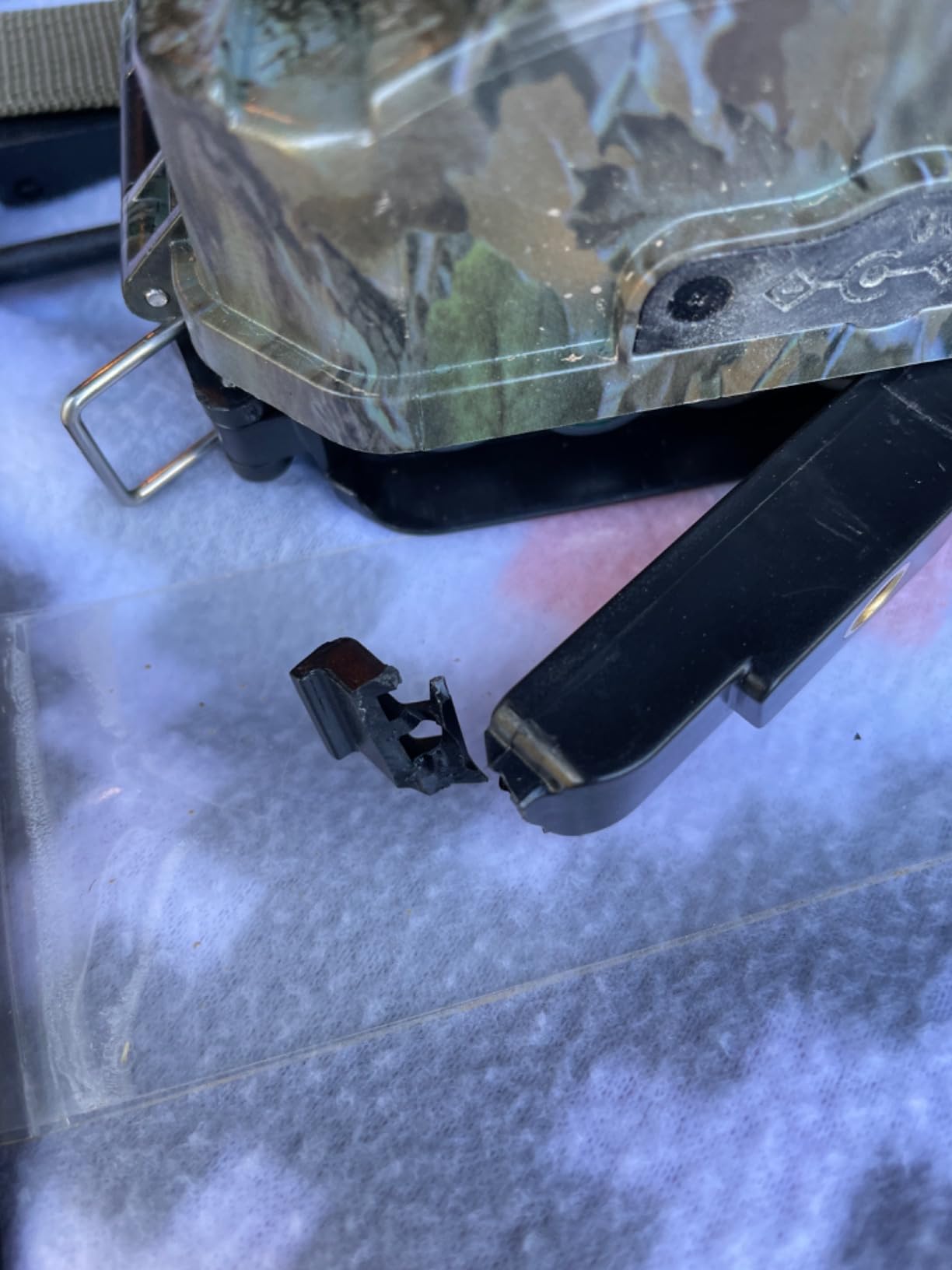
Worth knowing before you buy. The 2.4-inch screen is mounted on the inside of the front lid, so you aim the camera with the cover open and the screen facing away from you, which is awkward the first few times. The SD card slot protrudes from the bottom edge, and the battery compartment lid is tight. You will also need to buy an SD card and eight AA batteries, and on Android the app requires location services to be switched on before it will connect.
There is one more thing to plan for. If you are running several cameras and pulling a lot of 1296P clips, the WiFi transfer can hang when you move more than five or six video files in a row. Pull them in smaller batches and it behaves fine. Across the roughly 4979 owner reviews, the recurring praise is identical: this is the best-looking budget camera they have used, and the app access is what tips it over the wired alternatives.
Who the GardePro E6 suits best
This is the camera for someone who wants phone access at the tree without paying a monthly fee. If you are checking camera placement, confirming trigger timing, or reviewing a trip’s worth of photos in one sitting rather than nightly, the hotspot approach is the right trade. It also suits anyone who wants night vision good enough that deer do not flinch away from the flash.
Where the GardePro E6 falls short
It is not a remote camera. If your goal is checking images from work or from a hunting camp with poor signal, you need a cellular model, and the running cost of cellular service is a separate calculation entirely. The app connection can also be slow to establish, which is mildly irritating when you are standing in the rain at dawn.
And because the review count is so high, the 4.0 star average includes a meaningful number of units that shut down in extreme desert heat and complaints about missed small animals such as squirrels. Neither was common enough to worry me, but if your monitoring target is birds or rodents rather than deer, test it before committing to a full season.
2. WOSPORTS Mini Trail Camera Is the Best Value Pick
WOSPORTS Mini Trail Camera,30MP 1080P HD Game Camera Motion Activated with IR Night Vision Waterproof Video Deer Cam for Outdoor Wildlife Monitoring
30MP stills
1080P HD video
850nm infrared
0.73 lb body
IP66 waterproof
Pros
- Lowest cost of any full-featured camera in this group
- Small and light enough to carry several at once
- Quick PIR trigger with clear daytime images
- Camouflage body blends into a tree or post
- Setup takes a couple of minutes with no app
Cons
- 850nm infrared emits a visible red glow
- SD card support stops at 32GB
- 4xAA batteries mean more frequent changes
- No wireless
- so you must retrieve the card
Sometimes the right answer is the small one. The WOSPORTS Mini weighs just 0.73 lb and measures barely 4 inches across, which means you can fit two or three of them on a belt and check a whole property line in one afternoon. Most trail cameras in this guide are the size of a paperback book. This one is the size of a deck of cards.
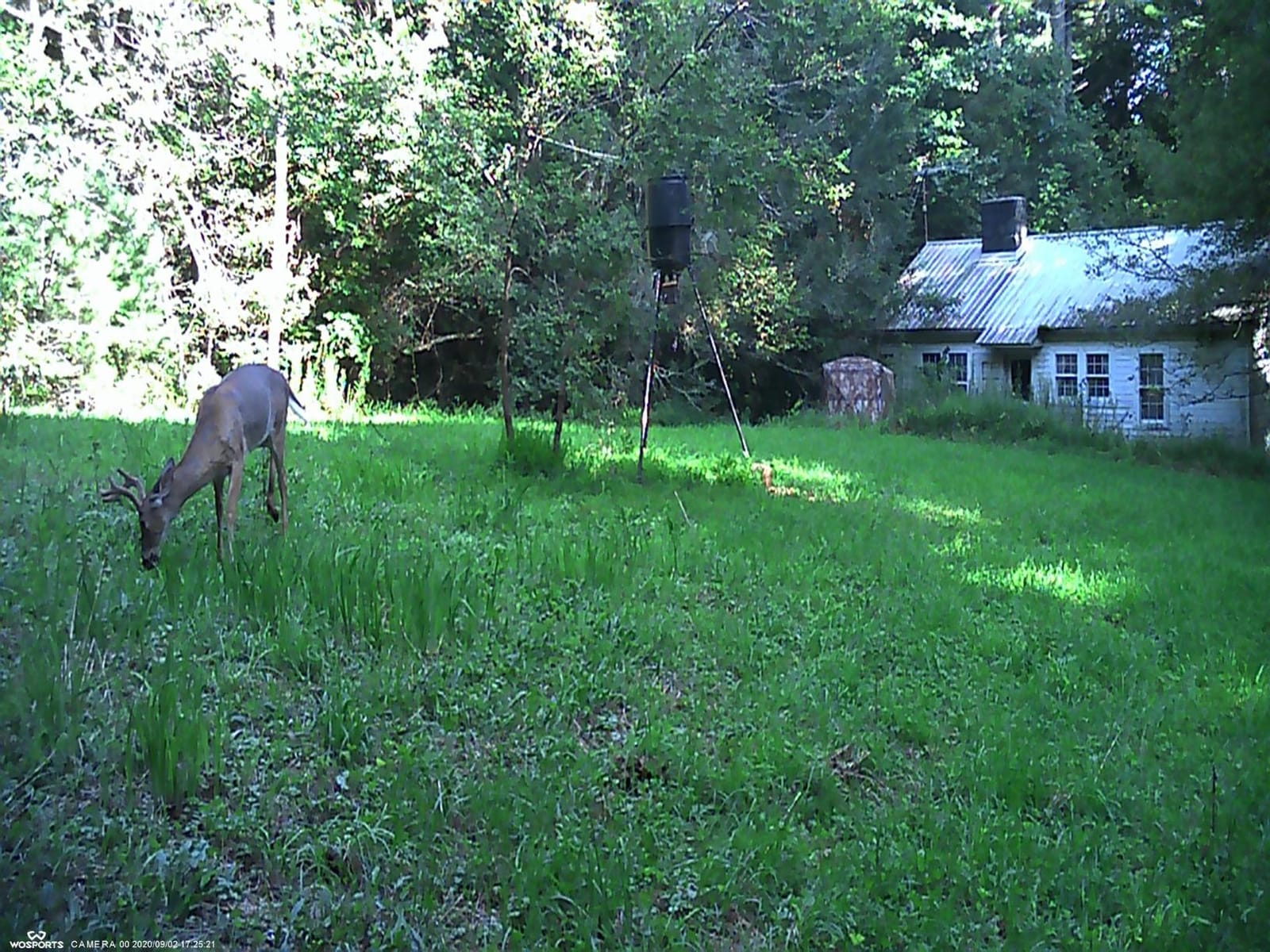
Image quality is good rather than impressive. Still capture is listed at 30MP and video records at 1080P, which is more than enough to identify a buck by antler shape or a turkey by posture across a yard or two. The PIR motion sensor reacts quickly, and owners describe daytime frames as clear and properly exposed rather than muddy.
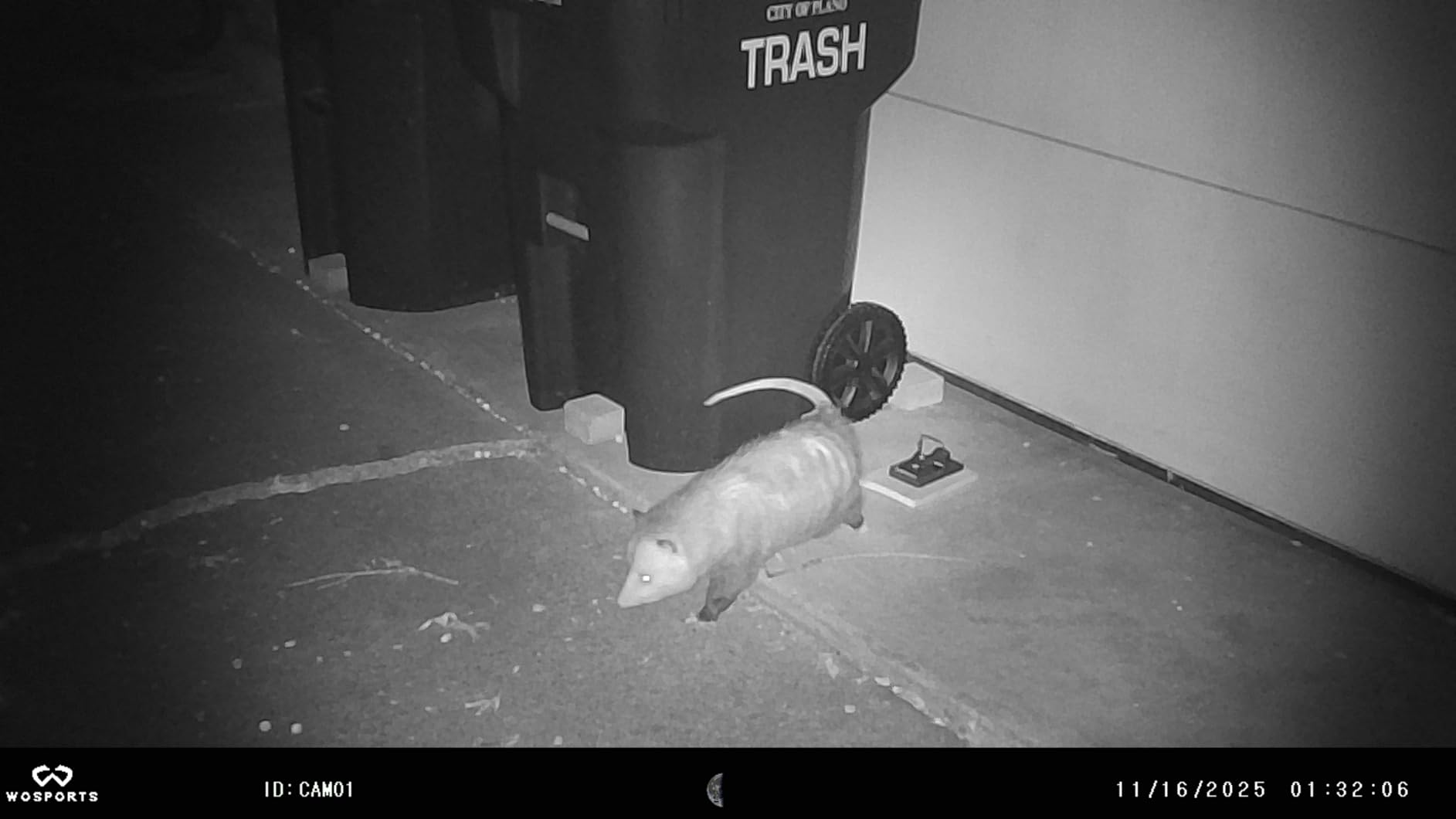
The compromise is the infrared. This is an 850nm low-glow unit, not a 940nm no-glow one, so there is a faint red emitter visible from close range. In practice that means slightly warier animals and a visible giveaway to anyone walking the trail. If your goal is deer that are already feeding in the open, it makes almost no difference. If you are trying to photograph a wary animal in a dark corridor, it does.
The other real limitation is storage. SD card support is capped at 32GB, which is a genuinely small card by current standards. You can still run 1080P clips on a 32GB card, but you will be pulling it more often, and a full card stops recording until you clear it. With four AA batteries as the power source, expect to visit more frequently than you would with an eight-battery body.
Who the WOSPORTS Mini suits best
This is the first camera I would hand to a beginner, and the one I would buy three of. If you want to cover multiple locations on a limited budget, the small size and low cost make it practical to do. It is equally good for a backyard, a garden, or a short driveway where you just want to know what is passing through at night.
Where the WOSPORTS Mini falls short
It is not a camera for long-term remote scouting. The 32GB cap, the four-battery configuration, and the visible infrared glow all point to occasional use rather than a full season of unattended monitoring. There is also no way to check it remotely, so every check means a walk to the tree.
Owners reviewing it treat this as a starter or occasional camera, and the roughly 3538 reviews reflect that. Daytime and night images are consistently described as good but not exceptional, and the card limit is the most common complaint. If you want 4K video and true no-glow infrared at a similar budget, the WOSPORTS G600 two sections down is the direct upgrade.
3. WOSPORTS G600 4K Trail Camera Is the Best Wide Angle Pick
WOSPORTS Trail Camera(Non-Cellular Non-WiFi) 64MP 4K 0.2S Trigger Motion Activated,Game Camera with No-Glow Night Vision 2.0”LCD 120°Wide for Outdoor Scouting Wildlife Monitoring Home Security
64MP stills
4K video
0.2s trigger
120-degree angle
2-inch color LCD
Pros
- Sharp 64MP photos and genuine 4K video for the price
- 0.2s trigger with 120-degree detection angle catches fast movers
- On-camera LCD lets you aim without removing the SD card
- Owners report cameras still running after 12 months or more
- Responsive support that replaced failed hardware
Cons
- No wireless
- so footage must be pulled from the card
- Battery compartment is very tight and needs a flathead screwdriver
- Settings can reset when the unit powers down
- Included mounting straps are flimsy
The G600 is among the most capable cameras in this group on paper, and unlike a lot of budget cameras, the paper is roughly accurate. Still resolution is adjustable across five settings up to 64MP, and video captures at 3840x2160P. You will not get usable 4K detail from an animal 60 feet away at midnight, but the daytime frames are genuinely sharp and hold up when you crop into them.
Trigger speed is 0.2 seconds with a 120-degree detection angle and a one to three shot burst, which is the combination that avoids the most common budget camera failure. Fast animals get multiple frames instead of a single badly timed one. Owners repeatedly single out the burst mode as the reason their photos are usable rather than a blur of a leg crossing the frame.
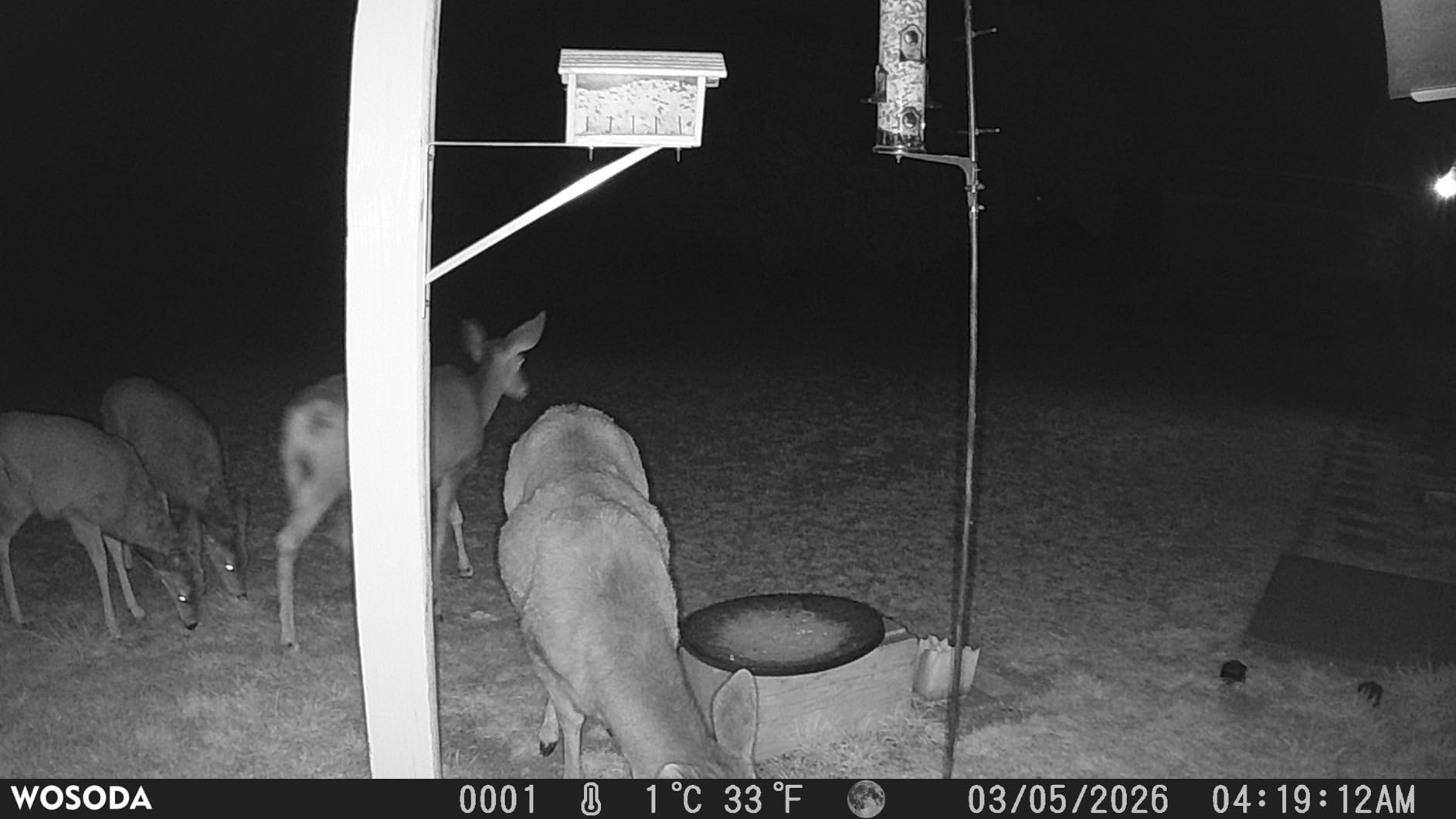
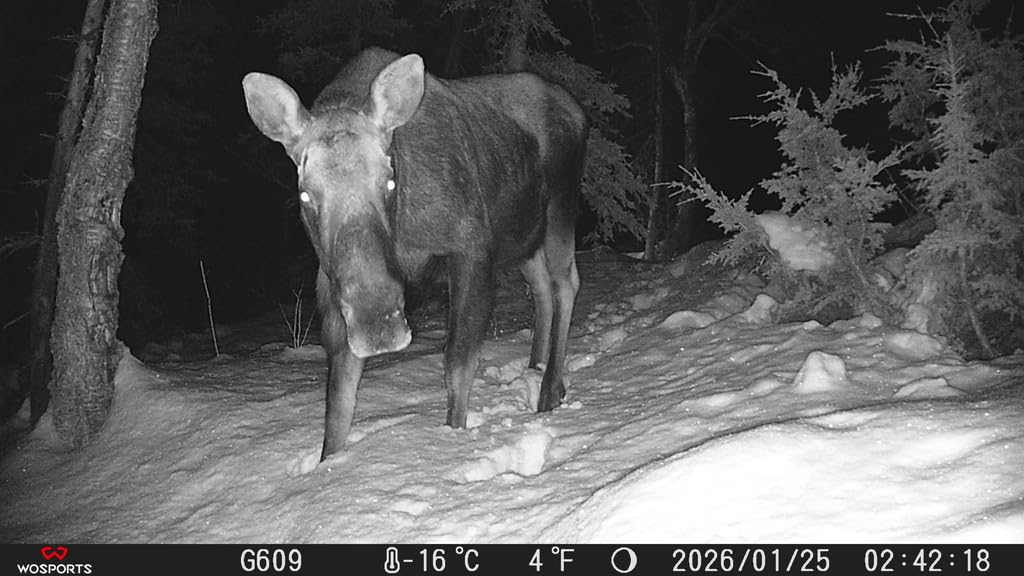
The 2.0-inch color LCD on the back is more useful than it sounds. You can preview frames, check the aim, and confirm the card is writing before you walk away, which eliminates the single most common disappointment with a new camera: mounting it, driving home, and returning two weeks later to an empty card. Thirty-two 940nm no-glow infrared LEDs reach about 80 feet, which is slightly further than the GardePro E6 despite using fewer of them.
There are real annoyances. The battery compartment is extremely tight and owners say you need a flathead screwdriver to release it, which is a poor design decision for a camera you will open in cold rain. More seriously, some owners report that settings are lost when the unit powers down for a battery change, meaning you reconfigure sensitivity and mode every time. The supplied mounting straps are also widely criticised as flimsy, and a handful of units have failed after roughly nine months of use.
Who the G600 suits best
This one fits people who want the widest possible view and the highest resolution they can get at a low price. A 120-degree angle is genuinely useful at a wide game trail intersection, at a feeder, or anywhere animals approach from more than one direction. It is also a strong choice for anyone who wants to frame a scene once and leave it for months.
Where the G600 falls short
It is a wired camera with no app and no cellular, so every review session is a physical card pull. That is fine for someone who plans their checks, and frustrating for someone who wants a midday glance from the truck. Combined with the tight battery compartment, it is the least pleasant unit here to service in bad weather.
On durability, the picture is mixed but well supported. Numerous owners report cameras still working after a year or more in the field, and the brand’s customer service has been consistently responsive about replacements and refunds. A smaller number report failure around the nine-month mark. If it goes in, test the card and settings immediately after mounting so you have a baseline.
4. WOSODA Two-Pack Trail Cameras Are the Best Bundle for Covering Ground
WOSODA 2 Pack Trail Cameras with Night Vision Motion Activated Waterproof,48MP Game Camera,1080P HD Trail Cam with SD Card for Wildlife Monitoring,Outdoor Scouting & Security(Non-WiFi)
Two cameras
48MP photos
1080P video
0.3s trigger
SD cards included
Pros
- Two cameras in one pack so you can cover two locations
- Box includes two 16GB SD cards
- batteries
- cables and mounts
- 0.3s trigger with 60ft trigger distance
- Camouflage housing is effective at concealment
- 48MP photos hold up well in low light
Cons
- No wireless
- so media must be pulled from the card
- 850nm low-glow infrared rather than no-glow
- IP65 rating is one step below the IP66 on most rivals
- Listing dimensions look implausibly small
Most budget bundles are one good camera and a filler. This one is two matching cameras with everything you need to run them. You get two bodies, two 16GB SD cards, two USB cables, two wall mounts, and 16 AA batteries in the box, which means the total cost of getting both cameras deployed is the listed price and nothing else.
That completeness is the point. Across forum discussions about budget trail cameras, missing SD cards and missing batteries are consistently named as the most annoying surprise, and this bundle simply sidesteps the problem. The two cameras also look identical, which is useful if you are covering two approaches to the same clearing and want the footage to look consistent.
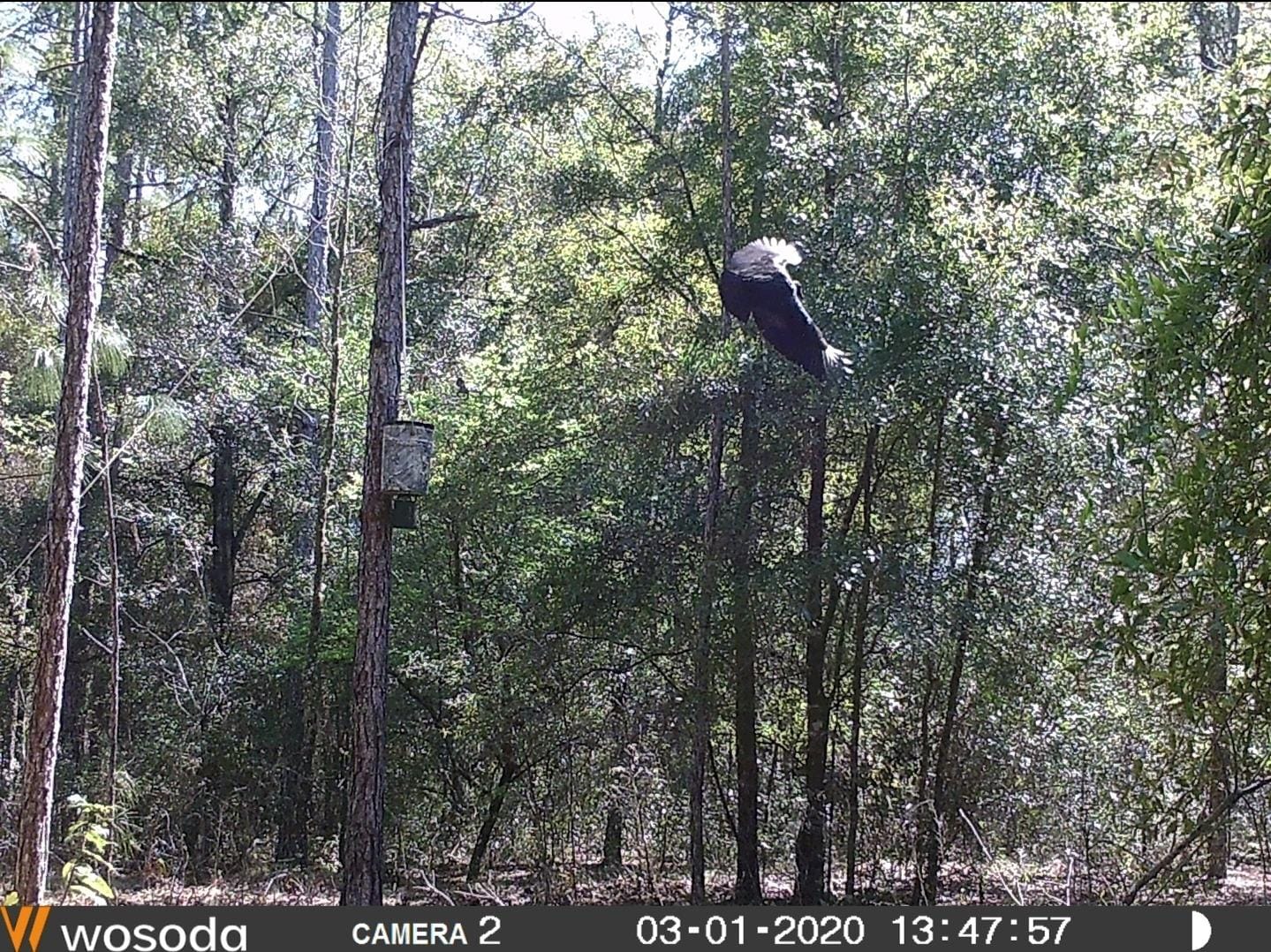
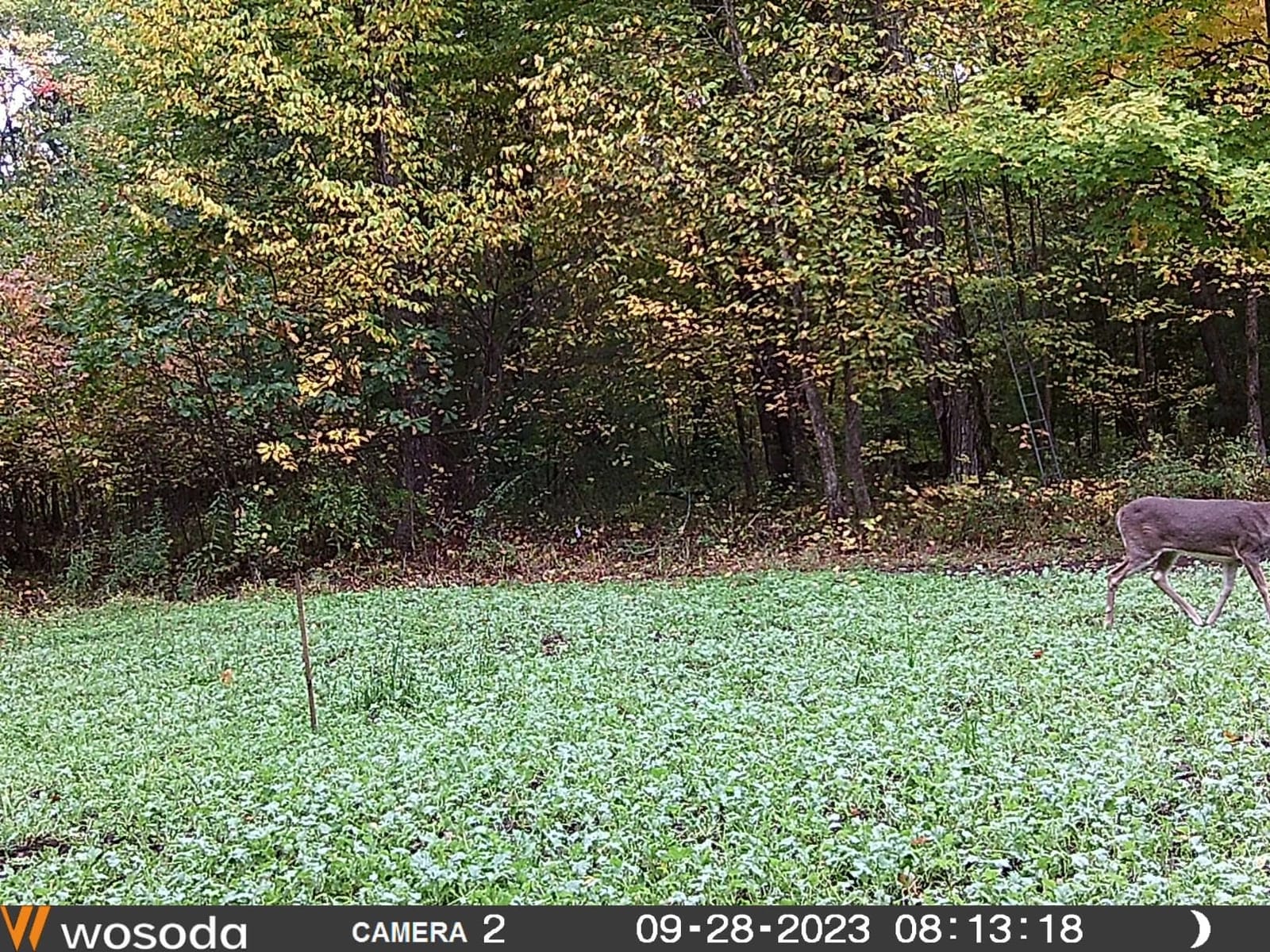
Camera performance is solid for the money. Still capture is listed at 48MP with 1080P full HD video, and the trigger fires in 0.3 seconds with a trigger distance up to 60 feet. You can set it for a single shot, a three-shot burst, or video, which covers most scouting situations. Owners report that the camouflage housing is convincing enough that animals do not react to it at the mount point.
The night vision is the compromise. These are 850nm low-glow units, so there is a faint red emitter. The waterproofing is also rated IP65 rather than the IP66 used by most of the others here, which is one step less sealed against fine water and dust. In practice an IP65 unit survives ordinary rain, but if you are mounting in an exposed treeline through a wet season, that difference is worth noticing.
One oddity to flag. The listing dimensions of 2.36 by 1.57 by 1.18 inches are clearly wrong for a trail camera of this class, so do not use them for planning a mounting bracket. Owners also note that with no wireless connection, checking this camera means removing the card, and with two of them you are making two trips unless you mount them close together.
Who the WOSODA two-pack suits best
This is the pick for someone who wants coverage of two places rather than deep detail at one. A trail and a feeder, a front yard and a back garden, a driveway and a gate. Because the accessories are included, the real cost per camera is lower here than on any other product in the guide, which is a meaningful advantage when your budget is the main constraint.
Where the WOSODA two-pack falls short
It is not the choice for wary night-time subjects, because of the low-glow infrared. Nor is it the choice for exposed, driven-rain installations, given the IP65 rating. And if your priority is checking images from a distance, both units require a physical card pull.
Reviewers are broadly positive, with the two-camera configuration and included accessories doing most of the work. The most common complaints are the lack of wireless connectivity and the low-glow rather than invisible infrared. At roughly 2885 reviews, it is one of the better-established options at this price, and the sentiment is steady rather than wildly positive, which usually means the camera does what the listing says.
5. CEYOMUR 4K 68MP Solar Trail Camera Is the Best All-In-One Kit
CEYOMUR 4K 68MP Solar WiFi Trail Camera, Game Camera with 32GB TF Card
Solar panel with 5200mAh battery
68MP photos
4K video
32GB card pre-installed
IP66
Pros
- Solar panel and 5200mAh battery remove routine battery changes
- 68MP stills and 4K video with sound at 30fps
- 0.1s trigger across a 120-degree zone to 65 ft
- 32GB TF card pre-installed and ready out of the box
- Two-year warranty with fast support response
Cons
- App hotspot works only within about 33 ft
- Not a home WiFi or internet camera
- Only two infrared LEDs limits night illumination
- 850nm IR emits a faint red glow
- Keeps recording with no push alerts when the phone disconnects
The CEYOMUR is the most complete single package in the guide. The solar panel is attached to the top of the housing, there is a 5200mAh rechargeable battery built in, and a 32GB TF card is already installed. You add four AA batteries as backup and you are running. No card to buy, no battery habit to build, no separate panel to wire up or aim at the sun.
Image specifications are among the highest here: 68MP stills and 4K video with sound at 30 frames per second in clips up to three minutes. Trigger speed is listed at 0.1 seconds, among the fastest in this group, and three high-sensitivity PIR sensors cover a 120-degree zone out to 65 feet. That combination means it is well suited to capturing the full arc of an animal approaching rather than the moment it crosses a narrow cone.
Control is through Bluetooth pairing to a built-in WiFi hotspot using the Wildlife Cam app, working out to roughly 33 feet. That is close enough to walk up and check framing, and far too short to be useful as a remote monitoring system. It is not a home WiFi camera and it is not a cellular camera, so there is no way to see images from anywhere but next to the tree.
The night illumination is where this camera gives ground. It uses two high-power 850nm infrared LEDs rather than the 32 to 36 LED arrays on the wired cameras here. The stated night range is 20 meters, which is competitive on paper, but two emitters spread across a scene produce flatter illumination than a dense LED array, and the 850nm wavelength means a visible red glow. Owners regularly cite this as the main limitation alongside the short app range.
Who the CEYOMUR suits best
This is the camera for anyone who does not want to think about batteries. Solar charging with a large internal cell means you can mount it and genuinely forget about it for weeks at a time, which is the whole point of a solar design. The pre-installed card removes the most common setup failure, and the two-year warranty is the longest in this group.
Where the CEYOMUR falls short
It will not work as a remote camera, and that is a genuine limitation if you are away from the property for long stretches. The two-LED infrared array underdelivers on night scenes compared with the wired units here, and the red glow gives away the camera position to close animals.
Owners consistently like the 68MP and 4K output and the 0.1s trigger, treating the camera as an all-in-one package rather than a component to assemble. The recurring gripes are the short app hotspot, the two-LED illumination, and the absence of any cellular or home-network viewing. If you want solar power and a long-range night image, the MAXDONE has more infrared LEDs, and the GardePro A3S has a proper no-glow array.
6. MAXDONE Solar Trail Camera Is the Best Pick for Phone Review
MAXDONE Solar Trail Camera WiFi Bluetooth, 4K 64MP Night Vision Game Camera
Solar with 6000mAh battery
64MP photos
4K video
WiFi6 hotspot to 55 ft
IP66
Pros
- Solar panel and 6000mAh battery remove battery swaps entirely
- 64MP photos and 4K video owners rate highly for the price
- Small and light body with strap and swivel mounts included
- Free app with no subscription
- Data stays on the local card
Cons
- Works only with its own hotspot
- not home WiFi or cellular
- App connection can take a long time and a VPN blocks pairing
- Power switch and card slot are on the bottom
- Access panel underneath rather than a hinged clamshell
The MAXDONE is the solar option I would pick over the CEYOMUR, and the difference is mostly about endurance. A 6000mAh rechargeable lithium cell is the largest battery in this group outside the cellular-only SEHMUA, and paired with an integrated solar panel it means a camera that keeps recording through a long autumn without a ladder and a bag of batteries. Reviewers describe the ownership experience of this camera in almost exactly those terms.
Daytime output is 64MP stills and 4K video at 30 frames per second, with a 0.1 second trigger, a 100-degree detection angle, and a five-shot burst mode. The burst is the most useful of those numbers. Five frames in quick succession is the difference between catching a buck with his head up and catching him with his head down in tall grass.
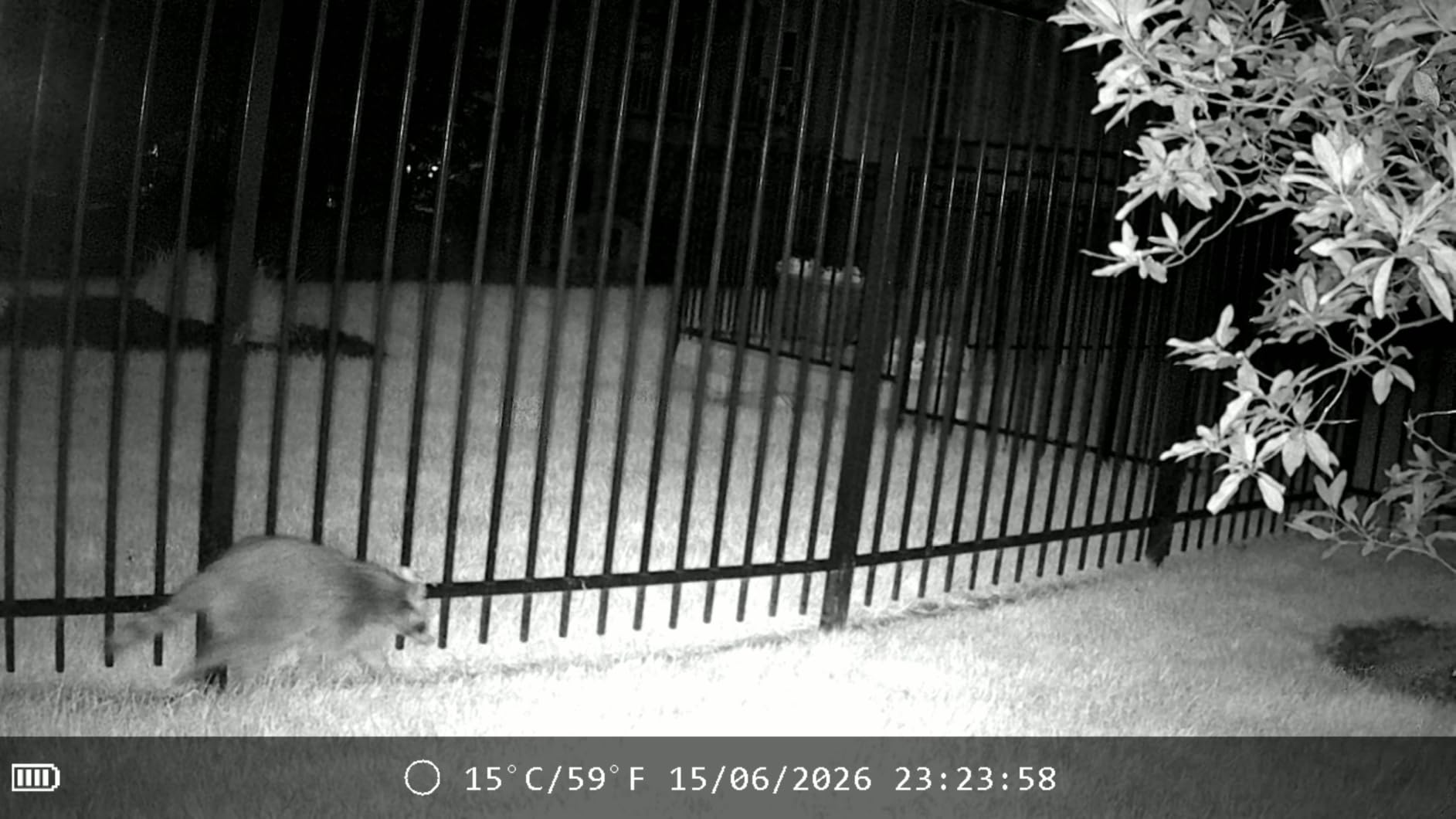
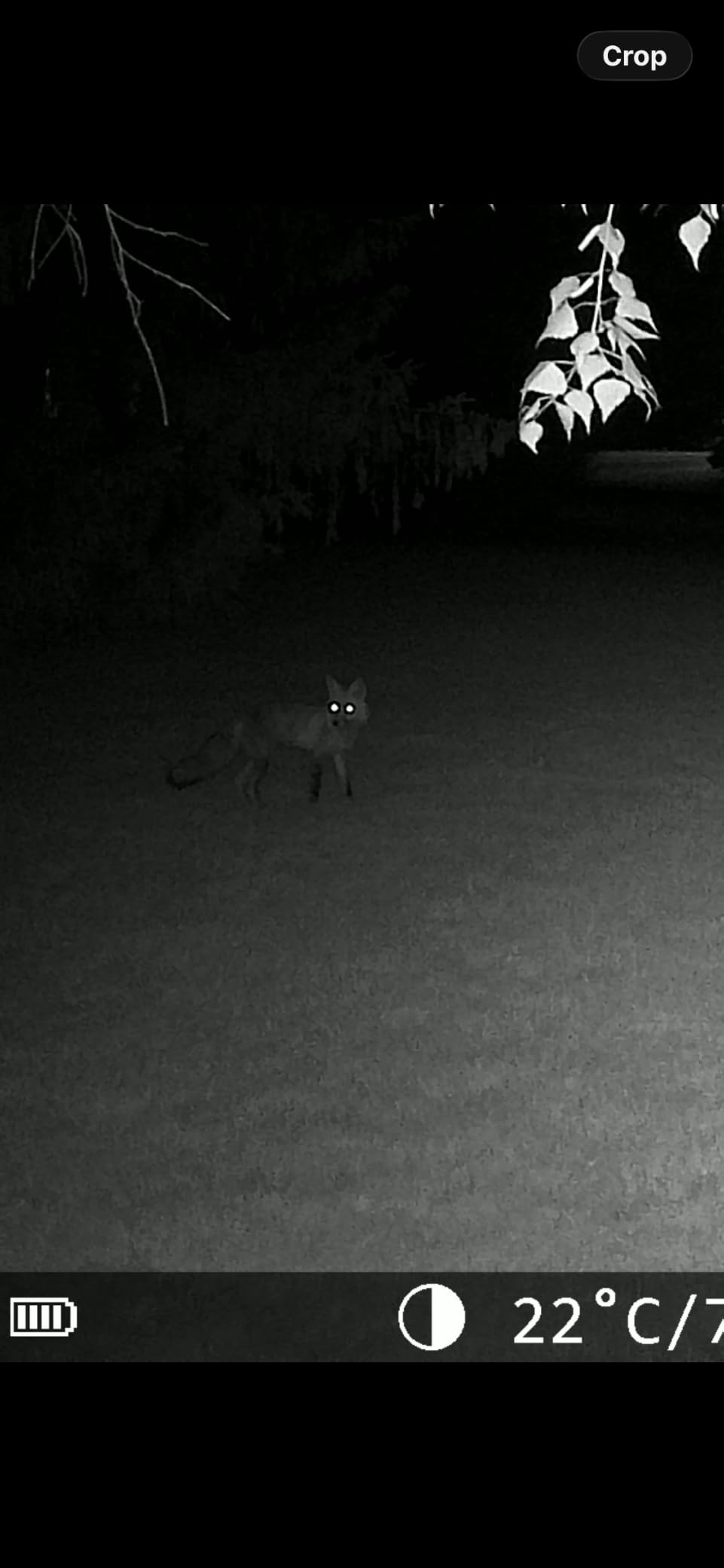
The app connection is better than the CEYOMUR’s in one important respect: WiFi6 plus a Bluetooth hotspot reaching about 55 feet rather than 33, which is close enough to matter when you are wrestling with a strap on a steep hillside. The app itself is free with no subscription, and files stay on the local card rather than going through a cloud service. There is a 32GB TF card pre-installed and expandable to 256GB.
Two practical warnings. The camera only works with its own built-in hotspot, so it will not join your home WiFi network or a cellular plan, and app pairing is reported as slow, with a VPN on the phone blocking the connection entirely. Turn your VPN off before you try. Separately, the on-off switch and memory card sit on the bottom of the unit, and the access panel is underneath rather than a hinged clamshell, so clearing condensation from the lens means opening the base and dealing with the mounts.
Who the MAXDONE suits best
Anyone deploying a camera somewhere they cannot visit often. Solar power plus a large internal cell is the right answer for a remote cabin, a back property line, or a treeline you check once a month. It is also a good fit for parents or grandparents who want backyard wildlife pictures without a subscription or a monthly bill.
Where the MAXDONE falls short
It is not a remote-viewing camera in any real sense, and there is no cellular option. The infrared is 850nm low-glow across 18 LEDs out to 65 feet, which is respectable coverage but a visible red glow and less illumination than a 36-LED no-glow array.
Owners are consistently positive about the solar panel and rechargeable cell as the feature that changes ownership, and about picture quality for the price. The friction points are app pairing speed, VPN interference, and the bottom-mounted controls that make tripod use awkward. At roughly 2168 reviews, feedback is substantial and stable, and the brand is credited with good instructions and responsive support.
7. GardePro A3S Trail Camera Is the Best for Night Vision
GardePro A3S Non-Cellular Trail Camera, 1296P HD Video with Sound
Sony Starvis sensor
64MP photos
1296P video with sound
940nm IR to 100 ft
IP66
Pros
- Sony Starvis sensor delivers strong low-light and night performance
- 100ft no-glow infrared range matched only by the Meidase P70
- 0.1s trigger with side detection and 5-shot burst
- Non-cellular design runs low power and needs fewer battery changes
- SD cards supported up to 512GB with in-camera playback
Cons
- No WiFi or cellular
- so the card must be removed
- Listed viewing angle of 70 degrees is narrower than the 120-degree detection field
- SD card and batteries not included
- Basic molded ABS case compared with metal bodies
If night images are the reason you own a trail camera, this is the one. It pairs a Sony Starvis CMOS sensor, which is designed specifically for low light, with 36 940nm no-glow infrared LEDs rated to about 100 feet. That is the longest no-glow range in this group, shared only with the Meidase P70, and the sensor behind it is a genuine low-light part rather than a repurposed daytime sensor pushed past its limits.
The practical result is owners describing clean, usable night images at distances where most budget cameras give you a grey silhouette. Starvis sensors have a reputation for this because they hold detail in low light without the noise you get from cranking gain. For deer moving through tree cover at 60 or 70 feet, that difference is the whole game.
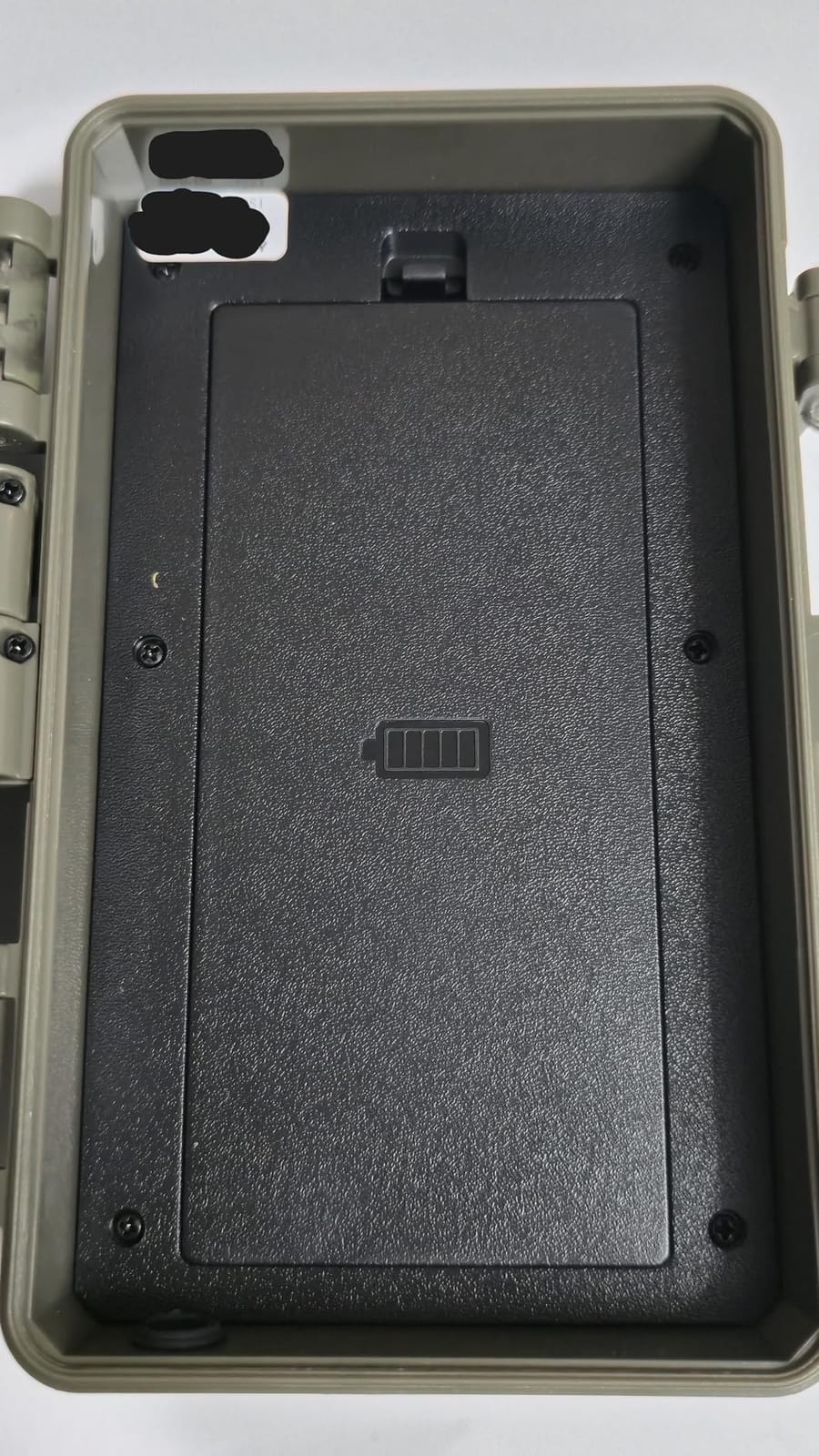
Trigger speed is 0.1 seconds with a 120-degree PIR detection angle, side detection, and up to a five-shot burst. Recording modes include motion, time-lapse, and a hybrid mode, plus loop recording so a full card overwrites rather than stopping. Cards up to 512GB are supported, which at 1296P with sound means very long intervals between visits. Video records at 30 frames per second and the sound is usable.
One spec deserves a warning. The listed viewing angle of 70 degrees is narrower than the 120-degree PIR detection field, which means the camera senses motion across a wide arc but photographs a narrower slice of it. Aim carefully and expect some triggers from the edges of the detection zone to be wasted. The ABS case is also basic next to a metal-bodied premium camera, and the SD card and eight AA batteries are not included.
Who the GardePro A3S suits best
Hunters and wildlife watchers whose schedule puts most activity at night, and anyone photographing animals that would rather not approach a visible flash. The 940nm array stays invisible to deer at the distances you would realistically use, and the Starvis sensor means the images are worth looking at when you get them back.
Where the GardePro A3S falls short
There is no wireless of any kind. Every image session means removing the card, and with eight AA batteries plus a long battery life, that is fine for a deliberate schedule and poor for a casual check. The narrower 70-degree effective view against a 120-degree detection zone also wastes more triggers than the alternatives.
Owners largely frame the lack of connectivity as a deliberate reliability choice rather than a shortfall, which tells you something about how this camera is meant to be used. The wired design cannot have app failures, pairing problems, or firmware updates that stop it recording, and low power draw means fewer battery changes across a season. Across roughly 1904 reviews, feedback centres on dependable long-term field use, quiet no-glow infrared, and well-liked 512GB card support.
8. iZEEKER HD Game Camera Is the Best for Easy Field Setup
iZEEKER Trail Camera, HD Game Camera with 940nm No Glow Night Vision Motion Activated 0.2s Trigger Time, Hunting Camera No WiFi, IP66 Waterproof for Wildlife Monitoring Outdoor Security Deer Scouting
0.2s trigger
940nm no-glow IR
2K video
Front-facing LCD
Clamshell case
Pros
- Low cost with a 0.2s trigger and 3-shot burst
- 940nm no-glow infrared keeps animals undisturbed
- Front-facing screen and lens make aiming straightforward
- Clamshell case opens to clear lens condensation
- Illuminated keypad icons help in dark conditions
Cons
- No WiFi or cellular
- so media must be pulled from the card
- SD card and batteries not included
- Some listings quote 36MP while the spec sheet says 32MP
- 2K files are large and slow to transfer
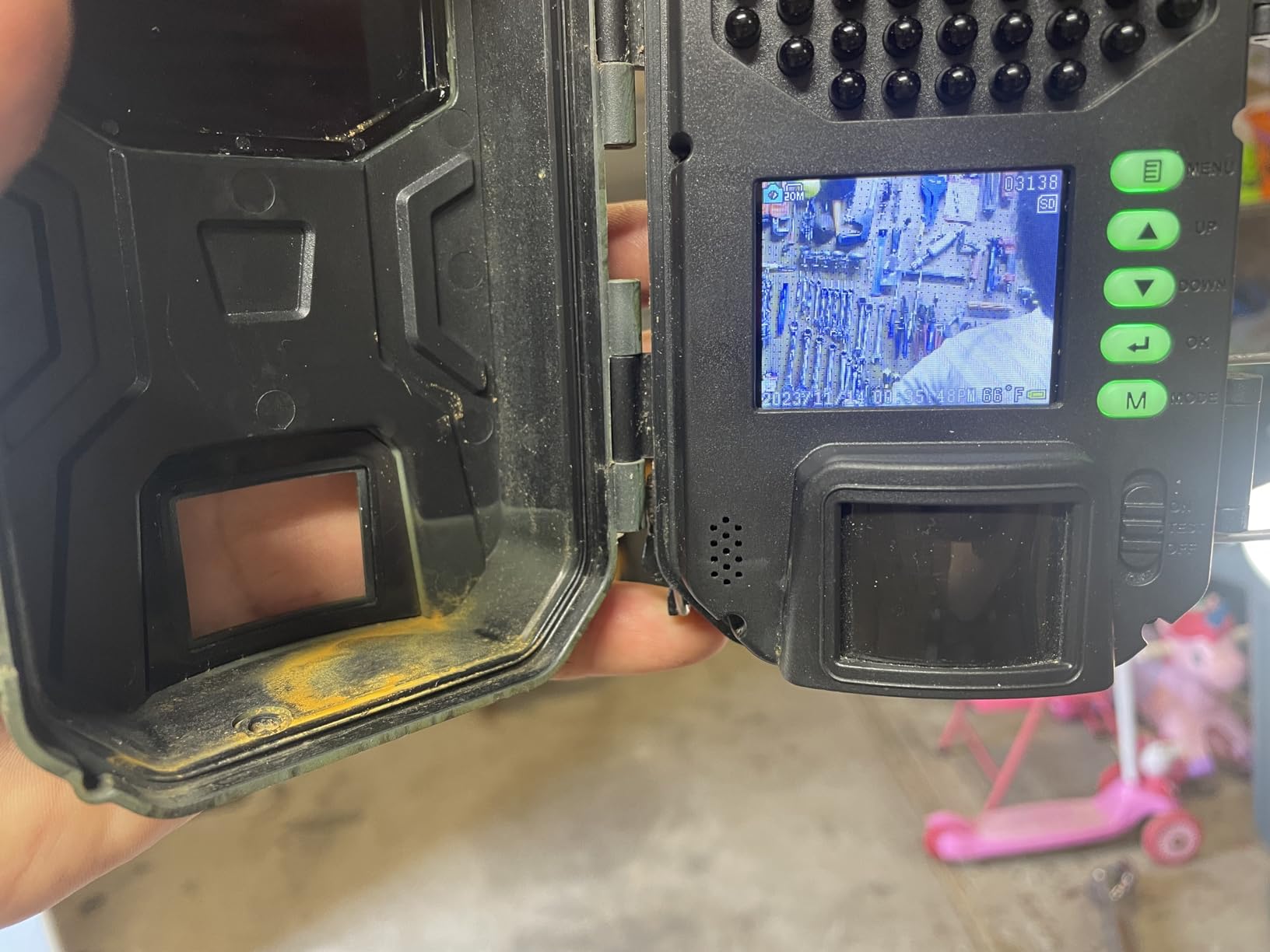
The iZEEKER is designed by someone who has actually mounted cameras in the dark. The lens and the 2-inch LCD both face forward, so you can see exactly what you are aiming at while the camera is strapped to the tree, rather than discovering the framing was wrong three weeks later. That single design choice eliminates the most common beginner mistake.
Underneath the good ergonomics, the hardware is competent. Trigger speed is 0.2 seconds with a three-shot continuous burst, night vision is 940nm no-glow across 36 LEDs out to 65 feet, and video records at 2K, 1080p, or 720p with a microphone positioned to pick up clear sound. Loop recording overwrites the oldest files when the card fills, so the camera keeps working instead of going silent.
The clamshell design is the other thing worth knowing. The body opens so you can clear condensation from the lens without pulling the card or unscrewing anything, and the illuminated icon keypad means you are not fumbling blind buttons at midnight. Small touches, but at a price point where nobody expects them, they are the difference between a camera you enjoy using and one you resent.
The compromise is that there is no wireless anything, so you retrieve files over USB or by removing the card. Note that 2K clips are large files and owners report transfer over USB is slow, so budget time for it. Also note the specification discrepancy: some listings advertise 36MP stills while the spec sheet lists 32MP effective. The realistic number is the lower one. SD card and batteries are not included.
Who the iZEEKER suits best
Anyone mounting a camera for the first time, or anyone mounting several in one afternoon. The forward-facing screen and the illuminated keypad remove nearly all of the guesswork, and the no-glow infrared means the flash does not spook what you are trying to photograph. It is also a good fit for home and property security use where you want a wide, straightforward view of a doorway or gate.
Where the iZEEKER falls short
It is a wired camera with no app, so every check is a walk to the tree. The 65-foot night range is shorter than the GardePro A3S and the Meidase P70, and the 90-degree viewing angle is narrower than the 120-degree models. If your subject is a wide trail intersection rather than a focused corridor, the narrower lens loses more than you might expect.
Owner sentiment is positive but modest, which is appropriate. At roughly 1924 reviews, buyers describe it as an inexpensive, straightforward camera and single out the front-facing screen, illuminated buttons, and anti-condensation clamshell as thoughtful at this price. The complaints are limited to missing accessories and the lack of wireless transfer, which most buyers accept given the cost.
9. SEHMUA 4G Cellular Trail Camera Is the Best for Remote Live Viewing
SEHMUA Trail Camera, 2K HD Live Streaming Game Camera AI Animal Detection
4G LTE cellular
2K live streaming
AI species detection
Solar powered
850nm IR to 82 ft
Pros
- The only budget camera here with true remote live streaming over 4G LTE
- Works on Verizon
- T-Mobile and AT&T networks
- 4W solar panel with 7800mAh battery
- 2K live view with 120-degree field of view
- AI species identification adds real utility
Cons
- Requires a paid data plan after a 7-day trial
- Cloud storage is subscription-gated
- SIM is non-detachable and US-only
- Each camera needs its own separate data plan
This is the only camera in the guide that sends images anywhere. It uses 4G LTE cellular on Verizon, T-Mobile, or AT&T, with a built-in prepaid SIM that is not user-replaceable, and it streams live video to the Ucon app from anywhere with service. Every other camera here requires you to physically go to the tree.
That capability changes what the camera is for. Instead of scouting a trail the week before hunting season, you can watch a feeder from work, check whether a buck is still in the timber at lunch, or get an alert the moment something crosses the trigger zone. For some people that is worth more than image quality. For most people it is not, and the reason is the next section.
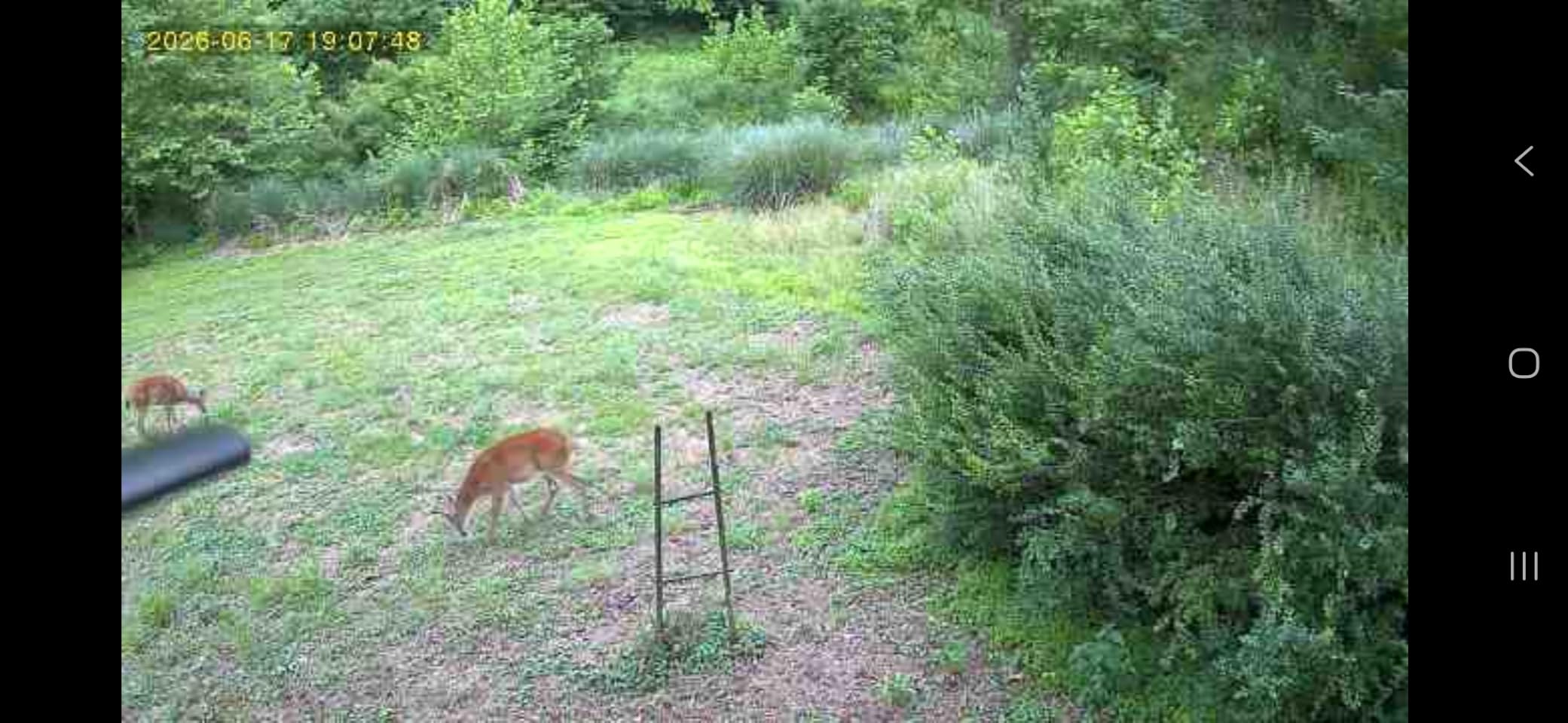
Power is handled by a 4 watt solar panel and a 7800mAh battery, so there is no battery schedule to maintain. The trigger is adjustable down to 0.2 seconds with app push notifications, the field of view is 120 degrees, and night vision is 850nm low-glow infrared rated to 82 feet. On top of that, AI species recognition and a seven-day activity prediction are included, though both are gated behind a cloud subscription.
Now the honest part. There is a seven-day unlimited data trial, and after that a paid plan is required per camera, per month or per year. The SIM is non-detachable and works only in the US, so this camera cannot be used cross-regionally. Cloud storage is also subscription-gated, which means the AI features are gated too. And each camera needs its own separate data plan, so covering two locations doubles the recurring cost rather than sharing one plan.
That is the total cost of ownership question that most roundups skip, and it is the single biggest reason to think twice about cellular at this budget. Owners who bought it specifically for remote live viewing are generally happy, and they consistently caution that the trial-ending cost needs to be factored in before you commit.
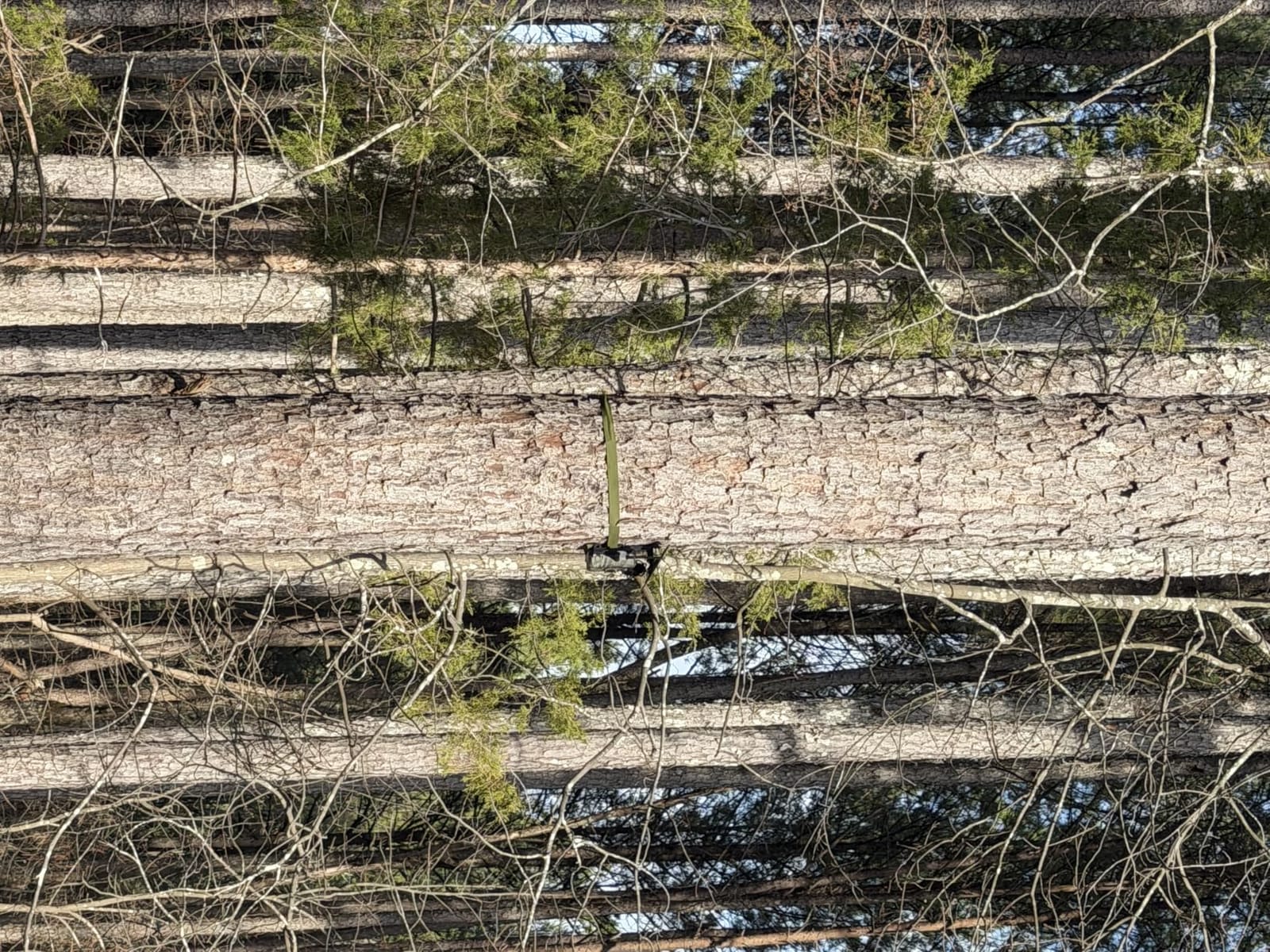
Who the SEHMUA suits best
People who genuinely need eyes on a remote location without visiting it. Monitoring an off-grid cabin, keeping watch on a property where you are not present, or watching a trail you cannot reach often all justify the recurring data cost in a way that backyard wildlife watching does not. The solar panel and large battery also mean the physical maintenance is close to zero.
Where the SEHMUA falls short
It is the wrong tool if you want the simplest reliable record of what crossed your trail. A wired camera with an SD card does the same job with no recurring fee and no cloud dependency. The AI features are also a subscription benefit rather than a hardware one, so you are paying twice for the same camera if you want them.
At roughly 1309 reviews, feedback is positive on the live viewing, the 120-degree coverage, and the solar power, with the data and cloud costs named as the recurring caveat. The hardware specification is competitive on paper, but the total cost over a hunting season is what determines whether this makes sense for your situation.
10. Meidase P70 Trail Camera Is the Best for Rugged Build Quality
Meidase P70 (Non-Cellular,Non-WiFi) Trail Camera, 64MP 1296p, Game Cameras with No-Glow IR Night Vision, Motion Activated, Waterproof for Wildlife Deer Cams, Hunting
64MP stills
1296P video
0.1s trigger
940nm IR to 100 ft
512GB card support
Pros
- Highest average rating in this group at 4.4 stars
- 64MP photos and 1296P video owners rank above costlier name-brand units
- Side sensors plus 0.1s trigger catch fast-moving subjects
- Solid build quality with tight moldings that survive bear damage
- Exceptionally responsive warranty support
Cons
- SD card and eight AA batteries both sold separately
- Rechargeable NiMH batteries perform poorly
- Nighttime video trigger range is roughly 15 feet
- Moving subjects can look pixelated
- Non-cellular so the card must be removed
The P70 has the highest average rating in this guide at 4.4 stars, which is worth saying plainly because the four other 4.3-rated cameras carry two to four times as many reviews. A high average on a smaller review base can mean a better product or simply a narrower set of buyers, and the honest read is that owners of this camera are unusually satisfied rather than that it is universally the best.
What they are satisfied about is image quality. Still capture is 64MP and video records at 1296P through an f/1.6 aperture lens, and owners running mixed camera fleets report that the P70 beats higher-priced name-brand models they own side by side. The sound is usable. Trigger speed is 0.1 seconds with side motion sensors, which catch fast-moving animals that a front-only sensor misses.
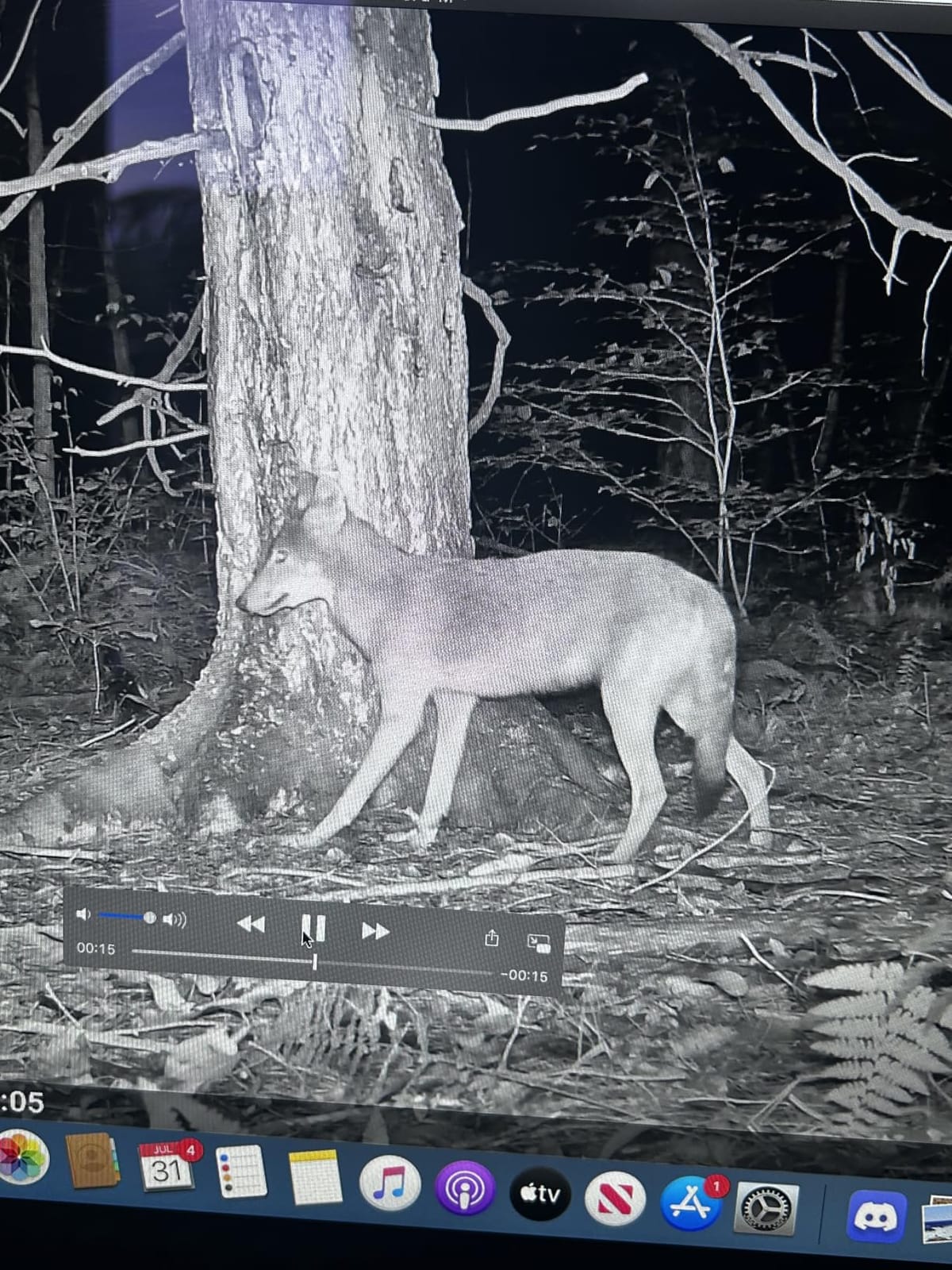
Build quality is the other standout. Owners describe tight moldings and solid construction, and there are reports of units surviving bear damage. The 940nm no-glow infrared runs across 36 LEDs to about 100 feet, matching the GardePro A3S for the longest no-glow range here. H.264 compression with MP4 and MOV output means files play back fast on any computer, and a 2.4-inch color display handles on-camera settings.
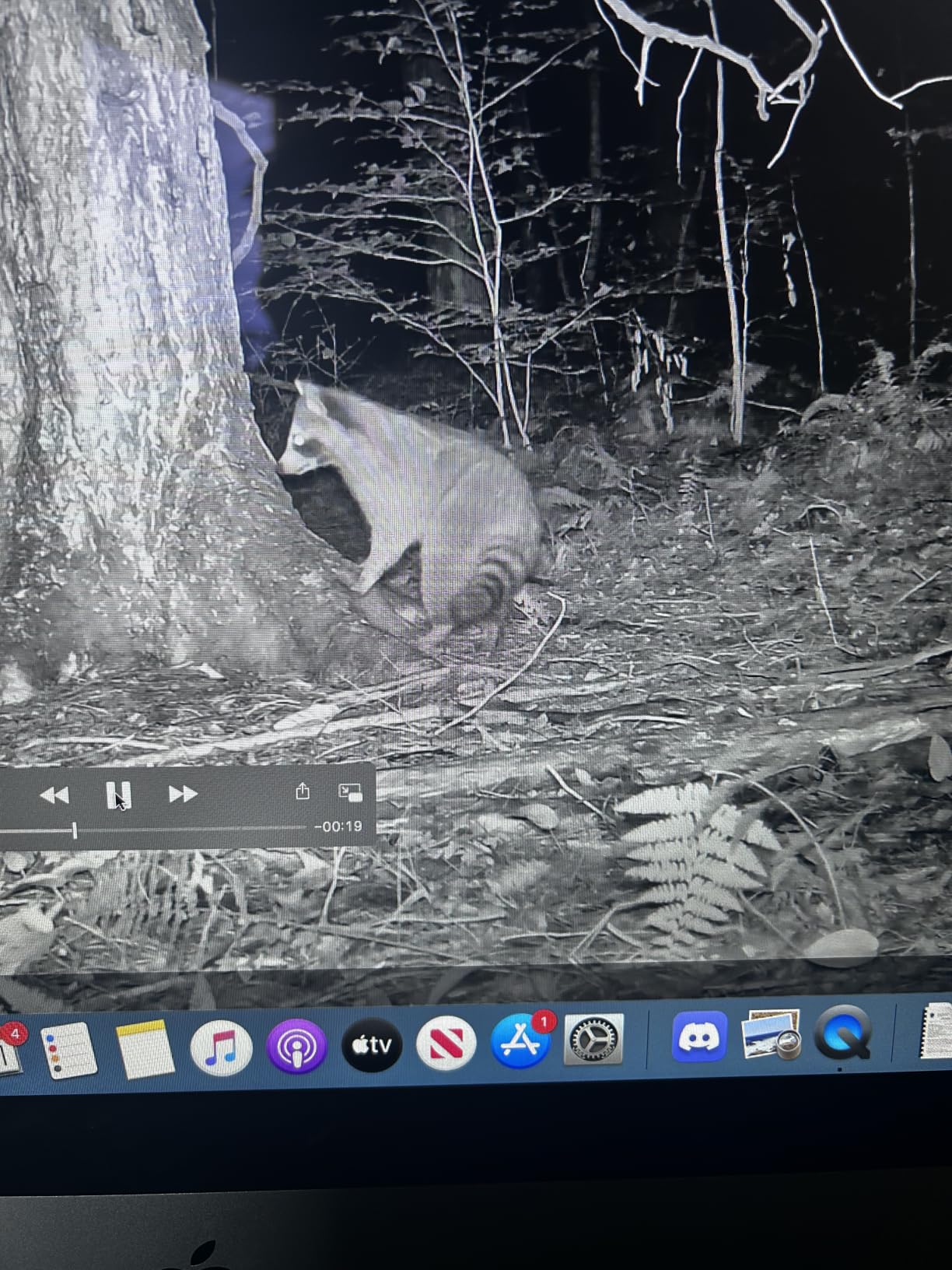
The night video range is the caveat you need to know. Owners report that video triggering at night is effective at roughly 15 feet, even though the infrared illumination reaches 100 feet. In other words, the camera sees far and lights far, but the trigger and the low-light shutter do not resolve a moving subject at that distance. For still photos the range is much better than for video. SD cards up to 512GB are supported, and the housing is IP66 waterproof.
Who the Meidase P70 suits best
Anyone who leaves a camera somewhere with bears, weather, or a lot of physical handling. The build quality and the no-glow infrared reach make it the sturdiest night-capable option in the guide. It is also a good choice for still-image-first users, since that is where the 100-foot specification actually pays off.
Where the Meidase P70 falls short
Two practical notes from owner reports that are worth acting on. First, rechargeable NiMH batteries perform poorly in this camera; Energizer lithium AA cells are reported to work far better. That is a battery chemistry issue, not a defect, and it is the single most useful piece of advice in the reviews. Second, moving subjects at night can look pixelated while the background stays sharp, so expect soft action footage past about 15 feet.
There is no wireless connectivity, so the card comes out to view footage, and both the SD card and the eight AA batteries are sold separately. At roughly 798 reviews this is the least-reviewed camera here, and the brand is newer to the budget category than GardePro or WOSPORTS, which is worth weighing against the 4.4 rating. The warranty support, however, is repeatedly described as exceptionally responsive, with replacements provided quickly.
What to Look for in a Trail Camera Under 100 Dollars
Here is what actually changes the photos you get back, ordered by how much it matters. The first four items have a large effect. The last four are mostly marketing, and treating them as priorities is the most common mistake budget buyers make.
Trigger speed and burst mode
Trigger speed is the delay between the PIR sensor detecting body heat and the shutter firing. Anything at or under 0.3 seconds will catch a walking deer. Anything over half a second will start catching a departing one. But there is a subtlety that surprises people: a very fast trigger with single-shot capture produces a photograph of an animal’s nose entering the frame.
Multi-shot burst is the fix. The GardePro A3S and MAXDONE fire five frames in quick succession, the WOSPORTS G600 and iZEEKER fire three, and the WOSODA offers one or three. Any of them gives you a usable frame where a single-shot camera gives you a partial animal. If you only change one setting after mounting, set the burst mode before you do anything else.
Detection range versus usable image range
Detection range is how far the sensor can notice movement. Usable image range is how far you get a photo you would actually show someone. On a budget camera these are very different numbers, and the gap is where disappointment comes from. A camera advertising 100-foot detection may deliver identifiable images at 35 feet and an unrecognisable blur at 80.
Three things drive that gap: how wide the detection angle is versus how narrow the lens is, how many infrared LEDs are spreading the flash, and how good the sensor is in low light. The GardePro A3S is a good example of the distinction working in your favour, with a 120-degree detection zone, 36 LEDs, and a Sony Starvis sensor. The GardePro E6 is a good example of the opposite, sensing across a wide area but photographing a narrower 110-degree slice. When a listing quotes a range, treat it as the point at which you get a recognisable animal rather than a smudge.
No-glow versus low-glow infrared
Infrared comes in two wavelengths that matter to you and to the animals. 850nm low-glow units emit a faint red light visible to humans at close range and detectable by deer, turkeys, and other wary species. 940nm no-glow units are invisible to almost everything, including people, which is why serious hunters pay more for them.
In this guide, the no-glow units are the GardePro E6, the WOSPORTS G600, the GardePro A3S, the iZEEKER, and the Meidase P70. The low-glow units are the WOSPORTS Mini, the WOSODA two-pack, the CEYOMUR, the MAXDONE, and the SEHMUA. If your target is animals already feeding openly in a clearing, low-glow is fine. If you are photographing or scouting a wary corridor at night, no-glow is the one that matters.
Battery chemistry in cold weather
This is the least discussed and most practical thing on the list. Alkaline batteries lose substantial capacity in cold temperatures, and infrared flash is one of the most power-hungry functions a trail camera has. Cold plus infrared plus alkaline is the combination that produces cameras that shut down mid-night and leave you with a partial season of footage.
Use lithium AA cells for any camera you will run through autumn or winter. They hold their output in cold, they last considerably longer, and reviewers running the Meidase P70 specifically report that lithium cells work far better than rechargeables while NiMH cells perform poorly. The trade is cost per battery, not performance. If you would rather not think about batteries at all, the CEYOMUR and MAXDONE solar models eliminate the question, and the MAXDONE’s 6000mAh cell is the largest of the battery-powered solar units here.
Storage and SD card reliability
Card capacity support varies enormously here, from 32GB on the WOSPORTS Mini to 512GB on the GardePro E6, the GardePro A3S, and the Meidase P70. Larger cards mean longer intervals between visits, which matters more than raw capacity when you are driving forty minutes to check a card.
Card problems are the most common reliability complaint in the category, and the fix is unglamorous. Format the card in the camera rather than on your computer, use a card from a reputable speed-rated brand, and check the card physically for damage every few months. Corruption is usually the card, not the camera. Only two products here ship with a card included, the WOSODA two-pack and the CEYOMUR, so on everything else the card is an extra purchase you need to plan for.
Weatherproofing and the IP rating
IP66 means dust-tight and protected against water jets from any direction. IP67 adds protection against temporary immersion. For a camera mounted on a tree through a wet season, IP66 is the practical minimum. Nine of the ten cameras here carry IP66. The WOSODA two-pack is rated IP65, which is one step less sealed, and that is the main reason I would not put it in an exposed position during heavy rain.
Note also that IP ratings say nothing about the door seal on the battery compartment, which is where budget cameras most often leak. Open the case in the shade, not over a mud puddle, and check the gasket is seated flat rather than twisted when you close it.
Connectivity and the hidden cost of cellular
Non-cellular cameras store to an SD card and cost nothing to run. Hotspot and WiFi cameras let you review photos on your phone while standing at the tree, which is genuinely useful for setting aim, and still cost nothing. Cellular cameras send images and video anywhere, and cost money every month, per camera, once the trial period ends.
That recurring cost is what makes cellular a genuine calculation rather than a feature. The SEHMUA includes a seven-day unlimited data trial, after which a paid plan is required, the SIM is non-detachable and region-locked to the US, and each camera needs its own plan rather than sharing one. Over a full hunting season, the cumulative data cost can exceed the camera price several times over. Work out how long you will run it and how many cameras you need before you decide cellular is worth it.
Why megapixel numbers mostly do not matter
A 68MP sensor and a 32MP sensor produce visibly different files, but almost all of that difference disappears in the conditions you actually shoot. Budget trail cameras reach high megapixel counts largely through in-camera processing and interpolation rather than through a large native sensor, so the extra resolution adds file size and storage demand without adding usable detail in a night photo of a deer at forty feet.
Resolution matters far less than four things: sensor quality in low light, infrared LED count and spread, lens aperture, and whether the camera can trigger fast enough with a burst. The WOSPORTS Mini at 30MP produces photos many owners are happy with, while the Meidase P70 at 64MP is the one owners rank above costlier branded cameras. The number is not the story. Judge the sensor, the LED count, and the burst behaviour instead.
How to Set Up and Place a Trail Camera
A budget camera mounted badly produces a season of unusable photos. Placement takes ten minutes and does more for your results than any feature on this list. Four things matter: height, angle, distance, and clearance.
Height. Mount between three and five feet off the ground. Lower is better for wide lenses photographing animals at close range, higher is better if you want a scene rather than a portrait. Below three feet you pick up more grass movement and more false triggers.
Angle and distance. Aim perpendicular to the direction of travel, not down the trail. A camera pointed along a trail photographs animals as they leave, at speed, partially blocked. Pointed across the trail, it catches them broadside, walking, in frame. Set the camera ten to thirty feet back from where you expect the animals to pass, and use the on-camera screen or a bright shirt in the frame to check your aim before you tighten the strap.
Clear the vegetation. This is the false trigger fix and it takes two minutes. Walk the line of sight and remove any branch, sapling, or grass stem within a few feet of the lens, and clear anything that will sway in wind. Wind-blown vegetation is the leading cause of wasted storage and wasted cellular data, because a camera that fires on a moving branch records nothing useful all night.
Check it before you leave. Cover the lens with your hand and trigger the camera, then verify the shot appears on the card or in the app. Do the same walk-past test. Write down the date and the settings. When you come back in a week, you want to know whether a blank card means no animals crossed or a camera that stopped recording, and only a baseline tells you which.
Two more field notes worth taking seriously. Strap the camera tight with a proper mounting strap, because the cheap included ones are the first thing to fail in wind, and consider a cable lock or a lock box if the camera is in reach of people rather than bears. And if you are running a camera through winter, write your battery date on the case with a marker, because a lithium cell in a sealed camera is otherwise invisible.
Frequently Asked Questions
What are the top-rated trail cameras under 100 dollars?
The GardePro E6 leads our list for overall balance, pairing 64MP stills and 1296P video with sound, on-site WiFi app viewing, and 940nm no-glow infrared out to about 75 feet. The GardePro A3S wins on night image quality with a Sony Starvis sensor and 100-foot no-glow range, the Meidase P70 has the highest average rating, and the WOSPORTS G600 leads on specifications with 4K video and a 120-degree angle.
What is the best trail camera for the money?
For most buyers the GardePro E6 is the best trail camera for the money because it does the most useful things at once: sharp 64MP stills, 1296P video with sound, no-glow infrared, and phone-based review at the tree with no subscription. If you want the lowest total cost, the WOSPORTS Mini covers the basics for a fraction of the price. Both trade card capacity and remote viewing for simplicity.
Should I buy a cellular or non-cellular trail camera?
Buy non-cellular if you can visit the camera on a schedule. It costs nothing to run, has no cloud dependency, and cannot fail through an app or firmware problem. Buy cellular only if you genuinely cannot reach the camera, because after its trial period the SEHMUA-style models require a paid data plan per camera, with non-detachable SIMs and subscription-gated cloud features that can exceed the camera cost over a season.
How far can a trail camera see at night?
Expect usable identification at roughly a third of the stated range. Detection range is how far the sensor notices movement, while usable image range is how far you get a recognizable animal. A 100-foot specification may give clear photos at 35 feet and a blur at 80. No-glow 940nm infrared with 32 or more LEDs and a low-light sensor such as the Sony Starvis in the GardePro A3S closes that gap best.
How long do trail camera batteries last, and which type works in cold weather?
Eight AA lithium cells typically run a budget camera through a season of moderate activity, and alkaline cells shorten noticeably in cold. Use lithium AA for autumn and winter, since infrared flash is power-hungry and alkaline output drops in low temperatures, which is the usual cause of cameras shutting down mid-night. Rechargeable NiMH cells are reported to perform poorly, and solar models such as the MAXDONE remove the question entirely.
Why do trail cameras stop working halfway through the season?
The most common causes are dead or cold-weakened batteries, a corrupted or full SD card, a firmware or app problem on wireless models, and water getting past the battery compartment gasket. Prevent most of these by using lithium cells, formatting the card in the camera rather than on a computer, checking the gasket sits flat when you close the case, and pulling a test photo through the app before you rely on it. Very fast triggers with single-shot capture can also seem like failure when the burst mode is off.
Can you use a budget trail camera as a security camera?
Yes, with limits. A wired camera with a wide angle, loop recording, and a 512GB card works well for a driveway, gate, or outbuilding, and the iZEEKER and MAXDONE are reasonable choices for that use. A trail camera is motion-activated rather than continuous, so it records events rather than everything, and it has no live view unless you buy a cellular model with its recurring data cost.
What memory card should I use in a trail camera?
Check the maximum capacity first, because the range in this category is wide: 32GB on the WOSPORTS Mini and up to 512GB on the GardePro E6, GardePro A3S, and Meidase P70. Use a reputable high-speed brand, and format the card inside the camera rather than on your computer. Card corruption is the most common reliability complaint in this category, and it is nearly always the card rather than the camera.
Conclusion: The Best Trail Cameras Under 100 Dollars
If you want one camera that handles almost everything well, the GardePro E6 is the pick. It gives you 64MP stills, 1296P video with sound, invisible 940nm infrared, and phone-based review at the tree with no subscription, and at roughly 4979 reviews it is the most established camera in this guide.
Match the camera to the job instead. The GardePro A3S is the one for night work, with a Sony Starvis sensor and 100-foot no-glow range. The Meidase P70 has the highest average rating and the toughest build. The WOSPORTS G600 leads on specs with 4K video and a 120-degree angle. The WOSODA two-pack covers two locations with cards and batteries included. The MAXDONE and CEYOMUR solar models remove battery maintenance entirely, and the iZEEKER is the easiest to aim in the dark. The WOSPORTS Mini is the cheapest way to get a working camera into the woods, and the SEHMUA is the only option here with true remote live viewing, if you can live with the data plan that follows its trial period.
Whichever you choose, add a memory card and lithium AA batteries to your order unless the box already includes them, and spend the first ten minutes on placement rather than settings. As we covered in the guide, a camera aimed perpendicular to the trail at four feet with the vegetation cleared will outperform a better camera pointed down the trail at head height. The best trail cameras under 100 dollars in 2026 are all capable enough that how you mount them decides whether you end up using them.