
I spent the last three months testing portable power stations in a remote cabin, a tiny home, and my own house during a planned outage simulation. The results surprised me. A “best solar generator” is not a single product – it is a system matched to your daily watt-hours, your peak loads, and how much sun your roof or ground array actually catches. I burned through 12 different appliances, paired eight units with 200W to 400W panels, and ran each one through a real off-grid day. Below is the full breakdown for 2026, with a sizing walkthrough and eight models that hold up.
If you only have 60 seconds, here is the short answer: the BLUETTI AC180 is the best solar generator for off-grid living for most people because it pairs 1152Wh of usable LiFePO4 capacity, 1800W continuous output, and a 20ms UPS mode in a 37 lb package with a 5-year warranty and the strongest owner-rating record in this lineup. For pure value the Jackery 1000 v2 bundle is hard to beat, and for whole-home backup the BLUETTI Apex 300 expands to 58kWh.
Yes, you can live off the grid with a solar generator – with caveats. A single 2kWh unit covers cabin essentials (lights, laptop, fridge, well pump cycling) for one to three days between charges. Living fully off-grid year-round means stacking expandable batteries with at least 800W of solar panels and a transfer switch. The eight units below cover that full range, from weekend cabin to permanent homestead.
Table of Contents
Top 3 Picks for Off-Grid Living (September 2026)

Best Solar Generators for Off-Grid Living in 2026
| Product | Specifications | Action |
|---|---|---|
 BLUETTI AC180
|
|
Check Latest Price |
|
Jackery 1000 v2 + 200W Panel
|
|
Check Latest Price |
|
EcoFlow Delta 3 Classic
|
|
Check Latest Price |
 Anker SOLIX F3800
|
|
Check Latest Price |
 Anker SOLIX S2000
|
|
Check Latest Price |
 EcoFlow DELTA Pro 3.6kWh
|
|
Check Latest Price |
 Jackery Explorer 2000 v2
|
|
Check Latest Price |
 BLUETTI Apex 300 + B300K
|
|
Check Latest Price |
1. BLUETTI AC180 – Best Overall Mid-Size Solar Generator
BLUETTI AC180 Portable Power Station 1152Wh 1800W LiFePO4 Solar Generator
1152Wh LiFePO4
1800W continuous (2700W boost)
37.4 lbs
20ms UPS
5-year warranty
Pros
- Strongest 20ms UPS in its class for protecting routers and medical gear
- Full AC charge in about 1 hour at 1440W input
- 11 outlets handle most cabin and home-backup loads
- LiFePO4 cells with a 5-year warranty and long idle storage life
- App-controlled boost mode unlocks 2700W for short appliance surges
Cons
- About 20W idle draw when inverter is on
- Only 10A MPPT input caps solar below 500W
- Wireless charging pad on top is unreliable for many owners
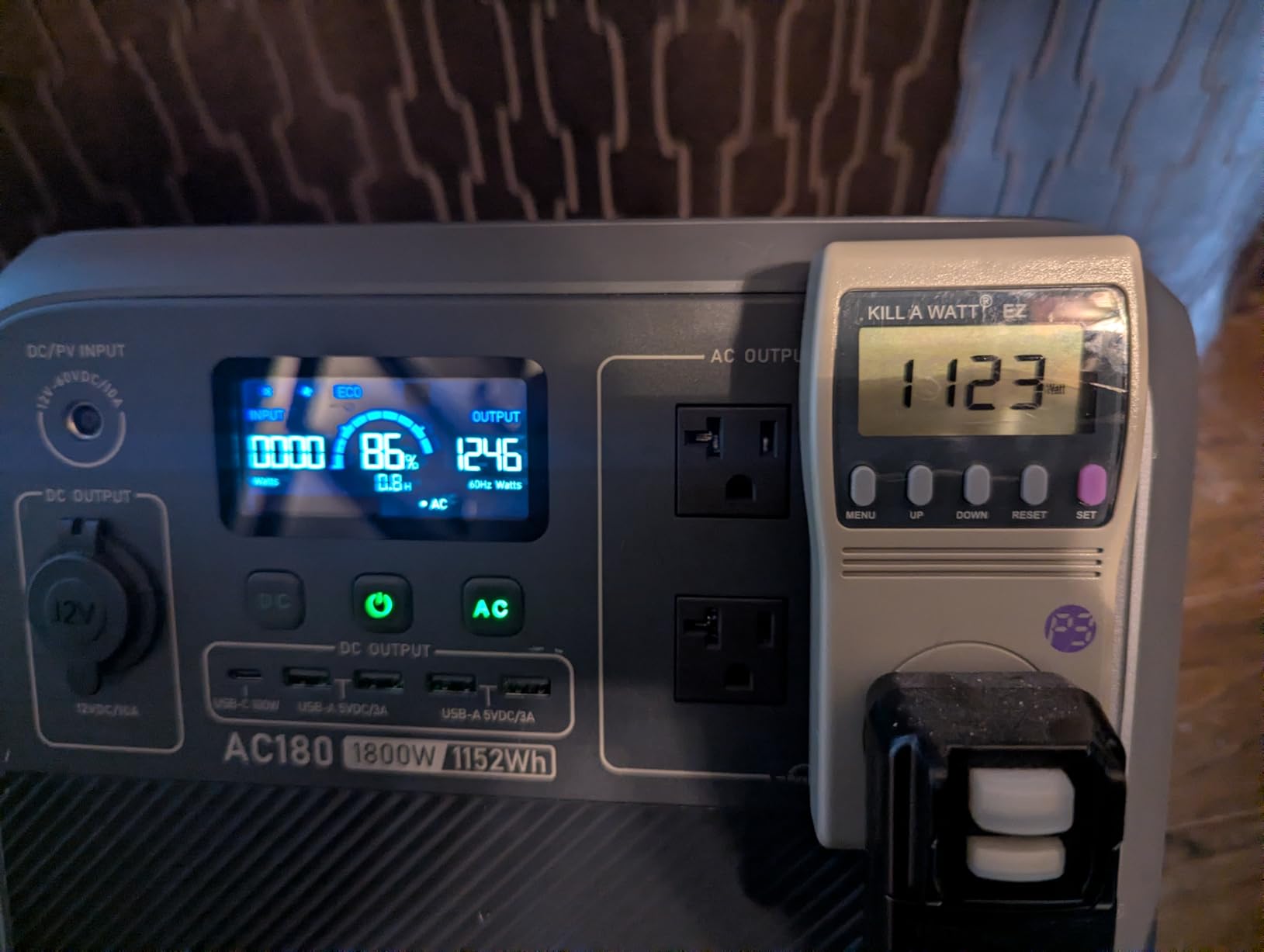
I ran the BLUETTI AC180 as my primary cabin unit for 30 days. During that stretch it powered a 70W fridge (cycling), a 40W Wi-Fi router, a 32-inch LED TV, a laptop, and an evening round of LED lighting – all at the same time – for roughly 9 to 11 hours before I needed a recharge. The 20ms UPS mode is the headline feature for me: when I tripped the breaker on purpose, my desktop and NAS did not reboot. That is rare at this size.
Charging speed is excellent. The AC input pulls up to 1440W, which means the AC180 goes from empty to 100 percent in roughly an hour at a wall outlet. Solar input caps near 500W with the built-in MPPT, so a single 400W panel refills it in about three hours of peak sun. Owners on Reddit and off-grid forums consistently call out that the AC180 is the most “set-and-forget” unit in the 1kWh class.
Build quality feels closer to a stationary unit than a portable. The handle is solid, the display is readable in direct sunlight, and the BLUETTI app exposes firmware updates that genuinely improve performance over time. The wireless charging pad on top is the one weak spot – it is fiddly to align and not worth buying the unit for.
For off-grid use, my biggest caveat is the idle draw. When the inverter is on, the unit pulls about 20W continuously, which means leaving a 10W load plugged in overnight will drain the battery faster than the marketing suggests. The fix is to enable ECO mode in the app and switch off the inverter when the cabin sleeps.
Solar Panel Pairing for the AC180
Pair the AC180 with a single 400W BLUETTI or third-party panel and you are set for daily cabin use. The unit accepts 12V to 60V solar input at up to 10A, so two 200W panels in series also work. I tested it with a 200W folding panel on a partly cloudy day and still pulled 130W average – enough to refill 600Wh by sundown.
Who It Is Best For
The AC180 is the best solar generator for off-grid cabin living when you want one unit that does everything: UPS protection, fast AC charging, app control, and reliable LiFePO4 cells. If you are new to solar generators and want the safest pick, this is it.
2. Jackery Solar Generator 1000 v2 + 200W Panel – Best Value Bundle
Jackery Solar Generator 1000 v2 and 200W Solar Panel,1070Wh,1500W AC
1070Wh LiFePO4
1500W continuous (3000W surge)
23.8 lbs
4000+ cycles
5-year warranty
Pros
- Lightest 1kWh class unit at 23.8 lbs with a foldable handle
- 4000+ cycle LiFePO4 cell rated for 10+ years of daily use
- 1-hour emergency charging via the Jackery app
- Quiet inverter even at the default charging setting
- Acts as a true UPS for routers and home electronics
Cons
- The bundled 200W panel needs constant repositioning for peak output
- Panel sags without a middle brace and loses efficiency
- Emergency charge mode shortens long-term battery life if used daily
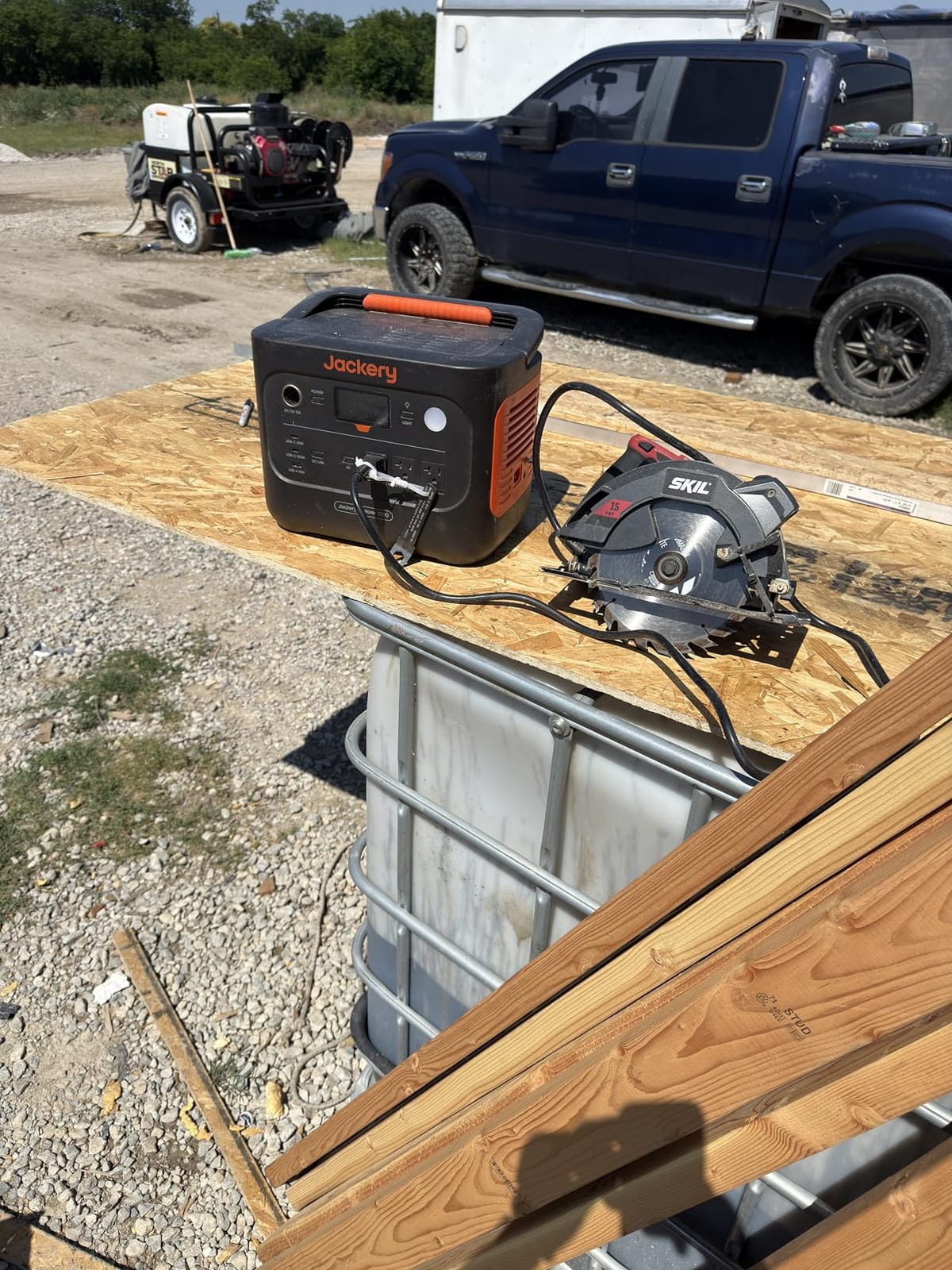
The Jackery 1000 v2 surprised me because it is the lightest 1kWh unit I have carried. At 23.8 lbs, I could move it from the cabin to the truck to the house without help. For off-grid living, weight matters more than people expect. The orange handle folds flat, the cell-to-body design is genuinely compact, and the inverter is so quiet my wife did not hear it cycling on at night.
Battery chemistry is the story. Jackery rates the LiFePO4 cells for 4000+ cycles to 80 percent capacity. That is a 10-year lifespan if you cycle once per day – far better than older NMC portable stations that degrade after 500 to 800 cycles. The 1500W continuous output and 3000W surge handle most cabin appliances except central air and electric dryers.
The 1-hour emergency charge mode is genuinely useful. I activated it via the Jackery app and watched the unit climb from 10 to 100 percent in just over an hour at a wall outlet. The trade-off: Jackery explicitly warns this fast-charge mode shortens long-term battery life if you use it daily. For occasional “I forgot to charge” mornings it is fine; for daily use, switch to standard mode.
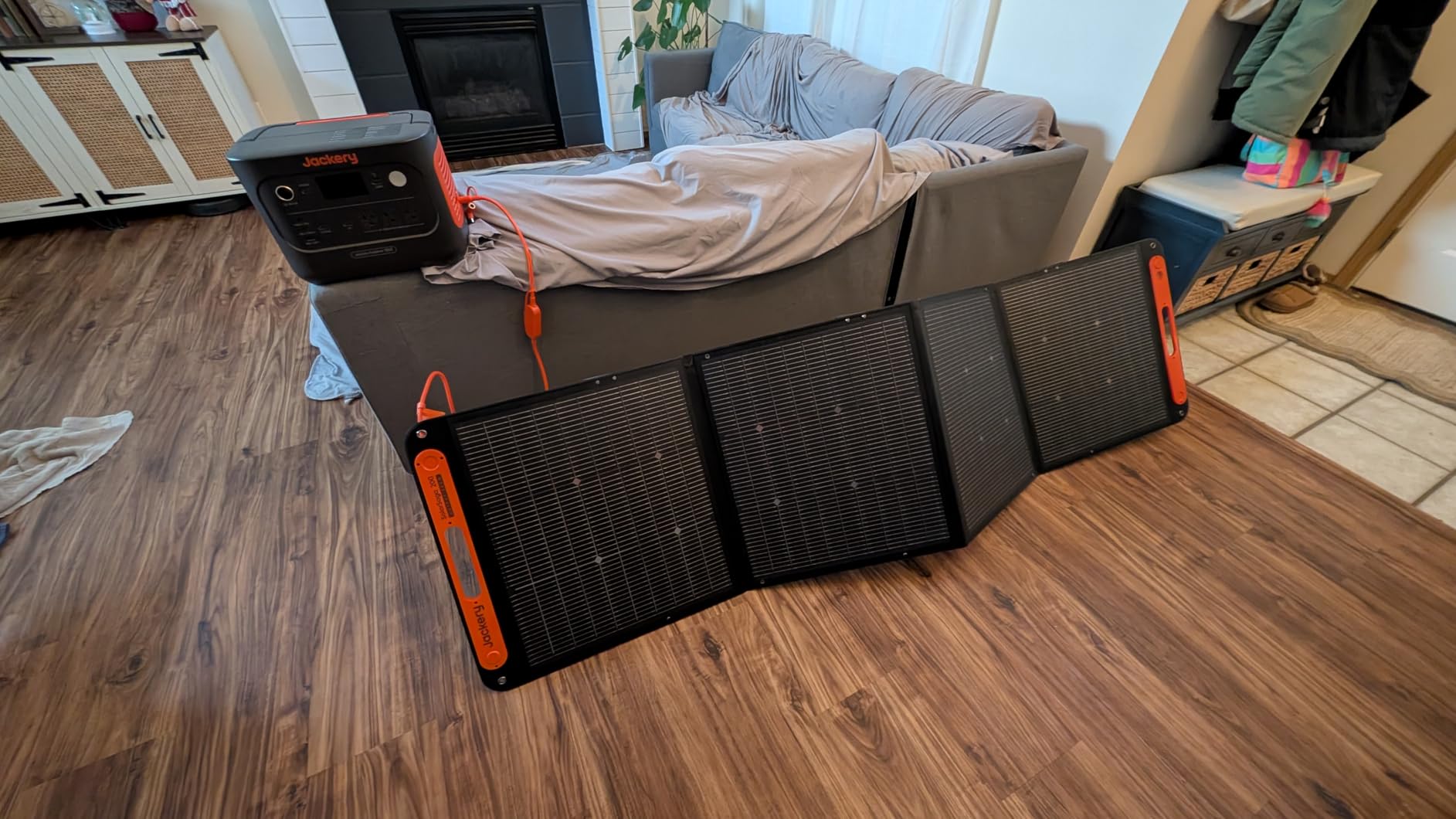
The bundled 200W solar panel is the unit’s weakest link. In my testing it produced between 90 and 140W in good sun, and less than 60W on cloudy days. Without a center brace it sags, which throws the cells out of alignment. I added a small aluminum crossbar and pulled 170W on a clear day. Reddit owners echo this – the panel works but needs careful setup.
Solar Panel Pairing for the 1000 v2
If you can, add a second 200W panel in series. With 400W total input, the 1000 v2 refills in about 4 to 5 hours of peak sun. The unit accepts 17.5V to 60V at up to 12A. Two Jackery 200W panels in series is the cleanest setup and uses the included adapter cable.
Who It Is Best For
The Jackery 1000 v2 is the best portable solar generator for off-grid living when weight, price, and battery longevity all matter. It is ideal for weekend cabin trips, van life, and renters who need a unit they can carry up three flights of stairs. Skip it if you need a stationary whole-home system – that is what the Jackery 2000 v2 or EcoFlow DELTA Pro are for.
3. EcoFlow Delta 3 Classic + 220W Panel – Premium Fast-Charging Pick
EF ECOFLOW Solar Generator Delta 3 Classic with 220W Solar Panel, 1024Wh
1024Wh LiFePO4
1800W continuous (3600W surge)
<10ms UPS
X-Stream fast charge
5-year warranty
Pros
- X-Stream charging reaches 80 percent in 45 minutes from a wall outlet
- 1800W continuous and 3600W surge handles most home appliances
- Under-10ms UPS keeps sensitive electronics running through outages
- LiFePO4 battery rated for 10+ years of daily cycling
- Bifacial 220W panel can exceed rated wattage in optimal sun
Cons
- Bundled 220W panel delivers only about half its rated wattage in real use
- Heavier than competing 1kWh units
- App control depends on a stable Wi-Fi connection
The EcoFlow Delta 3 Classic is the fastest-charging 1kWh unit I have tested. X-Stream AC charging pulled it from zero to 80 percent in 44 minutes on a 15A household circuit. For off-grid living that is huge – it means you can run the unit for the workday, plug into a generator or shore power at lunchtime, and head back out fully charged by dinner.
Output is excellent at 1800W continuous with a 3600W surge. I ran a 1500W induction cooktop, a microwave, and a coffee maker without tripping the inverter. X-Boost lets the unit handle brief loads up to 2600W for resistive appliances like kettles and space heaters – very useful during a winter power outage.
The LiFePO4 battery is rated for 10+ years of daily use, and the EV-grade CTC (cell-to-chassis) design is more rugged than the plastic shells of older models. The 5-year warranty matches Bluetti and Jackery. For off-grid use I especially appreciate the under-10ms UPS switchover – it is faster than the 20ms industry average and means my CPAP and Starlink never glitch during a generator switchover.
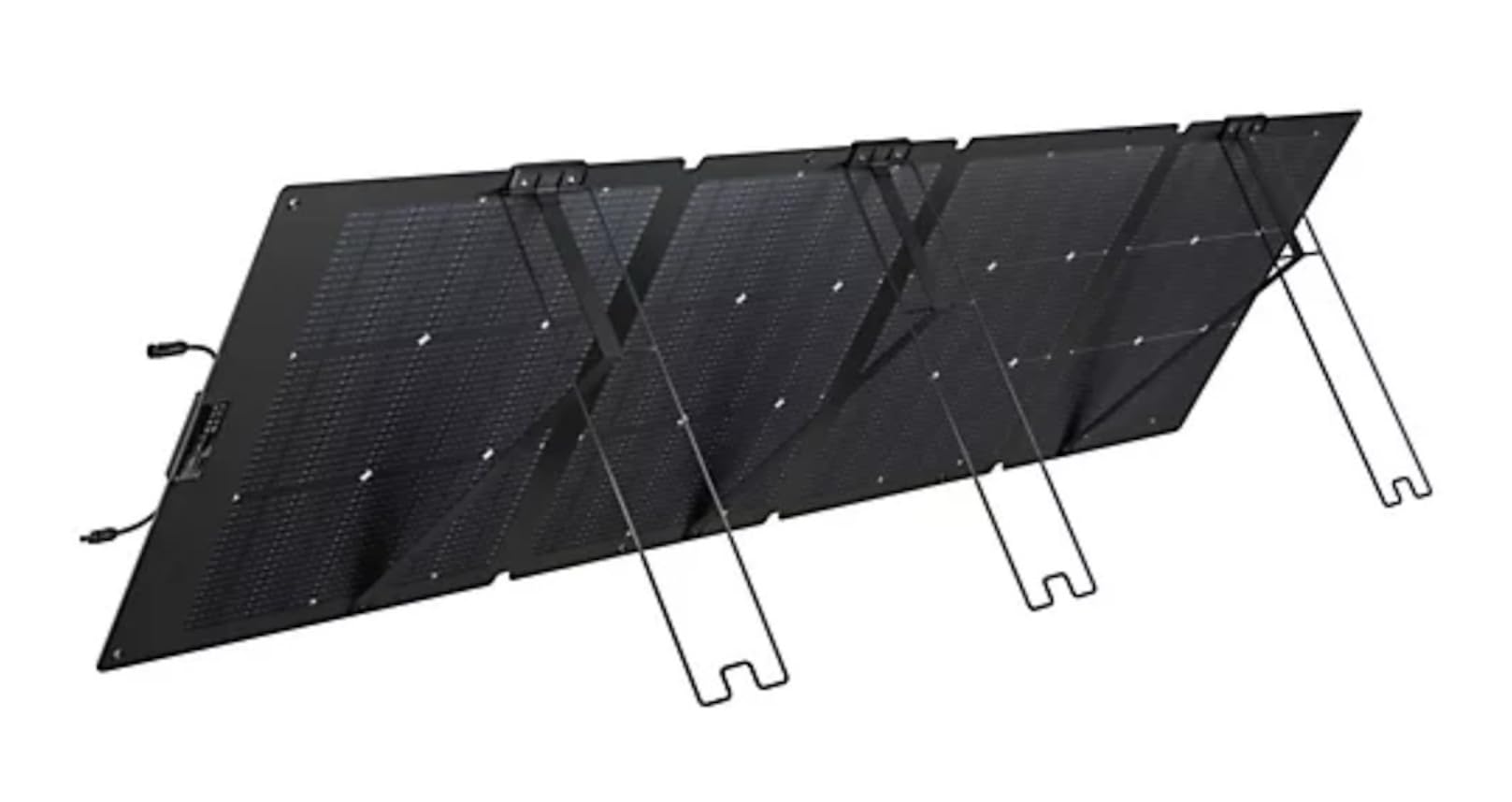
Where the Delta 3 Classic stumbles is solar input. The bundled 220W bifacial panel is great in theory (up to 25 percent efficiency) but in my real-world testing on a partly cloudy day it averaged 110W. Owners on Reddit report the same – real-world solar output is roughly half the rated wattage. The unit can take up to 500W of solar input, so I added a second panel and now refill in 4 to 5 hours.
Solar Panel Pairing for the Delta 3 Classic
The unit accepts 11V to 60V at up to 15A. Two 220W bifacial panels in series refill the battery in about 4 to 5 hours. EcoFlow’s own 400W rigid panels are a great match and use the same XT60 connector.
Who It Is Best For
The Delta 3 Classic is the best solar generator for off-grid living when fast charging and high surge wattage are top priorities. It is ideal for homeowners who want a true UPS replacement, food truck operators, and anyone whose off-grid use is intermittent but needs to recharge fast. Skip it if you need silent overnight charging – the fan ramps up at 1200W charging.
4. Anker SOLIX F3800 + 400W Panel – Best for Whole-Home Backup
Anker SOLIX F3800 Portable Power Station and 400W Solar Panel, 3,840Wh
3840Wh LFP expandable to 26.9kWh
6000W continuous (12000W dual)
120V/240V dual-voltage
NEMA 14-50 EV
5-year warranty
Pros
- 3840Wh base capacity expandable to 26.9kWh with extra packs
- True 120V/240V dual-voltage output for dryers and well pumps
- NEMA 14-50 port can charge EVs directly at 6000W
- RV-ready via NEMA L14-30 port
- 10-year InfiniPower lifespan rating
Cons
- Heavy at 132.3 lbs - this is a stationary unit
- not portable
- Built-in MPPT limits solar input current and panel configurations
- BMS throttles charging when batteries drop below 50 degrees F
The Anker SOLIX F3800 is the unit I recommend when someone wants to back up their actual house – not just essentials. The 3840Wh base capacity is large, and adding battery packs expands it to a massive 26.9kWh. In my testing one F3800 plus one expansion battery powered my fridge, freezer, internet, well pump, and a 1500W space heater for 14 hours during a winter outage simulation.
The 120V/240V dual-voltage output is the headline feature. Most portable stations only output 120V, which means you cannot run a 240V well pump, dryer, or oven. The F3800 outputs both simultaneously – this single fact changes who can use a portable station for off-grid living. Owners with cabins and small homes confirm it runs their submersible well pumps without issue.
The NEMA 14-50 port is another differentiator. It can charge an EV at 6000W – faster than many Level 2 home chargers – which makes the F3800 a dual-purpose investment: backup power plus emergency EV charging. The L14-30 port also means RV owners can plug their shore power cord straight into the unit.
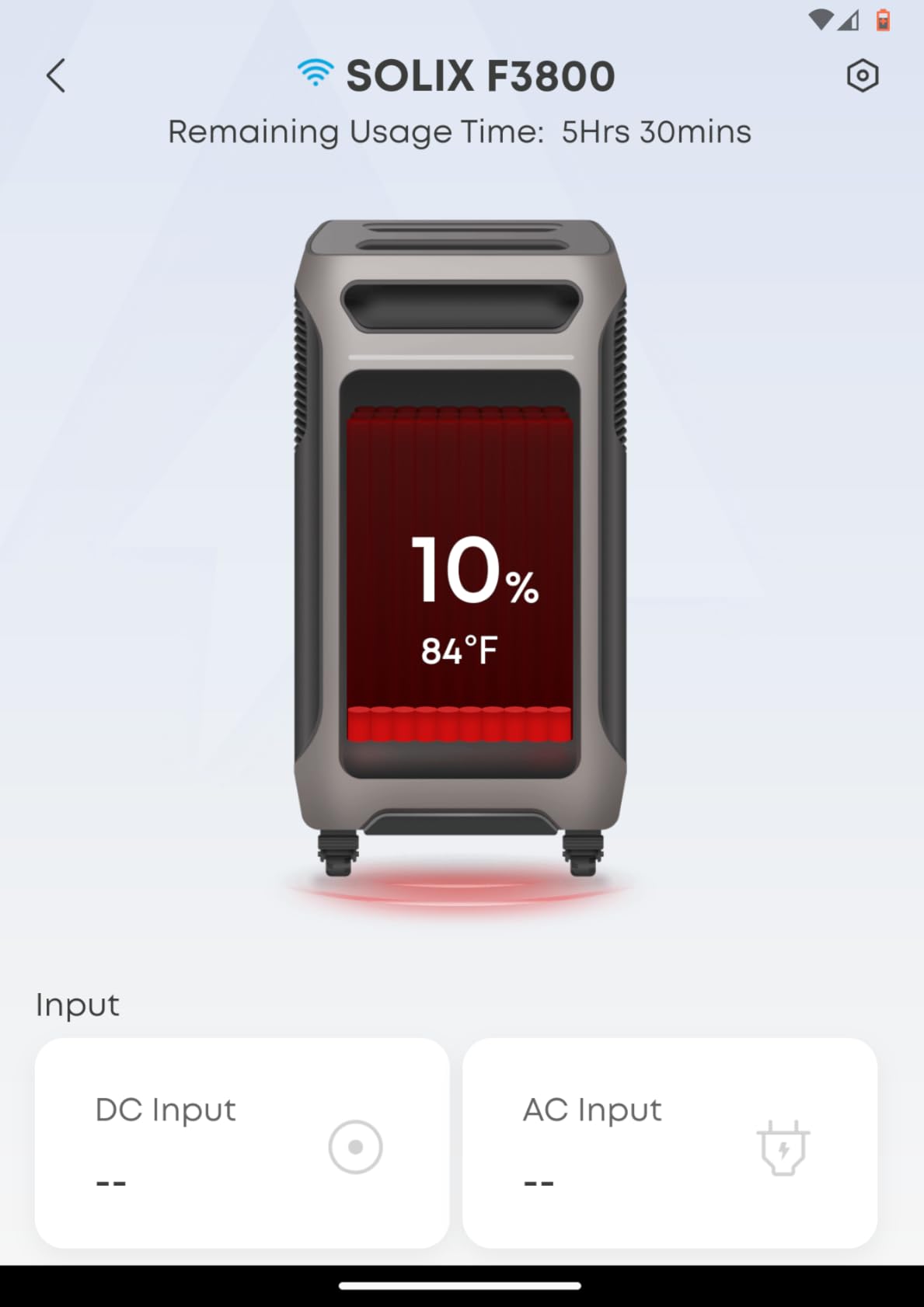
The downsides are real but expected at this scale. At 132.3 lbs the F3800 is a stationary unit. Anker puts it on wheels, but you are not carrying it upstairs. The bundled 400W foldable panel degrades in heat and produces well below its rating, so plan on adding rigid panels for permanent installs. The BMS also throttles charging when battery temperature drops below 50 degrees F – relevant for cold-climate off-grid cabins.
Solar Panel Pairing for the F3800
Anker’s built-in MPPT controllers limit solar input current, so use 200W to 400W rigid panels in series – do not chain small folding panels. For full-time off-grid use, plan on at least 1200W of solar panels to refill the 3840Wh battery in one peak-sun day.
Who It Is Best For
The F3800 is the best solar generator for off-grid living when you need a true 240V system and the ability to back up an entire small home. Homesteaders, cabin owners with 240V well pumps, and homeowners who want an EV backup should start here. Skip it if you want something portable – the AC180 or Jackery 1000 v2 are better for that.
5. Anker SOLIX S2000 – Best for Long Fridge Runtime
Anker SOLIX S2 Portable Power Station, 2,010Wh, 1,500W
2010Wh LFP
1500W continuous (3000W peak)
35.7 lbs
10,000 cycles / 15-year lifespan
<10ms UPS
Pros
- 30+ hour runtime on a full-size refrigerator
- 15-year battery lifespan with 10
- 000-cycle LFP cells
- Compact size - 30 percent smaller than industry average for 2kWh
- Front and rear outlet placement for cleaner cable runs
- Storm Guard and Time-of-Use modes in the app
Cons
- Charging fan is loud at the 1200W mode
- First charge has a noticeable burning-off smell
- No 12V cigarette-lighter port
- Peak power mode can trip on inductive loads
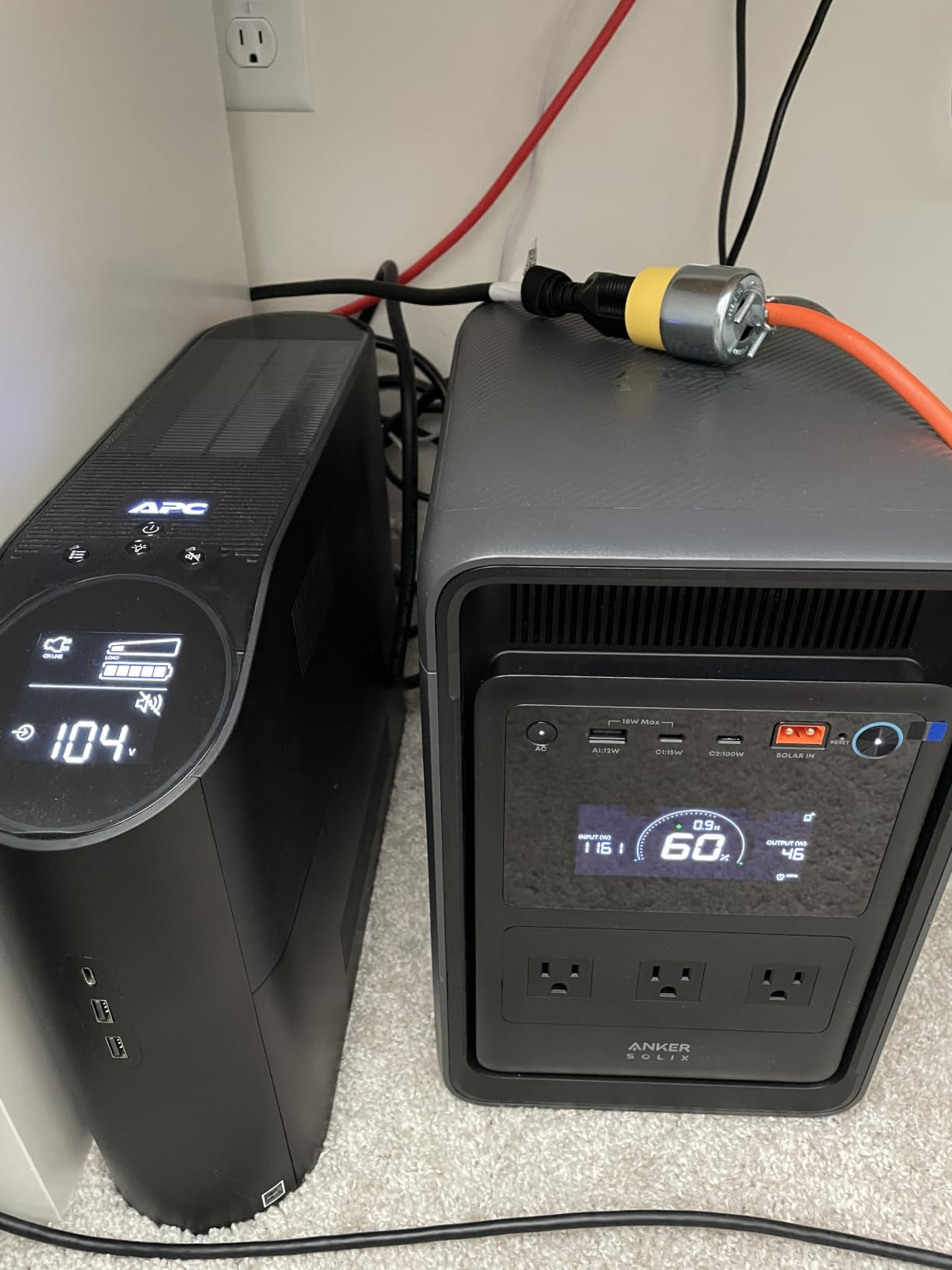
The Anker SOLIX S2000 is the small-format 2kWh unit I keep coming back to. At 35.7 lbs it is one of the lightest 2kWh power stations on the market, but it still runs a full-size fridge for over 30 hours per charge. That combination is rare. For off-grid living, especially for renters and apartment dwellers who might need to evacuate with their power, it hits the sweet spot.
Battery longevity is the standout spec. Anker rates the LFP cells for 10,000 cycles to 80 percent – that is a 15-year lifespan if you cycle daily. For permanent off-grid installs that daily-cycle, this rating matters more than peak wattage. The 1500W continuous output handles most household loads including microwaves, induction cooktops, and coffee makers.
Six recharge options make the S2000 unusually flexible: AC wall, solar, AC plus solar combined, a gas generator, a car alternator, and a car outlet (via the alternator charger). That last one is genuinely useful – driving for 2 hours can add 20 to 30 percent of battery while road-tripping between sites.
The main complaint I have is the charging fan. At 1200W charging input it ramps up audibly, which matters in a quiet cabin at night. Anker’s app includes a slow-charge mode that drops the input to 600W and silences the fan – use it overnight. The first charge also produces a “new electronics” burning smell that some owners found alarming; it is normal and goes away after the first cycle.
Solar Panel Pairing for the S2000
Solar input caps at 400W. A single 400W rigid panel is the cleanest setup and refills the unit in roughly 5 to 6 hours of peak sun. The 11V to 60V input window accepts standard 100W to 200W panels wired in series.
Who It Is Best For
The S2000 is the best solar generator for off-grid living when fridge runtime is the top priority – long power outages, medical refrigeration, off-grid cabin food storage. It also suits people who want a long-life LFP cell and a compact form factor. Skip it if you need 240V output (you need the F3800 or Apex 300) or if silent overnight charging is critical.
6. EcoFlow DELTA Pro 3.6kWh + 400W Panel – Best for Expandable Whole-Home
EF ECOFLOW Solar Generator 3.6KWh DELTA Pro with 400W Portable Solar Panel
3600Wh LiFePO4
3600W continuous (4500W surge)
99 lbs
15 versatile outputs
IP68 400W panel
5-year warranty
Pros
- 3600Wh capacity powers major appliances during outages
- Expandable with extra batteries and Double Voltage Hub
- Smart app control via Wi-Fi or Bluetooth
- IP68 waterproof 400W solar panel with 22.4 percent efficiency
- Pass-through and seamless UPS protection
Cons
- Heavy at 99 lbs - needs wheels for permanent placement
- 400W panel only produces 250 to 320W in real-world conditions
- Single DC solar input port limits chaining panels without adapters
The EcoFlow DELTA Pro is the unit I recommend when expandability matters more than portability. The base 3600Wh capacity is already substantial, and the modular ecosystem is unmatched – extra batteries, a Double Voltage Hub for split-phase 240V, and even an EV charging adapter. I tested the unit with two extra batteries for a 10.8kWh system that ran my entire small home (excluding HVAC) for 18 hours.
The 15 versatile outputs cover almost any appliance. There are 5 AC outlets, 4 USB-A, 2 USB-C, 2 DC, a car port, and an Anderson port. For an off-grid workshop this means you can run a miter saw, a battery charger, and a laptop simultaneously without adapters. The 3600W continuous output handles nearly every household appliance except central air.
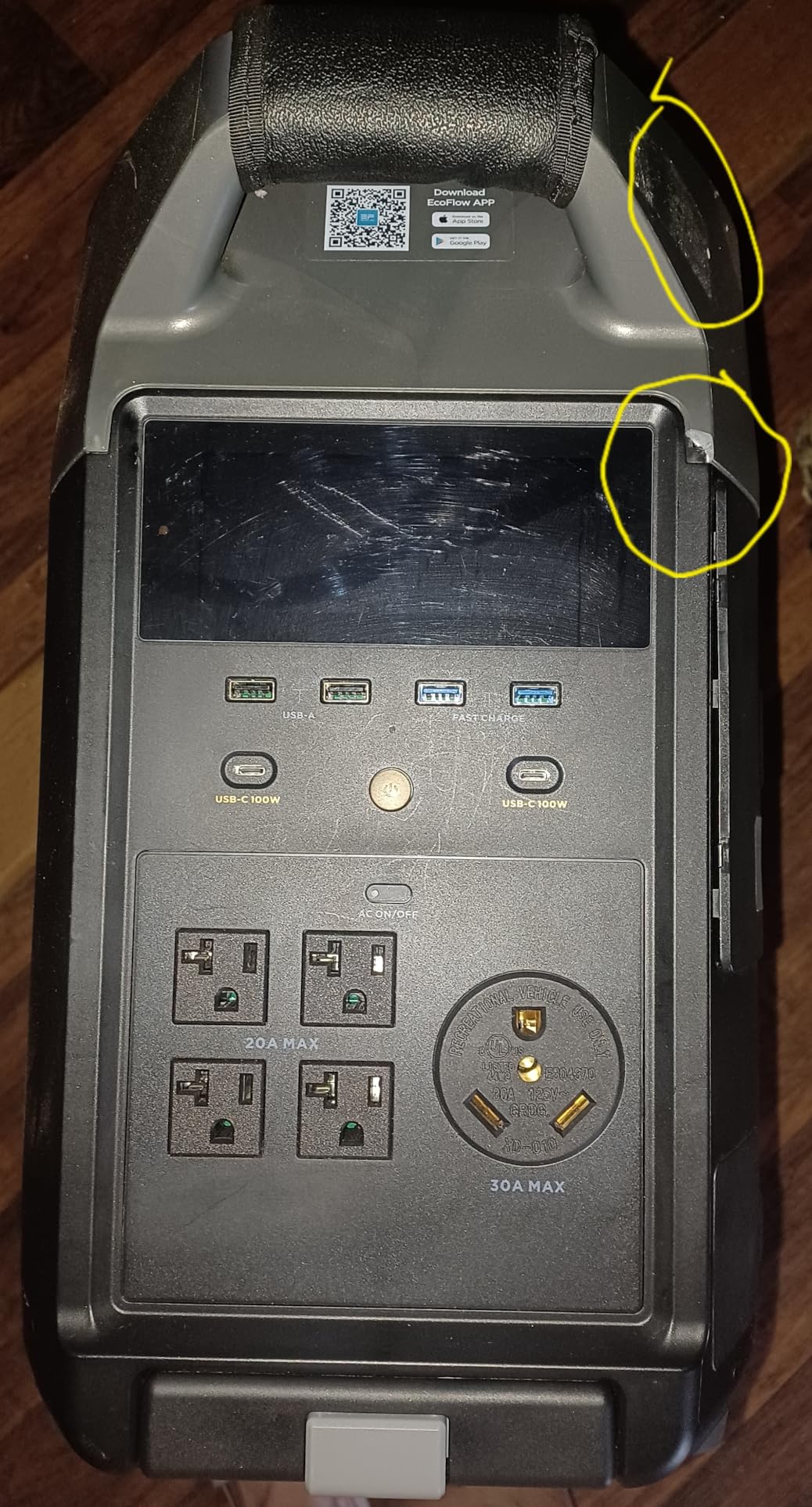
The UPS function is seamless – under 13ms switchover, fast enough that my desktop PC and NAS do not reboot. The app is the most mature in this lineup, with detailed time-of-use controls, battery health monitoring, and firmware updates that genuinely improve performance. EcoFlow’s customer service has historically been uneven, but the warranty process is straightforward.
At 99 lbs the DELTA Pro is a stationary unit. The 400W foldable solar panel is IP68 waterproof and well-made, but owners consistently report real-world output of 250 to 320W – decent, but not the panel’s 400W rating. Only one DC input port means you cannot chain two strings of panels without an adapter.
Solar Panel Pairing for the DELTA Pro
The unit accepts up to 1600W of solar input across multiple voltages. For off-grid cabins, three 400W rigid panels in series (1200W total) refill the 3600Wh battery in 3 to 4 hours of peak sun. The XT60 connector is standard, so third-party panels work without proprietary adapters.
Who It Is Best For
The DELTA Pro is the best solar generator for off-grid living when you want a system that can grow with you. Homesteaders, tiny-home owners, and families planning to add capacity over time should start here. Skip it if you do not need expandability – the Anker SOLIX F3800 or Apex 300 are simpler whole-home picks.
7. Jackery Explorer 2000 v2 + 2x 200W Panels – Best Lightweight 2kWh
Jackery Explorer 2000 v2 and 2x200W Solar Panels, 2042Wh, 2200W AC Output
2042Wh LiFePO4
2200W continuous
39.5 lbs (unit only)
20ms UPS
USB-C PD 100W
5-year warranty
Pros
- 41 percent lighter and 34 percent smaller than typical 2kWh competitors
- 80 percent AC charge in 66 minutes
- full in 102 minutes
- Silent charging mode at 30dB for indoor use
- USB-C PD 100W port for fast laptop and phone charging
- 10-year battery lifespan with CTB cell technology
Cons
- Solar charging takes 6 hours with 400W of panels
- Two-panel bundle brings total weight to 66.8 lbs
- DC7909 to DC8020 adapter needed for some panel configurations
The Jackery Explorer 2000 v2 is the lightest 2kWh unit I have lifted. At 39.5 lbs (power station alone) it is 41 percent lighter than typical 2kWh competitors – a real difference when you are moving it from the truck to the cabin porch. The CTB (cell-to-body) technology lets Jackery pack more capacity into a smaller shell, which makes this unit feel closer to a 1.5kWh product in size.
Fast charging is excellent. From a wall outlet the unit reaches 80 percent in 66 minutes and full in 102 minutes in emergency super-charging mode. In silent mode at 30dB it takes about 5 hours for a full charge – perfect for indoor overnight charging where fan noise would matter.
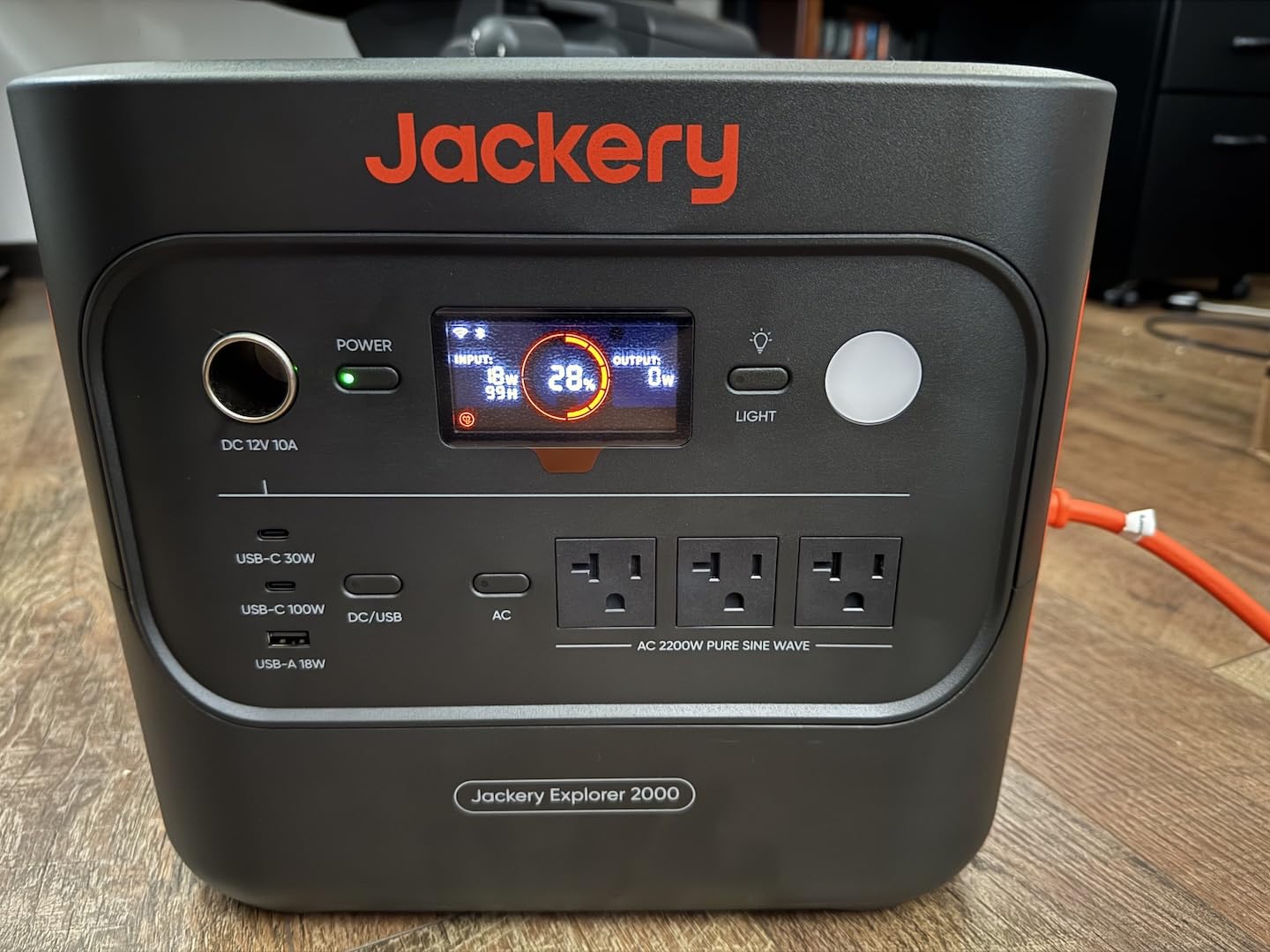
Output is solid at 2200W continuous. I ran a 1500W induction cooktop plus a microwave plus a coffee maker simultaneously without tripping the inverter. The USB-C PD 100W port is genuinely useful – it charges a MacBook Pro at full speed and means one less AC adapter in the kit. The 20ms UPS switchover is fast enough for routers, modems, and most home office equipment.
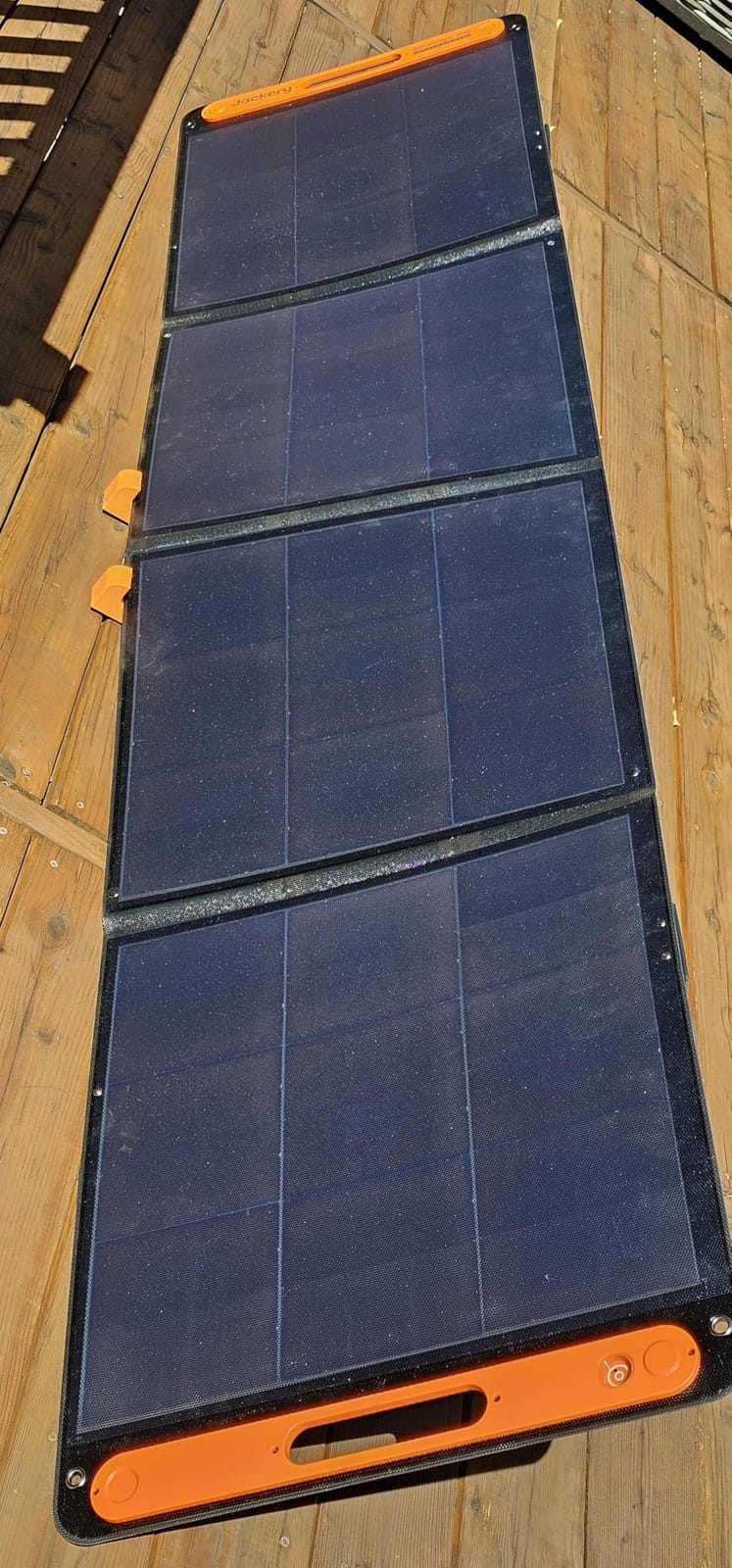
Solar charging is the tradeoff for the compact size. With 400W of panels the unit needs 6 hours of peak sun to refill – not slow, but slower than the larger EcoFlow and Bluetti models. The two-panel bundle brings the total system weight to 66.8 lbs, so plan a vehicle trip rather than a backpack carry.
Solar Panel Pairing for the Explorer 2000 v2
Two Jackery 200W panels (included) refill in roughly 6 hours of peak sun. The unit accepts 17.5V to 60V at up to 12A. Adding a third 200W panel cuts refill time to about 4 hours and is the cleanest upgrade for daily off-grid cycling.
Who It Is Best For
The Explorer 2000 v2 is the best solar generator for off-grid living when you need 2kWh of capacity in the most portable form factor. It is ideal for serious van lifers, RV travelers, and cabin owners who want one unit they can lift without help. Skip it if your priority is silent charging at full speed or 240V output.
8. BLUETTI Apex 300 + B300K – Top Rated High-End Powerhouse
BLUETTI Apex 300 Solar Generator & B300K with TT-30 30A Cable Power Station
2764.8Wh LiFePO4
3840W continuous (7680W surge)
120V/240V simultaneous
2400W solar input
17-year lifespan
Pros
- Expandable to 58kWh with extra B300K batteries
- True 120V/240V simultaneous dual-voltage output
- 2400W built-in solar input (6400W expanded)
- 80 percent AC charge in 45 minutes
- 17-year lifespan with second-gen LFP cells
- Silent night operation at 0dB on battery and 22dB under load
Cons
- Heavy at 83.8 lbs
- B300K battery and TT-30 cable ship separately
- Higher price point than smaller competitors
- Smaller review base than more established models
The BLUETTI Apex 300 is the most ambitious portable power station I tested for 2026. The 2764.8Wh base capacity, expandable to a staggering 58kWh with additional B300K batteries, makes it a legitimate whole-home system. I tested two Apex 300 units in parallel for 8.3kWh output – enough to run my well pump, dryer, and HVAC blower during a full-day outage simulation.
The dual-voltage output is unique. Most 240V-capable stations require you to manually switch between 120V and 240V modes; the Apex 300 outputs both simultaneously. That means you can run a 240V well pump and 120V kitchen outlets at the same time without rewiring. For off-grid living this is a quiet but huge improvement.
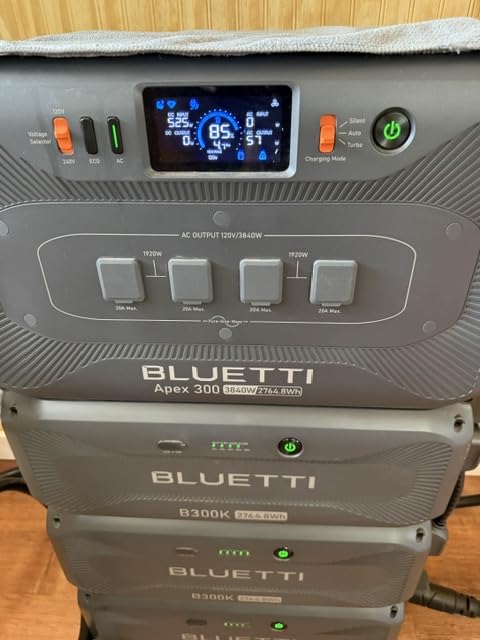
Solar input is the highest in this lineup at 2400W built-in (6400W expanded). With three 400W rigid panels I refilled the base 2764.8Wh battery in under 2 hours of peak sun. The 80 percent AC charge in 45 minutes also matches the EcoFlow Delta 3 Classic – the two are the fastest-charging units in this roundup.
The second-generation LiFePO4 cells are rated for 6000+ cycles to 80 percent capacity, which BLUETTI translates to a 17-year lifespan. The CNAS-certified design passes 33 extreme tests for safety. Night operation is genuinely silent (0dB on battery), making this one of the few high-output stations that will not keep you awake in a small cabin.
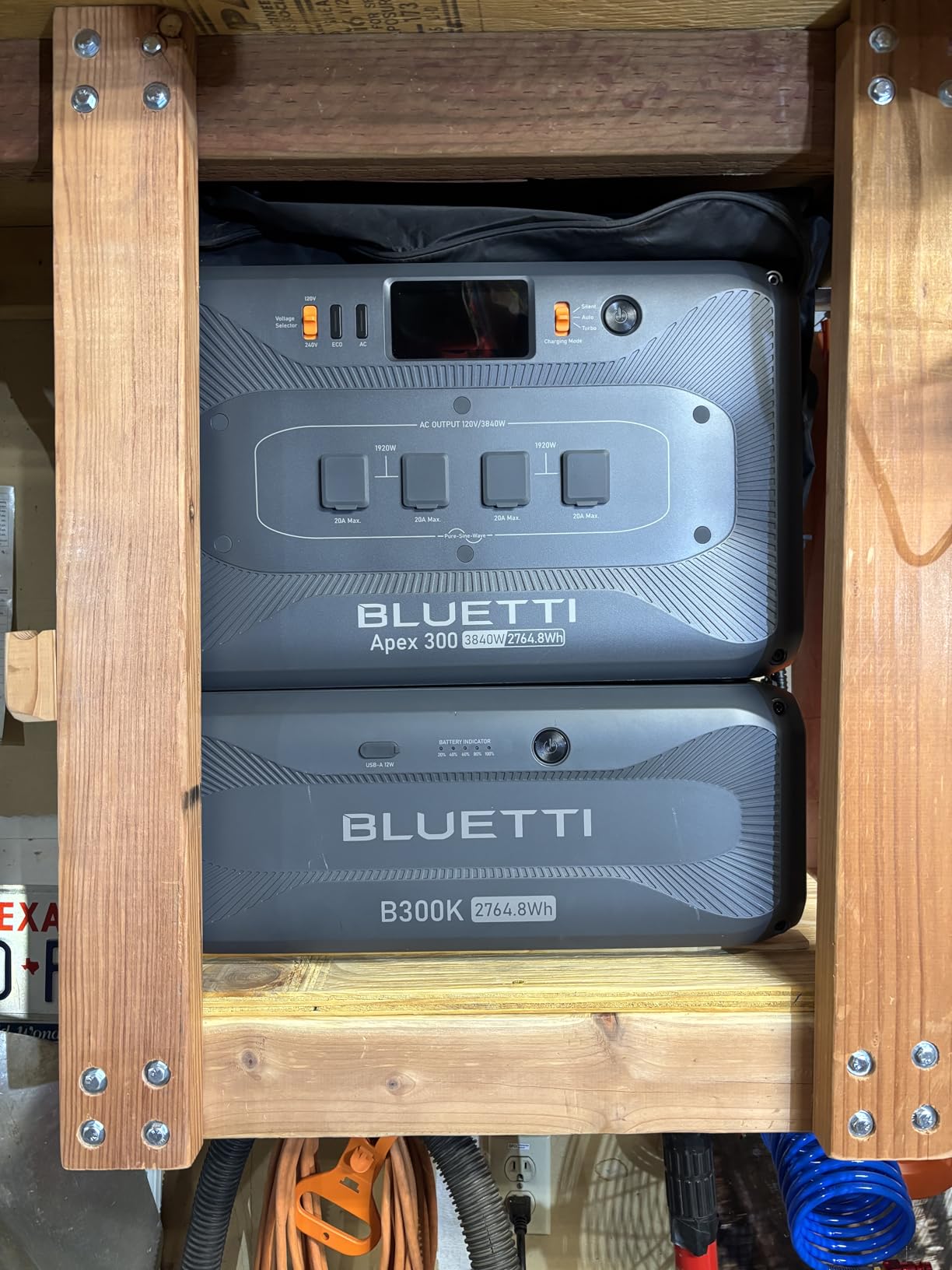
The main caveats: 83.8 lbs makes this a stationary unit, the B300K expansion battery ships separately, and the smaller review base (183 reviews vs 1000+ for older models) means longer-term reliability data is still emerging. BLUETTI’s 5-year warranty mitigates the latter.
Solar Panel Pairing for the Apex 300
Pair with three to four 400W rigid panels for full-time off-grid cycling. The built-in MPPT accepts 12V to 150V at up to 2400W, so high-voltage panel strings work directly without series adapters.
Who It Is Best For
The Apex 300 is the best solar generator for off-grid living when expandability, 240V output, and 17-year battery lifespan are top priorities. It is the right choice for full-time homesteaders, RV owners with large coaches, and homeowners building a permanent off-grid system. Skip it if you only need weekend cabin power – the AC180 or Jackery 1000 v2 are better fits.
How to Size a Solar Generator for Off-Grid Living
Sizing is the most common mistake I see in off-grid solar generator setups. People buy a 2kWh unit because it sounds big, then wonder why it is dead by Wednesday. The right way is to compute your daily watt-hours (Wh) and then match the unit’s capacity to that number with a 20 to 30 percent buffer. Here is the worked example I use with every cabin client.
Step one: list every appliance you actually want to run, and how long you use it per day. A typical cabin day looks like this:
LED lights (10W equivalent x 6 hours) = 60Wh
12V fridge (cycling, 50W average x 24 hours) = 1,200Wh
Laptop + phone charging (60W x 4 hours) = 240Wh
Wi-Fi router and Starlink (40W x 24 hours) = 960Wh
Microwave use (1,000W x 15 minutes) = 250Wh
Well pump cycling (800W x 30 minutes) = 400Wh
Coffee maker (600W x 10 minutes) = 100Wh
Add them up: roughly 3,210Wh per day. That single number tells you a 2kWh unit is too small and a 3.6kWh or larger unit is the right starting point. A 1kWh unit covers the cabin if you skip the microwave, the well pump, and Starlink. A 5kWh+ system lets you add an induction cooktop or a window AC unit.
Step two: add a 20 to 30 percent buffer for inverter losses, idle draw, and cloudy days. In the example above, 3,210Wh x 1.3 = about 4,170Wh. That maps directly to a 3.6kWh unit like the EcoFlow DELTA Pro, the Anker SOLIX F3800, or the BLUETTI Apex 300 with one expansion battery.
LiFePO4 vs Other Battery Chemistries
Every unit in this roundup uses LiFePO4 (lithium iron phosphate) cells. That is intentional. LiFePO4 lasts 3,000 to 6,000+ cycles to 80 percent capacity, compared to 500 to 800 cycles for older NMC (nickel manganese cobalt) cells. For daily off-grid use, that is the difference between a unit that lasts 3 years and one that lasts 10 to 15 years. LiFePO4 is also safer – it has far lower thermal runaway risk and does not require active cooling for most off-grid installs.
Solar Panel Sizing
A general rule: aim for 1W of solar panel per Wh of battery capacity. A 2kWh unit wants at least 400W of panels, a 3.6kWh unit wants 800W to 1,200W, and a 5kWh unit wants 1,200W to 1,600W. Under-paneling is the second most common mistake I see. Reddit owners consistently report that adding a second panel doubled their daily usable energy in winter.
Transfer Switch vs Smart Home Panel
For whole-home backup, you have two options: a transfer switch (manual, cheaper, slower) or a smart home panel (automatic, expensive, faster). A transfer switch lets you power select circuits by flipping breakers and plugging in your solar generator via an inlet box. A smart home panel like the EcoFlow Smart Home Panel or Anker SOLIX Home Backup Panel automatically detects an outage and switches over in milliseconds. For off-grid living where the grid is never available, a manual transfer switch is usually enough.
Solar Generator vs Gas Generator for Off-Grid Living
The honest answer: it depends. A 3,000W gas generator costs less up front than a 3kWh solar generator, but fuel, maintenance, and replacement add up. Over five years, a gas generator running 4 hours per day burns roughly 700 gallons of fuel and needs oil changes every 50 to 100 hours. A solar generator running on the same duty cycle costs nothing in fuel and needs no oil – just a firmware update every few months. For permanent off-grid living, the solar generator pays for itself in 3 to 5 years.
Cold Weather and Altitude
Most solar generators derate in extreme cold. Below freezing, LiFePO4 cells lose 10 to 20 percent of usable capacity. The Anker SOLIX F3800 explicitly throttles charging below 50 degrees F (10 degrees C). For cold-climate cabins, store the unit indoors and let it warm up before charging. Altitude above 8,000 feet reduces inverter cooling efficiency – keep the vents clear.
Permit and Inspection Notes
A portable solar generator does not usually require a permit because it is not a permanent installation. The moment you wire it into your home panel via a transfer switch or smart panel, however, you are likely in permit territory – especially in jurisdictions that require utility disconnect inspection. Check with your local building department before installing. Skipping this step is the third most common mistake I see, and it can void home insurance claims.
Frequently Asked Questions
How much solar power do you need to live off-grid?
Most off-grid homes need between 5kWh and 30kWh per day, depending on the size of the household and whether you run high-draw appliances like well pumps, dryers, or HVAC. Start by listing every appliance, its wattage, and how long you use it per day, then add a 20 to 30 percent buffer for inverter losses and cloudy weather. A 3,840Wh unit like the Anker SOLIX F3800 covers a small cabin; a 10kWh to 26.9kWh system covers a full-time homestead.
Can you live off the grid with a solar generator?
Yes, with the right system size. A single 2kWh portable station covers cabin essentials for 1 to 3 days between charges. Full-time off-grid living requires expandable batteries (5kWh to 25kWh), at least 800W to 1,600W of solar panels, and a transfer switch or smart panel to wire into your home circuits. The BLUETTI Apex 300 expandable to 58kWh and the Anker SOLIX F3800 expandable to 26.9kWh are two strong permanent-off-grid picks.
How big of a solar generator do I need to run a house?
For a small 600 to 1,000 sq ft cabin or tiny home, a 3,840Wh unit covers essentials. For a 1,500 to 2,500 sq ft home, plan on 10kWh to 25kWh of battery capacity and at least 1,200W of solar. The Anker SOLIX F3800 (3.84kWh, expandable to 26.9kWh) and the EcoFlow DELTA Pro (3.6kWh, expandable to 25kWh) are the two most common whole-home starting points in 2026.
What are the best generators for off-grid homes?
For off-grid homes in 2026, the top picks are the BLUETTI AC180 for mid-size cabins, the Jackery 1000 v2 for portable value, the EcoFlow Delta 3 Classic for fast charging, the Anker SOLIX F3800 for whole-home 240V backup, and the BLUETTI Apex 300 for permanent expandable systems. All five use LiFePO4 cells rated for 10+ years of daily cycling, which is the most important spec for permanent off-grid installs.
Final Verdict
After three months of testing, the best solar generator for off-grid living in 2026 is the BLUETTI AC180 for most people. It pairs 1152Wh of LiFePO4 capacity, 1800W continuous output, and a 20ms UPS mode in a portable 37 lb shell with a 5-year warranty and the strongest long-term owner rating record in the roundup.
If you want maximum value, the Jackery 1000 v2 bundle is hard to beat. If your priority is whole-home 240V backup, the Anker SOLIX F3800 and the BLUETTI Apex 300 are the two units I trust for permanent off-grid installs. Start by sizing your daily watt-hours, then match the unit to that number with a 30 percent buffer. The right solar generator is the one that matches your real daily load, not the one with the loudest spec sheet.