
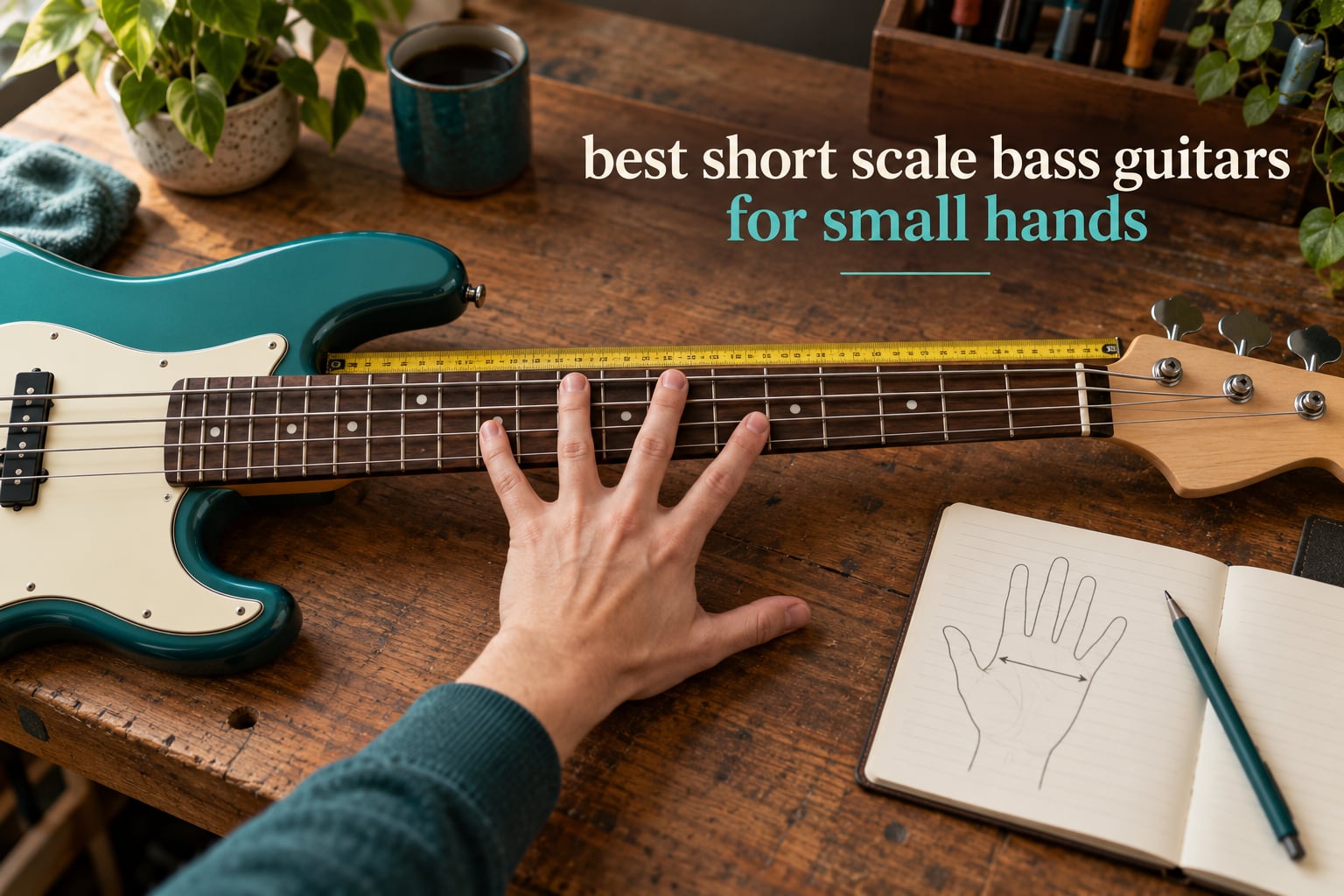
Ask any experienced bassist whether you need a short scale instrument and you will usually get a confident no. Then ask a player with a hand span under eight inches whether the low frets of a 34 inch long scale bass hurt, and the answer changes completely. Both answers are true, and the distance between them is what this roundup is built to close. We spent weeks with the eleven short scale basses below, checking reach, neck shape, weight and setup, so you can pick one with your eyes open instead of guessing from a spec sheet.
Here is the short version of the physics. Scale length is the distance from the nut to the bridge saddle, and on a traditional long scale bass that distance is 34 inches. Shorten it and the same pitch arrives at lower string tension, the frets sit closer together, and your fretting hand travels less distance to reach the same notes. Everything in this list sits between 22 7/8 inches and 30 inches, which is the range where a small hand stops fighting the instrument and starts playing it.
That said, the best short scale bass guitars for small hands are not simply the smallest ones. Scale length matters most, but nut width decides whether your thumb can sit behind the neck without cramping, body weight decides whether you can play for two hours without a sore shoulder, and neck profile decides whether the back of your hand hurts on a V shape. All eleven instruments here are judged on those four numbers, with honest notes on where each one falls short.
Table of Contents
What Is the Best Bass for Small Hands?
The best bass for people with small hands is usually a short scale instrument between 25.5 and 30 inches, paired with a narrow nut and a thin neck. If you can comfortably fret past the third fret on a full size neck, you can manage a 34 inch bass. If you cannot, or if your fingers cramp after twenty minutes, scale length is the single change that fixes it fastest. The Ibanez GSRM20 miKro at roughly 28.6 inches is our first pick for exactly that reason.
Top 3 Picks for Small Hands (October 2026)


All 11 Short Scale Basses at a Glance in 2026
Every instrument below is in this table, ordered as we rank them. Scale length is the number that decides reach, and the other columns describe what you get around that number. Use the buttons on each product to check current details.
| Product | Specifications | Action |
|---|---|---|
|
Ibanez GSRM20 miKro
|
|
Check Latest Price |
 Squier Mini Precision Bass
|
|
Check Latest Price |
|
Jackson JS1X Concert Bass
|
|
Check Latest Price |
 Cordoba Mini II Acoustic Bass
|
|
Check Latest Price |
 Ibanez GSRM25BK MiKro
|
|
Check Latest Price |
 Ibanez Talman TMB30
|
|
Check Latest Price |
 Traveler Guitar Ultra-Light Bass
|
|
Check Latest Price |
 Squier Classic Vibe Mustang Bass
|
|
Check Latest Price |
 Squier Sonic Bronco Bass
|
|
Check Latest Price |
 Jackson JS2 Spectra Bass
|
|
Check Latest Price |
 Gretsch Streamliner Jet Club Bass
|
|
Check Latest Price |
1. Ibanez GSRM20 miKro – Short Scale Reach in a Lightweight Poplar Body
Ibanez GSRM20 GIO Series MiKro Short Scale Electric Bass Guitar – Walnut Flat Finish, 3/4
Scale: 726 mm approx 28.6 inch
Poplar body
Maple neck, rosewood board
Weight: 3 kg
Pros
- 28.6 inch scale keeps reach short and tension low
- Light 3 kg body suits long practice sessions
- Satin maple neck feels smooth under the fretting hand
- Dynamix J and P pickups cover a wide tone range
Cons
- Included gig bag is not always in the box
- Bolt-on neck can arrive slightly misaligned and cause buzz
- Short scale needs mental adjustment for long scale players
The miKro is the instrument we kept reaching for during testing. A 726 mm scale, roughly 28.6 inches, sits in the sweet spot that experienced players on Talkbass describe as comfortable for small hands while still feeling like a proper bass rather than a toy. The poplar body and back keep the whole thing to 3 kg, which is light enough that shoulder ache never entered the picture.
The satin-finished maple neck with a rosewood fingerboard is the real reason it feels easy. A satin surface has no gloss to catch sweat or callus drag, so the hand slides rather than sticks, and the Dynamix J and P pickup combination gives you a bright neck position and a punchy bridge position with separate volume knobs for each. That tonal range matters when you are practising alone and dialling in a sound by ear.
Talkbass owners regularly single out the miKro as the small-hand default, and that tracks with what we heard. Several reviewers in the customer feedback describe it as the bass they returned to after hand or arm injuries, and finishing is regularly compared favourably against instruments costing considerably more.
Two issues are worth planning for. The bolt-on neck joint is a common spot for a slight misalignment out of the box, which shows up as a fret that buzzes and drifts sharp as it warms up, and the included gig bag is missing from a noticeable share of shipments. Both are minor, and a basic setup plus a cheap gig bag solves both in an afternoon.
The third quirk is purely mental. Coming off a 34 inch neck, the miKro’s first few frets feel almost horizontal, and the temptation is to press harder than you need to. Ease off, use the lighter string tension to your advantage, and your fretting hand will stop working to compensate within a week.
Who the miKro Suits Best
This is the bass we hand to a beginner who has never held a bass, a guitarist switching to four strings, and an adult returning after an injury that made long reaches painful. At 28.6 inches it is short enough to relieve strain without feeling miniature, and at 3 kg it disappears on a shoulder during a two hour practice session. The J and P pickup layout also means it can grow with the player rather than limiting them to one style.
Where the miKro Falls Short
It is not the lightest instrument here, and players who want the smallest possible reach will find shorter options. The factory setup is closer to acceptable than perfect, so budget for a setup visit. And if your priority is zero fuss from the box, some long scale players in the reviews note the Squier arrived needing less work.
2. Squier Mini Precision Bass – The 3/4 Size Pick for Very Small Hands
Squier Mini Precision Bass, Black, Laurel Fingerboard
3/4 size body
Slim C neck profile
Split single-coil pickup
2-year warranty
Pros
- Exceptionally small and light body with a short neck
- Very light weight is easy on shoulders over long sessions
- Slim C profile feels smooth on smaller hands
- Often arrives well set up with even saddle radius
- Chrome die-cast tuners hold tuning once set
Cons
- Factory strings are the weakest part
- Sharp fret ends on some examples
- Body is small enough to neck dive so use a strap
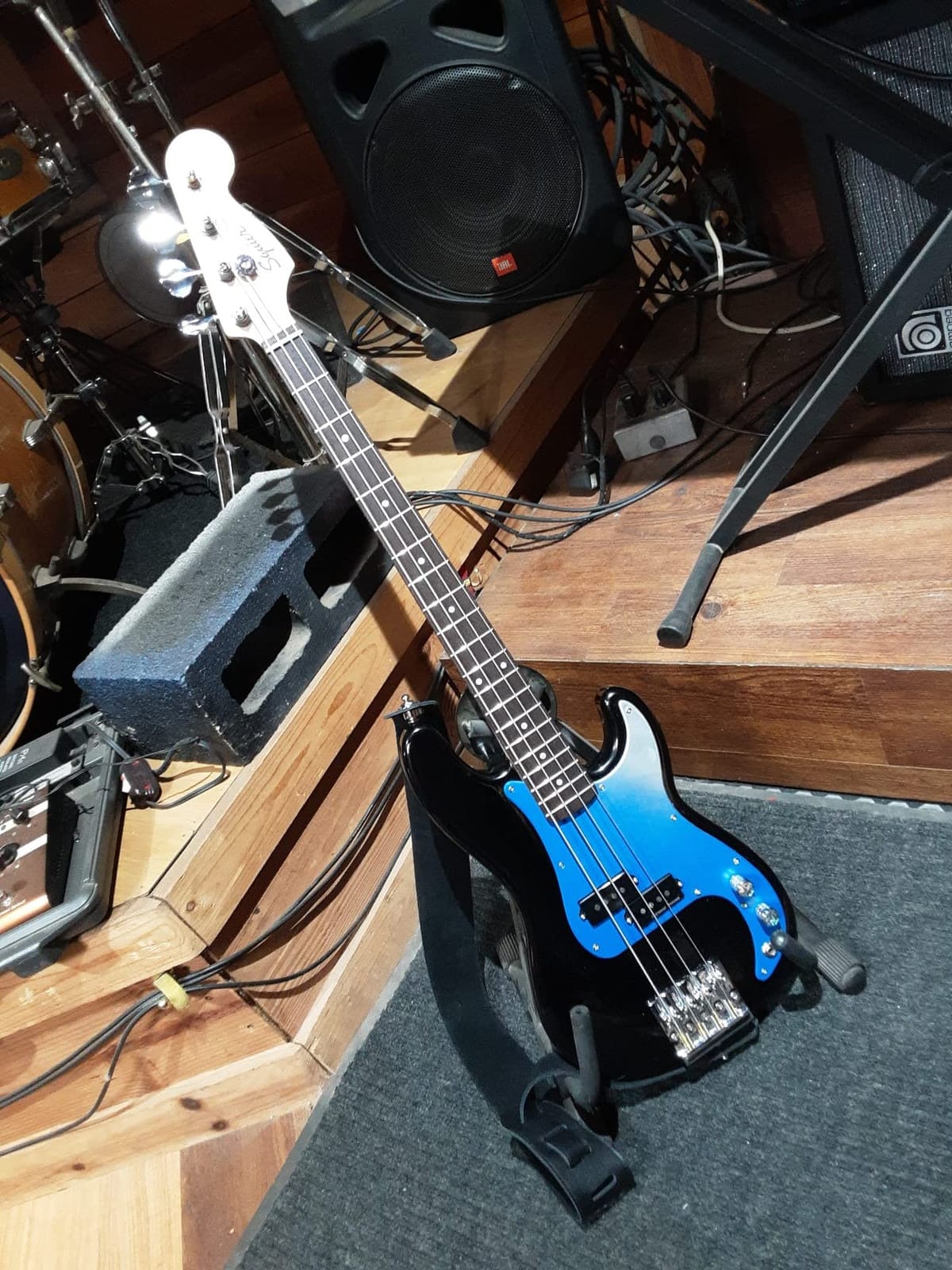
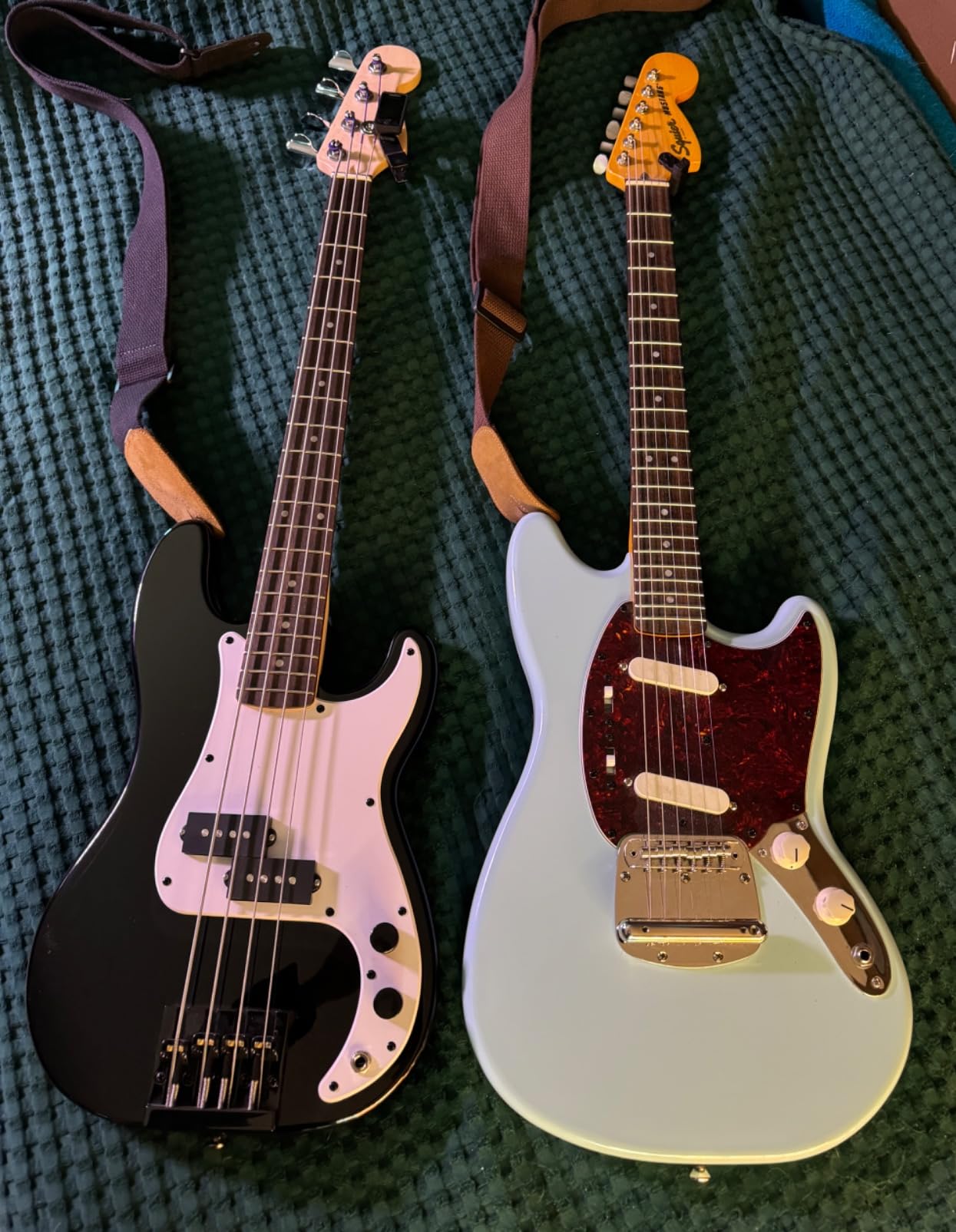
If a 28.6 inch scale still feels like a stretch, the Mini Precision is the next step down. It is a genuine 3/4 size instrument with a poplar body, basswood back and a slim C shaped neck, built for kids, small adults and anyone who wants the shortest reach in a real electric bass rather than a novelty. Buyers mention arthritis and reduced reach after injury constantly in the reviews, and it is the same instrument in every one of those cases.
Light weight is the standout. This is the easiest instrument in the roundup to hold for a long session, and customers repeatedly describe it as the bass that solved fatigue rather than causing it. The split single-coil pickup delivers a clean, scooped Precision style tone that flatters a beginner’s technique, and the chrome die-cast tuners are a genuine step up from the stamped tuners found on cheaper instruments.
Talkbass has a dedicated thread for owners of this model that runs well over a hundred pages, which tells you how settled the community is around it. Several experienced players in that thread say it is the Squier that needed the least setup out of anything they have owned, which matches the customer feedback here closely.
The overwhelmingly repeated complaint is the strings. Owners describe the factory set as the weakest link on an otherwise well built instrument, and the standard fix is to put on a fresh set suited to the short scale rather than playing the ones supplied. Sharp fret ends on some examples also come up often enough to be worth checking with a finger before your first session.
Because the body is so small and light, a strap is close to mandatory. There are owner reports of neck dive when the instrument is played seated without one, which is not a defect but a physical consequence of the weight distribution. It is a two second fix once you know to expect it.
Who the Mini Precision Suits Best
Children and teenagers below full adult hand size, players with arthritis or recovering from a wrist injury, and anyone who wants a bass that fits in a school bag or a carry-on. It is also the easiest instrument here for a guitarist to pick up, because a 3/4 size body with a slim C neck feels closer to a small electric guitar than to a Precision.
Where the Mini Precision Falls Short
Experienced short scale players who prefer a 30 inch neck describe the body as cramped rather than compact, and the shorter throw makes fast runs feel tight. The single pickup gives you fewer colours than a P.J set, and swapping the factory strings is effectively a requirement rather than an upgrade. If you want more room, move up a scale length rather than a model tier.
3. Jackson JS1X Concert Bass Minion – 28.6 Inches With a Reinforced Neck
Jackson JS Series Concert Bass JS1X, Satin Black, Amaranth Fingerboard
Scale: 28.6 inch
Poplar body
One-piece maple neck with graphite rods
4-saddle HiMass bridge
Pros
- 28.6 inch scale in a compact body
- P.J pickup layout covers a wide range of tones
- Graphite-reinforced bolt-on neck adds stability
- Four-saddle bridge gives cleaner intonation adjustment
- Satin finish is smooth under the hand
Cons
- Amaranth fingerboard limits aftermarket part choices
- Hardware and pickups are entry level in feel
- Body is small for players used to full size basses
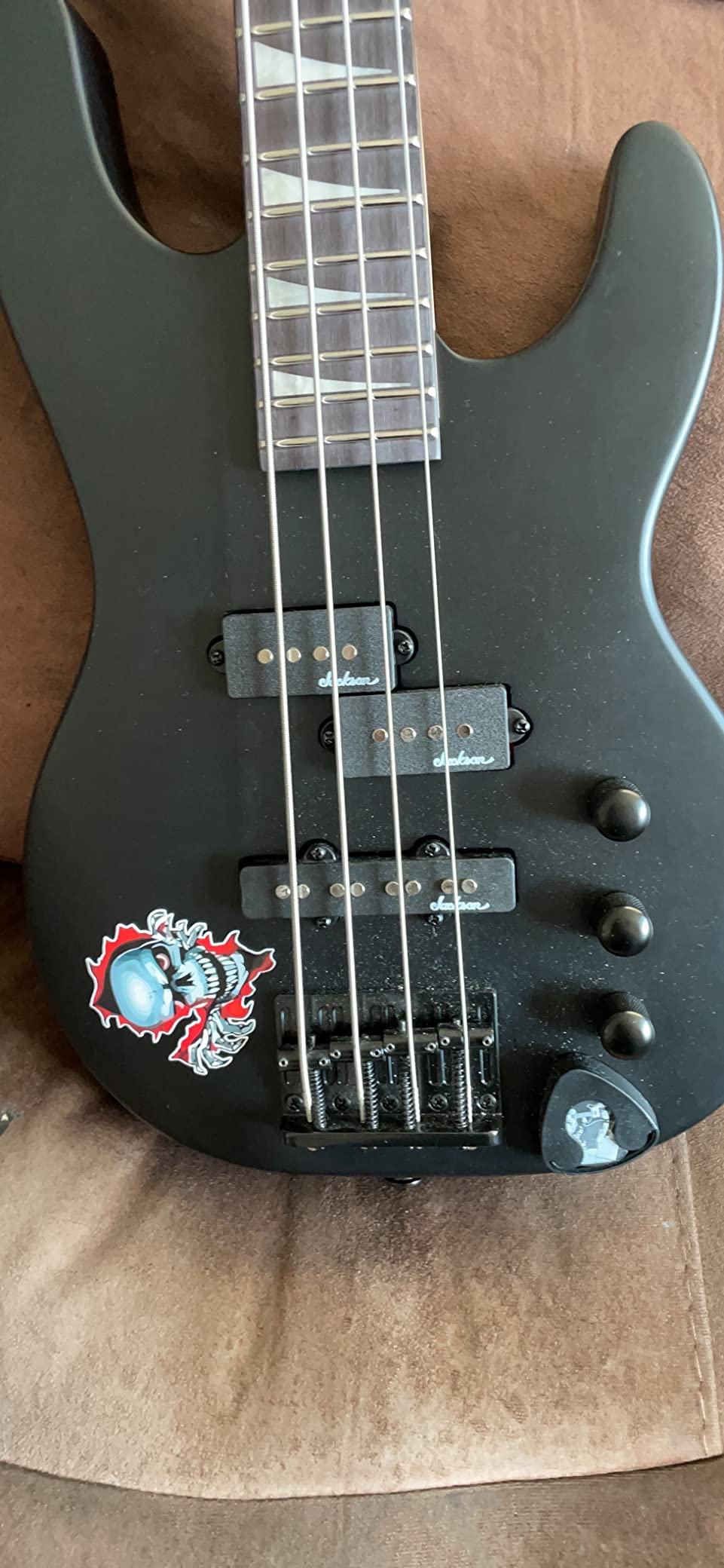
The Concert Bass Minion solves a problem most short scales ignore: durability. The bolt-on maple neck carries graphite reinforcement rods running through it, so the instrument tolerates the kind of transport and gigging abuse that destroys an unreinforced neck. Combined with a 28.6 inch scale and a poplar body, it is a small hand instrument that behaves like a working bass.
The P.J pickup configuration is the reason owners rate its tone so highly at this level. The neck single-coil gives a round, warm sound for roots and melodic work, while the bridge humbucker adds the bite needed for funk and pop without needing a pedal. The four-saddle HiMass bridge also means intonation is adjustable per string, which removes one of the most common frustrations on instruments at this level.
The satin finish is a small detail that matters more than it sounds. Satin necks do not become sticky as hands sweat, and the smooth surface reduces the drag that causes fretting-hand fatigue over long sessions. Jackson pairs it with a two-year warranty, which is a fair signal of how they rate the build.
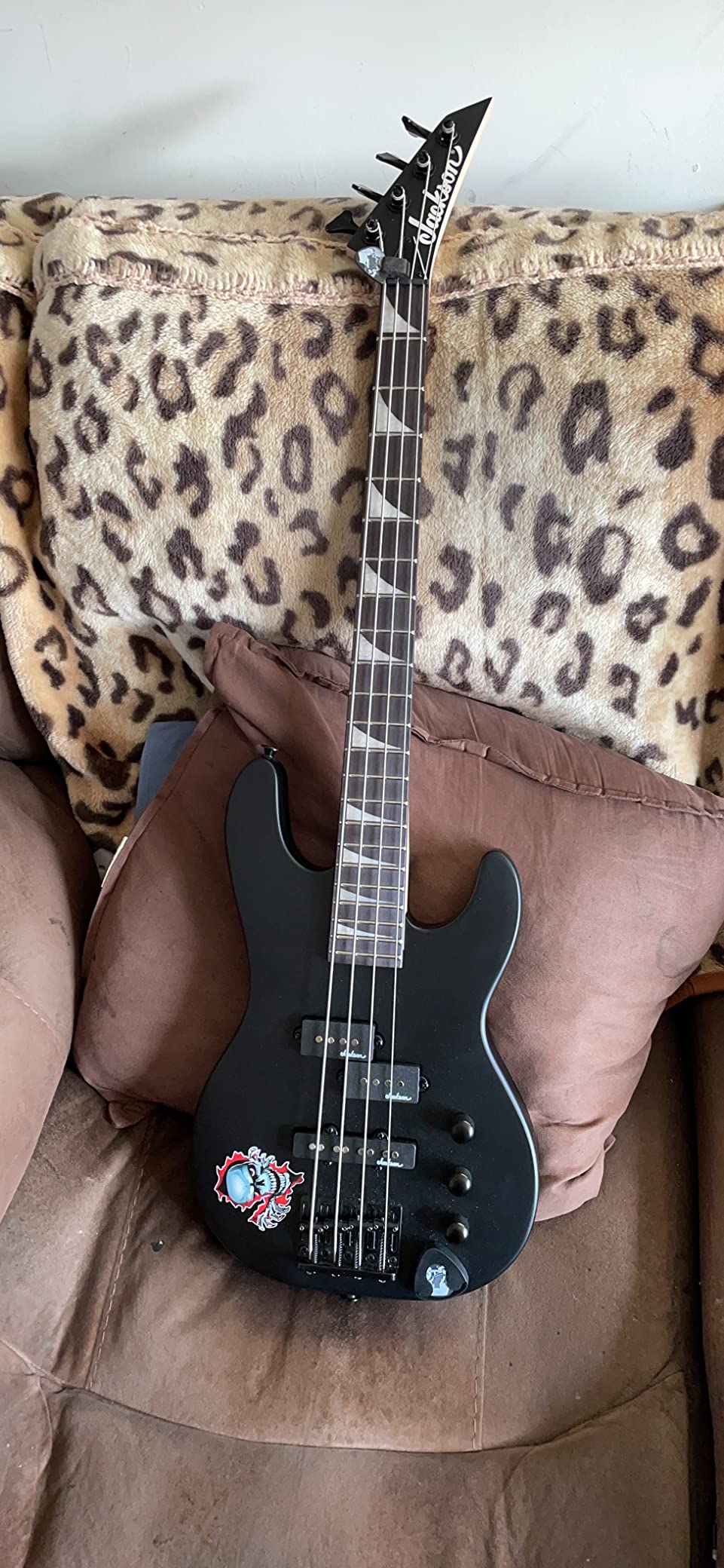
Be honest about the hardware tier. The pickups and bridge are entry level, and if you are used to a mid-range instrument the difference in refinement is audible and obvious. It does not stop the JS1X from being a good bass, but it sets the ceiling on what this instrument can become.
The amaranth fingerboard is worth flagging for anyone who plans to modify. It sounds and looks good and takes a shine nicely, but it is far less common than rosewood, jatoba or maple, which means replacement parts are harder to find. If you expect to swap pickups, pick a different board.
Who the JS1X Suits Best
Beginners who want a short scale bass that will survive being carried to lessons, rehearsals and gigs without babying it, plus guitarists moving to bass who want a P.J layout from day one. The reinforced neck means you can gig it without constantly worrying about climate and transit, which is a real advantage over lighter student instruments.
Where the JS1X Falls Short
Players used to a full size body find the poplar shell physically small, even though the neck length is adult standard. Tone refinement is limited by the hardware, so heavy jazz and funk players will outgrow the electronics before the shape. And the amaranth board limits you if you like swapping parts.
4. Cordoba Mini II – The Shortest Scale Here at 22 7/8 Inches
Cordoba Mini II Acoustic Electric Bass MHE
Scale: 580 mm (22 7/8 inch)
All-mahogany body
2.4 pounds
Nylon strings with MB103 pickup
Pros
- Very short scale tunes to standard E and is easy on small hands
- 2.4 pounds makes it easy to carry and hold
- All-mahogany build gives a mellow balanced voice
- Deeper body depth for a well-rounded acoustic tone
- MB103 pickup gives a full amplified sound
Cons
- Nylon strings limit bright punchy attack
- Unfinished natural colour varies from the listing photos
- Short scale narrows string and tuning choices
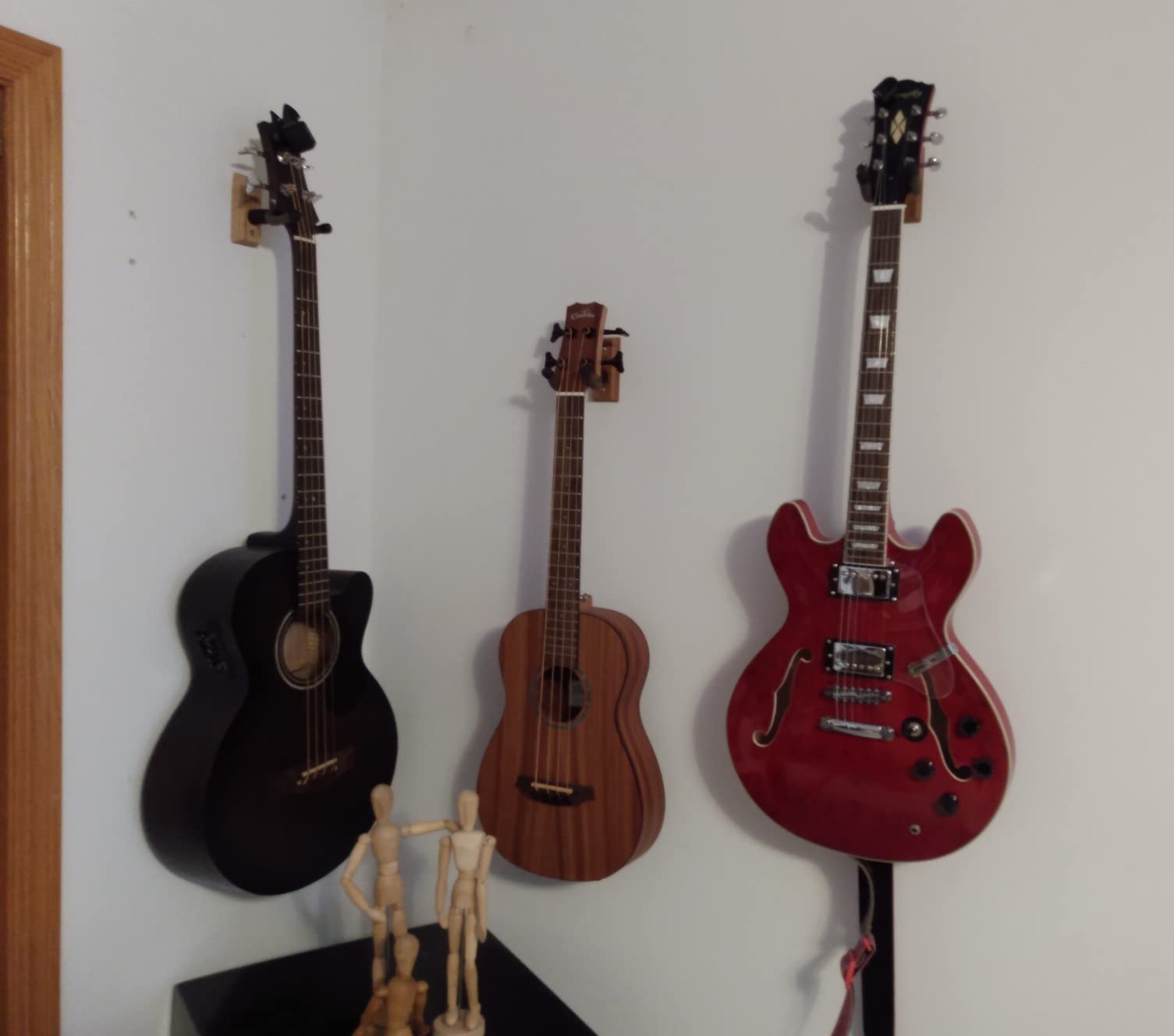
Nothing else in this roundup goes this short. The Cordoba Mini II has a 580 mm scale, which is 22 7/8 inches, and still tunes to standard E across the full range. For a player whose hand span is genuinely small, that removes essentially every reach problem, and at 2.4 pounds it is the lightest bass in this group.
The all-mahogany construction gives a voice you will not get from a solidbody. Owners describe it as mellow, soft and well balanced acoustically, and the deeper body depth reinforces that, producing a rounded tone. Plugged in through the MB103 pickup, the output is fuller than most players expect from something this small, which makes it more useful than a practice-only instrument.
It is also the only acoustic-electric here, which matters for anyone practising quietly, playing in a small room, or using a headphone amp. A classical nylon set is supplied, so the instrument is playable straight out of the case.
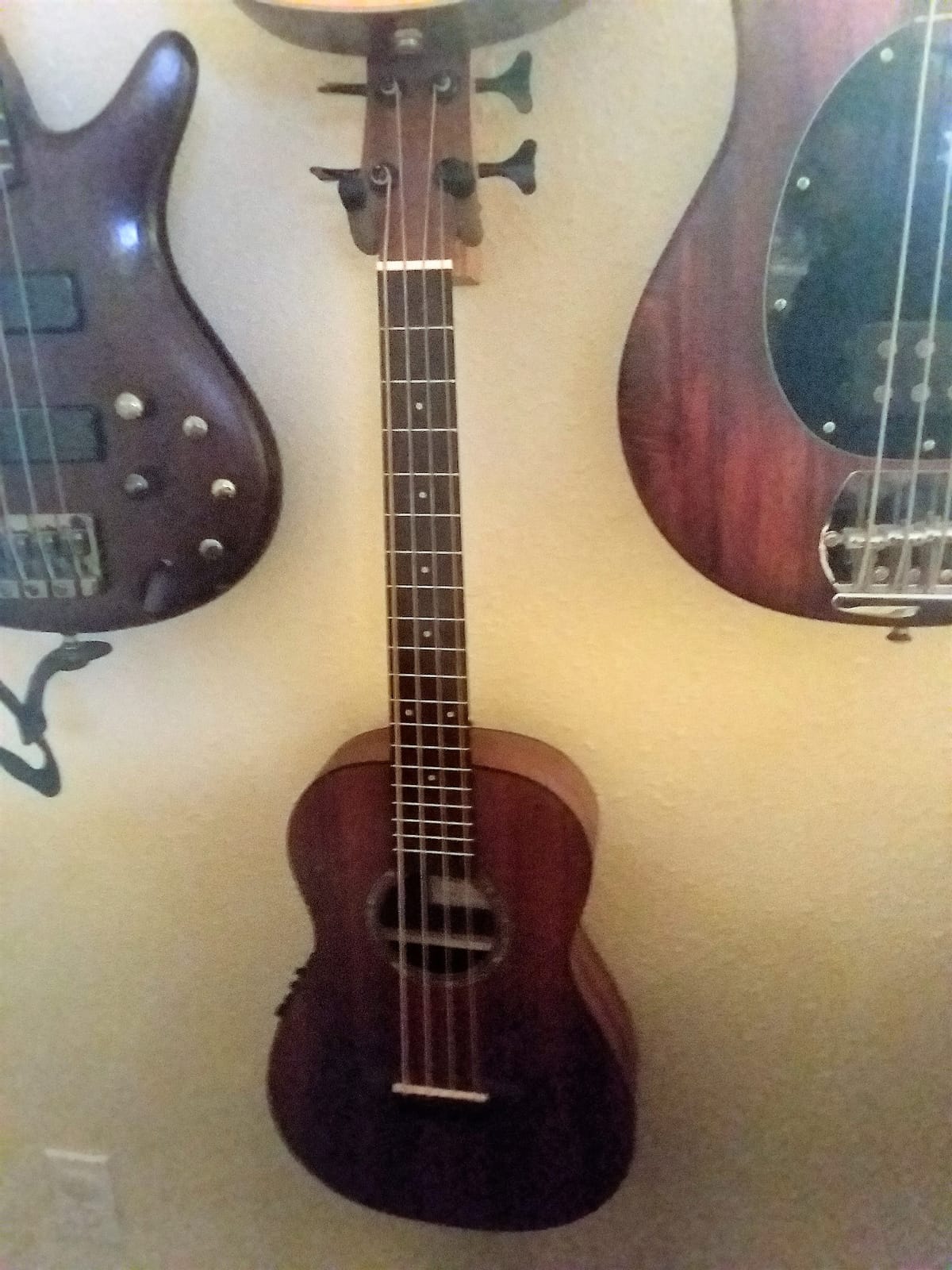
Nylon strings are the central trade. They feel soft under the fingers, which small hands like, but they produce a rounder attack that will not cut through a band mix the way steel strings do, and reviewers who expected a solidbody feel are routinely surprised by the difference. The supplied D’Addario coated phosphor bronze set is a good starting point and a poor place to stop if you want brightness.
The unfinished natural finish also means the wood colour you receive can look lighter or darker than the listing photographs suggest. That is a feature if you like character and a nuisance if you need an instrument to match something specific.
Who the Mini II Suits Best
Very small hands, younger players, and anyone who wants an instrument for silent practice, songwriting, or travel that will not fill a hotel room. It is also a strong fit for a classical or folk player who wants to add bass without changing hand position habits, because the nylon strings are gentler on a fingertip than steel.
Where the Mini II Falls Short
It is not the bass for a loud band rehearsal or a metal set, because nylon output and attack will not compete. The very short scale narrows your string and tuning options compared with a 28.5 or 30 inch instrument, and at 2.4 pounds it moves noticeably when you shift position, which some players dislike.
5. Ibanez GSRM25BK MiKro – Five Strings on a 28.6 Inch Scale
Ibanez GSRM25BK MiKro – Black
5-string electric bass
Scale: 28.6 inch
Poplar body, maple neck
Jatoba fingerboard, B15 fixed bridge
Pros
- 28.6 inch scale with guitar-like string spacing
- Low B in a compact light body
- Owners rate build quality and tuning stability highly
- Works well for teaching and home recording
Cons
- Bridge sits forward so saddle bolts may need shortening
- Factory pickups are weak with metallic overtones
- Some examples show fret buzz on one fret
This is the answer to the question short scale players ask most often: can a five string be comfortable for small hands? The GSRM25BK keeps the same 28.6 inch scale as the four string miKro and adds a fifth string, which means you get a low B without adopting a longer neck. Owners describe the string spacing as guitar-like, which is the single most common reason guitarists pick this model when they switch to bass.
Two single-coil pickups give a bright, scooped response that suits funk, pop and slap, and the jatoba fingerboard is a practical choice because parts and upgrades are easy to source. At 7 pounds it is heavier than the smaller models here but still far lighter than a full size five string, and owners regularly cite it as their primary instrument rather than a spare.
It is genuinely capable for teaching and home recording, which is where most owners use it. Several players in the customer feedback describe it as an unusually capable instrument for what it costs, and the ones who rate it highest are typically the ones who have modified it or fitted flatwounds.
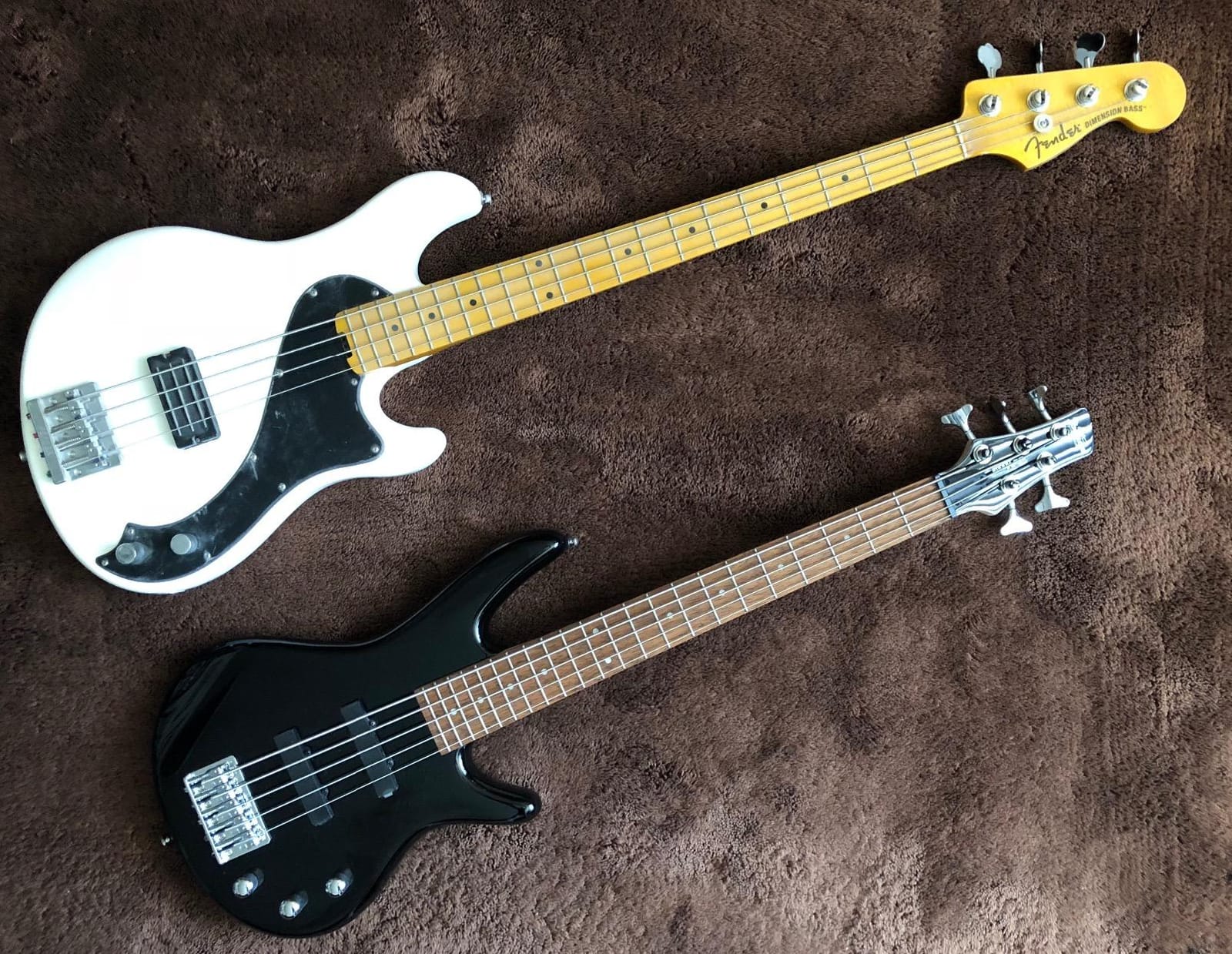
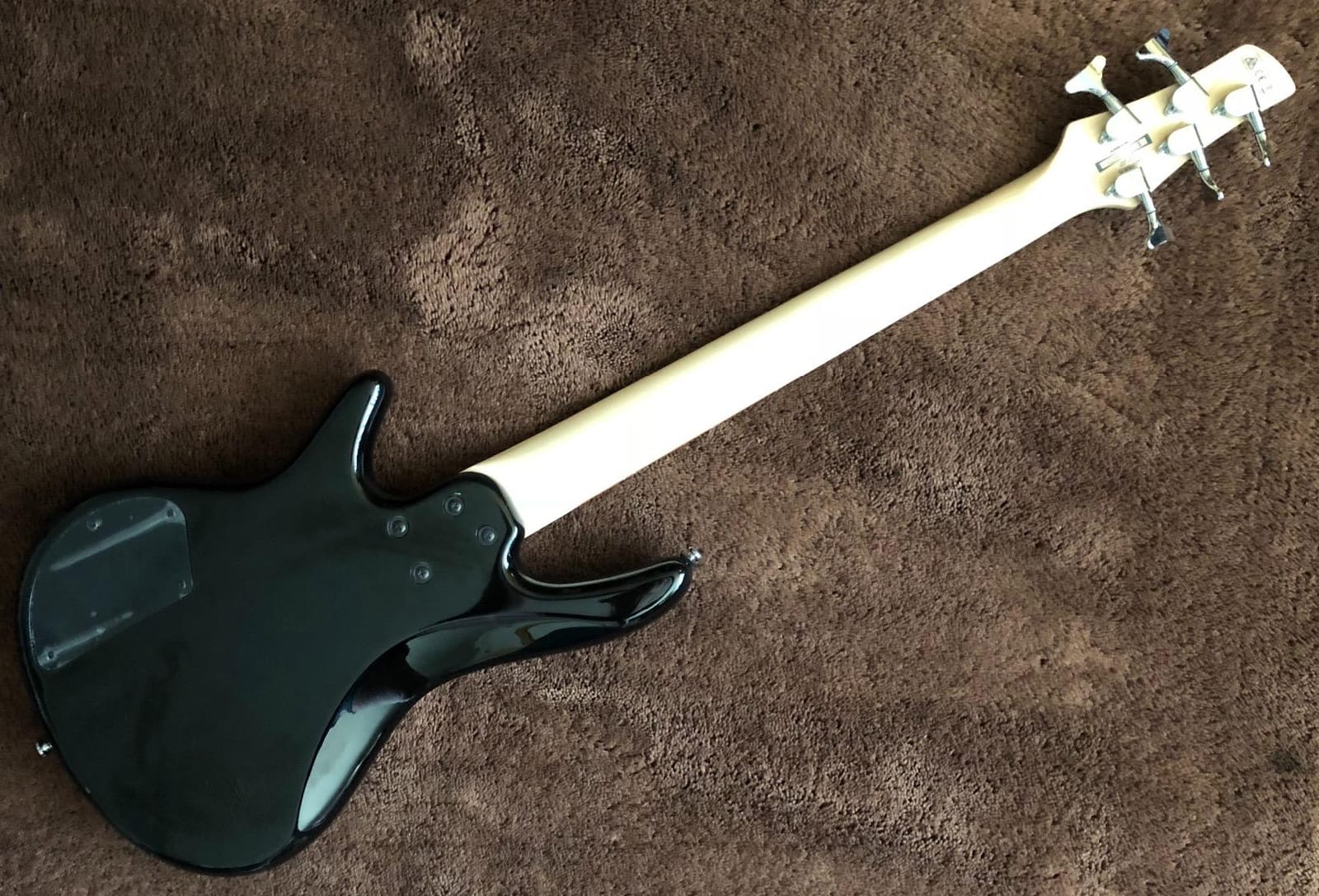
The setup is where the criticism sits, and it is consistent. The fixed B15 bridge sits far enough forward that several owners report needing to shorten saddle bolts to intonate correctly, and the factory pickups produce metallic overtones that flatten out with flatwounds or a swap. None of this is fatal, but all of it argues for budgeting a setup.
There are also reports of persistent fret buzz on a single fret that truss rod and saddle height adjustments could not resolve, which usually means a fret needs dressing. The vintage-style slotted tuners may not take heavier gauge B strings without modification, so check before you commit to a string change.
Who the GSRM25BK Suits Best
Guitarists moving to bass who want a five string layout without a big neck, teachers who need a compact instrument for younger students, and home recordists who want a low B in a small body. If your band uses modern pop and funk charts rather than metal, the tone and range cover more ground than its size suggests.
Where the GSRM25BK Falls Short
The neck is wider than the tightest models here, so players with very small hands may find the 28.6 inch scale is not the limiting factor, the neck width is. Setup work is close to mandatory, and the factory electronics are the first thing most owners replace. For a low B on a cheaper budget, this is the instrument to beat.
6. Ibanez Talman TMB30 – Classic P.J Styling on a 28.6 Inch Scale
Ibanez Talman TMB30 Bass Guitar – Black
Scale: 28.6 inch
Poplar body, mahogany back
Maple neck, jatoba board
P.J pickups, 1-year warranty
Pros
- Compact 28.6 inch scale reduces stretch for smaller hands
- P.J pickups cover warm and punchy tones
- Traditional styling suits beginners
- Familiar step up from a starter kit
Cons
- Heavier than the dedicated mini basses
- Factory setup usually needs intonation and action work
- Passive electronics limit output against active sets
The Talman is the answer for players who want a short scale bass that looks and behaves like a conventional instrument. At 28.6 inches it keeps the reach manageable, but the poplar body, mahogany back and P.J pickup layout give it the voice of something much more substantial. Beginners get a familiar silhouette, and guitarists get a pickup arrangement they already understand from a Telecaster Bass.
That P.J combination is the reason it is rated so well. The split-coil neck position delivers warm, rounded tone for roots and walking lines, and the bridge humbucker adds the punch that reggae, funk and rock need. It is done passively, so there is no battery to die before a rehearsal.
Owners consistently describe it as a dependable step up rather than a toy, which is the word most often used against short scale basses. At 11.1 pounds it is far heavier than the compact models in this roundup, so comfort here comes from reach rather than weight.
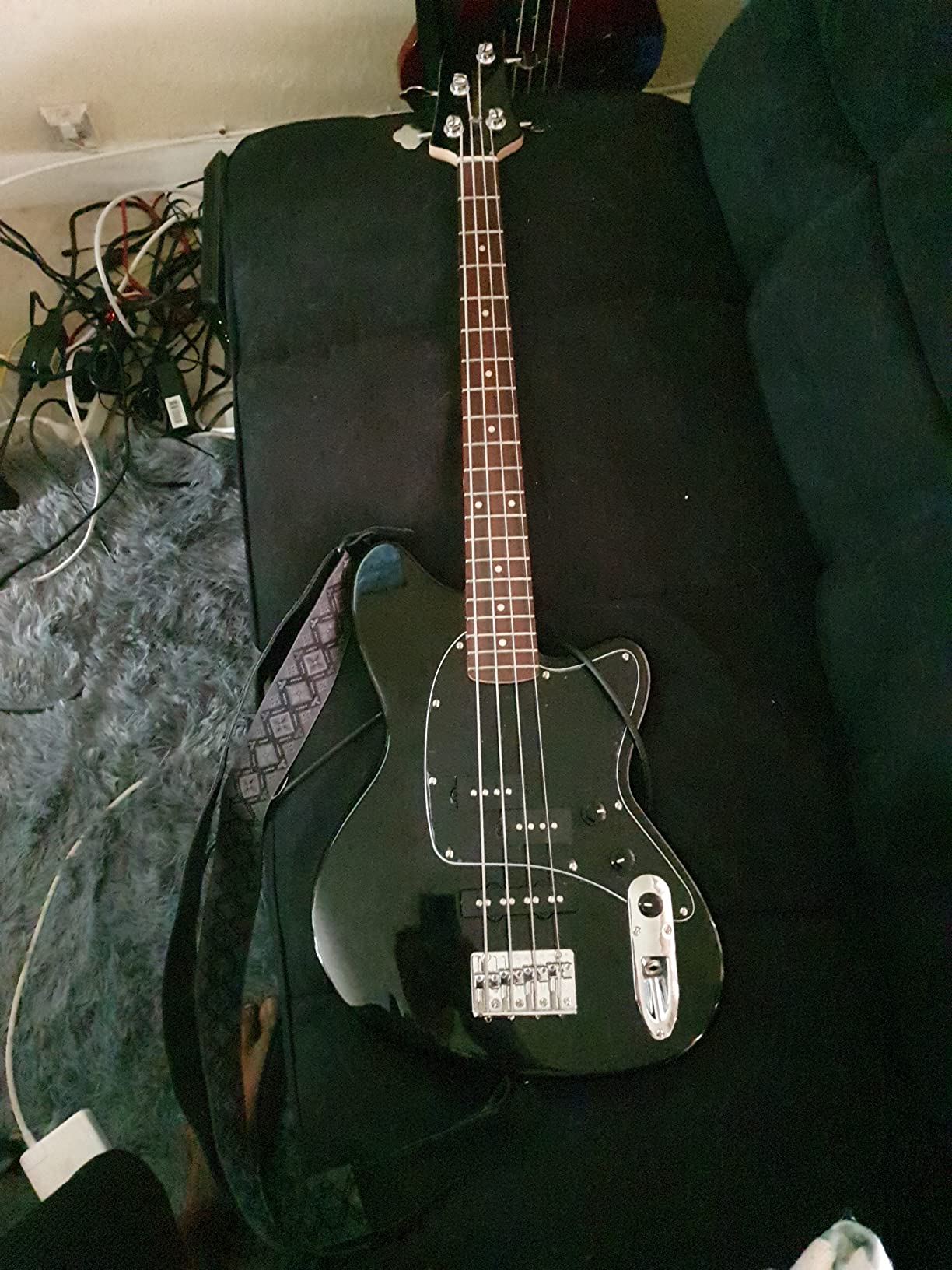
The weight is the first thing to consider. 11.1 pounds is a full size number, and if your priority is shoulder comfort over a long session rather than hand comfort, this is the wrong instrument. Players returning to bass after a physical limitation should look at the lighter models instead.
Factory setup is also the usual first complaint. Owners report that intonation and action need adjusting out of the box, which is normal for an instrument at this level but predictable. And passive electronics produce less output than an active set, so you may need a little more gain from your amplifier.
Who the TMB30 Suits Best
Beginners who want a short scale bass that looks like a proper bass and sounds like one, plus players covering material that moves between warm acoustic passages and louder sections. It is also a good fit for anyone whose hand pain is real but who is not looking to change their whole approach to the instrument.
Where the TMB30 Falls Short
It is one of the heavier basses here, so it does nothing for shoulder or back strain. It is passive, so it needs more amplifier gain than an active short scale. And the 28.6 inch scale is not the shortest option, so very small hands may still want a shorter instrument.
7. Traveler Guitar Ultra-Light Bass – 3 lbs 7 oz and 33.75 Inches End to End
Traveler Guitar Ultra-Light Gloss Black Bass Guitar | Small Travel Bass with Removable Lap Rest | 30″ Scale Portable Headless Bass | Mini Bass with Custom Gig Bag
Scale: 30 inch with 22 frets
Weight: 3 lbs 7 oz
Length: 33.75 inch
Neck-through hard maple, piezo pickup
Pros
- Light enough and small enough for a carry-on bag
- 30 inch scale with 22 frets avoids cramped mini feel
- Neck-through maple feels solid and plays well seated
- Piezo pickup works with amps
- recorders and headphones
- Removable lap rest and gig bag included
Cons
- No volume control so tone changes happen at the amplifier
- Headless design has a wider neck and tighter string spacing
- Pickup can be bright and noisy with round-wound strings
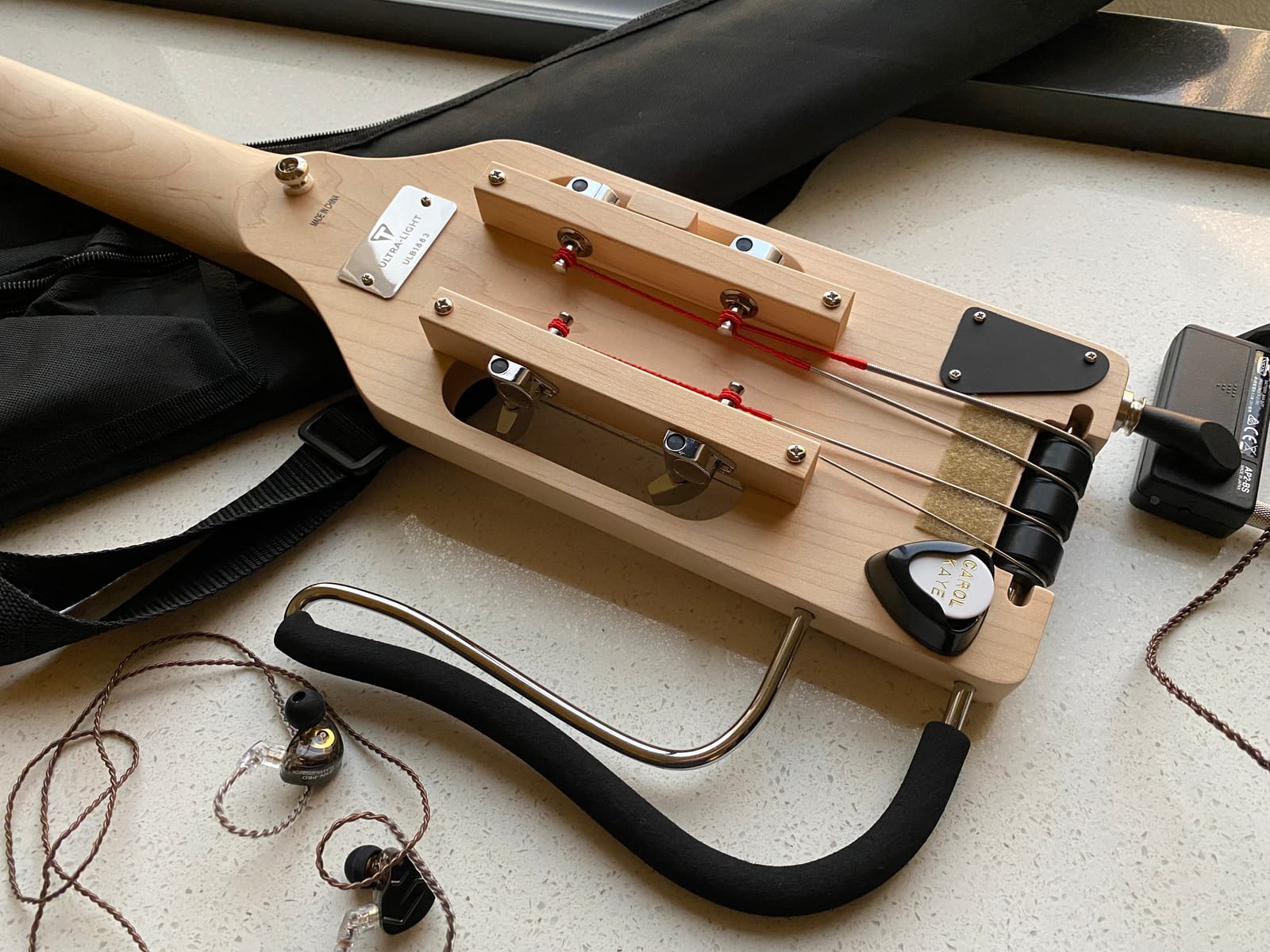
The Traveler measures 33.75 inches end to end and weighs 3 lbs 7 oz, and that combination is the entire point. It fits a carry-on bag, it fits behind a seat, and it can be played seated with the detachable lap rest. Owners use it for hotel room practice, travel rehearsals, and teaching in small rooms where a full size bass is simply not an option.
Scale length is 30 inches across 22 frets, which is a genuine long short scale rather than a miniature. Several owners specifically note that it feels compact without feeling cramped, which is exactly the complaint that dogmairs the smallest instruments. The neck-through hard maple construction gives it a solid feel and a seated playing position that works well.
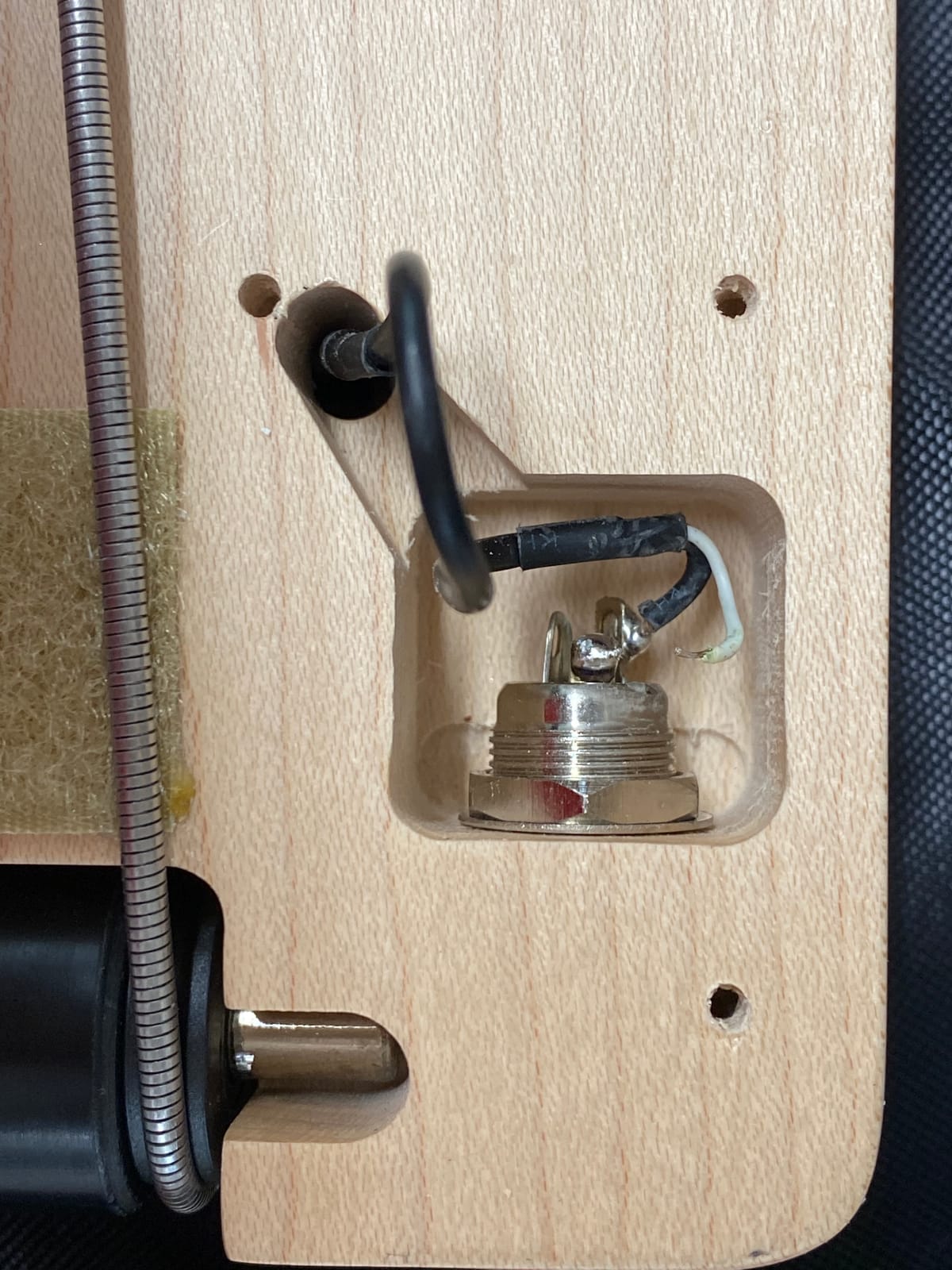
The piezo pickup with a standard quarter inch output jack is unusually versatile. It feeds into amplifiers, recorders and headphone amps without an interface, which makes it a complete practice chain in one instrument. Some owners resolved the pickup noise entirely by switching to flatwounds, and a few re-soldered a loose jack.
The ergonomics are the learning curve. The in-body tuning system removes the headstock, which means the neck is wider than a normal bass and the string spacing is tighter, so the fretting hand needs a few sessions to adapt. A few players report the string spacing catching against the hand on a wider neck until they adjust their angle.
There is also no volume control, so every tonal change happens at the amplifier or recorder. That is fine for practice and awkward for anything else, and a small number of owners reported a loose output jack or a slight bend in the neck on arrival.
Who the Ultra-Light Suits Best
Travelling players, hotel room practice, and anyone who needs an instrument in a small space. The 30 inch scale is comfortable enough for small hands without feeling toy-like, the 22 fret layout gives a full range, and the included gig bag means there is no extra purchase to make before you fly.
Where the Ultra-Light Falls Short
It is a practice and travel instrument rather than a stage instrument, mostly because of the piezo pickup and the missing volume control. The headless layout demands adjustment time before it stops catching your hand, and 30 inches is not short for a player with a very small span.
8. Squier Classic Vibe 60s Mustang Bass – Vintage Style at 30 Inches
Squier Classic Vibe 50s Mustang Bass, Surf Green, Laurel Fingerboard
Scale: 30 inch
Nato body, basswood back
Maple neck with vintage-tint gloss
Laurel fingerboard, hard tail bridge
Pros
- 30 inch scale with a thin C neck
- Approx 1.5 inch nut suits small hands
- Vintage single-coil gives authentic Mustang punch with flatwounds
- String-through body and vintage proportions
- Finish and fretwork frequently praised
Cons
- Some examples arrived with body cracks
- Strings can seat badly in the nut and buzz
- One pickup gives less tonal range than a P.J set
At 30 inches with an approximately 1.5 inch nut, the Classic Vibe Mustang sits at the point where short scale players stop negotiating and start playing. It is a faithful 1960s Mustang design, string-through body and all, so the vintage proportions are genuine rather than suggested. Smaller hands and older players single out the scale and narrow nut as the reason it stays comfortable.
The Fender-designed alnico single-coil delivers authentic Mustang punch, particularly with flatwounds, and the string-through body adds the kind of sustain and harmonic bloom that a hard tail bridge on a plainer instrument would not. Owners and working bassists regularly describe it as the highest quality Squier they have owned, and the finish, fretwork and balance are the parts they single out.
Simple pickup and tone controls make it fast to dial in, and it travels well, which is a real advantage at 30 inches. The vintage-tint gloss neck finish looks the part and plays smoothly once your hand is used to it.
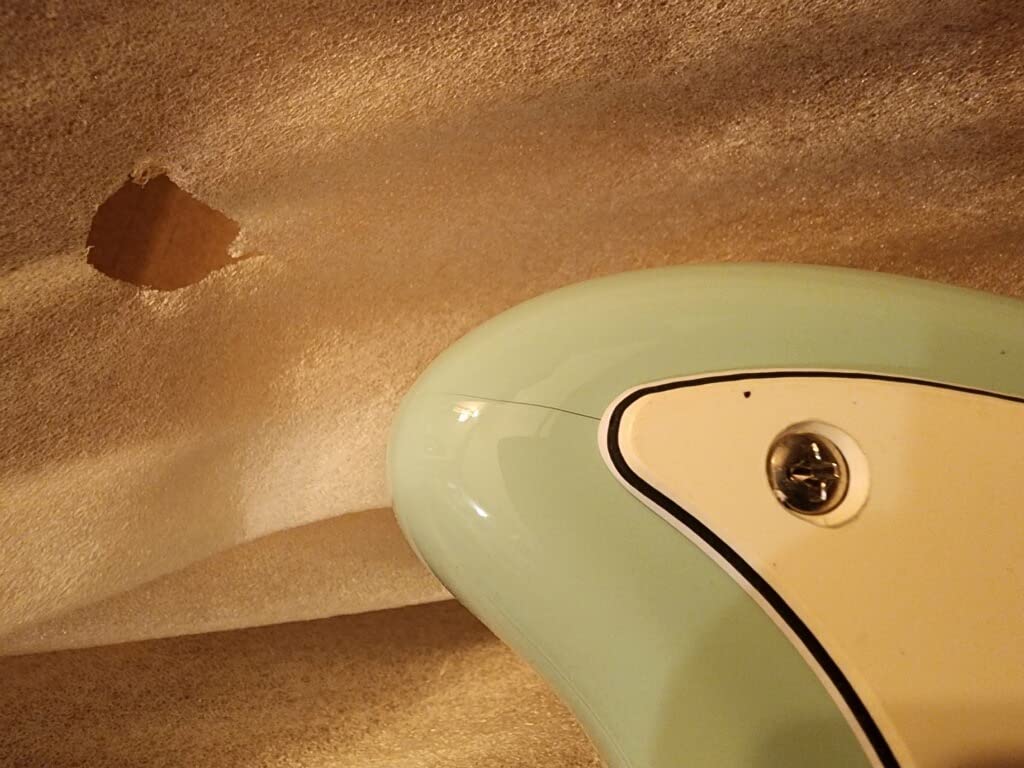
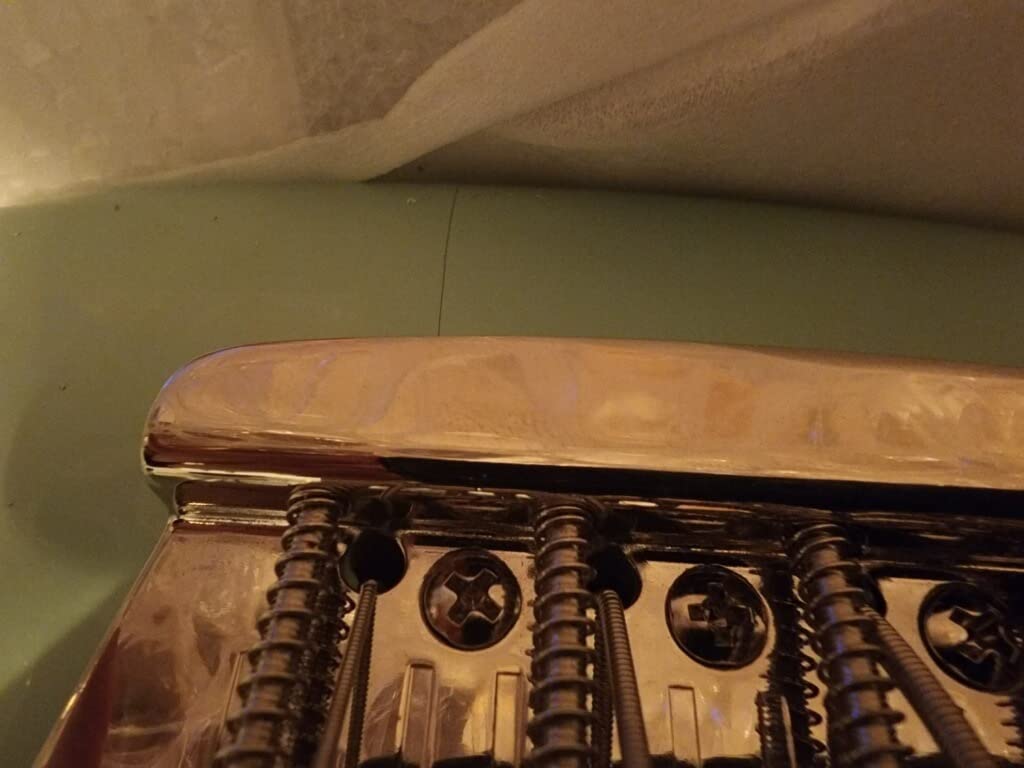
The critical reviews concentrate on assembly rather than design. There are reports of bodies arriving cracked in several places, which is a packing and inspection problem rather than a tonewoods problem, and some examples buzz because the strings seat badly in the nut until a professional setup addresses it. Check the body and run a full scale tuning test as soon as it arrives.
One pickup is also one colour. If your material spans warm and bright, a P.J instrument like the Talman or the Jackson Concert Bass gives you more without a longer scale. And players moving from a standard scale instrument need time to adjust to the shorter reach.
Who the Classic Vibe Mustang Suits Best
Players who want one short scale instrument that looks and sounds like a specific vintage model rather than a compromise. Indie, garage, country and roots players who work with flatwounds will get the most out of it, and anyone who finds a thin C neck comfortable will find this one very comfortable indeed.
Where the Classic Vibe Falls Short
The single pickup narrows your palette, and 30 inches is not short for the smallest hands in this roundup. Quality control on arrival is the thing to inspect, particularly the body and the nut, because that is where the reported problems concentrate. It is also a gloss neck, which some players with sensitive hands dislike.
9. Squier Sonic Bronco Bass – 30 Inches and a Narrow Nut for Guitarists
Squier Squier Sonic Bronco Bass, Tahitian Coral, Maple Fingerboard
Scale: 30 inch
Poplar body with maple top
Narrow nut width, four-saddle bridge
2-year warranty
Pros
- 30 inch scale and narrow nut suit guitar players and small hands
- Four-saddle bridge makes intonation straightforward
- Many examples arrive well set up
- Light and comfortable for long sessions
- Chrome hardware and durable finish
Cons
- Factory single-coil pickup has very low output
- Some examples have strings sitting off centre at the bridge
- Neck and truss rod can be hard to dial in
- Tahitian Coral reads pinker in person
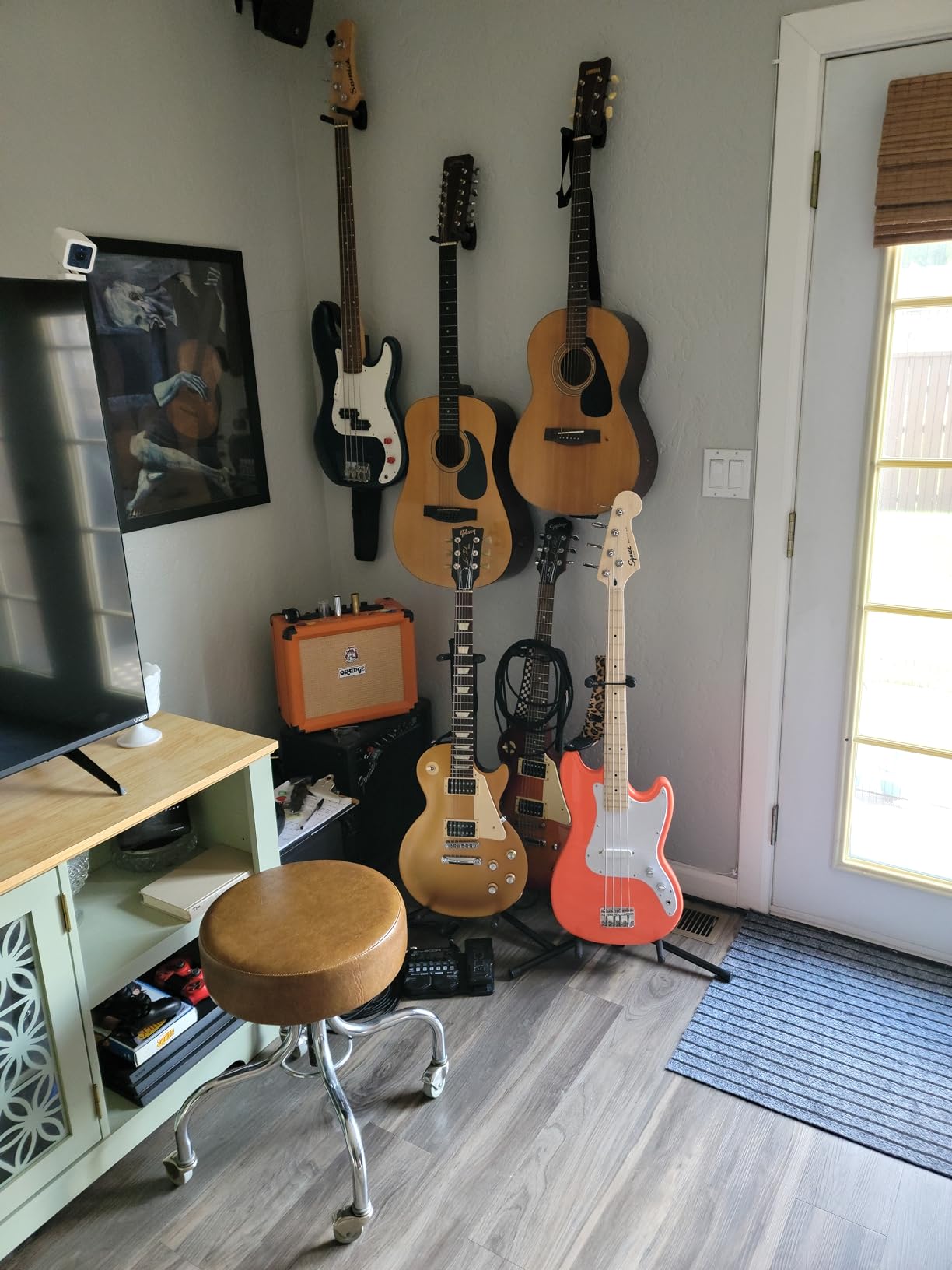
The Sonic Bronco is the one to buy if your hands already know a guitar neck. A 30 inch scale with a deliberately narrow nut width means the spacing feels familiar from instrument one, and owners consistently recommend it to guitarists making the switch to bass. The poplar body with a maple top keeps weight low, and the chrome hardware and durable finish hold up to regular handling.
Unlike the entry level two-saddle versions of this body style, the Sonic model uses a four-saddle bridge, which means you can set intonation per string. Owners note that many examples arrive already well set up, which removes the most common reason a first bass gets returned.
Beginners and guitarists switching to bass are the other main audience here. The instrument is designed to work for both kids and adults, and the narrow nut at 30 inches is a combination we would put in front of almost any player who finds a standard neck tiring.
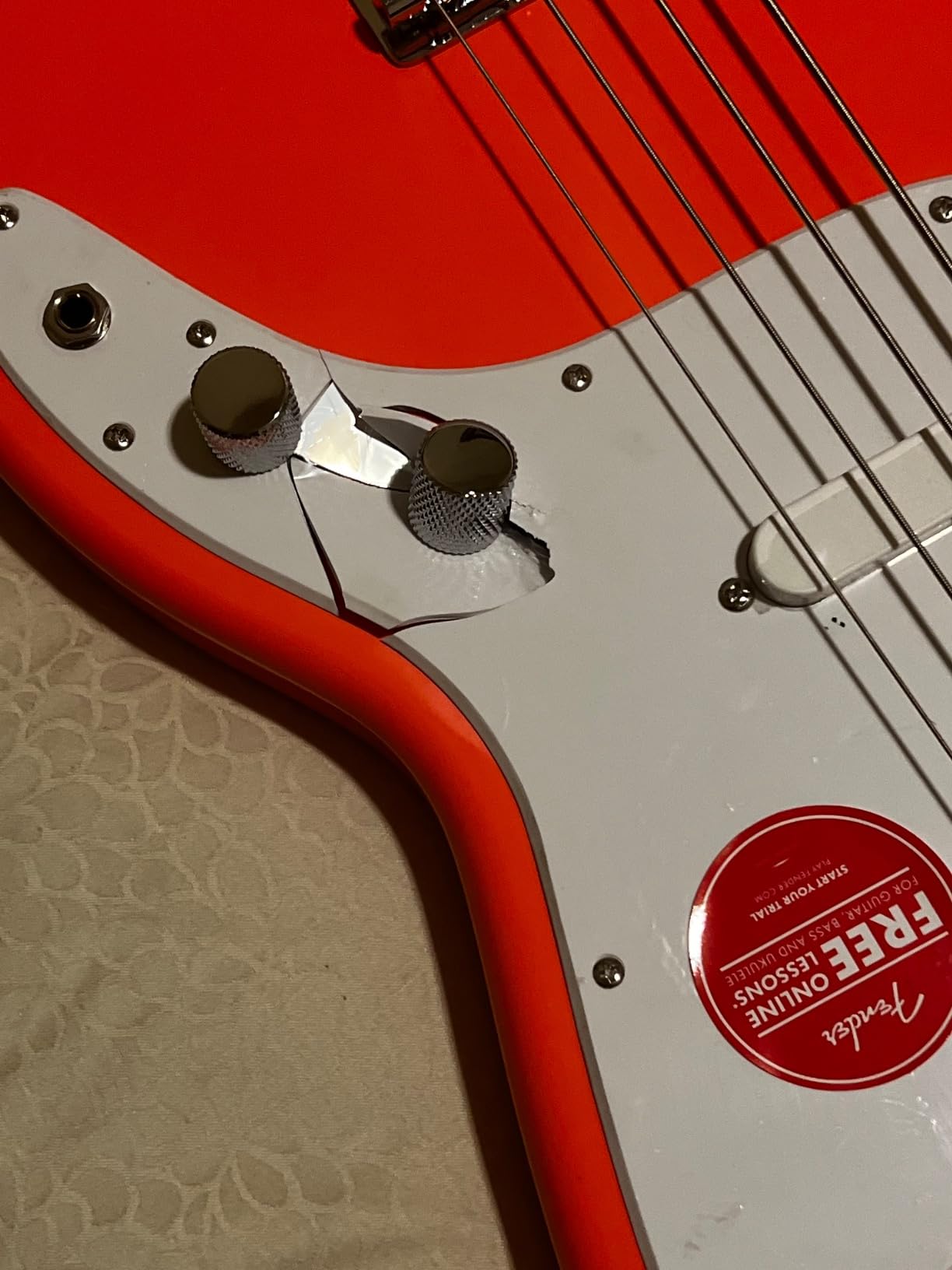
The factory single-coil pickup is the weak point, with very low output that most owners replace early. On some examples the strings sit off centre toward the E string, which forces every saddle to the same side of the bridge and makes intonation awkward to set, and lower quality examples are reported as difficult to dial in at the neck.
Finish accuracy is a smaller issue. Tahitian Coral reads noticeably pinker in person than in the listing photographs, so if colour matters to you, ask for a photograph. Some examples also show a gap between neck and body that is purely cosmetic but worth inspecting on arrival.
Who the Sonic Bronco Suits Best
Guitarists moving to bass, beginners who want a neck that feels like the instrument they already play, and anyone who prefers a narrow nut at a 30 inch scale. It suits players who want a little more room than a mini bass without committing to a full size instrument, and the two-year warranty is a useful signal.
Where the Sonic Bronco Falls Short
The pickup is a near-certain upgrade, which adds cost to the total. String alignment at the bridge is inconsistent enough that you should check it before the first session, and the neck on lower quality examples resists a proper setup. At 30 inches, very small hands may still want a shorter scale.
10. Jackson JS2 Spectra Bass – Active P.J Electronics With Compact Reach
Jackson JS Series Spectra Bass JS2, Gloss Black, Laurel Fingerboard
Shorter-than-standard scale length
Poplar body, maple neck
Laurel fingerboard
Active P.J pickups, hardtail bridge
Pros
- Shorter scale keeps reach manageable for smaller hands
- Active P.J electronics give stronger clearer output
- Poplar body and maple neck give a lively scooped response
- Gloss black finish and simple control layout
- 2-year warranty
Cons
- Heavier feel than dedicated mini or travel basses
- Active electronics need a fresh 9V battery
- Fixed hardtail bridge gives less intonation adjustment
The Spectra takes a different approach to short scale design. Rather than chasing the smallest possible instrument, it keeps a solid full size style body and shortens the reach, which means you get a traditional look with a modern voice. Buyers note the reach is easier than on a full size bass while the instrument still feels substantial, which is exactly the compromise many adults want.
The active P.J electronics are the standout. They deliver stronger, clearer output than the passive sets on most other short scale instruments here, with more low end definition and less noise. The poplar body and maple neck produce a lively, scooped response that suits modern styles, and the simple control layout makes it straightforward to set up and dial in.
The two-year warranty and the gloss black finish complete an instrument that looks considerably more expensive than it is. It is a good choice for a player who wants short scale reach without the toy-like proportions that put some adults off the format.
Who the Spectra Suits Best
Adults who want comfortable reach and dislike the miniature look of a 3/4 size instrument, plus players who need a stronger signal than passive electronics provide, whether for a small stage, a laptop rig, or direct recording. It is also a sensible first bass for a guitarist, since the shape and gloss finish read as a familiar step up.
Where the Spectra Falls Short
It does nothing for shoulder comfort, since it is a full weight instrument rather than a mini or travel bass. Active electronics need a fresh 9V battery and add weight, and the fixed hardtail bridge gives you less intonation adjustment than a four-saddle design. There is also a smaller pool of owner reviews here than for the other instruments in this roundup.
11. Gretsch Streamliner Jet Club Bass – 30 Inches With a 1.56 Inch Nut
Gretsch Streamliner Jet Club Single-Cut Short-Scale Electric Bass Guitar – Walnut Stain
Scale: 30 inch
Nut width: 1.56 inch
Nato body and neck
4-saddle bridge, Streamliner single-coils
Pros
- 30 inch scale with a soft C neck shape reduces fatigue
- Streamliner single-coils give a deep punchy articulate voice
- Separate volume knobs plus master tone
- Playable with little or no adjustment out of the box
- Walnut stain and aged white binding
Cons
- Tuners are finicky and need small turns both ways
- Few owner reviews so long-term data is limited
- Some examples had sharp fret ends
Every owner review on this listing is positive, and the reason is consistent: reach and setup. At 30 inches with a soft C neck shape, the Jet Club removes the stretch that stops small-handed players, and owners describe an immediate improvement over a full size bass. The instrument is also reported as playable with little or no adjustment straight out of the box, which is not a claim most short scale basses can make.
The Streamliner single-coil pickups produce a deep, punchy and articulate voice that suits rock and roll and country, and the individual neck and bridge volume knobs plus a master tone give a wide range of settings from one pair of coils. The 1.56 inch nut is not a narrow one, so this is a short scale option for a hand that can already manage a normal neck width.
Visually it is the most distinctive instrument in the roundup, with walnut stain, aged white neck binding and knurled radio control knobs. A four-saddle adjustable bridge gives you proper per-string intonation control, and Gretsch backs it with a two-year warranty.
Who the Jet Club Suits Best
Small-handed players who want short scale reach without a toy-like body, and country, rockabilly and roots players who want a punchy single-coil voice with real control over it. It suits anyone who wants an instrument that works immediately out of the box, and it suits players who want a Gretsch look rather than a Precision or Jazz silhouette.
Where the Jet Club Falls Short
There are very few owner reviews, so long-term reliability data is thin. The tuners are reported as finicky and need small turns in both directions to settle, which takes some patience, and the 1.56 inch nut is wider than the roughly 1.5 inch nut on the Classic Vibe Mustang, so it is not the first instrument to reach for if nut width is your main problem.
How to Check If a Bass Fits Your Hands
Before you buy any short scale bass, measure rather than guess. Most disappointment in this category comes from a buyer who read a scale length figure, ordered, and then found the nut width or the body depth was wrong for them. Four steps cover it.
Step one: measure your hand span. Open your fretting hand fully, thumb to middle finger, and measure the distance in inches. This is the maximum reach you have and no amount of technique will increase it. A span of eight inches or more gives most adults plenty of room, and below eight inches you will feel the difference between a 34 inch neck and a 28.5 inch one immediately.
Step two: compare against the nut to 12th fret distance. The useful number is how far you must stretch to fret the twelfth fret, because that is the reach that causes strain. On a 34 inch scale that distance is roughly 17 inches, on a 30 inch scale about 15 inches, and on a 28.6 inch scale about 14.3 inches. Losing three inches of reach sounds small and feels enormous.
Step three: apply the 3 fret rule. If you can comfortably fret the third fret on a full size neck while keeping your thumb anchored, you can play a 34 inch bass. You do not need a short scale. If you cannot reach that third fret without shifting your whole hand, a short scale is not a luxury but a practical answer, and a 28.5 or 28.6 inch model is where most players start.
Step four: test with a capo. This is the trick experienced players recommend in shops. Put a capo on the third fret of a full size bass and play as if it were the nut. If your hand position looks natural and the reach feels fine, a 28.5 inch scale will be comfortable. If you are still fighting it, look at 25.5 inch and 22 7/8 inch instruments.
One more physical factor deserves a mention. Many small-handed players are smaller overall, and shoulder comfort is often the real limit rather than hand comfort. The 2.4 pound Cordoba and the 3 lbs 7 oz Traveler are the two lightest instruments in this list, and the 3 kg miKro is light for a solidbody of its size. All three are worth trying if you play for hours rather than minutes.
Short Scale vs Long Scale: What You Give Up
Short scales are not strictly better, and buying one without knowing the trade can lead to a second instrument purchase six months later. These are the real costs.
Shorter string throw. Less distance between frets means wide intervals and fast scale runs feel compressed. Players who use large position jumps or aggressive vibrato will notice the difference immediately.
Tighter low end. Shorter strings at the same pitch carry less energy, so the bottom octave sits less deep than a long scale instrument. You can compensate at the amplifier, but the character changes.
Narrower string and tuning choices. Going heavier on a very short scale adds tension to an already flexible string, and going very light can make tuning stability worse. Some short scale necks will not accept heavier gauges without work at the nut and saddle.
Setup variety. If you own several basses, moving between a short scale and a long scale instrument means different action, different strings and a fresh setup each time.
The student model reputation. Short scales carry a stigma from cheap practice instruments, which is why buyers on forums ask so often whether these are real basses. The ones in this roundup are not, but the perception is real.
None of these are dealbreakers, and the reach gains usually outweigh them for players who buy short scales deliberately. But a large-handed player choosing a short scale purely for the ergonomics is giving up more than a beginner is.
How to Choose a Short Scale Bass
Scale length gets the attention, but four other numbers decide whether an instrument is comfortable in the long run.
Scale length. Anything under 32 inches counts as short scale; the practical choices start at 22 7/8 inches, move through 25.5 and 28.5, and settle at 30. Beginners with small hands usually land well at 28.5 or 28.6 inches, which is the most common short scale in this roundup. Go shorter if you are under about 13, teaching a child, or playing nylon strings. Go to 30 inches if you want more room and standard short scale string sets.
Nut width. This is the number the spec sheets rarely print and the one that decides cramping. Narrow-nut instruments such as the Squier Sonic Bronco are the easiest for hands coming from guitar, while the Gretsch Jet Club at 1.56 inches is closer to a normal bass neck. Always try before committing.
Neck profile. A C shape is the safe default for small hands. Slim profiles reduce the depth of the back of your hand and reduce fatigue, while deep U and V shapes are comfortable for years once you are used to them and uncomfortable for the first six months if you are not.
Body weight and depth. If your limiting factor is hands, weight barely matters. If you have shoulder or back strain, it matters more than scale length, and the 2.4 pound Cordoba, the 3 kg miKro or the 3 lbs 7 oz Traveler will do more for you than a shorter neck would. Body depth also affects comfort, since a slab-sided instrument presses harder against your forearm.
String gauge and tension. Short scales are usually strung lighter because the same pitch needs less tension over a shorter distance. Stay within the gauge the manufacturer specifies, and if you intend to move to heavier strings, check that the nut and saddle can take it. On a very short scale like the Cordoba, the tension math limits you more than on any other instrument here.
Four strings or five. A short scale five string is unusual but genuinely useful, and the GSRM25BK shows you can have a low B without a long neck. Choose it if you play modern pop and funk. Stay with four strings if you play rock, country, or anything where the low B rarely appears.
Finally, solidbody or acoustic. A short scale solidbody handles loud band playing, while a short scale acoustic-electric like the Cordoba wins for silent practice, travel and small rooms. Pick the one that matches where you actually play, not the one that looks more serious.
Frequently Asked Questions
Is 30 inches a short scale bass?
Yes. A 30 inch scale is one of the most common short scale lengths, and it is considered a comfortable middle ground for small hands because it removes about 4 inches of reach from a 34 inch long scale while still taking standard short scale string sets. Models at 28.5 or 28.6 inches shorten the reach further, and 25.5 inch and 22 7/8 inch instruments go much shorter still.
Is 34 inches a long scale bass?
Yes. 34 inches is the traditional long scale length used by Fender Precision and Jazz Bass style instruments, and it is the benchmark every short scale is measured against. Anything under about 32 inches is generally considered short scale. A 34 inch neck is very playable for many adults and teenagers, provided the hand span allows fretting past the third fret.
What is the 3 fret rule on bass?
The 3 fret rule is a quick test of whether you need a short scale instrument. If you can comfortably fret the third fret on a full size 34 inch bass while keeping your thumb anchored behind the neck, you can play a long scale and do not need a short scale. If you have to move your whole hand or shift position to reach it, a 28.5 to 30 inch scale will be far more comfortable.
What are the downsides of a short scale bass?
The main costs are a shorter string throw that makes wide intervals and fast runs feel compressed, less low end energy at the bottom octave compared with a 34 inch instrument, and narrower string and tuning choices because going heavier on a very short scale adds tension. Setup also differs between short and long scale instruments, so owning both means restringing and readjusting more often.
What is considered the best short scale bass?
Most players consider the best short scale basses to be those between 28.5 and 30 inches, because that range removes enough reach to relieve hand strain without feeling like a toy. In this roundup the Ibanez GSRM20 miKro at roughly 28.6 inches takes first place for its 28.6 inch scale and 3 kg weight, with the Squier Mini Precision as the compact option and the Jackson JS1X for a reinforced neck.
Conclusion
If your hand span will not let you fret past the third fret of a full size neck, a short scale bass is the shortest path to playing without pain. The Ibanez GSRM20 miKro wins our review of the best short scale bass guitars for small hands because a 28.6 inch scale and a 3 kg poplar body solve hand comfort and shoulder comfort at the same time, and it holds its tuning and finish better than most instruments at this level. Go shorter with the Squier Mini Precision if even 28.6 inches is a stretch, and add reach back to 30 inches with the Traveler Ultra-Light if you travel.
Measure your hand span before you order, take the fresh strings question seriously, and expect to book a setup on anything at this level. That one hour of preparation is the difference between an instrument you want to pick up and one that ends up in a cupboard. This roundup was tested and written in 2026, and we will keep updating it as the models change.