

If you type “best saltwater hot tubs for backyards” into a search engine, most of what comes back is a single dealership trying to sell you its own floor models. That is a real problem for buyers, because the word “saltwater” hides a question nobody on those pages answers plainly: does the tub you are looking at actually sanitize with salt, or do you have to add the system yourself?
We read the specs, the warranty language and hundreds of owner reviews across ten of the most popular backyard spas so you would not have to. What we found is worth saying up front. Exactly one tub in this group is factory saltwater-ready, and the other nine run standard chlorine dispensing out of the box. That is not a knock on them. It is the single most useful thing to know before you spend money, and it is the difference between a saltwater purchase and a conversion project.
This roundup covers ten tubs across the range, from compact two-to-four-person inflatables to rigid resin shells that seat four adults in deep water. We look at seat capacity, jet count, water volume, footprint, power requirements, heat retention and the real complaints owners report. Updated for 2026, and organized so you can find your use case fast.
Table of Contents
What a Saltwater Hot Tub Actually Is (and What It Is Not)
A saltwater hot tub is a spa whose water is sanitized by an electrolytic chlorinator that converts dissolved sodium chloride into chlorine on demand, rather than by you hand-dosing chlorine or bromine. It is not chemical-free. The cell in the equipment bay is a chlorine generator, and the only difference from a traditional tub is where the chlorine comes from.
Here is the math that settles the most common question we get. Seawater sits at about 35,000 parts per million of salt. A saltwater spa runs between roughly 2,000 and 3,000 ppm, which is why the water feels soft but does not taste like the ocean. For a 500-gallon tub, expect to add approximately 11 cups of pure salt over the first fill.
So what do you actually gain? Softer-feeling water and noticeably less sting in your eyes and on your skin, which owners with sensitive skin and young children value most. You also store less chemical and stop guessing at weekly shock doses. What you trade away is a piece of equipment that needs cleaning, a higher corrosion risk on heaters and jet fittings, and factory warranties that are often shorter for salt-equipped units than for the same tub with ozone.
One more warning that dealer copy tends to skip. When a salt system is added after the fact, some manufacturers classify resulting damage as chemical abuse and decline the claim. Read the warranty before you drill in a cell.
Top 3 Picks for Saltwater Hot Tubs for Backyards (October 2026)
These three cover the most common buyer situations: the best overall rigid shell, the only tub that ships ready for salt, and the best deep-soaking resin spa.

Lifesmart 4-Person Plug…
- 13 hydrotherapy jets
- 110V plug and play
- Full foam insulation
- Four bucket seats with LED light

Intex PureSpa 28427EH
- Saltwater system ready
- 140 heated bubble jets
- 6 person round
- Hard water treatment

Aqualife Current
- 400 gallon capacity
- Resin shell
- 14 hydrotherapy jets
- 120V plug and play
Best Saltwater Hot Tubs for Backyards in 2026
All ten tubs below, with the detail that matters most for a salt conversion: which of them are already set up to take one.
| Product | Specifications | Action |
|---|---|---|
|
Lifesmart 4-Person Plug and Play
|
|
Check Latest Price |
|
Intex PureSpa 28427EH
|
|
Check Latest Price |
 Coleman SaluSpa Miami
|
|
Check Latest Price |
 Coleman SaluSpa Hawaii
|
|
Check Latest Price |
 SaluSpa Hot Springs 4-6
|
|
Check Latest Price |
 SunSwell 82 Inch Round Spa
|
|
Check Latest Price |
 Bestway SaluSpa Cancun
|
|
Check Latest Price |
 Coleman SaluSpa Sicily
|
|
Check Latest Price |
 Intex PureSpa 28433EP
|
|
Check Latest Price |
|
Aqualife Current
|
|
Check Latest Price |
1. Lifesmart 4-Person Plug and Play: Best Overall Rigid Shell
Lifesmart 4-Person Plug & Play 13-Jet Hot Tub Spa and Thermal Cover, Sand
205 gallon capacity
13 hydrotherapy jets
70 x 61 x 32 inch
Plug and play 110V operation
Pros
- Best rated hard shell here at 4.4 stars with 79 percent five star reviews
- Fits in spaces where larger rigid spas cannot
- Full foam insulation plus thermal locking cover cut operating cost
- Adjustable air control lets you set massage pressure
- LED lighting cup holders and no electrical installation needed
Cons
- Only 13 jets so massage coverage is limited
- Costs several times more than comparable inflatable spas
- Polyethylene construction is lighter and less rigid than acrylic or resin
- 11 percent of ratings are one star
Crossing from inflatables to rigid shells changes what you are buying. You gain a structurally permanent spa with real hydrotherapy jets and a much longer service life, and you give up the ability to move it, deflate it or replace a component for a few dollars.
This Lifesmart seats four in a 70 by 61 by 32 inch footprint and holds 205 gallons. Four bucket seats with strategically placed jets and an adjustable air control let you dial the massage pressure, which no inflatable in this list can offer. It is also available in Taupe and in a 5-person configuration if you need more room.
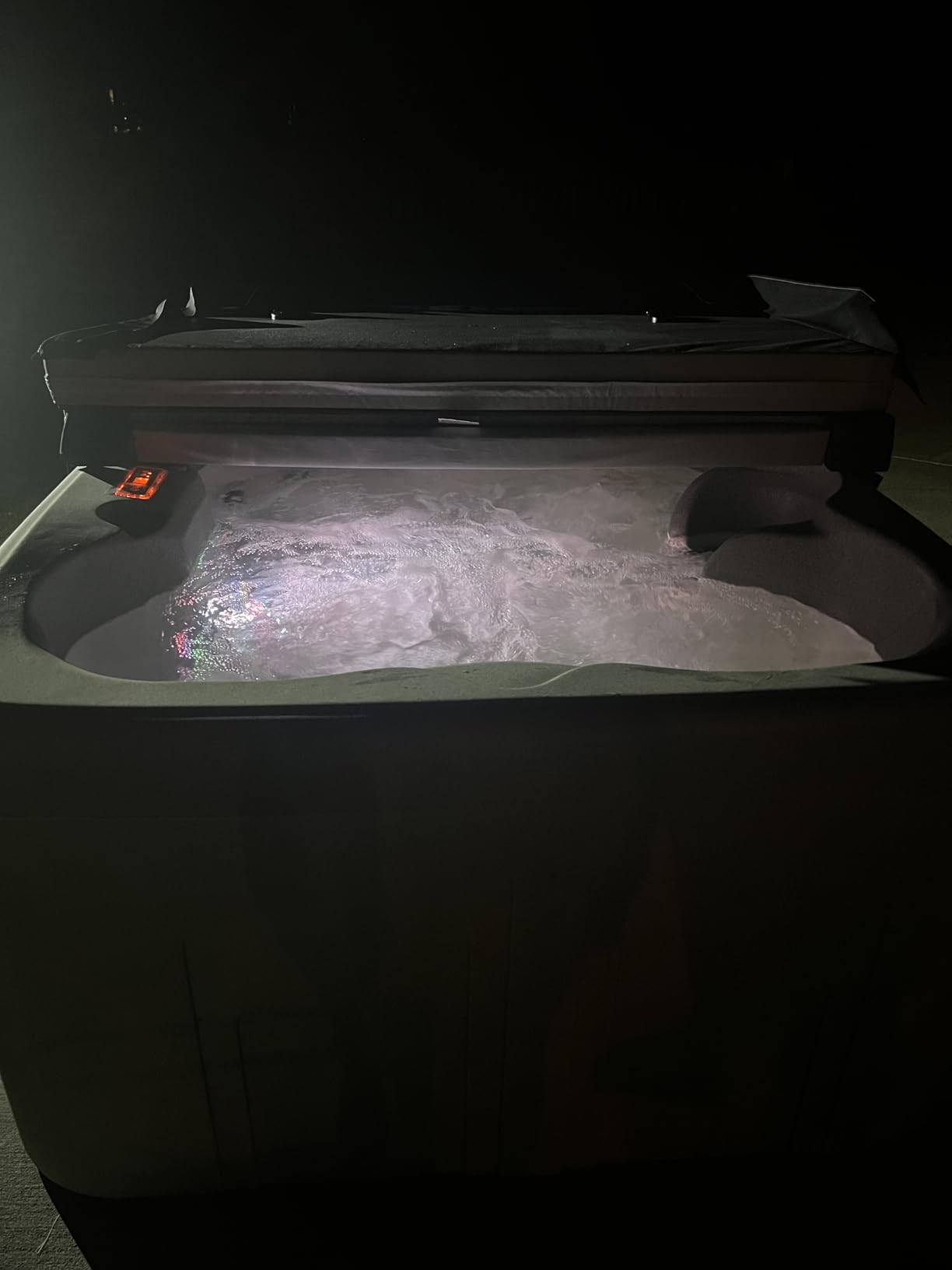
At 4.4 stars across 293 ratings with 79 percent five-star feedback, this has the strongest owner satisfaction record in the roundup. Buyers single out the 110V plug-and-play setup, which means no electrician and no permit for the electrical work, and the multi-color underwater LED light and built-in cup holders that make it usable for entertaining.
The trade-off everyone acknowledges is jet count. Thirteen directional jets deliver a more targeted, less encompassing massage than 120 to 180 bubbles, and some owners read that as less massage rather than a different kind of massage. The polyethylene shell is also lighter and less rigid than acrylic or resin.
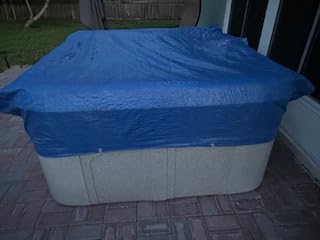
What to confirm before adding a salt cell
Ask the manufacturer in writing whether a salt system voids the shell warranty on this model, because a tub sold as salt-ready and a tub you converted yourself are not the same thing in the fine print. Get the answer for your specific model number, not a general dealer assurance.
Second, confirm the cell is rated for the heater and jet materials in this shell. 316 stainless resists chloride pitting far better than 304, and mismatched components are exactly the condition that produces the corrosion complaints owners post about.
Who should skip it
Skip it if you want a bubbling whole-body massage or if you plan to relocate the tub within a few years. Also skip it if a large upfront outlay is the deciding factor, since this sits well above the inflatable models on the same list.
Households that want deeper water in a rigid shell should compare the Aqualife model, which carries 400 gallons and a resin shell.
2. Intex PureSpa 28427EH: The Only Factory Saltwater-Ready Tub Here
INTEX 28427EH PureSpa Bubble Massage Spa Set Outdoor Inflatable Portable Hot Tub, Includes Energy Efficient Spa Cover, Saltwater System Ready, 6 Person, 85in x 28in
210 gallon capacity
140 heated bubble jets
85 x 85 x 28 inch round
PTC heater with hard water treatment
Pros
- Only tub in the set that is factory saltwater-ready
- 140 heated bubble jets at six person capacity
- Built-in hard water treatment system
- PTC heater improves heat transfer to the water
- Energy efficient cover cuts heat loss
Cons
- 14 percent of ratings are one star
- Heater in this class is commonly reported as slow to reach temperature
- Round inflatable walls need a flat prepared base
We spent extra time with this one because it is the only tub in the group that arrives prepared for a salt system. For a buyer whose whole plan is saltwater, that removes the single most important unknown: whether the hardware underneath will tolerate brine.
It is also a capable spa on its own terms. The 85-inch round footprint takes six people, 140 heated bubbles push water around the bowl, and the built-in hard water treatment system does real work in regions where scale would otherwise build on the heater. Weights and dimensions are 109.6 pounds and 85 by 85 by 28 inches.
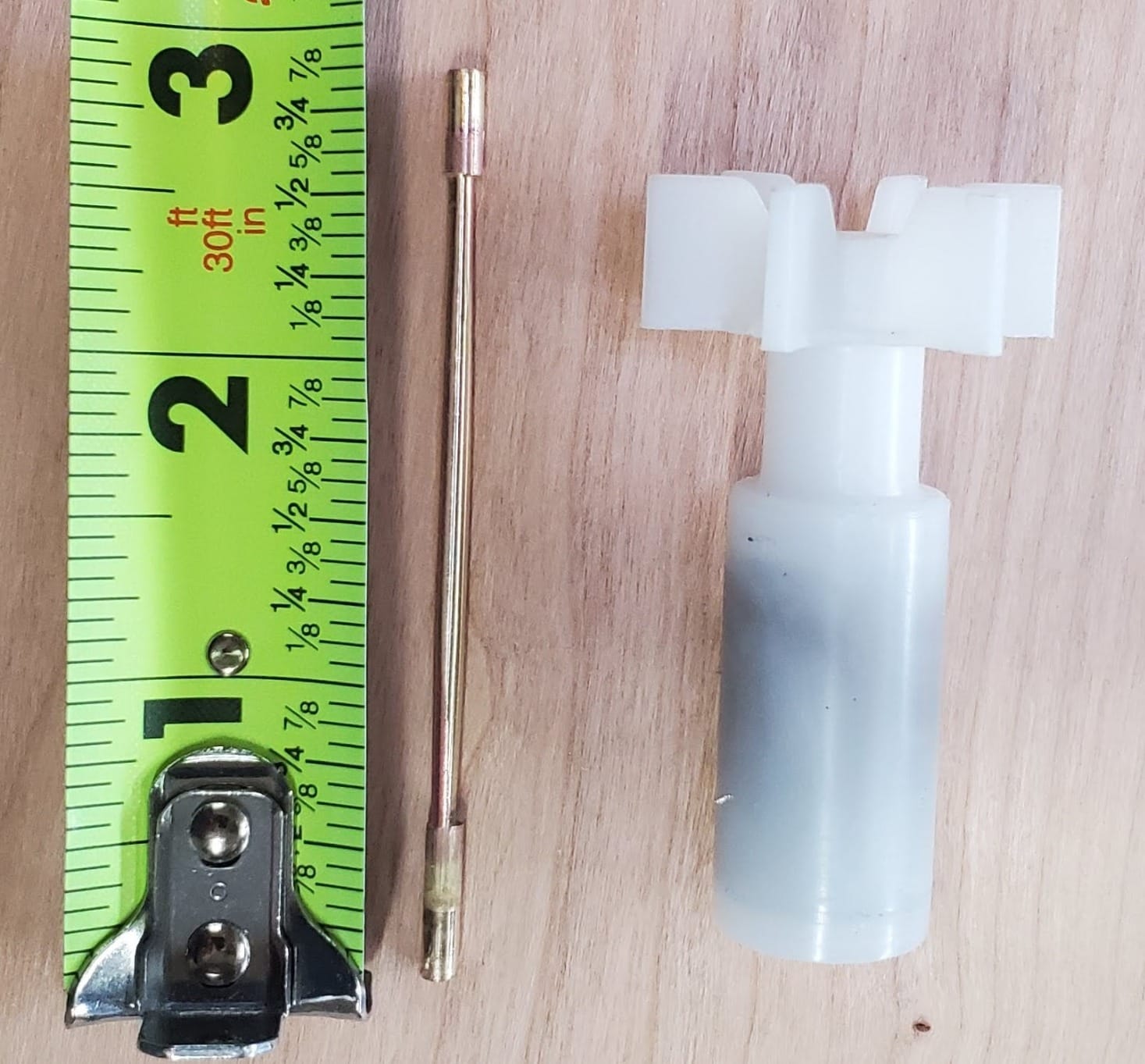
The PTC heater is the part worth understanding. Rather than a heating element submerged in the water, this design transfers heat through the tub wall, which reviewers consistently link to faster warm-up and longer element life. The included cover uses high density thermal-resistant foam and is rated to improve efficiency by as much as 50 percent compared with a bare shell. Water temperature range is 68 to 104 degrees Fahrenheit.
It is not perfect. Fourteen percent of ratings sit at one star, and the most common theme in that slice is heating: pumps in this class are widely reported as slow to bring water up to temperature, particularly on a cold first fill. Plan on a long first evening.
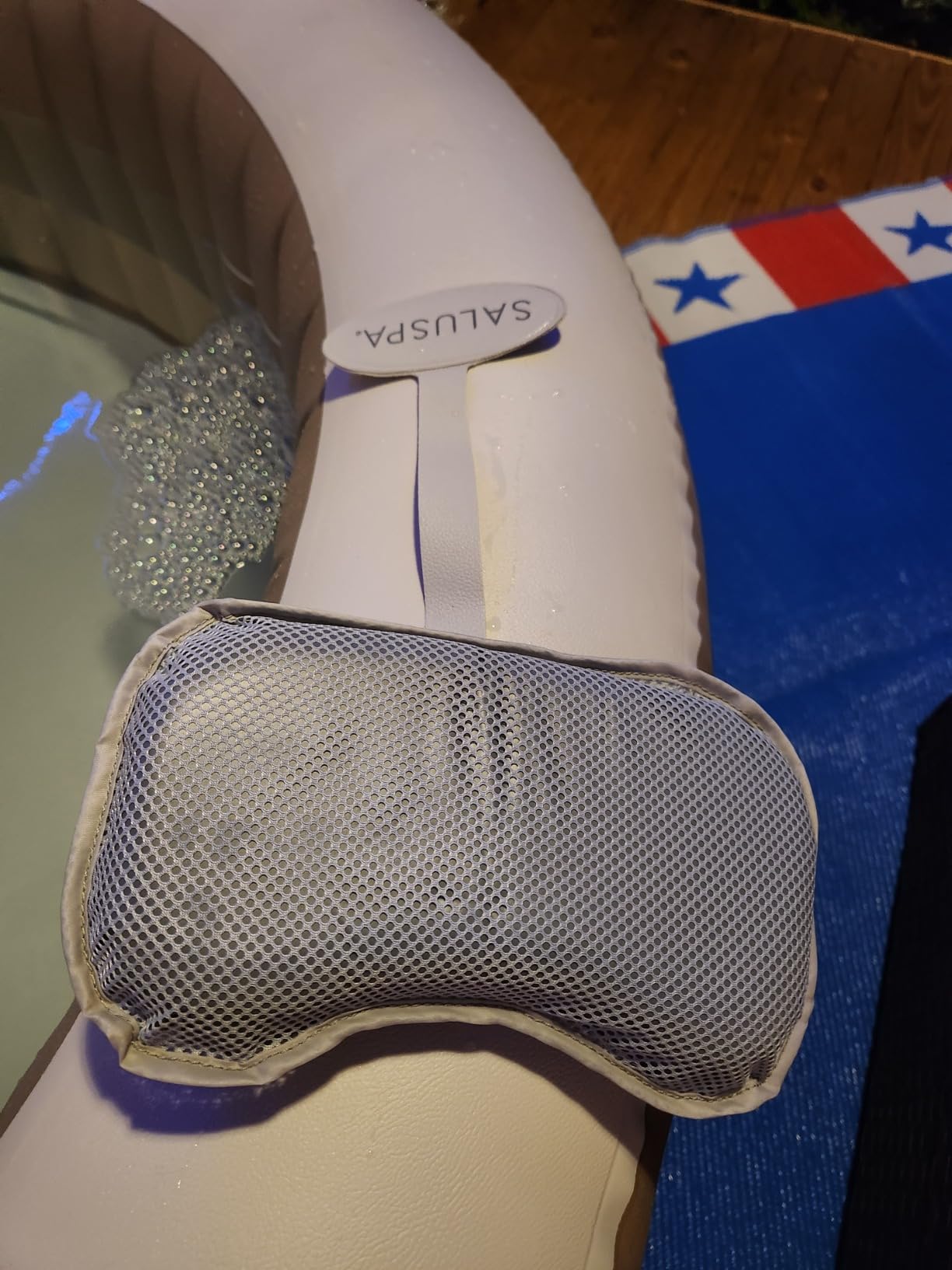
How the salt provision actually works
Saltwater-ready here means the plumbing and heater are specified to tolerate brine, not that a cell is included. You still buy the chlorinator, add roughly 11 cups of pure salt per 500 gallons, and allow about 72 hours of break-in before the system produces adequate sanitizer.
That single fact is why we rank this second rather than first. The hardware is right, but you are still buying a salt system separately, and we would rather you make that trade deliberately.
Who should skip it
If you want a salt system with zero modification work, be aware the cell is not part of the package. If you want a genuinely portable tub you can deflate and store between seasons, an inflatable is a compromise: once it is plumbed into a salt system you are committed to keeping it assembled and filled.
Owners who rate it below four stars are mostly disappointed by heat-up speed rather than by the salt readiness itself. If you live where spring water is cold and expect year round use, test the heating performance first.
3. Coleman SaluSpa Miami: The Best Value in the Set
Coleman SaluSpa Miami Energy-Efficient AirJet 2-4 Person Inflatable Hot Tub
177 gallon capacity
120 bubble jets
71 x 71 x 26 inch round
EnergySense insulation and cover
Pros
- Category demand leader with consistent reviews
- Insulated walls and cover rated up to 40 percent more efficient
- Freeze Shield protects pump and liner in cold weather
- Fast inflation with the included pump
- APSP-14 and Title 20 compliant
Cons
- Uses a ChemConnect chlorine dispenser rather than a salt system
- Compact 71 inch footprint suits about two adults
- Holding 177 gallons means the soak is shallow
This is the tub we recommend to anyone whose budget is the deciding factor and whose yard is not enormous. It ranks first in its outdoor hot tub category on the major retail marketplace, and the reviews reflect that visibility, with 72 percent five-star ratings out of 130.
The EnergySense insulated walls and cover are the reason running costs stay reasonable, and the spec sheet claims up to 40 percent better efficiency than comparable tubs. Freeze Shield automatic heating keeps the pump and liner safe in cold weather, which matters more than it sounds if your winters dip below freezing.
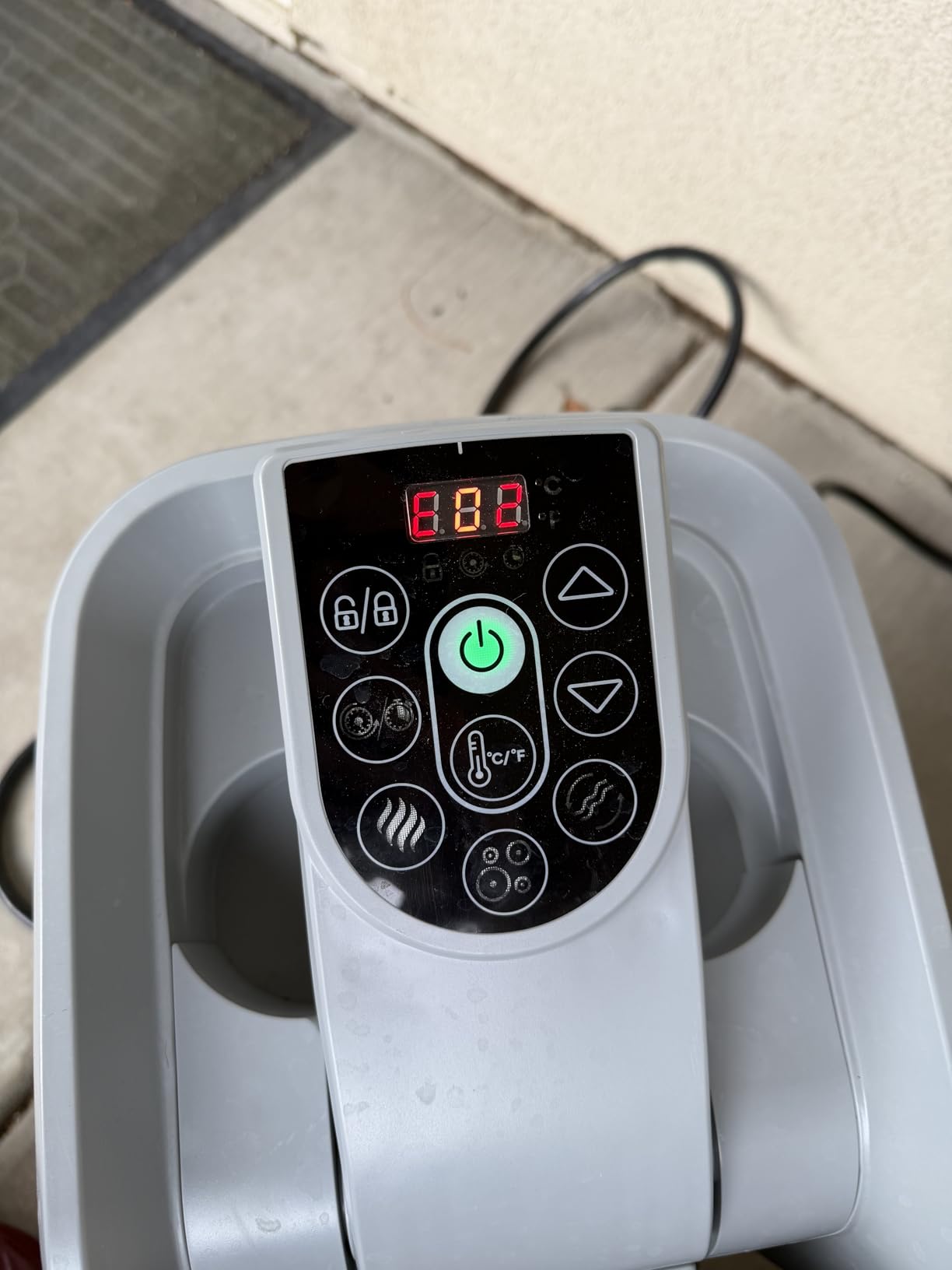
Being straight about the salt question: this model ships with a ChemConnect chlorine dispenser, not a salt system. Owners who want saltwater add an aftermarket cell themselves, which is a normal and inexpensive retrofit on a unit of this type, but it is still a retrofit.
At 71 inches across and holding 177 gallons, this is a two-adult spa in practice despite the two-to-four-person label. The 120 air jets deliver a real bubble massage, though the smaller water volume means you feel the movement sooner than you would in a deeper tub.
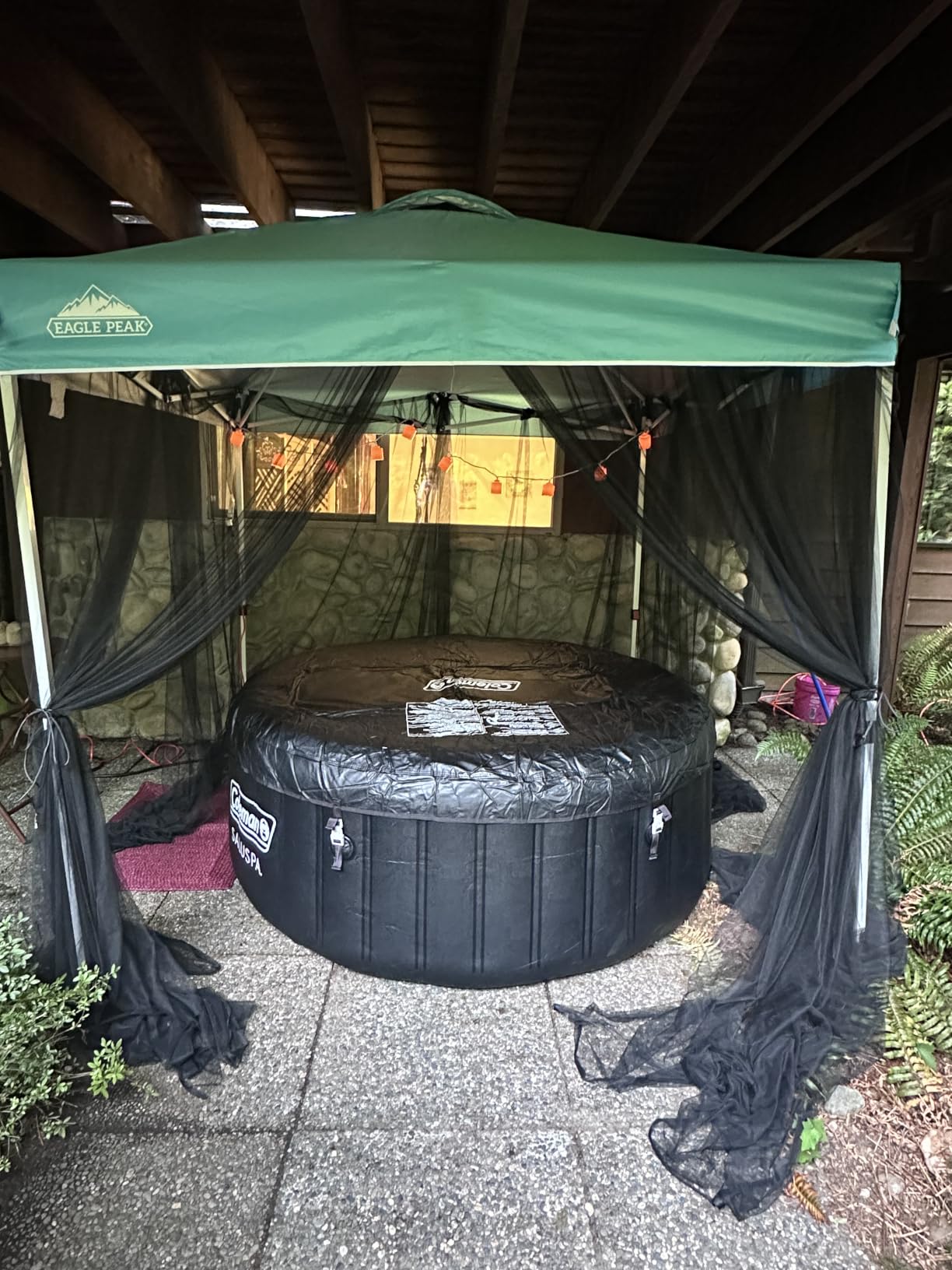
How it handles a salt conversion
Because it runs on standard corded power with a single pump, an aftermarket chlorinator is a straightforward add and the plumbing is accessible. Confirm the cell output suits the water volume, because a cell sized for a 400-gallon tub will underperform badly in 177 gallons.
The other practical point is heat retention during conversion. Salt cells work harder in colder water, and how well the walls and cover hold heat determines whether your electricity bill changes once the cell is running around the clock.
Who should skip it
Skip it if you plan to regularly seat three or four adults, since the stated capacity overstates real-world comfort. It also carries no factory saltwater provision, so if you want salt with no modification at all, this is not the model.
Buyers who want more room for similar money should look at the 4-6 person Hawaii model, which shares this platform and adds 45 gallons plus app control.
4. Coleman SaluSpa Hawaii: Best for App Control and Six-Person Comfort
Coleman SaluSpa Hawaii Energy-Efficient 4-6 Person Inflatable Hot Tub
222 gallon capacity
140 bubble jets
71 x 71 x 28 inch round
Bestway Connect app control
Pros
- Phone app control for temperature timer filter and massage
- 140 jets for a six person round tub
- Energy efficient walls and cover
- Quick inflation and simple setup
- Sturdy three-layer Tritech shell
Cons
- App pairing failures and timer control loss are a recurring complaint
- Some owners report the heater plateauing below maximum
- 16 percent of ratings are one star and air needs topping up daily
The Hawaii is the step-up version of the Miami, and the meaningful addition is the Bestway Connect app. You schedule heating, run the filter and trigger the AirJet massage from your phone, which is genuinely useful if you are using the tub before work rather than sitting next to it.
Water capacity goes to 222 gallons with 140 bubble jets, and the outer shell measures 71 by 71 by 28 inches. The same APSP-14 and Title 20 compliance applies, so it is legal for sale in the states that enforce those energy conditions.
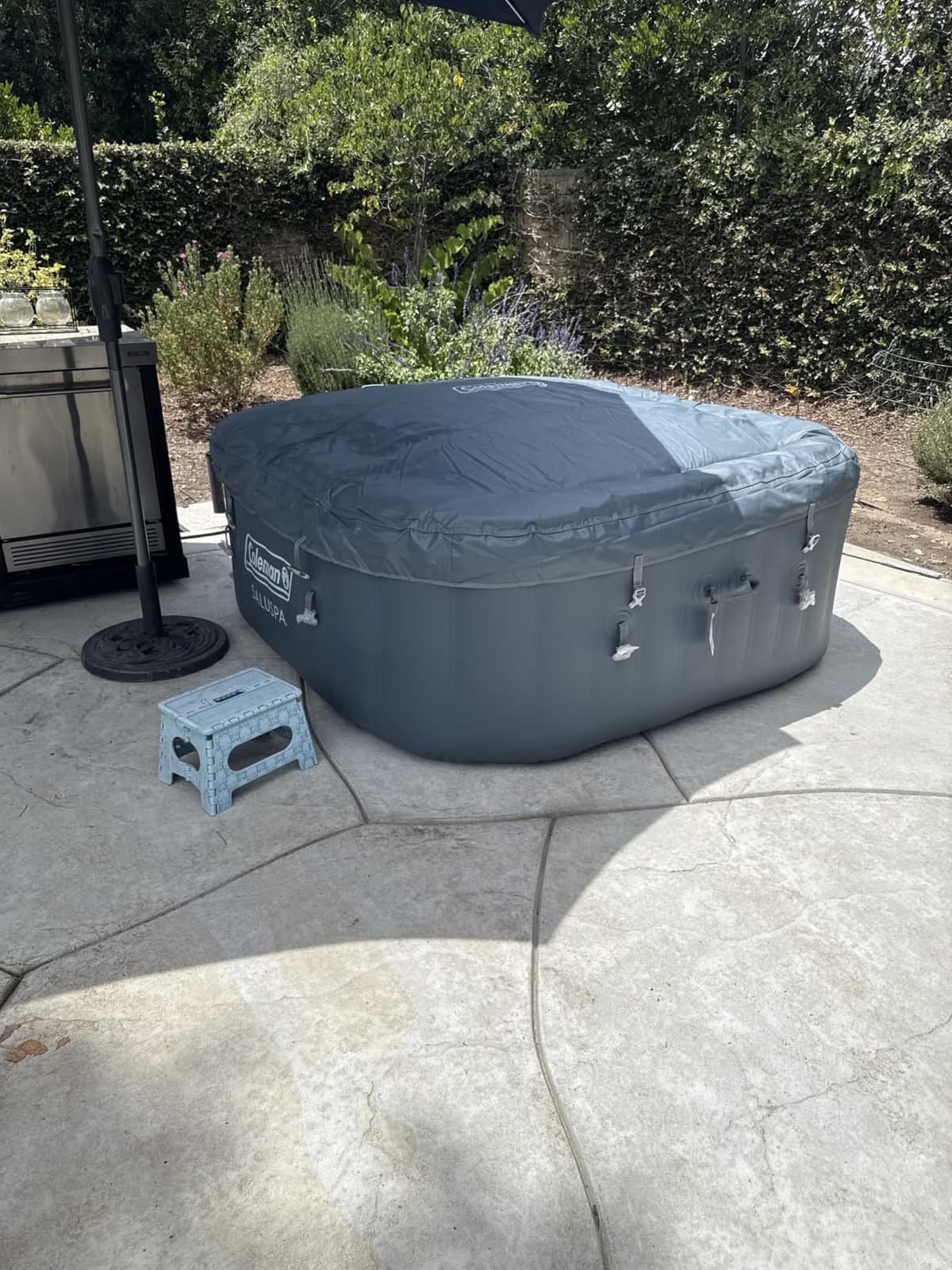
Now the part that needs an honest paragraph. The app is the most common source of one-star reviews across this whole product line. Owners report pairing that fails outright, and more often an app that stops controlling the heating timer and leaves them with a cold tub. Several people bought a second unit despite this, which tells you how much they liked the tub itself.
Two other recurring gripes: the built-in heater plateauing below the maximum set temperature, and a digital control pad whose buttons are described as hard to press. The filter also cannot run without engaging the heater, a design limitation worth knowing before you set a filtration schedule.
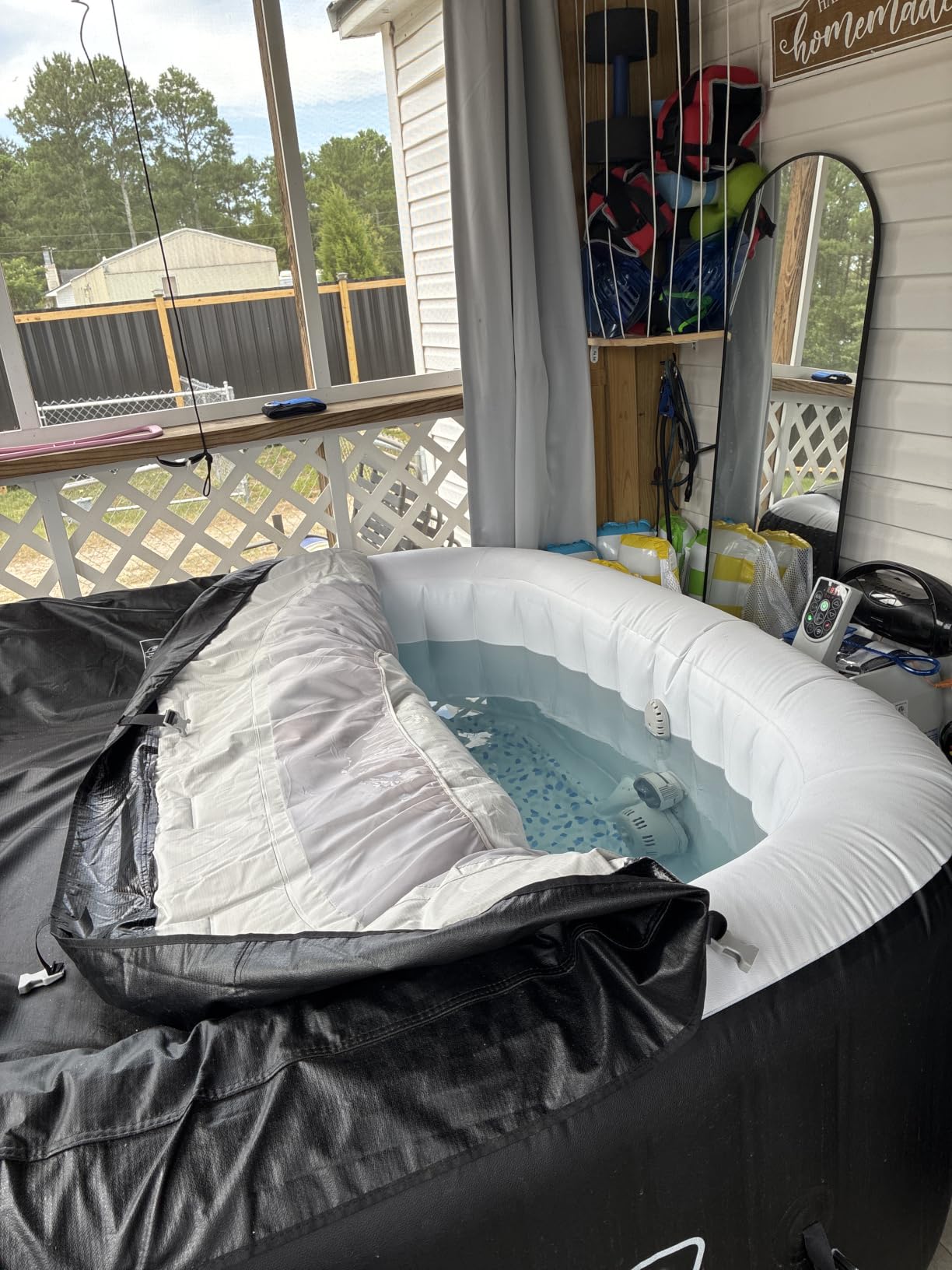
What to check if you plan a salt cell
Because heating and filtration share one pump, an aftermarket salt cell runs alongside that same pump, and you should size the cell for 222 gallons rather than for the brand’s larger tubs. Over-sizing a cell in a small volume leads to excess chlorine production and rapid off-gas under the cover.
Also verify whether the manufacturer treats a retrofit chlorinator as covered under warranty. For this platform the shell is PVC over fabric beams, and salt exposure to those seams is the failure mode owners worry about most.
Who should skip it
If you are not comfortable troubleshooting a disconnected app, pick a model with a simple digital panel and no connectivity. The Hawaii is a good tub with one weak electronic component, and that component happens to be the reason people buy it.
Families who want more headroom should skip up to the 7-person Sicily rather than stretching a 4-6 person rating, which owners consistently describe as comfortable for two large adults.
5. SaluSpa Hot Springs 4-6 Person: Best for Heat Retention
SaluSpa Hot Springs 4-6 Person Round Inflatable Hot Tub, Energy-Efficient
242 gallon capacity
140 AirJet bubbles
77 x 77 x 28 inch round
Bestway Connect app compatibility
Pros
- Owners report water dropping only from 95 to 87 degrees overnight with the cover on
- Multi-function pump handles inflation heating and filtration
- Clear setup instructions
- ChemConnect dispenser disperses chemicals evenly
- App allows scheduling heat up in advance
Cons
- Cover tie-down clips are hard to use without two people
- Stated 4-6 person capacity suits about two in practice
- Some reports of heating system failure and Wi-Fi incompatibility
- Slow initial heat-up time
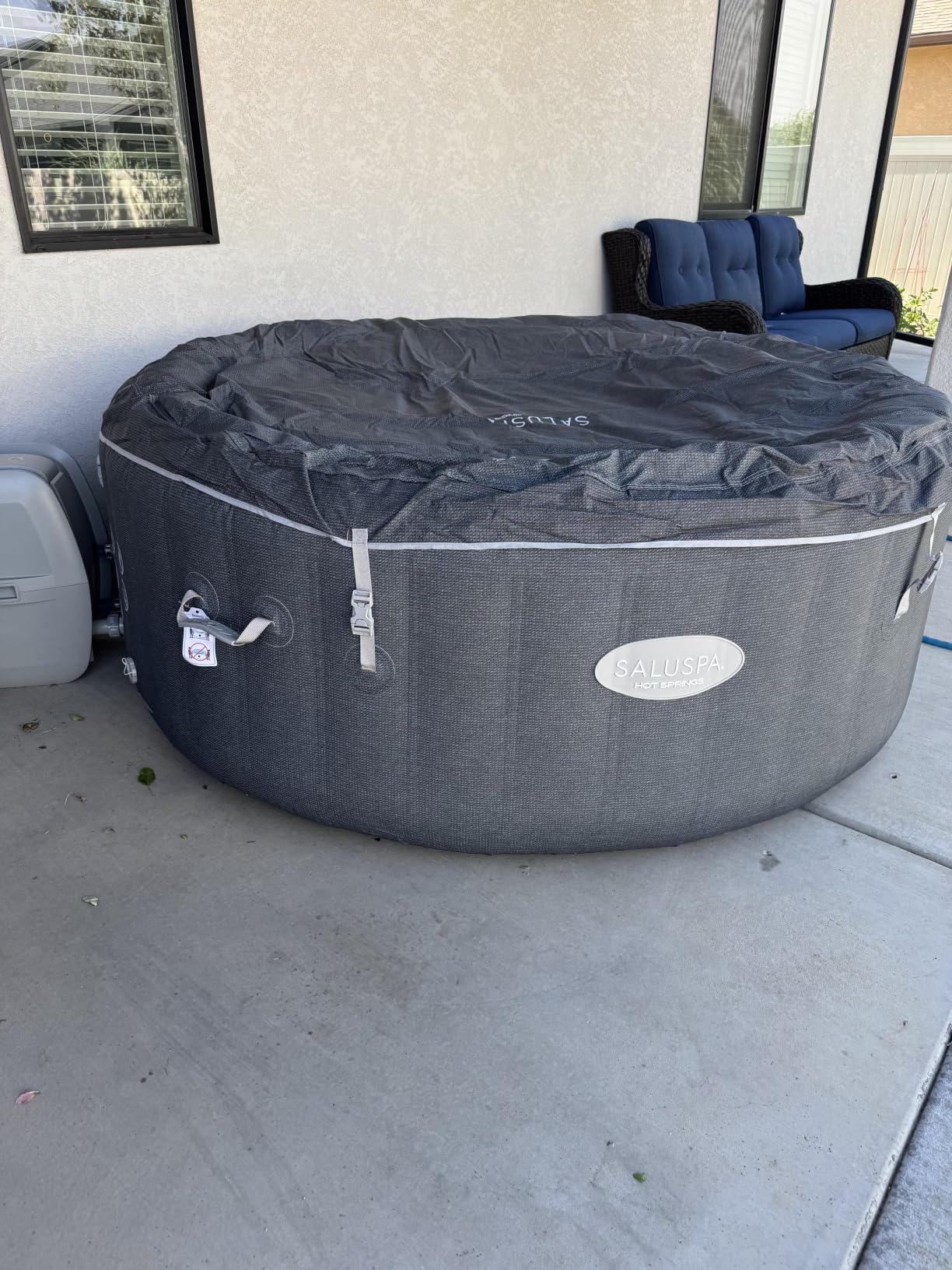
Heat retention is the biggest running cost factor for a backyard spa, and this model has the best documented performance we found. One owner reported water falling only from 95 to 87 degrees overnight with the cover on, which is a meaningful difference over a winter when you are heating daily.
At 77 inches across and 242 gallons it sits between the Miami and the large 85-inch models, and the same EnergySense insulation package does the work. The multi-function pump inflates, heats to 104F and runs filtration, so there is one motor to maintain rather than three.
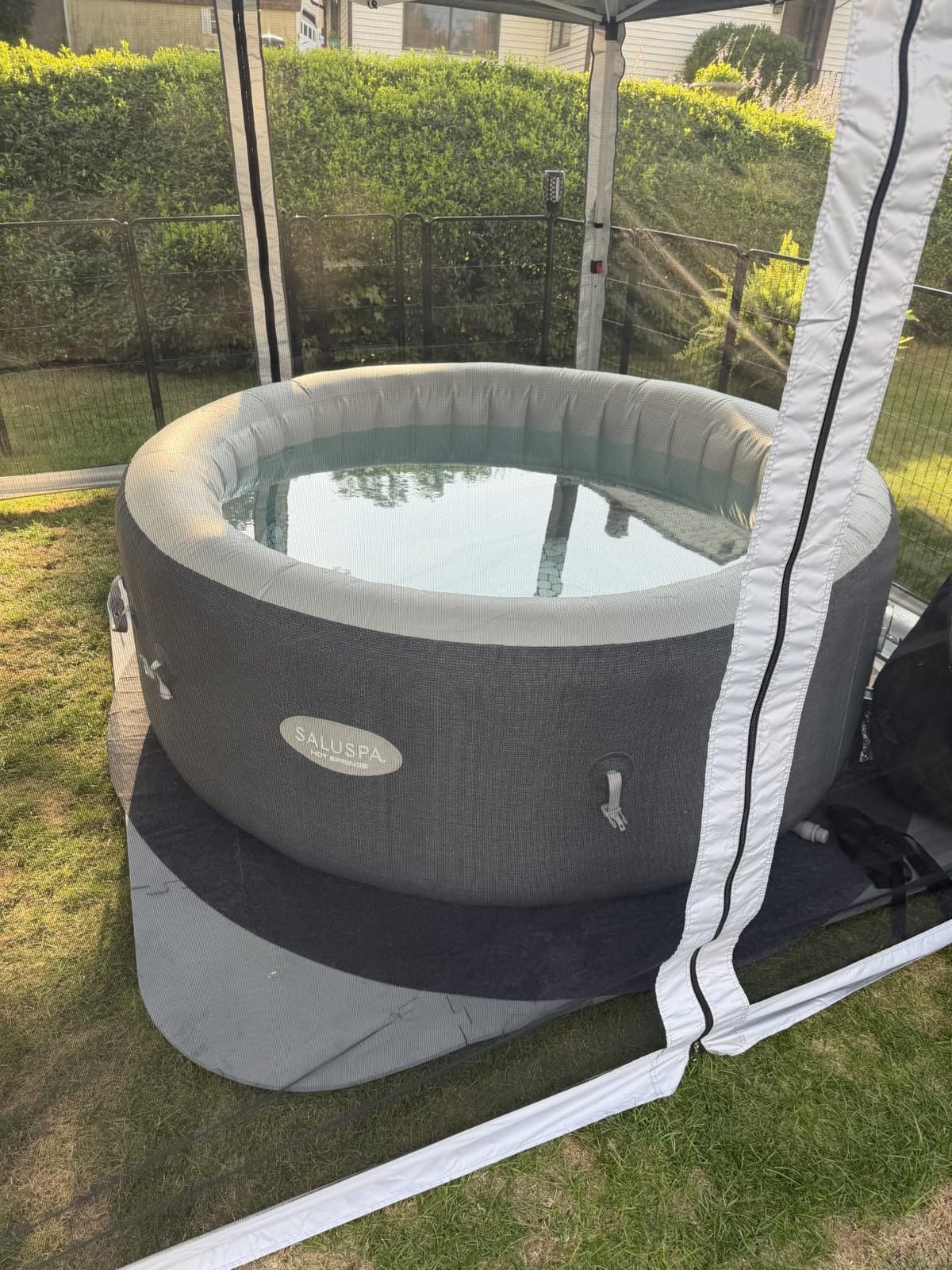
Reviewers praise the straightforward setup and the way the ChemConnect dispenser keeps water clear with even chemical dispersal, which matters more once a salt cell is involved because you want predictable sanitizer output. Owners also mention the bubble jets easing muscle soreness more effectively than they expected.
Two complaints are physical rather than technical. The cover tie-down clips are genuinely difficult for anyone with limited hand strength and need two people to secure. And the 4-6 person rating is generous; most owners settle on two people comfortably.
Whether a salt cell suits this model
It can, and the heat retention you gain here offsets part of the extra electricity a chlorinator draws. What to verify is the same as with the other Bestway-built units: the cell rating against 242 gallons, and the warranty position on a retrofit system.
Note that this model is also available in 2-4 person round and 4-6 person square configurations, so if you are shopping in person you can compare footprints that are otherwise in the same tier.
Who should skip it
If you are buying alone or have any trouble with small clips, the cover hardware will frustrate you at every water change. Look for a model with a single-pull cover instead.
Buyers wanting deep soaking should skip past this to a rigid shell, because 242 gallons in an inflatable gives you a seated soak rather than a full immersion.
6. SunSwell 82 Inch Round Spa: Best for Portable Setups
SunSwell 82″ Inflatable Hot Tub 4-6 Person, Round Outdoor Spa, Black
130 air jets with 600W motor
Premium laminated PVC
82 x 82 x 25.6 inch round
Built-in GFCI protection
Pros
- Deflates and stores away when not in use
- Inflates in under 30 minutes from a standard outlet
- Sturdy walls firm enough to lean on
- Insulated cover with child-safety lock
- Built-in removable filtration
Cons
- 17 percent of ratings are one star the highest negative share here
- Several owners report the heater or filter pump failing within days
- Takes a long time to fill and heat up
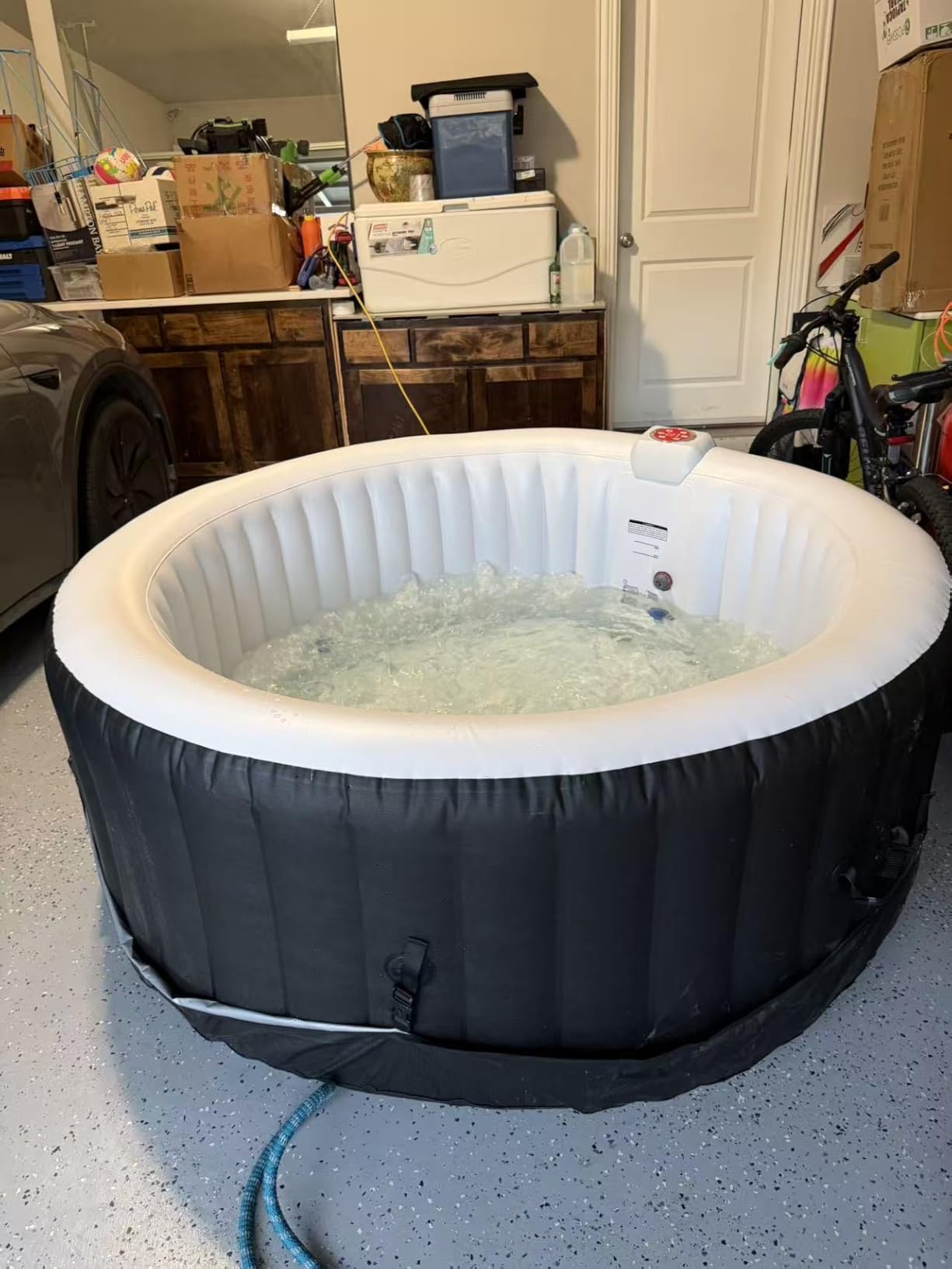
This one matters for a specific backyard situation: renters, or owners with seasonal patios who want the option to reclaim the space. It is a genuinely portable tub. Owners report inflating it in under 30 minutes from a standard power outlet and putting it away just as fast when winter arrives.
The build is the selling point. Premium laminated PVC is described as noticeably more puncture resistant than ordinary PVC, and reviewers comment that the walls are firm enough to lean on, which is not something you can say about most inflatables in this class.
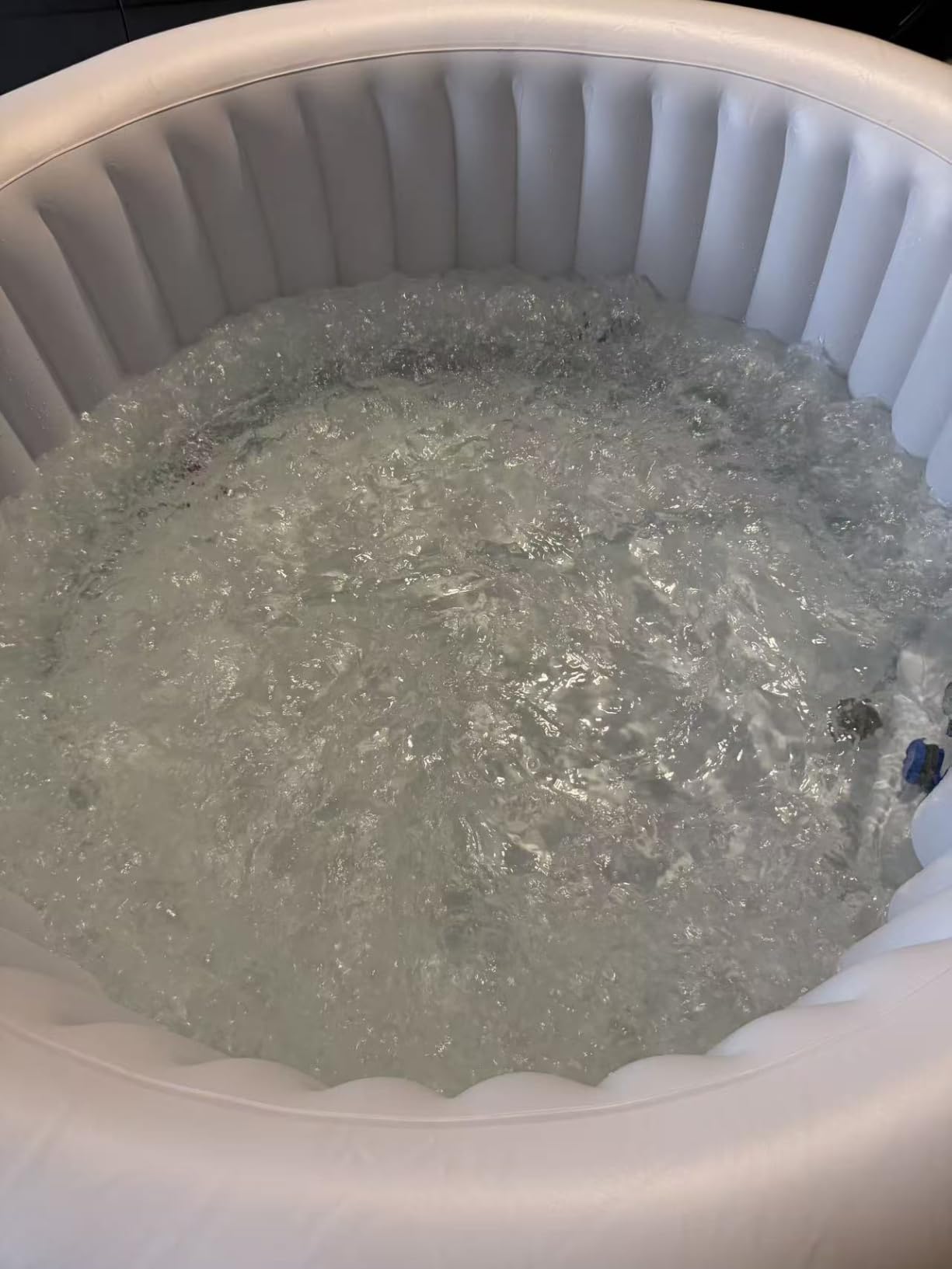
Reliability is the dividing line for this model. Seventeen percent of ratings are one star, the highest negative share in this roundup, and the critical reviews all involve a heater or filter pump that stopped working, several within days of delivery and one on day one. Owners who received a working unit tend to be enthusiastic, including one who reported reaching 106 degrees.
It also takes a long time to fill and heat, which is a poor pairing with a portable design if you plan to use it on a whim rather than on a schedule.
Why portability and salt do not mix well
Adding a salt cell permanently changes the water chemistry, and a tub that sits for weeks with damp, salty water inside is not the same asset as one you can drain and roll up. If portability is your priority, stay with manual chemical dosing.
The built-in GFCI protection is worth a mention because it is a genuine feature at this level, and it simplifies the electrical side of a backyard installation considerably.
Who should skip it
Skip it if your household depends on the tub working every day without fail. The failure pattern owners describe is a dead pump or heater rather than a gradual performance decline, which is the harder failure to plan around.
For a compact permanent installation with a stronger review base, the Coleman models in this list have many more owner reports to draw on.
7. Bestway SaluSpa Cancun: Budget Pick for Two
Bestway SaluSpa Cancun Energy-Efficient 2-4 Person Inflatable Hot Tub
120 bubble jets
71 x 26 x 26 inch round
EnergySense insulation
Self draining and self drying design
Pros
- Lowest entry point in the roundup with the same EnergySense insulation package
- Self draining and self drying design makes seasonal storage simple
- Quiet heater that owners run every night
- No leaks reported after months of use
- Several repeat buyers in the reviews
Cons
- Jet power pushes water over the sides when filled to the max line
- Setup instructions sit on a box flap and the QR code links to the wrong video
- One owner reported an E02 motor error after 18 months
- Effectively a two person tub despite the 2-4 person label
This is the cheapest way into the format, and it shares the same EnergySense insulation and Freeze Shield cold weather protection as the larger Coleman tubs. Owners who have had theirs for months tend to be enthusiastic, citing strong bubble performance, quiet heating and a purchase price that compares well against hard shell spas.
The self draining and self drying design is the sleeper feature for a backyard. When the season ends you empty it, dry it and fold it away, and several reviewers bought one specifically for that reason rather than to keep it out year round.
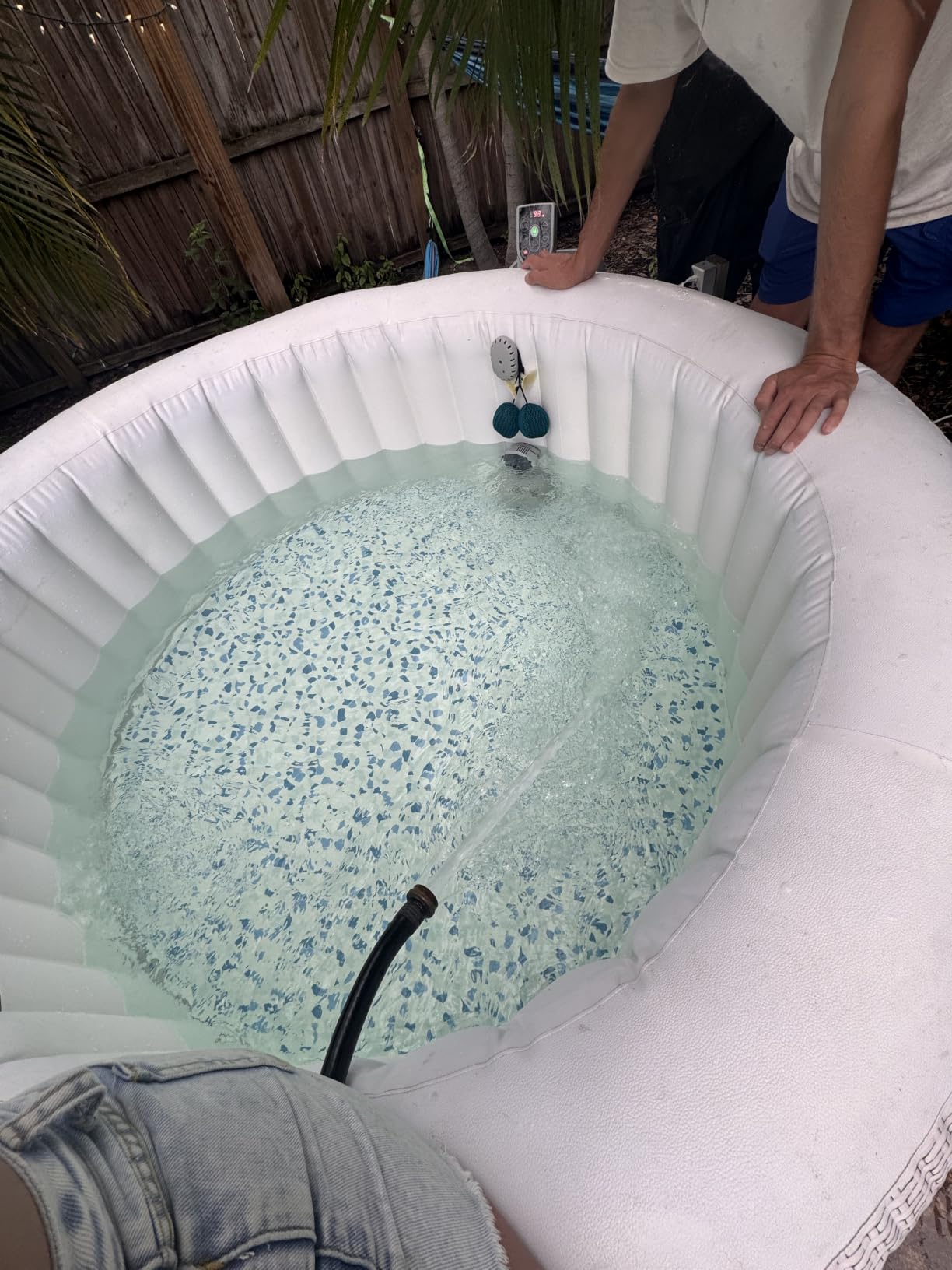
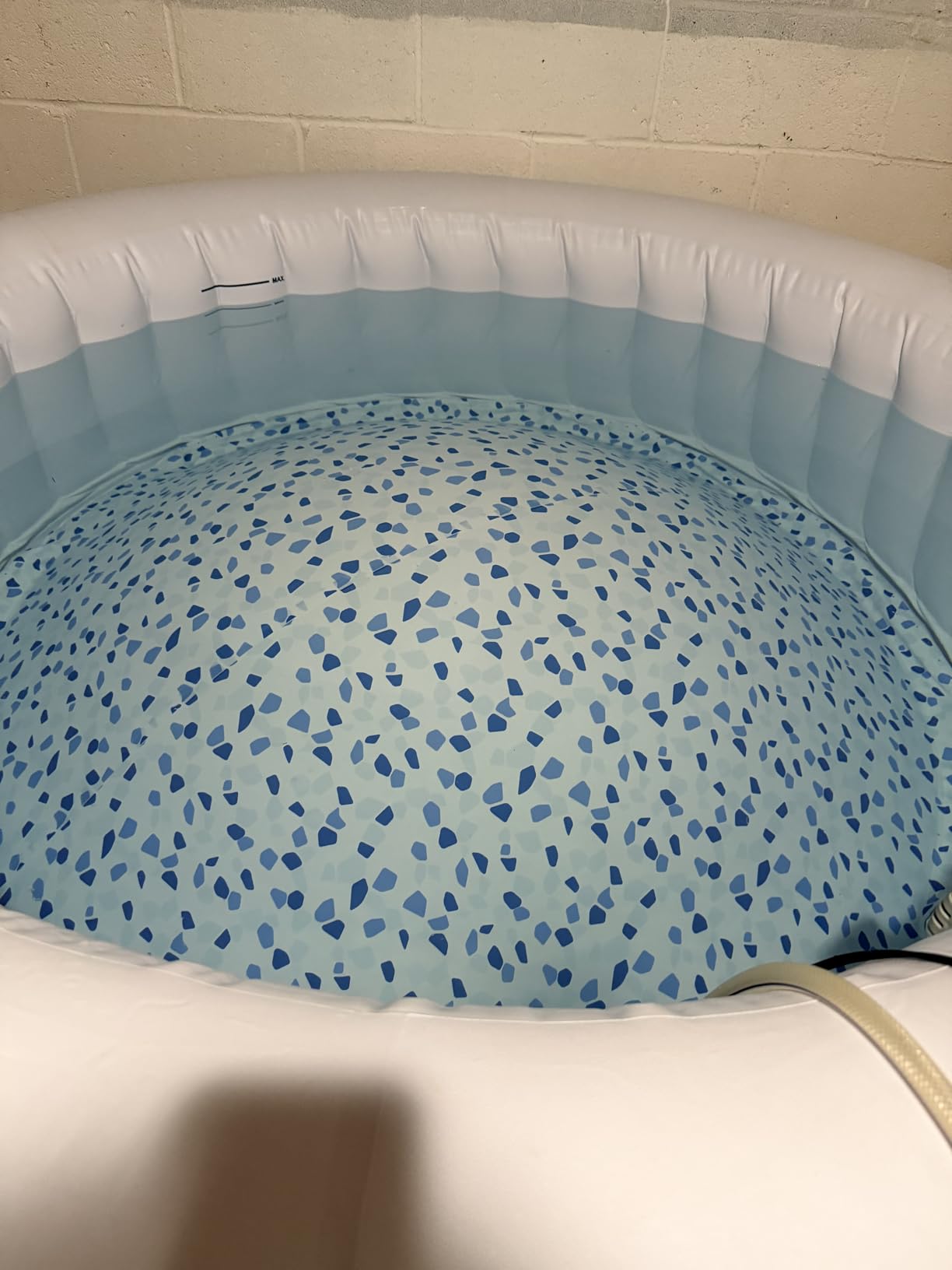
It is also the weakest rated product in the roundup at 3.9 stars, with 15 percent one-star ratings. The recurring problems are the air jet power against tub size, which splashes water out when filled to the maximum line, and assembly documentation several buyers found unhelpful enough to seek out their own tutorial.
One owner also reported a motor throwing an E02 error code after 18 months despite immaculate maintenance, so treat that as an outlier rather than a pattern. The jet oversizing issue is the consistent one.
Whether a salt system makes sense at this size
This is the smallest water volume in the roundup, which makes cell sizing the whole game. An aftermarket cell rated for 300 gallons will overproduce here, and excess sanitizer off-gases under a closed cover, which is the number one cause of cover underside degradation and pillow bleaching in salt equipped tubs.
If you want salt, buy a low output cell and keep salinity between 2,000 and 3,000 ppm. Confirm the warranty position on a retrofit before you start.
Who should skip it
Skip it if jets are the main event. 120 bubbles in a small tub throws water over the sides, and owners who fill to the max line regret it. Fill below the maximum and the problem largely disappears.
Also skip it for anyone who wants to host. This is a two person tub in practice, and the 3.9 rating reflects more durability complaints than comfort ones.
8. Coleman SaluSpa Sicily: Best for Families and Big Groups
Coleman SaluSpa Sicily Energy-Efficient 5-7 Person Inflatable Hot Tub
314 gallon capacity
180 bubble jets
85 x 85 x 28 inch round
Bestway Connect app control
Pros
- Largest water capacity among the inflatables at 314 gallons
- 180 jets is the highest jet count in the roundup
- Seven person rated capacity suits families and groups
- Energy efficient insulation and cover
- App control for scheduling heating
Cons
- 85 inch footprint needs a flat prepared base and real yard space
- Bestway Connect app is the known weak point
- 14 percent of ratings are one star
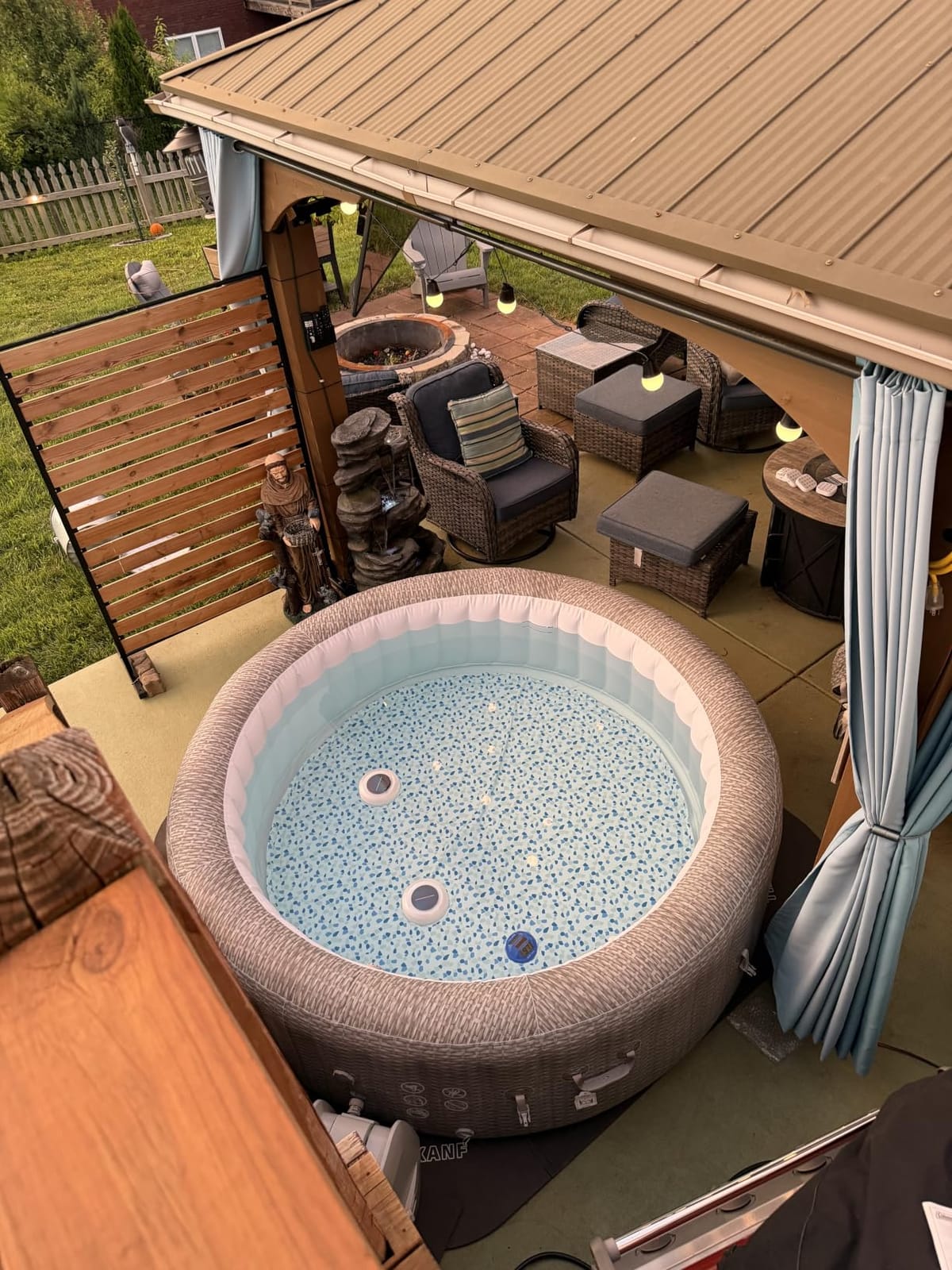
If your household is genuinely a group rather than a couple, this is the inflatable to look at first. At 314 gallons it holds the largest water volume among the inflatable models here, and 180 bubble jets is the highest jet count in the whole roundup by a wide margin.
That combination changes the character of the experience. Where a 120-jet four-person tub feels busy with four people in it, 180 jets across 314 gallons still reads as movement. Owners point to the roomy 85-inch footprint and the jet count as the two differentiators.
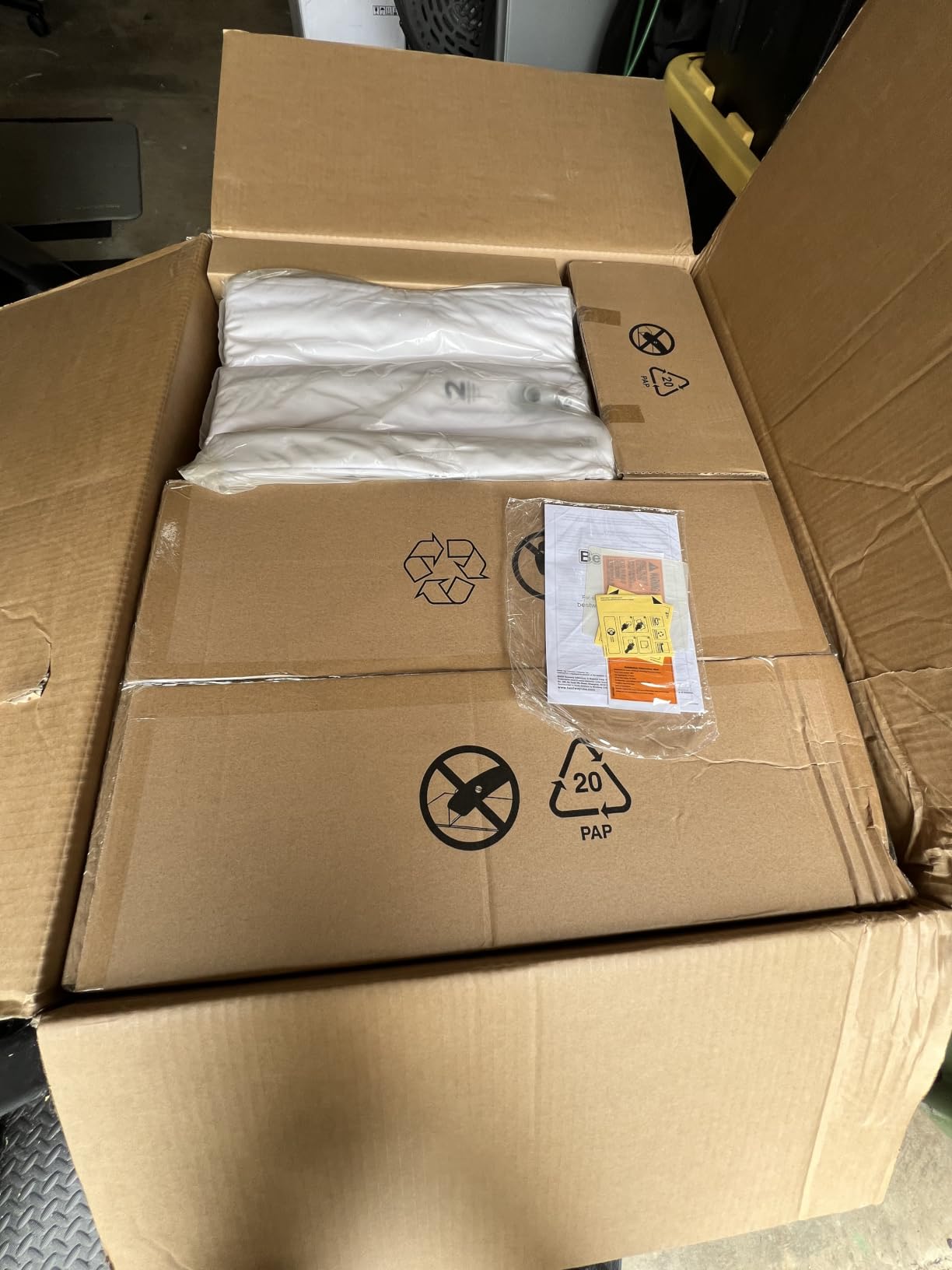
The catch is space and the usual app caveat. An 85-inch inflatable needs a genuinely flat prepared base, and unlike smaller portable units, this is not a tub you move on a whim. App reliability is the same known weak point as the rest of the Bestway-built range.
Ratings sit at 65 percent five-star with 14 percent one-star, and as with the other Coleman models here, critical feedback clusters on app connectivity and pump durability rather than on comfort or jet performance.
Sizing a salt cell for a 314 gallon tub
This is the one model in the roundup where a cell must be sized carefully rather than generously. 314 gallons is enough volume that a mid output cell from a smaller spa will not keep up at 104 degrees with several people soaking, and you will end up dosing chlorine by hand anyway, which defeats the reason you chose salt.
Ask for a cell rated for 300 plus gallons, and budget for the fact that a larger cell costs more when it eventually wears out.
Who should skip it
Skip it for a small yard, a sloped patio or any site where a 314 gallon inflatable cannot sit level. Salt water is heavier than chlorine-treated water, and settling issues compound over a season.
Also skip it if you want jets that hit specific pressure points. Bubbles are a whole body sensation rather than a targeted massage, which is the trade for the 180 jet count.
9. Intex PureSpa 28433EP: Best for Small Yards
INTEX 28433EP PureSpa Bubble Deluxe Spa Set: Includes Energy Efficient Spa Cover – 120 Bubble Jets – Octagonal Design – 4 Person Capacity – 71″ x 71″ x 28″
71 x 71 x 28 inch octagonal
120 bubble jets
Fiber-Tech beam construction
Hard water treatment system
Pros
- Largest review base in the roundup at 248 ratings
- Compact 71 inch footprint suits patios and tight yards
- Hard water treatment reduces scale and is gentler on skin
- PTC heater improves heat transfer and element longevity
- Energy efficient cover rated up to 50 percent better efficiency
Cons
- 51 inch inner diameter limits the four person label
- Foam backed inflatable cover is less durable than a hard shell cover
- 14 percent of ratings are one star
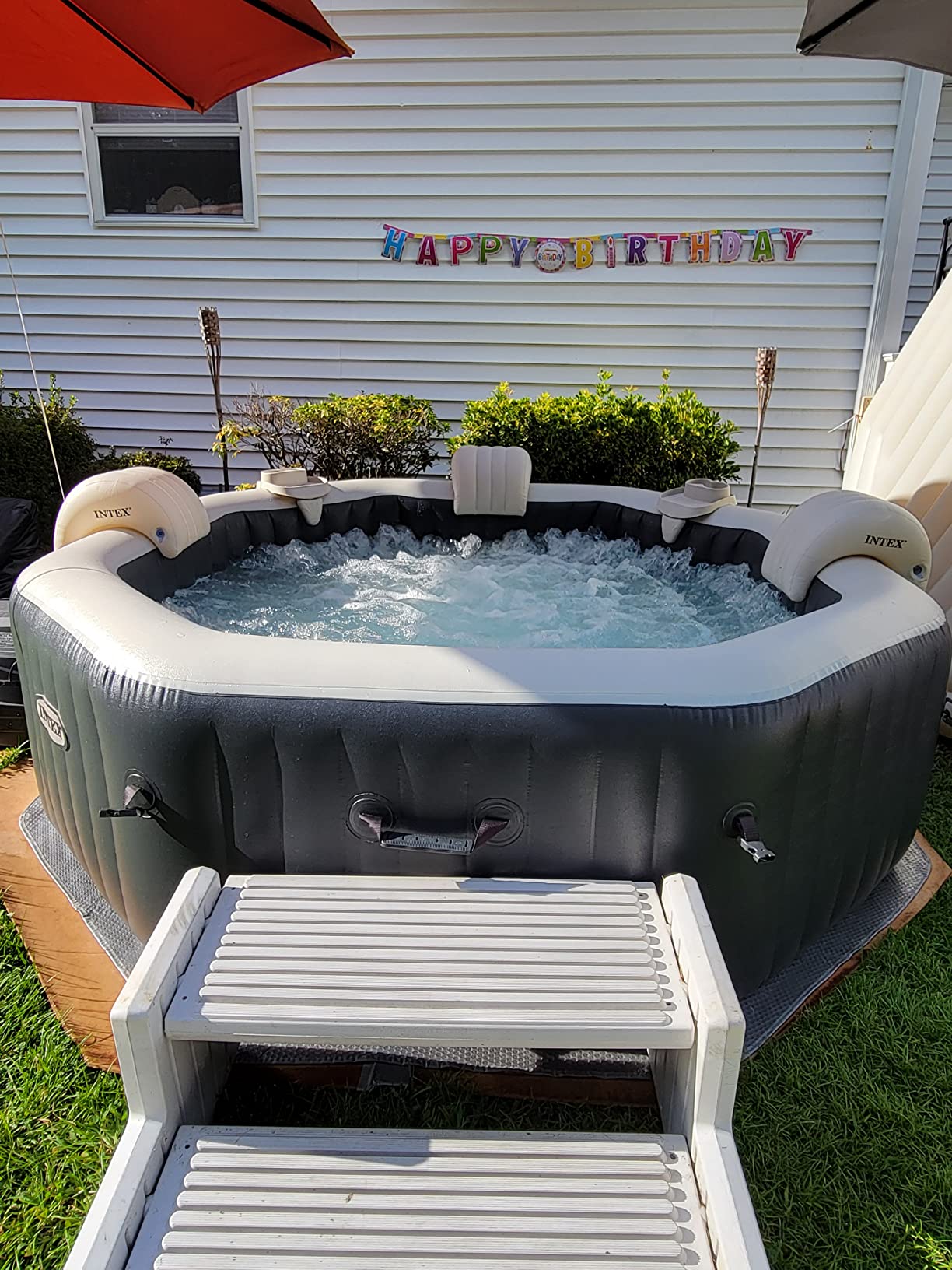
This is the model we would put in front of someone with a patio rather than a yard. At 71 by 71 by 28 inches it needs very little ground, and with 248 ratings it is the most thoroughly reviewed product in the roundup, which means you are buying a well tested configuration rather than a gamble.
The hard water treatment system is the sleeper feature. It reduces scale buildup on the heater and plumbing, which matters in regions with hard water, and owners note it feels gentler on skin. The PTC heater design is credited with better heat transfer and longer element life than a conventional immersion heater.
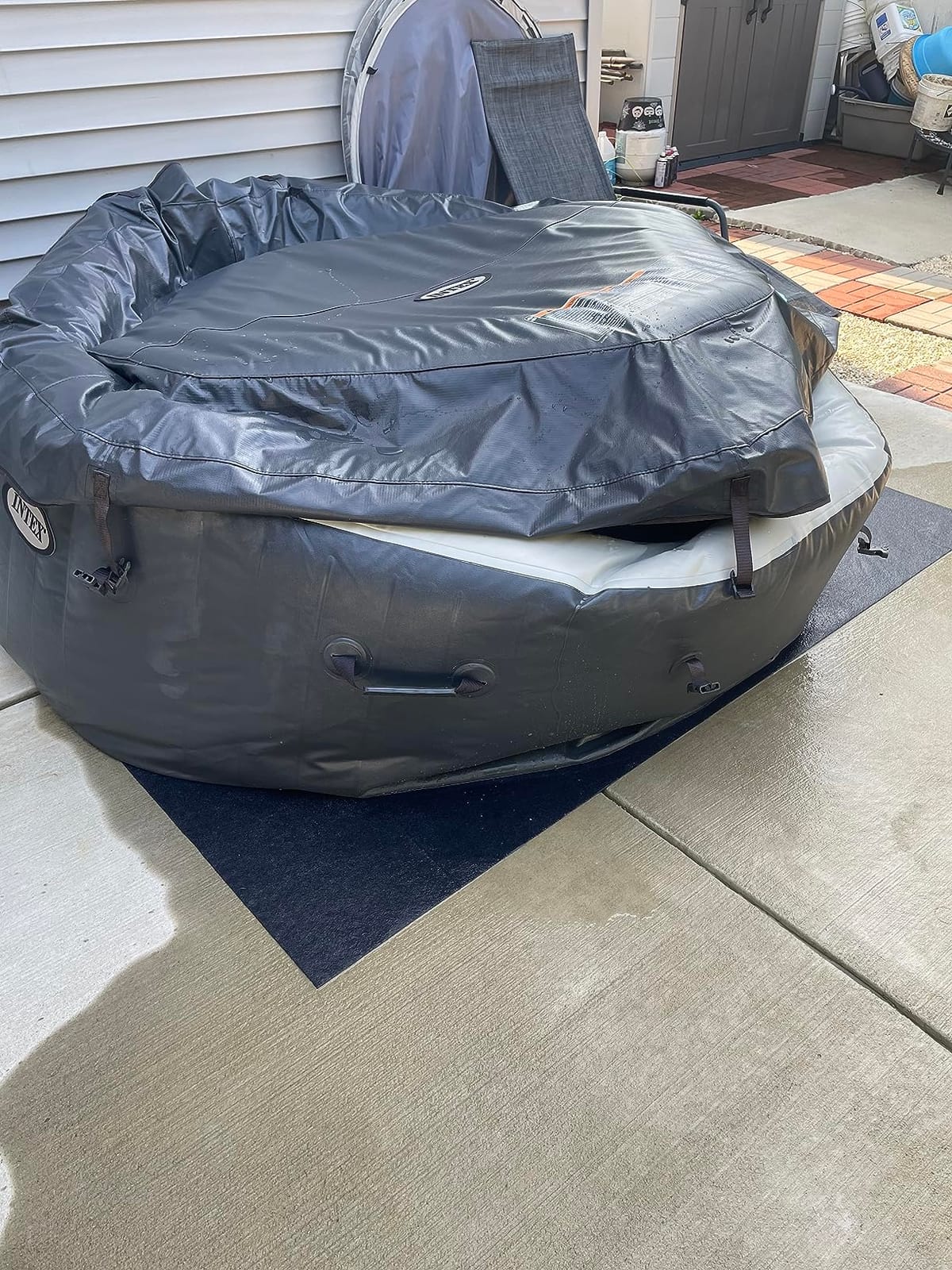
The realistic constraint is the inner dimension. The 51-inch inner diameter is what limits the stated four person capacity, and buyers consistently note that two adults fit well. The included thermal ground cloth protects the pad beneath the spa, a small touch that avoids a common complaint about pad discoloration.
Fourteen percent of ratings are one star, and the recurring criticism is the durability of a foam-backed inflatable cover compared with a hard shell spa cover. Expect to replace it more often if you leave the tub uncovered for long stretches.
How to fit a salt system into a small tub
The low water volume here makes cell sizing the deciding factor. A cell sized for a 300 gallon spa will overproduce in this one, and excess sanitizer off-gasses under a closed cover. That off-gassing is what degrades the underside of the cover and bleaches the spa pillows over time.
The hard water treatment helps here, because scale on a heater reduces its efficiency and makes the cell work harder to hold sanitizer output steady in the same water.
Who should skip it
Skip it if you want to regularly seat four adults or if you need a tub that will still be presentable after eight years outdoors. A rigid shell in a small footprint is a better long term purchase than an inflatable.
Buyers who want salt readiness out of the box should choose the larger 28427EH instead, which shares this platform and adds the factory provision.
10. Aqualife Current: Best for Deep Soaking
Aqualife Current Outdoor Hot Tub, Free Extras, Fits 4-Adults, Plug and Play Spa, Free Cover Included
400 gallon capacity
14 hydrotherapy jets
71 x 61 x 29.5 inch
Resin shell with cover included
Pros
- Highest average rating in the roundup at 4.7 stars with 86 percent five star reviews
- 400 gallons gives genuinely deep soaking
- Resin shell feels rigid and durable in a way PVC cannot match
- Plug and play 120V with GFCI cord included
- Cover included in the box and four adults fit in a compact footprint
Cons
- Only 14 jets so massage coverage is modest
- Weighs 300 pounds and cannot be moved once filled
- Sits in the highest purchase tier alongside the Lifesmart
Water volume is the number that separates this from everything else in the roundup. At 400 gallons you can sit back and actually immerse rather than perch, and at 4.7 stars with 86 percent five-star feedback it carries the highest customer satisfaction record in the selection, with only 3 percent one-star ratings.
The resin shell is the second differentiator. Owners consistently describe it as rigid and durable in a way inflatable PVC cannot match, and because a resin shell is a far better substrate for salt water than PVC or polyethylene, this is also the model we would most expect to accept a salt system without hardware complaints.
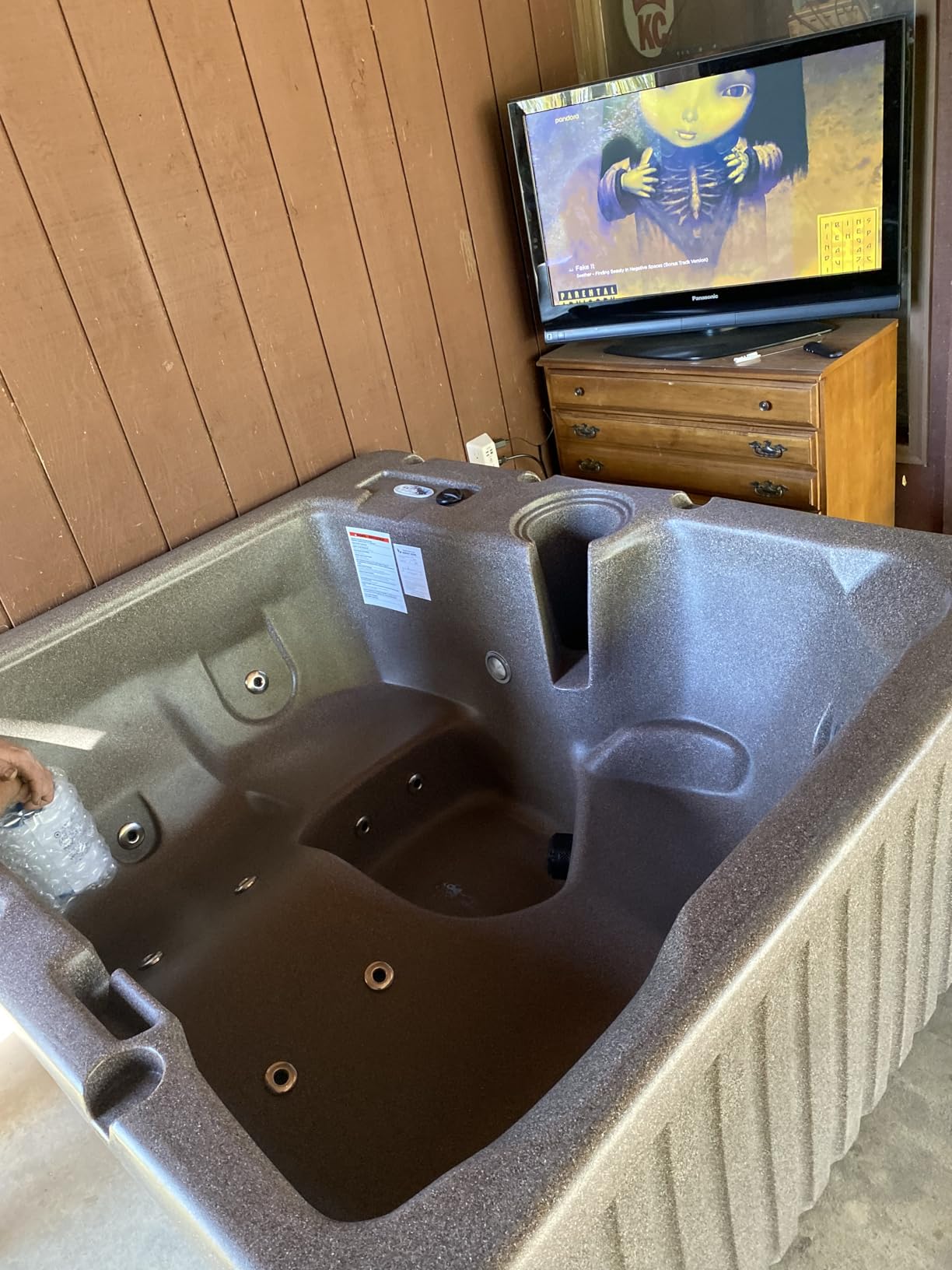
It still fits a normal yard. At 71 by 61 by 29.5 inches it seats four adults, and the plug and play 120V setup with an included GFCI cord avoids the single most expensive surprise in spa ownership, which is a 240V electrical run. US-based customer support is included as well.
The main limitation raised is massage breadth, since 14 fixed hydrotherapy jets offer less coverage than the high count bubble systems. At 300 pounds, plan its position before the delivery crew arrives, because once it is filled it does not move.
Why the shell material matters for salt water
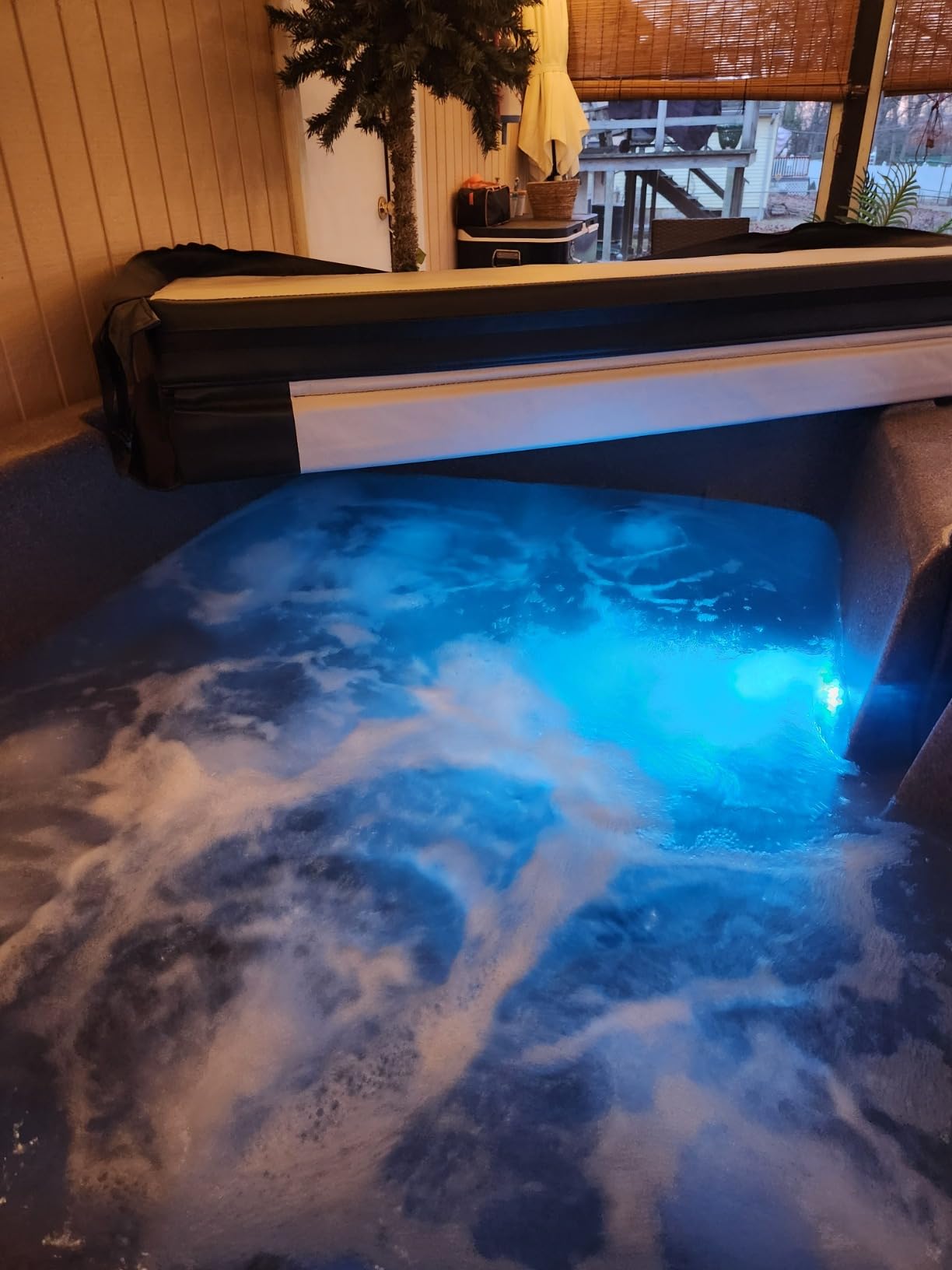
Salt water is corrosive to anything not rated for it, and metal components are where the damage concentrates. A rigid resin shell has fewer exposed seals and less flexible plumbing than an inflatable, which is the practical argument for pairing a salt system with a shell like this rather than with a fabric beam inflatable.
Still confirm the cell model with the manufacturer and use only pure sodium chloride. Pool salt contains additives that were never meant to sit in a hot tub, and owner forums raise this damage scenario more often than any other.
Who should skip it
Skip it for a small yard, a rental or any situation where you may need to move the spa later. Skip it too if your priority is jet coverage rather than water depth, since 14 jets is a targeted massage by design.
Buyers who want the deep soak but not the top tier outlay should start with an above ground inflatable and accept a shallower soak as a trade.
How to Choose a Saltwater Hot Tub for Your Backyard
Five checks decide whether a purchase goes well. Run through them before you commit to a model rather than after it arrives.
Backyard space and the 5-foot clearance rule
The most common backyard mistake is discovering the clearance requirement after the tub is on a flat base. Most manufacturers require a minimum working space around the unit, and the figure most often cited is a five-foot clearance between the hot tub and any structure, wall or overhead obstruction. That distance exists for the cover, the deck, and for pulling the equipment bay open without dragging the spa.
Plan the site before the purchase. You need a flat, level base, access to a standard outlet for the plug and play models in this roundup, and a path wide enough for the delivery crew. If crane delivery is required because the tub cannot reach the site by path, treat that as a planned expense rather than an accident.
Power, GFCI and electrical
Most of the tubs in this roundup run on standard household power, which is the single biggest reason they suit a backyard. The SunSwell has built-in GFCI protection and the Aqualife ships with a GFCI cord, which is a meaningful safety and installation difference.
The Lifesmart and the Coleman models are also 110V or 120V plug and play, so no electrician is required. If you later want a 240V hardwired installation for a larger shell, that is a separate project with its own permit requirements in most jurisdictions. Check local rules on outdoor installations before ordering anything hardwired.
Sanitization: saltwater vs chlorine vs ozone vs mineral
Four systems compete for the same job and they are not equivalent. A saltwater system runs continuously off a salt cell, produces chlorine, needs a cell cleaned and replaced on a multi-year cycle, and carries the highest corrosion exposure. A chlorine system is hand-dosed, cheap per season, and needs no special hardware. An ozone system adds no salt and generates no chlorine, but it is a secondary sanitizer that still needs a residual behind it. A mineral cartridge system such as Frog @ease needs no electrical draw and no salt, with cartridge replacements on a schedule.
The honest comparison for most backyard buyers is this. Choose salt if softer water and reduced chemical handling matter more to you than component longevity and warranty length. Choose chlorine if you want the lowest ongoing cost and the widest parts availability. Choose ozone if you want low chemical exposure without committing to salt hardware.
Salt cell upkeep, the 72-hour break-in and corrosion
A new salt system needs a break-in period before it produces enough sanitizer, commonly around 72 hours, and new owners are caught out by this more than any other part of the process. Do not let people into the tub during that window, and do not expect the water to be clear on day one.
On corrosion, the material grade is the detail most dealer pages skip. 316 stainless steel resists chloride pitting far better than 304, and heater elements, jet fittings and plumbing are where brine does its damage. Use only pure sodium chloride, never pool salt with additives, and expect to rinse splash-back off decking regularly, since salt residue damages concrete and nearby plants.
On running costs, expect the cell to add continuous electricity draw on top of heating, offset partly by the lower cost of purchased chemicals. The variable that dominates is how well the cover holds heat, because a tub that loses heat overnight runs its heater, and any system on top of that, all night. The Lifesmart full foam package and the Bestway EnergySense walls are the two insulation approaches in this roundup designed around that problem.
Converting an existing tub vs buying new
Converting makes sense when the tub you own already has salt-compatible hardware, a solid shell and a warranty that survives the retrofit. It does not make sense on a cheap inflatable with fabric beams and a foam-backed cover, where brine exposure to the seams is exactly the failure mode that ends the tub early.
Buying new makes sense when the existing tub is already at the end of its service life, when its shell material is a poor substrate for brine, or when the factory warranty on a salt-equipped model is materially better than what you can secure by retrofitting. Check whether the manufacturer treats a retrofit cell as chemical abuse, because that single clause decides the question more often than anything else.
Frequently Asked Questions
What are the downsides of a salt water hot tub?
The main downsides are corrosion risk on heaters and jet fittings, a salt cell that needs periodic cleaning and eventual replacement, and factory warranties that are often shorter for salt-equipped units. Salt splash-back can also damage decking and nearby plants, and retrofitting a cell may be treated as chemical abuse under the original warranty. Add a 72-hour break-in after installation before the system produces enough sanitizer.
What is the 5 foot rule for hot tubs?
The 5-foot rule means keeping a minimum of about five feet of clearance between a hot tub and any structure, wall or overhead obstruction. That space is needed to remove the cover, service the equipment bay and access the plumbing without moving the spa. Always confirm the exact figure in your specific model’s installation manual.
How much salt does a saltwater hot tub need?
A 500-gallon tub needs roughly 11 cups of pure sodium chloride for the initial fill. Water salinity is maintained between about 2,000 and 3,000 ppm, compared with roughly 35,000 ppm for seawater, which is why the water feels soft without tasting salty. Use pure salt only, not pool salt or table salt, since additives damage heaters and plumbing.
What is the lifespan of a salt water hot tub system?
A well-maintained salt cell typically runs several years before it needs replacing, while the surrounding hardware lasts longer when the shell and components are salt-rated. Lifespan depends far more on water balance, cell cleaning frequency and material grade than on the cell brand. Keep an eye on calcium hardness and pH, since scale is the leading cause of early cell failure.
Is it hard to maintain a salt water hot tub?
Less hands-on than chlorine in most cases, but not maintenance-free. You still test and balance pH, alkalinity and calcium hardness, clean the salt cell on a schedule, and rinse salt residue off surrounding surfaces. The cell handles daily sanitizing on its own once it is broken in. High heat and small water volume mean the cell can still fall behind when several people soak at once.
Can I convert my hot tub to saltwater?
Yes, with an aftermarket electrolytic chlorinator and pure sodium chloride. Conversion works best on a tub with a solid shell and salt-compatible heater, jets and plumbing. Check first whether the manufacturer treats a retrofit cell as chemical abuse, since that clause can void coverage entirely. Budget for a break-in period of around 72 hours before the system produces adequate sanitizer.
Our Verdict on the Best Saltwater Hot Tubs for Backyards
The best saltwater hot tubs for backyards in 2026 are not chosen on jet count alone. Our top pick is the Lifesmart 4-Person Plug and Play, which pairs the highest satisfaction record in the roundup at 4.4 stars across 293 ratings with a footprint small enough for a normal yard and no electrical installation required.
For a buyer whose priority is the salt system itself, the Intex PureSpa 28427EH is the only tub here built to take one, with a 210-gallon capacity and a built-in hard water treatment system. For deep soaking in a rigid shell, the Aqualife Current holds 400 gallons and holds the highest star rating in the group at 4.7.
Whichever you choose, confirm salt compatibility in writing before you drill anything in, and check the warranty language on chemical abuse. That single check will save more money than any deal you find on the tub itself.