
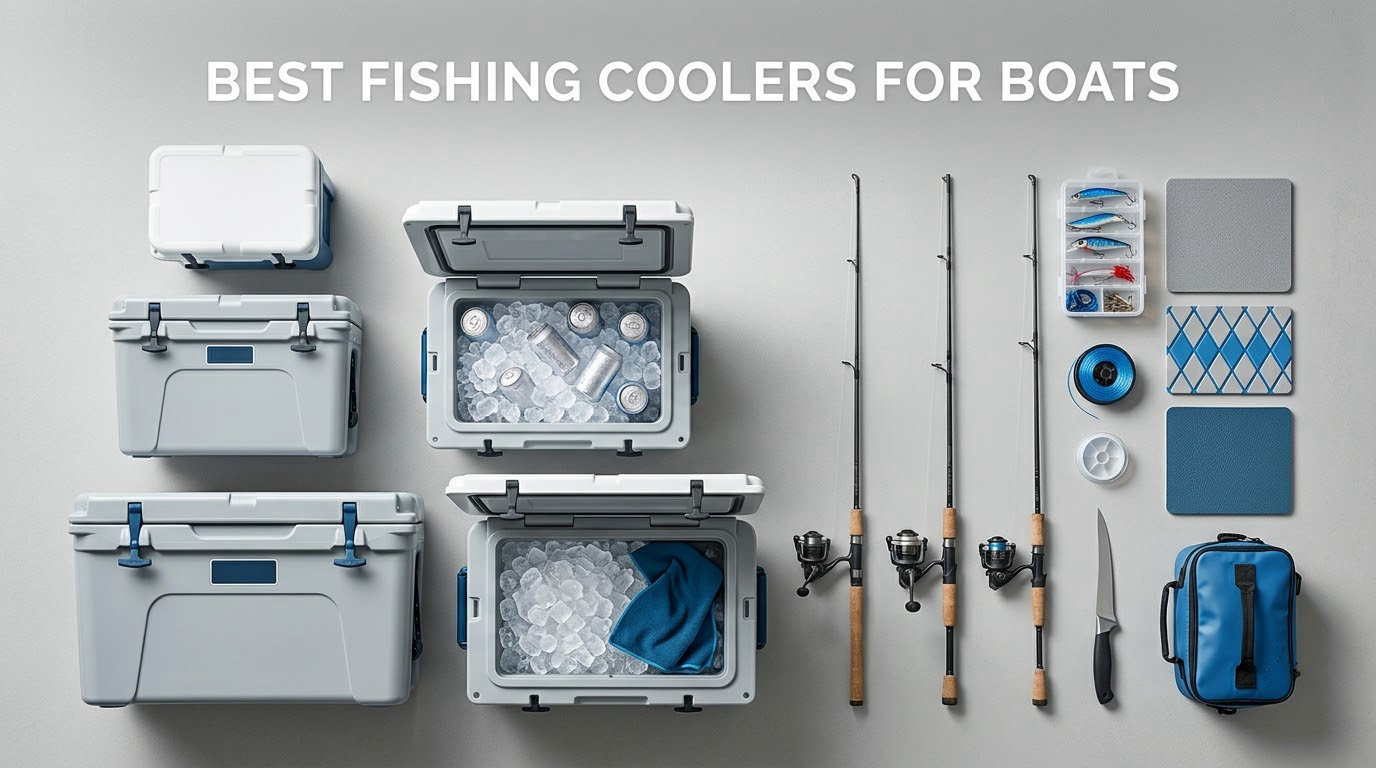
The best fishing coolers for boats are the ones that hold ice through a full day, stay put on a wet deck, and drain cleanly so meltwater never pools in your hull. We compared ten marine coolers across the size range that actually matters on the water, from a 15 quart personal unit to a 100 quart wheeled locker, plus one soft bag for tank wells and one live bait bucket for anglers who want their shrimp alive at the end of the day.
Two questions dominate every boating forum we read, and neither has a solid public answer. The first is simple: how many quarts do I actually need? The second is the argument: is a premium rotomolded cooler worth the money, or is a value marine cooler just as good? Our rule is straightforward. A 45 to 65 quart cooler covers a typical day trip, and the premium tier only earns its money if you need multi day ice retention or the shell to survive being dragged across a gunwale every weekend.
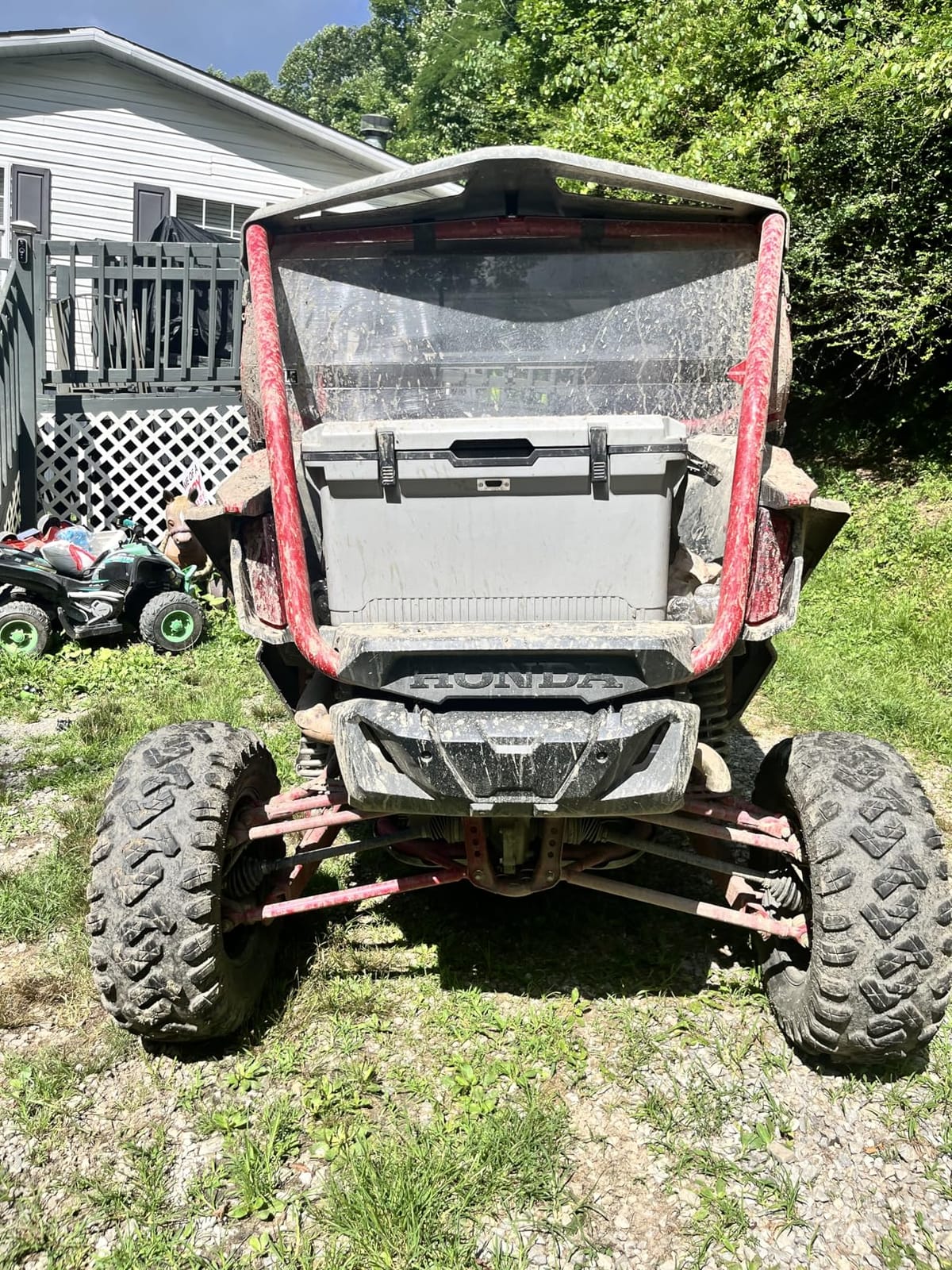
What follows covers all ten picks, plus the boat specific details that never show up on a product page: how to size a cooler for your crew and trip length, how to secure it so it does not slide at planing speed, how to route meltwater out of the hull, and whether you should run one cooler or two. Updated for 2026.
Table of Contents
Top 3 Picks for the Best Fishing Coolers for Boats (October 2026)
The YETI Tundra Haul is our top pick because it solves two boat problems at once: it is tall enough to serve as a seat or a leaning post block, and it rolls on solid single piece wheels from the truck bed to the deck. The RTIC 65 QT is the value answer, with 2.4 inches of foam and a seven day retention claim at a fraction of the premium price. The YETI Tundra 65 stays in the top three as the benchmark every other hard cooler is measured against.

YETI Tundra Haul
- Rotomolded body
- NeverFlat solid wheels
- Welded aluminum StrongArm handle

RTIC 65 QT Ultra-Tough
- 2.4 inch closed-cell foam
- Freezer style gasket
- Rotomolded bench capable lid
All 10 Picks at a Glance in 2026
Every pick below, with the capacity and the single feature that made it onto this list. Ratings and review counts come straight from the manufacturer listing pages, not from our own testing.
| Product | Specifications | Action |
|---|---|---|
|
YETI Tundra Haul Portable Wheeled Cooler
|
|
Check Latest Price |
|
YETI Tundra 65 Cooler
|
|
Check Latest Price |
|
RTIC 65 QT Ultra-Tough Hard Cooler
|
|
Check Latest Price |
 ENGEL 60 QT Ultra-Light Cooler
|
|
Check Latest Price |
 ENGEL Live Bait Cooler PRO 30 QT
|
|
Check Latest Price |
 Coleman Marine Cooler 100 QT
|
|
Check Latest Price |
 Igloo Marine Ultra 30 QT Cooler
|
|
Check Latest Price |
 Pelican ExoChill 17L Soft Cooler
|
|
Check Latest Price |
 CUDDY Floating Cooler 40 QT
|
|
Check Latest Price |
 Grizzly 15 QT Cooler
|
|
Check Latest Price |
1. YETI Tundra Haul Portable Wheeled Cooler – Best Overall for Docks and Decks
YETI Tundra Haul Portable Wheeled Cooler, Tan
Rotomolded polyethylene
Polyurethane foam insulation
32 pounds empty
StrongArm aluminum handle
Pros
- Rotomolded shell that shrugs off impacts
- NeverFlat wheels roll over docks and rough ground
- Welded aluminum handle tracks to either side for towing
- Highest rated pick in the group
Cons
- Bulky 32 pound empty weight
- Deep chamber hides small items
- Not compatible with the YETI dry goods basket
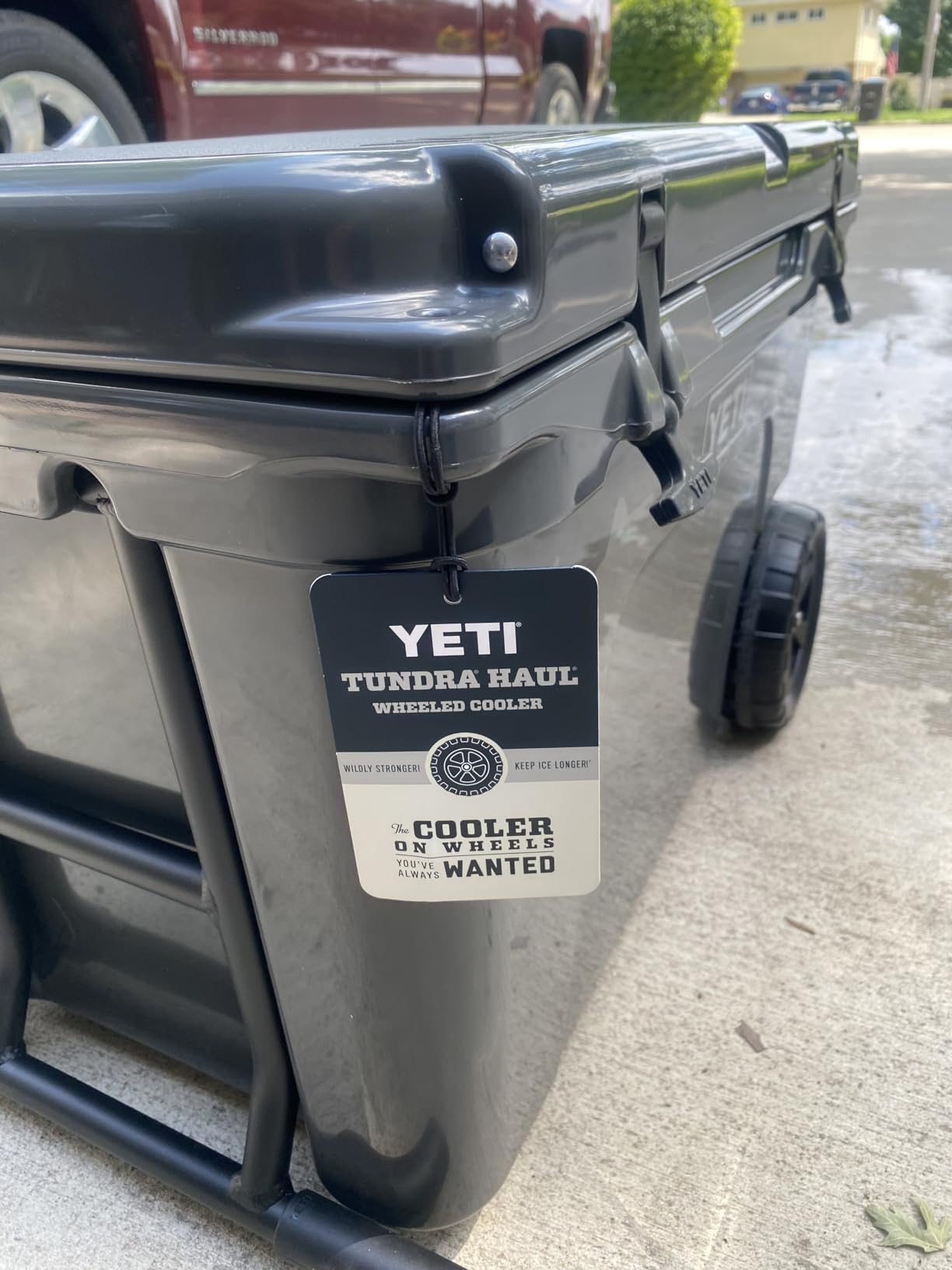
This is the one cooler in the group built to be tall as well as wheeled, and that combination is why it takes the top spot. The chamber measures 28.25 inches wide by 19.5 inches high, so it sits at a height you can lean on or perch on while you work a bank or a wade, and it does not disappear into a console locker like the smaller units do.
Ice retention is the YETI standard rather than a headline feature here, since the same rotomolded shell and polyurethane foam show up across the brand. What separates the Haul is the movement. The single piece tires roll over a wet dock, a gravel ramp and a carpeted trailer floor without the deflation and pinch flats you get from pneumatic wheels, and the welded aluminum StrongArm handle tracks to whichever side you pull from.
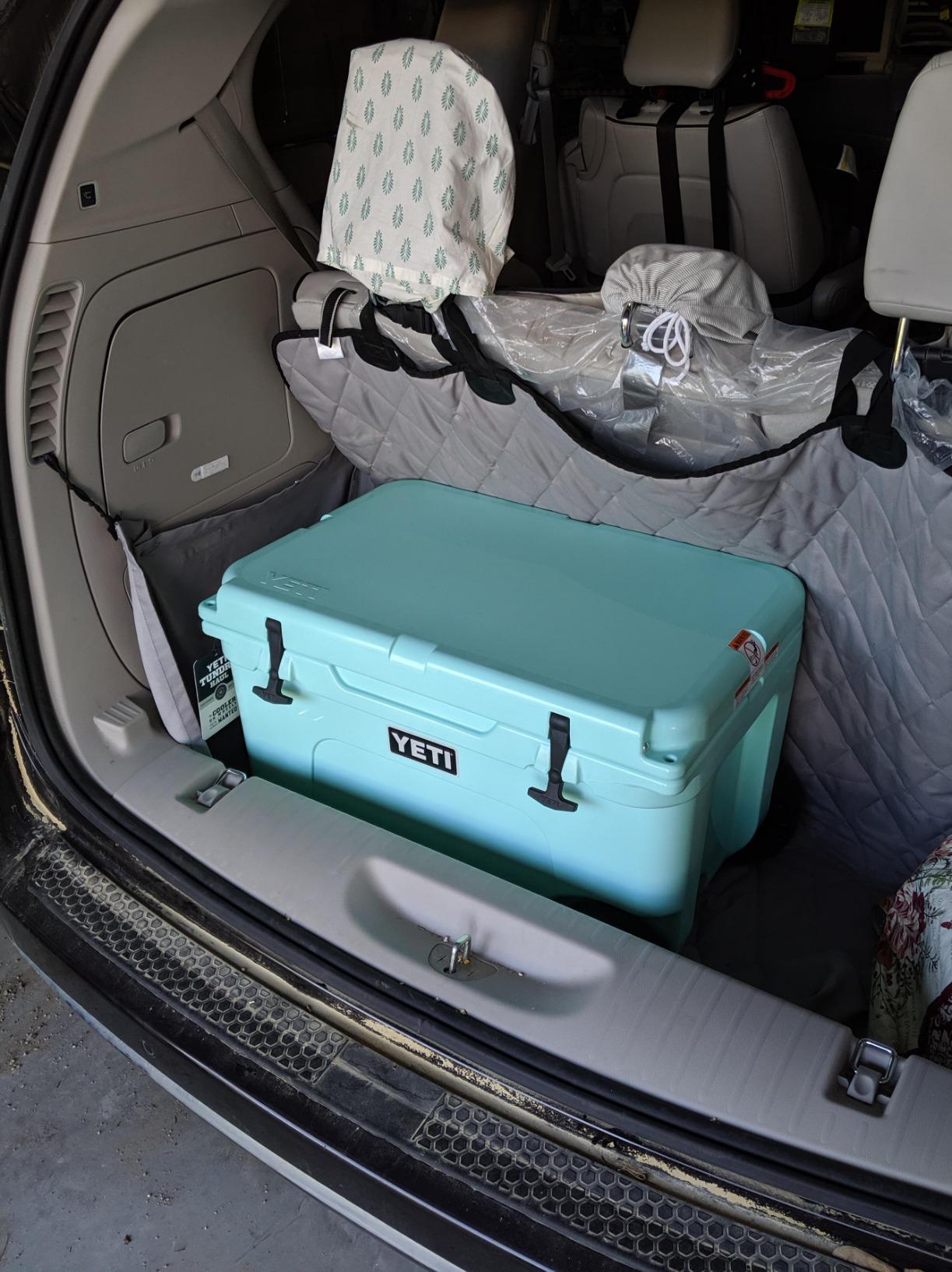
At 32 pounds empty, this is a serious load to carry, and that is the honest drawback. If you are stepping down onto a floating dock with the tide running, hauling a full Haul by the handle is a two person job. Several owners work around it by rolling it down a ramp rather than lifting it, which is exactly the scenario the wheels were designed for.
The wide 18.62 inch deep chamber has a mixed reputation. It makes the Haul stable and easy to stack gear on top of, but small items dropped in tend to end up at the bottom corners, so plan your packing order around it. Note also that the Haul does not accept the YETI dry goods basket or divider accessories, so food and ice share one chamber.
When the Haul makes sense on a boat
Pick the Haul if you launch from a ramp, dock, or beach rather than a trailer and you want cold drinks at the ramp before the boat even hits the water. Its tall body also works well as an extra seat at a sandbar, which several small boat owners on the C-Dory Angler forum described doing with a reinforced lid cooler.
It is a weaker choice if deck space is tight. The footprint is substantial, and on a jon boat or a shallow skiff the 32 pound empty weight becomes a loading problem rather than a convenience.
Where the Haul falls short
The premium price is the other consideration, and owners who buy it generally justify it with the shell and the wheel system rather than with cold retention, since cheaper rotomolded coolers hold ice nearly as well. If your only requirement is cold drinks for six hours, you are paying for the wheels.
Compatibility is the quieter limitation. Because the Haul does not take the YETI dry goods basket or divider, keeping sandwiches dry and separated from ice means a secondary container or a sealed bag.
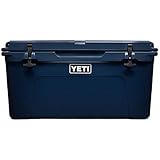
2. YETI Tundra 65 Cooler – The Premium Hard-Sided Benchmark
YETI Tundra 65 Cooler, Navy
65 quart capacity
Holds 77 cans
Interlock lid and Vortex drain
Bearfoot non-slip feet
Pros
- Rotomolded shell with a gasket that holds ice for days on end
- Bearfoot feet keep it planted on a wet deck
- Vortex drain empties meltwater fast
- Dry goods basket included
Cons
- Deep 10.63 inch chamber buries small items
- Substantial empty weight for a high sided boat
- Premium price bracket
The Tundra 65 is the cooler most people picture when they say marine cooler, and it earns its place as the reference point rather than as the automatic winner. It is a 65 quart unit that holds 77 cans or 26.3 kg of ice, which is more than a normal day on the water needs and roughly the right amount for a long run or an overnight.
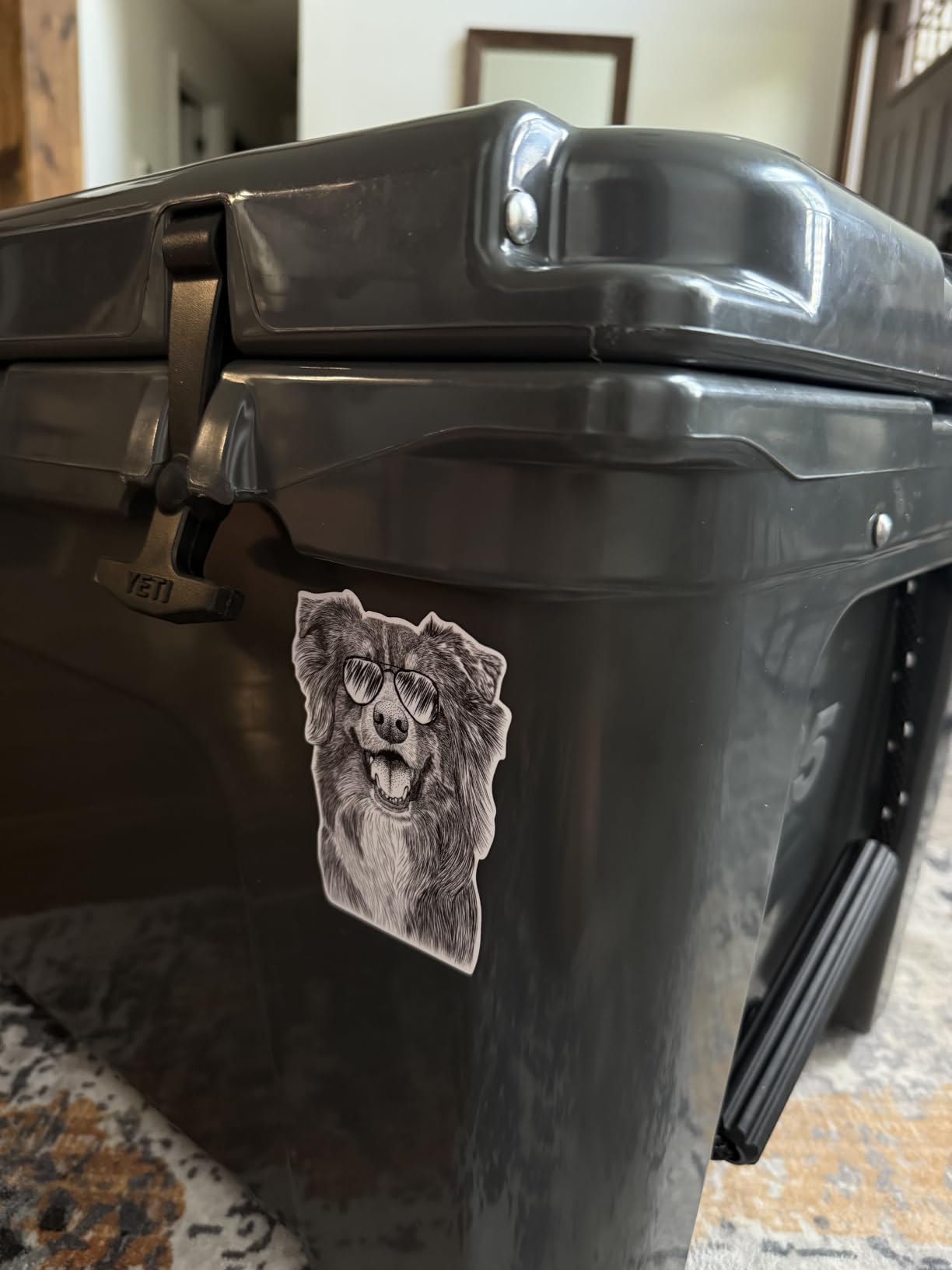
Three details matter on a boat specifically. The Interlock lid system creates a form fitting barrier against the lid so warm air does not leak in around the seam. The Bearfoot non slip feet are moulded into the base corners and are what actually stop the cooler walking across a wet deck when you accelerate. The Vortex drain system is a leakproof, quick draining plug that lets you empty meltwater into a bucket or through a scupper instead of carrying it to the beach.
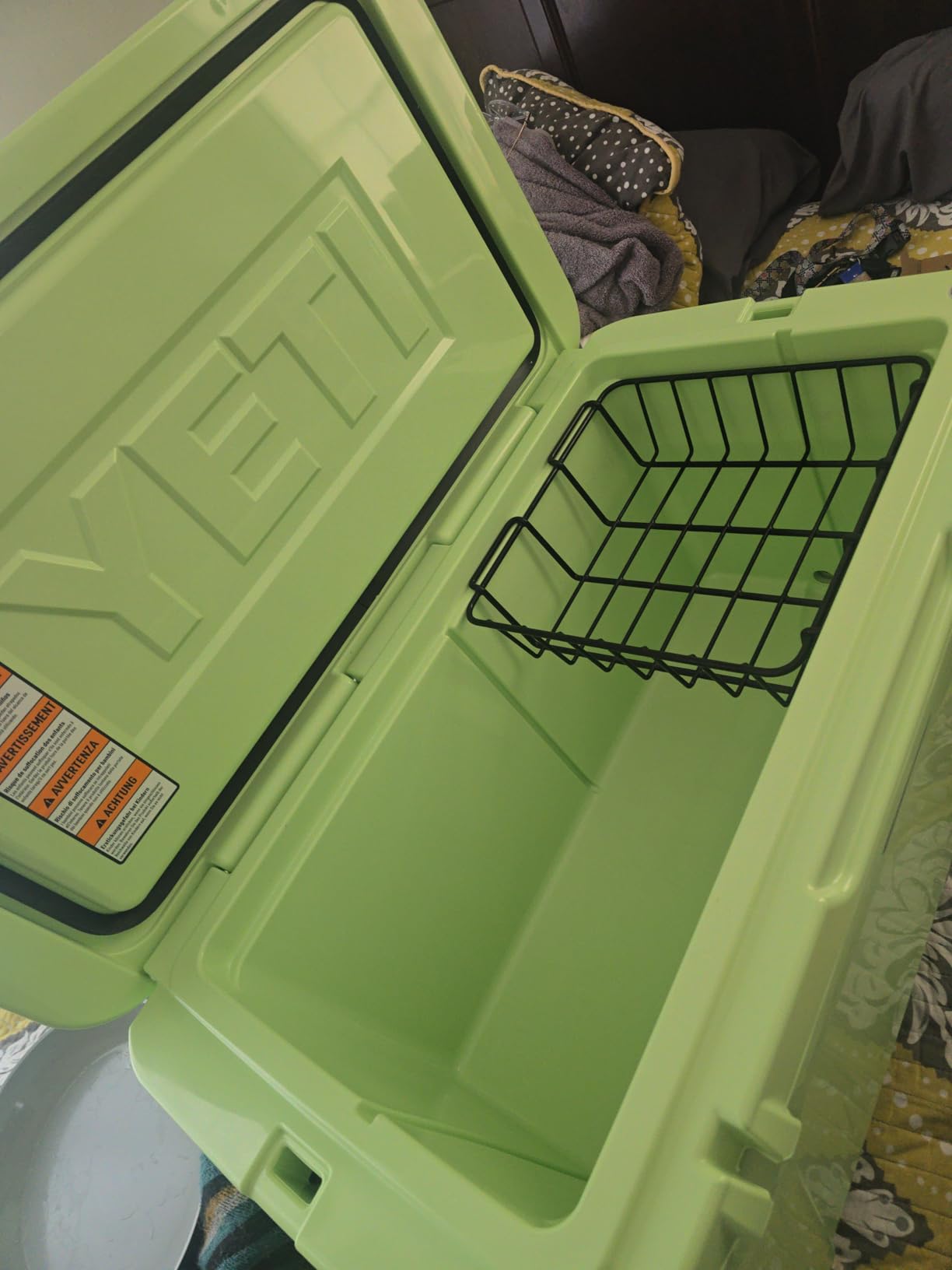
The shape is the part people complain about. The chamber is 10.63 inches square with an 11.75 inch height, so it is deeper than it is wide, and small items migrate to the bottom where the dry goods basket is doing its job but loose gear is hard to retrieve. Owners running it as a personal cooler often report fishing items out by memory.
Empty weight is listed at 13154.18 g, which is roughly 29 pounds, and the overall body is 14.75 inches deep by 8 inches wide by 11.75 inches high. That is a manageable shape for a deck, but lifting a full unit over a high gunwale solo is the part that decides whether a smaller cooler is the smarter call for you.
Who should buy the Tundra 65
This suits anglers who fish a full day, run offshore where the sun is brutal, or carry a full crew and want one cooler to rule the trip. The dry goods basket that ships in the box is the detail that sells it for a mixed load, since it keeps food out of the meltwater without a separate bag.
Owners on The Hull Truth who post in the best cooler for the money threads repeatedly land in the same place, using a roughly 50 quart Igloo Marine Elite and a Grizzly 40 as their daily drivers rather than the Tundra. That tells you the premium tier is a choice, not a requirement.
Where the Tundra 65 is not worth it
If your trip is five or six hours and you are not chasing multi day ice retention, the hard gasket and thick walls are overkill. One Club Bennington owner put it plainly, saying any cooler works for the 5 to 6 hours they are on the water and that they actually prefer the thinner walled options.
The rubber gasket also needs an occasional scrub with warm water and a soft brush to keep a tight seal, and a seal that has gone slack quietly erodes the ice retention that justifies the cost in the first place.
3. RTIC 65 QT Ultra-Tough Hard Cooler – Best Value Rotomolded
RTIC 65 QT Ultra-Tough Hard Cooler, Navy
65 quart capacity
2.4 inches closed-cell foam
34.4 pounds empty
5 year limited warranty
Pros
- Owners report up to seven days of cold in remote and multi-use conditions
- Rotomolded body that is genuinely rugged and easy to clean
- 17 inch wide chamber is easy to load and dig through
- End handles are easy to grip when full
Cons
- Rubber lid latches are stiff with cold wet hands
- 34.4 pound empty weight is hard to lift into a boat
- Occasional gasket quality control reports
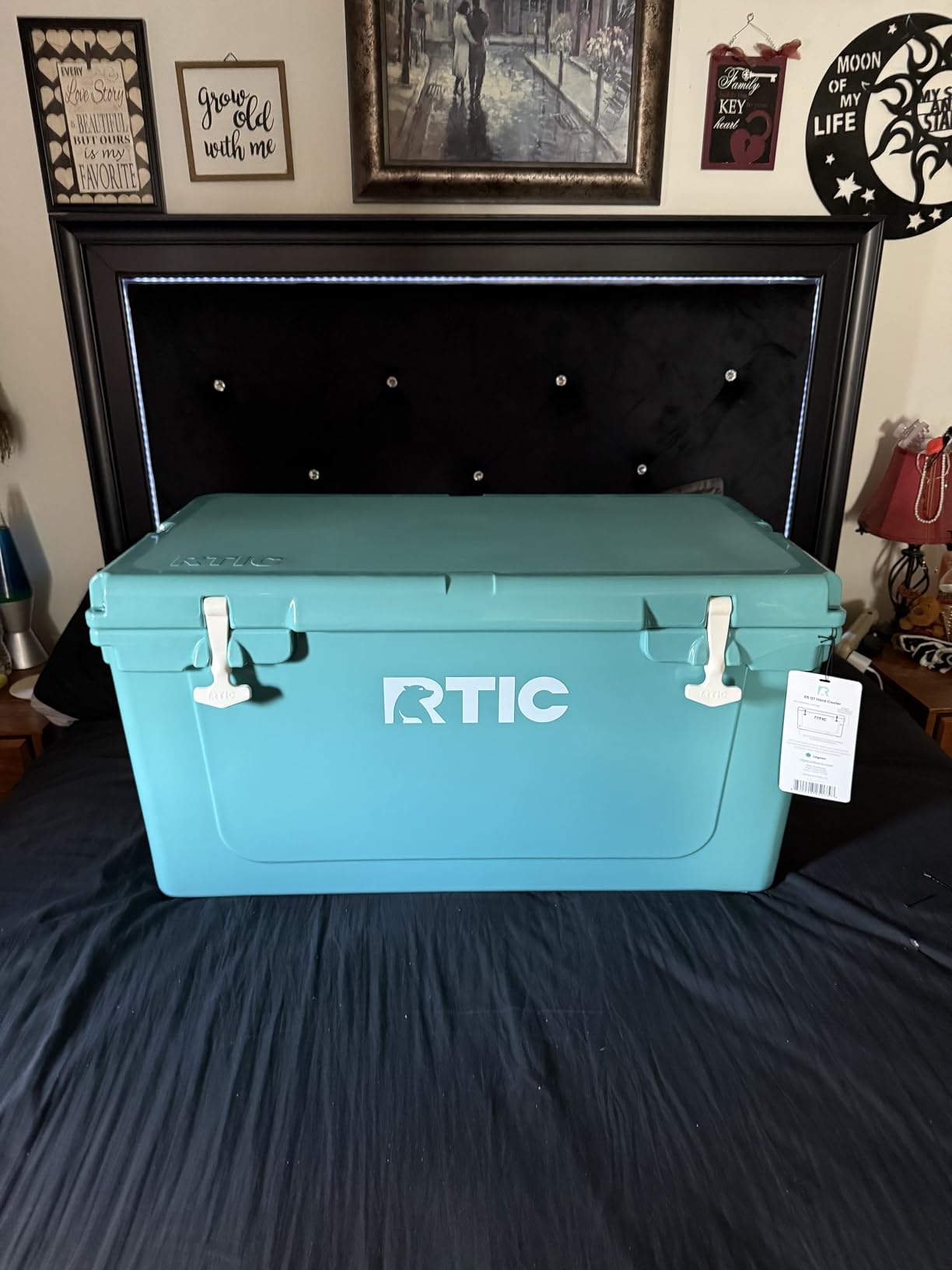
The RTIC 65 is the straight answer to the question buyers ask most often, which is what cooler is just as good as a YETI but cheaper. It uses the same rotomolded polyethylene approach and puts up 2.4 inches of closed cell foam against a freezer style gasket, with a manufacturer claim of holding cold for up to seven days. Owners running it as a multi day cooler tend to confirm the claim in ordinary use.
Where RTIC genuinely improves on the premium brands is usable space. The chamber is 17 inches deep and 31.58 inches wide, a much flatter and wider box than the deep square chambers on the Tundra line, so you can see and reach everything at the bottom without emptying the cooler. The same wide flat lid is rated to stand on, and RTIC markets it as a bench or a step stool.
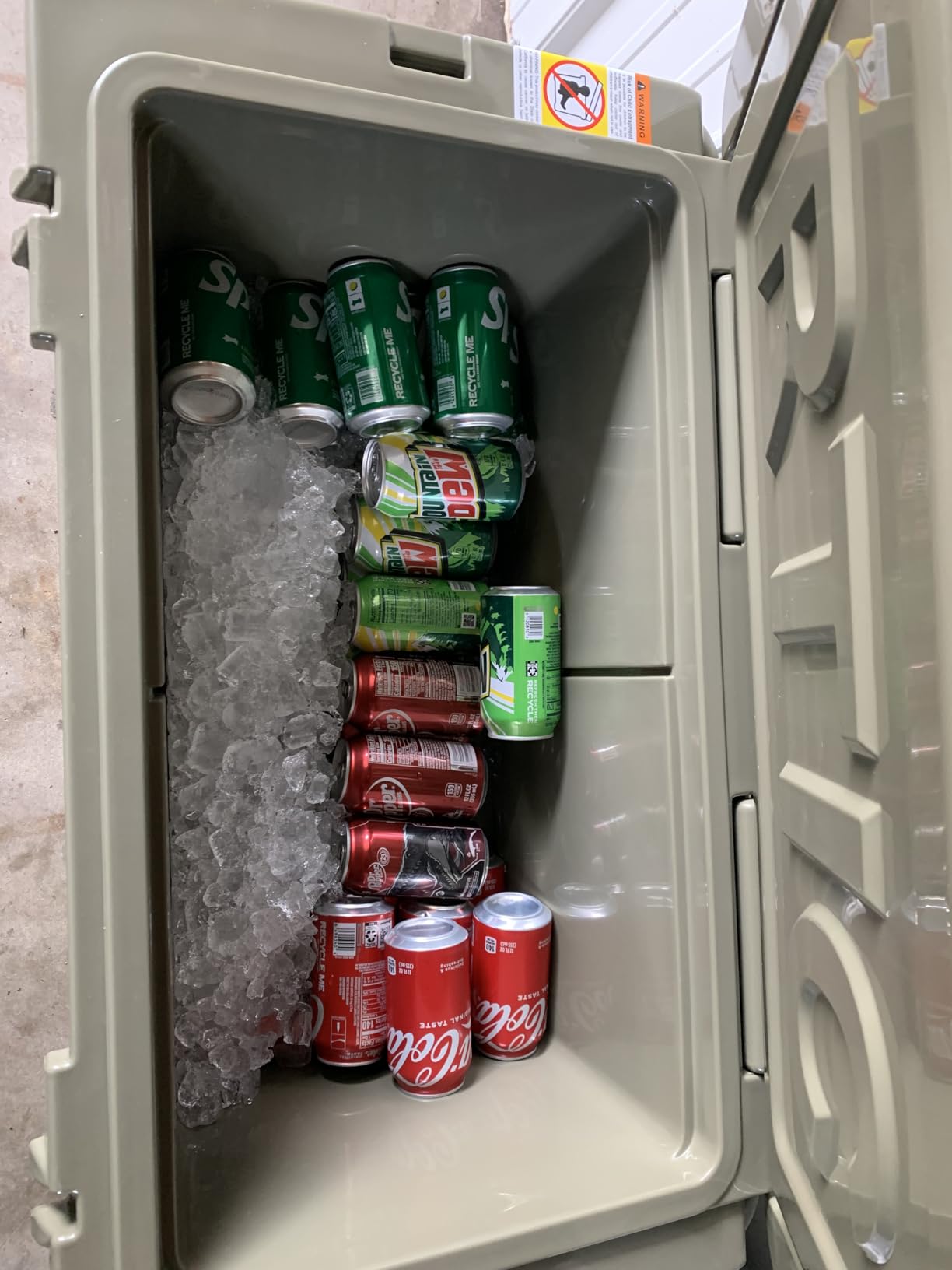
That flat, sturdy lid is why this cooler keeps showing up in the leaning post conversations on the BD Outdoors build forum, where owners describe a 30 to 65 quart cooler in front of the console doubling as seating and a drinks locker. A lid that can take a person is a genuine feature on a small boat where every flat surface counts.
The latches are the trade off, and owners are blunt about them. The rubber lid latches are stiff, particularly with cold or wet hands, and a minority of reviewers report a gasket that arrived partially glued and had to be separated before it sealed properly. Check the seal on the day it arrives rather than trusting it on the first outing.
When RTIC makes more sense than a premium cooler
Choose the RTIC when you want a big capacity cooler that survives a rough deck, and you would rather put the difference into ice, fuel or a second unit for fish. The 65 quart size also matches the multi day sizing guidance that keeps coming up on The Hull Truth, where owners independently recommend 70 to 100 quarts for hot summer conditions.
It is also a defensible second cooler. Running one for fish and one for drinks is the arrangement most forum regulars recommend, and two RTIC sized units handle a full crew better than one oversized one that everyone fights to open.
Where RTIC gives ground
Empty weight is 34.4 pounds, the heaviest in this roundup, and that matters on a small boat. Owners on tin boat and small craft forums are candid that getting a cooler that size aboard solo is a real chore, so check your lifting path before committing.
The 65 quart also needs a wide deck footprint at 31.58 inches across. On a narrow leaning post setup or a jon boat, a 45 or 20 quart RTIC fits the same ecosystem and the same insulation approach without fighting for space.
4. ENGEL 60 QT Ultra-Light Cooler – Best for Solo Lifting
ENGEL 60 QT Ultra-Light Injection Molded Cooler – Ice Chest Keeps Ice up to 7 Days – Large Cooler Includes Wire Basket, Divider and Built-in Bottle Opener – Seafoam with Dark Grey Interior (Seafoam)
60 quarts at 21.5 pounds
2 inches closed-cell foam
Wire basket and divider included
Tie-down slots
Pros
- 60 quarts that one person can actually lift
- Owners report three to five days of retention
- Basket and divider keep food dry
- Rope handles sit flat and do not snag
Cons
- Extreme heat shortens retention to about two days
- Injection molded shell can crack on a hard drop
- Limited color options
This cooler solves the problem nobody advertises, which is weight. It holds 60 quarts and weighs 21.5 pounds empty, roughly the same as a much smaller rotomolded unit. On a boat with a high gunwale and no dock ladder, that difference decides whether a full cooler is a one person job or a two person lift.
The insulation is 2 inches of advanced closed-cell foam in an injection molded high-density food grade shell, rated by the manufacturer to keep ice up to seven days. In practice owners report three to five days in ordinary conditions, and one tester still had ice after ten days in a hot car, which is a stronger result than the claim demands.
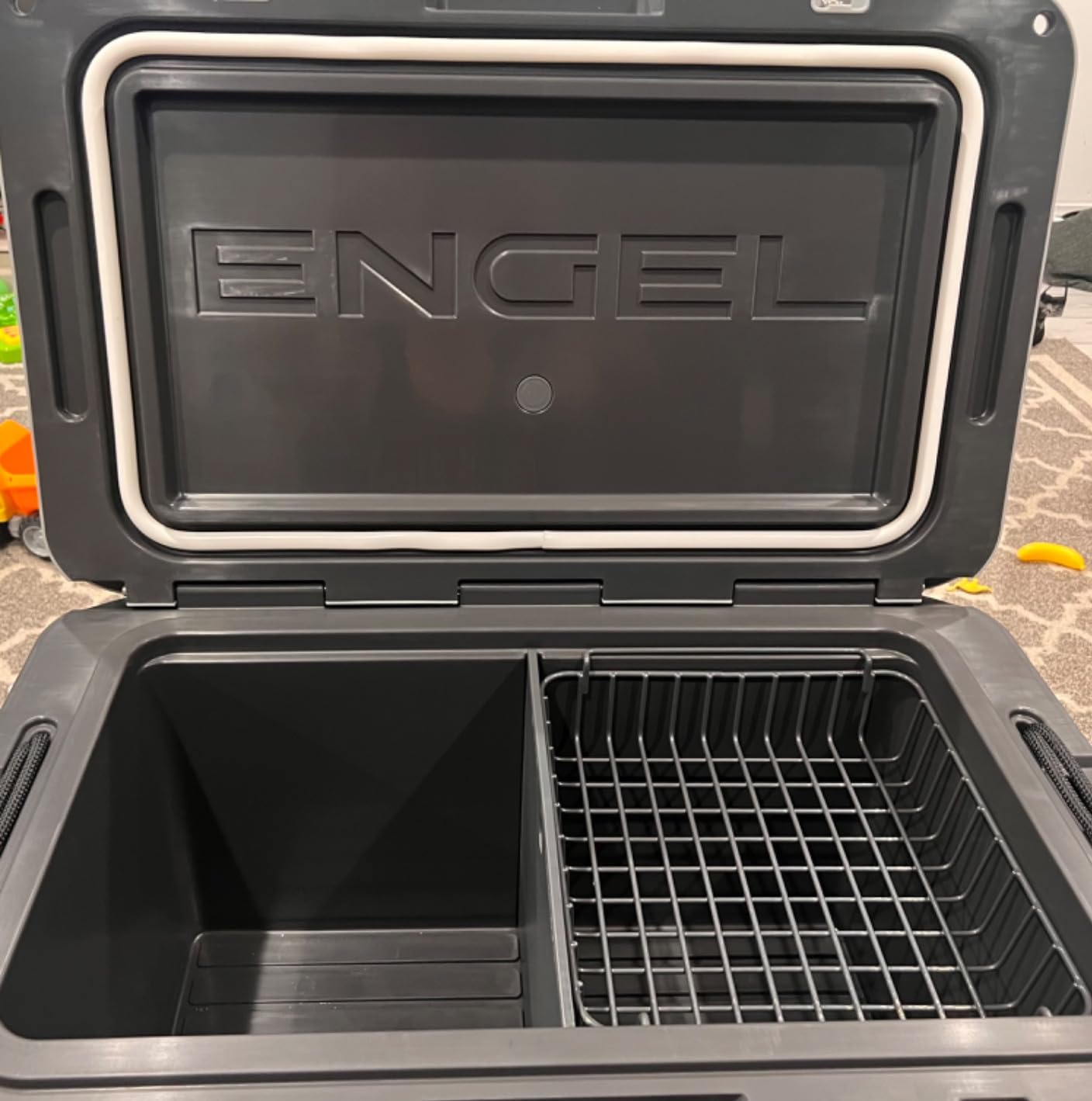
The included accessories are what separate it from a plain ice chest. A removable wire basket keeps food off the ice and stops it swimming in meltwater, a divider splits food from drinks, and the drain plug works with a patent pending level floor and tapered drainage channels so the last of the water actually runs out. Tie down slots are moulded in, which is the feature that matters most for a moving boat.
Rubber feet keep it from sliding on a deck, and the rope handles and moulded hand holds lie flat against the body so they do not catch on a rod, a net or a seat frame as you slide the cooler into position.
Who the ENGEL 60 suits
It is the pick for anglers who fish alone or as a pair, who step onto a floating dock, or who run a small centre console where deck space is measured in inches. At 29.5 inches wide by 18 inches deep and 17 inches high, it is a wide flat box that nests well against a console or under a helm seat.
Reviewers repeatedly frame it as a strong value against premium rotomolded coolers, which is a fair summary: you trade some shell toughness and a little extreme heat performance for a weight saving that is worth real money on a small boat.
Where the ENGEL 60 falls short
The shell is injection molded rather than rotomolded. That is exactly why it is light, but it also means a hard drop onto a gunwale can crack it where a rotomolded body would bounce. Treat it as the boat cooler rather than the dock cooler if your boat has a lot of climbing over the rail.
Real world ice retention in sustained extreme heat drops to roughly two days rather than the advertised seven, and the colour range is limited compared with the painted coolers that match a specific hull. The 4.5 rating reflects a product people like with a few measured reservations, not a disappointment.
5. ENGEL Live Bait Cooler PRO 30 QT – Best for Live Bait
ENGEL 30 Quart Live Bait Cooler PRO for Fishing – Portable Minnow and Bait Bucket with Lithium-Ion Rechargeable Aerator with 4 Rod Holders – Silver (30QT)
30 quart insulated bait bucket
Lithium ion rechargeable aerator
Up to 48 hours of aerator life
Pros
- Keeps shrimp and minnows lively in full day heat
- Rechargeable aerator runs 36 to 48 hours over USB-C
- Cold insulated water extends bait survival
- Removable pull net for handling bait
Cons
- Empty unit tips easily while filling
- Aerator tubing can kink at the grommet
- Net handle gets in the way when pouring
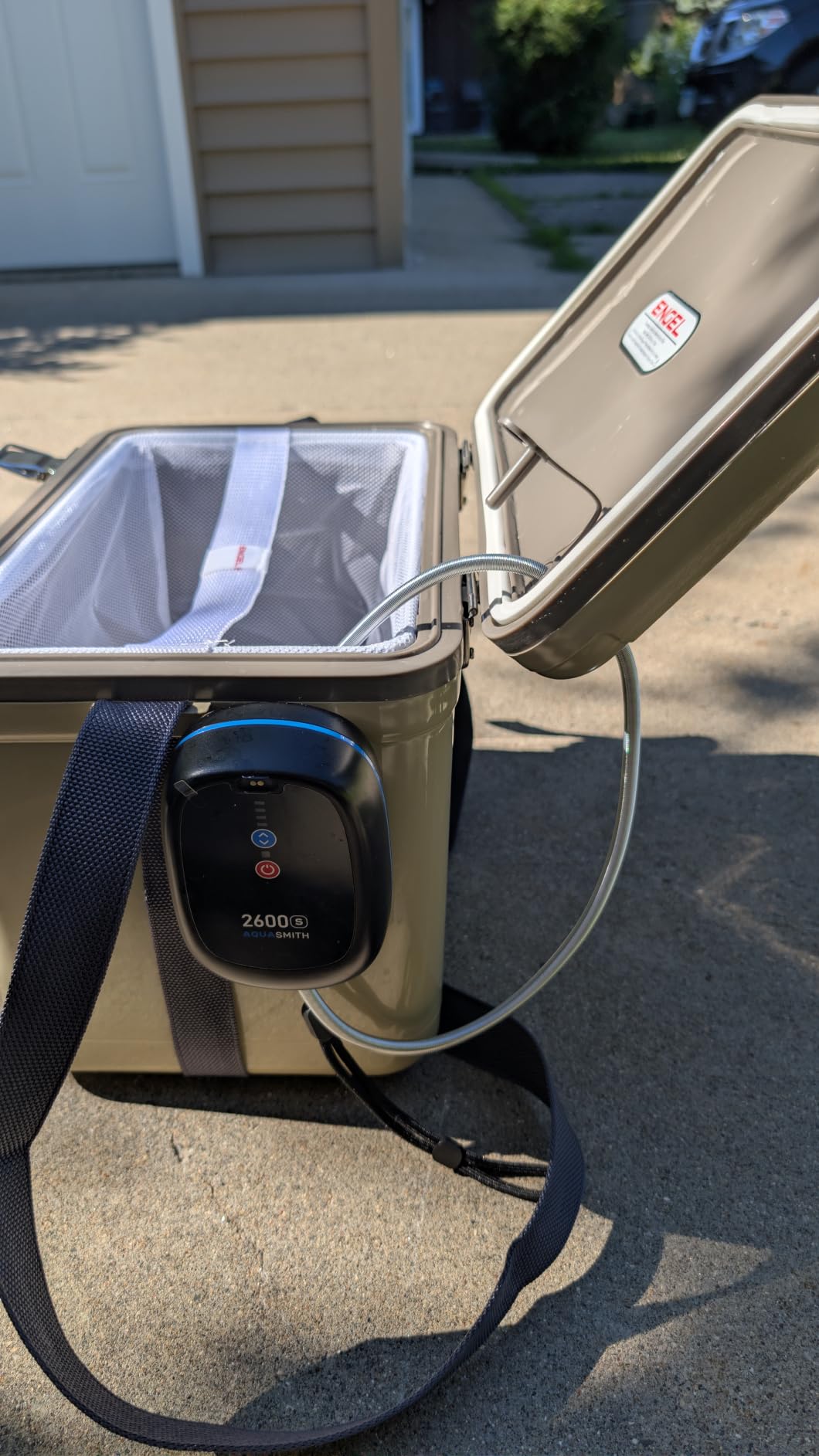
Almost every cooler in this roundup is a food and drink ice chest, which means the one that keeps your bait alive deserves its own section. The ENGEL Live Bait Cooler PRO is a 30 quart insulated bucket with a rechargeable aerator built in, and it is the only live oriented pick here. Anglers report shrimp, minnows and pinfish staying lively through a full day in Florida heat, which is a real result when the alternative is a plastic bucket and a battery bubbler.
The aerator is the ENG-AP3 lithium ion unit, rated for up to 48 hours of runtime and recharged over USB-C. Owners consistently put real runtime closer to 36 to 48 hours depending on how much water you are circulating, which lines up with a full day on the water and then some.
Insulation is the quiet advantage here. Cold water holds more dissolved oxygen, so an insulated bait bucket outperforms a plain bucket even when the aerator is doing the same work. The EVA gasket around the lid prevents splashing, stainless steel hinges and latches resist corrosion in salt water, and a removable pull net lets you pick a bait without bare hands.
The 30 quart version is the one that includes rod holders, and it integrates with a band boat layout because the shoulder strap and carry handles fold in rather than sticking out. The other capacities run 7.5, 13 and 19 quart, in silver or tan, if the 30 quart is more than your deck can take.
When the live bait cooler earns its place
It is the right call for anyone targeting pompano, snook, tarpon or anything else where a dead bait ends the day early, and for tournament anglers who cannot afford to run out of shrimp before the clock runs out. The insulated, aerated setup measurably reduces bait loss compared with a standard bucket.
A lot of owners run it in two roles, as a bait tank on deck and as an overflow cooler for a few drinks once the bait is gone, which stretches the money across a full day.
Where the design annoys people
The aerator placement is the most common complaint and it is a practical one. Because of where the pump sits, the empty unit tips easily while you are pouring in water and minnows, so fill it on a stable surface rather than in the boat. A second reviewer flags that the aerator tubing can kink at the pass-through grommet unless you run flexible tubing through it.
The pull net handle also gets in the way during filling, and because the lid seals well enough that air cannot escape, many owners add a vent grommet so the bucket does not pressurise as it drains. Those are workable fixes, but they are real frictions, and the aerator hardware adds a meaningful step up from a plain insulated bucket with a battery bubbler.
6. Coleman Marine Cooler 100 QT – Best for Big Crews and Long Days
Coleman Insulated Marine Cooler, UV Guard Lid & Body, 100-Quart
100 quart capacity
Holds up to 160 cans
Weighs 17.7 pounds
6 inch heavy duty wheels
Pros
- Three to five day retention confirmed in real use
- Light for a 100 quart marine cooler
- Seat rated lid with molded cup holders
- UV coating and stainless steel hardware
Cons
- Only two wheels
- Handle could be longer
- One year limited warranty
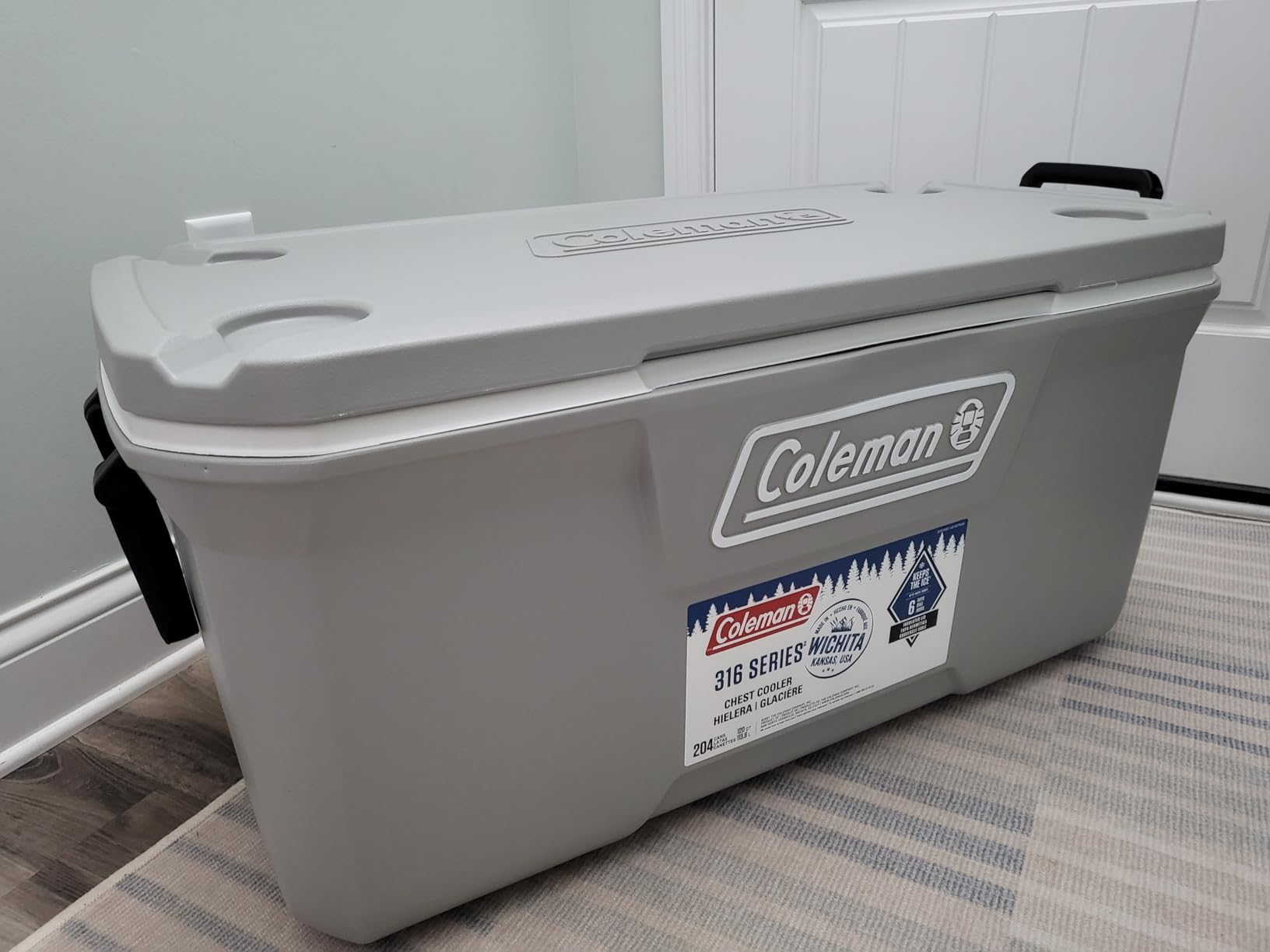
The Coleman Marine line is the value answer that regular fishing boats actually get chosen for, and the 100 quart version is the big one. It is rated to keep ice for up to five days in temperatures as high as 90F, and owners report three to five days in real use with one reviewer still having ice on day five of a camping trip.
At 17.7 pounds empty for 100 quarts, it is unusually light for a marine cooler of that capacity. That number is the reason it works on boats that cannot take a 34 pound rotomolded box aboard, and it is why owners on smaller craft forums describe budget marine coolers performing equivalently to premium ones for their use.
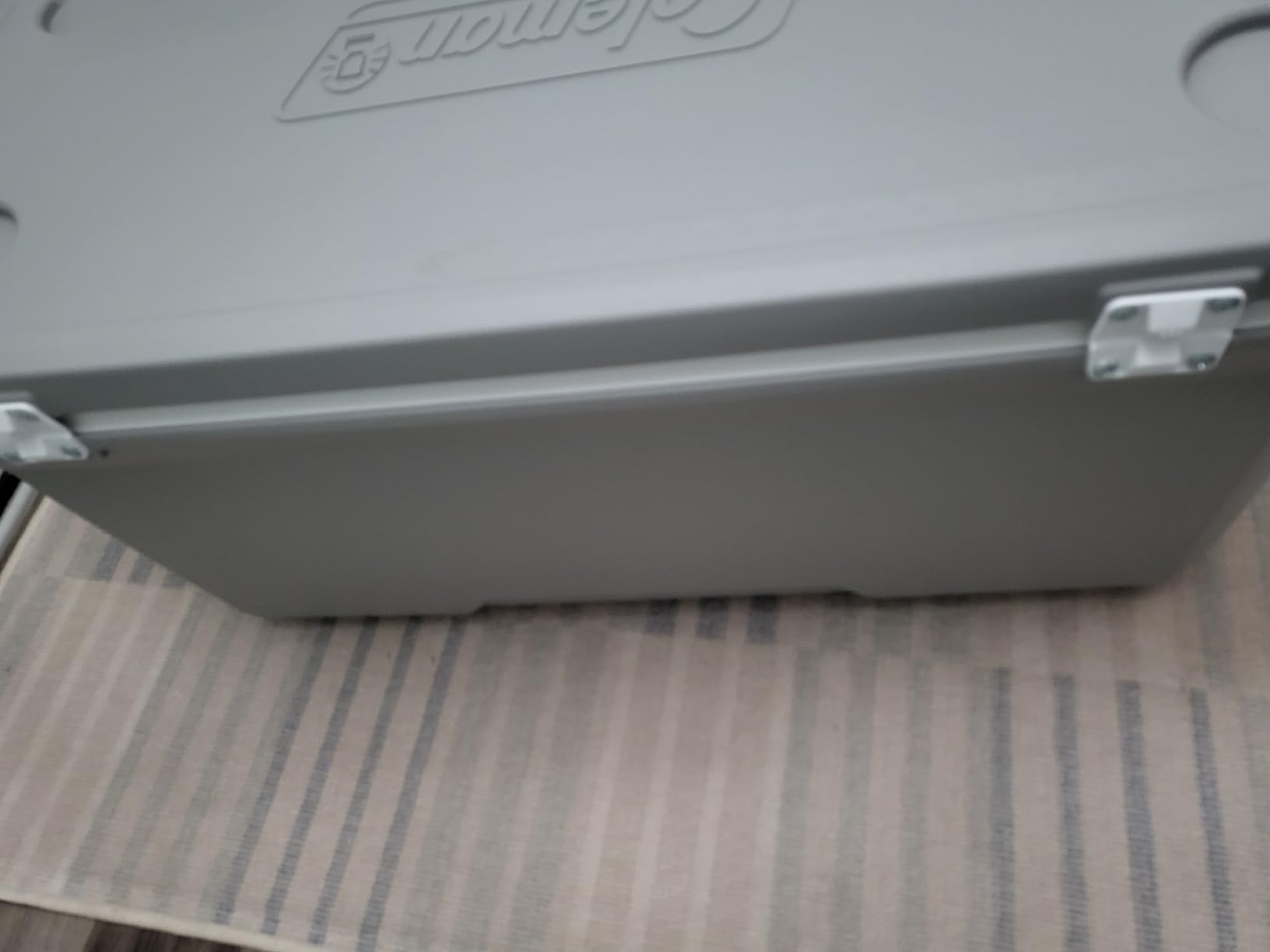
Three boat specific details are worth calling out. The HAVE-A-SEAT lid is rated to support 250 pounds and carries a built-in ruler on the lid surface, which turns the cooler into a usable seat at a sandbar or a dock. Molded cup holders take 30 ounce tumblers with a drain, so the cooler doubles as a drink station. A leakproof channel drain plug lets you empty meltwater in place.
Sun exposure is handled with a UV Guard coating on both lid and body plus rust resistant stainless steel hardware, which is the combination that decides how a cooler ages on an open boat in a salt climate. A member of the irate4x4 forum described running an 80 quart Coleman Extreme for roughly twenty years and said it works equally well, which is about as good a long term durability anecdote as this category produces.
Who the 100 quart works for
It is built for a full crew on a long day, a tournament where the clock runs past lunch, or a boat that functions as a floating camp for a couple of nights. At 100 quarts with room for 160 cans, it removes the argument about whether there is enough room for everyone and the catch.
Because the lid takes weight, it also solves the leaning post problem cheaply. Owners on the C-Dory and BD Outdoors forums describe coolers with reinforced tops serving as an extra seat and a gear locker, and this is one of the few mainstream coolers rated for the job.
Where the Coleman falls short
It has only two wheels, and owners on uneven ground wish for four. The tow and swing up handle is also shorter than ideal, so pulling it up a beach ramp takes some effort. Add those together and hauling 100 quarts solo across sand is a two person task.
The one year limited warranty is short for a marine cooler, and the injection molded body is less resistant to abuse than a rotomolded shell. If you drop this unit on a gunwale every trip, expect cosmetic and eventually structural damage sooner than the lifetime warranty products.
7. Igloo Marine Ultra 30 QT Cooler – Best Budget Marine Cooler
Igloo Marine Ultra Coolers, White, 30 Qt
30 quart Ultratherm body
Holds ice up to 3 days at 90F
Weighs 7.1 pounds
UV inhibitors
Pros
- Weighs about 7 pounds and carries one handed
- Vertical shape fits behind a seat or in a locker
- Two to three day retention when packed properly
- White finish reflects heat and doubles as a seat
Cons
- Plastic lid hinges break within weeks on some units
- Handles can pull out of their mounts when loaded
- Stiff one handed lid
The Igloo Marine Ultra 30 is the cheapest real marine cooler here and among the lightest hard coolers, at 7.1 pounds. If you are outfitting a jon boat, a small centre console or a kayak setup where every pound and every inch of deck space counts, this is the unit that actually fits.
The Ultratherm insulated body and lid are rated to hold ice up to three days at 90F, and owners with good units report two to three days reliably. UV inhibitors are built into the shell, which matters for a white cooler sitting in direct sun on an open boat all day.
The vertical shape is the smart part. A tall narrow body tucks behind a drivers seat, stands upright in a console locker, or sits under a leaning post without eating the whole deck, which is why this is the cooler most small boat owners mention by size rather than by brand. The white marine finish reflects heat and doubles as a small seat, a common use on flat decked jon boats.
Be clear about what you are getting. The 4.1 rating is the lowest in this roundup, with roughly 11 percent one star reviews, and the reason is almost entirely hardware durability rather than cooling performance. The plastic lid hinges are the weak point and have broken within weeks for some owners, and the side handles can pull out of their mounts when the cooler is carried fully loaded.
Where the Igloo 30 makes sense
Buy it as a personal cooler, a drinks-only unit, or a backup that lives in a locker rather than as the cooler you build a whole fishing day around. Owners frequently pair a small unit like this with a larger one, with the Igloo holding drinks and a personal lunch while the main cooler carries the catch.
It is also the right answer for a saltwater angler running budget gear. One Islamorada boat owner described running a Coleman Esky 55 and an RTIC 45 as their setup, and the pattern is the same: value marine coolers get used hard and replaced occasionally rather than protected.
Where the Igloo 30 falls short
Ice retention is well short of the premium hard coolers in sustained heat, so it is a day cooler and not a multi day cooler. The lid is also stiff to open one handed, which is annoying when you are holding a rod in the other hand and trying to grab a drink.
The split rating is worth respecting. Check the hinges and the handle mounts the day it arrives, and if you are putting a full load of fish on top of the lid, do not. Use a different unit for the heavy end of the job.
8. Pelican ExoChill 17L Soft Cooler – Best for Kayaks and Tank Wells
Pelican Sport – ExoChill – Cooler Bag – Fit in Most Tank Wells – Removable Shoulder Strap and Handles On Each Side – More Storage Compartement – PS3012-00, Black/Grey, 18.701 in
17 liter capacity
420 denier with 0.5 inch insulation
Weighs 1.3 pounds
Water resistant PEVA liner
Pros
- Lightest option here at 1.3 pounds
- Shaped to fit a kayak tank well or cockpit
- Holds cold for most of a day with freeze packs
- Doubles as a water resistant dry bag
Cons
- Soft bag cannot match a hard cooler on multi day retention
- Outer fabric holds water after a full immersion
- Clip straps sold separately
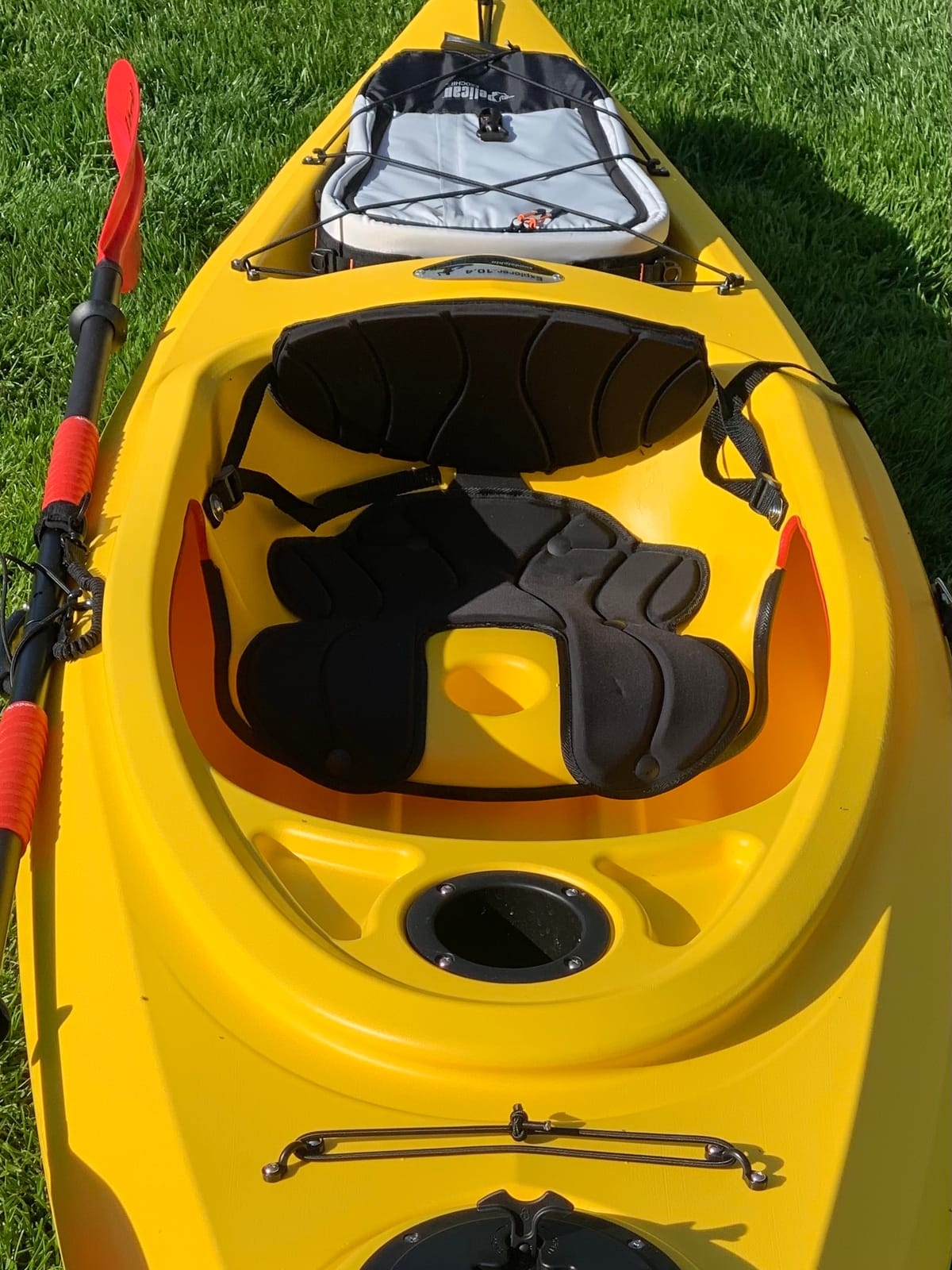
On a kayak, a SUP or a very small skiff, the question is not ice retention, it is whether the cooler physically fits. The Pelican ExoChill is shaped for exactly that, sitting in a tank well or between your legs with a maximum load of 17 liters. At 1.3 pounds it is by far the lightest thing in this roundup and it can be moved one handed while you are balancing.
The construction is 420 denier with 0.5 inch of insulation and a water resistant PEVA liner. Owners report it holds ice for most of a day when packed with freeze packs and frozen water bottles, which is the right expectation for a soft bag and the one most buyers settle into quickly.
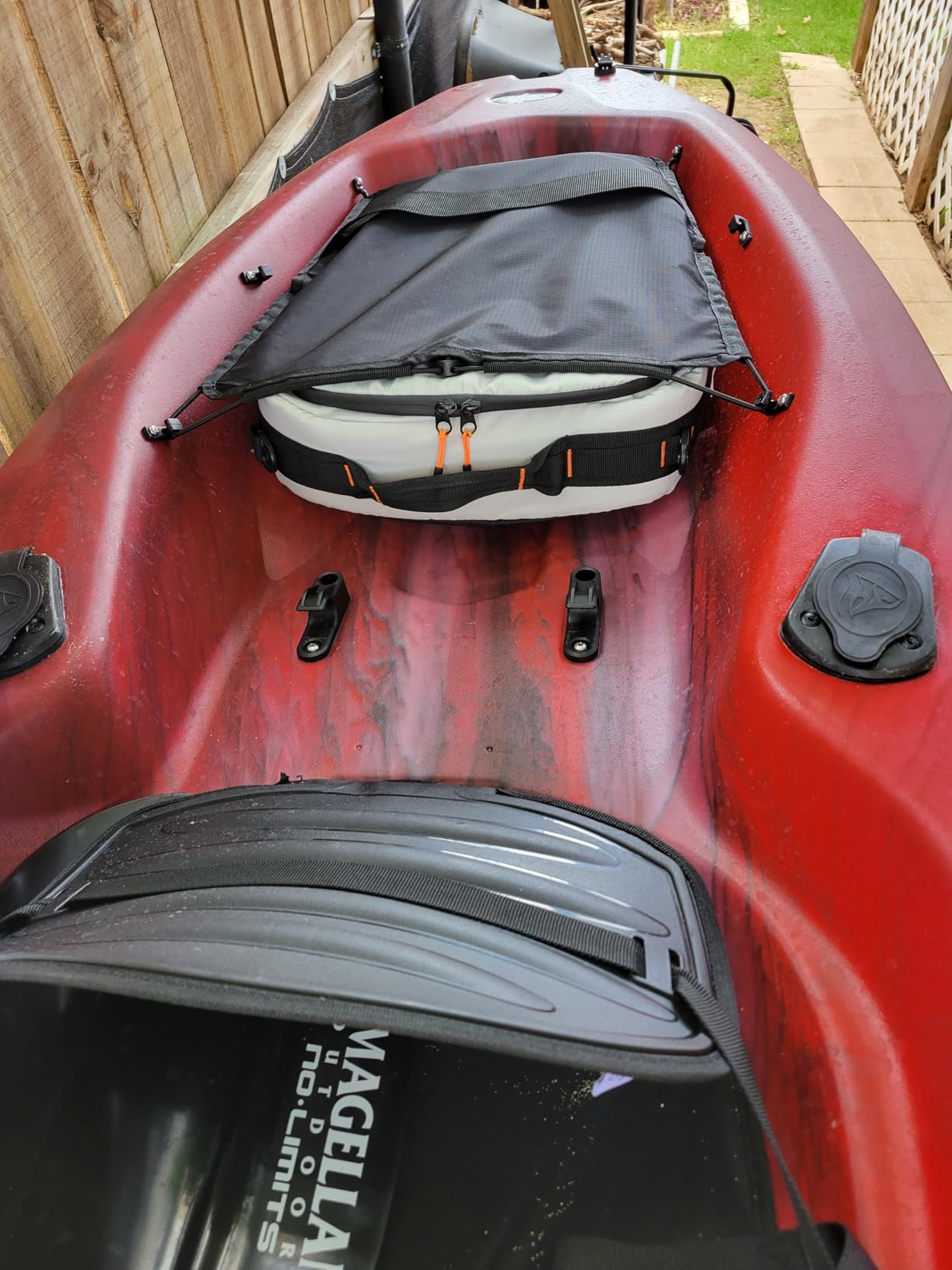
The liner is the feature that gets used most. Because the interior is water resistant, a lot of owners turn it into a dry storage bag for sunscreen, towels, snacks and a change of clothes, which on a kayak trip is often worth more than cold drinks. A front pocket with hooks and integrated loops accept clips or carabiners so you can hang gear off the side.
Carry options are a single removable shoulder strap plus handles on each side, and a reflective logo adds low light visibility for launching before dawn, which is when most kayak anglers are on the water.
Where the ExoChill is the right tool
Choose it when the vessel is the constraint. Kayak and SUP owners describe it as a near perfect fit for a tank well or cockpit, and for anyone standing and casting from a small craft, it takes up almost no deck space at all.
It also works as a shore companion, holding lunch and drinks on a beach day while a second unit stays home as the boat cooler. The 17L Exochill Plus and 20L Exochill are the other capacities if you want a little more room.
Where the soft cooler loses
It cannot compete with a hard cooler on multi day ice retention, and reviewers say so without hedging. Plan on one day with freeze packs rather than block ice and a five day trip. Wind is a factor too, since a soft bag has no rigid body to resist a gust on an open bow.
After a full immersion the outer fabric holds water even though the insulated liner stays dry, and it is not truly waterproof against a large spill. Several buyers add their own clip straps because the ones they wanted are not included.
9. CUDDY Floating Cooler 40 QT – Best for Towing and Sandbars
GoSports Outdoors Cuddy Floating Cooler and Dry Storage Vessel – 40QT – Amphibious Hard Shell Design, Tan
40 quart floating cooler
Dual-wall insulated HDPE
24.7 pounds empty
6 foot tow rope with D-rings
Pros
- Genuinely floats and stays stable when opened
- Tows behind a kayak or SUP or by hand
- Holds 30 to 40 cans cold for a full day
- Works as a normal cooler on land too
Cons
- Ice does not last a full day
- Cup holders are too shallow for a drink
- Heavy when loaded for long tows
Every hard cooler in this list is a passive box. The CUDDY is amphibious, which changes what you can do with it on the water. It floats, it can be towed behind a kayak, a paddleboard or a wading angler, it can be anchored on a sandbar, and it still works as a standard cooler on shore. Owners who take it onto rivers, lakes and pools consistently call it the best floating cooler they have used.
The 40 quart body is unsinkable high density polyethylene with dual wall insulation and two large lids, and the package includes a 6 foot tow rope with a carabiner plus D-rings on both sides. Four built-in cup holders and four T-latch handles are moulded in, and optional removable wheels are sold separately for rolling it up a beach.
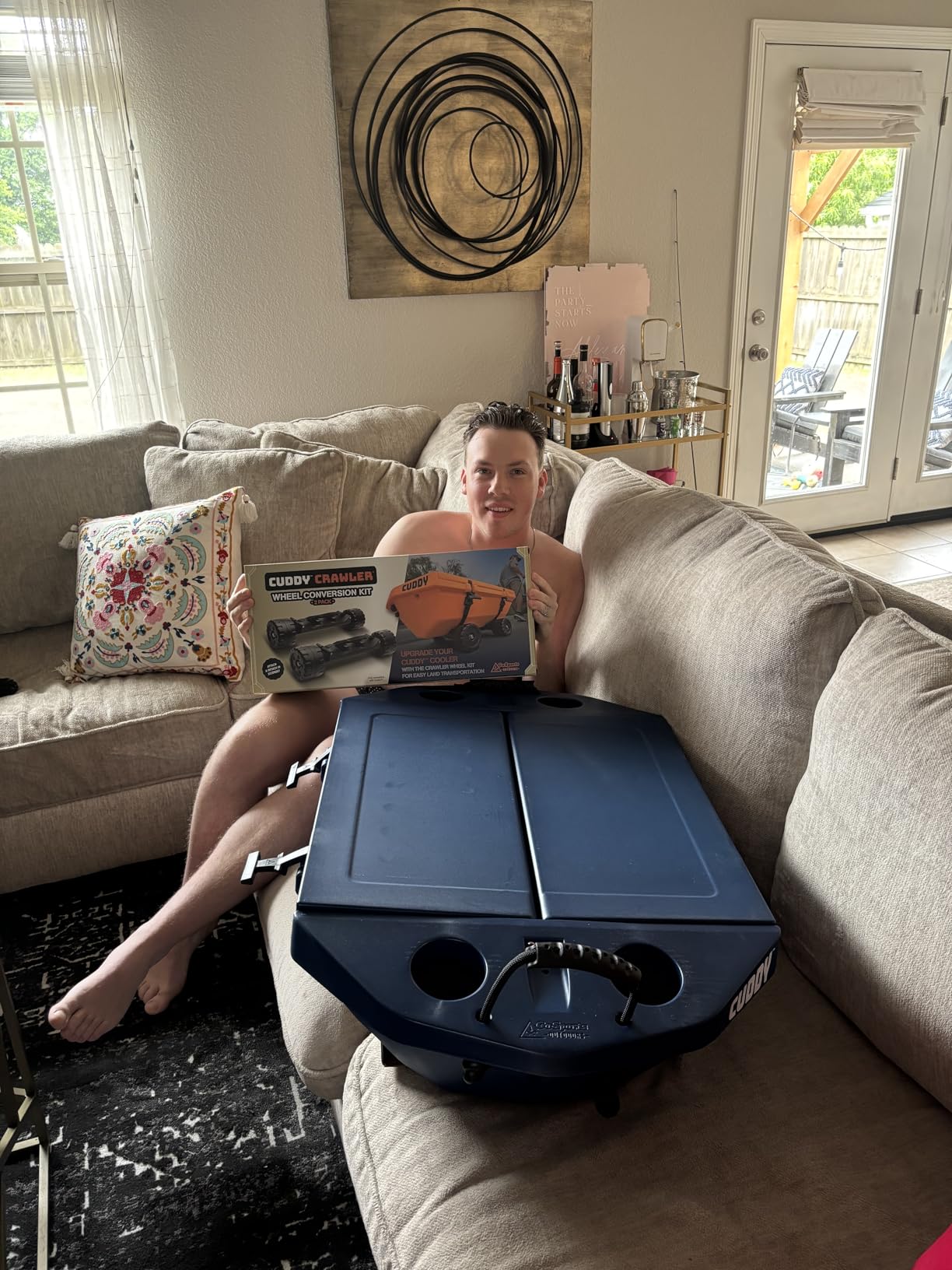
What reviewers like most is the stability when open. Because it floats rather than tips, you can get a drink at a sandbar without the whole container rolling, and it never leaked or let water in during repeated use. Capacity works out to roughly 30 to 40 slim cans alongside two large bags of ice, cold for a full day.
Being amphibious is not the same as being a fishing cooler, though. This is a river, lake, beach and pool unit. If you want to keep a catch on ice in a 40 quart box, one of the hard marine coolers above does that job with a proper drain and a gasket seal.
When the floating cooler earns its slot
It suits anyone who wades, floats, paddles or beaches fish rather than casting from a seated console, and it is genuinely useful for a sandbar picnic where the trip from the boat to the bar involves water. Leave it anchored and use it as a table and drinks locker while everyone swims.
It also solves a problem on small boats, where a cooler full of ice weighs far more than you want sitting high in the hull. Towed behind the boat instead of carried in it, the load stays at the surface.
Where it disappoints
Ice typically does not last a full day, although the water keeps drinks cold, so treat the retention claim as a day cooler. The cup holders are also shallow enough that a drink will not reliably stay upright, which is a bit ironic on a floating drinks cooler.
At 24.7 pounds empty and considerably more loaded, towing it a long distance is tiring, and the hydrodynamic nose could be sharper to cut water drag. It also carries a 6 month limited warranty, the shortest here. The care instructions are explicit: never drag it on hard surfaces.
10. Grizzly 15 QT Cooler – Best Personal Cooler
Grizzly 15 Cooler | 15 qt Ice Chest Durable Rotomolded Insulated | Made in USA | Warranty for Life | For Beach Boat Camping Fishing Hunting | G15 | Seafoam
15 quart capacity
12 pounds empty
Up to 2 inches injected foam
Made in USA with lifetime warranty
Pros
- Fits a boat locker or serves as a personal deck cooler
- Rotomolded American made body with a lifetime warranty
- Two inches of injected foam for its size
- Twelve colour options including Saltwater Blue
Cons
- 15 quarts is personal use only
- Lifetime warranty excludes the shoulder strap
- Dry goods tray sold separately
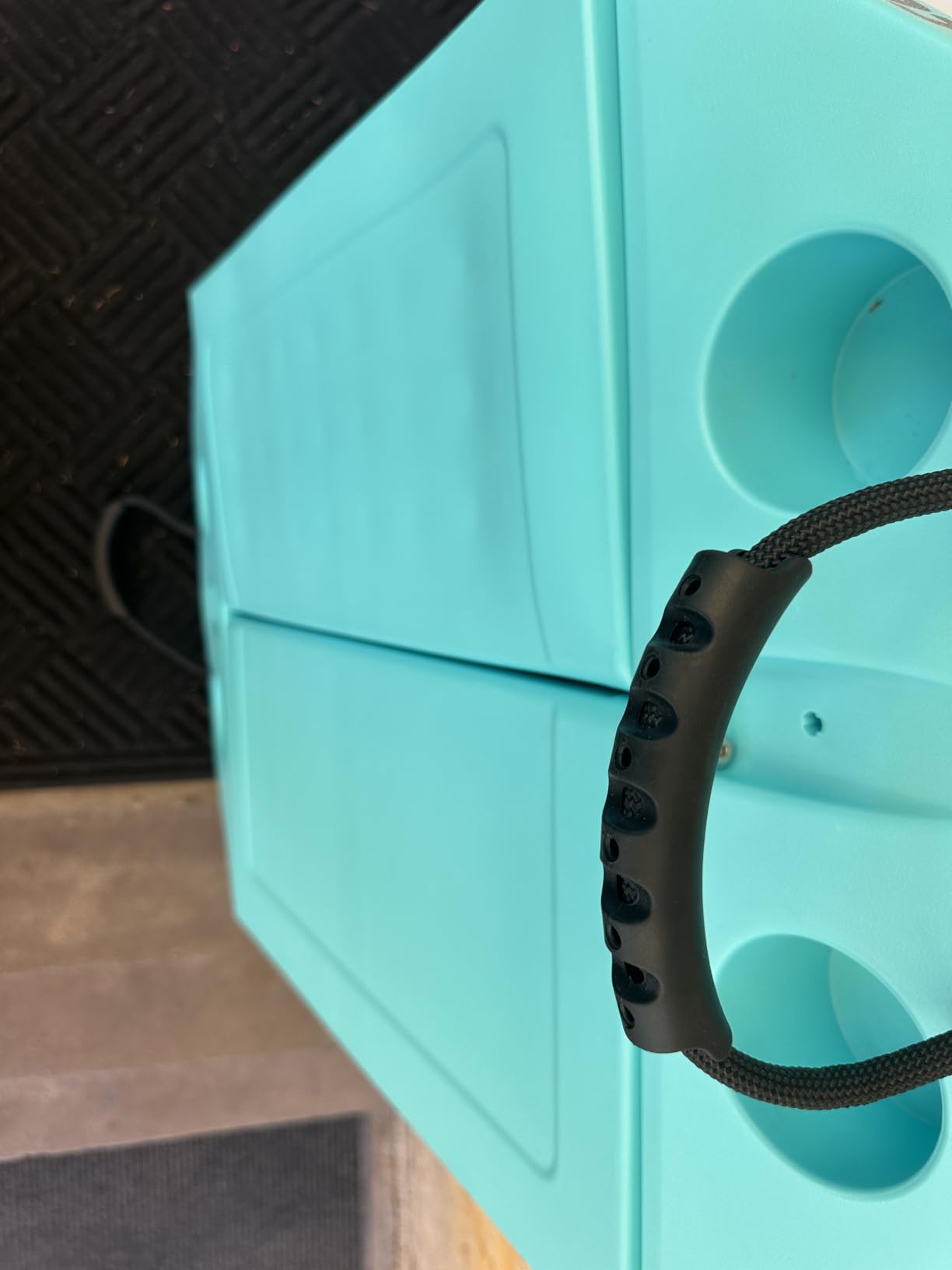
The Grizzly 15 is the answer when a full size cooler will not fit and you still want rotomolded quality rather than a plastic budget box. Fifteen quarts is a genuinely personal unit, and at 12 pounds empty it is light enough to move around a deck with one hand while carrying lunch, a sandwich and a few drinks.
It is rotationally molded LLDPE with even wall thickness and pressure injected with up to two inches of Ecomate polyurethane foam, which is a lot of insulation for a 15 quart chamber. A rubber gasket lid seal extends ice life, and the foam is described as having no global warming potential, no ozone depletion and no VOCs.
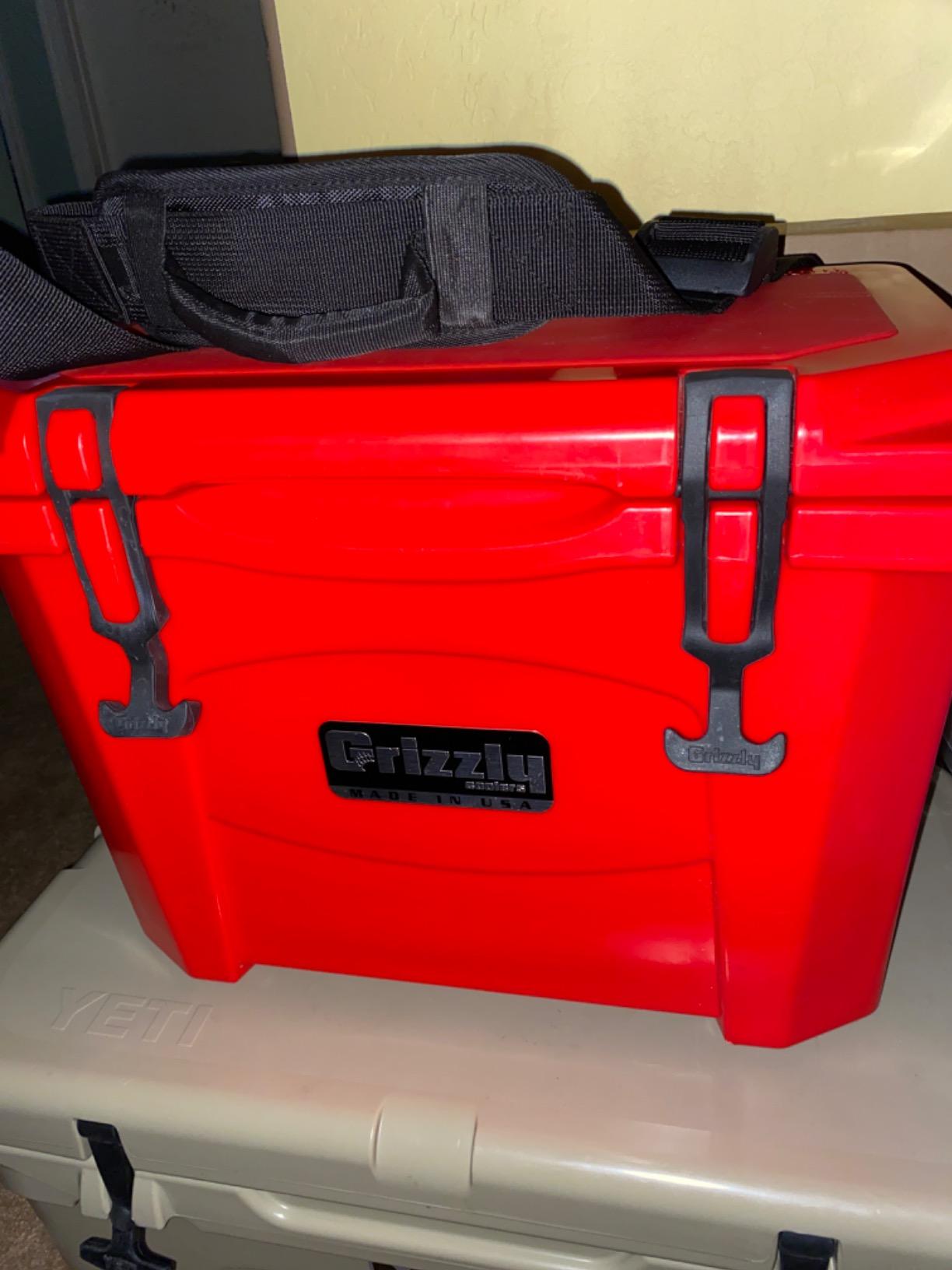
Two details set it apart from other small coolers. It is IGBC certified bear resistant with two lock holes, which matters if you camp in grizzly country or run a boat into the back country. And it is made in the USA with a lifetime warranty, which is the strongest long term cover on this list, even though the imported shoulder strap is excluded.
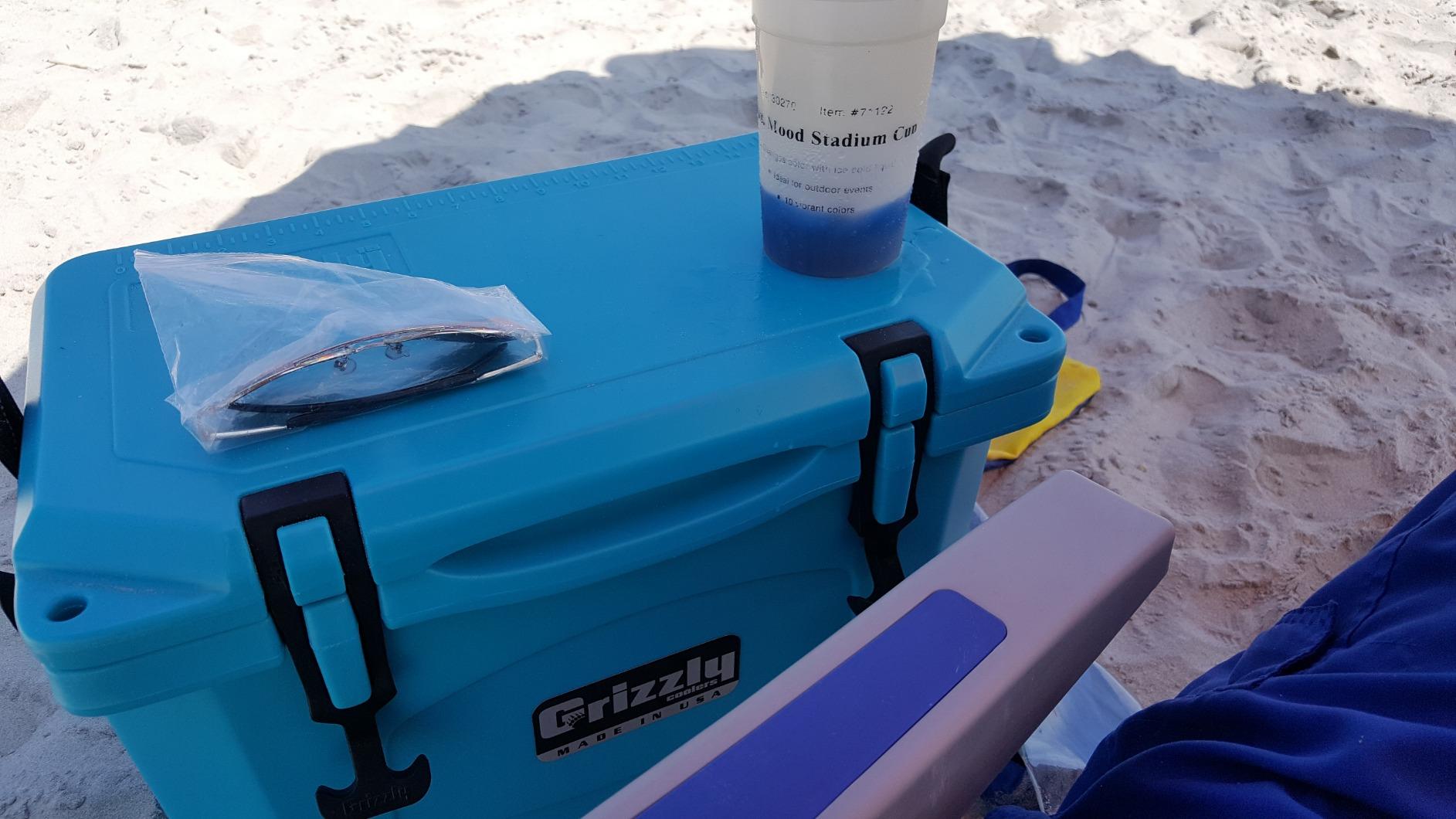
Saltwater Blue is one of twelve colour options, so matching it to a hull is easy, and reviewers note that it works well as a personal cooler in a boat alongside a larger unit rather than instead of one.
Who should carry the Grizzly 15
It is the pick for a solo angler, for anyone pairing a personal cooler with a group cooler, and for small boats where a locker is the only realistic storage. A 15 quart fits under a console seat, in a dry compartment or strapped to a leaning post without stealing usable deck.
The lifetime warranty also makes it a good first rotomolded cooler. If you are unsure whether a hard shell is worth it, this is a low-risk way to find out, and the bear certification means the same cooler works for a trip into grizzly country.
Where the Grizzly 15 is limited
Capacity is the plain constraint. Fifteen quarts is one lunch and a handful of drinks, so this is not the cooler for a group or for holding a catch on ice. Buy it alongside something larger rather than as your only cooler.
There are no wheels and no proper carry handles beyond the strap, and the dry goods tray is sold separately, so a complete food and ice setup costs more than the base unit. The lifetime warranty covers the cooler only, which is worth reading closely before you rely on it.
How Big a Fishing Cooler Do You Need? A Quart Rule by Trip Length
The short answer: 45 to 65 quarts for a normal day trip, 70 to 100 quarts for multi day or leaning post use, and 15 to 30 quarts if you are one angler or the boat is small. That convergence is not ours alone. Owners across The Hull Truth, the tin boat forums and small craft build forums independently land in the same range, with one Hull Truth member simply stating that a 70 to 100 quart insulated cooler is the answer because on hot summer days the fish will thank you.
Work it out from time and crew instead of guessing. A single angler on a six hour trip manages comfortably in a 20 to 35 quart cooler. Two people fishing hard for a full day want 45 to 65 quarts. A group of four or more, or anyone leaving the dock before dawn and getting back after dark, moves to 70 to 100 quarts. The pattern behind those numbers is simple: bigger coolers hold proportionally more ice, so the same cooler is not stretched as thin for a longer trip.
One number catches people out, and it is loaded weight rather than capacity. Ice weighs roughly 3.25 pounds per gallon, so a quart of ice by volume is about 2.2 pounds once you account for the loose top. A 65 quart cooler packed with ice can easily exceed 100 pounds. On a small boat that is a balance problem, not just a lifting problem, so the honest move is to buy the smallest cooler that covers the trip rather than the largest one you can find space for.
Two practical notes on the sizing rules. First, the very large end of the range makes more sense when a leaning post is involved, because those owners frequently treat a 30 to 65 quart cooler mounted at the console as both seating and a drinks locker, as described repeatedly on the BD Outdoors build forum. Second, do not treat a published retention figure as a promise. A 7 day claim assumes pre chilling, block ice, minimal opening and shade. A lid propped open on a sunny deck for six hours will cost you most of a day regardless of brand.
Marine Cooler vs Regular Cooler: What Actually Changes
A marine cooler is a cooler built for a moving boat: a rotomolded or thick walled hard shell, a gasket sealed lid, a non marking and non skid base that will not slide on a wet deck, and a drain so meltwater leaves instead of pooling in the hull. A standard ice chest is usually a lighter, thinner plastic box with a snap lid and no drain. The terms are marketing labels rather than standards, so check the attributes, not the name.
The differences that change how a cooler performs on a boat come down to six things. Wall construction decides whether it survives being lifted over a gunwale. The gasket decides how long ice lasts once the lid is closed. The base decides whether it walks across the deck under power. The drain decides whether you are carrying meltwater to the beach. Hardware and coatings decide how it looks after a season of salt and sun. And the fittings, whether rope handles and moulded hand holds, decide whether it catches on your gear.
You do not need a marine rated cooler for a lake trip in cool weather, and you do need one if you are offshore in summer with a heavy load and a boat that moves. That is the whole decision. The Igloo Marine Ultra and the Coleman Marine line in this roundup are inexpensive marine coolers, and the ENGEL 60 and the soft Pelican bag are closer to general purpose, with the Pelican leaning fully toward day use on small craft.
How to Secure a Cooler on a Moving Boat and Drain Meltwater
Secure a cooler with a tie down, a non slip base, and a drain route. That combination is the difference between a cooler that stays where you put it and one that ends up under the console at 30 knots. The first requirement is a base that grips: Bearfoot feet on the YETI Tundra 65, rubber feet on the ENGEL 60 and the Igloo Marine Ultra, or a non skid deck mat under anything without them.
Second, restrain it physically. The ENGEL 60 has moulded tie down slots for exactly this purpose, and if your cooler has none, a pair of cam straps through the deck cleats or a stainless locking cable is the usual answer. Owners on the Key West Boats forum discuss locking premium coolers down specifically because of theft risk on an open unattended boat, which is a different problem from sliding but solved by the same hardware.
Third, solve drainage before you need it. A Vortex drain on the Tundra 65, a channel plug on the Coleman, and tapered drainage channels on the ENGEL 60 all exist so meltwater can go somewhere. Aim the drain at a scupper where the hull provides one, and keep a small bucket under it otherwise, because meltwater running across a deck and into the bilge is a problem owners complain about repeatedly. Owners who keep a fish cooler in the boat also stress tapered bodies, since a cooler that sits level holds water and a cooler that drains does not.
Finally, place the weight low and forward where you can. A 100 quart cooler on the bow seat of a small boat changes how the boat handles in a rough sea, and a sliding cooler becomes a loose projectile at planing speed. The right location is a foot locker or the base of a leaning post, low and centred, strapped down.
Keeping Fish Fresh and Drinks Cold on the Same Boat
Run two coolers if you can, and the reason is contamination rather than temperature. A cooler holding a fish has ice that turns to fish water, which smells strongly and transfers to everything in the chamber. A separate drinks cooler keeps that away from your sandwiches and your ice, and it means nobody fishes with a hand in a cooler of cold water and a fish in the other hand.
If you only have one, a dry goods basket is the standard answer. The YETI Tundra 65 ships with one, and the ENGEL 60 includes a removable wire basket plus a divider. Both lift food clear of the ice and the meltwater, which slows the spoilage considerably and stops a sandwich from turning to bread soup by noon.
For the catch itself, a stringer keeps fish from swimming and bruising in the ice, and draining meltwater out of the fish cooler on the way home rather than at the ramp keeps the smell out of the boat. If you plan regular multi day trips, a separate fish cooler is not an extravagance. Owners with large 70 to 100 quart setups typically dedicate one unit to the catch and keep the other for food and drinks.
Is a Premium Rotomolded Cooler Worth the Extra Money?
Sometimes, and here is the rule. Pay the premium when you need multi day retention, when the cooler gets lifted over a gunwale or dropped on a dock regularly, or when a failure would end your trip. Skip it when you are on the water five or six hours, when budget gear is the norm, and when a replaceable cooler is genuinely fine for how you fish.
The honest part of the value argument is that premium rotomolded coolers are not dramatically better at keeping things cold. The RTIC 65, with 2.4 inches of closed cell foam and a freezer style gasket, matches the YETI Tundra 65 for practical day-to-day ice retention and owners compare them directly and favourably. What you buy with the premium is shell thickness, hardware quality, gasket longevity and warranty length, not cold.
The long term durability evidence for budget coolers is genuinely strong. An irate4x4 forum member described a Coleman Extreme 80 quart bought roughly twenty years ago that still works equally well in salt water, and a Club Bennington owner noted that for five or six hour trips any cooler works and that thinner walled units are what they prefer. Against that, the Igloo Marine Ultra in this roundup has a 4.1 rating with broken hinges and loose handle mounts appearing repeatedly in the reviews, so budget construction quality varies enormously.
Our own split for 2026: if your trips are day trips, buy value. If you fish multi day, offshore, or you are tired of replacing coolers, buy once at the premium tier. And note that our top pick, the YETI Tundra Haul, is not in that group. It is the wheeled and boat-height option, and you pay for wheels and a shape you can lean on.
Frequently Asked Questions
What is the best cooler to keep fish in?
A hard-sided marine cooler with a gasket lid and a drain plug is the right choice, and a dry goods basket or a second dedicated cooler keeps fish separate from food. A 45 to 65 quart unit covers a normal day trip, and 70 to 100 quarts handles multi day or big catch situations.
What are some good marine coolers for boats?
The strongest all-rounders in this roundup are the YETI Tundra Haul for wheeled hauling, the RTIC 65 QT for value, the ENGEL 60 QT for low weight, the Coleman Marine 100 QT for big crews, the Igloo Marine Ultra 30 for a small boat and the Grizzly 15 as a personal unit.
What’s the difference between a cooler and a marine cooler?
A marine cooler is built for a moving boat, with a rotomolded or thick walled shell, a gasket sealed lid, a non skid and non marking base, and a drain for meltwater. A standard ice chest is a lighter, thinner plastic box with a snap lid and no drain.
What coolers are just as good as a YETI but cheaper?
The RTIC 65 QT is the closest match on ice retention, using 2.4 inches of closed cell foam and a freezer style gasket. The Coleman Marine 100 QT and the ENGEL 60 QT also match it for day to day use, and the ENGEL 60 is far lighter.
Which marine cooler is better, Coleman or Igloo?
Coleman is the stronger choice for capacity and features, with a 100 quart model, a seat rated lid, cup holders and wheels. Igloo Marine Ultra is the better pick for a small boat, since the 30 quart version weighs about 7 pounds and fits behind a seat, but its hinges and handles are less durable.
Which cooler actually holds ice the longest?
The RTIC 65 QT and the ENGEL 60 QT both carry claims of up to seven days, and owners confirm three to five days in ordinary use. The YETI models hold ice for days on end with a tight gasket. Real results depend far more on pre chilling and how often you open the lid.
What size cooler do I need for a fishing boat?
A 45 to 65 quart cooler covers a normal day trip for one to three anglers, 15 to 30 quarts suits a solo angler or a small boat, and 70 to 100 quarts is right for multi day trips or bigger crews. Remember that ice weighs about 3.25 pounds per gallon, so a full 65 quart cooler can exceed 100 pounds.
How do I secure a cooler on a moving boat?
Use a non slip base or a rubber deck mat, then restrain the cooler with cam straps through deck cleats or a locking cable, using moulded tie down slots where they exist. Keep the weight low and centred, and route the drain plug to a scupper or a bucket so meltwater stays out of the hull.
Conclusion: The Best Fishing Cooler for How You Fish
The YETI Tundra Haul is the best fishing cooler for boats overall, because it handles the boat in two ways at once, with solid wheels for the dock and a height you can use as a seat or leaning post block. The RTIC 65 QT is the pick if that is too much, since it matches it for practical ice retention and costs a fraction of the premium tier. The YETI Tundra 65 is the reference hard cooler, and the ENGEL 60 QT wins outright if you lift your cooler solo.
The rest are specialists worth naming. Buy the Coleman Marine 100 QT for a big crew or a long day, the Igloo Marine Ultra 30 for a small boat or a personal drinks cooler, the Pelican ExoChill for a kayak tank well, the CUDDY for wading and sandbars, the Grizzly 15 for a personal unit with a lifetime warranty, and the ENGEL Live Bait Cooler PRO if your trip ends when your bait dies.
Whichever one you land on, size it to the trip rather than to the boat, secure it low with a strap, and give the meltwater somewhere to go. Those three details do more for a day on the water than the brand name does. Check the latest price and current reviews for the pick that fits how you fish, and get on the water.