
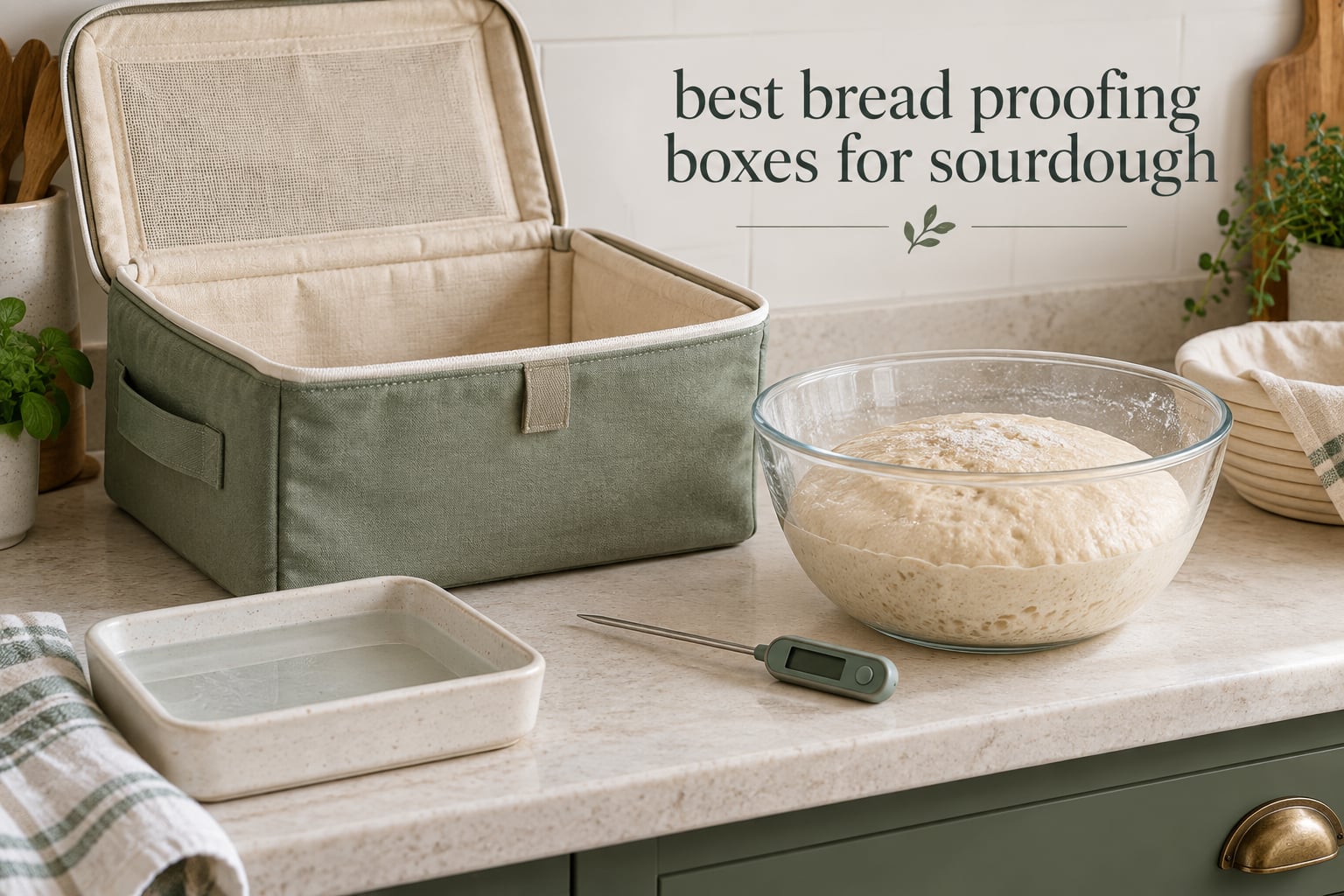
Most sourdough fails for the same boring reason: the kitchen. A dough that needs four hours of bulk fermentation on a mild afternoon can need eight in a cold January room, and the loaf that spread flat last weekend would have shaped beautifully three weeks earlier. A bread proofing box takes that variable out of the equation by holding the air around your dough at a temperature you chose in advance.
Over the past few months we worked through ten of them side by side to find the best bread proofing boxes for sourdough in 2026. That covers the whole category, not just the boxes: folding fabric chambers, thermostatically heated mats with insulated covers, a passive airtight container, and lighter entry-level units that give you the same three dials for a fraction of the outlay. Every product below was judged on the same three things: how close the delivered air temperature sits to the dial, whether you can use it without rearranging the kitchen each bake, and whether you can actually see the dough to judge it.
One thing needs saying up front, because most roundups skip it. The target is not hot. Sourdough bulk fermentation does its best work around 75 to 82F, and the most common complaint about proofing boxes on baking forums is not that they underperform. It is that bakers set them too warm and then wonder why the dough collapsed at shaping. Read the sections below before you buy, and read the warm-kitchen section last, because in a steady 72F kitchen the honest answer is that you do not need a box at all.
Table of Contents
Do You Actually Need a Proofing Box?
Yes, if your kitchen sits below 70F or swings wildly between seasons, because a box turns bulk fermentation from a guess into a repeatable four-hour step. No, if your kitchen holds a steady 70 to 75F, where a slow counter ferment already produces excellent bread and a warm box will only push you toward overproofing.
It genuinely earns its counter space in three situations. The first is a cold house, where an 11-hour bulk can quietly turn into a slack, dense failure and the oven light trick only works if you remember to top up boiling water every hour. The second is a schedule: a box with a timer lets you mix on Sunday evening and bake Monday morning without tracking dough signs in the dark.
The third is maintaining starter on the counter through a winter, when a jar that should peak in six hours instead sits flat for two days. Everything else is a comfort purchase, and a well-made pot with a damp towel over the top costs a fraction of any device on this list.
Top 3 Proofing Boxes for Sourdough (October 2026)

Brod and Taylor Proofer
- 70-120F digital control
- Water tray for humidity
- Folds to 2.75 inches

Cozy Bread Mat and Box Kit
- 10 x 21 inch heated mat
- Insulated cover box
- Warms in 1-2 minutes

These three cover almost every real use case, and they fail in different ways, which is why they are worth separating. The Folding Proofer is the one that removes the variable completely and then folds away into a cupboard. The Cozy Bread kit is a mat and a cover, which is a different physical approach: the dough sits on warm fabric rather than in warm air, and the mat is calibrated to a much higher dial setting than most people expect. The GIYUDOT box is the middle of the road, with the most interior space per unit of counter and the most closely documented temperature readings in the group.
All 10 Compared Side by Side in 2026
| Product | Specifications | Action |
|---|---|---|
|
Brod and Taylor Folding Proofer
|
|
Check Latest Price |
|
Cozy Bread Mat and Box Kit
|
|
Check Latest Price |
|
GIYUDOT Folding Proofing Box
|
|
Check Latest Price |
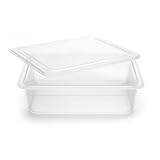 Brod and Taylor Proofing Container
|
|
Check Latest Price |
 InnovifyHub Extra Large Box
|
|
Check Latest Price |
 HEATIDEAS Warming Box
|
|
Check Latest Price |
 GEOYLE 20L Proofing Box
|
|
Check Latest Price |
 Uoxfill Folding Proofing Box
|
|
Check Latest Price |
 WOLTBLOOM Proofing Box
|
|
Check Latest Price |
 Cozy Bread Proofing Box
|
|
Check Latest Price |
One column the chart cannot show you is delivered temperature versus dial reading, and this is where most disappointed buyers were actually a calibration problem rather than a bad product. Owners of the Folding Proofer report it running about two to three degrees above the set point. Several GIYUDOT buyers have measured the interior within one degree of the dial, while others report offsets of one to three degrees because the sensor sits close to a heating element rather than in open air. The Cozy Bread mat is the outlier: its printed instructions tell you to set the thermostat ten degrees above your target, and inside the insulated box most people land near 80F with the dial turned up to the low nineties. Put a cheap thermometer inside every one of these for the first few bakes and write down the offset. That single habit removes more frustration than any feature on this list.
Proofing Box vs Proofing Basket: Different Tools for Different Stages
This is the question that comes up most often in forums and the one almost every proofing-box page skips, so here is the plain version. A proofing box controls the temperature of bulk fermentation, the long first rise where the wild yeast and lactic acid bacteria in your starter do their work and the dough gains structure. A proofing basket, also called a banneton, holds your shaped dough during the final proof and the cold retard, and it is what gives a round loaf its round profile and its pattern of ear and flour.
Neither replaces the other. Plenty of excellent bakers use a glass bowl, a flour-dusted tea towel and a plastic tub for the final proof and get identical results, which is why a basket is a shaping tool rather than a temperature tool. Where a box earns its money is the stage before shaping, when dough temperature is the single biggest variable you can actually control. A round cane basket holds a boule, an oval coil basket holds a batard, and none of them do anything about a cold kitchen. If you only have budget for one, buy the box first and treat the basket as a later upgrade.
1. Brod and Taylor Folding Proofer – the box that removes weather from your schedule
Brod & Taylor Folding Proofer & Slow Cooker (Proofer)
70-120F range,1475 cu in,200W,8 lb,Folds to 2.75 in
Pros
- Steady controllable temperature in cold kitchens
- Folds down to 2.75 inches for storage
- Sets up in seconds with silent heating plate
- Included water tray adds humidity
- Doubles as a slow cooker and yogurt incubator
Cons
- Runs about 2-3F hotter than the set point
- Interior height under the lid is roughly 8 inches
- Display is a reference point so use your own thermometer
This is the unit that made sourdough a weekday activity in my kitchen rather than a weekend event. It is also, by a wide margin, the most expensive thing on this list, and I want to be straight about that before the praise. What you are buying is not extra features. You are buying a rigid insulated shell, a water tray, and a three-year warranty, and the reason it earns those is that everything about it is replaceable.
The folding design is the part that gets overlooked and it is the actual reason this one works in a small kitchen. Opened, it gives you 18 by 14.5 by 10 inches. Closed, it is a 2.75 inch slab that lives in a closet, and no other unit in this group claims a folded thickness that small. That matters more than raw capacity if you are also storing a stand mixer on the same counter.
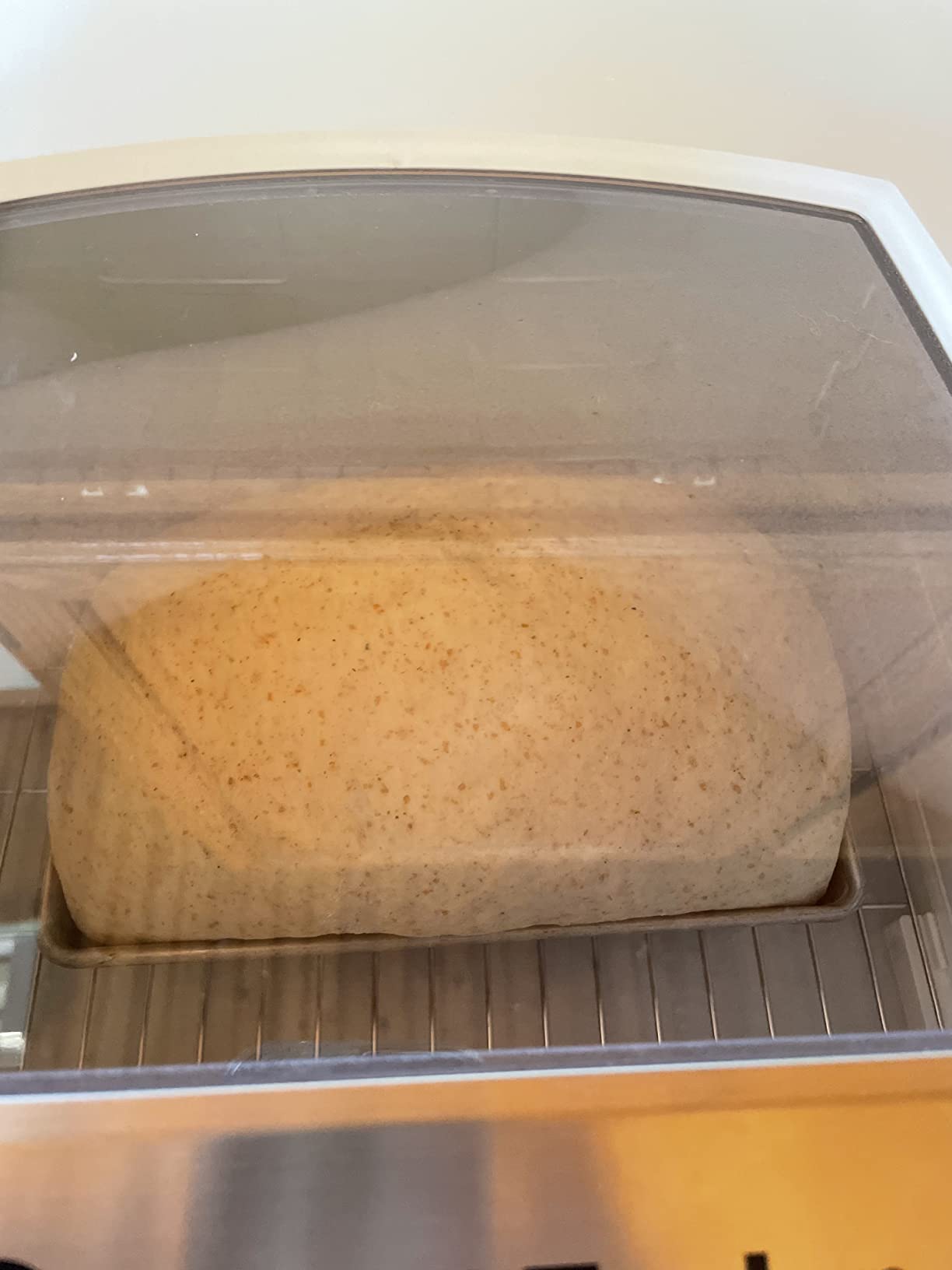
Reviewers consistently report cold-home fermentation speeding up by roughly a third, and several describe pairing it with an aliquot tube so they can watch the rise instead of guessing. A smaller but important detail: the included water tray is what stops the dough surface forming a skin during a long overnight bulk, and that skin is what makes a loaf tear unpredictably at the score line. Owners also use the unit for sous vide and slow cooking, which quietly extends the value well past bread.
What you should know before buying
Three things catch people out. The interior height under the closed lid is roughly 8 inches, so a large round pan or a tall baking dish will not go in. The display is a reference rather than a measurement, which is why owner-recommended practice is to run your own thermometer inside for the first few bakes. And the lid does not snap shut on the expanded frame, so if it is seated at an angle you will lose heat and wonder why the box is underperforming.
Who it suits and who it does not
It suits cold-climate bakers, anyone running a weekday schedule, and anyone who wants one device that also handles yogurt, kombucha and slow-cooked stews. Owners of years-long standing describe it as the last proofing purchase they expect to make. It does not suit a steady 72F kitchen where dough already ferments predictably, and it does not suit anyone with genuinely no counter space who will not use the folded form, because an unfolded box parked permanently is the single most common regret in this category.
2. Cozy Bread Proofing Mat and Insulation Box – warm floor for a cold kitchen
Cozy Bread® Proofing Mat & Insulation Box | Thermostat Controlled Sourdough Bread Proofer Kit | Dough Fermentation Bundle, 10″ x 21″ | USA Brand
10 x 21 in mat,12 x 8 x 10 in box,120V,Warms in 1-2 min
Pros
- Gentle even heat with no hot spots
- Insulated box makes results repeatable run to run
- Compact and light so it stores away easily
- Fits two mixing bowls at once
- Good value against bulky heated boxes
Cons
- Mat runs cooler than some users expect
- Printed instructions suggest setting 10F above target
- Box has no heating element of its own
This is a fundamentally different idea from a box, and once you understand it you cannot go back. The dough sits directly on a thermostatically controlled mat, and a loose insulated cover sits over the top of the bowl. Heat reaches the dough from below and the sides rather than from a chamber of moving air, which is closer to how a professional bakery deck works and which is why several users report cutting proofing time roughly in half in a 65F room.
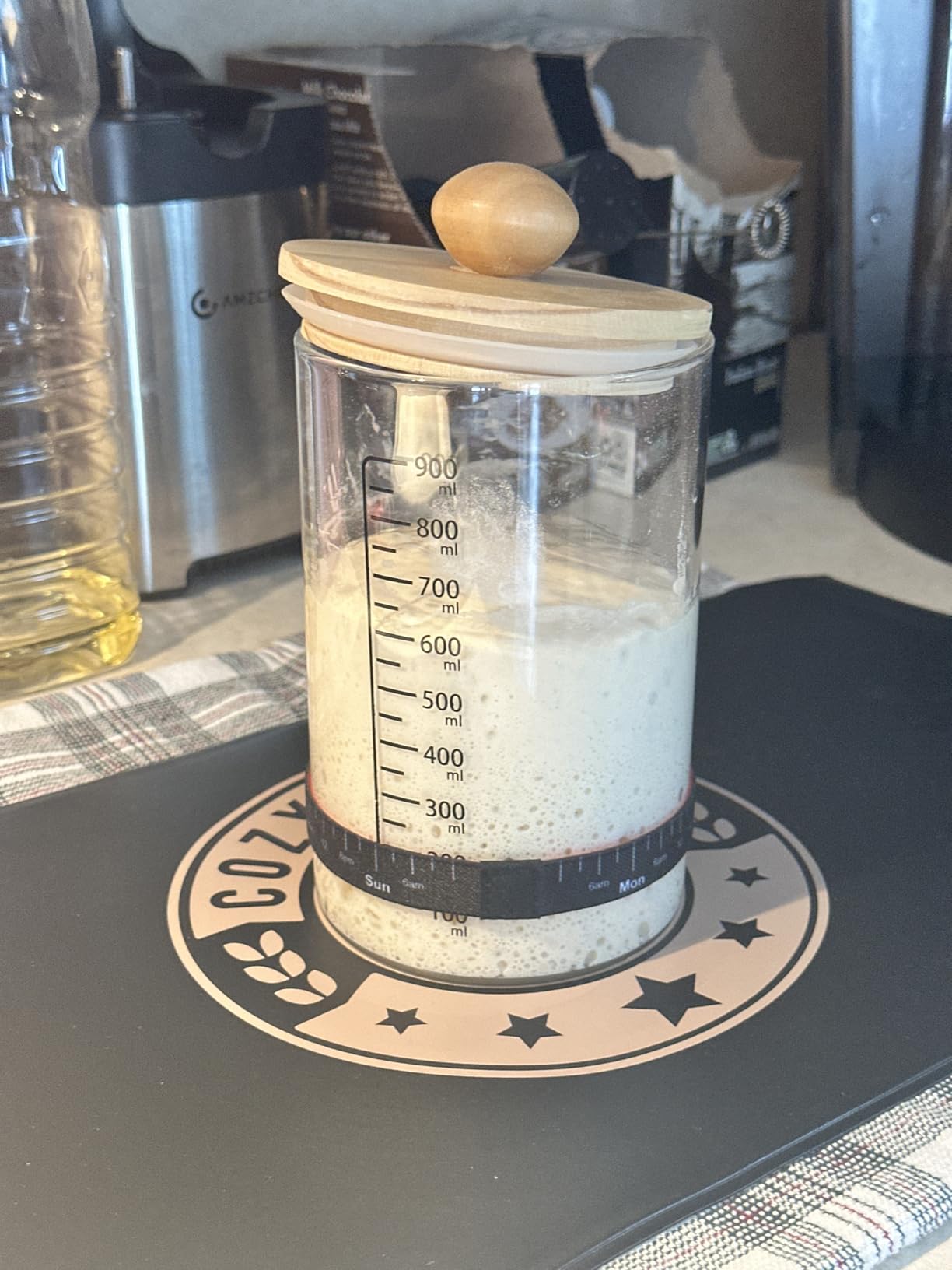
The mat reaches temperature in about a minute or two, which means there is no twenty-minute warm-up ritual before you mix. Because the surface is flat rather than a cavity, it is also far more forgiving about bowl size than any of the enclosed boxes here, and the standard setup fits two mixing bowls at once. Several buyers note that a separate mat per dough is the cheapest way to run two loaves at different stages.
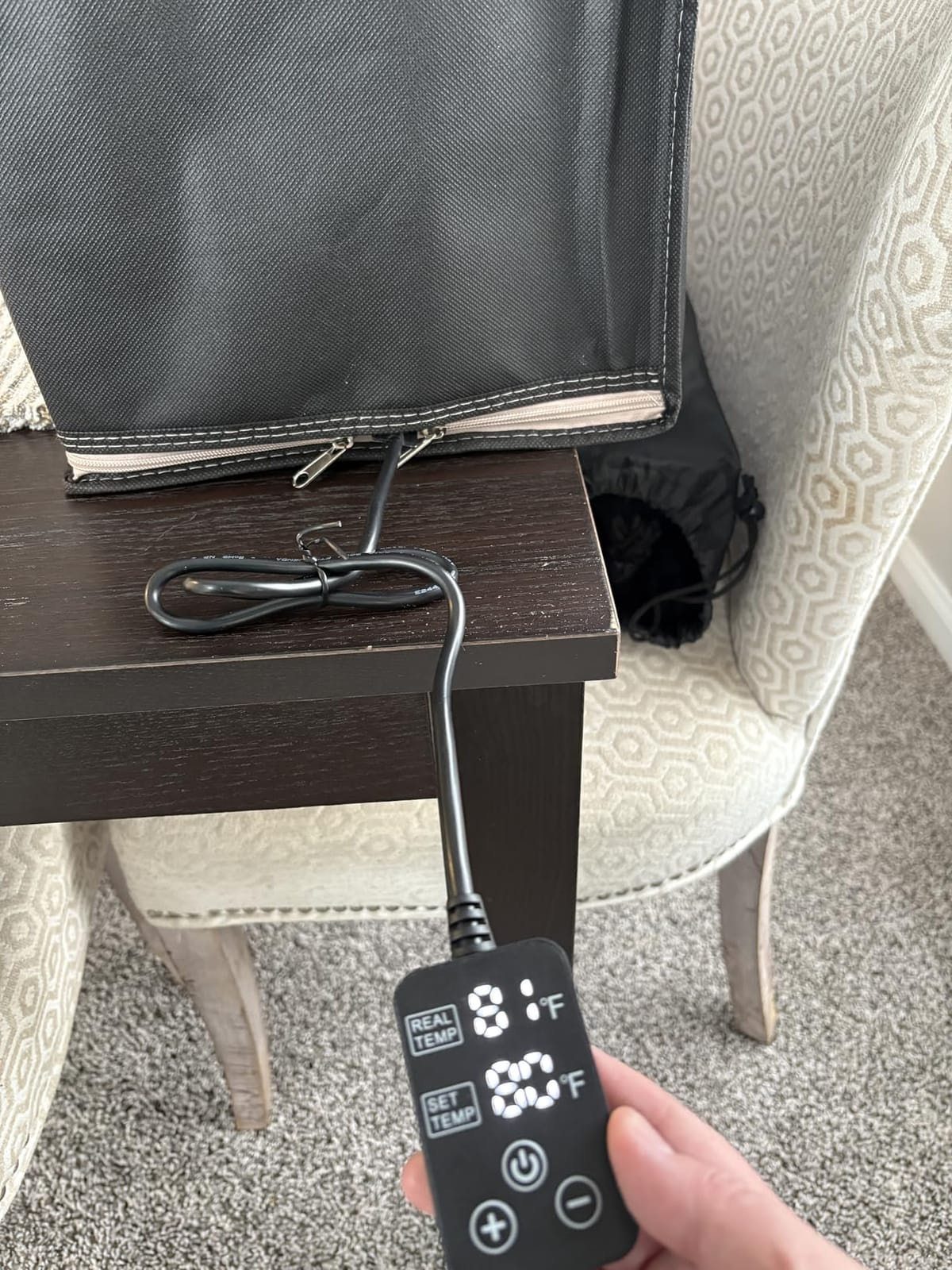
The calibration is where almost everyone stumbles at first, and the most useful thing in the review history is how consistently owners resolve it. The mat display shows mat surface temperature, not dough temperature, and the printed instructions tell you to set the dial ten degrees above your target. In practice most people land the dough near 75 to 76F with the dial turned up from there. Run it with a probe for the first bake, write the number down, and never guess again.
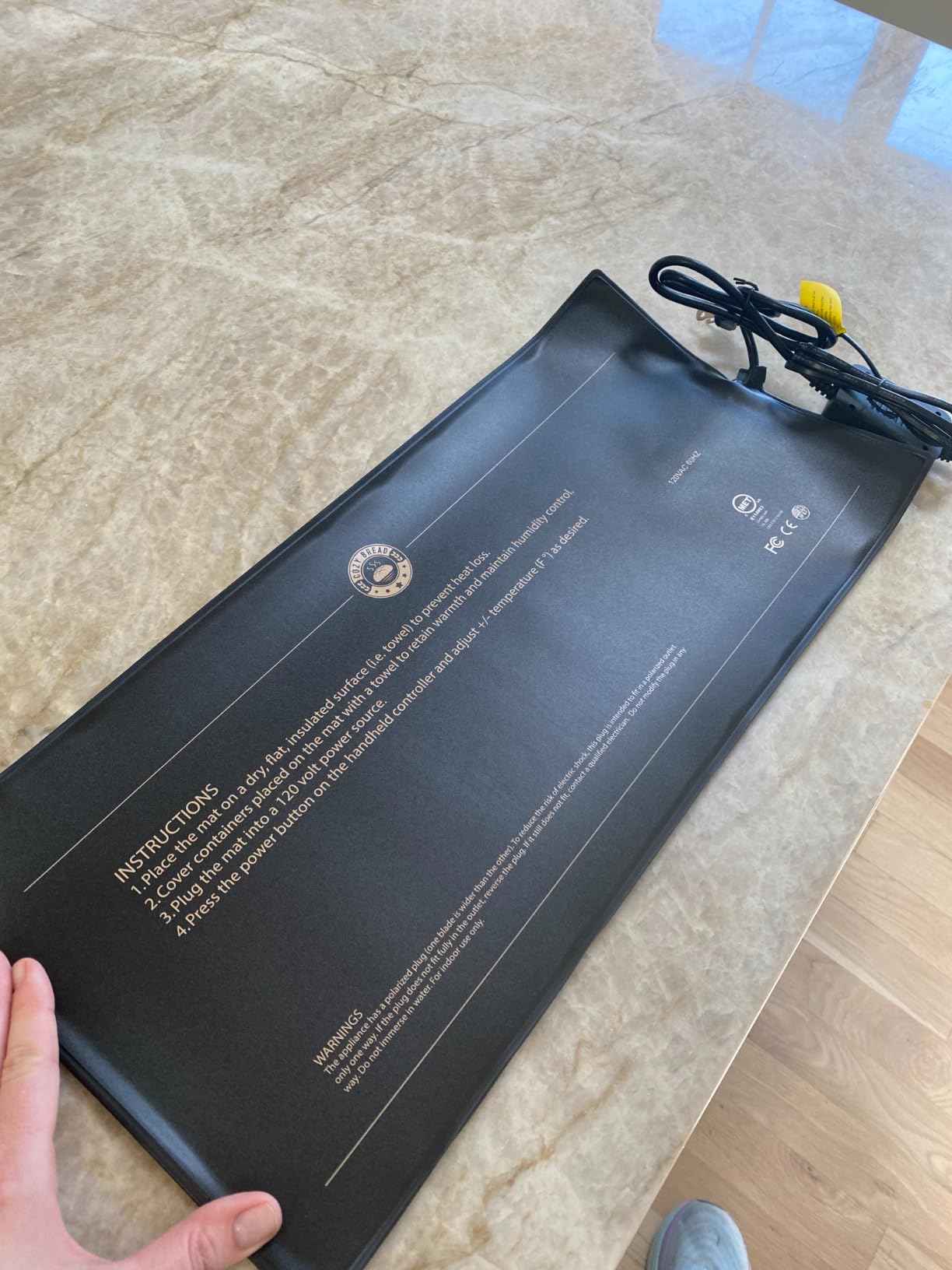
Why this one beats an enclosed box in a very cold house
In a room that sits properly cold, an enclosed box has to heat a volume of air before the dough feels anything, and the last stretch to target is where heat losses bite hardest. A mat puts the heat where the dough is. Owners in genuinely cold houses report predictable four and five hour bulks with this setup, and the box is what converts that from a warm-up-today, fine-tomorrow result into something repeatable. It also wipes down and folds into a drawer between bakes.
Where it falls short
The 10 by 21 inch mat surface is the hard limit, so a large batch needs a second mat rather than a larger box. The cover has no heating element, so on its own it does nothing, and if you buy the two pieces separately you are assembling your own kit. The fabric exterior cannot go in a washing machine either, which is the same limitation the cheap fabric boxes share. A reviewer also reported a defective unit that the brand replaced quickly, so the warranty path works but the volume of these matters.
3. GIYUDOT Folding Bread Proofing Box – the best balance of space and control
Pros
- Three heating zones spread heat evenly in cold rooms
- 48 hour timer holds settings through brief power cuts
- Interior fits two large bowls plus starter jars
- Acrylic window shows dough without losing heat
- Collapses under 4 inches for storage
Cons
- Readings can sit 1-3F off the set point
- Top closure is Velcro rather than a full zipper
- Heats but does not cool
Of everything tested, this is the one I would hand to a friend who asked me to pick for them without discussing budget. It is meaningfully cheaper and considerably lighter than the folding flagship, yet the interior is larger at 16 by 12 by 12 inches, and the box folds down to under 4 inches. It also ships with a metal rack, a humidor tray, and a printed sourdough recipe booklet, so the parts you would otherwise chase are in the parcel.
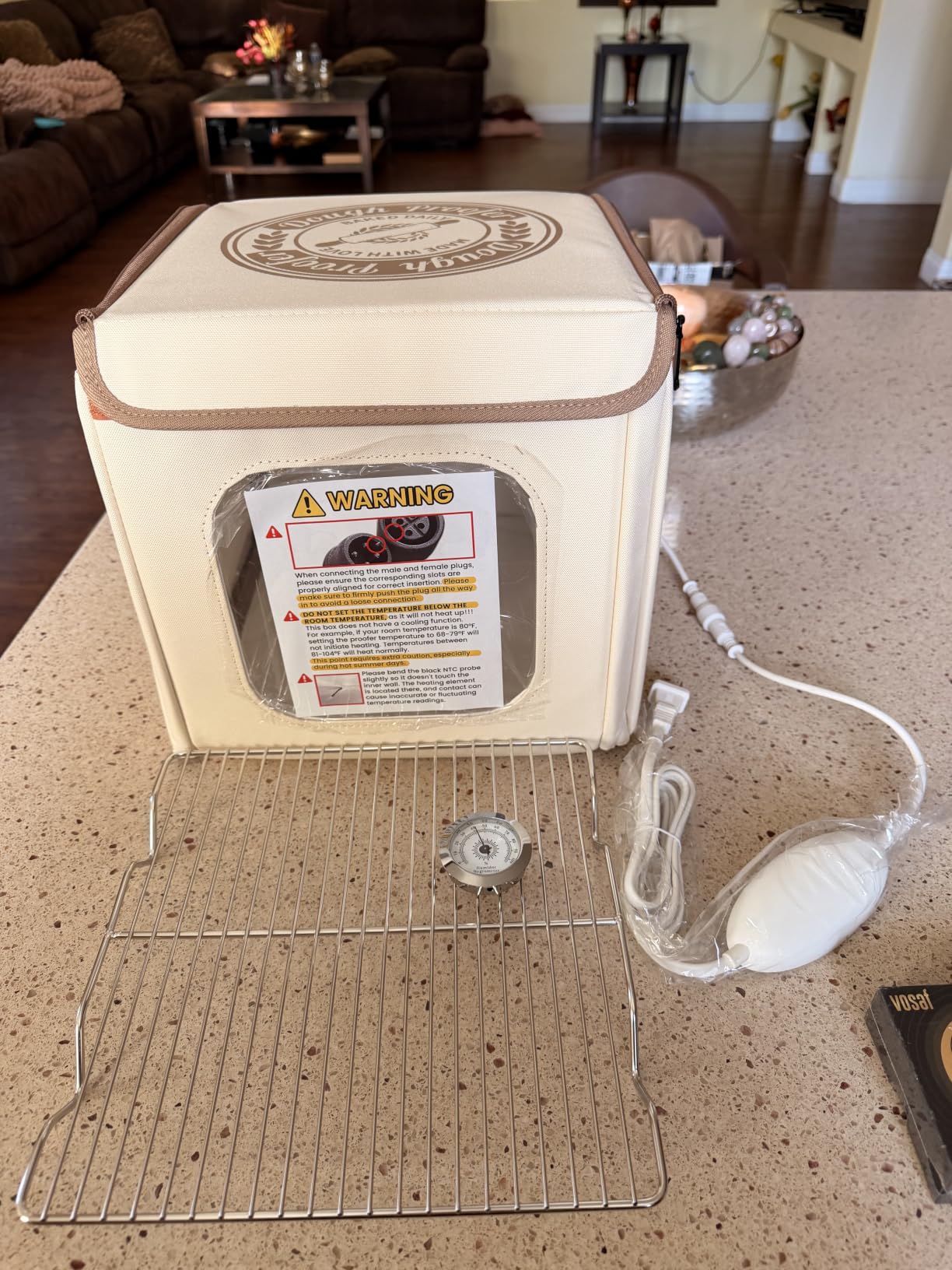
Three heating elements, front, back and bottom, is a design choice that shows up in the results. Owners in cold rooms report even warming with no cold corner to work around, and one European baker describes using it for multi-day starter builds and steady 27C ferments with a monitored thermometer rather than surprises. A stainless rack sits under the dough to keep the base from scorching, and the five-layer insulation is thicker than most rivals at this level.
Accuracy is the honest caveat. Some buyers measured within roughly one degree of set point, others report one to three degrees off, and the reason is that the sensor is mounted near an element rather than in the middle of the air. That is a calibration nuisance, not a defect. The Velcro flap at the top front also leaks a little warmth compared with a full zipper, and the box cannot cool below your room temperature.
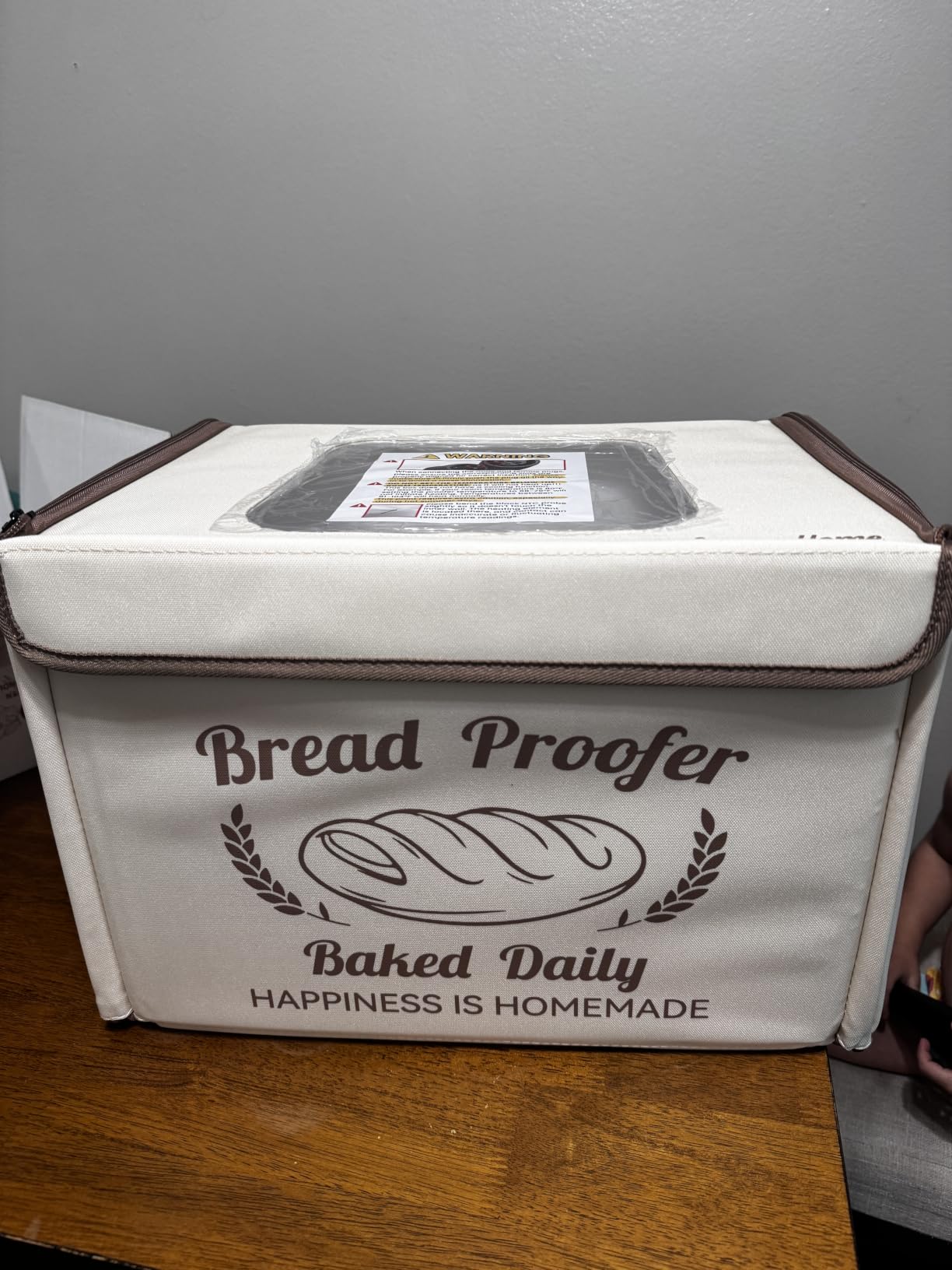
What makes it the value pick here
It hits the three numbers that actually decide a bake: enough interior for two large bowls plus starter jars, a 50 to 113F range that comfortably covers bulk, final proof and yogurt incubating, and a 48 hour timer with settings that survive a brief power cut. The stainless rack, humidor and viewing window are all included, and the whole thing weighs 3.8 pounds. Against the folding flagship you give up rigid construction and the multi-year warranty, not the control you need.
Who should pick something else
If your kitchen runs warm, this box makes things slightly worse, since no unit here cools below ambient. If you need a large pan or tall vessel, the 12 inch interior height rules it out. And if you are sensitive to smells, the fabric shell and insulation cotton are the parts to research first, because owners of the thinnest look-alike units in this category report fabric and window failures within a month. This one is built noticeably heavier than those, which is exactly the point.
4. Brod and Taylor Proofing Container – the passive vessel worth keeping out
Brod & Taylor Proofing Container With 6L Capacity, Fits Up to 3000 Grams of Dough – Dough Rising Box for Bread, Sourdough & Pizza (Dishwasher Safe, BPA-Free)
6 L for up to 3000 g of dough,Airtight lid,Translucent walls
Pros
- Volume markings show rise without lifting the lid
- Airtight lid traps humidity against a dry skin
- BPA-free polypropylene releases wet dough cleanly
- Dishwasher and freezer safe
- Stacks inside the Folding Proofer
Cons
- Passive only with no heating or temperature control
- Needs a warm space or a separate proofer or mat
This does not belong in a list of heating devices, which is precisely why it belongs in this list. It is a 6 liter airtight box that holds up to 3000 g of dough. Bakers use it for mixing, bulk fermentation, folding and the final proof in one vessel, which means no transferring a wet 75% hydration dough between bowls and no relying on damp towels and plastic wrap for the back half of the bake.
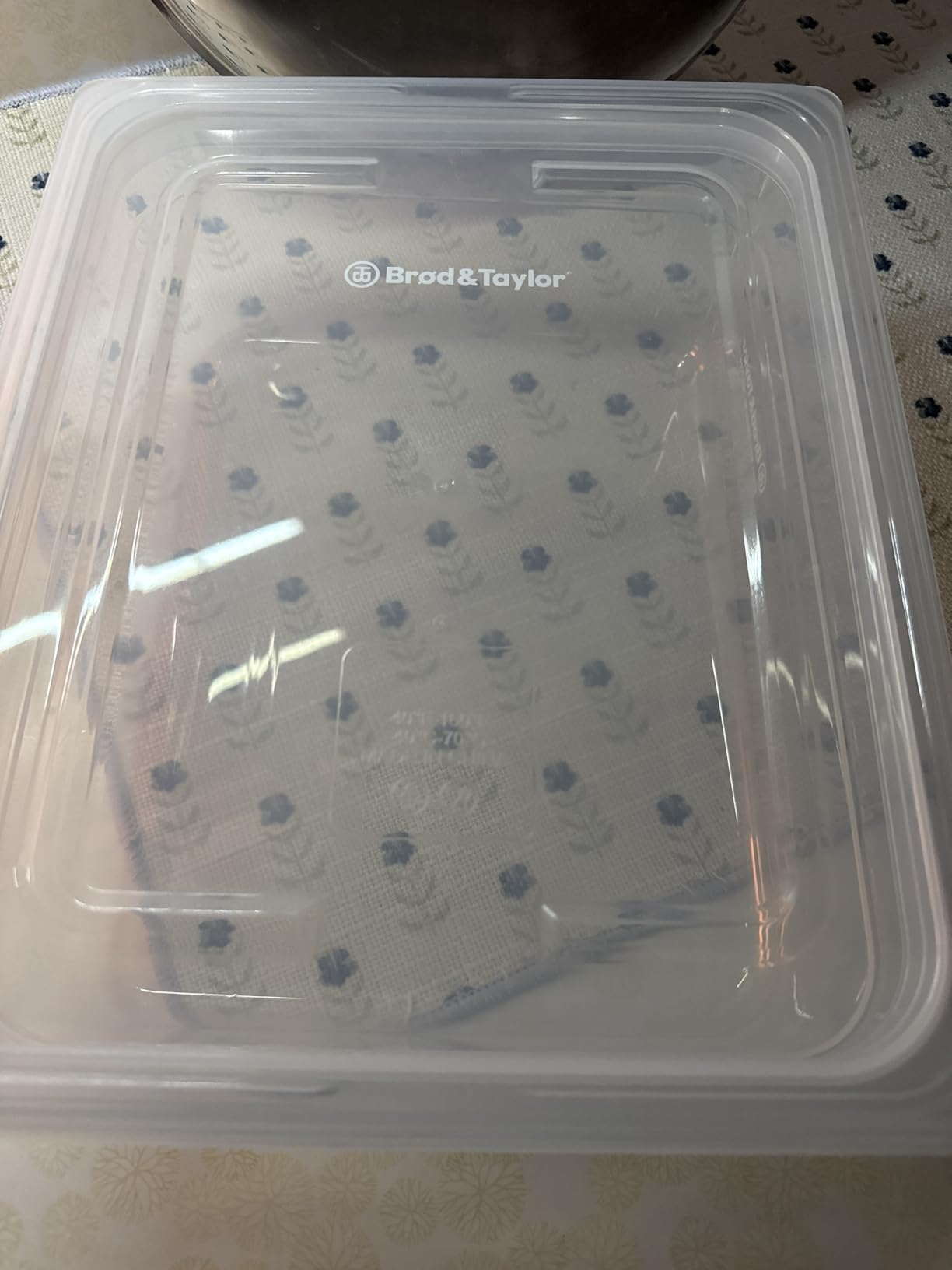
The details that make it work are unglamorous and correct. The low, wide profile means a coil fold is easy without lifting the mass, and the walls are translucent with moulded volume markings so you can watch the rise against a line instead of lifting a lid and letting the surface degas. Owners using very wet formulas report that the polypropylene releases dough cleanly with no sticking, and it goes through a dishwasher afterwards.
There is one genuinely clever fit here. At 10.5 by 12.8 by 4 inches, two of these stack inside the Folding Proofer, which is a simple way to double your batch capacity inside a device you already own. Long-term owners report years of regular use without cracking or fogging, and the storage advice in the community is simply to buy a second one and keep a cycle going.
When this is the right purchase
Buy it if you already have a heat source and the problem is handling rather than temperature. A folding box plus a mat will warm the air, and this container is what keeps the dough workable and visible while that happens. It is also the right first purchase for someone who has just started baking sourdough and is losing more dough to sticking and to torn surface skins than to slow fermentation. As a passive box it has no settings to learn and nothing to calibrate.
What it will not do for you
It will not warm anything, so on its own in a cold kitchen it does exactly what an uncovered pot does. If you are buying it expecting it to solve a slow bulk, you will be disappointed, and that disappointment shows up in reviews of this product more than anything about the plastic. The honest framing is that this is a handling upgrade you pair with heat, not a heat source in its own right.
5. InnovifyHub Extra Large Dough Proofing Box – room for every bowl you own
InnovifyHub Extra Large Dough Proofing Box50-130°F, 3-Sided Heat 24HTimer
50-130F,2607 cu in interior,100W,24 hour timer
Pros
- Roomy enough for two large bowls and starter jars
- Internal readings within about 1F of the setting
- Water dish holds roughly 65% humidity
- 24 hour timer with audible buzzer
- Folds flat and includes a storage bag
Cons
- Bulkier than some counters allow
- Wired controller has awkward stiff cable routing
- Readings can run a few degrees below set point
Capacity is the entire pitch here, and the numbers justify it. At 21.6 inches wide and 11.8 deep and high, the interior holds two large mixing bowls, or a 9 by 13 pan plus several starter jars, or multiple bannetons at once. If you bake for other people, run a workshop, or keep a large starter collection, this is the largest volume of any box in the group and the one built for batching rather than single loaves.
The 50 to 130F range is unusually wide for a fabric box and the useful half of that is the top end. A reviewer runs it at 90F overnight for autolyse, which jump-starts morning mixing, and the wide band also covers warm ferments for summer and yogurt incubating without hunting for a second device. Owners in northern climates report that this is what finally made bread and rolls rise predictably for them, with a thermometer-using buyer confirming about one degree of accuracy.
Two racks are included and they do more than look official. They keep tall starter jars stable so they do not tip against the heating wall, and they improve circulation around whatever else is in the chamber. The water dish maintains roughly 65% humidity, which is enough to stop surface drying over a long ferment, and the 24 hour countdown with an audible buzzer is a genuine improvement on boxes that give you no signal at all.
The reliability question nobody asks until it matters
There is a documented failure in this product’s history that you should know about. One owner reported her unit stopped working after a few months, and the important part of that story is the aftermath: the warranty was honoured quickly with a same-day replacement, and customer support answered questions within a day. That is a better outcome than a silent failure, but it does mean you should register the unit. The separate reported issue, a smaller variant where starter did not rise at all, is a different size and not the one reviewed here.
Where the design frustrates people
The wired controller is the most common complaint and it is not about heating. The cable enters at the top and exits at the bottom through a stiff path, the routing is awkward once the box is folded, and one buyer found the cover came apart on unpacking. Second, an extra-large box is still an extra-large box, and owners with limited counter space describe the assembled footprint as bulkier than their kitchen allows. Third, readings can run a few degrees below the dial even though other measurements put accuracy within one degree, so calibrate before you trust a schedule.
6. HEATIDEAS Warming Box – the honest single-bowl option
Bread Proofer Warming Box with Temperature Timer Control Metal Rack
50-113F,45W,48 hour timer,7 ft cord,Vinyl shell
Pros
- NTC probe reads the proofing body not just box air
- 48 hour timer with hours-remaining readout
- 45W reaches temperature quickly
- Vinyl enclosure wipes with a damp cloth
- Suits yogurt sauerkraut tempeh and kombucha
Cons
- Open top is less insulated and loses heat faster
- Smallest capacity of the heated boxes here
- Vinyl exterior needs a damp cloth rather than washing
The reason this one is worth your attention is the probe, and it is a genuinely clever piece of design. The NTC sensor is not fixed inside the wall. It can be laid on top of your proofing container so the LED displays the temperature of the dough body rather than the air in the box. Almost every other unit in this roundup reports its own internal air, which is at best a proxy for what your dough is doing.
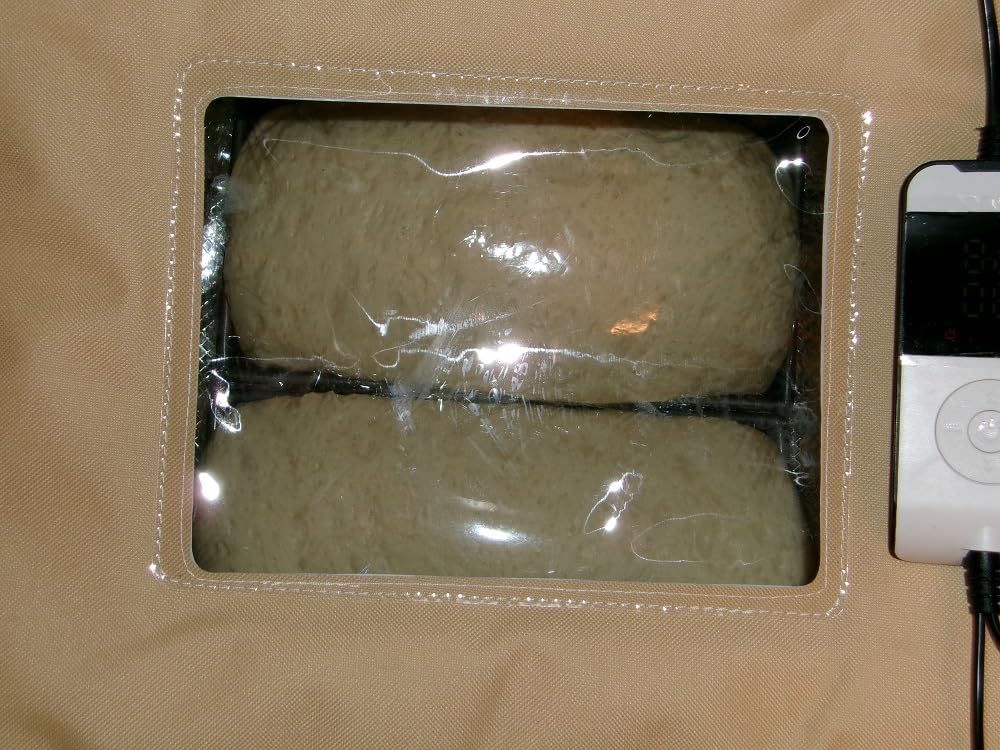
The rest is straightforward and competent. Three-sided heating across a 15.75 by 13 by 10 inch foldable body, 45 watts, which is more than enough to reach set point quickly and is genuinely low draw for something you might leave running overnight. The timer runs from zero to 48 hours with a clear hours-remaining readout, and zero hours means always on for a long cold ferment where you are watching dough signs rather than a clock.
It handles more than bread, and owners use it for sauerkraut, tempeh, kombucha and yogurt incubating as well as sourdough, which extends the practical value if you already culture things at home. At 0.95 kg it is light and portable with a 7 foot cord that reaches a real socket from a counter without an extension.
Who this single-bowl setup is right for
It is right for one person, one loaf, one kitchen. The interior is sized around a single standard proofing bowl, so this is not a batching tool, and treating it as one is the most common source of disappointment. It is also right if you are the kind of baker who genuinely wants to read the dough temperature rather than infer it, because the probe placement is unusual among the heated boxes in this list.
The trade-off you are making
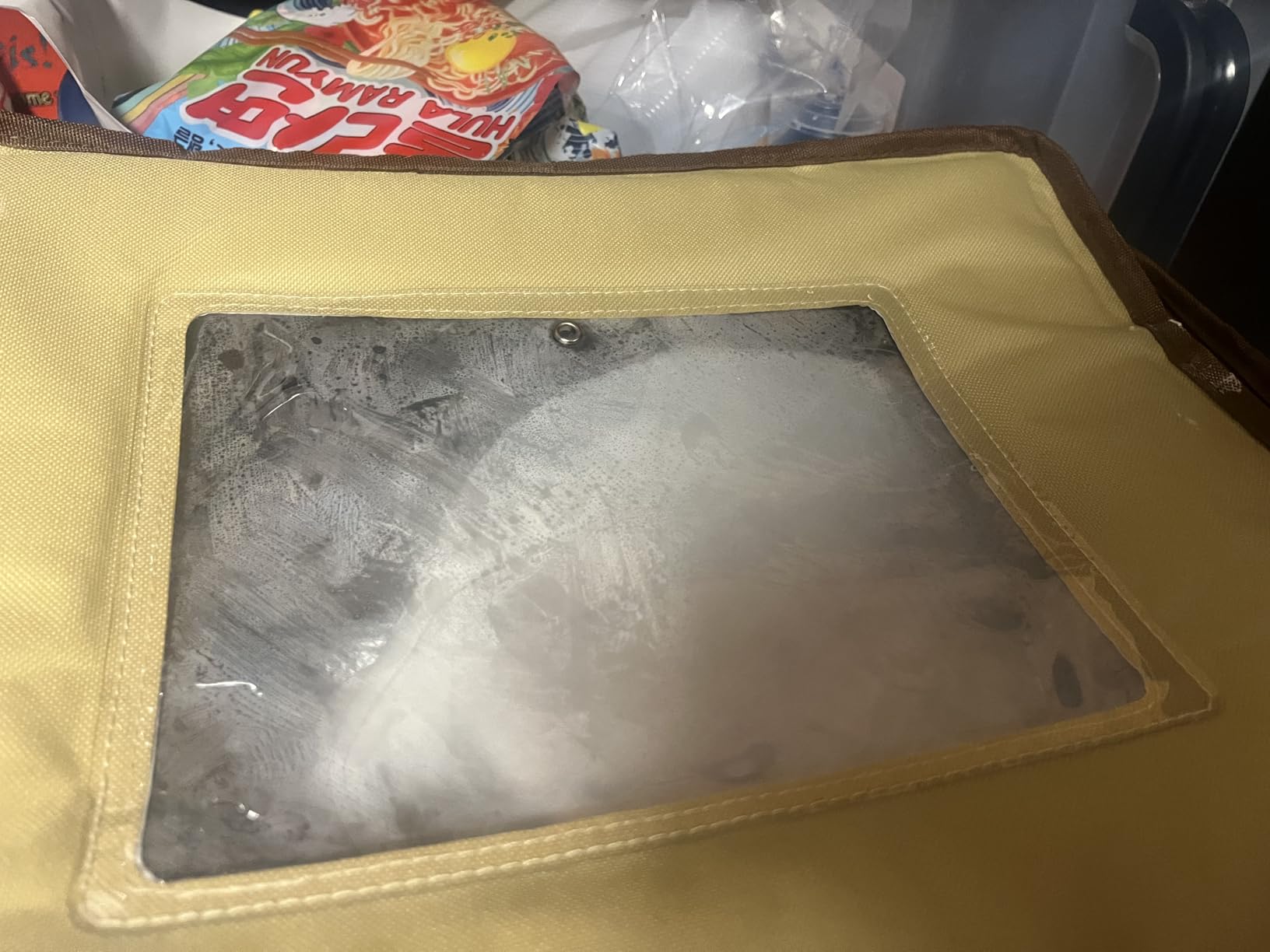
The open top is the whole argument against it. A zippered lid on a five-layer insulated box holds heat in a way an uncovered rim cannot, and in a genuinely cold kitchen you will feel that difference across a long overnight bulk. The vinyl exterior also holds odour over time and wants a damp cloth rather than a proper wash. Neither is disqualifying at this tier, but both are real, and both are why this sits below the insulated boxes in my ordering despite the probe.
7. GEOYLE 20L Proofing Box – the widest control window in the group
Bread Proofing Box Heated, Foldable Dough Proofer Temperature/Timer Control Sourdough Warmer for Making Bread, Pizza,Yogurt, Natto and Handmade Soap Red, 10.6 * 10.6 * 10.6inch
33-122F range,0-96 hour timer,20 L cube,Oxford fabric
Pros
- Widest temperature window here at 33-122F
- Aluminum foil heating plate wraps the interior
- High-density Oxford fabric with durable nylon zippers
- Controller belt keeps cords together in storage
- Built-in overheat protection and internal probe
Cons
- Internal probe must be seated by hand or readings are unreliable
- Hand wash only rather than wipe clean
- Cube shape suits round bowls better than oval or rectangular ones
The selling point is the control window, and it is genuinely wider than anything else tested here. Thirty-three to 122F with a timer from zero to 96 hours means this is the only unit in the group that can run a true cold, slow ferment rather than a warm one, which matters if you want long flavour development without a dedicated retard space. A 96 hour timer also makes multi-day starter builds straightforward.
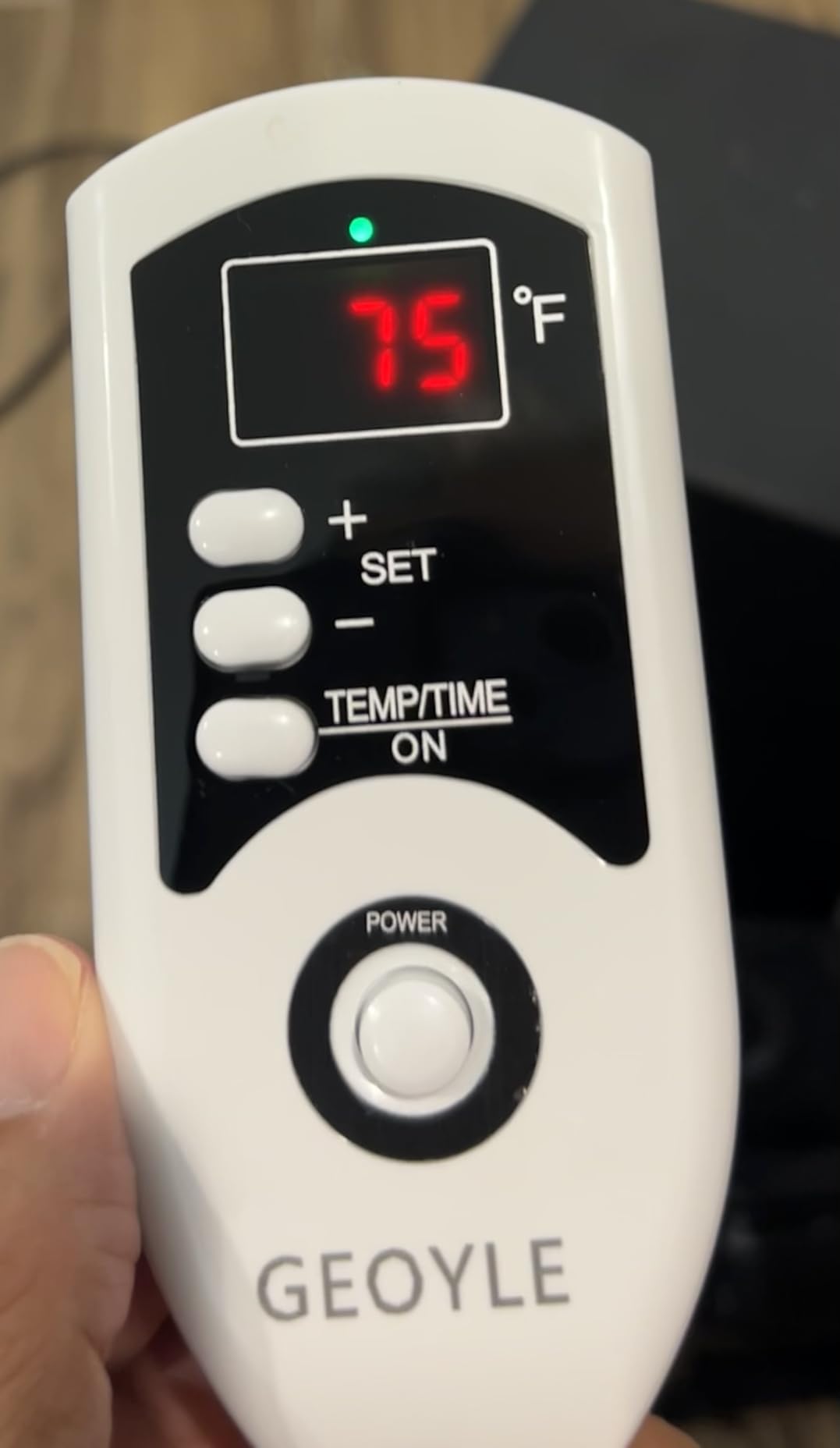
Construction is the other differentiator. The shell is high-density Oxford fabric with nylon zippers rather than the soft polyester used by the cheapest boxes, and reviewers specifically single it out as holding up better over time. The integrated aluminium foil heating plate wraps the interior so warmth arrives from more than one face, and the thermostat fixing belt that holds the controller and its cables together is a small touch that removes a genuine annoyance.
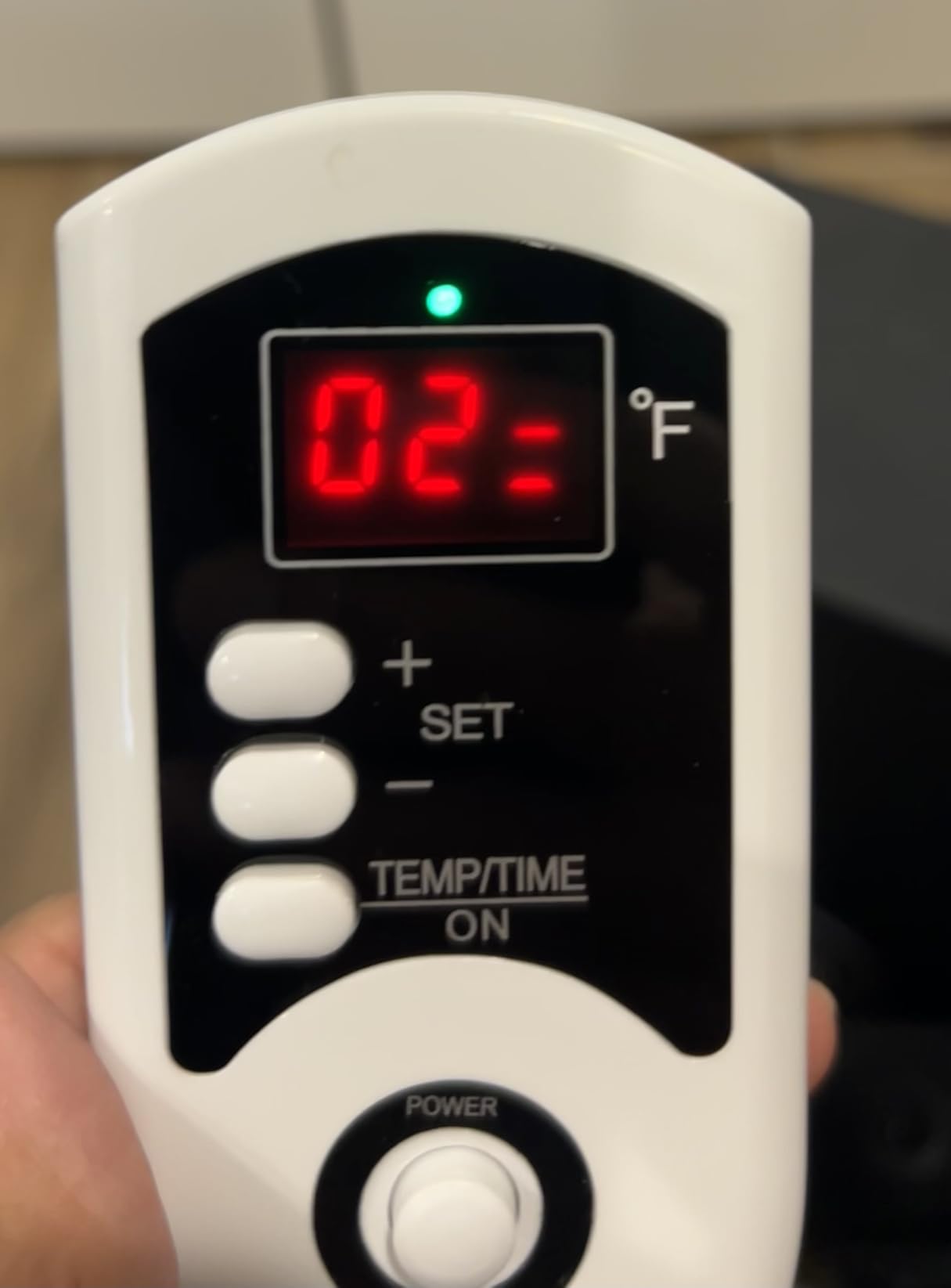
There is a learning step, and owners who follow it report steady, controllable fermentation afterwards. The internal temperature probe must be positioned by hand before use, and if it is not seated properly the thermostat cycles badly. Read the instructions before the first bake rather than after the first bad one.
What the wide range is actually for
Cold ferments, long proofs, and anything where you want the dough to start slowly and finish on your schedule. At 33F you can run a genuine overnight bulk at refrigerator temperature inside a counter-top box, which is the one thing none of the other heated boxes here can do, since their lowest settings sit at 50F or above. It is also useful for controlled proofing of enriched doughs and pizza dough where you want a slow first rise and a warmer second one.
Why you might choose a smaller box instead
The 20 liter cube is an awkward shape for anything that is not round. A large oval mixing bowl or a rectangular pan will sit awkwardly against the walls, and the square footprint wastes space next to a round bowl. It is also hand wash only, which is more involved than the wipe-clean interiors on most rivals. And the product exists in a long run of sizes from 20 to 74 liters, so read the size carefully, because reviewers report ordering the wrong variant and finding it does not fit what they had in mind.
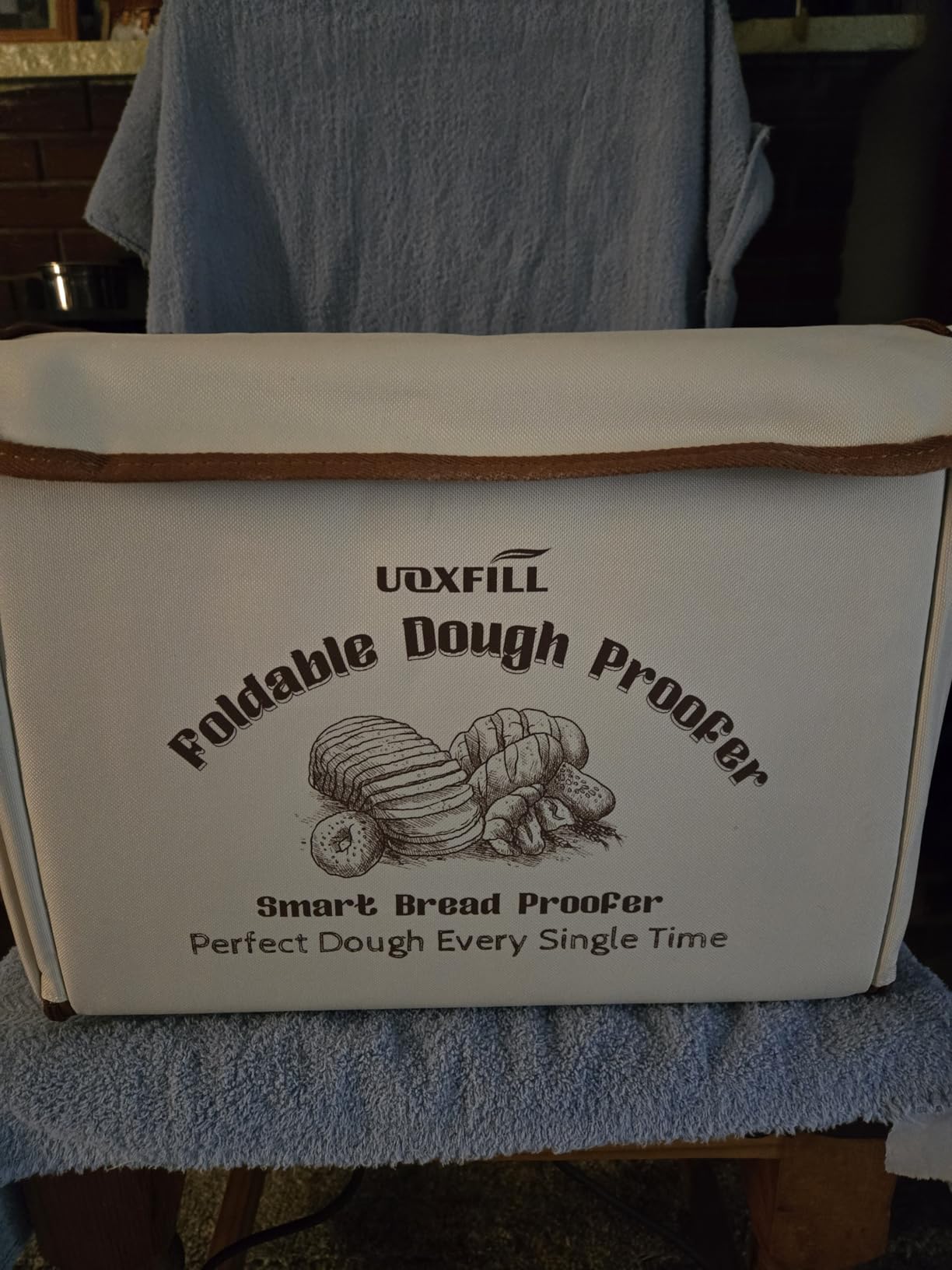
8. Uoxfill Folding Proofing Box – big interior, coarse controls
Folding Bread Proofing Box with Temp Control & 4H Auto Shut Off 48H Timer
50-122F stepped control,36 L,235W,0-48 hour timer
Pros
- 36 L interior fits a mixer bowl plus four jars
- Three heating zones and five-layer insulation
- Folds flat and reassembles in seconds
- Acrylic window with built-in hygrometer
- 4 hour auto shutoff when no timer is set
Cons
- Stepped presets instead of fine temperature control
- No chime when the timer finishes
- Off-gassing odors reported from plastic parts
The interior is the headline. Thirty-six liters fits a full-size stand mixer bowl plus four quart jars, and owners who bake for a household report fitting multiple loaves or a large pan and several starters at once. Three heating zones across front, back and bottom with five layers of insulation give even warmth, and the built-in hygrometer in the acrylic window is the only humidity readout in this entire roundup, which is more useful than most people realise.
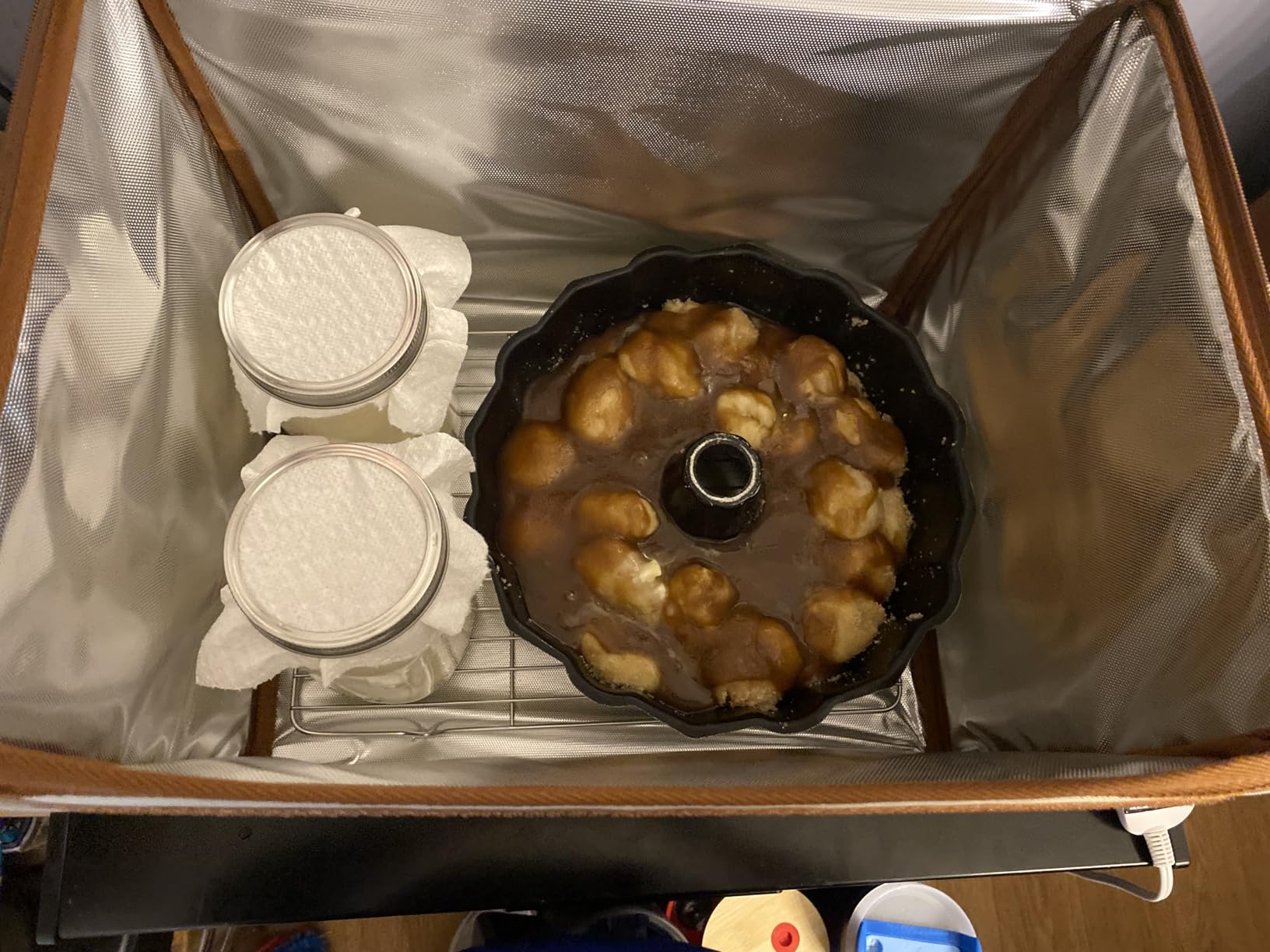
It folds flat and comes back up in seconds, and a 4 hour auto shutoff when no timer is set is a sensible safety default for anyone who forgets to switch it on. The liner wipes clean with a damp cloth, side handles make it movable, and the included oven rack and crumb tray are practical extras. Many owners report cutting proofing time roughly in half, including one who finished Thanksgiving dinner rolls in just over three hours.
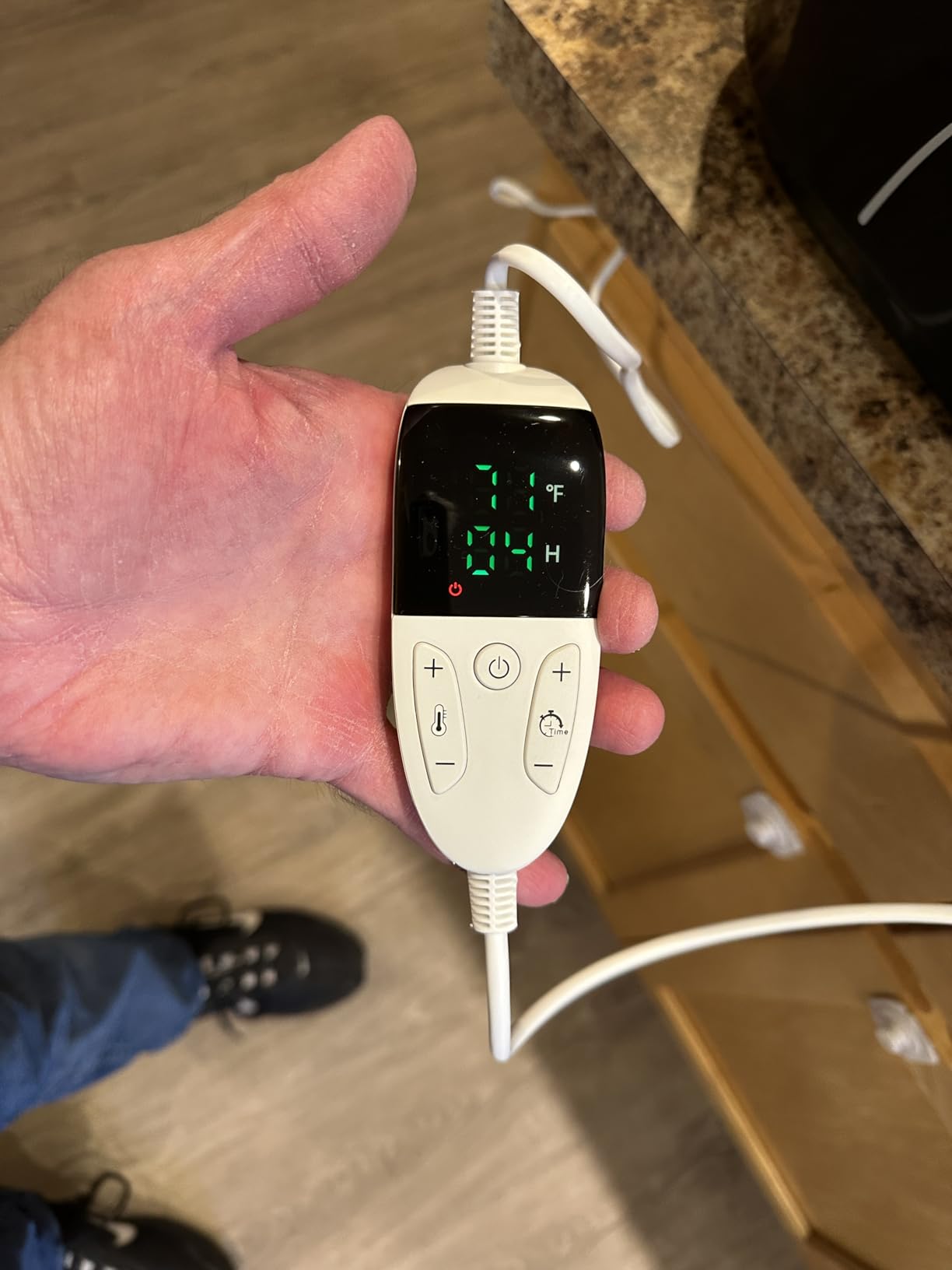
The controls are where the rating drops, and this is the single most important thing to know before buying. Temperature and timer are stepped presets rather than fine adjustment, so you choose from something close to 50, 68, 77, 86 and 104F, and from 6, 12, 18, 24 and 48 hour settings. That is coarse enough that users work around it by opening the lid a crack, running a separate kitchen timer, or simply judging by dough signs instead.
How to get good results with stepped controls
Pick the step just below your target and accept that the box will land cooler than you asked, then shorten the ferment by checking early rather than by turning the dial up and overproofing. If you need a precise number, use an independent kitchen thermometer in the dough and treat the box setting as a starting point only. The stepped timer is a further reason to run your own countdown, since a missed window cannot be recovered by adjusting anything on the unit.
The other drawbacks worth weighing
There is no chime or light when the timer ends, which in a quiet kitchen at six in the morning is genuinely annoying and is reported repeatedly. The top temperature gauge stayed stuck reading one value for one buyer, so do not treat that readout as authoritative. Several owners reported off-gassing smells from the plastic components early on, which usually clears with a few cycles of airing but is worth knowing. And a noticeable share of one-star reviews sits behind that average, most often around weaker rise, so manage expectations accordingly.
9. WOLTBLOOM Proofing Box – everything a first loaf needs in one parcel
Bread Proofing Box Sour Dough Proofing Box for Sourdough Bread Proofer Warming Box Proofing Oven Yogurt Maker with – 9 Inch Proofer Basket, Lame, Scraper, Metal Rack – Temperature 68-131℉ 99 H Timer
68-131F,3 heat zones,99 hour timer,Basket, lame and rack included
Pros
- Bundles a 9 inch basket
- lame
- scraper and rack
- Longest timer here at up to 99 hours
- No assembly needed out of the parcel
- Water tray on the steel rack adds humidity
- Folds flat enough to pack for travel
Cons
- Range starts at 68F so cool proofs are not possible
- Fabric shell with sensor placement not documented
- Accessories are basic and the ebook is short
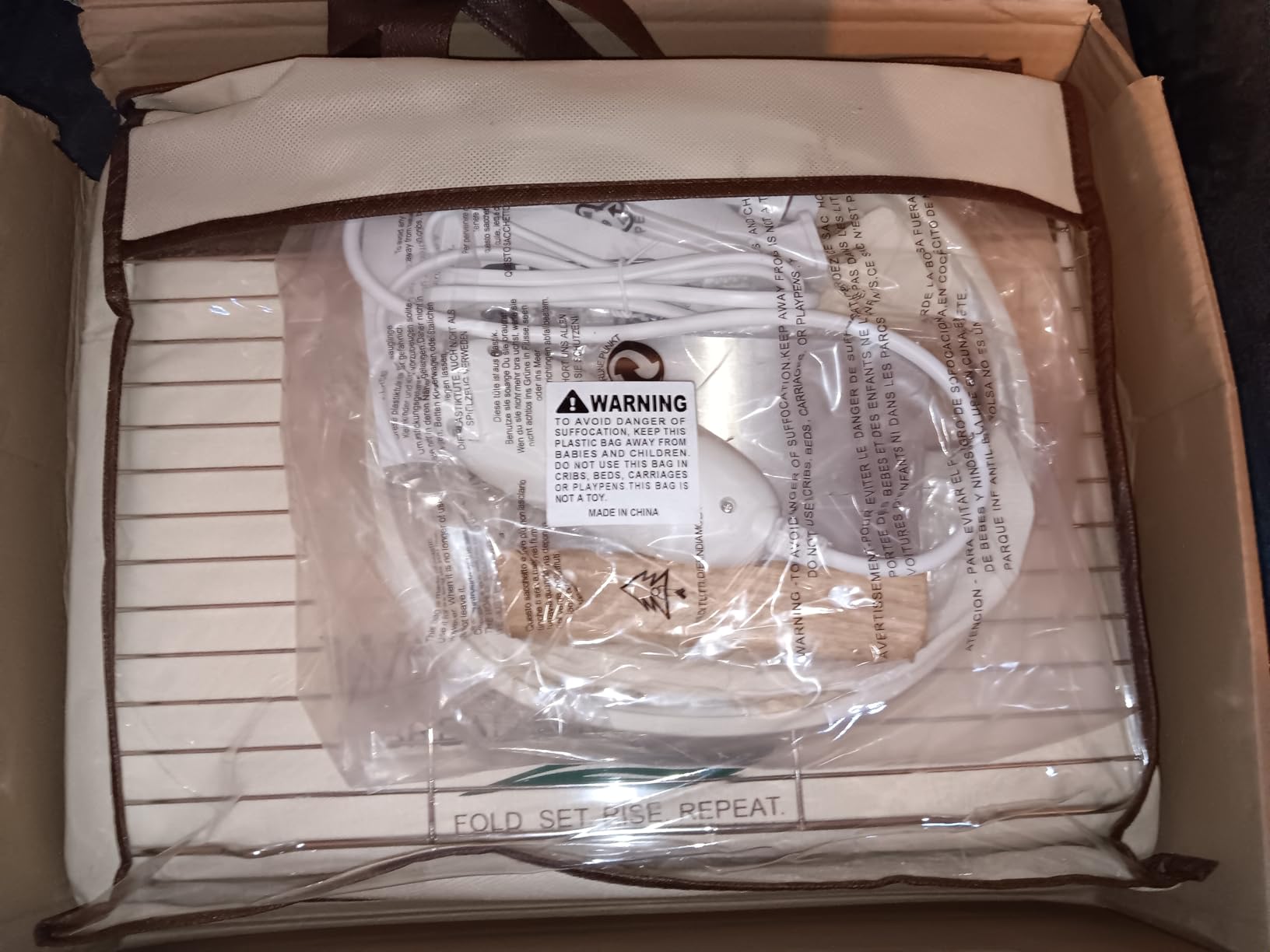
The bundle is the argument, and it is a real one. The box arrives with a 9 inch silicone proofing basket, a 5 blade bread lame, a metal scraper and a metal rack, plus a short recipe ebook. For a first sourdough loaf those are the four things you would otherwise buy individually, and getting them as one parcel removes the most common early barrier, which is not having the right tools on hand when dough is ready.
There is no assembly. You drop in the rack, add water to the tray, set the dial, and go. The 99 hour timer is the longest here and it comfortably covers multi-day cold proofs and long starter builds, and the box folds flat enough to pack in a suitcase, which is genuinely useful if you bake away from home. Three heating zones with five layers of insulation give even, stable heat, and the transparent panel lets you look without opening.
Satisfaction is more mixed than for the higher-rated boxes, and the reason is concentrated in one number. The range starts at 68F, which is fine for sourdough bulk but means you cannot run anything genuinely cold inside it, unlike the units that reach 50F. Owners also report that the fabric shell is thinner than the premium boxes and that nobody has documented where the sensor sits, so accuracy is less certain than the products with published measurements.
Who should buy this box
Someone starting out who wants a complete kit in one order, and who bakes at home rather than in a shared or rented space where the accessories would get lost. The included basket and lame are real tools, not filler, and the travel-friendly folded form means you can take the whole setup to a holiday kitchen. If you already own a lame, a scraper and a basket, this bundle is worth much less to you than the price gap suggests.
Where the value leaks away
This is the lowest-rated unit in the roundup at 4.1, with a 12% one-star share behind that average, so it deserves a clear explanation. The 68F floor removes cold-ferment capability entirely, which is a real limitation if you ever want a long slow proof rather than a warm fast one. The accessories are basic, and nine recipes is not a course. And with a fabric shell and undocumented sensor placement, this is the box where an independent thermometer matters most.
10. Cozy Bread Proofing Box – the modular route, mat bought separately
Cozy Bread® Proofing Box | Compatible with 10″ x 21″ Proofing Mat (Heat Mat Not Included) | USA Brand
10 x 21 x 9 in insulated box,0.37 kg,Mat not included
Pros
- Insulated sides hold mat heat steady
- Holds 3-4 loaf pans or a 9x13 pan plus a loaf
- Light at 0.37 kg and collapses flat
- Flexible sides stretch around large bowls
- Smooth interior wipes down easily
Cons
- No heating element so a separate mat is required
- Mat display reads mat surface not dough temperature
- Hand wash only
This is the cover half of the kit reviewed in second place, sold on its own, and it is worth buying in two situations. If you already own any 10 by 21 inch warming mat, this turns it into a proper proofer for a fraction of the price of an enclosed box. If you want the mat approach but not the bundled bundle, you can buy the heat source that suits your budget later without replacing the box.
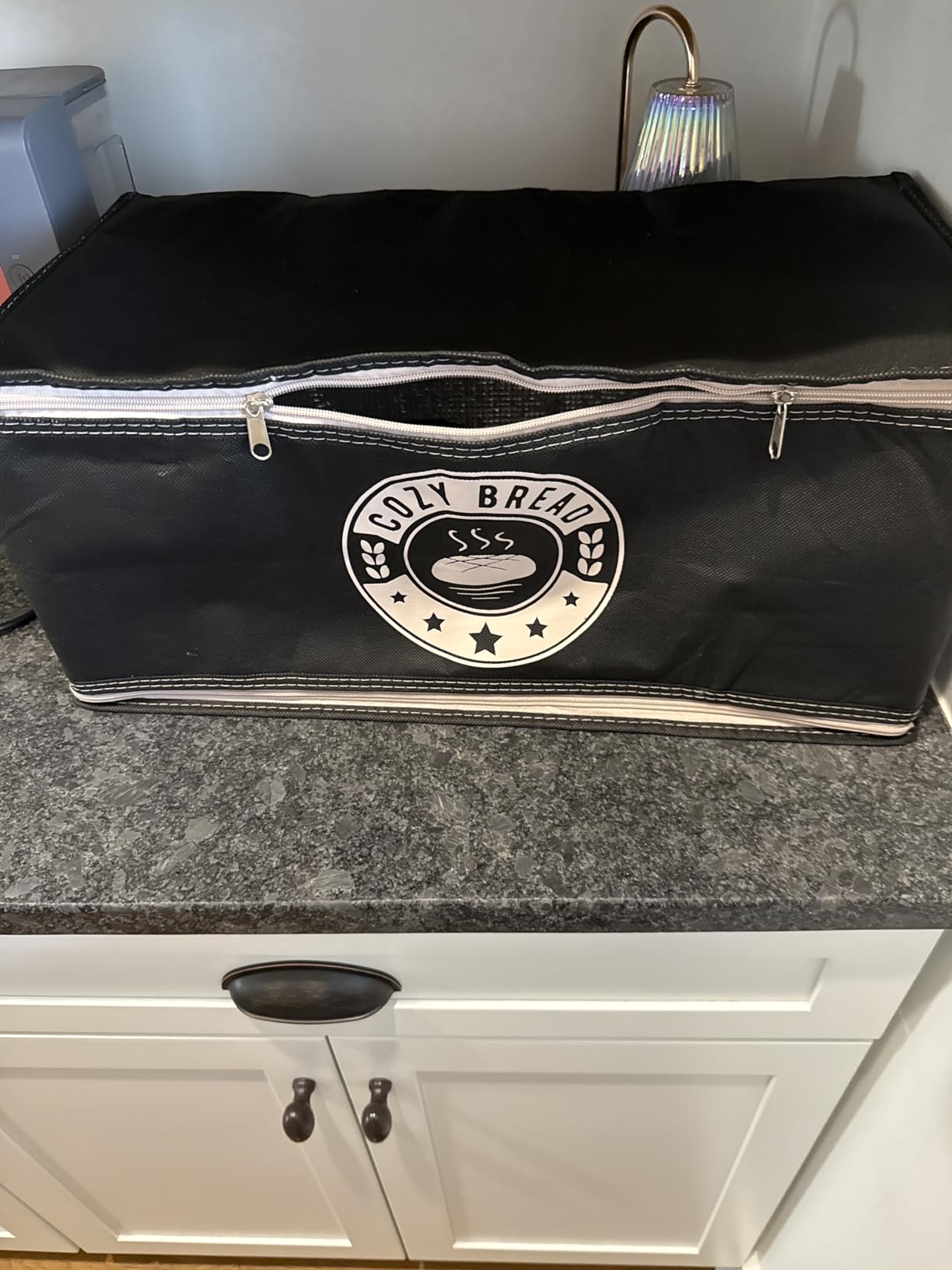
As an insulated cover it does the one job it has well. The construction retains mat heat so the environment around the dough stays stable rather than dropping as the mat cycles, and reviewers report finally successful, even sourdough rises in chilly homes, with one buyer saying they only got consistent results after a different product failed. Capacity is generous for a flat setup: three or four standard loaf pans, or a 9 by 13 pan of rolls alongside a full-size loaf.
At 0.37 kg it is light enough to move with one hand, the sides flex to stretch around large mixing bowls, and the whole thing collapses flat into a drawer. Owners who pair it with a mat generally set the mat in the low nineties to land the dough near 80F inside the box, which is the same calibration offset described earlier, and they recommend verifying with a thermometer rather than trusting the mat display.
Is the two-piece setup better than one enclosed box?
It depends on your counter and your hands. The two-piece route gives you a very large usable floor area, which is the win for anyone mixing two doughs or proofing several loaves, and it separates the parts so you can replace or upgrade the heat source without replacing the insulation. The enclosed boxes win on uniformity, because air heats evenly around a dome while a flat mat heats from below and the corners of a large box stay cooler.
What to be clear about before ordering
This is a proofer, not a food warmer, and it is a vent rather than an airtight seal, so it will not keep dough covered on its own. The two pieces are separate purchases and the total cost of the set lands above the price of a basic enclosed box, so do the arithmetic before assuming this is the cheaper route. It is also hand wash only. And the temperature control you get is entirely the mat’s, including the mat’s surface-versus-dough reading, so the thermometer habit applies here more than anywhere else in the list.
How to Use a Proofing Box for Sourdough
Warm the box before the dough goes in. Set it to your target temperature and give it 15 to 20 minutes. A box that has just switched on is not at temperature, and cold dough dropped into a cold chamber starts fermenting from the wrong baseline.
Add water to the tray if the box has one. A filled water tray raises humidity around the dough, and a humid environment keeps the surface flexible so the loaf can expand at the score line instead of tearing against a dried skin.
Pre-heat the container and the dough, not just the air. A 20 minute autolyse in the box before you add starter and salt makes a measurable difference, because the dough itself is often several degrees below the air until it has warmed through.
Set the target for dough temperature, not air temperature. Sourdough bulk fermentation is happiest around 75 to 82F. If your box runs a couple of degrees hot, turn the dial down and verify with a probe thermometer in the dough for the first few bakes.
Judge by dough and aliquot, not by the clock. A jar of starter beside the dough tells you when the peak is, and the dough tells you when it is ready, roughly 50% risen, domed, jiggly and full of visible bubbles at the edge of the container.
Use the timer for the end of the ferment, not the whole of it. The timer is a backstop against forgetting a box overnight, not a substitute for watching the dough, and a box with an audible buzzer is worth more here than one without.
On starter maintenance, a full-size box works, because most of these run warm enough to keep a jar on schedule through winter. Put the jar on a rack near the bottom, add water to the tray, set the box just below your bulk temperature, and expect the jar to follow your dough rather than run ahead of it. A dedicated starter warmer, or the mat on a low setting, gives you finer control over peak timing, which is the part that matters when you are trying to have the jar peak at the moment you mix. One caution applies across the whole list: none of them cools below room temperature, so in summer you need a cooler room, not a cooler setting.
Should You Skip a Proofing Box? Read This if Your Kitchen Runs Warm
If your kitchen holds a steady 68 to 72F, a warm box is the wrong tool and can actively make your bread worse. Every model in this roundup heats and none cools, so setting one to 77F in a 72F house gives you dough that outruns your shaping window, and the result is a slack, dense loaf that spread in the oven. This is the most common real regret in sourdough communities, and it arrives dressed up as a product complaint when it is really a control problem.
What actually helps in a warm kitchen runs in the opposite direction. A cooler room, a longer and cooler bulk, a cold retard in the refrigerator, and dough signs used in place of the clock. Several of the models here reach down to 50F, and the one that reaches 33F can run a genuinely cold ferment inside a counter-top box, which is a better use of a heating device in July than fighting it.
The other people who should skip one are bakers who already ferment on schedule and do not need to change it. A covered pot and a damp towel cost almost nothing, work perfectly well at a steady 72F, and have no electronics to fail and no calibration to learn. The device earns its place when your kitchen is the problem, not when your technique is.
Frequently Asked Questions
Is a sourdough proofing box worth it?
It is worth it if your kitchen sits below 70F or swings hard between seasons, because a box holds bulk fermentation at a repeatable temperature and turns a guess into a timed step. It is not worth it in a steady 70 to 75F kitchen, where a warm box pushes dough toward overproofing instead. Measure your room temperature across a few days before buying.
What is the best container to proof sourdough?
It depends on the stage. For bulk fermentation, use a clear straight-sided container so you can watch the rise and fold the dough easily, or a proofing box if your kitchen is cold. For shaping and the final proof, use a banneton or coiled basket, which supports the dough and gives the loaf its round profile. The two tools solve different problems and neither replaces the other.
Can I use a bread proofing box for sourdough starter?
Yes. A full-size box can hold a starter jar at a steady warm temperature, which is what keeps a counter jar on schedule through a cold winter. Set the box just below your bulk fermentation target and add water to the tray for humidity. Remember that these devices heat only, so in a warm kitchen a cooler room works better than any setting.
How do you use a proofing box for sourdough?
Warm the box for 15 to 20 minutes first, then add water to the humidity tray, preheat your container and dough, and load them. Set the target for dough temperature rather than air temperature, which usually means 75 to 82F for bulk fermentation. Verify with a probe thermometer for the first few bakes, judge doneness by rise and dough feel, and use the timer only as a backstop.
Is the Brod and Taylor Proofer worth it?
The Folding Proofer is worth it if your kitchen is cold or variable and you want one device that also handles yogurt, kombucha and slow cooking. It holds 70 to 120F, includes a water tray, and folds down to 2.75 inches. Buyers commonly report it running 2 to 3F above the dial, so calibrate it with your own thermometer. The Proofer Pro is a different, much larger appliance at a different tier.
Which Proofing Box Should You Buy in 2026?
The Brod and Taylor Folding Proofer is the best of the best bread proofing boxes for sourdough in 2026 for one reason above all: it combines a rigid insulated shell that folds down to 2.75 inches with a dial that actually holds its setting. At a 4.8 rating across more than 1,400 reviews, it is also the most thoroughly proven, and the few complaints are a small temperature offset and a limited interior height, both of which are manageable with a thermometer.
If the cost of that is the obstacle, the GIYUDOT box gives you most of the control for a fraction of the spend, with more interior space and an included rack and tray. If you want the gentlest approach and like a mat, the Cozy Bread kit and its separate cover box are the pick, with the understanding that the mat dial runs well above your target temperature. For large batches and starter collections, the InnovifyHub extra-large is the one that fits the job. And if your kitchen already sits at a steady 72F, spend your money on a banneton and save the electronics.
Whatever you choose, run one calibration bake with a probe thermometer before you trust any schedule, and target dough temperature rather than air. That single habit is worth more than any feature on this list.