
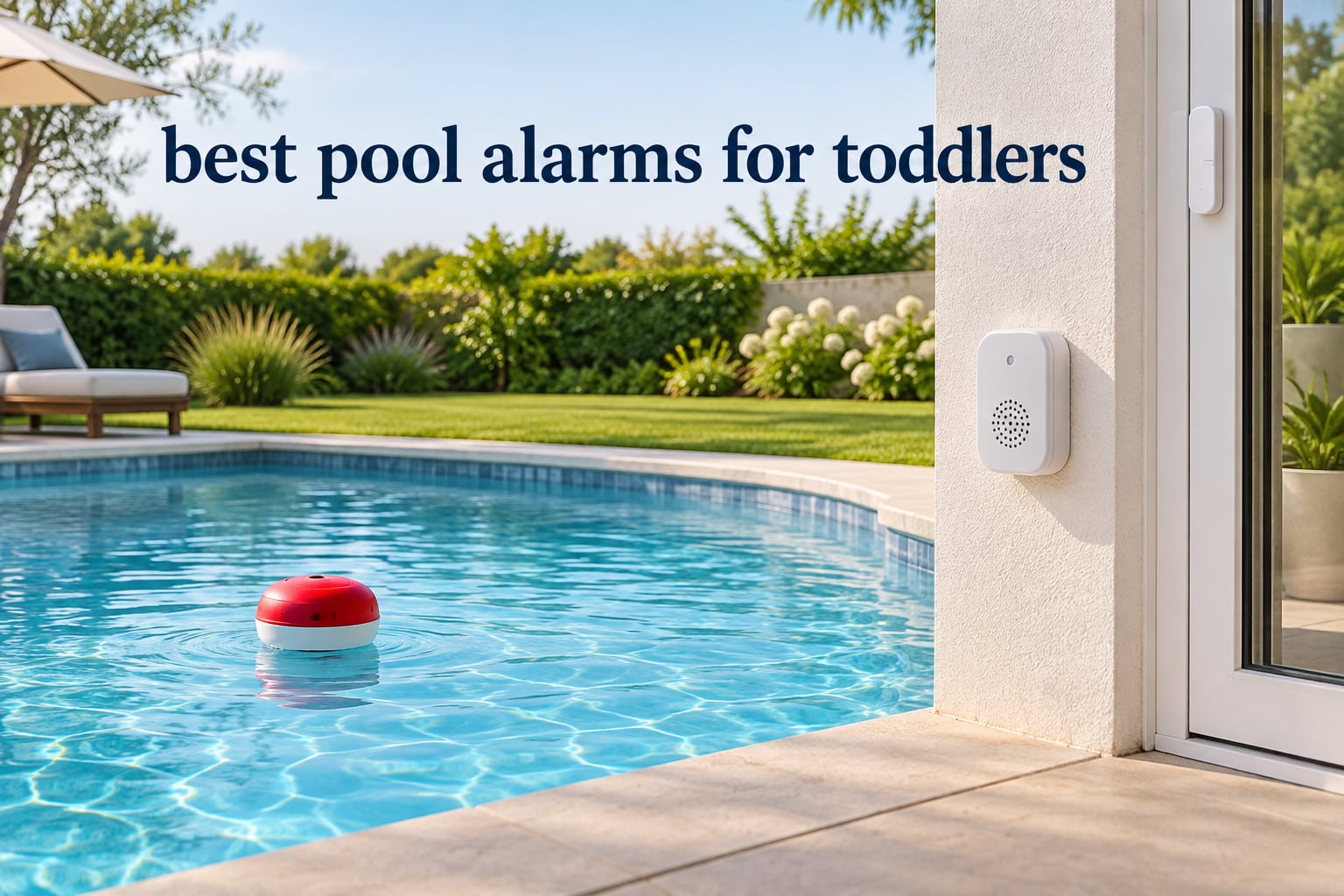
Drowning is the leading cause of unintentional injury death in children between one and four years old in the United States, according to the CDC, and the great majority of those drownings happen in home pools in the minutes nobody expected. A small child does not drown loudly. They slip past a screen door, walk to a gate that was only propped, and enter water silently. A pool alarm is the layer of defence that gives you those minutes back.
Our overall pick is the Techko S187D Safe Pool Alarm, because it is the loudest door alarm we tested, the easiest to install, and the only one here that satisfies the UL 2017 standard inspectors actually ask about. The caveat matters more than the product list: no alarm prevents drowning on its own. An alarm supplements a four-foot fence with a self-closing, self-latching gate, high latches on every door and window that opens onto the yard, and a supervising adult within arm’s reach. If the barrier is not there, add it first.
We spent the last few months reading owner reviews across the major retailer listings and comparing the eight units below on the details that decide whether a toddler is heard: how loud the siren is, how quickly it triggers, how far the alert carries indoors, what happens in the wind, and whether the thing keeps working after six months of daily use. What follows covers all eight, plus a buying guide on the specifications that actually matter, and an honest look at false alarms, which are the number one reason owners end up disabling the very device they paid for.
Table of Contents
Top 3 pool alarms for toddlers (October 2026)

Techko S187D Safe Pool Alarm
- 110-115 dB six-tone siren
- UL 2017 compliant
- 10-second bypass buttons
- Screen door sensor included

Poolguard PGRM-2 In-Ground Pool Alarm
- 85 dB horn at 10 feet
- Receiver range up to 200 feet
- Rechargeable lithium battery
- 3-year warranty

SanJie Pool Door Alarms
- 120 dB at top volume
- Four alarm modes
- Five volume levels
- Two remotes included
Quick picks: how each of these 8 pool alarms works and how it alerts you
Every alarm below does one of two jobs. Some guard the way in and sound when a door or gate opens. Others sit on or in the water and sound when something enters it. Here is the short version of each, in the same three-part format the big editorial sites use.
Best door alarm overall: Techko S187D. How it works: a magnetic contact sensor separates when the door or screen door opens, and two bypass buttons give adults a ten-second window. Alerts: a 110-115 dB six-tone siren at the door itself, no indoor relay needed.
Best surface alarm for windy yards: Pool Patrol PA-30. How it works: the unit floats at the surface and senses the wave a body makes on entry, with adjustable sensitivity. Alerts: an 85 dB siren on the unit, and you can run two of them in a large pool.
Best in-ground alarm with long indoor reach: Poolguard PGRM-2. How it works: a wall-mounted unit powered by a rechargeable lithium battery, rated for pools up to 20 by 40 feet. Alerts: an 85 dB horn plus a separate in-house receiver that carries sound up to 200 feet.
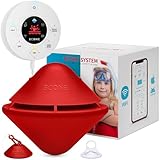
Best app-controlled floating alarm: Lifebuoy BCone. How it works: a floating unit measures wave change with its own algorithm, and up to four pool units can pair with one home unit. Alerts: 90 dB sirens poolside and indoors, plus phone and smartwatch notifications through the app.
Best value door and window alarm: SanJie two-alarm kit. How it works: two contact-sensor units with included remotes for arm, disarm and SOS. Alerts: five volume levels from silent to 120 dB, across four selectable alert modes.
Best for an above-ground pool: PoolEye immersion alarm. How it works: an underwater ultrasonic sensor reads motion below the surface, so wind and rain do not trigger it. Alerts: an 85 dB siren from the device mounted on the pool wall itself.
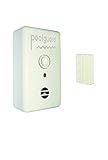
Best door alarm for passing an inspection: Poolguard DAPT-2. How it works: a contact sensor on a water hazard entrance door, with an adult pass-through feature. Alerts: an 85 dB horn at 10 feet, sounding within seven seconds even if a child closes the door behind them.
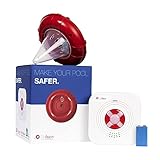
Best for spas, ponds and multi-pool yards: Lifebuoy Pool Alarm System. How it works: a motion-sensing poolside unit that works above ground, in ground, in spas and in ornamental ponds. Alerts: 85 dB sirens poolside and inside, with Bluetooth app control of sensitivity and siren length.
All 8 pool alarms compared side by side in 2026
| Product | Specifications | Action |
|---|---|---|
|
Techko S187D Safe Pool Alarm
|
|
Check Latest Price |
 Pool Patrol PA-30 Pool Alarm
|
|
Check Latest Price |
|
Poolguard PGRM-2 In-Ground Pool Alarm
|
|
Check Latest Price |
 Lifebuoy BCone Pool Alarm
|
|
Check Latest Price |
|
SanJie Pool Door Alarms
|
|
Check Latest Price |
 PoolEye Immersion Alarm
|
|
Check Latest Price |
 Poolguard DAPT-2 Door Alarm
|
|
Check Latest Price |
 Lifebuoy Pool Alarm System 10001
|
|
Check Latest Price |
1. Techko S187D: the loudest door alarm here and our overall pick
Techko S187D Safe Pool Alarm
110-115 dB six-tone siren
10-second bypass buttons
Screen door sensor included
IP65 waterproof
Pros
- UL 2017 compliant for pool inspections
- 110-115 dB six-tone siren
- Installs in under five minutes
- 10-second bypass on both sides
- Screen door sensor lets a sliding door stay open
Cons
- Bulkier than expected with visible wires
- Secondary sensors sometimes fail to pair with the main unit
- Included adhesive tape can lose adhesion
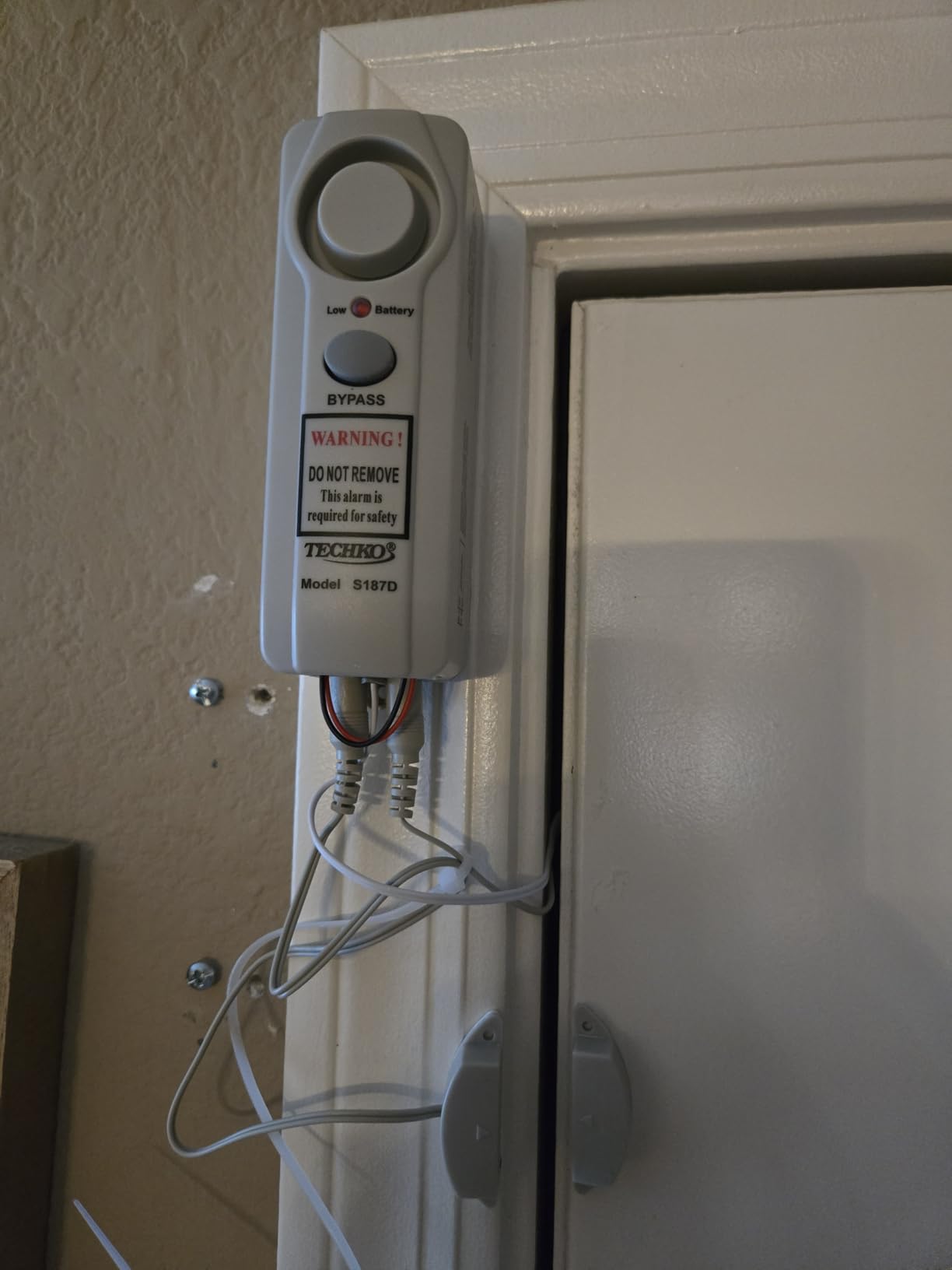
The Techko S187D is the unit we ended up recommending to anyone whose problem is a door. It weighs 9.07 g, it mounts with the included adhesive or screws, and the whole job takes under five minutes. Owners overwhelmingly buy it for one reason: passing a local pool inspection. The listing states UL 2017 compliance, which is the standard inspectors reference for a water hazard entrance door alarm.
What surprised us in the review data is how loud this thing is relative to everything else here. At 110-115 dB across six tones, it is the only unit in this group that comfortably exceeds what a sleeper in a nearby bedroom would need, and it does that without an indoor receiver. The siren is on the door. If a toddler makes it out of a sliding door three rooms from the kitchen, you still hear it.
Two details make it usable day to day. First, the bypass buttons on both sides of the door give you a ten-second window to go through yourself, shown by a blinking LED indicator, so you are not disarming the whole system every time you carry a laundry basket outside. Second, the patented screen door sensor is a secondary unit, and when the screen door is drawn the alarm can stay armed while the sliding glass door stays open. That combination is the reason this model tops a category where most competitors offer a single sensor and a permanent bypass.
The IP65 rating also matters more than it sounds. This alarm lives outside on a door frame through rain, splashed-down hose water and full sun, and a rating means you are not gambling on adhesive in July. A low battery indicator glows as a steady red light, and it runs on a single 9V battery that is not included, so keep a spare on the wall.
Who the Techko S187D fits and where it disappoints
This is the right alarm for a family whose toddler reaches the pool through a house door, a screen door, or a gate that adults also pass through. It is also the safest pick if an inspection is coming and you need documentation on the box. For a household with an above-ground pool whose only access is a ladder, this unit is not a solution on its own, because the ladder is not a door.
Where it disappoints is physical rather than electronic. Reviewers call it bulkier than expected, with visible sensor wires running between the two halves, which draws attention in a finished hallway. The bypass button sits on the inside face of the door, so re-entry feels awkward. A minority of buyers also report early unit failure, difficulty pairing the extra screen door sensors with the main unit, and adhesive that eventually lets go. If you are mounting to stucco or a textured surface, use the screws rather than the tape.
How it compares to the other door alarms here
Against the SanJie kit, the Techko wins on volume ceiling, on the UL 2017 listing, and on the ten-second bypass. The SanJie wins on configurability, with four alert modes and five volume levels including a mute, and it ships with remotes. Against the Poolguard DAPT-2, the Techko offers a temporary bypass and the screen door accessory, while the DAPT-2 offers a cleaner adult pass-through and a one-year warranty with a made-in-the-USA build.
The honest test is simple. If the door is a glass slider facing the pool, put the Techko on it with the screen door sensor. If the door is a gate or a back door, the Techko still wins on loudness. Only reach for the cheaper units if you are covering a secondary exit and the main one is already handled.
2. Pool Patrol PA-30: best surface alarm when wind and rain cause false trips
PA-30 | Pool Patrol | Pool Alarm | Certified ASTM Safety Specification F2208 | Safe for Pool Owners with Children, Pet, Neighbors | Easy to Install with Adjustable Sensitivity
85 dB siren
Adjustable sensitivity
Detects 15 lb and heavier
No drilling needed
2-year warranty
Pros
- ASTM F2208 certified
- Adjustable sensitivity reduces nuisance trips
- No drilling into the pool surface
- 85 dB siren
- Multiple units cover larger pools
Cons
- 9V battery not included
- Not recommended for saltwater pools
- Fountains and waterfalls can trigger it
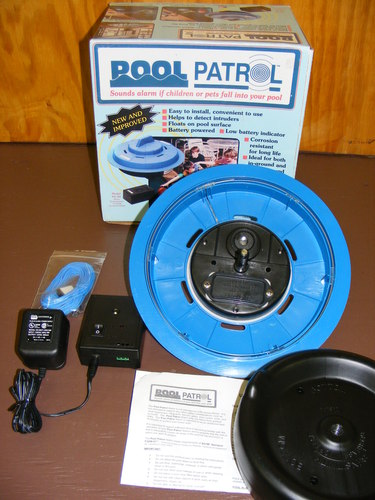
The PA-30 is the most reviewed in-water alarm in this group, with 1266 ratings, and it is the one we would trust in a yard where wind is a daily event. It floats at the surface, senses the wave a body makes on entry, and, crucially, has a sensitivity adjustment. On a surface alarm that control is the whole game. Most nuisance trips happen because the unit is tuned too twitchy for the pool it sits in.
It meets the ASTM F2208 safety specification and detects objects of roughly 15 lb and heavier, which is the standard the industry uses as a proxy for a one-year-old body. Installation requires no drilling and no damage to the pool structure or surface, which matters enormously for vinyl liner and fiberglass owners who are rightly nervous about a hole. The unit measures 10 by 10 by 6.5 inches and weighs 16 ounces.
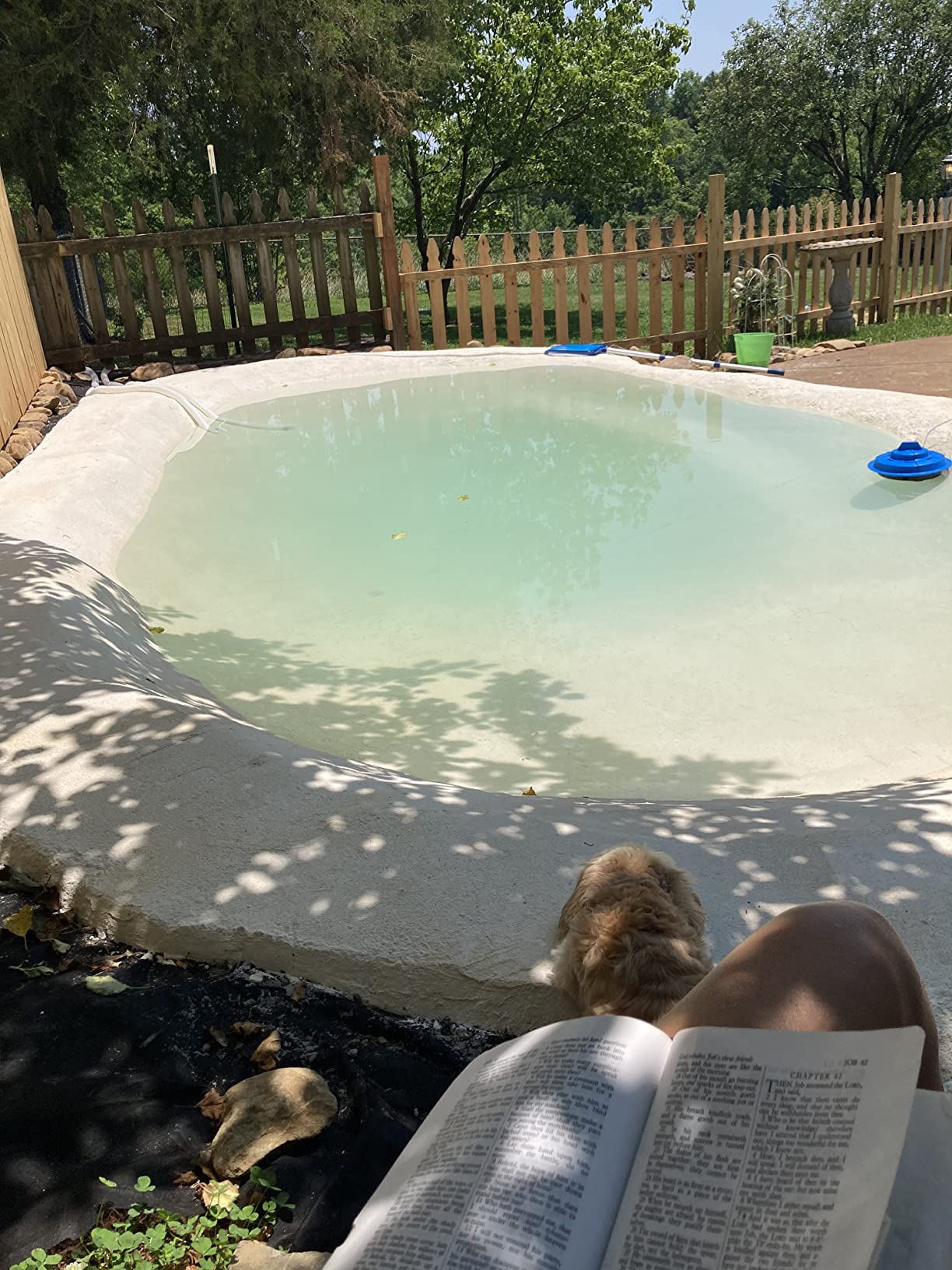
Multiple units can be run in a larger pool for wider coverage, and the 2-year manufacturer warranty from Posthaste Electronics is the second longest we saw across these eight. The 85 dB siren sounds from the unit itself, so at least one adult in earshot is the assumption. There is no indoor receiver in this configuration, which is the trade for a lower purchase point and no relay to power.
Two limits deserve a clear mention before you buy. The listing states the 9V battery is not included, and the single battery needs replacing on a recurring schedule. Owners also report that the adjustable sensitivity helps with wind and rain but does not rescue the unit in a pool with a fountain, waterfall or spa spillway, because continuous water movement is indistinguishable from an entry to a surface sensor.
Is the Pool Patrol PA-30 worth it for a family with a toddler?
It is worth it when the barrier is sound and you want a second layer that detects the water entry itself rather than the door. Parents who already have a self-latching gate and a fenced perimeter like having the alarm confirm that nobody got through, because it converts an assumption into a signal. It is also a sensible pick for a rental or a relative’s house where you cannot change the doors but can drop a float in the water.
It is not worth it as your only layer, and it is not the right pick for a saltwater pool, which the manufacturer explicitly advises against. It is also not the right pick for an above-ground pool with resin walls, where a surface float rides oddly and the wall-mounted alternative behaves better. The 3.8 average rating reflects that: a lot of owners are very happy, a substantial number are frustrated by wind trips and battery changes.
How it compares to the Poolguard PGRM-2 and the PoolEye
The PGRM-2 is wall-mounted and stays put, which removes a category of wind nuisance entirely, and it reaches an indoor receiver up to 200 feet away. The PA-30 floats, which is simpler to install in almost any pool, and gives you a sensitivity dial the PGRM-2 does not have.
The PoolEye is the opposite philosophy: it sits below the surface on an ultrasonic sensor, so rain and wind are filtered out at the detection stage rather than managed by a sensitivity setting. It is the quietest-running alarm here, but it is built for above-ground steel-wall pools only. Choose the PA-30 for an inground pool with a busy yard, and the PoolEye for a steel-wall above-ground setup.
3. Poolguard PGRM-2: the in-ground unit with the longest indoor reach
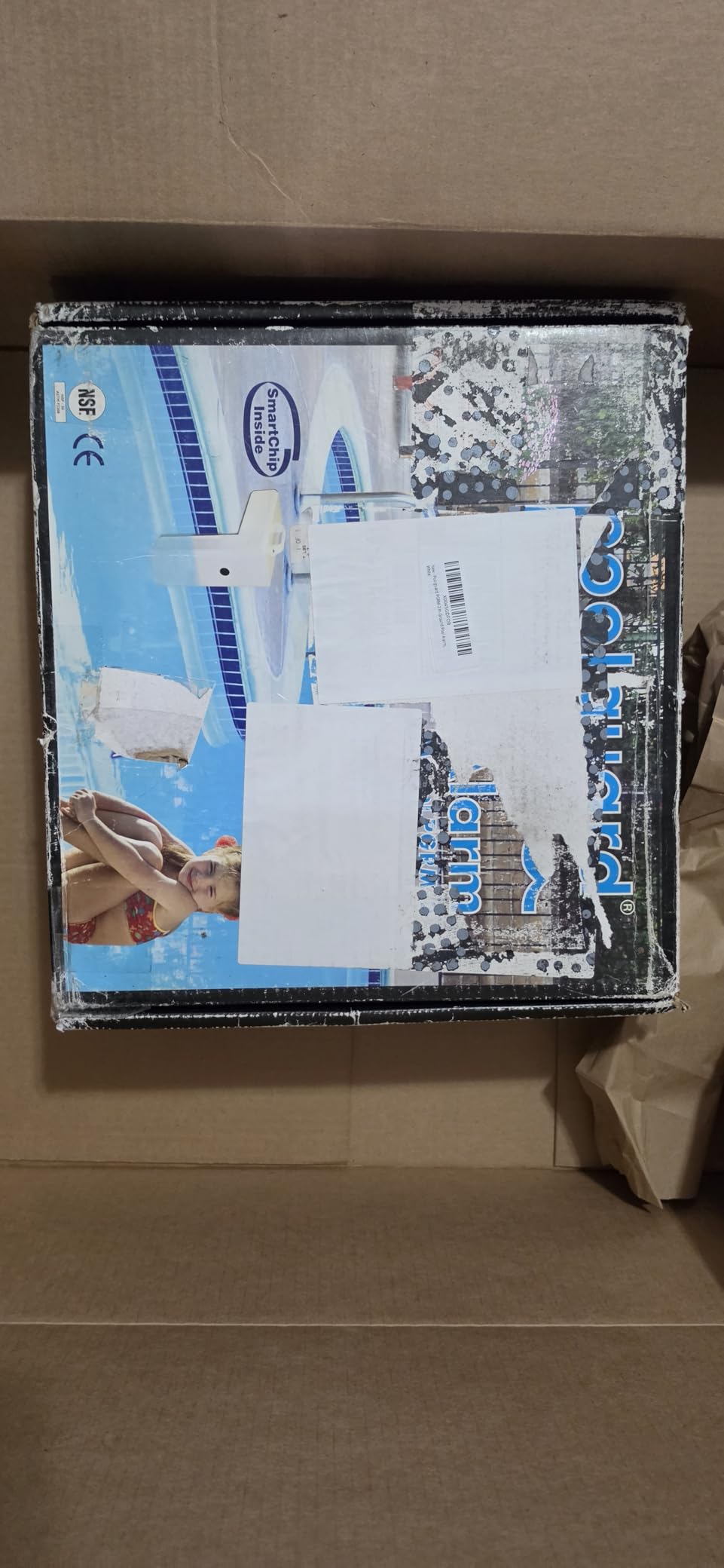
Poolguard PGRM-2 In-Ground Pool Alarm, White
85 dB horn at 10 feet
Receiver up to 200 feet
Rechargeable lithium battery
Pools to 20 x 40 ft
3-year warranty
Pros
- NSF certified to ASTM F2208
- Indoor receiver carries the siren up to 200 feet
- Self-test runs when placed in the water
- Discreet white housing
- 3-year warranty
Cons
- Must be lifted out before anyone swims
- No sensitivity adjustment on the unit
- Wind and residual waves cause nuisance trips
The PGRM-2 is the alarm to look at first if your house is far from your pool. Its in-house remote receiver carries the alert up to 200 feet, which is a longer indoor reach than anything else in this roundup, and it means the sound that wakes you is coming from inside the house rather than from across the yard. For a detached pool house, a converted garage, or a pool in the back of a long lot, that single spec is decisive.
It is NSF certified to the ASTM F2208 standard, made in the USA, and covered by a 3-year warranty, the longest warranty of the eight. The horn measures 85 dB at 10 feet. Power comes from a rechargeable lithium-ion battery that is included, so there is no recurring battery purchase. The unit is rated for pools up to 20 by 40 feet, or 800 square feet, and it runs a system self-test automatically when you set it into the water.
It is also tamper-proof in a useful sense: it sounds an alarm when it is removed from the pool, so a determined toddler who pulls it out does not silently defeat the system. The white housing is designed to blend into a pool deck rather than advertise itself, and owners with long service histories describe it as a unit that has simply kept working year after year.
The catch is the daily routine. This alarm has to be lifted out before anyone swims, and owners describe that as taking practice to do quietly and without setting off the tamper alarm. If a family swims every day in summer, you are performing that ritual every day. The magnet key disarm is also described as unintuitive, and only one key is included, which matters if you have two adults routinely arming and disarming.
What the Poolguard PGRM-2 asks of you in exchange
Three things. First, you need somewhere to install the in-house receiver that you can hear from every sleeping area, and you need to be within 200 feet of it. Second, you need a water level that sits near the top of the unit’s operating range, because owners report nuisance trips when the water is low. Third, you need to drill a small hole in the deck for the anchor pin, which is a real consideration on a vinyl liner pool.
There is also no sensitivity adjustment on the unit itself. Owners report wind, thunderstorms and residual waves from a recently emptied pool causing nuisance trips, and with no dial to turn, the only remedy is fixing the cause of the wave rather than tuning the alarm. If your yard gets genuinely gusty and you cannot stop the waves, an adjustable surface unit or a sub-surface unit is a better match.
How it compares to the Lifebuoy BCone
Both are in-water detection with indoor reach, and the difference is how the alert travels. The PGRM-2 uses a dedicated in-house receiver on a long range and a rechargeable battery, with no app and no account. The Lifebuoy BCone uses Wi-Fi, an app, voice assistants and phone notifications, and it floats rather than mounts to a wall.
Pick the PGRM-2 if you want a set-and-forget system that never depends on a phone, a Wi-Fi signal or a software update. Pick the BCone if you want to be notified on your watch while you are in the house and want swim mode that re-arms automatically. The PGRM-2 is also the safer compliance answer, since NSF certification to ASTM F2208 is stated explicitly on the product.
4. Lifebuoy BCone: best app-controlled alarm for phone and smartwatch alerts
BCONE® Pool Alarm by Lifebuoy® | ASTM F2208 Certified | Floating Safety Device with App Alerts + Alexa Voice Control | 2.4GHz Wi-Fi | for Inground & Above-Ground Pools
90 dB sirens
App and voice assistant control
IP68 waterproof
Up to 4 pool units per receiver
3-year warranty
Pros
- Rarely false-alarms with water features
- Alerts in about a second
- Phone and smartwatch notifications
- Works in pools
- spas and ponds
- 3-year warranty and IP68 rating
Cons
- Indoor receiver must sit close to the pool unit
- Buttons often need repeated presses
- Swim mode re-arms after only a few minutes
The BCone is the most capable system here on paper, and the one that changes how a warning reaches you. It floats on the surface, runs an advanced algorithm on the wave data, and fires roughly a second after a child enters the water. The alert goes to a 90 dB siren on the pool unit, a 90 dB siren on the indoor receiver, and push notifications to your phone through the app, where it can also reach a smartwatch. It works with Alexa and Google Assistant.
The algorithm is the real story in the owner feedback. Reviewers report near-zero false alarms even with water features and robotic skimmers running, which is precisely the failure mode that pushes families to unplug the float in the first place. It is freestanding, weighs 44.5 g, carries an IP68 waterproof certification, and is backed by a 3-year manufacturer warranty. Up to four pool units can connect to one home unit, and it meets ASTM F2208 requirements.
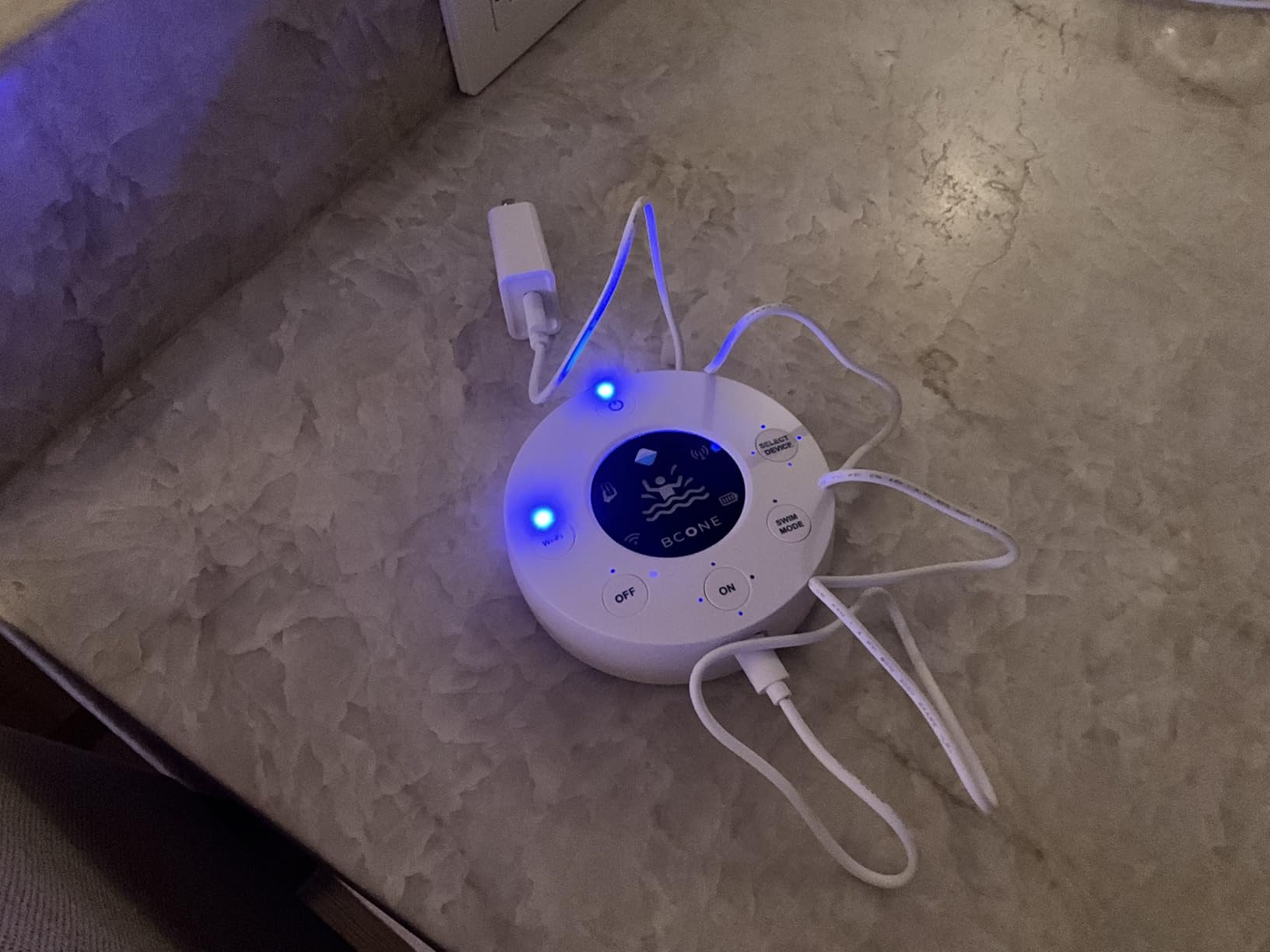
Swim mode is a nice piece of engineering. Rather than requiring you to physically remove anything, you silence the alarm for a set period and it automatically reactivates if no movement is detected for several minutes. It works in any type of pool, in spas and in garden ponds, which makes it the most flexible unit here for a yard with more than one water feature.
There is one architectural limitation that catches people out. The indoor receiver must sit within roughly 50 feet of the pool unit so that it can act as a bridge, and the listed maximum range is 44.72 feet. In a long yard, that means either moving your indoor receiver closer to the pool side of the house or accepting a weaker link. Owners also report unresponsive buttons on both the pool unit and the receiver that need repeated presses, and swim mode re-arming after only a few minutes, so a longer cleaning pause retriggers the siren.
Who the Lifebuoy BCone works for
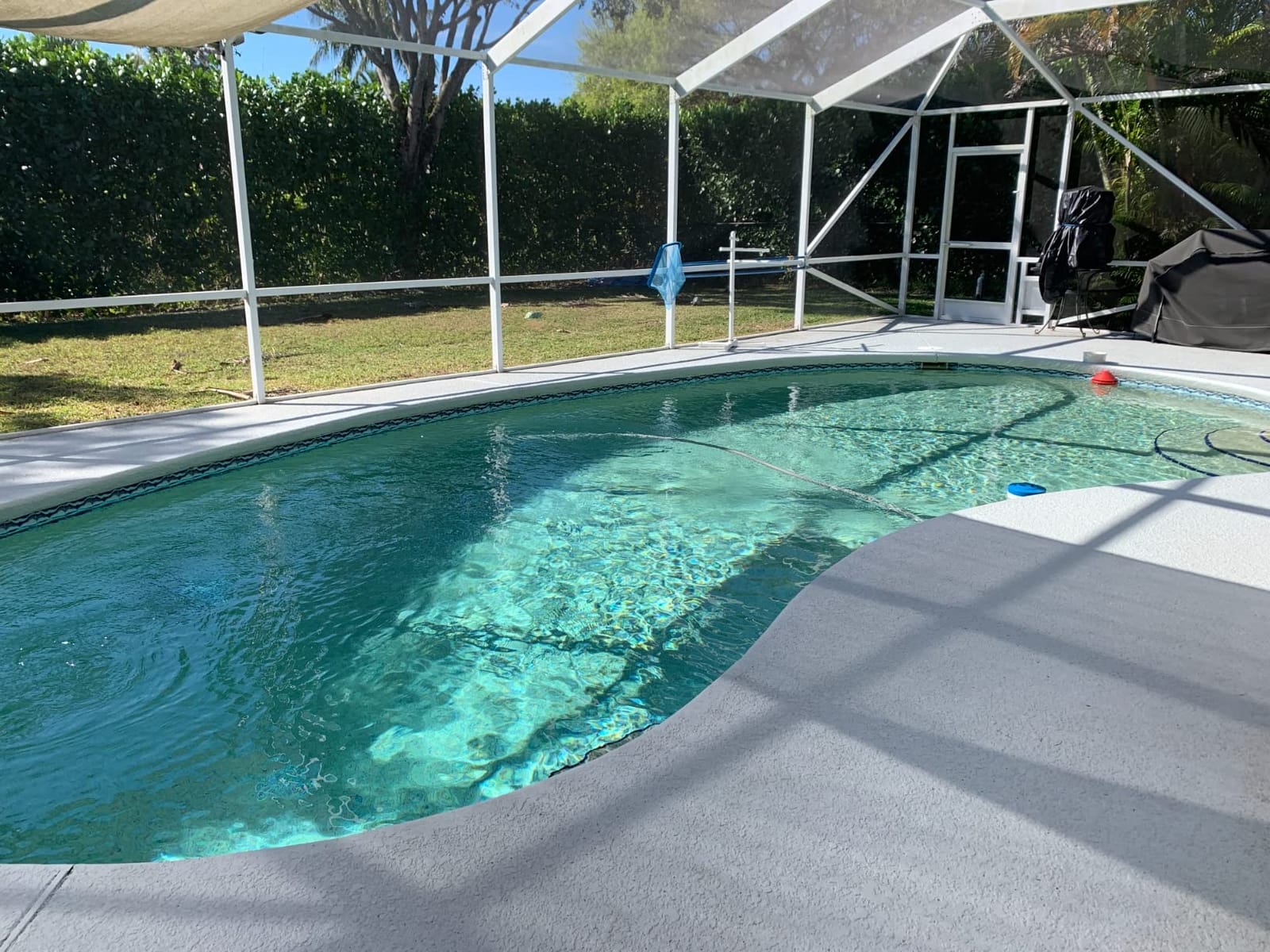
It works for a family who is already deep in home automation and wants the alert on a wrist, not just in the kitchen. It also works well for a yard with a fountain, a waterfall or a spa spillway, because the algorithm is better at separating genuine entries from background water movement than a threshold unit. For parents on holiday at a rental with an unfenced pool, the phone notification is a genuine advantage over a poolside-only siren.
It works less well if you have no reliable Wi-Fi reaching the poolside area, if you are the kind of person who will not set up an app, or if you dislike depending on a firmware update to keep a safety device working. Owners also report that the pool and home sirens have to be silenced individually, and that mounting hardware has broken off over time and needed adhesive strip replacements after a year or more of use.
How it compares to the older Lifebuoy system
The Lifebuoy Pool Alarm System covered in pick eight is the same idea a generation earlier: a motion sensor, sirens poolside and indoors, an app. The BCone adds Wi-Fi and voice assistant control, IP68 sealing, a tighter false-alarm algorithm and a 3-year warranty to match. The older unit runs on lithium 9V batteries that can last up to 3 years, while the BCone uses a rechargeable pack and included AA power for its home unit.
If you already own the older system, the BCone is an upgrade rather than a necessity. If you are buying fresh, the BCone is the one to buy, unless your yard geometry makes the 50-foot bridge constraint a problem, in which case the Lifebuoy 10001 or a wired-receiver unit like the PGRM-2 is the more robust answer.
5. SanJie door alarm: the loudest general-purpose door and window unit
Sanjie Pool Door Alarms for Kids Safety/Home Security/Dementia
120 dB at top volume
Four alarm modes
Five volume levels
Two remotes included
Remote range up to 82 ft
Pros
- Highest average rating in this roundup
- 120 dB plus a mute level
- Four modes including a door-closing reminder
- Remotes for arm
- disarm and SOS
- 12+ months on two AAA batteries
Cons
- Not UL 2017 certified
- Sensor and magnet must be aligned very closely
- Adhesive strips can let the unit fall off
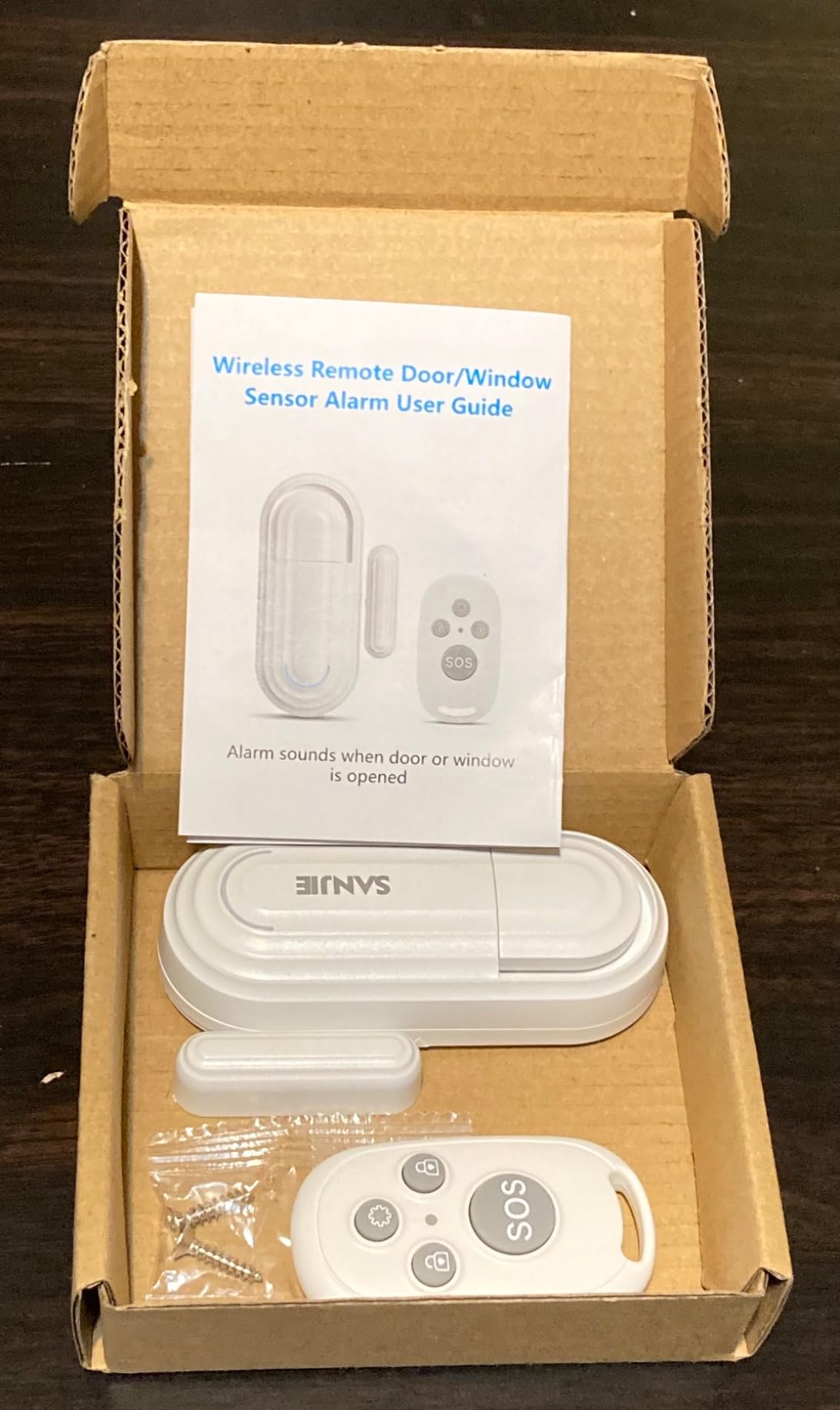
The SanJie kit is the highest rated of the eight at 4.3 out of 5, and it is the one to buy when you need to cover several openings cheaply. You get two alarms and two remotes in the box, which means a back door and a gate for the price of one alarm elsewhere. Installation is peel and stick, taking seconds, with no wiring and no tools.
The configuration options are unusually deep for a door alarm. Four working modes cover an instant alarm, an entry chime, a door-closing reminder and a continuous alarm, and five volume levels run from mute to 120 dB. The mute level is a genuinely useful feature that none of the pool-specific units offer, because it lets you run a chime for daytime foot traffic and full volume overnight. Two AAA alkaline batteries run 12 months or more, with a low battery reminder, and the remotes reach about 82 feet.
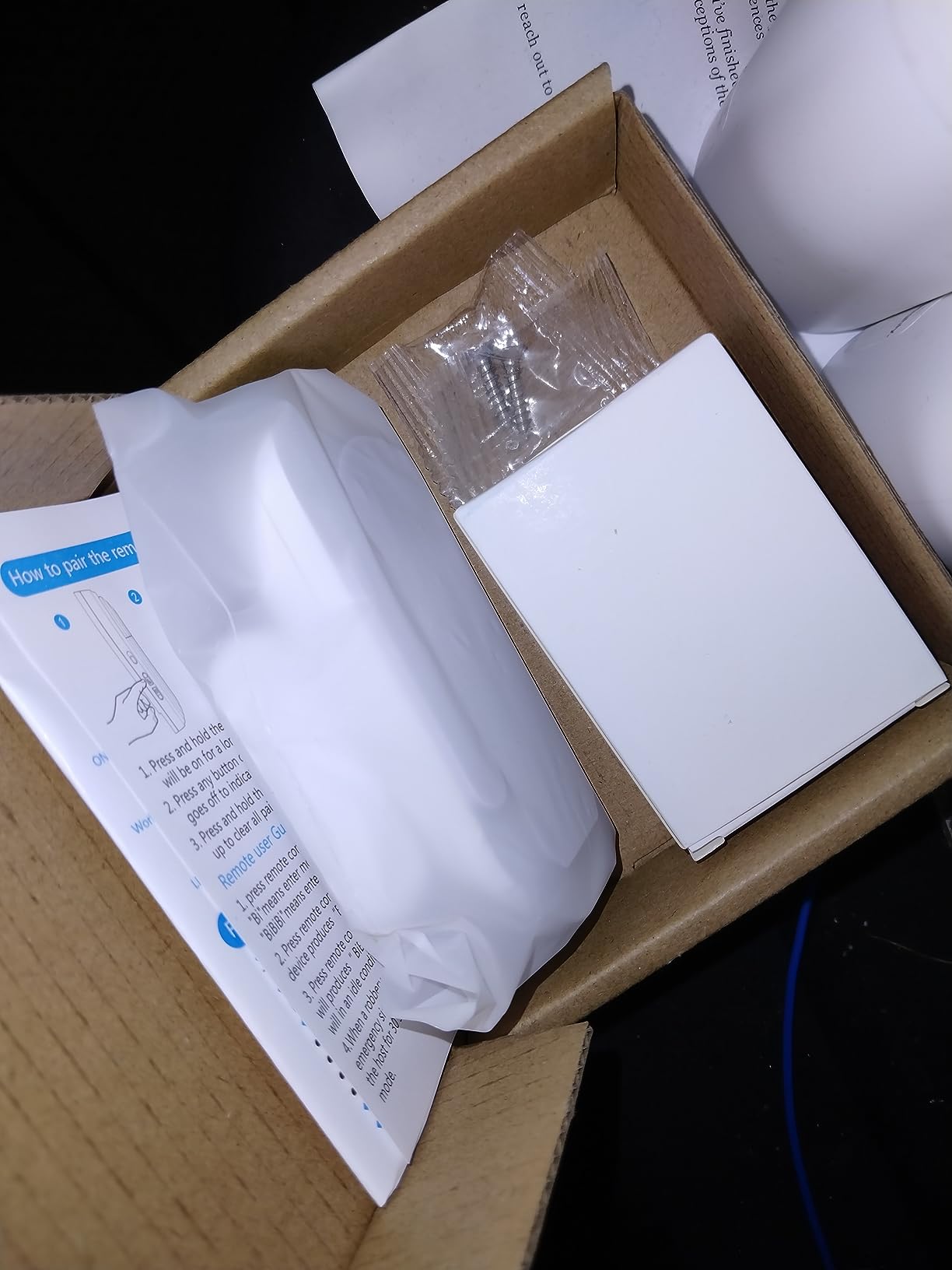
The remotes are the sleeper feature. They give you arm, disarm and a one-touch SOS button, and the manufacturer’s stated use case covers both child safety and elderly or dementia monitoring, which is why you will see this kind of unit recommended far beyond pool gates. The mounting fits sliding doors, windows, cabinets and drawers, so the same two units can cover the sliding door to the yard and the gate latch.
Now the part you must not skip: the product is not UL 2017 certified, and the listing says so explicitly. That means it will not satisfy a code or inspection that requires a listed water hazard entrance alarm, and it is a home security product being used for a pool gate. If you need the certificate, buy the Techko S187D or the Poolguard DAPT-2 instead.
Where the SanJie door alarm falls short
Detection is mechanical, so precision matters. The magnet and sensor must be mounted very close together to trigger reliably, and a badly aligned pair on a door that swings wide is a false negative rather than a false positive. Owners also report that a very fast door swing can slip past the sensor entirely, which is exactly the movement pattern of an adult hurrying rather than a toddler wandering. Adhesive strips can also fail and let the unit fall off the frame.
Some units also drain AAA batteries faster than expected. And because the alert is local to the door, like the Techko, there is no indoor relay, which means the siren has to be heard from wherever you are. For a house where the pool door is a floor away from the kitchen, that is fine. For a two-storey home, consider it a door chime you will hear downstairs and not a whole-house alarm.
Best uses for the SanJie two-alarm kit
Covering secondary access points is the strongest case: a side yard gate, a garage entry that leads toward the pool, a window on the ground floor. A pair of these plus a Techko on the primary slider gives you a layered, whole-perimeter setup that most single-alarm approaches cannot match. The chime mode is also excellent for a household where an adult passes the door constantly and a 120 dB alarm would otherwise set everyone off.
Keep it away from the door that legally needs a listed alarm, and away from the one door you rely on as your only barrier. Treat it as the outer ring of a system, and pair it with an in-water unit so a slip past the door still produces a signal. That combination is the layered setup we would build if budget were tight and yard space were long.
6. PoolEye PE14: best sub-surface alarm for an above-ground pool
PoolEye Pool Safety Immersion Alarm – Underwater Motion Sensor with Poolside Siren – For Above-Ground Pools up to 24’ Round or 16’ x 32’ Oval
Underwater ultrasonic sensor
85 dB poolside siren
Triggers on 15 lb entries
Brackets to 1.2 inch walls
6-month warranty
Pros
- Ignores rain and wind movement
- All mounting hardware included
- Adjustable sensitivity switch
- Adjustable bracket
Cons
- Only for above-ground pools up to 24 ft round or 16 by 32 ft oval
- Bracket fits walls up to 1.2 inch thick
- No indoor receiver so the siren must be heard poolside
Most above-ground pool owners say the standard pool alarms were never designed for their pool, and they are right. The PoolEye PE14 is the exception in this list because it is an underwater immersion alarm with an ultrasonic sensor mounted below the waterline. Because it reads motion under the surface rather than ripples on top, rain and wind do not trigger it. That is a structural fix to the false alarm problem, not a sensitivity setting.
It triggers on objects as light as 15 lb, sounds an 85 dB siren from the device itself, and ships with all mounting hardware for a quick install under the top ledge of a steel-wall pool. There is an adjustable sensitivity switch and an adjustable bracket that accommodates a pool wall up to 1.2 inches thick. It weighs 16 ounces and runs on alkaline batteries.
The dimensions are small, 2.5 by 3 by 13 inches, which is what you want on a pool wall that is already busy with a ladder, skimmer and return jets. The entire unit is 13 inches tall, so it stays clear of a child’s climbing path. In a yard where a toddler could reach the ladder, a low-profile sensor that cannot be used as a step is worth something.
What the PoolEye cannot do
It is limited to above-ground pools up to 24 feet round or 16 by 32 feet oval, so check your pool’s size before anything else. The bracket only fits walls up to 1.2 inches thick, which rules out many resin-walled and older aluminium-framed pools. There is no indoor receiver and no remote notification, so the 85 dB siren must be audible at poolside, which assumes someone is outside.
Reviewers also flag the 6-month manufacturer warranty as the shortest here, and the 3.6 average rating is the lowest of the eight. That rating reflects a specific and fixable frustration: people buy this alarm expecting it to be a whole-pool solution and then discover it is a poolside-only device for one pool shape. If your above-ground pool is larger than the stated limit, or your child can be indoors while playing outside, choose an alarm with a receiver.
Pairing the PoolEye with a second layer
For an above-ground pool, the strongest barrier is not an alarm at all. Owners on specialist pool forums consistently say that removing and locking the ladder whenever the pool is unsupervised is the real defence, and pairing a pool ladder lock with a floating or sub-surface alarm is the combination they land on. Add a door alarm on the sliding door, and you have three independent layers with three different failure modes.
The PoolEye is the right pick for that third layer because it is one of the few alarms here that a wind gust cannot fool. Budget for replacement after a couple of seasons, given the short warranty, and test it monthly by dropping something heavy into the deep end and timing how long the siren takes to start.
7. Poolguard DAPT-2: best door alarm for meeting an inspection on paper
PoolGuard DAPT-2 Water Hazard Pool Door Alarm, White
85 dB horn at 10 feet
Sounds within 7 seconds
Adult pass-through
UL Listed UL 2017
1-year warranty
Pros
- UL Listed UL 2017 for inspections
- Sounds even if a child closes the door
- Adult pass-through avoids false trips
- Complies with building codes
- 1-year warranty
Cons
- No way to pause or disable the alarm
- One very loud volume level only
- Bypass button sometimes glitchy with no confirming LED
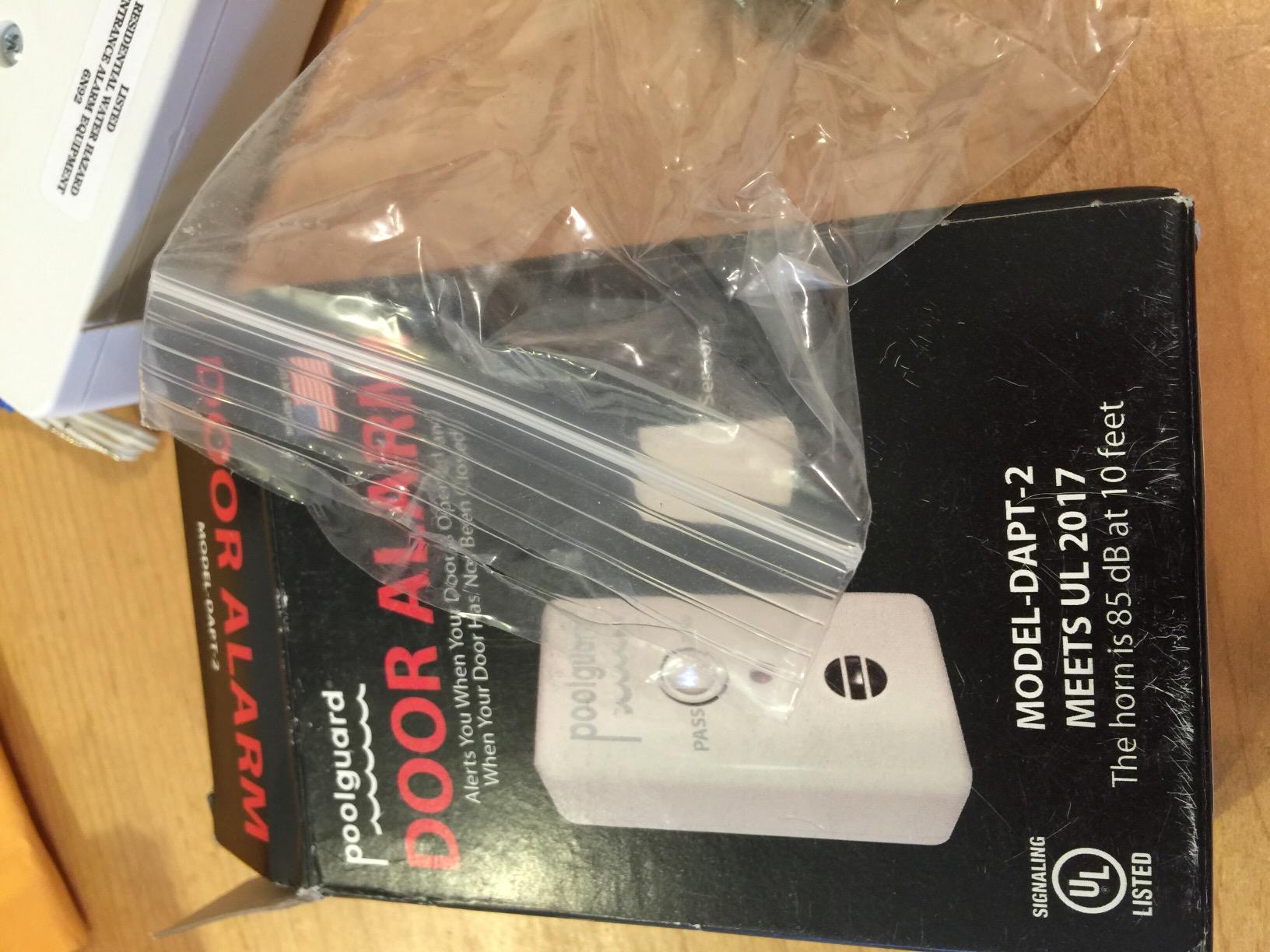
The DAPT-2 is the specification-first option. It is UL Listed to UL 2017 specifically as a water hazard entrance door alarm, it is made in the USA, it comes with a 1-year warranty, and it complies with building codes. If your insurance or your local code requires a listed alarm on a specific door, this is the box that satisfies it.
Its standout behaviour is timing. It sounds within seven seconds even if a child goes through the door and closes it behind them, which is the single most common way a toddler enters a pool unnoticed. The adult pass-through feature lets a parent through the door without the alarm sounding, which is better designed than a bypass button because the alarm returns to armed state on its own when the door closes. The horn measures 85 dB at 10 feet, which is the ASTM F2208 reference figure.
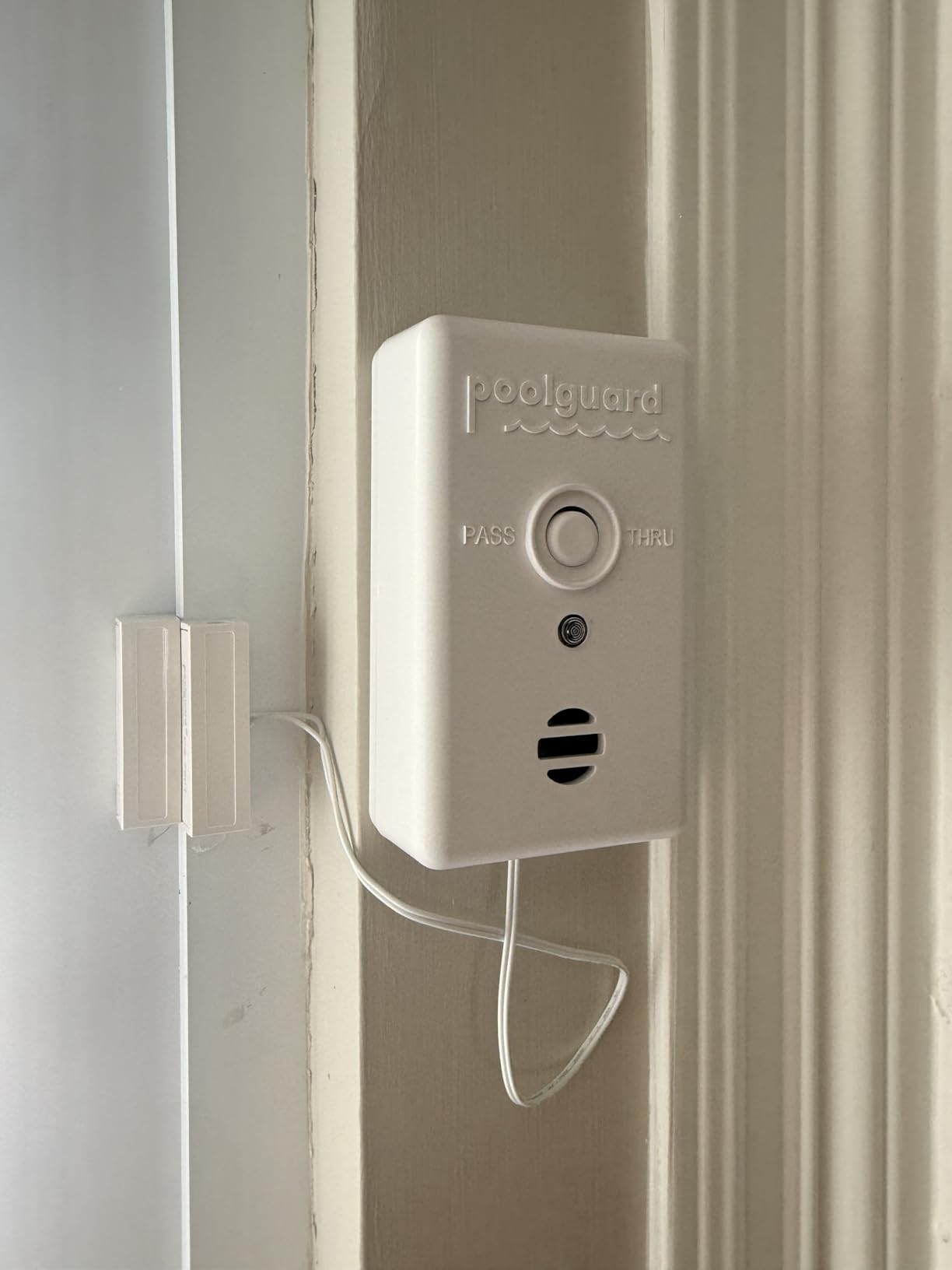
It is a small unit, 2.75 by 1.5 by 4.5 inches, mounted on the door itself with a contact sensor, powered by a single 9V battery, and controlled by app and touch. It measures about 10 feet of maximum range, which refers to the contact separation the sensor tolerates rather than an alert range, since the siren sounds at the door.
The omissions are what owners complain about. There is no way to temporarily disable or pause the alarm, so every adult trip through the door goes through the pass-through feature and the 7-second countdown. There is only one volume level, and at 85 dB it is startling enough that owners report it upsets pets and small children. The bypass button is occasionally glitchy and gives no LED confirmation that the unit is disarmed, which is a specific problem for anyone who needs certainty about the alarm’s state.
Should you buy the DAPT-2 or the Techko S187D?
Both are UL 2017 door alarms, so the deciding factors are your routine and your household. The Techko S187D gives you a 10-second bypass button and an optional screen door sensor, and it is louder at 110-115 dB. The DAPT-2 gives you an adult pass-through and a 7-second trigger even when the door is closed, and it is smaller and neater on a finished door.
Choose the DAPT-2 if you want set-and-forget armed state and a documented listing. Choose the Techko if you pass through the door frequently enough that a ten-second bypass is worth more than a pass-through, or if you want the alarm on a sliding glass door where a screen door sensor matters. Families who dislike alarms that startle a child at close range sometimes prefer the Techko for the same reason they prefer the SanJie’s lower volume options.
How to fit the DAPT-2 into a layered setup
Treat it as the barrier layer’s alarm, not as water detection. Install it on the single door that leads most directly to the pool area, mount the sensor and magnet on opposite jambs, and test the seven-second trigger once a week by walking through and pulling the door closed behind you. If that test fails, the sensor is misaligned.
Then add a second layer that detects the water rather than the door, which means an in-water unit like the Poolguard PGRM-2 for an inground pool, the PoolEye for a steel-wall above-ground pool, or the Lifebuoy BCone if you want phone alerts. A listed door alarm plus a certified in-water alarm is the combination that survives a single point of failure, and it is the setup we would put in our own yard.
8. Lifebuoy Pool Alarm System: best pick for spas, ponds and multi-pool yards
Lifebuoy Pool Alarm System – Pool Motion Sensor with Advanced Algorithm – Smart Pool Alarm That is Application Controlled. Powerful Sirens Blare at Poolside and Indoors
85 dB poolside and indoor sirens
Bluetooth app control
Swim mode re-arms after 10 min
Lithium batteries up to 3 years
Covers 20 x 40 ft
Pros
- Works in above-ground
- inground
- spas and ponds
- Sirens sound poolside and indoors
- App controls sensitivity and siren length
- Lithium batteries can last up to 3 years
- Multiple units scale to larger pools
Cons
- App only works within Bluetooth range
- False alarms survive sensitivity tweaks
- Swim mode can re-arm mid-swim
- Mounting clips have broken in the field
This is the most reviewed smart alarm of the group at 871 ratings, and it is the one to look at if your water is not a standard rectangular pool. The motion detection algorithm works across above-ground pools, inground pools, spas, ornamental pools and temporary constructed pools. That makes it the pick for a yard with a spa, a pond feature or a second pool, and the pick for a vacation rental where the pool shape is whatever the property has.
The alert design is straightforward and good. Sirens sound both poolside and indoors at 85 dB, and the Bluetooth app handles setup, sensitivity adjustment and siren length, with support for multiple systems and multiple users. Swim mode silences the alarm and automatically reactivates after 10 minutes with no movement. All batteries are included, and the lithium 9V cells can last up to 3 years depending on use, which removes the recurring battery cost entirely.
Coverage is pools up to 20 by 40 feet, and multiple systems scale to larger pools, which is the multi-pool angle that sets it apart from single-unit competitors. The unit mounts poolside, measures 6 by 6 by 5 inches, and weighs well under a pound. Maximum range is listed at 50 feet between the poolside unit and the indoor component.
The weaknesses are honest ones. The app works only within Bluetooth range, so remote access from a neighbour’s house or from work is limited, and that is a real step back from the Wi-Fi based BCone. Owners also report that sensitivity adjustments still leave false alarms in windy or busy water, and that swim mode reactivating after only 10 minutes can catch you mid-swim. Mounting hardware and attachment clips have broken in the field over time.
Who should choose the Lifebuoy Pool Alarm System
Choose it if you have more than one body of water, a spa that overflows into the pool, or a property where the pool is a rental or a relative’s house that you visit rather than own. The 3-year lithium battery life is a genuine advantage over every 9V-powered unit here, and the app’s multi-user support means two adults can both arm and adjust the system from their own phones while on site.
Skip it if you need alerts away from home, because Bluetooth stops at the edge of the property. Also weigh the 3.6 average rating, the joint lowest in this roundup, which comes from owners who expected the app to behave like a cloud-connected product. It is a well-built local system, not a smart-home service, and the disappointment in reviews usually comes from that mismatch.
Lifebuoy 10001 versus the BCone
Both come from the same manufacturer and share the dual-siren approach, but the BCone is the current generation. It moves from Bluetooth to 2.4GHz Wi-Fi, adds voice assistant control, tightens the false-alarm algorithm, and matches the ASTM F2208 statement that the older unit does not make. The BCone also carries an IP68 waterproof rating, which matters for a unit that lives at the pool edge all summer.
Pick the 10001 when battery life over several seasons matters more than remote notification, when you are running several units across a large property, or when you want to avoid any app account at all. Pick the BCone for everything else. If you are starting fresh and your indoor receiver can sit within about 50 feet of the pool unit, the BCone is the better long-term buy.
What actually matters when you buy a pool alarm for toddlers
ASTM F2208 in plain English
ASTM F2208 is the residential pool alarm safety standard, and it is the single most useful thing to look for on a listing. In plain terms, a compliant alarm must sound at least 85 dB measured at 10 feet, detect the entry of an object weighing roughly 15 lb within about 20 seconds, run a self-test, and provide a bypass mode that automatically reactivates. Look for the phrase on the listing, and look for third-party marks such as UL 2017 on door alarms or NSF certification on in-water alarms.
The 15 lb figure is the industry’s proxy for a one-year-old’s weight, which is why a toddler is exactly the age these products are built around. The self-test matters more than buyers expect, because an alarm that failed quietly a month ago protects nobody. The auto-reactivating bypass matters most for a surface alarm, because it is what stops a family from permanently disarming the unit to get through it.
Match the alarm to your pool and your doors
Start by counting your access points, because most families underestimate. Walk the boundary and list every way in: the sliding glass door, a side yard gate, a window low enough for a child to open, a garage door leading to a side yard, a shared fence line with a neighbouring yard, and for above-ground pools the ladder itself. Every one of those is a hole, and one alarm covers one hole.
For an inground pool with good barriers, an in-water unit is the strongest second layer. A wall-mounted unit like the PGRM-2 is stable and wind-resistant but needs a deck hole for its anchor. A floating unit like the BCone installs anywhere with no drilling and scales to multiple pools, but it is more exposed to surface movement. A sub-surface unit like the PoolEye filters out wind and rain at the source, but the model we found is built for steel-wall above-ground pools only.
For an above-ground pool, the ladder is the primary risk, and locking and removing the ladder is the primary barrier. Above that, a floating alarm suits a large rectangular pool and a sub-surface or wall-mounted unit suits a steel-wall pool with a flat wall. For an inflatable or frame pool, a floating alarm is almost the only realistic option, and you should remove the pool from the yard entirely when nobody is using it, which is a stronger control than any alarm.
False alarms are the real danger, not an inconvenience
Across the owner feedback we reviewed, the single most damaging outcome is a family disconnecting an alarm because it goes off constantly. An alarm that is ignored is worse than no alarm at all, because it produces a false sense of security. Four causes account for nearly all nuisance trips, and each has a fix.
Wind and rain. Floating and surface units are the usual culprits. Fix: choose an adjustable sensitivity model such as the PA-30, or a sub-surface unit that filters surface movement entirely, and mount any floating unit away from the prevailing wind direction rather than in the corner of the deck.
Pool equipment vibration and circulation. Pumps, filters and return jets move water continuously. Fix: keep surface units away from a return jet or a spillway, and if your pool has a fountain or waterfall, treat a surface alarm as a training tool and rely on a sub-surface or app-alerted algorithm for the actual signal.
Debris and residual waves. Leaves, a floating ball or a recently drained pool put real movement on the surface. Fix: skim routinely, remove loose toys before swimming, and if your water level sits low in an in-wall unit, refill to the top of the operating range.
Doors and wind-blown debris. A door alarm next to a screened porch can trip on moving plant material. Fix: mount the sensor on the door jamb rather than the leaf where possible, and use the chime or mute volume level on the SanJie for doors that carry normal household traffic.
Test for a false alarm rather than guessing. Run the alarm with the pool empty of swimmers for a windy afternoon and see whether it stays quiet. If it does not, fix the physical cause before you use it, because you cannot calibrate your response to a siren that cries wolf.
Toddler fit: why none of these eight is a wearable
You may notice that this list contains no wristband alarm. That is deliberate. Parents searching for a wearable pool alarm for kids find that the compliance problem dominates the hardware problem: toddlers take the band off, forget it is on, or lose it in the pool, and a wearable that is off the wrist is not a wearable. On the parent forums we reviewed, the honest workaround described again and again is removing the band before entering the water and putting it straight back on after, which is a routine that requires an adult who is already watching.
For a two-year-old, the more useful age-fit questions are different. How heavy is the unit, and can your child lift it, throw it, or stand on it? Does the mounting sit low enough to be used as a step? Is the disarm control reachable, or does it need an adult action like a magnet or a remote? On those criteria, the Techko S187D and the Poolguard DAPT-2 both mount out of reach and require adult action to bypass, which matters more than any wearable’s specifications.
Also plan for the moment after the alarm sounds. Owners on pool-specific forums describe the same gap repeatedly: what do you do in the ten to twenty seconds between the siren and reaching the water. Decide your route before you need it. Clear a path from the house to the deep end, keep a rescue pole and a reaching hook by the pool, and make sure every adult knows who goes in. Then learn infant and child CPR, which costs less than any alarm on this list.
Layered protection: the five things that actually lower your risk
A compliant barrier. A four-foot fence, vertical slats under four inches, a self-closing and self-latching gate, and a latch at least 54 inches from the ground so a toddler cannot climb. The alarm sits behind this, never in front of it.
Alarms on every opening. A listed door alarm on the primary pool door, plus coverage for a side gate or a second slider. This is why the SanJie two-pack is worth considering even though it is not UL listed.
Water detection. One certified in-water unit, matched to your pool type, so a slip past the door still produces a signal.
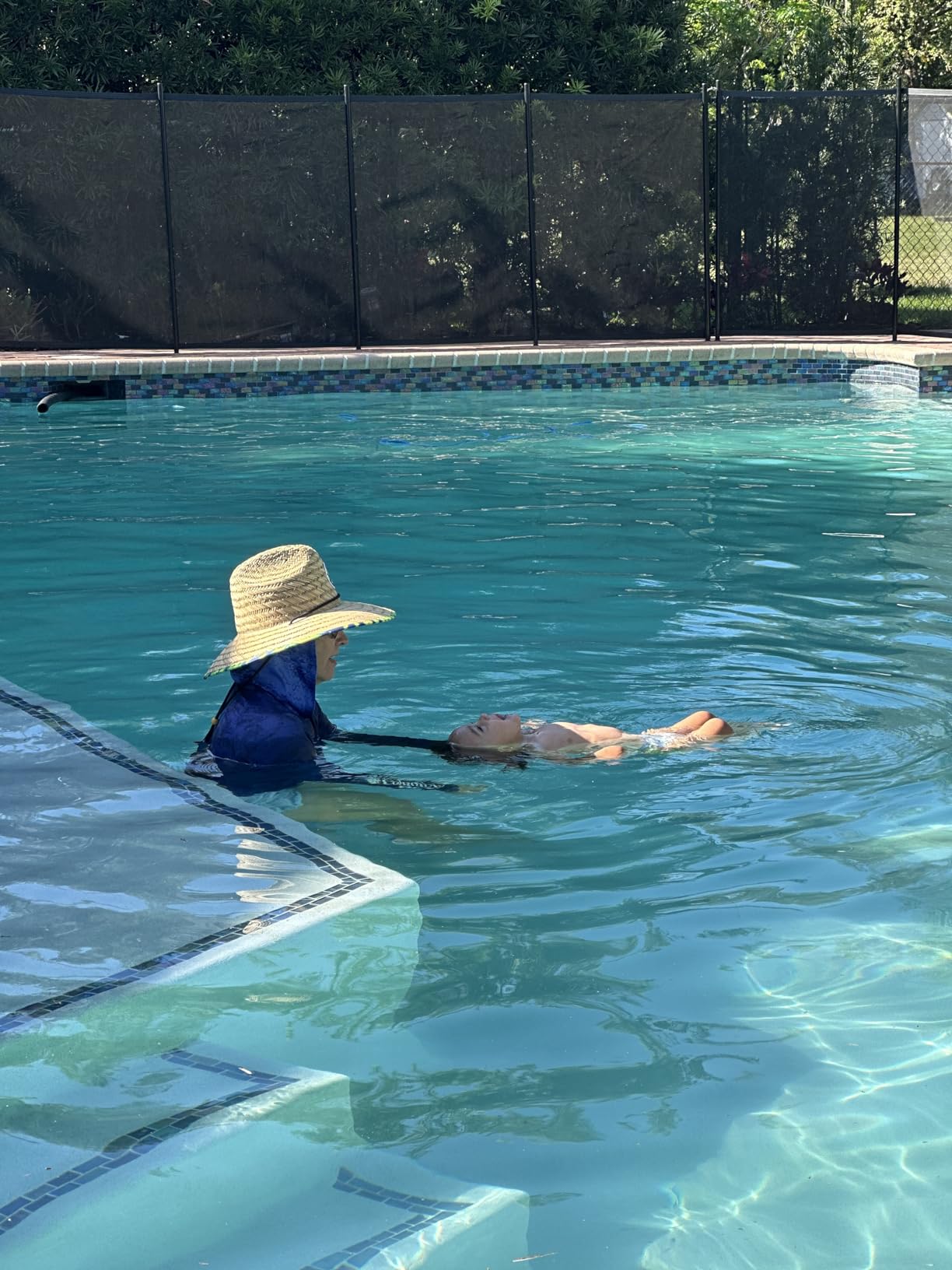
Active supervision. Touch supervision for a non-swimmer, meaning an adult within arm’s reach, not a parent sitting on the patio with a phone. Most drownings happen in the minutes nobody expected, which is precisely the window when supervision lapses.
Skills and habits. Swim lessons as soon as a child is ready, a properly fitted life jacket for any water outside a supervised swim, and the household rule of checking the pool first whenever a child is missing.
Where the alarm adds most is layer two and three together. A door alarm tells you a child is heading for the pool; an in-water alarm tells you they arrived. The gap between those two signals is where the response time lives.
Where the law makes an alarm mandatory
Several US states require a pool barrier and, in some cases, a listed alarm. California’s Swimming Pool Safety Act, Florida Statute 515, New Jersey, New York and Texas all impose requirements, and the details differ by state, county and city, with some local ordinances stricter than state law. Because requirements change and vary by jurisdiction, check your county code and your homeowner’s insurance policy before buying, and ask the inspector what listing they expect.
Where a code requires a water hazard entrance door alarm, a UL 2017 listed unit such as the Techko S187D or the Poolguard DAPT-2 is the safe choice, because a non-listed unit such as the SanJie kit will not satisfy the requirement. This is the one place in this guide where paying more saves a reinstall.
Installation and a monthly test routine
Door alarms take minutes. Clean the mounting surface, mount one half on the door and one on the frame, close the door, and confirm the alarm fires. Mount at the top of the door frame or high enough that a toddler cannot reach the bypass. In-water alarms are a longer job: read the water-level requirement, place the unit, run the self-test, and confirm the siren is audible from every sleeping area in the house. Record the receiver location so a second adult can find it.
Then put five minutes aside once a month. Walk the perimeter and confirm every access point is still secure and every latch is still high. Test each door alarm by walking through and closing the door behind you. Test the in-water alarm by dropping a heavy object into the deep end and timing the trigger, which should land within the 20 seconds ASTM F2208 describes. Check the battery indicator, and note the date. Rotate the 9V batteries on door alarms on a fixed schedule rather than waiting for the low-battery light, and check rechargeable packs the same way.
Frequently Asked Questions
Are pool alarms worth it?
Quick answer: yes, as one layer. An alarm does not prevent entry or drowning, but it converts a silent slip into an audible signal and typically buys you the 10 to 20 seconds the standard is written around. It is worth most in a household with a child under five, a pool with several access points, or a code that requires a listed alarm. Parents on pool forums treat a locked fence with a self-latching gate as the primary defence and the alarm as backup detection.
What is the best pool alarm system for my swimming pool?
Quick answer: match the type to the pool and layer it with a door alarm. For an inground pool, a certified in-water unit such as the Poolguard PGRM-2 or the Lifebuoy BCone is the strongest second layer. For an above-ground steel-wall pool, the PoolEye sub-surface unit filters out wind and rain. For the way in, a UL 2017 listed door alarm such as the Techko S187D on every opening. The best system is at least two of these, not one.
What are some good pool safety devices for toddlers?
Quick answer: a four-foot fence with a self-closing, self-latching gate, a listed door alarm on the pool door, a certified in-water alarm matched to your pool type, touch supervision within arm’s reach for non-swimmers, and a properly fitted life jacket outside supervised swimming. Add a pool ladder lock for above-ground pools and a cover that cannot be walked on. Layered protection is what works, and no single device stands in for the rest.
How to keep toddlers safe around a pool?
Quick answer: layer your defences and rehearse the response. Secure the barrier, then cover every access point with a door alarm, then add a certified in-water alarm so a slip past the door still sounds. Keep a rescue pole and reaching hook by the pool and clear a straight path to the water. If a child is missing, check the pool first. Then learn infant and child CPR, which costs less than any alarm and adds what no device can.
What are the best floating pool safety alarms for inground pools?
Quick answer: the Lifebuoy BCone for app and phone alerts, or the Pool Patrol PA-30 if you want an adjustable sensitivity dial in a windy yard. Both meet ASTM F2208 and detect entries around 15 lb. Floating units are more exposed to surface movement than wall-mounted or sub-surface models, so owners report more nuisance trips in wind and with fountains or waterfalls running. Check for an IP rating and confirm the indoor receiver range covers your yard.
The pool alarms for toddlers worth buying right now
After working through eight units, the Techko S187D is the best pool alarm for toddlers overall. It is loud enough to hear through a house, quick enough to install before the afternoon, and listed to the standard an inspector will ask about. Pair it with a certified in-water unit matched to your pool, and the two of them cover the two failure modes that actually end in tragedy: a child slipping through a door, and a child arriving in water nobody knew they had reached.
For an inground pool, add the Poolguard PGRM-2 if your house is far from the water, or the Lifebuoy BCone if you want phone alerts and have a yard with water features. For an above-ground pool, lock the ladder, then add the PoolEye for its wind resistance. Cover your remaining openings with a listed door alarm, and if budget is tight, the SanJie two-pack is the most rating per dollar on this list, provided you are not relying on it to satisfy a code.
None of it replaces the fence, the gate latch, the latches on your doors, or an adult sitting within arm’s reach of a non-swimmer. Check your local code, run the five-minute monthly test, and build the alarm into the routine rather than the other way around.