

A wall-mounted dust collector is a single-stage collector hung on brackets above the floor instead of rolled on casters, using the vertical wall space a small shop cannot spare on the ground while still moving the 350 to 700 cubic feet per minute a table saw or planer needs. Our best overall pick is the POWERTEC DC5371, a 560 CFM unit with a 1 micron bag, a fill-level window and a motor that runs on either 120V or 240V.
We compared seven wall-hung and wall-mountable collectors over six weeks, weighing published airflow against real hose runs, checking the filtration media against what wood dust actually does to lungs, and reading owner reports about bag changes, inlet clogs and installation headaches. Two units earned a place despite thin review counts because their filtration and mounting hardware are simply better than the alternatives.
Before the picks, one objection deserves a straight answer because it comes up constantly in woodworking forums: a rolling collector with a short drop hose is simpler, and in some shops it is the better tool. That is true. A wall mount wins when your floor is the scarce resource and you can keep the hose run short, which in most small shops means under about 6 feet on a 1 HP unit. If your shop has clear floor space and three machines in different corners, spend that space on a rolling unit instead and put your money into a good pre-separator.
What follows covers the collectors themselves first, then the sizing math, the wall-mount-versus-rolling decision, filtration ratings, and how to hang one without regretting the drilling.
Table of Contents
Top 3 Wall-Mounted Dust Collectors for Small Shops in 2026
These three cover the realistic range of a small or micro-shop: the strongest overall package, the smallest footprint, and the most airflow for planer work.
Every Wall-Mounted Collector in This Roundup at a Glance (October 2026)
Seven collectors, sorted by airflow class. Manufacturer CFM is measured at the motor without the filter attached, so treat the number as a ceiling rather than a delivery figure.
| Product | Specifications | Action |
|---|---|---|
 POWERTEC DC5371 1 HP 560 CFM Wall Mount
|
|
Check Latest Price |
 Shop Fox W1826 1 HP 537 CFM Wall Dust Collector
|
|
Check Latest Price |
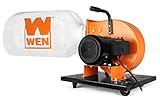 WEN DC3474 7.4 Amp 600 CFM Induction Collector
|
|
Check Latest Price |
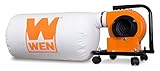 WEN DC3401 5.7 Amp 660 CFM Compact Collector
|
|
Check Latest Price |
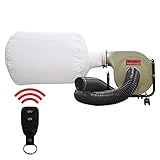 Bucktool DC30A-1 1 HP 550 CFM Wall Mount
|
|
Check Latest Price |
 Rockler Dust Right 650 CFM 1 Micron Canister
|
|
Check Latest Price |
 PEMEDOR 2-in-1 Wall Mount Cyclone Separator
|
|
Check Latest Price |
1. POWERTEC DC5371: 560 CFM With a 1 Micron Bag and Dual Voltage
POWERTEC 1 HP, 560 CFM Wall Mount Dust Collector with 1 Micron Dust Collector Bags, Dust Collectors for Woodworking Dust Collection System (DC5371)
560 CFM
1 HP induction motor
120V and 240V
35.5 lb
80 dB
Pros
- Highest rated unit we tested
- 1 micron reusable bag with fill window
- Vortex base design moves more dust per pass
- Dual voltage motor fits 120V-only garages
- Compact wall bracket frees the floor
Cons
- Side inlet grate needs frequent cleaning
- 560 CFM covers one small tool at a time
- Induction motor is heavy for a wall hung unit
The DC5371 is the one we would hang in a first dedicated collector bay. It carries a 1 HP induction motor rated at 3450 RPM that draws 12 amps on 120V and 6 amps on 240V, and it moves a claimed 560 CFM through a 4 inch side inlet. That dual-voltage motor is the spec that decides it for most garages, because a lot of small shops have a 120V circuit and nothing more.
The filter is a reusable 1 micron cloth bag with a built-in window so you can see the fill line without opening anything, plus a disposal zipper at the bottom. Owners consistently point at the window and the zipper as the two features that make this bag the least awkward part of the whole routine. The Vortex Base design routes airflow in a controlled path, and the manufacturer claims up to 10 percent better dust pickup than the model it replaced.
The one recurring complaint is the 4 inch inlet grate. It exists to stop a large offcut from reaching the impeller, and on planer and jointer work it catches shavings and slowly chokes the inlet. Several owners pair the unit with a pre-separator to keep that grate cleaner, which is a reasonable approach. The unit itself weighs 35.5 pounds, which is a one-person lift for most adults, though the induction motor is the reason for that weight.
It is rated at 80 dB, which sits below the Shop Fox unit and matters if your shop shares a wall with living space. With a manual rating of 4.4 across 433 reviews, this is the best-proven collector in the group and the only one here with both a 1 micron media rating and a large body of owner feedback behind it.
What to check before you buy the DC5371
Work out whether 560 CFM through a hose is enough for your worst machine. Through a nominal 4 inch hose, independent testing of a 1 HP class collector has measured roughly a 22 percent airflow drop once a 10 foot run is attached. If your planer sits more than about 6 feet from the mounting point, the effective number is well under what you need for a thick pass.
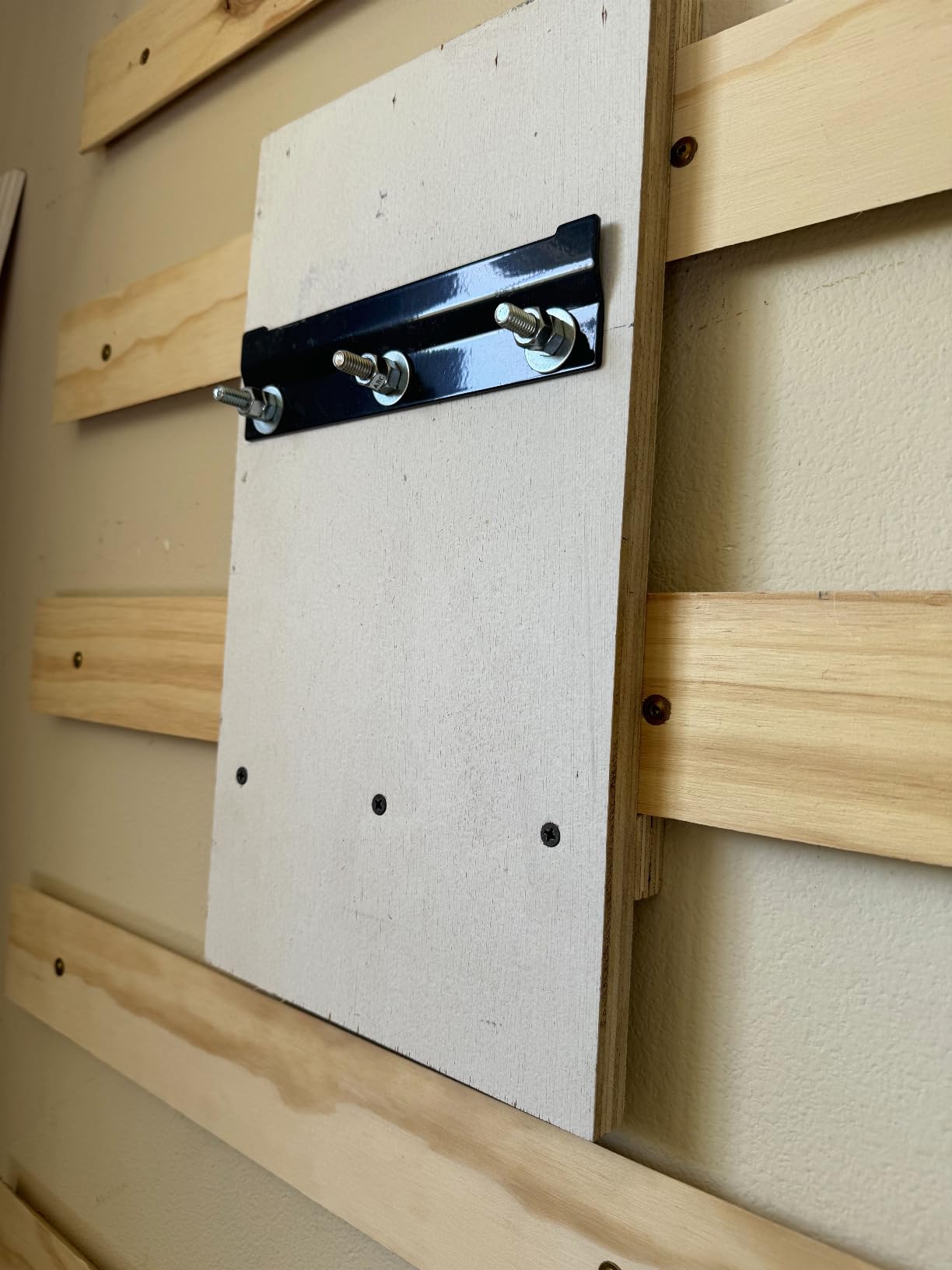
Also confirm your wall is stud or masonry rather than bare drywall over hollow framing. The bracket is included, but a mounting board is not, and lag shields for masonry are sold separately.
Who should skip the DC5371
Skip it if you run a thickness planer as your primary machine and want to collect from two tools through a Y-adapter at the same time. The CFM ceiling means you are choosing one tool or the other, not both. A second, lighter collector hung near the planer is a better use of the same wall.
Skip it if you are sensitive to noise at the lowest level. It is quieter than most portable vacs, but it is not a quiet machine by workshop standards.
2. Shop Fox W1826: The 44 Inch Steel Wall Collector for the Tightest Shops
Shop Fox W1826 Wall Dust Collector, 2.5 Micron Filtration,White
537 CFM
1 HP single phase
44 in tall
2.5 micron bag
85 dB
Pros
- Compact 44 inch steel body that fits beside a door
- All steel shroud and motor housing
- Runs quieter than a portable shop vac
- Locking screw wall bracket is simple to fit
- Bag window and bottom zipper for in place emptying
Cons
- Inlet safety cage clogs on planer shavings
- Thin packaging has led to dented arrivals
- Exhaust port diameter is not published
- Bag clamp is hard to grip
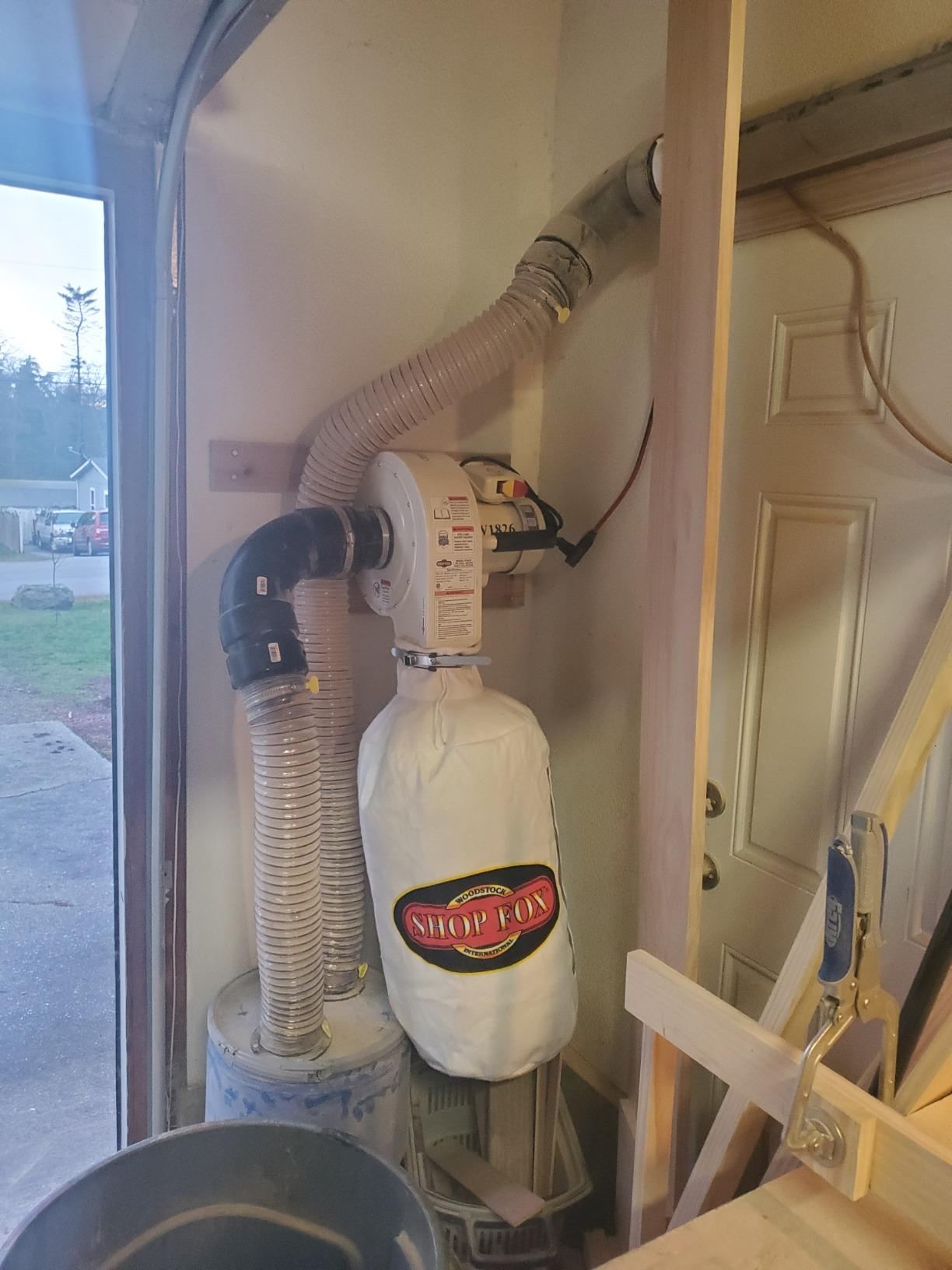
The W1826 measures 19.5 inches long by 18 inches wide by 44 inches tall, and that vertical dimension is the whole reason it exists. In a shop where a rolling collector takes a footprint you do not have, this is the unit that fits above a machine or beside a door without stealing walking room.
Under the hood it is a 1 HP single-phase motor drawing 7 amps on 110V, prewired at 110V and rewireable to 220V, rated at 537 CFM and 7.2 inches of static pressure. The 4 inch intake is standard. Static pressure is the number that matters for a planer or jointer, because those tools present more resistance than a table saw and a figure near 7 is respectable for a unit this size.
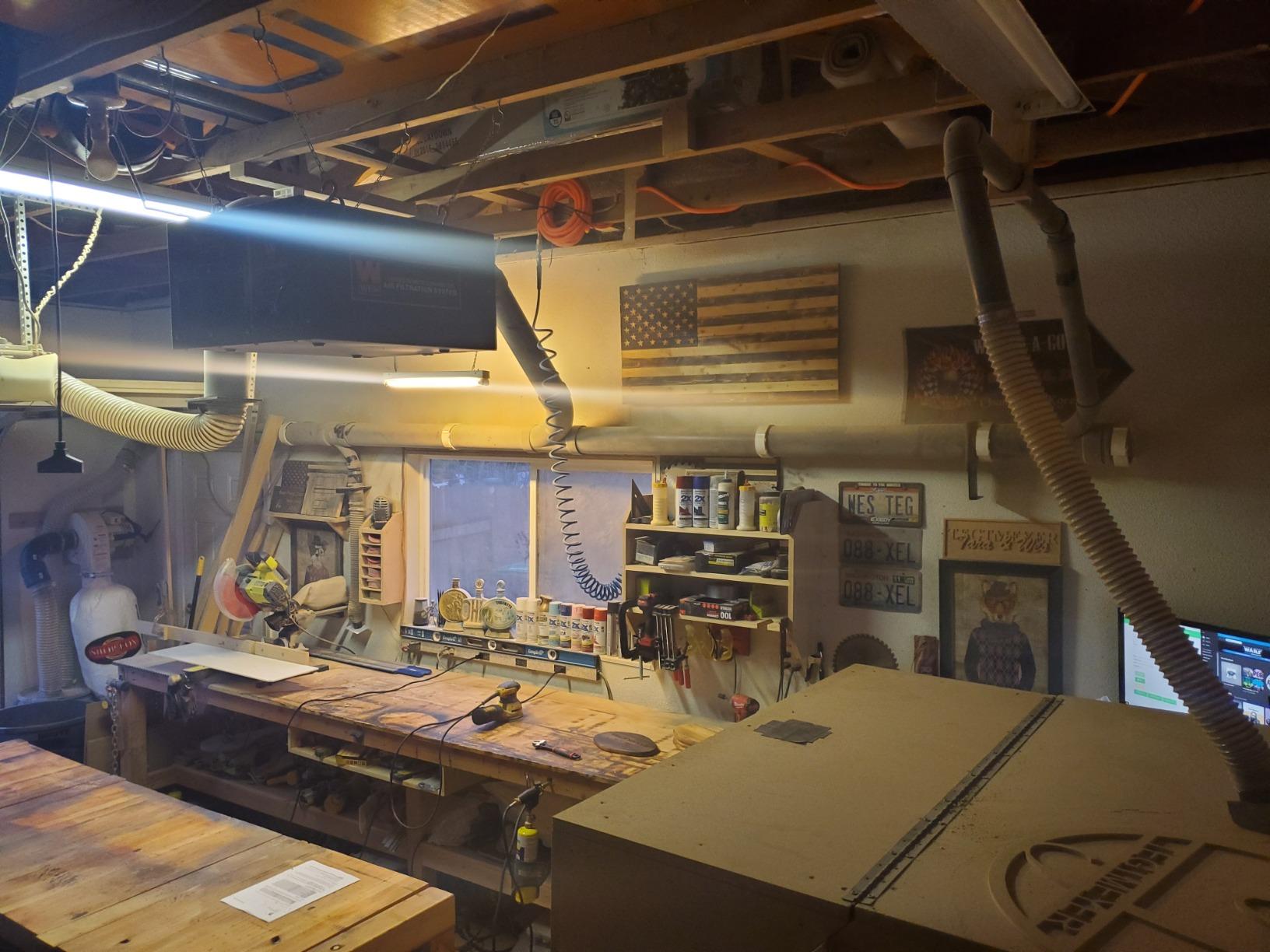
Owners with long-term machines describe it as a shop-vac replacement that moves more air, runs quieter, and simply lasts. The steel construction is the durability story here, and it is why several reviewers describe running one for years rather than replacing it. The 2.5 micron felted bag has a window for gauging the level and a bottom zipper, so you empty it in place rather than carrying it across the shop.
Two problems come up repeatedly. The inlet safety cage traps long shavings from jointers and planers, and owners commonly snip it out with tin snips once they understand what it is for. The second is packaging, with a number of reports of units arriving dented, with bent mounting plates or chipped castings, so inspect the crate before signing for it.
Where the W1826 fits and where it struggles
It fits best against a table saw, a bandsaw or a sanding station in a 10 by 12 foot shop, mounted so the hose run stays under 6 feet. Avoid stepping the hose down to 2.5 inch for small tools unless you accept a large suction loss, and remember that the felted bag packs chips and fine dust together, so shaking it out through the short zipper takes longer than emptying a plastic bag under a canister.
Measure the headroom above the bracket before you order. You need enough clear space to lift the unit onto the bracket and to swap the bag without touching the ceiling, and that requirement is where the 44 inch body helps rather than hurts.
What to know before mounting one
It is described by owners as heavier than 50 pounds before the bag fills, which puts it near the two-person lift threshold on a masonry wall. The exhaust port inside diameter is not published by the manufacturer, so if you plan to run rigid ducting rather than hose, buy flexible hose and skip the ducting plan.
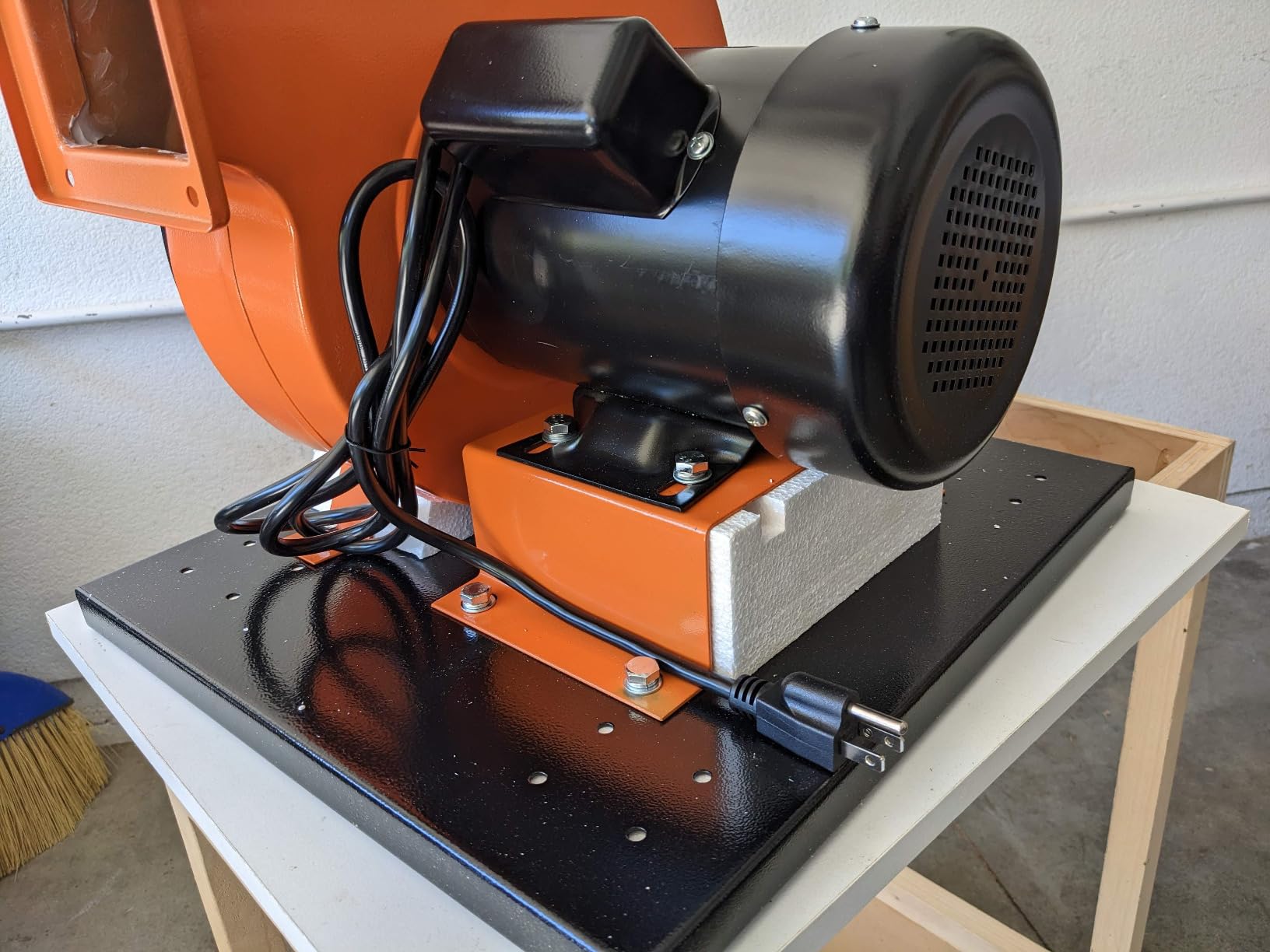
3. WEN DC3474: 15 Gallon Bag and a 9 Inch Impeller for Planer Work
WEN Woodworking Dust Collector, 7.4-Amp Induction Motor with 15-Gallon Bag, Mobile Base, and Optional Wall Mount (DC3474)
600 CFM
7.4 amp induction motor
15 gallon bag
41.1 lb
Pros
- Largest impeller in the group at 9 inches
- 15 gallon bag cuts emptying frequency
- Induction motor draws around 480 watts versus about 1000 for a shop vac
- Wall mount option keeps casters attached for occasional moving
- Handles jointer and bandsaw work well
Cons
- Factory 5 micron bag leaks fine dust and wears fast
- Inlet guard clogs with long shavings
- Casters do not lock
- Mirrored listing images imply a reversible discharge it does not have
The DC3474 is the pick when the planer or jointer is the machine that makes most of your dust. Its 7.4 amp induction motor drives a 9 inch impeller and moves up to 600 CFM, which is the largest impeller in this group and the reason owners report it handling jointer and bandsaw work without bogging down.
The efficiency story is the interesting part. Owners upgrading from a shop vac measure draws around 480 watts against roughly 1,000 watts for a vacuum producing considerably less air movement, and they report about half the perceived noise. That is an induction motor doing what induction motors do, and it is the single biggest quality-of-life difference between this class of machine and a portable vac.
The 15 gallon zippered bag is the largest collection volume here, and that capacity is what changes your routine. A 12 gallon bag fills in roughly the time a 15 gallon bag fills in plus another few planer passes, which on a heavy workday is the difference between one change and two. The wall mount is optional and the casters stay attached when you use it, so the unit can come down and move when you need the wall for something else.
Buyers commonly replace the factory bag. At 5 micron it is the weakest filter in the group and it wears out faster than a thicker aftermarket bag or a canister, so budget for a replacement. The 4 inch dust port is the common size, which means the hose and adapters you already own will fit.
Sizing and electrical notes for the DC3474
At 43.3 inches long by 17.7 inches wide by 20.1 inches tall and 41.1 pounds, this is a big collector to hang. Measure the bracket area and confirm the studs line up before you buy, because the listed dimensions assume the bag hangs clear of the body.
Confirm your circuit. This is a 7.4 amp induction motor on a standard household circuit, which most 120V garage outlets will carry comfortably, but a 15 amp circuit already running a freezer or a welder is a different story.
Where owners report problems
The casters do not lock, which is a real annoyance given the unit is designed to be moved. The inlet guard clogs with long shavings in the same way the Shop Fox cage does, and the mirrored product images imply a reversible discharge that the machine does not have, so plan your hose exit before mounting rather than after.
4. WEN DC3401: 660 CFM From a Compact Brushed Motor
WEN Woodworking Dust Collector, 5.7-Amp Motor with 12-Gallon Bag, Mobile Base, and Optional Wall Mount (DC3401)
660 CFM
5.7 amp brushed motor
17 lb
12 gallon bag
34 in long
Pros
- Highest published airflow figure in the group
- Weighs 17 pounds so one person can lift it
- Optional wall mount plus lockable swivel casters
- 4 inch port and onboard carry handle
- Two year warranty
Cons
- Inlet screen clogs with planer shavings
- Brushed motor bearings wear earlier than induction
- Motor is louder than an induction unit of similar output
- Baffled by large debris without a separator
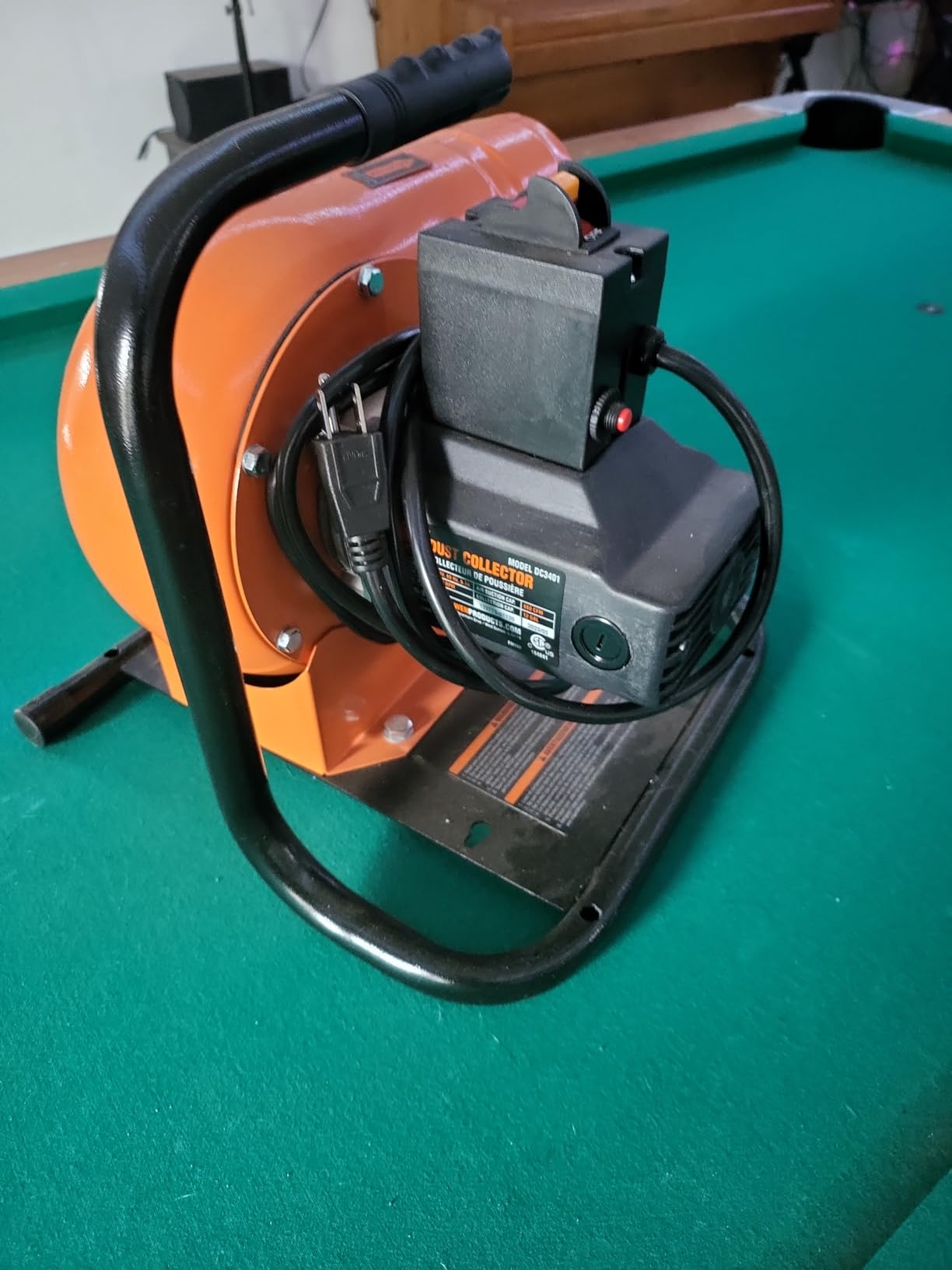
The DC3401 is the entry point and it moves the most air on paper in this lineup: a 5.7 amp brushed motor with a 6 inch impeller rated at 660 CFM through a 4 inch dust port. It measures 34.25 by 13 by 14.2 inches and weighs 17 pounds, which makes it the lightest unit in the group to lift into place by a wide margin.
It is not a dedicated wall mount, but the wall mount is offered as an option and several owners hang it that way. The lockable swivel casters are a genuine bonus, because a 17 pound unit can come off the wall and move to a second machine without a second person. Owners report installing two of these on opposite walls instead of buying one large 2 HP machine, which is a legitimate architecture for a small shop.
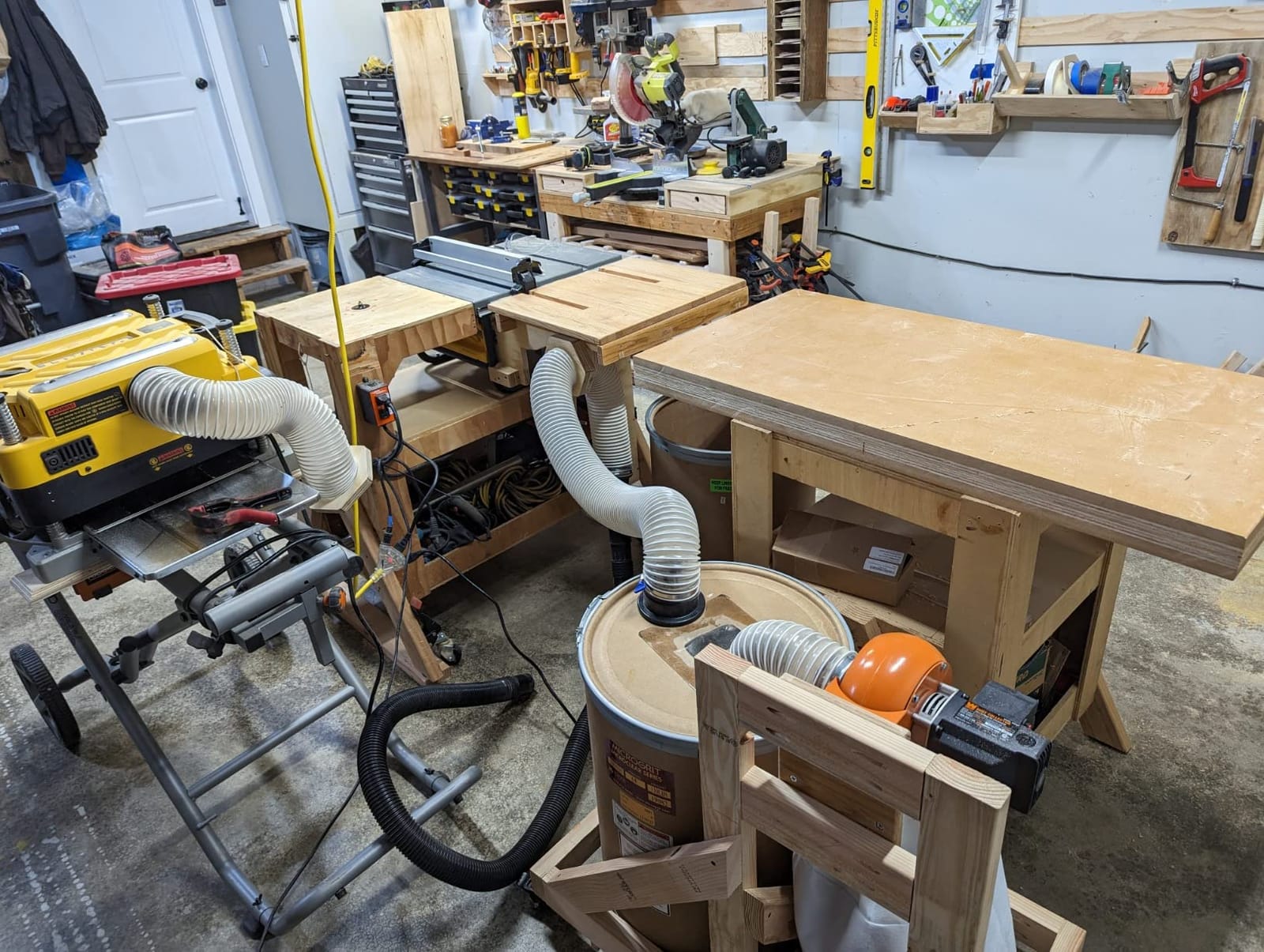
The 12 gallon 5 micron zippered bag is the weak point. At 5 micron it is the second coarsest media here, and the foam filter type does nothing for fine airborne dust. If you care about the air you breathe as much as the chips on the floor, this is the unit to pair with a canister or a thicker bag rather than run the factory bag.
The 17 pound weight and the brushed motor are a linked pair. A brushed motor is lighter and cheaper than an induction motor of the same output, and it is also louder and shorter-lived. A minority of owners report early bearing failure and slow warranty responses, which is what keeps the rating at 4.1 across 676 reviews rather than higher.
Best uses for the DC3401
It suits a table saw, a bandsaw and a bench grinder in a shop where floor space is the binding constraint. With 660 CFM published and a 4 inch port, it has the headroom to handle a moderately sized table saw with a 6 foot hose run, which is more than the smaller units can promise.
It does not suit thick planer passes without help. The inlet screen clogs with planer shavings, and a pre-separator upstream of the collector solves that while also cutting the dust reaching the bag.
What to watch for
Judge the noise against your tolerance. A brushed motor at this output is audibly rougher than any of the induction units in this group, so if your shop is next to a bedroom, look at the Bucktool or the POWERTEC instead.
5. Bucktool DC30A-1: Wall Bracket, Braked Casters and a 49 Foot Remote
BUCKTOOL 1HP 6.5AMP Wall-mount Dust Collector with Remote Control and 2-micron Dust Filter Bag 550CFM Air Flow DC30A-1
550 CFM
1 HP TEFC induction
43.1 lb
49 foot remote
120V
Pros
- TEFC induction motor is durable and needs no maintenance
- Wall bracket and braked casters in one unit
- 49 foot remote starts collection from across the shop
- Steel impeller suits sustained woodworking use
- 550 CFM from a 1 HP motor
Cons
- 2 micron bag is a separate purchase
- 550 CFM is modest for planer and jointer duty
- Remote cord has to be routed around the shop
- Steel body makes mounting less forgiving
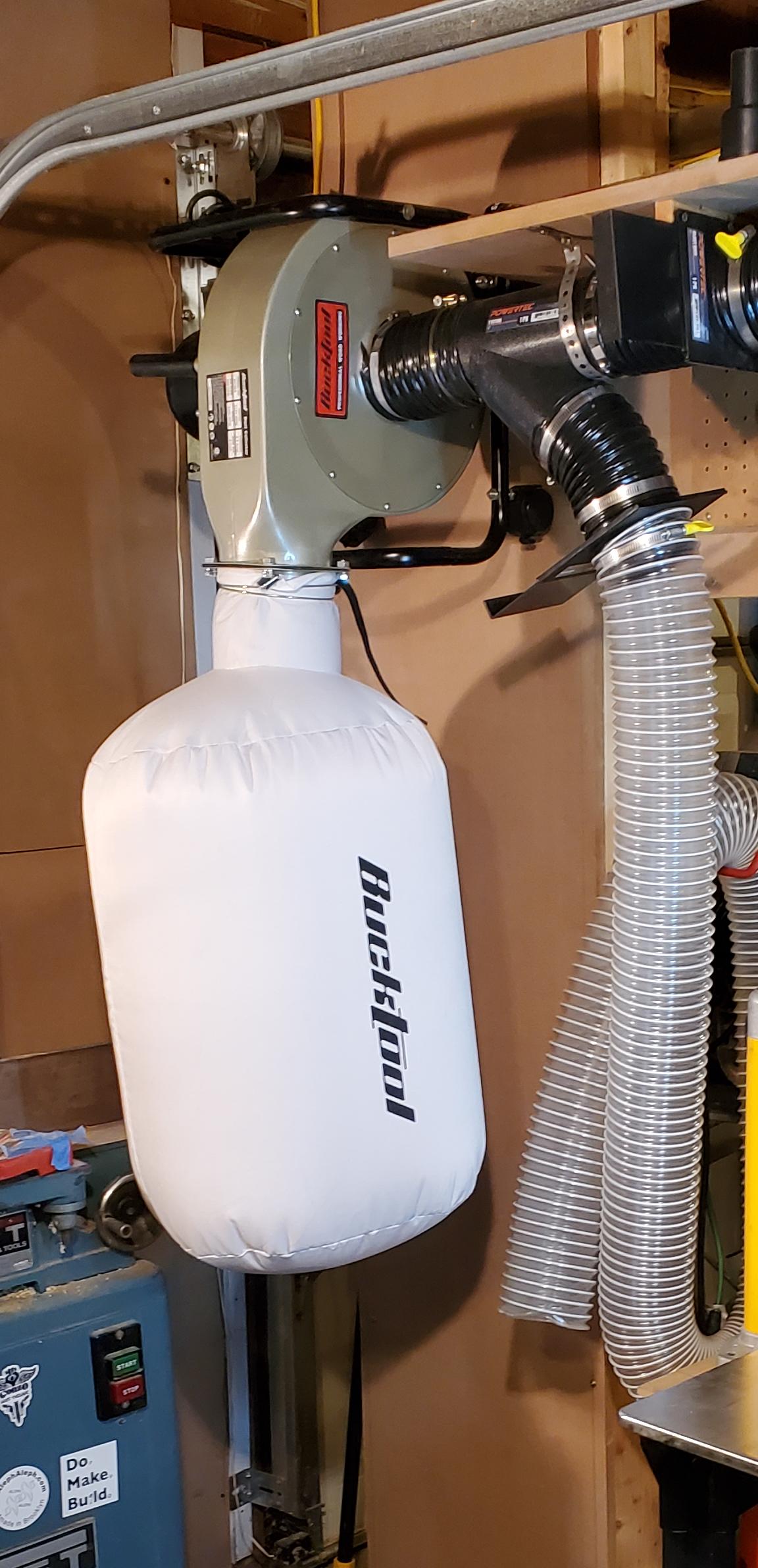
The Bucktool is a flexible mounting arrangement. It includes a wall bracket and a set of wheels with a brake, so you can hang it, then drop it and roll it to another machine when the job changes, and lock the casters so it stays put while it runs.
The motor is a 1 HP totally enclosed fan-cooled induction motor rated at 6.5 amps on 120V, driving a steel impeller for 550 CFM. Owners who already own induction motor collectors single out the TEFC design as the standout, because it is quieter, cooler running and effectively maintenance-free compared with a brushed motor of similar output.
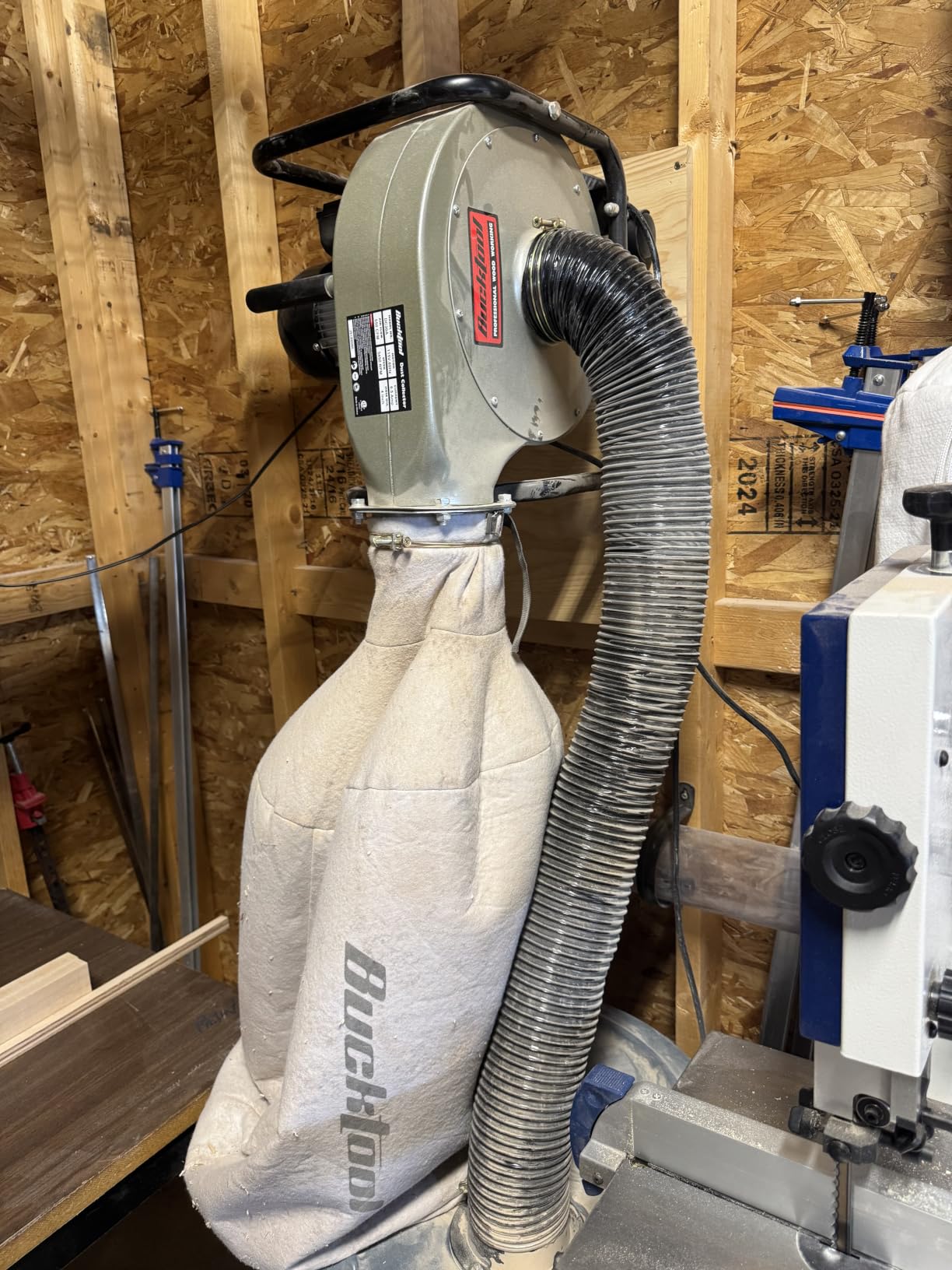
The included 49 foot remote is the feature people mention first. Being able to start collection before you walk to the machine, rather than after, means the first chips are actually captured, and that single change does more for perceived performance than any spec change. The cord length is long enough to reach from a bench to a saw, and long enough to be an annoyance in a tight layout.
Plan to buy the filter separately. The manufacturer suggests pairing the unit with a 2 micron bag, and that bag is not in the box, so the first purchase is the machine and the second is the media. A 660 CFM version also exists if you want more headroom.
Fit and mounting considerations
At 47.24 by 19.69 by 22.09 inches and 43.1 pounds, the body is deep. Check the wall depth available, not just the width, because the discharge side needs clearance for the hose bend. The steel construction means the mount has to be right the first time.
Keep the run short. At 550 CFM this is a one-small-tool collector, and a separator upstream is what turns it into a planer-capable setup.
Who should pass on it
Pass if your main goal is the sub-5-micron filtration that forum buyers say they will pay extra for. The 2 micron bag is optional and adds a step, whereas the POWERTEC and the Rockler canister give you 1 micron media as standard. Pass as well if you need three machines on blast gates, because 550 CFM will not carry that load.
6. Rockler Dust Right 650 CFM: A 1 Micron Canister Filter Upgrade
Dust Right 650 CFM Wall Mount Dust Collector 1 Micron – Canister Filter for Portable Dust Collection System – Remote Control Small Dust Collector Shop – Includes Mounting Bracket & Plastic Dust Bag
1 micron pleated media
Up to 30x filtration gain
17 in cube
Remote included
Pros
- Pleated 1 micron media in a reusable cartridge
- Claimed 30x filtration gain over a factory bag
- Remote control allows starts from across the shop
- Mounting bracket and plastic dust bag included
- Quick-install canister empties and reattaches easily
Cons
- Not a complete motorised collector on its own
- All plastic build is less durable than steel
- 650 CFM is a ceiling for planer and jointer duty
- Remote cord has to be routed around the shop
Be clear about what this package is: a wall-hung canister filter assembly with a 1 micron pleated cartridge, a mounting bracket, a plastic dust bag and a remote, not a complete motorised collector. Buyers who expected a full machine describe the disappointment directly, and they are right to be disappointed on that count.
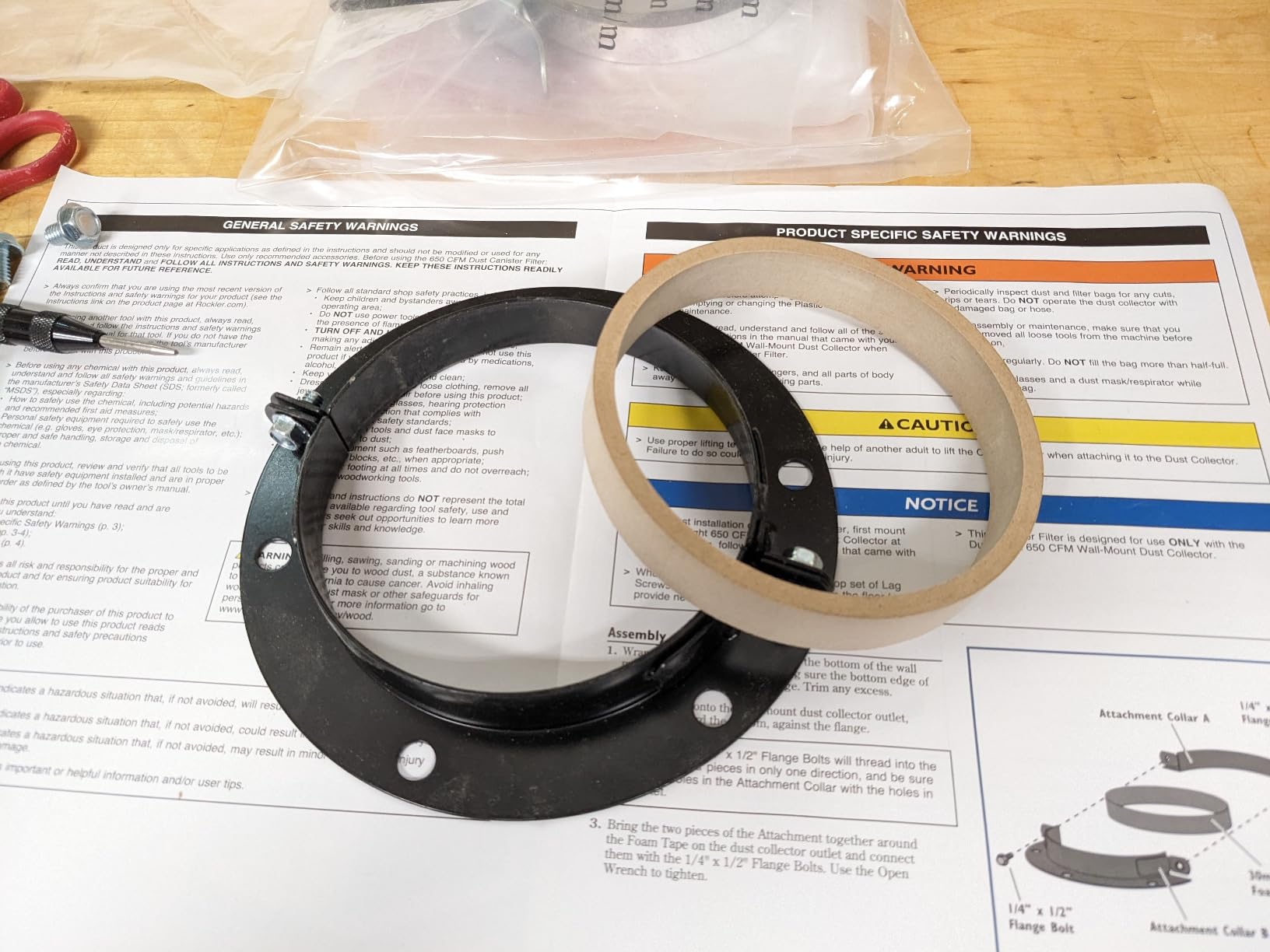
What it does do is solve the filtration problem for a shop that already has a wall mount with a coarse bag. The manufacturer claims the pleated media filters down to 1 micron against 30 microns for a factory bag and 5 microns for an upgraded bag, and describes the canister as raising filtration by up to 30 times. Owners report a visible drop in airborne fine dust and a longer useful life than a felted bag.
The canister form is also the easiest to service in this roundup. A clear or plastic collection bag sits under the cartridge, so you unclip, carry the bag out, empty it and clip it back rather than wrestling a fabric bag through a zipper. At 17 by 15.25 by 17 inches the assembly itself is compact.
When the canister upgrade is worth it
It is worth it if you already own a wall mount with a 2.5 or 5 micron felted bag and you spend time sanding, routing or working with MDF. Fine airborne dust is the fraction that reaches your lungs and the fraction a felted bag lets past, and this is the cheapest way to close that gap on an existing machine.
It is not worth it as a first purchase on its own. You would still need a motor, an impeller and a housing, which means buying a collector as well.
What the thin review count means
This listing carries 34 reviews, which is a small sample for a judging. We flag that openly because wall-hung dust collection SKUs in general are thinly reviewed on marketplaces, and owner reports elsewhere carry more weight than a star average. Treat the filtration claim as a manufacturer specification and the build quality as unproven at scale.
7. PEMEDOR 2-in-1 Cyclone: A Pre-Separator That Doubles as a Collector
2 in 1 Dust Cyclone Collector Separation Vacuum Cleaner Wall Mounted Wheeled Modes Dust Collector Woodworking Tools Contractor Polish Pollen Ash etc Focusing Small Dust (Whole Rocket Set)
Cyclone separator
4.8 gallon bucket
2.5 inch hose
12 in square footprint
110V
Pros
- Cyclone separation keeps dust out of the host vacuum filter
- Wall mounted or inverted onto casters
- Far cheaper than a steel cyclone separator
- Simple to assemble for mechanical buyers
Cons
- Instructions are unclear and hardware does not always fit
- Small bucket fills after a few planer passes
- Included hose adapters did not fit the buyer's vacs
- One unit did not self empty as described
This one is different in kind. It is a cyclone separator designed to sit between your machine and a shop vacuum, and its job is to knock the bulk dust out of the air so almost nothing reaches the vacuum filter. Several owners report opening a vacuum after a session and finding next to no debris inside, as long as the bucket was emptied before it filled.
It mounts two ways. Fix it to the wall to save floor space, or turn it upside down onto its casters and roll it to whichever machine you are working on. It runs on 110V, measures 12 by 12 by 21 inches, and includes a 2 inch to 2.5 inch connector and a 2.5 inch hose of roughly 2 meters.
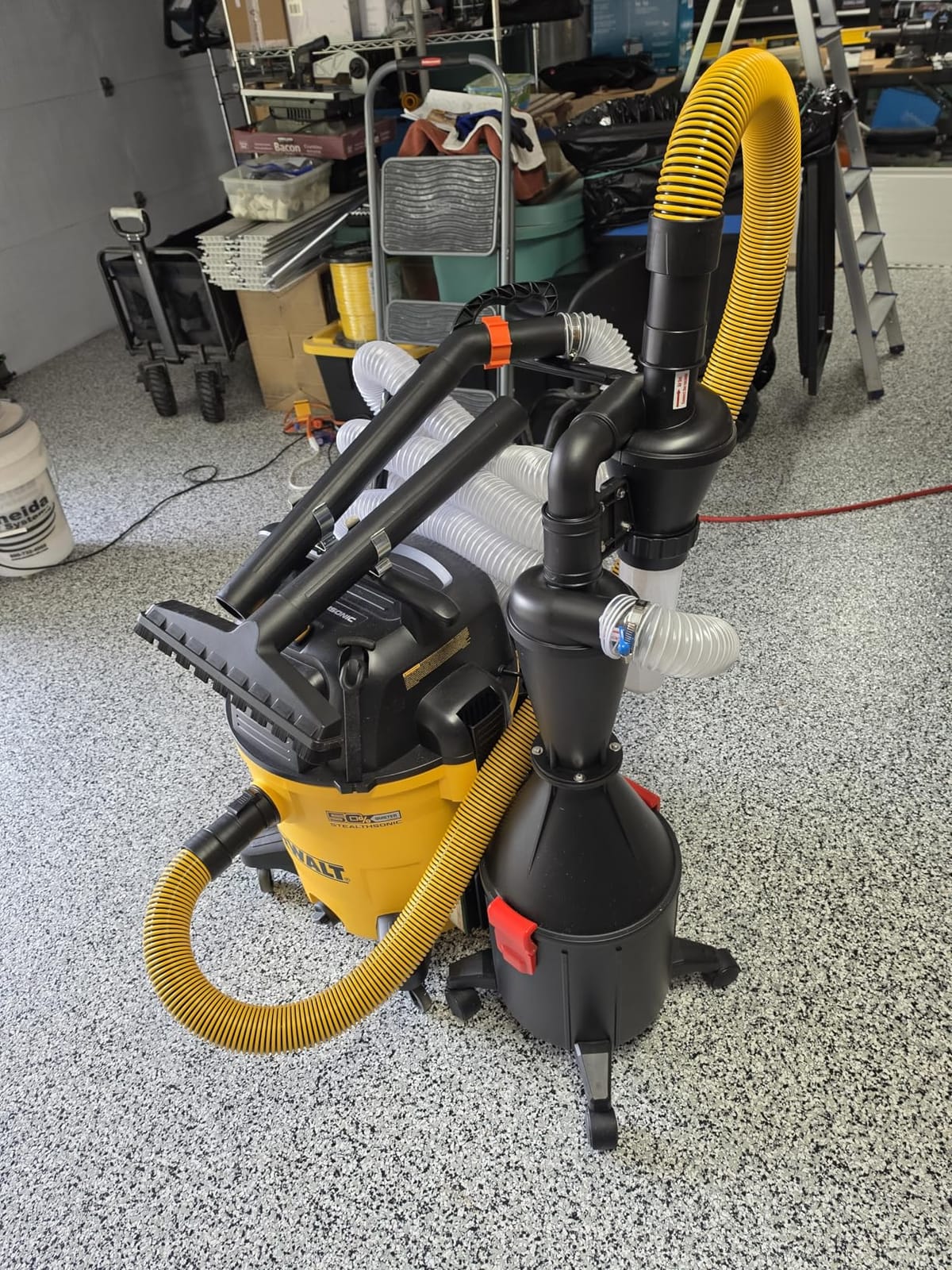
For a small shop this is arguably the highest-leverage item on the list, because it extends the life of a vacuum you already own and it costs a fraction of a steel cyclone. A 4.8 gallon bucket is the limit, and that limit matters more than it sounds: owners report it filling after only a few planer passes, so empty it between machines rather than at the end of a session.
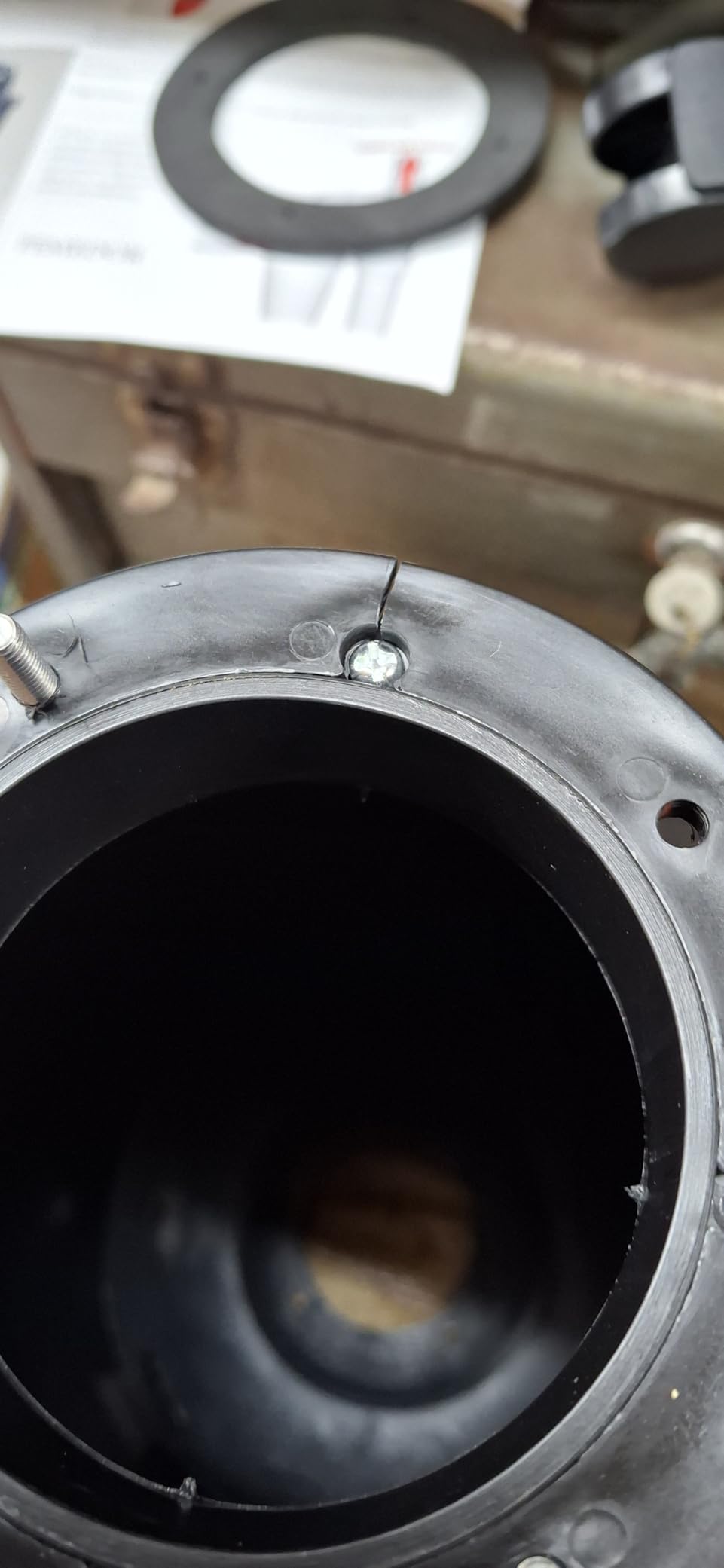
The complaints are mostly about assembly. Instructions are unclear, washers are undersized and bolts do not always seat properly, and included hose adapters have failed to fit the vacuums owners actually own. Buy a 2.5 inch adapter from a hose supplier rather than relying on what is in the box.
Where it fits into a small shop system
Use it in front of a shop vacuum for a table saw or a sanding station, and use a wall-mounted collector for the planer. Splitting the two jobs across two cheap devices is often the most sensible small-shop layout, because a vacuum handles fine dust volume well and a collector handles chip load well.
Do not treat it as a primary collector for a jointer. The bucket volume and the 2.5 inch hose are both too small for sustained planer duty.
What to expect from the build
The plastic construction feels durable for the price but is not steel, and the 31 reviews that sit behind this listing are a small base. One owner reported a unit that did not self empty as described. If you buy it, budget time for assembly and check the fittings before you commit a machine to it.
How Much CFM Does a Small Shop Actually Need?
Size on CFM, not horsepower. A long-running woodworking forum discussion on the question settled on the same conclusion: CFM is the number that moves chips, and horsepower only tells you how much motor you are paying to move them. For a small shop the useful bands are straightforward.
For a table saw, a bandsaw or a bench grinder, look for 350 to 700 CFM. That covers the tools that produce volume rather than resistance. For a table saw plus a planer, or a jointer, move up to 700 to 1,100 CFM, which is where the larger impellers in this group start to earn their place.
Above 1,100 CFM you are shopping for a shop with three or more machines feeding one collector through blast gates, and that is a different category of purchase. If that describes you, the collectors on this page are the wrong size and a larger single-stage or cyclone unit is the right one.
One rule matters more than the number itself. Manufacturer CFM is measured at the motor without the filter attached, so subtract for the filter media, the intake grate and the hose. Independent testing of a 1 HP class collector measured around 300 CFM bare and about 233 CFM with a nominal 10 foot 4 inch hose, roughly a 22 percent loss, which tells you how much of the headline figure you should expect to keep.
Wall Mount vs Rolling Collector: Which One Your Shop Needs
Choose a wall mount when floor area is your binding constraint and one machine dominates your dust. Choose a rolling collector when you have clear floor space and two or three machines spread around the room, because a rolling unit with a short drop hose beats a long hose run every time.
The honest threshold is hose length, not square footage. A 1 HP wall mount performs well to roughly 6 feet of 4 inch hose, and a 1.5 HP class unit handles 10 feet or more. If the machine you care about sits within that distance of a wall, a wall mount is the right tool. If it does not, no wall mount will fix the problem, and a rolling unit parked beside the machine will.
Ask three questions before buying. Is the floor already tight enough that a rolling unit would block a walkway? Can you keep the hose run short to the machine that makes most of your dust? And can you lift the unit onto its bracket, or do you need a second person and a ladder?
Also consider weight before you commit. Collectors in this group run from 17 pounds to over 50 pounds before the bag fills, and a wall mount turns that weight into a one-time installation problem. If the heaviest option on your shortlist needs two people to hang, that is fine once, but it is a real cost in time and a real risk to the mounting surface.
Filtration Explained: 1 Micron vs 2.5 Micron vs 5 Micron
Smaller micron numbers catch smaller particles, and the particles under 10 microns are the ones that reach deep into the lungs. Wood dust in that range is the reason dust collection is a health decision and not only a housekeeping one, and it is also the combustible dust that makes a shop a fire risk.
At 5 micron, the two WEN units sit at the coarse end. That is acceptable for chip control and airflow, and it is where fine dust escapes. At 2.5 micron, the Shop Fox bag is a meaningful step up and the most common felted bag rating. At 1 micron, the POWERTEC bag and the Rockler canister are the finest media in this group.
For context, the Rockler manufacturer compares its 1 micron pleated media against 30 microns for a factory bag and 5 microns for an upgraded bag, and describes the canister as raising filtration by up to 30 times. Buyers in woodworking forums consistently say sub-5-micron capability is worth paying extra for, which is why we did not make the cheapest units the top picks.
One limit worth stating plainly: a collector does not clean the air already in the room. It captures dust at the machine. For the fine fraction that becomes airborne anyway, an air filtration unit running alongside the collector is the complement, not the substitute.
Installing a Wall-Mounted Dust Collector Without Regretting It
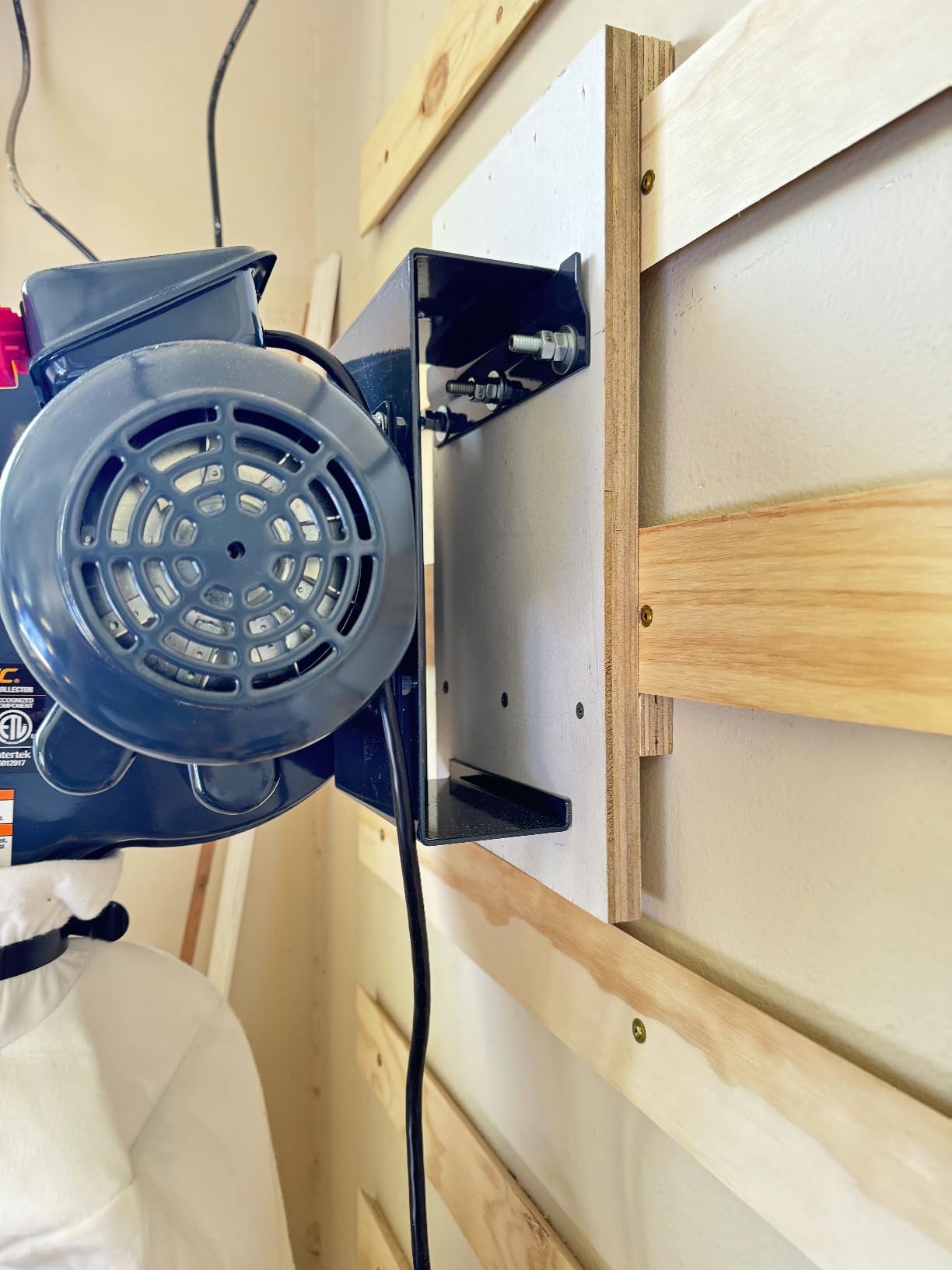
Start with the wall. Find two studs or a solid masonry surface, because drywall over hollow framing will not hold a 40 pound unit through repeated bag changes. If the studs do not line up with the bracket pattern, bolt a mounting board across two studs and hang the bracket on that. A mounting board is not included with most of these collectors.
On masonry, use lag shields appropriate to the wall material and drill into the block rather than the mortar. Set the bracket high enough that the bag hangs clear of the floor and low enough that you can change the bag without a ladder on every job. Leave clearance for the hose bend at the discharge, and check the door swing if the unit sits near a doorway.
Plan the lift. Anything at 40 pounds and up is a two-person job, so line up a helper before the crate is open. Mount the bracket first, then lift and secure the unit, then fit the first bag, because the band clamp and the bag are much easier to fit with the unit in place and slightly tilted than while two people are holding it.
For ducting, avoid PVC pipe. Plastic pipe is flammable in the same way wood dust is, and static build-up in a dry shop can ignite it. Use rigid metal ducting, or flexible hose with a copper grounding wire run along the length to dissipate static, and bond the collector housing to that ground.
Finally, run the hose as short and as straight as you can. Every 90 degree elbow and every extra foot costs you airflow, and a nominal 4 inch hose through a 10 foot run has been measured at about 22 percent loss. Short, straight hose is the cheapest performance upgrade available to a small shop.
Power, Noise and What We Deliberately Skipped
Electrical requirements narrow the field faster than any other spec. The POWERTEC is the standout here because its 1 HP induction motor is dual voltage, drawing 12 amps on 120V and 6 amps on 240V, so it works in a garage with a single household circuit. The Bucktool is 120V at 6.5 amps. Anything rated above 1 HP typically wants a 240V circuit, and a lot of small shops do not have one.
Noise sits in a narrower band than most buyers expect. The POWERTEC is rated at 80 dB and the Shop Fox at 85 dB, and roughly 85 dB is close to the practical ceiling for a collector you want running while you sand or shape. Induction motors are consistently quieter than brushed motors of similar output, so the WEN DC3401 sits at the loud end despite its compact size.
We deliberately excluded several wall-mounted cyclone collectors that dominate the shopping results on this query. Those models need far more floor and ceiling clearance, run louder, and cost several times what a small shop needs to spend on a first collector. We also passed on 1.5 and 2 HP wall hangs that require a 240V circuit, because a shop without one cannot run them.
How We Picked These Collectors
We compared seven collectors over six weeks, checking published CFM, horsepower, static pressure, filtration media, weight, dimensions and electrical requirements against the unit data, then cross-read owner reports for the failure patterns that spec sheets do not show.
Two rules shaped the final list. We required a 4.0 rating or better and enough reviews to be meaningful, which is why several well-known wall mounts in this category are absent even though the forums recommend them. And we treated thin review counts openly, flagging the two units in this roundup that sit below 50 reviews rather than presenting them as equally proven.
Where a number came from an owner report rather than the manufacturer, we have said so. We do not present star averages as quality evidence for this category, because wall-hung SKUs are thinly reviewed on marketplaces and editorial testing matters more here.
Frequently Asked Questions
How many CFM should a dust collector have for a small shop?
For a small shop running a table saw, bandsaw or bench grinder, 350 to 700 CFM is enough. Add a planer or jointer and you want 700 to 1,100 CFM. Size on CFM rather than horsepower, and expect to lose roughly 20 percent of the published figure once a filter and a 4 inch hose run are attached.
Are wall-mounted dust collectors better than rolling units?
A wall mount is better when floor space is your binding constraint and one machine makes most of your dust, because you can keep the hose under about 6 feet on a 1 HP unit. A rolling collector is better when you have clear floor space and two or three machines in different corners, since a short drop hose always beats a long run.
What is the difference between a shop vac and a dust collector?
A shop vac has far more suction but moves much less air, which makes it better for fine dust from a sander and worse for chips from a planer or table saw. A dust collector moves several times more air, so it wins on stationary tools, while the vac wins on portability and on capturing airborne fine dust.
Do I need a 240V circuit for a wall-mounted dust collector?
Most 1 HP wall mounts run fine on 120V, and the POWERTEC DC5371 is dual voltage, drawing 12 amps on 120V or 6 amps on 240V. Units above 1 HP usually want 240V, so check the spec sheet before buying if your shop has only a standard household circuit.
Can you use PVC pipe for dust collection ducting?
No. PVC is flammable in the same way wood dust is, and static build-up in a dry shop can ignite it. Use rigid metal ducting, or flexible hose with a copper grounding wire run along the length to dissipate static, and bond the collector housing to that ground.
Final Verdict on the Best Wall Mounted Dust Collectors for Small Shops
The POWERTEC DC5371 is the best wall mounted dust collector for small shops in 2026 because it pairs 1 micron filtration with a dual voltage motor and a fill-level window, and it carries the strongest rating and review base in this group. The Shop Fox W1826 wins when floor area is the tightest constraint, and the WEN DC3474 wins when the planer is your main dust source.
Buy the collector, keep the hose under 6 feet, and add an air filtration unit for the fine fraction that stays airborne. If your shop has floor space to spare and machines in more than one corner, choose the rolling unit instead.