
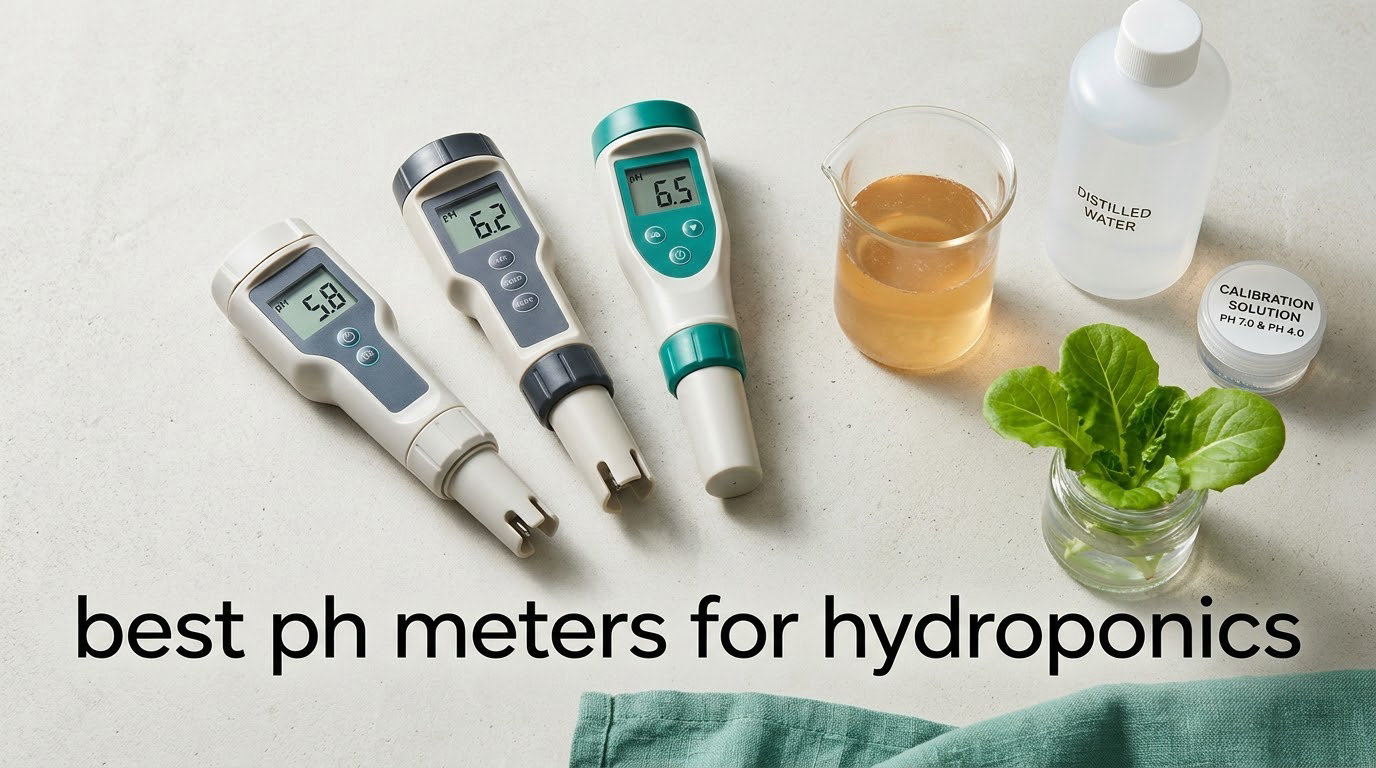
A nutrient solution only feeds a plant when its pH sits inside a narrow window. Push it too low and iron, manganese and boron start to lock out; push it too high and calcium and magnesium drop out of solution. One number on a cheap meter, or one guessed correction too many, and a reservoir that looked fine last week quietly starves a full grow.
That is why picking among the best pH meters for hydroponics is less about raw accuracy on a spec sheet and more about what happens in month three. A glass probe that is never stored wet degrades permanently. A meter whose calibration buffers dried out last year will refuse to calibrate no matter how many times you re-run the routine. We compared 12 meters across the full budget-to-enthusiast range, weighing the accuracy claims against the failure modes growers actually report, the calibration kit that comes in the box, and whether the probe can be replaced instead of the whole meter.
Our team spent six weeks rotating these pens through daily reservoir checks, buffer calibrations and storage routines across DWC and RDWC-style setups. Every product below is written up with the accuracy figure, the probe type, what the display gives you, and the honest downside that shows up in reviews. We have also flagged the meters that only make sense if you keep your system small, and the ones built for growers running several reservoirs who want to stop walking around with a pen.
We never mention price, and we never tell you what a meter costs. Use the Check Latest Price buttons, compare the tiers yourself, and pick on the criteria that matter for your system.
Table of Contents
Top 3 Picks for Hydroponic pH Testing (October 2026)

Apera AI209 PH20 Kit
- Plus or minus 0.1 pH
- Auto temperature compensation
- Sealed waterproof body
- 2000 hour battery life

Bluelab pH Pen
- Double-junction probe
- Waterproof and floats
- Two-point calibration
- Backlit LCD
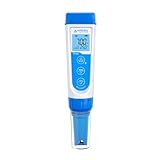
Apera AI311 PH60 Kit
- Plus or minus 0.01 pH
- Replaceable glass probe
- 1 to 3 point auto calibration
- Colour-coded backlit display
Our first choice is the Apera PH20 because it is the meter most people end up keeping. It is sealed, it calibrates with buffer recognition, and it has the review volume to prove it survives ordinary handling. The Bluelab pH Pen takes the value slot on the strength of its double-junction probe and a storage routine that forum users credit with years of service. The Apera PH60 is the accuracy upgrade for anyone who wants a replaceable probe and 0.01 resolution in a pen body.
Every Meter We Tested in 2026 at a Glance
| Product | Specifications | Action |
|---|---|---|
|
Apera AI209 PH20 Waterproof pH Tester Kit
|
|
Check Latest Price |
|
Bluelab pH Pen Double Junction
|
|
Check Latest Price |
|
Apera AI311 PH60 Pocket Tester
|
|
Check Latest Price |
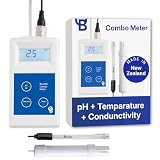 Bluelab Combo Meter pH EC Temp
|
|
Check Latest Price |
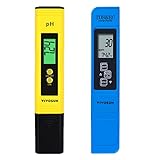 VIVOSUN pH Meter and TDS EC Set
|
|
Check Latest Price |
 YINMIK YK-P01 pH and Temp Tester
|
|
Check Latest Price |
 UIUZMAR 4-in-1 pH PPM EC Tester
|
|
Check Latest Price |
 VIVOSUN 3-in-1 pH TDS Meter
|
|
Check Latest Price |
 YINMIK 4-in-1 PPM EC Meter
|
|
Check Latest Price |
 EZTOCH Hydroponic pH EC TDS Meter
|
|
Check Latest Price |
 GIDIGI 4-in-1 Digital pH Tester
|
|
Check Latest Price |
 VIVOSUN pH TDS Meter with Soil Tester
|
|
Check Latest Price |
1. Apera AI209 PH20 Waterproof pH Tester Kit: Our Overall Pick
APERA INSTRUMENTS AI209 Value Series PH20 Waterproof pH Tester Kit, ±0.1 pH Accuracy
Plus or minus 0.1 pH
Auto temperature compensation
Sealed waterproof body
4 AAA batteries
Pros
- Fast and stable readings
- Auto calibration with buffer recognition
- Sealed housing keeps solution out
- Pre-mixed pH 4 and 7 buffers in the kit
- Long battery life
Cons
- Calibration routine feels clunky
- Poorly written manual
- Will not read distilled or RO water
- No backlight
This is the meter we kept reaching for during testing. It reports quickly, it holds a reading rather than crawling across the display, and once calibrated it stays calibrated for weeks as long as the probe lives in its cap. Automatic temperature compensation runs from 32 to 122F, so a reservoir that warms during a hot week does not push your reading off target.
The body is fully sealed, which matters more than most spec sheets admit. Nutrient solution never gets at the electronics, and the low-impedance Apera sensor responds fast in a single dip. Battery life is rated at up to 2000 hours on four AAA cells, so battery changes are not something you will think about mid-cycle.
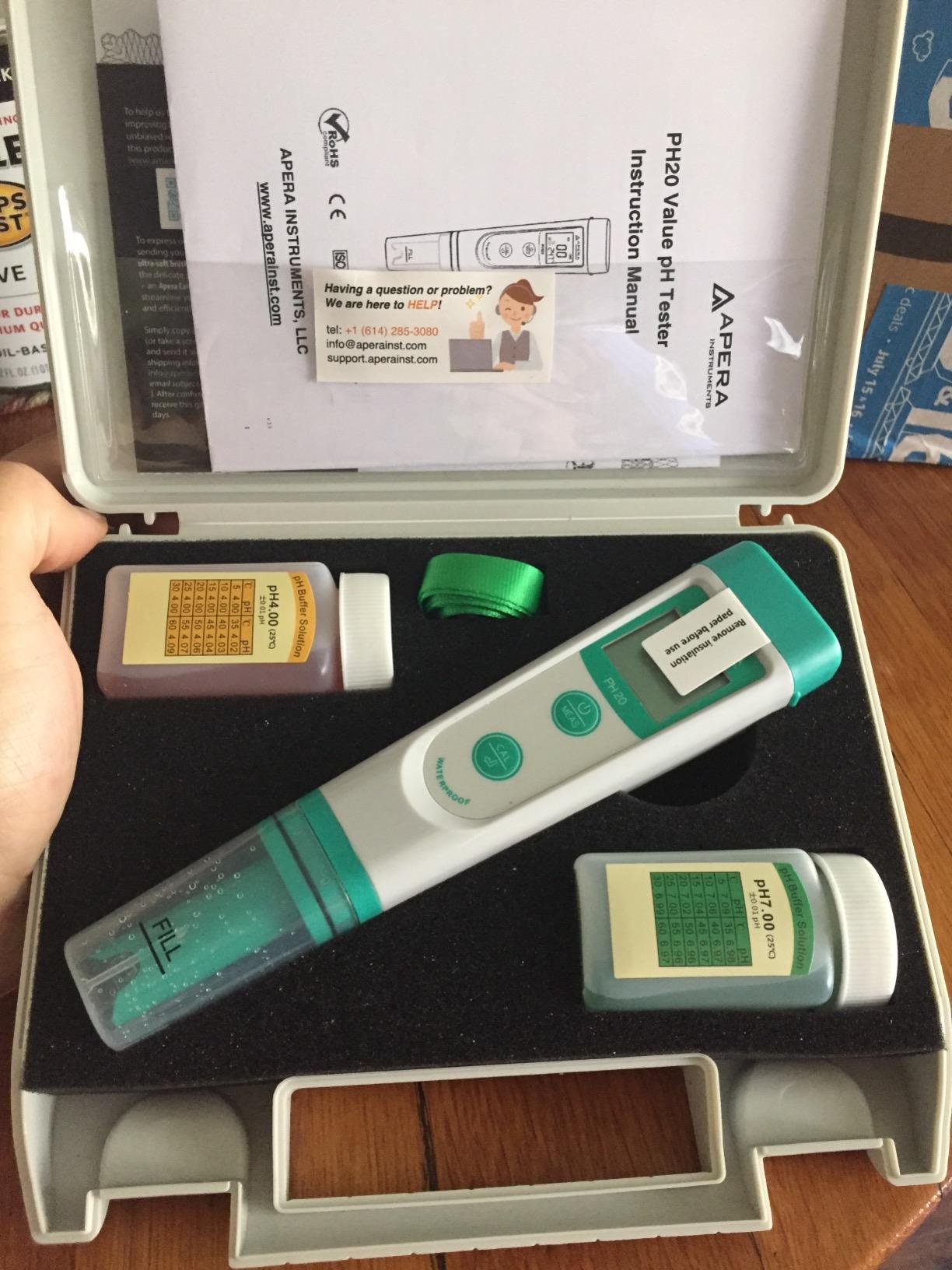
Two things separate this from cheaper pens. First, the calibration is automatic with buffer recognition, so the meter tells you which solution it thinks you are in rather than leaving you to guess. Second, the kit ships with a rugged carrying case, a lanyard and pre-mixed pH 4 and 7 buffers balanced in the bottles, which removes the most common beginner error of making solutions too concentrated.
The accuracy spec is plus or minus 0.1 pH across a 0 to 14 range, and in practice that is tight enough to run a reservoir you are actually managing. It is the same figure as the Bluelab pen, which tells you how the accuracy tiering has settled across the category: 0.01 is a laboratory habit, 0.1 is a hydroponic habit.
Who this meter suits
It suits a grower with one or two reservoirs who wants a pen that disappears into the routine. Calibration takes under a minute once you have done it a few times, the case survives a grow room, and the sealed body means you do not need a separate dry dock.
It also suits anyone who has burned through cheap meters. Reviews repeatedly describe owners comparing it favourably against far more expensive pens and settling here for good, and the 8868 reviews behind the 4.4 rating make it the least risky purchase in this list.
Where it falls short
The calibration procedure is the most common complaint. Owners find the button sequence clunky and the printed manual poorly written, so budget time for your first two calibrations rather than assuming it will be obvious.
The more serious limitation is low-ionic water. This pen will not read distilled or reverse osmosis water reliably, and one detailed review reports a badly wrong reading rather than an error code. If you mix your nutrients with RO, calibrate in buffer and test the finished solution, not the raw water.
2. Bluelab pH Pen: The One Built to Outlast Other Pens
Bluelab pH Pen – ± 0.1 pH Accurate – Durable Double Junction Probe
Plus or minus 0.1 pH
Double-junction probe
Waterproof and floats
8 x 2.16 x 0.98 inches
Pros
- Double-junction probe resists contamination
- Waterproof and floats
- Calibration reminder on screen
- Backlit LCD
- Buffer and KCl sachets included
Cons
- Slow to settle in low-ionic water
- Backlight switches off quickly
- Storage solution sold separately
- Display can be harmed by long submersion
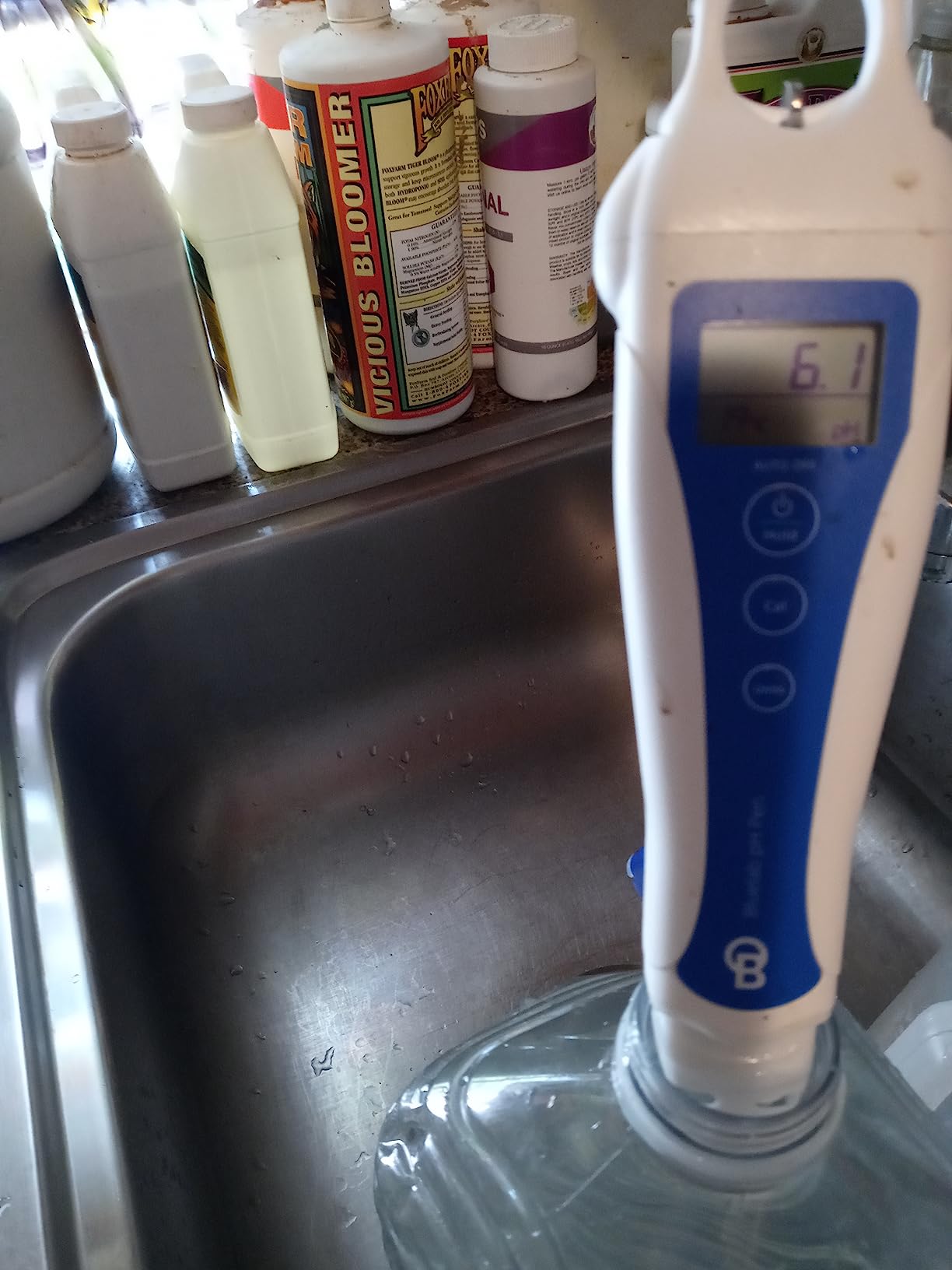
Bluelab is the name that came up most often across the grower forums we read, on Reddit, 420 Magazine, THCFarmer and Bonsai Nut alike, and this pen is the reason. The probe is a double-junction design rather than a plain glass bulb, which adds a second junction that slows the path of contamination into the measuring chamber. That is the single engineering decision that keeps this meter reading accurately year after year.
It is waterproof and it floats, so dropping it in a reservoir is not a disaster. The body measures 8 by 2.16 by 0.98 inches, weighs just over 4 ounces and is made in New Zealand. A 30-day calibration indicator on the backlit LCD tells you when the last calibration is getting old, which quietly removes a lot of the guessing that leads to drift.
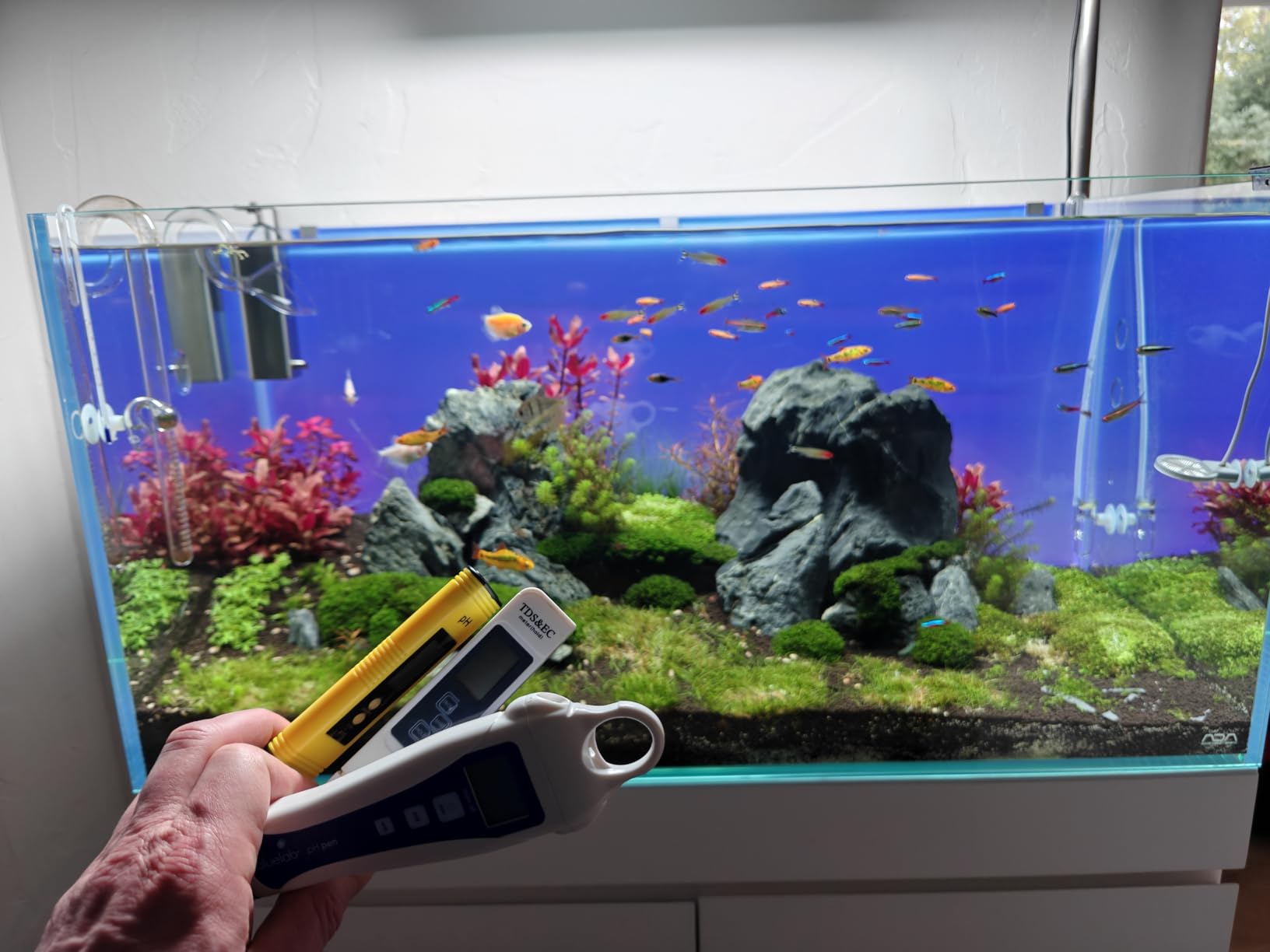
Calibration is a two-point process, and the kit includes 20ml sachets of pH 7, pH 4 and KCl for hydration and calibration. That KCl sachet is the important one. Saturated potassium chloride storage keeps the glass bulb hydrated between readings, and a hydrated bulb is a bulb that keeps its response.
Accuracy is plus or minus 0.1 pH in 0.1 increments, with automatic temperature compensation. The display is backlit for dark tents, and a minority of reviewers who work in low-ionic water report that the pen is slow to respond and drifts more than they would like in that specific use case.
Who this meter suits
It suits anyone who intends to keep the same meter for years rather than seasons. Owners describe storing the probe wet in KCl solution, recalibrating periodically, and getting a pen that stays accurate, and the storage discipline is far more of a factor than the brand on the housing.
It also suits growers who want a simple two-point routine with no guesswork about which buffer the meter thinks it is reading. The on-screen calibration reminder keeps you honest at a glance.
Where it falls short
Storage solution is not included with the standard kit, so you will be ordering KCl separately no matter which pen you choose. Treat that as part of the cost of ownership rather than a surprise.
The backlight switches off quickly, and the manufacturer warns that the display can be damaged if the pen is kept submerged for many hours. In tap, reverse osmosis or distilled water, readings are slower and less stable than in a proper nutrient solution, which is exactly where most growers will use it.
3. Apera AI311 PH60 Pocket Tester: The Accuracy Upgrade
Apera Instruments AI311 Premium Series PH60 Waterproof pH Pocket Tester Kit, Replaceable Probe, ±0.01 pH Accuracy, Lcd display
Plus or minus 0.01 pH accuracy
Replaceable probe
Range minus 2.00 to 16.00
Auto power-off after 8 minutes
Pros
- 0.01 pH accuracy in a pen
- Replaceable glass probe
- Quick multi-buffer auto calibration
- Colour-coded backlit display
- Smiley icon shows a stable reading
Cons
- Several probe variants to choose from
- Costs more than entry-level pens
- Still needs hydration and periodic calibration
This is the only pen in the group that reads to 0.01 pH and lets you replace the probe instead of the meter. Accuracy is quoted at 0.01 pH across a minus 2.00 to 16.00 range, which is wider than any hydroponic system needs but useful if you also test strongly acidic or alkaline liquids. The replaceable glass electrode is the reason the pen has a longer useful life than a sealed unit.
Calibration is one to three point and automatic, recognising 1.68, 4.00, 7.00, 10.01 and 12.46 solutions. The large LCD uses three backlit colours to flag the mode you are in and shows temperature and pH at the same time, and a smiley icon appears once the reading has stabilised, which removes the single most common error of reading a moving number and adjusting your reservoir to it.
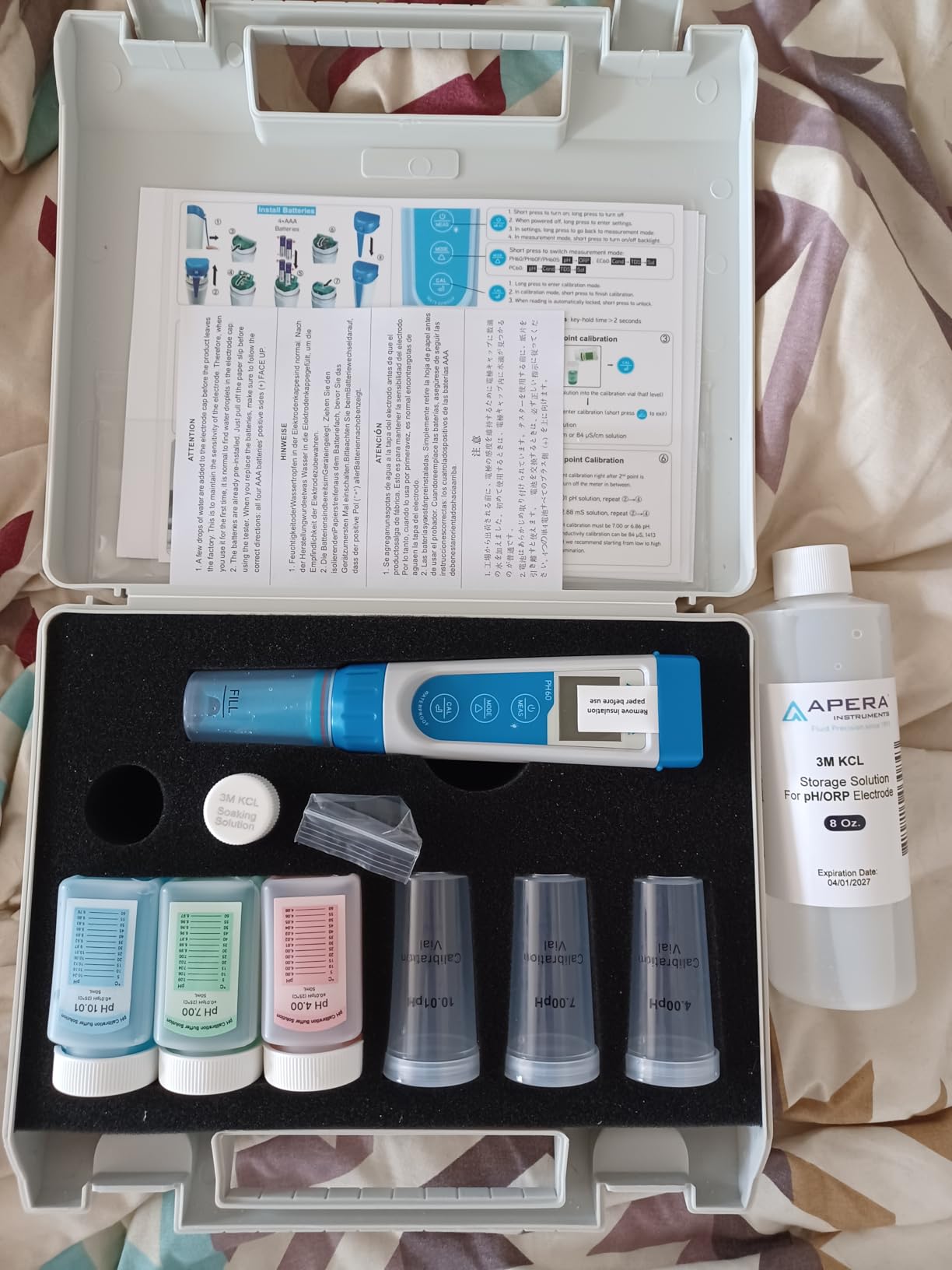
It runs on four AAA batteries and powers off automatically after eight minutes of inactivity. The kit is genuinely complete: ready-to-use calibration solutions, storage solution, batteries, a lanyard and a rugged case. At 4.5 stars across 3120 reviews with roughly 77 percent five-star ratings, this is the best-rated instrument in our group.
Growers on 420 Magazine describe the Apera 60 series as equivalent to higher-end Hanna and Bluelab units without the price tag attached, and that description matches what we saw in the reservoir. Pick the standard probe for general water solutions unless your system is unusual.
Who this meter suits
It suits growers who want confidence rather than reassurance, and anyone who has already been through one dead probe. Replacing the electrode costs far less than replacing the instrument, and a double-junction style electrode in a pen body is a design you can keep going for years.
It also suits multi-reservoir setups where a 0.01 reading lets you trust the number you logged. The dual temperature display and the stable-reading icon are practical rather than decorative when you are checking six tanks in a row.
Where it falls short
Apera offers a long list of probe options for dirty liquids, viscous liquids, strong alkaline solutions, pure water, high-temperature liquids and flat surfaces. Choosing the wrong electrode is the most expensive mistake available on this meter, so read the variant list before ordering.
It costs more than an entry-level pen, and 0.01 resolution is honestly more precision than most hydroponic growers need. The probe still demands regular hydration and periodic calibration, so this is not a set-and-forget instrument.
4. Bluelab Combo Meter: Best for Growers Running Several Reservoirs
Bluelab Combo Meter for pH, Temperature & Conductivity in Water – Easy Calibration, Digital EC/TDS/PPM Tester for Hydroponics & Indoor Plants (METCOM)
pH EC and temperature
Five-year instrument warranty
Double-junction pH probe
5.7 x 3 x 1.49 inches
Pros
- pH EC and temperature in one unit
- Fast stable readings
- One-touch two-point calibration
- Replaceable probes
- Five-year warranty on the instrument
Cons
- Body is not sealed or waterproof
- Temperature channel is slow and reads high
- Not precise at very low TDS
- Storage solution sold separately
This is the unit for anyone who has stopped enjoying the walk around with a pen. It monitors conductivity, pH and temperature together, with automatic temperature compensation and a double-junction pH probe that uses the same easy two-point calibration as the Bluelab pen. Readings settle faster than the pens we tested, which is the whole point when you are checking several tanks.
Conductivity scales include EC, PPM and CF, and the conductivity and temperature probes are factory calibrated, so those two channels work without extra solution. The pH channel needs calibrating as normal. It measures 5.7 by 3 by 1.49 inches and weighs just over 5 ounces, with a low-battery indicator, auto-off and selectable temperature units.
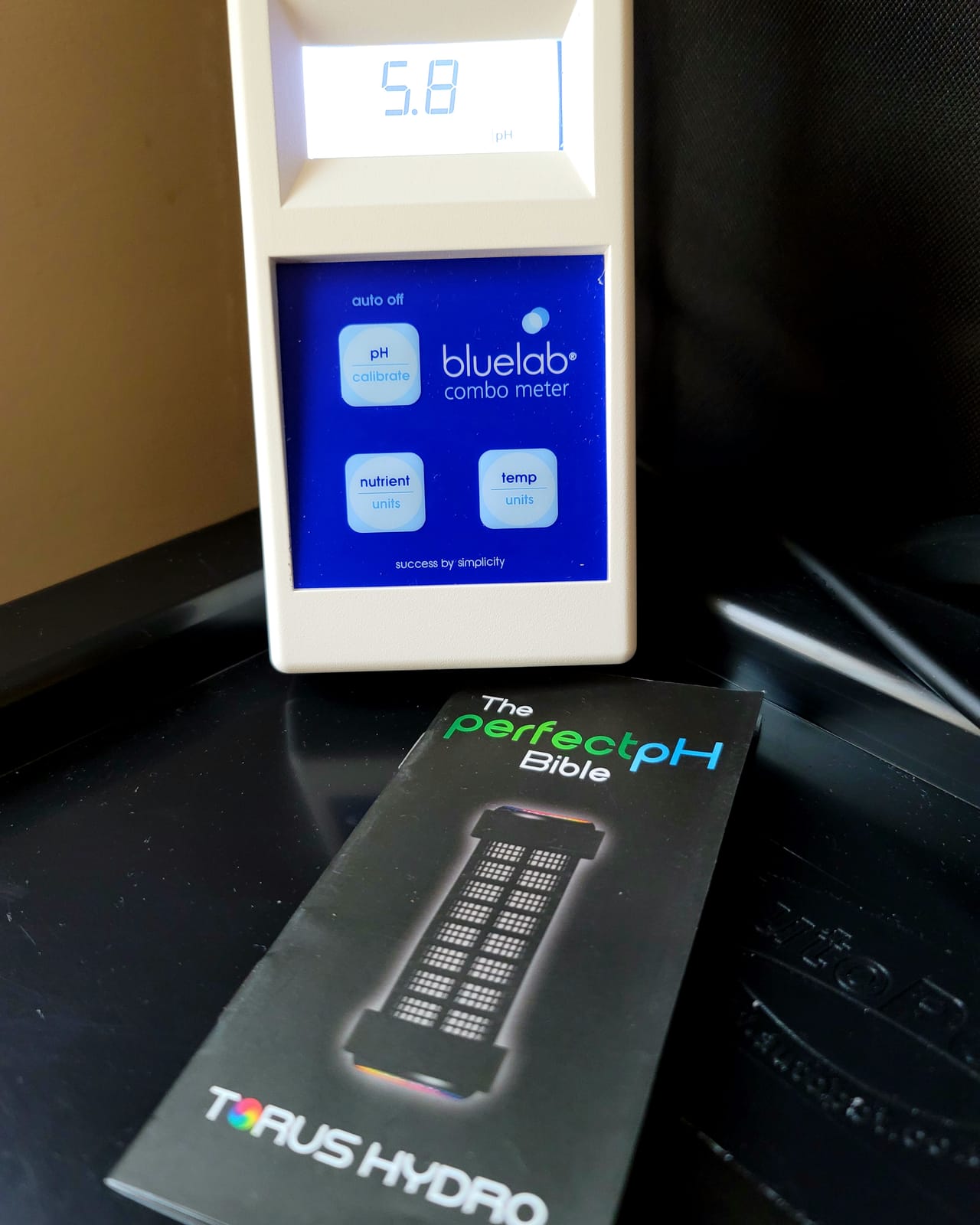
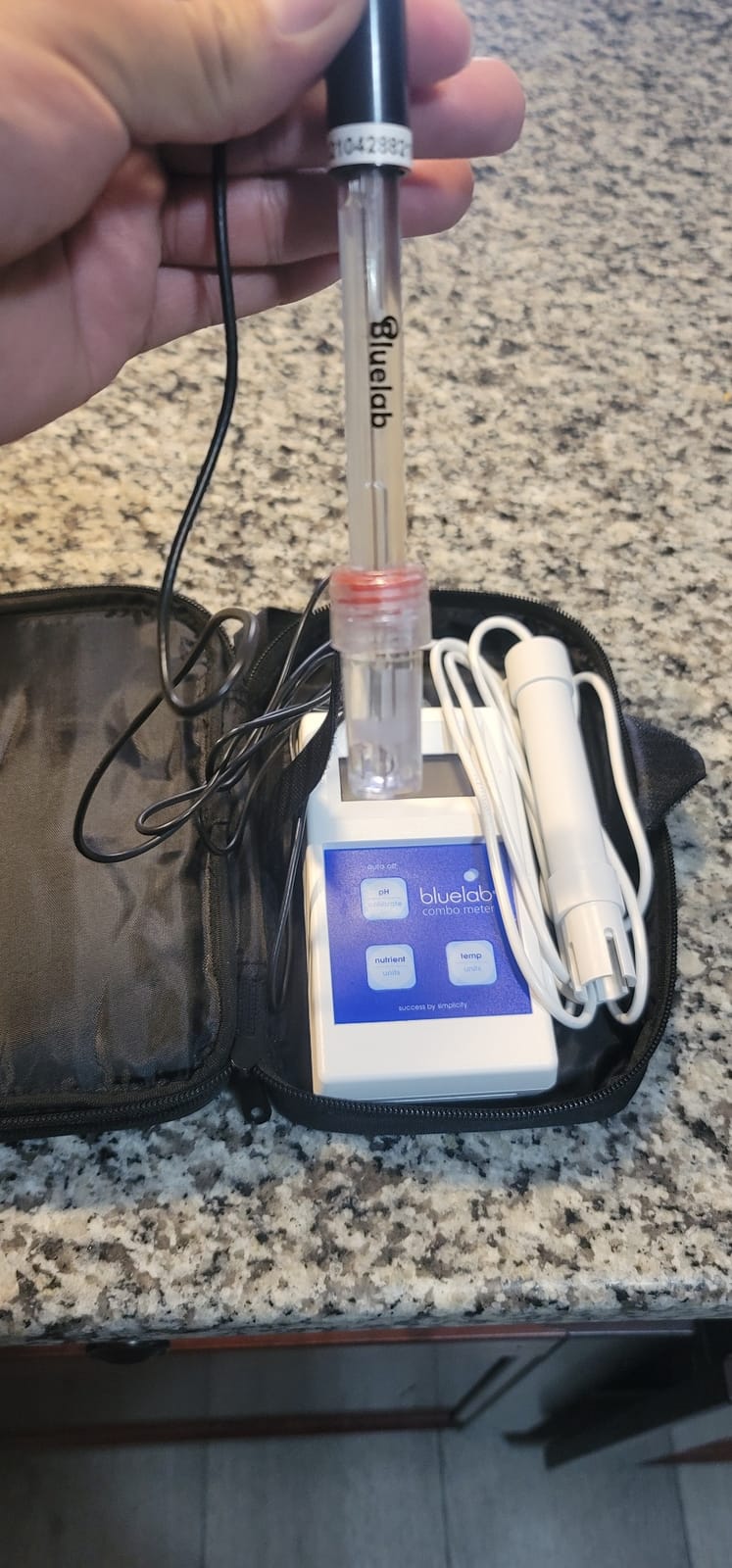
Replaceable probes are the reason this earns its place. Owners running multiple reservoirs and aquariums describe the replacement probes as roughly half the cost of competing combo-probe meters, and the five-year free repair or replacement guarantee on the instrument outlasts anything else in this group. The pH probe itself carries a six-month guarantee.
The kit includes AAA batteries, a pH probe storage cap, calibration solution and a suction cup, so you can mount it on a reservoir wall rather than holding it. A separate probe care kit is sold on its own. The glass pH probe is made in New Zealand, matching the pen.
Who this meter suits
It suits growers with more than one reservoir, or anyone who wants pH and EC from the same instrument rather than juggling two tools. The single fixed-in-place design also means there is no pen to drop, which is a real saving in a room with wet floors and stacked totes.
The temperature channel is genuinely useful even at its weakest, because a water temperature reading that climbs unexpectedly is often the first hint that a chiller has stopped working.
Where it falls short
The body is not sealed or waterproof and the battery cover is a simple slip-on, so this unit belongs on a wall or bench rather than in the sump. The temperature probe responds slowly, reads only whole degrees and tends to run a few degrees high, so it is a diagnostic channel rather than a precision one.
At very low TDS the conductivity channel is not precise enough to judge raw, reverse osmosis or deionised water, and KCl storage solution and extra calibration sachets are purchased separately. A small number of buyers report receiving damaged packaging with a suspect probe, so inspect it on arrival.
5. VIVOSUN Digital pH Meter and TDS EC Meter Set: Best Starter Bundle
VIVOSUN Digital pH Meter TDS EC Meter for Water 0.01 Accuracy Hydroponics
pH pen plus TDS EC pen
0 to 14 pH range
Three calibration buffers included
Protective case
Pros
- Two meters in one package
- Pre-calibrated with batteries included
- Backlit display and hold function
- Automatic temperature compensation
- Popular with aquarium and RO users
Cons
- pH readings take time to stabilise
- Multi-point calibration is fiddly
- Probe housing can grow residue
- TDS and temperature drifted after a few months
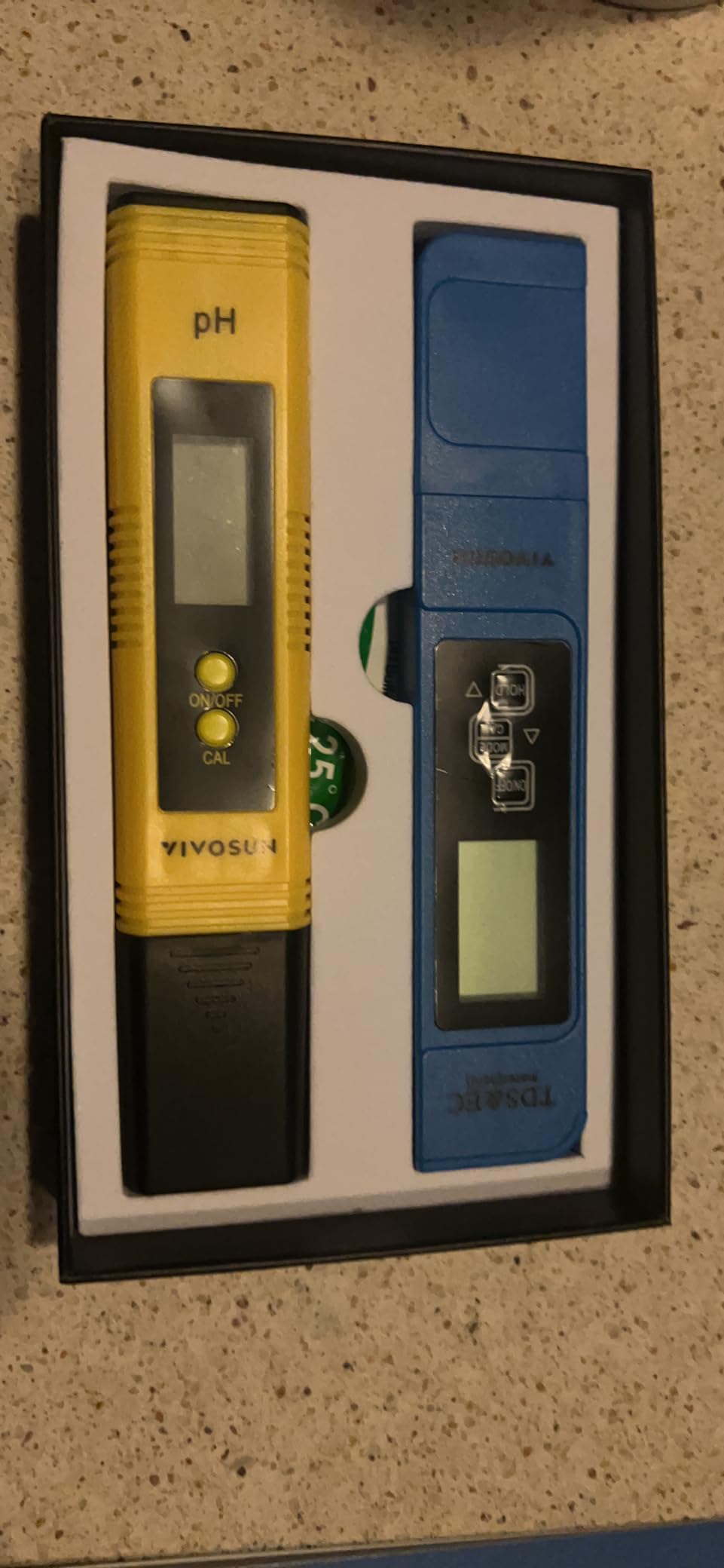
With 24817 reviews at 4.1 stars, this is the most widely reviewed meter in the group, and the reason is simple: it is two instruments in one package. You get a pH pen and a 3-in-1 TDS, EC and temperature meter, three calibration buffers and a protective case, ready to go out of the box.
The pH range is a full 0 to 14, the TDS side covers 0 to 9990ppm and 0 to 9990 microS per cm, and temperature runs from 0.1 to 80.0C with automatic temperature compensation on the readings. Buyers commonly use it for aquariums, reverse osmosis verification, boilers and pool water, and describe it as accurate to about 0.1 pH and better than test strips.
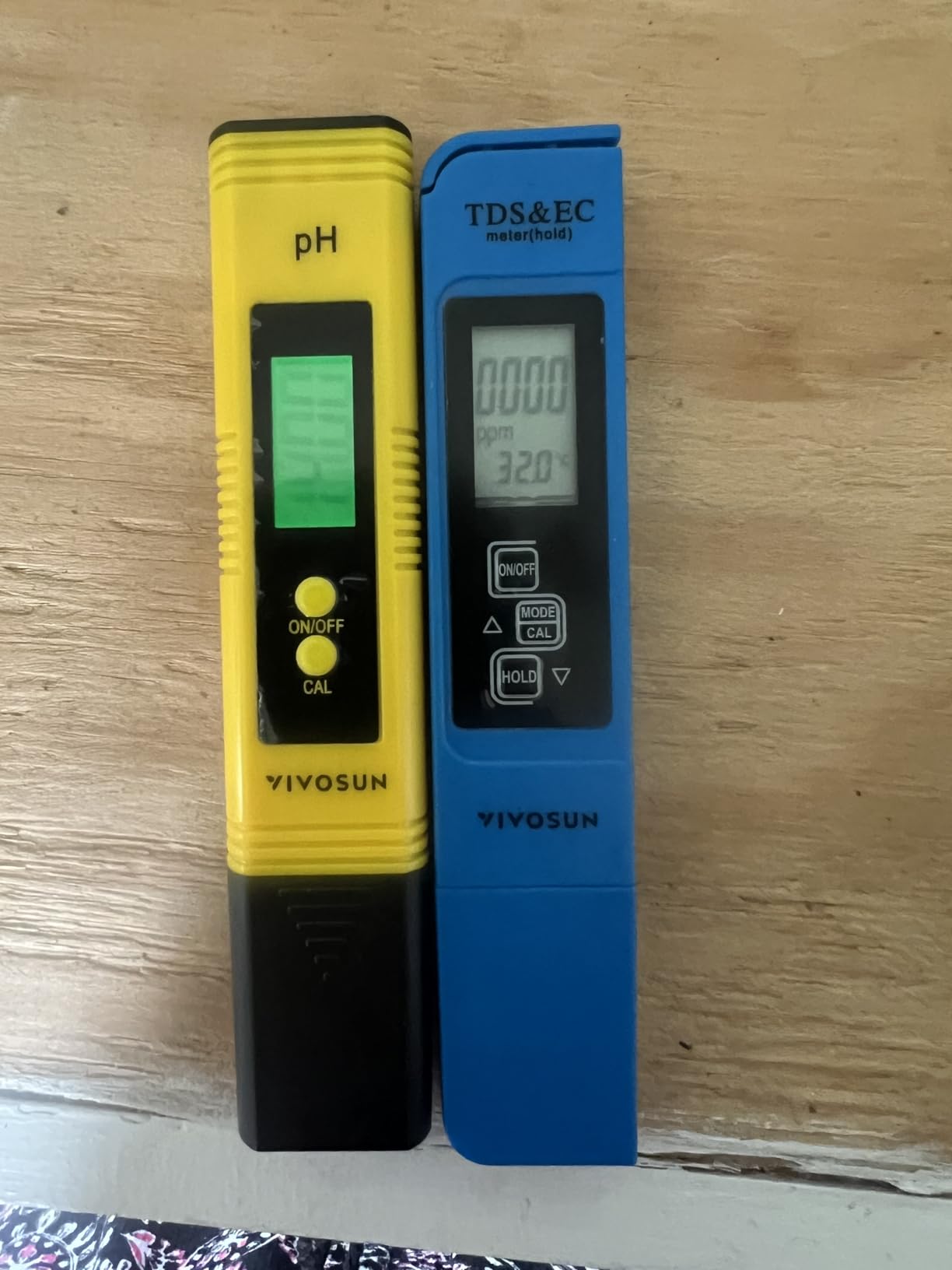
For a first system, the appeal is obvious. You are not spending twice to find out whether you even need an EC meter, and the protective case means both pens have somewhere to live between checks. Several buyers report the manufacturer replaced or supported a faulty pen quickly, which matters at this tier.
The pH and TDS pens are separate instruments in the box, so you calibrate each one on its own terms. The TDS and EC channels are not supplied with an EC calibration solution, so plan on ordering a 1413 microS per cm buffer if you want that channel verified properly rather than trusting the factory setting.
Who this meter suits
It suits a beginner who wants pH and a general water-quality reading in one purchase, and anyone who tests more than hydroponics. Household water, aquariums and pool checks are where most of the review volume comes from, and the pen is good at all of them.
If you already know you will need accurate EC in a nutrient solution, this is still a reasonable way to start, since you can treat the TDS pen as a rough screening tool and upgrade later without having wasted the pH side.
Where it falls short
pH readings can jump around and take a while to stabilise, and multi-point pH calibration is described as fiddly and slow for beginners. That combination is where budget meters frustrate people: the number is moving, so they adjust the reservoir to a reading that was never real.
Durability is the larger concern. Several pens developed white residue or fungus on the probe housing, and the TDS and temperature readings drifted and became unreliable after a couple of months of regular use. If the readings start to move, weigh the pH pen against a sealed single-purpose meter.
6. YINMIK YK-P01 pH and Temperature Tester: The Best Budget Pen
YKMINK YK-P01 pH Tester, Digital pH Meter for Water,pH Temp Meter with ATC
pH and temperature together
3-point auto calibration
Calibration powder included
Hydrated sponge cap
Pros
- Wide horizontal screen shows both values
- Calibration is quick and holds one to three months
- Reads within about 0.1 pH
- Works for pools brewing and tissue culture
- Support replaced a faulty pen
Cons
- No storage solution included
- No carrying case
- Glass bulb is fragile
- One pen failed after seven months
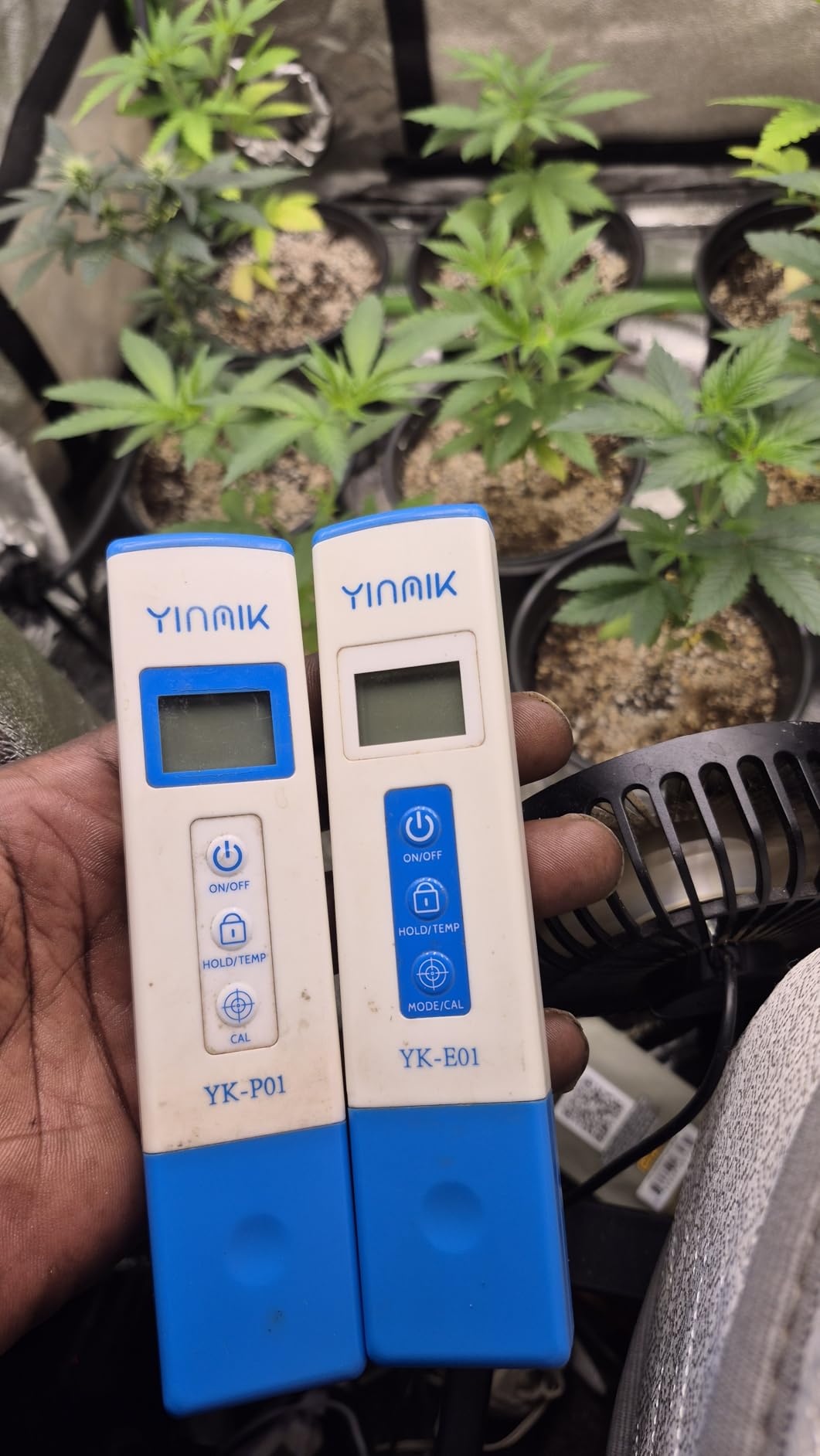
The design choice that sets this apart is the horizontal screen. It shows pH and temperature side by side, large enough to read while your hands are wet, with a stainless steel temperature sensor feeding automatic temperature compensation. At 0.16 kg it has more presence in the hand than a typical budget pen.
Calibration is three-point and automatic at 4.00, 7.00 and 10.01, and the box includes calibration powder that makes up about 500ml of each standard solution. Buyers consistently call this the strongest pick in the budget tier, and the accuracy lands within about 0.1 pH when the probe is rinsed, the cap sponge is kept wet and calibration is redone about once a month.
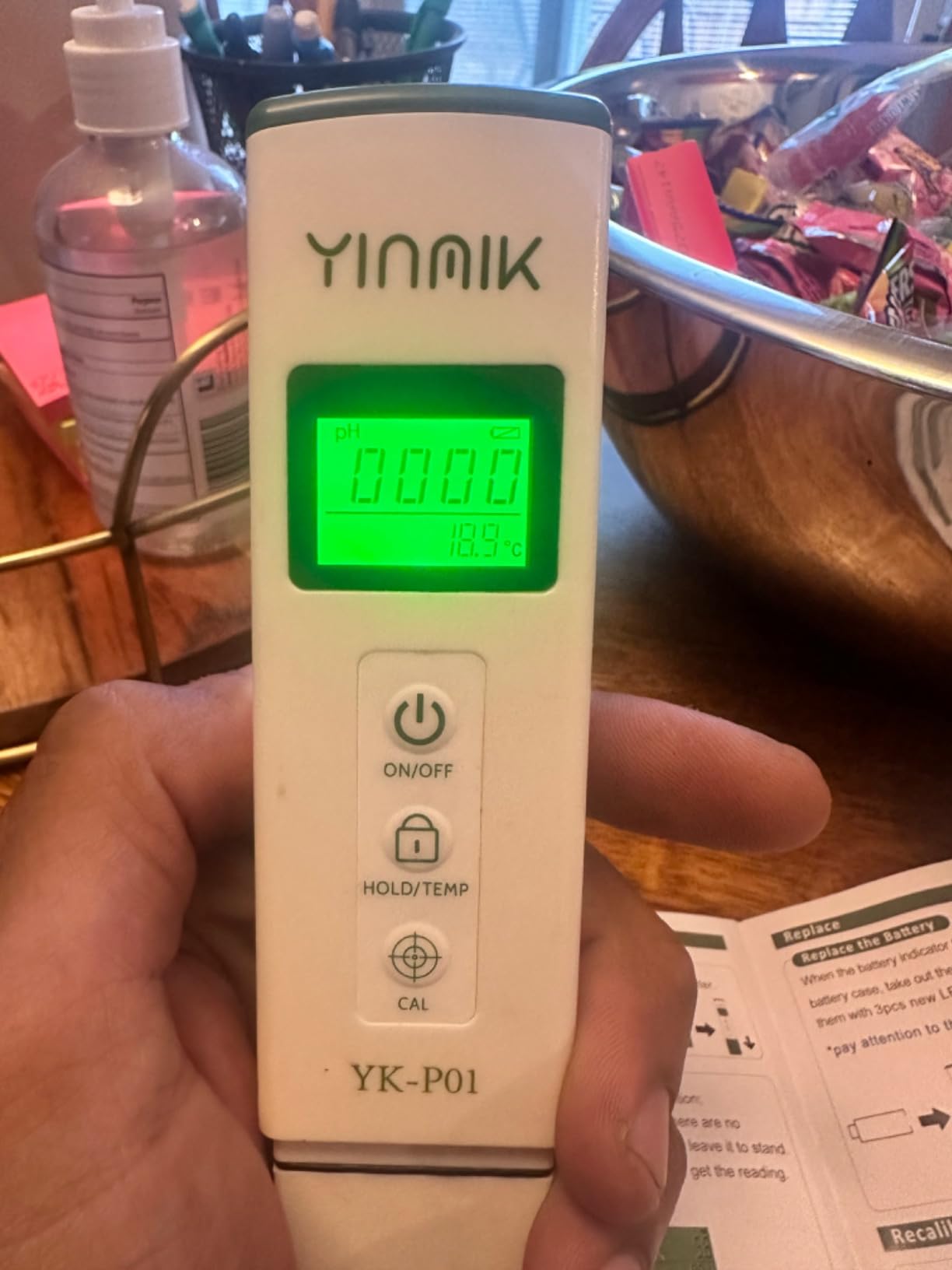
The protective cap has an internal sponge designed to keep the probe hydrated between readings, which is a genuinely useful design at this level. A HOLD or TEMP button locks the reading so it does not vanish while you are dipping it in a reservoir, and the backlight handles dim tents. The package includes calibration powders, three LR44 batteries and a dropper.
Applications run wider than hydroponics. Owners use it for pools, spas, hot tubs, aquariums, brewing, tissue culture and soil work, and one reviewer reports manufacturer support replaced a faulty pen at no cost.
Who this meter suits
It suits a grower who wants a dependable single-purpose pH pen and a temperature reading without paying for a multi-parameter body. The wide screen is a real advantage when you are working over a reservoir and need to see the value settle.
It also suits anyone testing several water types in one property, since the same meter handles pool, aquarium and nutrient checks without a mode change.
Where it falls short
No KCl storage solution is supplied, and for a glass-bulb pen that omission matters more than the price suggests. Order storage solution with the meter, and treat the sponge cap as a stopgap rather than a substitute.
There is no carrying case, glass bulbs are fragile and need gentle cleaning, and the review record includes a display failure after seven months and a minority of pens drifting badly or refusing to calibrate. Owners who store and maintain the pen properly get one to three months of solid calibration between sessions.
7. UIUZMAR 4-in-1 pH PPM EC Tester: Fastest Readings in the Budget Tier
UIUZMAR pH Meter for Water Hydroponics Supplies 4 in 1 pH PPM ECTester
pH EC PPM and temperature
Reads in one to two seconds
Blue glass diode probe
Box doubles as a case
Pros
- Stabilises in one to two seconds
- Calibration powder included
- Backlit display and clear instructions
- Reading speed holds up against costly pens
- Box serves as storage case
Cons
- Only one buffer sachet included
- Probe cannot be replaced separately
- Occasional first-attempt calibration failures
- Packaging can arrive damaged
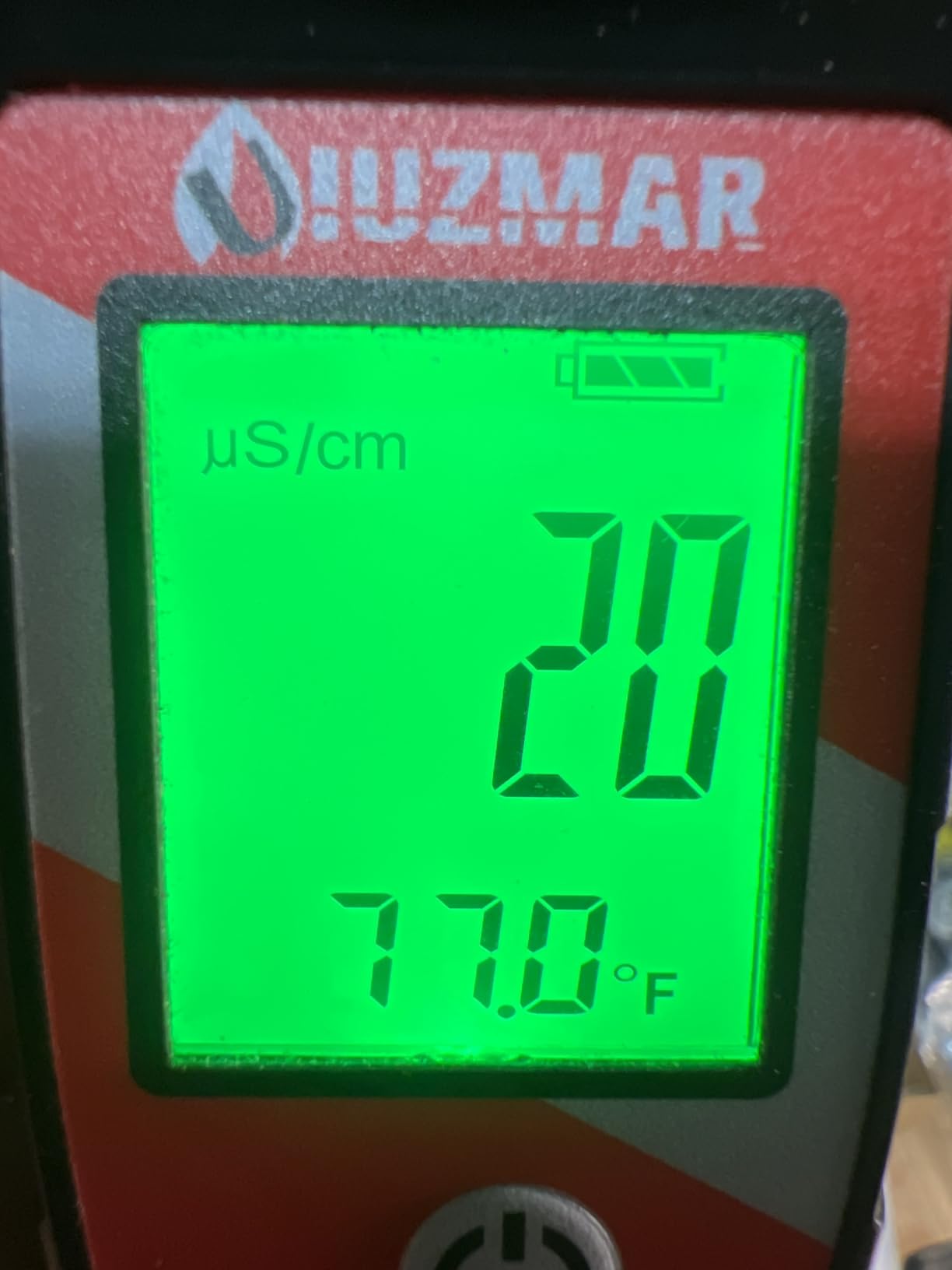
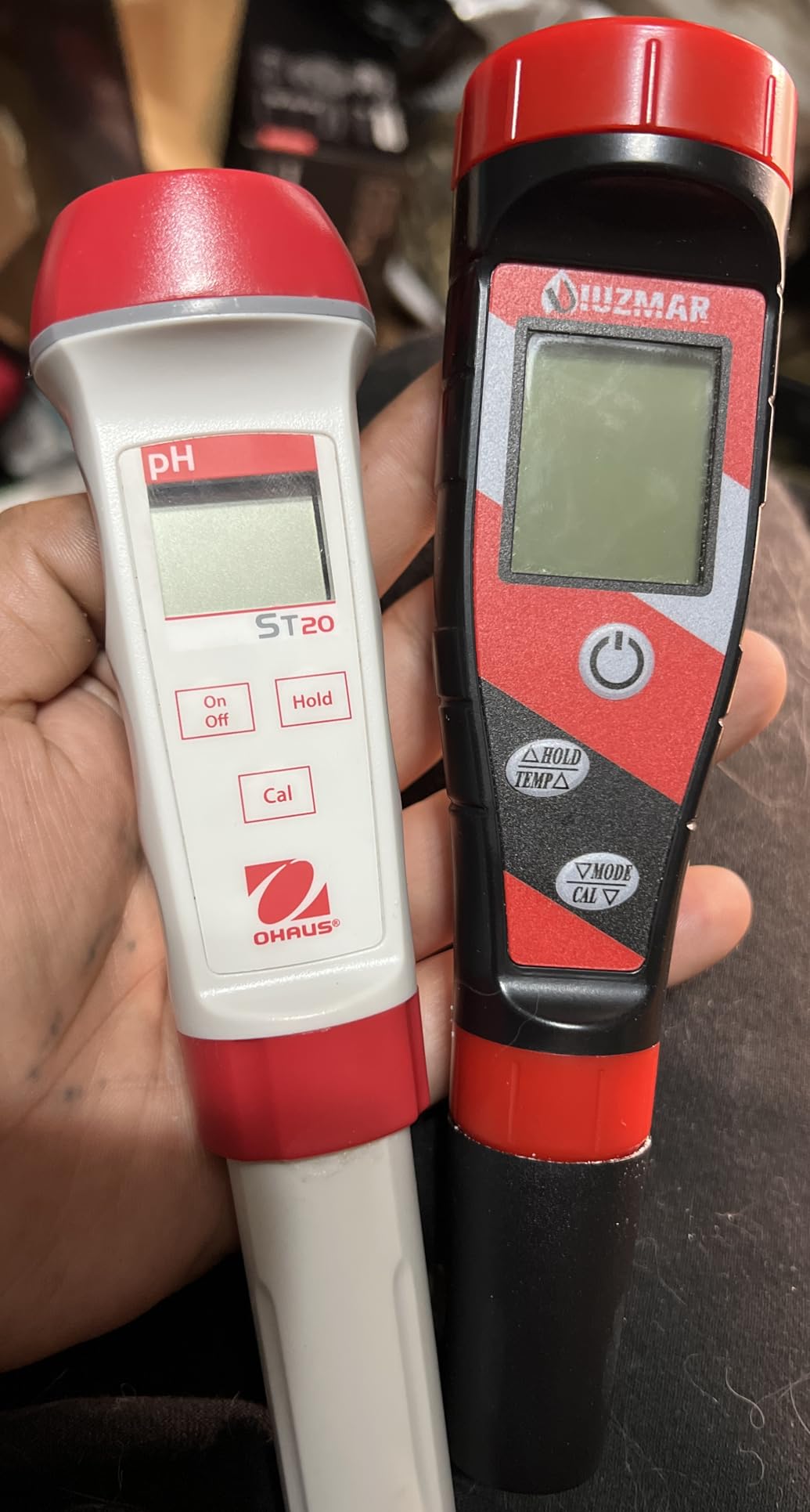
Speed is the headline here. The blue glass diode probe reads and stabilises in one to two seconds, which is the difference between checking six reservoirs in ten minutes and checking them all wrong because each number was still moving. Owners with long experience comparing meters describe the readings as agreeing with far more costly Bluelab and Apera units in side-by-side tests.
It measures pH, EC, PPM and temperature on one backlit screen, and the EC and TDS channels are factory calibrated so they work immediately. pH calibration runs 7.00 then 4.00, with 10.01 as an optional third point, and the included powders mix with 250ml of ordinary distilled water, so you do not need lab-grade mixing equipment.
It is built for hydroponics specifically, and the manufacturer lists DWC, aeroponic tents and indoor plant setups among the intended uses. The box doubles as a long-term storage and carrying case, which is a small detail that prevents probe damage better than most accessories in this category.
At 4.4 stars from 1069 reviews it punches above its tier. The clearest usage instruction from detailed reviews is that the meter should be soaked in storage solution for an hour and calibrated against 7.00, 4.00 and 10.01 before first use, and that a small amount of storage solution is what prevents the drift people complain about.
Who this meter suits
It suits growers who want a fast multi-parameter reading without moving up a tier, especially anyone checking several small systems. Seeing pH, EC, PPM and temperature together removes the second dip that a separate pH and EC pen requires.
It suits beginners, because clear illustrated instructions and included powders remove the two things that most often go wrong on a first meter: guessing the buffer and making solutions that are too concentrated.
Where it falls short
Only one buffer sachet is included, so you will need extra solution for repeated calibration. Storage solution and EC calibration solution are not supplied at all, and a fixed probe means a failed electrode ends the meter rather than being replaced.
A minority of owners report the meter refusing to calibrate on the first attempt, and some have received meters with poor packaging or transit damage. Check the electrode and the box seal on arrival rather than assuming the unit is ready to use.
8. VIVOSUN 3-in-1 Digital pH Meter with ATC: A Clear Step Up From Basic Pens
VIVOSUN 3-in-1 Digital pH Meter with ATC, ±0.1 pH Accuracy Water Quality Tester, 0-14.0 pH Measurement Range for Hydroponics, Household Drinking, Pool and Aquarium
pH TDS and temperature
0.01 pH resolution
Three-point auto calibration
Green backlit display
Pros
- Clear step up in stability over basic pens
- Green backlit display reads in any light
- Holds calibration through repeated readings
- TDS readings matched a known-good pen
- Compact and good value
Cons
- Pens failing within a year or two
- Calibration redone two or three times a session
- Screens glitch or lock up
- EC calibration powder not included
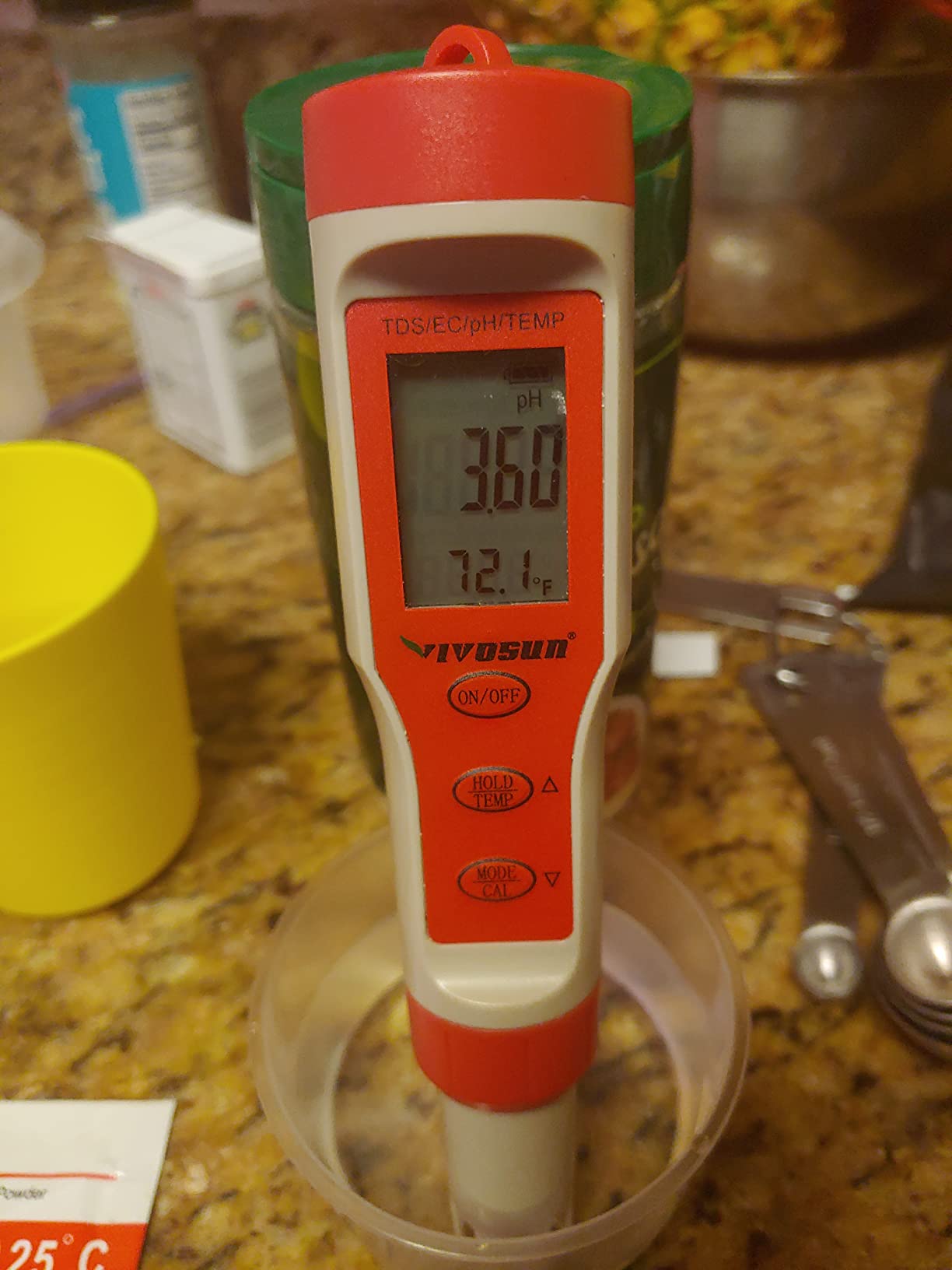
This pen sits a step above the very cheapest pens, and reviewers upgrading from basic black-and-yellow models say so directly. The green backlit digital display is easy to read in any light, the pH range is a full 0 to 14 with 0.01 resolution, and automatic temperature compensation runs from 32F to 140F.
Calibration is three-point and automatic, recognising pH 4.01, 6.86 and 9.18 solutions, which is a wider buffer set than most budget meters offer. It measures 1.5 by 1.5 by 7.2 inches and weighs 3.53 ounces, small enough to carry in a pocket between checks. TDS readings reportedly matched a known-good budget reader straight out of the box.
The feedback is sharply split, and that split is the useful part. Owners who upgraded from the cheapest pens praise the backlight and the way it holds calibration through repeated readings and different liquids. A loud second group reports build quality that does not justify the spend, with pens drifting by a full pH point after a year or two.
Calibration frequently has to be redone two or three times per session on the pens that struggle, and some owners report screens cycling random numbers or locking up until the batteries are removed. The 13 percent one-star share is the highest in this group.
Who this meter suits
It suits someone moving up from a very basic pen who mainly wants a readable screen and a wider buffer set. If your previous meter was the type with no backlight and a single calibration point, the daily experience improves noticeably.
It also suits a grower testing pH and TDS casually, where a combined body and a 0.01 resolution display are convenient and the accuracy ceiling is not the deciding factor.
Where it falls short
Reliability is the core weakness. Multiple reviewers describe pens failing within a year or two, drifting by a full pH point, glitching on screen or locking up until the batteries are pulled. Several of those owners moved to a pricier Apera instead, which is the most common upgrade path in the reviews.
Calibration that has to be repeated two or three times per session is a sign the electrode is ageing, not a technique problem. EC calibration powder is not included, and readings can still bounce around after repeated calibration attempts.
9. YINMIK 4-in-1 PPM EC Meter: Built to Stay in the Reservoir
YINMIK pH Meter for Hydroponics, 4 in 1 PPM EC Meter for Plant Nutrients
pH PPM EC and temperature
Separate ppm and EC modes
Calibration liquid included
Four-in-one display
Pros
- Sturdy build for the tier
- Four values on one backlit screen
- Calibration liquid included so it is usable immediately
- Holds calibration for several weeks
- Faster reliability than Vivosun pens
Cons
- One owner had to recalibrate daily
- Less accurate than a Bluelab reference
- Long immersion still needs occasional removal
This is one of the few budget meters designed with long immersion in mind. The manufacturer states it can be left in a hydroponic reservoir or tube for continuous monitoring, and it ships with 4.00 and 7.00 pH calibration solution plus a 1413 microS per cm EC buffer, so the meter is usable the day it arrives rather than after a shopping trip for buffers.
It has two modes: a pH and ppm mode for basic reservoirs and a pH and EC mode for nutrient solutions, with pH and temperature always shown at the same time. The extended stainless steel temperature electrode responds quickly, and automatic temperature compensation keeps the EC channel honest as solution temperature changes.
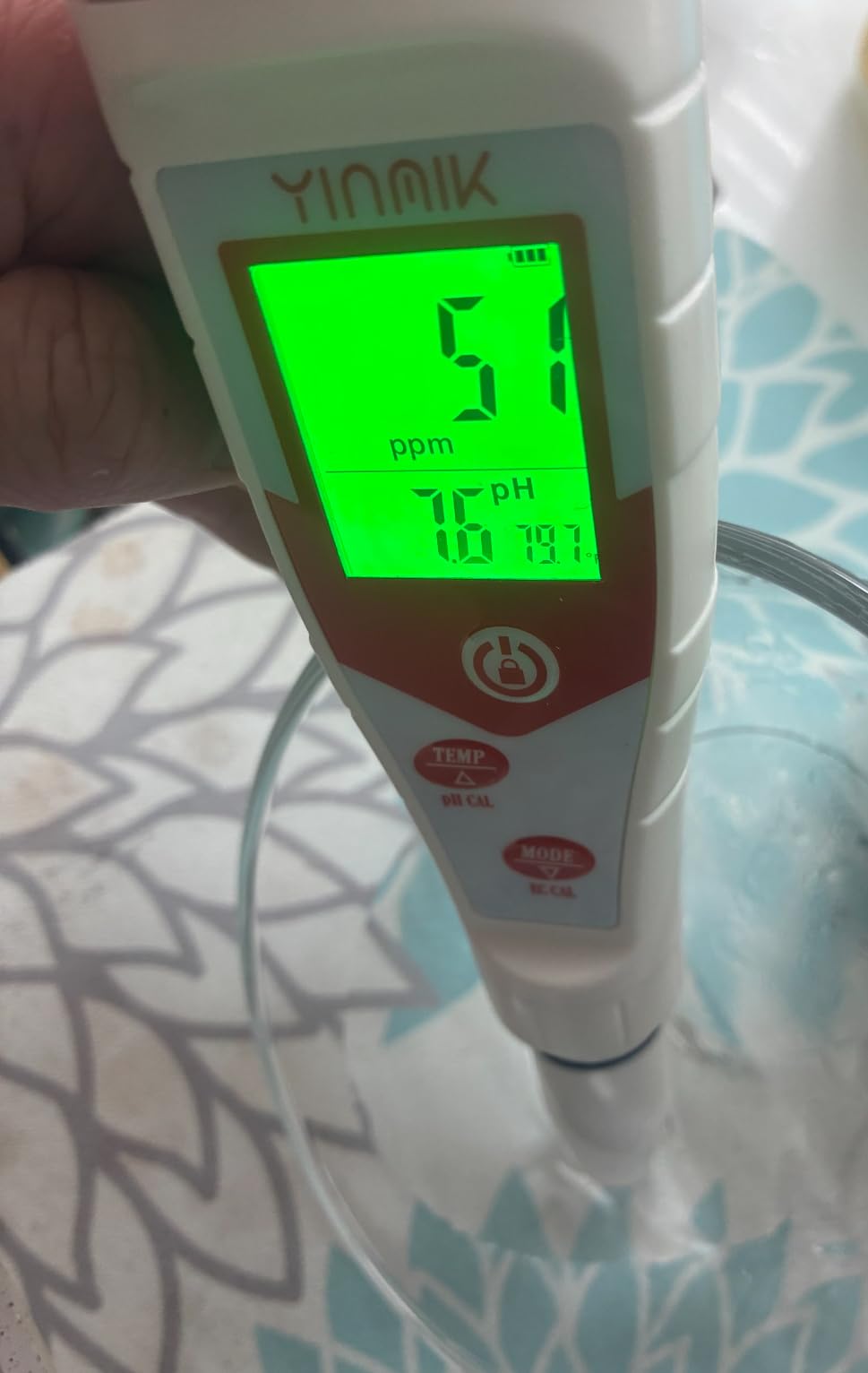
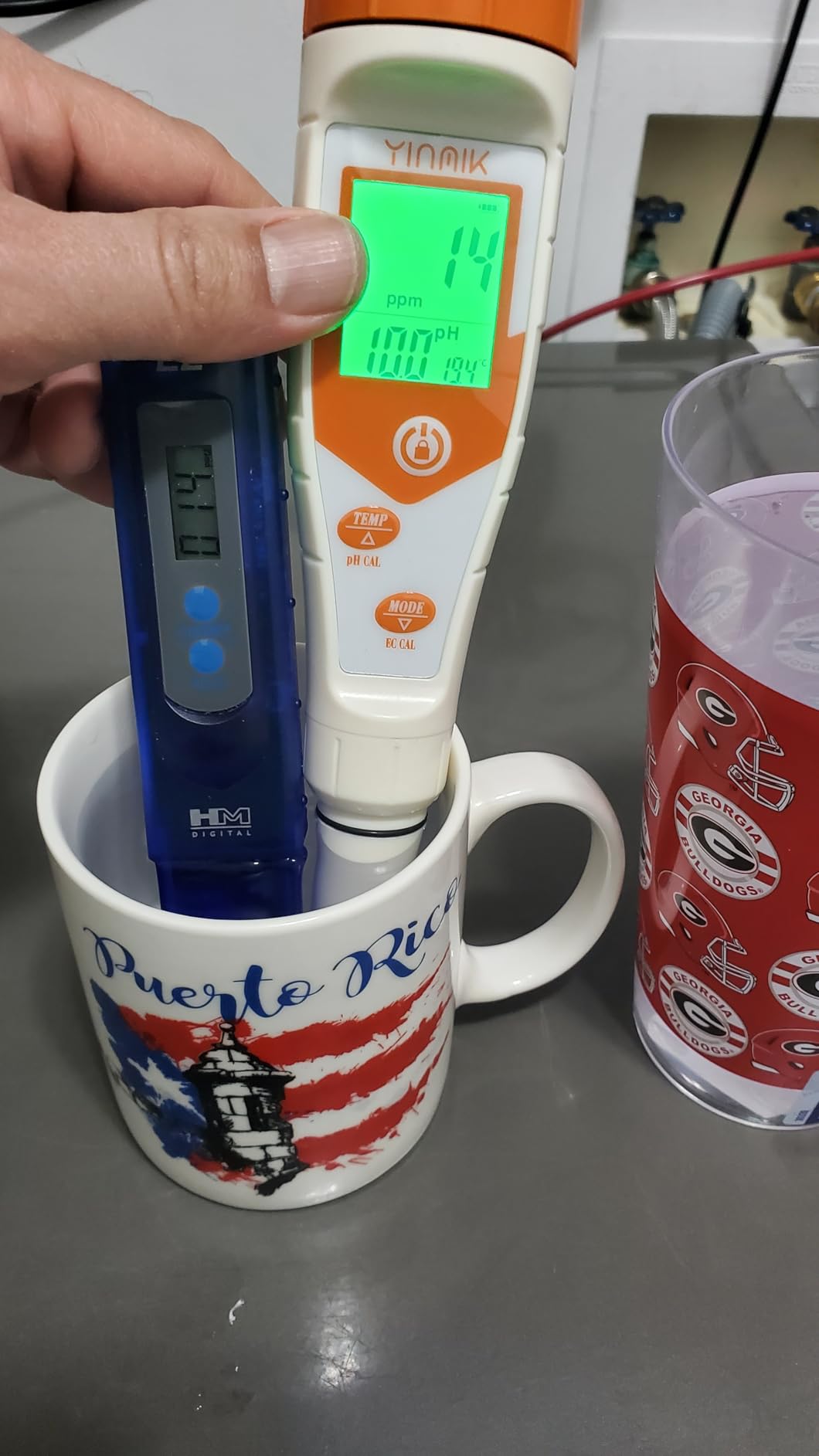
The recurring comparison in reviews is against Vivosun pens, where owners describe this meter as far more reliable, particularly in build quality. The screen is bright and readable, readings come quickly, and the calibration holds through several cycles and several weeks for most buyers.
It suits planted water, pools, drinking water, well water, brewing and fish tanks as well as hydroponics, and the package measures 10.04 by 5.75 by 2.13 inches with a listed weight of just over a pound, which is substantial in the hand for a portable meter.
Who this meter suits
It suits growers who want a fixed monitor rather than a handheld check, particularly with a small Kratky or reservoir setup where leaving the meter in place gives continuous visibility. The included calibration liquid removes the usual first-week errand.
It also suits anyone who has replaced a Vivosun pen with drift problems and wants a stayer. Build quality and included consumables are the two things reviewers praise first.
Where it falls short
Long immersion is advertised but does not remove the need for care. Reviewers note the unit still benefits from occasional removal and rinsing, and extended time submerged in a nutrient solution is exactly the environment that fouls an electrode.
The negative coverage is thin but includes a detailed complaint about calibration drifting within four days and eventually becoming impossible, plus a note that readings sit slightly off compared with a Bluelab pen. If you need reference-grade agreement, cross-check against a better meter rather than trusting the display alone.
10. EZTOCH Hydroponic pH EC TDS Meter: Best When You Want It Ready to Use
EZTOCH Hydroponic pH EC Meter, Water pH TDS PPM Meter
pH EC TDS and temperature
Factory calibrated
0.00 to 19.99 mS per cm
Reading lock function
Pros
- Pre-calibrated with pH 4 and 7 solutions supplied
- Three values shown at once
- Straightforward dip-and-read operation
- Conductivity close to a professional reference
- Support shipped a full replacement
Cons
- pH calibration drifts after two to three months
- Meters can stop working after three months
- Readings can take three to five minutes to stabilise
- Probe must be dried before the cap goes back on
Out of the box this is the least fuss meter in the group. It is factory calibrated and supplied with pH 4.00, pH 7.00 and EC 1413 microS per cm solutions, so you can check it on arrival rather than hunting for buffers. Operation is turn on and dip, with a MODE button toggling between pH, EC and temperature and pH, PPM and temperature readouts.
Conductivity covers 0.00 to 19.99 mS per cm at 0.01 resolution with a dual PPM 500 hydroponic scale, which is the right range for nutrient solution. A lock function freezes and records readings, useful when you are logging a set of tanks. The manufacturer lists DWC, Kratky, vertical towers, aeroponics and aquaponics among its uses.
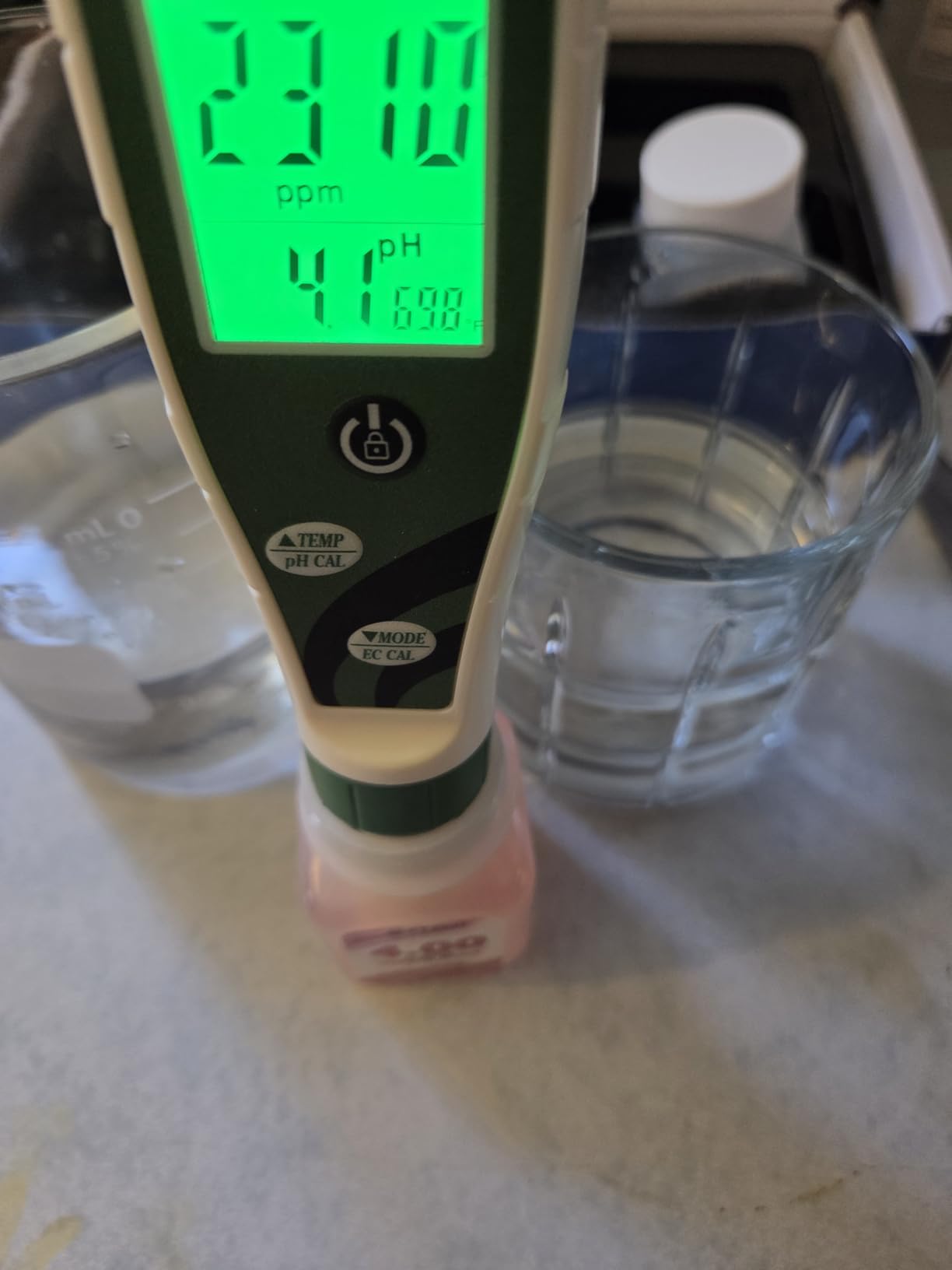
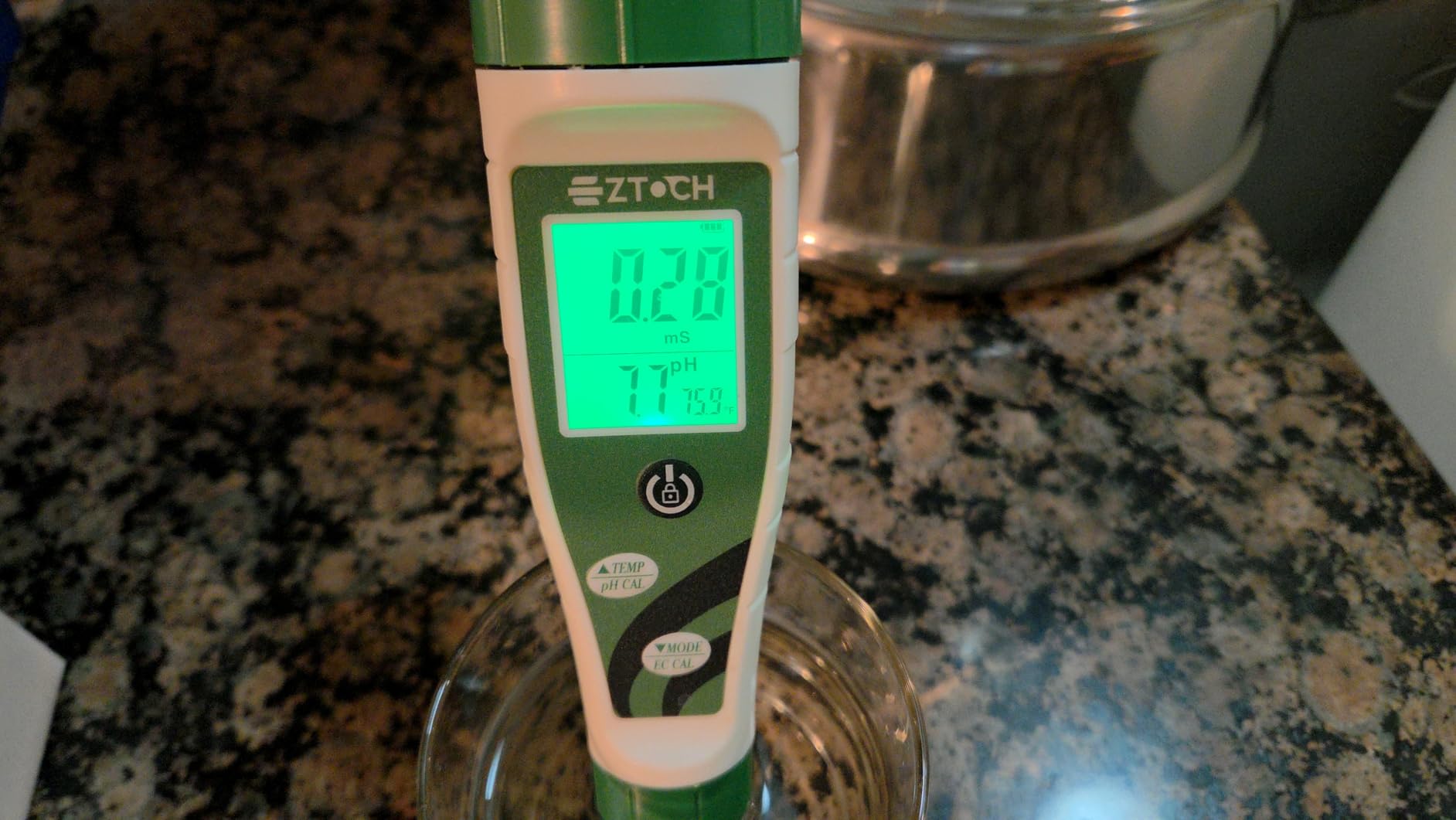
It also supports base-water setup checks, where the guidance is a pH near 7.0 and PPM under 70. That is a small feature but a useful one, because most growers only think to test their water after it is already in the reservoir.
With 4.5 stars from 139 reviews and a 78 percent five-star share, the sentiment is heavily positive, and several owners report that EC and TDS readings sit close to a professional reference meter. Manufacturer support is repeatedly described as fast and willing to send a complete replacement under a 12-month guarantee.
Who this meter suits
It suits a grower setting up a system this week who does not want a calibration ritual before the first measurement. Included solutions and factory calibration mean the meter produces believable numbers on the first day.
It also suits anyone running different system types, since the application range covers towers, aeroponics and aquaponics as well as plain DWC, and the recording lock makes logging less fiddly.
Where it falls short
The pH channel is the weak point over time. Several buyers report the pH calibration drifting after two to three months and becoming impossible to correct, and some meters stopped working entirely after about three months even with fresh batteries. That is a short useful life for a meter you install rather than pick up.
Readings can take three to five minutes to stabilise and may shift after a power cycle, some meters show a fading LCD, and the probe needs to be dried before the cover goes back on or mould develops. A minority arrive reading off target and need calibrating out of the box.
11. GIDIGI 4-in-1 Digital pH Tester: A Middle Step for Beginners
GIDIGI Digital pH Tester for Water, pH Meter for Hydroponic Water
pH EC TDS and temperature
0.1 to 14.0 pH
0 to 9990 microS per cm
Green backlit display
Pros
- Four values shown together
- Simple calibration
- Holds calibration over months of storage
- Survives repeated drops in water
- Good value against premium pens
Cons
- Probe tip cannot be replaced
- EC calibration solution not included
- No storage fluid supplied
- One owner reads up to 0.6 pH high
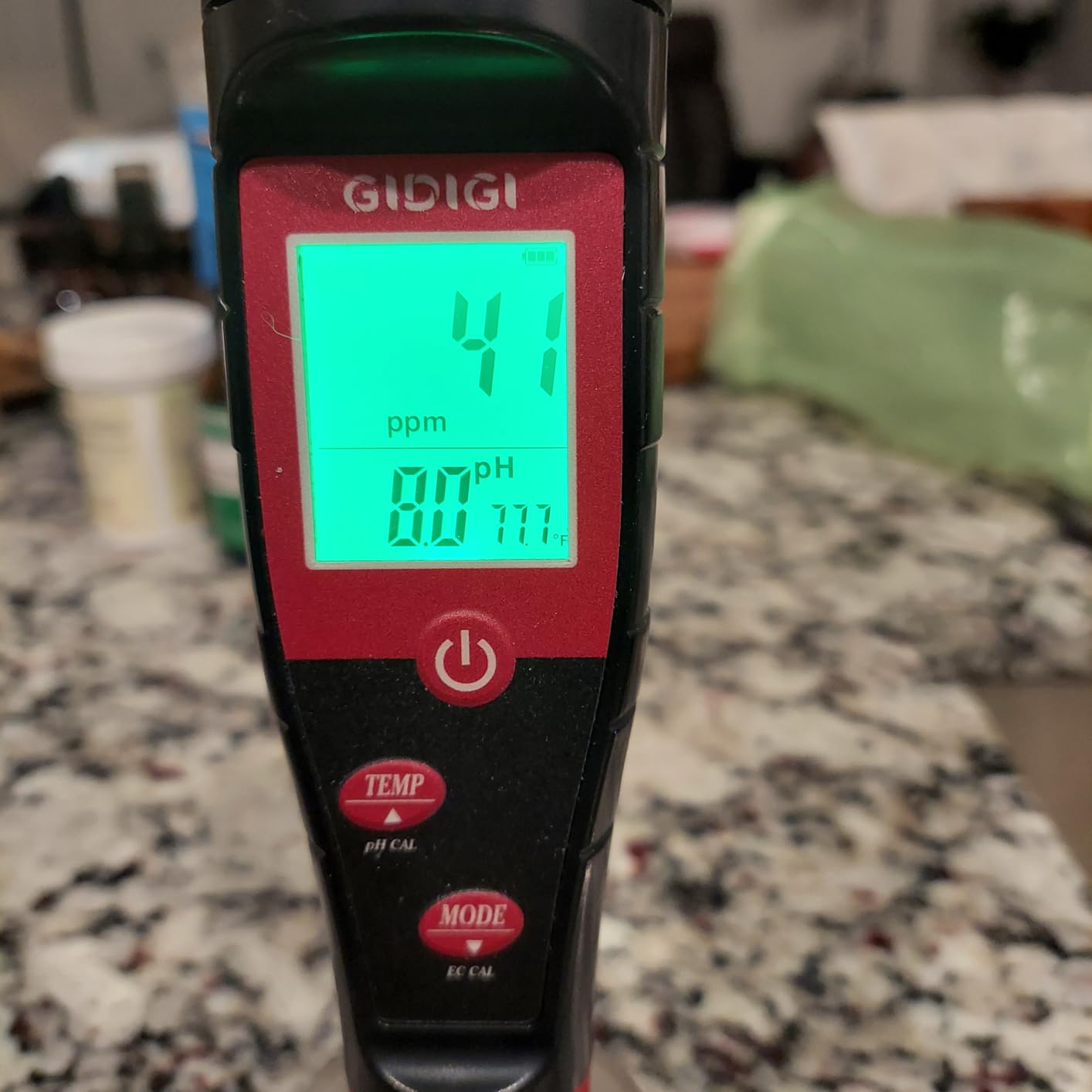
It has the smallest review base in the group at 200 ratings, but the sentiment from hydroponic beginners is consistently positive, and several owners say it removed guesswork from their reservoir management. The pH, EC, TDS and temperature values all appear on one green backlit screen.
The ranges are sensible: pH 0.1 to 14.0 at 0.1 resolution, EC 0 to 9990 microS per cm with a second band up to 19.99 mS per cm, TDS 0 to 9990ppm and temperature from 32.0 to 140.0F. Automatic temperature compensation runs from 0 to 50C, and the probe carries a sponge cap to keep the electrode moist.
It also suits pools, hot tubs, aquariums, brewing and drinking water, and reviewers place it deliberately between the cheapest yellow-and-blue pens and the Apera and Bluelab tier. Calibration is described as simple, and several owners report it holding calibration over months of storage.
The listed package weight is just over a pound with dimensions of 10 by 5.75 by 2.25 inches, so it is a full-size instrument rather than a pocket pen, and it is meant to be read rather than carried between checks.
Who this meter suits
It suits a beginner who wants pH and EC without buying two instruments, especially one who also maintains an aquarium or pool and can justify a single four-in-one body. The all-at-once display removes the sequencing errors that come from swapping pens.
It also suits a grower who has been using a single-purpose pen and found EC checks annoying, since the conductivity channel is factory set up and readable immediately.
Where it falls short
The probe tip cannot be replaced when it eventually fails, which means the whole meter is finished at that point. That single design choice is what separates this from the Apera PH60, and for a grower planning to keep a meter for years it is the deciding factor.
EC calibration solution and storage fluid are both absent from the kit, and one owner reports needing to recalibrate before every use and reading up to 0.6 pH high. Users needing laboratory-grade reference accuracy describe it as insufficient.
12. VIVOSUN pH TDS Meter with Soil Moisture Tester: Best for Media Growers
VIVOSUN Digital pH Meter, 3-in-1 TDS/EC/Temperature Meter, 3-in-1 Soil Moisture/pH/Light Tester Combo for Home, Garden and Hydroponics, Yellow-Blue-Green
pH meter plus TDS meter plus soil tester
Automatic temperature compensation
Hold function and backlight
Three instruments in one listing
Pros
- Three instruments in one package
- Automatic temperature compensation on both water meters
- Backlit display with hold function
- Titanium alloy TDS electrode
- Portable soil tester with one-button mode switching
Cons
- Readings drift from reference meters
- Pens failing after a few months
- Soil readings are approximate
- Instructions are sparse for calibration
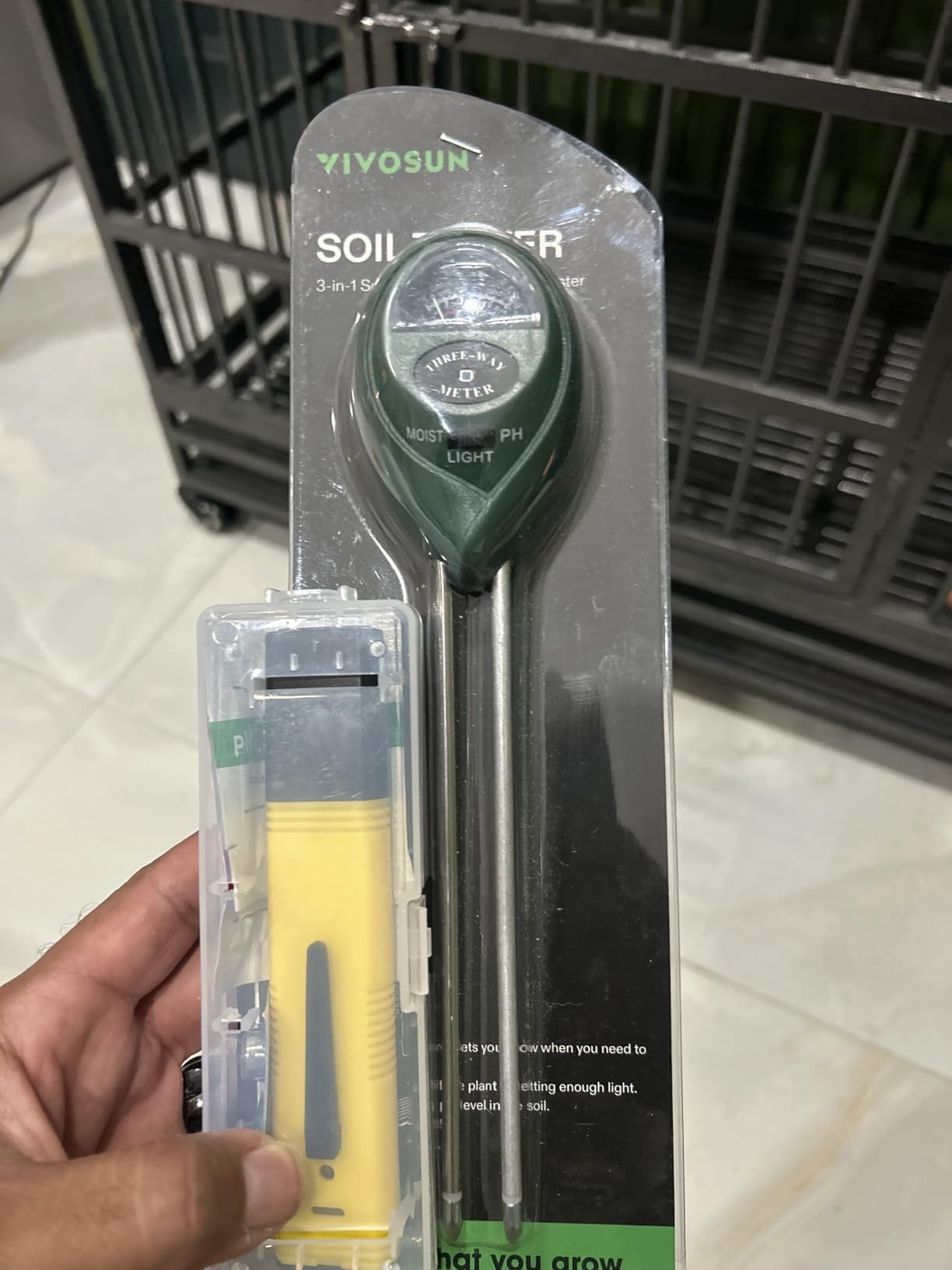
This bundle is unusual because it pairs a hydroponic setup with a soil tester, which is exactly what a grower moving from soil to coco or rockwool needs in the first season. You get a pH meter with automatic temperature compensation, a 3-in-1 TDS, EC and temperature meter with a titanium alloy electrode, and a portable soil tester that switches between moisture, light and pH modes with one button.
Both water meters display temperature alongside the reading on their LCDs, and the pH meter has a backlit display for dim conditions. The TDS side adds automatic shutoff and a hold function to record values, and the listed package weight is 9.1 ounces across 13.46 by 5.28 by 2.01 inches.
With 1376 reviews at 4.1 stars and a 61 percent five-star share, the pattern is a product that performs adequately rather than impressively.
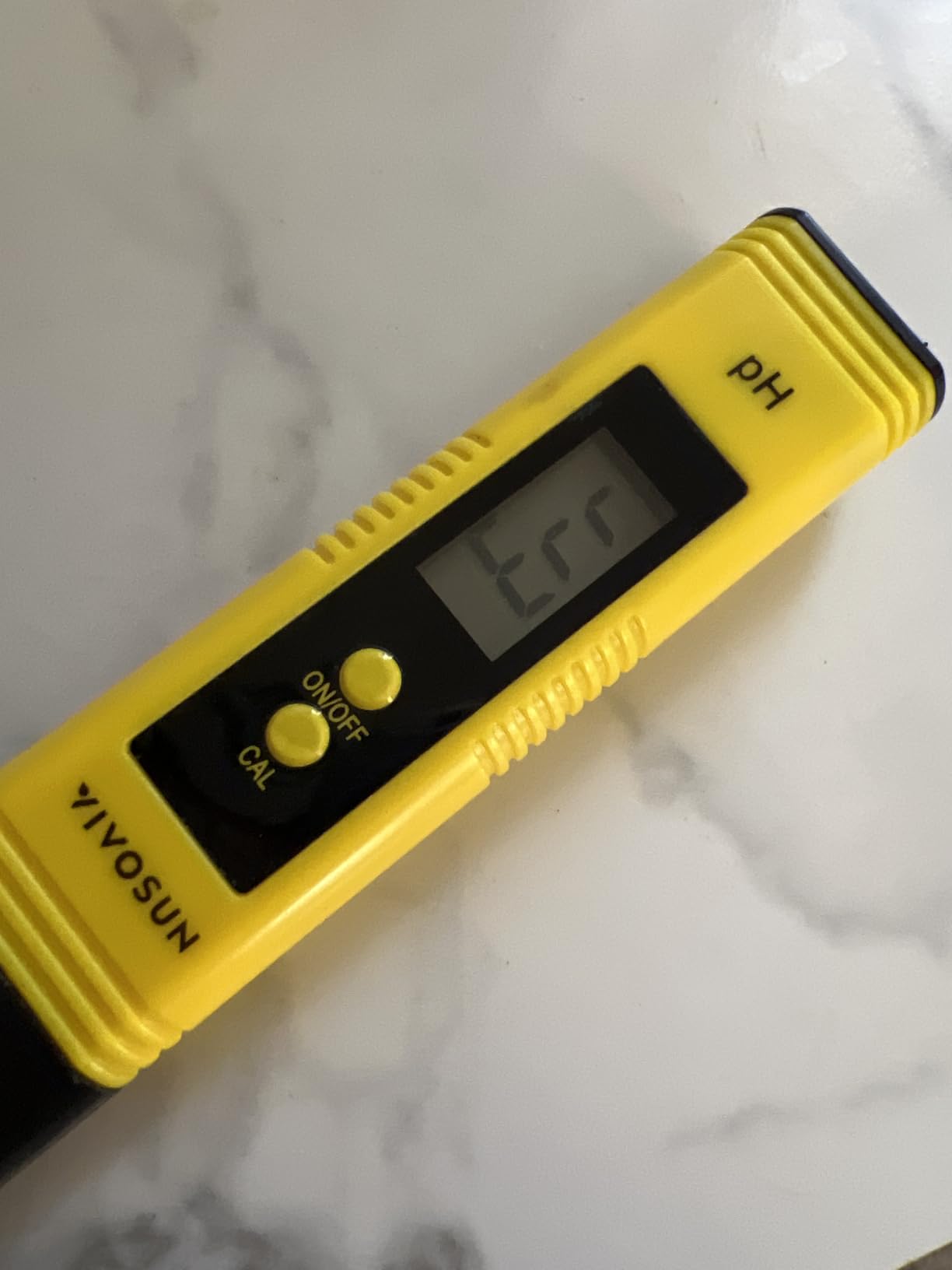
The instruction booklet is thin, which is why calibration can be confusing for first-time users. The TDS meter uses a titanium alloy electrode, which is a step up from the bare probes on the cheapest pens, and automatic temperature compensation on both water meters is a genuine improvement over entry-level alternatives.
Who this meter suits
It suits growers working in a mixed system, such as a recirculating hydroponic reservoir alongside pots of soil or coco, where the same listing covers both water and substrate checks. It also suits anyone whose first measurements will be on tap or source water.
The one-button mode switching on the soil tester makes it easy to hand to someone else in the house, and the portable format means the same tool moves from a tent to a windowsill.
Where it falls short
Precision is the recurring complaint. Buyers report readings that drift from reference meters and need repeated calibration, and the overall rating sits below many competing meters in the same tier. Several of these pens fail outright within a few months, with the electrode or the meter giving out.
The soil tester is generally described as giving only approximate moisture and light readings, so treat it as a trend indicator rather than a measurement. If your system is water-only and your readings are drifting, a single-purpose sealed pen will serve you better than three functions in one body.
How to Choose a pH Meter for Hydroponics in 2026
Accuracy is the first filter, and it is simpler than the spec sheets make it sound. A pen quoted at plus or minus 0.1 pH is the hydroponic standard and it is enough, because nutrient availability shifts across a much wider band than a tenth of a pH unit. A pen at plus or minus 0.01 pH is a laboratory habit that helps when you are chasing a drifting reading, not a requirement for a healthy crop. Accuracy is a claim you can only trust if the buffer solution is fresh, so treat calibration frequency as part of the accuracy spec rather than an afterthought.
Probe design decides lifespan more than any other factor. A double-junction probe adds a barrier that slows contamination, which is why the Bluelab pen and the Bluelab combo meter hold accuracy over years. A replaceable probe means a dead electrode costs a fraction of a new meter, which is the argument for spending up on the Apera PH60. A sealed housing protects the electronics in a wet grow room, and for most home growers that matters more than a tenth of a pH unit.
Decide whether you are testing water, media, or both. Reservoirs, DWC buckets and RDWC systems are all water tests, and any sealed pen covers them. Coco coir runoffs and rockwool inputs are slurry tests, where a spear-tip or flat-surface electrode is more useful than a standard bulb. The VIVOSUN bundle is the only option here that covers a soil and media tester alongside the water meters.
Then decide between a pH pen and a multi-parameter body. If you only adjust pH, a single-purpose pen is faster to stabilise, easier to store wet and cheaper to replace. If you also manage feeding, a pH, EC, PPM and temperature body saves a second instrument and a second dip, at the cost of a fixed probe in most budget models. The Bluelab combo meter is the pick when you want replaceable probes and a long guarantee, and the UIUZMAR and EZTOCH models are the pick when you want everything on one screen without a second purchase.
Brand reputation in this category is genuinely split, and it is worth knowing before you buy. Bluelab is the most frequently recommended brand across the grower forums we read. Hanna draws the sharpest disagreement: some owners call the one-step calibration very easy, quick and accurate, while others report persistent readings running 0.5 pH units or more off even after repeated calibration. Milwaukee and Oakton are described by a grower with a decade of hydroponic experience as rock solid after eight or more years, and a chemist in one THCFarmer thread verified meter accuracy against lab samples. Apera draws steady praise, with one 420 Magazine user describing the 60 series as equivalent to the higher end Hanna and Bluelab without the price tag. Apera PH20 owners are less lucky, with a Bonsai Nut grower reporting two PH20 units failing the same way inside a year through water ingress at the seal.
The consensus across all four forums is a pattern rather than a product: buy one good meter instead of four cheap ones, and maintain it properly. Growers who buy a quality meter report never needing to replace it, while growers cycling budget models end up keeping test strips as a cross-check. The forum advice we would repeat is practical and unglamorous: store the probe wet in KCl solution, rinse with reverse osmosis water, and recalibrate on a schedule rather than when the reading looks wrong.
Own a meter whose purpose is pH, EC and temperature, or one value at a time? If you only care about pH, buy a pen and spend the difference on good storage solution. If you run several reservoirs or feed by numbers, the combo meters pay for themselves in time saved long before they pay for themselves in money.
How to Calibrate and Store a Hydroponic pH Probe
Calibration is the routine that decides whether a reading means anything. Work through it in the same order every time.
Rinse the probe with clean water, then rinse it with a small amount of the first buffer you will use. Never touch the glass bulb.
Submerge the bulb in pH 7 buffer, stir gently, and wait for the reading to stop moving. Most meters with buffer recognition will confirm the point for you.
Rinse again, then submerge in pH 4 buffer and wait for stability. Nutrient solution normally sits in this acidic band, so this is the point that matters most.
Rinse thoroughly and take your reading in the reservoir. If the number is far from the buffer value, repeat before adjusting your nutrients.
After the session, rinse the bulb and return it to the cap with KCl storage solution. Do not wipe the bulb dry.
Calibrate weekly at minimum during a grow, and daily if you are dosing nutrients into a recirculating system or the reading is moving between checks. If your meter has a calibration reminder on screen, believe it.
Storage is where most probes are lost. A glass bulb that dries out can lose response permanently, and that is the single most cited cause of early probe death in the forum threads we read. Keep the bulb in KCl solution or in the manufacturer cap with a wet sponge, and never leave the pen submerged in a reservoir for hours on end.
For cleaning, a dilute hydrochloric solution used occasionally will clear nutrient film off the glass. Rinse with reverse osmosis or distilled water afterwards, since low-ionic rinse water leaves the bulb ready to respond. If your meter shows ERR during calibration, the usual causes are dried-out buffers, a bulb that has dried between uses, or a solution mixed too concentrated. Fresh buffers fix it more often than anything else, and buffers do expire.
Ideal pH Ranges by Crop and System Type
Most hydroponic growers should aim for 5.5 to 6.5, with 6.0 as the centre of that band. Below about 5.5, iron, manganese and boron become less available and you will see interveinal yellowing on new growth. Above about 6.5, calcium and magnesium start to precipitate, and iron availability drops again.
Leafy greens and herbs sit happily in the middle of the range. Lettuce, spinach, basil and kale generally work best around 5.8 to 6.5, and they are forgiving growers when you are learning your system.
Fruiting crops want a slightly tighter window. Tomato and pepper usually perform best around 5.8 to 6.3, and cucumber sits a little lower, often 5.5 to 6.0, because they drink heavily and are sensitive to swings.
System type shifts the target only slightly. Recirculating deep water culture systems stay near 6.0 because the water volume is large and the pH drifts slowly. Nutrient film technique channels move more water past the roots per minute, so readings change faster and a faster-responding meter helps. Kratky systems change least of all, which is why slow-settling budget pens cause the most trouble there.
Coco coir and rockwool are the exception to the water rule. Those media buffer and absorb nutrients, so test the run-off going out of the drain rather than the solution in the tank, and expect a run-off pH around 5.5 to 6.0.
Frequently Asked Questions
What pH meter is best for hydroponic water?
For most growers, a sealed waterproof pen with plus or minus 0.1 pH accuracy, automatic temperature compensation and buffer recognition is the right answer. Our pick is the Apera AI209 PH20, which is sealed, calibrates automatically and holds calibration for weeks when the probe is stored wet in KCl solution. Growers running several reservoirs should consider a combo meter that reads pH, EC and temperature in one unit.
What is the best pH level for hydroponics?
Aim for 5.5 to 6.5, with 6.0 as the ideal centre point. Below about 5.5, iron, manganese and boron start to become unavailable and new growth yellows between the veins. Above about 6.5, calcium and magnesium precipitate and iron availability falls again. Leafy greens and herbs tolerate the wider end of the range better than fruiting crops.
Which pH meter is the most accurate?
Among the meters we compared, the Apera AI311 PH60 is the most accurate, quoted at 0.01 pH accuracy across a minus 2.00 to 16.00 range, with a replaceable glass probe and one to three point auto calibration. For hydroponic work, though, plus or minus 0.1 pH is genuinely sufficient, so a sealed pen with better maintenance habits will outperform a higher-resolution meter that is never calibrated.
Are cheap pH meters accurate?
Budget meters are often accurate to about 0.1 pH when freshly calibrated, and the reviewed units are described as better than test strips for aquariums, drinking water and simple reservoir checks. The problems are reliability over time rather than accuracy on day one. Recurring complaints include readings that will not stabilise, calibration that has to be redone several times a session, and electrodes or meters failing after a few months of regular use.
What are the downsides of using a pH meter?
The main downsides are ownership costs and maintenance. Storage solution and fresh calibration buffers must be bought separately on most models, glass bulbs need careful handling, and a non-replaceable probe means a failed electrode ends the whole meter. Low-ionic water such as distilled or reverse osmosis can also produce slow, unstable or badly wrong readings, so calibrate in buffer and test the finished nutrient solution.
How often should I calibrate a hydroponic pH meter?
Calibrate at least weekly during a grow, and daily if you dose nutrients into a recirculating system or if the reading moves between checks. Use meters with a calibration reminder on screen and take its prompt seriously. A meter that has been stored dry will need calibration before its first reading of the session, and calibration buffers do expire, so replace them on a schedule rather than when a calibration fails.
The Best pH Meters for Hydroponics in 2026
After six weeks of rotating these meters through daily reservoir checks, one pattern came through clearly. The meters that survived were the ones stored wet, calibrated on a schedule and built with either a double-junction or replaceable probe. Accuracy claims mattered far less than those three habits.
Our pick for most growers is the Apera AI209 PH20, a sealed pen with automatic temperature compensation, buffer recognition and the largest body of reviews in the group. Buy the Bluelab pH Pen if you want a double-junction probe and a floating, waterproof body you can keep for years. Step up to the Apera AI311 PH60 when you want 0.01 resolution and a probe you can replace instead of the whole meter, and choose the Bluelab Combo Meter if you run several reservoirs and want pH, EC and temperature in one fixed unit with a five-year instrument guarantee.
For the budget tier, the UIUZMAR 4-in-1 gave us the fastest stabilisation of any meter here, and the YINMIK YK-P01 is a solid single-purpose pen with a screen you can actually read. Order KCl storage solution with whichever you choose, replace your buffers on a schedule, and check the Check Latest Price buttons to compare the current tiers.