
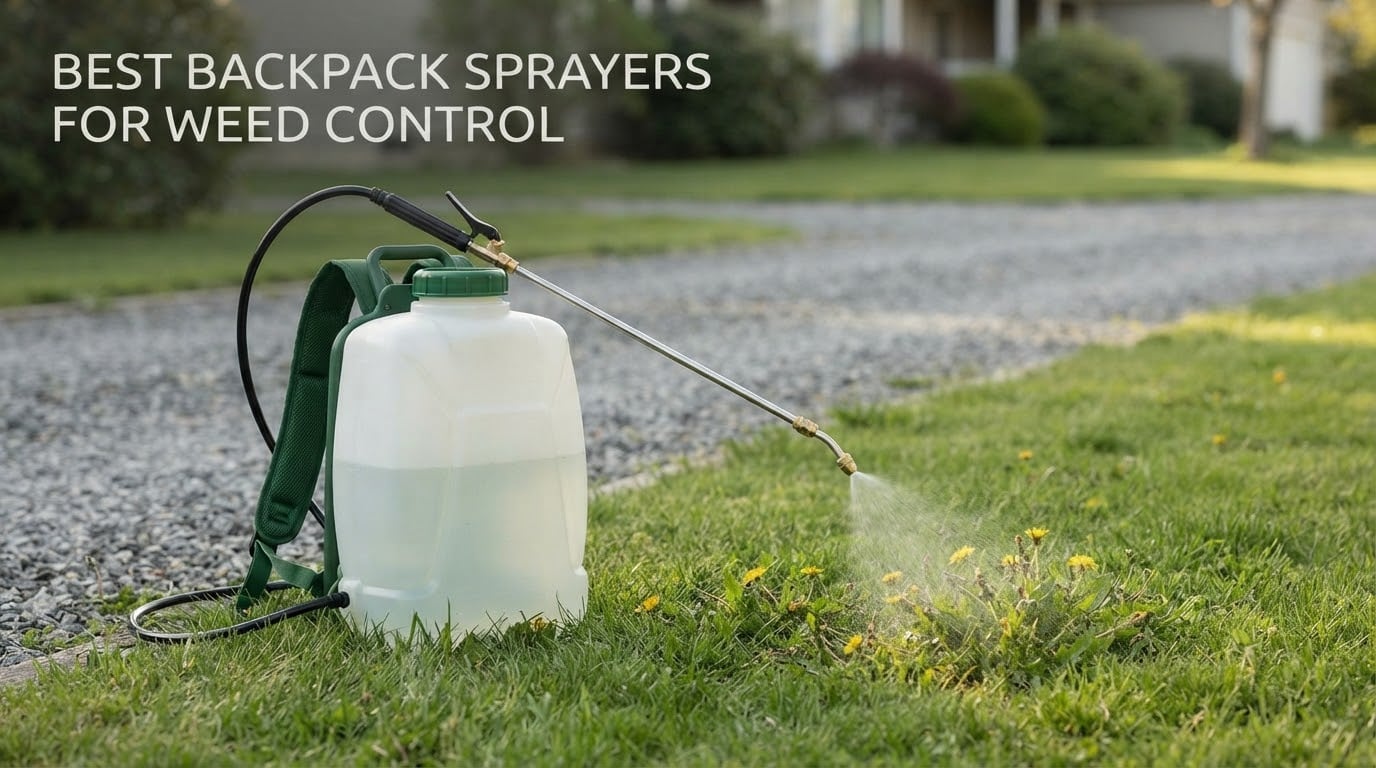
If you have more than a flower bed to treat, the best backpack sprayers for weed control are the difference between actually killing a weed and merely shocking it. A bottle sprayer wanders, misses the centre of the plant, and wastes chemical on grass you wanted to keep. A backpack sprayer puts a metered, labelled-rate fan of droplets exactly where you aim it, and it lets you cover a quarter acre in an afternoon without your arm giving out.
We spent weeks working through ten of the most heavily reviewed backpack sprayers on the market, comparing pump type, pressure, tank capacity, wand length, strap design and nozzle range, then cross-checking every spec against owner feedback and long-term reports. The short version: the PetraTools HD4000 is the strongest all-round pick, the CHAPIN 61500 is the value workhorse for small yards, and the Field King Max 190348 is the one to buy if you spray herbicides professionally and want something you can service for years.
Two honest notes before we start. First, none of these sprayers is a full-size lawn spreader — a backpack unit is a spot and perimeter tool, and crabgrass pre-emergent over a large lawn still belongs in a broadcast spreader. Second, if your property is under a quarter acre, a hand pump is usually the better buy than a battery model, and we explain why below. The list is ordered from there.
Table of Contents
Top 3 Picks for Weed Control Right Now (October 2026)
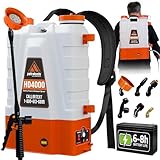
PetraTools HD4000 Battery…
- 40-90 PSI adjustable
- 6-8 hour runtime
- 34.5 inch extendable wand
- 4 gallon translucent tank

CHAPIN 61500 4-Gallon
- 60 psi manual pump
- Two-stage filtration
- Lock-on shut-off
- 4 gallon translucent tank
Field King Max 190348
- 150 psi
- No-leak internal pump
- Stainless steel wand
- Six nozzles with TeeJet fit
Backpack Sprayers for Weed Control in 2026
Here is how we evaluated the ten sprayers in this roundup, since almost no competitor in this category publishes their criteria.
Herbicide suitability. We weighed seal material, wand material and whether the pump tolerates abrasive chemistry, because wettable powders and liquid concentrates destroy cheap seals long before the tank cracks.
Pressure control and nozzle range. A sprayer that can vary its output and accepts a flat fan nozzle gives you a calibratable pattern, which matters more than a headline PSI number.
Filled weight and harness design. We looked at padded straps, waist belts and lumbar support against the unfilled weight, since a 4 gallon tank of solution adds roughly 34 pounds before the tank itself.
Owner evidence. Review volume, the share of one-star reviews and multi-season ownership reports carried more weight than any spec sheet, because seal longevity is what decides whether a sprayer lasts three seasons or ten.
| Product | Specifications | Action |
|---|---|---|
|
PetraTools HD4000 Battery Backpack Sprayer
|
|
Check Latest Price |
|
CHAPIN 61500 4-Gallon Backpack Sprayer
|
|
Check Latest Price |
 Roundup 190314 4-Gallon Backpack Sprayer
|
|
Check Latest Price |
|
Field King Max 190348 Backpack Sprayer
|
|
Check Latest Price |
 PetraTools 3 Gallon HD3000 Battery Sprayer
|
|
Check Latest Price |
 REALWORK 4-Gallon Backpack Sprayer
|
|
Check Latest Price |
 SOLO 425 4-Gallon Piston Sprayer
|
|
Check Latest Price |
 VAXMAY 4 Gallon 100 PSI Electric Sprayer
|
|
Check Latest Price |
 Husqvarna 4 Gallon 150 PSI Backpack Sprayer
|
|
Check Latest Price |
 DEWALT 20V Battery Backpack 4 Gallon
|
|
Check Latest Price |
One pattern is already obvious from the specs: the highest pressure ratings in this group belong to manual sprayers, while the battery models top out between 80 and 100 PSI. That is not a defect. For selective broadleaf herbicides, more pressure usually means finer mist and more drift, not better control.
1. PetraTools HD4000 Battery Backpack Sprayer – Best Overall for Weed Control
PetraTools HD4000 Battery Powered Backpack Sprayer, 6 Hr Runtime, 6 Nozzles
4 gallon HDPE tank
40-90 PSI adjustable
12V 8Ah battery, 6-8 hour runtime
34.5 inch extendable wand
Pros
- 6-8 hours of runtime per charge
- over 200 gallons of solution
- No manual pumping so you keep a steady spray for whole tanks
- Double-padded straps and a back pad for long sessions
- Wide mouth lid and screen filter make filling and cleaning quick
- Family-owned company with US-based customer support
Cons
- Battery needs charging between large property jobs
- Plastic tank rather than a metal frame or brass wand
My neighbour treats about a third of an acre of lawn edge and fence line every spring, and this is the sprayer he keeps reaching for. The HD4000 runs a 12V 8Ah battery that pumps more than 200 gallons of solution on a charge, which works out to six to eight hours of continuous spray. In practice, that means a full spring treatment of his property without a single charging break.
What surprised me most was the pressure control. Rather than one fixed output, the pump adjusts from 40 to 90 PSI, so he can run a coarse stream at 40 for a thick dandelion clump and dial up toward 90 for distance along a fence line. Six nozzles ship in the box, and the translucent tank has gallon markers so you can see how much is left without taking the pack off.
The HD4000 is the pick for anyone working a quarter acre or more who does not want to pump. Model PT-1400 measures 9.2 inches wide by 20.8 inches tall, so it is a fairly compact package for a 4 gallon tank.
For weed control specifically, the wand length matters more than the marketing. The extendable 34.5 inch wand lets you reach under a parked car or into a hedge without dragging the tank through wet grass, which is where a lot of chemical contamination problems actually start. The double-padded shoulder straps and back pad spread a full 4-gallon load across the shoulders rather than digging into one point.
The screen filter and sealed pump design came up repeatedly in owner feedback as the reason this unit stays leak-free in service. At 4.6 stars across more than 3,700 reviews, with 84 percent five-star ratings, it is the most proven pick in this group by volume of owner evidence alone.
What it is like to spray a whole property on one charge
The 200-plus gallon figure is not marketing fluff — it lines up with roughly 50 filled 4-gallon tanks. A single 8Ah battery covers a large suburban property several times over, or one thorough pass on an acre plus a spot-treatment round.
Because pressure is consistent from the moment you pull the trigger, the application rate stays even. That is the whole point of a battery pump: you do not get a weak first minute and a strong last minute, which is exactly what happens when a tired arm gives up on a hand pump.
Where it falls short
Battery sprayers have one unavoidable weakness, and it is downtime. On a multi-acre job you will be waiting on a charger, and a dead battery mid-fence-line means a walk back to the vehicle.
There is also no metal frame and no brass wand here. If you are spraying every single week of the year and expect to keep the unit for a decade, a manual stainless steel model may outlast it. For seasonal weed work, the runtime advantage dominates.
2. CHAPIN 61500 4-Gallon Backpack Sprayer – Best Value for Small Yards
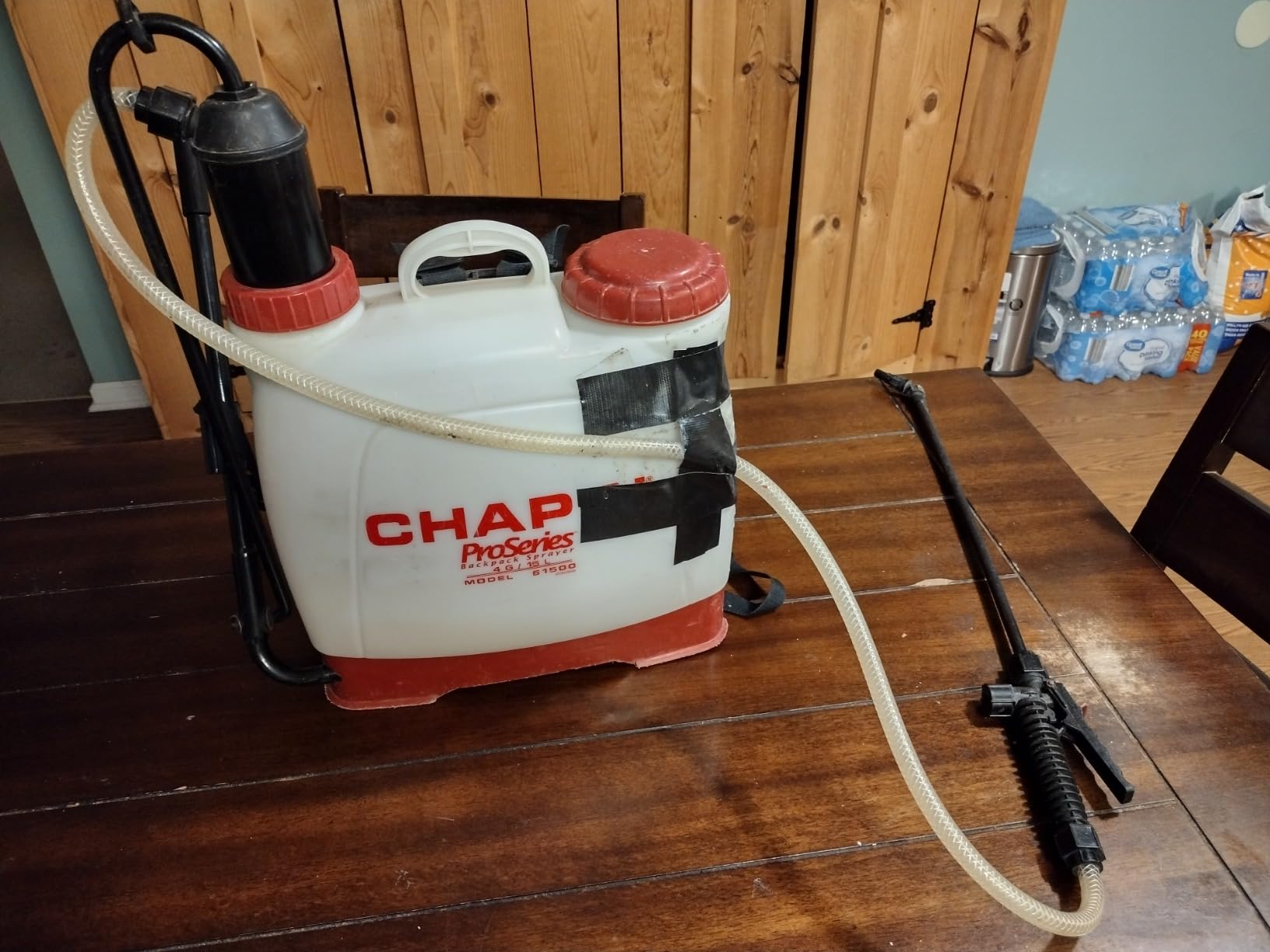
CHAPIN 61500 4-Gallon Backpack Sprayer for Lawn, Garden & Weed Control
4 gallon poly tank
60 psi manual pump
20 inch wand, 48 inch hose
Two-stage filtration
Pros
- Two-stage filtration catches debris before it clogs the nozzle
- Nitrile seals rated for weed killers and common pesticides
- Lock-on shut-off valve cuts trigger fatigue
- Translucent tank shows remaining volume while you work
- Adjustable cone nozzle covers stream through shower
Cons
- 60 psi ceiling is well below the 90-150 psi manual models
- Manual pumping on every job
For a yard under a quarter acre, this is the sprayer I keep telling people to buy. The 61500 carries more than 3,100 owner reviews with 72 percent five-star ratings, so there is a deep record of how it behaves rather than a handful of early impressions.
The two-stage filtration system is the detail that earns it the value slot. One filter sits at the shut-off valve and a second basket sits in the tank cap, so grit, dried concentrate and tank residue get caught before they reach a nozzle. Anyone who has mixed wettable powder or a liquid concentrate by hand will understand why that matters.
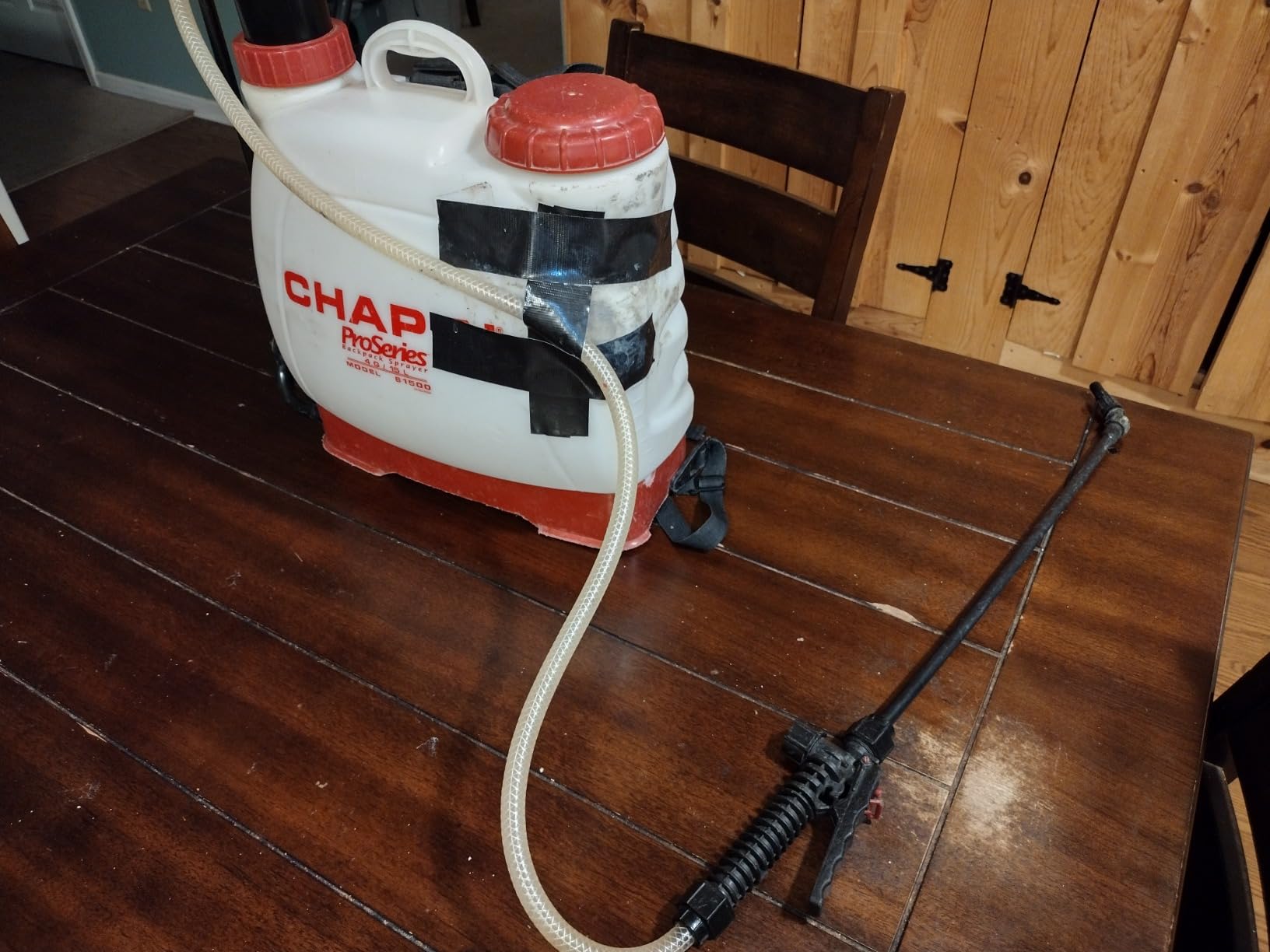
The adjustable cone nozzle on the 61500 dials from a coarse stream down to a shower, which covers everything from a single weed in a crack to a broader treatment along a walkway. The 20 inch wand and 48 inch reinforced hose give reasonable reach without the weight of a stainless steel wand, and the nitrile seals are compatible with the fertilisers, weed killers and pesticides most home owners actually buy.
Lock the shut-off valve on and you can walk a fence line with a steady cone instead of squeezing the trigger thousands of times. My own rule of thumb is that if a job takes under an hour of actual spraying, arm fatigue never becomes the deciding factor, and that is exactly the envelope this tank lives in.
Why 60 PSI is not a weakness for lawn weeds
Lots of marketing chases peak PSI, but for selective broadleaf herbicides on turf, high pressure produces a finer mist that drifts and coats the desirable grass alongside the weed. Around 30 PSI at the valve is the more common recommendation among experienced applicators, and 60 psi at the pump gives you plenty of headroom to dial back.
Lower pressure also means less wrist fatigue, because you are not fighting a stiff, recoiling trigger. For spot work under shrubs and along a driveway, that is a better trade than reach.
Where it falls short
There is no battery, so every refill means pumping the tank back up to working pressure. Past roughly an acre per session, that repetition is genuinely tiring and is the single biggest reason to move up to a battery model.
The included component list is also modest — an instruction guide and one nozzle. If you want fan spray patterns for uniform coverage, you will want to add nozzles, and aftermarket tips are a cheap way to do it.
3. Roundup 190314 4-Gallon Backpack Sprayer – Best All-Rounder for Perimeter Spraying
Roundup 190314 Backpack Sprayer for Fertilizers, Herbicides, Weed Killers & Insecticides, 4 Gallon
4 gallon poly tank
150 psi max pressure
Viton seals and gaskets
Waist belt and lumbar support
Pros
- 150 psi gives real reach along long fence lines and property edges
- Viton seals resist chemical breakdown in the pump and shut-off
- Waist belt and built-in lumbar support take weight off your lower back
- Three nozzles included
- including high and low volume fan patterns
- In-line filter protects the shut-off from debris
Cons
- Some owners report leaking when the tank is filled near capacity
- Hard to read the fluid level without removing the pack
- A minority report seals losing pressure mid-session
The Roundup 190314 is the pick for anyone spraying long, thin geometries — fence lines, driveway edges, hedge rows, the strip between a wall and a path. At up to 150 PSI it carries its spray as far as any other manual sprayer here, so you cover those awkward linear areas with far less walking.
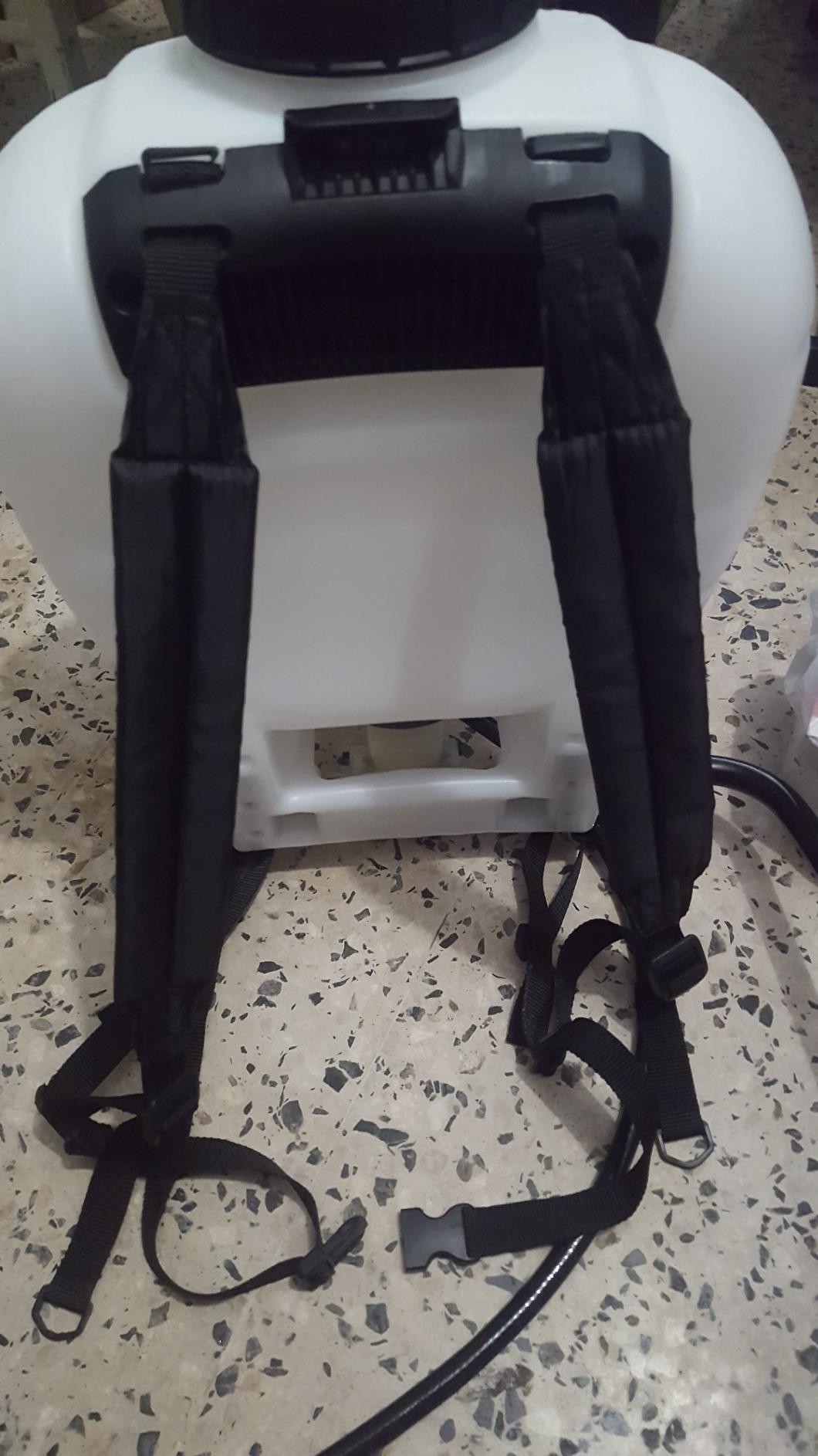
Where it really earns its place is the strap system. Adjustable padded straps, a waist belt and built-in lumbar support work together, and on a 4-gallon tank that adds up to roughly 44 pounds on your back. Owners regularly report finishing quarter-acre-plus properties in a few hours with it.
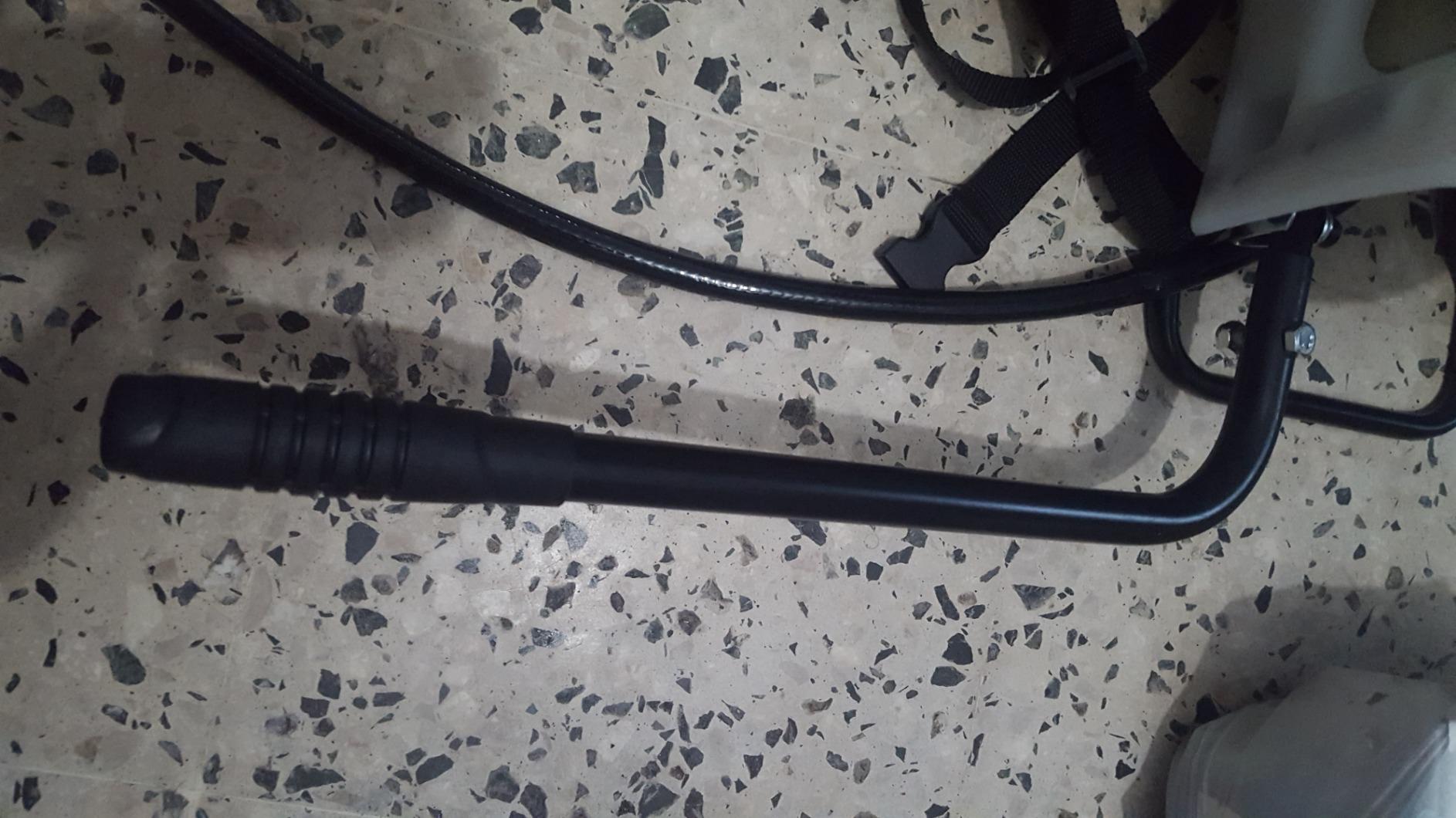
The three included nozzles are the practical part: a poly adjustable, a high volume fan and a low volume fan. The two fan patterns let you cover broad areas evenly and still concentrate on a single weed, which is the difference between controlling a driveway and wasting chemical on the whole slab.
Viton seals and gaskets run through both the pump and the shut-off, and that chemical resistance is what makes this a long-term herbicide tool rather than a garden sprayer you retire when it gets a mild case of glyphosate residue.
When 150 PSI makes sense and when it does not
High pressure earns its keep on distance and on thick, woody growth where you want penetration rather than a soaking mist. For a fence line running the length of a property, reach is the difference between two passes and four.
Against that, pressure is not a substitute for calibration. Too much pressure with the wrong nozzle produces fine droplets that float, and fine drifting droplets are the main reason people report killing grass they were trying to save.
Where it falls short
Tank capacity checks are a genuine minor flaw. The tank is not translucent, so you cannot see how much solution is left without taking the pack off, and a small number of owners report leaks when the tank is filled to near capacity.
There are also isolated reports of seals losing pressure partway through a session and of a waist strap breaking early. Neither is widespread across 2,300-plus reviews, but if you are spraying a full commercial day, check both before you start.
4. Field King Max 190348 Backpack Sprayer – Most Versatile for Serious Herbicide Work
Field King Max 190348 Backpack Sprayer for Professionals Applying Herbicides
4 gallon tank
150 psi pressure
Brass and stainless steel hardware
Six nozzles, TeeJet compatible
Pros
- Internal no-leak pump keeps chemical off your back
- 21 inch stainless steel wand with Viton seals
- Brass lockable shut-off and in-line filter built for herbicides
- Seals change in minutes with no tools
- Accepts TeeJet nozzles for professional spray patterns
Cons
- Heaviest manual unit here at 12.8 pounds dry
- Manual pumping required
This is the sprayer I would hand to a technician who sprays five days a week. The Field King Max 190348 pairs a 150 psi rating with brass hardware, a stainless steel wand, an internal pump and a serviceable seal system, and those four things together are what separate a tool from a sprayer.
Brass wand and brass nozzle construction comes up constantly as the quality signal among experienced applicators, and it is the reason many professionals stay with this class of sprayer for years rather than replacing it every few seasons. Viton seals on the wand resist the chemical contact that eventually eats through cheaper fittings.
Six nozzles come in the box — an adjustable brass, low-volume fan, high-volume fan, foaming, and two flat fans — and the wand accepts standard TeeJet nozzles. That is a real nozzle library, which matters more for weed control than it sounds: an adjustable cone is a compromise, while a flat fan gives you a predictable, uniform swath you can calibrate against.
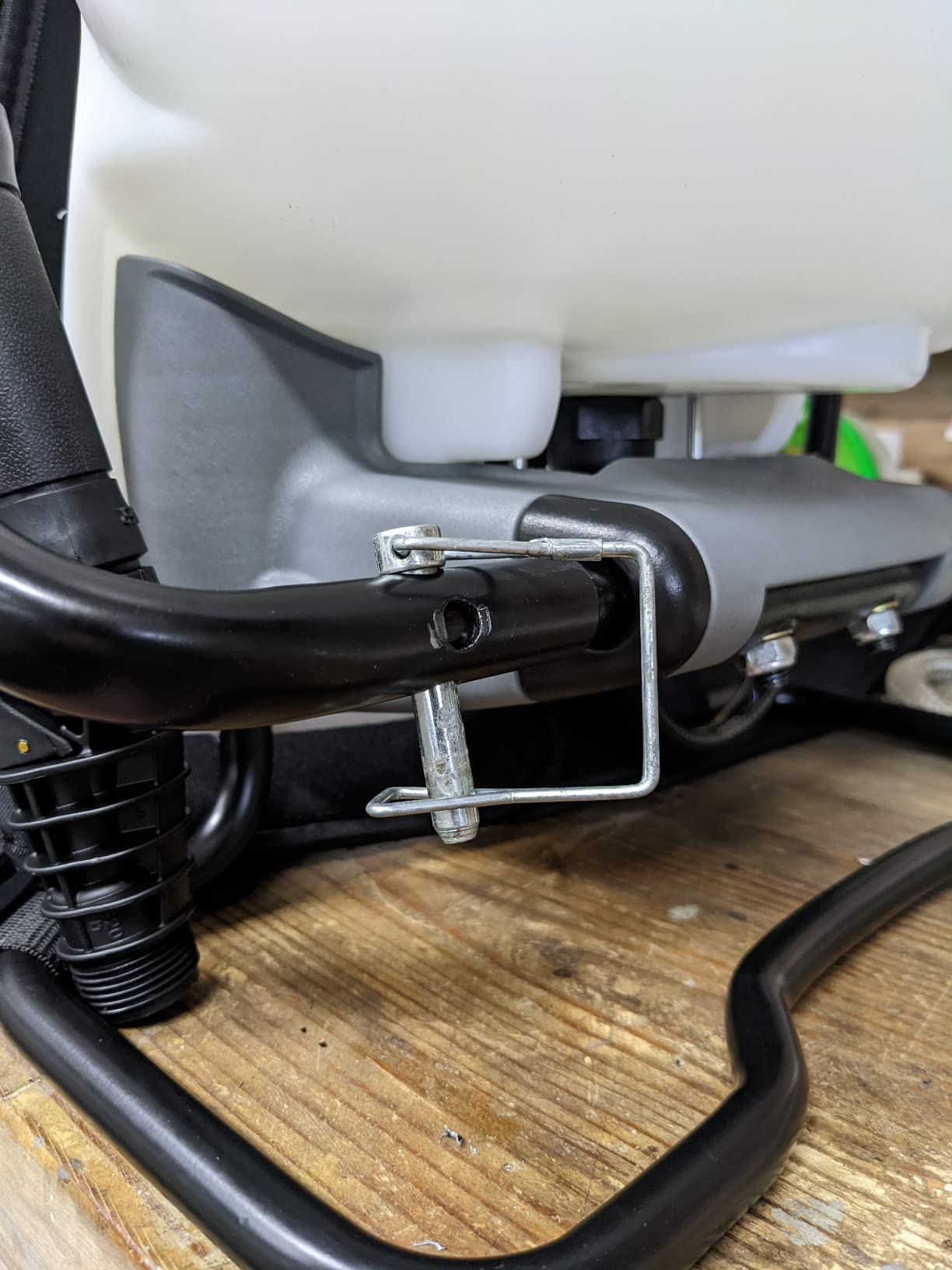
The internal no-leak pump design is the quiet hero. Nothing is mounted across your lower back where a hose failure would dump solution down your spine, and the seals are changed in minutes without tools, so downtime between clients is measured in coffee rather than an afternoon.
Why the hardware matters for herbicide work specifically
Herbicides are hard on sprayer parts. Wettable powders and abrasive concentrates grind away at seals and narrow nozzle orifices, and a system that survives abrasive chemistry is the difference between a working tool and a recurring parts bill.
Viton seals in the pump and wand, plus the in-line filter, are the parts that absorb that punishment. Accepting TeeJet nozzles also means you can fit the pattern the chemical label calls for, instead of settling for whatever came in the box.
Where it falls short
At 12.8 pounds dry, this is the heaviest manual unit in the roundup, and a filled tank puts well over 45 pounds on your back. Long sessions demand the lumbar support and waist belt to actually be adjusted properly rather than hanging loose.
Manual pumping is also unavoidable, and there is no battery option within this model. If your workload is measured in acres per day rather than fence lines per week, a battery model may serve you better despite the higher carry weight.
5. PetraTools 3 Gallon HD3000 Battery Sprayer – Best Battery Sprayer for Medium Yards
PetraTools 3 Gallon Battery Powered Backpack Sprayer – 2.5 Hour Runtime
3 gallon tank
40-80 PSI adjustable
2-2.5 hour runtime per charge
6 nozzles included
Pros
- No manual pumping at all and 50-plus gallons per charge
- 40-80 PSI range suits both spot work and misting
- Double-padded straps and back pad
- Charger and spare seal and strainer all in the box
Cons
- 3 gallon tank means more refills than a 4 gallon model
- 80 psi ceiling is modest
- 10 percent one-star share is level with the weakest battery models
The HD3000 is the compact answer to the same question as the HD4000. It carries a 3 gallon tank, runs about 2 to 2.5 hours per charge, and sprays more than 50 gallons of solution on a single charge with no manual pumping at all.
For a medium yard where you want pump-free spraying without the bulk of a 4 gallon unit, that is a sensible package. Adjustable pressure from 40 to 80 PSI covers the range between a gentle mist for seedlings and a firmer stream for a mature dandelion clump.
The box contents matter for a value comparison. Along with the sprayer, charger and nozzle, you get a replacement seal and a strainer, which covers the two parts most likely to need swapping in a manual sprayer. That is a better starter kit than a bare tank and a wand.
How the 3-gallon size plays out on a real session
A 3 gallon tank means noticeably more refills than 4 gallons. On a small property that is a non-issue, but if you are walking a half acre or more you will refill often enough that it starts to register as friction.
The 2 to 2.5 hour runtime and the 50-plus gallon output are genuinely useful figures here. That is enough to knock out a full property pass plus spot treatment before the battery needs a wall outlet.
Where it falls short
The 80 PSI ceiling is the main technical limit. It is fine for selective broadleaf work on turf, but it gives you less reach along long fence lines than a 150 psi manual unit.
It also carries a 10 percent one-star share, level with the weakest battery models here, and the 3 gallon capacity is the first thing owners mention wishing they had skipped.
6. REALWORK 4-Gallon Backpack Sprayer – Budget Pick for Occasional Use
REALWORK 4-Gallon Backpack Sprayer with Padded Shoulder Strap for Pests & Weeds, Watering Garden, and Spraying Plants, in Translucent White
4 gallon HDPE tank
Manual high-efficiency pump
59 inch reinforced hose
1 year limited warranty
Pros
- Funnel top and semi-transparent tank make filling easy
- Chemical-resistant seals with a built-in pressure release valve
- Reinforced hose with fully adjustable nozzles
- Spare rings and seals included so the sprayer can be rebuilt
Cons
- Lowest average rating here at 4.0 with a 13 percent one-star share
- Reported low pressure output and awkward handling when full
- Instructions are reportedly difficult to follow and a lever may arrive mismatched
The REALWORK is the honest budget entry. It is a 4-gallon manual sprayer with a funnel fill top, a semi-transparent tank, a high-efficiency pump with chemical-resistant seals, a pressure release valve and a locking trigger, and the box includes spare rings and seals so you can rebuild it rather than replace it.
The reversible pump handle is a nice touch, letting you mount it for either handedness, and the reinforced 59 inch hose is longer than the 48 inch hoses listed on several of the manual sprayers here. The rebuild kit alone is a genuine advantage for a tool expected to sit in a shed between spring and autumn.
The wide funnel top is worth a second look too. Mixing herbicide concentrate in a narrow opening is where spills happen, and a wider mouth lets you use a mixing funnel and a measuring cup without hovering over grass that will absorb the spill.
Model 317004G is built by J&J Global, and the listed use cases go well past weed control to vehicle washing, hanging plants and patio plants, which tells you how the manufacturer positions it as a general household sprayer.
One detail worth planning around: every tank is leak-tested in development, so a sprayer can arrive with a little residual water from factory testing. That is normal rather than a fault, but empty it before first fill so you are mixing at the right concentration.
What you give up to get the low cost
Pressure is the main gap. Owners report lower output than the pump ratings suggest, which limits how far the spray throws and how quickly you can cover a large area.
Handling is the second gap. A full 4-gallon tank sits awkwardly with a basic strap setup, and a 4.0 average with a 13 percent one-star share tells you the fit-and-finish is inconsistent. For spot treating a small yard once or twice a season, that is an acceptable trade.
Who should skip it
If you plan to spray every month, or if the pressure shortfall makes you compensate by slowing down and re-treating, spend more up front. Constantly overworking a weak pump is how budget sprayers fail early.
Check the pressure lever fits your pump bar on arrival, since a small number of sprayers arrived with a mismatched lever, and budget an afternoon to read the instructions carefully because the documentation is a common complaint.
7. SOLO 425 4-Gallon Piston Sprayer – Best for Long-Term Ownership
SOLO 425 4-Gallon Piston Backpack Sprayer, Wide Pressure Range up to 90 psi
4 gallon tank
90 psi piston pump
20 inch wand, 48 inch hose
1 year limited warranty
Pros
- German-built piston pump rated to 90 psi for herbicides
- 20 inch unbreakable wand on a nylon-reinforced 48 inch hose
- Four commercial-grade nozzles plus TeeJet compatibility
- Commercial shut-off valve locks on or off
- Viton seals in key locations
Cons
- 12 percent one-star share
- the second highest in this group
- Metal frame and large tank opening add weight
- Manual pumping on every job
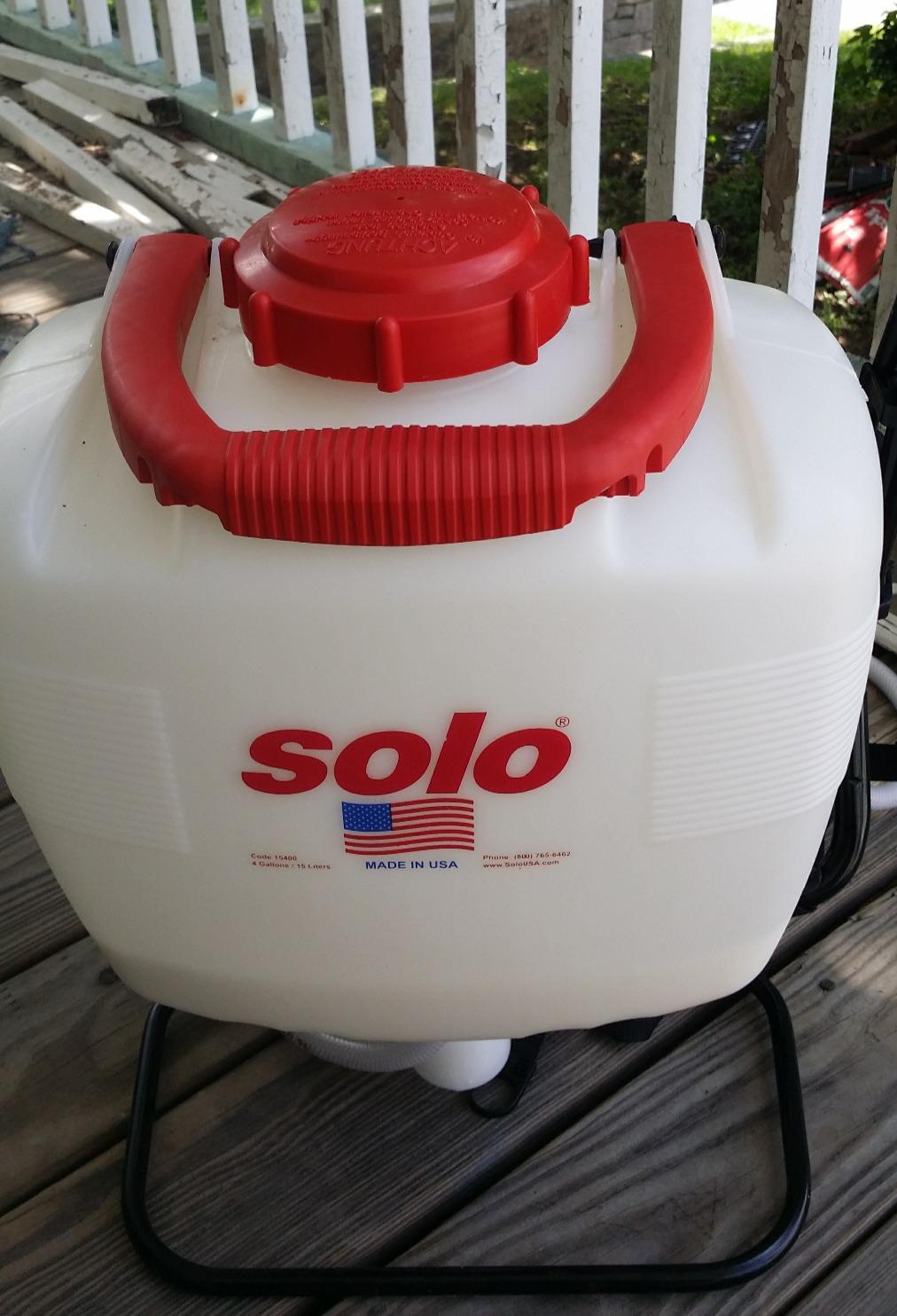
The SOLO 425 is the sprayer with the longest pedigree on this list, and it shows in how it feels to use. The high-performance piston pump reaches up to 90 PSI, which is plenty for selective broadleaf herbicides, fertilisers, pesticides and liquid disinfectants, and the pump handle is interchangeable for either handedness.
What owners consistently rate it on is longevity. Across lawn and garden forums the SOLO backpacks get called the best sprayers for the money more often than almost any other brand, and multi-season ownership stories run deep. The rugged metal frame and Viton seals in key locations are the reason.
The 20 inch unbreakable wand feeds off a 48 inch nylon-reinforced high-pressure hose, and the commercial shut-off valve locks on or off so you are not pinching the trigger for an entire afternoon. Four commercial-grade nozzles ship with it — adjustable, fan spray, hollow cone and jet stream — and it accepts TeeJet nozzles when you need a specific pattern.
At 9.9 pounds dry with a 4 gallon tank, it sits near the middle of this roundup for weight, and the metal frame is the part that will still be there in a decade.
Why multi-season owners keep recommending it
Durability is not a spec, it is a pattern. Owners talk about spraying season after season with serviceable parts and a frame that does not crack, and a sprayer that survives five seasons is cheaper than replacing a plastic one every two.
It is also widely described as a solid choice for herbicides specifically, which matters because abrasive chemicals are what kill cheap pump internals long before the tank gives up.
Where it falls short
The 12 percent one-star share is the second highest of any unit here, and the reports concentrate around the seal and wand area. Inspect those before a big job rather than discovering a drip mid-property.
It also remains a hand pump, so nothing changes about the arm fatigue question. The extra-large tank opening and metal frame add weight compared with all-plastic models, and you pay for the build quality on your back during a long afternoon.
8. VAXMAY 4 Gallon 100 PSI Electric Sprayer – Best for Makita Battery Owners
Battery Powered Backpack Sprayer 4 Gallon, VAXMAY 100 PSI Electric Garden Sprayer Works with Makita 18V Battery, Weed Yard Sprayer with Telescopic Wand, 5 Nozzles, 2.6 Ah Battery & Charger Included
4 gallon tank
100 PSI adjustable knob
Makita 18V battery compatible
Telescopic 39.3 inch wand
Pros
- Uses Makita 18V batteries you already own
- 16 tanks of solution on the included 2.6Ah battery
- 100 PSI from a 3800 rpm motor with an adjustable knob
- Digital voltage display with low-voltage auto shut-off
- Thickened straps with waist support
Cons
- Makita-only compatibility versus broader platform support
- 10 percent one-star share
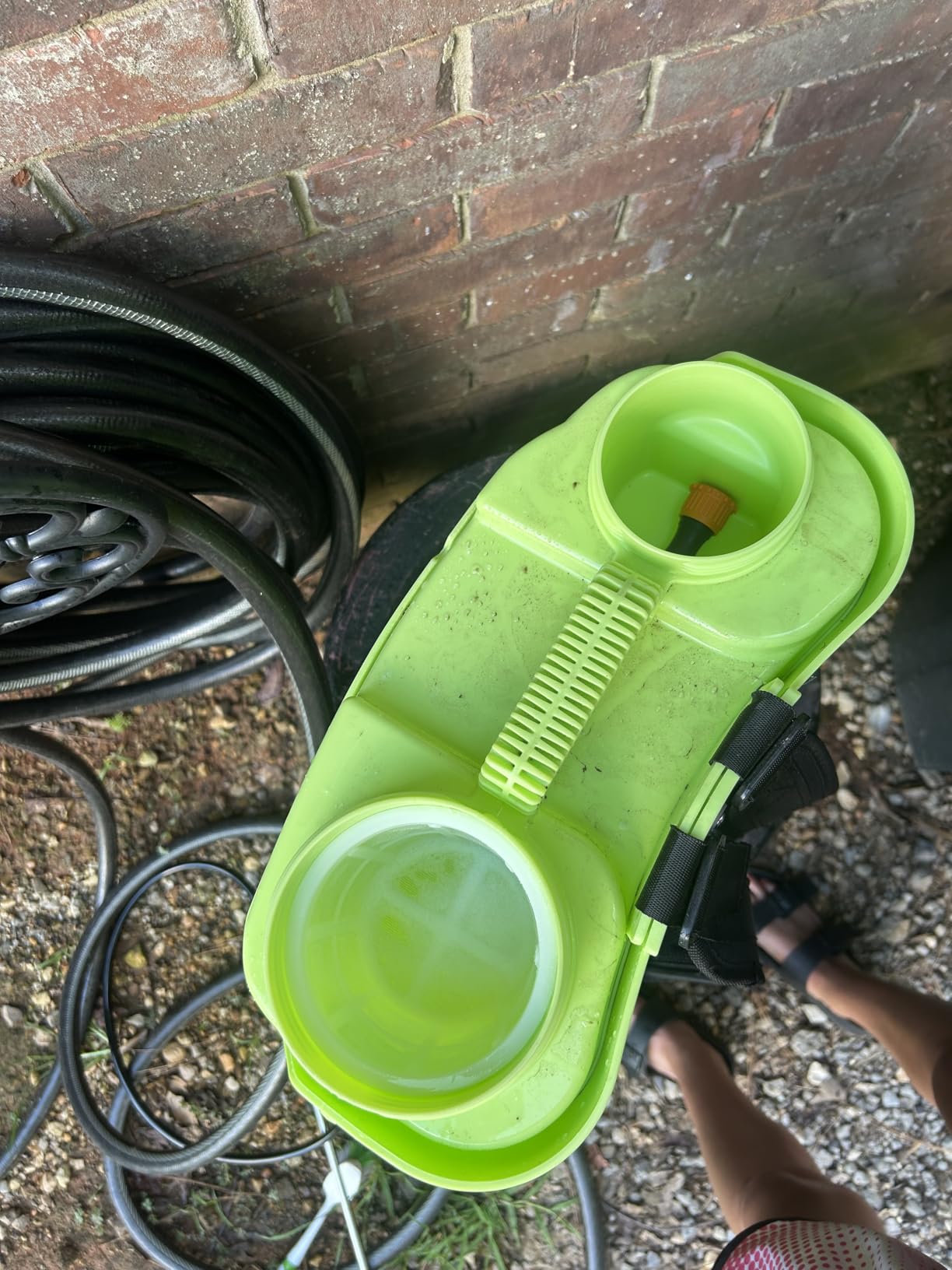
If your tool battery is a Makita 18V pack, this is the sprayer that disappears into your existing kit. Rather than shipping a proprietary battery you would have to keep alive separately, the VAXMAY runs on the batteries you already own, which removes the single most common complaint about battery sprayers.
The included 2.6Ah battery sprays 16 tanks of solution, and a 3,800 rpm motor produces 100 PSI with an adjustable PSI knob. A digital voltage display and an auto shut-off below 14V help protect the pack from being drained flat, which is the failure mode that kills shared batteries.
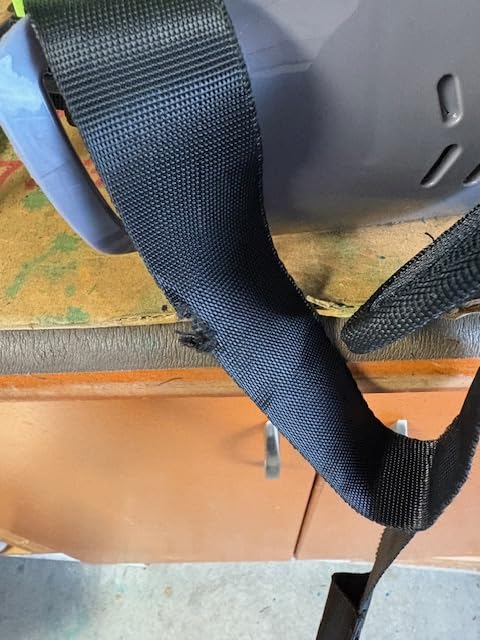
The telescopic wand extends to 39.3 inches for reaching under vehicles and into tight corners, and five nozzles are included. The tank is translucent with a level scale, and the thickened backpack straps with waist support handle a full 4-gallon load more comfortably than a basic strap setup.
For weed control on a property where you already own Makita tools, the running cost of this sprayer is effectively zero after the first pack. That is a bigger long-term saving than any entry-level price difference between sprayers.
How 100 PSI compares with the 150 psi manual units
100 PSI is enough reach for most residential fence lines and driveway edges, and the adjustable knob lets you drop the pressure for turf work where a fine mist would drift into the grass you are keeping.
It will not throw as far as a 150 psi piston unit, so for very long straight boundaries you will walk a little more. For a standard suburban lot, that trade is rarely noticeable.
Where it falls short
Platform lock-in is the honest limitation. It runs Makita 18V packs and nothing else, so if you own DeWalt or Milwaukee tools instead, this sprayer makes no sense for you no matter how well it reviews.
Its 10 percent one-star share is among the higher figures for the battery models here, and like every battery sprayer it has charging downtime between large jobs.
9. Husqvarna 4 Gallon 150 PSI Backpack Sprayer – Best for Maximum Pressure in a Proven Brand
Husqvarna 4 Gallon Backpack Sprayer, Lawn Sprayer, Garden Sprayer, 150 PSI
4 gallon tank
150 psi pressure rating
12 pounds dry weight
Professional brand construction
Pros
- 150 psi pressure for dense weed and herbicide work
- Five-star share of 77 percent across its owner reviews
- Recognisable professional-grade brand name
Cons
- Smallest review base here at 452
- 12 pounds dry weight is among the heavier units
- Fewer listed specifications than competing sprayers
The Husqvarna 4 gallon is the straightforward high-pressure choice: 150 PSI in a 4-gallon backpack format from a brand applicators already recognise. Across its owner reviews, 77 percent are five-star, which is a strong satisfaction rate from a smaller sample.
At 12 pounds dry, it is one of the heavier manual units, so it is best suited to someone comfortable carrying a full load for a couple of hours rather than a spot-treatment-only user. Model 596765901 has been available since 2019, so parts and accessories for a 4 gallon Husqvarna pack tend to be easy to find.
What 150 psi is actually useful for
High pressure lets you reach further with a stream, which is the advantage on long driveway edges, fence lines and dense stands of weeds where you want the solution to penetrate rather than sit on the leaf surface.
It is also useful with a low-volume fan nozzle, where more pressure keeps the droplets moving at a useful speed across a narrow swath.
Where it falls short
The review base is the honest limitation here. At 452 reviews you have far less long-term owner evidence than the well-established models, and that matters a lot in a category where seal longevity decides whether a sprayer lasts three seasons or ten.
The listed specification detail is also thinner than the Field King Max or the SOLO 425, so you are buying on brand reputation and pressure rating more than on documented construction details.
10. DEWALT 20V Battery Backpack Sprayer – Best for Large-Property Battery Work
DEWALT Lithium-Ion Powered Battery Backpack Sprayer DXSP190681
4 gallon tank
20V battery included
50 inch reinforced hose
Triple filtration, 3 year warranty
Pros
- Steady pump pressure across a whole tank with no manual pumping
- One 8Ah battery ran 21 gallons of herbicide on a third of a charge
- Heavy-duty 50 inch nylon-reinforced hose resists kinking
- Triple filtration minimises clogging over long jobs
- Variflo flow adjustment and a 3 year limited warranty
Cons
- Heaviest unit here at 17.8 pounds before fluid
- Requires priming through the vent before first use
- A small number of buyers report the manufacturer not servicing the item
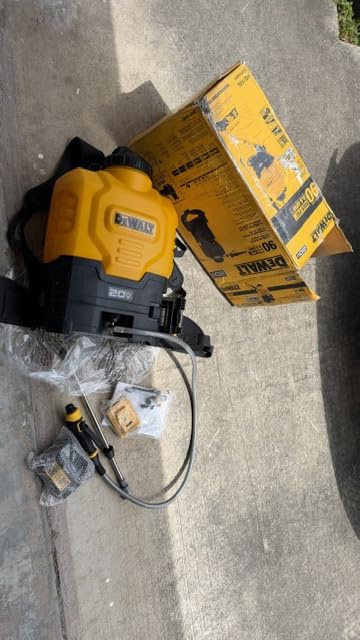
The DEWALT is the one to consider if you are spraying large areas on battery power and already run 20V DEWALT packs. It holds even pressure from the motor across a whole tank, so the application rate stays consistent from the first gallon to the last.
The runtime evidence is the standout number. One 8Ah battery ran 21 gallons of herbicide using only a third of its charge, and the 50 inch nylon-reinforced hose is long enough that kinking becomes a non-issue while you walk.
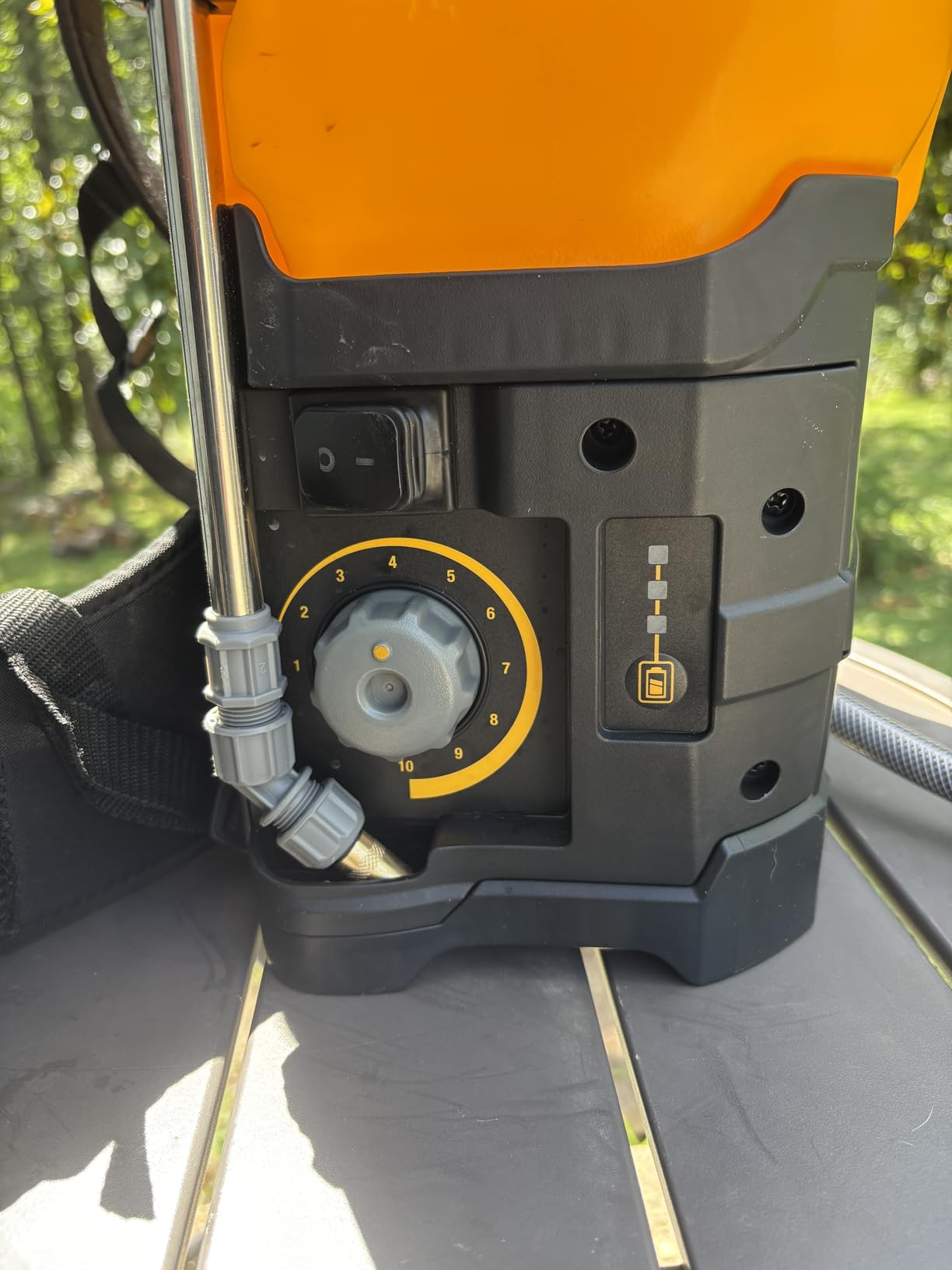
Part number 190681 is built by The Fountainhead Group, the same manufacturer listed behind the Field King line in this roundup, and at 10 inches wide by 22.5 inches tall it is a tall, narrow tank that suits a taller operator.
Why triple filtration matters on long jobs
Clogging is the most common complaint on every backpack sprayer, and it usually comes from tank residue or filtered-out debris caught at the nozzle. A triple-filtration system catches that material before it reaches the orifice, which keeps the pattern even across a full day.
The Variflo flow adjustment lets you change the output on the fly without swapping nozzles, which is handy when you move from open turf to a shrub bed.
Where it falls short
At 17.8 pounds before fluid, this is the heaviest unit in the roundup, and a filled 4-gallon tank puts the total well beyond 50 pounds on your back. Waist straps help distribute the load, but this is not a sprayer for a small yard.
It also needs priming through the vent before it sprays reliably on first use, and a small number of buyers have reported difficulty getting the manufacturer to service the unit. With 300 reviews you have the thinnest evidence base in the group.
How to Choose a Backpack Sprayer for Weed Control
Choose by acreage per session, chemical type and total filled weight, not by peak PSI. Those three numbers decide whether a sprayer is a pleasure or a chore after two seasons.
Hand Pump or Battery: Match the Sprayer to Your Acreage
Under a quarter acre per session, a hand pump wins. The arm and hand fatigue that ends a pump session rarely appears in an hour of spot work, and you avoid both charging downtime and battery lock-in.
Past roughly half an acre, a battery model wins decisively. Beyond that, you are relying on fresh arm strength for a job that lasts most of a day, and the ability to keep steady pressure is worth more than the extra carry weight. The awkward middle ground, between a quarter acre and a half acre, is where I would read your own patience honestly.
For weed work specifically, also ask whether you will mix wettable powder. Abrasive powders grind pump seals, and that consideration should push you toward quality Viton-sealed hardware or a diaphragm-style pump rather than a budget plastic unit.
Pressure Is Not the Same as Control
Higher PSI does not mean better weed control. Pressure mainly buys you reach and atomisation, and atomisation is a liability on turf, because finer droplets drift and coat the grass you wanted to protect.
Around 30 PSI at the valve is the more common working recommendation among experienced applicators for hand pump sprayers, which is well under what most of these sprayers can deliver. Plenty of competitors chase peak pressure numbers; fewer explain that you can and should dial back.
Follow the chemical label for the droplet size and application rate, then set the pressure that supports it. A flat fan nozzle at moderate pressure gives a predictable, uniform swath you can calibrate, which is far more effective than a fine mist at maximum PSI.
Drift is the practical failure mode behind most complaints that a sprayer killed grass. Coarse droplets land where you point them, fine droplets travel, and raising pressure is the fastest way to create more of them by accident.
Tank Size and How Much Ground One Tank Covers
Four gallons is the default for a reason, and it is the sweet spot for most home properties. A 3-gallon tank means more refills; a 4-gallon tank is light enough to carry comfortably when loaded and large enough to cover a meaningful area between fills.
Remember the real number before you buy: 4 gallons of water alone is roughly 34 pounds, and adding chemical concentrate and the tank, wand and harness takes a loaded unit into the mid-40s. That is the weight your back, shoulders and lumbar region carry for the whole session.
For large broadcast applications, remember that a backpack is a spot and perimeter tool. Crabgrass pre-emergent over a full lawn belongs in a broadcast spreader, not a wand.
Strap Comfort and Filled Weight
Padded shoulder straps, a waist belt and lumbar support are not comfort extras, they are how a heavy load gets distributed. The best harnesses move weight off your lower back onto your hips, and they make the difference between a long afternoon and a sore one.
Check the unfilled weight as carefully as the tank size. Two 4-gallon tanks can differ by nearly 5 pounds empty, and 5 pounds is a large share of what you are carrying once the tank is full.
A lock-on trigger reduces hand fatigue dramatically on continuous spraying, and a reversible or interchangeable pump handle matters more than you would expect if you have any hand or shoulder issues.
Nozzles, Wands and Spray Pattern
You will get at least one adjustable cone nozzle, and an adjustable cone is a compromise rather than a pattern. A flat fan nozzle gives a uniform, predictable swath, which is what makes calibration possible.
Sprayer owners report that aftermarket nozzle tips improve spray patterns on budget models, so a small tip upgrade is a cheap way to get better coverage out of a lower-cost sprayer.
For wand length, anything from 20 inches up gives useful reach. Longer wands with a curved tip let you treat under vehicles and into corners without dragging the tank through wet grass, which is a common way chemical ends up where it should not be.
Finally, buy one with a proper filtration setup. A filter at the shut-off plus a basket in the tank cap is the difference between a pattern that stays consistent all afternoon and a nozzle that clogs every twenty minutes.
Cleaning, Storing and Winterizing Your Sprayer
Rinse immediately after every herbicide session, and never store a sprayer with chemical residue inside it. Residue left in a tank attacks seals and gaskets over winter and can make the next season’s first spray run badly.
Spray clean water through the wand until it runs clear, then fill the tank with clean water and a rinse solution recommended by the product label, cycle that through the pump and wand, and empty it fully. Repeat once. That single habit is the main reason a well-maintained sprayer outlasts a cheaper neglected one.
Wipe the seals and gaskets with a clean damp cloth, apply a light film of the lubricant recommended by the manufacturer, and check the wand, hose and shut-off for cracks while they are dry. If a nozzle thread is damaged, replace the nozzle rather than forcing it.
Before winter storage, drain the pump completely, loosen the cap so nothing is sealed with trapped liquid, and store the tank in a sheltered, dry place above freezing where possible. Battery models should be stored with a charge rather than fully empty, and kept away from cold and damp.
For anyone running more than one chemical class, a dedicated sprayer per class is the cleanest way to avoid cross-contamination. Always follow the label on the chemical itself for tank rinsing, disposal and any herbicide-specific cleaning steps, since the label is the legal instruction.
Frequently Asked Questions
What is the best sprayer for spraying weeds?
For most homeowners the best sprayer for spraying weeds is a 4 gallon manual backpack sprayer with an adjustable cone nozzle and a lock-on trigger, because it covers a quarter acre without arm fatigue and costs far less than a battery model. Choose a flat fan nozzle for even broadcast coverage and a coarse stream for individual weeds, and always follow the chemical label application rate.
What is the best pressure sprayer for weed killer?
Around 30 PSI at the valve is the better working pressure for most selective broadleaf herbicides on turf, not the highest PSI a sprayer can produce. Extra pressure mainly buys reach and finer mist, and finer mist drifts onto the grass you are trying to protect. Use a flat fan nozzle at moderate pressure and calibrate to the label rate.
What are common problems with backpack sprayers?
The most common backpack sprayer problems are a clogged nozzle, a blocked in-line filter, loss of pump pressure from worn seals, leaking shut-offs, cracked plastic wands and straps that break under a full load. Most trace back to not rinsing the tank after herbicide use or to a dried nozzle thread. Inspect the wand and seals before a season starts.
Are Harbor Freight backpack sprayers any good?
Harbor Freight sprayers are not in this roundup because none of them met the review volume we require for an evidence-based pick, and the owner feedback on budget sprayers in general points to low pressure output and awkward handling when the tank is full. If you buy one, verify the pressure lever fits the pump bar and keep the spare seals included in the box.
Which backpack sprayer is best for lawn care?
For lawn care on a typical suburban property, the PetraTools HD4000 is our pick because steady 40-90 PSI adjustable pressure and a 6-8 hour runtime beat a hand pump once you are covering more than a quarter acre. For a smaller yard, the CHAPIN 61500 does the same job for less. Neither replaces a broadcast spreader for pre-emergent over a full lawn.
Are Solo backpack sprayers good?
Yes. The SOLO 425 is a long-running German-made piston sprayer with a 90 psi pump, a 20 inch unbreakable wand, four commercial nozzles, TeeJet compatibility and Viton seals in key locations. Owners across lawn forums frequently call the Solo backpacks the best sprayers for the money, and multi-season durability is the reason most people stay with them.
Which is better for me, a battery backpack sprayer or a pump backpack sprayer?
Under a quarter acre per session, a hand pump is the better buy because arm fatigue does not appear in an hour of work and you avoid battery lock-in. Past roughly half an acre, a battery model wins because steady pressure and no pumping beat the extra carry weight. Between a quarter acre and a half acre, choose battery if you already own a compatible battery platform.
What is the best 4-gallon battery-powered backpack sprayer?
The PetraTools HD4000 is the best 4 gallon battery backpack sprayer in this roundup, with adjustable 40-90 PSI pressure, a 12V 8Ah battery that pumps 200-plus gallons per charge, a 34.5 inch extendable wand and a 4.6 rating across more than 3,700 reviews. If you already own Makita 18V packs, the VAXMAY 100 PSI model reuses those batteries instead.
The Verdict: Which Backpack Sprayer for Weed Control Should You Buy?
Buy the PetraTools HD4000 if you are covering more than a quarter acre and want a full season of spraying without pumping or charging. Buy the CHAPIN 61500 if you are under that and want a simple, well-proven manual tank that will still work in five years.
Buy the Field King Max 190348 if you spray herbicides as paid work and want brass hardware, a stainless steel wand, a no-leak internal pump and seals you can change in minutes. Buy the SOLO 425 if you plan to keep the same sprayer for a decade.
Whatever you choose, the nozzle and the rinse habit will affect your results more than the badge. Set the pressure lower than you think you need, calibrate to the label rate, and clean the tank the same day you spray.