

Short answer: for hills under about 20 degrees, a self-propelled walk-behind with rear-wheel drive and variable speed control holds a grade far better than a cheap push mower. Past that, an all-wheel-drive robotic mower rated to 80% slope is the only machine that lets you stop riding sideways. The steepest climb in our set of the best lawn mowers for hills is about 38 degrees, on battery power alone.
We spent weeks comparing twelve machines for this roundup, from 170cc gas walk-behinds to all-wheel-drive robots, and read the owner reviews closely for the words that matter on a slope: traction, wheel speed control, weight, and how the machine behaves when the ground tilts under it. Nine of the twelve picks here are walk-behind mowers you push, and that is not an accident.
Nearly every guide to hilly lawns leans on riding mowers and zero-turns, which is sound advice if you already own three acres and a tractor. Plenty of us have a quarter-acre lot with a bank behind the house, a roadside verge, or a slope that turns a normal Sunday into a workout. Those yards are exactly where a 21-inch self-propelled mower earns its keep.
Here is how we judged. Traction hardware first: is the drive adjustable, or is it a fixed single speed that either bogs down or runs away from you. Then stability, which comes down to weight, wheelbase and where that weight sits. After that, honest owner feedback about hills specifically, and the practical details that show up in month two rather than in the spec sheet.
Table of Contents
Top 3 Lawn Mower Picks for Hills (October 2026)
Our top three cover three very different situations. The Greenworks leads on the balance of traction hardware, build quality and owner feedback volume. The Mammotion LUBA 2 AWD 5000HX is the steepest-climbing machine here, with a published 38-degree figure and four driven wheels. The SENIX puts a steel deck and hardened blades behind rear-wheel drive at a walk-behind price point.

Greenworks 80V 21in Self-Pr…
- Variable-speed rear-wheel drive
- Brushless motor with steel deck
- LED headlight and 4-year warranty

Mammotion LUBA 2 AWD 5000HX
- 4-wheel 165W motor
- 80% (38 deg) slope climbing
- RTK plus AI vision navigation
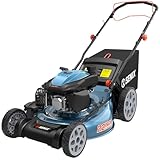
SENIX 22in 201cc Self-Prope…
- Rear-wheel self-propelled drive
- Steel deck with hardened 45-50 HRC blades
- 6-position height adjustment
All three are covered in full below, with the honest drawbacks owners actually report rather than the marketing line.
All 12 Best Lawn Mowers for Hills Side by Side in 2026
Every machine below appears in this table and gets its own section further down. Read the format first: if your slope is under about 20 degrees, start with the self-propelled walk-behinds. If it is steeper, the AWD robotic entries are the only ones here with published climb ratings that reach past 30 degrees.
| Product | Specifications | Action |
|---|---|---|
|
Greenworks 80V 21in Self-Propelled
|
|
Check Latest Price |
|
Mammotion LUBA 2 AWD 5000HX
|
|
Check Latest Price |
|
SENIX 22in 201cc Self-Propelled
|
|
Check Latest Price |
 YARDMAX 22in 201cc CVT High-Wheel
|
|
Check Latest Price |
 EGO POWER+ 21in LM2114SP
|
|
Check Latest Price |
 Worx 40V 21in WG760
|
|
Check Latest Price |
 PowerSmart 22in 170cc Self-Propelled
|
|
Check Latest Price |
 Mammotion LUBA mini 2 AWD 1500H
|
|
Check Latest Price |
 SKIL PWR CORE 40 20in SM4910C
|
|
Check Latest Price |
 Mammotion LUBA 3 AWD 3000
|
|
Check Latest Price |
 BILT HARD 21in 201cc Self-Propelled
|
|
Check Latest Price |
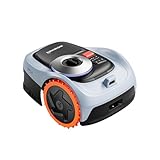 Segway Navimow i206 AWD
|
|
Check Latest Price |
How to Measure Your Slope in 5 Steps
Step one is free and takes ten seconds: stand on the slope and lean forward until you feel the balance point. That angle approximates the grade. If you are leaning hard, you are past 20 degrees and a walk-behind is a stretch.
Step two, get a number. A phone level app held flat against a straight board laid on the hill gives you a digital angle. Repeat it at the top, middle and bottom of the slope, because the steepest section is rarely the one you remember.
Step three, understand what the number means. A slope rating in degrees measures the tilt; a percent grade measures rise over run. Ten degrees is about an 18% grade, 15 degrees is 27%, 20 degrees is 36%, 25 degrees is 47%, 30 degrees is 58%, and 45 degrees is a 100% grade. A 20% grade, for reference, is the steep pitch of a wheelchair ramp.
Step four, check the ground, not just the angle. A 15-degree slope in dry, firm soil with traction tires is a different proposition from a 15-degree slope of soft clay after rain. Water is what turns a grade into a slide.
Step five, match the number to a format. Under 12 degrees, almost any mower works. Between 12 and 17, a self-propelled walk-behind with variable speed handles it comfortably. Between 17 and 20, you want drive speed control you can dial back to walking pace. Past 20 degrees, move to an AWD robotic mower rated for the climb.
1. Greenworks 80V 21in Self-Propelled Mower – Best Overall for Hills
Greenworks 80V 21in Self-Propelled Lawn Mower, 4.0 Ah Battery and Charger
80V platform
21-inch steel deck
Variable-speed rear-wheel drive
Cuts up to half an acre per charge
Pros
- Variable-speed rear-wheel drive gives real traction and control on hills
- Brushless motor and steel deck built for long service
- LED headlight for early morning mowing
- 4-year limited tool and battery warranty
Cons
- Only a 4.0Ah battery is included
- Heavier than most cordless walk-behinds at 75 pounds
- Single pack means recharge pauses on larger yards
The variable-speed rear-wheel drive is the part that matters on a hill. Owners specifically call out that the speed control gives traction and control on slopes and uneven ground, which is exactly the adjustment you need when a climb gets steeper halfway up. A fixed-speed drive either bogs or runs away; this one dials back.
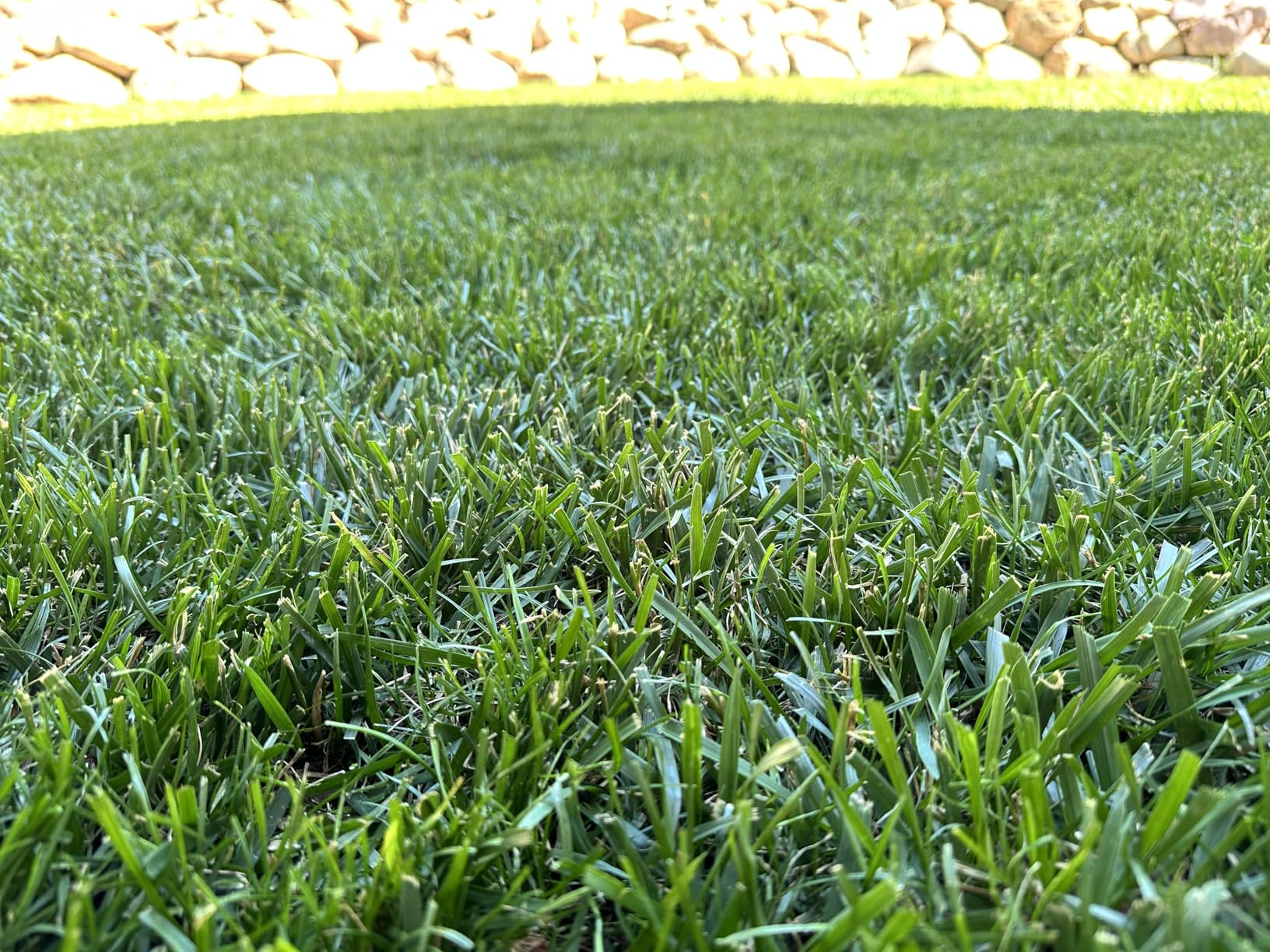
At 75 pounds it is not the lightest cordless walk-behind here, and you will feel that lifting it into a shed on a slope. The brushless motor and steel deck are the reasons owners report long service life, and the LED headlight genuinely changes when you can mow.
It also shares batteries with more than 75 other Greenworks 80V tools, so if you own a chainsaw or hedge trimmer in that platform, the battery cost here is close to nothing. The included 4.0Ah pack covers up to half an acre per charge.
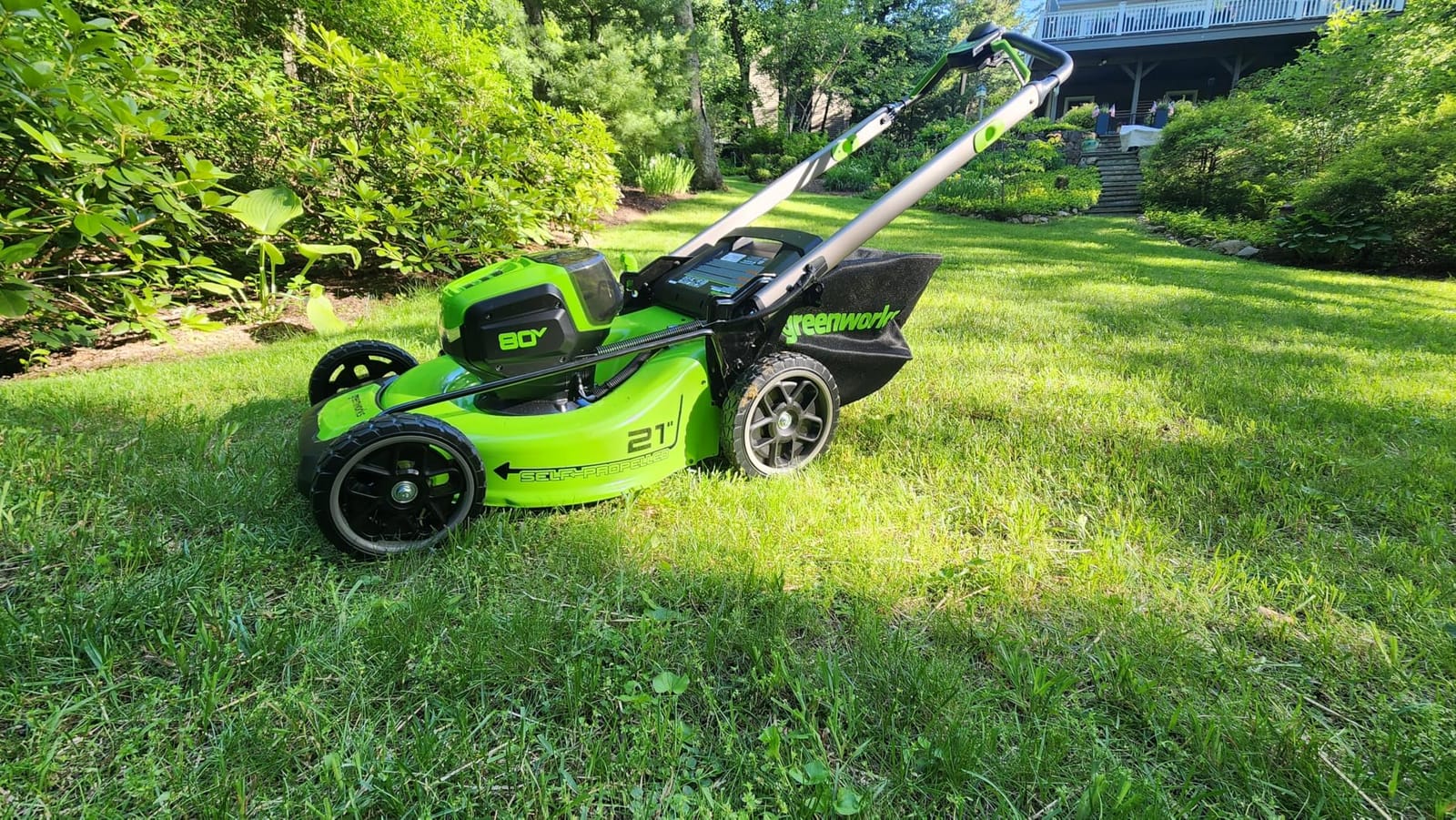
How it behaves on a 15 degree slope
This is where variable speed earns its badge. Going across a side slope, you can reduce drive speed so the deck stays level in the cut and the drive wheels keep turning instead of spinning. Owners with uneven lawns report exactly this benefit.
Going straight up, the rear-wheel drive keeps the mower climbing under its own power so you are not pushing 75 pounds uphill. Turn the speed down near the top and it settles rather than launching.
Where it falls short
The 4.0Ah battery is the smaller capacity in the Greenworks range, and one pack means a pause on a larger lot. At 75 pounds it is also heavier than the EGO and SKIL in this group, which matters if your slope is also your only access path.
If your hill is steeper than about 20 degrees, no amount of variable speed saves it. Move up to the robotic entries in this list.
2. Mammotion LUBA 2 AWD 5000HX – Best for the Steepest Slopes
Mammotion LUBA 2 AWD 5000HX Robot Lawn Mower with 4G, Reception 1.25 Acres, Max. 1.48 Acres, All-Wheel-Drive for 80% Slope, UltraSense AI Vision & RTK Automatic Edge Mapping, 2.2″-4.0″ Cutting Height
165W four-wheel motor
80% (38 deg) slope climbing
15.7 inch cutting width
Up to 13000 sq.ft per charge
Pros
- Handles very steep and uneven hills without getting stuck
- AI vision plus RTK mows shaded areas without satellite signal
- Very quiet with clean straight mowing lines
- Accurate automatic edge and no-mow zone mapping
Cons
- Long mowing times from narrow cut path and recharging
- Does not mulch or chop fallen leaves
- Small razor-style blades need periodic replacement
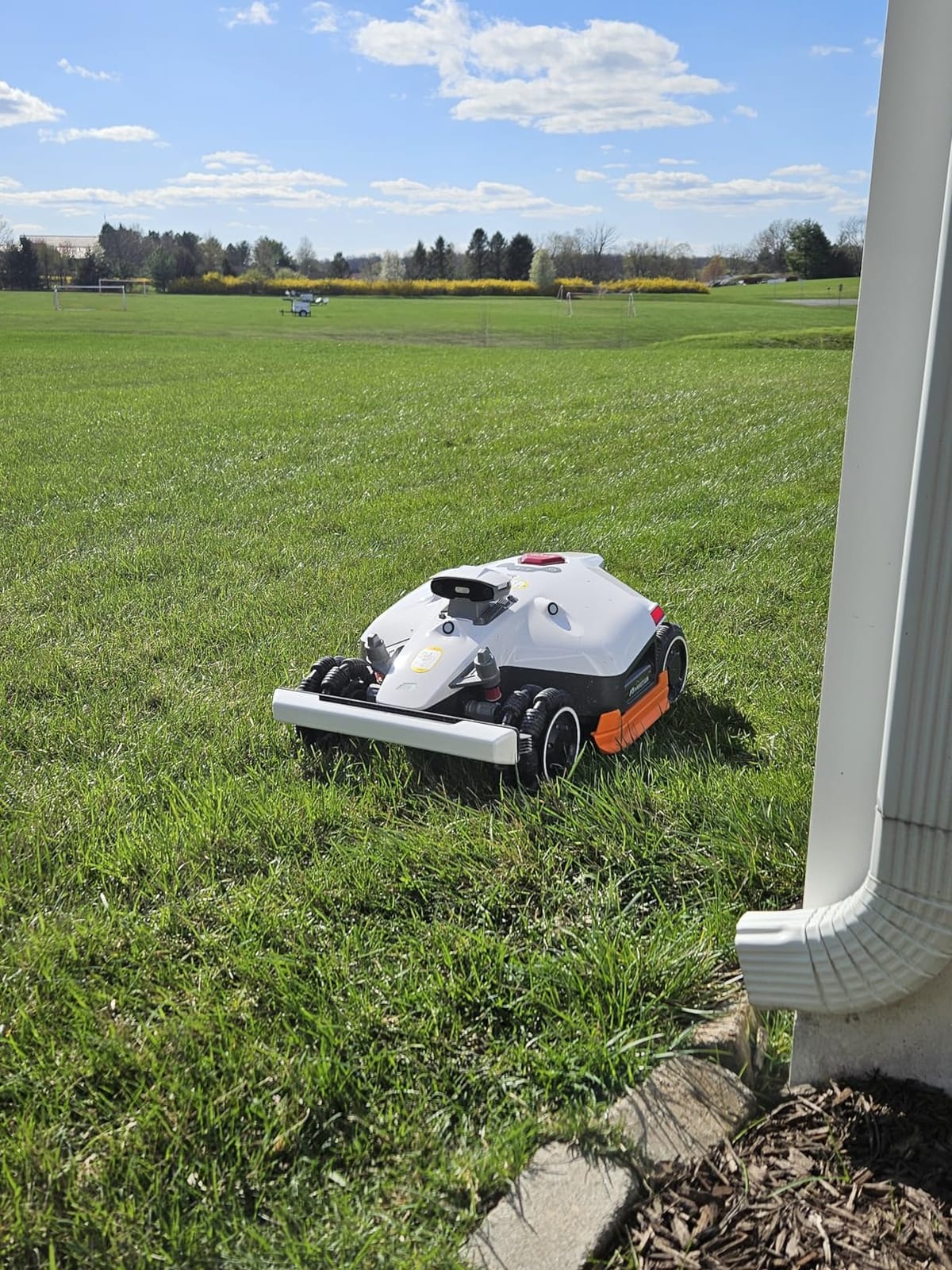
The headline number here is 80% slope, which is 38 degrees, and that is a published climbing rating rather than a marketing adjective. Owners with hilly, complex yards report the all-wheel drive climbs slopes that broke their previous gas mowers. That is the single most relevant sentence in this roundup.
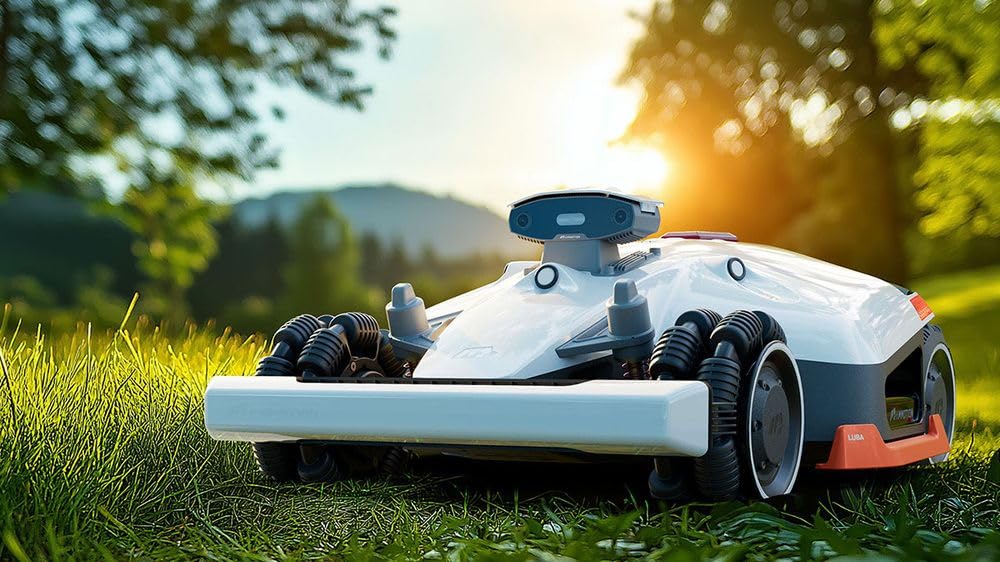
Four 165W motors push into the ground rather than shearing sideways, and the weight sits low with the wheels spread wide. Nothing about this machine depends on you being on board, which is the point on a bank that would end a riding mower career.
Navigation is the sleeper feature. UltraSense AI vision works alongside RTK, so it mows under trees without a satellite signal, and you can manage up to 50 mowing zones with automatic edge mapping.
What a 38 degree climbing rating really means
It means the drive system can get the machine up and down that incline without you, not that you should stand next to it at the bottom. If your steepest pitch is in this range, this is one of very few residential machines that handles it at all.
It also means nothing about traction on wet ground. All-wheel drive helps enormously, but water still reduces grip on any machine.
What owners accept as the trade-off
Long mowing times. The 15.7 inch cutting path is narrower than a walk-behind deck and it recharges mid-cycle, so a large property takes patience. It also does not chop fallen leaves.
Tight zero-radius turns can tear grass where the wheels counter-rotate, and the small razor-style blades are replaced rather than sharpened. Owners also note the RTK antenna often wants roof or high mounting, which adds installation work.
3. SENIX 22in 201cc Self-Propelled Mower – Best Value for Grade Work
SENIX 22Inch 201cc 3-in-1 Gas Lawn Mower, Rear Wheel Self-Propelled Mower
201cc OHV 4-cycle
4.7 HP and 8.8 ft-lb torque
Rear-wheel self-propelled to 2.9 MPH
22-inch steel deck
Pros
- Rear-wheel drive reduces pushing effort on larger yards
- Heavy-duty steel deck and hardened blades for thick grass
- 3-in-1 mulching
- discharge and bagging
- Folding handle saves shed space
Cons
- Single-speed drive offers no variable speed control
- Heavy 72-pound chassis is awkward on steep terrain
- Gas engine means fuel storage and pull-starting
The 4.7 HP from the 201cc overhead-valve engine is real torque, and torque is what carries a mower up a grade. Owners highlight the self-propelled rear-wheel drive and the durable steel deck as delivering dependable power across large, uneven lawns.
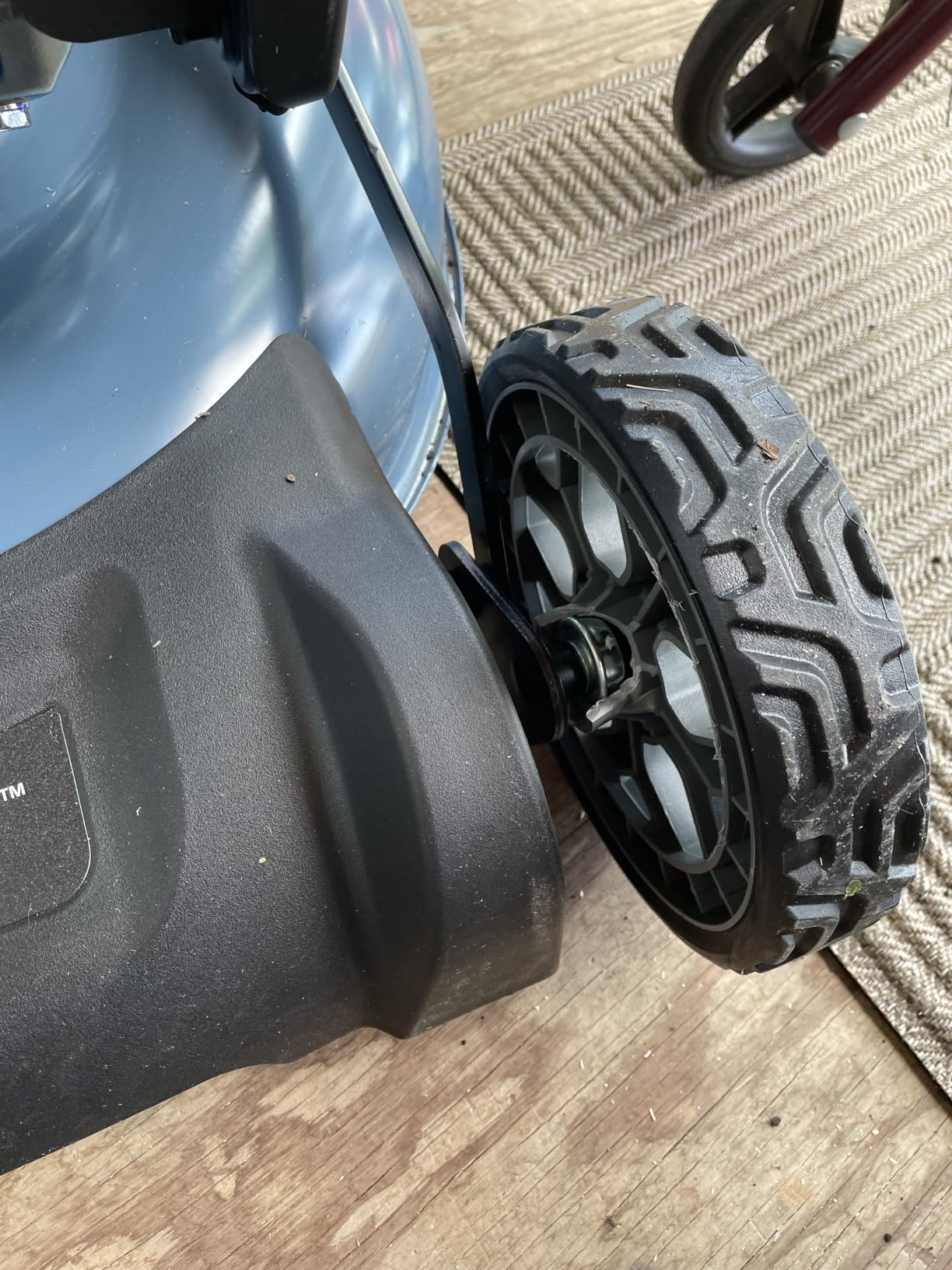
The deck is the standout part. Manganese steel alloy blades rated at 45-50 HRC hardness sit in a DC04-06 low-carbon steel deck, which is the combination that survives rocky, rooty, uneven ground over a long season.
It handles lawns up to about 2,200 square meters, so it is a proper full-lot machine rather than a small-yard walk-behind. The folding handle keeps it compact in a garage.
Where a single-speed drive cuts both ways
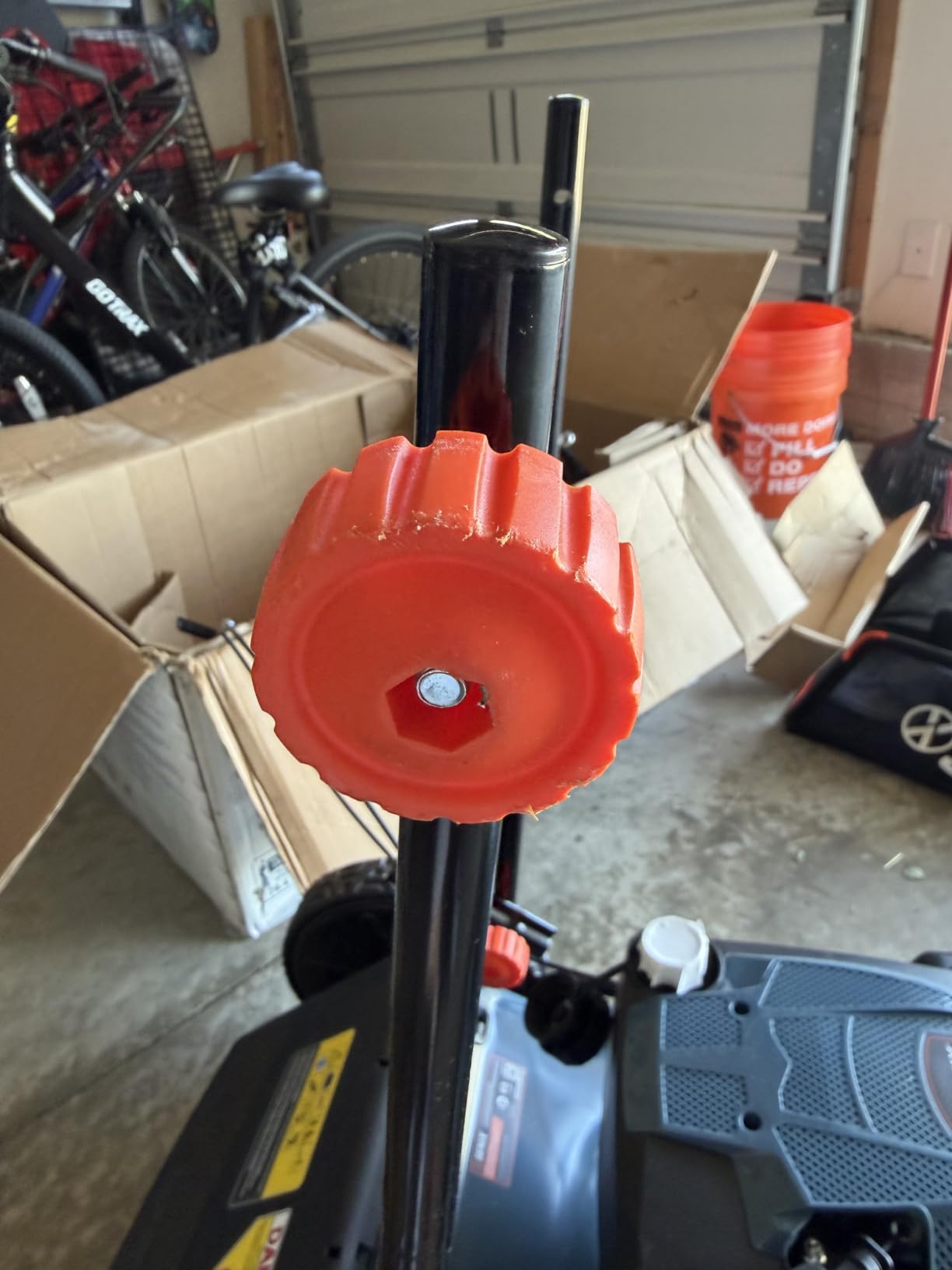
A single-speed drive is a real limitation on a side slope, because you cannot slow the wheels to match your walking pace the way you can on a variable-speed machine. Going straight up a moderate grade, though, a steady drive is simple and consistent.
Think of it as the right choice for 12 to 15 degrees with a lot of ground to cover, and the wrong choice for a long side-hill traverse.
The weight question on a bank
At 72 pounds, this is a heavy machine to control on steep terrain, and owners say so. If your hill is also narrow or broken by trees, the lighter battery machines further down this list are easier to reposition.
Gas upkeep is the other running cost most people forget: fuel storage, oil changes and pull-starting every single cut.
4. YARDMAX 22in 201cc CVT High-Wheel – Best Budget Traction Control
YARDMAX 22 in. 201cc Select PACE 6 Speed CVT High Wheel FWD 3-in-1 Gas Walk Behind Self Propelled Lawn Mower, Black (YG2860)
CVT with 6-speed shift lever
High-wheel front-wheel drive
22-inch deck
201cc gas engine
Pros
- CVT lets the mower pace itself to your walking speed
- High-wheel front drive and spiked tires add traction on slopes
- Automatic choke with no priming
- Single-lever deck height with cleanout port
Cons
- Drive and high-wheel design add weight
- Front-wheel drive can struggle to pull the mower back uphill
- Gas engine needs fuel and oil maintenance
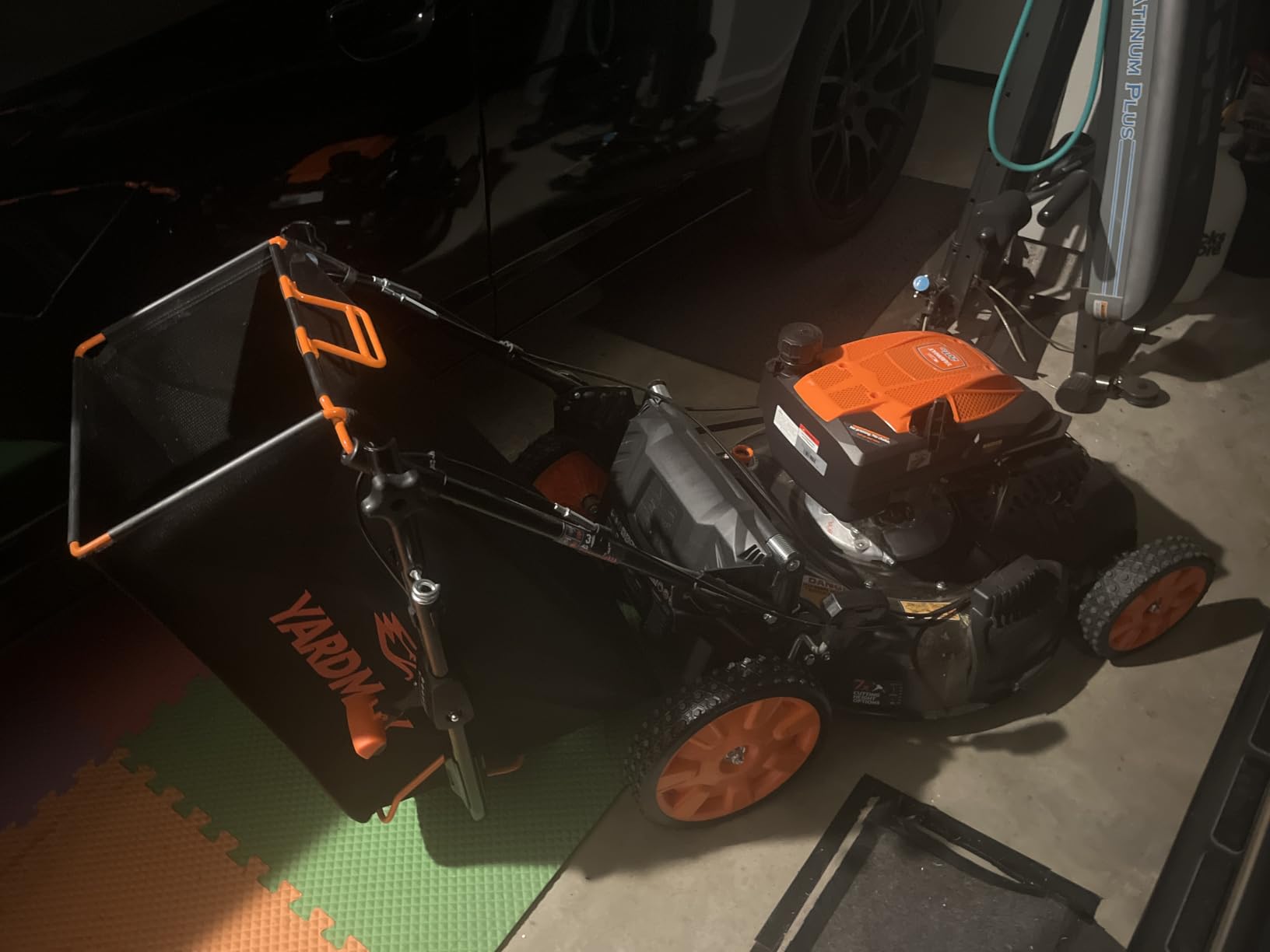
The continuously variable transmission is the reason this machine made the list. Instead of a fixed gear, the CVT lets the mower pace itself to your walking speed, which is the single most useful control on a hill. You slow down and it slows down.
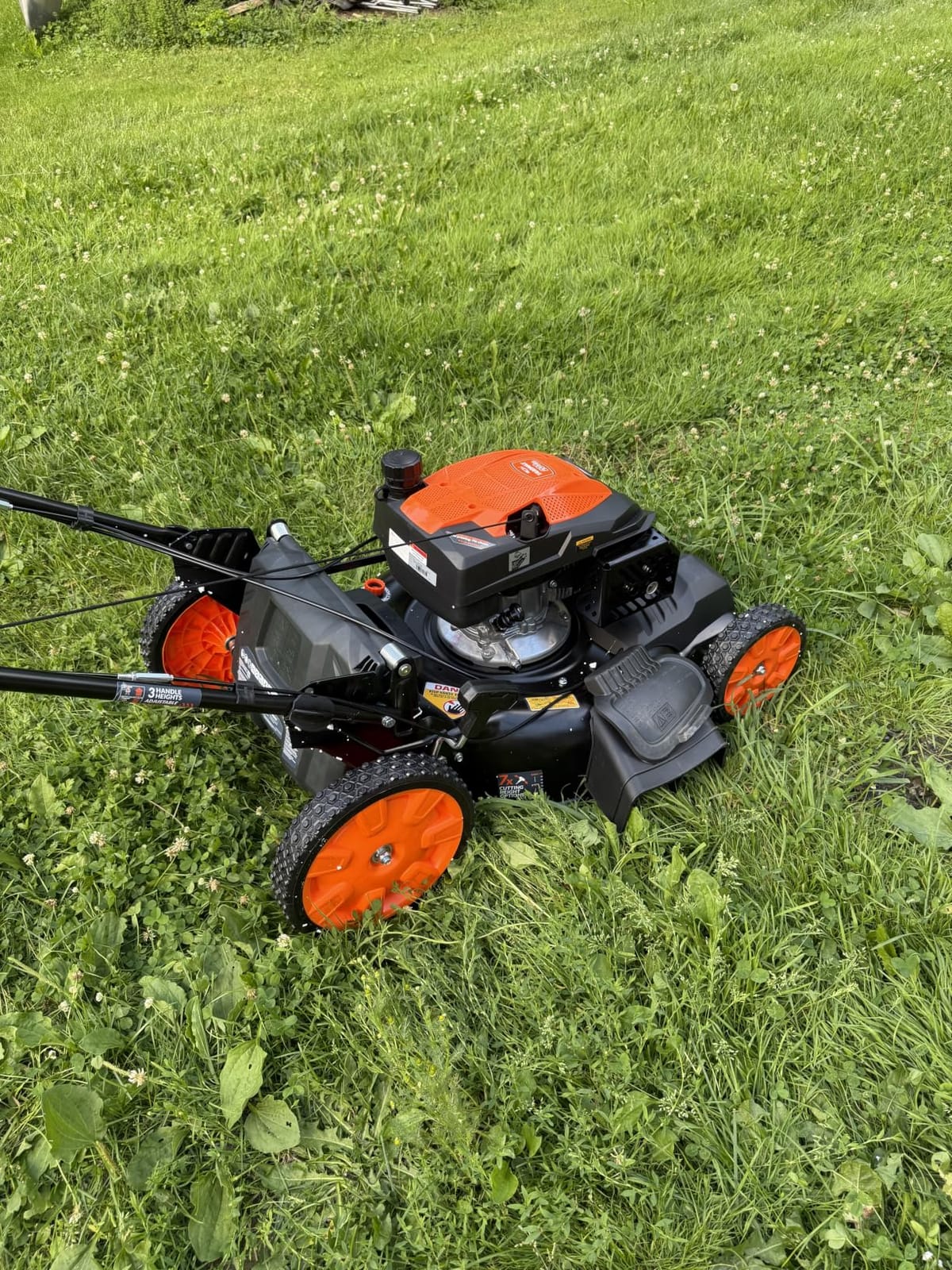
High-wheel front-wheel drive with aggressive spiked rubber tread is an unusual combination at this level, and owners consistently praise the traction and maneuverability on uneven lawns. The tall wheels also step over roots and ruts that stop a low-frame mower dead.
The automatic choke means no priming and no choking, so starting on a hill in the morning takes one pull. The deck cleanout port and single-lever height adjustment make seasonal maintenance straightforward.
Why front-wheel drive matters on a climb
Front drive pulls rather than pushes, so the drive wheels are loaded when the mower leans back on an incline. On a climb the loaded wheels bite; that is why this design holds a grade better than a plain push mower of the same size.
The catch owners report is the same physics in reverse: pushing it back downhill, or back up toward the house after a pass, can be a struggle.
Honest limits to plan around
At 84.9 pounds this is one of the heavier machines here, and the high-wheel stance adds bulk that makes maneuvering around obstacles less nimble. The gas engine also brings fuel and oil maintenance that a battery mower simply does not have.
Treat it as a value machine for moderate grades under about 15 degrees, not a solution for a steep bank.
5. EGO POWER+ 21in LM2114SP – Most Compact with Serious Torque
EGO POWER+ 21″ Cordless Electric Lawn Mower Kit, Self-Propelled – LM2114SP
Up to 6.0 ft-lb cutting torque
50-minute runtime on 6.0Ah battery
50.9 pounds
7-position height
Pros
- Cutting torque exceeds gas-powered mowers
- Dual-toggle self-propel engages with either hand
- Brushless motor gives long runtimes and low vibration
- Light 50.9-pound chassis with adjustable height
Cons
- Only one 6.0Ah battery in the kit
- Heavier decks are harder to control on steep grades
- Not a hill machine past about 18 degrees
The 6.0 foot-pounds of cutting torque is the number that separates this from most cordless walk-behinds, and owners say it exceeds what gas machines deliver in the class. On a hill, torque is what keeps the blade loaded instead of letting it stall in a thick patch halfway up a slope.
The dual-toggle handleset is a genuinely smart hill feature. You can engage the self-propel with either hand, so if the machine starts to pull or drift, your second hand is free on the handle rather than pinned to a lever.
At 50.9 pounds it is the lightest chassis among the battery self-propelled mowers here, and that weight is what makes it the most controllable of the group on uneven ground.
Why weight matters more than horsepower on a slope
A light machine is easier to stop and recover when it starts to move faster than you want. On a grade, the ability to slow the drive and step in beside the deck is worth more than raw cutting power.
Owners also like that the brushless motor produces low vibration and a long runtime, with about 50 minutes on the included 56V 6.0Ah pack.
The honest limitation
One battery means a recharge break on larger properties, and that is the most common reservation owners report. Cutting height adjusts across seven positions from 1.25 to 4 inches, and it does 3-in-1 mulching, bagging and side discharge.
For a bank steeper than about 18 degrees, it is the wrong tool regardless of torque.
6. Worx 40V 21in WG760 – Best Battery Runtime on a Hill
Worx Cordless Lawn Mower, 40V 21″ 3-in-1 Grass Mower for 1/2 Acre, WG760
Two 20V 5.0Ah batteries
Variable self-propel to 3.7 MPH
INTELLICUT density sensing
63.1 pounds
Pros
- Dual 5.0Ah batteries cover a half-acre lot
- Quiet and light compared with gas
- Clean mulching and a large collection bag
- AERODECK venting reduces clogging in thick grass
Cons
- Self-propel speed control is a lever rather than a dial
- Batteries need several cycles before full capacity
- Blade replacement goes through customer support
Two 5.0Ah packs is the practical answer to the question every hill owner asks, which is whether the mower will finish the bank before the battery dies. Owners say a half-acre lot is covered on one charge after the first few cycles.
INTELLICUT sensors adjust cutting speed automatically to grass density, which on a slope is more useful than it sounds. Thicker grass on an incline gets more blade speed, and thin worn patches on the same hill get less, so the machine does not bog on the high spots.
Variable self-propel reaches 3.7 MPH and Brushless Motor 2.0 delivers 40% more power than the first generation. The AERODECK vented design keeps grass moving into the bag on thick lawns.
What the two batteries change on a slope
One battery means you finish part of the hill, stop for a charge and lose the light. Two batteries mean you finish the cut. On steep ground, where you want to work in dry sunny conditions, that difference decides whether the job gets done at all.
Batteries also share with more than 140 other PowerShare tools, and the handle folds flat for storage against a shed wall.
Where owners push back
The self-propel speed control is a lever rather than a progressive dial, and owners call it awkward to adjust mid-mow, which is exactly when you need it most on a grade.
Blade replacement requires going through customer support, and the drive can roll forward briefly after you release the self-propel bar. On a side slope, that forward creep is worth knowing about.
7. PowerSmart 22in 170cc Self-Propelled – Best Wide Gas Deck for Slopes
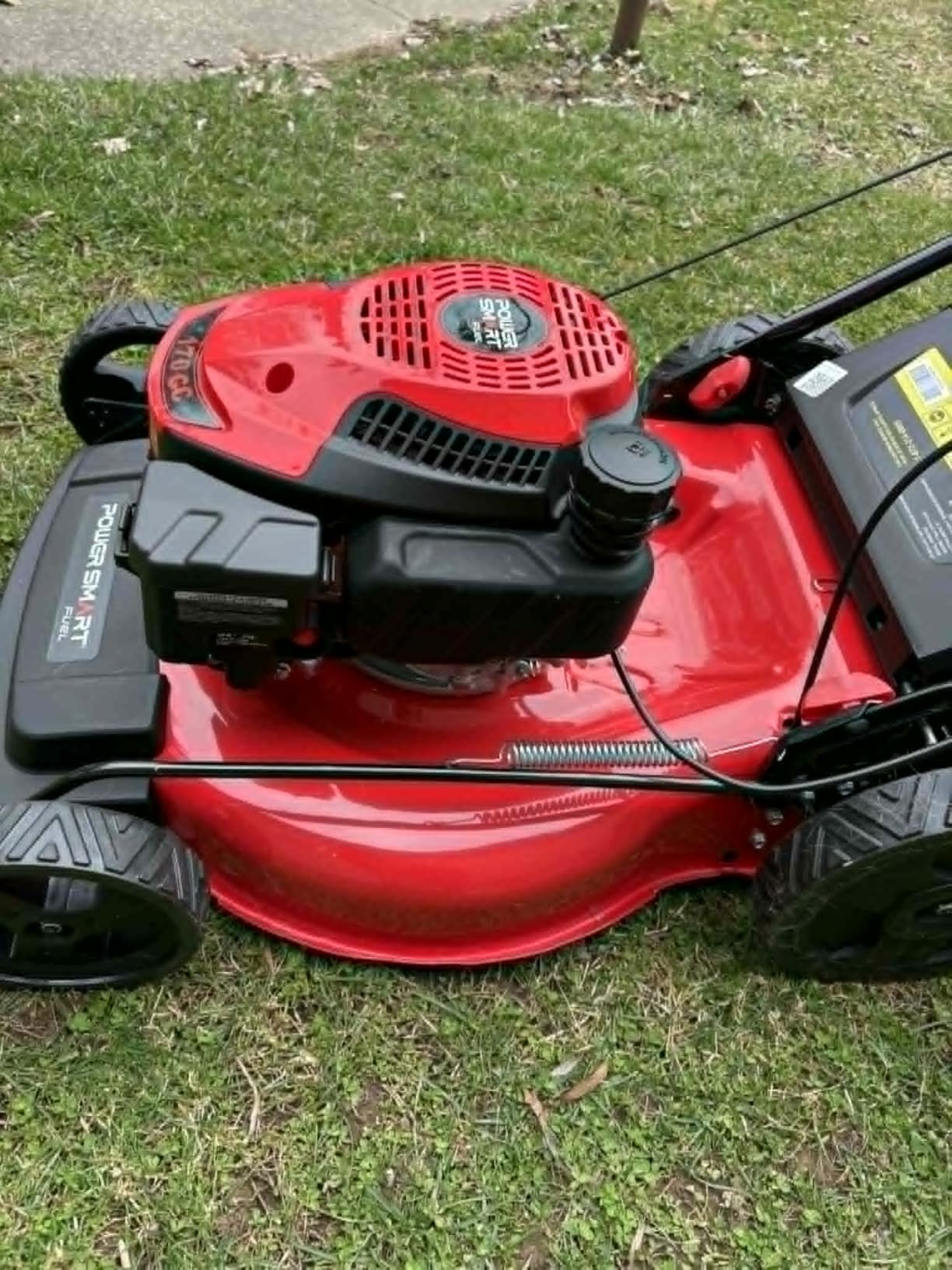
PowerSmart 22-Inch Self Propelled Gas Lawn Mower, 170cc 4-Cycle OHV Engine, 3-in-1 Mulch/Bag/Rear Discharge, 6 Cutting Heights
170cc 4-stroke OHV engine
22-inch steel deck
Rear-wheel self-propelled drive
6 cutting heights
Pros
- Rear-wheel drive improves traction on slopes and uneven terrain
- 170cc four-stroke has more cutting power than smaller engines
- Wide 22-inch path speeds up mowing
- Tool-free assembly and folding handle
Cons
- Single-speed self-propulsion with no variable control
- 68-pound weight is heavier than battery mowers
- Gas means fuel
- oil changes and recoil starting
Buyers consistently point to the rear-wheel drive traction on uneven ground, which is the feature this roundup is actually about. The machine is described plainly: self-propelled rear-wheel drive for traction on slopes and uneven terrain.
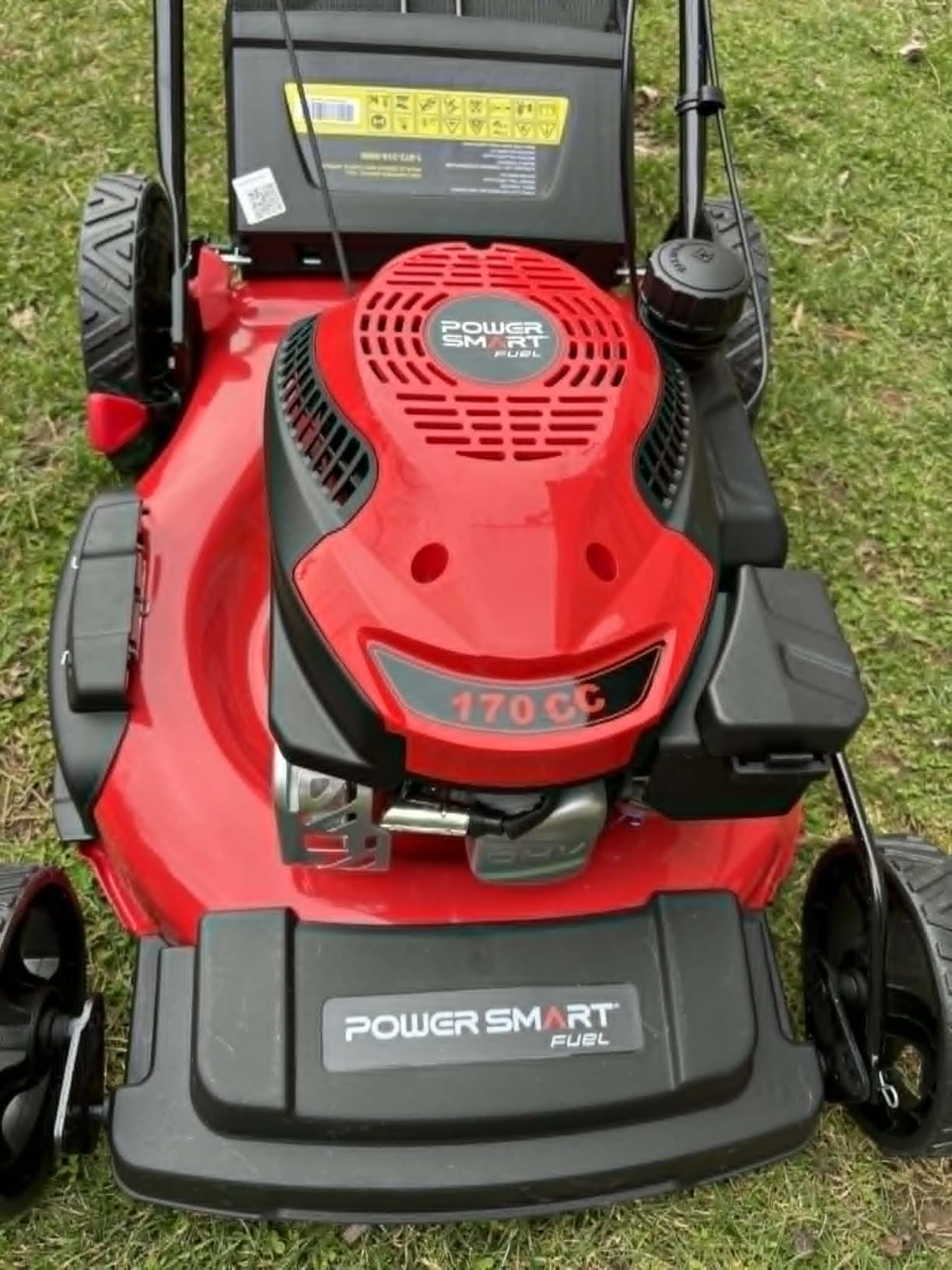
The 170cc four-stroke overhead-valve engine is a step up from the smaller budget engines, and that matters when the deck is loaded climbing a bank. The steel deck and heavy-duty blade give it the durability profile for rough ground.
Cutting height runs from 1.5 to 3.9 inches across six positions, and the 22-inch path is wider than most of the battery mowers here, meaning fewer passes across a slope.
Why a wider deck reduces slope exposure
Fewer passes means fewer times you have to turn and reposition on the incline. Turns are where walk-behinds lose control, and cutting down the number of them is the cheapest traction improvement available.
Tool-free assembly and a folding handle keep it manageable in a small shed at the bottom of a property.
Limitations owners accept
Single-speed self-propulsion gives you no variable speed to match your walking pace, the main disadvantage on a side slope. At 68 pounds it is heavier than comparable battery mowers.
The ongoing costs of gas, oil changes and recoil starting are the other trade-off, though a four-stroke needs far less attention than a two-stroke.
8. Mammotion LUBA mini 2 AWD 1500H – Best for Small Hilly Yards
(2026 NEW) Mammotion LUBA mini 2 AWD 1500H Robot Lawn Mower with Garage, for 0.37 Acres, 360° LiDAR+Dual-Camera AI Vision, 80% Slope, DropMow, 20 Multi-Zone Management
Two independent 88W motors
80% slope climbing
360 degree LiDAR plus dual cameras
0.37 acre coverage
Pros
- Very easy setup with no GPS tower needed
- Climbs steep slopes and uneven ground better than competing robots
- Excellent value for smaller yards and rough terrain
- Very quiet with a user friendly app
Cons
- Hard 0.37-acre mapping ceiling cannot be expanded
- Slow cutting speed with long charge time
- Small 5.5 inch blades dull quickly
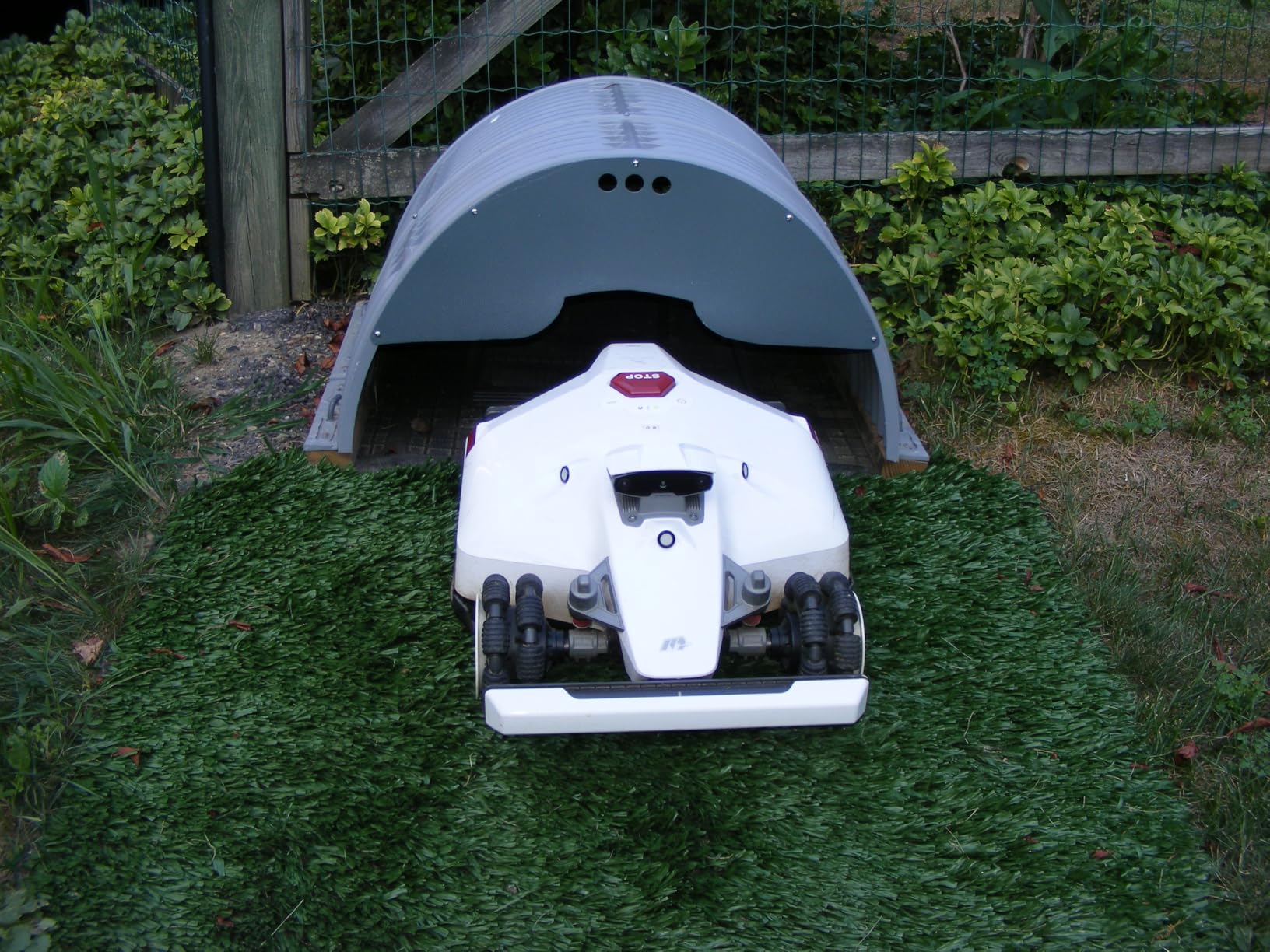
This is the version of the steep-slope robot for a lot that is not large. It carries the same 80% slope climbing capability as its bigger sibling, with two independent 88W motors and adaptive suspension that steps over curbs and roots up to 45 millimeters.
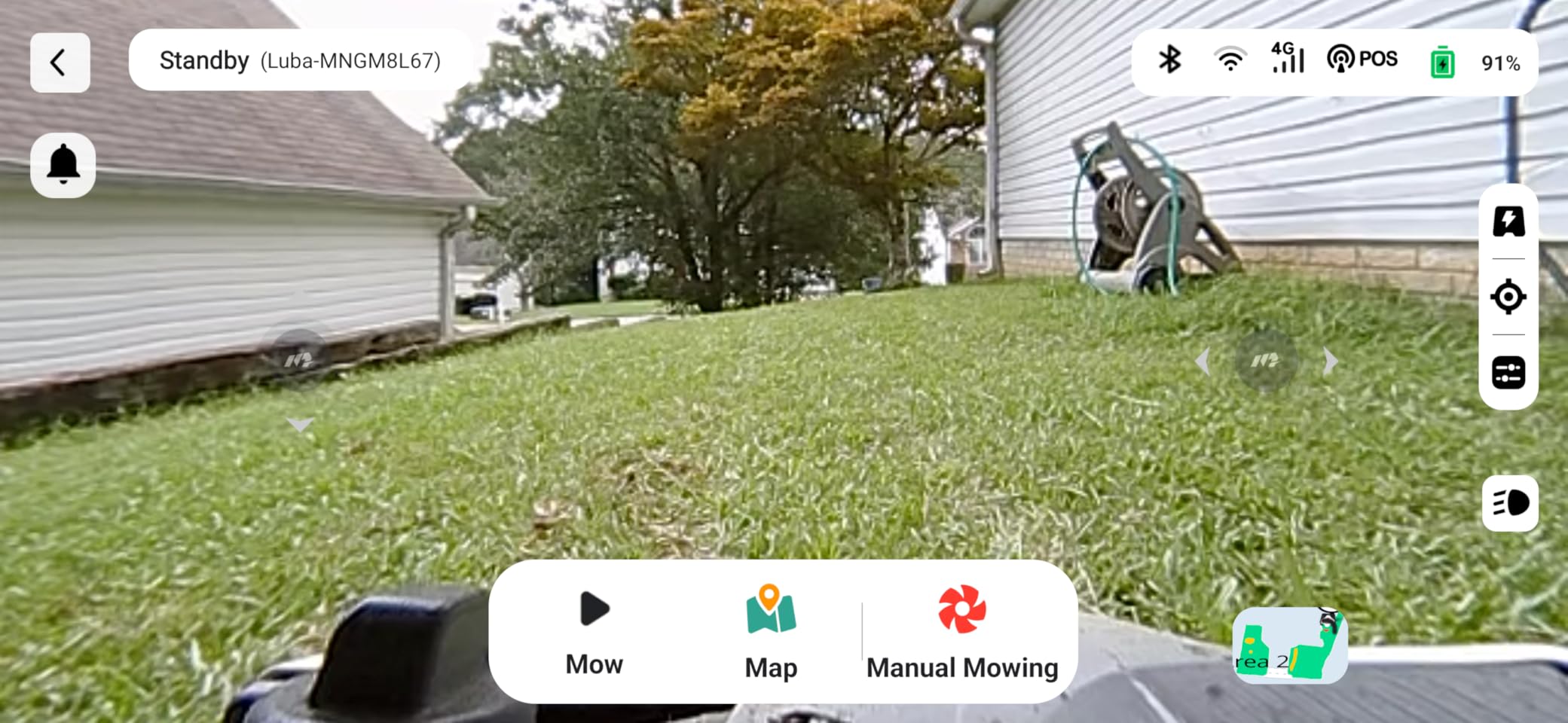
DropMow mode is the feature that wins over owners. It requires no mapping, which removes the single most common failure point of robotic mowers. The charging station uses ground screws, so there is no tower to mount on a slope.
Owners with steep, obstacle-filled small lawns praise the slope capability, quick setup and dependable daily mowing. The 360-degree LiDAR plus dual-camera vision gives it real awareness of its surroundings rather than relying on a boundary wire.
When a small robot beats a walk-behind
If your steepest pitch is in the twenties and the bank is awkward to stand beside, this removes you from the equation entirely. Owners with allergy sufferers like that it cuts regularly without blowing pollen around.
The dual cutting discs include a dedicated edge cutting disc, so trimming along a hard boundary is handled automatically.
The fixed ceiling you cannot move
The 0.37-acre mapping ceiling is hard and cannot be expanded, so measure your lot before buying. Cutting speed is slow, a quarter acre can take half a day, and charging runs roughly two to three hours from low to full.
Owners consistently describe it as a complement to a mower rather than a replacement for one, and edge cutting still does not fully remove manual edging work.
9. SKIL PWR CORE 40 20in SM4910C – Best for Light Handling on Banks
SKIL PWR CORE 40 Brushless 40V 20-Inch Self-Propelled Mower Kit, Includes 6.0Ah Battery and Auto PWR JUMP Charger – SM4910C-11
40V 6.0Ah battery
50-minute runtime
Variable-speed dial self-propel
20-inch deck
Pros
- Light chassis one person can lift
- yet strong enough for thick grass
- Variable-speed self-propel is useful on hills and uneven ground
- Simple assembly and push-button start
- Quiet enough to use without hearing protection
Cons
- 20-inch deck is narrower than many competitors
- Handles must be fully extended and locked before it runs
- Stalls in very tall wet grass unless the deck is raised
This mower holds the highest average rating among the walk-behinds in this roundup, and the reason owners keep giving is the combination of low weight and real cutting ability. A chassis one person can lift changes how you approach a bank, because repositioning it at the top of a slope stops being a two-person job.
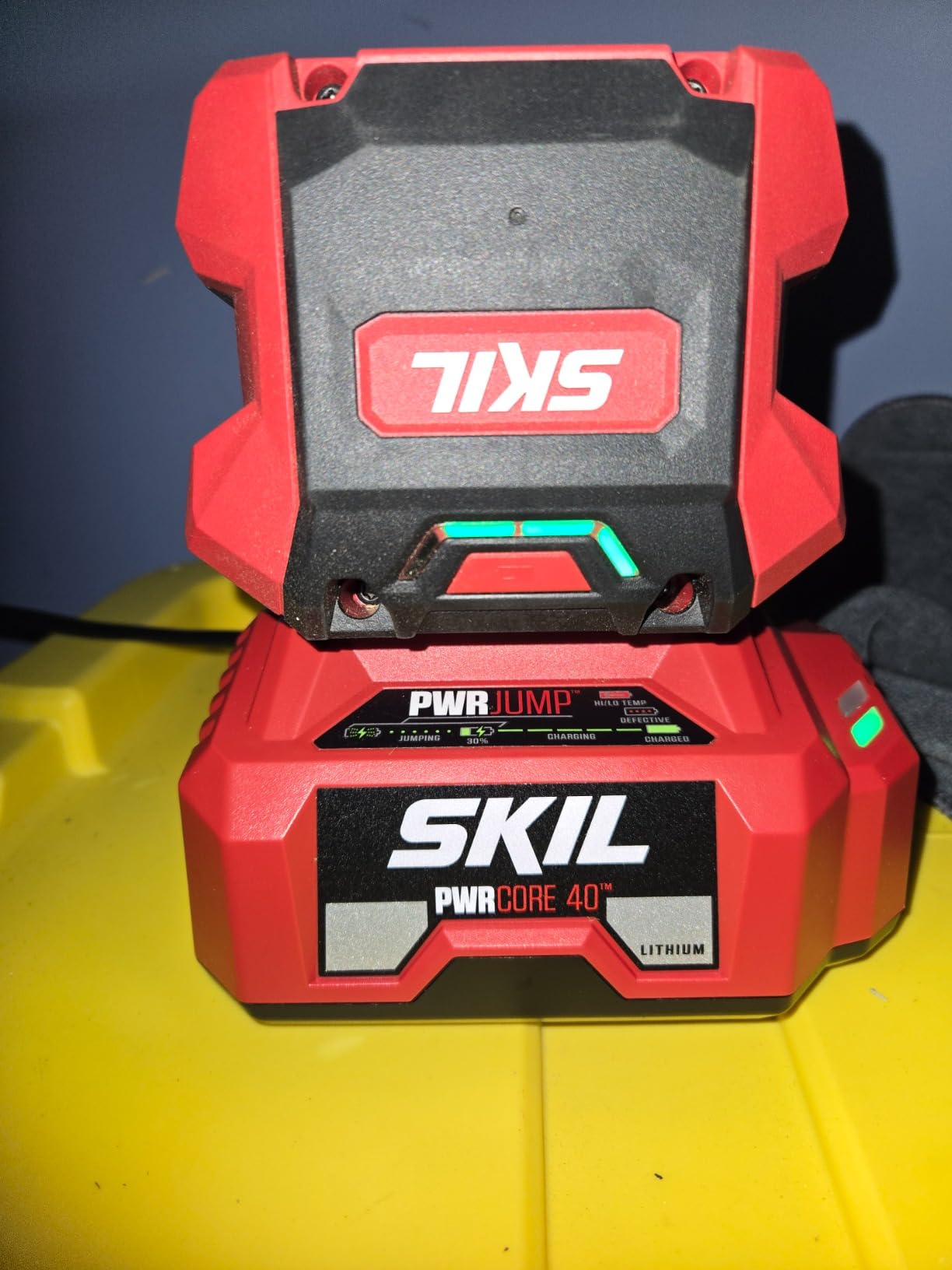
The variable-speed self-propel is adjusted by a dial rather than a lever, which is the better interface on a grade. Owners specifically note it is useful on hills and uneven ground, and up to 50 minutes of runtime means most small-to-medium lots finish on one charge.
The single-lever deck adjustment runs across seven settings from 1.5 to 4 inches, and it doubles as a leaf collector. The telescoping handle folds for vertical storage.
Why weight is the deciding number on a narrow bank
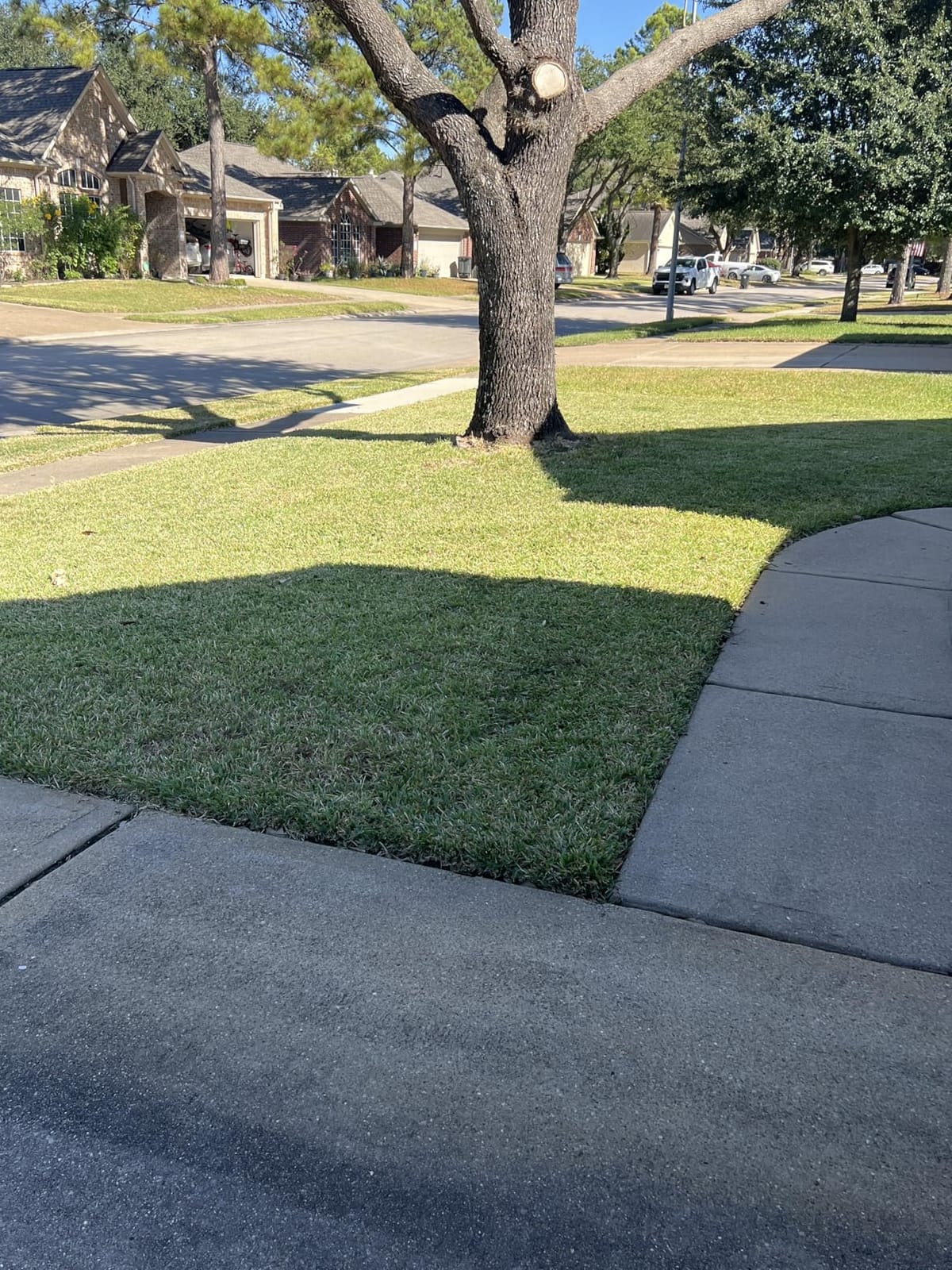
If your hill is tight, dotted with trees, or reached by a set of steps, the machine you can move is more valuable than the machine with the biggest engine. Several heavier mowers in this list are excellent on open slopes and frustrating on anything constrained.
The digital brushless motor delivers the power, and the weather-resistant construction takes the damp morning dew that comes with early hill mowing.
Limits worth knowing before you buy
The 20-inch deck is narrower than many competitors, which changes your mowing pattern and adds passes, and each pass is another traverse of the slope. Handles must be fully extended and locked before the mower will operate.
It also stalls in very tall wet grass unless you raise the deck, and only one battery is included.
10. Mammotion LUBA 3 AWD 3000 – Best for Large Robotic Coverage
Mammotion LUBA 3 AWD 3000 Robot Lawn Mower with Cleaning Stand (Ship Separately), 360° LiDAR+NetRTK+AI Vision, AWD for 80% Slopes, 5400 sq.ft/h, Cutting Height 1.0″-2.7″
Four independent motors
80% (38.6 deg) slope climbing
500 sq.m per hour
Cutting height 1.0 to 2.7 inches
Pros
- All-wheel drive handles irregular and sloped ground without getting stuck
- Excellent build quality and very quiet operation
- LiDAR navigation works reliably without an RTK antenna
- Night mowing with a built-in light
Cons
- Cannot finish a full yard on one charge at default settings
- No grass-lifting effect gives uneven cutting at times
- Mapping corridors between areas split by a driveway often fails
This is the largest robotic mower we tested, and it is the one to look at if your hilly ground is also wide. Coverage of up to 500 square meters per hour across as many as 30 mowing zones is roughly an order of magnitude beyond what the walk-behinds in this list will cut in the same window.
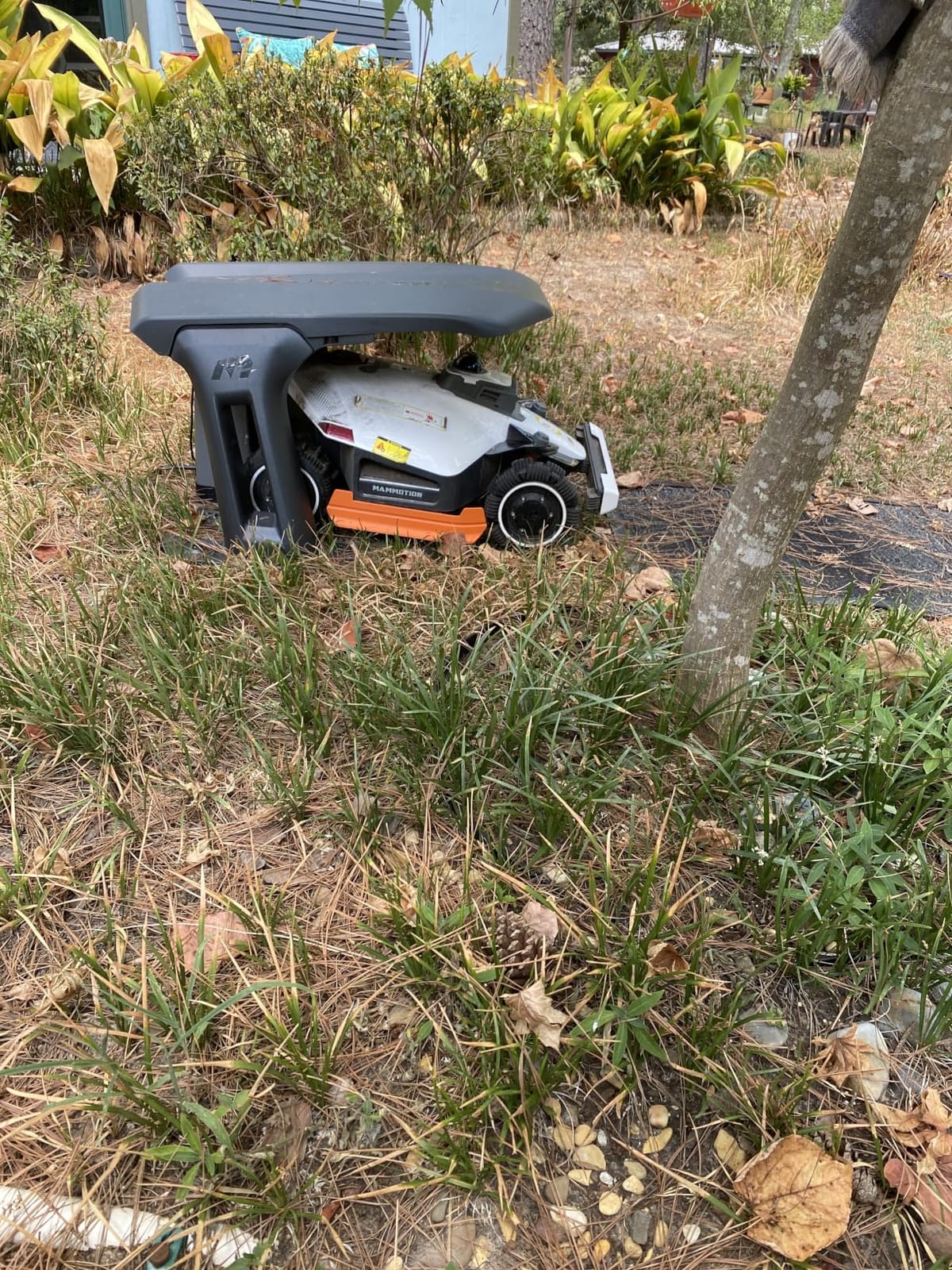
Tri-fusion navigation combines 360-degree LiDAR with NetRTK and dual-camera AI vision. The LiDAR has a 230 foot range and reads from ground level to tree canopy, and the upgraded AI processor recognizes more than 300 obstacle types. On rough, sloped lawns, that awareness is the difference between a machine that works unattended and one that gets stuck on a root.
Four independent motors deliver 80% slope climbing, or 38.6 degrees, and it steps over obstacles up to 50 millimeters. Two 165W motors with six-blade discs and a 12Ah battery run up to 175 minutes per charge.
Where it outperforms the walk-behinds
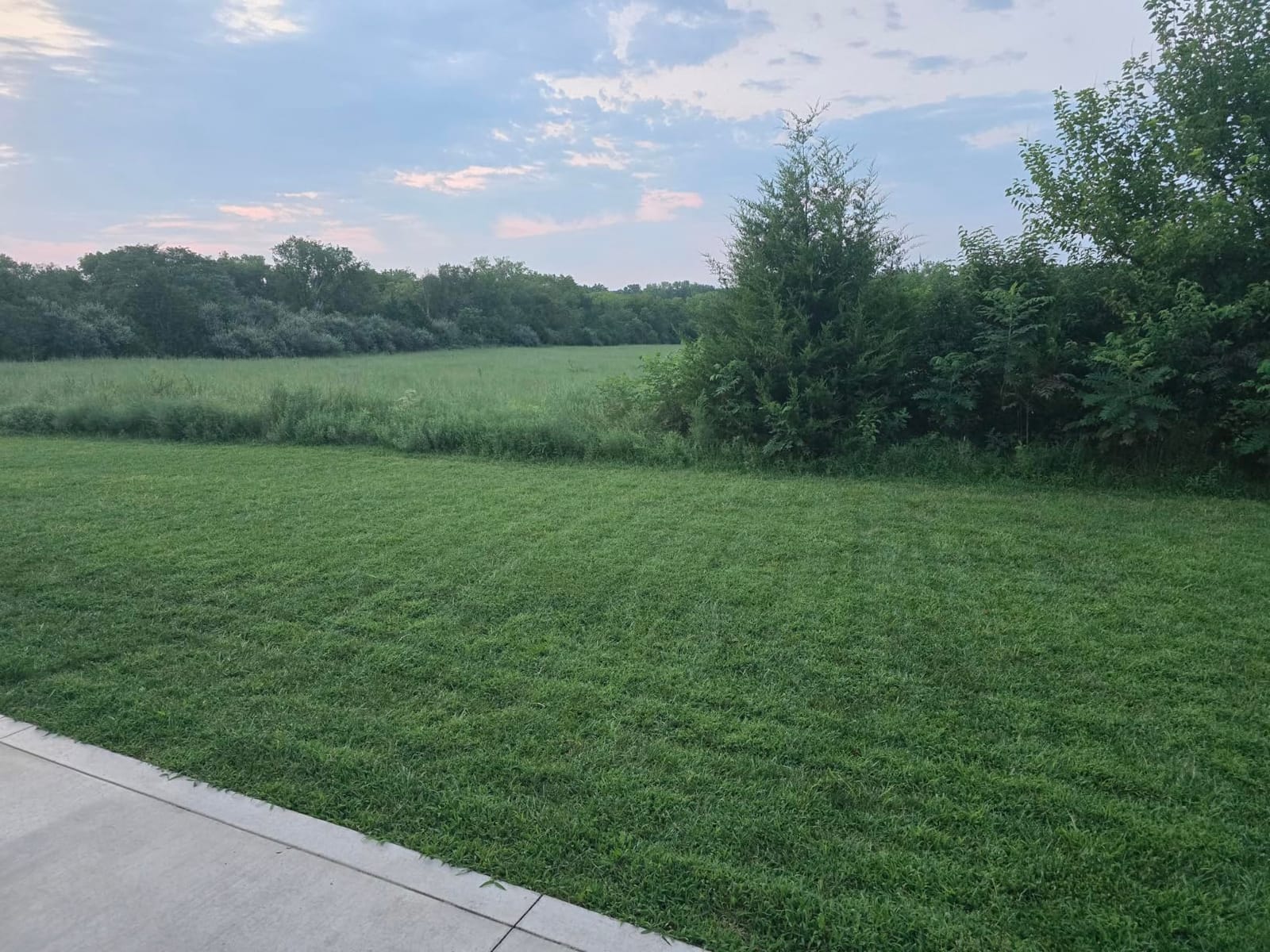
On a large property with several slopes, one machine working a full day replaces an entire afternoon of your weekend. Owners report strong build quality, easy setup, and confident all-wheel-drive performance on rough and sloped lawns.
The built-in light extends usable hours, and regular software updates improve performance over time.
The complaints owners repeat
Battery capacity is the main one: at default settings it cannot complete a full yard on a single charge. Cutting consistency is the second, since without a grass-lifting effect the cut can look uneven compared with a conventional mower.
Turning in place in soft or sandy soil digs trenches, mapping corridors between areas separated by a driveway often fails, and the battery pack is not user-replaceable.
11. BILT HARD 21in 201cc Self-Propelled – Best for Easy Starting
BILT HARD 21″ Self Propelled Gas Lawn Mower – 201cc 4-Cycle OHV, 3-in-1 Bagging/Mulching/Side Discharge, 8 Adjustable Cutting Heights & Smooth Easy Start
201cc 4-cycle OHV engine
No-choke no-primer starting
Rear-wheel single-speed drive
8-position height lever
Pros
- No-choke no-primer design starts on the first pull
- 201cc OHV engine provides consistent dependable torque
- Single-lever adjustment moves all four wheels together
- Foam-wrapped angled handle reduces hand fatigue
Cons
- Heaviest mower in the group at 89.2 pounds
- awkward on slopes and to reposition
- Single-speed self-propel with no variable control
The no-choke, no-primer starting design is the reason this one made the list. On a hill, you often end up stopping and restarting halfway up because the grass is thick, and starting without choking is a genuine convenience in that situation.
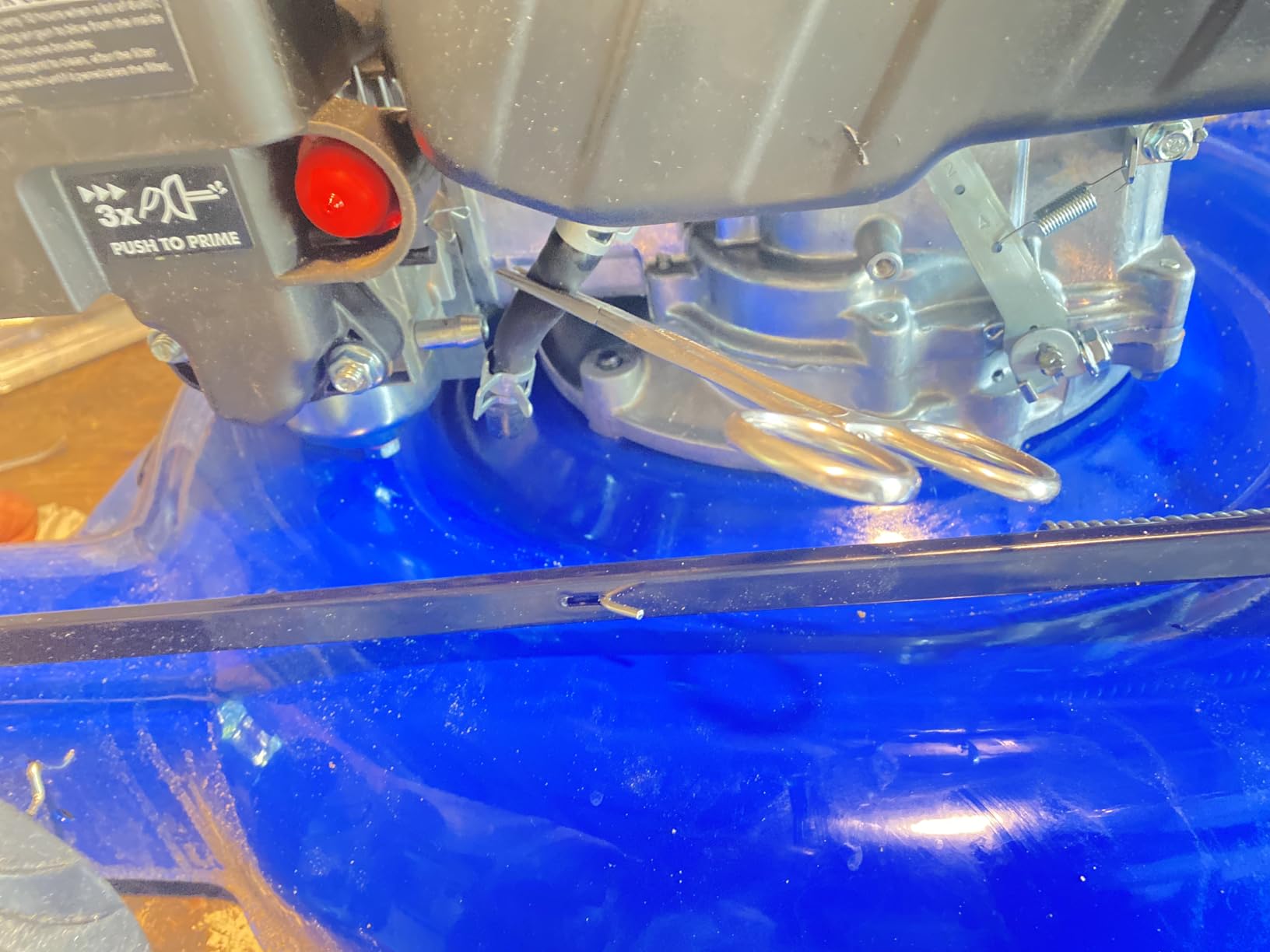
The 201cc overhead-valve engine produces 9.0 foot-pounds of torque, which owners describe as consistent and dependable. Rear-wheel single-speed drive gives it self-propulsion on moderate grade, and the foam-wrapped angled handle reduces hand fatigue on longer sessions.
The single-lever eight-position height adjustment moves all four wheels together, so the cut stays even across a slope instead of developing a scalloped pattern from one wheel sitting higher than the others. Height runs from 1.2 to 3.75 inches.
The weight is the real story on a slope
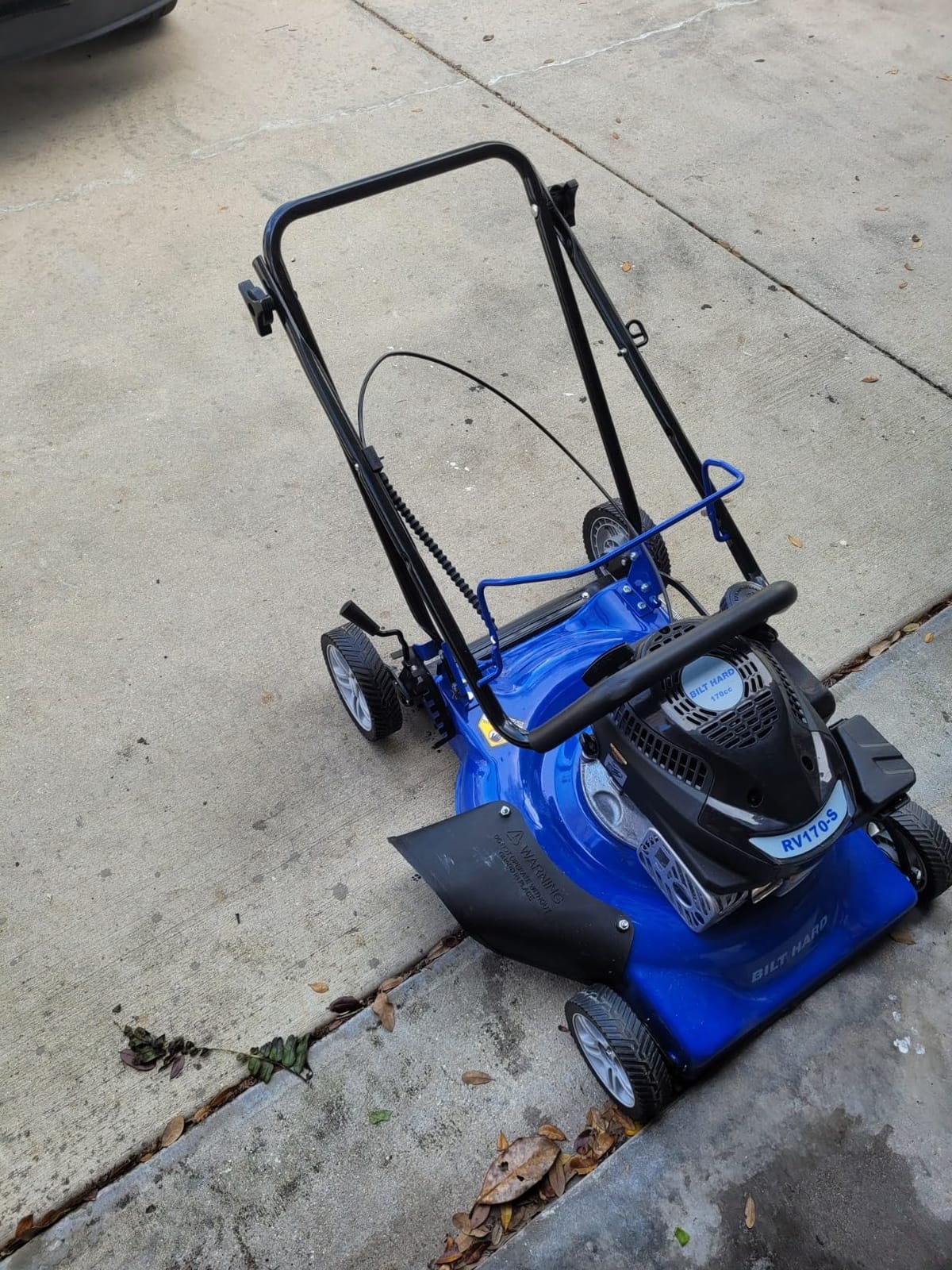
At 89.2 pounds this is the heaviest machine in the roundup, and owners themselves flag the handling drawback. Extra weight does add stability, but it also means that when a 21-inch mower starts to slide, you have more mass to arrest.
If your slope is a short bank beside a house, that is an acceptable trade. If it is a long traverse, look at a lighter machine.
Other things owners mention
The steel deck handles mulching, side discharge and rear bagging, and assembly is straightforward. A small number of reviews report ignition wiring faults after initial use, which is worth mentioning to any dealer before purchase.
Single-speed drive means no variable speed control, the same limitation the SENIX and PowerSmart share.
12. Segway Navimow i206 AWD – Best Small-Slope Robot
Segway Navimow i206 AWD Robot Lawn Mower, New i105N, 0.15 Acre, 45% Slopes
All-wheel drive with stability control
45% slope capability
17 inch cutting width
20 mowing zones
Pros
- All-wheel drive and stability control handle uneven ground smoothly
- Very quiet to the point dogs sit nearby
- Zero-turn steering avoids scraping and tearing turf
- Customer support resolves issues quickly and provides replacement parts
Cons
- Auto mapping is unreliable and often has to be redone
- Leaves an unmowed swath along fences
- Can wander outside mapped boundaries into mulch beds
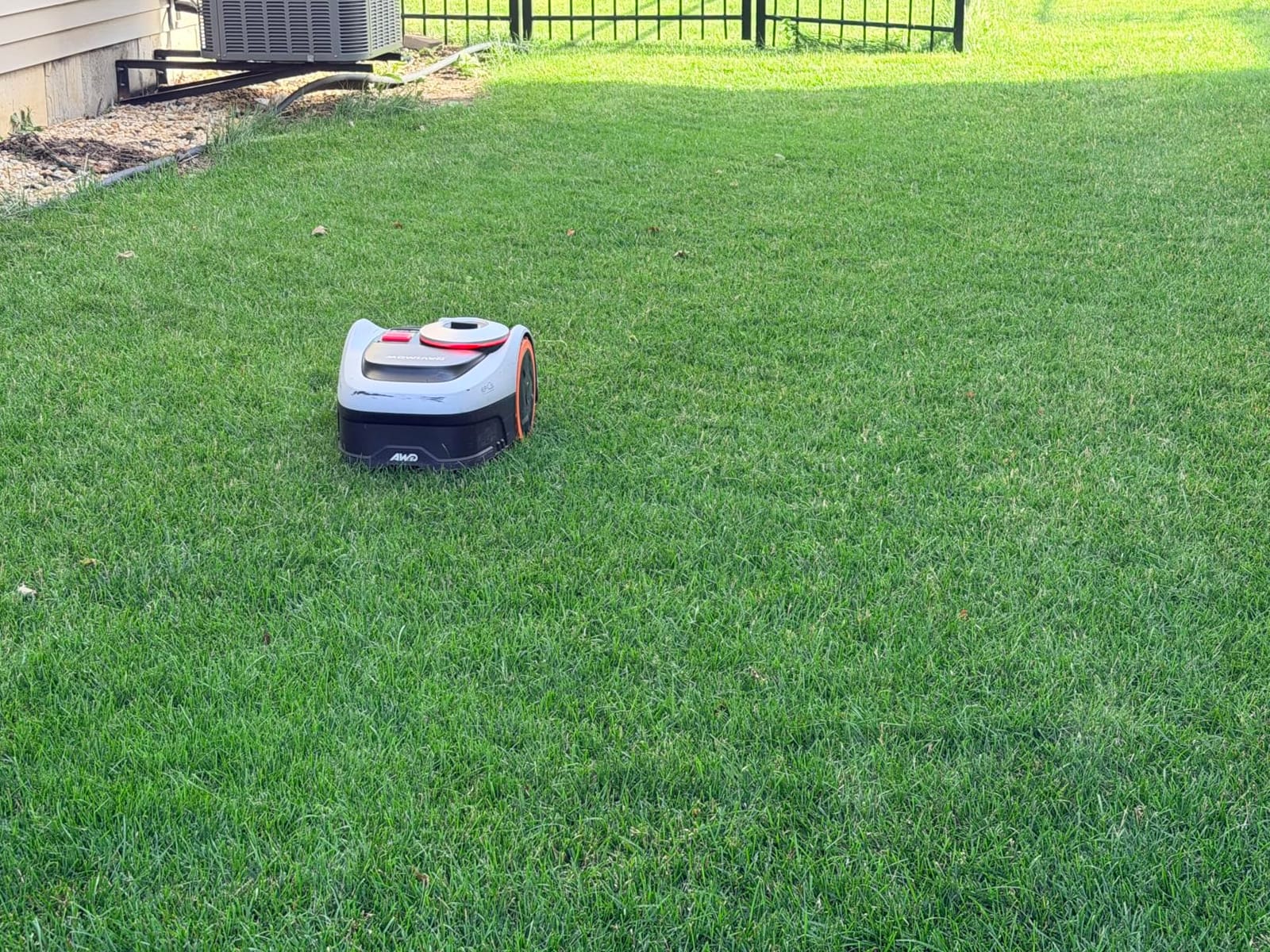
A 45% slope rating is about 24 degrees, which puts this robot squarely in the range where walk-behinds start to struggle and the climbing figures of the larger AWD robots feel like overkill. For a lot that is mostly gentle with one noticeable rise, that is the sensible match.
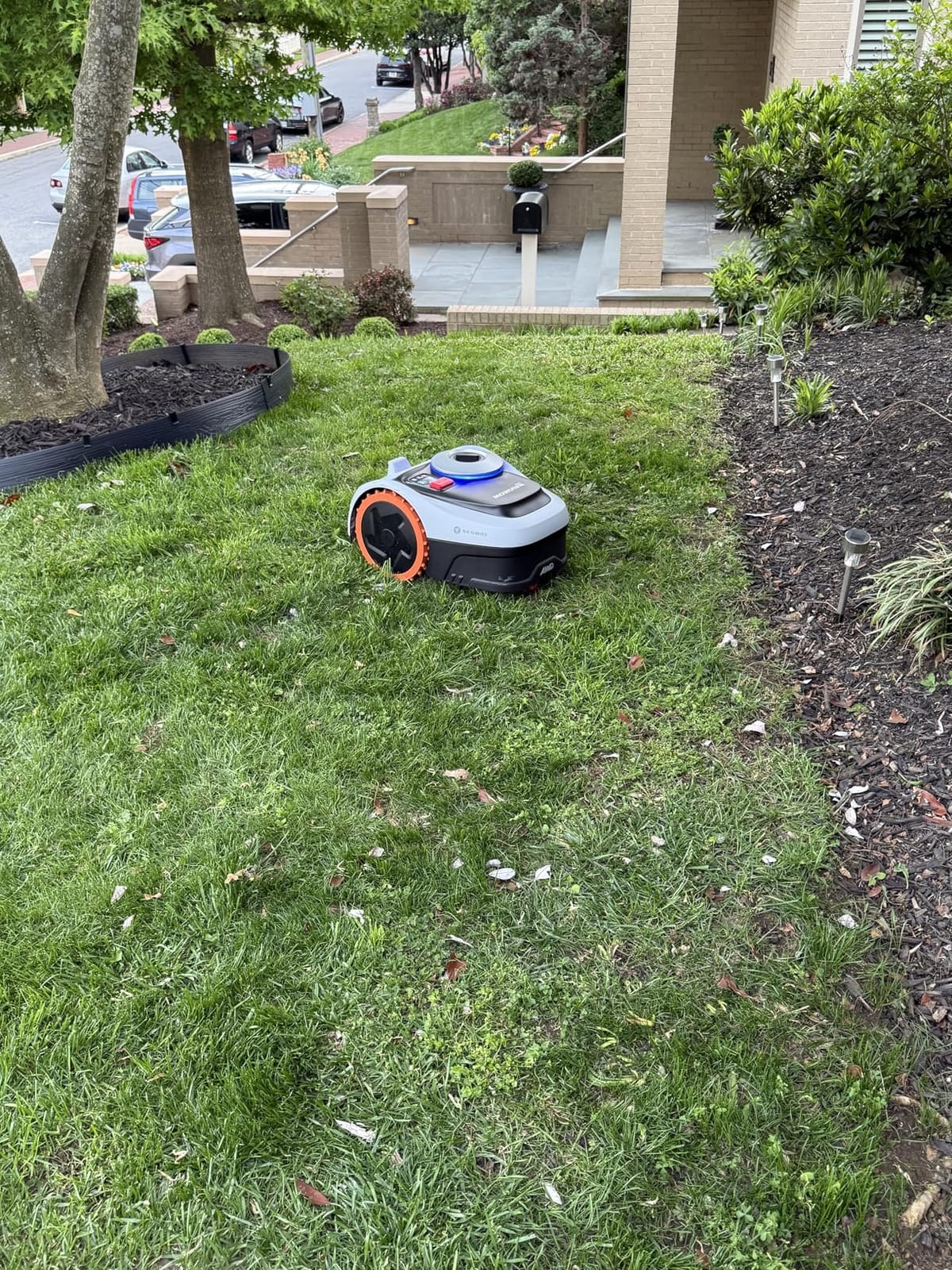
All-wheel drive pairs with automotive-grade stability control, and the 17 inch cutting width is wider than most competing robots at this size. The zero-turn steering design pivots the machine rather than scrubbing it, which protects the turf on a curve at the bottom of a slope.
Owners praise how quiet it is, to the point that dogs are comfortable sitting nearby, and several mention customer support providing replacement parts at no charge.
When 45% is enough
Percent grade is the easier figure for most buyers to sanity-check, and 45% is a rise of roughly 45 centimeters over every meter of run. If your steepest section is around that, this robot will manage it and you do not need climbing capability you will never use.
Up to 20 mowing zones and one-tap auto mapping make it workable on a property with several separate lawn areas.
The mapping problem owners hit
Auto mapping is the dominant complaint. Owners report it is unreliable and often has to be redone, sometimes after the mower is lifted briefly, and manual zone mapping is tedious when auto mapping fails.
It also leaves an unmowed swath along fences even after boundaries are mapped, routes around tall isolated grass clumps, and can wander outside the mapped boundary into mulch beds. Budget time for setup before you expect it to run unattended.
Which Mower Format Handles Which Slope
Match the format to the angle, not the other way around. The framework below is the same one experienced owners describe when they talk about why their machines hold or lose a slope.
Under 12 degrees: any mower will do
This is a gentle rolling yard. A standard self-propelled walk-behind is comfortable, traction is rarely tested, and you can concentrate on the cut rather than the drive. Any of the walk-behinds in this roundup works here.
12 to 17 degrees: self-propelled with variable speed
Now traction matters. A self-propelled machine with variable speed control lets you slow the drive wheels on a side slope so they keep turning instead of spinning, and keep momentum up a straight climb. This is the Greenworks, the EGO, the Worx and the SKIL sweet spot.
17 to 20 degrees: drive control is not optional
Single-speed drives start to feel wrong here, because you cannot match the wheels to your pace. Front or rear drive with a continuously variable transmission, like the YARDMAX, or a self-propel with a speed dial, is what gets you through comfortably.
20 to 30 degrees: leave the driving to a robot
Past 20 degrees, an AWD robotic mower is the honest answer. The Mammotion models in this roundup publish climbing ratings of 80%, which is 38 degrees, and the Segway Navimow is rated to 45%, around 24 degrees. No walk-behind on the market is a good idea here.
30 degrees and beyond: accept the mowing method will change
At that point the steepest sections may simply not be mowed. A string trimmer, a no-mow fescue conversion, or a professional crew with the right equipment is the realistic path.
How to Mow a Hill Without Sliding or Rolling
Mow up and down the slope, never across it. This is the single most repeated piece of advice in owner discussions, and the physics is simple: driving across a grade, the downhill wheels roll faster than the uphill ones, so the machine creeps sideways until it finds an edge to drop off.
With a tractor, up-and-down is the only safe direction. With a self-propelled walk-behind you have more freedom, but keep to straight runs up and down for the steepest sections and only cut across gentler grades.
Mow dry grass only. Every owner in the forums we read says the same thing: wet grass is how mowers slide sideways uncontrollably. Wait for a dry morning, and never mow a slope straight after rain.
Slow down on climbs and on side traverses. Owners report tire pressure matters more than most people expect, and staying within about 5 PSI of the specification prevents a lot of hillside problems.
Make wide, gentle turns at the ends of each pass. A sharp turn on a slope unloads the drive wheels and shifts the center of gravity at exactly the wrong moment. If the mower does start to slide, straighten the handles, stop the drive rather than fighting it, and ease it back to level ground under power.
What Breaks First on a Hillside Mower
Owner reports on lawn forums converge on the same short list, and none of it is the engine. Hydrostatic pumps take the heaviest load on a grade because they are fighting gravity on every climb. Spindle bearings wear faster because the deck sees uneven load across a slope, and deck belts slip when they are working at a different angle than they were designed for.
Tire wear is the quiet one. Side-hill driving scuffs the shoulders of turf tires in a way flat-ground mowing never does, and a tire that is losing its round profile is a tire that will let go on the next steep pass.
None of that argues against mowing hills. It argues for checking tire pressure every few weeks during the season, keeping spare blades and belts on hand, and expecting hydro service intervals to shorten if your machine lives on a slope.
When a Hill Is Too Steep to Mow
Some slopes are not a mower problem. A sustained 35 degree bank behind a house is not a place any of the twelve machines here belongs, and the right answer is usually one of three things.
Convert it. A no-mow fescue blend or native meadow grass will hold the bank better than lawn turf ever did, needs no cutting, and several owners in our research reported doing exactly this after a mower repeatedly got stuck.
Trim it only. A string trimmer or brush cutter handles ground a mower cannot, at the cost of not producing a lawn surface. For a road bank or a drainage ditch, that is usually the right tool.
Hire it out. For a one-time project on steep or very uneven acreage, a professional crew with a compact tractor and a belly or flail mower attachment will finish in a day what a walk-behind would not finish in a season. That is the honest answer for extreme terrain.
Frequently Asked Questions
What ride-on mower is best for mowing steep hills?
For a self-propelled walk-behind, variable speed control is the deciding feature, because it lets the drive wheels keep turning on a side slope instead of spinning. The Greenworks 80V 21in and the EGO POWER+ 21in both pair rear-wheel drive with variable self-propel. For anything past 20 degrees, an all-wheel-drive robotic mower such as the Mammotion LUBA 2 AWD 5000HX, rated to 80% slope or 38 degrees, is the safer machine.
Are riding lawn mowers good on hills?
They can be, but only with the right geometry. A lawn tractor with a wide wheelbase and rear-wheel drive handles a sustained grade well when you mow straight up and down. A steering-wheel zero-turn is the format most owners praise for holding side slopes. A lap-bar zero-turn is the one experienced owners consistently warn against on side hills, because the geometry works against the operator when the machine starts to slide.
What to use to mow steep hills?
Under about 15 degrees, a self-propelled walk-behind with rear-wheel drive handles it comfortably. Between 15 and 20 degrees, add variable speed control and a low chassis. Past 20 degrees, use an all-wheel-drive robotic mower with a published climbing rating of 45% or higher. Past 30 degrees, convert the bank to no-mow fescue or native grass, trim it with a string trimmer, or hire a crew with a compact tractor and a flail mower.
What to do with a hill too steep to mow?
Three options work. Convert the slope to a no-mow fescue or native meadow blend, which holds the soil better than lawn turf and needs no cutting. Keep it with a string trimmer or brush cutter, which handles ground a mower cannot. Or hire a professional crew with a compact tractor and belly or flail mower attachment, which is the realistic choice for extreme terrain or a one-time project.
What is the maximum slope for a riding mower?
Most manufacturers rate a riding mower between 15 and 20 degrees on side slopes, which converts to roughly 27 to 36 percent grade. Lap-bar zero-turns are typically rated around 15 degrees, while steering-wheel zero-turns and lawn tractors are commonly rated 17 to 20 degrees. None of those figures assume wet grass, and none of them account for an uneven bank, so treat them as limits rather than targets.
Why does my mower slide on hills?
Traction depends on weight transfer. On a climb the drive wheels unload and lose grip, and on a side slope the downhill wheels want to roll faster than the uphill ones, so the machine creeps sideways. Wet grass makes it much worse. A locking differential, all-wheel drive, deep-lug turf tires and a low center of gravity all fight the same problem, and keeping tire pressure within about 5 PSI of spec helps more than most people expect.
Do robotic mowers work on steep hills?
Yes, up to their published rating. The Mammotion LUBA models in this roundup are rated to 80% slope, which is about 38 degrees, and the Segway Navimow i206 AWD is rated to 45%, around 24 degrees. The advantage is that nobody is riding the machine. The trade-offs are mowing time, cutting consistency compared with a gas mower, and app-based mapping that some owners find frustrating.
Final Verdict: Best Lawn Mowers for Hills in 2026
The Greenworks 80V 21in self-propelled is our top pick because variable-speed rear-wheel drive, a brushless motor and a steel deck cover everything a moderately steep residential yard throws at a mower, and owners consistently rate it near the top of the group. For banks past 20 degrees, the Mammotion LUBA 2 AWD 5000HX is the machine to buy, and for a large property the LUBA 3 AWD 3000 covers far more ground per day.
Mow dry, mow straight up and down, and slow the drive down before it starts to go. That routine will protect whichever of these twelve you end up choosing.