

If you only have room for one recommendation, the Spider Farmer SF1000 is the best LED grow light for indoor plants in this roundup, because a 100 watt full spectrum panel with a real dimming knob covers everything from a seedling tray to a shelf of mature foliage. Below it sit eleven alternatives chosen for narrower jobs: clip-on lamps for a single windowsill, linkable bars for a plant cabinet, a screw-in bulb for a rented flat, and a decorative halo lamp that does not look like garden equipment in a living room.
Most grow light roundups online are written for cannabis tents and hydroponic vegetables. This one is aimed at ordinary houseplants, the kind on a bookshelf or a desk, and that changes what matters. Output measured in watts matters far less than intensity at the leaf, dimming, and a form factor that will not require drilling into a wall. A 300 watt panel parked above a monstera is not an upgrade, it is a light bill and an eyesore.
Indoor plants receive a fraction of the usable light they would get outdoors, which is why so many of them stretch. Leggy stems, small pale leaves, and a persistent lean toward the window are the classic symptoms of a plant that is genuinely hungry for light. Supplemental LED lighting fixes all three, and it also extends the growing season so you can start seeds in February instead of waiting for spring.
We compared twelve fixtures across wattage, spectrum, coverage, dimming, mounting style, and power source, then sorted them by the job each one actually does well. Ratings and review counts come straight from the listings, and every pick has at least a few thousand owners behind it. We updated this guide for 2026 and kept it LED only, so you will not find a dated high pressure sodium or T5 fluorescent fixture in the list.
Table of Contents
Top 3 LED Grow Lights for Indoor Plants Right Now (October 2026)

Spider Farmer SF1000
- 100W full spectrum
- 2.5 umol/J efficiency
- dimming knob
- IP67 and 5 year warranty

VIPARSPECTRA P700
- 70W and 11000 lumens
- 4 level dimmer
- 2x2 ft vegetative coverage
- fanless aluminum body
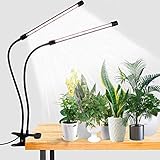
GooingTop 10W Clip Lamp
- 6000K white spectrum
- 4/8/12 hour timer
- 360 degree gooseneck
- 10W draw
The Best LED Grow Lights for Indoor Plants in 2026 at a Glance
Every fixture below appears in this table with its own row, so you can compare form factor and output before you read the individual notes. Prices move constantly, so use the buttons rather than any number you might remember from a listing.
| Product | Specifications | Action |
|---|---|---|
|
Spider Farmer SF1000
|
|
Check Latest Price |
|
VIPARSPECTRA P700
|
|
Check Latest Price |
|
GooingTop 10W Clip Lamp
|
|
Check Latest Price |
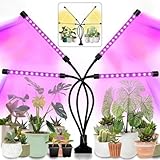 LEOTER 80 LED 4-Head
|
|
Check Latest Price |
 Barrina T5 1ft 4-Pack
|
|
Check Latest Price |
 Briignite A19 Grow Bulb
|
|
Check Latest Price |
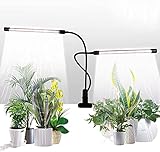 GHodec 84 LED Clip Light
|
|
Check Latest Price |
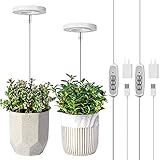 LORDEM Halo Light
|
|
Check Latest Price |
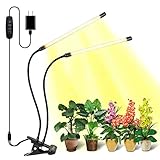 bseah Clip-On Light
|
|
Check Latest Price |
 yadoker Bamboo Light
|
|
Check Latest Price |
 Juhefa 48 LED Gooseneck
|
|
Check Latest Price |
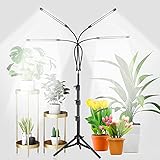 GHodec Freestanding Tripod
|
|
Check Latest Price |
1. Spider Farmer SF1000: Best All-Round LED Grow Light for Indoor Plants
Spider Farmer SF1000 LED Grow Lights for Indoor Plants in 2×2/3×3 Grow Tent
100W
10000 lumens
2.5 umol/J
3000K and 5000K white plus 660nm red and 760nm IR
IP67
5 year warranty
Pros
- Covers a 2x2 to 3x3 area with real output
- Dimming knob plus daisy chain control for multiple fixtures
- Fanless and completely silent
- Five year warranty with regional service centers
Cons
- Runs warm to the touch
- Dimmer switch failed on some earlier revisions
- Hanging hardware eats 8 to 10 inches of clearance
This is the fixture we keep coming back to. It is a 100 watt panel with 250 diodes running a full spectrum of 3000K and 5000K white plus 660nm red and 760nm infrared, and the listing states a system efficiency of 2.5 umol per joule. Owners describe it as a tent and shelf workhorse, and the 4.6 star average sits across more than 12,000 reviews with an unusually high five star share.
What makes it work in a living space rather than only a grow tent is the physical dimming knob on the fixture. You can dial the panel down to match a seedling tray or run it near full output over a shelf of ferns and calatheas, and the daisy chain control lets you add a second fixture later without replacing anything. The fanless aluminum heat sink means no fan noise in a quiet room.

Long term owners report large gains over older high pressure sodium setups at a fraction of the electricity, along with well developed roots and dense growth. The support team is a real advantage too, since several reviewers describe replacement parts being shipped quickly when an early revision needed it.
The spectrum is deliberately broadband rather than a purple blurple. White is what lets you see true leaf color, and the red and infrared diodes are what drive flowering and flowering-stage plants like peppers and herbs. The panel is IP67 rated and the housing is all aluminum, so it tolerates a humid room far better than the plastic clip lamps lower down this list.
One thing to plan for is the mount. The hanging hardware consumes roughly 8 to 10 inches of vertical space, which is awkward in a low ceiling or a bookcase. Measure the gap between the shelf and the ceiling before you commit, and check that the fixture clears your line of sight.

What kind of setup it fits
This is the pick for a dedicated plant shelf, a small propagation rack, or a 2×2 to 3×3 tent growing greens and herbs. It handles a collection of medium to high light houseplants in one throw, and the dimmer lets you adapt the same fixture as seedlings become plants. If you have more than a couple of pots under one light, this is the one I would start with.
Owners upgrading from strip lights report dramatic growth within a few months, including new spider plant pups and heavily fenestrated monstera leaves. At 100 watts it also stays a manageable draw for a household circuit compared with the old metal halide and sodium fixtures it replaces.
Where it falls short
The panel does get warm to the touch, and in a small enclosed space a little airflow helps. Dimmer switch failures appear on some earlier revisions, which the brand handled by sending parts, so it is worth registering the warranty on arrival.
It is also a fairly large object for a small apartment, and it does not blend into a living room the way a bulb or a wooden stake light does. One long-term owner did not hit the advertised efficiency in a first time grow, so treat the specification as a ceiling rather than a promise.
2. VIPARSPECTRA P700: Best Dimmable Panel for a Small Footprint
70 Watt Grow Light, Dimmable Plant Light, LED Grow Lights for Indoor Plants
70W
11000 lumens
216 diodes
660nm red plus 3000K and 5000K white
4 level dimmer
3 year warranty
Pros
- Highest average rating in this roundup
- Users confirm the footprint with PAR meters
- Four dimming levels for each growth stage
- Fanless and completely quiet
Cons
- Very bright even at the lowest setting
- Panel top runs warm during use
- On/off switch sits awkwardly on the top of the fixture
The P700 is a compact serious panel here. It is 70 watts across 216 diodes, throws 11000 lumens, and the listing positions it as a 150 watt HPS and metal halide equivalent over a pulsed 2×2 foot vegetative area. At a 4.7 star average it holds the highest rating of the twelve fixtures we compared.
Technical owners actually put a PAR meter under it and report that it covers the stated footprint, often at 50 to 75 percent on the dimmer. That matters more than the headline wattage, because intensity at the leaf is what drives growth, and a panel you dim to a sensible level is far kinder to foliage than one blasting at full power.

The build is the other reason it scores so well. There is a conformal coating on the LED side for moisture protection, large aluminum heat sinks, and a fanless design so there is no fan noise and no vent to clog with dust. Pulley style height adjustment cords and stainless steel hooks make repositioning as plants grow a two minute job.
Spectrum is a balanced mix of 660nm red with 3000K and 5000K white, which gives you natural looking light rather than the pink glow that makes a room look like a garden center. Owners moving up from budget strips commonly report new growth within weeks.
The four position dimmer is genuinely useful rather than decorative, letting you run a low setting for a propagation tray and a high setting for mature foliage without moving the fixture. There are also size variants in the range, so a wider footprint is available if your shelf is wider than it is deep.

What kind of setup it fits
This suits a single plant shelf, a small cabinet of collectible houseplants, or a 2×2 foot area of herbs and leafy greens. It is the pick when you want real panel output but do not have the headroom or the budget for a full sized fixture, and when you care about build quality over raw lumen numbers.
Because the light is hard to look at directly even on the lowest setting, plan to hang it below eye level or behind a shelf lip. Owners who position it out of the direct line of sight report the most satisfaction from it.
Where it falls short
Brightness is the universal caveat. Even the lowest dimmer setting is intense, so a shade or a lower hang helps if you sit near the plant. The top of the panel also runs warm during a long day, and a small fan handles that in a closed space.
The on/off switch and plug sit on the top middle of the fixture, which is awkward on narrow shelving where you cannot reach over the top. It also costs more than strip style lighting for the same footprint, so value buyers should look at the clip lamps instead.
3. GooingTop 10W Clip-On Lamp: Best Value LED Grow Light
GooingTop Grow Light,6000K Full Spectrum Indoor Plant Growing Lamp
10W LED draw
84 diodes
6000K with 10 red and 74 white
2500 lumens
4/8/12 hour timer
Pros
- Strong clamp holds to shelves tables and pot rims
- Gooseneck holds position at any angle
- Low power draw and a slim control box
- More reviews than any other pick here
Cons
- Timer runs on a 24 hour cycle that is not clearly explained
- Dual head version throws less combined light than two single head lamps
- Coverage narrows if placed very close to the plants
This lamp has more reviews than anything else in this roundup, and the reason is simple. It is a small, sturdy, inexpensive clip lamp that solves the single most common problem: one plant in a dark corner of a room, with no drilling and no shelf space to spare. The 10 watt LED draw is equivalent to a 50 watt halogen, and it puts out 2500 lumens of 6000K white.
The clamp is the star of the show. It grips the edge of a desk, a shelf, or even the rim of a pot, and the flexible gooseneck holds whatever angle you set it at, which is unusual for lamps in this bracket. Owners running seed trays and small houseplants report visible results within a week or two.

There is a timer with 4, 8, and 12 hour settings, and the light runs from a USB or AC plug with a slim control box rather than a cable snaking off the head. That means you can position the head freely and keep the brick out of sight, which keeps the desk tidy.
It is also a genuinely neutral looking light. With 74 white diodes and 10 red ones at 6000K, it lights a plant without turning the corner of the room magenta, and the listing cites a color rendering index of 90 with 95 claimed in the description. For diagnosing pale or chlorotic leaves, that accuracy is worth more than raw power.
A word of caution on the timer. It runs on a 24 hour cycle counted from the moment you set it, which means the schedule can drift relative to your day unless you set it at the time you want the cycle to begin. Read the instructions first, because this is the single most repeated confusion in the reviews.

What kind of setup it fits
One plant, a small windowsill, or a propagation tray of seedlings and cuttings on a desk. It is also a good renter option, since the clamp needs no tools and leaves no mark on the wall. For a collection larger than a few pots, you will want to move up to a panel or a set of linkable bars.
Variants at 49, 75, and 100 watts exist in the same line, so this is also the entry point to a heavier fixture if you outgrow the 10 watt version. Low heat output means you can bring it close to soft leaves without scorching them.
Where it falls short
Coverage is the limit. Placed very close, the beam is narrow, so trays need rotating regularly to keep one edge from stretching. The dual head version also delivers less combined light than two separate single head lamps, which is a fair warning if you are planning to cover a wide tray.
A minority of buyers receive units with a scratched bulb where no protective film was included, so inspect it on arrival. The timer behavior described above is the other recurring theme worth knowing before you buy.
4. LEOTER 80 LED 4-Head Lamp: Best for Mixed Plant Shelves
LEOTER Grow Light for Indoor Plants – Upgraded Version 80 LED Lamps with Full Spectrum & Red Blue Spectrum, 3/9/12H Timer, 10 Dimmable Level, Adjustable Gooseneck,3 Switch Modes
80 diodes across 4 heads
3 spectrum modes
10 dimmable levels
3/9/12 hour timer
USB or AC power
Pros
- Four independently aimable heads cover mixed plant heights
- Ten brightness levels plus three spectrum modes
- Goosenecks hold position without drooping
- Runs cool thanks to the heat sink design
Cons
- Timer must be reset after any power interruption
- USB power needs an outlet or adapter close to the plant
- Modest output for large collections
Shelves are awkward because plants are at different heights. The LEOTER answers that with four independently aimable heads on 360 degree goosenecks, so you can point one at a seedling tray, one at a medium fern, and two at the tall plants at the back without moving the lamp. The metal clamp mounts to desks, shelves, and plant stands.
The diode count adds up to 80 across the four heads, split between 32 red, 12 blue, 20 yellow, and 16 white. That mix gives you three spectrum modes: full spectrum from 380 to 800nm, a red 660nm and blue 460nm pairing, and a combined red, blue, and white blend. Owners like being able to shift toward blue during vegetative growth and red later on.

Ten dimmable brightness levels run across all three modes, which is the feature that separates it from simpler two or three step lamps. For a shelf holding seedlings and mature foliage in the same space, that range lets you tune each stage without moving anything.
There is a circular memory timer with 3, 9, and 12 hour settings, and an aviation grade heat sink with temperature control keeps the output cool enough to sit close to soft leaves. It runs from USB or the included AC adapter, and the 4.5 star average covers more than 12,700 reviews.
Remember the timer detail. It is a circular memory timer, so if power is cut, even briefly, it needs to be re-set. In a house with older wiring or frequent outages, budget for the small annoyance or pair it with a smart plug.

What kind of setup it fits
A bookcase or shelving unit holding a mix of plants at different stages, a kitchen herb shelf, or a propagation station. Four aimable heads mean you can light a 2 foot section of shelf from one clamp, which is exactly the use case r/IndoorGarden users ask about when they want one lamp for a group of herb pots.
It is also a reasonable first grow light for someone starting seeds indoors, since the low brightness settings protect tender seedlings while the higher levels carry plants through vegetative growth.
Where it falls short
Output is modest compared with a panel style light. If your shelf is deep or your plants are large and demanding, the edges of the canopy will sit outside the useful range and you will need a second lamp or a different form factor entirely.
USB power means the adapter has to sit within reach of the plant, which is fine on a desk and awkward on a tall shelf. Combined with the timer reset behavior, that makes it a better fit for a no-fuss shelf than for a fully automated setup.
5. Barrina T5 1ft 4-Pack: Best Linkable Bars for a Plant Cabinet
Barrina T5 Grow Lights for Indoor Plants, 5000K Full Spectrum, 1FT, 4 Packs
4 x 1ft bars
5000K white
5W per bar and 20W combined
96 diodes
Linkable up to 16
Pros
- Slim bars mount neatly under shelves and cabinets
- Linkable so one outlet powers a whole rack
- Individual on/off switch on each bar
- Runs cool with no heat stress on foliage
Cons
- No built-in timer so an external timer is needed
- Short interconnecting cords suit closely spaced shelves
- Not waterproof so humid vivariums need care
Building a plant cabinet or a seed rack is the job this set was made for. Four one foot aluminum bars at 5000K white, 96 diodes in total, running 5 watts each for a combined 20 watt draw. The listing notes that this replaces around 120 watts of general plant lighting while staying cool enough to sit close under a shelf.
The linkable design is the reason to buy four rather than one. Fixtures chain in series up to 16 fixtures with the included 39.37 inch connecting cords, so a single outlet can run an entire rack. Each bar has its own on/off switch plus a master switch on the power cord, which lets you balance intensity plant by plant as a shelf develops uneven growth.

Mounting is refreshingly flexible. The box includes double sided tape, clips, and cable ties, so you can stick them to the underside of a shelf or wire them to a rack without tools. The housing is aluminum and polycarbonate, and at 1.3 pounds for the set the bars stay put.
Because the light is neutral white rather than a purple or pink glow, the cabinet still looks like furniture. Reviewers building vivariums and display cases use these widely for the same reason, though they warn about the lack of water resistance.
Timing is handled externally. There is no built-in timer, so most owners plug the set into a wall timer or a smart plug. For anyone already running an automated schedule, that is arguably the better arrangement, because you control the whole rack from one place.

What kind of setup it fits
A glass display cabinet, a bookcase converted into a plant shelf, a propagation rack under a workbench, or a seedling nursery. This is the pick when you want broad coverage across a horizontal surface and the option to expand later without buying new power or new cables.
It is also a discreet option for a living room, since slim white bars under a shelf are close to invisible. The 2 year warranty is shorter than the panels but reasonable for the category.
Where it falls short
The interconnecting cords are short, so they are built for shelves with bars roughly a foot apart. A long bookcase will need extension leads, and a chain of daisy chained bars carries a little voltage drop at the far end.
Because each bar is only 5 watts, this is supplemental lighting rather than a standalone grow fixture. Plants that need a genuinely bright canopy will still want a panel, and the lack of water resistance rules it out for an open water setup or a very humid vivarium without protection.
6. Briignite A19 Grow Bulb: Best Screw-In Option for Renters
Briignite Grow Light Bulbs, LED Grow Light Bulb A19 Bulb, Full Spectrum
E26 A19 base
11W drawing 1000 lumens
4000K appearance
CRI 90
PPF of 25 umol per second
Pros
- Drops into any standard table lamp or pendant
- Friendly 4000K appearance instead of a purple glow
- 1000 lumens from only 11 watts
- Runs cool enough to sit near foliage
Cons
- No dimming and no built-in timer
- Lower intensity than panel or bar fixtures
- Broad bulb shape gives less usable coverage than a directional fixture
This is the answer for anyone who cannot drill, cannot hang anything, and does not want a clamp on the furniture. It is a standard E26 A19 bulb in a two pack, so it screws into a bedside lamp, a pendant, or a clamp fixture you already own. No new hardware, no tools, no landlord conversation.
The light is a 4000K white with hidden red and blue spectrum blended in, which is the most important thing about it. Most grow bulbs look lurid. This one looks like a normal household bulb while still delivering full spectrum 380 to 780nm output, so it will not make a living room look like a laboratory.

Efficiency is respectable for the form factor. Eleven watts produces 1000 lumens, the listing states a PPF of 25 micromoles per second, and the color rendering index of 90 means you can judge leaf color accurately. The aluminum and plastic construction runs cool, with a rated life of 30,000 hours.
Owners treat it as a simple upgrade to existing lighting rather than a dedicated grow fixture, and many pair it with a smart plug to handle scheduling. At a 4.6 star average across more than 13,000 reviews, with 76 percent five star, the satisfaction rate is high for something this simple.
Because it is a broad bulb rather than a directional grow light, light spreads in a 180 degree beam. That is fine for a single plant under a lamp, and it is the reason it underperforms in a dense collection where you need controlled intensity over a specific canopy.

What kind of setup it fits
One plant per lamp, a small herb pot on a nightstand, a propagation shelf where each propagation box has its own bulb, or a rental where nothing may be screwed to a wall. It is also a tidy way to add light to a bookcase that already has a clip-on fixture.
If you already run a smart home, an external smart plug gives you the scheduling and dimming the bulb itself lacks. That combination covers almost everything the dedicated fixtures do at a fraction of the fuss.
Where it falls short
There is no dimming and no built-in timer, so scheduling is entirely dependent on an external plug or wall timer. Fixed output also means less control when seedlings need a gentler start than mature plants.
Intensity is the other limit. This is a supplementary bulb, not a grow panel, and it is not the right choice for a dense collection or a high light species sitting in a dark corner. Plants that want a strong canopy need a directional fixture with real output.
7. GHodec 84 LED Clip Light: Best for Seedlings and Cuttings
GHodec Grow Light,Full Spectrum White 84 LED Clip Indoor Plant Light
84 diodes on two bars
6000K
5 brightness levels
4/8/12 hour timer
USB powered
Pros
- Consistently improves growth on low light houseplants
- Set and forget 4/8/12 hour timer
- Five brightness levels for different plants
- Sturdy clip and 360 degree gooseneck
Cons
- Modest brightness for demanding species
- Clip only mount needs a surface with a lip
- Longest timer cycle is 12 hours with no longer option
Seedlings and cuttings need low, even light over a flat tray, which is exactly what this two bar clip lamp provides. Each bar carries 5 red and 37 sunlight white diodes at 6000K, for 84 sources in total, and the listing cites up to 95 CRI flicker-free output. That high color accuracy makes it easy to spot a tray that is stretching.
Five brightness levels and a 4, 8, or 12 hour auto timer give you the two controls that matter most at this stage. Start new cuttings on the lowest setting and increase as roots form, rather than blasting a delicate tray with the same intensity that a mature plant would want.

The 360 degree gooseneck and anti slip clamp hold position well, and each bar can be switched on or off independently, so you can balance light across an uneven tray. It is USB powered at 5V DC, which keeps the brick out of sight and lets you run several from one adapter.
Owners report visible improvement in dark corners of a room within about a week, and the 4.4 star average sits across roughly 9,400 reviews. The design is compact and simple to assemble, which matters if you are moving it between rooms as the season changes.
There is one thing to plan around. Because the unit has to be switched on for each cycle, it does not work well alongside an external plug-in timer, so decide whether you want the built-in schedule or external automation before you set it up.

What kind of setup it fits
Propagation boxes, seed trays, a windowsill of small succulents, or a low light corner holding a fern, pothos, or ZZ plant. It is also a good fit for cloning setups and for anyone keeping plants in an office or a balcony where daylight is limited.
Because it clips rather than stands, it suits a desk or a shelf with a usable lip, and the two bar layout covers a wider tray than a single head lamp of the same size.
Where it falls short
Brightness is the honest limitation. It is best suited to seedlings, clones, succulents, and small plants rather than demanding species, and larger or hungrier plants will outgrow it quickly.
The 12 hour maximum timer cycle is restrictive for anyone who wants a long photoperiod, and the clip-only design means there is no stand of its own, so it needs a stable surface with an edge. A small number of buyers also report units failing to power on, so test it the day it arrives.
8. LORDEM Halo Light: Best Decorative Lamp for a Single Pot
LORDEM Grow Light for Indoor Plants, Full Spectrum LED 2 Packs
Halo ring sticks into the pot
4500K
4 brightness levels
4/8/12 hour timer
Telescoping to 26 inch
Pros
- Halo shape reads as decor rather than equipment
- No wiring or stand needed
- 4 brightness levels prevent leaf burn
- 4500K light is comfortable in a room
Cons
- Each lamp covers only the pot it sits in
- One failed bar means replacing the fixture
- Not suitable for dense or high light gardens
Many grow lights look like equipment. The LORDEM looks like a lamp, which is the whole point of it. The halo ring sticks directly into the soil of a potted plant, so there is no clamp, no stand, no cable across the furniture, and nothing to trip over. For a kitchen counter or a bedside table, that is a genuine advantage.
It outputs full spectrum 380 to 800nm with a 4500K white appearance and a color rendering index of 92, rated for 50,000 hours. Four brightness levels at 25, 50, 75, and 100 percent let you match intensity to the plant instead of running everything flat out, which is what causes scorching in careless setups.

The telescoping pole extends the light higher as a plant grows and widens the coverage as it rises, reaching 26 inches overall. Three timer cycles run 4, 8, or 12 hours on and repeat daily, so you do not have to remember it. The listing covers a wide range of color, size, and pack count variants.
It is sold as a two pack, which makes sense for a shelf where you have two feature plants. Buyers especially like it for herbs, succulents, and orchids, where the aesthetic of the room matters as much as the light level.
The 4.3 star average across more than 14,000 reviews reflects a real trade-off. People who wanted a serious growing fixture found it too modest, while people who wanted one attractive light per pot rate it very highly.

What kind of setup it fits
A single potted plant on a table, a windowsill of herbs, or a shelf of small succulents where appearance is part of the decision. It is also a good renter solution, since it needs no mounting at all, only a pot with soil in it.
Use it as an accent light rather than the sole source for a demanding plant. Paired with a fixture that covers the canopy, it handles a feature plant elegantly and adds light to a dim corner without a single visible cable.
Where it falls short
Coverage is limited to the pot it is stuck into, so a collection of plants means buying multiple sets. There is no way to widen the beam or aim it at a shelf of foliage.
Unlike a screw-in bulb, a failed LED bar means replacing the entire fixture rather than a bulb. It is also not appropriate for a dense indoor garden or for high light species, where the output per watt simply is not there.
9. bseah Clip-On Light: Best Budget Clip Lamp with a Timer
bseah Grow Light Plant Lights for Indoor Plants, Full Spectrum Plant Grow Lamp, 10 Dimmable Levels, Auto ON & Off with 3/9/12H Timer
Two LED tubes
10W on 5V DC
USB powered
3/9/12 hour timer
3 modes and 10 dim levels
Pros
- Strong spring clamp grips stands shelves and tables
- Ten dim levels and three light modes
- Timer repeats the same schedule daily
- Compact modern design that does not dominate a room
Cons
- Cord is short for larger shelving units
- Protective film under the end caps is hard to remove
- Gooseneck arms can slowly lose rigidity
The bseah is the budget pick that covers more ground than its size suggests. Two full spectrum yellow and white LED tubes on metal gooseneck arms, a spring clip and a non slip mat base, and 10 dimmable brightness levels across three spectral modes. Owners using it in low light corners report improvement within a week.
The spring clamp is the detail that makes it work. It grips plant stands, shelves, and tables firmly, and because the arms hold position, the light stays aimed at the canopy instead of slowly drooping as many cheap goosenecks do.

The timer is a circular memory auto on and off at 3, 9, or 12 hours that repeats daily as long as power stays connected. That makes it a genuine set and forget option for a plant corner you cannot reach every day to switch something by hand.
At 10 watts on 5V DC with a USB adapter included, the running cost is negligible, and the rated life of up to 50,000 hours means it can stay in place for years. The 4.5 star average covers close to 9,000 reviews with a solid 74 percent five star share, and the 2 year warranty is a real bonus at this level.
Two practical issues. The USB cord is roughly 54 inches, which is short on a wide shelving unit and may need an extension, and the factory protective plastic film is sealed under the end caps where it tends to break rather than peel away cleanly.

What kind of setup it fits
A desk plant, a small shelf of mixed houseplants, or a low light corner where legginess has started to appear. It works well for a herb shelf near a window that gets indirect light, because the timer keeps the schedule consistent through a busy week.
Tube counts of 2, 3, and 4 are available in single and two pack versions, so you can scale the coverage as your collection grows without changing brand or mounting style.
Where it falls short
The cord length is the most common complaint, particularly on anything wider than a standard desk. Positioning the arms is deliberately stiff, which helps them hold, but it also means a little effort to set them initially.
Over time some owners report the arms slowly losing rigidity, which matters more for a lamp meant to stay in one position for years. There is no water resistance rating, so keep it clear of a humid terrarium or an open water feature.
10. yadoker Bamboo Light: Best for Tall Floor Plants
yadoker Grow Lights for Indoor Plants, Full Spectrum Plant Light
72 diodes
Adjustable from 13.7 to 61.1 inch
10 brightness levels
8/12/16 hour timer
13 foot cord
Pros
- One pole follows a plant from seedling to full height
- Bamboo finish blends into home decor
- 13 foot cord reaches baskets and floor plants
- 10 brightness levels with a 3 mode timer
Cons
- Coverage centers on a single plant so groups need more units
- Stake base suits soil better than shelves or hard floors
- Output is lower than bar or panel fixtures at the same wattage
A tall floor plant is hard to light, because a clip lamp sits at desk height and a panel needs a ceiling. The yadoker solves it with a bamboo finished pole that telescopes from 13.7 inches up to 61.1 inches, so a single lamp can follow a plant from a young seedling to a full height floor specimen.
The diode mix is unusually broad for this category: 36 white at 5000K, 28 warm white at 3000K, 6 red, and 2 blue across 72 sources, for full spectrum 380 to 800nm output. Ten brightness levels and a timer with 8, 12, or 16 hour on cycles cover most household routines, including longer days for leafy plants.

The 13 foot power cord is the detail that makes it practical, because it reaches a hanging basket or a plant in the corner of a room without a cable extension. Operation is low voltage 5V USB with a push button on and off, so it runs cool and is safe around foliage.
Owners consistently praise the styling. A bamboo finish blends into a living space far better than black plastic, which is why this one shows up in kitchens and reading corners as often as it does in grow spaces. The 4.3 star average across nearly 8,950 reviews reflects that it is an attractive accent light more than a serious growing fixture.
There is a 7 percent one star share, and the complaints cluster on one point: brightness and coverage beyond a single pot. At 10 watts, it is not competing with bars or panels on output, and it is best understood as a decorative light that happens to help the plant.

What kind of setup it fits
One tall floor plant, a hanging basket, or a plant on a high shelf where a clip lamp cannot reach. It is a strong choice when the fixture has to look like decor, and the telescoping pole means you do not need to buy a new light as the plant grows.
It is also a good renter option, since the stake goes into the soil and nothing is attached to the wall or the furniture. A one year manufacturer warranty is the thinnest cover in this roundup, so register it on arrival.
Where it falls short
Coverage is centered on a single plant. Large groups need multiple units, and spreading one across a shelf of foliage leaves most of it under lit.
The stake-in base works best in soil and is far less convenient on a shelf, a hard floor, or a table. Output is also lower than bar or panel fixtures at a similar wattage, so it complements a brighter fixture rather than replacing one.
11. Juhefa 48 LED Gooseneck: Simple Fix for One Struggling Plant
Plant Grow Light,48LED White Red 6000K Full Spectrum Gooseneck Growing Lamp
48 diodes at 6000K
5W
5 brightness levels
4/8/12 hour timer
77 inch USB cable
Pros
- Very low power draw for a working full spectrum lamp
- Five brightness levels protect sensitive leaves
- Timer repeats the same daily schedule
- Gooseneck holds its bend and the 77 inch cable gives placement freedom
Cons
- No clamp or stand included only a ground stake
- Light weight means the stake needs tape to stay put
- Small coverage so more than a few seedlings suffer
Sometimes the right light is simply the one that rescues a single struggling plant in a dim corner. The Juhefa is a 48 diode gooseneck running 5 watts, split between 40 white and 8 red at a 6000K daylight spectrum, and it is among the least expensive working grow lamps here. Reviewers call it a very cheap effective option for a lone houseplant.
Five brightness levels can be adjusted independently while the timer keeps running, which is the useful part. It means you can drop the intensity for a soft leaved plant on a dark afternoon and turn it back up on a gray winter morning without touching the schedule.

The thickened gooseneck twists a full 360 degrees and holds the shape it is bent into, and the 77 inch USB cable gives genuine placement freedom for a lamp that has no stand. It works over USB or with a standard plug, and the CRI 95 rating means leaf color reads true.
The timer cycles at 4, 8, or 12 hours on a 24 hour cycle from the moment you set it, so pick your start time carefully. At a 4.5 star average across more than 6,000 reviews, the sentiment is positive, with the praise split between the timer, the dimming, and the cable length.
The limitation is physical rather than electrical. There is no clamp and no stand, only a ground stake, so it suits one plant at a time. Because the lamp is so light the stake tends to shift, and several owners use tape to keep it in position.

What kind of setup it fits
One plant in a dark corner, a small windowsill herb pot, or a seedling tray with only a handful of cells. The stake goes straight into the soil of a potted plant, so it is the simplest possible installation with no furniture involved.
Pack variants of 1, 2, 3, and 4 are available, so a shelf of small pots is possible if you accept the small footprint each one covers. It pairs well with a brighter fixture, handling a dark corner while the main light covers the collection.
Where it falls short
Coverage is small, and more than a few seedlings in one tray will stretch toward the center. Owners trying to cover several young plants at once report leggy results, which is the classic under-lighting symptom.
The stake needs soil and a reasonably steady base, and the light weight means it flails out of position without a little tape. A clamp based lamp is a better buy if you want to cover a shelf rather than a single pot.
12. GHodec Freestanding Tripod Lamp: Best Stand-Alone Floor Light
GHodec Grow Light Free Standing, 5500K Full Spectrum Gooseneck LED Lamp
80 diodes on 4 strips
5500K
Stand from 15 to 48 inch
4/8/12 hour timer
5 brightness levels
Pros
- Adjustable stand gives far better coverage than clip-on lights
- 5500K white keeps plants natural rather than pink
- Four gooseneck strips spread light widely
- Stable base even with all heads bent to one side
Cons
- Cords and drivers often fail after one to two years
- Will not restart itself after a power cut
- 12 hour maximum timer cycle only
When you cannot clamp anything, a freestanding tripod is the answer. The GHodec freestanding lamp has 80 diodes across four gooseneck strips, with 16 white and 4 red per strip at 5500K daylight, on a stand that extends from 15 to 48 inches. That height range is the feature, because it puts light above a plant cluster without a shelf or a ceiling.
The 5500K white is one of the more natural spectra in this roundup. Owners report success not only on sun loving houseplants but on aquarium plants as well, because the light reads as daylight rather than a pink or purple glow that makes a room look strange.

Four flexible gooseneck strips spread the light wide, and the steel and aluminum bracket handles heat dissipation while keeping the base stable even with every head bent to one side. A timer with 4, 8, or 12 hour cycles and five brightness levels cover the daily routine, and it runs from a USB connector with an adapter included.
At a 4.2 star average across roughly 5,800 reviews, this is the lowest rated fixture here, and the reason is durability rather than light quality. Multiple reviews describe the cord or internal wiring failing within one to two years of use, which is a real consideration for a lamp meant to run daily.
Two smaller notes. It will not resume on its own after a power interruption, so the built-in timer has to be used rather than an external plug, and the four, eight, and twelve hour button logic does take some learning.

What kind of setup it fits
A cluster of floor plants, a corner of a living room with no shelf to clamp to, a greenhouse corner, a balcony, or a seed starting area on the floor. Raising the light above the canopy is what makes the difference for anything that has started to stretch.
It also works in places where drilling or clamping is not possible, and the adjustable height means one lamp can cover plants at several stages as they grow. A 12 month manufacturer warranty covers the first year.
Where it falls short
Build longevity is the main weakness. If your plan is to run a light daily for several years, factor in a possible cord or driver replacement, or choose a fixture with a longer warranty and a regional service center.
The 12 hour maximum timer cycle and the no restart after a power cut are frustrating in a household with unreliable wiring. Brightness is also unremarkable for a floor plant with a large canopy, so this is a coverage light rather than an intensity light.
How to Choose an LED Grow Light for Indoor Plants
Most buying mistakes come from comparing the wrong number. Wattage tells you what the fixture draws, lumens tell you how bright it looks to you, and neither guarantees how much usable light reaches a leaf. The metric that matters is PPFD, photosynthetic photon flux density, measured in micromoles per square meter per second, which describes light arriving at the plant surface rather than light leaving the bulb.
Match the intensity to the plant, not the box
Low light houseplants such as pothos, snake plant, ZZ plant, and most ferns are content with a supplement rather than a dedicated fixture. Bright indirect light species such as monstera, fiddle leaf fig, rubber plant, and calathea want a real canopy of light. Succulents and cacti want more intensity than anything else on a shelf, plus the closest positioning.
Seedlings are the exception that proves the rule. They want low intensity over a wide area, which is why the best seedling light is often a dimmable bar set well back rather than a powerful panel pulled close.
Size coverage to your shelf, cabinet or tent
Match the fixture to the footprint, not to your ambition. A 70 watt panel covers roughly a 2×2 foot vegetative area, and a 100 watt panel is a sensible step up for a 2×2 to 3×3 space. Both are wasted in a one foot desk corner, and both are inadequate for a 4×4 grow room on their own.
For a shelf, count the length rather than the depth, because that is the dimension that limits you. A pack of four one foot linkable bars will light a four foot shelf from a single outlet, which is a practical way to cover a long run on one outlet.
Full spectrum white beats blurple for houseplants
Blurple is the purple and magenta mix of red and blue diodes with almost nothing in between. It is efficient for a single growth stage in a controlled setup, and it looks like science equipment in a living room. Full spectrum white, usually 3000K to 5000K with red and sometimes infrared diodes added, is the better choice for houseplants.
Blue wavelengths in the 400 to 500nm range drive compact vegetative leaf growth, red wavelengths in the 600 to 700nm range drive flowering and fruit, and the white broadband base improves canopy penetration while letting you see true leaf color. You cannot diagnose a chlorotic leaf under a blurple light, which is half the reason houseplant growers moved to white.
Pick the form factor that fits your space
Clip and gooseneck lamps suit desks, shelves, and plant stands. Bar lights suit the underside of shelves and inside cabinets. Screw-in bulbs suit rentals and existing fixtures. Stake-in and halo designs suit a single potted plant. Panels and quantum boards suit a dedicated area with headroom. Tripods suit floors where nothing can be clamped.
Two secondary criteria are worth checking. A real physical dimmer is more useful than an app, because it works when your phone is not in your hand, and an IP rating of IP65 or above gives you confidence if the fixture will be near a humid plant or a watering can.
Hang height and daily runtime by plant type
Light intensity falls off with distance by the inverse square law, so moving a fixture from 12 inches to 24 inches cuts the intensity at the leaf dramatically. That is why dimming is the practical substitute for distance, and why a panel hung high and dimmed often beats a panel hung low at full power.
Low light plants tolerate a longer day at lower intensity, while succulents and cacti want short, bright exposure. Household schedules of 12 to 16 hours suit most foliage plants, and running a light 24 hours a day buys almost nothing because plants need a dark period. Turn the fixture off at least once a day, and rotate trays under narrow coverage so no edge stretches.
Two warning signs are worth memorizing. Leggy stems, small pale leaves, and a persistent lean toward the window mean the plant needs more light or a closer source. Bleached or papery patches, curled leaf edges, and crisp brown tips mean the plant is getting too much, and the fix is to raise the light or turn the dimmer down rather than adding more power.
Frequently Asked Questions
Which LED grow light is best for growing plants?
For most indoor plant collections the Spider Farmer SF1000 is the strongest single choice, because a 100 watt full spectrum panel with a physical dimming knob covers a shelf of mixed foliage and a seedling tray with one fixture. For a single plant or a rented flat, a screw-in grow bulb or a clip-on gooseneck is the sensible answer, because no drilling is involved. Match the fixture to the plant and the footprint rather than to the highest wattage.
What type of LED light is best for growing plants?
Full spectrum white LEDs, usually 3000K to 5000K with added red and sometimes far red diodes, are the best type for houseplants. Blue wavelengths in the 400 to 500nm range drive compact leafy growth and red wavelengths in the 600 to 700nm range drive flowering. The white base improves canopy penetration and lets you see true leaf color, which blurple fixtures do not.
Can any LED light be used as a grow light for plants?
Partly. A normal household LED bulb is bright and cheap, but most are tuned for the human eye rather than for plant absorption, so they deliver less usable light than a grow fixture of the same wattage. They are fine as a mild supplement for a low light plant near a window. They are not a substitute for a proper grow light when a plant is showing leggy growth or pale, undersized leaves.
Which color LED light is best for plant growth?
Red and blue are the two most useful colors, which is why blurple fixtures exist, but a blend that includes white performs better overall for houseplants. Blue light in the 400 to 500nm range drives compact vegetative growth, red light in the 600 to 700nm range drives flowering and fruiting, and white light fills the gaps so light reaches deeper into the canopy. Plants reflect green light strongly, so a purely green or purely white fixture wastes part of its output.
Do grow lights burn indoor plants?
They can. Leaves develop bleached or papery white patches, curled edges, and crisp brown tips when intensity is too high, and damage of this kind does not recover. The fix is to raise the light, lower the dimmer, or increase the distance rather than to reduce the hours. Most fixtures in this roundup run cool enough to sit close, but seedlings still need a lower setting than mature foliage.
How far should a grow light be from indoor plants?
For most foliage houseplants, 12 to 24 inches above the canopy is a reasonable starting point, and then you tune with the dimmer. Seedlings and cuttings need more distance and a lower setting, roughly 18 to 24 inches. Succulents and cacti want the closest placement, around 6 to 12 inches, because they tolerate and need high intensity. Intensity falls sharply with distance, so measure at the leaf rather than at the fixture.
Which LED Grow Light Should You Buy?
Buy the Spider Farmer SF1000 if you have a shelf or small area and want one fixture to do everything, since the dimming knob lets it serve seedlings and mature plants alike. Buy the VIPARSPECTRA P700 if your space is small and you care about verified output and build quality, and buy the Barrina linkable bars if you are lighting a cabinet or a long shelf quietly.
For a single plant, a rented flat, or a desk, the answer is a clip-on gooseneck or a screw-in bulb rather than a panel. The GooingTop is the most reviewed clip lamp here, the Briignite bulb needs no hardware at all, and the LORDEM halo or yadoker bamboo lamp are the ones that do not look out of place in a living room.
Whatever you choose, set the light at the distance your plants tolerate, dial it down rather than up when leaves look pale, and give every plant a dark period each day. That habit, more than the fixture, is what separates a plant that grows compact from one that stretches toward the window. These are our picks for the best LED grow lights for indoor plants in 2026, and the button under each review shows the current listing.