

Most best-of lists for this keyword are really tent lists. They rank fabric denier and frame thickness, then mention the fan as a freebie that happens to be in the box. That misses the point, because a grow tent kit with ventilation is only as good as the air it moves, and the fan is the part that is sized wrong most often, decides whether your run ends in dense flower or in mould, and is the first thing most growers end up replacing.
So we built this roundup the other way around. Every kit below was judged on its ventilation chain first — inline fan CFM, whether the carbon filter is size-matched to that fan, how much ducting comes in the box, and whether the ports are pre-cut — and only then on tent fabric, light output and extras. We also checked the thing that never gets checked, which is whether the delivered airflow still works once the air has to pass through eight feet of flex duct and a loaded charcoal filter.
Below are the eight complete grow tent kits with ventilation we ranked, from a 2×2 starter package to a 4×4 system that runs itself. If you want the short answer, the Mars Hydro 3×3 Smart Grow Tent Kit took our top slot, the VIVOSUN 3×3 Smart PRO has the strongest airflow package of the eight, and the AC Infinity 4×4 AI Grow System is the one to buy if you intend to run a tent for years.
Table of Contents
What Is a Grow Tent Kit With Ventilation?
A grow tent kit with ventilation is a bundled indoor growing setup that pairs a lightproof, reflective grow tent with a full-spectrum LED grow light and a matched air-moving system — typically an inline duct fan, a size-matched carbon filter, flexible ducting and a clip-on circulation fan — pre-sized to the tent’s footprint and volume.
Here is what that means in practice. The tent walls contain the environment and bounce light back onto the plants. The inline fan pulls hot, humid air out of the tent through an activated-carbon filter that traps odour, and fresh air enters through low intake ports. The clip fan moves air across the canopy so every plant gets moving air and no stagnant humidity pockets form near the corners.
Almost every complete kit ships with the same six core pieces: the tent, the light, the inline fan, the carbon filter, the ducting, and some form of clip or oscillating fan. What separates a good kit from a disappointing one is whether those pieces were sized together, and whether you have to cut your own holes in the fabric on day one.
Top 3 Grow Tent Kits With Ventilation (October 2026)

MARS HYDRO 3×3 Smart Grow Kit
- 205 CFM 4 inch inline fan
- 1680D mylar tent
- 150W dimmable LED
- WiFi smart controller

VIVOSUN 3×3 Smart PRO Grow Kit
- 210 CFM EC inline fan
- 2000D fabric
- AeroLight LED with fan
- 10 speed clip fan

AC Infinity 4×4 AI Grow System
- 6 inch EC inline fan
- 400W Samsung LM301H light
- AI self-learning controller
- 4 plant capacity
Two of these are 3×3 packages from different ends of the price spectrum, and one is a 4×4 built around automation. The Mars Hydro and the VIVOSUN 3×3 are the two we keep coming back to for a first or second tent, because the light, fan and filter are all matched to the footprint. The AC Infinity is the only kit here that ships two fans and a controller that predicts climate rather than just reacting to it.
All 8 Grow Tent Kits Compared in 2026
| Product | Specifications | Action |
|---|---|---|
|
MARS HYDRO 3×3 Smart Grow Tent Kit
|
|
Check Latest Price |
 VIVOSUN Smart Grow Tent Kit 3×3
|
|
Check Latest Price |
|
AC Infinity AI Grow System 4×4
|
|
Check Latest Price |
 Spider Farmer 2×2 Grow Tent Kit
|
|
Check Latest Price |
 VIVOSUN Complete Grow Tent Kit 2×2
|
|
Check Latest Price |
 IPOW 2×2 Complete Grow System
|
|
Check Latest Price |
|
VIVOSUN 3×3 Smart PRO Grow Kit
|
|
Check Latest Price |
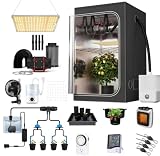 SUPERGROWER 32×32 Integrated Kit
|
|
Check Latest Price |
Two things jump out of that table. First, every single kit in this roundup bundles an inline fan, which is now standard — so the fan’s CFM number, not its presence, is the deciding spec. Second, five of the eight ship 1680D fabric or heavier, while one ships 600D, and that difference matters over multiple harvests.
How We Evaluated Ventilation in These Kits
Most competing roundups for this keyword are written by the brands themselves. We are not, and it is worth being blunt about that because the biggest difference between kits is rarely advertised accurately.
Started with the fan, not the tent. We recorded the rated CFM of the bundled inline fan for every kit, then checked whether the carbon filter in the box was rated to match it. A filter rated below the fan is the single most common defect in a bundled package.
Worked the air-volume math for each tent. We multiplied footprint by height to get cubic feet, then compared that against rated CFM to see whether the kit’s own fan can clear the tent’s air in about a minute.
Checked whether the derating math holds. We factored in the ducting length included in the box, because every extra foot of flex duct and every pass through a loaded charcoal filter cuts delivered airflow well below the rating on the fan.
Counted the ports. Pre-cut ducting and intake ports separate kits that are ready to run from kits that need a utility knife on day one.
Read the one-star reviews as carefully as the five-star ones. Fan motor failures, missing hardware, wrong-sized S-hooks and no bottom ports show up in the complaints, not the praise.
Weighed the extras honestly. Humidifiers, heaters and irrigation kits add box volume but not airflow, so they did not earn a kit a higher rank on their own.
1. MARS HYDRO 3×3 Smart Grow Tent Kit with FC-1500: The Best All-Round Complete Kit
MARS HYDRO 3×3 Smart Grow Tent Kit with FC-1500 with iControl Controller
150W Bridgelux LED at 2.85 umol/J
4 inch inline fan at 205 CFM and 26.8 dB
1680D diamond mylar tent at 32 x 32 x 63 inch
0.8mm frame rated to 88lb
Pros
- Largest review base of the eight at 1758 ratings
- Light
- tent
- fan
- filter and rigging all in one box
- 205 CFM fan with full 0-100% speed control
- Smart Controller 43 runs light
- fan and humidifier over WiFi
Cons
- No power strip included
- Thin instructions for hanging the light and ducting
- Cheap straps that can let gear slip
- Bundled light does not cover the full footprint
This is the kit we keep coming back to, and the reason is unglamorous: everything in it is the right size for the tent. The 4 inch inline fan is rated at 205 CFM with 0-100% speed control, the carbon filter is a 1050+ gram RC 48 Australian Virgin Charcoal unit, and 25 feet of flex ducting comes in the box. On a 32 by 32 by 63 inch tent that is about 37 cubic feet of volume, so a 205 CFM fan is comfortably oversized on paper even after the filter and the duct run.
Oversized turns out to be a good problem here, because the speed control is real. Growers running this report dialling the fan down during the light cycle and pushing it up at night, which is exactly the behaviour you want and cannot get from a fan with no controller. At full speed the fan is quoted at 26.8 dB, and owners describe airflow as powerful but quiet.

The Smart Controller 43 is what turns a good bundle into a system. It links the light, the inline fan, the clip fan and a humidifier over WiFi, and it monitors temperature, humidity, VPD and CO2, then adjusts light switching, brightness, ventilation and circulation automatically. We like that the tent is 1680D diamond mylar with a light-blocking zipper layer sewn between the zipper and the canvas, because seam leakage is the most common reason a grow tent defeats its own blackout.
The light is a 150W fixture built on Bridgelux 3030 diodes at 2.85 umol/J with 0-100% dimming, and the 0.8mm metal frame is rated to 88 pounds. Our reservations are mostly about omissions rather than defects: there is no power strip in the box, the hanging straps are cheap enough that we would not trust the filter to one, and the light’s coverage does not reach the full 3×3 footprint, so you will be rotating plants.

Who this kit is for
This suits a first or second indoor grow where you want one box to arrive and a working setup by the end of the day. It is also the kit we would recommend to anyone who wants automated ventilation without paying for a full 4×4 system, because the controller drives the fan speed based on temperature and humidity readings rather than a fixed schedule.
What might disappoint you
The carbon filter is adequate for odour control rather than aggressive scrubbing, so if you are in an apartment with a shared wall you may still want a heavier filter later. The bundled light not covering the full footprint is the other one, and a few owners wish they had bought a slightly larger tent. Adding a power strip and a second oscillating fan fixes both problems for very little.
2. VIVOSUN 3×3 Smart PRO Grow Tent Kit: Strongest Airflow Package in the Group
VIVOSUN 3×3 Smart PRO Grow Tent Kit WiFi Automatic Control Grow System
AeroZesh T4 inline fan up to 210 CFM with EC motor control
2000D Oxford canvas with 22mm reinforced tubes
AeroLight AW200SE LED with integrated circulation fan
36 x 36 x 72 inch tent
Pros
- Inline fan rated up to 210 CFM on an EC motor
- 2000D fabric and reinforced tubing for long-term durability
- Light and circulation fan combined in one fixture
- Clip fan with 5 oscillation angles and 10 speeds
Cons
- Costs more than the other 3x3 kits in this group
- You are paying for airflow headroom rather than more tent
If you are building the roundup around ventilation, this is the kit that wins on paper. The AeroZesh T4 duct fan moves up to 210 CFM on an EC motor with precise speed control, and it ships alongside an AeroWave E6 Gen2 clip fan with five oscillation angles and ten speeds, which is more speed control than any other inline fan bundled in this roundup.
The tent is also a step up from the other 3×3 kits here. Where most kits in this roundup ship 1680D Oxford, this one uses heavy duty 2000D Oxford canvas on reinforced 22mm tubes with 19mm CFM support kits, plus a large viewing window. For a tent that gets taken down and reassembled every cycle, that is a meaningful difference in tear resistance over a 1680D shell.

The AeroLight AW200SE fixture is unusual in a good way: it combines a tunable spectrum LED with an integrated circulation fan for vertical airflow, so the air movement comes out of the light housing itself. The light delivers uniform full spectrum output across seedling, vegetative and flowering stages, and the GrowHub E42A+ controller ties the lights and both ventilation fans into one app with real-time indoor and outdoor temperature and humidity tracking.
Everything else you would want is in the box, too — 4 inch carbon filter, 4 inch prefilter, ducting, clamps, three 3ft trellis nets, five 5 gallon grow bags, vent covers and pruning shears. The tradeoff buyers weigh is cost. It costs more than the other 3×3 packages in this roundup for the same tent footprint, which suits growers who want the controller and airflow headroom rather than the lowest entry point.

Who this kit is for
This is the pick for anyone whose climate runs hot or humid, or who plans multiple harvests and wants the tent to survive them. The 210 CFM fan on an EC motor moves a lot of air without pushing the electrical draw up, and ten clip fan speeds let you tune canopy movement stage by stage rather than living with on or off.
What might disappoint you
Cost is the whole argument against it. If your climate is mild and this is your first cycle, the airflow headroom and the 2000D fabric are insurance you may not use. Buyers who upgraded from a 1680D tent report the durability difference is real, but they also report paying for the same footprint twice over.
3. VIVOSUN Smart Grow Tent Kit 3×3: The Connected Starter Kit
VIVOSUN Smart Grow Tent Kit for 3×3 ft Indoor Growing, 36″x36″x72″
200W LumaLight full spectrum LED at four wavelengths
AeroZesh G4 inline fan with 4 inch filter and prefilter
GrowHub E42A+ controller with indoor and outdoor sensors
36 x 36 x 72 inch tent at 54 cubic feet
Pros
- One box covers tent
- light
- fan
- controller and filter
- App control for light
- duct fan and climate sensors
- 1680D lightproof canvas with hexagon mylar interior
- Includes grow bags
- trellis and pruning shears
Cons
- No clip or intake fan included for canopy circulation
- Accessory selection is minimal beyond the core chain
This is the mid-point VIVOSUN 3×3, and it is the version most people should look at first. The AeroZesh G4 inline fan comes with a 4 inch carbon filter, 4 inch ducting, a clamp and a 4 inch prefilter, which means the odour chain is complete out of the box. The GrowHub E42A+ controller puts the light, the duct fan and the temperature and humidity sensors into a single app.
Sensor coverage goes beyond a single probe. The controller tracks both indoor and outdoor temperature and humidity in real time, which is genuinely useful because the difference between those two numbers tells you how much heat your room is holding outside the tent. The 200W LumaLight covers 3000K, 5000K, 660nm and 730nm from seedling through harvest, and the 1680D lightproof canvas carries a hexagon-pattern reflective mylar interior.

At 36 by 36 by 72 inches the chamber is listed at 54 cubic feet, and the alloy steel frame is a step above the folding steel used in the 2×2 packages here. The 3×3 footprint gives you enough canopy to train properly without the vertical squeeze you get in a 2×2, and the tent has multiple control-device ports already in place.
Here is the catch, and it is a ventilation catch: no circular intake or clip fan is listed among the included components. That means exhaust works out of the box, but you will be buying a second fan for canopy circulation, and in a 54 cubic foot tent that is not optional. The included accessories beyond the core light, tent and ventilation chain are also thin.

Who this kit is for
Good fit if you want app control over ventilation but do not need the 2000D fabric or the integrated light-and-fan fixture. It is also the one to pick if you already own clip fans, because you can plan around the gap from the start rather than discovering it on day three.
What might disappoint you
Owners’ complaints are almost entirely about gaps in what ships rather than the quality of what does. A single-fan exhaust-only setup in a 54 cubic foot tent will develop stagnant corners during flowering, and without a clip fan moving air across the canopy you are relying entirely on the duct fan to do two jobs.
4. AC Infinity AI Grow System 4×4: Built Around Two Fans
AC Infinity AI Grow System 4×4, 4-Plant Kit w/Self-Learning AI Controller
400W Samsung LM301H full spectrum light
6 inch EC inline fan plus 6 inch oscillating clip fan
Self-learning AI controller with WiFi app
48 x 48 x 80 inch tent at 100 cubic feet
Pros
- Ships both an inline duct fan and an oscillating clip fan
- AI controller predicts climate shifts from historical data
- Three large zipper doors and weight-lock poles
- Two-year warranty honoured on a failed light
Cons
- No straps sewn into the tent doors
- Short light power cord and fan USB leads
- Controller mounts high in the 80 inch tent
- 400W draw runs up the electricity bill
This is a kit built around two fans, and at 100 cubic feet of chamber volume that was the right call. A 6 inch EC inline fan handles the exhaust while a 6 inch oscillating clip fan handles the canopy, and with a 4×4 canopy that is the difference between uniform growth and humid dead zones in the corners. Growers repeatedly single out the fan package as the reason the airflow feels right at this size.
The controller is the other headline. Rather than just reacting to a temperature reading, the AI controller uses real-time and historical data to predict climate shifts and auto-adjust connected devices, and the app adds real-time insights, guides and a chatbot. On a tent this large, where a temperature swing costs you more than it does in a 2×2, automation has actual value.

Build quality is a step up throughout — weight-lock poles, quality zippers, a velcro viewing window and three large zipper doors — and everything arrives labelled in separate boxes, which sounds minor until you are assembling a 48 by 48 frame with a helper. The 400W light uses Samsung LM301H LEDs with no bulky dedicated power supply, and the box includes eight fabric pots, straps and pulley systems.
The negatives are design details rather than failures, and two of them are ventilation-related. Inline fans developed noise during the first grow according to some owners, clip fan housings cracked where they attach to the tent pole, and the carbon filters covering the inline fan need washing at least once per cycle or they clog and choke the airflow. Cord lengths are short too, which makes tidy cable management in an 80 inch tent harder than it should be.

Who this kit is for
This is the right kit for a four-plant canopy where you have the space and the electrical headroom for a 400W draw. It is also the best argument in this roundup for buying a bigger tent than you think you need, because the 80 inch height gives real clearance for equipment and training.
What might disappoint you
It is the bulkiest package here, and several buyers report the total cost sits well above comparable Mars Hydro and Spider Farmer packages for the same footprint. Some also feel the bundled light is underpowered for what it costs. A few report modest yields, and the missing door straps are an odd omission on a kit at this level.
5. Spider Farmer 2×2 Grow Tent Kit: The Strongest Small-Footprint Value
Spider Farmer 2x2ft Grow Tent Kit with GGS Controller Automatic Grow System
4 inch inline fan at 205 CFM and 26.8 dB
RC412 carbon filter with refillable charcoal
100W SF1000D light with 476 Bridgelux diodes
24 x 24 x 55 inch tent with 120 lb frame
Pros
- Includes timer
- hygrometer
- rope ratchets and a 6 inch clip fan
- Quiet fan with adjustable speed
- Carbon filter ships with refill charcoal for 6 to 9 months
- Long-term owners report no fabric tears across multiple harvests
Cons
- At 55 inches the height limits training and headroom
- Assembly inside a 2x2 is awkward with filter and blower
- Some seam light leaks and panel-style vent covers
- Basic analog timer and hygrometer
The ventilation package is the reason this kit stands out. The 4 inch inline fan is rated at 205 CFM on a 27W EC motor with ABS blades that move 40 percent more airflow, quoted at 26.8 dB, and the RC412 activated carbon filter ships with refillable charcoal that holds odour control for six to nine months. On an 18 cubic foot tent that is generous airflow, and it is why this package earns a place in the roundup.
The SF1000D light is the other half of the value case. It runs a real 100W draw across 476 high-efficiency Bridgelux diodes at 2.5 umol/J with 0-100% dimming, and it covers a 2×2 or 2.3 by 2.3 foot footprint full cycle. Owners report yields around 0.85 to 1.1 grams per watt, and long-term owners across multiple harvests cite no fabric tears, working zippers and no diode failures.

You also get a GGS controller that integrates temperature, humidity and light sensors with app management, grow cycle scheduling and inline fan speed control, which is more automation than the other 2×2 kits in this roundup manage. The tent itself is 1680D Oxford with a reflective mylar interior, smooth SBS zippers, double stitching, a steel frame rated to 120 pounds and a leak-proof tray.
The complaints are consistent and mostly about the small footprint rather than the components. At 55 inches tall, usable plant height shrinks fast once the light and filter are hung, and fitting the inline blower plus the filter inside 24 inches of width is genuinely awkward. The 4 inch fan is the minimum spec for a 2×2 and feels tight at peak flowering, with noise around 45-50 dB noticeable in a quiet room, and the included timer and hygrometer are basic enough that most owners replace them.

Who this kit is for
A first grow in a closet or a small room, on a tight budget, where you want the whole chain in one box including the timer and hygrometer you would otherwise have to buy separately. It is also straightforward to run in a living space, because 26.8 dB at the fan is a low noise figure and the speed control lets you back it off.
What might disappoint you
If you have any intention of training plants, buy a taller tent instead. The 55 inch height is the hard limit here, and once a hanging light and the filter are accounted for, the remaining headroom is tight. A few units arrived with a split plastic zipper cover, wrong-sized S-hooks or a missing trellis, so check the box before you start.
6. VIVOSUN Complete Grow Tent Kit 2×2: The Simplest First-Grow Package
VIVOSUN Complete Grow Tent Kit for 2×2 ft Indoor Growing, 24″x24″x48″
100W LumaLight full spectrum LED
4 inch R4 inline fan with filter and prefilter
GrowHub A22 WiFi controller with app monitoring
24 x 24 x 48 inch tent at 16 cubic feet
Pros
- Everything needed except seeds
- soil and a clip fan
- Well organized package with simple plug-in setup
- 1680D lightproof canvas with hexagon mylar interior
- Light runs cool and raises tent temperature modestly
Cons
- At 48 inches the usable plant height is about a third of the tent
- Light leakage where the zipper is sewn in
- 100W light is on the low side for a 2x2
- No port holes in the bottom of the tent
This is the package most first-time growers finish a cycle in. Everything you need arrives together except seeds, growing medium and a cheap oscillating fan, and the GrowHub A22 controller handles light scheduling and temperature-triggered on-off with app monitoring. Buyers who had never grown before describe the box as well organized and the setup as plug-and-play.
The ventilation chain is complete: an R4 4 inch inline fan with a 4 inch carbon filter, 4 inch ducting, clamps and a 4 inch prefilter. On a 16 cubic foot chamber that is more than enough air movement, and owners report the fan and charcoal canister doing a good job holding humidity and temperature. The 100W LumaLight runs cool enough that it raises tent temperature only about 5 to 7 degrees over ambient.

The tent is 1680D lightproof canvas with hexagon-pattern reflective mylar and multiple device ports, which is better fabric than most 2×2 kits in this roundup manage. The floor tray is removable mylar, and the package also carries five gallon grow bags, a trellis net, pruning shears, rope hangers and hanging straps.
Two things will shape your expectations. The 48 inch height is the real limit: once a 5 gallon pot and the hanging light are accounted for, you have roughly a third of the tent left for the plant, and there is no room for a second fixture. There are also no port holes in the bottom of the tent, which removes the option of feeding air in from below without cutting fabric yourself.

Who this kit is for
Good for a first grow in a small space, for seedlings, clones or herbs, and for anyone who wants the shortest path from unboxing to a running tent. The trellis net doubles as a drying net at harvest, which is a small thing that matters more than it sounds.
What might disappoint you
Do not buy this one expecting to run large plants. The height, the light output and the missing bottom ports all point the same direction. Instructions also do not explain how to wire or run the inline fan, and some buyers felt the exhaust fan weakened after a single season, so check it early in the cycle.
7. IPOW 2×2 Complete Grow System: The Budget Alternative to the Big Names
IPOW Grow Tent Kit Complete System 2×2 ft with VS1000 Led Grow Light, 4 Inch 190CFM Inline Fan, Carbon Filter and 8ft Ducting Combo, 24″ x 24″ x 55″
4 inch inline duct fan rated at 190 CFM
8ft flex ducting with 3 duct clamps
100W IP65 dimmable LED with 240 LEDs
24 x 24 x 55 inch tent in 600D Oxford
Pros
- Genuinely complete apart from seeds and growing medium
- Reports of zero light leak and a well-built tent
- Light height adjustable on multiple ratchet supports
- Includes hygrometer
- timer
- grow bags and rope hangers
Cons
- Inline fan is loud with no speed control
- No clip fan or surge protector included
- Some units reported early fan motor failure
- Bundled hygrometer ships without its battery
IPOW is the value pick, and the tent itself is genuinely well made for the money. Owners describe strong supports, durable fabric, a reflective mylar interior, and zip and peak-through windows that actually hold light in, with several reporting zero light leak. The steel frame has double stitching and a waterproof floor tray, and the light hangs on adjustable ratchet supports at multiple heights.
What earns the kit its place is the box contents. Alongside the 24 by 24 by 55 inch tent and 100W LED, you get a 4 inch 190 CFM inline fan, carbon filter, 8 feet of flex ducting, three duct clamps, a thermometer/hygrometer, a timer, four five-gallon grow bags and two adjustable rope hangers. On a 17 cubic foot chamber, 190 CFM is a lot of air.

The problem is that a lot of air with no speed control is its own issue. Reviewers describe the fan as loud and capable of over-ventilating a 2×2, stripping heat and humidity out faster than the tent can hold it, which is why a fan speed controller or regulator is the first accessory to buy with this kit. The intake filter is also oversized for a tent this small, and the fan needs throttling to be useful.
Durability is the other concern. Multiple buyers report early fan motor failure, including one unit that began smoking within days, and the included timer has failed for some. The 100W light is described as undersized for the footprint and some replaced it, and the hygrometer ships without its coin cell battery and without a note on the battery size, which is a small annoyance that costs you a whole afternoon if you do not notice it.

Who this kit is for
Budget-conscious first growers who want the most complete box for the least money and who will add a speed controller and a clip fan straight away. It is also a reasonable cloner station or herb tent, where the build quality and zero light leak are the features that matter.
What might disappoint you
Reliability, not specification. The fan motor failures and the missing speed control are the two things to plan around, and a surge protector is worth adding given the reports. If you are sensitive to fan noise, the loud unspeeded blower is the dealbreaker here.
8. SUPERGROWER 32×32 Integrated Grow Tent Kit: Most Components, Fewest Working Ones
Upgrade 32X32 Integrated Grow Tent Complete Kits System S1000 LED Grow Light Grow Tent Kit 4″ Fan Filter and Humidifier (Fan Filter+LED Light+Grow Tents+Irrigation Kit+Clip Fan+Heater+Humidifier)
100W full spectrum LED with 24 hour digital timer
4 inch exhaust fan and carbon filter set
4L humidifier with 4 level fog output
Timed drip irrigation, 6 inch clip fan and ceramic heater
Pros
- Humidifier
- irrigation
- heater and clip fan all in one box
- 1680D tear-proof canvas with double-stitched zippers
- Light has separate veg and bloom colour settings
- Support praised for fast help on setup questions
Cons
- Duct fan will not mate with the carbon filter as supplied
- No fan speed control and little heat removal
- Irrigation arrived missing the water pump on multiple units
- Instructions and blueprints do not match the parts
We are including this kit because component count is exactly the trap this roundup is about. Nothing else in this roundup ships a 4L humidifier, an automatic drip irrigation system with pump, timer and pipe, a portable ceramic heater, a 6 inch oscillating clip fan, nursery pots, fabric pots, a flood tray, a digital timer and a hygrometer. On paper it is the most complete package available.
On a 38.7 cubic foot chamber with a 4 inch exhaust fan and carbon filter, though, the ventilation is the weakest of the eight kits here. Reviewers report the duct fan cannot be connected directly to the carbon filter even using the supplied holding rings, that it has no speed control, and that it barely moves heat out of the tent as configured. Several owners end up recommending buying a separate intake fan and assembling parts themselves instead.
The light is a 100W full spectrum fixture adjustable from 10 to 100 percent with separate veg and bloom colour settings, paired with a 24 hour digital timer. The tent is 1680D tear-proof canvas on a steel frame with double-stitched zippers. Support is repeatedly praised, and people who receive a complete box report a solid two-plant harvest.
Who this kit is for
Growers in a cold or dry climate who genuinely want the included humidifier and heater, and buyers who prioritise having every accessory in one delivery over having a well-matched ventilation chain. The 32 by 32 by 60 inch footprint is a reasonable two-plant tent.
What might disappoint you
Completeness is not the same as quality, and the assembly stage is where this kit falls apart. Drip irrigation parts including the water pump arrived missing on multiple units, the clip fan came without its retaining nut, the zipper was bent out of the box, and the instructions do not match the tent or the parts. At 4.1 stars it is the lowest rated kit here, and the 8 percent one-star share reflects that.
How to Set Up Grow Tent Ventilation
The best ventilation setup for a grow tent is one inline duct fan mounted high on a rear port exhausting air out through a matched carbon filter, a second intake fan low on the opposite side for tents of 3×3 and larger, and a clip fan moving air across the canopy. Size the fan so it can move the tent’s total air volume roughly once per minute, then derate for ducting length and filter resistance.
Mount the exhaust fan at the top rear of the tent. Hot air rises, so pulling from the highest point removes the most heat per watt. Mounting the fan above the light line rather than below it is community orthodoxy for a reason: a fan below the canopy pulls air past the light housing and wastes the vertical space you need for plant growth.
Run the carbon filter on the outside of the tent. The filter is much easier to change, wash or replace from outside, and keeping it out of the tent means the whole duct assembly does not eat into your canopy footprint. Size the filter at roughly 10 percent higher CFM than the fan pushing air through it, otherwise the media is the restriction point and you get odour leakage.
Add a low intake on the opposite side. Exhaust alone works for small tents up to 2×4, but an exhaust-out, intake-in negative pressure pair moves noticeably more air in the same space and is worth adding from 3×3 upward. Keep at least one intake open so the tent pulls fresh air rather than just pressurising itself.
Size the fan to the tent volume, then derate it. Multiply footprint by height for cubic feet, target a fan that moves that volume about once per minute, then subtract what ducting and the filter will cost you. The VIVOSUN 3×3 kits here are 54 cubic feet, so a fan rated 190 to 210 CFM is the right band once you account for real losses.
Add canopy circulation. A single clip fan is adequate in a 2×2. At 4×4 and larger, a second oscillating fan is not optional, because the middle of the canopy sits in a dead zone where the duct fan’s throw never reaches and humidity pockets form.
That fourth step is where most buyers get it wrong, so here is the derating in plain terms. A 200 CFM rating is measured at zero static pressure with the fan in open air. Eight feet of flex ducting, a bend radius and a charcoal filter that has been running for two months will together cost you a large share of that. A reasonable working assumption is that delivered airflow lands somewhere near 70 to 80 percent of the rating for a well-matched kit with moderate ducting.
Static pressure is the number that causes this. Activated carbon media is dense by design, and a filter rated below the fan creates resistance the motor has to fight, which means less air, more noise and a hotter motor. This is why the Spider Farmer’s RC412 filter and the Mars Hydro’s 1050+ gram RC 48 unit are worth noting — the media mass is the spec, not the plastic housing.
One more thing most roundups skip: the vents should be adjustable. Run the fan intermittently rather than continuously if your tent holds temperature well, because constant exchange is what drives humidity down during late flower when you would rather hold it. VIVOSUN’s vent covers and Spider Farmer’s mesh intake panels exist for that reason, though Spider Farmer’s panel-style covers are the ones most likely to leak light.
AC Infinity vs VIVOSUN vs Mars Hydro vs Spider Farmer
This question comes up constantly, so here is the honest short answer. AC Infinity leads on build materials and on app-controlled ventilation automation. VIVOSUN ships the most extensive accessory lists and covers the widest spread of price tiers, with the Smart PRO 3×3 being the strongest connected kit in the group. Mars Hydro packs a 205 CFM fan and 25 feet of ducting into a 3×3 alongside a full sensor controller. Spider Farmer is built around the small-footprint starter package and a quiet fan specification.
Choose AC Infinity if you will run the tent for years and want automatic fan control that predicts climate rather than reacting to it. Choose VIVOSUN if you want more included accessories per dollar and do not mind adding a clip fan yourself. Choose Mars Hydro if you want a genuinely complete 3×3 box that works straight out of the packaging. Choose Spider Farmer if the tent is going in a closet and noise matters as much as airflow.
On fabric alone, the ranking shifts: VIVOSUN’s Smart PRO 3×3 is the only kit here with 2000D Oxford canvas on reinforced 22mm tubes, while Mars Hydro, Spider Farmer and the VIVOSUN 3×3 sit at 1680D, the VIVOSUN 2×2 describes 1680D canvas over a 600D outer, and IPOW’s 2×2 uses 600D Oxford. Denier is not a marketing number — it is the difference between a shell that survives five harvests and one that develops pinholes in the second.
What Is Not in the Box
Almost no complete kit includes the handful of things you actually need to run one responsibly. Here is the honest gap list, drawn from what the reviews in this roundup repeatedly complain about missing.
Power strip or timer hub. The Mars Hydro ships without one, which means the light, fan and controller all need outlets. Do not daisy-chain extension leads through a wet tent.
Speed controller for the fan. Essential with the IPOW kit, which has no speed control at all, and useful on anything you plan to run overnight next to where you sleep.
A second clip fan for 4×4 and larger. The AC Infinity ships two fans; the rest of these kits ship one. Anyone building a larger canopy needs to buy a second circulation fan to kill the dead zone.
A digital hygrometer with a battery included. Several kits ship one without the coin cell, and the basic analog units bundled with entry kits are replaced by most owners within a cycle.
Dehumidifier. No kit here includes one, and humidity above 65 percent in late flower is the direct route to bud rot. This is the single most important add-on for anyone in a humid climate.
Rope ratchets rated for the load. The Mars Hydro’s included straps are the ones reviewers single out as cheap enough to let the filter or light slip. Buy your own steel ones.
A pH meter. Not one kit in this roundup includes one, and running a light on unadjusted water is the most common cause of disappointing first harvests.
Surge protection. Several units across this roundup report early component failures, and a surge protector is cheap insurance around a 100W to 400W fixture.
A note on the SUPERGROWER kit specifically: it is the only one here that includes a humidifier and a heater, which is genuinely useful in cold climates, and the only one that includes an irrigation kit. If you buy it, plan to replace the duct fan rather than fight with the filter connection.
How to Choose a Grow Tent Kit With Ventilation
Seven checkpoints, in the order that actually matters. Work through them and the choice makes itself.
Match the tent footprint to the light, not the other way round. A light rated for a larger footprint than the tent will never deliver its rated PPFD at the edges, and the Mars Hydro’s 150W in a 3×3 is exactly this case. Check the light’s rated coverage against the tent’s actual floor area.
Size the fan to the tent volume, then derate. Target roughly one full volume exchange per minute, then assume you will lose 20 to 30 percent to ducting and filter resistance. Multiply footprint by height for the number.
Confirm the carbon filter is rated at or above the fan’s CFM. This is the cheapest quality check available and the most commonly failed one. A filter rated below the fan is the leading cause of odour leakage in apartment grows.
Look for pre-cut ducting ports and a bottom intake option. Kits that ship without pre-cut ports make you cut your own holes in the fabric on day one, and the IPOW and VIVOSUN 2×2 lack bottom ports entirely.
Check the fabric denier against how long you plan to grow. 2000D with reinforced tubing for multi-cycle use, 1680D for a couple of harvests, 600D for one. The VIVOSUN Smart PRO is the only 2000D kit here.
Decide how much automation you actually want. A WiFi controller that reads temperature and humidity and adjusts fan speed is genuinely useful. One that runs a fixed schedule is decoration. The Mars Hydro and Spider Farmer both drive fan speed from sensor data; the plain GrowHub units mostly automate the light.
Listen to the noise. If the tent runs in a bedroom or a shared apartment, fan noise is a real constraint. The Spider Farmer’s 26.8 dB figure and the Mars Hydro’s matching quoted figure are the quiet ones; the IPOW’s unspeeded blower is the loud one.
A quick size chart, since this comes up more than any other sizing question. A 2×2 tent is 4 square feet and roughly 16 to 18 cubic feet at 48 to 55 inches, holds one to two plants, and wants a 4 inch fan in the 190 CFM class. A 2×4 gives you two to four plants and is the most versatile footprint for a first grow. A 3×3 at 36 by 36 by 72 inches is 54 cubic feet, holds four to six plants, and wants a 4 inch fan in the 190 to 210 CFM range plus a clip fan. A 4×4 is 100 cubic feet or more, holds a full multi-plant canopy, and is the point where you want a 6 inch fan and two circulation fans.
Height is the spec growers most regret. Forums consistently favour 6 to 7 feet over 4 to 5, and the 2×2 kits in this roundup at 48 and 55 inches are where that advice bites hardest. If you can only afford one upgrade beyond a kit, make the tent taller before you make the light brighter.
For climate, the split is straightforward. Hot and humid means prioritise airflow headroom and plan on a dehumidifier, which argues for the 210 CFM package and the second clip fan. Cold and dry means humidification becomes the bottleneck, which is where the SUPERGROWER’s included humidifier and heater earn their place despite the weaker duct fan.
Frequently Asked Questions
Do grow tents need ventilation?
Yes. Without airflow a sealed tent traps heat from the grow light, humidity climbs past the point where mould takes hold, and stagnant air invites pests. Ventilation is what makes the controlled environment the tent exists to provide, so a kit without a matched inline fan and filter is really just a box with a lamp in it.
What is the best ventilation setup for a grow tent?
One inline duct fan at the top rear of the tent exhausting air out through a matched carbon filter, a second intake fan low on the opposite side for tents of 3×3 and larger, and a clip fan moving air across the canopy. Size the fan to move the tent’s total air volume about once per minute, then derate for ducting length and filter resistance.
Should I use an intake fan or an exhaust fan in my grow tent?
Exhaust only is fine for small tents up to 2×4, but an exhaust-out, intake-in negative pressure pair moves noticeably more air in the same tent and is worth adding from 3×3 upward. Always leave at least one intake open so the tent can pull fresh air rather than just pressurising itself.
Is a carbon filter necessary for a grow tent?
Only for odour control. It does nothing for temperature, humidity or plant health. It becomes essential in apartments, shared buildings or anywhere smell is a problem, and it should be rated at roughly 10 percent higher CFM than the fan pushing air through it so the media never becomes the restriction point.
Which grow tent kit is considered the best?
The Mars Hydro 3×3 Smart Grow Tent Kit with the FC-1500 is the best overall in our testing, because its 205 CFM inline fan, matched carbon filter and 25 feet of ducting are all sized to the 54 cubic foot tent and the Smart Controller 43 drives fan speed from real temperature and humidity readings. The VIVOSUN 3×3 Smart PRO has the strongest airflow package and the AC Infinity 4×4 AI Grow System is the best choice for a multi-plant canopy.
What’s better, AC Infinity or Vivosun?
AC Infinity leads on build materials and on app-controlled ventilation automation, with a controller that predicts climate shifts rather than reacting to them. Vivosun ships more included accessories per dollar and the Smart PRO 3×3 is the strongest value in the connected category with 210 CFM airflow and 2000D fabric. Buy AC Infinity for long-term automated running, Vivosun for more included gear per dollar.
Is 80 degrees too hot for a grow tent?
Yes, 80 degrees is the ceiling rather than the target. Aim for 70 to 78 degrees during the light cycle with lights on, accepting a few degrees warmer with them off. Sustained temperatures above 80 degrees slow photosynthesis, drive transpiration past what the roots can replace and push VPD into stress range.
The Verdict: Where to Start
Start with the Mars Hydro 3×3 Smart Grow Tent Kit if you want the best balance in this roundup of best grow tent kits with ventilation: a matched fan and filter, a real sensor controller and one box that works on day one. Move up to the VIVOSUN 3×3 Smart PRO if airflow headroom and 2000D fabric matter more to you than entry cost. Go bigger and pick the AC Infinity 4×4 AI Grow System for a four-plant canopy and a tent you can leave running on automation.
On a smaller budget, the Spider Farmer 2×2 is the package we would buy first and one of the easier to live with, while the VIVOSUN 2×2 is the simplest path to a completed first grow if height is not a constraint. Whatever you choose, check the fan’s CFM against the filter rating before you plug anything in, and add a power strip, a speed controller and a dehumidifier to the list. Those three purchases fix more first-grow failures than any kit upgrade.