
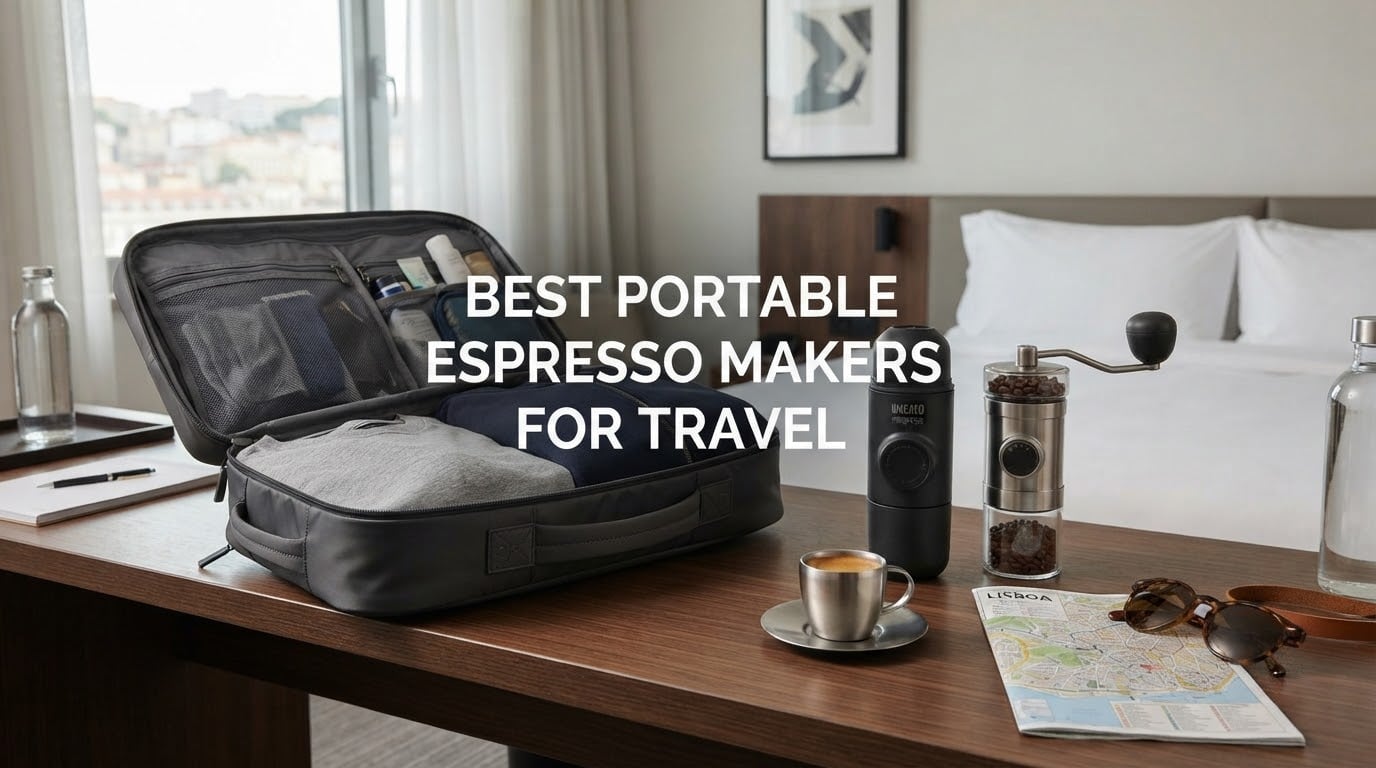
A hotel breakfast buffet is where most travel coffee plans go to die. So does the campground carafe, the office kitchenette and the motorhome plug that never quite reaches the back seat. The fix is small enough to fit in a jacket pocket: a portable espresso maker for travel that pulls a real shot in under five minutes, wherever you have water and a flat surface.
We put ten of them through the routine that matters, not the showroom demo. That means packing them into a carry-on, brewing cold-water shots off a battery, rinsing every part under a hotel tap at 11pm, and finding out which machines still taste like coffee on day four of a trip. Six of the ten here are hand-pumped manual machines, and four heat their own water from a rechargeable battery.
That split matters more than any brand loyalty. Manual models need a kettle or a flask of boiling water and reward you with full control over pressure and dose. Electric models cost more and weigh more, but they carry their own heat, which is the difference between a good shot and no shot at all when the nearest kettle is forty minutes down the trail. Here is the best portable espresso makers for travel, ranked by how they performed when the plan met reality.
Table of Contents
Top 3 Picks for Portable Espresso on the Road (October 2026)

All 10 Portable Espresso Makers Compared at a Glance in 2026
| Product | Specifications | Action |
|---|---|---|
|
Wacaco Minipresso GR2
|
|
Check Latest Price |
 OutIn Nano
|
|
Check Latest Price |
 Wacaco Nanopresso
|
|
Check Latest Price |
 Staresso Classic
|
|
Check Latest Price |
 OutIn Mino
|
|
Check Latest Price |
 CERA+ PCM03S
|
|
Check Latest Price |
 COTGCO PCM120G
|
|
Check Latest Price |
 Staresso Plus SP300
|
|
Check Latest Price |
 Bene Casa BC-95526
|
|
Check Latest Price |
 AMOSA AE1201
|
|
Check Latest Price |
1. Wacaco Minipresso GR2: The Best Portable Espresso Maker for Travel Overall
WACACO Minipresso GR2 Espresso Machine Compatible Ground Coffee, Portable Coffee Maker 18 Bar Manually Operated, Espresso Maker On The Go,Ultra-Small For Travel Camping Fishing Climbing Riding
Manual 18 bar
80ml tank
60ml output
285g
Adjustable 8g-12g basket
Pros
- Genuinely good crema with no power source
- Only 285g so it disappears into any bag
- Adjustable basket handles fresh or pre-ground coffee
- Scoop doubles as a tamper
- Double-wall body stays cool to grip
Cons
- Needs hot water added separately
- Fiddly multi-part cleanup
- Doubles are closer to a single shot
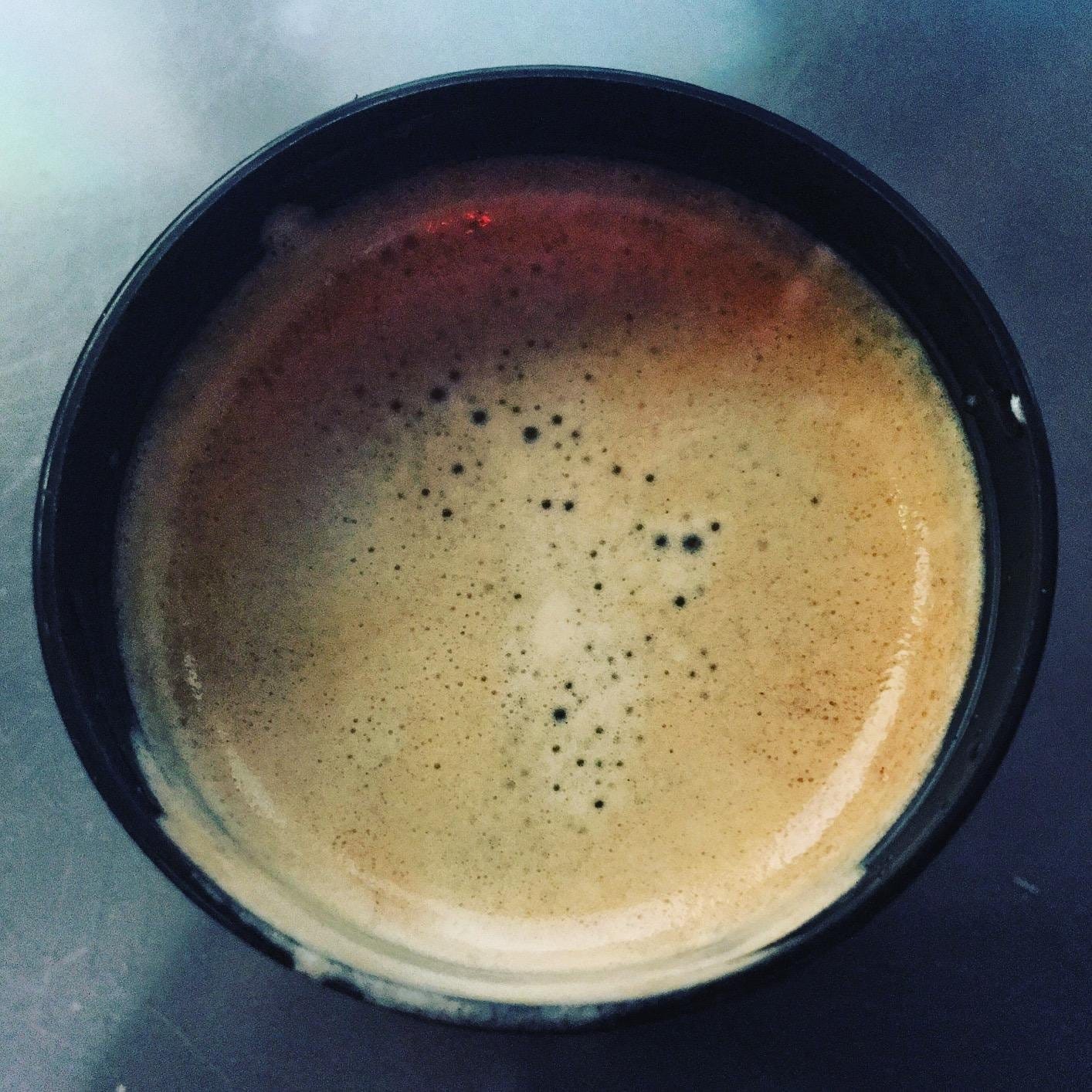
The Minipresso GR2 is the machine we hand to people who are undecided. It is the smallest item in this roundup at 285g, it needs no batteries, and it produces a cup with real hazelnut crema in about four minutes once the water is hot. For the best portable espresso makers for travel, nothing else packs this small and forgives this much beginner error.
The adjustable basket is the quiet upgrade over the original Minipresso. It holds anywhere from 8g to 12g, so you can move from a sharp ristretto-style shot on a single dose up to a fuller 60ml cup without changing machines. The included scoop doubles as the tamper, which saves you one more item in the bag.
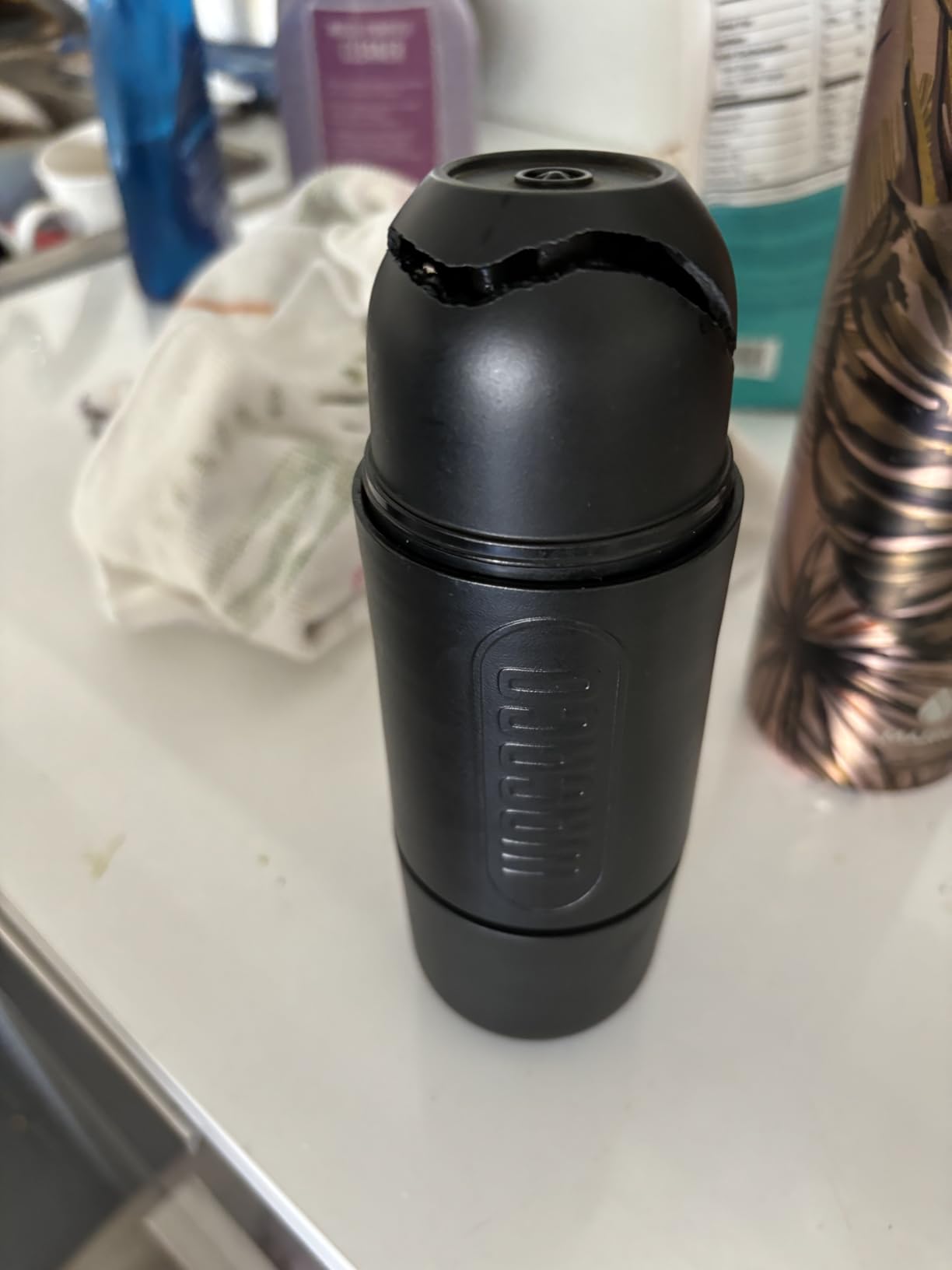
What you trade for that simplicity is the hot water step. There is no element inside, so you need a kettle, a camping stove or a flask of boiling water from somewhere. That is a real constraint on a cold morning in a country where the hotel kettle is the only option.
Cleanup is the other honest weakness. There are five or six small pieces, and they have to dry fully before you reassemble or pack them away. Plan for that with a rinse under a tap and a ten-minute air dry on a hotel windowsill.
Is the Minipresso GR2 the right choice if you only ever have hotel water?
Yes, and it is worth thinking about why. A kettle in a hotel room gives you consistent near-boiling water every morning, which is exactly what a manual piston machine wants. The Minipresso GR2 will happily pull two shots back to back from one fill of the 80ml tank.
The 20 percent biomass outer shell and the double-wall thermal isolation are small environmental and handling wins, not headline features. What matters is that the body stays comfortable to hold when it has just been rinsed with boiling water.
What should you pair with the Minipresso GR2?
A small digital scale matters more than any accessory the brand sells. Reviewers on coffee forums consistently note that dose weight is the difference between a sour shot and a balanced one, and a manual pump gives you no other way to measure it.
A folding hand grinder is the second piece. Without one you are dosing by eye, which works fine for a casual second cup and fails badly for the first shot of the day when you are still half asleep.
2. OutIn Nano: The Best Value Pick for Hotel and Camping Trips
OutIn Nano Portable Electric Espresso Machine, Travel Coffee Maker
20 bar electric
Self-heats in 200 seconds
670g
2500mAh USB-C battery
Pros
- Heats its own water so no kettle is needed
- Works with ground coffee and Nespresso Original capsules
- Quiet enough for a hotel room or office
- Only 670g and fully disassembles for a quick rinse
Cons
- Battery gives about 3 to 4 cold-water shots per charge
- Included 6g basket and pods give a thin shot without the extra accessory
- Long heat-up time between shots
The OutIn Nano is the only machine here that solves the hotel problem outright. It carries a heating element and a 2500mAh battery, so cold water in at 77F comes out at 198F in about 200 seconds with nothing else in the room. If your trip is airports and business hotels rather than trails, that single feature justifies the extra weight.
It also handles both input types. Ground coffee goes in one way, Nespresso Original capsules go in the other, which means you can switch to capsules on a day when you forgot your grounds and you did not plan a grinder.
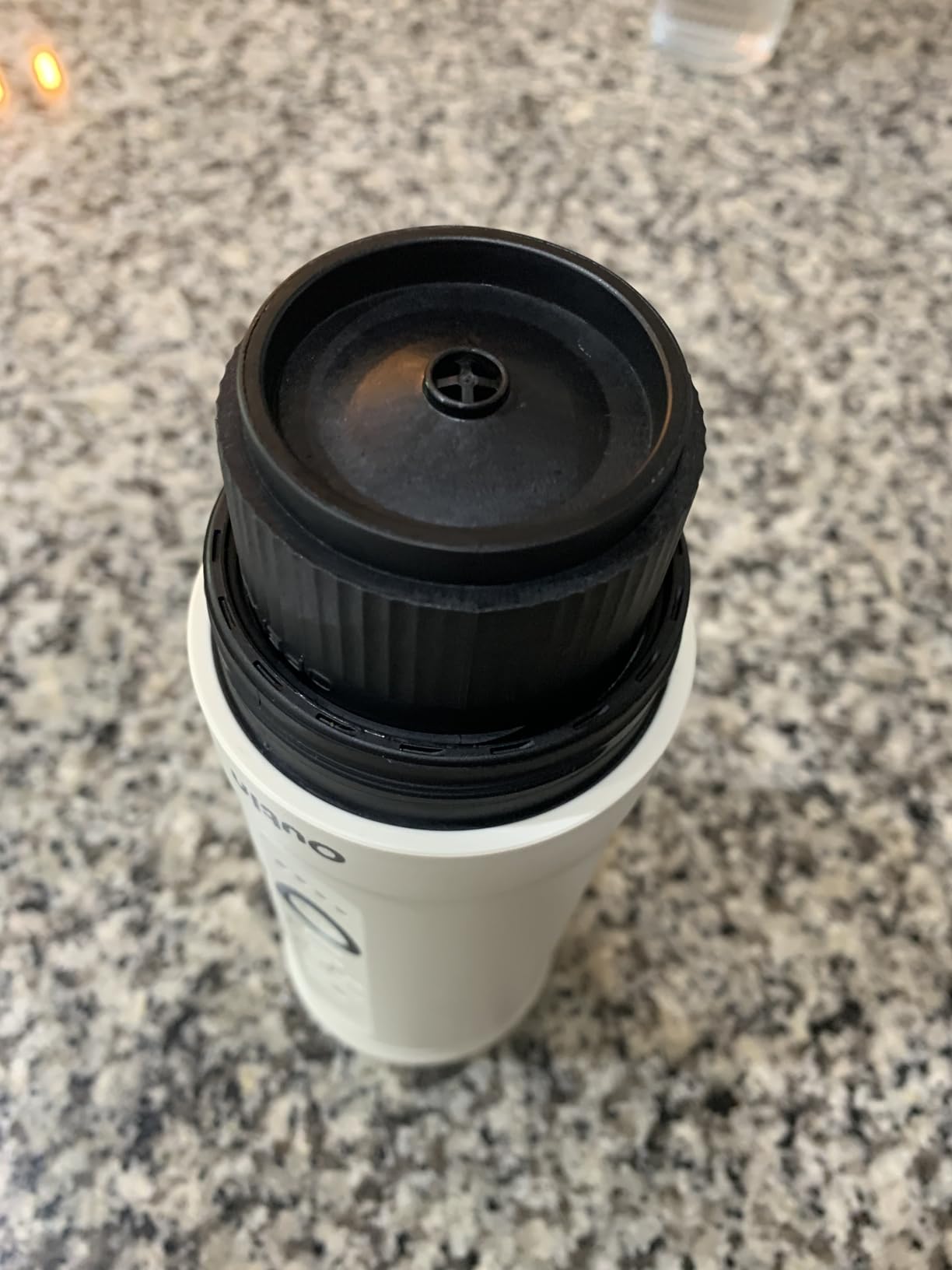
The catch is dose. The included basket is a 6g single, and with capsules you are locked into a small volume that pours into a thin, watery shot. Most owners end up buying the optional Basket Plus accessory, which is where the good reviews come from. Buy that first if you care about taste.
Cold water from a fresh charge gives roughly three to four shots, and the second shot takes longer than you would like because the element has to reheat. Charging is USB-C, so the same cable as your phone works.
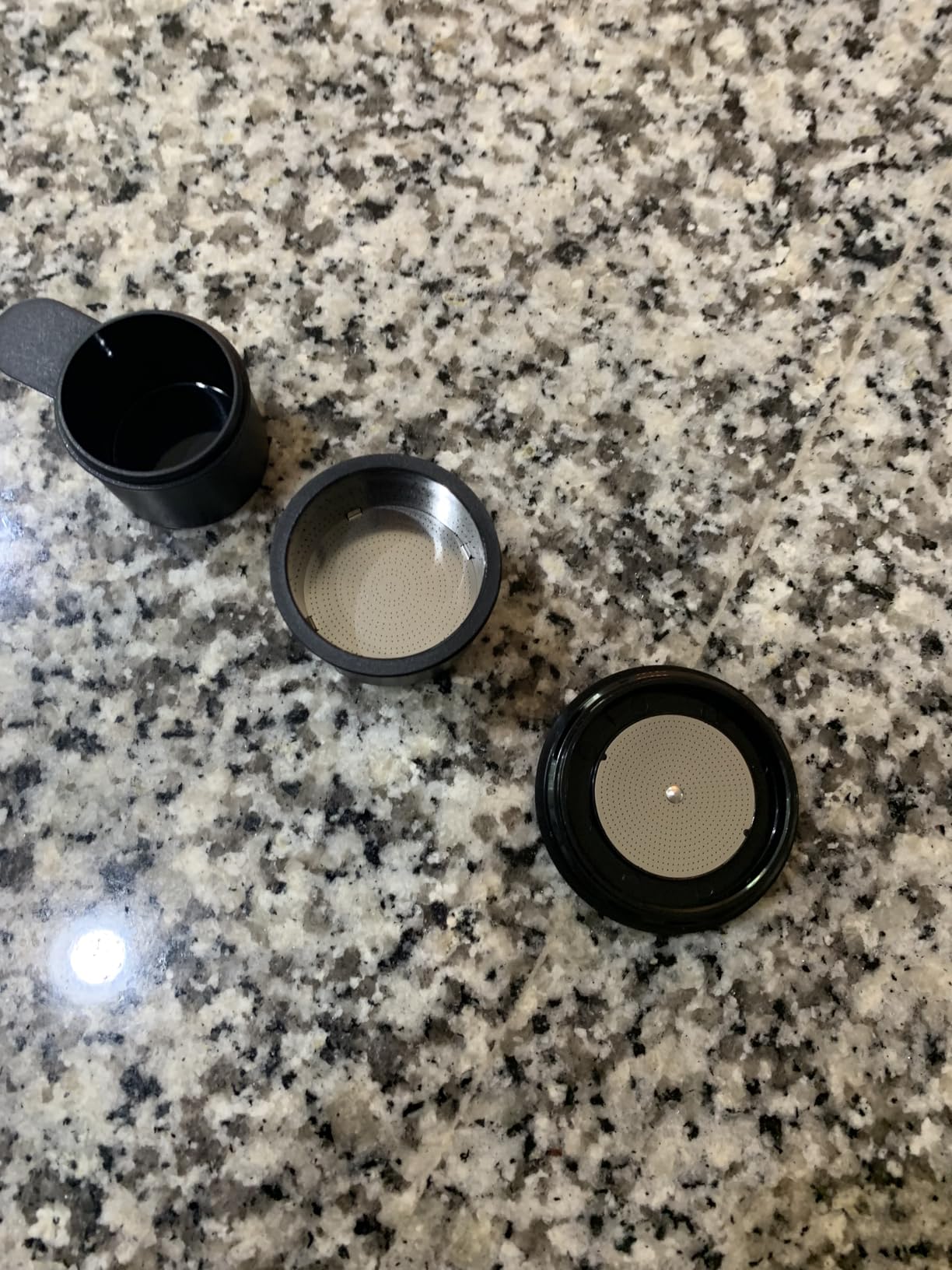
Does the OutIn Nano work when the power outlet is far away?
It does, with a caveat. You get three to four cold-water shots per charge, which covers a morning and then some. If your trip is longer than that without a chance to top up over USB-C, carry a small power bank.
Battery performance also drops in cold conditions, which owners on winter trips note. Warm the machine up with body heat or your hand before the first shot after a cold morning, and keep it out of a freezing car overnight.
Is 670g heavy for a travel espresso machine?
Not on its own. It is heavier than a hand-pump model but lighter than a full-size electric, and the tall 9.06 inch body means it stands upright in a hotel room without a separate stand. The disassembled parts fit into the small space most carry-ons leave you.
The one thing to plan for is the accessory stack. Once you add the Basket Plus, a scale and a travel grinder, the whole kit starts to approach the weight of a full manual setup.
3. Wacaco Nanopresso: The Best Compact Manual Pump for Backpacking
WACACO Nanopresso Portable Espresso Maker, Upgrade Version of Minipresso, 18 Bar Pressure, Red Patrol Edition, Small Travel Coffee Maker, Manually Operated, Compatible with Ground Coffee
Manual 18 bar
336g
15.6cm long
80ml tank
Detachable insulated cup
Pros
- 18 bar pumping system with a rich hazelnut crema
- 15 percent less pumping force than the Minipresso
- 336g and 15.6cm long so it fits any pack
- All parts detach for a fast rinse
- Works with the Barista Kit 16g double baskets
Cons
- Shot cools quickly so preheat and drink promptly
- Hot water can leak from tank threads when inverting
- Many small parts to clean
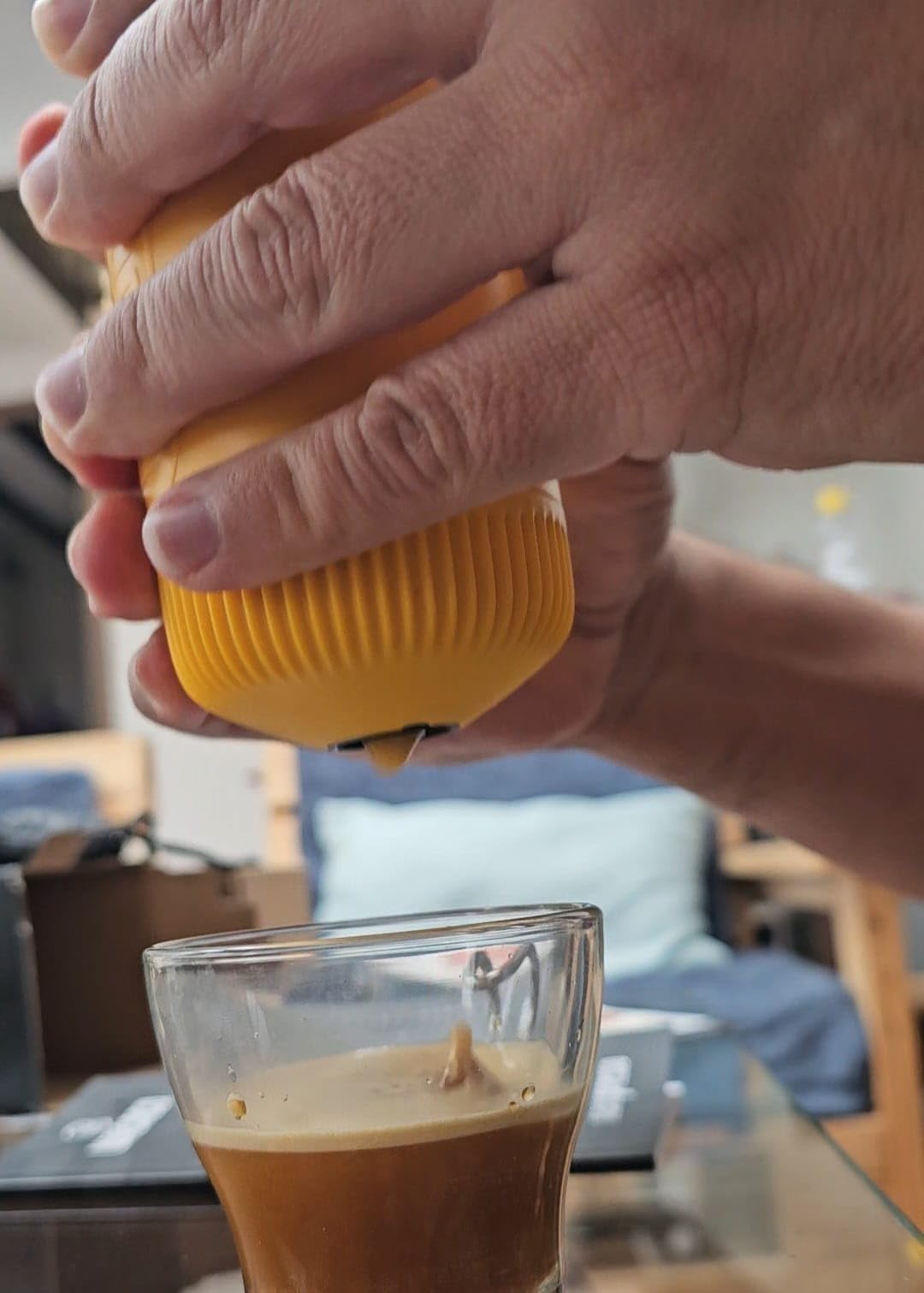
The Nanopresso is the manual machine we reached for most often during testing, and the reason is effort. Wacaco redesigned the pump so it needs 15 percent less force than the Minipresso, and over a two-shot morning that difference is the difference between a pleasant routine and a forearm you notice. The 336g body and 15.6cm length make it the easiest of the ten to pack.
Output quality sits at the top of the manual group. Buyers describe a hazelnut-coloured crema and a full-bodied cup that compares well against countertop machines for a single drink, and the optional Barista Kit 16g double baskets take it closer to a real double shot.
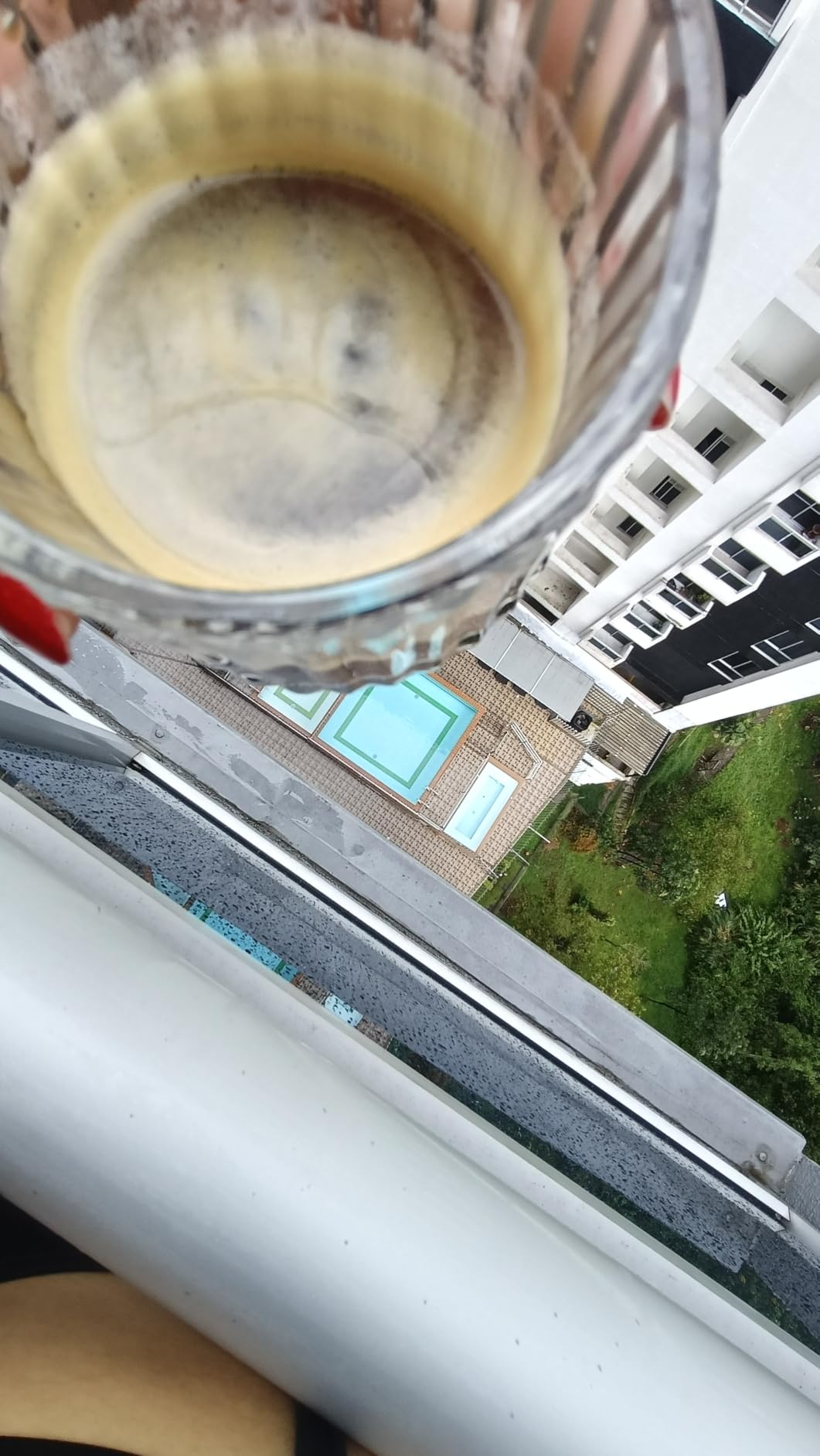
Two complaints recur across long-term ownership reports. First, temperature: the shot cools fast, so preheat the chamber with hot water before you dose. Second, the tank threads can weep hot water when you invert the body to load it, which is the one genuine safety caution in this entire roundup.
Overfilling the basket is the other failure mode people hit. Push too much coffee in and the pressure stalls, flow stops, and you end up pulling a stuck puck apart over a hotel sink. Fill to the line, tamp level, and it behaves.
How does the Nanopresso handle camping without a kettle?
You need boiling water from another source, whether that is a camp stove, an electric kettle in a hostel or a flask filled before you leave. Once the water is hot, the Nanopresso needs nothing else: no power, no pods, no spare parts.
For backpacking, treat the water as part of the system. A 1L titanium kettle that boils in four minutes fuels roughly ten Nanopresso shots including the water you lose to preheating the chamber.
Is the Nanopresso better than the Minipresso GR2 for travel?
For most trips yes. The pumping is easier, the shot has more body, and the tank sits under a detachable cup with a heatsink pattern that slows the temperature drop. The Minipresso wins on raw compactness at 285g and on the adjustable 8g to 12g basket.
If you already own a Minipresso, the Nanopresso is a meaningful step up rather than a sideways move. If you own neither and want the smallest possible object, the GR2 wins on volume alone.
4. Staresso Classic: Best for Travelers Who Hate Hot Plastic
STARESSO Classic Manual Espresso Maker, 2 IN 1 Travel Coffee Machine
Hand powered
Adjustable 15 to 18 bar
Aluminium and steel
14 ounces
Glass cup
Pros
- Stainless steel chamber and glass cup keep hot water off plastic
- Dual ground coffee and capsule brewing
- Stable on a counter while you pump
- Preheating the chamber gives a creamy crema
Cons
- Single basket means a double shot takes two full pulls
- Included plastic pin brush breaks easily
- Occasional reports of the chamber cracking
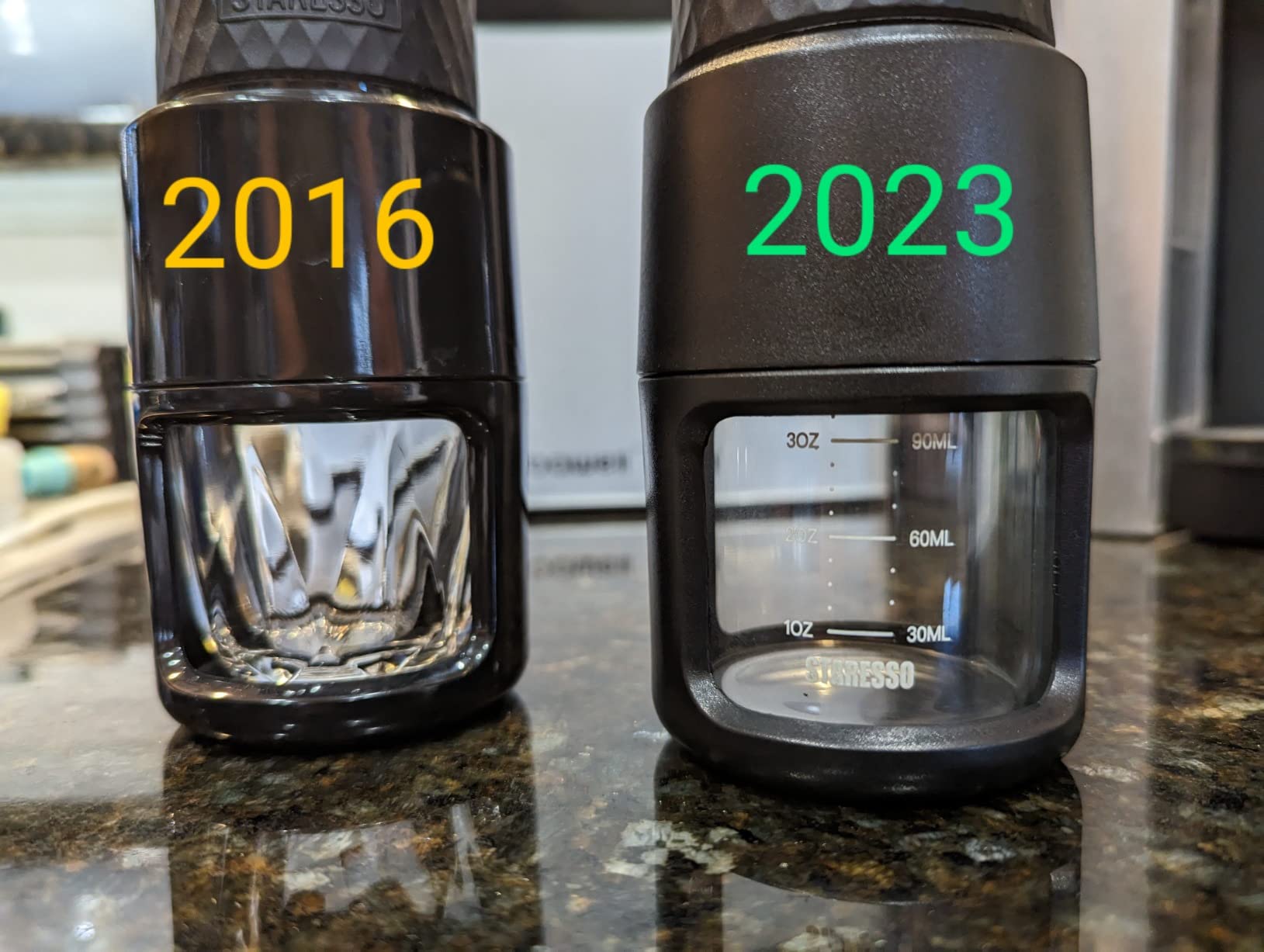
The Staresso Classic is the choice for anyone who objects to pouring 198F water into a plastic tank every morning. The water chamber is stainless steel and the drinking cup is glass, and at 14 ounces it is one of the lighter manual machines here.
Pressure is adjustable from 15 to 18 bar using a segmented pressurisation patent, so you can dial back if your coffee is a supermarket blend rather than a fresh roast. The 80ml tank and 30 to 50ml output sit in the normal range for travel.
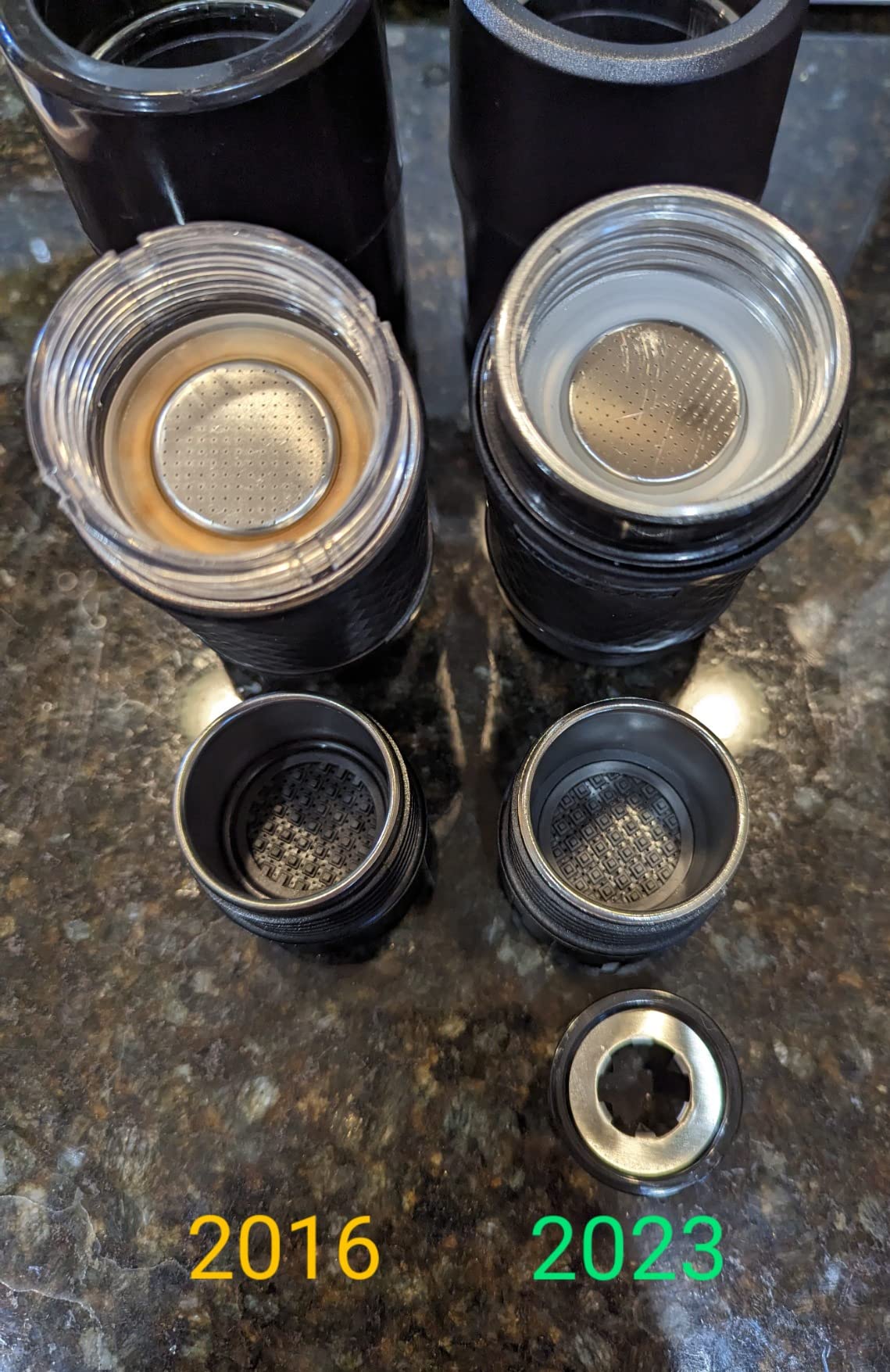
Where it lags is dose size. The basket is single-serving only, so a proper double means two full pulls and a full clean in between, which is a poor trade in a hotel room at 8am. Plan for one strong shot rather than two.
The included accessories are also the weak point. The plastic pin brush snaps easily and will not clear basket mesh properly, and the pod-punching spike often fails to pierce standard capsules. Both are cheap to replace once you know.
Is the Staresso Classic tough enough for daily travel packing?
It is metal and glass in the places that matter, which handles drops well, but the small-parts problem is real. Everything detaches for deep cleaning, and that is exactly why there are so many pieces to lose in a hostel dorm or a van floor.
A drawstring pouch or a small parts bag solves most of it. Two years of manufacturer warranty covers the body; the accessories are typically not covered.
Should you buy the Staresso Classic instead of a Wacaco?
Buy it if material contact is your main concern or if you want a glass cup rather than a plastic one. Skip it if your trip involves frequent washing-up, because the two-pull workflow for a double shot is more cleanup than the Wacaco requires.
On shot quality it sits slightly behind the Nanopresso, but the metal chamber holds temperature a touch better through the pull.
5. OutIn Mino: The Most Rugged Machine for Rain, Dust and High Altitude
OutIn Mino Portable Electric Espresso Machine for Travel with Self-Heating
IP67 waterproof and dustproof
685g
3000mAh battery
70ml tank
2.64 x 7.68 inch
Pros
- IP67 waterproof and dustproof rating
- Truly pocket-sized at 685g
- 3000mAh battery charges 20 to 80 percent in 45 minutes
- Stainless steel portafilter and BPA-free Tritan cup
Cons
- Smaller 70ml tank than most rivals
- Shot quality is acceptable rather than standout
- Minimal setup instructions for first-time users
Nothing else in this list survives a river crossing. The Mino carries an IP67 waterproof and dustproof rating, which is the only manufacturer-tested ingress rating among these ten, and the stainless steel portafilter plus BPA-free Tritan cup mean you can rinse it under a stream without thinking about it.
It is also the genuinely pocket-sized option, at 2.64 by 7.68 inches and 685g, and it self-heats. Owners on multi-day hiking trips point to the smart chip that keeps extraction stable from 5F to 113F, which matters on a cold summit or in a hot vehicle.
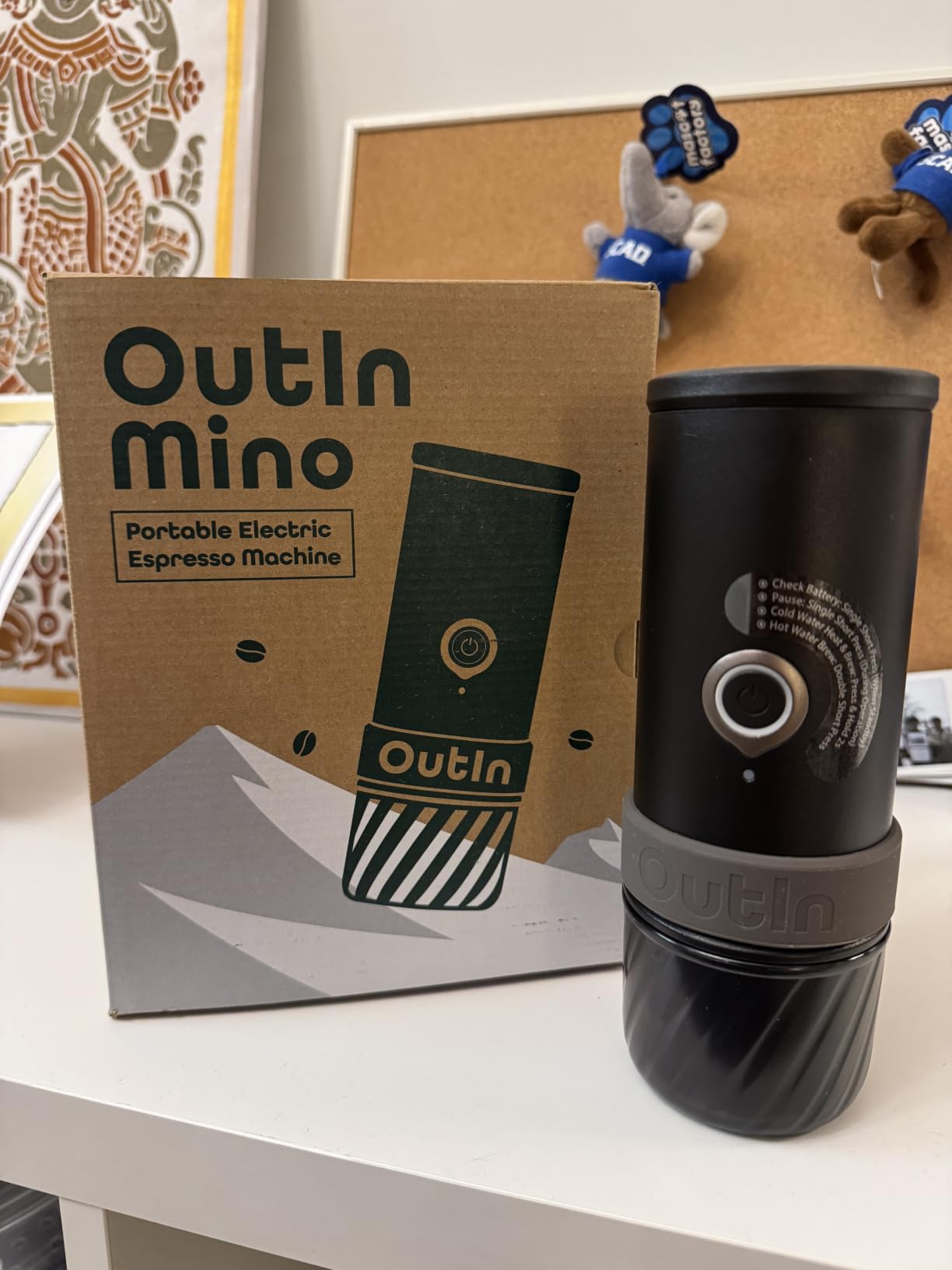
Where it disappoints is the coffee. Buyers rate the output as decent rather than outstanding, and the 70ml tank is the smallest here, so you get a short single rather than a full cup. Fine at altitude, less exciting in a hotel with good water.
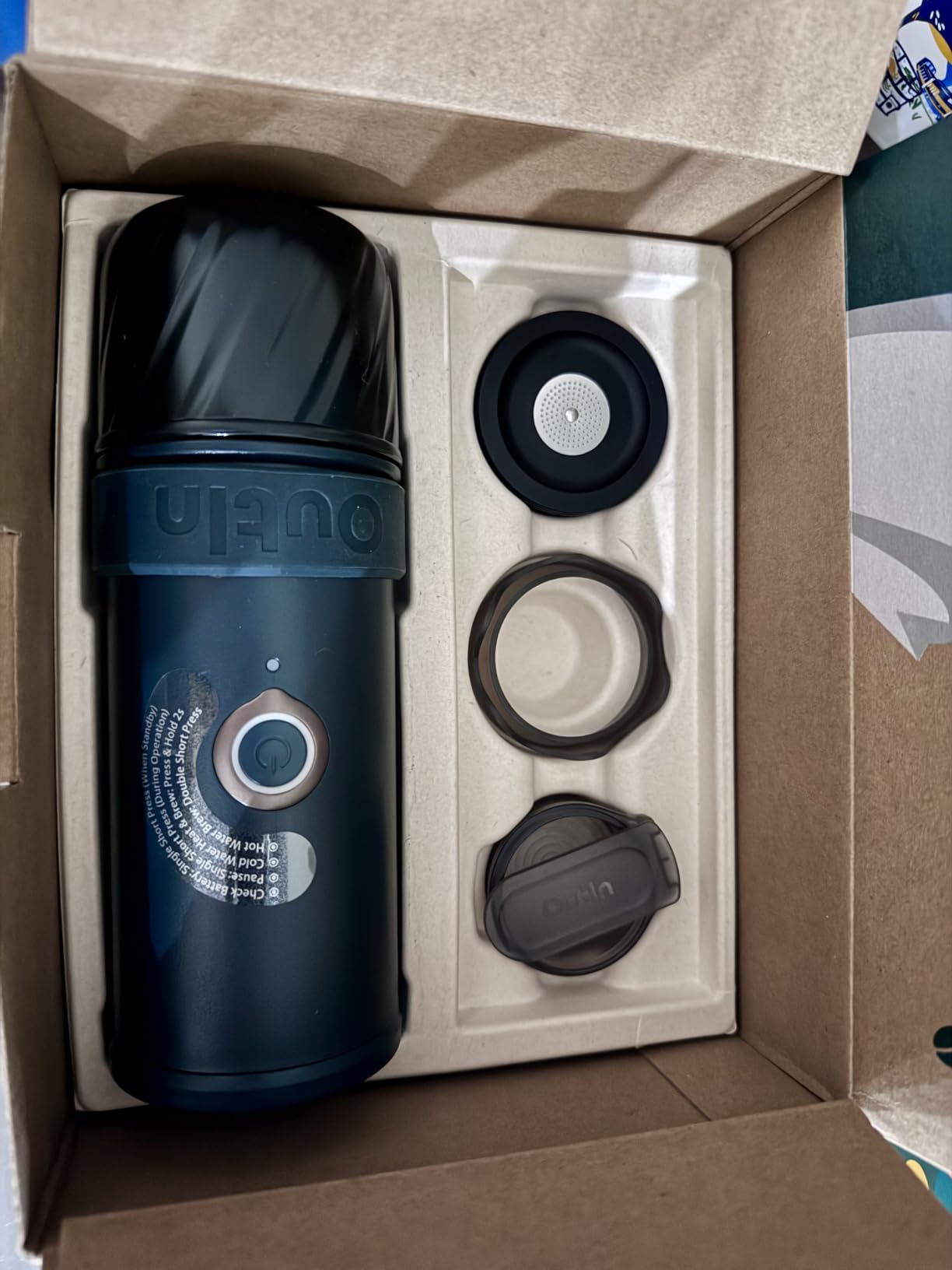
The box is unusually well organised for a portable machine: a foldable spoon, a basket removal tool, a dosing funnel and a pocket case all come along. That matters more than the specs when you are assembling the thing on a tent pitch.
Is the Mino safe to use at high altitude?
That is specifically what the built-in chip is designed for. It keeps extraction stable across a very wide temperature range, so boiling water in the Andes or a cold start in the Alps both land closer to the intended brew temperature than an unassisted manual pump would.
Expect more variation from cold air on the water temperature than you would in a kitchen. Preheat the chamber with a first splash of hot water before you dose.
Who should pay more for the Mino rather than the Nano?
Anyone whose trips include rain, dust, river water or a cold-weather battery problem. The IP67 rating and the high-altitude chip are features you either need or you do not, and if you do not, the Nano gives you more shots per charge for less.
It is also a good second machine to own if you already have a manual one, because it covers the trips where you do not want to carry a kettle.
6. CERA+ PCM03S: The Longest Battery Life of Any Machine Here
CERA+ PCM03S Portable Espresso Machine, 13500mAh Self-Heating Coffee Maker
13500mAh battery
Self-heats in 140 seconds
20 bar
Ground coffee and pods
Stainless steel
Pros
- 13500mAh battery gives the most shots per charge here
- Fastest self-heating at 140 seconds for 50ml
- Works with ground coffee and NS-compatible pods
- One-button operation with no app to pair
Cons
- Needs dial-in time on grind size and tamping
- Included tamper feels basic
- Real-world battery life is closer to 3 cups than 8
Battery capacity is the whole pitch here. The PCM03S runs three 4500mAh cells for a 13500mAh total, which is the largest pack in this roundup, and it self-heats 1.7oz of water from 77F to 198F in 140 seconds, faster than any other machine on the list.
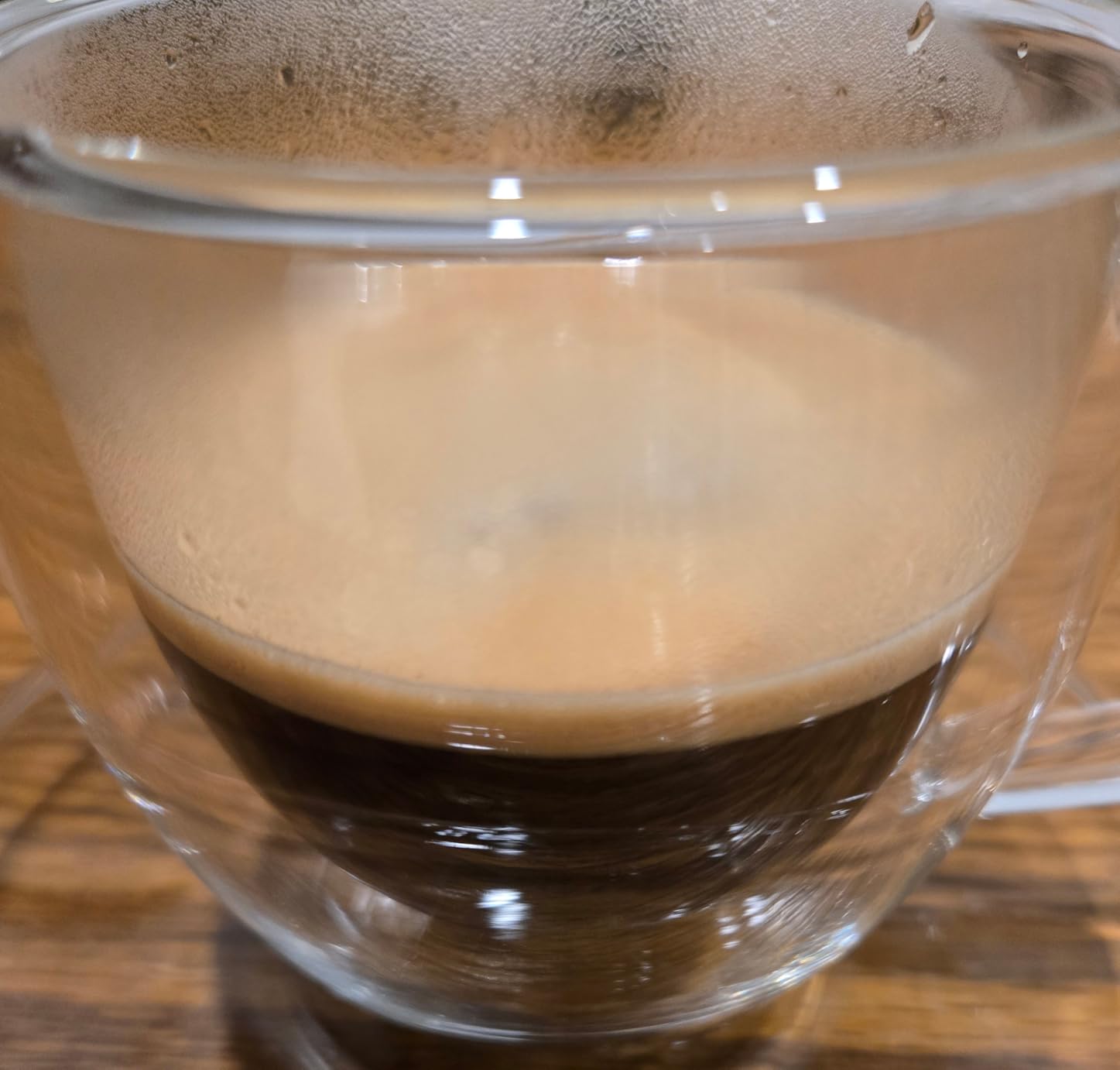
Shot quality surprises people. Several enthusiasts describe a syrupy texture and layered flavour that compares well against larger countertop machines, which is not what you expect from something that folds into a laptop bag and runs off USB-C.
Read the battery claim carefully. With cold water, real-world results sit closer to three cups per charge rather than the advertised eight; you reach the higher figure only when you feed it preheated water, which defeats the purpose of a self-heating machine.
There is also a dial-in period. Grind size and tamping pressure both need adjusting before the shot tastes right, and the included tamper is thin, so a proper one is worth buying. A handful of owners report electrical failure around the seven-month mark.
Is 13500mAh a flight problem?
Batteries above 100Wh face airline restrictions, and this pack sits comfortably inside typical carry-on limits for a device under 100Wh. Check the watt-hour figure printed on your unit against your airline’s policy, especially on international routes.
In practice the size is the bigger issue: 1.6 pounds means it occupies real space in a personal item. It is a good fit for a checked-bag-free trip only if you are already carrying a grinder.
How does the CERA+ compare with the OutIn Nano?
Same basic architecture, different emphasis. Both self-heat, both take ground coffee and pods, both run 20 bar. The CERA+ heats faster and holds far more charge; the Nano is 200g lighter and its reviews are better established.
Pick the Nano if packing weight rules your decisions. Pick the CERA+ if you want multiple days between charges.
7. COTGCO PCM120G: Best for Capsule Users Who Want a Metal Body
COTGCO Portable Espresso Coffee Maker, Travel Coffee Maker for Camping, 20 Bar Self‑Heating Rechargeable with USB-C, with NS Capsule for Car/Travel/Camping
20 bar self-heating
13500mAh battery
80ml steel tank
Aluminium body
2.1 pounds
Pros
- Strong foamy capsule output with solid pressure
- CNC-milled anodized aluminium body
- Quick one-button brewing with auto shut-off
- Cleans by running cold water through
Cons
- Heaviest machine here at about 2 lb
- Pods brew shallow and crema overflows
- Pods only with no ground coffee option
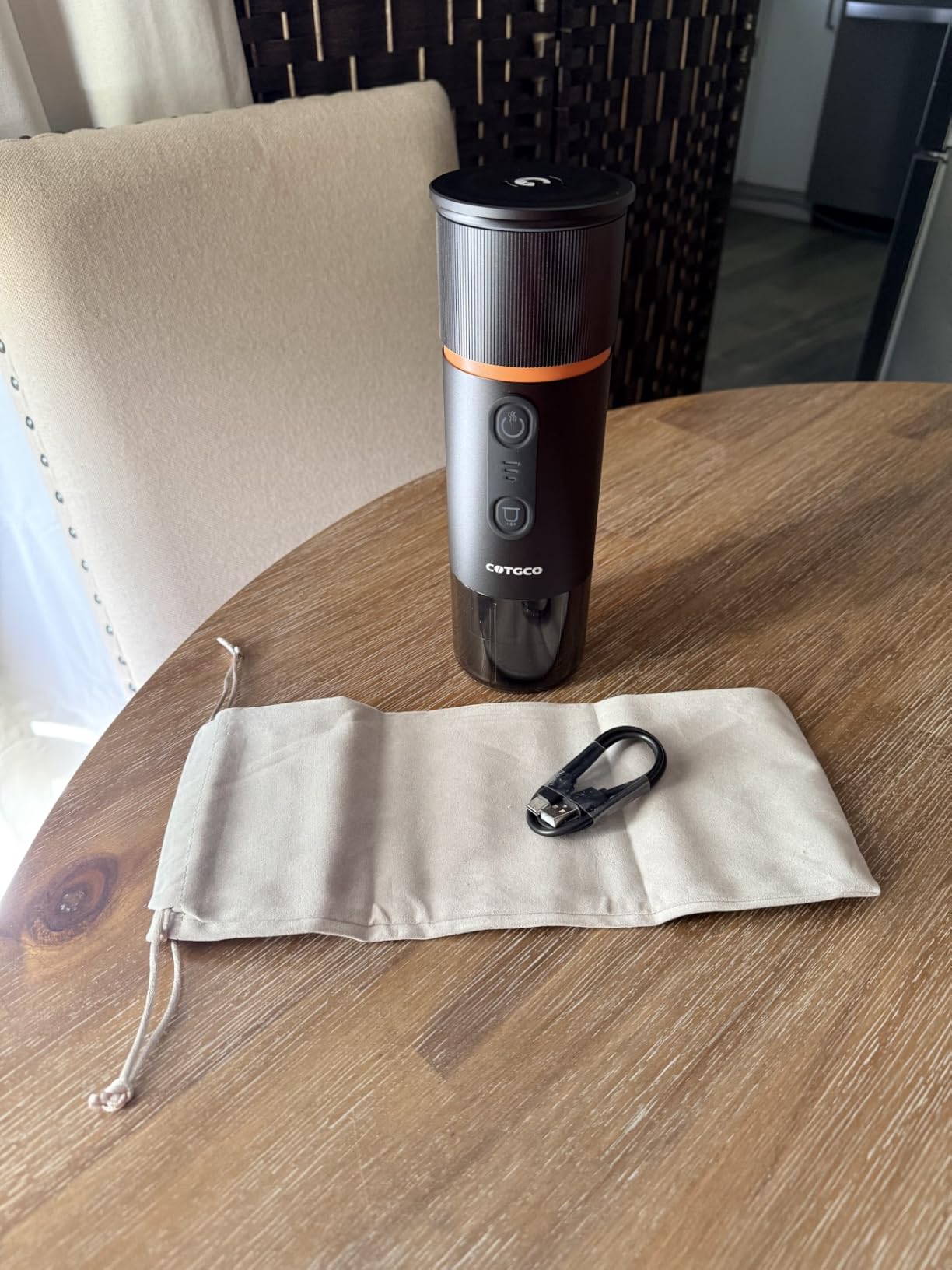
If your travel routine is capsules rather than fresh grounds, this is the capsule machine worth carrying. It runs 20 bar, self-heats cold water to 199F in two to three minutes with automatic shut-off, and the 13500mAh battery covers eight to ten 40ml shots per charge.
The build is the surprise. A CNC-milled anodized aluminium shell at 2.1lb feels more substantial than most plastic portables, and the 80ml tank has a stainless steel liner with a twist-seal cap that resists leaking in a bag.
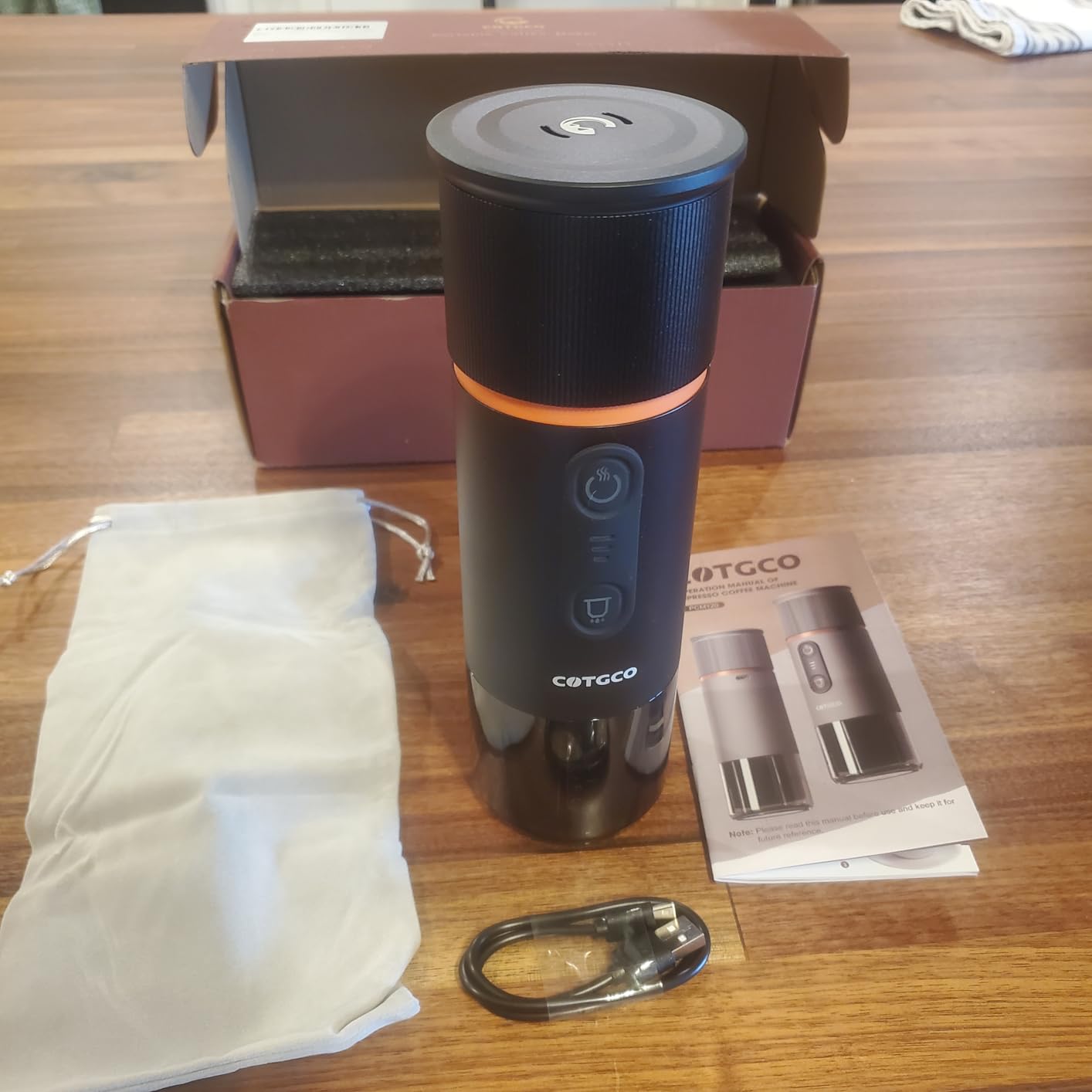
Two limits stand out. It is the heaviest machine in this roundup, which defeats much of the point when you are also carrying a filter or a change of clothes. And it takes capsules only, with no ground coffee path at all.
Shallow output is the other issue. Pods brew into a short cup, and the crema tends to overflow the rim and end up on your shirt. A taller cup solves part of it.
Does the PCM120G handle splashes and rain?
It carries IPX4 splash sealing, which protects against water hitting it from any direction but not against submersion. That is a meaningful step down from the Mino’s IP67, so keep it under a cover in sustained rain.
The airline-safe battery and the tool-free cleaning arm are both genuinely useful: the arm means you can flush the chamber without dismantling it over a campsite sink.
Should you buy this instead of a capsule-only competitor?
Yes if you want an aluminium body and one-button operation. The 13500mAh battery and 20 bar output put it ahead of most of its class on paper, and the tank size is bigger than the Mino’s.
Hold on if you take more than one capsule a day. Two capsules a trip is one bag; ten a trip means ordering ahead in every new country.
8. Staresso Plus SP300: Best for Brewing Real Double Shots
STARESSO PLUS SP300 Manual Espresso Machine, Portable Coffee Maker
15 to 20 bar
Up to 24g of coffee
Foldable body
304 stainless steel
Measurement marks
Pros
- Rich crema and layered flavour comparable to full-size machines
- Double-walled insulated reservoir holds brewing temperature
- Folds down and fits a camera bag
- Measures 60 120 and 180ml so it brews for two
Cons
- No tamper included
- Messy puck removal with no basket handle
- Needs fine grinding and careful tamping
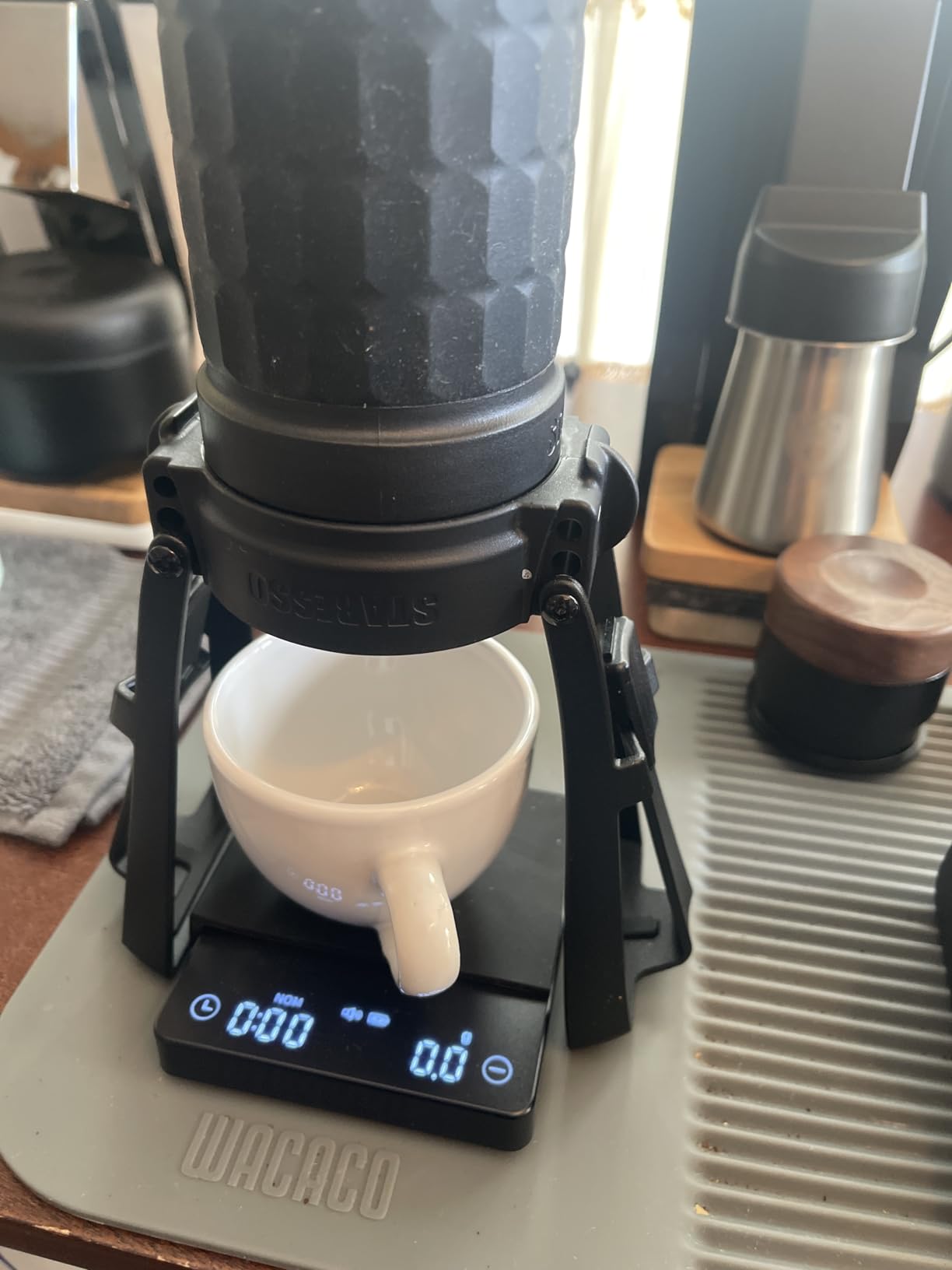
The SP300 is the only manual machine here that is genuinely about two people. It takes up to 24g of coffee per brew, and the reservoir carries measurement marks for 60ml, 120ml and 180ml of output. If you are sharing a hotel room, this is the one that makes sense.
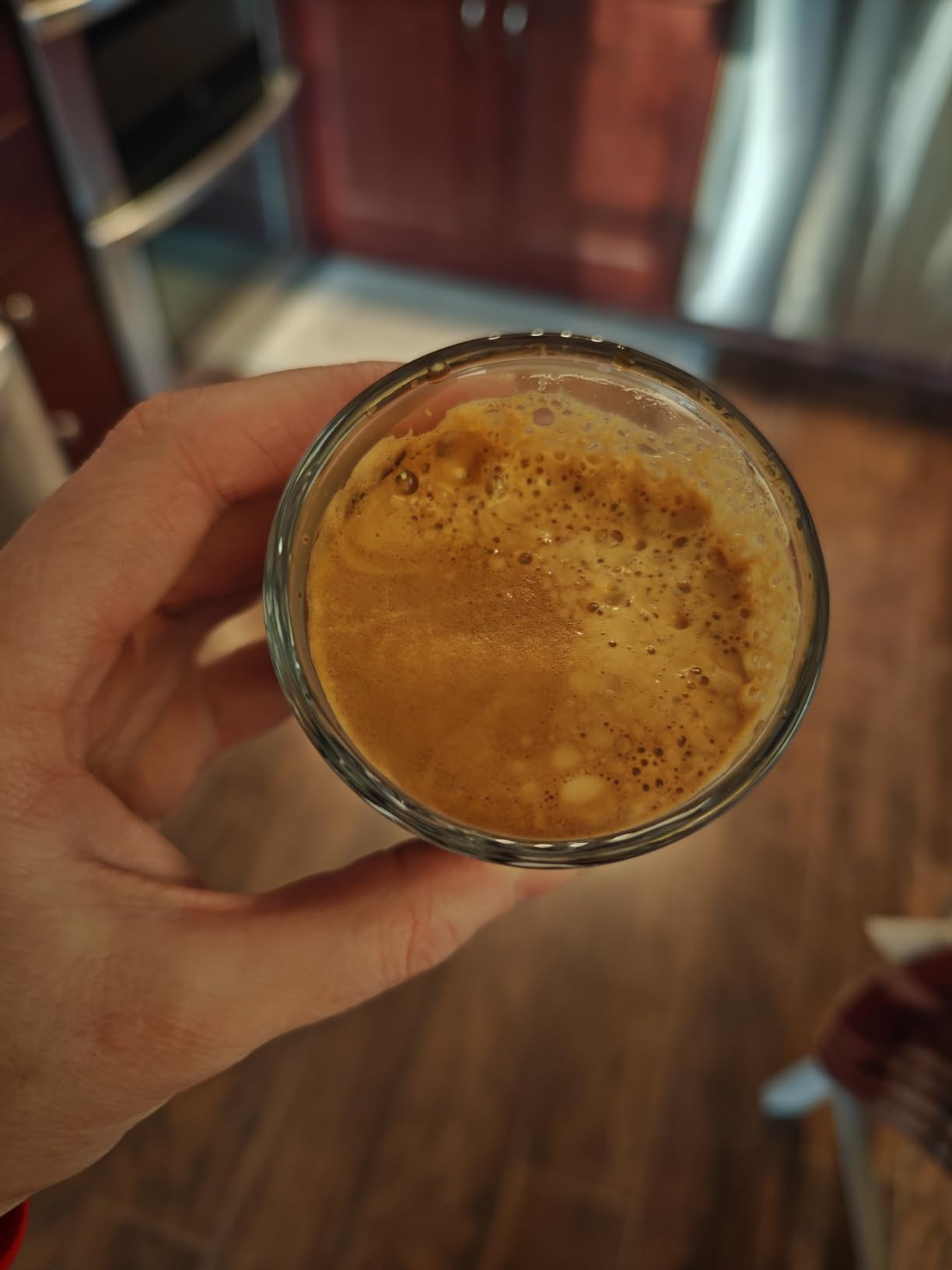
Shot quality is genuinely strong for the size. The double-walled insulated reservoir means water enters near boiling and leaves around 205 to 210F, and a segmented hydraulic system holds 15 to 20 bar throughout the pull. Enthusiasts compare the result to countertop machines more often than with the other manuals.
The compromises are physical. It folds down, which is great for packing, but there is no tamper in the box and no basket handle, so every puck comes out onto whatever surface you are working on. Budget for a proper tamper and a knock box.
There is still plastic in contact with hot water beneath the steel chamber liner, which matters if that was the reason you were looking at the Staresso Classic. Pump failure within a month shows up in a small number of reports, so keep the receipt.
Is the SP300 portable enough for carry-on travel?
Yes, with the caveat that it is 1.5 pounds and 7.4 inches tall. The foldable body is designed to sit in a backpack or camera bag rather than a shirt pocket, and the whole kit plus grinder and scale adds up quickly.
It also needs the same hot water start as any manual machine. Bring a compact kettle and the SP300 becomes a two-person coffee station.
Who should choose the SP300 over the Nanopresso?
Choose it if you brew for two, drink larger volumes, or want insulated water storage that holds temperature through a slow pull. The 24g basket and 180ml output are simply not available elsewhere in the manual group.
Stay with the Nanopresso if you travel solo and want the smallest, lightest object that still makes a good single shot.
9. Bene Casa BC-95526: The Best Option for RV, Glamping and Long Stays
Bene Casa Silver Portable Electric Espresso Maker/Cafetera, 1-3 Cups/Shots (1, SILVER)
550-watt heating
1 or 3 shot adapter
30-minute keep-warm
360-degree swivel base
Pros
- One-touch operation that needs no technique
- Adjustable adapter brews a single shot or a triple serving
- 30-minute keep-warm function
- Transparent carafe shows the brew
Cons
- Mains-powered only
- so it needs a wall outlet or hookup
- Larger footprint than hand-pump models
- Ground coffee only with no capsule support
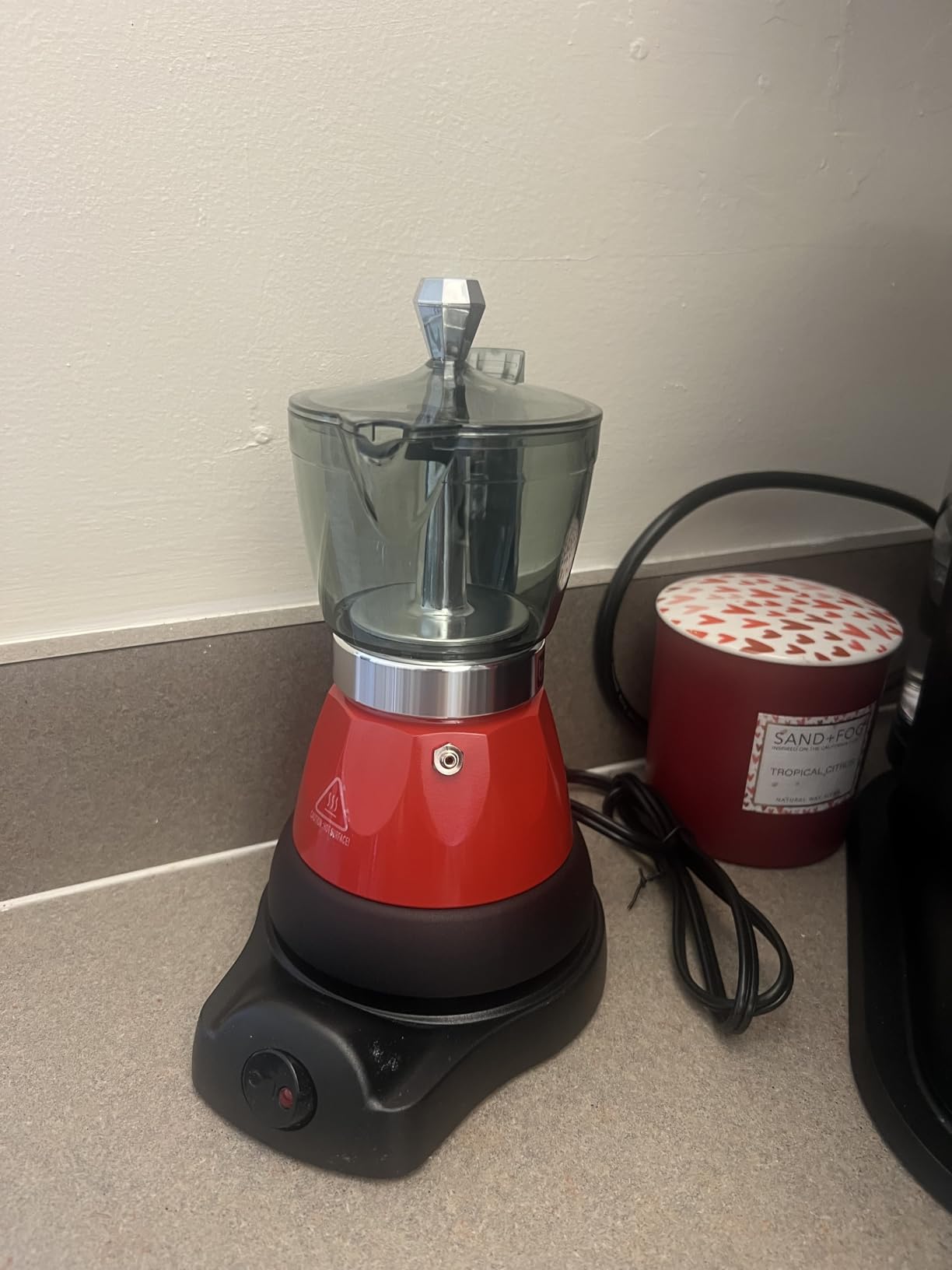
This is not a backpacking machine and we are not going to pretend otherwise. It runs on 110 to 120V mains power through a detachable swiveling base, which rules it out for flights and campsites. What it does is serve one to three shots of ground coffee with no technique involved, on a schedule you set.
That makes it the right pick for van life, a holiday cottage, a glamping site with power, or an office kitchenette where a colleague will need to use it without reading instructions. The 30-minute keep-warm function means the coffee is ready when you walk in.
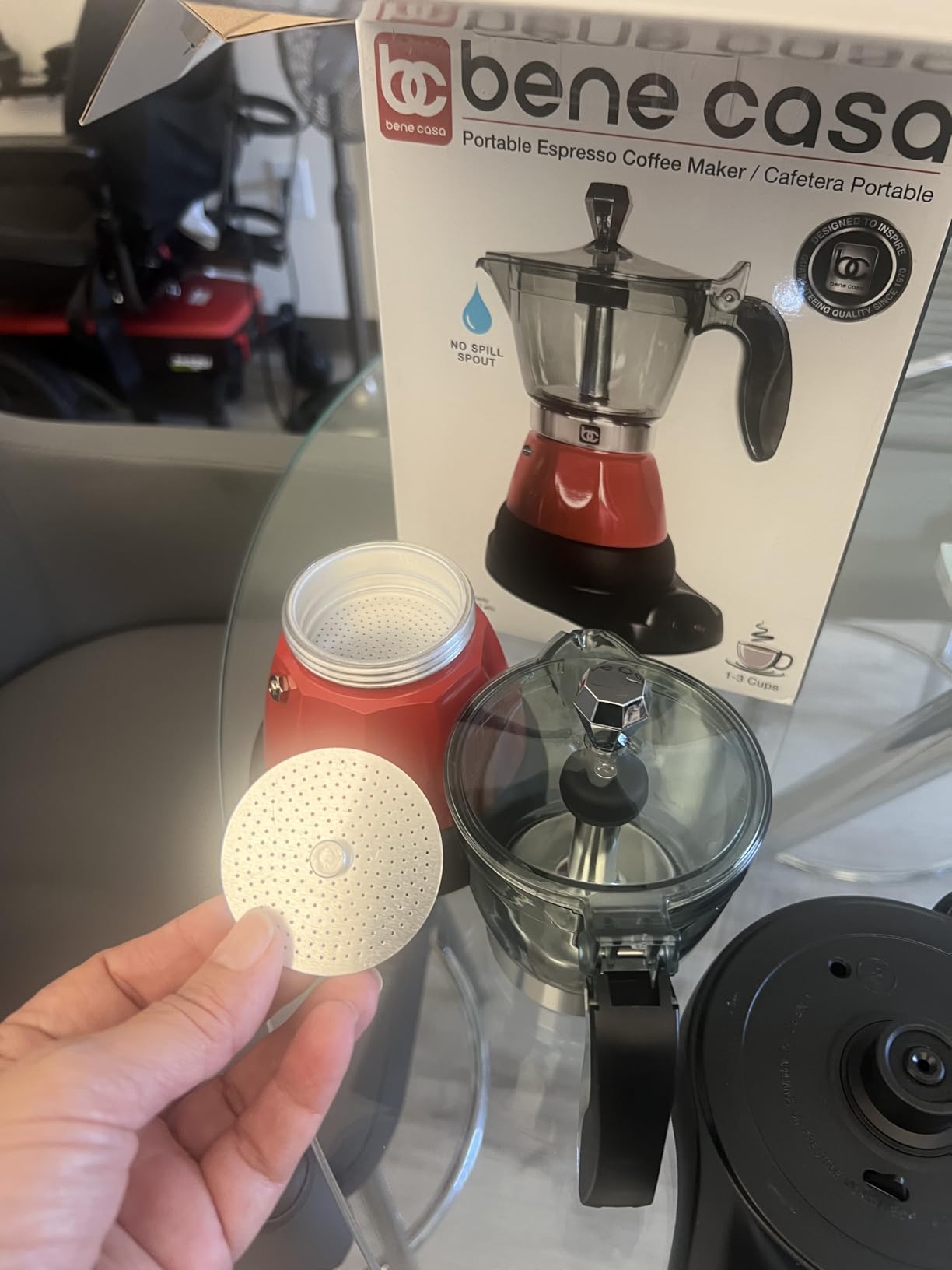
Its average rating of 4.7 is the highest figure in this roundup, which reflects how little there is to get wrong. The adjustable adapter handles a single shot or a triple serving, the spout is designed not to drip, and the hinged carafe lid keeps heat in.
The trade is real, though. At 6.77 by 4.72 by 8.85 inches it needs counter space that a 285g manual machine does not, and there is no battery or capsule option. Bring your own grounds and a grinder.
Can you use the Bene Casa in a hotel room?
Usually not. Most hotel rooms have a kettle but no accessible wall outlet near the desk, and extension leads are awkward at small desks. It works in an apartment, an office or a vehicle with an outlet.
If you want hotel convenience without mains power, the OutIn Nano or the CERA+ covers the same one-button experience off a battery.
How does it compare with a manual machine for taste?
On paper it delivers more volume per cycle and holds heat better because the element stays hot. In practice the taste ceiling is set by grind quality, and any decent burr grinder will out-perform a pre-ground dose.
For a single cup the difference is small. For a triple serving in a van, nothing else on this list is as convenient.
10. AMOSA AE1201: The Best All-in-One Set With Grinder and Frother
All in 1 Portable Electric Espresso Machine & Coffee Grinder & Milk Frother
20 bar
1500mAh battery
100ml tank
Grinder and frother included
Two storage bags
Pros
- Machine
- manual grinder and milk frother in one bag
- Compact footprint for small kitchens and travel
- Works with ground coffee and Nespresso capsules
- One-button brewing in about 40 seconds
Cons
- Does not heat water
- so you add boiling water by hand
- Small compartment can overflow or leak
- Reported battery life falls short of the advertised figure
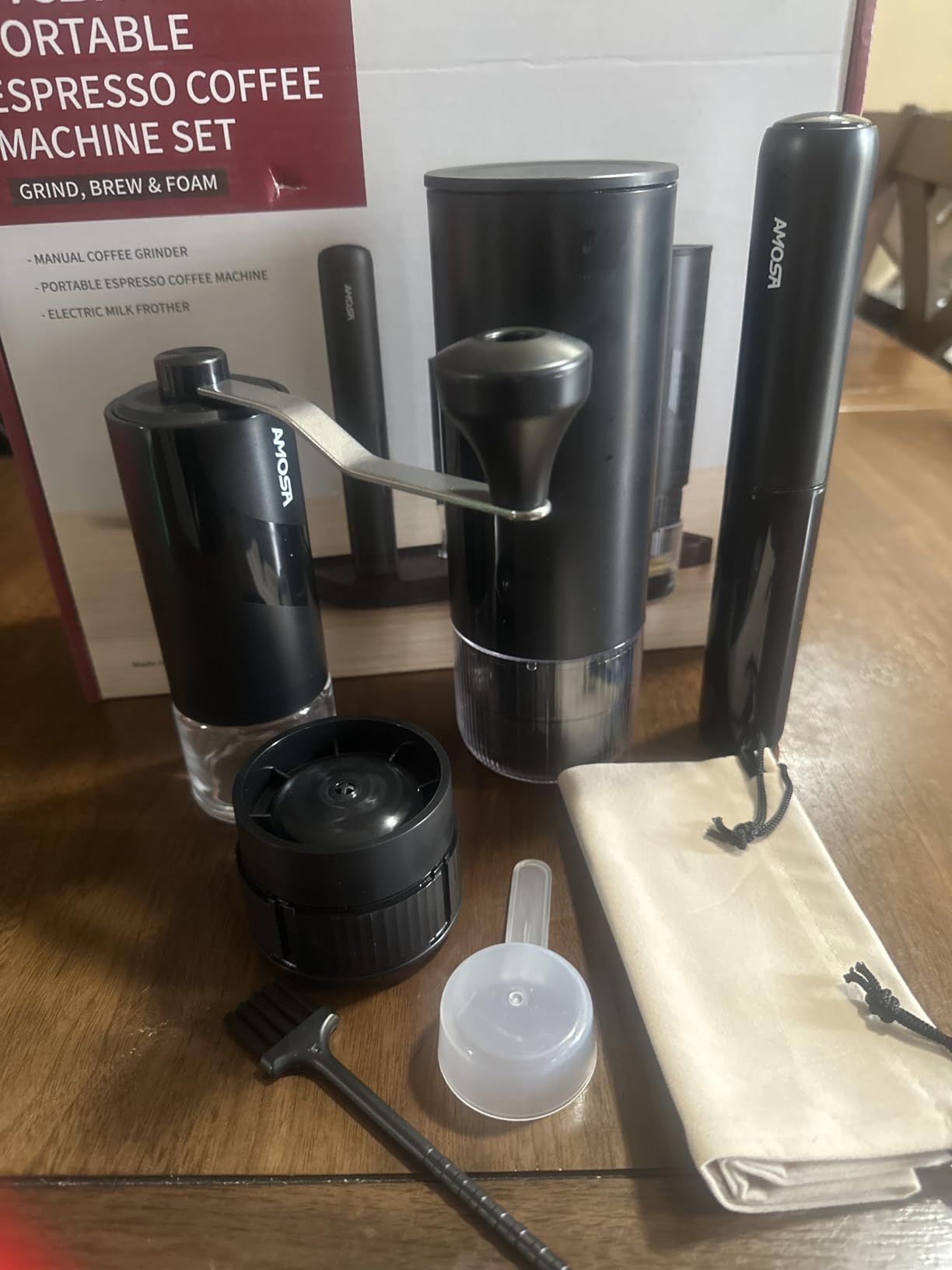
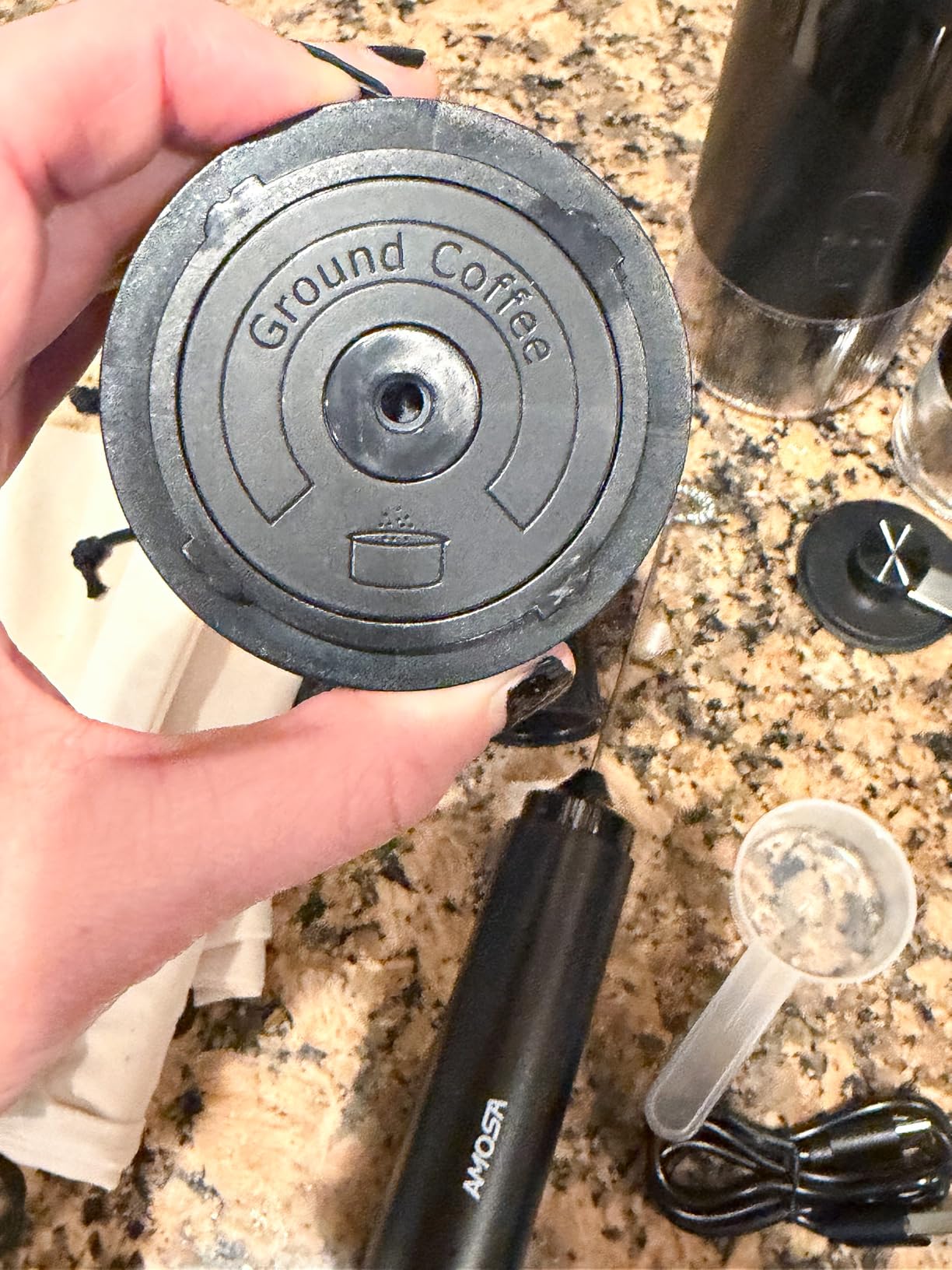
The AMOSA set is sold as an answer to the biggest complaint about manual portables: that you need three extra pieces of gear. You get a 20 bar espresso machine, a manual grinder and an electric milk frother, with two storage bags in the box.
That consolidation is genuinely useful for a first-time buyer. The 100ml tank is the largest here, the brew is one-button and takes about 40 seconds once water is added, and the whole set folds into a footprint that suits a hotel desk.
The catch is the missing heating element. Self-heating was deliberately left out, so every shot still needs boiling water poured in by hand, and the small compartment is easy to overfill. Reviews split fairly evenly on extraction quality, with some owners reporting weak, watery results.
The bundled grinder is the sleeper part. For anyone who does not already own one, a small manual grinder in the box removes the single biggest barrier to a good shot on the road.
Is the AMOSA set the best starter kit for a new traveller?
For a beginner, yes, because it removes the guesswork about what else to buy. You get brewing, grinding and milk in one bag, and the two included pouches stop everything rattling around in a suitcase.
For an experienced user who already owns a grinder, it is redundant. The espresso machine is the weakest part of a set whose accessories are the reason to buy it.
How long does the battery last?
The 1500mAh cell is the smallest here and runs off USB-C, which is convenient but modest. Owners report real-world results short of the advertised cup count, so treat it as a two-to-three-shot battery and top it up overnight.
The machine itself is 600g, the grinder 325g and the frother 110g, so you are carrying about a kilogram of coffee gear before you add coffee or a cup.
How to Choose a Portable Espresso Maker in 2026
Start with the water question, because it eliminates half the list. If your trip is hotels, offices and campervans with power or a kettle, an electric self-heating machine removes the single hardest part of travel coffee. If your trip is trails, huts and cold camps, a manual machine with a folding kettle is lighter and simpler.
Next, decide who is drinking. Single-serving baskets under 10g produce one short shot and force two pulls for a double. If two people are sharing, look at the Staresso Plus SP300 with its 24g basket and 180ml marks, or the Bene Casa if you have mains power.
Manual or electric: pick your power source first
Manual machines here run 15 to 18 bar and weigh between 285g and 1.5 pounds. They never run out of power and their failure modes are minor, but they need near-boiling water every single shot and hand effort that builds up over a week.
Electric machines run 20 bar, self-heat from cold in 140 to 200 seconds, and weigh between 670g and 2.3 pounds. You pay for that weight in your pack and for batteries that lose charge in cold weather, and you get one-button consistency in return.
Our rule: if more than half your trip involves a room with an outlet or a vehicle, choose electric. If most of it does not, choose manual. A hybrid answer is to carry a manual as the primary and a capsule electric for the hotel days.
Pressure, basket size and grind tolerance
Bar pressure is the least useful number to shop on. The 15 bar manual and the 20 bar electric end up within a sip of each other when the coffee is fresh, because grind size and dose dominate. Anything from 15 to 20 bar is fine.
Basket size matters more. Under 8g and you are drinking a ristretto-strength shot in a small cup. Between 10g and 14g is the sweet spot for travel, because it still fits under the water tank limits. Above 16g you need the Barista Kit baskets or a machine designed for it.
Grind tolerance is the underrated factor for beginners. Machines with a defined portafilter shape and a metal tamper let you get close quickly. Where the included tamper is thin and the basket is small, expect several failed attempts before the shot tastes right.
Weight, tank size and what fits in a carry-on
Every extra part on a portable espresso kit adds weight in a way that compounds. The machines here span 285g for the Minipresso GR2 to 2.3 pounds for the AMOSA set, and adding a grinder and a scale roughly doubles a manual kit.
Tank size tells you how many shots you can pull before refilling. An 80ml tank gives one or two shots, which is realistic for a morning. The AMOSA 100ml tank and the SP300 measurement marks are the exceptions built for serving more than one person.
For flights, check that any lithium battery is within your airline’s carry-on watt-hour limits and that the machine has no fuel cell or gas component. These ten are all electric or manual, so the fuel rules do not apply, but the battery rules do.
Water source, hotel routine and maintenance schedule
Manual machines need a plan for hot water. A folding titanium kettle, a hostel kettle or a flask filled before you leave all work. Budget one wasted shot per session for preheating the chamber with hot water, which is the habit that most improves the result.
Electric machines remove that step but add a charging routine. Top up over USB-C every night, keep the machine out of a freezing car, and expect fewer shots per charge in cold conditions than the specification claims.
Maintenance is simpler than most guides suggest. Rinse every part under cold water after each shot, dry the basket mesh fully before reassembly, and backflush a self-heating chamber with plain water weekly. Descaling only matters on mains-powered machines with a boiler; the tank-and-pump portables rarely need it.
Grinder pairing by travel style
There is no point buying a better machine without a grinder that produces a consistent fine grind. That is the most common thread in owner reports across coffee forums: shots fail because of dose and grind, not because of bar pressure.
For carry-on travel, a small folding hand grinder in the 30 to 40mm range is the realistic choice. For a car or van setup, a larger conical burr hand grinder gives more consistency and is worth the extra centimetres. Battery grinders are excellent but double the size of the machine they serve.
A pocket scale completes the kit. Two to three grams of difference between doses is enough to move a shot from sour to balanced, and no portable machine measures that for you.
Frequently Asked Questions
What is the best portable espresso coffee machine for travel?
The Wacaco Minipresso GR2 is the best all-round choice for travel. It weighs 285g, runs fully manually at 18 bar with no power source, and its adjustable 8g to 12g basket produces a good crema shot in under five minutes once water is hot.
Are portable espresso makers worth it?
For most travellers yes, because they cost grams of packed weight and remove the daily search for a decent cafe. The catch is workflow: manual models need boiling water each shot, and electric models need charging and grind dial-in. If you only drink one coffee a day on city trips, a capsule machine is simpler.
Do portable espresso makers make real espresso?
Yes, provided the coffee is fresh and finely ground and the water is genuinely hot. The machines here run 15 to 20 bar, which is in espresso territory, but a cheap pre-ground dose or boiling water poured too long before brewing will taste thin regardless of pressure.
Can you take a portable espresso maker on a plane?
Manual hand-pump machines cause no issues because they contain no battery. Electric models can travel in carry-on as long as the lithium battery sits within your airline’s watt-hour limit, so check the label on the device. Keep the machine empty of water to avoid leaks in transit and rinse it before you fly home.
Do you need a separate grinder and scale for portable espresso?
A grinder matters more than almost any other accessory. A folding hand grinder in the 30 to 40mm range fits a carry-on and produces a consistent fine grind. A small digital scale is the second priority because dose weight is what separates a balanced shot from a sour one, and no portable machine measures it for you.
How do you clean a portable espresso maker while travelling?
Rinse every removable part under cold water straight after the shot and let the basket mesh dry fully before you reassemble or pack it. Avoid dish soap on manual baskets, since residue affects taste. Self-heating machines benefit from a weekly flush of plain water through the chamber, and descaling is rarely needed on tank-and-pump portables.
Final Verdict: The Best Portable Espresso Makers for Travel
The Wacaco Minipresso GR2 takes the crown in 2026 for one reason: nothing else this small forgives this much. At 285g with an adjustable basket and no power source, it works anywhere you can find hot water, and 6190 owners have backed that up with a 4.4 average.
Choose the OutIn Nano if your trips run through hotels and you would rather not carry a kettle, or the OutIn Mino if weather and altitude are part of the trip. Go bigger with the Staresso Plus when two people are drinking. Whatever you pick, buy the grinder and the scale before you fine-tune anything else.