
The best keyboard amplifiers for practice are the Coolmusic DM20 for most players, the Donner DA-35 if you want two channels plus a headphone jack, and the Coolmusic 30W model if you are counting every dollar. All three sit in the 20W to 35W band, which is the sweet spot for bedrooms, flats and small practice rooms in 2026.
That wattage band matters more than most spec sheets admit. A keyboard’s own speakers are built for convenience, not for cutting through a drum kit or filling a room, and a guitar amp colours the midrange in ways that turn electric piano patches into something else entirely. A dedicated keyboard amplifier gives you a flat, full-range signal and a volume knob you control.
We compared ten amps across the range that actually suits practice: wattage from 20W to 90W, drivers from 6.5 inches to 15 inches, and channel counts from one to three. Along the way we checked the two things buyers most often miss: whether the amp has a real headphone output for silent practice, and how much of your keyboard’s stereo signal survives on the way to the speaker.
Table of Contents
Top 3 Keyboard Amplifier Picks (October 2026)
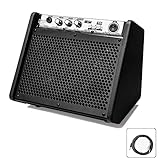
Coolmusic DM20
- 20W output
- 6.5 inch woofer with tweeter
- Bluetooth and USB playback
- 4.5 kg
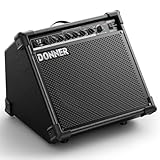
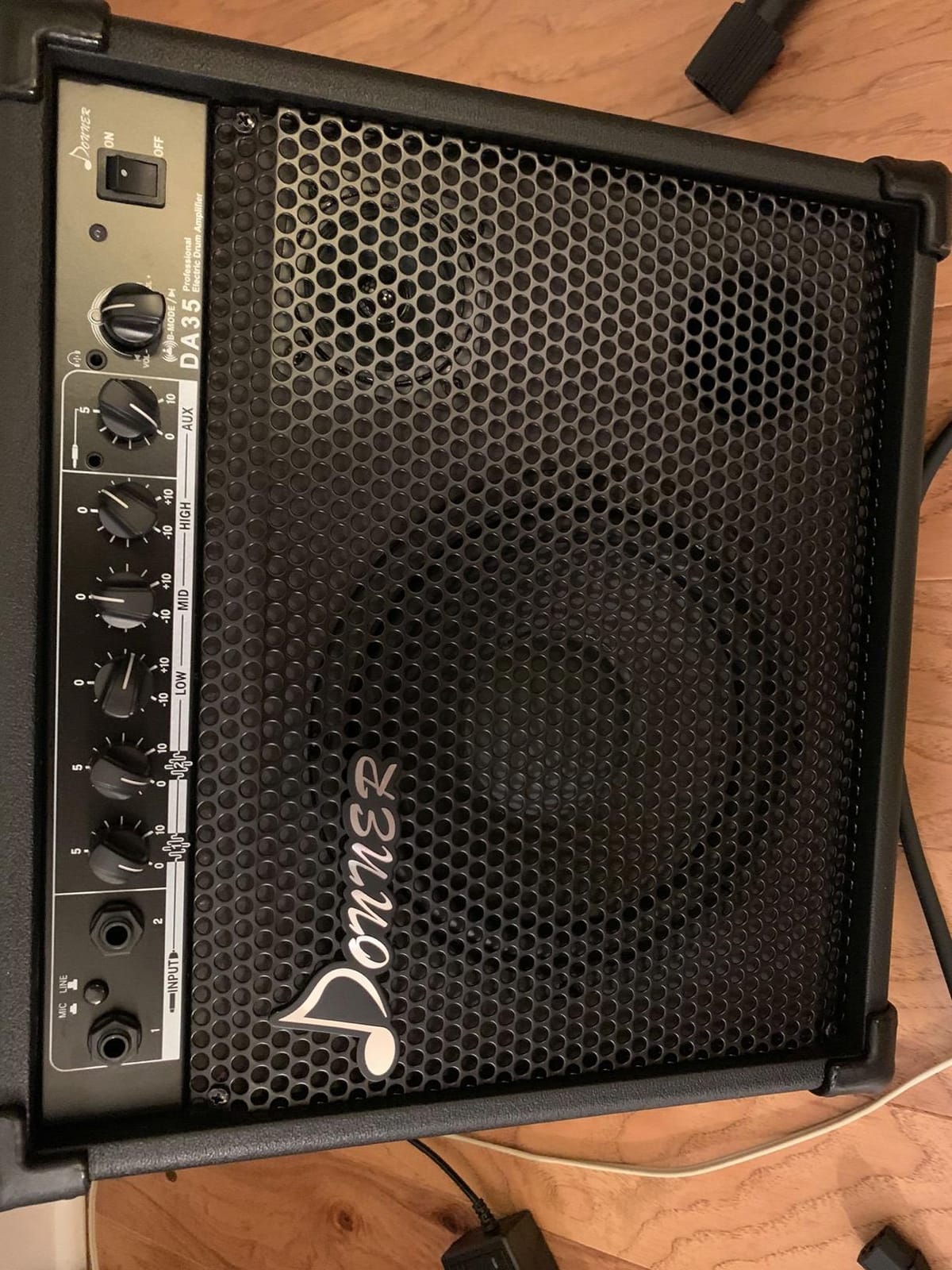
Donner DA-35
- 35W output
- Two channels with separate volume
- Headphone out and DI out
- 3-band EQ

Coolmusic 30W Keyboard Amp
- 30W output
- Two gain channels
- Headphone jack and DI out
- USB backing tracks
All 10 Practice Keyboard Amplifiers at a Glance in 2026
Every amp below is listed in the order we recommend it, with the specs that actually change a buying decision. Wattage tells you how much room the amp can fill, driver size tells you how much low end survives, and channel count tells you how many sources you can patch in at once.
| Product | Specifications | Action |
|---|---|---|
|
Coolmusic DM20 20W Personal Monitor
|
|
Check Latest Price |
 Donner DDA-20 Mini 20W Amp
|
|
Check Latest Price |
|
Donner DA-35 35W Two-Channel Amp
|
|
Check Latest Price |
 Roland Cube Monitor CM-30
|
|
Check Latest Price |
 Coolmusic DM80 80W 10-Inch Woofer
|
|
Check Latest Price |
 Vangoa DM100 65W Multi-Input Amp
|
|
Check Latest Price |
|
Coolmusic 30W Keyboard Amplifier
|
|
Check Latest Price |
 Behringer Ultratone K900FX 90W
|
|
Check Latest Price |
 Behringer Ultratone K450FX 45W
|
|
Check Latest Price |
 Donner DDA-80 80W Four-Band Amp
|
|
Check Latest Price |
1. Coolmusic DM20 Review: The Best Keyboard Amplifier for Practice and Small Rehearsals
Coolmusic DM20 20W Bluetooth Personal Monitor Amplifier Electric Drum Amplifier Speaker,Keyboard Speaker with USB Interface(Including E-Drum Noise-Reduction Cable) (Black)
20 watts
6.5 inch woofer plus 2.5 inch tweeter
Bluetooth and USB
4.5 kg
Pros
- Bluetooth and USB playback for backing tracks from a phone or flash drive
- Compact 4.5 kg weight moves easily between rooms
- Angled cabinet fires sound at a seated player
- Output level exceeds expectations for practice rooms
Cons
- Limited bass response from the small driver
- Can sound boxy with electronic drum triggers
- No line out or headphone jack
- Occasional reliability reports after extended use
This is the amp we come back to after looking at everything else. The Coolmusic DM20 is a 20-watt solid-state combo built around a 6.5 inch woofer and a 2.5 inch tweeter, and it is one of the few budget amplifiers where the spec sheet and the sound agree.
Twenty watts sounds thin on paper, but perceived loudness is not a straight line. In a bedroom or a small living room, a 20-watt amp driven by a line-level keyboard signal is effectively volume-limited by the room, not by the amp. You reach a comfortable practice level long before the amplifier is out of headroom.
What separates it from cheaper single-input boxes is the connectivity. Bluetooth and USB playback let you stream backing tracks from a phone or a flash drive using the onboard track and volume controls, and the amp auto-disconnects between sources so you are not hunting for the input each time. There is also a standard quarter-inch instrument jack for the keyboard itself.
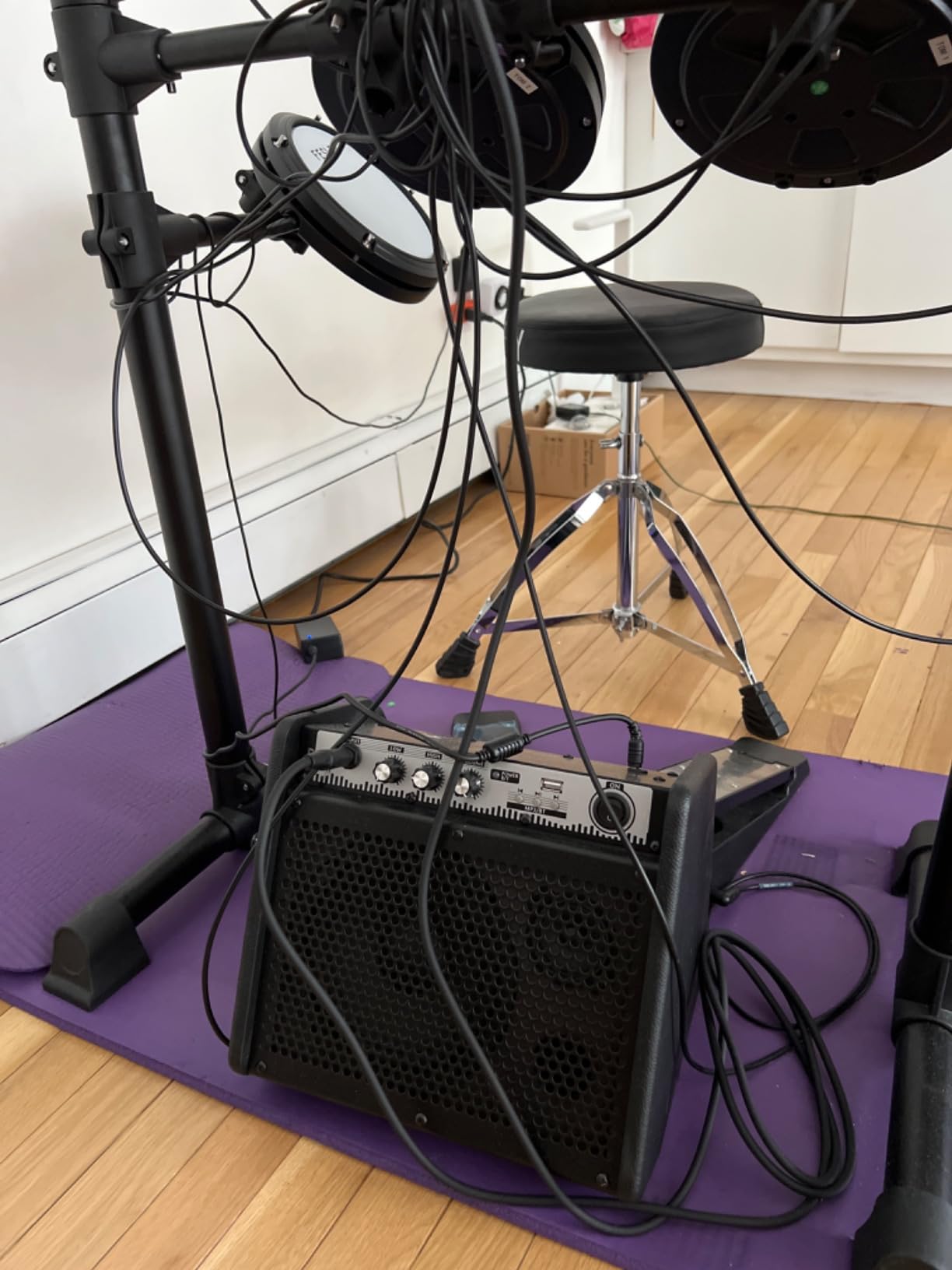
Tone shaping is handled by independent LOW and HIGH knobs plus a master volume, which is more control than most competitors in this class offer. The slanted cabinet with its hard edge frame and bottom rubber shock pads does something genuinely useful: it aims the sound upward toward a seated player rather than across the room.
At 4.5 kg this is an amp you can carry up a flight of stairs without planning for it. Owners regularly describe it as more capable in a small rehearsal than the number suggests, and the two-year warranty is longer than many rivals in the entry tier.
The honest limitation is the driver size. With a 6.5 inch woofer, synth sub-bass and left-handed fretless bass patches thin out, and reviewers note a boxy character on electronic drum triggers. If your music lives in the low register, step up to a 10 inch driver.
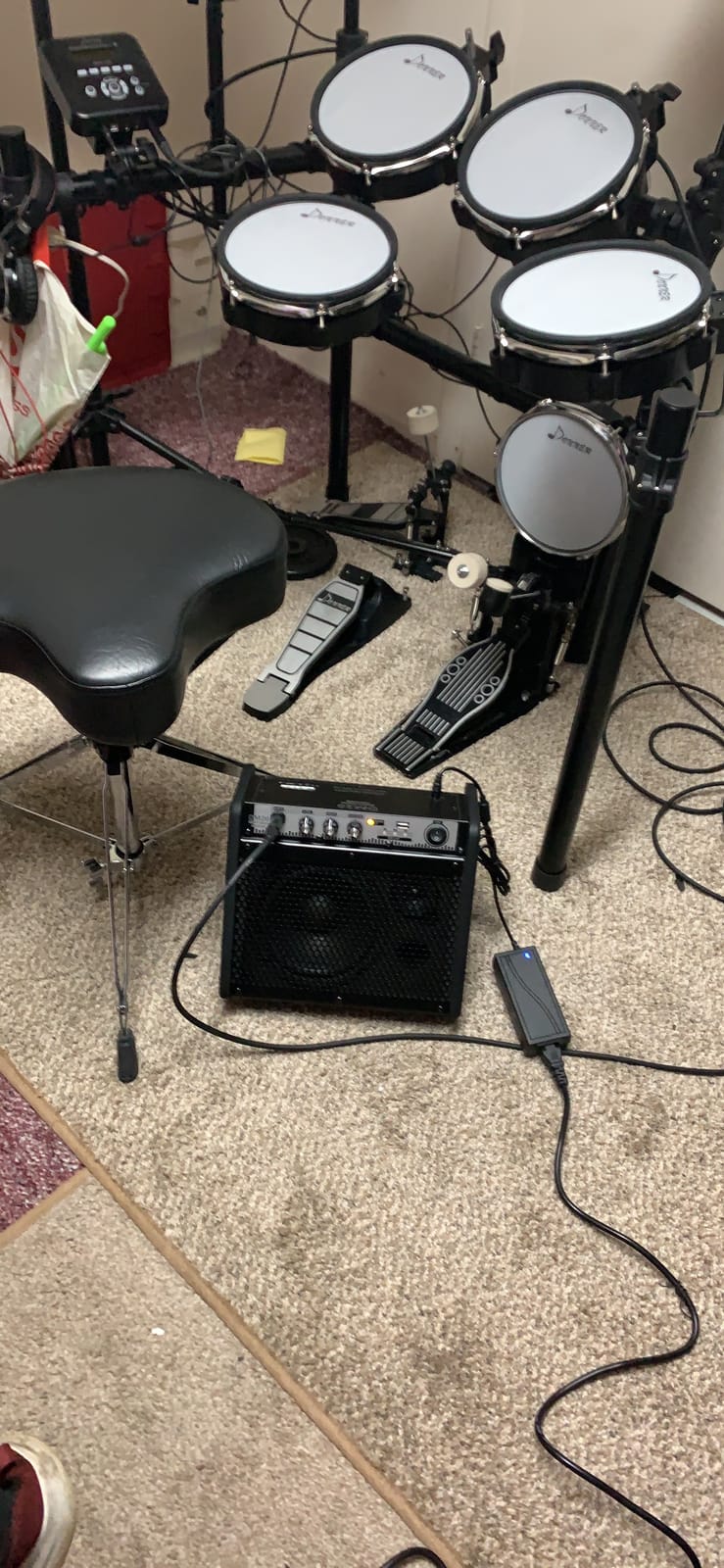
Who the DM20 suits best
A student in a bedroom or a flatmate-friendly apartment, playing a 61-key stage piano or a workstation keyboard with backing tracks. It is also the amp we recommend for busking, because it is light, runs on an included 18V adapter and needs no separate mixer.
Where the DM20 falls short
There is no headphone output, so late-night practice through this amp still sends sound into the room. There is also no line out, which means you cannot feed a house PA or a second speaker. Both of those matter the moment you move from a bedroom to a stage.
2. Donner DDA-20 Review: The Smallest and Lightest Practice Amp in the Group
Donner Mini Electric Drum Amp 20W, Wireless Electronic Drum Amplifier Keyboard Speaker DDA-20 Portable for Home Practice
20 watts
6.5 inch woofer plus 2.0 inch tweeter
3.6 kg carry weight
50Hz to 20kHz
Pros
- Smallest footprint in the group at 11.61 inches wide
- Lightest carry weight at 3.6 kg
- Multimedia knob controls a paired wireless device
- Enclosed cabinet gives solid bass for the size
Cons
- Single channel means one source at a time
- 20 watts is modest for a group rehearsal
- No headphone or line out for silent practice or PA use
The Donner DDA-20 is the pick if your practice space is small and you move the amp between rooms constantly. It weighs 3.6 kg and measures just 11.61 inches wide, which is about the size of a shoebox.
Sound comes from a 6.5 inch woofer paired with a 2.0 inch tweeter, with a stated frequency response of 50Hz to 20kHz. That lower limit of 50Hz is higher than the 20Hz figures some rivals print, and in practice it means organ bass and synth pads lose their lowest register sooner than they would on a larger driver.
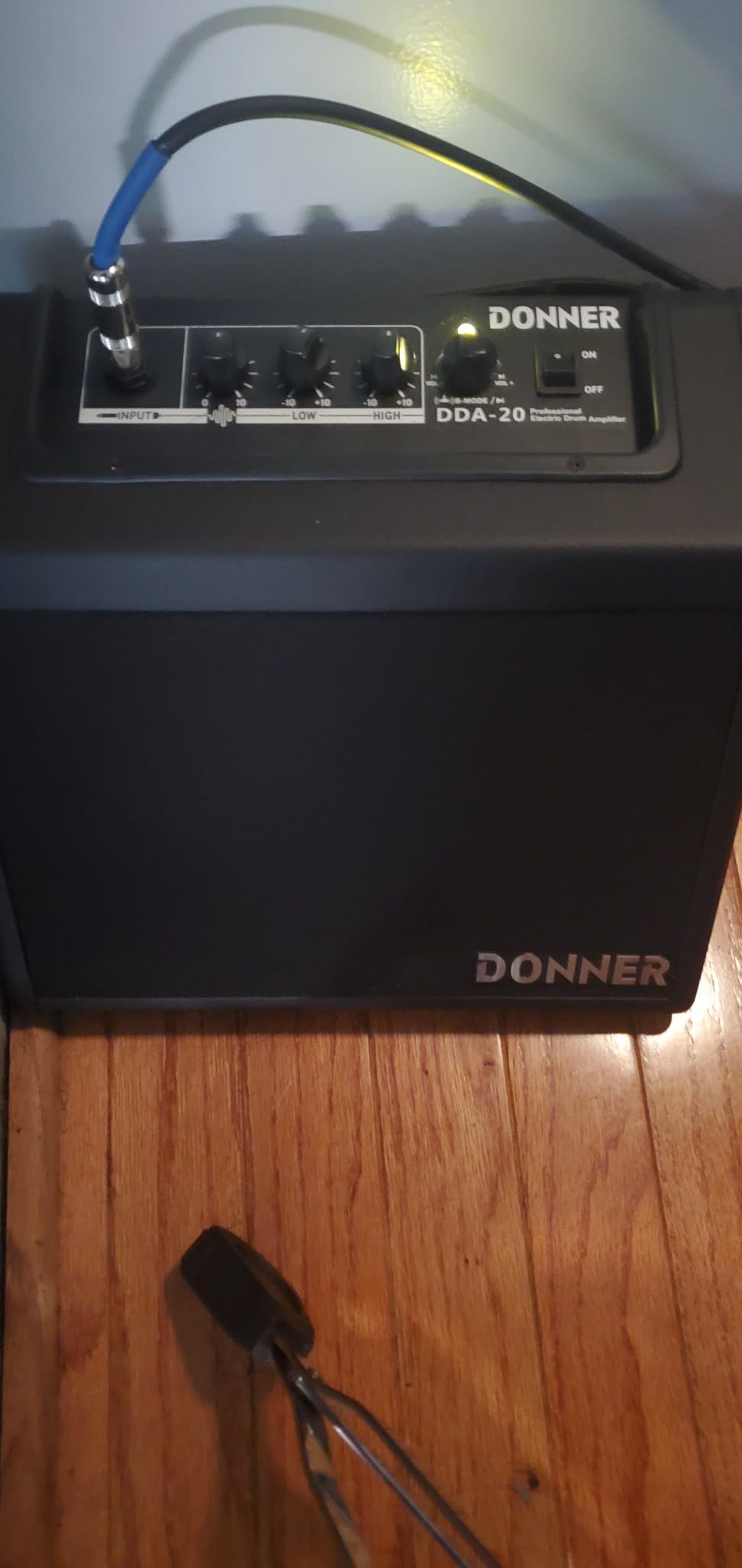
The multimedia control knob is the feature that separates this from a bare practice box. It handles a paired wireless device directly from the amp, so you can start and skip tracks without reaching for a phone. The instrument input accepts electronic drums and keyboards through the same quarter-inch jack.
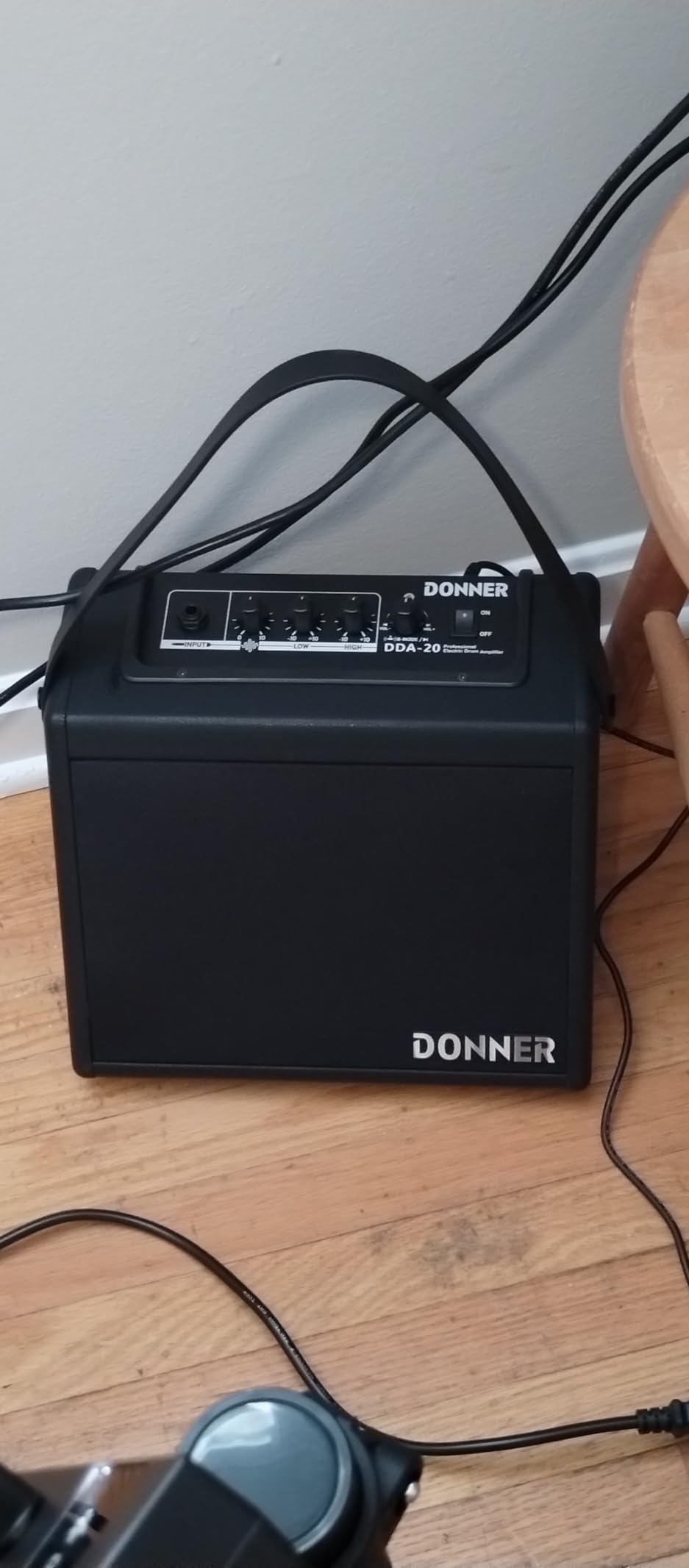
Owners consistently point to the enclosed cabinet as the reason it sounds more substantial than its size suggests, with a hard-edged enclosure and rubber feet for stability. It also ranks among the best sellers in the electronic drum amp category, so long-term feedback is plentiful.
The single-channel design is the constraint that defines it. You can run a keyboard or a drum module, not both at once, and there is no auxiliary input listed for a second source. That is fine for solo practice and frustrating the moment a teacher wants to add a vocal mic.
The absence of a headphone jack and a line out is the other real limitation. Silence is not an option here, and you cannot feed a larger system. If either of those features matters to you, the Donner DA-35 three positions down is the step up.
Who the DDA-20 suits best
A beginner in a compact room, or anyone who carries an amp up stairs or into a car on a regular basis. It is also a sensible busking box given how little space and mass it takes up.
Where the DDA-20 falls short
One input, one source, no headphone output, no line out. Everything beyond solo line-level practice is out of reach, and the 50Hz floor means low synth patches lose definition before you expect them to.
3. Donner DA-35 Review: The Best Value Amp with Headphone Out and DI Out
Donner 35-Watt Electronic Drum Amplifier DA-35, 2×8 Speakers, 2-Channel, 3-Band EQ, DI Out, Wireless Audio, Black, Compatible with Electronic Drum & Keyboard, Digital Modeling Amplifier
35 watts
8 inch woofer plus 2.5 inch tweeter
Headphone and DI outputs
8 kg
Pros
- Two instrument inputs each with its own volume control
- Headphone output enables genuinely silent late-night practice
- DI out feeds a house PA or external speaker
- Dynamic mic and line input modes on one channel
Cons
- Heavier at 8 kg than smaller practice amps
- Some buyers report the tone needs EQ work for certain keyboards
The Donner DA-35 is the most complete amp in the group for the money, and the one we recommend to the widest range of players. It delivers 35 watts through an 8 inch low-frequency woofer and a 2.5 inch tweeter at 4 ohm impedance, with a frequency response listed from 20Hz to 20kHz.
Two quarter-inch instrument inputs sit on the panel, each with its own volume control, so you can run a keyboard plus a drum module or a second instrument without buying a mixer. There is also a 1/8 inch auxiliary input for jam-along playback and wireless audio for streaming.
The two outputs are what make this the best value pick. A 1/8 inch headphone output supports silent practice at any hour, and a dedicated DI out sends a balanced-ish signal to an external speaker or mixer. Very few amps at this level give you both.
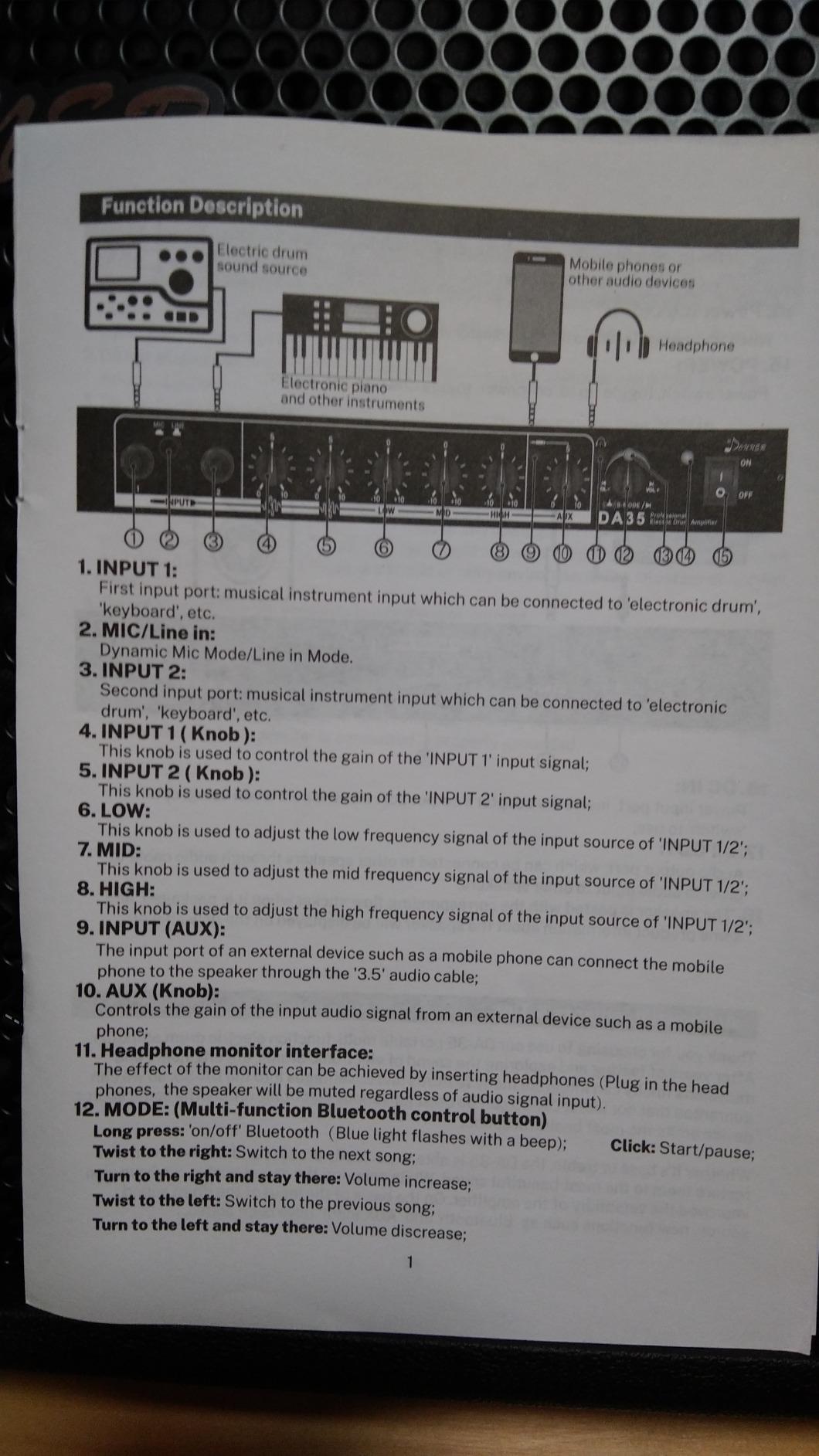
EQ is a 3-band control set covering treble, middle and bass, which is enough to correct a bright digital piano or a dark stage patch. One channel also offers dynamic mic and line-in modes with switchable input impedance at -38dB and -48dB, useful if you teach and need to sing over the backing.
At 8 kg it is meaningfully heavier than the two 20-watt amps above it, so it suits a fixed practice spot or a rehearsal room more than a carry-on-floor amp. The 14.8 by 14.2 by 11.8 inch footprint is still small enough for a corner of a room.
Reviewers note that the default tone is not perfect for every keyboard and may need EQ adjustment, which is a fair criticism of any wide-range combo. Beyond that, the two-channel flexibility and the output pair are the features that make it work for practice, lessons and a small stage.
Who the DA-35 suits best
Anyone practising in a bedroom who also wants to practise silently at night, plus music teachers who need a second channel for a vocal or a second instrument. It also works as a small stage monitor thanks to the DI out.
Where the DA-35 falls short
35 watts will not compete with a live drummer in a club, and the single 8 inch woofer limits sustained sub-bass. The 3-band EQ is coarser than a five-band graphic, so big tonal corrections are harder to dial in.
4. Roland Cube Monitor Review: The Best Battery-Powered Amp for Mobile Practice
Roland Cube Monitor/PA
30 watts stereo
6.5 inch dynamic drivers
Battery powered
Auxiliary coaxial and XLR
Pros
- Battery powered so it works away from mains outlets
- Built in overdrive chorus delay and reverb effects
- Stereo output preserves instrument and vocal width
- Fits in a briefcase for transport
Cons
- 30 watts is limited for larger rooms
- Costs more than entry level practice amplifiers
- Warranty is 90 days parts and labor
The Roland Cube Monitor is the only amp in this group that runs on battery power, and that single fact changes what you can do with it. Practise in a room without a convenient socket, take it to a park, a hotel room or a rehearsal space, and it works.
It is a true stereo monitor with two 6.5 inch dynamic drivers rather than a single coaxial driver, which is why a stereo keyboard output keeps its width on the Cube in a way it does not on most single-driver combos. Auxiliary, coaxial and XLR connectivity covers phones, laptops and line sources.
The built-in effects are the second differentiator. Overdrive, chorus, delay and reverb are onboard, which means organ and electric piano patches can be shaped without any outboard processor. Keyboardists in r/keys often point out that onboard speakers on a stage piano are fine for nothing more than practice, and the Cube is the natural external answer to that.
At 12 pounds and 14 by 13 by 12 inches, it is one of the easier amps here to lift with one hand. The listed warranty is 90 days parts and labour with one year on parts, which is shorter than the two or three years offered by several rivals.
Thirty watts is the ceiling. In a bedroom or a small flat the Cube sounds full and clear, but it is not a room-filler, and the 6.5 inch drivers will not reproduce deep synth sub-bass. Nor is there a line out listed for feeding a larger PA, so the Cube is a self-contained monitor rather than a stage backbone.
Who the Cube Monitor suits best
Players who practise in more than one place, and anyone who wants stereo width from a digital piano’s stereo output. Teachers who want onboard effects without a signal chain will like it too.
Where the Cube Monitor falls short
Thirty watts does not scale to a band rehearsal or a small venue, and there is no line out to hand your signal to front of house. The short warranty is also worth factoring in against newer models.
5. Coolmusic DM80 Review: The Best Amp for Bassy Synth Patches and Loud Pads
Coolmusic Electric Drum AMP 80-Watt Electronic Drum Amplifier DM80 Keyboard Speaker with Bluetooth, with 3-Year Warranty
80 watts
10 inch woofer plus 3 inch tweeter
Two inputs plus Bluetooth and USB
3 year warranty
Pros
- Largest driver in the group at 10 inches for strong low end
- Two dedicated inputs plus Bluetooth and USB for three sources
- Handles bassy synth patches without clipping
- Cabinet carries a three year warranty
Cons
- Noticeable hiss at higher volume settings
- Compact size surprises some buyers
- Bluetooth controls reported as unreliable by a minority
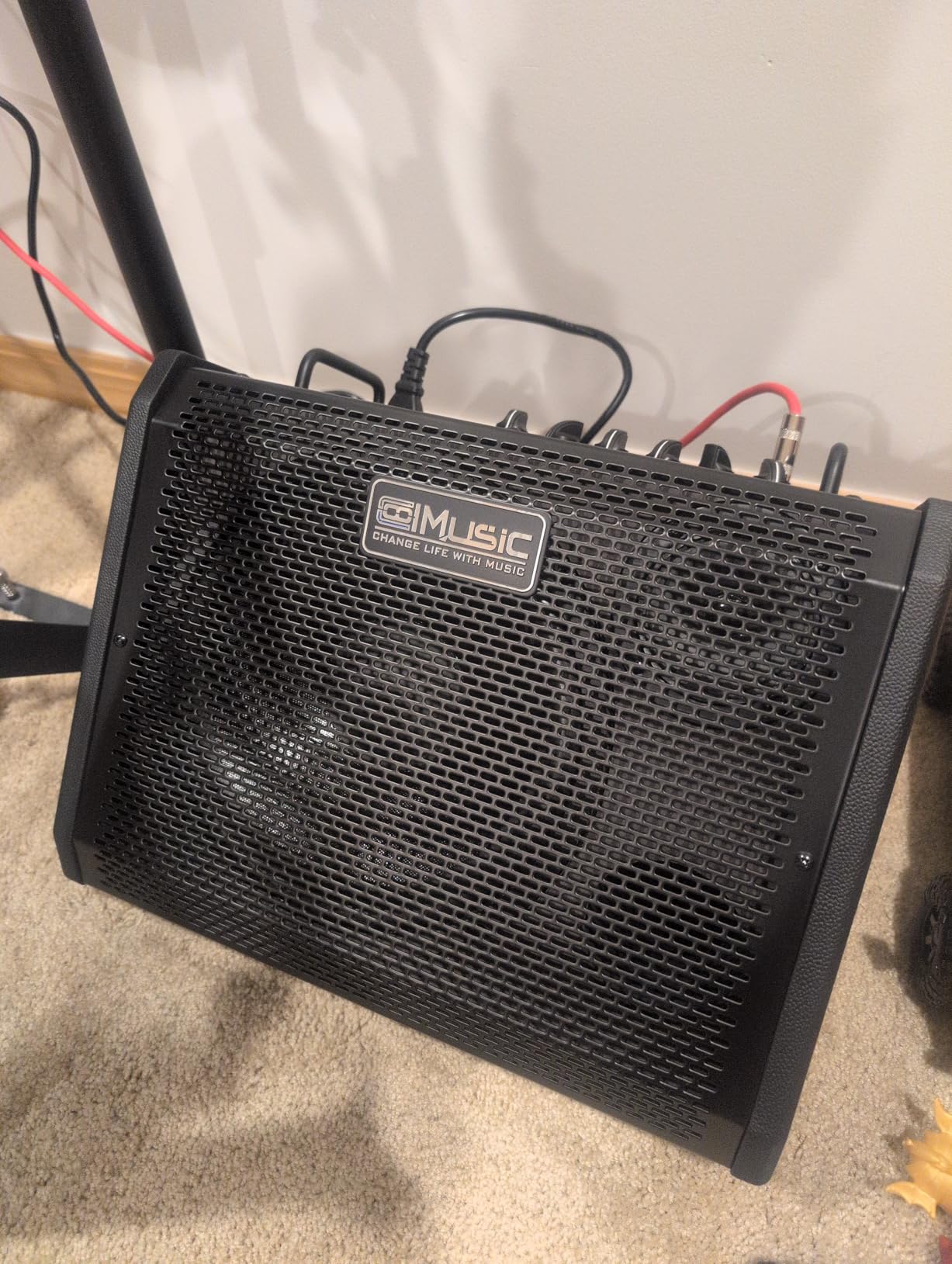
The Coolmusic DM80 is the pick if your music lives in the low register. It runs 80 watts through a 10 inch woofer and a 3 inch tweeter, and that driver size is the reason bassy synth patches and organ registrations come through instead of disappearing.
Connectivity is unusually flexible for the tier. Two physical inputs plus Bluetooth and USB let you run three signals at once, so a keyboard, a vocal mic and a backing track can all coexist. The 3-band EQ covers low, mid and high, which is enough to stop a bass-heavy patch from swamping an acoustic piano layer.
The LINE OUT is described as usable for headphones or for linking to another speaker or mixer, which makes it a natural hub in a small setup. Owners also note that the steel cabinet with rounded edges and carrying handles survives being moved around far better than lighter plastic boxes.
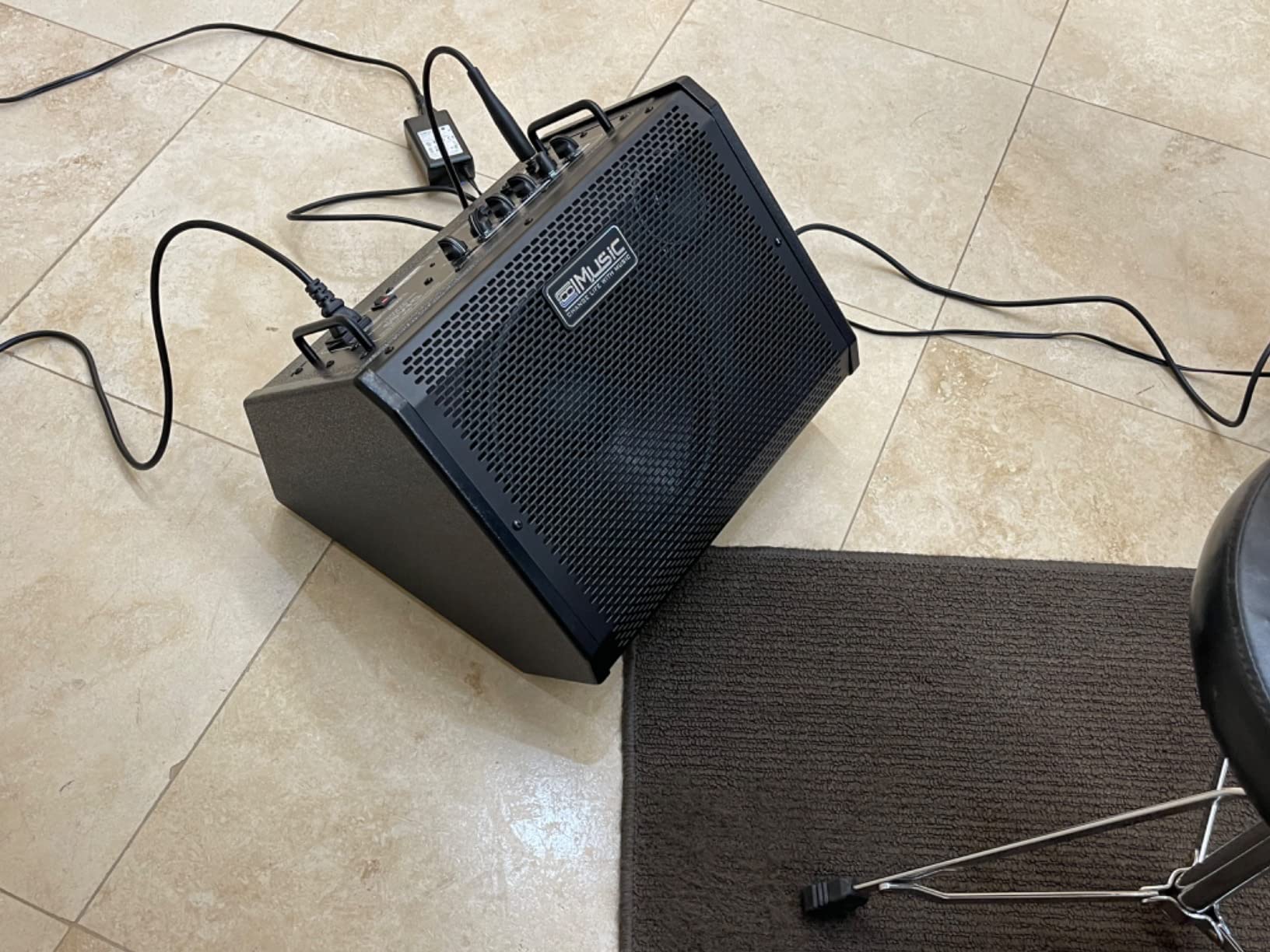
The upward-tilted cabinet places the control panel at the rear of the top surface, so you reach back to adjust EQ while the sound points at your seating position. It is a small design choice that makes a long practice session more comfortable.
Two criticisms come up repeatedly in reviews. Audible hiss appears at higher volume settings compared with costlier amplifiers, and a minority of buyers report unreliable Bluetooth control. Several owners were also surprised by how compact the cabinet is given the output.
That is the full trade: 80 watts and a 10 inch driver in a cabinet that is easy to carry, at the cost of a quieter noise floor. For practice in a normal room, the headroom is generous; for a hard rehearsal against live drums, it is approaching the right size.
Who the DM80 suits best
Synth players, organ players and anyone whose patches have weight in the low end. It also suits a small stage or a band rehearsal where 20W to 35W simply runs out of headroom.
Where the DM80 falls short
Hiss at higher volume settings is the honest drawback, and the compact dimensions can disappoint buyers expecting a large floor cabinet. Bluetooth control is the least reliable part of the feature set.
6. Vangoa DM100 Review: The Best Amp When You Need Several Inputs at Once
Vangoa Electric Drum Amp 65W Professional Wireless Electronic Amplifier for Drum Set Speaker 3-Band EQ USB Personal Monitor Keyboard Speaker, Black
65 watts
8 inch woofer plus 2 inch tweeter
Dual mic channels
45Hz to 20kHz
Pros
- Sixty-five watts handles practice and small rehearsals
- Dual independent microphone channels plus instrument inputs
- Headphone USB and wireless connections in one box
- Three band EQ with smooth rotary knobs
Cons
- Tone tuned more toward electronic drums than keyboards
- Lower average rating with more one-star reviews
- Brand has a shorter track record than established names
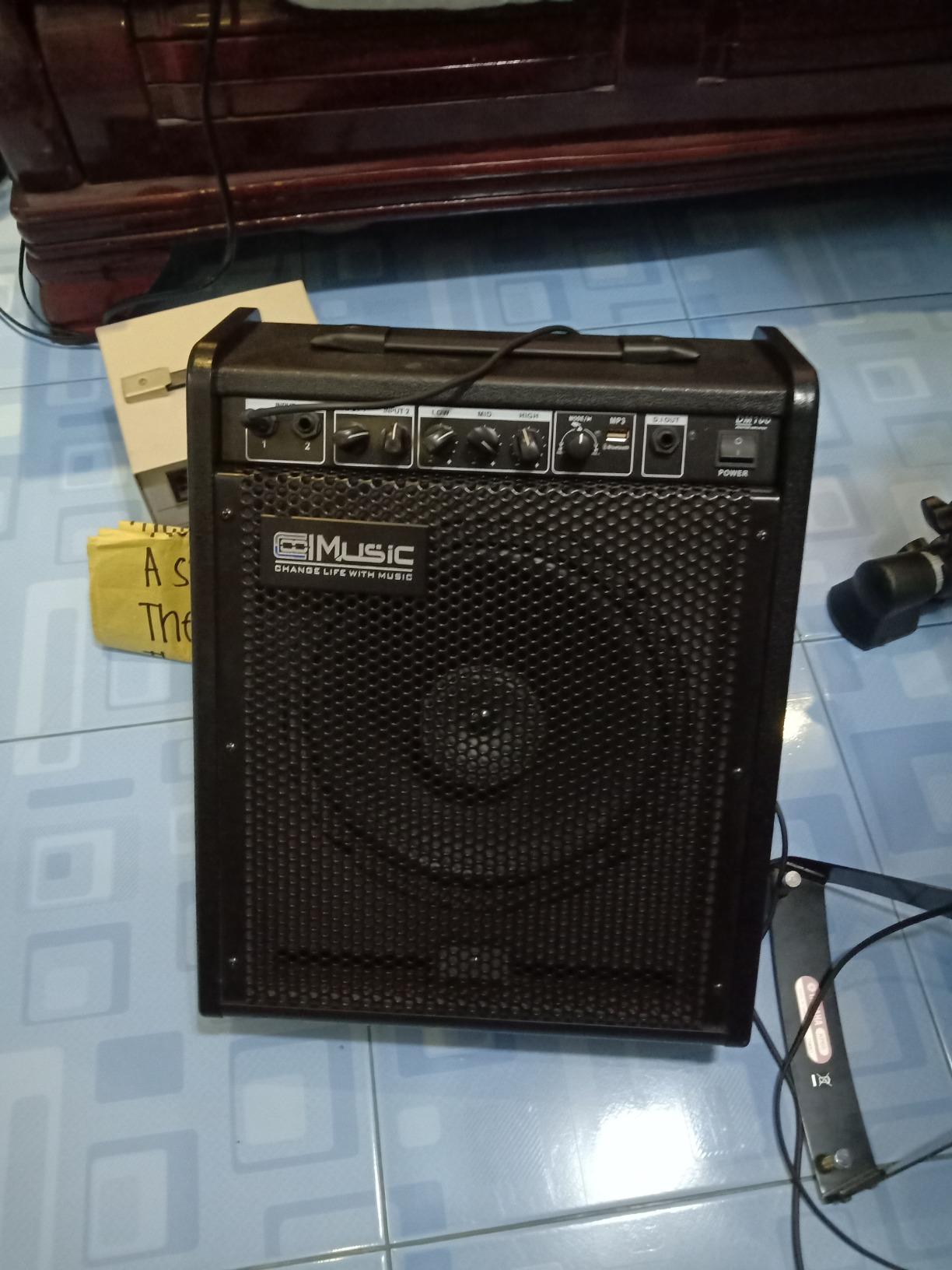
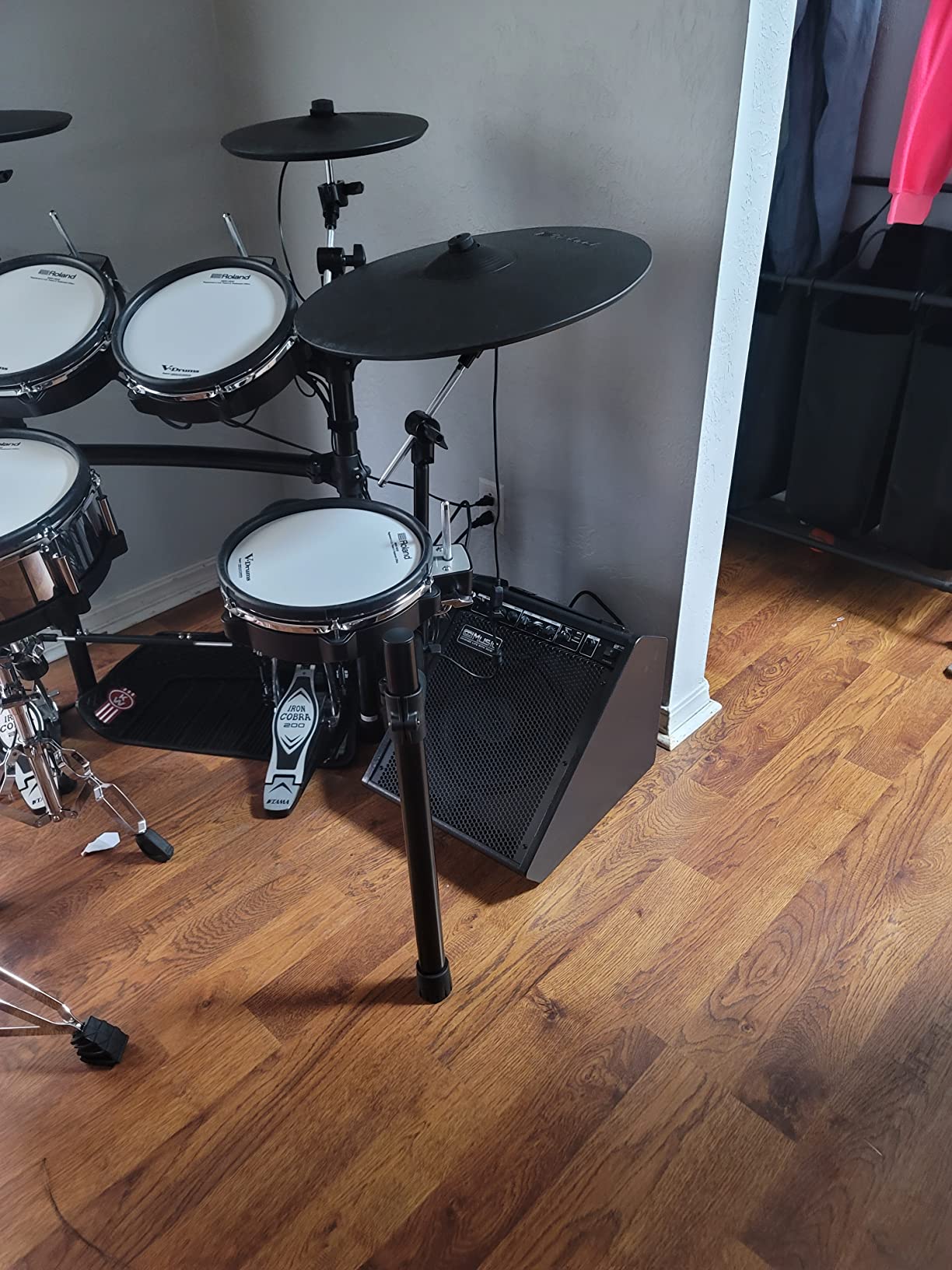
The Vangoa DM100 is the input-count answer in this roundup. It lists dual independent microphone channels alongside instrument inputs, which is the configuration a music teacher or a singer-songwriter actually needs at a lesson.
Power is 65 watts through an 8 inch woofer and a 2 inch tweeter, with a stated frequency response of 45Hz to 20kHz. That is enough to fill a small room or a rehearsal space, and the 3-band EQ with smooth rotary controls gives usable low, mid and high shaping.
Headphone, USB and wireless connections are all present, so silent practice and jam-along playback are covered without extra hardware. The top-mounted control panel keeps the knobs reachable while the amp sits on a stand or a table.
Reviewers rate the output level and connection options as strong for the money, and a number mention that it is a straightforward way to run a keyboard plus a mic for a lesson or a small acoustic gig. Buyers of electronic drum kits rate it highly for the same reason.
The tone leans toward electronic drums rather than keyboards, which shows up in a brighter, more percussive voicing that some keyboardists find forward. The rating sits below the leaders in this group and reviews include a higher share of one-star feedback, so long-term reliability is less well documented.
The brand itself carries a shorter track record than the established names here. If you want a mic channel and the most watts per unit, it delivers; if you want a reputation for longevity, the alternatives above are safer bets.
Who the Vangoa DM100 suits best
Music teachers who sing over their students, singer-songwriters pairing a keyboard with a vocal mic, and anyone who wants headphone, USB and wireless in one box at a mid-level power rating.
Where the Vangoa DM100 falls short
The voicing is optimised more for electronic drums than for piano and organ tone, so expect to spend time on the EQ. The lower rating and thinner long-term feedback are the main reasons it is not higher in this list.
7. Coolmusic 30W Keyboard Amplifier Review: The Best Amp for Silent Practice on a Budget
Coolmusic Keyboard AMP 30W Electric Drum Amplifier Speaker,with 3-Year Warranty
30 watts
8 inch speaker
Two gain channels
Headphone and DI outputs
Pros
- Headphone output makes silent practice possible
- DI out feeds an external speaker or PA
- Two channel layout suits layering a second source
- USB playback for backing tracks without a phone battery
Cons
- Thirty watts is modest beyond a single room
- Three band EQ is coarser than a five band graphic
- Some buyers report distortion when pushed hard
The Coolmusic 30W model is the one to buy when the single most important feature is a headphone jack. It is purpose-built for keyboards and electronic drums, and it ranks as one of the top-selling keyboard amplifiers, so it is not an obscure listing.
Power is 30 watts through a single 8 inch speaker with a frequency response listed from 20Hz to 20kHz. Two channels each have their own gain control, so you can balance a keyboard against a second source without a separate mixer.
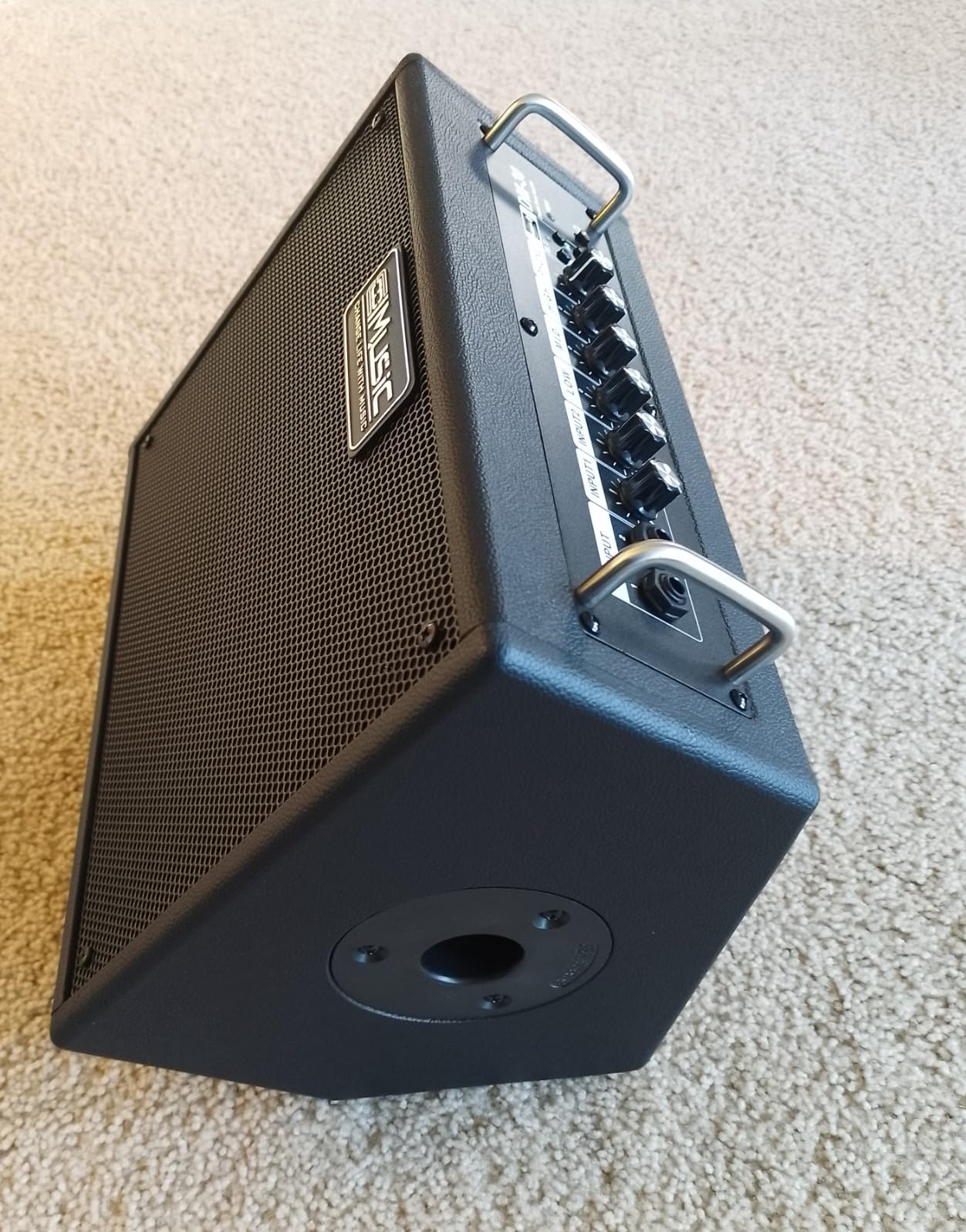
The feature list is longer than the wattage suggests. There is a 1/8 inch headphone output for silent practice, a DI output port for feeding an external active speaker, an AUX input with its own gain knob, and a USB interface for backing tracks so a lesson does not depend on a phone battery.
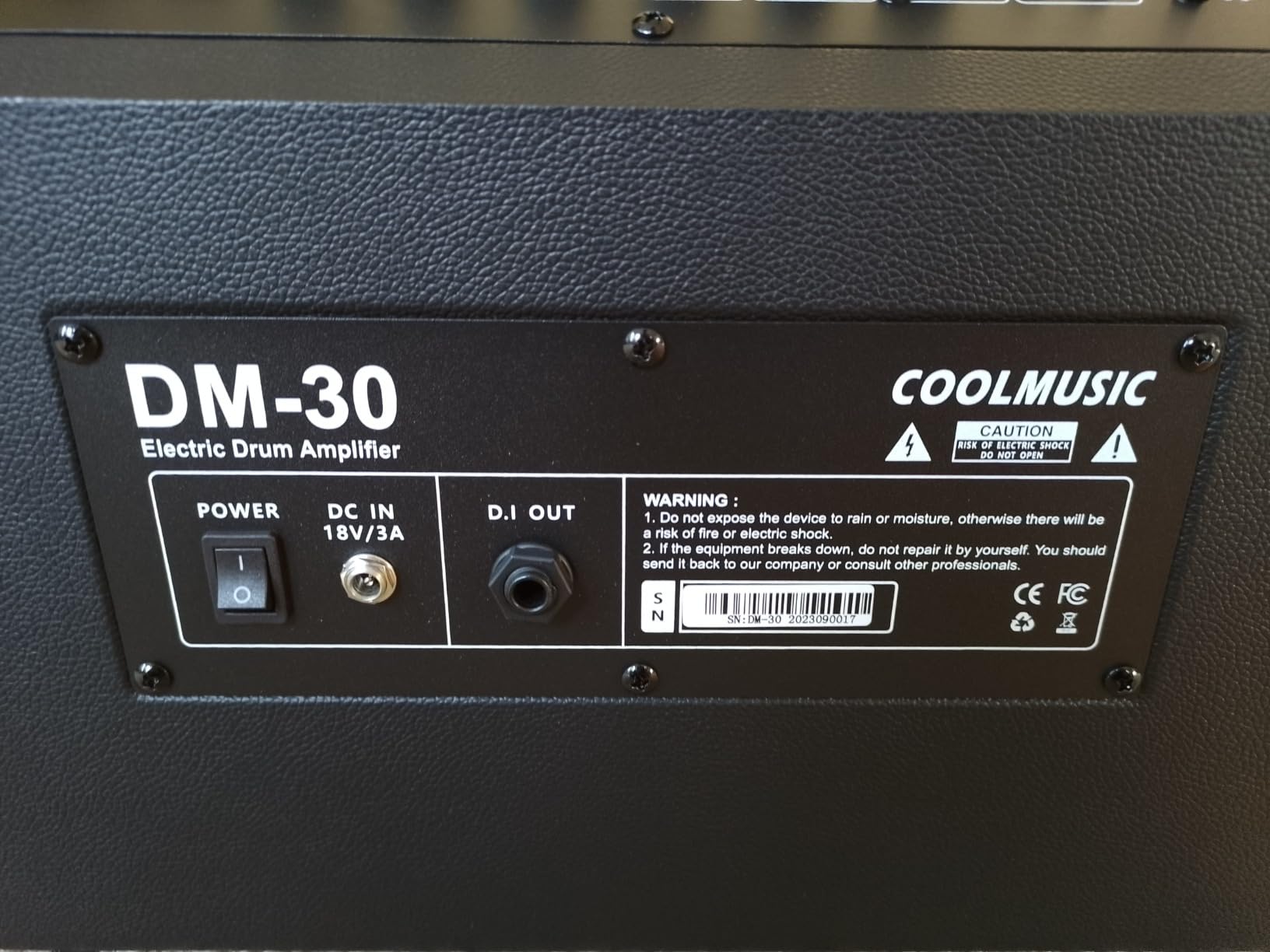
A 3-band EQ covering low, middle and high handles routine tone correction. Buyers highlight the headphone and DI outputs most often, which is the right instinct: those two jacks are what let one amp cover practice, a quiet apartment and a small event.
Thirty watts fills a bedroom comfortably and starts to strain in a larger room. Some buyers report the sound distorting when pushed toward the top of the volume range, which is the honest limit of the power rating rather than a defect.
The 3-band EQ is coarser than the five-band graphic models further down this list, so wide tonal fixes are harder. With 145 reviews there is also less long-term feedback than the best sellers, so treat the warranty terms as your main protection.
Who the Coolmusic 30W suits best
Apartments where volume is a negotiation, students practising late at night, and teachers who want a headphone output and a DI output without stepping up to a larger amp. The USB interface is useful for lessons.
Where the Coolmusic 30W falls short
It has no subwoofer-style headroom for deep synth patches, distortion appears near the top of the volume range, and the 3-band EQ cannot do fine-grained corrections. It is a practice amp that occasionally goes out, not a rehearsal amp.
8. Behringer Ultratone K900FX Review: The Best Amp for Band Rehearsal Rooms
Behringer Ultratone K900fx Ultra-Flexible 90-Watt, 3-Channel Pa System / Keyboard Amplifier With Fx And Fbq Feedback Detection
90 watts
15 inch speaker
Three channels
Five band graphic EQ
Pros
- Three channels run two or three keyboards without a mixer
- Five band EQ offers finer control than three band models
- Built in 24-bit effects remove the need for an outboard unit
- Line and sub outputs feed a larger system
Cons
- Weighs nearly 40 pounds and is bulky for home practice
- Clips noticeably past roughly two-thirds volume
- Some hiss at high channel and master settings
- XLR inputs are microphone level and will clip with a keyboard
The Behringer Ultratone K900FX is the amp in this group built for a rehearsal room rather than a bedroom. It delivers 90 watts through a 15 inch driver, and the sheer physical size of that driver is most of the story.
Three channels each have their own volume and FX send, so two or three keyboards can run without a separate mixer. A dedicated five-band graphic equalizer gives finer tonal control than the 3-band models, and 24-bit digital effects with reverb and delay are built in, removing the need for an outboard processor.
FBQ feedback detection is genuinely useful in a live room where a microphone and a speaker sit close together. Line and subwoofer outputs mean the amp can hand off to a larger system, and a CD input covers playing along to music.
Owners rate the channel count, EQ depth and value for small gigs highly. A three-channel mixer with per-channel FX sends in one box saves a lot of setup time in a rehearsal where a band changes instruments every ten minutes.
The weight is the first thing anyone notices at nearly 40 pounds, and it is not a home practice amp. Reviewers also report clipping past roughly two-thirds of the volume range and a small amount of hiss at high channel and master settings, which matters in a quiet studio but far less in a loud rehearsal space.
One practical warning: the XLR inputs are microphone inputs, and a keyboard line output into them will clip. Use the quarter-inch inputs for keyboards and reserve the XLRs for a vocal. One review also reports intermittent sound dropouts on their unit.
Who the K900FX suits best
Band players running two or three keyboards in a rehearsal room, anyone who needs a five-band EQ and built-in effects, and setups that will later feed a larger PA through the line and sub outputs.
Where the K900FX falls short
Forty pounds is a two-person carry unless you have a dolly, and it clips before it feels loud. The 4.1 average rating is the second-lowest here, so budget for the possibility of a hardware fault.
9. Behringer Ultratone K450FX Review: The Best Five-Band EQ Amp at a Mid Weight
Behringer K450Fx Ultratone
45 watts
10 inch BUGERA speaker
Three channels
Five band graphic EQ
Pros
- Forty-five watts covers practice and small club use
- Dedicated five band graphic EQ
- Built in reverb and echo for keyboards and vocals
- Subwoofer output adds low end flexibility
Cons
- Boomy upper bass and limited treble reported for some keyboards
- Weighs nearly 35 pounds
- Some units arrived with a fault between amp and speaker
- Lowest average rating in the group
The Behringer K450FX is the middle of the Ultratone range, and the value argument depends on one feature: a dedicated five-band graphic equalizer on a three-channel amplifier. Few combos at this level give you that much control.
Power is 45 watts through a 10 inch BUGERA speaker, with separate volume and FX send per channel across three channels. Built-in 24-bit digital effects handle reverb and echo, a CD input covers playing along, and a subwoofer output lets you add low end later rather than replacing the whole amp.
Owners like the value, the EQ depth and the built-in effects, and 45 watts is a reasonable figure for home studio use and a small club. Three channels plus a CD input make it flexible as a practice amp or a stage monitor.
The reported tone problems are the reason it sits at the bottom of this list. Owners of digital pianos describe a boomy upper bass and limited treble, which means a five-band EQ is doing real corrective work on some instruments rather than being a luxury.
At nearly 35 pounds it is barely more manageable than the larger K900FX, and reviewers report the lowest average rating here, including an 11 percent share of one-star reviews. Some units arrived with a fault between the amplifier section and the speaker, so inspect on arrival and keep the packaging until you are satisfied.
Who the K450FX suits best
Players who want five-band EQ and three channels but do not need a 15 inch driver, and anyone planning to add a subwoofer later for synth bass. It is a practical rehearsal and small-stage box.
Where the K450FX falls short
The boomy upper bass needs EQ correction on some digital pianos, the weight is close to 40 pounds of awkward carrying, and the reliability feedback is the weakest in the group. Buy it with a return option.
10. Donner DDA-80 Review: The Best Amp for Four-Band EQ Control
Donner Electric Drum AMP, 80-Watt Wireless Electronic Drum Amplifier Professional DDA-80
80 watts
8 inch woofer plus tweeter horn
Four band EQ
Limit switch
Pros
- Four band EQ is finer than most three band rivals
- Limit switch helps an electronic kit sit in a band mix
- 80 watts with a tweeter horn gives real headroom
- Wireless multimedia connection with control knob
Cons
- Larger and heavier than the 20W and 30W practice options
- Warranty terms are not clearly stated
- Only 143 reviews so less long term feedback
The Donner DDA-80 is the pick for players who want 80 watts and more EQ granularity than a standard three-band control provides. The four-band EQ adds a dedicated lo-mid band, which is exactly the range that fights with a synth bass patch.
The amplifier section drives an 8 inch woofer paired with a tweeter horn at 80 watts rated output. A limit switch suppresses overload signal coming from a drum module, letting an electronic kit sit in a band mix without the amp pushing into clipping.
Wireless multimedia connection with a control knob handles backing tracks, and the quarter-inch instrument input accepts electronic drums and keyboards. For a keyboardist in a band, the lo-mid band and the limit switch are the two features that justify the step up from a 35W practice box.
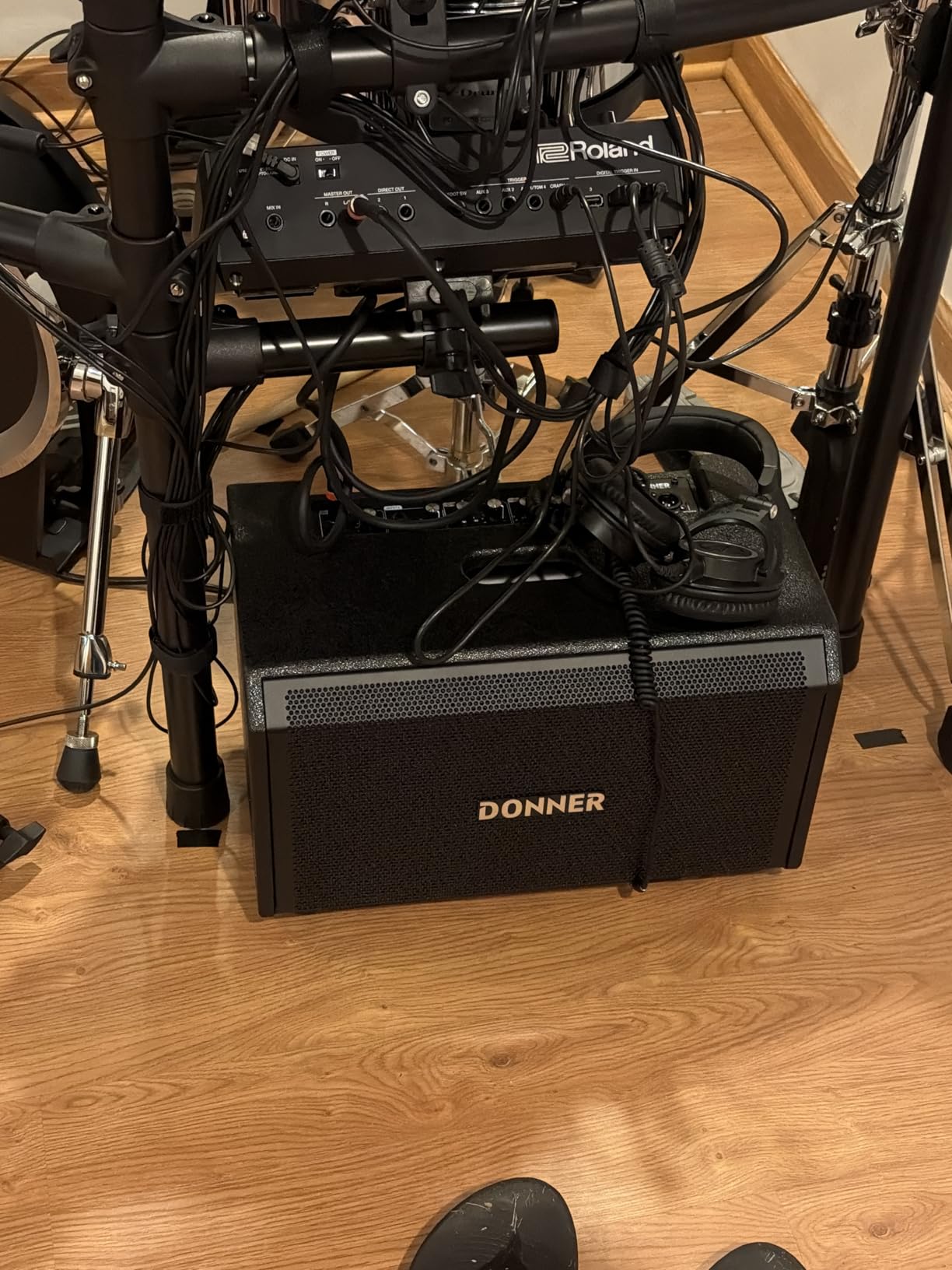
Owners highlight the four-band EQ and the limit switch as the useful parts, and describe the 8 inch woofer with tweeter horn as giving adequate headroom for a full kit. The wide, low cabinet also works reasonably as a stage monitor because it fires upward.
At 9.34 kg and 17.2 inches wide it is larger and heavier than the 20-watt and 30-watt practice options, so it belongs in a rehearsal room rather than a carry-on-floor bag. The listed warranty terms are not clearly stated, which is worth confirming at purchase.
With 143 reviews there is less long-term feedback than the best sellers in this group, so the operating manual matters more than usual. It is a capable rehearsal and small-stage amp, but pick it when you specifically want the lo-mid band.
Who the DDA-80 suits best
Keyboardists rehearsing with an electronic drum kit, synth players who need to tame a lo-mid-heavy patch, and anyone who wants 80 watts without a 15 inch cabinet.
Where the DDA-80 falls short
It is too large for a small practice room, the warranty terms are unclear, and there is no headphone output listed, so silent practice is not part of the feature set.
How Much Wattage Do You Actually Need?
Is 200W twice as loud as 100W? No. Doubling amplifier power adds roughly 3 decibels, which your ears barely notice as louder. Perceived loudness tracks the power ratio, so 100W to 200W sounds like about a 10 percent increase, not a doubling. Speaker size and room size matter more than raw wattage.
This is the single most misunderstood number on a keyboard amp listing, and it is why our first four picks all sit at or below 35 watts. A keyboard sends a line-level signal, which needs far less power to reach a room than a guitar or a microphone. The wattage only matters once you are competing with something louder than you.
Here is how to match power to a situation:
1. 10W to 30W — bedroom, flat, quiet hours. A practice room where the neighbours matter. The Coolmusic DM20, the Donner DDA-20, the Coolmusic 30W and the Roland Cube Monitor all live here, and any of them will run louder than you need for solo practice.
2. 30W to 50W — shared room, small rehearsal with electronic drums. This is the band the Donner DA-35, the Behringer K450FX and the Vangoa DM100 sit in. Enough headroom to be heard over practice pads and a laptop, not enough for a live kit.
3. 60W to 100W — band rehearsal and small venues. The Coolmusic DM80, the Donner DDA-80 and the Behringer K900FX. This is where you can hold your own against an electronic drum module or a drummer playing acoustic drums in a small room.
4. Above 100W, or a powered PA speaker — a real stage. For a medium bar gig, a single keyboard amp is fighting the wrong battle. Forum consensus on thegearpage.net and GearSpace consistently points to small powered PA speakers for this job, and we cover that route below.
The practical takeaway: buy the smallest amp that covers your loudest realistic scenario. Extra watts you never use are wasted money, extra weight you carry for nothing, and often extra hiss at the bottom of the volume range.
Inputs, Outputs and Channels: How to Read an Amp Panel
Channel count is the easiest spec to misuse. A three-channel amp does not mean three things can be connected and controlled usefully; it means three preamp strips, each with a volume control and often an EQ. One channel is a keyboard, one is a mic or a second instrument, and one is a backing track or a drum module.
Line-level inputs are the ones your keyboard belongs on. Most amps label these as instrument inputs with a quarter-inch jack, and they expect a hot signal from the keyboard’s own output. XLR inputs are almost always microphone-level, so plugging a keyboard line output into an XLR will clip badly. This is a common and easily avoided mistake on the Behringer models.
Line level, instrument level and mic level are three different things. Your keyboard outputs a line-level signal, a guitar outputs an instrument-level signal, and a vocal mic outputs a small mic-level signal. Some amps add a switch to choose between dynamic mic and line modes, which is exactly what the Donner DA-35 does at -38dB and -48dB.
Outputs decide what the amp can do next. A headphone output lets you practise silently, which is the single most valuable jack for apartment dwellers. A line out or DI output lets you feed a house PA, a mixer or a second speaker. A subwoofer output lets you add low end later without replacing the amp. Check for all three before you buy, because retrofitting them is impossible.
Stereo vs Mono: What Happens to Your Digital Piano
Most keyboard amps have one driver, which means a stereo keyboard output is summed down to mono. This is why pads and electric piano sounds lose their width, and it comes up repeatedly in forum threads about digital pianos with stereo outputs.
There are three ways around it. Use the amp’s headphone output, because listening on headphones preserves the stereo image that the speaker cannot. Buy a two-driver stereo monitor such as the Roland Cube Monitor. Or accept the mono sum and work with it, which many organ and piano players do without noticing much loss.
A mono summing amp is not a fault. It is the physical consequence of one cone pointed at one listener. What it costs you is the sense of movement in a pad part, and it is worth confirming before a purchase if wide stereo patches are central to your playing.
Keyboard Amp vs Guitar Amp vs Powered PA Speaker
The loudest objection in the forums is that keyboard amps sound poor. Much of that comes from using the wrong category. A keyboard amp is voiced flat and full-range so a piano sounds like a piano; a guitar amp deliberately pushes the midrange to make distorted guitars cut through a band, and it alters every keyboard signal you send through it.
A powered PA speaker is the third option, and it is the one experienced players reach for. On thegearpage.net, users recommend a QSC K10 or K10.2 for medium bar gigs. On keyboardforums.com, the Bose S1 Pro is recommended with the observation that a pair would still be lighter than most keyboard amps. GearSpace threads build a clear tier: entry at the EV ZLX-12P, then the Yamaha DXR10, then the QSC K series, then the RCF HD12-A at the top.
What a PA speaker gives you is headroom, XLR inputs, a real mixer section and the ability to serve a singer at the same time. What it costs you is the keyboard-specific voicing and usually the built-in effects. For home practice the difference is irrelevant; for a bar gig with a vocalist, a PA wins comfortably.
Our guidance: practise on a keyboard amp if you are at home, because the voicing and the effects are built for your instrument. Move up to a PA speaker or a larger keyboard amp the first time you play with a live drummer, because a 35W combo will not compete.
Buying a Used or Vintage Keyboard Amp
The used market is where the real value sits, and the models that appear most often are Peavey KB/A and KB series, Yamaha RA series, Simmons DA200s, Traynor Block units and Roland KC models. Equipboard lists all of these among keyboard amplifiers, but almost no editorial roundup recommends them.
Judge condition, not model year. A 1980s combo with a clean panel, working pots and an intact grille will outlast a newer unit with a failing power supply. Ask for a photo of the input jacks, the speaker cone and the power cable, and play every input before you pay.
Check the parts that fail first: the output transformer, the pots, the speaker cone and the power cord. A speaker cone can often be replaced cheaply, while an original transformer is a much bigger job. Confirm the amp is a powered combo, not a passive cabinet, because a passive cabinet is a different purchase entirely.
Used vintage buys are usually a good deal for a rehearsal room amplifier, and a poor deal for a beginner who will drop it or move it constantly. Check the warranty situation too: several models here offer two to three years new and nothing on the used market.
Five Mistakes to Avoid Before You Check Out
1. Buying on wattage alone. Two hundred watts is not twice as loud as one hundred, and for home practice you almost certainly need far less than the listing implies. Match the power to your loudest realistic scenario.
2. Ignoring the headphone output. If anyone in your home will ever object to practising at 11pm, this is not an optional feature. Four amps in this roundup have a headphone jack; several do not.
3. Plugging a keyboard into an XLR. XLR inputs on amps like the Behringer K900FX are microphone-level. A keyboard line output into an XLR clips immediately and can damage the preamp.
4. Overlooking the total carry weight. The difference between an amp you lift with one hand and one that needs a second person or a dolly matters every single time you move it. Two of these amps weigh close to 40 pounds.
5. Expecting a small driver to reproduce synth sub-bass. A 6.5 inch woofer cannot deliver what a 10 or 15 inch driver delivers. If your music depends on low frequencies, buy the bigger driver rather than the bigger wattage.
Frequently Asked Questions
What is the best amplifier for keyboards?
For most players, the Coolmusic DM20 is the best amplifier for keyboards: 20 watts, a 6.5 inch woofer with a 2.5 inch tweeter, Bluetooth and USB playback and a 4.5 kg carry weight. Add a DI out and you get the Donner DA-35 instead.
What is the best keyboard amp for home use?
The best keyboard amp for home use is the Coolmusic DM20, because 20 watts is plenty in a bedroom and its angled cabinet aims sound at a seated player. If the room is shared, choose an amp with a headphone jack such as the Donner DA-35.
Is 200W twice as loud as 100W?
No. Doubling power adds about 3 decibels, which sounds like a small increase rather than a doubling. Perceived loudness follows the power ratio, so speaker size and room size influence the result far more than the wattage figure on the listing.
What is the best sounding practice amp?
The Roland Cube Monitor sounds the most refined in this group, using two 6.5 inch dynamic drivers for true stereo and onboard overdrive, chorus, delay and reverb. It also runs on battery power, so it is portable between rooms.
What is a good portable amp for keyboards?
The Donner DDA-20 is the most portable option at 3.6 kg, and the Coolmusic DM20 follows at 4.5 kg with Bluetooth and USB for backing tracks. Both run from a supplied DC adapter, so no battery is needed for a busking session.
Do I need an amp for my keyboard at home?
Usually yes if you want to hear the full tone. Keyboardists in r/keys describe onboard speakers on stage pianos as good for little more than practice. A keyboard amp gives a flat, full-range signal and volume control your own speakers cannot provide.
Can I use a keyboard amp as a small PA?
Some can. The Donner DA-35 has a dedicated DI out and the Coolmusic models offer a DI output port, which is enough to feed a mixer or an active speaker. The heavier Behringer combos add line and subwoofer outputs for a larger system.
The Verdict: Best Keyboard Amplifiers for Practice in 2026
The Coolmusic DM20 is our best keyboard amplifier for practice in 2026 and the reason is simple: it puts the right amount of power in the right cabinet, adds Bluetooth and USB for backing tracks, and stays light enough to move without a plan. If your household needs silence, take the Donner DA-35, which pairs two channels with a headphone output and a DI out. If you are counting every dollar, the Coolmusic 30W model gives you a headphone jack and a DI output for the least.
Step up only when you have a reason. The Coolmusic DM80 with its 10 inch woofer is the answer to a bass-heavy patch book, and a powered PA speaker such as a QSC K10.2 is the answer to a bar gig with a live drummer. Match the amp to your loudest realistic room, and check the headphone jack before anything else.