
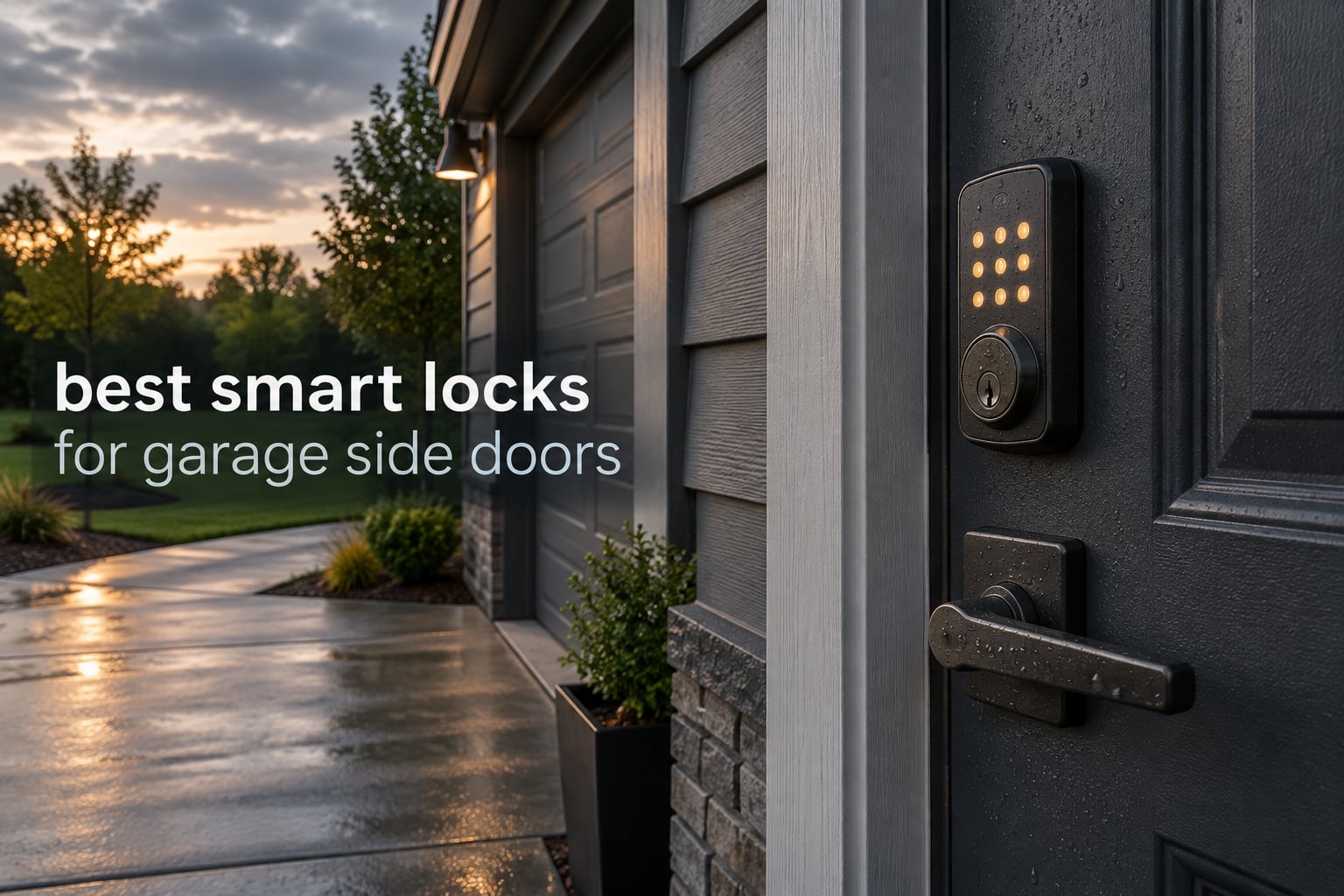
The garage side door is the entry point most homeowners upgrade last and most thieves target first. It is often unsheltered, frequently the busiest door in the house, and it opens straight into a space full of vehicles and interior doors, which makes it a genuinely useful place to put a keypad deadbolt.
That same door is also the hardest one to fit a smart lock onto. Most residential smart deadbolts are engineered for a sheltered front porch, and putting one on a side door with no roof overhead is where weatherproofing, radio range and battery maths actually decide whether you are happy with the purchase. This guide ranks the best smart locks for garage side doors in 2026 by how they handle those three problems specifically, not by how they perform on a covered entry.
We compared ten current models across ingress rating, operating temperature, unlock methods, radio type, power source, mechanical key override and installation type. Every product below is a full deadbolt or handle-set replacement, so you are swapping out the existing lock rather than adding a surface-mounted padlock. Seven of the ten publish a weather ingress figure, and we treat that number as the first filter rather than the last.
Table of Contents
Top 3 Smart Locks for Garage Side Doors (October 2026)
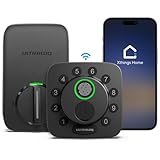
ULTRALOQ Bolt SE Wi-Fi
- IP65 waterproof
- ANSI/BHMA certified
- 50 fingerprints and 50 codes
- Matter over Thread
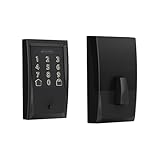
Schlage Encode Deadbolt
- BHMA highest residential rating
- 100 access codes
- built-in Wi-Fi
- physical backup key
These three carry the roundup because each one answers a different version of the same question. The ULTRALOQ Bolt SE is the only lock here with both a fingerprint reader and an IP65 rating, which is why it takes the top slot. The Schlage Encode wins on mechanical certification and code capacity. The eufy C220 wins if you want a fingerprint reader and hub-free remote access without moving up a tier.
Best Options at a Glance in 2026
ULTRALOQ Bolt SE Wi-Fi – best overall; the only fingerprint lock here rated IP65, with Matter over Thread on top of built-in Wi-Fi.
Schlage Encode Smart WiFi Deadbolt – best for a heavy-use door where build quality and 100 stored codes matter more than biometrics.
eufy Security Smart Lock C220 – best fingerprint value; sub-one-second reads with no bridge to buy.
Veise RZ07 – best for a large household or many guests; stores 250+ codes and carries an IP55 rating.
DESLOC B200 – best budget fingerprint option; weather-rated to IP54 with a USB-C emergency port.
Wyze Auto-Lock Bolt v2 – best for pairing with a video doorbell; unlock a visitor from the live camera feed.
Tapo DL100 – best for a sunny, unsheltered door; a backlit tactile keypad that does not glare.
Veise VE017G-H Handle Set – best for carrying groceries or gear through; the only lever plus deadbolt here, gateway included.
Schlage Encode Smart WiFi Lever – best premium lever format with a quiet motor and a drop-to-unlocked interior button.
Philips Wi-Fi Smart Deadbolt – best lightweight fit; the lightest body in the group at 1.4 pounds.
| Product | Specifications | Action |
|---|---|---|
|
ULTRALOQ Bolt SE Wi-Fi Smart Lock
|
|
Check Latest Price |
|
Schlage Encode Smart WiFi Deadbolt
|
|
Check Latest Price |
 eufy Security Smart Lock C220
|
|
Check Latest Price |
 Veise RZ07 Fingerprint Smart Door Lock
|
|
Check Latest Price |
 DESLOC B200 Fingerprint Smart Door Lock
|
|
Check Latest Price |
 Wyze Auto-Lock Bolt v2
|
|
Check Latest Price |
 Tapo Smart Wi-Fi Deadbolt DL100
|
|
Check Latest Price |
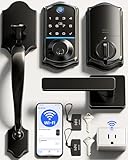 Veise VE017G-H Handle Set Smart Lock
|
|
Check Latest Price |
 Schlage Encode Smart WiFi Lock Lever
|
|
Check Latest Price |
 Philips Wi-Fi Smart Deadbolt
|
|
Check Latest Price |
1. ULTRALOQ Bolt SE Wi-Fi Smart Lock – the only fingerprint lock here rated IP65
ULTRALOQ Bolt SE Wi-Fi Smart Lock, Matter Over Thread, App Remote Access
IP65 waterproof
ANSI/BHMA certified
50 fingerprints and 50 passcodes
Up to 18 months on Thread
Pros
- Only pick in the roundup combining a fingerprint reader with an IP65 rating
- Built-in Wi-Fi plus Matter over Thread
- 18-month battery life on the low-energy Thread mesh
- ANSI/BHMA certified zinc alloy body
- 10-minute install
Cons
- Door sensor not included so no open or closed status
- Wi-Fi is 2.4 GHz only which can trip dual-band routers
- Matter features need a Thread Border Router hub
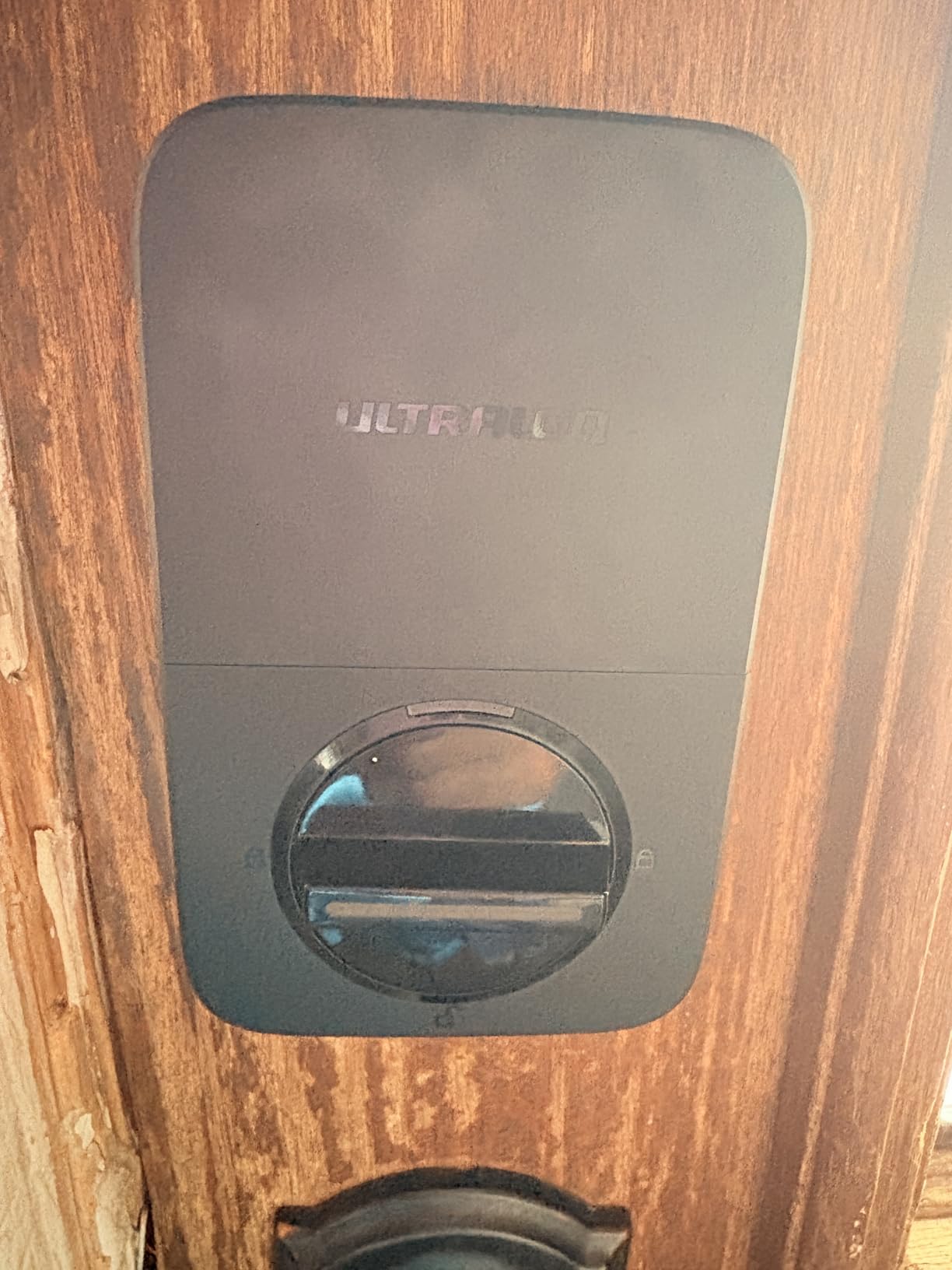
The Bolt SE is the lock I would put on an unsheltered side door first. It is the only pick here with both a fingerprint reader and a published ingress rating at IP65, and it carries an ANSI/BHMA certification alongside that. The zinc alloy body matters too, because zinc is what most of the exterior-rated locks in this group are built from.
Unlock options run to seven methods: fingerprint, passcode, the phone app, a web portal, eKey sharing, voice control and two mechanical keys. It stores up to 50 fingerprints and up to 50 passcodes, which covers a large family plus regular contractors without hitting a ceiling.
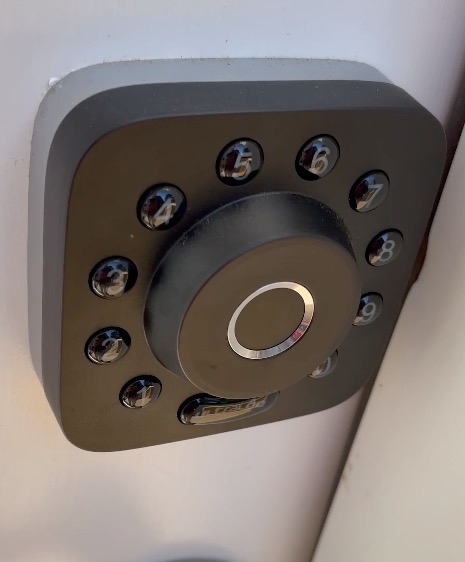
The battery claim is the one that changes the maths on a busy door. Run over the low-energy Thread mesh, the manufacturer quotes up to 18 months, far longer than the eight to twelve months typical of the Wi-Fi-only locks here. Thread also self-heals: if one node drops off, the mesh reroutes around it.
Connectivity is doubled up. Built-in 2.4 GHz Wi-Fi handles remote control without a hub, and Matter over Thread adds Apple Home and other ecosystems if you want them. The tradeoff is that Matter features require a compatible Thread Border Router, which is a device you may not already own.
What you should check before buying
Two things. First, the Wi-Fi radio is 2.4 GHz only, and a router placed within about 70 feet of the lock is recommended, which matters if the door sits at the far end of a long driveway. Second, there is no door sensor, so the lock cannot tell you whether the door is open or closed.
If your door has a genuine roof overhang and you run a dense smart home, you could argue for a Wi-Fi-only lock instead and spend the difference elsewhere. For an exposed side door, the ingress rating wins.
Where it falls short
The keypad is on the small side, which makes entering longer codes uncomfortable with gloves on. And if you are buying specifically for Apple Home or Matter control, budget for a Thread Border Router before you commit to this lock.
It is still the strongest all-round answer for the garage side door job, because it is the only lock here that pairs biometrics with a rating high enough for direct weather exposure.
2. Schlage Encode Smart WiFi Deadbolt – best for mechanical build and code capacity
Schlage Encode Smart WiFi Deadbolt Lock with Century Trim, Matte Black
BHMA highest residential rating
Up to 100 access codes
4 AA batteries up to six months
Fits 1-3/8 to 1-3/4 inch doors
Pros
- BHMA highest residential security durability and finish rating
- Built-in Wi-Fi with no separate hub
- Handles up to 100 access codes with lock history
- Screwdriver-only install with backup key and low-battery warning
Cons
- No fingerprint reader so keypad entry only
- Touchscreen can be hard to read in direct sunlight
- Door thickness or backset outside spec may need door modifications
The Encode deadbolt is the most reviewed lock on this list by a wide margin, with more than thirteen thousand ratings behind it. That matters for a side door because the feedback you find is about years of daily use rather than the first week after a purchase.
Mechanically it is the strongest pick here. It carries the BHMA highest residential security, durability and finish rating, which is the top of the residential certification scale, and the body is zinc rather than the aluminium used by several cheaper entries.
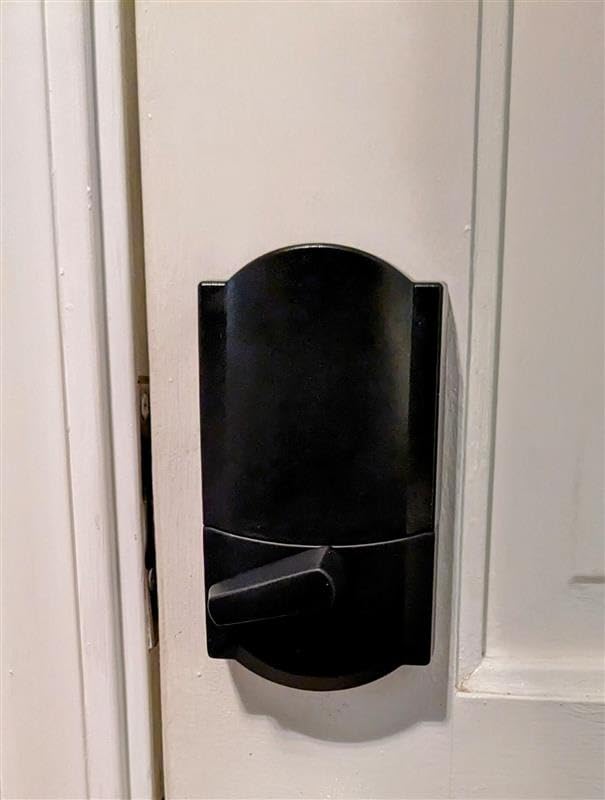
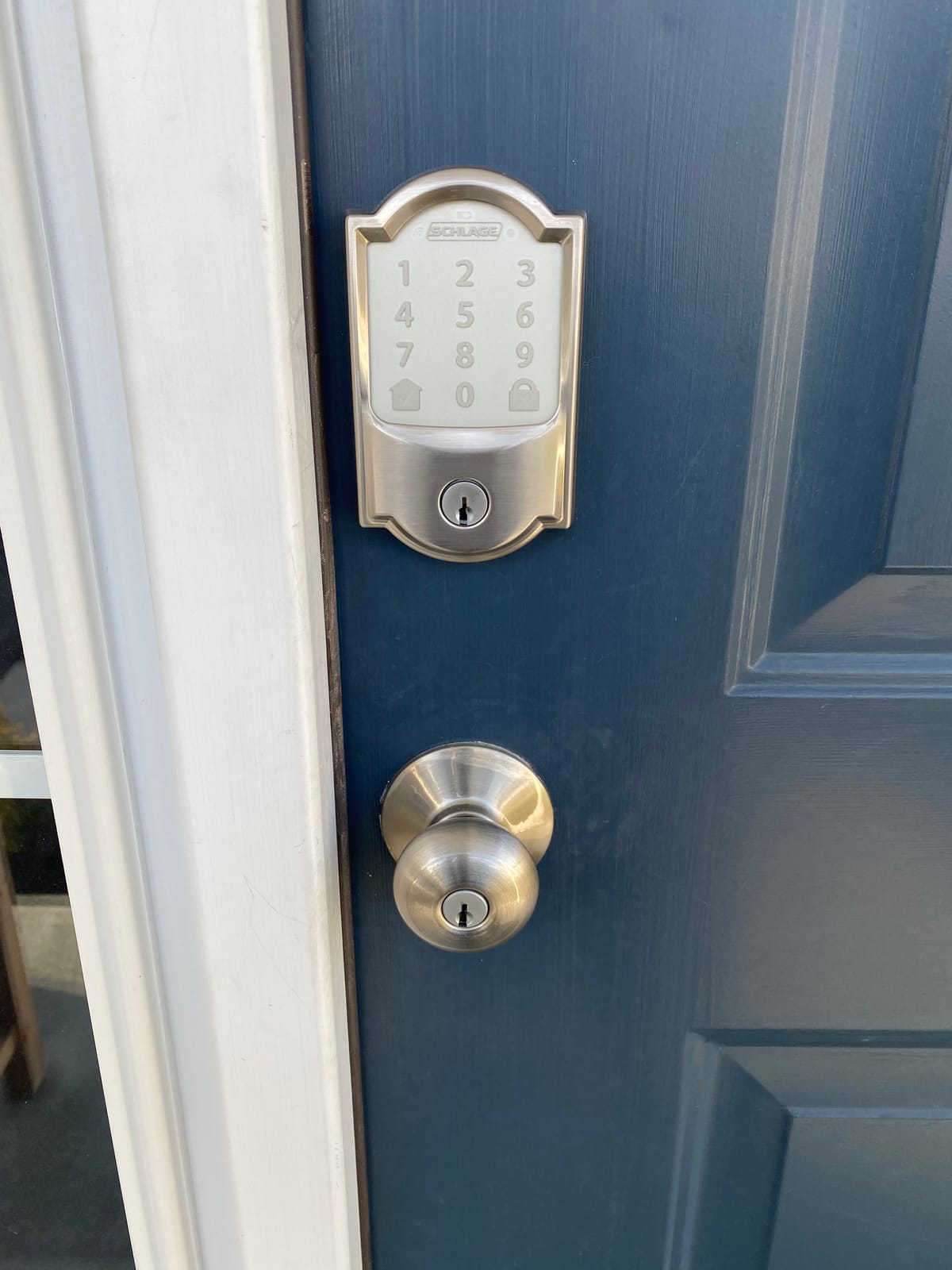
Where it falls short of the ULTRALOQ is input method and weather data. There is no fingerprint reader, so entry is keypad, app or key, and the manufacturer publishes no ingress rating for the exterior housing. The touchscreen is also one reviewers flag for readability in direct sun.
Fit is the practical concern. It suits doors 1-3/8 inch to 1-3/4 inch thick with a 2-3/8 inch or 2-3/4 inch backset. A lot of garage man doors were built with a thin hollow-core slab, so measure before ordering.
What you should check before buying
Measure door thickness and confirm your backset against the two supported sizes before you buy. If the door falls outside those figures, the install can require planing or relocating the bore, which is where a locksmith earns their fee.
Also decide whether keypad-only entry suits your household. On a door used thirty or more times a day, a fingerprint reader is faster, and this lock does not have one.
Where it falls short
No published IP rating is the main drawback for this specific use case. Garage owners in the forum community often call Schlage keypad locks the best change they made on a heavily used side door, and the reliability is consistently praised, but the weather protection is not quantified by the brand.
Battery life of up to six months on four AA cells is also the shortest published claim in the roundup, and the zinc body weighs 3.4 pounds.
3. eufy Security Smart Lock C220 – best fingerprint value with hub-free Wi-Fi
eufy Security Smart Lock C220, Fingerprint Keyless Entry Door Lock
IP53 waterproof
-22F to 158F operating range
8 AA batteries about 8 months
15-minute install
Pros
- Fingerprint unlock in under a second with self-learning recognition
- Built-in Wi-Fi means no bridge to buy
- Six unlock paths including Apple Watch and voice
- BHMA Grade 3 certified and IP53 rated
Cons
- Fingerprint sensor can miss on some hands and need several attempts
- Full functionality depends on the eufy app ecosystem
- Battery life drops with heavy fingerprint traffic
- Deadbolt form factor only with no lever option
The C220 is the middle of the roundup in price and near the top in what it gives you per dollar. It puts a sub-one-second fingerprint reader and built-in Wi-Fi in one package with an IP53 rating, and the fingerprint algorithm is self-learning, so it improves the more your family uses it.
The published operating range of -22F to 158F is one of the broader figures listed here, which gives you more headroom on a door in a climate that swings hard between seasons.
There are six unlock paths: fingerprint, the eufy app, keypad, physical key, Apple Watch and voice control through Alexa or Google. Eight AA batteries are included and quoted at roughly eight months of use.
What you should check before buying
Fit is the easy part here. It fits existing standard deadbolt bores and handles bores under 54mm by removing a spacer, and the install is quoted at about fifteen minutes with no drilling on a standard door.
The more important check is ecosystem fit. Full functionality runs through the eufy Security app, so if your household already runs everything else on a different platform, plan on using this as a standalone lock rather than part of a broader routine.
Where it falls short
Fingerprint reliability is the recurring complaint. Owners with dry, dirty or frequently wet hands report needing several attempts, and that matters more on an outdoor door than on a sheltered one. Battery life also drops noticeably with heavy fingerprint traffic, which is exactly the pattern on a busy side door.
IP53 is also a lower rating than the IP65 and IP55 locks elsewhere in this list. IP53 limits ingress to dust and spray from limited angles rather than full water jets, so a hood or recessed escutcheon is worth adding on a door with no overhang.
4. Veise RZ07 – best for large households and 250-plus stored codes
Veise RZ07 Fingerprint Smart Door Lock Deadbolt, App Control, Matte Black
IP55 weatherproof
ANSI/BHMA Grade 3
Up to 250+ user codes
50 stored fingerprints
Pros
- Stores 250+ codes including one-time scheduled and recurring
- IP55 weatherproof and Grade 3 rated
- 0.2s fingerprint with up to 50 stored prints
- Works on doors 1-3/8 to 2 inch thick
- phone support praised repeatedly in reviews
Cons
- Tinted keypad glass is hard to read in direct sunlight
- App battery gauge often reads 100 percent long after install
- Remote and Wi-Fi features need the separately sold Veise G2 gateway
- One long-term owner reported motor failure after about two years
Where the RZ07 separates from the field is code volume. It supports more than 250 user codes alongside up to 50 stored fingerprints, with one-time, permanent, scheduled and recurring options. For a house with a large family, a cleaning service, contractors and a dog walker, that headroom is genuine.
The weather rating is IP55 with an ANSI/BHMA Grade 3 certification, and the stated battery life reaches 12 months. Fit covers doors 1-3/8 inch to 2 inch thick in both door swing directions, which is a broader range than several rivals.
Seven unlock methods are supported, including a physical key and two IC cards in the box, and the app plus web portal let you generate and revoke remote access with no monthly subscription attached.
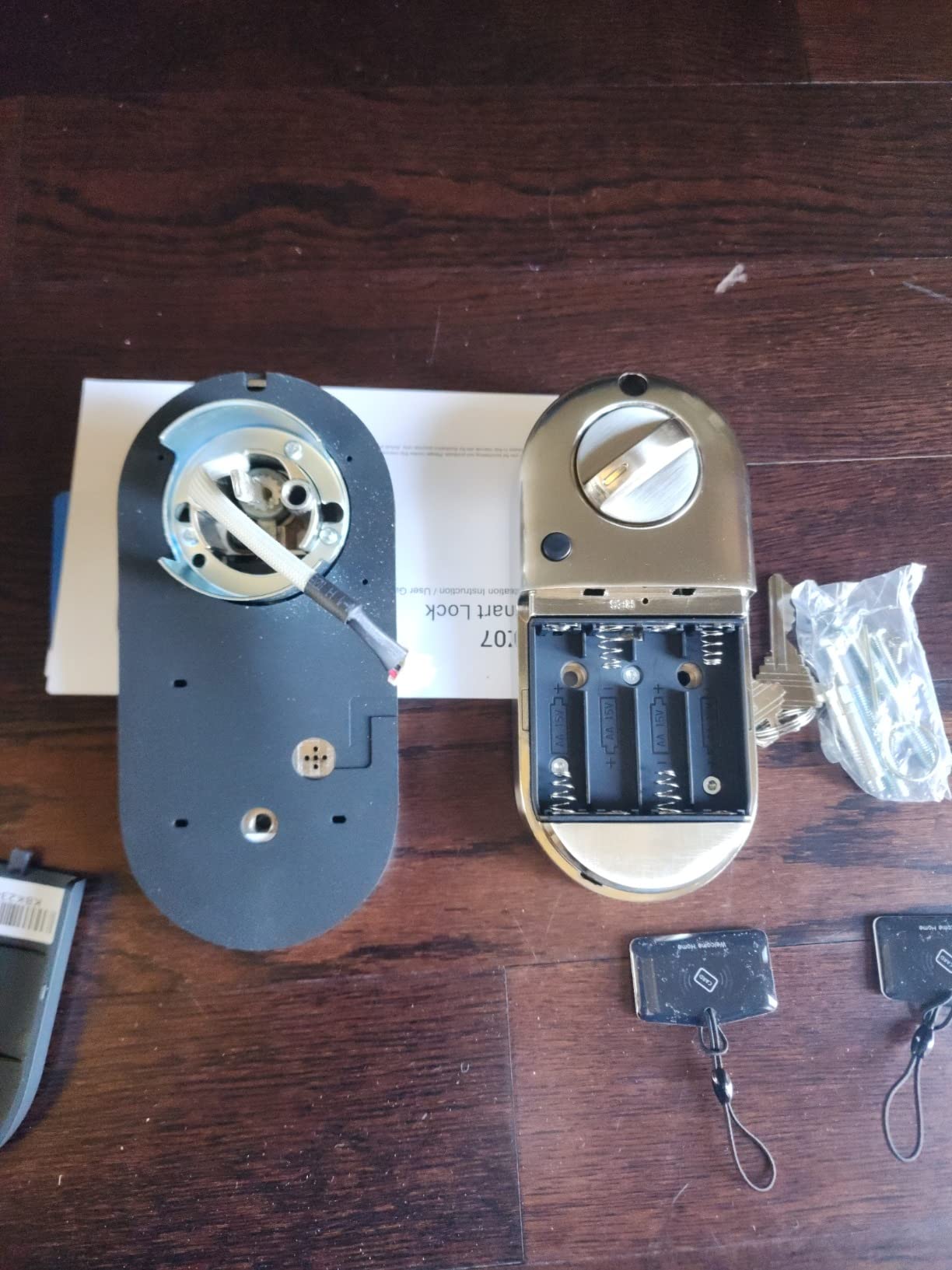
Installation is screwdriver-only, and reviews repeatedly single out the phone support as unusually responsive and patient, which counts for a lot on a brand most buyers will not have heard of.
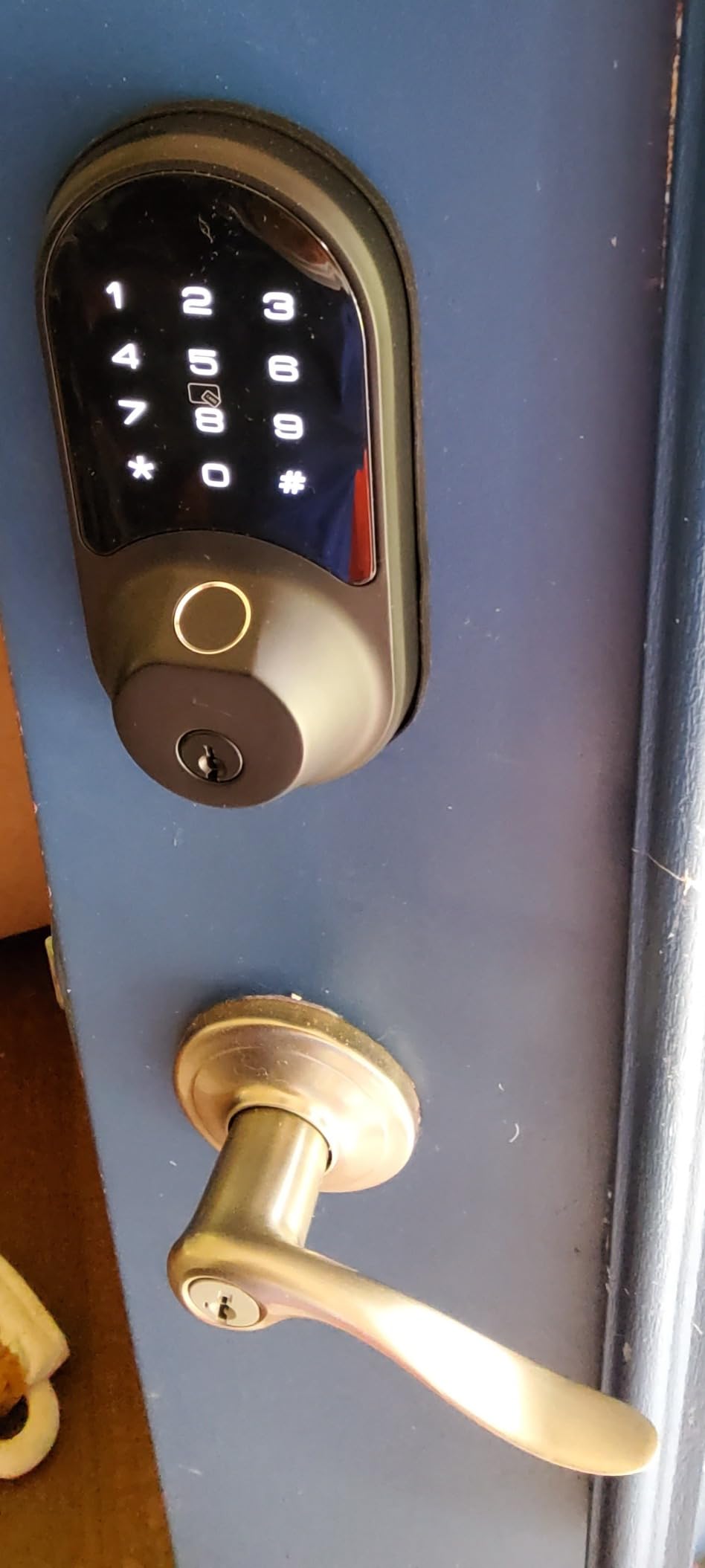
The app also carries the useful security extras for this door: privacy mode, passage mode, one-touch locking, anti-peep and anti-hacking keypad behaviour, and a low battery alert.
What you should check before buying
Decide up front whether you need remote access. Wi-Fi functionality requires the Veise G2 gateway, sold separately, and without it the lock runs on Bluetooth proximity alone. On a door at the far end of a driveway, proximity-only control defeats much of the purpose.
Second, check your sunlight exposure. The darkly tinted keypad glass is the single most repeated complaint in reviews, and on a side door facing west in the afternoon it is a daily annoyance.
Where it falls short
The app battery gauge is unreliable and frequently reads full long after install, so you cannot trust it as your low-battery warning. The touchscreen can also lag or need multiple taps to wake.
One long-term owner reported the motor failing after roughly two years and leaving the lock fixed in position, so treat the 12-month battery claim as a replacement cycle rather than a lifetime figure. Auto-lock will also throw the bolt while the door is still ajar.
5. DESLOC B200 – the budget fingerprint option that still carries an IP rating
DESLOC B200 Fingerprint Smart Door Lock, Keyless Entry Deadbolt
IP54 water resistance
-22F to 158F operating range
4 AA up to 12 months
USB-C emergency power port
Pros
- Lowest cost entry to a weather-rated fingerprint deadbolt
- IP54 water resistance with BHMA Grade 3 standards
- USB-C emergency port for backup entry if batteries die
- Screwdriver-only install fits most standard US doors
- up to 50 stored fingerprints with under 0.3s reads
Cons
- Bluetooth only so remote access needs the separately sold G2 gateway
- AA batteries are not included
- App connection requires close proximity to the lock
- Voice control depends on the same optional gateway
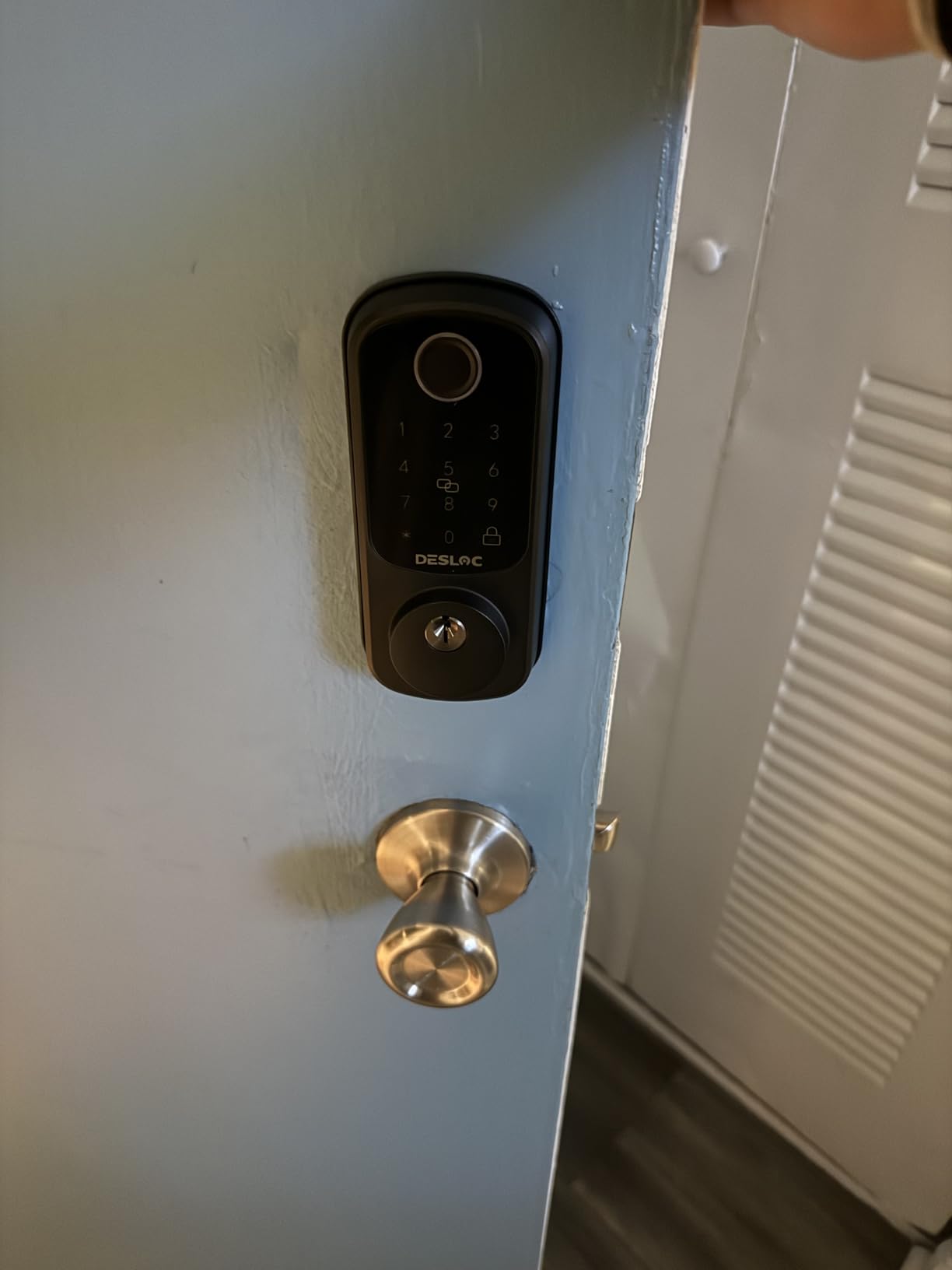
The B200 exists because fingerprint deadbolts used to be expensive. It is the cheapest way into a weather-rated biometric lock on this list, and it still carries an IP54 water resistance rating with a stated -22F to 158F operating range.
Eight unlock paths are offered across fingerprint, PIN, app, eKeys, key fobs, physical keys and voice. The fingerprint reader stores up to 50 prints and reads in under 0.3 seconds.
Battery life is quoted at up to 12 months on four AA cells, and there is a USB-C emergency power port so a flat battery does not mean a locked-out door. The install is screwdriver-only on most standard US doors.
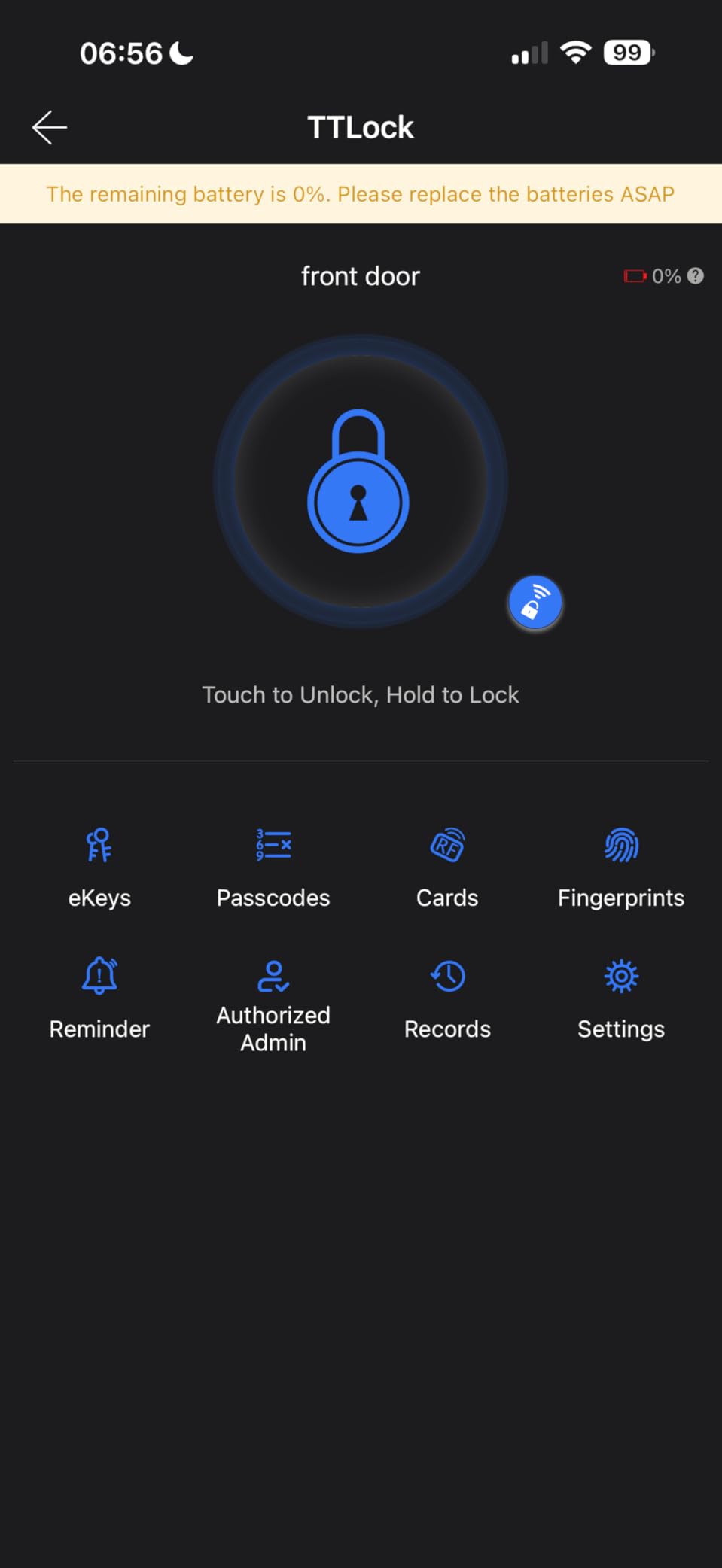
Two physical keys are included along with the exterior and interior assemblies, the deadbolt, strike plate and a key fob, which covers the requirement that a smart lock always keeps a mechanical way in.
Users report the fingerprint reader as fast and accurate, and the build as solid for the price, which is the main reason this lock shows up in so many first-time-buyer lists.
What you should check before buying
Understand what Bluetooth-only means here. Without the optional G2 gateway, the app only connects when your phone is close to the lock, so you get code and fingerprint entry but not remote unlock from the sofa or from work. That is a real limitation on a door used as an everyday entrance.
Also note that the AA batteries are not included, so budget for those on top of the lock.
Where it falls short
The missing door sensor is the one to plan around. Nothing in the lock can tell you the door is ajar, so auto-lock behaviour needs to be set conservatively.
Beyond that, the app experience is basic compared with the Schlage and eufy options, and everything beyond local Bluetooth control is gated behind a gateway you would buy separately. If you only want fingerprint entry and mechanical key backup, it does that well.
6. Wyze Auto-Lock Bolt v2 – best when you also run a video doorbell
Wyze Auto-Lock Bolt v2, Fingerprint Keyless Entry Smart Lock, AI Learning Scanner with Wi-Fi Front Door Lock Deadbolt, Auto-Lock, 8 Months Battery, BHMA2, IP53, Anti-Peep Keypad, Backup Keys
BHMA2 and IP53 rated
0.5s fingerprint reads
8 AA included up to 8 months
Unlocks from a Wyze doorbell feed
Pros
- Highest average rating in the roundup
- Unlock a visitor from a Wyze Video Doorbell live feed
- 0.5s fingerprint on scratch and smudge-resistant tempered glass
- Quiet motor that does not startle pets or household
- 8 AA batteries included with USB-C power bank backup
Cons
- No door-closed sensor so auto-lock can bolt an ajar door
- Keypad does not backlight on approach and beeps are quiet
- Uses eight AA batteries rather than a lithium pack
- Fingerprint reads occasionally miss and need a second attempt
This lock has the highest average rating of anything we ranked, at 4.6 out of 5, though its review count is well below the rest of the group. The reason owners rate it so highly is the fingerprint speed and the glass panel it sits on, described as scratch and smudge resistant with reads in half a second.
The pairing feature is the one that makes it stand out for a side door. It unlocks from a Wyze Video Doorbell live feed, so you can see who is standing there before admitting them rather than firing the bolt at a knock.
Built-in Wi-Fi handles remote control with no extra hub, and eight AA batteries are included for up to eight months, with a USB-C port that accepts a power bank for emergency unlocking.
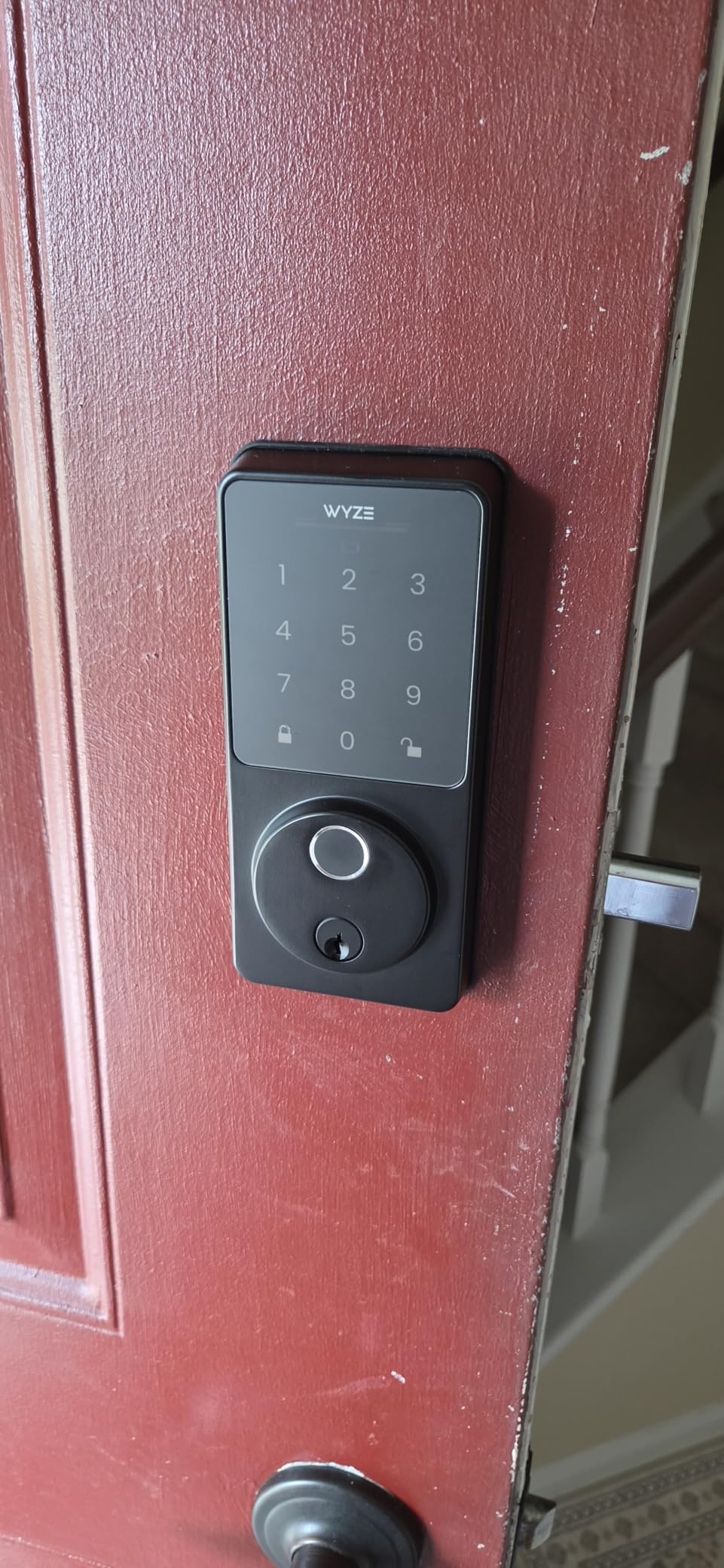
The AI learning behaviour means the scanner gets more accurate the more it is used by the same fingers, which suits a door with a small set of daily users rather than dozens of occasional guests.
Auto-lock delay is user-settable, and reviewers repeatedly comment on how quiet the motor is, a genuine consideration on a garage wall that sits close to bedrooms.
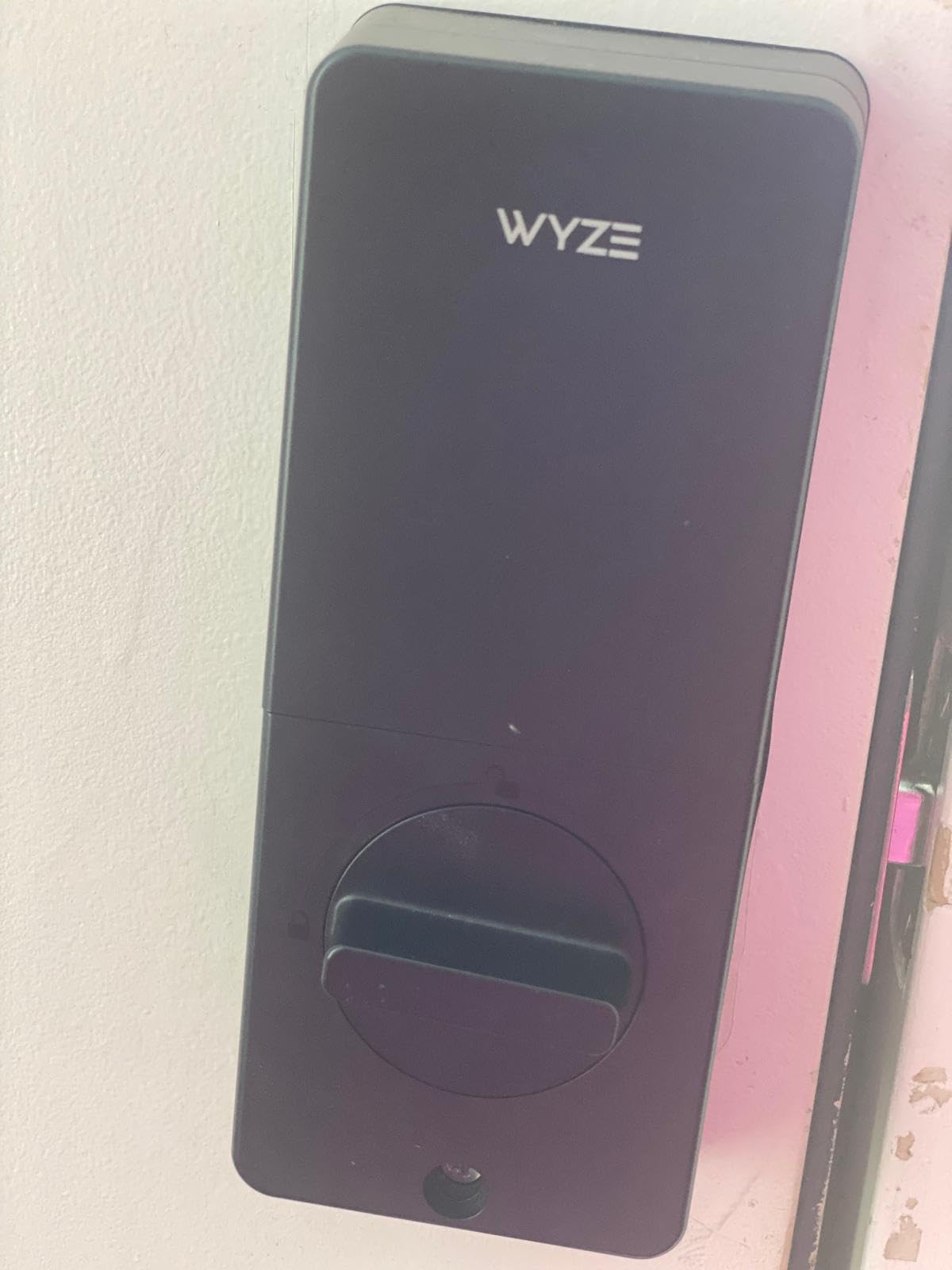
What you should check before buying
Think about night-time entry on an unsheltered door. This keypad does not illuminate on approach and the confirmation beeps are quiet, so on a dark side door you may be entering a code blind. Add a light above the keypad if you go this route.
Also check whether you want a lithium battery pack or are comfortable with eight AA cells. The AA format is common and cheap to swap, which some people prefer.
Where it falls short
The auto-lock has no door-closed sensor, so it will bolt a door that is still ajar. That is the most repeated caveat in reviews and it is more likely on a door that people prop or carry things through.
Fingerprint reads occasionally miss and need a second attempt, which is normal behaviour on a wet or cold sensor. Rated IP53, it sits below the IP55 and IP65 locks here, so pair it with a hood on a fully exposed door.
7. Tapo Smart Wi-Fi Deadbolt DL100 – best keypad for a sunlit door
Tapo Smart Wi-Fi Deadbolt Door Lock, Keyless Tactile Buttons, DL100
BHMA Grade 3 and IP54
Up to 200 passcodes
Up to 200 days in Wi-Fi mode
Backlit tactile keypad
Pros
- Keyless tactile buttons with a backlit keypad instead of glare-prone glass
- Up to 200 codes with anti-peep random digit entry
- Up to 200 days battery in Wi-Fi mode and 300 in Bluetooth mode
- Installs on standard 54mm and 38mm bores with no drilling
- PIN attempt limiter locks out after repeated failures
Cons
- No fingerprint reader so keypad entry only
- No mechanical lever handle in this configuration
- Four AA batteries rather than a rechargeable pack
- Voice assistant PIN verification adds setup steps
The DL100 solves a specific problem that most of the glass-touchscreen locks in this roundup create: you cannot read them in bright sun. It uses keyless tactile buttons with a backlit keypad, so you can feel the numbers and see them lit at the same time.
Weather ratings are BHMA Grade 3 and IP54, which is credible for a door that gets rain on the escutcheon, and the quoted battery life of up to 200 days in Wi-Fi mode and 300 days in Bluetooth mode is among the longest figures listed here.
Code capacity is 200 customisable passcodes with anti-peeping random digit entry, which lets you append random digits after your real code so a shoulder-surfer cannot derive it. A PIN attempt limiter locks the keypad after repeated failures.
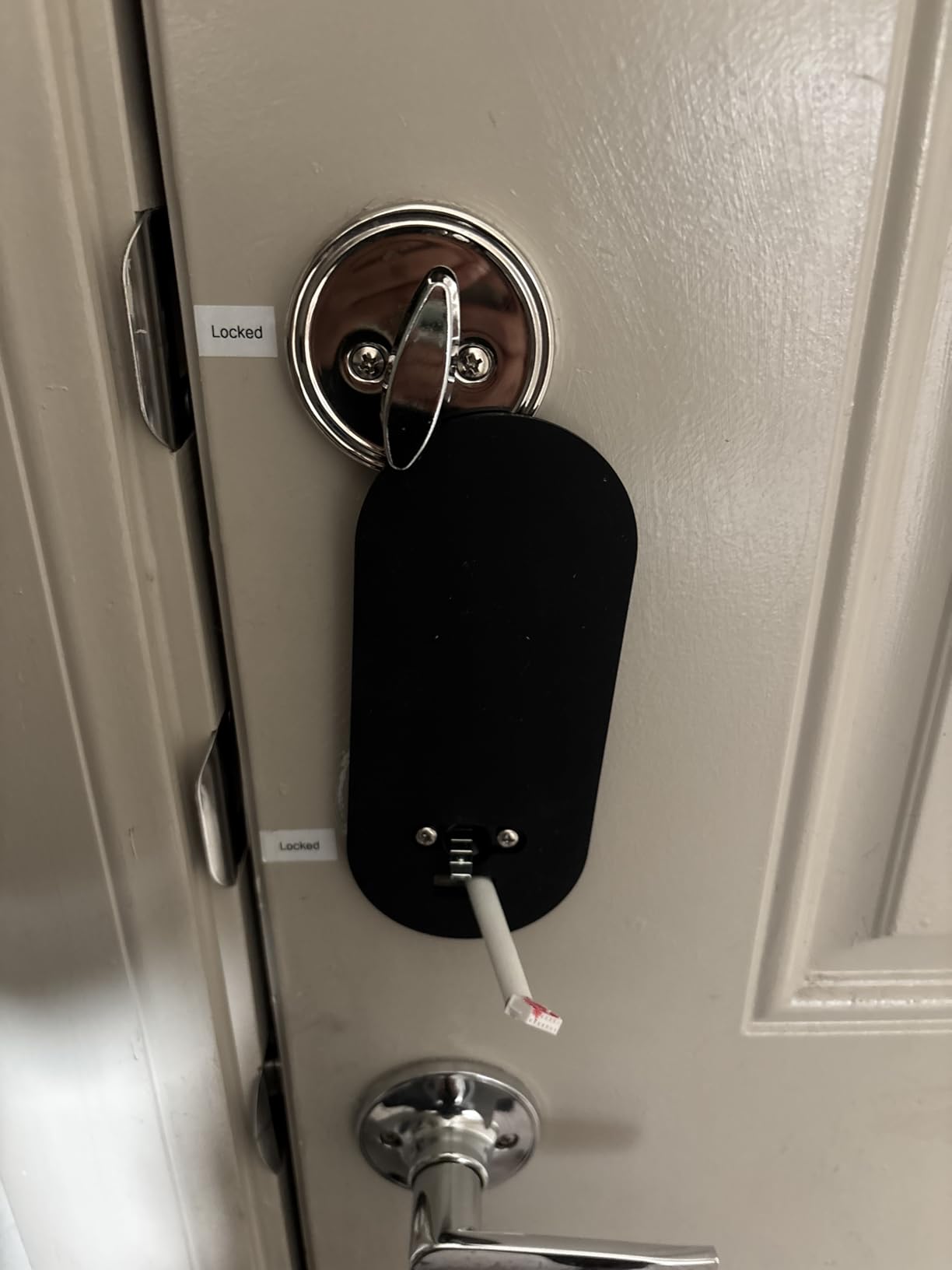
Connectivity covers Bluetooth nearby access and built-in Wi-Fi remote control, and it works with Alexa, Google Home and Samsung SmartThings. Real-time alerts, door status checks and a timestamped activity log are included.
Fit is unusually accommodating. It installs on standard 2-1/8 inch and 1-1/2 inch bores with no drilling, and the box includes a dust box, a silicone cover, a USB cable and a measuring template.
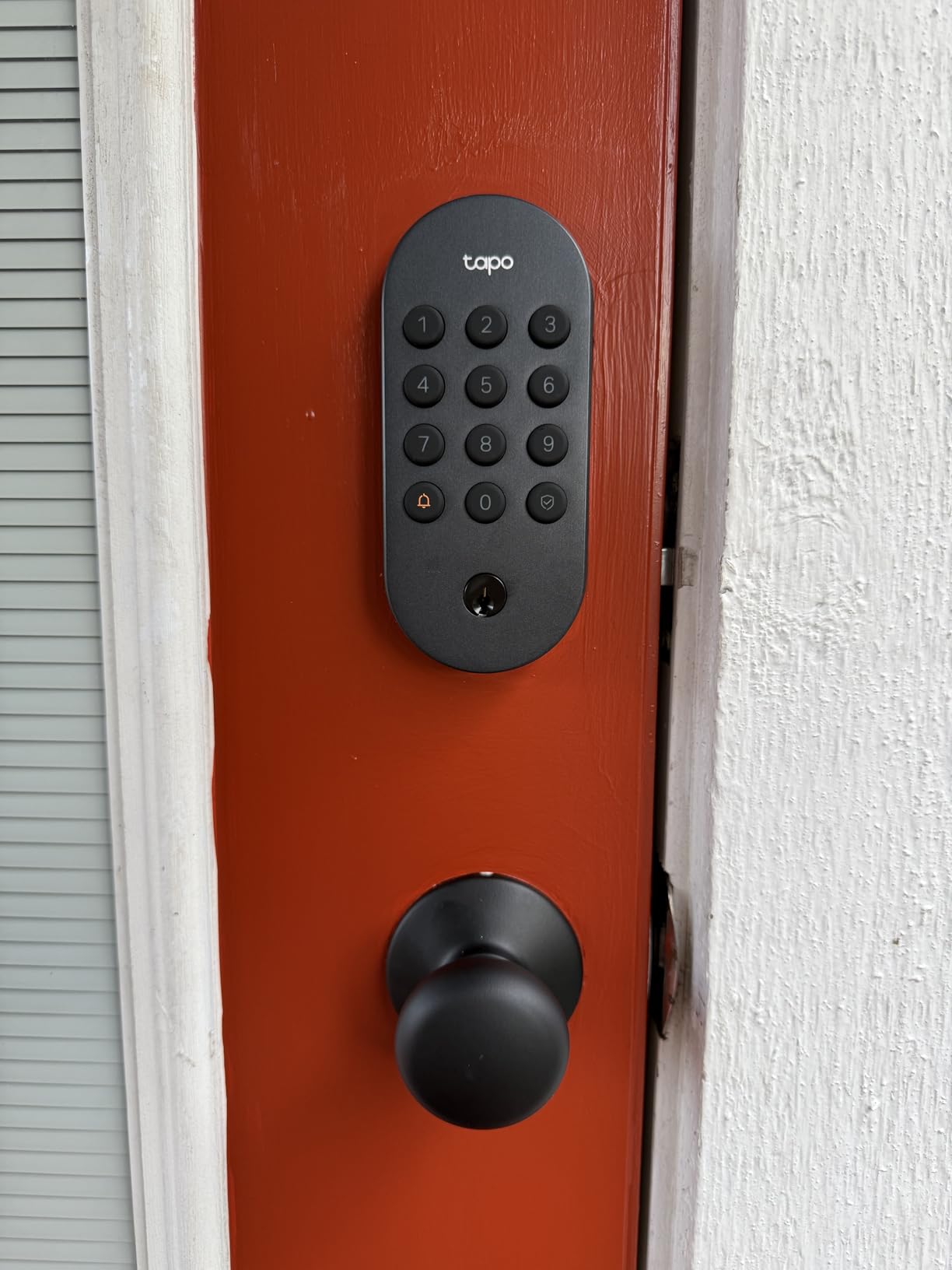
What you should check before buying
Decide whether a keypad suits your household without biometrics. On a side door used several times a day, that is slower than a fingerprint reader, but it also never fails on a wet hand, which on an unsheltered door is a real trade.
Check the bore before ordering. It suits 54mm and 38mm holes, but a non-standard bore means a different install.
Where it falls short
There is no fingerprint reader in this configuration and no mechanical lever handle, so it is a deadbolt only. Batteries are AA rather than a rechargeable pack, and voice assistant setup needs PIN verification, which adds a step.
Its IP54 rating is below the IP65 leader, so on a door with no overhang at all, add a small door hood or recess the escutcheon to keep direct rain off the gasket.
8. Veise VE017G-H Handle Set – the only lever and deadbolt combination here
Veise VE017G-H Wi-Fi Smart Door Lock Deadbolt with Handle Set, Matte Black
Lever and deadbolt set
IP55 weatherproof
Wi-Fi gateway included
300+ days on 4 AA batteries
Pros
- Only lever and deadbolt handle set in the roundout
- Wi-Fi gateway included in the box rather than sold separately
- Gateway also upgrades other VE01 series locks to Wi-Fi
- 0.2s fingerprint with 20+ stored prints and self-learning AI
- IP55 weatherproof with ANSI Grade 3 and BHMA testing
Cons
- Backset or handle length may be shorter than existing hardware requiring drilling and patching
- Strike plate alignment may need adjusting before the bolt throws reliably
- Over 5 pounds and batteries are not included
- No multi-factor authentication so fingerprint plus PIN cannot be required
This is the only pick in the roundup that pairs a deadbolt with a working lever handle, and for a garage side door that is often the deciding factor. A deadbolt means you have to find your key or keyhole every single time you come back with a bag of shopping or a bike, while a lever lets you pull the door open one-handed.
It also bundles the Veise Wi-Fi gateway in the box, which removes the extra purchase that the cheaper Veise RZ07 requires, and the same gateway can upgrade other VE01 series locks to Wi-Fi.
Weather specification is IP55 with ANSI Grade 3 and BHMA testing on an aluminium and zinc alloy body. The fingerprint reader reads in 0.2 seconds with self-learning recognition and stores 20 or more prints, and unlimited one-time codes sit alongside 100-plus permanent, duration or recurring codes with anti-peeping digits.
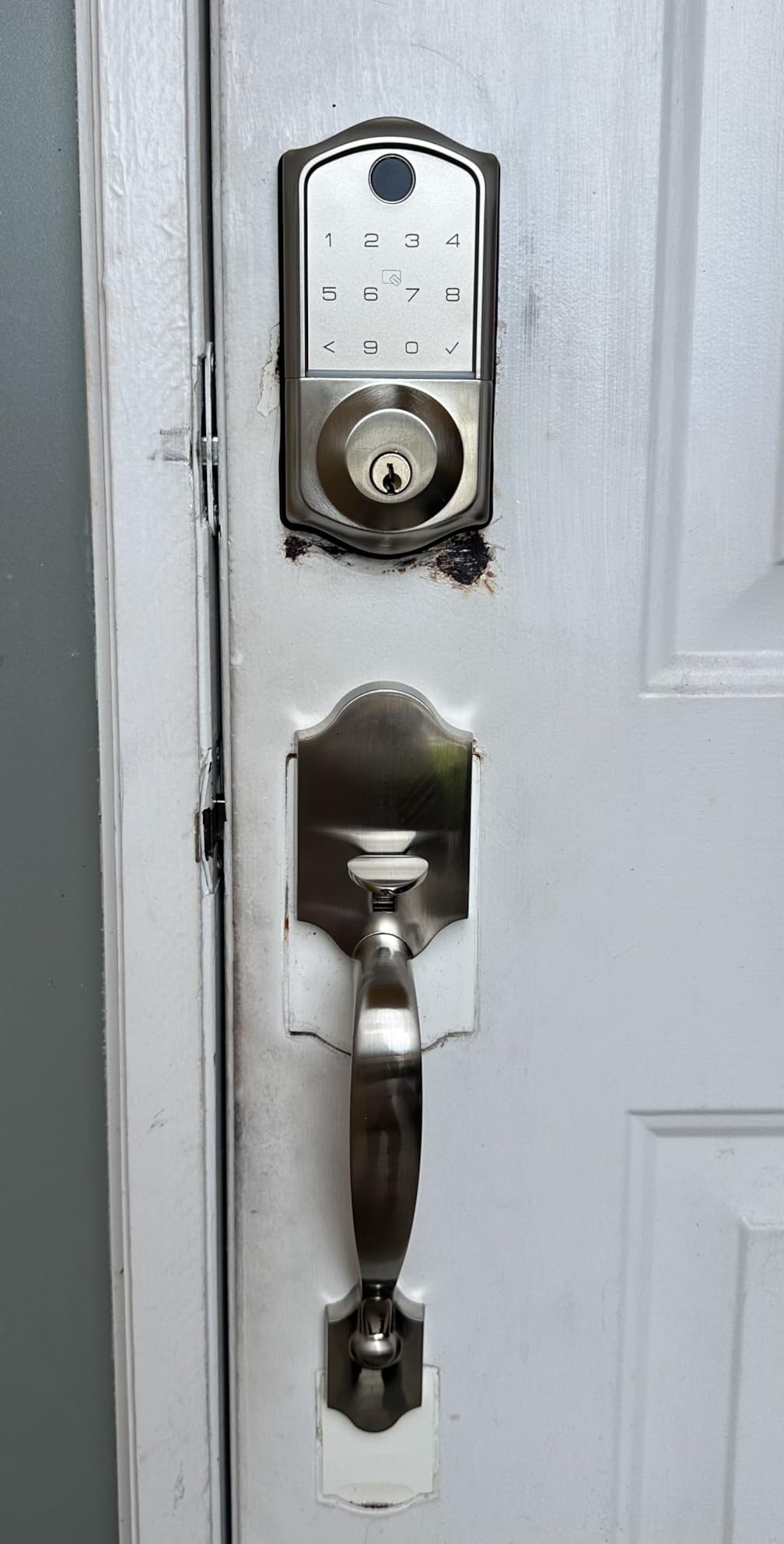
Auto-lock timing is adjustable from 0 to 180 seconds and four AA batteries are quoted at more than 300 days, with an emergency power-on port as backup. Installation is screwdriver-only on doors 1-3/8 inch to 2 inch thick in both swing directions.
Owners consistently praise the gateway bundle, the handle format and how the fingerprint response feels in daily use, along with the solid zinc alloy finish.
What you should check before buying
Measure your existing backset and handle length carefully. If the supplied hardware is shorter than what is already in the door, you may need to drill a new hole and patch the old one, and the strike plate may need adjusting before the bolt throws reliably.
At over 5 pounds this is by far the heaviest lock in the group, so check the door is solid core and the hinges are in good condition.
Where it falls short
There is no multi-factor authentication, so you cannot require a fingerprint and a PIN together. Batteries are not included, and one owner reported a chipped black coating on the interior handle on arrival, though support resolved it quickly.
If you do not need a lever, the plain deadbolt options here are lighter and cheaper for the same core functionality.
9. Schlage Encode Smart WiFi Lock with Lever – premium lever with a drop-to-unlocked button
Schlage Encode Smart WiFi Lock, Lever Handle, Century Trim, Matte Black
BHMA highest residential rating
Built-in Wi-Fi no hub
Limited lifetime mechanical warranty
Interior lever drops to unlocked
Pros
- Interior lever push-button drops the lock to unlocked for frequent use
- Quiet operation that does not startle pets or household members
- Limited lifetime mechanical and finish warranty with three-year electronics coverage
- Built-in Wi-Fi with 100 app-managed codes and battery percentage
- Works with Apple Watch Alexa and Google Home
Cons
- No fingerprint reader on this model
- Condensation in the battery compartment can damage electronics in humid climates
- Only 2.4 GHz Wi-Fi so 5 GHz may need disabling on dual-band routers
- One physical key included and matte black finish can chip in transit
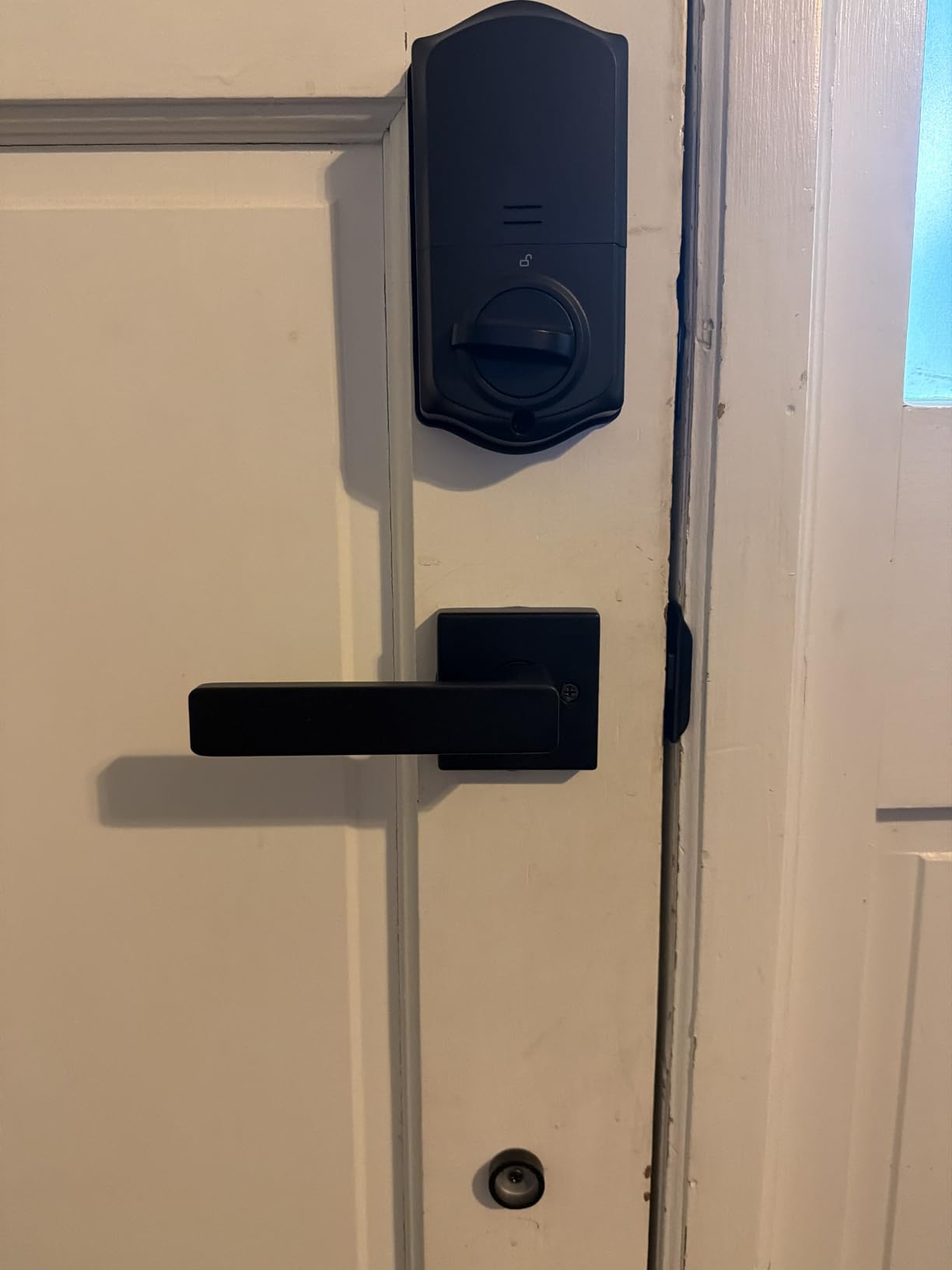
This is the lever version of the Schlage Encode, and the detail that sets it apart for a garage side door is the interior push-button that drops the lever to an unlocked state. On a door you pass through dozens of times a day, you are not turning a thumbturn or re-entering a code on the way out.
It carries the same BHMA highest residential security, durability and finish rating as the deadbolt version, plus a limited lifetime mechanical and finish warranty and a three-year electronics warranty.
Remote access runs through built-in Wi-Fi with no separate hub, and the app manages up to 100 codes, shows a battery percentage, and supports Airbnb and Ring integration for generating and wiping guest codes.
Owners describe it as heavy, quiet and well built, which fits the character of a premium lock. It works with Apple Watch alongside Alexa and Google Home.
Like the deadbolt model, it has a fingerprint-resistant touchscreen keypad with a customisable door-movement and forced-entry alarm and auto-lock with adjustable delays. No ingress rating is published for this model.
What you should check before buying
Wi-Fi here is 2.4 GHz only, which on a dual-band router can mean disabling the 5 GHz band or adding a 2.4 GHz-only network for the lock. The housing is also slightly wider than some competing locks, so door molding may need trimming to seat it cleanly.
At 4.3 pounds, confirm the door and hinges are solid enough to carry the weight repeatedly.
Where it falls short
There is no fingerprint reader on this model, and the fingerprint version of the same lock costs considerably more. Only one physical key is included, and the matte black finish can chip in transit.
The most serious reported issue is condensation in the battery compartment in humid or coastal locations, which can damage the electronics within six to twelve months. If your side door faces an open yard in a damp climate, a higher-IP lock is the safer route.
10. Philips Wi-Fi Smart Deadbolt – the lightest body and the widest code scheduling
Philips Wi-Fi Smart Deadbolt Lock, Keyless Entry Door Locks for Front Door
Built-in 2.4 GHz Wi-Fi
Up to 100 passcodes plus one-time codes
1.4 pounds
Doors 1-3/8 to 2 inch thick
Pros
- Lightest body in the roundup at 1.4 pounds for an easier fit and less door sag
- Built-in Wi-Fi means no extra hub for remote control
- Up to 100 custom passcodes plus unlimited one-time and scheduled codes
- Away Mode disables all unlock methods except the master code while travelling
Cons
- No IP weather-resistance rating published for the exterior housing
- Batteries are not included and should be AA alkaline
- 2.4 GHz Wi-Fi only with a recommended 65 ft router distance
- Backlit touchscreen can be difficult to read in direct sunlight
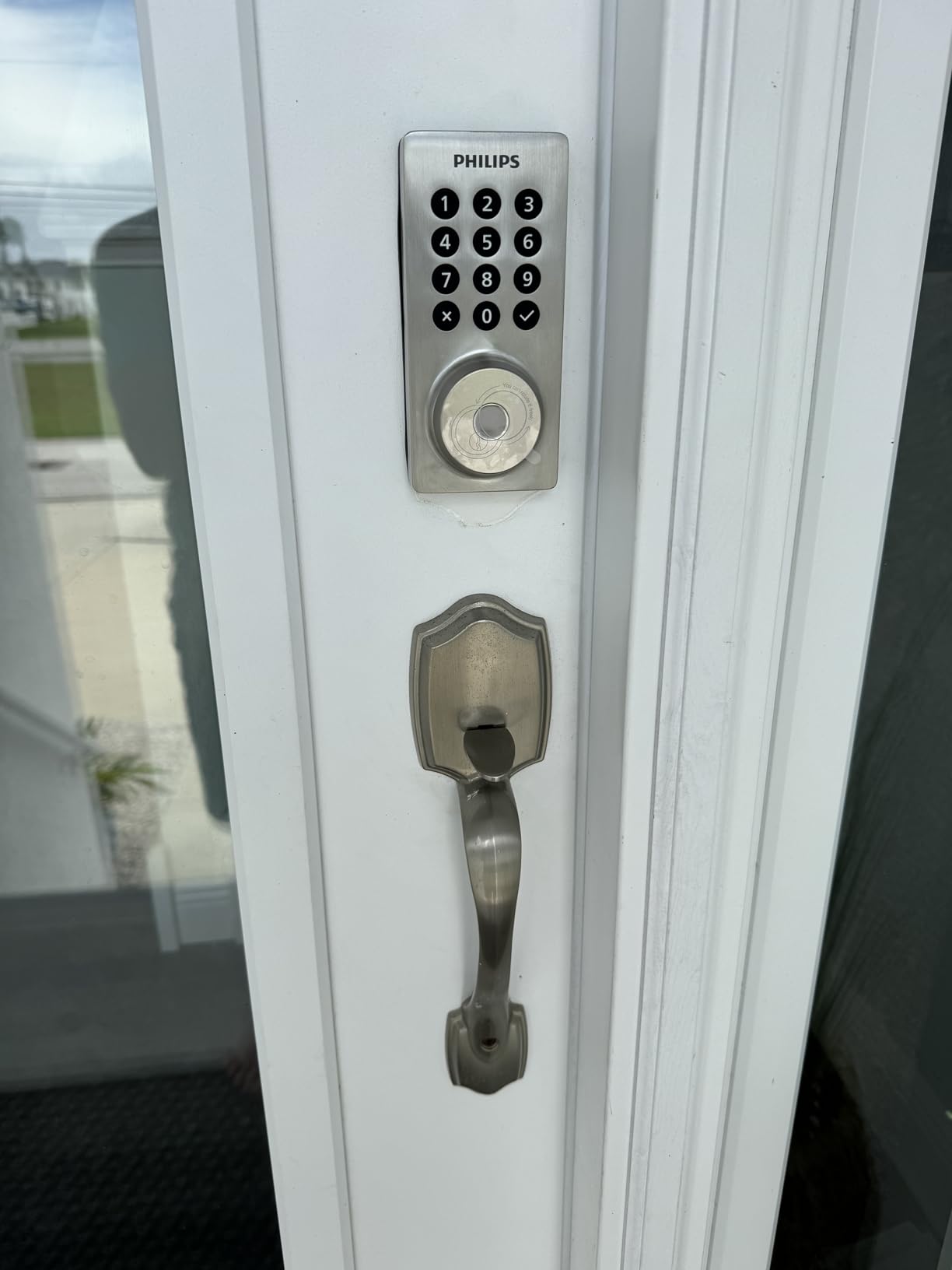
The Philips deadbolt is the lightest lock here at 1.4 pounds, which matters on an older hollow-core garage door where every pound adds sag over time. Fit covers doors 1-3/8 inch to 2 inch thick with screwdriver-only installation.
It offers five unlock methods across fingerprint, app, passcode, physical key and voice through Alexa or Google Assistant, with built-in Wi-Fi that means no bridge to buy for remote control.
Code handling is a strength. You get up to 100 custom passcodes plus unlimited one-time and scheduled codes for guests, cleaners and deliveries, and an Away Mode that disables every unlock method except the master code while you are travelling.
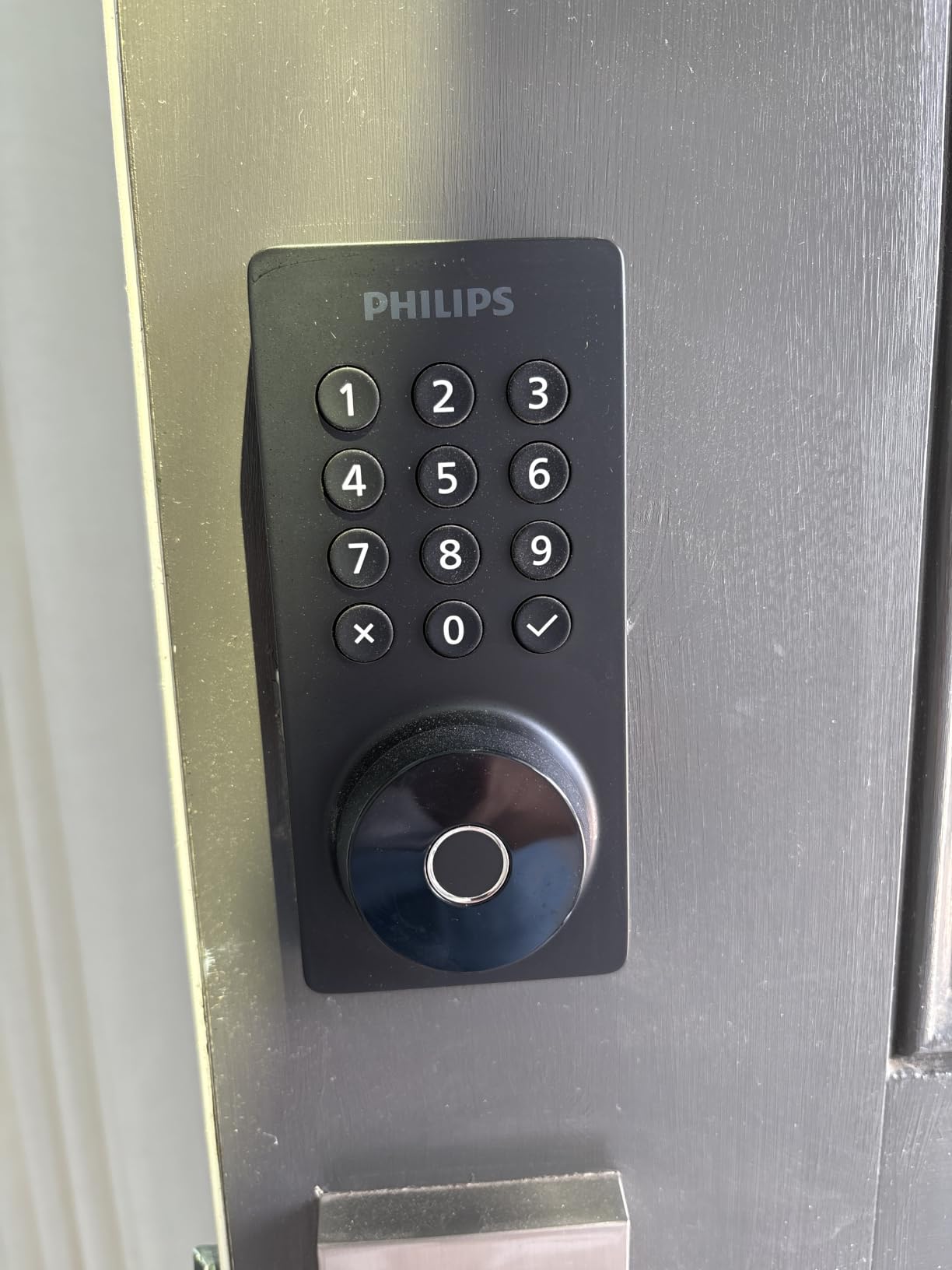
Auto-lock timing is adjustable from 10 to 180 seconds, and the app sends real-time alerts with a full access history of who came in and when.
Owners generally describe the feature set as strong for the money, with dependable fingerprint entry and a hub-free setup that works without fuss.
What you should check before buying
Check your router distance. The 2.4 GHz radio is recommended within about 65 feet of the router, which is a tight constraint for a door at the end of a driveway, and you may need a mesh node near the garage rather than the router inside the house.
Also note the batteries are not included and the manufacturer specifies AA alkaline rather than rechargeable cells.
Where it falls short
The absence of a published IP rating is the decisive drawback for this use case. For a door with no roof overhead, an unquantified weather specification is the wrong kind of gamble, and the IP53 or better ratings elsewhere in this list are documented.
The backlit touchscreen can also be difficult to read in direct sunlight, and there is no door sensor, so auto-lock will bolt an ajar door without checking.
How to Choose a Smart Lock for an Exposed Side Door
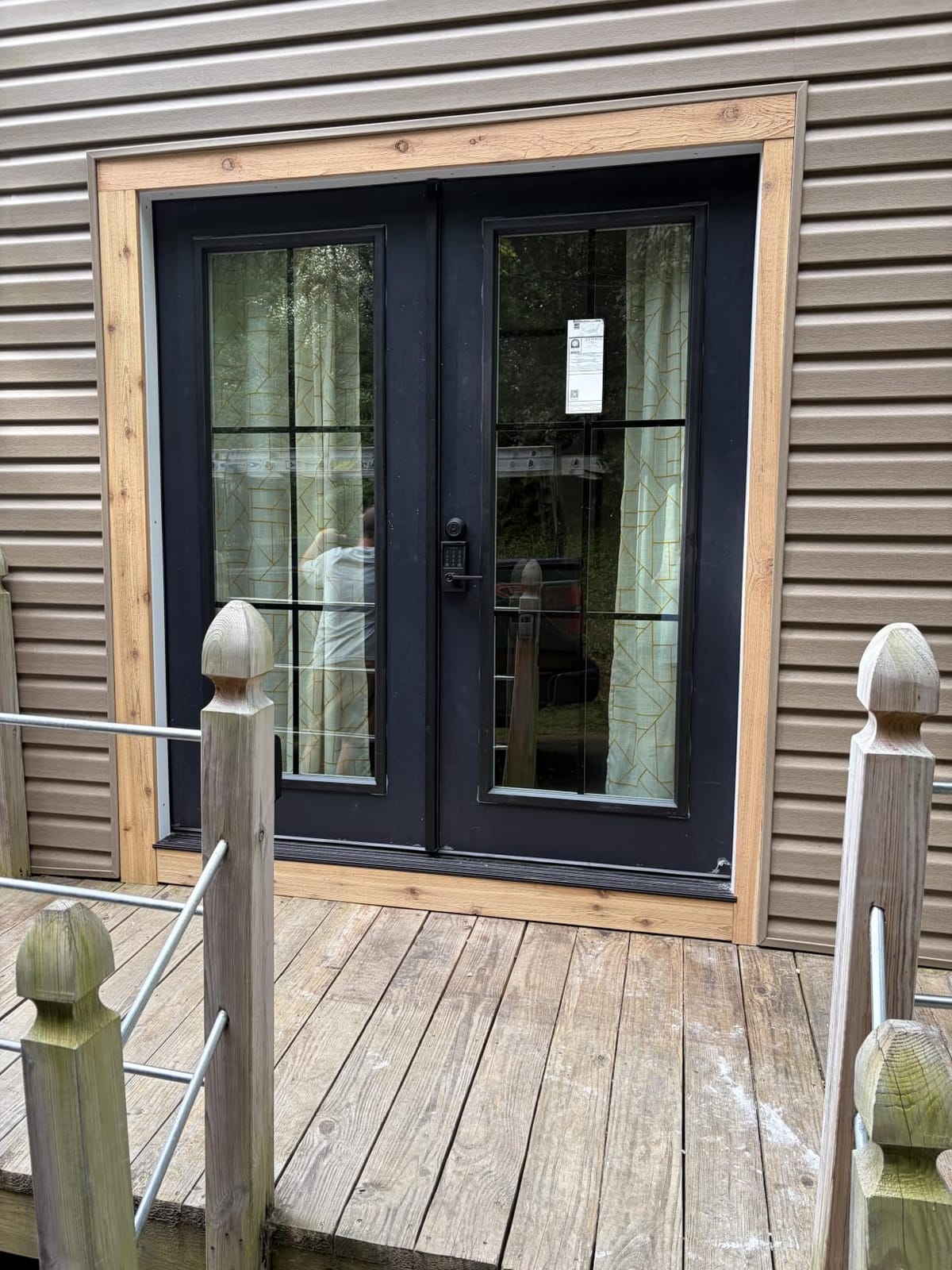
The first filter is water ingress, and it is the one most buyers skip. An IP rating is two digits: the first is dust protection, the second is water. IP54 means protected against dust and spray from limited angles. IP55 adds protection against water jets. IP65 means dust-tight and protected against water jets from any angle, and IP67 goes further still by allowing temporary immersion. For a door with a roof overhang, IP53 may be adequate. For a side door standing in direct rain, treat IP65 as the realistic floor and IP55 as the minimum worth considering.
Forum users on outdoor lock threads reach for the same conclusion, treating IP65 or higher as the marker of genuine weatherproofing rather than marketing. Note that a rating covers the lock body, not the fit around your door, so a badly fitted escutcheon will let water sit on the gasket regardless of what the spec sheet says.
Measure the door before you order
Most garage man doors are thinner than front doors, and that is where fit problems come from. Check the door thickness first: the locks in this roundup cover roughly 1-3/8 inch to 1-3/4 inch, with some reaching 2 inch. Then measure the backset, the distance from the edge of the door to the centre of the bore, and confirm it matches the 2-3/8 inch or 2-3/4 inch options the Schlage supports, or the 2-1/8 inch and 1-1/2 inch bores the Tapo fits. Finally check the bore diameter, which is a standard 2-1/8 inch on most doors but smaller on older hardware.
Handedness matters too. Most locks here are reversible and install on either swing direction, but a handle set may need the lever flipped, and some bores are drilled at a height that puts the latch bolt in an awkward spot. If you have to relocate a bore or patch an old hole, that is locksmith territory rather than a weekend job.
Choose the radio based on where the hub lives
Four connection types appear in this roundup and they are not interchangeable. Built-in Wi-Fi locks like the Schlage Encode, eufy C220, Wyze Bolt v2, Tapo DL100 and Philips deadbolt talk to your phone and voice assistants directly with no extra hardware, which is why most people prefer them for a single door. Bluetooth-only locks like the DESLOC B200 need your phone to be within a few feet, which is close to useless as remote access. Z-Wave and Zigbee locks such as the Yale Assure2 with a Z-Wave module, or the Kwikset 914, need a hub and are the usual choice for Home Assistant and SmartThings owners. Matter over Thread on the ULTRALOQ Bolt SE is the modern option but needs a Thread Border Router.
Radio range is the quiet failure mode on this door. If your side door sits at the far end of a driveway, a Z-Wave or Zigbee hub inside the house may not reach it, and Wi-Fi locks quote router distances of roughly 65 to 70 feet. Test coverage before you commit.
Do the battery maths for a door used thirty times a day
Published battery figures assume normal residential traffic, usually four to ten unlocks a day. A side door used as the everyday entrance can run three or four times that, and every unlock cycle drives the motor. Budget on the pessimistic end of each claim: four AA cells quoted at eight months may mean four or five on a busy door, and the six-month figure on the Schlage Encode may be closer to four.
Battery format matters for planning. Eight AA cells as used by the eufy C220 and Wyze Bolt v2 are cheap and easy to swap. A USB-C emergency power port, offered on the DESLOC B200 and Tapo DL100, means you can rescue a flat lock with a power bank rather than being locked out.
Plan for the failure case before you install
A dead battery on a door far from your main entrance is the scenario people regret. Three things prevent it. A mechanical key override is the baseline requirement, and every lock in this roundup includes one. A low-battery alert that reaches your phone is better still, though note that the Veise RZ07 app gauge is reported as unreliable. And an emergency power port gives you a way to power the lock from outside with a USB-C cable or power bank.
Bluetooth proximity unlock is a third fallback on locks that support local access without the hub. Keep a physical key with a neighbour or in a safe as well, because a lock on an unsheltered door is a lock that will eventually be tested by someone who is not you.
Security features worth paying for
Look for BHMA certification first, since it is an independent mechanical standard rather than a brand claim. The ULTRALOQ Bolt SE, Schlage Encode deadbolt and Schlage lever carry ANSI/BHMA certification, with the two Schlage models holding the highest residential rating. Anti-peep random digit entry, offered on the Tapo DL100 and both Veise locks, defeats code shoulder-surfing by letting you append random digits. A PIN attempt limiter, on the Tapo DL100 and Veise models, locks the keypad after repeated wrong entries. Privacy mode and passage mode on the Veise RZ07 support windows where the door must stay unlocked.
On a street-facing side door, treat the keypad as a visible target. A hood or recessed escutcheon, a silicone gasket, or fingerprint entry removes the code from view entirely, which is worth more than any encryption claim.
Schlage versus Kwikset, and lock versus opener controller
Both brands come up constantly on side-door threads. Schlage is generally praised for mechanical durability, and garage owners describe Schlage keypad locks as among the best changes they have made to a high-use side door. Kwikset’s 914 Z-Wave deadbolt is a long-standing community favourite for retrofit installs driven from SmartThings, and it has been run across multiple controllers without drama. Kwikset tends to sit at the cheaper end, Schlage at the premium end, and both publish mechanical certifications.
The other question is whether you need a lock on the man door at all, or a smart garage door opener controller. A controller only operates the garage door itself and leaves the side door locked with a normal deadbolt, so anyone who walks up the side of the house can still get in. A smart lock on the man door controls the door people actually use and can issue temporary codes, which no opener controller can do for a pedestrian entrance. If you open both regularly, you want the lock; if the side door is rarely used and your concern is the vehicle door, a controller is the cheaper fix.
Frequently Asked Questions
What is the best smart lock for a garage door?
The ULTRALOQ Bolt SE is the strongest all-round choice because it is one of the only locks here with both a fingerprint reader and an IP65 water ingress rating, plus built-in Wi-Fi and Matter over Thread. If you do not need biometrics, the Schlage Encode deadbolt carries the highest residential mechanical certification and stores 100 codes.
Do smart locks work in the rain and cold?
Yes, provided you buy a lock with a published IP rating. Most residential smart deadbolts are built for a sheltered front door, and water ingress kills keypads and fingerprint sensors on an exposed side door within a season. For a door with no overhang, look for IP54 as an absolute floor, IP55 as acceptable, and IP65 as the realistic target. Locks also carry operating temperature ranges; the eufy C220 and DESLOC B200 are both rated for -22F to 158F.
What happens if a smart lock battery dies?
It depends on the lock. Every model in this roundup includes a mechanical key override, so a physical key always works. Some also add a USB-C emergency power port that accepts a power bank or cable from outside the door, which the DESLOC B200 and Tapo DL100 both have. Bluetooth-only locks can still be opened with your phone at close range. Low-battery warnings vary in quality, so check how reliably the app reports them before relying on them.
How hackable are smart locks?
The practical risk is not remote hacking but code exposure at the door. Numeric keypads on a street-facing side door can be read by anyone watching, which is why anti-peep random digit entry, fingerprint readers and privacy modes matter more than encryption claims. Look for a PIN attempt limiter that locks the keypad after repeated wrong entries, enable auto-lock, keep firmware and app updates current, and secure the Wi-Fi network the lock connects to.
Do I need a smart lock or a smart garage door opener?
If you want to control the side man door, you need a smart lock, because an opener controller only drives the garage door itself and leaves the pedestrian entrance under a normal key. A smart lock on the man door lets you issue temporary codes for contractors and dog walkers and see who came and went. If the side door is rarely used and your concern is the vehicle entrance, a controller is the simpler fix.
Can I install a smart lock on an existing garage side door?
Usually yes, provided the door thickness, bore diameter and backset fall within the lock’s stated range. Most of the locks here fit doors 1-3/8 inch to 1-3/4 inch thick, and several reach 2 inch, with screwdriver-only installs. If you need to relocate a bore, patch an old hole or extend a short backset, that becomes locksmith work rather than a weekend project.
Conclusion: The Right Lock for Your Garage Side Door
Pick the ULTRALOQ Bolt SE if the door gets rained on, because it is the only lock here combining a fingerprint reader with an IP65 rating. Pick the Schlage Encode deadbolt if you want the strongest mechanical certification and 100 stored codes, and accept keypad entry. Pick the eufy C220 for hub-free fingerprint access at a mid price, the Tapo DL100 if sunlight readability is the problem, and the Veise VE017G-H if you need a lever to carry things through.
Whatever you choose, measure the door, confirm there is a mechanical key inside, and add a hood or gasket if the door has no overhang. Those three checks decide whether the best smart locks for garage side doors actually live up to their ratings on your particular door in 2026.